EP2252995B1 - Procédé et appareil de recherche de voix dans un contenu stocké à l aide d une découverte d uniterme - Google Patents
Procédé et appareil de recherche de voix dans un contenu stocké à l aide d une découverte d uniterme Download PDFInfo
- Publication number
- EP2252995B1 EP2252995B1 EP09709870.1A EP09709870A EP2252995B1 EP 2252995 B1 EP2252995 B1 EP 2252995B1 EP 09709870 A EP09709870 A EP 09709870A EP 2252995 B1 EP2252995 B1 EP 2252995B1
- Authority
- EP
- European Patent Office
- Prior art keywords
- phoneme
- content
- voice
- search
- audio
- Prior art date
- Legal status (The legal status is an assumption and is not a legal conclusion. Google has not performed a legal analysis and makes no representation as to the accuracy of the status listed.)
- Active
Links
Images



Classifications
-
- G—PHYSICS
- G10—MUSICAL INSTRUMENTS; ACOUSTICS
- G10L—SPEECH ANALYSIS TECHNIQUES OR SPEECH SYNTHESIS; SPEECH RECOGNITION; SPEECH OR VOICE PROCESSING TECHNIQUES; SPEECH OR AUDIO CODING OR DECODING
- G10L15/00—Speech recognition
- G10L15/26—Speech to text systems
-
- G—PHYSICS
- G10—MUSICAL INSTRUMENTS; ACOUSTICS
- G10L—SPEECH ANALYSIS TECHNIQUES OR SPEECH SYNTHESIS; SPEECH RECOGNITION; SPEECH OR VOICE PROCESSING TECHNIQUES; SPEECH OR AUDIO CODING OR DECODING
- G10L15/00—Speech recognition
- G10L15/02—Feature extraction for speech recognition; Selection of recognition unit
- G10L2015/025—Phonemes, fenemes or fenones being the recognition units
-
- G—PHYSICS
- G10—MUSICAL INSTRUMENTS; ACOUSTICS
- G10L—SPEECH ANALYSIS TECHNIQUES OR SPEECH SYNTHESIS; SPEECH RECOGNITION; SPEECH OR VOICE PROCESSING TECHNIQUES; SPEECH OR AUDIO CODING OR DECODING
- G10L15/00—Speech recognition
- G10L15/08—Speech classification or search
- G10L2015/088—Word spotting
Definitions
- the present invention generally relates to communication devices and in particular to mechanisms and methodology for performing content search by voice query on communication devices.
- cellular phones and other communication devices typically provide a search function on the device support for performing searches within content that is stored/maintained on the device.
- search functions are performed using a text-based search technology.
- words or character combinations
- these words may be manually inputted into the device using the devices input mechanism (keypad, touch screen, and the like); however, in more advanced devices, the words are provided as audio data that is spoken by the user and detected by the devices microphone.
- the searching methodology is based on voice-to-text, wherein words are first converted into text using a dictionary of known spoken words/terms.
- the method commonly utilized relies on a use of phonemes derived from the audio data to perform searches and is referred to as a phoneme-based approach (as opposed to a manually-input text based approach).
- the process of discovering "words" from audio data input remains a challenging task on mobile communication devices. It is also a difficult task on a server-based computer system because the performance of the speech recognition system is dependent on the language coverage and word-coverage of the dictionaries and the language models.
- a recent phoneme-based approach to deciphering audio data does not need actual word discovery. But, the approach makes uses of very limited contextual information, and involves sequentially processing the features of audio data. The approach thus needs to sequentially process the features of the audio data, and the limited locality information results in an expensive fine match.
- YA-CHAO HSIEH ET AL "Improved Spoken Document Retrieval With Dynamic Key Term Lexicon and Probabilistic Latent Semantic Analysis (PLSA)", Proc. ICASSP 2006 , discloses a system for voice-to-voice search, where the matching is based on phoneme lattices and uses an automatically extracted vocabulary.
- Described herein is a method, system and communication device for enabling ordered content retrieval via uniterm discovery from audio tags associated with stored content and voice-to-voice searching of the audio tags using a phoneme lattice generated from the received voice query.
- the method includes storing content and tagging at least one of the content with an audio tag.
- the method further includes receiving a voice query to retrieve content stored on the device.
- the voice query is received, the method completes a voice-to-voice search utilizing uniterms of the audio tag, scored against the phoneme latent lattice model generated by the voice query to identify matching terms within the audio tags and corresponding stored content.
- the retrieved content(s) associated with the identified audio tags having uniterms that score within the phoneme lattice model are outputted in an order corresponding to an order in which the uniterms are structured within the voice query.
- Audio/voice input signal is received (or captured) by a microphone or other audio receiving device.
- the audio signal is stored as audio data and sent to a uniterm discovery and search (UDS) engine within the device.
- the audio data may be associated with other non-audio content that is also stored within the device.
- the UDS engine retrieves (or discovers) a number of uniterms from the audio signal and associates the uniterms with the audio data.
- the uniterms for the audio database are organized as a phoneme uniterm tree structure to ensure an efficient coarse search.
- the UDS engine When a voice search is initiated at the device, the UDS engine generates a statistical latent lattice model from the voice query and scores the uniterms tree from the audio database against the latent lattice model.
- the best group of uniterms are then determined and segments of the stored audio data and/or other content, such as the best phoneme paths, corresponding to the best group of uniterms are selected as the candidate list of inputs for the fine search.
- the fine search is then conducted based on the match between the best paths of the candidate list and the query lattice. The final results are produced from the fine search ranks of the candidate list.
- the term "uniterm” is defined as a sequence of symbols (or phoneme strings) derived from segments of audio data stored within an audio database. Within the latent statistical model, provided below, the uniterms are be represented as symbols (X1 ... Xn) that are then scored against the latent statistical model using a set of probabilities, as defined herein.
- FIG. 1 depicts a block diagram representation of an example device within which the features of the invention are practiced. Specifically, the device is illustrated having components that enable the device to operate as a mobile communication device, such as a cellular/mobile phone. Thus, for consistency throughout the description, the device is referred to as communication device 100. It is however appreciated that the features of the invention described herein are fully applicable to other types of devices (including other communications devices, other than cellular phones, and other computing devices) and that the illustration of communication device 100 and description thereof as a mobile phone is provided solely for illustration.
- communication device may be a personal digital assistant (PDA), a BlackberryTM, an Ipod®, or other similar potable device, which is designed or enhanced with the functionality to store content associated with voice/audio data and perform a search of the content using voice-to-voice searching, as described herein.
- PDA personal digital assistant
- Ipod® an Ipod®
- the communication device may also be non-portable (e.g., a computer, a desktop phone, or vehicle-integrated car phone) with similar voice-to-voice search capabilities/functionality built in.
- communication device 100 comprises central controller 105, which is connected to memory 110 and which controls the communications operations of communication device 100. Included among these operations are the generation, transmission, reception, and decoding of speech (or audio), encoded light, and data signals.
- controller 105 comprises digital signal processor (DSP) 106, which handles the receipt and transmission of analog and/or digital signals.
- DSP digital signal processor
- Controller 105 also comprises programmable microprocessor 107, which controls the overall functions of communication device 100. While shown as separate components, it is understood that the functionality provided by both processing components within controller 105 may be integrated into a single component. It is further appreciated that the functions of both components operate in concert, where necessary, to provide the uniterm discovery and voice-to-voice search features of communication device 100.
- microprocessor 107 is a conventional multi-purpose microprocessor, such as an MCORE family processor, and DSP 106 is a 56600 Series DSP, each device being available from Motorola, Inc.
- Communication device 100 also comprises input devices, of which keypad 120, and microphone (mic) 130 are illustrated connected to controller 105.
- Microphone 130 represents any type of acoustic capture/receiving device that detects/captures audio (or acoustic) sounds/signals that may be converted into a digital/analog representation and manipulated within communication device 100.
- communication device also supports receipt of voice/audio input via one or more externally connected/coupled devices, including Bluetooth® (BT) headset 131 (paired with internal BT adapter 133) and wired microphone 132 (inserted into plug-in jack 134).
- communication device 100 comprises output devices, including speaker 135 and display 140.
- Communication device 100 includes a camera 145, which enables communication device 100 to record still images and/or moving video.
- microphone 130 is provided for converting speech (voice or audio input) from the user into electrical signals (voice or audio data), while internal speaker 140 provides acoustic signals (output) to the user.
- voice coder/decoder vocoder
- controller 105 provides analog-to-digital and or digital-to-analog signal conversion.
- communication device 100 further includes transceiver 170, which is connected to antenna 175.
- Transceiver 170 in combination with antenna 175, enable communication device 100 to transmit and receive wireless radio frequency (RF) signals from and to communication device 100.
- Transceiver 170 includes an RF modulator/demodulator circuit (not shown) that generates and deciphers/converts the RF signals.
- RF modulator/demodulator circuit not shown
- communication device 100 is a mobile phone, some of the received RF signals may be converted into speech/audio signals, which are outputted via speaker 140.
- Communication device 100 may be a Global System for Mobile communications (GSM) phone and include a Subscriber Identity Module (SIM) card adapter 160.
- SIM card adapter 160 enables a SIM card (not specifically shown) to be inserted and accessed by controller 105.
- UDS utility 115 (or interchangeably referred to as Voice-to-Voice Search (VVS) utility).
- VVS Voice-to-Voice Search
- VSCO utility 160 Voice Search and Content Ordering
- UDS utility 115 When executed by microprocessor 107, key functions provided by UDS utility 115 include, but are not limited to: (1) retrieving/discovering one or more uniterms from audio data and associating the discovered uniterms with content stored within the communication device 100; (2) maintaining an audio database (230, Figure 2 ) with the audio data and discovered uniterms; (3) when a voice search is initiated (i.e., a voice query detected) at the device 100, generating a statistical latent lattice model from the voice query and scoring the uniterms stored in the database against the latent lattice model utilizing a series of probability evaluations to produce a set of best "scoring" uniterms, corresponding to specific ones of the stored content; and (4) returning the content associated with the best uniterms as the result of the voice query.
- the returned content is identified by an audio label/tag from which the best scoring uniterm(s) were generated.
- VSCO utility 160 In addition to the above searching functionality provided by the UDS utility 115, the VSCO utility 160 also provides several additional functionalities, when the VSCO utility 160 is executed by microprocessor 107. Among these functions provided by VSCO utility 160 are, without limitation: (1) enabling a linking/tagging of each content with a voice tag; (2) storing the content along with the associated voice tag; (3) retrieving keywords from a voice query and storing an ordering sequence of the keywords relative to each other; performing the voice-to-voice search utilizing the UDS utility 115; (4) sorting returned content based on the ordering sequence of corresponding keywords that retrieved the returned content; and (5) outputting the content in the ordered sequence; and (6) enabling storage of the ordered sequence of returned content as a new content, tagged with a new audio tag.
- aspects of the disclosed embodiments provide a process of generating a "dictionary" representation for voice search (during a uniterm Discovery Process) and then utilizing this dictionary in voice search (during a Search Process).
- the invention involves extracting phoneme strings from segments of audio data in which the phoneme string is considered to be a good estimate of the actual phonetic content by virtue of the phoneme string's consistency within the phoneme lattice.
- These phoneme strings extracted from all of the utterances in an audio database, play the role of words in subsequently attempting to match a new utterance having the same lexical content.
- the invention seeks to identify which of these "words” (referred to herein as "uniterms”) also appear with consistency within the lattice representation (i.e., the statistical latent lattice model) of a new utterance.
- the identified uniterms allow the incoming utterance to be associated with the corresponding content in the audio database.
- One embodiment of the invention provides a sememeless term (or vocabulary) discovery strategy, where a sememe is a unit of transmitted or intended meaning (of a smallest unit of word).
- the invention recognizes that use of a sememeless term or discovery strategy is more practical since the audio segments may contain non-speech sound such as noise and music, or foreign terms, names of people, and places that are missing from the dictionary.
- the invention further recognizes that performing searches with vocabulary such as "in dictation" is very challenging on mobile devices with limited computational power.
- the voice-to-voice methodology requires very little computational power for large vocabulary conversational speech recognition (LVCSR).
- LVCSR large vocabulary conversational speech recognition
- One embodiment of the invention enhances the phoneme-based approach to performing voice searches.
- voice-to-voice searches are provided without requiring "word” discovery, by adding the use of contextual information, and thus eliminating the need for sequential processing of audio data.
- the functionality of the described embodiments also removes the explicit word boundaries in the audio database, when compared with voice to text search.
- Embodiments of the described invention makes use of the sememeless term (or vocabulary) discovery strategy. As described in greater details below, during the discovery process, phoneme recognition is performed on the utterances and a phoneme lattice is generated.
- the top N branches (uniterms) with best scores from the uniterm tree are determined and kept, and then a fine search is performed on the lattice associated with the top N uniterms.
- the described embodiments thus provide a more practical and efficient solution to evaluate audio segments, which may contain none-intelligence speech or sounds, such as noise and music, and/or foreign terms, names of people, and places that are not represented within a standard language dictionary.
- UDS engine 200 comprises functional components (i.e., hardware and functional software/utility) within communication device 100, which functional components complete specific portions of uniterm discovery and indexing (which are also illustrated by Figure 3 ) and uniterm searching (which is also illustrated by Figure 5 ), and content retrieval, ordering and outputting (which are illustrated by Figure 8 ).
- the content retrieval, ordering and outputting are generally represented by fine search output 227 and content output 240, although portions of the functionality involved in generating fine search output (which is audio output) are linked into the uniterm searching functionality.
- the searching side of UDS engine 200 includes the following functional components with the corresponding, described functionality:
- a voice query 201 is received (on the searching side of the UDS engine 200 ( Figure 2 )) to search for particular content that is identified by a previously stored voice/audio input.
- the voice query 201 is received and analyzed by the speech recognizer 210, which generates the voice query's phoneme lattice 212.
- Voice query 201 is received/detected by a speech input device of communication device 100 ( Figure 1 ), such as internal microphone 130, Bluetooth 131, and/or external microphone 132 ( Figure 1 ).
- speech recognizer 210 may include or be associated with a vocodec, which converts the audio/voice signal into its representative audio/voice data.
- the indexing side of UDS engine further includes audio database 230, which is utilized to store the audio content, segments of which are later retrieved following the voice-to-voice search initiated by the voice query 201.
- the indexing side of UDS engine also includes content storage 235, which holds one or more content(s), some of which may be identified with a particular audio tag that is assigned to the content and maintained within audio database 230.
- audio content within audio database 230 includes actual audio content (voice files, music files, and the like) as well as audio tags linked to other content within content storage 235).
- stored audio content from audio database 230 is sent through speech recognizer 210, which generates the audio content phoneme lattice 211.
- multiple phoneme lattices are generated, each corresponding to a segment of audio content within the audio database 230.
- the audio content phoneme lattice 211 is then passed through uniterm extraction function 214, which generates a plurality of uniterms corresponding to the different audio content (and segments thereof) within the audio database 230.
- the uniterms generated by uniterm extraction function 214 are stored within bestpath and uniterm index database 218, with the uniterms indexed according to some pre-established pattern to form a phoneme uniterm tree that is utilized during the coarse search function.
- the uniterms for the audio database are organized as a phoneme uniterm tree structure to ensure an efficient coarse search.
- the best paths are determined from the phoneme lattice and also stored within the bestpath and uniterm index database 218. During the voice-to-voice search uniterms and best paths are forwarded to the coarse search function 220 for scoring against the statistical latent lattice model 215.
- speech recognizer 210 receives audio/voice input and generates a corresponding phoneme lattice 211 and 212.
- UDS utility 115 ( Figure 1 ) performs feature extraction, with the generated phoneme lattice 211, using uniterm extraction function 215.
- feature extraction generates a plurality of uniterms, represented via uniterm index (218) stored within bestpath & uniterm index database 218.
- the voice-to-voice search functionality has no explicit word boundaries in the audio database (230).
- a user of the communication device (100) is able to simply utter a sequence of sounds to extract content (e.g., pictures, video, documents, from the content stored within the content storage 235 of the communication device) and audibly (by voice tagging/association) highlight the content or portions thereof.
- the probabilistic estimates that can be used in the phoneme lattice statistical model are phoneme conditional probabilistic estimates, and N-gram counts can be extracted from the phoneme lattice.
- an N-gram conditional probability is utilized to determine a conditional probability of item X given previously seen item(s), i.e. p(item X
- an N-gram conditional probability is used to determine the probability of an item occurring based on N-1 item strings before it.
- a bi-gram phoneme conditional probability can be expressed as p(X N
- yz) can be estimated from unigram and bi-gram conditional probabilities as p x
- y , z ⁇ ⁇ p x
- y + ⁇ ⁇ p x + ⁇ where ⁇ , ⁇ , ⁇ and ⁇ are given constants based on experiments and with the condition that ⁇ + ⁇ + ⁇ + ⁇ 1 .
- the process also involves an evaluation of phoneme string scores.
- the following equation is provided to calculate the probabilistic estimate of a phoneme string p ( x 1 x 2 ?? x M
- L p x 1
- x M occurs in the utterance from which lattice L was generated. Further, the probabilistic estimate is determined from the unigram [ p ( x 1
- L ) associated with an indexing term for a particular utterance for which a lattice L has been generated can be determined more generally as: p x 1 x 2 ?? x M
- L p x 1
- x M occurred in the utterance from which lattice L was generated.
- N used for the N gram conditional probabilities typically has a value of 2 or 3, other values, such as 1 or 4 or even values greater than 4 could be used.
- a value of 1 for N may diminish the accuracy of the embodiments taught herein, while a value of 4 and higher (for N) may require ever increasing amounts of processing resources, with diminishing amounts of improvement, in some implementations.
- the value M which identifies how many phonemes are in an indexing term, may be in the range of 5 to 10.
- This probabilistic estimate which is a number in the range from 0 to 1, is used to assign a score of the indexing term. For example, the score may be identical to the probabilistic estimate or may be a linear function of the probabilistic estimate.
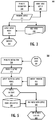
- Figure 3 illustrates the interconnected functions that perform uniterm discovery (indexing) of an example UDS engine (200). The functions execute to first produce a phoneme lattice 211, from which best paths 318 and ultimately uniterms 319 are discovered.
- the functions of Figure 3 and Figure 2 overlap and, therefore, only the differences and/or additional functionality presented in Figure 3 are now described. Additionally, the functions of Figure 3 are referenced when describing the method process ( Figure 4 ), which details the functional processes by which the uniterms are discovered (and indexed).
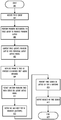
- the process of Figure 4 begins at block 401, and proceeds to block 403 at which stored audio/voice input is retrieved from audio database 230.
- the audio/voice data may have been originally received at/detected by an audio input device of communication device (100), and the audio data may be stored along with other non-audio content. That is, the communication device may provide a special audio receive mode, which allows received audio to be associated with other types of content (as a name/identifying/descriptive tag).
- phoneme recognition 310 is performed (by speech recognizer 210, Figure 2 ) on the received audio/voice data, as shown at block 405.
- a phoneme lattice 211 is generated.
- a latent lattice model 315 is produced from the generated phoneme lattice(s) 211, at block 409.
- the phoneme lattice 211 is evaluated and phoneme strings with certain lengths are extracted from the phoneme lattice(s) as best paths 318, as provided at block 411.
- the phoneme strings with a length that is at least equal to a pre-set minimum length are extracted from (or identified within) the phoneme lattice(s) as the one or more best paths 318. These best paths 318 are then scored against the latent lattice model 315 (i.e., latent lattice model 315 is evaluated using the best paths 318).
- the top N best strings (referred to as uniterms) 319 are chosen as the "vocabularies" to represent the phoneme lattice 211 (i.e., represent the audio data segments).
- best paths 315 are extracted from the phoneme lattice 211, and then the N best phoneme strings (uniterms) 319 are extracted from the latent lattice model 315 according to the best paths 318.
- the process then ends at termination block 415.
- the discovered uniterms may be stored in an indexed format to provide a phoneme uniterm tree that may be utilized for performing the coarse search function, described below.
- the search process is completed via two search functions: a coarse search function, followed by a fine search function.
- the coarse search function the UDS utility 115 looks up the feature vector in the index and quickly returns a set of candidate messages, which may contain five to ten times more messages than needed.
- the fine search function compares the best path of the voice query to the phoneme lattices of the candidate messages, uniterm by uniterm.
- multiple different voices may record different content with similar words utilized to describe the different content.
- One functionality provided by the invention involves being able to match content related to specific uniterms, while being able to differentiate voices based on contextual information. As an example, given one query, there may be two to three content items spoken by different speakers hidden in the multiple number of segments of audio data.
- Figures 5 and 6 illustrate the functional components and method by which uniterm searching within the voice-to-voice search application is implemented, according to one embodiment.
- Figure 5 illustrates interconnected functions that perform uniterm searching for a voice query within an example UDS engine (200). The functions execute to first produce a query phoneme lattice, from which uniterms are discovered and then matched.
- Figure 3 the functions of Figure 5 and Figure 2 (previously described) overlap and, therefore, only the differences and/or additional functionality presented in Figure 5 are now described.
- Figure 5 details the functional processes by which the uniterms (of the stored audio data) are scored against the latent statistical lattice model generated from a voice query to perform voice-to-voice searching within the communication device (100).
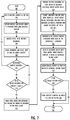
- the method of Figure 6 begins at block 601 and proceeds to block 603, which illustrates receipt of a voice query 201 at the communication device 100 ( Figure 1 ).
- phoneme recognition is performed (via speech recognizer 210) on the voice query 201 to produce phoneme lattice 212 of the voice query.
- the UDS utility 115 converts the voice query's phoneme lattice 212 into a latent statistical lattice model 215, at block 607.
- the UDS utility 115 retrieves a uniterm phoneme tree 518, which is a prefix tree built from all the "uniterms" discovered from the audio database (230).
- the UDS utility 115 scores the phoneme tree 518 against the latent statistical lattice model 215 (i.e., performs a statistical probability of a match of the uniterms to the latent lattice model 215). Based on the resulting scores, the UDS utility 115 determines which branches of the uniterm phoneme tree are the top N branches (or uniterms) 522, and the UDS utility 115 keeps these top N branches 522, as provided at block 613.
- the top N branches are those branches with the best scores, and the UDS utility evaluates all of the resulting scores to determine which branches of the uniterm tree are the top branches, which have one of a highest score relative to other branches or a score above a pre-set minimum score.
- the segments of the stored audio data and/or other content, such as the best phoneme paths, corresponding to the best group of uniterms are selected as the candidate list of inputs for the fine search.
- the final results produced from the fine search are selected from the ranks of this candidate list.
- UDS utility 115 performs a fine match/search using the voice query's phoneme lattice 212, as shown at block 615.
- the UDS utility 115 utilizes the phoneme lattice (211, Figure 2 / 3 ) of the stored audio data (in database 230) as an input, along with the top N branches (729), to perform the fine search.
- the resulting top N audio segments 535 resulting from the fine search (525) are outputted (e.g., presented to the querying user), as shown at block 617. Then, the process ends at block 619.
- FIGS 5 and 6 illustrated above, illustrate various methods by which the above processes of the illustrative embodiments are completed. Although the methods illustrated in Figures 5 and 6 have been described with reference to components shown in the other figures, it should be understood that this is merely for convenience and alternative components and/or configurations thereof can be employed when implementing the various methods. Key portions of the methods may be completed by UDS engine 200 ( Figure 2 ) and corresponding UDS utility 115 ( Figure 1 ) executing within communication device 100 ( Figure 1 ) and controlling specific operations of/on communication device 100, and the methods are thus described from the perspective of either/both UDS engine 200 and UDS utility 115.
- FIGS 7 and 8 illustrate and describe the mechanisms and methods by which the VSCO utility 160 ( Figure 1 ) receives and responds to a voice search/query string by retrieving content and ordering the content according to the order of key terms/words within the string.
- the descriptions of both figures are intertwined due to the overlap in functionality being illustrated.
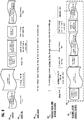
- the method of Figure 7 begins at block 701 and proceeds to block 703 at which the device receives and records content in memory or storage. As shown by Figure 8 , multiple different types of content 835 may be stored within the device.
- the content 835 may be in the form of still pictures/images (content 2 and 4), a sequence/stream of still images (content 0), video (content 1), data messages, such as a text message (content 3), and recorded audio (content N).
- N may be stored within the memory/storage of the device, where N is any integer number that is capped when the memory/storage reaches capacity.
- the functionality provided by the embodiments apply to a multiple ones of a single type of content (e.g., pictures) or even a single content.
- the device receives audio/voice input to associate with a specified content.
- the audio/voice input then represents an identifier of the specific content.
- the association of the audio/voice input may be initiated by a user selecting a functional affordance (physical button, menu option, or touch screen button, for example) that causes the device's logic to monitor for receipt of an audio input and link the received audio input to a selected content, in order to identify the selected content.
- the content may be recently captured or received content or may be previously stored content.
- the content is then resaved along with the associated audio/voice tag (or voice ID).
- each content (0...N) have an associated audio tag 830, which provides identifying information about the stored content.
- the audio tags 830 are not necessarily descriptive of the content being identified by the particular audio tag 830. Use of descriptive audio tags 830 serve only to simplify the description of the specific embodiment described herein.
- the UDS utility 115 performs the analysis of the stored voice IDs to retrieve phonemes and generate a lattice (similar to the description presented above with reference to Figures 5 and 6 .
- the VSCO utility 160 associates the phonemes with the voice IDs and/or the stored content. Whenever additional content is received and stored, as determined at block 711, the VSCO utility 160 and UDS utility 115 performs the processes of blocks 703 - 711.
- the VSCO utility determines whether the device receives a voice query for content search.
- the voice query may be inputted as a special form of query that triggers a response with a grouped sequence of content, having associated audio data, as determined via the uniterm scoring features provided by UDS utility 115.
- An example voice query 201 is illustrated in Figure 8 .
- the voice query is parsed for keywords and the order of the keywords in the query is detected and recorded, at block 715.
- the keywords are transmitted to UDS utility 115, which performs the uniterm discovery on the keywords to generate a statistical latent lattice model, as shown at block 717.
- the UDS utility then sores the uniterms (derived from the audio tags) with the latent lattice model to determine the top N uniterms, as provided at block 719. Examples of these keywords are represented in the processed query with keyword sequence 850 of Figure 8 .
- the keywords are: Olympic, Lui Xhang, Yao Ming, music, soccer, and goal. While illustrated as nouns and proper nouns, the illustrative embodiments may provide keywords that are not nouns/proper nouns.
- the uniterms derived from similar words within the audio tags 830 are scored against the selected keywords (which are converted into the latent lattice model by UDS utility 115). This scoring yields a set of uniterms, which correspond to specific ones of the audio tags 830.
- the VSCO utility 160 retrieves the stored content corresponding with the respective audio tags from which the uniterms were generated.
- the VSCO utility 160 also retrieves the sequence/order of the keywords within the voice query string and orders the stored content according to the initial ordered sequence of the keywords, as shown at block 723.
- the ordered sequence may be determined by the UDS utility 115 performing the uniterm scoring against a series of latent lattice models generated for each keyword in the order in which the keyword is detected/received.
- the VSCO utility 160 provides an output of the content in keyword-order.
- Figure 8 illustrates an example resulting output 240, which includes a sequencing of ordered content, in the order corresponding to the keyword-order.
- the method enables a device user to tag stored content, such as photo and video images with a voice tag. Once the tags are established, the user is then able to retrieve the content in a desired order by simply uttering a sequence of words/sound, which provides phonemes similar to those within the voice tag.
- a device user is able to extract video from the stored collection of multiple videos and highlight certain video segments from a long video with an audio tag.
- the user may then search the audio tags to retrieve the associated video contents stored on the device.
- the user may annotate a particular portion of the match by adding audio tag (e.g., "GOAL" to a particular segment of the video stream.
- audio tag e.g., "GOAL”
- the audio tag is linked to a particular segment (a video clip) of the video stream, a copy of which is created and extracted as a separate clip.
- the user may also make other video clips of other events, which video clips are also stored with specific audio tags.
- the user utilizing the functionality of the UDS utility 115 and VSCO utility 160 within the process of Figure 7 , is later able to assemble the separate video clips in a particular sequence by providing a voice query that incorporates similar words and phrases as the audio tags.
- the person may make a combined video from the stored video clips, by saying "during the soccer match between China and Germany, I saw the most amazing goal," for example.
- the VSCO utility 160 receives the command and automatically activates the UDS utility 115 to complete the voice to voice search.
- the VSCO utility 160 performs the ordering and combining of the video clips for sequential presentation, based on the keyword order for uniterms discovered within the received voice/audio query.
- one or more of the methods may be embodied in a computer readable medium containing computer readable code such that a series of steps are performed when the computer readable code is executed on a computing device.
- certain steps of the methods are combined, performed simultaneously or in a different order, or perhaps omitted, without deviating from the scope of the invention.
- the method steps are described and illustrated in a particular sequence, use of a specific sequence of steps is not meant to imply any limitations on the invention. Changes may be made with regards to the sequence of steps without departing from the scope of the present invention. Use of a particular sequence is therefore, not to be taken in a limiting sense, and the scope of the present invention is defined only by the appended claims.
- the illustrative embodiments provide a communication device and a method which includes the following: (a) storing one or more content that includes one or more of text, images, audio, videos, and multimedia content; (b) tagging at least one of the one or more content with an audio tag; (c) receiving a voice query to retrieve content from the one or more content stored on the device; (d) completing a voice-to-voice search utilizing uniterms of the audio tag and a phoneme latent lattice model generated from the voice query to identify audio tags, which are tagged to stored content and which provide one or more uniterms that scores within the phoneme lattice model; and (e) outputting retrieved content associated with the identified audio tags having uniterms that score within the phoneme lattice model, wherein the retrieved content is outputted in an order corresponding to an order in which the uniterms are structured within the voice query.
- the processes in embodiments of the present invention may be implemented using any combination of software, firmware or hardware.
- the programming code (whether software or firmware) will typically be stored in one or more machine readable storage mediums such as fixed (hard) drives, diskettes, optical disks, magnetic tape, semiconductor memories such as ROMs, PROMs, etc., thereby making an article of manufacture in accordance with the invention.
- the article of manufacture containing the programming code is used by either executing the code directly from the storage device, by copying the code from the storage device into another storage device such as a hard disk, RAM, etc., or by transmitting the code for remote execution using transmission type media such as digital and analog communication links.
- the methods of the invention may be practiced by combining one or more machine-readable storage devices containing the code according to the present invention with appropriate processing hardware to execute the code contained therein.
- An apparatus for practicing the invention could be one or more processing devices and storage systems containing or having network access to program(s) coded in accordance with the invention.
- an illustrative embodiment of the present invention is described in the context of a fully functional computer (server) system with installed (or executed) software, those skilled in the art will appreciate that the software aspects of an illustrative embodiment of the present invention are capable of being distributed as a program product in a variety of forms, and that an illustrative embodiment of the present invention applies equally regardless of the particular type of media used to actually carry out the distribution.
- a non exclusive list of types of media includes recordable type (tangible) media such as floppy disks, thumb drives, hard disk drives, CD ROMs, DVDs, and transmission type media such as digital and analogue communication links.
- the software aspects of the invention are provided on a computer disk that is provided with the cell phone or other portable device, and the functionality of the UDS engine and/or UDS utility may be uploaded to the device using a computer with USB (Universal Serial Bus) connection or BT connection.
- the software may be downloaded from a service provider website or other online source.
- the software may be bought off-the shelf as a generic software offering (i.e., not proprietary and/or packaged with the device).
Landscapes
- Engineering & Computer Science (AREA)
- Computational Linguistics (AREA)
- Health & Medical Sciences (AREA)
- Audiology, Speech & Language Pathology (AREA)
- Human Computer Interaction (AREA)
- Physics & Mathematics (AREA)
- Acoustics & Sound (AREA)
- Multimedia (AREA)
- Information Retrieval, Db Structures And Fs Structures Therefor (AREA)
- Telephonic Communication Services (AREA)
Claims (8)
- Procédé mis en œuvre dans un dispositif électronique en vue de récupérer du contenu en faisant appel à un modèle-réseau de phonèmes latents statistique, dans lequel un modèle-réseau de phonèmes latents statistique pour un réseau de phonèmes représente des probabilités qu'une ou plusieurs séquences de phonèmes dans le réseau de phonèmes apparaissent dans des données audio à partir desquelles le réseau de phonèmes a été généré, et dans lequel l'évaluation du score d'une séquence de phonèmes par rapport au modèle-réseau de phonèmes latents statistique correspond à l'estimation d'une telle probabilité, le procédé comprenant les étapes ci-dessous consistant à :stocker un ou plusieurs contenus, dans lequel ledit un ou lesdits plusieurs contenus incluent un ou plusieurs éléments parmi du texte, des images, du contenu audio, du contenu vidéo et du contenu multimédia ;baliser au moins l'un dudit un ou desdits plusieurs contenus au moyen d'une balise audio ;générer (407) un ou plusieurs premiers réseaux de phonèmes (211) à partir des balises audio avec lesquelles le contenu stocké a été balisé ;générer (409) un premier modèle-réseau de phonèmes latents statistique (315) à partir dudit un ou desdits plusieurs premiers réseaux de phonèmes (211) ;extraire (411), en tant qu'un ou plusieurs meilleurs chemins (318), dudit un ou desdits plusieurs premiers réseaux de phonèmes, une ou plusieurs séquences de phonèmes dont une longueur est au moins égale à une longueur minimale prédéfinie ;évaluer le score dudit un ou desdits plusieurs meilleurs chemins (318) par rapport au premier modèle-réseau de phonèmes latents statistique ;sélectionner, sur la base de l'évaluation du score dudit un ou desdits plusieurs meilleurs chemins, un nombre prédéfini dudit un ou desdits plusieurs meilleurs chemins, en tant que séquences de phonèmes (319), en vue de représenter ledit un ou lesdits plusieurs premiers réseaux de phonèmes (211) ;stocker les séquences de phonèmes sélectionnées (319) dans une base de données d'index (218) ;réassocier les séquences de phonèmes sélectionnées (319) aux balises audio à partir desquelles ladite une ou lesdites plusieurs séquences de phonèmes ont été générées ;recevoir (603) une requête vocale (201) pour récupérer du contenu à partir dudit un ou desdits plusieurs contenus stockés sur le dispositif ;récupérer un ou plusieurs mots-clés à partir de la requête vocale ;identifier et maintenir un ordre de mots-clés dudit un ou desdits plusieurs mots-clés au sein de la requête vocale, sous la forme d'un ordre de sortie pour le contenu récupéré ;effectuer une recherche voix à voix, comprenant les étapes ci-dessous consistant à :générer (607) un second modèle-réseau de phonèmes latents statistique (215) à partir d'un ou plusieurs seconds réseaux de phonèmes (212) générés (605) à partir de la requête vocale reçue ;déterminer un ensemble de séquences de phonèmes de meilleur score sur la base de l'évaluation du score (611) des séquences de phonèmes (319) stockées dans la base de données d'index par rapport au second modèle-réseau de phonèmes latents statistique (215) ; etidentifier (613) des balises audio associées à l'ensemble de séquences de phonèmes de meilleur score parmi les balises audio avec lesquelles le contenu stocké a été balisé ; etfournir en sortie un contenu récupéré associé aux balises audio identifiées, dans lequel le contenu récupéré est fourni en sortie selon un ordre correspondant à l'ordre des mots-clés dans lequel ledit un ou lesdits plusieurs mots-clés sont structurés au sein de la requête vocale.
- Procédé selon la revendication 1, dans lequel l'étape de génération d'un second modèle-réseau de phonèmes latents statistique comprend les étapes ci-dessous consistant à :acheminer la requête vocale à un dispositif de reconnaissance vocale, lequel dispositif de reconnaissance vocale évalue le contenu audio reçu et génère des réseaux de phonèmes à partir du contenu audio reçu ;générer (605) ledit un ou lesdits plusieurs seconds réseaux de phonèmes (212) à partir de la requête vocale ;dans lequel le second modèle-réseau de phonèmes latents statistique représente l'application d'une série de probabilités statistiques audit un ou auxdits plusieurs seconds réseaux de phonèmes.
- Procédé selon la revendication 1, dans lequel l'étape consistant à déterminer un ensemble de séquences de phonèmes de meilleur score comprend les étapes ci-dessous consistant à :mettre en œuvre une première recherche du second modèle-réseau de phonèmes latents statistique (215) avec les séquences de phonèmes (319) stockées dans la base de données d'index, en vue de générer une pluralité de premiers candidats de recherche ; etmettre en œuvre une seconde recherche sur les premiers candidats de recherche, laquelle seconde recherche implique une comparaison des premiers candidats de recherche audit un ou auxdits plusieurs seconds réseaux de phonèmes (212) en vue de générer une seconde sortie de recherche parmi les premiers candidats de recherche.
- Procédé selon la revendication 3, dans lequel :
l'étape de mise en œuvre de la première recherche comprend les étapes ci-dessous consistant à :récupérer (609) un arbre de phonèmes (518) à partir de la base de données d'index (218), dans lequel l'arbre de phonèmes inclut les séquences de phonèmes sélectionnées (319) ;évaluer le score (611) des séquences de phonèmes de l'arbre de phonèmes par rapport au second modèle-réseau de phonèmes latents statistique, dans lequel une probabilité statistique d'une correspondance des séquences de phonèmes et des branches de l'arbre de phonèmes avec le second modèle-réseau de phonèmes latents statistique est fournie ;évaluer (613) un score résultant en vue de déterminer quelles branches de l'arbre de phonèmes sont les branches supérieures, présentant un score parmi un score le plus élevé par rapport à d'autres branches et un score supérieur à un score minimum prédéfini ; etidentifier les branches supérieures suite à la première recherche, représentant les premiers candidats de recherche à utiliser en tant qu'entrées pour mettre en œuvre la seconde recherche ; etdans lequel la mise en œuvre de la seconde recherche comprend les étapes ci-dessous consistant à :mettre en correspondance (615) les branches supérieures résultant de la première recherche avec ledit un ou lesdits plusieurs seconds réseaux de phonèmes ; etfournir en sortie (617) un ensemble supérieur de balises audio résultant de la seconde recherche, en tant que la réponse à la requête vocale. - Procédé selon l'une quelconque des revendications précédentes, dans lequel la balise audio est un identificateur vocal.
- Procédé selon l'une quelconque des revendications précédentes, comprenant en outre les étapes ci-dessous consistant à :combiner deux contenus distincts ou plus, récupérés par la recherche voix à voix selon l'ordre des mots-clés, en vue de générer un contenu combiné ;fournir en sortie le contenu combiné sous la forme d'un contenu unique ; etpermettre le stockage du contenu combiné avec une nouvelle balise audio dans le dispositif.
- Programme informatique comprenant des instructions qui, lorsqu'elles sont exécutées par un ou plusieurs processeurs matériels, amènent ledit un ou lesdits plusieurs processeurs à mettre en œuvre le procédé selon l'une quelconque des revendications 1 à 6.
- Dispositif électronique comprenant :un processeur (107) ; etune mémoire (110) comprenant des instructions qui, lorsqu'elles sont exécutées par ledit un ou lesdits plusieurs processeurs, amènent ledit un ou lesdits plusieurs processeurs à mettre en œuvre le procédé selon l'une quelconque des revendications 1 à 6.
Applications Claiming Priority (2)
| Application Number | Priority Date | Filing Date | Title |
|---|---|---|---|
| US12/032,258 US8015005B2 (en) | 2008-02-15 | 2008-02-15 | Method and apparatus for voice searching for stored content using uniterm discovery |
| PCT/US2009/033850 WO2009102827A1 (fr) | 2008-02-15 | 2009-02-12 | Procédé et appareil de recherche de voix dans un contenu stocké à l’aide d’une découverte d’uniterme |
Publications (3)
| Publication Number | Publication Date |
|---|---|
| EP2252995A1 EP2252995A1 (fr) | 2010-11-24 |
| EP2252995A4 EP2252995A4 (fr) | 2014-04-02 |
| EP2252995B1 true EP2252995B1 (fr) | 2019-11-20 |
Family
ID=40955906
Family Applications (1)
| Application Number | Title | Priority Date | Filing Date |
|---|---|---|---|
| EP09709870.1A Active EP2252995B1 (fr) | 2008-02-15 | 2009-02-12 | Procédé et appareil de recherche de voix dans un contenu stocké à l aide d une découverte d uniterme |
Country Status (4)
| Country | Link |
|---|---|
| US (1) | US8015005B2 (fr) |
| EP (1) | EP2252995B1 (fr) |
| BR (1) | BRPI0906385A8 (fr) |
| WO (1) | WO2009102827A1 (fr) |
Families Citing this family (33)
| Publication number | Priority date | Publication date | Assignee | Title |
|---|---|---|---|---|
| US8510109B2 (en) * | 2007-08-22 | 2013-08-13 | Canyon Ip Holdings Llc | Continuous speech transcription performance indication |
| TWI499414B (zh) | 2006-09-29 | 2015-09-11 | Lexicon Pharmaceuticals Inc | 鈉與葡萄糖第2型共同運輸體(co-transporter 2)的抑制物與其應用方法 |
| US8019604B2 (en) * | 2007-12-21 | 2011-09-13 | Motorola Mobility, Inc. | Method and apparatus for uniterm discovery and voice-to-voice search on mobile device |
| US8428949B2 (en) * | 2008-06-30 | 2013-04-23 | Waves Audio Ltd. | Apparatus and method for classification and segmentation of audio content, based on the audio signal |
| US20100145971A1 (en) * | 2008-12-08 | 2010-06-10 | Motorola, Inc. | Method and apparatus for generating a multimedia-based query |
| EP2275953B1 (fr) * | 2009-06-30 | 2018-10-24 | LG Electronics Inc. | Terminal mobile |
| US20110004473A1 (en) * | 2009-07-06 | 2011-01-06 | Nice Systems Ltd. | Apparatus and method for enhanced speech recognition |
| US20110138286A1 (en) * | 2009-08-07 | 2011-06-09 | Viktor Kaptelinin | Voice assisted visual search |
| KR101289081B1 (ko) * | 2009-09-10 | 2013-07-22 | 한국전자통신연구원 | 음성 인터페이스를 이용한 iptv 시스템 및 서비스 방법 |
| US9275640B2 (en) * | 2009-11-24 | 2016-03-01 | Nexidia Inc. | Augmented characterization for speech recognition |
| US8903847B2 (en) * | 2010-03-05 | 2014-12-02 | International Business Machines Corporation | Digital media voice tags in social networks |
| US9015046B2 (en) * | 2010-06-10 | 2015-04-21 | Nice-Systems Ltd. | Methods and apparatus for real-time interaction analysis in call centers |
| US20110314003A1 (en) * | 2010-06-17 | 2011-12-22 | Microsoft Corporation | Template concatenation for capturing multiple concepts in a voice query |
| CN108805604A (zh) * | 2010-07-23 | 2018-11-13 | 电子湾有限公司 | 对产品信息请求自动响应的方法和系统 |
| US8521526B1 (en) * | 2010-07-28 | 2013-08-27 | Google Inc. | Disambiguation of a spoken query term |
| US8688090B2 (en) | 2011-03-21 | 2014-04-01 | International Business Machines Corporation | Data session preferences |
| US20120246238A1 (en) | 2011-03-21 | 2012-09-27 | International Business Machines Corporation | Asynchronous messaging tags |
| US20120244842A1 (en) | 2011-03-21 | 2012-09-27 | International Business Machines Corporation | Data Session Synchronization With Phone Numbers |
| US9264471B2 (en) * | 2011-06-22 | 2016-02-16 | Google Technology Holdings LLC | Method and apparatus for segmenting media content |
| US9098533B2 (en) * | 2011-10-03 | 2015-08-04 | Microsoft Technology Licensing, Llc | Voice directed context sensitive visual search |
| IL216072A0 (en) * | 2011-10-31 | 2012-02-29 | Cardo Systems Inc | System and method for managing hardware community |
| US20130250139A1 (en) * | 2012-03-22 | 2013-09-26 | Trung Tri Doan | Method And System For Tagging And Organizing Images Generated By Mobile Communications Devices |
| US9311914B2 (en) * | 2012-09-03 | 2016-04-12 | Nice-Systems Ltd | Method and apparatus for enhanced phonetic indexing and search |
| US10182280B2 (en) * | 2014-04-23 | 2019-01-15 | Panasonic Intellectual Property Management Co., Ltd. | Sound processing apparatus, sound processing system and sound processing method |
| US10275485B2 (en) | 2014-06-10 | 2019-04-30 | Google Llc | Retrieving context from previous sessions |
| US9959863B2 (en) | 2014-09-08 | 2018-05-01 | Qualcomm Incorporated | Keyword detection using speaker-independent keyword models for user-designated keywords |
| US10116748B2 (en) * | 2014-11-20 | 2018-10-30 | Microsoft Technology Licensing, Llc | Vehicle-based multi-modal interface |
| JP6565416B2 (ja) * | 2015-07-22 | 2019-08-28 | カシオ計算機株式会社 | 音声検索装置、音声検索方法及びプログラム |
| WO2017130201A1 (fr) | 2016-01-28 | 2017-08-03 | Subply Solutions Ltd. | Procédé et système de fourniture de contenu audio |
| WO2018182311A1 (fr) * | 2017-03-28 | 2018-10-04 | Samsung Electronics Co., Ltd. | Procédé permettant de faire fonctionner un service de reconnaissance de la parole, dispositif électronique et système le prenant en charge |
| US11032620B1 (en) | 2020-02-14 | 2021-06-08 | Sling Media Pvt Ltd | Methods, systems, and apparatuses to respond to voice requests to play desired video clips in streamed media based on matched close caption and sub-title text |
| US12375744B2 (en) | 2020-11-19 | 2025-07-29 | 12AM Worldwide, Inc. | Video streaming platform |
| US11748405B2 (en) * | 2021-10-15 | 2023-09-05 | EMC IP Holding Company LLC | Method and apparatus for presenting search results |
Citations (1)
| Publication number | Priority date | Publication date | Assignee | Title |
|---|---|---|---|---|
| US20030187950A1 (en) * | 2002-03-29 | 2003-10-02 | Sony Corporation & Sony Electronics Inc. | Method and system for utilizing embedded MPEG-7 content descriptions |
Family Cites Families (10)
| Publication number | Priority date | Publication date | Assignee | Title |
|---|---|---|---|---|
| AU777693B2 (en) * | 1999-03-05 | 2004-10-28 | Canon Kabushiki Kaisha | Database annotation and retrieval |
| GB0027178D0 (en) * | 2000-11-07 | 2000-12-27 | Canon Kk | Speech processing system |
| US7181398B2 (en) * | 2002-03-27 | 2007-02-20 | Hewlett-Packard Development Company, L.P. | Vocabulary independent speech recognition system and method using subword units |
| GB2399983A (en) * | 2003-03-24 | 2004-09-29 | Canon Kk | Picture storage and retrieval system for telecommunication system |
| US7725319B2 (en) * | 2003-07-07 | 2010-05-25 | Dialogic Corporation | Phoneme lattice construction and its application to speech recognition and keyword spotting |
| US7958151B2 (en) * | 2005-08-02 | 2011-06-07 | Constad Transfer, Llc | Voice operated, matrix-connected, artificially intelligent address book system |
| US7849070B2 (en) * | 2005-08-03 | 2010-12-07 | Yahoo! Inc. | System and method for dynamically ranking items of audio content |
| US7809568B2 (en) * | 2005-11-08 | 2010-10-05 | Microsoft Corporation | Indexing and searching speech with text meta-data |
| KR100760301B1 (ko) * | 2006-02-23 | 2007-09-19 | 삼성전자주식회사 | 부분 검색어 추출을 통한 미디어 파일 검색 방법 및 장치 |
| US8019604B2 (en) * | 2007-12-21 | 2011-09-13 | Motorola Mobility, Inc. | Method and apparatus for uniterm discovery and voice-to-voice search on mobile device |
-
2008
- 2008-02-15 US US12/032,258 patent/US8015005B2/en active Active
-
2009
- 2009-02-12 EP EP09709870.1A patent/EP2252995B1/fr active Active
- 2009-02-12 BR BRPI0906385A patent/BRPI0906385A8/pt not_active Application Discontinuation
- 2009-02-12 WO PCT/US2009/033850 patent/WO2009102827A1/fr not_active Ceased
Patent Citations (1)
| Publication number | Priority date | Publication date | Assignee | Title |
|---|---|---|---|---|
| US20030187950A1 (en) * | 2002-03-29 | 2003-10-02 | Sony Corporation & Sony Electronics Inc. | Method and system for utilizing embedded MPEG-7 content descriptions |
Also Published As
| Publication number | Publication date |
|---|---|
| EP2252995A4 (fr) | 2014-04-02 |
| BRPI0906385A8 (pt) | 2015-11-03 |
| WO2009102827A1 (fr) | 2009-08-20 |
| US20090210226A1 (en) | 2009-08-20 |
| BRPI0906385A2 (pt) | 2015-07-07 |
| US8015005B2 (en) | 2011-09-06 |
| EP2252995A1 (fr) | 2010-11-24 |
Similar Documents
| Publication | Publication Date | Title |
|---|---|---|
| EP2252995B1 (fr) | Procédé et appareil de recherche de voix dans un contenu stocké à l aide d une découverte d uniterme | |
| US8019604B2 (en) | Method and apparatus for uniterm discovery and voice-to-voice search on mobile device | |
| US11862174B2 (en) | Voice command processing for locked devices | |
| US9905228B2 (en) | System and method of performing automatic speech recognition using local private data | |
| US11564090B1 (en) | Audio verification | |
| US8209171B2 (en) | Methods and apparatus relating to searching of spoken audio data | |
| CN111710333B (zh) | 用于生成语音转录的方法和系统 | |
| US10917758B1 (en) | Voice-based messaging | |
| CN110097870B (zh) | 语音处理方法、装置、设备和存储介质 | |
| US20080130699A1 (en) | Content selection using speech recognition | |
| CN106463113B (zh) | 在语音辨识中预测发音 | |
| CN101305360B (zh) | 索引和搜索带有文本元数据的语音 | |
| CN101636732A (zh) | 用于语言独立语音索引和搜索的方法和装置 | |
| EP2135180A1 (fr) | Procédé et appareil pour recherche vocale répartie | |
| Koumpis et al. | Content-based access to spoken audio | |
| JP5897718B2 (ja) | 音声検索装置、計算機読み取り可能な記憶媒体、及び音声検索方法 | |
| GB2451938A (en) | Methods and apparatus for searching of spoken audio data | |
| Tejedor et al. | Search on speech from spoken queries: the multi-domain international albayzin 2018 query-by-example spoken term detection evaluation | |
| US11328713B1 (en) | On-device contextual understanding | |
| Moyal et al. | Keyword spotting methods | |
| HK40012139A (en) | Voice processing method and device, equipment and storage medium |
Legal Events
| Date | Code | Title | Description |
|---|---|---|---|
| PUAI | Public reference made under article 153(3) epc to a published international application that has entered the european phase |
Free format text: ORIGINAL CODE: 0009012 |
|
| 17P | Request for examination filed |
Effective date: 20100915 |
|
| AK | Designated contracting states |
Kind code of ref document: A1 Designated state(s): AT BE BG CH CY CZ DE DK EE ES FI FR GB GR HR HU IE IS IT LI LT LU LV MC MK MT NL NO PL PT RO SE SI SK TR |
|
| AX | Request for extension of the european patent |
Extension state: AL BA RS |
|
| RAP1 | Party data changed (applicant data changed or rights of an application transferred) |
Owner name: MOTOROLA MOBILITY, INC. |
|
| DAX | Request for extension of the european patent (deleted) | ||
| RAP1 | Party data changed (applicant data changed or rights of an application transferred) |
Owner name: MOTOROLA MOBILITY LLC |
|
| A4 | Supplementary search report drawn up and despatched |
Effective date: 20140228 |
|
| RIC1 | Information provided on ipc code assigned before grant |
Ipc: H04W 88/02 20090101ALI20140224BHEP Ipc: G10L 15/00 20130101AFI20140224BHEP Ipc: H04B 1/40 20060101ALI20140224BHEP |
|
| RAP1 | Party data changed (applicant data changed or rights of an application transferred) |
Owner name: GOOGLE TECHNOLOGY HOLDINGS LLC |
|
| STAA | Information on the status of an ep patent application or granted ep patent |
Free format text: STATUS: EXAMINATION IS IN PROGRESS |
|
| 17Q | First examination report despatched |
Effective date: 20171221 |
|
| REG | Reference to a national code |
Ref country code: DE Ref legal event code: R079 Ref document number: 602009060478 Country of ref document: DE Free format text: PREVIOUS MAIN CLASS: G10L0015000000 Ipc: G10L0015260000 |
|
| GRAP | Despatch of communication of intention to grant a patent |
Free format text: ORIGINAL CODE: EPIDOSNIGR1 |
|
| STAA | Information on the status of an ep patent application or granted ep patent |
Free format text: STATUS: GRANT OF PATENT IS INTENDED |
|
| RIC1 | Information provided on ipc code assigned before grant |
Ipc: G10L 15/02 20060101ALN20190514BHEP Ipc: G10L 15/26 20060101AFI20190514BHEP Ipc: G10L 15/08 20060101ALN20190514BHEP |
|
| INTG | Intention to grant announced |
Effective date: 20190603 |
|
| GRAS | Grant fee paid |
Free format text: ORIGINAL CODE: EPIDOSNIGR3 |
|
| GRAA | (expected) grant |
Free format text: ORIGINAL CODE: 0009210 |
|
| STAA | Information on the status of an ep patent application or granted ep patent |
Free format text: STATUS: THE PATENT HAS BEEN GRANTED |
|
| AK | Designated contracting states |
Kind code of ref document: B1 Designated state(s): AT BE BG CH CY CZ DE DK EE ES FI FR GB GR HR HU IE IS IT LI LT LU LV MC MK MT NL NO PL PT RO SE SI SK TR |
|
| REG | Reference to a national code |
Ref country code: GB Ref legal event code: FG4D |
|
| REG | Reference to a national code |
Ref country code: CH Ref legal event code: EP |
|
| REG | Reference to a national code |
Ref country code: IE Ref legal event code: FG4D |
|
| REG | Reference to a national code |
Ref country code: DE Ref legal event code: R096 Ref document number: 602009060478 Country of ref document: DE |
|
| REG | Reference to a national code |
Ref country code: AT Ref legal event code: REF Ref document number: 1205075 Country of ref document: AT Kind code of ref document: T Effective date: 20191215 |
|
| REG | Reference to a national code |
Ref country code: NL Ref legal event code: MP Effective date: 20191120 |
|
| REG | Reference to a national code |
Ref country code: LT Ref legal event code: MG4D |
|
| PG25 | Lapsed in a contracting state [announced via postgrant information from national office to epo] |
Ref country code: ES Free format text: LAPSE BECAUSE OF FAILURE TO SUBMIT A TRANSLATION OF THE DESCRIPTION OR TO PAY THE FEE WITHIN THE PRESCRIBED TIME-LIMIT Effective date: 20191120 Ref country code: SE Free format text: LAPSE BECAUSE OF FAILURE TO SUBMIT A TRANSLATION OF THE DESCRIPTION OR TO PAY THE FEE WITHIN THE PRESCRIBED TIME-LIMIT Effective date: 20191120 Ref country code: LV Free format text: LAPSE BECAUSE OF FAILURE TO SUBMIT A TRANSLATION OF THE DESCRIPTION OR TO PAY THE FEE WITHIN THE PRESCRIBED TIME-LIMIT Effective date: 20191120 Ref country code: GR Free format text: LAPSE BECAUSE OF FAILURE TO SUBMIT A TRANSLATION OF THE DESCRIPTION OR TO PAY THE FEE WITHIN THE PRESCRIBED TIME-LIMIT Effective date: 20200221 Ref country code: BG Free format text: LAPSE BECAUSE OF FAILURE TO SUBMIT A TRANSLATION OF THE DESCRIPTION OR TO PAY THE FEE WITHIN THE PRESCRIBED TIME-LIMIT Effective date: 20200220 Ref country code: FI Free format text: LAPSE BECAUSE OF FAILURE TO SUBMIT A TRANSLATION OF THE DESCRIPTION OR TO PAY THE FEE WITHIN THE PRESCRIBED TIME-LIMIT Effective date: 20191120 Ref country code: NO Free format text: LAPSE BECAUSE OF FAILURE TO SUBMIT A TRANSLATION OF THE DESCRIPTION OR TO PAY THE FEE WITHIN THE PRESCRIBED TIME-LIMIT Effective date: 20200220 Ref country code: LT Free format text: LAPSE BECAUSE OF FAILURE TO SUBMIT A TRANSLATION OF THE DESCRIPTION OR TO PAY THE FEE WITHIN THE PRESCRIBED TIME-LIMIT Effective date: 20191120 Ref country code: NL Free format text: LAPSE BECAUSE OF FAILURE TO SUBMIT A TRANSLATION OF THE DESCRIPTION OR TO PAY THE FEE WITHIN THE PRESCRIBED TIME-LIMIT Effective date: 20191120 |
|
| PG25 | Lapsed in a contracting state [announced via postgrant information from national office to epo] |
Ref country code: HR Free format text: LAPSE BECAUSE OF FAILURE TO SUBMIT A TRANSLATION OF THE DESCRIPTION OR TO PAY THE FEE WITHIN THE PRESCRIBED TIME-LIMIT Effective date: 20191120 Ref country code: IS Free format text: LAPSE BECAUSE OF FAILURE TO SUBMIT A TRANSLATION OF THE DESCRIPTION OR TO PAY THE FEE WITHIN THE PRESCRIBED TIME-LIMIT Effective date: 20200320 |
|
| PG25 | Lapsed in a contracting state [announced via postgrant information from national office to epo] |
Ref country code: RO Free format text: LAPSE BECAUSE OF FAILURE TO SUBMIT A TRANSLATION OF THE DESCRIPTION OR TO PAY THE FEE WITHIN THE PRESCRIBED TIME-LIMIT Effective date: 20191120 Ref country code: CZ Free format text: LAPSE BECAUSE OF FAILURE TO SUBMIT A TRANSLATION OF THE DESCRIPTION OR TO PAY THE FEE WITHIN THE PRESCRIBED TIME-LIMIT Effective date: 20191120 Ref country code: DK Free format text: LAPSE BECAUSE OF FAILURE TO SUBMIT A TRANSLATION OF THE DESCRIPTION OR TO PAY THE FEE WITHIN THE PRESCRIBED TIME-LIMIT Effective date: 20191120 Ref country code: PT Free format text: LAPSE BECAUSE OF FAILURE TO SUBMIT A TRANSLATION OF THE DESCRIPTION OR TO PAY THE FEE WITHIN THE PRESCRIBED TIME-LIMIT Effective date: 20200412 Ref country code: EE Free format text: LAPSE BECAUSE OF FAILURE TO SUBMIT A TRANSLATION OF THE DESCRIPTION OR TO PAY THE FEE WITHIN THE PRESCRIBED TIME-LIMIT Effective date: 20191120 |
|
| REG | Reference to a national code |
Ref country code: AT Ref legal event code: MK05 Ref document number: 1205075 Country of ref document: AT Kind code of ref document: T Effective date: 20191120 |
|
| REG | Reference to a national code |
Ref country code: DE Ref legal event code: R097 Ref document number: 602009060478 Country of ref document: DE |
|
| PG25 | Lapsed in a contracting state [announced via postgrant information from national office to epo] |
Ref country code: SK Free format text: LAPSE BECAUSE OF FAILURE TO SUBMIT A TRANSLATION OF THE DESCRIPTION OR TO PAY THE FEE WITHIN THE PRESCRIBED TIME-LIMIT Effective date: 20191120 |
|
| PLBE | No opposition filed within time limit |
Free format text: ORIGINAL CODE: 0009261 |
|
| STAA | Information on the status of an ep patent application or granted ep patent |
Free format text: STATUS: NO OPPOSITION FILED WITHIN TIME LIMIT |
|
| REG | Reference to a national code |
Ref country code: CH Ref legal event code: PL |
|
| 26N | No opposition filed |
Effective date: 20200821 |
|
| REG | Reference to a national code |
Ref country code: BE Ref legal event code: MM Effective date: 20200229 |
|
| PG25 | Lapsed in a contracting state [announced via postgrant information from national office to epo] |
Ref country code: MC Free format text: LAPSE BECAUSE OF FAILURE TO SUBMIT A TRANSLATION OF THE DESCRIPTION OR TO PAY THE FEE WITHIN THE PRESCRIBED TIME-LIMIT Effective date: 20191120 Ref country code: LU Free format text: LAPSE BECAUSE OF NON-PAYMENT OF DUE FEES Effective date: 20200212 |
|
| PG25 | Lapsed in a contracting state [announced via postgrant information from national office to epo] |
Ref country code: LI Free format text: LAPSE BECAUSE OF NON-PAYMENT OF DUE FEES Effective date: 20200229 Ref country code: CH Free format text: LAPSE BECAUSE OF NON-PAYMENT OF DUE FEES Effective date: 20200229 Ref country code: PL Free format text: LAPSE BECAUSE OF FAILURE TO SUBMIT A TRANSLATION OF THE DESCRIPTION OR TO PAY THE FEE WITHIN THE PRESCRIBED TIME-LIMIT Effective date: 20191120 Ref country code: AT Free format text: LAPSE BECAUSE OF FAILURE TO SUBMIT A TRANSLATION OF THE DESCRIPTION OR TO PAY THE FEE WITHIN THE PRESCRIBED TIME-LIMIT Effective date: 20191120 Ref country code: SI Free format text: LAPSE BECAUSE OF FAILURE TO SUBMIT A TRANSLATION OF THE DESCRIPTION OR TO PAY THE FEE WITHIN THE PRESCRIBED TIME-LIMIT Effective date: 20191120 |
|
| PG25 | Lapsed in a contracting state [announced via postgrant information from national office to epo] |
Ref country code: IT Free format text: LAPSE BECAUSE OF FAILURE TO SUBMIT A TRANSLATION OF THE DESCRIPTION OR TO PAY THE FEE WITHIN THE PRESCRIBED TIME-LIMIT Effective date: 20191120 Ref country code: IE Free format text: LAPSE BECAUSE OF NON-PAYMENT OF DUE FEES Effective date: 20200212 |
|
| PG25 | Lapsed in a contracting state [announced via postgrant information from national office to epo] |
Ref country code: BE Free format text: LAPSE BECAUSE OF NON-PAYMENT OF DUE FEES Effective date: 20200229 |
|
| PG25 | Lapsed in a contracting state [announced via postgrant information from national office to epo] |
Ref country code: TR Free format text: LAPSE BECAUSE OF FAILURE TO SUBMIT A TRANSLATION OF THE DESCRIPTION OR TO PAY THE FEE WITHIN THE PRESCRIBED TIME-LIMIT Effective date: 20191120 Ref country code: MT Free format text: LAPSE BECAUSE OF FAILURE TO SUBMIT A TRANSLATION OF THE DESCRIPTION OR TO PAY THE FEE WITHIN THE PRESCRIBED TIME-LIMIT Effective date: 20191120 Ref country code: CY Free format text: LAPSE BECAUSE OF FAILURE TO SUBMIT A TRANSLATION OF THE DESCRIPTION OR TO PAY THE FEE WITHIN THE PRESCRIBED TIME-LIMIT Effective date: 20191120 |
|
| PG25 | Lapsed in a contracting state [announced via postgrant information from national office to epo] |
Ref country code: MK Free format text: LAPSE BECAUSE OF FAILURE TO SUBMIT A TRANSLATION OF THE DESCRIPTION OR TO PAY THE FEE WITHIN THE PRESCRIBED TIME-LIMIT Effective date: 20191120 |
|
| PGFP | Annual fee paid to national office [announced via postgrant information from national office to epo] |
Ref country code: DE Payment date: 20240228 Year of fee payment: 16 Ref country code: GB Payment date: 20240227 Year of fee payment: 16 |
|
| PGFP | Annual fee paid to national office [announced via postgrant information from national office to epo] |
Ref country code: FR Payment date: 20240226 Year of fee payment: 16 |
|
| P01 | Opt-out of the competence of the unified patent court (upc) registered |
Free format text: CASE NUMBER: UPC_APP_118504/2023 Effective date: 20230510 |
|
| REG | Reference to a national code |
Ref country code: DE Ref legal event code: R119 Ref document number: 602009060478 Country of ref document: DE |
|
| GBPC | Gb: european patent ceased through non-payment of renewal fee |
Effective date: 20250212 |
|
| PG25 | Lapsed in a contracting state [announced via postgrant information from national office to epo] |
Ref country code: DE Free format text: LAPSE BECAUSE OF NON-PAYMENT OF DUE FEES Effective date: 20250902 |
|
| PG25 | Lapsed in a contracting state [announced via postgrant information from national office to epo] |
Ref country code: GB Free format text: LAPSE BECAUSE OF NON-PAYMENT OF DUE FEES Effective date: 20250212 |
|
| PG25 | Lapsed in a contracting state [announced via postgrant information from national office to epo] |
Ref country code: FR Free format text: LAPSE BECAUSE OF NON-PAYMENT OF DUE FEES Effective date: 20250228 |