EP2255444B1 - Radio logicielle - Google Patents
Radio logicielle Download PDFInfo
- Publication number
- EP2255444B1 EP2255444B1 EP09713276A EP09713276A EP2255444B1 EP 2255444 B1 EP2255444 B1 EP 2255444B1 EP 09713276 A EP09713276 A EP 09713276A EP 09713276 A EP09713276 A EP 09713276A EP 2255444 B1 EP2255444 B1 EP 2255444B1
- Authority
- EP
- European Patent Office
- Prior art keywords
- user terminal
- radio
- sdr
- services
- conflicts
- Prior art date
- Legal status (The legal status is an assumption and is not a legal conclusion. Google has not performed a legal analysis and makes no representation as to the accuracy of the status listed.)
- Not-in-force
Links
- 238000012545 processing Methods 0.000 claims abstract description 49
- 238000004364 calculation method Methods 0.000 claims abstract description 4
- 238000000034 method Methods 0.000 claims description 28
- 238000004891 communication Methods 0.000 claims description 15
- 230000004308 accommodation Effects 0.000 claims 1
- 238000010586 diagram Methods 0.000 description 6
- 230000001413 cellular effect Effects 0.000 description 5
- 238000013468 resource allocation Methods 0.000 description 5
- 230000005540 biological transmission Effects 0.000 description 4
- 238000002716 delivery method Methods 0.000 description 3
- 230000001360 synchronised effect Effects 0.000 description 3
- 239000000969 carrier Substances 0.000 description 2
- 238000013461 design Methods 0.000 description 2
- 230000006978 adaptation Effects 0.000 description 1
- 230000000295 complement effect Effects 0.000 description 1
- 230000001351 cycling effect Effects 0.000 description 1
- 230000009977 dual effect Effects 0.000 description 1
- 230000000694 effects Effects 0.000 description 1
- 238000005516 engineering process Methods 0.000 description 1
- 230000003993 interaction Effects 0.000 description 1
- 238000007726 management method Methods 0.000 description 1
- 238000013507 mapping Methods 0.000 description 1
- 238000005259 measurement Methods 0.000 description 1
- 230000011664 signaling Effects 0.000 description 1
- 238000001228 spectrum Methods 0.000 description 1
- 238000012360 testing method Methods 0.000 description 1
Images

Classifications
-
- H—ELECTRICITY
- H04—ELECTRIC COMMUNICATION TECHNIQUE
- H04B—TRANSMISSION
- H04B1/00—Details of transmission systems, not covered by a single one of groups H04B3/00 - H04B13/00; Details of transmission systems not characterised by the medium used for transmission
- H04B1/0003—Software-defined radio [SDR] systems, i.e. systems wherein components typically implemented in hardware, e.g. filters or modulators/demodulators, are implented using software, e.g. by involving an AD or DA conversion stage such that at least part of the signal processing is performed in the digital domain
Definitions
- the present invention relates to software defined radios (SDR's), and in particular to multi-radio systems and multi-tasking SDR's.
- a software-defined radio processes digitized radio signals with as little hardware as possible to tune to different frequency bands and receive any modulation across a large frequency spectrum.
- the basic SDR receiver includes a digital signal processor (DSP) preceded by an analog-to-digital converter (ADC) and a radio frequency (RF) front end.
- DSP digital signal processor
- ADC analog-to-digital converter
- RF radio frequency
- the RF front end is needed in most cases because, as of 2007, current ADC technologies are limited to about 40-MHz. So if the particular RF front end used cannot support all the radio bands the SDR will be handling, separate RF front ends and switching will be needed in the design.
- the DSP does application specific processing that can replace special-purpose hardware. Changing the programming can change the particular special purpose hardware being emulated. SDR's are especially useful in military and cell phone services, since these must support a wide variety of changing radio protocols in real time. Modem mobile phones, in particular, are being made to simultaneously support WiFi, Bluetooth, and GSM, protocols on their respective frequency bands. SDR design techniques make such applications practical.
- MBMS Multi-media Broadcast and Multicast Service
- a single radio system that provides various radio services is defined as a homogeneous multi-radio system.
- 3G systems that include MBMS are typical.
- Heterogeneous radio system applications include 3G digital television-handheld (3G+DTV-H).
- the homogeneous multi-radio system has some unique advantages over heterogeneous radio systems. For one, it can manage its various radio links under a one control. A homogeneous multi-radio system can optimize, arrange, and balance its different radio links for best performance.
- UE user terminals
- SDR's SDR's
- EP 1503603 (D1) describes a method for multi-standard Software defined radio (SDR) base-band processing.
- the method comprises the steps of: constituting SDR software framework, which includes SDR kernel structure, SDR software modules, other application parts and an operating system; extracting protocol software modules of different standards and reclassifying them as dedicated system libraries, common system libraries and common algorithm libraries, and then storing them into the software modules; adding a scheduler to the SDR kernel structure, the scheduler structuring a concrete base-band application software module by the dedicated system libraries, common system libraries and common algorithm libraries, using Process and Sequence;; and, defining SDR hardware platform, applying the concrete base-band application software which is structured by the scheduler on the SDR hardware platform, so as to complete concrete base-band processing of the wireless communication system.
- WO 01/54300 (D2) describes a digital wireless basestation, which is programmed with a hardware abstraction layer suitable for enabling one or more baseband processing algorithms to be represented using high level software. Commodity protocols and hardware turn a basestation, previously a highly expensive, vendor-locked, application specific product, into a generic, scalable baseband platform, capable of executing many different modulation standards with simply a change of software. IP is used to connect this device to the backnet, and IP is also used to feed digitised IF to and from third party RF modules, using an open data and control format.
- a multi-protocol, multi-standard, software-defined radio (SDR) embodiment of the invention includes one or more RF front ends to support each radio frequency band, and a programmable processor that replaces special-purpose hardware for the tuning and demodulation of each radio service.
- the programmable processor has limited peak processing capabilities, and calculations are made to see if present user terminal assignments will result in processing conflicts that could exceed the peak processing capabilities. In traffic slot applications in particular, any possible simultaneous arrival or overlap of traffic slots from the respective radio services is projected. If conflicts will result from the current user terminal assignments, then those assignments are reshuffled to obtain a non-conflicting result.
- the above-described technique provides for more efficient use of SDR resources in multi-radio applications.
- Fig. 1 represents a multi-protocol, multi-standard, software-defined radio (SDR) user terminal embodiment of the present invention, and is referred to herein by the general reference numeral 100.
- SDR user terminal 100 can receive two different radio signals using two different protocols, respectively on antennas 102 and 104 with radio frequency (RF) front ends (RF1) 106 and (RF2) 108.
- RF1 radio frequency
- RF2 radio frequency
- a baseband part 110 and a communications protocol part 112 uses an analog-to-digital converter (ADC) and minimal general purpose processing hardware to execute software that emulates special-purpose hardware for baseband tuning and demodulation.
- ADC analog-to-digital converter
- Such baseband part 110 and communications protocol part 112 are shared between the two different radio signals using the two different protocols, and provide demodulated signals to a user application 114.
- the baseband part 110 and communications protocol part 112 use SDR techniques and devices, but are limited in their peak signal processing capabilities.
- the terminal has the signal processing capability to handle active communications on one of the two channels, but not both simultaneously.
- the RF1 106 and RF2 108 can simultaneously tune and lock onto the respective channel carriers simultaneously, so it is only their baseband processing that can get behind if overloaded.
- the user terminal sides In communications protocols based on the use of traffic slots (TS), the user terminal sides will have a single traffic slot assigned to them in which they are expected to listen for data and another to transmit their data to a base station. They usually must also be alert to receive and recognize the traffic slot synchronizing references.
- TS traffic slots
- SDR user terminal 100 can be a party to two otherwise independent networks each cycling through their own traffic slots and synchronizing references.
- the networks could be based on time-division multimedia broadcast multicast service (TD-MBMS) and time-division synchronous code division multiple access (TD-SCDMA).
- TD-MBMS time-division multimedia broadcast multicast service
- TD-SCDMA time-division synchronous code division multiple access
- the two independent networks can expect to be asynchronous with one another. Conflicts in when attention must be paid can roll around, unless deliberately synchronized. If synchronized, the conflicts can occur in every frame, or never, depending on the traffic slots assigned in each network and how they template upon one another.
- Multimedia Broadcast Multicast Service is a broadcasting service that can be offered via existing GSM and UMTS cellular networks. An uplink channel can be used for interaction between the service and the user. MBMS uses multicast distribution in the core network instead of point-to-point links for each end device. MBMS in cellular networks provides broadcasting for TV, film, information, and other media in these networks. MBMS uses the existing network infrastructure for mobile network operators. An unlimited number of users can be reached with a constant network load. Information can be broadcast simultaneously to cellular subscribers in emergency alerts.
- MBMS is split into bearer service and user service.
- the MBMS bearer service includes multicast and broadcast modes.
- the MBMS bearer service uses IP multicast addresses for the IP flows.
- MBMS Bearer Service shares the transmission resources in the core- and radio network.
- One MBMS packet flow is replicated by GGSN, SGSN and RNCs.
- MBMS may use an advanced counting scheme to decide, whether or not zero, one or more dedicated radio channels lead to a more efficient system usage than one common broadcast radio channel.
- UTRAN MBMS offers up to 256kbit/s per MBMS Bearer Service and between 800kbit/s and 1.7Mbit/s per cell/band. The actual cell capacity depends on the user terminal capabilities.
- GERAN MBMS offers between 32kbit/s and 128kbit/s. Up to four GSM timeslots may be used for one MBMS bearer in the downlink direction. The actual data rate per traffic slot depends on network dimensioning.
- the MBMS User Service is basically the MBMS service layer, and offers streaming and download delivery methods.
- the streaming delivery method can be used for continuous transmissions like Mobile TV services.
- the download method is intended for download and play services.
- An application layer FEC code may be used to increase the transmission reliability.
- a file-repair service may complement the download delivery method.
- Fig. 2 shows a timing diagram 200 representing exemplary traffic slots 201-205 ... 207-209 in TD-MBMS communication, e.g., carrier-A, and traffic slots 210-213 ... 218-219 in a TD-SCDMA communication, carrier-B.
- the cross-hatched traffic slots, TS2 203, TS4 205, and TSn 208, in carrier-A, and TS0 210 and TS3 213, in carrier-B, are the particular ones assigned to the user terminal example.
- TD-MBMS frames use eight traffic slots per five milliseconds, and TD-SCDMA frames have seven traffic slots per five milliseconds.
- a radio system that the user terminal of Fig. 1 could be asked to support, has a potential for computational overloads because TS4 205 overlaps with TS3 213. Both coming in at once would require simultaneous use of baseband part 110 and protocol part 112 ( Fig. 1 ).
- Fig. 3 illustrates computational loads 301-303 ... 308 that would be imposed on the user terminal of Fig. 1 when supporting the TD-SCDMA and TD-MBMS traffic of Fig. 2 . If the C1+C2 computational load required for 303 exceeded the capabilities of the user terminal, the traffic slots in carrier-A or carrier-B would be best to be reassigned. For example, using TS3 204 instead of TS4 205 would be a solution.
- the SDR user terminal 100 includes devices to compute if any computational load problems will occur due to processing overlapping active traffic slots in the existing user terminal assignments, and to find new candidate user terminal traffic slot assignments that could be used to eliminate any such computational load problems. If a solution is possible, then the user terminal traffic slot change is requested from the master or base station, and the user terminal is auto-configured for the change.
- any user terminal could be asked to receive two or more radio traffic simultaneously.
- this could invite problems with the processing load and efficiency.
- Each SDR system has a computational capacity that is determined by digital signal processor (DSP) and memory control unit (MCU) clock frequencies, memory size, bus loading, etc.
- DSP digital signal processor
- MCU memory control unit
- C i is the computational load of each ith radio in one SDR platform
- C T is the total computational capacity that the SDR platform must have to simultaneously support all radios.
- the broadcasting service uses a dedicated carrier.
- An SDR based user terminal with dual antennas and RF channels can independently receive the respective carriers, and do all the digital processing on a shared baseband programmable platform.
- the multi-radio TD-SCDMA / TD-MBMS signal structure for an exemplary system is represented in Fig. 2 .
- all traffic slots represented here are shown as down-link transmissions to user terminal-1 and user terminal-2 on corresponding radio channels RF1 and RF2.
- each whole frame is separated to seven regular traffic slots and several special segments, e.g., the downlink pilot traffic slot (DwPTS).
- DwPTS downlink pilot traffic slot
- the user terminal must at least receive and process its particular traffic slots for control signaling and user data.
- User terminal-2 will receive TS0 and TS3 on carrier-A.
- TD-MBMS all the signals are modulated on RF2.
- the TD-MBMS signal is evenly segmented into eight traffic slots, and the user terminal-1 must, at a minimum, receive and process its particular traffic slots to extract its corresponding data.
- Fig. 3 visually graphs the computational load requirements of the SDR platform in line with the signal format in the Fig. 2 .
- the user terminal must do all its required processing within a single timeslot period.
- the maximum computational load reaches C 1 + C 2 .
- the SDR platform on the user terminal side should have at least that much capability, or each the overlaps must be eliminated by reallocations.
- the processing capacity of each SDR-based user terminal is quantified and reported to the base station side.
- basic radio units e.g. traffic slot to manage that.
- the system allocates the physical layer resources to each user terminal in accordance with its processing capacity. If the SDR-based user terminal asks for new service, the processing capability is used to make a decision to accept or adjust the physical resource allocation.
- the system can stagger or interleave the data bursts of different services, which can alleviate peak computational load occurrences.
- each SDR platform based user terminal in the homogeneous multi-radio system has a certain upper limit of the computational capacity. This parameter is important for the system to decide the radio package assignment.
- each active user terminal reports its maximum computational capacity to the system when it first accesses the network.
- MIPS instructions per second
- the computational capability of an SDR platform based user terminal can best be categorized by the maximum data throughput it can support. For most physical layer processing in an SDR implementation, such a benchmark is simple and can be linearly converted.
- the basic unit used for the computational capability counting should be an essential, complete segment of the radio. For instance, in TD-SCDMA/TD-MBMS systems, the proper basic unit for the computational load could be the traffic slot. As for the UMTS FDD, the best choice may be the traffic slot per code channel.
- the maximum computational capability of the user terminal can be indicated as a set of number of the maximum basic radio units it can support for various radio systems.
- the SDR platform in Table-I for an TD-SCDMA application has a bottleneck caused by its memory size.
- the main bottleneck is the DSP's capability.
- the computational capability of the SDR platform can instead be benchmarked and simplified as in Table-II, by counting the number of traffic slots that can be supported. TABLE-II Computational capability summary for an SDR platform TD-SCDMA TD-MBMS Computational Capability 4 3 (max. number of TS supported)
- the upper limitation of the processing on user terminal side can be quantitative and comparable with others.
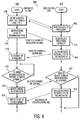
- Fig. 4 depicts an embodiment of a method 400 for radio resource reallocation between a SDR-based user terminal and a base station. This example is applicable, for example, to a combined TD-SCDMA and TD-MBMS homogenous radio system.
- a process 402 is included in each SDR-based user terminal, and a process 404 is included in the base station servicing them.
- Processes 402 and 404 negotiate with one another to find a workable allocation of resources if the user terminal has inadequate peak processing resources.
- One solution is to work out non-conflicting traffic slots (TS) in which the TD-SCDMA and TD-MBMS traffic slots are not simultaneously requiring processor resources.
- a step 406 completes user terminal (UE) initialization.
- a step 408 works with new user access requests to the base station (BS).
- a step 410 discovers the user terminal's processing capabilities and sends these in a coded format to the base station.
- a step 412 registers the user terminal processing capabilities.
- a step 414 allocates the radio resources, e.g., TS, to the specific user terminal.
- a step 416 makes its TD-SCDMA link available on the channels the base station has dedicated for it.
- a step 418 tests to see if the TD-MBMS has been activated or a channel switch should be prepared. If so, a step 420 updates the channel selection to the base station.
- a step 422 checks to see if the current radio resource allocations need to be adjusted. If so, a step 424 reallocates the traffic slot resources to a specific user terminal. A step 426 switches then to the TD-MBMS channel.
- MBMS systems have no uplink channel. So the user terminals report selected channels in TD-MBMS to a base station through the up-link channel in TD-SCDMA, since the TD-SCDMA and TD-MBMS are combined into one homogenous radio system. The system continuously updates the TD-MBMS channel selection information.
- the base station In order for a user terminal to receive a TD-MBMS signal, it must first send the desired channel number to the base station.
- the channel number is the label of a specific multi-media data stream, which can be directly linked to end users instruction.
- the user terminal does not need to know the TD-MBMS channel and TS mapping relationship.
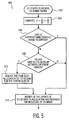
- the base station will de-map the number of TD-MBMS requested by the user terminal into the number of traffic slots. Then the base station determines whether the user terminal can support the services requests. If not, it determines how best to adjust the radio resource allocations that will enable the user terminal to work.
- the base station already has user terminal capability information for each radio resource service. Such judgment is based on, 1 - a M - b N > 0 where, M and N represent the respective upper limitations on the TD-SCDMA and TD-MBMS processing capabilities of the user terminal. Parameters a and b represent the number of traffic slots received for the required TD-SCDMA and TD-MBMS service. If 1 - a M - b N , is greater than zero, then the specific SDR-based user terminal is judged to be able to concurrently support the requested service. Otherwise, it cannot do all the processing needed of it in real-time. The base station will need to make appropriate adjustments.
- the base station determines that the SDR-based user terminal does not have the capability to support the concurrent processing for both TD-SCDMA and TD-MBMS, a check is made to see if there is any overlap between the TD-SCDMA and TD-MBMS traffic slots for the specific user. No overlap means the user terminal can handle both the TD-SCDMA and TD-MBMS traffic. Otherwise, the base station needs to adjust, for example, the TD-SCDMA traffic slots.
- the base station adjusts the TD-SCDMA traffic slot because the traffic slot in TD-SCDMA is dedicated to each specific user. The adjustment will only influence the receiving user terminal. If the system were to change the time sequence of the TD-MBMS channels, many users would be affected because TD-MBMS is a broadcasting system.
- the traffic slot adjustment processing should stagger the traffic slots of different radio services.
- the above-described technique is applicable to a Software-Defined Radio terminal and especially to homogeneous multi-radio systems, e.g., 2G, 3G/B3G cellular systems, WLAN series, Wi-Max, Bluetooth, ZigBee, Digital TV, GPS, etc.
- the technique is also useful in single radio systems and heterogeneous multi-radio systems that need to process different kinds of data packages in parallel.
- Embodiments of the present invention include a multi-task management scheme for software-defined radio homogeneous multi-radio systems.
- the processing capacity of each SDR-based user terminal is self-quantified and self-reported with unified benchmarks to base station.
- the system allocates the physical layer resource to each user terminal in accordance with its processing capacity. If the SDR-based user terminal asks for a new service, the system checks the processing capability records, and makes a decision to accept or adjust the physical resource allocation. When adjusting the physical resource allocation, the system can stagger the occurrence data bursts of different services, and thus alleviate computational load peaks. Such maximizes the adaptation of the SDR-based user terminal, and optimizes the use of its limited processing capabilities.
Landscapes
- Engineering & Computer Science (AREA)
- Computer Networks & Wireless Communication (AREA)
- Signal Processing (AREA)
- Mobile Radio Communication Systems (AREA)
Claims (11)
- Radio logicielle (SDR) comprenant :une tête de réception radiofréquence (106, 108) destinée à la réception sans fil d'au moins deux services de communication ;une unité de bande de base (110) comprenant un processeur non dédié avec un logiciel dédié pour assurer un traitement en bande de base desdits services de communication accordés par la tête de réception radiofréquence ;un dispositif pour évaluer des conflits dans ledit traitement en bande de base qui excéderaient les capacités de calcul maximales de l'unité de bande de base (110) à des instants particuliers ; etun mécanisme de réallocation pour ajuster lesdits services de communication afin d'éliminer lesdits conflits d'évaluation dans ledit traitement en bande de base en décalant autrement les tâches qui se chevauchent ;dans laquelle l'unité de bande de base (110) peut être dimensionnée pour fournir moins que les capacités de calcul maximales qui seraient autrement nécessaires pour faire face auxdits conflits dans ledit traitement en bande de base.
- Radio logicielle selon la revendication 1, comprenant en outre :une tête de réception radiofréquence appropriée pour des services de communication dits services multimédia de diffusion générale/diffusion sélective à division dans le temps (TD-MBMS) ; etun logiciel spécifique de TD-MBMS inclus dans l'unité de bande de base.
- Radio logicielle selon la revendication 1, comprenant en outre :un processus pour signaler les capacités de calcul d'un terminal d'utilisateur à une station de base.
- Radio logicielle selon la revendication 1, comprenant en outre :un processus pour signaler les capacités de calcul d'un terminal d'utilisateur à une station de base ; etun mécanisme de réallocation prévu pour des ajustements au niveau de ladite station de base qui vont résulter en une adaptation desdites capacités de calcul dudit terminal d'utilisateur.
- Radio logicielle selon la revendication 1, dans laquelle le mécanisme de réallocation est configuré pour ajuster des créneaux temporels de services de radio concomitants de manière à ce qu'il n'y ait pas de chevauchement entre des créneaux temporels d'un terminal d'utilisateur spécifique.
- Terminal d'utilisateur de radio logicielle (SDR) multi-protocole multistandard, comprenant au moins une radio logicielle telle que revendiquée dans la revendication 1, comprenant en outre :un processeur programmable pour remplacer le matériel dédié destiné à l'accord et à la démodulation de chaque service de radio, et qui a des capacités de traitement maximales limitées ;un processus destiné à des calculs qui vérifient si une allocation présente du terminal d'utilisateur aura pour résultat des conflits de traitement qui excéderaient lesdites capacités de traitement maximales.
- Terminal d'utilisateur selon la revendication 6, dans lequel :le processus destiné à des calculs et le mécanisme de réallocation sont mis en oeuvre dans des applications à créneaux de trafic, dans lesquelles une quelconque possibilité d'arrivée simultanée ou de chevauchement de créneaux de trafic provenant des services de radio respectifs est prévue, et, si de quelconques conflits significatifs résultent d'une allocation courante du terminal d'utilisateur, ces allocations sont alors redistribuées pour parvenir à un résultat sans conflits.
- Procédé pour terminal d'utilisateur de radio logicielle (SDR) multi-protocole multistandard, comprenant :l'envoi d'une information de station de base relative aux capacités de calcul et aux ressources d'un terminal d'utilisateur particulier ; etun calcul destiné à savoir si ledit terminal d'utilisateur a une capacité de calcul suffisante pour assumer des services de radio concomitants ;si ledit terminal d'utilisateur n'a pas de capacité de calcul suffisante pour assumer des services de radio concomitants dans son unique processeur en bande de base, la vérification d'un quelconque chevauchement entre des créneaux temporels d'un terminal d'utilisateur spécifique ; etun ajustement des créneaux temporels desdits services de radio concomitants de manière à ce qu'il n'y ait aucun chevauchement entre des créneaux temporels d'un terminal d'utilisateur spécifique.
- Procédé selon la revendication 8, dans lequel le calcul destiné à savoir si ledit terminal d'utilisateur a une capacité de calcul suffisante pour assumer des services de radio concomitants comprend un calcul destiné à savoir si ledit terminal d'utilisateur a une capacité de calcul suffisante pour assumer des services de radio concomitants sur la base de la formule :

dans laquelle M et N représentent une limite de capacité de calcul supérieure dudit terminal d'utilisateur, et a et b représentent le nombre de créneaux de trafic qui doivent être reçus pour chaque service de radio. - Procédé selon la revendication 8, consistant en outre à :prévoir une tête de réception radiofréquence destinée à la réception sans fil d'au moins deux services de communication ;prévoir une unité de bande de base comprenant un processeur non dédié avec un logiciel dédié pour assurer un traitement en bande de base desdits services de communication accordés par la tête de réception radiofréquence ;prévoir un dispositif pour évaluer des conflits dans ledit traitement en bande de base qui excéderaient les capacités de calcul maximales de l'unité de bande de base à des instants particuliers ; etprévoir un mécanisme de réallocation pour ajuster lesdits services de communication afin d'éliminer lesdits conflits d'évaluation dans ledit traitement en bande de base en décalant autrement les tâches qui se chevauchent ;dans lequel l'unité de bande de base peut être dimensionnée pour fournir moins que les capacités de calcul maximales qui seraient, autrement, nécessaires pour faire face auxdits conflits dans ledit traitement en bande de base.
- Procédé selon la revendication 8, comprenant en outre un ajustement des créneaux temporels desdits services de radio concomitants de manière à ce qu'il n'y ait aucun chevauchement entre des créneaux temporels d'un terminal d'utilisateur spécifique.
Applications Claiming Priority (2)
| Application Number | Priority Date | Filing Date | Title |
|---|---|---|---|
| US2989608P | 2008-02-19 | 2008-02-19 | |
| PCT/IB2009/050668 WO2009104144A1 (fr) | 2008-02-19 | 2009-02-18 | Radio logicielle |
Publications (2)
| Publication Number | Publication Date |
|---|---|
| EP2255444A1 EP2255444A1 (fr) | 2010-12-01 |
| EP2255444B1 true EP2255444B1 (fr) | 2012-01-25 |
Family
ID=40755153
Family Applications (1)
| Application Number | Title | Priority Date | Filing Date |
|---|---|---|---|
| EP09713276A Not-in-force EP2255444B1 (fr) | 2008-02-19 | 2009-02-18 | Radio logicielle |
Country Status (4)
| Country | Link |
|---|---|
| US (1) | US8687524B2 (fr) |
| EP (1) | EP2255444B1 (fr) |
| AT (1) | ATE543261T1 (fr) |
| WO (1) | WO2009104144A1 (fr) |
Families Citing this family (4)
| Publication number | Priority date | Publication date | Assignee | Title |
|---|---|---|---|---|
| CA2719913C (fr) * | 2008-04-01 | 2016-10-11 | Sensus Spectrum Llc | Passerelle domestique definie par un logiciel universel |
| US8559383B2 (en) * | 2009-11-20 | 2013-10-15 | Nokia Corporation | Multiradio control |
| US9748979B2 (en) | 2014-10-04 | 2017-08-29 | Taphere! Technology, Llc | System for providing software defined radio on a device |
| US9787460B2 (en) | 2015-07-16 | 2017-10-10 | LGS Innovations LLC | Self-interference channel estimation system and method |
Family Cites Families (9)
| Publication number | Priority date | Publication date | Assignee | Title |
|---|---|---|---|---|
| US5999990A (en) * | 1998-05-18 | 1999-12-07 | Motorola, Inc. | Communicator having reconfigurable resources |
| EP1260028A2 (fr) | 2000-01-24 | 2002-11-27 | Radioscape Limited | Station de base sans fil numerique |
| JP3843040B2 (ja) * | 2001-09-26 | 2006-11-08 | 松下電器産業株式会社 | セルサーチ方法及び通信端末装置 |
| US20040063425A1 (en) * | 2002-09-30 | 2004-04-01 | Kabushiki Kaisha Toshiba | Wireless communication terminal |
| CN1275480C (zh) * | 2003-07-31 | 2006-09-13 | 上海贝尔阿尔卡特股份有限公司 | 一种多标准软件无线电(sdr)基带处理方法 |
| US7856611B2 (en) * | 2005-02-17 | 2010-12-21 | Samsung Electronics Co., Ltd. | Reconfigurable interconnect for use in software-defined radio systems |
| US20080052397A1 (en) * | 2006-08-24 | 2008-02-28 | Ramanathan Venkataraman | Future locking of resources |
| US8331248B2 (en) * | 2007-06-06 | 2012-12-11 | Futurewei Technologies, Inc. | System and method for dynamic resource allocation in wireless communications networks |
| US9112547B2 (en) * | 2007-08-31 | 2015-08-18 | Adc Telecommunications, Inc. | System for and method of configuring distributed antenna communications system |
-
2009
- 2009-02-18 EP EP09713276A patent/EP2255444B1/fr not_active Not-in-force
- 2009-02-18 US US12/918,125 patent/US8687524B2/en not_active Expired - Fee Related
- 2009-02-18 WO PCT/IB2009/050668 patent/WO2009104144A1/fr not_active Ceased
- 2009-02-18 AT AT09713276T patent/ATE543261T1/de active
Also Published As
| Publication number | Publication date |
|---|---|
| EP2255444A1 (fr) | 2010-12-01 |
| ATE543261T1 (de) | 2012-02-15 |
| WO2009104144A1 (fr) | 2009-08-27 |
| US20100329156A1 (en) | 2010-12-30 |
| US8687524B2 (en) | 2014-04-01 |
Similar Documents
| Publication | Publication Date | Title |
|---|---|---|
| US11831422B2 (en) | Apparatus, system and method of transmitting a PPDU over a 320 megahertz channel bandwidth | |
| US11218273B2 (en) | Signal transmission method, related device, and system | |
| US8649341B2 (en) | Joint management of radio and transport resources | |
| JP3802372B2 (ja) | 移動通信システム | |
| EP0720405B1 (fr) | Communication cellulaire à accès multiple possédant une allocation dynamique des canaux temporels et une interférence réduite lors de l'unisation de canaux identiques | |
| US20140029488A1 (en) | Method, base station and mobile station for tdd operation in a communication system | |
| US8446850B2 (en) | Method and apparatus for providing broadcast services | |
| US20190297659A1 (en) | Resource scheduling method and apparatus, and base station | |
| US7580386B2 (en) | Cooperative scheduling of master and slave base station transmissions to provide coexistence between networks | |
| EP2011350A1 (fr) | Procédé pour indiquer la capacité d'une station mobile à un réseau | |
| US8792923B2 (en) | Radio base station, radio communication terminal, radio communication system, radio communication method and communication management method, using allocation of shared frequency | |
| EP2255444B1 (fr) | Radio logicielle | |
| US8699387B2 (en) | Device and control procedure for FDD and non-FDD bandwidth | |
| CA2454151C (fr) | Methode et dispositif de concession de communications d'arrivee multiples | |
| CA2601747C (fr) | Procedes permettant d'informer des stations mobiles d'architectures de canal de commande | |
| US12520199B2 (en) | Adaptive resource allocation for a wireless telecommunication network fronthaul link | |
| CN1131608C (zh) | 控制基站的方法和基站 | |
| WO2007123519A1 (fr) | Ordonnancement cooperatif de transmission de station de base maitre et esclave pour fournir une coexistence entre des reseaux | |
| CN102067471B (zh) | 在无线通信网络中的资源管理 | |
| US8149792B2 (en) | Allocation of spreading codes for telecommunications channels | |
| CN1726733A (zh) | 混合网络中在用户方面发送数据的方法 | |
| JP5290258B2 (ja) | 無線リソース変換装置 | |
| WO2008078004A1 (fr) | Procédé, appareil, système de communications, programme informatique, produit et module de programme informatique |
Legal Events
| Date | Code | Title | Description |
|---|---|---|---|
| PUAI | Public reference made under article 153(3) epc to a published international application that has entered the european phase |
Free format text: ORIGINAL CODE: 0009012 |
|
| 17P | Request for examination filed |
Effective date: 20100920 |
|
| AK | Designated contracting states |
Kind code of ref document: A1 Designated state(s): AT BE BG CH CY CZ DE DK EE ES FI FR GB GR HR HU IE IS IT LI LT LU LV MC MK MT NL NO PL PT RO SE SI SK TR |
|
| AX | Request for extension of the european patent |
Extension state: AL BA RS |
|
| DAX | Request for extension of the european patent (deleted) | ||
| GRAP | Despatch of communication of intention to grant a patent |
Free format text: ORIGINAL CODE: EPIDOSNIGR1 |
|
| GRAS | Grant fee paid |
Free format text: ORIGINAL CODE: EPIDOSNIGR3 |
|
| GRAA | (expected) grant |
Free format text: ORIGINAL CODE: 0009210 |
|
| AK | Designated contracting states |
Kind code of ref document: B1 Designated state(s): AT BE BG CH CY CZ DE DK EE ES FI FR GB GR HR HU IE IS IT LI LT LU LV MC MK MT NL NO PL PT RO SE SI SK TR |
|
| REG | Reference to a national code |
Ref country code: GB Ref legal event code: FG4D |
|
| REG | Reference to a national code |
Ref country code: CH Ref legal event code: EP |
|
| REG | Reference to a national code |
Ref country code: AT Ref legal event code: REF Ref document number: 543261 Country of ref document: AT Kind code of ref document: T Effective date: 20120215 |
|
| REG | Reference to a national code |
Ref country code: IE Ref legal event code: FG4D |
|
| REG | Reference to a national code |
Ref country code: DE Ref legal event code: R096 Ref document number: 602009004912 Country of ref document: DE Effective date: 20120322 |
|
| REG | Reference to a national code |
Ref country code: NL Ref legal event code: VDEP Effective date: 20120125 |
|
| LTIE | Lt: invalidation of european patent or patent extension |
Effective date: 20120125 |
|
| PG25 | Lapsed in a contracting state [announced via postgrant information from national office to epo] |
Ref country code: IS Free format text: LAPSE BECAUSE OF FAILURE TO SUBMIT A TRANSLATION OF THE DESCRIPTION OR TO PAY THE FEE WITHIN THE PRESCRIBED TIME-LIMIT Effective date: 20120525 Ref country code: BG Free format text: LAPSE BECAUSE OF FAILURE TO SUBMIT A TRANSLATION OF THE DESCRIPTION OR TO PAY THE FEE WITHIN THE PRESCRIBED TIME-LIMIT Effective date: 20120425 Ref country code: LT Free format text: LAPSE BECAUSE OF FAILURE TO SUBMIT A TRANSLATION OF THE DESCRIPTION OR TO PAY THE FEE WITHIN THE PRESCRIBED TIME-LIMIT Effective date: 20120125 Ref country code: BE Free format text: LAPSE BECAUSE OF FAILURE TO SUBMIT A TRANSLATION OF THE DESCRIPTION OR TO PAY THE FEE WITHIN THE PRESCRIBED TIME-LIMIT Effective date: 20120125 Ref country code: NO Free format text: LAPSE BECAUSE OF FAILURE TO SUBMIT A TRANSLATION OF THE DESCRIPTION OR TO PAY THE FEE WITHIN THE PRESCRIBED TIME-LIMIT Effective date: 20120425 Ref country code: NL Free format text: LAPSE BECAUSE OF FAILURE TO SUBMIT A TRANSLATION OF THE DESCRIPTION OR TO PAY THE FEE WITHIN THE PRESCRIBED TIME-LIMIT Effective date: 20120125 Ref country code: HR Free format text: LAPSE BECAUSE OF FAILURE TO SUBMIT A TRANSLATION OF THE DESCRIPTION OR TO PAY THE FEE WITHIN THE PRESCRIBED TIME-LIMIT Effective date: 20120125 |
|
| PG25 | Lapsed in a contracting state [announced via postgrant information from national office to epo] |
Ref country code: LV Free format text: LAPSE BECAUSE OF FAILURE TO SUBMIT A TRANSLATION OF THE DESCRIPTION OR TO PAY THE FEE WITHIN THE PRESCRIBED TIME-LIMIT Effective date: 20120125 Ref country code: PT Free format text: LAPSE BECAUSE OF FAILURE TO SUBMIT A TRANSLATION OF THE DESCRIPTION OR TO PAY THE FEE WITHIN THE PRESCRIBED TIME-LIMIT Effective date: 20120525 Ref country code: GR Free format text: LAPSE BECAUSE OF FAILURE TO SUBMIT A TRANSLATION OF THE DESCRIPTION OR TO PAY THE FEE WITHIN THE PRESCRIBED TIME-LIMIT Effective date: 20120426 Ref country code: PL Free format text: LAPSE BECAUSE OF FAILURE TO SUBMIT A TRANSLATION OF THE DESCRIPTION OR TO PAY THE FEE WITHIN THE PRESCRIBED TIME-LIMIT Effective date: 20120125 Ref country code: FI Free format text: LAPSE BECAUSE OF FAILURE TO SUBMIT A TRANSLATION OF THE DESCRIPTION OR TO PAY THE FEE WITHIN THE PRESCRIBED TIME-LIMIT Effective date: 20120125 |
|
| REG | Reference to a national code |
Ref country code: AT Ref legal event code: MK05 Ref document number: 543261 Country of ref document: AT Kind code of ref document: T Effective date: 20120125 |
|
| PG25 | Lapsed in a contracting state [announced via postgrant information from national office to epo] |
Ref country code: MC Free format text: LAPSE BECAUSE OF NON-PAYMENT OF DUE FEES Effective date: 20120229 Ref country code: CY Free format text: LAPSE BECAUSE OF FAILURE TO SUBMIT A TRANSLATION OF THE DESCRIPTION OR TO PAY THE FEE WITHIN THE PRESCRIBED TIME-LIMIT Effective date: 20120125 |
|
| PG25 | Lapsed in a contracting state [announced via postgrant information from national office to epo] |
Ref country code: RO Free format text: LAPSE BECAUSE OF FAILURE TO SUBMIT A TRANSLATION OF THE DESCRIPTION OR TO PAY THE FEE WITHIN THE PRESCRIBED TIME-LIMIT Effective date: 20120125 Ref country code: DK Free format text: LAPSE BECAUSE OF FAILURE TO SUBMIT A TRANSLATION OF THE DESCRIPTION OR TO PAY THE FEE WITHIN THE PRESCRIBED TIME-LIMIT Effective date: 20120125 Ref country code: SE Free format text: LAPSE BECAUSE OF FAILURE TO SUBMIT A TRANSLATION OF THE DESCRIPTION OR TO PAY THE FEE WITHIN THE PRESCRIBED TIME-LIMIT Effective date: 20120125 Ref country code: CZ Free format text: LAPSE BECAUSE OF FAILURE TO SUBMIT A TRANSLATION OF THE DESCRIPTION OR TO PAY THE FEE WITHIN THE PRESCRIBED TIME-LIMIT Effective date: 20120125 Ref country code: SI Free format text: LAPSE BECAUSE OF FAILURE TO SUBMIT A TRANSLATION OF THE DESCRIPTION OR TO PAY THE FEE WITHIN THE PRESCRIBED TIME-LIMIT Effective date: 20120125 Ref country code: EE Free format text: LAPSE BECAUSE OF FAILURE TO SUBMIT A TRANSLATION OF THE DESCRIPTION OR TO PAY THE FEE WITHIN THE PRESCRIBED TIME-LIMIT Effective date: 20120125 |
|
| REG | Reference to a national code |
Ref country code: IE Ref legal event code: MM4A |
|
| PG25 | Lapsed in a contracting state [announced via postgrant information from national office to epo] |
Ref country code: IT Free format text: LAPSE BECAUSE OF FAILURE TO SUBMIT A TRANSLATION OF THE DESCRIPTION OR TO PAY THE FEE WITHIN THE PRESCRIBED TIME-LIMIT Effective date: 20120125 Ref country code: SK Free format text: LAPSE BECAUSE OF FAILURE TO SUBMIT A TRANSLATION OF THE DESCRIPTION OR TO PAY THE FEE WITHIN THE PRESCRIBED TIME-LIMIT Effective date: 20120125 |
|
| PLBE | No opposition filed within time limit |
Free format text: ORIGINAL CODE: 0009261 |
|
| STAA | Information on the status of an ep patent application or granted ep patent |
Free format text: STATUS: NO OPPOSITION FILED WITHIN TIME LIMIT |
|
| 26N | No opposition filed |
Effective date: 20121026 |
|
| PG25 | Lapsed in a contracting state [announced via postgrant information from national office to epo] |
Ref country code: AT Free format text: LAPSE BECAUSE OF FAILURE TO SUBMIT A TRANSLATION OF THE DESCRIPTION OR TO PAY THE FEE WITHIN THE PRESCRIBED TIME-LIMIT Effective date: 20120125 Ref country code: IE Free format text: LAPSE BECAUSE OF NON-PAYMENT OF DUE FEES Effective date: 20120218 |
|
| REG | Reference to a national code |
Ref country code: DE Ref legal event code: R097 Ref document number: 602009004912 Country of ref document: DE Effective date: 20121026 |
|
| PG25 | Lapsed in a contracting state [announced via postgrant information from national office to epo] |
Ref country code: MK Free format text: LAPSE BECAUSE OF FAILURE TO SUBMIT A TRANSLATION OF THE DESCRIPTION OR TO PAY THE FEE WITHIN THE PRESCRIBED TIME-LIMIT Effective date: 20120125 |
|
| PG25 | Lapsed in a contracting state [announced via postgrant information from national office to epo] |
Ref country code: ES Free format text: LAPSE BECAUSE OF FAILURE TO SUBMIT A TRANSLATION OF THE DESCRIPTION OR TO PAY THE FEE WITHIN THE PRESCRIBED TIME-LIMIT Effective date: 20120506 |
|
| PG25 | Lapsed in a contracting state [announced via postgrant information from national office to epo] |
Ref country code: MT Free format text: LAPSE BECAUSE OF FAILURE TO SUBMIT A TRANSLATION OF THE DESCRIPTION OR TO PAY THE FEE WITHIN THE PRESCRIBED TIME-LIMIT Effective date: 20120125 |
|
| REG | Reference to a national code |
Ref country code: CH Ref legal event code: PL |
|
| PG25 | Lapsed in a contracting state [announced via postgrant information from national office to epo] |
Ref country code: CH Free format text: LAPSE BECAUSE OF NON-PAYMENT OF DUE FEES Effective date: 20130228 Ref country code: LI Free format text: LAPSE BECAUSE OF NON-PAYMENT OF DUE FEES Effective date: 20130228 |
|
| PG25 | Lapsed in a contracting state [announced via postgrant information from national office to epo] |
Ref country code: TR Free format text: LAPSE BECAUSE OF FAILURE TO SUBMIT A TRANSLATION OF THE DESCRIPTION OR TO PAY THE FEE WITHIN THE PRESCRIBED TIME-LIMIT Effective date: 20120125 |
|
| PG25 | Lapsed in a contracting state [announced via postgrant information from national office to epo] |
Ref country code: LU Free format text: LAPSE BECAUSE OF NON-PAYMENT OF DUE FEES Effective date: 20120218 |
|
| PG25 | Lapsed in a contracting state [announced via postgrant information from national office to epo] |
Ref country code: HU Free format text: LAPSE BECAUSE OF FAILURE TO SUBMIT A TRANSLATION OF THE DESCRIPTION OR TO PAY THE FEE WITHIN THE PRESCRIBED TIME-LIMIT Effective date: 20090218 |
|
| REG | Reference to a national code |
Ref country code: FR Ref legal event code: PLFP Year of fee payment: 8 |
|
| REG | Reference to a national code |
Ref country code: FR Ref legal event code: PLFP Year of fee payment: 9 |
|
| REG | Reference to a national code |
Ref country code: FR Ref legal event code: PLFP Year of fee payment: 10 |
|
| PGFP | Annual fee paid to national office [announced via postgrant information from national office to epo] |
Ref country code: FR Payment date: 20210120 Year of fee payment: 13 |
|
| PGFP | Annual fee paid to national office [announced via postgrant information from national office to epo] |
Ref country code: GB Payment date: 20210120 Year of fee payment: 13 Ref country code: DE Payment date: 20210120 Year of fee payment: 13 |
|
| REG | Reference to a national code |
Ref country code: DE Ref legal event code: R119 Ref document number: 602009004912 Country of ref document: DE |
|
| GBPC | Gb: european patent ceased through non-payment of renewal fee |
Effective date: 20220218 |
|
| PG25 | Lapsed in a contracting state [announced via postgrant information from national office to epo] |
Ref country code: FR Free format text: LAPSE BECAUSE OF NON-PAYMENT OF DUE FEES Effective date: 20220228 |
|
| PG25 | Lapsed in a contracting state [announced via postgrant information from national office to epo] |
Ref country code: GB Free format text: LAPSE BECAUSE OF NON-PAYMENT OF DUE FEES Effective date: 20220218 Ref country code: DE Free format text: LAPSE BECAUSE OF NON-PAYMENT OF DUE FEES Effective date: 20220901 |