EP2255809A1 - Timbre médicamenteux - Google Patents
Timbre médicamenteux Download PDFInfo
- Publication number
- EP2255809A1 EP2255809A1 EP09715635A EP09715635A EP2255809A1 EP 2255809 A1 EP2255809 A1 EP 2255809A1 EP 09715635 A EP09715635 A EP 09715635A EP 09715635 A EP09715635 A EP 09715635A EP 2255809 A1 EP2255809 A1 EP 2255809A1
- Authority
- EP
- European Patent Office
- Prior art keywords
- salt
- medicated patch
- medicinal agent
- acid
- medicated
- Prior art date
- Legal status (The legal status is an assumption and is not a legal conclusion. Google has not performed a legal analysis and makes no representation as to the accuracy of the status listed.)
- Granted
Links
Images





Classifications
-
- A—HUMAN NECESSITIES
- A61—MEDICAL OR VETERINARY SCIENCE; HYGIENE
- A61K—PREPARATIONS FOR MEDICAL, DENTAL OR TOILETRY PURPOSES
- A61K31/00—Medicinal preparations containing organic active ingredients
- A61K31/33—Heterocyclic compounds
- A61K31/395—Heterocyclic compounds having nitrogen as a ring hetero atom, e.g. guanethidine or rifamycins
- A61K31/495—Heterocyclic compounds having nitrogen as a ring hetero atom, e.g. guanethidine or rifamycins having six-membered rings with two or more nitrogen atoms as the only ring heteroatoms, e.g. piperazine or tetrazines
- A61K31/4985—Pyrazines or piperazines ortho- or peri-condensed with heterocyclic ring systems
-
- A—HUMAN NECESSITIES
- A61—MEDICAL OR VETERINARY SCIENCE; HYGIENE
- A61K—PREPARATIONS FOR MEDICAL, DENTAL OR TOILETRY PURPOSES
- A61K9/00—Medicinal preparations characterised by special physical form
- A61K9/70—Web, sheet or filament bases ; Films; Fibres of the matrix type containing drug
- A61K9/7023—Transdermal patches and similar drug-containing composite devices, e.g. cataplasms
- A61K9/703—Transdermal patches and similar drug-containing composite devices, e.g. cataplasms characterised by shape or structure; Details concerning release liner or backing; Refillable patches; User-activated patches
- A61K9/7038—Transdermal patches of the drug-in-adhesive type, i.e. comprising drug in the skin-adhesive layer
- A61K9/7046—Transdermal patches of the drug-in-adhesive type, i.e. comprising drug in the skin-adhesive layer the adhesive comprising macromolecular compounds
- A61K9/7053—Transdermal patches of the drug-in-adhesive type, i.e. comprising drug in the skin-adhesive layer the adhesive comprising macromolecular compounds obtained by reactions only involving carbon to carbon unsaturated bonds, e.g. polyvinyl, polyisobutylene, polystyrene
- A61K9/7061—Polyacrylates
Definitions
- the present invention relates to a medicated patch.
- Medicinal agents are available on the market in the form of acid addition salts, from the viewpoint of handleability and stability. However, it is generally known that when medicinal agents of acid addition salts are directly applied by transdermal administration, their tissue absorption tends to be lower. On the other hand, it is also known that free bases (free forms) of medicinal agents are preferred for tissue absorption.
- Patent document 1 Japanese Unexamined Patent Application Publication No. 2007-16020
- the present inventors have found, however, that when a medicinal agent free form and metal salt (sodium chloride or the like) are formed by neutralization reaction of the acid addition salt of the medicinal agent, and the metal salt is neutralized together with an adhesive base material without removal by filtration treatment, for application of a more convenient production method, the production stability and production properties of the medicated patch tend to be reduced.
- a medicinal agent free form and metal salt sodium chloride or the like
- varenicline or a pharmaceutically acceptable salt of varenicline is used as the medicinal agent, coloration-causing reactions also occur in addition to the problems mentioned above, and that it is often not possible to obtain sufficient stability and absorption properties as a medicated patch.
- varenicline or a pharmaceutically acceptable salt of varenicline is contained as the medicinal agent, adjustment of the acid value of the medicated patch to a specified value can yield a medicated patch having high cutaneous permeability and excellent pharmaceutical stability.
- the invention provides a medicated patch comprising a medicinal agent and an adhesive base material and having an acid value of no greater than 28, wherein the medicinal agent is varenicline or a pharmaceutically acceptable salt of varenicline.
- the acid value of the medicated patch is the value calculated by the following formula (1), according to the Japanese Pharmacopeia.
- the acid value of the medicated patch is limited as explained above according to the invention, decomposition of the medicinal agent in the medicated patch is presumably inhibited and the pharmaceutical stability is thereby improved. Also according to the invention having the construction described above, the tissue permeability (especially cutaneous permeability) of the medicinal agent is drastically improved.
- the medicated patch of the invention has a pH of preferably 7.5 or higher and more preferably 9.0 or higher.
- the pH of the medicated patch is the pH of an aqueous solution obtained by mixing the medicated patch in water to dissolve the water-soluble components. If the pH of the medicated patch is 7.5 or higher, the cutaneous permeability will tend to be significantly improved.
- the adhesive base material is preferably an acrylic-based polymer.
- the acrylic-based polymer is not particularly restricted so long as the acid value of the medicated patch is no greater than 28, but it preferably contains no carboxyl groups. Such an acrylic-based polymer will allow the acid value to be easily reduced below the prescribed value, so that the pharmaceutical stability can be even further improved.
- the acrylic-based polymer also preferably has a hydroxyl group. Such an acrylic-based polymer can further improve the tissue permeability (cutaneous permeability) of the medicinal agent.
- the acrylic-based polymer also preferably contains no vinyl acetate as a monomer unit. Such an acrylic-based polymer can further inhibit decomposition of the medicinal agent in the medicated patch, and prevent coloration of the medicated patch.
- the medicinal agent is preferably produced from an acid addition salt of varenicline.
- the varenicline acid addition salt is preferably a hydrochloride, acetic acid salt, sulfuric acid salt, maleic acid salt, oxalic acid salt, citric acid salt, hydroiodic acid salt, hydrobromic acid salt, mesylic acid salt, tartaric acid salt or succinic acid salt of varenicline or a pharmaceutically acceptable salt of varenicline.
- the medicated patch of the invention preferably further comprises a salt.
- the salt contains a substance, or its constituent component, that can bond with the medicinal agent to form a medicinal agent salt, and the salt content is no greater than the number of moles of the substance or its constituent component that bonds with the medicinal agent to form the medicinal agent salt, when a medicinal agent salt has been formed with the same number of moles as the medicinal agent in the medicated patch.
- the salt may be produced during production of the medicated patch described above, or it may produced in the medicated patch after production (that is, during the storage after production and before use).
- the salt is preferably at least one salt selected from the group consisting of metal chlorides, metal bromides, metal iodides, organic acid metal salts and ammonium salts, and more preferably it is at least one salt selected from the group consisting of sodium chloride, calcium chloride, aluminum chloride, stannous chloride, ferric chloride, magnesium chloride, potassium chloride, sodium citrate, sodium oxalate, sodium tartrate, sodium bromide and sodium succinate.
- the medicated patch of the invention preferably further comprises an adsorbent.
- the adsorbent is an inorganic and/or organic material substance that adsorbs the polar solvent in the medicated patch, i.e. a polar solvent such as water produced and accumulated in the medicated patch during the neutralization reaction, or water used and accumulated in the medicated patch during the production process, methanol, ethanol or the like.
- the present inventors have found that when a medicinal agent free form and metal salt (sodium chloride or the like) are formed by neutralization reaction of the acid addition salt of the medicinal agent, and the metal salt is neutralized together with an adhesive base material without removal by filtration treatment, for application of a more convenient production method, the metal salt generated by the neutralization reaction can undergo crystal deposition, and the crystals aggregate and grow with time, thus undesirably affecting the medicated patch production efficiency, pharmaceutical stability and pharmaceutical properties.
- a medicinal agent free form and metal salt sodium chloride or the like
- the present inventors have also found that salts derived from medicinal agent acid addition salts produced after neutralization reaction can undergo aggregation and growth centered on trace residues of the polar solvent (such as water, methanol or ethanol) used for production of the medicated patch and for the neutralization reaction, and that such aggregation and growth can be inhibited by including an adsorbent in the pressure-sensitive adhesive layer.
- the polar solvent such as water, methanol or ethanol
- a medicated patch further comprising the aforementioned adsorbent has the salt type and content limited as explained above and also includes an adsorbent that adsorbs the polar solvent, the aggregation and growth of produced salts with time can be inhibited even when the medicinal agent salt is neutralized to produce the medicated patch, and this improves the medicated patch production efficiency, pharmaceutical stability and pharmaceutical properties.
- the adsorbent is preferably at least one adsorbent selected from the group consisting of talc, kaolin, bentonite, hydrous silica, fumed silica, polyvinylpyrrolidone, propylene glycol, aminoalkyl methacrylate copolymer, crospovidone, carboxyvinyl polymer, lactic acid, acetic acid, zinc oxide, dextrin and dry aluminum hydroxide gel.
- the medicated patch of the invention may be applied directly onto the skin as a "salve", or a pressure-sensitive adhesive layer may be formed on a support and the medicated patch included in the pressure-sensitive adhesive layer for application as a plaster or the like.
- a medicated patch comprising varenicline or a pharmaceutically acceptable salt of varenicline as the medicinal agent, having high cutaneous permeability for the medicinal agent, and having excellent pharmaceutical stability.
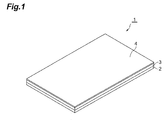
- 1 Medicated patch
- 2 support
- 3 pressure-sensitive adhesive layer
- 4 release sheet.
- Fig. 1 is a perspective view of a preferred embodiment of the medicated patch of the invention.
- the medicated patch 1 comprises a support 2, a pressure-sensitive adhesive layer 3 laminated on the support 2, and a release sheet 4 attached to the pressure-sensitive adhesive layer 3.
- the pressure-sensitive adhesive layer 3 is a medicated patch comprising a medicinal agent and an adhesive base material and having an acid value of no greater than 28, wherein the medicinal agent is varenicline or a pharmaceutically acceptable salt of varenicline.
- the pressure-sensitive adhesive layer 3 may consist of two or more laminated layers, and it may be laminated on both sides instead of only one side of the support 2.
- the release sheet 4 is peeled off before attachment for use.
- the material of the support 2 is not particularly restricted so long as it can generally be used in a medicated patch, and it may be elastic or non-elastic.
- a film or sheet formed of a synthetic resin such as polyethylene terephthalate, polyethylene, polypropylene, polybutadiene, ethylenevinyl acetate polymer, polyvinyl chloride, polyester, nylon or polyurethane, or a laminated body, porous membrane, foam, woven fabric or nonwoven fabric thereof, or a paper material.
- the pressure-sensitive adhesive layer 3 contains an adhesive base material.
- the adhesive base material may serve as the base of the pressure-sensitive adhesive layer 3 and is not particularly restricted so long as the acid value of the medicated patch is no greater than 28, but it is preferably an acrylic-based polymer.
- acrylic-based polymers there may be suitably used homopolymers or copolymers of (meth)acrylic acid esters, or copolymers of alkyl (meth)acrylate esters and other monomers.
- the term "(meth)acrylic” includes "acrylic" and "methacrylic".
- As (meth)acrylic acid esters and alkyl (meth)acrylate esters there may suitably used (meth)acrylic acid esters of alkyl alcohols or alkyldiols.
- C4-16 alkyl alcohols and alkyldiols are preferred.
- monomers there may be suitably used monomers having no carboxyl groups and having glass transition temperatures of at least room temperature (25°C) when polymerized with the monomers alone.
- examples of such monomers include styrene, methylstyrene, N-vinylpyrrolidone and (meth)acrylamide.
- An adhesive base material having such a structure can adequately inhibit decomposition of the medicinal agent by the adhesive base material, to prevent coloration of the medicated patch while also obtaining a high pharmaceutical property.
- the acrylic-based polymer is not particularly restricted so long as the acid value of the medicated patch is no greater than 28, but it preferably contains no carboxyl groups. Such an acrylic-based polymer will allow the acid value to be easily reduced below the prescribed value, so that the pharmaceutical stability can be even further improved.
- the acrylic-based polymer also preferably has a hydroxyl group. Such an acrylic-based polymer can further improve the tissue permeability (cutaneous permeability) of the medicinal agent.
- the acrylic-based polymer also preferably contains no vinyl acetate as a monomer unit. Such an acrylic-based polymer can further inhibit decomposition of the medicinal agent in the medicated patch, and prevent coloration of the medicated patch.
- acrylic-based polymers with no carboxyl groups examples include DURO-TAK900A, DURO-TAK2510, DURO-TAK4098, DURO-TAK2287 and DURO-TAK2516 (Henkel Japan, Ltd.).
- acrylic-based polymers containing no vinyl acetate as monomer units examples include DURO-TAK900A, DURO-TAK2510 and DURO-TAK2100 (Henkel Japan, Ltd.).
- acrylic-based polymers containing hydroxyl groups examples include DURO-TAK2510A, DURO-TAK2287 and DURO-TAK2516 (Henkel Japan, Ltd.).
- Such adhesive base materials may be used alone or in combinations of two or more.
- the content of the adhesive base material is preferably 10-99 wt%, more preferably 15-90 wt% and most preferably 20-85 wt% based on the total weight of the pressure-sensitive adhesive layer 3, in consideration of formation of the pressure-sensitive adhesive layer 3 and tissue permeability of the active ingredient.
- the type and content of the adhesive base material is preferably selected so that the pressure-sensitive adhesive layer 3 has an adhesive property.
- the phrase "has an adhesive property” means that it "exhibits a 1 second creep compliance larger than 1 ⁇ 10 -6 cm 2 /dyne” at the applied temperature (for example, 30°C-40°C) (see Handbook of Pressure-sensitive Adhesive Technology, Edited by D. Satas, pg.172, (1989 )).
- the pressure-sensitive adhesive layer 3 comprises varenicline or a pharmaceutically acceptable salt of varenicline, as a medicinal agent.
- the medicinal agent contains the free form of the medicinal agent salt obtained from the neutralization reaction, and the salt form remaining from incomplete neutralization.
- the content is preferably 0.5-50 wt% and most preferably 1-30 wt% based on the total weight of the pressure-sensitive adhesive layer 3.
- the medicinal agent is more preferably a medicinal agent produced from an acid addition salt.
- acid addition salt forms include hydrochlorides, acetic acid salts, sulfuric acid salts, maleic acid salts, oxalic acid salts, citric acid salts, hydroiodic acid salts, hydrobromic acid salts, mesylic acid salts, tartaric acid salts and succinic acid salts.
- the type of salt produced by the neutralization reaction is determined by the medicinal agent salt and the neutralizer used for neutralization.
- a metal salt is preferred as the salt produced by the neutralization reaction.
- the salt produced when the acid addition salt of the medicinal agent is neutralized is preferably at least one selected from the group consisting of metal chlorides, metal bromides, metal iodides, organic acid metal salts and ammonium salts, and among these it is preferably at least one type selected from sodium chloride, calcium chloride, aluminum chloride, stannous chloride, ferric chloride, magnesium chloride, potassium chloride, sodium citrate, sodium oxalate, sodium tartrate, sodium bromide and sodium succinate.
- the neutralizer used for the neutralization reaction is not particularly restricted, but when a medicinal agent produced from an acid addition salt is used as the medicinal agent, a basic substance is suitable, while from the viewpoint of complete desalting of the medicinal agent acid addition salt, a strong base is suitable and an alkali metal hydroxide is especially preferred.
- Specific examples of neutralizers include sodium hydroxide, potassium hydroxide and magnesium hydroxide, among which sodium hydroxide is especially preferred.
- the neutralizer is added to convert all or a portion of the basic medicinal agent to a free base (free form).
- the neutralizer is preferably added in a range of 0.5-4 equivalents and more preferably in a range of 0.5-1 equivalents with respect to the acid-base equivalents of the medicinal agent.
- the addition may be all at once or divided in several doses during the production process.
- the medicated patch 1 produced by the neutralization reaction comprises a salt produced by neutralization in the pressure-sensitive adhesive layer 3.
- the salt in the pressure-sensitive adhesive layer 3 will tend to undergo aggregation and growth centered on trace residues of the polar solvent (such as water, methanol or ethanol) used for production of the medicated patch or for the neutralization reaction, but aggregation and growth of the salt is inhibited by including an adsorbent in the pressure-sensitive adhesive layer 3. Adding an adsorbent can ensure uniform dispersion of the crystals. This will improve the production efficiency, pharmaceutical stability and pharmaceutical properties of the medicated patch 1.
- the polar solvent such as water, methanol or ethanol
- adsorbent is therefore preferably added when the pressure-sensitive adhesive layer 3 contains a salt in the composition.
- Suitable adsorbents include the inorganic materials and organic materials mentioned as having hygroscopicity, moisture proofness and adsorption properties among the additives mentioned in " Dictionary of Drug Additives 2000, April 28, 2000, First Printing ", as well as aminoalkyl methacrylate copolymers and zinc oxide, which are not mentioned in " Dictionary of Drug Additives 2000 " but are known to have adsorption properties.
- minerals such as talc, kaolin and bentonite; silicon compounds such as fumed silica (AEROSIL R and the like) and hydrous silica; metal compounds such as zinc oxide and dry aluminum hydroxide gel; weak acids such as lactic acid and acetic acid; sugars such as dextrin; and high molecular polymers such as polyvinylpyrrolidone, propylene glycol, aminoalkyl methacrylate copolymer, crospovidone and carboxyvinyl polymer, which may also be used in combinations of two or more if necessary.
- silicon compounds such as fumed silica (AEROSIL R and the like) and hydrous silica
- metal compounds such as zinc oxide and dry aluminum hydroxide gel
- weak acids such as lactic acid and acetic acid
- sugars such as dextrin
- high molecular polymers such as polyvinylpyrrolidone, propylene glycol, aminoalkyl methacrylate copolymer, crospovidone and
- the content of the adsorbent in the pressure-sensitive adhesive layer 3 is preferably 0.5-50 wt% based on the total weight of the pressure-sensitive adhesive layer 3. At 0.5 wt% or lower, it may not be possible to obtain a sufficient effect of inhibiting aggregation and growth of the salt crystals and uniformly dispersing the crystals. At above 50 wt%, the pressure-sensitive adhesive force of the pressure-sensitive adhesive layer 3 will tend to be reduced, thus hampering attachment.
- An acetic acid and/or acetic acid salt is preferably contained in the medicated patch, of which all or a portion of the medicinal agent is essentially a varenicline free base.
- a medicated patch that contains acetic acid and/or an acetic acid salt is resistant to decomposition of the medicinal agent with time and has excellent content stability.
- the medicated patch 1 of the invention may also contain a tackifier, plasticizer, absorption accelerator, antioxidant, filler, crosslinking agent, preservative or ultraviolet absorber as necessary, in addition to the composition described above.
- tackifiers include rosin-based resins such as ESTER GUM (trade name of Arakawa Chemical Industries, Ltd.), HARIESTER (trade name of Harima Chemicals, Inc.), PENTALYN (trade name of Eastman Chemical Company) and FORAL (trade name of Eastman Chemical Company), terpene-based resins such as YS Resin (trade name of Yasuhara Chemical Co., Ltd.) and Piccolyte (trade name of Loos & Dilworth, Inc.), petroleum resins such as ARKON (trade name of Arakawa Chemical Industries, Ltd.), REGALREZ (trade name of Eastman Chemical Company), PICCOLASTIC (trade name of Eastman Chemical Company), ESCOREZ (trade name of Exxon Corp.), WINGTACK (trade name of Goodyear) and QUINTONE (trade name of Zeon Corp.), and phenol-based resins, xylene-based resins and the like.
- ESTER GUM trade name of Arakawa Chemical Industries, Ltd.
- tackifiers may be used as single types alone, or two or more thereof may be used in combination.
- the content of the tackifier is preferably 10-90 wt%, more preferably 15-70 wt% and most preferably 20-60 wt% based on the total weight of the pressure-sensitive adhesive layer 3, in consideration of sufficient pressure-sensitive adhesive force of the medicated patch 1 and low local irritation during peeling.
- plasticizers include petroleum-based oils such as paraffin-based process oils, naphthene-based process oils and aromatic-based process oils; squalane and squalene; plant-based oils such as olive oil, camellia oil, castor oil, tall oil and peanut oil; dibasic acid esters such as dibutyl phthalate and dioctyl phthalate; liquid rubbers such as polybutene and liquid isoprene rubber; and diethylene glycol, polyethylene glycol, propylene glycol, dipropylene glycol and the like. Any of these may be used alone or in combinations of two or more.
- Liquid paraffin and liquid polybutene are especially preferred for use for this embodiment.
- the content of the plasticizer in the pressure-sensitive adhesive layer 3 is preferably 1-60 wt%, more preferably 2-50 wt% and most preferably 3-40 wt% based on the total weight of the pressure-sensitive adhesive layer 3, in consideration of maintaining sufficient pressure-sensitive adhesive force as a medicated patch 1.
- absorption accelerators there may be suitably used aliphatic alcohols such as isostearyl alcohol, fatty acids such as capric acid, fatty acid derivatives such as propyleneglycol monolaurate and isopropyl myristate, and propylene glycol, polyethylene glycol, diethanolamine laurate and the like. These absorption accelerators may be used alone or in combinations of two or more.
- the content of the absorption accelerator is preferably 1-30 wt%, more preferably 3-20 wt% and most preferably 5-15 wt% based on the total weight of the medicated patch 1, in consideration of obtaining sufficient permeability and low local irritation of the active ingredient with respect to tissue, for the obtained patch.
- fillers include aluminum hydroxide, calcium carbonate, magnesium carbonate; silicic acid salts such as aluminum silicate and magnesium silicate; and silicic acid, barium sulfate, calcium sulfate, calcium zincate, zinc oxide, titanium oxide and the like.
- ultraviolet absorbers examples include p-aminobenzoic acid derivatives, anthranilic acid derivatives, salicylic acid derivatives, coumarin derivatives, amino acid-based compounds, imidazoline derivatives, pyrimidine derivatives, dioxane derivatives and the like.
- antioxidants may be added to a total of preferably no greater than 5 wt%, even more preferably no greater than 3 wt% and most preferably no greater than 1 wt%, based on the total weight of the pressure-sensitive adhesive layer 3.
- a mixture for formation of the pressure-sensitive adhesive layer 3 is prepared.
- a mixer is used to dissolve or disperse the adhesive base material, medicinal agent acid addition salt, neutralizer, adsorbent and other components in the solvent for the adhesive base material, to obtain a mixture for formation of the pressure-sensitive adhesive layer 3.
- the solvent for the adhesive base material may be toluene, hexane, ethyl acetate, cyclohexane, heptane, butyl acetate, ethanol, methanol, xylene, isopropanol or the like. These are appropriately selected according to the components to be dissolved or dispersed, and one may be used alone or a combination of two or more used together.
- the obtained mixture for formation of the pressure-sensitive adhesive layer 3 is spread directly onto a support 2 to form a pressure-sensitive adhesive layer 3, or it is spread onto a release-treated paper sheet or film to form the pressure-sensitive adhesive layer 3 and the support 2 situated thereover for contact transfer of the pressure-sensitive adhesive layer 3 onto the support 2.
- a release sheet 4 for protection of the pressure-sensitive adhesive layer 3 is attached to the pressure-sensitive adhesive layer 3 to obtain a medicated patch 1.
- the produced medicated patch 1 is preferably stored in the presence of a storage stabilizer.
- storage stabilizers there may be used desiccants, deoxidizers and the like, and examples of common materials as desiccants include any substances with the capacity of physical or chemical adsorption, among which there may be mentioned zeolite, silica gel, alumina, molecular sieves and montmorillonite.
- Sorb-It Absorbents & Desiccants Corporation of America
- PharmaKeep Mitsubishi Gas Chemical Co., Inc.
- the deoxidizer used for the invention is not particularly restricted so long as it can absorb, adsorb or remove oxygen.
- deoxidizers can also be used. Examples include active iron oxide, hydrosulfite, butylhydroxytoluene and the like, in powdered, granular or tablet form.
- Commercial products include AGELESS (Mitsubishi Gas Chemical Co., Inc.) and VITALON (Toagosei Co., Ltd.).
- a mixer was used to premix varenicline tartrate, sodium hydroxide, crospovidone and methanol (solvent), and then a base material (A) (acrylic adhesive base material without a functional group in the monomer) was added and mixed therewith to obtain a pressure-sensitive adhesive solution. This was spread onto a release-treated film, the solvent was removed by drying to form a pressure-sensitive adhesive layer, and then a support was placed thereover and the pressure-sensitive adhesive layer was contact transferred to obtain a medicated patch.
- Table 1 shows the contents for each of Examples 1-3 and Comparative Example 1.
- Medicated patches for Examples 2 and 3 were obtained in the same manner as Example 1, except that the bases used were base material (B) (acrylic adhesive base material with a hydroxyl group in the monomer) and base material (C) (acrylic adhesive base material with a carboxyl group in the monomer, instead of base material (A).
- base material (B) (acrylic adhesive base material with a hydroxyl group in the monomer)
- base material (C) (acrylic adhesive base material with a carboxyl group in the monomer, instead of base material (A).
- a medicated patch for Comparative Example 1 was obtained in the same manner as Example 1, except that base material (D) (acrylic adhesive base material with a carboxyl group in the monomer) was used instead of base material (A).
- base material (D) acrylic adhesive base material with a carboxyl group in the monomer
- the acid value was measured for the medicated patches of Examples 1-3 and Comparative Example 1. The results are shown in Table 2. The acid value was measured by the following procedure, as the acid value for Examples 1-3 and Comparative Example 1 according to the definition of acid value in the Japanese Pharmacopeia.
- a tetrahydrofuran/methanol/water mixture was added to the pressure-sensitive adhesive layer 1, and subjected to ultrasonic treatment to produce a uniform dispersion.
- a potassium hydroxide (hereunder abbreviated as KOH) aqueous solution was added dropwise to the solution and the pH was measured with a glass electrode/reference electrode.
- the neutralization point is the center point (point of inflection) where the pH changes abruptly, and when multiple points of inflection exist, the neutralization point is the point of inflection of highest pH.
- the dropwise addition amount calculated in the same manner with the solvent alone was subtracted as blank from the dropwise addition amount up to the neutralization point and considered the actual necessary amount of KOH, and the acid value was calculated from formula (1).
- Skin was peeled from the back of a hairless mouse and was fitted in a flow-through cell (5 cm 2 ) with the dermis side on the receptor layer side, and with exterior circulation of hot water set so that the skin surface temperature was 32°C.
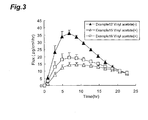
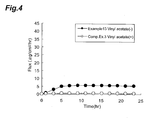
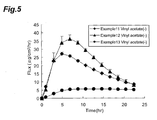
- the patches of Examples 1-3 and Comparative Example 1 were each attached to the stratum corneum side, and phosphate-buffered saline at pH 7.4 was used on the receptor layer for sampling up to 24 hours every 120 minutes, at a rate of 5 mL/hr.
- the flow rate of the obtained receptor solution was measured precisely every hour, and the medicinal agent concentration was measured by high performance liquid chromatography (HPLC).
- HPLC high performance liquid chromatography
- Example 1 Example 2
- Example 3 Comp. Ex. 1 Varenicline tartrate 10.0 10.0 10.0 10.0 Sodium hydroxide 2.2 2.2 2.2 2.2 Crospovidone 3.0 3.0 3.0 3.0 Base material
- Example 1 Example 2
- Example 3 Comp. Ex. 1 Acid value 0.6 0.0 20.8 34.8 Maximum FLUX ( ⁇ g/cm 2 /hr) 22.5 34.1 6.8 0.3
- Medicated patches were obtained for Examples 5-8 in the same manner as Example 4, except that the basic substances used were potassium hydroxide, sodium acetate, sodium carbonate and triethanolamine, instead of sodium hydroxide.
- the contents are shown in Table 3.
- a medicated patch was produced in the same manner as Example 1, except that no basic substance was added. The contents are shown in Table 3.
- the release sheet was removed from the medicated patch and a portion for 20 mg of the pressure-sensitive adhesive layer weight was used as a sample. After adding 20 mL of water to the sample, irradiating it with ultrasonic waves for 6 hours and then shaking for 3 hours, the pH of the obtained solution was measured with a pH meter comprising a glass electrode/reference electrode.
- Example 4 Example 5
- Example 6 Example 7
- Example 8 Comp. Ex.2 Varenicline tartrate 10.0 10.0 10.0 10.0 10.0 10.0 10.0 Basic sub-stance Sodium hydroxide 2.2 - - - - - Potassium hydroxide - 3.1 - - - - Sodium acetate - - 4.5 - - - Sodium carbonate - - - 2.9 - - Triethanolamine - - - - 8.3 - Crospovidone 3.0 3.0 3.0 3.0 3.0 3.0 DURO-TAK 387-2510 84.8 83.9 82.5 84.1 78.7 87.0 (Units: parts by weight)
- Example 4 Example 5
- Example 6 Example 7
- Example 8 Comp. Ex.2 Acid value 0.0 0.6 6.7 6.2 20.8 29.7 Patch pH 9.27 9.09 8.78 7.66 7.81 4.79 Maximum FLUX( ⁇ g/cm 2 /hr) 35.4 21.2 11.9 7.5 5.0 0.1
- Medicated patches for Examples 9 and 10 were obtained in the same manner as Example 4 (2.0 equivalents), except that the amounts of sodium hydroxide were 1.6 and 1.2 equivalents with respect to the medicinal agent. Comparative Example 2 (0 equivalents) was used as the control. The contents are shown in Table 5, and the patch pH and maximum flux values measured in the same manner as Example 4 are shown in Table 6.
- Example 4 Example 9
- Example 10 Comp. Ex. 2 Varenicline tartrate 10.0 10.0 10.0 10.0 Sodium hydroxide 2.2 (2.0 equiv) 1.8 (1.6 equiv) 1.3 (1.2 equiv) - Crospovidone 3.0 3.0 3.0 3.0 DURO-TAK 387-2510 84.8 85.2 85.7 87.0 (Units: parts by weight)
- Example 4 Example 9
- Example 10 Comp. Ex. 2 Patch pH 9.27 8.75 8.43 4.79 Maximum FLUX( ⁇ g/cm 2 /hr) 35.4 12.4 8.5 0.1
- a medicated patch (using DURO-TAK 387-2510 as the base material) was obtained in the same manner as Example 4.
- Medicated patches for Examples 10-14 were obtained in the same manner as Example 8, except that DURO-TAK 87-2100, DURO-TAK 87-4098, DURO-TAK 87-2287, DURO-TAK 87-2516 and DURO-TAK 87-2196 (all products of Henkel Japan, Ltd.) were used instead of DURO-TAK 87-900A as the base materials.
- varenicline in each of the obtained medicated patches was extracted by addition of tetrahydrofuran and methanol, shaking and ultrasonic treatment, and the medicinal agent content for each single patch was measured by HPLC. The results are shown as medicinal agent content (%) of the plaster weight.
- Example 11 Example 12
- Example 13 Example 14
- Example 15 Example 16 Comp. Ex. 3 Acid value 0.6 0.0 20.8 - - - 34.8 Content in plaster (%) 99.8 99.5 94.6 79.8 65.5 78.2 80.5 Patch coloration evaluation A A A A B C C Maximum FLUX ( ⁇ g/cm 2 /hr) 27.0 36.3 5.5 19.3 14.7 19.3 0.5
- a mixer was used to premix varenicline tartrate, sodium hydroxide and liquid paraffin, and then DURO-TAK 87-900A and a separately prepared mixed solution comprising SIS (styrene-isoprene-styrene block copolymer), alicyclic hydrocarbon resin and toluene (solvent) was added thereto and mixed therewith to obtain a pressure-sensitive adhesive solution.
- SIS styrene-isoprene-styrene block copolymer
- alicyclic hydrocarbon resin and toluene (solvent) was added thereto and mixed therewith to obtain a pressure-sensitive adhesive solution.
- This was spread onto a release-treated film, the solvent was removed by drying to form a pressure-sensitive adhesive layer, and then a support was placed thereover and the pressure-sensitive adhesive layer was contact transferred to obtain a medicated patch.
- the contents and maximum flux values are shown in Table 9. The units of the values for the contents are parts by weight.
- Example 17 Varenicline tartrate 10.0 Sodium hydroxide 2.2 Crospovidone 3.0 Liquid paraffin 18.1 Base material and tackifying resin DURO-TAK 87-900A 34.9 SIS 15.9 Alicyclic hydrocarbon resin 15.9 Maximum FLUX ( ⁇ g/cm 2 /hr) 32.5
- PharmaKeep (Mitsubishi Gas Chemical Co., Inc.) was enclosed as a preservative together with the medicated patch of Example 4 during its storage inside a package.
- PharmaKeep is a preservative with primarily a drying function and deoxidizing function, and the type used for this example was selected to keep the interior of the package at a humidity of 30%.
- the medicated patch was stored in the same manner as Example 18, except that Sorb-It (Adsorbents & Desiccants Corporation of America) was used as the preservative.
- Sorb-It is a preservative with a drying function which maintains a dry state inside packages.
- the medicated patch was stored in the same manner as Example 18, except that AGELESS (Mitsubishi Gas Chemical Co., Inc.) was used as the preservative.
- AGELESS is a preservative with a deoxidizing function, which maintains an oxygen concentration of no greater than 0.1% inside packages.
- the medicated patch was stored in the same manner as Example 18, except that no preservative was included.
- Example 18 Preservatives (function) Example 18
- Example 19 Example 20
- Example 21 PharmaKeep (Drying, deoxidizing) + - - - SORB-IT (Drying) - + - - AGELESS (Deoxidizing) - - + - Content (%: wrt initial) 99.5 99.1 98.7 91.2
- a mixer was used for prior addition and mixing of an organic solvent with varenicline tartrate, sodium hydroxide, crospovidone, acetic acid, sodium acetate and an acrylic adhesive base material (DURO-TAK 387-2510 by Henkel Japan, Ltd.), and a uniform coating solution was obtained. This was spread onto a release-treated film, the solvent was removed by drying to form a pressure-sensitive adhesive layer, and then a support was placed thereover and the pressure-sensitive adhesive layer was contact transferred to obtain a medicated patch. The contents are shown in Table 11.
- a medicated patch was obtained in the same manner as Example 22, except that no acetic acid or sodium acetate was added, and the amount of sodium hydroxide added was 1.6 equivalents, which was below the desalting equivalent (2.0).
- a medicated patch (using DURO-TAK 387-2510 as the base material) was obtained in the same manner as Example 4.
- Example 22 Example 23
- Example 24 Varenicline tartrate 10.0 10.0 10.0 Sodium hydroxide 2.2 1.8 2.2
- DURO-TAK 387-2510 82.8 85.2 84.8
- Acetic acid 0.7 - - Sodium acetate 1.3 - - Content (%: wrt initial) 99.1 98.9 97.1 (Addition units: parts by weight)
- a medicated patch comprising varenicline or a pharmaceutically acceptable salt of varenicline as the medicinal agent, having high cutaneous permeability for the medicinal agent, and having excellent pharmaceutical stability.
Landscapes
- Health & Medical Sciences (AREA)
- Bioinformatics & Cheminformatics (AREA)
- Engineering & Computer Science (AREA)
- Animal Behavior & Ethology (AREA)
- Epidemiology (AREA)
- Life Sciences & Earth Sciences (AREA)
- Pharmacology & Pharmacy (AREA)
- General Health & Medical Sciences (AREA)
- Public Health (AREA)
- Veterinary Medicine (AREA)
- Medicinal Chemistry (AREA)
- Chemical & Material Sciences (AREA)
- Dermatology (AREA)
- Medicinal Preparation (AREA)
- Pharmaceuticals Containing Other Organic And Inorganic Compounds (AREA)
Applications Claiming Priority (2)
| Application Number | Priority Date | Filing Date | Title |
|---|---|---|---|
| JP2008046804 | 2008-02-27 | ||
| PCT/JP2009/052175 WO2009107476A1 (fr) | 2008-02-27 | 2009-02-09 | Timbre médicamenteux |
Publications (3)
| Publication Number | Publication Date |
|---|---|
| EP2255809A1 true EP2255809A1 (fr) | 2010-12-01 |
| EP2255809A4 EP2255809A4 (fr) | 2011-05-04 |
| EP2255809B1 EP2255809B1 (fr) | 2017-08-23 |
Family
ID=41015879
Family Applications (3)
| Application Number | Title | Priority Date | Filing Date |
|---|---|---|---|
| EP09715573.3A Active EP2258369B1 (fr) | 2008-02-27 | 2009-02-09 | Timbre médicamenteux |
| EP09715476.9A Revoked EP2258355B1 (fr) | 2008-02-27 | 2009-02-09 | Patch |
| EP09715635.0A Active EP2255809B1 (fr) | 2008-02-27 | 2009-02-09 | Timbre médicamenteux |
Family Applications Before (2)
| Application Number | Title | Priority Date | Filing Date |
|---|---|---|---|
| EP09715573.3A Active EP2258369B1 (fr) | 2008-02-27 | 2009-02-09 | Timbre médicamenteux |
| EP09715476.9A Revoked EP2258355B1 (fr) | 2008-02-27 | 2009-02-09 | Patch |
Country Status (5)
| Country | Link |
|---|---|
| US (3) | US8871249B2 (fr) |
| EP (3) | EP2258369B1 (fr) |
| JP (3) | JP5537412B2 (fr) |
| ES (3) | ES2778724T3 (fr) |
| WO (3) | WO2009107477A1 (fr) |
Cited By (1)
| Publication number | Priority date | Publication date | Assignee | Title |
|---|---|---|---|---|
| CN107921043A (zh) * | 2015-08-29 | 2018-04-17 | 株式会社梅德瑞科思 | 含有酸捕捉剂的贴剂 |
Families Citing this family (41)
| Publication number | Priority date | Publication date | Assignee | Title |
|---|---|---|---|---|
| US9238025B2 (en) | 2009-05-21 | 2016-01-19 | Hisamitsu Pharmaceutical Co., Inc. | Transdermal preparation comprising a ropinirole derivative |
| JP2011074035A (ja) * | 2009-09-30 | 2011-04-14 | Sekisui Medical Co Ltd | 貼付剤 |
| JP5665330B2 (ja) * | 2010-02-24 | 2015-02-04 | 久光製薬株式会社 | ニコランジル分解抑制剤、経皮吸収製剤及び貼付剤 |
| WO2011105486A1 (fr) * | 2010-02-24 | 2011-09-01 | 久光製薬株式会社 | Timbre adhésif |
| JP5615899B2 (ja) * | 2010-02-24 | 2014-10-29 | 久光製薬株式会社 | 経皮吸収製剤 |
| JP5623102B2 (ja) * | 2010-03-12 | 2014-11-12 | 株式会社フジモト・コーポレーション | セレギリン含有貼付製剤 |
| WO2011118683A1 (fr) * | 2010-03-25 | 2011-09-29 | 東洋化学株式会社 | Patch pour utilisation médicale |
| JP5820469B2 (ja) | 2010-04-30 | 2015-11-24 | テイコク ファーマ ユーエスエー インコーポレーテッド | プロピニルアミノインダンの経皮組成物 |
| WO2011140431A1 (fr) * | 2010-05-06 | 2011-11-10 | Teva Pharmaceutical Industries Ltd. | Sels de la varénicline et leurs formes cristallines |
| EP2688561B1 (fr) | 2011-03-24 | 2018-08-22 | Teikoku Pharma USA, Inc. | Compositions transdermiques comprenant une couche d'agent actif et une couche de conversion d'agent actif |
| ES2657016T3 (es) * | 2011-05-31 | 2018-03-01 | Hisamitsu Pharmaceutical Co., Inc. | Parche cutáneo adhesivo que contiene ropinirol y producto envasado del mismo |
| KR101844625B1 (ko) * | 2011-05-31 | 2018-04-02 | 히사미쓰 세이야꾸 가부시키가이샤 | 로피니롤 함유 첩부제 및 그 포장체 |
| US8900626B2 (en) | 2011-06-20 | 2014-12-02 | Senju Usa, Inc. | Transdermal drug delivery system and method of using the same |
| US11123305B2 (en) | 2012-07-26 | 2021-09-21 | Hisamitsu Pharmaceutical Co., Inc. | Patch |
| EP2878299B1 (fr) * | 2012-07-26 | 2018-05-16 | Hisamitsu Pharmaceutical Co., Inc. | Timbre adhésif |
| JP6050896B2 (ja) | 2012-11-02 | 2016-12-21 | テイコク ファーマ ユーエスエー インコーポレーテッド | プロピニルアミノインダン経皮組成物 |
| EP2968392B1 (fr) | 2013-03-15 | 2020-08-05 | Elixirgen Therapeutics, Inc. | Procédés d'utilisation de zscan4 afin de rajeunir des cellules humaines |
| JP5415645B1 (ja) | 2013-06-28 | 2014-02-12 | 久光製薬株式会社 | 貼付剤の製造方法、貼付剤及び包装体 |
| US20160199315A1 (en) * | 2013-08-23 | 2016-07-14 | Hisamitsu Pharmaceutical Co., Inc. | Adhesive patch |
| US9980920B2 (en) * | 2013-09-11 | 2018-05-29 | Medrx Co., Ltd. | Base composition for tape agent |
| JP6100150B2 (ja) * | 2013-12-06 | 2017-03-22 | 久光製薬株式会社 | 4−アミノピリジン含有貼付剤 |
| JP2016079102A (ja) * | 2014-10-10 | 2016-05-16 | テバ製薬株式会社 | ソリフェナシン含有製剤 |
| CN104636140B (zh) * | 2015-01-29 | 2018-05-29 | 小米科技有限责任公司 | 固件压缩方法、固件解压方法和装置 |
| CN112843023A (zh) * | 2015-07-27 | 2021-05-28 | 久光制药株式会社 | 含有阿塞那平的贴剂的制造方法 |
| CN107427509B (zh) | 2015-08-29 | 2021-06-15 | 美德阿利克斯株式会社 | 含有碱性药物和山梨酸的经皮吸收组成物 |
| KR102771688B1 (ko) * | 2016-09-07 | 2025-02-20 | 에스케이케미칼 주식회사 | 바레니클린의 경피 투여를 위한 약학 제제 |
| PL3338768T3 (pl) | 2016-12-20 | 2020-05-18 | Lts Lohmann Therapie-Systeme Ag | Transdermalny system terapeutyczny zawierający asenapinę |
| CN110087641B (zh) | 2016-12-20 | 2024-03-12 | 罗曼治疗系统股份公司 | 含有阿塞那平和聚硅氧烷或聚异丁烯的透皮治疗系统 |
| KR102302583B1 (ko) | 2017-02-24 | 2021-09-14 | 히사미쓰 세이야꾸 가부시키가이샤 | 첩부제 및 그 포장체 |
| JP2020525545A (ja) | 2017-06-26 | 2020-08-27 | エルテーエス ローマン テラピー−ジステーメ アーゲー | アセナピンおよびシリコーンアクリルハイブリッドポリマーを含有する経皮治療システム |
| DE102017115701B4 (de) * | 2017-07-12 | 2022-03-03 | Lts Lohmann Therapie-Systeme Ag | Fampridin-TTS |
| CN118806732A (zh) | 2018-06-20 | 2024-10-22 | 罗曼治疗系统股份公司 | 含有阿塞那平的透皮治疗系统 |
| BR112020026099A2 (pt) | 2018-06-20 | 2021-03-23 | Lts Lohmann Therapie-Systeme Ag | sistema terapêutico transdérmico que contém asenapina |
| JP7201389B2 (ja) * | 2018-07-20 | 2023-01-10 | プロクラフト、ディベロップメント、ベスローテン、フェンノートシャップ | 多層生成物を製造する方法 |
| US10919288B2 (en) * | 2018-07-20 | 2021-02-16 | Procraft Development Bv | Method of producing a multilayered product |
| CN114641286A (zh) | 2019-09-18 | 2022-06-17 | 久光制药株式会社 | 含有罗匹尼罗的贴附剂及罗匹尼罗的皮肤透过性提升方法 |
| KR102577838B1 (ko) | 2020-10-29 | 2023-09-12 | 히사미쓰 세이야꾸 가부시키가이샤 | 로피니롤 함유 첩부제 및 로피니롤의 피부 투과성 향상 방법 |
| JP7385614B2 (ja) * | 2021-03-10 | 2023-11-22 | 積水化学工業株式会社 | 貼付製剤 |
| JP2024520271A (ja) * | 2021-06-06 | 2024-05-24 | スタートン セラピューティクス インコーポレイテッド | 治療上有効な量のレナリドミドまたは他の免疫調節剤を投与するための経皮薬物送達システム |
| EP4380548A4 (fr) * | 2021-08-07 | 2025-07-09 | Lupin Ltd | Composition pharmaceutique orale solide stabilisée de varénicline |
| CN116370439A (zh) * | 2022-04-01 | 2023-07-04 | 江苏山信药业有限公司 | 一种伐尼克兰透皮贴剂及其制备方法和其应用 |
Family Cites Families (60)
| Publication number | Priority date | Publication date | Assignee | Title |
|---|---|---|---|---|
| US5059189A (en) * | 1987-09-08 | 1991-10-22 | E. R. Squibb & Sons, Inc. | Method of preparing adhesive dressings containing a pharmaceutically active ingredient |
| JP2733936B2 (ja) | 1987-11-19 | 1998-03-30 | トヨタ自動車株式会社 | 生産指示装置 |
| JPH01147233A (ja) | 1987-12-03 | 1989-06-08 | Daisen:Kk | 簡易住宅における室内の温度調節方法 |
| JPH01160475A (ja) | 1987-12-17 | 1989-06-23 | Hitachi Plant Eng & Constr Co Ltd | 微生物固定化装置 |
| DE69009540T2 (de) * | 1989-03-15 | 1994-09-29 | Nitto Denko Corp | Arzneimittel enthaltendes Heftpflaster. |
| CA2065311C (fr) | 1989-09-08 | 2000-01-11 | Chia-Ming Chiang | System matriciel solide pour la liberation transdermique d'un medicament |
| DE4210711A1 (de) | 1991-10-31 | 1993-05-06 | Schering Ag Berlin Und Bergkamen, 1000 Berlin, De | Transdermale therapeutische systeme mit kristallisationsinhibitoren |
| US5676968A (en) * | 1991-10-31 | 1997-10-14 | Schering Aktiengesellschaft | Transdermal therapeutic systems with crystallization inhibitors |
| JP3908795B2 (ja) * | 1994-11-29 | 2007-04-25 | 久光製薬株式会社 | ケトチフェン含有経皮投与製剤 |
| GB9511366D0 (en) | 1995-06-06 | 1995-08-02 | Smithkline Beecham Plc | Novel formulations |
| US5807570A (en) | 1995-09-29 | 1998-09-15 | Cygnus, Inc. | Transdermal administration of ropinirole and analogs thereof |
| DE19546024C2 (de) * | 1995-12-09 | 1998-09-10 | Lohmann Therapie Syst Lts | Transdermale pharmazeutische Zubereitung und deren Herstellung |
| JPH09299444A (ja) * | 1996-05-14 | 1997-11-25 | Sekisui Chem Co Ltd | ニトログリセリン貼付剤用包装体 |
| US7150881B2 (en) | 1997-06-26 | 2006-12-19 | Mylan Technologies, Inc. | Adhesive mixture for transdermal delivery of highly plasticizing drugs |
| JP4703795B2 (ja) | 1997-07-15 | 2011-06-15 | 帝國製薬株式会社 | 皮膚疾患治療用シート製剤 |
| JPH1147233A (ja) | 1997-07-30 | 1999-02-23 | Teikoku Seiyaku Co Ltd | 貼付剤および貼付剤の保存方法 |
| JPH11209271A (ja) * | 1998-01-23 | 1999-08-03 | Nitto Denko Corp | 経皮吸収製剤 |
| JPH11209270A (ja) * | 1998-01-22 | 1999-08-03 | Nitto Denko Corp | 経皮吸収製剤 |
| US6146656A (en) * | 1998-01-22 | 2000-11-14 | Nitto Denko Corporation | Percutaneous absorption preparation |
| DE19811218A1 (de) | 1998-03-14 | 1999-09-16 | Lohmann Therapie Syst Lts | Silikonhaftkleber mit vermindertem Kalten Fluß |
| DE19814087A1 (de) * | 1998-03-30 | 1999-10-14 | Lohmann Therapie Syst Lts | Feuchtigkeitsaktivierbares therapeutisches System |
| DE19814084B4 (de) * | 1998-03-30 | 2005-12-22 | Lts Lohmann Therapie-Systeme Ag | D2-Agonist enthaltendes transdermales therapeutisches System zur Behandlung des Parkinson-Syndroms und Verfahren zu seiner Herstellung |
| DE19814083C2 (de) | 1998-03-30 | 2002-02-07 | Lohmann Therapie Syst Lts | Verfahren zur Herstellung von transdermalen therapeutischen Systemen unter Verwendung von basischen Alkalimetallsalzen zur Umwandlung von Wirkstoffsalzen in die freien Basen |
| DE19828273B4 (de) * | 1998-06-25 | 2005-02-24 | Lts Lohmann Therapie-Systeme Ag | Transdermales therapeutisches System, enthaltend Hormone und Kristallisationsinhibitoren |
| US20050074487A1 (en) * | 1999-12-16 | 2005-04-07 | Tsung-Min Hsu | Transdermal and topical administration of drugs using basic permeation enhancers |
| AU2727801A (en) | 1999-12-16 | 2001-06-25 | Dermatrends, Inc. | Transdermal administration of phenylpropanolamine |
| US20030104041A1 (en) * | 1999-12-16 | 2003-06-05 | Tsung-Min Hsu | Transdermal and topical administration of drugs using basic permeation enhancers |
| US20020192243A1 (en) * | 1999-12-16 | 2002-12-19 | Tsung-Min Hsu | Transdermal and topical administration of drugs for the treatment of Alzheimer's disease using basic enhancers |
| US20020004065A1 (en) | 2000-01-20 | 2002-01-10 | David Kanios | Compositions and methods to effect the release profile in the transdermal administration of active agents |
| US20040028724A1 (en) | 2000-11-07 | 2004-02-12 | Takaaki Terahara | Pharmaceutical preparation of percutaneous absorption type |
| WO2002045701A2 (fr) * | 2000-12-05 | 2002-06-13 | Noven Pharmaceuticals, Inc. | Inhibition de la cristallisation de medicament dans des systemes d'administration transdermique et procedes d'utilisation |
| KR100846642B1 (ko) | 2001-03-07 | 2008-07-16 | 히사미쓰 세이야꾸 가부시키가이샤 | 첩부제 |
| US6830758B2 (en) | 2001-04-02 | 2004-12-14 | Lectec Corporation | Psoriasis patch |
| US20020192273A1 (en) | 2001-06-15 | 2002-12-19 | Teri Buseman | Therapeutic patch useful for the treatment of hemorrhoids |
| US7921999B1 (en) | 2001-12-20 | 2011-04-12 | Watson Laboratories, Inc. | Peelable pouch for transdermal patch and method for packaging |
| US20030180347A1 (en) * | 2002-03-19 | 2003-09-25 | W.F. Young, Incorporated | Patch for the delivery of topical agents |
| DE10220230A1 (de) | 2002-05-06 | 2003-11-27 | Sanol Arznei Schwarz Gmbh | Verwendung von Rotigotine zur Behandlung des Restless Leg Syndroms |
| EP1386604A1 (fr) * | 2002-07-30 | 2004-02-04 | Schwarz Pharma Ag | Systeme d'administation transdermique amélioré |
| JP4792193B2 (ja) | 2002-08-28 | 2011-10-12 | 久光製薬株式会社 | 貼付剤 |
| WO2004062600A2 (fr) | 2003-01-08 | 2004-07-29 | Lectec Corporation | Patch antiviral |
| JP2005168898A (ja) | 2003-12-12 | 2005-06-30 | Aruze Corp | 遊技機、遊技サーバおよび遊技システム |
| WO2005117886A1 (fr) | 2004-06-01 | 2005-12-15 | Hisamitsu Pharmaceutical Co., Inc. | Patch adhésif |
| US8252321B2 (en) * | 2004-09-13 | 2012-08-28 | Chrono Therapeutics, Inc. | Biosynchronous transdermal drug delivery for longevity, anti-aging, fatigue management, obesity, weight loss, weight management, delivery of nutraceuticals, and the treatment of hyperglycemia, alzheimer's disease, sleep disorders, parkinson's disease, aids, epilepsy, attention deficit disorder, nicotine addiction, cancer, headache and pain control, asthma, angina, hypertension, depression, cold, flu and the like |
| EP1802276A1 (fr) | 2004-10-15 | 2007-07-04 | Pfizer Products Inc. | Compositions et methodes d'administration par voie pulmonaire, sublinguale, orale et intranasale de varenicline |
| US20080138388A1 (en) * | 2005-02-04 | 2008-06-12 | Hisamitsu Pharmaceutical Co., Inc. | Transdermal Absorption Patch |
| WO2006114868A1 (fr) | 2005-04-20 | 2006-11-02 | Nichiban Co., Ltd. | Preparation medicinale pour une absorption percutanee |
| ATE415153T1 (de) * | 2005-06-06 | 2008-12-15 | Nitto Denko Corp | Pharmazeutische zusammensetzung zur perkutane absorption unter verwendung von einem metalchlorid, vorzugsweise natriumchlorid, zur vorbeugung von kohäsionsschwäche |
| JP4999366B2 (ja) * | 2005-06-06 | 2012-08-15 | 日東電工株式会社 | 経皮吸収製剤 |
| JP5025998B2 (ja) | 2005-06-06 | 2012-09-12 | 日東電工株式会社 | 経皮吸収製剤 |
| US20110086086A1 (en) * | 2005-07-26 | 2011-04-14 | Pfizer Inc | Transdermal system for varenicline |
| US9056061B2 (en) * | 2005-09-23 | 2015-06-16 | Alza Corporation | Transdermal nicotine salt delivery system |
| US8158152B2 (en) | 2005-11-18 | 2012-04-17 | Scidose Llc | Lyophilization process and products obtained thereby |
| JP4769575B2 (ja) | 2005-12-28 | 2011-09-07 | 帝國製薬株式会社 | 貼付剤及びその製造方法 |
| JP5684441B2 (ja) * | 2005-12-28 | 2015-03-11 | 久光製薬株式会社 | インドメタシン含有貼付剤 |
| JP5037831B2 (ja) * | 2006-02-15 | 2012-10-03 | 久光製薬株式会社 | 凝集力向上及び徐放化の外用貼付剤 |
| JP5010834B2 (ja) | 2006-02-20 | 2012-08-29 | 帝國製薬株式会社 | 貼付剤 |
| JP5097359B2 (ja) | 2006-05-09 | 2012-12-12 | 久光製薬株式会社 | ドネペジル経皮吸収型製剤 |
| CN101511371A (zh) | 2006-09-11 | 2009-08-19 | 救急药品工业株式会社 | 粘贴剂 |
| MX2009005043A (es) * | 2006-11-09 | 2009-05-25 | Pfizer Prod Inc | Polimorfos de intermedios nicotinicos. |
| WO2008105038A1 (fr) * | 2007-02-23 | 2008-09-04 | Nichiban Company Limited | Timbre adhésif pour mycose |
-
2009
- 2009-02-09 JP JP2010500638A patent/JP5537412B2/ja active Active
- 2009-02-09 WO PCT/JP2009/052177 patent/WO2009107477A1/fr not_active Ceased
- 2009-02-09 EP EP09715573.3A patent/EP2258369B1/fr active Active
- 2009-02-09 US US12/919,715 patent/US8871249B2/en active Active
- 2009-02-09 JP JP2010500637A patent/JP5485135B2/ja active Active
- 2009-02-09 WO PCT/JP2009/052175 patent/WO2009107476A1/fr not_active Ceased
- 2009-02-09 US US12/919,739 patent/US20110028880A1/en not_active Abandoned
- 2009-02-09 US US12/919,723 patent/US8580281B2/en active Active
- 2009-02-09 ES ES09715476T patent/ES2778724T3/es active Active
- 2009-02-09 WO PCT/JP2009/052181 patent/WO2009107479A1/fr not_active Ceased
- 2009-02-09 EP EP09715476.9A patent/EP2258355B1/fr not_active Revoked
- 2009-02-09 ES ES09715573.3T patent/ES2536206T3/es active Active
- 2009-02-09 JP JP2010500640A patent/JP6054013B2/ja active Active
- 2009-02-09 ES ES09715635.0T patent/ES2648197T3/es active Active
- 2009-02-09 EP EP09715635.0A patent/EP2255809B1/fr active Active
Cited By (5)
| Publication number | Priority date | Publication date | Assignee | Title |
|---|---|---|---|---|
| CN107921043A (zh) * | 2015-08-29 | 2018-04-17 | 株式会社梅德瑞科思 | 含有酸捕捉剂的贴剂 |
| EP3342412A4 (fr) * | 2015-08-29 | 2018-09-12 | Medrx Co., Ltd. | Préparation pharmaceutique collante comprenant un capteur d'acide |
| US10639374B2 (en) | 2015-08-29 | 2020-05-05 | Medrx Co., Ltd | Patch preparation containing an acid scavenger |
| EP3756659A1 (fr) * | 2015-08-29 | 2020-12-30 | MEDRx Co., Ltd. | Préparation pharmaceutique collante comprenant un capteur d'acide |
| CN107921043B (zh) * | 2015-08-29 | 2021-08-10 | 美德阿利克斯株式会社 | 含有酸捕捉剂的贴剂 |
Also Published As
| Publication number | Publication date |
|---|---|
| JP6054013B2 (ja) | 2016-12-27 |
| EP2258355B1 (fr) | 2020-01-22 |
| JP5485135B2 (ja) | 2014-05-07 |
| EP2258355A1 (fr) | 2010-12-08 |
| WO2009107477A1 (fr) | 2009-09-03 |
| EP2258369A4 (fr) | 2011-05-04 |
| JPWO2009107476A1 (ja) | 2011-06-30 |
| ES2648197T3 (es) | 2017-12-29 |
| ES2778724T3 (es) | 2020-08-11 |
| ES2536206T3 (es) | 2015-05-21 |
| JPWO2009107479A1 (ja) | 2011-06-30 |
| US20110002976A1 (en) | 2011-01-06 |
| US20110008398A1 (en) | 2011-01-13 |
| EP2255809A4 (fr) | 2011-05-04 |
| EP2258355A4 (fr) | 2011-05-04 |
| WO2009107476A1 (fr) | 2009-09-03 |
| JPWO2009107477A1 (ja) | 2011-06-30 |
| US20110028880A1 (en) | 2011-02-03 |
| EP2258369B1 (fr) | 2015-04-08 |
| US8580281B2 (en) | 2013-11-12 |
| EP2258369A1 (fr) | 2010-12-08 |
| EP2255809B1 (fr) | 2017-08-23 |
| WO2009107479A1 (fr) | 2009-09-03 |
| US8871249B2 (en) | 2014-10-28 |
| JP5537412B2 (ja) | 2014-07-02 |
Similar Documents
| Publication | Publication Date | Title |
|---|---|---|
| EP2255809B1 (fr) | Timbre médicamenteux | |
| EP2255802B1 (fr) | Timbre transdermique adhésif et produit conditionné | |
| EP2716287B1 (fr) | Patch transdermique adhésif contenant du ropinirole et son packaging associé | |
| EP2716286B1 (fr) | Timbre adhésif contenant du ropinirole et son emballage | |
| WO2015025767A1 (fr) | Patch adhésif | |
| KR102302582B1 (ko) | 첩부제 | |
| JP6306594B2 (ja) | 貼付剤 | |
| KR20230088789A (ko) | 로피니롤 함유 첩부제 및 로피니롤의 피부 투과성 향상 방법 |
Legal Events
| Date | Code | Title | Description |
|---|---|---|---|
| PUAI | Public reference made under article 153(3) epc to a published international application that has entered the european phase |
Free format text: ORIGINAL CODE: 0009012 |
|
| 17P | Request for examination filed |
Effective date: 20100917 |
|
| AK | Designated contracting states |
Kind code of ref document: A1 Designated state(s): AT BE BG CH CY CZ DE DK EE ES FI FR GB GR HR HU IE IS IT LI LT LU LV MC MK MT NL NO PL PT RO SE SI SK TR |
|
| AX | Request for extension of the european patent |
Extension state: AL BA RS |
|
| A4 | Supplementary search report drawn up and despatched |
Effective date: 20110331 |
|
| RIC1 | Information provided on ipc code assigned before grant |
Ipc: A61K 47/02 20060101ALI20110325BHEP Ipc: A61K 47/36 20060101ALI20110325BHEP Ipc: A61K 47/04 20060101ALI20110325BHEP Ipc: A61K 47/32 20060101ALI20110325BHEP Ipc: A61K 9/70 20060101AFI20110325BHEP Ipc: A61K 47/12 20060101ALI20110325BHEP Ipc: A61K 47/10 20060101ALI20110325BHEP |
|
| DAX | Request for extension of the european patent (deleted) | ||
| 17Q | First examination report despatched |
Effective date: 20120614 |
|
| REG | Reference to a national code |
Ref country code: DE Ref legal event code: R079 Ref document number: 602009047884 Country of ref document: DE Free format text: PREVIOUS MAIN CLASS: A61K0031498500 Ipc: A61K0009700000 |
|
| RIC1 | Information provided on ipc code assigned before grant |
Ipc: A61K 9/70 20060101AFI20170109BHEP Ipc: A61K 47/32 20060101ALI20170109BHEP Ipc: A61K 47/36 20060101ALI20170109BHEP Ipc: A61K 47/02 20060101ALI20170109BHEP Ipc: A61K 47/10 20170101ALI20170109BHEP Ipc: A61K 47/04 20060101ALI20170109BHEP Ipc: A61K 47/12 20060101ALI20170109BHEP Ipc: A61K 31/4985 20060101ALI20170109BHEP |
|
| GRAP | Despatch of communication of intention to grant a patent |
Free format text: ORIGINAL CODE: EPIDOSNIGR1 |
|
| INTG | Intention to grant announced |
Effective date: 20170315 |
|
| GRAS | Grant fee paid |
Free format text: ORIGINAL CODE: EPIDOSNIGR3 |
|
| GRAA | (expected) grant |
Free format text: ORIGINAL CODE: 0009210 |
|
| AK | Designated contracting states |
Kind code of ref document: B1 Designated state(s): AT BE BG CH CY CZ DE DK EE ES FI FR GB GR HR HU IE IS IT LI LT LU LV MC MK MT NL NO PL PT RO SE SI SK TR |
|
| REG | Reference to a national code |
Ref country code: GB Ref legal event code: FG4D |
|
| REG | Reference to a national code |
Ref country code: CH Ref legal event code: EP |
|
| REG | Reference to a national code |
Ref country code: AT Ref legal event code: REF Ref document number: 920580 Country of ref document: AT Kind code of ref document: T Effective date: 20170915 |
|
| REG | Reference to a national code |
Ref country code: IE Ref legal event code: FG4D |
|
| REG | Reference to a national code |
Ref country code: DE Ref legal event code: R096 Ref document number: 602009047884 Country of ref document: DE |
|
| REG | Reference to a national code |
Ref country code: NL Ref legal event code: MP Effective date: 20170823 |
|
| REG | Reference to a national code |
Ref country code: ES Ref legal event code: FG2A Ref document number: 2648197 Country of ref document: ES Kind code of ref document: T3 Effective date: 20171229 |
|
| REG | Reference to a national code |
Ref country code: LT Ref legal event code: MG4D |
|
| REG | Reference to a national code |
Ref country code: AT Ref legal event code: MK05 Ref document number: 920580 Country of ref document: AT Kind code of ref document: T Effective date: 20170823 |
|
| PG25 | Lapsed in a contracting state [announced via postgrant information from national office to epo] |
Ref country code: FI Free format text: LAPSE BECAUSE OF FAILURE TO SUBMIT A TRANSLATION OF THE DESCRIPTION OR TO PAY THE FEE WITHIN THE PRESCRIBED TIME-LIMIT Effective date: 20170823 Ref country code: LT Free format text: LAPSE BECAUSE OF FAILURE TO SUBMIT A TRANSLATION OF THE DESCRIPTION OR TO PAY THE FEE WITHIN THE PRESCRIBED TIME-LIMIT Effective date: 20170823 Ref country code: AT Free format text: LAPSE BECAUSE OF FAILURE TO SUBMIT A TRANSLATION OF THE DESCRIPTION OR TO PAY THE FEE WITHIN THE PRESCRIBED TIME-LIMIT Effective date: 20170823 Ref country code: NO Free format text: LAPSE BECAUSE OF FAILURE TO SUBMIT A TRANSLATION OF THE DESCRIPTION OR TO PAY THE FEE WITHIN THE PRESCRIBED TIME-LIMIT Effective date: 20171123 Ref country code: SE Free format text: LAPSE BECAUSE OF FAILURE TO SUBMIT A TRANSLATION OF THE DESCRIPTION OR TO PAY THE FEE WITHIN THE PRESCRIBED TIME-LIMIT Effective date: 20170823 Ref country code: NL Free format text: LAPSE BECAUSE OF FAILURE TO SUBMIT A TRANSLATION OF THE DESCRIPTION OR TO PAY THE FEE WITHIN THE PRESCRIBED TIME-LIMIT Effective date: 20170823 Ref country code: HR Free format text: LAPSE BECAUSE OF FAILURE TO SUBMIT A TRANSLATION OF THE DESCRIPTION OR TO PAY THE FEE WITHIN THE PRESCRIBED TIME-LIMIT Effective date: 20170823 |
|
| REG | Reference to a national code |
Ref country code: FR Ref legal event code: PLFP Year of fee payment: 10 |
|
| PG25 | Lapsed in a contracting state [announced via postgrant information from national office to epo] |
Ref country code: PL Free format text: LAPSE BECAUSE OF FAILURE TO SUBMIT A TRANSLATION OF THE DESCRIPTION OR TO PAY THE FEE WITHIN THE PRESCRIBED TIME-LIMIT Effective date: 20170823 Ref country code: IS Free format text: LAPSE BECAUSE OF FAILURE TO SUBMIT A TRANSLATION OF THE DESCRIPTION OR TO PAY THE FEE WITHIN THE PRESCRIBED TIME-LIMIT Effective date: 20171223 Ref country code: GR Free format text: LAPSE BECAUSE OF FAILURE TO SUBMIT A TRANSLATION OF THE DESCRIPTION OR TO PAY THE FEE WITHIN THE PRESCRIBED TIME-LIMIT Effective date: 20171124 Ref country code: LV Free format text: LAPSE BECAUSE OF FAILURE TO SUBMIT A TRANSLATION OF THE DESCRIPTION OR TO PAY THE FEE WITHIN THE PRESCRIBED TIME-LIMIT Effective date: 20170823 Ref country code: BG Free format text: LAPSE BECAUSE OF FAILURE TO SUBMIT A TRANSLATION OF THE DESCRIPTION OR TO PAY THE FEE WITHIN THE PRESCRIBED TIME-LIMIT Effective date: 20171123 |
|
| PG25 | Lapsed in a contracting state [announced via postgrant information from national office to epo] |
Ref country code: DK Free format text: LAPSE BECAUSE OF FAILURE TO SUBMIT A TRANSLATION OF THE DESCRIPTION OR TO PAY THE FEE WITHIN THE PRESCRIBED TIME-LIMIT Effective date: 20170823 Ref country code: CZ Free format text: LAPSE BECAUSE OF FAILURE TO SUBMIT A TRANSLATION OF THE DESCRIPTION OR TO PAY THE FEE WITHIN THE PRESCRIBED TIME-LIMIT Effective date: 20170823 Ref country code: RO Free format text: LAPSE BECAUSE OF FAILURE TO SUBMIT A TRANSLATION OF THE DESCRIPTION OR TO PAY THE FEE WITHIN THE PRESCRIBED TIME-LIMIT Effective date: 20170823 |
|
| REG | Reference to a national code |
Ref country code: DE Ref legal event code: R097 Ref document number: 602009047884 Country of ref document: DE |
|
| PG25 | Lapsed in a contracting state [announced via postgrant information from national office to epo] |
Ref country code: EE Free format text: LAPSE BECAUSE OF FAILURE TO SUBMIT A TRANSLATION OF THE DESCRIPTION OR TO PAY THE FEE WITHIN THE PRESCRIBED TIME-LIMIT Effective date: 20170823 Ref country code: SK Free format text: LAPSE BECAUSE OF FAILURE TO SUBMIT A TRANSLATION OF THE DESCRIPTION OR TO PAY THE FEE WITHIN THE PRESCRIBED TIME-LIMIT Effective date: 20170823 |
|
| PLBE | No opposition filed within time limit |
Free format text: ORIGINAL CODE: 0009261 |
|
| STAA | Information on the status of an ep patent application or granted ep patent |
Free format text: STATUS: NO OPPOSITION FILED WITHIN TIME LIMIT |
|
| 26N | No opposition filed |
Effective date: 20180524 |
|
| PG25 | Lapsed in a contracting state [announced via postgrant information from national office to epo] |
Ref country code: SI Free format text: LAPSE BECAUSE OF FAILURE TO SUBMIT A TRANSLATION OF THE DESCRIPTION OR TO PAY THE FEE WITHIN THE PRESCRIBED TIME-LIMIT Effective date: 20170823 |
|
| REG | Reference to a national code |
Ref country code: CH Ref legal event code: PL |
|
| PG25 | Lapsed in a contracting state [announced via postgrant information from national office to epo] |
Ref country code: MC Free format text: LAPSE BECAUSE OF FAILURE TO SUBMIT A TRANSLATION OF THE DESCRIPTION OR TO PAY THE FEE WITHIN THE PRESCRIBED TIME-LIMIT Effective date: 20170823 |
|
| REG | Reference to a national code |
Ref country code: IE Ref legal event code: MM4A |
|
| REG | Reference to a national code |
Ref country code: BE Ref legal event code: MM Effective date: 20180228 |
|
| PG25 | Lapsed in a contracting state [announced via postgrant information from national office to epo] |
Ref country code: LU Free format text: LAPSE BECAUSE OF NON-PAYMENT OF DUE FEES Effective date: 20180209 Ref country code: CH Free format text: LAPSE BECAUSE OF NON-PAYMENT OF DUE FEES Effective date: 20180228 Ref country code: LI Free format text: LAPSE BECAUSE OF NON-PAYMENT OF DUE FEES Effective date: 20180228 |
|
| PG25 | Lapsed in a contracting state [announced via postgrant information from national office to epo] |
Ref country code: IE Free format text: LAPSE BECAUSE OF NON-PAYMENT OF DUE FEES Effective date: 20180209 |
|
| PG25 | Lapsed in a contracting state [announced via postgrant information from national office to epo] |
Ref country code: BE Free format text: LAPSE BECAUSE OF NON-PAYMENT OF DUE FEES Effective date: 20180228 |
|
| PG25 | Lapsed in a contracting state [announced via postgrant information from national office to epo] |
Ref country code: MT Free format text: LAPSE BECAUSE OF NON-PAYMENT OF DUE FEES Effective date: 20180209 |
|
| PG25 | Lapsed in a contracting state [announced via postgrant information from national office to epo] |
Ref country code: TR Free format text: LAPSE BECAUSE OF FAILURE TO SUBMIT A TRANSLATION OF THE DESCRIPTION OR TO PAY THE FEE WITHIN THE PRESCRIBED TIME-LIMIT Effective date: 20170823 |
|
| PG25 | Lapsed in a contracting state [announced via postgrant information from national office to epo] |
Ref country code: HU Free format text: LAPSE BECAUSE OF FAILURE TO SUBMIT A TRANSLATION OF THE DESCRIPTION OR TO PAY THE FEE WITHIN THE PRESCRIBED TIME-LIMIT; INVALID AB INITIO Effective date: 20090209 Ref country code: PT Free format text: LAPSE BECAUSE OF FAILURE TO SUBMIT A TRANSLATION OF THE DESCRIPTION OR TO PAY THE FEE WITHIN THE PRESCRIBED TIME-LIMIT Effective date: 20170823 |
|
| PG25 | Lapsed in a contracting state [announced via postgrant information from national office to epo] |
Ref country code: MK Free format text: LAPSE BECAUSE OF NON-PAYMENT OF DUE FEES Effective date: 20170823 Ref country code: CY Free format text: LAPSE BECAUSE OF FAILURE TO SUBMIT A TRANSLATION OF THE DESCRIPTION OR TO PAY THE FEE WITHIN THE PRESCRIBED TIME-LIMIT Effective date: 20170823 |
|
| P01 | Opt-out of the competence of the unified patent court (upc) registered |
Effective date: 20230522 |
|
| PGFP | Annual fee paid to national office [announced via postgrant information from national office to epo] |
Ref country code: ES Payment date: 20240301 Year of fee payment: 16 |
|
| PGFP | Annual fee paid to national office [announced via postgrant information from national office to epo] |
Ref country code: GB Payment date: 20240108 Year of fee payment: 16 |
|
| PGFP | Annual fee paid to national office [announced via postgrant information from national office to epo] |
Ref country code: IT Payment date: 20240111 Year of fee payment: 16 Ref country code: FR Payment date: 20240103 Year of fee payment: 16 |
|
| PGFP | Annual fee paid to national office [announced via postgrant information from national office to epo] |
Ref country code: DE Payment date: 20241231 Year of fee payment: 17 |
|
| GBPC | Gb: european patent ceased through non-payment of renewal fee |
Effective date: 20250209 |
|
| PG25 | Lapsed in a contracting state [announced via postgrant information from national office to epo] |
Ref country code: GB Free format text: LAPSE BECAUSE OF NON-PAYMENT OF DUE FEES Effective date: 20250209 |
|
| PG25 | Lapsed in a contracting state [announced via postgrant information from national office to epo] |
Ref country code: IT Free format text: LAPSE BECAUSE OF NON-PAYMENT OF DUE FEES Effective date: 20250209 Ref country code: FR Free format text: LAPSE BECAUSE OF NON-PAYMENT OF DUE FEES Effective date: 20250228 |
|
| REG | Reference to a national code |
Ref country code: ES Ref legal event code: FD2A Effective date: 20260330 |
|
| PG25 | Lapsed in a contracting state [announced via postgrant information from national office to epo] |
Ref country code: ES Free format text: LAPSE BECAUSE OF NON-PAYMENT OF DUE FEES Effective date: 20250210 |