EP2260850A2 - A2A Rezeptor Antagonisten zur Verwendung in der Behandlung von Bewegungsstörungen - Google Patents
A2A Rezeptor Antagonisten zur Verwendung in der Behandlung von Bewegungsstörungen Download PDFInfo
- Publication number
- EP2260850A2 EP2260850A2 EP10179406A EP10179406A EP2260850A2 EP 2260850 A2 EP2260850 A2 EP 2260850A2 EP 10179406 A EP10179406 A EP 10179406A EP 10179406 A EP10179406 A EP 10179406A EP 2260850 A2 EP2260850 A2 EP 2260850A2
- Authority
- EP
- European Patent Office
- Prior art keywords
- dopa
- adenosine
- receptor antagonist
- treatment
- parkinson
- Prior art date
- Legal status (The legal status is an assumption and is not a legal conclusion. Google has not performed a legal analysis and makes no representation as to the accuracy of the status listed.)
- Granted
Links
- 0 CN(C)C1=C(C(N*)=*)N(*)C(*=C)=CC1N Chemical compound CN(C)C1=C(C(N*)=*)N(*)C(*=C)=CC1N 0.000 description 5
Images



Classifications
-
- A—HUMAN NECESSITIES
- A61—MEDICAL OR VETERINARY SCIENCE; HYGIENE
- A61K—PREPARATIONS FOR MEDICAL, DENTAL OR TOILETRY PURPOSES
- A61K31/00—Medicinal preparations containing organic active ingredients
- A61K31/33—Heterocyclic compounds
- A61K31/395—Heterocyclic compounds having nitrogen as a ring hetero atom, e.g. guanethidine or rifamycins
- A61K31/495—Heterocyclic compounds having nitrogen as a ring hetero atom, e.g. guanethidine or rifamycins having six-membered rings with two or more nitrogen atoms as the only ring heteroatoms, e.g. piperazine or tetrazines
- A61K31/505—Pyrimidines; Hydrogenated pyrimidines, e.g. trimethoprim
- A61K31/519—Pyrimidines; Hydrogenated pyrimidines, e.g. trimethoprim ortho- or peri-condensed with heterocyclic rings
- A61K31/52—Purines, e.g. adenine
- A61K31/522—Purines, e.g. adenine having oxo groups directly attached to the heterocyclic ring, e.g. hypoxanthine, guanine, acyclovir
-
- A—HUMAN NECESSITIES
- A61—MEDICAL OR VETERINARY SCIENCE; HYGIENE
- A61K—PREPARATIONS FOR MEDICAL, DENTAL OR TOILETRY PURPOSES
- A61K31/00—Medicinal preparations containing organic active ingredients
- A61K31/185—Acids; Anhydrides, halides or salts thereof, e.g. sulfur acids, imidic, hydrazonic or hydroximic acids
- A61K31/19—Carboxylic acids, e.g. valproic acid
- A61K31/195—Carboxylic acids, e.g. valproic acid having an amino group
- A61K31/197—Carboxylic acids, e.g. valproic acid having an amino group the amino and the carboxyl groups being attached to the same acyclic carbon chain, e.g. gamma-aminobutyric acid [GABA], beta-alanine, epsilon-aminocaproic acid or pantothenic acid
- A61K31/198—Alpha-amino acids, e.g. alanine or edetic acid [EDTA]
-
- A—HUMAN NECESSITIES
- A61—MEDICAL OR VETERINARY SCIENCE; HYGIENE
- A61K—PREPARATIONS FOR MEDICAL, DENTAL OR TOILETRY PURPOSES
- A61K31/00—Medicinal preparations containing organic active ingredients
- A61K31/33—Heterocyclic compounds
- A61K31/395—Heterocyclic compounds having nitrogen as a ring hetero atom, e.g. guanethidine or rifamycins
- A61K31/495—Heterocyclic compounds having nitrogen as a ring hetero atom, e.g. guanethidine or rifamycins having six-membered rings with two or more nitrogen atoms as the only ring heteroatoms, e.g. piperazine or tetrazines
- A61K31/505—Pyrimidines; Hydrogenated pyrimidines, e.g. trimethoprim
- A61K31/519—Pyrimidines; Hydrogenated pyrimidines, e.g. trimethoprim ortho- or peri-condensed with heterocyclic rings
-
- A—HUMAN NECESSITIES
- A61—MEDICAL OR VETERINARY SCIENCE; HYGIENE
- A61K—PREPARATIONS FOR MEDICAL, DENTAL OR TOILETRY PURPOSES
- A61K45/00—Medicinal preparations containing active ingredients not provided for in groups A61K31/00 - A61K41/00
- A61K45/06—Mixtures of active ingredients without chemical characterisation, e.g. antiphlogistics and cardiaca
-
- A—HUMAN NECESSITIES
- A61—MEDICAL OR VETERINARY SCIENCE; HYGIENE
- A61K—PREPARATIONS FOR MEDICAL, DENTAL OR TOILETRY PURPOSES
- A61K9/00—Medicinal preparations characterised by special physical form
- A61K9/0012—Galenical forms characterised by the site of application
- A61K9/0019—Injectable compositions; Intramuscular, intravenous, arterial, subcutaneous administration; Compositions to be administered through the skin in an invasive manner
-
- A—HUMAN NECESSITIES
- A61—MEDICAL OR VETERINARY SCIENCE; HYGIENE
- A61K—PREPARATIONS FOR MEDICAL, DENTAL OR TOILETRY PURPOSES
- A61K9/00—Medicinal preparations characterised by special physical form
- A61K9/20—Pills, tablets, discs, rods
-
- A—HUMAN NECESSITIES
- A61—MEDICAL OR VETERINARY SCIENCE; HYGIENE
- A61K—PREPARATIONS FOR MEDICAL, DENTAL OR TOILETRY PURPOSES
- A61K9/00—Medicinal preparations characterised by special physical form
- A61K9/48—Preparations in capsules, e.g. of gelatin, of chocolate
-
- A—HUMAN NECESSITIES
- A61—MEDICAL OR VETERINARY SCIENCE; HYGIENE
- A61P—SPECIFIC THERAPEUTIC ACTIVITY OF CHEMICAL COMPOUNDS OR MEDICINAL PREPARATIONS
- A61P25/00—Drugs for disorders of the nervous system
-
- A—HUMAN NECESSITIES
- A61—MEDICAL OR VETERINARY SCIENCE; HYGIENE
- A61P—SPECIFIC THERAPEUTIC ACTIVITY OF CHEMICAL COMPOUNDS OR MEDICINAL PREPARATIONS
- A61P25/00—Drugs for disorders of the nervous system
- A61P25/02—Drugs for disorders of the nervous system for peripheral neuropathies
-
- A—HUMAN NECESSITIES
- A61—MEDICAL OR VETERINARY SCIENCE; HYGIENE
- A61P—SPECIFIC THERAPEUTIC ACTIVITY OF CHEMICAL COMPOUNDS OR MEDICINAL PREPARATIONS
- A61P25/00—Drugs for disorders of the nervous system
- A61P25/14—Drugs for disorders of the nervous system for treating abnormal movements, e.g. chorea, dyskinesia
-
- A—HUMAN NECESSITIES
- A61—MEDICAL OR VETERINARY SCIENCE; HYGIENE
- A61P—SPECIFIC THERAPEUTIC ACTIVITY OF CHEMICAL COMPOUNDS OR MEDICINAL PREPARATIONS
- A61P25/00—Drugs for disorders of the nervous system
- A61P25/14—Drugs for disorders of the nervous system for treating abnormal movements, e.g. chorea, dyskinesia
- A61P25/16—Anti-Parkinson drugs
Definitions
- the present invention is directed to methods of treating patients suffering from movement disorders comprising administering at least one adenosine A 2A receptor antagonists.
- Movement Disorders are neurological conditions characterized by either a paucity or lack of movement (such as Parkinson disease) or excessive movement (such as dystonia, dyskinesias, tremor, chorea, ballism, akathisia, athetosis, bradykinesia, freezing, rigidity, postural instability, myoclonus, and tics or Tourette syndrome).
- Parkinson disease a paucity or lack of movement
- excessive movement such as dystonia, dyskinesias, tremor, chorea, ballism, akathisia, athetosis, bradykinesia, freezing, rigidity, postural instability, myoclonus, and tics or Tourette syndrome.
- Parkinson's disease is a disorder of the brain characterized by shaking and difficulty with walking, movement, and coordination. The disease is associated with damage to a part of the brain that controls muscle movement.
- Parkinson's disease was first described in England in 1817 by James Parkinson. The disease affects approximately 2 out of 1,000 people, and most often develops after age 50. The symptoms first appear, on average, at about age 60, and the severity of Parkinson's symptoms tends to worsen over time. It affects both men and women and is one of the most common neurologic disorders of the elderly.
- the term "parkinsonism” refers to any condition that involves a combination of the types of changes in movement seen in Parkinson's disease. Parkinsonism may be genetic, or caused by other disorders or by external factors (secondary parkinsonism).
- dopaminergic cells i.e. dopamine-producing cells
- Parkinson's disease the degeneration of dopaminergic cells (i.e. dopamine-producing cells) in the substantia nigra produces the symptoms of Parkinson's disease.
- Dopaminergic cells concentrated in the region of the substantia nigra, are the fastest aging cells in the body. As dopaminergic cells decay, control over movement is diminished and Parkinson's disease develops.
- Parkinson's disease tremor (trembling or shaking) of a limb, especially when the body is at rest
- the tremor often begins on one side of the body, frequently in one hand.
- Other common symptoms include other movement disorders such as slow movement (bradykinesia), an inability to move (akinesia), rigid limbs, a shuffling gait, and a stooped posture.
- Parkinson's disease patients often show reduced facial expression and speak in a soft voice. The disease can cause secondary symptoms of depression, anxiety, personality changes, cognitive impairment, dementia, sleep disturbances, speech impairments or sexual difficulties. There is no known cure for Parkinson's disease. Treatment is aimed at controlling the symptoms. Medications control symptoms primarily by controlling the imbalance between the neurotransmitters. Most early Parkinson's disease patients respond well to symptomatic treatment with dopamine replacement therapy, but disability increases with progression of the disease.
- the medications used, the dose and the amount of time between doses vary, depending on the case.
- the combination of medications used may need to be adjusted as symptoms change. Many of the medications can cause severe side effects, so monitoring and follow-up by the health care provider is important.
- Parkinson's disease Although currently available medications for Parkinson's disease generally provide adequate symptomatic control for a number of years, many patients develop motor fluctuations and dyskinesia that compromise clinical response. Rascal et al. (2000); and Parkinson Study Group (2000). Once this occurs, increasing dopaminergic therapy is likely to worsen dyskinesias and decreasing drapaminergic therapy is likely to worsen motor function and increase OFF time. In light of this problem, attention has turned to potential therapeutic manipulation of non-dopaminergic neurotransmitter systems.
- Parkinson's disease symptoms arise from a deficiency of dopamine and most anti-Parkinson drugs restore dopamine or mimic dopamine's actions.
- the drugs do not permanently restore dopamine or exactly mimic dopamine's actions.
- a loss of dopamine cells in the substantia nigra is the main feature of Parkinson's disease, non-dopamine nerve cells are also lost.
- dopamine-responsive cells are present not only in the substantia nigra but in other brain regions.
- drugs that are effective in Parkinson's disease can, by stimulating these cells, cause side effects such as nausea, hallucinations, and confusion.
- L-DOPA was introduced and remains the most effective anti-Parkinson drug. Symptoms most likely to benefit from L-DOPA include bradykinesia, rigidity, resting tremor, difficulty walking, and micrographia. Symptoms least likely to benefit from L-DOPA include postural instability, action tremor, and difficulty swallowing. L-DOPA may worsen dementia. Although L-DOPA provides robust and rapid therapeutic benefits in Parkinson's disease, eventually, severe adverse reactions to dopamine emerge, including motor complications such as wearing off phenomenon, ON-OFF fluctuations, and dyskinesia. Marsden et al. (1982). Once established, motor complications are not typically controllable with manipulation of L-DOPA or other dopaminergic drugs.
- L-DOPA is taken 3 times per day. Peak concentrations in the brain occur 1 to 2 hours after administrations. Although the drug has a short half-life (0.5 to 1 hour) there are sufficient remaining dopamine cells in the brain to store dopamine and maintain its activity over several hours. As Parkinson's disease progresses, more dopamine cells die and the remaining cells cannot stare sufficient dopamine to maintain its benefits: the duration of action of each dose decreases and patients need higher or more frequent doses. After 2-5 years as many as 50-75% of patients experience fluctuations in their response to L-DOPA: ON/OFF periods. Associated with the fluctuations, patients develop dyskinesias.
- the dyskinesias usually occur at the peak effect of L-DOPA but can also occur as the drug wears off, or at stressful times. The fluctuations and dyskinesias can seriously impact the patient's life. If L-DOPA is given continuously (through an intravenous pump) ON/OFF effects disappear and dyskinesias decrease. However, it is impractical to give L-DOPA intravenously.
- L-DOPA When L-DOPA is taken alone part of it is changed outside the brain to dopamine by dopa-decarboxylase.
- the dopamine so produced cannot enter the brain and causes side effects such as nausea, vomiting, and appetite loss. Therefore L-DOPA is often combined with carbidopa or benserazide.
- Carbidopa blocks dopa-decarboxylase outside the brain allowing more L-DOPA to enter the brain without causing nausea, vomiting, and appetite loss.
- Atamet or Sinemet are tablets containing both carbidopa and L-DOPA. In combination with carbidopa, the half-like of L-DOPA is 1.2 to 2.3 hours.
- L-DOPA is still the best treatment for Parkinson's disease.
- patients usually enjoy a good response to L-DOPA, but as the disease progresses L-DOPA tends to become less helpful. This is not due to loss of L-DOPA efficacy, but rather to development of motor complications such as adverse fluctuations in motor response including end-of-dose deterioration or "wearing-off", and the ON/OFF fluctuations," and dyskinesias.
- ON/OFF fluctuations are a sudden, unacceptable loss of therapeutic benefit of a medication(ON state, during which the patient is relatively free from the symptoms of Parkinson's disease) and onset of the parkinsonian state ('OFF' state).
- Dyskinesia can be broadly classified as chorea (hyperkinetic, purposeless dance-like movements) and dystonia (sustained, abnormal muscle contractions).
- chorea hyperkinetic, purposeless dance-like movements
- dystonia sustained, abnormal muscle contractions.
- Duvoisin first focused on these abnormal involuntary movements, and found that over half of patients with Parkinson's disease developed dyskinesia within six months of treatment. With increasing duration of treatment, there is an increase in both the frequency and severity of dyskinesia.
- L-DOPA-mduced dyskinesia could be used to describe dopamine-treatment-related dyskinesia in general terms.
- Most dyskinesia occur when levodopa or other dopamine receptor agonists have a concentration in the brain that is sufficient to overactive dopamine receptors in the putamen (peak-dose-dyskinesia).
- dyskinesia also occurs when dopamine concentration is low (OFF dystonia) or in stages when the concentration of dopamine rises or falls (biphasic dyskinesia).
- Other movement disorders, such as myoclonus and akathisia might also be components of the L-DOPA induced dyskinesia spectrum.
- L-DOPA motor complications in Parkinson's disease may involve not only advancing disease and continued loss of nigral neurons, but also changes of dopamine receptor sensitivity and their downstream expression of proteins, and genes, the sequence of events of which relate, at least in part, to the dose and method of administration of L-DOPA or dopamine agonists. Changes in non dopamine systems such as glutamate-mediated neurotransmission, GABA-mediated neurotransmission, and opioid peptide mediated transmission, might also be involved in the neuronal mechanisms that underlie L-DOPA motor complications in Parkinson's disease. Bezard et al. (2001).
- dopamine agonists are now increasingly proposed as monotherapy in early patients.
- the antiparkinsonian effects of dopamine agonists are usually less than those of L-DOPA, and after two to four years their efficacy wanes.
- low doses of L-DOPA can be "added on” to the agonist.
- An alternative strategy is to combine an agonist with low doses of L-DOPA from the beginning. Both strategies are purported to be as effective as L-DOPA and to have the advantage of significantly reducing the risk of motor fluctuations and dyskinesias.
- dopamine receptor agonists are also capable of eliciting dyskinesias. Dopamine agonists also provoke dyskinesia in parkinsonian animals previously exposed by L-DOPA. Neuropsychiatric side effect, especially hallucination and psychosis, often limit the use of dopamine agonists. Despite the potential benefits provided by the adjunctive use of dopamine agonists, L-DOPA motor complications can thus be extremely difficult or even impossible to control. See, Olanow, Watts and Koller eds. (2001). Finally, dopamine agonists are sometimes used in monotherapy as substitutes for L-DOPA in patients with advanced Parkinson's disease and severe motor fluctuations and dyskinesias.
- catecholamme-O-methyltransferase (COMT) inhibitors such as tolcapone and entacapone have been proposed as adjunctive therapy to L-DOPA. These compounds extend the plasma half-life of L-DOPA, without significantly increasing C max . Thus, they decrease the duration of wearing-off but tend to increase the intensity of peak-dose side effects including peak dose dyskinesias. Tolcapone appears to induce significant liver toxicity in a small percentage of patients.
- Anti-cholinergics such as tri-hexiphenidyl (Artane) and biperidine (Cogentin) block the actions of acetylcholine in the brain. This may result in a mild to moderate degree of improvement in symptoms such as drooling and tremor. Patients above age 65 are likely to experience side effects such as dry mouth, blurred vision, constipation, confusion and hallucinations when treated with anti-cholinergics.
- dystonia refers to a movement disorder characterized by sustained muscle contractions resulting in a persistently abnormal posture. Based on this definition, there are a number of dystonic syndromes, which can be subdivided according to their clinical features as: generalized (affecting all body parts); segmental (affecting adjacent body parts); or focal (restricted to a single body part). Focal dystonias include spasmodic torticollis, blepharospasm, hemifacial spasm, oromandibular dystonia, spasmodic dysphonia, and dystonic writer's cramp.
- Symptoms may be focal or limited to one region of the body, such as the neck or an arm or a leg.
- Blepharospasm is marked by involuntary contraction of the muscles that control the movement of the eyelids. Symptoms may range from intermittent, painless, increased blinking to constant, painful, eye closure leading to functional blindness.
- cervical dystonia also known as spasmodic torticollis
- muscle spasms of the head and neck may be painful and cause the neck to twist. These sometimes painful spasms may be intermittent or constant.
- Oromandibular and lingual dystonia is characterized by forceful contractions of the lower face causing the mouth to open or close. Chewing and unusual tongue movements may also occur.
- SD spasmodic dysphonia
- larynx the muscles in the voice box
- limb dystonia there are involuntary contractions of one or more muscles in the arm, hand, leg, or foot.
- focal dystonia include writer's cramp and other occupational dystonias.
- symptoms that are segmental or involve two adjacent areas of the body, such as the head and neck or arm and trunk.
- symptoms may be multifocal or appear in two areas of the body that are not next to each other, such as the two arms, or an arm and a leg.
- symptoms begin in an arm or a leg and advance, becoming more widespread. Eventually, the trunk and the rest of the body are involved.
- dystonia occurs as a solitary symptom and is not associated with an underlying disorder.
- most cases of early-onset primary dystonia are due to a mutation in the DYT-1 gene.
- Early-onset dystonia that occurs as a result of this disease gene is the most common and severe type of hereditary dystonia.
- Other genetic causes of primary dystonia are rare.
- HSP hereditary spastic paraplegia
- HD Huntington's disease
- MSA multiple system atrophy
- Dystonia may occur because of another underlying disease process such as Wilson disease, multiple sclerosis, stroke, etc.; trauma to the brain, such as injury during a vehicular accident or anoxia during birth; or as a side effect of a medication.
- This type of dystonia is termed secondary or symptomatic dystonia.
- tardive dystonia In adults, the most common type of secondary dystonia is tardive dystonia, which occurs as a result of the use of certain neuroleptic or antipsychotic drugs (used to treat psychiatric disorders). These drugs include haloperidol (Haldol®) or chlorpromazime (Thorazine®). Other drugs that block central dopamine receptors may also cause tardive dystonia. In most patients, symptoms occur some time after ongoing exposure to the drug.
- Table I provides a list of drugs that can cause dystonia.
- Table 1 Generic (Trade Names) Acetophenazine (Tindal®) Amoxapine (Asendin®) Chlorpromazine (Thorazine®) Fluphenazine (Permitil®, Prolixin®) Haloperidol (Haldol®) Loxapine (Loxitane®, Daxolin®) Mesoridazine (Serentil®) Metaclopramide (Reglan®) Molindone (Lindone®, Moban®) Perphenazine (Trilafon® or Triavil®) Piperacetazine (Quide®) Prochlorperazine (Compazine®, Combid®) Promazine (Sparine®) Promethazine (Phenergan®) Thiethylperazine (Torecan®) Thioridazine (Mellaril®) Thiothixene (Navane®)
- Drugs may be used alone or in combination. In addition, they may be combined with other forms of treatment. Drugs currently in use include botulinum toxin (BTX), benzodiazepines, Baclofen, anticholinergics and dopamine-blocking agents/dopamine-depleting agents.
- BTX botulinum toxin
- benzodiazepines include benzodiazepines, Baclofen, anticholinergics and dopamine-blocking agents/dopamine-depleting agents.
- Surgical treatment is also available and includes thalamotomy, pallidotomy, deep brain stimulation, myectomy (myotomy), ramisectomy, rhizotomy and peripheral denervation.
- the extrapyramidal system of the nervous system is centered on the basal ganglia and influences motor control through pyramidal pathways, generally by means of input to the thalamus.
- motor control is affected and patients suffer extrapyramidal syndromes.
- neurological effects that include tremors, chorea, athetosis, and dystonia. This is a common side effect of neuroleptic agents.
- Other medications known to cause these reactions include haloperidol, molindone, perphenazine and aminotriptyline, loxapine, pimozide, and rarely, benzodiazepines.
- Tardive dyskinesia is an involuntary neurological movement disorder. Depending upon the type of onset, a differential diagnosis might include Sydenham's chorea, Huntington's chorea, congenital torsion dystonia, hysteria, and the stereotyped behavior or mannerism of schizophrenia. American College of Neuropsychopharmacology-FDA Task Force (1973). Tardive dyskinesia results from the use of neuroleptic drugs that are prescribed to treat certain psychiatric or gastrointestinal conditions. Long-term use of these drugs may produce biochemical abnormalities in the striatum. Tardive dystonia is believed to be the more severe form of tardive dyskinesia.
- Tardive akathisia involves painful feelings of inner tension and anxiety and a compulsive drive to move the body. In the extreme, the individual undergoes internal torture and can no longer sit still. Tardive dystonia involves muscle spasms, frequently of the face, neck and shoulders, and it too can be disfiguring, disabling and agonizing.
- AMPT an experimental agent that inhibits tyrosine hydroxylase, the rate-limiting step in the synthesis of dopamine and noreginephrine, has shown partial reduction of dyskinesia.
- tardive dyskinesia was often treated by increasing the dose of the neuroleptic. This initially treats the pathophysiology of tardive dyskinesia but can aggravate the pathogenesis by further denervation and subsequent hypersensitivity. Thus, the movements may decrease or disappear initially but then reappear later.
- the use of the atypical neuroleptic, clozapine may be useful in certain situations in which patients with disfiguring tardive dyskinesia need neuroleptic treatment alternative.
- Buspirone (BuSpar®), a partial serotonin receptor agonist, may also be useful in treating the condition.
- buspirone reverses the DA receptor subsensitivity induced by chronic neuroleptic administration, and it is this effect that may also occur in humans due to partial agonist effects at D2 receptors. Reports have associated tardive dyskinesia with reserpine, tetrabenazine, metoclopramide, tricyclic antidepressants, benztropine, phenytoin and amphetamines,
- L-DOPA the drug that regularly produces dyskinesia
- other dopaminergic agents in patients receiving these drugs for Parkinson's diseases.
- L-DOPA actually can improve neuroleptic-induced tardive dyskinesia.
- Amine depleting agents e.g., reserpine and tetrabenazine, act by blocking the reuptake of dopamine, norepinephrine, and serotonin into the presynaptic neuronal storage vesicles, thereby depleting the brain of these substances. Studies with these agents have indicated improvement in tardive dyskinesia but side effects have limited their use and the studies are of short duration. Short-term suppression may occur as reported with neuroleptics.
- cholinergic agonists have been administered to patients with tardive dyskinesia.
- Choline chlorine and phosphatidylcholine (lecithin) which are orally bioavailable precursors of acetylcholine, have been reported to be useful in short-term studies.
- Deanol acetaminobenzoate was originally reported to be efficacious in the treatment of tardive dyskinesia, but other studies have not confirmed these findings. Gelenberg et al. (1990).
- Table 2 summarizes various agents that have been used to treat tardive dyskinesia.
- Table 2 Classes of Agents Specific agents Dopamine antagonists Butyrophenones, clozapine, metoclopramide (Karp et al. (1981)), papaverine (mechanism uncertain), phenothiazines, bromocriptine, pimozide
- Dopamine D2 Agonists Buspirone Amine-depleting agents Reserpine, tetrabenzine Blocker of catecholamine synthesis ⁇ -methyldopa, ⁇ -methyltyrosine (AMPT)
- oculogyric crisis is the paroxysmal, involuntary upward deviation of the eyes. The eyelids are often retracted. Attacks last from a few minutes to a few hours. It may occur in patients sensitive to phenothiazines, haloperidol, and metoclopramide.
- Opisthotonus is a form of spasm in which head, neck and spine are arched backwards
- Adenosine is known to act via four major receptor subtypes, A 1 , A 2A . A 2B , A 3 , which have been characterized according to their primary sequences. Fredholm et al. (1994). Adenosine A 2 receptors are further divided into A 2A (high-affinity) and A 2B (low-affinity) subtypes. Daly et al. (1983); and Bums et al. (1986).
- a 2A receptors are highly localized to the basal ganglia, especially to the caudate-putamen (striatum), nucleus accumbens and globus pallidal, and the olfactory tubercles. Jarvis et al. (1989); and Schiffmann (1991b).
- the basal ganglia are located in the telencephalon and consist of several interconnected nuclei: the striatum, globus pallidus external segment (GPe), globus pallidus internal segment (GPi), substantia nigra pars compacta (SNc), substantia nigra pars reticulata (SNr), and subthalamic nucleus (STN).
- the basal ganglia are a critical component of subcortical circuits involved in the integration of sensorimotor, associative, and limbic information to produce motor behavior.
- a major component of basal ganglia is the striatum, where GABAergic medium spiny neurons, which represent more than 90% of striatal neuronal population, are the only projection neurons.
- the medium spiny neurons receive massive glutamatergic inputs from the cortex and thalamus, and project their GABAergic output onto the major output nuclei of basal ganglia, i.e. GPi and SNr, via the striatopallidal medium spiny neurons in an "indirect pathway” and the striatonigral medium spiny neurons in a "direct pathway.” Alexander et al. (1990); Gerfen (1992); and Graybiel (1990).
- the medium spiny neurons also receive intrastriatal GABAergic, cholinergic, and nigrostriatal dopaminergic modulatory inputs.
- Neurons of the striatonigral direct pathway contain GABA plus substance P/dynorphin and directly project from the striatum to GPi/SNr. These neurons provide a direct inhibitory effect on GPi/SNr neurons.
- Striatal neurons in the striatopallidal indirect pathway contain GABA plus enkephalin and connect the striatum with the GPi/SNr via synaptic connections in the GPe and STN. In these neurons; A 2A receptors are located almost exclusively on striatopallidal medium spiny neurons in the striatum and globus pallidus of the indirect pathway [Schiffmann et al.
- KW-6002 also additively increased the antiparkinsonian effect of quinpirole, a dopamine D2 receptor agonist but not SKF80723, a dopamine DI receptor agonist.
- quinpirole a dopamine D2 receptor agonist but not SKF80723, a dopamine DI receptor agonist.
- the GABAergic striatopallidal medium spiny projection neuron was found as one ofmajor target neurons of A 2A receptor-mediated modulation. See Kase (2001).
- a 2A receptors control excitability of the projection neurons through the intrastriatal GABAergic feedback / feedforward inhibition network [Mori et al (1996)], and in the globus pallidus (GPe), A 2A receptor activation enhances GABA release from the nerve terminals and might suppress excitability of GPe projection neurons, which project to subthalamus nucleus (STN) [Shindou et al. (2001)].
- a 2A receptor antagonists selectively block this "dual modulation mechanism in the striatopallidal system", leading to suppression of the excessive activation in the striatopallidal medium spiny neurons. This might shift the striatopallidal/striatonigral neuronal imbalance towards the normal state, resulting in recovery of the motor function in parkinsonean state. Ochi et al (2000); Kase (2001), Aoyama et al (2002).
- a 2A receptors could work independently of dopamine D 2 receptors (Aoyama et al. (2000)), which are co-localized with A 2A receptors in the striatopallidal medium spiny neurons. Gerfen et al. (1990). D 2 receptor knockout mice (D 2 R-/-) presented a locomotor phenotype with analogies to Parkinson's disease and significantly altered in the levels ofneuropeptide genes expressed in the striatal medium spiny neurons. Baik et al. (1995). No difference in the distribution and level of expression of A 2A receptor mRNA and the binding properties of the receptor were found between D 2 R-/- and wild type mice, indicating that D 2 receptor absence had no influence on A 2A receptor properties.
- Blockade of A 2A receptors by KW-6002 reestablished their locomotor activity and coordination of movement and lowered the levels of striatal enkephalin expression to those in normal mice.
- Aoyama et al. (2000) The results indicate that A 2A and D 2 receptors have antagonistic but independent activities in controlling neuronal and motor function in the basal ganglia. Independent functioning of A 2A receptors from the dopaminergic system was confirmed by studies using A 2A and D 2 receptor knockout mice. Chen et al. (2001b).
- L-DOPA-induced dyskinesias arise when the activity in the STN or GPi falls below a given level as a consequence of excessive inhibition from the GPe. Obeso et al. (1997). Another hypothesis that abnormalitiesprimarily in the direct pathway might contribute significantly to the genesis of L-DOPA-induced dyskinesia isproposed.
- a 2A receptor antagonists The neuroprotective effect of A 2A receptor antagonists has been demonstrated in neurotoxin (MPTP or 6-hydroxydopamine)-induced dopaminergic neurodegeneration in rats and mice and A 2A receptor knock-out mice. Ikeda et al. (2002); and Chen et al. (2001a). To date, no treatment has been successful in interfering with the basic pathogenic mechanism, which results in the death of dopaminergic neurons.
- non-dopaminergic drug therapies which effect an adenosine A 2A receptor blockade, offer a means to treat Parkinson's disease.
- adenosine A 2A receptor antagonists which provide antiparkinsonian effects with little or no risk of typical dopaminergic drug adverse effects, i.e., increasing or developing motor complications, are desirable.
- Some xanthine compounds are known to show adenosine A 2A receptor antagonistic activity, anti-Parkinson's disease activity, antidepressant activity, inhibitory activity on neurodegeneration, or the like ( U.S. Patent Nos. 5,484,920 ; 5,587,378 ; and 5,543,415 ; EP 1016407Al ; etc.)
- the invention provides methods of reducing or suppressing the adverse effectiveness of L-DOPA therapy comprising administration or co-administration of one or more A 2A receptor antagonists to Parkinson's disease patients.
- Such treatment can be therapeutic such as to treat patients suffering from L-DOPA- or other dopaminergic-agent-induced motor complications to reduce OFF time and/or to suppress dyskinesias.
- the present invention further provides methods and compositions for L-DOP A-sparing treatment.
- the method comprises administering to a patient in need thereof a combination of a sub-clinically effective amount of L-DOPA and one or more adenosine A 2A receptor antagonists in an amount effective to render the L-DOPA efficacious.
- the present invention further provides methods of treating Parkinson's disease and/or L-DOPA motor complications, comprising administering an effective amount of at least one adenosine A 2A receptor antagonist in combination with a COMT inhibitor and/or DA and/or MAO inhibitor.
- the present invention also provides methods of prolonging effective treatment of Parkinson's disease comprising administering to a patient in need thereof either an adenosine A 2A receptor antagonist or a combination of an adenosine A 2A receptor antagonist and a dopamine agonist without prior or subsequent administration of L-DOPA or dopaminergic agents, such that the patient's need for L-DOPA therapy or add-on L-DOPA therapy is delayed or removed entirely, delaying the onset of or preventing the development of L-DOPA motor complications.
- the invention also includes methods of treating movement disorders comprising administering an effective amount of at least one adenosine A 2A receptor antagonist to a patient in need thereof
- Such treatment can be therapeutic such as to treat tremors, bradykinesias, gait, dystonias, dyskinesias, tardive dyskinesias, or other extrapyramidal syndromes, or preventative such as to prevent or lessen the effects of drugs that cause movement disorders.
- KW-6002 showed significant reduction of L-DOPA induced dyskinesias by chronic treatment for 21 days.
- the present invention relates to the following (1) to (60).
- the present invention relates to the following (51) to (60).
- the present invention is directed to methods of treating patients suffering from movement disorders comprising administering one or more adenosine A 2A receptor antagonists.
- adenosine A 2A receptor antagonist is meant a compound that inhibits, suppresses or causes the cessation of at least one adenosine-mediated biological activity by, e.g., binding to adenosine A 2A receptors, interfering with, or preventing the binding of adenosine to the receptor.
- adenosine A 2A receptor antagonists can be used to treat movement disorders, since the A 2A receptor functions, for example, in controlling the indirect pathway or basal ganglia output nuclei activity.
- the A 2A receptors are also considered to be involved in controlling motor behavior or motor dysfunctions.
- An adenosine A 2A receptor antagonist functions in several ways.
- the antagonist may bind to or sequester adenosine with sufficient affinity and specificity to substantially interfere with, block or otherwise prevent binding of adenosine to an adenosine A 2A receptor, thereby inhibiting, suppressing or causing the cessation of one or more adenosine A 2A receptor -mediated biological functions, such as modulation of striatal GABAergic output of the indirect pathway, and activities of the basal ganglia output nucleus, SNr, for example, thereby controlling motor behaviors in basal ganglia.
- the present invention contemplates that antiparkinsonian activity of the adenosine A 2A receptor antagonist results from this activity.
- the present invention further contemplates that the capability of the adenosine A 2A receptor antagonist to reduce or suppress the adverse effectiveness of L-DOPA and/or dopamine agonist therapy in Parkinson's disease patients results from this activity.
- the present invention further contemplate that involvement of the adenosine receptor antagonists in development of L-DOPA and/or dopamine agonist induced motor complications results from this activity.
- an adenosine A 2A receptor antagonist may inhibit neuron degeneration cascades induced by dopaminergic neurotoxins such as 6-OHDA (6-hydroxydopamine) and 1-mathyl-4-phenyl-1,2,3,6-tetrahydropyridine (MPTP) and dopaminergic neurotoxin production via glial cells.
- dopaminergic neurotoxins such as 6-OHDA (6-hydroxydopamine) and 1-mathyl-4-phenyl-1,2,3,6-tetrahydropyridine (MPTP) and dopaminergic neurotoxin production via glial cells.
- adenosine A 2A receptor antagonists prevent the development of L-DOPA motor complications and/or progress of Parkinson's disease.
- the use of adenosine A 2A receptor antagonists provide therapy such that the patient's need for L-DOPA therapy or add-on L-DOPA therapy is delayed or removed entirely, or delaying the onset of or preventing the development of L-DOPA motor complications.
- the adenosine A 2A receptor antagonists of the present invention are thus directed to methods of treating Parkinson's disease patients and other patients suffering from movement disorders by administering an effective amount of one or more adenosine A 2A receptor antagonists.
- the adenosine A 2A receptor antagonists of the present invention are also useful in methods of reducing or suppressing the adverse effectiveness of L-DOPA therapy including L-DOPA motor complications in the treatment of Parkinson's disease.
- treatment of Parkinson's disease with adenosine A2A receptor antagonists can avoid the need for treatment with L-DOPA and reduce the amounts of L-DOPA required to effectively treat Parkinson's disease in the absence or reduction of side effects such as, nausea, hyperactivity, motor fluctuations such as wearing off and ON-OFF fluctuations, and dyskinesia.
- the present invention further provides methods for treating Parkinson's disease patients by administering adenosine A 2A receptor antagonists such that the patient's need for L-DOPA therapy or add-on L-DOPA therapy is delayed or removed entirely, delaying the onset of or preventing the development of L-DOPA motor complications.
- the present invention further provides methods for treating tremors, bradykinesias, gait, dystonias, and tardive dyskinesias and other extrapyramidal syndromes in patients suffering from other movement disorders.
- the adenosine A 2A receptor antagonist used in the present invention is not limited as long as it has A 2A receptor antagonistic activity.
- Examples thereof include compounds disclosed in US 5,484,920 , US 5,703,085 , WO 92/06976 , WO 94/01114 , US 5,565,460 , WO 98/42711 , WO 00/17201 , WO 99/43678 , WO 01/92264 , WO 99/35147 , WO 00/13682 , WO 00/13681 , WO 00/69464 , WO 01/40230 , WO 01/02409 , WO 01/02400 , EP 1054012 , WO 01/62233 , WO 01/17999 , WO 01/80893 , WO 02/14282 , WO 01/97786 , and the like.
- examples include: (1) compounds represented by the following formula (I): wherein R 1 , R 2 and R 3 represent independently hydrogen, lower alkyl, lower alkenyl or lower alkynyl; R 4 represents cycloalkyl, -(CH 2 ) n -R 5 (in which R 5 represents substituted or unsubstituted aryl, or a substituted or unsubstituted heterocyclic group; and n is an integer of 0 to 4), or ⁇ in which Y 1 and Y 2 represent independently hydrogen, halogen, or lower alkyl; and Z represents substituted or unsubstituted aryl, or (in which R 6 represents hydrogen, hydroxy, lower alkyl, lower alkoxy, halogen, nitro, or amino; and m represents an integer of 1 to 3) ⁇ ; and X 1 and X 2 represent independently O or S,
- the lower alkyl and the lower alkyl moiety of the lower alkoxy mean a straight-chain or branched alkyl group having 1 to 6 carbon atoms, such as methyl, ethyl, propyl, isopropyl, butyl, isobutyl, see-butyl, tert-butyl, pentyl, neopentyl, and hexyl.
- the lower alkenyl means a straight-chain or branched alkenyl group having 2 to 6 carbon atoms, such as vinyl, allyl, methacryl, crotyl, 3-butenyl, 2-pentenyl, 4-pentenyl, 2-hexenyl, and 5-hexenyl.
- the lower alkynyl means a straight-chain or branched alkenyl group having 2 to 6 carbon atoms, such as ethynyl, propargyl, 2-butynyl, 3-butynyl, 2-pentynyl, 4-pentynyl, 2-hexynyl, 5-hexynyl, and 4-methyl-2-pentynyl.
- the aryl means phenyl or naphthyl.
- the cycloalkyl means a cycloalkyl group having 3 to 8 carbon atoms, such as cyclopropyl, cyclobutyl, cyclopentyl, cyclohexyl, cycloheptyl, and cyclooctyl.
- Examples of the heterocyclic group are furyl, thienyl, pyrrolyl, pyranyl, thiopyranyl, pyridyl, thiazolyl, imidazolyl, pyrimidyl, triazinyl, indolyl, quinolyl, purinyl, and benzothiazolyl.
- the halogen includes fluorine, chlorine, bromine, and iodine.
- the substituted aryl, the substituted heterocyclic ring, and the substituted naphthyl each have 1 to 4 independently selected substituents.
- substituents are lower alkyl, hydroxy, substituted or unsubstituted lower alkoxy, halogen, nitro, amino, lower alkylamino, di(lower alkyl)amino, trifluoromethyl, trifluoromethoxy, benzyloxy, phenyl, and phenoxy.
- the lower alkyl and the alkyl moiety of the lower alkoxy, lower alkylamino, and di(lower alkyl)amino have the same meaning as the lower alkyl defined above.
- the halogen has the same meaning as the halogen defined above.
- Examples of the substituent of the substituted lower alkoxy are hydroxy, lower alkoxy, halogen, amino, azide, carboy, and lower alkoxycarbonyl.
- the lower alkyl, moiety of the lower alkoxy and lower alkoxycarbonyl has the same meaning as the lower alkyl defined above, and the halogen has the same meaning as the halogen defined above.
- compositions (I), Compounds (I-A), and Compounds (I-B) include pharmaceutically acceptable acid addition salts, metal salts, ammonium salts, organic amine addition salts, and amino acid addition salts.
- Examples of the pharmaceutically acceptable acid addition salts are inorganic acid addition salts such as hydrochloride, sulfate and phosphate, and organic acid addition salts such as acetate, maleate, fumarate, tartrate, and citrate.
- Examples of the pharmaceutically acceptable metal salts are alkali metal salts such as sodium salt and potassium salt, alkaline earth metal salts such as magnesium salt and calcium salt, aluminum salt and zinc salt.
- Examples of the pharmaceutically acceptable ammonium salts are ammonium and tetramethylammonium.
- Examples of the pharmaceutically acceptable organic amine addition salts are salts with morpholine and piperidine.
- Examples of the pharmaceutically acceptable amino acid addition salts are salts with lysine, glycine and phenylalanine.
- a preferred adenosine A 2A receptor antagonist useful in accordance with the methods of the present invention comprise (E)-8-(3,4-dimethoxystyryl)-1,13-diethyl-7-methylxanthine (the following formula (II)).
- Formula II is also identified in accordance with the present invention as KW-6002.
- reducing or suppressing the adverse effectiveness of L-DOPA is understood in accordance with the present invention to mean that the compounds of the present invention reduce the patients' amount of awake time in all "OFF" state.
- An OFF state is understood in accordance with the invention to mean the period of time where the therapeutic benefit of a dose of a parkinsonian medication have worn off, such that the patient experiences symptoms of Parkinson's disease such as are classified by the Unified Parkinson's Disease Rating Scale (UPDRS) and the Hoehn and Yahr (HY) scale, for example.
- UPDS Unified Parkinson's Disease Rating Scale
- HY Hoehn and Yahr
- the present invention is also directed to reducing the adverse effectiveness of L-DOPA by increasing the proportion of the patients' awake time in an "ON" state.
- ON state is meant, the period of time following a dose of a parkinsonian medication during which the patient is relatively free of the symptoms of Parkinson's Disease as classified by the UPDRS and the HY scale.
- the present invention is also directed to suppressing adverse effectiveness of L-DOPA by suppressing L-DOPA induced dyskinesia.
- Dyskinesias can be separately measured by the UPDRS, modified Goetz Dyskinesia Rating Scale (MGDRS), and/or Abnormal In voluntary Movement Scale (AIMS).
- Patients treatable by the methods of the present invention include patients at early, intermediate and advanced stages of Parkinson's disease with or without motor complications as determined by the UPDRS and Parkinson Dyskinesia Scales (PDS).
- UPDRS Parkinson Dyskinesia Scales
- the adenosine A 2A receptor antagonists of the present invention can be co-administered with L-DOPA or a dopamine agonist, i.e. administered at substantially the same time. It is also contemplated that the adenosine A 2A receptor antagonists can be administered alone; either before or after the patient receives a dose of L-DOPA or a dopamine agonist. A substantial reduction in the requirement for L-DOPA and/or a reduction or a suppression in the typical adverse effects of L-DOPA therapy are observed with the administration of an adenosine A 2A receptor selective antagonist, KW-6002, especially in the symptoms of motor fluctuations and dyskinesia.
- the present invention contemplates an improved method of treating the patients suffering from L-DOPA-or other dopaminergic agents-induced motor complications in Parkinson's disease in humans by administering an adenosine A 2A receptor antagonist with L-DOPA or other dopaminergic agents that cause motor fluctuations, dyskinesia, nausea, and other common side effects of dopaminergic therapy.
- the present invention further provides a method of prolonging effective treatment of Parkinson's disease comprising the administration of either an adenosine A 2A receptor antagonist or a combination of an adenosine A 2A receptor antagonist and a dopamine agonist without prior or subsequent administration of L-DOPA.
- the requirement for L-DOPA is eliminated or at least substantially reduced together with the avoidance of the concomitant adverse side effects of L-DOPA therapy.
- a "combination" of an adenosine A 2A receptor antagonist and a dopamine agonist is provided to a patient concurrently or at least in a manner such as to permit an overlap of biological activity.
- an adenosine A 2A receptor antagonist administered singly or together with a dopamine agonist can delay the onset of or prevent the progress of L-DOPA motor complications
- the Adenosine A 2A receptor antagonists can be administered singly or together with a dopamine agonist such as, for example, bromocriptine, cabergoline, pramipexol, ropinerole, or pergolide, and thereby avoid or at least provide an extension of time before which the need for L-DOPA manifests.
- a dopamine agonist such as, for example, bromocriptine, cabergoline, pramipexol, ropinerole, or pergolide
- the present invention further provides methods of L-DOPA-sparing treatment of Parkinson's patients. That is, treatment with sub-clinically effective amounts of L-DOPA while maintaining the efficacy of sub-clinically effective amounts of L-DOPA.
- the method comprises treating the patient with sub-clinically effective amounts of L-DOPA and effective amounts of an adenosine A 2A receptor antagonist.
- sub-clinically effective amounts of L-DOPA is meant an amount of L-DOPA that is not effective in treatment of a particular patient.
- L-DOPA is administered at 100mg to 1 g per day in divided doses (usually 250mg 4 times a day).
- the dose is increased gradually in increments of 100 to 750mg a day at 3- to 7-day intervals until intolerable side effects occur, usually movement disorders.
- effective amounts of L-DOPA are reduced. It is well within the skill of one in the art to determine the sub-clinically effective dose of L-DOPA for a particular patient and to adjust it accordingly in the presence of an adenosine A 2A receptor antagonist.
- compositions comprising sub-clinically effective amounts of L-DOPA and optionally an adenosine A 2A receptor antagonist and optionally a dopamine antagonist are made by methods known in the art and described herein. Additional amounts of carbidopa and other active ingredients can also be determined by one of skill in the art.
- the present invention further provides methods of treating Parkinson's disease with at least one adenosine A 2A receptor antagonist and at least one of a COMT or MAO-B inhibitor.
- the compositions can be administered together or sequentially, by any method known in the art. Methods of making and administering such compositions are known in the art. Suitable COMT and MAO inhibitors are described herein and are well known in the art. These include, but are not limited to, entacapone and tolcapone, and deprenyl, As shown below, concomitant treatment of adenosine A 2A receptor antagonist and COMT or MAO-B inhibitors does not increase side effects.
- prolonging effective treatment is meant that the patient's Parkinson's symptoms and motor complications are reduced or inhibited either subjectively or objectively according to the UPDRS, AIMS, PDS, HY and/or MGDRS such that the patient's need for L-DOPA therapy is delayed or removed entirely.
- the invention also includes methods of treating movement disorders comprising administering an effective amount of at least one adenosine A 2A receptor antagonist to a patient in need thereof.
- Such treatment can be therapeutic such as to treat tremors, bradykinesias, gait, dystonias, or tardive dyskinesias or other extrapyramidal syndromes, or preventative such as to prevent or lessen the effects of drugs that cause movement disorders.
- Such drugs are known in the art and include, but are not limited to, those listed in Table 1.
- treating movement disorders is meant the cessation or diminishment of symptoms including but not limited to, tremor, dystonia, dyskinesia, spasticity, Changes in symptoms can be measured by any method known in the art including, but not limited to, UPDRS, AIMS, PDS, HY and/or MGDRS.
- treatment refers to effective inhibition, suppression or cessation of the adenosine activity so as to improve motor dysfunction or prevent or delay the onset, retard the progression or ameliorate the symptoms of the disease or disorder.
- the present invention thus provides methods of interfering with, blocking or otherwise preventing the interaction or binding of adenosine with an adenosine A 2A receptor by employing the adenosine A 2A receptor antagonists of the present invention.
- compositions for administration according to the present invention comprise at least one adenosine A 2A receptor antagonist optionally combined with a pharmaceutically acceptable carrier. These compositions can be administered by any means that achieve their intended purposes. Amounts and regimens for the administration of a composition according to the present invention can be readily determined by those with ordinary skill in the art in treating Parkinson's disease patients.
- compositions described herein can be administered by any suitable method including, without limitation, orally; intranasally; intrapulmonarally; parenterally, such as subcutaneously, intravenously, intramuscularly, intraperitoneally; intraduodenally; transdermally; or buccally.
- the dosage administered is an effective amount and depends upon the age, health and weight of the patient, type of previous or concurrent treatment, if any, frequency of treatment, and the nature of the effect desired. Several factors are typically taken into account when determining an appropriate dosage. These factors include age, sex and weight of the patient, the condition being treated, the severity of the condition and the form of the drug being administered.
- an "effective amount” is an amount sufficient to effect a beneficial or desired clinical result.
- An effective amount can be administered in one or more doses.
- an effective amount is amount that is sufficient to palliate, ameliorate, stabilize, reverse or slow the progression of the disease or disorder, or otherwise reduce the pathological consequences of the disease or disorder.
- the effective amount is generally determined by the physician on a case-by-case basis and is within the skill of one in the art.
- compositions according to the present invention can also contain suitable pharmaceutically acceptable carriers comprising excipients that facilitate processing of the active compounds into pharmaceutically acceptable preparations.
- suitable pharmaceutically acceptable carriers comprising excipients that facilitate processing of the active compounds into pharmaceutically acceptable preparations.
- the preparations particularly those preparations which can be administered orally and which can be used for the preferred type of administration, such as tablets, troches and capsules, and also preparations which can be administered rectally, such as suppositories, as well as suitable solutions for administration by injection, contain from about 0.1 to 99 percent, preferably from about 20 to 85 percent of active compound(s), together with the excipient.
- Liquid pharmaceutically acceptable compositions can, for example, be prepared by dissolving or dispersing a compound embodied herein in a liquid excipient, such as water, saline, aqueous dextrose, glycerol, or ethanol.
- a liquid excipient such as water, saline, aqueous dextrose, glycerol, or ethanol.
- the composition can also contain other medicinal agents, pharmaceutical agents, carriers, and auxiliary substances such as wetting or emulsifying agents and pH buffering agents.
- compositions of the present invention are administered by a mode appropriate for the form of composition.
- Typical routes include subcutaneous, intramuscular, intraperitoneal, intradermal, oral, intranasal, and intrapulmonary (i.e., by aerosol).
- Pharmaceutical compositions of this invention for human use are typically administered orally.
- compositions for oral, intranasal, or topical administration can be supplied in solid, semi-solid or liquid forms, including tablets, capsules, powders, liquids, and suspensions.
- Compositions for injection can be supplied as liquid solutions or suspensions, as emulsions, or as solid forms suitable for dissolution or suspension in liquid prior to injection.
- a preferred composition is one that provides a solid powder, or liquid aerosol when used with an appropriate aerosolizer device.
- pharmaceutical compositions are preferably supplied in unit dosage form suitable for administration of a precise amount. Also contemplated by this invention are slow release or sustained release forms, whereby relatively consistent levels of the active compounds are provided over an extended period.
- the adenosine A 2A receptor antagonists may preferably be administered in an amount of from about .001 to about 20.0 mg per kilogram of body weight. A dosage range of from about 0.01 to about 10 mg per kilogram of body weight is more preferable. Since the adenosine A 2A receptor antagonist compositions of this invention will eventually be cleared from the bloodstream, regarding administration of the compositions is indicated and preferred.
- the Adenosine A 2A receptor antagonists can be administered in a manner compatible with the dosage formulation and in such amount as will be therapeutically effective.
- Systemic dosages depend on the age, weight and conditions of the patient and on the administration route.
- compositions useful in the methods according to the present invention are manufactured in a known manner.
- the preparation of pharmaceutical compositions is conducted in accordance with generally accepted procedures for the preparation of pharmaceutical preparations. See, for example, Remington's Pharmaceutical Sciences 18th Edition (1990), Martin ed., Mack Publishing Co., PA .
- Appropriate processing may include sterilizing, mixing with appropriate non-toxic and non-interfering components, dividing into dose units and enclosing in a delivery device.
- the pharmaceutical preparations for oral use can be obtained by combining the active compounds with solid excipients, optionally grinding the resulting mixture, and processing the mixture of granules, after adding suitable auxiliaries, if desired or necessary, to obtain tablets.
- Suitable excipients include, but are not limited to fillers such as saccharides, for example, lactose or sucrose, mannitol or sorbitol; cellulose derivatives; zinc compounds; calcium phosphates such as tricalcium phosphate or calcium hydrogen phosphates such as tricalcium phosphate or calcium hydrogen phosphate; as well as binders such as starch paste, using, for example, maize starch, wheat starchy rice starch, potato starch; gelatin; tragacanth; and/or polyvinylpyrrolidone.
- fillers such as saccharides, for example, lactose or sucrose, mannitol or sorbitol; cellulose derivatives; zinc compounds; calcium phosphates such as tricalcium phosphate or calcium hydrogen phosphates such as tricalcium phosphate or calcium hydrogen phosphate; as well as binders such as starch paste, using, for example, maize starch, wheat starchy rice starch, potato starch; gelatin;
- Auxiliaries include flow-regulating agents and lubricants, such as silica, talc, stearic acid or salts thereof, and/or polyethylene glycol.
- Tablet, caplet or capsule cores are provided with suitable coatings, which, if desired, are resistant to gastric juices.
- suitable coatings which, if desired, are resistant to gastric juices.
- concentrated saccharide solutions can be used, which can optionally contain gum Arabic, talc, polyvinyl pyrrolidone, polyethylene glycol and/or titanium dioxide, lacquer solutions and suitable organic solvents or solvent mixtures.
- suitable cellulose preparations such as acetylcellulose phthalate or hydroxypropylmethyl cellulose phthalate are used.
- Dyes or pigments can be added to the tablets or coatings, for example, for identification or in order to characterize combinations of active compound doses.
- Other pharmaceutical preparations which can be used orally, include push-fit capsules made of gelatin, as well as soft, sealed capsules made of gelatin and a plasticizer such as glycerol or sorbitol.
- the push-fit capsules can contain the active compounds in the form of granules, which can be mixed with fillers such as lactose, binders such as starches, and/or lubricants such as talc or magnesium stearate and, optionally, stabilizers.
- the active compounds are preferably dissolved or suspended in suitable liquids, such as fatty oils or liquid paraffin.
- stabilizers may be added.
- Adenosine A 2A receptor antagonists of the present invention can also be administered in the form of an implant when compounded with a biodegradable slow-release carrier.
- the active ingredients can be formulated as a transdermal patch for continuous release of the active ingredient. Methods of making implants and patches are well known in the art. Remington's Pharmaceutical Sciences 18th Edition (1990 ); and Kydonieus ed. (1992) Treatise on controlled drug delivery, Marcel Dekker, NY .
- the study also showed a reduction in early morning dystonia in patients treated with KW-6002 from baseline to Week. 12 compared to the placebo group.
- subjects underwent an 8-hour in-office evaluation. Subjects withheld PD medications and fasted from midnight prior to this evaluation. The first doses of PD medications for the day were administered after the initial assessments, and subsequent doses were administered at subjects' usual interdose intervals. Evaluations were performed by blinded raters who had undergone specific training and who were blinded to adverse events and results of laboratory tests. Subjects were required to exhibit at least 90 minutes of OFF time following PD medication administration during the 8-hour evaluation to be eligible for randomization.
- Subjects who successfully completed screening and baseline evaluations were randomized to one of two dose regimens of KW-6002 or matching placebo in a 1:1:1 ratio, Patients randomized to KW-6002 received either 5 mg/day during weeks 1-4, 10 mg/day during weeks 5-8, and 20 mg/day during weeks 9-12 (5/10/20 group) or 10 mg/day during weeks 1-4, 20 mg/day during weeks 5-8, and 40 mg/day during weeks 5-9 (10/20/40 group). Study medication was taken daily as a single dose with the subjects' normal breakfast.
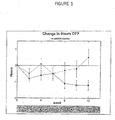
- Subjects randomized to KW-6002 experienced a significant decrease in OFF time compared to subjects randomized to placebo as assessed by home diaries ( Figure 1 ).
- Both KW-6002 dose groups exhibited a significant decrease in percent OFF time compared to the placebo group.
- the combined KW-6002 group, as well as each KW-6002 group experienced a significant reduction in total hours OFF.
- the overall adverse event profile was of no difference in subjects treated with KW-6002 versus placebo.
- the overall occurrence of serious adverse events was similarly distributed across the study groups.
- the number of total withdrawals and withdrawals due to adverse events were similar in the KW-6002 and placebo groups.
- No notable changes or differences between KW-6002 and placebo groups were observed in systolic or diastolic blood pressure, heart rate, respiratory rate, body weight, ECG, and mean values urinalysis or blood chemistry analyses remained within laboratory reference range.
- KW-6002 under a variety of concomitant medication with dopamine agonists (e.g., Pramipexol, Pergolide, Ropinirol, Bromocriptine), COMT inhibitors (e.g., Entacapone, Tolcapone) and a MAO inhibitor selegiline, KW-6002 showed significant OFF time reduction, and safety and good tolerability.
- dopamine agonists e.g., Pramipexol, Pergolide, Ropinirol, Bromocriptine
- COMT inhibitors e.g., Entacapone, Tolcapone
- MAO inhibitor selegiline KW-6002 showed significant OFF time reduction, and safety and good tolerability.
- the adenosine A 2A receptor antagonist KW-6002 can safely and effectively reduce off time in Parkinson's disease patients with L-DOPA motor complications.
- the present study also shows that the adenosine A 2A receptor antagonist KW-6002 showed significant OFF time reduction in Parkinson's disease patients treated with the concomitant medication of L-DOPA and a dopamine agonist and/or a COMT inhibitor and/or a MAO inhibitor.
- the present study also shows that KW-6002 reduces early morning dystonia in Parkinson's disease patients.
- KW-6002 potentiated the antiparkinsonian response by 38% (p ⁇ .05). No medically significant drug toxicity was observed.
- KW-6002 in combination with a threshold dose of L-DOPA improved motor condition (rated using the UPDRS III Motor Examination scale) items as much as the optimal L-DOPA dose alone.
- the present invention provides methods and compositions for treating Parkinson's disease patients with a sub-clinically effecteve dose of L-DOPA by combining L-DOPA treatment with an effective amount of one or more adenosine A 2A receptor antagonists (i.e., L-DOPA sparing effect).
- the present invention provides methods for the effective treatment of movement disorders with tremor, bradykinesias, gait and bradykinesia.
- the present invention provides methods of treating movement disorders by administering an effective amount of one or more adenosine A 2A receptor antagonists to a patient in need thereof, as well as methods of reducing or suppressing the adverse effectiveness of L-DOPA in patients receiving L-DOPA therapy in the treatment of Parkinson's disease.
- GABA and glutamate concentrations in an output nucleus of basal ganglia, substantia nigra pars reticulate (SNr), are measured in the 6-hydroxydopamine lesion rats and the chronically L-DOPA-treated rats after 6-hydroxydopamine lesion. Effect of adenosine A 2A receptor selective antagonists on GABA and glutamate levels in SNr and dyskinesias was examined.
- 6-hydroxydopamine (8 ⁇ g) was injected into the left medial forebrain bundle in a rat.
- the rats were then tested for contralateral turning by injecting apomorphine (0.1 mg/kg s.c.). Only those animals showing robust contralateral turning were used in subsequent experiments.
- L-DOPA was administrated orally twice a day at a dose of 20 mg/kg for 1 to 3 weeks.
- rats were observed individually to score severity scale of abnormal involuntary moments (AIM) including locomotive, axial, limb and orolingual AMIs, which assigns a score from 0 to 4 to each of the four AIM subtypes according to the proportion of time/monitoring period during which the AIM is present.
- AIM abnormal involuntary moments
- an amplitude-based scale for each limb and axial AIMs was scored during a microdialysis study.
- Amplitude scores of limb or axial AIMs (each ranging from 0 to 4) was rated based on both the magnitude of paw/limb translocation and of the visible involvement of distal versus proximal muscle groups or on the lateral deviation (or torsion) of an animal's neck and trunk from the longitudinal axis of its body, respectively.
- GABA and glutamate in SNr were measured after 6-hydroxydopamine lesion and four days after terminating the repeated L-DOPA treatments, with in vivo microdialysis technique. Rats were placed in each test chamber and the microdialysis probe inserted into SNr was attached to a fluid swivel (TCS2-23, Eicom) that allowed free movement (also sustained rotational behavior).
- Probes were continuously perfused with a modified Ringer's solution (1.2 mmol/L CaCl 2 , 2.7 mmol/L KCl, 148 mmol/L NaCl, and 0.85 mmol/L MgCl 2 ; pH 7, artificial cerebrospinal fluid solution) at a rate of 2 ⁇ L/min via a microinjection pump (CMA/100, Carnegie Medicin AB). After stabilization of basal level of release for 3-4 h, 4 samples (60 ⁇ L each) during 2 h of perfusion were collected using a fraction collector (CMA/140, Carnegie Medicin).
- a modified Ringer's solution 1.2 mmol/L CaCl 2 , 2.7 mmol/L KCl, 148 mmol/L NaCl, and 0.85 mmol/L MgCl 2 ; pH 7, artificial cerebrospinal fluid solution
- CMA/100 1.2 mmol/L CaCl 2 , 2.7 mmol/L
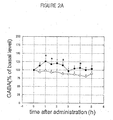
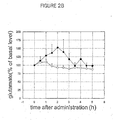
- KW-6002 (1 mg/kg p.o.) caused a marked and sustained increase of GABA and glutamate levels in the SNr of the 6-hydroxydopamine lesioned rats ( Figure 2A , 2B ).
- L-DOPA also induced the facilitation of nigral GABA and glutamate in 6-hydroxydopamine lesioned rats ( Figure 3A , 3B )
- AIMs with I week daily repeated treatments of L-DOPA were still varied in individual rat and maintained the maximum severity grades for a short time. With 2 to 3 weeks in chronic L-DOPA treatments, animals produced stable AIMs, and maintained average maximum AIM scores (9) from 10 min to 3 hrs after L-DOPA administration.
- the basal nigral glutamate concentration maintained constant levels until 2week chronic treatment of L-DOPA, and drastically increase in 3 weeks, whereas nigral GABA levels maintained unchanged throughout the periods, as shown in Table 3.
- Table 3 shows the basal level of nigral GABA and glutamate in chronic L-DOPA-treated rats after 6-hydroxydopamine lesion.
- Table 3 Duration of L-DOPA treatment 0 1 week 2 weeks 3 weeks GABA, nmol/L 19.8 ⁇ 2.5 19.3 ⁇ 2.3 20.9 ⁇ 6.8 23.6 ⁇ 4.5 (N) (11) (3) (3) (13) Glutamate, nmol/L 185.0 ⁇ 36.5 147.3 ⁇ 38.1 112.0 ⁇ 47.1 425.4 ⁇ 99.6 (N) (12) (3) (3) (13) (13)
- L-DOPA increased glutamate levels without effect on nigral GABA levels, whereas KW-6002 gave no or little effects on nigral GABA and glutamate levels ( Figure 5 ).
- ANIMALS 8 (eight) female drug-naive cynomologus monkeys weighing between 3 and 5 kg were used. They were rendered parkinsonian by subcutaneous infusion of MPTP (0.5 mg daily) until development of an obvious parkinsonian Syndrome (akinesia, hunched posture and tremor associated with a disability score on our scale of 6 or more). The cumulative dose necessary was variable: from 3,5 to 23 5 mg.
- the animals were allowed to recover during at least one month except an animal who had to be treated earlier because of marked akinesia. They were scored at least once daily. The disability score remained stable throughout that period.
- TREATMENT All animals were treated with L-DOPA/benserazide 100/25mg (total dose) once daily. The drug was administered orally with a special capsule handler. The animals in the KW-6002 group also received this compound (90 mg/kg) by the oral route. The animals were observed daily (from Monday to Friday) in their cages through a one-way screen and video recordings were made of significant events (abnormal behavior - dyskinesias). They were scored on disability scale and eventually dyskinesia rating scale, before and during the effect. The treatment with L-DOPA was continued for one month.
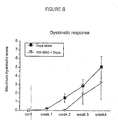
- Dyskinesias increased more rapidly and reached a higher level in the L-DOPA group than in the combination treatment group. Thus, the onset of dyskinesia was delayed in the presence of KW-6002. Even after appearance of dyskinesia (week 3 and 4), the KW-6002 treatment group produced less dyskinesia than L-DOPA alone group. ( Fig 8 ).
- MPTP Sigma-Aldrich, St. Louis, MO, USA
- L-DOPA (10 mg/kg p.o.) plus benserazide (2.5 mg/kg p.o.) was then administered twice daily for 28 days to the MPTP-treated marmosets to induce dyskinesia.
- the dyskinesia of the animals was scored using the rating scale described in Table 4. The animals, which showed high dyskinesia score up to 8 by each L-DOPA administration, were used in this study.
- Dyskinesias induced by L-DOPA (10 mg/kg p.o. plus benserazide 2.5 mg/kg p.o.) were scored in MPTP-treated marmosets. The score was calculated as the L-DOPA pre value. On the next day the animals received vehicle for the vehicle control value.
- L-DOPA 2.5 mg/kg, p.o.
- L-DOPA 2.5 mg/kg, p.o.
- KW-6002 10 mg/kg p.o.
- L-DOPA 2.5 mg/kg, p.o.
- Animals were assessed for dyskinesia on days 1, 3, 5, 7, 14, 21 and 28 according to the rating scale.
- the L-DOPA post value was obtained by administration of L-DOPA (10 mg/kg p.o.) to the marmosets on day 35.
- Table 4 shows the results of quantifying the presence of limb dystonia, chorea and choreathetoid dyskinesia and stereotypies.
- Abnormal movement such as, orofacial movements, myoclonus and complex stereotypic behaviors (e.g., elaborate checking, obsessive grooming), are exclude from dyskinesias rating.
- Dystonia (arm, leg and trunk): abnormal sustained posture (ex. leg elevation). Stereotypic reaching (arm) Athetosis (ann and leg): writhing twisting movements. Chorea (arm and leg): abnormal rapid (dance like) movements of limbs. Akathisia: motor restlessness. Dyskinesia score is become higher according to severity of dyskinesia. The maximal score is four points.
- Tablets having the following composition are prepared in a conventional manner.
- KW-6002 (40 g) is mixed with 286.8 g of lactose and 60 g of potato starch, followed by addition of 120 g of a 10% aqueous solution of hydroxypropyl cellulose.
- the resultant mixture is kneaded, granulated, and then dried by a conventional method.
- the granules are refined to give granules used to make tablets.
- the mixture is formed into tablets each containing 20 mg of the active ingredient by using a tablet maker (Model RT-15, Kikusui) having pestles of 8 mm diameter.
- Table 5 Compound (I) 20 mg Lactose 143.4mg Potato Starch 30 mg Hydroxypropyl Cellulose 6 mg Magnesium Stearate 0.6 mg 200 mg
- Capsules having the following composition are prepared in a conventional manner.
- KW-6002 (200 g) is mixed with 995 g of Avicel and 5 g of magnesium stearate. The mixture is put in hard capsules No. 4 each having a capacity of 120 mg by using a capsule filler (Model LZ-64, Zanashi) to give capsules' each containing 20 mg of the active ingredient.
- Injections having the following composition are prepared in a conventional manner.
- KW-6002 (1 g) is dissolved in 100 g of purified soybean oil, followed by addition of 12 g of purified egg yolk lecithin and 25 g of glycerin for injection.
- the resultant mixture is made up to 1,000 ml with distilled water for injection, thoroughly mixed, and emulsified by a conventional method.
- the resultant dispersion is subjected to aseptic filtration by using 0.2 ⁇ m disposable membrane filters, and then aseptically put into glass vials in 2 ml portions to give injections containing 2 mg of the active ingredient per vial.
- Table 7 Compound (I) 2 mg Purified Soybean Oil 200 mg Purified Egg Yolk Lecithin 24 mg Glycerine for Injection 50 mg Distilled Water for Injection 1,72 ml 2.00 ml
Landscapes
- Health & Medical Sciences (AREA)
- Pharmacology & Pharmacy (AREA)
- Veterinary Medicine (AREA)
- Public Health (AREA)
- General Health & Medical Sciences (AREA)
- Animal Behavior & Ethology (AREA)
- Chemical & Material Sciences (AREA)
- Medicinal Chemistry (AREA)
- Life Sciences & Earth Sciences (AREA)
- Epidemiology (AREA)
- Neurosurgery (AREA)
- Bioinformatics & Cheminformatics (AREA)
- Neurology (AREA)
- Biomedical Technology (AREA)
- Engineering & Computer Science (AREA)
- Organic Chemistry (AREA)
- General Chemical & Material Sciences (AREA)
- Chemical Kinetics & Catalysis (AREA)
- Nuclear Medicine, Radiotherapy & Molecular Imaging (AREA)
- Psychology (AREA)
- Dermatology (AREA)
- Pharmaceuticals Containing Other Organic And Inorganic Compounds (AREA)
- Medicines That Contain Protein Lipid Enzymes And Other Medicines (AREA)
- Acyclic And Carbocyclic Compounds In Medicinal Compositions (AREA)
Applications Claiming Priority (3)
| Application Number | Priority Date | Filing Date | Title |
|---|---|---|---|
| US35241302P | 2002-01-28 | 2002-01-28 | |
| EP03705971A EP1469855A2 (de) | 2002-01-28 | 2003-01-28 | Verfahren zur behandlung von patienten mit bewegungsstörungen |
| EP09150929A EP2044940A3 (de) | 2002-01-28 | 2003-01-28 | Verfahren zur Behandlung von Patienten mit Bewegungsstörungen |
Related Parent Applications (4)
| Application Number | Title | Priority Date | Filing Date |
|---|---|---|---|
| EP03705971A Division EP1469855A2 (de) | 2002-01-28 | 2003-01-28 | Verfahren zur behandlung von patienten mit bewegungsstörungen |
| EP09150929A Division EP2044940A3 (de) | 2002-01-28 | 2003-01-28 | Verfahren zur Behandlung von Patienten mit Bewegungsstörungen |
| EP03705971.4 Division | 2003-01-28 | ||
| EP09150929.9 Division | 2009-01-20 |
Publications (3)
| Publication Number | Publication Date |
|---|---|
| EP2260850A2 true EP2260850A2 (de) | 2010-12-15 |
| EP2260850A3 EP2260850A3 (de) | 2013-11-13 |
| EP2260850B1 EP2260850B1 (de) | 2018-07-04 |
Family
ID=27663091
Family Applications (4)
| Application Number | Title | Priority Date | Filing Date |
|---|---|---|---|
| EP09150929A Withdrawn EP2044940A3 (de) | 2002-01-28 | 2003-01-28 | Verfahren zur Behandlung von Patienten mit Bewegungsstörungen |
| EP03705971A Withdrawn EP1469855A2 (de) | 2002-01-28 | 2003-01-28 | Verfahren zur behandlung von patienten mit bewegungsstörungen |
| EP10179406.3A Expired - Lifetime EP2260850B1 (de) | 2002-01-28 | 2003-01-28 | A2A Rezeptor Antagonisten zur Verwendung in der Behandlung von Bewegungsstörungen |
| EP15165962.0A Expired - Lifetime EP2942082B1 (de) | 2002-01-28 | 2003-01-28 | A2a rezeptor antagonisten zur verwendung in der behandlung von bewegungsstörungen |
Family Applications Before (2)
| Application Number | Title | Priority Date | Filing Date |
|---|---|---|---|
| EP09150929A Withdrawn EP2044940A3 (de) | 2002-01-28 | 2003-01-28 | Verfahren zur Behandlung von Patienten mit Bewegungsstörungen |
| EP03705971A Withdrawn EP1469855A2 (de) | 2002-01-28 | 2003-01-28 | Verfahren zur behandlung von patienten mit bewegungsstörungen |
Family Applications After (1)
| Application Number | Title | Priority Date | Filing Date |
|---|---|---|---|
| EP15165962.0A Expired - Lifetime EP2942082B1 (de) | 2002-01-28 | 2003-01-28 | A2a rezeptor antagonisten zur verwendung in der behandlung von bewegungsstörungen |
Country Status (16)
| Country | Link |
|---|---|
| US (7) | US20040198753A1 (de) |
| EP (4) | EP2044940A3 (de) |
| JP (3) | JP4376630B2 (de) |
| KR (5) | KR101098209B1 (de) |
| CN (3) | CN101543497A (de) |
| AU (2) | AU2003207734C1 (de) |
| BR (1) | BR0306919A (de) |
| CA (2) | CA2473864C (de) |
| CO (1) | CO5601022A2 (de) |
| EA (1) | EA200400982A1 (de) |
| ES (2) | ES2686123T3 (de) |
| HU (2) | HUE039348T2 (de) |
| MX (1) | MXPA04007299A (de) |
| PT (2) | PT2942082T (de) |
| TR (1) | TR201903603T4 (de) |
| WO (1) | WO2003063876A2 (de) |
Families Citing this family (41)
| Publication number | Priority date | Publication date | Assignee | Title |
|---|---|---|---|---|
| GB2348371B (en) * | 2000-03-14 | 2001-04-04 | Soares Da Silva Patricio | Compositions comprising blockers of L-DOPA renal cell transfer for the treatment of Parkinson's disease |
| KR101098209B1 (ko) * | 2002-01-28 | 2011-12-23 | 교와 핫꼬 기린 가부시키가이샤 | 운동성 질환에 걸린 환자의 치료 방법 |
| ES2310258T5 (es) † | 2002-08-30 | 2012-05-31 | Kyowa Hakko Kogyo Co., Ltd. | Antagonistas de los receptores de adenosina A2A para tratar el síndrome de piernas inquietas o mioclono nocturno |
| US20060128694A1 (en) * | 2002-12-19 | 2006-06-15 | Michael Grzelak | Adenosine A2a receptor antagonists for the treatment of extra-pyramidal syndrome and other movement disorders |
| TWI331036B (en) * | 2002-12-19 | 2010-10-01 | Schering Corp | Adenosine a2a receptor antagonists for the treatment of extra-pyramidal syndrome and other movement disorders |
| US20060106040A1 (en) * | 2002-12-19 | 2006-05-18 | Michael Grzelak | Adenosine A2a receptor antagonists for the treatment of extra-pyramidal syndrome and other movement disorders |
| AR056615A1 (es) * | 2002-12-27 | 2007-10-17 | Kyowa Hakko Kogyo Kk | Un metodo de tratamiento de trastornos de la conducta |
| TW200507850A (en) * | 2003-07-25 | 2005-03-01 | Kyowa Hakko Kogyo Kk | Pharmaceutical composition |
| DE10361258A1 (de) * | 2003-12-24 | 2005-07-28 | Schwarz Pharma Ag | Verwendung von substituierten 2-Aminotetralinen zur vorbeugenden Behandlung von Morbus Parkinson |
| US20050197385A1 (en) * | 2004-02-20 | 2005-09-08 | Schwarz Pharma Ag | Use of rotigotine for treatment or prevention of dopaminergic neuron loss |
| DE102004014841B4 (de) * | 2004-03-24 | 2006-07-06 | Schwarz Pharma Ag | Verwendung von Rotigotin zur Behandlung und Prävention des Parkinson-Plus-Syndroms |
| US7998970B2 (en) * | 2004-12-03 | 2011-08-16 | Proteosys Ag | Use of finasteride, dutasteride and related compounds for the prevention or treatment of neurologically-associated disorders |
| MY140748A (en) | 2004-12-06 | 2010-01-15 | Astrazeneca Ab | Novel pyrrolo [3,2-d] pyrimidin-4-one derivatives and their use in therapy |
| EP2258372B8 (de) * | 2005-06-07 | 2012-12-19 | Kyowa Hakko Kirin Co., Ltd. | A2A Antagonisten zur Behandlung von motorischen Störungen |
| US9066903B2 (en) * | 2006-02-28 | 2015-06-30 | The United States Of America As Represented By The Department Of Veterans Affairs | Pharmacological treatment of Parkinson's disease |
| US8802002B2 (en) | 2006-12-28 | 2014-08-12 | 3M Innovative Properties Company | Dimensionally stable bonded nonwoven fibrous webs |
| US20090054468A1 (en) * | 2007-08-23 | 2009-02-26 | Astrazeneca Ab | New Use 938 |
| US20090118376A1 (en) * | 2007-11-02 | 2009-05-07 | Ru-Band Lu | Memantine Protects Inflammation-Related Degeneration of Dopamine Neurons Through Inhibition of Over-Activated Microglia and Release of Neurotrophic Factors from Astroglia |
| CN102056541B (zh) | 2008-06-12 | 2014-09-24 | 阿密格德勒有限公司 | 运动机能减退和/或运动机能亢进状态的检测 |
| MX2011007678A (es) * | 2009-01-20 | 2011-08-08 | Schering Corp | Metodos para aliviar o tratar señales y/o sintomas asociados con enfermedad de parkinson de moderada a severa. |
| TWI548411B (zh) | 2009-04-28 | 2016-09-11 | Kyowa Hakko Kirin Co Ltd | Exercise disorder treatment |
| WO2012046694A1 (ja) * | 2010-10-05 | 2012-04-12 | Jnc株式会社 | 積層不織布とその製品 |
| WO2012060844A1 (en) * | 2010-11-05 | 2012-05-10 | Biotie Therapies, Inc | A2a antagonists as cognition and motor function enhancers |
| MX2014014993A (es) * | 2012-06-05 | 2015-06-17 | Int Stem Cell Corp | Metodo para la prevencion de enfermedades neurologicas. |
| US9012640B2 (en) * | 2012-06-22 | 2015-04-21 | Map Pharmaceuticals, Inc. | Cabergoline derivatives |
| AU2014223313B2 (en) | 2013-03-01 | 2018-07-19 | Global Kinetics Pty Ltd | System and method for assessing impulse control disorder |
| US10040817B2 (en) * | 2013-10-03 | 2018-08-07 | Enterin Laboratories, Inc. | Methods and compositions for stimulation of the intestinal enteroendocrine system for treating diseases or conditions related to the same |
| JP6381883B2 (ja) * | 2013-10-04 | 2018-08-29 | 国立大学法人千葉大学 | 不随意運動の予防及び/又は治療組成物 |
| EP3113684B1 (de) | 2014-03-03 | 2020-07-01 | Global Kinetics Pty Ltd | System zur beurteilung von bewegungssymptomen |
| WO2016148260A1 (ja) * | 2015-03-17 | 2016-09-22 | 協和発酵キリン株式会社 | 医薬組成物 |
| EP3310344A1 (de) | 2015-06-19 | 2018-04-25 | Biotie Therapies, Inc. | Tozadenant-formulierungen mit kontrollierter freisetzung |
| WO2017161155A1 (en) * | 2016-03-17 | 2017-09-21 | The Johns Hopkins University | Methods for preventing or treating parkinson's disease by the farnesylation of paris |
| EP3436013A4 (de) | 2016-03-31 | 2019-11-13 | Versi Group, LLC | Delta-opioid-agonist, mu-opioid-antagonist-zusammensetzungen und verfahren zur behandlung von morbus parkinson |
| WO2018013951A1 (en) * | 2016-07-15 | 2018-01-18 | Northwestern University | Targeting adenosine a2a receptors for the treatment of levodopa-induced dyskinesias |
| JPWO2020189781A1 (ja) | 2019-03-21 | 2021-06-03 | 協和キリン株式会社 | パーキンソン病治療剤 |
| EP3714888A1 (de) * | 2019-03-25 | 2020-09-30 | Assistance Publique - Hôpitaux De Paris | Verbindungen zur verwendung bei der behandlung von adcy5-bedingter dyskinesie |
| US10758535B1 (en) * | 2019-04-26 | 2020-09-01 | Sumitomo Dainippon Pharma Co., Ltd. | Therapeutic drug for dyskinesia |
| JP7382737B2 (ja) * | 2019-05-13 | 2023-11-17 | 東和薬品株式会社 | イストラデフィリン製剤 |
| CN115884973B (zh) | 2020-03-10 | 2025-03-21 | 奇迹生物技术公司 | 用于治疗疾病的嘌呤化合物 |
| WO2022167778A1 (en) | 2021-02-02 | 2022-08-11 | Haiku Therapeutics Ltd | Ebselen as adenosine receptor modulator |
| CN118946348A (zh) | 2022-04-27 | 2024-11-12 | 卫材R&D管理有限公司 | 用于治疗帕金森病的药物组合物 |
Citations (23)
| Publication number | Priority date | Publication date | Assignee | Title |
|---|---|---|---|---|
| WO1992006976A1 (en) | 1990-10-18 | 1992-04-30 | Kyowa Hakko Kogyo Co., Ltd. | Xanthine derivative |
| WO1994001114A1 (fr) | 1992-07-08 | 1994-01-20 | Kyowa Hakko Kogyo Co., Ltd. | Antidepresseur |
| US5484920A (en) | 1992-04-08 | 1996-01-16 | Kyowa Hakko Kogyo Co., Ltd. | Therapeutic agent for Parkinson's disease |
| US5565460A (en) | 1993-07-27 | 1996-10-15 | Kyowa Hakko Koygo Co., Ltd. | Therapeutic purine agents for parkinson's disease |
| US5703085A (en) | 1994-02-23 | 1997-12-30 | Kyowa Hakko Kogyo Co., Ltd. | Xanthine derivatives |
| WO1998042711A1 (en) | 1997-03-24 | 1998-10-01 | Kyowa Hakko Kogyo Co., Ltd. | [1,2,4]TRIAZOLO[1,5-c]PYRIMIDINE DERIVATIVES |
| WO1999035147A1 (en) | 1998-01-05 | 1999-07-15 | Eisai Co., Ltd. | Purine derivatives and adenosine a2 receptor antagonists serving as preventives/remedies for diabetes |
| WO1999043678A1 (en) | 1998-02-24 | 1999-09-02 | Kyowa Hakko Kogyo Co., Ltd. | Remedies/preventives for parkinson's disease |
| WO2000013682A2 (en) | 1998-09-04 | 2000-03-16 | Vernalis Research Limited | 4-quinolinemethanol derivatives as purine receptor antagonists.(ii) |
| WO2000013681A2 (en) | 1998-09-04 | 2000-03-16 | Vernalis Research Limited | 4-quinolinemethanol derivatives as purine receptor antagonists (i) |
| WO2000017201A1 (en) | 1998-09-22 | 2000-03-30 | Kyowa Hakko Kogyo Co., Ltd. | [1,2,4]TRIAZOLO[1,5-c]PYRIMIDINE DERIVATIVES |
| EP1016407A1 (de) | 1997-09-05 | 2000-07-05 | Kyowa Hakko Kogyo Co., Ltd. | Heilmittel gegen neurale degeneration |
| WO2000069464A1 (en) | 1999-05-12 | 2000-11-23 | Fujisawa Pharmaceutical Co., Ltd. | Novel use |
| WO2001002409A1 (en) | 1999-07-01 | 2001-01-11 | Vernalis Research Limited | Thieno- and furopyrimidine derivatives as a2a-receptor antagonists |
| WO2001002400A1 (en) | 1999-07-02 | 2001-01-11 | Eisai Co., Ltd. | Fused imidazole compounds and remedies for diabetes mellitus |
| WO2001008093A1 (fr) | 1999-07-23 | 2001-02-01 | Gemplus | Minicarte a circuit integre et procede pour son obtention |
| WO2001017999A2 (en) | 1999-09-06 | 2001-03-15 | F. Hoffmann-La Roche Ag | Amino-triazolopyridine derivatives |
| WO2001040230A1 (en) | 1999-12-02 | 2001-06-07 | Fujisawa Pharmaceutical Co., Ltd. | Pyrazolopyrazines and their use as adenosine antagonists |
| WO2001062233A2 (en) | 2000-02-25 | 2001-08-30 | F. Hoffmann La Roche Ag | Adenosine receptor modulators |
| WO2001080893A1 (en) | 2000-04-26 | 2001-11-01 | Eisai Co., Ltd. | Medicinal compositions promoting bowel movement |
| WO2001092264A1 (en) | 2000-05-26 | 2001-12-06 | Schering Corporation | Adenosine a2a receptor antagonists |
| WO2001097786A2 (en) | 2000-06-21 | 2001-12-27 | F. Hoffmann-La Roche Ag | Benzothiazole derivatives |
| WO2002014282A1 (en) | 2000-08-11 | 2002-02-21 | Eisai Co., Ltd. | 2-aminopyridine compounds and use thereof as drugs |
Family Cites Families (8)
| Publication number | Priority date | Publication date | Assignee | Title |
|---|---|---|---|---|
| EP0975345A1 (de) * | 1997-11-26 | 2000-02-02 | Cerebrus Pharmaceuticals Limited | (-)-mefloquine zur blockierung der purinrezeptoren und zur behandlung von bewegung- oder neurodegenerativen erkrankungen |
| GB0100620D0 (en) * | 2001-01-10 | 2001-02-21 | Vernalis Res Ltd | Chemical cokpounds V |
| DE60231386D1 (de) * | 2001-04-09 | 2009-04-16 | Neurosearch As | Adenosin-a2a-rezeptor-antagonisten in kombination mit verbindungen mit neurotrophischer aktivität bei der behandlung von morbus parkinson |
| KR101098209B1 (ko) * | 2002-01-28 | 2011-12-23 | 교와 핫꼬 기린 가부시키가이샤 | 운동성 질환에 걸린 환자의 치료 방법 |
| ES2310258T5 (es) * | 2002-08-30 | 2012-05-31 | Kyowa Hakko Kogyo Co., Ltd. | Antagonistas de los receptores de adenosina A2A para tratar el síndrome de piernas inquietas o mioclono nocturno |
| KR20060037252A (ko) * | 2003-06-10 | 2006-05-03 | 교와 핫꼬 고교 가부시끼가이샤 | 불안 장애의 치료 방법 |
| TW200507850A (en) * | 2003-07-25 | 2005-03-01 | Kyowa Hakko Kogyo Kk | Pharmaceutical composition |
| US9238003B2 (en) * | 2005-02-04 | 2016-01-19 | Auburn University | Extended or continuous wear silicone hydrogel contact lenses for the extended release of comfort molecules |
-
2003
- 2003-01-28 KR KR1020047011319A patent/KR101098209B1/ko not_active Expired - Fee Related
- 2003-01-28 KR KR1020107008755A patent/KR20100056569A/ko not_active Ceased
- 2003-01-28 AU AU2003207734A patent/AU2003207734C1/en not_active Expired
- 2003-01-28 PT PT15165962T patent/PT2942082T/pt unknown
- 2003-01-28 CA CA2473864A patent/CA2473864C/en not_active Expired - Lifetime
- 2003-01-28 US US10/353,240 patent/US20040198753A1/en not_active Abandoned
- 2003-01-28 MX MXPA04007299A patent/MXPA04007299A/es active IP Right Grant
- 2003-01-28 HU HUE10179406A patent/HUE039348T2/hu unknown
- 2003-01-28 BR BR0306919-2A patent/BR0306919A/pt not_active Application Discontinuation
- 2003-01-28 CA CA2813048A patent/CA2813048A1/en not_active Abandoned
- 2003-01-28 EA EA200400982A patent/EA200400982A1/ru unknown
- 2003-01-28 ES ES10179406.3T patent/ES2686123T3/es not_active Expired - Lifetime
- 2003-01-28 KR KR1020107029622A patent/KR101166000B1/ko not_active Expired - Fee Related
- 2003-01-28 TR TR2019/03603T patent/TR201903603T4/tr unknown
- 2003-01-28 CN CNA2009100075971A patent/CN101543497A/zh active Pending
- 2003-01-28 ES ES15165962T patent/ES2716404T3/es not_active Expired - Lifetime
- 2003-01-28 HU HUE15165962A patent/HUE043353T2/hu unknown
- 2003-01-28 WO PCT/US2003/002658 patent/WO2003063876A2/en not_active Ceased
- 2003-01-28 EP EP09150929A patent/EP2044940A3/de not_active Withdrawn
- 2003-01-28 JP JP2003563566A patent/JP4376630B2/ja not_active Expired - Lifetime
- 2003-01-28 CN CN201010145019A patent/CN101822676A/zh active Pending
- 2003-01-28 EP EP03705971A patent/EP1469855A2/de not_active Withdrawn
- 2003-01-28 KR KR1020157016639A patent/KR20150080013A/ko not_active Ceased
- 2003-01-28 CN CNA038028476A patent/CN1646132A/zh active Pending
- 2003-01-28 EP EP10179406.3A patent/EP2260850B1/de not_active Expired - Lifetime
- 2003-01-28 KR KR1020127020629A patent/KR20120103740A/ko not_active Ceased
- 2003-01-28 EP EP15165962.0A patent/EP2942082B1/de not_active Expired - Lifetime
- 2003-01-28 PT PT10179406T patent/PT2260850T/pt unknown
-
2004
- 2004-07-27 CO CO04071765A patent/CO5601022A2/es not_active Application Discontinuation
-
2006
- 2006-01-06 US US11/326,516 patent/US7727994B2/en not_active Expired - Lifetime
- 2006-01-06 US US11/326,414 patent/US7727993B2/en active Active
-
2008
- 2008-02-08 AU AU2008200611A patent/AU2008200611B2/en not_active Expired
- 2008-11-04 JP JP2008282859A patent/JP5171556B2/ja not_active Expired - Lifetime
-
2011
- 2011-11-16 US US13/297,341 patent/US20120122897A1/en not_active Abandoned
-
2012
- 2012-04-10 JP JP2012089139A patent/JP5612016B2/ja not_active Expired - Lifetime
-
2014
- 2014-03-27 US US14/227,421 patent/US20140249166A1/en not_active Abandoned
-
2017
- 2017-01-24 US US15/413,898 patent/US20170196872A1/en not_active Abandoned
-
2018
- 2018-03-01 US US15/908,974 patent/US20180221377A1/en not_active Abandoned
Patent Citations (26)
| Publication number | Priority date | Publication date | Assignee | Title |
|---|---|---|---|---|
| WO1992006976A1 (en) | 1990-10-18 | 1992-04-30 | Kyowa Hakko Kogyo Co., Ltd. | Xanthine derivative |
| US5484920A (en) | 1992-04-08 | 1996-01-16 | Kyowa Hakko Kogyo Co., Ltd. | Therapeutic agent for Parkinson's disease |
| US5587378A (en) | 1992-04-08 | 1996-12-24 | Kyowa Hakko Kogyo Co., Ltd. | Therapeutic agent for Parkinson's disease |
| WO1994001114A1 (fr) | 1992-07-08 | 1994-01-20 | Kyowa Hakko Kogyo Co., Ltd. | Antidepresseur |
| US5543415A (en) | 1992-07-08 | 1996-08-06 | Kyowa Hakko Kogyo Co., Ltd. | Antidepressants |
| US5565460A (en) | 1993-07-27 | 1996-10-15 | Kyowa Hakko Koygo Co., Ltd. | Therapeutic purine agents for parkinson's disease |
| US5703085A (en) | 1994-02-23 | 1997-12-30 | Kyowa Hakko Kogyo Co., Ltd. | Xanthine derivatives |
| WO1998042711A1 (en) | 1997-03-24 | 1998-10-01 | Kyowa Hakko Kogyo Co., Ltd. | [1,2,4]TRIAZOLO[1,5-c]PYRIMIDINE DERIVATIVES |
| EP1016407A1 (de) | 1997-09-05 | 2000-07-05 | Kyowa Hakko Kogyo Co., Ltd. | Heilmittel gegen neurale degeneration |
| WO1999035147A1 (en) | 1998-01-05 | 1999-07-15 | Eisai Co., Ltd. | Purine derivatives and adenosine a2 receptor antagonists serving as preventives/remedies for diabetes |
| EP1054012A1 (de) | 1998-01-05 | 2000-11-22 | Eisai Co., Ltd. | Purinderivate und antagonisten des adenosin-a2-rezeptors, welche zur vorsorge oder heilung von diabetes dienen |
| WO1999043678A1 (en) | 1998-02-24 | 1999-09-02 | Kyowa Hakko Kogyo Co., Ltd. | Remedies/preventives for parkinson's disease |
| WO2000013682A2 (en) | 1998-09-04 | 2000-03-16 | Vernalis Research Limited | 4-quinolinemethanol derivatives as purine receptor antagonists.(ii) |
| WO2000013681A2 (en) | 1998-09-04 | 2000-03-16 | Vernalis Research Limited | 4-quinolinemethanol derivatives as purine receptor antagonists (i) |
| WO2000017201A1 (en) | 1998-09-22 | 2000-03-30 | Kyowa Hakko Kogyo Co., Ltd. | [1,2,4]TRIAZOLO[1,5-c]PYRIMIDINE DERIVATIVES |
| WO2000069464A1 (en) | 1999-05-12 | 2000-11-23 | Fujisawa Pharmaceutical Co., Ltd. | Novel use |
| WO2001002409A1 (en) | 1999-07-01 | 2001-01-11 | Vernalis Research Limited | Thieno- and furopyrimidine derivatives as a2a-receptor antagonists |
| WO2001002400A1 (en) | 1999-07-02 | 2001-01-11 | Eisai Co., Ltd. | Fused imidazole compounds and remedies for diabetes mellitus |
| WO2001008093A1 (fr) | 1999-07-23 | 2001-02-01 | Gemplus | Minicarte a circuit integre et procede pour son obtention |
| WO2001017999A2 (en) | 1999-09-06 | 2001-03-15 | F. Hoffmann-La Roche Ag | Amino-triazolopyridine derivatives |
| WO2001040230A1 (en) | 1999-12-02 | 2001-06-07 | Fujisawa Pharmaceutical Co., Ltd. | Pyrazolopyrazines and their use as adenosine antagonists |
| WO2001062233A2 (en) | 2000-02-25 | 2001-08-30 | F. Hoffmann La Roche Ag | Adenosine receptor modulators |
| WO2001080893A1 (en) | 2000-04-26 | 2001-11-01 | Eisai Co., Ltd. | Medicinal compositions promoting bowel movement |
| WO2001092264A1 (en) | 2000-05-26 | 2001-12-06 | Schering Corporation | Adenosine a2a receptor antagonists |
| WO2001097786A2 (en) | 2000-06-21 | 2001-12-27 | F. Hoffmann-La Roche Ag | Benzothiazole derivatives |
| WO2002014282A1 (en) | 2000-08-11 | 2002-02-21 | Eisai Co., Ltd. | 2-aminopyridine compounds and use thereof as drugs |
Non-Patent Citations (78)
Also Published As
Similar Documents
| Publication | Publication Date | Title |
|---|---|---|
| EP2942082B1 (de) | A2a rezeptor antagonisten zur verwendung in der behandlung von bewegungsstörungen | |
| AU2003207734A1 (en) | Methods of treating patients suffering from movement disorders | |
| AU2018276686B2 (en) | Use of ligustrazine nitrone derivatives in prevention and treatment of diabetic complication diseases | |
| JP2009535370A (ja) | ジストニアおよびジストニア様症状の予防および治療におけるカリウムチャンネル活性剤 | |
| JP2022133449A (ja) | レボドパ分割用量組成物および使用 | |
| EP1534289B2 (de) | Adenosin-a2a-rezeptorantagonisten zur behandlung des syndroms der unruhigen beine oder nächtlichen myoklonus | |
| AU2011253928A1 (en) | Methods of treating patients suffering from movement disorders | |
| CN119548497A (zh) | 一种采用长春西汀治疗近视的方法 | |
| HK1136488A (en) | Methods of treating patients suffering from movement disorders | |
| TWI896143B (zh) | 一種有效延緩及治療近視的藥物組合物 |
Legal Events
| Date | Code | Title | Description |
|---|---|---|---|
| PUAI | Public reference made under article 153(3) epc to a published international application that has entered the european phase |
Free format text: ORIGINAL CODE: 0009012 |
|
| AC | Divisional application: reference to earlier application |
Ref document number: 2044940 Country of ref document: EP Kind code of ref document: P Ref document number: 1469855 Country of ref document: EP Kind code of ref document: P |
|
| AK | Designated contracting states |
Kind code of ref document: A2 Designated state(s): AT BE BG CH CY CZ DE DK EE ES FI FR GB GR HU IE IT LI LU MC NL PT SE SI SK TR |
|
| AX | Request for extension of the european patent |
Extension state: AL LT LV MK RO |
|
| RIC1 | Information provided on ipc code assigned before grant |
Ipc: A61K 31/522 20060101AFI20130801BHEP Ipc: A61P 25/16 20060101ALI20130801BHEP |
|
| PUAL | Search report despatched |
Free format text: ORIGINAL CODE: 0009013 |
|
| AK | Designated contracting states |
Kind code of ref document: A3 Designated state(s): AT BE BG CH CY CZ DE DK EE ES FI FR GB GR HU IE IT LI LU MC NL PT SE SI SK TR |
|
| AX | Request for extension of the european patent |
Extension state: AL LT LV MK RO |
|
| RIC1 | Information provided on ipc code assigned before grant |
Ipc: A61K 31/522 20060101AFI20131007BHEP Ipc: A61P 25/14 20060101ALI20131007BHEP Ipc: A61P 25/16 20060101ALI20131007BHEP |
|
| 17P | Request for examination filed |
Effective date: 20140513 |
|
| RBV | Designated contracting states (corrected) |
Designated state(s): AT BE BG CH CY CZ DE DK EE ES FI FR GB GR HU IE IT LI LU MC NL PT SE SI SK TR |
|
| 17Q | First examination report despatched |
Effective date: 20140616 |
|
| STAA | Information on the status of an ep patent application or granted ep patent |
Free format text: STATUS: EXAMINATION IS IN PROGRESS |
|
| GRAJ | Information related to disapproval of communication of intention to grant by the applicant or resumption of examination proceedings by the epo deleted |
Free format text: ORIGINAL CODE: EPIDOSDIGR1 |
|
| STAA | Information on the status of an ep patent application or granted ep patent |
Free format text: STATUS: GRANT OF PATENT IS INTENDED |
|
| GRAP | Despatch of communication of intention to grant a patent |
Free format text: ORIGINAL CODE: EPIDOSNIGR1 |
|
| RIC1 | Information provided on ipc code assigned before grant |
Ipc: A61K 31/522 20060101AFI20171129BHEP Ipc: A61P 25/16 20060101ALI20171129BHEP Ipc: A61P 25/14 20060101ALI20171129BHEP Ipc: A61K 31/198 20060101ALI20171129BHEP Ipc: A61K 45/06 20060101ALI20171129BHEP |
|
| INTG | Intention to grant announced |
Effective date: 20171213 |
|
| GRAS | Grant fee paid |
Free format text: ORIGINAL CODE: EPIDOSNIGR3 |
|
| GRAJ | Information related to disapproval of communication of intention to grant by the applicant or resumption of examination proceedings by the epo deleted |
Free format text: ORIGINAL CODE: EPIDOSDIGR1 |
|
| GRAL | Information related to payment of fee for publishing/printing deleted |
Free format text: ORIGINAL CODE: EPIDOSDIGR3 |
|
| STAA | Information on the status of an ep patent application or granted ep patent |
Free format text: STATUS: EXAMINATION IS IN PROGRESS |
|
| GRAR | Information related to intention to grant a patent recorded |
Free format text: ORIGINAL CODE: EPIDOSNIGR71 |
|
| STAA | Information on the status of an ep patent application or granted ep patent |
Free format text: STATUS: GRANT OF PATENT IS INTENDED |
|
| INTC | Intention to grant announced (deleted) | ||
| GRAA | (expected) grant |
Free format text: ORIGINAL CODE: 0009210 |
|
| STAA | Information on the status of an ep patent application or granted ep patent |
Free format text: STATUS: THE PATENT HAS BEEN GRANTED |
|
| AC | Divisional application: reference to earlier application |
Ref document number: 2044940 Country of ref document: EP Kind code of ref document: P Ref document number: 1469855 Country of ref document: EP Kind code of ref document: P |
|
| AK | Designated contracting states |
Kind code of ref document: B1 Designated state(s): AT BE BG CH CY CZ DE DK EE ES FI FR GB GR HU IE IT LI LU MC NL PT SE SI SK TR |
|
| INTG | Intention to grant announced |
Effective date: 20180525 |
|
| REG | Reference to a national code |
Ref country code: GB Ref legal event code: FG4D |
|
| REG | Reference to a national code |
Ref country code: CH Ref legal event code: EP |
|
| REG | Reference to a national code |
Ref country code: AT Ref legal event code: REF Ref document number: 1013764 Country of ref document: AT Kind code of ref document: T Effective date: 20180715 |
|
| REG | Reference to a national code |
Ref country code: IE Ref legal event code: FG4D |
|
| REG | Reference to a national code |
Ref country code: DE Ref legal event code: R096 Ref document number: 60351302 Country of ref document: DE |
|
| REG | Reference to a national code |
Ref country code: SE Ref legal event code: TRGR |
|
| REG | Reference to a national code |
Ref country code: CH Ref legal event code: NV Representative=s name: VOSSIUS AND PARTNER PATENTANWAELTE RECHTSANWAE, CH |
|
| REG | Reference to a national code |
Ref country code: NL Ref legal event code: FP |
|
| REG | Reference to a national code |
Ref country code: ES Ref legal event code: FG2A Ref document number: 2686123 Country of ref document: ES Kind code of ref document: T3 Effective date: 20181016 |
|
| REG | Reference to a national code |
Ref country code: PT Ref legal event code: SC4A Ref document number: 2260850 Country of ref document: PT Date of ref document: 20181024 Kind code of ref document: T Free format text: AVAILABILITY OF NATIONAL TRANSLATION Effective date: 20180913 |
|
| REG | Reference to a national code |
Ref country code: HU Ref legal event code: AG4A Ref document number: E039348 Country of ref document: HU |
|
| PG25 | Lapsed in a contracting state [announced via postgrant information from national office to epo] |
Ref country code: CZ Free format text: LAPSE BECAUSE OF FAILURE TO SUBMIT A TRANSLATION OF THE DESCRIPTION OR TO PAY THE FEE WITHIN THE PRESCRIBED TIME-LIMIT Effective date: 20180704 Ref country code: BG Free format text: LAPSE BECAUSE OF FAILURE TO SUBMIT A TRANSLATION OF THE DESCRIPTION OR TO PAY THE FEE WITHIN THE PRESCRIBED TIME-LIMIT Effective date: 20181004 Ref country code: FI Free format text: LAPSE BECAUSE OF FAILURE TO SUBMIT A TRANSLATION OF THE DESCRIPTION OR TO PAY THE FEE WITHIN THE PRESCRIBED TIME-LIMIT Effective date: 20180704 |
|
| REG | Reference to a national code |
Ref country code: GR Ref legal event code: EP Ref document number: 20180402603 Country of ref document: GR Effective date: 20190125 |
|
| REG | Reference to a national code |
Ref country code: DE Ref legal event code: R097 Ref document number: 60351302 Country of ref document: DE |
|
| PG25 | Lapsed in a contracting state [announced via postgrant information from national office to epo] |
Ref country code: EE Free format text: LAPSE BECAUSE OF FAILURE TO SUBMIT A TRANSLATION OF THE DESCRIPTION OR TO PAY THE FEE WITHIN THE PRESCRIBED TIME-LIMIT Effective date: 20180704 |
|
| PLBE | No opposition filed within time limit |
Free format text: ORIGINAL CODE: 0009261 |
|
| STAA | Information on the status of an ep patent application or granted ep patent |
Free format text: STATUS: NO OPPOSITION FILED WITHIN TIME LIMIT |
|
| PG25 | Lapsed in a contracting state [announced via postgrant information from national office to epo] |
Ref country code: DK Free format text: LAPSE BECAUSE OF FAILURE TO SUBMIT A TRANSLATION OF THE DESCRIPTION OR TO PAY THE FEE WITHIN THE PRESCRIBED TIME-LIMIT Effective date: 20180704 Ref country code: SK Free format text: LAPSE BECAUSE OF FAILURE TO SUBMIT A TRANSLATION OF THE DESCRIPTION OR TO PAY THE FEE WITHIN THE PRESCRIBED TIME-LIMIT Effective date: 20180704 |
|
| 26N | No opposition filed |
Effective date: 20190405 |
|
| PG25 | Lapsed in a contracting state [announced via postgrant information from national office to epo] |
Ref country code: SI Free format text: LAPSE BECAUSE OF FAILURE TO SUBMIT A TRANSLATION OF THE DESCRIPTION OR TO PAY THE FEE WITHIN THE PRESCRIBED TIME-LIMIT Effective date: 20180704 |
|
| PG25 | Lapsed in a contracting state [announced via postgrant information from national office to epo] |
Ref country code: LU Free format text: LAPSE BECAUSE OF NON-PAYMENT OF DUE FEES Effective date: 20190128 |
|
| REG | Reference to a national code |
Ref country code: IE Ref legal event code: MM4A |
|
| REG | Reference to a national code |
Ref country code: DE Ref legal event code: R082 Ref document number: 60351302 Country of ref document: DE Representative=s name: VOSSIUS & PARTNER PATENTANWAELTE RECHTSANWAELT, DE Ref country code: DE Ref legal event code: R081 Ref document number: 60351302 Country of ref document: DE Owner name: KYOWA KIRIN CO., LTD., JP Free format text: FORMER OWNER: KYOWA HAKKO KOGYO CO., LTD, TOKYO, JP |
|
| REG | Reference to a national code |
Ref country code: NL Ref legal event code: HC Owner name: KYOWA KIRIN CO., LTD.; JP Free format text: DETAILS ASSIGNMENT: CHANGE OF OWNER(S), CHANGE OF OWNER(S) NAME; FORMER OWNER NAME: KYOWA HAKKO KOGYO CO., LTD Effective date: 20191108 |
|
| REG | Reference to a national code |
Ref country code: CH Ref legal event code: PFA Owner name: KYOWA KIRIN CO., LTD., JP Free format text: FORMER OWNER: KYOWA HAKKO KOGYO CO., LTD, JP |
|
| PG25 | Lapsed in a contracting state [announced via postgrant information from national office to epo] |
Ref country code: IE Free format text: LAPSE BECAUSE OF NON-PAYMENT OF DUE FEES Effective date: 20190128 |
|
| REG | Reference to a national code |
Ref country code: BE Ref legal event code: HC Owner name: KYOWA KIRIN CO., LTD.; JP Free format text: DETAILS ASSIGNMENT: CHANGE OF OWNER(S), CHANGEMENT DE NOM DU PROPRIETAIRE; FORMER OWNER NAME: KYOWA HAKKO KIRIN CO., LTD. Effective date: 20191227 |
|
| PG25 | Lapsed in a contracting state [announced via postgrant information from national office to epo] |
Ref country code: CY Free format text: LAPSE BECAUSE OF FAILURE TO SUBMIT A TRANSLATION OF THE DESCRIPTION OR TO PAY THE FEE WITHIN THE PRESCRIBED TIME-LIMIT Effective date: 20180704 |
|
| REG | Reference to a national code |
Ref country code: AT Ref legal event code: UEP Ref document number: 1013764 Country of ref document: AT Kind code of ref document: T Effective date: 20180704 |
|
| PGFP | Annual fee paid to national office [announced via postgrant information from national office to epo] |
Ref country code: HU Payment date: 20220112 Year of fee payment: 20 Ref country code: GB Payment date: 20220131 Year of fee payment: 20 Ref country code: DE Payment date: 20220131 Year of fee payment: 20 Ref country code: CH Payment date: 20220131 Year of fee payment: 20 Ref country code: AT Payment date: 20220107 Year of fee payment: 20 |
|
| PGFP | Annual fee paid to national office [announced via postgrant information from national office to epo] |
Ref country code: TR Payment date: 20220117 Year of fee payment: 20 Ref country code: SE Payment date: 20220114 Year of fee payment: 20 Ref country code: PT Payment date: 20220113 Year of fee payment: 20 Ref country code: NL Payment date: 20220112 Year of fee payment: 20 Ref country code: MC Payment date: 20220107 Year of fee payment: 20 Ref country code: IT Payment date: 20220110 Year of fee payment: 20 Ref country code: GR Payment date: 20220120 Year of fee payment: 20 Ref country code: FR Payment date: 20220110 Year of fee payment: 20 Ref country code: ES Payment date: 20220209 Year of fee payment: 20 Ref country code: BE Payment date: 20220112 Year of fee payment: 20 |
|
| REG | Reference to a national code |
Ref country code: DE Ref legal event code: R071 Ref document number: 60351302 Country of ref document: DE |
|
| REG | Reference to a national code |
Ref country code: CH Ref legal event code: PL |
|
| REG | Reference to a national code |
Ref country code: NL Ref legal event code: MK Effective date: 20230127 |
|
| REG | Reference to a national code |
Ref country code: BE Ref legal event code: MK Effective date: 20230128 |
|
| REG | Reference to a national code |
Ref country code: GB Ref legal event code: PE20 Expiry date: 20230127 |
|
| REG | Reference to a national code |
Ref country code: SE Ref legal event code: EUG |
|
| REG | Reference to a national code |
Ref country code: AT Ref legal event code: MK07 Ref document number: 1013764 Country of ref document: AT Kind code of ref document: T Effective date: 20230128 |
|
| PG25 | Lapsed in a contracting state [announced via postgrant information from national office to epo] |
Ref country code: PT Free format text: LAPSE BECAUSE OF EXPIRATION OF PROTECTION Effective date: 20230208 |
|
| PG25 | Lapsed in a contracting state [announced via postgrant information from national office to epo] |
Ref country code: GB Free format text: LAPSE BECAUSE OF EXPIRATION OF PROTECTION Effective date: 20230127 |
|
| REG | Reference to a national code |
Ref country code: ES Ref legal event code: FD2A Effective date: 20230630 |
|
| PG25 | Lapsed in a contracting state [announced via postgrant information from national office to epo] |
Ref country code: ES Free format text: LAPSE BECAUSE OF EXPIRATION OF PROTECTION Effective date: 20230129 |