EP2264091A2 - Procédé et appareil pour le craquage thermique d'un mélange de macromolécules organiques pour recycler les substrats différentiés - Google Patents
Procédé et appareil pour le craquage thermique d'un mélange de macromolécules organiques pour recycler les substrats différentiés Download PDFInfo
- Publication number
- EP2264091A2 EP2264091A2 EP20100166326 EP10166326A EP2264091A2 EP 2264091 A2 EP2264091 A2 EP 2264091A2 EP 20100166326 EP20100166326 EP 20100166326 EP 10166326 A EP10166326 A EP 10166326A EP 2264091 A2 EP2264091 A2 EP 2264091A2
- Authority
- EP
- European Patent Office
- Prior art keywords
- reaction
- gas
- thermal cracking
- reaction furnace
- stand
- Prior art date
- Legal status (The legal status is an assumption and is not a legal conclusion. Google has not performed a legal analysis and makes no representation as to the accuracy of the status listed.)
- Withdrawn
Links
Images




Classifications
-
- C—CHEMISTRY; METALLURGY
- C10—PETROLEUM, GAS OR COKE INDUSTRIES; TECHNICAL GASES CONTAINING CARBON MONOXIDE; FUELS; LUBRICANTS; PEAT
- C10G—CRACKING HYDROCARBON OILS; PRODUCTION OF LIQUID HYDROCARBON MIXTURES, e.g. BY DESTRUCTIVE HYDROGENATION, OLIGOMERISATION, POLYMERISATION; RECOVERY OF HYDROCARBON OILS FROM OIL-SHALE, OIL-SAND, OR GASES; REFINING MIXTURES MAINLY CONSISTING OF HYDROCARBONS; REFORMING OF NAPHTHA; MINERAL WAXES
- C10G1/00—Production of liquid hydrocarbon mixtures from oil-shale, oil-sand, or non-melting solid carbonaceous or similar materials, e.g. wood, coal
- C10G1/10—Production of liquid hydrocarbon mixtures from oil-shale, oil-sand, or non-melting solid carbonaceous or similar materials, e.g. wood, coal from rubber or rubber waste
-
- C—CHEMISTRY; METALLURGY
- C08—ORGANIC MACROMOLECULAR COMPOUNDS; THEIR PREPARATION OR CHEMICAL WORKING-UP; COMPOSITIONS BASED THEREON
- C08J—WORKING-UP; GENERAL PROCESSES OF COMPOUNDING; AFTER-TREATMENT NOT COVERED BY SUBCLASSES C08B, C08C, C08F, C08G or C08H
- C08J11/00—Recovery or working-up of waste materials
- C08J11/04—Recovery or working-up of waste materials of polymers
- C08J11/10—Recovery or working-up of waste materials of polymers by chemically breaking down the molecular chains of polymers or breaking of crosslinks, e.g. devulcanisation
- C08J11/12—Recovery or working-up of waste materials of polymers by chemically breaking down the molecular chains of polymers or breaking of crosslinks, e.g. devulcanisation by dry-heat treatment only
-
- C—CHEMISTRY; METALLURGY
- C10—PETROLEUM, GAS OR COKE INDUSTRIES; TECHNICAL GASES CONTAINING CARBON MONOXIDE; FUELS; LUBRICANTS; PEAT
- C10G—CRACKING HYDROCARBON OILS; PRODUCTION OF LIQUID HYDROCARBON MIXTURES, e.g. BY DESTRUCTIVE HYDROGENATION, OLIGOMERISATION, POLYMERISATION; RECOVERY OF HYDROCARBON OILS FROM OIL-SHALE, OIL-SAND, OR GASES; REFINING MIXTURES MAINLY CONSISTING OF HYDROCARBONS; REFORMING OF NAPHTHA; MINERAL WAXES
- C10G2300/00—Aspects relating to hydrocarbon processing covered by groups C10G1/00 - C10G99/00
- C10G2300/10—Feedstock materials
- C10G2300/1003—Waste materials
-
- C—CHEMISTRY; METALLURGY
- C10—PETROLEUM, GAS OR COKE INDUSTRIES; TECHNICAL GASES CONTAINING CARBON MONOXIDE; FUELS; LUBRICANTS; PEAT
- C10G—CRACKING HYDROCARBON OILS; PRODUCTION OF LIQUID HYDROCARBON MIXTURES, e.g. BY DESTRUCTIVE HYDROGENATION, OLIGOMERISATION, POLYMERISATION; RECOVERY OF HYDROCARBON OILS FROM OIL-SHALE, OIL-SAND, OR GASES; REFINING MIXTURES MAINLY CONSISTING OF HYDROCARBONS; REFORMING OF NAPHTHA; MINERAL WAXES
- C10G2300/00—Aspects relating to hydrocarbon processing covered by groups C10G1/00 - C10G99/00
- C10G2300/40—Characteristics of the process deviating from typical ways of processing
- C10G2300/4081—Recycling aspects
-
- C—CHEMISTRY; METALLURGY
- C10—PETROLEUM, GAS OR COKE INDUSTRIES; TECHNICAL GASES CONTAINING CARBON MONOXIDE; FUELS; LUBRICANTS; PEAT
- C10G—CRACKING HYDROCARBON OILS; PRODUCTION OF LIQUID HYDROCARBON MIXTURES, e.g. BY DESTRUCTIVE HYDROGENATION, OLIGOMERISATION, POLYMERISATION; RECOVERY OF HYDROCARBON OILS FROM OIL-SHALE, OIL-SAND, OR GASES; REFINING MIXTURES MAINLY CONSISTING OF HYDROCARBONS; REFORMING OF NAPHTHA; MINERAL WAXES
- C10G2300/00—Aspects relating to hydrocarbon processing covered by groups C10G1/00 - C10G99/00
- C10G2300/80—Additives
- C10G2300/805—Water
-
- Y—GENERAL TAGGING OF NEW TECHNOLOGICAL DEVELOPMENTS; GENERAL TAGGING OF CROSS-SECTIONAL TECHNOLOGIES SPANNING OVER SEVERAL SECTIONS OF THE IPC; TECHNICAL SUBJECTS COVERED BY FORMER USPC CROSS-REFERENCE ART COLLECTIONS [XRACs] AND DIGESTS
- Y02—TECHNOLOGIES OR APPLICATIONS FOR MITIGATION OR ADAPTATION AGAINST CLIMATE CHANGE
- Y02P—CLIMATE CHANGE MITIGATION TECHNOLOGIES IN THE PRODUCTION OR PROCESSING OF GOODS
- Y02P20/00—Technologies relating to chemical industry
- Y02P20/50—Improvements relating to the production of bulk chemicals
- Y02P20/582—Recycling of unreacted starting or intermediate materials
-
- Y—GENERAL TAGGING OF NEW TECHNOLOGICAL DEVELOPMENTS; GENERAL TAGGING OF CROSS-SECTIONAL TECHNOLOGIES SPANNING OVER SEVERAL SECTIONS OF THE IPC; TECHNICAL SUBJECTS COVERED BY FORMER USPC CROSS-REFERENCE ART COLLECTIONS [XRACs] AND DIGESTS
- Y02—TECHNOLOGIES OR APPLICATIONS FOR MITIGATION OR ADAPTATION AGAINST CLIMATE CHANGE
- Y02W—CLIMATE CHANGE MITIGATION TECHNOLOGIES RELATED TO WASTEWATER TREATMENT OR WASTE MANAGEMENT
- Y02W30/00—Technologies for solid waste management
- Y02W30/50—Reuse, recycling or recovery technologies
- Y02W30/62—Plastics recycling; Rubber recycling
Definitions
- the invention relates to a method and an apparatus for thermal cracking organic macromolecule mixture to recycle differentiated substrates, and in particular, to a method and an apparatus for disposing, recycling and reusing organic macromolecule mixture and isolation of substrates in the organic macromolecule mixed material from said organic macromolecule, thereby creating the maximum reusing value of resource recycle and achieve the object of energy-saving and carbon reducing.
- Organic macromolecular materials including plastics, rubber, fiber, adhesives, paints and the like, have been used extensively in a variety of fields.
- complex combination is largely combined with a great amount of substrates such as metal fiber, glass fiber, carbon fiber, metal, glass, ceramics and the like in the use.
- substrates such as metal fiber, glass fiber, carbon fiber, metal, glass, ceramics and the like in the use.
- recycling and reuse of associated waste materials generated during the production and after use has become relatively complicated and difficult.
- steps including sorting, breaking, screening, pulverizing, etching, incinerating and the like are necessary for achieving the object of differential recycling.
- organic macromolecular materials including plastics, rubber, fiber, adhesives, paints and the like are organic compounds, which have a specific gravity less than metal, exhibit good chemical resistance, high plasticity, and are able to be cured with high mechanical strength and insulation, can be applied extensively in a variety of fields as well as in composite materials with substrates such as metal fiber, glass fiber, carbon fiber, metal, glass, ceramics and the like.
- organic macromolecule mixture is not tolerable to flame, and will keep on burning after being ignited. This property is overcome generally by adding halogen-containing flame retardant.
- organic macromolecule is difficult to decompose in the natural environment, which causes the biggest burden on the waste disposal.
- the most frequently used method for the disposal of organic macromolecule mixture is incineration treatment while applies the heat source.
- halides are susceptible to be generated to pollute the environment (for example, a noxious event is the dioxin pollution) that is not easy to deal with and often causes environmental issues.
- the object of the invention is to provide an aspect to assure the absence of burning phenomenon in the course of thermal cracking, and to strengthen the safety of operator in the treatment.
- Another object of the invention is to provide an aspect with respect to organic gases which can be concentrated and purified into useful fuel or chemical raw materials, which has multiple benefits: in addition to lower the cost of treatment and increase recycling value, a safe treating apparatus can be created, and hence has an extremely high industrial application value.
- Method and apparatus for thermal cracking organic macromolecule mixture to recycle differentiated substrates that can achieve the above-described objects comprises:
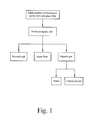
- the thermal cracking recycling flow chart of the inventive method and apparatus for thermal cracking organic macromolecule mixture to recycle differentiated substrates comprises of feeding organic macromolecule mixture into molten inorganic salt that refers to nitrate salt or nitrite salt. Said molten inorganic salt forms a sealed liquid state thermal cracking reaction device and heats the macromolecule. Said macromolecule will be cracked by the heat and form carbon slag, tar, organic gases and the like. Halogen in the macromolecule will be released in the thermal cracking.
- halogens such as fluorine, chlorine, bromine, iodine and astatine in the thermal cracking to form halide salt and nitrogen oxides. Not only will destroy the structure of macromolecular material during thermal cracking reaction such that organic macromolecule mixture might decompose into organic gas and carbon ash, but also will capture halogen to recover them.
- inorganic salt and halide salt can be dissolved rapidly in water, while carbon slag and substrates are insoluble in water, thereby the object of recycling can be achieved readily, and the substrates thus obtained are the original substrates such as metal fiber, glass fiber, carbon fiber, metal, glass, ceramics and the like. Further, since the temperature in thermal cracking is not high, and will not destroy substrates, the re-usable benefit of substrates could be raised.
- Organic gases can be separated through condensation/ compression to form condensable large molecules combustible oil on one hand and incondensable small molecule combustible gas on the other hand, and recycled to re-use, respectively.
- Halide salts are different greatly from inorganic salts in melting point and specific gravity; this makes their separation and application not difficult. The halide salts thus separated can be converted again into industrial raw materials to reuse.
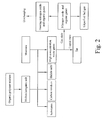
- the exploded view shows the control of thermal cracking reaction system for said method and apparatus for thermal cracking organic macromolecule mixture to recycle differentiated substrates.
- the thermal cracking reaction system in the method for thermal cracking organic macromolecule mixture by using molten inorganic salts to separate substrates in mixed materials so as to achieve the object of differentiated recycle the inventor had set up following novel rapid, safe and energy-saving thermal cracking methods:
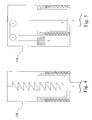
- a schematic view shows the whole framework of thermal cracking reaction apparatus for said method and apparatus for thermal cracking organic macromolecule mixture to recycle differentiated substrates, which uses molten inorganic salt to thermal crack organic macromolecule mixture so as to recover substrates in the mixture, and comprises:
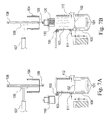
- FIG. 7A to 7E schematic views shows the carrying out of a thermal cracking reaction for said method and apparatus for thermal cracking organic macromolecule mixture to recycle differentiated substrates. It comprises of feeding vertically reactant 120 into a mobile reaction stand 110, driving a drive for reaction stand delivery 107 to connect a reaction stand connector 109 thereon with a mobile reaction stand 110, and open the upper lid 105 right above the reaction furnace ( Fig .
- the reaction time of thermal cracking is about 1 to 5 minutes; wherein in the course of thermal cracking reaction, waste gas generated is discharged forcibly through the reaction furnace waste gas exit 112 into the reaction furnace mobile water seal valve 113, and after the thermal cracking reaction ends completely, the mobile reaction stand 110 moves upwardly, and at the same time, steam generated from moisture is used to remove waste gas produced after reaction out of reaction furnace 100 and to cool reactant 120 ( Fig. 7D ); thereafter, the upper lid 105 is closed again to cover the port right above the reaction furnace 100 ( Fig. 7E ), thereby complete the process of thermal cracking reaction.
- reaction time for the thermal cracking of said reactant 120 in the molten inorganic salt 102 is most preferably 3 minutes.
- said molten inorganic salt may be at least one selected from the group consisting of highly active nitrate salt or nitrite salt containing lithium, sodium, potassium, rubidium, cesium, and francium, or it may be single or mixed molten salts to form a liquid thermal cracking reaction furnace with its fusing temperature in the range of 180°C ⁇ 580°C, and carry out thermal cracking at different temperature according to different organic macromolecular material, wherein the reactant is embedded and heated directly such that its temperature is homogeneous and rapid, and hence molten salt can provide safe and steady thermal cracking environment.
- organic gas is separated into a condensable fuel (large molecule) with high ignition point, which can combined with the escaped carbon ash to form tar, and can be used as fuel or re-processed into industrial raw materials.
- incondensable gas is fuel gas (small molecule) with low ignition point, and can be guided into a burning device to recycle heat energy, or can be converted into electrical energy, or by using a commercial VOCs waste gas treating device, the organic gas and nitrogen oxide obtained after reaction can be treated and then discharged safely and harmlessly; in case of large amount, the fuel gas can be compressed under high pressure into purified fuel gas to be used later.
- differentiation of reactants after reaction can be done through water washing based on the fact that molten inorganic salts and halide salts can be dissolved in water readily, while carbon slag and substrates is insoluble in water, such that the carbon slag and substrates can be separated off easily, and besides, they can be separated readily with each other also due to the difference of specific gravity.
- carbides on the surface of substrates need to be removed, they can be heated in an oxygen-containing environment at a temperature higher than 400°C, and then, carbon will decompose and leave the surface of substrates, thereby substrates with high purity can be obtained.
- the recycled carbon slag can be used as fuel, or can be reprocessed into usable industrial raw materials, such as carbon black, active carbon and the like.
- usable industrial raw materials such as carbon black, active carbon and the like.
- the invention is innovative in technical thought, and can increase the above-described effects over conventional art; these make it meeting sufficiently the requirements of novelty and inventiveness stipulated by the patent elements. Accordingly, a patent right application is filed and is expected to get the deserved patent right as soon as possible.
Landscapes
- Chemical & Material Sciences (AREA)
- Oil, Petroleum & Natural Gas (AREA)
- Engineering & Computer Science (AREA)
- Life Sciences & Earth Sciences (AREA)
- Chemical Kinetics & Catalysis (AREA)
- Organic Chemistry (AREA)
- Physics & Mathematics (AREA)
- General Chemical & Material Sciences (AREA)
- Wood Science & Technology (AREA)
- Thermal Sciences (AREA)
- Sustainable Development (AREA)
- Health & Medical Sciences (AREA)
- Medicinal Chemistry (AREA)
- Polymers & Plastics (AREA)
- Processing Of Solid Wastes (AREA)
- Separation, Recovery Or Treatment Of Waste Materials Containing Plastics (AREA)
Applications Claiming Priority (1)
| Application Number | Priority Date | Filing Date | Title |
|---|---|---|---|
| TW98120358A TW201100471A (en) | 2009-06-18 | 2009-06-18 | Method for pyrolyzing organic polymer to classify and recycle substrate and apparatus thereof |
Publications (2)
| Publication Number | Publication Date |
|---|---|
| EP2264091A2 true EP2264091A2 (fr) | 2010-12-22 |
| EP2264091A3 EP2264091A3 (fr) | 2012-08-01 |
Family
ID=42937262
Family Applications (1)
| Application Number | Title | Priority Date | Filing Date |
|---|---|---|---|
| EP20100166326 Withdrawn EP2264091A3 (fr) | 2009-06-18 | 2010-06-17 | Procédé et appareil pour le craquage thermique d'un mélange de macromolécules organiques pour recycler les substrats différentiés |
Country Status (4)
| Country | Link |
|---|---|
| US (1) | US20100320126A1 (fr) |
| EP (1) | EP2264091A3 (fr) |
| JP (1) | JP5091280B2 (fr) |
| TW (1) | TW201100471A (fr) |
Cited By (5)
| Publication number | Priority date | Publication date | Assignee | Title |
|---|---|---|---|---|
| CN103624058A (zh) * | 2012-08-22 | 2014-03-12 | 黄广禧 | 一种垃圾裂解产生的废液处置方法 |
| CN106094712A (zh) * | 2016-08-09 | 2016-11-09 | 红塔烟草(集团)有限责任公司 | 燃油供油信息传输控制系统 |
| CN106894034A (zh) * | 2017-04-09 | 2017-06-27 | 柯富荣 | 一种金属工件表面还原装置及其方法 |
| CN112480952A (zh) * | 2020-03-23 | 2021-03-12 | 黄颖媛 | 废旧轮胎热裂解回收用废气处理装置 |
| CN112519045A (zh) * | 2020-12-18 | 2021-03-19 | 孙克东 | 一种环保型塑料再生用原料初步预处理设备 |
Families Citing this family (15)
| Publication number | Priority date | Publication date | Assignee | Title |
|---|---|---|---|---|
| US9138660B2 (en) * | 2011-05-25 | 2015-09-22 | Masahiro Yamamoto | Method for reducing water content of an object to be treated |
| JP5884392B2 (ja) * | 2011-10-12 | 2016-03-15 | 日立化成株式会社 | 複合体の溶解処理装置、及び、複合体の溶解処理方法 |
| CA2883190C (fr) * | 2012-08-30 | 2021-06-15 | Frank Riedewald | Procede et systeme de pyrolyse de pneus entiers et composites en plastique pour alimenter la conversion et la recuperation de composes |
| KR101381728B1 (ko) * | 2013-10-28 | 2014-04-07 | 백홍흠 | 사파이어웨이퍼 래핑공정 연마재의 재생방법 |
| CN103588989B (zh) * | 2013-11-01 | 2016-04-20 | 华东理工大学 | 一种低温熔盐回收碳纤维的方法 |
| JP6198274B2 (ja) * | 2014-07-01 | 2017-09-20 | 公益財団法人鉄道総合技術研究所 | 圧電材の回収方法とその再利用方法 |
| CN104353260B (zh) * | 2014-11-06 | 2016-03-02 | 北京林业大学 | 用于车载式生物质热裂解设备的复合式冷凝装置 |
| CN107417963B (zh) * | 2017-06-21 | 2020-04-24 | 南京工程学院 | 一种回收碳纤维增强树脂基复合材料的装置及其方法 |
| CN110181714A (zh) * | 2019-06-05 | 2019-08-30 | 昆明理工大学 | 一种聚合物基复合材料废弃物的回收再利用方法 |
| CN110227323A (zh) * | 2019-06-26 | 2019-09-13 | 彭峰 | 一种去除普洱茶中蒽醌等有害物质的方法及装置 |
| JP7329405B2 (ja) * | 2019-09-30 | 2023-08-18 | 群栄化学工業株式会社 | 再生無機繊維の製造方法及び無機繊維製品の製造方法 |
| US20230407186A1 (en) * | 2020-11-02 | 2023-12-21 | Lummus Technology Llc | Electric furnace to produce olefins |
| CN112977570B (zh) * | 2021-02-04 | 2022-12-16 | 台州玖枫科技有限公司 | 一种芝麻油用作婴儿护肤品的芝麻油提取物快速转移装置 |
| CN117298506A (zh) * | 2023-09-11 | 2023-12-29 | 昆明理工大学 | 高温自由基协同熔融盐快速氧化解毒有机物方法 |
| TWI885719B (zh) * | 2024-01-26 | 2025-06-01 | 郭春富 | 回收料重組製程及裝置 |
Family Cites Families (7)
| Publication number | Priority date | Publication date | Assignee | Title |
|---|---|---|---|---|
| JPS4971063A (fr) * | 1972-11-08 | 1974-07-09 | ||
| JP3288164B2 (ja) * | 1993-12-28 | 2002-06-04 | 株式会社東芝 | 廃プラスチックの熱分解装置 |
| JPH1180844A (ja) * | 1997-09-04 | 1999-03-26 | Nkk Corp | 金属複合廃プラスチックからの金属の回収方法 |
| JP3129711B2 (ja) * | 1998-07-29 | 2001-01-31 | 新日本製鐵株式会社 | 石炭のコークス化と、塩素含有樹脂または塩素含有有機化合物、あるいはそれらを含む廃プラスチックの処理を並行して行う方法 |
| JP2003211140A (ja) * | 2002-01-21 | 2003-07-29 | Kawasaki Heavy Ind Ltd | 廃タイヤ分解処理方法および装置 |
| JP2004097879A (ja) * | 2002-09-05 | 2004-04-02 | Tokyo Electric Power Co Inc:The | 廃棄物処理方法及びその装置 |
| TW201041668A (en) * | 2009-05-27 | 2010-12-01 | xie-sen Wu | Pyrolysis method of recycled substrate of printed circuit board and device thereof |
-
2009
- 2009-06-18 TW TW98120358A patent/TW201100471A/zh unknown
-
2010
- 2010-06-16 US US12/816,862 patent/US20100320126A1/en not_active Abandoned
- 2010-06-17 JP JP2010137794A patent/JP5091280B2/ja not_active Expired - Fee Related
- 2010-06-17 EP EP20100166326 patent/EP2264091A3/fr not_active Withdrawn
Non-Patent Citations (1)
| Title |
|---|
| None |
Cited By (8)
| Publication number | Priority date | Publication date | Assignee | Title |
|---|---|---|---|---|
| CN103624058A (zh) * | 2012-08-22 | 2014-03-12 | 黄广禧 | 一种垃圾裂解产生的废液处置方法 |
| CN106094712A (zh) * | 2016-08-09 | 2016-11-09 | 红塔烟草(集团)有限责任公司 | 燃油供油信息传输控制系统 |
| CN106894034A (zh) * | 2017-04-09 | 2017-06-27 | 柯富荣 | 一种金属工件表面还原装置及其方法 |
| CN106894034B (zh) * | 2017-04-09 | 2018-12-04 | 柯富荣 | 一种金属工件表面还原装置及其方法 |
| CN112480952A (zh) * | 2020-03-23 | 2021-03-12 | 黄颖媛 | 废旧轮胎热裂解回收用废气处理装置 |
| CN112552944A (zh) * | 2020-03-23 | 2021-03-26 | 黄颖媛 | 一种废旧轮胎热裂解回收用废气处理装置 |
| CN112552944B (zh) * | 2020-03-23 | 2022-07-22 | 苏州双福智能科技有限公司 | 一种废旧轮胎热裂解回收用废气处理装置 |
| CN112519045A (zh) * | 2020-12-18 | 2021-03-19 | 孙克东 | 一种环保型塑料再生用原料初步预处理设备 |
Also Published As
| Publication number | Publication date |
|---|---|
| JP5091280B2 (ja) | 2012-12-05 |
| TWI444410B (fr) | 2014-07-11 |
| TW201100471A (en) | 2011-01-01 |
| US20100320126A1 (en) | 2010-12-23 |
| EP2264091A3 (fr) | 2012-08-01 |
| JP2011001550A (ja) | 2011-01-06 |
Similar Documents
| Publication | Publication Date | Title |
|---|---|---|
| EP2264091A2 (fr) | Procédé et appareil pour le craquage thermique d'un mélange de macromolécules organiques pour recycler les substrats différentiés | |
| CN101942108B (zh) | 热裂解有机高分子混合物以分类回收基材方法及其装置 | |
| KR102262779B1 (ko) | 폐합성수지와 가연성 폐기물의 연속투입은 물론 열분해된 부산물을 연속적으로 배출하고 미세먼지와 폐수의 배출이 없이 고품질 오일을 생성하는 열분해 유화 방법 및 장치 | |
| KR102317493B1 (ko) | 이동형 폐합성수지 열분해유화 재활용장치 | |
| TW201041668A (en) | Pyrolysis method of recycled substrate of printed circuit board and device thereof | |
| US7832344B2 (en) | Method and apparatus of treating waste | |
| CN113278440A (zh) | 塑料回收系统和塑料回收方法 | |
| CN103453532B (zh) | 电池回收处理系统及方法 | |
| KR100473763B1 (ko) | 폐타이어 자동연속식 유화,카본블랙,와이어코어 재생장치 | |
| CN103936253B (zh) | 一种利用微波和等离子体技术深化处理油泥的装置 | |
| CN109357268B (zh) | 利用热风富氧天然气竖炉处理废旧油漆桶的工艺方法 | |
| KR101352017B1 (ko) | 폐전선의 동선 회수장치 및 방법 | |
| CN101921915A (zh) | 热裂解废印刷电路板回收基材方法及其装置 | |
| KR20160065340A (ko) | 인쇄회로기판 처리용 폐기물처리 시스템 | |
| JPH07286062A (ja) | 塩素含有プラスチック廃棄物の処理方法 | |
| JP2006016594A (ja) | 廃プラスチック油化処理装置および廃プラスチックの油化処理方法 | |
| CN221388062U (zh) | 废弃风机叶片的处理装置 | |
| TW202007901A (zh) | 廢棄電子產品處理方法及其處理裝置 | |
| CN1923957A (zh) | 废塑料热裂解制取柴油的设备和工艺方法 | |
| US5846385A (en) | Process and apparatus for energy recovering through waste classification and calcination | |
| KR100639643B1 (ko) | 폐열을 이용한 다기능 폐기물의 재활용 장치 및 그 방법 | |
| CN114087620A (zh) | 一种风力发电机废叶片干馏处理装置及方法 | |
| JP2000044726A (ja) | 塩素含有プラスチック廃棄物の処理方法 | |
| JP3064131U (ja) | プラスチックの連続乾留熱分解油化装置 | |
| CN219995336U (zh) | 一种废电路板热解熔融试验装置 |
Legal Events
| Date | Code | Title | Description |
|---|---|---|---|
| PUAI | Public reference made under article 153(3) epc to a published international application that has entered the european phase |
Free format text: ORIGINAL CODE: 0009012 |
|
| AK | Designated contracting states |
Kind code of ref document: A2 Designated state(s): AL AT BE BG CH CY CZ DE DK EE ES FI FR GB GR HR HU IE IS IT LI LT LU LV MC MK MT NL NO PL PT RO SE SI SK SM TR |
|
| AX | Request for extension of the european patent |
Extension state: BA ME RS |
|
| 17P | Request for examination filed |
Effective date: 20110304 |
|
| PUAL | Search report despatched |
Free format text: ORIGINAL CODE: 0009013 |
|
| AK | Designated contracting states |
Kind code of ref document: A3 Designated state(s): AL AT BE BG CH CY CZ DE DK EE ES FI FR GB GR HR HU IE IS IT LI LT LU LV MC MK MT NL NO PL PT RO SE SI SK SM TR |
|
| AX | Request for extension of the european patent |
Extension state: BA ME RS |
|
| RIC1 | Information provided on ipc code assigned before grant |
Ipc: C03C 25/00 20060101ALI20120622BHEP Ipc: C08J 11/10 20060101AFI20120622BHEP Ipc: B29B 17/02 20060101ALI20120622BHEP Ipc: C10B 53/07 20060101ALI20120622BHEP Ipc: C10G 1/10 20060101ALI20120622BHEP |
|
| 17Q | First examination report despatched |
Effective date: 20150224 |
|
| STAA | Information on the status of an ep patent application or granted ep patent |
Free format text: STATUS: THE APPLICATION IS DEEMED TO BE WITHDRAWN |
|
| 18D | Application deemed to be withdrawn |
Effective date: 20150707 |