EP2264683A1 - Dispositif et programme de support à la conduite - Google Patents
Dispositif et programme de support à la conduite Download PDFInfo
- Publication number
- EP2264683A1 EP2264683A1 EP10005706A EP10005706A EP2264683A1 EP 2264683 A1 EP2264683 A1 EP 2264683A1 EP 10005706 A EP10005706 A EP 10005706A EP 10005706 A EP10005706 A EP 10005706A EP 2264683 A1 EP2264683 A1 EP 2264683A1
- Authority
- EP
- European Patent Office
- Prior art keywords
- vehicle
- lane
- host
- overtaking
- road
- Prior art date
- Legal status (The legal status is an assumption and is not a legal conclusion. Google has not performed a legal analysis and makes no representation as to the accuracy of the status listed.)
- Withdrawn
Links
Images


Classifications
-
- G—PHYSICS
- G08—SIGNALLING
- G08G—TRAFFIC CONTROL SYSTEMS
- G08G1/00—Traffic control systems for road vehicles
- G08G1/16—Anti-collision systems
- G08G1/161—Decentralised systems, e.g. inter-vehicle communication
- G08G1/163—Decentralised systems, e.g. inter-vehicle communication involving continuous checking
-
- B—PERFORMING OPERATIONS; TRANSPORTING
- B60—VEHICLES IN GENERAL
- B60W—CONJOINT CONTROL OF VEHICLE SUB-UNITS OF DIFFERENT TYPE OR DIFFERENT FUNCTION; CONTROL SYSTEMS SPECIALLY ADAPTED FOR HYBRID VEHICLES; ROAD VEHICLE DRIVE CONTROL SYSTEMS FOR PURPOSES NOT RELATED TO THE CONTROL OF A PARTICULAR SUB-UNIT
- B60W30/00—Purposes of road vehicle drive control systems not related to the control of a particular sub-unit, e.g. of systems using conjoint control of vehicle sub-units
- B60W30/18—Propelling the vehicle
- B60W30/18009—Propelling the vehicle related to particular drive situations
-
- B—PERFORMING OPERATIONS; TRANSPORTING
- B60—VEHICLES IN GENERAL
- B60W—CONJOINT CONTROL OF VEHICLE SUB-UNITS OF DIFFERENT TYPE OR DIFFERENT FUNCTION; CONTROL SYSTEMS SPECIALLY ADAPTED FOR HYBRID VEHICLES; ROAD VEHICLE DRIVE CONTROL SYSTEMS FOR PURPOSES NOT RELATED TO THE CONTROL OF A PARTICULAR SUB-UNIT
- B60W50/00—Details of control systems for road vehicle drive control not related to the control of a particular sub-unit, e.g. process diagnostic or vehicle driver interfaces
- B60W50/0097—Predicting future conditions
-
- G—PHYSICS
- G08—SIGNALLING
- G08G—TRAFFIC CONTROL SYSTEMS
- G08G1/00—Traffic control systems for road vehicles
- G08G1/16—Anti-collision systems
- G08G1/167—Driving aids for lane monitoring, lane changing, e.g. blind spot detection
-
- B—PERFORMING OPERATIONS; TRANSPORTING
- B60—VEHICLES IN GENERAL
- B60W—CONJOINT CONTROL OF VEHICLE SUB-UNITS OF DIFFERENT TYPE OR DIFFERENT FUNCTION; CONTROL SYSTEMS SPECIALLY ADAPTED FOR HYBRID VEHICLES; ROAD VEHICLE DRIVE CONTROL SYSTEMS FOR PURPOSES NOT RELATED TO THE CONTROL OF A PARTICULAR SUB-UNIT
- B60W2520/00—Input parameters relating to overall vehicle dynamics
- B60W2520/10—Longitudinal speed
-
- B—PERFORMING OPERATIONS; TRANSPORTING
- B60—VEHICLES IN GENERAL
- B60W—CONJOINT CONTROL OF VEHICLE SUB-UNITS OF DIFFERENT TYPE OR DIFFERENT FUNCTION; CONTROL SYSTEMS SPECIALLY ADAPTED FOR HYBRID VEHICLES; ROAD VEHICLE DRIVE CONTROL SYSTEMS FOR PURPOSES NOT RELATED TO THE CONTROL OF A PARTICULAR SUB-UNIT
- B60W2540/00—Input parameters relating to occupants
- B60W2540/10—Accelerator pedal position
-
- B—PERFORMING OPERATIONS; TRANSPORTING
- B60—VEHICLES IN GENERAL
- B60W—CONJOINT CONTROL OF VEHICLE SUB-UNITS OF DIFFERENT TYPE OR DIFFERENT FUNCTION; CONTROL SYSTEMS SPECIALLY ADAPTED FOR HYBRID VEHICLES; ROAD VEHICLE DRIVE CONTROL SYSTEMS FOR PURPOSES NOT RELATED TO THE CONTROL OF A PARTICULAR SUB-UNIT
- B60W2540/00—Input parameters relating to occupants
- B60W2540/12—Brake pedal position
-
- B—PERFORMING OPERATIONS; TRANSPORTING
- B60—VEHICLES IN GENERAL
- B60W—CONJOINT CONTROL OF VEHICLE SUB-UNITS OF DIFFERENT TYPE OR DIFFERENT FUNCTION; CONTROL SYSTEMS SPECIALLY ADAPTED FOR HYBRID VEHICLES; ROAD VEHICLE DRIVE CONTROL SYSTEMS FOR PURPOSES NOT RELATED TO THE CONTROL OF A PARTICULAR SUB-UNIT
- B60W2540/00—Input parameters relating to occupants
- B60W2540/18—Steering angle
-
- B—PERFORMING OPERATIONS; TRANSPORTING
- B60—VEHICLES IN GENERAL
- B60W—CONJOINT CONTROL OF VEHICLE SUB-UNITS OF DIFFERENT TYPE OR DIFFERENT FUNCTION; CONTROL SYSTEMS SPECIALLY ADAPTED FOR HYBRID VEHICLES; ROAD VEHICLE DRIVE CONTROL SYSTEMS FOR PURPOSES NOT RELATED TO THE CONTROL OF A PARTICULAR SUB-UNIT
- B60W2540/00—Input parameters relating to occupants
- B60W2540/20—Direction indicator values
-
- B—PERFORMING OPERATIONS; TRANSPORTING
- B60—VEHICLES IN GENERAL
- B60W—CONJOINT CONTROL OF VEHICLE SUB-UNITS OF DIFFERENT TYPE OR DIFFERENT FUNCTION; CONTROL SYSTEMS SPECIALLY ADAPTED FOR HYBRID VEHICLES; ROAD VEHICLE DRIVE CONTROL SYSTEMS FOR PURPOSES NOT RELATED TO THE CONTROL OF A PARTICULAR SUB-UNIT
- B60W2554/00—Input parameters relating to objects
-
- B—PERFORMING OPERATIONS; TRANSPORTING
- B60—VEHICLES IN GENERAL
- B60W—CONJOINT CONTROL OF VEHICLE SUB-UNITS OF DIFFERENT TYPE OR DIFFERENT FUNCTION; CONTROL SYSTEMS SPECIALLY ADAPTED FOR HYBRID VEHICLES; ROAD VEHICLE DRIVE CONTROL SYSTEMS FOR PURPOSES NOT RELATED TO THE CONTROL OF A PARTICULAR SUB-UNIT
- B60W2554/00—Input parameters relating to objects
- B60W2554/80—Spatial relation or speed relative to objects
- B60W2554/802—Longitudinal distance
-
- B—PERFORMING OPERATIONS; TRANSPORTING
- B60—VEHICLES IN GENERAL
- B60W—CONJOINT CONTROL OF VEHICLE SUB-UNITS OF DIFFERENT TYPE OR DIFFERENT FUNCTION; CONTROL SYSTEMS SPECIALLY ADAPTED FOR HYBRID VEHICLES; ROAD VEHICLE DRIVE CONTROL SYSTEMS FOR PURPOSES NOT RELATED TO THE CONTROL OF A PARTICULAR SUB-UNIT
- B60W2554/00—Input parameters relating to objects
- B60W2554/80—Spatial relation or speed relative to objects
- B60W2554/804—Relative longitudinal speed
-
- B—PERFORMING OPERATIONS; TRANSPORTING
- B60—VEHICLES IN GENERAL
- B60W—CONJOINT CONTROL OF VEHICLE SUB-UNITS OF DIFFERENT TYPE OR DIFFERENT FUNCTION; CONTROL SYSTEMS SPECIALLY ADAPTED FOR HYBRID VEHICLES; ROAD VEHICLE DRIVE CONTROL SYSTEMS FOR PURPOSES NOT RELATED TO THE CONTROL OF A PARTICULAR SUB-UNIT
- B60W2556/00—Input parameters relating to data
- B60W2556/45—External transmission of data to or from the vehicle
- B60W2556/50—External transmission of data to or from the vehicle of positioning data, e.g. GPS [Global Positioning System] data
Definitions
- the present invention relates to a driving support device and a program that evaluate driving and support the driving of a driver.
- a system in which it is evaluated whether or not the driving performed by the driver while traveling was appropriate. For example, in a technology disclosed by JP-A-2008-186045 , whether or not a vehicle speed while traveling, a braking timing, an inter-vehicle distance, and the like are appropriate is evaluated and ranking and scoring are performed.
- the overtaking operation for the overtaking operation to overtake the target vehicle as the other-vehicle that is predicted to continue traveling along the road where the other-vehicle is traveling, whether or not the overtaking operation is appropriate is judged based on the position relation of the lane where the host-vehicle traveled during the overtaking operation. If it has been judged that the overtaking operation is not appropriate, it is determined that the overtaking operation is the dangerous operation. Therefore, the overtaking operation is properly evaluated. Consequently, through giving appropriate feedback of driving evaluation to a driver, the technique of the driver can be improved.
- the overtaking operation through the lane that is not close to the center of the road compared to the first lane can be determined as the dangerous operation.
- the lane that is not close to the center of the road corresponds to a left-hand lane where the left-hand traffic is in force (such as Japan).
- the driving support device enables to properly predict whether or not the other-vehicle continues traveling along the road where the other-vehicle is traveling.
- the driving support device enables to properly predict whether or not the other-vehicle continues traveling along the road where the other-vehicle is traveling.
- FIG. 2 is a flowchart showing driving evaluation processing according to the embodiment.
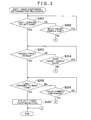
- FIG. 3 is a flowchart showing left-hand overtaking determination processing according to the embodiment.
- FIG. 4 explains a specific example of the driving evaluation processing according to the embodiment.
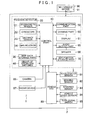
- FIG. 1 is a block diagram showing an overall structure of a driving support device 1 according to an embodiment.
- the driving support device 1 is installed in a host-vehicle 2 and includes a navigation device 3, a vehicle ECU 80, a camera 86, a radar device 87, and the like.
- the navigation device 3 includes a control part 10, a position detector 20, a map data storage part 30, a group of operation switches 40, a communication part 50, a drawing part 60, an audio output part 65, an information storage part 70, and the like.
- the control part 10 is structured in the center and connected to the position detector 20, the map data storage part 30, the group of operation switches 40, the communication part 50, the drawing part 60, the audio output part 65, and the information storage part 70.
- the control part 10, which is configured as a normal computer includes a CPU, a ROM, an I/O, and a bus line for connecting these members.
- the position detector 20 which detects position information relating to a current position of a vehicle, includes a geomagnetic sensor 21, a gyroscope 22, a distance sensor 23, a GPS (Global Positioning System) receiver 24 that receives electric waves from satellites, and the like, all of which are well-known units. These units 21 to 24 have different kinds of errors; therefore, they are used with mutual compliment.
- the position information is detected as coordinate information.
- the map data storage part 30 is a storage device that is realized for example as a hard disk device (a HDD).
- the HDD is utilized in the present embodiment; however, another medium such as a memory card may be utilized.
- the map data storage part 30 stores so-called map matching data for improvement of a position detection accuracy of the vehicle and map data for performing route search and route guidance.
- map matching data for improvement of a position detection accuracy of the vehicle and map data for performing route search and route guidance.
- a branch point such as an intersection, a merging point, and the like are defined as a node
- a road is defined as a link connecting nodes.
- attribute information For each link, a travel direction, a distance, the number of lanes, a road attribute, presence or absence of a center divider, and the like are defined as attribute information, which is associated with a link ID identifying each link.
- the map data includes branch information, which is associated with directions in which the vehicle can proceed after passing the branch point, for each branch point (each node) such as an intersection and a junction that has a plurality of directions in which the vehicle can proceed or for each lane of the link before the branch point.
- the map data includes facility information relating to facilities.
- the facility information is POI (Point Of Interest) information, which is associated with an ID identifying a facility and stored.
- the POI information includes a facility name, an address, a category, data specifying an area, and the like.
- the group of operation switches 40 which includes a touch switch or a mechanical switch integrated with a display 61, a remote control device, and the like, is used for various kinds of input.
- the communication part 50 is a configuration for performing inter-vehicle communication with an in-vehicle device 91 installed in an other-vehicle 90.
- the in-vehicle device 91 has the same configuration as the navigation device 3, and the explanation is omitted.
- FIG. 1 indicates only one other-vehicle 90; however the communication part 50 is communicable with a plurality of vehicles.
- the drawing part 60 is connected to the display 61.
- the display 61 is a color display using liquid crystal or a CRT. Information display is executed through the display 61.
- the audio output part 65 is connected to a speaker 66, through which guidance by audio is performed.
- the information storage part 70 stores information acquired from the position detector 20, the communication part 50, the vehicle ECU 80, the camera 86, the radar device 87, and the like, and is configured with a HDD as used for the map data storage part 30. Naturally, another medium such as the memory card may be utilized. Or, the same HDD utilized for the map data storage part 30 may be utilized.
- the information storage part 70 stores information relating to operations of the host-vehicle 2 and information relating to the other-vehicle 90.
- the information relating to operations of the host-vehicle 2 includes information relating to a vehicle speed, information relating to a lane change, and the like.
- the information relating to the vehicle speed is acquired from the vehicle ECU 80.
- the information relating to the lane change is information that identifies the lane where the host-vehicle 2 traveled based on the position information detected by the position detector 20 and lane information stored in the map data storage part 30.
- the information relating to the other-vehicle 90 includes the position information of the other-vehicle 90, vehicle speed information relating to the vehicle speed, information relating to lighting of a direction indicator, route information relating to a destination and a route to the destination, and the like, and is associated with a vehicle ID of the other-vehicle 90 and stored. These information is acquired by the communication part 50, the camera 86, and the radar device 87.
- the vehicle ECU 80 controls operations of an engine, a transmission, an accelerator, a braking, and the like.
- the vehicle ECU 80 which is configured as a normal computer as the control part 10, includes the CPU, the ROM, the I/O, and the bus line for connecting these members.
- the vehicle ECU 80 is connected to an accelerator sensor 81 that detects a pressing level of an accelerator pedal, a braking sensor 82 that detects the pressing level of a brake pedal, a steering sensor 83 that detects a rotation angle of a steering wheel, a vehicle speed sensor 84 that detects a speed of a vehicle, a turn signal switch 85, and the like.
- the camera 86 using a solid-state image sensing device such as a CCD, is configured so as to be able to capture images in all directions outside the vehicle.
- the acquired image information is stored in the information storage part 70.
- the radar device 87 includes an electric wave transmitting part and an electric wave receiving part.
- the radar device 87 transmits electric waves ahead of the host-vehicle 2 with the electric wave transmitting part and receives reflected electric waves reflected by an object in front with the electric wave receiving part, and then detects a distance and a relative speed to the object in front based on a time from transmitting to receiving, and the like. If the object in front is a vehicle, the distance to the object is acquired as inter-vehicle distance information.
- the present embodiment is characterized in that an overtaking operation is properly evaluated.
- driving evaluation processing is described with reference to flowcharts in FIGS. 2 and 3 .
- the flowcharts in FIGS. 2 and 3 indicate the driving evaluation processing for evaluating the overtaking operation that the host-vehicle 2 overtakes the other-vehicle 90 when the host-vehicle 2 travels along a road where there is a plurality of lanes on either side and overtaking through a lane on the left side is prohibited.
- the driving evaluation processing indicated in FIG. 2 is executed at intervals of a predetermined time, for example every 100 msec., while the vehicle 2 is traveling.
- a first step S101 (hereinafter, "step” is omitted and referred to as only “S")
- the vehicle ID of the other-vehicle 90 is acquired.
- the processing at S102 and subsequent steps are not executed. If the other-vehicle 90 exists within the first predetermined area ahead of the host-vehicle 2 (S101:NO), the processing at S102 and subsequent steps are not executed. If the other-vehicle 90 exists within the first predetermined area ahead of the host-vehicle 2 (S101:YES), the procedure goes to S102. Hereinafter, determination is executed toward the overtaking operation of overtaking the other-vehicle 90 that is closest to the host-vehicle 2 among the other-vehicles 90 within the first predetermined area ahead of the host-vehicle 2. However, if a plurality of vehicles exist within the first predetermined area ahead of the host-vehicle 2, the same processing may be executed toward each vehicle.
- travelling road a road where the other-vehicle 90 is traveling
- the judgment is performed based on the road information stored in the map data storage part 30. Specifically, it is predicted that the other-vehicle 90 continues traveling along the traveling road if there is no node indicating a branch point within a second predetermined area, for example, within 500m, ahead of the host-vehicle 2.
- the second predetermined area is set larger than the first predetermined area.
- the "traveling road” in the present embodiment is not limited to the so-called link, but may be an aggregate of consecutive links in case of traveling following a road.
- the other-vehicle 90 is determined as a target vehicle.
- the information relating to the target vehicle is acquired and stored in the information storage part 70.
- the information relating to the target vehicle which includes the position information, the vehicle speed information, the information relating to the lighting of the direction indicator, the route information, and the like, is acquired in a processing separate from the present processing at intervals of a predetermined time, for example, 100 msec. until the present processing terminates.
- a left-hand overtaking determination is executed toward the target vehicle determined at S103.
- Left-hand overtaking determination processing executed here is described with reference to the flowchart indicated in FIG. 3 .
- the judgment of whether or not the host-vehicle 2 has lane-changed to the left lane in relation to the pre-overtaking lane is executed based on the position information and the lane information of the host-vehicle 2.
- the procedure goes to S203. If the host-vehicle 2 has not lane-changed to the left lane in relation to the pre-overtaking lane (S201: NO), the procedure goes to S202.
- the left lane to which the host-vehicle 2 has lane-changed from the pre-overtaking lane corresponds the "second lane” and a "lane that is not close to the center of the road compared to the first lane".
- the processing at S203 and subsequent steps is not executed and the left-hand overtaking determination processing is terminated.
- the condition of if the target vehicle does not exist within the first predetermined area in the pre-overtaking lane ahead of the host-vehicle 2 is met, for example, in cases such as if the target vehicle has lane-changed, if the target vehicle has gone forward over the first predetermined area, and the like. If the target vehicle exists within the first predetermined area in the pre-overtaking lane ahead of the host-vehicle 2 (S202: YES), the procedure returns to S201.
- the processing at S205 and subsequent steps is not executed and the left-hand overtaking determination processing is terminated.
- the condition of if the target vehicle does not exist within the first predetermined area in the pre-overtaking lane ahead of the host-vehicle 2 is met, for example, in cases such as if the target vehicle has lane-changed, if the target vehicle has gone forward over the first predetermined area, and the like. If the target vehicle exists within the first predetermined area in the pre-overtaking lane ahead of the host-vehicle 2 (S204: YES), the procedure returns to S203.
- a predetermined time for example 30 seconds, has passed since it was judged at S203 that the host-vehicle 2 passed the target vehicle. If the predetermined time has passed (S206: YES), the processing at S207 and subsequent steps is not executed and the left-hand overtaking determination processing is terminated. If the predetermined time has not passed (S206: NO), the procedure returns to S205.
- a predetermined time for example 30 seconds
- the operation that the host-vehicle 2 goes forward compared to the target vehicle through a lateral lane is defined as a "passing operation”
- a series of operations that the host-vehicle 2 lane-changes behind the target vehicle, passes the target vehicle through the changed lane, and lane-changes ahead of the target vehicle is defined as an "overtaking operation”.
- the host vehicle 2 has overtaken the target vehicle determined at S103 through the left side. The judgment here is performed by whether or not the left-hand overtaking flag, which is set at S207, is being set. If the host-vehicle 2 has not overtaken the target vehicle through the left side (S105: NO), that is, if the left-hand overtaking flag is not being set, the processing at S106 and subsequent steps is not executed. If the host-vehicle 2 has overtaken the target vehicle through the left side (S105: YES), that is, if the left-hand overtaking flag is being set, the procedure goes to S106. At S106, it is determined that the overtaking operation that the host-vehicle 2 has overtaken the target vehicle is a dangerous operation.
- the vehicle speed of the target vehicle of when the host-vehicle 2 has passed the target vehicle at S203 is equal to or less than the first predetermined speed.
- the first predetermined speed is a maximum speed of the traveling road (for example, a legal speed). If the vehicle speed of the target vehicle was not equal to nor less than the first predetermined speed (S107: NO), the procedure goes to S109. If the vehicle speed of the target vehicle was equal to or less than the first predetermined speed (S107: YES), the procedure goes to S108.
- the second predetermined speed is a minimum speed if the minimum speed is stipulated to the traveling road. For example, in case of a highway that is not two-way traffic, the minimum speed is 50km/h. If the minimum speed is stipulated with a signpost or the like, the stipulated speed is followed. In the present embodiment, if the minimum speed is not stipulated, the second predetermined speed is a speed calculated by multiplying the maximum speed of the traveling road by a predetermined factor (for example, 0.6).
- the second predetermined speed is 30km/h. If the vehicle speed of the target vehicle is equal to or more than the second predetermined speed (S108: YES), the procedure goes to S110. If the vehicle speed of the target vehicle is not equal to nor more than the second predetermined speed (S108: NO), the procedure goes to S111.
- the information previously stored in the map data storage part 30 is utilized for the maximum speed and the minimum speed of the traveling road.
- the information shown in signposts installed on roads and by pavement-marking may be acquired by analyzing an image of the image information acquired by the camera 86.
- the information of information center (not shown) may be acquired by the communication part 50.
- the left-hand overtaking flag is reset and the present processing is terminated.
- the degree of risk of the overtaking operation to overtake the target vehicle through the left side is determined as "low”. Then, the left-hand overtaking flag is reset and the present processing is terminated.
- a driving evaluation score is calculated by subtracting a point according to the degree of risk from a basic score that is previously set. For example, the points are set as 10 points if the degree of risk is "low” (S111), 20 points if the degree of risk is “middle” (S110), and 40 points if the degree of risk is "high” (S109). If the driving evaluation score becomes lower than a reference score when finishing driving, warning information notifying that the driving evaluation score has become lower than the reference score is provided through the display 61 or the speaker 66.
- FIG. 4 a specific example of driving evaluation processing is described with reference to FIG. 4 .
- a vehicle P provided with the driving support device 1 is traveling in a right lane S of a road R that is a highway with two lanes each way.
- the road R is formed with a center divider C, and the maximum speed of 100 km/h and the minimum speed of 50km/h are stipulated.
- a vehicle Q is traveling within 300m ahead of the vehicle P on the right lane S.
- the vehicle P lane-changes to a left lane T at a position X1, and lane-changes ahead of the vehicle Q in the right lane S at a position X2.
- the vehicle P corresponds to the host-vehicle 2
- the vehicle Q corresponds to the other-vehicle 90
- the road R corresponds to the traveling road.
- the vehicle Q is traveling within 300m ahead of the vehicle P (S101: YES). As there is no node indicating a branch point within 500m in the road R, it is predicted that the vehicle Q continues traveling along the road R (S102: YES). Consequently, the vehicle Q is determined as the target vehicle (S103), and the left-hand overtaking determination processing is executed. As indicated with the travel track X, the vehicle P lane-changes from the right lane S to the left lane T at the position X1 (S201: YES), passes the vehicle Q as the target vehicle (S203: YES), and lane-changes again to the right lane S at the position X2 ahead of the vehicle Q (S205: YES) within the predetermined time.
- the left-hand overtaking flag is set (S207).
- this overtaking operation is the dangerous operation (S106). If the vehicle speed of the vehicle Q of when the vehicle P has passed the vehicle Q is more than 100 km/h, the degree of risk of the overtaking operation that the vehicle P overtook the vehicle Q is determined as "high”. If the vehicle speed of the vehicle Q of when the vehicle P has passed the vehicle Q is 50 km/h or more but 100 km/h or less, the degree of risk of the overtaking operation that the vehicle P overtook the vehicle Q is determined as "middle".
- the degree of risk of the overtaking operation that the vehicle P overtook the vehicle Q is determined as "low".
- the right lane S corresponds to the "first lane”
- the left lane T corresponds to the "second lane” and the "lane that is not close to the center of the road compared to the first lane”.
- the driving support device 1 detects the other-vehicle 90 traveling ahead in the first lane where the host-vehicle 2 is traveling (S101: YES), if it is predicted that the other-vehicle 90 continues traveling along the road where the other-vehicle 90 is traveling (S102: YES), the other-vehicle 90 is determined as the target vehicle (S103), and the left-hand overtaking determination processing is executed (S104).
- the host-vehicle 2 lane-changes to the lane that is not close to the center of the road compared to the first lane (S201: YES), passes the target vehicle (S203: YES), and lane-changes from the lane that is not close to the center of the road compared to the first lane to the first lane ahead of the target vehicle within the predetermined time (S205: YES), the left-hand overtaking operation flag is set (S207) and the overtaking operation is determined as the dangerous operation (S106).
- the overtaking operation For the overtaking operation to overtake the target vehicle as the other-vehicle 90 that is predicted to continue traveling along the road where the other-vehicle 90 is traveling, whether or not the overtaking operation is appropriate is judged based on the position relation of the lane where the host-vehicle traveled during the overtaking operation. If it has been judged that the overtaking operation is not appropriate, it is determined that the overtaking operation is the dangerous operation. Therefore, the overtaking operation is properly evaluated. Consequently, through giving appropriate feedback of driving evaluation to a driver, the technique of the driver can be improved.
- the "road where the other-vehicle 90 is traveling" is not limited to the so-called link, but may be an aggregate of consecutive links in case of traveling following a road.
- the driving support device 1 detects as the overtaking operation the operation that, after the host-vehicle lane-changes from the first lane to the second lane that differs from the first lane, the host-vehicle lane-changes ahead of the target vehicle from the second lane to the first lane.
- the second lane is a lane on the left side in relation to the first lane (S201: YES)
- the overtaking operation is not appropriate and the overtaking operation is determined as the dangerous operation (S106). It enables to determine the overtaking operation through the lane on the left side that is not close to the center of the road compared to the first lane as the dangerous operation.
- the driving support device 1 predicts that the other-vehicle 90 continues traveling along the road where the other-vehicle 90 is traveling. It enables to properly predict whether or not the other-vehicle 90 continues traveling along the road where the other-vehicle 90 is traveling. Further, in the present embodiment, the degree of risk of the overtaking operation is determined based on the vehicle speed of the target vehicle; therefore, it is possible to properly determine the degree of risk of the dangerous operation.
- the control part 10 in the present embodiment includes an "other-vehicle detection unit", a “continuation prediction unit”, a "target vehicle identification unit”, an “overtaking operation detection unit”, and a “determination unit”.
- S101 corresponds to the processing as a function of the "other-vehicle detection unit”.
- S102 corresponds to the processing as a function of the "continuation prediction unit”.
- S103 corresponds to the processing as a function of the "target vehicle identification unit”.
- S201 to S206 correspond to the processing as a function of the "overtaking operation detection unit”.
- S106 to S111 correspond to the processing as a function of the "determination unit”.
- the present invention is not limited to the above-mentioned embodiment, but can be realized with various embodiments without departing from the broad spirit and scope of the underlying principles.
- the other-vehicle 90 continues traveling along the traveling road (S102).
- whether or not the other-vehicle 90 continues traveling along the traveling road may be predicted in the following methods. Whether or not the other-vehicle 90 continues traveling along the traveling road may be predicted in one method or in combination of a plurality of methods, including the above-mentioned method.
- the second predetermined area described in the above embodiment and alternative examples may be a predetermined area ahead of the over-vehicle 90 instead of a predetermined area ahead of the host-vehicle 2.
- the second predetermined area is not necessary to be set larger than the first predetermined area, but may be set to any area such as 200m ahead of the other-vehicle 90.
- the continuation prediction unit may judge whether or not the other-vehicle 90 continues traveling along the traveling road after the left-hand overtaking determination processing. That is, the judgment at S102 in the above embodiment may be performed after S105.
- the other-vehicle 90 within 300m ahead in the lane where the host-vehicle 2 is traveling is detected.
- the first predetermined area may be variable depending on the vehicle speed of the host vehicle 2. For example, the higher the vehicle speed of the host-vehicle 2 is, the larger the area to detect the other-vehicle 90 can be set.
- a distance acquired by multiplying the vehicle speed of the host-vehicle 2 by a predetermined factor (for example, 3) may be the predetermined area.
- the predetermined area may be determined based on the maximum speed of the traveling road (for example, the legal speed), instead of the vehicle speed of the host-vehicle 2.
- the other-vehicle 90 within the first predetermined area is detected based on the position information of the other-vehicle 90 acquired by the communication part 50.
- the other-vehicle 90 within the first predetermined area may be detected based on the image information acquired by the camera 86 and the inter-vehicle distance information acquired by the radar device 87.
- the lane change from the pre-overtaking lane to the left lane and the lane change from the left lane to the pre-overtaking lane ahead of the target vehicle are detected based on the lane information and the position information.
- the lane changes may be detected based on the image information acquired by the camera 86 and the inter-vehicle distance information acquired by the radar device 87, or may be detected by arbitrarily combining the position information, the lane information, the image information, the inter-vehicle distance information, and the like.
- the left-hand overtaking determination processing is executed after determining the target vehicle.
- the left-hand overtaking determination processing may be executed based on the information relating to the lane change stored in the information storage part 70. Specifically, following S103 in FIG. 2 , the judgment at S203 in FIG. 3 is performed. After that, the judgment at S201 and S205 is performed.
- the determination unit determines the degree of risk based on the vehicle speed of the target vehicle of when the host-vehicle 2 has passed the target vehicle.
- the degree of risk may be determined based on the vehicle speed of the host-vehicle 2 instead of the target vehicle.
- the degree of risk is determined based on the vehicle speed of the target vehicle of when the host-vehicle 2 has passed the target vehicle.
- the degree of risk may be determined based on the vehicle speed of the target vehicle at any timing during the overtaking operation of the host-vehicle 2 (in the above embodiment, from positive judgment at S201 to the positive judgment at S205). For example, for the first predetermined speed, a maximum speed of the target vehicle during the overtaking operation of the host-vehicle 2 may be applied, and for the second predetermined speed, a minimum speed of the target vehicle during the overtaking operation of the host-vehicle 2 may be applied.
- the first predetermined speed and the second predetermined speed that define an acceptable range of the vehicle speed of the target vehicle are not limited to the legal speeds, but may be speeds acquired by multiplying the legal speeds by predetermined factors.
- the speed may be 1.1 times of the legal speed for the first predetermined speed, and 0.9 times of the legal speed for the second predetermined speed.
- the degree of risk may be determined higher.
- the determination unit determines the degree of risk based on the number of times of the lane change during the overtaking operation.
- the determination unit determines the degree of risk based on the ratio of the vehicle speed change of the host-vehicle.
- the ratio of the vehicle speed change may be detected based on the vehicle speed detected by the vehicle speed sensor 84, based on the pressing level of the accelerator pedal detected by the accelerator sensor 81, or based on the pressing level of the brake pedal detected by the braking sensor 82.
- the degree of risk may be determined higher if the difference between the host-vehicle speed and the target vehicle is high (more than a predetermined value).
- the degree of risk may be determined higher. In other words, "if the second lane is a lane that is temporarily provided for vehicles traveling at a low speed, the degree of risk is determined higher.
- the left-hand traffic is assumed. Therefore, if the host-vehicle 2 has lane-changed to the left lane in relation to the pre-overtaking lane, passed the target vehicle, and lane-changed from the left lane to the pre-overtaking lane ahead of the target vehicle, such overtaking operation is determined as the dangerous operation.
- the right-hand traffic if the host-vehicle has lane-changed from the left lane to the right lane, passed the target vehicle, and lane-changed from the right lane to the left lane ahead of the target vehicle, such overtaking operation is determined as the dangerous operation.
- the left lane is the "first lane” and the right lane is the "second lane” and the "lane that is not close to the center of the road compared to the first lane”.
- the lane on the left side is a driving lane and the lane on the right side that is close to the center is an overtaking lane.
- the lane on the right side is the driving lane and the lane on the left side that is close to the center is the overtaking lane.
- the right and left is inverted.
- the host-vehicle 2 lane-changes from the overtaking lane to the driving lane passes the target vehicle through the driving lane, lane-changes from the driving lane to the overtaking lane ahead of the target vehicle, such overtaking operation is determined as the dangerous operation.
- the overtaking lane is the "first lane”
- the driving lane is the "second lane” and the "lane that is not close to the center of the road compared to the first lane”.
- the driving evaluation is performed by calculating the driving evaluation score through subtracting a point from the basic score that is previously set if it has been determined that the overtaking operation is the dangerous operation.
- the driving evaluation may be performed by calculating the driving evaluation score through adding a point if it has been determined that the overtaking operation is not dangerous operation.
- the driving evaluation result is provided with a warning if the driving evaluation score has become lower than the basic score when finishing the driving.
- the warning may be provided in a real time when the dangerous operation was performed.
- a coordinate of a position where the driving operation determined as the dangerous operation was performed is stored, and when passing such point again, the information notifying that the dangerous operation was performed at such point may be provided to the driver to call the driver's attention.
- the driving evaluation result may be transmitted to the information center and a ranking may be executed by referring to driving information of other drivers.
- the driving support device 1 includes the navigation device 3.
- the driving information of the host-vehicle 2 and the other-vehicle 90 may be transmitted to the information center and the above processing may be executed in the information center. That is, the information center may include the driving support device 1.
- the overtaking operation unit judges in S205 and in S206 whether the vehicle has lane-changed back to the pre-overheating line within a predetermined time after having passed the target vehicle.
- steps S205 and S206 may be omitted. Therefore, a lane-change to a left line (S201) and staying on this line after having passed the target vehicle (S203) may be regarded as a situation wherein the overtaking flag is set (S207), because passing vehicles on the right may be prohibited in general (in case of left-hand traffic) if there is no branch.
Landscapes
- Engineering & Computer Science (AREA)
- Physics & Mathematics (AREA)
- General Physics & Mathematics (AREA)
- Automation & Control Theory (AREA)
- Transportation (AREA)
- Mechanical Engineering (AREA)
- Human Computer Interaction (AREA)
- Traffic Control Systems (AREA)
Applications Claiming Priority (1)
| Application Number | Priority Date | Filing Date | Title |
|---|---|---|---|
| JP2009142311A JP2010287162A (ja) | 2009-06-15 | 2009-06-15 | 運転支援装置及びプログラム |
Publications (1)
| Publication Number | Publication Date |
|---|---|
| EP2264683A1 true EP2264683A1 (fr) | 2010-12-22 |
Family
ID=42357214
Family Applications (1)
| Application Number | Title | Priority Date | Filing Date |
|---|---|---|---|
| EP10005706A Withdrawn EP2264683A1 (fr) | 2009-06-15 | 2010-06-01 | Dispositif et programme de support à la conduite |
Country Status (4)
| Country | Link |
|---|---|
| US (1) | US20100315217A1 (fr) |
| EP (1) | EP2264683A1 (fr) |
| JP (1) | JP2010287162A (fr) |
| CN (1) | CN101923788A (fr) |
Cited By (6)
| Publication number | Priority date | Publication date | Assignee | Title |
|---|---|---|---|---|
| WO2013113904A1 (fr) * | 2012-02-03 | 2013-08-08 | Renault S.A.S. | Procede de determination du positionnement d'un vehicule dans un couloir de circulation d'une voie, et methodes de detection d'alignement et de risque de collision entre deux vehicules |
| GB2486766B (en) * | 2010-12-10 | 2014-07-16 | Gm Global Tech Operations Inc | Motor vehicle having a driver assistance system |
| US8903638B2 (en) | 2011-08-26 | 2014-12-02 | Industrial Technology Research Institute | Warning method and system for detecting lane-changing condition of rear-approaching vehicles |
| EP2808855A1 (fr) * | 2013-05-15 | 2014-12-03 | MAN Truck & Bus AG | Procédé et système de communication destiné à raccourcir le temps d'indisponibilité entre des véhicules utilitaires |
| FR3046769A1 (fr) * | 2016-01-14 | 2017-07-21 | Valeo Schalter & Sensoren Gmbh | Procede et systeme d'assistance au changement de voie de roulage pour vehicule automobile |
| WO2019223909A1 (fr) * | 2018-05-24 | 2019-11-28 | Robert Bosch Gmbh | Procédé pour la commande au moins partiellement automatisée d'un véhicule automobile |
Families Citing this family (47)
| Publication number | Priority date | Publication date | Assignee | Title |
|---|---|---|---|---|
| DE102011009106A1 (de) * | 2011-01-21 | 2012-07-26 | Audi Ag | Verfahren zum Betrieb eines eine auf einen Überholvorgang bezogene Empfehlung ausgebenden Fahrerassistenzsystems eines Kraftfahrzeugs und Kraftfahrzeug |
| DE102011014081A1 (de) * | 2011-03-16 | 2012-09-20 | GM Global Technology Operations LLC (n. d. Gesetzen des Staates Delaware) | Verfahren zum Erkennen eines Abbiegemanövers |
| WO2013136870A1 (fr) * | 2012-03-12 | 2013-09-19 | 日産自動車株式会社 | Dispositif de commande de conduite |
| DE102012216112A1 (de) * | 2012-09-12 | 2014-03-13 | Robert Bosch Gmbh | Verfahren und Informationssystem zur Ermittlung eines vom Fahrer beabsichtigen oder nicht beabsichtigten Fahrspurwechsels bei einer Fahrt eines Fahrzeugs |
| US8914225B2 (en) * | 2012-12-04 | 2014-12-16 | International Business Machines Corporation | Managing vehicles on a road network |
| JP6077883B2 (ja) * | 2013-02-27 | 2017-02-08 | 本田技研工業株式会社 | 車両のウインカキャンセル装置 |
| US9208691B2 (en) | 2013-03-28 | 2015-12-08 | Caterpillar Inc. | Machine system having overtaking functionality |
| US9495602B2 (en) * | 2013-10-23 | 2016-11-15 | Toyota Motor Engineering & Manufacturing North America, Inc. | Image and map-based detection of vehicles at intersections |
| CN103661086B (zh) * | 2013-12-25 | 2016-01-20 | 北京奇虎科技有限公司 | 自动开启车辆转向灯的方法和装置 |
| JP6217432B2 (ja) * | 2014-02-13 | 2017-10-25 | アイシン・エィ・ダブリュ株式会社 | 運転支援装置、運転支援方法及びプログラム |
| JP6252304B2 (ja) * | 2014-03-28 | 2017-12-27 | 株式会社デンソー | 車両用認知通知装置、車両用認知通知システム |
| JP6290009B2 (ja) * | 2014-06-06 | 2018-03-07 | 日立オートモティブシステムズ株式会社 | 障害物情報管理装置 |
| JP5952862B2 (ja) * | 2014-06-27 | 2016-07-13 | 富士重工業株式会社 | 車両の運転支援装置 |
| US9746550B2 (en) * | 2014-10-08 | 2017-08-29 | Ford Global Technologies, Llc | Detecting low-speed close-range vehicle cut-in |
| CN107111955B (zh) * | 2015-01-09 | 2020-10-30 | 三菱电机株式会社 | 操作控制装置 |
| DE102015201764B4 (de) * | 2015-02-02 | 2018-04-05 | Volkswagen Aktiengesellschaft | Verfahren und Fahrerassistenzsystem zum Erzeugen einer Lichtverteilung durch ein Fahrzeug zur Ausgabe einer Fahranweisung |
| JP6137212B2 (ja) * | 2015-02-02 | 2017-05-31 | トヨタ自動車株式会社 | 運転支援装置 |
| JP6237694B2 (ja) * | 2015-04-28 | 2017-11-29 | トヨタ自動車株式会社 | 走行制御装置 |
| US20160347309A1 (en) * | 2015-05-28 | 2016-12-01 | Delphi Technologies, Inc. | Automated vehicle with erratic other vehicle avoidance |
| JP6462492B2 (ja) | 2015-05-29 | 2019-01-30 | 株式会社デンソー | 車両の運転支援装置、及び運転支援方法 |
| JP6506624B2 (ja) | 2015-05-29 | 2019-04-24 | 株式会社デンソー | 車両の運転支援装置、及び運転支援方法 |
| CN107924631B (zh) * | 2015-08-19 | 2021-06-22 | 本田技研工业株式会社 | 车辆控制装置、车辆控制方法及存储车辆控制程序的介质 |
| JP6409720B2 (ja) * | 2015-09-10 | 2018-10-24 | トヨタ自動車株式会社 | 車両走行制御装置 |
| JP2017102829A (ja) | 2015-12-04 | 2017-06-08 | 株式会社デンソー | 運転支援装置、プログラム |
| CN107452217B (zh) * | 2016-05-31 | 2021-12-28 | 罗伯特·博世有限公司 | 快车道驾驶警告单元和方法 |
| EP3842310B1 (fr) * | 2016-09-09 | 2023-05-03 | Nissan Motor Co., Ltd. | Procédé de commande de déplacement de véhicule et dispositif de commande de déplacement |
| CN106494408A (zh) * | 2016-09-28 | 2017-03-15 | 深圳市元征科技股份有限公司 | 车辆上坡路的提示方法及装置 |
| JP6703128B2 (ja) * | 2016-10-25 | 2020-06-03 | 三菱電機株式会社 | 周辺情報判定装置 |
| JP6662284B2 (ja) * | 2016-12-22 | 2020-03-11 | 株式会社オートネットワーク技術研究所 | 運転支援システム及び運転支援装置 |
| JP2018173729A (ja) * | 2017-03-31 | 2018-11-08 | パナソニックIpマネジメント株式会社 | 自動運転制御方法およびそれを利用した自動運転制御装置、プログラム |
| CN107031639B (zh) * | 2017-04-28 | 2019-08-30 | 深圳市元征科技股份有限公司 | 车辆行驶控制方法及装置 |
| JP6662828B2 (ja) * | 2017-09-08 | 2020-03-11 | 本田技研工業株式会社 | 運転支援システム、運転支援装置および運転支援方法 |
| JP6805105B2 (ja) * | 2017-09-28 | 2020-12-23 | 株式会社デンソー | 制御対象車両設定装置、制御対象車両設定システムおよび制御対象車両設定方法 |
| JP6984312B2 (ja) | 2017-10-26 | 2021-12-17 | トヨタ自動車株式会社 | 車載装置、情報処理システム、及び情報処理方法 |
| JP6978962B2 (ja) | 2018-02-22 | 2021-12-08 | 株式会社日立製作所 | 移動体の制御システムおよび制御方法 |
| JP7098996B2 (ja) * | 2018-03-26 | 2022-07-12 | 株式会社デンソー | 走行位置決定装置 |
| CN111429753A (zh) * | 2019-01-10 | 2020-07-17 | 光宝电子(广州)有限公司 | 车况显示设备、系统与方法 |
| CN111002994B (zh) * | 2019-12-26 | 2026-04-21 | 苏州智加科技有限公司 | 提示方法、装置、自动驾驶车辆及存储介质 |
| JP7409397B2 (ja) * | 2020-01-17 | 2024-01-09 | 日産自動車株式会社 | 情報処理装置及び情報処理方法 |
| JP7354922B2 (ja) * | 2020-05-12 | 2023-10-03 | トヨタ自動車株式会社 | 情報処理装置、情報処理方法、及び、システム |
| CN113674529A (zh) * | 2021-10-25 | 2021-11-19 | 北京理工大学 | 一种自主超车方法及系统 |
| JP7592573B2 (ja) * | 2021-10-29 | 2024-12-02 | キヤノン株式会社 | 画像処理装置、移動体、画像処理方法、及びコンピュータプログラム |
| CN113753049B (zh) * | 2021-11-10 | 2022-02-08 | 北京理工大学 | 基于社会偏好的自动驾驶超车决策确定方法及系统 |
| WO2023084664A1 (fr) * | 2021-11-11 | 2023-05-19 | 株式会社Subaru | Système d'évaluation de compétences de la conduite, dispositif de traitement d'informations, véhicule et programme informatique, et support d'enregistrement avec programme d'ordinateur enregistré dans celui-ci |
| JP7628935B2 (ja) * | 2021-12-08 | 2025-02-12 | トヨタ自動車株式会社 | 画像表示システム |
| CN115880927B (zh) * | 2022-11-30 | 2024-04-12 | 西部科学城智能网联汽车创新中心(重庆)有限公司 | 一种基于车联网的山区复杂道路超车预测方法及其系统 |
| JP7838706B2 (ja) * | 2023-03-16 | 2026-04-01 | 日本電気株式会社 | 情報処理装置、情報処理方法及びプログラム |
Citations (7)
| Publication number | Priority date | Publication date | Assignee | Title |
|---|---|---|---|---|
| EP0716949A1 (fr) * | 1994-12-13 | 1996-06-19 | Lucas Industries Public Limited Company | Dispositif et méthode pour contrÔler la vitesse de croisière |
| EP1486369A1 (fr) * | 2003-05-30 | 2004-12-15 | WABCO GmbH & CO. OHG | Procédé de contrôle de dépassement |
| DE102005014309A1 (de) * | 2005-03-30 | 2006-10-05 | Robert Bosch Gmbh | Geschwindigkeits- und Abstandsregelvorrichtung für Kraftfahrzeuge |
| EP1717777A2 (fr) * | 2005-04-20 | 2006-11-02 | Klaus Winkler | Ordinateur pour véhicule |
| WO2007070159A2 (fr) * | 2005-12-09 | 2007-06-21 | Gm Global Technology Operations, Inc. | Procédé pour détecter ou prévoir les queues de poisson d’un véhicule |
| JP2008186045A (ja) | 2007-01-26 | 2008-08-14 | Denso Corp | 運転評価装置 |
| DE102007013992A1 (de) * | 2007-03-23 | 2008-08-28 | Siemens Ag | Fahrerassistenzsystem mit Abstandsregeltempomat |
-
2009
- 2009-06-15 JP JP2009142311A patent/JP2010287162A/ja active Pending
-
2010
- 2010-05-07 CN CN2010101739031A patent/CN101923788A/zh active Pending
- 2010-05-28 US US12/790,310 patent/US20100315217A1/en not_active Abandoned
- 2010-06-01 EP EP10005706A patent/EP2264683A1/fr not_active Withdrawn
Patent Citations (7)
| Publication number | Priority date | Publication date | Assignee | Title |
|---|---|---|---|---|
| EP0716949A1 (fr) * | 1994-12-13 | 1996-06-19 | Lucas Industries Public Limited Company | Dispositif et méthode pour contrÔler la vitesse de croisière |
| EP1486369A1 (fr) * | 2003-05-30 | 2004-12-15 | WABCO GmbH & CO. OHG | Procédé de contrôle de dépassement |
| DE102005014309A1 (de) * | 2005-03-30 | 2006-10-05 | Robert Bosch Gmbh | Geschwindigkeits- und Abstandsregelvorrichtung für Kraftfahrzeuge |
| EP1717777A2 (fr) * | 2005-04-20 | 2006-11-02 | Klaus Winkler | Ordinateur pour véhicule |
| WO2007070159A2 (fr) * | 2005-12-09 | 2007-06-21 | Gm Global Technology Operations, Inc. | Procédé pour détecter ou prévoir les queues de poisson d’un véhicule |
| JP2008186045A (ja) | 2007-01-26 | 2008-08-14 | Denso Corp | 運転評価装置 |
| DE102007013992A1 (de) * | 2007-03-23 | 2008-08-28 | Siemens Ag | Fahrerassistenzsystem mit Abstandsregeltempomat |
Cited By (8)
| Publication number | Priority date | Publication date | Assignee | Title |
|---|---|---|---|---|
| GB2486766B (en) * | 2010-12-10 | 2014-07-16 | Gm Global Tech Operations Inc | Motor vehicle having a driver assistance system |
| US8903638B2 (en) | 2011-08-26 | 2014-12-02 | Industrial Technology Research Institute | Warning method and system for detecting lane-changing condition of rear-approaching vehicles |
| WO2013113904A1 (fr) * | 2012-02-03 | 2013-08-08 | Renault S.A.S. | Procede de determination du positionnement d'un vehicule dans un couloir de circulation d'une voie, et methodes de detection d'alignement et de risque de collision entre deux vehicules |
| FR2986646A1 (fr) * | 2012-02-03 | 2013-08-09 | Renault Sas | Procede de determination du positionnement d'un vehicule dans un couloir de circulation d'une voie, et methodes de detection d'alignement et de risque de collision entre deux vehicules |
| US9711051B2 (en) | 2012-02-03 | 2017-07-18 | Renault S.A.S. | Method of determining the position of a vehicle in a traffic lane of a road and methods for detecting alignment and risk of collision between two vehicles |
| EP2808855A1 (fr) * | 2013-05-15 | 2014-12-03 | MAN Truck & Bus AG | Procédé et système de communication destiné à raccourcir le temps d'indisponibilité entre des véhicules utilitaires |
| FR3046769A1 (fr) * | 2016-01-14 | 2017-07-21 | Valeo Schalter & Sensoren Gmbh | Procede et systeme d'assistance au changement de voie de roulage pour vehicule automobile |
| WO2019223909A1 (fr) * | 2018-05-24 | 2019-11-28 | Robert Bosch Gmbh | Procédé pour la commande au moins partiellement automatisée d'un véhicule automobile |
Also Published As
| Publication number | Publication date |
|---|---|
| US20100315217A1 (en) | 2010-12-16 |
| CN101923788A (zh) | 2010-12-22 |
| JP2010287162A (ja) | 2010-12-24 |
Similar Documents
| Publication | Publication Date | Title |
|---|---|---|
| EP2264683A1 (fr) | Dispositif et programme de support à la conduite | |
| US10578442B2 (en) | Data mining to identify locations of potentially hazardous conditions for vehicle operation and use thereof | |
| US9727820B2 (en) | Vehicle behavior prediction device and vehicle behavior prediction method, and driving assistance device | |
| US8423250B2 (en) | Vehicle control device, vehicle control method and computer program | |
| US7873474B2 (en) | Driving assist system for vehicle | |
| US8935086B2 (en) | Collision avoidance system and method of detecting overpass locations using data fusion | |
| US9997073B2 (en) | Vehicle alert apparatus | |
| US11231294B2 (en) | Enabling alert messages in a vehicle | |
| CN106461406B (zh) | 车道选择装置、车辆控制系统及车道选择方法 | |
| US7474961B2 (en) | System to determine the path of a vehicle | |
| JP7590813B2 (ja) | 車両の走行制御装置 | |
| US20070106460A1 (en) | Route guidance system, methods and programs | |
| JP2006300780A (ja) | 経路探索装置 | |
| US7222690B2 (en) | Awakening degree determining system | |
| JP4225190B2 (ja) | 車両運転支援装置 | |
| EP2060455B1 (fr) | Dispositif de contrôle de véhicule, procédé de contrôle de véhicule, et programme informatique | |
| US20070106459A1 (en) | Route navigation systems, methods and programs | |
| JP7723521B2 (ja) | 運転支援装置 | |
| KR102299821B1 (ko) | 교통정보 수집장치 및 이를 이용한 교통정보 제공방법 | |
| JP6808302B2 (ja) | 通過ゲート決定装置 | |
| JP2001272236A (ja) | 車両用情報処理装置 | |
| JP2021007050A (ja) | 通過ゲート決定装置、通過ゲート決定システムおよび通過ゲート決定方法 | |
| US20260112272A1 (en) | Driving assistance device and method for identifying pedestrian in crosswalk | |
| US20240219556A1 (en) | Method for determining a speed of traffic in a route section, detection device, vehicle and central computer | |
| JP4517344B2 (ja) | 警報システム及び移動体端末 |
Legal Events
| Date | Code | Title | Description |
|---|---|---|---|
| PUAI | Public reference made under article 153(3) epc to a published international application that has entered the european phase |
Free format text: ORIGINAL CODE: 0009012 |
|
| AK | Designated contracting states |
Kind code of ref document: A1 Designated state(s): AL AT BE BG CH CY CZ DE DK EE ES FI FR GB GR HR HU IE IS IT LI LT LU LV MC MK MT NL NO PL PT RO SE SI SK SM TR |
|
| AX | Request for extension of the european patent |
Extension state: BA ME RS |
|
| 17P | Request for examination filed |
Effective date: 20110620 |
|
| STAA | Information on the status of an ep patent application or granted ep patent |
Free format text: STATUS: THE APPLICATION HAS BEEN WITHDRAWN |
|
| 18W | Application withdrawn |
Effective date: 20120228 |