EP2264697A2 - Système et méthode pour la conversion de texte en voix dans un dispositif portable - Google Patents
Système et méthode pour la conversion de texte en voix dans un dispositif portable Download PDFInfo
- Publication number
- EP2264697A2 EP2264697A2 EP10183349A EP10183349A EP2264697A2 EP 2264697 A2 EP2264697 A2 EP 2264697A2 EP 10183349 A EP10183349 A EP 10183349A EP 10183349 A EP10183349 A EP 10183349A EP 2264697 A2 EP2264697 A2 EP 2264697A2
- Authority
- EP
- European Patent Office
- Prior art keywords
- speech
- presynthesized
- computing device
- segment
- text
- Prior art date
- Legal status (The legal status is an assumption and is not a legal conclusion. Google has not performed a legal analysis and makes no representation as to the accuracy of the status listed.)
- Withdrawn
Links
- 238000000034 method Methods 0.000 title claims abstract description 53
- 238000012545 processing Methods 0.000 title claims description 29
- 230000015572 biosynthetic process Effects 0.000 claims description 26
- 238000003786 synthesis reaction Methods 0.000 claims description 26
- 230000008569 process Effects 0.000 claims description 21
- 238000004458 analytical method Methods 0.000 claims description 7
- 230000002194 synthesizing effect Effects 0.000 claims description 6
- 230000006870 function Effects 0.000 claims description 5
- 238000005516 engineering process Methods 0.000 description 22
- 230000008901 benefit Effects 0.000 description 3
- 238000004891 communication Methods 0.000 description 3
- 238000004519 manufacturing process Methods 0.000 description 3
- 238000012986 modification Methods 0.000 description 3
- 230000004048 modification Effects 0.000 description 3
- 230000007704 transition Effects 0.000 description 3
- 230000001755 vocal effect Effects 0.000 description 3
- MQJKPEGWNLWLTK-UHFFFAOYSA-N Dapsone Chemical compound C1=CC(N)=CC=C1S(=O)(=O)C1=CC=C(N)C=C1 MQJKPEGWNLWLTK-UHFFFAOYSA-N 0.000 description 2
- 230000001419 dependent effect Effects 0.000 description 2
- 230000000694 effects Effects 0.000 description 2
- 210000004704 glottis Anatomy 0.000 description 2
- 230000003993 interaction Effects 0.000 description 2
- 230000000737 periodic effect Effects 0.000 description 2
- 238000009877 rendering Methods 0.000 description 2
- 238000012546 transfer Methods 0.000 description 2
- 230000005540 biological transmission Effects 0.000 description 1
- 230000005284 excitation Effects 0.000 description 1
- 239000000945 filler Substances 0.000 description 1
- 230000007246 mechanism Effects 0.000 description 1
- 210000003205 muscle Anatomy 0.000 description 1
- 238000003672 processing method Methods 0.000 description 1
- 230000001360 synchronised effect Effects 0.000 description 1
- 238000001308 synthesis method Methods 0.000 description 1
- 230000007474 system interaction Effects 0.000 description 1
- 230000036962 time dependent Effects 0.000 description 1
Images

Classifications
-
- G—PHYSICS
- G10—MUSICAL INSTRUMENTS; ACOUSTICS
- G10L—SPEECH ANALYSIS TECHNIQUES OR SPEECH SYNTHESIS; SPEECH RECOGNITION; SPEECH OR VOICE PROCESSING TECHNIQUES; SPEECH OR AUDIO CODING OR DECODING
- G10L13/00—Speech synthesis; Text to speech systems
- G10L13/02—Methods for producing synthetic speech; Speech synthesisers
- G10L13/04—Details of speech synthesis systems, e.g. synthesiser structure or memory management
- G10L13/047—Architecture of speech synthesisers
Definitions
- the present invention relates generally to text-to-speech processing and more particularly to text-to-speech processing in a portable device.
- Text-to-speech (TTS) synthesis technology gives machines the ability to convert arbitrary text into audible speech, with the goal of being able to provide textual information to people via voice messages. These voice messages can prove especially useful in applications where audible output is a key form of user feedback in system interaction. These situations arise when the user is unable to appreciate textual output as an effective means of responsive communication. In that regard, it is believed that TTS technology can provide promising benefits when used as a mechanism for communicating to users of handheld portable devices.
- Handheld portable device designs are typically driven by the ergonomics of use. For example, the goal of maximizing portability has typically resulted in small form factors with minimal power requirements. These constraints have clearly lead to limitations in the availability of processing power and storage capacity as compared to general-purpose processing systems (e.g., personal computers) that are not similarly constrained.
- a first aspect of the invention provides a method for synthesizing speech, the method comprising:
- said presynthesizing may comprise presynthesizing using a concatenative text-to-speech process.
- the presynthesizing may be performed at a speech processing system that is remote from the portable device.
- said transmitting may comprise transmitting via one of a wireless link and a wired link.
- said transmitting may comprise transmitting the presynthesized portion as part of a synchronization process between the speech processing system and a portable device.
- said transmitting may comprise transmitting presynthesized carrier segments and presynthesized slot segments.
- said slot segments may include one of name, location and number information.
- a second aspect of the invention provides a computing device comprising:
- the first module may receive the at least one presynthesized speech segment from one of a wired link and a wireless link.
- the first module may receive the at least one presynthesized speech segment during a synchronization process with a separate computing device.
- the first module may further retrieve at least one of a carrier segment and a slot segment, and optionally wherein the slot segment includes one of name information and number information.
- the first module may further receive at least one presynthesized speech segment that is one of uncompressed, compressed and dynamic content.
- the dynamic content may be one of an email, instant message, stock alert, and breaking news.
- a third aspect of the invention provides a non-transitory computer readable storage medium, storing instructions for controlling a computing device to perform a method of the first aspect or for controlling a computing device to perform the functions set forth in the second aspect.
- a further aspect of the invention provides a device for providing synthesized speech output, the device receiving at least one synthesized speech portion according to a method of the first aspect.
- a further aspect of the invention provides a non-transitory computer readable storage medium storing instructions for controlling a computing device to perform a method of the first aspect.
- a further aspect of the invention provides a method of processing speech, the method being performed by the first, second and third modules of the third aspect.
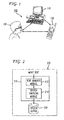
- FIG. 1 illustrates an embodiment of a text-to-speech processing environment in accordance with the present invention
- FIG. 2 illustrates an embodiment of a text-to-speech component in a high-capability computing device
- FIG. 3 illustrates an embodiment of a text-to-speech component in a low-capability computing device.
- Text-to-speech (TTS) synthesis technology enables electronic devices to convert a stream of text into audible speech. This audible speech thereby provides users with textual information via voice messages.
- TTS can be applied in various contexts such as email or any other general textual messaging solution.
- TTS is valuable for rendering into synthetic speech any dynamic content, for example, email reading, instant messaging, stock and other alerts or alarms, breaking news, etc.
- TTS synthesized speech is of critical importance in the increasingly widespread application of the technology.
- Portable devices such as mobile phones, personal digital assistants, combination devices such as BlackBerry or Palm devices are particularly suitable for leveraging TTS technology.
- TTS methods for synthesizing speech include articulatory synthesis, formant synthesis, and concatenative synthesis methods.
- Articulatory synthesis uses computational biomechanical models of speech production, such as models for the glottis (that generates the periodic and aspiration excitation) and the moving vocal tract.
- an articulatory synthesizer would be controlled by simulated muscle actions of the articulators, such as the tongue, the lips, and the glottis. It would solve time-dependent, three-dimensional differential equations to compute the synthetic speech output.
- articulatory synthesis also, at present, does not result in natural-sounding fluent speech.
- Formant synthesis uses a set of rules for controlling a highly simplified sourcefilter model that assumes that the (glottal) source is completely independent from the filter (the vocal tract).
- the filter is determined by control parameters such as formant frequencies and bandwidths. Each formant is associated with a particular resonance (a "peak" in the filter characteristic) of the vocal tract.
- the source generates either stylized glottal or other pulses (for periodic sounds) or noise (for aspiration and frication).
- Formant synthesis generates highly intelligible, but not completely natural sounding speech. However, it has the advantage of a low memory footprint and only moderate computational requirements.
- concatenative synthesis uses actual snippets of recorded speech that were cut from recordings and stored in an inventory ("voice database”), either as “waveforms” (uncoded), or encoded by a suitable speech coding method.
- Elementary “units” i.e., speech segments
- speech segments are, for example, phones (a vowel or a consonant), or phone-to-phone transitions ("diphones") that encompass the second half of one phone plus the first half of the next phone (e.g., a vowel-to-consonant transition).
- concatenative synthesizers use so-called demi-syllables (i.e., half-syllables; syllable-to-syllable transitions), in effect, applying the "diphone” method to the time scale of syllables.
- Concatenative synthesis itself then strings together (concatenates) units selected from the voice database, and, after optional decoding, outputs the resulting speech signal. Because concatenative systems use snippets of recorded speech, they have the highest potential for sounding "natural".
- Concatenative synthesis techniques also includes unit-selection synthesis.
- unit-selection synthesis automatically picks the optimal synthesis units (on the fly) from an inventory that can contain thousands of examples of a specific diphone, and concatenates them to produce the synthetic speech.
- TTS technology Conventional applications of TTS technology to low complexity devices (e.g., mobile phones) have been forced to tradeoff quality of the TTS synthesized speech in environments that are limited in its processing and storage capabilities. More specifically, low complexity devices such as mobile devices are typically designed with much lower processing and storage capabilities as compared to high complexity devices such as conventional desktop or laptop personal computing devices. This results in the inclusion of low-quality TTS technology in low complexity devices. For example, conventional applications of TTS technology to mobile devices have used formant synthesis technology, which has a low memory footprint and only moderate computational requirements.
- high-quality TTS technology is enabled even when applied to devices (e.g., mobile devices) that have limited processing and storage capabilities.
- devices e.g., mobile devices
- FIG. 1 illustrates the application of high-quality TTS technology to a mobile phone 120.
- the high-quality TTS technology is exemplified by concatenative synthesis technology. It should be noted, however, that the principles of the present invention are not limited to concatenative synthesis technology. Rather, the principles of the present invention are intended to apply to any context wherein the TTS technology is of a complexity that cannot practically be applied to a given device.
- TTS technology can be used to assist voice dialing.
- voice dialing is highly desirable whenever users are unable to direct their attention to a keypad or screen, such as is the case when a user is driving a car.
- saying "Call John at work” is certainly safer than attempting to dial a 10-digit string of numbers into a miniature dial pad while driving.
- ASR automatic speech recognition
- voice dialers can increase personal safety, the voice dialing process is not entirely free from distraction.
- voice dialers provide feedback (e.g., "Do you mean John Doe or John Miller?") via text messages or low-quality TTS.
- the latest TTS technology is needed.
- the TTS module would also run on the device 120 and provide the feedback to the user to ensure that the ASR engine correctly interpreted the voice input.
- current high-quality TTS requires a greater level of processing and memory support as is available on many current devices. Indeed, it will likely be the case that the most current TTS technology will almost always require a higher level of processing and memory support than is available in many devices.
- the present invention enables high-quality TTS to be used even in devices that have modest processing and storage capabilities.
- This feature is enabled through the leveraging of the processing power of additional devices (e.g., desktop and laptop computers) that do possess sufficient levels of processing and storage capabilities.
- the leveraging process is enabled through the communication between a high-capability device and a low-capability device.
- FIG. 1 illustrates an embodiment of such an arrangement.
- TTS environment 100 includes high-capability device (e.g., computer) 110, low-capability device (e.g., mobile phone) 120, and user 130.
- high-capability device110 and low-capability device 120 can be designed to communicate as part of a synchronization process. This synchronization process allows user 130 to ensure that a database of information (e.g., calendar, contacts/phonebook, etc.) on high-capability device 110 are in sync with the database of information on low-capability device 120.
- a database of information e.g., calendar, contacts/phonebook, etc.
- modifications to the general database of information can be made either through the user's interaction with high-capability device 110 or with the user's interaction with low-capability device 120.
- the synchronization of information between high-capability device 110 and low-capability device 120 can be implemented in various ways.
- wired connections e.g., USB connection
- wireless connections e.g., Bluetooth, GPRS, or any other wireless standard
- Various synchronization software can also be used to effect the synchronization process.
- Current examples of available synchronization software include HotSync by Palm, Inc. and iSync by Apple Computer, Inc.
- the principles of the present invention are not dependent upon the particular choice of connection between high-capability device 110 and low-capability device 120, or the particular synchronization software that coordinates the exchange.
- the synchronization process provides a structured manner by which high-quality TTS information can be provided to low-capability device 120.
- a dedicated software application can be designed apart from a third-party synchronization software package to accomplish the intended purpose.
- the TTS system in low-capability device 120 can leverage the processing and storage capabilities within high-capability device 110. More specifically, in the context of a concatenative synthesis technique the processing and storage intensive portions of the TTS technology would reside on high-capability device 110. An embodiment of this structure is illustrated in FIG. 2 .
- high-capability device 110 includes TTS system 210.
- TTS system 210 is a concatenative synthesis system that includes text analysis module 212 and speech synthesis module 214.
- Text analysis module 212 itself can include a series of modules with separate and intertwined functions.
- text analysis module 212 analyzes input text and converts it to a series of phonetic symbols and prosody (fundamental frequency, duration, and amplitude) targets. While the specific output provided to speech synthesis module 214 can be implementation dependent, the primary function of speech synthesis module is to generate speech output. This speech output is stored in speech output database 220.
- the TTS output that is stored in speech output database 220 represents the result of TTS processing that is performed entirely on high-capability device 110.
- the processing and storage capabilities of low-capability device 120 have thus far not been required.
- TTS system 210 can be used to generate presynthesized speech output for both carrier phrases and slot information.
- An example of a carrier phrase is "Do you want me to call [slot1] at [slot2] at number [slot3]?"
- slot1 can represent a name
- slot2 cam represent a location
- slot3 can represent a phone number, yielding a combined output of "Do you want me to call [John Doe] at [work] at number [703-555-1212]?”
- each of the slot elements 1, 2, and 3 represent audio fillers for the carrier phrase. It is a feature of the present invention that both the carrier phrases and the slot information can be presynthesized at high-capability device 110 and downloaded to low-capability device 120 for subsequent playback to the user.
- FIG. 3 illustrates an embodiment of low-capability device 120 that supports this framework of presynthesized carrier phrases and slot information.
- low-capability device 120 includes a memory 310.
- Memory 310 can be structured to include carrier phrase portion 312 and slot information portion 314.
- Carrier phrase portion 312 is designed to store presynthesized carrier data
- slot information portion 314 is designed to store presynthesized slot data.
- the carrier phrases would likely apply to most users and can therefore be preloaded onto low-capability device 120.
- the presynthesized carrier phrases can be generated by a manufacturer using a high-capability computing device 110 operated by the manufacturer and downloaded to low-capability device 120 during the manufacturing process for storage in carrier phrase portion 312.
- low-capability device 120 Once low-capability device 120 is in possession of the user, customization of low-capability device can proceed. In this process, the user can decide to customize the carrier phrases to work with user-defined slot types. This customization process can be enabled through the presynthesis of custom carrier phrases by a high-capability computing device 110 operated by the user. The presynthesized custom carrier phrases can then be downloaded to low-capability device 120 for storage in carrier phrase portion 312.
- the slot information would also be presynthesized by a high-capability computing device 110 operated by the user.
- the slot information can be downloaded to low-capability device 120 as another data type of a general database that is updated during the synchronization process.
- slot information dedicated for names, locations, and numbers can be included as a separate data type for each contact record in a user's address/phone book.
- slot types can be defined for any data type that can represent a variable element in a user record.
- carrier phrases and slot information to low-capability device 120 enables the implementation of a simple TTS component on low-capability device 120.
- This simple TTS component can be designed to implement a general table management function that is operative to coordinate the storage and retrieval of carrier phrases and slot information. A small code footprint therefore results.
- the presynthesized carrier phrases and slot information are downloaded in coded (compressed) form. While the transmission of compressed information to low-capability device 120 will certainly increase the speed of transfer, it also enables further simplicity in the implementation of the TTS component on low-capability device 120. More specifically, in one embodiment, the TTS component on low-capability device 120 is designed to leverage the speech coder/decoder (codec) that already exist on low-capability device 120. By presynthesizing and storing the speech output in the appropriate coded format used by low-capability device 120, the TTS component can then be designed to pass the retrieved coded carrier and slot information through the existing speech codec of low-capability device 120. This functionality effectively produces TTS playback by "faking" the playback of a received phone call. This embodiment serves to significantly reduce implementation complexity by further minimizing the demands on the TTS component on low-capability device 120.
- this process can be effected by retrieving carrier phrases and slot information from memory portions 312 and 314, respectively, using control element 320.
- control element 320 is operative to ensure the synchronized retrieval of presynthesized speech segments from memory 310 for production to codec 330.
- Codec 330 is then operative to produce audible output based on the received presynthesized speech segments.
- the principles of the present invention can also be used to transfer presynthesized speech segments representative of general text content (from high capability device 110 to low-capability device 120.
- the general text content can include dynamic content such as emails, instant messaging, stock and other alerts or alarms, breaking news, etc. This dynamic content can be presynthesized and transferred to low-capability device 120 for later replay upon command.
- the invention may provide a method for synthesizing speech on a portable device, comprising:
- the slot information may be a name, number or location.
- the method may further comprise receiving a presynthesized carrier phrase.
- the carrier phrase and said presynthesized slot information may be compressed, and said reproducing may comprise passing said carrier phrase and said presynthesized slot information through a codec.
- the invention may additionally or alternatively provide a method for synthesizing speech, comprising:
- Said presynthesizing may comprise presynthesizing using a concatenative text-to-speech process.
- the speech processing system may be a computer.
- Said transmitting may comprise transmitting, via a wired link or wireless link:
- the invention may additionally or alternatively provide a speech processing method on a portable computing device, comprising:
- Said receiving may comprise receiving during a synchronization process with a personal computer.
- Said retrieving may comprises retrieving one or more carrier segments and slot segments, said slot segments preferably including name or number information.
- Said receiving may comprise receiving presynthesized speech generated using a concatenative text-to-speech process.
- Said one or more presynthesized speech segments may be dynamic content, such as of an email, instant message, stock alert or breaking news.
- the invention may additionally or alternatively provide a system for synthesizing speech, comprising:
Landscapes
- Engineering & Computer Science (AREA)
- Computational Linguistics (AREA)
- Health & Medical Sciences (AREA)
- Audiology, Speech & Language Pathology (AREA)
- Human Computer Interaction (AREA)
- Physics & Mathematics (AREA)
- Acoustics & Sound (AREA)
- Multimedia (AREA)
- Telephone Function (AREA)
- Mobile Radio Communication Systems (AREA)
- Telephonic Communication Services (AREA)
- Data Exchanges In Wide-Area Networks (AREA)
Applications Claiming Priority (3)
| Application Number | Priority Date | Filing Date | Title |
|---|---|---|---|
| US46376003P | 2003-04-18 | 2003-04-18 | |
| US10/742,853 US7013282B2 (en) | 2003-04-18 | 2003-12-23 | System and method for text-to-speech processing in a portable device |
| EP04750174.7A EP1618558B8 (fr) | 2003-04-18 | 2004-04-15 | Systeme et procede de synthese de la parole a partir du texte d'un dispositif portable |
Related Parent Applications (2)
| Application Number | Title | Priority Date | Filing Date |
|---|---|---|---|
| EP04750174.7A Division-Into EP1618558B8 (fr) | 2003-04-18 | 2004-04-15 | Systeme et procede de synthese de la parole a partir du texte d'un dispositif portable |
| EP04750174.7 Division | 2004-04-15 |
Publications (2)
| Publication Number | Publication Date |
|---|---|
| EP2264697A2 true EP2264697A2 (fr) | 2010-12-22 |
| EP2264697A3 EP2264697A3 (fr) | 2012-07-04 |
Family
ID=33162369
Family Applications (2)
| Application Number | Title | Priority Date | Filing Date |
|---|---|---|---|
| EP04750174.7A Expired - Lifetime EP1618558B8 (fr) | 2003-04-18 | 2004-04-15 | Systeme et procede de synthese de la parole a partir du texte d'un dispositif portable |
| EP10183349A Withdrawn EP2264697A3 (fr) | 2003-04-18 | 2004-04-15 | Système et méthode pour la conversion de texte en voix dans un dispositif portable |
Family Applications Before (1)
| Application Number | Title | Priority Date | Filing Date |
|---|---|---|---|
| EP04750174.7A Expired - Lifetime EP1618558B8 (fr) | 2003-04-18 | 2004-04-15 | Systeme et procede de synthese de la parole a partir du texte d'un dispositif portable |
Country Status (7)
| Country | Link |
|---|---|
| US (2) | US7013282B2 (fr) |
| EP (2) | EP1618558B8 (fr) |
| JP (2) | JP4917884B2 (fr) |
| KR (1) | KR20050122274A (fr) |
| CN (1) | CN1795492B (fr) |
| CA (1) | CA2520087A1 (fr) |
| WO (1) | WO2004095419A2 (fr) |
Families Citing this family (28)
| Publication number | Priority date | Publication date | Assignee | Title |
|---|---|---|---|---|
| US7013282B2 (en) * | 2003-04-18 | 2006-03-14 | At&T Corp. | System and method for text-to-speech processing in a portable device |
| KR20050054706A (ko) * | 2003-12-05 | 2005-06-10 | 엘지전자 주식회사 | 음성인식을 위한 어휘 트리 구축 방법 |
| US7636426B2 (en) * | 2005-08-10 | 2009-12-22 | Siemens Communications, Inc. | Method and apparatus for automated voice dialing setup |
| US20070198353A1 (en) * | 2006-02-22 | 2007-08-23 | Robert Paul Behringer | Method and system for creating and distributing and audio newspaper |
| KR100798408B1 (ko) * | 2006-04-21 | 2008-01-28 | 주식회사 엘지텔레콤 | Tts 기능을 제공하는 통신 단말기 및 방법 |
| US20100174544A1 (en) * | 2006-08-28 | 2010-07-08 | Mark Heifets | System, method and end-user device for vocal delivery of textual data |
| EP1933300A1 (fr) | 2006-12-13 | 2008-06-18 | F.Hoffmann-La Roche Ag | Appareil de reproduction de la voix et procédé destiné à la génération des textes vocaux |
| TWI336879B (en) * | 2007-06-23 | 2011-02-01 | Ind Tech Res Inst | Speech synthesizer generating system and method |
| JP2011043710A (ja) | 2009-08-21 | 2011-03-03 | Sony Corp | 音声処理装置、音声処理方法及びプログラム |
| US8447690B2 (en) * | 2009-09-09 | 2013-05-21 | Triceratops Corp. | Business and social media system |
| KR101617461B1 (ko) * | 2009-11-17 | 2016-05-02 | 엘지전자 주식회사 | 이동 통신 단말기에서의 티티에스 음성 데이터 출력 방법 및 이를 적용한 이동 통신 단말기 |
| US9531854B1 (en) | 2009-12-15 | 2016-12-27 | Google Inc. | Playing local device information over a telephone connection |
| US8731939B1 (en) | 2010-08-06 | 2014-05-20 | Google Inc. | Routing queries based on carrier phrase registration |
| CN102063897B (zh) * | 2010-12-09 | 2013-07-03 | 北京宇音天下科技有限公司 | 一种用于嵌入式语音合成系统的音库压缩及使用方法 |
| CN102201232A (zh) * | 2011-06-01 | 2011-09-28 | 北京宇音天下科技有限公司 | 一种用于嵌入式语音合成系统的音库结构压缩及使用方法 |
| CN102324231A (zh) * | 2011-08-29 | 2012-01-18 | 北京捷通华声语音技术有限公司 | 一种游戏对话声音合成方法和系统 |
| KR101378408B1 (ko) * | 2012-01-19 | 2014-03-27 | 남기호 | 이동 단말 보조 시스템 및 이를 위한 보조장치 |
| US9536528B2 (en) | 2012-07-03 | 2017-01-03 | Google Inc. | Determining hotword suitability |
| US9473631B2 (en) * | 2013-01-29 | 2016-10-18 | Nvideon, Inc. | Outward calling method for public telephone networks |
| US9311911B2 (en) | 2014-07-30 | 2016-04-12 | Google Technology Holdings Llc. | Method and apparatus for live call text-to-speech |
| US9472196B1 (en) | 2015-04-22 | 2016-10-18 | Google Inc. | Developer voice actions system |
| US9699564B2 (en) | 2015-07-13 | 2017-07-04 | New Brunswick Community College | Audio adaptor and method |
| US9913039B2 (en) * | 2015-07-13 | 2018-03-06 | New Brunswick Community College | Audio adaptor and method |
| US9740751B1 (en) | 2016-02-18 | 2017-08-22 | Google Inc. | Application keywords |
| US9922648B2 (en) | 2016-03-01 | 2018-03-20 | Google Llc | Developer voice actions system |
| CN106098056B (zh) * | 2016-06-14 | 2022-01-07 | 腾讯科技(深圳)有限公司 | 一种语音新闻的处理方法、新闻服务器及系统 |
| US9691384B1 (en) | 2016-08-19 | 2017-06-27 | Google Inc. | Voice action biasing system |
| CN108573694B (zh) * | 2018-02-01 | 2022-01-28 | 北京百度网讯科技有限公司 | 基于人工智能的语料扩充及语音合成系统构建方法及装置 |
Family Cites Families (22)
| Publication number | Priority date | Publication date | Assignee | Title |
|---|---|---|---|---|
| US3928722A (en) * | 1973-07-16 | 1975-12-23 | Hitachi Ltd | Audio message generating apparatus used for query-reply system |
| AU632867B2 (en) * | 1989-11-20 | 1993-01-14 | Digital Equipment Corporation | Text-to-speech system having a lexicon residing on the host processor |
| EP0542628B1 (fr) * | 1991-11-12 | 2001-10-10 | Fujitsu Limited | Système de synthèse de parole |
| ATE195828T1 (de) * | 1995-06-02 | 2000-09-15 | Koninkl Philips Electronics Nv | Vorrichtung zur erzeugung kodierter sprachelemente in einem fahrzeug |
| JPH09258785A (ja) * | 1996-03-22 | 1997-10-03 | Sony Corp | 情報処理方法および情報処理装置 |
| US6078886A (en) * | 1997-04-14 | 2000-06-20 | At&T Corporation | System and method for providing remote automatic speech recognition services via a packet network |
| JP3704925B2 (ja) * | 1997-04-22 | 2005-10-12 | トヨタ自動車株式会社 | 移動端末装置及びその音声出力プログラムを記録した媒体 |
| US6931255B2 (en) * | 1998-04-29 | 2005-08-16 | Telefonaktiebolaget L M Ericsson (Publ) | Mobile terminal with a text-to-speech converter |
| US6246981B1 (en) * | 1998-11-25 | 2001-06-12 | International Business Machines Corporation | Natural language task-oriented dialog manager and method |
| EP1045372A3 (fr) * | 1999-04-16 | 2001-08-29 | Matsushita Electric Industrial Co., Ltd. | Système de communication à voie |
| US6510411B1 (en) * | 1999-10-29 | 2003-01-21 | Unisys Corporation | Task oriented dialog model and manager |
| US6748361B1 (en) * | 1999-12-14 | 2004-06-08 | International Business Machines Corporation | Personal speech assistant supporting a dialog manager |
| JP2002014952A (ja) * | 2000-04-13 | 2002-01-18 | Canon Inc | 情報処理装置及び情報処理方法 |
| JP2002023777A (ja) * | 2000-06-26 | 2002-01-25 | Internatl Business Mach Corp <Ibm> | 音声合成システム、音声合成方法、サーバ、記憶媒体、プログラム伝送装置、音声合成データ記憶媒体、音声出力機器 |
| US6510413B1 (en) * | 2000-06-29 | 2003-01-21 | Intel Corporation | Distributed synthetic speech generation |
| FI115868B (fi) * | 2000-06-30 | 2005-07-29 | Nokia Corp | Puhesynteesi |
| CN2487168Y (zh) * | 2000-10-26 | 2002-04-17 | 宋志颖 | 一种具有声控拨号功能的手机 |
| US6625576B2 (en) | 2001-01-29 | 2003-09-23 | Lucent Technologies Inc. | Method and apparatus for performing text-to-speech conversion in a client/server environment |
| JP2002358092A (ja) * | 2001-06-01 | 2002-12-13 | Sony Corp | 音声合成システム |
| CN1333501A (zh) * | 2001-07-20 | 2002-01-30 | 北京捷通华声语音技术有限公司 | 一种动态汉语语音合成方法 |
| CN1211777C (zh) * | 2002-04-23 | 2005-07-20 | 安徽中科大讯飞信息科技有限公司 | 分布式语音合成方法 |
| US7013282B2 (en) * | 2003-04-18 | 2006-03-14 | At&T Corp. | System and method for text-to-speech processing in a portable device |
-
2003
- 2003-12-23 US US10/742,853 patent/US7013282B2/en not_active Expired - Lifetime
-
2004
- 2004-04-15 EP EP04750174.7A patent/EP1618558B8/fr not_active Expired - Lifetime
- 2004-04-15 CA CA002520087A patent/CA2520087A1/fr not_active Abandoned
- 2004-04-15 CN CN2004800104452A patent/CN1795492B/zh not_active Expired - Lifetime
- 2004-04-15 EP EP10183349A patent/EP2264697A3/fr not_active Withdrawn
- 2004-04-15 KR KR1020057019842A patent/KR20050122274A/ko not_active Ceased
- 2004-04-15 WO PCT/US2004/011654 patent/WO2004095419A2/fr not_active Ceased
- 2004-04-15 JP JP2006510076A patent/JP4917884B2/ja not_active Expired - Lifetime
-
2005
- 2005-09-15 US US11/227,047 patent/US20060009975A1/en not_active Abandoned
-
2011
- 2011-12-06 JP JP2011266370A patent/JP5600092B2/ja not_active Expired - Fee Related
Non-Patent Citations (1)
| Title |
|---|
| SCHROETER J ET AL: "A perspective on the next challenges for tts research", SPEECH SYNTHESIS, 2002. PROCEEDINGS OF 2002 IEEE WORKSHOP ON 11-13 SEPT. 2002, PISCATAWAY, NJ, USA,IEEE, 11 September 2002 (2002-09-11), pages 211 - 214, XP010653648, ISBN: 978-0-7803-7395-2 * |
Also Published As
| Publication number | Publication date |
|---|---|
| EP1618558A4 (fr) | 2006-12-27 |
| JP2012073643A (ja) | 2012-04-12 |
| EP2264697A3 (fr) | 2012-07-04 |
| JP4917884B2 (ja) | 2012-04-18 |
| WO2004095419A2 (fr) | 2004-11-04 |
| CN1795492A (zh) | 2006-06-28 |
| US20040210439A1 (en) | 2004-10-21 |
| KR20050122274A (ko) | 2005-12-28 |
| CA2520087A1 (fr) | 2004-11-04 |
| US20060009975A1 (en) | 2006-01-12 |
| WO2004095419A3 (fr) | 2005-12-15 |
| EP1618558B1 (fr) | 2017-06-14 |
| EP1618558B8 (fr) | 2017-08-02 |
| EP1618558A2 (fr) | 2006-01-25 |
| US7013282B2 (en) | 2006-03-14 |
| JP5600092B2 (ja) | 2014-10-01 |
| JP2006523867A (ja) | 2006-10-19 |
| CN1795492B (zh) | 2010-09-29 |
Similar Documents
| Publication | Publication Date | Title |
|---|---|---|
| US7013282B2 (en) | System and method for text-to-speech processing in a portable device | |
| US20060074672A1 (en) | Speech synthesis apparatus with personalized speech segments | |
| US20040073428A1 (en) | Apparatus, methods, and programming for speech synthesis via bit manipulations of compressed database | |
| US6681208B2 (en) | Text-to-speech native coding in a communication system | |
| US20130144624A1 (en) | System and method for low-latency web-based text-to-speech without plugins | |
| EP1490861A1 (fr) | Structure textuelle pour synthese vocale, procede de synthese vocale, appareil de synthese vocale, et programme informatique associe | |
| US9196241B2 (en) | Asynchronous communications using messages recorded on handheld devices | |
| CN1455386A (zh) | 一种嵌入式语音合成方法及系统 | |
| US20080162559A1 (en) | Asynchronous communications regarding the subject matter of a media file stored on a handheld recording device | |
| JP2002196779A (ja) | 音声信号の楽音変更のための方法と装置 | |
| WO2008132533A1 (fr) | Procédé, appareil et système de conversion de texte en voix | |
| JP2009271315A (ja) | 音声二次元コードから音声を再生可能な携帯電話機および音声二次元コードを含む二次元コードが表示された印刷物 | |
| Henton | Challenges and rewards in using parametric or concatenative speech synthesis | |
| JP2003029774A (ja) | 音声波形辞書配信システム、音声波形辞書作成装置、及び音声合成端末装置 | |
| US8219402B2 (en) | Asynchronous receipt of information from a user | |
| US20020137553A1 (en) | Distinctive ringing for mobile devices using digitized user recorded audio message | |
| CN1267888C (zh) | 利用发音记述语言执行声音合成的终端设备 | |
| CN100369107C (zh) | 乐音及语音再现装置和乐音及语音再现方法 | |
| US8644464B1 (en) | Method and system for creating a customized audio snippet | |
| JP2002183051A (ja) | 携帯端末制御装置及びメール表示プログラムを記録した記録媒体 | |
| JP2005107136A (ja) | 音声および楽曲再生装置 | |
| JP2004085786A (ja) | テキスト音声合成装置、言語処理サーバー装置、および、プログラム記録媒体 | |
| JP2004282545A (ja) | 携帯端末装置 | |
| JPH03160500A (ja) | 音声合成装置 | |
| JP2007207183A (ja) | メール受信端末、着信報知方法、および着信報知プログラム |
Legal Events
| Date | Code | Title | Description |
|---|---|---|---|
| PUAI | Public reference made under article 153(3) epc to a published international application that has entered the european phase |
Free format text: ORIGINAL CODE: 0009012 |
|
| AC | Divisional application: reference to earlier application |
Ref document number: 1618558 Country of ref document: EP Kind code of ref document: P |
|
| AK | Designated contracting states |
Kind code of ref document: A2 Designated state(s): DE FI FR GB NL SE |
|
| PUAL | Search report despatched |
Free format text: ORIGINAL CODE: 0009013 |
|
| AK | Designated contracting states |
Kind code of ref document: A3 Designated state(s): DE FI FR GB NL SE |
|
| RIC1 | Information provided on ipc code assigned before grant |
Ipc: G10L 13/04 20060101AFI20120531BHEP |
|
| 17P | Request for examination filed |
Effective date: 20130103 |
|
| 17Q | First examination report despatched |
Effective date: 20150721 |
|
| RAP1 | Party data changed (applicant data changed or rights of an application transferred) |
Owner name: NUANCE COMMUNICATIONS, INC. |
|
| GRAP | Despatch of communication of intention to grant a patent |
Free format text: ORIGINAL CODE: EPIDOSNIGR1 |
|
| STAA | Information on the status of an ep patent application or granted ep patent |
Free format text: STATUS: GRANT OF PATENT IS INTENDED |
|
| RIC1 | Information provided on ipc code assigned before grant |
Ipc: G10L 13/047 20130101AFI20181003BHEP |
|
| INTG | Intention to grant announced |
Effective date: 20181031 |
|
| RIC1 | Information provided on ipc code assigned before grant |
Ipc: G10L 13/047 20130101AFI20181003BHEP |
|
| STAA | Information on the status of an ep patent application or granted ep patent |
Free format text: STATUS: THE APPLICATION IS DEEMED TO BE WITHDRAWN |
|
| 18D | Application deemed to be withdrawn |
Effective date: 20190312 |