EP2264936A2 - Procédé pour éviter l'accomplissement d'une fausse procédure d'accès aléatoire dans un système de communication sans fil - Google Patents
Procédé pour éviter l'accomplissement d'une fausse procédure d'accès aléatoire dans un système de communication sans fil Download PDFInfo
- Publication number
- EP2264936A2 EP2264936A2 EP10006306A EP10006306A EP2264936A2 EP 2264936 A2 EP2264936 A2 EP 2264936A2 EP 10006306 A EP10006306 A EP 10006306A EP 10006306 A EP10006306 A EP 10006306A EP 2264936 A2 EP2264936 A2 EP 2264936A2
- Authority
- EP
- European Patent Office
- Prior art keywords
- random access
- uplink grant
- access procedure
- addressed
- received
- Prior art date
- Legal status (The legal status is an assumption and is not a legal conclusion. Google has not performed a legal analysis and makes no representation as to the accuracy of the status listed.)
- Withdrawn
Links
Images



Classifications
-
- H—ELECTRICITY
- H04—ELECTRIC COMMUNICATION TECHNIQUE
- H04L—TRANSMISSION OF DIGITAL INFORMATION, e.g. TELEGRAPHIC COMMUNICATION
- H04L1/00—Arrangements for detecting or preventing errors in the information received
- H04L1/12—Arrangements for detecting or preventing errors in the information received by using return channel
- H04L1/16—Arrangements for detecting or preventing errors in the information received by using return channel in which the return channel carries supervisory signals, e.g. repetition request signals
- H04L1/1607—Details of the supervisory signal
- H04L1/1671—Details of the supervisory signal the supervisory signal being transmitted together with control information
-
- H—ELECTRICITY
- H04—ELECTRIC COMMUNICATION TECHNIQUE
- H04W—WIRELESS COMMUNICATION NETWORKS
- H04W74/00—Wireless channel access
- H04W74/08—Non-scheduled access, e.g. ALOHA
- H04W74/0833—Random access procedures, e.g. with 4-step access
-
- H—ELECTRICITY
- H04—ELECTRIC COMMUNICATION TECHNIQUE
- H04L—TRANSMISSION OF DIGITAL INFORMATION, e.g. TELEGRAPHIC COMMUNICATION
- H04L1/00—Arrangements for detecting or preventing errors in the information received
- H04L1/12—Arrangements for detecting or preventing errors in the information received by using return channel
- H04L1/16—Arrangements for detecting or preventing errors in the information received by using return channel in which the return channel carries supervisory signals, e.g. repetition request signals
- H04L1/18—Automatic repetition systems, e.g. Van Duuren systems
- H04L1/1867—Arrangements specially adapted for the transmitter end
- H04L1/1896—ARQ related signaling
-
- H—ELECTRICITY
- H04—ELECTRIC COMMUNICATION TECHNIQUE
- H04W—WIRELESS COMMUNICATION NETWORKS
- H04W74/00—Wireless channel access
- H04W74/002—Transmission of channel access control information
-
- H—ELECTRICITY
- H04—ELECTRIC COMMUNICATION TECHNIQUE
- H04W—WIRELESS COMMUNICATION NETWORKS
- H04W74/00—Wireless channel access
- H04W74/002—Transmission of channel access control information
- H04W74/006—Transmission of channel access control information in the downlink, i.e. towards the terminal
-
- H—ELECTRICITY
- H04—ELECTRIC COMMUNICATION TECHNIQUE
- H04W—WIRELESS COMMUNICATION NETWORKS
- H04W72/00—Local resource management
- H04W72/20—Control channels or signalling for resource management
- H04W72/23—Control channels or signalling for resource management in the downlink direction of a wireless link, i.e. towards a terminal
Definitions
- the present invention relates to a method for avoiding false random access procedure completion in a wireless communication system and related communication device.
- an evolved universal terrestrial radio access network includes a plurality of evolved Node-Bs (eNBs) and communicates with a plurality of mobile stations, also referred as user equipments (UEs).
- eNBs evolved Node-Bs
- UEs user equipments
- the LTE radio protocol stack includes the Layer 3, also known as the Radio Resource Control (RRC) layer, the Layer 2, consisting of three sub-layers that are the Packet Data Convergence Protocol (PDCP) layer, the Radio Link Control (RLC) layer, and the Medium Access Control (MAC) layer, and the Layer 1, also known as the Physical (PHY) layer.
- RRC Radio Resource Control
- PDCP Packet Data Convergence Protocol
- RLC Radio Link Control
- MAC Medium Access Control
- PHY Physical
- a scheduling request is used for requesting uplink (UL) resources when the UE has no UL-SCH resource available for a new transmission in a current transmission time interval (TTI).
- TTI transmission time interval
- the UE MAC layer initiates a random access procedure and signals a random access SR on a random access channel (RACH).
- RACH random access channel
- the UE MAC layer instructs the UE PHY layer to signal a dedicated SR on the PUCCH resource, and increments an SR counter by 1.
- the UE also initiates the random access procedure when the SR counter reaches a maximum value.
- a buffer status report is a MAC control element, and is used for providing a serving eNB with information about the amount of data available for transmission in a UE UL transmission buffer.
- the BSR is triggered when UL data belonging to a logical channel with higher priority than those for which data already existed in the UL transmission buffer arrives at the UL transmission buffer.
- BSRs are referred to three types, including regular BSR, periodic BSR and padding BSR by different triggering events. When a regular BSR is triggered and the UE has no UL-SCH resource allocated for the current TTI, an SR is triggered.
- a retransmission BSR timer is started when the regular BSR is triggered or a new UL grant is allocated, which is used for handling the situation that the BSR has been transmitted but the eNB does not respond with any UL resource for a long time.
- the retransmission BSR timer expires, an enforced SR is triggered, so that data in the UL transmission buffer has an opportunity to be transmitted.
- a random access procedure is initiated by the UE MAC layer for different events, including initial access from the RRC idle mode, RRC connection re-establishment procedure, handover, downlink (DL) data arrival during the RRC connected mode requiring the random access procedure, or UL data arrival during the RRC connected mode requiring the random access procedure, e.g. when there is no available PUCCH resource for SR.
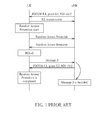
- FIG. 1 is a diagram illustrating a contention-based random access procedure according to the prior art. As shown in FIG.
- the random access procedure consists of four steps: (1) a random access preamble, from the UE to the eNB; (2) a random access response, from the eNB to the UE; (3) a scheduled UL transmission, called message 3, such as RRC connection request, tracking area update, or scheduling request, from the UE to the eNB; and (4) a contention resolution message, from the eNB to the UE.
- the UE MAC layer selects a random access preamble and a PRACH resource, and instructs the UE PHY layer to transmit the random access preamble by the selected PRACH resource.
- the UE monitors the physical downlink control channel (PDCCH) for a random access response identified by a RA-RNTI within a predetermined window.
- the random access response consists of reserved bit, timing advance command, UL grant, and temporary cell-RNTI.
- the UE MAC layer may stop monitoring the PDCCH for the random access response after a random access response containing a random access identifier that matches the transmitted random access preamble is successfully received.
- the UE MAC layer transmits a message 3, which is the first scheduled message including a cell radio network temporary identifier (C-RNTI) or common control channel (CCCH) service data unit (SDU) and the BSR.
- C-RNTI cell radio network temporary identifier
- CCCH common control channel
- SDU service data unit
- the message 3 is transmitted according to the UL grant providing in the random access response.
- the eNB knows the status of the UL transmission buffer of the UE after the message 3 including the BSR is received and assigns an UL grant to the UE to transmit data available in the UL transmission buffer. Transmission of the message 3 uses a hybrid automatic repeat request (HARQ) procedure.
- HARQ hybrid automatic repeat request
- the UE After the message 3 is transmitted, if the UE receives a contention resolution message containing an UL grant for a new transmission on the PDCCH addressed to the C-RNTI, the UE considers the random access procedure successfully completed. If the UE receives an DL assignment on the PDCCH addressed to the temporary C-RNTI and the contention resolution message (i.e. a MAC PDU) addressed by the DL assignment containing a UE Contention Resolution Identity included in a MAC control element matches the CCCH SDU transmitted in the message 3, the UE considers the random access procedure successfully completed. Transmission of the contention resolution message also uses the HARQ procedure. After the random access procedure is successfully completed, the UE flushes the HARQ buffer used for the message 3.
- the contention resolution message i.e. a MAC PDU
- HARQ information including new data indicator (NDI), transport block (TB) size, HARQ process identifier, etc, is transmitted with an UL grant on the PDCCH.
- a HARQ entity at the UE maintains a number of parallel HARQ processes allowing transmissions to take place continuously while waiting for the HARQ feedback on successful or unsuccessful receptions of previous transmissions.
- the HARQ entity carries HARQ information for each HARQ process.
- an UL grant is allocated for a current TTI, which may be received dynamically on the PDCCH or in a random access response or may be configured semi-persistently, the HARQ entity identifies a HARQ process where a transmission in this TTI should take place.
- an adaptive transmission is a new transmission or an adaptive retransmission is recognized by the NDI.
- a transmission with the NDI toggled compared to the previous transmission of the same HARQ process is regarded as a new transmission, whereas a transmission with the NDI not toggled is regarded as an adaptive retransmission.
- the UE After the UE receives a random access response including an UL grant, the UE sets NDI to 0 and considers the NDI toggled.
- the NDI is shared by all types of C-RNTI, e.g. temporary C-RNTI and C-RNTI. For each HARQ process, the NDI on the eNB and the NDI in the UE have to be synchronized.
- the present invention aims at providing a method for avoiding false random access procedure completion in a wireless communication system, for avoiding false random access procedure completion due to NDI confusion for a UE in a connected mode of a wireless communication system.
- the claimed method for avoiding false random access procedure completion in a wireless communication system comprises when a random access response is received and the random access response includes an UL grant, selecting a HARQ process for a scheduled message and transmitting the scheduled message according to the UL grant; after the scheduled message is transmitted, when an UL grant associated with the HARQ process is received on a PDCCH addressed to a C-RNTI of the UE and an NDI received on the PDCCH indicates that the UL grant addressed to the C-RNTI is for a new transmission, verifying whether a TB size and a MCS with the UL grant addressed to the C-RNTI are valid; and when the TB size or the MCS with the UL grant addressed to the C-RNTI is invalid, ignoring the UL grant and continuing the random access procedure.
- FIG 1 is a timing diagram of a contention-based random access procedure triggered under the RRC connected mode according to the prior art.
- the eNB transmits an UL grant G1 on the PDCCH and the NDI inlcuded in HARQ informaiton has 0 or 1, and the UE perfroms an UL transmission according to the UL grant G1.
- the UE starts a random access procedure for some reason after this UL transmission.
- the UE transmits a random access preamble to the eNB.
- the UE chooses a HARQ process X for transmisison of a message 3, and sets the NDI to the value 0.
- the eNB needs time to decode the message 3 after the message 3 is received. There is a period of time from the random access preamble is received to the message 3 is successfully decoded during which the eNB does not identify UE.
- the eNB schedules the HARQ process X, which is exactly the HARQ process used for the message 3, and transmits an UL grant G2 on the PDCCH with HARQ informaiton including the NDI set to 0 or 1 to request an UL transmission. That is, the UL transmission assocaited with the UL grant G2 may be a new transmission or an adaptive retransmssion for a previous transport block received before the random access procedure begins.
- the UE compares the NDI of 0 with the NDI with the UL grant G2, and may be confused by the NDI.
- the first issue is false random access procedure completion, happening when the NDI with the UL grant G1 before the random access procedure is set to 0 and the NDI with the UL grant G2 is set to 1. That is, the NDI at the eNB side is toggled for requesting for a new transmission. Since the NDI at the UE side is set to 0 after the random access response is already received, the UE also considers the UL grant G2 is for a new transmission. In other words, the UE considers the random access procedure is successfully completed and thereby flushes the HARQ buffer used for the message 3, which results in that the BSR in the message 3 is lost. The first issue may not cause a serious effect since the received UL grant G2 may be usable for the UE.
- the second issue is an error case happening when the NDI with the UL grant G1 is set to 1 and the NDI with the UL grant G2 is set to 0.
- the NDI is toggled for requesting for a new transmission.
- the UE considers the UL grant G2 is for an adaptive retransmission of the message 3.
- the TB size provided in the received HARQ information with the UL grant G2 is different from the transport block size of the message 3, and modulation and coding scheme (MCS) received on the PDCCH is also invalid. Consequently, the UE ignores the UL grant G2 and continues with the transmission of the message 3.
- MCS modulation and coding scheme
- the third issue is also an error case, happening when the NDI with the UL grant G 1 is set to 0 and the NDI with the UL grant G2 is set to 0. That is, the eNB requests for an adaptive retransmission of a previous transport block. However, the UE considers the UL grant G2 is for an adaptive retransmission of the message 3. This UL grant G2 is still useless since the TB size is invalid and MCS is also invalid. Consequently, the UE ignores the UL grant G2 and continues with the transmission of the message 3. Although the abovementioned second or third issues resutls in a wasted grant, the UE can continue with the transmission of the message 3 and have chance to complete the random access procedure successfully.
- the fourth issue is false random access procedure completion, happening when the NDI with the UL grant G1 is set to 1 and the NDI with the UL grant G2 is set to 1.
- the eNB sends the UL grant G2 for requesting an adaptive retransmission of a previous transport block.
- the UE considers the UL grant G2 is for a new transmission and considers the random access procedure is successfully completed, and thereby flushes the HARQ buffer used for the message 3, which results in BSR lost.
- the fourth issue is harmful because the random access procedure is considered completed without any new UL grant.
- the consequence of not having any new UL grant for a period of time is that not only the BSR but all messages have no way to be transmitted. For some important message as measurement report, such time delay may cause radio link failure.
- the random access procedure is triggered when the SR counter reaches a maximum value. If the fourth issue happens to the random access procedure triggered by the SR counter reaching the maximum value, the UE cannot trigger another random access procedure until UL data arrives from higher priority logical channel or the retransmission BSR timer is expired. As a result, the UE may not have a new grant for a long time. The longest delay is the time for the SR counter reaching the maximum value plus the time length of the retransmission BSR timer.
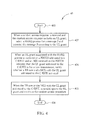
- the UE transmits a random access preamble and waits for receiving a random access response for the eNB.
- Step 402 when the random access response is received by the UE and the random access response includes an UL grant, the UE selects a HARQ process for transmission of the message 3, and transmits the message 3 according to the UL grant included in the random access response.
- Step 404 when the UE receives an UL grant which is associated with the same HARQ process with the message 3 uses on a PDCCH addressed to the C-RNTI of the UE (called the UL grant addressed to the C-RNTI in short) and the NDI, which is one of HARQ information received on the PDCCH, indicates that the UL grant addressed to the C-RNTI is for a new transmission, the UE verifies whether a TB size and a MCS (which are also received on the PDCCH) are valid for the UE.
- the UE verifies whether a TB size and a MCS (which are also received on the PDCCH) are valid for the UE.
- Step 406 when the UE verifies and knows that the TB size or the MCS is invalid, which implies that even though the UL grant addressed to the C-RNTI is not for a new transmission after the message 3 and may be for a new transmission previous to the random access procedure, the UE ignores the UL grant and continues the random access procedure.
- the UE may take this UL grant for a new transmission according to the NDI of the value 1 and falsely completes the random access procedure with no usable UL grant, which results in the BSR lost.
- the UE is not confused by the UL grant with the NDI indicating a new transmission but with invalid TB size or invalid MCS, and can have opportunity to successfully complete the random access procedure, which means that the UE can receive an UL grant for a new transmission after the eNB does contention resolution.
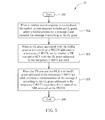
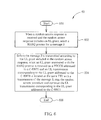
- FIG. 5 is a flowchart of an exemplary process 50.
- the process 50 is utilized for avoiding false random access procedure completion during a random access procedure for a UE in an RRC connected mode of the wireless communication system 10.
- the process 50 can be compiled into the program code 214.
- the process 50 includes the following steps:
- Step 502 is similar to Step 402 in the process 40, for transmitting a message 3 after a random access response is received.
- the message 3 is transmitted, according to Step 504, when the UE receives an UL grant associated with the same HARQ process with the message 3 uses on a PDCCH addressed to a temporary C-RNTI (called the UL grant addressed to the temporary C-RNTI in short), the UE verifies whether a TB size and a MCS are valid for the UE.
- Step 506 when the UE verifies and knows that the TB size and the MCS are valid, which indicates that the UL grant addressed to the temporary C-RNTI can be used by the UE, the UE continues a retransmission of the message 3 according to the UL grant addressed to the temporary C-RNTI, regardless of the value of an NDI received on the PDCCH.
- the UE uses the UL grant addressed to the temporary C-RNTI for an adaptive retransmission of the message 3 whatever the received NDI is of the value 0 or 1 and forces the random access procedure to be successfully completed. Therefore, the false random access procedure completion is avoided.
- FIG. 6 is a flowchart of an exemplary process 60.
- the process 60 is utilized for avoiding false random access procedure completion during a random access procedure for a UE in an RRC connected mode of the wireless communication system 10.
- the process 60 can be compiled into the program code 214.
- the process 60 includes the following steps:
- Step 602 when a random access response is received and the random access response includes an UL grant, the UE selects a HARQ process for a transmission of a message 3.
- Step 604 before the message 3 is transmitted, when the UE receives an UL grant associated with the same HARQ process with the message 3 uses on a PDCCH addressed to a C-RNTI (called the UL grant addressed to the C-RNTI in short) and an UL transmission corresponding to the UL grant addressed to the C-RNTI is located in the same TTI with a transmission of the message 3 is located, the UE stops the random access procedure, which indicates that the NDI in the UE is not set to the value 0 after the random access response is received and is still synchronized with the NDI in the eNB, and the UE continues the UL transmission corresponding to the UL grant addressed to the C-RNTI.
- the UE may use the UL grant addressed to the C-RNTI to perform a new transmission or an adaptive retransmission previous to the random access procedure, which depends on the value of the NDI received with the UL grant addressed to the C-RNTI. Since the UE using the process 60 stops the random access procedure before the message 3 is transmitted, false random access procedure completion is thereby avoided.
- FIG. 7 is a flowchart of an exemplary process 70.
- the process 70 is utilized for avoiding false random access procedure completion during a random access procedure for a UE in an RRC connected mode of the wireless communication system 10.
- the process 70 can be compiled into the program code 214.
- the process 70 includes the following steps:
- Step 702 when the UE receives a random access response and the random access response includes an UL grant, the UE selects a HARQ process for a message 3, which is a process dedicated to the message 3 and cannot be used for any message except the message 3, and the UE transmits the message 3 according to the UL grant included in the random access response.
- the concept of the process 70 is to allocate a dedicated HARQ process to the transmission of the message 3. Since it is already known from the current 3GPP specification that whether an NDI is toggled is considered by each HARQ process, the UE using the process 70 is not confused by the value of the NDI and does not falsely complete the random access procedure.
- FIG. 8 is a flowchart of an exemplary process 80.
- the process 80 is utilized for improving a random access procedure for a UE in an RRC connected mode of the wireless communication system 10.
- the process 80 can be compiled into the program code 214.
- the process 80 includes the following steps:
- the UE When the UE receives a random access response, the UE selects a HARQ process for a message 3 and then transmits the message 3 according to an UL grant included in the random access response. Note that, after the message 3 is transmitted, when the UE receives an UL grant associated with the same HARQ process with the message 3 uses on a PDCCH addressed to a C-RNTI of the UE, the UE may consider the random access procedure is successfully completed but actually it is falsely completed. In this situation, the UE flushes the HARQ buffer used for the message 3 and the BSR is lost.
- Step 804 when the UE receives the UL grant associated with the HARQ process on the PDCCH addressed to the C-RNTI, the UE starts a timer, which is utilized for making up for the BSR lost. Before the timer does not expire yet, the UE keeps monitoring the PDCCH in order to receive any other UL grant for a new transmission. According to Step 806, when the UE receives no UL grant for a new transmission until the timer expires, the UE triggers a BSR, which is a regular BSR.
- the reason why the UE triggers this regular BSR is that when a regular BSR is triggered when there is no UL-SCH resource allocated for the current TTI, a scheduling request (SR) is triggered for requesting an UL grant for a new transmission. In other words, the UE has opportunity to obtain an UL grant for a new transmission by the triggered BSR.
- SR scheduling request
- the timer is used for the UE to wait for the UL grant for a new transmission, and the time length of the timer can be set depending on requirements.
- the timer is set to zero, the UE does not wait and immediately triggers the BSR when the UE receives the UL grant associated with the same HARQ process with the message 3 uses on the PDCCH addressed to the C-RNTI.
- the timer set to 0 brings a result as no timer.
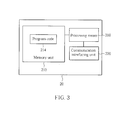
- steps of the process 40, 50, 60, 70, or 80 including suggested steps can be realized by means that could be hardware, firmware known as a combination of a hardware device and computer instructions and data that reside as read-only software on the hardware device, or an electronic system.
- hardware can include analog, digital and mixed circuits known as microcircuit, microchip, or silicon chip.
- the electronic system can include system on chip (SOC), system in package (Sip), computer on module (COM), and the communication device 20.
- SOC system on chip
- Sip system in package
- COM computer on module
- a UE in the RRC connected mode avoids false random access procedure completion through different ways including ignoring unusable UL grant, forcing the random access procedure to be completed regardless of NDI, or allocating dedicated HARQ process to the message 3, such that the UE has opportunity to receive an UL grant for a new transmission after the random access procedure is indeed completed successfully. Otherwise, the UE can stop the random access procedure and perform NDI synchronization with the eNB when receiving an UL grant corresponding to a transmission previous to the random access procedure.
- the UE in the RRC connected mode can also trigger a BSR after false random access procedure completion happens, for requesting an UL grant for a new transmission. Therefore, the problem of BSR lost and lack of UL grant due to false random access procedure completion is resolved.
Landscapes
- Engineering & Computer Science (AREA)
- Computer Networks & Wireless Communication (AREA)
- Signal Processing (AREA)
- Mobile Radio Communication Systems (AREA)
Applications Claiming Priority (1)
| Application Number | Priority Date | Filing Date | Title |
|---|---|---|---|
| US21806509A | 2009-06-17 | 2009-06-17 |
Publications (2)
| Publication Number | Publication Date |
|---|---|
| EP2264936A2 true EP2264936A2 (fr) | 2010-12-22 |
| EP2264936A3 EP2264936A3 (fr) | 2011-06-22 |
Family
ID=43014298
Family Applications (1)
| Application Number | Title | Priority Date | Filing Date |
|---|---|---|---|
| EP10006306A Withdrawn EP2264936A3 (fr) | 2009-06-17 | 2010-06-17 | Procédé pour éviter l'accomplissement d'une fausse procédure d'accès aléatoire dans un système de communication sans fil |
Country Status (1)
| Country | Link |
|---|---|
| EP (1) | EP2264936A3 (fr) |
Cited By (9)
| Publication number | Priority date | Publication date | Assignee | Title |
|---|---|---|---|---|
| WO2012137077A3 (fr) * | 2011-04-02 | 2012-11-29 | Alcatal Lucent | Procédé d'accès aléatoire |
| CN102932917A (zh) * | 2011-08-08 | 2013-02-13 | 普天信息技术研究院有限公司 | 一种载波聚合场景中获取绝对上行定时提前量的方法 |
| KR20170128042A (ko) * | 2016-05-12 | 2017-11-22 | 삼성전자주식회사 | 이동통신 시스템에서 라이트 커넥션을 수행하는 방법 및 장치 |
| WO2018000320A1 (fr) * | 2016-06-30 | 2018-01-04 | Qualcomm Incorporated | Gestion des autorisations de retransmission dans des dispositifs de communication mobile |
| WO2018183100A1 (fr) * | 2017-03-31 | 2018-10-04 | Alcatel-Lucent Usa Inc. | Procédé et appareils pour fournir une indication de bloc de transfert dans des transmissions sans autorisation de liaison montante |
| WO2018188652A1 (fr) * | 2017-04-14 | 2018-10-18 | 华为技术有限公司 | Procédé d'accès aléatoire et de réponse, dispositif terminal et dispositif réseau |
| EP3288307A4 (fr) * | 2015-04-24 | 2018-12-26 | Sharp Kabushiki Kaisha | Terminal, station de base, circuit intégré, et procédé de communication |
| US10887057B2 (en) | 2016-05-12 | 2021-01-05 | Samsung Electronics Co., Ltd. | Method and apparatus for performing light connection in wireless communication system |
| CN114208076A (zh) * | 2019-08-07 | 2022-03-18 | 上海诺基亚贝尔股份有限公司 | 由多个配置授权资源共享harq进程 |
Family Cites Families (1)
| Publication number | Priority date | Publication date | Assignee | Title |
|---|---|---|---|---|
| US7710911B2 (en) * | 2004-06-10 | 2010-05-04 | Interdigital Technology Corporation | Method and apparatus for dynamically allocating H-ARQ processes |
-
2010
- 2010-06-17 EP EP10006306A patent/EP2264936A3/fr not_active Withdrawn
Non-Patent Citations (1)
| Title |
|---|
| None |
Cited By (19)
| Publication number | Priority date | Publication date | Assignee | Title |
|---|---|---|---|---|
| US9775175B2 (en) | 2011-04-02 | 2017-09-26 | Alcatel Lucent | Method for random access |
| WO2012137077A3 (fr) * | 2011-04-02 | 2012-11-29 | Alcatal Lucent | Procédé d'accès aléatoire |
| CN102932917A (zh) * | 2011-08-08 | 2013-02-13 | 普天信息技术研究院有限公司 | 一种载波聚合场景中获取绝对上行定时提前量的方法 |
| CN102932917B (zh) * | 2011-08-08 | 2015-06-10 | 普天信息技术研究院有限公司 | 一种载波聚合场景中获取绝对上行定时提前量的方法 |
| EP3288307A4 (fr) * | 2015-04-24 | 2018-12-26 | Sharp Kabushiki Kaisha | Terminal, station de base, circuit intégré, et procédé de communication |
| US10756854B2 (en) | 2015-04-24 | 2020-08-25 | Sharp Kabushiki Kaisha | Terminal device, base station device, integrated circuit, and communication method |
| KR20170128042A (ko) * | 2016-05-12 | 2017-11-22 | 삼성전자주식회사 | 이동통신 시스템에서 라이트 커넥션을 수행하는 방법 및 장치 |
| EP3440889A4 (fr) * | 2016-05-12 | 2019-05-01 | Samsung Electronics Co., Ltd. | Procédé et appareil de connexion lumineuse à utiliser dans un système de communication sans fil |
| CN110352624A (zh) * | 2016-05-12 | 2019-10-18 | 三星电子株式会社 | 用在无线通信系统中的轻连接方法和设备 |
| US10887057B2 (en) | 2016-05-12 | 2021-01-05 | Samsung Electronics Co., Ltd. | Method and apparatus for performing light connection in wireless communication system |
| US11943062B2 (en) | 2016-05-12 | 2024-03-26 | Samsung Electronics Co., Ltd. | Method and apparatus for performing light connection in wireless communication system |
| WO2018000320A1 (fr) * | 2016-06-30 | 2018-01-04 | Qualcomm Incorporated | Gestion des autorisations de retransmission dans des dispositifs de communication mobile |
| WO2018183100A1 (fr) * | 2017-03-31 | 2018-10-04 | Alcatel-Lucent Usa Inc. | Procédé et appareils pour fournir une indication de bloc de transfert dans des transmissions sans autorisation de liaison montante |
| US10271350B2 (en) | 2017-03-31 | 2019-04-23 | Nokia Technologies Oy | Methods, apparatuses, and systems for providing transfer block indication in uplink grant-free transmissions |
| WO2018188652A1 (fr) * | 2017-04-14 | 2018-10-18 | 华为技术有限公司 | Procédé d'accès aléatoire et de réponse, dispositif terminal et dispositif réseau |
| CN110521161A (zh) * | 2017-04-14 | 2019-11-29 | 华为技术有限公司 | 随机接入及响应方法、终端设备、网络设备 |
| CN110521161B (zh) * | 2017-04-14 | 2020-11-06 | 华为技术有限公司 | 随机接入及响应方法、终端设备、网络设备 |
| US11304236B2 (en) | 2017-04-14 | 2022-04-12 | Huawei Technologies Co., Ltd. | Random access method, random access response method, terminal device, and network device |
| CN114208076A (zh) * | 2019-08-07 | 2022-03-18 | 上海诺基亚贝尔股份有限公司 | 由多个配置授权资源共享harq进程 |
Also Published As
| Publication number | Publication date |
|---|---|
| EP2264936A3 (fr) | 2011-06-22 |
Similar Documents
| Publication | Publication Date | Title |
|---|---|---|
| US20100322172A1 (en) | Method for avoiding false random access procedure completion in a wireless communication system and related communication device | |
| CN110278616B (zh) | 无线通信系统中随机接入过程期间处置传送的方法和设备 | |
| US8243667B2 (en) | Method for transmitting scheduling request effectively in wireless communication system | |
| US8199730B2 (en) | Method and apparatus for handling uplink grant | |
| US8274969B2 (en) | Method for improving random access procedure in wireless communications system and related communication device | |
| CN102158981B (zh) | 一种基于竞争的上行数据传输方法和系统 | |
| EP2264936A2 (fr) | Procédé pour éviter l'accomplissement d'une fausse procédure d'accès aléatoire dans un système de communication sans fil | |
| US8483146B2 (en) | Method for performing efficient BSR procedure using SPS resource | |
| EP2369891B1 (fr) | Procédé utilisé dans une station de base, et station de base associée, pour l'optimisation des procédures d'accès aléatoire | |
| EP1973365B1 (fr) | Procédé et appareil pour la gestion de la procédure d'accès dans un système de communication sans fil | |
| US9667400B2 (en) | Method and apparatus for TTI bundling transmission in a wireless communications system | |
| CN101904130B (zh) | 用于初始建立的预调度的重新传输 | |
| CN101999219B (zh) | 执行随机接入过程的方法和装置 | |
| US8411626B2 (en) | Method and apparatus for handling UL-SCH transmission | |
| CN102356688B (zh) | 减少无线通信系统中的接入信道延迟 | |
| EP2680658B1 (fr) | Procédé de gestion de réponse d'accès aléatoire | |
| US20080233940A1 (en) | Method and Apparatus for Handling Random Access Procedure in a Wireless Communications System | |
| CN101272562A (zh) | 无线通信系统处理随机存取程序的方法及其相关装置 | |
| KR20090016402A (ko) | 효율적인 랜덤 액세스 재시도를 수행하는 방법 | |
| KR20090031317A (ko) | 효율적인 데이터 전송을 위해 스케줄링 요청을 제한하는 방법 | |
| CN103348756A (zh) | 无线通信系统、接收装置、发送装置以及无线通信方法 | |
| CN101686489A (zh) | 改善上链路信令传输的方法及其相关通讯装置 |
Legal Events
| Date | Code | Title | Description |
|---|---|---|---|
| PUAI | Public reference made under article 153(3) epc to a published international application that has entered the european phase |
Free format text: ORIGINAL CODE: 0009012 |
|
| 17P | Request for examination filed |
Effective date: 20100617 |
|
| AK | Designated contracting states |
Kind code of ref document: A2 Designated state(s): AL AT BE BG CH CY CZ DE DK EE ES FI FR GB GR HR HU IE IS IT LI LT LU LV MC MK MT NL NO PL PT RO SE SI SK SM TR |
|
| AX | Request for extension of the european patent |
Extension state: BA ME RS |
|
| RIC1 | Information provided on ipc code assigned before grant |
Ipc: H04L 1/16 20060101ALI20101227BHEP Ipc: H04W 74/08 20090101ALI20101227BHEP Ipc: H04L 1/18 20060101AFI20101102BHEP |
|
| PUAL | Search report despatched |
Free format text: ORIGINAL CODE: 0009013 |
|
| AK | Designated contracting states |
Kind code of ref document: A3 Designated state(s): AL AT BE BG CH CY CZ DE DK EE ES FI FR GB GR HR HU IE IS IT LI LT LU LV MC MK MT NL NO PL PT RO SE SI SK SM TR |
|
| AX | Request for extension of the european patent |
Extension state: BA ME RS |
|
| 17Q | First examination report despatched |
Effective date: 20110531 |
|
| STAA | Information on the status of an ep patent application or granted ep patent |
Free format text: STATUS: THE APPLICATION IS DEEMED TO BE WITHDRAWN |
|
| 18D | Application deemed to be withdrawn |
Effective date: 20111011 |