EP2265055A2 - Verfahren und Vorrichtung zur Steigerung der Leistung eines drahtlosen Kommunikationsgeräts - Google Patents
Verfahren und Vorrichtung zur Steigerung der Leistung eines drahtlosen Kommunikationsgeräts Download PDFInfo
- Publication number
- EP2265055A2 EP2265055A2 EP10005849A EP10005849A EP2265055A2 EP 2265055 A2 EP2265055 A2 EP 2265055A2 EP 10005849 A EP10005849 A EP 10005849A EP 10005849 A EP10005849 A EP 10005849A EP 2265055 A2 EP2265055 A2 EP 2265055A2
- Authority
- EP
- European Patent Office
- Prior art keywords
- application
- wireless communication
- dedicated bearer
- network element
- communication device
- Prior art date
- Legal status (The legal status is an assumption and is not a legal conclusion. Google has not performed a legal analysis and makes no representation as to the accuracy of the status listed.)
- Granted
Links
Images


Classifications
-
- H—ELECTRICITY
- H04—ELECTRIC COMMUNICATION TECHNIQUE
- H04W—WIRELESS COMMUNICATION NETWORKS
- H04W28/00—Network traffic management; Network resource management
- H04W28/16—Central resource management; Negotiation of resources or communication parameters, e.g. negotiating bandwidth or QoS [Quality of Service]
- H04W28/24—Negotiating SLA [Service Level Agreement]; Negotiating QoS [Quality of Service]
-
- H—ELECTRICITY
- H04—ELECTRIC COMMUNICATION TECHNIQUE
- H04W—WIRELESS COMMUNICATION NETWORKS
- H04W48/00—Access restriction; Network selection; Access point selection
- H04W48/02—Access restriction performed under specific conditions
-
- H—ELECTRICITY
- H04—ELECTRIC COMMUNICATION TECHNIQUE
- H04W—WIRELESS COMMUNICATION NETWORKS
- H04W72/00—Local resource management
- H04W72/04—Wireless resource allocation
- H04W72/044—Wireless resource allocation based on the type of the allocated resource
- H04W72/0453—Resources in frequency domain, e.g. a carrier in FDMA
Definitions
- the present disclosure relates generally to wireless communication systems, and more particularly to a method and apparatus for increasing overall performance of a wireless communication system by providing worse than best effort quality of service.
- various wireless communication devices communicate with each other over an air interface of the wireless system.
- the wireless communication devices are getting smarter and may also include capabilities of a personal computer. Therefore, the wireless network is increasingly used for a transfer of data.
- users of the wireless communication devices are not aware of capacity constraints of the wireless system and may send an enormous amount of data through the system, increasing the amount of traffic in, and congestion of, the wireless communication system.
- users are not even fully aware of the amount of data that they are exchanging, for example, when the traffic may include data packets generated by various background tasks, such as application synchronization, e.g., emails, calendars, software updates and so on.
- Other traffic that users may send and be minimally aware of, and yet congest the system with may include data from noisy applications (for example, SAP and SMB/NetBIOS), malware (worms, DDOS, spam, etc.), over-the-top applications (for example, Vonage, Skype, and bittorrent) and the like.
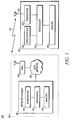
- FIG. 1 is a block diagram of a wireless communication system in accordance with some embodiments.
- FIG. 2 is a flowchart of a method for a network element to increase performance of a wireless communication system in accordance with some embodiments.
- FIG. 3 is a flowchart of a method for a wireless communication device to increase performance of a wireless communication system in accordance with some embodiments.
- a method for increasing performance of a wireless communication system includes determining quality of service parameters that will result in a reduced likelihood that an application assigned the determined quality of service parameters will be scheduled for transmission, identifying an application to be provided service that is less than best effort, and assigning the determined one or more quality of service parameters to the identified application. This results in a reduced likelihood that the identified application will be scheduled for transmission, thereby conserving network resources and increasing the performance of the wireless communication system.
- the above method can be implemented in a wireless communication device or in a network element.
- FIG. 1 is a block diagram of a wireless communication system 100 in accordance with an embodiment of the present invention.
- Wireless communication system 100 comprises at least one wireless communication device 120 (one shown), for example, a cellular telephone, a smartphone, a radio telephone, a digital terminal equipment, a laptop computer, or a personal computer that supports wireless communications.
- wireless communication device 120 may be referred to as a mobile station, a user equipment, a subscriber unit, a user terminal, or an access terminal.
- Wireless communication system 100 further comprises a wireless communication network 150 that includes one or more radio access networks 140 (one shown).
- the radio access network (RAN) 140 provides wireless communication services to the wireless communication device 120 via a radio link 115 having a forward link and a reverse link.
- the wireless network 150 further comprises a network element 110 in communication with the RAN 140 via a data network 135.
- wireless communication network 150 further includes multiple additional network elements, for example, a base station transceiver and a base station controller of the RAN, various gateways, authentication and billing nodes, support nodes, and application servers, that are not depicted herein so as not to obscure the disclosure with details that will be readily apparent to those of ordinary skill in the art having the benefit of the description herein.
- the wireless communication device 120 includes a processor 124, such as one or more microprocessors, microcontrollers, digital signal processors (DSPs), combinations thereof or such other devices known to those having ordinary skill in the art.
- processor 124 such as one or more microprocessors, microcontrollers, digital signal processors (DSPs), combinations thereof or such other devices known to those having ordinary skill in the art.
- DSPs digital signal processors
- the particular operations/functions of processor 124, and thus of wireless communication device 120, are determined by an execution of software instructions and routines that are stored in a memory device 126 associated with the processor, such as random access memory (RAM), dynamic random access memory (DRAM), and/or read only memory (ROM) or equivalents thereof, that store data and programs that may be executed by the corresponding processor.
- RAM random access memory
- DRAM dynamic random access memory
- ROM read only memory
- the wireless communication device 120 further includes a user interface 128 and a transceiver 122 that are coupled to the processor 124.
- the wireless communication device 120 includes an antenna 132 coupled to the transceiver 122.
- the user interface 128, for example, can include a microphone, an audio speaker, a display screen, a keyboard, and so on.
- the transceiver 122 comprises a transmitter and a receiver for sending data packets to, and receiving data packets from, wireless network 150 over the radio link 115.
- the network element 110 may be located anywhere in the wireless network 150 that may be communicated with by RAN 140, or may be located in the RAN 140.
- the network element 110 may be a base station, an Access Service Network - Gateway, a policy manager, or a packet flow optimizer.
- the network element 110 includes a transceiver 112 and an at least one memory device 116 that are each coupled to a processor 114.
- the transceiver 112 includes a receiver and a transmitter for receiving and transmitting data packets via data network 135.
- the processor 114 such as one or more microprocessors, microcontrollers, digital signal processors (DSPs), combinations thereof or such other devices known to those having ordinary skill in the art, is responsible for the processing of data in the network element 110.
- the at least one memory device 116 stores data and instructions that are executed by the processor 114 and permits a functioning of the network element 110 in the wireless communication system 100. Unless otherwise specified herein, the functions described herein as being performed by each of the network element 110 and the wireless communication device 120 are performed by the processor 114, 124 of the network element 110 and the wireless communication device 120.
- network element 110 determines that the network element 110 is receiving undesirable traffic via radio link 115 and RAN 140.
- the undesirable traffic may be arbitrarily defined by an operator or administrator of the wireless communication network 150. Different operators may consider different types of traffic as undesirable. Moreover, an operator may consider different types of traffic as undesirable at different times.
- the undesirable traffic may include, for example, data packets from various background tasks, such as application synchronization tasks, e.g., for emails, calendars, software updates, and so on.
- the undesirable traffic may include data from noisy applications (such as SAP, SMB/NetBIOS, etc.), malware (worms, DDOS, spam, etc.), and over-the-top applications (such as Vonage, Skype, bittorrent), to name a few possible undesirable applications.
- noisy applications such as SAP, SMB/NetBIOS, etc.
- malware worms, DDOS, spam, etc.
- over-the-top applications such as Vonage, Skype, bittorrent
- the network element 110 may determine that it is receiving undesirable traffic by examining a source address and a destination address of packets constituting the undesirable traffic and received by the network element 110.
- the network element 110 may include Traffic Flow Templates (TFTs) and/or filters that help the network element 110 to discriminate the undesired traffic from the rest of the traffic.
- TFTs Traffic Flow Templates
- the network element 110 may determine that it is receiving undesirable traffic based on a signature of a received data packet. Signatures are data patterns within packets that can be matched against known data patterns. The network element 110 is aware of different applications associated with the known data patterns. As a result, the network element 110 is aware of the known data patterns that are associated with applications that result in undesirable traffic and the known data patterns that are associated with applications that result in preferred traffic. Therefore, in this example, the network element 110 may compare the known data patterns with the signature of the received data packet. Subsequently, the network element 110 may determine that the received data packet belongs to the category of undesirable traffic, if a match is found between the signature of the received data packet and the known data pattern that is associated with application resulting in undesirable traffic.
- the network element 110 may also use the above compare and match results to determine that the received data packet belongs to the category of preferred traffic, if a match is found between the signature of the received data packet and the known data pattern that is associated with application resulting in preferred traffic. Subsequently, the network element 110 may give higher priority to preferred traffic. In one example, the network element 110 may give higher priority by putting the data packets of the preferred traffic in higher priority queue. In another example, the network element 110 may give higher priority by marking a quality of service parameter of the received data packets, such that all the subsequent wireless communication devices receiving the marked data packet will also treat the data packet with higher priority.
- the network element 110 determines one or more quality of service (QoS) parameters such that an application assigned these QoS parameters has a reduced likelihood that this application will be scheduled for transmission compared to a likelihood of scheduling another application for transmission that results in a preferred traffic (for example, voice calls).
- QoS quality of service
- the preferred traffic is arbitrarily defined by an operator or administrator of the wireless communication network 150. Different operators may consider different types of traffic as preferred. Moreover, a same operator may consider different types of traffic as undesirable at different times.
- the network element 110 identifies at least a portion of an application to be provided service that is less than best effort (that is, an undesirable application or portion of an application).
- the network element 110 may identify particular features or portions of the email application that are to be provided service that is less than best effort, such as an address book synchronization. So, in this case the identified application is address book synchronization.
- the application to be provided service that is less than best effort may be an application that performs constant polling for new emails from the wireless communication device 120 to the network element 110.
- the network element 110 further assigns the determined quality of service parameters to this identified application or portion of an application.
- the network element 110 further allocates a dedicated traffic bearer to the identified application or portion of an application and informs or instructs the wireless communication device 120, via RAN 140 and radio link 115, to use the dedicated bearer for data transfers between the wireless communication device 120 and the RAN 140, associated with the identified application or portion of an application.
- a 'bearer' or a 'dedicated bearer' are meant to refer to a dedicated traffic bearer.
- the network element 110 can assign a number of different bearers to the wireless communication device 120 for different applications.
- the transceiver 122 of the wireless communication device 120 receives the information identifying the dedicated bearer and the identified application or portion of an application, and the processor 124 stores the received information in the memory 126. In addition, the processor 124 assigns the dedicated bearer for the identified application or portion of an application. In other words, the network element 110 assigns the dedicated bearer to the identified application or portion of an application by providing the information regarding the dedicated bearer and the identified application or portion of an application to the wireless communication device 120, which then associates, or assigns, the identified dedicated bearer with the identified application or portion of an application.
- the dedicated bearer may be a WiMAX bearer, an Evolved Packet System (EPS) bearer, or any other air interface bearer whose scheduling may be controlled by the network element 110.
- EPS Evolved Packet System
- the processor 114 of the network element 110 does not schedule the dedicated bearer at all after assigning the dedicated bearer to the identified application or portion of an application. By not scheduling the dedicated bearer assigned to the identified application or portion of an application, undesirable traffic associated with the identified application is barred from use of the resources of the wireless network 150.
- the network element 110 schedules the dedicated bearer less frequently than a frequency with which the network element 110 schedules a default bearer.
- the default bearer may be any bearer over the air interface that is utilized for carrying preferred traffic (for example, voice calls).
- preferred traffic will be scheduled according to the normal scheduling rules.
- the undesired traffic will be less frequently scheduled than a frequency with which the preferred, that is, non-undesirable, traffic is scheduled.
- network element 110 sends a policy to the wireless communication device 120, via RAN 140 and radio link 115, to discard packets related to the identified application or portion of an application.
- the transceiver 122 of the wireless communication device 120 receives the policy and the processor 124 stores the policy in the memory 126.
- the wireless communication device 120 performs the instructions specified by the policy.
- the policy may be based on a battery energy level status of the wireless communication device 120.
- the policy may comprise an instruction to discard packets related to the identified application or portion of an application when the battery energy level of the wireless communication device 120 is below a pre-determined threshold.
- the wireless communication device 120 may determine that it is receiving or transmitting undesirable traffic via RAN 140 and radio link 115. In one example, the wireless communication device 120 may determine that it is receiving or transmitting undesirable traffic by examining a source address or a destination address of packets constituting the undesirable traffic and received by the wireless communication device. In another example, the wireless communication device 120 may determine that it is receiving undesirable traffic based on a signature of a received data packet.
- the wireless communication device 120 determines one or more quality of service (QoS) parameters such that an application assigned these QoS parameters has a reduced likelihood compared to a likelihood of scheduling another application for transmission that results in a preferred traffic (for example, voice calls).
- QoS quality of service
- the wireless communication device 120 identifies applications that are to be provided service that is less than best effort and assigns the determined quality of service parameters to the identified application.
- the processor 124 of the wireless communication device 120 then stores a list of these identified applications in the memory 126 of the wireless communication device 120.
- the wireless communication device 120 transmits, to the network element 110 via transceiver 122, a request for assignment of a dedicated bearer to the identified application.
- the network element 110 may assign, but not schedule, a dedicated bearer or may assign a dedicated bearer but schedule the dedicated bearer less frequently than the network element 110 schedules a default bearer.
- the wireless communication device 120 may not even request an assignment of a dedicated bearer. Instead, the wireless communication device 120 may simply discard all the packets related to the identified application.
- FIG. 2 is a flowchart of a method 200 executed by the network element 110 to increase performance of the wireless communication system 100 in accordance with an embodiment of the present invention.
- the method 200 starts when the network element 110 determines 210 that it is receiving undesirable traffic.
- the network element 110 may determine that it is receiving undesirable traffic by examining a source address and a destination address of the packets constituting the undesirable traffic.
- the network element 110 may determine that it is receiving undesirable traffic based on the signature of a data packet associated with the undesirable traffic.
- the undesirable traffic may include, for example, data packets from various background tasks, such as an application synchronization task, e.g., for emails, calendars, software updates and so on.
- the undesirable traffic may include data packets from noisy applications (such as SAP, SMB/NetBIOS, etc.), malware (worms, DDOS, spam, etc.), or over-the-top applications (such as Vonage, Skype, bittorrent), to name a few possible undesirable applications.
- noisy applications such as SAP, SMB/NetBIOS, etc.
- malware worms, DDOS, spam, etc.
- over-the-top applications such as Vonage, Skype, bittorrent
- the network element 110 determines 220 one or more quality of service (QoS) parameters such that an application assigned these QoS parameters has a reduced likelihood that the application will be scheduled for transmission.
- QoS quality of service
- the network element 110 identifies 230 at least a portion of an application to be provided service that is less than best effort (that is, an undesirable application or portion of an application). For example, when an email application is running on the wireless communication device 120, the network element 110 may identify features of the email application, such as constant polling for new emails by the wireless communication device 120 to the network element 110. After identifying the at least a portion of an application to be provided service that is less than best effort, the network element 110 assigns 240 the determined quality of service parameters to the identified application.
- the identified application may be a complete application or a portion of the application that results in the undesirable traffic in the wireless communication system.
- the network element 110 further assigns 250 a dedicated bearer to the identified application, for example, by assigning a dedicated bearer to the wireless communication device 120 to use for the identified application.
- the network element 110 can assign a number of different bearers to the wireless communication device 120 for different applications.
- the dedicated bearer may be a WiMAX bearer, an Evolved Packet System (EPS) bearer, or any other air interface bearer whose scheduling may be controlled by the network element 110.
- EPS Evolved Packet System
- the network element 110 does not schedule 260 the dedicated bearer at all.
- the undesirable traffic associated with the identified application is barred from use of the resources of the wireless system 100.
- the network element 110 schedules 270 the dedicated bearer less frequently than a frequency with which the network element schedules a default bearer.
- the default bearer may be any bearer over the air interface that is utilized for carrying preferred traffic (for example, voice calls).
- the network element 110 sends 280 a policy to the wireless communication device 120 to discard data packets related to the identified application.
- the policy may instruct the wireless communication device 120 to discard packets related to the identified application only during peak traffic hours (for example, 6 pm to 10 pm).
- peak traffic hours for example, 6 pm to 10 pm.
- the resources of the wireless network are never utilized for this undesirable traffic.
- discarding the data packets based on the policy during the peak hours results in decreasing overall traffic during the peak hours and may subsequently reduce latency in the wireless communication system during the peak hours.
- Discarding packets at the wireless communication device 120 also helps in saving the battery energy of the wireless communication device 120, as the wireless communication device 120 does not need to transmit or process these packets associated with the identified application continuously.
- FIG. 3 is a flowchart of a method 300 executed by the wireless communication device 120 to increase performance of the wireless communication system 100 in accordance with an embodiment of the present invention.
- the method 300 starts when the wireless communication device 120 determines 310 that it is receiving or transmitting undesirable traffic.
- wireless communication device 120 may determine 310 that it is receiving or transmitting undesirable traffic by examining a source address or a destination address of the packets constituting the undesirable traffic.
- the wireless communication device 120 may determine 310 that it is receiving undesirable traffic based on a signature of a data packet associated with the undesirable traffic.
- the wireless communication device 120 determines 320 one or more quality of service (QoS) parameters such that an application assigned these QoS parameters has a reduced likelihood that the application will be scheduled for transmission compared to a likelihood of scheduling another application for transmission that results in a preferred traffic (for example, voice calls).
- QoS quality of service
- the wireless communication device 120 identifies 330 an application or a portion of an application that is to be provided service that is less than best effort. After identifying the application or portion of an application that is to be provided service that is less than best effort, the wireless communication device 120 assigns 340 the determined quality of service parameters to the identified application.
- the wireless communication device 120 requests 350 the network element 110 for assignment of a dedicated bearer.
- the network element 110 may assign, but not schedule, a dedicated bearer or may assign a dedicated bearer but schedule the dedicated bearer less frequently than the network element 110 schedules a default bearer. Therefore, the usage of the network resources (such as, the air interface) by the undesirable traffic is reduced by assigning a dedicated bearer to the identified applications that results in the undesirable traffic over the wireless network and subsequently, not scheduling or less frequently scheduling the dedicated bearer. This decreases the inefficient use of the resources of the wireless network, subsequently, improving the performance of the wireless communication system.
- the wireless communication device 120 may not even request an assignment of a dedicated bearer. Instead, the wireless communication device 120 simply discards 360 the data packets related to the identified application. By discarding packets related to the identified application, the wireless communication device 120 saves battery energy level of the wireless communication device 120 that would have otherwise used for processing, receiving, or transmitting the packets associated with the identified application.
- a "contains ... a” does not, without more constraints, preclude the existence of additional identical elements in the process, method, article, or apparatus that comprises, has, includes, contains the element.
- the terms “a” and “an” are defined as one or more unless explicitly stated otherwise herein.
- the terms “substantially”, “essentially”, “approximately”, “about” or any other version thereof, are defined as being close to as understood by one of ordinary skill in the art, and in one non-limiting embodiment the term is defined to be within 10%, in another embodiment within 5%, in another embodiment within 1% and in another embodiment within 0.5%.
- the term “coupled” as used herein is defined as connected, although not necessarily directly and not necessarily mechanically.
- a device or structure that is “configured” in a certain way is configured in at least that way, but may also be configured in ways that are not listed.
- processors such as microprocessors, digital signal processors, customized processors and field programmable gate arrays (FPGAs) and unique stored program instructions (including both software and firmware) that control the one or more processors to implement, in conjunction with certain non-processor circuits, some, most, or all of the functions of the method and/or apparatus described herein.
- processors or “processing devices”
- FPGAs field programmable gate arrays
- unique stored program instructions including both software and firmware
- an embodiment can be implemented as a computer-readable storage medium having computer readable code stored thereon for programming a computer (e.g., comprising a processor) to perform a method as described and claimed herein.
- Examples of such computer-readable storage mediums include, but are not limited to, a hard disk, a CD-ROM, an optical storage device, a magnetic storage device, a ROM (Read Only Memory), a PROM (Programmable Read Only Memory), an EPROM (Erasable Programmable Read Only Memory), an EEPROM (Electrically Erasable Programmable Read Only Memory) and a Flash memory.
Landscapes
- Engineering & Computer Science (AREA)
- Quality & Reliability (AREA)
- Computer Networks & Wireless Communication (AREA)
- Signal Processing (AREA)
- Mobile Radio Communication Systems (AREA)
Applications Claiming Priority (1)
| Application Number | Priority Date | Filing Date | Title |
|---|---|---|---|
| US12/484,329 US8194572B2 (en) | 2009-06-15 | 2009-06-15 | Method and apparatus for increasing performance of a wireless communication system |
Publications (3)
| Publication Number | Publication Date |
|---|---|
| EP2265055A2 true EP2265055A2 (de) | 2010-12-22 |
| EP2265055A3 EP2265055A3 (de) | 2013-01-23 |
| EP2265055B1 EP2265055B1 (de) | 2017-04-19 |
Family
ID=42734720
Family Applications (1)
| Application Number | Title | Priority Date | Filing Date |
|---|---|---|---|
| EP10005849.4A Active EP2265055B1 (de) | 2009-06-15 | 2010-06-07 | Verfahren und Vorrichtung zur Steigerung der Leistung eines drahtlosen Kommunikationsgeräts |
Country Status (3)
| Country | Link |
|---|---|
| US (1) | US8194572B2 (de) |
| EP (1) | EP2265055B1 (de) |
| CN (1) | CN101925133B (de) |
Cited By (2)
| Publication number | Priority date | Publication date | Assignee | Title |
|---|---|---|---|---|
| CN103220728A (zh) * | 2012-01-24 | 2013-07-24 | 联发科技股份有限公司 | 维持通信业务质量的方法及其通信装置 |
| US12108297B2 (en) | 2021-04-01 | 2024-10-01 | T-Mobile Usa, Inc. | Dynamic management of telecommunication services at user equipment |
Families Citing this family (66)
| Publication number | Priority date | Publication date | Assignee | Title |
|---|---|---|---|---|
| US8406748B2 (en) | 2009-01-28 | 2013-03-26 | Headwater Partners I Llc | Adaptive ambient services |
| US8402111B2 (en) | 2009-01-28 | 2013-03-19 | Headwater Partners I, Llc | Device assisted services install |
| US8635335B2 (en) | 2009-01-28 | 2014-01-21 | Headwater Partners I Llc | System and method for wireless network offloading |
| US8924543B2 (en) | 2009-01-28 | 2014-12-30 | Headwater Partners I Llc | Service design center for device assisted services |
| US8346225B2 (en) | 2009-01-28 | 2013-01-01 | Headwater Partners I, Llc | Quality of service for device assisted services |
| US8898293B2 (en) | 2009-01-28 | 2014-11-25 | Headwater Partners I Llc | Service offer set publishing to device agent with on-device service selection |
| US8626115B2 (en) | 2009-01-28 | 2014-01-07 | Headwater Partners I Llc | Wireless network service interfaces |
| US8725123B2 (en) | 2008-06-05 | 2014-05-13 | Headwater Partners I Llc | Communications device with secure data path processing agents |
| US8548428B2 (en) | 2009-01-28 | 2013-10-01 | Headwater Partners I Llc | Device group partitions and settlement platform |
| US8589541B2 (en) | 2009-01-28 | 2013-11-19 | Headwater Partners I Llc | Device-assisted services for protecting network capacity |
| US8832777B2 (en) | 2009-03-02 | 2014-09-09 | Headwater Partners I Llc | Adapting network policies based on device service processor configuration |
| US8340634B2 (en) | 2009-01-28 | 2012-12-25 | Headwater Partners I, Llc | Enhanced roaming services and converged carrier networks with device assisted services and a proxy |
| US8391834B2 (en) | 2009-01-28 | 2013-03-05 | Headwater Partners I Llc | Security techniques for device assisted services |
| US8924469B2 (en) | 2008-12-18 | 2014-12-30 | Headwater Partners I Llc | Enterprise access control and accounting allocation for access networks |
| US8250207B2 (en) | 2009-01-28 | 2012-08-21 | Headwater Partners I, Llc | Network based ambient services |
| US8275830B2 (en) | 2009-01-28 | 2012-09-25 | Headwater Partners I Llc | Device assisted CDR creation, aggregation, mediation and billing |
| US10798252B2 (en) | 2009-01-28 | 2020-10-06 | Headwater Research Llc | System and method for providing user notifications |
| US10783581B2 (en) | 2009-01-28 | 2020-09-22 | Headwater Research Llc | Wireless end-user device providing ambient or sponsored services |
| US9270559B2 (en) | 2009-01-28 | 2016-02-23 | Headwater Partners I Llc | Service policy implementation for an end-user device having a control application or a proxy agent for routing an application traffic flow |
| US10715342B2 (en) | 2009-01-28 | 2020-07-14 | Headwater Research Llc | Managing service user discovery and service launch object placement on a device |
| US11218854B2 (en) | 2009-01-28 | 2022-01-04 | Headwater Research Llc | Service plan design, user interfaces, application programming interfaces, and device management |
| US12389218B2 (en) | 2009-01-28 | 2025-08-12 | Headwater Research Llc | Service selection set publishing to device agent with on-device service selection |
| US8745191B2 (en) | 2009-01-28 | 2014-06-03 | Headwater Partners I Llc | System and method for providing user notifications |
| US9755842B2 (en) | 2009-01-28 | 2017-09-05 | Headwater Research Llc | Managing service user discovery and service launch object placement on a device |
| US10326800B2 (en) | 2009-01-28 | 2019-06-18 | Headwater Research Llc | Wireless network service interfaces |
| US11985155B2 (en) | 2009-01-28 | 2024-05-14 | Headwater Research Llc | Communications device with secure data path processing agents |
| US12543031B2 (en) | 2009-01-28 | 2026-02-03 | Headwater Research Llc | Adapting network policies based on device service processor configuration |
| US9565707B2 (en) | 2009-01-28 | 2017-02-07 | Headwater Partners I Llc | Wireless end-user device with wireless data attribution to multiple personas |
| US10200541B2 (en) | 2009-01-28 | 2019-02-05 | Headwater Research Llc | Wireless end-user device with divided user space/kernel space traffic policy system |
| US10492102B2 (en) | 2009-01-28 | 2019-11-26 | Headwater Research Llc | Intermediate networking devices |
| US9955332B2 (en) | 2009-01-28 | 2018-04-24 | Headwater Research Llc | Method for child wireless device activation to subscriber account of a master wireless device |
| US12166596B2 (en) | 2009-01-28 | 2024-12-10 | Disney Enterprises, Inc. | Device-assisted services for protecting network capacity |
| US10779177B2 (en) | 2009-01-28 | 2020-09-15 | Headwater Research Llc | Device group partitions and settlement platform |
| US9253663B2 (en) | 2009-01-28 | 2016-02-02 | Headwater Partners I Llc | Controlling mobile device communications on a roaming network based on device state |
| US12452377B2 (en) | 2009-01-28 | 2025-10-21 | Headwater Research Llc | Service design center for device assisted services |
| US8893009B2 (en) | 2009-01-28 | 2014-11-18 | Headwater Partners I Llc | End user device that secures an association of application to service policy with an application certificate check |
| US9858559B2 (en) | 2009-01-28 | 2018-01-02 | Headwater Research Llc | Network service plan design |
| US10237757B2 (en) | 2009-01-28 | 2019-03-19 | Headwater Research Llc | System and method for wireless network offloading |
| US10064055B2 (en) | 2009-01-28 | 2018-08-28 | Headwater Research Llc | Security, fraud detection, and fraud mitigation in device-assisted services systems |
| US10264138B2 (en) | 2009-01-28 | 2019-04-16 | Headwater Research Llc | Mobile device and service management |
| US10057775B2 (en) | 2009-01-28 | 2018-08-21 | Headwater Research Llc | Virtualized policy and charging system |
| US10841839B2 (en) | 2009-01-28 | 2020-11-17 | Headwater Research Llc | Security, fraud detection, and fraud mitigation in device-assisted services systems |
| US9706061B2 (en) | 2009-01-28 | 2017-07-11 | Headwater Partners I Llc | Service design center for device assisted services |
| US9954975B2 (en) | 2009-01-28 | 2018-04-24 | Headwater Research Llc | Enhanced curfew and protection associated with a device group |
| US9571559B2 (en) | 2009-01-28 | 2017-02-14 | Headwater Partners I Llc | Enhanced curfew and protection associated with a device group |
| US9351193B2 (en) | 2009-01-28 | 2016-05-24 | Headwater Partners I Llc | Intermediate networking devices |
| US9980146B2 (en) | 2009-01-28 | 2018-05-22 | Headwater Research Llc | Communications device with secure data path processing agents |
| US10248996B2 (en) | 2009-01-28 | 2019-04-02 | Headwater Research Llc | Method for operating a wireless end-user device mobile payment agent |
| US9392462B2 (en) | 2009-01-28 | 2016-07-12 | Headwater Partners I Llc | Mobile end-user device with agent limiting wireless data communication for specified background applications based on a stored policy |
| US12432130B2 (en) | 2009-01-28 | 2025-09-30 | Headwater Research Llc | Flow tagging for service policy implementation |
| US12388810B2 (en) | 2009-01-28 | 2025-08-12 | Headwater Research Llc | End user device that secures an association of application to service policy with an application certificate check |
| US11973804B2 (en) | 2009-01-28 | 2024-04-30 | Headwater Research Llc | Network service plan design |
| US8793758B2 (en) | 2009-01-28 | 2014-07-29 | Headwater Partners I Llc | Security, fraud detection, and fraud mitigation in device-assisted services systems |
| US9572019B2 (en) | 2009-01-28 | 2017-02-14 | Headwater Partners LLC | Service selection set published to device agent with on-device service selection |
| US9578182B2 (en) | 2009-01-28 | 2017-02-21 | Headwater Partners I Llc | Mobile device and service management |
| US10484858B2 (en) | 2009-01-28 | 2019-11-19 | Headwater Research Llc | Enhanced roaming services and converged carrier networks with device assisted services and a proxy |
| US9557889B2 (en) | 2009-01-28 | 2017-01-31 | Headwater Partners I Llc | Service plan design, user interfaces, application programming interfaces, and device management |
| US9647918B2 (en) | 2009-01-28 | 2017-05-09 | Headwater Research Llc | Mobile device and method attributing media services network usage to requesting application |
| JP2010178867A (ja) * | 2009-02-05 | 2010-08-19 | Fujifilm Corp | 放射線撮影用ネットワークシステム及び放射線画像撮影システム制御方法 |
| US9154826B2 (en) | 2011-04-06 | 2015-10-06 | Headwater Partners Ii Llc | Distributing content and service launch objects to mobile devices |
| US9172607B2 (en) * | 2012-01-10 | 2015-10-27 | International Business Machines Corporation | Transmitting of configuration items within a network |
| US9239887B2 (en) * | 2012-12-18 | 2016-01-19 | Cisco Technology, Inc. | Automatic correlation of dynamic system events within computing devices |
| WO2014159862A1 (en) | 2013-03-14 | 2014-10-02 | Headwater Partners I Llc | Automated credential porting for mobile devices |
| US20150012645A1 (en) * | 2013-07-05 | 2015-01-08 | Nokia Solutions And Networks Oy | Collective over-the-top application policy administration |
| US10028291B2 (en) * | 2013-09-04 | 2018-07-17 | Verizon Patent And Licensing Inc. | Quality of service access device |
| DE112016004570T5 (de) | 2015-10-06 | 2018-07-12 | Intel IP Corporation | Trägerlose architektur für ein drahtloses zellennetz |
Family Cites Families (12)
| Publication number | Priority date | Publication date | Assignee | Title |
|---|---|---|---|---|
| FI108192B (fi) * | 1998-03-19 | 2001-11-30 | Nokia Networks Oy | Menetelmä ja laitteisto palvelun laadun kontrolloimiseksi matkaviestinjärjestelmässä |
| US6798743B1 (en) | 1999-03-22 | 2004-09-28 | Cisco Technology, Inc. | Packet prioritization processing technique for routing traffic in a packet-switched computer network |
| US7162540B2 (en) | 2000-05-15 | 2007-01-09 | Catchfire Systems, Inc. | Method and system for prioritizing network services |
| US6947996B2 (en) | 2001-01-29 | 2005-09-20 | Seabridge, Ltd. | Method and system for traffic control |
| ATE313193T1 (de) * | 2001-10-31 | 2005-12-15 | Nokia Corp | Eine methode für handhabung von meldungen zwischen einem terminal und einem datennetz |
| US7322044B2 (en) | 2002-06-03 | 2008-01-22 | Airdefense, Inc. | Systems and methods for automated network policy exception detection and correction |
| US7346000B1 (en) | 2002-07-03 | 2008-03-18 | Netlogic Microsystems, Inc. | Method and apparatus for throttling selected traffic flows |
| GB2408361B (en) * | 2003-11-21 | 2007-07-25 | Symbian Ltd | Allocation of resources in a computing device |
| EP1705859A1 (de) * | 2005-03-24 | 2006-09-27 | Orange SA | Verfahren und System zur Aktivierung eines Kontextes für ein Packetdatenprotokoll |
| US7650639B2 (en) * | 2005-03-31 | 2010-01-19 | Microsoft Corporation | System and method for protecting a limited resource computer from malware |
| WO2007129199A2 (en) * | 2006-05-05 | 2007-11-15 | Telefonaktiebolaget Lm Ericsson (Publ) | Method and system for dynamically configuring a traffic flow template |
| US8005087B2 (en) * | 2008-09-16 | 2011-08-23 | Alcatel Lucent | Application-level processing for default LTE bearer |
-
2009
- 2009-06-15 US US12/484,329 patent/US8194572B2/en active Active
-
2010
- 2010-06-07 EP EP10005849.4A patent/EP2265055B1/de active Active
- 2010-06-17 CN CN201010205760.8A patent/CN101925133B/zh active Active
Non-Patent Citations (1)
| Title |
|---|
| None |
Cited By (3)
| Publication number | Priority date | Publication date | Assignee | Title |
|---|---|---|---|---|
| CN103220728A (zh) * | 2012-01-24 | 2013-07-24 | 联发科技股份有限公司 | 维持通信业务质量的方法及其通信装置 |
| CN103220728B (zh) * | 2012-01-24 | 2016-04-13 | 联发科技股份有限公司 | 维持通信业务质量的方法及其通信装置 |
| US12108297B2 (en) | 2021-04-01 | 2024-10-01 | T-Mobile Usa, Inc. | Dynamic management of telecommunication services at user equipment |
Also Published As
| Publication number | Publication date |
|---|---|
| CN101925133A (zh) | 2010-12-22 |
| EP2265055A3 (de) | 2013-01-23 |
| US8194572B2 (en) | 2012-06-05 |
| EP2265055B1 (de) | 2017-04-19 |
| CN101925133B (zh) | 2014-09-03 |
| US20100315971A1 (en) | 2010-12-16 |
Similar Documents
| Publication | Publication Date | Title |
|---|---|---|
| US8194572B2 (en) | Method and apparatus for increasing performance of a wireless communication system | |
| US10785678B2 (en) | Congestion control method, base station, and user equipment | |
| US9560657B2 (en) | Application-based wireless device initiated radio resource management | |
| EP1856943B1 (de) | Verwendung ergänzender anweisungen | |
| US8977751B2 (en) | Network usage throttling systems and methods | |
| KR101068427B1 (ko) | 서비스 품질 인식의 상이한 등급을 갖는 통신 시스템에 걸친 핸드오프 동안 자원을 관리하는 시스템 및 방법 | |
| CN102104974B (zh) | 上行预调度处理方法、装置和系统 | |
| CN101541048A (zh) | 服务质量控制方法和网络设备 | |
| US12267730B2 (en) | Notification control in a communication system | |
| CN105191438B (zh) | 用于移动应用的高功率信道状态通知 | |
| WO2013096043A1 (en) | Method and apparatus for admitting a request for allocation of wireless connection resources in a communication system | |
| CN109891830B (zh) | 一种功能调度方法、设备和系统 | |
| CN103340006A (zh) | 多用户身份模块调制解调器管理 | |
| WO2021018171A1 (zh) | 上行传输方法、资源指示方法、装置、服务节点及介质 | |
| US8787286B2 (en) | Method and apparatus for admitting a request for allocation of wireless connection resources in a communication system | |
| CN107113839A (zh) | 通信资源管理方法、装置及系统 | |
| CN103107953A (zh) | M2m的通信方法、装置和系统 | |
| EP2403292A1 (de) | Anwendungsbasierte, von einer drahtlosen Vorrichtung initiierte, Funkressourcenverwaltung | |
| CN103004134A (zh) | 控制上行应用层业务的方法、用户设备及基站 | |
| US8838130B2 (en) | Method and arrangement in a wireless communication system | |
| CN105517172B (zh) | 一种业务调度方法及装置 | |
| CN104509155A (zh) | 传输业务的方法和装置 | |
| CN105264965A (zh) | 控制应用接入网络的方法和设备 | |
| WO2022247863A1 (zh) | 策略生成方法、装置、终端、设备及会话管理单元 | |
| CN103458471A (zh) | 服务质量控制方法和网络设备 |
Legal Events
| Date | Code | Title | Description |
|---|---|---|---|
| PUAI | Public reference made under article 153(3) epc to a published international application that has entered the european phase |
Free format text: ORIGINAL CODE: 0009012 |
|
| AK | Designated contracting states |
Kind code of ref document: A2 Designated state(s): AL AT BE BG CH CY CZ DE DK EE ES FI FR GB GR HR HU IE IS IT LI LT LU LV MC MK MT NL NO PL PT RO SE SI SK SM TR |
|
| AX | Request for extension of the european patent |
Extension state: BA ME RS |
|
| RAP1 | Party data changed (applicant data changed or rights of an application transferred) |
Owner name: MOTOROLA MOBILITY, INC. |
|
| RAP1 | Party data changed (applicant data changed or rights of an application transferred) |
Owner name: MOTOROLA MOBILITY LLC |
|
| PUAL | Search report despatched |
Free format text: ORIGINAL CODE: 0009013 |
|
| AK | Designated contracting states |
Kind code of ref document: A3 Designated state(s): AL AT BE BG CH CY CZ DE DK EE ES FI FR GB GR HR HU IE IS IT LI LT LU LV MC MK MT NL NO PL PT RO SE SI SK SM TR |
|
| AX | Request for extension of the european patent |
Extension state: BA ME RS |
|
| RIC1 | Information provided on ipc code assigned before grant |
Ipc: H04W 28/24 20090101AFI20121217BHEP |
|
| 17P | Request for examination filed |
Effective date: 20130723 |
|
| RBV | Designated contracting states (corrected) |
Designated state(s): AL AT BE BG CH CY CZ DE DK EE ES FI FR GB GR HR HU IE IS IT LI LT LU LV MC MK MT NL NO PL PT RO SE SI SK SM TR |
|
| 17Q | First examination report despatched |
Effective date: 20151013 |
|
| RAP1 | Party data changed (applicant data changed or rights of an application transferred) |
Owner name: GOOGLE TECHNOLOGY HOLDINGS LLC |
|
| GRAP | Despatch of communication of intention to grant a patent |
Free format text: ORIGINAL CODE: EPIDOSNIGR1 |
|
| RIC1 | Information provided on ipc code assigned before grant |
Ipc: H04W 28/24 20090101AFI20161201BHEP Ipc: H04W 48/02 20090101ALN20161201BHEP Ipc: H04W 72/04 20090101ALN20161201BHEP |
|
| RIC1 | Information provided on ipc code assigned before grant |
Ipc: H04W 72/04 20090101ALN20161205BHEP Ipc: H04W 28/24 20090101AFI20161205BHEP Ipc: H04W 48/02 20090101ALN20161205BHEP |
|
| INTG | Intention to grant announced |
Effective date: 20161219 |
|
| GRAS | Grant fee paid |
Free format text: ORIGINAL CODE: EPIDOSNIGR3 |
|
| GRAA | (expected) grant |
Free format text: ORIGINAL CODE: 0009210 |
|
| AK | Designated contracting states |
Kind code of ref document: B1 Designated state(s): AL AT BE BG CH CY CZ DE DK EE ES FI FR GB GR HR HU IE IS IT LI LT LU LV MC MK MT NL NO PL PT RO SE SI SK SM TR |
|
| REG | Reference to a national code |
Ref country code: GB Ref legal event code: FG4D |
|
| REG | Reference to a national code |
Ref country code: CH Ref legal event code: EP |
|
| REG | Reference to a national code |
Ref country code: AT Ref legal event code: REF Ref document number: 886995 Country of ref document: AT Kind code of ref document: T Effective date: 20170515 |
|
| REG | Reference to a national code |
Ref country code: IE Ref legal event code: FG4D |
|
| REG | Reference to a national code |
Ref country code: NL Ref legal event code: FP |
|
| REG | Reference to a national code |
Ref country code: DE Ref legal event code: R096 Ref document number: 602010041589 Country of ref document: DE |
|
| REG | Reference to a national code |
Ref country code: FR Ref legal event code: PLFP Year of fee payment: 8 |
|
| REG | Reference to a national code |
Ref country code: LT Ref legal event code: MG4D |
|
| REG | Reference to a national code |
Ref country code: AT Ref legal event code: MK05 Ref document number: 886995 Country of ref document: AT Kind code of ref document: T Effective date: 20170419 |
|
| PG25 | Lapsed in a contracting state [announced via postgrant information from national office to epo] |
Ref country code: FI Free format text: LAPSE BECAUSE OF FAILURE TO SUBMIT A TRANSLATION OF THE DESCRIPTION OR TO PAY THE FEE WITHIN THE PRESCRIBED TIME-LIMIT Effective date: 20170419 Ref country code: ES Free format text: LAPSE BECAUSE OF FAILURE TO SUBMIT A TRANSLATION OF THE DESCRIPTION OR TO PAY THE FEE WITHIN THE PRESCRIBED TIME-LIMIT Effective date: 20170419 Ref country code: HR Free format text: LAPSE BECAUSE OF FAILURE TO SUBMIT A TRANSLATION OF THE DESCRIPTION OR TO PAY THE FEE WITHIN THE PRESCRIBED TIME-LIMIT Effective date: 20170419 Ref country code: GR Free format text: LAPSE BECAUSE OF FAILURE TO SUBMIT A TRANSLATION OF THE DESCRIPTION OR TO PAY THE FEE WITHIN THE PRESCRIBED TIME-LIMIT Effective date: 20170720 Ref country code: AT Free format text: LAPSE BECAUSE OF FAILURE TO SUBMIT A TRANSLATION OF THE DESCRIPTION OR TO PAY THE FEE WITHIN THE PRESCRIBED TIME-LIMIT Effective date: 20170419 Ref country code: NO Free format text: LAPSE BECAUSE OF FAILURE TO SUBMIT A TRANSLATION OF THE DESCRIPTION OR TO PAY THE FEE WITHIN THE PRESCRIBED TIME-LIMIT Effective date: 20170719 Ref country code: LT Free format text: LAPSE BECAUSE OF FAILURE TO SUBMIT A TRANSLATION OF THE DESCRIPTION OR TO PAY THE FEE WITHIN THE PRESCRIBED TIME-LIMIT Effective date: 20170419 |
|
| PG25 | Lapsed in a contracting state [announced via postgrant information from national office to epo] |
Ref country code: SE Free format text: LAPSE BECAUSE OF FAILURE TO SUBMIT A TRANSLATION OF THE DESCRIPTION OR TO PAY THE FEE WITHIN THE PRESCRIBED TIME-LIMIT Effective date: 20170419 Ref country code: IS Free format text: LAPSE BECAUSE OF FAILURE TO SUBMIT A TRANSLATION OF THE DESCRIPTION OR TO PAY THE FEE WITHIN THE PRESCRIBED TIME-LIMIT Effective date: 20170819 Ref country code: PL Free format text: LAPSE BECAUSE OF FAILURE TO SUBMIT A TRANSLATION OF THE DESCRIPTION OR TO PAY THE FEE WITHIN THE PRESCRIBED TIME-LIMIT Effective date: 20170419 Ref country code: BG Free format text: LAPSE BECAUSE OF FAILURE TO SUBMIT A TRANSLATION OF THE DESCRIPTION OR TO PAY THE FEE WITHIN THE PRESCRIBED TIME-LIMIT Effective date: 20170719 Ref country code: LV Free format text: LAPSE BECAUSE OF FAILURE TO SUBMIT A TRANSLATION OF THE DESCRIPTION OR TO PAY THE FEE WITHIN THE PRESCRIBED TIME-LIMIT Effective date: 20170419 |
|
| REG | Reference to a national code |
Ref country code: DE Ref legal event code: R097 Ref document number: 602010041589 Country of ref document: DE |
|
| PG25 | Lapsed in a contracting state [announced via postgrant information from national office to epo] |
Ref country code: SK Free format text: LAPSE BECAUSE OF FAILURE TO SUBMIT A TRANSLATION OF THE DESCRIPTION OR TO PAY THE FEE WITHIN THE PRESCRIBED TIME-LIMIT Effective date: 20170419 Ref country code: RO Free format text: LAPSE BECAUSE OF FAILURE TO SUBMIT A TRANSLATION OF THE DESCRIPTION OR TO PAY THE FEE WITHIN THE PRESCRIBED TIME-LIMIT Effective date: 20170419 Ref country code: CZ Free format text: LAPSE BECAUSE OF FAILURE TO SUBMIT A TRANSLATION OF THE DESCRIPTION OR TO PAY THE FEE WITHIN THE PRESCRIBED TIME-LIMIT Effective date: 20170419 Ref country code: DK Free format text: LAPSE BECAUSE OF FAILURE TO SUBMIT A TRANSLATION OF THE DESCRIPTION OR TO PAY THE FEE WITHIN THE PRESCRIBED TIME-LIMIT Effective date: 20170419 Ref country code: EE Free format text: LAPSE BECAUSE OF FAILURE TO SUBMIT A TRANSLATION OF THE DESCRIPTION OR TO PAY THE FEE WITHIN THE PRESCRIBED TIME-LIMIT Effective date: 20170419 Ref country code: MC Free format text: LAPSE BECAUSE OF FAILURE TO SUBMIT A TRANSLATION OF THE DESCRIPTION OR TO PAY THE FEE WITHIN THE PRESCRIBED TIME-LIMIT Effective date: 20170419 |
|
| REG | Reference to a national code |
Ref country code: CH Ref legal event code: PL |
|
| PLBE | No opposition filed within time limit |
Free format text: ORIGINAL CODE: 0009261 |
|
| STAA | Information on the status of an ep patent application or granted ep patent |
Free format text: STATUS: NO OPPOSITION FILED WITHIN TIME LIMIT |
|
| PG25 | Lapsed in a contracting state [announced via postgrant information from national office to epo] |
Ref country code: IT Free format text: LAPSE BECAUSE OF FAILURE TO SUBMIT A TRANSLATION OF THE DESCRIPTION OR TO PAY THE FEE WITHIN THE PRESCRIBED TIME-LIMIT Effective date: 20170419 Ref country code: SM Free format text: LAPSE BECAUSE OF FAILURE TO SUBMIT A TRANSLATION OF THE DESCRIPTION OR TO PAY THE FEE WITHIN THE PRESCRIBED TIME-LIMIT Effective date: 20170419 |
|
| REG | Reference to a national code |
Ref country code: IE Ref legal event code: MM4A |
|
| 26N | No opposition filed |
Effective date: 20180122 |
|
| PG25 | Lapsed in a contracting state [announced via postgrant information from national office to epo] |
Ref country code: IE Free format text: LAPSE BECAUSE OF NON-PAYMENT OF DUE FEES Effective date: 20170607 Ref country code: CH Free format text: LAPSE BECAUSE OF NON-PAYMENT OF DUE FEES Effective date: 20170630 Ref country code: LU Free format text: LAPSE BECAUSE OF NON-PAYMENT OF DUE FEES Effective date: 20170607 Ref country code: LI Free format text: LAPSE BECAUSE OF NON-PAYMENT OF DUE FEES Effective date: 20170630 |
|
| PG25 | Lapsed in a contracting state [announced via postgrant information from national office to epo] |
Ref country code: SI Free format text: LAPSE BECAUSE OF FAILURE TO SUBMIT A TRANSLATION OF THE DESCRIPTION OR TO PAY THE FEE WITHIN THE PRESCRIBED TIME-LIMIT Effective date: 20170419 |
|
| REG | Reference to a national code |
Ref country code: BE Ref legal event code: MM Effective date: 20170630 |
|
| REG | Reference to a national code |
Ref country code: FR Ref legal event code: PLFP Year of fee payment: 9 |
|
| PG25 | Lapsed in a contracting state [announced via postgrant information from national office to epo] |
Ref country code: BE Free format text: LAPSE BECAUSE OF NON-PAYMENT OF DUE FEES Effective date: 20170630 |
|
| PG25 | Lapsed in a contracting state [announced via postgrant information from national office to epo] |
Ref country code: MT Free format text: LAPSE BECAUSE OF NON-PAYMENT OF DUE FEES Effective date: 20170607 |
|
| PG25 | Lapsed in a contracting state [announced via postgrant information from national office to epo] |
Ref country code: HU Free format text: LAPSE BECAUSE OF FAILURE TO SUBMIT A TRANSLATION OF THE DESCRIPTION OR TO PAY THE FEE WITHIN THE PRESCRIBED TIME-LIMIT; INVALID AB INITIO Effective date: 20100607 |
|
| PG25 | Lapsed in a contracting state [announced via postgrant information from national office to epo] |
Ref country code: CY Free format text: LAPSE BECAUSE OF NON-PAYMENT OF DUE FEES Effective date: 20170419 |
|
| PG25 | Lapsed in a contracting state [announced via postgrant information from national office to epo] |
Ref country code: MK Free format text: LAPSE BECAUSE OF FAILURE TO SUBMIT A TRANSLATION OF THE DESCRIPTION OR TO PAY THE FEE WITHIN THE PRESCRIBED TIME-LIMIT Effective date: 20170419 |
|
| PG25 | Lapsed in a contracting state [announced via postgrant information from national office to epo] |
Ref country code: TR Free format text: LAPSE BECAUSE OF FAILURE TO SUBMIT A TRANSLATION OF THE DESCRIPTION OR TO PAY THE FEE WITHIN THE PRESCRIBED TIME-LIMIT Effective date: 20170419 |
|
| PG25 | Lapsed in a contracting state [announced via postgrant information from national office to epo] |
Ref country code: PT Free format text: LAPSE BECAUSE OF FAILURE TO SUBMIT A TRANSLATION OF THE DESCRIPTION OR TO PAY THE FEE WITHIN THE PRESCRIBED TIME-LIMIT Effective date: 20170419 |
|
| PG25 | Lapsed in a contracting state [announced via postgrant information from national office to epo] |
Ref country code: AL Free format text: LAPSE BECAUSE OF FAILURE TO SUBMIT A TRANSLATION OF THE DESCRIPTION OR TO PAY THE FEE WITHIN THE PRESCRIBED TIME-LIMIT Effective date: 20170419 |
|
| P01 | Opt-out of the competence of the unified patent court (upc) registered |
Effective date: 20230510 |
|
| PGFP | Annual fee paid to national office [announced via postgrant information from national office to epo] |
Ref country code: NL Payment date: 20240626 Year of fee payment: 15 |
|
| PGFP | Annual fee paid to national office [announced via postgrant information from national office to epo] |
Ref country code: FR Payment date: 20240625 Year of fee payment: 15 |
|
| PGFP | Annual fee paid to national office [announced via postgrant information from national office to epo] |
Ref country code: DE Payment date: 20250627 Year of fee payment: 16 |
|
| PGFP | Annual fee paid to national office [announced via postgrant information from national office to epo] |
Ref country code: GB Payment date: 20250627 Year of fee payment: 16 |
|
| REG | Reference to a national code |
Ref country code: NL Ref legal event code: MM Effective date: 20250701 |
|
| PG25 | Lapsed in a contracting state [announced via postgrant information from national office to epo] |
Ref country code: NL Free format text: LAPSE BECAUSE OF NON-PAYMENT OF DUE FEES Effective date: 20250701 |
|
| PG25 | Lapsed in a contracting state [announced via postgrant information from national office to epo] |
Ref country code: FR Free format text: LAPSE BECAUSE OF NON-PAYMENT OF DUE FEES Effective date: 20250630 |