EP2265712B1 - Zelllinie aus rousettus als wirtszelle zur pathogenamplifikation - Google Patents
Zelllinie aus rousettus als wirtszelle zur pathogenamplifikation Download PDFInfo
- Publication number
- EP2265712B1 EP2265712B1 EP09716499.0A EP09716499A EP2265712B1 EP 2265712 B1 EP2265712 B1 EP 2265712B1 EP 09716499 A EP09716499 A EP 09716499A EP 2265712 B1 EP2265712 B1 EP 2265712B1
- Authority
- EP
- European Patent Office
- Prior art keywords
- cells
- cell
- cell line
- microbial agent
- virus
- Prior art date
- Legal status (The legal status is an assumption and is not a legal conclusion. Google has not performed a legal analysis and makes no representation as to the accuracy of the status listed.)
- Not-in-force
Links
- 241000289057 Rousettus Species 0.000 title description 51
- 244000052769 pathogen Species 0.000 title description 30
- 230000001717 pathogenic effect Effects 0.000 title description 13
- 230000003321 amplification Effects 0.000 title description 7
- 238000003199 nucleic acid amplification method Methods 0.000 title description 7
- 241000700605 Viruses Species 0.000 claims description 63
- 238000004519 manufacturing process Methods 0.000 claims description 39
- 241000288673 Chiroptera Species 0.000 claims description 35
- 208000015181 infectious disease Diseases 0.000 claims description 35
- 239000003795 chemical substances by application Substances 0.000 claims description 33
- 108090000623 proteins and genes Proteins 0.000 claims description 31
- 230000000813 microbial effect Effects 0.000 claims description 30
- 230000014509 gene expression Effects 0.000 claims description 25
- 241001465754 Metazoa Species 0.000 claims description 24
- 239000000725 suspension Substances 0.000 claims description 21
- 238000001890 transfection Methods 0.000 claims description 20
- 238000000034 method Methods 0.000 claims description 18
- 241000289054 Rousettus aegyptiacus Species 0.000 claims description 13
- 230000001225 therapeutic effect Effects 0.000 claims description 13
- 241000598171 Human adenovirus sp. Species 0.000 claims description 12
- 230000010076 replication Effects 0.000 claims description 12
- 101100269369 Saccharomyces cerevisiae (strain ATCC 204508 / S288c) AGE1 gene Proteins 0.000 claims description 10
- 241001416126 Megachiroptera Species 0.000 claims description 7
- 235000013399 edible fruits Nutrition 0.000 claims description 7
- 206010046865 Vaccinia virus infection Diseases 0.000 claims description 6
- 238000003745 diagnosis Methods 0.000 claims description 6
- 208000007089 vaccinia Diseases 0.000 claims description 6
- 239000013613 expression plasmid Substances 0.000 claims description 5
- 238000003306 harvesting Methods 0.000 claims description 5
- 238000000338 in vitro Methods 0.000 claims description 5
- 239000013603 viral vector Substances 0.000 claims description 5
- 239000012228 culture supernatant Substances 0.000 claims description 4
- 239000003623 enhancer Substances 0.000 claims description 4
- 230000001605 fetal effect Effects 0.000 claims description 4
- 108091028043 Nucleic acid sequence Proteins 0.000 claims description 3
- 108700019146 Transgenes Proteins 0.000 claims description 3
- 230000002950 deficient Effects 0.000 claims description 3
- 238000010361 transduction Methods 0.000 claims description 3
- 230000026683 transduction Effects 0.000 claims description 3
- 239000012472 biological sample Substances 0.000 claims description 2
- 150000007523 nucleic acids Chemical group 0.000 claims description 2
- 108700008625 Reporter Genes Proteins 0.000 claims 2
- 101150066555 lacZ gene Proteins 0.000 claims 1
- 210000004027 cell Anatomy 0.000 description 284
- 239000002609 medium Substances 0.000 description 27
- 239000013598 vector Substances 0.000 description 27
- 229960005486 vaccine Drugs 0.000 description 18
- 241000282414 Homo sapiens Species 0.000 description 17
- 241000701161 unidentified adenovirus Species 0.000 description 15
- 210000002950 fibroblast Anatomy 0.000 description 14
- 102000004169 proteins and genes Human genes 0.000 description 14
- 108091032973 (ribonucleotides)n+m Proteins 0.000 description 13
- 241000271566 Aves Species 0.000 description 13
- 201000010099 disease Diseases 0.000 description 13
- 208000037265 diseases, disorders, signs and symptoms Diseases 0.000 description 13
- 230000035755 proliferation Effects 0.000 description 13
- 108020004414 DNA Proteins 0.000 description 12
- 239000000203 mixture Substances 0.000 description 12
- -1 poly[1-(2-oxo-1-pyrrolidinyl)ethylen] Polymers 0.000 description 12
- 108091003079 Bovine Serum Albumin Proteins 0.000 description 11
- 238000013459 approach Methods 0.000 description 11
- 230000000694 effects Effects 0.000 description 11
- 239000012894 fetal calf serum Substances 0.000 description 11
- 230000002458 infectious effect Effects 0.000 description 11
- 210000002569 neuron Anatomy 0.000 description 11
- 230000037361 pathway Effects 0.000 description 11
- 239000013612 plasmid Substances 0.000 description 11
- 102000040650 (ribonucleotides)n+m Human genes 0.000 description 10
- 241000287828 Gallus gallus Species 0.000 description 10
- 230000006907 apoptotic process Effects 0.000 description 10
- 230000000120 cytopathologic effect Effects 0.000 description 10
- 239000012071 phase Substances 0.000 description 10
- 230000009469 supplementation Effects 0.000 description 10
- 241000124008 Mammalia Species 0.000 description 9
- 206010037742 Rabies Diseases 0.000 description 9
- 230000002238 attenuated effect Effects 0.000 description 9
- 239000000463 material Substances 0.000 description 9
- 230000008569 process Effects 0.000 description 9
- 238000012546 transfer Methods 0.000 description 9
- FAPWRFPIFSIZLT-UHFFFAOYSA-M Sodium chloride Chemical compound [Na+].[Cl-] FAPWRFPIFSIZLT-UHFFFAOYSA-M 0.000 description 8
- 102000002689 Toll-like receptor Human genes 0.000 description 8
- 108020000411 Toll-like receptor Proteins 0.000 description 8
- 238000009472 formulation Methods 0.000 description 8
- 210000005007 innate immune system Anatomy 0.000 description 8
- 239000006166 lysate Substances 0.000 description 8
- 230000007246 mechanism Effects 0.000 description 8
- 230000009466 transformation Effects 0.000 description 8
- 102000014150 Interferons Human genes 0.000 description 7
- 108010050904 Interferons Proteins 0.000 description 7
- 230000007340 echolocation Effects 0.000 description 7
- 230000001537 neural effect Effects 0.000 description 7
- 238000011160 research Methods 0.000 description 7
- 241000894007 species Species 0.000 description 7
- 239000006144 Dulbecco’s modified Eagle's medium Substances 0.000 description 6
- OKKJLVBELUTLKV-UHFFFAOYSA-N Methanol Chemical compound OC OKKJLVBELUTLKV-UHFFFAOYSA-N 0.000 description 6
- 230000007423 decrease Effects 0.000 description 6
- 238000002474 experimental method Methods 0.000 description 6
- 210000003754 fetus Anatomy 0.000 description 6
- 210000005260 human cell Anatomy 0.000 description 6
- 230000006698 induction Effects 0.000 description 6
- 229940079322 interferon Drugs 0.000 description 6
- 239000013641 positive control Substances 0.000 description 6
- 210000001519 tissue Anatomy 0.000 description 6
- 230000003612 virological effect Effects 0.000 description 6
- 241000714266 Bovine leukemia virus Species 0.000 description 5
- 241001135569 Human adenovirus 5 Species 0.000 description 5
- 206010028980 Neoplasm Diseases 0.000 description 5
- 241000315672 SARS coronavirus Species 0.000 description 5
- 230000008238 biochemical pathway Effects 0.000 description 5
- 230000022131 cell cycle Effects 0.000 description 5
- 230000001413 cellular effect Effects 0.000 description 5
- 235000013601 eggs Nutrition 0.000 description 5
- 239000001963 growth medium Substances 0.000 description 5
- 230000006882 induction of apoptosis Effects 0.000 description 5
- 230000002503 metabolic effect Effects 0.000 description 5
- 239000013642 negative control Substances 0.000 description 5
- 210000004940 nucleus Anatomy 0.000 description 5
- 235000015097 nutrients Nutrition 0.000 description 5
- 230000009758 senescence Effects 0.000 description 5
- 239000000126 substance Substances 0.000 description 5
- 238000011282 treatment Methods 0.000 description 5
- 230000029812 viral genome replication Effects 0.000 description 5
- 241001115402 Ebolavirus Species 0.000 description 4
- 241000238631 Hexapoda Species 0.000 description 4
- 102000002227 Interferon Type I Human genes 0.000 description 4
- 108010014726 Interferon Type I Proteins 0.000 description 4
- 241000711828 Lyssavirus Species 0.000 description 4
- TWRXJAOTZQYOKJ-UHFFFAOYSA-L Magnesium chloride Chemical compound [Mg+2].[Cl-].[Cl-] TWRXJAOTZQYOKJ-UHFFFAOYSA-L 0.000 description 4
- CSNNHWWHGAXBCP-UHFFFAOYSA-L Magnesium sulfate Chemical compound [Mg+2].[O-][S+2]([O-])([O-])[O-] CSNNHWWHGAXBCP-UHFFFAOYSA-L 0.000 description 4
- 241001364432 Microbates Species 0.000 description 4
- 108700020796 Oncogene Proteins 0.000 description 4
- WCUXLLCKKVVCTQ-UHFFFAOYSA-M Potassium chloride Chemical compound [Cl-].[K+] WCUXLLCKKVVCTQ-UHFFFAOYSA-M 0.000 description 4
- ATUOYWHBWRKTHZ-UHFFFAOYSA-N Propane Chemical compound CCC ATUOYWHBWRKTHZ-UHFFFAOYSA-N 0.000 description 4
- 241000711798 Rabies lyssavirus Species 0.000 description 4
- UIIMBOGNXHQVGW-UHFFFAOYSA-M Sodium bicarbonate Chemical compound [Na+].OC([O-])=O UIIMBOGNXHQVGW-UHFFFAOYSA-M 0.000 description 4
- 241000251539 Vertebrata <Metazoa> Species 0.000 description 4
- 230000006978 adaptation Effects 0.000 description 4
- 230000001464 adherent effect Effects 0.000 description 4
- 230000001580 bacterial effect Effects 0.000 description 4
- AIYUHDOJVYHVIT-UHFFFAOYSA-M caesium chloride Chemical compound [Cl-].[Cs+] AIYUHDOJVYHVIT-UHFFFAOYSA-M 0.000 description 4
- 230000030833 cell death Effects 0.000 description 4
- 238000012217 deletion Methods 0.000 description 4
- 230000037430 deletion Effects 0.000 description 4
- 238000010790 dilution Methods 0.000 description 4
- 239000012895 dilution Substances 0.000 description 4
- 238000011534 incubation Methods 0.000 description 4
- 230000003993 interaction Effects 0.000 description 4
- VCJMYUPGQJHHFU-UHFFFAOYSA-N iron(3+);trinitrate Chemical compound [Fe+3].[O-][N+]([O-])=O.[O-][N+]([O-])=O.[O-][N+]([O-])=O VCJMYUPGQJHHFU-UHFFFAOYSA-N 0.000 description 4
- 238000002955 isolation Methods 0.000 description 4
- 210000001161 mammalian embryo Anatomy 0.000 description 4
- 238000002360 preparation method Methods 0.000 description 4
- 230000004044 response Effects 0.000 description 4
- JHJLBTNAGRQEKS-UHFFFAOYSA-M sodium bromide Chemical compound [Na+].[Br-] JHJLBTNAGRQEKS-UHFFFAOYSA-M 0.000 description 4
- 239000011780 sodium chloride Substances 0.000 description 4
- 230000002269 spontaneous effect Effects 0.000 description 4
- 208000024891 symptom Diseases 0.000 description 4
- 210000003501 vero cell Anatomy 0.000 description 4
- 208000035473 Communicable disease Diseases 0.000 description 3
- 101150029662 E1 gene Proteins 0.000 description 3
- 101710199711 Early E1A protein Proteins 0.000 description 3
- 241001183012 Modified Vaccinia Ankara virus Species 0.000 description 3
- 102000043276 Oncogene Human genes 0.000 description 3
- 241000283984 Rodentia Species 0.000 description 3
- 230000000840 anti-viral effect Effects 0.000 description 3
- 239000000872 buffer Substances 0.000 description 3
- 238000004113 cell culture Methods 0.000 description 3
- 230000006369 cell cycle progression Effects 0.000 description 3
- 210000000170 cell membrane Anatomy 0.000 description 3
- 239000013553 cell monolayer Substances 0.000 description 3
- 230000004663 cell proliferation Effects 0.000 description 3
- 230000003247 decreasing effect Effects 0.000 description 3
- 238000009826 distribution Methods 0.000 description 3
- 238000001415 gene therapy Methods 0.000 description 3
- 230000012010 growth Effects 0.000 description 3
- 238000010166 immunofluorescence Methods 0.000 description 3
- 239000010410 layer Substances 0.000 description 3
- 210000005265 lung cell Anatomy 0.000 description 3
- 210000004962 mammalian cell Anatomy 0.000 description 3
- 230000035772 mutation Effects 0.000 description 3
- 238000005457 optimization Methods 0.000 description 3
- 229920000642 polymer Polymers 0.000 description 3
- 230000001681 protective effect Effects 0.000 description 3
- 230000022983 regulation of cell cycle Effects 0.000 description 3
- 210000001525 retina Anatomy 0.000 description 3
- 150000003839 salts Chemical class 0.000 description 3
- 210000002966 serum Anatomy 0.000 description 3
- 239000000758 substrate Substances 0.000 description 3
- 238000004114 suspension culture Methods 0.000 description 3
- 238000004448 titration Methods 0.000 description 3
- YBJHBAHKTGYVGT-ZKWXMUAHSA-N (+)-Biotin Chemical compound N1C(=O)N[C@@H]2[C@H](CCCCC(=O)O)SC[C@@H]21 YBJHBAHKTGYVGT-ZKWXMUAHSA-N 0.000 description 2
- FWBHETKCLVMNFS-UHFFFAOYSA-N 4',6-Diamino-2-phenylindol Chemical compound C1=CC(C(=N)N)=CC=C1C1=CC2=CC=C(C(N)=N)C=C2N1 FWBHETKCLVMNFS-UHFFFAOYSA-N 0.000 description 2
- 241000272525 Anas platyrhynchos Species 0.000 description 2
- UXVMQQNJUSDDNG-UHFFFAOYSA-L Calcium chloride Chemical compound [Cl-].[Cl-].[Ca+2] UXVMQQNJUSDDNG-UHFFFAOYSA-L 0.000 description 2
- 241000711573 Coronaviridae Species 0.000 description 2
- 229920002491 Diethylaminoethyl-dextran Polymers 0.000 description 2
- 201000011001 Ebola Hemorrhagic Fever Diseases 0.000 description 2
- 241000711950 Filoviridae Species 0.000 description 2
- 229920000209 Hexadimethrine bromide Polymers 0.000 description 2
- 206010021143 Hypoxia Diseases 0.000 description 2
- 206010061598 Immunodeficiency Diseases 0.000 description 2
- 101710128836 Large T antigen Proteins 0.000 description 2
- 241001416124 Microchiroptera Species 0.000 description 2
- 241000526636 Nipah henipavirus Species 0.000 description 2
- 208000037581 Persistent Infection Diseases 0.000 description 2
- 229920002873 Polyethylenimine Polymers 0.000 description 2
- 230000018199 S phase Effects 0.000 description 2
- 201000003176 Severe Acute Respiratory Syndrome Diseases 0.000 description 2
- 241000700584 Simplexvirus Species 0.000 description 2
- IQFYYKKMVGJFEH-XLPZGREQSA-N Thymidine Chemical compound O=C1NC(=O)C(C)=CN1[C@@H]1O[C@H](CO)[C@@H](O)C1 IQFYYKKMVGJFEH-XLPZGREQSA-N 0.000 description 2
- 102000006601 Thymidine Kinase Human genes 0.000 description 2
- 108020004440 Thymidine kinase Proteins 0.000 description 2
- 241000700618 Vaccinia virus Species 0.000 description 2
- 230000001154 acute effect Effects 0.000 description 2
- 210000005006 adaptive immune system Anatomy 0.000 description 2
- 230000019552 anatomical structure morphogenesis Effects 0.000 description 2
- 239000007640 basal medium Substances 0.000 description 2
- 230000005540 biological transmission Effects 0.000 description 2
- 230000015572 biosynthetic process Effects 0.000 description 2
- 210000004556 brain Anatomy 0.000 description 2
- 239000001110 calcium chloride Substances 0.000 description 2
- 229910001628 calcium chloride Inorganic materials 0.000 description 2
- 201000011510 cancer Diseases 0.000 description 2
- 239000000969 carrier Substances 0.000 description 2
- 230000019522 cellular metabolic process Effects 0.000 description 2
- 230000008859 change Effects 0.000 description 2
- 238000006243 chemical reaction Methods 0.000 description 2
- 239000003153 chemical reaction reagent Substances 0.000 description 2
- 238000011109 contamination Methods 0.000 description 2
- ARUVKPQLZAKDPS-UHFFFAOYSA-L copper(II) sulfate Chemical compound [Cu+2].[O-][S+2]([O-])([O-])[O-] ARUVKPQLZAKDPS-UHFFFAOYSA-L 0.000 description 2
- 229910000366 copper(II) sulfate Inorganic materials 0.000 description 2
- 230000034994 death Effects 0.000 description 2
- 231100000517 death Toxicity 0.000 description 2
- 238000011161 development Methods 0.000 description 2
- 230000018109 developmental process Effects 0.000 description 2
- BNIILDVGGAEEIG-UHFFFAOYSA-L disodium hydrogen phosphate Chemical compound [Na+].[Na+].OP([O-])([O-])=O BNIILDVGGAEEIG-UHFFFAOYSA-L 0.000 description 2
- 229910000397 disodium phosphate Inorganic materials 0.000 description 2
- 235000019800 disodium phosphate Nutrition 0.000 description 2
- 210000005069 ears Anatomy 0.000 description 2
- 239000002158 endotoxin Substances 0.000 description 2
- 244000144992 flock Species 0.000 description 2
- 230000002431 foraging effect Effects 0.000 description 2
- 210000003128 head Anatomy 0.000 description 2
- FDGQSTZJBFJUBT-UHFFFAOYSA-N hypoxanthine Chemical compound O=C1NC=NC2=C1NC=N2 FDGQSTZJBFJUBT-UHFFFAOYSA-N 0.000 description 2
- 230000001146 hypoxic effect Effects 0.000 description 2
- 239000002054 inoculum Substances 0.000 description 2
- RUTXIHLAWFEWGM-UHFFFAOYSA-H iron(3+) sulfate Chemical compound [Fe+3].[Fe+3].[O-]S([O-])(=O)=O.[O-]S([O-])(=O)=O.[O-]S([O-])(=O)=O RUTXIHLAWFEWGM-UHFFFAOYSA-H 0.000 description 2
- 229910000360 iron(III) sulfate Inorganic materials 0.000 description 2
- 229920006008 lipopolysaccharide Polymers 0.000 description 2
- 229910001629 magnesium chloride Inorganic materials 0.000 description 2
- 229910052943 magnesium sulfate Inorganic materials 0.000 description 2
- 235000019341 magnesium sulphate Nutrition 0.000 description 2
- KRUHEOAODSPEQO-UHFFFAOYSA-N methyl hydrogen sulfate;propane Chemical compound CCC.COS(O)(=O)=O KRUHEOAODSPEQO-UHFFFAOYSA-N 0.000 description 2
- 238000002703 mutagenesis Methods 0.000 description 2
- 231100000350 mutagenesis Toxicity 0.000 description 2
- 230000006654 negative regulation of apoptotic process Effects 0.000 description 2
- 230000002688 persistence Effects 0.000 description 2
- 230000035479 physiological effects, processes and functions Effects 0.000 description 2
- 229940115272 polyinosinic:polycytidylic acid Drugs 0.000 description 2
- 108010055896 polyornithine Proteins 0.000 description 2
- 229920002503 polyoxyethylene-polyoxypropylene Polymers 0.000 description 2
- 239000001103 potassium chloride Substances 0.000 description 2
- 235000011164 potassium chloride Nutrition 0.000 description 2
- 125000002924 primary amino group Chemical group [H]N([H])* 0.000 description 2
- 238000012545 processing Methods 0.000 description 2
- 230000002062 proliferating effect Effects 0.000 description 2
- 239000001294 propane Substances 0.000 description 2
- 230000000069 prophylactic effect Effects 0.000 description 2
- 125000001436 propyl group Chemical group [H]C([*])([H])C([H])([H])C([H])([H])[H] 0.000 description 2
- 238000000746 purification Methods 0.000 description 2
- KIDHWZJUCRJVML-UHFFFAOYSA-N putrescine Chemical compound NCCCCN KIDHWZJUCRJVML-UHFFFAOYSA-N 0.000 description 2
- 102000005962 receptors Human genes 0.000 description 2
- 108020003175 receptors Proteins 0.000 description 2
- 239000002356 single layer Substances 0.000 description 2
- 235000017557 sodium bicarbonate Nutrition 0.000 description 2
- 229910000030 sodium bicarbonate Inorganic materials 0.000 description 2
- AJPJDKMHJJGVTQ-UHFFFAOYSA-M sodium dihydrogen phosphate Chemical compound [Na+].OP(O)([O-])=O AJPJDKMHJJGVTQ-UHFFFAOYSA-M 0.000 description 2
- DAEPDZWVDSPTHF-UHFFFAOYSA-M sodium pyruvate Chemical compound [Na+].CC(=O)C([O-])=O DAEPDZWVDSPTHF-UHFFFAOYSA-M 0.000 description 2
- 239000000243 solution Substances 0.000 description 2
- 238000001179 sorption measurement Methods 0.000 description 2
- 238000003860 storage Methods 0.000 description 2
- 230000001502 supplementing effect Effects 0.000 description 2
- 230000008093 supporting effect Effects 0.000 description 2
- 230000008685 targeting Effects 0.000 description 2
- 229940021747 therapeutic vaccine Drugs 0.000 description 2
- 231100000331 toxic Toxicity 0.000 description 2
- 230000002588 toxic effect Effects 0.000 description 2
- 238000013518 transcription Methods 0.000 description 2
- 230000035897 transcription Effects 0.000 description 2
- 230000010474 transient expression Effects 0.000 description 2
- 231100000588 tumorigenic Toxicity 0.000 description 2
- 230000000381 tumorigenic effect Effects 0.000 description 2
- 230000017613 viral reproduction Effects 0.000 description 2
- 210000002845 virion Anatomy 0.000 description 2
- NWONKYPBYAMBJT-UHFFFAOYSA-L zinc sulfate Chemical compound [Zn+2].[O-]S([O-])(=O)=O NWONKYPBYAMBJT-UHFFFAOYSA-L 0.000 description 2
- 229960001763 zinc sulfate Drugs 0.000 description 2
- 229910000368 zinc sulfate Inorganic materials 0.000 description 2
- QGVLYPPODPLXMB-UBTYZVCOSA-N (1aR,1bS,4aR,7aS,7bS,8R,9R,9aS)-4a,7b,9,9a-tetrahydroxy-3-(hydroxymethyl)-1,1,6,8-tetramethyl-1,1a,1b,4,4a,7a,7b,8,9,9a-decahydro-5H-cyclopropa[3,4]benzo[1,2-e]azulen-5-one Chemical group C1=C(CO)C[C@]2(O)C(=O)C(C)=C[C@H]2[C@@]2(O)[C@H](C)[C@@H](O)[C@@]3(O)C(C)(C)[C@H]3[C@@H]21 QGVLYPPODPLXMB-UBTYZVCOSA-N 0.000 description 1
- QKNYBSVHEMOAJP-UHFFFAOYSA-N 2-amino-2-(hydroxymethyl)propane-1,3-diol;hydron;chloride Chemical compound Cl.OCC(N)(CO)CO QKNYBSVHEMOAJP-UHFFFAOYSA-N 0.000 description 1
- 208000030507 AIDS Diseases 0.000 description 1
- 108010024878 Adenovirus E1A Proteins Proteins 0.000 description 1
- 241001244729 Apalis Species 0.000 description 1
- 208000031504 Asymptomatic Infections Diseases 0.000 description 1
- DWRXFEITVBNRMK-UHFFFAOYSA-N Beta-D-1-Arabinofuranosylthymine Natural products O=C1NC(=O)C(C)=CN1C1C(O)C(O)C(CO)O1 DWRXFEITVBNRMK-UHFFFAOYSA-N 0.000 description 1
- 241000282472 Canis lupus familiaris Species 0.000 description 1
- 241001466804 Carnivora Species 0.000 description 1
- 241000282552 Chlorocebus aethiops Species 0.000 description 1
- 241000699800 Cricetinae Species 0.000 description 1
- 241000938605 Crocodylia Species 0.000 description 1
- 241000282311 Crocuta crocuta Species 0.000 description 1
- 102000018832 Cytochromes Human genes 0.000 description 1
- 108010052832 Cytochromes Proteins 0.000 description 1
- 101100364969 Dictyostelium discoideum scai gene Proteins 0.000 description 1
- 241000086550 Dinosauria Species 0.000 description 1
- 102000012199 E3 ubiquitin-protein ligase Mdm2 Human genes 0.000 description 1
- 108050002772 E3 ubiquitin-protein ligase Mdm2 Proteins 0.000 description 1
- KCXVZYZYPLLWCC-UHFFFAOYSA-N EDTA Chemical compound OC(=O)CN(CC(O)=O)CCN(CC(O)=O)CC(O)=O KCXVZYZYPLLWCC-UHFFFAOYSA-N 0.000 description 1
- 108020004437 Endogenous Retroviruses Proteins 0.000 description 1
- 102000004190 Enzymes Human genes 0.000 description 1
- 108090000790 Enzymes Proteins 0.000 description 1
- 241001520680 European bat lyssavirus Species 0.000 description 1
- 241000282326 Felis catus Species 0.000 description 1
- 108010040721 Flagellin Proteins 0.000 description 1
- 241000710831 Flavivirus Species 0.000 description 1
- WQZGKKKJIJFFOK-GASJEMHNSA-N Glucose Natural products OC[C@H]1OC(O)[C@H](O)[C@@H](O)[C@@H]1O WQZGKKKJIJFFOK-GASJEMHNSA-N 0.000 description 1
- 229930186217 Glycolipid Natural products 0.000 description 1
- 241000282575 Gorilla Species 0.000 description 1
- 241000893570 Hendra henipavirus Species 0.000 description 1
- 241000035314 Henipavirus Species 0.000 description 1
- 241000282375 Herpestidae Species 0.000 description 1
- 101000669447 Homo sapiens Toll-like receptor 4 Proteins 0.000 description 1
- VEXZGXHMUGYJMC-UHFFFAOYSA-N Hydrochloric acid Chemical compound Cl VEXZGXHMUGYJMC-UHFFFAOYSA-N 0.000 description 1
- UGQMRVRMYYASKQ-UHFFFAOYSA-N Hypoxanthine nucleoside Natural products OC1C(O)C(CO)OC1N1C(NC=NC2=O)=C2N=C1 UGQMRVRMYYASKQ-UHFFFAOYSA-N 0.000 description 1
- 102000019223 Interleukin-1 receptor Human genes 0.000 description 1
- 108050006617 Interleukin-1 receptor Proteins 0.000 description 1
- 241000204992 Leopardus tigrinus Species 0.000 description 1
- 241000143973 Libytheinae Species 0.000 description 1
- 102000003960 Ligases Human genes 0.000 description 1
- 108090000364 Ligases Proteins 0.000 description 1
- OYHQOLUKZRVURQ-HZJYTTRNSA-N Linoleic acid Chemical compound CCCCC\C=C/C\C=C/CCCCCCCC(O)=O OYHQOLUKZRVURQ-HZJYTTRNSA-N 0.000 description 1
- 241001115401 Marburgvirus Species 0.000 description 1
- 206010027476 Metastases Diseases 0.000 description 1
- 206010065764 Mucosal infection Diseases 0.000 description 1
- 101100364971 Mus musculus Scai gene Proteins 0.000 description 1
- 241000288895 Myotis velifer Species 0.000 description 1
- 206010029098 Neoplasm skin Diseases 0.000 description 1
- 108010025020 Nerve Growth Factor Proteins 0.000 description 1
- 102000007072 Nerve Growth Factors Human genes 0.000 description 1
- 108700026244 Open Reading Frames Proteins 0.000 description 1
- 241000700629 Orthopoxvirus Species 0.000 description 1
- 241000282577 Pan troglodytes Species 0.000 description 1
- 241000711504 Paramyxoviridae Species 0.000 description 1
- 102000003992 Peroxidases Human genes 0.000 description 1
- 102000011755 Phosphoglycerate Kinase Human genes 0.000 description 1
- 241001505332 Polyomavirus sp. Species 0.000 description 1
- 229920001213 Polysorbate 20 Polymers 0.000 description 1
- 241000288906 Primates Species 0.000 description 1
- 241000288675 Pteropodidae Species 0.000 description 1
- 239000005700 Putrescine Substances 0.000 description 1
- 102000007056 Recombinant Fusion Proteins Human genes 0.000 description 1
- 108010008281 Recombinant Fusion Proteins Proteins 0.000 description 1
- 208000035415 Reinfection Diseases 0.000 description 1
- 241000711931 Rhabdoviridae Species 0.000 description 1
- 108010034546 Serratia marcescens nuclease Proteins 0.000 description 1
- 208000000453 Skin Neoplasms Diseases 0.000 description 1
- 101100289792 Squirrel monkey polyomavirus large T gene Proteins 0.000 description 1
- 206010042566 Superinfection Diseases 0.000 description 1
- 241000288896 Tadarida brasiliensis Species 0.000 description 1
- 101001099217 Thermotoga maritima (strain ATCC 43589 / DSM 3109 / JCM 10099 / NBRC 100826 / MSB8) Triosephosphate isomerase Proteins 0.000 description 1
- 102000008230 Toll-like receptor 3 Human genes 0.000 description 1
- 108010060885 Toll-like receptor 3 Proteins 0.000 description 1
- 102100039360 Toll-like receptor 4 Human genes 0.000 description 1
- 102000004142 Trypsin Human genes 0.000 description 1
- 108090000631 Trypsin Proteins 0.000 description 1
- 208000036142 Viral infection Diseases 0.000 description 1
- 241000607479 Yersinia pestis Species 0.000 description 1
- SIIZPVYVXNXXQG-KGXOGWRBSA-N [(2r,3r,4r,5r)-5-(6-aminopurin-9-yl)-4-[[(3s,4r)-5-(6-aminopurin-9-yl)-3,4-dihydroxyoxolan-2-yl]methoxy-hydroxyphosphoryl]oxy-3-hydroxyoxolan-2-yl]methyl [(2r,4r,5r)-2-(6-aminopurin-9-yl)-4-hydroxy-5-(phosphonooxymethyl)oxolan-3-yl] hydrogen phosphate Polymers C1=NC2=C(N)N=CN=C2N1[C@@H]1O[C@H](COP(O)(=O)OC2[C@@H](O[C@H](COP(O)(O)=O)[C@H]2O)N2C3=NC=NC(N)=C3N=C2)[C@@H](O)[C@H]1OP(O)(=O)OCC([C@@H](O)[C@H]1O)OC1N1C(N=CN=C2N)=C2N=C1 SIIZPVYVXNXXQG-KGXOGWRBSA-N 0.000 description 1
- DFVKOWFGNASVPK-BWHPXCRDSA-N [cyano-(4-phenoxyphenyl)methyl] (1s,3s)-3-[(z)-2-chloro-3,3,3-trifluoroprop-1-enyl]-2,2-dimethylcyclopropane-1-carboxylate Chemical compound CC1(C)[C@H](\C=C(/Cl)C(F)(F)F)[C@@H]1C(=O)OC(C#N)C(C=C1)=CC=C1OC1=CC=CC=C1 DFVKOWFGNASVPK-BWHPXCRDSA-N 0.000 description 1
- 238000009825 accumulation Methods 0.000 description 1
- 239000008351 acetate buffer Substances 0.000 description 1
- 230000004913 activation Effects 0.000 description 1
- 239000012190 activator Substances 0.000 description 1
- 238000004115 adherent culture Methods 0.000 description 1
- 239000000443 aerosol Substances 0.000 description 1
- 210000001776 amniocyte Anatomy 0.000 description 1
- 238000004458 analytical method Methods 0.000 description 1
- 210000003484 anatomy Anatomy 0.000 description 1
- 210000004102 animal cell Anatomy 0.000 description 1
- 230000002424 anti-apoptotic effect Effects 0.000 description 1
- 239000002246 antineoplastic agent Substances 0.000 description 1
- 239000003963 antioxidant agent Substances 0.000 description 1
- 235000006708 antioxidants Nutrition 0.000 description 1
- 238000003556 assay Methods 0.000 description 1
- 230000003305 autocrine Effects 0.000 description 1
- 230000001363 autoimmune Effects 0.000 description 1
- 230000006399 behavior Effects 0.000 description 1
- 230000003542 behavioural effect Effects 0.000 description 1
- 230000009286 beneficial effect Effects 0.000 description 1
- 230000008901 benefit Effects 0.000 description 1
- IQFYYKKMVGJFEH-UHFFFAOYSA-N beta-L-thymidine Natural products O=C1NC(=O)C(C)=CN1C1OC(CO)C(O)C1 IQFYYKKMVGJFEH-UHFFFAOYSA-N 0.000 description 1
- 230000008033 biological extinction Effects 0.000 description 1
- 229960002685 biotin Drugs 0.000 description 1
- 235000020958 biotin Nutrition 0.000 description 1
- 239000011616 biotin Substances 0.000 description 1
- 230000002051 biphasic effect Effects 0.000 description 1
- 210000004369 blood Anatomy 0.000 description 1
- 239000008280 blood Substances 0.000 description 1
- 230000036760 body temperature Effects 0.000 description 1
- 230000037396 body weight Effects 0.000 description 1
- 239000006227 byproduct Substances 0.000 description 1
- 210000000234 capsid Anatomy 0.000 description 1
- 239000003183 carcinogenic agent Substances 0.000 description 1
- 230000015556 catabolic process Effects 0.000 description 1
- 238000000423 cell based assay Methods 0.000 description 1
- 230000011712 cell development Effects 0.000 description 1
- 230000010261 cell growth Effects 0.000 description 1
- 239000006285 cell suspension Substances 0.000 description 1
- 210000002421 cell wall Anatomy 0.000 description 1
- 108091092356 cellular DNA Proteins 0.000 description 1
- 230000007248 cellular mechanism Effects 0.000 description 1
- 238000005119 centrifugation Methods 0.000 description 1
- 238000012512 characterization method Methods 0.000 description 1
- 210000003711 chorioallantoic membrane Anatomy 0.000 description 1
- 210000000349 chromosome Anatomy 0.000 description 1
- 230000001684 chronic effect Effects 0.000 description 1
- 238000005352 clarification Methods 0.000 description 1
- 210000000078 claw Anatomy 0.000 description 1
- 230000000052 comparative effect Effects 0.000 description 1
- 230000001010 compromised effect Effects 0.000 description 1
- 201000003740 cowpox Diseases 0.000 description 1
- 230000005574 cross-species transmission Effects 0.000 description 1
- 238000012258 culturing Methods 0.000 description 1
- 230000001186 cumulative effect Effects 0.000 description 1
- 230000009089 cytolysis Effects 0.000 description 1
- 210000000805 cytoplasm Anatomy 0.000 description 1
- 210000004292 cytoskeleton Anatomy 0.000 description 1
- 230000006378 damage Effects 0.000 description 1
- 230000032459 dedifferentiation Effects 0.000 description 1
- 230000008260 defense mechanism Effects 0.000 description 1
- 230000005860 defense response to virus Effects 0.000 description 1
- 238000006731 degradation reaction Methods 0.000 description 1
- 230000003111 delayed effect Effects 0.000 description 1
- 230000001419 dependent effect Effects 0.000 description 1
- 238000009795 derivation Methods 0.000 description 1
- 238000011033 desalting Methods 0.000 description 1
- 238000013400 design of experiment Methods 0.000 description 1
- 238000001514 detection method Methods 0.000 description 1
- 238000001784 detoxification Methods 0.000 description 1
- 229910003460 diamond Inorganic materials 0.000 description 1
- 239000010432 diamond Substances 0.000 description 1
- 230000004069 differentiation Effects 0.000 description 1
- 238000009792 diffusion process Methods 0.000 description 1
- 230000029087 digestion Effects 0.000 description 1
- 238000011143 downstream manufacturing Methods 0.000 description 1
- 238000003255 drug test Methods 0.000 description 1
- 239000000975 dye Substances 0.000 description 1
- 239000012636 effector Substances 0.000 description 1
- 210000001671 embryonic stem cell Anatomy 0.000 description 1
- 210000002257 embryonic structure Anatomy 0.000 description 1
- 238000005516 engineering process Methods 0.000 description 1
- 230000003628 erosive effect Effects 0.000 description 1
- 210000003527 eukaryotic cell Anatomy 0.000 description 1
- 238000010195 expression analysis Methods 0.000 description 1
- 238000000855 fermentation Methods 0.000 description 1
- 230000004151 fermentation Effects 0.000 description 1
- 239000007850 fluorescent dye Substances 0.000 description 1
- 229930182830 galactose Natural products 0.000 description 1
- 239000007789 gas Substances 0.000 description 1
- 239000007792 gaseous phase Substances 0.000 description 1
- 230000008570 general process Effects 0.000 description 1
- 230000002068 genetic effect Effects 0.000 description 1
- 239000011521 glass Substances 0.000 description 1
- 239000003102 growth factor Substances 0.000 description 1
- 230000036541 health Effects 0.000 description 1
- 125000003104 hexanoyl group Chemical group O=C([*])C([H])([H])C([H])([H])C([H])([H])C([H])([H])C([H])([H])[H] 0.000 description 1
- 230000002631 hypothermal effect Effects 0.000 description 1
- 125000001841 imino group Chemical group [H]N=* 0.000 description 1
- 230000028993 immune response Effects 0.000 description 1
- 210000000987 immune system Anatomy 0.000 description 1
- 230000001976 improved effect Effects 0.000 description 1
- 239000000411 inducer Substances 0.000 description 1
- 230000001939 inductive effect Effects 0.000 description 1
- 239000012678 infectious agent Substances 0.000 description 1
- 230000030214 innervation Effects 0.000 description 1
- 238000003780 insertion Methods 0.000 description 1
- 230000037431 insertion Effects 0.000 description 1
- 238000002743 insertional mutagenesis Methods 0.000 description 1
- 230000010354 integration Effects 0.000 description 1
- 229940047124 interferons Drugs 0.000 description 1
- 102000027411 intracellular receptors Human genes 0.000 description 1
- 108091008582 intracellular receptors Proteins 0.000 description 1
- 238000011835 investigation Methods 0.000 description 1
- 210000003734 kidney Anatomy 0.000 description 1
- 210000003292 kidney cell Anatomy 0.000 description 1
- 238000011031 large-scale manufacturing process Methods 0.000 description 1
- 230000003902 lesion Effects 0.000 description 1
- OYHQOLUKZRVURQ-IXWMQOLASA-N linoleic acid Natural products CCCCC\C=C/C\C=C\CCCCCCCC(O)=O OYHQOLUKZRVURQ-IXWMQOLASA-N 0.000 description 1
- 235000020778 linoleic acid Nutrition 0.000 description 1
- 150000002632 lipids Chemical class 0.000 description 1
- AGBQKNBQESQNJD-UHFFFAOYSA-M lipoate Chemical compound [O-]C(=O)CCCCC1CCSS1 AGBQKNBQESQNJD-UHFFFAOYSA-M 0.000 description 1
- 235000019136 lipoic acid Nutrition 0.000 description 1
- 244000144972 livestock Species 0.000 description 1
- 210000004072 lung Anatomy 0.000 description 1
- 238000012423 maintenance Methods 0.000 description 1
- 239000011159 matrix material Substances 0.000 description 1
- 230000035800 maturation Effects 0.000 description 1
- 235000013372 meat Nutrition 0.000 description 1
- 230000001404 mediated effect Effects 0.000 description 1
- 210000004379 membrane Anatomy 0.000 description 1
- 239000012528 membrane Substances 0.000 description 1
- 210000004779 membrane envelope Anatomy 0.000 description 1
- 210000001259 mesencephalon Anatomy 0.000 description 1
- 108020004999 messenger RNA Proteins 0.000 description 1
- 230000004060 metabolic process Effects 0.000 description 1
- 230000037323 metabolic rate Effects 0.000 description 1
- 239000002207 metabolite Substances 0.000 description 1
- 230000009401 metastasis Effects 0.000 description 1
- 210000003632 microfilament Anatomy 0.000 description 1
- 238000000386 microscopy Methods 0.000 description 1
- 230000005012 migration Effects 0.000 description 1
- 238000013508 migration Methods 0.000 description 1
- 230000002438 mitochondrial effect Effects 0.000 description 1
- 210000001700 mitochondrial membrane Anatomy 0.000 description 1
- 230000000394 mitotic effect Effects 0.000 description 1
- 238000012544 monitoring process Methods 0.000 description 1
- 210000003097 mucus Anatomy 0.000 description 1
- 210000003205 muscle Anatomy 0.000 description 1
- 210000004498 neuroglial cell Anatomy 0.000 description 1
- 244000309711 non-enveloped viruses Species 0.000 description 1
- 230000003076 paracrine Effects 0.000 description 1
- 244000045947 parasite Species 0.000 description 1
- 239000002245 particle Substances 0.000 description 1
- 230000007918 pathogenicity Effects 0.000 description 1
- 230000035515 penetration Effects 0.000 description 1
- 230000000737 periodic effect Effects 0.000 description 1
- 230000002085 persistent effect Effects 0.000 description 1
- 238000013081 phylogenetic analysis Methods 0.000 description 1
- 230000001766 physiological effect Effects 0.000 description 1
- 238000007747 plating Methods 0.000 description 1
- 230000008488 polyadenylation Effects 0.000 description 1
- 239000000256 polyoxyethylene sorbitan monolaurate Substances 0.000 description 1
- 235000010486 polyoxyethylene sorbitan monolaurate Nutrition 0.000 description 1
- 230000002064 post-exposure prophylaxis Effects 0.000 description 1
- 230000000861 pro-apoptotic effect Effects 0.000 description 1
- 239000000047 product Substances 0.000 description 1
- 229940021993 prophylactic vaccine Drugs 0.000 description 1
- 238000001243 protein synthesis Methods 0.000 description 1
- 238000000575 proteomic method Methods 0.000 description 1
- 230000002829 reductive effect Effects 0.000 description 1
- 230000008593 response to virus Effects 0.000 description 1
- 108091008146 restriction endonucleases Proteins 0.000 description 1
- 230000000717 retained effect Effects 0.000 description 1
- 230000001177 retroviral effect Effects 0.000 description 1
- 238000011076 safety test Methods 0.000 description 1
- 210000003296 saliva Anatomy 0.000 description 1
- 238000013341 scale-up Methods 0.000 description 1
- 239000013049 sediment Substances 0.000 description 1
- 238000011896 sensitive detection Methods 0.000 description 1
- 230000035945 sensitivity Effects 0.000 description 1
- 238000012163 sequencing technique Methods 0.000 description 1
- 230000000405 serological effect Effects 0.000 description 1
- 235000015170 shellfish Nutrition 0.000 description 1
- 230000035939 shock Effects 0.000 description 1
- 230000019491 signal transduction Effects 0.000 description 1
- 230000011664 signaling Effects 0.000 description 1
- 210000004894 snout Anatomy 0.000 description 1
- 229940054269 sodium pyruvate Drugs 0.000 description 1
- 239000007787 solid Substances 0.000 description 1
- 210000002023 somite Anatomy 0.000 description 1
- 238000001228 spectrum Methods 0.000 description 1
- 230000006641 stabilisation Effects 0.000 description 1
- 238000011105 stabilization Methods 0.000 description 1
- 238000003153 stable transfection Methods 0.000 description 1
- 239000013589 supplement Substances 0.000 description 1
- 230000003319 supportive effect Effects 0.000 description 1
- 230000001629 suppression Effects 0.000 description 1
- 239000004094 surface-active agent Substances 0.000 description 1
- 108091035539 telomere Proteins 0.000 description 1
- 210000003411 telomere Anatomy 0.000 description 1
- 102000055501 telomere Human genes 0.000 description 1
- 238000010257 thawing Methods 0.000 description 1
- 238000002560 therapeutic procedure Methods 0.000 description 1
- 229960002663 thioctic acid Drugs 0.000 description 1
- 229940104230 thymidine Drugs 0.000 description 1
- 108091006106 transcriptional activators Proteins 0.000 description 1
- 230000002103 transcriptional effect Effects 0.000 description 1
- 230000014616 translation Effects 0.000 description 1
- 230000014599 transmission of virus Effects 0.000 description 1
- 238000002054 transplantation Methods 0.000 description 1
- 239000012588 trypsin Substances 0.000 description 1
- 238000005199 ultracentrifugation Methods 0.000 description 1
- 238000002255 vaccination Methods 0.000 description 1
- 230000035899 viability Effects 0.000 description 1
- 230000009385 viral infection Effects 0.000 description 1
- 230000022229 viral infectious cycle Effects 0.000 description 1
- 230000006514 viral protein processing Effects 0.000 description 1
- 230000029302 virus maturation Effects 0.000 description 1
- 238000012800 visualization Methods 0.000 description 1
- 238000005406 washing Methods 0.000 description 1
- 230000003313 weakening effect Effects 0.000 description 1
Images





Classifications
-
- C—CHEMISTRY; METALLURGY
- C12—BIOCHEMISTRY; BEER; SPIRITS; WINE; VINEGAR; MICROBIOLOGY; ENZYMOLOGY; MUTATION OR GENETIC ENGINEERING
- C12N—MICROORGANISMS OR ENZYMES; COMPOSITIONS THEREOF; PROPAGATING, PRESERVING, OR MAINTAINING MICROORGANISMS; MUTATION OR GENETIC ENGINEERING; CULTURE MEDIA
- C12N7/00—Viruses; Bacteriophages; Compositions thereof; Preparation or purification thereof
-
- C—CHEMISTRY; METALLURGY
- C12—BIOCHEMISTRY; BEER; SPIRITS; WINE; VINEGAR; MICROBIOLOGY; ENZYMOLOGY; MUTATION OR GENETIC ENGINEERING
- C12N—MICROORGANISMS OR ENZYMES; COMPOSITIONS THEREOF; PROPAGATING, PRESERVING, OR MAINTAINING MICROORGANISMS; MUTATION OR GENETIC ENGINEERING; CULTURE MEDIA
- C12N2500/00—Specific components of cell culture medium
- C12N2500/90—Serum-free medium, which may still contain naturally-sourced components
-
- C—CHEMISTRY; METALLURGY
- C12—BIOCHEMISTRY; BEER; SPIRITS; WINE; VINEGAR; MICROBIOLOGY; ENZYMOLOGY; MUTATION OR GENETIC ENGINEERING
- C12N—MICROORGANISMS OR ENZYMES; COMPOSITIONS THEREOF; PROPAGATING, PRESERVING, OR MAINTAINING MICROORGANISMS; MUTATION OR GENETIC ENGINEERING; CULTURE MEDIA
- C12N2710/00—MICROORGANISMS OR ENZYMES; COMPOSITIONS THEREOF; PROPAGATING, PRESERVING, OR MAINTAINING MICROORGANISMS; MUTATION OR GENETIC ENGINEERING; CULTURE MEDIA dsDNA viruses
- C12N2710/00011—Details
- C12N2710/10011—Adenoviridae
- C12N2710/10311—Mastadenovirus, e.g. human or simian adenoviruses
- C12N2710/10351—Methods of production or purification of viral material
-
- C—CHEMISTRY; METALLURGY
- C12—BIOCHEMISTRY; BEER; SPIRITS; WINE; VINEGAR; MICROBIOLOGY; ENZYMOLOGY; MUTATION OR GENETIC ENGINEERING
- C12N—MICROORGANISMS OR ENZYMES; COMPOSITIONS THEREOF; PROPAGATING, PRESERVING, OR MAINTAINING MICROORGANISMS; MUTATION OR GENETIC ENGINEERING; CULTURE MEDIA
- C12N2710/00—MICROORGANISMS OR ENZYMES; COMPOSITIONS THEREOF; PROPAGATING, PRESERVING, OR MAINTAINING MICROORGANISMS; MUTATION OR GENETIC ENGINEERING; CULTURE MEDIA dsDNA viruses
- C12N2710/00011—Details
- C12N2710/10011—Adenoviridae
- C12N2710/10311—Mastadenovirus, e.g. human or simian adenoviruses
- C12N2710/10351—Methods of production or purification of viral material
- C12N2710/10352—Methods of production or purification of viral material relating to complementing cells and packaging systems for producing virus or viral particles
-
- C—CHEMISTRY; METALLURGY
- C12—BIOCHEMISTRY; BEER; SPIRITS; WINE; VINEGAR; MICROBIOLOGY; ENZYMOLOGY; MUTATION OR GENETIC ENGINEERING
- C12N—MICROORGANISMS OR ENZYMES; COMPOSITIONS THEREOF; PROPAGATING, PRESERVING, OR MAINTAINING MICROORGANISMS; MUTATION OR GENETIC ENGINEERING; CULTURE MEDIA
- C12N2710/00—MICROORGANISMS OR ENZYMES; COMPOSITIONS THEREOF; PROPAGATING, PRESERVING, OR MAINTAINING MICROORGANISMS; MUTATION OR GENETIC ENGINEERING; CULTURE MEDIA dsDNA viruses
- C12N2710/00011—Details
- C12N2710/24011—Poxviridae
- C12N2710/24111—Orthopoxvirus, e.g. vaccinia virus, variola
- C12N2710/24151—Methods of production or purification of viral material
-
- C—CHEMISTRY; METALLURGY
- C12—BIOCHEMISTRY; BEER; SPIRITS; WINE; VINEGAR; MICROBIOLOGY; ENZYMOLOGY; MUTATION OR GENETIC ENGINEERING
- C12N—MICROORGANISMS OR ENZYMES; COMPOSITIONS THEREOF; PROPAGATING, PRESERVING, OR MAINTAINING MICROORGANISMS; MUTATION OR GENETIC ENGINEERING; CULTURE MEDIA
- C12N2710/00—MICROORGANISMS OR ENZYMES; COMPOSITIONS THEREOF; PROPAGATING, PRESERVING, OR MAINTAINING MICROORGANISMS; MUTATION OR GENETIC ENGINEERING; CULTURE MEDIA dsDNA viruses
- C12N2710/00011—Details
- C12N2710/24011—Poxviridae
- C12N2710/24111—Orthopoxvirus, e.g. vaccinia virus, variola
- C12N2710/24151—Methods of production or purification of viral material
- C12N2710/24152—Methods of production or purification of viral material relating to complementing cells and packaging systems for producing virus or viral particles
Definitions
- the present invention relates to permanent cell lines from chiropterans suitable for amplification and production of microbial agents, preferably viruses, and their use for diagnostic or therapeutic purposes.
- the taxonomic order of bats is Chiroptera, further classified into the suborders Megachiroptera and Microchiroptera, usually referred to as fruit bats or megabats and insectivorous bats or microbats, respectively.
- the Megachiroptera contains a single family, the Pteropodidae, whereas the Microchiroptera are subdivided into seven superfamilies comprising a total of seventeen families.
- microbats Greater taxonomic complexity of microbats is mirrored in their worldwide geographic distribution that includes temperate climate zones and the Americas compared to megabats that are confined to tropical and subtropical regions of the Eastern Hemissphere.
- Microbats have tails and one clawed finger on each wing, megabats generally have no tail and two clawed fingers on each wing. Megabats have simple ears with the rim of the pinnae forming a closed ring and simple snouts without the complicated nose leaves supporting production of echolocation signals. Microbats are insectivorous, hunt small animals or feed on blood. Megabats are frugivorous or nectarivorous.
- Microbats but not megabats are able to perform echolocation for orientation and to avoid obstacles. Megabats rely on their acute sense of vision; indeed, only in megabats (but not in microbats) neuronal organisation connecting retina and midbrain appears just as advanced as it is in primates ( Pettigrew 1986 in Science 231, 1304-1306 ). As the single exception within the megabats Rousettus aegyptiacus is also capable of sonar orientation. However, the echolocation system of Rousettus is not related to the sophisticated laryngeal echolocation of the microbats ( Springer 2001 et al. in Proc. Natl. Acad. Sci. U.S.A. 96, 6241-6246 ; Holland et al.
- Rousettus ears lack the muscles and innervation required for self-deafening to improve information content of the reflected sound.
- the profound differences between microbats and megabats in geographical distribution, behaviour, anatomy and physiology stimulated a controversial discussion whether the flying mammals truly are monophyletic. Tree building based on mitochondrial ( Lin and Penny 2001 in Mol. Biol. Evol. 18, 684-688 ), genomic sequences incorporating the scarce available fossil data (Springer et al. 2001; Teeling et al.
- Bats are vectors and reservoir for a number of important and emerging viruses, including members of the filoviridae (such as Marburg and Ebola virus), paramyxoviridae (such as Nipah virus), rhabdoviridae (such as rabies and European bat lyssavirus) and coronaviridae (the SARS-CoV).
- members of the filoviridae such as Marburg and Ebola virus
- paramyxoviridae such as Nipah virus
- rhabdoviridae such as rabies and European bat lyssavirus
- coronaviridae the SARS-CoV
- bats appear not or only minimally to be affected by a variety of pathogens that usually are fatal to vertebrates.
- Ebola virus was detected in wild megabats collected at sites near to infected gorilla and chimpanzee carcasses.
- the megabats were positive for genomic RNA sequences from or antibodies against Ebola but did not display any disease symptoms ( Leroy et al. 2005 in Nature 438, 575-576 ). Transfer of virus probably occurs via fruit contaminated by the megabats during foraging.
- Nipah and Hendra viruses are associated with high mortality but, again, in megabats that serve as reservoirs there are no symptoms ( Reynes et al. 2005 in Emerg. Inf. Diseases 11, 1042-1047 ). Microbats appear not to carry Nipah or Hendrah viruses.
- Rabies is invariably fatal to mammals with extremely rare and unusual exceptions: in spotted hyenas of the Serengeti a special, possibly attenuated strain of rabies has established endemic persistence ( East et al. 2001 in Proc. Natl. Acad. Sci. U.S.A. 98, 15026-15031 ), and a single wild oncilla with antibody titers suggestive of exposure to rabies virus but otherwise clinically inapparent was captured in Peru ( Deem et al. 2004 in J. Wildlife Diseases 40, 811-815 ).
- Insectivorous bats are important vectors for cryptic rabies in developed countries: transmission of virus after encounter with a bat has not been realized until it is too late for post-exposure prophylaxis ( Feder et al. 1997 in Lancet 350, 1300 ). Most interesting and further highlighting significance of bats for rabies dissemination is a phylogenetic analysis suggesting that possibly an insect rhabdovirus transferred into an insectivorous bat, evolved into bat lyssaviruses and from there repeated further host switching into the carnivora has allowed rhabies virus to emerge as it is known in contemporary mammals ( Badrane and Tordo 2001 in J. Virol. 75, 8096-8104 ).
- SARS-CoV severe acute respiratory syndrome
- the fatal suitability of bats as vectors may be due to a coincidental combination of behavioural, evolutionary and physiological properties:
- Self-powered flight places a large burden on efficient metabolism. To conserve energy, some bats hybernate or reduce body temperature even for daily sleep.
- the adaptation to high metabolic rates, hypothermia by itself and possibly intermittent depression of the innate and adaptive immune system due to these adaptations may help viruses to establish subclinical persistence.
- bats are an evolutionary very old order of the mammalia class. Difficult and enigmatic to trace via fossil and molecular records, the latest common origin of the various bat species has been estimated to have lived 89 million years ago in the late Cretaceous period ( Bininda-Emonds et al. 2007 in Nature 446, 507-512 ). Major speciation of bats appears to have started within the K-T boundary ( Teeling et al. 1995 in Science 307, 580-584 ), a geological signature assumed to have been caused by a catastrophic event approximately 65 million years ago.
- the K-T boundary separates sediments from the Cretatious and Tertiary periods and coincides with the extinction of dinosaurs and increase of plant and insect diversity -- liberating ecological niches and providing new sources for foraging.
- Being an evolutionary old clade may translate into two properties with respect to suitability as disease vectors: their adaptive immune system may react to certain pathogens very differently compared to the immune system of most mammalia, and some of the more dangerous zoonotic agents may have decreased pathogenicity towards bats due to co-evolution with the flying mammals as reservoir.
- bats are frightening animals with significant impact on the infectious disease ecology, both as reservoir and vector. Shadowed by the huge taxonomic diversity of microbats, megabats form a unique clade within these unique mammals. Specifically megabats have been implicated as disease carriers for important pathogens such as filoviridae.
- properties of cell lines derived from bats may be of profound use from an industrial perspective: it is assumed that important infectious agents find a unique environment in bat cells especially from the Megachiroptera with respect to host range, productivity and formation or avoidance of cytopathic effect.
- An immortalized cell line derived from a Megachiroptera would be extremely beneficial to virus and vaccine research and to production of prophylactic or therapeutic vaccines or viral vectors.
- an immortalized cell line derived from a Megachiroptera may allow cell based assays for isolation of pathogens yet insufficiently characterized for PCR or serological diagnosis.
- bat cells with their naturally high metabolic advantages as industrial producer cells To utilize and explore these properties one first has to generate such a cell line.
- DD294039 describes a microbat lung cell line expressing the trans-activating protein pXI of the Bovine leukemia virus (BLV) and a method for producing said microbat lung cell line.
- BLV Bovine leukemia virus
- OMATSU et al. (COMPARATIVE IMMUNOLOGY, MICROBIOLOGY AND INFECTIOUS DISEASES, PERGAMON PRESS, OXFORD, GB, vol. 30, no. 5-6, 1 September 2007, pages 357-374 ) is directed to biological characters of bats in relation to natural reservoir of emerging viruses.
- PATRASCU (REVUE ROUMAINE DE MEDECINE. VIROLOGIE, EDITURA ACADEMIEI R.S. ROMANIA, BUCHAREST, RO, vol. 39, no. 3, 1 July 1988, pages 199-205 ) refers to the in vitro replication of Bovine leukemia virus (BLV) in bat lung cell culture NBL BLV 2
- WO 2005/042728 A2 discloses immortalized avian cell lines for virus production.
- an immortalized cell line from the Megachirpteran Rousettus aegyptiacus has been provided.
- the cell lines have been generated by liposomal transfection of E1 genes from human adenovirus serotype 5 but any means of immortalization via cell cycle induction and inhibition of apoptosis, either by direct targeting of the pathways or random events is possible.
- a representative cell line, AGE1.R06E has been deposited with the DSMZ under the accession number DSM ACC2902.
- the invention thus provides
- “Immortalized”, “immortalized cells” and “immortalized cell line” according to the present invention relates to a cell or cell line which has been transfected/transformed by certain functional DNA sequences conferring the potential for at least 200 passages, preferably unlimited number of passages, i.e. immortality, to the respective starting cells.
- Cells intended for pharmaceutical purposes such as vaccine or vector production should fulfill a set of strict requirements to minimize risk to recipients (Guidance for Industry, FDA/CBER in September 2006). Most important is compatibility with the Defined Risk Approach (DRA), an algorithm that attempts to estimate risk to recipients of therapeutic proteins or vaccines from certain facts about a cell line such as nature of source material, mechanism of immortalization, tumorigenicity, and characterization for adventitious agents and endogenous retroviruses. It is highly desirable to generate a bat cell line that is compatible with these requirements.
- the cell line of aspect (i) of the invention fulfills said requirement.
- a cell line should not be derived from a natural tumor or by repeated passaging until a spontaneous transformation event has occured (or been induced with chemical carcinogens) unless the lesion within the biochemical network is fully characterized and exhaustively determined.
- vaccines are only minimally purifified to maintain viability of the therapeutic component and thus may become contaminated with genomic sequences or protein or mobilized elements from the host cell.
- the molecular transformation mechanism in spontaneous or natural tumors often cannot be completely elucdiated.
- the risk from transfer of an unknown mutated oncogene or oncovirus cannot be estimated and justified especially in the light that vaccines often are given a healthy population at a very young age.
- the manipulation should preferably affect or introduce factors of low aggressivity, for example oncogenes that are not pleotropic to an extent that immortalization, transformation, self-sufficiency with respect to growth factors, and metastasis are mediated by a single event.
- the factor or manipulation should preferably avoid to induce mutagenesis in the host genome.
- SV40 polyomavirus large T antigen is a multifunctional protein which affects both checkpoint control in G1 of the cell cycle and p53 activity. Therefore, large T readily immortalizes and transforms multiple mammalian tissues of rodent and human origin. Therefore, this approach is considered aggressive.
- Adenoviruses are well characterized, naked (non-enveloped) ubiquitous viruses.
- Ad2 and Ad5 the seroprevalence in the human population approaches 90%.
- Replication incompetent versions of these viruses are used as gene therapy and vaccine vectors in trials with human patients.
- Genes from the E1 region of human Adenovirus 5 have been used to transform some specific human cells in vitro (293 and PER.C6 cell lines; Fallaux, F.J. et al., Hum. Gene Ther. 9:1909-17 (1998 ); Graham, F.L. et al., J. Gen. Virol.
- Mammalian E1-transformed cell lines have been used for the production of live purified adenovirus vectors in clinical trials. With careful monitoring of the amount of contaminating cellular DNA in a vaccine preparation and its size, the transforming genes of Ad5 are not considered a safety hurdle ( Vaccines and Related Biological Products advisory committee, session from May 16, 2001 ).
- Obtaining three cell lines of different morphologies is surprising and may reflect a property of chiropteran cells. Especially rescue of a cell line that in morphology and growth kinetics indicates that a neuronal cell line has been generated is an achievement considering the well known difficulties in maintaining primary neuronal cultures (for example, see Brewer and Cotman 1989, Brain Res. 494, 65-74 , who employ hypoxic culture techniques in presence of anti-oxidants in extremely small culture volumes).
- Adenoviruses replicate in the nucleus of the infected cell. Because quiescent host cells are not permissive for a full viral life cycle adenoviruses have evolved mechanism to force cells into S-phase. To maximize burst size of progeny viruses they have also evolved mechanism to evade apoptosis as a response of the host cell to capsid penetration and viral replication.
- the genomic region that mediates both cell cycle progression and inhibition of apoptosis is the E1 region.
- the E1 region actually consists of two distinct expression cassettes, E1A and E1B, arranged in tandem and each equipped with its own promoter and polyadenylation site. At least three proteins are translated from the E1A primary transcript by alternative splicing. Among others, E1A proteins have been found to disrupt RB/E2F complexes and to interfere with the p300 arid CBP transcriptional co-activators. The escape of E2Fs from the RB repressor induces progression of the cell cycle from G1 to S phase, whereas the E1A/p300 complex induces apoptosis via several pathways ( Putzer, B.M. et al., Cell Death Differ.
- E1A sensitizes cells to TNF-induced apoptosis it is considered an antitumor agent, and it is used in experimental approaches for tumor treatment ( Lee, W.P. et al., Cancer Res. 63:6229-36 (2003 )).
- the E1B region encodes two open reading frames on a bicistronic mRNA, the 21K and 55K proteins.
- the 55K protein binds to p53 and thus turns the pro-apoptotic transcriptional activator into a repressor.
- the 21K protein complements this anti-apoptotic activity by binding to Bax, thus maintaining integrity of the mitochondrial membrane and preventing the release of cytochrome C. This protein is essential to drive adherent cells towards substrate independent growth and hence is essential to a fermentation process in suspension.
- E1A is a strong inducer of cell proliferation and apoptosis whereas E1B proteins efficiently interfere with apoptosis but cannot release restriction on cell cycle control.
- TB-1 Lu ATCC number CCL-88 isolated in 1965 from the lung of Tadarida brasiliensis
- Mvi/It ATCC number CRL-6012
- a cell line from a megabat is highly desirable. Generation of a megabat cell line is impeded by a limited supply of primary tissue from which cells can be isolated, in particular less differentiated embryonic material. Generation of a permanent cell line from embryonic stem cells or by extended cultivation of primary cells (with or without concurrent chemical or physical mutagenesis) requires large amounts of donor material because multiple mutations are required to maintain cell cycle progression without induction of apoptosis, senescence or terminal differentiation.
- the cell line is derived from a primary bat cell. Particularly preferred are fetal or neonatal cells, in particular from neuronal tissue. According to a further preferred embodiment, the cell line is derived from a fruit bat (Megachiroptera), preferably from a Rousettus aegyptiacus. Wild fruit bat were not utilized as donors, but Rousettus aegyptiacus fetuses were received as a gift from a healthy population at the Wilhelma Zoo in Stuttgart, Germany. The Egyptian fruit bat is of a dark brown or reddish brown fur color with a paler shade on the underside.
- a fruit bat Megachiroptera
- Rousettus aegyptiacus Wild fruit bat were not utilized as donors, but Rousettus aegyptiacus fetuses were received as a gift from a healthy population at the Wilhelma Zoo in Stuttgart, Germany.
- the Egyptian fruit bat is of a dark brown or
- the Egyptian fruit bat Typical for a megachiropteran, the Egyptian fruit bat has large eyes, a long fox-like muzzle and the face is without prominent features such as nose leaves.
- Adult bats are up to 15 cm long with a wing span of 40 cm and body weight of 85 to 175 grams.
- the Egyptian fruit bat is not endangered, breeds readily in captivity and is considered a pest in some regions in the Middle East.
- Fetal cells were immortalized by liposomal transfection of expression plasmids for E1 genes. Retroviral transduction was not performed as this procedure is difficult to reconcile with DRA as genetic elements may become mobilized by long terminal repeats.
- Transfected cells were cultivated until primary cells died from senescence and culture shock leaving foci of immortalized cells. These were analyzed by immunofluorescence for E1A protein: all cells that could be passaged beyond the life span of primary cells are E1A positive indicating desired targeted (rather than spontaneous) transformation.
- the cell line is a primary cell of Rousettus aegyptiacus immortalized by an adenoviral E1 gene, preferably is a fetal cell carrying nt 3524 to nt 8361 of SEQ ID NO:1, most preferably is cell line AGE1.R06E as deposited under DSM ACC2902.
- An important property of cells intended as diagnostic tool for infectious diseases or as producer cell for vaccine viruses is the complexity and strength of the innate immune system.
- a strong innate immune system may render the cell refractory to a number of pathogens and would interfere with attenuation (although species-dependent attenuation still would be available).
- the innate immune system relies on a number of molecules adapted to recognize molecular signatures of common pathogens. These signatures (or patterns) are chemical compositions usually not found in the healthy organism such as lipopolysaccharides of the bacterial cell wall or double stranded RNA as a byproduct of viral replication.
- TLRs toll-like receptors
- Each TLR is a sentinel for a specific pathogen-associated pattern and ultimately communicates detection into the interferon type I pathway.
- Interferon type I is a paracrine and autocrine factor that mediates death of an infected cell via protein synthesis shutdown, RNA degradation, and other mechanism if a pathogen persists.
- TLRs constitute an ancient gene family present already in prototypical vertebrates with their function as sentinels for pathogen associated patterns ( Roach et al. 2005 in Proc. Natl. Acad. Sci. U.S.A. 102, 9577-9582 ).
- Poly IC polyinosinic-polycytidylic acid
- Bat cells apparently are not compromised in their innate immune system. Indeed, they efficiently suppress spread of adenovirus vector after an initial phase of permissiveness (see example 6) and appear to depress activity of promoters on foreign DNA (see example 2) suggesting that they are especially proficient in unspecific defence against pathogens. This ability possibly drives pathogens into occluded chronic infection and thus may help to turn chiropterans into efficient disease vectors.
- investigation of aspects of the innate immune system should be highly rewarding using the cells provided here, possibly leading to new therapeutic applications (transferring these mechanism to human patients) or means to control animals in disease carrier states (weakening the resistance of chiropteran to certain diseases so that sick animals are killed before they spread disease).
- MVA is attenuated to such an extent that it cannot replicate in human cells.
- it induces a strong immune response in the human organism and therefor is one of the most promising tools for therapeutic and protective vaccine applications even in immunocompromised patients such as HIV-infected individuals with clinical AIDS or immunosuppressed cancer or transplantation patients.
- MVA was generated from vaccinia (cowpox) virus by passaging the virus more than 500 times in primary chicken fibroblasts. During the process a number of mutations and deletions in the viral genome accumulated resulting in severe host restriction. Except for avian cells only BHK-21 (baby hamster kidney) has been shown to be permissive for MVA ( Drexler et al. 1998 in J. Gen. Virol. 79, 347-52 ).
- MVA is commercially produced in primary fibroblasts isolated from embryonated chicken eggs.
- Chicken eggs used for human vaccine production must be certified to be free of a defined set of viral and bacterial contamination (specific pathogen-free or SPF).
- SPF embryonated eggs are expensive and can constitute up to 40% of the cost of vaccines. It is difficult to continually maintain SPF flocks completely free of pathogens which is evidenced by periodic outbreaks of disease in these flocks.
- Chicken embryonic fibroblasts are prepared from SPF eggs by mincing embryos to establish and amplify viable cells. Typical for primary animal cells the fibroblasts suffer senescence: the doubling time increases with passaging and eventually all cells die.
- Fibroblast cultures have to be maintained in the presence of 5-10% fetal calf serum, adding additional risk factors to the manufacturing process. They also require a solid surface for propagation and do not grow in suspension, a preferred state for bioreactor applications. Due to the limited live span a complete set of safety tests has to be applied for each lot of chicken fibroblasts.
- a pharmaceutically accepted avian cell line is not yet available although at least one such cell line has been characterized to such an extent that it should be clinically acceptable soon.
- BHK-21 easily grow in large fermenters on carriers under serum-free conditions ( Pay, T.W. et al., Dev. Biol. Stand 60:171-4 (1985 ); Gallegos Gallegos, R. M. et al., Arch. Med. Res. 26:59-63 (1995 )).
- the BHK-21 cell line is accepted for production of certain vaccines for livestock animals ( Lubiniecki, A.S., Bioprocess Technol. 10:495-513 (1990 )).
- the BHK-21 line does not meet the safety requirements for human live vaccines. BHK cells have spontaneously formed, are highly tumorigenic and their history is inadequately reported.
- MVA titers obtained with BHK-21 were significantly lower compared to the yield obtained with chicken embryo fibroblasts. Because MVA does not replicate in the human organism it must be given at high doses to recipients. Current estimates are 10 8 infectious units/dose. The titers reported on BHK-21 are in the range of only 10 6 infectious units/ml.
- An additional cell line suitable for clincall production of MVA would be highly desirable.
- To have an additional line available from a host other than birds would provide unexpected potential to therapeutic procedures and attenuation regimes of MVA.
- a cell line permissive for a virus or viral vector is not sufficient in clinical research. Especially for clinical application it is preferred to avoid production and formulation of therapeutic material in presence of animal derived components in culture media, processing solutions and storage buffers.
- Adherent and suspended cells differ fundamentally in many properties important for the viral infectious cycle.
- a suspended spherical cell suffers changes in the cytoskeleton or loss of cell polarity, and this may interfere with virus adsorption to selected cell membranes, morphogenesis and migration along actin filaments, and release from specially equipped cell surfaces.
- formulation of suspension media are optimized towards proliferation in absence of cell aggregates.
- Such a single cell suspension can be adjusted with surfactants, various polymers, salt and lipid composition in the medium.
- the suspension medium formulation changes the properties of plasma membranes (and viral envelopes) such that repulsive forces dominate that also interfere with adsorption of virus.
- tight cell contact in aggregates may facilitate spread especially of enveloped viruses that sometimes have extracellular and cell-associated infectious forms.
- orthopoxviruses including MVA
- maturation is complex and different forms of enveloped and cell-associated or liberated infectious virions co-exist in the viral life cycle (reviewed in Smith et al. 2002 in J. Gen. Virology 83, 2915-2931 ).
- ionic strength in the suspension proliferation medium need to be adjusted with inorganic salts, preferably at the time of infection with an MOI below 1.0, for example, by supplementing with 1 volume of calcium chloride at 1.05 mM, cupric sulfate at 0.0000052 mM, ferric nitrate at 0.000124 mM, ferric sulfate at 0.0015 mM, magnesium chloride at 0.3 mM, magnesium sulfate at 0.407 mM, potassium chloride at 4.16 mM, sodium bicarbonate at 14.29 mM, sodium chloride at 120.61 mM, sodium bromide at 2.0 mM, sodium phosphate dibasic at 0.5 mM, sodium phosphate monobasic at 0.453 mM, and zinc sulfate at 0.432 mg/l.
- a biphasic process is provided for production of enveloped viruses such as MVA.
- the two phases are a proliferation phase in medium optimized for cell growth in suspension and a virus replication phase that is initated by infection and addition of a combination of the above mentioned components without removal and replacement of the proliferation medium.
- the cell line AGE1.R06E was deposited according to the Budapest Treaty with the DSMZ Deutsche Sammlung von Mikroorganismen und Zellkulturen GmbH, Inhoffenstr. 7B, 38124 Braunschweig, Germany on April 3, 2008, it received the Accession No. DSM ACC2902.
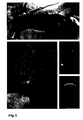
- Fig. 1 shows steps towards isolation of the fetuses from pregnant bats.
- the fetuses were separated into head and body and individual cells isolated by brief digestion with TrypLE (Gibco, a trypsin replacement) and tituration into DMEM/F12 medium (Gibco) containing 5% fetal calf serum (Biochrom AG).
- the cells were seeded into 6-well culture plates and transfected with effectene (Qiagen) within 1 to 1.5 weeks after plating. Cultivation in all of the described experiments was performed at 37°C and 8% CO2 in the gaseous phase.
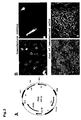
- the plasmid used for transfection and immortalization designated #G56 ( Fig. 2 and SEQ ID NO:1) was constructed in accordance with WO/2005/042728 with genomic human adenovirus sertype 5 sequences from a wild-type contamination in a vector preparation produced on HEK 293 cells: primers ACTCGAGCTGACGTGTAGTGTATT and CACACGCAATCACAGGTT (SEQ ID NO:2 and 3, respectively) were used to amplify the E1A region and primers ACTCGAGTCATGGAGGCTTGGGAGT and ACACATTTCAGTACCTCA (SEQ ID NO:4 and 5, respectively) were used to amplify the E1 B region. Amplification was performed with ProofStart polymerase (Qiagen) and integrity confirmed by sequencing.
- Qiagen ProofStart polymerase
- E1A is driven by the promoter for human phosphoglycerate kinase, amplfied from genomic DNA of HEK 293 with primers GAGATTAATGGTTGGGGTTGCGCCTT and AACTCGAGAACGAGGGAGCCGACTGCC (SEQ ID NO:6 and 7, respectively).
- E1B is driven by the thymidine kinase promoter of herpes simplex virus.
- Senescence describes a cellular state with decreased proliferation rates until complete stasis or cell death due to telomere erosion of the chromosomes and accumulation of signal proteins important in cell cycle control. Senescent cells usually are large and pleomorphic with striated cytoplasm of low phase contrast.
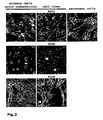
- Fig. 3 shows three of the final cell lines after nine months of continous culture in the middle panel. A typical senescent cells is shown in the right panel. Most surprising is the fact that we established three different cell lines of distinct appearance and possibly lineage. The reason for our surprise is based on the fact that E1 immortalization appears to be most efficient in neuronal cells and on an earlier observation suggesting that immortalization of human cells with E1-genes induces a shift in gene expression towards epithelial patterns. We obtained one cell line consistent with epithelial properties and one cell line with fibroblast appearance. Both cell lines highly resemble the source material prior to transfection shown in the left panel of Fig. 3 .
- Neuronal cells are extremely difficult to cultivate (for example, see Brewer and Cotman 1989 in Brain Research 494, 65-74 : they require carefully adjusted hypoxic culture conditions, low culture volumes for self-conditioning of medium and detoxification in absence of supporting glial cells).
- the primary neuronal cells in the left panel were isolated from the vertebrate of a Rousettus embryo, the immortalized neuronal line was obtained by transfection of cells isolated from the head.
- Fig. 4 compares a cell line histories in terms of cumulative cell doublings. Each manipulation event including change of medium has been documented and is depicted here for an intervall of 35 weeks. Clearly visible is the early and strong proliferation of the fibroblast line, stabilization of the epithelial line approx. 30 weeks after isolation and transfection of primary cells, and the slow but successfull cultivation of the neuronal line.
- tissue-specific expression patterns appear not to change on a macroscopic scale in bat cells upon immortalization with E1 genes. This property probably extends to other immortalization strategies.
- AGE1.CR cells (duck retina cells; WO/2005/042728 ) that stably express the Ad5 E1-region served as positive control, BHK cells as negative control.
- DAPI (4',6-diamidino-2-phenylindol; Sigma, USA) to 1 ⁇ g/ml was added in the final incubation step to stain the nuclei of the cells for orientation purposes.
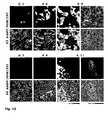
- Fig. 5 shows the result obtained with cultures R05T and R06E.
- a specific signal for E1A was observed in all cells confirming successful immortalization by the transfected plasmids. Furthermore, spontaneous transformation, a formal possibility, was not observed as all cells were E1-positive.
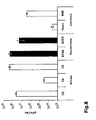
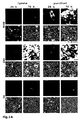
- Fig. 6 provides an explanation for weak signal intensity of E1A in bat cells: the GFP reporter protein was coupled to various promoters including hPGK, tk and hCMV.
- hPGK promoter in plasmid #56G drives E1A expression
- tk promoter drives E1B expression.
- the hCMV promoter is known for very high transient expression levels and thus provides an upper limit.
- Transfection into the rousettus cell lines was performed with liposomal formulation of the plasmids as in example 1. Note extremely low signal strength for PGK and tk promoters in rousettus cells but not in CR cells. Even hCMV promoter activity appears to be repressed in rousettus cells.
- Example 3 Modified vaccinia virus Ankara (MVA)
- MVA is derived from vaccinia virus Duke strain by adaptation to embryonated chicken eggs (yielding CVA, chorioallantois vaccinia Ankara) followed by more than 500 passages in chicken embryonic fibroblasts (yielding MVA).
- MVA is attenuated to such an extent that it cannot replicate in mammalian cells tested thus far with BHK as a single exception.
- the severe host range restriction is programmed into MVA by a number of mutations and deletions that have reduced the size of the genomic DNA from 200 kb in Duke to 192 kb in CVA down to 178 kb in MVA.
- Vero cells were resuspended into the culture medium by pipetting and lysed by three cycles of freeze/thawing to also harvest virus from within the cells. The suspension was cleared by centrifugation and titration was performed on Vero cells (Vero cells do not replicate MVA but they are susceptible and can be infected for titration purposes), briefly: Vero cells were seeded in 96 well plates at 2 x 10 4 cells per well and infected with serial 10-fold dilutions of MVA-containing suspension on the following day.
- This secondary antibody is coupled to the peroxidase enzyme that catalyzes a color reaction upon incubation with AEC reagent (3-amino-9-ethyl-carbozole; 0.3 mg/ml in 0.1 M acetate buffer pH 5.0 containing 0.015% H 2 O 2 ). Infected foci are identified by light microscopy and plaque forming units are calculated from the maximum dilution of MVA suspension that yields a positive dye reaction.
- Fig. 8 demonstrates that replication of MVA in Rousettus cells is not an artefact but clearly surpasses the published values in the range of 10 6 pfu/ml for replication in BHK ( Drexler et al. 1998 in J. Gen. Virol. 79, 347-52 ). Yields for MVA in multiplying in the avian cell line AGE1.CS is supperior to yields in primary chicken embryo fibroblasts, an accepted production system for MVA. R06E releases similar levels of MVA (2.3 x 10 8 pfu/ml and 2.1 x 10 8 pfu/ml, respectively).
- the R05T cell line is less efficient than R06E but with 3.3 x 10 7 pfu/ml in the expected range for a fully permissive host cell and similar in yields to the permissve avian cell line AGE1.CR.
- Nonpermissive cell lines CA and Vero provide a base line: yields there correspond to input virus or extremely limited replication in the case of the CA line.
- the literature value for BHK is confirmed in our experiments performed in parallel to the infection of the novel Rousettus cell lines: BHK produces less virus than R05T and R06E.
- burst rates For production purposes of vaccine vectors one often calculates burst rates given by the ratio of yield to inocolum with seed virus. Burst size is equivialent to amplification of virus and thus important to estimate cost and required resources for large scale production.
- the burst size is 4133 at a multiplicity of infection with 0.1, an excellent amplification for MVA.
- High amplification rates are especially important for MVA because this vector cannot replicate in the human vacci Avenue. This is an important safety feature as even immunocompromised patients can receive MVA as therapeutic vaccine.
- lack of replication necessitates vaccination with high doses of infectious particles -- most estimates are in the range of 10 8 infectious units/shot. Providing a mammalian cell line generated according to the defined risk approach that allows economical production of MVA for vaccine purposes is highly desirable.
- dsRNA is one of several pathogen associated patterns a cell uses to identify exposure to parasites. These molecular patterns are recognized by sensor molecules called Toll-Like Receptors or TLRs. TLRs communicate into the interferon type I pathways. These interferons induce an anti-viral state in non-infected cells and apoptosis in infected cells, thus precluding viral replication.
- TLR-4 bacterial lipopolysaccharides
- TLR-2 glycolipids
- TLR-5 flagellin
- TLR-3 unmethylated CpG-DNA
- TLR-3 dsRNA
- Primary cell cultures are not a desirable alternative to TB-1 Lu: they require continous supply of donor animals which is difficult especially in the case of bats, and often introduce great variations in cell properties with each preparation and as passage number increases.
- Rousettus cell lines respond to dsRNA we used a common synthetic analogue of viral dsRNA, poly IC (Sigma), and compared effects of treatment with poly IC to a cell line known to be sensitive to TLR-3 induction (AGE1.CS) and to a cell known to be deficient in interferon type I pathways (Vero).
- Poly IC was added at a concentration of 400 ⁇ g/ml directly to the medium of the cells in the presence of fetal calf serum to challenge the TLR-3 receptor; poly IC can also be transfected to interrogate intra-cellular receptors for dsRNA but this would introduce the molecular pattern downstream of the interferon induction and is a less stringent examination.
- the cell lines are unusual in that they appear to have retained a number of primary features that even extend to a neuronal line.
- the lines are also unusual in that they are fully permissive for MVA, a highly attenuated virus that usually does not replicate in mammalian cells.
- at least one of the cell lines is unusual in that it responds with interferon induction to challenge with a pathogen associated molecular pattern.
- Bats appear to be unique among mammals because they rarely exhibit clinical symptoms after infection with a variety of extremely virulent pathogens such as Ebola virus, SARS-CoV and lyssavirus.
- bat cells appear not to be especially resistant to pathogens. Rather, they replicate highly attenuated MVA to surprisingly high levels that rival yields obtained on cells of the avian host MVA has been adapted to.
- Example 5 MVA production in media free of animal-derived components
- the medium used as base medium for infection and cultivation of R06E is animal-derived component free and optimized for proliferation in suspension.
- the bar chart in Fig. 11 is a compacted result of underlying optimization matrices with well over 600 individual titrations (visualized in Fig.
- DMEM/F12 is formulated for supplementation with serum and consequently titers decrease in DMEM:F12 without FCS.
- FCS fetal calf serum
- DMEM:F12 with or without FCS supplementation is not suitable for passaging of cells, not on microcarriers nor in suspension. If passage in medium free of animal-derived components is desired cells need to be passaged in media specially formulated for such a process.
- Such media are commercially available and include Gene Therapy Medium 3 (Sigma, USA), ProPER-1 and ProCHO 3 (both from Lonza, Belgium), or Adenovirus Expression Medium (Invitrogen, USA).
- Fig. 11 MVA yields decrease by three orders of magnitude in suspension media without adequate supplementation.
- Gene Therapy Medium 3 and Adenovirus Expression Medium are formulated for adenovirus production.
- adenoviruses are naked viruses. Sensitivity to default suspension medium formulation may be a property of enveloped viruses in general. We have observed vastly decreased yields also for other unrelated enveloped viruses such as togavirus and lyssavirus in common suspension media. Often, considerable effort is necessary to develop a process that allows these enveloped viruses to be produced on a permanent host cell.
- adherent monolayers are shown to better illustrate the effects from viral infection: cultures in unsupplemented suspension medium display no cytopathic effect (compare images (a) and (b) of the infected cells in Fig. 11 , panel A). Yields do not increase by supplementation with FCS.
- An MVA production process can become feasible by supplementation with commercially available charged or uncharged polymeres such as (but not limited to) poly[imino[(2S)-2-amino-1-oxo-1,6-hexanediyl]] at 0.001-0.01% (w/v); poly[1-(2-oxo-1-pyrrolidinyl)ethylen] at 0.5-2%; N-[1-(2,3-dioleyloxy)propyl]-N,N,N-trimethylammoniumchlorid at 5-10 ⁇ M; 1-oleoyl-2-[6-[(7-nitro-2-1,3-benzoxadiazol-4-yl)amino]hexanoy]-3-trimethylammonium propane or N-[1-(2,3-Dioleoyloxy)]-N,N,N-trimethylammonium propane methylsulphate at 50-100 ⁇ g/ml; 1,5-dimethyl
- ionic strength in the suspension proliferation medium need to be adjusted with inorganic salts, preferably at the time of infection with an MOI below 1.0, for example, by supplementing with 1 volume of calcium chloride at 1.05 mM, cupric sulfate at 0.0000052 mM, ferric nitrate at 0.000124 mM, ferric sulfate at 0.0015 mM, magnesium chloride at 0.3 mM, magnesium sulfate at 0.407 mM, potassium chloride at 4.16 mM, sodium bicarbonate at 14.29 mM, sodium chloride at 120.61 mM, sodium bromide at 2.0 mM, sodium phosphate dibasic at 0.5 mM, sodium phosphate monobasic at 0.453 mM, and zinc sulfate at 0.432 mg/l.
- the infection process is further supported by metabolic supplements and nutrients such as adding D-glucose with at least 3000 mg/l, hypoxanthine at 0.015 mM, linoleic acid at 0.042 mg/l, lipoic acid at 0.105 mg/l, putrescine HCl at 0.081 mg/l, sodium pyruvate at 55 mg/l, galactose with at least 300 mg/l and thymidine at 0.365 mg/l.
- metabolic supplements and nutrients such as adding D-glucose with at least 3000 mg/l, hypoxanthine at 0.015 mM, linoleic acid at 0.042 mg/l, lipoic acid at 0.105 mg/l, putrescine HCl at 0.081 mg/l, sodium pyruvate at 55 mg/l, galactose with at least 300 mg/l and thymidine at 0.365 mg/l.
- Example 6 human adenovirus in rousettus cells
- R06E and R05T lines were infected with E1-deleted adenovirus vector that expresses GFP (AdGFP). Infection was performed with an MOI of less than 0.1 to determine true spread of virus in the culture.
- HEK 293 cells a human cell line known to be highly permissive for adenovirus
- duck CR cells not permissive for adenovirus
- Fig. 12 clearly demonstrates that human adenovirus does spread in rousettus cells. Almost all cells of the rousettus culture exhibit GFP-expression within 7 days post infection. In the CR negative control there is no spread of GFP beyond occasional limited mitotic division of AdGFP-positive cells. In the HEK 293 culture the vector clearly spreads much faster and to superior levels compared to rousettus cells. A crude thaw/freeze lysate of infected HEK 293 cells transfers an expected high amount AdGFP to naive HEK 293 cells, a low amount of virus from rousettus cells, and extemely rarely input virus-derived vector from the CR cells. Thus, rousettus surprisingly is permissive for human adenovirus but apparently at lower levels of efficiency compared to HEK 293 cells.
- AdGFP replication does not cause any cytopathic effect and that the GFP signal intensity declines until it is barely visible within 3 to 4 passages. Thus, virus after strong initial spread appears to be cleared from the culture.
- AdGFP can be transfered to HEK 293 cells.
- R06E cells were infected with AdGFP and passaged at least three times to reliably remove any lingering input virus. After the third and fourth passage the infected R06E cells were mixed with an equal amount of HEK 293 cells, shown in Fig. 13 .
- the two cell lines can be differentiated by size and morphology: HEK 293 are smaller than R06E, more compact with more distinctive phase contrast and better visible nuclei. Note the weak expression of GFP especially in the latently infected R06E after the fourth passage (images below day 0 in the lower panel).
- AdGFP is produced by the latently infected rousettus cells and can be transfered to co-cultivated HEK 293.
- AdGFP levels decline in the infected R06E monolayer and consequently efficiency of transfer decreases with sub-passage.
- AdGFP was given to cell monolayers either as crude thaw/freeze lysates from infected HEK 293 cells or purified by ultracentrifugation through a CsCl gradient ( Fig. 14 ).
- Purification removes cellular debris from a freeze/thaw lysate by clarification at 5000 x g; by incubation with 10 u/ml benzonase for 30 min; by banding with 105000 x g in CsCl gradient consisting of layers of 1.5 g/cm 3 , 1.35 g/cm 3 and 1.25 g/cm 3 in 10 mM TRIS HCl and 1 mM EDTA, pH 7.5; followed by a desalting step with a BioRad DG10 column. All preparations contain infectious AdGFP and for HEK 293 cells there are no differences in dynamic and intensity of spread of GFP signal.
- a crude lysate may also contain a number of pathogen associated signals and cellular messengers already examined in Example 4. These signals and/or messengers do not impact on HEK 293 but have a clearly visible effect on rousettus cells. Not all lysates trigger this effect.
- AdGFP AdGFP
- AdGFP as a tester virus
- additional viruses will be identified
- Screen for unique factors from these unusual mammals that mediate the protective effect or to use these cells as highly sensitive detection system for common pathways. From such a screen it is possible (for example, by differential expression analysis and proteomic approaches) to identify the factors, the involved pathways, and small chemicals that may trigger or interfere with these responses.
- An isolated, unique factor may provide a novel therapeutic protein.
- a newly discovered anti-viral pathway may lead to new strategies for eliciting these responses in a human patient or diseased animal.
- Small chemicals may provide supportive therapeutic approaches for treatment of acute or chronic infectious and non-infectious (such as auto-immune) diseases.
Landscapes
- Life Sciences & Earth Sciences (AREA)
- Chemical & Material Sciences (AREA)
- Health & Medical Sciences (AREA)
- Genetics & Genomics (AREA)
- Organic Chemistry (AREA)
- Zoology (AREA)
- Engineering & Computer Science (AREA)
- Bioinformatics & Cheminformatics (AREA)
- Wood Science & Technology (AREA)
- Virology (AREA)
- Biotechnology (AREA)
- Microbiology (AREA)
- Biomedical Technology (AREA)
- Medicinal Chemistry (AREA)
- Biochemistry (AREA)
- General Engineering & Computer Science (AREA)
- General Health & Medical Sciences (AREA)
- Immunology (AREA)
- Medicines Containing Material From Animals Or Micro-Organisms (AREA)
- Micro-Organisms Or Cultivation Processes Thereof (AREA)
Claims (14)
- Zelllinie, die von einer Fledermauszelle (Chiroptera-Zelle) abgeleitet ist, welche mit einer E1-Region eines humanen Adenovirus des Serotyps 5 immortalisiert wurde.
- Zelllinie nach Anspruch 1, welche von(i) einer primären Fledermauszelle; und/oder(ii) einem Flughund (Megachiroptera)abgeleitet ist.
- Zelllinie nach Anspruch 2, wobei(i) die primäre Fledermauszelle eine fötale oder neonatale Zelle ist; und/oder(ii) der Flughund Rosettus aegyptiacus ist.
- Zelllinie gemäß Ansprüchen 1-3, welche zusätzlich mindestens eine nicht-native funktionelle Sequenz trägt, die aus der Gruppe, bestehend aus Transgenen, Promotoren, Enhancern, Selektionsmarkern, Reportergenen und therapeutischen Genen, ausgewählt ist.
- Zelllinie gemäß Anspruch 4, wobei(i) die Transgene Gene sind, die fehlerhafte Viren komplementieren,(ii) die Promotoren PGK-, EF1.alpha-, CMV- oder tk-Promotoren sind,(iii) die Enhancer RSV-LTR-Enhancer sind,(iv) die Selektionsmarker Selektionsmarker für Neomycin-Resistenz oder Puromycin-Resistenz sind,(v) die Reportergene GFP oder lacZ sind, oder(vi) die therapeutischen Gene Antikörper-Gene sind.
- Zelllinie gemäß einem der Ansprüche 1-5, welche(i) wenn sie mit einem mikrobiellen Agens in Kontakt gebracht wird, dieses mikrobielle Agens repliziert, und/oder(ii) in einem Medium proliferiert, welches frei von tierisch-abgeleiteten Komponenten ist.
- Zelllinie gemäß Anspruch 6, wobei das mikrobielle Agens ein Virus oder ein viraler Vektor ist.
- Zelllinie gemäß einem der Ansprüche 1-5, welche die Zelllinie AGE1.R06E, hinterlegt unter DSM ACC2902, ist.
- Verfahren zur Herstellung der Zelllinie nach Ansprüchen 1-8, welches das Immortalisieren einer Start-Fledermauszelle mit einer E1-Region eines humanen Adenovirus des Serotyps 5 umfasst.
- Verfahren zur Herstellung eines mikrobiellen Agens auf einer Zelllinie gemäß einem der Ansprüche 1-8, umfassend das In-Kontakt-Bringen besagter Zelllinie mit(i) dem mikrobiellen Agens, einschließlich Infektion mit dem mikrobiellen Agens, Kultivieren der infizierten Zellen, Ernten der Zellen oder des Kulturüberstands, um das mikrobielle Agens zurückzugewinnen; oder(ii) mit einer Nukleinsäuresequenz, die besagtes mikrobielles Agens kodiert, einschließlich Transfektion oder Transduktion mit einem Expressionsplasmid oder mit in-vitro-transkribierter RNA, Kultivieren der transfizierten Zellen, Ernten der Zellen oder des Kulturüberstandes, um das mikrobielle Agens zurückzugewinnen.
- Verfahren zur Diagnose, Identifizierung, Zurückgewinnung oder Rettung eines mikrobiellen Agens, welches das Aussetzen der Zellen einer Zelllinie gemäß einem der Ansprüche 1-8 einem Medium oder biologischen Proben umfasst, das/die im Verdacht steht/stehen, ein bestimmtes mikrobielles Agens zu enthalten.
- Verfahren nach Anspruch 10 oder 11, wobei das mikrobielle Agens ein Virus oder ein viraler Vektor, vorzugsweise ein Modifizierter Vaccinia Ankara, ist.
- Verwendung einer Zelllinie gemäß einem der Ansprüche 1-8 zur Herstellung, Diagnose, Identifizierung, Zurückgewinnung oder Rettung eines mikrobiellen Agens, oder zur Identifizierung mindestens eines Faktors, welcher für die Replikation eines mikrobiellen Agens oder für die Resistenz gegenüber einem mikrobiellen Agens von Bedeutung ist und welcher zur Anwendung oder exogenen Expression in einer Zelle, die nicht von einem Chiroptera isoliert ist, dient.
- Verwendung nach Anspruch 13, wobei die Produktion, Diagnose, Identifizierung, Zurückgewinnung oder Rettung eines mikrobiellen Agens in Medium durchgeführt wird, welches frei von tierisch-abgeleiteten Komponenten ist, entweder auf Mikroträgem oder in einer echten Suspension.
Priority Applications (1)
| Application Number | Priority Date | Filing Date | Title |
|---|---|---|---|
| EP09716499.0A EP2265712B1 (de) | 2008-03-04 | 2009-03-04 | Zelllinie aus rousettus als wirtszelle zur pathogenamplifikation |
Applications Claiming Priority (4)
| Application Number | Priority Date | Filing Date | Title |
|---|---|---|---|
| EP08102277A EP2098590A1 (de) | 2008-03-04 | 2008-03-04 | Zelllinie des Rosettenflughundes als Hostzelle für pathogene Verstärkung |
| EP08161013 | 2008-07-23 | ||
| EP09716499.0A EP2265712B1 (de) | 2008-03-04 | 2009-03-04 | Zelllinie aus rousettus als wirtszelle zur pathogenamplifikation |
| PCT/EP2009/001540 WO2009109377A1 (en) | 2008-03-04 | 2009-03-04 | Cell line from rousettus as host cell for pathogen amplification |
Publications (2)
| Publication Number | Publication Date |
|---|---|
| EP2265712A1 EP2265712A1 (de) | 2010-12-29 |
| EP2265712B1 true EP2265712B1 (de) | 2014-07-23 |
Family
ID=40547316
Family Applications (1)
| Application Number | Title | Priority Date | Filing Date |
|---|---|---|---|
| EP09716499.0A Not-in-force EP2265712B1 (de) | 2008-03-04 | 2009-03-04 | Zelllinie aus rousettus als wirtszelle zur pathogenamplifikation |
Country Status (4)
| Country | Link |
|---|---|
| US (1) | US8679839B2 (de) |
| EP (1) | EP2265712B1 (de) |
| CA (1) | CA2718058A1 (de) |
| WO (1) | WO2009109377A1 (de) |
Families Citing this family (1)
| Publication number | Priority date | Publication date | Assignee | Title |
|---|---|---|---|---|
| CN113122508A (zh) * | 2021-03-30 | 2021-07-16 | 成都天邦生物制品有限公司 | 一株鸡传染性支气管炎细胞适应毒及其应用 |
Family Cites Families (6)
| Publication number | Priority date | Publication date | Assignee | Title |
|---|---|---|---|---|
| US5665589A (en) * | 1988-12-14 | 1997-09-09 | The United States Of America As Represented By The Department Of Health And Human Services | Human liver epithelial cell lines |
| DD294039A5 (de) * | 1990-04-26 | 1991-09-19 | Zi Fuer Molekularbiologie Ag Patent- Und Neuererwesen,De | Tierische zellinien, die transaktivierendes protein pxi des bovinen leukosevirus (blv) exprimieren, verfahren zu ihrer herstellung |
| US7192759B1 (en) * | 1999-11-26 | 2007-03-20 | Crucell Holland B.V. | Production of vaccines |
| EP1528101A1 (de) * | 2003-11-03 | 2005-05-04 | ProBioGen AG | Immortalisierte Vogel-Zelllinien für die Produktion von Viren |
| WO2005118611A2 (en) * | 2004-01-23 | 2005-12-15 | The Trustees Of The University Of Pennsylvania | Microutrophin and uses thereof |
| EP1783210A1 (de) | 2005-11-08 | 2007-05-09 | ProBioGen AG | Proteinfaktoren zur Erhöhung der Produktivität, neue Zelllinien und deren Verwendungen |
-
2009
- 2009-03-04 US US12/921,142 patent/US8679839B2/en not_active Expired - Fee Related
- 2009-03-04 CA CA2718058A patent/CA2718058A1/en not_active Abandoned
- 2009-03-04 EP EP09716499.0A patent/EP2265712B1/de not_active Not-in-force
- 2009-03-04 WO PCT/EP2009/001540 patent/WO2009109377A1/en not_active Ceased
Also Published As
| Publication number | Publication date |
|---|---|
| CA2718058A1 (en) | 2009-09-11 |
| WO2009109377A1 (en) | 2009-09-11 |
| EP2265712A1 (de) | 2010-12-29 |
| US20110269116A1 (en) | 2011-11-03 |
| US8679839B2 (en) | 2014-03-25 |
Similar Documents
| Publication | Publication Date | Title |
|---|---|---|
| RU2359999C2 (ru) | Иммортализованные линии клеток птиц для получения вирусов | |
| JP4787156B2 (ja) | 付着または非付着の鳥類細胞系を用いた、ポックスウィルスの作製法 | |
| Costes et al. | Cloning of the koi herpesvirus genome as an infectious bacterial artificial chromosome demonstrates that disruption of the thymidine kinase locus induces partial attenuation in Cyprinus carpio koi | |
| Jordan et al. | Cell lines from the Egyptian fruit bat are permissive for modified vaccinia Ankara | |
| Léon et al. | The EB66® cell line as a valuable cell substrate for MVA-based vaccines production | |
| CN104812894B (zh) | 新型mva病毒及其用途 | |
| WO2020239040A1 (zh) | 重组溶瘤病毒以及制备方法、应用和药物 | |
| KR102688005B1 (ko) | 진핵 세포주 | |
| US8679839B2 (en) | Cell line from rousettus as host cell for pathogen amplification | |
| EP2098590A1 (de) | Zelllinie des Rosettenflughundes als Hostzelle für pathogene Verstärkung | |
| Costa et al. | Establishment and partial characterization of an ovine synovial membrane cell line obtained by transformation with Simian Virus 40 T antigen | |
| CN101356265B (zh) | 提高生产率的蛋白因子、新颖细胞系和其应用 | |
| RU2776531C2 (ru) | Эукариотическая клеточная линия | |
| Jun et al. | Effect of serum type and concentration on the expression of β-galactosidase in recombinant vaccinia virus infected HeLa S3 cells | |
| EP2199385A1 (de) | Spezifische und persistente Aktivierung der Hitzeschockreaktion in Zelllinien mittels eines viralen Faktors | |
| CN102827842B (zh) | 靶向抑制羊痘病毒ORF095基因的序列siRNA-296 | |
| CN102796740B (zh) | 靶向抑制羊痘病毒ORF095基因的序列siRNA-70 | |
| Class et al. | Patent application title: COMPLEMENTING CELL LINES Inventors: Ronald Vogels (Linschoten, NL) Menzo Jans Emco Havenga (Alphen A/d Rijn, NL) Majid Mehtall (Plobsheim, FR) |
Legal Events
| Date | Code | Title | Description |
|---|---|---|---|
| PUAI | Public reference made under article 153(3) epc to a published international application that has entered the european phase |
Free format text: ORIGINAL CODE: 0009012 |
|
| 17P | Request for examination filed |
Effective date: 20101004 |
|
| AK | Designated contracting states |
Kind code of ref document: A1 Designated state(s): AT BE BG CH CY CZ DE DK EE ES FI FR GB GR HR HU IE IS IT LI LT LU LV MC MK MT NL NO PL PT RO SE SI SK TR |
|
| AX | Request for extension of the european patent |
Extension state: AL BA RS |
|
| DAX | Request for extension of the european patent (deleted) | ||
| 17Q | First examination report despatched |
Effective date: 20111028 |
|
| GRAP | Despatch of communication of intention to grant a patent |
Free format text: ORIGINAL CODE: EPIDOSNIGR1 |
|
| INTG | Intention to grant announced |
Effective date: 20140213 |
|
| GRAS | Grant fee paid |
Free format text: ORIGINAL CODE: EPIDOSNIGR3 |
|
| GRAA | (expected) grant |
Free format text: ORIGINAL CODE: 0009210 |
|
| AK | Designated contracting states |
Kind code of ref document: B1 Designated state(s): AT BE BG CH CY CZ DE DK EE ES FI FR GB GR HR HU IE IS IT LI LT LU LV MC MK MT NL NO PL PT RO SE SI SK TR |
|
| REG | Reference to a national code |
Ref country code: GB Ref legal event code: FG4D |
|
| REG | Reference to a national code |
Ref country code: CH Ref legal event code: EP |
|
| REG | Reference to a national code |
Ref country code: IE Ref legal event code: FG4D |
|
| REG | Reference to a national code |
Ref country code: AT Ref legal event code: REF Ref document number: 678908 Country of ref document: AT Kind code of ref document: T Effective date: 20140815 |
|
| REG | Reference to a national code |
Ref country code: DE Ref legal event code: R096 Ref document number: 602009025480 Country of ref document: DE Effective date: 20140904 |
|
| REG | Reference to a national code |
Ref country code: NL Ref legal event code: T3 |
|
| REG | Reference to a national code |
Ref country code: AT Ref legal event code: MK05 Ref document number: 678908 Country of ref document: AT Kind code of ref document: T Effective date: 20140723 |
|
| REG | Reference to a national code |
Ref country code: LT Ref legal event code: MG4D |
|
| PG25 | Lapsed in a contracting state [announced via postgrant information from national office to epo] |
Ref country code: GR Free format text: LAPSE BECAUSE OF FAILURE TO SUBMIT A TRANSLATION OF THE DESCRIPTION OR TO PAY THE FEE WITHIN THE PRESCRIBED TIME-LIMIT Effective date: 20141024 Ref country code: NO Free format text: LAPSE BECAUSE OF FAILURE TO SUBMIT A TRANSLATION OF THE DESCRIPTION OR TO PAY THE FEE WITHIN THE PRESCRIBED TIME-LIMIT Effective date: 20141023 Ref country code: SE Free format text: LAPSE BECAUSE OF FAILURE TO SUBMIT A TRANSLATION OF THE DESCRIPTION OR TO PAY THE FEE WITHIN THE PRESCRIBED TIME-LIMIT Effective date: 20140723 Ref country code: ES Free format text: LAPSE BECAUSE OF FAILURE TO SUBMIT A TRANSLATION OF THE DESCRIPTION OR TO PAY THE FEE WITHIN THE PRESCRIBED TIME-LIMIT Effective date: 20140723 Ref country code: PT Free format text: LAPSE BECAUSE OF FAILURE TO SUBMIT A TRANSLATION OF THE DESCRIPTION OR TO PAY THE FEE WITHIN THE PRESCRIBED TIME-LIMIT Effective date: 20141124 Ref country code: FI Free format text: LAPSE BECAUSE OF FAILURE TO SUBMIT A TRANSLATION OF THE DESCRIPTION OR TO PAY THE FEE WITHIN THE PRESCRIBED TIME-LIMIT Effective date: 20140723 Ref country code: LT Free format text: LAPSE BECAUSE OF FAILURE TO SUBMIT A TRANSLATION OF THE DESCRIPTION OR TO PAY THE FEE WITHIN THE PRESCRIBED TIME-LIMIT Effective date: 20140723 Ref country code: BG Free format text: LAPSE BECAUSE OF FAILURE TO SUBMIT A TRANSLATION OF THE DESCRIPTION OR TO PAY THE FEE WITHIN THE PRESCRIBED TIME-LIMIT Effective date: 20141023 |
|
| PG25 | Lapsed in a contracting state [announced via postgrant information from national office to epo] |
Ref country code: IS Free format text: LAPSE BECAUSE OF FAILURE TO SUBMIT A TRANSLATION OF THE DESCRIPTION OR TO PAY THE FEE WITHIN THE PRESCRIBED TIME-LIMIT Effective date: 20141123 Ref country code: LV Free format text: LAPSE BECAUSE OF FAILURE TO SUBMIT A TRANSLATION OF THE DESCRIPTION OR TO PAY THE FEE WITHIN THE PRESCRIBED TIME-LIMIT Effective date: 20140723 Ref country code: PL Free format text: LAPSE BECAUSE OF FAILURE TO SUBMIT A TRANSLATION OF THE DESCRIPTION OR TO PAY THE FEE WITHIN THE PRESCRIBED TIME-LIMIT Effective date: 20140723 Ref country code: CY Free format text: LAPSE BECAUSE OF FAILURE TO SUBMIT A TRANSLATION OF THE DESCRIPTION OR TO PAY THE FEE WITHIN THE PRESCRIBED TIME-LIMIT Effective date: 20140723 Ref country code: AT Free format text: LAPSE BECAUSE OF FAILURE TO SUBMIT A TRANSLATION OF THE DESCRIPTION OR TO PAY THE FEE WITHIN THE PRESCRIBED TIME-LIMIT Effective date: 20140723 Ref country code: HR Free format text: LAPSE BECAUSE OF FAILURE TO SUBMIT A TRANSLATION OF THE DESCRIPTION OR TO PAY THE FEE WITHIN THE PRESCRIBED TIME-LIMIT Effective date: 20140723 |
|
| REG | Reference to a national code |
Ref country code: DE Ref legal event code: R097 Ref document number: 602009025480 Country of ref document: DE |
|
| PG25 | Lapsed in a contracting state [announced via postgrant information from national office to epo] |
Ref country code: DK Free format text: LAPSE BECAUSE OF FAILURE TO SUBMIT A TRANSLATION OF THE DESCRIPTION OR TO PAY THE FEE WITHIN THE PRESCRIBED TIME-LIMIT Effective date: 20140723 Ref country code: EE Free format text: LAPSE BECAUSE OF FAILURE TO SUBMIT A TRANSLATION OF THE DESCRIPTION OR TO PAY THE FEE WITHIN THE PRESCRIBED TIME-LIMIT Effective date: 20140723 Ref country code: RO Free format text: LAPSE BECAUSE OF FAILURE TO SUBMIT A TRANSLATION OF THE DESCRIPTION OR TO PAY THE FEE WITHIN THE PRESCRIBED TIME-LIMIT Effective date: 20140723 Ref country code: IT Free format text: LAPSE BECAUSE OF FAILURE TO SUBMIT A TRANSLATION OF THE DESCRIPTION OR TO PAY THE FEE WITHIN THE PRESCRIBED TIME-LIMIT Effective date: 20140723 Ref country code: SK Free format text: LAPSE BECAUSE OF FAILURE TO SUBMIT A TRANSLATION OF THE DESCRIPTION OR TO PAY THE FEE WITHIN THE PRESCRIBED TIME-LIMIT Effective date: 20140723 Ref country code: CZ Free format text: LAPSE BECAUSE OF FAILURE TO SUBMIT A TRANSLATION OF THE DESCRIPTION OR TO PAY THE FEE WITHIN THE PRESCRIBED TIME-LIMIT Effective date: 20140723 |
|
| PLBE | No opposition filed within time limit |
Free format text: ORIGINAL CODE: 0009261 |
|
| STAA | Information on the status of an ep patent application or granted ep patent |
Free format text: STATUS: NO OPPOSITION FILED WITHIN TIME LIMIT |
|
| 26N | No opposition filed |
Effective date: 20150424 |
|
| PG25 | Lapsed in a contracting state [announced via postgrant information from national office to epo] |
Ref country code: LU Free format text: LAPSE BECAUSE OF FAILURE TO SUBMIT A TRANSLATION OF THE DESCRIPTION OR TO PAY THE FEE WITHIN THE PRESCRIBED TIME-LIMIT Effective date: 20150304 Ref country code: MC Free format text: LAPSE BECAUSE OF FAILURE TO SUBMIT A TRANSLATION OF THE DESCRIPTION OR TO PAY THE FEE WITHIN THE PRESCRIBED TIME-LIMIT Effective date: 20140723 |
|
| REG | Reference to a national code |
Ref country code: CH Ref legal event code: PL |
|
| PG25 | Lapsed in a contracting state [announced via postgrant information from national office to epo] |
Ref country code: SI Free format text: LAPSE BECAUSE OF FAILURE TO SUBMIT A TRANSLATION OF THE DESCRIPTION OR TO PAY THE FEE WITHIN THE PRESCRIBED TIME-LIMIT Effective date: 20140723 |
|
| REG | Reference to a national code |
Ref country code: IE Ref legal event code: MM4A |
|
| PG25 | Lapsed in a contracting state [announced via postgrant information from national office to epo] |
Ref country code: LI Free format text: LAPSE BECAUSE OF NON-PAYMENT OF DUE FEES Effective date: 20150331 Ref country code: CH Free format text: LAPSE BECAUSE OF NON-PAYMENT OF DUE FEES Effective date: 20150331 Ref country code: IE Free format text: LAPSE BECAUSE OF NON-PAYMENT OF DUE FEES Effective date: 20150304 |
|
| REG | Reference to a national code |
Ref country code: FR Ref legal event code: PLFP Year of fee payment: 8 |
|
| PG25 | Lapsed in a contracting state [announced via postgrant information from national office to epo] |
Ref country code: BE Free format text: LAPSE BECAUSE OF FAILURE TO SUBMIT A TRANSLATION OF THE DESCRIPTION OR TO PAY THE FEE WITHIN THE PRESCRIBED TIME-LIMIT Effective date: 20140723 |
|
| PG25 | Lapsed in a contracting state [announced via postgrant information from national office to epo] |
Ref country code: MT Free format text: LAPSE BECAUSE OF FAILURE TO SUBMIT A TRANSLATION OF THE DESCRIPTION OR TO PAY THE FEE WITHIN THE PRESCRIBED TIME-LIMIT Effective date: 20140723 |
|
| REG | Reference to a national code |
Ref country code: FR Ref legal event code: PLFP Year of fee payment: 9 |
|
| PG25 | Lapsed in a contracting state [announced via postgrant information from national office to epo] |
Ref country code: HU Free format text: LAPSE BECAUSE OF FAILURE TO SUBMIT A TRANSLATION OF THE DESCRIPTION OR TO PAY THE FEE WITHIN THE PRESCRIBED TIME-LIMIT; INVALID AB INITIO Effective date: 20090304 |
|
| PG25 | Lapsed in a contracting state [announced via postgrant information from national office to epo] |
Ref country code: TR Free format text: LAPSE BECAUSE OF FAILURE TO SUBMIT A TRANSLATION OF THE DESCRIPTION OR TO PAY THE FEE WITHIN THE PRESCRIBED TIME-LIMIT Effective date: 20140723 |
|
| REG | Reference to a national code |
Ref country code: FR Ref legal event code: PLFP Year of fee payment: 10 |
|
| PG25 | Lapsed in a contracting state [announced via postgrant information from national office to epo] |
Ref country code: MK Free format text: LAPSE BECAUSE OF FAILURE TO SUBMIT A TRANSLATION OF THE DESCRIPTION OR TO PAY THE FEE WITHIN THE PRESCRIBED TIME-LIMIT Effective date: 20140723 |
|
| REG | Reference to a national code |
Ref country code: DE Ref legal event code: R082 Ref document number: 602009025480 Country of ref document: DE Representative=s name: ZWICKER SCHNAPPAUF & PARTNER PATENTANWAELTE PA, DE |
|
| PGFP | Annual fee paid to national office [announced via postgrant information from national office to epo] |
Ref country code: FR Payment date: 20230320 Year of fee payment: 15 |
|
| PGFP | Annual fee paid to national office [announced via postgrant information from national office to epo] |
Ref country code: GB Payment date: 20230323 Year of fee payment: 15 Ref country code: DE Payment date: 20230320 Year of fee payment: 15 |
|
| PGFP | Annual fee paid to national office [announced via postgrant information from national office to epo] |
Ref country code: NL Payment date: 20230322 Year of fee payment: 15 |
|
| REG | Reference to a national code |
Ref country code: DE Ref legal event code: R119 Ref document number: 602009025480 Country of ref document: DE |
|
| REG | Reference to a national code |
Ref country code: NL Ref legal event code: MM Effective date: 20240401 |
|
| GBPC | Gb: european patent ceased through non-payment of renewal fee |
Effective date: 20240304 |
|
| PG25 | Lapsed in a contracting state [announced via postgrant information from national office to epo] |
Ref country code: NL Free format text: LAPSE BECAUSE OF NON-PAYMENT OF DUE FEES Effective date: 20240401 |
|
| PG25 | Lapsed in a contracting state [announced via postgrant information from national office to epo] |
Ref country code: NL Free format text: LAPSE BECAUSE OF NON-PAYMENT OF DUE FEES Effective date: 20240401 |
|
| PG25 | Lapsed in a contracting state [announced via postgrant information from national office to epo] |
Ref country code: DE Free format text: LAPSE BECAUSE OF NON-PAYMENT OF DUE FEES Effective date: 20241001 |
|
| PG25 | Lapsed in a contracting state [announced via postgrant information from national office to epo] |
Ref country code: GB Free format text: LAPSE BECAUSE OF NON-PAYMENT OF DUE FEES Effective date: 20240304 |
|
| PG25 | Lapsed in a contracting state [announced via postgrant information from national office to epo] |
Ref country code: FR Free format text: LAPSE BECAUSE OF NON-PAYMENT OF DUE FEES Effective date: 20240331 |
|
| PG25 | Lapsed in a contracting state [announced via postgrant information from national office to epo] |
Ref country code: GB Free format text: LAPSE BECAUSE OF NON-PAYMENT OF DUE FEES Effective date: 20240304 Ref country code: FR Free format text: LAPSE BECAUSE OF NON-PAYMENT OF DUE FEES Effective date: 20240331 Ref country code: DE Free format text: LAPSE BECAUSE OF NON-PAYMENT OF DUE FEES Effective date: 20241001 |