EP2267126A1 - Verfahren zur stabilen Genunterbrechung in Clostridia - Google Patents
Verfahren zur stabilen Genunterbrechung in Clostridia Download PDFInfo
- Publication number
- EP2267126A1 EP2267126A1 EP09163894A EP09163894A EP2267126A1 EP 2267126 A1 EP2267126 A1 EP 2267126A1 EP 09163894 A EP09163894 A EP 09163894A EP 09163894 A EP09163894 A EP 09163894A EP 2267126 A1 EP2267126 A1 EP 2267126A1
- Authority
- EP
- European Patent Office
- Prior art keywords
- gene
- clostridium
- process according
- intron
- strains
- Prior art date
- Legal status (The legal status is an assumption and is not a legal conclusion. Google has not performed a legal analysis and makes no representation as to the accuracy of the status listed.)
- Withdrawn
Links
- 108090000623 proteins and genes Proteins 0.000 title claims abstract description 96
- 238000000034 method Methods 0.000 title claims abstract description 43
- 241001112696 Clostridia Species 0.000 title claims abstract description 32
- 230000008569 process Effects 0.000 title claims description 25
- 239000013598 vector Substances 0.000 claims abstract description 60
- 239000003550 marker Substances 0.000 claims abstract description 38
- 230000003362 replicative effect Effects 0.000 claims abstract description 22
- 241000193401 Clostridium acetobutylicum Species 0.000 claims description 27
- 101150076274 upp gene Proteins 0.000 claims description 19
- 241000193403 Clostridium Species 0.000 claims description 18
- 108091029499 Group II intron Proteins 0.000 claims description 13
- 230000035897 transcription Effects 0.000 claims description 12
- 238000013518 transcription Methods 0.000 claims description 12
- 230000003115 biocidal effect Effects 0.000 claims description 11
- 108010092799 RNA-directed DNA polymerase Proteins 0.000 claims description 10
- 230000014509 gene expression Effects 0.000 claims description 8
- 238000012258 culturing Methods 0.000 claims description 7
- 238000010839 reverse transcription Methods 0.000 claims description 7
- 241000193470 Clostridium sporogenes Species 0.000 claims description 6
- 239000003242 anti bacterial agent Substances 0.000 claims description 6
- 230000010076 replication Effects 0.000 claims description 6
- 241000193468 Clostridium perfringens Species 0.000 claims description 5
- 230000000694 effects Effects 0.000 claims description 5
- 241001468159 Thermoanaerobacterium thermosulfurigenes Species 0.000 claims description 4
- 230000010354 integration Effects 0.000 claims description 4
- 230000001131 transforming effect Effects 0.000 claims description 4
- 101150093170 codA gene Proteins 0.000 claims description 3
- 241000193171 Clostridium butyricum Species 0.000 claims description 2
- 241001508458 Clostridium saccharoperbutylacetonicum Species 0.000 claims description 2
- 241000193449 Clostridium tetani Species 0.000 claims description 2
- 241000193448 Ruminiclostridium thermocellum Species 0.000 claims description 2
- 241000186337 Thermoanaerobacter ethanolicus Species 0.000 claims description 2
- 241000193447 Thermoanaerobacter thermohydrosulfuricus Species 0.000 claims description 2
- 241001137871 Thermoanaerobacterium saccharolyticum Species 0.000 claims description 2
- 241001656794 [Clostridium] saccharolyticum Species 0.000 claims description 2
- 241001112695 Clostridiales Species 0.000 claims 1
- 102100034343 Integrase Human genes 0.000 claims 1
- 239000013612 plasmid Substances 0.000 abstract description 23
- 108091028043 Nucleic acid sequence Proteins 0.000 abstract description 10
- 230000012010 growth Effects 0.000 abstract description 5
- 230000004083 survival effect Effects 0.000 abstract description 5
- 230000002068 genetic effect Effects 0.000 abstract description 2
- GHASVSINZRGABV-UHFFFAOYSA-N natural 5-fluorouracil derivative Natural products FC1=CNC(=O)NC1=O GHASVSINZRGABV-UHFFFAOYSA-N 0.000 description 32
- 101150054092 buk gene Proteins 0.000 description 30
- OTVAEFIXJLOWRX-NXEZZACHSA-N thiamphenicol Chemical compound CS(=O)(=O)C1=CC=C([C@@H](O)[C@@H](CO)NC(=O)C(Cl)Cl)C=C1 OTVAEFIXJLOWRX-NXEZZACHSA-N 0.000 description 21
- 229960003053 thiamphenicol Drugs 0.000 description 21
- 238000003780 insertion Methods 0.000 description 20
- 230000037431 insertion Effects 0.000 description 20
- 230000000692 anti-sense effect Effects 0.000 description 16
- 102000053602 DNA Human genes 0.000 description 14
- 108020004414 DNA Proteins 0.000 description 13
- 239000002609 medium Substances 0.000 description 12
- 210000004027 cell Anatomy 0.000 description 10
- 230000035772 mutation Effects 0.000 description 10
- 230000009466 transformation Effects 0.000 description 10
- 102100031780 Endonuclease Human genes 0.000 description 9
- 102000004169 proteins and genes Human genes 0.000 description 9
- 229920002477 rna polymer Polymers 0.000 description 8
- 230000002779 inactivation Effects 0.000 description 7
- 230000006798 recombination Effects 0.000 description 7
- 238000005215 recombination Methods 0.000 description 7
- CSCPPACGZOOCGX-UHFFFAOYSA-N Acetone Chemical compound CC(C)=O CSCPPACGZOOCGX-UHFFFAOYSA-N 0.000 description 6
- 102100036409 Activated CDC42 kinase 1 Human genes 0.000 description 6
- 101001056473 Homo sapiens Keratin, type II cytoskeletal 5 Proteins 0.000 description 6
- 102100025756 Keratin, type II cytoskeletal 5 Human genes 0.000 description 6
- 108700024126 Butyrate kinases Proteins 0.000 description 5
- 241000193163 Clostridioides difficile Species 0.000 description 5
- XRECTZIEBJDKEO-UHFFFAOYSA-N flucytosine Chemical compound NC1=NC(=O)NC=C1F XRECTZIEBJDKEO-UHFFFAOYSA-N 0.000 description 5
- 229960004413 flucytosine Drugs 0.000 description 5
- 241000193155 Clostridium botulinum Species 0.000 description 4
- 238000010222 PCR analysis Methods 0.000 description 4
- 230000001580 bacterial effect Effects 0.000 description 4
- 238000004520 electroporation Methods 0.000 description 4
- 239000012634 fragment Substances 0.000 description 4
- 239000007788 liquid Substances 0.000 description 4
- FERIUCNNQQJTOY-UHFFFAOYSA-N Butyric acid Chemical compound CCCC(O)=O FERIUCNNQQJTOY-UHFFFAOYSA-N 0.000 description 3
- 102000004190 Enzymes Human genes 0.000 description 3
- 108090000790 Enzymes Proteins 0.000 description 3
- 241000588724 Escherichia coli Species 0.000 description 3
- LFQSCWFLJHTTHZ-UHFFFAOYSA-N Ethanol Chemical compound CCO LFQSCWFLJHTTHZ-UHFFFAOYSA-N 0.000 description 3
- 108091092195 Intron Proteins 0.000 description 3
- 230000008030 elimination Effects 0.000 description 3
- 238000003379 elimination reaction Methods 0.000 description 3
- 231100000518 lethal Toxicity 0.000 description 3
- 230000001665 lethal effect Effects 0.000 description 3
- 244000005700 microbiome Species 0.000 description 3
- 101150116440 pyrF gene Proteins 0.000 description 3
- 230000001105 regulatory effect Effects 0.000 description 3
- 108091008146 restriction endonucleases Proteins 0.000 description 3
- 101150042065 spo0A gene Proteins 0.000 description 3
- QTBSBXVTEAMEQO-UHFFFAOYSA-N Acetic acid Chemical compound CC(O)=O QTBSBXVTEAMEQO-UHFFFAOYSA-N 0.000 description 2
- 235000014469 Bacillus subtilis Nutrition 0.000 description 2
- 241000423302 Clostridium acetobutylicum ATCC 824 Species 0.000 description 2
- ULGZDMOVFRHVEP-RWJQBGPGSA-N Erythromycin Chemical compound O([C@@H]1[C@@H](C)C(=O)O[C@@H]([C@@]([C@H](O)[C@@H](C)C(=O)[C@H](C)C[C@@](C)(O)[C@H](O[C@H]2[C@@H]([C@H](C[C@@H](C)O2)N(C)C)O)[C@H]1C)(C)O)CC)[C@H]1C[C@@](C)(OC)[C@@H](O)[C@H](C)O1 ULGZDMOVFRHVEP-RWJQBGPGSA-N 0.000 description 2
- DGMPVYSXXIOGJY-UHFFFAOYSA-N Fusaric acid Chemical compound CCCCC1=CC=C(C(O)=O)N=C1 DGMPVYSXXIOGJY-UHFFFAOYSA-N 0.000 description 2
- 108010088350 Lactate Dehydrogenase 5 Proteins 0.000 description 2
- LRHPLDYGYMQRHN-UHFFFAOYSA-N N-Butanol Chemical compound CCCCO LRHPLDYGYMQRHN-UHFFFAOYSA-N 0.000 description 2
- 244000057717 Streptococcus lactis Species 0.000 description 2
- 235000014897 Streptococcus lactis Nutrition 0.000 description 2
- 108060008225 Thiolase Proteins 0.000 description 2
- 102000002932 Thiolase Human genes 0.000 description 2
- 230000003321 amplification Effects 0.000 description 2
- 238000004458 analytical method Methods 0.000 description 2
- 230000008901 benefit Effects 0.000 description 2
- 229960005091 chloramphenicol Drugs 0.000 description 2
- WIIZWVCIJKGZOK-RKDXNWHRSA-N chloramphenicol Chemical compound ClC(Cl)C(=O)N[C@H](CO)[C@H](O)C1=CC=C([N+]([O-])=O)C=C1 WIIZWVCIJKGZOK-RKDXNWHRSA-N 0.000 description 2
- 238000010276 construction Methods 0.000 description 2
- 230000003111 delayed effect Effects 0.000 description 2
- 238000011161 development Methods 0.000 description 2
- 230000018109 developmental process Effects 0.000 description 2
- 238000000855 fermentation Methods 0.000 description 2
- 230000004151 fermentation Effects 0.000 description 2
- 238000001727 in vivo Methods 0.000 description 2
- 108010088076 lactate dehydrogenase 2 Proteins 0.000 description 2
- 108010088074 lactate dehydrogenase 3 Proteins 0.000 description 2
- 108010088351 lactate dehydrogenase 4 Proteins 0.000 description 2
- JVTAAEKCZFNVCJ-UHFFFAOYSA-N lactic acid Chemical compound CC(O)C(O)=O JVTAAEKCZFNVCJ-UHFFFAOYSA-N 0.000 description 2
- 101150026107 ldh1 gene Proteins 0.000 description 2
- 101150041530 ldha gene Proteins 0.000 description 2
- 238000004519 manufacturing process Methods 0.000 description 2
- 108020004999 messenger RNA Proteins 0.000 description 2
- 230000011987 methylation Effects 0.000 description 2
- 238000007069 methylation reaction Methods 0.000 description 2
- 239000003147 molecular marker Substances 0.000 description 2
- 238000003199 nucleic acid amplification method Methods 0.000 description 2
- 238000012216 screening Methods 0.000 description 2
- 230000035945 sensitivity Effects 0.000 description 2
- 241000894007 species Species 0.000 description 2
- UCSJYZPVAKXKNQ-HZYVHMACSA-N streptomycin Chemical compound CN[C@H]1[C@H](O)[C@@H](O)[C@H](CO)O[C@H]1O[C@@H]1[C@](C=O)(O)[C@H](C)O[C@H]1O[C@@H]1[C@@H](NC(N)=N)[C@H](O)[C@@H](NC(N)=N)[C@H](O)[C@H]1O UCSJYZPVAKXKNQ-HZYVHMACSA-N 0.000 description 2
- 239000000758 substrate Substances 0.000 description 2
- 231100000331 toxic Toxicity 0.000 description 2
- 230000002588 toxic effect Effects 0.000 description 2
- 230000002103 transcriptional effect Effects 0.000 description 2
- 229960005486 vaccine Drugs 0.000 description 2
- 108700026220 vif Genes Proteins 0.000 description 2
- DNIAPMSPPWPWGF-VKHMYHEASA-N (+)-propylene glycol Chemical compound C[C@H](O)CO DNIAPMSPPWPWGF-VKHMYHEASA-N 0.000 description 1
- MOFBPUBBBREDCE-VKHMYHEASA-N (2s)-2-azaniumyl-5-hydrazinyl-5-oxopentanoate Chemical compound NNC(=O)CC[C@H](N)C(O)=O MOFBPUBBBREDCE-VKHMYHEASA-N 0.000 description 1
- YPFDHNVEDLHUCE-UHFFFAOYSA-N 1,3-propanediol Substances OCCCO YPFDHNVEDLHUCE-UHFFFAOYSA-N 0.000 description 1
- 108010021809 Alcohol dehydrogenase Proteins 0.000 description 1
- 102000005369 Aldehyde Dehydrogenase Human genes 0.000 description 1
- 108020002663 Aldehyde Dehydrogenase Proteins 0.000 description 1
- 244000063299 Bacillus subtilis Species 0.000 description 1
- 241000894006 Bacteria Species 0.000 description 1
- FERIUCNNQQJTOY-UHFFFAOYSA-M Butyrate Chemical compound CCCC([O-])=O FERIUCNNQQJTOY-UHFFFAOYSA-M 0.000 description 1
- 108020004638 Circular DNA Proteins 0.000 description 1
- 241000857738 Clostridium perfringens SM101 Species 0.000 description 1
- 108091026890 Coding region Proteins 0.000 description 1
- 102000000311 Cytosine Deaminase Human genes 0.000 description 1
- 108010080611 Cytosine Deaminase Proteins 0.000 description 1
- 101710146739 Enterotoxin Proteins 0.000 description 1
- 241000192125 Firmicutes Species 0.000 description 1
- 108700039691 Genetic Promoter Regions Proteins 0.000 description 1
- 108091029795 Intergenic region Proteins 0.000 description 1
- 108091092724 Noncoding DNA Proteins 0.000 description 1
- 240000004808 Saccharomyces cerevisiae Species 0.000 description 1
- CZMRCDWAGMRECN-UGDNZRGBSA-N Sucrose Chemical compound O[C@H]1[C@H](O)[C@@H](CO)O[C@@]1(CO)O[C@@H]1[C@H](O)[C@@H](O)[C@H](O)[C@@H](CO)O1 CZMRCDWAGMRECN-UGDNZRGBSA-N 0.000 description 1
- 229930006000 Sucrose Natural products 0.000 description 1
- 150000001299 aldehydes Chemical class 0.000 description 1
- 229940088710 antibiotic agent Drugs 0.000 description 1
- 230000033228 biological regulation Effects 0.000 description 1
- 230000015572 biosynthetic process Effects 0.000 description 1
- JSHMCUNOMIZJDJ-UHFFFAOYSA-N butanoyl dihydrogen phosphate Chemical compound CCCC(=O)OP(O)(O)=O JSHMCUNOMIZJDJ-UHFFFAOYSA-N 0.000 description 1
- CRFNGMNYKDXRTN-CITAKDKDSA-N butyryl-CoA Chemical compound O[C@@H]1[C@H](OP(O)(O)=O)[C@@H](COP(O)(=O)OP(O)(=O)OCC(C)(C)[C@@H](O)C(=O)NCCC(=O)NCCSC(=O)CCC)O[C@H]1N1C2=NC=NC(N)=C2N=C1 CRFNGMNYKDXRTN-CITAKDKDSA-N 0.000 description 1
- 101150047857 catP gene Proteins 0.000 description 1
- 230000001413 cellular effect Effects 0.000 description 1
- 230000019522 cellular metabolic process Effects 0.000 description 1
- 230000008859 change Effects 0.000 description 1
- 210000000349 chromosome Anatomy 0.000 description 1
- 230000000295 complement effect Effects 0.000 description 1
- 230000000593 degrading effect Effects 0.000 description 1
- 238000012217 deletion Methods 0.000 description 1
- 230000037430 deletion Effects 0.000 description 1
- 230000029087 digestion Effects 0.000 description 1
- 150000002009 diols Chemical class 0.000 description 1
- 229960003276 erythromycin Drugs 0.000 description 1
- 239000001963 growth medium Substances 0.000 description 1
- 230000036039 immunity Effects 0.000 description 1
- 238000010348 incorporation Methods 0.000 description 1
- 208000015181 infectious disease Diseases 0.000 description 1
- 230000003834 intracellular effect Effects 0.000 description 1
- 235000014655 lactic acid Nutrition 0.000 description 1
- 239000004310 lactic acid Substances 0.000 description 1
- 238000001823 molecular biology technique Methods 0.000 description 1
- 238000010369 molecular cloning Methods 0.000 description 1
- 102000039446 nucleic acids Human genes 0.000 description 1
- 108020004707 nucleic acids Proteins 0.000 description 1
- 150000007523 nucleic acids Chemical class 0.000 description 1
- 150000007524 organic acids Chemical class 0.000 description 1
- 235000005985 organic acids Nutrition 0.000 description 1
- 229920000166 polytrimethylene carbonate Polymers 0.000 description 1
- 238000002360 preparation method Methods 0.000 description 1
- 230000000717 retained effect Effects 0.000 description 1
- 238000012552 review Methods 0.000 description 1
- 238000013207 serial dilution Methods 0.000 description 1
- 239000002904 solvent Substances 0.000 description 1
- 230000028070 sporulation Effects 0.000 description 1
- 229960005322 streptomycin Drugs 0.000 description 1
- 239000005720 sucrose Substances 0.000 description 1
- GBPFVXUOVFWJRW-UHFFFAOYSA-N sulfuric acid;2h-triazolo[4,5-d]pyrimidine-5,7-diamine Chemical compound OS(O)(=O)=O.N1=C(N)N=C(N)C2=NNN=C21.N1=C(N)N=C(N)C2=NNN=C21 GBPFVXUOVFWJRW-UHFFFAOYSA-N 0.000 description 1
- 108091000036 uracil phosphoribosyltransferase Proteins 0.000 description 1
Images

Classifications
-
- C—CHEMISTRY; METALLURGY
- C12—BIOCHEMISTRY; BEER; SPIRITS; WINE; VINEGAR; MICROBIOLOGY; ENZYMOLOGY; MUTATION OR GENETIC ENGINEERING
- C12N—MICROORGANISMS OR ENZYMES; COMPOSITIONS THEREOF; PROPAGATING, PRESERVING, OR MAINTAINING MICROORGANISMS; MUTATION OR GENETIC ENGINEERING; CULTURE MEDIA
- C12N15/00—Mutation or genetic engineering; DNA or RNA concerning genetic engineering, vectors, e.g. plasmids, or their isolation, preparation or purification; Use of hosts therefor
- C12N15/09—Recombinant DNA-technology
- C12N15/63—Introduction of foreign genetic material using vectors; Vectors; Use of hosts therefor; Regulation of expression
- C12N15/74—Vectors or expression systems specially adapted for prokaryotic hosts other than E. coli, e.g. Lactobacillus, Micromonospora
-
- C—CHEMISTRY; METALLURGY
- C12—BIOCHEMISTRY; BEER; SPIRITS; WINE; VINEGAR; MICROBIOLOGY; ENZYMOLOGY; MUTATION OR GENETIC ENGINEERING
- C12N—MICROORGANISMS OR ENZYMES; COMPOSITIONS THEREOF; PROPAGATING, PRESERVING, OR MAINTAINING MICROORGANISMS; MUTATION OR GENETIC ENGINEERING; CULTURE MEDIA
- C12N15/00—Mutation or genetic engineering; DNA or RNA concerning genetic engineering, vectors, e.g. plasmids, or their isolation, preparation or purification; Use of hosts therefor
- C12N15/09—Recombinant DNA-technology
- C12N15/87—Introduction of foreign genetic material using processes not otherwise provided for, e.g. co-transformation
- C12N15/90—Stable introduction of foreign DNA into chromosome
- C12N15/902—Stable introduction of foreign DNA into chromosome using homologous recombination
Definitions
- Clostridia are low GC bacteria gram-positive bacteria with a strictly anaerobic life style. They are widely used in industry for their capacities to produce solvents, in particular butanol, ethanol and acetone, but also organic acids like acetic, butyric or lactic acid and vaccines. Furthermore, they are used for the production of diols like 1,3-propanediol.
- Clostridia are not naturally transformable and currently available methods for their transformation are inefficient and do not permit the introduction of multiple mutations. This has hampered industrial developments in the field for a long time. Notably, Clostridia commonly produce extracellular DNAses and restriction enzymes that degrade foreign DNA before and after introduction into the cells for transformation.
- Clostridia Up to date, gene inactivation was performed in Clostridia by transforming the cells with circular DNA that could not replicate in the target strains. Since the recombination frequency in this genus is not very high and the DNA degrading enzymes present in Clostridia rapidly break down the introduced DNA, obtaining Clostridium mutants has been very laborious.
- acetobutylicum spo0A spo0A- MLS R Heap et al., 2007 C. acetobutylicum pyrF pyrF- MLS R Heap et al., 2007 C. acetobutylicum CAC0081 CAC0081- MLS R Heap et al., 2007 C. acetobutylicum CAC0080 CAC0080- MLS R Heap et al., 2007 C. acetobutylicum CAC0078 CAC0078- MLS R Heap et al., 2007 C. acetobutylicum CAC2208 CAC2208- MLS R Heap et al., 2007 C.
- the insertion can be targeted to the non-coding DNA strand, namely the reverse transcription orientation.
- the intron sequence is transcribed in the opposite direction and the sequence can not be recognized, leading to stable interruption even in the presence of the reverse transcriptase carried by the vector.
- the reverse transcription orientation will be lethal to the desired mutant strain.
- the forward transcription orientation insertion will then be the only possible intron insertion event achievable, but the final desired phenotype will not appear.
- a strain carrying the vector for forward transcription oriented vector will be able to survive, and avoid the loss of the activity carried by the targeted gene, as long as the plasmid remains in the cells.
- the C. acetobutylicum buk- strain obtained by Shao et al. was constructed using a forward transcription orientation and no indication of the loss of the plasmid was given in the publication. Later, oral presentation by Sheng Yang at the Clostridium 10 Workshop held in Wageningen (The Netherlands) from September 28 to October 1, 2008, indicated that indeed the vector carrying the butyrate kinase targeted intron could not be lost (http://www.clostridium10.org/everyone). The authors had to create a new plasmid (pSY7- buk ) in which the MLSr resistance marker was replaced by the Thiamphenicol resistance cassette to combine two mutations. The strain, containing the double interruption using the vectors pSY6-solR and the pSY7- buk, never lost the pSY7- buk vector and potentially still produced butyrate.
- the present invention is related to a new method for interrupting multiple DNA sequences in Clostridia, even in genes recognized to be essential for the optimal growth of Clostridii by using a counter-selectable marker that would pinpoint the cells that have 1) been submitted to the interruption of the gene, and 2) lost the plasmid carrying the marker and acquired a modified function that permits survival without the interrupted gene.
- This method is easy to perform and applicable at an industrial level. This method is useful to modify several genetic loci in Clostridia in a routine manner.
- This method is based on a replicative vector useful for the transformation of Clostridia with high efficiency.
- An unlimited number of mutations can be introduced into the genome with this new method, avoiding resistance cassettes insertion in the genome, positively selecting for the loss of the replicative vector, allowing the reuse of the system in successive rounds of DNA sequence interruption if necessary.
- Clostridia Efficient introduction of multiple mutations into Clostridia should enable industry to improve existing industrial strains and to develop new processes.
- the invention provides a process for the stable interruption of a target gene in a strain of the type Clostridia comprising:
- target gene » means any gene, intergenic region, promoter or regulatory sequence of interest chosen by the man skilled in the art. It means in particular genes coding for proteins of interest, for example enzymes involved in the cellular metabolism.
- the expression of the target gene is usually perturbed, partially or completely suppressed.
- transformation » refers to the incorporation of exogenous nucleic acid by a cell.
- replicative vector refers to a vector, i.e. an extra-chromosomal element, carrying genes or cassettes, and that is usually in the form of a circular double-stranded DNA molecule, but may be a single strand DNA molecule, too. Both terms vector and plasmid are used to designate the same thing.
- the used vector is a replicative vector. It comprises at least one origin of replication, permitting its replication in Clostridia, and preferentially several origins of replication, allowing it to be functional in different species.
- a preferred vector may comprise two replicative origins:
- the used vector also contains a reverse transcriptase encoding gene.
- the presence of a reverse transcriptase is essential for the insertion of the intron sequence into the targeted gene. Indeed, the reverse transcriptase associate itself with the RNA transcribed from the intron sequence and then insert this RNA molecule into the targeted gene.
- RNA ribonucleic acid
- DNA deoxyribonucleic acid
- marker gene » refers to a sequence coding for a marker protein under the control of regulatory elements functional in Clostridia. Such proteins are well known in the art. For example the man skilled in the art may use an antibiotic resistance gene, a fluorescent or colored marker, or a marker of auxotrophy. Examples of useful marker genes will be given below.
- the vector After the insertion event has occurred, the vector has to be eliminated.
- the elimination of a replicative vector generally happens with successive cultures of clones, followed by negative or positive selection of clones having eliminated this vector. Once the vector is cured, strains do not express the marker genes anymore and can be selected on this characteristic.
- the DNA molecule contains one or more group II intron sequences that are operably linked to the same promoter for expression in Clostridia. This characteristic allows the interruption of multiple genes at once, eliminating the necessity to cure the newly obtained strain from the plasmid before starting the interruption of a new gene.
- At least one group II intron sequence may be oriented for forward transcription.
- At least one group II intron sequence is oriented for reverse transcription.
- RNA sequence is then recognized by the reverse transcriptase carried by the replicative vector, which can extract the intron and close the messenger RNA, allowing the expression of the protein encoded by the interrupted gene. Therefore, the gene will be stably interrupted only after the curing of the vector. The curing of the vector might be delayed up to the point wherein the strain has evolved to be able to survive with the interrupted gene. In this case, an optional step of culturing the selected strains to obtain their evolution is performed during the process.
- the intron sequence is transcribed in the opposite direction and the sequence can not be recognized by the reverse transcriptase, leading to immediate stable interruption of the gene at the DNA but also at the RNA levels.
- the interruption targets a gene coding for a protein essential for the strain survival
- the reverse transcription orientation will be lethal for the mutant strain.
- the forward transcription orientation insertion is interesting since the protein might be expressed for a while, until the strain evolve, before the curing of the vector.
- the evolution process is a process for the preparation of evolved strains presenting the ability to survive without the interrupted gene, and comprises the following steps:
- the first marker gene is an antibiotic resistance gene.
- antibiotic resistance genes the man skilled in the art would know which is the most appropriate.
- CatP gene giving the resistance to chloramphenicol and thiamphenicol
- MLSR gene giving resistance to erythromycin.
- the second marker gene is a counter-selectable marker gene.
- a counter-selectable marker is a gene whose presence is lethal to the host organism under certain circumstances such as the presence of its cognate substrate. Counter-selectable markers can be used as a positive selection for the loss of the plasmid.
- the counter-selectable marker gene is a gene that restores the activity of an absent or deleted non-essential endogenous gene.
- counter-selectable markers are the genes that confer sucrose, streptomycin, or fusaric acid sensitivity. They have been used to construct mutants or vaccine strains in several bacterial strains. For details see the review by Reyrat et at., 1998, Infection and Immunity.
- Counter-selectable markers that can also be used in Clostridia include gene giving sensitivity to 5-fluoro-uracile (5-FU), 5-fluoro-cytosine (5-FC), gamma-glutamyl hydrazide (GBS) or 8-aza-2,6-diaminopurine (8ADP).
- the counter-selectable marker is the upp gene, which encodes uracil phosphoribosyl-transferase that promotes transformation of 5-fluoro-uracile (5-FU) to a toxic product.
- Cells having Upp activity transform the 5-FU to a toxic product and can not grow on a 5-FU medium.
- this counter-selectable marker is particularly useful when the transformed Clostridia are deleted for the upp gene ( ⁇ upp ), and consequently are able to grow on a medium comprising 5-FU before the transformation and after the elimination of the vector. Strains having eliminated the vector can be positively selected.
- the first marker gene preferentially an antibiotic resistance gene permits a second selection of strains sensitive to the antibiotic. This negative selection may be used in the complementation of the positive selection based on the upp gene.
- the counter-selectable marker is the E. coli codA gene or an homologous gene having cytosine deaminase activity that promotes transformation of 5-fluoro-cytosine (5-FC) to 5-FU.
- codA gene as counter-selectable marker is particularly useful when the transformed Clostridia have an intact upp gene, and consequently are able to grow on a medium comprising 5-FC before the transformation and after the elimination of the vector. Strains having eliminated the vector can be positively selected.
- the method according to the invention for introducing group II intron in forward or reverse transcription orientation into a site of the chromosome of Clostridia strains, comprises the following steps:
- the step of culturing the bacterial cells allows defining the essentiality of a gene for optimal growth and survival of the bacterial strain.
- the method described above further comprises the analysis of the fermentation broth resulting of the culture of strains, to establish the desired change in products ratio.
- the Clostridium strains to be transformed are deleted for the genes encoding restriction endonucleases. These strains present the advantage that they are readily transformable without any prior in vivo plasmid methylation.
- the Clostridium strains to be transformed are deleted for the genes encoding the extra-cellular DNAses.
- the Clostridia to be transformed are deleted for the upp gene.
- the Clostridium strains are chosen among Clostridium acetobutylicum, Clostridium bejeirinckii, Clostridium saccharoperbutylacetonicum, Clostridium butylicum, Clostridium butyricum, Clostridium perfringens, Clostridium tetani, Clostridium sporogenes, Clostridium thermocellum, Clostridium saccharolyticum (now Thermoanaerobacter saccharolyticum), Clostridium thermosulfurogenes (now Thermoanaerobacter thermosulfurigenes), Clostridium thermohydrosulfuricum (now Thermoanaerobacter ethanolicus).
- Clostridium strain Clostridium acetobutylicum.
- the Clostridium acetobutylicum strain to be transformed is a ⁇ cac 15 strain, deleted for the gene encoding for the restriction endonuclease Cac 8241.
- This strain presents the advantage that it is readily transformable without any prior in vivo plasmid methylation.
- the Clostridium acetobutylicum strain to be transformed is a strain whose upp gene has been deleted, termed ⁇ upp.
- ⁇ upp a strain whose upp gene has been deleted
- the process is advantageously used for successive interruption of two or more target genes in the same Clostridium strain.
- the present invention also concerns a recombinant Clostridium strain susceptible to be obtained by the process according to the invention.
- the process according to the invention may be used to obtain recombinant Clostridium strains wherein the gene cac 5 was deleted strain ⁇ cac 15), wherein the gene upp was deleted (strain ⁇ upp ) and wherein both genes cac 15 and upp were deleted (strain ⁇ cac 15 ⁇ upp ).
- the present invention also concerns the replicative vector for transforming the strain, such as described above.
- This plasmid contains a pIM13 origin of replication fuctional in Clostridia, a catP gene conferring resistance to thiamphismecol, the upp gene and LtrA ORF required for functional expression of the group II intron RNP.
- the LtrA ORF region was obtained from restriction digestion of pACD4 vector (Sigma TargeTron) with XbaI and PshAI.
- the pSOS95 vector was digested with BamHI and SfoI blunt ended to remove the acetone formation genes while leaving the thiolase promoter region.
- the LtrA ORF digest product and the linearized pSOS95 vector were ligated to create the pSOS-intron vector.
- the pSOS-intron vector was digested by NsiI and SapI to remove the thiolase promoter and LtrA ORF.
- the pCONS::upp was digested with SapI and blunt ended. These fragments were ligated together to generate the pCONS::upp-intron vector.
- a strain with the insertion of sense or antisense intron II in the Idh gene was constructed as follows. First, a computer algorithm was used to identify target sites in the Idh gene. Second, the computer algorithm outputs primer sequences (Table 2) which are used to mutate (re-target) the Idh sense intron by PCR with the primers LDH 1, LDH 2, LDH 3 and the EBS universal primer or the Idh antisense intron by PCR with the primers LDH 4, LDH 5, LDH 6 and the EBS universal primer.
- the mutated 350 pb PCR fragment Idh sense or antisense intron and the pCONS::upp-intron vector were digested by BsrGI and HindIII and then ligated to yield the pCONS::upp-intron Idh sense or the pCONS::upp-intron Idh antisense.
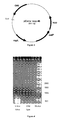
- the pCONS::upp-intron Idh antisense plasmid was used to transform by electroporation a C. acetobutylicum strain. After selection on Petri plate for clones resistant to thiamphenicol (50 ⁇ g/ml), one colony was cultured for 24 hours in liquid synthetic medium with thiamphenicol at 50 ⁇ g/ml and 100 ⁇ l of undiluted culture was plated on RCA with thiamphenicol at 50 ⁇ g/ml. The genotype of clones resistant to thiamphenicol was checked by PCR analysis with primers LDH 7 and LDH 8 (Table 3) located outside of the Idh gene ( Figure 4 ). The C. acetobutylicum Idh:: intron II strain which has lost pCONS::upp-intron Idh antisense was isolated on RCA with 5-FU at 400 ⁇ M.
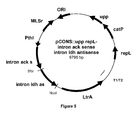
- the pCONS::upp-intron ack sense- intron Idh antisense vector was constructed using specific primers described in table 3 and 4.
- the pCONS::upp-intron ack sense- intron Idh antisense plasmid was then used to transform by electroporation a C. acetobutylicum strain. After selection on Petri plate for clones resistant to thiamphenicol (50 ⁇ g/ml), one colony was cultured for 24 hours in liquid synthetic medium with thiamphenicol at 50 ⁇ g/ml and 100 ⁇ l of undiluted culture was plated on RCA with thiamphenicol at 50 ⁇ g/ml. The genotype of clones resistant to thiamphenicol was checked by PCR analysis located outside of the Idh and ack genes and show integration in both genes.
- a strain with the insertion of sense or antisense intron II in the buk gene was constructed as follows. First, a computer algorithm was used to identify target sites in the buk gene. Second, the computer algorithm outputs primer sequences (Table 5) which are used to mutate (re-target) the buk sense intron by PCR with the primers BUK 1, BUK 2, BUK 3 and the EBS universal primer or the buk antisense intron by PCR with the primers BUK 4, BUK 5, BUK 6 and the EBS universal primer.
- the mutated 350 pb PCR fragment buk sense or antisense intron and the pCONS::upp-intron vector were digested by BsrGI and HindIII and then ligated to yield the pCONS::upp-intron buk sense or the pCONS::upp-intron buk antisense.
- primers sequences Name Primer sequences BUK 1(IBS) SEQ ID N°15 aaaaaagcttataattatccttacaactcaaattggtgcgcccagatagggtg BUK 2 (EBS1d) SEQ ID N°16 cagattgtacaaatgtggtgataacagataagtcaaattggttaacttacctttctttgt BUK 3 (EBS2) SEQ ID N°17 tgaacgcaagtttctaatttcggttagttgtcgatagaggaaagtgtct BUK 4(IBS) SEQ ID N°18 aaaaaagcttataattatccttatgtatcctggaagtgcgcccagatagggtg BUK 5 (EBS1d) SEQ ID N°19 cagattgtacaaatgtggtgata
- the pCONS::upp-intron buk sense or the pCONS::upp-intron buk antisense plasmid were used to transform by electroporation a C. acetobutylicum strain. After selection on Petri plate for clones resistant to thiamphenicol (50 ⁇ g/ml), one colony was cultured for 24 hours in liquid synthetic medium with thiamphenicol at 50 ⁇ g/ml and 100 ⁇ l of undiluted culture was plated on RCA with thiamphenicol at 50 ⁇ g/ml. The genotype of clones resistant to thiamphenicol was checked by PCR analysis located outside of the buk gene.
Landscapes
- Genetics & Genomics (AREA)
- Health & Medical Sciences (AREA)
- Life Sciences & Earth Sciences (AREA)
- Engineering & Computer Science (AREA)
- Zoology (AREA)
- Wood Science & Technology (AREA)
- Organic Chemistry (AREA)
- Biomedical Technology (AREA)
- Chemical & Material Sciences (AREA)
- Biotechnology (AREA)
- General Engineering & Computer Science (AREA)
- Bioinformatics & Cheminformatics (AREA)
- Molecular Biology (AREA)
- Microbiology (AREA)
- Physics & Mathematics (AREA)
- Plant Pathology (AREA)
- Biophysics (AREA)
- Biochemistry (AREA)
- General Health & Medical Sciences (AREA)
- Mycology (AREA)
- Micro-Organisms Or Cultivation Processes Thereof (AREA)
Priority Applications (1)
| Application Number | Priority Date | Filing Date | Title |
|---|---|---|---|
| EP09163894A EP2267126A1 (de) | 2009-06-26 | 2009-06-26 | Verfahren zur stabilen Genunterbrechung in Clostridia |
Applications Claiming Priority (1)
| Application Number | Priority Date | Filing Date | Title |
|---|---|---|---|
| EP09163894A EP2267126A1 (de) | 2009-06-26 | 2009-06-26 | Verfahren zur stabilen Genunterbrechung in Clostridia |
Publications (1)
| Publication Number | Publication Date |
|---|---|
| EP2267126A1 true EP2267126A1 (de) | 2010-12-29 |
Family
ID=41227219
Family Applications (1)
| Application Number | Title | Priority Date | Filing Date |
|---|---|---|---|
| EP09163894A Withdrawn EP2267126A1 (de) | 2009-06-26 | 2009-06-26 | Verfahren zur stabilen Genunterbrechung in Clostridia |
Country Status (1)
| Country | Link |
|---|---|
| EP (1) | EP2267126A1 (de) |
Cited By (4)
| Publication number | Priority date | Publication date | Assignee | Title |
|---|---|---|---|---|
| WO2013128230A1 (en) | 2012-03-02 | 2013-09-06 | Metabolic Explorer | A process for butanol production |
| US8692024B2 (en) | 2011-02-14 | 2014-04-08 | Eastman Renewable Materials, Llc | Method of producing n-butyraldehyde |
| US9267106B2 (en) | 2011-02-14 | 2016-02-23 | Eastman Renewable Materials, Llc | Method for incorporation of recombinant DNA |
| CN113122564A (zh) * | 2021-04-09 | 2021-07-16 | 大连理工大学 | 一种用于微生物的多基因组合编辑和筛选方法 |
Citations (4)
| Publication number | Priority date | Publication date | Assignee | Title |
|---|---|---|---|---|
| WO2004076659A2 (fr) | 2003-02-18 | 2004-09-10 | Metabolic Explorer | Procede de preparation de microorganismes evolues permettant la creation ou la modification de voies metaboliques |
| WO2005073364A2 (fr) | 2004-01-12 | 2005-08-11 | Metabolic Explorer | Microorganisme evolue pour la production de 1,2-propanediol |
| WO2007148091A2 (en) * | 2006-06-21 | 2007-12-27 | Morvus Technology Ltd | Dna molecules and methods |
| WO2008040387A1 (en) * | 2006-10-03 | 2008-04-10 | Metabolic Explorer | Process for chromosomal integration and dna sequence replacement in clostridia |
-
2009
- 2009-06-26 EP EP09163894A patent/EP2267126A1/de not_active Withdrawn
Patent Citations (4)
| Publication number | Priority date | Publication date | Assignee | Title |
|---|---|---|---|---|
| WO2004076659A2 (fr) | 2003-02-18 | 2004-09-10 | Metabolic Explorer | Procede de preparation de microorganismes evolues permettant la creation ou la modification de voies metaboliques |
| WO2005073364A2 (fr) | 2004-01-12 | 2005-08-11 | Metabolic Explorer | Microorganisme evolue pour la production de 1,2-propanediol |
| WO2007148091A2 (en) * | 2006-06-21 | 2007-12-27 | Morvus Technology Ltd | Dna molecules and methods |
| WO2008040387A1 (en) * | 2006-10-03 | 2008-04-10 | Metabolic Explorer | Process for chromosomal integration and dna sequence replacement in clostridia |
Non-Patent Citations (15)
Cited By (5)
| Publication number | Priority date | Publication date | Assignee | Title |
|---|---|---|---|---|
| US8692024B2 (en) | 2011-02-14 | 2014-04-08 | Eastman Renewable Materials, Llc | Method of producing n-butyraldehyde |
| US9267106B2 (en) | 2011-02-14 | 2016-02-23 | Eastman Renewable Materials, Llc | Method for incorporation of recombinant DNA |
| WO2013128230A1 (en) | 2012-03-02 | 2013-09-06 | Metabolic Explorer | A process for butanol production |
| US9434963B2 (en) | 2012-03-02 | 2016-09-06 | Metabolic Explorer | Process for butanol production |
| CN113122564A (zh) * | 2021-04-09 | 2021-07-16 | 大连理工大学 | 一种用于微生物的多基因组合编辑和筛选方法 |
Similar Documents
| Publication | Publication Date | Title |
|---|---|---|
| US8628967B2 (en) | Process for chromosomal integration and DNA sequence replacement in clostridia | |
| EP3808852A1 (de) | Rekombinante säurebeständige hefe mit inhibiertem laktatmetabolismus und alkoholproduktion und verfahren zur herstellung von milchsäure damit | |
| EP2389440A1 (de) | Verfahren zur homologen rekombination mit doppeltem crossover in clostridien | |
| US8753846B2 (en) | Methods of modifying nucleic acids in host cells | |
| EP2267126A1 (de) | Verfahren zur stabilen Genunterbrechung in Clostridia | |
| US20100330678A1 (en) | Process for the stable gene interruption in clostridia | |
| US20230109758A1 (en) | Genetically modified clostridium bacteria, preparation and uses of same | |
| US9745566B2 (en) | Recombinant microorganisms and methods of use thereof | |
| KR20150142305A (ko) | 합성 조절 sRNA를 이용한 클로스트리듐 속 미생물 유전자의 발현 조절 방법 | |
| CN103614408B (zh) | 一种敲除prcK基因的自杀质粒pYTKLKRT及其构建方法 | |
| CN102559704A (zh) | 一种在丙酮丁醇梭菌中敲除基因的方法 | |
| US8927254B2 (en) | Pyrococcus furiosus strains and methods of using same | |
| CN114774421A (zh) | 运动发酵单胞菌内源性启动子突变体 | |
| CN119464344B (zh) | 一种基于哈维弧菌fnr敲除的抑制基因水平转移的方法 | |
| CN121294300A (zh) | 一种运动发酵单胞菌高效内源突变的方法和应用 | |
| CN120966848A (zh) | 哈维弧菌cytR基因及敲除哈维弧菌cytR基因抑制基因水平转移的方法 | |
| CN119286903A (zh) | 一种基于哈维弧菌tfoX敲除的抑制基因水平转移的方法 |
Legal Events
| Date | Code | Title | Description |
|---|---|---|---|
| PUAI | Public reference made under article 153(3) epc to a published international application that has entered the european phase |
Free format text: ORIGINAL CODE: 0009012 |
|
| AK | Designated contracting states |
Kind code of ref document: A1 Designated state(s): AT BE BG CH CY CZ DE DK EE ES FI FR GB GR HR HU IE IS IT LI LT LU LV MC MK MT NL NO PL PT RO SE SI SK TR |
|
| STAA | Information on the status of an ep patent application or granted ep patent |
Free format text: STATUS: THE APPLICATION IS DEEMED TO BE WITHDRAWN |
|
| 18D | Application deemed to be withdrawn |
Effective date: 20110630 |