EP2272280B1 - Verfahren und anordnung zum umgang mit handover-bezogenen parametern in einem mobilkommunikationsnetz - Google Patents
Verfahren und anordnung zum umgang mit handover-bezogenen parametern in einem mobilkommunikationsnetz Download PDFInfo
- Publication number
- EP2272280B1 EP2272280B1 EP08724331.7A EP08724331A EP2272280B1 EP 2272280 B1 EP2272280 B1 EP 2272280B1 EP 08724331 A EP08724331 A EP 08724331A EP 2272280 B1 EP2272280 B1 EP 2272280B1
- Authority
- EP
- European Patent Office
- Prior art keywords
- handover
- cell
- base station
- radio base
- measurements
- Prior art date
- Legal status (The legal status is an assumption and is not a legal conclusion. Google has not performed a legal analysis and makes no representation as to the accuracy of the status listed.)
- Active
Links
Images






Classifications
-
- H—ELECTRICITY
- H04—ELECTRIC COMMUNICATION TECHNIQUE
- H04W—WIRELESS COMMUNICATION NETWORKS
- H04W36/00—Hand-off or reselection arrangements
- H04W36/34—Reselection control
- H04W36/38—Reselection control by fixed network equipment
-
- H—ELECTRICITY
- H04—ELECTRIC COMMUNICATION TECHNIQUE
- H04W—WIRELESS COMMUNICATION NETWORKS
- H04W36/00—Hand-off or reselection arrangements
- H04W36/0005—Control or signalling for completing the hand-off
- H04W36/0083—Determination of parameters used for hand-off, e.g. generation or modification of neighbour cell lists
- H04W36/0085—Hand-off measurements
-
- H—ELECTRICITY
- H04—ELECTRIC COMMUNICATION TECHNIQUE
- H04W—WIRELESS COMMUNICATION NETWORKS
- H04W36/00—Hand-off or reselection arrangements
- H04W36/0005—Control or signalling for completing the hand-off
- H04W36/0083—Determination of parameters used for hand-off, e.g. generation or modification of neighbour cell lists
- H04W36/00837—Determination of triggering parameters for hand-off
-
- H—ELECTRICITY
- H04—ELECTRIC COMMUNICATION TECHNIQUE
- H04W—WIRELESS COMMUNICATION NETWORKS
- H04W36/00—Hand-off or reselection arrangements
- H04W36/34—Reselection control
-
- H—ELECTRICITY
- H04—ELECTRIC COMMUNICATION TECHNIQUE
- H04W—WIRELESS COMMUNICATION NETWORKS
- H04W36/00—Hand-off or reselection arrangements
- H04W36/08—Reselecting an access point
- H04W36/083—Reselecting an access point wherein at least one of the access points is a moving node
Definitions
- the present invention relates to methods and arrangements in a telecommunication system, in particular to methods and arrangements for handling handover related parameters.
- Handover (HO) methods and algorithms can be classified in many different ways, e.g. as soft handover where a mobile station is connected to several base stations, softer handover where a mobile station is connected to several cells or sectors belonging to the same base station, and hard handover where the mobile station disconnects from the old base station before connecting to the new base station.
- Methods for handover decisions can be also be classified as being network controlled HO (NCHO), in which the mobile is passive, mobile assisted HO (MAHO), in which the mobile e.g. measures the strengths of received signals and reports the measured values to the network where a handover decision is then taken, and mobile controlled HO (MCHO), in which the mobile e.g. measures the strengths of received signals and makes a handover decision based on the measured values.
- NCHO network controlled HO
- MAHO mobile assisted HO
- MCHO mobile controlled HO
- RSM radio-signal-measurement
- Most RSM triggered handover schemes perform averaging or low-pass filtering of measured data.
- the handover decision algorithms belonging to this class typically include, at least, a hysteresis margin and a time-to-trigger threshold that the filtered data samples are compared against during the handover decision process.
- the 3rd Generation Partnership Project (3GPP) is a collaboration agreement that brings together a number of telecommunications standards bodies.
- LTE Long Term Evolution
- SAE System Architecture Evolution
- the architecture of the 3GPP LTE/SAE system (denoted LTE here after), which is schematically illustrated in figure 1 , is flat compared to e.g. GSM (Global System for Mobile communications) and WCDMA (Wideband Code Division Multiple Access) based systems.
- GSM Global System for Mobile communications
- WCDMA Wideband Code Division Multiple Access
- FIG. 1 shows that the LTE radio base stations 100a, 100b, 100c (denoted eNodeBs, or eNBs, in 3GPP terminology) are directly connected to the core network nodes 101a, 101b MME/S-GWs (mobility management entity/serving gateway) via the S1 interfaces 102a, 102b, 102c, 102d.
- the S1 interface supports a many-to-many relation between MMEs/Serving Gateways and and eNBs.
- E-UTRAN Evolved UMTS Terrestrial Radio Access Network
- the handover method that will be used in the 3GPP LTE/SAE system is RSM triggered and the mobile assisted (MAHO) hard handover.
- the mobile station also referred to as the user equipment (UE) performs measurements of the downlink and the network makes the handover decisions.
- the LTE system does not have any central radio network controller (like the BSC in GSM and the RNC in WCDMA) where the handover algorithm is located. Instead the handover decisions in LTE will be performed in the base stations (referred to as eNBs in LTE). The decision to initiate a handover from a source cell to a target cell will be made in the source cell by the radio base station.
- the UEs are configured by a radio resource control (RRC) entity in the source cell to perform measurements on handover candidate cells and to report these measurements to the source eNB during active mode.
- RRC radio resource control
- the details of how these measurements are configured are not yet decided in 3GPP.
- the handover measurement configuration will either be broadcasted or sent as dedicated messages to each individual UE. Both options will probably be possible in the finalized LTE standard.
- the RRC messages for configuration of handover measurements as well as the corresponding UE measurements will be standardized and will not be subject to vendor specific interpretation or implementation.
- a typical configuration is that the UE will start to report periodically to the radio base station of a handover candidate cell once the filtered reference symbol received power (RSRP) of the candidate has reached a certain level compared to the RSRP level of the source cell during a configurable time. Once the UE starts reporting it could continue to obtain measurements and continuously send updated reports. Alternatively, the UE could perform measurements only prior to reporting and then send a single report stating that prerequisites for a handover are fulfilled.
- RSRP filtered reference symbol received power
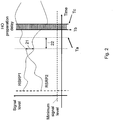
- Figure 2 shows a diagram that illustrates a conventional handover procedure from a source cell to a target cell in LTE.
- the vertical axis shows signal level and the horizontal axis shows time.
- the UE is configured by the source cell RRC to perform measurements on the source cell RSRP (RSRP1) and on candidate cells RSRP, i.e. possible target cells to which handover might be likely to occur. It should be noted that only one candidate cell measurement RSRP2 is shown.
- the measurement command contains information about how the UE shall process, e.g. by filtering or averaging, the measured data and when the UE shall start to report measurements to the source eNB.
- the UE is configured to start to perform periodic reporting once the candidate RSRP2 value is larger than the source cell RSRP1 plus a hysteresis margin 21 during a certain time period 22 (time-to-trigger, or TTT). This occurs at a time denoted Ta.
- TTT time-to-trigger
- the purpose of the hysteresis margin is to prevent that action is taken prematurely.
- the hysteresis margin is defined as a predefined minimum difference between measurement values. In the example in figure 2 the hysteresis margin 21 defines a minimum difference between RSRP1 and RSRP2.
- the eNB1 sends a handover request to eNB2 at a time denoted Tb, and when the handover is prepared the eNB1 sends at a time denoted Tc a handover command instructing the UE to perform the handover to eNB2.
- the handover decision process in the source eNB typically consists of processing, e.g. by means of low-pass filtering, the UE measurements and by comparing the processed values with a hysteresis margin and with a time-to-trigger threshold.
- the eNB may use different handover related parameters when deciding on handovers to different target cells.
- the eNB may classify UEs based on the speed or their handover history and the eNB may use different parameters for the handover decision process for different UE classes. In this way the eNB may e.g. use a particular set of handover related parameters for UEs that are classified as high speed UEs.
- the time-to-trigger might need to be reduced compared to low speed UEs.
- the eNB in a first cell may know that UEs that enter from a second cell will almost always perform handover to a third cell. To ensure that such UEs, that might be moving in a train or along a road, end up in the correct target cell the hysteresis margin to the desired target cell may be reduced for this particular class of UEs.
- the criteria for when to perform a handover between two cells of the same type may be completely different depending on which cell that acts as source cell.
- the criteria for when to perform a handover from an LTE system to a system having a different radio access technology may also differ depending on which cell that currently is serving a particular UE.
- Another problem is related to the planning and optimization of the handover related parameters that control the behaviour of the handover algorithm(s).
- the operator may be faced with the difficult task of setting a large number of handover related parameters corresponding to the particular algorithm implementations of different vendors. Each parameter will have its own definition and impact on the handover behaviour.
- the handover preparation phase is initiated when the source eNodeB sends a HANDOVER REQUEST (HO_REQUEST) message to a target eNB via the X2 or the S1 interface.
- HO_REQUEST HANDOVER REQUEST
- the content of this container is proposed not to be subject to standardization and hence an eNB vendor may put proprietary information into it. In case both the source and the target eNB are manufactured by the same vendor this optional container can be useful for support of more advanced handover methods.
- the operator may then decide to only employ eNBs from one vendor in a certain area.
- Macro-cells, micro-cells, and pico-cells refer to cells of different sizes, whereby a macro-cell, which is a normal cell, is the largest, and a pico-cell is the smallest. For example, a pico-cell may not have to handle handover of high speed UEs.
- Handover parameter auto-tuning, or auto-adjusting, methods are complicated by the fact that they require extensive efforts regarding standardizing algorithms, eNB measurements, and parameters related to handover.
- handover decisions are frequently made based on inadequate, and often out-of-date, data. This may lead to handovers being executed too fast, too slow or sometimes unnecessarily. This may hence lead to a non-optimal use of radio resources.
- R2-081679 "RLF Analysis”, Huawei, 3GPP TSG RAN WG2 Meeting #61bis, 31st March - 3rd April 2008 , discusses and analysis of radio link failures to take corrective actions in the network to avoid bad handovers.
- R3-080358 "Mobility Robustness Optimization Solution", 3GPP TSG RAN WG3 Meeting #59, 11th - 15th February 2008 , discusses a solution where active mode mobility statistics is collected in the eNodeB and used to update both idle and active mode mobility parameters.
- the work in 3GPP is focused on adding information in the HO_REQUEST message sent from the source to the target eNB. However since the handover decision by then is already taken by the eNB in the source cell, the added information is of little use when it comes to auto-tuning of handover related parameters in the source cell.
- the present invention aims to overcomes the problem of handover decisions being made in a radio base station based on inadequate data by making it possible to utilise post-handover measurements from a UE, to adjust handover related parameters.
- An advantage with the present invention is that the radio base station according to embodiments of the present invention can be used regardless of the vendor, in a multi-vendor network.
- the described functions may be implemented using software functioning in conjunction with programmed microprocessors or general purpose computers, and/or using application-specific integrated circuits (ASICs).
- ASICs application-specific integrated circuits
- the invention may also be embodied in a computer program product, as well as in a system comprising a computer processor and a memory, wherein the memory is encoded with one or more programs that may perform the described functions.
- FIG. 3 shows the general architecture in which the invention may be used.
- a mobile station 10 referred to as a user equipment (UE) is located within the coverage of a mobile communications network.
- the UE 10 communicates with base stations 20, also referred to as E-UTRAN NodeBs (eNBs) in the case of LTE, which provides wireless network coverage for a particular coverage area commonly referred to as a cell 30.
- the UE 10 may be handed over between cells 30, e.g. when the user of a UE 10 is moving in a vehicle. In the case of handover the cell from which the UE 10 is handed over is referred to as the source cell, whereas the cell to which the UE 10 is handed over is referred to as the target cell.
- the eNBs are interconnected, and are also connected to the EPC (Evolved Packet Core), and more specifically to the MME (Mobility Management Entity) and to the Serving Gateway (S-GW).
- Radio Resource Control (RRC) terminates in eNB, and measurement configuration is done via the RRC, which resides in the eNB.
- handover related feedback such as measurements performed by a user equipment in a target cell after handover to the target cell from a source cell
- handover-related parameters in the source cell are used to adjust handover-related parameters in the source cell.
- the user equipment forwarding post-handover measurements, via the radio base station in the target cell, to the radio base station of the source cell, which uses the received post-handover measurements to adjust the handover-related parameters.
- the handover decisions made by the radio base station serving the source cell can be based on relevant and up-to-date data, which minimises the risk of handovers being performed unnecessarily, too slow, or too fast.
- the radio base station also referred to as the eNodeB
- the eNodeB will have to adaptively adjust the handover parameters it uses, e.g. the hysteresis margin and the time-to-trigger threshold common to RSM triggered handover methods.
- a signal derivative parameter could be used as a basis to make handover decisions.
- a UE could be configured to perform periodic reporting once the changes between measurement samples have reached a predetermined level.
- the sampling rate i.e. the number of individual value measurements made by a UE during a certain time period, could be varied. Measurements could be obtained at regular or irregular intervals.
- the source RRC entity is allowed to configure a UE to perform additional measurements for a configurable time after the handover to a target cell is performed. Thereafter, the target forwards these additional measurements back to the source cell, and these post-handover measurements are then used for auto-tuning of handover related parameters.
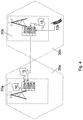
- Figure 4 illustrates an embodiment of the invention.
- Figure 4 shows a first radio base station 20a and a second radio base station 20b. Both radio base stations 20a and 20b are arranged to serve at least one cell, and to make handover decisions based on handover-related parameters. Such handover-related parameters may comprise a handover time-to-trigger and/or a handover hysteresis margin.
- the first radio base station 20a serves a first cell 30a
- the second radio base station 20b serves a second cell 30b.
- a UE 10b has performed handover from the first cell 30a to the second cell 30b.
- the second base station 20b comprises means 201b for receiving post-handover measurements 15 from the UE 10b.
- the measurements may comprise received signal power measurements.
- the second radio base station 20b comprises means 202b for sending the post-handover measurements 15 to the first base station 20a.
- the first radio base station 20a comprises means 203a for receiving the post-handover measurements 15 and means 204a for adjusting handover-related parameters 16, such as handover time-to-trigger and/or handover hysteresis margin, based on the received post-handover measurements 15.
- each radio base station 20a and 20b comprises means 205a and 205b, respectively, for sending to UEs 10 located in the respective cell, instructions to perform post-handover measurements after handover to another cell, and to forward the measurements to the radio base station 20 that serves that cell.
- the arrow denoted 17 in figure 5 indicates that the first radio base station 20a in this example comprises means 205a for instructing a UE 10a to perform post-handover measurements after handover of the UE 10a from the first cell 30a to the second cell 30b or another cell.
- the UE 10a is also instructed to forward the measurements to the radio base station 20 serving the cell to which the UE 10a is handed over. For instance, if the second cell 30b is the target cell, then the UE 10a is instructed to perform post-handover measurements in the second cell 30b and forward those measurements to the second radio base station 20b. As described above, the second radio base station 20b can then by the means denoted 202b send the measurements back to the first radio base station 20a, which serves the source cell in this case.
- the instructions sent from a radio base station 20 to a UE 10 by using the means denoted 205 may also comprise a request for the post-handover measurements to be performed during a certain time period, which may be configured by the radio base station 20.
- a radio base station 20 in a source cell comprises means 206 for sending instructions to a radio base station 20 in a target cell.
- the instructions may tell the radio base station 20 in the target cell to send a request for post-handover measurements to a UE 10 that has been handed over from the source cell to the target cell, or to return a report in case a user equipment is handed over from said second cell to a third cell within a predefined time period after a handover of the user equipment from said first cell to said second cell.
- the arrow denoted 18 in figure 5 indicates that the first radio base station 20a, which serves the source cell for the UE 10b, uses means 206a to send such instructions to the second radio base station 20b, which serves the target cell for the UE 10b.
- the second radio base station 20b comprises means 210b that may be used to receive the instructions. Hence, the second radio base station 20b is for example instructed to send a request for post-handover measurements to the UE 10b. The second radio base station 20b may then use means 205b to send the request to the UE 10b.
- the RRC entity in the source cell configures the UE to perform post-handover measurements after the handover is completed and to report these measurements to the radio base station in the target cell.
- These measurements may be recognized by the radio base station in the target cell to be directed to the radio base station in the source cell by a specific measurement identity provided together with the measurement from the UE to the radio base station in the target cell.
- the radio base station in the target cell Upon receiving measurements for the UE with this specific measurement identity the radio base station in the target cell forwards these measurements to the radio base station in the source cell.
- FIG. 5 illustrates how the first radio base station 20a comprises means 207a for sending post-handover measurements 15 to a handover-related parameter auto-tuning node 40.
- the measurements have been performed by the UE 10b in cell 30b, and then forwarded to the second radio base station 20b, which have sent the measurements to the first radio base station 20b by using means 202b as described above.
- the actual handover parameter auto-tuning algorithm may apart from being executed in the eNBs, also be executed in a handover-related parameter auto-tuning node, which may be a central element management system (EMS) node, or an operation and support system (OSS) node, or a similar type of centralised node.
- EMS central element management system
- OSS operation and support system
- each vendor typically provides the operator with its own EMS node an operator typically has several EMS nodes in the system. Consequently, in areas where two eNBs from different vendors are neighbours there are two EMS nodes involved in the auto-tuning of handover parameters.
- this information can be further forwarded up to the EMS node of the source eNB for additional processing, see figure 6 in which eNBs 20 and EMS nodes 51, 52 from two different vendors 31, 32 are shown schematically.
- Arrow A1 in figure 9 denotes that post-handover measurements are sent from an eNB 20 to an EMS node 51.
- the information could also be routed to the EMS node of the source eNB via the EMS node of the target eNB. This could be achieved using an interface 33 for communication between different EMS nodes.
- the standardised peer-to-peer interface itf-P2P could be used for this purpose.
- a radio base station comprises means for sending post-handover measurements to a handover-related parameter auto-tuning node that is not a radio base station, such as the EMS node.
- a handover-related parameter auto-tuning node that is not a radio base station, such as the EMS node.
- a node could also be implemented in e.g. a RNC or a RRM server.
- a self optimizing network (SON) server or an operation and support system (OSS) node could also comprise functionality for performing handover-related parameter auto-tuning, to further improve the handover decision process.
- SON self optimizing network
- OSS operation and support system
- the first radio base station 20a comprises means 208a for sending a request to the second radio base station 20b, this is illustrated by the arrow denoted 19a in figure 5 .
- the first radio base station 20a thereby requests that the second radio base station 20b shall return a report in case the UE 10b is handed over from the second cell 30b to another cell, e.g. the third cell 30c, within a predefined time period after the handover of the UE 10b from the first cell 30a to the second cell 30b.
- the second radio base station 20b may use means 210b to receive this request. If e.g. the UE 10b should be handed over to another cell, e.g. the third cell 30c, within the predefined time period, the second radio base station 20b uses means 208b to send a report indicating that fact to the first radio base station 20a. This is indicated by the arrow denoted 19b in figure 5 .
- the first radio base station 20a comprises means 209a for receiving the report from the second radio base station 20b, and may then use means 204a to adjust the handover-related parameters based on the report.
- the radio base station in the target cell decides to perform a second handover of a UE 10 that arrived from a first cell to a third cell within a configurable time period after the first handover from the first cell to the target cell it sends a report comprising information concerning the second handover to the radic base station in the first cell.
- the radio base station in the first cell Upon receiving information that a UE 10 has been ordered to perform handover from a first cell, via a second cell, to a third cell, the radio base station in the first cell is able to adjust handover-related parameters corresponding to the second cell accordingly, e.g. to increase the hysteresis margin and/or the time-to trigger.
- the radio base station in the first cell is also able to adjust handover-related parameters corresponding to the third cell accordingly, e.g. to decrease the hysteresis margin and/or the time-to trigger.
- the radio base stations 20a and 20b may be identical in terms of functionality. However, one of them may serve a target cell and the other may serve a source cell for a specific UE.
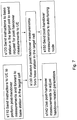
- FIG. 7 illustrates method steps that are carried out in a radio base station according to another embodiment of the invention.
- the radio base station serves a source cell and is arranged to make handover decisions based on handover-related parameters, which may comprise a handover time-to-trigger and/or a handover hysteresis margin.
- handover-related parameters which may comprise a handover time-to-trigger and/or a handover hysteresis margin.
- the radio base station in the source cell sends instructions to a UE that is located in the source cell.
- the UE is thereby instructed to perform post-handover measurements after a handover from the source cell to a target cell.
- the radio base station in the source cell may also state a time duration, during which the post-handover measurements shall be performed.
- the UE is further instructed to forward the measurements to a radio base station serving the target cell.
- the radio base station serving the source cell may send instructions to the radio base station serving the target cell. This is indicated by step s120, in which the radio base station in the target cell is instructed to send a request for post-handover measurements to a UE in the target cell after handover of the UE from the source cell to the target cell.
- the radio base station in the source cell receives the post-handover measurements from the radio base station serving the target cell.
- the radio base station in the source cell uses the received post-handover measurements to adjust the handover-related parameters in step s140.
- Step s150 indicates that the radio base station also may send the received post-handover measurements to a handover-related parameter auto-tuning node that is arranged to use post-handover measurements to adjust handover-related parameters.
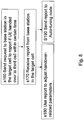
- Figure 8 illustrates method steps that are carried out in a radio base station according to another embodiment of the invention.
- the method steps shown in figure 8 may be carried out by the radio base station in a source cell after handover of a UE from the source cell to a target cell.
- the purpose of these method steps is to inform the radio base station in the source cell in case the UE after the first handover is handed over again to a third cell within a certain time period.
- Step s160 illustrates that the radio base station in the source cell sends a request to the radio base station serving the target cell.
- the radio base station in the target cell is thereby requested to return a report in case the UE is handed over from the target cell to a third cell within a predefined time period after the handover of the UE from the source cell to the target cell.
- this report from the radio base station in the target cell is received by the radio base station in the source cell.
- Step s180 illustrates that the report is used by the radio base station in the source cell to adjust the handover-related parameters.
- step 190 illustrates that said report is sent to an auto-tuning node 40 for adjustment of handover-related parameters.
- Steps s160 - s190 may be carried out independently or in connection with the method steps described with reference to figure 7 .
- FIG 9a illustrates method steps that are carried out in a radio base station according to yet another embodiment of the invention.
- the radio base station serves a target cell.
- the radio base station in the target cell receives instructions from a radio base station serving a source cell.
- the radio base station in the target cell is thereby instructed to send a request for post-handover measurements to a UE that has been handed over from the source cell to the target cell.
- the radio base station in the target cell sends instructions to the UE to perform post-handover measurements.
- the radio base station in the target cell may thereby instruct the UE to perform the post-handover measurements during a certain time period.
- the post-handover measurements from the UE are received by the radio base station in the target cell in step s230.
- step s240 the post-handover measurements are sent to the radio base station in the source cell.
- the radio base station in the source cell may then use the post-handover measurements to adjust handover-related parameters, which in turn are used as basis for handover decisions in the source cell.
- the handover-related parameters may comprise a handover time-to-trigger and/or a handover hysteresis margin.
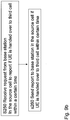
- Fig. 9b illustrates method steps that are carried out in a radio base station according to yet another embodiment of the invention.
- the radio base station serves a target cell.
- the radio base station in the target cell receives a request from the base station in the source cell to report back if the UE is handed over from the target cell to a third cell within a predefined time period after handover of the UE from the source cell to the target cell.
- the target base station sends the report to the base station in the source cell if the UE is handed over to a third cell within said certain time.
- the report may then be used by the radio base station in the source cell for adjusting handover-related parameters in the source cell.
- Steps s250-s260 may be carried out independently or in connection with steps s210 - s240
- FIG. 10 schematically shows a UE 10 according to an embodiment of the invention.
- the UE 10 comprises standard wireless device components, such as an antenna arrangement, radio equipment, and a logic unit that can be implemented for instance as one or more microprocessors, CPUs, or similar processing or computer means, on which software may be run.
- the logic unit could also be implemented by hardware, such as one or more ASICs.
- the UE 10 also comprises a data storage unit or memory unit.
- the skilled person will realize that a user equipment comprises these and other components, and they will therefore not be described further in this application.
- the UE 10 in figure 10 comprises means 111 for performing post-handover measurements, means 112 for sending the post-handover measurements to a radio base station 20, and means 113 for receiving instructions to perform post-handover measurements and forward these to a radio base station 20.
- the source eNB may configure post-handover measurements to be performed by a UE 10 after a handover from the source cell to the target cell, and forwarded by the radio base station in the target cell back to the radio base station in the source cell via the X2 or the S1 interface.
- RSRP1 source
- RSRP2 target
- ⁇ RSRP (RSRP2 - RSRP1)
- ⁇ RSRP ⁇ ⁇ min while RSRP1 is above an acceptable threshold then the handover could have waited longer.
- ⁇ TTT time-to-trigger threshold
- the target eNodeB continues to send post-handover measurements obtained by the UE 10 back to the source eNodeB.
- the source eNodeB uses this information to adjust handover related parameters used in the handover decision process.
- the radio base station in the source cell may increase a hysteresis margin used for the corresponding target cell. If said difference value has not changed sign during said time interval the corresponding hysteresis margin may be reduced.
- ⁇ RSRP signal strength difference value
- the radio base station in the source cell receives information that the signal strength difference value ( ⁇ RSRP) has been positive and smaller that a threshold (Amin) during a configurable time period after the handover, the time-to-trigger threshold used for the corresponding target cell may be increased. If said difference value has been positive and larger than a threshold ( ⁇ max) during said time interval the corresponding time-to-trigger threshold may be reduced.
- ⁇ RSRP signal strength difference value
- Signal quality and/or UE transmitted power may be measured in combination with or as alternatives to RSRP.
- reference signal received quality (RSRQ) is a UE received quality measurement that may be used.
- the source eNB may also be possible for the source eNB to configure the target eNB to report back to the source eNB if a UE 10 is ordered to perform a new handover to a third cell within a predefined time period after the first handover from the source to the target.
- the source eNB can decide to increase the corresponding handover hysteresis margin to the first target cell and decrease the corresponding handover hysteresis margin to the new third cell. By doing this the source eNB increases the probabilities that UEs 10 (possibly belonging to a certain handover classification group) are directly forwarded to the third cell and does not have to go via the second cell.
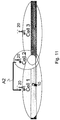
- Figure 11 illustrates an example scenario in which a UE 10 travels along a road.
- the UE 10 is handed over from cell 1 to cell 2.
- the UE 10 is then handed over from cell 2 to cell 3.
- the radio base station in cell 2 informs the radio base station in cell 1 about the fast handover to cell 3. This is denoted by arrow A2.
- the radio base station in cell 1 uses this information to auto-tune parameters used in handover decisions.
- handover parameter auto-tuning the radio base station in cell 1 may decide to perform future handovers directly to cell 3.
- radio base stations may be connected to form a system in which the principles of the invention apply.
- radio base stations and user equipments according to the invention may be part of a system that functions in accordance with the principles of the present invention.
- specific embodiments of the invention makes it possible to achieve handover parameter auto-tuning based on radio signal measurements in e.g. an LTE system also in a multi-vendor scenario.
- a hysteresis margin and a time-to-trigger may be adjusted separately or in combination in order to achieve a certain result depending on the desired handover decision scheme.
Landscapes
- Engineering & Computer Science (AREA)
- Computer Networks & Wireless Communication (AREA)
- Signal Processing (AREA)
- Mobile Radio Communication Systems (AREA)
Claims (25)
- Funkbasisstation (20a) eines mobilen Kommunikationsnetzes, wobei die Funkbasisstation angeordnet ist, um mindestens eine erste Zelle (30a) zu bedienen und um Handover-Entscheidungen für ein Handover von UEs (10) von der ersten Zelle (20a) zu einer zweiten Zelle (30b) beruhend auf mit dem Handover zusammenhängenden Parametern zu treffen, wobei die Funkbasisstation gekennzeichnet ist durch:- Mittel (203a) zum Empfangen von einem mit dem Handover zusammenhängenden Feedback von einer Funkbasisstation (20b), die die zweite Zelle (30b) bedient, wobei das mit dem Handover zusammenhängende Feedback Post-Handover-Messungen umfasst, die von einem UE (10) nach dem Handover des UE (10) von der ersten Zelle zu der zweiten Zelle durchgeführt werden;- Mittel (204a) zum Verwenden des mit dem Handover zusammenhängenden Feedbacks, das von der Basisstation, die die zweite Zelle bedient, empfangen wird, um die mit dem Handover zusammenhängenden Parameter in der ersten Zelle anzupassen.
- Funkbasisstation nach Anspruch 1, ferner umfassend Mittel (205a) zum Anweisen des UE (10) in der ersten Zelle (30a), Post-Handover-Messungen nach dem Handover von der ersten Zelle zu der zweiten Zelle (30b) durchzuführen und die Messungen an eine Funkbasisstation (20b) weiterzuleiten, die die zweite Zelle (30b) bedient.
- Verfahren in einer Funkbasisstation (20a) zur Handhabung von mit einem Handover zusammenhängenden Parametern in einem mobilen Kommunikationsnetz, wobei die Funkbasisstation eine erste Zelle (30a) bedient und angeordnet ist, um Handover-Entscheidungen für ein Handover von UEs (10) von der ersten Zelle (20a) zu einer zweiten Zelle (30b) beruhend auf mit dem Handover zusammenhängenden Parametern zu treffen, wobei das Verfahren durch die folgenden Schritte gekennzeichnet ist:- Empfangen (s130, s170) eines mit einem Handover zusammenhängenden Feedbacks von einer Funkbasisstation, die die zweite Zelle (30b) bedient, wobei das mit dem Handover zusammenhängende Feedback Post-Handover-Messungen umfasst, die von einem UE (10) nach dem Handover des UE (10) von der ersten Zelle zu der zweiten Zelle durchgeführt werden; und- Verwenden (s140, s180) des empfangenen mit dem Handover zusammenhängenden Feedbacks, um die mit dem Handover zusammenhängenden Parameter in der ersten Zelle anzupassen.
- Verfahren nach Anspruch 3, ferner umfassend den Schritt (s110) des Anweisens eines Benutzergeräts (10) in der ersten Zelle, nach dem Handover von der ersten Zelle (30a) zur zweiten Zelle (30b) Post-Handover-Messungen durchzuführen und die Messungen an eine Funkbasisstation (20b) weiterzuleiten, die die zweite Zelle (30b) bedient.
- Verfahren nach Anspruch 4, wobei in dem Schritt (s110) das UE (10) angewiesen wird, die Post-Handover-Messungen während eines konfigurierbaren Zeitraums nach dem Handover von der ersten Zelle (30a) zu der zweiten Zelle (30b) durchzuführen.
- Verfahren nach Anspruch 3, ferner umfassend den Schritt des Sendens (s120, s160) an eine Funkbasisstation (20b), die die zweite Zelle (30b) bedient, einer Aufforderung zum Senden eines mit einem Handover zusammenhängenden Feedbacks nach dem Handover eines UE von der ersten Zelle (30a) zu der zweiten Zelle (30b).
- Verfahren nach Anspruch 6, wobei die Aufforderung Anweisungen umfasst, eine Aufforderung für Post-Handover-Messungen an ein UE in der zweiten Zelle nach einem Handover des UE von der ersten Zelle (30a) zu der zweiten Zelle (30b) zu senden.
- Verfahren nach einem der Ansprüche 3-7, ferner umfassend den Schritt des Sendens (s150, s190) des mit dem Handover zusammenhängenden Feedbacks, das von der Basisstation empfangen wird, die die zweite Zelle bedient, an einen Knoten (40) zur automatischen Konfiguration von mit dem Handover zusammenhängenden Parametern, der angeordnet ist, um das mit dem Handover zusammenhängende Feedback zu verwenden, um die mit dem Handover zusammenhängenden Parameter anzupassen.
- Verfahren nach einem der Ansprüche 3 bis 8, wobei die mit dem Handover zusammenhängenden Parameter eine Handover-Zeit bis zum Auslösen umfassen.
- Verfahren nach einem der Ansprüche 3-8, wobei die mit dem Handover zusammenhängenden Parameter eine Handover-Hysteresespanne umfassen.
- Verfahren nach einem der Ansprüche 3-10, wobei die Post-Handover-Messungen Messungen der empfangenen Signalleistung umfassen.
- Verfahren nach einem der Ansprüche 3-11, ferner umfassend die folgenden Schritte:- Senden (s160) einer Aufforderung an eine Funkbasisstation (20b), die eine zweite Zelle (30b) bedient, einen Bericht in einem Fall zurückzusenden, in dem ein UE (10) von der zweiten Zelle (30b) zu einer dritten Zelle (30c) innerhalb eines vordefinierten Zeitraums nach einem Handover des UE von der ersten Zelle (30a) zu der zweiten Zelle (30b) übergeben wird.
- Funkbasisstation (20b) eines mobilen Kommunikationsnetzes, wobei die Funkbasisstation angeordnet ist, um mindestens eine zweite Zelle (30b) zu bedienen, wobei die Funkbasisstation gekennzeichnet ist durch:- Mittel (201a) zum Empfangen von Post-Handover-Messungen von einem UE (10) in der zweiten Zelle, wobei die Messungen von dem UE nach dem Handover zu der zweiten Zelle von der ersten Zelle durchgeführt werden- Mittel zum Senden (s240, s260) eines mit dem Handover zusammenhängenden Feedbacks an eine Funkbasisstation (20a), die die erste Zelle (30a) bedient, wobei das mit dem Handover zusammenhängende Feedback die von dem UE (10) durchgeführten Post-Handover-Messungen umfasst und das mit dem Handover zusammenhängende Feedback Informationen zur Anpassung von mit dem Handover zusammenhängenden Parametern umfasst, die als Grundlage für Handover-Entscheidungen in der ersten Zelle (30a) verwendet werden sollen.
- Verfahren in einer Funkbasisstation (20b) der Handhabung von mit einem Handover zusammenhängenden Parametern in einem mobilen Kommunikationsnetz, wobei die Funkbasisstation eine zweite Zelle (30b) bedient, wobei das Verfahren gekennzeichnet ist durch den Schritt des:- Empfangens (s230) von Post-Handover-Messungen von einem UE, wobei die Post-Handover-Messungen von dem UE nach dem Handover von einer ersten Zelle zu der zweiten Zelle (30b) durchgeführt werden;- Sendens (s240, s260) eines mit dem Handover zusammenhängenden Feedbacks an eine Funkbasisstation (20a), die eine erste Zelle (30a) bedient, wobei das mit dem Handover zusammenhängende Feedback Informationen zur Anpassung von mit dem Handover zusammenhängenden Parametern umfasst, die als Grundlage für Handover-Entscheidungen in der ersten Zelle (30a) verwendet werden sollen, und das mit dem Handover zusammenhängende Feedback Post-Handover-Messungen umfasst, die von einem UE (10) nach dem Handover von der ersten Zelle (30a) zu der zweiten Zelle (30b) durchgeführt werden.
- Verfahren nach Anspruch 14, ferner umfassend den Schritt des Empfangens (s210, s250) von einer Funkbasisstation (20a), die die erste Zelle (30a) bedient, einer Aufforderung zum Senden eines mit dem Handover zusammenhängenden Feedbacks nach dem Handover eines UE von der ersten Zelle (30a) zu der zweiten Zelle (30b).
- Verfahren nach Anspruch 15, wobei die Aufforderung Anweisungen umfasst, eine Aufforderung für Post-Handover-Messungen an ein UE (10) in der zweiten Zelle (30b) zu senden, wobei das Verfahren den Schritt des Sendens (S220) von Anweisungen zur Durchführung von Post-Handover-Messungen nach dem Handover von der ersten Zelle (30a) zu der zweiten Zelle (30b) an das UE in der zweiten Zelle umfasst.
- Verfahren nach Anspruch 16, wobei der Schritt (s220) Anweisungen an das UE umfasst, Post-Handover-Messungen während eines konfigurierbaren Zeitraums durchzuführen.
- Verfahren nach Anspruch 14, ferner umfassend den Schritt (s250) des Sendens an eine Funkbasisstation (20a), die die erste Zelle (30a) bedient, eines Berichts in dem Fall, in dem ein UE (10) von der zweiten Zelle (30b) zu einer dritten Zelle (30c) innerhalb eines vordefinierten Zeitraums nach einem Handover des UE von der ersten Zelle (30a) zu der zweiten Zelle (30b) übergeben wird, wobei der Bericht als Grundlage für die Anpassung der mit dem Handover zusammenhängenden Parameter in der ersten Zelle (30a) verwendet wird.
- System, umfassend ein UE (10) und eine Funkbasisstation (20b), die eine zweite Zelle (30b) bedient, wobei das System dadurch gekennzeichnet ist, dass das UE Folgendes umfasst:- Mittel (111) zur Durchführung von Post-Handover-Messungen nach dem Handover von einer ersten Zelle (30a) zu der zweiten Zelle (30b); und- Mittel (112) zum Senden der Post-Handover-Messungen an die Funkbasisstation (20b), die die zweite Zelle (30b) bedient, und- wobei die Funkbasisstation (20b) Folgendes umfasst:- Mittel (201a) zum Empfangen der Post-Handover-Messungen von dem UE (10), und- Mittel zum Senden (s240, s260) von mit dem Handover zusammenhängendem Feedback an eine Funkbasisstation (20a), die die erste Zelle (30a) bedient, wobei das mit dem Handover zusammenhängende Feedback die von dem UE (10) durchgeführten Post-Handover-Messungen umfasst und das mit dem Handover zusammenhängende Feedback Informationen zur Anpassung von mit dem Handover zusammenhängenden Parametern umfasst, die als Grundlage für Handover-Entscheidungen in der ersten Zelle (30a) verwendet werden sollen.
- System nach Anspruch 19, wobei das UE ferner Mittel zum Empfangen von Anweisungen zur Durchführung von Post-Handover-Messungen von der Funkbasisstation (20b), die die zweite Zelle (30b) bedient, umfasst.
- System nach Anspruch 19 oder 20, ferner angeordnet, um die Post-Handover-Messungen während eines konfigurierbaren Zeitraums durchzuführen.
- Verfahren in einem System mit einem UE (10) und einer Funkbasisstation (20b), die eine zweite Zelle (30b) bedient, wobei das Verfahren durch die folgenden Schritte gekennzeichnet ist:- Durchführen durch das UE (10) von Post-Handover-Messungen nach dem Handover von einer ersten Zelle (30a) zu der zweiten Zelle (30b);- Senden durch das UE der Post-Handover-Messungen an die Funkbasisstation (20b), die die zweite Zelle (30b) bedient,- Empfangen durch die Funkbasisstation (20b) der Post-Handover-Messungen von dem UE (10) und- Senden (s240, s260) durch die Funkbasisstation (20b) eines mit dem Handover zusammenhängenden Feedbacks an eine Funkbasisstation (20a), die die erste Zelle (30a) bedient, wobei das mit dem Handover zusammenhängende Feedback die von dem UE (10) durchgeführten Post-Handover-Messungen umfasst und das mit dem Handover zusammenhängende Feedback Informationen zur Anpassung der mit dem Handover zusammenhängenden Parameter umfasst, die als Grundlage für Handover-Entscheidungen in der ersten Zelle (30a) verwendet werden sollen.
- Verfahren nach Anspruch 22, ferner umfassend den Schritt des Empfangens an dem UE von der Funkbasisstation (20b), die die zweite Zelle (30b) bedient, von Anweisungen zur Durchführung von Post-Handover-Messungen.
- Verfahren nach Anspruch 22 oder 23, wobei die Post-Handover-Messungen während eines konfigurierbaren Zeitraums durchgeführt werden.
- Verfahren nach einem der Ansprüche 22-24, wobei die Post-Handover-Messungen Messungen der empfangenen Signalleistung umfassen.
Priority Applications (1)
| Application Number | Priority Date | Filing Date | Title |
|---|---|---|---|
| EP21180139.4A EP3927016A3 (de) | 2008-04-03 | 2008-04-03 | Verfahren und anordnung in einem telekommunikationssystem |
Applications Claiming Priority (1)
| Application Number | Priority Date | Filing Date | Title |
|---|---|---|---|
| PCT/SE2008/050385 WO2009123512A1 (en) | 2008-04-03 | 2008-04-03 | Method and arrangement for handling handover related parameters in a mobile communications network |
Related Child Applications (1)
| Application Number | Title | Priority Date | Filing Date |
|---|---|---|---|
| EP21180139.4A Division EP3927016A3 (de) | 2008-04-03 | 2008-04-03 | Verfahren und anordnung in einem telekommunikationssystem |
Publications (3)
| Publication Number | Publication Date |
|---|---|
| EP2272280A1 EP2272280A1 (de) | 2011-01-12 |
| EP2272280A4 EP2272280A4 (de) | 2014-01-29 |
| EP2272280B1 true EP2272280B1 (de) | 2021-07-14 |
Family
ID=41135784
Family Applications (2)
| Application Number | Title | Priority Date | Filing Date |
|---|---|---|---|
| EP08724331.7A Active EP2272280B1 (de) | 2008-04-03 | 2008-04-03 | Verfahren und anordnung zum umgang mit handover-bezogenen parametern in einem mobilkommunikationsnetz |
| EP21180139.4A Withdrawn EP3927016A3 (de) | 2008-04-03 | 2008-04-03 | Verfahren und anordnung in einem telekommunikationssystem |
Family Applications After (1)
| Application Number | Title | Priority Date | Filing Date |
|---|---|---|---|
| EP21180139.4A Withdrawn EP3927016A3 (de) | 2008-04-03 | 2008-04-03 | Verfahren und anordnung in einem telekommunikationssystem |
Country Status (3)
| Country | Link |
|---|---|
| US (2) | US9485704B2 (de) |
| EP (2) | EP2272280B1 (de) |
| WO (1) | WO2009123512A1 (de) |
Families Citing this family (54)
| Publication number | Priority date | Publication date | Assignee | Title |
|---|---|---|---|---|
| CN101237672B (zh) * | 2007-01-29 | 2012-05-23 | 华为技术有限公司 | 一种演进网络中建立s1信令连接的方法、装置及系统 |
| US8681736B2 (en) * | 2007-09-04 | 2014-03-25 | Telefonaktiebolaget L M Ericsson (Publ) | Time-to-trigger handling methods and apparatus |
| EP2272280B1 (de) * | 2008-04-03 | 2021-07-14 | Telefonaktiebolaget LM Ericsson (publ) | Verfahren und anordnung zum umgang mit handover-bezogenen parametern in einem mobilkommunikationsnetz |
| EP2314104B1 (de) * | 2008-06-27 | 2018-06-13 | Nokia Solutions and Networks Oy | Verbessertes mobilitätsmanagement |
| US8559298B2 (en) * | 2008-06-30 | 2013-10-15 | Qualcomm Incorporated | Method and apparatus for automatic handover optimization |
| US9271204B2 (en) * | 2008-11-17 | 2016-02-23 | Qualcomm Incorporated | Mobility management based on radio link failure reporting |
| US9491671B2 (en) * | 2008-11-17 | 2016-11-08 | Qualcomm Incorporated | Radio link failure reporting |
| US8180343B2 (en) * | 2009-02-26 | 2012-05-15 | Kyocera Corporation | Detection of wireless communication devices in systems having cells with different pilot signal frequencies |
| US8331936B2 (en) * | 2009-04-28 | 2012-12-11 | Telefonaktiebolaget Lm Ericsson (Publ) | Automatic handover oscillation control |
| US20100329206A1 (en) * | 2009-06-30 | 2010-12-30 | Thome Timothy A | Dual idle-traffic state of wireless communication device |
| US8737359B2 (en) * | 2009-07-30 | 2014-05-27 | Qualcomm Incorporated | Apparatus and method for feedback-based radio resource management (RRM) parameter optimization |
| US8688120B2 (en) * | 2009-09-21 | 2014-04-01 | Electronics And Telecommunications Research Institute | Method for handover in multi-carrier system |
| US8892101B2 (en) * | 2009-11-23 | 2014-11-18 | Nokia Corporation | Radio problem detection assisted rescue handover |
| WO2011079425A1 (en) * | 2009-12-28 | 2011-07-07 | Qualcomm Incorporated | Method and apparatus for efficient serving cell change using multiple parallel timers |
| EP2561700A1 (de) | 2010-04-19 | 2013-02-27 | Nokia Siemens Networks Oy | Verfahren und vorrichtung zur datenverarbeitung in einem drahtlosen netzwerk |
| US8417244B2 (en) | 2010-04-23 | 2013-04-09 | Telefonaktiebolaget L M Ericsson (Publ) | Detection of early inter-radio access technology (IRAT) handover triggering |
| US9357464B2 (en) * | 2010-07-31 | 2016-05-31 | Huawei Technologies Co., Ltd. | Arrangement and method for optimising handling of handovers in telecommunication systems |
| CN101895912B (zh) * | 2010-08-17 | 2012-11-14 | 上海交通大学 | 高级长期演进网络移动性能优化方法 |
| US10264502B2 (en) * | 2010-09-14 | 2019-04-16 | Nokia Solutions And Networks Oy | Method for adapting a parameter being indicative for a trigger signal |
| WO2012041422A2 (en) | 2010-09-30 | 2012-04-05 | Panasonic Corporation | Timing advance configuration for multiple uplink component carriers |
| US9161283B2 (en) | 2010-12-07 | 2015-10-13 | Telefonaktiebolaget L M Ericsson (Publ) | Method of handover in a cellular radio network |
| WO2013042979A2 (ko) * | 2011-09-21 | 2013-03-28 | 엘지전자 주식회사 | 무선 통신 시스템에서 장치-대-장치 통신을 수행하는 방법 및 장치 |
| CN102348254B (zh) * | 2011-10-11 | 2014-06-04 | 电信科学技术研究院 | 一种接入控制的方法、系统和设备 |
| US9560572B2 (en) | 2011-11-28 | 2017-01-31 | Kyocera Corporation | Handovers in wireless communication systems with hierarchical cells using different transmission time periods for uplink communication |
| US9026099B2 (en) | 2011-12-08 | 2015-05-05 | Apple Inc. | Mechanisms to improve mobile device roaming in wireless networks |
| GB2498395B (en) * | 2012-01-16 | 2014-10-08 | Broadcom Corp | A method and apparatus for modifying one or more cell reselection parameters |
| EP2621225B1 (de) * | 2012-01-30 | 2014-09-24 | Alcatel Lucent | Verfahren, Zugangspunkt und Computerprogramm zur Durchführung der Mobilitätsentscheidung für ein Benutzergerät |
| CN103298040B (zh) * | 2012-02-24 | 2016-02-03 | 华为技术有限公司 | 无线网络优化的方法、装置及系统 |
| US9215638B2 (en) | 2012-02-24 | 2015-12-15 | Qualcomm Incorporated | Method and system for regulating frequent cell reselections by idle-mode mobile devices |
| WO2013131552A1 (en) | 2012-03-05 | 2013-09-12 | Huawei Technologies Co., Ltd. | Method for improving handover performance in a cellular wireless communication system |
| EP2827635B1 (de) * | 2012-03-15 | 2019-03-06 | NEC Corporation | Drahtloses kommunikationssystem, drahtlose station, netzwerkbetriebsverwaltungsvorrichtung und netzwerkoptimierungsverfahren |
| CN102685829B (zh) * | 2012-05-11 | 2015-02-25 | 中国联合网络通信集团有限公司 | 基站直通架构下的用户切换方法、装置及设备 |
| US9924422B2 (en) * | 2012-07-11 | 2018-03-20 | Lg Electronics Inc. | Method and user equipment for performing measurement on cell |
| WO2014068525A1 (en) * | 2012-11-02 | 2014-05-08 | Telefonaktiebolaget L M Ericsson (Publ) | Methods for coordinating inter-rat mobility settings |
| JP6140183B2 (ja) * | 2012-11-09 | 2017-05-31 | 京セラ株式会社 | 移動通信システム、移動通信方法及びアンカー無線基地局 |
| US10057816B2 (en) * | 2013-01-18 | 2018-08-21 | Telefonaktiebolaget L M Ericsson (Publ) | Simultaneous hand over in different domains |
| US20140226620A1 (en) * | 2013-02-14 | 2014-08-14 | Qualcomm Incorporated | Access terminal maintenance of handover parameter for source and target access point pairs |
| US9949181B2 (en) * | 2013-02-14 | 2018-04-17 | Qualcomm Incorporated | Access terminal adaptation of handover parameter |
| US9967727B2 (en) * | 2013-02-22 | 2018-05-08 | Intel IP Corporation | Systems and methods for access network selection and traffic routing |
| US10004008B2 (en) | 2013-10-01 | 2018-06-19 | Qualcomm, Incorporated | Hybrid management of handovers in a self organizing network (SON) |
| US9826412B2 (en) | 2013-10-24 | 2017-11-21 | At&T Intellectual Property I, L.P. | Facilitating adaptive key performance indicators in self-organizing networks |
| US20150181476A1 (en) * | 2013-12-23 | 2015-06-25 | Qualcomm Incorporated | Baton handover transition for single receiver user equipment |
| US8948134B2 (en) * | 2014-05-27 | 2015-02-03 | Bandwidth.Com, Inc. | Techniques for establishing a communication handoff threshold using user feedback |
| US8879507B2 (en) * | 2014-05-27 | 2014-11-04 | Bandwidth.Com, Inc. | Techniques for establishing a communication handoff threshold using user feedback |
| US9014147B1 (en) * | 2014-05-27 | 2015-04-21 | Bandwidth.Com, Inc. | Techniques for establishing a communication handoff threshold using user feedback |
| US20140269620A1 (en) * | 2014-05-27 | 2014-09-18 | Bandwidth.Com, Inc. | Techniques for Establishing a Handoff Profile Using User Feedback |
| WO2016106074A1 (en) * | 2014-12-23 | 2016-06-30 | Bandwidth.Com, Inc. | Techniques for executing a handoff profile between telecommunications networks |
| CN106162687B (zh) * | 2015-04-01 | 2021-06-11 | 索尼公司 | 用于无线通信的用户设备侧和基站侧的装置和方法 |
| EP3298839B1 (de) * | 2015-05-22 | 2022-10-12 | Telefonaktiebolaget LM Ericsson (publ) | Verfahren und system in zusammenhang mit übergabe |
| EP3895473A4 (de) | 2019-02-21 | 2022-09-14 | CommScope Technologies LLC | Systeme und verfahren zur passiven erfassung von nachbarschaftsbasisstationskonfigurationsinformationen durch weiterreichungsnachrichten |
| US12231976B2 (en) | 2020-06-24 | 2025-02-18 | Nokia Technologies Oy | Methods, devices and computer readable medium for handover rate control |
| EP4354955A4 (de) * | 2021-06-11 | 2025-04-09 | LG Electronics Inc. | Vorrichtung und verfahren zur durchführung einer übergabe unter berücksichtigung der batterieeffizienz in einem drahtloskommunikationssystem |
| US20230156506A1 (en) * | 2021-11-15 | 2023-05-18 | Mediatek Inc. | Communication Apparatus and Method for Handling a Measurement Configuration |
| US12550110B2 (en) * | 2022-12-21 | 2026-02-10 | Qualcomm Incorporated | Mobility characteristic adjustment by user equipment |
Family Cites Families (24)
| Publication number | Priority date | Publication date | Assignee | Title |
|---|---|---|---|---|
| GB9012044D0 (en) * | 1990-05-30 | 1990-07-18 | British Telecomm | Cellular radio |
| FI111580B (fi) * | 1994-06-13 | 2003-08-15 | Nokia Corp | Tehonsäätömenetelmä ja -järjestely handoverin yhteydessä matkaviestinjärjestelmässä |
| FI107505B (fi) * | 1999-02-16 | 2001-08-15 | Nokia Networks Oy | Pääsynvalvontamenetelmä |
| US6445917B1 (en) * | 1999-05-19 | 2002-09-03 | Telefonaktiebolaget Lm Ericsson (Publ) | Mobile station measurements with event-based reporting |
| US6968190B1 (en) * | 1999-11-29 | 2005-11-22 | Nokia Mobile Phones, Ltd. | Transfer of optimization algorithm parameters during handover of a mobile station between radio network subsystems |
| US7024163B1 (en) * | 2001-09-28 | 2006-04-04 | Arraycomm Llc | Method and apparatus for adjusting feedback of a remote unit |
| US7248873B2 (en) | 2003-06-25 | 2007-07-24 | Nokia Corporation | Parameter selection optimization for handover |
| US7310499B2 (en) * | 2004-02-17 | 2007-12-18 | Telefonktiebolaget Lm Ericsson (Publ) | Method, apparatus and system for handling unreliable feedback information in a wireless network |
| US8073088B2 (en) * | 2004-03-25 | 2011-12-06 | Hewlett-Packard Development Company, L.P. | Method and communication device for interference cancellation in a cellular TDMA communication system |
| US7181222B2 (en) * | 2004-12-30 | 2007-02-20 | Motorola, Inc. | Radio configuration-based handoff parameter adjustment |
| US8023955B2 (en) | 2005-08-22 | 2011-09-20 | Sony Corporation | Uplink resource allocation to control intercell interference in a wireless communication system |
| US9467950B2 (en) * | 2006-02-14 | 2016-10-11 | Alcatel Lucent | Method for adjusting forward link power control parameters based on forward link quality feedback in wireless network |
| US7778657B2 (en) * | 2006-03-28 | 2010-08-17 | Intel Corporation | Method and apparatus to perform power control in a wireless network |
| US8463270B2 (en) * | 2006-05-05 | 2013-06-11 | Motorola Mobility Llc | Method and apparatus for providing adjusted handoff parameters based on receiver classification |
| US8045996B2 (en) * | 2006-07-31 | 2011-10-25 | Qualcomm Incorporated | Determination of cell RF parameters based on measurements by user equipments |
| GB0616682D0 (en) * | 2006-08-22 | 2006-10-04 | Nec Corp | Mobile telecommunications |
| US8644252B2 (en) * | 2006-08-25 | 2014-02-04 | Telefonaktiebolaget L M Ericsson (Publ) | Method for recovery from a failed handover procedure in a telecommunication system |
| EP2272280B1 (de) * | 2008-04-03 | 2021-07-14 | Telefonaktiebolaget LM Ericsson (publ) | Verfahren und anordnung zum umgang mit handover-bezogenen parametern in einem mobilkommunikationsnetz |
| US8559298B2 (en) * | 2008-06-30 | 2013-10-15 | Qualcomm Incorporated | Method and apparatus for automatic handover optimization |
| US9357464B2 (en) * | 2010-07-31 | 2016-05-31 | Huawei Technologies Co., Ltd. | Arrangement and method for optimising handling of handovers in telecommunication systems |
| EP2681947A1 (de) * | 2011-02-28 | 2014-01-08 | Nokia Solutions and Networks Oy | Selbstorganisierte dezentralisierte mobilitätsrobustheitsoptimierung |
| KR101607738B1 (ko) * | 2011-04-27 | 2016-03-30 | 후지쯔 가부시끼가이샤 | 다중 핸드오버 준비의 향상 |
| US8891396B2 (en) * | 2012-10-24 | 2014-11-18 | Intel Mobile Communications GmbH | Communication device, mobile terminal, method for requesting information and method for providing information |
| EP2954725A4 (de) * | 2013-02-06 | 2016-09-21 | Ericsson Telefon Ab L M | Verbesserte handover-lösung |
-
2008
- 2008-04-03 EP EP08724331.7A patent/EP2272280B1/de active Active
- 2008-04-03 WO PCT/SE2008/050385 patent/WO2009123512A1/en not_active Ceased
- 2008-04-03 US US12/935,575 patent/US9485704B2/en active Active
- 2008-04-03 EP EP21180139.4A patent/EP3927016A3/de not_active Withdrawn
-
2016
- 2016-09-30 US US15/281,432 patent/US10313952B2/en active Active
Non-Patent Citations (1)
| Title |
|---|
| None * |
Also Published As
| Publication number | Publication date |
|---|---|
| EP2272280A1 (de) | 2011-01-12 |
| US9485704B2 (en) | 2016-11-01 |
| EP3927016A2 (de) | 2021-12-22 |
| US10313952B2 (en) | 2019-06-04 |
| WO2009123512A1 (en) | 2009-10-08 |
| US20170019827A1 (en) | 2017-01-19 |
| EP2272280A4 (de) | 2014-01-29 |
| EP3927016A3 (de) | 2022-01-12 |
| US20110026492A1 (en) | 2011-02-03 |
Similar Documents
| Publication | Publication Date | Title |
|---|---|---|
| US10313952B2 (en) | Method and arrangement for handling handover related parameters in a mobile communications network | |
| CN103797846B (zh) | 蜂窝无线电通信中的改进的切换鲁棒性 | |
| JP5916262B2 (ja) | セルラー無線通信システムにおけるハンドオーバー方法 | |
| US9532283B2 (en) | Inter-rat/frequency automatic neighbor relation list management | |
| EP2774415B1 (de) | Verfahren und netzwerkknoten zur erkennung einer kurzaufenthaltsübergabe | |
| EP2805543B1 (de) | Verfahren zur verbesserung der übergabeleistung in einem zellularen drahtlosen kommunikationssystem | |
| US9084162B2 (en) | Forced DRX during automatic neighbor relation (ANR) in LTE | |
| EP2810480B1 (de) | Interfrequenz- und inter-rat-detektion kleiner zellen in heterogenen netzwerken | |
| RU2482625C2 (ru) | Управление мобильностью на основе уведомления о нарушении линии радиосвязи | |
| CN101873620B (zh) | 小区间的重选参数和切换参数匹配的判断方法及装置 | |
| US9357464B2 (en) | Arrangement and method for optimising handling of handovers in telecommunication systems | |
| EP2526721B1 (de) | Verfahren und vorrichtung zur auslösung von messungen anderer funkzugangstechnologien | |
| EP3665947B1 (de) | Bereitstellung von anweisungen in zusammenhang mit messungen durch eine drahtlose kommunikationsvorrichtung auf einem signal von einem drahtlosen kommunikationsnetzwerk | |
| EP2696624B1 (de) | Steuermechanismus für die autonome Mobilität von Endgeräten | |
| EP2036386A1 (de) | Nachbarzellenmessung und -meldung in einer technologischen umgebung mit mehreren funkzugängen | |
| US20150350968A1 (en) | Target Network Node, Source Network Node and Methods for Mobility in a Wireless Communications Network | |
| GB2512377A (en) | Communication System | |
| EP3120614B1 (de) | Verkehrssteuerung bei der übergabe | |
| CN102348217B (zh) | 切换过程中确定目标网元的方法及系统 |
Legal Events
| Date | Code | Title | Description |
|---|---|---|---|
| PUAI | Public reference made under article 153(3) epc to a published international application that has entered the european phase |
Free format text: ORIGINAL CODE: 0009012 |
|
| 17P | Request for examination filed |
Effective date: 20100927 |
|
| AK | Designated contracting states |
Kind code of ref document: A1 Designated state(s): AT BE BG CH CY CZ DE DK EE ES FI FR GB GR HR HU IE IS IT LI LT LU LV MC MT NL NO PL PT RO SE SI SK TR |
|
| AX | Request for extension of the european patent |
Extension state: AL BA MK RS |
|
| DAX | Request for extension of the european patent (deleted) | ||
| A4 | Supplementary search report drawn up and despatched |
Effective date: 20140108 |
|
| RIC1 | Information provided on ipc code assigned before grant |
Ipc: H04W 76/04 20090101ALI20131220BHEP Ipc: H04W 36/26 20090101AFI20131220BHEP |
|
| STAA | Information on the status of an ep patent application or granted ep patent |
Free format text: STATUS: EXAMINATION IS IN PROGRESS |
|
| 17Q | First examination report despatched |
Effective date: 20171011 |
|
| REG | Reference to a national code |
Ref country code: DE Ref legal event code: R079 Ref document number: 602008064090 Country of ref document: DE Free format text: PREVIOUS MAIN CLASS: H04W0036260000 Ipc: H04W0036000000 |
|
| GRAP | Despatch of communication of intention to grant a patent |
Free format text: ORIGINAL CODE: EPIDOSNIGR1 |
|
| STAA | Information on the status of an ep patent application or granted ep patent |
Free format text: STATUS: GRANT OF PATENT IS INTENDED |
|
| RIC1 | Information provided on ipc code assigned before grant |
Ipc: H04W 36/00 20090101AFI20210225BHEP |
|
| INTG | Intention to grant announced |
Effective date: 20210316 |
|
| GRAS | Grant fee paid |
Free format text: ORIGINAL CODE: EPIDOSNIGR3 |
|
| GRAA | (expected) grant |
Free format text: ORIGINAL CODE: 0009210 |
|
| STAA | Information on the status of an ep patent application or granted ep patent |
Free format text: STATUS: THE PATENT HAS BEEN GRANTED |
|
| AK | Designated contracting states |
Kind code of ref document: B1 Designated state(s): AT BE BG CH CY CZ DE DK EE ES FI FR GB GR HR HU IE IS IT LI LT LU LV MC MT NL NO PL PT RO SE SI SK TR |
|
| REG | Reference to a national code |
Ref country code: GB Ref legal event code: FG4D |
|
| REG | Reference to a national code |
Ref country code: IE Ref legal event code: FG4D |
|
| REG | Reference to a national code |
Ref country code: DE Ref legal event code: R096 Ref document number: 602008064090 Country of ref document: DE |
|
| REG | Reference to a national code |
Ref country code: AT Ref legal event code: REF Ref document number: 1411632 Country of ref document: AT Kind code of ref document: T Effective date: 20210815 |
|
| REG | Reference to a national code |
Ref country code: NL Ref legal event code: FP |
|
| REG | Reference to a national code |
Ref country code: RO Ref legal event code: EPE Ref country code: SE Ref legal event code: TRGR |
|
| REG | Reference to a national code |
Ref country code: LT Ref legal event code: MG9D |
|
| REG | Reference to a national code |
Ref country code: AT Ref legal event code: MK05 Ref document number: 1411632 Country of ref document: AT Kind code of ref document: T Effective date: 20210714 |
|
| PG25 | Lapsed in a contracting state [announced via postgrant information from national office to epo] |
Ref country code: HR Free format text: LAPSE BECAUSE OF FAILURE TO SUBMIT A TRANSLATION OF THE DESCRIPTION OR TO PAY THE FEE WITHIN THE PRESCRIBED TIME-LIMIT Effective date: 20210714 Ref country code: BG Free format text: LAPSE BECAUSE OF FAILURE TO SUBMIT A TRANSLATION OF THE DESCRIPTION OR TO PAY THE FEE WITHIN THE PRESCRIBED TIME-LIMIT Effective date: 20211014 Ref country code: AT Free format text: LAPSE BECAUSE OF FAILURE TO SUBMIT A TRANSLATION OF THE DESCRIPTION OR TO PAY THE FEE WITHIN THE PRESCRIBED TIME-LIMIT Effective date: 20210714 Ref country code: LT Free format text: LAPSE BECAUSE OF FAILURE TO SUBMIT A TRANSLATION OF THE DESCRIPTION OR TO PAY THE FEE WITHIN THE PRESCRIBED TIME-LIMIT Effective date: 20210714 Ref country code: FI Free format text: LAPSE BECAUSE OF FAILURE TO SUBMIT A TRANSLATION OF THE DESCRIPTION OR TO PAY THE FEE WITHIN THE PRESCRIBED TIME-LIMIT Effective date: 20210714 Ref country code: ES Free format text: LAPSE BECAUSE OF FAILURE TO SUBMIT A TRANSLATION OF THE DESCRIPTION OR TO PAY THE FEE WITHIN THE PRESCRIBED TIME-LIMIT Effective date: 20210714 Ref country code: PT Free format text: LAPSE BECAUSE OF FAILURE TO SUBMIT A TRANSLATION OF THE DESCRIPTION OR TO PAY THE FEE WITHIN THE PRESCRIBED TIME-LIMIT Effective date: 20211115 Ref country code: NO Free format text: LAPSE BECAUSE OF FAILURE TO SUBMIT A TRANSLATION OF THE DESCRIPTION OR TO PAY THE FEE WITHIN THE PRESCRIBED TIME-LIMIT Effective date: 20211014 |
|
| PG25 | Lapsed in a contracting state [announced via postgrant information from national office to epo] |
Ref country code: PL Free format text: LAPSE BECAUSE OF FAILURE TO SUBMIT A TRANSLATION OF THE DESCRIPTION OR TO PAY THE FEE WITHIN THE PRESCRIBED TIME-LIMIT Effective date: 20210714 Ref country code: LV Free format text: LAPSE BECAUSE OF FAILURE TO SUBMIT A TRANSLATION OF THE DESCRIPTION OR TO PAY THE FEE WITHIN THE PRESCRIBED TIME-LIMIT Effective date: 20210714 Ref country code: GR Free format text: LAPSE BECAUSE OF FAILURE TO SUBMIT A TRANSLATION OF THE DESCRIPTION OR TO PAY THE FEE WITHIN THE PRESCRIBED TIME-LIMIT Effective date: 20211015 |
|
| REG | Reference to a national code |
Ref country code: DE Ref legal event code: R097 Ref document number: 602008064090 Country of ref document: DE |
|
| PG25 | Lapsed in a contracting state [announced via postgrant information from national office to epo] |
Ref country code: DK Free format text: LAPSE BECAUSE OF FAILURE TO SUBMIT A TRANSLATION OF THE DESCRIPTION OR TO PAY THE FEE WITHIN THE PRESCRIBED TIME-LIMIT Effective date: 20210714 |
|
| PLBE | No opposition filed within time limit |
Free format text: ORIGINAL CODE: 0009261 |
|
| STAA | Information on the status of an ep patent application or granted ep patent |
Free format text: STATUS: NO OPPOSITION FILED WITHIN TIME LIMIT |
|
| PG25 | Lapsed in a contracting state [announced via postgrant information from national office to epo] |
Ref country code: SK Free format text: LAPSE BECAUSE OF FAILURE TO SUBMIT A TRANSLATION OF THE DESCRIPTION OR TO PAY THE FEE WITHIN THE PRESCRIBED TIME-LIMIT Effective date: 20210714 Ref country code: EE Free format text: LAPSE BECAUSE OF FAILURE TO SUBMIT A TRANSLATION OF THE DESCRIPTION OR TO PAY THE FEE WITHIN THE PRESCRIBED TIME-LIMIT Effective date: 20210714 Ref country code: CZ Free format text: LAPSE BECAUSE OF FAILURE TO SUBMIT A TRANSLATION OF THE DESCRIPTION OR TO PAY THE FEE WITHIN THE PRESCRIBED TIME-LIMIT Effective date: 20210714 |
|
| 26N | No opposition filed |
Effective date: 20220419 |
|
| PGFP | Annual fee paid to national office [announced via postgrant information from national office to epo] |
Ref country code: NL Payment date: 20220426 Year of fee payment: 15 |
|
| PG25 | Lapsed in a contracting state [announced via postgrant information from national office to epo] |
Ref country code: IT Free format text: LAPSE BECAUSE OF FAILURE TO SUBMIT A TRANSLATION OF THE DESCRIPTION OR TO PAY THE FEE WITHIN THE PRESCRIBED TIME-LIMIT Effective date: 20210714 |
|
| PGFP | Annual fee paid to national office [announced via postgrant information from national office to epo] |
Ref country code: SE Payment date: 20220427 Year of fee payment: 15 Ref country code: GB Payment date: 20220427 Year of fee payment: 15 Ref country code: FR Payment date: 20220425 Year of fee payment: 15 Ref country code: DE Payment date: 20220427 Year of fee payment: 15 |
|
| REG | Reference to a national code |
Ref country code: CH Ref legal event code: PL |
|
| REG | Reference to a national code |
Ref country code: BE Ref legal event code: MM Effective date: 20220430 |
|
| PG25 | Lapsed in a contracting state [announced via postgrant information from national office to epo] |
Ref country code: MC Free format text: LAPSE BECAUSE OF FAILURE TO SUBMIT A TRANSLATION OF THE DESCRIPTION OR TO PAY THE FEE WITHIN THE PRESCRIBED TIME-LIMIT Effective date: 20210714 Ref country code: LU Free format text: LAPSE BECAUSE OF NON-PAYMENT OF DUE FEES Effective date: 20220403 Ref country code: LI Free format text: LAPSE BECAUSE OF NON-PAYMENT OF DUE FEES Effective date: 20220430 Ref country code: CH Free format text: LAPSE BECAUSE OF NON-PAYMENT OF DUE FEES Effective date: 20220430 |
|
| PG25 | Lapsed in a contracting state [announced via postgrant information from national office to epo] |
Ref country code: BE Free format text: LAPSE BECAUSE OF NON-PAYMENT OF DUE FEES Effective date: 20220430 |
|
| PG25 | Lapsed in a contracting state [announced via postgrant information from national office to epo] |
Ref country code: IE Free format text: LAPSE BECAUSE OF NON-PAYMENT OF DUE FEES Effective date: 20220403 |
|
| PGFP | Annual fee paid to national office [announced via postgrant information from national office to epo] |
Ref country code: RO Payment date: 20230323 Year of fee payment: 16 |
|
| PGFP | Annual fee paid to national office [announced via postgrant information from national office to epo] |
Ref country code: TR Payment date: 20230322 Year of fee payment: 16 |
|
| REG | Reference to a national code |
Ref country code: DE Ref legal event code: R119 Ref document number: 602008064090 Country of ref document: DE |
|
| REG | Reference to a national code |
Ref country code: SE Ref legal event code: EUG |
|
| REG | Reference to a national code |
Ref country code: NL Ref legal event code: MM Effective date: 20230501 |
|
| GBPC | Gb: european patent ceased through non-payment of renewal fee |
Effective date: 20230403 |
|
| PG25 | Lapsed in a contracting state [announced via postgrant information from national office to epo] |
Ref country code: GB Free format text: LAPSE BECAUSE OF NON-PAYMENT OF DUE FEES Effective date: 20230403 |
|
| PG25 | Lapsed in a contracting state [announced via postgrant information from national office to epo] |
Ref country code: SE Free format text: LAPSE BECAUSE OF NON-PAYMENT OF DUE FEES Effective date: 20230404 Ref country code: NL Free format text: LAPSE BECAUSE OF NON-PAYMENT OF DUE FEES Effective date: 20230501 Ref country code: GB Free format text: LAPSE BECAUSE OF NON-PAYMENT OF DUE FEES Effective date: 20230403 Ref country code: FR Free format text: LAPSE BECAUSE OF NON-PAYMENT OF DUE FEES Effective date: 20230430 Ref country code: DE Free format text: LAPSE BECAUSE OF NON-PAYMENT OF DUE FEES Effective date: 20231103 |
|
| PG25 | Lapsed in a contracting state [announced via postgrant information from national office to epo] |
Ref country code: HU Free format text: LAPSE BECAUSE OF FAILURE TO SUBMIT A TRANSLATION OF THE DESCRIPTION OR TO PAY THE FEE WITHIN THE PRESCRIBED TIME-LIMIT; INVALID AB INITIO Effective date: 20080403 |
|
| PG25 | Lapsed in a contracting state [announced via postgrant information from national office to epo] |
Ref country code: CY Free format text: LAPSE BECAUSE OF FAILURE TO SUBMIT A TRANSLATION OF THE DESCRIPTION OR TO PAY THE FEE WITHIN THE PRESCRIBED TIME-LIMIT Effective date: 20210714 |
|
| PG25 | Lapsed in a contracting state [announced via postgrant information from national office to epo] |
Ref country code: MT Free format text: LAPSE BECAUSE OF FAILURE TO SUBMIT A TRANSLATION OF THE DESCRIPTION OR TO PAY THE FEE WITHIN THE PRESCRIBED TIME-LIMIT Effective date: 20210714 |
|
| PG25 | Lapsed in a contracting state [announced via postgrant information from national office to epo] |
Ref country code: RO Free format text: LAPSE BECAUSE OF NON-PAYMENT OF DUE FEES Effective date: 20240403 |
|
| PG25 | Lapsed in a contracting state [announced via postgrant information from national office to epo] |
Ref country code: RO Free format text: LAPSE BECAUSE OF NON-PAYMENT OF DUE FEES Effective date: 20240403 |