EP2272284B1 - Zellengruppierung für effiziente verteilung von nachbarzelleninformationen - Google Patents
Zellengruppierung für effiziente verteilung von nachbarzelleninformationen Download PDFInfo
- Publication number
- EP2272284B1 EP2272284B1 EP09735267.8A EP09735267A EP2272284B1 EP 2272284 B1 EP2272284 B1 EP 2272284B1 EP 09735267 A EP09735267 A EP 09735267A EP 2272284 B1 EP2272284 B1 EP 2272284B1
- Authority
- EP
- European Patent Office
- Prior art keywords
- cell
- bits
- pattern
- equal
- field
- Prior art date
- Legal status (The legal status is an assumption and is not a legal conclusion. Google has not performed a legal analysis and makes no representation as to the accuracy of the status listed.)
- Active
Links
Images




Classifications
-
- H—ELECTRICITY
- H04—ELECTRIC COMMUNICATION TECHNIQUE
- H04W—WIRELESS COMMUNICATION NETWORKS
- H04W99/00—Subject matter not provided for in other groups of this subclass
-
- H—ELECTRICITY
- H04—ELECTRIC COMMUNICATION TECHNIQUE
- H04J—MULTIPLEX COMMUNICATION
- H04J11/00—Orthogonal multiplex systems, e.g. using WALSH codes
- H04J11/0069—Cell search, i.e. determining cell identity [cell-ID]
- H04J11/0093—Neighbour cell search
-
- H—ELECTRICITY
- H04—ELECTRIC COMMUNICATION TECHNIQUE
- H04W—WIRELESS COMMUNICATION NETWORKS
- H04W48/00—Access restriction; Network selection; Access point selection
- H04W48/08—Access restriction or access information delivery, e.g. discovery data delivery
- H04W48/12—Access restriction or access information delivery, e.g. discovery data delivery using downlink control channel
-
- H—ELECTRICITY
- H04—ELECTRIC COMMUNICATION TECHNIQUE
- H04W—WIRELESS COMMUNICATION NETWORKS
- H04W48/00—Access restriction; Network selection; Access point selection
- H04W48/08—Access restriction or access information delivery, e.g. discovery data delivery
-
- H—ELECTRICITY
- H04—ELECTRIC COMMUNICATION TECHNIQUE
- H04W—WIRELESS COMMUNICATION NETWORKS
- H04W48/00—Access restriction; Network selection; Access point selection
- H04W48/16—Discovering, processing access restriction or access information
-
- H—ELECTRICITY
- H04—ELECTRIC COMMUNICATION TECHNIQUE
- H04W—WIRELESS COMMUNICATION NETWORKS
- H04W48/00—Access restriction; Network selection; Access point selection
- H04W48/18—Selecting a network or a communication service
Definitions
- the exemplary and non-limiting embodiments of this invention relate generally to wireless communication systems, methods, devices and computer programs and, more specifically, relate to techniques for grouping cells based at least on their physical layer cell identification and signaling the groups to mobile stations and other user equipment.
- Communication networks typically operate in accordance with a given standard or specification which sets out what the various elements of the network are permitted to do and how that should be achieved.
- the standard may define whether the user or more precisely, user equipment is provided with a circuit switched service or a packet switched service.
- the standard may also define the communication protocols which shall be used for the connection.
- the given standard also defines one or more of the required connection parameters.
- the connection parameters may relate to allowable connections or to various features of the connection. Further, the standard may also define which cells a mobile station should select or avoid.
- the standard defines the "rules" and parameters on which the communication within the communication system can be based.
- the different standards and/or specifications include, without limiting to these, specifications such as GSM (Global System for Mobile communications) or various GSM based systems (such as GPRS: General Packet Radio Service), AMPS (American Mobile Phone System), DAMPS (Digital AMPS), WCDMA (Wideband Code Division Multiple Access) or CDMA in UMTS (Code Division Multiple Access in Universal Mobile Telecommunications System) and so on.
- E-UTRAN also referred to as UTRAN-LTE or as E-UTRA
- the DL access technique is OFDMA
- the UL access technique will be SC-FDMA.
- the exemplary embodiments of the invention may relate to the more recent 3GPP 'Long Term Evolution' (LTE).
- LTE Long Term Evolution'
- the bandwidth of signals is high (typically > 5MHz), which means that there will be very dense frequency use, and base stations will likely use a carrier frequency that is also being used by a close neighbor.
- FIG. 1 reproduces Figure 4 of 3GPP TS 36.300, and shows the overall architecture of the E-UTRAN system.
- the E-UTRAN system includes eNBs, providing the E-UTRA user plane (PDCP/RLC/MAC/PHY) and control plane (RRC) protocol terminations towards the UE.
- the eNBs are interconnected with each other by means of an X2 interface.
- the eNBs are also connected by means of an S1 interface to an EPC, more specifically to a MME (Mobility Management Entity) by means of a S1-MME interface and to a Serving Gateway (S-GW) by means of a S1-U interface.
- the S1 interface supports a many-to-many relation between MMEs / Serving Gateways and eNBs.
- the eNB hosts the following functions:
- the exemplary embodiments of the invention at least address issues resulting from the use of dense frequencies by, but not limited to, an LTE-type network.
- FRANCE " UMTS Cross-border coordination", 3GPP DRAFT; R1-99F23(ATTACHMENT), 3RD GENERATION PARTNERSHIP PROJECT (3GPP), MOBILE COMPETENCE CENTRE; 650, ROUTE DES LUCIOLES; F-06921 SOPHIA-ANTIPOLIS CEDEX; FRANCE, vol. RAN WG1, no. New York USA; 19991001, 1 October 1999 (1999-10-01), XP050090376, [retrieved on 1999-10-01 ] describes a method of cross-border coordination methods and proposes acceptable field strength at the border as well as a a preferential frequency and coordination of scrambling codes.
- Patent document WO 2009/118378 discloses a physical layer cell ID (PLCID) manager which communicates with an operations and maintenance server of different network operators to allocate PLCIDs between the operators. This may, for example, be by allocating subsets of the available cell identifiers to each operator to prevent collisions.
- PLCID physical layer cell ID
- a method comprising grouping at least one cell of a network according to at least one characteristic of a physical layer cell identification of the at least one cell, and signaling a representation comprising the at least one characteristic of the grouped at least one cell to a mobile station; where the signalling comprises a first field comprising a pattern length in bits; a second field comprising a pattern of bits of a length defined based on said first field; and a third field comprising a sense bit to indicate whether the group of at least one cell includes each cell identified by a physical layer cell identification of which the most significant bit or bits equal said pattern of bits, or each cell identified by a physical layer cell identification of which the most significant bit or bits do not equal said pattern of bits.
- the first field comprising the pattern length may be a three bit field and the third field comprising the sense bit may be a one bit field.
- each cell of the grouped at least one cell may be identified by the most significant bit or bits of the physical layer cell identification being equal to the pattern of bits, and if the sense bit is equal to 1 then each cell of the grouped at least one cell may be identified by the most significant bit or bits of the physical layer cell identification being not equal to the pattern of bits.
- a computer program executable by a processor to perform a method comprising grouping at least one cell of a network according to at least one characteristic of a physical layer cell identification of the at least one cell, and signaling a representation comprising the at least one characteristic of the grouped at least one cell to a mobile station; where the signalling comprises a first field comprising a pattern length in bits; a second field comprising a pattern of bits of a length defined based on said first field; and a third field comprising a sense bit to indicate whether the group of at least one cell includes each cell identified by a physical layer cell identification of which the most significant bit or bits equal said pattern of bits, or each cell identified by a physical layer cell identification of which the most significant bit or bits do not equal said pattern of bits.
- an apparatus comprising a processor and an interface to a mobile station configured to group at least one cell of a network according to at least one characteristic of a physical layer cell identification of the at least one cell, and the processor and the interface configured to signal a representation comprising the at least one characteristic of the grouped at least one cell to the mobile station, where the signal comprises: a first field comprising a pattern length in bits; a second field comprising a pattern of bits of a length defined based on said first field and a third field comprising a sense bit to indicate whether the grouped at least one cell includes each cell identified by a physical layer cell identification of which the most significant bit or bits equal said pattern of bits, or each cell identified by a physical layer cell identification of which the most significant bit or bits do not equal said pattern of bits.
- the first field comprising the pattern length may be a three bit field and the third field comprising the sense bit may be a one bit field.
- each cell of the grouped at least one cell may be identified by the most significant bit or bits of the physical layer cell identification being equal to the pattern of bits, and if the sense bit is equal to 1 then each cell of the grouped at least one cell may be identified by the most significant bit or bits of the physical layer cell identification being not equal to the pattern of bits.
- a method comprising receiving, at a mobile station, signaling comprising a representation of a grouped at least one cell of a network, where the representation is according to at least one characteristic of a physical layer cell identification of the at least one cell, and determining, based on the signaling, whether the grouped at least one cell are to be considered for an operation comprising at least one of reselection and measurement reporting, where the signalling comprises a first field comprising a pattern length in bits; a second field comprising a pattern of bits of a length defined based on said first field; and a third field comprising a sense bit to indicate whether the group of at least one cell includes each cell identified by a physical layer cell identification of which the most significant bit or bits equal said pattern of bits, or each cell identified by a physical layer cell identification of which the most significant bit or bits do not equal said pattern of bits.
- each cell of the grouped at least one cell may be identified by the most significant bit or bits of the physical layer cell identification being equal to the pattern of bits, and if the sense bit is equal to 1 then each cell of the grouped at least one cell may be identified by the most significant bit or bits of the physical layer cell identification being not equal to the pattern of bits.
- a memory embodying a computer program executable by a processor to perform a method comprising receiving, at a mobile station, signaling comprising a representation of a grouped at least one cell of a network, where the representation is according to at least one characteristic of a physical layer cell identification of the at least one cell, and determining, based on the signaling, whether the grouped at least one cell are to be considered for an operation comprising at least one of reselection and measurement reporting, where the signalling comprises a first field comprising a pattern length in bits; a second field comprising a pattern of bits of a length defined based on said first field; and a third field comprising a sense bit to indicate whether the group of at least one cell includes each cell identified by a physical layer cell identification of which the most significant bit or bits equal said pattern of bits, or each cell identified by a physical layer cell identification of which the most significant bit or bits do not equal said pattern of bits.
- an apparatus comprising
- each cell of the grouped at least one cell may be identified by the most significant bit or bits of the physical layer cell identification being equal to the pattern of bits, and if the sense bit is equal to 1 then each cell of the grouped at least one cell may be identified by the most significant bit or bits of the physical layer cell identification being not equal to the pattern of bits.
- a list of cells to avoid should be a list of all cells in the region belonging to operator B.
- decoding As submitted to the 3GPP Standards body, mechanisms for grouping a cell or identifying the operator to which it belongs require decoding of system information broadcast data. However, this decoding can require significant time, effort, and battery consumption to decode and evaluate (e.g., the tracking area code). In addition, in a connected mode, decoding may require interruption of the ongoing service. For at least voice calls such interruptions would be unacceptable.
- the exemplary embodiments of this invention provide a mechanism for grouping cells in LTE based on their PCI, and signaling these groups of LTE cells to mobile stations.
- the embodiments of the invention place no restriction on the manner in which these groups are defined, except that a group is classified according to one or more characteristics of its PCI values.
- the characteristics could refer to values and/or the format of the PCI.
- Different options for the signaling are proposed depending on the flexibility required in defining the groups.
- there is a fixed-length approach (with a fixed number of bits or groups), and more flexible variable-length approaches (allowing arbitrary segmentation of PCI number space).
- a 'blacklist/whitelist sense' bit is proposed, to allow an indication that a group belongs either to the 'acceptable' (e.g., friendly) operator or to a 'non-acceptable' (e.g., competitor) operator.
- the terms PCI and PCID may be used interchangeably and that the use of either term PCI or PCID is in no way limiting to the exemplary embodiments of the invention.
- references to groups which indicate the operator being used should be considered as examples of applications where an indication of grouping is required.
- a wireless network 1 is adapted for communication with an apparatus, such as a mobile communication device which may be referred to as a UE 10, via a network access node, such as a Node B (base station), and more specifically an eNB 12.
- the network 1 may include a network control element (NCE) 14 that may include the MME/S-GW functionality shown in Figure 1 , and which provides connectivity with a network 16, such as a telephone network and/or a data communications network (e.g., the internet).
- NCE network control element
- the UE 10 includes a data processor (DP) 10A, a memory (MEM) 10B that stores a program (PROG) 10C, and a suitable radio frequency (RF) transceiver 10D for bidirectional wireless communications 11 with the eNB 12 via one or more antennas.
- the eNB 12 also includes a DP 12A, a MEM 12B that stores a PROG 12C, and a suitable RF transceiver 12D.
- the eNB 12 is coupled via a data path 13 to the NCE 14.
- the data path 13 may be implemented as the S 1 interface shown in Figure 1 .
- At least one of the PROGs 10C and 12C is assumed to include program instructions that, when executed by the associated DP, enable the electronic device to operate in accordance with the exemplary embodiments of this invention, as will be discussed below in greater detail. That is, the exemplary embodiments of this invention may be implemented at least in part by computer software executable by the DP 10A of the UE 10 and by the DP 12A of the eNB 12, or by hardware, or by a combination of software and hardware.
- the various embodiments of the UE 10 can include, but are not limited to, cellular telephones, personal digital assistants (PDAs) having wireless communication capabilities, portable computers having wireless communication capabilities, image capture devices such as digital cameras having wireless communication capabilities, gaming devices having wireless communication capabilities, music storage and playback appliances having wireless communication capabilities, Internet appliances permitting wireless Internet access and browsing, as well as portable units or terminals that incorporate combinations of such functions.
- PDAs personal digital assistants
- portable computers having wireless communication capabilities
- image capture devices such as digital cameras having wireless communication capabilities
- gaming devices having wireless communication capabilities
- music storage and playback appliances having wireless communication capabilities
- Internet appliances permitting wireless Internet access and browsing, as well as portable units or terminals that incorporate combinations of such functions.
- the MEMs 10B, 12B and 14B may be of any type suitable to the local technical environment and may be implemented using any suitable data storage technology, such as semiconductor based memory devices, flash memory, magnetic memory devices and systems, optical memory devices and systems, fixed memory and removable memory.
- the DPs 10A, 12A and 14A may be of any type suitable to the local technical environment, and may include one or more of general purpose computers, special purpose computers, microprocessors, digital signal processors (DSPs) and processors based on a multicore processor architecture, as non-limiting examples.
- an identification of LTE cells at the physical layer can be by means of the carrier frequency and physical layer cell ID (PCI).
- PCI is comparable to the primary scrambling code used in UMTS to identify cells on a specific carrier frequency. Further, as proposed the PCI is expected to be 9 bits long.
- exemplary embodiments of the invention define a mechanism for grouping cells in LTE based on their PCI, and signaling these groups of LTE cells to mobile stations.
- different options for the signaling are proposed depending on at least the flexibility required in defining the groups.
- the PCI is 9 bits long.
- any examples and assumptions which follow may be based upon the PCI being 9 bits long.
- a fixed-length approach using a fixed number of groups and a variable-length approach that is allowing arbitrary segmentation of a PCI number space are presented.
- a 'blacklist/whitelist sense' bit is also proposed at least to allow an indication that a group belongs either to the 'acceptable' operator or to a 'non-acceptable' operator.
- a 'blacklist' approach may be used as a means of indicating to a mobile which cells it may perform reselection to (in idle mode) or should report measurements for (in connected mode).
- the information would comprise the frequencies on which 'valid' neighbor cells are operating, together with the PCI of cells which are not to be considered for reselection or measurement reporting on those frequencies.
- a whitelist approach would indicate which cells are to be considered for reselection or measurement reporting.
- a non-limiting exemplary embodiment of the invention is a) the use of the physical parameter (e.g. scrambling code) itself as a means of grouping cells and b) the method of signaling the groupings (especially in the case where flexible grouping is used) and c) the approach of grouping cells according to their PCI in order to more efficiently communicate a list of cells, and d) the act of such grouping.
- the physical parameter e.g. scrambling code
- the black list may contain an explicit list of all PCIs which cannot be accessed - in practice this would mean that at a minimum it must contain all cells belonging to other operators. Therefore a non-limiting benefit of the use of the exemplary embodiments of this invention is a significant reduction in the amount of signaling required to signal the complete blacklist (noting that it does not matter if the grouping covers cells which do not exist, providing that they do not belong to the 'accessible' group).
- each PCI requires 9 bits of signaling, and that there could be 10's or 100's of these, an explicit list could (particularly in GERAN systems) require a significant portion of the capacity of the signaling channels on which these lists would be sent.
- a further disadvantage of the explicit list is that it must be updated every time a cell in the 'inaccessible' group is added.
- bordering operators need to cooperate only to the extent of agreeing which group(s) to use for their cells.
- PCIs for cells are assigned so that cells belonging to a common group have similar PCI values, so that signalling a representation of the group e.g. by one of the methods below, or by some other appropriate method can be efficiently done. Methods of signalling the groups are also provided as described below.
- a certain set of bits in the PCI indicates a 'group', such as the two most significant bits.
- an indication of which cells belong to operator A's network is given.
- This indication may be provided using a bitmap.
- a 2-bit group indication may encode four groups, and a 4-bit bitmap also indicates which of the four groups apply.
- MSB most significant bits
- This approach may provide greater flexibility, and allows a finer granularity of grouping.
- the principle is that the grouping is identified by one or more repetitions of a 'pattern', of length n bits.
- MSBs most significant bits
- the pattern length uses 2 bits, and indicates that the pattern length is 1 bit, so the total length is 3 bits, rather than 4 bits in the fixed approach. Where 2-bit patterns are used, the length is the same in either case.
- This approach allows more flexibility than the fixed length approach. Further, this approach could be useful where an operator has a small number of LTE cells which would need to be grouped, or where an operator has a large number of cells.
- the structure can be repeated:
- Operator B agrees to use only PCIs with value '1110xxxxx'; then operator A would indicate its blacklist by use of the above coding, where pattern_length would indicate 3 (i.e. one less than the actual pattern length), and the pattern would indicate '1110'.
- a blacklist approach would work best (i.e., the pattern would cover the small number of cells in the other network).
- the patterns require infrequent changes, and this means that it is better if the patterns are flexible enough (while still being efficient) to represent not only the existing deployment, but also a reasonable estimate of future deployments.
- a further enhancement of the approach above, which is particularly beneficial when there are only two operators in any given area is to fix the pattern to be all 1's. Combined with a blacklist/whitelist 'sense' indication, this can indicate that any group of 2 ⁇ n addresses belong to either operator A or some other operator.
- CSN.1 coding could be:
- Operator B indicates one group:
- the exemplary embodiments of this invention do not restrict the pattern to be a contiguous set of bits starting at the most significant bits.
- the exemplary embodiments of this invention also encompass the possibility to indicate that the pattern starts at a specific bit number within the PCI.
- patterns could apply to arbitrary bits. This could be indicated by means of a bitmap.
- the representation of a group can be repeated to refine or more accurately represent a set of cells; in approaches using a blacklist/whitelist sense, these repetitions need not have this aspect set the same in all cases.
- the following structure which can be sent or received relates to a signaling comprising an indication of an individual cell and/or a grouping of cells based at least in part on their physical layer cell identification.
- a signaling comprising an indication of an individual cell and/or a grouping of cells based at least in part on their physical layer cell identification.
- at least a pattern, pattern length, and pattern sense field can be included in the signaling for use in indicating or determining the individual cell and/or the grouping of the cells based at least in part on their physical layer cell identification.
- This structure identifies at least one cell by means of their physical layer cell identities.
- the mobile station in response to receiving this structure the mobile station may or may not perform measurements of these cells or attempt reselection to these cells. Further, the structure may indicate whether the cells are accessible or not accessible by a network node, such as a mobile station.
- this structure may be used to identify one or more E-UTRAN or other types of cells by means of their physical layer cell identities. Accordingly, the mobile station shall or shall not perform measurements or attempt reselection to these cells.
- PCID_pattern_sense bit is equal to '0' then groups of cells are those where the most significant bits of the physical layer cell identity are equal to "PCID _pattern". If the PCID_pattern_sense bit is equal to '1' then the group of cells is all those where the most significant bits of the physical layer cell identity are not equal to the PCID _pattern.
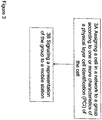
- the exemplary embodiments of this invention provide a method, apparatus and computer program product(s) for, as shown in Figure 3 , assigning a cell in a network to a group according to one or more characteristics of a physical layer cell identification (PCI) of the cell (Block 3A), and signaling a representation of the group to a mobile station (Block 3B).
- PCI physical layer cell identification
- Block 3B signaling a representation of the group to a mobile station
- the exemplary embodiments of the invention provide a method, apparatus and computer program product(s), as shown in Figure 4 , for grouping at least one cell of a network according to at least one characteristic of a physical layer cell identification (PCI or PCID) of the at least one cell (Block 410), and signaling a representation of the grouped at least one cell to a mobile station (Block 420).
- PCI or PCID physical layer cell identification
- the exemplary embodiments of the invention provide a method, apparatus and computer program product(s), as shown in Figure 5 , for receiving signaling comprising a representation of a grouped at least one cell of a network, where the representation is according to at least one characteristic of a physical layer cell identification of the at least one cell (Block 510), and determining, based on the signaling, whether the grouped at least one cell are to be considered for an operation including at least one of reselection and measurement reporting (Block 520).
- Figure 6 there is illustrated a block diagram showing characteristics and examples of the signaling which can be seen to include a first field comprising a pattern length in bits (Block 630), a second field comprising a pattern of bits of a length defined based on said first field(Block 640), and a third field comprising a sense bit to indicate whether the group of at least one cell includes each cell identified by a physical layer cell identification of which the most significant bit or bits equal said pattern of bits, or each cell identified by a physical layer cell identification of which the most significant bit or bits do not equal said pattern of bits (Block 650).
- the various exemplary embodiments may be implemented in hardware or special purpose circuits, software, logic or any combination thereof.
- some aspects may be implemented in hardware, while other aspects may be implemented in firmware or software which may be executed by a controller, microprocessor or other computing device, although the exemplary embodiments of the invention are not limited thereto.
- Such software tools can automatically route conductors and locate components on a semiconductor substrate using well established rules of design, as well as libraries of prestored design modules.
- the resultant design in a standardized electronic format (e.g., Opus, GDSII, or the like) may be transmitted to a semiconductor fabrication facility for fabrication as one or more integrated circuit devices.
- the exemplary embodiments of this invention may be realized in an apparatus that is embodied as an integrated circuit, where the integrated circuit may comprise circuitry (as well as possibly firmware) for embodying at least one or more of a data processor, a digital signal processor, baseband circuitry and radio frequency circuitry that are configurable so as to operate in accordance with the exemplary embodiments of this invention.
- the integrated circuit may comprise circuitry (as well as possibly firmware) for embodying at least one or more of a data processor, a digital signal processor, baseband circuitry and radio frequency circuitry that are configurable so as to operate in accordance with the exemplary embodiments of this invention.
- connection means any connection or coupling, either direct or indirect, between two or more elements, and may encompass the presence of one or more intermediate elements between two elements that are “connected” or “coupled” together.
- the coupling or connection between the elements can be physical, logical, or a combination thereof.
- two elements may be considered to be “connected” or “coupled” together by the use of one or more wires, cables and/or printed electrical connections, as well as by the use of electromagnetic energy, such as electromagnetic energy having wavelengths in the radio frequency region, the microwave region and the optical (both visible and invisible) region, as several non-limiting and non-exhaustive examples.
Landscapes
- Engineering & Computer Science (AREA)
- Computer Networks & Wireless Communication (AREA)
- Signal Processing (AREA)
- Databases & Information Systems (AREA)
- Computer Security & Cryptography (AREA)
- Mobile Radio Communication Systems (AREA)
Claims (12)
- Verfahren, umfassend:Gruppieren mindestens einer Zelle eines Netzwerks gemäß mindestens einem Charakteristikum einer Kennung einer Zelle einer physikalischen Schicht und Signalisieren einer Repräsentation, umfassend das mindestens eine Charakteristikum der gruppierten mindestens einen Zelle, an eine Mobilstation; das Verfahren dadurch gekennzeichnet, dass das Signalisieren umfasst:ein erstes Feld (630), umfassend eine Musterlänge in Bits;ein zweites Feld (640), umfassend ein Muster von Bits einer basierend auf dem ersten Feld definierten Länge; undein drittes Feld (650), umfassend ein Erfassungsbit, um anzugeben, ob die Gruppe mindestens einer Zelle jede durch eine Kennung einer Zelle einer physikalischen Schicht identifizierte Zelle, deren höchstwertiges Bit oder höchstwertige Bits gleich dem Muster von Bits ist/sind, oder jede durch eine Kennung einer Zelle einer physikalischen Schicht identifizierte Zelle, deren höchstwertiges Bit oder höchstwertige Bits nicht gleich dem Muster von Bits ist/sind, enthält.
- Verfahren nach Anspruch 1, wobei das erste Feld (630), das die Musterlänge umfasst, ein Feld von drei Bits ist und das dritte Feld (650), das das Erfassungsbit umfasst, ein Feld von einem Bit ist.
- Verfahren nach Anspruch 1, wobei, wenn das Erfassungsbit gleich 0 ist, jede Zelle der gruppierten mindestens einen Zelle durch das höchstwertige Bit oder die höchstwertigen Bits der Kennung der Zelle der physikalischen Schicht, die gleich dem Muster von Bits ist, identifiziert wird, und wenn das Erfassungsbit gleich 1 ist, jede Zelle der gruppierten mindestens einen Zelle durch das höchstwertige Bit oder die höchstwertigen Bits der Kennung der Zelle der physikalischen Schicht, die nicht gleich dem Muster von Bits ist, identifiziert wird.
- Speicher, der ein Computerprogramm verkörpert, das, wenn es durch einen Prozessor ausgeführt wird, das Verfahren nach Anspruch 1 durchführt.
- Vorrichtung, umfassend:einen Prozessor und eine Schnittstelle zu einer Mobilstation, konfiguriert zum Gruppieren mindestens einer Zelle eines Netzwerks gemäß mindestens einem Charakteristikum einer Kennung einer Zelle einer physikalischen Schicht der mindestens einen Zelle, undwobei der Prozessor und die Schnittstelle konfiguriert sind zum Signalisieren einer Repräsentation, umfassend das mindestens eine Charakteristikum der gruppierten mindestens einen Zelle, an die Mobilstation, wobei das Signalisieren umfasst:ein erstes Feld (630), umfassend eine Musterlänge in Bits;ein zweites Feld (640), umfassend ein Muster von Bits einer basierend auf dem ersten Feld definierten Länge; undein drittes Feld (650), umfassend ein Erfassungsbit, um anzugeben, ob die gruppierte mindestens eine Zelle jede durch eine Kennung einer Zelle einer physikalischen Schicht identifizierte Zelle, deren höchstwertiges Bit oder höchstwertige Bits gleich dem Muster von Bits ist/sind, oder jede durch eine Kennung einer Zelle einer physikalischen Schicht identifizierte Zelle, deren höchstwertiges Bit oder höchstwertige Bits nicht gleich dem Muster von Bits ist/sind, enthält.
- Vorrichtung nach Anspruch 5, wobei das erste Feld (630), das die Musterlänge umfasst, ein Feld von drei Bits ist und das dritte Feld, das das Erfassungsbit umfasst, ein Feld von einem Bit ist.
- Vorrichtung nach Anspruch 5, wobei, wenn das Erfassungsbit gleich 0 ist, jede Zelle der gruppierten mindestens einen Zelle durch das höchstwertige Bit oder die höchstwertigen Bits der Kennung der Zelle der physikalischen Schicht, die gleich dem Muster von Bits ist, identifiziert wird, und wenn das Erfassungsbit gleich 1 ist, jede Zelle der gruppierten mindestens einen Zelle durch das höchstwertige Bit oder die höchstwertigen Bits der Kennung der Zelle der physikalischen Schicht, die nicht gleich dem Muster von Bits ist, identifiziert wird.
- Verfahren, umfassend:Empfangen, an einer Mobilstation, von Signalisierung, umfassend eine Repräsentation einer gruppierten mindestens einen Zelle eines Netzwerks, wobei die Repräsentation gemäß mindestens einem Charakteristikum einer Kennung einer Zelle einer physikalischen Schicht der mindestens einen Zelle ist; undBestimmen, basierend auf der Signalisierung, ob die gruppierte mindestens eine Zelle für eine Operation in Betracht zu ziehen ist, enthaltend mindestens eines von Neuauswahl und Messungsberichterstattung, das Verfahren dadurch gekennzeichnet, dass die Signalisierung umfasst:ein erstes Feld (630), umfassend eine Musterlänge in Bits;ein zweites Feld (640), umfassend ein Muster von Bits einer basierend auf dem ersten Feld definierten Länge; undein drittes Feld (650), umfassend ein Erfassungsbit, um anzugeben, ob die gruppierte mindestens eine Zelle jede durch eine Kennung einer Zelle einer physikalischen Schicht identifizierte Zelle, deren höchstwertiges Bit oder höchstwertige Bits gleich dem Muster von Bits ist/sind, oder jede durch eine Kennung einer Zelle einer physikalischen Schicht identifizierte Zelle, deren höchstwertiges Bit oder höchstwertige Bits nicht gleich dem Muster von Bits ist/sind, enthält.
- Verfahren nach Anspruch 8, wobei, wenn das Erfassungsbit gleich 0 ist, jede Zelle der gruppierten mindestens einen Zelle durch das höchstwertige Bit oder die höchstwertigen Bits der Kennung der Zelle der physikalischen Schicht, die gleich dem Muster von Bits ist, identifiziert wird, und wenn das Erfassungsbit gleich 1 ist, jede Zelle der gruppierten mindestens einen Zelle durch das höchstwertige Bit oder die höchstwertigen Bits der Kennung der Zelle der physikalischen Schicht, die nicht gleich dem Muster von Bits ist, identifiziert wird.
- Speicher, der ein Computerprogramm verkörpert, das, wenn es durch einen Prozessor ausgeführt wird, das Verfahren nach Anspruch 8 durchführt.
- Vorrichtung, umfassend:Schnittstelle, konfiguriert zum Empfangen von Signalisierung, umfassend eine Repräsentation einer gruppierten mindestens einen Zelle eines Netzwerks, wobei die Repräsentation gemäß mindestens einem Charakteristikum einer Kennung einer Zelle einer physikalischen Schicht der mindestens einen Zelle ist; undeinen Prozessor, konfiguriert zum Bestimmen, basierend auf der Signalisierung, ob die gruppierte mindestens eine Zelle für eine Operation in Betracht zu ziehen ist, enthaltend mindestens eines von Neuauswahl und Messungsberichterstattung, wobei die Signalisierung umfasst:ein erstes Feld (630), umfassend eine Musterlänge in Bits;ein zweites Feld (640), umfassend ein Muster von Bits einer basierend auf dem ersten Feld definierten Länge; undein drittes Feld (650), umfassend ein Erfassungsbit, um anzugeben, ob die gruppierte mindestens eine Zelle jede durch eine Kennung einer Zelle einer physikalischen Schicht identifizierte Zelle, deren höchstwertiges Bit oder höchstwertige Bits gleich dem Muster von Bits ist/sind, oder jede durch eine Kennung einer Zelle einer physikalischen Schicht identifizierte Zelle, deren höchstwertiges Bit oder höchstwertige Bits nicht gleich dem Muster von Bits ist/sind, enthält.
- Vorrichtung nach Anspruch 11, wobei, wenn das Erfassungsbit gleich 0 ist, jede Zelle der gruppierten mindestens einen Zelle durch das höchstwertige Bit oder die höchstwertigen Bits der Kennung der Zelle der physikalischen Schicht, die gleich dem Muster von Bits ist, identifiziert wird, und wenn das Erfassungsbit gleich 1 ist, jede Zelle der gruppierten mindestens einen Zelle durch das höchstwertige Bit oder die höchstwertigen Bits der Kennung der Zelle der physikalischen Schicht, die nicht gleich dem Muster von Bits ist, identifiziert wird.
Applications Claiming Priority (2)
| Application Number | Priority Date | Filing Date | Title |
|---|---|---|---|
| US12515608P | 2008-04-22 | 2008-04-22 | |
| PCT/IB2009/005335 WO2009130582A1 (en) | 2008-04-22 | 2009-04-22 | Grouping of cells for efficient neighbor cell information distribution |
Publications (3)
| Publication Number | Publication Date |
|---|---|
| EP2272284A1 EP2272284A1 (de) | 2011-01-12 |
| EP2272284A4 EP2272284A4 (de) | 2016-10-19 |
| EP2272284B1 true EP2272284B1 (de) | 2017-11-29 |
Family
ID=41216475
Family Applications (1)
| Application Number | Title | Priority Date | Filing Date |
|---|---|---|---|
| EP09735267.8A Active EP2272284B1 (de) | 2008-04-22 | 2009-04-22 | Zellengruppierung für effiziente verteilung von nachbarzelleninformationen |
Country Status (5)
| Country | Link |
|---|---|
| US (1) | US8594060B2 (de) |
| EP (1) | EP2272284B1 (de) |
| CN (1) | CN102047726B (de) |
| ES (1) | ES2659870T3 (de) |
| WO (1) | WO2009130582A1 (de) |
Families Citing this family (21)
| Publication number | Priority date | Publication date | Assignee | Title |
|---|---|---|---|---|
| JP2011525089A (ja) * | 2008-06-18 | 2011-09-08 | テレフオンアクチーボラゲット エル エム エリクソン(パブル) | 通信ネットワークシステムにおける方法および装置 |
| CN102077635A (zh) * | 2008-06-30 | 2011-05-25 | 阿尔卡特朗讯公司 | 用于配置具有多个家用基站的无线网络的方法 |
| US9521554B2 (en) | 2008-08-15 | 2016-12-13 | Qualcomm Incorporated | Adaptive clustering framework in frequency-time for network MIMO systems |
| US10028332B2 (en) | 2008-08-15 | 2018-07-17 | Qualcomm, Incorporated | Hierarchical clustering framework for inter-cell MIMO systems |
| US8254981B2 (en) * | 2009-05-04 | 2012-08-28 | Research In Motion Limited | Identifying radio access technology characteristics to mobile stations system and method |
| US8842633B2 (en) | 2009-05-04 | 2014-09-23 | Blackberry Limited | Systems and methods for mobile stations to identify radio access technologies |
| CA2760834C (en) | 2009-05-04 | 2015-11-24 | Research In Motion Limited | System and method for communications radio access technology informationto mobile stations |
| US8559387B2 (en) * | 2009-05-04 | 2013-10-15 | Blackberry Limited | Indicating radio access technology information to mobile stations system and method |
| EP2428075B1 (de) * | 2009-05-04 | 2013-08-14 | Research In Motion Limited | Verfahren und vorrichtungen zum verarbeiten von signalstärken nicht erlaubter zellen während der zellenneuauswahl |
| US8340676B2 (en) * | 2009-06-25 | 2012-12-25 | Motorola Mobility Llc | Control and data signaling in heterogeneous wireless communication networks |
| US9288690B2 (en) * | 2010-05-26 | 2016-03-15 | Qualcomm Incorporated | Apparatus for clustering cells using neighbor relations |
| US8639256B2 (en) | 2010-05-26 | 2014-01-28 | Qualcomm Incorporated | Adaptive cell clustering in a multi-cluster environment |
| US20120093047A1 (en) * | 2010-10-14 | 2012-04-19 | Alcatel-Lucent USA Inc. via the Electronic Patent Assignment System (EPAS) | Core abstraction layer for telecommunication network applications |
| EP2683103B1 (de) | 2011-02-18 | 2017-09-13 | BlackBerry Limited | Verfahren und Vorrichtung zur Anzeige der Verbindungsqualitätsmessungen bei dualem Downlink-Träger-Betrieb |
| EP2490360B1 (de) * | 2011-02-18 | 2014-05-07 | BlackBerry Limited | Verfahren und Vorrichtung zur Anzeige der Verbindungsqualitätsmessungen bei dualem Downlink-Träger-Betrieb |
| US20130046821A1 (en) * | 2011-08-15 | 2013-02-21 | Renasas Mobile Corporation | Advanced Machine-To-Machine Communications |
| US9185566B2 (en) * | 2011-12-01 | 2015-11-10 | Qualcomm Incorporated | Cell cancellation list and an adaptive radio link failure trigger for improved spectrum sharing |
| CN104956726A (zh) * | 2013-01-24 | 2015-09-30 | 诺基亚技术有限公司 | 用于小区重选的方法和装置 |
| WO2015071267A1 (en) * | 2013-11-15 | 2015-05-21 | Deutsche Telekom Ag | Method, network and system for an improved operation of a cellular telecommunications network in an edge region of the radio coverage area |
| RU2679720C2 (ru) * | 2014-12-08 | 2019-02-12 | Телефонактиеболагет Лм Эрикссон (Пабл) | Способ облегчения идентификации сети, узел доступа, способ идентификации сети и пользовательское оборудование |
| GB2576918A (en) * | 2018-09-06 | 2020-03-11 | Tcl Communication Ltd | Network reporting in a cellular network |
Family Cites Families (14)
| Publication number | Priority date | Publication date | Assignee | Title |
|---|---|---|---|---|
| US5423063A (en) * | 1993-08-27 | 1995-06-06 | Motorola, Inc. | Method and apparatus for identifying a transmitter in a simulcast radio communication system |
| FI105639B (fi) * | 1997-06-25 | 2000-09-15 | Nokia Mobile Phones Ltd | Parannettu menetelmä solun vaihtamiseksi |
| US6684075B2 (en) | 1998-04-16 | 2004-01-27 | Telefonaktiebolaget Lm Ericsson (Publ) | Multiple frequency reallocations in an automated frequency allocation environment |
| JP2001069151A (ja) | 1999-08-26 | 2001-03-16 | Matsushita Electric Ind Co Ltd | 基地局装置、識別子管理装置及び識別子割当て方法 |
| US6891976B2 (en) * | 2002-03-12 | 2005-05-10 | Intel Corporation | Method to decode variable length codes with regular bit pattern prefixes |
| JP2005142967A (ja) | 2003-11-07 | 2005-06-02 | Ntt Docomo Inc | 拡散符号の割当方法、無線基地局、及び移動局 |
| US20070201651A1 (en) * | 2004-11-30 | 2007-08-30 | Raymond Bontempi | Selective caller identification blocking |
| US7672667B2 (en) * | 2006-01-17 | 2010-03-02 | Telefonaktiebolaget L M Ericsson (Publ) | Broadcast-centric cellular communication system |
| BRPI0717065A2 (pt) | 2006-09-21 | 2013-10-15 | Infineon Technologies Ag | Agrupamento de informações de ascesso de célula de terminal de usuário em um bloco de informações de uma informação de sistema |
| US8594663B2 (en) * | 2007-09-24 | 2013-11-26 | Airvana Llc | Selecting embedded cells in wireless networks |
| US8503547B2 (en) * | 2007-10-11 | 2013-08-06 | Qualcomm Incorporated | Scrambling codes for secondary synchronization codes in wireless communication systems |
| KR20100108436A (ko) * | 2008-01-02 | 2010-10-06 | 인터디지탈 패튼 홀딩스, 인크 | 충돌하는 물리층 신호들을 갖는 셀들 중에서 홈 노드 b(폐쇄된 가입자 그룹(csg) 셀)를 선택 또는 재선택하기 위한 방법 및 장치 |
| CN101911766A (zh) * | 2008-01-07 | 2010-12-08 | 爱立信电话股份有限公司 | 用于构建邻居小区关系的唯一小区身份的识别 |
| FI20085253A0 (fi) * | 2008-03-28 | 2008-03-28 | Nokia Siemens Networks Oy | Solutunnisteet solukkotietoliikennejärjestelmässä |
-
2009
- 2009-04-22 EP EP09735267.8A patent/EP2272284B1/de active Active
- 2009-04-22 ES ES09735267.8T patent/ES2659870T3/es active Active
- 2009-04-22 US US12/428,259 patent/US8594060B2/en active Active
- 2009-04-22 CN CN200980120202.7A patent/CN102047726B/zh active Active
- 2009-04-22 WO PCT/IB2009/005335 patent/WO2009130582A1/en not_active Ceased
Non-Patent Citations (1)
| Title |
|---|
| None * |
Also Published As
| Publication number | Publication date |
|---|---|
| US20100074235A1 (en) | 2010-03-25 |
| EP2272284A4 (de) | 2016-10-19 |
| US8594060B2 (en) | 2013-11-26 |
| CN102047726A (zh) | 2011-05-04 |
| CN102047726B (zh) | 2014-07-30 |
| ES2659870T3 (es) | 2018-03-19 |
| WO2009130582A1 (en) | 2009-10-29 |
| EP2272284A1 (de) | 2011-01-12 |
Similar Documents
| Publication | Publication Date | Title |
|---|---|---|
| EP2272284B1 (de) | Zellengruppierung für effiziente verteilung von nachbarzelleninformationen | |
| CN102160426B (zh) | 用于确定移动无线电基站的类型、无线电通信终端和网络设备、无线电通信智能卡设备的方法 | |
| JP4874308B2 (ja) | 無線通信機器における受信品質の決定 | |
| EP2198647B1 (de) | Messungsmeldung für geschlossene teilnehmergruppen | |
| CN102067679B (zh) | 识别多分量载波小区 | |
| US8948030B2 (en) | Transmitting node B load status information in a self organising network | |
| US20100195525A1 (en) | Preliminary Neighbor Cell Suitability Check | |
| EP2269402B1 (de) | Zusammenarbeit zwischen geran und einer anderen funktechnologie zur meldung von nachbarzellenmessungen | |
| EP4307760A1 (de) | Mehrträger-netzwerkbetrieb | |
| US8855658B2 (en) | Interference avoidance on common channels in uncoordinated network deployments with flexible spectrum use | |
| JP2022071152A (ja) | 端末、待ち受け方法、及び基地局 | |
| CN110583044A (zh) | 移动通信网络、通信装置、基础设施设备和方法 | |
| CN101904204A (zh) | 发送方法、无线基站以及移动台 | |
| JP2011525738A (ja) | セルタイプ検出の方法、装置、システム、及び、これに関連したコンピュータプログラム | |
| EP3210417B1 (de) | Verfahren und vorrichtung zum erfassen von systeminformationen | |
| WO2013025034A2 (ko) | 이동통신망에서 단말의 속도상태에 따른 셀 선택 장치 및 방법 | |
| US8369360B2 (en) | System information acquisition in multi-radio access technology system | |
| JP2023541600A (ja) | ユーザ機器アクセス方法、共有キャリア基地局、ユーザ機器、コンピュータ可読記録媒体、及びコンピュータプログラム |
Legal Events
| Date | Code | Title | Description |
|---|---|---|---|
| PUAI | Public reference made under article 153(3) epc to a published international application that has entered the european phase |
Free format text: ORIGINAL CODE: 0009012 |
|
| 17P | Request for examination filed |
Effective date: 20101112 |
|
| AK | Designated contracting states |
Kind code of ref document: A1 Designated state(s): AT BE BG CH CY CZ DE DK EE ES FI FR GB GR HR HU IE IS IT LI LT LU LV MC MK MT NL NO PL PT RO SE SI SK TR |
|
| AX | Request for extension of the european patent |
Extension state: AL BA RS |
|
| DAX | Request for extension of the european patent (deleted) | ||
| RAP1 | Party data changed (applicant data changed or rights of an application transferred) |
Owner name: NOKIA CORPORATION |
|
| RAP1 | Party data changed (applicant data changed or rights of an application transferred) |
Owner name: NOKIA TECHNOLOGIES OY |
|
| RA4 | Supplementary search report drawn up and despatched (corrected) |
Effective date: 20160915 |
|
| RIC1 | Information provided on ipc code assigned before grant |
Ipc: H04W 48/12 20090101AFI20160909BHEP Ipc: H04W 48/18 20090101ALN20160909BHEP |
|
| REG | Reference to a national code |
Ref country code: DE Ref legal event code: R079 Ref document number: 602009049621 Country of ref document: DE Free format text: PREVIOUS MAIN CLASS: H04W0048000000 Ipc: H04W0048120000 |
|
| GRAP | Despatch of communication of intention to grant a patent |
Free format text: ORIGINAL CODE: EPIDOSNIGR1 |
|
| RIC1 | Information provided on ipc code assigned before grant |
Ipc: H04W 48/12 20090101AFI20170607BHEP Ipc: H04W 48/18 20090101ALN20170607BHEP |
|
| RIC1 | Information provided on ipc code assigned before grant |
Ipc: H04W 48/18 20090101ALN20170629BHEP Ipc: H04W 48/12 20090101AFI20170629BHEP |
|
| INTG | Intention to grant announced |
Effective date: 20170712 |
|
| GRAS | Grant fee paid |
Free format text: ORIGINAL CODE: EPIDOSNIGR3 |
|
| GRAA | (expected) grant |
Free format text: ORIGINAL CODE: 0009210 |
|
| AK | Designated contracting states |
Kind code of ref document: B1 Designated state(s): AT BE BG CH CY CZ DE DK EE ES FI FR GB GR HR HU IE IS IT LI LT LU LV MC MK MT NL NO PL PT RO SE SI SK TR |
|
| REG | Reference to a national code |
Ref country code: GB Ref legal event code: FG4D |
|
| REG | Reference to a national code |
Ref country code: CH Ref legal event code: EP |
|
| REG | Reference to a national code |
Ref country code: AT Ref legal event code: REF Ref document number: 951420 Country of ref document: AT Kind code of ref document: T Effective date: 20171215 |
|
| REG | Reference to a national code |
Ref country code: IE Ref legal event code: FG4D |
|
| REG | Reference to a national code |
Ref country code: DE Ref legal event code: R096 Ref document number: 602009049621 Country of ref document: DE |
|
| REG | Reference to a national code |
Ref country code: NL Ref legal event code: FP |
|
| REG | Reference to a national code |
Ref country code: ES Ref legal event code: FG2A Ref document number: 2659870 Country of ref document: ES Kind code of ref document: T3 Effective date: 20180319 |
|
| REG | Reference to a national code |
Ref country code: LT Ref legal event code: MG4D |
|
| REG | Reference to a national code |
Ref country code: AT Ref legal event code: MK05 Ref document number: 951420 Country of ref document: AT Kind code of ref document: T Effective date: 20171129 |
|
| PG25 | Lapsed in a contracting state [announced via postgrant information from national office to epo] |
Ref country code: NO Free format text: LAPSE BECAUSE OF FAILURE TO SUBMIT A TRANSLATION OF THE DESCRIPTION OR TO PAY THE FEE WITHIN THE PRESCRIBED TIME-LIMIT Effective date: 20180228 Ref country code: LT Free format text: LAPSE BECAUSE OF FAILURE TO SUBMIT A TRANSLATION OF THE DESCRIPTION OR TO PAY THE FEE WITHIN THE PRESCRIBED TIME-LIMIT Effective date: 20171129 Ref country code: SE Free format text: LAPSE BECAUSE OF FAILURE TO SUBMIT A TRANSLATION OF THE DESCRIPTION OR TO PAY THE FEE WITHIN THE PRESCRIBED TIME-LIMIT Effective date: 20171129 Ref country code: FI Free format text: LAPSE BECAUSE OF FAILURE TO SUBMIT A TRANSLATION OF THE DESCRIPTION OR TO PAY THE FEE WITHIN THE PRESCRIBED TIME-LIMIT Effective date: 20171129 |
|
| PG25 | Lapsed in a contracting state [announced via postgrant information from national office to epo] |
Ref country code: AT Free format text: LAPSE BECAUSE OF FAILURE TO SUBMIT A TRANSLATION OF THE DESCRIPTION OR TO PAY THE FEE WITHIN THE PRESCRIBED TIME-LIMIT Effective date: 20171129 Ref country code: BG Free format text: LAPSE BECAUSE OF FAILURE TO SUBMIT A TRANSLATION OF THE DESCRIPTION OR TO PAY THE FEE WITHIN THE PRESCRIBED TIME-LIMIT Effective date: 20180228 Ref country code: HR Free format text: LAPSE BECAUSE OF FAILURE TO SUBMIT A TRANSLATION OF THE DESCRIPTION OR TO PAY THE FEE WITHIN THE PRESCRIBED TIME-LIMIT Effective date: 20171129 Ref country code: GR Free format text: LAPSE BECAUSE OF FAILURE TO SUBMIT A TRANSLATION OF THE DESCRIPTION OR TO PAY THE FEE WITHIN THE PRESCRIBED TIME-LIMIT Effective date: 20180301 Ref country code: LV Free format text: LAPSE BECAUSE OF FAILURE TO SUBMIT A TRANSLATION OF THE DESCRIPTION OR TO PAY THE FEE WITHIN THE PRESCRIBED TIME-LIMIT Effective date: 20171129 |
|
| PG25 | Lapsed in a contracting state [announced via postgrant information from national office to epo] |
Ref country code: CY Free format text: LAPSE BECAUSE OF FAILURE TO SUBMIT A TRANSLATION OF THE DESCRIPTION OR TO PAY THE FEE WITHIN THE PRESCRIBED TIME-LIMIT Effective date: 20171129 Ref country code: DK Free format text: LAPSE BECAUSE OF FAILURE TO SUBMIT A TRANSLATION OF THE DESCRIPTION OR TO PAY THE FEE WITHIN THE PRESCRIBED TIME-LIMIT Effective date: 20171129 Ref country code: EE Free format text: LAPSE BECAUSE OF FAILURE TO SUBMIT A TRANSLATION OF THE DESCRIPTION OR TO PAY THE FEE WITHIN THE PRESCRIBED TIME-LIMIT Effective date: 20171129 Ref country code: SK Free format text: LAPSE BECAUSE OF FAILURE TO SUBMIT A TRANSLATION OF THE DESCRIPTION OR TO PAY THE FEE WITHIN THE PRESCRIBED TIME-LIMIT Effective date: 20171129 Ref country code: CZ Free format text: LAPSE BECAUSE OF FAILURE TO SUBMIT A TRANSLATION OF THE DESCRIPTION OR TO PAY THE FEE WITHIN THE PRESCRIBED TIME-LIMIT Effective date: 20171129 |
|
| REG | Reference to a national code |
Ref country code: DE Ref legal event code: R097 Ref document number: 602009049621 Country of ref document: DE |
|
| PG25 | Lapsed in a contracting state [announced via postgrant information from national office to epo] |
Ref country code: RO Free format text: LAPSE BECAUSE OF FAILURE TO SUBMIT A TRANSLATION OF THE DESCRIPTION OR TO PAY THE FEE WITHIN THE PRESCRIBED TIME-LIMIT Effective date: 20171129 Ref country code: PL Free format text: LAPSE BECAUSE OF FAILURE TO SUBMIT A TRANSLATION OF THE DESCRIPTION OR TO PAY THE FEE WITHIN THE PRESCRIBED TIME-LIMIT Effective date: 20171129 |
|
| PLBE | No opposition filed within time limit |
Free format text: ORIGINAL CODE: 0009261 |
|
| STAA | Information on the status of an ep patent application or granted ep patent |
Free format text: STATUS: NO OPPOSITION FILED WITHIN TIME LIMIT |
|
| 26N | No opposition filed |
Effective date: 20180830 |
|
| PG25 | Lapsed in a contracting state [announced via postgrant information from national office to epo] |
Ref country code: MC Free format text: LAPSE BECAUSE OF FAILURE TO SUBMIT A TRANSLATION OF THE DESCRIPTION OR TO PAY THE FEE WITHIN THE PRESCRIBED TIME-LIMIT Effective date: 20171129 Ref country code: SI Free format text: LAPSE BECAUSE OF FAILURE TO SUBMIT A TRANSLATION OF THE DESCRIPTION OR TO PAY THE FEE WITHIN THE PRESCRIBED TIME-LIMIT Effective date: 20171129 |
|
| REG | Reference to a national code |
Ref country code: BE Ref legal event code: MM Effective date: 20180430 |
|
| GBPC | Gb: european patent ceased through non-payment of renewal fee |
Effective date: 20180422 |
|
| REG | Reference to a national code |
Ref country code: IE Ref legal event code: MM4A |
|
| PG25 | Lapsed in a contracting state [announced via postgrant information from national office to epo] |
Ref country code: LU Free format text: LAPSE BECAUSE OF NON-PAYMENT OF DUE FEES Effective date: 20180422 |
|
| PG25 | Lapsed in a contracting state [announced via postgrant information from national office to epo] |
Ref country code: BE Free format text: LAPSE BECAUSE OF NON-PAYMENT OF DUE FEES Effective date: 20180430 Ref country code: GB Free format text: LAPSE BECAUSE OF NON-PAYMENT OF DUE FEES Effective date: 20180422 |
|
| PG25 | Lapsed in a contracting state [announced via postgrant information from national office to epo] |
Ref country code: IE Free format text: LAPSE BECAUSE OF NON-PAYMENT OF DUE FEES Effective date: 20180422 Ref country code: FR Free format text: LAPSE BECAUSE OF NON-PAYMENT OF DUE FEES Effective date: 20180430 |
|
| PG25 | Lapsed in a contracting state [announced via postgrant information from national office to epo] |
Ref country code: MT Free format text: LAPSE BECAUSE OF NON-PAYMENT OF DUE FEES Effective date: 20180422 |
|
| PG25 | Lapsed in a contracting state [announced via postgrant information from national office to epo] |
Ref country code: TR Free format text: LAPSE BECAUSE OF FAILURE TO SUBMIT A TRANSLATION OF THE DESCRIPTION OR TO PAY THE FEE WITHIN THE PRESCRIBED TIME-LIMIT Effective date: 20171129 |
|
| PG25 | Lapsed in a contracting state [announced via postgrant information from national office to epo] |
Ref country code: HU Free format text: LAPSE BECAUSE OF FAILURE TO SUBMIT A TRANSLATION OF THE DESCRIPTION OR TO PAY THE FEE WITHIN THE PRESCRIBED TIME-LIMIT; INVALID AB INITIO Effective date: 20090422 Ref country code: PT Free format text: LAPSE BECAUSE OF FAILURE TO SUBMIT A TRANSLATION OF THE DESCRIPTION OR TO PAY THE FEE WITHIN THE PRESCRIBED TIME-LIMIT Effective date: 20171129 |
|
| PG25 | Lapsed in a contracting state [announced via postgrant information from national office to epo] |
Ref country code: MK Free format text: LAPSE BECAUSE OF NON-PAYMENT OF DUE FEES Effective date: 20171129 |
|
| PG25 | Lapsed in a contracting state [announced via postgrant information from national office to epo] |
Ref country code: IS Free format text: LAPSE BECAUSE OF FAILURE TO SUBMIT A TRANSLATION OF THE DESCRIPTION OR TO PAY THE FEE WITHIN THE PRESCRIBED TIME-LIMIT Effective date: 20180329 |
|
| P01 | Opt-out of the competence of the unified patent court (upc) registered |
Effective date: 20230527 |
|
| PGFP | Annual fee paid to national office [announced via postgrant information from national office to epo] |
Ref country code: DE Payment date: 20250305 Year of fee payment: 17 |
|
| PGFP | Annual fee paid to national office [announced via postgrant information from national office to epo] |
Ref country code: ES Payment date: 20250507 Year of fee payment: 17 |
|
| PGFP | Annual fee paid to national office [announced via postgrant information from national office to epo] |
Ref country code: CH Payment date: 20250501 Year of fee payment: 17 |
|
| PGFP | Annual fee paid to national office [announced via postgrant information from national office to epo] |
Ref country code: IT Payment date: 20260320 Year of fee payment: 18 |
|
| PGFP | Annual fee paid to national office [announced via postgrant information from national office to epo] |
Ref country code: NL Payment date: 20260317 Year of fee payment: 18 |