EP2272976A1 - Verfahren zur Differenzierung von Polynucleotid-Strängen - Google Patents
Verfahren zur Differenzierung von Polynucleotid-Strängen Download PDFInfo
- Publication number
- EP2272976A1 EP2272976A1 EP09008808A EP09008808A EP2272976A1 EP 2272976 A1 EP2272976 A1 EP 2272976A1 EP 09008808 A EP09008808 A EP 09008808A EP 09008808 A EP09008808 A EP 09008808A EP 2272976 A1 EP2272976 A1 EP 2272976A1
- Authority
- EP
- European Patent Office
- Prior art keywords
- strand
- dna
- modified
- differentiation
- polynucleotide
- Prior art date
- Legal status (The legal status is an assumption and is not a legal conclusion. Google has not performed a legal analysis and makes no representation as to the accuracy of the status listed.)
- Withdrawn
Links
Images







Classifications
-
- C—CHEMISTRY; METALLURGY
- C12—BIOCHEMISTRY; BEER; SPIRITS; WINE; VINEGAR; MICROBIOLOGY; ENZYMOLOGY; MUTATION OR GENETIC ENGINEERING
- C12Q—MEASURING OR TESTING PROCESSES INVOLVING ENZYMES, NUCLEIC ACIDS OR MICROORGANISMS; COMPOSITIONS OR TEST PAPERS THEREFOR; PROCESSES OF PREPARING SUCH COMPOSITIONS; CONDITION-RESPONSIVE CONTROL IN MICROBIOLOGICAL OR ENZYMOLOGICAL PROCESSES
- C12Q1/00—Measuring or testing processes involving enzymes, nucleic acids or microorganisms; Compositions therefor; Processes of preparing such compositions
- C12Q1/68—Measuring or testing processes involving enzymes, nucleic acids or microorganisms; Compositions therefor; Processes of preparing such compositions involving nucleic acids
- C12Q1/6869—Methods for sequencing
-
- C—CHEMISTRY; METALLURGY
- C12—BIOCHEMISTRY; BEER; SPIRITS; WINE; VINEGAR; MICROBIOLOGY; ENZYMOLOGY; MUTATION OR GENETIC ENGINEERING
- C12Q—MEASURING OR TESTING PROCESSES INVOLVING ENZYMES, NUCLEIC ACIDS OR MICROORGANISMS; COMPOSITIONS OR TEST PAPERS THEREFOR; PROCESSES OF PREPARING SUCH COMPOSITIONS; CONDITION-RESPONSIVE CONTROL IN MICROBIOLOGICAL OR ENZYMOLOGICAL PROCESSES
- C12Q1/00—Measuring or testing processes involving enzymes, nucleic acids or microorganisms; Compositions therefor; Processes of preparing such compositions
- C12Q1/68—Measuring or testing processes involving enzymes, nucleic acids or microorganisms; Compositions therefor; Processes of preparing such compositions involving nucleic acids
- C12Q1/6844—Nucleic acid amplification reactions
- C12Q1/6853—Nucleic acid amplification reactions using modified primers or templates
-
- C—CHEMISTRY; METALLURGY
- C12—BIOCHEMISTRY; BEER; SPIRITS; WINE; VINEGAR; MICROBIOLOGY; ENZYMOLOGY; MUTATION OR GENETIC ENGINEERING
- C12Q—MEASURING OR TESTING PROCESSES INVOLVING ENZYMES, NUCLEIC ACIDS OR MICROORGANISMS; COMPOSITIONS OR TEST PAPERS THEREFOR; PROCESSES OF PREPARING SUCH COMPOSITIONS; CONDITION-RESPONSIVE CONTROL IN MICROBIOLOGICAL OR ENZYMOLOGICAL PROCESSES
- C12Q1/00—Measuring or testing processes involving enzymes, nucleic acids or microorganisms; Compositions therefor; Processes of preparing such compositions
- C12Q1/68—Measuring or testing processes involving enzymes, nucleic acids or microorganisms; Compositions therefor; Processes of preparing such compositions involving nucleic acids
- C12Q1/6844—Nucleic acid amplification reactions
- C12Q1/6848—Nucleic acid amplification reactions characterised by the means for preventing contamination or increasing the specificity or sensitivity of an amplification reaction
-
- C—CHEMISTRY; METALLURGY
- C12—BIOCHEMISTRY; BEER; SPIRITS; WINE; VINEGAR; MICROBIOLOGY; ENZYMOLOGY; MUTATION OR GENETIC ENGINEERING
- C12Q—MEASURING OR TESTING PROCESSES INVOLVING ENZYMES, NUCLEIC ACIDS OR MICROORGANISMS; COMPOSITIONS OR TEST PAPERS THEREFOR; PROCESSES OF PREPARING SUCH COMPOSITIONS; CONDITION-RESPONSIVE CONTROL IN MICROBIOLOGICAL OR ENZYMOLOGICAL PROCESSES
- C12Q1/00—Measuring or testing processes involving enzymes, nucleic acids or microorganisms; Compositions therefor; Processes of preparing such compositions
- C12Q1/68—Measuring or testing processes involving enzymes, nucleic acids or microorganisms; Compositions therefor; Processes of preparing such compositions involving nucleic acids
- C12Q1/6844—Nucleic acid amplification reactions
- C12Q1/6853—Nucleic acid amplification reactions using modified primers or templates
- C12Q1/6855—Ligating adaptors
-
- C—CHEMISTRY; METALLURGY
- C12—BIOCHEMISTRY; BEER; SPIRITS; WINE; VINEGAR; MICROBIOLOGY; ENZYMOLOGY; MUTATION OR GENETIC ENGINEERING
- C12Q—MEASURING OR TESTING PROCESSES INVOLVING ENZYMES, NUCLEIC ACIDS OR MICROORGANISMS; COMPOSITIONS OR TEST PAPERS THEREFOR; PROCESSES OF PREPARING SUCH COMPOSITIONS; CONDITION-RESPONSIVE CONTROL IN MICROBIOLOGICAL OR ENZYMOLOGICAL PROCESSES
- C12Q1/00—Measuring or testing processes involving enzymes, nucleic acids or microorganisms; Compositions therefor; Processes of preparing such compositions
- C12Q1/68—Measuring or testing processes involving enzymes, nucleic acids or microorganisms; Compositions therefor; Processes of preparing such compositions involving nucleic acids
- C12Q1/6876—Nucleic acid products used in the analysis of nucleic acids, e.g. primers or probes
Definitions
- Cloning of single-stranded RNA and DNA molecules is much easier if they are transformed into double-stranded DNA.
- the invention relates to a novel method of preserving information about the direction of the original single-stranded molecules after being transformed into a double-stranded form.
- RNA and DNA molecules play an important role in molecular biology.
- a number of viruses have single-stranded genomes. Most RNAs are present in single-stranded form.
- Recent studies have demonstrated an unexpected complexity of eukaryotic transcriptomes.
- a transcriptome is the set of all RNA transcripts produced in one or a population of cells.
- mRNAs messenger ribonucleic acids
- ribonucleic acids non-coding RNAs
- the polarity of the transcript is important for correct annotation of novel genes because it provides essential information about the possible function of a gene both on the RNA (structure and hybridization to other nucleic acid molecules) and the protein level. In addition, many genomic regions give rise to transcripts from both strands simultaneously. Antisense transcription is characteristic for eukaryotic genes and is thought to play an important regulatory role. Overlapping genes are common for compact genomes of prokaryotes and lower eukaryotes. Knowledge of transcript orientation helps to resolve the problem of colliding transcripts and to determine correctly gene expression levels in the presence of antisense transcription.
- Adapters may be ligated directly to single-stranded RNA molecules.
- Special composite primers may be used for first-strand cDNA synthesis: Herein the 5'- part of the primer provides a directional information, the 3'-part (oligo(dT)) or random nucleotides) is able to form a duplex with the RNA. Recently, first-strand cDNA synthesis was performed from a tagged random hexamer primer and second strand synthesis from a DNA-RNA template-switching primer.
- DNA-RNA template-switching is used to attach a specific adapter to 3'-end of the DNA copy of the original single-stranded RNA molecule.
- the objective of the present invention is to provide a method for keeping the directional information in double-stranded DNA. Surprisingly, it was found that this objective can be reached by the inventive method as disclosed by the description, the figures and the examples.
- a polynucleotide strand is converted into a hybrid double-stranded DNA.
- One particular strand of this hybrid double-stranded DNA should be synthesised using at least one modified nucleotide. Thus, this particular strand would contain modified nucleotides along the whole length of the strand.
- the density of directional markers would not depend on the length of hybrid double-stranded DNA. Any internal fragment of the hybrid would have directional information. If necessary, the modified strand may be easily degraded or separated from the other strand. It was found that such hybrid double-stranded DNA may be easily generated in a number of molecular biology tasks and may be used for molecular cloning, library preparation and strand separation.
- the directional library construction method and the method of synthesis of single-stranded DNA according to the invention are easy to perform, inexpensive and highly reliable and thus overcome the shortcomings of the previously mentioned approaches.
- the inventive method for preserving information about the direction of single-stranded nucleic acid molecules during molecular cloning operations with double-stranded DNA is provided.
- One of the strands of the double-stranded DNA is synthesized by using the other strand as a template and contains at least one modified dNTP.
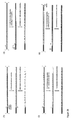
- one strand of double-stranded DNA would contain unmodified nucleotides and the other strand at least one modified nucleotide along the whole length ( Fig. 1C ).
- Double-stranded DNA molecules may have simultaneously distinguishable primers and distinguishable strands ( Fig. 1D ).
- Fig. 2A shows how molecules with distinguishable strands may be converted into molecules with distinguishable primers.
- Fig. 2B shows the conversion of molecules with distinguishable primers into molecules with distinguishable strands.
- Two examples demonstrate the convenience of the inventive method for differentiation of polynucleotide strands.
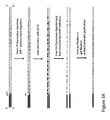
- Fig. 3 shows two possible ways for generating single-stranded DNA using the inventive method for differentiation of polynucleotide strands.
- a first approach ( Fig. 3A ) one strand of PCR product is substituted by a strand where dTTPs are substituted by dUTPs.
- this strand is converted into a number of short single-stranded fragments which may be easily separated from the long unmodified strand by electrophoresis, anion-exchange chromatography, silica-based purification or gel-filtration.
- a second approach ( Fig. 3B ) one strand of the PCR product is substituted by a strand where a significant percentage of the dTTPs is substituted by biotin-associated dUTPs, respectively biotin-associated dTTPs.
- concentration of biotin in a modified strand does not depend on the length of the double-stranded DNA, so the efficiency of the purification on streptavidine-coated particles should not depend on the length of the fragment.
- the key steps of the method according to the invention include the generation of a cDNA strand including at least one modified nucleotide that in the course of the method is recognized by a selection factor which allows for a differentiation of the strand containing the at least one modified nucleotide from the strand containing the corresponding unmodified nucleotide or nucleotides.
- the polynucleotide template is a single-stranded RNA
- a second cDNA strand has to be synthesized.
- the at least one modified dNTP has to be removed from the solution and has to be replaced by the corresponding unmodified dNTP or dNTPs or analogues thereof.
- a second cDNA strand is generated.
- the resulting cDNA shall undergo cloning, for example by an ensuing amplification step by PCR, it may be advantageous to carry out one or more preparative modifications on the strands to be cloned, such as shearing, restriction, digestion, end-polishing, A-tailing, G-tailing and adaptor ligation. These modifications may lead to a higher efficacy and unambiguous results in cloning.
- the polynucleotide template is a single-stranded RNA
- a second-strand cDNA has to be synthesized after the exchange of the at least one modified dNTP by the corresponding unmodified dNTP or dNTPs. If this double-stranded cDNA shall undergo cloning it will be advantageous to perform one or more of the modifications for the molecular cloning operation as described before.
- the initially provided at least one polynucleotide template may be a RNA such as mRNA, tRNA, rRNA, hnRNA, snRNA, snoRNA, scaRNA, asRNA, micro RNA, siRNA, short transcripts, synthetic polynucleotides and semisynthetic polynucleotides as well as physiological or externally induced modifications thereof, wherein mRNA is preferred.
- RNA such as mRNA, tRNA, rRNA, hnRNA, snRNA, snoRNA, scaRNA, asRNA, micro RNA, siRNA, short transcripts, synthetic polynucleotides and semisynthetic polynucleotides as well as physiological or externally induced modifications thereof, wherein mRNA is preferred.
- mRNAs are protein-coding RNA.
- tRNAs are transfer RNAs responsible for providing correct amino acids in peptide (protein) synthesis in ribosomes.
- rRNAs are ribosomal RNAs, being a constitutive element of ribosomes.
- hnRNAs heterogeneous nuclear RNA
- snRNA small nuclear RNA
- snoRNA small nucleolar RNA
- scaRNA small Cajal body-specific RNA
- asRNA antisense RNA
- microRNAs are involved in the regulation of cellular processes such as apoptosis and cell death.
- siRNA small interfering RNA
- Dicer enzyme complex
- RISC RNA-induced silencing complex
- Short transcripts refer to small RNA fragments with up to 20-40 base pairs.
- the initially provided at least one polynucleotide template may be a DNA such as siDNA, DNA copies from retroviral or hepadnaviral RNA, single-stranded DNA, synthetic polynucleotides and semisynthetic polynucleotides as well as physiological or externally induced modifications thereof, wherein single-stranded DNA is preferred.
- a DNA such as siDNA, DNA copies from retroviral or hepadnaviral RNA, single-stranded DNA, synthetic polynucleotides and semisynthetic polynucleotides as well as physiological or externally induced modifications thereof, wherein single-stranded DNA is preferred.
- single-stranded DNA can also refer to the first-strand cDNA derived from a RNA as template.
- siDNA small interfering DNA
- Single-stranded DNA is a single-stranded type of satellite DNA, occurring among others in certain soil-dwelling bacteria species.
- double-stranded DNA can be the polynucleotide template.
- Specific primers and optionally adjuvants are needed to allow the generation of a cDNA strand against a particular strand of the double-stranded DNA (see below and Fig. 2B ).
- the double-stranded DNA is destabilized in the region of hybridization of said specific primer for allowing annealing of the specific primer.
- Such a destabilization can be achieved for example by Uracil-N-Glycosylase digestion of deoxyuridines.
- the double-stranded DNA template is a PCR product.
- Sources for RNAs and DNAs can be eukaryotes (animals including humans and other mammals, plants, fungi), prokaryotes (bacteria, archaea), viruses, synthetic or semisynthetic constructs wherein these constructs or semisynthetic constructs may mirror at least partially a naturally occurring nucleic acids or may have a widely artificial sequence.
- RNAs and DNAs can be isolated by well-known methods ( Molecular Cloning: A Laboratory Manual, Third Edition. J. Sambrook, D. Russell ).
- dNTPs deoxynucleoside triphosphates
- dATP deoxyadenosine triphosphate
- dCTP deoxycytidine triphosphate
- dGTP deoxyguanosine triphosphate
- dTTP deoxythymidine triphosphate
- dNTPs refers to the total of dATP, dCTP, dGTP and dTTP. A referral in a quantifying sense to one or more of these classic dNTPs is not intended.
- analogues of dNTPs refers to any molecule suitable for replacing a dNTP in presence and behavioural characteristics in a respective polynucleotide-containing solution and particularly in its matching characteristics to be able to undergo a base pair matching identical or similar to the classic dNTP it replaces.
- such analogues of dNTPs should be able to build the same or similar selective hydrogen bonds that allow for a selective pairing of base pairs (2 hydrogen bonds between A/T, T/A, A/U or U/A, and 3 hydrogen bonds between G/C and C/G), thus allowing for a correct translation of a polynucleotide sequence into its antisense sequence.
- nucleotide can be varied in such an analogue, but also the saccharide (usually a ribose or deoxyribose) or the phosphate backbone.
- saccharide usually a ribose or deoxyribose
- phosphate backbone may be partially or entirely substituted by a sulphonated backbone. Also combinations of such variations are subsumed under this term.
- the quantitative term sufficient amount herein refers to any amount, respectively concentration of an agent which allows for a qualitative and quantitative implementation of the method according to the invention in respect of the expected amounts which shall be needed for this purpose.
- the respective agents, in particular dNTPs are added in exceeding amounts in order to ensure that all possible copies can be effected qualitatively and quantitatively.
- template refers in molecular biology to a DNA or RNA strand which sets the base pair sequence to which a corresponding strand with an antisense sequence shall by polymerized. In a broader sense it may also refer to a RNA encoding a sequence for translation of this sequence into an amino acid sequence such as a peptide or a protein in ribosomes.
- cDNA stands for complementary deoxyribonucleic acid. It refers to a DNA which is generated as a copy of a RNA (usually by means of Reverse Transcriptase) or from a single DNA strand (usually by means of a DNA polymerase). Subsequently, a second cDNA strand may be generated by using the first cDNA strand as a template (usually by means of a DNA polymerase).
- Enzymes with reverse transcriptase (RNA-dependent DNA polymerase) activity are able to transcribe a RNA sequence into a corresponding cDNA sequence.
- This group of enzymes includes among others HIV-1 reverse transcriptase from human immunodeficiency virus type 1 (PDB 1HMV), M-MLV reverse transcriptase from the Moloney murine leukemia virus, AMV reverse transcriptase from avian myeloblastosis virus and telomerase reverse transcriptase fulfilling a role in the maintenance of telomeres of eukaryotic chromosomes as well as commercially available forms such as "M-MLV reverse transcriptase RNase H Minus", "SuperScript ® II”, “SuperScript ® III” or Tth polymerase.
- M-MLV reverse transcriptase RNase H Minus SuperScript ® II
- SuperScript ® III polymerases are preferred.
- primers and random primers refer to oligonucleotides which shall serve as starting point for DNA-replicating enzymes such as DNA polymerases. They can consist of a few base pairs, but in selected cases can reach up to 2.000 base pairs. Preferred are 5 to 50 base pairs.
- DNA polymerases need a hydroxy group for starting transcription. This hydroxy group is provided by the primer with its 3' hydroxy end. Often, the DNA sequence to be investigated is known. Hence suitable primers can be synthesized precisely according to the antisense sequence of aforesaid polynucleotide sequence. If this polynucleotide sequence is not or only incompletely known so-called random primers can be used.
- a large number of primers with a random base pair sequence are provided.
- One or more of these random primers statistically anneal to the polynucleotide sequence that shall be transcribed.
- corresponding transcripts of different length can be obtained, depending where the random primer anneals to the polynucleotide sequence of interest.
- composite primers with a random 3' part can be used.
- a further variation corresponding to the inventive method is the use of primers which are complementary to a homo-oligomeric tail synthesized by terminal transferase on the polynucleotide which serves as a template.
- the polynucleotide template is a RNA with a polyA tail it is preferred that said primers are oligo(dT), oligo(dU) or oligo(U) primers or composite primers with oligo(dT), oligo(dU) or oligo(U) region on 3' part.
- specific primers complementary to said single-stranded RNA template can be used.
- a double-stranded DNA template it is likewise possible to mark one particular strand of the double-stranded DNA with at least one modified nucleotide.
- specific primers complementary to a particular strand of said double-stranded DNA can be used.
- RecA protein may facilitate the hybridization of said primers to the double-stranded DNA template.
- Specific primers may appear as a result of introducing a nick in a particular strand of said double-stranded DNA template. Such nicks can for example result by the use of nicking endonuclease. Alternatively, such nicks may result from the digestion of the at least one modified nucleotide in a particular strand of said double-stranded DNA template.
- the double-stranded DNA template is a PCR product.
- the recognition site of a nicking exonuclease or at least one modified nucleotide is located in one of the PCR primers.
- said modified nucleotide is deoxyuridine.
- said polymerase is a DNA-dependent DNA polymerase with 5' to 3' exonuclease activity and said strand-specific synthesis on such a double-stranded DNA template is effected by means of a nick-translation.
- the polynucleotide template may be also a DNA::RNA hybrid.
- Hybrid herein means that a DNA strand is matching with a RNA strand having a corresponding antisense sequence.
- a DNA::RNA hybrid is the product of a first-strand synthesis with unmodified nucleotides generated on a single-strand RNA as a template.
- specific primers complementary to a particular DNA region of said double-stranded DNA::RNA hybrid have to be used. It is preferred that said primers are complementary to a homo-oligomeric tail synthesized by terminal transferase.
- this specific primer is a template-switch primer.
- Such template-switch primers bind to the extra random nucleotides attached to the 3' end of the newly synthesized cDNA strand by using SuperScript ® II enzyme (Invitrogen). This allows for full-length reverse transcription of the RNA strand. If the cDNA strand shall be generated against the RNA strand of the DNA::RNA hybrid said polymerase is DNA-dependent DNA polymerase with 5' to 3' exonuclease activity.
- the specific primers may appear as a result of introducing a nick into the RNA strand of said DNA::RNA hybrid.
- a nick may be set by using the RNA-specific enzyme RNase H.
- RNase H DNA polymerase I and E.coli ligase are used simultaneously.
- DNA ligases are enzymes able to ligate DNA strands by building an ester bond between the phosphate residue and the saccharide deoxyribose in the backbone of the DNA strands.
- DNA-dependent DNA polymerases are usually enzymes which generate a DNA copy strand from a DNA template. This group includes DNA polymerase I, II, III holoenzyme and IV, Taq polymerase, Tth polymerase, Pfu polymerase, wherein DNA polymerase I and Taq polymerase are preferred. This enzyme with polymerase activity does not have to be the same as used optionally for amplifying the remaining intact cDNA.
- cDNA strand shall be generated against the RNA strand of the DNA::RNA hybrid the procedure is similar to that for generating a cDNA strand against one strand of a single-stranded RNA.
- modified dNTP refers to the any molecule suitable for substituting exactly one corresponding classic dNTP in presence and behavioural characteristics in a respective polynucleotide-containing solution and particularly in its matching characteristics to be able to undergo a base pair matching identical or similar to the classic dNTP it replaces.
- this modified dNTP must be suitable either for a specific degradation in which selectively this modified dNTP is degraded by a suitable degrading agent, thus rendering the DNA strand containing at least one of this degraded dNTP essentially unfit for amplification and/or hybridization, or it must render the DNA strand containing this modified dNTP eligible for specific removal of this DNA strand from the solution, or at least allowing a local and thus functional separation of polynucleotide strands.
- Such a removal respectively separation can be achieved by molecules or particles binding selectively to such exchange dNTPs, thus selectively only to one polynucleotide strand.
- Removal can occur by purification, adsorption to suitable structures or surfaces, binding to suitable selective structures such as antibodies, by selective degradation through certain chemicals, heat or radiation, or by centrifugation, magnetic or electrophoretic methods, isoelectric focusing. Also any kind of immobilization can be perceived.
- Different purification methods may be used for removal of modified and unmodified dNTPs from the solution: electrophoretic separation, salt-alcohol precipitation, anion- exchange chromatography, silica purification, gel filtration. Purification on silica and gel-filtration are preferred.
- Degradation respectively degradable herein means that a deoxynucleotide is specifically modified by addition of at least one enzymatic, chemical, heat, radiation (X-ray, UV, microwave) or optical methods such as lasers or combinations thereof in such a way that the resulting deoxynucleotide does not serve anymore for hybridization, cloning or as a suitable template in an amplification system such as PCR.
- the plural form modified dNTPs refers to the total of the respective modified dNTPs.
- a referral in a quantifying sense to one or more of these modified dNTPs is not intended.
- the term at least one modified dNTP refers to the option that not only one dNTP is exchanged.
- either one dNTP such as dATP, dCTP, dGTP or dTTP, or two dNTPs can be exchanged in the combinations dATP + dCTP, dATP + dGTP, dATP + dTTP, dCTP + dGTP, dCTP + dTTP or dGTP + dTTP, or three dNTPs can be exchanged in the combinations dATP + dCTP + dGTP, dATP + dCTP + dTTP, dATP + dGTP + dTTP or dCTP + dGTP + dTTP, or all four dNTPs are exchanged in the combination dATP + dCTP + dGTP + dTTP. It is understood that also analogues of these dNTPs as defined before shall be sub
- a selection factor can differentiate between a strand marked with at least one modified nucleotide and a strand with the corresponding unmodified nucleotide or nucleotides.
- the at least one modified nucleotide has a chemically active group that can be modified after strand-specific synthesis.
- the at least one nucleotide carries an affinity group and the selection factor binds selectively to this affinity group.
- Such am affinity group may for example be recognized by an antibody.
- the at least one modified nucleotide carries a group which allows for selective recognition and binding or attachment by another agent which then enables selective removal of the such recognized strand.
- a further selective factor may be a different sensitivity to specific nucleases.
- NTPs ribonucleotides
- dNTPs deoxyribonucleotides
- the at least one modified nucleotide may display a different sensitivity to a nuclease, in comparison with the corresponding unmodified nucleotide or nucleotides.
- nuclease degrades specifically the at least one modified nucleotide while the unmodified nucleotides are not or only insignificantly affected by such nuclease action.
- nuclease degrades specifically the unmodified nucleotides. In both cases the strand containing the such degraded nucleotide or nucleotides has become unfit for amplification or hybridization. Thus both strands can be differentiated.
- the differentiation of strands of polynucleotides is carried out with the modified dNTP being dUTP (deoxyuridine triphosphate).
- the modified dNTP is dUTP (deoxyuridine triphosphate) as a substitute for dTTP.
- dUTP displays the same matching characteristics as dTTP, i.e. it is able to match with an opposed adenosine, but not with opposed guanosines, cytosines, thymidines or uridines.
- dUTP can be specifically degraded by the nuclease Uracil-N-Glycosylase (UNG). UNG is neutral towards dTTP and the other dNTPs or analogues thereof.
- UNG nuclease Uracil-N-Glycosylase
- This enzyme degrades uracil specifically by cleaving the N-glycosylic bond resulting in an abasic site.
- the such degraded DNA strand is unfit for undergoing appropriate amplification.
- nicks occur in the DNA strand at the abasic positions.
- Phusion DNA polymerase preferentially used for amplification is strongly suppressed by deoxyuridine-containing templates ( Hogrefe, H.H., Hansen, C.J., Scott, B.R. and Nielsen K.B. 2002.
- Archaeal dUTPase enhances PCR amplifications with archaeal DNA polymerases by preventing dUTP incorporation. Proc Natl Acad Sci USA 99: 596-601 ). Consequently, only the DNA strand that does not contain dUTP can be amplified properly.
- dUTP as exchange dNTP and UNG as the degrading agent of the exchange dNTP is a preferred embodiment. It is also preferred to replace only dTTP.
- the at least one modified nucleotide is thio_modified and said nuclease is an exonuclease that degrades thio_bonds with low efficiency.
- exonucleases sensitive to thio_bonds can be lambda-exonuclease, Exo III nuclease, T4 polymerase and T7 exonuclease.
- dNTP-specific degradation systems include the use of specific biotinylated dNTPs.
- NHS esters of biotin are reacted with free amino groups of the respective nucleotide.
- biotinylated nucleotides can be recognized by polymerase enzymes as eligible for integration into the actually formed strand.
- the matching properties to their counter nucleotide on the other strand are comparable.
- the biotinylated strand might be removed using streptavidin- or avidin-coated magnetic particles. Such specifically attached magnetic particles can be removed by applying a suitable magnetic field.
- the at least one modified polynucleotide is an Aminoallyl nucleotide (5-(3-aminoallyl)-nucleotide, aa-dNTP).
- the nucleotide has an aminoallyl group attached to carbon 5 of the pyrimidine ring of uracil and cytosine. This aminoallyl group reacts with dyes from the cyanine series such as HiLyte Fluor ® or Alexa Fluor ® dyes that also been modified to be amine-reactive. As these dyes use to react also with standard buffer mediums a carbonate buffer is typically used.
- the modified nucleotide is Aminoallyl-dUTP.
- the modified nucleotide can be selectively recognized by an antibody.
- the antibody binds specifically to this modified nucleotide and the strands are differentiated by binding or immobilizing said antibody. It is further preferred that such antibody recognizes specifically the modified nucleotide 5-bromodeoxyuridine. It is also further preferred that such antibody or antibodies recognize specifically at least one modified nucleotide that has been modified by biotinylation.
- the strand carrying at least one modified nucleotide which carries a group which interacts which an affinity factor it is preferred that such strand is immobilized on a solid phase.
- the at least one modified nucleotide is a ribonucleotide.
- said polymerase is a DNA polymerase displaying enhanced ability to incorporate modified substrates such as ribonucleotides (for example, TherminatorTM II DNA Polymerase).
- modified substrates such as ribonucleotides (for example, TherminatorTM II DNA Polymerase).
- the such incorporated at least one ribonucleotide is then specifically degraded by a specific nuclease, in this case a RNase.
- the ratio of the at least one modified dNTP shall amount to at least 5% of the corresponding classic dNTP in the solution.
- Preferred are 20% ratio, more preferred 30%, more preferred 40%, more preferred 50%, more preferred 60%, more preferred 70%, more preferred 80% and particularly preferred more then 90%.
- only one degraded nucleotide is enough to render the degraded strand unfit for appropriate amplification. This requires that the DNA is long enough that at least one modified dNTP is integrated into the DNA strand.
- an enzyme with polymerase activity is needed which is able to use the remaining intact cDNA strand as a template.
- any such enzyme with polymerase activity is suitable for this step.
- those enzymes that are used in conventional PCR protocols are preferred. They should grant a high reliability and a high throughput under conventional PCR conditions.
- PCR refers to polymerase chain reaction. This is a general term comprising all protocols, conditions, automatized and half-automatized devices in which at least one DNA template is amplified by default by means of a enzyme with polymerase activity.
- molecules with polymerase activity are enzymes such as Taq DNA polymerase, Pfu DNA polymerase, Phusion DNA polymerase, wherein Taq and Phusion DNA Polymerases are_preferred.
- the at least one modified nucleotide is dUTP and said amplification is a Pfu DNA polymerase-dependent amplification.
- a useful PCR (polymerase chain reaction) protocol shall be used by means of which the remaining intact DNA strand shall be amplified.
- Suitable PCR protocols of the include the known protocols for Standard PCR, Allele-Specific PCR, Alu PCR, Assembly PCR, Asymmetric PCR, Helicase Dependent Amplification HDA, Hot Start PCR, Inverse PCR, Intersequence-Specific PCR (ISSR PCR), Late-PCR, Ligation-mediated PCR, Long PCR, Methylation-Specific PCR, Miniprimer PCR, Multiplex PCR, Nested PCR, Overlap-Extension PCR, Quantitative PCR, Real Time PCR, Solid Phase PCR, Thermal Assymetric Interlaced PCR (TAIL-PCR), Touchdown PCR or combinations thereof.
- TAIL-PCR Thermal Assymetric Interlaced PCR
- Standard PCR Particularly preferred is the use of dUTP as the at least one modified nucleotide for amplification of the remaining intact strand with Standard PCR.
- dUTP as the at least one modified nucleotide for amplification of the remaining intact strand with Standard PCR.
- ribonucleotides as the least one modified nucleotide for amplification of the remaining intact strand with Standard PCR.
- the term "at least one intact DNA strand” means that the number of the intact DNA strands to be amplified can vary from one to many billions of different polynucleotides.
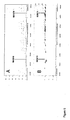
- the resulting sequences can be aligned with already known sequence patterns of the corresponding DNA, if applicable. Such results can be plotted in a way such as shown in Fig. 6 .
- the method according to the invention comprises the step of contig construction from the obtained sequences.
- sequences of different overlapping (contiguous) DNA fragments derived from the same source can be used for (re-)constructing the original respectively complete DNA sequence of this source.
- the at least one intact DNA strand can be hybridized to a nucleic acid structure displaying an antisense sequence of the at least one intact DNA strand.
- Suitable hybridization methods include in situ hybridization (hybridization of a DNA to a complementary sequence in isolated cells and/or tissues), Southern Blot (a method for verifying the presence of a DNA sequence in a DNA sample by separating the DNAs in the sample by size using gel electrophoresis and bringing said sample to a filter membrane for probe hybridization), Northern Blot (the equivalent of Southern Blot with RNA samples) and Southwestern Blot (identifying the presence of a DNA sequence in a DNA sample prepared according to the Southern blot method by hybridizing the sample on a nitrocellulose gel with characterizing DNA-binding proteins) microarray hybridization and correspondent "reverse" hybridizations were intact DNA's are loaded on a membrane and hybridised with particular probes.
- RNAs such as a whole transcriptome of a cell or a tissue
- at least one single strand RNA is provided, for example by isolation from the respective cell or tissue.
- the four dNTPs dATP, dCTP, dGTP and dTTP are added in sufficient amounts to the solution containing the at least one RNA strand.
- a first cDNA strand is generated by using random primers (or oligo(dT), oligo (dU), oligo (U) primers) for annealing to said at least one RNA strand and an enzyme with Reverse Transcriptase activity.
- the modified dNTP may be a dNTP which can be specifically degraded by adding a degrading agent in order that the strand containing the such degraded at least one modified dNTP is not suitable anymore for amplification, or the modified dNTP may expose the such marked cDNA strand for being removed by interaction with specific agents interacting with the additional functional group or groups on the at least one modified dNTP.
- the four dNTPs including the at least one modified dNTP second strand cDNA synthesis is performed by using the first cDNA strand as a template and a suitable enzyme with polymerase activity.
- polarity specific adaptors are ligated to the ends of cDNA strands, allowing a polymerase to dock to the adaptor structure for PCR amplification.
- the second cDNA strand containing the at least one modified dNTP is for example degraded by degrading the at least one modified dNTP with a suitable degrading agent, or the at least one second cDNA strand containing the at least one modified dNTP is separated from the at least one first cDNA strand by special molecules or particles attaching to characteristic structures on the modified dNTP.
- the remaining intact first cDNA strand is amplified by PCR using a suitable enzyme with polymerase activity.
- RNA specific cloning of RNA can be achieved also by varying the steps of the inventive method.
- the first cDNA strand shall contain the at least one modified dNTP.
- this at least one modified dNTP is substituted by the corresponding classic dNTP.
- the at least one first cDNA strand will be either degraded or removed.
- the amplification step is then performed on the remaining intact second cDNA strand. All other steps are adjusted correspondingly.
- strand specific differentiation according to the invention can also be achieved using single-stranded DNA as a template.
- at least one DNA single strand is provided.
- a cDNA strand is synthesized wherein at least one modified dNTP is integrated.
- only one cDNA strand is synthesized since a second cDNA strand would be identical to the original DNA single strand.
- the original single-stranded DNA shall be amplified. Thus all transcripts resulting from the PCR will bear the same reading direction of the sequence as the original single-stranded DNA. The other steps are adjusted accordingly.
- the purpose of the inventive method is not an amplification but a hybridization.
- This hybridization can occur against any structure carrying a corresponding antisense sequence to the at least one intact first cDNA strand (see below).
- no adaptors have to be ligated. Consequently, this step is omitted in this embodiment and the amplification step is replaced by a hybridization step.
- the order of the steps of the inventive method reads as follows:
- Embodiment 5 varies embodiment 4 in so far that herein the first cDNA strand contains the at least one modified dNTP. Thus the remaining intact second cDNA strand is hybridized. Consequently, the sequence against which the remaining intact second cDNA strand is hybridized must display an antisense sequence of the second strand.
- the steps of the inventive method are adjusted according to embodiments 2 and 4 and read as follows:
- the hybridization step follows after an amplification step.
- the steps of ligating a polarity-specific adaptor and of an amplification have to be integrated again.
- the order of the steps reads like embodiment 1 and a subsequent hybridization step:
- the hybridization step can ensue after performing an amplification of the intact second-strand cDNA, as in embodiment 2:
- Embodiment 9 If the sequence of the original RNA is not known it may be desirable to perform sequencing. Thus such a step is added to the step order of embodiment 1:
- Embodiment 10 Consequently, it is also possible to include a sequencing step if the first-stranded included the at least one modified dNTP and the intact second-strand cDNA is amplified, as in embodiment 2:
- Embodiment 11 After sequencing it may be desirable to determine the polarity of the resulting sequence(s). This may serve for several analytic or diagnostic purposes (see below) or for aligning RNA transcripts to gene sequences known from DNA sequencing projects. If the remaining intact first strand cDNA was sequenced the order of the steps of the inventive method read as follows:
- Embodiment 12 Consequently, such a determination of the polarity and optionally an alignment to a gene structure known from a sequencing project can also be performed if the remaining intact second strand cDNA was amplified and sequenced. As in this case the antisense sequence is resulting the sequence has to be inverted, preferably by means of a computer programme, into the correct reading sequence.
- Embodiment 13 In analogy, it may be also desirable to sequence the amplified copies of a single-stranded DNA if the sequence isn't known yet. Thus a sequencing step ensues to the order of the steps of the inventive method of embodiment 3:
- Embodiment 14 Also for single-stranded DNA it may be desirable to determine the polarity of the resulting copies after amplification and sequencing. As for single-stranded DNA by needs only one cDNA strand is generated including the at least one modified dNTP the resulting sequence must be inverted, as in embodiment 12.
- the original polynucleotide strand is a double-stranded DNA.
- a possible sequence of the steps according to this embodiment is:
- the original polynucleotide strand is a double-stranded DNA obtained as a result of PCR reaction.
- a special modified nucleotide is introduced into one PCR primer to set a nick into the particular strand of the double-stranded DNA which shall be substituted.
- the method according to the invention was applied on the yeast transcriptome (Example 1). In a similar fashion, it was applied on the transcriptome of the mouse brain (Example 2). These two examples were chosen because comparative data from the Applicants' laboratory and other laboratories are available. Also complete genomes of these organisms are published. By way of comparing the results from conventional RNA-Seq and the inventive method according to the invention the advantages of the inventive method become apparent. As shown e.g. in Example 1 and Fig. 6 , the inventive method allows a differentiation in sense and antisense transcripts. In this plot sense transcripts are marked in blue and antisense transcripts in red. Thus the method according to the invention can use the maintained information of the polarity of a transcript to generate more precise gene expression maps. Practical applications are discussed further below.
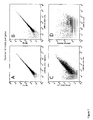
- the reliability of the method according to the invention was validated in several control experiments. First, it was tested to which degree the inventive method can reproduce the results of conventional RNA sequencing. Herein the amplified sense and antisense transcripts according to the invention were pooled for allowing a correlation analysis. The results such as shown in Example 3 and Fig. 7A show a high correlation between the two methods. A high correlation corresponds to a distribution close to unity. A low correlation would be represented by a widely scattered distribution pattern. Thus the inventive method does not disturb the overall expression and transcriptome pattern in a sample. So the results of both methods can be compared to one another.
- sense and antisense transcripts obtained according to the inventive method were compared and depicted in such an aforesaid scatter plot. As can be seen in Fig. 7D there is nearly no correlation. Thus sense and antisense transcripts obtained according to the inventive method are unequivocally different. This is a proof that the inventive method is highly suitable for differentiating accurately between sense and antisense transcripts.
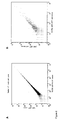
- Actinomycin D is a substance which selectively inhibits DNA synthesis from DNA templates, but not from RNA templates. In a further experiment it could be shown that the presence of actinomycin D does not deteriorate significantly the results from the inventive protocol, neither for sense nor for antisense transcripts (see Example 6 and Fig. 9 ).
- Fig. 10 presents examples where information about transcription orientation helps to resolve overlaps of annotated and new genes in both yeast and mouse transcriptomes.
- kits in molecular biology are packages which includes all necessary ingredients for performing a certain method or singular step.
- Standard chemicals as present in any standard molecular biology laboratory are normally not included. Nevertheless some of these standard chemicals may be indispensable to carry out the inventive method properly. It is understood that all ingredients are provided in quantities that allow for a proper execution of the inventive method for the majority of scientific, diagnostic and industrial applications.
- kits use to be verified. Therefore the operator doesn't have to prove again the viability of the method and can save on at least some control experiments. Therefore kits are a very popular tool in molecular biology laboratories in research, diagnostics and industry.
- such a kit shall include the following components:
- kits it may be preferable to include additionally components for removal of unmodified nucleotides by gel-filtration or purification on silica-column.
- the kits should include the following:
- Another application is the use of the results of this method for improved quantitative and qualitative diagnosis tests in selected diseases, as a part of the treatment or for prophylactic purposes.
- every disease is eligible which includes a temporary or permanent change in RNA expression levels.
- improved gene expression patterns of plant, fungi, bacteria and viruses can be obtained by this method when the polarity of transcripts is available.
- a further application is the production of improved and more selective microarrays.
- the polarity of transcripts is known only the transcripts (respectively the antisense sequence) with a correct reading direction are meaningfully included in the microarray so that the limited space on the microarray is more economically used.
- microarrays used for the generation of characteristic patterns instead of individual results may obtain a higher resolution by omitting non-characteristic transcripts of the incorrect reading direction.
- the advantages of the procedure according to the invention are providing a simple, inexpensive and reliable method for strand-specific cDNA cloning.
- This method is a novel and easy approach for determining the polarity of transcripts and using this information for purposes as outlined above.
- the method according to the invention has a higher accuracy in measuring expression levels of genes compared to RNA-Seq. Ignoring orientation of transcripts leads for example to overestimation of the expression level for about 10% of the mouse and about 15% of the yeast genes with noticeable expression level.
- Yeast strain BY4741 (MATa; his3 ⁇ 1; leu2 ⁇ 0; met15 ⁇ 0; ura3 ⁇ 0 ) was grown in rich medium (YPD; BD Company) at 30°C overnight, diluted to an OD 600 of 0.15 and grown until reaching an OD 600 of 0.87. The cells were harvested by centrifugation at room temperature, washed once with 1xPBS, and frozen in liquid nitrogen. Total RNA was extracted using the RiboPureTM-Yeast kit (Ambion) and analyzed by an Agilent 2100 bioanalyzer (Agilent Technologies).
- polyA + RNA was purified with the Dynabeads mRNA purification kit (Invitrogen) following manufacturer's instructions and treated for 30 min at 37°C with 0.2 u TURBOTM DNase (Ambion) per 1 ⁇ g of RNA.
- a typical FSS reaction was prepared by mixing 0.5 ⁇ g of polyA + RNA, 40 ng of (dN) 6 primers (Invitrogen) and 25 pmol of oligo(dT) primer (Invitrogen) in 8.5 ⁇ l of 1x reverse transcription buffer (Invitrogen), 0.5 mM dNTP's, 5 mM MgCl 2 and 10 mM DTT. The mixture was incubated at 98°C for 1 min to melt RNA secondary structures, then at 70°C for 5 min and was ramped to 15°C at 0.1°C/sec. Slow temperature ramp was used to make secondary structures of RNA and primers annealing as reproducible as possible.
- EB 10 mM TrisCl, pH 8.5, Qiagen
- dNTPs were removed by purification of the first strand mixture on a self-made 200 ⁇ l G-50 gel-filtration spin-column equilibrated with 1 mM TrisCl, pH 7.0.
- the Invitrogen kit for second strand synthesis was used. Therefore the first strand synthesis buffer was restored after gel-filtration column. It is possible to prepare self-made buffer and reduce the number of buffers. Water was added to the purified FSS reaction to bring the final volume to 52.5 ⁇ l. The mixture was cooled on ice.
- 22.5 ⁇ l of the "second strand mixture" (1 ⁇ l of 1O x reverse transcription buffer (Invitrogen); 0.5 ⁇ l of 100 mM MgCl 2 ; 1 ⁇ l of 0.1 M DTT; 2 ⁇ l of 10 mM mixture of each: dATP, dGTP, dCTP, dUTP; 15 ⁇ l of 5x SSS buffer (Invitrogen); 0.5 ⁇ l of E.coli ligase (10 u/ ⁇ l, NEB); 2 ⁇ l of DNA polymerase I (10 u/ ⁇ l, NEB) and 0.5 ⁇ l RNase H (2u/ ⁇ l, Invitrogen)) were added. SSS reaction was incubated at 16°C for 2 hours. ds cDNA was purified on QIAquick columns (Qiagen) according to the manufacturer's instructions.
- paired-end sequencing library preparation was the same except that other ligation adapters and PCR primers were used (#PE-102-1002, Illumina).
- Amplified material was loaded onto flowcell at 4 pM concentration. Sequencing was carried out on the Illumina 1 G Genome Analyser by running 36 cycles according to the manufacturer's instructions.
- mapping of exonic reads and exon junctions were performed as described in the art. Sequencing reads were aligned to S. cerevisiae (UCSC sacCerl) genomes using modification of Eland software (Gerald module v.1.27, Illumina). The mapping criteria of Eland are the following: sequencing read should be uniquely match to the genome allowing up to two mismatches, without insertions or deletions. The following recursive modification of Eland procedure was applied: first 32 bp of reads (trimming the last 4 bp of 36 bp reads due to Eland limitations) were aligned, then reads which do not match on reference by Eland criteria were trimmed to 31 bp, and aligned again.
- This 3'-end trimming of unmatched reads was done recursively down to 25 bp length.
- the modified procedure increases gain of uniquely aligned fragments typically by 20-50%, because the sequencing errors, which prevent successful alignment by Eland criteria, are located mostly on reads ends, which are gradually trimmed. Under these conditions, ⁇ 60% of the reads obtained here are matched to unique locations of the reference genome, whereas ⁇ 25% of the reads map to more than one genomic position and about 15% do not map.
- Unmapped sequencing reads with 1-11 nt long leading oligo(dT) stretches were used for mapping of the 3'-gene boundaries. Leading oligo(dT) stretches were removed, and if the remaining fragment length was longer or equal to 25 bp, it was aligned on reference genome.
- RNA-Seq The search for novel genes in yeast using RNA-Seq was previously performed. Such an algorithm was not used herein, since it was not accurately described in the art. To estimate roughly how the knowledge of RNA orientation influences the number of novel gene-candidates the following procedure was used. A search algorithm presented below gives 377 novel gene candidates without taking into account RNA orientation. It is about the same number as in the art. To use information about RNA orientation the search was performed twice (for reads mapped in the forward direction and then for reads mapped in the reverse direction), yielding in 549 novel gene candidates in forward orientation and 512 - in reverse. The whole genome was split into 50 bp windows (non-sliding).
- a “new gene” was defined as a joined group of more than 2 consecutive windows, with at least 2 sequence reads (of the same direction) mapped per window.
- the gap between “new genes” should be at least 50 bp, the gap between "new gene” and an annotated gene (with the same transcription direction as the "new gene") - at least 100 bp.
- RNA-Seq With the RNA-Seq procedure it is possible to determine the 3'-boundaries of genes using those sequencing reads, which overlap with 3'-borders of genes. These reads may be mapped to the reference genome only after removal of oligo(dT) tail.
- the inventive method has the advantage of reduced noise in comparison with the RNA-Seq protocol because only one orientation of the homopolymeric stretch is allowed.
- Example 2 Transcriptome of the brain of Mus musculus
- the resulting sequencing reads were aligned to the M. musculus (UCSC mm9) genomes using modification of Eland software (Gerald module v.1.27, Illumina).
- Example 3 Comparison of strand-specific and non-strand-specific amplification of polynucleotides
- RNA-Seq non-strand-specific transcriptome
- the inventive method results in a high degree of certainty in identifying transcript polarity.
- one uridine base in a molecule of a sequencing library is enough to prevent the appearance of a sequencing read from the false strand. Even if UNG occasionally does not remove the uridine base, the molecule still would not be amplified, since uridine-containing template strongly suppresses Phusion DNA polymerase used for library amplification.
- most second cDNA strands in the library contain more than one uridine base, because a 75%/25% dUTP/dTTP mixture in the second strand synthesis reaction gives essentially the same results as 100% dUTP ( Fig. 8A and 8B ).
- Actinomycin D was included in the reverse transcription reaction. Actinomycin D specifically inhibits DNA-dependent, but not RNA-dependent, DNA synthesis. The presence of actinomycin D in the reaction practically did not influence the level of antisense transcription ( Fig. 9A and 9B ). Actinomycin D is included in the protocol to make the reaction more reproducible.
Landscapes
- Chemical & Material Sciences (AREA)
- Life Sciences & Earth Sciences (AREA)
- Organic Chemistry (AREA)
- Proteomics, Peptides & Aminoacids (AREA)
- Zoology (AREA)
- Health & Medical Sciences (AREA)
- Engineering & Computer Science (AREA)
- Wood Science & Technology (AREA)
- Analytical Chemistry (AREA)
- Chemical Kinetics & Catalysis (AREA)
- Biophysics (AREA)
- Microbiology (AREA)
- Molecular Biology (AREA)
- Immunology (AREA)
- Biotechnology (AREA)
- Physics & Mathematics (AREA)
- Biochemistry (AREA)
- Bioinformatics & Cheminformatics (AREA)
- General Engineering & Computer Science (AREA)
- General Health & Medical Sciences (AREA)
- Genetics & Genomics (AREA)
- Measuring Or Testing Involving Enzymes Or Micro-Organisms (AREA)
Priority Applications (6)
| Application Number | Priority Date | Filing Date | Title |
|---|---|---|---|
| EP09008808A EP2272976A1 (de) | 2009-07-06 | 2009-07-06 | Verfahren zur Differenzierung von Polynucleotid-Strängen |
| PCT/EP2010/004399 WO2011003630A1 (en) | 2009-07-06 | 2010-07-06 | Method for differentiation of polynucleotide strands |
| EP10737282.3A EP2451973B1 (de) | 2009-07-06 | 2010-07-06 | Verfahren zur Differenzierung von Polynucleotid-Strängen |
| US13/382,673 US9175336B2 (en) | 2009-07-06 | 2010-07-06 | Method for differentiation of polynucleotide strands |
| US14/546,844 US8999677B1 (en) | 2009-07-06 | 2014-11-18 | Method for differentiation of polynucleotide strands |
| US14/841,319 US20160053315A1 (en) | 2009-07-06 | 2015-08-31 | Method for Differentiation of Polynucleotide Strands |
Applications Claiming Priority (1)
| Application Number | Priority Date | Filing Date | Title |
|---|---|---|---|
| EP09008808A EP2272976A1 (de) | 2009-07-06 | 2009-07-06 | Verfahren zur Differenzierung von Polynucleotid-Strängen |
Publications (1)
| Publication Number | Publication Date |
|---|---|
| EP2272976A1 true EP2272976A1 (de) | 2011-01-12 |
Family
ID=41403953
Family Applications (2)
| Application Number | Title | Priority Date | Filing Date |
|---|---|---|---|
| EP09008808A Withdrawn EP2272976A1 (de) | 2009-07-06 | 2009-07-06 | Verfahren zur Differenzierung von Polynucleotid-Strängen |
| EP10737282.3A Active EP2451973B1 (de) | 2009-07-06 | 2010-07-06 | Verfahren zur Differenzierung von Polynucleotid-Strängen |
Family Applications After (1)
| Application Number | Title | Priority Date | Filing Date |
|---|---|---|---|
| EP10737282.3A Active EP2451973B1 (de) | 2009-07-06 | 2010-07-06 | Verfahren zur Differenzierung von Polynucleotid-Strängen |
Country Status (3)
| Country | Link |
|---|---|
| US (3) | US9175336B2 (de) |
| EP (2) | EP2272976A1 (de) |
| WO (1) | WO2011003630A1 (de) |
Cited By (16)
| Publication number | Priority date | Publication date | Assignee | Title |
|---|---|---|---|---|
| WO2013059746A1 (en) * | 2011-10-19 | 2013-04-25 | Nugen Technologies, Inc. | Compositions and methods for directional nucleic acid amplification and sequencing |
| US8551709B2 (en) | 2006-06-30 | 2013-10-08 | Nugen Technologies, Inc. | Methods for fragmentation and labeling of nucleic acids |
| WO2013191775A2 (en) | 2012-06-18 | 2013-12-27 | Nugen Technologies, Inc. | Compositions and methods for negative selection of non-desired nucleic acid sequences |
| WO2014150435A1 (en) * | 2013-03-15 | 2014-09-25 | Illumina, Inc. | METHODS FOR PRODUCING STRANDED cDNA LIBRARIES |
| CN105143525A (zh) * | 2013-03-15 | 2015-12-09 | 纽亘技术公司 | 用于生成成链rna或dna文库的方法、组合物和试剂盒 |
| US9650628B2 (en) | 2012-01-26 | 2017-05-16 | Nugen Technologies, Inc. | Compositions and methods for targeted nucleic acid sequence enrichment and high efficiency library regeneration |
| US9745614B2 (en) | 2014-02-28 | 2017-08-29 | Nugen Technologies, Inc. | Reduced representation bisulfite sequencing with diversity adaptors |
| US9822408B2 (en) | 2013-03-15 | 2017-11-21 | Nugen Technologies, Inc. | Sequential sequencing |
| WO2018046752A1 (en) * | 2016-09-12 | 2018-03-15 | Technische Hochschule Wildau | Convertible adapters |
| US10102337B2 (en) | 2014-08-06 | 2018-10-16 | Nugen Technologies, Inc. | Digital measurements from targeted sequencing |
| US10570448B2 (en) | 2013-11-13 | 2020-02-25 | Tecan Genomics | Compositions and methods for identification of a duplicate sequencing read |
| US11028430B2 (en) | 2012-07-09 | 2021-06-08 | Nugen Technologies, Inc. | Methods for creating directional bisulfite-converted nucleic acid libraries for next generation sequencing |
| US11099202B2 (en) | 2017-10-20 | 2021-08-24 | Tecan Genomics, Inc. | Reagent delivery system |
| US12059674B2 (en) | 2020-02-03 | 2024-08-13 | Tecan Genomics, Inc. | Reagent storage system |
| US12492430B2 (en) | 2017-04-11 | 2025-12-09 | Tecan Genomics, Inc. | Library quantitation and qualification |
| US12600963B2 (en) | 2020-01-20 | 2026-04-14 | Tecan Genomics, Inc. | Depletion of abundant uninformative sequences |
Families Citing this family (10)
| Publication number | Priority date | Publication date | Assignee | Title |
|---|---|---|---|---|
| NO2694769T3 (de) | 2012-03-06 | 2018-03-03 | ||
| US20160083724A1 (en) | 2014-09-24 | 2016-03-24 | University Of Southern California | Methods for sample preparation |
| US10760117B2 (en) | 2015-04-06 | 2020-09-01 | The Regents Of The University Of California | Methods for determining base locations in a polynucleotide |
| CA2990846C (en) * | 2015-06-24 | 2023-09-26 | Dana-Farber Cancer Institute, Inc. | Selective degradation of wild-type dna and enrichment of mutant alleles using nuclease |
| WO2018027048A1 (en) * | 2016-08-05 | 2018-02-08 | Bio-Rad Laboratories, Inc. | Second strand direct |
| JP6933907B2 (ja) * | 2017-02-24 | 2021-09-08 | シスメックス株式会社 | 核酸増幅方法 |
| US10752894B2 (en) * | 2017-05-23 | 2020-08-25 | Bio-Rad Laboratories, Inc. | Molecular barcoding |
| WO2019045803A1 (en) * | 2017-09-01 | 2019-03-07 | Genemo Inc. | RNA SEQUENCING METHODS |
| JP7757625B2 (ja) * | 2021-04-26 | 2025-10-22 | 東レ株式会社 | 標的miRNA及びその前駆体の検出方法 |
| CN119365610A (zh) * | 2022-05-25 | 2025-01-24 | 表观遗传学公司 | 衔接子连接 |
Citations (3)
| Publication number | Priority date | Publication date | Assignee | Title |
|---|---|---|---|---|
| WO1997012061A1 (en) * | 1995-09-27 | 1997-04-03 | Epicentre Technologies Corporation | Method for characterizing nucleic acid molecules |
| WO2003008538A2 (en) * | 2001-07-20 | 2003-01-30 | Molecular Staging, Inc. | Gene expression profiling |
| US20070281863A1 (en) * | 2001-06-30 | 2007-12-06 | Enzo Life Sciences, Inc. | Dual polarity analysis of nucleic acids |
Family Cites Families (10)
| Publication number | Priority date | Publication date | Assignee | Title |
|---|---|---|---|---|
| ES2128323T3 (es) | 1990-07-24 | 1999-05-16 | Hoffmann La Roche | Reduccion de la amplificacion no-especifica durante la amplificacion in vitro del acido nucleico empleando bases de acido nucleico modificadas. |
| ATE347616T1 (de) * | 1999-04-30 | 2006-12-15 | Cyclops Genome Sciences Ltd | Ribonukleinsäurederivate |
| WO2001055454A1 (en) * | 2000-01-28 | 2001-08-02 | Althea Technologies, Inc. | Methods for analysis of gene expression |
| US7413857B2 (en) | 2002-11-21 | 2008-08-19 | Epicentre Technologies | Methods for using riboprimers for strand displacement replication of target sequences |
| US20060134652A1 (en) * | 2003-08-13 | 2006-06-22 | Affymetrix, Inc. | Methods and kits for preparing nucleic acid samples |
| US20060141498A1 (en) | 2003-09-25 | 2006-06-29 | Affymetrix, Inc. | Methods for fragmenting nucleic acid |
| US20050136417A1 (en) | 2003-12-19 | 2005-06-23 | Affymetrix, Inc. | Amplification of nucleic acids |
| US20070218478A1 (en) * | 2005-12-16 | 2007-09-20 | Affymetrix, Inc. | Methods for fragmentation and analysis of nucleic acid |
| EP2173872B1 (de) * | 2007-06-29 | 2014-04-02 | CellScript, Inc. | Copy-dna und sense-rna |
| CA2750547C (en) | 2009-01-22 | 2018-07-03 | Quanta Biosciences | Methods for enrichment of selected rna molecules |
-
2009
- 2009-07-06 EP EP09008808A patent/EP2272976A1/de not_active Withdrawn
-
2010
- 2010-07-06 WO PCT/EP2010/004399 patent/WO2011003630A1/en not_active Ceased
- 2010-07-06 EP EP10737282.3A patent/EP2451973B1/de active Active
- 2010-07-06 US US13/382,673 patent/US9175336B2/en active Active
-
2014
- 2014-11-18 US US14/546,844 patent/US8999677B1/en active Active
-
2015
- 2015-08-31 US US14/841,319 patent/US20160053315A1/en not_active Abandoned
Patent Citations (3)
| Publication number | Priority date | Publication date | Assignee | Title |
|---|---|---|---|---|
| WO1997012061A1 (en) * | 1995-09-27 | 1997-04-03 | Epicentre Technologies Corporation | Method for characterizing nucleic acid molecules |
| US20070281863A1 (en) * | 2001-06-30 | 2007-12-06 | Enzo Life Sciences, Inc. | Dual polarity analysis of nucleic acids |
| WO2003008538A2 (en) * | 2001-07-20 | 2003-01-30 | Molecular Staging, Inc. | Gene expression profiling |
Non-Patent Citations (2)
| Title |
|---|
| HOGREFE, H.H. ET AL.: "Archaeal dUTPase enhances PCR amplifications with archaeal DNA polymerases by preventing dUTP incorporation", PROC NATL ACAD SCI USA, vol. 99, 2002, pages 596 - 601 |
| J. SAMBROOK; D. RUSSELL: "Molecular Cloning: A Laboratory Manual" |
Cited By (31)
| Publication number | Priority date | Publication date | Assignee | Title |
|---|---|---|---|---|
| US8551709B2 (en) | 2006-06-30 | 2013-10-08 | Nugen Technologies, Inc. | Methods for fragmentation and labeling of nucleic acids |
| GB2497838A (en) * | 2011-10-19 | 2013-06-26 | Nugen Technologies Inc | Compositions and methods for directional nucleic acid amplification and sequencing |
| CN104080958A (zh) * | 2011-10-19 | 2014-10-01 | 纽亘技术公司 | 用于定向核酸扩增和测序的组合物和方法 |
| US9206418B2 (en) | 2011-10-19 | 2015-12-08 | Nugen Technologies, Inc. | Compositions and methods for directional nucleic acid amplification and sequencing |
| WO2013059746A1 (en) * | 2011-10-19 | 2013-04-25 | Nugen Technologies, Inc. | Compositions and methods for directional nucleic acid amplification and sequencing |
| US9650628B2 (en) | 2012-01-26 | 2017-05-16 | Nugen Technologies, Inc. | Compositions and methods for targeted nucleic acid sequence enrichment and high efficiency library regeneration |
| US10036012B2 (en) | 2012-01-26 | 2018-07-31 | Nugen Technologies, Inc. | Compositions and methods for targeted nucleic acid sequence enrichment and high efficiency library generation |
| US10876108B2 (en) | 2012-01-26 | 2020-12-29 | Nugen Technologies, Inc. | Compositions and methods for targeted nucleic acid sequence enrichment and high efficiency library generation |
| WO2013191775A2 (en) | 2012-06-18 | 2013-12-27 | Nugen Technologies, Inc. | Compositions and methods for negative selection of non-desired nucleic acid sequences |
| EP2861787A4 (de) * | 2012-06-18 | 2016-03-02 | Nugen Technologies Inc | Zusammensetzungen und verfahren zur negativen auswahl von unerwünschten nukleinsäuresequenzen |
| US9957549B2 (en) | 2012-06-18 | 2018-05-01 | Nugen Technologies, Inc. | Compositions and methods for negative selection of non-desired nucleic acid sequences |
| US11028430B2 (en) | 2012-07-09 | 2021-06-08 | Nugen Technologies, Inc. | Methods for creating directional bisulfite-converted nucleic acid libraries for next generation sequencing |
| US11697843B2 (en) | 2012-07-09 | 2023-07-11 | Tecan Genomics, Inc. | Methods for creating directional bisulfite-converted nucleic acid libraries for next generation sequencing |
| CN105143525A (zh) * | 2013-03-15 | 2015-12-09 | 纽亘技术公司 | 用于生成成链rna或dna文库的方法、组合物和试剂盒 |
| US9255265B2 (en) | 2013-03-15 | 2016-02-09 | Illumina, Inc. | Methods for producing stranded cDNA libraries |
| US9822408B2 (en) | 2013-03-15 | 2017-11-21 | Nugen Technologies, Inc. | Sequential sequencing |
| US10047359B2 (en) | 2013-03-15 | 2018-08-14 | Illumina, Inc. | Methods for producing stranded cDNA libraries |
| WO2014150435A1 (en) * | 2013-03-15 | 2014-09-25 | Illumina, Inc. | METHODS FOR PRODUCING STRANDED cDNA LIBRARIES |
| US10619206B2 (en) | 2013-03-15 | 2020-04-14 | Tecan Genomics | Sequential sequencing |
| US10760123B2 (en) | 2013-03-15 | 2020-09-01 | Nugen Technologies, Inc. | Sequential sequencing |
| US11725241B2 (en) | 2013-11-13 | 2023-08-15 | Tecan Genomics, Inc. | Compositions and methods for identification of a duplicate sequencing read |
| US10570448B2 (en) | 2013-11-13 | 2020-02-25 | Tecan Genomics | Compositions and methods for identification of a duplicate sequencing read |
| US11098357B2 (en) | 2013-11-13 | 2021-08-24 | Tecan Genomics, Inc. | Compositions and methods for identification of a duplicate sequencing read |
| US9745614B2 (en) | 2014-02-28 | 2017-08-29 | Nugen Technologies, Inc. | Reduced representation bisulfite sequencing with diversity adaptors |
| US10102337B2 (en) | 2014-08-06 | 2018-10-16 | Nugen Technologies, Inc. | Digital measurements from targeted sequencing |
| WO2018046752A1 (en) * | 2016-09-12 | 2018-03-15 | Technische Hochschule Wildau | Convertible adapters |
| CN110382709A (zh) * | 2016-09-12 | 2019-10-25 | 维尔道应用技术大学 | 可转化的衔接子 |
| US12492430B2 (en) | 2017-04-11 | 2025-12-09 | Tecan Genomics, Inc. | Library quantitation and qualification |
| US11099202B2 (en) | 2017-10-20 | 2021-08-24 | Tecan Genomics, Inc. | Reagent delivery system |
| US12600963B2 (en) | 2020-01-20 | 2026-04-14 | Tecan Genomics, Inc. | Depletion of abundant uninformative sequences |
| US12059674B2 (en) | 2020-02-03 | 2024-08-13 | Tecan Genomics, Inc. | Reagent storage system |
Also Published As
| Publication number | Publication date |
|---|---|
| US20160053315A1 (en) | 2016-02-25 |
| EP2451973A1 (de) | 2012-05-16 |
| WO2011003630A1 (en) | 2011-01-13 |
| US9175336B2 (en) | 2015-11-03 |
| US8999677B1 (en) | 2015-04-07 |
| US20120237943A1 (en) | 2012-09-20 |
| EP2451973B1 (de) | 2016-05-11 |
| US20150105299A1 (en) | 2015-04-16 |
Similar Documents
| Publication | Publication Date | Title |
|---|---|---|
| EP2451973B1 (de) | Verfahren zur Differenzierung von Polynucleotid-Strängen | |
| EP2906715B1 (de) | Zusammensetzungen, verfahren, systeme und kits zur zielnukleinsäureanreicherung | |
| CN110036117B (zh) | 通过多联短dna片段增加单分子测序的处理量的方法 | |
| CN107922970B (zh) | 通过单探针引物延伸的靶标富集 | |
| RU2698125C2 (ru) | Библиотеки для секвенирования нового поколения | |
| CN106912197B (zh) | 用于多重pcr的方法和组合物 | |
| US10988795B2 (en) | Synthesis of double-stranded nucleic acids | |
| EP4090766B1 (de) | Verfahren zur gezielten sequenzierung | |
| WO2012003374A2 (en) | Targeted sequencing library preparation by genomic dna circularization | |
| WO2013081864A1 (en) | Methods and compositions for multiplex pcr | |
| CN117778531A (zh) | 分子库制备方法以及其组合物和用途 | |
| EP3262175A1 (de) | Verfahren und zusammensetzungen zur in-silico-sequenzierung langer leseabschnitte | |
| JP7206424B2 (ja) | mRNAを増幅する方法及び完全長mRNAライブラリを調製する方法 | |
| JP2024515076A (ja) | 一本鎖dnaの増幅 | |
| US20140336058A1 (en) | Method and kit for characterizing rna in a composition | |
| EP4019647B1 (de) | Modifizierte multiplexe und mehrstufige amplifikationsreaktionen und reagenzien dafür | |
| US11946099B2 (en) | Elimination of primer-primer interactions during primer extension | |
| US10059938B2 (en) | Gene expression analysis | |
| US20170175182A1 (en) | Transposase-mediated barcoding of fragmented dna | |
| KR20230124636A (ko) | 멀티플렉스 반응에서 표적 서열의 고 감응성 검출을위한 조성물 및 방법 | |
| WO2026024817A1 (en) | Methods and compositions for anchored multiplex ngs workflows | |
| WO2026093331A1 (en) | Hairpin adapter constructs and primers to generate next-generation sequencing library molecules | |
| Blattner | Single cell transcriptome analysis using next generation sequencing. |
Legal Events
| Date | Code | Title | Description |
|---|---|---|---|
| PUAI | Public reference made under article 153(3) epc to a published international application that has entered the european phase |
Free format text: ORIGINAL CODE: 0009012 |
|
| AK | Designated contracting states |
Kind code of ref document: A1 Designated state(s): AT BE BG CH CY CZ DE DK EE ES FI FR GB GR HR HU IE IS IT LI LT LU LV MC MK MT NL NO PL PT RO SE SI SK SM TR |
|
| AX | Request for extension of the european patent |
Extension state: AL BA RS |
|
| STAA | Information on the status of an ep patent application or granted ep patent |
Free format text: STATUS: THE APPLICATION IS DEEMED TO BE WITHDRAWN |
|
| 18D | Application deemed to be withdrawn |
Effective date: 20110713 |