EP2274890B1 - Procédé et système pour une commutation de canal rapide à l aide de messages rtsp standard - Google Patents
Procédé et système pour une commutation de canal rapide à l aide de messages rtsp standard Download PDFInfo
- Publication number
- EP2274890B1 EP2274890B1 EP08783219.2A EP08783219A EP2274890B1 EP 2274890 B1 EP2274890 B1 EP 2274890B1 EP 08783219 A EP08783219 A EP 08783219A EP 2274890 B1 EP2274890 B1 EP 2274890B1
- Authority
- EP
- European Patent Office
- Prior art keywords
- rtsp
- channel
- streaming server
- client device
- switching
- Prior art date
- Legal status (The legal status is an assumption and is not a legal conclusion. Google has not performed a legal analysis and makes no representation as to the accuracy of the status listed.)
- Active
Links
Images





Classifications
-
- H—ELECTRICITY
- H04—ELECTRIC COMMUNICATION TECHNIQUE
- H04N—PICTORIAL COMMUNICATION, e.g. TELEVISION
- H04N21/00—Selective content distribution, e.g. interactive television or video on demand [VOD]
- H04N21/60—Network structure or processes for video distribution between server and client or between remote clients; Control signalling between clients, server and network components; Transmission of management data between server and client, e.g. sending from server to client commands for recording incoming content stream; Communication details between server and client
- H04N21/63—Control signaling related to video distribution between client, server and network components; Network processes for video distribution between server and clients or between remote clients, e.g. transmitting basic layer and enhancement layers over different transmission paths, setting up a peer-to-peer communication via Internet between remote STB's; Communication protocols; Addressing
- H04N21/643—Communication protocols
-
- H—ELECTRICITY
- H04—ELECTRIC COMMUNICATION TECHNIQUE
- H04L—TRANSMISSION OF DIGITAL INFORMATION, e.g. TELEGRAPHIC COMMUNICATION
- H04L65/00—Network arrangements, protocols or services for supporting real-time applications in data packet communication
- H04L65/60—Network streaming of media packets
- H04L65/61—Network streaming of media packets for supporting one-way streaming services, e.g. Internet radio
- H04L65/612—Network streaming of media packets for supporting one-way streaming services, e.g. Internet radio for unicast
-
- H—ELECTRICITY
- H04—ELECTRIC COMMUNICATION TECHNIQUE
- H04L—TRANSMISSION OF DIGITAL INFORMATION, e.g. TELEGRAPHIC COMMUNICATION
- H04L65/00—Network arrangements, protocols or services for supporting real-time applications in data packet communication
- H04L65/60—Network streaming of media packets
- H04L65/61—Network streaming of media packets for supporting one-way streaming services, e.g. Internet radio
- H04L65/613—Network streaming of media packets for supporting one-way streaming services, e.g. Internet radio for the control of the source by the destination
-
- H—ELECTRICITY
- H04—ELECTRIC COMMUNICATION TECHNIQUE
- H04N—PICTORIAL COMMUNICATION, e.g. TELEVISION
- H04N21/00—Selective content distribution, e.g. interactive television or video on demand [VOD]
- H04N21/40—Client devices specifically adapted for the reception of or interaction with content, e.g. set-top-box [STB]; Operations thereof
- H04N21/43—Processing of content or additional data, e.g. demultiplexing additional data from a digital video stream; Elementary client operations, e.g. monitoring of home network or synchronising decoder's clock; Client middleware
- H04N21/438—Interfacing the downstream path of the transmission network originating from a server, e.g. retrieving encoded video stream packets from an IP network
- H04N21/4383—Accessing a communication channel
- H04N21/4384—Accessing a communication channel involving operations to reduce the access time, e.g. fast-tuning for reducing channel switching latency
-
- H—ELECTRICITY
- H04—ELECTRIC COMMUNICATION TECHNIQUE
- H04N—PICTORIAL COMMUNICATION, e.g. TELEVISION
- H04N21/00—Selective content distribution, e.g. interactive television or video on demand [VOD]
- H04N21/60—Network structure or processes for video distribution between server and client or between remote clients; Control signalling between clients, server and network components; Transmission of management data between server and client, e.g. sending from server to client commands for recording incoming content stream; Communication details between server and client
- H04N21/63—Control signaling related to video distribution between client, server and network components; Network processes for video distribution between server and clients or between remote clients, e.g. transmitting basic layer and enhancement layers over different transmission paths, setting up a peer-to-peer communication via Internet between remote STB's; Communication protocols; Addressing
- H04N21/643—Communication protocols
- H04N21/6437—Real-time Transport Protocol [RTP]
-
- H—ELECTRICITY
- H04—ELECTRIC COMMUNICATION TECHNIQUE
- H04L—TRANSMISSION OF DIGITAL INFORMATION, e.g. TELEGRAPHIC COMMUNICATION
- H04L65/00—Network arrangements, protocols or services for supporting real-time applications in data packet communication
- H04L65/60—Network streaming of media packets
- H04L65/65—Network streaming protocols, e.g. real-time transport protocol [RTP] or real-time control protocol [RTCP]
Definitions
- the invention relates to the field of media stream management, and in particular, to a method and system for fast channel switching from one live media stream to another by using Real Time Stream Protocol (RTSP) messages.
- RTSP Real Time Stream Protocol
- client devices may be deployed by users. These include desktop computers, television sets as well as mobile wireless devices such as cell phones and personal digital assistants.
- client device is associated with a media player that provides the end-user with the interface required for interacting with the streaming server.
- Both stored media streams such as movies available at the streaming server, or live media streams, including sporting events and live concerts distributed in real time by the streaming server, are viewed by end-users.
- RTSP Real Time Streaming Protocol
- RRC Request for Comments
- IETF Internet Engineering Task Force
- RTSP Real Time Streaming Protocol
- VCR Video Cassette Recorder
- RTSP Real Time Transport Protocol
- RTP Real Time Transport Protocol
- a number of RTSP messages are described below, see, for example an article in Wikipedia entitled “ Real Time Streaming Protocol” published on-line at the URL "http://en.wikipedia.org.wiki/Real_Time_Streaming_Protocol " before the priority date of the present invention.
- DESCRIBE This message is sent typically for launching a RTSP session.
- the message includes a RTSP URL required for identifying the media stream to be played and the type of reply data that can be handled.
- the reply to this message includes the description of the multimedia session prepared by using the Session Description Protocol (SDP).
- SDP is a protocol used for describing multimedia sessions for session announcement, session invitation, and other forms of multimedia session initiation.
- the session description includes a list of the media streams controlled with the help of the URL specified in the DESCRIBE message. Typically, there is one media stream for audio and a separate media stream for video.
- This message specifies how a single media stream must be transported. This is used before a play request is sent by the client to the streaming server.
- the request contains the media stream URL and a transport specifier that includes a local port for receiving RTP data corresponding to the audio or the video stream.
- PLAY This message is sent by the client to play a media stream. Multiple PLAY requests can be sent in succession.
- the URL associated with this request may be an aggregate URL when the client wishes to play all media streams, or a single media stream URL when the client wishes to play only a single stream.
- a range parameter included with the PLAY request is used to determine the point in the media stream from which transmission is to begin. If no range is specified, the stream is played from the beginning to the end.
- TEARDOWN This message is used to terminate an existing RTSP session. It stops all media streams and clears all data related to the RTSP session on the streaming server.
- Viewers of live media streams may desire to switch from a channel currently being viewed to a new channel.
- Systems that use the standard RTSP protocol may need to terminate an existing RTSP session and start a new RTSP session for playing the new channel desired by the client. This disruptive and delay causing process can lead to a dissatisfied user.
- extensions to the RTSP protocol are being proposed for performing fast channel switching (FCS) within the existing RTSP session, most existing media players are not equipped to deal with this new extension to the RTSP protocol.
- FCS fast channel switching
- handling the extension to the RTSP protocol often requires additional resources, which may not be available for resource constrained mobile devices.
- WO 2007/149029 A1 discloses media session management that encompasses a media server having access to multiple unicast-based media channels and a user terminal.
- the user terminal generates and transmits a generic, channel transparent session request to the server. This request initiates a generic, channel transparent media session setup procedure between the terminal and the server.
- the setup procedure involves exchange of requests and responses but no media channel is yet selected or notified at the server.
- the user terminal transmits a channel-specific rendering request for a desired media channel to the server.
- the terminal simply transmits a new channel-specific request for a new channel to the server during the ongoing session and reusing the negotiated transport parameters of the channel-transparent setup procedure.
- EP 1 646 199 A1 discloses a mobile station adapted for channel switching associated with selection of content by a user.
- the mobile station comprises a timer generating unit that generates a timer related to transmission of a command derived from the user input to a content server in response to the user input.
- the mobile station also comprises a transmitting unit that transmits the command derived from the user input to the content server in response to expiration of the timer.
- the timing unit manages processing times for commands such as starting and/or stopping of content transmissions. This feature is used to synchronize commands between the user and the content server.
- the invention is defined by a method according to independent claim 1, a system according to independent claim 9 and a computer readable storage medium according to independent claim 15.
- the embodiment of the present invention focuses on fast channel switching, deployed by a client device, or client, typically equipped with a media player, by using the RTSP protocol for communicating with a streaming server computer, to be also referred to as streaming server.
- client device or client
- client typically equipped with a media player
- RTSP protocol for communicating with a streaming server computer
- streaming server Various types of devices can be used as the client including computing devices ranging from desktop to laptop computers, Personal Digital Assistants (PDA), and cell phones, each device having a processor and a memory.
- a media player stored in the memory of the client is used to play various types of multimedia streams including audio and video.
- the streaming server having its own processor and memory, is used for storing media streams in its memory, and acting as a buffer and manager for live media streams that are displayed in real time.
- FIG. 1 illustrates a system 100 for fast switching of channels carrying live media streams according to the embodiment of the present invention, which includes a client 102 is communicating with a streaming server 108 via a communication network 106.
- the client 102 comprises a media player 104 and a Client Fast Channel Switching Module 103 stored in the memory of the client 102
- the streaming server 108 comprises a playlist file 110 and a Server Fast Channel Switching Module 107 stored in the memory of the streaming server.
- the streaming server 108 receives live channel feeds 112 and transmits these on demand to the client 102.
- the playlist file 110 contains the identity of each live stream, between which the channel switching is to be performed.
- the client 102 is a mobile device used by the end-user to view live TV broadcast.
- the user experience can be improved by enabling switching of media content, or channels, without initiating a new RTSP connection. This enables the end-user to trigger a faster channel change and experience an instantaneous transition between media streams from one channel to another.
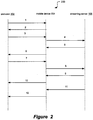
- FIG. 2 A typical Mobile TV fast channel switching (FCS) use case is explained with the help of a sequence diagram 200 presented in Figure 2 .
- Mobile device 204 receives commands from the end-user 202 and communicates with the steaming server 108.
- Various operations performed by the end-user 202, the mobile device 204 and the streaming server 108 which are labeled by reference numerals 1-12 in Figure 2 , are explained in detail below.
- the embodiment of the invention performs live media channel switching without interrupting the current RTSP session or the media session that transfers the actual content to the end-user.
- the "seek" functionality of the media player 104 which is present in most media players, is overloaded with a new functionality to trigger the switching of live media streams.
- the "seek" functionally of media players is used for stored media streams, such as movies, to perform a fast-forward operation (moving forward in the stored media stream), or a rewind operation (moving backward in the stored media stream). Because such operations are not applicable to live media streams, no functionality is lost when the available "seek" functionality is adapted for supporting FCS between live streams. This functionality is exposed through most media player Software Development Kits (SDKs), and is effectively utilized for achieving fast channel switching.
- SDKs Software Development Kits
- the embodiment of the invention uses a list of channels that are to be played at the client 102 stored in a playlist file 110 at the streaming server 108.
- a basic functionality of the media player 104 is enabled by mapping a "seek" operation to a set of indices in the list of channels based on a seek time value.
- the client 102 receives a request from the end-user 202 to switch from the original channel currently being viewed to the new channel, and uses the "seek" functionality in the media player 104 to identify the new channel requested for the streaming server 108.
- the endpoint of a specific seek interval is mapped to the position of a channel in the playlist file 110.
- the endpoint of a given seek interval can be used to generate an integer that corresponds to the index of the new channel in the playlist file 110.
- a RTSP PLAY message including a range parameter for the seek interval, corresponding to the position of the new channel in the playlist file 110, is sent from the client 102 to the streaming server 108.
- the round function in equation 1 rounds up the real value to its nearest integer.
- the streaming server 108 In order for this basic functionality to enable FCS, it needs to be understood by the streaming server 108, which in turn, should have knowledge of the list of channels over which the FCS is to be performed.
- the list of channels is conveyed to the streaming server 108 by addressing the initial RTSP request to a playlist file 110, e.g. channels.pls, containing the list of channels (ordered by index) across which the FCS will be supported.
- the streaming server 108 returns a lengthy, but finite time duration value T, for the stream within the SDP. This value is chosen to exceed the maximum length of time that any given client could be expected to continuously play a given channel, e.g. 8 hours. It should be noted that, because every channel switching will effectively reset the current viewing point in the stream to a small time value (less than k * maximum channel index), it is unlikely that this time duration T will ever be reached.
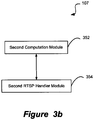
- FIG. 3a and 3b Functional components of the client 102 comprising the Client Fast Channel Switching Module 103 stored in the memory of the client 102, and the Server Fast Channel Switching Module 107 stored in the memory of the streaming server 108 are shown in Figures 3a and 3b respectively, and include modules comprising a firmware, or alternatively a computer software code stored in a computer readable medium.
- Figures 3a and 3b also capture a flow of control messages, which are shown by arrows between the modules.
- the functional components at the client 102 of the presented in diagram 300 of Figure 3a are as follows:
- a typical set of message exchanges between the client 102 and the streaming server 108 is presented in diagram 400 of Figure 4 . Please note that time increases as we go down in the diagram. Only a key set of messages that are relevant for explaining the method for fast switching of channels carrying live media stream according to the embodiment of the invention are discussed.
- the RTSP session is launched with an initial DESCRIBE RTSP message 402. This message 402 sets "fcs" to "True” to indicate the client's desire to perform fast channel switching, and the playlist file 110 with name tv.pls is identified in the message.
- the streaming server 108 sends the message 403 as a positive acknowledgment ("200 OK"), and also sends a large "npt" interval for enabling the "seek" functionality in the media player 104 as discussed earlier.
- the initial channel to be played is indicated as channel #3 in the first PLAY RTSP message 414.
- the streaming server 108 uses the RTP protocol to send the media channel #3 in message 418.
- the second PLAY RTSP message 420 is sent from the client 102 to perform fast channel switching from the original channel #3 to the new channel #2.
- the streaming server 108 stops the transmission of channel #3, and starts sending channel #2 by using the RTP protocol in message 424.
- the RTSP session goes on as long as the end-user 202 wants to play the channel #2, and terminates when the TEARDOWN RTSP message 426 is sent by the client 102 to the streaming server 108.
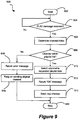
- Flowchart 500 presented in Figure 5 concerns the operations performed at the client 102.
- the procedure 500 Upon start (box 502), the procedure 500 sends an initial DESCRIBE RTSP message to the streaming server 108 (box 504) for starting a RTSP session. It then checks whether or not a response from the streaming server 108 is received (box 506). If the response is not received it exits "No” from box 506 and loops back to the entry of box 506. If the response from the streaming server 108 has arrived it exits "Yes” from box 506, and checks if an "OK” message was received (box 508). Please note that an "OK" message signifies a positive acknowledgment from the streaming server 108.
- the procedure 500 checks if an "OK" message was received (box 512). If not, it exits "No” from box 512 and loops back to the entry of box 511. Otherwise the procedure 500 exits "Yes” from box 512 and proceeds to handle the media receive session (box 514), and exits (box 516).
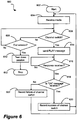
- the procedure 600 Upon start (box 602), the procedure 600 receives the original channel containing the desired media stream (box 604). While the media stream is being received, the procedure 600 continuously monitors whether or not the end-user 202 wishes to perform either a channel switching (box 606), or ending of the current session (box 608). Box 606 verifies if the end-user 202 wants to perform fast channel switching. If not, the procedure 600 exits "No" from box 606, and checks whether or not the end-user wants to end the session (box 608).
- the procedure 600 exits "Yes” from box 608, tears down the session (box 610), and exits (box 612). Otherwise it exits "No” from box 608, and loops back to the entry of box 606.
- the procedure 600 exits "Yes” from box 606, and sends a PLAY RTSP message to the streaming server 108 (box 614).
- the "seek" functionality in the media player 104 is overloaded to trigger fast channel switching as described above. Information regarding the seek interval the endpoint of which corresponding to the new channel to be played is passed through the range parameter in the PLAY RTSP message.
- the procedure 600 then checks whether a response from the streaming server 108 is received (box 616). If the response has not arrived it exits "No” from box 616 and loops back to the entry of box 616. If the response has arrived it exits "Yes” from box 616, and checks whether or not an "OK” message was received (box 618). If an "OK” message has been received, the procedure 600 exits "Yes” from box 618, records the success of fast channel switching (box 620), and loops back to the entry of box 604 to receive the new media stream and to continue checking for further commands from the end-user 202. If an "OK” message was not received, the procedure 600 exits "No” from box 618, records the failure of fast channel switching (box 622) and loops back to the entry of box 604.
- Flowchart 700 presented in Figure 7 concerns the operations performed at the streaming server 108.
- the streaming server 108 receives the RTSP message from the client 102 (box 704). Please note that this is the DESCRIBE message sent by the client 102 (as shown in box 504 of Figure 5 ) to launch the RTSP session.
- the procedure 700 then checks whether or not a URL parameter "fcs" is set to "True” (box 706). If set to True, the procedure 700 exits "Yes” from box 706, and proceeds to the step "use a FCS enabled session” (box 708).
- the procedure 700 exits "No” from box 706, proceeds to the step "use a normal RTSP session” (box 712) and exits (box 724).
- the procedure 700 checks whether or not a playlist file 110 is specified in the content of the DESCRIBE message from the client 102 (box 710). If the playlist file 110 is not specified, the procedure 700 exits "No” from box 710, proceeds to the step “use a normal RTSP session” (box 712), and exits (box 724). If a playlist file 110 is specified it exits "Yes" from box 710, and checks whether or not the URL parameter "start" is defined (box 714).
- the procedure 700 exits "Yes” from box 714, and proceeds to the step “start the playback at the playlist item identified by the start parameter" (box 716).
- a playlist item is a channel listed in the playlist file 110. Otherwise, it exits "No” from box 714 and proceeds to the step “start the playback from the first item in the playlist” (box 718).
- the procedure 700 After performing the operations described in boxes 716 and 718, the procedure 700 generates an "OK" response for the client 102 with a very large "npt" interval corresponding to the time duration T as discussed earlier (box 720). This enables the "seek" functionality in the media player 104 deployed by the client 102 even though a live media stream is viewed by the end-user 202.
- the procedure 700 then handles SETUP and PLAY RTSP messages from the client 102 (box 722), and exits (box 724).
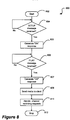
- the procedure 800 Upon start (box 802), the procedure 800 checks whether or not a SETUP RTSP message is received from the client 102 (box 804). If not received, the procedure 800 exits "No” from box 804, and loops back to the entry of box 804. If the SETUP RTSP message is received, the procedure 800 exits "Yes” from box 804, generates an "OK” message for the client 102 (box 805), and proceeds to check whether a PLAY message from the client 102 has arrived (box 806).
- the procedure 800 exits "No” from box 806, and loops back to the entry of box 806. Once the PLAY request is received, the procedure 800 exits "Yes” from box 806, generates an "OK” response for the client 102 (box 807), and sends the requested channel to the client 102 (box 808). The procedure 800 then handles channel switch requests (box 810), and exits (812). Please note that the SETUP RTSP message and the PLAY RTSP message are generated by the client 102 in boxes 509 and 511 respectively of Figure 5 .
- the procedure 900 checks whether a PLAY RTSP message is received from the client 102 (box 904). Please note that this PLAY message corresponding to a "seek" functionality is sent in box 614 in Figure 6 by the client 102. If not received, it exits "No” from box 904, and loops back to the entry of box 904. Otherwise, it exits "Yes” from box 904, and computes the channel index (box 906) based on the range parameter included with the message. This is performed by using equation (1) that is explained earlier in this section.
- the procedure 900 After computing the channel index, the procedure 900 checks whether or not the channel associated with the computed channel index is contained within the list of channels in the playlist file 110 (box 908). If not, it returns "No” from box 908, returns an error message to the client 102 (box 916), keeps on sending the original media stream (box 918), and exits (box 920). If the channel lies within the playlist file 110, the procedure 900 exits "Yes” from box 908, and switches the media stream to this new channel which corresponds to the playlist item occupying the position identified by the index (box 910). The procedure 900 returns an "OK" message to the client 102 (box 912), starts sending the new channel (box 914), and exits (box 920).
Landscapes
- Engineering & Computer Science (AREA)
- Multimedia (AREA)
- Signal Processing (AREA)
- Computer Networks & Wireless Communication (AREA)
- Two-Way Televisions, Distribution Of Moving Picture Or The Like (AREA)
- Computer And Data Communications (AREA)
- Information Transfer Between Computers (AREA)
Claims (15)
- Procédé pour commuter entre des canaux (112) transportant des flux de médias en direct, transmis à partir d'un serveur de diffusion en continu (108) à un dispositif client (102) comportant un lecteur de médias (104) sous un protocole de diffusion en continu en temps réel, RTSP, le procédé comprenant les étapes consistant à :
(a1) lancer une session RTSP en envoyant un message RTSP à partir du dispositif client (102) au serveur de diffusion en continu (108) pour diffuser en continu un canal original à partir d'un fichier de liste de lecture (110) comprenant une liste de canaux à lire par le lecteur de médias (104) ;
le procédé étant caractérisé par le fait de :
(b1) commuter du canal original vers un nouveau canal d'une liste de lecture dans la bande dans la session RTSP, en surchargeant une fonctionnalité de recherche en une nouvelle fonctionnalité pour déclencher une demande à envoyer au serveur de diffusion en continu pour commuter entre le canal original et le nouveau canal dans le flux de médias en direct, où la fonctionnalité de recherche est disponible dans le lecteur de médias (104) pour avancer et revenir en arrière dans un flux de médias stocké dans un support lisible par ordinateur. - Procédé selon la revendication 1, comprenant en outre les étapes consistant à :envoyer un autre message RTSP comportant des informations concernant le nouveau canal au serveur de diffusion en continu dans la bande dans la session RTSP ;traiter ledit autre message RTSP au niveau du serveur de diffusion en continu (108) et transmettre le nouveau canal au dispositif client.
- Procédé selon la revendication 1, dans lequel l'étape (b1) comprend en outre les étapes consistant à :(a2) traiter des messages RTSP entre le dispositif client (102) et le serveur de diffusion en continu (108) pour commuter entre les canaux, et lancer la session RTSP en envoyant le message RTSP à partir du dispositif client (102) au serveur de diffusion en continu (108) pour permettre la commutation entre canaux dans la bande dans la session RTSP, le message RTSP comportant des informations concernant le fichier de liste de lecture (110) stockées au niveau du serveur de diffusion en continu (108), le fichier de liste de lecture (110) comprenant la liste de canaux disponible à lire par le lecteur de médias (104) ; et(b2) traiter la demande de commutation entre canaux à partir du canal original en cours de lecture par le lecteur de médias (104) vers le nouveau canal du fichier de liste de lecture (110), et envoyer un autre message RTSP au serveur de diffusion en continu (08) dans la bande dans la session RTSP comportant des informations concernant le nouveau canal.
- Procédé selon l'une quelconque des revendications 1 à 3, dans lequel l'étape (a2) comprend en outre les étapes consistant à :(a3) au niveau du dispositif client (102), générer un intervalle de recherche avec une limite correspondant à un indice du nouveau canal dans le fichier de liste de lecture (110) pour identifier le nouveau canal ;(b3) déterminer un paramètre de plage correspondant à l'indice du nouveau canal dans le fichier de liste de lecture (110) à partir de l'intervalle de recherche généré à l'étape (a3) ; et(c3) envoyer un message RTSP LECTURE (PLAY) à partir du dispositif client (102) au serveur de diffusion en continu (108) comportant le paramètre de plage déterminé à l'étape (b3).
- Procédé selon l'une quelconque des revendications 2 à 4, dans lequel l'étape (b2) comprend en outre les étapes consistant à :(a4) identifier le nouveau canal dans le fichier de liste de lecture (110) en traitant les informations concernant le nouveau canal incluses dans ledit autre message RTSP de l'étape (b2) ; et(b4) arrêter une transmission du canal original et transmettre le nouveau canal au dispositif client (102) sans interrompre la session RTSP.
- Procédé tel que décrit dans l'une quelconque des revendications 1 à 5, comprenant en outre une étape consistant à envoyer une réponse au message RTSP envoyée à l'étape (a1) à partir du serveur de diffusion en continu (108), spécifiant une durée maximale de la session RTSP pour surcharger la fonctionnalité de recherche fournie par le lecteur de médias (104), l'étape étant réalisée avant l'étape (b1).
- Procédé tel que décrit dans l'une quelconque des revendications 1 à 6, comprenant en outre l'étape consistant à traiter le nouveau canal transmis par le serveur de diffusion en continu (108) au dispositif client (102), l'étape étant réalisée après l'étape (b2).
- Procédé tel que décrit dans la revendication 7, dans lequel l'étape de traitement comprend la mise en mémoire tampon du nouveau canal au niveau du dispositif client (102), et sa lecture immédiate après qu'une partie restante du canal original qui est arrivée au niveau du dispositif client (102) a été complètement lue.
- Système pour commuter entre des canaux (112) transportant des flux de médias en direct transmis sous un protocole de diffusion en continu en temps réel, RTSP, comprenant :un dispositif client (102) ayant un processeur et une mémoire, et comprenant un lecteur de médias (104) stocké dans la mémoire du dispositif client (102) ;un serveur de diffusion en continu (108), ayant son processeur et sa mémoire, pour transmettre le flux de médias en direct au dispositif client (102) ;le système étant caractérisé en ce que :le dispositif client (102) a :
(a1) un module de commutation de canal rapide de client (103), configuré pour lancer une session RTSP entre le dispositif client (102) et le serveur de diffusion en continu (108) pour diffuser en continu un canal original à partir d'un fichier de liste de lecture (110) comprenant une liste de canaux à lire par le lecteur de médias (104) ; et pour commuter du canal original vers un nouveau canal d'une liste de lecture dans la bande dans la session RTSP, en surchargeant une fonctionnalité de recherche en une nouvelle fonctionnalité pour déclencher une demande à envoyer au serveur de diffusion en continu pour commuter entre le canal original et le nouveau canal dans le flux de médias en direct, où la fonctionnalité de recherche est disponible dans le lecteur de médias (104) pour avancer et revenir en arrière dans un flux de médias stocké dans un support lisible par ordinateur ; etle serveur de diffusion en continu (108) a :
(b1) un module de commutation de canal rapide de serveur (107), configuré pour traiter la demande de commutation du module de commutation de canal rapide de client (103) pour transmettre le nouveau canal au dispositif client (102). - Système selon la revendication 9, dans lequel le module de commutation de canal rapide de client (103) comprend :(a2) un premier module de gestion RTSP (308), configuré pour traiter des messages RTSP entre le dispositif client (102) et le serveur de diffusion en continu (108) pour commuter entre les canaux (112), et pour lancer la session RTSP en envoyant un message RTSP à partir du dispositif client (102) au serveur de diffusion en continu (108) pour permettre la commutation entre canaux (112) dans la session RTSP, le message RTSP comportant des informations concernant le fichier de liste de lecture (110) stocké au niveau du serveur de diffusion en continu (108), le fichier de liste de lecture (110) comprenant la liste de canaux disponible pour une lecture par le lecteur de médias (104) ; et(b2) un module de commutation de canal (302), configuré pour traiter la demande de commutation entre canaux (112) à partir du canal original en cours de lecture par le lecteur de médias (104) vers le nouveau canal du fichier de liste de lecture (110), et pour envoyer un autre message RTSP par le premier module de gestion RTSP (308) au serveur de diffusion en continu (108) dans la bande dans la session RTSP lancée par le premier module de gestion RTSP (308), ledit autre message RTSP comportant des informations concernant le nouveau canal
- Système selon la revendication 10, dans lequel le module de commutation de canal (302) comprend en outre :(a3) un module d'interface (304), configuré pour recevoir une demande de recherche comportant un intervalle de recherche avec une limite correspondant à un indice du nouveau canal dans le fichier de liste de lecture (110) à partir du lecteur de médias (104) et pour surcharger la fonctionnalité de recherche disponible dans le lecteur de médias (104) pour commuter vers le nouveau canal ; et(b3) un premier module de calcul (306), configuré pour déterminer un paramètre de plage correspondant à l'indice du nouveau canal dans le fichier de liste de lecture (110) à partir de l'intervalle de recherche, et pour envoyer un message RTSP LECTURE (PLAY) à partir du dispositif client (102) au serveur de diffusion en continu (108) comportant le paramètre de plage.
- Système selon l'une quelconque des revendications 9 à 11, dans lequel le module de commutation de canal rapide de serveur (107) comprend en outre :(a4) un deuxième module de gestion RTSP (354), configuré pour traiter des messages RTSP entre le dispositif client (102) et le serveur de diffusion en continu (108) ; et(b4) un deuxième module de calcul (352), configuré pour identifier le nouveau canal dans le fichier de liste de lecture (110) en traitant les informations concernant le nouveau canal incluses dans le message RTSP à partir du dispositif client (102) reçu par le deuxième module de gestion RTSP (354).
- Système selon l'une quelconque des revendications 9 à 12, dans lequel le dispositif client (102) comprend en outre un module de stockage (310) configuré pour mettre en mémoire tampon le nouveau canal et pour le lire immédiatement après qu'une partie restante du canal original qui est arrivée au niveau du dispositif client (102) est a été complètement lue.
- Système selon l'une quelconque des revendications 10 à 13, dans lequel le module de commutation de canal rapide de serveur (107) est configuré pour envoyer une réponse au message RTSP, comportant une durée maximale de la session RTSP pour surcharger la fonctionnalité de recherche du lecteur de médias (104).
- Support de stockage lisible par ordinateur, ayant un moyen de code de programme lisible par ordinateur stockés sur celui-ci, qui, lorsqu'il est exécuté sur un ordinateur, amène l'ordinateur à réaliser les étapes du procédé tel que décrit dans l'une quelconque des revendications 1 à 8.
Applications Claiming Priority (2)
| Application Number | Priority Date | Filing Date | Title |
|---|---|---|---|
| US12/116,069 US7921222B2 (en) | 2008-05-06 | 2008-05-06 | Method and system for fast channel switching using standard RTSP messages |
| PCT/CA2008/001303 WO2009135287A1 (fr) | 2008-05-06 | 2008-07-16 | Procédé et système pour une commutation de canal rapide à l’aide de messages rtsp standard |
Publications (3)
| Publication Number | Publication Date |
|---|---|
| EP2274890A1 EP2274890A1 (fr) | 2011-01-19 |
| EP2274890A4 EP2274890A4 (fr) | 2014-03-19 |
| EP2274890B1 true EP2274890B1 (fr) | 2020-03-04 |
Family
ID=41264357
Family Applications (1)
| Application Number | Title | Priority Date | Filing Date |
|---|---|---|---|
| EP08783219.2A Active EP2274890B1 (fr) | 2008-05-06 | 2008-07-16 | Procédé et système pour une commutation de canal rapide à l aide de messages rtsp standard |
Country Status (4)
| Country | Link |
|---|---|
| US (2) | US7921222B2 (fr) |
| EP (1) | EP2274890B1 (fr) |
| CA (1) | CA2718720C (fr) |
| WO (1) | WO2009135287A1 (fr) |
Families Citing this family (39)
| Publication number | Priority date | Publication date | Assignee | Title |
|---|---|---|---|---|
| US10862994B1 (en) | 2006-11-15 | 2020-12-08 | Conviva Inc. | Facilitating client decisions |
| US9549043B1 (en) | 2004-07-20 | 2017-01-17 | Conviva Inc. | Allocating resources in a content delivery environment |
| CN101473654B (zh) * | 2006-06-19 | 2011-08-03 | 艾利森电话股份有限公司 | 媒体频道管理 |
| US9264780B1 (en) | 2006-11-15 | 2016-02-16 | Conviva Inc. | Managing synchronized data requests in a content delivery network |
| US8751605B1 (en) | 2006-11-15 | 2014-06-10 | Conviva Inc. | Accounting for network traffic |
| US8874725B1 (en) | 2006-11-15 | 2014-10-28 | Conviva Inc. | Monitoring the performance of a content player |
| US8566436B1 (en) | 2006-11-15 | 2013-10-22 | Conviva Inc. | Data client |
| CN101083605B (zh) * | 2007-08-01 | 2011-07-06 | 华为技术有限公司 | 一种媒体源快速切换的方法、系统和装置 |
| US7979557B2 (en) * | 2008-04-11 | 2011-07-12 | Mobitv, Inc. | Fast setup response prediction |
| US7921222B2 (en) * | 2008-05-06 | 2011-04-05 | Vantrix Corporation | Method and system for fast channel switching using standard RTSP messages |
| US9451003B1 (en) * | 2008-09-22 | 2016-09-20 | Sprint Spectrum L.P. | Method and system for advanced notification of availability of fast content switching |
| US8402494B1 (en) | 2009-03-23 | 2013-03-19 | Conviva Inc. | Switching content |
| TW201043032A (en) * | 2009-05-27 | 2010-12-01 | Teco Electric & Machinery Co Ltd | Method for playing multimedia in a network and computer readable storage medium and computer program product thereof |
| US9100288B1 (en) * | 2009-07-20 | 2015-08-04 | Conviva Inc. | Augmenting the functionality of a content player |
| CN101963919A (zh) * | 2009-07-24 | 2011-02-02 | 鸿富锦精密工业(深圳)有限公司 | 进程管理系统 |
| EP2280521A1 (fr) * | 2009-07-30 | 2011-02-02 | Alcatel Lucent | Procédé de commutation de contenu de média pour un appareil mobile |
| US9712733B2 (en) * | 2009-08-17 | 2017-07-18 | Jianhua Cao | Method and apparatus for live capture image-live streaming camera |
| EP2497247A2 (fr) * | 2009-11-04 | 2012-09-12 | NDTV Convergence Ltd. | Système et procédé pour la commutation sur la base d'un déclencheur entre plusieurs flux vidéo sur protocole internet (ip) au niveau client |
| US8233386B2 (en) * | 2009-12-23 | 2012-07-31 | Moxa, Inc. | Device that uses parameters to provide multi-channel serial data transmissions and method thereof |
| US8805963B2 (en) | 2010-04-01 | 2014-08-12 | Apple Inc. | Real-time or near real-time streaming |
| US8892691B2 (en) * | 2010-04-07 | 2014-11-18 | Apple Inc. | Real-time or near real-time streaming |
| US20110289544A1 (en) * | 2010-05-19 | 2011-11-24 | Goosen Hendrik A | Video streaming system including a fast channel change mechanism |
| US20110289543A1 (en) * | 2010-05-19 | 2011-11-24 | Goosen Hendrik A | Video streaming system including a fast channel change mechanism |
| CN102143132A (zh) * | 2010-08-10 | 2011-08-03 | 华为技术有限公司 | 流媒体的频道切换方法、切换代理、客户端及终端 |
| US8773976B1 (en) * | 2011-03-03 | 2014-07-08 | Sprint Spectrum L.P. | Method and system for communication acknowledgement |
| FR2975555A1 (fr) * | 2011-05-18 | 2012-11-23 | Thomson Licensing | Methode d'adaptation dynamique du debit de reception et recepteur associe |
| EP2595399A1 (fr) * | 2011-11-16 | 2013-05-22 | Thomson Licensing | Procédé de commutation de version de contenu numérique et dispositif correspondant |
| CN102860022B (zh) * | 2011-11-28 | 2014-06-04 | 华为技术有限公司 | 一种节目切换的方法、装置和媒体服务器 |
| US10148716B1 (en) | 2012-04-09 | 2018-12-04 | Conviva Inc. | Dynamic generation of video manifest files |
| US9246965B1 (en) | 2012-09-05 | 2016-01-26 | Conviva Inc. | Source assignment based on network partitioning |
| US10182096B1 (en) | 2012-09-05 | 2019-01-15 | Conviva Inc. | Virtual resource locator |
| US20140074959A1 (en) * | 2012-09-10 | 2014-03-13 | Apple Inc. | Client side media station generation |
| US10305955B1 (en) | 2014-12-08 | 2019-05-28 | Conviva Inc. | Streaming decision in the cloud |
| US10178043B1 (en) | 2014-12-08 | 2019-01-08 | Conviva Inc. | Dynamic bitrate range selection in the cloud for optimized video streaming |
| US10419583B2 (en) * | 2015-11-10 | 2019-09-17 | Bang & Olufsen A/S | System and method for initiating content streaming |
| US10091264B2 (en) * | 2015-12-26 | 2018-10-02 | Intel Corporation | Technologies for streaming device role reversal |
| CN105872743A (zh) * | 2015-12-31 | 2016-08-17 | 乐视网信息技术(北京)股份有限公司 | 无限滑台的方法、终端、服务器及系统 |
| CN106303682B (zh) * | 2016-08-09 | 2019-09-20 | 华为技术有限公司 | 频道切换的方法、装置、终端及服务器 |
| CN111479122B (zh) * | 2020-04-13 | 2022-12-06 | 海信视像科技股份有限公司 | 视频播放方法、装置、设备及存储介质 |
Family Cites Families (11)
| Publication number | Priority date | Publication date | Assignee | Title |
|---|---|---|---|---|
| WO2002065359A1 (fr) * | 2001-02-09 | 2002-08-22 | Trondent Development Corp. | Systeme de gestion d'informations electronique |
| KR100652679B1 (ko) | 2004-10-08 | 2006-12-06 | 엘지전자 주식회사 | 이동 통신 단말기의 비디오 채널 전환 방법 |
| SE0402876D0 (sv) | 2004-11-25 | 2004-11-25 | Ericsson Telefon Ab L M | TV-like standards-compliant unicast streaming over IP |
| US20080151885A1 (en) | 2005-02-08 | 2008-06-26 | Uwe Horn | On-Demand Multi-Channel Streaming Session Over Packet-Switched Networks |
| WO2006096104A1 (fr) | 2005-03-07 | 2006-09-14 | Telefonaktiebolaget Lm Ericsson (Publ) | Commutation de canaux multimedia |
| WO2006136203A1 (fr) * | 2005-06-21 | 2006-12-28 | Telefonaktiebolaget Lm Ericsson (Publ) | Fourniture de service de diffusion/multidiffusion multimedia pour des abonnes itinerants |
| CN101473654B (zh) | 2006-06-19 | 2011-08-03 | 艾利森电话股份有限公司 | 媒体频道管理 |
| DE602007014381D1 (de) | 2006-08-31 | 2011-06-16 | Ericsson Telefon Ab L M | Unicast/multicast-media-edge-proxy mit schnellem kanalwechsel |
| US20080107108A1 (en) | 2006-11-03 | 2008-05-08 | Nokia Corporation | System and method for enabling fast switching between psse channels |
| US8046479B2 (en) * | 2006-11-07 | 2011-10-25 | Telefonaktiebolaget Lm Ericsson (Publ) | Media channel management |
| US7921222B2 (en) * | 2008-05-06 | 2011-04-05 | Vantrix Corporation | Method and system for fast channel switching using standard RTSP messages |
-
2008
- 2008-05-06 US US12/116,069 patent/US7921222B2/en active Active
- 2008-07-16 CA CA2718720A patent/CA2718720C/fr active Active
- 2008-07-16 EP EP08783219.2A patent/EP2274890B1/fr active Active
- 2008-07-16 WO PCT/CA2008/001303 patent/WO2009135287A1/fr not_active Ceased
-
2011
- 2011-03-08 US US13/043,365 patent/US8117323B2/en active Active - Reinstated
Non-Patent Citations (1)
| Title |
|---|
| None * |
Also Published As
| Publication number | Publication date |
|---|---|
| CA2718720C (fr) | 2013-10-01 |
| EP2274890A4 (fr) | 2014-03-19 |
| CA2718720A1 (fr) | 2009-11-12 |
| US7921222B2 (en) | 2011-04-05 |
| US20110161509A1 (en) | 2011-06-30 |
| EP2274890A1 (fr) | 2011-01-19 |
| US8117323B2 (en) | 2012-02-14 |
| US20090282158A1 (en) | 2009-11-12 |
| WO2009135287A1 (fr) | 2009-11-12 |
Similar Documents
| Publication | Publication Date | Title |
|---|---|---|
| EP2274890B1 (fr) | Procédé et système pour une commutation de canal rapide à l aide de messages rtsp standard | |
| EP2744169B1 (fr) | Procédé et appareil pour lire des fichiers multimédias en continu | |
| EP2586208B1 (fr) | Procédé et appareil de synchronisation de lecture en attente sur plusieurs plateformes | |
| US8117328B2 (en) | System and method for automatically recovering from failed network connections in streaming media scenarios | |
| US10616296B2 (en) | Method and system for downloading digital content | |
| EP2545666B1 (fr) | Procédé et appareil de fourniture de contenu de diffusion et système les utilisant | |
| US7673318B2 (en) | Channel merging method for VOD system | |
| US20060195884A1 (en) | Interactive multichannel data distribution system | |
| US20140215545A1 (en) | Online video playing method and video playing server | |
| US8117332B2 (en) | Network streaming over multiple physical interfaces | |
| EP2704391B1 (fr) | Système et procédé pour délivrer un contenu audiovisuel à un dispositif client | |
| WO2006066889A1 (fr) | Procede et systeme de minimisation du temps de commutation entre deux sessions d'emission en continu multimedia rtp | |
| WO2008113693A2 (fr) | Comptes-rendus de qualité améliorés pour des sessions de transmission | |
| RU2454806C2 (ru) | Способ, устройство и система для уведомления о событиях протокола потоковой передачи в реальном времени | |
| WO2009015611A1 (fr) | Procédé, système et appareil pour une commutation rapide de source multimédia | |
| US20150113565A1 (en) | Method for Controlling Media Contents in Virtual Room, Terminal, and Device | |
| CN112399190A (zh) | 音视频数据获取方法及其装置 | |
| US9544630B2 (en) | Method and IPTV server for enabling playout of one or more media objects | |
| EP1954002B1 (fr) | Procédé pour déterminer la largeur de bande disponible pour la transmission de données multimédias | |
| CN111479122B (zh) | 视频播放方法、装置、设备及存储介质 | |
| EP2341754B1 (fr) | Procédé de commande, équipement et système de lecture de flux multimédia | |
| JP4196004B2 (ja) | マルチメディア情報の受信方法及びこれを実現するプログラム、マルチメディア情報の受信装置 | |
| KR100827825B1 (ko) | Vod 서비스 제공 방법 및 그 프로그램이 기록된기록매체. |
Legal Events
| Date | Code | Title | Description |
|---|---|---|---|
| PUAI | Public reference made under article 153(3) epc to a published international application that has entered the european phase |
Free format text: ORIGINAL CODE: 0009012 |
|
| 17P | Request for examination filed |
Effective date: 20101006 |
|
| AK | Designated contracting states |
Kind code of ref document: A1 Designated state(s): AT BE BG CH CY CZ DE DK EE ES FI FR GB GR HR HU IE IS IT LI LT LU LV MC MT NL NO PL PT RO SE SI SK TR |
|
| AX | Request for extension of the european patent |
Extension state: AL BA MK RS |
|
| DAX | Request for extension of the european patent (deleted) | ||
| A4 | Supplementary search report drawn up and despatched |
Effective date: 20140218 |
|
| RIC1 | Information provided on ipc code assigned before grant |
Ipc: H04L 29/06 20060101AFI20140212BHEP Ipc: H04N 21/438 20110101ALI20140212BHEP |
|
| RAP1 | Party data changed (applicant data changed or rights of an application transferred) |
Owner name: VANTRIX CORPORATION |
|
| STAA | Information on the status of an ep patent application or granted ep patent |
Free format text: STATUS: EXAMINATION IS IN PROGRESS |
|
| 17Q | First examination report despatched |
Effective date: 20171116 |
|
| GRAP | Despatch of communication of intention to grant a patent |
Free format text: ORIGINAL CODE: EPIDOSNIGR1 |
|
| STAA | Information on the status of an ep patent application or granted ep patent |
Free format text: STATUS: GRANT OF PATENT IS INTENDED |
|
| INTG | Intention to grant announced |
Effective date: 20190920 |
|
| GRAS | Grant fee paid |
Free format text: ORIGINAL CODE: EPIDOSNIGR3 |
|
| GRAA | (expected) grant |
Free format text: ORIGINAL CODE: 0009210 |
|
| STAA | Information on the status of an ep patent application or granted ep patent |
Free format text: STATUS: THE PATENT HAS BEEN GRANTED |
|
| AK | Designated contracting states |
Kind code of ref document: B1 Designated state(s): AT BE BG CH CY CZ DE DK EE ES FI FR GB GR HR HU IE IS IT LI LT LU LV MC MT NL NO PL PT RO SE SI SK TR |
|
| REG | Reference to a national code |
Ref country code: GB Ref legal event code: FG4D |
|
| REG | Reference to a national code |
Ref country code: CH Ref legal event code: EP |
|
| REG | Reference to a national code |
Ref country code: AT Ref legal event code: REF Ref document number: 1241711 Country of ref document: AT Kind code of ref document: T Effective date: 20200315 |
|
| REG | Reference to a national code |
Ref country code: DE Ref legal event code: R096 Ref document number: 602008062253 Country of ref document: DE |
|
| REG | Reference to a national code |
Ref country code: IE Ref legal event code: FG4D |
|
| PG25 | Lapsed in a contracting state [announced via postgrant information from national office to epo] |
Ref country code: FI Free format text: LAPSE BECAUSE OF FAILURE TO SUBMIT A TRANSLATION OF THE DESCRIPTION OR TO PAY THE FEE WITHIN THE PRESCRIBED TIME-LIMIT Effective date: 20200304 Ref country code: NO Free format text: LAPSE BECAUSE OF FAILURE TO SUBMIT A TRANSLATION OF THE DESCRIPTION OR TO PAY THE FEE WITHIN THE PRESCRIBED TIME-LIMIT Effective date: 20200604 |
|
| REG | Reference to a national code |
Ref country code: NL Ref legal event code: MP Effective date: 20200304 |
|
| PG25 | Lapsed in a contracting state [announced via postgrant information from national office to epo] |
Ref country code: HR Free format text: LAPSE BECAUSE OF FAILURE TO SUBMIT A TRANSLATION OF THE DESCRIPTION OR TO PAY THE FEE WITHIN THE PRESCRIBED TIME-LIMIT Effective date: 20200304 Ref country code: GR Free format text: LAPSE BECAUSE OF FAILURE TO SUBMIT A TRANSLATION OF THE DESCRIPTION OR TO PAY THE FEE WITHIN THE PRESCRIBED TIME-LIMIT Effective date: 20200605 Ref country code: LV Free format text: LAPSE BECAUSE OF FAILURE TO SUBMIT A TRANSLATION OF THE DESCRIPTION OR TO PAY THE FEE WITHIN THE PRESCRIBED TIME-LIMIT Effective date: 20200304 Ref country code: SE Free format text: LAPSE BECAUSE OF FAILURE TO SUBMIT A TRANSLATION OF THE DESCRIPTION OR TO PAY THE FEE WITHIN THE PRESCRIBED TIME-LIMIT Effective date: 20200304 Ref country code: BG Free format text: LAPSE BECAUSE OF FAILURE TO SUBMIT A TRANSLATION OF THE DESCRIPTION OR TO PAY THE FEE WITHIN THE PRESCRIBED TIME-LIMIT Effective date: 20200604 |
|
| REG | Reference to a national code |
Ref country code: LT Ref legal event code: MG4D |
|
| PG25 | Lapsed in a contracting state [announced via postgrant information from national office to epo] |
Ref country code: NL Free format text: LAPSE BECAUSE OF FAILURE TO SUBMIT A TRANSLATION OF THE DESCRIPTION OR TO PAY THE FEE WITHIN THE PRESCRIBED TIME-LIMIT Effective date: 20200304 |
|
| PG25 | Lapsed in a contracting state [announced via postgrant information from national office to epo] |
Ref country code: SK Free format text: LAPSE BECAUSE OF FAILURE TO SUBMIT A TRANSLATION OF THE DESCRIPTION OR TO PAY THE FEE WITHIN THE PRESCRIBED TIME-LIMIT Effective date: 20200304 Ref country code: CZ Free format text: LAPSE BECAUSE OF FAILURE TO SUBMIT A TRANSLATION OF THE DESCRIPTION OR TO PAY THE FEE WITHIN THE PRESCRIBED TIME-LIMIT Effective date: 20200304 Ref country code: IS Free format text: LAPSE BECAUSE OF FAILURE TO SUBMIT A TRANSLATION OF THE DESCRIPTION OR TO PAY THE FEE WITHIN THE PRESCRIBED TIME-LIMIT Effective date: 20200704 Ref country code: RO Free format text: LAPSE BECAUSE OF FAILURE TO SUBMIT A TRANSLATION OF THE DESCRIPTION OR TO PAY THE FEE WITHIN THE PRESCRIBED TIME-LIMIT Effective date: 20200304 Ref country code: LT Free format text: LAPSE BECAUSE OF FAILURE TO SUBMIT A TRANSLATION OF THE DESCRIPTION OR TO PAY THE FEE WITHIN THE PRESCRIBED TIME-LIMIT Effective date: 20200304 Ref country code: ES Free format text: LAPSE BECAUSE OF FAILURE TO SUBMIT A TRANSLATION OF THE DESCRIPTION OR TO PAY THE FEE WITHIN THE PRESCRIBED TIME-LIMIT Effective date: 20200304 Ref country code: EE Free format text: LAPSE BECAUSE OF FAILURE TO SUBMIT A TRANSLATION OF THE DESCRIPTION OR TO PAY THE FEE WITHIN THE PRESCRIBED TIME-LIMIT Effective date: 20200304 Ref country code: PT Free format text: LAPSE BECAUSE OF FAILURE TO SUBMIT A TRANSLATION OF THE DESCRIPTION OR TO PAY THE FEE WITHIN THE PRESCRIBED TIME-LIMIT Effective date: 20200729 |
|
| REG | Reference to a national code |
Ref country code: AT Ref legal event code: MK05 Ref document number: 1241711 Country of ref document: AT Kind code of ref document: T Effective date: 20200304 |
|
| REG | Reference to a national code |
Ref country code: DE Ref legal event code: R097 Ref document number: 602008062253 Country of ref document: DE |
|
| PLBE | No opposition filed within time limit |
Free format text: ORIGINAL CODE: 0009261 |
|
| STAA | Information on the status of an ep patent application or granted ep patent |
Free format text: STATUS: NO OPPOSITION FILED WITHIN TIME LIMIT |
|
| PG25 | Lapsed in a contracting state [announced via postgrant information from national office to epo] |
Ref country code: DK Free format text: LAPSE BECAUSE OF FAILURE TO SUBMIT A TRANSLATION OF THE DESCRIPTION OR TO PAY THE FEE WITHIN THE PRESCRIBED TIME-LIMIT Effective date: 20200304 Ref country code: IT Free format text: LAPSE BECAUSE OF FAILURE TO SUBMIT A TRANSLATION OF THE DESCRIPTION OR TO PAY THE FEE WITHIN THE PRESCRIBED TIME-LIMIT Effective date: 20200304 Ref country code: AT Free format text: LAPSE BECAUSE OF FAILURE TO SUBMIT A TRANSLATION OF THE DESCRIPTION OR TO PAY THE FEE WITHIN THE PRESCRIBED TIME-LIMIT Effective date: 20200304 |
|
| 26N | No opposition filed |
Effective date: 20201207 |
|
| PG25 | Lapsed in a contracting state [announced via postgrant information from national office to epo] |
Ref country code: SI Free format text: LAPSE BECAUSE OF FAILURE TO SUBMIT A TRANSLATION OF THE DESCRIPTION OR TO PAY THE FEE WITHIN THE PRESCRIBED TIME-LIMIT Effective date: 20200304 Ref country code: PL Free format text: LAPSE BECAUSE OF FAILURE TO SUBMIT A TRANSLATION OF THE DESCRIPTION OR TO PAY THE FEE WITHIN THE PRESCRIBED TIME-LIMIT Effective date: 20200304 Ref country code: MC Free format text: LAPSE BECAUSE OF FAILURE TO SUBMIT A TRANSLATION OF THE DESCRIPTION OR TO PAY THE FEE WITHIN THE PRESCRIBED TIME-LIMIT Effective date: 20200304 |
|
| REG | Reference to a national code |
Ref country code: CH Ref legal event code: PL |
|
| REG | Reference to a national code |
Ref country code: BE Ref legal event code: MM Effective date: 20200731 |
|
| PG25 | Lapsed in a contracting state [announced via postgrant information from national office to epo] |
Ref country code: CH Free format text: LAPSE BECAUSE OF NON-PAYMENT OF DUE FEES Effective date: 20200731 Ref country code: LI Free format text: LAPSE BECAUSE OF NON-PAYMENT OF DUE FEES Effective date: 20200731 Ref country code: FR Free format text: LAPSE BECAUSE OF NON-PAYMENT OF DUE FEES Effective date: 20200731 Ref country code: LU Free format text: LAPSE BECAUSE OF NON-PAYMENT OF DUE FEES Effective date: 20200716 |
|
| PG25 | Lapsed in a contracting state [announced via postgrant information from national office to epo] |
Ref country code: BE Free format text: LAPSE BECAUSE OF NON-PAYMENT OF DUE FEES Effective date: 20200731 |
|
| PG25 | Lapsed in a contracting state [announced via postgrant information from national office to epo] |
Ref country code: IE Free format text: LAPSE BECAUSE OF NON-PAYMENT OF DUE FEES Effective date: 20200716 |
|
| REG | Reference to a national code |
Ref country code: DE Ref legal event code: R081 Ref document number: 602008062253 Country of ref document: DE Owner name: MASIMO CORPORATION, IRVINE, US Free format text: FORMER OWNER: VANTRIX CORP., MONTREAL, CA |
|
| REG | Reference to a national code |
Ref country code: DE Ref legal event code: R079 Ref document number: 602008062253 Country of ref document: DE Free format text: PREVIOUS MAIN CLASS: H04L0029060000 Ipc: H04L0065000000 |
|
| REG | Reference to a national code |
Ref country code: DE Ref legal event code: R082 Ref document number: 602008062253 Country of ref document: DE Representative=s name: SIMMONS & SIMMONS LLP, DE |
|
| PG25 | Lapsed in a contracting state [announced via postgrant information from national office to epo] |
Ref country code: TR Free format text: LAPSE BECAUSE OF FAILURE TO SUBMIT A TRANSLATION OF THE DESCRIPTION OR TO PAY THE FEE WITHIN THE PRESCRIBED TIME-LIMIT Effective date: 20200304 Ref country code: MT Free format text: LAPSE BECAUSE OF FAILURE TO SUBMIT A TRANSLATION OF THE DESCRIPTION OR TO PAY THE FEE WITHIN THE PRESCRIBED TIME-LIMIT Effective date: 20200304 Ref country code: CY Free format text: LAPSE BECAUSE OF FAILURE TO SUBMIT A TRANSLATION OF THE DESCRIPTION OR TO PAY THE FEE WITHIN THE PRESCRIBED TIME-LIMIT Effective date: 20200304 |
|
| P01 | Opt-out of the competence of the unified patent court (upc) registered |
Effective date: 20230601 |
|
| PGFP | Annual fee paid to national office [announced via postgrant information from national office to epo] |
Ref country code: GB Payment date: 20250529 Year of fee payment: 18 |
|
| PGFP | Annual fee paid to national office [announced via postgrant information from national office to epo] |
Ref country code: DE Payment date: 20250604 Year of fee payment: 18 |