EP2276311B1 - Verfahren zur Indexierung der Präambeln in einem Bandbreitenanfragekanal - Google Patents
Verfahren zur Indexierung der Präambeln in einem Bandbreitenanfragekanal Download PDFInfo
- Publication number
- EP2276311B1 EP2276311B1 EP10169491.7A EP10169491A EP2276311B1 EP 2276311 B1 EP2276311 B1 EP 2276311B1 EP 10169491 A EP10169491 A EP 10169491A EP 2276311 B1 EP2276311 B1 EP 2276311B1
- Authority
- EP
- European Patent Office
- Prior art keywords
- bits
- bandwidth request
- request information
- mobile station
- bandwidth
- Prior art date
- Legal status (The legal status is an assumption and is not a legal conclusion. Google has not performed a legal analysis and makes no representation as to the accuracy of the status listed.)
- Active
Links
Images



Classifications
-
- H—ELECTRICITY
- H04—ELECTRIC COMMUNICATION TECHNIQUE
- H04W—WIRELESS COMMUNICATION NETWORKS
- H04W74/00—Wireless channel access
- H04W74/08—Non-scheduled access, e.g. ALOHA
- H04W74/0833—Random access procedures, e.g. with 4-step access
Definitions
- the present application relates generally to wireless communications and, more specifically, to indexing preamble sequences in a bandwidth request channel between a mobile station and base station.
- the IEEE 802.16m amendment allows a mobile station (MS) to transmit bandwidth requests (BWREQ) to indicate to a base station (BS) that it needs uplink (UL) bandwidth allocation.
- BWREQ bandwidth requests
- BS base station
- UL uplink
- the 802.16m standard defines 24 orthogonal access sequences, or preamble sequences. Each mobile station may choose a preamble sequence at random (out of the 24 possible preamble sequences), and hope that no other mobile station chooses that preamble sequence. If another mobile happens to choose the same preamble sequence, then the two preamble sequences are said to have collided at the BS.
- HWASUN YOO ET AL "Performance Evaluation of Proposed Physical Structure for BW REQ Channel; C80216m-09_1549", IEEE DRAFT; C80216M-09J549, 1EEE-SA, ISCATAWAY, NJ USA, vol. 802.16m, 7 July 2009, pages 1-18 , discloses a configuration for identifying a 3-step or a 5-step process during bandwidth request based on detecting on/off of a bandwidth request message.
- An apparatus proposed in our invention provided that a mobile station for requesting bandwidth in a wireless communication network, the mobile station configured to: transmit a quick access message and a bandwidth Request preamble sequence to a base station in a bandwidth Request channel; wherein B bits of the quick access message include B MS bits of a mobile station ID(STID) and (B - B MS ) bits of a bandwidth Request information.
- a base station for Uplink scheduling in a wireless communication network configured to: receive a quick access message and a bandwidth Request preamble sequence message from the mobile station in a bandwidth Request channel, the B bits of the quick access message include B MS bits of a mobile station ID(STID) and (B - B MS ) bits of a bandwidth Request information; determine a preamble index corresponding to the bandwidth Request preamble sequence, determine a (B - B MS ) bit portion from the B bit of the quick access message.
- a method proposed in our invention provided that a met hod for requesting bandwidth in a wireless communication network, the method comprising the steps of: transmitting a quick access message and a bandwidth Request preamble sequence to a base stati on in a bandwidth Request channel; wherein B bits of the quick ac cess message include B MS bits of a mobile station ID(STID) and (B - B MS ) bits of a bandwidth Request information.
- FIGURES 1 through 7 discussed below, and the various embodiments used to describe the principles of the present disclosure in this patent document are by way of illustration only and should not be construed in any way to limit the scope of the disclosure. Those skilled in the art will understand that the principles of the present disclosure may be implemented in any suitably arranged wireless communications network.
- the embodiments of this disclosure provide methods to index preamble sequences in a bandwidth request channel.
- the disclosed embodiments are based on use of a contention based random access based bandwidth request indicator. However, it will be understood that other bandwidth request methods may be used with this disclosure.
- FIGURE 1 illustrates an exemplary wireless network 100 according to one embodiment of the present disclosure.
- wireless network 100 includes base station (BS) 101, base station (BS) 102, and base station (BS) 103.
- Base station 101 communicates with base station 102 and base station 103.
- Base station 101 also communicates with Internet protocol (IP) network 130, such as the Internet, a proprietary IP network, or other data network.
- IP Internet protocol
- Base station 102 provides wireless broadband access to the IP network 130, via base station 101, to a plurality of subscriber stations within coverage area 120 of base station 102.
- the first plurality of subscriber stations includes subscriber station (SS) 111, subscriber station (SS) 112, subscriber station (SS) 113, subscriber station (SS) 114, subscriber station (SS) 115 and subscriber station (SS) 116.
- Subscriber stations 111-116 may be any wireless communication device, such as, but not limited to, a mobile phone, mobile PDA and any mobile station (MS).
- SS 111 may be located in a small business (SB), SS 112 may be located in an enterprise (E), SS 113 may be located in a WiFi hotspot (HS), SS 114 may be located in a residence, and SS 115 and SS 116 may be mobile devices.
- SB small business
- E enterprise
- E enterprise
- SS 113 may be located in a WiFi hotspot
- SS 114 may be located in a residence
- SS 115 and SS 116 may be mobile devices.
- Base station 103 provides wireless broadband access to the IP network 130, via base station 101, to a plurality of subscriber stations within coverage area 125 of base station 103.
- the plurality of subscriber stations within coverage area 125 includes subscriber station 115 and subscriber station 116.
- base stations 102 and 103 may be connected directly to the Internet by means of a wired broadband connection, such as an optical fiber, DSL, cable or T1/E1 line, rather than indirectly through base station 101.
- base station 101 may be in communication with either fewer or more base stations.
- wireless network 100 may provide wireless broadband access to more than six subscriber stations.
- subscriber station 115 and subscriber station 116 are on the edge of both coverage area 120 and coverage area 125.
- Subscriber station 115 and subscriber station 116 each communicate with both base station 102 and base station 103 and may be said to be cell-edge devices interfering with each other.
- the communications between BS 102 and SS 116 may be interfering with the communications between BS 103 and SS 115.
- the communications between BS 103 and SS 115 may be interfering with the communications between BS 102 and SS 116.
- Subscriber stations 111-116 may use the broadband access to IP network 130 to access voice, data, video, video teleconferencing, and/or other broadband services.
- one or more of subscriber stations 111-116 may be associated with an access point (AP) of a WiFi WLAN.
- Subscriber station 116 may be any of a number of mobile devices, including a wireless-enabled laptop computer, personal data assistant, notebook, handheld device, or other wireless-enabled device.
- Subscriber station 114 may be, for example, a wireless-enabled personal computer, a laptop computer, a gateway, or another device.
- Dotted lines show the approximate extents of coverage areas 120 and 125, which are shown as approximately circular for the purposes of illustration and explanation only. It should be clearly understood that the coverage areas associated with base stations, for example, coverage areas 120 and 125, may have other shapes, including irregular shapes, depending upon the configuration of the base stations and variations in the radio environment associated with natural and man-made obstructions.
- the coverage areas associated with base stations are not constant over time and may be dynamic (expanding or contracting or changing shape) based on changing transmission power levels of the base station and/or the subscriber stations, weather conditions, and other factors.
- the radius of the coverage areas of the base stations for example, coverage areas 120 and 125 of base stations 102 and 103, may extend in the range from less than 2 kilometers to about fifty kilometers from the base stations.
- a base station such as base station 101, 102, or 103, may employ directional antennas to support a plurality of sectors within the coverage area.
- base stations 102 and 103 are depicted approximately in the center of coverage areas 120 and 125, respectively.
- the use of directional antennas may locate the base station near the edge of the coverage area, for example, at the point of a cone-shaped or pear-shaped coverage area.
- FIGURE 2 illustrates a wireless mobile station 200 according to embodiments of the present disclosure.
- wireless mobile station 200 may represent any of the subscriber stations 111-116 shown in FIGURE 1 .
- the embodiment of wireless mobile station (MS) 200 illustrated in FIGURE 2 is for illustration only. Other embodiments of wireless mobile station 200 could be used without departing from the scope of this disclosure.
- Wireless mobile station 200 comprises antenna 205, radio frequency (RF) transceiver 210, transmit (TX) processing circuitry 215, microphone 220, and receive (RX) processing circuitry 225.
- Mobile station 200 also comprises speaker 230, main processor 240, input/output (I/O) interface (IF) 245, keypad 250, display 255, memory 260, power manager 270, and battery 280.
- I/O input/output
- Main processor 240 executes basic operating system (OS) program 261 stored in memory 260 in order to control the overall operation of mobile station 200. In one such operation, main processor 240 controls the reception of forward channel signals and the transmission of reverse channel signals by radio frequency (RF) transceiver 210, receiver (RX) processing circuitry 225, and transmitter (TX) processing circuitry 215, in accordance with well-known principles.
- OS basic operating system
- Main processor 240 is capable of executing other processes and programs resident in memory 260. Main processor 240 can move data into or out of memory 260, as required by an executing process. Main processor 240 is also coupled to I/O interface 245. The operator of mobile station 200 uses keypad 250 to enter data into mobile station 200. Alternate embodiments may use other types of displays.
- a mobile station may transmit bandwidth requests to indicate to a base station that it needs uplink bandwidth allocation.
- bandwidth requests There are multiple methods by which a mobile station can request bandwidth from the base station. These methods include use of a contention based random access based bandwidth request indicator, a standalone bandwidth request, a piggybacked bandwidth request carried in an extended header in the MAC PDU, and a bandwidth request using fast feedback channel.
- the two procedures which may be supported concurrently, include a 5-step procedure and 3-step quick access procedure.
- the 5-step procedure may be used independently or as a fallback mode for the 3-step quick access procedure in case of a failure in decoding the quick access message.
- FIGURE 3 depicts a method incorporating the 5-step bandwidth request procedure for an IEEE 802.16m-compliant mobile station, according to one embodiment of the present disclosure.
- Method 300 is described with respect to mobile station 200 and base station 102. It is understood, however, that method 300 may be used with any similarly-configured wireless device and base station.
- mobile station 200 sends a bandwidth request indicator, which is a preamble sequence selected randomly from the set of preamble sequences, to base station 102 in the resource allocated for a bandwidth request channel (step 301).
- a preamble sequence is a sequence of numbers that belongs to a class of sequences that have desirable properties like orthogonality or low correlation. In the case of IEEE 802.16m, the preamble sequences are all orthogonal.
- base station 102 provides a response to the bandwidth request indicator (step 302).
- the response depends on the success or failure of the decoding. If base station 102 successfully decodes the bandwidth request indicator, it transmits a grant for uplink transmission of the BW REQ header to mobile station 200.
- mobile station 200 receives an uplink grant for the BW REQ header from base station 102, then mobile station 200 transmits a standalone bandwidth request message header to base station 102 in the resource indicated by the uplink grant (step 303). However, if mobile station 200 receives no uplink grant from base station 102, then mobile station 200 considers the bandwidth request as failed and may restart the procedure.
- base station 102 transmits an uplink grant to mobile station 200 (step 304). However, if the decoding fails, base station 102 sends a negative acknowledgement.
- mobile station 200 transmits in the allocated resource indicated in the uplink grant (step 305).
- mobile station 200 on receiving a negative acknowledgement, mobile station 200 considers the bandwidth request as failed and may restart the procedure.
- FIGURE 4 depicts a method incorporating the 3-step bandwidth request quick access procedure for an IEEE 802.16m-compliant mobile station, according to one embodiment of the present disclosure.
- Method 400 is described with respect to mobile station 200 and base station 102. It is understood, however, that method 400 may be used with any similarly-configured wireless device and base station.
- mobile station 200 sends a bandwidth request indicator and a quick access message to base station 102 in the resource allocated for a bandwidth request channel (step 401).
- the quick access message may include information to identify mobile station 200 and also the type of the bandwidth request, including the size of the bandwidth requested.
- a portion or all of the quick access message is transmitted in the data portion of the BW REQ channel in addition to the preamble sequence transmitted as the BW REQ indicator.
- the quick access message is a 16-bit message, including a 12-bit mobile station ID (STID) and a 4-bit bandwidth size/priority indicator (BWSize) (also sometimes referred to as a flow ID).
- Quick access messages having more or fewer bits are also possible.
- base station 102 provides a response to the bandwidth request indicator and quick access message (step 402).
- the response depends on the success or failure of the decoding of both the preamble sequence and the quick access message. If base station 102 successfully decodes the bandwidth request indicator and quick access message, it transmits either an explicit acknowledgement using a BW ACK A-MAP IE or a grant for uplink transmission to mobile station 200. If base station 102 fails to decode the bandwidth request indicator or the quick access message, then base station 102 transmits a BW ACK A-MAP IE indicating a negative acknowledgement for the corresponding bandwidth request opportunity.
- mobile station 200 begins transmission of the bandwidth request message (step 403).
- mobile station 200 receives a negative acknowledgement indicating a quick access message decoding failure (and an acknowledgement for bandwidth request indicator decoding), or does not receive anything at all, then mobile station 200 starts a bandwidth request timer, and the BWREQ procedure defaults to a standard 5-step procedure, as seen in FIGURE 5 .
- FIGURE 5 depicts a 3-step bandwidth request quick access proceedur e that defaults to a 5-step bandwidth request procedure, accordin g to embodiments of the present disclosure.
- steps 50 1 and 502 correspond to steps 401 and 402 in FIGURE 4 .
- step 5 03 mobile station 200 transmits a standalone bandwidth request m essage header to base station 102.
- mobile station 200 If mobile station 200 receives an uplink grant using the default 5-step procedure, then mobile station 200 stops the timer. Alternatively, if it receives a negative ACK or the bandwidth request timer expires, then mobile station 200 considers the bandwidth request as failed and may restart the procedure (step 504).
- mobile station 200 transmits in the allocated resource indicated in the uplink grant (step 505).
- the 5-step bandwidth request procedure shown in FIGURE 5 is a fallback mode for the 3-step bandwidth request procedure shown in FIGURE 4 .
- base station 102 using the CDMA ALLOCATION A-MAP IE, grants mobile station 200 an allocation to transmit a standalone bandwidth request header.
- the 3-step bandwidth request may be limited to only certain time-critical and frequently used messages. Examples of such time-critical and frequently used messages are:
- the messages listed above are not exhaustive but are exemplary of the type of messages that can use the 3-step bandwidth request procedure.
- One common feature of the messages listed above is a computable message size. Thus, if the type of message for which bandwidth is being requested is known, the amount of bandwidth that must be granted for the mobile station to transmit that message is also known.
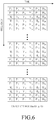
- FIGURE 6 depicts a resource structure for the bandwidth request using the OFDMA physical layer, for use with embodiments of the present disclosure.
- a bandwidth request channel is made up of three distributed bandwidth request tiles, where each bandwidth request tile is defined as six contiguous subcarriers by six OFDM symbols as shown in FIGURE 6 .
- OFDMA Orthogonal Frequency Division Multiple Access
- FIGURE 6 depicts a resource structure for the bandwidth request using the OFDMA physical layer, for use with embodiments of the present disclosure.
- OFDMA Orthogonal Frequency Division Multiple Access
- Each bandwidth request tile includes preamble sequences Pr 0 -Pr 23 . These are the preamble sequences for the bandwidth request indicator.
- the quick access message code words M 0 -M 35 are distributed over all three bandwidth request tiles.
- the physical layer OFDMA resource is designed to support both the 3-step and 5-step bandwidth request procedures.
- a mobile station transmits either the bandwidth request indicator only (in the case of a 5-step bandwidth request) or both the bandwidth request indicator and a quick access message (in the case of a 3-step bandwidth request procedure).
- the bandwidth request indicator is an access sequence or preamble sequence having a length of 24 bits.
- the 802.16m standard defines 24 orthogonal access sequences, each having a 24-bit length. If a mobile station has a message type for which the 3-step bandwidth request can be used, then the mobile station chooses one of the 24 sequences corresponding to the specific type. The mobile station then transmits both the preamble sequence (as a bandwidth request indicator) and the quick access message to the base station. To aid efficient transmission, a portion of the quick access message may be transmitted in the preamble index. Several embodiments are described below that map a portion of the quick access message to the preamble index.
- the base station Upon receipt of the bandwidth request indicator, the base station decodes the bandwidth request indicator, then proceeds to detect the quick access message.
- the quick access message is meant to be coherently decoded.
- the channel estimates for coherent detection of the quick access message are derived by using the detected bandwidth request indicator sequence as the pilot sequence.
- the design shown in FIGURE 6 detailing the placement of bandwidth request indicator and quick access message facilitates such channel estimation and coherent decoding.
- the quick access message may consist of a sequence of B bits that contains: (1) a sequence of bits uniquely identifying the mobile station, and (2) the type of message for which the bandwidth is being requested.
- the type of message may include: (1) the priority for the message, (2) the flow ID of the message, and/or (3) a predefined message type.
- a quick access message may contain a 12 bit MSID(Mobile Station Identifier) followed by a 4 bit message type, thus giving the quick access message a total of 16 bits. Therefore, given that a part of the quick access message is transmitted in the data portion of the BWREQ channel, the remaining bits can be identified using the preamble index.
- One way to identify the remaining bits using the preamble index is to define a one-to-one mapping between the type of message and the bandwidth request indicator preamble sequence.
- VOIP(AMR) full rate packet is message type 1 and is mapped to preamble index 1.
- the base station Upon receiving the preamble index 1, the base station knows that the bandwidth size requested is for a VOIP(AMR) full rate packet.
- the base station uses the preamble sequence to estimate the channel in each tile and then uses the channel estimate to coherently decode the quick access message, which contains the mobile station ID (STID).
- the base station can grant uplink bandwidth to the mobile station requesting to send the VOIP(AMR) full rate packet.
- While such a one-to-one mapping solves the problem of indicating the BWREQ size for a 3-step bandwidth request procedure, it may not be an efficient one. For example, if more than two users are requesting bandwidth for the same VOIP(AMR) full rate packet, the base station, while being able to resolve the BWREQ size, may not be able to estimate the channel from each user to the base station, and consequently cannot decode the quick access message. As a result, a collision between multiple mobile users may occur.
- mapping of the preamble index depends not just on the BWREQ size, but also on the mobile station-specific STID.
- the BWREQ message includes B MS bits of the STID and the remaining (B-B MS ) bits indicating bandwidth request size in the preamble index.
- bits b 0 , b 1 , b 2 , ⁇ , b B MS -1 are defined as the unique STID associated with the mobile station.
- the remaining bits d 0 , d 1 , d 2 , ⁇ , d ( B-B MS -1) are defined as the bandwidth size/priority indicator (BWSize). These bits are used to generate a 3-bit index p 0 , p 1 , p 2 , as described below.
- the decimal equivalent of the binary 3-bit index points to the index of the preamble sequence transmitted.
- a portion of the bits containing the station ID as well as the BWSize forms the quick access message.
- the preamble sequence and the quick access message are then transmitted to the base station in the bandwidth request channel.
- the base station extracts the preamble index from the preamble sequence and the bits are decoded from the quick access message. Both the preamble index and the quick access message bits are used to reconstruct both the STID and BWSize at the base station.
- the quick access message is configured as a set of 16 bits, s 0 , s 1 , s 2 ,..., s 15 .
- the STID is 12 bits (indicated as b 0 , b 1 , b 2 ,..., b 11 ) and the BWSize is 4 bits (indicated as d 0 , d 1 , d 2 , d 3 ).
- mod is the modulo operator (bit wise XOR operation).
- the bits b 0 , b 1 , b 2 ,..., b 11 , d 0 are carried in the data portion of the BWREQ tile.
- a mapping is defined between the quick access message and the data + preamble sequence portion of the message as shown below.
- b 0 , b 1 , b 2 ,..., b 12 be the bits carried in the data portion of the BWREQ tile and b 13 , b 14 , b 15 be the bits that indicate the preamble index.
- b 0 , b 1 , b 2 , ⁇ , b 12 , b 13 , b 14 , b 15 s 0 , s 1 , s 2 , ⁇ , s 12 , p 0 , p 1 , p 2
- p i mod s i + s i + 3 + s i + 6 + s i + 9 + s i + 13 , 2 , 0 ⁇ i ⁇ 3.
- a base station When a base station receives the BWREQ message from the mobile station, it processes the BWREQ message. For example, the base station determines the preamble index corresponding to the received preamble sequence in the BWREQ message. The preamble index corresponds to the 3 parity bits. The base station then determines a 13-bit portion of the BWREQ message from the quick access message.
- the base station groups the 13 bits into 3 groups, each group having a substantially equal number of bits.
- the base station then distributes the 3 parity bits to the 3 groups.
- the base station then recovers the 3-bit portion of the 16-bit message using a bit-wise XOR operation on the bits in the each of the 3 groups.
- the quick access message is configured as a set of 15 bits, s 0 , s 1 , s 2 ,..., s 14 , where the bit string is composed of 12 bit STID and a 3 bit BWSize.
- a mapping is defined between the quick access message and the data + preamble sequence portion of the message as shown below. Let b 0 , b 1 , b 2 ,..., b 11 be the bits carried in the data portion of the BWREQ tile and b 12 , b 13 , b 14 be the bits that indicate the preamble index.
- b 0 , b 1 , b 2 , ⁇ , b 11 , b 12 , b 13 , b 14 s 0 , s 1 , s 2 , ⁇ , s 11 , p 0 , p 1 , p 2
- p i mod s i + s i + 3 + s i + 6 + s i + 9 + s i + 12 , 2 , 0 ⁇ i ⁇ 3.
- a parity bit is defined for each of the 3 groups.
- the 3 parity bits do not simply become the 3 bits of the preamble index.
- One of the benefits of all of the following embodiments is that they may reduce and/or avoid the chances of collisions where more than one user requests the same service.
- the STID bit sequence b 0 , b 1 , b 2 , ⁇ , b B MS -1 is first randomized using a randomizer function n(.) that permutes the indices of the bit sequence.
- n(.) In order to decode the randomizer function, n(.) must be known to both the mobile station as well as the base station.
- the 3 parity bits can then be generated as described in the preceding embodiment.
- Preamble Index p 0 mod d B ⁇ Bms ⁇ 1 ⁇ 2 + b PG 1 , 2
- Preamble Index p 1 mod d B ⁇ Bms ⁇ 1 ⁇ 1 + b PG 2 , 2
- Preamble Index p 2 mod d B ⁇ Bms ⁇ 1 + b PG 3 , 2 .
- FIGURE 7 depicts a method for indexing preamble sequences, according to another embodiment of the present disclosure.
- a 3 bit cyclic redundancy check (CRC) is generated from the B MS bits of the STID.
- a bit wise XOR operation (modulo 2 addition) is used to add the 3 bit CRC with the 3 bit BWSize indicator to generate the preamble indices p 0 , p 1 and p 2 .
- the STID bits b 0 , b 1 , b 2 , ⁇ , b B MS -1 are mapped into three parity bits b PG1 , b PG2 , b PG3 using a hash function.
- the bits b PG1 , b PG2 , b PG3 are defined as the binary equivalent of the decimal value HV.
- Preamble Index p 0 mod d B ⁇ Bms ⁇ 1 ⁇ 2 + b PG 1 , 2
- Preamble Index p 1 mod d B ⁇ Bms ⁇ 1 ⁇ 1 + b PG 2 , 2
- Preamble Index p 2 mod d B ⁇ Bms ⁇ 1 + b PG 3 , 2 .
- mod is the modulo operator.
- the three bits of the preamble index are derived by concatenating x bits from the B MS bits of the STID and the remaining (3-x) bits from the 3 bit BWSize.
- the quick access message is configured as a set of 16 bits, s 0 , s 1 , s 2 , ⁇ , s 15 , where the bit string is composed of STID and BWSize.
- a mapping is defined between the quick access message and the data + preamble sequence portion of the message as follows: Let b 0 , b 1 , b 2 , ⁇ , b 12 be the bits carried in the data portion of the BWREQ tile and b 13 , b 14 , b 15 be the bits that indicate the preamble index.
- this method moves some of the bits of the STID toward the end of the quick access message.
- LSB least significant bit
- MSB most significant bits
- various functions described above are implemented or supported by a computer program that is formed from computer readable program code and that is embodied in a computer readable medium.
- computer readable program code includes any type of computer code, including source code, object code, and executable code.
- computer readable medium includes any type of medium capable of being accessed by a computer, such as read only memory (ROM), random access memory (RAM), a hard disk drive, a compact disc (CD), a digital video disc (DVD), or any other type of memory.
Landscapes
- Engineering & Computer Science (AREA)
- Computer Networks & Wireless Communication (AREA)
- Signal Processing (AREA)
- Mobile Radio Communication Systems (AREA)
Claims (16)
- Mobilstation (200) zum Anfordern einer Bandbreite für eine Aufwärtsrichtungsplanung in einem Drahtloskommunikationsnetz, wobei die Mobilstation Folgendes umfasst:einen Hauptprozessor (240), der konfiguriert ist, Bandbreitenanforderungsinformationen, die eine Schnellzugriffsmitteilung beinhalten, unter Verwendung erster Bits, die einen Identifikator der Mobilstation angeben, und zweiter Bits zu konfigurieren, die vordefinierte Bandbreitenanforderungsinformationen angeben,einen Sendeempfänger (201), der konfiguriert ist, die Bandbreitenanforderungsinformationen in einem Bandbreitenanforderungskanal zu einer Basisstation (101, 102, 103) zu senden (401), und der von der Basisstation eine Antwort empfängt, die angibt, ob die Bandanforderungsinformationen erfolgreich decodiert worden sind (402);wenn die Antwort einen Decodierfehler der Schnellzugriffsmitteilung angibt, die in den Bandbreitenanforderungsinformationen beinhaltet ist, ist der Hauptprozessor (204) konfiguriert, einen Zeitgeber zu starten und ein Verfahren zum Anfordern von Bandbreite mit der Basisstation durchzuführen, wobei Bits der Bandbreitenanforderungsinformationen, b0-b15, durch die ersten Bits und die zweiten Bits, wie in einer Gleichung unten gezeigt, gebildet werden, b 0,b 1,b 2,...,b 12,b 13,b 14,b 15 = s 0,s 1,s 2,...,s 12,p 0,p 1,p 2, und wobei pi = mod (si +s i+3+s i+6+s i+9+ s i+13, 2) 0≤i<3 ist, si die Bits der Schnellzugriffsmitteilung sind, die in der Bandbreitenanforderungsinformationen beinhaltet ist, wobei p0, p1, p2 Bits der Bandbreitenanforderungsinformationen sind, die einen Index bilden, deren Dezimaläquivalent den Präambelindex bildet, und die in der Bandbreitenanforderungspräambel des Bandbreitenanforderungskanals transportiert werden, der den Präambelindex verwendet.
- Mobilstation (200) nach Anspruch 1, wobei der Hauptprozessor (204) konfiguriert ist, das Verfahren zum Anfordern von Bandbreite neu zu starten, wenn keine Erteilungsinformationen für die Aufwärtsrichtungsplanung empfangen worden sind, bis der Zeitgeber abgelaufen ist, und den Zeitgeber anzuhalten, wenn die Erteilungsinformationen während des Verfahrens von der Basisstation empfangen werden (504).
- Mobilstation (200) nach Anspruch 1, wobei b13,b14,b15, die den Partialbits entsprechen, mithilfe des Präambelindex identifiziert werden, b0, b1, b2, ..., b12, die den übrigen Bits außer den Partialbits entsprechen, über einen Datenbereich des Bandbreitenanforderungskanals gesendet werden.
- Mobilstation (200) nach Anspruch 1, wobei die Anzahl der Partialbits 3 ist.
- Basisstation (101, 102, 103) zur Aufwärtsrichtungsplanung in einem Drahtloskommunikationsnetz, wobei die Basisstation Folgendes umfasst:einen Sendeempfänger, der konfiguriert ist, von einer Mobilstation (200) Bandbreitenanforderungsinformationen, die eine Schnellzugriffsmitteilung beinhalten, die unter Verwendung erster Bits, die einen Identifikator der Mobilstation angeben, und zweiter Bits konfiguriert worden ist, die vordefinierte Bandbreitenanforderungsinformationen angeben, in einem Bandbreitenanforderungskanal zu empfangen; undeine Steuerung, die konfiguriert ist, die Bandbreitenanforderungsinformationen zu decodieren und eine Antwort zu generieren, die einem Decodierergebnis der Bandanforderungsinformationen entspricht, und den Sendeempfänger zu steuern, um die Antwort zur Mobilstation zu senden, wenn die Antwort einen Decodierfehler der Schnellzugriffsmitteilung angibt, die in den Bandbreitenanforderungsinformationen beinhaltet ist, einen Zeitgeber zu starten und ein Verfahren zum Anfordern von Bandbreite mit der Mobilstation während einer Laufzeit eines Zeitgebers durchzuführen, der durch die Mobilstation gestartet wird,wobei Bits der Bandbreitenanforderungsinformationen, b0-b15, durch die ersten Bits und die zweiten Bits, wie in einer Gleichung unten gezeigt, gebildet werden, b 0,b 1,b 2,...,b 12,b 13,b 14,b 15 = s 0,s 1, s 2,..., s 12,p 0,p 1,p 2, wobei pi = mod(si +s i+3+s i+6+s i+9+s i+13,2) 0≤i<3 ist, si die Bits der Schnellzugriffsmitteilung sind, die in der Bandbreitenanforderungsinformationen beinhaltet ist, und wobei p0, p1, p2 Bits der Bandbreitenanforderungsinformationen sind, die einen Index bilden, deren Dezimaläquivalent den Präambelindex bildet, und die in der Bandbreitenanforderungspräambel des Bandbreitenanforderungskanals transportiert werden, der den Präambelindex verwendet.
- Basisstation (101, 102, 103) nach Anspruch 5, wobei, wenn keine Erteilungsinformationen für die Aufwärtsrichtungsplanung gesendet worden sind, bis der Zeitgeber abgelaufen ist, das Verfahren für das Anfordern von Bandbreite neu gestartet wird; und
wenn die Erteilungsinformationen während des Verfahrens von der Basisstation empfangen werden (504), der Zeitgeber angehalten wird. - Basisstation (101, 102, 103) nach Anspruch 5,
wobei b13,b14,b15, die den Partialbits entsprechen, mithilfe des Präambelindex identifiziert werden, b0 ,b1 ,b2 , .., b12 , die den übrigen Bits außer den Partialbits entsprechen, über einen Datenbereich eines Bandbreitenanforderungskanals gesendet werden. - Mobilstation (101, 102, 103) nach Anspruch 5, wobei die Anzahl der Partialbits 3 ist.
- Verfahren zum Anfordern von Bandbreite für eine Aufwärtsrichtungsplanung durch eine Mobilstation (200) in einem Drahtloskommunikationsnetz, wobei das Verfahren Folgendes umfasst:Konfigurieren von Bandbreitenanforderungsinformationen, die eine Schnellzugriffsmitteilung beinhalten, unter Verwendung erster Bits, die einen Identifikator der Mobilstation (200) angeben, und zweiter Bits, die vordefinierte Bandbreitenanforderungsinformationen angeben, und Senden (401) der Bandbreitenanforderungsinformationen in einem Bandbreitenanforderungskanal zu einer Basisstation (101, 102, 103);Empfangen einer Antwort, die angibt, ob die Bandanforderungsinformationen erfolgreich decodiert worden sind, von der Basisstation (402);wenn die Antwort einen Decodierfehler der Schnellzugriffsmitteilung angibt, die in den Bandbreitenanforderungsinformationen beinhaltet ist, Starten eines Zeitgebers und Durchführen eines Verfahren zum Anfordern von Bandbreite mit der Basisstation,wobei Bits der Bandbreitenanforderungsinformationen, b0-b15, durch die ersten Bits und die zweiten Bits, wie in einer Gleichung unten gezeigt, gebildet werden, b 0,b 1,b 2,...,b 12,b 13,b 14,b 15 = s 0, s 1, s 2, ..., s 12,p 0,p 1,p 2, wobei pi = mod(si +s i+3+s i+6+s i+9+s i+13,2) 0≤i<3 ist, si die Bits der Schnellzugriffsmitteilung sind, die in der Bandbreitenanforderungsinformationen beinhaltet ist, und wobei p0, p1, p2 Bits der Bandbreitenanforderungsinformationen sind, die einen Index bilden, deren Dezimaläquivalent den Präambelindex bildet, und die in der Bandbreitenanforderungspräambel des Bandbreitenanforderungskanals transportiert werden, der den Präambelindex verwendet.
- Verfahren nach Anspruch 9, das ferner Folgendes umfasst:Neustarten des Verfahrens zum Anfordern von Bandbreite, wenn keine Erteilungsinformationen für die Aufwärtsrichtungsplanung empfangen worden sind, bis der Zeitgeber abgelaufen ist; undAnhalten des Zeitgebers, wenn die Erteilungsinformationen während des Verfahrens von der Basisstation empfangen werden (504).
- Verfahren nach Anspruch 9,
wobei b 13,b 14,b 15, die den Partialbits entsprechen, mithilfe des Präambelindex identifiziert werden, b 0,b 1,b 2,...,b 12, die den übrigen Bits außer den Partialbits entsprechen, über einen Datenbereich des Bandbreitenanforderungskanals gesendet werden. - Verfahren nach Anspruch 9, wobei die Anzahl der Partialbits 3 ist.
- Verfahren zur Aufwärtsrichtungsplanung durch eine Basisstation (101, 102, 103) in einem Drahtloskommunikationsnetz, wobei das Verfahren Folgendes umfasst:Empfangen von Bandbreitenanforderungsinformationen, die eine Schnellzugriffsmitteilung beinhalten, die unter Verwendung erster Bits, die einen Identifikator der Mobilstation angeben, und zweiter Bits konfiguriert worden ist, die vordefinierte Bandbreitenanforderungsinformationen angeben, von einer Mobilstation (200) in einem Bandbreitenanforderungskanal undDecodieren der Bandbreitenanforderungsinformationen, Generieren einer Antwort, die einem Decodierergebnis der Bandanforderungsinformationen entspricht, und Steuern des Sendeempfängers, um die Antwort zur Mobilstation zu senden, und wenn die Antwort einen Decodierfehler der Schnellzugriffsmitteilung angibt, die in den Bandbreitenanforderungsinformationen beinhaltet ist, Starten eines Zeitgebers und Durchführen eines Verfahrens zum Anfordern von Bandbreite mit der Mobilstation während einer Laufzeit eines Zeitgebers, der durch die Mobilstation gestartet wird,wobei Bits der Bandbreitenanforderungsinformationen, b0-b15, durch die ersten Bits und die zweiten Bits, wie in einer Gleichung unten gezeigt, gebildet werden, b 0,b 1,b 2,...,b 12,b 13,b 14,b 15 = s 0, s 1, s 2, ..., s 12,p 0,p 1,p 2, wobei pi = mod(si +s i+3+s i+6+s i+9+s i+13,2) 0≤i<3 ist, si die Bits der Schnellzugriffsmitteilung sind, die in der Bandbreitenanforderungsinformationen beinhaltet ist, und wobei p0, p1, p2 Bits der Bandbreitenanforderungsinformationen sind, die einen Index bilden, deren Dezimaläquivalent den Präambelindex bildet, und die in der Bandbreitenanforderungspräambel des Bandbreitenanforderungskanals transportiert werden, der den Präambelindex verwendet.
- Verfahren nach Anspruch 13, wobei, wenn keine Erteilungsinformationen für die Aufwärtsrichtungsplanung gesendet worden sind, bis der Zeitgeber abgelaufen ist, das Verfahren für das Anfordern von Bandbreite neu gestartet wird; und
wenn die Erteilungsinformationen während des Verfahrens von der Basisstation empfangen werden (504), der Zeitgeber angehalten wird. - Verfahren nach Anspruch 13,
wobei b 13,b 14,b 15, die den Partialbits entsprechen, mithilfe des Präambelindex identifiziert werden, b 0,b 1,b 2,...,b 12, die den übrigen Bits außer den Partialbits entsprechen, über einen Datenbereich des Bandbreitenanforderungskanals gesendet werden. - Verfahren nach Anspruch 13, wobei die Anzahl der Partialbits 3 ist.
Applications Claiming Priority (2)
| Application Number | Priority Date | Filing Date | Title |
|---|---|---|---|
| US27087909P | 2009-07-14 | 2009-07-14 | |
| US12/783,235 US8204147B2 (en) | 2009-07-14 | 2010-05-19 | Methods to index the preambles in the bandwidth request channel |
Publications (3)
| Publication Number | Publication Date |
|---|---|
| EP2276311A2 EP2276311A2 (de) | 2011-01-19 |
| EP2276311A3 EP2276311A3 (de) | 2014-07-02 |
| EP2276311B1 true EP2276311B1 (de) | 2017-05-24 |
Family
ID=43014348
Family Applications (1)
| Application Number | Title | Priority Date | Filing Date |
|---|---|---|---|
| EP10169491.7A Active EP2276311B1 (de) | 2009-07-14 | 2010-07-14 | Verfahren zur Indexierung der Präambeln in einem Bandbreitenanfragekanal |
Country Status (1)
| Country | Link |
|---|---|
| EP (1) | EP2276311B1 (de) |
Family Cites Families (1)
| Publication number | Priority date | Publication date | Assignee | Title |
|---|---|---|---|---|
| EP2030344A4 (de) * | 2006-06-20 | 2013-04-24 | Intel Corp | Direktzugriffsanfragenerweiterung für eine zusätzliche ressourcenanfrage |
-
2010
- 2010-07-14 EP EP10169491.7A patent/EP2276311B1/de active Active
Non-Patent Citations (1)
| Title |
|---|
| HWASUN YOO ET AL: "Performance Evaluation of Proposed Physical Structure for BW REQ Channel ; C80216m-09_1549", IEEE DRAFT; C80216M-09_1549, IEEE-SA, PISCATAWAY, NJ USA, vol. 802.16m, 7 July 2009 (2009-07-07), pages 1 - 18, XP068001872 * |
Also Published As
| Publication number | Publication date |
|---|---|
| EP2276311A2 (de) | 2011-01-19 |
| EP2276311A3 (de) | 2014-07-02 |
Similar Documents
| Publication | Publication Date | Title |
|---|---|---|
| USRE45635E1 (en) | Methods to index the preambles in the bandwidth request channel | |
| EP3078146B1 (de) | Verfahren für verbesserten harq-mechanismus | |
| EP3766293B1 (de) | Verfahren und vorrichtung zum übertragen oder empfangen eines synchronisationssignals in einem drahtlosen kommunikationssystem | |
| JP3730231B2 (ja) | 直交周波数分割多重接続方式を用いる移動通信システムにおけるレンジング方法 | |
| CN1938979B (zh) | 使用单信道来提供确认和分配消息的方法和装置 | |
| JP5889206B2 (ja) | ブラインドデコーディングを使用するシステムで可変長フィールドを含むメッセージサイズの効率的な黙示的表示 | |
| CN103747533B (zh) | 一种无线网络设备 | |
| CN101248684B (zh) | 在无线移动通信系统中经上行信道发送和接收消息的方法 | |
| JP5726865B2 (ja) | 広帯域無線通信システムでアップリンク帯域幅要求情報を送受信するための装置及び方法 | |
| CN1327697A (zh) | 用于在无线电通信系统中分配随机接入信道的方法与系统 | |
| CN118449660A (zh) | 用于混合自动重传请求过程的方法和装置 | |
| CN101810047A (zh) | 为在增强型rach中发送消息部分而分配无线电资源的方法及设备 | |
| WO2018059173A1 (zh) | 免授权的传输上行信息的方法、网络设备和终端设备 | |
| TWI733933B (zh) | 傳輸上行訊號的方法、終端設備和網路側設備 | |
| EP4030668B1 (de) | Verfahren und vorrichtung zur bestimmung der zuordnung von kanalstatusinformationsreferenzsignalressourcen | |
| CN107708209A (zh) | 用于非正交多址接入的重传数据接收、发送方法及装置 | |
| WO2018054191A1 (zh) | 免授权传输的方法、网络设备和终端设备 | |
| JP2011503952A (ja) | E−rach用e−dchリソースの標示 | |
| EP2374236B1 (de) | Harq-verwaltung in drahtlosen systemen | |
| JP2022017375A (ja) | 確認応答リソースの永続的なインジケーション | |
| CN108605364A (zh) | 用于上行链路数据传输的方法以及装置 | |
| TW200939811A (en) | A method for signalling random access channels | |
| EP2276311B1 (de) | Verfahren zur Indexierung der Präambeln in einem Bandbreitenanfragekanal | |
| CN101562845B (zh) | 预留资源释放方法、装置及基站设备 | |
| CN107733596B (zh) | 信息传输方法和设备 |
Legal Events
| Date | Code | Title | Description |
|---|---|---|---|
| PUAI | Public reference made under article 153(3) epc to a published international application that has entered the european phase |
Free format text: ORIGINAL CODE: 0009012 |
|
| AK | Designated contracting states |
Kind code of ref document: A2 Designated state(s): AL AT BE BG CH CY CZ DE DK EE ES FI FR GB GR HR HU IE IS IT LI LT LU LV MC MK MT NL NO PL PT RO SE SI SK SM TR |
|
| AX | Request for extension of the european patent |
Extension state: BA ME RS |
|
| RAP1 | Party data changed (applicant data changed or rights of an application transferred) |
Owner name: SAMSUNG ELECTRONICS CO., LTD. |
|
| PUAL | Search report despatched |
Free format text: ORIGINAL CODE: 0009013 |
|
| AK | Designated contracting states |
Kind code of ref document: A3 Designated state(s): AL AT BE BG CH CY CZ DE DK EE ES FI FR GB GR HR HU IE IS IT LI LT LU LV MC MK MT NL NO PL PT RO SE SI SK SM TR |
|
| AX | Request for extension of the european patent |
Extension state: BA ME RS |
|
| RIC1 | Information provided on ipc code assigned before grant |
Ipc: H04W 74/08 20090101AFI20140528BHEP |
|
| 17P | Request for examination filed |
Effective date: 20150102 |
|
| RBV | Designated contracting states (corrected) |
Designated state(s): AL AT BE BG CH CY CZ DE DK EE ES FI FR GB GR HR HU IE IS IT LI LT LU LV MC MK MT NL NO PL PT RO SE SI SK SM TR |
|
| 17Q | First examination report despatched |
Effective date: 20150327 |
|
| R17C | First examination report despatched (corrected) |
Effective date: 20150327 |
|
| GRAP | Despatch of communication of intention to grant a patent |
Free format text: ORIGINAL CODE: EPIDOSNIGR1 |
|
| INTG | Intention to grant announced |
Effective date: 20170102 |
|
| GRAS | Grant fee paid |
Free format text: ORIGINAL CODE: EPIDOSNIGR3 |
|
| GRAA | (expected) grant |
Free format text: ORIGINAL CODE: 0009210 |
|
| AK | Designated contracting states |
Kind code of ref document: B1 Designated state(s): AL AT BE BG CH CY CZ DE DK EE ES FI FR GB GR HR HU IE IS IT LI LT LU LV MC MK MT NL NO PL PT RO SE SI SK SM TR |
|
| REG | Reference to a national code |
Ref country code: GB Ref legal event code: FG4D |
|
| REG | Reference to a national code |
Ref country code: CH Ref legal event code: EP |
|
| REG | Reference to a national code |
Ref country code: IE Ref legal event code: FG4D |
|
| REG | Reference to a national code |
Ref country code: AT Ref legal event code: REF Ref document number: 896576 Country of ref document: AT Kind code of ref document: T Effective date: 20170615 |
|
| REG | Reference to a national code |
Ref country code: DE Ref legal event code: R096 Ref document number: 602010042520 Country of ref document: DE |
|
| REG | Reference to a national code |
Ref country code: FR Ref legal event code: PLFP Year of fee payment: 8 |
|
| REG | Reference to a national code |
Ref country code: NL Ref legal event code: MP Effective date: 20170524 |
|
| REG | Reference to a national code |
Ref country code: LT Ref legal event code: MG4D |
|
| REG | Reference to a national code |
Ref country code: AT Ref legal event code: MK05 Ref document number: 896576 Country of ref document: AT Kind code of ref document: T Effective date: 20170524 |
|
| PG25 | Lapsed in a contracting state [announced via postgrant information from national office to epo] |
Ref country code: GR Free format text: LAPSE BECAUSE OF FAILURE TO SUBMIT A TRANSLATION OF THE DESCRIPTION OR TO PAY THE FEE WITHIN THE PRESCRIBED TIME-LIMIT Effective date: 20170825 Ref country code: NO Free format text: LAPSE BECAUSE OF FAILURE TO SUBMIT A TRANSLATION OF THE DESCRIPTION OR TO PAY THE FEE WITHIN THE PRESCRIBED TIME-LIMIT Effective date: 20170824 Ref country code: HR Free format text: LAPSE BECAUSE OF FAILURE TO SUBMIT A TRANSLATION OF THE DESCRIPTION OR TO PAY THE FEE WITHIN THE PRESCRIBED TIME-LIMIT Effective date: 20170524 Ref country code: FI Free format text: LAPSE BECAUSE OF FAILURE TO SUBMIT A TRANSLATION OF THE DESCRIPTION OR TO PAY THE FEE WITHIN THE PRESCRIBED TIME-LIMIT Effective date: 20170524 Ref country code: LT Free format text: LAPSE BECAUSE OF FAILURE TO SUBMIT A TRANSLATION OF THE DESCRIPTION OR TO PAY THE FEE WITHIN THE PRESCRIBED TIME-LIMIT Effective date: 20170524 Ref country code: AT Free format text: LAPSE BECAUSE OF FAILURE TO SUBMIT A TRANSLATION OF THE DESCRIPTION OR TO PAY THE FEE WITHIN THE PRESCRIBED TIME-LIMIT Effective date: 20170524 Ref country code: ES Free format text: LAPSE BECAUSE OF FAILURE TO SUBMIT A TRANSLATION OF THE DESCRIPTION OR TO PAY THE FEE WITHIN THE PRESCRIBED TIME-LIMIT Effective date: 20170524 |
|
| PG25 | Lapsed in a contracting state [announced via postgrant information from national office to epo] |
Ref country code: LV Free format text: LAPSE BECAUSE OF FAILURE TO SUBMIT A TRANSLATION OF THE DESCRIPTION OR TO PAY THE FEE WITHIN THE PRESCRIBED TIME-LIMIT Effective date: 20170524 Ref country code: SE Free format text: LAPSE BECAUSE OF FAILURE TO SUBMIT A TRANSLATION OF THE DESCRIPTION OR TO PAY THE FEE WITHIN THE PRESCRIBED TIME-LIMIT Effective date: 20170524 Ref country code: IS Free format text: LAPSE BECAUSE OF FAILURE TO SUBMIT A TRANSLATION OF THE DESCRIPTION OR TO PAY THE FEE WITHIN THE PRESCRIBED TIME-LIMIT Effective date: 20170924 Ref country code: BG Free format text: LAPSE BECAUSE OF FAILURE TO SUBMIT A TRANSLATION OF THE DESCRIPTION OR TO PAY THE FEE WITHIN THE PRESCRIBED TIME-LIMIT Effective date: 20170824 Ref country code: NL Free format text: LAPSE BECAUSE OF FAILURE TO SUBMIT A TRANSLATION OF THE DESCRIPTION OR TO PAY THE FEE WITHIN THE PRESCRIBED TIME-LIMIT Effective date: 20170524 |
|
| PG25 | Lapsed in a contracting state [announced via postgrant information from national office to epo] |
Ref country code: DK Free format text: LAPSE BECAUSE OF FAILURE TO SUBMIT A TRANSLATION OF THE DESCRIPTION OR TO PAY THE FEE WITHIN THE PRESCRIBED TIME-LIMIT Effective date: 20170524 Ref country code: SK Free format text: LAPSE BECAUSE OF FAILURE TO SUBMIT A TRANSLATION OF THE DESCRIPTION OR TO PAY THE FEE WITHIN THE PRESCRIBED TIME-LIMIT Effective date: 20170524 Ref country code: RO Free format text: LAPSE BECAUSE OF FAILURE TO SUBMIT A TRANSLATION OF THE DESCRIPTION OR TO PAY THE FEE WITHIN THE PRESCRIBED TIME-LIMIT Effective date: 20170524 Ref country code: CZ Free format text: LAPSE BECAUSE OF FAILURE TO SUBMIT A TRANSLATION OF THE DESCRIPTION OR TO PAY THE FEE WITHIN THE PRESCRIBED TIME-LIMIT Effective date: 20170524 Ref country code: EE Free format text: LAPSE BECAUSE OF FAILURE TO SUBMIT A TRANSLATION OF THE DESCRIPTION OR TO PAY THE FEE WITHIN THE PRESCRIBED TIME-LIMIT Effective date: 20170524 |
|
| REG | Reference to a national code |
Ref country code: DE Ref legal event code: R097 Ref document number: 602010042520 Country of ref document: DE |
|
| PG25 | Lapsed in a contracting state [announced via postgrant information from national office to epo] |
Ref country code: SM Free format text: LAPSE BECAUSE OF FAILURE TO SUBMIT A TRANSLATION OF THE DESCRIPTION OR TO PAY THE FEE WITHIN THE PRESCRIBED TIME-LIMIT Effective date: 20170524 Ref country code: PL Free format text: LAPSE BECAUSE OF FAILURE TO SUBMIT A TRANSLATION OF THE DESCRIPTION OR TO PAY THE FEE WITHIN THE PRESCRIBED TIME-LIMIT Effective date: 20170524 Ref country code: IT Free format text: LAPSE BECAUSE OF FAILURE TO SUBMIT A TRANSLATION OF THE DESCRIPTION OR TO PAY THE FEE WITHIN THE PRESCRIBED TIME-LIMIT Effective date: 20170524 |
|
| REG | Reference to a national code |
Ref country code: CH Ref legal event code: PL |
|
| PLBE | No opposition filed within time limit |
Free format text: ORIGINAL CODE: 0009261 |
|
| STAA | Information on the status of an ep patent application or granted ep patent |
Free format text: STATUS: NO OPPOSITION FILED WITHIN TIME LIMIT |
|
| REG | Reference to a national code |
Ref country code: IE Ref legal event code: MM4A |
|
| PG25 | Lapsed in a contracting state [announced via postgrant information from national office to epo] |
Ref country code: IE Free format text: LAPSE BECAUSE OF NON-PAYMENT OF DUE FEES Effective date: 20170714 Ref country code: CH Free format text: LAPSE BECAUSE OF NON-PAYMENT OF DUE FEES Effective date: 20170731 Ref country code: LI Free format text: LAPSE BECAUSE OF NON-PAYMENT OF DUE FEES Effective date: 20170731 |
|
| 26N | No opposition filed |
Effective date: 20180227 |
|
| PG25 | Lapsed in a contracting state [announced via postgrant information from national office to epo] |
Ref country code: SI Free format text: LAPSE BECAUSE OF FAILURE TO SUBMIT A TRANSLATION OF THE DESCRIPTION OR TO PAY THE FEE WITHIN THE PRESCRIBED TIME-LIMIT Effective date: 20170524 |
|
| REG | Reference to a national code |
Ref country code: BE Ref legal event code: MM Effective date: 20170731 |
|
| REG | Reference to a national code |
Ref country code: FR Ref legal event code: PLFP Year of fee payment: 9 |
|
| PG25 | Lapsed in a contracting state [announced via postgrant information from national office to epo] |
Ref country code: LU Free format text: LAPSE BECAUSE OF NON-PAYMENT OF DUE FEES Effective date: 20170714 |
|
| PG25 | Lapsed in a contracting state [announced via postgrant information from national office to epo] |
Ref country code: BE Free format text: LAPSE BECAUSE OF NON-PAYMENT OF DUE FEES Effective date: 20170731 |
|
| PG25 | Lapsed in a contracting state [announced via postgrant information from national office to epo] |
Ref country code: MT Free format text: LAPSE BECAUSE OF NON-PAYMENT OF DUE FEES Effective date: 20170714 |
|
| REG | Reference to a national code |
Ref country code: GB Ref legal event code: 732E Free format text: REGISTERED BETWEEN 20190530 AND 20190605 |
|
| PG25 | Lapsed in a contracting state [announced via postgrant information from national office to epo] |
Ref country code: MC Free format text: LAPSE BECAUSE OF FAILURE TO SUBMIT A TRANSLATION OF THE DESCRIPTION OR TO PAY THE FEE WITHIN THE PRESCRIBED TIME-LIMIT Effective date: 20170524 Ref country code: HU Free format text: LAPSE BECAUSE OF FAILURE TO SUBMIT A TRANSLATION OF THE DESCRIPTION OR TO PAY THE FEE WITHIN THE PRESCRIBED TIME-LIMIT; INVALID AB INITIO Effective date: 20100714 |
|
| REG | Reference to a national code |
Ref country code: DE Ref legal event code: R082 Ref document number: 602010042520 Country of ref document: DE Representative=s name: PAGE, WHITE & FARRER GERMANY LLP, DE Ref country code: DE Ref legal event code: R081 Ref document number: 602010042520 Country of ref document: DE Owner name: NOKIA TECHNOLOGIES OY, FI Free format text: FORMER OWNER: SAMSUNG ELECTRONICS CO., LTD., SUWON-SI, GYEONGGI-DO, KR |
|
| PG25 | Lapsed in a contracting state [announced via postgrant information from national office to epo] |
Ref country code: CY Free format text: LAPSE BECAUSE OF NON-PAYMENT OF DUE FEES Effective date: 20170524 |
|
| PG25 | Lapsed in a contracting state [announced via postgrant information from national office to epo] |
Ref country code: MK Free format text: LAPSE BECAUSE OF FAILURE TO SUBMIT A TRANSLATION OF THE DESCRIPTION OR TO PAY THE FEE WITHIN THE PRESCRIBED TIME-LIMIT Effective date: 20170524 |
|
| PG25 | Lapsed in a contracting state [announced via postgrant information from national office to epo] |
Ref country code: TR Free format text: LAPSE BECAUSE OF FAILURE TO SUBMIT A TRANSLATION OF THE DESCRIPTION OR TO PAY THE FEE WITHIN THE PRESCRIBED TIME-LIMIT Effective date: 20170524 |
|
| PG25 | Lapsed in a contracting state [announced via postgrant information from national office to epo] |
Ref country code: PT Free format text: LAPSE BECAUSE OF FAILURE TO SUBMIT A TRANSLATION OF THE DESCRIPTION OR TO PAY THE FEE WITHIN THE PRESCRIBED TIME-LIMIT Effective date: 20170524 |
|
| PG25 | Lapsed in a contracting state [announced via postgrant information from national office to epo] |
Ref country code: AL Free format text: LAPSE BECAUSE OF FAILURE TO SUBMIT A TRANSLATION OF THE DESCRIPTION OR TO PAY THE FEE WITHIN THE PRESCRIBED TIME-LIMIT Effective date: 20170524 |
|
| PGFP | Annual fee paid to national office [announced via postgrant information from national office to epo] |
Ref country code: GB Payment date: 20250529 Year of fee payment: 16 |
|
| PGFP | Annual fee paid to national office [announced via postgrant information from national office to epo] |
Ref country code: FR Payment date: 20250610 Year of fee payment: 16 |
|
| PGFP | Annual fee paid to national office [announced via postgrant information from national office to epo] |
Ref country code: DE Payment date: 20250604 Year of fee payment: 16 |
|
| REG | Reference to a national code |
Ref country code: DE Ref legal event code: R082 Ref document number: 602010042520 Country of ref document: DE Representative=s name: WESTPHAL, MUSSGNUG & PARTNER PATENTANWAELTE MI, DE |