EP2276435B1 - Vorrichtung zum auffangen von körperflüssigkeiten - Google Patents
Vorrichtung zum auffangen von körperflüssigkeiten Download PDFInfo
- Publication number
- EP2276435B1 EP2276435B1 EP08873951A EP08873951A EP2276435B1 EP 2276435 B1 EP2276435 B1 EP 2276435B1 EP 08873951 A EP08873951 A EP 08873951A EP 08873951 A EP08873951 A EP 08873951A EP 2276435 B1 EP2276435 B1 EP 2276435B1
- Authority
- EP
- European Patent Office
- Prior art keywords
- adhesive
- collecting device
- additional
- polar
- wafer
- Prior art date
- Legal status (The legal status is an assumption and is not a legal conclusion. Google has not performed a legal analysis and makes no representation as to the accuracy of the status listed.)
- Active
Links
Images
Classifications
-
- A—HUMAN NECESSITIES
- A61—MEDICAL OR VETERINARY SCIENCE; HYGIENE
- A61L—METHODS OR APPARATUS FOR STERILISING MATERIALS OR OBJECTS IN GENERAL; DISINFECTION, STERILISATION OR DEODORISATION OF AIR; CHEMICAL ASPECTS OF BANDAGES, DRESSINGS, ABSORBENT PADS OR SURGICAL ARTICLES; MATERIALS FOR BANDAGES, DRESSINGS, ABSORBENT PADS OR SURGICAL ARTICLES
- A61L24/00—Surgical adhesives or cements; Adhesives for colostomy devices
- A61L24/001—Use of materials characterised by their function or physical properties
- A61L24/0021—Plasticisers
-
- A—HUMAN NECESSITIES
- A61—MEDICAL OR VETERINARY SCIENCE; HYGIENE
- A61F—FILTERS IMPLANTABLE INTO BLOOD VESSELS; PROSTHESES; DEVICES PROVIDING PATENCY TO, OR PREVENTING COLLAPSING OF, TUBULAR STRUCTURES OF THE BODY, e.g. STENTS; ORTHOPAEDIC, NURSING OR CONTRACEPTIVE DEVICES; FOMENTATION; TREATMENT OR PROTECTION OF EYES OR EARS; BANDAGES, DRESSINGS OR ABSORBENT PADS; FIRST-AID KITS
- A61F5/00—Orthopaedic methods or devices for non-surgical treatment of bones or joints; Nursing devices ; Anti-rape devices
- A61F5/44—Devices worn by the patient for reception of urine, faeces, catamenial or other discharge; Colostomy devices
- A61F5/443—Devices worn by the patient for reception of urine, faeces, catamenial or other discharge; Colostomy devices having adhesive seals for securing to the body, e.g. of hydrocolloid type seals, e.g. gels, starches, karaya gums
-
- A—HUMAN NECESSITIES
- A61—MEDICAL OR VETERINARY SCIENCE; HYGIENE
- A61F—FILTERS IMPLANTABLE INTO BLOOD VESSELS; PROSTHESES; DEVICES PROVIDING PATENCY TO, OR PREVENTING COLLAPSING OF, TUBULAR STRUCTURES OF THE BODY, e.g. STENTS; ORTHOPAEDIC, NURSING OR CONTRACEPTIVE DEVICES; FOMENTATION; TREATMENT OR PROTECTION OF EYES OR EARS; BANDAGES, DRESSINGS OR ABSORBENT PADS; FIRST-AID KITS
- A61F5/00—Orthopaedic methods or devices for non-surgical treatment of bones or joints; Nursing devices ; Anti-rape devices
- A61F5/44—Devices worn by the patient for reception of urine, faeces, catamenial or other discharge; Colostomy devices
- A61F5/445—Colostomy, ileostomy or urethrostomy devices
-
- A—HUMAN NECESSITIES
- A61—MEDICAL OR VETERINARY SCIENCE; HYGIENE
- A61L—METHODS OR APPARATUS FOR STERILISING MATERIALS OR OBJECTS IN GENERAL; DISINFECTION, STERILISATION OR DEODORISATION OF AIR; CHEMICAL ASPECTS OF BANDAGES, DRESSINGS, ABSORBENT PADS OR SURGICAL ARTICLES; MATERIALS FOR BANDAGES, DRESSINGS, ABSORBENT PADS OR SURGICAL ARTICLES
- A61L24/00—Surgical adhesives or cements; Adhesives for colostomy devices
- A61L24/001—Use of materials characterised by their function or physical properties
-
- A—HUMAN NECESSITIES
- A61—MEDICAL OR VETERINARY SCIENCE; HYGIENE
- A61L—METHODS OR APPARATUS FOR STERILISING MATERIALS OR OBJECTS IN GENERAL; DISINFECTION, STERILISATION OR DEODORISATION OF AIR; CHEMICAL ASPECTS OF BANDAGES, DRESSINGS, ABSORBENT PADS OR SURGICAL ARTICLES; MATERIALS FOR BANDAGES, DRESSINGS, ABSORBENT PADS OR SURGICAL ARTICLES
- A61L24/00—Surgical adhesives or cements; Adhesives for colostomy devices
- A61L24/001—Use of materials characterised by their function or physical properties
- A61L24/0031—Hydrogels or hydrocolloids
-
- A—HUMAN NECESSITIES
- A61—MEDICAL OR VETERINARY SCIENCE; HYGIENE
- A61L—METHODS OR APPARATUS FOR STERILISING MATERIALS OR OBJECTS IN GENERAL; DISINFECTION, STERILISATION OR DEODORISATION OF AIR; CHEMICAL ASPECTS OF BANDAGES, DRESSINGS, ABSORBENT PADS OR SURGICAL ARTICLES; MATERIALS FOR BANDAGES, DRESSINGS, ABSORBENT PADS OR SURGICAL ARTICLES
- A61L24/00—Surgical adhesives or cements; Adhesives for colostomy devices
- A61L24/04—Surgical adhesives or cements; Adhesives for colostomy devices containing macromolecular materials
- A61L24/043—Mixtures of macromolecular materials
-
- A—HUMAN NECESSITIES
- A61—MEDICAL OR VETERINARY SCIENCE; HYGIENE
- A61L—METHODS OR APPARATUS FOR STERILISING MATERIALS OR OBJECTS IN GENERAL; DISINFECTION, STERILISATION OR DEODORISATION OF AIR; CHEMICAL ASPECTS OF BANDAGES, DRESSINGS, ABSORBENT PADS OR SURGICAL ARTICLES; MATERIALS FOR BANDAGES, DRESSINGS, ABSORBENT PADS OR SURGICAL ARTICLES
- A61L24/00—Surgical adhesives or cements; Adhesives for colostomy devices
- A61L24/04—Surgical adhesives or cements; Adhesives for colostomy devices containing macromolecular materials
- A61L24/046—Surgical adhesives or cements; Adhesives for colostomy devices containing macromolecular materials obtained otherwise than by reactions only involving carbon-to-carbon unsaturated bonds
-
- A—HUMAN NECESSITIES
- A61—MEDICAL OR VETERINARY SCIENCE; HYGIENE
- A61L—METHODS OR APPARATUS FOR STERILISING MATERIALS OR OBJECTS IN GENERAL; DISINFECTION, STERILISATION OR DEODORISATION OF AIR; CHEMICAL ASPECTS OF BANDAGES, DRESSINGS, ABSORBENT PADS OR SURGICAL ARTICLES; MATERIALS FOR BANDAGES, DRESSINGS, ABSORBENT PADS OR SURGICAL ARTICLES
- A61L24/00—Surgical adhesives or cements; Adhesives for colostomy devices
- A61L24/04—Surgical adhesives or cements; Adhesives for colostomy devices containing macromolecular materials
- A61L24/06—Surgical adhesives or cements; Adhesives for colostomy devices containing macromolecular materials obtained by reactions only involving carbon-to-carbon unsaturated bonds
-
- A—HUMAN NECESSITIES
- A61—MEDICAL OR VETERINARY SCIENCE; HYGIENE
- A61L—METHODS OR APPARATUS FOR STERILISING MATERIALS OR OBJECTS IN GENERAL; DISINFECTION, STERILISATION OR DEODORISATION OF AIR; CHEMICAL ASPECTS OF BANDAGES, DRESSINGS, ABSORBENT PADS OR SURGICAL ARTICLES; MATERIALS FOR BANDAGES, DRESSINGS, ABSORBENT PADS OR SURGICAL ARTICLES
- A61L28/00—Materials for colostomy devices
- A61L28/0034—Use of materials characterised by their function or physical properties
Definitions
- the present invention relates to a collecting device for attachment to human skin and for collecting bodily waste e.g. an ostomy device.
- Collecting devices for collecting bodily waste, ostomy appliances, wound or fistulae drainage bandages or devices for collecting urine are usually in the form of a receptacle, e.g. a bag, pouch or tube for receiving the waste, connected to an adhesive wafer that can be attached to the skin of the patient.
- the wafer is typically in the form of a backing layer coated on the skin-facing surface with an adhesive layer and the wafer may further be provided with an aperture for accommodating the body opening. The size and shape of said aperture can often be adapted individually to fit the anatomy of the patient.
- the wafer should be able to fit leak proof around the body opening, have good adherence to the skin without unintended detachment from the skin, but at the same time be easy to remove again without damaging the skin. Furthermore, the wafer should be able to follow the movements of the body and be comfortable to wear.
- some wafers include a secondary adhesive surrounding a first adhesive center.
- the first adhesive is positioned adjacent to the output source and the secondary adhesive supplies additional leakage resistance.
- US Patent No. 4,775,374 describes an adhesive construction, wherein both the first and the secondary adhesive are hydrocolloid (HC) based.
- HC hydrocolloid
- both the first and the second adhesive are sensitive to the output that they are supposed to resist. Additionally, they will both swell when getting in contact with the output. Thus, the failure mechanism is the same for both adhesives and the added protection is limited.
- Other products, such as the Microskin adhesive with washer sold by Cymed include a first and a second adhesive where the second outer adhesive is an acrylic adhesive. Acrylic adhesives are known to cause allergic reactions on skin and are therefore problematic. Furthermore, known secondary adhesives strip or otherwise damage the skin upon removal, which can be painful and discomforting to the user.
- EP-A-0686321 discloses an ostomy appliance in which the faceplate assembly includes two layers of hydrocolloid-containing adhesive barrier materials of different compositions.
- WO2005/102229 A discloses an ostomy appliance comprising an ostomy bag and means for attaching the ostomy bag to a user's skin, the attaching means comprising a radially inner layer which provides cushioning and also some degree of adhesion to the user's skin, and a radially outer layer of thin flexible oxygen and water vapour permeable but water and body fluids impermeable material which surround the inner layer and which provides stronger adhesion to the user's skin than the inner layer.
- occlusive attaching means comprising a first relatively thick adhesive component to be secured to the skin around the stoma and a relatively thin flexible second adhesive component to be secured to the skin at a distance from the stoma.
- Both adhesive components include an occlusive adhesive layer formulated as a blend containing one or more water soluble or swellable hydrocolloids dispersed in polyisobutylene along with other optional ingredients.
- the present invention relates to a body waste collecting device comprising a collecting pouch and an adhesive wafer for attachment to the body, said adhesive wafer comprises a backing layer, a first adhesive and an additional second adhesive, wherein said first adhesive is a hydrocolloid pressure sensitive adhesive and said additional second adhesive comprises a polar plasticising oil or a combination of polar plasticising oils in the content of above 10% (w/w) of the final second adhesive, and at least one polar polyethylene copolymer, wherein the content of the polyethylene copolymer is 10-50% (w/w) of the final second adhesive, the polyethylene copolymer has a melt flow index below 2 g/10min (190°C/21.1N).
- the aim of the invention is to provide a body waste collecting device that includes a first adhesive and an additional second adhesive, wherein said additional second adhesive comprises a polar plasticising oil or a combination of polar plasticising oils in the content of above 10% (w/w) of the final second adhesive, and at least one polar polyethylene copolymer, wherein the content of the polyethylene copolymer is 10-50% (w/w) of the final second adhesive, the polyethylene copolymer has a melt flow index below 2 g/10min (190°C/21.1 N).
- body waste collecting device is meant a device being able to collect and hold the output in a collecting item for a predefined time.
- the holding in place of the device may be obtained by a skin adhesive and the collection may be obtained by a bag.
- a body waste collecting device comprises a collecting pouch and an adhesive wafer for attachment to the body, said adhesive wafer comprises a backing layer, a first adhesive and an additional second adhesive, wherein said additional second adhesive comprises a polar plasticising oil or a combination of polar plasticising oils in the content of above 10% (w/w) of the final second adhesive, and at least one polar polyethylene copolymer, wherein the content of the polyethylene copolymer is 10-50% (w/w) of the final second adhesive, the polyethylene copolymer has a melt flow index below 2 g/10min (190°C/21.1N).
- the polyethylene copolymer based adhesive system does not absorb the moisture but rather permeate the water away from the skin surface. Thus, the swelling effect caused by the hydrocolloids will usually not occur.
- the adhesion is usually obtained by wetting and affinity to the skin.
- the additional second adhesive is used for security and protection for the user in order to avoid leakages and to obtain longer wear time.
- the first adhesive is located adjacent to the body waste source, usually an ostomy or a fistula.
- located adjacent to is meant that the subject is located close to or even in contact with the other subject.
- the first adhesive is a hydrocolloid pressure sensitive adhesive.
- a standard and conventional hydrocolloid (HC) pressure sensitive adhesive is a skin friendly adhesive that is capable of adhering to the skin, handling perspiration by absorbing the moist and being removable from the skin without essential damage.
- a typical pressure sensitive adhesive is based on a polyisobutylene, PIB (adhering substance) and carboxy methyl cellulose, CMC (absorbing media).
- a typical HC pressure sensitive adhesive as used today is a highly filled hydrocolloid system with a matrix of polymers that exhibit flow as well as cohesive properties.
- the hydrocolloids absorb the moisture from perspiration and output from the body and the polymers adhere to the skin through skin polymer affinity and the polymers flow into the small cavities of the skin.
- the cohesion of the adhesive ensures that erosion is minimised and that the wafer is removed in one piece and that minimal adhesive residues are left at the skin.
- the collecting device combines the mechanical and adhesive properties of the two kinds of known skin adhesives as described above.
- a negative effect of the swelling of the hydrocolloid-based skin adhesive is used according to the invention in a beneficial way to provide a sealing effect.
- ostomy appliance In the use of an ostomy appliance the requirements from the adhesive in the peri stomal area are often different as the use varies within stoma type, body shape, user patterns etc.
- the peri stomal area of the adhesive wafer tends to be stiffer resulting in a fixation of the skin in the inner part of the wafer and a more soft and flexible part in the outer zone.
- the slightly stiffer inner zone is typically obtained from the high filler rate of absorbing particles and choice of adhesive materials that are stiffer than the additional second adhesive.
- Such an embodiment according to the invention is especially beneficial when used in cases where very liquid or skin aggressive output is exposed to the inner hole of the adhesive wafer for a long time.
- a typical example is the use of a 2-piece appliance for ileo ostomy where the adhesive wafer stays on the skin for several days.
- the additional second adhesive of the invention comprises a polar plasticising oil or a combination of polar plasticising oils in the content of above 10% (w/w) of the final second adhesive, and at least one polar polyethylene copolymer, wherein the content of the polyethylene copolymer is 10-50% (w/w) of the final second adhesive, the polyethylene copolymer has a melt flow index below 2 g/10min (190°C/21.1N).
- the additional second adhesive is produced by mixing a polar plasticising oil or a combination of polar plasticising oils in the content of above 10% (w/w) of the final second adhesive, and at least one polar polyethylene copolymer, wherein the content of the polyethylene copolymer is 10-50% (w/w) of the final second adhesive, the polyethylene copolymer has a melt flow index below 2 g/10min (190°C/21.1N).
- the final second adhesive in continuous form exhibiting moisture vapour transmission rate of at least 100 g/m 2 /day for a 150 ⁇ m adhesive sheet when measured according to MVTR Test Method.
- the primary polymers used in the additional second adhesive are ethylene copolymers.
- the copolymer should contain a considerable amount of a polar component to get high water permeability.
- the ethylene parts of the copolymer can form crystalline areas that ensure the cohesive strength of the adhesive.
- the polar polyethylene copolymer is selected from the group consisting of ethylene vinyl acetate, ethylene vinyl acetate carbon monoxide, ethylene butyl acetate, ethylene vinyl alcohol, ethylene butyl acrylate, ethylene butyl acrylate carbon monoxide, and combinations thereof
- the polar polyethylene copolymer is preferably ethylene vinyl acetate.
- the adhesive composition comprising ethylene vinyl acetate may suitably be an adhesive known in the art such as the adhesive composition disclosed, for example in International Patent Application PCT/DK2008/050146 .
- polar polymers polymers with water transmission above 50 g/m 2 /day for a 150 ⁇ m film when measured according to MVTR Test Method.
- the ethylene vinyl acetate has a content of at least 40% (w/w) vinyl acetate preferably with 40-80% (w/w) vinyl acetate.
- the additional second adhesive should fulfill the Dahlquist's criterion.
- the modulus should be below 100 000 Pa, and for very soft, skin friendly and comfortable adhesive the modulus (G') could be as low as 1-30 kPa measured by DMA at 32°C and 1 Hz.
- the additional second adhesive is as soft as possible to ensure a skin friendly material that is comfortable to wear.
- the polymer content should be as low as possible.
- the maximum polymer content of the polar polyethylene copolymer should not exceed 50% (w/w) of the final second adhesive.
- the polar polyethylene copolymers used in the additional second adhesive should have a molecular structure at a level that results in a melt flow index (MFI) below 2 g/10min (190°C/21.1 N).
- MFI melt flow index
- the melt flow index can be measured by the methods given in ISO 1133 and ASTM D1238.
- the advantage of using a polymer with high molecular weight and low MFI is that the high molecular weight polymer can ensure a sufficient high cohesive strength to the additional second adhesive.
- the content of the final second adhesive is meant the percentage in weight of the ingredient in relation to the total weight of the ingredients used in the additional second adhesive.
- the content of the polar polyethylene copolymer is 10-45% (w/w) of the final second adhesive preferably 15-30%.
- the polar polyethylene copolymer has a molecular weight above 250,000 g/mol.
- the additional second adhesive comprising a polar plasticising oil or a combination of polar plasticising oils in the content of 20-70% (w/w) of the final second adhesive preferably 30-65%.
- Polar oils which may be used in the invention, will generally be those that have good solubility in the polar domains of the polymer, i.e. provide softness without sacrificing too much tensile strength of the polymer. Oils that can support good water vapour permeability are preferred, a 50:50 mix of polymer and oil should have a moisture vapour transmission rate of at least 100 g/m 2 /day. Examples of such oils are vegetable and animal oils and derivatives thereof. Preferred polar oils are esters, ethers and glycols and particularly preferred is Poly Propylene Oxide, e.g. alpha-butoxy-polyoxypropylene.
- the additional second adhesive should preferable contain about or more than 40% plasticising oil to get the optimal softness and skin friendliness.
- the additional second adhesive comprising a polar plasticising oil
- the polar plasticising oil is selected from the group of liquid rosin derivatives, aromatic olefin oligomers, vegetable and animal oils and derivatives, preferable polar oils are esters, ethers and glycols and particularly preferred is poly propylene oxides such as alpha-butoxy-polyoxypropylene.
- polypropylene oxide oil contributes to a high permeability of the additional second adhesive.
- additional second adhesives according to the invention contain a minor amount of additional polymer besides the main polymer giving cohesion. This or these additional polymers are added to give tack. These additional polymers are optional and not necessary for all purposes.
- the additional second adhesive further comprises a low molecular weight polymer, i.e. MFI >2.
- the addition of a low Mw polymer to the second adhesive may be an advantage when a lot of moist is present between the additional second adhesive and the skin.
- the total polymer content including polar polyethylene copolymer and additional polymers (not including oils, tackifier resin etc), should not exceed 50% (w/w) of the final second adhesive.
- Additional components may be added to the second adhesive such as tackifier resin, plasticisers and wax.
- the additional second adhesive further comprises a tackifying resin such as natural, modified or synthetic resins preferably polar resins such as rosins, rosin esters, hydrogenated rosins, hydrogenated rosin esters, and derivatives of such polar resins or pure aromatic monomer resins.
- a tackifying resin such as natural, modified or synthetic resins preferably polar resins such as rosins, rosin esters, hydrogenated rosins, hydrogenated rosin esters, and derivatives of such polar resins or pure aromatic monomer resins.
- Tackifying resins can be added to control tack in the adhesives, i.e. reduce moduli and increase glass transition temperature.
- the content of the tackifying resin is 0-40% (w/w) of the final second adhesive.
- the adhesive is substantially free of resin.
- the content of the tackifying resin is preferably 0.1-40% (w/w) of the final second adhesive and more preferably 10-20% (w/w) of the final second adhesive.
- the additional second adhesive comprising polar plasticising oils and resin in the content of above 50% (w/w) of the final second adhesive.
- the additional second adhesive further comprises an additional plasticiser selected from the group of mineral oil, citrate oil, paraffin oil, phatalic acid esters, adepic acid esters (e.g. DOA), and liquid or solid resin.
- an additional plasticiser selected from the group of mineral oil, citrate oil, paraffin oil, phatalic acid esters, adepic acid esters (e.g. DOA), and liquid or solid resin.
- the additional second adhesive further comprises a polyethylene wax.
- ingredients may be added for auxiliary benefits. This could be antioxidants and stabilisers, fillers for rheology modification or active components like vitamin E or ibuprofen.
- the additional second adhesive further comprises other ingredients selected from the group of antioxidants, stabilisers, fillers, pigments, flow modifiers, and active ingredients.
- the additional second adhesive comprises polar active ingredients.
- the first adhesive comprises absorbent particles. According to an embodiment of the invention, the first adhesive comprises absorbent particles.
- the particles may be absorbent particles such as hydrocolloids, microcolloids or super absorbers in order for the composition to absorb moisture from skin.
- Microcolloid particles are well-known in the art e.g. from International Publication No. WO 02/066087 , which discloses adhesive compositions comprising microcolloid particles.
- the microcolloid particles may have a particle size of less than 20 microns.
- the first adhesive may comprise 1 to 60 % w/w of hydrocolloid (HC) or super absorbent particles (SAP) particles, more preferred 30 to 60% w/w particles.
- HC hydrocolloid
- SAP super absorbent particles
- the first adhesive comprises absorbent particles.
- the absorbent particles are selected from hydrocolloids, microcolloids and super absorbers.
- the first adhesive is located on the skin-facing surface of the additional second adhesive.
- the skin-facing surface of the adhesive is meant the side adhering to the skin.
- located is meant where the adhesive is placed on the collecting device and specifies the position of the additional second adhesive or the first adhesive on the collecting device.
- the additional second adhesive is located on the pouch-facing surface of the adhesive wafer.
- the pouch-facing surface or non-skin-facing surface is meant the side of the adhesive or backing pointing away from the skin (non-bonding side).
- the additional second adhesive is located at the outer rim of the adhesive wafer.
- the outer rim portion of the adhesive wafer is meant the portion essentially outside the welding zone or coupling. This portion is less exposed to faeces but has to handle perspiration as well as mechanical exposure due to movements and pull from the bag.
- the inner rim portion of the adhesive wafer is meant the portion in the perianal, peristomal or fistal area. This area of the adhesive is exposed to faeces or exudates as well as perspiration.
- the properties of the inner rim portion depend on wear time, output type and anatomy among others.
- the additional second adhesive is in the form of a ring.
- an adhesive ring is meant an adhesive, essentially surrounding the body opening that needs to be drained or a ring covering the outer or inner rim of the adhesive wafer
- the additional second adhesive is part of a ring such as a half ring covering 180 degrees of a circle.
- the first adhesive only covers a part of the additional second adhesive on the skin-facing surface.
- the additional second adhesive partly covers the adhesive wafer.
- the additional second adhesive partly covers the skin-facing surface of the first adhesive.
- the adhesive wafer has a recess for adapting the first adhesive.
- the collecting device could be pre-shaped with a recess that fits the first adhesive to be built in the device.
- a recess could be a cut-out of part of the additional second adhesive.
- the device has an optional backing layer for the first adhesive.
- Sealing an opening refers to protection of an opening from output, for example use of a paste around a stoma at the rim of the perineal skin or the rim of a fistula.
- the body waste source is a stoma.
- the body waste source is a fistula.
- the body waste source is an anus.
- a body waste source is meant a natural or artificial body opening such as an anus, a stoma or a fistula.
- the collecting device is an ostomy appliance.
- the collecting device is a faecal collecting device.
- the collecting device is a fistula collecting device.
- the collecting pouch is detachable.
- the collecting pouch is integrated with the wafer.
- the collecting pouch may be detachable from the adhesive wafer by a coupling system or the pouch and the wafer may be integrated with the wafer, e.g. by welding.
- the two versions are known as one piece or two-piece appliances for ostomy.
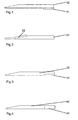
- Figures 1 to 4 are all drawings of a side view of the left half of the adhesive wafer according to the invention. All wafers are covered with a backing layer. The skin-facing surface is illustrated in the drawings as the downward side of the wafer and the backing layer is placed on top of the wafer.
- Figure 1 shows an adhesive wafer with a first adhesive (11) and an additional second adhesive (12), where the first adhesive only covers part of the adhesive wafer and is placed on the surface of the skin-facing adhesive wafer.
- the first adhesive can optionally be covered by a second backing layer placed in between the non-skin-facing side of the first adhesive and the skin-facing side of the additional second adhesive.
- Figure 2 illustrates a side view of an adhesive wafer with a first adhesive (21) partly covered with an additional second adhesive (22) in the outer rim portion of the wafer.
- Figure 3 illustrates a side view of another embodiment of the invention, where an adhesive wafer with an additional second adhesive (32) has a recess for adapting the first adhesive (31).
- Figure 4 illustrates a side view of an embodiment of the invention, where an adhesive wafer with a first adhesive (41) is in combination with an additional second adhesive (42) in the inner portion of the adhesive wafer.
- MVTR was measured in grams per square meter (g/m 2 ) over a 24 hours period using an inverted cup method.
- a container or cup that was water and water vapour impermeable having an opening was used. 20 ml saline water (0.9%NaCl in demineralised water) was placed in the container and the opening was sealed with the test adhesive film. The container was placed into an electrically heated humidity cabinet and the container or cup was placed up side down such that the water was in contact with the adhesive. The cabinet was maintained at 37°C and 15% relative humidity (RH). The weight loss of the container was followed as a function of time. The weight loss was due to evaporation of water vapour transmitted through the adhesive film. This difference was used to calculate Moisture vapour transmission rate or MVTR. MVTR was calculated as the weight loss pr time divided by the area of the opening in the cup (g/m 2 /24h).
- the MVTR of a material was a linear function of the thickness of the material. Thus, when reporting MVTR to characterise a material, it was important to inform the thickness of the material which MVTR was reported.
- We used 150 ⁇ m as a reference. If thinner or thicker samples were measured, the MVTR was reported as corresponding to a 150 ⁇ m sample. Thus a 300 ⁇ m sample with a measured MVTR of 10g/m 2 /24h was reported as having MVTR 20g/m 2 /24h for a 150 ⁇ m sample because of the linear connection between thickness of sample and MVTR of sample.
- P adhesive d Adhesive / 150 ⁇ micron * 1 / 1 / P measured - 1 / P Film
- d(Adhesive) was the actual measured thickness of the adhesive
- P(Film) was the MVTR of the film without any adhesive on
- P(measured) was the actual measured MVTR.
- the parameters G' and tan( ⁇ ) were measured as follows: The adhesives were pressed into a plate of 1 mm thickness. A round sample of 25 mm in diameter was cut out and placed in a RheoStress RS600 rheometer from Thermo Electron. The geometry applied was parallel plates 25 mm and the deformation was fixed at 1% to ensure that measurements were in the linear regime. The measurements were carried out at 32°C.
Landscapes
- Health & Medical Sciences (AREA)
- Animal Behavior & Ethology (AREA)
- Epidemiology (AREA)
- Veterinary Medicine (AREA)
- Public Health (AREA)
- General Health & Medical Sciences (AREA)
- Life Sciences & Earth Sciences (AREA)
- Chemical & Material Sciences (AREA)
- Surgery (AREA)
- Engineering & Computer Science (AREA)
- Materials Engineering (AREA)
- Biomedical Technology (AREA)
- Heart & Thoracic Surgery (AREA)
- Orthopedic Medicine & Surgery (AREA)
- Nursing (AREA)
- Vascular Medicine (AREA)
- Chemical Kinetics & Catalysis (AREA)
- Dispersion Chemistry (AREA)
- Orthopedics, Nursing, And Contraception (AREA)
- Laminated Bodies (AREA)
- Adhesives Or Adhesive Processes (AREA)
- Adhesive Tapes (AREA)
- Sampling And Sample Adjustment (AREA)
- Medicinal Chemistry (AREA)
- Polymers & Plastics (AREA)
- Organic Chemistry (AREA)
- Materials For Medical Uses (AREA)
- Refuse Receptacles (AREA)
Claims (26)
- Vorrichtung zum Sammeln von Körperabfällen, umfassend- einen Sammelbeutel- eine Haftscheibe zur Befestigung am Körper, umfassend- eine Trägerschicht- einen ersten Klebstoff (11, 21, 31 bzw. 41)- einen zusätzlichen zweiten Klebstoff (12, 22, 32 bzw. 42),wobei der erste Klebstoff ein Hydrokolloid-Haftklebstoff ist und der zusätzliche zweite Klebstoff ein polares plastifizierendes Öl oder eine Kombination von polaren plastifizerenden Ölen in einem Gehalt von über 10 % (Gew./Gew.) des fertigen zweiten Klebstoffs und wenigstens ein polares Polyethylen-Copolymer umfasst, wobei der Gehalt an dem Polyethylen-Copolymer 10-50 % (Gew./Gew.) des fertigen zweiten Klebstoffs ist, wobei das Polyethylen-Copolymer einen Schmelzflussindex von unter 2 g/10 min (190 °C/21,1 N) aufweist.
- Sammelvorrichtung gemäß Anspruch 1, wobei der fertige zweite Klebstoff (12, 22, 32 bzw. 42) in kontinuierlicher Form bei Messung nach dem MVTR-Prüfverfahren eine Wasserdampf-Durchlassrate von wenigstens 100 g/m2/Tag bei einer 150µm-Haftfolie aufweist.
- Sammelvorrichtung gemäß einem der Ansprüche 1-2, wobei das polare Polyethylen-Copolymer ausgewählt ist aus der Gruppe bestehend aus Ethylenvinylacetat, Ethylenvinylacetat-Kohlenmonoxid, Ethylenbutylacetat, Ethylenvinylalkohol, Ethylenbutylacrylat, Ethylenbutylacrylat-Kohlenmonoxid und Kombinationen davon.
- Sammelvorrichtung gemäß Anspruch 3, wobei das polare Polyethylen-Copolymer Ethylenvinylacetat ist.
- Sammelvorrichtung gemäß Anspruch 4, wobei das Ethylenvinylacetat einen Gehalt an Vinylacetat von wenigstens 40 % (Gew./Gew.) aufweist, vorzugsweise von 40-80 % (Gew./Gew.) Vinylacetat.
- Sammelvorrichtung gemäß einem der Ansprüche 1-5, wobei der Gehalt an dem polaren Polyethylen-Copolymer 10-45 % (Gew./Gew.) des fertigen zweiten Klebstoffs (12, 22, 32 bzw. 42) beträgt, vorzugsweise 15-30 %.
- Sammelvorrichtung gemäß einem der Ansprüche 1-6, wobei das polare Polyethylen-Copolymer ein Molekulargewicht von über 250.000 g/mol aufweist.
- Sammelvorrichtung gemäß einem der Ansprüche 1-7, wobei das polare plastifizierende Öl ausgewählt ist aus der Gruppe von flüssigen Kolophoniumderivaten, aromatischen Olefinoligomeren, Pflanzen- und Tierölen und -derivaten, wobei bevorzugte polare Öle Ester, Ether und Glykole sind und Polypropylenoxid, wie z. B. alpha-Butoxypolyoxypropylen, besonders bevorzugt ist.
- Sammelvorrichtung gemäß Anspruch 8, wobei der Gehalt an dem polaren plastifizierenden Öl 20-70 % (Gew./Gew.) des fertigen zweiten Klebstoffs (12, 22, 32 bzw. 42) beträgt, vorzugsweise 30-65 %.
- Sammelvorrichtung gemäß einem der Ansprüche 1-9, wobei der zweite Klebstoff (12, 22, 32 bzw. 42) ferner ein Polymer mit MFI > 2 (190 °C/21,1 N) umfasst.
- Sammelvorrichtung gemäß einem der Ansprüche 1-10, wobei der zweite Klebstoff (12, 22, 32 bzw. 42) ferner ein klebrigmachendes Harz umfasst, wie z. B. natürliche, modifizierte oder synthetische Harze, vorzugsweise polare Harze, wie z. B. Kolophoniumester und Derivate davon oder reine aromatische Monomerharze.
- Sammelvorrichtung gemäß Anspruch 11, wobei der Gehalt an dem klebrigmachenden Harz 0,1-40 % (Gew./Gew.) des fertigen zweiten Klebstoffs (12, 22, 32 bzw. 42) beträgt, vorzugsweise 10-20 %.
- Sammelvorrichtung gemäß einem der vorstehenden Ansprüche, wobei der erste Klebstoff (11, 21, 31 bzw. 41) benachbart zu der Körperabfall-Quelle angeordnet ist.
- Sammelvorrichtung gemäß einem der Ansprüche 1 bis 13, wobei der erste Klebstoff (11 bzw. 31) an der zu der Haut gerichteten Oberfläche des zusätzlichen zweiten Klebstoffs (12 bzw. 32) angeordnet ist.
- Sammelvorrichtung gemäß einem der Ansprüche 1 bis 13, wobei der zusätzliche zweite Klebstoff (12, 22, 32 bzw. 42) an der zu dem Beutel gerichteten Oberfläche der Haftscheibe angeordnet ist.
- Sammelvorrichtung gemäß einem der vorstehenden Ansprüche, wobei der zusätzliche zweite Klebstoff (12, 22, 32 bzw. 42) an dem äußeren Rand der Haftscheibe angeordnet ist.
- Sammelvorrichtung gemäß einem der vorstehenden Ansprüche, wobei der zusätzliche zweite Klebstoff (12, 22, 32 bzw. 42) in der Form eines Rings vorliegt.
- Sammelvorrichtung gemäß einem der vorstehenden Ansprüche, wobei der erste Klebstoff (11, 21 bzw. 31) den zusätzlichen zweiten Klebstoff (12, 22 bzw. 32) an der zu der Haut gerichteten Oberfläche teilweise bedeckt.
- Sammelvorrichtung gemäß einem der vorstehenden Ansprüche, wobei der zusätzliche zweite Klebstoff (22 bzw. 42) die Haftscheibe teilweise bedeckt.
- Sammelvorrichtung gemäß einem der vorstehenden Ansprüche, wobei die Haftscheibe eine Vertiefung zum Aufnehmen des ersten Klebstoffs (31) aufweist.
- Sammelvorrichtung gemäß einem der vorstehenden Ansprüche, wobei die Vorrichtung eine optionale Trägerschicht für den ersten Klebstoff (11, 21, 31 bzw. 41) aufweist.
- Sammelvorrichtung gemäß einem der vorstehenden Ansprüche, wobei die Sammelvorrichtung eine Stoma-Anwendung ist.
- Sammelvorrichtung gemäß einem der vorstehenden Ansprüche, wobei die Sammelvorrichtung eine Kotsammelvorrichtung ist.
- Sammelvorrichtung gemäß einem der Ansprüche 1 bis 21, wobei die Sammelvorrichtung eine Fistel-Sammelvorrichtung ist.
- Sammelvorrichtung gemäß einem der vorstehenden Ansprüche, wobei der Sammelbeutel ablösbar ist.
- Sammelvorrichtung gemäß einem der vorstehenden Ansprüche, wobei der Sammelbeutel mit der Scheibe integriert ist.
Priority Applications (1)
| Application Number | Priority Date | Filing Date | Title |
|---|---|---|---|
| EP12155283A EP2455044A3 (de) | 2008-04-17 | 2008-12-18 | Vorrichtung zum Auffangen von Körperflüssigkeiten |
Applications Claiming Priority (3)
| Application Number | Priority Date | Filing Date | Title |
|---|---|---|---|
| DKPA200800561 | 2008-04-17 | ||
| DKPA200800589 | 2008-04-25 | ||
| PCT/DK2008/050318 WO2009127208A1 (en) | 2008-04-17 | 2008-12-18 | A collecting device for body fluids |
Publications (2)
| Publication Number | Publication Date |
|---|---|
| EP2276435A1 EP2276435A1 (de) | 2011-01-26 |
| EP2276435B1 true EP2276435B1 (de) | 2012-02-15 |
Family
ID=40451378
Family Applications (4)
| Application Number | Title | Priority Date | Filing Date |
|---|---|---|---|
| EP12155284A Withdrawn EP2455045A3 (de) | 2008-04-17 | 2008-12-18 | Vorrichtung zum Auffangen von Körperflüssigkeiten |
| EP08873951A Active EP2276435B1 (de) | 2008-04-17 | 2008-12-18 | Vorrichtung zum auffangen von körperflüssigkeiten |
| EP12155283A Withdrawn EP2455044A3 (de) | 2008-04-17 | 2008-12-18 | Vorrichtung zum Auffangen von Körperflüssigkeiten |
| EP08873945A Not-in-force EP2276434B1 (de) | 2008-04-17 | 2008-12-18 | Vorrichtung zum auffangen von körperflüssigkeiten |
Family Applications Before (1)
| Application Number | Title | Priority Date | Filing Date |
|---|---|---|---|
| EP12155284A Withdrawn EP2455045A3 (de) | 2008-04-17 | 2008-12-18 | Vorrichtung zum Auffangen von Körperflüssigkeiten |
Family Applications After (2)
| Application Number | Title | Priority Date | Filing Date |
|---|---|---|---|
| EP12155283A Withdrawn EP2455044A3 (de) | 2008-04-17 | 2008-12-18 | Vorrichtung zum Auffangen von Körperflüssigkeiten |
| EP08873945A Not-in-force EP2276434B1 (de) | 2008-04-17 | 2008-12-18 | Vorrichtung zum auffangen von körperflüssigkeiten |
Country Status (9)
| Country | Link |
|---|---|
| US (3) | US20110034890A1 (de) |
| EP (4) | EP2455045A3 (de) |
| JP (2) | JP2011516219A (de) |
| CN (2) | CN102006845B (de) |
| AT (2) | ATE545394T1 (de) |
| AU (2) | AU2008355015A1 (de) |
| BR (2) | BRPI0822526B8 (de) |
| CA (2) | CA2718729A1 (de) |
| WO (2) | WO2009127207A1 (de) |
Families Citing this family (70)
| Publication number | Priority date | Publication date | Assignee | Title |
|---|---|---|---|---|
| CA2690968A1 (en) * | 2007-06-19 | 2008-12-24 | Coloplast A/S | Multi-layered adhesive appliance |
| CN101687060A (zh) * | 2007-06-19 | 2010-03-31 | 科洛普拉斯特公司 | 身体废物收集装置 |
| CN101686869B (zh) * | 2007-06-21 | 2011-12-07 | 科洛普拉斯特公司 | 身体废物收集装置 |
| EP2173287A1 (de) * | 2007-07-06 | 2010-04-14 | Coloplast A/S | Haftkomponente für stomavorrichtungen |
| EP2315561B1 (de) * | 2008-07-18 | 2016-09-28 | Coloplast A/S | Eine schichtweise klebekonstruktion umfassende einrichtung zum sammeln von körperschlacken |
| CA2742900A1 (en) * | 2008-12-08 | 2010-06-17 | Esben Stroebech | A body waste collecting device comprising a layered adhesive construction with a film layer |
| FR2940904B1 (fr) * | 2009-01-13 | 2012-08-31 | Urgo Laboratoires | Systeme de mesure de pression d'interface |
| DK2605734T3 (en) * | 2010-08-16 | 2017-07-24 | Coloplast As | CAPTURE DEVICE |
| CN103260557B (zh) | 2010-12-22 | 2015-04-22 | 科洛普拉斯特公司 | 一种造口术器具 |
| JP6030803B2 (ja) | 2013-03-11 | 2016-11-24 | アンタレス・ファーマ・インコーポレーテッド | ピニオンシステムを有する用量注射器 |
| US10531977B2 (en) | 2014-04-17 | 2020-01-14 | Coloplast A/S | Thermoresponsive skin barrier appliances |
| JP2018507013A (ja) * | 2015-02-02 | 2018-03-15 | コロプラスト アクティーゼルスカブ | オストミー器具 |
| JP2018508260A (ja) * | 2015-02-02 | 2018-03-29 | コロプラスト アクティーゼルスカブ | オストミー装置 |
| WO2016162038A1 (en) | 2015-04-10 | 2016-10-13 | Coloplast A/S | Ostomy device |
| US11141100B2 (en) | 2015-12-23 | 2021-10-12 | Coloplast A/S | Moisture assessment system and method for wound care |
| EP3515380B1 (de) * | 2016-09-21 | 2023-06-07 | Coloplast A/S | Ostomievorrichtung |
| JP7410721B2 (ja) * | 2017-06-08 | 2024-01-10 | ホリスター・インコーポレイテッド | オストミーウェハ、ストーマリング及びオストミー器具を製造する方法 |
| US11737909B2 (en) | 2017-11-09 | 2023-08-29 | 4 Mankind Inc. | Male incontinence device |
| USD912808S1 (en) | 2017-11-21 | 2021-03-09 | Melissa Kay Tammen | Male incontinence device |
| EP4640191A3 (de) | 2017-12-22 | 2026-01-07 | Coloplast A/S | Datenübertragungsschemata für ein stomasystem, überwachungsvorrichtung für eine stomavorrichtung und zugehörige verfahren |
| EP4180010A1 (de) | 2017-12-22 | 2023-05-17 | Coloplast A/S | Sensorbauteil eines stomasystems mit feuchtigkeitssensor |
| WO2019120427A1 (en) | 2017-12-22 | 2019-06-27 | Coloplast A/S | Sensor assembly part for an ostomy appliance and a method for manufacturing a sensor assembly part |
| WO2019120442A1 (en) | 2017-12-22 | 2019-06-27 | Coloplast A/S | Sensor assembly part and a base plate for an ostomy appliance and a device for connecting to a base plate or a sensor assembly part |
| WO2019120429A1 (en) | 2017-12-22 | 2019-06-27 | Coloplast A/S | Data collection schemes for an ostomy appliance and related methods |
| US11534323B2 (en) | 2017-12-22 | 2022-12-27 | Coloplast A/S | Tools and methods for placing a medical appliance on a user |
| WO2019120425A1 (en) | 2017-12-22 | 2019-06-27 | Coloplast A/S | Ostomy appliance system, monitor device, and method of monitoring an ostomy appliance |
| EP4032510B1 (de) | 2017-12-22 | 2025-07-09 | Coloplast A/S | Basisplatte mit selektiven sensorpunkten und verfahren zu deren herstellung |
| US11865029B2 (en) | 2017-12-22 | 2024-01-09 | Coloplast A/S | Monitor device of a medical system having a connector for coupling to both a base plate and an accessory device |
| US10500084B2 (en) | 2017-12-22 | 2019-12-10 | Coloplast A/S | Accessory devices of an ostomy system, and related methods for communicating leakage state |
| JP7472022B2 (ja) | 2017-12-22 | 2024-04-22 | コロプラスト アクティーゼルスカブ | オストミー装具のためのベースプレート、モニタデバイス及びオストミー装具のためのシステム |
| WO2019120441A1 (en) | 2017-12-22 | 2019-06-27 | Coloplast A/S | Sensor assembly part and a base plate for an ostomy appliance and a method for manufacturing a sensor assembly part and a base plate |
| US11627891B2 (en) | 2017-12-22 | 2023-04-18 | Coloplast A/S | Calibration methods for medical appliance tools |
| LT3727219T (lt) | 2017-12-22 | 2023-09-11 | Coloplast A/S | Drėgmės aptikimo pagrindo plokštė ostomijos prietaisui ir drėgmės sklidimo pagrindo plokštėje ir (arba) jutiklių montavimo dalyje nustatymo sistema |
| US10849781B2 (en) | 2017-12-22 | 2020-12-01 | Coloplast A/S | Base plate for an ostomy appliance |
| JP7462558B2 (ja) | 2017-12-22 | 2024-04-05 | コロプラスト アクティーゼルスカブ | 角度的漏出検出を用いるオストミーシステム及びモニタデバイス |
| EP4042985B1 (de) | 2017-12-22 | 2025-10-29 | Coloplast A/S | Verarbeitungsschemata für ein stomasystem, überwachungsvorrichtung für eine stomavorrichtung und zugehörige verfahren |
| WO2019120452A1 (en) | 2017-12-22 | 2019-06-27 | Coloplast A/S | Coupling part with a hinge for an ostomy base plate and sensor assembly part |
| US11654043B2 (en) | 2017-12-22 | 2023-05-23 | Coloplast A/S | Sensor assembly part and a base plate for a medical appliance and a method for manufacturing a base plate or a sensor assembly part |
| WO2019120451A1 (en) | 2017-12-22 | 2019-06-27 | Coloplast A/S | Base plate and a sensor assembly part for an ostomy appliance and a method for manufacturing a base plate and sensor assembly part |
| LT3727227T (lt) | 2017-12-22 | 2023-07-25 | Coloplast A/S | Ostomijos prietaiso pagrindo plokštė ir pagrindo plokštės jutiklių montavimo dalis ir pagrindo plokštės ir jutiklių montavimo dalies gamybos būdas |
| LT3727240T (lt) | 2017-12-22 | 2022-03-10 | Coloplast A/S | Ostomijos sistemos papildomi įrenginiai ir susiję būdai veikimo būsenai perduoti |
| WO2019120445A1 (en) | 2017-12-22 | 2019-06-27 | Coloplast A/S | Base plate and sensor assembly of an ostomy system having a leakage sensor |
| US11998473B2 (en) | 2017-12-22 | 2024-06-04 | Coloplast A/S | Tools and methods for cutting holes in a medical appliance |
| US10799385B2 (en) | 2017-12-22 | 2020-10-13 | Coloplast A/S | Ostomy appliance with layered base plate |
| WO2019120447A1 (en) | 2017-12-22 | 2019-06-27 | Coloplast A/S | Sensor assembly part, base plate and monitor device of an ostomy system and associated method |
| AU2018386861B2 (en) | 2017-12-22 | 2024-03-14 | Coloplast A/S | Ostomy appliance with angular leakage detection |
| US12208029B2 (en) | 2018-02-20 | 2025-01-28 | Coloplast A/S | Base plate having a mechanical and electrical connector |
| EP4631480A3 (de) | 2018-02-20 | 2025-12-10 | Coloplast A/S | Zubehörgeräte für ein stomasystem und zugehörige verfahren zum wechseln einer stomavorrichtung auf der grundlage eines zukünftigen betriebszustands |
| US11931285B2 (en) | 2018-02-20 | 2024-03-19 | Coloplast A/S | Sensor assembly part and a base plate for a medical appliance and a device for connecting to a base plate and/or a sensor assembly part |
| WO2019174697A1 (en) | 2018-03-15 | 2019-09-19 | Coloplast A/S | Apparatus and methods for navigating ostomy appliance user to changing room |
| EP4374776A3 (de) | 2018-03-15 | 2024-09-11 | Coloplast A/S | Vorrichtung und verfahren zur bestimmung der tragezeit eines stomas basierend auf standortdaten |
| US11903728B2 (en) | 2018-03-15 | 2024-02-20 | Coloplast A/S | Methods of configuring medical notifications and related accessory devices |
| EP4079266B1 (de) | 2018-03-15 | 2024-06-05 | Coloplast A/S | Verfahren zur verwaltung der resttragezeit einer stomavorrichtung und zugehörige zubehörgeräte |
| CN111885984B (zh) | 2018-03-15 | 2023-08-04 | 科洛普拉斯特公司 | 基于传感器数据来确定造口术器具穿戴时间的设备和方法 |
| WO2020035121A1 (en) | 2018-08-15 | 2020-02-20 | Coloplast A/S | Accessory device of an ostomy system and related methods for issue identification |
| EP3897482B1 (de) | 2018-12-20 | 2025-07-16 | Coloplast A/S | Stomazustandsklassifizierung mit bilddatentransformation, vorrichtungen und zugehörige verfahren |
| WO2020125906A1 (en) | 2018-12-20 | 2020-06-25 | Coloplast A/S | Ostomy condition classification with masking, devices and related methods |
| AU2020214965B2 (en) | 2019-01-31 | 2025-09-18 | Coloplast A/S | A sensor patch for an ostomy appliance |
| US12558250B2 (en) | 2019-01-31 | 2026-02-24 | Coloplast A/S | Base plate and a sensor assembly part for an ostomy appliance |
| KR102807748B1 (ko) | 2019-01-31 | 2025-05-14 | 컬러플라스트 에이/에스 | 스토마용 센서 패치 |
| US11517469B2 (en) | 2019-01-31 | 2022-12-06 | Coloplast A/S | Base plate and sensor assembly part of an ostomy system having a moisture sensor |
| US11612512B2 (en) | 2019-01-31 | 2023-03-28 | Coloplast A/S | Moisture detecting base plate for an ostomy appliance and a system for determining moisture propagation in a base plate and/or a sensor assembly part |
| US12232998B2 (en) | 2019-01-31 | 2025-02-25 | Coloplast A/S | Application of a stomal sensor patch |
| EP3930642B1 (de) | 2019-02-28 | 2023-10-25 | Coloplast A/S | Sensorpflaster zur befestigung an einer grundplatte |
| GB201904403D0 (en) | 2019-03-29 | 2019-05-15 | Trio Healthcare Ltd | Skin compatible silicone composition |
| EP3958801B1 (de) | 2019-04-26 | 2024-08-21 | Coloplast A/S | Sensorpflaster zur befestigung an einer grundplatte |
| EP4135636B1 (de) | 2020-04-14 | 2024-12-04 | Coloplast A/S | Überwachungsvorrichtung für ein körperpflegesystem |
| EP4374833B1 (de) | 2020-04-23 | 2025-10-15 | Sage Products, LLC | Fäkaliensammelsystem |
| CA3216535A1 (en) | 2022-03-15 | 2023-09-21 | Kristin M. SEXTON | Fecal collection systems and methods |
| GB2631431A (en) | 2023-06-29 | 2025-01-08 | Adv Med Solutions Ltd | Silicone polymer skin adhesive |
Family Cites Families (31)
| Publication number | Priority date | Publication date | Assignee | Title |
|---|---|---|---|---|
| US4191673A (en) * | 1976-11-12 | 1980-03-04 | American Can Company | Non-blocking coating composition |
| US4192785A (en) | 1977-06-08 | 1980-03-11 | E. R. Squibb & Sons, Inc. | Ostomy adhesive |
| IT1130781B (it) * | 1979-06-01 | 1986-06-18 | Union Carbide Corp | Composizione termoformabile per fondi di tappeti |
| US4775374A (en) * | 1981-11-27 | 1988-10-04 | E. R. Squibb & Sons, Inc. | Skin barrier for use by ostomates |
| US4477325A (en) * | 1982-07-12 | 1984-10-16 | Hollister Incorporated | Skin barrier composition comprising an irradiated crosslinked ethylene-vinyl acetate copolymer and polyisobutylene |
| GB8729637D0 (en) * | 1987-12-19 | 1988-02-03 | Smith Ind Plc | Collection bags |
| US5074852A (en) * | 1989-08-16 | 1991-12-24 | E. R. Squibb & Sons, Inc. | Occlusive attaching device for ostomy appliance |
| US5429626A (en) * | 1994-03-14 | 1995-07-04 | Fenton; Leonard | Ostomy pouch mounting arrangement |
| US5496296A (en) * | 1994-06-06 | 1996-03-05 | Dansac A/S | Ostomy appliance with extrudable gasket |
| US5599601A (en) * | 1994-07-20 | 1997-02-04 | Minnesota Mining And Manufacturing Company | Diaper fastening tape |
| US5730736A (en) * | 1996-04-30 | 1998-03-24 | Dansac A/S | Ostomy appliance and contoured adhesive wafer therefor |
| WO1998017212A1 (en) * | 1996-10-22 | 1998-04-30 | Coloplast A/S | An ostomy appliance |
| AU2264799A (en) * | 1998-01-30 | 1999-08-16 | Coloplast A/S | An article having a surface showing adhesive properties |
| US6293930B1 (en) * | 1998-06-11 | 2001-09-25 | Hollister Incorporated | Low-profile ostomy faceplate with recessed coupling ring |
| CA2293172A1 (en) | 1999-01-05 | 2000-07-05 | Fumio Kawakubo | Method of producing reactive silicon group-containing polyether oligomers |
| US6531544B1 (en) * | 2000-02-03 | 2003-03-11 | H.B. Fuller Licensing & Financing, Inc. | Block copolymer based hot melt adhesive for bonding lotion coated substrates |
| GB0020901D0 (en) * | 2000-08-25 | 2000-10-11 | Smiths Industries Plc | Ostomy bags |
| US7078582B2 (en) * | 2001-01-17 | 2006-07-18 | 3M Innovative Properties Company | Stretch removable adhesive articles and methods |
| JP2002224706A (ja) | 2001-02-07 | 2002-08-13 | Kawasaki Steel Corp | 棒材圧延設備列 |
| HUP0303168A3 (en) | 2001-02-21 | 2012-09-28 | Coloplast As | An adhesive composition comprising a polymeric matrix and absorbent particles, process for producing it and medical instrument |
| EP1389633A1 (de) * | 2002-08-14 | 2004-02-18 | The Procter & Gamble Company | Verbesserte thermoplastische hydrophile Klebstoffzusammensetzungen für trockene und nasse Oberflächen, wobei die Zusammensetzungen eine erhöhte Wasseradhäsionsstabilität aufweisen |
| EP1978068A3 (de) * | 2003-09-18 | 2009-04-08 | Bristol-Myers Squibb Company | Klebestruktur zur Befestigung auf der Haut |
| JP4551073B2 (ja) * | 2003-10-06 | 2010-09-22 | 日東電工株式会社 | 皮膚貼付用の粘着シート |
| US20050080155A1 (en) * | 2003-10-14 | 2005-04-14 | Fattman George F. | Ostomy pouch attachment adhesives resistant to stomal effluent |
| US7589145B2 (en) * | 2004-04-15 | 2009-09-15 | Exxonmobil Chemical Patents Inc. | Syndiotactic rich polyolefins |
| WO2005102229A1 (en) * | 2004-04-26 | 2005-11-03 | Wayne Conrad | Improved ostomy appliance |
| DK1981554T3 (da) * | 2006-01-18 | 2011-01-24 | Coloplast As | Lagdelt klæbekonstruktion med klæberlag med forskellige hydrocolloidkomposition |
| ATE516020T1 (de) * | 2006-05-05 | 2011-07-15 | Coloplast As | Haftklebstoffzusammensetzung, enthaltend vernetztes polyalkylenoxid und wasserabsorbierende hydrophile mittel |
| CA2670926A1 (en) | 2006-12-20 | 2008-06-26 | Coloplast A/S | A pressure sensitive adhesive composition comprising salt |
| CN101687060A (zh) * | 2007-06-19 | 2010-03-31 | 科洛普拉斯特公司 | 身体废物收集装置 |
| HUE042651T2 (hu) | 2007-07-06 | 2019-09-30 | Coloplast As | Permeábilis nyomásérzékeny ragasztó |
-
2008
- 2008-12-18 AT AT08873951T patent/ATE545394T1/de active
- 2008-12-18 EP EP12155284A patent/EP2455045A3/de not_active Withdrawn
- 2008-12-18 JP JP2011504313A patent/JP2011516219A/ja active Pending
- 2008-12-18 WO PCT/DK2008/050317 patent/WO2009127207A1/en not_active Ceased
- 2008-12-18 AU AU2008355015A patent/AU2008355015A1/en not_active Abandoned
- 2008-12-18 EP EP08873951A patent/EP2276435B1/de active Active
- 2008-12-18 AU AU2008355016A patent/AU2008355016A1/en not_active Abandoned
- 2008-12-18 US US12/736,553 patent/US20110034890A1/en not_active Abandoned
- 2008-12-18 CN CN2008801286583A patent/CN102006845B/zh active Active
- 2008-12-18 JP JP2011504312A patent/JP2011516218A/ja active Pending
- 2008-12-18 BR BRPI0822526A patent/BRPI0822526B8/pt not_active IP Right Cessation
- 2008-12-18 CN CN2008801286579A patent/CN102006844B/zh not_active Expired - Fee Related
- 2008-12-18 EP EP12155283A patent/EP2455044A3/de not_active Withdrawn
- 2008-12-18 WO PCT/DK2008/050318 patent/WO2009127208A1/en not_active Ceased
- 2008-12-18 AT AT08873945T patent/ATE545437T1/de active
- 2008-12-18 BR BRPI0822586-9A patent/BRPI0822586A2/pt not_active Application Discontinuation
- 2008-12-18 CA CA2718729A patent/CA2718729A1/en not_active Abandoned
- 2008-12-18 EP EP08873945A patent/EP2276434B1/de not_active Not-in-force
- 2008-12-18 US US12/736,554 patent/US8668678B2/en not_active Expired - Fee Related
- 2008-12-18 CA CA2718759A patent/CA2718759A1/en not_active Abandoned
-
2014
- 2014-01-17 US US14/157,543 patent/US9597428B2/en active Active
Also Published As
| Publication number | Publication date |
|---|---|
| EP2455044A3 (de) | 2012-05-30 |
| WO2009127207A1 (en) | 2009-10-22 |
| CA2718759A1 (en) | 2009-10-22 |
| EP2455045A3 (de) | 2012-05-30 |
| CN102006844B (zh) | 2012-12-05 |
| US9597428B2 (en) | 2017-03-21 |
| US20110034890A1 (en) | 2011-02-10 |
| JP2011516218A (ja) | 2011-05-26 |
| CN102006844A (zh) | 2011-04-06 |
| US20140135720A1 (en) | 2014-05-15 |
| CA2718729A1 (en) | 2009-10-22 |
| EP2276434B1 (de) | 2012-02-15 |
| US20110087182A1 (en) | 2011-04-14 |
| BRPI0822526B1 (pt) | 2019-04-02 |
| BRPI0822586A2 (pt) | 2015-06-23 |
| EP2455044A2 (de) | 2012-05-23 |
| CN102006845A (zh) | 2011-04-06 |
| EP2276435A1 (de) | 2011-01-26 |
| AU2008355015A1 (en) | 2009-10-22 |
| BRPI0822526A2 (pt) | 2015-06-23 |
| US8668678B2 (en) | 2014-03-11 |
| ATE545394T1 (de) | 2012-03-15 |
| EP2455045A2 (de) | 2012-05-23 |
| CN102006845B (zh) | 2012-12-12 |
| BRPI0822526B8 (pt) | 2021-06-22 |
| WO2009127208A1 (en) | 2009-10-22 |
| AU2008355016A1 (en) | 2009-10-22 |
| JP2011516219A (ja) | 2011-05-26 |
| ATE545437T1 (de) | 2012-03-15 |
| EP2276434A1 (de) | 2011-01-26 |
Similar Documents
| Publication | Publication Date | Title |
|---|---|---|
| US8668678B2 (en) | Collecting device for body fluids | |
| CN101688097B (zh) | 可透性压敏粘合剂 | |
| EP2605734B1 (de) | Sammelvorrichtung | |
| CN102224213B (zh) | 一种软质的可成形的粘合剂糊剂 | |
| US6437038B1 (en) | Pressure sensitive adhesive composition | |
| US8624078B2 (en) | Permeable pressure sensitive adhesive | |
| US8871993B2 (en) | Permeable pressure sensitive adhesive | |
| RU2575586C2 (ru) | Проницаемый чувствительный к давлению адгезив |
Legal Events
| Date | Code | Title | Description |
|---|---|---|---|
| PUAI | Public reference made under article 153(3) epc to a published international application that has entered the european phase |
Free format text: ORIGINAL CODE: 0009012 |
|
| 17P | Request for examination filed |
Effective date: 20101117 |
|
| AK | Designated contracting states |
Kind code of ref document: A1 Designated state(s): AT BE BG CH CY CZ DE DK EE ES FI FR GB GR HR HU IE IS IT LI LT LU LV MC MT NL NO PL PT RO SE SI SK TR |
|
| AX | Request for extension of the european patent |
Extension state: AL BA MK RS |
|
| DAX | Request for extension of the european patent (deleted) | ||
| GRAP | Despatch of communication of intention to grant a patent |
Free format text: ORIGINAL CODE: EPIDOSNIGR1 |
|
| RIC1 | Information provided on ipc code assigned before grant |
Ipc: A61L 24/00 20060101ALI20110809BHEP Ipc: A61F 5/443 20060101AFI20110809BHEP Ipc: A61L 24/04 20060101ALI20110809BHEP Ipc: A61F 5/445 20060101ALI20110809BHEP Ipc: A61L 28/00 20060101ALI20110809BHEP |
|
| GRAS | Grant fee paid |
Free format text: ORIGINAL CODE: EPIDOSNIGR3 |
|
| GRAA | (expected) grant |
Free format text: ORIGINAL CODE: 0009210 |
|
| AK | Designated contracting states |
Kind code of ref document: B1 Designated state(s): AT BE BG CH CY CZ DE DK EE ES FI FR GB GR HR HU IE IS IT LI LT LU LV MC MT NL NO PL PT RO SE SI SK TR |
|
| REG | Reference to a national code |
Ref country code: CH Ref legal event code: EP Ref country code: GB Ref legal event code: FG4D |
|
| REG | Reference to a national code |
Ref country code: IE Ref legal event code: FG4D |
|
| REG | Reference to a national code |
Ref country code: AT Ref legal event code: REF Ref document number: 545394 Country of ref document: AT Kind code of ref document: T Effective date: 20120315 |
|
| REG | Reference to a national code |
Ref country code: DE Ref legal event code: R096 Ref document number: 602008013505 Country of ref document: DE Effective date: 20120412 |
|
| REG | Reference to a national code |
Ref country code: NL Ref legal event code: VDEP Effective date: 20120215 |
|
| LTIE | Lt: invalidation of european patent or patent extension |
Effective date: 20120215 |
|
| PG25 | Lapsed in a contracting state [announced via postgrant information from national office to epo] |
Ref country code: HR Free format text: LAPSE BECAUSE OF FAILURE TO SUBMIT A TRANSLATION OF THE DESCRIPTION OR TO PAY THE FEE WITHIN THE PRESCRIBED TIME-LIMIT Effective date: 20120215 Ref country code: LT Free format text: LAPSE BECAUSE OF FAILURE TO SUBMIT A TRANSLATION OF THE DESCRIPTION OR TO PAY THE FEE WITHIN THE PRESCRIBED TIME-LIMIT Effective date: 20120215 Ref country code: NL Free format text: LAPSE BECAUSE OF FAILURE TO SUBMIT A TRANSLATION OF THE DESCRIPTION OR TO PAY THE FEE WITHIN THE PRESCRIBED TIME-LIMIT Effective date: 20120215 Ref country code: IS Free format text: LAPSE BECAUSE OF FAILURE TO SUBMIT A TRANSLATION OF THE DESCRIPTION OR TO PAY THE FEE WITHIN THE PRESCRIBED TIME-LIMIT Effective date: 20120615 Ref country code: NO Free format text: LAPSE BECAUSE OF FAILURE TO SUBMIT A TRANSLATION OF THE DESCRIPTION OR TO PAY THE FEE WITHIN THE PRESCRIBED TIME-LIMIT Effective date: 20120515 |
|
| PG25 | Lapsed in a contracting state [announced via postgrant information from national office to epo] |
Ref country code: PL Free format text: LAPSE BECAUSE OF FAILURE TO SUBMIT A TRANSLATION OF THE DESCRIPTION OR TO PAY THE FEE WITHIN THE PRESCRIBED TIME-LIMIT Effective date: 20120215 Ref country code: FI Free format text: LAPSE BECAUSE OF FAILURE TO SUBMIT A TRANSLATION OF THE DESCRIPTION OR TO PAY THE FEE WITHIN THE PRESCRIBED TIME-LIMIT Effective date: 20120215 Ref country code: LV Free format text: LAPSE BECAUSE OF FAILURE TO SUBMIT A TRANSLATION OF THE DESCRIPTION OR TO PAY THE FEE WITHIN THE PRESCRIBED TIME-LIMIT Effective date: 20120215 Ref country code: GR Free format text: LAPSE BECAUSE OF FAILURE TO SUBMIT A TRANSLATION OF THE DESCRIPTION OR TO PAY THE FEE WITHIN THE PRESCRIBED TIME-LIMIT Effective date: 20120516 Ref country code: PT Free format text: LAPSE BECAUSE OF FAILURE TO SUBMIT A TRANSLATION OF THE DESCRIPTION OR TO PAY THE FEE WITHIN THE PRESCRIBED TIME-LIMIT Effective date: 20120615 Ref country code: BE Free format text: LAPSE BECAUSE OF FAILURE TO SUBMIT A TRANSLATION OF THE DESCRIPTION OR TO PAY THE FEE WITHIN THE PRESCRIBED TIME-LIMIT Effective date: 20120215 |
|
| REG | Reference to a national code |
Ref country code: AT Ref legal event code: MK05 Ref document number: 545394 Country of ref document: AT Kind code of ref document: T Effective date: 20120215 |
|
| PG25 | Lapsed in a contracting state [announced via postgrant information from national office to epo] |
Ref country code: CY Free format text: LAPSE BECAUSE OF FAILURE TO SUBMIT A TRANSLATION OF THE DESCRIPTION OR TO PAY THE FEE WITHIN THE PRESCRIBED TIME-LIMIT Effective date: 20120215 |
|
| PG25 | Lapsed in a contracting state [announced via postgrant information from national office to epo] |
Ref country code: RO Free format text: LAPSE BECAUSE OF FAILURE TO SUBMIT A TRANSLATION OF THE DESCRIPTION OR TO PAY THE FEE WITHIN THE PRESCRIBED TIME-LIMIT Effective date: 20120215 Ref country code: SE Free format text: LAPSE BECAUSE OF FAILURE TO SUBMIT A TRANSLATION OF THE DESCRIPTION OR TO PAY THE FEE WITHIN THE PRESCRIBED TIME-LIMIT Effective date: 20120215 Ref country code: DK Free format text: LAPSE BECAUSE OF FAILURE TO SUBMIT A TRANSLATION OF THE DESCRIPTION OR TO PAY THE FEE WITHIN THE PRESCRIBED TIME-LIMIT Effective date: 20120215 Ref country code: SI Free format text: LAPSE BECAUSE OF FAILURE TO SUBMIT A TRANSLATION OF THE DESCRIPTION OR TO PAY THE FEE WITHIN THE PRESCRIBED TIME-LIMIT Effective date: 20120215 Ref country code: CZ Free format text: LAPSE BECAUSE OF FAILURE TO SUBMIT A TRANSLATION OF THE DESCRIPTION OR TO PAY THE FEE WITHIN THE PRESCRIBED TIME-LIMIT Effective date: 20120215 Ref country code: EE Free format text: LAPSE BECAUSE OF FAILURE TO SUBMIT A TRANSLATION OF THE DESCRIPTION OR TO PAY THE FEE WITHIN THE PRESCRIBED TIME-LIMIT Effective date: 20120215 |
|
| PG25 | Lapsed in a contracting state [announced via postgrant information from national office to epo] |
Ref country code: SK Free format text: LAPSE BECAUSE OF FAILURE TO SUBMIT A TRANSLATION OF THE DESCRIPTION OR TO PAY THE FEE WITHIN THE PRESCRIBED TIME-LIMIT Effective date: 20120215 Ref country code: IT Free format text: LAPSE BECAUSE OF FAILURE TO SUBMIT A TRANSLATION OF THE DESCRIPTION OR TO PAY THE FEE WITHIN THE PRESCRIBED TIME-LIMIT Effective date: 20120215 |
|
| PLBE | No opposition filed within time limit |
Free format text: ORIGINAL CODE: 0009261 |
|
| STAA | Information on the status of an ep patent application or granted ep patent |
Free format text: STATUS: NO OPPOSITION FILED WITHIN TIME LIMIT |
|
| 26N | No opposition filed |
Effective date: 20121116 |
|
| PG25 | Lapsed in a contracting state [announced via postgrant information from national office to epo] |
Ref country code: AT Free format text: LAPSE BECAUSE OF FAILURE TO SUBMIT A TRANSLATION OF THE DESCRIPTION OR TO PAY THE FEE WITHIN THE PRESCRIBED TIME-LIMIT Effective date: 20120215 |
|
| REG | Reference to a national code |
Ref country code: DE Ref legal event code: R097 Ref document number: 602008013505 Country of ref document: DE Effective date: 20121116 |
|
| PG25 | Lapsed in a contracting state [announced via postgrant information from national office to epo] |
Ref country code: ES Free format text: LAPSE BECAUSE OF FAILURE TO SUBMIT A TRANSLATION OF THE DESCRIPTION OR TO PAY THE FEE WITHIN THE PRESCRIBED TIME-LIMIT Effective date: 20120526 |
|
| PG25 | Lapsed in a contracting state [announced via postgrant information from national office to epo] |
Ref country code: BG Free format text: LAPSE BECAUSE OF FAILURE TO SUBMIT A TRANSLATION OF THE DESCRIPTION OR TO PAY THE FEE WITHIN THE PRESCRIBED TIME-LIMIT Effective date: 20120515 Ref country code: MC Free format text: LAPSE BECAUSE OF NON-PAYMENT OF DUE FEES Effective date: 20121231 |
|
| REG | Reference to a national code |
Ref country code: CH Ref legal event code: PL |
|
| REG | Reference to a national code |
Ref country code: IE Ref legal event code: MM4A |
|
| PG25 | Lapsed in a contracting state [announced via postgrant information from national office to epo] |
Ref country code: IE Free format text: LAPSE BECAUSE OF NON-PAYMENT OF DUE FEES Effective date: 20121218 Ref country code: CH Free format text: LAPSE BECAUSE OF NON-PAYMENT OF DUE FEES Effective date: 20121231 Ref country code: LI Free format text: LAPSE BECAUSE OF NON-PAYMENT OF DUE FEES Effective date: 20121231 |
|
| PG25 | Lapsed in a contracting state [announced via postgrant information from national office to epo] |
Ref country code: MT Free format text: LAPSE BECAUSE OF FAILURE TO SUBMIT A TRANSLATION OF THE DESCRIPTION OR TO PAY THE FEE WITHIN THE PRESCRIBED TIME-LIMIT Effective date: 20120215 |
|
| PG25 | Lapsed in a contracting state [announced via postgrant information from national office to epo] |
Ref country code: TR Free format text: LAPSE BECAUSE OF FAILURE TO SUBMIT A TRANSLATION OF THE DESCRIPTION OR TO PAY THE FEE WITHIN THE PRESCRIBED TIME-LIMIT Effective date: 20120215 |
|
| PG25 | Lapsed in a contracting state [announced via postgrant information from national office to epo] |
Ref country code: LU Free format text: LAPSE BECAUSE OF NON-PAYMENT OF DUE FEES Effective date: 20121218 |
|
| PG25 | Lapsed in a contracting state [announced via postgrant information from national office to epo] |
Ref country code: HU Free format text: LAPSE BECAUSE OF FAILURE TO SUBMIT A TRANSLATION OF THE DESCRIPTION OR TO PAY THE FEE WITHIN THE PRESCRIBED TIME-LIMIT Effective date: 20081218 |
|
| REG | Reference to a national code |
Ref country code: FR Ref legal event code: PLFP Year of fee payment: 8 |
|
| REG | Reference to a national code |
Ref country code: FR Ref legal event code: PLFP Year of fee payment: 9 |
|
| REG | Reference to a national code |
Ref country code: FR Ref legal event code: PLFP Year of fee payment: 10 |
|
| REG | Reference to a national code |
Ref country code: FR Ref legal event code: PLFP Year of fee payment: 11 |
|
| P01 | Opt-out of the competence of the unified patent court (upc) registered |
Effective date: 20230524 |
|
| PGFP | Annual fee paid to national office [announced via postgrant information from national office to epo] |
Ref country code: GB Payment date: 20251229 Year of fee payment: 18 |
|
| PGFP | Annual fee paid to national office [announced via postgrant information from national office to epo] |
Ref country code: FR Payment date: 20251226 Year of fee payment: 18 |
|
| PGFP | Annual fee paid to national office [announced via postgrant information from national office to epo] |
Ref country code: DE Payment date: 20251229 Year of fee payment: 18 |