EP2282285A2 - Dispositif et procédé de transformation de résultats de classification d'objets - Google Patents
Dispositif et procédé de transformation de résultats de classification d'objets Download PDFInfo
- Publication number
- EP2282285A2 EP2282285A2 EP10007556A EP10007556A EP2282285A2 EP 2282285 A2 EP2282285 A2 EP 2282285A2 EP 10007556 A EP10007556 A EP 10007556A EP 10007556 A EP10007556 A EP 10007556A EP 2282285 A2 EP2282285 A2 EP 2282285A2
- Authority
- EP
- European Patent Office
- Prior art keywords
- object classes
- original
- target
- definition
- configuration
- Prior art date
- Legal status (The legal status is an assumption and is not a legal conclusion. Google has not performed a legal analysis and makes no representation as to the accuracy of the status listed.)
- Withdrawn
Links
Images


Classifications
-
- G—PHYSICS
- G06—COMPUTING OR CALCULATING; COUNTING
- G06V—IMAGE OR VIDEO RECOGNITION OR UNDERSTANDING
- G06V30/00—Character recognition; Recognising digital ink; Document-oriented image-based pattern recognition
- G06V30/10—Character recognition
- G06V30/24—Character recognition characterised by the processing or recognition method
- G06V30/242—Division of the character sequences into groups prior to recognition; Selection of dictionaries
-
- G—PHYSICS
- G06—COMPUTING OR CALCULATING; COUNTING
- G06F—ELECTRIC DIGITAL DATA PROCESSING
- G06F18/00—Pattern recognition
- G06F18/20—Analysing
- G06F18/25—Fusion techniques
- G06F18/254—Fusion techniques of classification results, e.g. of results related to same input data
-
- G—PHYSICS
- G06—COMPUTING OR CALCULATING; COUNTING
- G06V—IMAGE OR VIDEO RECOGNITION OR UNDERSTANDING
- G06V10/00—Arrangements for image or video recognition or understanding
- G06V10/94—Hardware or software architectures specially adapted for image or video understanding
- G06V10/945—User interactive design; Environments; Toolboxes
-
- G—PHYSICS
- G06—COMPUTING OR CALCULATING; COUNTING
- G06V—IMAGE OR VIDEO RECOGNITION OR UNDERSTANDING
- G06V30/00—Character recognition; Recognising digital ink; Document-oriented image-based pattern recognition
- G06V30/10—Character recognition
- G06V30/19—Recognition using electronic means
- G06V30/191—Design or setup of recognition systems or techniques; Extraction of features in feature space; Clustering techniques; Blind source separation
- G06V30/1918—Fusion techniques, i.e. combining data from various sources, e.g. sensor fusion
Definitions
- the invention relates to a device and a method for transforming results of a classifier, which is subject to a classifier-specific discrimination capability for specific object classes, into another object class that is better suited for further processing or that is necessary for the needs of a selected fusion process.
- electro-optical imaging image sensors play an increasing role due to the possibility of classifying target objects, which are indistinguishable with other sensors, more narrowly by evaluating an image obtained thereby.
- Such electro-optical image sensors are designed in particular for the visible or the infrared spectral range.
- Electro-optical image sensors are an important tool for the classification of targets especially in the military field and sovereign tasks, such. B. police surveillance and border security.
- the automatic image analysis for example, based on a specially trained neural network, is often trained with specific imagery and thus distinguishes those object classes with which it was trained.
- the amount of images needed to train a neural network depends, on the one hand, on the specific operational requirements of the intended use and, on the other hand, on the availability and scope of corresponding suitable visual material. Typically, between 5 and 30 different object classes are distinguished.
- a classifier which is part of an automatic image analysis by way of example, outputs as a result a probability distribution of the object classes which it distinguishes, which in principle can be combined or fused with other probability distributions of other classifiers or sensors, such that from a single or fused probability distribution and, if appropriate, the knowledge of the a priori probability for the occurrence of this object let an a posteriori probability distribution can be calculated.
- Bayes rule In the case of data fusion, for example, the so-called Bayes rule is applicable.
- the individual absolute probability values for individual object classes are not decisive in the application of the Bayes rule, but rather the ratio values between the probability values for individual object classes with one another.
- a sensor or classifier is parameterized for changed tasks and thus for new object classes or, for example, the neural network of a classifier is trained with altered image material and thus new object classes can be distinguished from the classifier, or the neural network of a classifier is reconfigured with parameters from previous training runs, the adapter is no longer suitable for the new, changed task.
- the invention is therefore based on the object to provide a means for transforming a set of original object classes into a set of target object classes that can be easily adapted to the specific task.
- the means for transformation is constructed such that it can be adapted to the new task by means of a configuration file to be read. If the task is changed, the device does not have to be re-implemented, but simply reconfigured.
- the probabilities output by a classifier for the individual distinguished object classes can be represented as a likelihood vector (LV), where each position within the vector corresponds to an object class.
- LV likelihood vector
- the probability vectors of the classifier or of the automatic image analysis and of the fusion process generally differ both in the number of elements, as well as in meaning of the elements. It is therefore necessary to convert this probability vector of the classifier output into a probability vector of the fusion method, without falsifying the substantive meaning of the original probability distribution.
- the classifier result can thus be illustrated as a probability vector: p (warship) p (transport ship) p (liner) p (launch) p (submarine)
- the subsequent processing (eg the fusion process) works with the object classes: Aircraft carrier, Kreutzer, Destroyer, Frigate, Speedboat, Tanker, Support ship, Container ship, Ferry, Patrol boat, Landing boat, Submarine, and expects the corresponding probability distribution for further processing for these object classes, shown here as a probability vector: P (Flz carrier) P (Kreutzer) P (destroyer) P (frigate) P (launch) P (tankers ... P (patrol boat) P (landing boat) P (submarine)
- the required object classes of the target set eg Kreutzer, Destroyer, Frigate
- the required object classes of the target set are partly refinements of the coarser object classes of the classifier result set (eg warship), other elements of the target set are not considered by the object classes of the classifier result set (eg tankers), again for others correspond directly (eg submarine).
- the probability distribution of the classifier result must therefore be transformed into a probability distribution of the target quantity, whereby the original information content must be retained.
- the goal of the exemplary method described below is to maintain the relation between the probabilities of two different object classes, so that no adulteration of the result occurs when the Bayes rule is used.
- mapping rule that shows how the connection between the elements of the original set and the elements of the target set is.
- the original probabilities associated with the elements of the original set are transformed into a new probability distribution of the target set.
- case d) can be covered by cases b) and c).
- a further useful solution which is advantageous for other tasks, is the consideration of a priori knowledge about the principal distribution of the expected objects of the target classes, in particular in case b).
- case d which can be considered as a special case of cases b) and c)
- the application of a specific distribution of the probability of the element of LV original presents a special possibility, using a-priori knowledge, to avoid the otherwise assumed equal distribution by a known distribution.
- the a priori distribution on the target objects is multiplied by the probability of the original element and this value is used instead of the original value for the target element.
- the sum of the resulting probability vector LV target is not equal to 1.0. It therefore makes sense to normalize the probability vector LV target . To do this, calculate the sum of all LV objective elements and then divide each element of LV target by this sum value. The elements of the target probability vector LV target add up to 1.0 (as in the original probability vector LV original ).
- Fig. 2 shows by way of example a simple example, the method performed by the above steps 1 to 3.
- the probability vector LV target the elements of which accumulate the probability 1.
- How to get out of Fig. 2 can also be seen, the relevant relations of the elements in the original as well as in the target vector are maintained, so that the requirements of the Bayes rule are met.
- This exemplary embodiment of transforming a specific set of original object classes into the required target object classes is rigid and task-specific.
- the adapter according to the invention can be easily adapted to the specific task.
- the adapter is adapted to the new task by means of a configuration file. Further changes or implementation steps are not necessary.
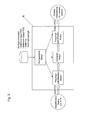
- the input interface module takes the results of the sensor or classifier in the form of certain probabilities for the original object classes (in Fig. 3 From this it forms the probability vector LV original and makes it available to the converter module.
- the converter module carries out the transformation of the probability vector LV original into the probability vector LV target on the basis of the task-specific linking rule and supplies the result to the output interface module.
- the output interface module takes the results (in Fig. 3 "Output POC") of the converter module and provides the result in the form of probabilities for the individual target object classes of the processing of any subsequent processing unit, such as a fusion process or another system in a suitable form available.
- the configuration module reads the current configuration of the adapter from the configuration file, generates the structure of the input vector LV original for the input interface module, the structure of the output vector LV target for the output interface module and the converter module and generates the task-specific logic operation, ie the mapping of the Elements of the LV original in the elements of the LV target .
- the configuration file is advantageously specified as a file in XML.
- the use of such a markup language allows a particularly suitable representation of hierarchically structured data and links in the form of a text file.
- the configuration file may include the above-mentioned configuration items in any structure and is not bound to the markup language XML.
- the adapter thus enables the provision of configuration files that have been defined in advance for various tasks and can be read into the adapter as needed.
- a particularly advantageous use of the adapter according to the invention is to be seen in that it can be dynamically configured as a function of operational boundary conditions, operational facts and predetermined criteria. This dynamic configuration can advantageously be carried out automatically.
- the adapter may change due to the change in position of the mobile system, the a-priori knowledge of a distribution of expected object classes.
- the object classes themselves which are to be found in a new geographical location, may also change, i. new ones are added, others fall away.
- the adapter can be configured with a change of the described conditions of use with a new, adapted set of object classes.
- it makes sense to previously store corresponding configuration files for the adapter, in order to then store them in dependence on e.g. a new position, new knowledge of the tactical situation, etc. to activate.
Landscapes
- Engineering & Computer Science (AREA)
- Theoretical Computer Science (AREA)
- Physics & Mathematics (AREA)
- General Physics & Mathematics (AREA)
- Multimedia (AREA)
- Computer Vision & Pattern Recognition (AREA)
- Software Systems (AREA)
- Data Mining & Analysis (AREA)
- Life Sciences & Earth Sciences (AREA)
- Artificial Intelligence (AREA)
- Bioinformatics & Cheminformatics (AREA)
- Bioinformatics & Computational Biology (AREA)
- Evolutionary Biology (AREA)
- Evolutionary Computation (AREA)
- General Engineering & Computer Science (AREA)
- Stored Programmes (AREA)
- Information Retrieval, Db Structures And Fs Structures Therefor (AREA)
Applications Claiming Priority (1)
| Application Number | Priority Date | Filing Date | Title |
|---|---|---|---|
| DE102009035377A DE102009035377A1 (de) | 2009-07-30 | 2009-07-30 | Einrichtung und Verfahren zur Transformation von Objektklassifikation-Ergebnissen |
Publications (2)
| Publication Number | Publication Date |
|---|---|
| EP2282285A2 true EP2282285A2 (fr) | 2011-02-09 |
| EP2282285A3 EP2282285A3 (fr) | 2014-04-30 |
Family
ID=43037592
Family Applications (1)
| Application Number | Title | Priority Date | Filing Date |
|---|---|---|---|
| EP10007556.3A Withdrawn EP2282285A3 (fr) | 2009-07-30 | 2010-07-21 | Dispositif et procédé de transformation de résultats de classification d'objets |
Country Status (2)
| Country | Link |
|---|---|
| EP (1) | EP2282285A3 (fr) |
| DE (1) | DE102009035377A1 (fr) |
Cited By (1)
| Publication number | Priority date | Publication date | Assignee | Title |
|---|---|---|---|---|
| EP3454521A1 (fr) * | 2017-09-08 | 2019-03-13 | Airbus Defence and Space | Dispositif et procédé de conversion des données d'identification d'objet cible à base d'index de lecture |
Families Citing this family (2)
| Publication number | Priority date | Publication date | Assignee | Title |
|---|---|---|---|---|
| DE102010019936B4 (de) | 2010-05-08 | 2022-05-19 | Mbda Deutschland Gmbh | Verfahren zum Qualifizieren eines Objekts sowie Vorrichtung zur Durchführung des Verfahrens |
| CN113609360B (zh) * | 2021-08-19 | 2024-07-05 | 武汉东湖大数据科技股份有限公司 | 一种基于场景化多源数据融合分析的方法和系统 |
Citations (1)
| Publication number | Priority date | Publication date | Assignee | Title |
|---|---|---|---|---|
| DE102006005617A1 (de) * | 2006-02-06 | 2007-08-16 | Bundesdruckerei Gmbh | Verfahren zur Bewertung der Qualität eines Bildes, Verfahren zur Herstellung eines Dokuments Computerprogrammprodukt, Nutzer-Schnittstelle, Datei und elektronisches Gerät |
Family Cites Families (2)
| Publication number | Priority date | Publication date | Assignee | Title |
|---|---|---|---|---|
| FR2844079B1 (fr) * | 2002-08-30 | 2005-08-26 | France Telecom | Systeme associatif flou de description d'objets multimedia |
| US7184591B2 (en) * | 2003-05-21 | 2007-02-27 | Microsoft Corporation | Systems and methods for adaptive handwriting recognition |
-
2009
- 2009-07-30 DE DE102009035377A patent/DE102009035377A1/de not_active Withdrawn
-
2010
- 2010-07-21 EP EP10007556.3A patent/EP2282285A3/fr not_active Withdrawn
Patent Citations (1)
| Publication number | Priority date | Publication date | Assignee | Title |
|---|---|---|---|---|
| DE102006005617A1 (de) * | 2006-02-06 | 2007-08-16 | Bundesdruckerei Gmbh | Verfahren zur Bewertung der Qualität eines Bildes, Verfahren zur Herstellung eines Dokuments Computerprogrammprodukt, Nutzer-Schnittstelle, Datei und elektronisches Gerät |
Non-Patent Citations (3)
| Title |
|---|
| A. P. DEMPSTER: "A Generalization of Bayesian Inference", JOURNAL OF THE ROYAL STATISTICAL SOCIETY. SERIES B (METHODOLOGICAL), 1 January 1968 (1968-01-01), pages 205 - 247, XP055460433, Retrieved from the Internet <URL:https://6fc812ce-a-62cb3a1a-s-sites.googlegroups.com/site/tanggongguo/files/AGeneralizationofBayesianInference.pdf?attachauth=ANoY7co5d0A48uw-hrrYfoFSnOBDaarvQ5jH0LWo5pJQjO0drUMZLUWiOyuoObFeO2PVTSiWcivjEoT_0W0RglLfUPlKWz2XVuvvxXxUJpEvOSnQCzEEcyRuR8YaDX-o_eJAwQnN9EqhkCD8sevft4P2y7IP0fTOUF0uuiu51loDy1> [retrieved on 20180319] * |
| A. P. DEMPSTER: "New Methods for Reasoning Towards Posterior Distributions Based on Sample Data", THE ANNALS OF MATHEMATICAL STATISTICS, 1 January 1966 (1966-01-01), pages 355 - 374, XP055460450, Retrieved from the Internet <URL:http://www.stat.purdue.edu/~chuanhai/projects/DS/docs/66Annals.pdf> [retrieved on 20180319] * |
| DUDA R O ET AL: "Pattern Classification, Bayesian Decision Theory", 1 January 2001, PATTERN CLASSIFICATION, NEW YORK, JOHN WILEY & SONS, US, PAGE(S) 20 - 83, ISBN: 978-0-471-05669-0, XP002365513 * |
Cited By (1)
| Publication number | Priority date | Publication date | Assignee | Title |
|---|---|---|---|---|
| EP3454521A1 (fr) * | 2017-09-08 | 2019-03-13 | Airbus Defence and Space | Dispositif et procédé de conversion des données d'identification d'objet cible à base d'index de lecture |
Also Published As
| Publication number | Publication date |
|---|---|
| DE102009035377A1 (de) | 2011-02-03 |
| EP2282285A3 (fr) | 2014-04-30 |
Similar Documents
| Publication | Publication Date | Title |
|---|---|---|
| DE19955919C1 (de) | Verfahren zur Erkennung von Objekten in Bildern auf der Bildpixelebene | |
| DE102017219282A1 (de) | Verfahren und Vorrichtung zum automatischen Erzeugen eines künstlichen neuronalen Netzes | |
| DE102022001208A1 (de) | Verfahren zur Prädiktion von Trajektorien von Objekten | |
| EP2282285A2 (fr) | Dispositif et procédé de transformation de résultats de classification d'objets | |
| DE102021003567A1 (de) | Verfahren zur Erkennung von Objektbeziehungen und Attributierungen aus Sensordaten | |
| EP3857455B1 (fr) | Système d'apprentissage automatique ainsi que procédé, programme informatique et dispositif pour créer le système d'apprentissage automatique | |
| WO2016156377A1 (fr) | Procédé pour mettre à disposition, sur une interface de communication, des informations concernant la hauteur d'un objet dans une zone environnante d'un véhicule à moteur, dispositif capteur, dispositif de traitement et véhicule à moteur | |
| DE102022200139A1 (de) | Verfahren zur Optimierung der Umfeldwahrnehmung für ein Fahrunterstützungssystem mittels zusätzlicher Referenzsensorik | |
| DE102018200534A1 (de) | Verfahren zum Betreiben eines künstlichen neuronalen Netzes | |
| DE102021209817A1 (de) | Verfahren zur mehrstufigen Fusion von Messdaten | |
| DE102023002044B3 (de) | Verfahren zu einer modellbasierten Fusion verschiedener Sensormodalitäten | |
| EP3876157A1 (fr) | Procédé et système mis en uvre par ordinateur permettant de générer des données de capteur synthétique et procédé d'apprentissage | |
| EP1998272A2 (fr) | Dispositif de détermination de la vraisemblance d'un objet et/ou de l'existence d'un objet de recherche dans une fenêtre de lecture d'une image, procédé et programme informatique | |
| DE102023210638A1 (de) | Computerimplementiertes Verfahren zum Trainieren eines Modells sowie Verfahren und System zur Prädiktion des Verhaltens eines Verkehrsteilnehmers | |
| DE102022201161A1 (de) | Objektklassifizierung mit einem einstufigen metabasierten Objektdetektor unter Verwendung von Klassenprototypen | |
| DE102017223264A1 (de) | Verfahren und Vorrichtung zum Ansteuern eines Aktors | |
| DE102021105342A1 (de) | Verfahren und System zum Erzeugen von Ground-Truth-Daten zur Absicherung einer Umfelderkennung | |
| DE102017207958B4 (de) | Verfahren zum Generieren von Trainingsdaten für ein auf maschinellem Lernen basierendes Mustererkennungsverfahren für ein Kraftfahrzeug, Kraftfahrzeug, Verfahren zum Betreiben einer Recheneinrichtung sowie System | |
| DE102023208621B4 (de) | Rasterbasierte Verarbeitung von Messdaten zum Klassifizieren und Bestimmen von Eigenschaften von Objekten in einem Bereich | |
| DE102020211251A1 (de) | Selbst-adaptives erkennungssystem | |
| DE102019215120A1 (de) | Verfahren und Vorrichtung zum Klassifizieren von Sensordaten und zum Ermitteln eines Ansteuersignals zum Ansteuern eines Aktors | |
| DE102023202983A1 (de) | Fuzzylogik basiertes Klassifizierungsmodell | |
| DE102017223166A1 (de) | Verfahren zum automatischen Klassifizieren | |
| DE102024201562A1 (de) | Merkmalsextraktor und Verfahren zum Verwenden und zum Trainieren desselben sowie Fahrerassistenzsystem | |
| EP4113392A1 (fr) | Procédé de vérification de la fiabilité d'une détection des objets basée sur l'ia |
Legal Events
| Date | Code | Title | Description |
|---|---|---|---|
| PUAI | Public reference made under article 153(3) epc to a published international application that has entered the european phase |
Free format text: ORIGINAL CODE: 0009012 |
|
| AK | Designated contracting states |
Kind code of ref document: A2 Designated state(s): AL AT BE BG CH CY CZ DE DK EE ES FI FR GB GR HR HU IE IS IT LI LT LU LV MC MK MT NL NO PL PT RO SE SI SK SM TR |
|
| AX | Request for extension of the european patent |
Extension state: BA ME RS |
|
| PUAL | Search report despatched |
Free format text: ORIGINAL CODE: 0009013 |
|
| AK | Designated contracting states |
Kind code of ref document: A3 Designated state(s): AL AT BE BG CH CY CZ DE DK EE ES FI FR GB GR HR HU IE IS IT LI LT LU LV MC MK MT NL NO PL PT RO SE SI SK SM TR |
|
| AX | Request for extension of the european patent |
Extension state: BA ME RS |
|
| RIC1 | Information provided on ipc code assigned before grant |
Ipc: G06F 9/44 20060101ALI20140321BHEP Ipc: G06K 9/62 20060101AFI20140321BHEP Ipc: G06K 9/68 20060101ALI20140321BHEP |
|
| RAP1 | Party data changed (applicant data changed or rights of an application transferred) |
Owner name: AIRBUS DEFENCE AND SPACE GMBH |
|
| 17P | Request for examination filed |
Effective date: 20141024 |
|
| RBV | Designated contracting states (corrected) |
Designated state(s): AL AT BE BG CH CY CZ DE DK EE ES FI FR GB GR HR HU IE IS IT LI LT LU LV MC MK MT NL NO PL PT RO SE SI SK SM TR |
|
| 17Q | First examination report despatched |
Effective date: 20180327 |
|
| STAA | Information on the status of an ep patent application or granted ep patent |
Free format text: STATUS: THE APPLICATION IS DEEMED TO BE WITHDRAWN |
|
| 18D | Application deemed to be withdrawn |
Effective date: 20180807 |