EP2282474B1 - Système et procédé de communication mobile sécurisée - Google Patents
Système et procédé de communication mobile sécurisée Download PDFInfo
- Publication number
- EP2282474B1 EP2282474B1 EP10168528.7A EP10168528A EP2282474B1 EP 2282474 B1 EP2282474 B1 EP 2282474B1 EP 10168528 A EP10168528 A EP 10168528A EP 2282474 B1 EP2282474 B1 EP 2282474B1
- Authority
- EP
- European Patent Office
- Prior art keywords
- mobile device
- code
- user
- request
- portions
- Prior art date
- Legal status (The legal status is an assumption and is not a legal conclusion. Google has not performed a legal analysis and makes no representation as to the accuracy of the status listed.)
- Not-in-force
Links
Images



Classifications
-
- H—ELECTRICITY
- H04—ELECTRIC COMMUNICATION TECHNIQUE
- H04L—TRANSMISSION OF DIGITAL INFORMATION, e.g. TELEGRAPHIC COMMUNICATION
- H04L63/00—Network architectures or network communication protocols for network security
- H04L63/04—Network architectures or network communication protocols for network security for providing a confidential data exchange among entities communicating through data packet networks
- H04L63/0428—Network architectures or network communication protocols for network security for providing a confidential data exchange among entities communicating through data packet networks wherein the data content is protected, e.g. by encrypting or encapsulating the payload
-
- H—ELECTRICITY
- H04—ELECTRIC COMMUNICATION TECHNIQUE
- H04L—TRANSMISSION OF DIGITAL INFORMATION, e.g. TELEGRAPHIC COMMUNICATION
- H04L63/00—Network architectures or network communication protocols for network security
- H04L63/08—Network architectures or network communication protocols for network security for authentication of entities
-
- H—ELECTRICITY
- H04—ELECTRIC COMMUNICATION TECHNIQUE
- H04L—TRANSMISSION OF DIGITAL INFORMATION, e.g. TELEGRAPHIC COMMUNICATION
- H04L63/00—Network architectures or network communication protocols for network security
- H04L63/08—Network architectures or network communication protocols for network security for authentication of entities
- H04L63/0823—Network architectures or network communication protocols for network security for authentication of entities using certificates
-
- H—ELECTRICITY
- H04—ELECTRIC COMMUNICATION TECHNIQUE
- H04L—TRANSMISSION OF DIGITAL INFORMATION, e.g. TELEGRAPHIC COMMUNICATION
- H04L63/00—Network architectures or network communication protocols for network security
- H04L63/08—Network architectures or network communication protocols for network security for authentication of entities
- H04L63/0876—Network architectures or network communication protocols for network security for authentication of entities based on the identity of the terminal or configuration, e.g. MAC address, hardware or software configuration or device fingerprint
-
- H—ELECTRICITY
- H04—ELECTRIC COMMUNICATION TECHNIQUE
- H04L—TRANSMISSION OF DIGITAL INFORMATION, e.g. TELEGRAPHIC COMMUNICATION
- H04L2463/00—Additional details relating to network architectures or network communication protocols for network security covered by H04L63/00
- H04L2463/082—Additional details relating to network architectures or network communication protocols for network security covered by H04L63/00 applying multi-factor authentication
Definitions
- the present invention relates to methods for authenticating a mobile device, and a computer readable medium comprising instructions for performing the method.
- US 2002/091937 discloses methods and systems for biometrically securing access to electronic systems.
- a user prompted to input to the electronic system at least one biometric attribute randomly selected from a user profile containing biometric attributes of the user.
- a user may be prompted to input such a biometric sample through a user interface integrated with the electronic system.
- a user may be permitted to perform a user-desired activity, such as accessing an ATM machine, particular data, or entry to a secure area, if at least one biometric attribute input by the user to the electronic system matches at least one biometric attribute randomly selected from the user profile.
- a user profile may be generally accessible from a server through the electronic system.
- a user profile may also be accessible from a biometric broker through the electronic system over a secure network connection.
- a user profile may also be accessible from a hand held device, such as a smart card, wireless PDA or wireless communication device.
- a method for authenticating a mobile device comprising:
- a computer readable medium storing instructions that, when executed by a computer, cause the computer to perform each of the method steps above.
- a method for authenticating a mobile device comprising:
- a computer readable medium storing instructions that, when executed by a computer, cause the computer to perform each of the method steps above.
- Each of the digital fingerprints may be generated using one or more of user-configurable and non-user-configurable parameters of the mobile device.
- Non-user-configurable parameters may be, for example, physical parameters of the device, unique manufacturer characteristics, carbon and silicone degradation, small device failures, and the like.
- the predetermined minimum accuracy may be set a flexible range.
- the predetermined percentage is 75% or greater. In this way, the user will not be prohibited from accessing the secured network because of a simple software or hardware upgrade in the user's mobile device.
- the code may be sent using a short messaging system (SMS) message.
- SMS short messaging system
- the code may be sent to an email address where the user may retrieve the code and subsequently enter into the mobile device.
- the mobile device may send out the response code to an authenticating server using a SMS message.
- the method may be configured to verify a user name and a password prior to granting the mobile device access privilege.
- FIG. 1A is a block diagram of one embodiment of a computing system in which a method for authenticating mobile devices may be implemented according to the present invention.
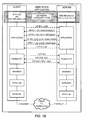
- FIG. 1B is a block diagram illustrating an open system interconnection (OSI) environment in which methods for authenticating mobile devices may be implemented according to one embodiment of the present invention.
- OSI open system interconnection
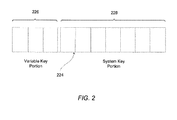
- FIG. 2 is a block diagram showing one example of memory allocation for components that make up a device identifier for use with the present invention.
- FIG. 3 is a flow chart illustrating one embodiment of a method according to the invention for authenticating a mobile device.
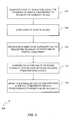
- FIG. 4 is a flow chart illustrating another embodiment of a method according to the invention for authenticating a mobile device.
- FIG. 5 is a block diagram illustrating one embodiment of a system according to the invention for authenticating a mobile device.
- FIG. 6 is a block diagram illustrating another embodiment of a system according to the invention for authenticating a mobile device.
- Mobile devices are ubiquitous in modern day society and are the driving force behind electronic commerce in the wireless space. Consumers are now, more than ever, purchasing music, electronic books, and video programming such as movies, TV shows, and news using their mobile devices. Additionally, consumers are using mobile devices to gain access to email, social networking sites, online game services, etc. This creates the need for a fast and secured method, system, and apparatus for authenticating mobile devices and to determine their access privileges.
- a method for authenticating a mobile device is described below.
- the method described below can also be implemented in a system or a computer apparatus.
- the method for authenticating a mobile device may require an authenticating server to generate a request code representing one or more fingerprints of one or more components of a mobile device.
- the request code may be configured to represent one or more portions of fingerprints of components located in the mobile device.
- the request code may be transmitted to a mobile device via short messaging system (SMS), multimedia messaging system (MMS), email, or other wireless communication standard such as WiMAX, WiFi, or HomeRF.
- SMS short messaging system
- MMS multimedia messaging system
- email or other wireless communication standard such as WiMAX, WiFi, or HomeRF.
- WiMAX wireless access control
- WiFi Wireless Fidelity
- HomeRF Wireless Fidelity
- the request code may be generated such that when it is read by a mobile device, a response code is generated by the mobile device.
- the response code comprises one or more portions of the requested fingerprints of components inside of the mobile device.
- the request code may request the following: the first five digits of the serial number of the mobile device; the version of the operating system; and/or the last four digits of the serial number of a microprocessor.
- the mobile device may collect the requested portions of fingerprints and generate a response code.
- the response code may be generated using a hash function such as a one-way hash or a two-way hash function using the information gathered in response to the request code.
- the response code may be transmitted to an authenticating server via email or short messaging system (SMS). Where SMS is used, the mobile device may be configured to automatically transmit the response code to the authenticating server after receiving and processing the request code. The mobile device may also request a confirmation from the user prior to sending the response code to the authenticating server.
- SMS short messaging system
- the authenticating server may compare each of the one or more portions of fingerprints with predetermined code(s) or previously stored code(s). Where the mobile device is registering with the authenticating server for the first time, the response code may be translated and stored. If a match is found between the response code and one of the stored codes, the mobile device may be granted access to the secured network.
- the authenticating may also request the user to enter a username and a password in addition to the verification of the response code. Alternatively, the verification of the response code alone is sufficient and verification of the username and password is bypassed.
- the user may be required to enter the username and password.
- FIG. 1A is a diagram illustrating an example environment 100 with which the online commerce restriction, system, and apparatus is implemented according to one or more embodiments of the present invention.
- the illustrated example environment 100 includes mobile devices 110a and 110b, a network 115, a server 120, and a software/hardware module 130.
- Mobile devices 110 may include a security client (not shown) configured to authenticate the mobile device to an authenticating server as generally described above.
- the security client may comprise a stand-alone application or an applet running within a web browser on the device 110 (e.g., an applet comprising executable code for a Java Virtual Machine).
- the security client may be embedded in or associated with another software application, including but not limited to a web browser.
- the security client may be embedded in or associated with a tool bar of a software application, such as, for example, a web browser.
- the security client may prompt the user to register with an online software registration service, or may run in the background with little or no interaction with the user of device 110.
- the security client may also be digitally distributed or streamed from one or more servers.
- Network 115 may comprise the Internet, a local area network, or other form of communication network.
- the security client may be implemented in one or more of the open system interconnection (OSI) layers.
- the security client is implemented in the application layer as a flash application, an applet application, a standalone application, or an application integrated into a web browser using application communication protocol such as HTTP, HTTPS, and SIP.
- security module 135 may also reside in one or more of the OSI layers of authenticating server 120.
- computing devices 110a-b may be in operative communication with authenticating server 120. While only one computing device 110 is illustrated, it will be understood that a given system may comprise any number of computing devices.
- Computing device 110 may be, but is not limited to, a mobile phone, netbook, a mobile game console, mobile computing device, a tablet computer, a personal digital assistant, a wireless communication device, an onboard vehicle computer, or any other device capable of communication with a computer network.
- the security client may collect information regarding computing device 110, as instructed by the request code.
- the request code may comprises information or instruction telling the security client to collect a number of parameters which are expected to be unique to the computing device environment.
- the parameters collected may include, for example, hard disk volume name, user name, device name, user password, hard disk initialization date, etc.
- the collected information may include information that identifies the hardware comprising the platform on which the web browser runs, such as, for example, CPU number, or other parameters associated with the firmware in use.
- the system information may further include system configuration information, such as amount of memory, type of processor, software or operating system serial number, etc.
- the security client may generate a response code based on one or more identifiers or fingerprints 224 (see FIG. 2 ) that is unique to each component of computing device 110.
- the term device identifier refers to one or more fingerprints of hardware and software components inside of device 110.
- the request code may include a code that represents the device identifier, which is a fingerprint of a component of device 110. As mentioned above, the request code may specify one or more portions of a fingerprint (device identifier) of a component of device 110. Alternatively, the request code may specify one or more fingerprints in whole.
- the device identifier 224 may be generated and stored in a hidden directory of the device 110 and/or at a remote location, such as the server 120.
- the device identifier 224 may incorporate the device's IP address and/or other geo-location code to add another layer of specificity to device's unique identifier.
- the security client running on the computing device or otherwise having access to the computing device's hardware and file system may generate a unique device identifier (e.g., device identifier 224) using a process that operates on data indicative of the computing device's configuration and hardware.
- the device identifier may be generated using a combination of user-configurable and non-user-configurable machine parameters as input to a process that results in the device identifier, which may be expressed in digital data as a binary number.
- Each machine parameter is data determined by a hardware component, software component, or data component specific to the device that the unique identifier pertains to.
- Machine parameters may be selected based on the target device system configuration such that the resulting device identifier has a very high probability (e.g., greater than 99.999%) of being unique to the target device.
- the machine parameters may be selected such that the device identifier includes at least a stable unique portion up to and including the entire identifier, that has a very high probability of remaining unchanged during normal operation of the target device.
- the resulting device identifier should be highly specific, unique, reproducible and stable as a result of properly selecting the machine parameters.
- the application for generating the device identifier may also operate on the collected parameters with one or more algorithms to generate the device identifier.
- This process may include at least one irreversible transformation, such as, for example, a cryptographic hash function, such that the input machine parameters cannot be derived from the resulting device identifier.
- Each device identifier to a very high degree of certainty, cannot be generated except by the suitably configured application operating or otherwise having had access to the same computing device for which the device identifier was first generated.
- each identifier again to a very high degree of certainty, can be successfully reproduced by the suitably configured application operating or otherwise having access to the same computing device on which the identifier was first generated.
- the application may operate by performing a system scan to determine a present configuration of the computing device. The application may then select the machine parameters to be used as input for generating the unique device identifier. Selection of parameters may vary depending on the system configuration. Once the parameters are selected, the application may generate the identifier.
- generating the device identifier may also be described as generating a device fingerprint and may entail the sampling of physical, non-user configurable properties as well as a variety of additional parameters such as uniquely generated hashes and time sensitive values.
- Physical device parameters available for sampling may include, for example, unique manufacturer characteristics, carbon and silicone degradation and small device failures.
- the process of measuring carbon and silicone degradation may be accomplished by measuring a chip's ability to process complex mathematical computations, and its ability to respond to intensive time variable computations. These processes measure how fast electricity travels through the carbon. Using variable offsets to compensate for factors such as heat and additional stresses placed on a chip during the sampling process allows for each and every benchmark to reproduce the expected values. During a standard operating lifetime, the process of passing electricity through the various switches causes a computer chip to degrade. These degradations manifest as gradually slower speeds that extend the processing time required to compute various benchmarking algorithms.
- the process for generating a device identifier may include measuring physical, non-user-configurable characteristics of disk drives and solid state memory devices.
- Each data storage device has a large variety of damage and unusable data sectors that are nearly unique to each physical unit. The ability to measure and compare values for damaged sectors and data storage failures provides a method for identifying storage devices.
- Device parameter sampling, damage measurement and chip benchmarking make up just a part of device fingerprinting technologies described herein. These tools may be further extended by the use of complex encryption algorithms to convolute the device identifier values during transmission and comparisons. Such encryption processes may be used in conjunction with random sampling and key generations.
- the device identifier may be generated by utilizing machine parameters associated with one or more of the following: machine model; machine serial number; machine copyright; machine ROM version; machine bus speed; machine details; machine manufacturer; machine ROM release date; machine ROM size; machine UUID; and machine service tag.
- the device identifier may also be generated by utilizing machine parameters associated with one or more of the following: CPU ID; CPU model; CPU details; CPU actual speed; CPU family; CPU manufacturer; CPU voltage; and CPU external clock.
- the device identifier may also be generated by utilizing machine parameters associated with one or more of the following: memory model; memory slots; memory total; and memory details.
- the device identifier may also be generated by utilizing machine parameters associated with one or more of the following: video model; video details; display model; display details; audio model; and audio details.
- the device identifier may also be generated by utilizing machine parameters associated with one or more of the following: network model; network address; Bluetooth address; Blackbox model; Blackbox serial; Blackbox details; Blackbox damage map; Blackbox volume name; NetStore details; and NetStore volume name.
- the device identifier may also be generated by utilizing machine parameters associated with one or more of the following: optical model; optical serial; optical details; keyboard model; keyboard details; mouse model; mouse details; printer details; and scanner details.
- the device identifier may also be generated by utilizing machine parameters associated with one or more of the following: baseboard manufacturer; baseboard product name; baseboard version; baseboard serial number; and baseboard asset tag.
- the device identifier may also be generated by utilizing machine parameters associated with one or more of the following: chassis manufacturer; chassis type; chassis version; and chassis serial number.
- the device identifier may also be generated by utilizing machine parameters associated with one or more of the following: IDE controller; SATA controller; RAID controller; and SCSI controller.
- the device identifier may also be generated by utilizing machine parameters associated with one or more of the following: port connector designator; port connector type; port connector port type; and system slot type.
- the device identifier may also be generated by utilizing machine parameters associated with one or more of the following: cache level; cache size; cache max size; cache SRAM type; and cache error correction type.
- the device identifier may also be generated by utilizing machine parameters associated with one or more of the following: fan; PCMCIA; modem; portable battery; tape drive; USB controller; and USB hub.
- the device identifier may also be generated by utilizing machine parameters associated with one or more of the following: device model; device model IMEI; device model IMSI; and device model LCD.
- the device identifier may also be generated by utilizing machine parameters associated with one or more of the following: wireless 802.11; webcam; game controller; silicone serial; and PCI controller.
- the device identifier 224 may include two components - namely, a variable key portion 226 and a system key portion 228.
- the variable key portion 226 may be generated at the time of registration of computing device 110 by reference to a variable platform parameter, such as via reference to system time information, although other parameters which are variable may be utilized in other embodiments.
- the system key portion 228 may include the above described parameters expected to be unique to the device 110, such as, for example, hard disk volume name, user name, computer name, user password, hard disk initialization date, or combinations thereof. Portions 226 and/or 228 may be combined with the IP address and/or other platform parameters of the device 110. It is noted that device identifiers, or portions thereof, may be encrypted to add an additional layer of specificity and security.
- authenticating server 120 may comprise a hardware/software authentication module 130, which may include a security module 135, an audit module 150, a storage module 155, and a processing module 160.
- Security module 135 may be configured to authenticate the response code comprising one or more portions of device identifier 224 received from the security client on computing device 110. Alternatively, the response code may be sent in by the user via email or a web application.
- the security client of computing device 110 may also include a registration routine that collects or receives information regarding the geo-location code of the device 110.
- a geo-locater (not shown) may comprise the IP address or the like of the device 110.
- the security client may electronically send device identifier 224 and financial information to authenticating server 120.
- a geo-location code such as the IP address of the device 110
- the authenticating server 120 may encrypt and store the data, such as the device identifier 224 and/or the geo-location code received from the computing device 110.
- Authenticating server 120 may also receive such data from a plurality of computing devices and store the received data in storage module 155.
- Authenticating server 120 may also generate a transaction identifier for the event or item of commerce the user is seeking to purchase. In one embodiment, the transaction identifier is transmitted to the security client for auditing purposes.
- the audit module 150 may generate an audit number by associating the transaction identifier with device identifier 224 and/or the geo-location code, and stores the generated audit number in storage module 155.
- security client of device 110 may send the device identifier 224 and/or the geo-location code to the server 120 in a piecemeal manner.
- the server 120 may in turn generate the audit number 142.
- Authenticating server 120 may receive or generate audit numbers from a plurality of computing devices and store the received audit numbers in the storage module 155.
- the audit number may be generated from device identifier 224, the transaction identifier, and/or the geo-location code via any number of suitable approaches.
- the transaction identifier may be concatenated or linked with device identifier 224 and/or the geo-location code.
- the audit number may be stored in a hidden directory of computing device 110 and/or at a remote location, such as the authenticating server 120.
- device identifier 224, the transaction identifier, and/or the geo-location code may be extracted from the audit number 142 at a later time.
- Audit module 150 may be configured to keep track of all sales and purchases of event tickets, goods, and services. Audit module 150 may record each purchase of the event tickets, goods, and services. Audit module 150 may also record the purchase date, purchase price, event/goods/service identifier, user's 405 financial data, device identifier, etc. Audit module 150 may store the collected data in storage module 155.
- FIG. 3 illustrates an example process flow of a method 300 for authenticating a mobile device, on the authenticating server side, according to one embodiment of the present invention.
- method 300 starts at step 310 where a request code is generated to indicate a plurality of portions of digital fingerprints to request from a mobile device. Each portion of the fingerprint is an identifier similar to device identifier 224 as described above.
- the request code may request the fingerprint from one or more internal components of the mobile device. For example, the request code may request for the first four digits of the serial number of the microprocessor and/or the last five digits of an antenna serial number or OEM number.
- the request code is transmitted to a remote device such as mobile devices 110A and 110B.
- the request code may also be transmitted to the user via email or SMS.
- the user may enter the request code into the security client.
- the security client may be a stand-alone application, an applet, or integrated with the web browser.
- the security client is configured to translate the request code and determine which fingerprint of which internal components to generate. After having gathered all of the requested fingerprints, a response code is generated and displayed to the user.
- the security client may be configured to automatically send the response code to the authenticating server automatically. Alternatively, the response code is displayed to the user and/or stored for later delivery.
- a response code is received.
- the response code may be received via email, touchtone phone, web browser interface, SMS, or MMS.
- the response code is configured to represent the requested plurality portions of the fingerprints. Once the response code is received, it is deciphered into portions of one or more fingerprint that were requested by the request code.
- each of the received portions of fingerprints is compared with predetermined or previously stored fingerprint. If a match is found, the mobile device is then given access to the secured network.
- FIG. 4 illustrates an example process flow of a method 400 for authenticating a mobile device, on the mobile device side, according to one embodiment of the present invention.
- method 400 starts at step 410 where a request code is received from the server at the mobile device.
- the request code may be received via SMS, MMS, or other wireless means.
- the user may enter the request code into the security client of the mobile device.
- the security client deciphers the code and determines which one or more components of the mobile device to use for generating device identifiers 224 or digital fingerprints, at step 420.
- the components used to device identifiers 224 may comprise using one or more user and non-user configurable parameters of the mobile device.
- the request may be encrypted into a predetermined digits or strings. The strings may have seven or more digits.
- a response code is generated.
- the response code may represent the requested one or more portions of the generated device identifiers 224.
- the response code may be encrypted into a number of certain digits, typically seven or more.
- the response code may be displayed to the user or be automatically transmitted to the authenticating server.
- the response code may be transmitted to the server via email, SMS, MMS, or other web application.
- the mobile device may obtain access privilege to a secured network in response to the generated response code.
- an exemplary apparatus 500 that may be configured as either a computing device, or as a processor or similar device for use within a computing device.
- apparatus 500 may include: a means 550 for generating a code to indicate a plurality of portions of a digital fingerprint to request from a mobile device; a means 555 for sending the code to the remote device; a means 560 for receiving the response code representing the requested plurality of portions of digital fingerprint; a means 565 for comparing each portion of the received plurality of portions with one or more predetermined codes; and a means 570 for granting the mobile device access to the secured network based on the comparison.
- the mobile device may only be granted access to the secured network if a result of the comparison satisfies a predetermined minimum accuracy.
- apparatus 500 may optionally include a processor module 530 having at least one processor, in the case of apparatus 500 configured as computing device, rather than as a processor.
- Processor 530 in such case, may be in operative communication with means 550-570, and components thereof, via a bus 410 or similar communication coupling.
- Processor 530 may effect initiation and scheduling of the processes or functions performed by means 550-570, and components thereof.
- apparatus 500 may optionally include a means for storing information, such as, for example, a memory device/module 540.
- Computer readable medium or memory device/module 540 may be operatively coupled to the other components of apparatus 500 via bus 510 or the like.
- the computer readable medium or memory device 540 may be adapted to store computer readable instructions and data for effecting the processes and behavior of means 550-580, and components thereof, or processor 540 (in the case of apparatus 500 configured as a computing device) or the methods disclosed herein.
- the memory module 540 may optionally include executable code for the processor module 530 to: (a) generate a code to indicate one or more portions of digital fingerprint to request from a mobile device; (b) send the request code to a remote device; (c) receive a response code; (d) compare the response code or a deciphered version of the response code to predetermined codes or stored portions of digital fingerprints of a known and authorized mobile device; and (e) grant the mobile device access privilege based on the comparison.
- One or more of steps (a)-(e) may be performed by processor module 430 in lieu of or in conjunction with the means 550-570 described above.
- apparatus 600 may be configured as either a computing device, or as a processor or similar device for use within a computing device.
- apparatus 600 may include: a means 650 for receiving a request code; a means 655 for generating a digital fingerprint for each component indicated by the request code; a means 660 for generating a response code based on the generated digital fingerprint, which was generated based on the request code; and a means 665 for obtaining access privilege to a secured network in response to the generated response code.
- apparatus 600 may optionally include a processor module 630 having at least one processor, in the case of apparatus 600 configured as computing device, rather than as a processor.
- Processor 630 in such case, may be in operative communication with means 650-680, and components thereof, via a bus 610 or similar communication coupling.
- Processor 630 may effect initiation and scheduling of the processes or functions performed by means 650-665, and components thereof.
- apparatus 600 may include a transceiver module 620 for communicating with means 650-665.
- a stand-alone receiver and/or stand-alone transmitter may be used in lieu of or in conjunction with the transceiver 620.
- apparatus 600 may optionally include a means for storing information, such as, for example, a memory device/module 640.
- Computer readable medium or memory device/module 640 may be operatively coupled to the other components of apparatus 600 via bus 610 or the like.
- the computer readable medium or memory device 640 may be adapted to store computer readable instructions and data for effecting the processes and behavior of means 650-665, and components thereof, or processor 640 (in the case of apparatus 600 configured as a computing device) or the methods disclosed herein.
- the memory module 640 may optionally include executable code for the processor module 630 to: (a) receive a request code; (b) generate a digital fingerprint based on information contained in the request code; (c) generate a response code based on the generated digital fingerprint; and (d) obtain access to the secured network in response to the response code. Steps (a)-(d) may be performed by processor module 630 in lieu of or in conjunction with the means 650-665 described above.
- one or more of the techniques and methodologies described herein may be performed by embedded applications, platforms, or systems.
- the methods described herein may be performed by a general-purpose computer system and/or an embedded application or component of a special-purpose apparatus (e.g., traffic controller, traffic signal, surveillance cameras, sensors, detectors, vehicles, vehicle navigation systems, mobile phones, PDAs, etc.).
- a special-purpose apparatus e.g., traffic controller, traffic signal, surveillance cameras, sensors, detectors, vehicles, vehicle navigation systems, mobile phones, PDAs, etc.
- the special-purpose device comprises an embedded platform running an embedded Linux operating system (OS) or the like.
- OS embedded Linux operating system
- the unique device identifier or fingerprint for the special-purpose device may be created by collecting and using one or more of the following information: machine model; processor model; processor details; processor speed; memory model; memory total; network model of each Ethernet interface; network MAC address of each Ethernet interface; BlackBox model (e.g., any Flash device); BlackBox serial (e.g., using Dallas Silicone Serial DS-2401 chipset or the like); OS install date; nonce value; nonce time of day; any other predefined hardware information stored (optionally encrypted) in EEPROM; and any variations/combinations thereof.
- OS embedded platform running an embedded Linux operating system
- a component can be, but is not limited to being, a process running on a processor, a processor, an object, an executable, a thread of execution, a program, and/or a computer.
- an application running on a computing device and the computing device can be a component.
- One or more components can reside within a process and/or thread of execution and a component can be localized on one computer and/or distributed between two or more computers.
- these components can execute from various computer readable media having various data structures stored thereon.
- the components can communicate by way of local and/or remote processes such as in accordance with a signal having one or more data packets (e.g., data from one component interacting with another component in a local system, distributed system, and/or across a network such as the Internet with other systems by way of the signal).
- a signal having one or more data packets (e.g., data from one component interacting with another component in a local system, distributed system, and/or across a network such as the Internet with other systems by way of the signal).
- various aspects or features described herein can be implemented as a method, apparatus, or article of manufacture using standard programming and/or engineering techniques.
- article of manufacture as used herein is intended to encompass a computer program accessible from any computer-readable device, carrier, or media.
- computer-readable media can include but are not limited to magnetic storage devices (e.g., hard disk, floppy disk, magnetic strips, etc.), optical discs (e.g., compact disc (CD), digital versatile disc (DVD), etc.), smart cards, and flash memory devices (e.g., Erasable Programmable Read Only Memory (EPROM), card, stick, key drive, etc.).
- EPROM Erasable Programmable Read Only Memory
- various storage media described herein can represent one or more devices and/or other machine-readable media for storing information.
- the term "machine-readable medium” can include, without being limited to, wireless channels and various other media capable of storing, containing, and/or carrying instruction(s) and/or data.
Landscapes
- Engineering & Computer Science (AREA)
- Computer Security & Cryptography (AREA)
- Computer Hardware Design (AREA)
- Computing Systems (AREA)
- General Engineering & Computer Science (AREA)
- Computer Networks & Wireless Communication (AREA)
- Signal Processing (AREA)
- Power Engineering (AREA)
- Mobile Radio Communication Systems (AREA)
Claims (15)
- Procédé (300) permettant d'authentifier un dispositif mobile (110A, 110B), le procédé comportant le fait de :recevoir au niveau d'un serveur d'authentification (120) une requête d'authentification provenant du dispositif mobile (110A, 110B) ;générer (310) un code de requête pour indiquer une pluralité de parties d'une ou de plusieurs empreinte(s) numérique(s) à requérir à partir du dispositif mobile (110A, 110B), dans lequel chaque empreinte numérique d'une ou de plusieurs empreinte(s) numérique(s) représente un paramètre ou des paramètres différent(s) du dispositif mobile ;transmettre (320) le code de requête au dispositif mobile (110A, 110B) ;recevoir (330) à partir du dispositif mobile un code de réponse représentant la pluralité requise de parties d'une ou de plusieurs empreinte(s) numérique(s) ;comparer (340) chaque partie de la pluralité de parties reçue avec un ou plusieurs codes prédéterminé(s); etauthentifier (350) le dispositif mobile (110A, 110B) lorsqu'un résultat de la comparaison satisfait à une exactitude minimale prédéterminée.
- Procédé selon la revendication 1, dans lequel chaque partie d'une ou de plusieurs empreinte(s) numérique(s) est basée sur l'un d'un paramètre configurable par l'utilisateur et d'un paramètre non configurable par l'utilisateur du dispositif mobile.
- Procédé selon la revendication 1, dans lequel la pluralité des parties représente au moins un paramètre configurable par l'utilisateur et au moins un paramètre non configurable par l'utilisateur du dispositif mobile.
- Procédé selon la revendication 1, dans lequel la transmission du code de requête au dispositif mobile comporte de transmettre le code de requête en utilisant un système de message court (SMS).
- Procédé selon la revendication 1, dans lequel la transmission du code de requête au dispositif mobile comporte de transmettre le code à une adresse de courriel (email).
- Procédé selon la revendication 1, dans lequel le code de réponse est reçu par l'intermédiaire d'un message court SMS provenant du dispositif mobile.
- Procédé selon l'une quelconque des revendications 1 à 6, dans lequel ledit ou lesdits différent(s) paramètre(s) est (sont) unique(s) pour un composant du dispositif mobile.
- Procédé selon l'une quelconque des revendications 1 à 6, dans lequel ladite ou lesdites empreinte(s) numérique(s) comporte(nt) un identificateur de dispositif unique (224) généré à partir des données indicatrices de la configuration et de l'appareillage du dispositif mobile, et dans lequel ledit code de requête spécifie des parties spécifiques dudit unique identificateur de dispositif à renvoyer dans ledit code de réponse.
- Support exploitable par ordinateur (540) stockant un programme informatique comprenant des instructions qui, lorsqu'elles sont exécutées par un ordinateur, entraînent l'ordinateur à exécuter chacune des étapes du procédé selon la revendication 1 et, facultativement, l'une quelconque des étapes des revendications 2 à 8.
- Procédé (400) permettant d'authentifier un dispositif mobile (110A, 110B), le procédé comportant le fait de :envoyer une requête d'authentification à un serveur d'authentification (120) ;recevoir (410) un code de requête à partir du serveur d'authentification (120), le code de requête indiquant une pluralité de parties d'une ou de plusieurs empreinte(s) numérique(s) du dispositif mobile (110A, 110B), dans lequel chaque empreinte numérique représente un paramètre ou des paramètres différent(s) du dispositif mobile ;collecter la pluralité requise des parties indiquées par le code de requête ;générer (430) un code de réponse qui comporte la pluralité des parties requise d'une ou de plusieurs empreinte(s) numérique(s) ; ettransmettre le code de réponse au serveur d'authentification (120) pour obtenir l'authentification.
- Procédé selon la revendication 10 dans lequel chaque partie d'une ou de plusieurs empreinte(s) numérique(s) est basée sur un paramètre configurable par l'utilisateur et sur un paramètre non configurable par l'utilisateur du dispositif mobile.
- Procédé selon la revendication 10 dans lequel la pluralité des parties représente au moins un paramètre configurable par l'utilisateur et au moins un paramètre non configurable par l'utilisateur du dispositif mobile.
- Procédé selon la revendication 10, 11 ou 12, dans lequel ledit ou lesdits paramètre(s) différent(s) est (sont) unique(s) pour un composant du dispositif mobile.
- Procédé selon la revendication 10, 11 ou 12, dans lequel ladite empreinte numérique ou lesdites plusieurs empreintes numériques comporte(nt) un identificateur unique de dispositif (224) généré à partir des données indicatrices de la configuration et de l'appareillage du dispositif mobile et dans lequel ledit code de requête spécifie des parties spécifiques dudit identificateur unique de dispositif à renvoyer dans ledit code de réponse.
- Support exploitable par ordinateur (640) stockant un programme informatique comportant des instructions qui, lorsqu'elles sont exécutées par un ordinateur, entraînent l'ordinateur à exécuter chacune des étapes du procédé selon la revendication 10 et, facultativement l'une quelconque des étapes des revendications 11 à 14.
Applications Claiming Priority (1)
| Application Number | Priority Date | Filing Date | Title |
|---|---|---|---|
| US22399809P | 2009-07-08 | 2009-07-08 |
Publications (2)
| Publication Number | Publication Date |
|---|---|
| EP2282474A1 EP2282474A1 (fr) | 2011-02-09 |
| EP2282474B1 true EP2282474B1 (fr) | 2014-01-15 |
Family
ID=42942097
Family Applications (1)
| Application Number | Title | Priority Date | Filing Date |
|---|---|---|---|
| EP10168528.7A Not-in-force EP2282474B1 (fr) | 2009-07-08 | 2010-07-06 | Système et procédé de communication mobile sécurisée |
Country Status (2)
| Country | Link |
|---|---|
| US (1) | US8213907B2 (fr) |
| EP (1) | EP2282474B1 (fr) |
Cited By (1)
| Publication number | Priority date | Publication date | Assignee | Title |
|---|---|---|---|---|
| US9143496B2 (en) | 2013-03-13 | 2015-09-22 | Uniloc Luxembourg S.A. | Device authentication using device environment information |
Families Citing this family (31)
| Publication number | Priority date | Publication date | Assignee | Title |
|---|---|---|---|---|
| US7162035B1 (en) | 2000-05-24 | 2007-01-09 | Tracer Detection Technology Corp. | Authentication method and system |
| US7995196B1 (en) | 2008-04-23 | 2011-08-09 | Tracer Detection Technology Corp. | Authentication method and system |
| US8457673B2 (en) * | 2010-10-11 | 2013-06-04 | Motorola Mobility Llc | Method and apparatus for radio frequency fingerprint distribution |
| CN103229197B (zh) * | 2010-11-18 | 2016-07-13 | (株)此后 | 使用信息识别手段的集成管线管理系统和方法 |
| FR2969440B1 (fr) * | 2010-12-21 | 2013-08-16 | Oberthur Technologies | Dispositif electronique et procede de communication |
| US11063920B2 (en) | 2011-02-03 | 2021-07-13 | mSignia, Inc. | Cryptographic security functions based on anticipated changes in dynamic minutiae |
| US8817984B2 (en) | 2011-02-03 | 2014-08-26 | mSignia, Inc. | Cryptographic security functions based on anticipated changes in dynamic minutiae |
| US10168413B2 (en) | 2011-03-25 | 2019-01-01 | T-Mobile Usa, Inc. | Service enhancements using near field communication |
| US20130054433A1 (en) * | 2011-08-25 | 2013-02-28 | T-Mobile Usa, Inc. | Multi-Factor Identity Fingerprinting with User Behavior |
| US9824199B2 (en) | 2011-08-25 | 2017-11-21 | T-Mobile Usa, Inc. | Multi-factor profile and security fingerprint analysis |
| US9330245B2 (en) * | 2011-12-01 | 2016-05-03 | Dashlane SAS | Cloud-based data backup and sync with secure local storage of access keys |
| CN104160405B (zh) * | 2011-12-31 | 2017-08-15 | 英特尔公司 | 用于信任配置的安全设备环境 |
| US9215075B1 (en) | 2013-03-15 | 2015-12-15 | Poltorak Technologies Llc | System and method for secure relayed communications from an implantable medical device |
| WO2015090436A1 (fr) * | 2013-12-20 | 2015-06-25 | Vodafone Holding Gmbh | Procédé pour améliorer la sécurité dans un réseau de communication et entité d'authentification |
| US20150264565A1 (en) * | 2014-03-11 | 2015-09-17 | Yahoo! Inc. | Machine biometrics by the use of dynamic benchmarks |
| US10097951B2 (en) * | 2014-03-31 | 2018-10-09 | Mcafee, Llc | Provable geo-location |
| US9549322B2 (en) * | 2014-06-11 | 2017-01-17 | Visa International Service Association | Methods and systems for authentication of a communication device |
| WO2016118523A1 (fr) | 2015-01-19 | 2016-07-28 | InAuth, Inc. | Systèmes et procédés de communication sécurisée à chemin sécurisé |
| US10341342B2 (en) * | 2015-02-05 | 2019-07-02 | Carrier Corporation | Configuration data based fingerprinting for access to a resource |
| MX384515B (es) * | 2015-11-19 | 2025-03-14 | Nagravision Sa | Metodo para verificar la integridad de ejecucion de una aplicacion en dispositivo objetivo. |
| US10826901B2 (en) | 2015-11-25 | 2020-11-03 | InAuth, Inc. | Systems and method for cross-channel device binding |
| US10334062B2 (en) | 2016-02-25 | 2019-06-25 | InAuth, Inc. | Systems and methods for recognizing a device |
| US11093852B2 (en) | 2016-10-19 | 2021-08-17 | Accertify, Inc. | Systems and methods for recognizing a device and/or an instance of an app invoked on a device |
| US11403563B2 (en) | 2016-10-19 | 2022-08-02 | Accertify, Inc. | Systems and methods for facilitating recognition of a device and/or an instance of an app invoked on a device |
| US10574648B2 (en) | 2016-12-22 | 2020-02-25 | Dashlane SAS | Methods and systems for user authentication |
| US10432397B2 (en) | 2017-05-03 | 2019-10-01 | Dashlane SAS | Master password reset in a zero-knowledge architecture |
| US10848312B2 (en) | 2017-11-14 | 2020-11-24 | Dashlane SAS | Zero-knowledge architecture between multiple systems |
| US10904004B2 (en) | 2018-02-27 | 2021-01-26 | Dashlane SAS | User-session management in a zero-knowledge environment |
| US12463951B2 (en) | 2019-08-02 | 2025-11-04 | Mordecai Barkan | Hands free access management and credential protection |
| CN113704144B (zh) * | 2020-05-22 | 2024-10-01 | 澜起科技股份有限公司 | 存储器控制器以及用于控制对存储模块的访问的方法 |
| US20220284467A1 (en) * | 2021-03-07 | 2022-09-08 | BlueStack Systems, Inc. | Methods, Systems and Computer Program Products for Tracking and Attributing Conversion Events |
Family Cites Families (110)
| Publication number | Priority date | Publication date | Assignee | Title |
|---|---|---|---|---|
| US4351982A (en) * | 1980-12-15 | 1982-09-28 | Racal-Milgo, Inc. | RSA Public-key data encryption system having large random prime number generating microprocessor or the like |
| US4658093A (en) * | 1983-07-11 | 1987-04-14 | Hellman Martin E | Software distribution system |
| US4704610A (en) * | 1985-12-16 | 1987-11-03 | Smith Michel R | Emergency vehicle warning and traffic control system |
| US4796220A (en) * | 1986-12-15 | 1989-01-03 | Pride Software Development Corp. | Method of controlling the copying of software |
| JPH04130950A (ja) | 1990-09-21 | 1992-05-01 | Toshiba Corp | ネットワークシステム |
| WO1992020021A1 (fr) * | 1991-05-08 | 1992-11-12 | Digital Equipment Corporation | Systeme de gestion de licences |
| JP2866236B2 (ja) * | 1991-10-29 | 1999-03-08 | 沖電気工業株式会社 | 印字用紙検出回路 |
| US5210795A (en) * | 1992-01-10 | 1993-05-11 | Digital Equipment Corporation | Secure user authentication from personal computer |
| US5291598A (en) * | 1992-04-07 | 1994-03-01 | Gregory Grundy | Method and system for decentralized manufacture of copy-controlled software |
| US5418854A (en) * | 1992-04-28 | 1995-05-23 | Digital Equipment Corporation | Method and apparatus for protecting the confidentiality of passwords in a distributed data processing system |
| IL107044A0 (en) | 1992-09-21 | 1993-12-28 | Uniloc Singapore Private Ltd | System for software registration |
| US6294793B1 (en) * | 1992-12-03 | 2001-09-25 | Brown & Sharpe Surface Inspection Systems, Inc. | High speed optical inspection apparatus for a transparent disk using gaussian distribution analysis and method therefor |
| US5440635A (en) * | 1993-08-23 | 1995-08-08 | At&T Corp. | Cryptographic protocol for remote authentication |
| JPH08263438A (ja) * | 1994-11-23 | 1996-10-11 | Xerox Corp | ディジタルワークの配給及び使用制御システム並びにディジタルワークへのアクセス制御方法 |
| US5666415A (en) * | 1995-07-28 | 1997-09-09 | Digital Equipment Corporation | Method and apparatus for cryptographic authentication |
| US5790664A (en) * | 1996-02-26 | 1998-08-04 | Network Engineering Software, Inc. | Automated system for management of licensed software |
| US20010011253A1 (en) * | 1998-08-04 | 2001-08-02 | Christopher D. Coley | Automated system for management of licensed software |
| US20060265336A1 (en) * | 1996-02-26 | 2006-11-23 | Graphon Corporation | Automated system for management of licensed digital assets |
| US7319987B1 (en) * | 1996-08-29 | 2008-01-15 | Indivos Corporation | Tokenless financial access system |
| US5754763A (en) * | 1996-10-01 | 1998-05-19 | International Business Machines Corporation | Software auditing mechanism for a distributed computer enterprise environment |
| US5925127A (en) * | 1997-04-09 | 1999-07-20 | Microsoft Corporation | Method and system for monitoring the use of rented software |
| US6233567B1 (en) * | 1997-08-29 | 2001-05-15 | Intel Corporation | Method and apparatus for software licensing electronically distributed programs |
| US5974150A (en) * | 1997-09-30 | 1999-10-26 | Tracer Detection Technology Corp. | System and method for authentication of goods |
| US6009401A (en) * | 1998-04-06 | 1999-12-28 | Preview Systems, Inc. | Relicensing of electronically purchased software |
| US6243468B1 (en) * | 1998-04-29 | 2001-06-05 | Microsoft Corporation | Software anti-piracy system that adapts to hardware upgrades |
| US7503072B2 (en) * | 1998-04-29 | 2009-03-10 | Microsoft Corporation | Hardware ID to prevent software piracy |
| US6044471A (en) * | 1998-06-04 | 2000-03-28 | Z4 Technologies, Inc. | Method and apparatus for securing software to reduce unauthorized use |
| US6799277B2 (en) * | 1998-06-04 | 2004-09-28 | Z4 Technologies, Inc. | System and method for monitoring software |
| US6158005A (en) * | 1998-09-10 | 2000-12-05 | Audible, Inc. | Cloning protection scheme for a digital information playback device |
| US6330670B1 (en) * | 1998-10-26 | 2001-12-11 | Microsoft Corporation | Digital rights management operating system |
| US8019881B2 (en) | 1998-11-30 | 2011-09-13 | George Mason Intellectual Properties, Inc. | Secure cookies |
| US6449645B1 (en) * | 1999-01-19 | 2002-09-10 | Kenneth L. Nash | System for monitoring the association of digitized information having identification indicia with more than one of uniquely identified computers in a network for illegal use detection |
| US6418472B1 (en) * | 1999-01-19 | 2002-07-09 | Intel Corporation | System and method for using internet based caller ID for controlling access to an object stored in a computer |
| US7305562B1 (en) | 1999-03-09 | 2007-12-04 | Citibank, N.A. | System, method and computer program product for an authentication management infrastructure |
| US20020019814A1 (en) * | 2001-03-01 | 2002-02-14 | Krishnamurthy Ganesan | Specifying rights in a digital rights license according to events |
| US6920567B1 (en) * | 1999-04-07 | 2005-07-19 | Viatech Technologies Inc. | System and embedded license control mechanism for the creation and distribution of digital content files and enforcement of licensed use of the digital content files |
| US7885899B1 (en) | 2000-02-08 | 2011-02-08 | Ipass Inc. | System and method for secure network purchasing |
| US6442696B1 (en) | 1999-10-05 | 2002-08-27 | Authoriszor, Inc. | System and method for extensible positive client identification |
| US6536005B1 (en) * | 1999-10-26 | 2003-03-18 | Teradyne, Inc. | High-speed failure capture apparatus and method for automatic test equipment |
| US6230199B1 (en) * | 1999-10-29 | 2001-05-08 | Mcafee.Com, Inc. | Active marketing based on client computer configurations |
| US6826690B1 (en) | 1999-11-08 | 2004-11-30 | International Business Machines Corporation | Using device certificates for automated authentication of communicating devices |
| US7069440B2 (en) * | 2000-06-09 | 2006-06-27 | Northrop Grumman Corporation | Technique for obtaining a single sign-on certificate from a foreign PKI system using an existing strong authentication PKI system |
| US7032110B1 (en) * | 2000-06-30 | 2006-04-18 | Landesk Software Limited | PKI-based client/server authentication |
| AU7593601A (en) * | 2000-07-14 | 2002-01-30 | Atabok Inc | Controlling and managing digital assets |
| GB2366969A (en) * | 2000-09-14 | 2002-03-20 | Phocis Ltd | Copyright protection for digital content distributed over a network |
| JP3763393B2 (ja) * | 2000-10-26 | 2006-04-05 | シャープ株式会社 | 通信システム、端末装置、再生プログラムを記録した記録媒体、サーバ装置、およびサーバプログラムを記録した記録媒体 |
| US20020091937A1 (en) * | 2001-01-10 | 2002-07-11 | Ortiz Luis M. | Random biometric authentication methods and systems |
| US7206765B2 (en) * | 2001-01-17 | 2007-04-17 | Contentguard Holdings, Inc. | System and method for supplying and managing usage rights based on rules |
| WO2002057922A1 (fr) * | 2001-01-17 | 2002-07-25 | Contentguard Holdings, Inc. | Procédé et appareil de gestion des droits d'utilisation de contenus numériques |
| GB2373605B (en) * | 2001-03-23 | 2005-04-27 | Ibm | A method of metering use of digitally encoded products |
| US7516325B2 (en) * | 2001-04-06 | 2009-04-07 | Certicom Corp. | Device authentication in a PKI |
| US7328453B2 (en) * | 2001-05-09 | 2008-02-05 | Ecd Systems, Inc. | Systems and methods for the prevention of unauthorized use and manipulation of digital content |
| US6976009B2 (en) * | 2001-05-31 | 2005-12-13 | Contentguard Holdings, Inc. | Method and apparatus for assigning consequential rights to documents and documents having such rights |
| US7343297B2 (en) * | 2001-06-15 | 2008-03-11 | Microsoft Corporation | System and related methods for managing and enforcing software licenses |
| US7203966B2 (en) * | 2001-06-27 | 2007-04-10 | Microsoft Corporation | Enforcement architecture and method for digital rights management system for roaming a license to a plurality of user devices |
| US20040107360A1 (en) | 2002-12-02 | 2004-06-03 | Zone Labs, Inc. | System and Methodology for Policy Enforcement |
| US20060085091A9 (en) * | 2001-07-13 | 2006-04-20 | Martin Kiesel | Electronic fingerprints for machine control and production machines |
| US7373515B2 (en) * | 2001-10-09 | 2008-05-13 | Wireless Key Identification Systems, Inc. | Multi-factor authentication system |
| DE10155755A1 (de) * | 2001-11-14 | 2003-05-22 | Siemens Ag | Lizenzgenerierungsverfahren |
| US7483860B2 (en) * | 2002-03-08 | 2009-01-27 | Pace Anti-Piracy | Method and system for managing software licenses |
| US7327280B2 (en) * | 2002-08-15 | 2008-02-05 | California Institute Of Technology | Emergency vehicle traffic signal preemption system |
| US7310813B2 (en) | 2002-09-30 | 2007-12-18 | Authenex, Inc. | System and method for strong access control to a network |
| US7188241B2 (en) * | 2002-10-16 | 2007-03-06 | Pace Antipiracy | Protecting software from unauthorized use by applying machine-dependent modifications to code modules |
| EP1563665A2 (fr) | 2002-11-18 | 2005-08-17 | Hipaat Inc. | Procede et systeme de controle d'acces |
| US6859793B1 (en) * | 2002-12-19 | 2005-02-22 | Networks Associates Technology, Inc. | Software license reporting and control system and method |
| US20040143746A1 (en) * | 2003-01-16 | 2004-07-22 | Jean-Alfred Ligeti | Software license compliance system and method |
| US7278131B2 (en) | 2003-03-03 | 2007-10-02 | Microsoft Corporation | Compact hardware identification for binding a software package to a computer system having tolerance for hardware changes |
| US8839220B2 (en) | 2003-08-08 | 2014-09-16 | Arris Enterprises, Inc. | Method for remotely updating software for devices in a broadband network |
| WO2005029746A2 (fr) | 2003-09-12 | 2005-03-31 | Rsa Security Inc. | Systeme et procede d'authentification deconnectee |
| US7631070B2 (en) * | 2003-12-19 | 2009-12-08 | Infineon Technologies Ag | Signal assessment |
| US20050172280A1 (en) * | 2004-01-29 | 2005-08-04 | Ziegler Jeremy R. | System and method for preintegration of updates to an operating system |
| US7375650B2 (en) | 2004-02-27 | 2008-05-20 | Teddy Yeung Man Lo | LED traffic light |
| CN100512098C (zh) | 2004-03-26 | 2009-07-08 | 上海山丽信息安全有限公司 | 具有指纹限制的机密文件访问授权系统 |
| EP1735939A1 (fr) * | 2004-03-29 | 2006-12-27 | Smart Internet Technology Crc Pty Limited | Systeme et procede de partage de licences numeriques |
| US7836121B2 (en) | 2004-04-14 | 2010-11-16 | Ipass Inc. | Dynamic executable |
| JP4265479B2 (ja) | 2004-05-26 | 2009-05-20 | ソニー株式会社 | 通信システム |
| CA2569714A1 (fr) | 2004-06-08 | 2005-12-22 | Dartdevices Interop Corporation | Appareil d'architecture et dispositif destine au recrutement d'equipe de dispositifs et de mise en valeur du contenu pour une plate-forme d'interfonctionnement d'un dispositif universel |
| US7272728B2 (en) * | 2004-06-14 | 2007-09-18 | Iovation, Inc. | Network security and fraud detection system and method |
| US7653899B1 (en) * | 2004-07-23 | 2010-01-26 | Green Hills Software, Inc. | Post-execution software debugger with performance display |
| US7610477B2 (en) | 2004-09-15 | 2009-10-27 | Microsoft Corporation | Deploying and receiving software over a network susceptible to malicious communication |
| US20060072444A1 (en) * | 2004-09-29 | 2006-04-06 | Engel David B | Marked article and method of making the same |
| WO2006039771A1 (fr) | 2004-10-12 | 2006-04-20 | Bce Inc. | Systeme et procede de commande d'acces |
| US20060095454A1 (en) * | 2004-10-29 | 2006-05-04 | Texas Instruments Incorporated | System and method for secure collaborative terminal identity authentication between a wireless communication device and a wireless operator |
| US7779268B2 (en) * | 2004-12-07 | 2010-08-17 | Mitsubishi Electric Research Laboratories, Inc. | Biometric based user authentication and data encryption |
| US20060130135A1 (en) | 2004-12-10 | 2006-06-15 | Alcatel | Virtual private network connection methods and systems |
| US20060161914A1 (en) * | 2005-01-14 | 2006-07-20 | Microsoft Corporation | Systems and methods to modify application installations |
| US8091142B2 (en) * | 2005-04-26 | 2012-01-03 | Microsoft Corporation | Supplementary trust model for software licensing/commercial digital distribution policy |
| JP4795727B2 (ja) * | 2005-06-14 | 2011-10-19 | ヒタチグローバルストレージテクノロジーズネザーランドビーブイ | コンテンツの利用端末を制限する方法、記憶装置およびシステム |
| US7337147B2 (en) * | 2005-06-30 | 2008-02-26 | Microsoft Corporation | Dynamic digital content licensing |
| US8607045B2 (en) | 2005-09-09 | 2013-12-10 | Emc Corporation | Tokencode exchanges for peripheral authentication |
| US20070198422A1 (en) * | 2005-12-19 | 2007-08-23 | Anand Prahlad | System and method for providing a flexible licensing system for digital content |
| US8713696B2 (en) * | 2006-01-13 | 2014-04-29 | Demand Media, Inc. | Method and system for dynamic digital rights bundling |
| US8050657B2 (en) * | 2006-03-28 | 2011-11-01 | Texas Instruments Incorporated | Tamper resistant circuitry and portable electronic devices |
| US7937328B2 (en) * | 2006-06-01 | 2011-05-03 | International Business Machines Corporation | Digital rights management |
| WO2008013504A1 (fr) | 2006-07-26 | 2008-01-31 | Starhub Ltd | Procédé d'accès réseau |
| US20080065552A1 (en) * | 2006-09-13 | 2008-03-13 | Gidon Elazar | Marketplace for Transferring Licensed Digital Content |
| US20080086423A1 (en) * | 2006-10-06 | 2008-04-10 | Nigel Waites | Media player with license expiration warning |
| WO2008127431A2 (fr) * | 2006-11-21 | 2008-10-23 | Verient, Inc. | Systèmes et procédés d'identification et d'authentification d'un utilisateur |
| US7548890B2 (en) | 2006-11-21 | 2009-06-16 | Verient, Inc. | Systems and methods for identification and authentication of a user |
| US10120983B2 (en) * | 2006-12-15 | 2018-11-06 | Nbcuniversal Media, Llc | Digital rights management flexible continued usage system and method |
| US20080228578A1 (en) * | 2007-01-25 | 2008-09-18 | Governing Dynamics, Llc | Digital rights management and data license management |
| US20080244754A1 (en) * | 2007-04-02 | 2008-10-02 | Edward Curren | System and Method for Software License Management for Concurrent License Management and Issuance |
| US20080268815A1 (en) | 2007-04-26 | 2008-10-30 | Palm, Inc. | Authentication Process for Access to Secure Networks or Services |
| US7908662B2 (en) * | 2007-06-21 | 2011-03-15 | Uniloc U.S.A., Inc. | System and method for auditing software usage |
| US8160962B2 (en) * | 2007-09-20 | 2012-04-17 | Uniloc Luxembourg S.A. | Installing protected software product using unprotected installation image |
| US20090132813A1 (en) * | 2007-11-08 | 2009-05-21 | Suridx, Inc. | Apparatus and Methods for Providing Scalable, Dynamic, Individualized Credential Services Using Mobile Telephones |
| WO2009065135A1 (fr) | 2007-11-17 | 2009-05-22 | Uniloc Corporation | Système et procédé pour licencier de façon ajustable des produits numériques |
| EP2232764A1 (fr) | 2007-12-05 | 2010-09-29 | Uniloc Usa, Inc. | Système et procédé pour une infrastructure à clé publique liée à un dispositif |
| EP2311233A1 (fr) | 2008-05-21 | 2011-04-20 | Uniloc Usa, Inc. | Dispositif et procédé de communication sécurisée |
| US20100332337A1 (en) * | 2009-06-25 | 2010-12-30 | Bullock Roddy Mckee | Universal one-click online payment method and system |
-
2010
- 2010-07-01 US US12/828,473 patent/US8213907B2/en active Active
- 2010-07-06 EP EP10168528.7A patent/EP2282474B1/fr not_active Not-in-force
Cited By (1)
| Publication number | Priority date | Publication date | Assignee | Title |
|---|---|---|---|---|
| US9143496B2 (en) | 2013-03-13 | 2015-09-22 | Uniloc Luxembourg S.A. | Device authentication using device environment information |
Also Published As
| Publication number | Publication date |
|---|---|
| EP2282474A1 (fr) | 2011-02-09 |
| US20110009092A1 (en) | 2011-01-13 |
| US8213907B2 (en) | 2012-07-03 |
Similar Documents
| Publication | Publication Date | Title |
|---|---|---|
| EP2282474B1 (fr) | Système et procédé de communication mobile sécurisée | |
| EP2323060B1 (fr) | Système et procédé pour l'authentification de dispositifs avec une tolérance intégrée | |
| US8838976B2 (en) | Web content access using a client device identifier | |
| US20140123255A1 (en) | System and method for device authentication with built-in tolerance | |
| EP2273417A2 (fr) | Autorité de dispositif pour authentifier l'utilisateur d'un service en ligne | |
| US8239852B2 (en) | Remote update of computers based on physical device recognition | |
| EP2278524A1 (fr) | Système et procédé pour l'activation de logiciel | |
| US8374968B2 (en) | License auditing for distributed applications | |
| EP2273411B1 (fr) | Systèmes et procédés pour déterminer l'autorisation pour utiliser un logiciel sous licence en fonction d'une empreinte de dispositif client | |
| US9047450B2 (en) | Identification of embedded system devices | |
| EP2278517A2 (fr) | Système et procédé de réduction du piratage lors de l'activation de logiciels | |
| EP2273438A1 (fr) | Utilisation d'une empreinte de matériel avec un système d'autorisation de paiement en réseau ou en ligne | |
| EP2270704B1 (fr) | Système et procédé de contrôle de l'utilisation de logiciels au moyen d'une clé furtive | |
| EP2270701A2 (fr) | Système et procédé de distribution de support | |
| US10402893B2 (en) | System and method for preventing multiple online purchases | |
| US8423473B2 (en) | Systems and methods for game activation | |
| EP2278521A2 (fr) | Dispositifs et procédés pour contrôler et renforcer les licences de jeux informatiques | |
| US20100325200A1 (en) | System and Method for Software Activation Through Digital Media Fingerprinting |
Legal Events
| Date | Code | Title | Description |
|---|---|---|---|
| PUAI | Public reference made under article 153(3) epc to a published international application that has entered the european phase |
Free format text: ORIGINAL CODE: 0009012 |
|
| AK | Designated contracting states |
Kind code of ref document: A1 Designated state(s): AL AT BE BG CH CY CZ DE DK EE ES FI FR GB GR HR HU IE IS IT LI LT LU LV MC MK MT NL NO PL PT RO SE SI SK SM TR |
|
| AX | Request for extension of the european patent |
Extension state: BA ME RS |
|
| 17P | Request for examination filed |
Effective date: 20110805 |
|
| 17Q | First examination report despatched |
Effective date: 20111118 |
|
| RAP1 | Party data changed (applicant data changed or rights of an application transferred) |
Owner name: UNILOC USA, INC. |
|
| GRAP | Despatch of communication of intention to grant a patent |
Free format text: ORIGINAL CODE: EPIDOSNIGR1 |
|
| INTG | Intention to grant announced |
Effective date: 20130919 |
|
| GRAS | Grant fee paid |
Free format text: ORIGINAL CODE: EPIDOSNIGR3 |
|
| GRAA | (expected) grant |
Free format text: ORIGINAL CODE: 0009210 |
|
| AK | Designated contracting states |
Kind code of ref document: B1 Designated state(s): AL AT BE BG CH CY CZ DE DK EE ES FI FR GB GR HR HU IE IS IT LI LT LU LV MC MK MT NL NO PL PT RO SE SI SK SM TR |
|
| REG | Reference to a national code |
Ref country code: GB Ref legal event code: FG4D Ref country code: CH Ref legal event code: EP |
|
| REG | Reference to a national code |
Ref country code: AT Ref legal event code: REF Ref document number: 650260 Country of ref document: AT Kind code of ref document: T Effective date: 20140215 |
|
| REG | Reference to a national code |
Ref country code: IE Ref legal event code: FG4D |
|
| REG | Reference to a national code |
Ref country code: DE Ref legal event code: R096 Ref document number: 602010013098 Country of ref document: DE Effective date: 20140227 |
|
| REG | Reference to a national code |
Ref country code: NL Ref legal event code: VDEP Effective date: 20140115 |
|
| REG | Reference to a national code |
Ref country code: AT Ref legal event code: MK05 Ref document number: 650260 Country of ref document: AT Kind code of ref document: T Effective date: 20140115 |
|
| REG | Reference to a national code |
Ref country code: LT Ref legal event code: MG4D |
|
| PG25 | Lapsed in a contracting state [announced via postgrant information from national office to epo] |
Ref country code: NO Free format text: LAPSE BECAUSE OF FAILURE TO SUBMIT A TRANSLATION OF THE DESCRIPTION OR TO PAY THE FEE WITHIN THE PRESCRIBED TIME-LIMIT Effective date: 20140415 Ref country code: LT Free format text: LAPSE BECAUSE OF FAILURE TO SUBMIT A TRANSLATION OF THE DESCRIPTION OR TO PAY THE FEE WITHIN THE PRESCRIBED TIME-LIMIT Effective date: 20140115 Ref country code: IS Free format text: LAPSE BECAUSE OF FAILURE TO SUBMIT A TRANSLATION OF THE DESCRIPTION OR TO PAY THE FEE WITHIN THE PRESCRIBED TIME-LIMIT Effective date: 20140515 |
|
| PG25 | Lapsed in a contracting state [announced via postgrant information from national office to epo] |
Ref country code: ES Free format text: LAPSE BECAUSE OF FAILURE TO SUBMIT A TRANSLATION OF THE DESCRIPTION OR TO PAY THE FEE WITHIN THE PRESCRIBED TIME-LIMIT Effective date: 20140115 Ref country code: PT Free format text: LAPSE BECAUSE OF FAILURE TO SUBMIT A TRANSLATION OF THE DESCRIPTION OR TO PAY THE FEE WITHIN THE PRESCRIBED TIME-LIMIT Effective date: 20140515 Ref country code: FI Free format text: LAPSE BECAUSE OF FAILURE TO SUBMIT A TRANSLATION OF THE DESCRIPTION OR TO PAY THE FEE WITHIN THE PRESCRIBED TIME-LIMIT Effective date: 20140115 Ref country code: NL Free format text: LAPSE BECAUSE OF FAILURE TO SUBMIT A TRANSLATION OF THE DESCRIPTION OR TO PAY THE FEE WITHIN THE PRESCRIBED TIME-LIMIT Effective date: 20140115 Ref country code: AT Free format text: LAPSE BECAUSE OF FAILURE TO SUBMIT A TRANSLATION OF THE DESCRIPTION OR TO PAY THE FEE WITHIN THE PRESCRIBED TIME-LIMIT Effective date: 20140115 Ref country code: SE Free format text: LAPSE BECAUSE OF FAILURE TO SUBMIT A TRANSLATION OF THE DESCRIPTION OR TO PAY THE FEE WITHIN THE PRESCRIBED TIME-LIMIT Effective date: 20140115 Ref country code: CY Free format text: LAPSE BECAUSE OF FAILURE TO SUBMIT A TRANSLATION OF THE DESCRIPTION OR TO PAY THE FEE WITHIN THE PRESCRIBED TIME-LIMIT Effective date: 20140115 |
|
| PG25 | Lapsed in a contracting state [announced via postgrant information from national office to epo] |
Ref country code: HR Free format text: LAPSE BECAUSE OF FAILURE TO SUBMIT A TRANSLATION OF THE DESCRIPTION OR TO PAY THE FEE WITHIN THE PRESCRIBED TIME-LIMIT Effective date: 20140115 Ref country code: BE Free format text: LAPSE BECAUSE OF FAILURE TO SUBMIT A TRANSLATION OF THE DESCRIPTION OR TO PAY THE FEE WITHIN THE PRESCRIBED TIME-LIMIT Effective date: 20140115 Ref country code: LV Free format text: LAPSE BECAUSE OF FAILURE TO SUBMIT A TRANSLATION OF THE DESCRIPTION OR TO PAY THE FEE WITHIN THE PRESCRIBED TIME-LIMIT Effective date: 20140115 |
|
| REG | Reference to a national code |
Ref country code: DE Ref legal event code: R097 Ref document number: 602010013098 Country of ref document: DE |
|
| PG25 | Lapsed in a contracting state [announced via postgrant information from national office to epo] |
Ref country code: CZ Free format text: LAPSE BECAUSE OF FAILURE TO SUBMIT A TRANSLATION OF THE DESCRIPTION OR TO PAY THE FEE WITHIN THE PRESCRIBED TIME-LIMIT Effective date: 20140115 Ref country code: RO Free format text: LAPSE BECAUSE OF FAILURE TO SUBMIT A TRANSLATION OF THE DESCRIPTION OR TO PAY THE FEE WITHIN THE PRESCRIBED TIME-LIMIT Effective date: 20140115 Ref country code: EE Free format text: LAPSE BECAUSE OF FAILURE TO SUBMIT A TRANSLATION OF THE DESCRIPTION OR TO PAY THE FEE WITHIN THE PRESCRIBED TIME-LIMIT Effective date: 20140115 Ref country code: DK Free format text: LAPSE BECAUSE OF FAILURE TO SUBMIT A TRANSLATION OF THE DESCRIPTION OR TO PAY THE FEE WITHIN THE PRESCRIBED TIME-LIMIT Effective date: 20140115 |
|
| PLBE | No opposition filed within time limit |
Free format text: ORIGINAL CODE: 0009261 |
|
| STAA | Information on the status of an ep patent application or granted ep patent |
Free format text: STATUS: NO OPPOSITION FILED WITHIN TIME LIMIT |
|
| PG25 | Lapsed in a contracting state [announced via postgrant information from national office to epo] |
Ref country code: PL Free format text: LAPSE BECAUSE OF FAILURE TO SUBMIT A TRANSLATION OF THE DESCRIPTION OR TO PAY THE FEE WITHIN THE PRESCRIBED TIME-LIMIT Effective date: 20140115 Ref country code: SK Free format text: LAPSE BECAUSE OF FAILURE TO SUBMIT A TRANSLATION OF THE DESCRIPTION OR TO PAY THE FEE WITHIN THE PRESCRIBED TIME-LIMIT Effective date: 20140115 |
|
| 26N | No opposition filed |
Effective date: 20141016 |
|
| REG | Reference to a national code |
Ref country code: DE Ref legal event code: R097 Ref document number: 602010013098 Country of ref document: DE Effective date: 20141016 |
|
| PG25 | Lapsed in a contracting state [announced via postgrant information from national office to epo] |
Ref country code: LU Free format text: LAPSE BECAUSE OF FAILURE TO SUBMIT A TRANSLATION OF THE DESCRIPTION OR TO PAY THE FEE WITHIN THE PRESCRIBED TIME-LIMIT Effective date: 20140706 |
|
| REG | Reference to a national code |
Ref country code: CH Ref legal event code: PL |
|
| REG | Reference to a national code |
Ref country code: IE Ref legal event code: MM4A |
|
| REG | Reference to a national code |
Ref country code: FR Ref legal event code: ST Effective date: 20150331 |
|
| PG25 | Lapsed in a contracting state [announced via postgrant information from national office to epo] |
Ref country code: CH Free format text: LAPSE BECAUSE OF NON-PAYMENT OF DUE FEES Effective date: 20140731 Ref country code: LI Free format text: LAPSE BECAUSE OF NON-PAYMENT OF DUE FEES Effective date: 20140731 |
|
| PG25 | Lapsed in a contracting state [announced via postgrant information from national office to epo] |
Ref country code: FR Free format text: LAPSE BECAUSE OF NON-PAYMENT OF DUE FEES Effective date: 20140731 Ref country code: SI Free format text: LAPSE BECAUSE OF FAILURE TO SUBMIT A TRANSLATION OF THE DESCRIPTION OR TO PAY THE FEE WITHIN THE PRESCRIBED TIME-LIMIT Effective date: 20140115 |
|
| REG | Reference to a national code |
Ref country code: GB Ref legal event code: 732E Free format text: REGISTERED BETWEEN 20150702 AND 20150708 |
|
| REG | Reference to a national code |
Ref country code: DE Ref legal event code: R082 Ref document number: 602010013098 Country of ref document: DE Representative=s name: KADOR & PARTNER, DE Ref country code: DE Ref legal event code: R081 Ref document number: 602010013098 Country of ref document: DE Owner name: UNILOC LUXEMBOURG, S.A., LU Free format text: FORMER OWNER: UNILOC USA, INC, PLANO, TEX., US Ref country code: DE Ref legal event code: R082 Ref document number: 602010013098 Country of ref document: DE Representative=s name: KADOR & PARTNER PARTG MBB, DE Ref country code: DE Ref legal event code: R082 Ref document number: 602010013098 Country of ref document: DE Representative=s name: KADOR & PARTNER PART MBB PATENTANWAELTE, DE Ref country code: DE Ref legal event code: R082 Ref document number: 602010013098 Country of ref document: DE Representative=s name: KADOR & PARTNER PARTG MBB PATENTANWAELTE, DE |
|
| PG25 | Lapsed in a contracting state [announced via postgrant information from national office to epo] |
Ref country code: IE Free format text: LAPSE BECAUSE OF NON-PAYMENT OF DUE FEES Effective date: 20140706 |
|
| REG | Reference to a national code |
Ref country code: GB Ref legal event code: 732E Free format text: REGISTERED BETWEEN 20151015 AND 20151021 |
|
| PG25 | Lapsed in a contracting state [announced via postgrant information from national office to epo] |
Ref country code: SM Free format text: LAPSE BECAUSE OF FAILURE TO SUBMIT A TRANSLATION OF THE DESCRIPTION OR TO PAY THE FEE WITHIN THE PRESCRIBED TIME-LIMIT Effective date: 20140115 Ref country code: MC Free format text: LAPSE BECAUSE OF FAILURE TO SUBMIT A TRANSLATION OF THE DESCRIPTION OR TO PAY THE FEE WITHIN THE PRESCRIBED TIME-LIMIT Effective date: 20140115 |
|
| PG25 | Lapsed in a contracting state [announced via postgrant information from national office to epo] |
Ref country code: MT Free format text: LAPSE BECAUSE OF FAILURE TO SUBMIT A TRANSLATION OF THE DESCRIPTION OR TO PAY THE FEE WITHIN THE PRESCRIBED TIME-LIMIT Effective date: 20140115 Ref country code: GR Free format text: LAPSE BECAUSE OF FAILURE TO SUBMIT A TRANSLATION OF THE DESCRIPTION OR TO PAY THE FEE WITHIN THE PRESCRIBED TIME-LIMIT Effective date: 20140416 Ref country code: IT Free format text: LAPSE BECAUSE OF FAILURE TO SUBMIT A TRANSLATION OF THE DESCRIPTION OR TO PAY THE FEE WITHIN THE PRESCRIBED TIME-LIMIT Effective date: 20140115 Ref country code: BG Free format text: LAPSE BECAUSE OF FAILURE TO SUBMIT A TRANSLATION OF THE DESCRIPTION OR TO PAY THE FEE WITHIN THE PRESCRIBED TIME-LIMIT Effective date: 20140115 |
|
| PG25 | Lapsed in a contracting state [announced via postgrant information from national office to epo] |
Ref country code: HU Free format text: LAPSE BECAUSE OF FAILURE TO SUBMIT A TRANSLATION OF THE DESCRIPTION OR TO PAY THE FEE WITHIN THE PRESCRIBED TIME-LIMIT; INVALID AB INITIO Effective date: 20100706 Ref country code: TR Free format text: LAPSE BECAUSE OF FAILURE TO SUBMIT A TRANSLATION OF THE DESCRIPTION OR TO PAY THE FEE WITHIN THE PRESCRIBED TIME-LIMIT Effective date: 20140115 |
|
| PG25 | Lapsed in a contracting state [announced via postgrant information from national office to epo] |
Ref country code: MK Free format text: LAPSE BECAUSE OF FAILURE TO SUBMIT A TRANSLATION OF THE DESCRIPTION OR TO PAY THE FEE WITHIN THE PRESCRIBED TIME-LIMIT Effective date: 20140115 |
|
| PG25 | Lapsed in a contracting state [announced via postgrant information from national office to epo] |
Ref country code: AL Free format text: LAPSE BECAUSE OF FAILURE TO SUBMIT A TRANSLATION OF THE DESCRIPTION OR TO PAY THE FEE WITHIN THE PRESCRIBED TIME-LIMIT Effective date: 20140115 |
|
| REG | Reference to a national code |
Ref country code: DE Ref legal event code: R082 Ref document number: 602010013098 Country of ref document: DE Representative=s name: WITHERS & ROGERS LLP, DE Ref country code: DE Ref legal event code: R082 Ref document number: 602010013098 Country of ref document: DE Representative=s name: DOMPATENT VON KREISLER SELTING WERNER - PARTNE, DE Ref country code: DE Ref legal event code: R081 Ref document number: 602010013098 Country of ref document: DE Owner name: UNILOC DEUTSCHLAND GMBH, DE Free format text: FORMER OWNER: UNILOC LUXEMBOURG, S.A., LUXEMBOURG, LU |
|
| REG | Reference to a national code |
Ref country code: GB Ref legal event code: 732E Free format text: REGISTERED BETWEEN 20191031 AND 20191106 |
|
| REG | Reference to a national code |
Ref country code: DE Ref legal event code: R079 Ref document number: 602010013098 Country of ref document: DE Free format text: PREVIOUS MAIN CLASS: H04L0029060000 Ipc: H04L0065000000 |
|
| REG | Reference to a national code |
Ref country code: DE Ref legal event code: R082 Ref document number: 602010013098 Country of ref document: DE Representative=s name: WITHERS & ROGERS LLP, DE |
|
| REG | Reference to a national code |
Ref country code: GB Ref legal event code: 732E Free format text: REGISTERED BETWEEN 20211202 AND 20211209 |
|
| P01 | Opt-out of the competence of the unified patent court (upc) registered |
Effective date: 20230513 |
|
| PGFP | Annual fee paid to national office [announced via postgrant information from national office to epo] |
Ref country code: GB Payment date: 20240530 Year of fee payment: 15 |
|
| PGFP | Annual fee paid to national office [announced via postgrant information from national office to epo] |
Ref country code: DE Payment date: 20240604 Year of fee payment: 15 |
|
| REG | Reference to a national code |
Ref country code: DE Ref legal event code: R119 Ref document number: 602010013098 Country of ref document: DE |
|
| GBPC | Gb: european patent ceased through non-payment of renewal fee |
Effective date: 20250706 |
|
| PG25 | Lapsed in a contracting state [announced via postgrant information from national office to epo] |
Ref country code: GB Free format text: LAPSE BECAUSE OF NON-PAYMENT OF DUE FEES Effective date: 20250706 |
|
| PG25 | Lapsed in a contracting state [announced via postgrant information from national office to epo] |
Ref country code: DE Free format text: LAPSE BECAUSE OF NON-PAYMENT OF DUE FEES Effective date: 20260203 |