EP2282585A1 - Procédé de communication mobile et central - Google Patents
Procédé de communication mobile et central Download PDFInfo
- Publication number
- EP2282585A1 EP2282585A1 EP09754812A EP09754812A EP2282585A1 EP 2282585 A1 EP2282585 A1 EP 2282585A1 EP 09754812 A EP09754812 A EP 09754812A EP 09754812 A EP09754812 A EP 09754812A EP 2282585 A1 EP2282585 A1 EP 2282585A1
- Authority
- EP
- European Patent Office
- Prior art keywords
- base station
- station
- radio base
- identification information
- mobile
- Prior art date
- Legal status (The legal status is an assumption and is not a legal conclusion. Google has not performed a legal analysis and makes no representation as to the accuracy of the status listed.)
- Withdrawn
Links
Images

Classifications
-
- H—ELECTRICITY
- H04—ELECTRIC COMMUNICATION TECHNIQUE
- H04W—WIRELESS COMMUNICATION NETWORKS
- H04W12/00—Security arrangements; Authentication; Protecting privacy or anonymity
- H04W12/08—Access security
-
- H—ELECTRICITY
- H04—ELECTRIC COMMUNICATION TECHNIQUE
- H04L—TRANSMISSION OF DIGITAL INFORMATION, e.g. TELEGRAPHIC COMMUNICATION
- H04L63/00—Network architectures or network communication protocols for network security
- H04L63/10—Network architectures or network communication protocols for network security for controlling access to devices or network resources
-
- H—ELECTRICITY
- H04—ELECTRIC COMMUNICATION TECHNIQUE
- H04W—WIRELESS COMMUNICATION NETWORKS
- H04W48/00—Access restriction; Network selection; Access point selection
- H04W48/16—Discovering, processing access restriction or access information
-
- H—ELECTRICITY
- H04—ELECTRIC COMMUNICATION TECHNIQUE
- H04W—WIRELESS COMMUNICATION NETWORKS
- H04W36/00—Hand-off or reselection arrangements
- H04W36/04—Reselecting a cell layer in multi-layered cells
-
- H—ELECTRICITY
- H04—ELECTRIC COMMUNICATION TECHNIQUE
- H04W—WIRELESS COMMUNICATION NETWORKS
- H04W48/00—Access restriction; Network selection; Access point selection
- H04W48/02—Access restriction performed under specific conditions
-
- H—ELECTRICITY
- H04—ELECTRIC COMMUNICATION TECHNIQUE
- H04W—WIRELESS COMMUNICATION NETWORKS
- H04W84/00—Network topologies
- H04W84/02—Hierarchically pre-organised networks, e.g. paging networks, cellular networks, WLAN [Wireless Local Area Network] or WLL [Wireless Local Loop]
- H04W84/04—Large scale networks; Deep hierarchical networks
- H04W84/042—Public Land Mobile systems, e.g. cellular systems
- H04W84/045—Public Land Mobile systems, e.g. cellular systems using private Base Stations, e.g. femto Base Stations, home Node B
Definitions
- the present invention relates to a mobile communication method and an exchange station.
- Femtocells Cells managed by such private, super-small radio base stations for specified users are collectively called “femtocells.”
- the femtocell is sometimes operated at a frequency different from that of the macro cell.
- a mobile station using a macro cell does not measure control signals of other frequencies unless the reception quality of all the control signals of a currently-used frequency becomes or falls below a certain value.
- PLMN-ID Public Land Mobile Network-Identifier
- the femtocell "PLMN-ID” is given higher priority than the macrocell "PLMN-ID, and a mobile station finds the femtocell by periodically measuring control signals of the frequency of the femtocell.
- the interval for measuring the frequency of the femtocell needs to be short. This leads to a problem of power consumption by the mobile station.
- the mobile station itself determines the timing for measuring the control signals of the femtocell based on the IDs of a macro cell and a location registration area, respectively, in both of which the mobile station is located.
- the mobile station stores therein the IDs of a macro cell and a location registration area that overlay a femtocell to which the mobile station is authorized to connect. Then, the mobile station measures the control signals of the frequency of the femtocell when a macrocell ID and a location registration area ID broadcasted by the macrocell match the macro cell ID and the location registration area ID that are stored in the mobile station.
- mobile stations need to be additionally equipped with such mechanisms as storing the IDs of a macro cell and the location registration area which overlay a femtocell in the mobile station and checking the macrocell ID and the location registration area ID thus stored against the macrocell ID and the location registration area ID received from the macrocell.
- the present invention has been made in consideration of the above problems, and has an objective to provide a mobile communication method and an exchange station by which, in a mobile communication system having femtocell, a mobile station already in market can find a femtocell of the same frequency as a currently-used frequency.
- a mobile communication method including step A of causing a mobile station standing by in a cell under a control of a first radio base station to send an exchange station identification information of the mobile station and specific identification information, step B of, upon receipt of the specific identification information, causing the exchange station to send a service control station the received identification information of the mobile station and identification information of a second radio base station, step C of causing the service control station to determine whether or not the mobile station has access authorization to the second radio base station based on the received identification information of the mobile station and the received identification information of the second radio base station, and step D of, when it is determined that the mobile station has access authorization to the second radio base station, causing the exchange station to instruct the second radio base station to change a radio communication parameter used by the second radio base station.
- the exchange station may determine whether the second radio base station is a neighboring base station of the first radio base station, if determining that the second radio base station is a neighboring base station of the first radio base station, the exchange station may send the service control station the identification information of the mobile station and the identification information of the second radio base station, and if determining that the second radio base station is not a neighboring base station of the first radio base station, the exchange station sends the mobile station specific guidance.
- the exchange station may send the service control station the received identification information of the mobile station and the identification information of the second radio base station in association with any one of the specific identification information and identification information of the first radio base station.
- the exchange station may instruct the second radio base station to change the radio communication parameter used by the second radio base station to a radio communication parameter equal to that used by the first radio base station.
- the radio communication parameter may be at least one of spreading code, frequency, and timing.
- the specific identification information may be any one of a specific telephone number, a specific service code of "USSD (Unstructured Supplementary Service Data), " a specific URL, and a specific mail address.
- USSD Unstructured Supplementary Service Data
- an exchange station configured to upon receipt of specific identification information from a mobile station standing by in a cell under a control of a first radio base station, send a service control station the received identification information of the mobile station and identification information of a second radio base station, receive a determination result indicating whether the mobile station has access authorization to the second radio base station, from the service control station, and when it is determined that the mobile station has access authorization to the second radio base station, instruct the second radio base station to change a radio communication parameter used by the second radio base station.
- the exchange station may be configured to determine whether the second radio base station is a neighboring base station of the first radio base station, send the service control station the identification information of the mobile station and the identification information of the second radio base station if determining that the second radio base station is a neighboring base station of the first radio base station, and send the mobile station specific guidance if determining that the second radio base station is not a neighboring base station of the first radio base station.
- the exchange station may be configured to upon receipt of the specific identification information, send the service control station the received identification information of the mobile station and the identification information of the second radio base station in association with any one of the specific identification information and identification information of the first radio base station.
- the exchange station may be configured to instruct the second radio base station to change the radio communication parameter used by the second radio base station to a radio communication parameter equal to that used by the first radio base station.
- the radio communication parameter may be at least one of spread code, frequency, and timing.
- the specific identification information may be anyone of a specific telephone number, a specific service code of "USSD (Unstructured Supplementary Service Data), " a specific URL, and a specific mail address.
- USSD Unstructured Supplementary Service Data
- the present invention is capable of providing a mobile communication method and an exchange station by which, in a mobile communication system having femtocells, a mobile station already in market can find a femtocell of the same frequency as a currently-used frequency.
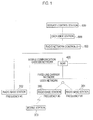
- the mobile communication system includes a service control station 600, an exchange station 500, a radio network controller 100, a security gateway (SGW) 400, and radio base stations 200 to 202.
- a service control station 600 an exchange station 500
- a radio network controller 100 a radio network controller 100
- a security gateway (SGW) 400 a radio base station 200 to 202.
- the radio base stations 200 to 202 are housed in the radio network controller 100. Further, the radio network controller 100 is configured to allocate radio communication parameters to the radio base stations 200 to 202, and to manage the radio communication parameters. The radio communication parameters are used in radio communication between a mobile station 300 and the radio base stations 200 to 202.
- the radio base station 202 is a radio base station for public communication which is installed in a mobile communication carrier network managed by a mobile communication carrier.
- the radio base stations 200 and 201 are home radio base stations each managed by a user (the owner of the radio base station 200 or 201) subscribing to a communication service provided by a mobile communication carrier.
- each of the radio base stations 200 and 201 is installed in a LAN (Local Area Network) managed by the user mentioned above, and is connected to the radio network controller 100 on a mobile communication carrier network via a network of a carrier for FTTH or ADSL access.
- LAN Local Area Network
- the SGW 400 is installed on a border of the mobile communication carrier network.
- the SGW 400 is a gateway apparatus for protecting the mobile communication carrier network from unauthorized access from other networks, and is configured to pass only accesses authenticated through an authentication procedure into the mobile communication carrier network.
- a mobile station that can access the radio base station 200 or 201 is only a specific one given access authorization thereto by the above-mentioned user.
- the radio base station 202 is installed under the management of the mobile communication carrier, and any user of the mobile communication carrier can access the radio base station 202 without any particular restriction.
- the radio base stations 200 to 202 operate at frequencies different from one another, namely, at frequencies #0 to #2, respectively.
- the mobile station 300 is a mobile station held by the above-mentioned user, and can communicate with the radio base stations 200 to 202.
- the radio base stations 200 to 202 operate at different frequencies, even if the mobile station 300 in a cell under the control of a certain radio base station enters a cell under the control of a different radio base station, the mobile station 300 cannot autonomously search for the cell under the control of the different radio base station, and therefore cannot be in that cell.
- the exchange station 500 is a packet switching exchange or a circuit switching exchange which is connected to the radio network controller 100 and the service control station 600.
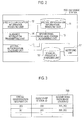
- the exchange station 500 includes a specific identification information managing unit 11, a specific identification information receiving unit 12, neighboring-radio-base-station determining unit 13, a guidance information transmitting unit 14, an access-authorization checking unit 15, a standby-frequency managing unit 16, and a notifying unit 17.
- the specific identification information managing unit 11 is configured to store "specific identification information,” a "radio base station ID,” and a “neighboring radio base station ID” in association with one another.
- the "specific identification information” is specific identification information notified of by the mobile station 300 wishing to stand by in a cell under the control of the radio base station 200 or 201 (a second radio base station) which is a home radio base station.
- the specific identification information is, for example, a specific telephone number, a specific service code of "USSD (Unstructured Supplementary Service Data), " a specific URL, a specific mail address, or the like.
- the "neighboring radio base station ID" is information identifying a neighboring radio base station of the radio base station specified by the "radio base station ID.”
- the specific identification information receiving unit 12 is configured to receive the specific identification information transmitted from the mobile station 300 currently standing by in a cell under the control of the radio base station 202 (a first radio base station) which is a public radio base station.
- the neighboring-radio-base-station determining unit 13 is configured as follows. Specifically, once the specific identification information detecting unit 12 receives the specific identification information transmitted from the mobile station 300, the neighboring-radio-base-station determining unit 13 refers to the specific identification information managing unit 11 to determine whether a second radio base station associated with the specific identification information (e.g., the radio base station 200 or 201 which is a home radio base station) is a neighboring radio base station of the first radio base station (e.g., the radio base station 202 which is a public radio base station) currently used by the mobile station 300.
- a second radio base station associated with the specific identification information e.g., the radio base station 200 or 201 which is a home radio base station
- the first radio base station e.g., the radio base station 202 which is a public radio base station
- the access-authorization checking unit 15 is configured as follows. Specifically, when it is determined that the second radio base station associated with the specific identification information is a neighboring radio base station of the first radio base station currently used by the mobile station 300, the access-authorization checking unit 15 sends the service control station 600 identification information of the mobile station and identification information of the second radio base station associated with the specific identification information. Thereby, the access-authorization checking unit 15 acquires a determination result of whether the mobile station 300 has access authorization to the second radio base station associated with the specific identification information.
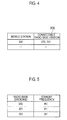
- the access-authorization checking unit 15 may be configured to manage an access-authorization table in which a "mobile station” is associated with “connectable radio base stations, " based on the determination result received from the service control station 600.
- the system may be configured as follows if only one piece of specific identification information can be set.
- the specific identification information managing unit 11 stores a "first radio base station ID” and a "second radio base station ID” in association with each other, and the access-authorization checking unit 15 sends the service control station 600 the identification information of the mobile station 300 and the "second radio base station ID" which is the identification information of the radio base station in association with the "first radio base station ID” which is the identification information of the first radio base station currently used by the mobile station 300 as the identification information of the second radio base station associated with the specific identification information.
- the guidance information transmitting unit 14 is configured as follows. Specifically, when it is determined that the second radio base station associated with the specific identification information is not a neighboring radio base station of the first radio base station currently used by the mobile station 300, the guidance information transmitting unit 14 sends the mobile station 300 specific guidance.
- the guidance information transmitting unit 14 is also configured as follows. Specifically, when the determination result received from the service control station 600 indicates that the mobile station 300 does not have access authorization to the second radio base station associated with the specific identification information, the guidance information transmitting unit 14 sends the mobile station 300 specific guidance.
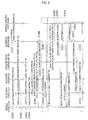
- the standby-frequency managing unit 16 is configured to store the "radio base station ID" and its “standby frequency” in association with each other.
- the "standby frequency” is a standby frequency for using the radio base station specified by the corresponding "radio base station ID.”
- the notifying unit 17 is configured as follows. Specifically, when the determination result received from the service control station 600 indicates that the mobile station 300 has access authorization to the second radio base station associated with the specific identification information, the notifying unit 17 instructs the second radio base station to change the radio communication parameter used by the second radio base station.
- the notifying unit 17 is configured to instruct the second radio base station to change the radio communication parameter used by the second radio base station to a radio communication parameter equal to that used by the first radio base station when the determination result received from the service control station 600 indicates that the mobile station 300 has access authorization to the second radio base station associated with the specific identification information.
- the radio communication parameter is at least one of spread code, frequency, and timing.
- the service control station 600 is configured to store subscriber information.
- the service control station 600 is connected to the exchange station 500, and is configured to store information on radio base stations to which the mobile station 300 can be connected, as shown in Fig. 4 .
- Step S1000 when the owner of the mobile station 300 subscribes to a femto service (i.e. , purchases a home radio base station), in Step S1000, the mobile station 300 is given pieces of specific identification information (e.g. , a specific telephone number) which is to be notified of to use the radio base stations 200 and 201, respectively, and in Step 1001, the exchange station 500 is given those pieces of specific identification information.
- specific identification information e.g. , a specific telephone number
- Step S1002 the mobile station 300 is using a cell under the control of the radio base station 202 (i.e., operating at the standby frequency #2) .
- Step S1003 the owner of the mobile station 300 comes home, for example, entering a cell under the control of the radio base station 200.
- Step S1004 the owner operates the mobile station 300 to perform outgoing communication using the specific identification information 200.
- Step S1005 via the radio base station 202 and the radio network controller 100, the exchange station 500 receives the specific identification information 200, the identification information 300 of the mobile station, and the identification information 202 of the radio base station currently used by the mobile station 300.
- Step S1006 the exchange station 500 refers to the specific identification information managing unit 11 to determine whether or not the radio base station 200 associated with the specific identification information 200 is a neighboring radio base station of the radio base station 202 currently used by the mobile station 300.
- Step S1007 via the radio network controller 100 and the radio base station 202, the exchange station 500 notifies the mobile station 300 of specific guidance indicating that it is impossible to stand by in the radio base station 200. With that the operations end.
- Step S1008 the exchange station 500 sends the service control station 600 the identification information 200 of the radio base station associated with the specific identification information 200 and the identification information 300 of the mobile station.
- Step S1009 the service control station 600 refers to the access-authorization table shown in Fig. 5 to determine whether the mobile station 300 has access authorization to the radio base station 200 or not.
- Step S1010 the service control station 600 notifies the exchange station 500 of such determination result (NG), and in Step S1010, via the radio network controller 100 and the radio base station 202, the exchange station 500 notifies the mobile station 300 of specific guidance indicating that it is impossible to stand by in the radio base station 200. With that the operations end.
- Step S1012 the service control station 600 notifies the exchange station 500 of such determination result (OK).
- the exchange station 500 refers to the standby-frequency managing unit 16 to acquire the standby frequency (a standby frequency used by the radio base station 202) #2 needed by the mobile station 300 to use the radio base station 200.
- the exchange station 500 notifies the radio base station 200 of the standby frequency #2 via the radio network controller 100.
- the exchange station 500 causes the standby-frequency managing unit 16 shown in Fig. 5 to change the standby frequency of the radio base station 200 from "#0" to "#2.”
- the exchange station 500 when there is a mobile station standing by or communicating at the standby frequency #0 in a cell under the control of the radio base station 200, the exchange station 500 does not need to notify the radio base station 200 of the standby frequency #2 via the radio network controller 100.
- Step S1015 the radio base station 200 thus notified of the standby frequency #2 changes its standby frequency from "#0" to "#2.”
- the mobile station UE can receive and measure control signals of a cell under the control of the radio base station 200 which is a home radio base station (a femtocell) at the frequency #2 which is the same frequency as that of the cell under the control of the radio base station 202 currently used by the mobile station.
- the radio base station 200 which is a home radio base station (a femtocell) at the frequency #2 which is the same frequency as that of the cell under the control of the radio base station 202 currently used by the mobile station.
- the owner of the mobile station him/herself defines specific identification information for instructing transition to a standby frequency of a femtocell. Accordingly, even an existing mobile station that does not search for a cell of a different frequency unless the reception quality of control signals in a current standby cell becomes or falls below a certain value can preferentially use the femtocell in which high-speed communication, a better rate, and/or the like can be expected.
- the present invention is not limited to such mobile communication system, but is also applicable to a mobile communication system using, for example, an LTE (Long Term Evolution) scheme as shown in Fig. 7 .
- LTE Long Term Evolution
- a radio base station eNB (the radio base station 202) or an exchange station MME (the exchange station 500) is equipped with the above-described functions of the radio network controller 100.
- the radio network controller 100 does not exist, so that signals are exchanged directly between each of the radio base stations 200 to 202 and the exchange station 500.
- part of the functions of the service control station 600 e.g., the function to determine whether the mobile station 300 has access authorization to the radio base station 200 or 201 may be provided to the exchange station 500.
- part or all of the functions 11 to 17 of the exchange station 500 may be provided to the radio base station 200.
- the security gateway (SGW) 400 may be equipped with a function of a concentrator HNB-GW configured to concentrate the radio base stations 200 and 201 which are home radio base stations.
- part or all of the functions of the exchange station 500 and the service control station 600 may be provided to the security gateway (SGW) 400.
- SGW security gateway
- radio base stations 200 to 202, the radio network controller 100, the exchange station 500, the service control station 600 and the SGW 400 may be implemented by means of hardware, a software module executed by a processor, or a combination of both.
- the software module may be provided in any type of storage medium such as an RAM (Random Access Memory), a flash memory, a ROM (Read Only Memory), an EPROM (Erasable Programmable ROM), an EEPROM (Electronically Erasable and Programmable ROM), a register, a hard disk, a removable disk, or a CD-ROM.
- RAM Random Access Memory
- flash memory a ROM (Read Only Memory)
- EPROM Erasable Programmable ROM
- EEPROM Electrically Erasable and Programmable ROM
- register a hard disk, a removable disk, or a CD-ROM.
- the storage medium is connected to the processor so that the processor can read and write information from and to the storage medium.
- the storage medium may be integrated into the processor.
- the storage medium and the processor may be provided in an ASIC.
- the ASIC may be provided in the mobile station, the home cell radio base station, the macro cell radio base station, the access-permitted management server, and the location registration server.
- the storage medium and the processor may be provided in the mobile station, the home cell radio base station, the macro cell radio base station, the access-permitted management server, and the location registration server as a discrete component.
Landscapes
- Engineering & Computer Science (AREA)
- Computer Security & Cryptography (AREA)
- Computer Networks & Wireless Communication (AREA)
- Signal Processing (AREA)
- Computer Hardware Design (AREA)
- Computing Systems (AREA)
- General Engineering & Computer Science (AREA)
- Mobile Radio Communication Systems (AREA)
Applications Claiming Priority (2)
| Application Number | Priority Date | Filing Date | Title |
|---|---|---|---|
| JP2008140873 | 2008-05-29 | ||
| PCT/JP2009/059877 WO2009145304A1 (fr) | 2008-05-29 | 2009-05-29 | Procédé de communication mobile et central |
Publications (2)
| Publication Number | Publication Date |
|---|---|
| EP2282585A1 true EP2282585A1 (fr) | 2011-02-09 |
| EP2282585A4 EP2282585A4 (fr) | 2015-03-25 |
Family
ID=41377173
Family Applications (1)
| Application Number | Title | Priority Date | Filing Date |
|---|---|---|---|
| EP09754812.7A Withdrawn EP2282585A4 (fr) | 2008-05-29 | 2009-05-29 | Procédé de communication mobile et central |
Country Status (5)
| Country | Link |
|---|---|
| US (1) | US8135409B2 (fr) |
| EP (1) | EP2282585A4 (fr) |
| JP (1) | JP5033914B2 (fr) |
| CN (1) | CN102047730B (fr) |
| WO (1) | WO2009145304A1 (fr) |
Families Citing this family (4)
| Publication number | Priority date | Publication date | Assignee | Title |
|---|---|---|---|---|
| US8848655B2 (en) * | 2007-06-21 | 2014-09-30 | Ubeeairwalk, Inc. | System, method, and computer-readable medium for user equipment handoff from a macrocellular network to an IP-femtocell network |
| EP2688322A1 (fr) * | 2012-07-19 | 2014-01-22 | Alcatel Lucent | Diffusion protégée dans une chaîne de distribution de messages d'avertissement |
| CN104303589A (zh) * | 2012-12-20 | 2015-01-21 | 华为技术有限公司 | 无线通信方法、接入设备和无线通信系统 |
| JP6794396B2 (ja) * | 2018-04-19 | 2020-12-02 | ソフトバンク株式会社 | 移動通信システム |
Family Cites Families (7)
| Publication number | Priority date | Publication date | Assignee | Title |
|---|---|---|---|---|
| WO1996013132A1 (fr) * | 1994-10-24 | 1996-05-02 | Ameritech Corporation | Systeme de communications personnel numerique sans fil a transfert bidirectionnel d'appels et entre cellules voix/image/donnees |
| CN1096210C (zh) * | 1996-10-04 | 2002-12-11 | Ntt移动通信网株式会社 | 限制与宏小区服务相协调的微小区服务的移动通信方案 |
| US7729697B2 (en) * | 2002-10-25 | 2010-06-01 | Intel Corporation | Private base station with exclusivity |
| CN101088300B (zh) * | 2004-12-22 | 2012-07-04 | 艾利森电话股份有限公司 | 分布式微微小区移动性 |
| JP5080481B2 (ja) * | 2005-10-04 | 2012-11-21 | テレフオンアクチーボラゲット エル エム エリクソン(パブル) | Ip接続の無線基地局に対する無線ネットワーク制御局の選択 |
| US8743825B2 (en) * | 2006-08-17 | 2014-06-03 | Nokia Corporation | Handovers in a communication system |
| US8755793B2 (en) * | 2008-01-04 | 2014-06-17 | Qualcomm Incorporated | Apparatus and methods to facilitate seamless handoffs between wireless communication networks |
-
2009
- 2009-05-29 EP EP09754812.7A patent/EP2282585A4/fr not_active Withdrawn
- 2009-05-29 JP JP2010514556A patent/JP5033914B2/ja not_active Expired - Fee Related
- 2009-05-29 US US12/995,050 patent/US8135409B2/en not_active Expired - Fee Related
- 2009-05-29 CN CN200980119742.3A patent/CN102047730B/zh not_active Expired - Fee Related
- 2009-05-29 WO PCT/JP2009/059877 patent/WO2009145304A1/fr not_active Ceased
Also Published As
| Publication number | Publication date |
|---|---|
| EP2282585A4 (fr) | 2015-03-25 |
| JP5033914B2 (ja) | 2012-09-26 |
| JPWO2009145304A1 (ja) | 2011-10-20 |
| CN102047730B (zh) | 2014-03-19 |
| US20110165876A1 (en) | 2011-07-07 |
| CN102047730A (zh) | 2011-05-04 |
| US8135409B2 (en) | 2012-03-13 |
| WO2009145304A1 (fr) | 2009-12-03 |
Similar Documents
| Publication | Publication Date | Title |
|---|---|---|
| US9420507B2 (en) | Access control for macrocell to femtocell handover | |
| US9609618B2 (en) | System and method for hand-in disambiguation using user equipment WiFi location in a network environment | |
| US8611860B2 (en) | Radio base station operating between closed state and semi-open states for providing access | |
| US8538410B2 (en) | User-customized mobility method and system in a mobile communication system | |
| CN101785346A (zh) | 私有基站的可接入性 | |
| JP5148618B2 (ja) | サービスへのアクセスを制御するためのシステム、ならびに対応する方法、制御デバイス、およびコンピュータプログラム | |
| EP2306781B1 (fr) | Procédé de communication mobile, dispositif de réseau et station de base radio | |
| US8219139B2 (en) | Radio base station accommodating method and network device | |
| US8135409B2 (en) | Mobile communication method and exchange station | |
| CN102047710B (zh) | 网络装置以及无线基站 | |
| US8028327B1 (en) | Method and system for a low-cost-internet-base station (LCIB) granting a client device temporary access | |
| EP2309792A1 (fr) | Procédé de communication mobile et dispositif opérationnel | |
| US20110030035A1 (en) | Method of managing authorization of private node b in a wireless communication system and related device | |
| US8355723B2 (en) | Mobile communication method and exchange station | |
| EP2285161A1 (fr) | Procede de communication mobile et appareil de reseau | |
| US8479269B1 (en) | Method and system for redirecting unauthorized wireless communication devices away from a femtocell | |
| KR101914752B1 (ko) | 펨토셀 기지국 이설 방지 장치 및 방법 | |
| US8868033B1 (en) | Method and system for avoiding unauthorized wireless communication devices at a femtocell | |
| US20110053608A1 (en) | Mobile communication system and network device | |
| GB2501366A (en) | Authorisation of a visiting wireless communication unit by transferring personal data to an authorised wireless communication unit |
Legal Events
| Date | Code | Title | Description |
|---|---|---|---|
| PUAI | Public reference made under article 153(3) epc to a published international application that has entered the european phase |
Free format text: ORIGINAL CODE: 0009012 |
|
| 17P | Request for examination filed |
Effective date: 20101209 |
|
| AK | Designated contracting states |
Kind code of ref document: A1 Designated state(s): AT BE BG CH CY CZ DE DK EE ES FI FR GB GR HR HU IE IS IT LI LT LU LV MC MK MT NL NO PL PT RO SE SI SK TR |
|
| AX | Request for extension of the european patent |
Extension state: AL BA RS |
|
| DAX | Request for extension of the european patent (deleted) | ||
| A4 | Supplementary search report drawn up and despatched |
Effective date: 20150223 |
|
| RIC1 | Information provided on ipc code assigned before grant |
Ipc: H04W 12/08 20090101ALI20150217BHEP Ipc: H04W 8/04 20090101ALI20150217BHEP Ipc: H04W 84/04 20090101ALI20150217BHEP Ipc: H04W 16/16 20090101ALI20150217BHEP Ipc: H04W 92/14 20090101ALI20150217BHEP Ipc: H04L 29/06 20060101ALI20150217BHEP Ipc: H04W 16/32 20090101ALI20150217BHEP Ipc: H04W 48/16 20090101AFI20150217BHEP Ipc: H04W 36/00 20090101ALI20150217BHEP Ipc: H04W 28/18 20090101ALI20150217BHEP |
|
| STAA | Information on the status of an ep patent application or granted ep patent |
Free format text: STATUS: THE APPLICATION IS DEEMED TO BE WITHDRAWN |
|
| 18D | Application deemed to be withdrawn |
Effective date: 20150923 |