EP2283687B1 - Zuweisung von steuerressourcen einer femtozelle zur vermeidung von interferenzen mit einer makrozelle - Google Patents
Zuweisung von steuerressourcen einer femtozelle zur vermeidung von interferenzen mit einer makrozelle Download PDFInfo
- Publication number
- EP2283687B1 EP2283687B1 EP09733121.9A EP09733121A EP2283687B1 EP 2283687 B1 EP2283687 B1 EP 2283687B1 EP 09733121 A EP09733121 A EP 09733121A EP 2283687 B1 EP2283687 B1 EP 2283687B1
- Authority
- EP
- European Patent Office
- Prior art keywords
- control
- resources
- cell
- control resources
- rrc
- Prior art date
- Legal status (The legal status is an assumption and is not a legal conclusion. Google has not performed a legal analysis and makes no representation as to the accuracy of the status listed.)
- Active
Links
Images



Classifications
-
- H—ELECTRICITY
- H04—ELECTRIC COMMUNICATION TECHNIQUE
- H04W—WIRELESS COMMUNICATION NETWORKS
- H04W16/00—Network planning, e.g. coverage or traffic planning tools; Network deployment, e.g. resource partitioning or cells structures
- H04W16/02—Resource partitioning among network components, e.g. reuse partitioning
- H04W16/04—Traffic adaptive resource partitioning
-
- H—ELECTRICITY
- H04—ELECTRIC COMMUNICATION TECHNIQUE
- H04W—WIRELESS COMMUNICATION NETWORKS
- H04W72/00—Local resource management
- H04W72/50—Allocation or scheduling criteria for wireless resources
- H04W72/54—Allocation or scheduling criteria for wireless resources based on quality criteria
- H04W72/541—Allocation or scheduling criteria for wireless resources based on quality criteria using the level of interference
-
- H—ELECTRICITY
- H04—ELECTRIC COMMUNICATION TECHNIQUE
- H04W—WIRELESS COMMUNICATION NETWORKS
- H04W72/00—Local resource management
- H04W72/20—Control channels or signalling for resource management
- H04W72/21—Control channels or signalling for resource management in the uplink direction of a wireless link, i.e. towards the network
-
- H—ELECTRICITY
- H04—ELECTRIC COMMUNICATION TECHNIQUE
- H04W—WIRELESS COMMUNICATION NETWORKS
- H04W84/00—Network topologies
- H04W84/02—Hierarchically pre-organised networks, e.g. paging networks, cellular networks, WLAN [Wireless Local Area Network] or WLL [Wireless Local Loop]
- H04W84/04—Large scale networks; Deep hierarchical networks
- H04W84/042—Public Land Mobile systems, e.g. cellular systems
- H04W84/045—Public Land Mobile systems, e.g. cellular systems using private Base Stations, e.g. femto Base Stations, home Node B
-
- H—ELECTRICITY
- H04—ELECTRIC COMMUNICATION TECHNIQUE
- H04W—WIRELESS COMMUNICATION NETWORKS
- H04W16/00—Network planning, e.g. coverage or traffic planning tools; Network deployment, e.g. resource partitioning or cells structures
- H04W16/02—Resource partitioning among network components, e.g. reuse partitioning
- H04W16/12—Fixed resource partitioning
Definitions
- the present disclosure relates generally to wireless communications, and more specifically to techniques for resource management in a wireless communication system.
- Wireless communication systems are widely deployed to provide various communication services; for instance, voice, video, packet data, broadcast, and messaging services can be provided via such wireless communication systems.
- These systems can be multiple-access systems that are capable of supporting communication for multiple terminals by sharing available system resources. Examples of such multiple-access systems include Code Division Multiple Access (CDMA) systems, Time Division Multiple Access (TDMA) systems, Frequency Division Multiple Access (FDMA) systems, and Orthogonal Frequency Division Multiple Access (OFDMA) systems.
- CDMA Code Division Multiple Access
- TDMA Time Division Multiple Access
- FDMA Frequency Division Multiple Access
- OFDMA Orthogonal Frequency Division Multiple Access
- Such personal miniature base stations are generally known as access point base stations, or, alternatively, Home Node B (HNB) or Femto cells.
- HNB Home Node B
- Femto cells are typically connected to the Internet and the network of a mobile operator via a Digital Subscriber Line (DSL) router, cable modem, or the like.
- DSL Digital Subscriber Line
- Wireless communication systems can be configured to include a series of wireless access points, which can provide coverage for respective locations within the system.
- a network structure is generally referred to as a cellular network structure, and access points and/or the locations they respectively serve in the network are generally referred to as cells.
- a network user can, under various circumstances, exchange substantially strong signals with cells located physically close to the user as compared to cells that are located farther away from the user.
- a user may not communicate with a wireless communication system through the cell closest to the user.
- a cell closest to a user may be unable to provide a desired service to a user or may only be capable of providing the service with a lesser quality than a cell located further away.
- a closest cell to a user may have restricted access such that the user is not authorized to connect to the cell.
- signals transmitted from a user to a serving cell for the user can additionally be observed at other cells whose coverage areas include the physical location of the user.
- these cells attempt to communicate using the resources on which the user transmits to its serving cell, substantial interference can result. Accordingly, it would be desirable to implement resource management techniques for a wireless communication system that mitigate at least the above shortcomings.
- US Patent 6,138,024 relates to dynamic channel selection for use by a cellular auxiliary personal communication system comprising periodically collecting relative signal strength indication measurements for all allocated communication channels, periodically determining the estimated expected probability of non-interference for each allocated communication channel based on the relative signal strength indication measurements and selecting an available allocated communication channel having the highest estimated expected probability of non-interference for use by the communication system.
- the invention is implemented in method claims 1-4, 9-11 and in apparatus claims 5-8, 12-14 and in computer claim 15.
- a method is described herein that can comprise identifying a network cell and a set of control resources associated with the network cell; allocating a set of control resources, wherein at least a portion of the allocated set of control resources overlaps at least a portion of the set of control resources associated with the identified network cell; and selecting control resources for subsequent use from among the allocated set of control resources such that the selected control resources are substantially free from interference caused by the set of control resources associated with the identified network cell.
- a second aspect described herein relates to a wireless communications apparatus, which can comprise a memory that stores data relating to a neighboring network cell, a set of control resources used by the neighboring network cell, a system frequency band, and at least one terminal.
- the wireless communications apparatus can further comprise a processor configured to allocate control resources in the system frequency band such that the allocated control resources at least partially overlap the control resources used by the neighboring network cell and to select control resources for assignment to the at least one terminal such that the selected control resources are substantially free from interference from the control resources used by the neighboring network cell.
- a third aspect relates to an apparatus, which can comprise means for identifying frequency subbands in use for control transmission at a neighboring cell having a coverage area that overlaps a coverage area associated with the apparatus; and means for allocating frequency subbands for control transmission such that the frequency subbands identified as in use for control transmission by the neighboring cell are allocated only to users outside the coverage area of the neighboring cell.
- a fourth aspect relates to a computer program product, which can comprise a computer-readable medium that comprises code for causing a computer to identify an Evolved Node B (eNB) and a set of control resources used by the eNB; code for causing a computer to reserve control resources such that at least a portion of the allocated control resources overlap with the control resources used by the eNB; and code for causing a computer to allocate reserved control resources to at least one user such that control transmissions conducted by the eNB are substantially free from interference caused by control transmissions conducted by the at least one user over the allocated control resources.
- eNB Evolved Node B
- code for causing a computer to allocate reserved control resources to at least one user such that control transmissions conducted by the eNB are substantially free from interference caused by control transmissions conducted by the at least one user over the allocated control resources.
- a fifth aspect described herein relates to an integrated circuit that executes computer-executable instructions.
- the instructions can comprise identifying a neighboring cell; reserving a set of control resources from a system bandwidth; and allocating reserved control resources to respective users such that control transmissions conducted by the neighboring cell are substantially free from interference caused by control transmissions by the respective users over the allocated control resources.
- the method can comprise identifying an overlap of control resources with a Radio Resource Control (RRC)-configured control region at a neighboring cell disparate from a serving cell; and conducting one or more transmissions using resources in the overlap of control resources such that the one or more transmissions have a reduced interference level due to RRC configuration at the neighboring cell.
- RRC Radio Resource Control
- a seventh aspect described herein relates to a wireless communications apparatus that can comprise a memory that stores data relating to a set of control resources that overlaps with a RRC-configured set of control resources at a non-serving eNB.
- the wireless communications apparatus can further comprise a processor configured to conduct at least one communication using the set of control resources stored by the memory such that the at least one transmission has reduced interference due to RRC configuration at the non-serving eNB.
- An eighth aspect relates to an apparatus operable in a wireless communication system.
- the apparatus can comprise means for identifying uplink control resources that overlap with a RRC-configured control region at a neighboring non-serving cell; and means for conducting one or more transmissions on the identified uplink control resources with reduced interference due to RRC configuration at the neighboring non-serving cell.
- An additional aspect described herein relates to a computer program product, which can include a computer-readable medium that comprises code for causing a computer to identify control resources that overlap with a RRC-configured control region at a neighboring non-serving cell; and code for causing a computer to perform at least one Physical Uplink Control Channel (PUCCH) transmission on the identified control resources with reduced interference due to RRC configuration at the neighboring non-serving cell.
- a computer-readable medium that comprises code for causing a computer to identify control resources that overlap with a RRC-configured control region at a neighboring non-serving cell; and code for causing a computer to perform at least one Physical Uplink Control Channel (PUCCH) transmission on the identified control resources with reduced interference due to RRC configuration at the neighboring non-serving cell.
- PUCCH Physical Uplink Control Channel
- a further aspect described herein relates to an integrated circuit that executes computer-executable instructions.
- the instructions can comprise obtaining information relating to a set of control resources that overlaps with a RRC-configured set of control resources at a non-serving eNB; and conducting at least one communication using the set of control resources for which information is obtained such that the at least one transmission has reduced interference due to RRC configuration at the non-serving eNB.
- a component can be, but is not limited to being, a process running on a processor, an integrated circuit, an object, an executable, a thread of execution, a program, and/or a computer.
- an application running on a computing device and the computing device can be a component.
- One or more components can reside within a process and/or thread of execution and a component can be localized on one computer and/or distributed between two or more computers.
- these components can execute from various computer readable media having various data structures stored thereon.
- the components can communicate by way of local and/or remote processes such as in accordance with a signal having one or more data packets (e.g ., data from one component interacting with another component in a local system, distributed system, and/or across a network such as the Internet with other systems by way of the signal).
- a signal having one or more data packets (e.g ., data from one component interacting with another component in a local system, distributed system, and/or across a network such as the Internet with other systems by way of the signal).
- a wireless terminal can refer to a device providing voice and/or data connectivity to a user.
- a wireless terminal can be connected to a computing device such as a laptop computer or desktop computer, or it can be a self contained device such as a personal digital assistant (PDA).
- PDA personal digital assistant
- a wireless terminal can also be called a system, a subscriber unit, a subscriber station, mobile station, mobile, remote station, access point, remote terminal, access terminal, user terminal, user agent, user device, or user equipment (UE).
- a wireless terminal can be a subscriber station, wireless device, cellular telephone, PCS telephone, cordless telephone, a Session Initiation Protocol (SIP) phone, a wireless local loop (WLL) station, a personal digital assistant (PDA), a handheld device having wireless connection capability, or other processing device connected to a wireless modem.
- a base station e.g ., access point or Node B
- the base station can act as a router between the wireless terminal and the rest of the access network, which can include an Internet Protocol (IP) network, by converting received air-interface frames to IP packets.
- IP Internet Protocol
- the base station also coordinates management of attributes for the air interface.
- Computer-readable media includes both computer storage media and communication media including any medium that facilitates transfer of a computer program from one place to another.
- a storage media can be any available media that can be accessed by a computer.
- such computer-readable media can comprise RAM, ROM, EEPROM, CD-ROM or other optical disk storage, magnetic disk storage or other magnetic storage devices, or any other medium that can be used to carry or store desired program code in the form of instructions or data structures and that can be accessed by a computer.
- any connection is properly termed a computer-readable medium.
- Disk and disc includes compact disc (CD), laser disc, optical disc, digital versatile disc (DVD), floppy disk and blu-ray disc (BD), where disks usually reproduce data magnetically and discs reproduce data optically with lasers. Combinations of the above should also be included within the scope of computer-readable media.
- CDMA Code Division Multiple Access
- TDMA Time Division Multiple Access
- FDMA Frequency Division Multiple Access
- OFDMA Orthogonal Frequency Division Multiple Access
- SC-FDMA Single Carrier FDMA
- a CDMA system can implement a radio technology such as Universal Terrestrial Radio Access (UTRA), CDMA2000, etc.
- UTRA includes Wideband-CDMA (W-CDMA) and other variants of CDMA.
- CDMA2000 covers the IS-2000, IS-95 and IS-856 standards.
- a TDMA system can implement a radio technology such as Global System for Mobile Communications (GSM).
- GSM Global System for Mobile Communications
- An OFDMA system can implement a radio technology such as Evolved UTRA (E-UTRA), Ultra Mobile Broadband (UMB), IEEE 802.11 (Wi-Fi), IEEE 802.16 (WiMAX), IEEE 802.20, Flash-OFDM®, etc.
- E-UTRA Evolved UTRA
- UMB Ultra Mobile Broadband
- Wi-Fi Wi-Fi
- WiMAX IEEE 802.16
- IEEE 802.20 Flash-OFDM®
- UTRA and E-UTRA are part of Universal Mobile Telecommunication System (UMTS).
- 3GPP Long Term Evolution (LTE) is an upcoming release that uses E-UTRA, which employs OFDMA on the downlink and SC-FDMA on the uplink.
- UTRA, E-UTRA, UMTS, LTE and GSM are described in documents from an organization named "3rd Generation Partnership Project" (3GPP).
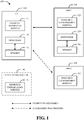
- Fig. 1 illustrates a system 100 for coordinating control resources within a wireless communication system in accordance with various aspects described herein.
- system 100 can include one or more user equipment units (UEs) 110, which can communicate with one or more Evolved Node Bs (eNBs) 120 and/or 130. While only one UE 110 and two eNBs 120 and 130 are illustrated in Fig. 1 , it should be appreciated that system 100 can include any number of UEs 110 and/or eNBs 120 and/or 130.
- UEs user equipment units
- eNBs Evolved Node Bs
- respective eNBs in system 100 can serve any suitable coverage area, such as an area associated with a macro cell, a femto cell (e.g., an access point base station or Home Node B (HNB)), and/or any other suitable type of coverage area.
- a femto cell e.g., an access point base station or Home Node B (HNB)
- HNB Home Node B
- UE 110 can communicate with an eNB 120 designated as a serving eNB for UE 110 (e.g., eNB 120).
- UE 110 can conduct one or more uplink (UL, also referred to as reverse link (RL)) communications to eNB 120, and eNB can conduct one or more downlink (DL, also referred to as forward link (FL)) communications to UE 110.
- UL also referred to as reverse link (RL)
- DL also referred to as forward link (FL)
- DL also referred to as forward link (FL)
- uplink and/or downlink communication between UE 110 and eNB 120 can additionally result in interference to nearby eNBs, such as eNB 130.
- a UE located in an area that lies in an overlap between the coverage of multiple eNBs can cause interference to one or more eNBs within range of the UE with which the UE is not communicating under various circumstances. This can occur, for example, in a system that includes femto cells if a UE is located within the coverage area of a femto cell, which in turn is embedded into the coverage area of a macro cell.
- UE 110 can, under various circumstances, exchange substantially strong signals with eNBs 120 and/or 130 located physically close to UE 110 as compared to eNBs 120 and/or 130 that are located farther away from UE 110.
- eNBs 120 and/or 130 located physically close to UE 110 as compared to eNBs 120 and/or 130 that are located farther away from UE 110.
- various factors can cause UE 110 to select an eNB 120 and/or 130 other than an eNB 120 and/or 130 that is closest to UE 110 for communication within system 100.
- an eNB closest to a UE may be unable to provide a desired service or may only be capable of providing the service with a lesser quality than an eNB located further away.
- eNB capability could result from, for example, different transmit power levels, backhaul implementations, numbers of antennas utilized, duplexing capabilities (e.g ., half-duplex vs. full-duplex), or the like.
- a closest eNB to a UE may have restricted access (e.g ., the eNB may correspond to a restricted association network) such that the UE is not authorized to connect to the eNB.
- one or more eNBs 120 and/or 130 in system 100 can include respective resource coordination modules 122 and/or 132, which can operate to coordinate control resource usage between eNBs 120 and/or 130 in system 100 in order to mitigate the effects of interference between entities in system 100.
- resource coordination modules 122 and 132 at eNBs 120 and 130 can facilitate coordination between the overlapping control resources such that transmissions conducted over the overlapping resources from a given eNB do not interfere with communication at another nearby eNB.
- Specific techniques that can be utilized for resource coordination are provided in further detail infra.
- resource coordination modules 122 and/or 132 at respective eNBs 120 and/or 130 in system 100 can facilitate communication between eNBs 122 and 132 ( e.g., via backhaul messaging) to determine various frequency subbands to be utilized by the respective eNBs 120 and/or 130 for control communication and/or respective interlaces in time at which eNBs 120 and/or 130 are to conduct control communications.
- resource coordination modules 122 and/or 132 at one or more eNBs 120 and/or 130 in system 100 can coordinate control resources based on reports provided by a UE 110 via a channel reporting module 112 at UE 110 and/or by other means.
- UE 110 can identify one or more eNBs 120 and/or 130 that provide service in an area in which UE 110 is located, relative observed signal strengths associated with respective eNBs 120 and/or 130, respective control frequencies in use by respective eNBs 120 and/or 130, and/or other similar information. Based on reported information from a UE, an eNB 120 and/or 130 can then adjust a utilized set of control resources to mitigate interference with other identified eNBs 120 and/or 130.
- one or more eNBs 120 and/or 130 in system 100 can coordinate control resources with the aid of an external system controller 140.
- System controller 140 can be, for example, a management server or entity for system 100 and/or one or more areas within system 100.
- system controller 140 can be a HNB Management Server (HMS) and/or another suitable entity, which can coordinate the use of one or more channels within a given area ( e.g ., a neighborhood).
- HMS HNB Management Server
- system controller 140 can itself include a resource coordination module 142 and/or any other appropriate component(s) for coordinating channel usage among eNBs 120 and/or 130 in system 100, either independently or in cooperation with respective resource coordination modules 122 and/or 132 at eNBs 120 and/or 130.
- system controller 140 can communicate with eNBs 120 and/or 130 via backhaul messaging and/or by any other suitable means.
- UE 110 can include a processor 114 and/or a memory 116, which can be utilized to implement some or all of the functionality of channel reporting module 112 and/or any other component(s) of UE 110.
- Fig. 1 illustrates that eNB 120 can include a processor 124 and/or memory 126 to implement some or all of the functionality of resource coordination module 122 and/or any other component(s) of eNB 120. While only eNB 120 is illustrated as including a processor 124 and memory 126 in Fig. 1 , however, it should be appreciated that eNB 130 and/or system controller 140 could additionally or alternatively implement a processor and/or memory in a similar manner.
- resource coordination modules 122, 132, and/or 142 can utilize one or more techniques described infra to partition respective nodes and/or cells (e.g ., corresponding to respective eNBs 120 and/or 130) in system 100 such that the nodes utilize different channelization. It can be appreciated that these techniques can be utilized for any scenario in which interference is desirably mitigated, such as, for example, a scenario in which a first node is embedded into the coverage of a second node, a scenario in which a node does not always actively transmits and/or receive and can potentially generate random interference during periods of inactivity, and/or any other scenario.
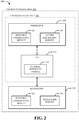
- FIG. 2 a system 200 that facilitates control transmission in a restricted association network in accordance with various aspects is illustrated.
- system 200 is provided merely as an example of a network structure that can utilize the resource management techniques described herein and that, unless explicitly stated otherwise, the claims are not intended to be limited to such a network structure.
- system 200 can include a femto cell 220 having an associated coverage area 202 and a macro cell 230 that is associated with a larger coverage area 204.
- the coverage area 202 of femto cell 220 can be embedded within the coverage area 204 of macro cell 230 such that the coverage area 202 of femto cell 220 is entirely contained within the coverage area 204 of macro cell 230.
- femto cell 220 can provide communication coverage for a user residence and/or a similar area
- macro cell 230 can provide coverage for a group of residences that includes a residence associated with femto cell 220.
- the techniques described herein do not require the coverage area 202 of femto cell 220 to be located entirely within the coverage area 204 of macro cell 230 and that the techniques described herein can be used to coordinate resources between cells having any degree of overlap.
- femto cell 220 can be a restricted access network such that only UEs within a closed subgroup (CSG) associated with femto cell 220 are allowed to access femto cell 220.
- Access control can be performed at femto cell 220 by, for example, an access restriction module 224 and/or any other suitable component associated with femto cell 220.
- the UE 210 can be required to instead access a macro cell 230 that also provides coverage for the area in which UE 210 is located.
- UE 210 may be required to conduct communication with macro cell 230 at a high rate of power due to, for example, the large coverage area 204 associated with macro cell 230.
- UE 210 is located close to femto cell 220 ( e.g. , within coverage area 202)
- high-power transmissions from UE 210 to macro cell 230 can cause significant interference and/or outages to femto cell 220 if suitable interference management is not performed.
- femto cell 220 and/or macro cell 230 can utilize respective resource coordination modules 222 and/or 232 or any other suitable functionality to coordinate and/or negotiate a resource allocation policy between femto cell 220 and macro cell 230, thereby mitigating the effects of interference on femto cell 220 caused by UE 210 and/or other similarly situated UEs. Additionally or alternatively, femto cell 220 and/or macro cell 230 can leverage an external system management entity (e.g ., system controller 140) to aid in resource coordination.
- system controller 140 an external system management entity
- femto cell 220 and/or macro cell 230 can utilize reports provided by a channel reporting module 212 associated with UE 210 to infer whether UE 210 is causing interference to 220. An inference based on information from channel reporting module 212 can subsequently be utilized to tailor a specific resource allocation to UE 210.
- macro cell 230 can include a scheduling component 234, which can be utilized to schedule transmissions to and/or from UE 210 such that the transmissions substantially avoid causing interference to femto cell 220.
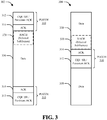
- diagrams 302-304 are provided that illustrate example frequency band allocations that can be utilized within a wireless communication system in accordance with various aspects.
- diagrams 302 and 304 represent uplink channelizations that can be utilized by, for example, systems 100, 200, and/or any other suitable system.
- an uplink channelization utilized by a wireless communication system can include one or more sets of resources 312 allocated for Channel Quality Indicator (CQI), Scheduling Request (SR), and/or persistent acknowledgement (ACK) transmission.
- resource set 312 can be combined with one or more ACK channels 314 to form a Physical Uplink Control Channel (PUCCH) 310.
- PUCCH Physical Uplink Control Channel
- FIG 302 represents, resources for PUCCH 310 can be allocated at one or more ends of a system frequency band.
- resources for PUCCH 310 can be allocated at a central region of a system frequency band.
- CQI resource blocks can be allocated to predefined locations at the edge of the band or the center of the band, and respective mobile users (e.g ., UEs 110 or 210) can be assigned to particular CQI channel(s) using Layer 3 (L3) messages.
- L3 Layer 3
- configurations for SR and persistent ACK resources can be explicitly signaled to one or more mobile users in a similar manner to CQI resources. Accordingly, it can be appreciated that CQI, SR, and persistent ACK resources configured to be utilized by a given mobile user can be signaled to the user in a single L3 message, such as a Radio Resource Control (RRC) message and/or any other suitable type of message.
- RRC Radio Resource Control
- ACK channels 314 can be allocated to RBs adjacent to RBs allocated for CQI such that each ACK channel is mapped to a corresponding Physical Downlink Control Channel (PDCCH) channel element location for scheduled DL data.
- PDCCH Physical Downlink Control Channel
- allocations of ACK channels 314 to respective users can be dynamically selected and/or changed for a user depending on DL resources utilized to communicate with the user.
- Random Access Channel (RACH) resources 320 can be allocated next to resources for PUCCH 310 in the frequency band.
- RACH 320 is illustrated at only one end of the system frequency band in diagram 302 and at only one side of the PUCCH allocation 310 in diagram 304, it should be appreciated that RACH 320 can be allocated in any suitable location(s) within a system frequency band. Further, it can be appreciated that RACH 320 can occupy any suitable amount of resources in the system frequency band ( e.g., 6 RBs or the like). In accordance with another aspect, remaining resources 330 in the system frequency band can be allocated for data transmission.
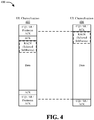
- a diagram 400 is provided that illustrates a first resource management scheme that can be utilized to facilitate control transmission in a wireless communication system.
- resource management can be performed to manage interference between two cells in a wireless communication system having respective UL channelizations 402 and 404.
- UL channelization 402 corresponds to an unrestricted eNB (e.g ., macro cell 230) while UL channelization 404 corresponds to a restricted eNB ( e.g ., femto cell 220).
- a restricted eNB e.g ., femto cell 220.
- any set of two or more cells for which interference is desirably mitigated could utilize the techniques illustrated by diagram 400.
- an eNB corresponding to channelization 402 can allocate a CQI/SR/Persistent ACK channel block such that it spans the UL control channel RBs (e.g ., PUCCH) of one or more eNBs corresponding to channelization 404. Accordingly, within the CQI RBs at the eNB corresponding to channelization 402, terminals close to eNBs corresponding to channelization 404 can be allocated only CQI/SR/Persistent ACK channels that are orthogonal to the CQI and/or ACK RBs of the eNBs corresponding to channelization 404.
- a CQI/SR/Persistent ACK channel block such that it spans the UL control channel RBs (e.g ., PUCCH) of one or more eNBs corresponding to channelization 404. Accordingly, within the CQI RBs at the eNB corresponding to channelization 402, terminals close to eNBs corresponding to channelization 404 can be
- a PUCCH allocation can occupy a relatively small portion of UL channelization 404 such as, for example, 1 RB on each side of the frequency band. Accordingly, a larger frequency portion (e.g ., 2-3 RBs), can be utilized for CQI/SR/Persistent ACK transmission for UL channelization 402. Based on these resource allocations, an eNB associated with channelization 402 can allocate control resources such that a terminal close to an eNB associated with channelization 404 does not utilize CQI/SR/Persistent ACK resources within the frequency subset allocated within channelization 404.
- information collected from respective terminals relating to distance from an eNB associated with channelization 404 can be utilized such that overlapping control resources in channelizations 402 and 404 are only utilized by an eNB associated with channelization 402 for terminals outside the range of an eNB associated with channelization 404.
- an eNB associated with channelization 402 can instead not utilize overlapping control resources in channelizations 402 and 404 for any terminals, regardless of their location.
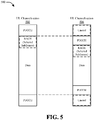
- Fig. 5 is a diagram 500 that illustrates a second resource management scheme that can be utilized to facilitate control transmission in a wireless communication system.
- resource management can be performed as shown in diagram 500 to manage interference between two cells in a wireless communication system having respective UL channelizations 502 and 504.
- UL channelization 502 corresponds to an unrestricted eNB
- UL channelization 504 corresponds to a restricted eNB, but it should be appreciated that any set of two or more cells for which interference is desirably mitigated could utilize the techniques illustrated by diagram 500.
- an eNB corresponding to channelization 504 can allocate a PUCCH channel block such that it spans the UL control channel RBs of a neighboring eNB corresponding to channelization 502. As diagram 502 further illustrates, an eNB corresponding to channelization 504 can then only allocate PUCCH channels to respective users that are free of high interference. Thus, for example, a portion of the allocated PUCCH channel block that coincides with UL control channel resources at the eNB corresponding to channelization 502 can be reserved as unused such that no users are allocated resources from those resources.
- PUCCH resources utilized by an eNB corresponding to channelization 504 can coincide with data and/or random access resources used by an eNB corresponding to channelization 502.
- a scheduler at the eNB corresponding to channelization 502 e.g ., scheduling module 234 can be utilized to schedule data transmissions on the portion of resources that coincides with PUCCH resources allocated at the eNB corresponding to channelization 504 such that the scheduled data transmissions do not cause interference to the control transmissions of the eNB corresponding to channelization 504.
- the resource management technique illustrated by diagram 500 differs from the resource management technique illustrated by diagram 400, wherein an eNB corresponding to channelization 402 schedules a smaller control block and is required to coordinate its control transmissions with an eNB corresponding to channelization 404 such that there is no overlap.
- an eNB corresponding to channelization 502 as illustrated by diagram 500 will instead coordinate its data transmissions such that it is not interfering with control transmissions of an eNB corresponding to channelization 504.
- the macro cell can act as an aggressor to the femto cell in that, due to restricted association, a user associated with the macro cell can approach the femto cell without having access to the femto cell and interfere with signals used by the femto cell.
- a macro cell can withhold control transmission such that the femto cell can regulate control resources over its control resource allocation.
- the femto cell can instead overlap its control resources with the data resources of the macro cell such that scheduling constraints are imposed on the macro cell without impacting control transmissions at the macro cell.
- the UL control channels at an eNB associated with channelization 504 can be punctured at one or more edges of the spectrum.
- the eNB associated with channelization 504 can modify the coding and modulation applied to PUCCH to take the effect of this puncturing into account.
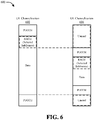
- a diagram 600 is provided that illustrates a third resource management scheme that can be utilized to facilitate control transmission in a wireless communication system.
- resources can be allocated by an eNB corresponding to channelization 604 in a similar manner to that shown in diagram 500 in order to avoid control signaling associated with an eNB associated with channelization 602.
- additional control resources can be reserved as unused as shown in channelization 604 to avoid RACH signaling allocated in channelization 602. While diagram 600 illustrates that uneven reservations can be made along respective edges of a frequency band in order to avoid RACH signaling, resource reservations at respective edges of the frequency band can be equal in size and/or allocated in any other suitable manner. Further, with respect to diagrams 400-600, it should be appreciated that control channel signaling can occupy any suitable portion of the associated system frequency band.
- a diagram 700 is provided that illustrates an example technique for CQI measurement and reporting that can be utilized ( e.g ., by a UE 110) in accordance with various aspects.
- the techniques illustrated by diagram 700 can be utilized in the case of synchronous networks to coordinate DL transmissions between unrestricted and restricted base stations by configuring low power subframes at the restricted base stations.
- low power subframes can be in the form of a Multimedia Broadcast Multicast Service (MBMS) over a Single Frequency Network (MBSFN), where only the first symbols (e.g., the first 1-2 symbols) are transmitted.
- MBMS Multimedia Broadcast Multicast Service
- MMSFN Single Frequency Network
- low power subframes can be created by unrestricted eNBs sending signals with a very low power.
- resource alignment can be performed in the time domain such that some subframes exhibit higher interference than other subframes.
- the unrestricted eNB can be required to spare the restricted eNB resources in frequency, time, or the like. This can be accomplished using low-power transmissions using MBSFN and/or other suitable techniques, wherein only a small fraction of respective subframes carry information.
- the unrestricted serving eNB for the UE can be configured as shown in diagram 700 to take into account the operation of the restricted eNB.
- subframes for resource coordination can be identified by a UE by determining low power subframes reserved by an unrestricted eNB through CQI reporting and/or other means. Additionally or alternatively, subframes for CQI reporting can be scheduled at a UE by its serving eNB.
- CQI measurements can be limited to a subset of DL subframes.
- UEs served by restricted eNBs can skip over lower power subframes for CQI measurement, as the pilot density and interference levels are different from the projected data transmissions.
- UEs that are served by unrestricted eNBs and are close to a restricted eNB can be scheduled to measure subframes that correspond to low power subframes at the restricted eNBs.
- Diagram 700 illustrates an example CQI measurement scheme that corresponds to a 1 subframe delay and a 2 subframe measurement period. It should be appreciated, however, that any suitable delay and/or measurement period can be utilized.
- UEs close to a restricted eNB e.g., a restricted femto cell
- UEs in the coverage area of the restricted eNB can skip over the low power subframes for CQI measurement.
- CQI reporting can be configured using a CQI delay and CQI management period such that if a UE is instructed to report CQI at a given time it will perform measurements in a predetermined manner.
- CQI reporting can be configured in accordance with one aspect such that no channel measurement is conducted by UEs served by a restricted eNB during times at which transmit power is being lowered for MBSFN subframes or the like.
- FIGs. 8-12 methodologies that can be performed in accordance with various aspects set forth herein are illustrated. While, for purposes of simplicity of explanation, the methodologies are shown and described as a series of acts, it is to be understood and appreciated that the methodologies are not limited by the order of acts, as some acts can, in accordance with one or more aspects, occur in different orders and/or concurrently with other acts from that shown and described herein. For example, those skilled in the art will understand and appreciate that a methodology could alternatively be represented as a series of interrelated states or events, such as in a state diagram. Moreover, not all illustrated acts may be required to implement a methodology in accordance with one or more aspects.
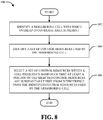
- methodology 800 for control resource coordination. It is to be appreciated that methodology 800 can be performed by, for example, a base station (e.g., eNBs 120 and/or 130), a network controller (e.g., network controller 140), and/or any other appropriate network device.
- Methodology 800 begins at block 802, wherein a neighboring cell with which overlap in coverage area is present is identified.
- a set of control resources used by the neighboring cell e.g ., corresponding to PUCCH 310) is identified.
- control resources within a cell frequency band are allocated (e.g ., using one or more techniques illustrated by diagrams 400-600) such that at least a portion of the allocated control resources are substantially non-overlapping with the control resources identified at block 804 used by the neighboring cell identified at block 802.
- Methodology 900 can be performed by, for example, a network cell (e.g., macro cell 230), a network controller, and/or any other appropriate network entity.
- Methodology 900 begins at block 902, wherein a set of resources associated with a control channel used by a neighboring cell that overlaps the coverage area of an entity performing methodology 900 is identified.
- a set of control resources within a frequency band associated with the entity performing methodology 900 is allocated that extends beyond the set of resources associated with the control channel associated with the neighboring cell identified at block 902.
- methodology 900 can conclude at block 906, wherein resources in the set of control resources allocated at block 904 are assigned to respective terminals (e.g ., UE 110) such that resources that overlap with the set of resources associated with the control channel used by the neighboring cell identified at block 902 are assigned only to terminals that are outside the coverage area of the neighboring cell ( e.g., as illustrated by diagram 400).
- terminals e.g ., UE 110
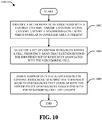
- Fig. 10 illustrates a further methodology 1000 for control resource coordination and management.
- Methodology 1000 can be performed by, for example, an eNB (e.g ., femto cell 210), a system controller, and/or any other suitable network device.
- Methodology 1000 begins at block 1002, wherein a set of resources associated with a control channel (e.g ., as shown in diagram 500) and/or a random access channel ( e.g., as shown in diagram 600) used by a neighboring cell that overlaps the coverage area of an entity performing methodology 1000 is identified.
- methodology 1000 continues to block 1004, wherein a set of control resources within a frequency band associated with the entity performing methodology 1000 is allocated that extends beyond the set of resources identified at block 1002.
- Methodology 1000 can then conclude at block 1006, wherein resources in the set of control resources allocated at block 1004 are assigned to respective terminals such that resources that overlap with the set of resources identified at block 1002 are unused.
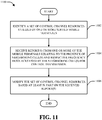
- Methodology 1100 begins at block 1102, wherein a set of control channel resources utilized by one or more served mobile terminals (e.g. , UE 110) is identified.
- report(s) are received from one or more mobile terminals identified at block 1102 (e.g., via a channel reporting module 112) that relate to the presence of neighboring cell(s) and respective frequency resources used by the neighboring cell(s) for control transmission.
- Methodology 1100 can then conclude at block 1106, wherein the set of control channel resources identified at block 1102 is modified based at least in part on the report(s) received at block 1104.
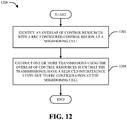
- Methodology 1200 can be performed by, for example, a UE (e .g., UE 110) and/or any other suitable network device.
- Methodology 1200 begins at block 1202, wherein an overlap of control resources with a RRC-configured control region at a neighboring cell (e.g., an eNB 130 distinct from a serving eNB 120) is identified.
- a neighboring cell e.g., an eNB 130 distinct from a serving eNB 120
- one or more transmissions are conducted using resources in the overlap of control resources identified at 1202 such that the transmission(s) have a reduced interference level due to RRC configuration at the neighboring cell.
- RRC configuration at the neighboring cell can be performed in accordance with one or more examples described above.
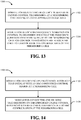
- apparatus 1300 that facilitates resource management and coordination is illustrated. It is to be appreciated that apparatus 1300 is represented as including functional blocks, which can be functional blocks that represent functions implemented by a processor, software, or combination thereof ( e.g ., firmware).
- Apparatus 1300 can be implemented by a base station (e.g ., eNBs 120 and/or 130), a network management server (e.g ., system controller 140), and/or another suitable network device and can include a module 1302 for identifying frequency subbands in use for control transmission at a neighboring cell having an overlapping coverage area and a module 1304 for allocating frequency subbands for control transmission such that the frequency subbands identified as in use by the neighboring cell for control transmission are allocated only to terminals outside the coverage area of the neighboring cell.
- a base station e.g ., eNBs 120 and/or 130
- a network management server e.g ., system controller 140
- another suitable network device can include a module 1302 for identifying frequency subbands in use for control transmission at a neighboring cell having an overlapping coverage area and a module 1304 for allocating frequency subbands for control transmission such that the frequency subbands identified as in use by the neighboring cell for control transmission are allocated only to terminals
- Fig. 14 illustrates another apparatus 1400 that facilitates resource management and coordination.
- Apparatus 1400 is represented as including functional blocks, which can be functional blocks that represent functions implemented by a processor, software, or combination thereof ( e.g ., firmware).
- Apparatus 1400 can be implemented by a UE ( e.g., UE 110) and/or another suitable network device and can include a module 1402 for identifying one or more non-serving base stations to which access is restricted, a module 1404 for identifying uplink control resources that overlap with an RRC-configured control region at a neighboring cell and a module 1404 for conducting one or more transmissions on the identified uplink control resources with reduced interference due to RRC configuration at the neighboring cell.
- a UE e.g., UE 110
- a module 1402 for identifying one or more non-serving base stations to which access is restricted
- a module 1404 for identifying uplink control resources that overlap with an RRC-configured control region at a neighboring
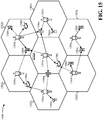
- system 1500 can be configured to support a number of users, in which various disclosed embodiments and aspects can be implemented.
- system 1500 can provide communication for multiple cells 1502, (e.g. , macro cells 1502a-1502g), with respective cells being serviced by corresponding access points (AP) 1504 (e.g., APs 1504a-1504g).
- AP access points
- one or more cells can be further divided into respective sectors (not shown).
- ATs 1506 can be dispersed throughout system 1500.
- an AT 1506 can communicate with one or more APs 1504 on a forward link (FL) and/or a reverse link (RL) at a given moment, depending upon whether the AT is active and whether it is in soft handoff and/or another similar state.
- FL forward link
- RL reverse link
- an AT 1506 can also be referred to as a user equipment (UE), a mobile terminal, and/or any other suitable nomenclature.
- system 1500 can provide service over a substantially large geographic region.
- macro cells 1502a-1502g can provide coverage for a plurality of blocks in a neighborhood and/or another similarly suitable coverage area.
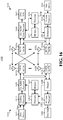
- system 1600 is a multiple-input multiple-output (MIMO) system that includes a transmitter system 1610 and a receiver system 1650.
- MIMO multiple-input multiple-output
- transmitter system 1610 and/or receiver system 1650 could also be applied to a multi-input single-output system wherein, for example, multiple transmit antennas ( e.g ., on a base station), can transmit one or more symbol streams to a single antenna device (e.g ., a mobile station).
- multiple transmit antennas e.g ., on a base station
- a single antenna device e.g ., a mobile station.
- aspects of transmitter system 1610 and/or receiver system 1650 described herein could be utilized in connection with a single output to single input antenna system.
- traffic data for a number of data streams are provided at transmitter system 1610 from a data source 1612 to a transmit (TX) data processor 1614.
- TX data processor 1614 can format, encode, and interleave traffic data for each data stream based on a particular coding scheme selected for each respective data stream in order to provide coded data.
- the coded data for each data stream can then be multiplexed with pilot data using OFDM techniques.
- the pilot data can be, for example, a known data pattern that is processed in a known manner. Further, the pilot data can be used at receiver system 1650 to estimate channel response.
- the multiplexed pilot and coded data for each data stream can be modulated (i.e., symbol mapped) based on a particular modulation scheme (e.g ., BPSK, QSPK, M-PSK, or M-QAM) selected for each respective data stream in order to provide modulation symbols.
- a particular modulation scheme e.g ., BPSK, QSPK, M-PSK, or M-QAM
- data rate, coding, and modulation for each data stream can be determined by instructions performed on and/or provided by processor 1630.
- modulation symbols for all data streams can be provided to a TX processor 1620, which can further process the modulation symbols (e.g ., for OFDM).
- TX MIMO processor 1620 can then provides N T modulation symbol streams to N T transceivers 1622a through 1622t.
- each transceiver 1622 can receive and process a respective symbol stream to provide one or more analog signals.
- Each transceiver 1622 can then further condition (e.g ., amplify, filter, and upconvert) the analog signals to provide a modulated signal suitable for transmission over a MIMO channel.
- N T modulated signals from transceivers 1622a through 1622t can then be transmitted from N T antennas 1624a through 1624t, respectively.
- the transmitted modulated signals can be received at receiver system 1650 by N R antennas 1652a through 1652r.
- the received signal from each antenna 1652 can then be provided to respective transceivers 1654.
- each transceiver 1654 can condition (e.g. , filter, amplify, and downconvert) a respective received signal, digitize the conditioned signal to provide samples, and then processes the samples to provide a corresponding "received" symbol stream.
- An RX MIMO/data processor 1660 can then receive and process the N R received symbol streams from N R transceivers 1654 based on a particular receiver processing technique to provide N T "detected" symbol streams.
- each detected symbol stream can include symbols that are estimates of the modulation symbols transmitted for the corresponding data stream.
- RX processor 1660 can then process each symbol stream at least in part by demodulating, deinterleaving, and decoding each detected symbol stream to recover traffic data for a corresponding data stream.
- the processing by RX processor 1660 can be complementary to that performed by TX MIMO processor 1620 and TX data processor 1616 at transmitter system 1610.
- RX processor 1660 can additionally provide processed symbol streams to a data sink 1664.
- the channel response estimate generated by RX processor 1660 can be used to perform space/time processing at the receiver, adjust power levels, change modulation rates or schemes, and/or other appropriate actions. Additionally, RX processor 1660 can further estimate channel characteristics such as, for example, signal-to-noise-and-interference ratios (SNRs) of the detected symbol streams. RX processor 1660 can then provide estimated channel characteristics to a processor 1670. In one example, RX processor 1660 and/or processor 1670 can further derive an estimate of the "operating" SNR for the system. Processor 1670 can then provide channel state information (CSI), which can comprise information regarding the communication link and/or the received data stream. This information can include, for example, the operating SNR.
- CSI channel state information
- the CSI can then be processed by a TX data processor 1618, modulated by a modulator 1680, conditioned by transceivers 1654a through 1654r, and transmitted back to transmitter system 1610.
- a data source 1616 at receiver system 1650 can provide additional data to be processed by TX data processor 1618.
- the modulated signals from receiver system 1650 can then be received by antennas 1624, conditioned by transceivers 1622, demodulated by a demodulator 1640, and processed by a RX data processor 1642 to recover the CSI reported by receiver system 1650.
- the reported CSI can then be provided to processor 1630 and used to determine data rates as well as coding and modulation schemes to be used for one or more data streams. The determined coding and modulation schemes can then be provided to transceivers 1622 for quantization and/or use in later transmissions to receiver system 1650.
- the reported CSI can be used by processor 1630 to generate various controls for TX data processor 1614 and TX MIMO processor 1620.
- CSI and/or other information processed by RX data processor 1642 can be provided to a data sink 1644.
- processor 1630 at transmitter system 1610 and processor 1670 at receiver system 1650 direct operation at their respective systems.
- memory 1632 at transmitter system 1610 and memory 1672 at receiver system 1650 can provide storage for program codes and data used by processors 1630 and 1670, respectively.
- various processing techniques can be used to process the N R received signals to detect the N T transmitted symbol streams. These receiver processing techniques can include spatial and space-time receiver processing techniques, which can also be referred to as equalization techniques, and/or "successive nulling/equalization and interference cancellation" receiver processing techniques, which can also be referred to as “successive interference cancellation” or “successive cancellation” receiver processing techniques.
- Fig. 17 illustrates an example communication system 1700 that enables deployment of access point base stations within a network environment.
- system 1700 can include multiple access point base stations (e.g ., femto cells or Home Node B units (HNBs)) such as, for example, HNBs 1710.
- HNBs 1710 can be installed in a corresponding small scale network environment, such as, for example, one or more user residences 1730.
- respective HNBs 1710 can be configured to serve associated and/or alien UE(s) 1720.
- respective HNBs 1710 can be coupled to the Internet 1740 and a mobile operator core network 1750 via a DSL router, a cable modem, and/or another suitable device (not shown).
- an owner of a femto cell or HNB 1710 can subscribe to mobile service, such as, for example, 3G/4G mobile service, offered through mobile operator core network 1750.
- UE 1720 can be enabled to operate both in a macro cellular environment 1760 and in a residential small scale network environment.
- UE 1720 can be served by a set of Femto cells or HNBs 1710 (e.g., HNBs 1710 that reside within a corresponding user residence 1730) in addition to a macro cell mobile network 1760.
- HNBs 1710 e.g., HNBs 1710 that reside within a corresponding user residence 1730
- a home femto cell is a base station on which an AT or UE is authorized to operate on
- a guest femto cell refers to a base station on which an AT or UE is temporarily authorized to operate on
- an alien femto cell is a base station on which the AT or UE is not authorized to operate on.
- a femto cell or HNB 1710 can be deployed on a single frequency or on multiple frequencies, which may overlap with respective macro cell frequencies.
- aspects described herein can be implemented by hardware, software, firmware, middleware, microcode, or any combination thereof.
- systems and/or methods are implemented in software, firmware, middleware or microcode, program code or code segments, they can be stored in a machine-readable medium, such as a storage component.
- a code segment can represent a procedure, a function, a subprogram, a program, a routine, a subroutine, a module, a software package, a class, or any combination of instructions, data structures, or program statements.
- a code segment can be coupled to another code segment or a hardware circuit by passing and/or receiving information, data, arguments, parameters, or memory contents. Information, arguments, parameters, data, etc. can be passed, forwarded, or transmitted using any suitable means including memory sharing, message passing, token passing, network transmission, etc.
- the techniques described herein can be implemented with modules (e.g ., procedures, functions, and so on) that perform the functions described herein.
- the software codes can be stored in memory units and executed by processors.
- the memory unit can be implemented within the processor or external to the processor, in which case it can be communicatively coupled to the processor via various means as is known in the art.
Landscapes
- Engineering & Computer Science (AREA)
- Computer Networks & Wireless Communication (AREA)
- Signal Processing (AREA)
- Quality & Reliability (AREA)
- Mobile Radio Communication Systems (AREA)
Claims (15)
- Verfahren (800) zur Koordination von Ressourcen in einem drahtlosen Kommunikationssystem, aufweisend:Identifizieren (802, 804) einer ersten Netzwerkzelle und eines Satzes von Steuerungsressourcen, die assoziiert sind mit der Netzwerkzelle;Bereitstellen für eine zweite Zelle eines Satzes von Steuerungsressourcen, wobei wenigstens ein Teil des bereitgestellten Satzes von Steuerungsressourcen wenigstens einen Teil des Satzes von Steuerungsressourcen die mit der identifizierten Netzwerkzelle assoziiert sind, überlappt; undAuswählen (806) von Steuerungsressourcen für nachfolgende Verwendung aus dem bereitgestellten Satz von Steuerungsressourcen, so dass die ausgewählten Steuerungsressourcen im Wesentlichen frei von Interferenz sind, welche verursacht wird durch den Satz von Steuerungsressourcen, der assoziiert ist mit der identifizierten Netzwerkzelle, wobei der Satz von Steuerungsressourcen der assoziiert ist mit der identifizierten Netzwerkzelle einer Benutzerausrüstung, UE-spezifischen und Radio-Ressource-Control/Layer 3, RRC/L3, konfigurierbaren Steuerungsregion entspricht,wobei die UE-spezifische und RRC/L3 konfigurierbare Steuerungsregion Ressourcen aufweist, für eines oder mehrere von: Channel Quality Indicator, CQI, Scheduling Request, SR, und persistent Acknowledgement, ACK, Übertragung, und wobei die ausgewählten Steuerungsressourcen für nachfolgende Verwendung orthogonal sind zu dem Satz von Steuerungsressourcen der assoziiert ist mit dem identifizierten Netzwerk und wobei der bereitgestellte Satz von Steuerungsressourcen eines oder mehrere von CQI, SR und persistent ACK Kanälen aufweist.
- Verfahren nach Anspruch 1, wobei die Steuerungsressourcen einem Physical Uplink Control Channel, PUCCH, entsprechen.
- Verfahren nach Anspruch 1, weiterhin aufweisend:Identifizieren einer Abdeckungsbereichüberlappung mit der identifizierten Netzwerkzelle; undIdentifizieren einer oder mehrerer Benutzerausrüstungseinheiten, UEs, die in der Abdeckungsbereichüberlappung lokalisiert sind.
- Verfahren nach Anspruch 1, wobei:die Bereitstellung aufweist:Bereitstellen eines ersten Steuerungsressourcenanteils der mit den Steuerungsressourcen übereinstimmt, die mit der identifizierten Netzwerkzelle assoziiert sind, undBereitstellen eines zweiten Steuerungsressourcenanteils, der übereinstimmt mit zumindest einem Teil von Datenressourcen die assoziiert sind mit der identifizierten Netzwerkzelle; unddas Auswählen umfasst das Auswählen des zweiten Steuerungsressourcenanteils für nachfolgende Verwendung.
- Vorrichtung zur Koordination von Ressourcen in einem drahtlosen Kommunikationssystem, aufweisend:Mittel (1302) zum Identifizieren von Frequenzteilbändern in Verwendung für Steuerungsübertragung bei einer benachbarten Zelle, die einen Abdeckungsbereich hat der einen Abdeckungsbereich überlappt, der mit der Vorrichtung verknüpft ist; undMittel (1304) zum Bereitstellen von Frequenzteilbändern für Steuerungsübertragung, so dass die Frequenzteilbänder so, wie sie als in Verwendung für Steuerungsübertragung durch die benachbarte Zelle identifiziert wurden, bereitgestellt werden, nur für Benutzer außerhalb des Abdeckungsbereichs der benachbarten Zelle, wobei der Satz von Steuerungsressourcen, der mit der identifizierten Netzwerkzelle verknüpft ist, einer Benutzerausrüstung-, UE-spezifischen und Radio-Ressource-Control/Layer 3, RRC/L3 konfigurierbaren Steuerungsregion entspricht, wobei die UE-spezifische und RRC/L3 konfigurierbare Steuerungsregion Ressourcen für eines oder mehrere von Channel Quality Indicator, CQI, Scheduling Request, SR und persistent Acknowledgedment, ACK, Übertragung aufweist, und wobei die ausgewählten Steuerungsressourcen für nachfolgende Verwendung orthogonal sind zu dem Satz von Steuerungsressourcen, die mit dem identifizierten Netzwerk verknüpft sind und wobei der bereitgestellte Satz von Steuerungsressourcen eines oder mehrere von CQI, SR und persistent ACK Kanälen aufweist.
- Vorrichtung nach Anspruch 5, wobei die Frequenzteilbänder identifiziert sind als in Verwendung für Steuerungsübertragung durch die benachbarte Zelle und die bereitgestellten Frequenzteilbänder einem Physical Uplink Control Channel, PUCCH, entsprechen.
- Vorrichtung nach Anspruch 5, wobei das Mittel zum Bereitstellen aufweist:Aufteilen eines Satzes von Frequenzteilbändern für Steuerungsübertragung in einen ersten Teilsatz, der zumindest einem Teil der Frequenzteilbänder entspricht, die in Verwendung sind für Steuerungsübertragung bei der benachbarten Zelle und in einen zweiten Teilsatz, der im Wesentlichen nicht überlappend mit den Frequenzteilbändern ist, die in Verwendung sind für Steuerungsübertragung bei der benachbarten Zelle;Bereitstellen von Frequenzteilbändern von dem ersten Teilsatz oder dem zweiten Teilsatz an einen oder mehrere Benutzer außerhalb eines vorbestimmten Bereichs der benachbarten Zelle; undBereitstellen von Frequenzteilbändern von dem zweiten Teilsatz an einen oder mehrere Benutzer innerhalb des vorbestimmten Bereichs der benachbarten Zelle.
- Vorrichtung nach Anspruch 5, weiterhin aufweisend:Mittel zum Identifizieren von Frequenzteilbändern für Datenübertragung, die übereinstimmt mit Frequenzteilbändern die in Verwendung sind für Steuerungsübertragung bei der benachbarten Zelle; undMittel zum Planen einer oder mehrerer Übertragungen auf den identifizierten Frequenzteilbändern für Datenübertragung, so dass Interferenz mit Steuerungsübertragungen bei der benachbarten Zelle im Wesentlichen vermieden wird.
- Verfahren, aufweisend:Identifizieren (1202) einer Überlappung von Steuerungsressourcen mit einer Radio-Ressource-Control (RRC)-konfigurierten Steuerungsregion bei einer benachbarten Zelle, die unterschiedlich ist von einer dienenden Zelle; undDurchführen (1204) einer oder mehrerer Übertragungen unter Verwendung von Ressourcen in der Überlappung von Steuerungsressourcen, so dass die eine oder mehreren Übertragungen eine reduzierte Interferenzstufe haben, aufgrund der RRC-Konfiguration bei der benachbarten Zelle, wobei die Steuerungsressourcen, die mit der benachbarten Zelle verknüpft sind, einer Benutzerausrüstung-, UE-spezifischen und Radio-Ressource-Control/Layer 3, RRC/L3 konfigurierbaren Steuerungsregion entsprechen, wobei die UE-spezifische und RRC/L3 konfigurierbare Steuerungsregion Ressourcen für eines oder mehrere von Channel Quality Indicator, CQI, Scheduling Request, SR und persistent Acknowledgement, ACK, Übertragung aufweist, und wobei die Steuerungsressourcen für die Übertragungen orthogonal sind zu den Steuerungsressourcen, die mit der benachbarten Zelle verknüpft sind, und wobei der bereitgestellte Satz von Steuerungsressourcen eines oder mehrere von CQI, SR und persistent ACK Kanälen aufweist.
- Verfahren nach Anspruch 9, wobei zumindest ein Teil von Ressourcen in der Überlappung von Steuerungsressourcen einem Physical Uplink Control Channel (PUCCH) entspricht.
- Verfahren nach Anspruch 9, wobei die benachbarte Zelle eine Home Node B (HNB) ist.
- Vorrichtung, aufweisend:Mittel (1402) zum Identifizieren von Aufwärtsverbindungssteuerungsressourcen, welche mit einer Radio-Ressource-Control (RRC) konfigurierten Steuerungsregion bei einer benachbarten, nicht-dienenden Zelle überlappt; undMittel (1404) zum Durchführen einer oder mehrerer Übertragungen auf den identifizierten Aufwärtsverbindungssteuerungsressourcen mit reduzierter Interferenz aufgrund der RRC-Konfiguration bei der benachbarten, nicht-dienenden Zelle, wobei die Steuerungsressourcen, die mit der benachbarten, nicht-dienenden Zelle verknüpft sind, einer Benutzerausrüstung-, UE-spezifischen und Radio-Ressource-Control/Layer 3, RRC/L3 konfigurierbaren Steuerungsregion entsprechen, wobei die UE-spezifische und die RRC/L3 konfigurierbare Steuerungsregion Ressourcen aufweist, für eines oder mehrere von Channel Quality Indicator, CQI, Scheduling Request, SR, und persistent Acknowledgement, ACK, Übertragung, und wobei die Steuerungsressourcen für die Übertragungen orthogonal sind zu den Steuerungsressourcen die verknüpft sind mit der benachbarten Zelle, und wobei der bereitgestellte Satz von Steuerungsressourcen eines oder mehrere von CQI, SR und persistent ACK Kanälen aufweist.
- Vorrichtung nach Anspruch 12, wobei zumindest ein Teil der identifizierten Aufwärtsverbindungssteuerungsressourcen einem Physical Uplink Control Channel (PUCCH) entspricht.
- Vorrichtung nach Anspruch 12, wobei die benachbarte, nicht-dienende Zelle eine Home Node B (HNB) aufweist.
- Computerlesbares Medium verkörpernd maschinenausführbare Instruktionen zum Veranlassen wenigstens eines Computers zum Durchführen eines Verfahrens nach einem der Ansprüche 1-4 oder 9-11 wenn sie ausgeführt werden.
Applications Claiming Priority (3)
| Application Number | Priority Date | Filing Date | Title |
|---|---|---|---|
| US4483508P | 2008-04-14 | 2008-04-14 | |
| US12/419,831 US8442069B2 (en) | 2008-04-14 | 2009-04-07 | System and method to enable uplink control for restricted association networks |
| PCT/US2009/040558 WO2009129261A1 (en) | 2008-04-14 | 2009-04-14 | Allocation of control resources of a femto cell to avoid interference with a macro cell |
Publications (2)
| Publication Number | Publication Date |
|---|---|
| EP2283687A1 EP2283687A1 (de) | 2011-02-16 |
| EP2283687B1 true EP2283687B1 (de) | 2016-12-14 |
Family
ID=41163912
Family Applications (1)
| Application Number | Title | Priority Date | Filing Date |
|---|---|---|---|
| EP09733121.9A Active EP2283687B1 (de) | 2008-04-14 | 2009-04-14 | Zuweisung von steuerressourcen einer femtozelle zur vermeidung von interferenzen mit einer makrozelle |
Country Status (12)
| Country | Link |
|---|---|
| US (1) | US8442069B2 (de) |
| EP (1) | EP2283687B1 (de) |
| JP (4) | JP5275451B2 (de) |
| KR (2) | KR101284262B1 (de) |
| CN (1) | CN102007808B (de) |
| AU (1) | AU2009236250A1 (de) |
| BR (1) | BRPI0911300A2 (de) |
| CA (1) | CA2720835A1 (de) |
| IL (1) | IL208464A0 (de) |
| MX (1) | MX2010011228A (de) |
| TW (1) | TW200952529A (de) |
| WO (1) | WO2009129261A1 (de) |
Families Citing this family (168)
| Publication number | Priority date | Publication date | Assignee | Title |
|---|---|---|---|---|
| US9313720B2 (en) * | 2008-03-27 | 2016-04-12 | Qualcomm Incorporated | Power efficient small base station scanning and acquisition |
| ES2652316T3 (es) | 2008-04-24 | 2018-02-01 | Huawei Technologies Co., Ltd. | Reducción del proceso de descodificación para buscar el PDCCH |
| US9370021B2 (en) * | 2008-07-31 | 2016-06-14 | Google Technology Holdings LLC | Interference reduction for terminals operating on neighboring bands in wireless communication systems |
| US9386431B2 (en) * | 2008-08-05 | 2016-07-05 | Qualcomm Incorporated | Battery efficient method to search for preferred femtocell |
| KR101527978B1 (ko) * | 2008-08-06 | 2015-06-18 | 엘지전자 주식회사 | 기지국과 중계기 사이의 서브프레임을 사용하여 통신하는 방법 및 장치 |
| KR20100038558A (ko) * | 2008-10-06 | 2010-04-15 | 삼성전자주식회사 | 계층적 셀 구조를 갖는 무선통신 시스템에서 간섭 제어 방법 및 장치 |
| US9775067B2 (en) * | 2008-10-20 | 2017-09-26 | Telefonaktiebolaget Lm Ericsson (Publ) | Intercell interference coordination for radio resource control |
| WO2010068012A2 (ko) * | 2008-12-09 | 2010-06-17 | 엘지전자주식회사 | 무선 통신 시스템에서 매크로 기지국에 의해 수행되는 공백 영역 해제 방법 및 장치 |
| US8358625B2 (en) * | 2009-02-02 | 2013-01-22 | Nokia Corporation | Method and apparatus for signaling neighbor cell transmission frame allocations |
| JP5487294B2 (ja) * | 2009-03-18 | 2014-05-07 | エレクトロニクス アンド テレコミュニケーションズ リサーチ インスチチュート | チャネル状態情報を有するレファレンス信号を送信するシステム |
| CN101867938B (zh) * | 2009-04-20 | 2013-01-02 | 电信科学技术研究院 | 一种用于多点协同传输的上行参考信号的配置方法和装置 |
| WO2010123295A2 (ko) * | 2009-04-24 | 2010-10-28 | 한국전자통신연구원 | 셀룰라 무선 통신 시스템에서의 협력 통신 방법 및 이를 수행하는 단말기 |
| US8743724B2 (en) * | 2009-05-29 | 2014-06-03 | Lg Electronics Inc. | Method and apparatus for transmitting signal using spatial silencing |
| US9106378B2 (en) | 2009-06-10 | 2015-08-11 | Qualcomm Incorporated | Systems, apparatus and methods for communicating downlink information |
| JP4660609B2 (ja) * | 2009-06-22 | 2011-03-30 | 株式会社エヌ・ティ・ティ・ドコモ | 移動通信方法、無線基地局及びリレーノード |
| US9144037B2 (en) | 2009-08-11 | 2015-09-22 | Qualcomm Incorporated | Interference mitigation by puncturing transmission of interfering cells |
| US8724563B2 (en) | 2009-08-24 | 2014-05-13 | Qualcomm Incorporated | Method and apparatus that facilitates detecting system information blocks in a heterogeneous network |
| US9277566B2 (en) * | 2009-09-14 | 2016-03-01 | Qualcomm Incorporated | Cross-subframe control channel design |
| US8942192B2 (en) | 2009-09-15 | 2015-01-27 | Qualcomm Incorporated | Methods and apparatus for subframe interlacing in heterogeneous networks |
| US9232462B2 (en) * | 2009-10-15 | 2016-01-05 | Qualcomm Incorporated | Methods and apparatus for cross-cell coordination and signaling |
| JP4608705B1 (ja) * | 2009-10-29 | 2011-01-12 | 京セラ株式会社 | 大セル基地局及び通信制御方法 |
| WO2011054148A1 (zh) * | 2009-11-06 | 2011-05-12 | 华为技术有限公司 | 一种资源配置方法和装置 |
| US8433249B2 (en) * | 2009-11-06 | 2013-04-30 | Motorola Mobility Llc | Interference reduction for terminals operating in heterogeneous wireless communication networks |
| US8520617B2 (en) * | 2009-11-06 | 2013-08-27 | Motorola Mobility Llc | Interference mitigation in heterogeneous wireless communication networks |
| KR20110051082A (ko) * | 2009-11-09 | 2011-05-17 | 주식회사 팬택 | 이종의 무선 네트워크 환경에서 제어 정보를 송신하는 방법 및 장치 |
| KR101612302B1 (ko) * | 2009-11-24 | 2016-04-14 | 삼성전자주식회사 | 무선통신 시스템에서 협력통신을 수행하기 위한 방법 및 장치 |
| KR101555820B1 (ko) * | 2009-12-02 | 2015-10-06 | 삼성전자주식회사 | 접속망의 클래스에 따라 비대칭적인 피드백 기법을 사용하는 계층 셀 통신 시스템 |
| KR20110068119A (ko) * | 2009-12-15 | 2011-06-22 | 삼성전자주식회사 | 광대역 무선통신 시스템에서 핸드오버 지원 방법 및 장치 |
| JP5375579B2 (ja) * | 2009-12-16 | 2013-12-25 | 富士通株式会社 | 無線基地局及び通信方法 |
| CN102123503B (zh) | 2010-01-07 | 2016-02-10 | 中兴通讯股份有限公司 | 一种中继链路的物理下行共享信道的资源分配方法及装置 |
| US8364162B2 (en) * | 2010-01-14 | 2013-01-29 | Hitachi, Ltd. | UE initiated frequency partitioning based CoMP scheme for downlink cellular communications |
| KR101158188B1 (ko) | 2010-02-01 | 2012-06-19 | 삼성전기주식회사 | 나노 입자 합성 장치 및 이를 이용한 나노 입자 합성 방법 |
| US8694012B2 (en) | 2010-02-01 | 2014-04-08 | Intel Mobile Communications GmbH | Method and apparatuses for two or more neighboring wireless network devices accessing a plurality of radio resources |
| KR102190034B1 (ko) * | 2010-02-12 | 2020-12-11 | 미쓰비시덴키 가부시키가이샤 | 통신 시스템, 기지국 및 단말기 |
| US8913550B2 (en) * | 2010-02-16 | 2014-12-16 | Intel Corporation | Clustering management in mmWave wireless systems |
| US8515440B2 (en) | 2010-02-19 | 2013-08-20 | Qualcomm Incorporated | Computation of channel state feedback in systems using common reference signal interference cancelation |
| US8873439B2 (en) * | 2010-03-25 | 2014-10-28 | Qualcomm Incorporated | Subframe dependent physical uplink control channel (PUCCH) region design |
| KR101850720B1 (ko) * | 2010-03-29 | 2018-04-20 | 엘지전자 주식회사 | 무선 통신 시스템에서 셀간 간섭 조정에 대한 측정 방법 및 장치 |
| EP2557831A4 (de) * | 2010-04-06 | 2016-06-15 | Kyocera Corp | Drahtloses kommunikationssystem, drahtlose basisstation und kommunikationssteuerverfahren |
| GB2479376B (en) * | 2010-04-07 | 2012-05-02 | Toshiba Res Europ Ltd | Mechanism of mobility management through a group of femto-cell base stations on offloading data-packets |
| US9031010B2 (en) * | 2010-04-08 | 2015-05-12 | Qualcomm Incorporated | Separate resource partitioning management for uplink control and uplink data signals |
| US9350475B2 (en) | 2010-07-26 | 2016-05-24 | Qualcomm Incorporated | Physical layer signaling to user equipment in a wireless communication system |
| US9226288B2 (en) * | 2010-04-13 | 2015-12-29 | Qualcomm Incorporated | Method and apparatus for supporting communications in a heterogeneous network |
| US9515773B2 (en) | 2010-04-13 | 2016-12-06 | Qualcomm Incorporated | Channel state information reporting in a wireless communication network |
| US9125072B2 (en) | 2010-04-13 | 2015-09-01 | Qualcomm Incorporated | Heterogeneous network (HetNet) user equipment (UE) radio resource management (RRM) measurements |
| US9271167B2 (en) | 2010-04-13 | 2016-02-23 | Qualcomm Incorporated | Determination of radio link failure with enhanced interference coordination and cancellation |
| US9392608B2 (en) | 2010-04-13 | 2016-07-12 | Qualcomm Incorporated | Resource partitioning information for enhanced interference coordination |
| US20110250919A1 (en) | 2010-04-13 | 2011-10-13 | Qualcomm Incorporated | Cqi estimation in a wireless communication network |
| US9363038B2 (en) | 2010-04-13 | 2016-06-07 | Qualcomm Incorporated | Evolved node B channel quality indicator (CQI) processing for heterogeneous networks |
| US9307431B2 (en) | 2010-04-13 | 2016-04-05 | Qualcomm Incorporated | Reporting of channel properties in heterogeneous networks |
| US20110292823A1 (en) * | 2010-05-27 | 2011-12-01 | Qualcomm Incorporated | Sounding reference signal (srs) in heterogeneous network (hetnet) with time division multiplexing (tdm) partitioning |
| GB2480692B (en) * | 2010-05-28 | 2013-06-12 | Toshiba Res Europ Ltd | Radio resource management in femtocells |
| CN102264131B (zh) * | 2010-05-29 | 2015-03-11 | 华为技术有限公司 | 无线网络中的数据传输方法和装置 |
| WO2011160100A1 (en) | 2010-06-18 | 2011-12-22 | Qualcomm Incorporated | Channel quality reporting for different types of subframes |
| US8644268B2 (en) * | 2010-06-25 | 2014-02-04 | Qualcomm Incorporated | TD-LTE hetnet partition |
| US8515427B2 (en) * | 2010-06-28 | 2013-08-20 | Qualcomm Incorporated | Resource utilization measurements for heterogeneous networks |
| US9036583B2 (en) * | 2010-07-16 | 2015-05-19 | Lg Electronics Inc. | Transmission method and apparatus for carrier aggregation and uplink MIMO |
| US9136953B2 (en) | 2010-08-03 | 2015-09-15 | Qualcomm Incorporated | Interference estimation for wireless communication |
| US8483692B2 (en) | 2010-08-06 | 2013-07-09 | Kyocera Corporation | Method and systems for allocating transmission of common control information from multiple base stations |
| CN102377495B (zh) * | 2010-08-13 | 2015-08-12 | 中兴通讯股份有限公司 | 射频检测方法、装置及系统 |
| KR101723133B1 (ko) * | 2010-08-13 | 2017-04-18 | 삼성전자주식회사 | 간섭 피해 단말 보호 및 펨토 기지국간 간섭을 제어하기 위한 펨토 기지국 자원 제어 방법 및 장치 |
| US20130155990A1 (en) * | 2010-09-03 | 2013-06-20 | Panasonic Corporation | Base station and control information transmission method |
| CN102448173B (zh) * | 2010-09-30 | 2015-04-29 | 华为技术有限公司 | 资源协调处理方法、设备以及基站 |
| US9014025B2 (en) | 2010-10-04 | 2015-04-21 | Futurewei Technologies, Inc. | System and method for coordinating different types of base stations in a heterogeneous communications system |
| SG189065A1 (en) * | 2010-10-05 | 2013-05-31 | Nokia Siemens Networks Oy | Channel state information measurement and reporting |
| TWI444056B (zh) * | 2010-10-05 | 2014-07-01 | Inst Information Industry | 微型基地台、網路資源分配方法、其電腦可讀取記錄媒體及其電腦程式產品 |
| US8576742B2 (en) | 2010-10-06 | 2013-11-05 | Qualcomm Incorporated | Dynamic switching between common reference signal interference cancellation and resource element puncturing in a co-channel heterogeneous network |
| US8886190B2 (en) | 2010-10-08 | 2014-11-11 | Qualcomm Incorporated | Method and apparatus for measuring cells in the presence of interference |
| CN102469491B (zh) | 2010-11-05 | 2016-08-10 | 北京三星通信技术研究有限公司 | 一种在异构网场景下的无线资源测量方法 |
| ES2637975T3 (es) * | 2010-11-09 | 2017-10-18 | Telefonaktiebolaget Lm Ericsson (Publ) | Método y aparato para comunicar la información del estado de canal en un sistema de telecomunicaciones |
| US20120120846A1 (en) * | 2010-11-11 | 2012-05-17 | Mediatek Inc. | Methods for configuring channel state information measurement in a communications system and communications apparatuses utilizing the same |
| AU2011326870B2 (en) * | 2010-11-11 | 2016-05-26 | Telefonaktiebolaget L M Ericsson (Publ) | Methods and network nodes for configuring almost blank subframe transmission patterns and corresponding measurement patterns for reducing intercell interference in an heterogeneous cellular radio communication system |
| CN102469466B (zh) * | 2010-11-11 | 2015-05-06 | 华为技术有限公司 | 一种干扰处理方法与装置 |
| WO2012066669A1 (ja) | 2010-11-18 | 2012-05-24 | 富士通株式会社 | 基地局装置、通信システム及び通信方法 |
| CN102487534A (zh) * | 2010-12-03 | 2012-06-06 | 中国移动通信集团公司 | 干扰控制方法和装置 |
| CN102487512B (zh) * | 2010-12-03 | 2014-11-05 | 中国移动通信集团公司 | 干扰控制方法和装置 |
| EP2656676B1 (de) * | 2010-12-20 | 2018-11-21 | Nokia Technologies Oy | Vorrichtung und verfahren zur einstellung einer steuerkanalkonfiguration in einem kommunikationssystem |
| US8423008B2 (en) * | 2010-12-20 | 2013-04-16 | Nokia Siemens Networks Oy | Signaling UE measurement restrictions for inter-cell interference |
| WO2012093902A2 (ko) * | 2011-01-06 | 2012-07-12 | 엘지전자 주식회사 | 셀간 간섭을 해소하기 위한 방법 및 장치 |
| WO2012092719A1 (zh) * | 2011-01-07 | 2012-07-12 | 富士通株式会社 | 对干扰进行协调的方法和装置及通信系统、移动台和基站 |
| WO2012094985A1 (en) | 2011-01-10 | 2012-07-19 | Mediatek Inc. | Method for determining an instance for performing a channel state information measurement and communications apparatuses utilizing the same |
| CN102595630B (zh) * | 2011-01-17 | 2016-04-13 | 北京邮电大学 | 基于部分资源共享的混合接入方法及系统 |
| US9642147B2 (en) * | 2011-02-14 | 2017-05-02 | Qualcomm Incorporated | Methods and apparatus for evaluating number of protected active users based on QoS requirements, throughput and traffic |
| US9258718B2 (en) | 2011-02-22 | 2016-02-09 | Qualcomm Incorporated | Positioning location for remote radio heads (RRH) with same physical cell identity (PCI) |
| US8638131B2 (en) | 2011-02-23 | 2014-01-28 | Qualcomm Incorporated | Dynamic feedback-controlled output driver with minimum slew rate variation from process, temperature and supply |
| CN102685826B (zh) * | 2011-03-17 | 2015-03-18 | 华为技术有限公司 | 切换处理方法、装置和系统 |
| WO2012128565A2 (ko) * | 2011-03-24 | 2012-09-27 | 엘지전자 주식회사 | 무선 통신 시스템에서 셀간 간섭을 고려한 통신 방법 및 이를 위한 장치 |
| US9225502B2 (en) * | 2011-03-31 | 2015-12-29 | Telefonaktiebolaget L M Ericsson (Publ) | Method and network node for determining channel state information in an upcoming time slot |
| US8855000B2 (en) | 2011-04-28 | 2014-10-07 | Qualcomm Incorporated | Interference estimation using data traffic power and reference signal power |
| CN102761878B (zh) * | 2011-04-29 | 2016-07-06 | 上海贝尔股份有限公司 | 家庭基站干扰协调方法、家庭基站和用户终端设备 |
| WO2012158959A1 (en) | 2011-05-17 | 2012-11-22 | Interdigital Patent Holdings, Inc. | Nodeb power adaptation for reducing references |
| US9078255B2 (en) | 2011-08-16 | 2015-07-07 | Alcatel Lucent | Method and apparatus for allocating almost blank subframes |
| US8948090B2 (en) | 2011-08-25 | 2015-02-03 | Qualcomm Incorporated | Multi-point PUCCH attachment |
| CN102984722B (zh) * | 2011-09-06 | 2015-06-24 | 普天信息技术研究院有限公司 | 一种干扰协调机制下的测量配置方法 |
| BR112013030746B1 (pt) * | 2011-09-29 | 2021-11-03 | Sun Patent Trust | Método para determinar o indicador da qualidade de canal, estação base e equipamento do usuário para a mesma |
| US9402264B2 (en) * | 2011-09-30 | 2016-07-26 | Intel Corporation | Methods to transport internet traffic over multiple wireless networks simultaneously |
| EP2765820A4 (de) * | 2011-10-03 | 2015-06-03 | Ntt Docomo Inc | Drahtloses kommunikationssystem, drahtlose basisstationsvorrichtung, benutzerendgerät und drahtloses kommunikationsverfahren |
| KR101556181B1 (ko) * | 2011-10-13 | 2015-09-30 | 엘지전자 주식회사 | 상향링크 신호 전송방법 및 사용자기기와, 상향링크 신호 수신방법 및 기지국 |
| WO2013062356A2 (ko) | 2011-10-26 | 2013-05-02 | 엘지전자 주식회사 | 무선 통신 시스템에서 셀간 간섭 조정 방법 및 장치 |
| US10116402B2 (en) | 2011-10-27 | 2018-10-30 | Huawei Technologies Co., Ltd. | System and method for operating mode self-adaptation |
| US9628214B2 (en) * | 2011-11-09 | 2017-04-18 | Qualcomm Incorporated | Handling mismatch of control spans between serving cell and interfering cells for control and data channel interference cancellation |
| KR101801363B1 (ko) * | 2011-12-27 | 2017-11-27 | 한국전자통신연구원 | Mbms 제공 장치 및 이를 이용한 mbms 제공 방법 |
| US9301302B2 (en) | 2012-02-15 | 2016-03-29 | Telefonaktiebolaget Lm Ericsson (Publ) | Downlink multicarrier mobile communication network configuration |
| EP2640142B1 (de) * | 2012-03-15 | 2019-01-02 | Alcatel Lucent | Verfahren zur Koordinierung der Übertragung von Basisstationen und Basisstation dafür |
| KR20140135994A (ko) * | 2012-03-26 | 2014-11-27 | 후지쯔 가부시끼가이샤 | 측정 보고 송신 방법 및 사용자 장비 |
| US9426714B2 (en) * | 2012-03-30 | 2016-08-23 | Qualcomm Incorporated | Wireless communication in view of time varying interference |
| WO2013165062A1 (ko) * | 2012-05-02 | 2013-11-07 | 엘지전자 주식회사 | 무선 접속 시스템에서 채널 추정 방법 및 이를 위한 장치 |
| CN103516419B (zh) * | 2012-06-15 | 2017-10-27 | 中兴通讯股份有限公司 | 一种调度空口同步子帧的方法及装置 |
| KR101370056B1 (ko) | 2012-06-29 | 2014-03-06 | 인텔렉추얼디스커버리 주식회사 | 매크로셀 및 펨토셀 간의 간섭 완화/제거 장치 및 방법 |
| CN103582129B (zh) * | 2012-07-18 | 2017-04-19 | 华为技术有限公司 | 终端的调度方法、装置与系统 |
| GB2506749B (en) * | 2012-08-30 | 2014-12-17 | Zte Wistron Telecom Ab | Methods and apparatus for using a geometry indicator in hetnet deployments |
| US9301183B2 (en) | 2012-09-28 | 2016-03-29 | Intel Corporation | Transmission of uplink control information in inter-eNB carrier aggregation |
| CN107347185B (zh) * | 2012-10-26 | 2020-01-17 | 中国移动通信集团北京有限公司 | 一种进行信号传输的方法及设备 |
| WO2014067086A1 (zh) * | 2012-10-31 | 2014-05-08 | 华为技术有限公司 | 干扰的通知方法、控制方法及相关设备 |
| CN103857048B (zh) * | 2012-11-30 | 2017-08-29 | 华为技术有限公司 | 一种资源调度方法及装置 |
| US20150358940A1 (en) * | 2014-06-05 | 2015-12-10 | Qualcomm Incorporated | Mbms coexistence in a network with multiple types of base stations |
| US20150350928A1 (en) * | 2013-01-09 | 2015-12-03 | Lili Zhang | Method for interference cancellation with low-power subframes in heterogeneous networks |
| US9198184B2 (en) * | 2013-01-30 | 2015-11-24 | Intel Corporation | Dynamic interference avoidance in integrated multi-radio access technologies (RAT) heterogeneous networks |
| CN103974428A (zh) * | 2013-01-31 | 2014-08-06 | 中国移动通信集团公司 | 微小区配置方法、装置及微基站 |
| WO2014171700A1 (ko) * | 2013-04-15 | 2014-10-23 | 엘지전자 주식회사 | 무선 접속 시스템에서 사운딩 참조 신호 전송 방법 및 장치 |
| CN104247487B (zh) * | 2013-04-19 | 2019-04-05 | 华为技术有限公司 | 一种异制式系统下的干扰协调方法、装置和设备 |
| US9094899B2 (en) * | 2013-05-28 | 2015-07-28 | Rivada Networks, Llc | Cell selection in dynamic spectrum arbitrage system |
| CN104349486B (zh) * | 2013-08-08 | 2019-05-03 | 华为技术有限公司 | 基于干扰消除的协同调度方法、装置和系统 |
| US9820297B2 (en) * | 2013-08-15 | 2017-11-14 | Taiwan Semiconductor Manufacturing Company, Ltd. | Small cell deployment scheduling |
| EP3036940B1 (de) * | 2013-09-25 | 2018-02-28 | Sony Corporation | Telekommunikationsvorrichtung und verfahren |
| WO2015081570A1 (en) * | 2013-12-06 | 2015-06-11 | Orange | Method for scheduling user equipment in a heterogeneous network |
| CN103826309B (zh) * | 2014-02-26 | 2017-07-28 | 中国联合网络通信集团有限公司 | 一种调度资源的方法和装置 |
| US9294927B2 (en) * | 2014-03-12 | 2016-03-22 | Verizon Patent And Licensing Inc. | Data flow transmission via aggregated bands |
| CN105025581A (zh) * | 2014-04-28 | 2015-11-04 | 普天信息技术有限公司 | 一种上行载波无线资源分配方法 |
| CN105682245A (zh) * | 2014-11-20 | 2016-06-15 | 中兴通讯股份有限公司 | 一种网络资源的配置方法、装置、系统及网络通信方法 |
| US10182406B2 (en) | 2015-03-09 | 2019-01-15 | Comcast Cable Communications, Llc | Power headroom report for a wireless device and a base station |
| US10327236B2 (en) | 2015-03-09 | 2019-06-18 | Comcast Cable Communications, Llc | Secondary cell in a wireless device and wireless network |
| US9820298B2 (en) | 2015-03-09 | 2017-11-14 | Ofinno Technologies, Llc | Scheduling request in a wireless device and wireless network |
| US10700845B2 (en) | 2015-03-09 | 2020-06-30 | Comcast Cable Communications, Llc | Secondary cell deactivation in a wireless device and a base station |
| US9820264B2 (en) | 2015-03-09 | 2017-11-14 | Ofinno Technologies, Llc | Data and multicast signals in a wireless device and wireless network |
| US9877334B2 (en) | 2015-04-05 | 2018-01-23 | Ofinno Technologies, Llc | Cell configuration in a wireless device and wireless network |
| US11641255B2 (en) | 2015-04-05 | 2023-05-02 | Comcast Cable Communications, Llc | Uplink control information transmission in a wireless network |
| US9894681B2 (en) | 2015-06-12 | 2018-02-13 | Ofinno Technologies, Llc | Uplink scheduling in a wireless device and wireless network |
| US10200177B2 (en) | 2015-06-12 | 2019-02-05 | Comcast Cable Communications, Llc | Scheduling request on a secondary cell of a wireless device |
| US9948487B2 (en) | 2015-06-15 | 2018-04-17 | Ofinno Technologies, Llc | Uplink resource allocation in a wireless network |
| CN106922020A (zh) * | 2015-12-24 | 2017-07-04 | 北京信威通信技术股份有限公司 | 资源处理方法及装置 |
| US10142980B2 (en) | 2016-02-26 | 2018-11-27 | Qualcomm Incorporated | Discovery reference signal transmission window detection and discovery reference signal measurement configuration |
| US10356761B2 (en) * | 2016-03-30 | 2019-07-16 | Qualcomm Incorporated | Techniques for configuring uplink control channel transmissions in a shared radio frequency spectrum band |
| US10674485B2 (en) * | 2016-12-22 | 2020-06-02 | Qualcomm Incorporated | Common control resource set with user equipment-specific resources |
| ES2924708T3 (es) * | 2017-02-06 | 2022-10-10 | Ericsson Telefon Ab L M | Transmisiones de datos en regiones de control |
| EP3593582A1 (de) * | 2017-03-07 | 2020-01-15 | Intel IP Corporation | Überwachung von steuerkanälen in steuerungsressourcensätzen für new radio |
| CN110463327A (zh) * | 2017-04-03 | 2019-11-15 | 瑞典爱立信有限公司 | 在无线通信网络中信令发送下行链路控制信息 |
| TWI679910B (zh) * | 2017-04-21 | 2019-12-11 | 宏達國際電子股份有限公司 | 處理共同搜尋空間的裝置及方法 |
| PT3641438T (pt) * | 2017-06-15 | 2023-12-29 | Ntt Docomo Inc | Terminal de utilizador e método de comunicações sem fios |
| WO2018227483A1 (zh) | 2017-06-15 | 2018-12-20 | 富士通株式会社 | 资源配置方法、确定方法及其装置、通信系统 |
| US10680782B2 (en) * | 2017-06-16 | 2020-06-09 | Qualcomm Incorporated | Strategic mapping of uplink resources |
| US10805039B2 (en) * | 2017-06-29 | 2020-10-13 | Qualcomm Incorporated | Rate matching behavior for bundled CORESETs |
| US11445511B2 (en) | 2017-08-10 | 2022-09-13 | Beijing Xiaomi Mobile Software Co., Ltd. | Method for information transmission adjustment, base station, and user equipment |
| CN109787730B (zh) | 2017-11-14 | 2020-07-03 | 电信科学技术研究院 | 一种资源配置方法及装置、计算机存储介质 |
| RU2743750C1 (ru) * | 2017-11-14 | 2021-02-25 | Бейджин Сяоми Мобайл Софтвеа Ко., Лтд. | Способ указания информации о частотной области общего набора ресурсов управления для остаточной минимальной системной информации |
| ES2954302T3 (es) | 2017-11-15 | 2023-11-21 | Koninklijke Philips Nv | Método de indicación de información de periodo para el conjunto de recursos de control común de la información clave restante del sistema |
| WO2019095183A1 (zh) | 2017-11-16 | 2019-05-23 | 北京小米移动软件有限公司 | 剩余关键系统信息的公共控制资源集合的时域信息指示方法 |
| CN110022194B (zh) * | 2018-01-09 | 2021-08-24 | 维沃移动通信有限公司 | 资源映射方法、网络侧设备及终端 |
| EP3989643B1 (de) * | 2018-02-21 | 2023-07-26 | LG Electronics Inc. | Verfahren und vorrichtung zur überwachtung eines kontrollressourcensatzes 0, in einem drahtloskommunikationssystem |
| US11324033B2 (en) * | 2018-04-06 | 2022-05-03 | Qualcomm Incorporated | Physical downlink shared channel reception when physical downlink control channel with different spatial quasi-colocation assumptions are mapped to the same control resource set |
| CN110418347A (zh) * | 2018-04-27 | 2019-11-05 | 索尼公司 | 用于无线通信的电子设备和方法、计算机可读存储介质 |
| US11653347B2 (en) * | 2020-12-14 | 2023-05-16 | Qualcomm Incorporated | Coexistence of multiple uplink control channel formats for wireless communication with power spectral density limitation |
| KR102662509B1 (ko) | 2021-06-08 | 2024-05-08 | 주식회사 큐셀네트웍스 | 펨토셀 환경에서 매크로셀의 간섭을 고려한 동적 하향링크 할당 방법 |
| US12089069B1 (en) | 2021-09-08 | 2024-09-10 | T-Mobile Usa, Inc. | Coverage improvement for 5G new radio wireless communication network to automatically adjust cell properties to improve coverage and capacity |
| US11800382B1 (en) | 2021-09-08 | 2023-10-24 | T-Mobile Usa, Inc. | Coverage improvement for 5G new radio wireless communication network |
| US11606732B1 (en) | 2021-09-08 | 2023-03-14 | T-Mobile Usa, Inc. | Coverage improvement for 5G new radio wireless communication network, such as for over-shooting cells |
| US11949633B2 (en) * | 2022-01-26 | 2024-04-02 | Qualcomm Incorporated | User equipment full duplex capability reporting as a function of transmission power |
| US20250212192A1 (en) * | 2022-03-28 | 2025-06-26 | Beijing Xiaomi Mobile Software Co., Ltd. | Resource configuration method and apparatus |
Family Cites Families (18)
| Publication number | Priority date | Publication date | Assignee | Title |
|---|---|---|---|---|
| JP3431729B2 (ja) | 1995-07-12 | 2003-07-28 | 松下電器産業株式会社 | 回路基板の製造方法及び製造装置 |
| JP3348818B2 (ja) * | 1996-07-19 | 2002-11-20 | 松下電器産業株式会社 | 空きチャネル検出装置 |
| US6405048B1 (en) | 1996-08-28 | 2002-06-11 | Telefonaktiebolaget L M Ericsson | Method and system for autonomously allocating frequencies to a radio system sharing frequencies with an overlapping macro radio system |
| US6138024A (en) | 1997-10-23 | 2000-10-24 | Allen Telecom Inc. | Dynamic channel selection in a cellular communication system |
| US7869399B2 (en) * | 2003-01-06 | 2011-01-11 | Interdigital Technology Corporation | Method and apparatus for controlling the distribution of multimedia broadcast services |
| US8526963B2 (en) | 2003-10-30 | 2013-09-03 | Qualcomm Incorporated | Restrictive reuse for a wireless communication system |
| US8144658B2 (en) * | 2005-02-11 | 2012-03-27 | Qualcomm Incorporated | Method and apparatus for mitigating interference in a wireless communication system |
| KR20070027844A (ko) * | 2005-08-29 | 2007-03-12 | 삼성전자주식회사 | 무선통신 시스템에서 채널품질 정보를 전송하기 위한 방법및 장치 |
| US20070149249A1 (en) * | 2005-12-22 | 2007-06-28 | Interdigital Technology Corporation | Method and apparatus for efficient configuration of hybrid sub-carrier allocation |
| US7929962B2 (en) * | 2006-05-01 | 2011-04-19 | Alcatel-Lucent Usa Inc. | Method for controlling radio communications during idle periods in a wireless system |
| US9036607B2 (en) * | 2006-05-23 | 2015-05-19 | Sharp Kabushiki Kaisha | Method, mobile station device, base station device, and mobile communication system for gap-generation determination |
| US8223703B2 (en) * | 2006-05-26 | 2012-07-17 | Mitsubishi Electric Corporation | Scheduling method and communication apparatus |
| US20080026744A1 (en) * | 2006-07-27 | 2008-01-31 | Nokia Corporation | Providing dynamically controlled CQI technique adapted for available signaling capacity |
| JP2008042547A (ja) * | 2006-08-07 | 2008-02-21 | Fujitsu Ltd | 移動通信システム,基地局,端末装置及び送信制御方法 |
| JP4588681B2 (ja) * | 2006-09-15 | 2010-12-01 | 株式会社日立国際電気 | 無線基地局 |
| US8116736B2 (en) * | 2007-02-09 | 2012-02-14 | Nokia Corporation | Forbidden tracking area optimization for private/home networks |
| EP2120480A4 (de) * | 2007-03-06 | 2013-12-11 | Ntt Docomo Inc | Mobilstation, basisstationseinrichtung, drahtloses kommunikationssystem und kommunikationssteuerverfahren |
| US20090196266A1 (en) * | 2008-02-01 | 2009-08-06 | Nokia Corporation | Method and apparatuses for mobile communication |
-
2009
- 2009-04-07 US US12/419,831 patent/US8442069B2/en active Active
- 2009-04-14 JP JP2011505147A patent/JP5275451B2/ja not_active Expired - Fee Related
- 2009-04-14 TW TW098112310A patent/TW200952529A/zh unknown
- 2009-04-14 EP EP09733121.9A patent/EP2283687B1/de active Active
- 2009-04-14 KR KR1020107025627A patent/KR101284262B1/ko active Active
- 2009-04-14 KR KR1020137004820A patent/KR101299617B1/ko not_active Expired - Fee Related
- 2009-04-14 BR BRPI0911300A patent/BRPI0911300A2/pt not_active Application Discontinuation
- 2009-04-14 CN CN2009801130298A patent/CN102007808B/zh active Active
- 2009-04-14 MX MX2010011228A patent/MX2010011228A/es not_active Application Discontinuation
- 2009-04-14 CA CA2720835A patent/CA2720835A1/en not_active Abandoned
- 2009-04-14 WO PCT/US2009/040558 patent/WO2009129261A1/en not_active Ceased
- 2009-04-14 AU AU2009236250A patent/AU2009236250A1/en not_active Abandoned
-
2010
- 2010-10-04 IL IL208464A patent/IL208464A0/en unknown
-
2013
- 2013-01-22 JP JP2013009250A patent/JP5698274B2/ja not_active Expired - Fee Related
- 2013-08-21 JP JP2013171699A patent/JP5911829B2/ja active Active
-
2015
- 2015-07-07 JP JP2015135984A patent/JP6224035B2/ja not_active Expired - Fee Related
Also Published As
| Publication number | Publication date |
|---|---|
| IL208464A0 (en) | 2010-12-30 |
| US20090257390A1 (en) | 2009-10-15 |
| MX2010011228A (es) | 2010-11-12 |
| AU2009236250A1 (en) | 2009-10-22 |
| CN102007808A (zh) | 2011-04-06 |
| JP5275451B2 (ja) | 2013-08-28 |
| JP5698274B2 (ja) | 2015-04-08 |
| KR101284262B1 (ko) | 2013-07-15 |
| JP5911829B2 (ja) | 2016-04-27 |
| KR20110007197A (ko) | 2011-01-21 |
| JP6224035B2 (ja) | 2017-11-01 |
| US8442069B2 (en) | 2013-05-14 |
| EP2283687A1 (de) | 2011-02-16 |
| JP2014014112A (ja) | 2014-01-23 |
| KR20130038935A (ko) | 2013-04-18 |
| CN102007808B (zh) | 2013-10-30 |
| KR101299617B1 (ko) | 2013-08-26 |
| WO2009129261A1 (en) | 2009-10-22 |
| TW200952529A (en) | 2009-12-16 |
| JP2012501094A (ja) | 2012-01-12 |
| JP2013102515A (ja) | 2013-05-23 |
| BRPI0911300A2 (pt) | 2018-07-10 |
| JP2015228667A (ja) | 2015-12-17 |
| CA2720835A1 (en) | 2009-10-22 |
Similar Documents
| Publication | Publication Date | Title |
|---|---|---|
| US8442069B2 (en) | System and method to enable uplink control for restricted association networks | |
| EP2279639B1 (de) | System und verfahren für ressourcenpartitionierung in einem drahtlosen netzwerk | |
| EP2365720B1 (de) | System und Verfahren für Ressourcenpartitionierung in einem drahtlosen Netzwerk | |
| US10939416B2 (en) | Systems and methods to define control channels using reserved resource blocks | |
| US8442001B2 (en) | Systems, methods and apparatus for facilitating handover control using resource reservation with frequency reuse | |
| US9143946B2 (en) | Interference management in a multi-carrier communication system | |
| WO2014113941A1 (en) | Resource allocation in a radio communication network | |
| US20150063139A1 (en) | Apparatus and Method for Interference Management between Cellular and Local Area Networks | |
| HK1156174A (en) | Allocation of control resources of a femto cell to avoid interference with a macro cell | |
| HK1154735B (en) | Systems and methods to define control channels using reserved resource blocks |
Legal Events
| Date | Code | Title | Description |
|---|---|---|---|
| PUAI | Public reference made under article 153(3) epc to a published international application that has entered the european phase |
Free format text: ORIGINAL CODE: 0009012 |
|
| 17P | Request for examination filed |
Effective date: 20101028 |
|
| AK | Designated contracting states |
Kind code of ref document: A1 Designated state(s): AT BE BG CH CY CZ DE DK EE ES FI FR GB GR HR HU IE IS IT LI LT LU LV MC MK MT NL NO PL PT RO SE SI SK TR |
|
| AX | Request for extension of the european patent |
Extension state: AL BA RS |
|
| DAX | Request for extension of the european patent (deleted) | ||
| 17Q | First examination report despatched |
Effective date: 20141022 |
|
| REG | Reference to a national code |
Ref country code: DE Ref legal event code: R079 Ref document number: 602009043058 Country of ref document: DE Free format text: PREVIOUS MAIN CLASS: H04W0072080000 Ipc: H04W0084040000 |
|
| GRAP | Despatch of communication of intention to grant a patent |
Free format text: ORIGINAL CODE: EPIDOSNIGR1 |
|
| RIC1 | Information provided on ipc code assigned before grant |
Ipc: H04W 16/12 20090101ALI20160525BHEP Ipc: H04W 84/04 20090101AFI20160525BHEP Ipc: H04W 72/08 20090101ALI20160525BHEP |
|
| INTG | Intention to grant announced |
Effective date: 20160623 |
|
| INTG | Intention to grant announced |
Effective date: 20160623 |
|
| GRAS | Grant fee paid |
Free format text: ORIGINAL CODE: EPIDOSNIGR3 |
|
| GRAA | (expected) grant |
Free format text: ORIGINAL CODE: 0009210 |
|
| AK | Designated contracting states |
Kind code of ref document: B1 Designated state(s): AT BE BG CH CY CZ DE DK EE ES FI FR GB GR HR HU IE IS IT LI LT LU LV MC MK MT NL NO PL PT RO SE SI SK TR |
|
| REG | Reference to a national code |
Ref country code: GB Ref legal event code: FG4D |
|
| REG | Reference to a national code |
Ref country code: CH Ref legal event code: EP |
|
| REG | Reference to a national code |
Ref country code: IE Ref legal event code: FG4D |
|
| REG | Reference to a national code |
Ref country code: AT Ref legal event code: REF Ref document number: 854580 Country of ref document: AT Kind code of ref document: T Effective date: 20170115 |
|
| REG | Reference to a national code |
Ref country code: DE Ref legal event code: R096 Ref document number: 602009043058 Country of ref document: DE |
|
| PG25 | Lapsed in a contracting state [announced via postgrant information from national office to epo] |
Ref country code: LV Free format text: LAPSE BECAUSE OF FAILURE TO SUBMIT A TRANSLATION OF THE DESCRIPTION OR TO PAY THE FEE WITHIN THE PRESCRIBED TIME-LIMIT Effective date: 20161214 |
|
| REG | Reference to a national code |
Ref country code: LT Ref legal event code: MG4D |
|
| REG | Reference to a national code |
Ref country code: FR Ref legal event code: PLFP Year of fee payment: 9 |
|
| REG | Reference to a national code |
Ref country code: NL Ref legal event code: MP Effective date: 20161214 |
|
| PG25 | Lapsed in a contracting state [announced via postgrant information from national office to epo] |
Ref country code: SE Free format text: LAPSE BECAUSE OF FAILURE TO SUBMIT A TRANSLATION OF THE DESCRIPTION OR TO PAY THE FEE WITHIN THE PRESCRIBED TIME-LIMIT Effective date: 20161214 Ref country code: GR Free format text: LAPSE BECAUSE OF FAILURE TO SUBMIT A TRANSLATION OF THE DESCRIPTION OR TO PAY THE FEE WITHIN THE PRESCRIBED TIME-LIMIT Effective date: 20170315 Ref country code: LT Free format text: LAPSE BECAUSE OF FAILURE TO SUBMIT A TRANSLATION OF THE DESCRIPTION OR TO PAY THE FEE WITHIN THE PRESCRIBED TIME-LIMIT Effective date: 20161214 Ref country code: NO Free format text: LAPSE BECAUSE OF FAILURE TO SUBMIT A TRANSLATION OF THE DESCRIPTION OR TO PAY THE FEE WITHIN THE PRESCRIBED TIME-LIMIT Effective date: 20170314 |
|
| REG | Reference to a national code |
Ref country code: AT Ref legal event code: MK05 Ref document number: 854580 Country of ref document: AT Kind code of ref document: T Effective date: 20161214 |
|
| PG25 | Lapsed in a contracting state [announced via postgrant information from national office to epo] |
Ref country code: FI Free format text: LAPSE BECAUSE OF FAILURE TO SUBMIT A TRANSLATION OF THE DESCRIPTION OR TO PAY THE FEE WITHIN THE PRESCRIBED TIME-LIMIT Effective date: 20161214 Ref country code: HR Free format text: LAPSE BECAUSE OF FAILURE TO SUBMIT A TRANSLATION OF THE DESCRIPTION OR TO PAY THE FEE WITHIN THE PRESCRIBED TIME-LIMIT Effective date: 20161214 |
|
| PG25 | Lapsed in a contracting state [announced via postgrant information from national office to epo] |
Ref country code: NL Free format text: LAPSE BECAUSE OF FAILURE TO SUBMIT A TRANSLATION OF THE DESCRIPTION OR TO PAY THE FEE WITHIN THE PRESCRIBED TIME-LIMIT Effective date: 20161214 |
|
| PG25 | Lapsed in a contracting state [announced via postgrant information from national office to epo] |
Ref country code: IS Free format text: LAPSE BECAUSE OF FAILURE TO SUBMIT A TRANSLATION OF THE DESCRIPTION OR TO PAY THE FEE WITHIN THE PRESCRIBED TIME-LIMIT Effective date: 20170414 Ref country code: SK Free format text: LAPSE BECAUSE OF FAILURE TO SUBMIT A TRANSLATION OF THE DESCRIPTION OR TO PAY THE FEE WITHIN THE PRESCRIBED TIME-LIMIT Effective date: 20161214 Ref country code: CZ Free format text: LAPSE BECAUSE OF FAILURE TO SUBMIT A TRANSLATION OF THE DESCRIPTION OR TO PAY THE FEE WITHIN THE PRESCRIBED TIME-LIMIT Effective date: 20161214 Ref country code: EE Free format text: LAPSE BECAUSE OF FAILURE TO SUBMIT A TRANSLATION OF THE DESCRIPTION OR TO PAY THE FEE WITHIN THE PRESCRIBED TIME-LIMIT Effective date: 20161214 Ref country code: RO Free format text: LAPSE BECAUSE OF FAILURE TO SUBMIT A TRANSLATION OF THE DESCRIPTION OR TO PAY THE FEE WITHIN THE PRESCRIBED TIME-LIMIT Effective date: 20161214 |
|
| PG25 | Lapsed in a contracting state [announced via postgrant information from national office to epo] |
Ref country code: PT Free format text: LAPSE BECAUSE OF FAILURE TO SUBMIT A TRANSLATION OF THE DESCRIPTION OR TO PAY THE FEE WITHIN THE PRESCRIBED TIME-LIMIT Effective date: 20170414 Ref country code: AT Free format text: LAPSE BECAUSE OF FAILURE TO SUBMIT A TRANSLATION OF THE DESCRIPTION OR TO PAY THE FEE WITHIN THE PRESCRIBED TIME-LIMIT Effective date: 20161214 Ref country code: BG Free format text: LAPSE BECAUSE OF FAILURE TO SUBMIT A TRANSLATION OF THE DESCRIPTION OR TO PAY THE FEE WITHIN THE PRESCRIBED TIME-LIMIT Effective date: 20170314 Ref country code: PL Free format text: LAPSE BECAUSE OF FAILURE TO SUBMIT A TRANSLATION OF THE DESCRIPTION OR TO PAY THE FEE WITHIN THE PRESCRIBED TIME-LIMIT Effective date: 20161214 Ref country code: BE Free format text: LAPSE BECAUSE OF FAILURE TO SUBMIT A TRANSLATION OF THE DESCRIPTION OR TO PAY THE FEE WITHIN THE PRESCRIBED TIME-LIMIT Effective date: 20161214 Ref country code: ES Free format text: LAPSE BECAUSE OF FAILURE TO SUBMIT A TRANSLATION OF THE DESCRIPTION OR TO PAY THE FEE WITHIN THE PRESCRIBED TIME-LIMIT Effective date: 20161214 Ref country code: IT Free format text: LAPSE BECAUSE OF FAILURE TO SUBMIT A TRANSLATION OF THE DESCRIPTION OR TO PAY THE FEE WITHIN THE PRESCRIBED TIME-LIMIT Effective date: 20161214 |
|
| REG | Reference to a national code |
Ref country code: DE Ref legal event code: R097 Ref document number: 602009043058 Country of ref document: DE |
|
| PLBE | No opposition filed within time limit |
Free format text: ORIGINAL CODE: 0009261 |
|
| STAA | Information on the status of an ep patent application or granted ep patent |
Free format text: STATUS: NO OPPOSITION FILED WITHIN TIME LIMIT |
|
| 26N | No opposition filed |
Effective date: 20170915 |
|
| PG25 | Lapsed in a contracting state [announced via postgrant information from national office to epo] |
Ref country code: DK Free format text: LAPSE BECAUSE OF FAILURE TO SUBMIT A TRANSLATION OF THE DESCRIPTION OR TO PAY THE FEE WITHIN THE PRESCRIBED TIME-LIMIT Effective date: 20161214 |
|
| REG | Reference to a national code |
Ref country code: CH Ref legal event code: PL |
|
| REG | Reference to a national code |
Ref country code: IE Ref legal event code: MM4A |
|
| PG25 | Lapsed in a contracting state [announced via postgrant information from national office to epo] |
Ref country code: MC Free format text: LAPSE BECAUSE OF FAILURE TO SUBMIT A TRANSLATION OF THE DESCRIPTION OR TO PAY THE FEE WITHIN THE PRESCRIBED TIME-LIMIT Effective date: 20161214 |
|
| PG25 | Lapsed in a contracting state [announced via postgrant information from national office to epo] |
Ref country code: LI Free format text: LAPSE BECAUSE OF NON-PAYMENT OF DUE FEES Effective date: 20170430 Ref country code: CH Free format text: LAPSE BECAUSE OF NON-PAYMENT OF DUE FEES Effective date: 20170430 Ref country code: SI Free format text: LAPSE BECAUSE OF FAILURE TO SUBMIT A TRANSLATION OF THE DESCRIPTION OR TO PAY THE FEE WITHIN THE PRESCRIBED TIME-LIMIT Effective date: 20161214 Ref country code: LU Free format text: LAPSE BECAUSE OF NON-PAYMENT OF DUE FEES Effective date: 20170414 |
|
| REG | Reference to a national code |
Ref country code: FR Ref legal event code: PLFP Year of fee payment: 10 |
|
| PG25 | Lapsed in a contracting state [announced via postgrant information from national office to epo] |
Ref country code: IE Free format text: LAPSE BECAUSE OF NON-PAYMENT OF DUE FEES Effective date: 20170414 |
|
| PG25 | Lapsed in a contracting state [announced via postgrant information from national office to epo] |
Ref country code: MT Free format text: LAPSE BECAUSE OF NON-PAYMENT OF DUE FEES Effective date: 20170414 |
|
| PG25 | Lapsed in a contracting state [announced via postgrant information from national office to epo] |
Ref country code: HU Free format text: LAPSE BECAUSE OF FAILURE TO SUBMIT A TRANSLATION OF THE DESCRIPTION OR TO PAY THE FEE WITHIN THE PRESCRIBED TIME-LIMIT; INVALID AB INITIO Effective date: 20090414 |
|
| PG25 | Lapsed in a contracting state [announced via postgrant information from national office to epo] |
Ref country code: CY Free format text: LAPSE BECAUSE OF NON-PAYMENT OF DUE FEES Effective date: 20161214 |
|
| PG25 | Lapsed in a contracting state [announced via postgrant information from national office to epo] |
Ref country code: MK Free format text: LAPSE BECAUSE OF FAILURE TO SUBMIT A TRANSLATION OF THE DESCRIPTION OR TO PAY THE FEE WITHIN THE PRESCRIBED TIME-LIMIT Effective date: 20161214 |
|
| PG25 | Lapsed in a contracting state [announced via postgrant information from national office to epo] |
Ref country code: TR Free format text: LAPSE BECAUSE OF FAILURE TO SUBMIT A TRANSLATION OF THE DESCRIPTION OR TO PAY THE FEE WITHIN THE PRESCRIBED TIME-LIMIT Effective date: 20161214 |
|
| PGFP | Annual fee paid to national office [announced via postgrant information from national office to epo] |
Ref country code: GB Payment date: 20260320 Year of fee payment: 18 |
|
| PGFP | Annual fee paid to national office [announced via postgrant information from national office to epo] |
Ref country code: FR Payment date: 20260317 Year of fee payment: 18 |
|
| PGFP | Annual fee paid to national office [announced via postgrant information from national office to epo] |
Ref country code: DE Payment date: 20260319 Year of fee payment: 18 |