EP2285069A1 - Procédé, dispositif et système d'utilisation commune de données de position dans des terminaux mobiles - Google Patents
Procédé, dispositif et système d'utilisation commune de données de position dans des terminaux mobiles Download PDFInfo
- Publication number
- EP2285069A1 EP2285069A1 EP09167812A EP09167812A EP2285069A1 EP 2285069 A1 EP2285069 A1 EP 2285069A1 EP 09167812 A EP09167812 A EP 09167812A EP 09167812 A EP09167812 A EP 09167812A EP 2285069 A1 EP2285069 A1 EP 2285069A1
- Authority
- EP
- European Patent Office
- Prior art keywords
- mobile terminal
- short
- information
- group
- server
- Prior art date
- Legal status (The legal status is an assumption and is not a legal conclusion. Google has not performed a legal analysis and makes no representation as to the accuracy of the status listed.)
- Withdrawn
Links
- 238000000034 method Methods 0.000 title claims abstract description 39
- 238000004590 computer program Methods 0.000 claims abstract description 9
- 238000004891 communication Methods 0.000 claims description 9
- 230000003542 behavioural effect Effects 0.000 description 7
- 230000001413 cellular effect Effects 0.000 description 4
- 238000012935 Averaging Methods 0.000 description 3
- 230000004807 localization Effects 0.000 description 3
- 230000005540 biological transmission Effects 0.000 description 2
- 230000000694 effects Effects 0.000 description 2
- 238000013507 mapping Methods 0.000 description 1
- 238000000926 separation method Methods 0.000 description 1
Images


Classifications
-
- H—ELECTRICITY
- H04—ELECTRIC COMMUNICATION TECHNIQUE
- H04W—WIRELESS COMMUNICATION NETWORKS
- H04W4/00—Services specially adapted for wireless communication networks; Facilities therefor
- H04W4/02—Services making use of location information
- H04W4/029—Location-based management or tracking services
-
- H—ELECTRICITY
- H04—ELECTRIC COMMUNICATION TECHNIQUE
- H04W—WIRELESS COMMUNICATION NETWORKS
- H04W4/00—Services specially adapted for wireless communication networks; Facilities therefor
- H04W4/02—Services making use of location information
-
- H—ELECTRICITY
- H04—ELECTRIC COMMUNICATION TECHNIQUE
- H04W—WIRELESS COMMUNICATION NETWORKS
- H04W8/00—Network data management
- H04W8/005—Discovery of network devices, e.g. terminals
-
- H—ELECTRICITY
- H04—ELECTRIC COMMUNICATION TECHNIQUE
- H04W—WIRELESS COMMUNICATION NETWORKS
- H04W84/00—Network topologies
- H04W84/18—Self-organising networks, e.g. ad-hoc networks or sensor networks
- H04W84/20—Leader-follower arrangements
Definitions
- the subject matter relates to a device, a system and a method for controlling a mobile terminal, which is connected via a short-distance radio to at least one further mobile terminal, and which is connected to a server for sending and receiving information.
- the subject matter further relates to an apparatus, a system and a method for controlling the server.
- mobile devices are used with many different equipment and features, these mobile devices can be classified, for example, in the classes low-end, mid-end and high-end.
- these mobile devices can be classified, for example, in the classes low-end, mid-end and high-end.
- the most high-end mobile terminals have accurate means for locating the device, such as a mobile device. through a built-in GPS receiver.
- the object of the invention was to provide a method, a mobile terminal, a server, as well as a computer program, which allows a localization of no own means for localization comprehensive mobile terminals in a simple and flexible way.
- the object derived above and outlined in the prior art is solved according to an object by a method for controlling a mobile terminal.
- at least one identifying identification of at least one further mobile terminal is received by the mobile terminal via a short-distance radio, and position information and the information comprising at least one identifying identification are sent to a server by the mobile terminal.
- the object is achieved by a mobile terminal, wherein the mobile terminal comprises a first communication module, which is adapted to communicate via a short-range radio network, and comprises a processor which is adapted to carry out the method described above.
- the object is achieved by a computer program for controlling a mobile terminal, which controls the mobile terminal in such a way that at least one characteristic identification of at least one further mobile terminal is received via a short distance radio, and position data and the at least one characteristic one Identification comprehensive information is sent to a server.
- the short-range radio may represent for example a short-range wireless network such as Bluetooth ®, Wireless LAN, Near Field Communications (NFC) or similar short-range radio network, and the mobile terminals are adapted to send on this short stretch radio data and / or receive.
- the method may include switching on a short-distance radio in the mobile terminal, so that subsequently a self-organized short-distance radio network between the mobile terminal and the at least one other mobile terminal is established.
- the mobile terminal receives identifications identifying short-range radio from at least one other mobile terminal.
- This identifying identification comprises information that uniquely identifies the respective mobile terminal so that the respective mobile terminal can be identified on the basis of the identifying identification.
- This identifying identification can thus represent, for example, a one-to-one identifier of a respective mobile terminal.
- the identifying identifications received by the mobile terminal can thus be considered, for example, as a list of the other mobile terminals contained in a short-range radio network formed via the short-distance radio network.
- the mobile terminal is further configured to transmit the collected identifying identifications of the further mobile terminals together with position data to a server.
- the identifying identification of the mobile terminal can also be transmitted. If the server has this information, e.g. due to the connection between the mobile terminal and the server, the identifying information of the mobile terminal need not be transmitted to the server.
- These mobile terminals may be set up, via another radio network, e.g. a cellular network such as e.g. GSM, UMTS, HSDPA, LTE or other mobile network can communicate.
- the other radio network has a higher range than short-range radio.
- the mobile terminal can use this further radio network to transmit the collected identifying identifications together with the position data to the server.
- the mobile terminal may, for example, comprise a further communication module for communication via the further radio network, however, the first communication module may also be set up for communication via the further radio network.
- the position data may be any position data describing the location of at least one of the mobile terminals of the short-range radio network formed over the short-distance radio network. This may, for example, be the position of the mobile terminal itself, or the position of at least one of the at least one further mobile terminal, or a combination thereof.
- At least one of the mobile terminals comprises a device for determining the position.
- This position-determining device may be, for example, a satellite-based position-determining unit, such as a GPS receiver for determining GPS-based position data, a Galileo receiver for determining Galileo-based position data, a GLONASS receiver for determining GLONASS-based position data, but it can also represent another receiver for determining position data.
- This position data may represent, for example, location coordinates, e.g. in Cartesian representation or in polar coordinate form, or also position data in another suitable form, e.g. Latitude and longitude straight.
- the position data may also include altitude information.
- the server may assign position information to each of the mobile terminals.
- a method for controlling the server comprises receiving information from a mobile terminal, wherein this information comprises at least one identifying identification of at least one further mobile terminal and position data, wherein the mobile terminal and the at least one further mobile terminal are connected via a short-distance radio, which comprises the determination of at least one group of adjacent mobile terminals based on the received information, and which determining and assigning a position information to each of the at least one determined group.
- a server with a processor is proposed, wherein the processor is set up to carry out the previously described method for controlling a server.
- a computer program for controlling a server is proposed, wherein the computer program carries out the previously described method for controlling a server.
- a system with at least one of the previously and / or subsequently explained mobile terminals and the server is proposed.
- the server can for example determine a group such that all mobile terminals of the short-range radio network are contained in this group, with the position information determined and assigned to this group being the position data of the may correspond to a mobile terminal. Since all mobile terminals are connected via the short-range radio network, the mobile terminals are spatially close, so that the position information assigned to the group is more accurate than, for example, the location information of a mobile radio cell in which the group is located.
- the server can determine, for example based on these location data, which of the mobile terminals are spatially close together in groups, and these are spatially close located mobile units in different groups, and assign these groups different position information based on the multiple received position data.
- the server can determine, for example based on these location data, which of the mobile terminals are spatially close together in groups, and these are spatially close located mobile units in different groups, and assign these groups different position information based on the multiple received position data.
- the server may be further configured to receive, from a plurality of short-range radio short-range networks, information each comprising identifying identifications from the mobile terminals in the respective short-range radio networks and position data.
- the server can each divide these different short-range radio networks into at least one group of spatially adjacent mobile terminals and assign a position information to each group.
- the position data include the position data from one of the at least one further mobile terminal, which are received via the short-distance radio.
- position data from at least one other mobile terminal for determining the position information of a group can be taken into account.
- the mobile terminal polls its own position data, and the transmitted position data include this own position data.
- position data of the mobile terminal which sends the information to the server, can also be taken into account for determining the position information of a group.
- the mobile terminal comprises means for determining position.
- the mobile terminal receives additional position-related information about at least one of the further mobile terminals with respect to the short-range radio network formed by the short-distance radio via the short-distance radio, and that the transmitted information comprises this additional position-related information.
- This additional position-related information can, for example, represent information from the mutual location of the mobile terminals via the short-distance radio.
- This additional position-related information is collected, for example, by the mutual communication of the mobile terminals in the short-distance radio network formed by the short-distance radio and transmitted to the mobile terminal connectable to the server.
- the information sent by this mobile terminal to the server may also include additional location-related information about this mobile terminal with respect to the trained short-range radio network.
- these position-related information may be suitable for mapping the structure or the topology of the short-stretch network on the server side, so that this information can be used to determine the at least one group and / or can also be used to determine the position information for at least one group.
- the additional position-related information comprise at least one of the following information: information as to whether the respective mobile terminal is a master or a slave device; Information with which other mobile terminals, the respective mobile terminal is connected directly via the short-distance radio network; and information about a measure of the reception field strength of the short-distance radio link with which the respective mobile terminal is connected to another mobile terminal via the short-range radio network.
- the information as to whether a mobile terminal is a master or a slave device can be used, for example, by the server to determine subnetworks of a short-distance network formed by the short-distance radio, which can be used, for example, for grouping the mobile terminals.
- a subnetwork may be formed of a master device and the directly connected slave devices.
- the information with which other mobile terminals a respective mobile terminal is connected can For example, be used on the server side to replicate the structure of formed by the short-distance radio short-range network.
- the information about a measure of the received field strength of a short-range radio link, with which the respective mobile terminal is connected to another mobile terminal via the short-range radio can be used, for example, as an indicator of a distance between the respective and the other mobile terminal. If the measure of reception field strength is relatively weak, e.g. the grouping of the mobile terminals take place in such a way that one mobile terminal is assigned to a first group and the other mobile terminal is assigned to a second group, so that a separation of the two mobile terminals with respect to the grouped groups is undertaken. If there is a high degree of reception field strength between the respective and the further mobile terminal, these two mobile terminals can be assigned to the same group, for example.
- a short-range radio network formed by the short-distance radio network comprises at least one subnetwork and the additional position-related information includes information to which subnetwork of the short-distance radio network the respective mobile terminal is assigned.
- the short-range radio network may be a self-organizing ad hoc network consisting of several piconets inter-related are connected. These piconets thus represent subnetworks.
- the mobile terminals in the self-organized ad hoc network can be set up to collect information about the affiliation of the individual mobile terminals with regard to the piconet networks. This information may be sent as additional location-related information to the server where it may be used to group and / or determine the location information for at least one group.
- the server-side determination of the at least one group comprises a pre-grouping of the mobile terminals by subnetworks.
- the information about the affiliation of the individual mobile terminals with regard to the subnetworks can be used, for example, for a pre-grouping of the mobile terminals, since it can be assumed that the mobile terminals are spatially close in a subnetwork.
- the server may change this pre-grouping again. For example, this may be the case when a mobile terminal of a subnetwork has a higher field connection to a mobile terminal of another subnetwork, while the connection of the mobile terminal to the original subnetwork has a lower field strength.
- the server-side determination of the at least one group determines the location the mobile terminals to each other in a short-distance radio network formed by the short-distance radio network comprises.
- whereabouts can be determined, for example, by the additional position-related information and / or on the basis of the received position data.
- the grouping of the mobile terminals can subsequently take place in groups of spatially adjacent mobile terminals.
- information from the further wireless network can also be used for determining the location. If the further radio network is, for example, a cellular network and mobile terminals of the short-range radio network are located in different cells of the further radio network, this assignment of the mobile terminals to different cells of the further radio network can be used, for example, for pre-grouping the mobile terminals.
- the determination of a position information about a determined group is based on position data of at least one mobile terminal of this group.
- position data are available for exactly one of the mobile terminals in a group, these position data can be used as position information for this group. If, for example, position data for a plurality of mobile terminals of a group are present, an average value of the present position data, for example, can be used be used to determine the group-related position information.
- the determination of a position information about a determined group is based on position data of mobile terminals of at least one neighboring group.
- the neighboring groups can be determined, for example, via the additional position-related information explained above.
- the position information of this group can be estimated on the basis of position data from mobile terminals of at least one neighboring group, for example. But even if position data is available for the determined group, the position data of mobile terminals of neighboring groups can be used to assist in the determination of the position information. This can be done, for example, if only position data from a mobile terminal within the determined group, and this mobile terminal of the network structure of the formed by the short-range radio short-range radio network is not in the middle of the group, which, for example, by a low field strength to a server acting mobile terminal in this group could be displayed.
- the position data of at least two Mobile terminals from at least two adjacent groups are used to determine the position information.
- the position information for the determined group can be determined, for example, from an averaging of the different position data of the at least two mobile terminals of the at least two adjacent groups.
- the position information can be obtained from a cross-bearing based on these position data. Furthermore, the position information of the neighboring groups, which may also be based on the respective position data, can be used to estimate the position information of the determined groups.
- the server selects a group of the at least one group and sends group-specific data to this selected group.
- the server After the server has formed the at least one group for the short-distance radio network and each of these has assigned position information to at least one group, the server can, for example, select targeted groups and assign these groups predefined behavioral instructions as group-related data.
- the server can, for example, send these behavioral instructions in the form of group-related data to a mobile terminal of the respective group, so that This mobile terminal sends these behavior instructions to the other mobile terminal of this group, but the server can also contact, for example, each mobile terminal of a group individually.
- these mobile terminals can execute the behavioral instructions included in the group-specific data.
- the server receives the information from the mobile terminal via another radio network.
- This further radio network can e.g. a cellular network such as e.g. GSM, UMTS, HSDPA, LTE or another mobile network.
- the other wireless network has a higher range than short-range radio.
- the determination of the at least one group takes place at neighboring mobile terminals on the basis of position information of the further wireless network.
- the further radio network is, for example, a cellular network
- this assignment of the mobile terminals to different cells of the further radio network can be used, for example, for grouping the mobile terminals.
- the determination of the position information takes place on the basis of position information of the further radio network.
- the position information of a cell of a mobile radio network can be used to determine the position information for a group.
- the server sends the group-specific data to a mobile terminal of the selected group and instructs this mobile terminal to send the group-specific data to the other mobile terminals of this selected group via the short-range radio network.
- a computer program for controlling a server is further proposed, so that the server selects a group of at least one group and sends group-specific data to this selected group.
- a method is further proposed for controlling a mobile terminal, by receiving group-specific data and instruction data from a server, wherein the instruction data comprises a list with at least one further mobile terminal, and by sending the group-specific data to the at least one other mobile terminal via a short-range radio network.
- a program is further proposed for controlling a mobile terminal, by receiving group-specific data and instruction data from a server, wherein the instruction data comprises a list with at least one other mobile terminal, and by sending the group-specific data to the at least one another mobile device via a short-range radio network.
- a client configured to receive group-specific data and the aforementioned instruction data from the server may be installed on the mobile terminal. Based on the received group-specific data, the mobile terminal may send the group-specific data to the other mobile terminals designated in the instruction data via the short-range radio network.
- the server can, for example, only set up a radio contact over the further radio network to a selected mobile terminal per selected group, while the group-specific data can subsequently be distributed by this mobile terminal via the short-range radio network to the other mobile terminals of this group.
- the server can also send the group-specific data directly to several or all mobile terminals of a selected group, for example via the further wireless network explained above.
- targeted instructions may be sent to mobile terminals of selected groups, for example, to form escape lanes or to maintain ideal speeds that are energy efficient or lead to a faster resolution of a traffic jam.
- public flows can be better managed.
- a variety of waves can be generated or by coordinated display animations lighting effects can be generated.
- a system which comprises at least one of the mobile terminals described above and one of the servers described above.
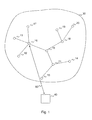
- FIG. 1 shows a short distance radio network between various mobile terminals 11-21 according to a first exemplary embodiment of the present invention.
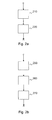
- This first exemplary embodiment is described below together with the in Fig. 2a according to the method another exemplary embodiment for controlling a mobile terminal and with the in Fig. 2b described method according to another exemplary embodiment for controlling a server.
- These mobile terminals 11-21 are adapted to receive a short-range radio, such as Bluetooth ® and receive, wireless LAN or the like, radio communication with another mobile terminal 11-21 send data on this short distance radio and / or.
- This short-circuit radio can thus form a short-range radio network 30.
- these mobile terminals 11-21 are adapted to be connected via another radio network 50, e.g. GSM, UMTS, HSDPA, LTE or other mobile network.
- another radio network 50 e.g. GSM, UMTS, HSDPA, LTE or other mobile network.
- a program installed in the mobile terminal 16 such as a client, activates the short-range radio and scans for other mobile terminals 11-15 and 17-21 available via the short-distance radio.
- an ad hoc network 30 is formed, as shown by way of example in FIG Fig. 1 is shown.
- This ad hoc network 30 represents a self-organized short-distance radio network 30 among the mobile terminals 11-21.
- the mobile terminal 16 scans the other mobile terminals 11-15 and 17-21 via this short-range radio and receives identifications identifying short-range radio from the other mobile terminals 11-15 and 17-21.
- the act of receiving the at least one identifying identification of at least one other mobile terminal by the mobile terminal 16 is in Fig. 2a represented by block 210.
- This identifying identification comprises information that uniquely identifies the respective mobile terminal so that the associated mobile terminal can be identified on the basis of the identifying identification.
- This identifying identification can thus represent, for example, a one-to-one identifier of a respective mobile terminal.
- the identifying identifications received from the mobile terminal 16 may be considered, for example, as a list of the other mobile terminals 11-15 and 17-21 included in the short-distance radio network 30 formed by the short-distance radio network.
- At least one of the mobile terminals 11-21 comprises a device for determining position.
- This position-determining device can be, for example, a GPS receiver for determining GPS-based position data, a Galileo receiver for determining Galileo-based position data, a GLONASS receiver for determining GLONASS-based position data or another receiver for determining position data be.
- This position data can represent, for example, location coordinates, for example in Cartesian representation or in polar coordinate form, or also position data in another suitable form, such as latitude and longitude.
- the position data may also include altitude information.
- the mobile terminal 16 is further configured to transmit the collected identifying identifications of the further mobile terminals 11-15 and 17-20 together with the position data of the at least one mobile terminal 11-20 to a server 40.
- This transmission of the at least one identifying identification and position data comprehensive information from the mobile terminal 16 to the server 40 is in Fig. 2a represented by block 220, and in Fig. 2b the server-side receiving of this information, which comprises at least one identifying identification of at least one further mobile terminal and position data, is represented by block 250.
- This transmission can take place via the further radio network 50 described above.
- the mobile terminal 16 may also send its own identifying identification to the server 40.
- the server 40 may group the mobile terminals 11-21 into at least one group, as in the exemplary method in FIG Fig. 2b represented by block 260, and each assign position information to these groups, as in the exemplary method in FIG Fig. 2b represented by block 270.
- the server 40 may, for example, combine the mobile terminals 11-21 as a single group, and that group the location data of a mobile terminal 21 as Assign position information. Since the short-distance network does not extend over long distances, a better position assignment is nevertheless possible than if, for example, this group were assigned only the location information of the respective mobile radio cell.
- the server 40 may determine, for example, which of the mobile terminals 11-21 are spatially close to each other in groups and assign these groups specific location information based on the plurality of received location data.
- the present invention enables positional position data provided by a mobile terminal to be used by other mobile terminals 11-21.
- the mobile terminal 16 may receive additional position-related information about mobile terminals with respect to the short-distance wireless network 30 from the other mobile terminals 11-15 and 17-21 and send it to the server 40.
- additional position-related can be used, for example, by the server 40 for classifying the groups and / or for determining the group-related position information.
- the mobile terminal can also determine its own additional position-related information with respect to the short-range radio network 30 and also send it to the server 40.
- this additional information of one of the mobile terminals may comprise a data record about the mobile terminals connected to this mobile terminal directly via the short-range radio network 30 and thus adjacent.
- this data record could thus indicate that the mobile terminal 15 is connected directly to the mobile terminals 16, 21 and 18 via the short-range radio network 30.
- This additional position-related information can, for example, also include further information about short-range radio-related data of the respective mobile terminal, such as the information as to whether the mobile terminal is a server or a master, or also the information about a measure of the reception strength of the radio signal between the respective mobile Terminal and directly via the short-range radio network with this mobile terminal directly connected mobile device.
- the server 40 may group the mobile terminals 11-21 such that in each group at least one of the mobile terminals provides its own location data, wherein the server 40 assigns to a group a position information determined based on the location data provided in this group. If position data are made available within a group only by a mobile terminal, the server 40 can use this position data as position information for this group. For example, with several provided position data per group, the server 40 may form an average of the various position data and assign this average to the group as position information.
- the server 40 may, for example, select targeted groups and assign these groups predefined behavioral instructions as group-related data.
- the server 40 can send, for example, these behavioral instructions in the form of group-related data to a mobile terminal of the respective group, so that this mobile terminal forwards these behavioral instructions to the other mobile terminal of this group, but the server 40 can also for example also each mobile terminal of a group contact individually.
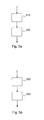
- This sending of group related data will be discussed later in relation to the Fig. 5a and 5b illustrated exemplary embodiments discussed in more detail.
- the server 40 may be further configured to receive information from a plurality of short-range radio networks, each comprising identifying identifications from the mobile terminals in the respective short-range radio networks and location data. Thus, the server 40 may each classify these various short distance radio networks into at least one group of spatially adjacent mobile terminals and assign position information to each group.
- FIG. 1 and the FIGS. 2a and 2b These explanations and advantages apply equally to the following further exemplary embodiments of the present invention.
- FIG. 3 10 shows an exemplary grouping of a short distance radio network 330 between various mobile terminals 11-21 according to another exemplary embodiment.
- This short distance radio network 330 is based on the in Fig. 1 short-range radio network 30, wherein the short-distance network 330 is divided into three sub-networks 331, 332 and 333.
- These subnetworks 331, 332, and 333 may represent, for example, piconets of the ad hoc network short-range radio network 330, the mobile terminal 16 acting as the master for the first piconet 311, the mobile terminal 21 as the master for the second piconet 312, and the mobile terminal 18 acts as master for the third piconet 313.
- the mobile terminal 16 scans the short-range radio network 330 according to the characteristic identifications of the further mobile terminals 11-15 and 17-21 and also possible position data from these further mobile terminals 11 -15 and 17-21 receives.
- the mobile terminal 16 further receives additional position-related information about the respective mobile terminals with respect to the short-range radio network 330, which can be used by the server 40 to divide the groups, as it was also optionally explained in the first embodiment.
- the client on the mobile terminal 16 transmits this identifying information, the location data, and the additional location-related information to the server 40.
- the server 40 may now pre-group the mobile terminals based on the additional information representing network information, wherein, for example, the mobile terminals 11, 12, 16 and 17 may form a first group, the mobile terminals 13, 14, 15 and 21 may form a second group and the mobile terminals 18-20 may form a third group.
- the server 40 may first randomly or otherwise associate that mobile terminal with a group.
- the server 40 may then, for example, make further changes to this pre-grouping, for example based on the position data and / or the additional information.
- the mobile terminal 15, which can be assigned to each of the three piconets 331, 332 and 333 can also be moved to another group, for example as a function of further additional position-related information.
- the server 40 can now assign position information to each of the three groups 331, 332, 333. For this purpose, equally apply to the explanations given to the first embodiment. For example, if the server 40 does not have location data for one of the groups, then the server 40 may use the location data from neighboring groups to estimate the location of that group.
- Such an exemplary variant is for the in FIG. 4a exemplary grouped short-range radio network adopted.
- the server 40 is the one in Fig. 4a shown radio network has been divided into the groups 410, 420, 430, 44, 450 and 460, this division may be made according to the previously described explanations.
- position data are not available for any of the mobile devices assigned to the group 410, whereas the server 40 has position data for the neighboring groups 420, 430, 450 and 470, for example.
- the server 40 may now estimate the position of the group 410 based on, for example, the position data of the groups 410, 430, 440, and 450 adjacent to the group 410. This estimation can be done, for example, by averaging the previously determined position information of these neighboring groups 420, 430, 450 and 470.
- position data of mobile terminals of neighboring groups may be used to estimate the position information of group 410 when these mobile terminals are directly connected to a group 410 mobile terminal are connected.
- this position data may be used instead of the position information of the groups 410 and 450 for estimating the position information of the group 410 can be used, since it can be assumed by the direct connection of the mobile terminals 431 and 451 to the group 410 that these mobile terminals 431 and 451 are spatially relatively close to the group 410.
- a determination of a position information 412 for the group 410 based on the position information 422 and 442 of the neighboring groups 420 and 440 and on the position data 432 and 452 of the mobile terminals 431 and 451 is illustrated.
- the averaging of the position information 422, 442 and the position data 432 and 452 can thus correspond to a cross-bearing between these position information or position data.
- Fig. 5a 11 shows an exemplary flowchart of a method according to another exemplary embodiment of the present invention for controlling a server, such as the server 40 described above.
- FIG. 12 shows an exemplary flowchart of a method for controlling a mobile terminal according to another exemplary embodiment of the present invention.
- server 40 has previously determined various groups and assigned position information to these groups, as described, for example, with respect to the previous embodiments.
- This division of mobile terminals into different groups can be used to send targeted group-specific data to a group for executing this data on mobile terminals of the selected group.
- the server 40 first selects a group from the various groups. This selection process is in Fig. 5a represented by block 510. Subsequently, the server 40 sends, for example, group-specific data to one of the mobile terminals in this selected group via the further radio network, which in Fig. 5b represented by block 520.
- the server 40 can send instruction data to the mobile terminal 18, which instruction data designates further mobile terminals 15, 19 and 20 from the selected group to which the group-specific data is to be distributed over the short-range radio network.
- a client configured to receive from the server 40 group-specific data and the aforementioned instruction data may be installed on the mobile terminal 18. This receiving is in Fig. 5b represented by block 550. On the basis of the received group-specific data, the mobile terminal 18 can now send the group-specific data to the further mobile terminals 15, 19 and 20 named in the instruction data via the short-range radio network 30.
- the group-specific data may include, for example, behavioral instructions, which may then be executed by the respective mobile terminals of the selected group, in this example the mobile terminals 15, 18, 19 and 20.
- the server 40 may also individually send the group-specific data to each of the mobile terminals 15, 18, 19 and 20 included in the selected group 333 via the further wireless network, or to selected mobile terminals 15, 18, 19 and 20 of this group 333.
- targeted instructions may be sent to mobile terminals of selected groups, for example, to form escape lanes or to maintain ideal speeds that are energy efficient or lead to a faster resolution of a traffic jam.
- public flows can be better managed.
- deliberately timed standing and arm movements can generate a variety of waves or created by coordinated display animations lighting effects.
Landscapes
- Engineering & Computer Science (AREA)
- Computer Networks & Wireless Communication (AREA)
- Signal Processing (AREA)
- Mobile Radio Communication Systems (AREA)
Priority Applications (4)
| Application Number | Priority Date | Filing Date | Title |
|---|---|---|---|
| EP09167812A EP2285069A1 (fr) | 2009-08-13 | 2009-08-13 | Procédé, dispositif et système d'utilisation commune de données de position dans des terminaux mobiles |
| DE112010003261T DE112010003261A5 (de) | 2009-08-13 | 2010-08-13 | Verfahren, Vorrichtung und System zur gemeinschaftlichen Nutzung von Positionsdaten bei mobilen endgeräten |
| PCT/EP2010/061829 WO2011018512A2 (fr) | 2009-08-13 | 2010-08-13 | Procédé, dispositif et système d'utilisation commune de données de position dans des terminaux mobiles |
| EP10745202.1A EP2494765B1 (fr) | 2009-08-13 | 2010-08-13 | Procédés et dispositif d'utilisation commune de données de position dans des terminaux mobiles |
Applications Claiming Priority (1)
| Application Number | Priority Date | Filing Date | Title |
|---|---|---|---|
| EP09167812A EP2285069A1 (fr) | 2009-08-13 | 2009-08-13 | Procédé, dispositif et système d'utilisation commune de données de position dans des terminaux mobiles |
Publications (1)
| Publication Number | Publication Date |
|---|---|
| EP2285069A1 true EP2285069A1 (fr) | 2011-02-16 |
Family
ID=41130139
Family Applications (2)
| Application Number | Title | Priority Date | Filing Date |
|---|---|---|---|
| EP09167812A Withdrawn EP2285069A1 (fr) | 2009-08-13 | 2009-08-13 | Procédé, dispositif et système d'utilisation commune de données de position dans des terminaux mobiles |
| EP10745202.1A Not-in-force EP2494765B1 (fr) | 2009-08-13 | 2010-08-13 | Procédés et dispositif d'utilisation commune de données de position dans des terminaux mobiles |
Family Applications After (1)
| Application Number | Title | Priority Date | Filing Date |
|---|---|---|---|
| EP10745202.1A Not-in-force EP2494765B1 (fr) | 2009-08-13 | 2010-08-13 | Procédés et dispositif d'utilisation commune de données de position dans des terminaux mobiles |
Country Status (3)
| Country | Link |
|---|---|
| EP (2) | EP2285069A1 (fr) |
| DE (1) | DE112010003261A5 (fr) |
| WO (1) | WO2011018512A2 (fr) |
Cited By (1)
| Publication number | Priority date | Publication date | Assignee | Title |
|---|---|---|---|---|
| EP3039890A4 (fr) * | 2013-10-09 | 2017-05-03 | MediaTek Inc. | Service de localisation fondé sur un groupe dans des réseaux locaux sans fil |
Citations (7)
| Publication number | Priority date | Publication date | Assignee | Title |
|---|---|---|---|---|
| US5355511A (en) * | 1990-08-08 | 1994-10-11 | Aisin Seiki Kabushiki Kaisha | Position monitoring for communicable and uncommunicable mobile stations |
| WO2004049632A1 (fr) * | 2002-11-27 | 2004-06-10 | Koninklijke Philips Electronics N.V. | Unite, systeme et procede de localisation |
| EP1538862A1 (fr) * | 2003-12-04 | 2005-06-08 | Lucent Technologies Inc. | Procédé et appareil pour déterminer l'emplacement actuel d'un appareil opérant selon le mode Bluetooth par synchronisation avec une pluralité d'autres appareils |
| US20060046749A1 (en) * | 2004-08-26 | 2006-03-02 | Scott Pomerantz | Method and apparatus for locating position of a mobile device in an assisted satellite positioning system |
| US20070060098A1 (en) * | 2005-08-03 | 2007-03-15 | Innerwireless | Radio frequency location determination system and method with wireless mesh sensor networks |
| EP1655902B1 (fr) * | 2004-10-15 | 2007-07-18 | NTT DoCoMo INC. | Terminal mobile, dispositif de commande et procédé de communication mobile |
| US7502619B1 (en) * | 2008-01-22 | 2009-03-10 | Katz Daniel A | Location determination of low power wireless devices over a wide area |
Family Cites Families (1)
| Publication number | Priority date | Publication date | Assignee | Title |
|---|---|---|---|---|
| DE102007060796A1 (de) | 2007-12-14 | 2009-06-18 | Wolfgang Barth | Halterung für eine Mikropipette |
-
2009
- 2009-08-13 EP EP09167812A patent/EP2285069A1/fr not_active Withdrawn
-
2010
- 2010-08-13 WO PCT/EP2010/061829 patent/WO2011018512A2/fr not_active Ceased
- 2010-08-13 EP EP10745202.1A patent/EP2494765B1/fr not_active Not-in-force
- 2010-08-13 DE DE112010003261T patent/DE112010003261A5/de not_active Withdrawn
Patent Citations (7)
| Publication number | Priority date | Publication date | Assignee | Title |
|---|---|---|---|---|
| US5355511A (en) * | 1990-08-08 | 1994-10-11 | Aisin Seiki Kabushiki Kaisha | Position monitoring for communicable and uncommunicable mobile stations |
| WO2004049632A1 (fr) * | 2002-11-27 | 2004-06-10 | Koninklijke Philips Electronics N.V. | Unite, systeme et procede de localisation |
| EP1538862A1 (fr) * | 2003-12-04 | 2005-06-08 | Lucent Technologies Inc. | Procédé et appareil pour déterminer l'emplacement actuel d'un appareil opérant selon le mode Bluetooth par synchronisation avec une pluralité d'autres appareils |
| US20060046749A1 (en) * | 2004-08-26 | 2006-03-02 | Scott Pomerantz | Method and apparatus for locating position of a mobile device in an assisted satellite positioning system |
| EP1655902B1 (fr) * | 2004-10-15 | 2007-07-18 | NTT DoCoMo INC. | Terminal mobile, dispositif de commande et procédé de communication mobile |
| US20070060098A1 (en) * | 2005-08-03 | 2007-03-15 | Innerwireless | Radio frequency location determination system and method with wireless mesh sensor networks |
| US7502619B1 (en) * | 2008-01-22 | 2009-03-10 | Katz Daniel A | Location determination of low power wireless devices over a wide area |
Cited By (1)
| Publication number | Priority date | Publication date | Assignee | Title |
|---|---|---|---|---|
| EP3039890A4 (fr) * | 2013-10-09 | 2017-05-03 | MediaTek Inc. | Service de localisation fondé sur un groupe dans des réseaux locaux sans fil |
Also Published As
| Publication number | Publication date |
|---|---|
| EP2494765B1 (fr) | 2017-11-15 |
| WO2011018512A2 (fr) | 2011-02-17 |
| WO2011018512A3 (fr) | 2011-08-04 |
| DE112010003261A5 (de) | 2013-01-03 |
| EP2494765A2 (fr) | 2012-09-05 |
Similar Documents
| Publication | Publication Date | Title |
|---|---|---|
| DE102015114285B4 (de) | Vorrichtung, Verfahren und Computerprogramm zum Bereitstellen von Übertragungsparametern | |
| DE102007028114A1 (de) | Vorrichtung und Verfahren zur Lokalisierung von Endgeräten | |
| DE102014119709A1 (de) | Verfahren zur Bestimmung des Standorts drahtloser Vorrichtungen | |
| DE60318128T2 (de) | Verfahren zur erzeugung von auslösern basierend auf der position eines mobilfunkendgerätes in einem mobilfunknetzwerk, mobilfunknetzwerk und computerprogramm dazu | |
| DE102009049672A1 (de) | Konzept zum Generieren von Erfahrungsmeldungen zur Aktualisierung einer Referenzdatenbank | |
| DE102019125698A1 (de) | Systeme, verfahren und vorrichtungen für die umsetzung von antennendiversität mit drahtlosen kommunikationsvorrichtungen | |
| DE10256457B4 (de) | Austausch geographischer Positionsinformation zwischen Positionsinformations-Server und Kernnetzwerk-Element | |
| DE60200548T2 (de) | Verfahren zur Herstellung einer Verbindung zwischen Endgeräten, die eine drahtlose Kommunikationsschnitstelle für kurze Reichweiten enthalten | |
| EP3132620B1 (fr) | Communication car2x aux états-unis d'amérique et en europe avec un émetteur uniforme | |
| EP2494765B1 (fr) | Procédés et dispositif d'utilisation commune de données de position dans des terminaux mobiles | |
| DE112016002110T5 (de) | Erfassen des Benutzerkontexts unter Verwendung drahtloser Signalmerkmale | |
| DE102010023960A1 (de) | Verfahren und Vorrichtung zur Ortsbestimmung | |
| EP4027320B1 (fr) | Procédé et installation de commande de l'éclairage d'avertissement de véhicules aériens dans des parcs éoliens | |
| DE112022001966T5 (de) | Basisstation, funkkommunikationsverfahren und funkkommunikationssystem | |
| DE102014207093A1 (de) | Car2X-Kommunikation in USA und Europa mit einheitlichem Transmitter | |
| DE102007061677A1 (de) | Verfahren zur Positionsbestimmung eines mobilen Funk-Kommunikationsendgeräts | |
| DE102012208645A1 (de) | Verfahren zum Betreiben einer stationären Einrichtung sowie stationäre Einrichtung innerhalb eines Systems zur Kommunikation | |
| WO2004082223A1 (fr) | Procede et dispositif cote reseau pour determiner un chemin dans un systeme de communication radio | |
| WO2020193019A1 (fr) | Procédé de sélection d'une première technologie de transmission ou d'une seconde technologie de transmission en fonction d'une exigence d'un cas d'application actuel ainsi que dispositif de calcul électronique | |
| DE102013211130A1 (de) | Verfahren zur Berechnung von Übergabeparametern für ein Kommunikationsgerät, Verfahren zur Kommunikation und Kommunikationsgerät hierfür | |
| DE102013205058A1 (de) | Verfahren zum Betreiben einer stationären Einrichtung sowie stationäre Einrichtung innerhalb eines Systems zur Kommunikation | |
| DE102008031081A1 (de) | Datenverarbeitungsmodul in einem Funknetzwerk mit ortsbezogenen Diensten | |
| DE102023128077A1 (de) | Mulitimode-Fahrzeug-Nachrichtenübermittlung | |
| WO2011045421A1 (fr) | Équipement et procédé destinés à la production de données de référence pour un système de radiolocalisation | |
| DE102019132464A1 (de) | Verfahren und Vorrichtung zur Bestimmung der Position anhand bekannter Standorte von Funksendern |
Legal Events
| Date | Code | Title | Description |
|---|---|---|---|
| PUAI | Public reference made under article 153(3) epc to a published international application that has entered the european phase |
Free format text: ORIGINAL CODE: 0009012 |
|
| AK | Designated contracting states |
Kind code of ref document: A1 Designated state(s): AT BE BG CH CY CZ DE DK EE ES FI FR GB GR HR HU IE IS IT LI LT LU LV MC MK MT NL NO PL PT RO SE SI SK SM TR |
|
| 17P | Request for examination filed |
Effective date: 20110805 |
|
| 17Q | First examination report despatched |
Effective date: 20110909 |
|
| STAA | Information on the status of an ep patent application or granted ep patent |
Free format text: STATUS: THE APPLICATION HAS BEEN WITHDRAWN |
|
| 18W | Application withdrawn |
Effective date: 20120117 |