EP2285174B1 - Procédé et agencements pour services à circuit commutés dans des réseaux de communication - Google Patents
Procédé et agencements pour services à circuit commutés dans des réseaux de communication Download PDFInfo
- Publication number
- EP2285174B1 EP2285174B1 EP10176123A EP10176123A EP2285174B1 EP 2285174 B1 EP2285174 B1 EP 2285174B1 EP 10176123 A EP10176123 A EP 10176123A EP 10176123 A EP10176123 A EP 10176123A EP 2285174 B1 EP2285174 B1 EP 2285174B1
- Authority
- EP
- European Patent Office
- Prior art keywords
- network
- lte
- msc
- mme
- vlr
- Prior art date
- Legal status (The legal status is an assumption and is not a legal conclusion. Google has not performed a legal analysis and makes no representation as to the accuracy of the status listed.)
- Active
Links
Images









Classifications
-
- H—ELECTRICITY
- H04—ELECTRIC COMMUNICATION TECHNIQUE
- H04L—TRANSMISSION OF DIGITAL INFORMATION, e.g. TELEGRAPHIC COMMUNICATION
- H04L12/00—Data switching networks
- H04L12/66—Arrangements for connecting between networks having differing types of switching systems, e.g. gateways
-
- H—ELECTRICITY
- H04—ELECTRIC COMMUNICATION TECHNIQUE
- H04J—MULTIPLEX COMMUNICATION
- H04J11/00—Orthogonal multiplex systems, e.g. using WALSH codes
- H04J11/0069—Cell search, i.e. determining cell identity [cell-ID]
-
- H—ELECTRICITY
- H04—ELECTRIC COMMUNICATION TECHNIQUE
- H04W—WIRELESS COMMUNICATION NETWORKS
- H04W60/00—Affiliation to network, e.g. registration; Terminating affiliation with the network, e.g. de-registration
-
- H—ELECTRICITY
- H04—ELECTRIC COMMUNICATION TECHNIQUE
- H04W—WIRELESS COMMUNICATION NETWORKS
- H04W68/00—User notification, e.g. alerting and paging, for incoming communication, change of service or the like
- H04W68/12—Inter-network notification
-
- H—ELECTRICITY
- H04—ELECTRIC COMMUNICATION TECHNIQUE
- H04W—WIRELESS COMMUNICATION NETWORKS
- H04W8/00—Network data management
- H04W8/02—Processing of mobility data, e.g. registration information at HLR [Home Location Register] or VLR [Visitor Location Register]; Transfer of mobility data, e.g. between HLR, VLR or external networks
- H04W8/06—Registration at serving network Location Register, VLR or user mobility server
-
- H—ELECTRICITY
- H04—ELECTRIC COMMUNICATION TECHNIQUE
- H04W—WIRELESS COMMUNICATION NETWORKS
- H04W88/00—Devices specially adapted for wireless communication networks, e.g. terminals, base stations or access point devices
- H04W88/02—Terminal devices
- H04W88/06—Terminal devices adapted for operation in multiple networks or having at least two operational modes, e.g. multi-mode terminals
Definitions
- the present invention relates to methods and arrangements in mobile radio telecommunication. More particularly, the present invention relates to methods and arrangements for enabling access to Circuit Switched (CS) services for a user equipment (UE) that is connected to a LTE/SAE (Long Term Evolution/System Architecture Evolution) network.
- CS Circuit Switched
- UE user equipment
- SAE Long Term Evolution/System Architecture Evolution
- LTE will be used for mobile, fixed and portable wireless broadband access, and will offer a number of benefits to operators, aimed at increasing capacity, reducing network complexity and thus lowering deployment and operational costs. It will enable operators to meet the growing demand for mobile data solutions, making it possible for richer services to be delivered to consumers more cost effectively.
- LTE defines new radio connections for mobile networks, and will utilize Orthogonal Frequency Division Multiplexing (OFDM), a widely used modulation technique that is the basis for Wi-Fi, WiMAX, and the DVB and DAB digital broadcasting technologies.
- OFDM Orthogonal Frequency Division Multiplexing
- the targets for LTE indicate bandwidth increases as high as 100 Mbps on the downlink, and up to 50 Mbps on the uplink. However, this potential increase in bandwidth is just a small part of the overall improvement LTE aims to provide.
- LTE is optimized for data traffic, and it will not feature a separate, circuit-switched voice network, as in 2G GSM and 3G UMTS networks.
- LTE is being developed in the 3rd Generation Partnership Project (3GPP) and focus on the evolution of the 3G RAN (Radio Access Network).
- 3GPP 3rd Generation Partnership Project
- SAE System Architecture Evolution
- LTE and SAE focus on developing a packet-only system.
- LTE and SAE are being specified without co-existence for CS services fully taken into account.
- An object of the present invention is to enable access for a UE to CS services while being connected to an LTE Network.
- This object is achieved by means of a method for enabling access for a User Equipment (UE) to Circuit-switched (CS) services and by means of a node in a radio communication system, a UE, a Mobile Managing Entity (MME), and a Mobile Services Switching Centre according to different embodiments of the present invention.
- UE User Equipment
- CS Circuit-switched
- MME Mobile Managing Entity
- the basic idea of the present invention is to make it possible for a UE in an LTE network that is located in an area where CS services also are provided to receive incoming CS calls and to also place outgoing CS calls.
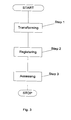
- the solution according to the present invention involves transforming UE position information in an LTE format into a CS format and registering the UE in a CS network.
- a first embodiment of the present invention provides a method for enabling access for a User Equipment (UE) to Circuit-switched (CS) services provided by a CS network while being connected to a Long Term Evolution (LTE) network and system architecture evolution (SAE) network, which SAE network is part of a Packet-switched (PS) core network.
- UE User Equipment
- CS Circuit-switched
- LTE Long Term Evolution
- SAE system architecture evolution
- PS Packet-switched
- the UE's current position is stored in a LTE position format in the LTE network or in the SAE network.
- the method comprises the following steps:
- Another embodiment of the present invention provides a node in a radio communication system comprising a Circuit-switched (CS) network and a Long Term Evolution (LTE) network and System Architecture Evolution (SAE) network.
- CS Circuit-switched
- LTE Long Term Evolution
- SAE System Architecture Evolution
- a User Equipment's (UE's) current position is stored in a LTE position format wherein the node comprises processing means for transforming the UE's position in LTE format to position information in CS format.
- UE User Equipment
- Said UE comprises means for communicating with a Packet Switched Long Term Evolution (LTE) network and System Architecture Evolution (SAE) network and means for communicating with a Circuit Switched (CS) network, wherein.
- Said UE further comprises means for connecting to the CS network, means for receiving an incoming Circuit-switched (CS) call. It further which comprises means for receiving a paging request regarding said incoming CS call from the CS network via said LTE network and SAE network, and means for responding to the paging request in the CS network.
- LTE Packet Switched Long Term Evolution
- SAE System Architecture Evolution
- CS Circuit Switched
- MME Mobile Managing Entity
- SAE System Architecture Evolution
- LTE Long Term Evolution
- the MME comprises means for receiving a paging request message from a CS network regarding an incoming CS call to a User Equipment (UE) connected to said LTE network, and means for forwarding the paging request to the UE in the LTE network.
- UE User Equipment
- one embodiment of the present invention provides a Mobile Service Switching Centre (MSC) and Visitor Location Register (VLR) for use in a Circuit Switched (CS) network.
- Said MSC/VLR comprises means for registering a User Equipment (UE) along with information regarding a Mobile Managing Entity (MME) controlling the UE, which UE and MME are located in a Packet Switched domain comprising at least a System Architecture Evolution (SAE) network, and means for generating and sending a page request to the a MME when receiving a CS call for the UE.
- SAE System Architecture Evolution
- An advantage of the present invention is that it provides a possibility to use existing networks for CS services e.g. WCDMA or GSM networks to provide CS services to UEs connected to LTE networks. Thus it is made possible for LTE to interwork with 3GPP-based legacy networks which allows for service continuity.
- Another advantage of the present invention is that an operator will be able to provide a smooth migration for users of CS services into the corresponding PS type of service, e.g. migration of CS Voice into VoIP (provided via the packet domain) since it is possible for the operator to continue to provide the CS service in parallel with PS type services and perform the migration when the time is right (if at all).
- CS Circuit Switched
- the system shown in Fig. 1 may e.g. be a GSM (Global Systems for Mobile Communication) system or a WCDMA (Wideband Code Division Multiple Access) system.
- CS services are provided by a CS domain 10.
- the CS domain 10 includes a number of different types of nodes that interact to make it possible for a subscriber to make phone calls or receive calls using a User Equipment UE, such as a mobile radiotelephone, laptop, PDA, etc.
- the UE is able to get access to a Radio Access Network (RAN) 11.
- the RAN comprises a number of Radio Network Controllers (RNCs) and Radio Base Stations, if the system is a 3G system and a number of Base Station Controllers (BSCs) if the system is a 2G system.
- RNCs Radio Network Controllers
- BSCs Base Station Controllers
- the RNC/BSC nodes are referred to in Fig. 1 by reference numeral 12.
- the RNC/BSCs 12 each controls a number Radio Base Stations 24 that each serves a cell 16 in a Location Area LA.
- One RNC/BSC 12 may control one or several Radio Base Stations 24 and may thus serve one or several cells 16.
- the RNC/BSCs are each connected to a Mobile Services Switching Center (MSC) 14 in a CS core network 26.
- the core network 26 may also include a Gateway MSC (GMSC) 22 which provides as an interface towards other networks such as PSTN (Public Switched Telephone Network) 28.
- PSTN Public Switched Telephone Network
- the system in Fig. 1 also includes a Home Location Register (HLR) 18 and Visited Location Register (VLR) 20.
- the VLR 20 is often combined with the MSC 14, creating a MSC/VLR.
- a remote placed VLR 20, i.e. separately located from the MSC, is also indicated in figure 1 .
- the HLR may be a part of the Home Subscriber Server HSS 19.
- the VLR or MSC/VLR keeps the current location of the user (terminal) in terms of in which Location Area (LA) the user is located. Registration of a user in the MSC/VLR is performed periodically and whenever the user has moved to a new LA.
- the HLR 18 keeps track of all active users, i.e. users attached to the system and keeps the current location of the users in terms of which MSC/VLR the users are registered in. To be able to perform an originating call or receive a terminating call the user must be registered in the MSC/VLR, and the MSC/VLR need to be known by the HLR.
- the GMSC 22 interrogates the HLR 18 for the location of the user.
- the HLR responds to the GMSC with which MSC/VLR , i.e. the MSC/VLR where the user is registered), it shall route the incoming call to.
- MSC/VLR 14 Once a call is routed to a MSC/VLR 14 said MSC/VLR 14 will send a page to the user, typically in the LA where the user is registered (LA stored in VLR). The user responds to the page so that the call to the user can be completed.
- An originating call is initiated by the user.
- the user's UE sends a call request to the MSC/VLR to establish the call.
- the call is routed from the MSC/VLR all the way to the called party, e.g. a user in PSTN (Public Switched Telephony Network).
- PSTN Public Switched Telephony Network
- the MSC/VLR retrieves user data from the HLR during the registration. This user data is fundamental to the call handling in the MSC/VLR since the data contain information on which services the user may or may not use, which supplementary services that are active/inactive, calling party number presentation parameters (allowed, not allowed, restricted, ). Consequently the user is typically only allowed to initiate a call via an MSC/VLR where it is already registered, i.e. the registration is fundamental for the call success of both originating and terminating calls.
- set of LAs will be used. Said expression should be interpreted as comprising the LA where the UE is registered and a list of LAs controlled by the MSC/VLR where the UE is registered.
- list should herein be interpreted as a set of data in any electronic form.
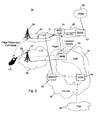
- the system comprises both a CS Domain and a Packet Switched (PS) Domain.
- the CS Domain comprises at least a Circuit Switched Core Network (CS CN) 26.
- the PS domain comprises at least a Packet Switched Core Network (PS CN) 36.
- a part of the PS CN 36 is an SAE (System Architecture Evolution) network 37.
- the LTE network 34 is an access network for UE's visiting the LTE cells controlled by LTE 34.
- the LTE comprises a number of eNode Bs 27 connected to and communicating with Mobility Management Entity node (MME) 40.
- MME Mobility Management Entity node
- the PS CN 36 comprises a number of nodes. Only two nodes are illustrated in figure 2 , a Mobility Management Entity node (MME) 40 and an Access Gateway Node (AGW) 42, which nodes are able to communicate with between themseves, and other entities in the network and entities in other networks.
- MME Mobility Management Entity node
- AGW Access Gateway Node
- the AGW 42 is an interface node 42 connecting other Packet Data Networks PDN 38, such as Internet, to the PS CN 36.
- the MME 40 of the SAE corresponds functionally to an Service GPRS Support Node SGSN (without user plane handling) and is therefore adapted to communicate with and manage eNode Bs 27 of the LTEs.
- the SGSN 43 is the gateway between the RNC 12 and the core network in a GPRS/UMTS network. It mediates access to network resources on behalf of UEs (mobile subscribers) and implements the packet scheduling policy between different QoS classes. It is responsible for establishing the Packet Data Protocol (PDP) context with GGSNs (gateway GPRS support node) upon activation.
- PDP Packet Data Protocol
- GGSNs gateway GPRS support node
- the UE will access the CS CN 26 via one of the Radio Base Stations 24 of the RAN 32.
- Each RAN is controlled and managed by a MSC/VLR 14, as also mentioned above.
- GMSC 22 of the CS CN is able to switch/route a circuit switched telephone call from or to the PSTN 28 to the MSC/VLR 14.
- the UE has to be registered to the correct MSC/VLR, i.e. the MSC/VLR controlling the Location Area that the UE is currently visiting.
- the basic idea of this invention is to enable access to CS services for a UE while being connected to a LTE network 34. This is achieved by providing means for the UE to access CS services where CS services are provided by an operator's CS network. Means are also provided to enable incoming CS calls reaching the subscriber, even when being in the packet-only access LTE network. Therefore, a communication connection is established between the MME 40 and the MSC/VLR 14. The MME 40 is therefore able to send Location Updates about visiting UEs. Further, a terminating call for a visiting UE will be handled by the MSC/VLR 14, which generates and sends a Page Request message to the current UE via the MME 40 and eNode B 27 to the UE.
- Said path is indicated in figure 2 as a dotted line "Page”.
- the UE With received information, e. g. from page requests, or broadcast information, or information on dedicated channel, the UE is adapted to establish access to the CS domain via an RAN 32 controlling the GSM/WCDMA cells and sending a Page Response to the correct MSC/VLR handling the terminating call.
- Said path is indicated as a dotted line Page Response/Call Setup.
- the present invention is also enabling initiation of originating calls.
- the AGW 42 When an UE is switching between LTE/SAE and 2G/3G, the AGW 42 will secure that the same IP address is maintained after the switch.
- the AGW is allocating IP addresses.
- One embodiment of the invention relates to a method for enabling access for a User Equipment (UE) to Circuit-switched (CS) services provided by a CS network while being connected to a Long Term Evolution (LTE) and system architecture evolution (SAE) Network.
- UE User Equipment
- CS Circuit-switched
- LTE Long Term Evolution
- SAE system architecture evolution
- a UE's current position is stored in a LTE position format in the LTE network or in the SAE network.
- Th e method comprises the following steps:
- a terminating call would involve the UE being paged (for the CS service) in LTE and a page response would be sent to the CS domain guided by information provided from the network.
- an originating call would involve the UE connecting to the CS domain in which the UE is registered and placing the CS call.
- the invention decouples the migration of CS services to the PS domain from the deployment of LTE and SAE.
- the LTE position information is either the LTE cell identity or the Tracking Area TA identity, or a combination of said LTE cell identity and said TA identity.
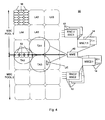
- FIG. 4 This figure illustrates the infrastructure 50 of 2G/3G Location Area LA, 2G/3G cells, LTE Tracking Areas TA and LTE cells.
- a geographic area is covered of Location Areas LA LA 1, LA2, LA3, ....
- Each of said LAs are controlled by one MSC POOL.
- MSC POOL 1 there are two MSC POOLs, MSC POOL 1 and MSC POOL 2.
- MSC POOL 1 consist of a set of MSCs.
- MSC POOL1 includes the MSC1:1, ..., MSC1:n
- MSC POOL2 includes the MSC2:1, ... , MSC2:n.
- Each LA is divided into 2G/3G cells. The cell structure is illustrated and discussed in connection to figure 1 .
- Each cell are managed and controlled by Radio Network Controllers RNCs or Base Stations BSCs.
- An example of usable CS position information format is cell identity and Location Area Identity LAI.
- LTE and SAE system uses another format than the CS position information format.
- the LTE position information format is Tracking Area identities TAI and LTE cell identities used.
- Tracking Areas may not cover just one Location area.
- This transformation may be a mapping process.
- Mapping tables are therefore provided and stored. Said mapping tables may define which TAI corresponds to which cells 16 or LAI (-s).
- a Tracking Area TA2 is shown that stretches over two location areas serviced by two different MSCs, or MSC pools. Therefore, the LA has to be mapped from LTE cell level.
- the MME 40 controls and manages the eNode Bs of the LTE cells and the tracking areas TAs. Each TA is handled and controlled by the MME 42.
- the transforming step may be performed in a Mobility Management Entity (MME) node, an MSC/VLR node or an eNode B node.
- MME Mobility Management Entity
- MSC/VLR Mobility Management Entity
- eNode B eNode B node.
- MME Mobility Management Entity
- a mapping table must be available in one of the nodes storages. It is therefore necessary to have performed a storing process of the mapping table.
- Such a mapping table may be provided by the operator of the system.
- mapping table is preferably designed to achieve the wanted transform.
- the mapping tables comprise at least two columns linking one area to another area, e.g. LTE cell identities to a Location area Identity.
- LTE cell identities e.g. LTE cell identities
- mapping tables are not limit to the described embodiments regarding number of columns or direction of transformation. It is important to note that it for instance is possible to map multiple Tracking Areas to one or several Location Areas.
- the UE will acquire Location area (LA) Information, e.g. identity, from the broadcasted information of a broadcast channel provided in the LTE cell where the UE is camping.
- LA Location area
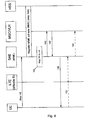
- a user's UE is adapted to generate and send an Attach request via the eNode B in the LTE network to the Mobility Management Entity, MME, which in the SAE network .
- MME Mobility Management Entity
- Said authorization process is a standard process and therefore regarded as known by a person skilled in the art.
- the LTE registration process step 114, in the MME is initiated where the MME registers with the Home Subscriber Server (HSS).
- HSS Home Subscriber Server
- the Home Subscriber Server is the master user database that supports the communication system entities that handle the calls/sessions. It contains user profiles, performs authentication and authorization of the user, and the Home Location Register (HLR).
- a transforming step, step 116 is performed to transform LTE position information for the UE to CS format position information that is a useable format for the Mobile Service Switching Center and the Visitor Location Register, MSC/VLR.
- the transformation step may be performed either in the eNode B of said cell of interest, or in the MME.
- a Location Update Request is sent, step 118, from the MME in the SAE to the MSC/VLR .
- Said request message comprises a number of information parameters, e.g. International Mobile Subscriber Identity IMSI, LAI, old LAI, "Attach ind", etc.
- the MSC/VLR registers the UE and responds back, step 120) to the MME with a Location Update Accept message comprising at least a parameter called Suitable LAs (suitable Location Areas).
- the Suitable LAs is a list of LAs controlled by the MSC/VLR where the UE is registered.
- the parameters are stored in the MME and the registration procedure to CS network finishes.
- the MME is adapted to run the SAE bearer establishment process, step 122, via the eNode B station to which the UE is connected via LTE.
- the SAE bearer is the corresponding term for PDP Context in GSM/WCDMA.
- the MME sends an Attach Accept message to the UE, step 124.
- Said message comprises a number of parameters, e.g. TMSI, LAI, Suitable LAs.
- the UE responds by sending an Attach Confirm message to the MME, step 126.
- the process for enabling access for a User Equipment (UE) to Circuit-switched (CS) services provided by a CS network is finished, and it is possible for the UE to initiate any provided CS service, e.g. initiating a voice call or receiving a voice call over the Circuit-Switched Domain using 2G/3G standards.
- UE User Equipment
- CS Circuit-switched
- a TMSI Reallocation Complete messages may be sent from the MME to the MSC/VLR node.
- a TMSI Reallocation Complete messages (indicated as a dashed arrow) may be sent from the MME to the MSC/VLR node.
- the transforming step 116 is executed in the MME.
- said transforming step here denoted step 119, is performed in the MSC/VLR. Therefore, the Location Update Request message, step 118, is sent from the MME with the necessary information to the MSC/VLR before the transforming step, step 119, of the location/position information is executed.
- said necessary information includes UE position information in LTE format since the mapping to CS format is performed in the MSC/VLR in step 119.
- the present invention also relates to registration methods due to mobility of the UE . For an example, when the UE moves from one cell to another, an Update process of the registers is started.
- the registration process will be executed due to the mobility of UE.
- the LTE network will be in the state LTE_Idle, but the LTE network is in state LTE_Active in the embodiments described according to figures 10-12 . Further, in LTE_Active a connection between the UE and LTE network is established.
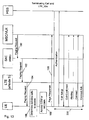
- the first embodiment of the invented registration due to mobility process is illustrated as a signal flowchart diagram.
- the position information is read from the eNode B broadcast channel.
- the UE is adapted to initiate the TA/LA Update by sending either a combined TA/LA Update Request message or an LA Update Request message comprising a number of parameters, e.g. S-TMSI (SAE TMSI), old LAI, to the MME of the SAE network.
- SAE TMSI S-TMSI
- LAI of the accessed cell by the UE is provided by LTE network to SAE in the message used to transport the combined TA/LA Update Request message or the LA Update Request message.
- a transforming step, 143 is necessary to perform to transform LTE position information format for the UE to CS position information format that is a useable format for the Mobile Service Switching Center and the Visitor Location Register, MSC/VLR.
- the transforming step 143 may be performed either in the eNode B (Alternative 1) or in the MME (Alt. 2).
- the LTE registration process in the MME, step 144, is initiated and Subscriber Information acquired from the Home Subscriber System (HSS), which system comprises the HLR.
- HSS Home Subscriber System
- a registration to CS network procedure is initiated.
- a Location Update Request is sent, step 146, from the MME in the SAE to the MSC/VLR.
- Said request message comprises a number of information parameters, e.g. International Mobile Subscriber Identity IMSI, LAI, old LAI, "Attach ind", etc.
- the MSC/VLR registers the UE and responds back, step 148, to the MME with a Location Update Accept message comprising at least a parameter called Suitable LAs (suitable Location Areas).
- Suitable LAs is a list of LAs controlled by the MSC/VLR where the UE is registered.
- the parameters are stored in the MME and the registration procedure to CS network finishes.
- the MME is adapted to send a combined TA/LA Update Ack message or an LA Update Ack message (which message depend on the Request message sent in step 140) to the UE, step 150.
- Said message may comprise a number of parameters, e.g. S-TMSI, LAI, Suitable LAs.
- the UE initiates any provided CS service, e.g. initiating a voice call or receiving a voice call over the Circuit-Switched Domain using 2G/3G standards.
- a TMSI Reallocation Complete messages (indicated as a dashed arrow) may be sent, step 152, from the UE to the MME, and from the MME to the MSC/VLR node, step 154.
- Periodic LA Update can be performed either as part of periodic TA Update (timer co-ordination between LTE and CS), as an LA Update, or by the MME autonomously. Periodic LA Update will be described in more detail in a special section of this description.
- the UE is adapted to initiate the TA Update by sending a TA Request message comprising S-TMSI parameter.
- the registration process, 144, in the MME is initiated and Subscriber Information is acquired from the Home Subscriber Server (HSS).
- HSS Home Subscriber Server
- the Tracking Area Identity TAI is known by the MME, but to be able to register the UE properly in the MSC/VLR, a transforming step, 145, is necessary to perform to transform LTE position information format to CS position information format to decide the right LA and MSC/VLR.
- the MME registers the UE, by sending Location Request message, step 146, to the MSC/VLR.
- the MSC/VLR responds back to the MME with a Location Update Accept message, step 148, comprising at least a parameter called Suitable LAs (suitable Location Areas).
- Suitable LAs is a list of LAs controlled by the MSC/VLR where the UE is registered.
- the parameters are stored in the MME and the registration procedure finishes.
- the MME sends a TA Update Ack message to the UE, step 150.
- Said message may comprise a number of parameters, e.g. S-TMSI, LAI, Suitable LAs.
- Periodic LA Update can be performed either as part of periodic TA Update (timer co-ordination between LTE and CS) , as an LA Update, or by the MME autonomously.
- the transforming step is executed in the MME.
- said transforming step (step 147) is performed in the MSC/VLR. Therefore, the Location Update Request message is sent, step 146, from the MME with the necessary information to the MSC/VLR before the transforming step, step 147, of the location/position information is executed.
- Periodic LA Update can be performed either as part of periodic TA Update, e.g. timer co-ordination between LTE and CS, as an LA Update, or by the MME autonomously.
- LTE_Active LTE_Active
- the process is able to use an already established dedicated channel to the UE in LTE network.
- LTE_Active state is present
- the second eNode B updates the UE with the current CS CN Info by sending LAI and Periodic LA Update Timer, step 160.
- LAI CS CN info is also included in the broadcast and may therefore be read from the broadcast channel.
- the UE sends LA Update request.
- the periodic LA Update timer indicates when the UE must transmit a LA Update message Request message to the MME via the LTE.
- LAI of the accessed cell is provided by LTE to SAE in the message used to transport the Combined TA/LA Update Request message or the LA Update Request message to MME in SAE.
- a transforming step 163 is necessary to transform LTE position information format to CS position information format that is a useable format for the MSC/VLR.
- the transforming step may take place either in eNode B or MME node.
- a mapping transformation is necessary on cell level, i.e. LTE cell to LA
- the transforming step 143 may be performed either in the eNode B (Alternative 1) or in the MME (Alt. 2).
- a Location Update Request is sent, step 164, from the MME in the SAE to the MSC/VLR.
- Said request message comprises a number of information parameters, e.g. International Mobile Subscriber Identity IMSI, LAI, old LAI, "Attach ind", etc.
- the MSC/VLR registers the UE and responds back to the MME with a Location Update Accept message, step 166, comprising at least a parameter called Suitable LAs (suitable Location Areas).
- the Suitable LAs is a list of LAs controlled by the MSC/VLR where the UE is registered.
- the parameters are stored in the MME and the registration procedure finishes.
- MME is adapted to send a LA Update Ack message to the UE.
- Said message comprises at least the parameter Suitable LAs to be read and stored by the UE.
- a TMSI Reallocation Complete messages (indicated as a dashed arrow) may be sent, step 170, from the UE to the MME, and from the MME to the MSC/VLR node, step 172.
- Periodic LA Update can be performed in the same way as registration - Periodic LA Update Timer is provided by CS CN Info - or by the MME autonomously or as part of the Registration.
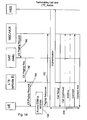
- the eNode B When the UE switches from one Tracking Area to another TA and enters an area in said "new" TA controlled by a eNode B in the LTE, the eNode B sends a Position Update message, step 161, to the MME.
- Sending the "Position Update" can also be part of a message related to the mobility handling, either implicitly, i.e. understood from the context of mobility, or explicitly, i.e. explicit information on the position change is included.
- the MME initiates a transforming step, step 163, to be able to register the UE properly in the correct MSC/VLR. This may be done by the stored mapping table mapping, as previously described.
- a Location Update Request is sent, step 164, from the MME in the SAE to the MSC/VLR.
- Said request message comprises a number of information parameters, e.g. International Mobile Subscriber Identity IMSI, LAI, old LAI, "Attach ind", etc.
- the MSC/VLR registers the UE and responds back, step 166, to the MME with a Location Update Accept message comprising at least a parameter called Suitable LAs (suitable Location Areas).
- the Suitable LAs is a list of LAs controlled by the MSC/VLR where the UE is registered.
- the parameters are stored in the MME and the registration procedure finishes.
- the MME is adapted to send, step 168, a message New LA Info that comprise at least the parameter Suitable LAs.
- a TMSI Reallocation Complete messages (indicated as a dashed arrow) may be sent, step 170, from the UE to the MME, and from the MME to the MSC/VLR node, step 172.
- transforming step 165 is performed in the MSC/VLR. Therefore, the Location Update Request message is sent from the MME with the necessary information to the MSC/VLR before the transforming step of the location/position information is executed.
- the nodes MME, eNode B and UE is adapted to communicate with each other in the system wherein the nodes are performing the following steps:
- a virtual LA is created by means of mapping from LTE cell and/or TA to LA.
- LA Update could be separate signaling or combined with TA Update, i.e. a combined LA/TA Update.
- the nodes UE, MME, MSC/VLR and eNode B in the system is adapted to communicate with each other performing following steps:
- the eNode B is adapted to receive triggers/trigger signals and, as a response to said triggers, to send LA information to an individual UE.
- the eNode B when receiving TA Update, the eNode B is adapted to send relevant LA information, e.g. LA Identity as part of the TA Update response. Alternatively, the eNode B is adapted to send relevant LA information as a dedicated message.
- relevant LA information e.g. LA Identity
- the eNode B is adapted to send relevant LA information as a dedicated message.
- the eNode B is adapted to receive triggers/trigger signals and, as a response to said triggers, send LA information to an individual UE.
- One such trigger is Configuration, i.e. as soon as the LA information of the current cell is different from the one previously sent to the UE the LA information is sent to the UE If no LA information has been sent previously the LA information is sent as soon as the UE enters LTE_Active state.
- Another trigger is the UE measurement reports received. Further one trigger is when a new eNode B measurement result is provided .
- the eNode B is adapted to send relevant LA information concatenated with another message sent to the UE or as a dedicated message.
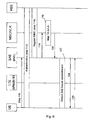
- the MSC/VLR When the MSC/VLR receives a call to be distributed to a UE camping in a cell controlled by said MSC, the MSC interrogates the VLR for the LA where the UE is registered. If the UE is registered as controlled by an MME in MSC/VLR, the MSC/VLR generates a page request message and sends said message to the indicated MME, step 180.
- the Page Request message comprises information about UE identity, e.g. the IMSI code, and information about the Suitable LAs, i.e. the LA and/or the set of LAs, where the UE shall respond to the paging request shall be sent.
- the set of LAs consist of the LA where the UE is registered and/or a list of LAs controlled by the MSC/VLR where the UE is registered.
- the MME receives the page and, in LTE_Idle, generates a Paging Request message comprising information about the TA (Tracking Area) where the UE is registered, and providing the Suitable LAs information.
- said Paging Request is sent by the MME as a Paging Request to all the eNode Bs of the indicated TA.
- Said Paging Request may also involve S-TMSI code.
- the Page Paging Request messages are transmitted by the eNode Bs in all of the eNode B cells belonging to the TA.
- the Paging Request may either contain the page for a CS call or a page to enable the UE to change to LTE_Active. In the latter case the eNode B continues by sending a Paging Request message for the CS call as a dedicated message when the UE has changed to LTE_Active.
- the paging request (paging the UE for the CS call) may also include additional information that helps the UE to select the proper GSM/WCDMA cell faster.
- the information may be provided by the MSC/VLR in the page request sent to the MME or by the MME in the page paging request to the eNode B, or by the eNode B in the "Page Paging Request" to the UE.
- Example on information that may speed up the access is:
- the UE determines the suitable cells to access, step 186.
- the UE uses the received Suitable LAs information (LAs) to derive a subset of suitable GSM/WCDMA cells.
- LAs Suitable LAs information
- the LTE_Idle state a number of alternative methods are available for generating said subset of cells.
- a first embodiment of the method to derive a subset of GSM/WCDMA cells is that the UE is adapted to read and use the list of neighbouring GSM/WCDMA cells read from a broadcast channel in LTE to find a suitable GSM or WCDMA cell.
- Said GSM/WCDMA cells that belong to the LA and/or set of LAs indicated in the page from the MME via the eNode B or received at registration, e.g. LA Update are included in the set of suitable GSM/WCDMA cells.
- the UE uses said set of suitable GSM/WCDMA cells to find a GSM or WCDMA cell that it can access.
- a second method to derive a subset of suitable GSM/WCDMA cells is possible when the eNode B provides a list of relevant neighbouring GSM and/or WCDMA cells by dedicated signalling.
- Said GSM/WCDMA cells that belong to the LA and/or set of LAs indicated in the page from the MME via the eNode B or received at registration, e.g. LA Update are included in the set of suitable GSM/WCDMA cells.
- the UE uses said set of suitable GSM/WCDMA cells to find a GSM or WCDMA cell that it can access.
- Dedicated signaling from the eNode B would typically be used in the LTE_Active state, but could also be applied in LTE_Idle state.
- a third method to derive a subset of GSM/WCDMA cells is that the UE is adapted to use idle times, which are created by the DRX feature of the LTE_Idle state to read system information from GSM and/or WCDMA network to get information on which LA a certain GSM/WCDMA cell belongs to. This information is used to create a list of relevant neighbouring GSM and/or WCDMA cells, which list indicates where the UE is allowed to respond to the page. Said GSM/WCDMA cells that belong to the LA and/or set of LAs indicated in the page from the MME via the eNode B or received at registration, e.g. LA Update, are included in the set of suitable GSM/WCDMA cells. The UE uses said set of suitable GSM/WCDMA cellsto find a suitable GSM or WCDMA cell that it can access.
- idle times which are created by the DRX feature of the LTE_Idle state to read system information from GSM and/or WCDMA network to
- the UE is adapted to decide by means of the neighbouring cell information received from the LTE system from which cells the system information should be read.
- the MSC/VLR does not provide any LA or set of LAs indicating from where the UE shall respond to the page request.
- the paging request sent from the MSC/VLR step 180 in figure 13 , will therefore not include said LA information.
- the UE is adapted to use, in step 186, the LA to which it is registered and/or the list of LAs controlled by the MSC/VLR received at registration, e.g. LA Update, to derive a subset of GSM/WCDMA cells to access.
- the LA to which it is registered and/or the list of LAs controlled by the MSC/VLR received at registration, e.g. LA Update, to derive a subset of GSM/WCDMA cells to access.
- the described first alternative method to derive a subset of GSM/WCDMA cells is applicable.
- the UE uses the list of neighbouring GSM/WCDMA cells read from a broadcast channel in LTE in to find a suitable GSM or WCDMA cell.
- Said GSM/WCDMA cells belong to the LA and/or set of LAs indicated in the page from the MME via the eNode B or received at registration are included in the set of suitable GSM/WCDMA cells.
- the UE uses said set of suitable GSM/WCDMA cells to find a GSM or WCDMA cell that it can access.
- the above described method of deriving a subset of GSM/WCDMA cells is that the UE uses idle times, which are created by the DRX feature of the LTE_Idle state to read system information from GSM and/or WCDMA network to get information on which LA a certain GSM/WCDMA cell belongs to.
- DRX means "Discontinuous Reception" and the UE will be listening for pages in the cell where it is camping.
- LTE Idle a DRX period is pre-set. This information is used to create a list of relevant neighbouring GSM and/or WCDMA cells from where UE shall respond to the page.
- Said GSM/WCDMA cells that belong to the LA and/or set of LAs indicated in the page from the MME via the eNode B or received at registration, are included in the set of suitable GSM/WCDMA cells.
- the UE uses said set of suitable GSM/WCDMA cells to find a GSM or WCDMA cell that it can access.
- one method to derive GSM or WCDMA cells is to use the list of Suitable GSM or WCDMA cells distributed as a part of the LA Update process.
- the UE is adapted to receive and store said list in one of its memories.
- Said information is used to access a proper GSM/WCDMA cell for sending the response to the page request.
- the UE is adapted to attempt to access any GSM/WCDMA cell either within the same LA or set of LAs as the UE received the page request, if such a request has been received.
- the UE is adapted to attempt to access any GSM/WCDMA cell within the LA or LAs, wherein the UE is registered, or the LA listed in the list of LAs controlled by the MSC/VLR.
- the UE is adapted to attempt to access any GSM/WCDMA cell, in step 188, in an attempt to respond to the page request.
- step 188 the derived information about suitable cells from step 186 is used to access a GSM/WCDMA cell for sending the response to the page request.
- the UE is adapted to send a Page Response message, step 190, via the 2G/3G RAN to the MSC/VLR.
- the standard procedure 200 for connecting a terminating call continues, step 200, but said procedure is considered to be known by a skilled person in the art, and the procedure will therefore not be described.
- LTE_Active state a connection with the UE is already established in the LTE network.
- LTE_Idle such a connection is not established.
- Any ongoing PS Session can be maintained by performing RA Update and Service Request in GSM/WCDMA either
- RA Update has to be performed for mobility management reasons e.g. before, in parallel with, or after call establishment.
- the MSC When the MSC /VLR receives a call to be distributed to a UE camping in a cell controlled by said MSC, the MSC interrogates the VLR for the LA where the UE is registered. If the UE is registered as controlled by an MME in VLR, the MSC generates a page request message and sends said message to the indicated MME, step 180.
- the Page Request message comprises UE identity, e.g. the IMSI code, and information about the Suitable LAs, i.e. the LA and/or the set of LAs, where the UE shall respond to the paging request shall be sent.
- the set of LAs consist of the LA where the UE is registered and/or a list of LAs controlled by the MSC/VLR where the UE is registered.
- the MME receives the page request and, in LTE_Active, generates a Circuit Switched (CS) Paging Request message comprising information about the Suitable LAs (Location Areas).
- CS Paging Request is sent by the MME as a dedicated message to the eNode B where the UE is connected.
- the CS Paging Request is sent to the eNode B using an S1 connection.
- the eNode B receives the CS Paging Request and generates a CS Paging Request message, to be sent to the UE, comprising information about the Suitable LAs (Location Areas).
- Said CS Paging Request is a dedicated paging message sent to the UE, i.e. a message sent using the connection with the UE.
- the sent paging message indicates in which LA or set of LAs the UE shall respond to the page request in order for the page response to be routed to the right MSC/VLR. In another embodiment, the sent paging message does not indicate in which LA or set of LAs where the UE shall respond to the page. In this embodiment the UE instead uses the LA or set of Las received by the UE during registration e.g. LA Update.
- the set of LAs consists of the LA where the UE is registered and a list of LAs controlled by the MSC/VLR where the UE is registered.
- the paging request may also include additional information that helps the UE to select the proper GSM/WCDMA cell faster.
- the information may be provided by the MSC/VLR in the page request sent to the MME or by the MME in the page request to the eNode B, or by the eNode B in the "Page Request" to the UE.
- Example on information that may speed up the access is:
- step 184 the CS Page Request message is transmitted by the eNode B of the UE.
- the message is sent using the RRC (Radio Resource Control) connection.
- RRC Radio Resource Control
- the UE determines the suitable cells to access, step 186.
- step 186 the UE uses the received LA information (LAs) to derive a subset of GSM/WCDMA suitable cells.
- LAs LA information
- LTE_Idle state a number of alternative methods are available for generating said subset of cells, which now will be described:
- a third method of deriving a subset of GSM/WCDMA cells is that the UE is adapted to use scheduled time gaps created by the eNode B to read system information from GSM and/or WCDMA network to get information on which LA a certain GSM/WCDMA cell belongs to.
- the information is also possible to get from neighboring cell info received as a part of RRC (Radio Resource Control) measurement procedures.
- the information is used to create a list of relevant neighbouring GSM and/or WCDMA cells from where UE shall respond to the page.
- the neighbouring GSM/WCDMA cells that belong to the LA and/or set of LAs indicated in the page from the MME via the eNode B or received at registration, e.g. LA Update, are included in the set of suitable GSM/WCDMA cells.
- the UE uses said set of suitable GSM/WCDMA cells to find a GSM or WCDMA cell that it can access.
- the UE is adapted to attempt to access any GSM/WCDMA cell either within the same LA or set of LAs as the UE received the page request, if such a request has been received.
- the UE is adapted to attempt to access any GSM/WCDMA cell within the LA or LAs, wherein the UE is registered, or the LA listed in the list of LAs controlled by the MSC/VLR.
- the UE is adapted to attempt to access any GSM/WCDMA cell, in step 188 in an attempt to respond to the page request.
- step 188 the derived information about suitable cells from step 186 is used to access a GSM/WCDMA cell for sending the response to the page request.
- the UE is adapted to send a Page Response message, step 190, via the 2G/3G RAN to the MSC/VLR.
- the standard procedure 200 for connecting a terminating call continues, step 200, but said procedure is not of certain interest for the present invention.
- the UE When accessing GSM/WCDMA to respond to the page request the UE can do that in any of the following ways a), b), c) or d):
- the state may be either of LTE_Active or LTE _Idle.
- the UE When a user initiate a call, the UE is adapted to determine suitable cells, step 192, while not being connected to the CS domain. For this purpose, the UE has to receive information regarding which GSM/CDMA cells to access. Alternative embodiments of procedures of determining suitable cells of a GSM/CDMA network to access is provided in accordance with the invention.
- the UE is adapted to read Suitable LAs received as a part of LA update.
- the GSM/WCDMA cells that belonging to the an LA included in the Suitable LAs are included in the set of suitable GSM/WCDMA cells .
- the UE uses said set of suitable GSM/WCDMA cells to find a GSM or WCDMA cell that it can access.
- the UE is adapted to read and use a list of neighbouring GSM/WCDMA cells provided by a broadcast channel provided from the network controlling the cell or provided as dedicated signalling from the network. Said GSM/WCDMA cells listed in the broadcast channel that belong to the LA, to which the UE is registered, and/or the list of LAs controlled by the MSC/VLR are included in the set of suitable GSM/WCDMA cells .
- the UE uses said set of suitable GSM/WCDMA cells to find a GSM or WCDMA cell that it can access.
- a third method of deriving a subset of suitable GSM/WCDMA cells is that the UE is adapted to use scheduled time gaps created by the eNode B to read system information from GSM and/or WCDMA network to get information on which LA a certain GSM/WCDMA cell belongs to. The information is also possible to get from neighbouring cell info received as a part of RRC (Radio Resource Control) measurement procedures. The information is used to create a list of relevant neighbouring GSM and/or WCDMA cells from where UE shall respond to the page. Said GSM/WCDMA cells that belong to the LA and/or set of LAs indicated in the page from the MME via the eNode B or received at registration, e.g. LA Update, are included in the set of suitable GSM/WCDMA cells. The UE uses said set of suitable GSM/WCDMA cells to find a GSM or WCDMA cell that it can access.
- RRC Radio Resource Control
- the UE At originating calls the UE would use the LA, or LAs if multiple LAs are allowed, where the UE is registered and the list of LAs controlled by the MSC/VLR to derive a subset of GSM/WCDMA cells from neighbouring cells received in broadcast in LTE or by dedicated signaling from the eNode B or from a list of cells it can receive created by reading system information from GSM and/or WCDMA during idle times/gaps. This information is used to access a proper GSM/WCDMA cell for initiating the call.
- Dedicated signaling would typically be used in the LTE_Active state, but could also be applied in LTE_Idle state.
- the UE if it cannot reach any of the neighboring cells derived according to above, it will attempt to access any GSM/WCDMA cell within the LA, or LAs if multiple LAs are allowed. it is registered in and the list of LAs controlled by the MSC/VLR order to initiate the call.
- the UE is adapted to select any GSM or WCDMA cell in the LA that the UE is registered in and the list of LAs controlled by the MSC/VLR.
- the UE will attempt to access any GSM/WCDMA cell in an attempt to initiate the call.
- the UE When accessing GSM/WCDMA to initiate the call the UE can do that in any of the following ways a),b),c), and d):
- the UE is adapted to send a CM Service Request message, step 210, via the 2G/3G RAN to the MSC/VLR.
- the standard procedure 220 for connecting an originating call continues, step 220, but said procedure will not be described in more detail.
- radio communication system comprising a Circuit-Switched network, an LTE network and an SAE Network. Certain nodes in the radio communication system are therefore modified for implementing said embodiments of the method for enabling access to CS Services in the radio communication system.
- the radio communication system presented in figures 7-15 comprises :
- the User Equipments UEs registered in the LTE system are considered as nodes.
- MSC/VLR Mobile Service Switching Centre
- VLR Visitor Location Register
- CS Circuit Switched
- MSC/VLR Mobile Service Switching Centre
- VLR Visitor Location Register
- An MSC/VLR has been described in connection with the systems in figures 1 and 2 , respectively, wherein the MSC/VLR has reference number 14.
- MSC/VLR 300 14 in figure 2
- the MSC entity and VLR entity are illustrated as a MSC module 302 and a VLR module 304, respectively. Even though the MSC and the VLR are illustrated as separate modules, they may as well be considered as one module and entity.
- the MSC/VLR is adapted to communicate with different entities and networks, and it is therefore provided with data input means for receiving data information and data output means for sending data information.
- said MSC/VLR is provided with means 306 for registering a User Equipment (UE) along with information regarding a Mobile Managing Entity (MME) controlling the UE, which UE and MME are located in a Packet Switched domain comprising at least a System Architecture Evolution (SAE) network. Further, the MSC/VLR is provided with means 308 for generating and sending a page request to the a MME when receiving a CS call for the UE.
- SAE System Architecture Evolution
- said MSC/VLR is provided with means 308 for generating and sending the page request, which are arranged to include information regarding at least one Location Area LA in which it is desired to receive a page request response from the UE.
- said MSC/VLR 300 node comprises processing means 310 for transforming the UE's position in LTE format to position information in CS format.
- the MSC/VLR is therefore provided with means 312 for storing a mapping table for transforming the UE's position in LTE format to position information in CS format, said mapping table being used by the processing means for transforming the UE's position in LTE format to position information in CS format.
- MME Mobile Management Entity
- SAE System Architecture Evolution
- LTE Long Term Evolution
- the MME's ordinary functions and corresponding means are illustrated as a module 322.
- the MME is adapted to communicate with different entities and networks, and it is therefore provided with data input means for receiving data information and data output means for sending data information.
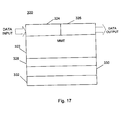
- the MME 320 comprises means 324 for receiving a paging request message from a CS network regarding an incoming CS call to a User Equipment (UE) connected to said LTE network, and means 326 for forwarding the paging request to the UE in the LTE network.
- UE User Equipment
- the MME further comprises means 328 for storing the User Equipment's current position in the LTE network in a LTE position format and processing means 330 for transforming the UE's position in LTE format to position information in a CS format.
- the MME further comprises means 332 for storing a mapping table for transforming the UE's position in the LTE format to position information in the CS format, and wherein said processing means are arranged to use the mapping table for transforming the UE's position in the LTE format to position information in the CS format.
- a User Equipment (UE) 340 for use in a radio communication system is considered to be a node of the system.
- a User Equipment may comprise a lot of different means for facilitating the UE to perform well-known functions beside the present invention. Said function means are gathered in a common block, which is denoted UE module 342.
- the UE is equipped with an antenna 341 for communicating on radio-frequency electromagnetic waves over the air interface with the radio antennas of the Radio Base Stations.
- said UE it is provided with means 344 for communicating with a Packet Switched Long Term Evolution (LTE) network and System Architecture Evolution (SAE) network and means 346 for communicating with a Circuit Switched (CS) network.
- the UE further may comprise means 348 for connecting to the CS network, means 350 for receiving an incoming Circuit-switched (CS) call, which comprises means 352 for receiving a paging request regarding said incoming CS call from the CS network via said LTE network and SAE network, and means 354 for responding to the paging request in the CS network.
- CS Circuit-switched
- the UE may also comprise means 356 for extracting Location Area (LA) information from the paging request, which LA information is indicating at least one Location Area (LA) in the CS network from which the UE is allowed respond to the page request.
- the UE further comprises means 358 for receiving a registration response message from the CS network, which registration response message includes information indicating at least one Location Area (LA) in the CS network from which the UE is allowed to respond to the page request.
- the UE further may comprise means 360 for initiating an outgoing Circuit-switched (CS) call while being connected to the LTE network and SAE network.
- CS Circuit-switched
- ENode B is situated in and connected to a Long Term Evolution (LTE) network, which is connected to a System Architecture Evolution (SAE) network, which is illustrated in Fig 19 .
- LTE Long Term Evolution
- SAE System Architecture Evolution
- An eNode B has been described in connection with the system in figure 2 , wherein the eNode B has reference number 27.
- the eNode B's ordinary functions and corresponding means are illustrated as a module 372.
- the eNode B is adapted to communicate with different entities and networks, and it is therefore provided with data input means for receiving data information and data output means for sending data information.
- An eNode B 370 comprises means 372 for receiving a paging request message regarding an incoming CS call to a User Equipment (UE) connected to said LTE network, and means 374 for forwarding the paging request to the UE in the LTE network. Further, the eNode B may comprise means 376 for storing the User Equipment's current position in the LTE network in a LTE position format and processing means 378 for transforming the UE's position in LTE format to position information in a CS format.
- UE User Equipment
- Said transforming is made possible by means 380 for storing a mapping table for transforming the UE's position in the LTE format to position information in the CS format, and wherein said processing means 378 are arranged to use the mapping table for transforming the UE's position in the LTE format to position information in the CS format.
- said node is provided with means 382 for including LA information in broadcast information, which is transmitted in a broadcast channel from eNode B.
- said node is provided with means 384 for including in a paging request additional information that that helps the UE to accelerate the selection of an GSM/WCDMA cell.
- the eNode B may comprise means 384 for receiving triggers and/or trigger signals, and means 388 for sending LA information to an individual UE as a response to said triggers.
- the eNode B when receiving TA Update, the eNode B is adapted to send relevant LA information, e.g. LA Identity as part of the TA Update response. Alternatively, the eNode B is adapted to send relevant LA information as a dedicated message.
- relevant LA information e.g. LA Identity
- the eNode B is adapted to send relevant LA information as a dedicated message.
- the eNode B is adapted to receive triggers/trigger signals and, as a response to said triggers, send LA information to an individual UE.
- One such trigger is Configuration, i.e. as soon as the LA information of the current cell is different from the one previously sent to the UE the LA information is sent to the UE If no LA information has been sent previously the LA information is sent as soon as the UE enters LTE_Active state.
- Another trigger is the UE measurement reports received. Further, one trigger is the reception of an eNode B measurement. Also, one trigger is generated when the eNode B sends relevant LA information concatenated with another message sent to the UE or as a dedicated message.
- Said embodiments may be implemented in many ways, such as software program instructions for processing means, such as microprocessors, computers, CPU (Computer Processing Unit),etc.
- the invention may also be implemented as hardware or firmware, or a combination of at least two of said examples.
Landscapes
- Engineering & Computer Science (AREA)
- Computer Networks & Wireless Communication (AREA)
- Signal Processing (AREA)
- Databases & Information Systems (AREA)
- Mobile Radio Communication Systems (AREA)
- Telephone Function (AREA)
- Telephonic Communication Services (AREA)
Claims (14)
- Procédé destiné à permettre l'accès d'un équipement d'utilisateur, UE, à des services commutés en circuit, CS, fournis par un réseau CS, tout en étant connecté à un réseau d'évolution à long terme, LTE, et à un réseau d'évolution d'architecture de système, SAE, lequel réseau SAE fait partie d'un réseau fédérateur commuté en paquets, PS, dans lequel une position en cours de l'équipement UE est stockée sous un format de position LTE dans le réseau LTE ou dans le réseau SAE, caractérisé en ce que le procédé comprend les étapes ci-dessous consistant à :- transformer (étape 1, 116, 119, 143) la position de l'équipement UE au format LTE en des informations de position au format CS de l'équipement UE ;- enregistrer (étape 2, 146) l'équipement UE dans le réseau CS en utilisant lesdites informations de position transformées ;- établir (étape 3) un accès à des services CS délivrés par ledit réseau CS.
- Procédé selon la revendication 1, dans lequel les informations de position LTE utilisées au cours de l'étape de transformation sont soit une identité de cellule LTE, soit une identité de zone de suivi, TA, soit une combinaison de ladite identité de cellule LTE et de ladite identité TA.
- Procédé selon la revendication 1 ou 2, dans lequel l'étape de transformation (116) est mise en oeuvre par un noeud d'entité de gestion de la mobilité, MME, commandant le réseau dans lequel l' équipement UE est à cet instant en visite.
- Procédé selon la revendication 1 ou 2, dans lequel l'étape de transformation (119) est mise en oeuvre par un noeud MSC/VLR du réseau CS dans lequel l'équipement UE est à cet instant en visite.
- Procédé selon la revendication 1 ou 2, dans lequel l'étape de transformation (143) est mise en oeuvre par un noeud « eNode B » de la cellule dans laquelle l'équipement UE est à cet instant en visite.
- Procédé selon la revendication 1 ou 2, dans lequel la position de l'équipement UE dans le réseau LTE et dans le réseau SAE est périodiquement mise à jour au cours d'une mise à jour de zone TA, et dans lequel une entité de gestion de la mobilité, MME, est chargée d'un processus de mise à jour de zone d'emplacement, LA, vers un noeud MSC/VLR dans le réseau CS, en vue de mettre à jour la position de l'équipement UE dans le réseau CS au cours de la mise à jour de zone TA, laquelle entité MME commande une zone TA de réseau LTE où l'équipement UE est à cet instant en visite, lequel noeud MSC/VLR commande une zone LA de réseau CS couvrant la zone où l'équipement UE est à cet instant en visite, et lequel processus de mise à jour de zone LA comprend l'étape ci-dessous dans laquelle :- l'entité MME enregistre (146) l'identité de l'équipement UE dans le noeud MSC/VLR au cours de la mise à jour de zone TA.
- Procédé selon la revendication 1 ou 2, dans lequel une entité de gestion de la mobilité, MME, est chargée d'un processus de mise à jour de zone d'emplacement, LA, vers un noeud MSC/VLR dans le réseau CS, en vue de mettre à jour la position de l'équipement UE dans le réseau CS, laquelle entité MME commande une zone TA de réseau LTE où l'équipement UE est à cet instant en visite, lequel noeud MSC/VLR commande une zone LA de réseau CS couvrant la zone où l'équipement UE est à cet instant en visite, et lequel processus de mise à jour de zone LA comprend l'étape ci-dessous dans laquelle :- l'entité MME enregistre (146) l'identité de l'équipement UE dans le noeud MSC/VLR périodiquement, sur la base d'un temporisateur, pour une mise à jour LA périodique.
- Procédé selon la revendication 1 ou 2, dans lequel une entité de gestion de la mobilité, MME, est chargée d'un processus de mise à jour de zone d'emplacement, LA, vers un noeud MSC/VLR dans le réseau CS, en vue de mettre à jour la position de l'équipement UE dans le réseau CS, laquelle entité MME commande une zone TA de réseau LTE où l'équipement UE est à cet instant en visite, lequel noeud MSC/VLR commande une zone LA de réseau CS couvrant la zone où l'équipement UE est à cet instant en visite, et lequel processus de mise à jour de zone LA comprend l'étape ci-dessous dans laquelle :- l'entité MME enregistre (146) l'identité de l'équipement UE dans le noeud MSC/VLR lorsqu'une mise à jour de position de type « LTE_Active Mobility » est mise en oeuvre.
- Procédé selon la revendication 1 ou 2, dans lequel l'équipement UE est chargé d'un processus de mise à jour de zone d'emplacement, LA, vers un noeud MSC/VLR dans le réseau CS, en vue de mettre à jour la position de l'équipement UE dans le réseau CS, lequel noeud MSC/VLR commande une cellule de réseau CS où l'équipement UE est à cet instant en visite, et lequel processus de mise à jour de zone LA comprend l'étape ci-dessous dans laquelle :- l'équipement UE (162) envoie des informations de mise à jour de zone LA au noeud MSC/VLR via les réseaux LTE et SAE auxquels l'équipement UE est connecté.
- Procédé selon la revendication 1 ou 2, dans lequel l'étape consistant à établir l'accès à des services CS consiste à permettre à l'équipement d'utilisateur, UE, de recevoir un appel commuté en circuit, CS, entrant comprenant les étapes ci-dessous dans lesquelles :- l'équipement UE reçoit (184) une demande de radiomessagerie, concernant ledit appel CS entrant, en provenance du réseau CS, via ledit réseau LTE et ledit réseau SAE ;- l'équipement UE se connecte (« 200: CONNECT ») au réseau CS et répond à la demande de radiomessagerie dans le réseau CS.
- Procédé selon la revendication 10, dans lequel la demande de radiomessagerie comprend des informations indiquant au moins une zone d'emplacement, LA, dans le réseau CS, à partir de laquelle l'équipement UE est autorisé à répondre à la demande de radiomessagerie.
- Procédé selon la revendication 1 ou 2, dans lequel l'étape consistant à établir l'accès aux services CS consiste à permettre à l'équipement d'utilisateur, UE, d'initier un appel commuté en circuit, CS, sortant, tout en étant connecté au réseau LTE et au réseau SAE, comprenant les étapes ci-dessous dans lesquelles :- l'équipement UE se connecte au réseau CS ; et- l'équipement UE initie l'appel CS sortant dans le réseau CS.
- Noeud dans un système de communication radio comprenant un réseau commuté en circuit, CS, (26), un réseau d'évolution à long terme, LTE, (34) et un réseau d'évolution d'architecture de système, SAE, (37), le noeud fournissant un moyen pour stocker la position en cours d'un équipement d'utilisateur, UE, sous un format de position LTE, caractérisé en ce que le noeud comprend un moyen de traitement (330, 310, 378) pour transformer la position de l'équipement UE au format LTE en des informations de position au format CS, et pour enregistrer l'équipement UE dans le réseau CS en utilisant lesdites informations de position transformées.
- Noeud selon la revendication 13, dans lequel le noeud est une entité de gestion de la mobilité, MME, dans le réseau SAE.
Applications Claiming Priority (4)
| Application Number | Priority Date | Filing Date | Title |
|---|---|---|---|
| SE0700081 | 2007-01-15 | ||
| SE0700625 | 2007-03-13 | ||
| EP07748351A EP2123011B1 (fr) | 2007-01-15 | 2007-03-23 | Procédés et dispositifs pour la réception d'un message radio transmis à un terminal (radiomessagerie) pour de services de communication commutées par un réseau de communications à commutation de paquets à technologie lte |
| PCT/SE2007/050180 WO2008088258A1 (fr) | 2007-01-15 | 2007-03-23 | Procédés et dispositifs pour des services à commutation de circuits dans des réseaux de communication |
Related Parent Applications (1)
| Application Number | Title | Priority Date | Filing Date |
|---|---|---|---|
| EP07748351.9 Division | 2007-03-23 |
Publications (2)
| Publication Number | Publication Date |
|---|---|
| EP2285174A1 EP2285174A1 (fr) | 2011-02-16 |
| EP2285174B1 true EP2285174B1 (fr) | 2013-01-02 |
Family
ID=39636185
Family Applications (3)
| Application Number | Title | Priority Date | Filing Date |
|---|---|---|---|
| EP10176123A Active EP2285174B1 (fr) | 2007-01-15 | 2007-03-23 | Procédé et agencements pour services à circuit commutés dans des réseaux de communication |
| EP07748351A Active EP2123011B1 (fr) | 2007-01-15 | 2007-03-23 | Procédés et dispositifs pour la réception d'un message radio transmis à un terminal (radiomessagerie) pour de services de communication commutées par un réseau de communications à commutation de paquets à technologie lte |
| EP12156013A Withdrawn EP2456185A3 (fr) | 2007-01-15 | 2007-03-23 | Procédé et agencements pour services à circuit commutés dans des réseaux de communication |
Family Applications After (2)
| Application Number | Title | Priority Date | Filing Date |
|---|---|---|---|
| EP07748351A Active EP2123011B1 (fr) | 2007-01-15 | 2007-03-23 | Procédés et dispositifs pour la réception d'un message radio transmis à un terminal (radiomessagerie) pour de services de communication commutées par un réseau de communications à commutation de paquets à technologie lte |
| EP12156013A Withdrawn EP2456185A3 (fr) | 2007-01-15 | 2007-03-23 | Procédé et agencements pour services à circuit commutés dans des réseaux de communication |
Country Status (13)
| Country | Link |
|---|---|
| US (2) | US8320291B2 (fr) |
| EP (3) | EP2285174B1 (fr) |
| JP (3) | JP4976506B2 (fr) |
| CN (2) | CN101595714B (fr) |
| AR (1) | AR063483A1 (fr) |
| AT (1) | ATE531193T1 (fr) |
| EG (1) | EG26531A (fr) |
| ES (1) | ES2375001T3 (fr) |
| MX (1) | MX2009007495A (fr) |
| NZ (1) | NZ578161A (fr) |
| PL (1) | PL2123011T3 (fr) |
| RU (1) | RU2446600C2 (fr) |
| WO (1) | WO2008088258A1 (fr) |
Families Citing this family (71)
| Publication number | Priority date | Publication date | Assignee | Title |
|---|---|---|---|---|
| EP2285174B1 (fr) * | 2007-01-15 | 2013-01-02 | Telefonaktiebolaget L M Ericsson (Publ) | Procédé et agencements pour services à circuit commutés dans des réseaux de communication |
| US8625475B2 (en) * | 2007-09-24 | 2014-01-07 | Qualcomm Incorporated | Responding to an interactive multicast message within a wireless communication system |
| CN101399767B (zh) * | 2007-09-29 | 2011-04-20 | 华为技术有限公司 | 终端移动时安全能力协商的方法、系统及装置 |
| GB2454647B (en) * | 2007-10-05 | 2010-02-17 | Samsung Electronics Co Ltd | Mobile communications method and apparatus |
| US8520596B2 (en) * | 2007-12-19 | 2013-08-27 | Telefonaktiebolaget L M Ericsson (Publ) | Inter-domain coordination for MT and MO calls |
| CN101489288B (zh) * | 2008-01-16 | 2011-04-20 | 华为技术有限公司 | 演进分组网络中电路域业务的处理方法、系统及相关设备 |
| CN103402252A (zh) | 2008-01-31 | 2013-11-20 | 日本电气株式会社 | 无线通信系统、基站设备、移动控制节点以及无线通信的方法 |
| CN101572864B (zh) * | 2008-05-04 | 2011-09-21 | 电信科学技术研究院 | 用户信息通知方法、系统和装置 |
| US8243725B2 (en) | 2008-08-13 | 2012-08-14 | Interdigital Patent Holdings, Inc. | Maintaining circuit switched continuity in an enhanced universal terrestrial radio access network |
| EP2374314B1 (fr) | 2008-12-17 | 2015-03-25 | Telefonaktiebolaget L M Ericsson (publ) | Procédé et appareil destiné à un réseau de communication sans fil et permettant de traiter au moins une zone de suivi principale |
| GB2466677B (en) * | 2009-01-06 | 2012-09-19 | Samsung Electronics Co Ltd | Voice communication between user equipment and network |
| WO2010094319A1 (fr) * | 2009-02-17 | 2010-08-26 | Telefonaktiebolaget Lm Ericsson (Publ) | Procédé pour réguler un réseau de communication, serveurs, systèmes comprenant des serveurs et programmes informatiques |
| US8532015B2 (en) * | 2009-02-20 | 2013-09-10 | Nokia Siemens Networks Oy | Methods and apparatuses for transmitting downlink control signaling on wireless relay link |
| IL198100A (en) | 2009-04-07 | 2016-08-31 | Intucell Ltd | METHOD AND SYSTEM FOR GETTING INFORMATION ON A RADIO ACCESS NETWORK OF A MOBILE COMMUNICATION NETWORK |
| CA2765535C (fr) | 2009-06-16 | 2015-10-13 | Research In Motion Limited | Procede pour acceder a un service non disponible par l'intermediaire d'une cellule reseau |
| KR20120030548A (ko) * | 2009-06-16 | 2012-03-28 | 리서치 인 모션 리미티드 | 네트워크 셀을 통해 이용할 수 없는 서비스를 액세스하기 위한 방법 |
| EP2443869B1 (fr) | 2009-06-16 | 2014-08-27 | BlackBerry Limited | Procédé pour accéder à un service non disponible par l'intermédiaire d'une cellule réseau |
| US9743228B2 (en) * | 2009-06-22 | 2017-08-22 | Qualcomm Incorporated | Transport of LCS-related messages for LTE access |
| SG177325A1 (en) | 2009-06-29 | 2012-02-28 | Research In Motion Ltd | System and methods for accessing voice services based on voice service indicators in an evolved packet system |
| CN101964965B (zh) | 2009-07-23 | 2013-01-09 | 华为技术有限公司 | 语音呼叫回退到电路交换域的方法、装置及系统 |
| CN101998590B (zh) | 2009-08-25 | 2015-05-20 | 中兴通讯股份有限公司 | 一种用户可达的实现方法以及多模终端 |
| JP5878123B2 (ja) * | 2009-09-27 | 2016-03-08 | ゼットティーイー コーポレーションZte Corporation | 状態遷移方法及び装置 |
| EP2485562A1 (fr) * | 2009-09-30 | 2012-08-08 | Fujitsu Limited | Système de communication mobile, dispositif sans fil et unité de commande de dispositif sans fil |
| US8515485B2 (en) | 2009-10-20 | 2013-08-20 | Lg Electronics Inc. | Provisioning of voice and other CS-domain services |
| JP4733206B2 (ja) * | 2009-11-06 | 2011-07-27 | 株式会社エヌ・ティ・ティ・ドコモ | 移動通信方法及び移動局 |
| KR101682930B1 (ko) * | 2009-11-26 | 2016-12-07 | 삼성전자 주식회사 | 통신 시스템에서 무선 단말의 지역 기반 접속 허용 리스트 생성 방법 및 장치 |
| US9252936B2 (en) | 2009-12-17 | 2016-02-02 | Telefonaktiebolaget L M Ericsson (Publ) | GSM and LTE multiplexing |
| US8787174B2 (en) * | 2009-12-31 | 2014-07-22 | Tekelec, Inc. | Methods, systems, and computer readable media for condition-triggered policies |
| US8594006B2 (en) * | 2010-01-27 | 2013-11-26 | Qualcomm Incorporated | Setting up a multicast group communication session within a wireless communications system |
| US9185510B2 (en) * | 2010-03-03 | 2015-11-10 | Tekelec, Inc. | Methods, systems, and computer readable media for managing the roaming preferences of mobile subscribers |
| JP2011188017A (ja) * | 2010-03-04 | 2011-09-22 | Panasonic Corp | 移動通信端末装置及び無線通信方法 |
| US9917700B2 (en) | 2010-03-15 | 2018-03-13 | Tekelec, Inc. | Systems, methods, and computer readable media for policy enforcement correlation |
| US9026111B2 (en) | 2010-04-29 | 2015-05-05 | Alcatel Lucent | Method and system of handling requests for location information of mobile devices |
| CN101867931B (zh) * | 2010-05-28 | 2013-03-13 | 中国科学院计算技术研究所 | 实现lte系统中的非接入层的装置和方法 |
| KR20110137652A (ko) * | 2010-06-17 | 2011-12-23 | 삼성전자주식회사 | 무선 통신 시스템 및 그의 사용자 단말기와 이동성 관리 엔티티 간 연결 방법 |
| US8812020B2 (en) | 2010-10-15 | 2014-08-19 | Tekelec, Inc. | Methods, systems, and computer readable media for location-based policy enhancement |
| US8626156B2 (en) | 2010-10-20 | 2014-01-07 | Tekelec, Inc. | Methods, systems, and computer readable media for selective policy enhancement (PE) for high-usage roamers |
| JP2012114804A (ja) * | 2010-11-26 | 2012-06-14 | Kyocera Corp | 無線端末装置及び制御方法 |
| CN102026366B (zh) * | 2010-12-16 | 2014-02-26 | 华为技术有限公司 | 单卡双待网络注册方法以及网络控制设备 |
| US8681622B2 (en) | 2010-12-17 | 2014-03-25 | Tekelec, Inc. | Policy and charging rules function (PCRF) and performance intelligence center (PIC) based congestion control |
| JP5676236B2 (ja) * | 2010-12-22 | 2015-02-25 | 京セラ株式会社 | 無線端末装置及び制御方法 |
| EP2668806B1 (fr) | 2011-01-27 | 2018-05-16 | Deutsche Telekom AG | Procédé permettant l'utilisation d'un réseau de communication mobile gsm/umts par un équipement utilisateur connecté à un réseau central d'un réseau de communication mobile à système de paquets évolué (eps) |
| JP5654380B2 (ja) * | 2011-02-23 | 2015-01-14 | 株式会社Nttドコモ | 回線交換装置、着信制御方法 |
| TW201251494A (en) * | 2011-02-24 | 2012-12-16 | Interdigital Patent Holdings | Handling of low priority devices |
| JP5650597B2 (ja) * | 2011-06-23 | 2015-01-07 | 京セラ株式会社 | 無線端末装置、通信方法及び通信プログラム |
| US9860390B2 (en) | 2011-08-10 | 2018-01-02 | Tekelec, Inc. | Methods, systems, and computer readable media for policy event record generation |
| US8954060B2 (en) * | 2011-08-12 | 2015-02-10 | Globe Wireless Llc | System to provide GSM over distributed mobile networks |
| JP5223952B2 (ja) * | 2011-08-12 | 2013-06-26 | 日本電気株式会社 | 移動体通信システム、移動局、交換局および移動局の位置登録方法 |
| US9131476B2 (en) * | 2011-08-16 | 2015-09-08 | Amazon Technologies, Inc. | Optimizing voice calls on packet switched networks |
| GB2500267A (en) * | 2012-03-16 | 2013-09-18 | Nec Corp | Using subscription information for a mobile device to select parameters when handing over from a LTE network to a CDMA network |
| EP2848037B1 (fr) * | 2012-05-09 | 2019-04-10 | Nokia Technologies Oy | Traitement de rejet de mise à jour de zone de suivi sans long délai |
| EP2873256B1 (fr) | 2012-07-14 | 2018-09-26 | Tekelec, Inc. | Procédés, systèmes et supports lisibles par ordinateur pour une dérivation locale (lbo) basée sur une politique |
| WO2014014829A1 (fr) | 2012-07-14 | 2014-01-23 | Tekelec, Inc. | Procédés, systèmes et supports lisibles par ordinateur pour gestion dynamique de congestion dans un réseau d'accès radio |
| US10477385B2 (en) | 2012-07-20 | 2019-11-12 | Tekelec, Inc. | Methods, systems and computer readable media for distributing policy rules to the mobile edge |
| CN103581894B (zh) * | 2012-08-09 | 2017-05-24 | 中兴通讯股份有限公司 | 一种srvcc支持同号的系统及方法 |
| US8768351B2 (en) | 2012-09-27 | 2014-07-01 | Hewlett-Packard Development Company, L.P. | Circuit-switched call delivery |
| JP2014112808A (ja) * | 2012-12-05 | 2014-06-19 | Fujitsu Ltd | 無線端末装置 |
| JP5525092B1 (ja) * | 2013-04-05 | 2014-06-18 | 日本電気株式会社 | 移動管理装置、通信システム、音声着信制御方法及びプログラム |
| US9642038B2 (en) | 2013-05-10 | 2017-05-02 | Google Technology Holdings LLC | Offloading communication from a cellular network to a wireless local area network |
| CN104581675B (zh) * | 2013-10-24 | 2018-12-14 | 阿尔卡特朗讯 | 一种用于更新tai-lai映射表的方法及装置 |
| EP2869648B1 (fr) * | 2013-10-31 | 2020-07-08 | Alcatel Lucent | Réponse à des requêtes de radiomessagerie en attente pour demander une connexion à un réseau sans fil |
| CN105474699B (zh) * | 2014-01-10 | 2019-03-08 | 华为技术有限公司 | 一种承载电路域语音业务的方法及装置 |
| CN105393591A (zh) | 2014-06-24 | 2016-03-09 | 华为技术有限公司 | 一种节约语音资源的方法、设备及系统 |
| WO2016007383A1 (fr) * | 2014-07-11 | 2016-01-14 | Apple Inc. | Repli sur commutation de circuits à fiabilité améliorée dans des zones de chevauchement de groupes |
| US20180115884A1 (en) * | 2015-04-21 | 2018-04-26 | British Telecommunications Public Limited Company | Maintenance of local/tracking area mappings |
| CN107135530B (zh) * | 2016-02-26 | 2020-10-02 | 北京佰才邦技术有限公司 | 提供服务提供商标识的方法、装置、接入设备及终端设备 |
| US9986479B2 (en) * | 2016-03-01 | 2018-05-29 | Qualcomm Incorporated | Carrier prioritization for tune-away |
| CN116347660A (zh) * | 2016-08-19 | 2023-06-27 | 日本电气株式会社 | 每个会话用户平面连接激活或停用的方法 |
| US11116041B1 (en) | 2020-02-10 | 2021-09-07 | Sprint Communications Company L.P. | Wireless data service control over radio bands in a wireless communication network |
| WO2022094754A1 (fr) * | 2020-11-03 | 2022-05-12 | Apple Inc. | Identité et radiomessagerie de cellule pour réseaux non terrestres (ntn) |
| WO2025210591A1 (fr) * | 2024-04-05 | 2025-10-09 | Telefonaktiebolaget Lm Ericsson (Publ) | Procédés et nœuds pour procédure de commande de l'a-ido |
Family Cites Families (40)
| Publication number | Priority date | Publication date | Assignee | Title |
|---|---|---|---|---|
| US5278890A (en) * | 1991-11-27 | 1994-01-11 | At&T Bell Laboratories | Paging arrangements in a cellular mobile switching system |
| FI980351L (fi) | 1997-02-19 | 1998-08-20 | Nokia Telecommunications Oy | Solukkoradioaccessverkko sekä sijainninpäivitys langattomassa tietoliikennejärjestelmässä |
| US6608832B2 (en) * | 1997-09-25 | 2003-08-19 | Telefonaktiebolaget Lm Ericsson | Common access between a mobile communications network and an external network with selectable packet-switched and circuit-switched and circuit-switched services |
| FI106286B (fi) | 1997-09-30 | 2000-12-29 | Nokia Networks Oy | Matkaviestintilaajan kutsu pakettiyhteyden muodostamiseksi |
| EP1079582A1 (fr) * | 1999-08-20 | 2001-02-28 | Telefonaktiebolaget L M Ericsson (Publ) | Procédé d'interfonctionnement des paramètres des services |
| GB0015715D0 (en) * | 2000-06-27 | 2000-08-16 | Nokia Networks Oy | Maintaining association in a communications network |
| US20020061756A1 (en) * | 2000-11-17 | 2002-05-23 | Bleckert Peter Nils Olov | Paging co-ordination in telecommunication networks |
| JP2002186011A (ja) | 2000-12-11 | 2002-06-28 | Hitachi Ltd | 移動通信システム |
| DE10105093A1 (de) * | 2001-02-05 | 2002-08-08 | Nokia Corp | Paging-Verfahren und -System für ein Funkzugriffsnetz |
| US20020110104A1 (en) * | 2001-02-13 | 2002-08-15 | Telefonaktiebolaget Lm Ericsson (Publ). | Hybrid media gateway control function providing circuit-switched access to a packet-switched radio telecommunications network |
| FR2822614B1 (fr) * | 2001-03-23 | 2003-08-01 | Evolium Sas | Coordination de l'envoi de messages de recherche dans un systeme de radiocommunications mobiles |
| GB0115996D0 (en) * | 2001-06-29 | 2001-08-22 | Nokia Corp | Circuit-switched and packet-switched communications |
| US6954654B2 (en) * | 2001-07-31 | 2005-10-11 | Lucent Technologies Inc. | Provision of services in a communication system including an interworking mobile switching center |
| JP4608830B2 (ja) * | 2001-08-22 | 2011-01-12 | 日本電気株式会社 | 移動通信システム及び通信制御方法並びにこれに用いる移動端末及びその制御方法 |
| CN1281091C (zh) * | 2001-11-28 | 2006-10-18 | 诺基亚公司 | 获取允许对附连到通信网络的终端定位的位置信息的方法 |
| JP2004032643A (ja) * | 2002-06-28 | 2004-01-29 | Fujitsu Ltd | 移動体通信システムの制御方法 |
| JP4013701B2 (ja) | 2002-08-28 | 2007-11-28 | 日本電気株式会社 | 移動通信システム、その動作制御方法及びそれに用いるノード並びに無線制御装置 |
| US7873015B2 (en) | 2002-10-18 | 2011-01-18 | Kineto Wireless, Inc. | Method and system for registering an unlicensed mobile access subscriber with a network controller |
| CN101730180A (zh) * | 2002-10-18 | 2010-06-09 | 卡耐特无线有限公司 | 扩展有执照无线通信系统覆盖区域的装置与方法 |
| FR2850518B1 (fr) * | 2003-01-29 | 2005-05-20 | Evolium Sas | Procede pour l'acces simultane a des services circuit et a des services paquet dans un systeme cellulaire de radiocommunications mobiles |
| RU2236092C1 (ru) * | 2003-02-04 | 2004-09-10 | Харитонов Владимир Христианович | Способ коммутации при передаче и приеме мультимедийной информации |
| GB2398458B (en) | 2003-02-15 | 2005-05-25 | Ericsson Telefon Ab L M | Conversational bearer negotiation |
| CN1549650A (zh) * | 2003-05-19 | 2004-11-24 | 华为技术有限公司 | 一种用户终端建立业务连接的方法 |
| GB0314252D0 (en) | 2003-06-19 | 2003-07-23 | Ericsson Telefon Ab L M | Conversational bearer negotiation |
| US7359373B2 (en) * | 2003-10-17 | 2008-04-15 | Nokia Corporation | System, apparatus, and method for establishing circuit-switched communications via packet-switched network signaling |
| SE0303543D0 (sv) * | 2003-12-23 | 2003-12-23 | Ericsson Telefon Ab L M | Connection-oriented paging over ranap |
| JP4325498B2 (ja) | 2004-07-07 | 2009-09-02 | セイコーエプソン株式会社 | 液晶表示装置および電子機器 |
| US7606197B2 (en) * | 2004-08-23 | 2009-10-20 | Telefonaktiebolaget Lm Ericsson (Publ) | Event notification in a hybrid network |
| US9198156B2 (en) * | 2004-08-23 | 2015-11-24 | Telefonaktiebolaget L M Ericsson (Publ) | Paging mobile stations in a hybrid network |
| US20060073841A1 (en) * | 2004-10-01 | 2006-04-06 | Murali Narasimha | Method and communication system for establishing a voice call connection |
| BRPI0419099B1 (pt) | 2004-10-06 | 2017-12-12 | Telecom Italia S.P.A. | Method of providing services combined to users of mobile, and, mobile communication system |
| WO2006049421A1 (fr) * | 2004-11-02 | 2006-05-11 | Samsung Electronics Co., Ltd. | Systeme d'interfonctionnement de reseaux et procede pour fournir un service vocal integre et un service de messages courts entre des reseaux de communication sans fil, et appareil de commutation par paquets associe |
| US20060109819A1 (en) * | 2004-11-22 | 2006-05-25 | Marin James S | Method and apparatus for inter-system active handoff of a hybrid subscriber unit |
| WO2006103093A2 (fr) * | 2005-03-31 | 2006-10-05 | Telefonaktiebolaget Lm Ericsson (Publ) | Technique de coordination d'enregistrements cs et ps dans un reseau central a operateurs multiples |
| KR101182065B1 (ko) | 2005-04-04 | 2012-09-11 | 후아웨이 테크놀러지 컴퍼니 리미티드 | 이중 모드 단말기의 통신 방법 및 시스템 |
| EP1784035A1 (fr) * | 2005-11-07 | 2007-05-09 | Alcatel Lucent | Méthode de rétablissement d'une connexion dans un système de communication mobile |
| US9019953B2 (en) * | 2006-06-30 | 2015-04-28 | Telefonaktiebolaget L M Ericsson (Publ) | Network node, method, and mobile terminal for providing voice calls to a mobile terminal in a packet-switched-only network |
| US8159980B2 (en) * | 2006-10-03 | 2012-04-17 | Nokia Corporation | PS network with CS service enabling functionality |
| CN101622843A (zh) * | 2007-01-12 | 2010-01-06 | 诺基亚公司 | 用于提供自动控制信道映射的方法和装置 |
| EP2285174B1 (fr) | 2007-01-15 | 2013-01-02 | Telefonaktiebolaget L M Ericsson (Publ) | Procédé et agencements pour services à circuit commutés dans des réseaux de communication |
-
2007
- 2007-03-23 EP EP10176123A patent/EP2285174B1/fr active Active
- 2007-03-23 NZ NZ578161A patent/NZ578161A/en unknown
- 2007-03-23 PL PL07748351T patent/PL2123011T3/pl unknown
- 2007-03-23 CN CN2007800498566A patent/CN101595714B/zh active Active
- 2007-03-23 AT AT07748351T patent/ATE531193T1/de active
- 2007-03-23 RU RU2009131044/07A patent/RU2446600C2/ru active
- 2007-03-23 MX MX2009007495A patent/MX2009007495A/es active IP Right Grant
- 2007-03-23 CN CN201210060219.1A patent/CN102572786B/zh active Active
- 2007-03-23 EP EP07748351A patent/EP2123011B1/fr active Active
- 2007-03-23 JP JP2009545514A patent/JP4976506B2/ja active Active
- 2007-03-23 WO PCT/SE2007/050180 patent/WO2008088258A1/fr not_active Ceased
- 2007-03-23 EP EP12156013A patent/EP2456185A3/fr not_active Withdrawn
- 2007-03-23 US US12/523,147 patent/US8320291B2/en active Active
- 2007-03-23 ES ES07748351T patent/ES2375001T3/es active Active
- 2007-10-17 AR ARP070104610A patent/AR063483A1/es active IP Right Grant
-
2009
- 2009-07-14 EG EG2009071084A patent/EG26531A/en active
-
2011
- 2011-05-09 US US13/103,150 patent/US9036568B2/en active Active
-
2012
- 2012-02-23 JP JP2012037765A patent/JP5481506B2/ja active Active
-
2013
- 2013-08-22 JP JP2013172629A patent/JP5579906B2/ja active Active
Also Published As
| Publication number | Publication date |
|---|---|
| CN101595714A (zh) | 2009-12-02 |
| JP4976506B2 (ja) | 2012-07-18 |
| MX2009007495A (es) | 2009-07-17 |
| RU2446600C2 (ru) | 2012-03-27 |
| CN102572786A (zh) | 2012-07-11 |
| JP5579906B2 (ja) | 2014-08-27 |
| JP2014017832A (ja) | 2014-01-30 |
| CN102572786B (zh) | 2016-01-06 |
| ATE531193T1 (de) | 2011-11-15 |
| ES2375001T3 (es) | 2012-02-23 |
| EP2123011A1 (fr) | 2009-11-25 |
| CN101595714B (zh) | 2013-06-12 |
| US9036568B2 (en) | 2015-05-19 |
| EP2123011B1 (fr) | 2011-10-26 |
| EP2285174A1 (fr) | 2011-02-16 |
| EG26531A (en) | 2014-02-02 |
| EP2456185A3 (fr) | 2012-08-22 |
| NZ578161A (en) | 2011-12-22 |
| JP2012138941A (ja) | 2012-07-19 |
| US20100080171A1 (en) | 2010-04-01 |
| US8320291B2 (en) | 2012-11-27 |
| JP5481506B2 (ja) | 2014-04-23 |
| EP2456185A2 (fr) | 2012-05-23 |
| US20110274046A1 (en) | 2011-11-10 |
| RU2009131044A (ru) | 2011-02-27 |
| WO2008088258A1 (fr) | 2008-07-24 |
| AR063483A1 (es) | 2009-01-28 |
| EP2123011A4 (fr) | 2010-12-08 |
| PL2123011T3 (pl) | 2012-03-30 |
| JP2010516167A (ja) | 2010-05-13 |
Similar Documents
| Publication | Publication Date | Title |
|---|---|---|
| EP2285174B1 (fr) | Procédé et agencements pour services à circuit commutés dans des réseaux de communication | |
| US10856255B2 (en) | Methods and systems of paging in cellular networks | |
| EP2016720B1 (fr) | Réseaux de télécommunications | |
| EP2398264B1 (fr) | Rechange entre technologies d'accès radio | |
| US8457659B2 (en) | Telecommunications networks | |
| US9622212B2 (en) | Paging method and device | |
| EP2016785A1 (fr) | Reseaux de telecommunication | |
| CN101448287A (zh) | 一种激活状态下用户设备跨接入网切换的实现方法 | |
| EP2992694B1 (fr) | Évitement de la formation d'une boucle d'appel résultant du traitement d'un appel à destination d'un mobile en parallèle avec une mise à jour de localisation dans un réseau de communication sans fil | |
| CN101448225B (zh) | 电路域终呼的实现方法和系统 | |
| KR101828509B1 (ko) | 이동통신 시스템에서 로밍 게이트웨이 서비스 방법 및 망 연동 장치 |
Legal Events
| Date | Code | Title | Description |
|---|---|---|---|
| PUAI | Public reference made under article 153(3) epc to a published international application that has entered the european phase |
Free format text: ORIGINAL CODE: 0009012 |
|
| 17P | Request for examination filed |
Effective date: 20100910 |
|
| AC | Divisional application: reference to earlier application |
Ref document number: 2123011 Country of ref document: EP Kind code of ref document: P |
|
| AK | Designated contracting states |
Kind code of ref document: A1 Designated state(s): AT BE BG CH CY CZ DE DK EE ES FI FR GB GR HU IE IS IT LI LT LU LV MC MT NL PL PT RO SE SI SK TR |
|
| REG | Reference to a national code |
Ref country code: DE Ref legal event code: R079 Ref document number: 602007027880 Country of ref document: DE Free format text: PREVIOUS MAIN CLASS: H04W0060000000 Ipc: H04W0068120000 |
|
| RIC1 | Information provided on ipc code assigned before grant |
Ipc: H04W 60/00 20090101ALI20110923BHEP Ipc: H04W 68/12 20090101AFI20110923BHEP |
|
| GRAP | Despatch of communication of intention to grant a patent |
Free format text: ORIGINAL CODE: EPIDOSNIGR1 |
|
| GRAS | Grant fee paid |
Free format text: ORIGINAL CODE: EPIDOSNIGR3 |
|
| GRAA | (expected) grant |
Free format text: ORIGINAL CODE: 0009210 |
|
| AC | Divisional application: reference to earlier application |
Ref document number: 2123011 Country of ref document: EP Kind code of ref document: P |
|
| AK | Designated contracting states |
Kind code of ref document: B1 Designated state(s): AT BE BG CH CY CZ DE DK EE ES FI FR GB GR HU IE IS IT LI LT LU LV MC MT NL PL PT RO SE SI SK TR |
|
| REG | Reference to a national code |
Ref country code: GB Ref legal event code: FG4D |
|
| REG | Reference to a national code |
Ref country code: AT Ref legal event code: REF Ref document number: 592180 Country of ref document: AT Kind code of ref document: T Effective date: 20130115 Ref country code: CH Ref legal event code: EP |
|
| REG | Reference to a national code |
Ref country code: IE Ref legal event code: FG4D |
|
| REG | Reference to a national code |
Ref country code: DE Ref legal event code: R096 Ref document number: 602007027880 Country of ref document: DE Effective date: 20130228 |
|
| REG | Reference to a national code |
Ref country code: NL Ref legal event code: VDEP Effective date: 20130102 |
|
| PG25 | Lapsed in a contracting state [announced via postgrant information from national office to epo] |
Ref country code: SI Free format text: LAPSE BECAUSE OF FAILURE TO SUBMIT A TRANSLATION OF THE DESCRIPTION OR TO PAY THE FEE WITHIN THE PRESCRIBED TIME-LIMIT Effective date: 20130102 |
|
| REG | Reference to a national code |
Ref country code: LT Ref legal event code: MG4D |
|
| PG25 | Lapsed in a contracting state [announced via postgrant information from national office to epo] |
Ref country code: BG Free format text: LAPSE BECAUSE OF FAILURE TO SUBMIT A TRANSLATION OF THE DESCRIPTION OR TO PAY THE FEE WITHIN THE PRESCRIBED TIME-LIMIT Effective date: 20130402 Ref country code: SE Free format text: LAPSE BECAUSE OF FAILURE TO SUBMIT A TRANSLATION OF THE DESCRIPTION OR TO PAY THE FEE WITHIN THE PRESCRIBED TIME-LIMIT Effective date: 20130102 Ref country code: LT Free format text: LAPSE BECAUSE OF FAILURE TO SUBMIT A TRANSLATION OF THE DESCRIPTION OR TO PAY THE FEE WITHIN THE PRESCRIBED TIME-LIMIT Effective date: 20130102 Ref country code: CZ Free format text: LAPSE BECAUSE OF FAILURE TO SUBMIT A TRANSLATION OF THE DESCRIPTION OR TO PAY THE FEE WITHIN THE PRESCRIBED TIME-LIMIT Effective date: 20130102 Ref country code: ES Free format text: LAPSE BECAUSE OF FAILURE TO SUBMIT A TRANSLATION OF THE DESCRIPTION OR TO PAY THE FEE WITHIN THE PRESCRIBED TIME-LIMIT Effective date: 20130413 Ref country code: IS Free format text: LAPSE BECAUSE OF FAILURE TO SUBMIT A TRANSLATION OF THE DESCRIPTION OR TO PAY THE FEE WITHIN THE PRESCRIBED TIME-LIMIT Effective date: 20130502 Ref country code: BE Free format text: LAPSE BECAUSE OF FAILURE TO SUBMIT A TRANSLATION OF THE DESCRIPTION OR TO PAY THE FEE WITHIN THE PRESCRIBED TIME-LIMIT Effective date: 20130102 |
|
| PG25 | Lapsed in a contracting state [announced via postgrant information from national office to epo] |
Ref country code: PT Free format text: LAPSE BECAUSE OF FAILURE TO SUBMIT A TRANSLATION OF THE DESCRIPTION OR TO PAY THE FEE WITHIN THE PRESCRIBED TIME-LIMIT Effective date: 20130502 Ref country code: LV Free format text: LAPSE BECAUSE OF FAILURE TO SUBMIT A TRANSLATION OF THE DESCRIPTION OR TO PAY THE FEE WITHIN THE PRESCRIBED TIME-LIMIT Effective date: 20130102 Ref country code: NL Free format text: LAPSE BECAUSE OF FAILURE TO SUBMIT A TRANSLATION OF THE DESCRIPTION OR TO PAY THE FEE WITHIN THE PRESCRIBED TIME-LIMIT Effective date: 20130102 Ref country code: FI Free format text: LAPSE BECAUSE OF FAILURE TO SUBMIT A TRANSLATION OF THE DESCRIPTION OR TO PAY THE FEE WITHIN THE PRESCRIBED TIME-LIMIT Effective date: 20130102 Ref country code: PL Free format text: LAPSE BECAUSE OF FAILURE TO SUBMIT A TRANSLATION OF THE DESCRIPTION OR TO PAY THE FEE WITHIN THE PRESCRIBED TIME-LIMIT Effective date: 20130102 Ref country code: GR Free format text: LAPSE BECAUSE OF FAILURE TO SUBMIT A TRANSLATION OF THE DESCRIPTION OR TO PAY THE FEE WITHIN THE PRESCRIBED TIME-LIMIT Effective date: 20130403 |
|
| REG | Reference to a national code |
Ref country code: DE Ref legal event code: R082 Ref document number: 602007027880 Country of ref document: DE Representative=s name: BURCHARDI, THOMAS, DIPL.-ING. UNIV., DE |
|
| PG25 | Lapsed in a contracting state [announced via postgrant information from national office to epo] |
Ref country code: MC Free format text: LAPSE BECAUSE OF NON-PAYMENT OF DUE FEES Effective date: 20130331 Ref country code: RO Free format text: LAPSE BECAUSE OF FAILURE TO SUBMIT A TRANSLATION OF THE DESCRIPTION OR TO PAY THE FEE WITHIN THE PRESCRIBED TIME-LIMIT Effective date: 20130102 Ref country code: SK Free format text: LAPSE BECAUSE OF FAILURE TO SUBMIT A TRANSLATION OF THE DESCRIPTION OR TO PAY THE FEE WITHIN THE PRESCRIBED TIME-LIMIT Effective date: 20130102 Ref country code: EE Free format text: LAPSE BECAUSE OF FAILURE TO SUBMIT A TRANSLATION OF THE DESCRIPTION OR TO PAY THE FEE WITHIN THE PRESCRIBED TIME-LIMIT Effective date: 20130102 Ref country code: DK Free format text: LAPSE BECAUSE OF FAILURE TO SUBMIT A TRANSLATION OF THE DESCRIPTION OR TO PAY THE FEE WITHIN THE PRESCRIBED TIME-LIMIT Effective date: 20130102 |
|
| REG | Reference to a national code |
Ref country code: CH Ref legal event code: PL |
|
| PLBE | No opposition filed within time limit |
Free format text: ORIGINAL CODE: 0009261 |
|
| STAA | Information on the status of an ep patent application or granted ep patent |
Free format text: STATUS: NO OPPOSITION FILED WITHIN TIME LIMIT |
|
| PG25 | Lapsed in a contracting state [announced via postgrant information from national office to epo] |
Ref country code: CY Free format text: LAPSE BECAUSE OF FAILURE TO SUBMIT A TRANSLATION OF THE DESCRIPTION OR TO PAY THE FEE WITHIN THE PRESCRIBED TIME-LIMIT Effective date: 20130102 |
|
| 26N | No opposition filed |
Effective date: 20131003 |
|
| PG25 | Lapsed in a contracting state [announced via postgrant information from national office to epo] |
Ref country code: IT Free format text: LAPSE BECAUSE OF FAILURE TO SUBMIT A TRANSLATION OF THE DESCRIPTION OR TO PAY THE FEE WITHIN THE PRESCRIBED TIME-LIMIT Effective date: 20130102 |
|
| REG | Reference to a national code |
Ref country code: IE Ref legal event code: MM4A |
|
| REG | Reference to a national code |
Ref country code: DE Ref legal event code: R097 Ref document number: 602007027880 Country of ref document: DE Effective date: 20131003 |
|
| PG25 | Lapsed in a contracting state [announced via postgrant information from national office to epo] |
Ref country code: CH Free format text: LAPSE BECAUSE OF NON-PAYMENT OF DUE FEES Effective date: 20130331 Ref country code: LI Free format text: LAPSE BECAUSE OF NON-PAYMENT OF DUE FEES Effective date: 20130331 Ref country code: IE Free format text: LAPSE BECAUSE OF NON-PAYMENT OF DUE FEES Effective date: 20130323 |
|
| PG25 | Lapsed in a contracting state [announced via postgrant information from national office to epo] |
Ref country code: MT Free format text: LAPSE BECAUSE OF FAILURE TO SUBMIT A TRANSLATION OF THE DESCRIPTION OR TO PAY THE FEE WITHIN THE PRESCRIBED TIME-LIMIT Effective date: 20130102 |
|
| PG25 | Lapsed in a contracting state [announced via postgrant information from national office to epo] |
Ref country code: HU Free format text: LAPSE BECAUSE OF FAILURE TO SUBMIT A TRANSLATION OF THE DESCRIPTION OR TO PAY THE FEE WITHIN THE PRESCRIBED TIME-LIMIT; INVALID AB INITIO Effective date: 20070323 Ref country code: LU Free format text: LAPSE BECAUSE OF NON-PAYMENT OF DUE FEES Effective date: 20130323 |
|
| REG | Reference to a national code |
Ref country code: FR Ref legal event code: PLFP Year of fee payment: 10 |
|
| REG | Reference to a national code |
Ref country code: FR Ref legal event code: PLFP Year of fee payment: 11 |
|
| REG | Reference to a national code |
Ref country code: FR Ref legal event code: PLFP Year of fee payment: 12 |
|
| P01 | Opt-out of the competence of the unified patent court (upc) registered |
Effective date: 20230527 |
|
| PGFP | Annual fee paid to national office [announced via postgrant information from national office to epo] |
Ref country code: GB Payment date: 20260327 Year of fee payment: 20 |
|
| PGFP | Annual fee paid to national office [announced via postgrant information from national office to epo] |
Ref country code: DE Payment date: 20260327 Year of fee payment: 20 |
|
| PGFP | Annual fee paid to national office [announced via postgrant information from national office to epo] |
Ref country code: AT Payment date: 20260327 Year of fee payment: 20 |
|
| PGFP | Annual fee paid to national office [announced via postgrant information from national office to epo] |
Ref country code: FR Payment date: 20260325 Year of fee payment: 20 |
|
| PGFP | Annual fee paid to national office [announced via postgrant information from national office to epo] |
Ref country code: TR Payment date: 20260310 Year of fee payment: 20 |