EP2285816B2 - Procédé d'isolation d'acides nucléiques à chaînes courtes - Google Patents
Procédé d'isolation d'acides nucléiques à chaînes courtes Download PDFInfo
- Publication number
- EP2285816B2 EP2285816B2 EP09757160.8A EP09757160A EP2285816B2 EP 2285816 B2 EP2285816 B2 EP 2285816B2 EP 09757160 A EP09757160 A EP 09757160A EP 2285816 B2 EP2285816 B2 EP 2285816B2
- Authority
- EP
- European Patent Office
- Prior art keywords
- nucleic acids
- dna
- nucleic acid
- short chain
- buffer
- Prior art date
- Legal status (The legal status is an assumption and is not a legal conclusion. Google has not performed a legal analysis and makes no representation as to the accuracy of the status listed.)
- Active
Links
Images




Classifications
-
- C—CHEMISTRY; METALLURGY
- C07—ORGANIC CHEMISTRY
- C07H—SUGARS; DERIVATIVES THEREOF; NUCLEOSIDES; NUCLEOTIDES; NUCLEIC ACIDS
- C07H1/00—Processes for the preparation of sugar derivatives
- C07H1/06—Separation; Purification
- C07H1/08—Separation; Purification from natural products
-
- C—CHEMISTRY; METALLURGY
- C12—BIOCHEMISTRY; BEER; SPIRITS; WINE; VINEGAR; MICROBIOLOGY; ENZYMOLOGY; MUTATION OR GENETIC ENGINEERING
- C12N—MICROORGANISMS OR ENZYMES; COMPOSITIONS THEREOF; PROPAGATING, PRESERVING, OR MAINTAINING MICROORGANISMS; MUTATION OR GENETIC ENGINEERING; CULTURE MEDIA
- C12N15/00—Mutation or genetic engineering; DNA or RNA concerning genetic engineering, vectors, e.g. plasmids, or their isolation, preparation or purification; Use of hosts therefor
- C12N15/09—Recombinant DNA-technology
- C12N15/10—Processes for the isolation, preparation or purification of DNA or RNA
- C12N15/1003—Extracting or separating nucleic acids from biological samples, e.g. pure separation or isolation methods; Conditions, buffers or apparatuses therefor
- C12N15/1006—Extracting or separating nucleic acids from biological samples, e.g. pure separation or isolation methods; Conditions, buffers or apparatuses therefor by means of a solid support carrier, e.g. particles, polymers
Definitions
- the present invention relates to a method for isolating and/or purifying nucleic acids, in particular short-chain nucleic acids.
- nucleic acids such as DNA and RNA from plant, animal or human materials as well as from cell cultures or virus cultures is usually carried out according to a uniform basic pattern: the starting materials containing nucleic acids are first broken down - sometimes using protein-degrading enzymes. In subsequent steps, the individual components can be separated using a wide variety of methods.
- nucleic acids can be isolated from sample materials in which they are free, i.e. not present in cells. For example, free nucleic acids can occur in artificial sample mixtures, but also in natural samples such as blood. Such freely circulating nucleic acids are also called extracellular nucleic acids.
- the classic methods are based on a one-step process in which an extraction is carried out after the addition of a buffer, which in most cases contains a chaotrope, and after the addition of an organic extraction agent - usually phenol and/or chloroform.
- the unwanted accompanying substances are discarded with the organic phase.
- the nucleic acids remaining in the aqueous phase can then be separated off by phase separation and thus isolated.
- the main disadvantage of this procedure is that, in addition to the use of toxic and harmful substances such as phenol and/or chloroform, water-soluble substances remain as impurities in the aqueous nucleic acid solution, which have to be removed in further, very time-consuming purification steps.
- nucleic acid-containing starting material is lysed and brought into contact with the carrier material under defined conditions, so that the nucleic acids can bind to the carrier material; if necessary, washing steps are carried out.
- the nucleic acid bound to the carrier is then eluted from the carrier material using a suitable buffer.
- a method for isolating nucleic acids that is suitable for a large number of different applications is, for example, in US 5,234,809 (Boom ) disclosed.
- a method for isolating nucleic acids from starting materials containing nucleic acids by incubating the starting material with a chaotropic buffer and a DNA-binding solid phase is described there. If necessary, the chaotropic buffers carry out both the lysis of the starting material and the binding of the nucleic acids to the solid phase.
- the method is well suited to isolating nucleic acids from small amounts of sample.
- a method based on a similar principle is also in WO93/11221 described.
- EP 1 960 938 discloses a method in which nucleic acids are bound to a silica surface in the presence of a chaotropic compound and/or a branched or unbranched alcohol. The nucleic acids are immobilized at elevated temperatures.
- WO99/61603 discloses a plasmid purification method in which nucleic acids are bound to a silica material in the presence of chaotropic agents.
- U.S. 2007/106071 relates to a method for purifying nucleic acids of different lengths, in which nucleic acid-binding phases with different pore sizes are used.
- nucleic acid purification consist of the combination of a solid phase with a chaotropic buffer. Since, in all known methods, long-chain nucleic acids bind at least as well, but in most cases much better, to the solid phase than short-chain nucleic acids (e.g. with a length of less than 1000 bp, 500 bp or even 300 bp), the methods from The prior art is not suitable for efficiently purifying short-chain nucleic acids or even for enriching them relative to the long-chain nucleic acids.
- short-chain nucleic acids bind more poorly to the carrier material than long-chain nucleic acids (e.g. genomic DNA). Therefore, short-chain nucleic acids are largely lost in most of the common purification processes and are not found or are underrepresented among the purified nucleic acids. For certain applications, however, it is precisely desirable to isolate short-chain nucleic acids or to enrich them over long-chain nucleic acids.
- DE 10 2006 045 391 describes, for example, a method for separating long nucleic acids from short nucleic acids, in which the sample is repeatedly passed over specially designed solid phases. Another method is based on the use of special binding buffers that do not contain chaotropic salts but citric acid salts, in order to bind short-chain nucleic acids in particular ( WO 2007/065934 ).
- RNA and DNA short-chain Nucleic acids
- RNA and DNA The purification/enrichment of short-chain Nucleic acids (RNA and DNA) is of central importance for various areas of application.
- One area in which short-chain nucleic acids play a central role is prenatal diagnostics.
- the blood of pregnant women also contains freely circulating DNA from the fetus.
- Fetal DNA freely circulating in the blood of pregnant women is believed to differ in size from freely circulating maternal DNA. While maternal freely circulating DNA often has an average length of more than 500 bp, the majority of fetal freely circulating DNA is significantly smaller and has an average length of less than 500 bp.
- the methods used to date to isolate freely circulating DNA from maternal blood often purify the fetal as well as the maternal DNA to the same extent, so that the unfavorable ratio of fetal to maternal DNA remains - the fetal DNA makes up only a fraction of the total DNA out of.
- An enrichment of fetal DNA compared to maternal DNA has not yet taken place.
- the fetal nucleic acids are regularly purified even more poorly, since short-chain nucleic acids are often detected less well during purification. Since they are less easily detected during purification, they are then present in the purified sample in proportionately lower concentrations than in the original sample. Efficient purification or even specific enrichment of the short-chain extracellular nucleic acids such as fetal DNA would be advantageous, however, because this would significantly increase the sensitivity and thus the reliability of prenatal diagnostics based on freely circulating fetal DNA.
- the object of the present invention is therefore to provide a method for isolating and/or purifying nucleic acids, with which extracellular nucleic acids and in particular also short-chain nucleic acids can be efficiently isolated/purified. Furthermore, it is the object of the invention to provide a method for isolating fetal DNA from maternal blood, which allows effective isolation and/or enrichment of the fetal DNA.
- the object is achieved by a method for isolating and/or purifying short-chain nucleic acids with a length of ⁇ 500 bp from a starting material containing nucleic acids, as defined in claim 1.
- the nucleic acids to be isolated are immobilized on the claimed carrier material under specific reaction conditions.
- Two components are decisive for the effective binding of the short-chain nucleic acids to the carrier material, namely at least one chaotropic compound and a branched and/or unbranched alcohol, the chaotropic compound being guanidinium thiocyanate or guanidinium isothiocyanate and the alcohol being isopropanol .
- the alcohol concentration is preferably higher and therefore ⁇ 19% (v/v).
- the alcohol concentration is in a range from approx. 19 to 25% (v/v), since short-chain nucleic acids and in particular DNA can be bound particularly well in this range and can thus be isolated.
- concentration of chaotropic compounds also influences the binding of the nucleic acids. If a higher concentration of chaotropic compounds is selected, lower alcohol concentrations can also be used.
- the alcohol concentration in step (a) is in a range of ⁇ 15% and ⁇ 25% (v/v).
- the alcohol is isopropanol.
- the alcohol in the mixture can be present, for example, in a concentration of about 18 to 20% (v/v).
- the chaotropic compound in step (a) should be present in a sufficiently high concentration. The concentration of the chaotropic compound in step a) is therefore ⁇ 2 mol/l.
- Guanidinium thiocyanate or guanidinium isothiocyanate are used as chaotropic compounds. These highly chaotropic compounds are used in combination with lower alcohol concentrations of ⁇ 25% (v/v). The concentrations are ⁇ 2.0 mol/l and ⁇ 3.1 mol/l.
- nucleic acids bound to the carrier material are then separated from the carrier material, for example eluted in a manner known per se if it is desired to obtain the short-chain nucleic acids.
- the nucleic acids isolated/enriched according to the invention can then be further processed in a known manner, ie for example analyzed. However, depending on the planned subsequent further processing or analysis, it is also possible to use the nucleic acids bound to the carrier material and thus without elution. Furthermore, the method can be used to remove nucleic acids from a sample.
- the method according to the invention can be carried out as a 1-step method.
- the advantage of a 1-step procedure is that a higher yield of nucleic acids (overall) is usually achieved; Only a small amount of nucleic acids are lost during purification. Since the short-chain nucleic acids can be effectively bound to the carrier material with the method according to the invention in the 1-step variant and thus isolated/concentrated, the isolation/concentration of the short-chain nucleic acids that has taken place in this way is already sufficient for many applications.
- a 1-step procedure is also particularly convenient for the user because it can be carried out quickly and easily.
- the 1-step method according to the invention for isolating short-chain nucleic acids is clearly superior to the methods known in the art, because the method according to the invention enables effective isolation of short-chain nucleic acids with good yield and in some cases even an enrichment of the short-chain nucleic acids versus long-chain nucleic acids.
- the short-chain nucleic acids should be obtained without or with as little background as possible of long-chain nucleic acids.
- the actual isolation steps a) and optionally b) for separating/eluting the short-chain nucleic acids are preceded by a step (x) through which an efficient depletion of the long-chain nucleic acids is achieved.
- the actual isolation steps a) and b) for isolation/purification of the short-chain nucleic acids are preceded by step (x), through which an efficient depletion of the long-chain nucleic acids is achieved.
- step (x) the nucleic acids are bound to the carrier material in the presence of chaotropic compounds and a branched and/or unbranched alcohol.
- the binding conditions and in particular the concentration of the alcohol present in the total sample during binding are decisive for the efficient depletion of the long-chain nucleic acids.
- the short-chain nucleic acids are then isolated in the subsequent steps a) and optionally b) and thus enriched.
- steps a) and b) of the 1-step method are very similar or almost identical to steps a) and b) of the 2-step method.
- the breakthrough/supernatant from step (x) is ultimately used instead of the starting material containing nucleic acid.
- the same preferred conditions as described in connection with the 1-step method therefore apply to steps a) and b) of the 2-step method.
- the long-chain nucleic acids are additionally depleted, so that they are present in the breakthrough/supernatant at least in a smaller amount.
- the long-chain nucleic acids can also be eluted from the carrier material bound in step (x) and used for other purposes.
- the type and concentration of the chaotropic compound has an influence on the binding of the nucleic acids and in particular on the efficiency of the binding of the short-chain nucleic acids. If the concentration of alcohol in the preceding step (x) and in the subsequent step (a) is therefore the same or almost the same, either a lower concentration of chaotropic compounds and/or a weaker chaotropic compound is used in step (x) than in step (a). This in turn makes it possible to achieve a depletion of the long-chain nucleic acids and thus an enrichment of the short-chain nucleic acids.
- a suitable example of a weaker chaotropic compound that can be used in step (x) is, for example, guanidinium hydrochloride.
- nucleic acids include, for example. Viruses, phages and cells such. B. bacteria but also human, animal or plant cells.
- the method is also particularly suitable for the isolation/purification of free nucleic acids from samples that do not contain cells, or samples that have been prepared accordingly.
- the disclosed method is suitable, for example, for isolating nucleic acids such as DNA and/or RNA from sample materials of human or animal origin, in particular clinical samples such as blood, plasma, serum, mouthwash, urine, cerebral fluid, sputum, stool, aspirates, epithelial swabs , biopsies and other tissue or bone marrow samples.
- the method according to the invention is for isolating and/or purifying short-chain, freely circulating DNA from plasma or serum.
- the method according to the invention is suitable for isolating fetal DNA from maternal blood samples and in particular blood plasma.
- the method according to the invention is also particularly suitable for isolating freely circulating nucleic acids such as tumor DNA and RNA from body fluids such as plasma and/or serum in particular.
- the sample can be used in the method according to the invention without pretreatment. In many cases, however, the sample must first be broken down using a suitable method and the biological material contained in the sample must be released. Methods for disrupting samples and cells are known to those skilled in the art and can be of a chemical, enzymatic or physical nature. A combination of these methods is also possible.
- Lysis using ionic and non-ionic detergents such as e.g. B. SDS, LiDS or Sarkosyl in suitable buffers
- ionic and non-ionic detergents such as e.g. B. SDS, LiDS or Sarkosyl in suitable buffers
- chaotropic salts such as guanidinium hydrochloride (GHCL), guanidinium thiocyanate (GTC), guanidinium isothiocyanate (GITC), sodium iodide, sodium perchlorate, etc.
- chaotropic salts such as guanidinium hydrochloride (GHCL), guanidinium thiocyanate (GTC), guanidinium isothiocyanate (GITC), sodium iodide, sodium perchlorate, etc.
- mechanical tearing apart e.g. B.
- enzymatic lysis for example with lysozyme, proteinases, proteinase K or cellulases or with other commercially available enzymes for lysis; lysis of cells by bacteriophage or viral infections; freeze drying; osmotic shock; microwave treatment; temperature treatment; for example heating or cooking or freezing, e.g. B. in dry ice or liquid nitrogen and thawing; alkaline lysis.
- the cells and other solid components of the blood are first separated (e.g. by centrifugation) and the plasma obtained in this way is processed further.
- the plasma is usually devoid of cells and contains the freely circulating nucleic acid such as maternal and fetal DNA.
- no actual cell lysis is required to release the nucleic acids, since these are already in a freely circulating form. This also applies to other samples in which the nucleic acids are free and are therefore not in cells.
- freely circulating nucleic acids can be complexed with proteins and/or other substances.
- the starting material containing nucleic acids for example blood plasma
- a release buffer which ensures that the nucleic acids are released from the complexed form.
- the release buffer is similar to a lysis buffer that is used for cell disruption; the release buffer creates suitable conditions in the sample for the release of the nucleic acids, so that they are not present in complex form.
- the addition of the release buffer makes the nucleic acid more accessible for purification.
- the method according to the invention can accordingly also be used with cell-free starting materials.
- the corresponding release buffer can also function as a lysis buffer in order to effectively purify or enrich nucleic acids.
- the customary lysis buffers can also be used as release buffers.
- the use of chaotrope-containing release or lysis buffers is particularly effective.
- the binding conditions in the sample which according to the invention are decisive for the effectiveness of the method according to the invention, can therefore also be adjusted by a suitable choice of the release or lysis buffer, for example in combination with a binding buffer.
- Release or lysis buffer according to the present invention contain a chaotropic compound such. B. GTC or GHCL and possibly a detergent such. B. SDS or Tween. These agents can be in aqueous solution or in a buffer solution, i. H. as a so-called release or lysis buffer.
- any suitable buffer such as Tris, Bicine, Tricine or phosphate buffer can be used as the buffer.
- the lysis or release agent can also be added separately. Suitable concentrations and amounts of the lysis or release agents vary depending on the systems concerned, type of cells etc. and can be determined by the person skilled in the art. For specific applications, in particular the purification of fetal DNA from blood samples, for example, concentrations in the range from 2 to 7 M chaotropic compounds such. B. GTC, GHCL or Nal or sodium perchlorate, 0.1 M to 1 M alkaline agents, such as. B. NaOH and 0.1 to 50 wt% (w / v) detergents, such as non-ionic detergents such as Tween proven.
- Chaotropic compounds as defined in claim 1 are also present in the sample mixture during the binding of the nucleic acids to the carrier material.
- the chaotropic compounds can come from the lysis or release buffer, for example, and/or can be added separately, for example in the form of a binding buffer.
- the binding conditions in the sample during binding of the nucleic acids to the carrier material are decisive.
- the use of chaotropic compounds is advantageous for the efficient binding of the nucleic acid.
- the concentration of the claimed chaotropic compounds in the sample is in a range as defined in claim 1 during binding. The interaction of the concentration and type of chaotropic compound used and the alcohol concentration in setting the binding conditions has already been discussed in detail above. We refer to the revelation above.
- the sample exhibits non-ionic detergents and in particular Tween during binding.
- the detergents can either be added with the release/lysis buffer or be part of the binding buffer.
- Detergents bring about an efficient solubilization of various components in the sample according to claim 1, for example serum and plasma components. This can prevent clogging of the nucleic acid-binding carrier material. This is particularly advantageous when using a silica membrane.
- the concentration of the alcohol in the sample during the binding of the nucleic acids to the carrier material is decisive in the method according to the invention.
- long-chain nucleic acids are dispensed in a preliminary step (x)
- alcohol concentrations are used which promote the binding of the long-chain nucleic acids to the carrier material in order to be able to remove them from the sample.
- the interaction of chaotrope concentration and alcohol concentration has been discussed in detail above. We refer to the revelation above.
- the breakthrough or the supernatant contains the desired short-chain nucleic acids to a greater extent due to the depletion.
- step a) of the disclosed 2-step method a higher alcohol concentration is used for preferential binding of the short-chain nucleic acids.
- the alcohol concentration in the sample during binding is ⁇ 15% (v/v), ⁇ 19% (v/v).
- a more chaotropic compound namely guanidinium isothiocyanate or guanidinium thiocyanate. This result is particularly advantageous for the purification of fetal DNA from blood samples, since the samples, such as maternal blood plasma, normally contain predominantly long-chain nucleic acids. A more effective purification of the short-chain nucleic acids can therefore be achieved with the method according to the invention.
- the concentration of the chaotropic compounds in step a) is ⁇ the concentration of chaotropic compounds in step (x).
- the concentration of the chaotropic compounds in step (x) is not reduced during the transition from process step (x) to process step a), but rather the alcohol concentration is increased.
- an even higher concentration of chaotropic compounds and a higher alcohol concentration are preferably used than in step (x) in order to promote the binding of the short-chain nucleic acids to the carrier material.
- the nucleic acid-binding carrier material is selected from silica membranes and magnetic particles which have a silica or glass surface. Ultimately, it is crucial that the carrier material is able to bind nucleic acids.
- Silica materials are particularly preferably used. Both the use of silica membranes and magnetic particles that have a silica or glass surface have proven successful here. These can essentially be in the form of beads or spheres and preferably have a particle size in the range of 0.02-30 ⁇ m, preferably 0.05-15 ⁇ m and particularly preferably 0.1-10 ⁇ m.
- Magnetic silica particles that can be used advantageously in the method according to the invention are, for. B. in the international patent application WO 01/71732 described, to which reference is hereby made in full.
- the nucleic acids are separated from the remaining sample liquid. This is generally achieved by separating the nucleic acids bound to the particles according to the invention—with the aid of a magnetic field when using magnetic silica particles.
- the magnetic particles can be attracted to the wall of the vessel in which the incubation took place.
- the liquid containing the components of the sample that are not bound to the magnetic particles can then be removed.
- the supernatant would be processed further (the long chain nucleic acids are bound to the magnetic particles); in step a) the short-chain nucleic acids are bound to the magnetic particles and in step b) if necessary. optionally eluted from the particles after washing steps.
- the processing depends on the type of vessel in which the incubation took place. Suitable process steps for removing the liquid are e.g. B. decant, pipette, filter or aspirate the liquid.
- silica membranes for example, can also be used. Liquids can be removed here by centrifugation or by applying a vacuum or by pressure.
- the nucleic acids to be purified are present in large volumes in low concentrations.
- silica membrane there is often the problem in the prior art that large sample volumes can clog the membrane.
- this problem does not occur with the method according to the invention, since special buffer substances/concentrations are used.
- detergents are used.
- Nucleic acids that can be isolated using the disclosed method are, for example, DNA, RNA, mRNA, mitochondrial, epigenetically modified, single-stranded, double-stranded, circular, plasmid, cosmid, artificial or synthetic nucleic acids, and cDNA and fragments thereof.
- the disclosed method is particularly suitable for the enrichment of short-chain nucleic acids (e.g.
- DNA and RNA in any form including non-coding RNA such as miRNA or synthetic nucleic acids) with a length of ⁇ 1000bp, ⁇ 800bp, ⁇ 500 bp, or ⁇ 300 bp
- short-chain nucleic acids with a length that are selected from the group of nucleic acids with a length of ⁇ 500 bp, ⁇ 400 bp, ⁇ 300 bp and/or ⁇ 50 bp, ⁇ 100 bp are isolated and/or enriched.
- DNA and/or RNA is preferably purified. DNA or RNA with a length of ⁇ 50 nucleotides can be purified particularly efficiently.
- the purified nucleic acid is preferably treated with DNase.
- the nucleic acids are short-chain, freely circulating DNA with a length of ⁇ 500 bp.
- the size of the isolated nucleic acids can also be varied/controlled by choosing the alcohol concentration, in particular in combination with the concentration of chaotropic agents.
- the method according to the invention also enables short-chain nucleic acids to be isolated effectively. By setting the binding conditions appropriately as described here, a specific enrichment of the short-chain nucleic acids can also be achieved.
- the method is particularly suitable for the enrichment of fetal nucleic acids, as the following examples demonstrate.
- the method according to the invention can therefore be used advantageously to isolate extracellular nucleic acids, such as isolating fetal DNA from maternal blood.
- the present invention therefore also provides a method for enriching fetal nucleic acids from a blood sample, in particular from blood plasma or blood serum, which is characterized in that the method according to the invention for isolating/purifying short-chain nucleic acids is carried out. Details of the procedure are set out above.
- the method according to the invention can also be used in diagnostics, for example to purify freely circulating tumor nucleic acids from a sample such as blood.
- the present invention also provides a method for enriching nucleic acids from a sample, except for enriching fetal nucleic acids from a blood sample, which is characterized in that the method according to the invention for isolating/purifying short-chain nucleic acids is carried out. Details of the procedure are set out above.
- the method according to the invention is particularly suitable for use in diagnostics. It can also be automated and can therefore be used on corresponding purification robots.
- kits for isolating and/or purifying nucleic acids, in particular short-chain nucleic acids, from a starting material containing nucleic acids comprising buffers and/or reagents and optionally at least one nucleic acid-binding carrier material for carrying out the method according to the invention. Details of the procedure are set out above.
- a corresponding kit can be used to purify fetal DNA from a blood sample.
- a corresponding kit for the purification of short-chain nucleic acids from a sample, except for the enrichment of fetal DNA from a blood sample is disclosed.
- the starting point for the application of the method according to the invention for isolating freely circulating fetal DNA from maternal blood with simultaneous enrichment of the fetal DNA relative to the maternal DNA is the finding described in the literature that the average length of the two nucleic acid species differs. While it is currently believed that the average length of fetal DNA is less than 500 bp, the average length of maternal DNA is longer than 500 bp.
- Example 1 Assay to determine the average length of fetal and maternal DNA
- Plasma pools formed from blood from women pregnant with male fetuses, were used to study the size distribution of the freely circulating DNA therein.
- the plasma pools were pools A, B, and C.
- Pool A included plasma from blood samples from pregnant women in the first through third trimesters of pregnancy.
- Pools B and C each contained plasma from blood drawn from pregnant women in the first and second trimesters of pregnancy; a point in time that contains even lower amounts of freely circulating fetal DNA but is more relevant to the clinical point of diagnosis.
- the SRY locus was amplified with appropriate primers to detect the freely circulating fetal DNA. SRY is only detectable in male individuals. Since only blood from pregnant women safely carrying a male fetus was used, all SRY signals were due to DNA of fetal origin.
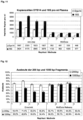
- the c-myc locus was also amplified with appropriate primers to detect the entire freely circulating DNA in the maternal blood. Amplification was performed on an ABI 7500 instrument (Applied Biosystems). This resulted in 1 and 2 shown result. 1 shows the size distribution of fetal DNA depending on the pools used. 2 shows the size distribution of the total DNA depending on the pools used.
- fetal DNA the majority is shorter than 300 bp, see example 1
- maternal DNA mainly longer than 500 bp
- two different PCR amplicons were added to the blood plasma as background.
- a 219 bp fragment should simulate the fetal DNA, a fragment of 1018 bp the maternal DNA.
- relatively large amounts of these PCR amplicons were used, namely 2 ⁇ 10 6 copies in 600 ⁇ l of plasma. The procedure was based on the following protocol:
- the magnetic particles were mixed with 750 ⁇ l of buffer AW1 (QIAGEN, commercially available) for 5 min on a plate shaker and the particle suspension was then transferred to a 1.5 ml reaction vessel. After magnetic separation in this vessel, the supernatant was removed and discarded. The particles were then washed in succession (in each case after 5 min incubation on a shaker) with 750 ⁇ l of buffer AW2 (QIAGEN, commercially available) and 750 ⁇ l of ethanol. After the alcohol wash step, the particles were dried in a heating block at 56 °C for 10 min. 200 ⁇ l of RNase-free water (QIAGEN) were used to elute the nucleic acids bound to the particles, with shaking again for 5 min for elution. After magnetic separation, the eluate was transferred to a new vessel.
- buffer AW1 QIAGEN, commercially available
- the supernatant/breakthrough binding (the material not bound to the magnetic particles) was processed as follows.
- the supernatant after binding was added with 2 ml of buffer B6 (2.5 M GuHCl, 50% isopropanol) to give a concentration of isopropanol of 32.4% (v/v), mixed by vortexing and at room temperature for 10 min incubated.
- Example 2 The procedure was as described in Example 2, except that this time only 200,000 copies of the defined fragments were used in order to simulate a more realistic picture of the actual freely circulating copy numbers in the blood.
- 100 ⁇ l of buffer B11 (see above)+1.2 ml of buffer B6 were bound to the matrix under the first condition, resulting in an isopropanol concentration of 20.3% (v/v). (see above).
- 100 ⁇ l of buffer B11 and 2.0 ml of buffer B6 were added to the plasma lysate.
- the DNA fragments were each bound to a MagAttract matrix or QIAamp Mini Columns under the two above-mentioned buffer conditions in the binding mixture.
- the MagAttract particles were treated as described in example 2). Here, too, 200 ⁇ l of RNase-free water were used for elution (centrifugation for 1 min at 14,000 rpm). The subsequent real-time PCR resulted in the in 4 picture shown.
- this experiment shows that with the same buffer composition, it makes little difference whether magnetic particles or a silica membrane are used as the solid phase.
- buffer B6 When 1.2 ml of buffer B6 is added, longer DNA fragments (about 1000 bp) are enriched in the DNA sample obtained, while surprisingly, when 2.0 ml of buffer B6 is added, short DNA fragments (about 200 bp) are conversely enriched.
- silica membrane QIAamp Mini
- the overall yield of DNA is higher than with MagAttract particles, but the size-dependent DNA binding is also somewhat less pronounced.
- a combination of magnetic particles (first matrix) and silica membrane (second matrix) in a two-stage DNA extraction is therefore ideal for extracting short DNA Efficiently enrich fragments in two steps and thus also to effectively enrich fetal DNA relative to maternal DNA on the second matrix.
- Example 3 The procedure was similar to that given in Example 3, except that this time a real blood sample was used and a two-stage binding process was used.
- 1.2 ml of buffer B6 was added to the sample, which became the breakthrough or supernatant of the 1st binding step then adjusted with additional Buffer B6 for a total of 2.0 ml Buffer B6.
- the starting material was a pool of plasma samples from pregnant women in the 1st and 2nd trimester who were known to be carrying a boy.
- the SRY locus was amplified in the subsequent real-time PCR, and the 18S locus to detect the total DNA (see also Example 1).
- a 1-column protocol was carried out according to the QIAamp MinElute Virus Vacuum Protocol, which corresponds to the state of the art. The results are in figure 5 shown.
- the procedure was as described in Example 4, except that this time a higher volume of blood plasma was used (3 ml per batch).
- different combinations of binding surfaces MagneticAttract particles and QIAamp Mini columns
- different amounts of MagAttract were compared.
- the membrane 2-step protocol lysed for 30 min, not just 15 min. The results are in 7 shown. This experiment confirms the results of the previous experiments.
- the 2-step protocol according to the invention always results in improved ratios of fetal DNA to maternal DNA, regardless of whether magnetic particles with a silica surface or silica membranes are used in the second binding step .
- a prolonged lysis of 30 min seems to additionally improve the ratio of fetal DNA to maternal DNA in favor of fetal DNA, so that the maternal DNA can be significantly depleted. This improvement in the ratio is also in 8 shown.
- the table shown also shows various reaction conditions in the sample under which the binding of the nucleic acids to the carrier material takes place (according to the 1-step method according to the invention).
- MagAttract particles were used as carrier material.
- the results are in 10 shown.
- pooled plasma from male donors was used and tested in four extraction repetitions per protocol.
- the DNA extraction was carried out according to the respective protocol. 5 ml plasma was used; the DNA was eluted in 50 ⁇ l.
- the freely circulating nucleic acids were isolated from 5 ml EDTA plasma.
- the protocol was as follows:
- buffer AW1 (QIAGEN, commercially available) was added to the column and vacuum was applied. This washing step was repeated with 750 ⁇ l of buffer AW2 (QIAGEN, commercially available) and with 750 ⁇ l of ethanol.
- the columns were placed in 2 ml collection tubes and centrifuged at 14,000 rpm for 3 minutes. Then the columns were transferred to fresh collection tubes and dried in a heating block at 56°C for 10 minutes.
- the dried columns were placed in 1.5 ml vials, and 50 ⁇ l of buffer AVE (QIAGEN, commercially available) was added to each column; Incubate for 3 minutes and centrifuge for 1 minute at 14,000 rpm.
- buffer AVE QIAGEN, commercially available
- the nucleic acids obtained in this way are in the eluate.
- the jar was capped and vortexed well to form a homogeneous solution.
- the homogeneous solution was incubated in a water bath at 56° C. for 30 minutes.
- binding buffer approx. 25 to 35% isopropanol and more than 2M chaotropic compounds.
- the reaction conditions in the total sample and not in the buffer are decisive, since the reaction conditions in the mixture are decisive for the binding efficiency of the short-chain nucleic acids to the carrier material.
- the sample was vortexed and incubated on ice for 5 minutes.
- the lysate mixed with the binding buffer was then loaded onto a QIAamp mini column with extension tube mounted on a QIAvac 24 vacuum assembly. The lysate was pulled through the column by applying vacuum. The extension tubes were then carefully removed.
- a wash buffer such as AW1 (QIAGEN, commercially available) was added to the Given column and removed by vacuum. Further washing steps with 750 ⁇ l of buffer AW2 (QIAGEN, commercially available) and with 750 ⁇ l of ethanol can follow.
- the washed columns were placed in 2 ml collection tubes and centrifuged at 14,000 rpm for 3 minutes. The columns were then placed in fresh collection tubes and dried in a heating block at 56°C for 10 minutes.
- the columns were placed in 1.5 ml tubes and 50 ⁇ l of the elution buffer AVE (QIAGEN, commercially available) was added to the columns, incubation took place for 3 minutes, followed by a centrifugation step for one minute at 14,000 rpm.
- the predominantly short-chain nucleic acids are in the eluate.
- the yield of DNA according to each protocol was measured by quantitative, duplex, real-time PCR using Taqman probes (4 PCR repetitions per DNA extraction).
- the DNA was determined by a Y-chromosomal target (DYS14) and a 18S rDNA specific target. Both methods ultimately determined the concentration of the DNA in the sample. Since the 18S rDNA is present on both chromosomes, it is present in twice the amount as the Y-chromosomal target. DNA yield was given as haploid genome copies per ml of plasma.
- the enrichment of small DNA fragments was determined independently in the enriched 200 bp and 1,000 bp DNA fragments in a duplex, real-time PCR.
- figure 11 shows the DNA yield per sample (4 samples were tested per extraction method). The total DNA content obtained using the individual methods is therefore shown.
- a significantly higher yield is achieved with the 1-step method according to the invention than with the 1-step method (MinElute) known in the prior art.
- the DNA yield is many times higher, which is of particular advantage for the determination of low-expression/present nucleic acids.
- figure 12 shows the yield of the injected 200 bp (simulating the fetal nucleic acids) and 1,000 bp (simulating the long-chain maternal fragments) DNA fragments.
- the 200 bp and 1000 bp fragments were injected at a 1:1 ratio, namely 200,000 copies each.
- the graphic shown shows whether the ratio of short-chain to long-chain nucleic acids in the purified nucleic acids is still 1:1, or whether an enrichment of the short-chain nucleic acids was achieved.
- the 1-step method of the prior art MinElute
- MinElute has a ratio of long-chain to short-chain nucleic acids of about 1:1. Therefore, no enrichment of the short-chain nucleic acids is achieved.
- the ratio of the purified 200 bp to 1,000 bp fragments is also in figure 13 shown. While values of approximately 1 are achieved in the 1-step method known in the prior art, the ratio in the 1-step method according to the invention is clearly shifted in the direction of the short-chain nucleic acids, which are correspondingly preferentially enriched/isolated. In the 2-step method according to the invention, in which the long-chain nucleic acids are first depleted in a preliminary step, even a 5 to 10-fold enrichment is achieved.
- the 1-step method according to the invention is clearly superior to the 1-step method known in the prior art.
- the 1-step method according to the invention enriches small nucleic acids during the preparation, which is due to the unique reaction conditions during the binding, which leads to a preferential binding of short-chain nucleic acids.
- nucleic acids in particular circulating RNA, from 5 ml plasma or serum is described below.
- 1350 ⁇ l buffer AVE (QIAGEN, commercially available, contains guanidine) is added to a tube with 1350 ⁇ g lyophilized carrier RNA so that a solution of 1 ⁇ g/ml is obtained.
- the 1 ⁇ g/ ⁇ l solution is then mixed with Buffer AL (QIAGEN, commercially available, contains guanidine).
- Buffer AL (QIAGEN, commercially available, contains guanidine).
- the mixing ratio is adjusted depending on the number of samples. For the treatment of a sample, 8.5 ml of buffer AL are mixed with 5.6 ⁇ l of buffer AVE. For more samples, the ratios must be adjusted accordingly.
- the vessel is inverted 10 times to mix.
- the mixed sample is incubated at 56°C for 30 minutes.
- 7.5 ml of a binding buffer is added to the lysate (contains approx. 0.5 to 1.5 mol/l guanidine, preferably around 1 mol/l and isopropanol approx. 60 - 90% (v/v); preferably more than 70%).
- the mixture is vortexed for 30 seconds and incubated on ice for 5 minutes.
- a QIAamp mini column is inserted into a VacConnector on a QIAvac 24 Plus and an extension tube is placed in the open QIAamp mini column.
- the lysate is filled into the extension tube and a vacuum is applied. Once the lysate has been pulled through the columns, the vacuum pump is turned off and the pressure equalized. The extension tube is discarded.
- the column is removed from the vacuum carrier and transferred to a 2 ml receiver.
- the column is centrifuged at 14000 rpm for 1 min.
- RNA RNA is pipetted into 70 ⁇ l of the buffer RDD (QIAGEN, commercially available). Mixing is done by swinging the tube. Buffer RDD is supplied with the RNase-free DNAse Set (QIAGEN, CAT.No.79254).
- the columns are placed back on the QIAvac 24 Plus vacuum tray.
- the DNAse I mixture is pipetted directly onto the QIAamp Mini silica gel membrane and incubated at moderate temperatures (20 to 30°C) for 15 minutes.
- buffer AW1 QIAGEN, commercially available
- a vacuum is then applied to pull the mixture through the column.
- 750 ⁇ l of the buffer AW2 QIAGEN, commercially available are added and drawn through the column by applying a vacuum.
- the column is placed in a new 2 ml collection vessel and dried at 56°C for 10 minutes with the lid open.
- the QIAamp mini column is then placed in a clean 1.5 mL microcentrifuge tube and the collection tube is discarded.
- 20 to 60 ⁇ l of the buffer AVE (QIAGEN, commercially available) is pipetted onto the center of the QIAamp minimembrane. With the lid closed, incubation takes place for 3 min.
- short-chain RNA can be purified.
- This variant is particularly suitable for isolating circulating DNA and (m)RNA from 5 ml of plasma, serum or another cell-free body fluid. This procedure was subsequently used to purify circulating nucleic acids from 5 ml of plasma (see Fig 14 ).
- the sample is heated to 60°C and incubated for 30 min.
- the tube is spun briefly to clear any drips from the inside of the cap
- guanidinium thiocyanate 9 to 11% (w/v) detergent and 19 to 21% (v/v) isopropanol are used during bonding.
- 9.0 ml of the buffer ACB buffer (QIAGEN) were added to the lysate, the lid was closed and mixed thoroughly by pulse vortexing for 15-30 s. The mixture is incubated on ice for 5 min.
- a column (QIAamp Mini Column) can be used for purification.
- the column is placed in a VacConnector and a 20 ml extension tube is placed in the open column.
- the extension tube must be firmly inserted into the column to prevent sample loss.
- the lysate from step is introduced into the column extension tube and the vacuum pump is turned on. When all of the lysate has been pulled through the column, the vacuum pump is switched off and the pressure reduced to 0 mbar. The extension tube is carefully removed.
- the column cap is closed and the column placed in a clean collection tube. Thereafter, the column is centrifuged at full speed (20,000 x g, 14,000 rpm) for 3 min.
- the column is placed in a new 2 ml collection tube, the cap opened and the compound incubated at 56°C for 10 min to completely dry the membrane.
- elution buffer AVE buffer, QIAGEN
- the lid is closed and incubated at room temperature for 3 min.
- the eluate contains both circulating DNA and RNA.
- Example 9 shows a preferred method for purifying RNA from samples, in particular plasma, serum or other body fluids.
- concentrations listed below are designed for a 5ml sample.
- RNA is digested using DNase I:
- the column is transferred to a 2 ml collection tube and centrifuged for 1 min at 14,000 rpm. This step removes lysate residues that could possibly impede DNase digestion.
- 10 ⁇ l of DNAse stock solution are added to 70 ⁇ l of buffer RDD (QIAGEN) and mixed by inverting the sample.
- the columns are returned to their original positions.
- the DNase I incubation mix (80 ⁇ l) is applied to the silica gel membrane of the column and incubated at moderate temperatures (20-30°C) for 15 min.
- RNA yield was quantified using real-time RT-PCRs specific for GAPDH, c-fos, and beta-globin mRNAs.
- the QuantiTect Multiplex RT-PCR Kit was used for the real-time RT-PCR. Nucleic acid extraction was performed in 6 replicates per condition.
Landscapes
- Chemical & Material Sciences (AREA)
- Engineering & Computer Science (AREA)
- Health & Medical Sciences (AREA)
- Life Sciences & Earth Sciences (AREA)
- Genetics & Genomics (AREA)
- Organic Chemistry (AREA)
- Biomedical Technology (AREA)
- Biotechnology (AREA)
- Bioinformatics & Cheminformatics (AREA)
- Zoology (AREA)
- Wood Science & Technology (AREA)
- General Engineering & Computer Science (AREA)
- Biochemistry (AREA)
- Molecular Biology (AREA)
- General Health & Medical Sciences (AREA)
- Plant Pathology (AREA)
- Microbiology (AREA)
- Biophysics (AREA)
- Physics & Mathematics (AREA)
- Crystallography & Structural Chemistry (AREA)
- Analytical Chemistry (AREA)
- Measuring Or Testing Involving Enzymes Or Micro-Organisms (AREA)
- Saccharide Compounds (AREA)
- Preparation Of Compounds By Using Micro-Organisms (AREA)
- Crystals, And After-Treatments Of Crystals (AREA)
Claims (15)
- Procédé d'isolation et/ou de purification d'acides nucléiques à chaînes courtes avec une longueur de ≤ 1 000 paires de bases, à partir d'un matériel de départ contenant des acides nucléiques, caractérisé par les étapes de procédé suivantes :(a) une liaison des acides nucléiques à un matériau de support se liant aux acides nucléiques, où le matériel de départ en présence d'au moins un agent chaotropique et d'au moins un alcool ramifié et/ou non ramifié, de préférence l'isopropanol, entre en contact avec le matériau de support se liant aux acides nucléiques, où l'alcool est présent selon une concentration ≥ 15 % (v/v) et ≤ 25 % (v/v) et où le matériau de support se liant aux acides nucléiques est une phase solide se liant aux acides nucléiques, choisie parmi une membrane de silice et des particules magnétiques, qui présentent une surface de silice ou de verre,
où pendant la liaison, un détergent anionique est présent et la concentration de l'agent chaotropique lors de l'étape a) est ≥ 2 mol/l et ≤ 3,5 mol/l ;(b) une élution optionnelle des acides nucléiques liés à partir du matériau de support se liant aux acides nucléiques ;où- les acides nucléiques à chaînes courtes sont de l'ADN libre circulant ;- le matériel de départ contenant des acides nucléiques est choisi parmi du plasma ou du sérum ; et- l'agent chaotropique est le thiocyanate de guanidinium ou l'isothiocyanate de guanidinium. - Procédé selon une ou plusieurs des revendications 1 à 3, caractérisé par un ou plusieurs caractères distinctifs suivants :a. le au moins un agent chaotropique lors de l'étape (a) est un thiocyanate ; et/oub. au moins 30 %, 50 % et de préférence au moins 60 % de l'ADN à chaînes courtes présent dans le matériel de départ est isolé grâce au procédé ; et/ouc. l'ADN à chaînes courtes avec une certaine longueur est isolé et/ou enrichi, lesquels sont choisis parmi le groupe constitué d'ADN avec une longueur de ≤ 400 paires de bases et/ou de ≤ 300 paires de bases et/ou de ≥ 50 paires de bases et/ou de ≥ 100 paires de bases.
- Procédé selon la revendication 1 ou 2, caractérisé en ce que les particules magnétiques qui présentent une surface de silice ou de verre sont utilisées comme matériau de support se liant aux acides nucléiques.
- Procédé selon une ou plusieurs des revendications 1 à 3, pour une isolation et/ou un enrichissement d'ADN foetal libre circulant à chaînes courtes provenant de plasma ou de sérum sanguin.
- Procédé selon une ou plusieurs des revendications 1 à 3, pour une isolation et/ou un enrichissement d'ADN libre circulant à chaînes courtes provenant d'un prélèvement, et pour un enrichissement d'ADN foetal provenant de plasma ou de sérum sanguin.
- Procédé selon une ou plusieurs des revendications 1 à 5, pour une isolation et/ou un enrichissement d'ADN libre circulant à chaînes courtes provenant de plasma.
- Procédé selon une ou plusieurs des revendications 1 à 6, pour une isolation d'ADN libre circulant à chaînes courtes choisi parmi un ADN foetal, et un ADN tumoral de plasma ou de sérum.
- Procédé selon une ou plusieurs des revendications 1 à 7, caractérisé en ce que le prélèvement est tout d'abord lysé et/ou libère les acides nucléiques.
- Procédé selon une ou plusieurs des revendications 1 à 8, caractérisé en ce que l'extraction a lieu sans phénol.
- Procédé selon une ou plusieurs des revendications 1 à 9, caractérisé en ce que l'ADN à chaînes courtes est doubles brins.
- Procédé selon la revendication 1, caractérisé en ce que l'agent chaotropique est le thiocyanate de guanidinium.
- Procédé selon la revendication 1 ou 11, caractérisé en ce que l'alcool lors de l'étape a) est présent selon une concentration allant de 18 à 20 % (v/v).
- Procédé selon une ou plusieurs des revendications 1 à 12, caractérisé en ce que le matériau de support se liant aux acides nucléiques est retrouvé dans une colonne de séparation.
- Procédé selon une ou plusieurs des revendications 1 à 13, caractérisé en ce que le matériau de support se liant aux acides nucléiques est une membrane de silice.
- Procédé selon une ou plusieurs des revendications 1 à 14, pour une utilisation lors du diagnostic.
Priority Applications (5)
| Application Number | Priority Date | Filing Date | Title |
|---|---|---|---|
| EP09757160.8A EP2285816B2 (fr) | 2008-05-30 | 2009-05-12 | Procédé d'isolation d'acides nucléiques à chaînes courtes |
| EP19210595.5A EP3650454B1 (fr) | 2008-05-30 | 2009-05-12 | Procédé d'isolement d'acides nucléiques |
| EP15161652.1A EP2944645B1 (fr) | 2008-05-30 | 2009-05-12 | Procédé d'isolation d'acides nucléiques |
| EP23171785.1A EP4234697A3 (fr) | 2008-05-30 | 2009-05-12 | Procédé d'isolement d'acides nucléiques |
| PL09757160.8T PL2285816T5 (pl) | 2008-05-30 | 2009-05-12 | Sposób izolacji kwasów nukleinowych |
Applications Claiming Priority (3)
| Application Number | Priority Date | Filing Date | Title |
|---|---|---|---|
| EP08009941A EP2128169A1 (fr) | 2008-05-30 | 2008-05-30 | Procédé d'isolation d'acides nucléiques à chaînes courtes |
| EP09757160.8A EP2285816B2 (fr) | 2008-05-30 | 2009-05-12 | Procédé d'isolation d'acides nucléiques à chaînes courtes |
| PCT/EP2009/003364 WO2009146776A2 (fr) | 2008-05-30 | 2009-05-12 | Procédé d'isolement d'acides nucléiques |
Related Child Applications (5)
| Application Number | Title | Priority Date | Filing Date |
|---|---|---|---|
| EP23171785.1A Division EP4234697A3 (fr) | 2008-05-30 | 2009-05-12 | Procédé d'isolement d'acides nucléiques |
| EP19210595.5A Division EP3650454B1 (fr) | 2008-05-30 | 2009-05-12 | Procédé d'isolement d'acides nucléiques |
| EP19210595.5A Division-Into EP3650454B1 (fr) | 2008-05-30 | 2009-05-12 | Procédé d'isolement d'acides nucléiques |
| EP15161652.1A Division EP2944645B1 (fr) | 2008-05-30 | 2009-05-12 | Procédé d'isolation d'acides nucléiques |
| EP15161652.1A Division-Into EP2944645B1 (fr) | 2008-05-30 | 2009-05-12 | Procédé d'isolation d'acides nucléiques |
Publications (3)
| Publication Number | Publication Date |
|---|---|
| EP2285816A2 EP2285816A2 (fr) | 2011-02-23 |
| EP2285816B1 EP2285816B1 (fr) | 2015-04-01 |
| EP2285816B2 true EP2285816B2 (fr) | 2023-04-12 |
Family
ID=39967486
Family Applications (6)
| Application Number | Title | Priority Date | Filing Date |
|---|---|---|---|
| EP08009941A Withdrawn EP2128169A1 (fr) | 2008-05-30 | 2008-05-30 | Procédé d'isolation d'acides nucléiques à chaînes courtes |
| EP23171785.1A Pending EP4234697A3 (fr) | 2008-05-30 | 2009-05-12 | Procédé d'isolement d'acides nucléiques |
| EP15161652.1A Active EP2944645B1 (fr) | 2008-05-30 | 2009-05-12 | Procédé d'isolation d'acides nucléiques |
| EP19210595.5A Revoked EP3650454B1 (fr) | 2008-05-30 | 2009-05-12 | Procédé d'isolement d'acides nucléiques |
| EP09757159.0A Active EP2285815B1 (fr) | 2008-05-30 | 2009-05-12 | Procédé d'isolation d'acides nucléiques à chaînes courtes |
| EP09757160.8A Active EP2285816B2 (fr) | 2008-05-30 | 2009-05-12 | Procédé d'isolation d'acides nucléiques à chaînes courtes |
Family Applications Before (5)
| Application Number | Title | Priority Date | Filing Date |
|---|---|---|---|
| EP08009941A Withdrawn EP2128169A1 (fr) | 2008-05-30 | 2008-05-30 | Procédé d'isolation d'acides nucléiques à chaînes courtes |
| EP23171785.1A Pending EP4234697A3 (fr) | 2008-05-30 | 2009-05-12 | Procédé d'isolement d'acides nucléiques |
| EP15161652.1A Active EP2944645B1 (fr) | 2008-05-30 | 2009-05-12 | Procédé d'isolation d'acides nucléiques |
| EP19210595.5A Revoked EP3650454B1 (fr) | 2008-05-30 | 2009-05-12 | Procédé d'isolement d'acides nucléiques |
| EP09757159.0A Active EP2285815B1 (fr) | 2008-05-30 | 2009-05-12 | Procédé d'isolation d'acides nucléiques à chaînes courtes |
Country Status (11)
| Country | Link |
|---|---|
| US (4) | US9809612B2 (fr) |
| EP (6) | EP2128169A1 (fr) |
| JP (2) | JP5702717B2 (fr) |
| CN (2) | CN106834273A (fr) |
| AU (1) | AU2009254307B2 (fr) |
| CA (1) | CA2725631C (fr) |
| DK (1) | DK2285816T3 (fr) |
| ES (3) | ES2950788T3 (fr) |
| HU (1) | HUE026122T2 (fr) |
| PL (1) | PL2285816T5 (fr) |
| WO (2) | WO2009146776A2 (fr) |
Families Citing this family (83)
| Publication number | Priority date | Publication date | Assignee | Title |
|---|---|---|---|---|
| US11111543B2 (en) | 2005-07-29 | 2021-09-07 | Natera, Inc. | System and method for cleaning noisy genetic data and determining chromosome copy number |
| US10081839B2 (en) | 2005-07-29 | 2018-09-25 | Natera, Inc | System and method for cleaning noisy genetic data and determining chromosome copy number |
| US11111544B2 (en) | 2005-07-29 | 2021-09-07 | Natera, Inc. | System and method for cleaning noisy genetic data and determining chromosome copy number |
| US9424392B2 (en) | 2005-11-26 | 2016-08-23 | Natera, Inc. | System and method for cleaning noisy genetic data from target individuals using genetic data from genetically related individuals |
| US9428746B2 (en) * | 2007-10-31 | 2016-08-30 | Akonni Biosystems, Inc. | Method and kit for purifying nucleic acids |
| US10125388B2 (en) | 2007-10-31 | 2018-11-13 | Akonni Biosystems, Inc. | Integrated sample processing system |
| EP2128169A1 (fr) | 2008-05-30 | 2009-12-02 | Qiagen GmbH | Procédé d'isolation d'acides nucléiques à chaînes courtes |
| WO2011041485A1 (fr) | 2009-09-30 | 2011-04-07 | Gene Security Network, Inc. | Méthode non invasive de détermination d'une ploïdie prénatale |
| US12221653B2 (en) | 2010-05-18 | 2025-02-11 | Natera, Inc. | Methods for simultaneous amplification of target loci |
| US11339429B2 (en) | 2010-05-18 | 2022-05-24 | Natera, Inc. | Methods for non-invasive prenatal ploidy calling |
| US20190010543A1 (en) | 2010-05-18 | 2019-01-10 | Natera, Inc. | Methods for simultaneous amplification of target loci |
| US12152275B2 (en) | 2010-05-18 | 2024-11-26 | Natera, Inc. | Methods for non-invasive prenatal ploidy calling |
| US12545960B2 (en) | 2010-05-18 | 2026-02-10 | Natera, Inc. | Methods for simultaneous amplification of target loci |
| US9677118B2 (en) | 2014-04-21 | 2017-06-13 | Natera, Inc. | Methods for simultaneous amplification of target loci |
| US10316362B2 (en) | 2010-05-18 | 2019-06-11 | Natera, Inc. | Methods for simultaneous amplification of target loci |
| US11408031B2 (en) | 2010-05-18 | 2022-08-09 | Natera, Inc. | Methods for non-invasive prenatal paternity testing |
| US11332785B2 (en) | 2010-05-18 | 2022-05-17 | Natera, Inc. | Methods for non-invasive prenatal ploidy calling |
| US11332793B2 (en) | 2010-05-18 | 2022-05-17 | Natera, Inc. | Methods for simultaneous amplification of target loci |
| US11326208B2 (en) | 2010-05-18 | 2022-05-10 | Natera, Inc. | Methods for nested PCR amplification of cell-free DNA |
| US11322224B2 (en) | 2010-05-18 | 2022-05-03 | Natera, Inc. | Methods for non-invasive prenatal ploidy calling |
| WO2011146632A1 (fr) | 2010-05-18 | 2011-11-24 | Gene Security Network Inc. | Procédés de classification de ploïdie prénatale non invasive |
| US11939634B2 (en) | 2010-05-18 | 2024-03-26 | Natera, Inc. | Methods for simultaneous amplification of target loci |
| EP2407540A1 (fr) * | 2010-07-15 | 2012-01-18 | Qiagen GmbH | Procédé de purification d'un acide nucléique cible |
| US8916344B2 (en) | 2010-11-15 | 2014-12-23 | Exact Sciences Corporation | Methylation assay |
| US8361720B2 (en) | 2010-11-15 | 2013-01-29 | Exact Sciences Corporation | Real time cleavage assay |
| CN103608466B (zh) | 2010-12-22 | 2020-09-18 | 纳特拉公司 | 非侵入性产前亲子鉴定方法 |
| RU2671980C2 (ru) | 2011-02-09 | 2018-11-08 | Натера, Инк. | Способы неинвазивного пренатального установления плоидности |
| CN113355321A (zh) | 2011-09-26 | 2021-09-07 | 凯杰有限公司 | 用于分离细胞外核酸的快速方法 |
| WO2013181651A1 (fr) * | 2012-06-01 | 2013-12-05 | Omega Bio-Tek, Inc. | Récupération de fragments d'acide nucléique sélective |
| US20140100126A1 (en) | 2012-08-17 | 2014-04-10 | Natera, Inc. | Method for Non-Invasive Prenatal Testing Using Parental Mosaicism Data |
| CN108103057B (zh) * | 2012-08-28 | 2021-09-03 | 阿科尼生物系统公司 | 用于纯化核酸的方法和试剂盒 |
| CA2902916C (fr) | 2013-03-14 | 2018-08-28 | Mayo Foundation For Medical Education And Research | Detection de neoplasme |
| US9644232B2 (en) * | 2013-07-26 | 2017-05-09 | General Electric Company | Method and device for collection and amplification of circulating nucleic acids |
| US9828600B2 (en) | 2013-09-20 | 2017-11-28 | University Of Massachusetts | Compositions and methods for constructing cDNA libraries that allow for mapping the 5′ and 3′ ends of RNAs |
| GB2524948A (en) * | 2014-03-07 | 2015-10-14 | Oxford Gene Technology Operations Ltd | Detecting Increase or Decrease in the Amount of a Nucleic Acid having a Sequence of Interest |
| SG11201608575QA (en) * | 2014-04-18 | 2016-11-29 | Toppan Printing Co Ltd | Method for recovering short-chain nucleic acids |
| CA2945962C (fr) | 2014-04-21 | 2023-08-29 | Natera, Inc. | Detection de mutations et de la ploidie dans des segments chromosomiques |
| US12492429B2 (en) | 2014-04-21 | 2025-12-09 | Natera, Inc. | Detecting mutations and ploidy in chromosomal segments |
| US20180173846A1 (en) | 2014-06-05 | 2018-06-21 | Natera, Inc. | Systems and Methods for Detection of Aneuploidy |
| DE102014214173B4 (de) | 2014-07-21 | 2016-09-08 | Aj Innuscreen Gmbh | Verfahren zur selektiven größenfraktionierten Isolierung von Nukleinsäuren |
| US10184154B2 (en) | 2014-09-26 | 2019-01-22 | Mayo Foundation For Medical Education And Research | Detecting cholangiocarcinoma |
| JP2017539080A (ja) | 2014-10-23 | 2017-12-28 | コーニング インコーポレイテッド | 高分子被包磁性ナノ粒子 |
| DE102015222002A1 (de) | 2014-11-07 | 2016-05-12 | Aj Innuscreen Gmbh | Verfahren zur selektiven größenfraktionierten Trennung und Isolierung von Nukleinsäuremischungen |
| EP3230447A1 (fr) * | 2014-12-09 | 2017-10-18 | Corning Incorporated | Procédés et kits pour la purification d'adn plasmide |
| CN107406847A (zh) | 2015-03-20 | 2017-11-28 | 东丽株式会社 | 核酸的回收方法 |
| US10435755B2 (en) | 2015-03-27 | 2019-10-08 | Exact Sciences Development Company, Llc | Detecting esophageal disorders |
| WO2016175239A1 (fr) * | 2015-04-27 | 2016-11-03 | 株式会社カネカ | Procédé de purification d'acide nucléique à partir d'un spécimen comprenant des particules colloïdales |
| US11479812B2 (en) | 2015-05-11 | 2022-10-25 | Natera, Inc. | Methods and compositions for determining ploidy |
| JP7007197B2 (ja) * | 2015-06-05 | 2022-01-24 | キアゲン ゲーエムベーハー | サイズによってdnaを分離する方法 |
| WO2016198519A1 (fr) * | 2015-06-09 | 2016-12-15 | Biocartis N.V. | Procédé automatisable pour l'isolement d'acides nucléiques |
| JP6787916B2 (ja) * | 2015-06-10 | 2020-11-18 | キアゲン ゲーエムベーハー | アニオン交換粒子を使用する細胞外核酸を単離する方法 |
| WO2017013102A1 (fr) | 2015-07-23 | 2017-01-26 | Biocartis Nv | Séquençage d'échantillon clinique optimisé |
| CN114574585A (zh) | 2015-08-31 | 2022-06-03 | 梅约医药教育及研究基金会 | 检测胃肿瘤 |
| CN105112400A (zh) * | 2015-08-31 | 2015-12-02 | 臻和(北京)科技有限公司 | 一种提取游离dna的试剂盒 |
| ES2818569T3 (es) | 2015-09-09 | 2021-04-13 | Drawbridge Health Inc | Métodos para la recopilación, estabilización y conservación de muestras |
| JP2018526021A (ja) * | 2015-09-11 | 2018-09-13 | コーニング インコーポレイテッド | 血液試料からの核酸精製のための組成物及び方法 |
| CN108350485A (zh) | 2015-10-30 | 2018-07-31 | 精密科学发展有限责任公司 | 血浆dna的多重扩增检测测定以及分离和检测 |
| CN105695450A (zh) * | 2016-04-05 | 2016-06-22 | 苏州英芮诚生化科技有限公司 | 基于磁珠法提取游离dna的试剂盒及其使用方法 |
| RU2760913C2 (ru) | 2016-04-15 | 2021-12-01 | Натера, Инк. | Способы выявления рака легкого |
| CN109563546B (zh) * | 2016-05-05 | 2022-09-09 | 精密科学发展有限责任公司 | 通过分析甲基化dna来检测肺肿瘤 |
| US20180073011A1 (en) * | 2016-09-12 | 2018-03-15 | Roche Molecular Systems, Inc. | Methods and compositions for purifying double stranded nucleic acids |
| CA3035881A1 (fr) | 2016-09-14 | 2018-03-22 | Toray Industries, Inc. | Methode de collecte d'adn exempt de cellule |
| US11959125B2 (en) | 2016-09-15 | 2024-04-16 | Sun Genomics, Inc. | Universal method for extracting nucleic acid molecules from a diverse population of one or more types of microbes in a sample |
| US10428370B2 (en) * | 2016-09-15 | 2019-10-01 | Sun Genomics, Inc. | Universal method for extracting nucleic acid molecules from a diverse population of one or more types of microbes in a sample |
| WO2018067517A1 (fr) | 2016-10-04 | 2018-04-12 | Natera, Inc. | Procédés pour caractériser une variation de nombre de copies à l'aide d'un séquençage de ligature de proximité |
| GB201618485D0 (en) | 2016-11-02 | 2016-12-14 | Ucl Business Plc | Method of detecting tumour recurrence |
| US10011870B2 (en) | 2016-12-07 | 2018-07-03 | Natera, Inc. | Compositions and methods for identifying nucleic acid molecules |
| KR102892245B1 (ko) | 2017-01-27 | 2025-11-27 | 이그젝트 싸이언스 디블롭먼트 컴패니, 엘엘씨 | 메틸화된 dna 분석에 의한 결장 신조직형성의 검출 |
| WO2018140452A1 (fr) * | 2017-01-30 | 2018-08-02 | Counsyl, Inc. | Enrichissement en adn acellulaire à partir d'un échantillon biologique |
| WO2018156418A1 (fr) | 2017-02-21 | 2018-08-30 | Natera, Inc. | Compositions, procédés, et kits d'isolement d'acides nucléiques |
| ES2964100T3 (es) * | 2017-09-18 | 2024-04-04 | Phase Scient International Ltd | Método de utilización de un sistema acuoso bifásico para el aislamiento, purificación y/o concentración de fragmentos cortos de ácidos nucleicos |
| US10648025B2 (en) | 2017-12-13 | 2020-05-12 | Exact Sciences Development Company, Llc | Multiplex amplification detection assay II |
| US12084720B2 (en) | 2017-12-14 | 2024-09-10 | Natera, Inc. | Assessing graft suitability for transplantation |
| US12398389B2 (en) | 2018-02-15 | 2025-08-26 | Natera, Inc. | Methods for isolating nucleic acids with size selection |
| CN108841818B (zh) * | 2018-03-13 | 2022-09-06 | 融智生物科技(青岛)有限公司 | 一种核酸提取方法及装置 |
| US12024738B2 (en) | 2018-04-14 | 2024-07-02 | Natera, Inc. | Methods for cancer detection and monitoring |
| US12234509B2 (en) | 2018-07-03 | 2025-02-25 | Natera, Inc. | Methods for detection of donor-derived cell-free DNA |
| TR201901522A2 (tr) * | 2019-02-01 | 2020-08-21 | Emel Demi̇ralp Zeynep | Tek tüpte hizli ve yüksek kali̇tede genomi̇k veya hücre dişi dna i̇zolasyonu i̇çi̇n bi̇r yöntem buna i̇li̇şki̇n bi̇r ki̇t |
| US12305235B2 (en) | 2019-06-06 | 2025-05-20 | Natera, Inc. | Methods for detecting immune cell DNA and monitoring immune system |
| GB202001034D0 (en) * | 2020-01-24 | 2020-03-11 | Ge Healthcare Uk Ltd | Method and kit for DNA isolation |
| CN114958825A (zh) * | 2022-04-07 | 2022-08-30 | 翌圣生物科技(上海)股份有限公司 | 一种差异化富集小片段核酸分子的方法 |
| PL449488A1 (pl) * | 2024-08-09 | 2026-02-16 | Uniwersytet Medyczny Im. Karola Marcinkowskiego W Poznaniu | Sposób oczyszczania jednoniciowego DNA o długości do 100 zasad |
| WO2026055641A1 (fr) | 2024-09-06 | 2026-03-12 | Exact Sciences Corporation | Procédés et compositions pour préparer des analytes biomoléculaires à partir d'échantillons complexes |
Citations (3)
| Publication number | Priority date | Publication date | Assignee | Title |
|---|---|---|---|---|
| WO2001071732A2 (fr) † | 2000-03-24 | 2001-09-27 | Qiagen Gmbh | Particules de verre ferro- ou ferrimagnetiques poreuses servant a isoler des molecules |
| WO2005012487A2 (fr) † | 2003-08-01 | 2005-02-10 | Invitrogen Corporation | Compositions et procedes de preparation de courtes molecules d'arn et d'autres acides nucleiques |
| US20070190535A1 (en) † | 2006-02-13 | 2007-08-16 | Hall Gerald E Jr | Size fractionation of nucleic acid samples |
Family Cites Families (31)
| Publication number | Priority date | Publication date | Assignee | Title |
|---|---|---|---|---|
| US5496562A (en) * | 1988-10-05 | 1996-03-05 | Flinders Technologies Pty Ltd | Solid medium and method for DNA storage |
| US5234809A (en) | 1989-03-23 | 1993-08-10 | Akzo N.V. | Process for isolating nucleic acid |
| NL8900725A (nl) | 1989-03-23 | 1990-10-16 | Az Univ Amsterdam | Werkwijze en combinatie van middelen voor het isoleren van nucleinezuur. |
| DE4139664A1 (de) | 1991-12-02 | 1993-06-03 | Diagen Inst Molekularbio | Vorrichtung und verfahren zur isolierung und reinigung von nukleinsaeuren |
| DE4321904B4 (de) | 1993-07-01 | 2013-05-16 | Qiagen Gmbh | Verfahren zur chromatographischen Reinigung und Trennung von Nucleinsäuregemischen |
| US6180778B1 (en) | 1994-02-11 | 2001-01-30 | Qiagen Gmbh | Process for the separation of double-stranded/single-stranded nucleic acid structures |
| JP2965131B2 (ja) | 1995-07-07 | 1999-10-18 | 東洋紡績株式会社 | 核酸結合用磁性担体およびそれを用いる核酸単離方法 |
| AU2324997A (en) | 1996-03-15 | 1997-10-01 | Penn State Research Foundation, The | Detection of extracellular tumor-associated nucleic acid in blood plasma or ser um using nucleic acid amplification assays |
| US20020119478A1 (en) * | 1997-05-30 | 2002-08-29 | Diagen Corporation | Methods for detection of nucleic acid sequences in urine |
| EP0969090A1 (fr) * | 1998-05-27 | 2000-01-05 | QIAGEN GmbH | Procédé rapide et simple pour l'isolation d'acide nucleique circulaire |
| JP3890360B2 (ja) * | 2002-07-19 | 2007-03-07 | 富士フイルム株式会社 | 核酸の分離精製方法 |
| WO2004108925A1 (fr) | 2003-06-04 | 2004-12-16 | Qiagen As | Methode d'isolation sequentielle d'adn et d'arn a partir du meme echantillon contenant des acides nucleiques |
| US20050059024A1 (en) | 2003-07-25 | 2005-03-17 | Ambion, Inc. | Methods and compositions for isolating small RNA molecules |
| EP1524317B1 (fr) | 2003-10-13 | 2015-03-04 | Roche Diagnostics GmbH | Procédé pour l'isolation d'acides nucléiques |
| ATE435301T1 (de) * | 2003-10-16 | 2009-07-15 | Sequenom Inc | Nicht invasiver nachweis fötaler genetischer merkmale |
| JP2005118007A (ja) * | 2003-10-20 | 2005-05-12 | Fuji Photo Film Co Ltd | 核酸の分離精製方法 |
| US8426126B2 (en) | 2004-03-18 | 2013-04-23 | Applied Biosystems, Llc | Modified surfaces as solid supports for nucleic acid purification |
| DE202004006675U1 (de) * | 2004-03-18 | 2004-09-16 | Roche Diagnostics Gmbh | Vorrichtung zur Reinigung von Nukleinsäuren |
| EP1690938A1 (fr) * | 2005-02-11 | 2006-08-16 | Qiagen GmbH | Méthode pour l'isolation d'acides nucléiques dans laquelle les acides nucléiques sont immobilisés à haute température sur une matrice |
| US20060269929A1 (en) | 2005-05-26 | 2006-11-30 | Hall Gerald E Jr | Methods and kits for DNA purification on polymeric membranes at low ionic strength |
| US20070026435A1 (en) * | 2005-07-28 | 2007-02-01 | Polysciences, Inc. | Hydroxysilane functionalized magnetic particles and nucleic acid separation method |
| WO2007049326A1 (fr) * | 2005-10-24 | 2007-05-03 | Wako Pure Chemical Industries, Ltd. | Procede et kit d’extraction d’acide nucleique |
| JP4699868B2 (ja) * | 2005-11-04 | 2011-06-15 | 株式会社日立ハイテクノロジーズ | 核酸精製方法及び核酸精製器具 |
| DE102005059217B4 (de) | 2005-12-07 | 2011-03-17 | Aj Innuscreen Gmbh | Verfahren und Testkit zur Trennung, Aufreinigung und Wiedergewinnung von lang- und kurzkettigen Nukleinsäuren |
| US7657486B2 (en) | 2005-12-09 | 2010-02-02 | Mastercard International Incorporated | Techniques for co-existence of multiple stored value applications on a single payment device managing a shared balance |
| JP2007244375A (ja) * | 2006-02-14 | 2007-09-27 | Toyobo Co Ltd | リボ核酸の分離精製方法 |
| WO2007103485A2 (fr) * | 2006-03-08 | 2007-09-13 | Promega Corporation | Purification de petits arn |
| EP3617321B1 (fr) | 2006-05-31 | 2024-10-23 | Sequenom, Inc. | Kit pour l'extraction et l'amplification d'acide nucléique à partir d'un échantillon |
| EP1873241A1 (fr) * | 2006-06-30 | 2008-01-02 | Qiagen AS | Procede pour l'isolation d'acides nucleiques |
| WO2009121208A1 (fr) | 2008-04-02 | 2009-10-08 | 芮宝生医股份有限公司 | Réactifs, agents chaotropiques, coffrets et procédés pour isoler des acides nucléiques à base de matières cellulosiques magnétiques |
| EP2128169A1 (fr) | 2008-05-30 | 2009-12-02 | Qiagen GmbH | Procédé d'isolation d'acides nucléiques à chaînes courtes |
-
2008
- 2008-05-30 EP EP08009941A patent/EP2128169A1/fr not_active Withdrawn
-
2009
- 2009-05-12 EP EP23171785.1A patent/EP4234697A3/fr active Pending
- 2009-05-12 US US12/995,348 patent/US9809612B2/en active Active
- 2009-05-12 CN CN201610828219.XA patent/CN106834273A/zh active Pending
- 2009-05-12 HU HUE09757160A patent/HUE026122T2/en unknown
- 2009-05-12 JP JP2011510862A patent/JP5702717B2/ja active Active
- 2009-05-12 WO PCT/EP2009/003364 patent/WO2009146776A2/fr not_active Ceased
- 2009-05-12 EP EP15161652.1A patent/EP2944645B1/fr active Active
- 2009-05-12 WO PCT/EP2009/003363 patent/WO2009146775A2/fr not_active Ceased
- 2009-05-12 EP EP19210595.5A patent/EP3650454B1/fr not_active Revoked
- 2009-05-12 PL PL09757160.8T patent/PL2285816T5/pl unknown
- 2009-05-12 US US12/995,341 patent/US9790250B2/en active Active
- 2009-05-12 AU AU2009254307A patent/AU2009254307B2/en active Active
- 2009-05-12 CA CA2725631A patent/CA2725631C/fr active Active
- 2009-05-12 DK DK09757160.8T patent/DK2285816T3/en active
- 2009-05-12 CN CN2009801209558A patent/CN102046643A/zh active Pending
- 2009-05-12 JP JP2011510861A patent/JP5576363B2/ja active Active
- 2009-05-12 EP EP09757159.0A patent/EP2285815B1/fr active Active
- 2009-05-12 EP EP09757160.8A patent/EP2285816B2/fr active Active
- 2009-05-12 ES ES19210595T patent/ES2950788T3/es active Active
- 2009-05-12 ES ES09757160T patent/ES2537336T5/es active Active
- 2009-05-12 ES ES15161652T patent/ES2767125T3/es active Active
-
2017
- 2017-10-03 US US15/723,435 patent/US10738069B2/en active Active
-
2024
- 2024-10-30 US US18/931,549 patent/US20250289841A1/en active Pending
Patent Citations (3)
| Publication number | Priority date | Publication date | Assignee | Title |
|---|---|---|---|---|
| WO2001071732A2 (fr) † | 2000-03-24 | 2001-09-27 | Qiagen Gmbh | Particules de verre ferro- ou ferrimagnetiques poreuses servant a isoler des molecules |
| WO2005012487A2 (fr) † | 2003-08-01 | 2005-02-10 | Invitrogen Corporation | Compositions et procedes de preparation de courtes molecules d'arn et d'autres acides nucleiques |
| US20070190535A1 (en) † | 2006-02-13 | 2007-08-16 | Hall Gerald E Jr | Size fractionation of nucleic acid samples |
Non-Patent Citations (1)
| Title |
|---|
| QIAQUICK(R) SPIN HANDBOOK, March 2008 (2008-03-01) † |
Also Published As
Similar Documents
| Publication | Publication Date | Title |
|---|---|---|
| EP2285816B2 (fr) | Procédé d'isolation d'acides nucléiques à chaînes courtes | |
| EP2163622B1 (fr) | Procédé de production d'ARN courts et kit correspondant | |
| EP2264168B1 (fr) | Procédé d'isolation d'acides nucléiques | |
| EP1851313B1 (fr) | Méthode pour l'isolation d'acides nucléiques dans laquelle les acides nucléiques sont immobilisés à haute température sur une matrice | |
| DE69533317T2 (de) | Isolierung von nukleinsäuren | |
| EP1121460A1 (fr) | Procedes et moyens pour l'isolement et la purification d'acides nucleiques sur des surfaces | |
| EP2288701B1 (fr) | Procédé de purification d'acides nucléiques, provenant en particulier de tissus fixés | |
| EP1105533A1 (fr) | Recipient servant a un prelevement de sang | |
| WO2008145587A1 (fr) | Procédé de purification, de récupération et de transfection ménagées de cellules | |
| EP1146049A2 (fr) | Procédé de séparation de structures d'acides nucléiques à deux brins et à un brin | |
| EP3064583B1 (fr) | Procede pour realiser un enrichissement en acides nucleiques a chaine courte | |
| EP1560926A2 (fr) | Nouvelles formulations de tampons pour isoler, purifier et recuperer des acides nucleiques a chaine longue et a chaine courte | |
| DE10253351B4 (de) | Neuartige Pufferfomulierungen zur Isolierung, Reinigung und Rückgewinnung lang- und kurzkettiger Nukleinsäuren | |
| WO2008003776A2 (fr) | Procédé permettant d'isoler en parallèle des acides nucléiques à simple brin et à double brin et de retirer de façon sélective des acides nucléiques à double brin d'un mélange d'acides nucléiques à simple brin et à double brin | |
| DE102004045332B3 (de) | Verfahren zur Isolierung und Trennung von einzel- und doppelsträngigen Nucleinsäuren aus einer diese Nucleinsäuren enthaltenden Probe sowie Trennsäule zur Durchführung dieses Verfahrens | |
| EP3215619B1 (fr) | Procédé de séparation et d'isolement selon la catégorie dimensionnelle de mélanges d'acides nucléiques | |
| DE102014214173A1 (de) | Verfahren zur selektiven größenfraktionierten Isolierung von Nukleinsäuren |
Legal Events
| Date | Code | Title | Description |
|---|---|---|---|
| PUAI | Public reference made under article 153(3) epc to a published international application that has entered the european phase |
Free format text: ORIGINAL CODE: 0009012 |
|
| 17P | Request for examination filed |
Effective date: 20101228 |
|
| AK | Designated contracting states |
Kind code of ref document: A2 Designated state(s): AT BE BG CH CY CZ DE DK EE ES FI FR GB GR HR HU IE IS IT LI LT LU LV MC MK MT NL NO PL PT RO SE SI SK TR |
|
| AX | Request for extension of the european patent |
Extension state: AL BA RS |
|
| DAX | Request for extension of the european patent (deleted) | ||
| 17Q | First examination report despatched |
Effective date: 20120807 |
|
| GRAP | Despatch of communication of intention to grant a patent |
Free format text: ORIGINAL CODE: EPIDOSNIGR1 |
|
| INTG | Intention to grant announced |
Effective date: 20141016 |
|
| GRAS | Grant fee paid |
Free format text: ORIGINAL CODE: EPIDOSNIGR3 |
|
| GRAA | (expected) grant |
Free format text: ORIGINAL CODE: 0009210 |
|
| AK | Designated contracting states |
Kind code of ref document: B1 Designated state(s): AT BE BG CH CY CZ DE DK EE ES FI FR GB GR HR HU IE IS IT LI LT LU LV MC MK MT NL NO PL PT RO SE SI SK TR |
|
| REG | Reference to a national code |
Ref country code: GB Ref legal event code: FG4D Free format text: NOT ENGLISH |
|
| REG | Reference to a national code |
Ref country code: CH Ref legal event code: EP |
|
| REG | Reference to a national code |
Ref country code: IE Ref legal event code: FG4D Free format text: LANGUAGE OF EP DOCUMENT: GERMAN |
|
| REG | Reference to a national code |
Ref country code: DE Ref legal event code: R096 Ref document number: 502009010850 Country of ref document: DE Effective date: 20150513 |
|
| REG | Reference to a national code |
Ref country code: AT Ref legal event code: REF Ref document number: 719020 Country of ref document: AT Kind code of ref document: T Effective date: 20150515 |
|
| REG | Reference to a national code |
Ref country code: FR Ref legal event code: PLFP Year of fee payment: 7 |
|
| REG | Reference to a national code |
Ref country code: ES Ref legal event code: FG2A Ref document number: 2537336 Country of ref document: ES Kind code of ref document: T3 Effective date: 20150605 |
|
| REG | Reference to a national code |
Ref country code: DK Ref legal event code: T3 Effective date: 20150608 |
|
| REG | Reference to a national code |
Ref country code: SE Ref legal event code: TRGR |
|
| REG | Reference to a national code |
Ref country code: NL Ref legal event code: T3 |
|
| REG | Reference to a national code |
Ref country code: NO Ref legal event code: T2 Effective date: 20150401 |
|
| REG | Reference to a national code |
Ref country code: PL Ref legal event code: T3 |
|
| REG | Reference to a national code |
Ref country code: LT Ref legal event code: MG4D |
|
| PG25 | Lapsed in a contracting state [announced via postgrant information from national office to epo] |
Ref country code: PT Free format text: LAPSE BECAUSE OF FAILURE TO SUBMIT A TRANSLATION OF THE DESCRIPTION OR TO PAY THE FEE WITHIN THE PRESCRIBED TIME-LIMIT Effective date: 20150803 Ref country code: HR Free format text: LAPSE BECAUSE OF FAILURE TO SUBMIT A TRANSLATION OF THE DESCRIPTION OR TO PAY THE FEE WITHIN THE PRESCRIBED TIME-LIMIT Effective date: 20150401 Ref country code: LT Free format text: LAPSE BECAUSE OF FAILURE TO SUBMIT A TRANSLATION OF THE DESCRIPTION OR TO PAY THE FEE WITHIN THE PRESCRIBED TIME-LIMIT Effective date: 20150401 |
|
| PG25 | Lapsed in a contracting state [announced via postgrant information from national office to epo] |
Ref country code: GR Free format text: LAPSE BECAUSE OF FAILURE TO SUBMIT A TRANSLATION OF THE DESCRIPTION OR TO PAY THE FEE WITHIN THE PRESCRIBED TIME-LIMIT Effective date: 20150702 Ref country code: IS Free format text: LAPSE BECAUSE OF FAILURE TO SUBMIT A TRANSLATION OF THE DESCRIPTION OR TO PAY THE FEE WITHIN THE PRESCRIBED TIME-LIMIT Effective date: 20150801 Ref country code: LV Free format text: LAPSE BECAUSE OF FAILURE TO SUBMIT A TRANSLATION OF THE DESCRIPTION OR TO PAY THE FEE WITHIN THE PRESCRIBED TIME-LIMIT Effective date: 20150401 |
|
| REG | Reference to a national code |
Ref country code: DE Ref legal event code: R026 Ref document number: 502009010850 Country of ref document: DE |
|
| PLBI | Opposition filed |
Free format text: ORIGINAL CODE: 0009260 |
|
| 26 | Opposition filed |
Opponent name: MACHEREY-NAGEL GMBH & CO. KG Effective date: 20151215 |
|
| PLBI | Opposition filed |
Free format text: ORIGINAL CODE: 0009260 |
|
| PG25 | Lapsed in a contracting state [announced via postgrant information from national office to epo] |
Ref country code: MC Free format text: LAPSE BECAUSE OF FAILURE TO SUBMIT A TRANSLATION OF THE DESCRIPTION OR TO PAY THE FEE WITHIN THE PRESCRIBED TIME-LIMIT Effective date: 20150401 Ref country code: EE Free format text: LAPSE BECAUSE OF FAILURE TO SUBMIT A TRANSLATION OF THE DESCRIPTION OR TO PAY THE FEE WITHIN THE PRESCRIBED TIME-LIMIT Effective date: 20150401 |
|
| PLAB | Opposition data, opponent's data or that of the opponent's representative modified |
Free format text: ORIGINAL CODE: 0009299OPPO |
|
| PLAX | Notice of opposition and request to file observation + time limit sent |
Free format text: ORIGINAL CODE: EPIDOSNOBS2 |
|
| 26 | Opposition filed |
Opponent name: ZWICKER SCHNAPPAUF & PARTNER PATENTANWAELTE Effective date: 20151228 Opponent name: STRAWMAN LIMITED Effective date: 20151227 |
|
| PG25 | Lapsed in a contracting state [announced via postgrant information from national office to epo] |
Ref country code: SK Free format text: LAPSE BECAUSE OF FAILURE TO SUBMIT A TRANSLATION OF THE DESCRIPTION OR TO PAY THE FEE WITHIN THE PRESCRIBED TIME-LIMIT Effective date: 20150401 Ref country code: RO Free format text: LAPSE BECAUSE OF NON-PAYMENT OF DUE FEES Effective date: 20150401 |
|
| R26 | Opposition filed (corrected) |
Opponent name: ZWICKER SCHNAPPAUF & PARTNER PARTG MBB Effective date: 20151228 Opponent name: STRAWMAN LIMITED Effective date: 20151227 |
|
| REG | Reference to a national code |
Ref country code: FR Ref legal event code: PLFP Year of fee payment: 8 |
|
| REG | Reference to a national code |
Ref country code: HU Ref legal event code: AG4A Ref document number: E026122 Country of ref document: HU |
|
| PG25 | Lapsed in a contracting state [announced via postgrant information from national office to epo] |
Ref country code: SI Free format text: LAPSE BECAUSE OF FAILURE TO SUBMIT A TRANSLATION OF THE DESCRIPTION OR TO PAY THE FEE WITHIN THE PRESCRIBED TIME-LIMIT Effective date: 20150401 |
|
| PLAF | Information modified related to communication of a notice of opposition and request to file observations + time limit |
Free format text: ORIGINAL CODE: EPIDOSCOBS2 |
|
| PLAF | Information modified related to communication of a notice of opposition and request to file observations + time limit |
Free format text: ORIGINAL CODE: EPIDOSCOBS2 |
|
| PLBB | Reply of patent proprietor to notice(s) of opposition received |
Free format text: ORIGINAL CODE: EPIDOSNOBS3 |
|
| PG25 | Lapsed in a contracting state [announced via postgrant information from national office to epo] |
Ref country code: MT Free format text: LAPSE BECAUSE OF FAILURE TO SUBMIT A TRANSLATION OF THE DESCRIPTION OR TO PAY THE FEE WITHIN THE PRESCRIBED TIME-LIMIT Effective date: 20150401 |
|
| REG | Reference to a national code |
Ref country code: FR Ref legal event code: PLFP Year of fee payment: 9 |
|
| PG25 | Lapsed in a contracting state [announced via postgrant information from national office to epo] |
Ref country code: BG Free format text: LAPSE BECAUSE OF FAILURE TO SUBMIT A TRANSLATION OF THE DESCRIPTION OR TO PAY THE FEE WITHIN THE PRESCRIBED TIME-LIMIT Effective date: 20150401 |
|
| PG25 | Lapsed in a contracting state [announced via postgrant information from national office to epo] |
Ref country code: CY Free format text: LAPSE BECAUSE OF FAILURE TO SUBMIT A TRANSLATION OF THE DESCRIPTION OR TO PAY THE FEE WITHIN THE PRESCRIBED TIME-LIMIT Effective date: 20150401 |
|
| PG25 | Lapsed in a contracting state [announced via postgrant information from national office to epo] |
Ref country code: LU Free format text: LAPSE BECAUSE OF NON-PAYMENT OF DUE FEES Effective date: 20150512 |
|
| RDAF | Communication despatched that patent is revoked |
Free format text: ORIGINAL CODE: EPIDOSNREV1 |
|
| STAA | Information on the status of an ep patent application or granted ep patent |
Free format text: STATUS: THE PATENT HAS BEEN GRANTED |
|
| REG | Reference to a national code |
Ref country code: FR Ref legal event code: PLFP Year of fee payment: 10 |
|
| APAH | Appeal reference modified |
Free format text: ORIGINAL CODE: EPIDOSCREFNO |
|
| APBM | Appeal reference recorded |
Free format text: ORIGINAL CODE: EPIDOSNREFNO |
|
| APBP | Date of receipt of notice of appeal recorded |
Free format text: ORIGINAL CODE: EPIDOSNNOA2O |
|
| PG25 | Lapsed in a contracting state [announced via postgrant information from national office to epo] |
Ref country code: MK Free format text: LAPSE BECAUSE OF FAILURE TO SUBMIT A TRANSLATION OF THE DESCRIPTION OR TO PAY THE FEE WITHIN THE PRESCRIBED TIME-LIMIT Effective date: 20150401 |
|
| PGFP | Annual fee paid to national office [announced via postgrant information from national office to epo] |
Ref country code: NO Payment date: 20180525 Year of fee payment: 10 Ref country code: IE Payment date: 20180524 Year of fee payment: 10 Ref country code: DK Payment date: 20180518 Year of fee payment: 10 Ref country code: FI Payment date: 20180521 Year of fee payment: 10 |
|
| APBQ | Date of receipt of statement of grounds of appeal recorded |
Free format text: ORIGINAL CODE: EPIDOSNNOA3O |
|
| PLAB | Opposition data, opponent's data or that of the opponent's representative modified |
Free format text: ORIGINAL CODE: 0009299OPPO |
|
| PGFP | Annual fee paid to national office [announced via postgrant information from national office to epo] |
Ref country code: HU Payment date: 20180515 Year of fee payment: 10 |
|
| PLAB | Opposition data, opponent's data or that of the opponent's representative modified |
Free format text: ORIGINAL CODE: 0009299OPPO |
|
| R26 | Opposition filed (corrected) |
Opponent name: MACHEREY-NAGEL GMBH & CO. KG Effective date: 20151215 |
|
| R26 | Opposition filed (corrected) |
Opponent name: MACHEREY-NAGEL GMBH & CO. KG Effective date: 20151215 |
|
| REG | Reference to a national code |
Ref country code: NO Ref legal event code: MMEP |
|
| REG | Reference to a national code |
Ref country code: DK Ref legal event code: EBP Effective date: 20190531 |
|
| PG25 | Lapsed in a contracting state [announced via postgrant information from national office to epo] |
Ref country code: FI Free format text: LAPSE BECAUSE OF NON-PAYMENT OF DUE FEES Effective date: 20190512 Ref country code: NO Free format text: LAPSE BECAUSE OF NON-PAYMENT OF DUE FEES Effective date: 20190531 Ref country code: HU Free format text: LAPSE BECAUSE OF NON-PAYMENT OF DUE FEES Effective date: 20190513 |
|
| PG25 | Lapsed in a contracting state [announced via postgrant information from national office to epo] |
Ref country code: DK Free format text: LAPSE BECAUSE OF NON-PAYMENT OF DUE FEES Effective date: 20190531 Ref country code: IE Free format text: LAPSE BECAUSE OF NON-PAYMENT OF DUE FEES Effective date: 20190512 |
|
| PLAB | Opposition data, opponent's data or that of the opponent's representative modified |
Free format text: ORIGINAL CODE: 0009299OPPO |
|
| R26 | Opposition filed (corrected) |
Opponent name: STRAWMAN LIMITED Effective date: 20151227 |
|
| APBU | Appeal procedure closed |
Free format text: ORIGINAL CODE: EPIDOSNNOA9O |
|
| REG | Reference to a national code |
Ref country code: FR Ref legal event code: PLFP Year of fee payment: 14 |
|
| PUAH | Patent maintained in amended form |
Free format text: ORIGINAL CODE: 0009272 |
|
| STAA | Information on the status of an ep patent application or granted ep patent |
Free format text: STATUS: PATENT MAINTAINED AS AMENDED |
|
| 27A | Patent maintained in amended form |
Effective date: 20230412 |
|
| AK | Designated contracting states |
Kind code of ref document: B2 Designated state(s): AT BE BG CH CY CZ DE DK EE ES FI FR GB GR HR HU IE IS IT LI LT LU LV MC MK MT NL NO PL PT RO SE SI SK TR |
|
| REG | Reference to a national code |
Ref country code: DE Ref legal event code: R102 Ref document number: 502009010850 Country of ref document: DE |
|
| P01 | Opt-out of the competence of the unified patent court (upc) registered |
Effective date: 20230512 |
|
| REG | Reference to a national code |
Ref country code: NL Ref legal event code: FP |
|
| REG | Reference to a national code |
Ref country code: SE Ref legal event code: RPEO |
|
| REG | Reference to a national code |
Ref country code: ES Ref legal event code: DC2A Ref document number: 2537336 Country of ref document: ES Kind code of ref document: T5 Effective date: 20230921 |
|
| PGFP | Annual fee paid to national office [announced via postgrant information from national office to epo] |
Ref country code: NL Payment date: 20250521 Year of fee payment: 17 |
|
| PGFP | Annual fee paid to national office [announced via postgrant information from national office to epo] |
Ref country code: DE Payment date: 20250521 Year of fee payment: 17 Ref country code: PL Payment date: 20250506 Year of fee payment: 17 |
|
| PGFP | Annual fee paid to national office [announced via postgrant information from national office to epo] |
Ref country code: GB Payment date: 20250521 Year of fee payment: 17 Ref country code: ES Payment date: 20250627 Year of fee payment: 17 |
|
| PGFP | Annual fee paid to national office [announced via postgrant information from national office to epo] |
Ref country code: BE Payment date: 20250521 Year of fee payment: 17 Ref country code: IT Payment date: 20250527 Year of fee payment: 17 |
|
| PGFP | Annual fee paid to national office [announced via postgrant information from national office to epo] |
Ref country code: FR Payment date: 20250528 Year of fee payment: 17 |
|
| PGFP | Annual fee paid to national office [announced via postgrant information from national office to epo] |
Ref country code: CH Payment date: 20250601 Year of fee payment: 17 |
|
| PGFP | Annual fee paid to national office [announced via postgrant information from national office to epo] |
Ref country code: AT Payment date: 20250522 Year of fee payment: 17 |
|
| PGFP | Annual fee paid to national office [announced via postgrant information from national office to epo] |
Ref country code: TR Payment date: 20250506 Year of fee payment: 17 |
|
| PGFP | Annual fee paid to national office [announced via postgrant information from national office to epo] |
Ref country code: CZ Payment date: 20250506 Year of fee payment: 17 |
|
| PGFP | Annual fee paid to national office [announced via postgrant information from national office to epo] |
Ref country code: SE Payment date: 20250521 Year of fee payment: 17 |