EP2287423A2 - Cylindre à pommeau - Google Patents
Cylindre à pommeau Download PDFInfo
- Publication number
- EP2287423A2 EP2287423A2 EP10171538A EP10171538A EP2287423A2 EP 2287423 A2 EP2287423 A2 EP 2287423A2 EP 10171538 A EP10171538 A EP 10171538A EP 10171538 A EP10171538 A EP 10171538A EP 2287423 A2 EP2287423 A2 EP 2287423A2
- Authority
- EP
- European Patent Office
- Prior art keywords
- knob
- drive shaft
- coupling
- lock cylinder
- closing member
- Prior art date
- Legal status (The legal status is an assumption and is not a legal conclusion. Google has not performed a legal analysis and makes no representation as to the accuracy of the status listed.)
- Granted
Links
Images








Classifications
-
- E—FIXED CONSTRUCTIONS
- E05—LOCKS; KEYS; WINDOW OR DOOR FITTINGS; SAFES
- E05B—LOCKS; ACCESSORIES THEREFOR; HANDCUFFS
- E05B13/00—Devices preventing the key or the handle or both from being used
- E05B13/005—Disconnecting the handle
-
- E—FIXED CONSTRUCTIONS
- E05—LOCKS; KEYS; WINDOW OR DOOR FITTINGS; SAFES
- E05B—LOCKS; ACCESSORIES THEREFOR; HANDCUFFS
- E05B1/00—Knobs or handles for wings; Knobs, handles, or press buttons for locks or latches on wings
- E05B1/0007—Knobs
-
- E—FIXED CONSTRUCTIONS
- E05—LOCKS; KEYS; WINDOW OR DOOR FITTINGS; SAFES
- E05B—LOCKS; ACCESSORIES THEREFOR; HANDCUFFS
- E05B9/00—Lock casings or latch-mechanism casings ; Fastening locks or fasteners or parts thereof to the wing
- E05B9/04—Casings of cylinder locks
- E05B2009/046—Cylinder locks operated by knobs or handles
-
- E—FIXED CONSTRUCTIONS
- E05—LOCKS; KEYS; WINDOW OR DOOR FITTINGS; SAFES
- E05B—LOCKS; ACCESSORIES THEREFOR; HANDCUFFS
- E05B15/00—Other details of locks; Parts for engagement by bolts of fastening devices
- E05B15/16—Use of special materials for parts of locks
- E05B15/1614—Use of special materials for parts of locks of hard materials, to prevent drilling
- E05B2015/1628—Free-rotating protecting covers or discs
-
- E—FIXED CONSTRUCTIONS
- E05—LOCKS; KEYS; WINDOW OR DOOR FITTINGS; SAFES
- E05B—LOCKS; ACCESSORIES THEREFOR; HANDCUFFS
- E05B9/00—Lock casings or latch-mechanism casings ; Fastening locks or fasteners or parts thereof to the wing
- E05B9/10—Coupling devices for the two halves of double cylinder locks, e.g. devices for coupling the rotor with the locking cam
- E05B9/105—Coupling devices for the two halves of double cylinder locks, e.g. devices for coupling the rotor with the locking cam including disengagement means, e.g. opening from one side being still possible even if the key is inserted from the other side
Definitions
- the prior art includes knob cylinders having a lock cylinder housing having a bearing portion and a profile portion.
- a lock cylinder inserted, which is rotatable by inserting a suitable key. If the key is not inserted or an incorrect key is inserted, the rotatability of the cylinder core is blocked by means of tumbler pins.
- the key inserted in the cylinder core couples a coupling member of the cylinder core with a shutter member to actuate a door lock by rotating the shutter member.
- the door half facing housing half also has a bearing bore.
- a drive shaft In this bearing bore is a drive shaft.
- the drive shaft is rotatably coupled with its closing member facing the end with the closing member. This can be done via a slip clutch.
- On the inside of the bearing bore protruding end of the drive shaft is a cylindrical knob.
- the knob has an axial length that is greater than its diameter. In such a lock cylinder, it is possible to put him from the outside by means of suitable burglary tools in rotation. The tools engage on the running on a cylindrical surface hand grip surface.
- the DE 11 50 005 describes a lock cylinder in which by an axial displacement of the seated on the knob drive shaft whose Schuiteglied solutiones end is pulled out of a coupling position with the closing member in a decoupled position. In a decoupled position, the lock cylinder can be operated neither from the inside nor from the outside.
- the DE 199 57 697 C2 describes a pusher to replace a pawl, wherein a substantially cylindrical pusher body can be coupled by means of a coupling member with a square mandrel.
- the WO 03/083237 A2 describes a lock cylinder with a knob which can be coupled by an axial displacement with a drive shaft.
- the DE 44 14 989 C2 describes a locking mechanism for a lock in which a substantially spherical knob is coupled by axial displacement with an output mandrel.
- the DE 10 52 855 describes a double knob lock cylinder, in which a lock cylinder has a switch button, by the actuation of the rotary knob with the closing member is itchkoppelbar.
- the JP 2003056220A describes a door knob which is loftkuppelbar by an axial displacement with a drive shaft.
- On the drive shaft sits a first, non-rotatably connected to the drive shaft coupling element.
- the knob carries a second, non-rotatably connected to him coupling element which is rotatably mounted on the drive shaft.
- Both coupling elements are held by a trained as a compression spring clutch spring in a decoupled position.
- the two coupling elements are in a cylindrical recess of a fitting plate, in which the pusher hineinverlagerbar to bring the two coupling elements in a coupling position with each other, in which the rotational movement of the rotary knob can be transmitted to the drive shaft.
- the invention has for its object to provide measures with which the application of the opening method described above is effectively prevented.
- the lock cylinder according to the invention has an insertable into a front door lock cylinder housing having a from the outside of the door only after identification of a locking authorization and from the inside of the door by turning the knob rotatable closing member, wherein the hand grip surface having a knob is connected via a drive shaft with the closing member.
- a first variant of the invention is located between the knob and lock cylinder housing a sleeve which is rotatably mounted on the drive shaft.
- the sleeve extends over the entire axial distance between the end face of the lock cylinder housing and the knob.
- the outer circumferential surface of the sleeve is thus free. If attacked on this sleeve with a burglary tool, although the sleeve, but not the drive shaft can be rotated. To complicate the attack of the burglary tool on the handle surface of the knob, this has a suitable shape for this purpose.
- the portion of the hand engagement surface having the largest diameter is limited to a minimum axial length and preferably rounded in axial cross section.
- the zone of greatest diameter is followed by radially sloping zones.
- the cross-sectional contour line of the knob can pass without kinks in these sloping zones. These may be frustoconical sections, dome-shaped sections or a blunt end wall.
- the directed to the end face of the lock cylinder housing initially extends from the outer circumferential surface of the sleeve steeply rising in radially outward direction.
- the cross-sectional contour line preferably has the end wall of the knob facing towards the end face of the lock cylinder housing in the radially inner region immediately following the rotatable sleeve has a large pitch relative to the axis of rotation.
- the knob has a smooth-walled surface. If a burglary tool is brought into contact against such a hand engagement surface, then it slips off, either towards the end side or towards the housing side, where it comes into contact with the sleeve.
- the knob has a central bore in which an end portion of the drive shaft inserted. This is rotatably connected via a fastener, in particular via an axial screw with the knob and axially fixed.
- the hole is a stepped bore. In an outer step portion, an end portion of the rotatable sleeve protrudes.
- the opposite end portion of the sleeve is located with a small portion in front of the end face of the cylinder housing.
- the freely rotatably mounted on the drive shaft sleeve may have a radially projecting collar in a development of the invention, which rests in a recess of the knob.
- the curved extending back of the knob connects, which forms a hand attack surface.
- This hand engagement surface extends into a diameter-largest portion of the knob, in which a running on a cylinder surface surface bearing surface is provided. On this narrow storage area stored a rotatable ring.
- the ring has a narrow, less than 1 cm radial wall thickness and has an axial length, which is also less than 1 cm.
- the ring is freely rotatably mounted on the rotary knob with the aid of a restraining ring, which engages in circumferential grooves of the rotary element and the bearing surface. This prevents that with a rotatable burglary tool, which is inserted through a hole drilled in the door leaf next to the fitting, by frictional engagement Torque is applied to the radially outermost zone of the rotary knob.
- the rotatable ring has a rounded apex which forms the largest portion of the rotary knob.
- the drive shaft is connected by means of a coupling with the closing member, wherein the coupling consists of two coupling elements which are arranged in a central cavity of the knob. In this central cavity protrudes an end portion of the drive shaft. At the end of this end portion is a first coupling element.
- a connecting pin of this coupling element is rotatably connected to the end portion of the drive shaft.
- the second coupling element is also here distanced from a compression spring relative to the first coupling element.
- the second coupling element is also on a portion of the drive shaft, but rotatable and axially displaceable.
- the second coupling element is pinned to a neck portion of the pommel.
- the second coupling element slides over the drive shaft.
- the first coupling element rotates in the central cavity of the knob.
- the drive shaft is not towed.
- the two coupling elements engage each other like a claw.
- the two coupling elements are rotationally coupled together in this state.
- the second coupling element is displaced in the course of the axial displacement of the knob in the direction of the first coupling element. If the knob is turned in this coupled state, the drive shaft is dragged along.
- the closing member can be rotated.
- the handgrip surface of this knob has the shape of a circular cylinder. If the knob is released in the coupled state, it is displaced axially by the force of the clutch spring in the uncoupled position.
- a third variant of the invention also relates to a lock cylinder in which the drive shaft is connected to the closure member by means of a coupling.
- coupling elements sit in the region of the closing member.
- a coupling element may be formed by the closing member itself and in particular by its profiled hub.
- a relative to this coupling element axially displaceable coupling element is rotatably connected to the drive shaft.
- a plunger which passes through a longitudinal cavity of the drive shaft, the coupling element can be brought into a coupling position to the closing member.
- a clutch spring is compressed, which is supported on a further coupling element with which an already mentioned above lock cylinder can be coupled by inserting a key with the closing member.
- the protruding from the housing or from the drive shaft end of the plunger can be supported on a bottom of a cylindrical recess of the knob. In this cylindrical recess also protrudes an end portion of the drive shaft. It is there abutment limited axialverlagerbar but rotatably connected to the knob. In the uncoupled state, with largely relaxed clutch spring, the coupling element is not coupled to the closing member.
- the knob which essentially has a cylindrical hand-engaging surface, can now be rotated without the closing member being dragged along. If the knob is displaced axially toward the housing, the plunger is displaced within the central cavity of the drive shaft in the direction of the closing member.
- the coupling element Via a transmission spring, the coupling element is mitverlagert and enters the coupling recess of the closing member. Closing member and drive shaft are now rotatably coupled together, so that a rotational movement of the knob can be transferred to the closing member. If the rotary knob is released, the plunger and, associated therewith, the rotary knob are displaced by the tensioned coupling spring back into a position in which the coupling elements a decoupled position taking.
- the knob may have the outer shape of a circular cylinder.
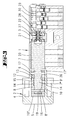
- FIGS. 1 to 3 illustrated first embodiment has a cylinder housing 1, which has two housing halves.
- a bearing bore 30 in which a cylinder core 29 is located.
- this cylinder core 29 is locked by means of tumbler pins.
- the tumbler pins can be brought out of action, so that the cylinder core 29 can be rotated.
- the cylinder core 29 can be coupled by means of a coupling member 22 with a hub 27 of a closing member 3.
- the closing member 3 is rotatably in a central recess of the housing first
- the displacement of the coupling member 22 in the coupling position to the hub 27 of the closing member 3 is carried out with the key tip. This first acts on a transmission spring. If now the cylinder core 29 is rotated, the coupling member 22 is nadomit towed until the radially projecting coupling projections can engage 27 in corresponding coupling recesses of the hub. A provided between this coupling member 22 and another coupling member 21 compression spring 28 is biased. The coupling member 21 is thereby of the coupling Displaced position with the hub 27. If the cylinder core 29 is rotated, the closing member 3 is entrained.
- the other half of the housing 1 also has a bearing bore 20.
- This bearing bore 20 axially fixed but rotatably a drive shaft 7.
- the closing member 3 indicative end of the drive shaft 7 is coupled via a transmission spring 37 to the coupling member 21.
- the coupling member 21 is in a coupled position to the closing member.
- the end 7 ', 7 "of the drive shaft 7 projecting from the bearing bore 20 is reduced in diameter and forms a cylinder section, and a coupling element 9 is inserted on a middle section 7' of this section which is tapered in diameter.
- the coupling element 9 has a substantially annular shape a cavity 9 ', which is penetrated by the section 7' of the drive shaft 7.
- the coupling element 9 has two diametrically opposite pin bores 17 '
- the coupling element 9 is inserted in a neck portion 36 of a knob 2, which has a substantially cylindrical jacket-shaped hand engagement surface 4
- the neck portion 36 has two ends diametrically opposite pin holes 17 in which a transverse pin 17 is inserted, with which the coupling element is rotatably and axially fixed to the knob 2 is connected.
- a coupling element 8 is placed on the end 7 "of the drive shaft 7 which is inserted in the central cavity 10.
- the end 7" has a transverse bore 19 which is aligned with transverse bores 18 of the coupling element 8.
- a pin 16 which connects the coupling element 8 rotatably and axially fixed to the drive shaft 7.
- the two coupling elements 8, 9 are held by means of a compression spring 15 at a distance.
- the demanding end face of the neck portion 36 is only slightly spaced from the end face 1 'of the housing or touches the end face 1' of the housing.
- the coupling element 8 has on its side facing the coupling element 9 in the circumferential direction alternately claw-like coupling projections 14 and interposed coupling recesses 11.
- the projections 14 and recesses 11 cooperate with properly designed to coupling projections 12 and coupling recesses 13 of the coupling element 9 together. If the coupling elements 8, 9 are moved toward one another, then the projections 12, 14 enter the recesses 11, 13 assigned to them, so that the two coupling elements 8, 9 are connected to one another in a rotationally fixed manner. This is done by an axial pull on the knob 2.
- the coupling element 9 slides on the portion 7 'of the drive shaft 7 in the direction of the end 7 "of the drive shaft.
- the knob 2 In the uncoupled state, the knob 2 can rotate freely relative to the drive shaft 7. In the coupled state, the closing member 3 is entrained with a rotation of the knob 2.
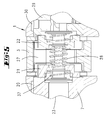
- FIGS. 4 to 7 illustrated second embodiment of the invention has a cylinder housing 1, which has two housing halves.
- a bearing bore 30 in which a cylinder core 29 is located.
- this cylinder core 29 is locked by means of tumbler pins.
- the tumbler pins can be brought out of action, so that the cylinder core 29 can be rotated.
- the cylinder core 29 can be coupled by means of a coupling member 22 with a hub 27 of a closing member 3.
- the Closing member 3 is rotatably in a central recess of the housing first
- the displacement of the coupling member 22 in the coupling position to the hub 27 of the closing member 3 is carried out with the key tip. This first acts on a transmission spring. If now the cylinder core 29 is rotated, the coupling member 22 is nadomit towed until the radially projecting coupling projections can engage 27 in corresponding coupling recesses of the hub. A provided between this coupling member 22 and another coupling member 21 compression spring 28 is biased. The coupling member 21 is displaced out of the coupling position with the hub 27. If the cylinder core 29 is rotated, the closing member 3 is entrained.
- the coupling member 21 is permanently decoupled from the hub 27 in this embodiment.
- the drive shaft 7 has a section 7 "which protrudes from the bearing bore 20. This section 7" is inserted in a neck section 36 of a pommel 2.
- the neck section 36 is the one in the bearing bore 20 of the second half of the cylinder End portion of a central cavity 10 with a substantially cylindrical cross-section. From the neck portion 36 projects a pin 26 in an axial slot 25 of the drive shaft 7. About this pin 26, the drive shaft 7 is rotated when the knob 2 is rotated.
- a plunger 23 is mounted in a bearing bore 24.
- One end 23 'of the plunger 23 is supported on the bottom 10' of the central cavity 10 from.
- the other end of the plunger 23 cooperates via a transmission spring 37 with the coupling member 21.
- the coupling member 21 is disengaged from a hub opening of the hub 27 of the closing member 3rd
- the transmission spring 37 is tensioned. If the radially projecting coupling projections of the coupling member 21 are aligned with the corresponding coupling recesses of the hub 27, the coupling member 21 is displaced into the coupling position with the closing member 3. If this is not the case, the transmission spring 37 is tensioned. In a relative rotation of the knob 2 and the rotatably associated coupling member 21 relative to the closing member 3, then the coupling recesses or coupling projections can be found.
- the transmission spring 37 presses the coupling member 21 in the coupling position, so that the closing member 3 rotatably coupled to the axially displaceable, a substantially cylinder jacket-shaped hand grip surface 4 having knob 2, so that its rotation is transmitted to the closing member 3.
- the clutch spring 28 relaxes and separates the two coupling elements 22, 28 from each other or the coupling element 21 from the hub 27, so that the knob 2 is freely rotatable again.
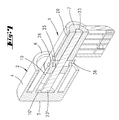
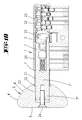
- FIGS. 8 to 10 illustrated third embodiment has a cylinder housing 1, which has two housing halves.
- a bearing bore 30 in which a cylinder core 29 is located.
- this cylinder core 29 is locked by means of tumbler pins.
- the tumbler pins can be brought out of action, so that the cylinder core 29 can be rotated.
- the cylinder core 29 is by means of a coupling member 22nd with a hub 27 of a closing member 3 can be coupled.
- the closing member 3 is rotatably in a central recess of the housing first
- the displacement of the coupling member 22 in the coupling position to the hub 27 of the closing member 3 is carried out with the key tip. This first acts on a transmission spring. If now the cylinder core 29 is rotated, the coupling member 22 is nadomit towed until the radially projecting coupling projections can engage 27 in corresponding coupling recesses of the hub. A provided between this coupling member 22 and another coupling member 21 compression spring 28 is biased. The coupling member 21 is displaced out of the coupling position with the hub 27. If the cylinder core 29 is rotated, the closing member 3 is entrained.
- a drive shaft 7 which is permanently rotatably coupled via a Mitnamezapfen 35 with the closing member 3.
- the drive shaft 7 projects out of the bearing bore 20 of the lock cylinder and has a substantially circular over its entire length circular cylindrical cross-section.
- the sleeve 31 is rotatably mounted on the portion 7' of the drive shaft 7.
- An end portion 7 "of the drive shaft 7 is inserted in the reduced diameter portion 33 of a central stepped bore of a knob 2.
- the end face of the end portion 7" has a threaded opening into which an axial fastening screw 34 is screwed from the front side 5 of the knob 2 ago in the drive shaft 7 to rotatably connect the knob 2 with the drive shaft 7.
- a front end of the sleeve 31 is mounted in a slightly enlarged diameter portion 32 of the stepped bore.
- the opposite front end of the sleeve 31 is located with a small distance in front of the end face 1 'of the housing first
- the facing away from the housing 1 end face 5 of the knob 2 extends flat and is a plane.
- the edge of this circular plane merges with formation of a curvature in a vertex portion 4 of the knob 2.
- the apex region 4 in turn merges into a dome-shaped section 6.
- the contour line of the knob 2 extends in axial cross section without jumps from the front side 4 on the rounded apex 4 into the dome-shaped sloping edge, which can also fall off conically.
- the contour line of the knob 2 is evenly curved without reversing the curvature line.
- the slope of the longitudinal section contour line of the knob 2 decreases starting from the nearest point to the axis continuously up to the largest axial distance.
- knobs of the in the FIGS. 1 to 7 illustrated embodiments have finger troughs and otherwise form substantially rotationally symmetric cylindrical surfaces, which is in the FIGS. 8 to 10 Knob 2 shown substantially strictly rotationally symmetrical.
- the lock cylinder according to the invention is characterized in that the coupling elements 8, 9 in an axial pulling movement on the knob 2 positively interlocking coupling recesses 11, 13 and coupling projections 12, 14 have.
- the lock cylinder according to the invention is further characterized in that the coupling elements 8, 9 central cavities 8 ', 9', wherein in the cavity 8 'of the first coupling element 8 rotatably the end portion 7 "of the drive shaft inserted and in the cavity 9' of the second Coupling element 9 a portion 7 'of the drive shaft 7 inserted.
- the lock cylinder according to the invention is further characterized in that the first coupling element 8 transverse bores 18 and the end portion 17 "has a transverse bore 19, wherein a pin 16 in the two transverse bores 18,19 stuck the first coupling element 8 to the end portion 7" of the drive shaft rotating - and axially fixed couples.
- the lock cylinder according to the invention is further characterized in that the second coupling element 9 has a transverse bore 21 and a neck portion 36 of the knob 2 has a transverse bores 20, wherein the second coupling element 8 by means of a stuck in the transverse bores 20, 21 pin 17 rotatable and axially fixed connected to the knob 2.
- the lock cylinder according to the invention is further characterized in that the first coupling element 8 is mounted axially displaceable in the substantially circular cylindrical central cavity 10 of the knob 2 having a substantially cylindrical hand engagement surface.
- the lock cylinder according to the invention is further characterized in that the plunger 23 is displaceable in a longitudinal bore of the drive shaft 7.
- the lock cylinder according to the invention also has an end portion 7 "of the drive shaft 7, which is mounted axially displaceable in a substantially circular cylindrical central cavity of the knob 2.
- the lock cylinder according to the invention is further characterized in that the end 23 'of the plunger 3 at the bottom 10' of the central cavity 10 is supported.
- the lock cylinder according to the invention is further characterized in that in a neck portion 36 of the knob 2, a pin 26 inserted, which engages in a longitudinal slot 25 of the drive shaft 7.
- the lock cylinder according to the invention is further characterized in that a coupling member 21 of the coupling has radially projecting coupling projections which are hineinverlagerbar in coupling recesses of a hub 27 of the closing member 3 against the restoring force of a clutch spring 28.
- the lock cylinder according to the invention may further have a transition spring 37, with which the axial displacement of the plunger 23 is transferable to the coupling member 21.
- the lock cylinder according to the invention is further characterized in that in a further bearing bore 30 of the cylinder housing 1, a cylinder core 29 is rotatably mounted, which is rotatable by inserting a matching key and which can be coupled with a coupling member 22 by inserting the key with the closing member 3.
- the lock cylinder according to the invention is further characterized in that the coupling members 21, 22 can displace each other from the coupling position to the closing member 3 by axial displacement.
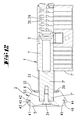
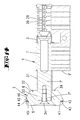
- FIG. 11 and 12 illustrated embodiment relates to an insertable into a Sch Strukturzylindereinsteckö réelle a door lock lock cylinder with a housing 1, which has two housing halves.
- a cylinder core 29 which is held in a blocking position with tumblers, not shown.
- the tumblers can be sorted by inserting a matching key into a keyway of the cylinder core 29 such that the cylinder core 29 is rotated.
- the closing member 3 is loommit dragged.
- the closing member 3 is rotatably connected to a drive shaft 7, which is located in a storage cavity of the other housing half. With a portion 7 ', the drive shaft 7 projects beyond the end face of the housing 1'.
- a rotary knob 2 is placed on the free end 7 "of the drive shaft and is connected in a rotationally fixed manner to the drive shaft 7 by means of a fastening screw 34.
- a sleeve 31 On the free between the knob 2 and the end face 1 'extending portion 7' of the drive shaft 7 is seated a sleeve 31.
- the sleeve 31 is freely rotatably mounted on the drive shaft 7.
- the sleeve 31 carries a radially projecting collar 39, which rests in a recess 32.
- the recess 32 extends on a radial plane which is opposite the end face 5 of the knob 2.
- This radial plane which is substantially completely filled by the recess 32, is followed by a running on a curved surface of rotation hand engaging surface 6 at.
- This hand engagement surface 6 extends into a diameter-largest area of the knob base body, that of a cylinder jacket-shaped bearing surface 45 is formed.
- the bearing surface 45 merges with the formation of a small step 46 into a further hand engagement surface 5, which is formed by the radially outermost, curved portion of the end face of the knob 2.
- the bearing surface 45 supports a freely rotatable ring 40, which is tied by means of a restraining ring 43 in the circumferential direction rotatably attached to the knob 2.
- the bearing surface 45 forms a circumferential groove 41, in which the restraining ring 43 rests.
- a portion of the restraining ring 43 protrudes into a circumferential groove 42 which is located on the inside of the annular rotary member 40.
- the rounded apex 44 of the knob 2 is formed by the freely rotatable ring 40.
- a torque transmission device acting there such as, for example, a drill or the like, can thus transmit no torque to the drive shaft 7.
- the rotary member 40 is also formed here as a ring. While the narrow, freely rotatably mounted on the radially outermost portion of the knob 2 ring 40 of the in the Figures 11 and 12 illustrated embodiment has an approximately triangular cross-sectional area, which has in the Figures 13 and 14 illustrated embodiment a freely rotatable ring 40 with a flat rounded vertex surface 44, which merges substantially flush in the back 4 and the curved end face 5.
Landscapes
- Lock And Its Accessories (AREA)
Applications Claiming Priority (3)
| Application Number | Priority Date | Filing Date | Title |
|---|---|---|---|
| DE102009026336 | 2009-08-05 | ||
| DE201020005428 DE202010005428U1 (de) | 2010-05-11 | 2010-05-11 | Knaufzylinder mit drehbarem Ring |
| DE102010017446A DE102010017446A1 (de) | 2009-08-05 | 2010-06-18 | Knaufzylinder |
Publications (3)
| Publication Number | Publication Date |
|---|---|
| EP2287423A2 true EP2287423A2 (fr) | 2011-02-23 |
| EP2287423A3 EP2287423A3 (fr) | 2011-04-27 |
| EP2287423B1 EP2287423B1 (fr) | 2013-02-13 |
Family
ID=43027543
Family Applications (1)
| Application Number | Title | Priority Date | Filing Date |
|---|---|---|---|
| EP20100171538 Active EP2287423B1 (fr) | 2009-08-05 | 2010-08-02 | Cylindre à pommeau |
Country Status (2)
| Country | Link |
|---|---|
| EP (1) | EP2287423B1 (fr) |
| DE (1) | DE102010017446A1 (fr) |
Cited By (7)
| Publication number | Priority date | Publication date | Assignee | Title |
|---|---|---|---|---|
| CZ304066B6 (cs) * | 2012-06-08 | 2013-09-18 | Tokoz A.S. | Oboustranný válcový zámek s otocným ovládacím knoflíkem |
| GB2515729A (en) * | 2013-06-03 | 2015-01-07 | Uap Ltd | Improvements to cylinder locks with thumb-turns |
| DE202020100649U1 (de) | 2020-02-06 | 2020-04-14 | Artur Litwiński | Profilierter Spindel-Einsatz für Türschlösser |
| WO2021001838A3 (fr) * | 2019-07-02 | 2021-02-11 | Rav Bariach (08) Industries Ltd. | Ensemble verrou à bouton pour retirer des clés incorrectes |
| EP4086414A1 (fr) * | 2021-05-07 | 2022-11-09 | ASSA ABLOY (Schweiz) AG | Agencement de cylindre de fermeture pourvu d'accouplement à poignée |
| WO2023017283A1 (fr) * | 2021-08-12 | 2023-02-16 | Giovanni Laporta | Améliorations apportées à des ensembles de verrouillage |
| DE202023102981U1 (de) | 2022-06-02 | 2023-08-22 | Tedee Ip Spółka Z Ograniczoną Odpowiedzialnością | Welle eines Zylindereinsatzes für ein Türschloss |
Families Citing this family (1)
| Publication number | Priority date | Publication date | Assignee | Title |
|---|---|---|---|---|
| DE102014110857A1 (de) | 2014-07-31 | 2016-02-04 | Basi Gmbh | Schließzylinder mit einem durch Axialverlagerung in eine Drehmitnahmestellung zu einer Kernwelle bringbaren Knauf |
Citations (6)
| Publication number | Priority date | Publication date | Assignee | Title |
|---|---|---|---|---|
| DE1052855B (de) | 1956-03-06 | 1959-03-12 | Zeiss Ikon Ag | Einsteckschloss mit beiderseits an die Schliessgliedwelle ankuppelbaren Schlosshandhaben |
| DE1150005B (de) | 1959-12-28 | 1963-06-06 | C Ed Schulte G M B H Schloss U | Einbauzylinder fuer Einsteckschloesser od. dgl. |
| DE4414989C2 (de) | 1994-02-05 | 2002-08-29 | Michael Fleischmann | Verriegelungsmechanik für ein Schloßsystem |
| JP2003056220A (ja) | 2001-08-20 | 2003-02-26 | Miwa Lock Co Ltd | サムターン |
| WO2003083237A2 (fr) | 2002-04-02 | 2003-10-09 | Mila Hardware Limited | Mecanisme de verrouillage |
| DE19957697C2 (de) | 1999-11-30 | 2003-10-23 | Linnemeier Guenther | Drückerelement zum Einsatz einer Klinke für eine herkömmliche Türdrückergarnitur |
Family Cites Families (6)
| Publication number | Priority date | Publication date | Assignee | Title |
|---|---|---|---|---|
| GB340461A (en) * | 1930-04-17 | 1931-01-01 | Moss Joseph | Improvements in door knobs |
| US2610877A (en) * | 1950-03-31 | 1952-09-16 | Clark H Weaver | Attachment for door knobs |
| CH334964A (de) * | 1954-07-07 | 1958-12-31 | Zeiss Ikon Ag | Einbaudoppelzylinder für Einsteckschlösser mit Schlüssel- und Handgriffbetätigung |
| FR1585478A (fr) * | 1968-09-13 | 1970-01-23 | ||
| DE9314065U1 (de) * | 1993-09-17 | 1993-12-02 | Ikon AG Präzisionstechnik, 14167 Berlin | Doppelschließzylinder |
| US5639132A (en) * | 1995-07-18 | 1997-06-17 | Wartian; George | Door latch operating mechanism |
-
2010
- 2010-06-18 DE DE102010017446A patent/DE102010017446A1/de not_active Withdrawn
- 2010-08-02 EP EP20100171538 patent/EP2287423B1/fr active Active
Patent Citations (6)
| Publication number | Priority date | Publication date | Assignee | Title |
|---|---|---|---|---|
| DE1052855B (de) | 1956-03-06 | 1959-03-12 | Zeiss Ikon Ag | Einsteckschloss mit beiderseits an die Schliessgliedwelle ankuppelbaren Schlosshandhaben |
| DE1150005B (de) | 1959-12-28 | 1963-06-06 | C Ed Schulte G M B H Schloss U | Einbauzylinder fuer Einsteckschloesser od. dgl. |
| DE4414989C2 (de) | 1994-02-05 | 2002-08-29 | Michael Fleischmann | Verriegelungsmechanik für ein Schloßsystem |
| DE19957697C2 (de) | 1999-11-30 | 2003-10-23 | Linnemeier Guenther | Drückerelement zum Einsatz einer Klinke für eine herkömmliche Türdrückergarnitur |
| JP2003056220A (ja) | 2001-08-20 | 2003-02-26 | Miwa Lock Co Ltd | サムターン |
| WO2003083237A2 (fr) | 2002-04-02 | 2003-10-09 | Mila Hardware Limited | Mecanisme de verrouillage |
Cited By (10)
| Publication number | Priority date | Publication date | Assignee | Title |
|---|---|---|---|---|
| CZ304066B6 (cs) * | 2012-06-08 | 2013-09-18 | Tokoz A.S. | Oboustranný válcový zámek s otocným ovládacím knoflíkem |
| GB2515729A (en) * | 2013-06-03 | 2015-01-07 | Uap Ltd | Improvements to cylinder locks with thumb-turns |
| WO2021001838A3 (fr) * | 2019-07-02 | 2021-02-11 | Rav Bariach (08) Industries Ltd. | Ensemble verrou à bouton pour retirer des clés incorrectes |
| DE202020100649U1 (de) | 2020-02-06 | 2020-04-14 | Artur Litwiński | Profilierter Spindel-Einsatz für Türschlösser |
| EP4086414A1 (fr) * | 2021-05-07 | 2022-11-09 | ASSA ABLOY (Schweiz) AG | Agencement de cylindre de fermeture pourvu d'accouplement à poignée |
| WO2023017283A1 (fr) * | 2021-08-12 | 2023-02-16 | Giovanni Laporta | Améliorations apportées à des ensembles de verrouillage |
| GB2613426A (en) * | 2021-08-12 | 2023-06-07 | Laporta Giovanni | Improvements for lock assemblies |
| GB2613426B (en) * | 2021-08-12 | 2024-08-14 | Laporta Giovanni | Improvements for lock assemblies |
| GB2633446A (en) * | 2021-08-12 | 2025-03-12 | Laporta Giovanni | Improvements for lock assemblies |
| DE202023102981U1 (de) | 2022-06-02 | 2023-08-22 | Tedee Ip Spółka Z Ograniczoną Odpowiedzialnością | Welle eines Zylindereinsatzes für ein Türschloss |
Also Published As
| Publication number | Publication date |
|---|---|
| DE102010017446A1 (de) | 2011-08-18 |
| EP2287423A3 (fr) | 2011-04-27 |
| EP2287423B1 (fr) | 2013-02-13 |
Similar Documents
| Publication | Publication Date | Title |
|---|---|---|
| DE102007044088B9 (de) | Binär codierter Schlüssel und manipulationssicheres Schloss | |
| EP2287423A2 (fr) | Cylindre à pommeau | |
| DE69713087T2 (de) | Auswechselbarer schliesszylinder | |
| DE69711299T2 (de) | Karabinerhaken mit Verriegelungsvorrichtung | |
| DE69408012T2 (de) | Schloss für Notausgang, anpassbar an die Türöffnungsrichtung, mit einer Handhabe auf der einen Seite und eine Möglichkeit zum befristeten Öffnen auf der anderen Seite | |
| CH673048A5 (fr) | ||
| DE2544692A1 (de) | Mit zwei schluesseln zu schliessendes zylinderschloss mit axial geteilten stiftzuhaltungen | |
| DE102006030552A1 (de) | Fluchttürschloss | |
| EP3658725A1 (fr) | Dispositif de fermeture | |
| EP2410110B1 (fr) | Cylindre de fermeture, notamment cylindre double doté d'un organe de fermeture à roue libre | |
| DE202008004598U1 (de) | Beschlag für Fenster oder Türen | |
| DE102004009992A1 (de) | Handhabe für ein Türschloss und Schloss mit derartiger Handhabe | |
| EP2559833A2 (fr) | Cylindre à bouton avec couplage actionnable par bouton-pressoir, ainsi que bouton de commande pour un cylindre de fermeture de ce type | |
| DE69228327T2 (de) | Zylinderschloss | |
| DE2743769A1 (de) | Schloss und codierter schluessel zur betaetigung des schlosses | |
| DE2949643A1 (de) | Zylinderschloss | |
| DE102023104634B3 (de) | Türgarnitur sowie Tür | |
| DE202005020043U1 (de) | Verriegelungsvorrichtung | |
| DE69627996T2 (de) | Schliesszylinder, der mittels eines Hauptschlüssels blockiert werden kann | |
| DE68909925T2 (de) | Schloss mit Kern mit Leerlaufmöglichkeit. | |
| EP4112856B1 (fr) | Serrure dotée d'un verrou pouvant tourner à l'aide d'un élément d'actionnement | |
| EP1164238A1 (fr) | Serrure cylindrique | |
| DE102005041974B3 (de) | Schliesszylinder mit Kupplung | |
| EP4086414B1 (fr) | Agencement de cylindre de fermeture pourvu d'accouplement à poignée | |
| EP4646519B1 (fr) | Clé et barillet de serrure rotatif à clé |
Legal Events
| Date | Code | Title | Description |
|---|---|---|---|
| PUAI | Public reference made under article 153(3) epc to a published international application that has entered the european phase |
Free format text: ORIGINAL CODE: 0009012 |
|
| AK | Designated contracting states |
Kind code of ref document: A2 Designated state(s): AL AT BE BG CH CY CZ DE DK EE ES FI FR GB GR HR HU IE IS IT LI LT LU LV MC MK MT NL NO PL PT RO SE SI SK SM TR |
|
| AX | Request for extension of the european patent |
Extension state: BA ME RS |
|
| PUAL | Search report despatched |
Free format text: ORIGINAL CODE: 0009013 |
|
| AK | Designated contracting states |
Kind code of ref document: A3 Designated state(s): AL AT BE BG CH CY CZ DE DK EE ES FI FR GB GR HR HU IE IS IT LI LT LU LV MC MK MT NL NO PL PT RO SE SI SK SM TR |
|
| AX | Request for extension of the european patent |
Extension state: BA ME RS |
|
| 17P | Request for examination filed |
Effective date: 20110902 |
|
| GRAP | Despatch of communication of intention to grant a patent |
Free format text: ORIGINAL CODE: EPIDOSNIGR1 |
|
| GRAS | Grant fee paid |
Free format text: ORIGINAL CODE: EPIDOSNIGR3 |
|
| GRAA | (expected) grant |
Free format text: ORIGINAL CODE: 0009210 |
|
| AK | Designated contracting states |
Kind code of ref document: B1 Designated state(s): AL AT BE BG CH CY CZ DE DK EE ES FI FR GB GR HR HU IE IS IT LI LT LU LV MC MK MT NL NO PL PT RO SE SI SK SM TR |
|
| REG | Reference to a national code |
Ref country code: GB Ref legal event code: FG4D Free format text: NOT ENGLISH |
|
| REG | Reference to a national code |
Ref country code: AT Ref legal event code: REF Ref document number: 596600 Country of ref document: AT Kind code of ref document: T Effective date: 20130215 |
|
| REG | Reference to a national code |
Ref country code: IE Ref legal event code: FG4D Free format text: LANGUAGE OF EP DOCUMENT: GERMAN |
|
| REG | Reference to a national code |
Ref country code: CH Ref legal event code: NV Representative=s name: R. A. EGLI AND CO. PATENTANWAELTE, CH |
|
| REG | Reference to a national code |
Ref country code: DE Ref legal event code: R096 Ref document number: 502010002298 Country of ref document: DE Effective date: 20130411 |
|
| REG | Reference to a national code |
Ref country code: NL Ref legal event code: T3 |
|
| REG | Reference to a national code |
Ref country code: LT Ref legal event code: MG4D |
|
| PG25 | Lapsed in a contracting state [announced via postgrant information from national office to epo] |
Ref country code: BG Free format text: LAPSE BECAUSE OF FAILURE TO SUBMIT A TRANSLATION OF THE DESCRIPTION OR TO PAY THE FEE WITHIN THE PRESCRIBED TIME-LIMIT Effective date: 20130513 Ref country code: ES Free format text: LAPSE BECAUSE OF FAILURE TO SUBMIT A TRANSLATION OF THE DESCRIPTION OR TO PAY THE FEE WITHIN THE PRESCRIBED TIME-LIMIT Effective date: 20130524 Ref country code: SE Free format text: LAPSE BECAUSE OF FAILURE TO SUBMIT A TRANSLATION OF THE DESCRIPTION OR TO PAY THE FEE WITHIN THE PRESCRIBED TIME-LIMIT Effective date: 20130213 Ref country code: NO Free format text: LAPSE BECAUSE OF FAILURE TO SUBMIT A TRANSLATION OF THE DESCRIPTION OR TO PAY THE FEE WITHIN THE PRESCRIBED TIME-LIMIT Effective date: 20130513 Ref country code: LT Free format text: LAPSE BECAUSE OF FAILURE TO SUBMIT A TRANSLATION OF THE DESCRIPTION OR TO PAY THE FEE WITHIN THE PRESCRIBED TIME-LIMIT Effective date: 20130213 Ref country code: IS Free format text: LAPSE BECAUSE OF FAILURE TO SUBMIT A TRANSLATION OF THE DESCRIPTION OR TO PAY THE FEE WITHIN THE PRESCRIBED TIME-LIMIT Effective date: 20130613 |
|
| PG25 | Lapsed in a contracting state [announced via postgrant information from national office to epo] |
Ref country code: SI Free format text: LAPSE BECAUSE OF FAILURE TO SUBMIT A TRANSLATION OF THE DESCRIPTION OR TO PAY THE FEE WITHIN THE PRESCRIBED TIME-LIMIT Effective date: 20130213 Ref country code: PT Free format text: LAPSE BECAUSE OF FAILURE TO SUBMIT A TRANSLATION OF THE DESCRIPTION OR TO PAY THE FEE WITHIN THE PRESCRIBED TIME-LIMIT Effective date: 20130613 Ref country code: PL Free format text: LAPSE BECAUSE OF FAILURE TO SUBMIT A TRANSLATION OF THE DESCRIPTION OR TO PAY THE FEE WITHIN THE PRESCRIBED TIME-LIMIT Effective date: 20130213 Ref country code: GR Free format text: LAPSE BECAUSE OF FAILURE TO SUBMIT A TRANSLATION OF THE DESCRIPTION OR TO PAY THE FEE WITHIN THE PRESCRIBED TIME-LIMIT Effective date: 20130514 Ref country code: LV Free format text: LAPSE BECAUSE OF FAILURE TO SUBMIT A TRANSLATION OF THE DESCRIPTION OR TO PAY THE FEE WITHIN THE PRESCRIBED TIME-LIMIT Effective date: 20130213 Ref country code: FI Free format text: LAPSE BECAUSE OF FAILURE TO SUBMIT A TRANSLATION OF THE DESCRIPTION OR TO PAY THE FEE WITHIN THE PRESCRIBED TIME-LIMIT Effective date: 20130213 |
|
| PG25 | Lapsed in a contracting state [announced via postgrant information from national office to epo] |
Ref country code: HR Free format text: LAPSE BECAUSE OF FAILURE TO SUBMIT A TRANSLATION OF THE DESCRIPTION OR TO PAY THE FEE WITHIN THE PRESCRIBED TIME-LIMIT Effective date: 20130213 |
|
| PG25 | Lapsed in a contracting state [announced via postgrant information from national office to epo] |
Ref country code: DK Free format text: LAPSE BECAUSE OF FAILURE TO SUBMIT A TRANSLATION OF THE DESCRIPTION OR TO PAY THE FEE WITHIN THE PRESCRIBED TIME-LIMIT Effective date: 20130213 Ref country code: RO Free format text: LAPSE BECAUSE OF FAILURE TO SUBMIT A TRANSLATION OF THE DESCRIPTION OR TO PAY THE FEE WITHIN THE PRESCRIBED TIME-LIMIT Effective date: 20130213 Ref country code: EE Free format text: LAPSE BECAUSE OF FAILURE TO SUBMIT A TRANSLATION OF THE DESCRIPTION OR TO PAY THE FEE WITHIN THE PRESCRIBED TIME-LIMIT Effective date: 20130213 Ref country code: SK Free format text: LAPSE BECAUSE OF FAILURE TO SUBMIT A TRANSLATION OF THE DESCRIPTION OR TO PAY THE FEE WITHIN THE PRESCRIBED TIME-LIMIT Effective date: 20130213 Ref country code: CZ Free format text: LAPSE BECAUSE OF FAILURE TO SUBMIT A TRANSLATION OF THE DESCRIPTION OR TO PAY THE FEE WITHIN THE PRESCRIBED TIME-LIMIT Effective date: 20130213 |
|
| PLBE | No opposition filed within time limit |
Free format text: ORIGINAL CODE: 0009261 |
|
| STAA | Information on the status of an ep patent application or granted ep patent |
Free format text: STATUS: NO OPPOSITION FILED WITHIN TIME LIMIT |
|
| PG25 | Lapsed in a contracting state [announced via postgrant information from national office to epo] |
Ref country code: IT Free format text: LAPSE BECAUSE OF FAILURE TO SUBMIT A TRANSLATION OF THE DESCRIPTION OR TO PAY THE FEE WITHIN THE PRESCRIBED TIME-LIMIT Effective date: 20130213 |
|
| 26N | No opposition filed |
Effective date: 20131114 |
|
| REG | Reference to a national code |
Ref country code: DE Ref legal event code: R097 Ref document number: 502010002298 Country of ref document: DE Effective date: 20131114 |
|
| BERE | Be: lapsed |
Owner name: DOM SICHERHEITSTECHNIK G.M.B.H. & CO. KG Effective date: 20130831 |
|
| PG25 | Lapsed in a contracting state [announced via postgrant information from national office to epo] |
Ref country code: MC Free format text: LAPSE BECAUSE OF FAILURE TO SUBMIT A TRANSLATION OF THE DESCRIPTION OR TO PAY THE FEE WITHIN THE PRESCRIBED TIME-LIMIT Effective date: 20130213 |
|
| REG | Reference to a national code |
Ref country code: DE Ref legal event code: R082 Ref document number: 502010002298 Country of ref document: DE Representative=s name: WITTE, WELLER & PARTNER PATENTANWAELTE MBB, DE |
|
| REG | Reference to a national code |
Ref country code: IE Ref legal event code: MM4A |
|
| PG25 | Lapsed in a contracting state [announced via postgrant information from national office to epo] |
Ref country code: BE Free format text: LAPSE BECAUSE OF NON-PAYMENT OF DUE FEES Effective date: 20130831 |
|
| PG25 | Lapsed in a contracting state [announced via postgrant information from national office to epo] |
Ref country code: IE Free format text: LAPSE BECAUSE OF NON-PAYMENT OF DUE FEES Effective date: 20130802 |
|
| PG25 | Lapsed in a contracting state [announced via postgrant information from national office to epo] |
Ref country code: SM Free format text: LAPSE BECAUSE OF FAILURE TO SUBMIT A TRANSLATION OF THE DESCRIPTION OR TO PAY THE FEE WITHIN THE PRESCRIBED TIME-LIMIT Effective date: 20130213 |
|
| PG25 | Lapsed in a contracting state [announced via postgrant information from national office to epo] |
Ref country code: CY Free format text: LAPSE BECAUSE OF FAILURE TO SUBMIT A TRANSLATION OF THE DESCRIPTION OR TO PAY THE FEE WITHIN THE PRESCRIBED TIME-LIMIT Effective date: 20130213 Ref country code: TR Free format text: LAPSE BECAUSE OF FAILURE TO SUBMIT A TRANSLATION OF THE DESCRIPTION OR TO PAY THE FEE WITHIN THE PRESCRIBED TIME-LIMIT Effective date: 20130213 Ref country code: MT Free format text: LAPSE BECAUSE OF FAILURE TO SUBMIT A TRANSLATION OF THE DESCRIPTION OR TO PAY THE FEE WITHIN THE PRESCRIBED TIME-LIMIT Effective date: 20130213 |
|
| PG25 | Lapsed in a contracting state [announced via postgrant information from national office to epo] |
Ref country code: LU Free format text: LAPSE BECAUSE OF NON-PAYMENT OF DUE FEES Effective date: 20130802 Ref country code: MK Free format text: LAPSE BECAUSE OF FAILURE TO SUBMIT A TRANSLATION OF THE DESCRIPTION OR TO PAY THE FEE WITHIN THE PRESCRIBED TIME-LIMIT Effective date: 20130213 Ref country code: HU Free format text: LAPSE BECAUSE OF FAILURE TO SUBMIT A TRANSLATION OF THE DESCRIPTION OR TO PAY THE FEE WITHIN THE PRESCRIBED TIME-LIMIT; INVALID AB INITIO Effective date: 20100802 |
|
| REG | Reference to a national code |
Ref country code: FR Ref legal event code: PLFP Year of fee payment: 7 |
|
| REG | Reference to a national code |
Ref country code: FR Ref legal event code: PLFP Year of fee payment: 8 |
|
| REG | Reference to a national code |
Ref country code: FR Ref legal event code: PLFP Year of fee payment: 9 |
|
| PG25 | Lapsed in a contracting state [announced via postgrant information from national office to epo] |
Ref country code: AL Free format text: LAPSE BECAUSE OF FAILURE TO SUBMIT A TRANSLATION OF THE DESCRIPTION OR TO PAY THE FEE WITHIN THE PRESCRIBED TIME-LIMIT Effective date: 20130213 |
|
| PGFP | Annual fee paid to national office [announced via postgrant information from national office to epo] |
Ref country code: GB Payment date: 20180828 Year of fee payment: 9 Ref country code: CH Payment date: 20180827 Year of fee payment: 9 Ref country code: AT Payment date: 20180821 Year of fee payment: 9 |
|
| REG | Reference to a national code |
Ref country code: AT Ref legal event code: MM01 Ref document number: 596600 Country of ref document: AT Kind code of ref document: T Effective date: 20190802 |
|
| GBPC | Gb: european patent ceased through non-payment of renewal fee |
Effective date: 20190802 |
|
| PG25 | Lapsed in a contracting state [announced via postgrant information from national office to epo] |
Ref country code: AT Free format text: LAPSE BECAUSE OF NON-PAYMENT OF DUE FEES Effective date: 20190802 |
|
| PG25 | Lapsed in a contracting state [announced via postgrant information from national office to epo] |
Ref country code: CH Free format text: LAPSE BECAUSE OF NON-PAYMENT OF DUE FEES Effective date: 20190831 Ref country code: LI Free format text: LAPSE BECAUSE OF NON-PAYMENT OF DUE FEES Effective date: 20190831 |
|
| PG25 | Lapsed in a contracting state [announced via postgrant information from national office to epo] |
Ref country code: GB Free format text: LAPSE BECAUSE OF NON-PAYMENT OF DUE FEES Effective date: 20190802 |
|
| PGFP | Annual fee paid to national office [announced via postgrant information from national office to epo] |
Ref country code: NL Payment date: 20250821 Year of fee payment: 16 |
|
| PGFP | Annual fee paid to national office [announced via postgrant information from national office to epo] |
Ref country code: DE Payment date: 20250819 Year of fee payment: 16 |
|
| PGFP | Annual fee paid to national office [announced via postgrant information from national office to epo] |
Ref country code: FR Payment date: 20250821 Year of fee payment: 16 |