EP2287760B1 - Procédé pour gérer l'émission electronique à distance d'unités de sang - Google Patents
Procédé pour gérer l'émission electronique à distance d'unités de sang Download PDFInfo
- Publication number
- EP2287760B1 EP2287760B1 EP10010223.5A EP10010223A EP2287760B1 EP 2287760 B1 EP2287760 B1 EP 2287760B1 EP 10010223 A EP10010223 A EP 10010223A EP 2287760 B1 EP2287760 B1 EP 2287760B1
- Authority
- EP
- European Patent Office
- Prior art keywords
- blood
- caregiver
- patient
- pda
- blood unit
- Prior art date
- Legal status (The legal status is an assumption and is not a legal conclusion. Google has not performed a legal analysis and makes no representation as to the accuracy of the status listed.)
- Expired - Lifetime
Links
- 239000008280 blood Substances 0.000 title claims description 363
- 210000004369 blood Anatomy 0.000 title claims description 363
- 238000000034 method Methods 0.000 title claims description 63
- 238000007639 printing Methods 0.000 claims description 7
- 238000006243 chemical reaction Methods 0.000 description 30
- 238000012360 testing method Methods 0.000 description 17
- 238000005057 refrigeration Methods 0.000 description 15
- 239000010836 blood and blood product Substances 0.000 description 14
- 229940125691 blood product Drugs 0.000 description 14
- 238000005516 engineering process Methods 0.000 description 5
- 241000283070 Equus zebra Species 0.000 description 4
- 238000013474 audit trail Methods 0.000 description 4
- 238000012790 confirmation Methods 0.000 description 4
- 230000036770 blood supply Effects 0.000 description 3
- 230000000694 effects Effects 0.000 description 3
- 238000012545 processing Methods 0.000 description 3
- 238000009534 blood test Methods 0.000 description 2
- 238000004891 communication Methods 0.000 description 2
- 238000010586 diagram Methods 0.000 description 2
- 238000007726 management method Methods 0.000 description 2
- 239000011159 matrix material Substances 0.000 description 2
- 238000012544 monitoring process Methods 0.000 description 2
- 238000004806 packaging method and process Methods 0.000 description 2
- 238000012549 training Methods 0.000 description 2
- 208000003441 Transfusion reaction Diseases 0.000 description 1
- 238000012550 audit Methods 0.000 description 1
- 230000036772 blood pressure Effects 0.000 description 1
- 238000004140 cleaning Methods 0.000 description 1
- 238000013500 data storage Methods 0.000 description 1
- 238000011161 development Methods 0.000 description 1
- 239000003814 drug Substances 0.000 description 1
- 238000009434 installation Methods 0.000 description 1
- VHVPQPYKVGDNFY-ZPGVKDDISA-N itraconazole Chemical compound O=C1N(C(C)CC)N=CN1C1=CC=C(N2CCN(CC2)C=2C=CC(OC[C@@H]3O[C@](CN4N=CN=C4)(OC3)C=3C(=CC(Cl)=CC=3)Cl)=CC=2)C=C1 VHVPQPYKVGDNFY-ZPGVKDDISA-N 0.000 description 1
- 238000009533 lab test Methods 0.000 description 1
- 238000002372 labelling Methods 0.000 description 1
- 229940021317 other blood product in atc Drugs 0.000 description 1
- 244000052769 pathogen Species 0.000 description 1
- 230000007170 pathology Effects 0.000 description 1
- 238000002360 preparation method Methods 0.000 description 1
- 238000012552 review Methods 0.000 description 1
- 238000010561 standard procedure Methods 0.000 description 1
- 238000004659 sterilization and disinfection Methods 0.000 description 1
- 238000012546 transfer Methods 0.000 description 1
- 230000000007 visual effect Effects 0.000 description 1
Images







Classifications
-
- G—PHYSICS
- G16—INFORMATION AND COMMUNICATION TECHNOLOGY [ICT] SPECIALLY ADAPTED FOR SPECIFIC APPLICATION FIELDS
- G16H—HEALTHCARE INFORMATICS, i.e. INFORMATION AND COMMUNICATION TECHNOLOGY [ICT] SPECIALLY ADAPTED FOR THE HANDLING OR PROCESSING OF MEDICAL OR HEALTHCARE DATA
- G16H40/00—ICT specially adapted for the management or administration of healthcare resources or facilities; ICT specially adapted for the management or operation of medical equipment or devices
- G16H40/20—ICT specially adapted for the management or administration of healthcare resources or facilities; ICT specially adapted for the management or operation of medical equipment or devices for the management or administration of healthcare resources or facilities, e.g. managing hospital staff or surgery rooms
Definitions
- the present invention relates generally to apparatus and methods for monitoring the handling, transportation, and transfusion of blood and/or blood products.
- Apparatus and methods presented herein employ electronically readable indicia to confirm the identity of patients, blood units, and caregivers every time a blood unit is handled.
- the present invention further relates to the collection, storage, and communication of information relevant to transfusions such that complete audit trails are recorded and guidance to the caregiver is provided in order to ensure that all required procedures are executed properly.
- Transfusion of blood is a high-risk procedure.
- a patient may be killed or seriously harmed if the wrong type of blood or blood product is transfused, may be infected by blood bourn pathogens or may have unexpected reactions to blood products.
- considerable care is taken in the collection, processing, packaging, labeling and transport of blood units.
- Blood collection and supply agencies (Canadian Blood Services (Canada), American Red Cross, America's Blood Centers (USA), National Blood Services (UK)) keep detailed records of donations, processing, packaging and transport of blood products so that any single blood product can be traced back to an individual donor. Using this information, it should be possible to find and inform all patients who may have been exposed to blood from a particular donor that they might be at risk should a problem arise.
- Blood transfusions are usually performed at hospitals. Hospital blood banks receive blood from the blood supply agency, perform any tests they may require to assure the type and quality of the blood and place the blood into the blood bank stock.
- the first step in the transfusion process is testing of the patient's blood. This requires that a blood sample be drawn from the patient, correctly labeled with the patient's identification, and sent to the blood laboratory. The laboratory tests the patient's blood to determine the correct blood type for the patient, and any special requirements the patient may have. Once these factors are known, a suitable blood unit is retrieved from the blood bank stock and is labeled as suitable for the particular patient. The designated blood unit is placed into a storage location until it is needed. The blood laboratory keeps detailed records of the testing of the blood unit and the patient's blood.
- the transfusion step is tightly controlled.
- the caregiver administering the blood is required to follow a strict procedure that includes careful checking to ensure that the blood is labeled for the patient to be transfused, that the label is on the right blood unit, and that the unit is the correct blood type, meets any special requirements for the patient and has not expired. All of these checks are recorded to ensure that a full audit trail exists for the transfusion event, and to confirm that the correct checks were performed. This audit trail is the only means to link the original blood donation to the patient.
- the caregiver is expected to record the patient's vital signs on a regular basis, and to record any reactions to the blood that the patient might experience. Reporting such reactions to the blood bank, and possibly on to the blood collection agency, may be appropriate to ensure that other patients are not similarly affected.
- the original blood sample for matching the blood may be collected from the wrong patient, or may be mislabeled.
- the person picking up the blood unit from the blood bank may pick up the wrong blood unit. It may take too long to carry the blood unit to the patient, so that the blood has exceeded 30 minutes outside of refrigeration. There are even more risks during the transfusion process.
- the patient may not be wearing a suitable wristband providing positive patient identification, making it impossible for the caregiver to confirm that the blood unit is intended for that patient.
- the caregiver may misread the blood unit's unique identification number (which can be more 15 characters in length) when comparing it to the compatibility label. Errors may be made in transcribing the patient information or blood unit number into the patient record.
- the standard procedures for transfusion involve many steps that may be forgotten or not properly completed, particularly if the caregiver is expected to recall the procedure from memory.
- WO 97/41525 a blood processing system is described wherein a matching label is printed after a donation number previously printed on a blood pack is checked.
- the present invention provides a method for managing the remote electronic issue of a blood unit for a patient according to claim 1.
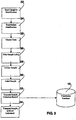
- Figure 1 illustrates one possible method for transfusing blood or a blood product into a patient, while storing transfusion information into transfusion database 10.
- the transfusion method is best described in five steps, each of which is explained in more detail below.
- the first step in the transfusion method is to collect a blood sample from the patient 12. This sample is tested to determine what type of blood is required for the patient. When the determination is complete, one or more blood units are allocated for the patient 14.
- a request is made for the blood unit or units allocated to the patient 16.
- the requested blood unit is transported to the patient's location 18, where it is transfused 20.
- transfusion database 10 At each step in the process, certain information is recorded in transfusion database 10 so that a complete record of the transfusion event is available for review.
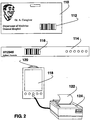
- Figure 2 illustrates apparatus suitable for implementing the sample collection 12, Requesting 16 and transfusion 20 steps of the method.
- the apparatus includes several components that are used in conjunction to execute the steps.
- Each caregiver involved in the transfusion process has an identity means 110 which includes electronically readable caregiver code 112.
- Caregiver code 112 may be a linear or two-dimensional barcode using any one of many common barcode formats, such as code39, code128, Interleave 2 of 5, PDF 417, Matrix code, or others.
- Caregiver code 112 may also be any other type of electronically readable code means such as a Radio Frequency Identification (RFID) tag.
- Caregiver identity means 110 may be an employee identification card or similar item, in which caregiver code 112 is embedded, or to which caregiver code 112 is applied.
- caregiver code 112 is an RFID label encoded with a unique number or letter combination, which is applied to the caregivers' employee identification.
- Each patient to be transfused wears a patient identification wristband 114 which includes electronically readable patient code 116.
- Patient code 116 may be a linear or two-dimensional barcode using any one of many common barcode formats, such as code39, code128, Interleave 2 of 5, PDF 417, Matrix code, or others.
- Patient code 116 may also be any other type of electronically readable code means such as a Radio Frequency Identification (RFID) tag.
- RFID Radio Frequency Identification
- patient code 116 is an RFID tag, in which the patient's identity number, surname, forename, date of birth and sex are encoded.
- Wristband 114 is either a PDC Smart CompuBand or PDC Smart ScanBand (Precision Dynamics Corporation, www_pdcorp_com). These wristbands incorporate RFID chips and can be programmed and printed with any standard barcodes using printers like the Zebra Technologies R402 printer/programmer (Zebra Technologies, www.zebra.com). Although this example uses RFID wristbands, an alternative example uses wristbands having printed barcodes and no RFID chips. Wristbands that may be printed with barcodes are available from many sources, including the Z-Band from Zebra technologies. The Z-Band and similar products can be printed using commonly available thermal and thermal transfer label printers.
- the apparatus also includes a portable computer, preferably a Personal Digital Assistant (PDA) 118.
- PDA 118 includes reader 120 which is able to read caregiver code 112 and patient code 116.
- Reader 120 may be a barcode scanner, a barcode imager or an RFID reader.
- PDA 118 is also preferably equipped with a wireless network means, a touch screen, communication means for communicating with a portable printer, and is suitable for cleaning and disinfection.
- PDA 118 is a Symbol PPT2748, a Symbol SPT1746, a Symbol MC50, a Symbol MC3000 (Symbol Technologies Ltd, www.symbol.com), an HHP Dolphin, or an Intermec Model 700.
- PDA 118 includes software to implement the sample collection 12, requesting 16 and transfusion 20 methods, as hereinafter described.
- the apparatus further includes portable printer means 124 which can communicate with PDA 118 such that PDA 118 can cause printer 124 to print labels as required.
- Printer 124 is a Zebra QL-220 (Zebra Technologies, www.zebra.com) battery powered printer which may be connected to PDA 118 with a cable.
- software included on PDA 118 provides means for performing the sample collection process 12.
- the software causes PDA 118 to display messages to the caregiver indicating the next step that the caregiver should perform. This forces the caregiver to follow a pre-defined procedure that is the same each time sample collection process 12 is performed. This has the effect of allowing even inexperienced caregivers to perform a complex task as if they have been highly trained.
- PDA 118 displays a message asking the caregiver to read their caregiver code 112 (step 22). To do this, the caregiver uses reader 120 of PDA 118 and either scans caregiver code 112 (if caregiver code 112 is a barcode) or brings reader 120 within range of caregiver code 112 (if caregiver code 112 is an RFID tag). PDA 118 displays caregiver code 112 so that the caregiver can verify it.
- PDA 118 displays a message requesting the caregiver to read patient code 116 (step 24 ).
- the caregiver either scans patient code 116 (if patient code 116 is a barcode) or brings reader 120 within range of patient code 116 (if patient code 116 is an RFID tag).
- PDA 118 displays the patient identification information encoded in patient code 116. This display includes the patient's identification number, surname, forename, date of birth and sex.
- PDA 118 displays a message asking the caregiver to confirm that the patient information is correct. Caregivers are expected to ask the patient their name and date of birth to ensure that the displayed information is correct before proceeding with sample collection.
- PDA 118 now displays a selection of tests for the caregiver to request for the blood sample.
- the caregiver presses the appropriate buttons on PDA 118 to indicate the tests they wish to have performed (step 25 ).
- the tests required for a blood transfusion are pre-determined and PDA 118 will automatically assign the tests and move to the next step
- PDA 118 then displays a button for printing.
- the caregiver connects PDA 118 to printer 124 and presses the print button, which causes printer 124 to produce sample label 122 (step 26 ).
- a timer within PDA 118 prevents the caregiver from printing label 122 if more than a pre-set time (typically 15 to 30 seconds) has passed since patient code 116 was read. This encourages the caregiver to print the sample label while at the patient's bedside, rather than at a later time when there is some chance that the label may be mixed up with other labels or applied to the wrong sample.
- Sample label 122 shows the patient identification information read from patient code 116, the type of test required on the sample, and may include a barcode encoding all or some of this information.
- Label 122 includes a PDF-417 two-dimensional barcode which encodes the patient's identification number, surname, forename, date of birth and sex, as well as a code representing the test required, caregiver code 112, the time and date, and a unique identifier for PDA 118.
- the caregiver now collects the required blood sample, following standard blood sample connection techniques (Step 28 ). Once the sample is collected into the collection container, label 122 is applied to the container (step 30 ).
- PDA 118 now displays a button which allows the caregiver to confirm that the sample collection is complete.
- PDF 118 transmits a record to transfusion database 10, recording the collection of the blood sample (step 32 ).
- PDA 118 incorporates a wireless network connection (which may be an IEEE 802.11b wireless network connection or other similar wireless network connection). If available, this wireless network connection is used by the software included on PDA 118 to insert the sample collection record into transfusion database 10.
- PDA 118 is not equipped with a wireless network connection, or there is no wireless network available at the location where the blood sample is collected.
- the software on PDA 118 causes a second copy of label 122 to be printed by printer 124.
- This second label which includes a PDF-417 two-dimensional barcode as described above, is taken to a computer connected to transfusion database 10.
- This computer is equipped with a barcode reader capable of reading the PDF-417 barcode and inserting the information read into transfusion database 10.
- the blood sample is collected and labelled, it is transported to the blood bank laboratory for testing (step 34 ).
- Figure 4 illustrates the procedures followed in the blood bank laboratory in preparation for a blood transfusion (step 14 , Figure 1 ).
- the exact procedure followed by a specific laboratory may vary, so the following procedure should be taken as one possible example only.
- Blood units collected by a blood collection agency are received by the blood bank (step 40 ).
- the unique identification, type and other information about each blood unit are recorded.
- Blood bank laboratories may do their own tests on received blood to confirm the type of blood or to ascertain other special characteristics of the blood (step 42 ). Once these tests are completed, the blood units are placed into storage within the blood bank (step 44 ), where they await assignment to a particular patient.
- the blood bank laboratory When the blood bank laboratory receives a blood sample collected for a patient (step 46 ), it is tested to determine the specific requirements for the patient (step 50 ). These tests will determine the patient's blood type (A, B, O) and Rhesus Factor and determine if there are any other particular requirements for the patient, such as antibody negative, irradiated, or CMV Negative blood.
- A, B, O blood type
- Rhesus Factor determine if there are any other particular requirements for the patient, such as antibody negative, irradiated, or CMV Negative blood.
- an appropriate blood unit for the patient is selected from the stored blood units (step 50 ).
- the unique identification number of the selected blood unit and the patient identification as determined from the blood sample collected from the patient are printed on a compatibility label (step 52 ).
- This label also includes an electronically readable compatibility code, which may be a linear or two-dimensional barcode or other electronically readable code means such as a Radio Frequency Identification (RFID) tag. Encoded in the barcode or RFID tag are the patient identification and unique identification number of the blood unit. Standard blood transfusion practice dictates that there be at least three separate items of patient identification included in the compatibility information, such as the patient ID number, surname and date of birth.
- RFID Radio Frequency Identification
- the printed compatibility label is applied to the selected blood bag (step 54 ), after which the labelled blood bag is placed into an appropriate storage location for pickup when required (step 56 ).
- records are inserted into transfusion database 10. This record includes the time and date, the unique identification number of the selected blood unit, the patient's identification, and may include additional information such as the sample number assigned to the blood sample drawn from the patient, the results of the tests done in the blood bank laboratory, the blood type selected and the specific characteristics of the blood unit assigned.
- Figure 5 illustrates the process for requesting a blood unit for a particular patient from the blood bank ( Figure 1 step 16 ). This procedure uses the apparatus illustrated in Figure 2 .
- PDA 118 displays a message asking the caregiver to read their caregiver code 112 (step 100 ).
- the caregiver uses reader 120 of PDA 118 and either scans caregiver code 112 (if caregiver code 112 is a barcode) or brings reader 120 within range of caregiver code 112 (if caregiver code 112 is an RFID tag).
- PDA 118 displays caregiver code 112 so that the caregiver can verify it.
- PDA 118 displays a message requesting the caregiver to read patient code 116 (step 102 ).
- the caregiver either scans patient code 116 (if patient code 116 is a barcode) or brings reader 120 within range of patient code 116 (if patient code 116 is an RFID tag).
- PDA 118 displays the patient identification information encoded in patient code 116. This display includes the patient's identification number, surname, forename, date of birth and sex.
- PDA 118 displays a message asking the caregiver to confirm that the patient information is correct. Caregivers are expected to ask the patient their name and date of birth to ensure that the displayed information is correct before proceeding with sample collection.
- PDA 118 now displays a selection of blood products that a caregiver might require for the patient. This is most commonly Red Cells, but may be Platelets, Flash Frozen Plasma, or other blood products
- the system may be used for ordering only one type of blood product, in which case PDA 118 will automatically assign the product type and move to the next step.
- PDA 118 then displays a button for printing.
- the caregiver connects PDA 118 to printer 124 and presses the print button, which causes printer 124 to produce request slip 122 (step 106 ).
- Request slip 122 shows the patient identification information read from patient code 116, the type of blood product required and may include a barcode encoding all or some of this information.
- Request slip 122 includes a PDF-417 two-dimensional barcode which encodes the patient's identification number, surname, forename, date of birth and sex, as well as a code representing the blood product required, required, caregiver code 112, the time and date, and a unique identifier for PDA 118.
- the request slip printed in step 106 is given to a person responsible for collecting the patient's blood from the blood bank refrigerator.
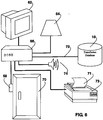
- Figure 6 illustrates apparatus suitable for implementing the transportation of allocated blood to the patient ( Figure 1 step 18 ).
- Refrigerator 70 Blood products assigned to a particular patient are stored in refrigerator 70, which is usually in a location accessible to those charged with collecting blood for patients.
- Refrigerator 70 is equipped with electronic lock 68, which in turn is connected to computer 66, such that software installed on computer 68 can lock and unlock refrigerator 70.
- Transfusion database 10 may be on a hard disk drive installed within computer 66, or may be on a data storage device connected to computer 66 via computer network connection 72 as illustrated in Figure 6 .
- Computer 66 is further connected to touch screen 62 that provides a visual display and a touch operated user interface for operating the software operating on computer 66.
- the apparatus illustrated in Figure 6 should normally be installed at every location where blood it to be stored, even temporarily. Each such installation will be connected to transfusion database 10 so that data is shared among all instances of the apparatus.
- Figure 7A illustrates how the apparatus of Figure 6 is used when collecting blood from a refrigerator for transfusion.
- reader 64 of Figure 6 is a barcode scanner capable of reading both linear and two-dimensional barcodes.
- reader 64 is an RFID reader.
- the receiving antennas of RFTD reader 64 are located both inside refrigerator 70 and near the door of refrigerator 70, and are disposed so that any RFID tags located inside refrigerator 70 or near the outside of refrigerator 70 may be read. Operation of an example not being part of the invention and an examplary embodiment of the invention will be described separately.
- the caregiver collecting a blood unit identifies themselves by scanning the caregiver code 112 on their caregiver identification 110, using reader 64, which in this example not being part of the invention is a barcode reader (step 80 ).
- Software located on computer 66 determines if the caregiver identified by caregiver code 112 is authorized to collect blood units, and if so, displays two buttons on touch screen 62. The caregiver touches the appropriate button to indicate that they intend to remove blood from the refrigerator (step 81 ).
- the software on computer 66 uses speaker 74 and the display of touch screen 62 to ask the caregiver to select the blood unit they wish to remove, and unlocks lock 68 so that the caregiver can open refrigerator 70.
- the caregiver selects the blood upon labelled with a compatibility label matching the patient for whom they are collecting the blood.
- the caregiver then closes refrigerator 70 and reads a barcode on the blood unit that uniquely identifies the blood unit, or the compatibility label on the blood unit (step 84 ), using reader 64.
- the software on computer 66 now uses touch screen 62 uses speaker 74 to request the caregiver to read the request slip printed when blood was requested for the patient ( Figure 1 step 16 ).
- the caregiver uses reader 64 to read the two-dimensional barcode on the request slip (step 86 ).
- the software on computer 66 retrieves records from transfusion database 10 to determine if the blood is still useable, and if so, retrieves records from transfusion database 10 to determine which patient the blood unit was assigned to, and compares this information to that encoded on the request slip. If the information matches and the blood unit is still useable (step 88 ), the software on computer 66 uses speaker 74 and touch screen 62 to provide confirmation that the correct blood unit has been selected (step 92 ).
- step 88 the software on computer 66 uses speaker 74 and touch screen 62 to warn the caregiver that the wrong blood was selected, and instructs them to replace the blood unit into refrigerator 70 and select the correct blood unit (step 90 ).
- step 88 a record of the transaction is written into transfusion database 10. Recording errors made by the caregiver assists in corrective training and resolution of the sources of error.
- the software on computer 66 engages lock 68 on refrigerator 70 and returns to a state in which caregiver identification codes may be read to start the process again.
- the caregiver may now transport the blood unit either to the patient for transfusion, or to another refrigerator for further storage prior to transfusion (step 94 ).
- the caregiver returning a blood unit identifies themselves by scanning the caregiver code 112 on their caregiver identification 110, using reader 64, which in this example not being part of the invention is a barcode reader (step 150 ).
- Software located on computer 66 determines if the caregiver identified by caregiver code 112 is authorized to return blood units, and if so, displays two buttons on touch screen 62. The caregiver touches the appropriate button to indicate that they intend to return blood to refrigerator 70 (step 152 ).
- the software on computer 66 uses speaker 74 and the display of touch screen 62 to ask the caregiver to read the barcode on the blood unit that uniquely identifies the blood unit, or the compatibility label on the blood unit (step 154 ), using reader 64.
- Computer 66 unlocks lock 68 so that the caregiver can place the blood unit into refrigerator 70.
- the software on computer 66 retrieves records from transfusion database 10 to determine when the blood unit was removed from refrigeration (step 156 ). It then calculates the time that the blood unit has been outside of refrigeration and compares the calculated time with the pre-set allowable time limits (step 160 ). If the blood unit has not been outside of refrigeration for more than the allotted time, the software on computer 66 uses speaker 74 and touch screen 62 to give a confirmation message to the caregiver (step 164 ). If the blood unit has been outside of refrigeration for longer than the allotted time, the software on computer 66 uses speaker 74 and touch screen 62 to give a warning message to the caregiver (step 162 ).
- a record of the transaction is written into transfusion database 10. If the blood unit has exceeded its allowable time outside of refrigeration, the record is marks the blood unit as unusable.
- the software on computer 66 engages lock 68 on refrigerator 70 and returns to a state in which caregiver identification codes may be read to start the process again.
- Reader 64 may be an RFID reader, and the compatibility label on the blood unit may include an RFID tag, as may the request slip prepared in the blood requesting procedure ( Figure 1 , step 18 ).
- reader 64 reads caregiver code 112 located on the caregiver's identification 110 as soon as the caregiver's identification 110 is within range of reader 64 (step 170 ). As the antenna for RFID reader 64 is disposed to read RFID tags near refrigerator 70, this alerts the software located on computer 66 that a caregiver many want to remove blood from refrigerator 70. The software on computer 66 then instructs reader 66 to read the RFID tags on every blood unit inside refrigerator 70 in order to establish an inventory of all blood units currently inside refrigerator 70 (step 172 ). Once this inventory is complete, computer 66 disengages lock 68 so that the caregiver may select a blood unit for removal (step 174 ).
- the software on computer 66 then instructs reader 66 to read the RFID tags on every blood unit inside refrigerator 70 in order to establish an inventory of all blood units remaining inside refrigerator 70 (step 176 ).
- the inventory from step 176 is compared to the inventory from step 172 to determine which blood unit was removed by the caregiver.
- the software on computer 66 retrieves records from transfusion database 10 to determine the identity of the patient for which the blood bag is intended, and to determine if the blood unit is still useable.
- the software on computer 66 then instructs reader 64 to read the RFID tagged request slip prepared during the requesting step ( Figure 1 , step 16 ).
- the software compares the patient identification retrieved from transfusion database 10 and the data read from the request slip to determine if the two match and if the blood unit is still useable (step 180 ). If the information matches and the blood unit is still useable the software on computer 66 uses speaker 74 and touch screen 62 to provide confirmation that the correct blood unit has been selected (step 184 ). If the information does not match or the blood is not useable in step 88 , the software on computer 66 uses speaker 74 and touch screen 62 to warn the caregiver that the wrong blood was selected, and instructs them to replace the blood unit into refrigerator 70 and select the correct blood unit (step 182 ).
- step 180 a record of the transaction is written into transfusion database 10. Recording errors made by the caregiver assists in corrective training and resolution of the sources of error.
- the software on computer 66 engages lock 68 on refrigerator 70 and returns to a state in which caregiver identification codes may be read to start the process again.
- the caregiver may now transport the blood unit either to the patient for transfusion, or to another refrigerator for further storage prior to transfusion (step 186 ).
- reader 64 reads caregiver code 112 located on the caregiver's identification 110 as soon as the caregiver's identification 110 is within range of reader 64 (step 190 ). As the antenna for RFID reader 64 is disposed to read RFID tags near refrigerator 70, this alerts the software located on computer 66 that a caregiver many want to return blood to refrigerator 70. The software on computer 66 then instructs reader 66 to read the RFID tags on every blood unit inside refrigerator 70 in order to establish an inventory of all blood units currently inside refrigerator 70 (step 192 ). Once this inventory is complete, computer 66 disengages lock 68 so that the caregiver may put the blood unit back inside refrigerator 70 (step 194 ).
- the software on computer 66 then instructs reader 66 to read the RFID tags on every blood unit inside refrigerator 70 in order to establish an inventory of all blood units now inside refrigerator 70 (step 196 ).
- the inventory from step 196 is compared to the inventory from step 192 to determine which blood unit was added by the caregiver.
- the software on computer 66 retrieves records from transfusion database 10 to determine when the blood unit was removed from refrigeration (step 198 ). It then calculates the time that the blood unit has been outside of refrigeration and compares the calculated time with the pre-set allowable time limits (step 200 ). If the blood unit has not been outside of refrigeration for more than the allotted time, the software on computer 66 uses speaker 74 and touch screen 62 to give a confirmation message to the caregiver (step 202 ). If the blood unit has been outside of refrigeration for longer than the allotted time, the software on computer 66 uses speaker 74 and touch screen 62 to give a warning message to the caregiver (step 204 ).
- a record of the transaction is written into transfusion database 10. If the blood unit has exceeded its allowable time outside of refrigeration, the record is marks the blood unit as unusable.
- the software on computer 66 engages lock 68 on refrigerator 70 and returns to a state in which caregiver identification codes may be read to start the process again.
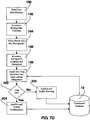
- Figure SA illustrates the procedure for transfusing blood into a patient, using the apparatus depicted in Figure 2 .
- Software included on PDA 118 provides means for performing the blood transfusion process ( Figure 1 , step 20 ).
- the software causes PDA 118 to display messages to the caregiver indicating the next step that the caregiver should perform. This has the effect of forcing the caregiver to follow a pre-defined procedure that is the same each time blood transfusion process 20 is performed. This has the effect of allowing even inexperienced caregivers to perform the critical transfusion task as if they have been highly trained.
- PDA 118 displays a message asking the caregiver to read their caregiver code 112 (step 130 ).
- the caregiver uses reader 120 of PDA 118 and either scans caregiver code 112 (if caregiver code 112 is a barcode) or brings reader 120 within range of caregiver code 112 (if caregiver code 112 is an RFID tag).
- PDA 118 displays caregiver code 112 so that the caregiver can verify it.
- PDA 118 displays a message requesting the caregiver to read patient code 116 (step 132 ).
- the caregiver either scans patient code 116 (if patient code 116 is a barcode) or brings reader 120 within range of patient code 116 (if patient code 116 is an RFID tag).
- PDA 118 displays the patient identification information encoded in patient code 116. This display includes the patient's identification number, surname, forename, date of birth and sex.
- PDA 118 displays a message asking the caregiver to confirm that the patient information is correct. Caregivers are expected to ask the patient their name and date of birth to ensure that the displayed information is correct before proceeding with transfusion.
- PDA 118 now displays a message asking the caregiver to read the compatibility label on the blood unit (step 134 ).
- the caregiver uses reader 120 of PDA 118 and either scans the compatibility label (if the compatibility label includes a barcode) or brings reader 120 within range of the compatibility label (if the compatibility label includes an RFID tag).
- PDA 118 displays the information encoded on the compatibility label along with the patient information already read, so that that caregiver can compare the patient information from both sources. If the information appears to be the same, the caregiver presses a button on PDA 118 to confirm that they have checked the information. This ensures that the right blood unit has been selected for the patient.
- the software on PDA 118 compares the patient information read from patient code 116 on wristband 114 with the patient information read from the compatibility label (step 136 ). If the information does not match, PDA 118 displays a warning message and emits a warning sound (step 138 ). A record is inserted into transfusion database 10 that includes the information read from patient wristband 114 and the compatibility label and recording that the wrong blood unit was selected for the patient. The program on PDA 118 will not permit the caregiver to continue with the transfusion steps if the information does not match.
- the software on PDA 118 displays a message asking the caregiver to read the blood unit label (step 140 ).
- the caregiver uses reader 120 of PDA 118 and either scans the blood unit label (if the blood unit label includes a barcode) or brings reader 120 within range of the blood unit label (if the blood unit label includes an RFID tag).
- PDA 118 displays the information encoded on the blood unit label along with the patient blood unit information already read from the compatibility label, so that that caregiver can compare the blood unit identification from both sources If the information appears to be the same, the caregiver presses a button on PDA 118 to confirm that they have checked the information. This ensures that the compatibility label has been placed on the right blood unit.
- the software on PDA 118 compares the blood unit information read from the compatibility label with the blood unit information read from the blood unit label (step 142 ). If the information does not match, PDA 118 displays a warning message and emits a warning sound (step 144 ). A record is inserted into transfusion database 10 that includes the information read from blood unit and the compatibility label and recording that the compatibility label was placed on the wrong blood unit. The program on PDA 118 will not permit the caregiver to continue with the transfusion steps if the information does not match.
- the software on PDA 118 displays a message asking the caregiver to enter the patient's vital signs prior to starting the transfusion (step 146 ).
- These vital signs usually include the patient's blood pressure, pulse and temperature.
- the software on PDA 118 displays a message asking the caregiver to confirm that various pre-transfusion checks have been completed (step 147 ).
- PDA 118 requires that the caregiver press a button next to each of these reminders to confirm that these pre-transfusion checks have been completed.
- PDA 118 now displays a button which allows the caregiver to confirm that the blood transfusion has started. At this point, PDA 118 transmits a record to transfusion database 10, recording the start of the transfusion. There are two ways in which this information can be transmitted to transfusion database 10.
- PDA 118 incorporates a wireless network connection (which may be an IEEE 802.11b wireless network connection or other similar wireless network connection). If available, this wireless network connection is used by the software included on PDA 118 to insert the transfusion start record into transfusion database 10.
- the transfusion start record includes the patient identification information read from patient code 116, the patient information and blood unit information read from the compatibility label, the blood unit information read from the blood unit label, caregiver code 112, the time and ate and a unique identifier for PDA 118.
- PDA 118 also displays a button for printing.
- the caregiver connects PDA 118 to printer 124 and presses the print button, which causes printer 124 to produce patient record label 122 (step 148 ).
- Patient record label 122 shows the patient identification, caregiver code 112, the blood unit number and the time and date
- Patient record label 122 may also include a barcode encoding some or all of this information.
- the printed patient record includes a PDF-417 two-dimensional barcode which encodes the patient identification information read from patient code 116, the patient information and blood unit information read from the compatibility label, the blood unit information read from the blood unit label, caregiver code 112, the time and date and a unique identifier for PDA 118.
- PDA 118 is not equipped with a wireless network connection, or there is no wireless network available at the location where the blood transfusion is started.
- the software on PDA 118 causes a second copy of patient record label 122 to be printed by printer 124.
- This second label which includes a PDF-417 two-dimensional barcode as described above, is taken to a computer connected to transfusion database 10.
- This computer is equipped with a barcode reader capable of reading the PDF-417 barcode and inserting the information read into transfusion database 10.
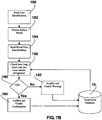
- Figure 8B illustrates the procedure for recording the patient's vital signs or any transfusion reactions that may occur while transfusing blood into a patient, using the apparatus depicted in Figure 2 .
- Accepted practice dictates that a patient's vital signs be recorded every 15 minutes or so during a transfusion. It is also expected that any reactions to the blood transfusion will be promptly recorded.
- the software on PDA 118 includes means for recording the patient's vital signs and any reactions that might be noticed.
- PDA 118 displays a message asking the caregiver to read their caregiver code 112 (step 240 ).
- the caregiver uses reader 120 of PDA 118 and either scans caregiver code 112 (if caregiver code 112 is a barcode) or brings reader 120 within range of caregiver code 112 (if caregiver code 112 is an RFID tag).
- PDA 118 displays caregiver code 112 so that the caregiver can verify it.
- PDA 118 displays a message requesting the caregiver to read patient code 116 (step 242 ).
- the caregiver either scans patient code 116 (if patient code 116 is a barcode) or brings reader 120 within range of patient code 116 (if patient code 116 is an RFID tag).
- PDA 118 displays the patient identification information encoded in patient code 116. This display includes the patient's identification number, surname, forename, date of birth and sex.
- PDA 118 displays a message asking the caregiver to confirm that the patient information is correct. Caregivers are expected to ask the patient their name and date of birth to ensure that the displayed information is correct before proceeding with the observation.
- PDA 118 displays a message requesting the caregiver to read the blood unit identification from the blood unit currently being transfused. This ensures that any observations or reactions are associated with the correct blood unit.
- the caregiver uses reader 120 of PDA 118 and either scans the blood unit label (if the blood unit label includes a barcode) or brings reader 120 within range of the blood unit label (if the blood unit label includes an RFID tag). PDA 118 displays the blood unit identification so that the caregiver can verify it.
- the caregiver If the caregiver is satisfied that the information read from the blood unit label is correct, they press a button on PDA 118 to confirm that they have checked the information PDA 118 now provides a screen on which the caregiver may enter the patient's vital signs (step 244 ).
- PDA 118 transmits a record to transfusion database 10, recording the vital signs observations.
- PDA 118 uses a wireless network connection to insert the observation record into transfusion database 10.
- the observation record includes the observations recorded, the patient identification information read from patient code 116, the blood unit information read from the blood unit label, caregiver code 112, the time and date and a unique identifier for PDA 118.
- a message on PDA 118 asks the caregiver to press a button if any reactions are noted. If the button is pressed (step 246 ), PDA 118 offers a list of common reactions from which the caregiver may choose, or a place into which the caregiver can enter specific notes about reactions (step 248 ).
- PDA 118 transmits a record to transfusion database 10, recording the reactions.
- PDA 118 uses a wireless network connection to insert the reactions record into transfusion database 10.
- the reactions record includes the reactions recorded, the patient identification information read from patient code 116, the blood unit information read from the blood unit label, caregiver code 112, the time and date and a unique identifier for PDA 118.
- PDA 118 also displays a button for printing.
- the caregiver connects PDA 118 to printer 124 and presses the print button, which causes printer 124 to produce patient observation label 122 (step 250 ).
- Patient observation label 122 shows the patient's vital signs, patient identification, caregiver code 112, the blood unit number, the time and date and any reactions that were observed.
- Patient observation label 122 may also include a barcode encoding some or all of this information.
- the printed patient record includes a PDF-417 two-dimensional barcode which encodes the patient identification information read from patient code 116, the blood unit information read from the blood unit label, caregiver code 112, the time and date, the patient's vital signs and any reactions noted, and a unique identifier for PDA 118.
- PDA 118 is not equipped with a wireless network connection, or there is no wireless network available at the location where the observation is made.
- the software on PDA 118 causes a second copy of patient record label 122 to be printed by printer 124.
- This second label which includes a PDF-417 two-dimensional barcode as described above, is taken to a computer connected to transfusion database 10.
- This computer is equipped with a barcode reader capable of reading the PDF-417 barcode and inserting the information read into transfusion database 10.
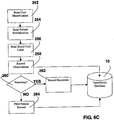
- Figure illustrates the procedure for recording the end of the transfusion process using the apparatus of Figure 2 .
- PDA 118 displays a message asking the caregiver to read their caregiver code 112 (step 252 ).
- the caregiver uses reader 120 of PDA 118 and either scans caregiver code 112 (if caregivers code 112 is a barcode) or brings reader 120 within range of caregiver code 112 (if caregiver code 112 is an RFID tag).
- PDA 118 displays caregiver code 112 so that the caregiver can verify it.
- PDA 118 displays a message requesting the caregiver to read patient code 116 (step 254 ).
- the caregiver either scans patient code 116 (if patient code 116 is a barcode) or brings reader 120 within range of patient code 116 (if patient code 116 is an RFID tag).
- PDA 118 displays the patient identification information encoded in patient code 116. This display includes the patient's identification number, surname, forename, date of birth and sex.
- PDA 118 displays a message asking the caregiver to confirm that the patient information is correct. Caregivers are expected to ask the patient their name and date of birth to ensure that the displayed information is correct before proceeding with the end transfusion record.
- PDA 118 displays a message requesting the caregiver to read the blood unit identification from the blood unit currently being transfused (step 256 ). This ensures that the end transfusion record and any observations or reactions are associated with the correct blood unit.
- the caregiver uses reader 120 of PDA 118 and either scans the blood unit label (if the blood unit label includes a barcode) or brings reader 120 within range of the blood unit label (if the blood unit label includes an RFID tag). PDA 118 displays the blood unit identification so that the caregiver can verify it.
- the caregiver If the caregiver is satisfied that the information read from the blood unit label is correct, they press a button on PDA 118 to confirm that they have checked the information PDA 118 now provides a screen on which the caregiver may enter the patient's vital signs (step 258 ).
- PDA 118 transmits a record to transfusion database 10, recording the vital signs observations.
- PDA 118 uses a wireless network connection to insert the observation record into transfusion database 10.
- the observation record includes the observations recorded, the patient identification information read from patient code 116, the blood unit information read from the blood unit label, caregiver code 112, the time and date and a unique identifier for PDA 118.
- a message on PDA 118 asks the caregiver to press a button if any reactions are noted. If the button is pressed (step 260 ), PDA 118 offers a list of common reactions from which the caregiver may choose, or a place into which the caregiver can enter specific notes about reactions (step 262 ).
- PDA 118 transmits a record to transfusion database 10, recording the reactions PDA 118 uses a wireless network connection to insert the reactions record into transfusion database 10.
- the reactions record includes the reactions recorded, the patient identification information read from patient code 116, the blood unit information read from the blood unit label, caregiver code 112, the time and date and a unique identifier for PDA 118.
- PDA 118 transmits a record to transfusion database 10, recording the completion of the transfusion.
- PDA 118 uses a wireless network connection to insert the end transfusion record into transfusion database 10.
- the end transfusion record includes a code to indicate that the transfusion is complete, the patient identification information read from patient code 116, the blood unit information read from the blood unit label, caregiver code 112, the time and date and a unique identifier for PDA 118.
- PDA 118 also displays a button for printing.
- the caregiver connects PDA 118 to printer 124 and presses the print button, which causes printer 124 to produce end transfusion label 122 (step 264 ).
- End transfusion label 122 shows the patient's vital signs, patient identification, caregiver code 112, the blood unit number, the time and date any reactions that were observed and an indication that the transfusion is complete.
- Patient observation label 122 may also include a barcode encoding some or all of this information.
- the printed patient record includes a PDF-417 two-dimensional barcode which encodes the patient identification information read from patient code 116, the blood unit information read from the blood unit label, caregiver code 112, the time and date, the patient's vital signs and any reactions noted, and a unique identifier for PDA 118.
- PDA 118 is not equipped with a wireless network connection, or there is no wireless network available at the location where the observation is made.
- the software on PDA 118 causes a second copy of patient record label 122 to be printed by printer 124.
- This second label which in this embodiment includes a PDF-417 two-dimensional barcode as described above, is taken to a computer connected to transfusion database 10.
- This computer is equipped with a barcode reader capable of reading the PDF-417 barcode and inserting the information read into transfusion database 10.
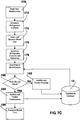
- Figure 9 illustrates a means for improving the safety and efficiency of electronic issue of blood using the apparatus of Figure 6 .
- the caregiver collecting a blood unit identifies themselves by scanning the caregiver code 112 on their caregiver identification 110, using reader 64, which, for example, is a barcode reader (step 270 ).
- Software located on computer 66 determines if the caregiver identified by caregiver code 112 is authorized to collect blood units, and if so, displays two buttons on touch screen 62.
- the software on computer 66 now uses speaker 74 and the display of touch screen 62 to ask the caregiver read the request slip printed when blood was requested for the patient ( Figure 1 step 16 ).
- the caregiver uses reader 64 to read the two-dimensional barcode on the request slip (step 276 ).
- the software on computer 66 sends a message to blood bank computer system 278 asking if the patient identified by the caregiver is suitable for electronic issue.
- Blood bank computer system 278 returns a message indicating if the patient is eligible for electronic issue, and if so, what type of blood should be issued.
- the software on computer 66 now determines if suitable blood for the identified patient is available. It does this by checking to see if a suitable blood unit is recorded as having been placed in the current storage location (step 280 ). If no suitable blood is available, the software on computer 66 uses speaker 74 and the display of touch screen 62 to tell the caregiver that no blood is available (step 282 ) and records the attempted transaction in transfusion database 10. If suitable blood is available, the software on computer 66 uses speaker 74 and the display of touch screen 62 to tell the caregiver to select an appropriate blood unit from refrigerator 70.
- refrigerator 70 is a multi-compartment refrigerator, wherein each compartment has a separate lock 68. In this embodiment, only the compartment of refrigerator 70 which contains blood of the right type for the patient identified is unlocked, thereby preventing access to blood of the wrong type for the patient.
- the software on computer 66 uses speaker 74 and the display of touch screen 62 to ask the caregiver to select the blood unit they wish to remove, and to scan a barcode on the blood unit that uniquely identifies the blood unit (step 284 ).
- the software on computer 66 then causes compatibility label 71 to be printed on printer 73.
- the software on computer 66 uses speaker 74 and the display of touch screen 62 to ask the caregiver to apply compatibility label 71 to the blood unit (step 286 ), then scan both the barcode on the blood unit that unique identifies the blood unit and compatibility label 71 (step 288 ).
- the software on computer 66 uses the display of touch screen 62 to tell the caregiver that the blood unit is safe to transport (step 294 ). If the information fails to match, the software on computer 66 uses speaker 74 and the display of touch screen 62 to tell the caregiver that the blood is incorrectly labelled and should not be used (step 292 ). In either case, a record of the transaction is stored in transfusion database 10.
- the software on computer 66 uses the display of touch screen 62 to tell the caregiver to try scanning the labels again.
- the short time delay between the two scans ensures that label 71 is attached to the blood unit and that label 71 and the blood unit are not being scanned separately.
Landscapes
- Business, Economics & Management (AREA)
- General Business, Economics & Management (AREA)
- Health & Medical Sciences (AREA)
- Engineering & Computer Science (AREA)
- General Health & Medical Sciences (AREA)
- Epidemiology (AREA)
- Biomedical Technology (AREA)
- Medical Informatics (AREA)
- Primary Health Care (AREA)
- Public Health (AREA)
- Automatic Analysis And Handling Materials Therefor (AREA)
- Medical Treatment And Welfare Office Work (AREA)
- Medical Preparation Storing Or Oral Administration Devices (AREA)
- Warehouses Or Storage Devices (AREA)
- Infusion, Injection, And Reservoir Apparatuses (AREA)
Claims (2)
- Procédé de gestion de l'émission électronique à distance d'une unité de sang pour un patient, ledit procédé comprenant les étapes suivantes :(a) scannage d'un code de personnel soignant pour identifier un personnel soignant ;(b) lecture d'une fiche de demande comprenant de l'information d'identification du patient ;(c) interrogation d'un ordinateur de banque de sang avec ladite identification du patient pour déterminer si ledit patient est qualifié pour l'émission électronique de ladite unité de sang et pour déterminer le type approprié d'unité de sang à sélectionner ; et si le patient est qualifié pour une émission électronique,(d) contrôle d'un compartiment de stockage réfrigéré avec un verrou électronique pour s'assurer que seul le type de sang approprié est accessible pour son enlèvement ; puis(e) sélection et scannage de ladite unité de sang pour ledit patient ; puis(f) impression d'une étiquette de compatibilité ; puis(g) demande au personnel soignant d'appliquer l'étiquette de compatibilité sur l'unité de sang et de scanner ensuite ladite unité de sang et ladite étiquette de compatibilité ; puis(h) scannage de ladite unité de sang et de ladite étiquette de compatibilité pour confirmer la correspondance entre ladite unité et ladite étiquette ; et(i) si le personnel soignant scanne ladite unité de sang et ladite étiquette de compatibilité dans une période prédéterminée, en particulier de 5 secondes, confirmation ensuite que l'unité de sang peut être transportée de manière sûre ; et si le personnel soignant n'a pas scanné ladite unité de sang et ladite étiquette de compatibilité dans une période prédéterminée, en particulier de 5 secondes, demande ensuite au personnel soignant de scanner de nouveau ladite unité de sang et ladite étiquette de compatibilité.
- Procédé selon la revendication 1, dans lequel ledit compartiment de stockage réfrigéré comprend deux ou plusieurs sous-compartiments, dans lequel chacun desdits sous-compartiments comprend un verrou électronique.
Applications Claiming Priority (2)
| Application Number | Priority Date | Filing Date | Title |
|---|---|---|---|
| US10/783,438 US6983884B2 (en) | 2004-02-19 | 2004-02-19 | Method and apparatus for monitoring transfusion of blood |
| EP05714466A EP1716531A4 (fr) | 2004-02-19 | 2005-02-18 | Appareils et procedes permettant de surveiller la transfusion sanguine |
Related Parent Applications (2)
| Application Number | Title | Priority Date | Filing Date |
|---|---|---|---|
| EP05714466A Division EP1716531A4 (fr) | 2004-02-19 | 2005-02-18 | Appareils et procedes permettant de surveiller la transfusion sanguine |
| EP05714466.9 Division | 2005-02-18 |
Publications (2)
| Publication Number | Publication Date |
|---|---|
| EP2287760A1 EP2287760A1 (fr) | 2011-02-23 |
| EP2287760B1 true EP2287760B1 (fr) | 2018-04-11 |
Family
ID=34861234
Family Applications (5)
| Application Number | Title | Priority Date | Filing Date |
|---|---|---|---|
| EP05714466A Ceased EP1716531A4 (fr) | 2004-02-19 | 2005-02-18 | Appareils et procedes permettant de surveiller la transfusion sanguine |
| EP10012933A Ceased EP2290571A1 (fr) | 2004-02-19 | 2005-02-18 | Procédé pour assurer la viabilité de sang pour transfusion |
| EP10010223.5A Expired - Lifetime EP2287760B1 (fr) | 2004-02-19 | 2005-02-18 | Procédé pour gérer l'émission electronique à distance d'unités de sang |
| EP10010222A Ceased EP2284741A1 (fr) | 2004-02-19 | 2005-02-18 | Appareil pour la mise oeuvre du prélevement d'échantillons de sang, de la demande d'unités de sang, et de la transfusion sanguine |
| EP10012218.3A Expired - Lifetime EP2278512B1 (fr) | 2004-02-19 | 2005-02-18 | Appareil et procédé d'enregistrement de mouvements de produits sanguins réfrigérés |
Family Applications Before (2)
| Application Number | Title | Priority Date | Filing Date |
|---|---|---|---|
| EP05714466A Ceased EP1716531A4 (fr) | 2004-02-19 | 2005-02-18 | Appareils et procedes permettant de surveiller la transfusion sanguine |
| EP10012933A Ceased EP2290571A1 (fr) | 2004-02-19 | 2005-02-18 | Procédé pour assurer la viabilité de sang pour transfusion |
Family Applications After (2)
| Application Number | Title | Priority Date | Filing Date |
|---|---|---|---|
| EP10010222A Ceased EP2284741A1 (fr) | 2004-02-19 | 2005-02-18 | Appareil pour la mise oeuvre du prélevement d'échantillons de sang, de la demande d'unités de sang, et de la transfusion sanguine |
| EP10012218.3A Expired - Lifetime EP2278512B1 (fr) | 2004-02-19 | 2005-02-18 | Appareil et procédé d'enregistrement de mouvements de produits sanguins réfrigérés |
Country Status (5)
| Country | Link |
|---|---|
| US (4) | US6983884B2 (fr) |
| EP (5) | EP1716531A4 (fr) |
| AU (1) | AU2005215653A1 (fr) |
| CA (2) | CA3095525A1 (fr) |
| WO (1) | WO2005081144A1 (fr) |
Families Citing this family (80)
| Publication number | Priority date | Publication date | Assignee | Title |
|---|---|---|---|---|
| US7309010B2 (en) * | 2002-11-04 | 2007-12-18 | Western Pathology Consultants, Inc. | Identification method and apparatus |
| US7559482B2 (en) * | 2004-07-09 | 2009-07-14 | cStar Technologies Inc, | Supplementary antenna for radio frequency identification and product containing unit incorporating same |
| US8005622B2 (en) * | 2004-12-21 | 2011-08-23 | Cerner Innovation, Inc. | Computerized system and method for safely transfusing blood products |
| US20060178909A1 (en) * | 2004-12-21 | 2006-08-10 | Cerner Innovation, Inc. | System and method for automatically notifying a blood bank database of blood product administration and transfusion |
| US8032306B2 (en) * | 2004-12-29 | 2011-10-04 | Cerner Innovation, Inc. | Computerized system and method for documenting patient vital signs during blood product administration and transfusion |
| US20060184993A1 (en) * | 2005-02-15 | 2006-08-17 | Goldthwaite Flora P | Method and system for collecting and using data |
| KR100670560B1 (ko) * | 2005-03-22 | 2007-01-17 | 주식회사 현대오토넷 | 전파식별시스템을 이용한 정합성 판단 장치 및 방법 |
| US7683781B2 (en) * | 2005-07-18 | 2010-03-23 | Kantrowitz Allen B | Auto ID system for medical care setting |
| DE102005034269A1 (de) * | 2005-07-22 | 2007-01-25 | Lanxess Deutschland Gmbh | Halogenfreie, flammwidrige Polyurethanschaumstoffe |
| US20080221396A1 (en) * | 2005-07-25 | 2008-09-11 | Becton Dickinson And Company | Method and System for Monitoring Medical Treatment |
| WO2007045078A1 (fr) * | 2005-10-18 | 2007-04-26 | Geof Auchinleck | Appareil et procede d'administration de lait maternel |
| US9361568B2 (en) | 2005-12-09 | 2016-06-07 | Tego, Inc. | Radio frequency identification tag with hardened memory system |
| US8489178B2 (en) | 2006-06-29 | 2013-07-16 | Accuvein Inc. | Enhanced laser vein contrast enhancer with projection of analyzed vein data |
| WO2007084866A2 (fr) | 2006-01-18 | 2007-07-26 | Merck & Co., Inc. | Ensemble à clapet de distribution interchangeable pour la distribution d'une boisson |
| US7736310B2 (en) | 2006-01-30 | 2010-06-15 | Abbott Diabetes Care Inc. | On-body medical device securement |
| US8346335B2 (en) | 2008-03-28 | 2013-01-01 | Abbott Diabetes Care Inc. | Analyte sensor calibration management |
| US7768378B2 (en) * | 2006-04-26 | 2010-08-03 | Compx International Inc. | Field retrofittable refrigerator lock with audit trail |
| US20070282208A1 (en) * | 2006-06-06 | 2007-12-06 | Bob Jacobs | Mobile computing device with integrated medical devices |
| WO2008042271A2 (fr) * | 2006-09-29 | 2008-04-10 | David Nichols | Système et procédé de commercialisation/collecte de fonds/récompense |
| DE102007013736B4 (de) * | 2007-03-22 | 2011-05-12 | DRK-Blutspendedienst Baden-Württemberg-Hessen gGmbH | Verfahren zur Detektion von Bakterien in aus Blut abgeleiteten Proben mittels Sauerstoff-Konzentrationsbestimmung |
| US8160900B2 (en) | 2007-06-29 | 2012-04-17 | Abbott Diabetes Care Inc. | Analyte monitoring and management device and method to analyze the frequency of user interaction with the device |
| WO2009052048A1 (fr) * | 2007-10-15 | 2009-04-23 | Civco Medical Instruments Co., Inc. | Système d'enregistrement et de vérification rfid et procédé d'utilisation pour un patient en radiothérapie |
| US8567663B2 (en) * | 2007-10-19 | 2013-10-29 | Kip Seremjian | Method and apparatus for identifying and tracking biological fluid |
| US20090295541A1 (en) * | 2008-05-27 | 2009-12-03 | Intellidot Corporation | Directional rfid reader |
| US8591410B2 (en) | 2008-05-30 | 2013-11-26 | Abbott Diabetes Care Inc. | Method and apparatus for providing glycemic control |
| US8924159B2 (en) | 2008-05-30 | 2014-12-30 | Abbott Diabetes Care Inc. | Method and apparatus for providing glycemic control |
| US20090307008A1 (en) * | 2008-06-04 | 2009-12-10 | Cardinalhealth | Blood infusion management system and method |
| US8484049B2 (en) * | 2009-01-30 | 2013-07-09 | Omnicell, Inc. | Tissue tracking |
| US8497777B2 (en) | 2009-04-15 | 2013-07-30 | Abbott Diabetes Care Inc. | Analyte monitoring system having an alert |
| US8483967B2 (en) | 2009-04-29 | 2013-07-09 | Abbott Diabetes Care Inc. | Method and system for providing real time analyte sensor calibration with retrospective backfill |
| US8597274B2 (en) | 2009-05-22 | 2013-12-03 | Abbott Diabetes Care Inc. | Usability features for integrated insulin delivery system |
| US8318499B2 (en) | 2009-06-17 | 2012-11-27 | Abbott Laboratories | System for managing inventories of reagents |
| US8970344B2 (en) * | 2009-07-14 | 2015-03-03 | Compx International Inc. | Method and system for data control in electronic locks |
| EP4070727B1 (fr) | 2009-08-31 | 2023-07-05 | Abbott Diabetes Care, Inc. | Affichages pour un dispositif médical |
| US20110079641A1 (en) * | 2009-09-30 | 2011-04-07 | Cantor Thomas L | Method and system for accurately labeling a specimen and treating a subject |
| US9020827B2 (en) | 2009-10-16 | 2015-04-28 | Baxter International Inc. | Peritoneal dialysis optimized using a patient hand-held scanning device |
| US20120050059A1 (en) * | 2010-08-30 | 2012-03-01 | Symbol Technologies, Inc. | Method for device loss prevention |
| CN103201230B (zh) | 2010-09-14 | 2016-07-13 | 康宁股份有限公司 | 电器托板及其安装 |
| US20120104745A1 (en) * | 2010-10-28 | 2012-05-03 | Charles Brad Story | Exhaust coupler for turbocharger and external wastegate |
| US11404151B2 (en) * | 2010-12-16 | 2022-08-02 | Tridentify AB | Medical package, system and method for managing medical package |
| US10136845B2 (en) | 2011-02-28 | 2018-11-27 | Abbott Diabetes Care Inc. | Devices, systems, and methods associated with analyte monitoring devices and devices incorporating the same |
| US8687351B2 (en) * | 2011-03-31 | 2014-04-01 | Patientsafe Solutions, Inc. | Scanning jacket for a handheld device |
| US11386993B2 (en) | 2011-05-18 | 2022-07-12 | Fenwal, Inc. | Plasma collection with remote programming |
| US20120297255A1 (en) | 2011-05-18 | 2012-11-22 | Case Brian C | System and method to better assure correct use of pre-programmed medical devices |
| US9127481B2 (en) | 2011-07-01 | 2015-09-08 | Typenex Medical, Llc | Mechanical barrier recipient verification system |
| US8899478B2 (en) * | 2011-09-01 | 2014-12-02 | General Electric Company | System and method for medical data transfer |
| CN102404776A (zh) * | 2011-10-27 | 2012-04-04 | 南京中兴力维软件有限公司 | 一种基于rfid的基站维护管理方法及系统 |
| US9317656B2 (en) | 2011-11-23 | 2016-04-19 | Abbott Diabetes Care Inc. | Compatibility mechanisms for devices in a continuous analyte monitoring system and methods thereof |
| WO2013078426A2 (fr) | 2011-11-25 | 2013-05-30 | Abbott Diabetes Care Inc. | Système de surveillance des analytes et ses procédés d'utilisation |
| EP2901153A4 (fr) | 2012-09-26 | 2016-04-27 | Abbott Diabetes Care Inc | Procédé et appareil d'amélioration de correction de retard pendant une mesure in vivo de concentration de substance à analyser avec des données de variabilité et de plage de concentration de substance à analyser |
| US9579253B2 (en) | 2012-11-08 | 2017-02-28 | Grifols Worldwide Operations Limited | RFID tag and blood container/system with integrated RFID tag |
| RU2554852C2 (ru) * | 2013-01-24 | 2015-06-27 | Федеральное государственное бюджетное учреждение "Федеральный центр сердечно-сосудистой хирургии" Министерства здравоохранения Российской Федерации (г. Красноярск) (ФГБУ "ФЦССХ" Минздрава России) | Способ обеспечения безопасности переливания компонентов консервированной донорской крови |
| US9626620B2 (en) | 2013-06-05 | 2017-04-18 | Haemonetics Corporation | Frangible RFID tag and method of producing same |
| EP3010816B1 (fr) | 2013-06-18 | 2019-05-08 | Haemonetics Corporation | Étiquette rfid et son procédé de fixation à un objet |
| US10872307B2 (en) * | 2013-12-27 | 2020-12-22 | Fenwal, Inc. | System and method for blood component supply chain management |
| GB201415329D0 (en) | 2014-07-21 | 2014-10-15 | Ge Healthcare Bio Sciences | Parallel cell processing method and facility |
| US9953193B2 (en) | 2014-09-30 | 2018-04-24 | Tego, Inc. | Operating systems for an RFID tag |
| US9500663B2 (en) | 2014-11-11 | 2016-11-22 | Genmark Diagnostics, Inc. | Redundant identification for sample tracking on a diagnostic device |
| US9835640B2 (en) | 2015-02-13 | 2017-12-05 | Abbott Laboratories | Automated storage modules for diagnostic analyzer liquids and related systems and methods |
| US9901668B2 (en) | 2015-03-17 | 2018-02-27 | Fenwal, Inc. | Indicating to a medical device performance of an operation by another medical device |
| CN104732259A (zh) * | 2015-03-28 | 2015-06-24 | 广州佰迈起生物科技有限公司 | 一种辅助生殖信息匹配处理方法、设备及系统 |
| US12183439B2 (en) | 2015-06-08 | 2024-12-31 | Conectate Soluciones Y Aplicaciones S L | Procedure for the global unified registration and universal identification of donors |
| ES2615815B1 (es) * | 2015-06-08 | 2017-12-01 | Conectate Soluciones Y Aplicaciones, S.L.U. | Procedimiento de registro unificado e identificación de donantes de sangre |
| GB2540991A (en) * | 2015-08-04 | 2017-02-08 | Gb Electronics (Uk) Ltd | System and method for managing stocks of blood and blood products |
| DE112018000705T5 (de) | 2017-03-06 | 2019-11-14 | Cummins Filtration Ip, Inc. | Erkennung von echten filtern mit einem filterüberwachungssystem |
| US11176765B2 (en) | 2017-08-21 | 2021-11-16 | Compx International Inc. | System and method for combined electronic inventory data and access control |
| CN108108789A (zh) * | 2018-01-13 | 2018-06-01 | 上海楚腾信息技术有限公司 | 一种基于辅助生殖的智能核对分析系统以及智能控制方法 |
| US12033750B2 (en) | 2018-05-21 | 2024-07-09 | Fenwal, Inc. | Plasma collection |
| DK3621674T3 (da) | 2018-05-21 | 2021-12-06 | Fenwal Inc | Systemer til optimering af plasmaopsamlingsvolumer |
| US11412967B2 (en) | 2018-05-21 | 2022-08-16 | Fenwal, Inc. | Systems and methods for plasma collection |
| US12057202B2 (en) | 2018-10-24 | 2024-08-06 | Connecting Solution & Applications Ltd. | Procedure for unified global registry and universal identification of products of biological origin for medicinal purposes |
| US11157789B2 (en) | 2019-02-18 | 2021-10-26 | Compx International Inc. | Medicinal dosage storage and method for combined electronic inventory data and access control |
| CN110706795A (zh) * | 2019-09-04 | 2020-01-17 | 上海市第六人民医院 | 采血监管、血液管理、输血监管方法及血液管理系统 |
| CN111048193A (zh) * | 2019-12-13 | 2020-04-21 | 北京大学深圳医院 | 患者输血信息管理方法、装置、移动终端及其存储介质 |
| US11289195B2 (en) * | 2020-08-09 | 2022-03-29 | Kevin Patel | System for remote medical care |
| CN112233740B (zh) * | 2020-09-28 | 2024-03-29 | 广州金域医学检验中心有限公司 | 患者身份识别方法、装置、设备和介质 |
| CN114154525B (zh) * | 2021-12-23 | 2025-02-14 | 青岛海尔生物医疗科技有限公司 | 血样容器批量识别装置 |
| CN115019942B (zh) * | 2022-01-25 | 2024-10-18 | 河南省人民医院 | 一种临床研究用血液采集保存方法 |
| EP4661015A1 (fr) * | 2024-06-07 | 2025-12-10 | Friedrich-Alexander-Universität Erlangen-Nürnberg | Procédé de vérification d'une association d'un produit sanguin à un patient, terminal et programme informatique |
| CN120511019B (zh) * | 2025-07-18 | 2025-09-12 | 合肥工业大学 | 融合血型替代规则的多医院间红细胞转运决策方法 |
Family Cites Families (52)
| Publication number | Priority date | Publication date | Assignee | Title |
|---|---|---|---|---|
| US4164320A (en) * | 1974-09-26 | 1979-08-14 | Medical Laboratory Automation, Inc. | Patient and specimen identification means and system employing same |
| US4953745A (en) * | 1983-09-19 | 1990-09-04 | James R. Rowlett, Jr. | Medication dispensing apparatus |
| US5193855A (en) * | 1989-01-25 | 1993-03-16 | Shamos Morris H | Patient and healthcare provider identification system |
| US5790409A (en) * | 1993-01-25 | 1998-08-04 | Medselect Systems, Inc. | Inventory monitoring and dispensing system for medical items |
| US5912818A (en) * | 1993-01-25 | 1999-06-15 | Diebold, Incorporated | System for tracking and dispensing medical items |
| JP3315763B2 (ja) | 1993-06-07 | 2002-08-19 | テルモ株式会社 | 血液バッグ管理方法 |
| CA2164825C (fr) * | 1994-05-11 | 2006-07-18 | Michel Joie | Systeme de collecte de sang |
| US7349858B1 (en) | 1994-12-16 | 2008-03-25 | Automed Technologies, Inc. | Method of dispensing and tracking the giving of medical items to patients |
| US7384410B2 (en) | 1995-03-13 | 2008-06-10 | Cardinal Health 303, Inc. | System and method for managing patient care |
| US7267666B1 (en) * | 1995-04-20 | 2007-09-11 | Acist Medical Systems, Inc. | Angiographic injector system with multiple processor redundancy |
| US6671563B1 (en) | 1995-05-15 | 2003-12-30 | Alaris Medical Systems, Inc. | System and method for collecting data and managing patient care |
| AUPN952196A0 (en) * | 1996-04-26 | 1996-05-23 | Hunter Area Pathology Service | Blood processing system |
| ITUD960073A0 (it) * | 1996-05-10 | 1996-05-10 | Procedimento automatizzato di immagazzinamento, conservazione e fornitura di unita' di sangue e relativo dispositivo | |
| US6055568A (en) * | 1996-12-17 | 2000-04-25 | Intel Corporation | Method and apparatus for dynamically configuring a decentralized network of computers |
| US6346886B1 (en) * | 1996-12-20 | 2002-02-12 | Carlos De La Huerga | Electronic identification apparatus |
| US6098892A (en) * | 1998-05-27 | 2000-08-08 | Peoples, Jr.; Max J. | Device for conversion from a pharmaceutical identification number to a standardized number and method for doing the same |
| US20020068358A1 (en) * | 1998-04-28 | 2002-06-06 | Campbell Michael J. | In vitro embryo culture device |
| US6219587B1 (en) * | 1998-05-27 | 2001-04-17 | Nextrx Corporation | Automated pharmaceutical management and dispensing system |
| WO2000002243A1 (fr) * | 1998-07-01 | 2000-01-13 | Seiko Epson Corporation | Dispositif a semi-conducteur, procede de fabrication associe, carte imprimee et dispositif electronique |
| JP2000155796A (ja) * | 1998-10-30 | 2000-06-06 | Becton Dickinson & Co | 医薬品および標本の管理システム |
| FR2786876B1 (fr) * | 1998-12-03 | 2001-08-31 | Nicolas Bara | Enceinte refrigeree pour le stockage d'articles pourvue de moyens de controle du contenu de l'enceinte |
| US7645258B2 (en) * | 1999-12-01 | 2010-01-12 | B. Braun Medical, Inc. | Patient medication IV delivery pump with wireless communication to a hospital information management system |
| US7363167B2 (en) * | 2000-03-31 | 2008-04-22 | Global Med Technologies, Inc. | Method and system for managing blood products |
| EP1573416A4 (fr) * | 2000-07-07 | 2010-01-27 | Fenwal Inc | Systeme, procede et appareil medicaux utilisant des dispositifs mem |
| US20020183882A1 (en) * | 2000-10-20 | 2002-12-05 | Michael Dearing | RF point of sale and delivery method and system using communication with remote computer and having features to read a large number of RF tags |
| EP1840854B1 (fr) | 2000-10-20 | 2011-04-06 | Promega Corporation | Procédé d'identification par radiofréquence et système de distribution de produits |
| US6909356B2 (en) | 2000-11-03 | 2005-06-21 | Seecontrol, Inc. | Method and apparatus for associating the movement of goods with the identity of an individual moving the goods |
| US6636780B1 (en) * | 2000-11-07 | 2003-10-21 | Mdg Medical Inc. | Medication dispensing system including medicine cabinet and tray therefor |
| GB2372213B (en) * | 2000-11-17 | 2003-07-16 | Icebella Enterpises Ltd | Applicator and stimulator device |
| US6816075B2 (en) * | 2001-02-21 | 2004-11-09 | 3M Innovative Properties Company | Evidence and property tracking for law enforcement |
| US20020132343A1 (en) * | 2001-03-19 | 2002-09-19 | Clark Lum | System and method for delivering umbilical cord-derived tissue-matched stem cells for transplantation |
| US6861954B2 (en) * | 2001-03-30 | 2005-03-01 | Bruce H. Levin | Tracking medical products with integrated circuits |
| US20020186376A1 (en) * | 2001-06-06 | 2002-12-12 | Brown David C. | Expandable closed chamber etalon with contact bonded optical components |
| JP2003030224A (ja) * | 2001-07-17 | 2003-01-31 | Fujitsu Ltd | 文書クラスタ作成装置、文書検索システムおよびfaq作成システム |
| EP2302541B1 (fr) * | 2001-08-03 | 2016-09-28 | Hill-Rom Services, Inc. | Système informatique de point d'intervention de patient |
| WO2003026724A1 (fr) * | 2001-09-27 | 2003-04-03 | Gambro, Inc. | Systeme r.f. ou electromagnetique d'information, et procedes associes de traitement du sang extracorporel |
| FR2830874B1 (fr) * | 2001-10-16 | 2004-01-16 | Snecma Moteurs | Procede de protection par aluminisation de pieces metalliques de turbomachines munies de trous et cavites |
| TW529317B (en) | 2001-10-16 | 2003-04-21 | Chi Mei Electronic Corp | Method of evaporating film used in an organic electro-luminescent display |
| FR2825638B1 (fr) * | 2001-10-18 | 2003-09-12 | Biolog | Procede de determination et de suivi du vieillissement des poches de sang dans les etablissements de transfusion sanguine et les etablissements de soins |
| US20030117281A1 (en) * | 2001-12-21 | 2003-06-26 | Timur Sriharto | Dynamic control containment unit |
| US8489427B2 (en) * | 2002-01-29 | 2013-07-16 | Baxter International Inc. | Wireless medical data communication system and method |
| US7539650B2 (en) * | 2002-02-01 | 2009-05-26 | Canadian National Railway Company | System and method for providing a price quotation for a transportation service providing equipment selection capability |
| US20030160698A1 (en) * | 2002-02-26 | 2003-08-28 | Safety Syringes, Inc. | Systems and methods for tracking pharmaceuticals within a facility |
| US20040044326A1 (en) * | 2002-08-30 | 2004-03-04 | Kranz Lewis M. | Method for tracking bags of blood and blood products |
| WO2004029782A2 (fr) * | 2002-09-30 | 2004-04-08 | Stereotaxis, Inc. | Procede et appareil de navigation chirurgicale amelioree faisant appel a une identification electronique de dispositifs medicaux souples a commande automatique |
| US7052097B2 (en) * | 2002-12-06 | 2006-05-30 | Mckesson Automation, Inc. | High capacity drawer with mechanical indicator for a dispensing device |
| US7322613B2 (en) * | 2002-12-17 | 2008-01-29 | Precision Dynamic, Corporation | Multi-part form having detachable wristband, labels and cards or the like |
| CA2430181A1 (fr) | 2003-05-27 | 2004-11-27 | Cstar Technologies Inc. | Systeme et methode de suivi des stocks |
| US20050019943A1 (en) * | 2003-07-09 | 2005-01-27 | Chaoui Sam M. | Automatic blood analysis and identification system |
| US20050086071A1 (en) * | 2003-10-15 | 2005-04-21 | Fox Charles S.Jr. | System and method for managing patient care |
| US8020564B2 (en) * | 2003-12-01 | 2011-09-20 | Carefusion 303, Inc. | System and method for analyzing medical treatment data |
| US8257985B2 (en) | 2008-09-25 | 2012-09-04 | Texas Instruments Incorporated | MEMS device and fabrication method |
-
2004
- 2004-02-19 US US10/783,438 patent/US6983884B2/en not_active Expired - Lifetime
-
2005
- 2005-02-18 CA CA3095525A patent/CA3095525A1/fr not_active Abandoned
- 2005-02-18 WO PCT/CA2005/000219 patent/WO2005081144A1/fr not_active Ceased
- 2005-02-18 EP EP05714466A patent/EP1716531A4/fr not_active Ceased
- 2005-02-18 EP EP10012933A patent/EP2290571A1/fr not_active Ceased
- 2005-02-18 AU AU2005215653A patent/AU2005215653A1/en not_active Abandoned
- 2005-02-18 EP EP10010223.5A patent/EP2287760B1/fr not_active Expired - Lifetime
- 2005-02-18 EP EP10010222A patent/EP2284741A1/fr not_active Ceased
- 2005-02-18 EP EP10012218.3A patent/EP2278512B1/fr not_active Expired - Lifetime
- 2005-02-18 CA CA2555713A patent/CA2555713C/fr not_active Expired - Lifetime
- 2005-02-18 US US11/061,899 patent/US7490766B2/en not_active Expired - Lifetime
- 2005-10-27 US US11/261,817 patent/US7490767B2/en not_active Expired - Lifetime
-
2009
- 2009-01-15 US US12/354,120 patent/US8261981B2/en not_active Expired - Lifetime
Non-Patent Citations (1)
| Title |
|---|
| None * |
Also Published As
| Publication number | Publication date |
|---|---|
| US8261981B2 (en) | 2012-09-11 |
| EP2284741A1 (fr) | 2011-02-16 |
| CA3095525A1 (fr) | 2005-09-01 |
| EP1716531A4 (fr) | 2007-06-13 |
| US20050184149A1 (en) | 2005-08-25 |
| EP1716531A1 (fr) | 2006-11-02 |
| CA2555713C (fr) | 2021-07-20 |
| US20050184153A1 (en) | 2005-08-25 |
| WO2005081144A1 (fr) | 2005-09-01 |
| US20090121009A1 (en) | 2009-05-14 |
| US7490766B2 (en) | 2009-02-17 |
| EP2287760A1 (fr) | 2011-02-23 |
| US6983884B2 (en) | 2006-01-10 |
| EP2278512B1 (fr) | 2017-10-25 |
| CA2555713A1 (fr) | 2005-09-01 |
| EP2290571A1 (fr) | 2011-03-02 |
| AU2005215653A1 (en) | 2005-09-01 |
| EP2278512A2 (fr) | 2011-01-26 |
| US20060054694A1 (en) | 2006-03-16 |
| US7490767B2 (en) | 2009-02-17 |
| EP2278512A3 (fr) | 2011-03-02 |
Similar Documents
| Publication | Publication Date | Title |
|---|---|---|
| EP2287760B1 (fr) | Procédé pour gérer l'émission electronique à distance d'unités de sang | |
| US20080221396A1 (en) | Method and System for Monitoring Medical Treatment | |
| US20100063847A1 (en) | Rule-driven specimen tracking and management | |
| WO2005066871A2 (fr) | Systeme et procede de gestion d'information de patients | |
| US20100070305A1 (en) | Specimen tracking and management | |
| US20100127067A1 (en) | Print device for specimen tracking and management | |
| WO2008109672A2 (fr) | Suivi et vérification de spécimens | |
| US8281994B1 (en) | Barcode emulation in medical device consumption tracking system | |
| US20130110534A1 (en) | Specimen Management System, Arrangement, and Method | |
| WO2009087374A1 (fr) | Système de verrouillage pour poches de sang | |
| US20090164238A1 (en) | Apparatus and Method for Administration of Medications | |
| US8775209B2 (en) | Apparatus and method for administration of mother's milk | |
| US20070156707A1 (en) | Device and method for access to information which relates to at least one medicament | |
| RU2554852C2 (ru) | Способ обеспечения безопасности переливания компонентов консервированной донорской крови | |
| US20050246202A1 (en) | Examination management device | |
| JP4397289B2 (ja) | 採血管理システム | |
| AU2014201706A1 (en) | Apparatus and method for managing the administration of medications | |
| Dzik | RFID and Smart Packaging in healthcare |
Legal Events
| Date | Code | Title | Description |
|---|---|---|---|
| PUAI | Public reference made under article 153(3) epc to a published international application that has entered the european phase |
Free format text: ORIGINAL CODE: 0009012 |
|
| AC | Divisional application: reference to earlier application |
Ref document number: 1716531 Country of ref document: EP Kind code of ref document: P |
|
| AK | Designated contracting states |
Kind code of ref document: A1 Designated state(s): AT BE BG CH CY CZ DE DK EE ES FI FR GB GR HU IE IS IT LI LT LU MC NL PL PT RO SE SI SK TR |
|
| 17P | Request for examination filed |
Effective date: 20110822 |
|
| 17Q | First examination report despatched |
Effective date: 20160223 |
|
| GRAP | Despatch of communication of intention to grant a patent |
Free format text: ORIGINAL CODE: EPIDOSNIGR1 |
|
| STAA | Information on the status of an ep patent application or granted ep patent |
Free format text: STATUS: GRANT OF PATENT IS INTENDED |
|
| INTG | Intention to grant announced |
Effective date: 20171018 |
|
| GRAS | Grant fee paid |
Free format text: ORIGINAL CODE: EPIDOSNIGR3 |
|
| GRAA | (expected) grant |
Free format text: ORIGINAL CODE: 0009210 |
|
| STAA | Information on the status of an ep patent application or granted ep patent |
Free format text: STATUS: THE PATENT HAS BEEN GRANTED |
|
| AC | Divisional application: reference to earlier application |
Ref document number: 1716531 Country of ref document: EP Kind code of ref document: P |
|
| AK | Designated contracting states |
Kind code of ref document: B1 Designated state(s): AT BE BG CH CY CZ DE DK EE ES FI FR GB GR HU IE IS IT LI LT LU MC NL PL PT RO SE SI SK TR |
|
| REG | Reference to a national code |
Ref country code: GB Ref legal event code: FG4D |
|
| REG | Reference to a national code |
Ref country code: CH Ref legal event code: EP |
|
| REG | Reference to a national code |
Ref country code: AT Ref legal event code: REF Ref document number: 988758 Country of ref document: AT Kind code of ref document: T Effective date: 20180415 |
|
| REG | Reference to a national code |
Ref country code: IE Ref legal event code: FG4D |
|
| REG | Reference to a national code |
Ref country code: DE Ref legal event code: R096 Ref document number: 602005053819 Country of ref document: DE |
|
| REG | Reference to a national code |
Ref country code: NL Ref legal event code: MP Effective date: 20180411 |
|
| REG | Reference to a national code |
Ref country code: LT Ref legal event code: MG4D |
|
| PG25 | Lapsed in a contracting state [announced via postgrant information from national office to epo] |
Ref country code: NL Free format text: LAPSE BECAUSE OF FAILURE TO SUBMIT A TRANSLATION OF THE DESCRIPTION OR TO PAY THE FEE WITHIN THE PRESCRIBED TIME-LIMIT Effective date: 20180411 |
|
| PG25 | Lapsed in a contracting state [announced via postgrant information from national office to epo] |
Ref country code: FI Free format text: LAPSE BECAUSE OF FAILURE TO SUBMIT A TRANSLATION OF THE DESCRIPTION OR TO PAY THE FEE WITHIN THE PRESCRIBED TIME-LIMIT Effective date: 20180411 Ref country code: BG Free format text: LAPSE BECAUSE OF FAILURE TO SUBMIT A TRANSLATION OF THE DESCRIPTION OR TO PAY THE FEE WITHIN THE PRESCRIBED TIME-LIMIT Effective date: 20180711 Ref country code: SE Free format text: LAPSE BECAUSE OF FAILURE TO SUBMIT A TRANSLATION OF THE DESCRIPTION OR TO PAY THE FEE WITHIN THE PRESCRIBED TIME-LIMIT Effective date: 20180411 Ref country code: LT Free format text: LAPSE BECAUSE OF FAILURE TO SUBMIT A TRANSLATION OF THE DESCRIPTION OR TO PAY THE FEE WITHIN THE PRESCRIBED TIME-LIMIT Effective date: 20180411 Ref country code: PL Free format text: LAPSE BECAUSE OF FAILURE TO SUBMIT A TRANSLATION OF THE DESCRIPTION OR TO PAY THE FEE WITHIN THE PRESCRIBED TIME-LIMIT Effective date: 20180411 Ref country code: ES Free format text: LAPSE BECAUSE OF FAILURE TO SUBMIT A TRANSLATION OF THE DESCRIPTION OR TO PAY THE FEE WITHIN THE PRESCRIBED TIME-LIMIT Effective date: 20180411 |
|
| REG | Reference to a national code |
Ref country code: DE Ref legal event code: R082 Ref document number: 602005053819 Country of ref document: DE Representative=s name: GRUENECKER PATENT- UND RECHTSANWAELTE PARTG MB, DE Ref country code: DE Ref legal event code: R081 Ref document number: 602005053819 Country of ref document: DE Owner name: HAEMONETICS CORPORATION, BRAINTREE, US Free format text: FORMER OWNER: NEOTERIC TECHNOLOGY, LTD., VANCOUVER, BRITISH COLUMBIA, CA |
|
| REG | Reference to a national code |
Ref country code: DE Ref legal event code: R079 Ref document number: 602005053819 Country of ref document: DE Free format text: PREVIOUS MAIN CLASS: G06F0019000000 Ipc: G16Z0099000000 |
|
| PG25 | Lapsed in a contracting state [announced via postgrant information from national office to epo] |
Ref country code: GR Free format text: LAPSE BECAUSE OF FAILURE TO SUBMIT A TRANSLATION OF THE DESCRIPTION OR TO PAY THE FEE WITHIN THE PRESCRIBED TIME-LIMIT Effective date: 20180712 |
|
| REG | Reference to a national code |
Ref country code: AT Ref legal event code: MK05 Ref document number: 988758 Country of ref document: AT Kind code of ref document: T Effective date: 20180411 |
|
| PG25 | Lapsed in a contracting state [announced via postgrant information from national office to epo] |
Ref country code: PT Free format text: LAPSE BECAUSE OF FAILURE TO SUBMIT A TRANSLATION OF THE DESCRIPTION OR TO PAY THE FEE WITHIN THE PRESCRIBED TIME-LIMIT Effective date: 20180813 |
|
| REG | Reference to a national code |
Ref country code: DE Ref legal event code: R097 Ref document number: 602005053819 Country of ref document: DE |
|
| PG25 | Lapsed in a contracting state [announced via postgrant information from national office to epo] |
Ref country code: SK Free format text: LAPSE BECAUSE OF FAILURE TO SUBMIT A TRANSLATION OF THE DESCRIPTION OR TO PAY THE FEE WITHIN THE PRESCRIBED TIME-LIMIT Effective date: 20180411 Ref country code: DK Free format text: LAPSE BECAUSE OF FAILURE TO SUBMIT A TRANSLATION OF THE DESCRIPTION OR TO PAY THE FEE WITHIN THE PRESCRIBED TIME-LIMIT Effective date: 20180411 Ref country code: AT Free format text: LAPSE BECAUSE OF FAILURE TO SUBMIT A TRANSLATION OF THE DESCRIPTION OR TO PAY THE FEE WITHIN THE PRESCRIBED TIME-LIMIT Effective date: 20180411 Ref country code: EE Free format text: LAPSE BECAUSE OF FAILURE TO SUBMIT A TRANSLATION OF THE DESCRIPTION OR TO PAY THE FEE WITHIN THE PRESCRIBED TIME-LIMIT Effective date: 20180411 Ref country code: RO Free format text: LAPSE BECAUSE OF FAILURE TO SUBMIT A TRANSLATION OF THE DESCRIPTION OR TO PAY THE FEE WITHIN THE PRESCRIBED TIME-LIMIT Effective date: 20180411 Ref country code: CZ Free format text: LAPSE BECAUSE OF FAILURE TO SUBMIT A TRANSLATION OF THE DESCRIPTION OR TO PAY THE FEE WITHIN THE PRESCRIBED TIME-LIMIT Effective date: 20180411 |
|
| PLBE | No opposition filed within time limit |
Free format text: ORIGINAL CODE: 0009261 |
|
| STAA | Information on the status of an ep patent application or granted ep patent |
Free format text: STATUS: NO OPPOSITION FILED WITHIN TIME LIMIT |
|
| 26N | No opposition filed |
Effective date: 20190114 |
|
| PG25 | Lapsed in a contracting state [announced via postgrant information from national office to epo] |
Ref country code: SI Free format text: LAPSE BECAUSE OF FAILURE TO SUBMIT A TRANSLATION OF THE DESCRIPTION OR TO PAY THE FEE WITHIN THE PRESCRIBED TIME-LIMIT Effective date: 20180411 |
|
| REG | Reference to a national code |
Ref country code: GB Ref legal event code: 732E Free format text: REGISTERED BETWEEN 20190718 AND 20190724 |
|
| REG | Reference to a national code |
Ref country code: GB Ref legal event code: 732E Free format text: REGISTERED BETWEEN 20190725 AND 20190731 |
|
| REG | Reference to a national code |
Ref country code: CH Ref legal event code: PL |
|
| PG25 | Lapsed in a contracting state [announced via postgrant information from national office to epo] |
Ref country code: MC Free format text: LAPSE BECAUSE OF FAILURE TO SUBMIT A TRANSLATION OF THE DESCRIPTION OR TO PAY THE FEE WITHIN THE PRESCRIBED TIME-LIMIT Effective date: 20180411 Ref country code: LU Free format text: LAPSE BECAUSE OF NON-PAYMENT OF DUE FEES Effective date: 20190218 |
|
| REG | Reference to a national code |
Ref country code: BE Ref legal event code: MM Effective date: 20190228 |
|
| REG | Reference to a national code |
Ref country code: IE Ref legal event code: MM4A |
|
| PG25 | Lapsed in a contracting state [announced via postgrant information from national office to epo] |
Ref country code: CH Free format text: LAPSE BECAUSE OF NON-PAYMENT OF DUE FEES Effective date: 20190228 Ref country code: LI Free format text: LAPSE BECAUSE OF NON-PAYMENT OF DUE FEES Effective date: 20190228 |
|
| PG25 | Lapsed in a contracting state [announced via postgrant information from national office to epo] |
Ref country code: IE Free format text: LAPSE BECAUSE OF NON-PAYMENT OF DUE FEES Effective date: 20190218 |
|
| PG25 | Lapsed in a contracting state [announced via postgrant information from national office to epo] |
Ref country code: BE Free format text: LAPSE BECAUSE OF NON-PAYMENT OF DUE FEES Effective date: 20190228 |
|
| PG25 | Lapsed in a contracting state [announced via postgrant information from national office to epo] |
Ref country code: TR Free format text: LAPSE BECAUSE OF FAILURE TO SUBMIT A TRANSLATION OF THE DESCRIPTION OR TO PAY THE FEE WITHIN THE PRESCRIBED TIME-LIMIT Effective date: 20180411 |
|
| PG25 | Lapsed in a contracting state [announced via postgrant information from national office to epo] |
Ref country code: CY Free format text: LAPSE BECAUSE OF FAILURE TO SUBMIT A TRANSLATION OF THE DESCRIPTION OR TO PAY THE FEE WITHIN THE PRESCRIBED TIME-LIMIT Effective date: 20180411 |
|
| PG25 | Lapsed in a contracting state [announced via postgrant information from national office to epo] |
Ref country code: IS Free format text: LAPSE BECAUSE OF FAILURE TO SUBMIT A TRANSLATION OF THE DESCRIPTION OR TO PAY THE FEE WITHIN THE PRESCRIBED TIME-LIMIT Effective date: 20180811 |
|
| PG25 | Lapsed in a contracting state [announced via postgrant information from national office to epo] |
Ref country code: HU Free format text: LAPSE BECAUSE OF FAILURE TO SUBMIT A TRANSLATION OF THE DESCRIPTION OR TO PAY THE FEE WITHIN THE PRESCRIBED TIME-LIMIT; INVALID AB INITIO Effective date: 20050218 |
|
| PGFP | Annual fee paid to national office [announced via postgrant information from national office to epo] |
Ref country code: DE Payment date: 20240228 Year of fee payment: 20 Ref country code: GB Payment date: 20240227 Year of fee payment: 20 |
|
| PGFP | Annual fee paid to national office [announced via postgrant information from national office to epo] |
Ref country code: IT Payment date: 20240222 Year of fee payment: 20 Ref country code: FR Payment date: 20240226 Year of fee payment: 20 |
|
| REG | Reference to a national code |
Ref country code: DE Ref legal event code: R071 Ref document number: 602005053819 Country of ref document: DE |
|
| REG | Reference to a national code |
Ref country code: GB Ref legal event code: PE20 Expiry date: 20250217 |
|
| PG25 | Lapsed in a contracting state [announced via postgrant information from national office to epo] |
Ref country code: GB Free format text: LAPSE BECAUSE OF EXPIRATION OF PROTECTION Effective date: 20250217 |