EP2288087B1 - Verfahren zur schätzung der audioqualität; vorrichtung zur schätzung der audioqualität und programm - Google Patents
Verfahren zur schätzung der audioqualität; vorrichtung zur schätzung der audioqualität und programm Download PDFInfo
- Publication number
- EP2288087B1 EP2288087B1 EP09762362.3A EP09762362A EP2288087B1 EP 2288087 B1 EP2288087 B1 EP 2288087B1 EP 09762362 A EP09762362 A EP 09762362A EP 2288087 B1 EP2288087 B1 EP 2288087B1
- Authority
- EP
- European Patent Office
- Prior art keywords
- audio
- packet loss
- average
- loss frequency
- packet
- Prior art date
- Legal status (The legal status is an assumption and is not a legal conclusion. Google has not performed a legal analysis and makes no representation as to the accuracy of the status listed.)
- Active
Links
Images



Classifications
-
- H—ELECTRICITY
- H04—ELECTRIC COMMUNICATION TECHNIQUE
- H04L—TRANSMISSION OF DIGITAL INFORMATION, e.g. TELEGRAPHIC COMMUNICATION
- H04L43/00—Arrangements for monitoring or testing data switching networks
- H04L43/08—Monitoring or testing based on specific metrics, e.g. QoS, energy consumption or environmental parameters
- H04L43/0823—Errors, e.g. transmission errors
- H04L43/0829—Packet loss
- H04L43/0835—One way packet loss
-
- G—PHYSICS
- G10—MUSICAL INSTRUMENTS; ACOUSTICS
- G10L—SPEECH ANALYSIS TECHNIQUES OR SPEECH SYNTHESIS; SPEECH RECOGNITION; SPEECH OR VOICE PROCESSING TECHNIQUES; SPEECH OR AUDIO CODING OR DECODING
- G10L25/00—Speech or voice analysis techniques not restricted to a single one of groups G10L15/00 - G10L21/00
- G10L25/48—Speech or voice analysis techniques not restricted to a single one of groups G10L15/00 - G10L21/00 specially adapted for particular use
- G10L25/69—Speech or voice analysis techniques not restricted to a single one of groups G10L15/00 - G10L21/00 specially adapted for particular use for evaluating synthetic or decoded voice signals
-
- H—ELECTRICITY
- H04—ELECTRIC COMMUNICATION TECHNIQUE
- H04L—TRANSMISSION OF DIGITAL INFORMATION, e.g. TELEGRAPHIC COMMUNICATION
- H04L65/00—Network arrangements, protocols or services for supporting real-time applications in data packet communication
- H04L65/80—Responding to QoS
-
- H—ELECTRICITY
- H04—ELECTRIC COMMUNICATION TECHNIQUE
- H04M—TELEPHONIC COMMUNICATION
- H04M3/00—Automatic or semi-automatic exchanges
- H04M3/22—Arrangements for supervision, monitoring or testing
- H04M3/2236—Quality of speech transmission monitoring
Definitions
- the present invention relates to a technique of estimating the subjective quality of audio data in streaming multimedia telecommunication services and, more particularly, to an audio quality design/management technique in multimedia telecommunication services.
- a parametric model is a model for estimating the QoE from inputted quality factors based on the relationship between the quality factors and the QoE. This model is suited to the service quality design.
- a parametric packet-layer model is a model for measuring, based on packet header information on the transmitting/receiving side, some of quality factors given as inputs of the parametric model. This model is suitable for measuring the in-service QoE.
- ITU-T (International Telecommunication Union Telecommunication Standardization Sector) recommendation P.564 defines a standard for a packet-layer model for a telephone-band or wideband telephone (see reference " Conformance testing for narrow-band voice over IP transmission quality assessment models", ITU-T Recommendation P.564, July 2006 ").
- a conventional objective quality assessment method targets services in which the time length of data stored in one packet is fixed and a single medium is provided.
- the amount (time length) of data stored in one packet is not constant owing to the encoding method, and packets sometimes contain a medium other than audio data.
- the conventional parametric packet-layer model cannot appropriately estimate audio quality. In this way, the conventional objective quality assessment method cannot estimate the subjective quality of audio data in multimedia telecommunication services.
- the present invention has been made to solve the above-described problems, and has as its object to provide an audio quality estimation method, audio quality estimation apparatus, and program capable of appropriately estimating the subjective quality of audio data in multimedia telecommunication services.
- an audio quality estimation method for a multimedia telecommunication service which transmits a mixture of an audio packet serving as an IP packet containing audio data, and an IP packet containing no audio data, comprising the audio packet loss frequency calculation step of, when at least one audio packet to be assessed exists in singly or continuously generated IP packet losses, calculating an audio packet loss frequency based on information of received IP packets by counting the packet losses as an audio packet loss of one time regardless of a continuous length, the average influence time/average audio burst length calculation step of calculating, based on information of received IP packets, an average influence time serving as an average time during which audio quality is influenced when the audio packet loss frequency is 1, or an average audio burst length serving as an average number of audio packets contained in an audio packet loss of one time, and the subjective quality assessment value estimation step of estimating a subjective quality assessment value based on the audio packet loss frequency and one of the average influence time and the average audio burst length.
- an audio quality estimation apparatus comprising audio packet loss frequency calculation means for, when at least one audio packet to be assessed exists in singly or continuously generated IP packet losses, calculating an audio packet loss frequency based on information of received IP packets by counting the packet losses as an audio packet loss of one time regardless of a continuous length, average influence time/average audio burst length calculation means for calculating, based on information of received IP packets, an average influence time serving as an average time during which audio quality is influenced when the audio packet loss frequency is 1, or an average audio burst length serving as an average number of audio packets contained in an audio packet loss of one time, and subjective quality assessment value estimation means for estimating a subjective quality assessment value based on the audio packet loss frequency and one of the average influence time and the average audio burst length.
- an audio quality estimation program causing a computer to execute the audio packet loss frequency calculation step of, when at least one audio packet to be assessed exists in singly or continuously generated IP packet losses, calculating an audio packet loss frequency based on information of received IP packets by counting the packet losses as an audio packet loss of one time regardless of a continuous length, the average influence time/average audio burst length calculation step of calculating, based on information of received IP packets, an average influence time serving as an average time during which audio quality is influenced when the audio packet loss frequency is 1, or an average audio burst length serving as an average number of audio packets contained in an audio packet loss of one time, and the subjective quality assessment value estimation step of estimating a subjective quality assessment value based on the audio packet loss frequency and one of he average influence time and the average audio burst length.
- the present invention comprises the audio packet loss frequency calculation step of calculating an audio packet loss frequency, the average influence time/average audio burst length calculation step of calculating an average influence time or average audio burst length, and the subjective quality assessment value estimation step of estimating a subjective quality assessment value based on the audio packet loss frequency and the average influence time or average audio burst length.
- the present invention can therefore measure appropriate subjective quality of audio data on the receiving side in service in multimedia telecommunication services.
- the present invention can measure an accurate subjective quality assessment value in service by calculating several quality parameters on the receiving side.
- the present invention can timely and easily acquire, from the receiving side, information necessary to manage quality and deal with customer complaints.
- the present invention proposes a parametric packet-layer model. More specifically, a parametric model for estimating audio quality in multimedia telecommunication services is derived. An input parameter which varies in service, such as the audio bit rate, packet loss frequency, or average burst length, is calculated based on packet header information on the receiving side.
- Multimedia telecommunication services are telecommunication services for transmitting a mixture of audio packets serving as IP packets containing audio data, and IP packets containing no audio data. In the multimedia telecommunication services, these packets are transmitted via an IP network.
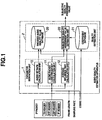
- Fig. 1 is a block diagram showing the arrangement of an audio quality estimation apparatus to represent the principle of the present invention.
- the audio quality estimation apparatus in Fig. 1 includes a parameter derivation unit 1 which derives input parameters, and a quality estimation unit 2 which calculates the subjective quality assessment value of audio data based on input parameters.
- the parameter derivation unit 1 includes an audio bit rate calculation unit 10, audio packet loss frequency calculation unit 11, and average influence time calculation unit 12.
- the audio bit rate calculation unit 10 calculates an audio bit rate based on information of IP packets received from an IP network (not shown).
- the audio packet loss frequency calculation unit 11 counts audio packet losses based on information of IP packets received from the IP network.
- the average influence time calculation unit 12 calculates an average influence time based on information of IP packets received from the IP network.
- the quality estimation unit 2 includes an encoded audio quality value database 20, coefficient database 21, and subjective quality assessment value estimation unit 22.
- encoded audio quality value database 20 encoded audio quality values each representing the subjective quality of audio data whose quality has degraded upon encoding by a codec are accumulated in advance.
- coefficient database 21 coefficients for calculating a subjective quality assessment value are accumulated in advance.
- the subjective quality assessment value estimation unit 22 calculates a subjective quality assessment value based on the audio packet loss frequency and average influence time.
- the audio quality estimation apparatus considers distortion caused by encoding and degradation arising from packet losses.
- a subjective quality assessment value at each audio bit rate (kbps) and each sampling rate (kHz) is measured by a subjective quality assessment experiment, creating the encoded audio quality value database 20 as a subjective quality assessment value database.
- the encoded audio quality value database 20 is then used.
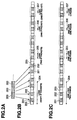
- Fig. 2 is a view for explaining the audio packet loss frequency L a and the average influence time t.
- a of Fig. 2 represents audio data before diving it into IP packets.
- Reference numeral 200 denotes each frame. In this case, the length of one frame is 100 ms.
- (B) of Fig. 2 represents IP packets which store audio data and other data. Audio packets 201 and 202 store audio data, and an IP packet 203 stores data other than audio data. In the example of (B) of Fig. 2 , audio data of one frame is divided into two, which are stored in the IP packets 201 and 202, respectively. Assume that losses 204 to 207 in (B) of Fig. 2 are generated in the IP packets. The loss 204 represents a case in which eight IP packets are lost continuously. The loss 205 represents a case in which two IP packets are lost continuously. The losses 206 and 207 represent a case in which one IP packet is lost.
- the IP packet loss frequency is 4, and the lost IP packet count is 12.
- the audio packet loss frequency L a is obtained by, when at least one audio packet to be assessed exists in singly or continuously generated IP packet losses, counting the packet losses as a packet loss of one time regardless of the continuous length. Since the loss 207 is a loss of an IP packet containing data other than audio data, the losses 204 to 206 are counted to calculate the audio packet loss, as shown in (C) of Fig. 2 . Thus, the audio packet loss frequency is 3.
- the user of the audio quality estimation apparatus derives a model (quality estimation function) for estimating a subjective quality assessment value from the audio packet loss frequency and average influence time.
- a reference value t' (ms) is set for the average influence time, and the average influence time is fixed to the reference influence time t' (ms). More specifically, an IP packet stream is prepared, in which one frame length is set to t' (ms), packet losses 300 are generated to lose audio data of one frame, as shown in Fig. 3 , and the packet loss 300 is set not to exceed one frame. In this case, the average number of influenced frames is 1, so the average influence time is t' (ms). Then, a subjective quality assessment experiment is conducted to reproduce audio data transmitted by this IP packet stream, assess the reproduced speech by a subject, and determine the QoE.
- This subjective quality assessment experiment is conducted for IP packets with various audio packet loss frequencies, obtaining the relationship between the audio packet loss frequency and the QoE as shown in Fig. 4 .
- the user derives a relation fa between the audio packet loss frequency and the QoE from the relationship shown in Fig. 4 .
- the subjective quality assessment experiment is conducted for an IP packet stream having an average influence time other than the reference influence time t'.
- the subjective quality assessment experiment is conducted in the foregoing way for an IP packet stream in which the average influence time is set to t" (ms) other than the reference value t' (ms) and the audio packet loss frequency is set to 1.
- a QoE obtained at this time is defined as Q".
- the user calculates an audio packet loss frequency at which the QoE Q" is obtained when the average influence time is set to the reference value t' (ms) ( Fig. 5 ).
- the calculated audio packet loss frequency is defined as a virtual audio packet loss frequency V".
- the subjective quality assessment experiment and the calculation of the virtual audio packet loss frequency V" are performed for IP packet streams having various average influence times t" (ms), obtaining the relationship between the average influence time and the virtual audio packet loss frequency as shown in Fig. 6 .
- the user derives a relation fb between the average influence time and the virtual audio packet loss frequency from the relationship shown in Fig. 6 .
- the thus derived relations fa and fb are set in advance in the subjective quality assessment value estimation unit 22.
- the subjective quality assessment value estimation unit 22 calculates a virtual audio packet loss frequency V using the relation fb from the average influence time length t calculated by the average influence time calculation unit 12.
- the subjective quality assessment value estimation unit 22 calculates a value (V x L a ) by multiplying the virtual audio packet loss frequency V by the audio packet loss frequency L a counted by the audio packet loss frequency calculation unit 11.
- the subjective quality assessment value estimation unit 22 regards a quality to be obtained as the same as one obtained when the reference influence time is t' and losses occur (V x L a ) times. Then, the subjective quality assessment value estimation unit 22 calculates the subjective quality assessment value Q of audio data from the audio packet loss frequency (V x L a ) using the relation fa.
- the audio quality estimation apparatus can estimate quality in real time by calculating several input parameters from header information of IP packets received from an IP network.
- the audio bit rate calculation unit 10 measures data of audio information from header information of IP packets received from the IP network, and calculates a data amount per sec, thereby calculating an audio bit rate.
- the audio packet loss frequency calculation unit 11 detects lost IP packets from header information of IP packets received from the IP network, and estimates the number of audio data-containing IP packets out of the lost IP packets based on the ratio of audio data to all data. Then, the audio packet loss frequency calculation unit 11 sets the loss frequency of audio data-containing IP packets estimated in a predetermined time as an audio packet loss frequency.
- the average influence time calculation unit 12 detects lost IP packets from header information of IP packets received from the IP network, and estimates the number of audio data-containing IP packets out of the lost IP packets based on the ratio of audio data to all data. Then, the average influence time calculation unit 12 sets the average of the burst lengths of audio data-containing IP packets estimated in a predetermined time as an average audio burst length.
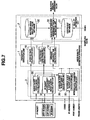
- Fig. 7 is a block diagram showing the arrangement of an audio quality estimation apparatus according to the first embodiment of the present invention.
- the same reference numerals as those in Fig. 1 denote the same parts.
- the audio quality estimation apparatus includes a parameter derivation unit 1, quality estimation unit 2, and intermediate parameter derivation unit 3.
- the intermediate parameter derivation unit 3 derives intermediate parameters for obtaining the audio packet loss frequency and average influence time that are derived by the parameter derivation unit 1.
- the intermediate parameter derivation unit 3 includes an audio packet count ratio calculation unit 30, IP packet loss frequency & average burst length calculation unit 31, average audio burst length calculation unit 32, and average audio packet count calculation unit 33.
- the audio packet count ratio calculation unit 30 calculates the ratio of the audio packet count to the total IP packet count based on information of IP packets received from an IP network (not shown). Based on information of received IP packets, the IP packet loss frequency & average burst length calculation unit 31 calculates an IP packet loss frequency by counting singly or continuously generated IP packet losses as an IP packet loss of one time regardless of the continuous length. The IP packet loss frequency & average burst length calculation unit 31 also calculates an average burst length as the average number of IP packets contained in an IP packet loss of one time.
- the average audio burst length calculation unit 32 calculates an average audio burst length as the average number of audio packets contained in an audio packet loss of one time. Based on information of received IP packets, the average audio packet count calculation unit 33 calculates the average number of audio packets which store audio data of one frame.
- the first embodiment targets data transmission using an IP/UDP (User Datagram Protocol)/RTP (Real-time Transport Protocol) packet structure.
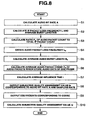
- Fig. 8 is a flowchart showing the operation of the audio quality estimation apparatus according to the first embodiment.
- the audio quality estimation apparatus first obtains parameters.
- An audio bit rate calculation unit 10 calculates an audio bit rate A (step S1).
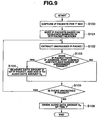
- Fig. 9 is a flowchart showing a method of calculating the audio bit rate A by the audio bit rate calculation unit 10.
- the audio bit rate calculation unit 10 captures an IP packet stream for T' sec (step S100), and sorts IP packets based on sequence numbers in the RTP headers of the IP packets in the IP packet stream (step S101).
- the audio bit rate calculation unit 10 extracts one of unchecked IP packets from the IP packet stream. Further, the audio bit rate calculation unit 10 extracts a source IP address and destination IP address from the IP header of the IP packet, extracts a start port number and destination port number from the UDP header of the IP packet, and extracts a 7-bit payload type number from the RTP header of the IP packet (step S102).
- the audio bit rate calculation unit 10 determines whether the extracted source IP address and destination IP address match the source IP address and destination IP address of an assessment target, the extracted start port number and destination port number match the start port number and destination port number of the assessment target, and the extracted payload type number matches the payload type number of the assessment target (step S103).
- the audio bit rate calculation unit 10 determines that the extracted IP packet is an audio packet to be assessed, and advances to step S104. If at least one of the source IP address, destination IP address, start port number, destination port number, and payload type number does not match the value of the assessment target, the audio bit rate calculation unit 10 advances to step S105.
- step S104 the audio bit rate calculation unit 10 measures the data amount D (kb) of the audio packet, and adds the measured data amount D to an audio data amount D a (kb) which is a cumulative value.
- step S105 the audio bit rate calculation unit 10 determines whether an unchecked IP packet exists in the IP packet stream. If an unchecked IP packet exists, the audio bit rate calculation unit 10 returns to step S102; if no unchecked IP packet exists, advances to step S106. The processes in steps S102 to S105 are repeated until all the IP packets of the IP packet stream are checked.
- an IP packet loss frequency L In derivation of an audio packet loss frequency L a , an IP packet loss frequency L, an average burst length B, and a ratio P a of the audio packet count to the total IP packet count are calculated as three intermediate parameters.
- the IP packet loss frequency & average burst length calculation unit 31 calculates the IP packet loss frequency L and average burst length B (step S2 in Fig. 8 ).
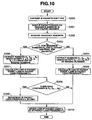
- Fig. 10 is a flowchart showing a method of calculating the IP packet loss frequency L and average burst length B by the IP packet loss frequency & average burst length calculation unit 31.
- the IP packet loss frequency & average burst length calculation unit 31 captures an IP packet stream for T sec (step S200), and sorts IP packets based on sequence numbers in the RTP headers of the IP packets in the IP packet stream (step S201). Then, the IP packet loss frequency & average burst length calculation unit 31 acquires sequence numbers in the RTP headers of the respective IP packets (step S202).
- the IP packet loss frequency & average burst length calculation unit 31 compares the sequence number S s of the first RTP packet and the sequence number S 1 of the final RTP packet that have been acquired in step S202, and determines whether the first sequence number S s is larger than the final sequence number S 1 (step S203).
- the IP packet loss frequency & average burst length calculation unit 31 extracts numbers X 1 , X 2 ,..., X k which do not exist as sequence numbers acquired in step S202, out of all Xs which satisfy S s ⁇ X ⁇ S 1 (step S204).
- the IP packet loss frequency & average burst length calculation unit 31 obtains a lost IP packet count k serving as the cumulative number of missing sequence numbers X 1 , X 2 , ..., X k .
- the IP packet loss frequency & average burst length calculation unit 31 calculates an IP packet loss frequency based on the continuity of the sequence numbers X 1 , X, ..., X k , and sets the calculated frequency as the IP packet loss frequency L in T sec (step S205). In calculation of the IP packet loss frequency L, if sequence numbers are missed continuously, losses of IP packets having continuous sequence numbers are counted as a packet loss of one time.
- the IP packet loss frequency & average burst length calculation unit 31 extracts numbers X 1 , X 2 ,..., X k which do not exist as sequence numbers acquired in step S202, out of all Xs which satisfy 0 ⁇ X ⁇ S 1 or S s ⁇ X ⁇ 65535 (step S206).
- the IP packet loss frequency & average burst length calculation unit 31 obtains a lost IP packet count k serving as the cumulative number of missing sequence numbers X 1 , X 2 , ..., X k . Also, the IP packet loss frequency & average burst length calculation unit 31 calculates an IP packet loss frequency based on the continuity of the sequence numbers X 1 , X 2 ,..., X k , and sets the calculated frequency as the IP packet loss frequency L in T sec (step S207).
- the IP packet loss frequency & average burst length calculation unit 31 determines whether both 0 and 65535 exist in the sequence numbers X 1 , X 2 ,..., X k extracted in step S206 (step S208). If both 0 and 65535 exist in the sequence numbers X 1 , X 2 , ..., X k , the IP packet loss frequency & average burst length calculation unit 31 advances to step S209; if at least one of 0 and 65535 does not exist, to step S210.
- the IP packet loss frequency & average burst length calculation unit 31 sets, as a final IP packet loss frequency L, a value obtained by decrementing the IP packet loss frequency L calculated in step S207 by one (step S209). If at least one of 0 and 65535 does not exist in the sequence numbers X 1 , X 2 , ..., X k , the IP packet loss frequency & average burst length calculation unit 31 directly sets the value calculated in step S207 as the IP packet loss frequency L.
- the audio packet count ratio calculation unit 30 calculates the ratio P a of the audio packet count to the total IP packet count (step S3 in Fig. 8 ).
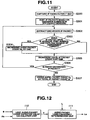
- Fig. 11 is a flowchart showing a method of calculating the ratio P a of the audio packet count by the audio packet count ratio calculation unit 30.
- the audio packet count ratio calculation unit 30 captures an IP packet stream for T' sec (step S300), and sorts IP packets based on sequence numbers in the RTP headers of the IP packets in the IP packet stream (step S301).
- steps S302 and S303 are the same as those in steps S102 and S103 of Fig. 9 . If all the source IP address, destination IP address, start port number, destination port number, and payload type number extracted from the IP packet match the values of the assessment target in step S303, the audio packet count ratio calculation unit 30 determines that the extracted IP packet is an audio packet to be assessed, and advances to step S304. If at least one of the source IP address, destination IP address, start port number, destination port number, and payload type number does not match the value of the assessment target, the audio packet count ratio calculation unit 30 advances to step S305.
- step S304 the audio packet count ratio calculation unit 30 increments an audio packet count N a by one.
- the audio packet count ratio calculation unit 30 increments the total IP packet count N of the IP packet stream by one (step S305).
- the audio packet count ratio calculation unit 30 determines whether an unchecked IP packet exists in the IP packet stream (step S306). If an unchecked IP packet exists, the audio packet count ratio calculation unit 30 returns to step S302; if no unchecked IP packet exists, advances to step S307. The processes in steps S302 to S306 are repeated until all the IP packets of the IP packet stream are checked.
- An audio packet loss frequency calculation unit 11 counts the audio packet loss frequency L a based on the IP packet loss frequency L, the average burst length B, and the ratio P a of the audio packet count N a to the total IP packet count N which have been calculated in the above way (step S4 in Fig. 8 ).
- Fig. 12 is a block diagram exemplifying the arrangement of the audio packet loss frequency calculation unit 11.
- Fig. 13 is a flowchart showing a method of calculating the audio packet loss frequency L a by the audio packet loss frequency calculation unit 11.
- the audio packet loss frequency calculation unit 11 includes a lost audio packet count expected value calculation unit 110 and audio packet loss frequency determination unit 111.
- the lost audio packet count expected value calculation unit 110 multiplies the average burst length B and the ratio P a of the audio packet count N a to the total IP packet count N, thereby calculating the expected value of the number of audio packets lost by an IP packet loss of one time.
- the audio packet loss frequency determination unit 111 determines the audio packet loss frequency L a from the expected value of the number of audio packets and the IP packet loss frequency L.
- an average audio burst length B a an average audio packet count P n of audio packets which store audio data of one frame are calculated as two intermediate parameters.
- the average audio burst length calculation unit 32 calculates the average audio burst length B a (step S5 in Fig. 8 )
- Fig. 14 is a flowchart showing a method of calculating the average audio burst length B a by the average audio burst length calculation unit 32.
- the average audio packet count calculation unit 33 calculates the average audio packet count P n of audio packets which store audio data of one frame (step S6 in Fig. 8 ).
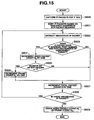
- Fig. 15 is a flowchart showing a method of calculating the average audio packet count P n by the average audio packet count calculation unit 33.
- the average audio packet count calculation unit 33 captures an IP packet stream for T' sec (step S600), and sorts IP packets based on sequence numbers in the RTP headers of the IP packets in the IP packet stream (step S601).
- steps S602, S603, and S604 are the same as those in steps S302, S303, and S304 of Fig. 11 .
- the average audio packet count calculation unit 33 increments the audio packet count N a by one in step S604, and determines whether the marker bit of the RTP header contained in the audio packet extracted in step S603 is 1 (step S605).
- a marker bit value "1" means that the packet is an audio packet containing the final data of the frame of audio data. Hence, if the marker bit is 1, the average audio packet count calculation unit 33 increments a frame count N m by one (step S606).
- step S606 After the end of the process in step S606 or if NO in step S603 or S605, the average audio packet count calculation unit 33 increments the total IP packet count N of the IP packet stream by one (step S607).
- the average audio packet count calculation unit 33 determines whether an unchecked IP packet exists in the IP packet stream (step S608). If an unchecked IP packet exists, the average audio packet count calculation unit 33 returns to step S602; if no unchecked IP packet exists, advances to step S609. The processes in steps S602 to S608 are repeated until all the IP packets of the IP packet stream are checked.
- An average influence time calculation unit 12 calculates the average influence time t based on the average audio burst length B a and the average audio packet count P n of audio packets which store audio data of one frame, which have been calculated in the above manner (step S7 in Fig. 8 ).
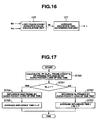
- Fig. 16 is a block diagram exemplifying the arrangement of the average influence time calculation unit 12.
- Fig. 17 is a flowchart showing a method of calculating the average influence time t by the average influence time calculation unit 12.
- the average influence time calculation unit 12 includes a lost frame count expected value calculation unit 120 and average influence time determination unit 121. Based on the average audio burst length B a and the average audio packet count P n of audio packets which store audio data of one frame, the lost frame count expected value calculation unit 120 calculates the number of frames in which an audio packet loss of one time influences quality. The average influence time determination unit 121 determines an average influence time by multiplying the number of frames by the frame length.
- the average influence time calculation unit 12 divides the average audio burst length B a by the average audio packet count P n , calculating an expected value N f of the number of frames influenced by an audio packet loss of one time (step S700). Then, the average influence time calculation unit 12 determines whether the frame count N f is smaller than 1 (step S701).
- the average influence time calculation unit 12 determines that an audio packet loss of one time influences N f frames (step S702).
- the average influence time calculation unit 12 sets, as the average influence time t of a loss of one time, a value obtained by multiplying the frame count N f by a known frame length F (step S703).
- An encoded audio quality value Ie representing the subjective quality of audio data corresponding to an audio bit rate and sampling rate is accumulated in advance in an encoded audio quality value database 20 in the quality estimation unit 2.
- the encoded audio quality value Ie is derived in advance by a subjective quality assessment experiment, and set in the encoded audio quality value database 20.
- audio data is encoded using a codec used in a streaming multimedia telecommunication service to be assessed.
- the audio data is decoded and reproduced.
- a subject assesses the reproduced speech and determines the encoded audio quality value Ie.
- This subjective quality assessment experiment is conducted for audio data with various audio bit rates and sampling rates.
- DMOS Difference Mean Opinion Score
- the length of audio data used in this subjective quality assessment experiment is set equal to T.
- the numbers of subjects and data are desirably large.
- the encoded audio quality value database 20 outputs, to a subjective quality assessment value estimation unit 22, an encoded audio quality value Ie corresponding to the value of an audio bit rate A input from the audio bit rate calculation unit 10, and a known sampling rate of audio data to be assessed (step S8 in Fig. 8 ). If the value of the input audio bit rate A does not exist in the database, the encoded audio quality value database 20 outputs, to the subjective quality assessment value estimation unit 22, an encoded audio quality value Ie corresponding to an audio bit rate closest to the value A out of audio bit rates accumulated in the database.
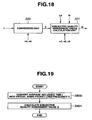
- Fig. 18 is a block diagram exemplifying the arrangement of the subjective quality assessment value estimation unit 22.
- Fig. 19 is a flowchart showing a subjective quality assessment value estimation method by the subjective quality assessment value estimation unit 22.
- the subjective quality assessment value estimation unit 22 includes a conversion unit 220 and subjective quality assessment value calculation unit 221.
- the conversion unit 220 converts the average influence time t calculated by the average influence time calculation unit 12 into a virtual audio packet loss frequency, where an audio packet loss of one time for an average influence time t has similar influences on quality to a virtual audio packet loss frequency for a reference influence time set in advance.
- the subjective quality assessment value calculation unit 221 calculates a subjective quality assessment value based on the encoded audio quality value Ie, audio packet loss frequency L a , and virtual audio packet loss frequency.
- the subjective quality assessment value estimation unit 22 calculates a subjective quality assessment value Q based on the encoded audio quality value Ie input from the encoded audio quality value database 20, the audio packet loss frequency L a input from the audio packet loss frequency calculation unit 11, and the average influence time t input from the average influence time calculation unit 12 (step S10 in Fig. 8 ):
- Q Ie ⁇ 1 1 ⁇ n 1 e ⁇ LaV / n 2 + n 1 e ⁇ LaV / n 3
- V t / n 4 n 5
- Equation (7) corresponds to the relation fa
- equation (8) corresponds to the relation fb.
- equations (7) and (8) are merely examples, and the present invention is not limited to them.
- the coefficients n 1 , n 2 , and n 3 in equation (7) and the coefficients n 4 and n 5 in equation (8) need to be acquired in advance from the coefficient database 21.
- the coefficients n 1 , n 2 , n 3 , n 4 , and n 5 for each codec are accumulated in advance in the coefficient database 21.
- the coefficient database 21 outputs, to the subjective quality assessment value estimation unit 22, the coefficients n 1 , n 2 , n 3 , n 4 , and n 5 corresponding to a known codec used in a streaming multimedia telecommunication service to be assessed (step S9 in Fig. 8 ).
- Each coefficient is derived as follows.
- the user of the audio quality estimation apparatus sets a reference value t' of the average influence time, and creates audio data having the reference influence time t'.
- This audio data is reproduced, and a subject assesses the reproduced speech and determines the subjective quality assessment value Q.
- This subjective quality assessment experiment is conducted for audio data with various audio packet loss frequencies, obtaining the subjective quality assessment value Q for each audio packet loss frequency. Further, a similar subjective quality assessment experiment is conducted for loss-free audio data having the reference influence time t', determining an encoded audio quality value Ie.
- the user creates audio data having an average influence time t" other than the reference influence time t' and an audio packet loss frequency of 1.
- This audio data is reproduced, and the subject assesses the reproduced speech and determines the subjective quality assessment value Q.
- the user calculates a loss frequency V when the subjective quality assessment value Q is obtained, and sets the calculated value as a virtual audio packet loss frequency V" in the average influence time t".
- This subjective quality assessment experiment is conducted for audio data with various average influence times t".
- the user derives, by nonlinear least squares fitting, coefficients n 4 and n 5 which minimize the error between the virtual audio packet loss frequency V" for each average influence time t" and the virtual audio packet loss frequency V obtained when the average influence time t" is substituted into equation (8).
- the coefficients n 1 , n 2 , n 3 , n 4 , and n 5 can be derived.
- the audio data, encoded audio quality value Ie, Q, and subject used are desirably the same as those used when creating the encoded audio quality value database 20.
- the subjective quality can be estimated in service using only information on the receiving side.
- packet losses are divided by the frequency and the magnitude of influence of one loss. Further, the influence of one loss is estimated from the time length. As a result, subjective quality estimation corresponding to any packet loss pattern can be implemented.
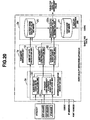
- Fig. 20 is a block diagram showing the arrangement of an audio quality estimation apparatus according to the second embodiment of the present invention.
- the same reference numerals as those in Figs. 1 and 7 denote the same parts.
- the audio quality estimation apparatus includes a parameter derivation unit 1a, quality estimation unit 2a, and intermediate parameter derivation unit 3a.
- the parameter derivation unit 1a includes an audio bit rate calculation unit 10, audio packet loss frequency calculation unit 11, and average audio burst length calculation unit 32.
- the intermediate parameter derivation unit 3a includes an audio packet count ratio calculation unit 30 and IP packet loss frequency & average burst length calculation unit 31.
- the quality estimation unit 2a includes an encoded audio quality value database 20, coefficient database 21, and subjective quality assessment value estimation unit 22a.
- the average audio burst length calculation unit 32 replaces the average influence time calculation unit 12 in the first embodiment, and calculates a subjective quality assessment value based on an audio packet loss frequency L a and average audio burst length B a .
- steps S 1 to S5, S8, and S9 are the same as those in the first embodiment, and a description thereof will not be repeated.
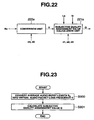
- Fig. 22 is a block diagram exemplifying the arrangement of the subjective quality assessment value estimation unit 22a.
- Fig. 23 is a flowchart showing a subjective quality assessment value estimation method by the subjective quality assessment value estimation unit 22a.
- the subjective quality assessment value estimation unit 22a includes a conversion unit 220a and subjective quality assessment value calculation unit 221a.
- the conversion unit 220a converts the average audio burst length B a calculated by the average audio burst length calculation unit 32 into a virtual audio packet loss frequency V, where an audio packet loss of one time for an average audio burst length B a has similar influences on quality to a virtual audio packet loss frequency V for a reference audio burst length set in advance.
- the subjective quality assessment value calculation unit 221a calculates a subjective quality assessment value Q based on the encoded audio quality value Ie, audio packet loss frequency L a , and virtual audio packet loss frequency V.
- the subjective quality assessment value estimation unit 22a calculates the subjective quality assessment value Q based on the encoded audio quality value Ie input from the encoded audio quality value database 20, coefficients n 1 , n 2 , n 3 , n 4 , and n 5 input from the coefficient database 21, the audio packet loss frequency L a input from the audio packet loss frequency calculation unit 11, and the average audio burst length B a input from the average audio burst length calculation unit 32 (step S10a in Fig. 21 ):
- the conversion unit 220a calculates the virtual audio packet loss frequency V in accordance with equation (10) (S900).
- the subjective quality assessment value calculation unit 221a calculates the subjective quality assessment value Q in accordance with equation (9) (step S901). Note that all the explanation of the average influence time in the principle and the first embodiment is applicable to the second embodiment. That is, it suffices to replace the average influence time described in the principle and the first embodiment with the average audio burst length, and the reference influence time with the reference audio burst length.
- the audio quality estimation apparatus in each of the first and second embodiments can be implemented by a computer having a CPU, storage device, and external interface, and a program which controls these hardware resources.
- An audio quality estimation program for causing the computer to implement the audio quality estimation method of the present invention is provided in a state in which it is recorded on a recording medium such as a flexible disk, CD-ROM, DVD-ROM, or memory card.
- the CPU writes the program loaded from the recording medium in the storage device, and executes processing as described in the first or second embodiment in accordance with the program.
- parameter derivation units 1 and 1a, and intermediate parameter derivation units 3 and 3a may be arranged in a receiving terminal, and quality estimation units 2 and 2a may be arranged in the control center of multimedia telecommunication services. In this case, parameters calculated in the receiving terminal are sent to the quality estimation units 2 and 2a in the control center.
- the present invention is applicable to a technique of estimating the subjective quality of audio data experienced by a user in multimedia telecommunication services.
Landscapes
- Engineering & Computer Science (AREA)
- Signal Processing (AREA)
- Multimedia (AREA)
- Computer Networks & Wireless Communication (AREA)
- Health & Medical Sciences (AREA)
- Audiology, Speech & Language Pathology (AREA)
- Computational Linguistics (AREA)
- Human Computer Interaction (AREA)
- Physics & Mathematics (AREA)
- Acoustics & Sound (AREA)
- Environmental & Geological Engineering (AREA)
- Data Exchanges In Wide-Area Networks (AREA)
Claims (20)
- Audioqualitätabschätzungsverfahren für einen Multimedia-Telekommunikationsdienst, der eine Mischung aus einem Audiopaket, das als ein IP-Paket dient, welches Audiodaten enthält, und einem IP-Paket, welches keine Audiodaten enthält, überträgt, dadurch gekennzeichnet, das es umfasst:einen Audiopaketverlustfrequenz-Berechnungsschritt (S4) des Berechnens, wenn wenigstens ein zu bewertendes Audiopaket in einzeln oder kontinuierlich erzeugten IP-Paketverlusten existiert, einer Audiopaketverlustfrequenz (La) basierend auf Informationen von empfangenen IP-Paketen, indem die Paketverluste als ein Audiopaketverlust einer Zeit gezählt werden, unabhängig von einer kontinuierlichen Länge;einen Mittlere-Beeinflussungszeit-Berechnungsschritt (S7) des Berechnens, basierend auf Informationen von empfangenen IP-Paketen, einer mittleren Beeinflussungszeit (t), die als eine mittlere Zeit dient, während der eine Audioqualität durch einen Audiopaketverlust einer Zeit beeinflusst wird; undeinen Subjektiv-Qualitätsbewertungswert-Abschätzungsschritt (S10) des Abschätzens eines Subjektiv-Qualitätsbewertungswertes (Q) basierend auf der Audiopaketverlustfrequenz (La) und der mittleren Beeinflussungszeit (t).
- Audioqualitätabschätzungsverfahren für einen Multimedia-Telekommunikationsdienst, der eine Mischung aus einem Audiopaket, das ein IP-Paket, welches Audiodaten enthält, und einem IP-Paket, welches keine Audiodaten enthält, überträgt, dadurch gekennzeichnet, dass es umfasst:einen Audiopaketverlustfrequenz-Berechnungsschritt (S4) des Berechnens, wenn wenigstens ein zu bewertendes Audiopaket in einzeln oder kontinuierlich erzeugten IP-Paketverlusten existiert, einer Audiopaketverlustfrequenz (La) basierend auf Informationen von empfangenen IP-Paketen, indem die Paketverluste als ein Audiopaketverlust einer Zeit gezählt werden, unabhängig von einer kontinuierlichen Länge;einen Mittlere-Audioburstlängen-Berechnungsschritt (S5) des Berechnens, basierend auf Informationen von empfangenen IP-Paketen, einer mittleren Audioburstlänge (Ba), die als eine mittlere Anzahl an Audiopaketen dient, die in einem Audiopaketverlust einer Zeit enthalten sind; undeinen Subjektiv-Qualitätsbewertungswert-Abschätzungsschritt (S10a) des Abschätzens eines Subjektiv-Qualitätsbewertungswertes (Q) basierend auf der Audiopaketverlustfrequenz (La) und der mittleren Audioburstlänge (Ba).
- Audioqualitätabschätzungsverfahren nach Anspruch 1, ferner umfassend:den IP-Paketverlustfrequenz-Berechnungsschritt (S2) des Berechnens einer IP-Paketverlustfrequenz (L) basierend auf Informationen von empfangenen IP-Paketen, indem einzeln oder kontinuierlich erzeugter IP-Paketverluste als einen IP-Paketverlust einer Zeit gezählt werden, unabhängig von einer kontinuierlichen Länge;den Mittlere-Burstlängen-Berechnungsschritt (S2) des Berechnens, basierend auf Informationen von empfangenen IP-Paketen, einer mittleren Burstlänge (B), die als eine mittlere Anzahl an IP-Paketen dient, die in einem IP-Paketverlust einer Zeit enthalten sind, der in dem IP-Paketverlustfrequenz-Berechnungsschritt (S2) detektiert wurde;den Audiopaketanzahlverhältnis-Berechnungsschritt (S3) des Berechnens eines Verhältnisses (Pa) einer Audiopaketanzahl (Na) zu einer Gesamt-IP-Paketanzahl (N) basierend auf Informationen von empfangenen IP-Paketen;den Mittlere-Audioburstlängen-Berechnungsschritt (S5) des Berechnens, basierend auf der mittleren Burstlänge (B) und dem Verhältnis (Pa) der Audiopaketanzahl (Na) zur Gesamt-IP-Paketanzahl (N), einer mittleren Audioburstlänge (Ba), die als eine mittlere Anzahl an Audiopaketen dient, die in einem Audiopaketverlust einer Zeit enthalten sind, der in dem Audiopaketverlustfrequenz-Berechnungsschritt (S4) detektiert wurde; undden Mittlere-Audiopaketanzahl-Berechnungsschritt (S6) des Berechnens, basierend auf Informationen von empfangenen IP-Paketen, einer mittleren Anzahl an Audiopaketen (Pn), welche Audiodaten eines Rahmens speichern,wobei in dem Audiopaketverlustfrequenz-Berechnungsschritt (S4) die Audiopaketverlustfrequenz (La) berechnet wird basierend auf der IP-Paketverlustfrequenz (L), der mittleren Burstlänge (B) und dem Verhältnis (Pa) der Audiopaketanzahl (Na) zur Gesamt-IP-Paketanzahl (N), undin dem Mittlere-Beeinflussungszeit-Berechnungsschritt (S7) die mittlere Beeinflussungszeit (t) berechnet wird basierend auf einer Rahmenlänge (F), der mittleren Audioburstlänge (Ba) und der mittleren Anzahl an Audiopaketen (Pn), welche Audiodaten eines Rahmens speichern.
- Audioqualitätabschätzungsverfahren nach Anspruch 2, ferner umfassend:den IP-Paketverlustfrequenz-Berechnungsschritt (S2) des Berechnens einer IP-Paketverlustfrequenz (L) basierend auf Informationen von empfangenen IP-Paketen, indem einzeln oder kontinuierlich erzeugte Paketverluste als ein IP-Paketverlust einer Zeit gezählt werden, unabhängig von einer kontinuierlichen Länge;den Mittlere-Burstlängen-Berechnungsschritt (S2) des Berechnens, basierend auf Informationen von empfangenen IP-Paketen, einer mittleren Burstlänge (B), die als eine mittlere Anzahl an IP-Paketen dient, die in einem IP-Paketverlust einer Zeit enthalten sind, der in dem IP-Paketverlustfrequenz-Berechnungsschritt (S2) detektiert wurde; undden Audiopaketanzahlverhältnis-Berechnungsschritt (S3) des Berechnens eines Verhältnisses (Pa) einer Audiopaketanzahl (Na) zu einer Gesamt-IP-Paketanzahl (N) basierend auf Informationen von empfangenen IP-Paketen,wobei in dem Audiopaketverlustfrequenz-Berechnungsschritt (S4) die Audiopaketverlustfrequenz (La) berechnet wird basierend auf der IP-Paketverlustfrequenz (L), der mittleren Burstlänge (B) und dem Verhältnis (Pa) der Audiopaketanzahl (Na) zur Gesamt-IP-Paketanzahl (N), undin dem Mittlere-Audioburstlängen-Berechnungsschritt (S5) die mittlere Audioburstlänge (Ba), die als die mittlere Anzahl an Audiopaketen dient, die in einem Audiopaketverlust einer Zeit enthalten sind, der in dem Audiopaketverlustfrequenz-Berechnungsschritt (S4) detektiert wurde, berechnet wird basierend auf der mittleren Burstlänge (B) und dem Verhältnis (Pa) der Audiopaketanzahl (Na) zur Gesamt-IP-Paketanzahl (N).
- Audioqualitätabschätzungsverfahren nach Anspruch 3, wobei der Audiopaketverlustfrequenz-Berechnungsschritt (S4) umfasst
den Audiopaketanzahl-Erwartungswert-Berechnungsschritt (S400) des Berechnens eines Erwartungswertes (Y) der Anzahl an Audiopaketverlusten durch einen IP-Paketverlust einer Zeit durch Multiplizieren der mittleren Burstlänge (B) und des Verhältnisses (Pa) der Audiopaketanzahl (Na) zur Gesamt-IP-Paketanzahl (N), und
den Audiopaketverlustfrequenz-Bestimmungsschritt (S403; S405) des Bestimmens der Audiopaketverlustfrequenz (La) aus dem Erwartungswert (Y) der Anzahl an Audiopaketen und der IP-Paketverlustfrequenz (L). - Audioqualitätabschätzungsverfahren nach Anspruch 4, wobei der Audiopaketverlustfrequenz-Berechnungsschritt (S4) umfasst
den Audiopaketanzahl-Erwartungswert-Berechnungsschritt (S400) des Berechnens eines Erwartungswertes (Y) der Anzahl an Audiopaketverlusten durch einen IP-Paket-Verlust einer Zeit durch Multiplizieren der mittleren Burstlänge (B) und des Verhältnisses (Pa) der Audiopaketanzahl (Na) zur Gesamt-IP-Paketanzahl (N), und
den Audiopaketverlustfrequenz-Berechnungsschritt (S403; S405) des Bestimmens der Audiopaketverlustfrequenz (La) aus dem Erwartungswert (Y) der Anzahl an Audiopaketen und der IP-Paketverlustfrequenz (L). - Audioqualitätabschätzungsverfahren nach Anspruch 3, wobei der Mittlere-Beeinflussungszeit-Berechnungsschritt (S7) umfasst
den Rahmenanzahl-Berechnungsschritt (S700) des Berechnens, basierend auf der mittleren Audioburstlänge (Ba) und der mittleren Anzahl an Audiopaketen (Pn), welche Audiodaten eines Rahmens speichern, der Anzahl an Rahmen (Nf), in welchen ein Audiopaketverlust einer Zeit die Qualität beeinflusst; und
den Mittlere-Einflusszeitbestimmungsschritt (S703; S705) des Bestimmens der mittleren Beeinflussungszeit (t) durch Multiplizieren der Anzahl an Rahmen (Nf) mit der Rahmenlänge (F). - Audioqualitätabschätzungsverfahren nach Anspruch 3, ferner umfassend den Audiobitraten-Berechnungsschritt (S1) des Berechnens einer Audiobitrate (A) basierend auf Informationen aus empfangenen IP-Paketen,
wobei in dem Subjektiv-Qualitätsbewertungswert-Abschätzungsschritt (S10) ein Kodiert-Audioqualitätswert (Ie), welcher der Audiobitrate entspricht, und eine Sampling-Rate eines zu bewertenden Codec von einer Kodiert-Audioqualitätswert-Datenbank (20) empfangen werden, welche im Voraus einen Kodiert-Audioqualitätswert speichert, der eine subjektive Qualität von Audiodaten repräsentiert, deren Qualität beim Kodieren mittels eines Codec verschlechtert wurde, und der Subjektiv-Qualitätsbewertungswert (Q) berechnet wird basierend auf dem Kodiert-Audioqualitätswert (Ie), der Audiopaketverlustfrequenz (La) und der mittleren Beeinflussungszeit (t). - Audioqualitätabschätzungsverfahren nach Anspruch 4, ferner umfassend den Audiobitraten-Berechnungsschritt (S1) des Berechnens einer Audiobitrate (A) basierend auf Informationen aus empfangenen IP-Paketen,
wobei in dem Subjektiv-Qualitätsbewertungswert-Abschätzungsschritt (S10a) ein Kodiert-Audioqualitätswert (Ie), welcher der Audiobitrate entspricht, und eine Sampling-Rate eines zu bewertenden Codec von einer Kodiert-Audioqualitätswert-Datenbank (20) empfangen werden, welche im Voraus einen Kodiert-Audioqualitätswert speichert, der eine subjektive Qualität von Audiodaten repräsentiert, deren Qualität beim Kodieren mittels eines Codecs verschlechtert wurde, und der Subjektiv-Qualitätsbewertungswert (Q) berechnet wird basierend auf dem Kodiert-Audioqualitätswert (Ie), der Audiopaketverlustfrequenz (La) und der mittleren Audioburstlänge (Ba). - Audioqualitätabschätzungsverfahren nach Anspruch 8, wobei der Subjektiv-Qualitätsbewertungswert-Abschätzungsschritt (S10) umfasst
den Umwandlungsschritt (S800) des Umwandelns der in dem Mittlere-Beeinflussungszeit-Berechnungsschritt (S7) berechneten mittleren Beeinflussungszeit (t) in eine Virtuell-Audiopaketverlustfrequenz (V), wobei ein Audiopaketverlust einer Zeit für die mittlere Beeinflussungszeit (t) ähnliche Auswirkungen auf eine Qualität von einer Virtuell-Audiopaketverlustfrequenz (V) für eine im Voraus gesetzte Referenzbeeinflussungszeit (t') hat, und
den Subjektiv-Qualitätsbewertungswert-Berechnungsschritt (S801) des Berechnens des Subjektiv-Qualitätsbewertungswertes (Q) basierend auf dem Kodiert-Audioqualitätswert (Ie), der Audiopaketverlustfrequenz (La) und der Virtuell-Audiopaketverlustfrequenz (V). - Audioqualitätabschätzungsverfahren nach Anspruch 9, wobei der Subjektiv-Qualitätsbewertungswert-Abschätzungsschritt (S10a) umfasst
den Umwandlungsschritt (S900) des Umwandelns der in dem Mittlere-Audioburstlängen-Berechnungsschritt (S5) berechneten mittleren Audioburstlänge (Ba) in eine Virtuell-Audiopaketverlustfrequenz (V), wobei ein Audiopaketverlust einer Zeit für die mittlere Audioburstlänge (Ba) ähnliche Auswirkungen auf eine Qualität einer Virtuell-Audiopaketverlustfrequenz (V) für eine im Voraus gesetzte Referenzaudioburstlänge hat, und
den Subjektiv-Qualitätsbewertungswert-Berechnungsschritt (S901) des Berechnens des Subjektiv-Qualitätsbewertungswertes (Q) basierend auf dem Kodiert-Audioqualitätswert (Ie), der Audiopaketverlustfrequenz (La) und der Virtuell-Audiopaketverlustfrequenz (V). - Audioqualitätabschätzungsverfahren nach Anspruch 10, wobei
in dem Subjektiv-Qualitätsbewertungswert-Berechnungsschritt (S10) der Subjektiv-Qualitätsbewertungswert (Q) berechnet wird basierend auf einer vorbestimmten Beziehung zwischen dem Kodiert-Audioqualitätswert (Ie), der Audiopaketverlustfrequenz (La), der Virtuell-Audiopaketverlustfrequenz (V) und dem Subjektiv-Qualitätsbewertungswert (Q), und
die Beziehung zwischen dem Kodiert-Audioqualitätswert (Ie), der Audiopaketverlustfrequenz (La), der Virtuell-Audiopaketverlustfrequenz (V) und dem Subjektiv-Qualitätsbewertungswert (Q) abgeleitet wird durch Ausführen eines Subjektiv-Qualitätsbewertungs-Experimentes, welches für jede Audiopaketverlustfrequenz einen Subjektiv-Qualitätsbewertungswert bestimmt, welcher der Länge der Referenzbeeinflussungszeit (t') entspricht. - Audioqualitätabschätzungsverfahren nach Anspruch 11, wobei
in dem Subjektiv-Qualitätsbewertungswert-Berechnungsschritt (S10a), der Subjektiv-Qualitätsbewertungswert (Q) berechnet wird basierend auf einer vorbestimmten Beziehung zwischen dem Kodiert-Audioqualitätswert (Ie), der Audiopaketverlustfrequenz (La), der Virtuell-Audiopaketverlustfrequenz (V), und dem Subjektiv-Qualitätsbewertungswert (Q), und
die Beziehung zwischen dem Kodiert-Audioqualitätswert (Ie), der Audiopaketverlustfrequenz (La), der Virtuell-Audiopaketverlustfrequenz (V) und dem Subjektiv-Qualitätsbewertungswert (Q) abgeleitet wird durch Ausführen eines Subjektiv-Qualitätsbewertungs-Experimentes, welches für jede Audiopaketverlustfrequenz einen Subjektiv-Qualitätsbewertungswert bestimmt, welcher der Referenzaudioburstlänge entspricht. - Audioqualitätabschätzungsverfahren nach Anspruch 12, wobei
in dem Umwandlungsschritt (S800) die mittlere Beeinflussungszeit (t) in die Virtuell-Audiopaketverlustfrequenz (V) umgewandelt wird basierend auf einer vorbestimmten Beziehung zwischen der mittleren Beeinflussungszeit (t) und der Virtuell-Audiopaketverlustfrequenz (V), und
die Beziehung zwischen der mittleren Beeinflussungszeit (t) und der Virtuell-Audiopaketverlustfrequenz (V) abgeleitet wird durch Ausführen, für mehrere Beeinflussungszeiten, einer Verarbeitung des Bestimmens, mittels eines Subjektiv-Qualitätsbewertungs-Experiments, eines Subjektiv-Qualitätsbewertungswertes, wenn eine Audiopaketverlustfrequenz in einer spezifischen Beeinflussungszeit eine Zeit beträgt, Berechnen, aus einer Beziehung zwischen dem Kodiert-Audioqualitätswert (Ie), der Audiopaketverlustfrequenz (La), und dem Subjektiv-Qualitätsbewertungswert (Q) einer Audiopaketverlustfrequenz für eine Referenzbeeinflussungszeit, welche ein Qualitätsäquivalent für den Subjektiv-Qualitätsbewertungswert (Q) angibt, und Setzen der berechneten Audiopaketverlustfrequenz als eine Virtuell-Audiopaketverlustfrequenz in der Beeinflussungszeit. - Audioqualitätabschätzungsverfahren nach Anspruch 13, wobei
in dem Umwandlungsschritt (S900) die mittlere Audioburstlänge (Ba) in die Virtuell-Audiopaketverlustfrequenz (V) umgewandelt wird basierend auf einer vorbestimmten Beziehung zwischen der mittleren Audioburstlänge (Ba) und der Virtuell-Audiopaketverlustfrequenz (V), und
die Beziehung zwischen der mittleren Audioburstlänge (Ba) und der Virtuell-Audiopaketverlustfrequenz (V) abgeleitet wird durch Ausführen, für mehrere Audioburstlängen, eines Verarbeitens eines Bestimmens, mittels eines Subjektiv-Qualitätsbewertungs-Experiments, eines Subjektiv-Qualitätsbewertungswertes, wenn eine Audiopaketverlustfrequenz für eine spezifische Audioburstlänge eine Zeit beträgt, Berechnen, aus einer Beziehung zwischen dem Kodiert-Audioqualitätswert (Ie), der Audiopaketverlustfrequenz (La), und dem Subjektiv-Qualitätsbewertungswert (Q) einer Audiopaketverlustfrequenz für eine Referenzaudioburstlänge, welche ein Qualitätsäquivalent für den Subjektiv-Qualitätsbewertungswert (Q) angibt, und Setzen der berechneten Audiopaketverlustfrequenz als eine Virtuell-Audiopaketverlustfrequenz für die Audioburstlänge. - Audioqualitätabschätzungsverfahren nach Anspruch 8, wobei in dem Audiopaketanzahlverhältnis-Berechnungsschritt (S3), dem Mittlere-Audiopaketanzahl-Berechnungsschritt (S6) und dem Audiobitraten-Berechnungsschritt (S1) nur ein zu bewertendes Audiopaket extrahiert wird basierend auf Informationen einer IP-Adresse, Port-Nummer und eines Payload-Typs in einem IP-Paket-Header.
- Audioqualitätabschätzungsverfahren nach Anspruch 9, wobei in dem Audiopaketanzahl-Berechnungsschritt (S3), und dem Audiobitraten-Berechnungsschritt (S1) nur ein zu bewertendes Audiopaket extrahiert wird basierend auf Informationen einer IP-Adresse, Port-Nummer und eines Payload-Typs in einem IP-Paket-Header.
- Audioqualitätabschätzungsverfahren nach Anspruch 3, wobei in dem Mittlere-Audiopaketanzahl-Berechnungsschritt (S6) die mittlere Anzahl an Audiopaketen (Pn), welche Audiodaten eines Rahmens speichern, basierend auf einer Protokollstruktur in einem empfangenen IP-Paket berechnet wird.
- Audioqualitätabschätzungsvorrichtung für einen Multimedia-Telekommunikationsdienst, der eine Mischung aus einem Audiopaket, das als ein IP-Paket dient, welches Audiodaten enthält, und einem IP-Paket, welches keine Audiodaten enthält, überträgt, dadurch gekennzeichnet, dass sie umfasst:Audiopaketverlustfrequenz-Berechnungsmittel (11) zum Berechnen, wenn wenigstens ein zu bewertendes Audiopaket in einzeln oder kontinuierlich erzeugten IP-Paketverlusten existiert, einer Audiopaketverlustfrequenz (La) basierend auf Informationen von empfangenen IP-Paketen, indem die Paketverluste als ein Audiopaketverlust einer Zeit gezählt werden, unabhängig von einer kontinuierlichen LängeMittlere-Einflusszeit-Berechnungsmittel (12) zum Berechnen, basierend auf Informationen von empfangenen IP-Paketen, einer mittleren Beeinflussungszeit (t), die als eine mittlere Zeit dient, während der eine Audioqualität durch einen Audiopaketverlust einer Zeit beeinflusst wird; undSubjektiv-Qualitätsbewertungswert-Abschätzungsmittel (22) zum Abschätzen eines Subjektiv-Qualitätsbewertungswertes (Q) basierend auf der Audiopaketverlustfrequenz (La) und der mittleren Beeinflussungszeit (t).
- Audioqualitätabschätzungsvorrichtung für einen Multimedia-Telekommunikationsdienst, der eine Mischung aus einem Audiopaket, das als ein IP-Paket dient, welches Audiodaten enthält, und einem IP-Paket, welches keine Audiodaten enthält, überträgt, dadurch gekennzeichnet, dass sie umfasst:Audiopaketverlustfrequenz-Berechnungsmittel (11) zum Berechnen, wenn wenigstens ein zu bewertendes Audiopaket in einzeln oder kontinuierlich erzeugten IP-Paketverlusten existiert, einer Audiopaketverlustfrequenz (La) basierend auf Informationen von empfangenen IP-Paketen, indem die Paketverluste als ein Audiopaketverlust einer Zeit gezählt werden, unabhängig von einer kontinuierlichen Länge;Mittlere-Audioburstlängen-Berechnungsmittel (32) zum Berechnen, basierend auf Informationen von empfangenen IP-Paketen, einer mittleren Audioburstlänge (Ba), die als eine mittlere Anzahl an Audiopaketen dient, die in einem Audiopaketverlust einer Zeit enthalten sind; undSubjektiv-Qualitätsbewertungswert-Abschätzungsmittel (22) zum Abschätzen eines Subjektiv-Qualitätsbewertungswertes (Q) basierend auf der Audiopaketverlustfrequenz (La) und der mittleren Audioburstlänge (Ba).
Applications Claiming Priority (2)
| Application Number | Priority Date | Filing Date | Title |
|---|---|---|---|
| JP2008153089 | 2008-06-11 | ||
| PCT/JP2009/059529 WO2009150932A1 (ja) | 2008-06-11 | 2009-05-25 | オーディオ品質推定方法、オーディオ品質推定装置およびプログラム |
Publications (3)
| Publication Number | Publication Date |
|---|---|
| EP2288087A1 EP2288087A1 (de) | 2011-02-23 |
| EP2288087A4 EP2288087A4 (de) | 2014-07-23 |
| EP2288087B1 true EP2288087B1 (de) | 2016-03-30 |
Family
ID=41416643
Family Applications (1)
| Application Number | Title | Priority Date | Filing Date |
|---|---|---|---|
| EP09762362.3A Active EP2288087B1 (de) | 2008-06-11 | 2009-05-25 | Verfahren zur schätzung der audioqualität; vorrichtung zur schätzung der audioqualität und programm |
Country Status (8)
| Country | Link |
|---|---|
| US (1) | US8868222B2 (de) |
| EP (1) | EP2288087B1 (de) |
| JP (1) | JP5123384B2 (de) |
| KR (1) | KR101224171B1 (de) |
| CN (1) | CN102057634B (de) |
| BR (1) | BRPI0914795B8 (de) |
| RU (2) | RU2517393C2 (de) |
| WO (1) | WO2009150932A1 (de) |
Families Citing this family (15)
| Publication number | Priority date | Publication date | Assignee | Title |
|---|---|---|---|---|
| US9112961B2 (en) * | 2009-09-18 | 2015-08-18 | Nec Corporation | Audio quality analyzing device, audio quality analyzing method, and program |
| PT2525353E (pt) * | 2011-05-16 | 2013-11-22 | Deutsche Telekom Ag | Modelo de qualidade de áudio paramétrico para serviços iptv |
| CN103379360B (zh) | 2012-04-23 | 2015-05-27 | 华为技术有限公司 | 一种视频质量评估方法和装置 |
| CN103632679A (zh) * | 2012-08-21 | 2014-03-12 | 华为技术有限公司 | 音频流质量评估方法及装置 |
| CN103634577B (zh) | 2012-08-22 | 2014-12-31 | 华为技术有限公司 | 多媒体质量的监控方法和设备 |
| CN104539943B (zh) * | 2012-08-22 | 2017-01-04 | 华为技术有限公司 | 多媒体质量的监控方法和设备 |
| CN105100508B (zh) | 2014-05-05 | 2018-03-09 | 华为技术有限公司 | 一种网络语音质量评估方法、装置和系统 |
| CN104463339A (zh) * | 2014-12-23 | 2015-03-25 | 合一网络技术(北京)有限公司 | 多媒体资源制作者的评估方法及其装置 |
| US10178144B1 (en) * | 2015-12-14 | 2019-01-08 | Marvell International Ltd. | Scattering audio streams |
| CN105845138A (zh) * | 2016-03-25 | 2016-08-10 | 乐视控股(北京)有限公司 | 语音信号处理方法及装置 |
| CN108401263B (zh) * | 2017-02-07 | 2021-09-17 | 大唐移动通信设备有限公司 | 一种语音质量的评估方法及装置 |
| CN108111908A (zh) * | 2017-12-25 | 2018-06-01 | 深圳Tcl新技术有限公司 | 音频品质确定方法、设备及计算机可读存储介质 |
| JP7298719B2 (ja) * | 2020-02-13 | 2023-06-27 | 日本電信電話株式会社 | 音声品質推定装置、音声品質推定方法及びプログラム |
| US10778479B1 (en) * | 2020-04-27 | 2020-09-15 | Bestechnic (Shanghai) Co., Ltd. | Systems and methods for wireless transmission of audio information |
| CN113808618B (zh) * | 2021-09-06 | 2024-04-16 | 广州世音联软件科技有限公司 | 音频质量评估方法及其装置、设备、介质、产品 |
Family Cites Families (12)
| Publication number | Priority date | Publication date | Assignee | Title |
|---|---|---|---|---|
| US20040096422A1 (en) | 1997-06-17 | 2004-05-20 | Schwartz Herbert E. | Compositions of polyacids and polyethers and methods for their use in reducing pain |
| GB2360178B (en) * | 2000-03-06 | 2004-04-14 | Mitel Corp | Sub-packet insertion for packet loss compensation in Voice Over IP networks |
| US7167451B1 (en) * | 2000-12-21 | 2007-01-23 | Cisco Technology, Inc. | User controlled audio quality for voice-over-IP telephony systems |
| US7386000B2 (en) * | 2001-04-17 | 2008-06-10 | Nokia Corporation | Packet mode speech communication |
| US20070053303A1 (en) * | 2005-09-08 | 2007-03-08 | Acterna Llc | Transmission Quality Monitoring For Multimedia Streams |
| KR20040079203A (ko) | 2003-03-06 | 2004-09-14 | 삼성전자주식회사 | 휴대용 통신 장치 |
| EP1455504B1 (de) | 2003-03-07 | 2014-11-12 | Samsung Electronics Co., Ltd. | Vorrichtung und Verfahren zur Bearbeitung von Audiosignalen und computerlesbares Aufzeichnungsmedium zur Speicherung des Computerprogramms für das Verfahren |
| BRPI0413812A (pt) * | 2003-08-21 | 2006-10-17 | Vidiator Entpr Inc | dispositivo e método de qualidade de experiência (qoe) para rede de comunicação celular |
| EP1683305B1 (de) | 2003-11-11 | 2010-01-13 | Telefonaktiebolaget LM Ericsson (publ) | Anpassung eines playout-puffers auf der basis der audio-burst-länge |
| JP3905891B2 (ja) | 2004-02-26 | 2007-04-18 | 日本電信電話株式会社 | ネットワーク品質管理目標値算出方法および装置、並びに、ネットワーク品質監視方法および装置 |
| CA2617893C (en) | 2005-09-06 | 2011-05-03 | Nippon Telegraph And Telephone Corporation | Video communication quality estimation device, method, and program |
| JP4490483B2 (ja) | 2006-05-09 | 2010-06-23 | 日本電信電話株式会社 | 映像品質推定装置、方法、およびプログラム |
-
2009
- 2009-05-25 CN CN200980121452.2A patent/CN102057634B/zh active Active
- 2009-05-25 JP JP2010516804A patent/JP5123384B2/ja active Active
- 2009-05-25 RU RU2012131955/08A patent/RU2517393C2/ru active
- 2009-05-25 RU RU2010150154/08A patent/RU2461972C2/ru active
- 2009-05-25 WO PCT/JP2009/059529 patent/WO2009150932A1/ja not_active Ceased
- 2009-05-25 US US12/996,767 patent/US8868222B2/en active Active
- 2009-05-25 KR KR1020107027628A patent/KR101224171B1/ko active Active
- 2009-05-25 BR BRPI0914795A patent/BRPI0914795B8/pt active IP Right Grant
- 2009-05-25 EP EP09762362.3A patent/EP2288087B1/de active Active
Also Published As
| Publication number | Publication date |
|---|---|
| US8868222B2 (en) | 2014-10-21 |
| CN102057634A (zh) | 2011-05-11 |
| BRPI0914795B8 (pt) | 2022-08-30 |
| EP2288087A1 (de) | 2011-02-23 |
| JP5123384B2 (ja) | 2013-01-23 |
| EP2288087A4 (de) | 2014-07-23 |
| BRPI0914795B1 (pt) | 2021-02-17 |
| KR20110015623A (ko) | 2011-02-16 |
| RU2012131955A (ru) | 2014-02-10 |
| US20110075852A1 (en) | 2011-03-31 |
| JPWO2009150932A1 (ja) | 2011-11-10 |
| RU2517393C2 (ru) | 2014-05-27 |
| WO2009150932A1 (ja) | 2009-12-17 |
| RU2010150154A (ru) | 2012-07-20 |
| RU2461972C2 (ru) | 2012-09-20 |
| KR101224171B1 (ko) | 2013-01-21 |
| CN102057634B (zh) | 2015-01-28 |
| BRPI0914795A2 (pt) | 2020-08-18 |
Similar Documents
| Publication | Publication Date | Title |
|---|---|---|
| EP2288087B1 (de) | Verfahren zur schätzung der audioqualität; vorrichtung zur schätzung der audioqualität und programm | |
| EP2119204B1 (de) | Verfahren und anordnung zur qualitätsbewertung der videotelefonie | |
| US11748643B2 (en) | System and method for machine learning based QoE prediction of voice/video services in wireless networks | |
| EP1224769B1 (de) | Verfahren und vorrichtung zur messung von dienstgüte (qos) | |
| US20140358526A1 (en) | Methods and apparatus for signal quality analysis | |
| US20150333856A1 (en) | End-to-End Real-time Transport Protocol (RTP) Packet Transmission Delay Measurement Apparatus and Method | |
| Ding et al. | Non-intrusive single-ended speech quality assessment in VoIP | |
| US8649283B2 (en) | Packet analysis apparatus and method thereof | |
| CN101292459B (zh) | 用于估计语音质量的方法和设备 | |
| KR20070089875A (ko) | 통신품질평가 방법, 도출 장치, 통신품질평가 시스템 및컴퓨터 프로그램 | |
| US8774025B2 (en) | Push signal delivery status judging apparatus and method | |
| JP3809164B2 (ja) | 総合通話品質推定方法及び装置、その方法を実行するプログラム、及びその記録媒体 | |
| JP6586044B2 (ja) | 音声品質推定装置、音声品質推定方法及びプログラム | |
| JP5952252B2 (ja) | 通話品質推定方法、通話品質推定装置、及びプログラム | |
| JP6511003B2 (ja) | 音声品質推定装置、音声品質推定方法、及びプログラム | |
| US8547858B2 (en) | Communication-quality measuring apparatus, communications terminal device, communication-quality measuring method, and computer program | |
| JP5491150B2 (ja) | オーディオ品質要因指標算出方法、装置、およびプログラム | |
| Narvekar et al. | Extending G. 1070 for video quality monitoring | |
| Harris et al. | A MAP-2 based quality of experience model for voice and multi-media services in next generation networks | |
| JP2009206631A (ja) | ユーザ体感品質測定装置、ユーザ体感品質測定方法およびプログラム | |
| JP2013051545A (ja) | TimestampedTS(TTS)を用いた映像フレーム判別装置および方法およびプログラム、及びTTSを用いて判別した映像フレームを用いた映像品質推定装置及び方法及びプログラム |
Legal Events
| Date | Code | Title | Description |
|---|---|---|---|
| PUAI | Public reference made under article 153(3) epc to a published international application that has entered the european phase |
Free format text: ORIGINAL CODE: 0009012 |
|
| 17P | Request for examination filed |
Effective date: 20101207 |
|
| AK | Designated contracting states |
Kind code of ref document: A1 Designated state(s): AT BE BG CH CY CZ DE DK EE ES FI FR GB GR HR HU IE IS IT LI LT LU LV MC MK MT NL NO PL PT RO SE SI SK TR |
|
| AX | Request for extension of the european patent |
Extension state: AL BA RS |
|
| DAX | Request for extension of the european patent (deleted) | ||
| REG | Reference to a national code |
Ref country code: DE Ref legal event code: R079 Ref document number: 602009037277 Country of ref document: DE Free format text: PREVIOUS MAIN CLASS: H04L0012560000 Ipc: G10L0019000000 |
|
| A4 | Supplementary search report drawn up and despatched |
Effective date: 20140625 |
|
| RIC1 | Information provided on ipc code assigned before grant |
Ipc: H04L 12/26 20060101ALI20140618BHEP Ipc: G10L 19/00 20130101AFI20140618BHEP Ipc: G10L 25/69 20130101ALI20140618BHEP Ipc: H04M 3/22 20060101ALI20140618BHEP Ipc: H04L 29/06 20060101ALI20140618BHEP Ipc: H04M 11/06 20060101ALI20140618BHEP |
|
| GRAP | Despatch of communication of intention to grant a patent |
Free format text: ORIGINAL CODE: EPIDOSNIGR1 |
|
| INTG | Intention to grant announced |
Effective date: 20150506 |
|
| GRAP | Despatch of communication of intention to grant a patent |
Free format text: ORIGINAL CODE: EPIDOSNIGR1 |
|
| INTG | Intention to grant announced |
Effective date: 20150923 |
|
| GRAS | Grant fee paid |
Free format text: ORIGINAL CODE: EPIDOSNIGR3 |
|
| GRAA | (expected) grant |
Free format text: ORIGINAL CODE: 0009210 |
|
| AK | Designated contracting states |
Kind code of ref document: B1 Designated state(s): AT BE BG CH CY CZ DE DK EE ES FI FR GB GR HR HU IE IS IT LI LT LU LV MC MK MT NL NO PL PT RO SE SI SK TR |
|
| REG | Reference to a national code |
Ref country code: GB Ref legal event code: FG4D |
|
| REG | Reference to a national code |
Ref country code: CH Ref legal event code: EP |
|
| REG | Reference to a national code |
Ref country code: AT Ref legal event code: REF Ref document number: 786122 Country of ref document: AT Kind code of ref document: T Effective date: 20160415 |
|
| REG | Reference to a national code |
Ref country code: IE Ref legal event code: FG4D |
|
| REG | Reference to a national code |
Ref country code: DE Ref legal event code: R096 Ref document number: 602009037277 Country of ref document: DE |
|
| REG | Reference to a national code |
Ref country code: FR Ref legal event code: PLFP Year of fee payment: 8 |
|
| REG | Reference to a national code |
Ref country code: LT Ref legal event code: MG4D |
|
| PG25 | Lapsed in a contracting state [announced via postgrant information from national office to epo] |
Ref country code: GR Free format text: LAPSE BECAUSE OF FAILURE TO SUBMIT A TRANSLATION OF THE DESCRIPTION OR TO PAY THE FEE WITHIN THE PRESCRIBED TIME-LIMIT Effective date: 20160701 Ref country code: HR Free format text: LAPSE BECAUSE OF FAILURE TO SUBMIT A TRANSLATION OF THE DESCRIPTION OR TO PAY THE FEE WITHIN THE PRESCRIBED TIME-LIMIT Effective date: 20160330 Ref country code: FI Free format text: LAPSE BECAUSE OF FAILURE TO SUBMIT A TRANSLATION OF THE DESCRIPTION OR TO PAY THE FEE WITHIN THE PRESCRIBED TIME-LIMIT Effective date: 20160330 Ref country code: NO Free format text: LAPSE BECAUSE OF FAILURE TO SUBMIT A TRANSLATION OF THE DESCRIPTION OR TO PAY THE FEE WITHIN THE PRESCRIBED TIME-LIMIT Effective date: 20160630 |
|
| REG | Reference to a national code |
Ref country code: NL Ref legal event code: MP Effective date: 20160330 |
|
| REG | Reference to a national code |
Ref country code: AT Ref legal event code: MK05 Ref document number: 786122 Country of ref document: AT Kind code of ref document: T Effective date: 20160330 |
|
| PG25 | Lapsed in a contracting state [announced via postgrant information from national office to epo] |
Ref country code: LT Free format text: LAPSE BECAUSE OF FAILURE TO SUBMIT A TRANSLATION OF THE DESCRIPTION OR TO PAY THE FEE WITHIN THE PRESCRIBED TIME-LIMIT Effective date: 20160330 Ref country code: LV Free format text: LAPSE BECAUSE OF FAILURE TO SUBMIT A TRANSLATION OF THE DESCRIPTION OR TO PAY THE FEE WITHIN THE PRESCRIBED TIME-LIMIT Effective date: 20160330 Ref country code: SE Free format text: LAPSE BECAUSE OF FAILURE TO SUBMIT A TRANSLATION OF THE DESCRIPTION OR TO PAY THE FEE WITHIN THE PRESCRIBED TIME-LIMIT Effective date: 20160330 Ref country code: BE Free format text: LAPSE BECAUSE OF NON-PAYMENT OF DUE FEES Effective date: 20160531 |
|
| PG25 | Lapsed in a contracting state [announced via postgrant information from national office to epo] |
Ref country code: NL Free format text: LAPSE BECAUSE OF FAILURE TO SUBMIT A TRANSLATION OF THE DESCRIPTION OR TO PAY THE FEE WITHIN THE PRESCRIBED TIME-LIMIT Effective date: 20160330 |
|
| PG25 | Lapsed in a contracting state [announced via postgrant information from national office to epo] |
Ref country code: PL Free format text: LAPSE BECAUSE OF FAILURE TO SUBMIT A TRANSLATION OF THE DESCRIPTION OR TO PAY THE FEE WITHIN THE PRESCRIBED TIME-LIMIT Effective date: 20160330 Ref country code: IS Free format text: LAPSE BECAUSE OF FAILURE TO SUBMIT A TRANSLATION OF THE DESCRIPTION OR TO PAY THE FEE WITHIN THE PRESCRIBED TIME-LIMIT Effective date: 20160730 Ref country code: EE Free format text: LAPSE BECAUSE OF FAILURE TO SUBMIT A TRANSLATION OF THE DESCRIPTION OR TO PAY THE FEE WITHIN THE PRESCRIBED TIME-LIMIT Effective date: 20160330 |
|
| PG25 | Lapsed in a contracting state [announced via postgrant information from national office to epo] |
Ref country code: RO Free format text: LAPSE BECAUSE OF FAILURE TO SUBMIT A TRANSLATION OF THE DESCRIPTION OR TO PAY THE FEE WITHIN THE PRESCRIBED TIME-LIMIT Effective date: 20160330 Ref country code: CZ Free format text: LAPSE BECAUSE OF FAILURE TO SUBMIT A TRANSLATION OF THE DESCRIPTION OR TO PAY THE FEE WITHIN THE PRESCRIBED TIME-LIMIT Effective date: 20160330 Ref country code: SK Free format text: LAPSE BECAUSE OF FAILURE TO SUBMIT A TRANSLATION OF THE DESCRIPTION OR TO PAY THE FEE WITHIN THE PRESCRIBED TIME-LIMIT Effective date: 20160330 Ref country code: AT Free format text: LAPSE BECAUSE OF FAILURE TO SUBMIT A TRANSLATION OF THE DESCRIPTION OR TO PAY THE FEE WITHIN THE PRESCRIBED TIME-LIMIT Effective date: 20160330 Ref country code: ES Free format text: LAPSE BECAUSE OF FAILURE TO SUBMIT A TRANSLATION OF THE DESCRIPTION OR TO PAY THE FEE WITHIN THE PRESCRIBED TIME-LIMIT Effective date: 20160330 Ref country code: PT Free format text: LAPSE BECAUSE OF FAILURE TO SUBMIT A TRANSLATION OF THE DESCRIPTION OR TO PAY THE FEE WITHIN THE PRESCRIBED TIME-LIMIT Effective date: 20160801 |
|
| PG25 | Lapsed in a contracting state [announced via postgrant information from national office to epo] |
Ref country code: BE Free format text: LAPSE BECAUSE OF FAILURE TO SUBMIT A TRANSLATION OF THE DESCRIPTION OR TO PAY THE FEE WITHIN THE PRESCRIBED TIME-LIMIT Effective date: 20160330 Ref country code: IT Free format text: LAPSE BECAUSE OF FAILURE TO SUBMIT A TRANSLATION OF THE DESCRIPTION OR TO PAY THE FEE WITHIN THE PRESCRIBED TIME-LIMIT Effective date: 20160330 Ref country code: LU Free format text: LAPSE BECAUSE OF FAILURE TO SUBMIT A TRANSLATION OF THE DESCRIPTION OR TO PAY THE FEE WITHIN THE PRESCRIBED TIME-LIMIT Effective date: 20160525 |
|
| REG | Reference to a national code |
Ref country code: CH Ref legal event code: PL |
|
| REG | Reference to a national code |
Ref country code: DE Ref legal event code: R097 Ref document number: 602009037277 Country of ref document: DE |
|
| PG25 | Lapsed in a contracting state [announced via postgrant information from national office to epo] |
Ref country code: DK Free format text: LAPSE BECAUSE OF FAILURE TO SUBMIT A TRANSLATION OF THE DESCRIPTION OR TO PAY THE FEE WITHIN THE PRESCRIBED TIME-LIMIT Effective date: 20160330 Ref country code: CH Free format text: LAPSE BECAUSE OF NON-PAYMENT OF DUE FEES Effective date: 20160531 Ref country code: LI Free format text: LAPSE BECAUSE OF NON-PAYMENT OF DUE FEES Effective date: 20160531 |
|
| PLBE | No opposition filed within time limit |
Free format text: ORIGINAL CODE: 0009261 |
|
| STAA | Information on the status of an ep patent application or granted ep patent |
Free format text: STATUS: NO OPPOSITION FILED WITHIN TIME LIMIT |
|
| REG | Reference to a national code |
Ref country code: IE Ref legal event code: MM4A |
|
| 26N | No opposition filed |
Effective date: 20170103 |
|
| REG | Reference to a national code |
Ref country code: FR Ref legal event code: PLFP Year of fee payment: 9 |
|
| PG25 | Lapsed in a contracting state [announced via postgrant information from national office to epo] |
Ref country code: SI Free format text: LAPSE BECAUSE OF FAILURE TO SUBMIT A TRANSLATION OF THE DESCRIPTION OR TO PAY THE FEE WITHIN THE PRESCRIBED TIME-LIMIT Effective date: 20160330 Ref country code: IE Free format text: LAPSE BECAUSE OF NON-PAYMENT OF DUE FEES Effective date: 20160525 |
|
| REG | Reference to a national code |
Ref country code: FR Ref legal event code: PLFP Year of fee payment: 10 |
|
| PG25 | Lapsed in a contracting state [announced via postgrant information from national office to epo] |
Ref country code: HU Free format text: LAPSE BECAUSE OF FAILURE TO SUBMIT A TRANSLATION OF THE DESCRIPTION OR TO PAY THE FEE WITHIN THE PRESCRIBED TIME-LIMIT; INVALID AB INITIO Effective date: 20090525 Ref country code: CY Free format text: LAPSE BECAUSE OF FAILURE TO SUBMIT A TRANSLATION OF THE DESCRIPTION OR TO PAY THE FEE WITHIN THE PRESCRIBED TIME-LIMIT Effective date: 20160330 |
|
| PG25 | Lapsed in a contracting state [announced via postgrant information from national office to epo] |
Ref country code: MT Free format text: LAPSE BECAUSE OF NON-PAYMENT OF DUE FEES Effective date: 20160531 Ref country code: TR Free format text: LAPSE BECAUSE OF FAILURE TO SUBMIT A TRANSLATION OF THE DESCRIPTION OR TO PAY THE FEE WITHIN THE PRESCRIBED TIME-LIMIT Effective date: 20160330 Ref country code: MC Free format text: LAPSE BECAUSE OF FAILURE TO SUBMIT A TRANSLATION OF THE DESCRIPTION OR TO PAY THE FEE WITHIN THE PRESCRIBED TIME-LIMIT Effective date: 20160330 Ref country code: MK Free format text: LAPSE BECAUSE OF FAILURE TO SUBMIT A TRANSLATION OF THE DESCRIPTION OR TO PAY THE FEE WITHIN THE PRESCRIBED TIME-LIMIT Effective date: 20160330 |
|
| PG25 | Lapsed in a contracting state [announced via postgrant information from national office to epo] |
Ref country code: BG Free format text: LAPSE BECAUSE OF FAILURE TO SUBMIT A TRANSLATION OF THE DESCRIPTION OR TO PAY THE FEE WITHIN THE PRESCRIBED TIME-LIMIT Effective date: 20160330 |
|
| PGFP | Annual fee paid to national office [announced via postgrant information from national office to epo] |
Ref country code: DE Payment date: 20250521 Year of fee payment: 17 |
|
| PGFP | Annual fee paid to national office [announced via postgrant information from national office to epo] |
Ref country code: GB Payment date: 20250521 Year of fee payment: 17 |
|
| PGFP | Annual fee paid to national office [announced via postgrant information from national office to epo] |
Ref country code: FR Payment date: 20250528 Year of fee payment: 17 |
|
| REG | Reference to a national code |
Ref country code: DE Ref legal event code: R081 Ref document number: 602009037277 Country of ref document: DE Owner name: NTT, INC., JP Free format text: FORMER OWNER: NIPPON TELEGRAPH AND TELEPHONE CORPORATION, TOKYO, JP Ref country code: DE Ref legal event code: R082 Ref document number: 602009037277 Country of ref document: DE Representative=s name: DENNEMEYER & ASSOCIATES RECHTSANWALTSGESELLSCH, DE |