EP2289016B1 - Utilisation d'un appareil de télécommunication mobile comme carte de santé électronique - Google Patents
Utilisation d'un appareil de télécommunication mobile comme carte de santé électronique Download PDFInfo
- Publication number
- EP2289016B1 EP2289016B1 EP09727662A EP09727662A EP2289016B1 EP 2289016 B1 EP2289016 B1 EP 2289016B1 EP 09727662 A EP09727662 A EP 09727662A EP 09727662 A EP09727662 A EP 09727662A EP 2289016 B1 EP2289016 B1 EP 2289016B1
- Authority
- EP
- European Patent Office
- Prior art keywords
- mobile telecommunication
- key
- data object
- processing system
- data processing
- Prior art date
- Legal status (The legal status is an assumption and is not a legal conclusion. Google has not performed a legal analysis and makes no representation as to the accuracy of the status listed.)
- Active
Links
Images


Classifications
-
- G—PHYSICS
- G06—COMPUTING OR CALCULATING; COUNTING
- G06F—ELECTRIC DIGITAL DATA PROCESSING
- G06F21/00—Security arrangements for protecting computers, components thereof, programs or data against unauthorised activity
- G06F21/60—Protecting data
- G06F21/62—Protecting access to data via a platform, e.g. using keys or access control rules
- G06F21/6209—Protecting access to data via a platform, e.g. using keys or access control rules to a single file or object, e.g. in a secure envelope, encrypted and accessed using a key, or with access control rules appended to the object itself
-
- G—PHYSICS
- G06—COMPUTING OR CALCULATING; COUNTING
- G06F—ELECTRIC DIGITAL DATA PROCESSING
- G06F21/00—Security arrangements for protecting computers, components thereof, programs or data against unauthorised activity
- G06F21/60—Protecting data
- G06F21/606—Protecting data by securing the transmission between two devices or processes
Definitions
- the invention relates to a method for decrypting a medical data object by a data processing system, a method for decrypting an encrypted data object key, wherein the decryption is performed by a mobile telecommunication device, and a data processing system, a mobile telecommunication device and corresponding computer program products for carrying out the method according to the invention.
- the electronic health card should replace the health insurance card in Germany since the beginning of 2006.
- the aim here is to simplify and speed up data transmission between medical service providers, health insurance companies, pharmacies and patients in the future.
- On the electronic health card is stored only a certain part of compulsory information because of the small storage space available there. So z. B. information on the identity of the patient, emergency care and optional notes, such.
- To the organ donor status of the patient on the card. The access to documentation on medication taken, the electronic doctor's letter, the electronic medical record and the electronic prescription via secure access nodes to specialized services of the telematics infrastructure.
- a pharmacy to access the recipe can be accessed on the basis of a unique patient identifier, which is read for example from the electronic health card in a secure manner, the encrypted electronic prescription and the encrypted electronic prescription, the encrypted symmetric key and the signature from the recipe database to the corresponding pharmacy information system.
- the signature can be downloaded as a separate file, or it is alternatively possible to encrypt the electronic recipe together with the signature, so that this results in only a single encrypted file. In this case, only this single encrypted file needs to be downloaded along with the encrypted symmetric key.
- the encrypted with the public patient key symmetric key to the electronic Transfer health card.
- the electronic health card stores a non-readable private patient key with which the encrypted key can be decrypted.
- the private patient key and the public patient key preferably form a cryptographic asymmetrical key pair.
- the pharmacy information system can use the decrypted symmetric key to decrypt the electronic prescription. Furthermore, a verification of the authenticity of the signature is necessary, which was created by the doctor for the corresponding electronic prescription.
- a disadvantage of the electronic health card is that this is a chip card, whereby an average patient already has a large number of different chip cards with him anyway. These include, but are not limited to, credit cards, credit card sized cards, bank cards, etc. This increases the risks of losing the electronic health card. On the other hand, this reduces the willingness to carry the electronic health card in addition to constantly, as usually the average patient use of the electronic health card is required only at very irregular intervals.
- the invention is based on the object of providing an improved method for decrypting a medical data object by a data processing system, a data processing system, an improved method for decrypting an encrypted data object, a mobile telecommunication device, and corresponding improved computer program products.
- a method for decrypting a medical data object by a data processing system, wherein the medical data object is encrypted with a data object key, the medical data object being assigned a signature and the data object key encrypted with a first health card key, wherein the medical data object is associated with the first health card key ,
- the method comprises the step of establishing a secure communication channel with a mobile telecommunication device, wherein the mobile telecommunication device is designed for use as an electronic health card, wherein the first health card key is assigned to the mobile telecommunication device. This is followed by the transmission of the encrypted with the first health card key data object key to the telecommunication device and then receiving the decrypted data object key from the telecommunication device in response to the previous transmission. Finally, in a last step, the decrypting of the medical data object with the decrypted data object key takes place.
- the inventive method for decrypting a medical data object by a data processing system has the advantage that a patient no longer has to carry an electronic health card as a separate chip card with him. It is sufficient here, the use of a commercial mobile telecommunications device such. As a mobile phone, a PDA (Personal Digital Assistant) with built-in radio interface, etc., as an electronic health card. Since a patient usually carries a mobile phone with them these days, this will considerably increase the acceptance of the electronic health card. In addition, the likelihood that in most situations the patient carries the electronic health card is considerably increased. As in the case of an emergency, the probability much higher that at this moment the patient carries his mobile phone with him, as would be the case with the use of an electronic health card as chip card in the credit card format.
- the use of the procedural steps for decrypting a medical data object ensures the necessary security, that only one owner of the health card integrated in the mobile telecommunication device is able to access the recipe data.
- an unauthorized spying the recipe data while they are on a corresponding recipe server reliably prevented.
- the method further comprises the step of a signature verification, wherein a release of the medical data object takes place only when the signature for the medical data object has been verified.
- the signature may be formed by an encrypted hash value of the medical data object, wherein the hash value is encrypted with a first healthcare provider key
- the signature verification in this case comprises the steps of retrieving a second health care provider key associated with the first health care provider key, decrypting the signature with the second health care provider key and the calculation of a hash value of the medical data object, wherein the medical data object is then verified if the hash value of the medical data object corresponds to the decrypted signature.
- the first and second healthcare provider keys are the private and public keys of the physician associated with the healthcare professional card.
- the first healthcare provider key and the second healthcare provider key preferably form an asymmetric cryptographic key pair.
- the second health service provider key is retrieved from an external database or read from a local database.
- the method further comprises the step of authentication of the mobile telecommunication device, wherein the authentication takes place by means of a challenge-response method.
- the method further comprises the step of registering the mobile telecommunication device to the data processing system, wherein when the mobile telecommunication device registers with the data processing system, user authentication takes place against the mobile telecommunication device, wherein sending the data object key encrypted with the first health card key to the mobile telecommunications device takes place only if the user identification has been verified by the mobile telecommunications device.
- the user identification is entered on the data processing system, the user identification for the mobile telecommunication device is transmitted to the mobile telecommunication device by a secure data transmission for user authentication.
- the data processing system upon logging in, the data processing system further performs the steps of receiving the user identification, retrieving a logon key, and sending the user identification to the mobile telecommunications device, wherein the user identification is encrypted with the logon key.
- the logon key is the first health card key, a unique health card identifier being received by the mobile telecommunication device when logging in, the first health card key being associated with the unique health card identifier of the mobile telecommunication device.
- the step of receiving the unique Health card identification is therefore necessary so that the first health card key can be read from a central database on the basis of the health card identifier.
- the possibility to store the first health card key on the mobile telecommunication device itself so that a transfer of the first health card key to the data processing system in plain text when logging the mobile telecommunication device can be done on the data processing system. In this case, the additional transmission of the unique health card identifier to the data processing system is not necessary.
- the use of the first health card key as a logon key has the advantage that it ensures even greater security of the authenticity of the electronic health card implemented in the mobile telecommunication device: namely, only the electronic health card is capable of correctly encrypting the user ID encrypted with the first health card key to decrypt, here too z. B. in conjunction with a challenge-response method to communicate the successful decryption the data processing system.
- the mobile telecommunication device As an alternative to using the first health card key to encrypt the user identification, it is of course also possible to instruct the mobile telecommunication device to generate an asymmetric cryptographic key pair and send a key of this key pair to the data processing system, whereupon this user identification with this received key encrypted and returned to the mobile telecommunication device. Also in this case, only the mobile telecommunication device is able to decrypt the user identification by means of the other part of the asymmetric key pair and thus authorize the redemption of the electronic recipe. However, it should be noted here that this requires additional system resources of the mobile telecommunication device, since first the asymmetric key pair has to be generated.
- the user identification is a biometric feature, such. B. a fingerprint, etc.
- the secure communication channel is preferably established via an end-to-end encryption.
- the establishment of the secure communication channel takes place starting from the mobile telecommunication device via a communication connection, wherein the communication connection is received at a contact address of the data processing system.
- the construction of the secure communication channel further comprises the steps of receiving a contact address of the mobile telecommunication device from the mobile telecommunication device and sending the contact address of the data processing system to the contact address of the mobile telecommunication device in response to receiving the contact address of the mobile telecommunication device.
- a contact address in the case of the data processing system, a telephone number of the data processing system is understood here, for example, via which a connection to the data processing system can be established.
- the contact address comprises an IP address of the data processing system.
- the contact address of the data processing system can also be understood as a special identifier, via which the data processing system can be identified, for example via Bluetooth.
- the contact address is also understood to mean, for example, a telephone number of the mobile telecommunication device.
- the contact address of the mobile telecommunication device can also be understood as a special identifier, via which the mobile telecommunication device can be identified, for example via Bluetooth.
- the communication link is received by the data processing system via a central server.
- the communication with the central server preferably takes place via the Internet.
- a patient calls with his mobile telecommunication device a centrally assigned telephone number so as to make contact with said server via a mobile telecommunication connection.
- z. B. in particular a free central dial-up number nationwide be made available, which can be easily memorize the patient as a universal dial-in number to redeem electronic prescriptions.
- the server As soon as the patient has dialed in on the server, he transmits an operation identifier to the central server, this process identifier being uniquely assigned to the data processing system.
- the server By assigning the process identifier to the data processing system, the server is now able to forward the incoming from the telecommunication device connection to the appropriate pharmacy information system, that is to route. For a communication connection between the data processing system and the mobile telecommunication device is made in a straightforward way.
- the method further comprises the step of retrieving the encrypted medical data object and the signature associated with the medical data object and the data object key encrypted with the first health card key from an external recipe database, the retrieval being based on the unique health card identifier.
- the invention relates to a computer program product with instructions executable by a processor for carrying out the method steps of the method according to the invention for decrypting a medical data object.
- the invention relates to a data processing system having means for performing the method steps of the inventive method for decrypting a medical data object.
- the data processing system is a medical information system or a hospital information system or a pharmacy information system.
- the data processing system may also be a connector.
- a connector is adapted to facilitate communication between electronic health card, doctor or pharmacy information system, and telematics infrastructure, such as telecom. to produce a recipe server.
- the invention relates to a method for decrypting an encrypted data object key, the decryption being performed by a mobile communication device.
- the invention relates to a method for decrypting an encrypted data object key, wherein the decryption is by a mobile telecommunication device, the telecommunication device being adapted for use as an electronic health card, comprising the steps of establishing a secure communication channel with a health care provider's data processing system, receiving the encrypted data object key from the data processing system, reading a second health card key from a protected memory of the telecommunication device, decrypting the data object key using the second health card key and sending the decrypted data object key to the data processing system.
- the invention in another aspect, relates to a computer program product having instructions executable by a process for performing the method steps the method according to the invention for decrypting an encrypted data object key.
- the invention relates to a mobile telecommunication device with means for performing the method steps of the inventive method for decrypting an encrypted data object key.
- the invention relates to a method for decrypting a medical data object, wherein the medical data object is encrypted with a data object key, the medical data object being assigned a signature and a data object key encrypted with a first health card key, wherein the medical data object is assigned to the first health card key is.
- the signature may be encrypted along with the medical data object, or the signature may exist as a separate file in addition to the encrypted medical data object and the encrypted data object key.
- the inventive method includes the steps of establishing a secure communication channel between a data processing system of a healthcare provider and the mobile telecommunication device, wherein the telecommunication device is designed for use as an electronic health card, wherein the first health card key is associated with the mobile telecommunication device.
- the further step of the method comprises sending the data object key encrypted with the first health card key to the telecommunication device by the data processing system and the step of decrypting the encrypted data object key by the mobile telecommunication device, the decryption being performed by means of a second health card key, the first and second health card keys form an asymmetric cryptographic key pair.
- the decrypted data object key is sent from the telecommunication device to the data processing system followed by decrypting the medical data object with the decrypted data object key by the data processing system.
- FIG. 12 shows a block diagram of a data processing system 100 for retrieving recipe data using an electronic patient card integrated in a mobile telecommunications device 116.
- the data processing system comprises a memory 102 and a processor 104.
- the memory contains, inter alia, a computer program 110 which contains instructions which can be executed by the processor 104 in order to carry out the method according to the invention for the decryption of medical data objects.
- the program 110 serves to control all data exchange operations, which brings the inventive method with it.
- the data processing system 100 has input means 105 and an interface 106. In the input means 105, it may, for. As a keyboard or a mouse act, however, the use of a fingerprint or iris scanner or the like is possible.
- the data processing system on output means 109 such. A printer, a display device such as a screen, etc.
- the mobile telecommunication device 116 which is designed for use as an electronic health card, also has a processor 124 and a memory 118. Included in the memory 118 is, inter alia, a computer program product 119 having instructions executable by the processor 124 for performing all data exchange operations of the method for decrypting data object keys as well as the decryption process itself.
- the interaction of the data processing system 100 and the mobile telecommunication device 116 will be shown by way of example when an electronic recipe is to be redeemed with the mobile telecommunication device 116.
- the data processing system 100 is a pharmacy information system and the mobile telecommunication device 116 is a patient's mobile phone.
- the following embodiment is to be understood here merely as a possibility of many, as the communication between mobile phone 116 and pharmacy information system 100 can be realized.
- a patient now goes to a pharmacy with his cellphone 116 to redeem an electronic prescription.
- the patient selects the telephone number of a switching server 128 with his mobile telephone.
- the communication between the mobile phone 116 and the mediation server 128 runs via a mobile telecommunication connection 113, such. B. GPRS connection.
- the patient Upon establishing the connection between the mediation server 128 and the mobile telecommunication device 116, the patient is prompted to transmit a unique event identifier to the mediation server 128.
- This process identifier may be z. This may be, for example, a pharmacy number, pharmacy name, or other unique identifier of the pharmacy, followed by a transaction number specifically assigned by the pharmacy for this procedure.
- Fig. 1 is z. B. in a database table of the mediation server 128 of the pharmacy ABC assigned an IP address 123.456.789.
- the mediation server 128 connects to the data processing system 100 via the network 114 and shares an Internet connection 115 at the same time the data processing system 100 with the unique process identifier, which now also includes the ongoing individually assigned transaction number, which was previously communicated to the patient.
- the pharmacy named ABC may have previously communicated to the patient: "To redeem the prescription, you will receive transaction number 123".
- the switching server 128 has communicated, "Pharmacy ABC, operation number 123".
- this connection between the data processing system 100 and the mobile telecommunication device 116 is a non-audible secure and therefore encrypted connection.
- strong encryption is usually already present according to the prior art, eg in the case of GSM and UMTS.
- this does not apply to the encryption of the data transmission between the mediation server 128 and the data processing system 100 via the network 114, such. For example, the Internet.
- care should be taken to reliably prevent interception of the communication via appropriate encryption techniques.
- the communication between the data processing system 100 and the mobile telecommunications device 116 instead of using the switching server 128 also directly via a direct wireless near field connection 112, such.
- a direct wireless near field connection 112 such.
- B. a Bluetooth or infrared connection can be realized. Also in this case, it must be ensured that a secure connection is made.
- the health card identifier 122 stored in the memory 118 of the mobile telecommunication device 116 is transmitted to the data processing system 100.
- the data processing system 100 queries an external recipe database 134 whether for this health card identifier 122 electronic recipes are provided.
- the recipe database 134 belonging to the health card identifier 122 there is an encrypted medical data object 132 to which a corresponding data object key and a signature of a treating physician are assigned. If the patient desires the redemption of exactly this recipe, the encrypted medical data object 132, the associated data object key and the signature are transmitted to the data processing system 100 via the network 114.
- the medical data object is encrypted in the present case with a data object key, which is a symmetric key.
- the data object key itself is in encrypted form, being encrypted with a first health card key 138.
- This first health card key 138 is a public key, e.g. B. is present in a central external database of a trust center 136 and is retrievable.
- the randomly generated symmetric key itself is encrypted with the first health card key 138.
- the first health card key 138 is part of an asymmetric key pair, the other part of the asymmetric key pair being the second health card key 120 which is non-readable stored in the memory 118 of the mobile telecommunications device 116.
- the encrypted data object key must first be decrypted by the mobile telecommunication device 116.
- the data processing system 100 now reads out the encrypted medical data object 132, the encrypted data object key and the signature from the recipe database 134, as described above, and loads it into the data processing system 100.
- the data processing system 100 transmits, via the established secure communication channel, the encrypted data object key to the mobile telecommunication device 116 which is capable of using the second health card key 120 to decrypt the encrypted data object key.
- the decrypted data object key is also transmitted via the communication link back to the data processing system 100, which is now able to decrypt the encrypted medical data object.
- the data processing system 100 should also carry out a signature check here.
- the signature of the medical data object is a hash value of the medical data object that has been encrypted with a nonpublic first healthcare provider key, that is, a physician's private key.
- the medical data object again forms a hash value, which is then compared with the hash value obtained by decoding the signature with the second healthcare provider key 113.
- the second health service provider key 114 is in turn stored at the trust center 136 in its database.
- the signature can be formed either from the medical data object or from the encrypted medical data object. Accordingly, the signature verification must also be adapted.
- All communications of the data processing system 100 pass through the interface 106. All communications of the mobile telecommunications device 116 are made via the interface 126.
- step 200 the establishment of a communication connection between the mobile telecommunication device and the data processing system takes place. If this structure of the communication connection in step 202 is not successful, an abort of the decryption process takes place in step 204. If, on the other hand, the establishment of the communication connection is successful in step 202, then in step 206 the retrieval of the encrypted medical data object, the encrypted data object key and the signature from an external recipe database takes place. Subsequently, in the subsequent step 208, a signature check is preferably carried out, which also leads to the termination of the decryption method in step 204 in the case of an unsuccessful verification.
- step 210 the encrypted data object key is sent to the mobile telecommunication device. Thereafter, at step 212, the mobile telecommunications device decrypts the data object key using the private health card key and at step 214 transmits the decrypted data object key back to the data processing system. Finally, in step 216, the medical data object is decrypted using the decrypted data object key by the data processing system itself.
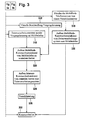
- step 200 The detailed process of establishing the communication link as indicated in step 200 is described in detail in FIG Fig. 3 described.
- FIG. 12 shows a flow diagram of a method for establishing a communication channel between a data processing system of a health service provider and a mobile telecommunication device of a patient, wherein the mobile telecommunication device is designed for use as an electronic health card.
- a structure of a communication channel desired in step 300 there are various ways in which such a communication channel structure can be realized. For example, it is checked in step 302, whether the mobile phone is in range, so that between the data processing system and the mobile communication device, a near field connection, for. B. can be made using Bluetooth.
- the mobile phone may be in step 304 transmit its own mobile telephone number using the near field connection to the data processing system, so that then in step 306, a mobile communication channel from the data processing system to the mobile phone can be made on the mobile phone number. Thereupon, in step 308, the communication between the mobile telecommunication device and the data processing system takes place. Alternatively, however, it is also possible to send the own telephone number of the data processing system to the previously transmitted mobile telephone number after step 304 via the near field connection from the data processing system. This is indicated in step 310.
- step 312 the establishment of a mobile radio communication channel from the mobile telephone to the data processing system takes place, wherein the mobile telephone dials the telephone number indicated by the data processing system.
- the structure of the mobile radio communication channel from the mobile telephone to the data processing system is shown in step 312, whereupon, after step 312, the communication with step 308 takes place again.
- step 310 immediately after step 302, in which the data processing system displays its own telephone number the mobile phone transmitted. This transmission can also take place purely using the near-field connection in this case.
- the mobile telephone then calls the indicated telephone number so that communication between the data processing system and the mobile can be made in step 308.
- step 314 establishes a near field communication channel between the data processing system and the mobile phone.
- step 316 it is necessary to additionally perform encryption in step 316, since near-field communication usually takes place in unencrypted form.
- step 316 the communication in step 308 is between the data processing system and the mobile telecommunication device.
- this relates to the encryption when using the mobile communication channel between the data processing system and the mobile phone: If a mobile communication channel is used for communication, further data encryption is not mandatory. Today, mobile communication links are already highly encrypted, so that the implementation of further encryption algorithms in the mobile phone is not necessary, which contributes to the reduction of system resources consumption in the mobile phone.
- this relates to the use of near-field communication for the transmission of telephone numbers between the data processing system and the mobile phone. If a telephone number of the data processing system and possibly even a transaction number for communication in step 310 is transmitted from the data processing system to the telephone number of the mobile telephone, e.g. B. using a short message SMS, this ensures that in a unique way only the owner of this mobile phone receives this message.
- a phone number of a mobile phone has already been personalized to the extent that it makes it impossible to spy on process IDs by third parties. Also, no further encryption mechanisms are necessary here for the initialization of the communication, since, as already noted above, all mobile communications are already performed by default with high encryption.
- step 320 Another alternative to establishing the communication channel in the event that the mobile phone is in range 302 in step, is z. B. to communicate to the mobile using the near field communication an event identifier. This is indicated in step 318 with the transmission of the process identifier by the data processing system to the mobile phone. Then, in step 320, the mobile establishes a mobile communication channel to a central server, e.g. Using a central dial-in number. Due to the transmitted process identifier, which is additionally transmitted by the mobile telephone to the central server when establishing the communication channel, the server is now able to establish an Internet communication channel from the central server to the corresponding data processing system determined by the process identifier, ie the pharmacies, in step 324 information system.
- a central server e.g. Using a central dial-in number. Due to the transmitted process identifier, which is additionally transmitted by the mobile telephone to the central server when establishing the communication channel, the server is now able to establish an Internet communication channel from the central server to the
- step 324 further encryption of the data exchange is necessary in step 326 due to the use of the Internet.
- the data exchange as already in the Fig. 1 described in detail, namely between mobile phone, server and data processing system. This corresponds to the communication as shown in step 308.
- steps 320, 324, 326, and subsequently 308 may also be performed when the mobile is not in near field range. Namely, if it is determined in step 302 that the mobile phone is out of range to perform a near-field communication, or in the case that the mobile phone is not equipped for near-field communication, it is also advisable on the data processing system itself visually provide the event ID. This is outlined at step 322. In this case, the patient manually enters the illustrated process identifier when setting up the mobile communication channel to the central server, so that then finally the steps 320, 324, 326 and 308 can be performed.
- the mobile phone makes a spatial position determination or can make. If the mobile phone is equipped with a GPS receiver, then the mobile phone can send the last recorded position coordinates as a process identifier to the central server, which uses a table that is available to it These associated pharmacy and thus the corresponding data processing system can be assigned to the pharmacy. Thereafter, the server may establish a secure communication link between the mobile phone and the data processing system to which these coordinates are associated.
- the server has a table in which each mobile cell is assigned a pharmacy located there and its data processing system address (e.g., IP address). In this case as well, the server can then establish a secure communication connection between the mobile telephone and the data processing system to which the mobile radio cell coordinates belong.
- Fig. 1 sketched directory server is used to establish a communication link from the data processing system starting to the mobile phone.
- a pharmacist enters the health card identifier of the patient into his system and transmits this health card identifier to the mediation server.
- the mediation server reads from its database the mobile phone number stored on the health card identifier and transmits it back to the data processing system.
- the directory server can directly use the stored mobile phone number to establish a telecommunications connection to the mobile telephone Mobile phone so that takes place here a communication data processing system directory server mobile phone.
- a direct communication link from the mobile telephone to the data processing system to be established by a patient directly dialing the telephone number of the data processing system manually.
- a pharmacist establishes the direct communication link to the patient's mobile phone by manually entering and dialing the number of the patient's mobile phone on the data processing system.
- the initiation of the communication between the mobile telephone and the data processing system is by the mobile telephone, e.g. In step 302, a communication request is transmitted to the data processing system. Thereupon, all further subsequent steps for establishing the communication channel can be carried out fully automatically by the mobile telephone and the data processing system.
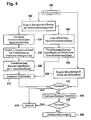
- Fig. 4 a flowchart of a method for user authentication for decryption of recipe data.
- the step 300, the structure of the communication, corresponds to that in the Fig. 3 previously discussed methods.
- a patient can now authenticate insofar as in step 426 a corresponding identification, e.g. B. enters a PIN in his mobile phone to authorize the use of the electronic health card.
- Step 426 is followed by step 412, in which it is checked whether the user identification has been verified by the mobile phone. If this is not the case, step 412 is followed by step 418, which terminates the authorization procedure.
- an optional challenge-response procedure is performed in step 414.
- An example of how this challenge-response procedure could be carried out is given, for example, by the fact that the pharmacy information system (data processing system) generates a random number and stores it with the public health card key (FIG. Fig. 1 : first health card key 138) encrypted. The encrypted random number is then transmitted to the mobile phone, whereupon the mobile phone decrypts this random number using its only known him private health card key.
- the mobile phone then transmits the decrypted random number back to the data processing system in plain text. If the random number returned corresponds to the random number previously generated by the data processing system, it is ensured that there is communication with an authorized mobile telephone and thus with a legitimate electronic health card.
- step 414 If after step 414, the challenge-response method, an authorization of the electronic health card to redeem the electronic prescription is not verified in step 416, then after step 416 the abort of the process for user authentication in step 418. However, was a successful Verification performed in step 416, so in step 420, a data exchange between the data processing system and the mobile telecommunication device is possible.
- step 402. Another alternative, after communication has been established between the data processing system and the mobile telecommunications device in step 400, is to enter a user identification on the data processing system itself. This is shown in step 402.
- a registration key pair may then be executed in step 404 be generated by the mobile phone.
- the mobile sends a first login key of the login key pair to the data processing system.
- the data processing system encrypts the entered user identification with the first login key and transmits it back to the mobile phone in step 410.
- step 412 After step 410, a verification check then ensues with step 412.
- the mobile phone is again able to decrypt the user identification encrypted with the first login key, namely using the second login key associated with the login key pair.
- the first and second logon keys are an asymmetric cryptographic key pair.
- steps 404-408 after entering the user identification at the data processing system in step 402 is also to read in step 422 the public health card key of the health card. Subsequently, in step 424, the user identification is encrypted with this read public health card key, whereupon, in step 410, the encrypted user identification is again sent to the mobile phone. Since only the mobile phone is in possession of the private health card key, only the mobile phone is able to verify the user identification. After step 412, as described above, steps 414 through 420 are also performed.
Landscapes
- Engineering & Computer Science (AREA)
- Theoretical Computer Science (AREA)
- Software Systems (AREA)
- General Health & Medical Sciences (AREA)
- Computer Hardware Design (AREA)
- Computer Security & Cryptography (AREA)
- Health & Medical Sciences (AREA)
- Physics & Mathematics (AREA)
- General Engineering & Computer Science (AREA)
- General Physics & Mathematics (AREA)
- Bioethics (AREA)
- Mobile Radio Communication Systems (AREA)
- Management, Administration, Business Operations System, And Electronic Commerce (AREA)
Claims (15)
- Procédé de décryptage d'un objet de données médicales (132), l'objet de données médicales étant crypté avec une clé d'objet de données, une signature et la clé d'objet de données cryptée avec une première clé de carte de santé (138) étant associées à l'objet de données médicales, l'objet de données médicales étant associé à la première clé de carte de santé (138), comprenant les étapes suivantes :- Établissement d'une liaison de communication sécurisée entre un système de traitement de données (100) et un appareil de télécommunication mobile (116), l'appareil de télécommunication mobile (116) étant configuré pour être utilisé comme une carte de santé électronique, la première clé de carte de santé (138) étant associée à l'appareil de télécommunication mobile (116),- Envoi de la clé d'objet de données cryptée avec la première clé de carte de santé (138) à l'appareil de télécommunication mobile (116) par le système de traitement de données (100),- Décryptage de la clé d'objet de données cryptée par l'appareil de télécommunication mobile (116), le décryptage étant effectué au moyen d'une deuxième clé de carte de santé (120), la première et la deuxième clé de carte de santé (120) formant une paire de clés cryptographiques asymétriques,- Envoi de la clé d'objet de données décryptée de l'appareil de télécommunication mobile (116) au système de traitement de données (100),- Décryptage de l'objet de données médicales (132) avec la clé d'objet de données décryptée par le système de traitement de données (100),le procédé comprenant en outre l'étape de déclaration de l'appareil de télécommunication mobile (116) auprès du système de traitement de données (100), une authentification de l'utilisateur par rapport à l'appareil de télécommunication mobile (116) étant effectuée lors de la déclaration de L'appareil de télécommunication mobile (116) auprès du système de traitement de données (100), l'envoi à l'appareil de télécommunication mobile (116) de la clé d'objet de données cryptée avec la première clé de carte de santé (138) n'étant effectué que lorsque l'identification d'utilisateur a été vérifiée par l'appareil de télécommunication mobile (116), les étapes suivantes étant exécutées par le système de traitement de données (100) lors de la déclaration :- Réception d'une identification d'utilisateur,- Envoi de l'identification d'utilisateur à l'appareil de télécommunication mobile (116), l'identification d'utilisateur étant cryptée avec la première clé de carte de santé (138),les étapes suivantes étant exécutées par l'appareil de télécommunication mobile (116) lors de la déclaration :- Réception de l'identification d'utilisateur par le système de traitement de données (100), l'identification d'utilisateur étant cryptée,- Décryptage de l'identification d'utilisateur cryptée avec la deuxième clé de carte de santé (120).
- Procédé de décryptage d'un objet de données médicales (132) par un système de traitement de données (100), l'objet de données médicales étant crypté avec une clé d'objet de données, une signature et la clé d'objet de données cryptée avec une première clé de carte de santé (138) étant associées à l'objet de données médicales, l'objet de données médicales étant associé à la première clé de carte de santé (138), comprenant les étapes suivantes :- Établissement d'une liaison de communication sécurisée avec un appareil de télécommunication mobile (116), l'appareil de télécommunication mobile (116) étant configuré pour être utilisé comme une carte de santé électronique, la première clé de carte de santé (138) étant associée à l'appareil de télécommunication mobile (116),- Envoi de la clé d'objet de données cryptée avec la première clé de carte de santé (138) à l'appareil de télécommunication mobile (116),- Réception de la clé d'objet de données cryptée par l'appareil de télécommunication mobile (116),- Décryptage de l'objet de données médicales (132) avec la clé d'objet de données décryptée,le procédé comprenant en outre l'étape de déclaration de l'appareil de télécommunication mobile (116) auprès du système de traitement de données (100), une authentification de l'utilisateur par rapport à l'appareil de télécommunication mobile (116) étant effectuée lors de la déclaration de l'appareil de télécommunication mobile (116) auprès du système de traitement de données (100), l'envoi à l'appareil de télécommunication mobile (116) de la clé d'objet de données cryptée avec la première clé de carte de santé (138) n'étant effectué que lorsque l'identification d'utilisateur a été vérifiée par l'appareil de télécommunication mobile (116), les étapes suivantes étant exécutées par le système de traitement de données (100) lors de la déclaration :- Réception d'une identification d'utilisateur,- Envoi de l'identification d'utilisateur à l'appareil de télécommunication mobile (116), l'identification d'utilisateur étant cryptée avec la première clé de carte de santé (138).
- Procédé selon la revendication 2, selon lequel la clé de déclaration est invoquée par l'appareil de télécommunication mobile (116) et un identifiant de carte de santé univoque (122) est reçu par l'appareil de télécommunication mobile (116) lors de la déclaration et la première clé de carte de santé (138) est invoquée auprès d'une base de données externe (136) au moyen de l'identifiant de carte de santé univoque (122).
- Procédé selon l'une des revendications précédentes 2 et 3, selon lequel la communication entre le système de traitement de données (100) et l'appareil de télécommunication mobile (116) s'effectue sans fil.
- Procédé selon la revendication 4, selon lequel l'établissement de la liaison de communication sécurisée est réalisé avec les étapes suivantes :- Réception d'une demande de communication de la part de l'appareil de télécommunication mobile,- Envoi d'une adresse de contact du système de traitement de données (100) à l'appareil de télécommunication mobile comme réponse à la demande de communication,- Établissement de la liaison de communication avec l'appareil de télécommunication mobile par le biais de l'adresse de contact du système de traitement de données (100).
- Procédé selon la revendication 4, selon lequel l'établissement de la liaison de communication sécurisée est réalisé avec les étapes suivantes :- Réception d'une demande de communication de la part de l'appareil de télécommunication mobile,- Envoi d'un identifiant d'opération à l'appareil de télécommunication mobile, l'identifiant d'opération étant univoquement associé au système de traitement de données (100),- Établissement de la liaison de communication avec l'appareil de télécommunication mobile par le biais d'un serveur central (128).
- Procédé selon la revendication 4, selon lequel l'établissement de la liaison de communication sécurisée est réalisé avec les étapes suivantes :- Réception d'une demande de communication de la part de l'appareil de télécommunication mobile, la demande de communication comprenant une adresse de contact de l'appareil de télécommunication mobile (116),- Établissement de la liaison de communication avec l'appareil de télécommunication mobile par le biais de l'adresse de contact de l'appareil de télécommunication mobile (116).
- Procédé selon la revendication 4, selon lequel l'établissement de la liaison de communication sécurisée est réalisé avec les étapes suivantes :- Réception d'une demande de communication de la part de l'appareil de télécommunication mobile,- Établissement de la liaison de communication avec l'appareil de télécommunication mobile (116) en tant que réponse à la réception de l'adresse de contact de l'appareil de télécommunication mobile (116), la réception de la demande de communication et l'établissement de la liaison de communication s'effectuant par le biais d'une liaison de champ proche.
- Procédé selon l'une des revendications précédentes 2 à 8, lequel comprend en outre l'étape d'invocation de l'objet de données médicales (132) crypté et de la signature associée à l'objet de données médicales ainsi que de la clé d'objet de données cryptée avec la première clé de carte de santé (138) associée à l'objet de données médicales auprès d'une base de données d'ordonnances, l'invocation étant effectuée au moyen de l'identifiant de carte de santé univoque (122).
- Produit de programme informatique (110) comprenant des instructions exécutables par un processeur pour exécuter les étapes du procédé selon l'une des revendications précédentes 2 à 9.
- Système de traitement de données (100) comprenant des moyens pour mettre en oeuvre les étapes du procédé selon l'une des revendications précédentes 2 à 9.
- Système de traitement de données (100) selon la revendication 11, le système de traitement de données (100) étant un système d'information pour médecin ou un système d'information pour hôpital ou un système d'information pour pharmacie.
- Procédé de décryptage d'une clé d'objet de données cryptée, le décryptage étant réalisé par le biais d'un appareil de télécommunication mobile (116), l'appareil de télécommunication mobile (116) étant configuré pour être utilisé comme une carte de santé électronique, comprenant les étapes suivantes :- Établissement d'un canal de communication sécurisé avec un système de traitement de données (100) d'un prestataire de services de santé,- Réception de la clé d'objet de données cryptée par le système de traitement de données (100),- Lecture d'une deuxième clé de carte de santé (120) depuis une mémoire de l'appareil de télécommunication mobile (116),- Décryptage de la clé d'objet de données au moyen de la deuxième clé de carte de santé (120),- Envoi de la clé d'objet de données décryptée au système de traitement de données (100),le procédé comprenant en outre l'étape de déclaration de l'appareil de télécommunication mobile (116) auprès du système de traitement de données (100), une authentification de l'utilisateur par rapport à l'appareil de télécommunication mobile (116) étant effectuée lors de la déclaration de l'appareil de télécommunication mobile (116) auprès du système de traitement de données (100), le décryptage de la clé d'objet de données n'étant effectué que lorsque l'identification d'utilisateur a été vérifiée, les étapes suivantes étant exécutées par l'appareil de télécommunication mobile (116) lors de la déclaration :- Réception de l'identification d'utilisateur de la part du système de traitement de données (100), l'identification d'utilisateur étant cryptée,- Décryptage de l'identification d'utilisateur cryptée avec la deuxième clé de carte de santé (120).
- Produit de programme informatique comprenant des instructions exécutables par un processeur pour exécuter les étapes du procédé selon la revendication 13.
- Appareil de télécommunication mobile (116) comprenant des moyens pour exécuter les étapes du procédé selon la revendication 13.
Applications Claiming Priority (2)
| Application Number | Priority Date | Filing Date | Title |
|---|---|---|---|
| DE102008000895A DE102008000895B4 (de) | 2008-03-31 | 2008-03-31 | Verwendung eines mobilen Telekommunikationsgeräts als elektronische Gesundheitskarte |
| PCT/EP2009/051818 WO2009121658A2 (fr) | 2008-03-31 | 2009-02-16 | Utilisation d'un appareil de télécommunication mobile comme carte de santé électronique |
Publications (2)
| Publication Number | Publication Date |
|---|---|
| EP2289016A2 EP2289016A2 (fr) | 2011-03-02 |
| EP2289016B1 true EP2289016B1 (fr) | 2011-11-02 |
Family
ID=41051183
Family Applications (1)
| Application Number | Title | Priority Date | Filing Date |
|---|---|---|---|
| EP09727662A Active EP2289016B1 (fr) | 2008-03-31 | 2009-02-16 | Utilisation d'un appareil de télécommunication mobile comme carte de santé électronique |
Country Status (5)
| Country | Link |
|---|---|
| US (1) | US9165149B2 (fr) |
| EP (1) | EP2289016B1 (fr) |
| AT (1) | ATE532145T1 (fr) |
| DE (1) | DE102008000895B4 (fr) |
| WO (1) | WO2009121658A2 (fr) |
Families Citing this family (14)
| Publication number | Priority date | Publication date | Assignee | Title |
|---|---|---|---|---|
| JP4526574B2 (ja) * | 2008-03-31 | 2010-08-18 | 富士通株式会社 | 暗号データ管理システム、および暗号データ管理方法 |
| EP2348449A3 (fr) * | 2009-12-18 | 2013-07-10 | CompuGroup Medical AG | Procédé implémenté informatique pour générer un pseudonyme, support de stockage lisible sur ordinateur et système informatique |
| EP2348447B1 (fr) | 2009-12-18 | 2014-07-16 | CompuGroup Medical AG | Procédé implémenté informatique pour générer un pseudonyme, support de stockage lisible sur ordinateur et système informatique |
| EP2348452B1 (fr) | 2009-12-18 | 2014-07-02 | CompuGroup Medical AG | Procédé implémenté par ordinateur pour générer un pseudonyme, support de stockage lisible sur ordinateur et système informatique |
| EP2365456B1 (fr) * | 2010-03-11 | 2016-07-20 | CompuGroup Medical SE | Procédé implémenté informatique pour générer un pseudonyme, support de stockage lisible sur ordinateur et système informatique |
| CN103636160B (zh) | 2011-03-07 | 2016-11-23 | 安全第一公司 | 安全文件共享方法与系统 |
| US20150254423A1 (en) * | 2014-03-05 | 2015-09-10 | Peter Schaub | Computer-based prescription system for medicaments |
| DE202014002535U1 (de) * | 2014-03-24 | 2014-05-12 | Fresenius Medical Care Deutschland Gmbh | Medizintechnisches Gerät mit Netzwerkkontrolleinrichtung |
| CN106302312B (zh) * | 2015-05-13 | 2019-09-17 | 阿里巴巴集团控股有限公司 | 获取电子文件的方法及装置 |
| US11297495B2 (en) * | 2018-05-08 | 2022-04-05 | Biosense Webster (Israel) Ltd. | Medical image transfer system |
| US11049599B2 (en) * | 2018-06-08 | 2021-06-29 | International Business Machines Corporation | Zero knowledge multi-party prescription management and drug interaction prevention system |
| US11482312B2 (en) * | 2020-10-30 | 2022-10-25 | Capital One Services, Llc | Secure verification of medical status using a contactless card |
| US20250141695A1 (en) * | 2020-11-13 | 2025-05-01 | Smart Meter Corporation | Systems and methods of layering security for cellular-enabled user weight data transmission |
| EP4405964A1 (fr) * | 2021-09-20 | 2024-07-31 | Intertrust Technologies Corporation | Systèmes et procédés de gestion sécurisée d'informations personnelles utilisant des registres de confiance |
Family Cites Families (10)
| Publication number | Priority date | Publication date | Assignee | Title |
|---|---|---|---|---|
| US6249866B1 (en) * | 1997-09-16 | 2001-06-19 | Microsoft Corporation | Encrypting file system and method |
| WO2002005061A2 (fr) * | 2000-07-06 | 2002-01-17 | David Paul Felsher | Infrastructure de dossiers d'information, et systeme et procede associes |
| JP2002149600A (ja) * | 2000-11-08 | 2002-05-24 | Sony Corp | 情報処理装置および方法、記録媒体、並びにサービス提供システム |
| AU2002317062A1 (en) * | 2001-06-12 | 2002-12-23 | Research In Motion Limited | Method for processing encoded messages for exchange with a mobile data communication device |
| DE10323904A1 (de) * | 2003-05-26 | 2004-12-23 | Vodafone Holding Gmbh | Verfahren und System zum Durchführen von Transaktionen zwischen Einheiten in einem Netzwerk |
| DE10350538A1 (de) * | 2003-10-29 | 2005-06-16 | Corscience Gmbh & Co.Kg | Kommunikationssystem und Verfahren zur Bearbeitung medizinischer Daten |
| US20050273604A1 (en) * | 2004-06-04 | 2005-12-08 | Chengshing Lai | [mobile phone with file encryption function and method of encrypting/decrypting file thereof] |
| DE102004051296B3 (de) * | 2004-10-20 | 2006-05-11 | Compugroup Health Services Gmbh | Computersystem und Verfahren zur Speicherung von Daten |
| DE102005009051A1 (de) * | 2005-02-28 | 2006-09-07 | Vodafone Holding Gmbh | Chipkarte für eine Kommunikationseinrichtung, Kommunikationseinrichtung sowie Verfahren zum Datenmanagement nutzerspezifischer Daten |
| DE102006057201B4 (de) * | 2006-12-05 | 2008-08-21 | Vita-X Ag | Chipkarte und Verfahren zur Verwendung als Patientenkarte |
-
2008
- 2008-03-31 DE DE102008000895A patent/DE102008000895B4/de active Active
-
2009
- 2009-02-16 AT AT09727662T patent/ATE532145T1/de active
- 2009-02-16 WO PCT/EP2009/051818 patent/WO2009121658A2/fr not_active Ceased
- 2009-02-16 US US12/934,882 patent/US9165149B2/en active Active
- 2009-02-16 EP EP09727662A patent/EP2289016B1/fr active Active
Also Published As
| Publication number | Publication date |
|---|---|
| DE102008000895A1 (de) | 2009-10-08 |
| WO2009121658A3 (fr) | 2010-06-17 |
| ATE532145T1 (de) | 2011-11-15 |
| EP2289016A2 (fr) | 2011-03-02 |
| WO2009121658A2 (fr) | 2009-10-08 |
| US9165149B2 (en) | 2015-10-20 |
| US20110123027A1 (en) | 2011-05-26 |
| DE102008000895B4 (de) | 2013-04-11 |
Similar Documents
| Publication | Publication Date | Title |
|---|---|---|
| EP2289016B1 (fr) | Utilisation d'un appareil de télécommunication mobile comme carte de santé électronique | |
| EP2443853B1 (fr) | Méthode de registration d'un terminale mobile dans un réseau sans fil | |
| DE60131534T2 (de) | Umfassender Authentifizierungsmechanismus | |
| DE69904570T3 (de) | Verfahren, anordnung und einrichtung zur authentifizierung durch ein kommunikationsnetz | |
| EP3289508A1 (fr) | Procédé pour produire une signature électronique | |
| EP4295605B1 (fr) | Authentification d'utilisateur à l'aide de deux éléments de sécurité indépendants | |
| DE102020108828A1 (de) | Personalisierter, serverindividueller Authentifizierungsmechanismus | |
| DE102011075257B4 (de) | Beantwortung von Anfragen mittels des Kommunikationsendgeräts eines Nutzers | |
| DE102011055297B4 (de) | Verfahren sowie Netzwerk-System und Authentifizierungsvorrichtung zur Authentifizierung in einer Netzwerkapplikation | |
| EP2677791B1 (fr) | Procédé et dispositif de détermination d'une demande de contrôle à un module d'identification | |
| EP2399218A1 (fr) | Procédé pour générer un identifiant | |
| WO2007073842A1 (fr) | Procede de preparation d'une carte a puce pour des services de signature electronique | |
| DE102020107805A1 (de) | Nutzerauthentifizierung unter Verwendung zweier unabhängiger Sicherheitselemente | |
| DE102006057201B4 (de) | Chipkarte und Verfahren zur Verwendung als Patientenkarte | |
| DE102008000348B4 (de) | Verfahren zur Signierung eines medizinischen Datenobjekts | |
| DE102012025910B3 (de) | System zur Durchführung von Transaktionen | |
| EP2933769B1 (fr) | Procédé de transaction | |
| DE102021125572B3 (de) | Verfahren zur Durchführung eines Authentisierungsprozesses durch einen individuellen Systembenutzer | |
| EP4054119B1 (fr) | Système de vote pour une conférence virtuelle | |
| DE102010028217A1 (de) | Elektronisches Gerät, Telekommunikationssystem und Verfahren zum Lesen von Daten aus einem elekronischen Gerät | |
| DE102008037794A1 (de) | Einmalpasswort-Generator | |
| DE102010030311A1 (de) | Verfahren zum Lesen von Attributen aus einem ID-Token über eine Telekommunikations-Chipkarte und ein Server-Computersystem | |
| DE102014201846A1 (de) | Verfahren zur sicheren Übertragung von Zeichen | |
| EP4607848A1 (fr) | Procédé et dispositif de fourniture d'un attribut d'un jeton d'identification et produit programme informatique | |
| EP2645670A1 (fr) | Mise à disposition d'attributs d'identité d'un utilisateur |
Legal Events
| Date | Code | Title | Description |
|---|---|---|---|
| PUAI | Public reference made under article 153(3) epc to a published international application that has entered the european phase |
Free format text: ORIGINAL CODE: 0009012 |
|
| 17P | Request for examination filed |
Effective date: 20101217 |
|
| AK | Designated contracting states |
Kind code of ref document: A2 Designated state(s): AT BE BG CH CY CZ DE DK EE ES FI FR GB GR HR HU IE IS IT LI LT LU LV MC MK MT NL NO PL PT RO SE SI SK TR |
|
| AX | Request for extension of the european patent |
Extension state: AL BA RS |
|
| GRAP | Despatch of communication of intention to grant a patent |
Free format text: ORIGINAL CODE: EPIDOSNIGR1 |
|
| DAX | Request for extension of the european patent (deleted) | ||
| RAP1 | Party data changed (applicant data changed or rights of an application transferred) |
Owner name: COMPUGROUP MEDICAL AG |
|
| GRAS | Grant fee paid |
Free format text: ORIGINAL CODE: EPIDOSNIGR3 |
|
| GRAA | (expected) grant |
Free format text: ORIGINAL CODE: 0009210 |
|
| AK | Designated contracting states |
Kind code of ref document: B1 Designated state(s): AT BE BG CH CY CZ DE DK EE ES FI FR GB GR HR HU IE IS IT LI LT LU LV MC MK MT NL NO PL PT RO SE SI SK TR |
|
| REG | Reference to a national code |
Ref country code: GB Ref legal event code: FG4D Free format text: NOT ENGLISH |
|
| REG | Reference to a national code |
Ref country code: CH Ref legal event code: EP |
|
| REG | Reference to a national code |
Ref country code: IE Ref legal event code: FG4D |
|
| REG | Reference to a national code |
Ref country code: DE Ref legal event code: R096 Ref document number: 502009001811 Country of ref document: DE Effective date: 20120119 |
|
| REG | Reference to a national code |
Ref country code: NL Ref legal event code: VDEP Effective date: 20111102 |
|
| LTIE | Lt: invalidation of european patent or patent extension |
Effective date: 20111102 |
|
| PG25 | Lapsed in a contracting state [announced via postgrant information from national office to epo] |
Ref country code: IS Free format text: LAPSE BECAUSE OF FAILURE TO SUBMIT A TRANSLATION OF THE DESCRIPTION OR TO PAY THE FEE WITHIN THE PRESCRIBED TIME-LIMIT Effective date: 20120302 Ref country code: LT Free format text: LAPSE BECAUSE OF FAILURE TO SUBMIT A TRANSLATION OF THE DESCRIPTION OR TO PAY THE FEE WITHIN THE PRESCRIBED TIME-LIMIT Effective date: 20111102 Ref country code: NO Free format text: LAPSE BECAUSE OF FAILURE TO SUBMIT A TRANSLATION OF THE DESCRIPTION OR TO PAY THE FEE WITHIN THE PRESCRIBED TIME-LIMIT Effective date: 20120202 |
|
| PG25 | Lapsed in a contracting state [announced via postgrant information from national office to epo] |
Ref country code: NL Free format text: LAPSE BECAUSE OF FAILURE TO SUBMIT A TRANSLATION OF THE DESCRIPTION OR TO PAY THE FEE WITHIN THE PRESCRIBED TIME-LIMIT Effective date: 20111102 Ref country code: SE Free format text: LAPSE BECAUSE OF FAILURE TO SUBMIT A TRANSLATION OF THE DESCRIPTION OR TO PAY THE FEE WITHIN THE PRESCRIBED TIME-LIMIT Effective date: 20111102 Ref country code: HR Free format text: LAPSE BECAUSE OF FAILURE TO SUBMIT A TRANSLATION OF THE DESCRIPTION OR TO PAY THE FEE WITHIN THE PRESCRIBED TIME-LIMIT Effective date: 20111102 Ref country code: SI Free format text: LAPSE BECAUSE OF FAILURE TO SUBMIT A TRANSLATION OF THE DESCRIPTION OR TO PAY THE FEE WITHIN THE PRESCRIBED TIME-LIMIT Effective date: 20111102 Ref country code: GR Free format text: LAPSE BECAUSE OF FAILURE TO SUBMIT A TRANSLATION OF THE DESCRIPTION OR TO PAY THE FEE WITHIN THE PRESCRIBED TIME-LIMIT Effective date: 20120203 Ref country code: LV Free format text: LAPSE BECAUSE OF FAILURE TO SUBMIT A TRANSLATION OF THE DESCRIPTION OR TO PAY THE FEE WITHIN THE PRESCRIBED TIME-LIMIT Effective date: 20111102 Ref country code: PL Free format text: LAPSE BECAUSE OF FAILURE TO SUBMIT A TRANSLATION OF THE DESCRIPTION OR TO PAY THE FEE WITHIN THE PRESCRIBED TIME-LIMIT Effective date: 20111102 Ref country code: PT Free format text: LAPSE BECAUSE OF FAILURE TO SUBMIT A TRANSLATION OF THE DESCRIPTION OR TO PAY THE FEE WITHIN THE PRESCRIBED TIME-LIMIT Effective date: 20120302 |
|
| REG | Reference to a national code |
Ref country code: IE Ref legal event code: FD4D |
|
| PG25 | Lapsed in a contracting state [announced via postgrant information from national office to epo] |
Ref country code: CY Free format text: LAPSE BECAUSE OF FAILURE TO SUBMIT A TRANSLATION OF THE DESCRIPTION OR TO PAY THE FEE WITHIN THE PRESCRIBED TIME-LIMIT Effective date: 20111102 |
|
| PG25 | Lapsed in a contracting state [announced via postgrant information from national office to epo] |
Ref country code: EE Free format text: LAPSE BECAUSE OF FAILURE TO SUBMIT A TRANSLATION OF THE DESCRIPTION OR TO PAY THE FEE WITHIN THE PRESCRIBED TIME-LIMIT Effective date: 20111102 Ref country code: BG Free format text: LAPSE BECAUSE OF FAILURE TO SUBMIT A TRANSLATION OF THE DESCRIPTION OR TO PAY THE FEE WITHIN THE PRESCRIBED TIME-LIMIT Effective date: 20120202 Ref country code: IE Free format text: LAPSE BECAUSE OF FAILURE TO SUBMIT A TRANSLATION OF THE DESCRIPTION OR TO PAY THE FEE WITHIN THE PRESCRIBED TIME-LIMIT Effective date: 20111102 Ref country code: CZ Free format text: LAPSE BECAUSE OF FAILURE TO SUBMIT A TRANSLATION OF THE DESCRIPTION OR TO PAY THE FEE WITHIN THE PRESCRIBED TIME-LIMIT Effective date: 20111102 Ref country code: SK Free format text: LAPSE BECAUSE OF FAILURE TO SUBMIT A TRANSLATION OF THE DESCRIPTION OR TO PAY THE FEE WITHIN THE PRESCRIBED TIME-LIMIT Effective date: 20111102 Ref country code: DK Free format text: LAPSE BECAUSE OF FAILURE TO SUBMIT A TRANSLATION OF THE DESCRIPTION OR TO PAY THE FEE WITHIN THE PRESCRIBED TIME-LIMIT Effective date: 20111102 |
|
| PG25 | Lapsed in a contracting state [announced via postgrant information from national office to epo] |
Ref country code: IT Free format text: LAPSE BECAUSE OF FAILURE TO SUBMIT A TRANSLATION OF THE DESCRIPTION OR TO PAY THE FEE WITHIN THE PRESCRIBED TIME-LIMIT Effective date: 20111102 Ref country code: RO Free format text: LAPSE BECAUSE OF FAILURE TO SUBMIT A TRANSLATION OF THE DESCRIPTION OR TO PAY THE FEE WITHIN THE PRESCRIBED TIME-LIMIT Effective date: 20111102 |
|
| PLBE | No opposition filed within time limit |
Free format text: ORIGINAL CODE: 0009261 |
|
| STAA | Information on the status of an ep patent application or granted ep patent |
Free format text: STATUS: NO OPPOSITION FILED WITHIN TIME LIMIT |
|
| PG25 | Lapsed in a contracting state [announced via postgrant information from national office to epo] |
Ref country code: MC Free format text: LAPSE BECAUSE OF NON-PAYMENT OF DUE FEES Effective date: 20120229 |
|
| 26N | No opposition filed |
Effective date: 20120803 |
|
| REG | Reference to a national code |
Ref country code: DE Ref legal event code: R097 Ref document number: 502009001811 Country of ref document: DE Effective date: 20120803 |
|
| PG25 | Lapsed in a contracting state [announced via postgrant information from national office to epo] |
Ref country code: MK Free format text: LAPSE BECAUSE OF FAILURE TO SUBMIT A TRANSLATION OF THE DESCRIPTION OR TO PAY THE FEE WITHIN THE PRESCRIBED TIME-LIMIT Effective date: 20111102 |
|
| PG25 | Lapsed in a contracting state [announced via postgrant information from national office to epo] |
Ref country code: ES Free format text: LAPSE BECAUSE OF FAILURE TO SUBMIT A TRANSLATION OF THE DESCRIPTION OR TO PAY THE FEE WITHIN THE PRESCRIBED TIME-LIMIT Effective date: 20120213 |
|
| PG25 | Lapsed in a contracting state [announced via postgrant information from national office to epo] |
Ref country code: FI Free format text: LAPSE BECAUSE OF FAILURE TO SUBMIT A TRANSLATION OF THE DESCRIPTION OR TO PAY THE FEE WITHIN THE PRESCRIBED TIME-LIMIT Effective date: 20111102 |
|
| PG25 | Lapsed in a contracting state [announced via postgrant information from national office to epo] |
Ref country code: MT Free format text: LAPSE BECAUSE OF FAILURE TO SUBMIT A TRANSLATION OF THE DESCRIPTION OR TO PAY THE FEE WITHIN THE PRESCRIBED TIME-LIMIT Effective date: 20111102 |
|
| PG25 | Lapsed in a contracting state [announced via postgrant information from national office to epo] |
Ref country code: TR Free format text: LAPSE BECAUSE OF FAILURE TO SUBMIT A TRANSLATION OF THE DESCRIPTION OR TO PAY THE FEE WITHIN THE PRESCRIBED TIME-LIMIT Effective date: 20111102 |
|
| PG25 | Lapsed in a contracting state [announced via postgrant information from national office to epo] |
Ref country code: LU Free format text: LAPSE BECAUSE OF NON-PAYMENT OF DUE FEES Effective date: 20120216 |
|
| PG25 | Lapsed in a contracting state [announced via postgrant information from national office to epo] |
Ref country code: HU Free format text: LAPSE BECAUSE OF FAILURE TO SUBMIT A TRANSLATION OF THE DESCRIPTION OR TO PAY THE FEE WITHIN THE PRESCRIBED TIME-LIMIT Effective date: 20090216 |
|
| REG | Reference to a national code |
Ref country code: FR Ref legal event code: PLFP Year of fee payment: 8 |
|
| REG | Reference to a national code |
Ref country code: DE Ref legal event code: R082 Ref document number: 502009001811 Country of ref document: DE Representative=s name: RICHARDT PATENTANWAELTE PARTG MBB, DE Ref country code: DE Ref legal event code: R081 Ref document number: 502009001811 Country of ref document: DE Owner name: COMPUGROUP MEDICAL SE, DE Free format text: FORMER OWNER: COMPUGROUP MEDICAL AG, 56070 KOBLENZ, DE |
|
| REG | Reference to a national code |
Ref country code: FR Ref legal event code: CJ Effective date: 20160502 Ref country code: FR Ref legal event code: CD Owner name: COMPUGROUP MEDICAL SE, DE Effective date: 20160502 |
|
| REG | Reference to a national code |
Ref country code: FR Ref legal event code: PLFP Year of fee payment: 9 |
|
| REG | Reference to a national code |
Ref country code: FR Ref legal event code: PLFP Year of fee payment: 10 |
|
| PGFP | Annual fee paid to national office [announced via postgrant information from national office to epo] |
Ref country code: CH Payment date: 20250301 Year of fee payment: 17 |
|
| REG | Reference to a national code |
Ref country code: CH Ref legal event code: U11 Free format text: ST27 STATUS EVENT CODE: U-0-0-U10-U11 (AS PROVIDED BY THE NATIONAL OFFICE) Effective date: 20260301 |
|
| PGFP | Annual fee paid to national office [announced via postgrant information from national office to epo] |
Ref country code: GB Payment date: 20260219 Year of fee payment: 18 |
|
| PGFP | Annual fee paid to national office [announced via postgrant information from national office to epo] |
Ref country code: DE Payment date: 20260218 Year of fee payment: 18 |
|
| PGFP | Annual fee paid to national office [announced via postgrant information from national office to epo] |
Ref country code: AT Payment date: 20260219 Year of fee payment: 18 |
|
| PGFP | Annual fee paid to national office [announced via postgrant information from national office to epo] |
Ref country code: BE Payment date: 20260218 Year of fee payment: 18 |
|
| PGFP | Annual fee paid to national office [announced via postgrant information from national office to epo] |
Ref country code: FR Payment date: 20260218 Year of fee payment: 18 |