EP2290538A2 - Procédé et dispositif pour réduire la consommation de puissance dans des processeurs configurés par des instructions propres à une application - Google Patents
Procédé et dispositif pour réduire la consommation de puissance dans des processeurs configurés par des instructions propres à une application Download PDFInfo
- Publication number
- EP2290538A2 EP2290538A2 EP10174072A EP10174072A EP2290538A2 EP 2290538 A2 EP2290538 A2 EP 2290538A2 EP 10174072 A EP10174072 A EP 10174072A EP 10174072 A EP10174072 A EP 10174072A EP 2290538 A2 EP2290538 A2 EP 2290538A2
- Authority
- EP
- European Patent Office
- Prior art keywords
- data
- operations
- program code
- word
- sub
- Prior art date
- Legal status (The legal status is an assumption and is not a legal conclusion. Google has not performed a legal analysis and makes no representation as to the accuracy of the status listed.)
- Withdrawn
Links
Images











Classifications
-
- G—PHYSICS
- G06—COMPUTING OR CALCULATING; COUNTING
- G06F—ELECTRIC DIGITAL DATA PROCESSING
- G06F8/00—Arrangements for software engineering
- G06F8/40—Transformation of program code
- G06F8/41—Compilation
- G06F8/44—Encoding
- G06F8/443—Optimisation
- G06F8/4432—Reducing the energy consumption
-
- G—PHYSICS
- G06—COMPUTING OR CALCULATING; COUNTING
- G06F—ELECTRIC DIGITAL DATA PROCESSING
- G06F8/00—Arrangements for software engineering
- G06F8/40—Transformation of program code
- G06F8/41—Compilation
- G06F8/44—Encoding
- G06F8/443—Optimisation
- G06F8/4441—Reducing the execution time required by the program code
-
- Y—GENERAL TAGGING OF NEW TECHNOLOGICAL DEVELOPMENTS; GENERAL TAGGING OF CROSS-SECTIONAL TECHNOLOGIES SPANNING OVER SEVERAL SECTIONS OF THE IPC; TECHNICAL SUBJECTS COVERED BY FORMER USPC CROSS-REFERENCE ART COLLECTIONS [XRACs] AND DIGESTS
- Y02—TECHNOLOGIES OR APPLICATIONS FOR MITIGATION OR ADAPTATION AGAINST CLIMATE CHANGE
- Y02D—CLIMATE CHANGE MITIGATION TECHNOLOGIES IN INFORMATION AND COMMUNICATION TECHNOLOGIES [ICT], I.E. INFORMATION AND COMMUNICATION TECHNOLOGIES AIMING AT THE REDUCTION OF THEIR OWN ENERGY USE
- Y02D10/00—Energy efficient computing, e.g. low power processors, power management or thermal management
Definitions
- the present invention relates to ULP (ultra-low power) embedded systems, and to application specific instruction set processors (ASIPs) therefore. More particularly, the present invention relates to methods and devices for reducing power consumption in such ASIPs.
- ASIPs application specific instruction set processors
- Low power implementation is a key element in embedded system design.
- the low power nature can be used in various domains, for example ranging from biomedical domain to consumer electronics.
- ASIP or Application Specific Instruction set Processors are used instead of general purpose processors to reduce the power consumption.
- ASIP architectures have to be customized to reduce the power consumption.
- SIMD Single Instruction Multiple Data
- multiple data sub-words
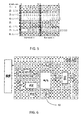
- FIG. 1 The SIMD exploits the data parallelism that is contained in applications, for example in multimedia. Thereby, the cost in energy and time associated with the SIMD operation (operand load, execution, result storage) is shared by all the sub-words.
- hardware SIMD Hard-SIMD
- Soft-SIMD software SIMD
- Hardware SIMD (Hard-SIMD) is currently used by commercial energy efficient high performance processors, which provide special hardware in their data path that supports combinations of sub-words of the same length (e.g. a TIC64 of Texas Instruments supports 1x32bit, 2x16bit or 4x8bit sub-word).
- a TIC64 of Texas Instruments supports 1x32bit, 2x16bit or 4x8bit sub-word.
- the limited number of different sub-words typically power-of-two sets the ceiling of the data to the next available (power-of-2) hardware sub-word. This leads to unused bits and therefore a loss in efficiency.
- different Hard-SIMD implementations are incompatible with each other, due to the fact that each implementation provides a number of SIMD and a set of pack and unpack instructions based on the target architecture, leading to low portability of the application.
- Hardware SIMD with 16 bits sub-words is illustrated in FIG. 2 .
- Soft-SIMD Software SIMD
- FIG. 3 Soft-SIMD with different sub-words is illustrated in FIG. 3 .
- the Soft-SIMD speed up in performance is lower than for the Hard-SIMD, but due to the flexibility of the sub-words it can explore the bit-width (word-length) information by making more efficient combinations.
- the Soft-SIMD can improve the performance, the energy efficiency and the flexibility. However, care must be taken in order not to lose the obtained gain due to the insertion of the extra operations for correction, such as packing and masking operations.
- Soft-SIMD is able of packing different sub-words leading to more efficient parallelization and also enables the usage of SIMD in applications that cannot benefit from Hard-SIMD, e.g. the applications where the minimum sub-word is larger than the supported sub-words in hardware.
- Soft-SIMD suffers from two major drawbacks. Firstly, only positive numbers can be operated. Guard bits need to be equal for all the sub-words, but due to the nature of 2's complement representation, 0's are required as guard bits for positive numbers and 1's for negative ones. This can be easily solved by adding an offset to the computed data. The latter should be adapted at different parts of the processing in order to maintain the positive sign while optimally utilizing the available bit-widths. The second drawback comes from the fact that multiplications require a prohibitive amount of guard bits. This seriously reduces efficiency and thus the application scope of the technique. The need for many guard bits is related to the bit-width growth experienced in a multiplication, as explained below.
- Multiplications are 'expensive' operations with a high execution duty cycle and thus its optimization has a big impact on the overall implementation cost. It is generally known that a constant multiplication can be converted into a shift-add operation. A multiplication of a variable by a constant can be factorized into a fixed sequence of shifts and add/subtracts. The number of shifts and add/subtracts required directly depends on the number of non-zero bits comprised in the constant. As an example, the multiplication of a variable a by the constant 138 is considered (3 non-zero bits: 10001010).
- constants with minimum non-zero bits are preferred as they lead to a cheaper implementation. Accordingly, constants are coded in a CSD (Canonic Signed Digit) form.
- CSD representation contains the minimum possible number of non-zero bits, which consists of, on average, 33% fewer non-zero bits than two's complement number.
- CM2SA Constant Multiplication to Shift-Add/subtract
- CM2SA CM2SA
- leftshift operations which emulates the data flow of a typical multiplier.
- bit-width information the variable a requires 7 bits, 138 requires 8 bits and the solution b requires 9 bits, respectively.
- the application handled by an embedded system may be converted to fixed-point arithmetic.
- the dynamic range analysis and the precision analysis lead to different and widely varying variable word-lengths for the signals used by the application.
- the estimated word-lengths may be used for the transformation to a fixed point representation of the application, leading to a reduction of the required data path width of the application's operands.
- a Soft-SIMD version where different signals are concatenated in a very wide data-path, this leads to even larger savings.
- an ASIP architecture which can integrate a constant multiplication loop of the application to be handled by the embedded system.
- different Functional Units FUs
- connection structures that implement the sequences of shift and add operations.
- packing different variables with small word-lengths into one packed word may enable the data parallelization of the application.
- Data parallelization using Soft-SIMD techniques may involve very advanced scheduling and shuffling optimizations. This may allow to significantly reduce the overhead that is normally involved in the instruction and data memory hierarchy.
- the data memory organization may be heavily reduced in energy impact by the exploitation of very wide registers and ultra-low power SRAM access schemes.
- the present invention provides a compile or pre-compile method for converting first program code into second program code, such that the second program code has an improved execution on a targeted programmable platform.
- the method according to embodiments of the present invention comprises grouping operations on data for joint execution on a functional unit of the targeted platform, scheduling operations on data in time, and assigning operations to an appropriate functional unit of the targeted platform, wherein detailed word length information is used in at least one of the grouping, scheduling or assigning operations, rather than the typically used approximations like powers of two.
- scheduling and assigning operations may comprise scheduling and assigning at least one multiplication operation such that it is converted into at least one of add/subtract and/or shift operations or combinations thereof.
- scheduling and assigning at least one multiplication operation may include converting it into operations including a right shift operation. This is advantageous as the required shift factors and data path width may be reduced.
- a compile or pre-compile method according to embodiments of the present invention may furthermore comprise packing different variables with small word lengths into one packed word.
- a compile or pre-compile method may implement Soft-SIMD instructions by adding guard data to the data such that joint operation on the data is not jeopardizing the correctness of the data.
- a compile or pre-compile method may furthermore comprise, for the conversion of first program code into second program code, clustering of different run-time scenarios into a smaller set of different scenarios. This clustering may depend on, or take into account word length information.
- a compile or pre-compile method may furthermore comprise reconfiguring the targeted programmable platform with a configuration parameter determined during design time, the selection of a particular configuration parameter being determined depending on the required detailed word length information.
- the present invention provides a system for converting on a computer environment a first program code into a second program code, the program codes representing an application, such that the second program code has an improved performance and/or lower energy consumption on a targeted programmable platform than the first program code.
- the system comprises a loading module for loading on the computer environment the first program code and for at least part of the variables within the program code the word length required to have the precision and overflow behavior as demanded by the application, and a converting module for converting the first program code into the second program code by grouping operations of the same type of variables for joint execution on a functional unit of the targeted programmable platform, the grouping operations using the required word length, the functional unit supporting one or more word lengths, the grouping operation being selected to use at least partially one of the supported word lengths.
- a system according to embodiments of the present invention may further comprise a means for reconfiguring the targeted programmable platform, the reconfiguring being based on required detailed word length information.
- a system may further comprise a scheduler for scheduling and assigning, prior to carrying out of the grouping operations, at least one multiplication operation such that it is converted into at least one of add/subtract and/or shift operations or combinations thereof.
- the scheduler may be adapted for scheduling and assigning at least one multiplication operation such that the shift operation is a right shift operation. This way, the required shift factors and data path width may be reduced.
- a system according to embodiments of the present invention may furthermore comprise hardware for enabling avoidance of sub-word overlapping.
- Such hardware may comprise insertion means for insertion of variant checking points into the program code, that are able to remove shifted bits when they are going to pass to another sub-word.
- a system according to embodiments of the present invention may furthermore comprise a shuffle functional unit for discarding bits that are going to overlap with nearby sub-words.
- a system according to embodiments of the present invention may furthermore comprise at least one decoder for decoding instructions between loop buffers.
- the at least one decoder may be adapted for translating at least a part of the instructions stored in one loop buffer into another set of instructions in a second loop buffer.
- a system according to embodiments of the present invention may furthermore comprise a controller, e.g. a hardware or a software controller, for sensing external conditions identifying a current scenario, and selecting an implementation from a clustered set of scenarios.
- a controller e.g. a hardware or a software controller
- mapping techniques are proposed for mapping software onto an ASIP architecture.
- the mapping techniques according to embodiments of the present invention consider the bit-width information to enhance the utilization of the ASIP architecture.
- a novel shift add/subtract operation is provided.
- the new CM2SA technique according to embodiments of the present invention is illustrated in FIG. 4 (b) , which shows how this is operated according to equation (Eq. 2).
- the novel shift add/subtract operation first searches for a common factor which can be repeated, and which is such that the number of shifts to be applied is optimized, for example minimized.
- this alignment implies a left-shift by 1 (see statement 1).
- CM2SA complementary metal-oxide-semiconductor
- the above strength reduction technique according to embodiments of the present invention for constant multiplication may be introduced when using soft-SIMD for solving the problem of the need for many guard bits, which is related to the bit-width growth experienced in a multiplication.
- FIG. 5 shows a soft-SIMD version on 2 sub-words of the constant multiplication of FIG. 4(b) .
- An extra guard bit needs to be inserted between sub-words (dark gray in the figure). This guard bit makes sure that sub-words do not interfere with each other.
- statement 4 where a bit of sub-word 1 enters into the guard bit region of sub-word 0.
- statement 5 adds the results of statement 3 and 4. The addition increases the bit-width of the sub-words, but due to the inserted guard bit, this does not ripple across sub-words.
- Statement 6 consists of a shuffle operation which sets the guard bits to 0 and also the bits from sub-word 1 that are going to be shifted to sub-word 0 in statement 7 (these bits are indicated in bold). This last action prevents the bit rippling across sub-words in statement 8, where statement 7 and 3 are added.
- the soft-SIMD implementation of the constant multiplication of FIG. 4(b) according to embodiments of the present invention requires an extra bit per sub-word and an extra shuffle operation. These extra overheads are typically negligible compared to the gains due the use of SIMD.
- the shuffle operator which is preferably implemented in an energy effective way, can also be used to re-pack sub-words in case the vector configuration needs to be changed, as indicated below.
- the original program code (first program code) is decomposed into sequences of shift and add/subtract operations, forming the converted program code (second program code).
- first program code is decomposed into sequences of shift and add/subtract operations, forming the converted program code (second program code).
- second program code is defined which can efficiently execute such sequence of operations.
- FIG. 6 shows a Generic Shift-Add/Subtract-Shift (GSAS) unit 60 according to an embodiment of the present invention. It comprises a customized right-shifter RS, an add/subtract unit A/S and a barrel shifter BS.
- a barrel shifter BS is a digital circuit that can shift a data word by a pre-determined number of bits in one clock cycle. It can be implemented as a sequence of multiplexers.
- a Generic Shift-Add/Subtract-Shift unit 60 can be configured to perform different sequences of the above basic operations in one cycle.
- Table I shows how the different multiplexers and operators are configured to, for example, perform the constant multiplication "a.138" of FIG.4(b) .
- R1 a ⁇ 1
- R2 R1+(R1>> 2
- b R1 + (R2 >> 4)
- GSAS operator according to embodiments of the present invention can perform the previous operation and the left-shift in a single cycle, saving the first cycle of the constant multiplication.
- this GSAS unit 60 replaces the typical ALU of standard processors.
- VLIW Very Long Instruction Word
- LB Loop Buffer
- the reference architecture A includes a first ALU 70, a 2-cycle 16-bit multiplier (16-bit MUL), a first load/store unit (LD/ST) 71 and a branch unit (BRA) in the first issue slot and a second ALU 72, a shift unit (SHIFT) and a second load/store unit (LD/ST) 73 in the second issue slot.
- the architecture B according to embodiments of the present invention includes a GSAS unit 60, optionally a 4-bit multiple-precision multiplier (4-bit MUL) 74 and a branch unit (BRA) in the first issue slot and a second GSAS unit 60 and a load/store unit (LD/ST) in the second issue slot.
- the architecture according to embodiments of the present invention may still contain a small multiplier which may be used in a multiple precision fashion to execute multiplications with variables.
- Multiple precision arithmetic breaks a long bit-width operation into multiple shorter bit-widths operations (e.g. a 16-bit multiplication requires 16 4-bit multiplications and the addition of the partial results).
- FIG. 8 shows the execution cycles and the data-path energy consumption of the different mapping exercises.
- the data-path comprises the components shown in FIG. 7 , namely RF, FU (ALU) and LB.
- the optimized mapping onto the reference architecture A reduces the cycles required by a factor 1.45 and the data-path energy consumption by factor 2.82.
- the mapping onto the architecture B according to embodiments of the present invention also reduces the required cycles by a similar factor. However, it also substantially reduces the energy consumption: by a factor 7.90 compared to the reference mapping MUL INIT and by a factor 2.8 compared to the MUL OPT.
- architecture B according to embodiments of the present invention still outperforms architecture A based on the MUL OPT mapping.
- the GSAS unit 60 of FIG. 6 may be extended to support soft-SIMD.
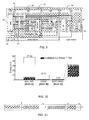
- the thus obtained new ASIP architecture as illustrated in FIG.9 , further called architecture C, in the example illustrated includes a 48-bit vector data-path and a 16-bit scalar data-path.
- the data-path of the example has been chosen to be 48-bit as it allows the various vector combinations to operate on different configurations, such as 2x24bit, 3x16bit, 4x12bit, 6x8bit or 8x6bit; however, the invention is not limited thereto.
- a shuffle unit B-SHIFT SHUFFLE
- two registers R3 and R4
- the two registers R3, R4 enable an efficient change of vector configuration when going to smaller sub-words.
- the register file RF is upgraded to a Very Wide Register (VWR) which includes a wide port 90 for background memory, e.g. SRAM, interface (e.g. 576 bits) and three ports 91, 92, 93 (2 read ports 92, 93 and 1 write port 91) of the width of the vector data path, e.g.
- VWR Very Wide Register
- the VWR is dimensioned to store a predetermined number of words of the width of the vector data-path, e.g. 12 words of 48-bit each. Such a configuration significantly reduces data memory energy consumption as well as that of the register file.
- the scalar slot 96 comprises a standard ALU 97 and a 4bit multiplier 74 as introduced above. Explicit communication between the two data-paths may be available. However, this may be infrequently used.
- the vector data-path 95 may be adapted for executing data-dominant loops while the scalar slot 96 may be adapted for executing the non-kernel program code.
- Four distributed loop buffers (LB1-LB4) control the different components of the architecture. This distribution on the low level instruction hierarchy leads to significant energy savings as just the required components at a given instant are activated.
- a Gauss filter which is responsible for most of the complexity of a detection algorithm of a particular application has been mapped onto the vector data-path 95 on the architecture C described in FIG. 9 .
- An image filter multiplies element-wise an array of 3x3 coefficients by 3x3 image pixels and accumulates the result. This is repeated for every pixel of an input image.
- the input data is packed into 8-bit sub-words.
- the dynamic range of the data changes and thus data words are re-packed first to 12-bit sub-word, then to 16-bit sub-word and finally back to 12-bit sub-word.
- MUL INIT is the initial mapping of the Gauss filter on architecture A and GSAS is the optimized mapping on architecture B (see FIG. 7 ).
- the reported energy consumption not only includes the data-path but also the energy consumed in the SRAM memory.
- the total energy consumption of the GSAS mapping (on ASIP-B) is reduced by a factor 4.45 compared to the MUL INIT mapping (on ASIP-A). This is further reduced in the Soft-SIMD mapping (on ASIP-C), with a factor 39 and 8.78 compared to the MUL INIT and GSAS mapping, respectively.
- FIG. 13 also shows the energy breakdown for the different components.
- the Soft-SIMD concept is, in an example, applied to a multiplication loop of a particular detection algorithm.
- a hybrid approach is used for the required correction operations that consist of the combination of the worst case sub-word and of one shuffler. Instead of using always the worst-case sub-word, an intermediate sub-word can be used. Whenever more space is required, repacking operations are applied to the already packed words by a shuffler.
- the analysis of the operations performed on the multiplication loop of the detection algorithm determines the intermediate sub-word that should be used for the packing of the data. It should be mentioned that the loop should be split into two loops, one that uses Soft-SIMD over x and another that uses Soft-SIMD over y. Otherwise the SIMD directions are not compatible.
- the GSAS intrinsics are used due to the fact that the shift operations performed by the second shifter can be performed by the shuffler in one cycle. Moreover, a new intrinsic is inserted for modeling the repacking operations performed by the shuffler.
- FIG. 17 An architecture GSAS FU (Generic Shift Add Shuffle Function Unit) according to a particular embodiment of the present invention for the implementation of Soft-SIMD is illustrated in FIG. 17 and comprises one shifter (DOWN SHIFT), one adder (ADDER), one shuffler (SHUFFLER) and four registers (R1, R2, R3, R4).
- the R1 register is used for keeping constant the packed word that is read from the VWR (Very Wide Register).
- the R2 is used for feedback from the shifter and the adder.
- the R3 and the R4 registers are used for storing the packed words required for the repacking operations.
- the VWR is able of storing a predetermined amount of packed words, in this case for example 12.
- the R3 and R4 registers are provided to avoid processor stalls when the shuffler operations select words consisting of sub-words that are part of 2 consecutive initial words produced in the data path. That will happen in almost any algorithm because of the partial reordering that is needed for these sub-words.
- an extra stage of multiplexers may be added in the shuffler block that precedes the conventional shuffler router. These multiplexers allow to select specific sub-word combinations across the R3 and R4 registers, but they are restricted to the sub-word granularity and do not 'see' the bits inside the sub-words. Moreover, they do not perform sub-word reordering yet.
- a more conventional shuffler router comprises a partial crossbar which allows both the sub-word reordering and the potential shifting of bits inside the sub-words.
- Both the multiplexer pre-selection stage and the shuffler router stage may be steered by separate loop buffers that are fed with a heavily minimized set of instruction bits. So the interface between the L1I and the loop buffers has a heavily reduced width to avoid storage area and transfer energy overhead.
- Mapping of a multiplication loop on this architecture may be performed as set out below.
- a body loop of the sequential program code of a multiplication loop e.g. a Gauss loop
- Table III Sequential multiplication loop implemented with sequences of shift and addition operations
- MulResO GSAS1(imsub[x-1][y],imsub[x+1][y],0x0,0x0);
- MulRes7 GSAS3(MulRes0,MulRes0,0x8018040,0x20);
- 9 MulRes4 GSAS3(imsub[x][y],imsub[x][y],0x60100A0,0x34);
- 10 imgauss_x[x][y] GSA1(MulRes7,MulRes4,0x20,0x0);
- 11 MulRes2 GSASI(imgauss_x[x]
- the first operation performed is the addition of two image pixels (imsub) using the adder of the GSAS FU (Generic Shift Add Shuffle Function Unit) as illustrated in FIG. 9 .
- the word-length of the imsub variable is equal to 7 bits.
- the imsub variable is packed in 7-bit sub-words in memory. After performing the addition, the result may have a word-length equal to 8 bits. Therefore, the input variable imsub is repacked to 8-bit sub-words with the use of the shuffle FU in order to avoid later a repack operation, as illustrated in FIG. 18 .
- the second operation is performed on the output of the addition (first operation) and represents the implementation of the multiplication of the constant 655 dec using the GSAS FU for 3 cycles.
- the worst-case sub-word is equal to 17 bits.
- the decision of 17 bits is too safe, so 16 bits are used. That is motivated because the final resolution of results that are passed to the y loop is only 13 bits.
- the quantization analysis must be reapplied in the transformed program code in order to obtain the accurate required sub-words for each variable. In order to apply correctly the Soft-SIMD, the input needs to be packed in 12 sub-words.
- the different cycles of the second operation are illustrated in FIG. 19 .
- the first cycle the partial product is shifted 4 positions to the right and is still inside the sub-word.
- the second shift operation passes the partial product outside the sub-word, which indicates that repacking through the shuffle FU of the partial product, and hence of the input, must be performed from 12 bits to 16-bit sub-words.
- the second and the third cycle are performed on 16-bit sub-words and at the end of the third cycle the result is repacked at 12 bits sub-words using the shuffle FU.
- the next operation is performed on the imsub variable, which is packed in 7-bit sub-words in memory, and it is the implementation of the multiplication of the constant 983 dec using the GSAS FU for 3 cycles.
- the input has word-length equal to 7 bits while the output of the multiplication requires a 9-bit word-length.
- the input variable is packed to 12-bit sub-words.
- the different cycles of the third operation are illustrated in FIG. 20 .
- the first and the second cycle are shifting the partial product by 3 and by 2 positions to the right respectively, and as a result the output is maintained inside the 12-bit sub-words.
- repacking of both the partial product and the input to 16-bit sub-words must be made in order to avoid the overlapping of the shifted bits to nearby sub-words.
- the output is repacked to 12-bit sub-words.
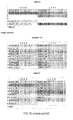
- the last operation that can be performed while using Soft-SIMD on x is the addition of the results of the constant multiplications by the adder of the GSAS FU. Both the inputs are packed in 12-bit sub-words, so the addition can be performed without repacking of the variables, as it is illustrated on FIG. 21 .
- the rest of the Gauss body loop consists of operations that are done with Soft-SIMD on y. Between the operations performed using Soft-SIMD on x and Soft-SIMD on y, the output variables of Soft-SIMD on x are passed through the shuffle FU in order to be packed in 13-bit sub-words and then they are stored in the VWR and from there to the data memory.
- the data path width is set equal to 48 bits, so the packed data with 8-bit sub-words consist of 6 different data, the packed data with 12-bit sub-words consist of 4 different data and the packed data with 16-bit sub-words consist of 3 different data.
- the program code In order to have full use of the packed bits using different sub-word each time, the program code must be partially unrolled, as is illustrated on the example of FIG. 23 .
- the operations performed on 8-bit sub-words are unrolled once and the operations performed on 12-bit sub-words are unrolled twice in order to create 12 different data that completely full each packed word.
- the program code in the Table IV illustrates the converted Gauss loop in which Soft-SIMD on x and Soft-SIMD on y have been applied.
- the correct modeling of the Soft-SIMD may be performed by unrolling the operations that need more that one cycle. This may be done due to the need for repacking between the cycles that execute the sequence of shift and addition operations, especially when the shifting factor pushes the sub-word out of its available data-path width. This fact indicates that one cycle is required for executing the shift and addition operation and another cycle for the repacking operation through the shuffler. Furthermore, it should be stressed that cases exist in which the shifter, the adder and the shuffler can be executed in one cycle by bypassing the pipeline registers before the shuffler.
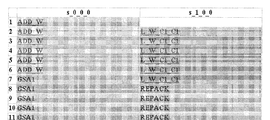
- Table V Unrolled parallel multiplication loop using Soft-SIMD on x and on y.
- MulRes0_8_a GSA1(imsub_8[x-1][y],imsub_8[x+1][y],0x0)
- MulRes0_8_b GSA1(imsub_8[x+5][y],imsub_8[x+7][y],0x0);
- MulRes0_12 REPACK(MulRes0_8_a,0);
- MulRes0_12_b REPACK(MulRes0_8_a,MulRes0_8_b);
- MulRes0_12_c REPACK(MulRes0_8_b,0);
- MulRes0_16 REPACK(MulRes0_8_a,0);
- the performance and the scheduling obtained for the Gauss loop and the architecture with one data cluster and two slots are depicted in the FIG. 24 and FIG. 25 .
- SIMD Single Instruction Multiple Data
- SIMD without hardware support requires the insertion of extra operations for the packing and the unpacking of the data in order to meet the functional correctness.
- SIMD SIMD without hardware support
- each sub-word must be independent from the others. That means that the operation performed on the packed word guarantees that each sub-word does not overwrite the nearby sub-words.
- guard intervals are introduced between the different sub-words, therefore reducing the bits that can be used for computation.
- the simplest guard interval is a zero bit that can be used only for positive operands.
- a modified guard interval is required due to the two's complement representation of the numbers and to the sign extension.
- the SIMD can be guaranteed to operate only to positive operands, e.g. when all input and output values are always positive. That is true e.g. for the image data in a Gauss filter loop.
- both the operands of the multiplication must be positive in order to have a positive output.
- the constant multiplications consist of the multiplicand and the multiplier that is a constant value. In order to guarantee that the multiplicand is always positive an offset is added to it. This offset may be defined by the multiplicand's range. In case the multiplication is performed using a negative constant, then the multiplication is performed using the absolute value of the constant and after the unpacking of data, the result of the output is negated. It should also be stressed that the multiplication operations are difficult to be implemented with SIMD due to the fact that the output of the multiplication has an increased word-length. When the constant multiplications are converted to sequences of shift and addition operations in accordance with embodiments of the present invention, the data can be parallelized easier due to the smaller increase to the word-length of the output.
- the CSD (Canonical Signed Digit) representation of the constant may indicate subtraction between the shifted multiplicands. Consequently, care must be taken in order to guarantee that the result of the subtraction is always a positive value. This can be achieved by modifying the way the shift operations are performed. This means that in case of a subtraction, the shift factor that corresponds to the more important position of non-zero digits in CSD coding, must always have a positive coefficient.
- Table II The modification of the sequence of shift and addition operation, for the constants used in the multiplications of the detection algorithm, in order to have positive intermediate results and positive final output is illustrated in Table II.
- the conversion of constant multiplications to sequence of shift and addition operations in accordance with embodiments of the present invention means that only shift operations and addition operations are performed on the packed words.
- Performing an addition to the packed word is straightforward when the sub-words have a width that guarantees no overflow, e.g. is equal to the maximal range of each data, and so no guard intervals are required.
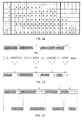
- the influence of the shift operation depends on the applied shift factor and on the used sub-word. Care must be taken for the right shift operations not to overwrite the MSBs of the previous sub-word, as is illustrated in FIG. 11 , where the values are shifted by x positions to the right.
- the overlapping between the sub-words in the same packed word that is caused by the right shift operations may be avoided by discarding the bits, which are entering into the previous sub-word.
- the discarding of the bits can be performed a priori, so the shifted bits can never overlap with nearby sub-words, or, in alternative embodiments, it can be postponed for later in case that the overlapped bits of the sub-word are still not valid.
- the validation of the MSBs of the nearby sub-word can be verified dynamically, leading to the postponing of the correction operations; accordingly, the cost of the correction operations can be reduced, since they can be combined with other similar operations.
- One approach of the correction operations comprises choosing as a sub-word the worst case required intermediate sub-word of the sequence of shift and addition operations. This guarantees that the result will always fit inside its sub-word, without affecting other sub-words. This approach has a loss in efficiency, since a lot of bits, e.g. the worst case sub-word, are used for one data, although they are not always required.
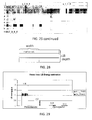
- FIG. 12 illustrates the effect of the application of the shift and addition operations, which are derived from the constant 655 dec .
- the data path width is equal to 13 bits while the input's word-length is equal to 7 bits.
- the worst case required word-length is equal to 17 bits.
- FIG. 010 A second approach is illustrated in FIG. 010 and refers to the insertion of extra masking operations in order to prohibit the shifted bits to influence the previous sub-word.
- the FU that performs the masking operations loads from memory to the RF the required masks and it executes them on the packed word. This reduces the cost of this FU to reasonable values, which are linear to the number of required bits for the mask and furthermore it avoids the exponential rise of the mask data that should be stored. Every mask is loaded at run-time from the memory when it is required. This approach is more advantageous when the values of the masks are known up-front and they do not differ a lot during the execution of the application. Hence, the temporal reuse and locality of the mask data should be high.
- a third approach is illustrated in FIG. 14 and comprises using a shuffle FU for discarding the bits that are going to overlap with nearby sub-words.
- the shuffler FU is able of performing different operations like rotation, packing, unpacking shifting and repacking operations.
- the shuffle FU is more advantageous when strong spatial locality is present among the fields that should be overwritten and when parts of the bits must be removed, for example during repacking, rotation or even sign extension. It should be mentioned that the shuffle FU is much more costly than the masking operations when random bits must be overwritten. So they have complementary usage domains.
- the shuffle FU may be the B-SHIFT SHUFFLE illustrated in FIG. 9 .
- a fourth approach is illustrated in FIG. 15 and comprises a hybrid combination of Soft-SIMD and Hard-SIMD and is referring to the insertion of variant checking points in the hardware that are able to remove the shifted bits when they are going to pass to another sub-word.
- the checking points are equally spread to the packed word every y bits, where y is equal to a number that is not too costly but at the same time allows the implementation of Soft-SIMD, e.g. the flexibility in the sub-words.
- This FU is used only for the implementation of the Soft-SIMD, hence, it takes small area and consumes low energy.
- the main disadvantage is that it represents a very dedicated FU which is only required for supporting the Soft-SIMD approach. Hence the design time, area and energy overhead (due to longer wiring distances) it requires are not always beneficial.
- a combination of first approach, i.e. the worst case sub-word, and the third approach, i.e. the shuffle FU, is considered most advantageous for the implementation of the Soft-SIMD in accordance with embodiments of the present invention.
- An intermediate sub-word is used, which is smaller than the worst case and in case that more bits are required, the packed words are repacked using the shuffle FU.
- Efficient quantization is another possibility for an efficient implementation of any embedded application on hardware.
- the quantisation is an enabling step for efficient mapping of program code on an ASIP (application specific instruction set processor) architecture.
- FIG. 9 An architecture instance in accordance with embodiments of the present invention, for example for a biomedical image processing example, is shown in FIG. 9 , as indicated above.
- This architecture shows an instance of an ASIP to show how the different components are connected to each other.
- Wireless functionality is initially designed with floating point precision.
- the latter offers high dynamic range and abstracts away the binary point by normalizing the operation output. These properties permit the designer to focus on the communication functionality and ignore any precision consideration.
- floating point arithmetic requires complex operators which first need to separately process mantissa and exponent and then normalize the result when required. This leads to expensive implementations in terms of area, energy and delay.
- fixed-point arithmetic requires less bits and simpler operators which are directly translated into savings in area, energy and delay.
- fixed-point arithmetic introduces an unavoidable quantization error which degrades floating point performances.
- a conversion from a floating point to a fixed-point description is required when high processing efficiency is desired. In this conversion process, the introduced processing degradation needs to be kept under control.
- wireless communication systems are designed to function under different environmental conditions. They are inherently robust to channel distortion and noise. This noise robustness varies for the different communication modes (combination of modulation scheme and coding rate), thereby offering different compromises between data rate and area coverage. Consequently, implementations of wireless communications systems tolerate transformations where the I/O trueness does not need to be fully maintained as long as the output signal integrity is met (e.g. SNR). This implies that the system can accommodate a certain amount of quantization noise without having any impact on the communication performance. This tolerance varies depending on the system configuration and on conditions external to the transducer, such as the variations coming from the environment and the user.
- Scenario-based data-format assignment implies the clustering of the many different environmental/user run-time situations into a smaller set of different scenarios. For each of these scenarios a specific implementation is thoroughly optimized at design-time. Then at run-time, a simple controller senses the external conditions to identify the current scenario and selects the corresponding optimized implementation. The duty cycle of such a controller should be very low, resulting in a negligible overhead.
- the minimal quality of the wireless link that guarantees a predetermined communication performance depends on the length of transmitted data that contains a CRC (Cyclic Redundancy Check) appended. This length defines the minimum portion of data that can be received and checked for correctness. If the CRC gives an error, the entire data segment associated will be retransmitted (packet retransmission). Interestingly, depending on the data segment length, a different BER (Bit Error Ratio) will be desired in order to meet a packet. Besides, for achieving a given BER, the different system configurations (combinations of modulation scheme and coding rate) require a different minimal Signal-to-Noise Ratio at the input of the receiver. The smaller this SNR, the shorter the minimum word-lengths required in the receiver digital signal processing.
- CRC Cyclic Redundancy Check
- FIG. 16 shows the scenario-based data-format assignment for wireless applications methodology flow.
- the maximum BER that still meets different packet lengths can be derived.
- BER floating point simulations of the communication system are used to determine the minimum required SNR (Signal to Noise Ratio) which provides that maximum BER under different system configurations.
- SNR Signal to Noise Ratio
- the current system configuration and the packet length is extracted from the preamble.
- the fixed point representation that guarantees a successful reception with minimum energy cost is selected and loaded.
- an accurate estimation of the energy that is consumed in the data path of the processor is dealt with.
- the energy consumption of the data path of the processor is divided into the FU energy and the energy that is consumed in the distributed LB which is responsible for storing the control bits for the correct execution of the instructions.
- the consumed energy for the transformed sequential multiplication loop of the 2D Gauss filtering is estimated initially and compared with the original program code.
- the data path energy of the processor consists of the energy that the FUs are consuming and the consumed energy of the LB, which stores the control bits of the FUs.
- the Table VI illustrates the energy that each FU consumes. Table VI: Power and energy consumption for the different FUs.
- the adder and shifter are based on accurate synthesis results, starting from VHDL code.
- the shifter is assumed to have a limited shift factor though. When that shift factor goes up to the required range of 5 bits, the power will go up to about 40 ⁇ W. However the total power for the entire SA data path logic should not exceed 100 ⁇ W, including the power of the pipeline register and the muxes. For the 16*16 bit multiplier a rather optimistic estimate has been made, because some results indicate a loss of up to a factor of 20 compared to a 16 bit adder.
- the FU energy is estimated by Equation (Eq. 3), where E M is the energy consumed by one activation of the multiplier and ESA the energy consumed by one activation of the SA FU. In order to estimate the total energy consumed, the above energies should be multiplied by the total number of activations, respectively.
- E FU E M * #MUL + E SA * #SA
- the total number of activations is equal to the number of operations performed in one iteration of the loop multiplied by the total number of iterations.
- the operations performed in one iteration of the loop are derived from the scheduling of the tool, as illustrated in FIG. 26 , excluding the operations that are responsible for the addressing of the operands and the load and store instructions.
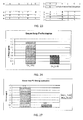
- the energy estimation of the FUs of the architecture with 1 data cluster and two slots for the multiplication loop is depicted in FIG. 27 .
- the LB (loop buffer) energy is estimated by two bounds, one pessimistic and one optimistic.
- the E RMLL and E RSA is the required energy for reading one instruction of multiplication and one instruction of SA from the LB, respectively.
- the W MUL and W SA are the necessary control bits for each instruction, e.g. 6 bits for the SA and 12 bits for the multiplier. In order to estimate the total energy consumed by the LB, the energy of each instruction should be multiplied by the total number of reads.
- Equation (Eq. 4) The optimistic approach is calculated by Equation (Eq. 4). Here is assumed that selecting the appropriate LB word to be read is not reflected in the access energy, which provides of course only a lower bound.
- E LBopt E RMu 1 * #MUL + E RSA * #SA
- the energy estimation of the LB for the architecture with 1 data cluster and two slots for the multiplication loop is depicted in FIG. 29 .
- the data path energy of the processor consists of the energy that the FUs are consuming and the consumed energy of the LB, which stores the control bits of the FUs.
- the Table VII illustrates the energy that each FU consumes. Table VII: Power and energy consumption for different FUs.
- FU Power per activation ( ⁇ W) Energy per activation (fJ) Shuffler 360 1800 SA 300 1500
- the shuffler is based on a worst-case VHDL synthesis experiment.
- the SA power is overestimated as it is assuming a factor of 3 more power for the 48 bit data path compared to the initial one for the 16 bit data path.
- the energy estimation of the FUs of the architecture with 1 data cluster and two slots for the multiplication loop is depicted in FIG. 31 .
- the LB energy is estimated by the pessimistic approach.
- the E RSAS is the required energy for reading one instruction from the LB, respectively.
- the W S and W SA represent the necessary control bits for each instruction, e.g. 6 bits for the SA and 4 bits for the shuffler. In order to estimate the total energy consumed by the LB, the consumed energy of each instruction should be multiplied by the total number of reads.
- the energy estimation of the LB the architecture with 1 data cluster and two slots for the multiplication loop is depicted on FIG. 32 .
- the estimation for the data path energy consumption of the detection algorithm is performed, as an example only, for the mapping of the detection algorithm to the ASIP-VLIW with one data cluster and two slots per data cluster.
- the data path energy of the processor comprises the energy that the FUs are consuming and the consumed energy of the LB, which stores the control bits of the FUs.
- the background and foreground data memory operations and the instructions corresponding to address computation are not taken into account for the purpose of the present invention.
- Table IX illustrates the energy that each FU consumes. Table IX: Power and energy consumption of different FUs FU Power per activation ( ⁇ W) Energy per activation (fJ) Multiplier 810 4050 Adder 45 225 Shifter 20 100 SA 100 500 GSAS 180 900
- the FU energy can be estimated by Equation (Eq. 3) taking into account the whole program code of the detection algorithm.
- the consumed energy is approximated by the most dominant part of the program code which is the loops that iterate through the whole image, as it is illustrated in FIG. 33 .
- the energy estimation of the FUs of the architecture with 1 data cluster and two slots for detection algorithm is depicted in FIG. 34 .
- the LB energy is estimated again by the pessimistic approach where it is assumed that the read energy is proportional to the depth of the LB and it can be calculated by Equation (5).
- the energy estimation of the LB for the architecture with 1 data cluster and two slots for the detection algorithm is depicted in FIG. 35 .
- the present invention provides a way to effectively retrieve/send 2D array data from and to background memory from a data-path that is organized in a data-parallel way using the soft-SIMD approach according to embodiments of the present invention.
- the background memory access passes through a very wide register (VWR) foreground memory organisation and requires also a flexible shuffler to be present in the data-path.
- VWR very wide register
- the SRAM requirements in the background memory organisation are quite domain-specific also so a partly customized SRAM module may be advantageous to reach ultra-low energy results.
- the use of a conventional SRAM module is feasible but will require a significant performance and energy overhead.
- VWRs very wide registers
- the VWR can be pitch-matched to the output lines of the SRAM, and can even replace the conventional in/out buffers, allowing to save even more energy.
- the shuffler that is anyway needed already to reorganize the sub-words in the word will be reused.
- this shuffler is 576-bit wide also and that it is positioned next to the VWR, in a pitch-matched way. That shuffler is then also taking care of the selection of specific VWR words to the data-path itself.
- the data-path will then also contain an M-bit wide pipeline register to buffer the required data. Obviously, only a very small subset of all 576 to 576 crossbar connections are needed in that case.
- FIG. 37 An alternative scheme according to embodiments of the present invention is provided in FIG. 37 .
- the smaller shuffler (M bit wide) that needs to be available in the data-path itself for the intra-word shuffling has been reused.
- the disadvantage is now that several cycles are needed to perform the inter-word shuffling between the data-path and the VWR, namely N/M cycles. It is to be noted, however, that this is only feasible without additional cycle overhead (above N/M) when 2 input registers containing "neighboring" words, are provided to the shuffler.
- the scheme itself is scalable to other WL sizes too, as long as they are not too large and that they form a divisor of the line size divided by the local bit line size, i.e. a divisor of N/size LBL , which is 72 bit in the illustration.
- the SRAM should internally be divided into partitions, preferably a multiple of WL, i.e. 8 in the illustration.
- the modified (customized) postdecoder should distribute the 72 bit segments in the appropriate way over the parallel partitions, i.e. 9 bit per partition in our illustration.
- the domain-specific data-path of the ASIP is best extended with a domain-specific SRAM module.
- architectural extensions provide a way to to reduce the energy consumption in the instruction memory hierarchy of the processor, while still keeping program code size as well as performance optimal.
- FIG. 43 An architecture according to embodiments of the present invention is shown in FIG. 43 .
- An extra decoder 430 at the lowest level is situated between the different loop buffers LB1, LB2.
- the decoding performed by this extra decoder 430 is pure translation of a part of a set of instructions stored in one loop buffer LB1 to another set of instructions in the other loop buffer LB2.
- Both these loop buffers LB1, LB2, however, are organized at the same level (not hierarchical) and would contain the program code which can be used to control the different registers and FUs corresponding to that Loop buffer.
- control structure for LB1 does not depend on x or y as data elements:
- a heavily optimized ASIP architecture has been provided in accordance with embodiments of the present invention, with low-cost ultra low-energy consumption while still meeting all the performance requirements.
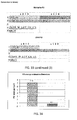
- the performance gain for the Gauss filtering loop of the biotechnology application mentioned before is illustrated in FIG. 38 .
- the obtained performance gain due to quantization techniques that lead to the fixed point refinement of the multiplication loop is equal to 5.14.
- the conversion from constant multiplications to shift and addition operations does not have a great impact on performance, while it will enable the application of Soft-SIMD and the significant reduction of the energy consumption, especially in the instruction and data memory hierarchies.
- the enabling of data parallelization due to Soft-SIMD has as result a further gain factor of 2.42.
- the total performance gain for the constant multiplication loop is actually equal to 29.63. Energy gains are expected by fully avoiding the multiplication operations.
- the data path energy estimation of the processor with one data cluster and two slots per data cluster is depicted in FIG. 39 .
- the obtained performance gain due to quantization techniques is equal to 4.5.
- the detection algorithm that uses the multiplier FU has 1/6 of the total operations equal to multiplication operations. By reducing the required multiplication operations to a small number that is implemented in a 4 bit multiplier further energy gains are expected.
- the data path energy estimation of the processor with one data cluster and two slots per data cluster is depicted in FIG. 42 .
Landscapes
- Engineering & Computer Science (AREA)
- General Engineering & Computer Science (AREA)
- Theoretical Computer Science (AREA)
- Software Systems (AREA)
- Physics & Mathematics (AREA)
- General Physics & Mathematics (AREA)
- Executing Machine-Instructions (AREA)
- Devices For Executing Special Programs (AREA)
Applications Claiming Priority (1)
| Application Number | Priority Date | Filing Date | Title |
|---|---|---|---|
| US23838909P | 2009-08-31 | 2009-08-31 |
Publications (2)
| Publication Number | Publication Date |
|---|---|
| EP2290538A2 true EP2290538A2 (fr) | 2011-03-02 |
| EP2290538A3 EP2290538A3 (fr) | 2011-06-22 |
Family
ID=43413641
Family Applications (1)
| Application Number | Title | Priority Date | Filing Date |
|---|---|---|---|
| EP10174072A Withdrawn EP2290538A3 (fr) | 2009-08-31 | 2010-08-26 | Procédé et dispositif pour réduire la consommation de puissance dans des processeurs configurés par des instructions propres à une application |
Country Status (2)
| Country | Link |
|---|---|
| US (1) | US8726281B2 (fr) |
| EP (1) | EP2290538A3 (fr) |
Families Citing this family (9)
| Publication number | Priority date | Publication date | Assignee | Title |
|---|---|---|---|---|
| US8656376B2 (en) * | 2011-09-01 | 2014-02-18 | National Tsing Hua University | Compiler for providing intrinsic supports for VLIW PAC processors with distributed register files and method thereof |
| JP2013242700A (ja) * | 2012-05-21 | 2013-12-05 | Internatl Business Mach Corp <Ibm> | コード最適化方法、プログラム及びシステム |
| CN106604382B (zh) * | 2015-10-16 | 2020-11-27 | 华为技术有限公司 | 一种低功耗的通信方法及装置 |
| US10635909B2 (en) * | 2015-12-30 | 2020-04-28 | Texas Instruments Incorporated | Vehicle control with efficient iterative triangulation |
| US10078364B2 (en) | 2016-01-14 | 2018-09-18 | Hcl Technologies Limited | System and method for optimizing power consumption of one or more devices |
| US20180005059A1 (en) * | 2016-07-01 | 2018-01-04 | Google Inc. | Statistics Operations On Two Dimensional Image Processor |
| US11023025B2 (en) * | 2016-11-16 | 2021-06-01 | Cypress Semiconductor Corporation | Microcontroller energy profiler |
| US11327733B2 (en) * | 2020-05-27 | 2022-05-10 | Blaize, Inc. | Method of using multidimensional blockification to optimize computer program and device thereof |
| US12216772B2 (en) * | 2022-12-16 | 2025-02-04 | Microsoft Technology Licensing, Llc | Method and apparatus for power efficient lossless compression and decompression |
Family Cites Families (10)
| Publication number | Priority date | Publication date | Assignee | Title |
|---|---|---|---|---|
| US5841663A (en) | 1995-09-14 | 1998-11-24 | Vlsi Technology, Inc. | Apparatus and method for synthesizing integrated circuits using parameterized HDL modules |
| EP0926596B1 (fr) | 1997-12-23 | 2007-09-05 | Texas Instruments Inc. | Processeur et méthode pour diminuer sa consommation d'énergie |
| US6745336B1 (en) | 1999-05-20 | 2004-06-01 | Princeton University | System and method of operand value based processor optimization by detecting a condition of pre-determined number of bits and selectively disabling pre-determined bit-fields by clock gating |
| US6675286B1 (en) | 2000-04-27 | 2004-01-06 | University Of Washington | Multimedia instruction set for wide data paths |
| US7343389B2 (en) * | 2002-05-02 | 2008-03-11 | Intel Corporation | Apparatus and method for SIMD modular multiplication |
| US7185215B2 (en) * | 2003-02-24 | 2007-02-27 | International Business Machines Corporation | Machine code builder derived power consumption reduction |
| EP1701249A1 (fr) | 2005-03-11 | 2006-09-13 | Interuniversitair Microelektronica Centrum Vzw | Micro-ordinateur ASIP (processeur programmable spécialisé pour l'application) à consommation très faible |
| US20070106914A1 (en) | 2005-11-07 | 2007-05-10 | Kalyan Muthukumar | Power management by adding special instructions during program translation |
| GB0524720D0 (en) | 2005-12-05 | 2006-01-11 | Imec Inter Uni Micro Electr | Ultra low power ASIP architecture II |
| TW200801925A (en) | 2006-06-23 | 2008-01-01 | Nat Univ Chung Cheng | Method for energy-efficient scheduling optimization for compiler |
-
2010
- 2010-08-26 EP EP10174072A patent/EP2290538A3/fr not_active Withdrawn
- 2010-08-26 US US12/869,610 patent/US8726281B2/en not_active Expired - Fee Related
Non-Patent Citations (1)
| Title |
|---|
| None |
Also Published As
| Publication number | Publication date |
|---|---|
| US8726281B2 (en) | 2014-05-13 |
| US20110055836A1 (en) | 2011-03-03 |
| EP2290538A3 (fr) | 2011-06-22 |
Similar Documents
| Publication | Publication Date | Title |
|---|---|---|
| US8726281B2 (en) | Method and system for improving performance and reducing energy consumption by converting a first program code into a second program code and implementing SIMD | |
| Alkim et al. | ISA extensions for finite field arithmetic accelerating kyber and newhope on RISC-V. | |
| US7386844B2 (en) | Compiler apparatus and method of optimizing a source program by reducing a hamming distance between two instructions | |
| US8650240B2 (en) | Complex matrix multiplication operations with data pre-conditioning in a high performance computing architecture | |
| US8577950B2 (en) | Matrix multiplication operations with data pre-conditioning in a high performance computing architecture | |
| Hassaballah et al. | A review of SIMD multimedia extensions and their usage in scientific and engineering applications | |
| CN110235099B (zh) | 用于处理输入操作数值的装置和方法 | |
| WO2012098436A1 (fr) | Dispositif et procédé de calcul d'une valeur de fonction d'une fonction | |
| US20070239970A1 (en) | Apparatus For Cooperative Sharing Of Operand Access Port Of A Banked Register File | |
| Murillo et al. | Generating posit-based accelerators with high-level synthesis | |
| Nadalini et al. | A 3 TOPS/W RISC-V parallel cluster for inference of fine-grain mixed-precision quantized neural networks | |
| Chapman | Comparison of modular arithmetic algorithms on GPUs | |
| So et al. | Increasing the applicability of scalar replacement | |
| Huber et al. | Effective vectorization with OpenMP 4.5 | |
| US8938485B1 (en) | Integer division using floating-point reciprocal | |
| J. Molendijk et al. | Low-and mixed-precision inference accelerators | |
| Thuresson et al. | A flexible code compression scheme using partitioned look-up tables | |
| Žádník et al. | Low-power programmable processor for fast Fourier transform based on transport triggered architecture | |
| CN114968356A (zh) | 一种数据处理的方法、装置、处理器和计算设备 | |
| Ren | Compiling Vector Programs for SIMD Devices | |
| Blake | Computing the fast Fourier transform on SIMD microprocessors | |
| Mamidi et al. | Instruction set extensions for software defined radio | |
| US20250103676A1 (en) | Processor implementation | |
| Bertaccini | Architectural and Microarchitectural Solutions for Multi-Precision Hardware Acceleration | |
| Park et al. | RIMIX: RISC-V Core with MIXed-Precision SIMD Instruction Extensions Supported by Oracle-Assisted Sub-Network Search for Efficient TinyML |
Legal Events
| Date | Code | Title | Description |
|---|---|---|---|
| PUAI | Public reference made under article 153(3) epc to a published international application that has entered the european phase |
Free format text: ORIGINAL CODE: 0009012 |
|
| AK | Designated contracting states |
Kind code of ref document: A2 Designated state(s): AL AT BE BG CH CY CZ DE DK EE ES FI FR GB GR HR HU IE IS IT LI LT LU LV MC MK MT NL NO PL PT RO SE SI SK SM TR |
|
| AX | Request for extension of the european patent |
Extension state: BA ME RS |
|
| PUAL | Search report despatched |
Free format text: ORIGINAL CODE: 0009013 |
|
| AK | Designated contracting states |
Kind code of ref document: A3 Designated state(s): AL AT BE BG CH CY CZ DE DK EE ES FI FR GB GR HR HU IE IS IT LI LT LU LV MC MK MT NL NO PL PT RO SE SI SK SM TR |
|
| AX | Request for extension of the european patent |
Extension state: BA ME RS |
|
| 17P | Request for examination filed |
Effective date: 20111221 |
|
| 17Q | First examination report despatched |
Effective date: 20140924 |
|
| STAA | Information on the status of an ep patent application or granted ep patent |
Free format text: STATUS: THE APPLICATION IS DEEMED TO BE WITHDRAWN |
|
| 18D | Application deemed to be withdrawn |
Effective date: 20150205 |