EP2290633A1 - Computerimplementiertes Verfahren zur Gewährleistung der Privatsphäre eines Benutzers, Computerprogramm und Vorrichtung - Google Patents
Computerimplementiertes Verfahren zur Gewährleistung der Privatsphäre eines Benutzers, Computerprogramm und Vorrichtung Download PDFInfo
- Publication number
- EP2290633A1 EP2290633A1 EP20090011182 EP09011182A EP2290633A1 EP 2290633 A1 EP2290633 A1 EP 2290633A1 EP 20090011182 EP20090011182 EP 20090011182 EP 09011182 A EP09011182 A EP 09011182A EP 2290633 A1 EP2290633 A1 EP 2290633A1
- Authority
- EP
- European Patent Office
- Prior art keywords
- data
- matrix
- user
- vehicle
- telematics device
- Prior art date
- Legal status (The legal status is an assumption and is not a legal conclusion. Google has not performed a legal analysis and makes no representation as to the accuracy of the status listed.)
- Granted
Links
Images





Classifications
-
- G—PHYSICS
- G08—SIGNALLING
- G08G—TRAFFIC CONTROL SYSTEMS
- G08G1/00—Traffic control systems for road vehicles
- G08G1/01—Detecting movement of traffic to be counted or controlled
- G08G1/0104—Measuring and analyzing of parameters relative to traffic conditions
-
- G—PHYSICS
- G08—SIGNALLING
- G08G—TRAFFIC CONTROL SYSTEMS
- G08G1/00—Traffic control systems for road vehicles
- G08G1/01—Detecting movement of traffic to be counted or controlled
- G08G1/0104—Measuring and analyzing of parameters relative to traffic conditions
- G08G1/0108—Measuring and analyzing of parameters relative to traffic conditions based on the source of data
- G08G1/0112—Measuring and analyzing of parameters relative to traffic conditions based on the source of data from the vehicle, e.g. floating car data [FCD]
-
- G—PHYSICS
- G08—SIGNALLING
- G08G—TRAFFIC CONTROL SYSTEMS
- G08G1/00—Traffic control systems for road vehicles
- G08G1/20—Monitoring the location of vehicles belonging to a group, e.g. fleet of vehicles, countable or determined number of vehicles
Definitions
- the present application relates to a computer-implemented method for ensuring the privacy of a user, a computer program product, and a device.
- a computer-implemented method for ensuring the privacy of a user and the utility of data communicated by a device, such as a vehicle telematics device, to a server may comprise
- Summarizing the data in the matrix as described above may have the effect of ensuring the privacy of the user and the utility of the data communicated by the device. This is because the summarization reduces the processed data to the distance covered and the circumstances of movement under which the distance was covered. Thus, the transmitted data may not include sensitive user data, thereby ensuring the user's privacy. However, since the transmitted data includes the distance covered and the circumstances of movement, the transmitted data retains utility.
- summarizing the data refers to compressing and aggregating (e.g. statistically aggregating) the data.
- summarizing may refer to converting a distance covered at a specific velocity to distance covered at a range of velocities.
- the processed data may include at least one of position data, velocity data, and time data.
- the velocity data may indicate a speed at which the device has been moved.
- the term “velocity” may refer to a vector having a direction and a value.
- the term “speed” may refer to the value of the velocity.
- the method may further comprise:
- the alert may be understood as a simple way of interacting with the user without distracting the user.
- the alert may be communicated and may include a visual display and/or audio sound in such a way that substantially no distracting signals are provided that do not relate to the alert.
- the alert may provide information that is otherwise not available to the user of the device such as a driver of a vehicle.
- the alert may be a simple way to inform the user of the action. This simplification may also reduce costs, e.g. the cost of displaying a map.
- the user may be able to take corrective action to improve his driving (e.g. respond to alerts, avoid future alerts, etc.).
- the method may also comprise encrypting, before transmission, the summarized data, wherein the summarized data can be decrypted by the server without assistance from the user.
- the method may comprise encrypting, before the transmission, the processed data corresponding to the action, wherein the processed data can only be decrypted with a key of the user.
- the method may comprise transmitting the encrypted processed data from the device to the server.
- the two different types of encryption may have the effect of improving the security of the processed data.
- the processed data may be stored on the server while still ensuring the privacy of the user, since this data can only be accessed with the consent of the user (e.g. by means of a secret key of the user).
- the summarized data may be protected from third parties.
- the summarized data can be used and processed at the server.
- the summarized data may be encrypted using a public key of the server or a secret key shared between the user and the server. Some embodiments may specify that the processed data is encrypted with a secret key of the user or a public key of the user. In addition, some specific embodiments may specify the simultaneous transmission of encrypted processed data and encrypted summarized data.
- the predefined circumstances of movement include one or more of the following:
- the rate of acceleration may be determined using a sensor, or acceleration may be calculated based on a change in velocity over a period of time.
- the acceleration may be determined empirically using a sensor and/or may be determined mathematically as the first order time derivative of the velocity and/or the second order time derivative of the position, wherein velocity and/or position may be obtained empirically e.g. using a GPS sensor.
- the map information may comprise a set of map coordinates. It may be that correlating the position data and the velocity data further comprises correlating the position data and the velocity data with a road category and/or a speed limit linked to the set of map coordinates.
- the action may include one or more of the following:
- the device does not display the map information.
- the alert may be communicated and may include a visual display and/or audio sound in such a way that substantially no distracting signals are provided that do not relate to the alert.
- the alert may be a simple way to inform the user of the action. This simplification may also reduce costs, e.g. the cost of displaying a map on the device, or providing a sophisticated display.
- At least one matrix entry E ij is composed of a plurality of elements, wherein each element e ij k of the plurality of elements defines a distance. Furthermore, the distance defined by the element e ij k may have been covered during a time interval which is nonadjacent to the time interval during which the distance defined by the next element e ij k + 1 was covered. In addition, it may be that the plurality of elements of each matrix entry defines the distance covered by the device during the time period under the pair of predefined circumstances of movement corresponding to said matrix entry, and it may be that the plurality of matrix entries defines the distance covered by the device during the time period.
- the matrix may have a maximum size of 30 x 30.
- values of i and j may be in the range of 0 to a maximum value of 29. It is also possible that the maximum value is less than 29.
- a size of the matrix may be 26 x 26.
- values of i and j may be in the range of 0 to 30, preferably 10 to 30 more preferably 20 to 30.
- the matrix may not be square (e.g. an ecological matrix).
- a smallest size of an element e ij k may be 10 meters. Other implementations, e.g. the smallest size of 20m, 50m or 1 km, are also possible.
- a matrix entry may be 0. Also, a matrix entry may be composed of only one element.
- the device may be embedded in a vehicle.
- the method may comprise compensating the user because the device is embedded in the vehicle.
- the matrix may be used to calculate an indication of driving behavior.
- the method may comprise:
- the web portal comprises two web portals, where a first web portal is designed to be accessed from a personal computer and a second web portal is designed to be accessed from the telematics device. It may be desirable to have two web portals in order to account for limited capabilities of the telematics device. It may be that the web portal is a dynamic web portal, which may include that the device accessing the web portal may be deduced and the information/data provided by the web portal may be adapted to the device. Hence, a user accessing the web portal using a mobile device, such as a PDA, may receive different data compared to when accessing the web portal using a network computer. Accordingly, the network is used in an optimum manner regarding the device trying to access the portal.
- the display of summarized and aggregated data at the portal may result in an improved man-machine interaction. Since the user is provided with online feedback related to his driving behavior and/or fuel consumption, the user may be able to take corrective action to improve his driving (e.g. avoid risks, reduce fuel consumption, etc.).
- the computer program product may comprise computer-readable instructions which may be stored on a computer-readable medium or provided as a data signal, such that when the instructions are loaded and executed on a device, such as a vehicle telematics device, the instructions cause the device to perform operations according to the method of any one of the preceding claims.
- a device such as a vehicle telematics device.
- the device may comprise:
- the device is a mobile device, such as a mobile telephone.
- the device is physically embedded in a vehicle, and wherein the device uses an interface of the vehicle to communicate.
- a “telematics device” may be understood as a telecommunication device capable of sending, receiving and storing information.
- a vehicle telematics device may be understood as a telematics device used within a road vehicle.
- the telematics device may be connected to and/or include a GPS module.
- the telematics device may be a smartphone, PDA, netbook, or other electronic device that can be used within or embedded in a vehicle.
- a "user” may be a person or an individual. According to a specific example, the user is a driver of a vehicle, e.g. a car.
- a "secret key” of a user may be understood as a key used in symmetric encryption and decryption that is known only to the user.
- a "private key" of a user may be understood as an asymmetric cryptographic value known only to the user.
- the private key may be used as part of a public-private key pair or for digital authentication (e.g. digital signing of a message).
- Ensuring the "privacy" of a user may be understood to include protecting the data of the user, in particular, protecting sensitive data of the user.
- Sensitive data may include the following: position data, time data, and the identity of the user; sensitive data may further include a combination of one or more of these data elements.
- Ensuring the "utility" of data communicated by a device may be understood to include providing data that is useful to a receiver of the communicated data.
- “Summarizing” processed data may be understood as reducing the processed data in a way that relevant data is retained and sensitive data is eliminated. Summarizing data may have the effect of eliminating sensitive data while retaining useful data. Summarizing data may be understood as a form of processing data. Thus, summarizing the processed data may be understood as a way of processing the processed data. Moreover, summarizing may be understood as creating matrix entries from the data.
- “Moving the device” may be performed by the user.
- the device may be in a vehicle driven by the user from one location to another location.
- the time period during which the device is moved may be predefined.
- the duration of the time period may be defined before the device is moved. It is possible that the duration of time is included in the programming of the device before the user has access to the device. It is also possible that the time period is defined by the configuration of the device.
- the "circumstances of movement” may be predefined. In other words, the circumstances of movement may be defined before the device is moved. It is possible that the circumstances of movement are included in the programming of the device before the user has access to the device. It is also possible that the circumstances of movement is defined by the configuration of the device.
- a "pair of circumstances of movement” may be understood as two circumstances of movement, one corresponding to the row of a matrix entry and the other corresponding to a column of the matrix entry.
- Time data may be understood as a timestamp, e.g. year, month, day, hour, minutes, seconds.
- a "consequence" associated with an action may be a potential consequence such as a potential legal fine, possibly associated with a speeding violation. Additionally or alternatively, a consequence may be an increase in a fee charged by a service provider (e.g. insurance company) to a user.
- a service provider e.g. insurance company
- Position may be understood as a point or a particular place. Position may be represented in three dimensions, i.e. length, width, height.
- the subject matter described in this specification can be implemented as a method or on a device, possibly in the form of one or more computer program products.
- the subject matter described in the specification can be implemented in a data signal or on a machine readable medium, where the medium is embodied in one or more information carriers, such as a CD-ROM, a DVD-ROM, a semiconductor memory, or a hard disk.
- Such computer program products may cause a data processing apparatus to perform one or more operations described in the specification.
- subject matter described in the specification can also be implemented as a system including a processor, and a memory coupled to the processor.
- the memory may encode one or more programs to cause the processor to perform one or more of the methods described in the specification. Further subject matter described in the specification can be implemented using various machines.
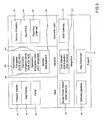
- Fig. 1 depicts an exemplary telematics system 100.
- a telematics device 101 may be located in a vehicle 102.
- the vehicle 102 may be a car or truck capable of carrying passengers and capable of being driven on a road.
- the telematics device 101 may be equipped with sensors and may be capable of providing an audio feedback 103.
- the telematics device 101 may be equipped to receive signals from a satellite 104.
- the satellite 104 may be a global navigation satellite system, e.g. the global positioning system (GPS).
- GPS global positioning system
- the satellite 104 may be capable of sending radiowave signals that allow the telematics device to determine its current location, the current time, and the velocity of the vehicle 102.
- the telematics device 101 may summarize (or aggregate) the data received from the satellite 104 before sending the data by means of a telecommunications service provider 105 to a service delivery platform (SDP) 106.
- SDP service delivery platform
- the service delivery platform 106 may aggregate data from several other telematics devices toward submitting the data to a service provider 107.
- the service provider 107 may be an automotive service provider, or more specifically, an insurance company.
- Data transmitted by the telematics device 101 and the SDP 106 may be encrypted.
- the data transmitted from the telematics device 101 to the SDP 106 may include an identifier of the telematics device 101. It may be that the SDP 106 does not have the data to allow it to match the identifier of the telematics device 101 with the driver of the vehicle 102.
- the user 108 may receive services from the service provider 107.
- the user 108 may also be understood as the customer of service provider 107.
- the cost of the services received by the user 108 may be based on the data sent from the telematics device 101.
- the user 108 may be the driver of the vehicle 102.
- the telematics device 101 may be a mobile phone such as an Apple iPhone (Apple and iPhone are trademarks of Apple Corporation), a Personal Digital Assistant (PDA), a netbook, etc.
- the telematics device 101 may include an operating system (OS) such as Windows Mobile (for example, Windows Mobile 6.X), Blackberry OS, iPhone OS, Symbian OS, etc.
- OS operating system
- the telematics device 101 may be embedded in the vehicle 102.
- the telematics device 101 may be physically integrated within the vehicle 102, such that the telematics device 101 cannot easily be taken out of the vehicle 102.
- the user 108 may be compensated because the telematics device 101 is embedded in the vehicle 102.
- the user 108 may receive a deduction in fees (e.g. insurance premiums) the user 108 pays to the service provider 107 because the telematics device 101 is embedded in the vehicle 102.
- Embedding the telematics device 101 in the vehicle 102 may have the effect of preventing the user 108 from driving the vehicle 102 without the telematics device 101.
- the embedded telematics device 101 may use an interface of the vehicle 102 to communicate alerts generated in response to an action of the user 108.
- the telematics device 101 may provide a Graphical User Interface (GUI).
- GUI Graphical User Interface
- the GUI of the telematics device 101 may be capable of displaying GUI elements.
- the GUI of telematics device 101 may be capable of displaying one or more of the following: a velocity of the vehicle 102, an allowed maximum velocity corresponding to a location of the vehicle 102, a status of a signal from the satellite 104, a settings input element (e.g. a settings button), and an error control input element (e.g. an error control button).
- the GUI of the telematics device 101 may also be capable of receiving input.
- the GUI of the telematics device 101 may be used to modify a tolerance value (e.g. time or speed) for violations.
- a tolerance value e.g. time or speed
- the GUI of the telematics device 101 may be used to designate an incorrect violation, i.e. a violation that was mistakenly recorded.
- the GUI of the telematics device 101 has a resolution of 800 x 480 pixels.
- the telematics device 101 may include a driving analysis application.
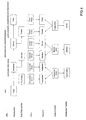
- Fig. 2 depicts an exemplary logical architecture 200 of the telematics system 100. Even though the description of Fig. 2 refers to specific software components, other implementations (e.g. other components or combinations of components) are also possible.
- the telematics device 101 may communicate with the telecommunication service provider 105 by means of the general packet radio service (GPRS), available to users of the global system for mobile communications (GSM).
- GPRS general packet radio service
- GSM global system for mobile communications
- Alternatives to GPRS and GSM, such as the universal mobile telecommunication system (UMTS), a wireless network protocol, etc. are also possible.
- any communications system capable of supporting transmissions of approximately 20kb per day from a mobile device could be used.
- the architecture depicted in Fig. 2 may be understood as a Java multi-tier web architecture with a database 201, e.g. a relational database management system (RDBMS), as a back end (Java is a trademark of Sun Microsystems, Inc.).
- database 201 e.g. a relational database management system (RDBMS), as a back end (Java is a trademark of Sun Microsystems, Inc.).
- RDBMS relational database management system
- Sun Microsystems, Inc. Sun Microsystems, Inc.
- the architecture may be implemented according to a model view controller design pattern, where the view is realised through hypertext mark up language (HTML), cascading style sheets (CSS), and Java server pages (JSP).
- the domain model of the logical architecture 200 may be implemented with plain old Java objects (POJO).
- POJO plain old Java objects
- a POJO may be understood as an object that does not include features from a complicated object framework, but instead only includes the necessary features to accomplish the purpose for which it is intended.
- the POJOs of the domain model may be persisted in the database 201.
- a representation state transfer (REST) framework 206 may be used.
- Software components on the application server 202 may be plugged into the framework of an inversion of control (IOC) container 205.
- IOC inversion of control
- the telematics device 101 may transmit data by means of GPRS through a mobile phone network of the telecommunications service provider 105.
- Data may be transmitted by means of a virtual private network using hypertext transfer protocol (HTTP) requests.
- HTTP hypertext transfer protocol
- An example of an HTTP request and reply can be found in table 1 below.
- HTTP status codes may be used to confirm receipt of a message.
- HTTP error codes may be used to indicate that a problem has occurred.
- the database 201 may be implemented using MySQL software (MySQL is a trademark of Sun Microsystems Inc.).
- the lightweight directory access protocol (LDAP) server 202 may be implemented using open OpenLDAP.
- the web server 203 may be implemented using Apache software, and the application server 204 may be implemented using Tomcat software.
- the IOC container 205 may be implemented using Spring software, a REST framework 206 may be implemented using the Java API for RESTful Web Services (Jersey), and a web service framework 206 may be implemented using Spring-WS.
- a security connector 207 may be implemented using mod_ssl (i.e. the Apache web server module for secure sockets layer), a Java connector 208 may be implemented using mod_jk, and a compression module 209 may be implemented using mod_gzip or mod_deflate.
- Fig. 3 depicts a functional architecture 300 of the telematics system 100.
- a protocol adapter 301 may perform a translation of wire protocols. For example, if messages are transmitted using extensible mark up language (XML) or Jason (a Java based, agent-oriented interpreter), the Java architecture for XML binding (JAXB) may be used for translation. JAXB can be used to map XML elements to classes in the Java programming language. If abstract syntax notation 1 (ASN.1) is implemented, a commercial ASN.1 compiler may be used to perform translation.
- a map display 302 may be used to display tracks or location dependent information on a map. A track may be understood as an ordered collection of points that provide a record of where a driver has been.
- the points in a track may comprise position data received from the telematics device 101.
- Javascript may be used to format GPS exchange format (GPX) data for display using the Google maps Application Programming Interface (Google is a trademark of Google Corporation).
- a portal 303 may be provided for a user interaction and may be implemented using a Spring mode view controller to provide web flow and personalisations.
- Asymmetric encryption 304 with a public key and a private key may be used to encrypt data traffic between telematics device 101 and SDP 106.
- a symmetric encryption server 305 may be used to encrypt and decrypt the private asymmetric key at the SDP 106.
- a symmetric encryption client 306 may be used to encrypt and decrypt the private asymmetric key, e.g. in a web browser.
- Asymmetric encryption may be implemented using the Rivest Shamir Adleman (RSA) algorithm and symmetric encryption may be implemented using the advanced encryption standard (AES).
- the symmetric encryption client 306 may implement encryption/decryption in Javascript using a Javascript Crypto Library (AGPL) or gibberish-aes (MIT).
- Identity management 307 may be performed using LDAP to import and store certificates.
- Service activation 308 may be performed using a dedicated activation resource.
- Algorithms 309 may be used to encapsulate analysis of driving behaviour. Reporting may be implemented using SQL scripts to analyse data collected from telematics device 101, and possibly other telematics devices as well.
- Service provider adapter 311 may be implemented as a web service that provides access to SDP 106 for service providers, such as service provider 107. Service provider adapters 311 may be used to process data from new service providers and to deliver analysis of individual and statistically aggregated driver behaviour to the appropriate service provider.
- a telecommunication's adapter 312 may be used to activate a subscriber identity modular (SIM) card used with telematics device 101.
- the telecommunications adapter 312 may be implemented using a web service.
- An SMS gateway 313 may be used for the sending of short message service (SMS) messages, in particular, binary SMS messages.
- SMS gateway 313 may be implemented using a web service.
- Software updates application 314 may be used for the transfer of software updates to telematics device 101.
- a REST get command may be used to initiate data transfer, and a message from SMS gateway 313 may be used to trigger a data upload by telematics device 101.
- a map download application 315 may be used to transfer map updates to telematics device 101.
- a REST get command may be used for data transfer, and an SMS message may trigger a map upload.
- Fig. 4 specifies details regarding software layers on the application server and a URL structure for messages sent by telematics device 101.
- Figs. 5 and 6 specify the states and state transitions of the telematics device 101 and the SDP 106.
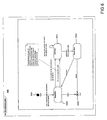
- Fig. 5 shows possible states and state transitions of the telematics device 101.
- device transition diagram 500 may be understood to show the steps involved in order to effect a software or configuration update on telematics device 101.
- the process begins at step S501 with either initial ignition of the vehicle 102, or receipt of an SMS message at the telematics device 101.
- Initial ignition or receipt of the SMS message may cause the telematics device 101 to wake up from sleep mode, or to boot up and load a management application.
- the telematics device 101 does not have an available configuration to load. This may be addressed by downloading a configuration from the SDP 106 at step S503.
- the configuration may be loaded at step S504. Every message sent from the telematics device 101 to the SDP 106 may contain a configuration identifier.
- the SDP 106 may indicate that a new configuration is available when confirming receipt of an event message from the telematics device 101.
- the telematics device 101 receives a message from the SDP 106 indicating that a new configuration is available.
- the telematics device 101 may download the new configuration from the SDP 106 at step S506.
- an additional software update may be downloaded at step S507.
- the telematics device 101 returns to S504. It may be that the telematics device 101 is shut down or deactivated at step S508.
- the telematics device 101 may delete its current configuration before shutting down.
- the telematics device 101 may receive an instruction to reset at step S509.
- the instruction to reset at step S509 may be given in various circumstances, possibly in order to resolve a problem and return the device to a default or standard configuration.
- Fig. 6 shows possible states and state transitions of the SDP 106.
- server transition diagram 600 may be understood to show the steps involved in activation and deactivation of the telematics device 101.
- the process may begin at step S601 when a user enters an identifier in order to generate a user certificate.
- the telematics device 101 is registered at S602. After verifying that the user's certificate is valid, the device can be activated at S603.
- the telematics device 101 Upon receipt of an indication or instruction, the telematics device 101 can be deactivated at step S604. Reactivating device may be achieved by sending the user certificate along with event data.
- the telematics device 101 may be deleted from the SDP 106 at S605.
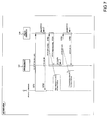
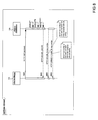
- Fig. 7 provides an example of how to activate telematics device 101.
- Activation of the telematics device 101 may be achieved using HTTP with REST semantics.
- a user may access the SDP 106.
- an HTTP message comprising a PUT command, an identifier of the telematics device 101 (deviceid), and a user identifier (pid) may be sent from the user to the SDP 106.
- SDP 106 may register the telematics device 101 and then send a confirmation message to the user at S702.
- the telematics device 101 may attempt to download a new configuration from the SDP 106. If the initial configuration request from telematics device 101 fails, new requests may be issued using an exponential backoff. Exponential backoff may be understood as continuing to double the time between retransmissions if an initial or subsequent transmission request fails ( W. Richard Stevens, "TCP/IP Illustrated Volume 1", 1994, pg. 299 ).
- the telematics device 101 may receive a configuration from the SDP 106.
- the telematics device 101 may store the received configuration.
- the telematics device 101 may initiate activation with the SDP 106. If a confirmation of the message sent at S705 is not received, the telematics device 101 may retry using exponential backoff.
- the telematics device 101 may receive confirmation of activation from the SDP 106 at S706.
- Fig. 8 describes the process of sending an event message from the telematics device 101 to the SDP 106.
- the telematics device 101 may receive satellite data from the satellite 104. Later, the telematics device 101 may process the received satellite data. Furthermore, the telematics device 101 may summarize the processed data. Summarizing may be a way of further processing the processed data.
- the telematics device 101 may send an event massage to the SDP 106.
- the event message may include an identifier for the telematics device 101, and the summarized data.
- the telematics device 101 may summarize the processed satellite data by calculating matrices, and sending a matrix at regular intervals to the SDP 106.
- a type of matrix sent from the telematics device 101 to the SDP 106 may be a speed matrix.
- the speed matrix may reflect the driving behaviour of the user 108 with regard to the driving speed in general and the speed limit in particular. The following notation may be understood to apply to the speed matrix, and, unless superseded, to the ecological driving behaviour matrix and the risk matrix as well.
- the parameter space of time x location x velocity x speed limit may be defined as R ⁇ R 3 ⁇ R 2 .
- ⁇ : R ⁇ R ⁇ R 3 ⁇ R 2 with ⁇ t : t ⁇ x ⁇ t ⁇ v ⁇ v m .
- the evaluation of the distance covered by the vehicle 102 may be realized using a general weight function ⁇ as an integral curve of the distance covered as follows:
- ⁇ is 0 when the length of the distance covered is 0.
- time dependence ⁇ depends only on the length of the time slice, i.e. the driving time period
- spatial dependence ⁇ depends only on the road category, i.e. the street category
- v m may be understood to refer to an allowed maximum velocity including an additional velocity (i.e. a total velocity), such that if the user 108 drives at the total velocity, he will incur an associated penalty. For example, if the speed limit is 50 km/h, and an associated penalty is incurred for driving 30 km/h over the speed limit, v m is 80 km/h.
- the telematics device 101 may calculate the matrix ⁇ ⁇ , and send calculated matrices at regular intervals to the SDP 106.
- the matrices will be processed according to equation (5). This may of the advantage that the configuration of parameters for each speed matrix is carried out at the SDP 106.
- Each successive row of the speed matrix ⁇ ⁇ may correspond to driving performed at an increasing speed limit.
- each successive column of the speed matrix may correspond to an increasing velocity range.
- the speed limit and the velocity range may be understood as circumstances of movement.
- each entry in the speed matrix may represent a distance travelled in an area with the speed limit defined by the row, and where the vehicle 102 was driving at a speed in the velocity range defined by the column.
- Each successive row of the matrix above represents a 50 km/h difference in speed limit (from 50 km/h at the first row to 150 km/h at the third row).
- Each successive column represents a 50 km/h difference in speed range (from 0-50 km/h at the first column to 100-150 km/h as an example of a circumstance of movement at the third column). Consequently, the pair of circumstances of movement for the matrix entry at row 1 column 1 are a velocity range of 0-50 km/h and a speed limit of 50 km/h, where the value of the matrix entry is 21 km.
- the vehicle 102 was driven 119 km in the time slice covered by the matrix, i.e. the plurality of matrix entries defines the distance covered by the device during the time period as 119 km.
- a time slice may be understood as a predetermined period (e.g. a day, or two days).
- the entry at row 1, column 1 indicates that 21 km were covered at a speed between 0 and 50 km/h (where the range of 0 to 50km/h is an exemplary circumstance of movement), in an area where the legally prescribed speed limit is 50 km/h (where the speed limit of 50 km/h is an exemplary circumstance of movement).
- column 1 shows that the vehicle 102 was driven 56 km at a speed between 0 and 50 km/h, in an area where the speed limit is 100 km/h (the speed range of 0 to 50 km/h and the speed limit of 50 km/h are examples of circumstances of movement).
- the entry at row 1, column 2 shows that the vehicle 102 was driven 12 km at a speed of between 50 and 100 km/h, in an area where the legally prescribed speed limit is 50 km/h.
- the 12 km represented in row 1, column 2, the 13 km represented in row 1, column 3 and the 3 km represented in row 2, column 3 of the matrix above indicate speed limit violations. Since the vehicle was not driven in an area with a speed limit of 150 km/h, this row of the matrix is filled with 0s.
- the intervals are large and the matrix is small for illustrative purposes.
- Another implementation might include intervals for rows and columns of less than 10 km/h.
- the speed matrix might have at least 15 rows and/or at least 15 columns and 225 entries.
- the speed matrices ⁇ ⁇ calculated by telematics device 101 may be generated using code based on the pseudocode in Table 2.
- Additional code may be used to upload the matrix to the SDP 106 and reset the values of the matrix to 0.
- a weighted speed matrix ⁇ ⁇ may be calculated at the SDP 106.
- ⁇ ⁇ may have the following restrictions:
- restriction (4 - threshold value) may have the effect of increasing the efficiency of calculating ⁇ ⁇ .
- Equation (1) the velocity measurement of s , may be linear with respect to the distance covered. This may be understood to mean that a substantial distance (i.e. a large number of kilometres covered) results in a substantial (i.e. high) velocity measurement.
- Equation (6) may be referred to as the velocity score of s .
- the velocity score may be used as the basis for further analysis and may influence fees changed by the service provider 107 to the customer 108.
- Another type of matrix sent from the telematics device 101 to the SDP 106 may be a matrix summarizing ecological driving behaviour, i.e. the ecological matrix.
- the ecological matrix may reflect the driving behaviour of the user 108 with regard to fuel consumption, where fuel consumption may be a function of the velocity of the vehicle 102 and the acceleration of the vehicle 102 (including negative acceleration).
- the rate of acceleration may be determined using a sensor in the vehicle 102.
- the rate of acceleration could also be calculated based on a change in velocity over a period of time.
- the parameter space of velocity x acceleration may be defined as R ⁇ R .
- ⁇ : R ⁇ R ⁇ R with ⁇ ( t ) : ( v , a ).
- An evaluation of the distance covered by the vehicle 102 may be realized using a general weight function ⁇ as an integral curve of the distance covered as follows:
- ⁇ is linear relative to position components of the distance covered.
- ⁇ is 0 when the distance covered is 0.
- equation (8) defines a decomposition of s . It is possible that a min can be less than 0, since negative acceleration (i.e. braking) can occur. This contrasts with velocity, which is always positive.
- the matrix ⁇ is defined the same way as ⁇ ⁇ in equation (5).
- Each successive row of the ecological matrix ⁇ may correspond to driving performed at an increasing velocity range.
- each successive column of the ecological driving behaviour matrix may correspond to an increasing acceleration.
- each entry in the ecological driving behaviour matrix may correspond to a distance driven in a specified range of velocities, at a specific rate (or level) of acceleration.
- the velocity range and the rate of acceleration may be understood as circumstances of movement.
- Each successive row differs from the previous row by 50km/h, i.e. there are 50 km/h steps between the rows.
- the first row defines a velocity range of 0-50 km/h, where the velocity range of 0-50 km/h is an exemplary circumstance of movement.
- the second row defines a velocity range of 50-100 km/h
- the third row defines a range of 100-150 km/h, where the velocity ranges of 50-100 km/h and 100-150 km/h are exemplary circumstances of movement.
- Each successive column differs from the previous column by 1 m/s 2 , with a minimum value of -4m/s 2 (column 1) and a maximum value of 4 m/s 2 (column 9).
- the values of -4m/s 2 (column 1) and 4 m/s 2 (column 9) are exemplary circumstances of movement.
- Each entry in the matrix defines a number of kilometres driven within the velocity range defined by the row and at the acceleration defined by the column. Consequently, the pair of circumstances of movement for the matrix entry at row 1 column 1 are a velocity range of 0-50 km/h and a negative acceleration of -4 m/s 2 , and the value of the matrix entry is 0.
- the vehicle 102 was driven 267 km in the time slice for which the matrix is defined (i.e. the time slice covered by the matrix). This can be determined simply by adding up the values in the matrix. Furthermore, the entry in row 2, column 5 of the matrix above shows that the vehicle 102 was driven 100 km at a velocity (i.e. speed) of between 50-100 km/h with an acceleration of less than 1 m/s 2 . In addition, the entry at row 3, column 1 of the matrix above shows that the vehicle 102 was driven 1 km at a velocity of between 100-150 km/h with an acceleration of -4m/s 2 .
- the ecological matrix it is not necessary for the ecological matrix to be symmetrical. For example, it may be advisable to define columns beginning with a minimum value of -10m/s 2 , i.e. the maximum deceleration of a vehicle with the brakes fully applied, and ending with a maximum value of 6 m/s 2 , which corresponds to a vehicle accelerating from 0 to 100 km/h in 5 seconds. In normal traffic situations, acceleration of up to 2 m/s 2 and deceleration of not less than -2 m/s 2 is customary.
- the ecological matrix may be calculated using code based on pseudocode shown in Table 3.
- the acceleration of the vehicle 102 is calculated based on a change of the velocity of the vehicle 102.
- other implementations e.g. the use of a sensor to detect the acceleration of the vehicle 102, are possible.
- Additional code may be used to upload the ecological matrix A to the SDP 106 and reset the values of the matrix entries to 0.
- a weighted ecological matrix ⁇ may be calculated at the SDP 106.
- ⁇ may have the following restrictions:
- Restriction (4) reflects the information that most passenger cars, when driven at a velocity of between e.g. 70-100km/h, consume a low amount of fuel.
- Equation (9) may be referred to as the ecological score of s .
- the ecological score may be used as a basis for further analyis and may influence fees charged by the service provider 107 to the customer 108.
- Yet another type of matrix sent from the telematics device 101 to the SDP 106 may be a matrix summarizing (or aggregating) risks corresponding to categories of roads on which the vehicle 102 is driven and risks corresponding to times of day the vehicle 102 is driven (i.e. the risk matrix).
- a road category and a time of day the vehicle 102 is driven may be understood as a pair of circumstances of movement.
- the road category of a road corresponding to a position may be determined based on whether the road is in a city (i.e. urban area) or outside of a city.
- the risk matrix may be defined as follows.
- ⁇ ⁇ : l ( ⁇ ⁇ ) be a measure of the distance covered (or traversed) in a time period (i.e. time slice) ⁇ on a road with corresponding category ⁇ .
- Equation (10) defines the risk measurement of s .
- the matrix P ⁇ has the following property: P ⁇ ⁇ ⁇ is not negative , i . e . P ⁇ ⁇ ⁇ ij ⁇ 0 ⁇ i , j
- Equation (10) corresponds linearly to the distance covered. This means that a large distance covered (i.e. a substantial number of kilometres) results in a high risk measurement.
- the risk score may influence fees charged by the service provider 107 to the user 108.
- the risk matrix may be implemented on the telematics device 101 using code based on the pseudocode in Table 4.
- Additional code may be used to upload the risk matrix to the SDP 106 and reset the values of the matrix entries to 0.
- the speed matrix, the ecological matrix, and the risk matrix may each include a plurality of matrix entries.
- Each matrix entry may be composed of a plurality of elements.
- the entry at row 2, column 1 of the speed matrix has the value 56 km.
- 56 km may be understood as the distance covered under the pair of circumstances of movement defined by row 2, column 1 (i.e. a speed limit of 100 km/h and a speed range of between 0-50 km/h).
- a time period, programmed into the device, is defined as one day.
- the matrix entry with the value of 56 km is composed of 3 elements. The first element was recorded in the matrix entry when the user 108 drove the vehicle 102 20km at 40 km/h in an area where the speed limit was 100 km/h.
- the second element was recorded later in the time period when the user 108 drove the vehicle 102 20km at 30 km/h in a different area where the speed limit was also 100 km/h.
- the third element was recorded even later in the time period when the user 108 drove the vehicle 102 16km at 35 km/h in yet another area where the speed limit was 100 km/h.
- Other elements of different matrix entries may have been recorded while the elements of the example were recorded.
- position data is uploaded to the SDP 106 along with one or more matrices.
- the position data may be uploaded when the user performs an action with an associated consequence.
- the action may be risky driving behaviour (e.g. exceeding a speed limit), driving behaviour with adverse environmental consequences (e.g. a high rate of acceleration), driving in a dangerous area (e.g. an icy area) or driving at a dangerous time of day (e.g. at night).
- the consequence may be an increase in the fee changed to the user 108 by the service provider 107.
- the position data may be encrypted with a secret key of the user. Encrypting position data with the secret key of the user may have the effect of protecting the privacy of the user.
- the user 108 may choose to allow the SDP 106 or the service provider 107 to decrypt the position data in order to avoid paying additional fees (e.g. the user may be able to use the position data to show that he was not at the position at the time the action occurred).
- the SDP 106 may confirm receipt of the event message at S802.
- the SDP 106 may provide a URL for a new configuration for telematics device 101.
- the URL may be used to download the new configuration.
- a code may be provided in the message sent at S803 to indicate that the data sent at S801 was accepted and processed.
- a message may be sent at S804 indicating whether a new configuration is available for download by the telematics device 101, and that the event data sent at S801 could not be processed.
- the SDP 106 aggregates data from several telematics devices (including telematics device 101) and performs statistical analysis on the aggregated data before forwarding the aggregated data to the service provider 107.
- the statistical analysis performed by the SDP 106 may involve aggregation of data similar to the aggregation described above in connection with the three exemplary matrices (i.e. the matrices for speed, ecological driving behaviour, and risk).
- One distinguishing feature of the statistical analysis performed at the SDP 106 may be that it takes place over a longer time period, e.g. a week. For example, 7 risk matrices from the telematics device 101 can be sent to the SDP 106 over the course of a week. At the end of the week, the SDP 106 aggregates the 7 matrices into one matrix (possibly by adding up the corresponding values), and then sends the result to the service provider 107.
- the SDP 106 stores the speed, ecological, and risk matrices.
- the matrices may be sparse, since some drivers do not drive in the early morning, and entries corresponding to this time slice may all be 0. Also, a number of speeding violations, e.g. 100 km/h in the centre of a city, are rare. It may be advisable to compress the matrices with sparse block compressed row storage or Harwell-Boeing format before storing the matrices, and possibly before transmitting the matrices from the telematics device 101 to the SDP 106. Thus, it may be possible to reduce bandwidth consumed by sending matrices by compressing the matrices (e.g. eliminating or reducing matrix entries with a value of 0) or not sending matrices when the matrix entries are all 0.
- the speed, ecological and risk matrices may be transmitted from the telematics device 101 to the SDP 106 in XML format.
- matrix data may be transmitted in an XML list format.
- the 3 row and 9 column ecological matrix A from the example above may be represented as shown in Table 5:
- a binary XML format and/or a compression utility may be used.
- WBXML possibly in combination with the compression utility, could be suitable.
- a compression ratio of 20% with WBXML and 40-50% with the compression utility may be realistic.
- a further alternative may be the use of ASN.1 instead of XML.
- the use of the compression utility may be particularly helpful in reducing the quantity of data transmitted, there may be performance considerations due to the demands of compression and decompression on the telematics device 101.
- the speed, ecological and risk matrices may be sent individually or combined into a multidimensional matrix.
- a three dimensional matrix in particular a three dimensional speed matrix might include 7 one day times slices, with a two dimensional matrix for each time slice.
- the three dimensional matrix would include 7 two dimensional matrices.
- a four dimensional matrix might include multiple three dimensional matrices, such as multiple three dimensional speed matrices for each road category.
- the four dimensional matrix may include two entries, one for a city road category, and one for a non-city road category. Each entry may include multiple three dimensional matrices.
- Fig. 9 shows an exemplary display of data that may be transmitted from SDP 106 to the service provider 107.
- the data may have been received from a plurality of telematics devices, possibly including telematics device 101.
- the data may include speed limit violation data 901, ecological driving behaviour data 902, and driving risk factor data 903.
- Speed limit violation data 901 may include accumulated marginal speed limit violations, or "soft facts", which may be measured as percentages.
- speed limit violation data 901 may include significant speed limit violations or "hard facts", which may be provided individually.
- the measurement of ecological driving behaviour data 902 may provide a record of predetermined events. For example, instances of high acceleration may be recorded along with periods when the vehicle 102 is driven into an environmental zone.
- Driving risk factor data 903 may record driving in areas or at times (e.g. at night) when accidents frequently occur.
- Fig. 10 graphically depicts possible benefits of using the telematics device 101.
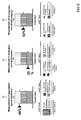
- Figs. 11, 12 and 13 depict different aspects of a speed display. Similar displays, with corresponding settings and extended displays, may be provided to depict ecological driving behavior, road category risk, and risk relative to the time of day the vehicle 102 is driven.
- Fig. 11 depicts an exemplary speed display 120 of the GUI of the telematics device 101.
- the speed display 120 includes a speed limit indicator 122 against a white background 124.
- the white background 124 of the speed limit indicator 122 may be understood to indicate that the vehicle 102 is moving at a velocity within a speed limit corresponding to a location of the vehicle 102.
- a velocity indicator 126 shows that the velocity of the vehicle 102 is 48 km/h.
- An error control input element 127 allows the user 108 to record violations (e.g. speed limit violations) that are not reported by the telematics device 101.
- a GPS status indicator 128 indicates a status of a signal from the satellite 104.
- a settings input element 130 may be used to show a settings display, e.g. the settings display 180 depicted in Fig. 17 , on the telematics device 101.
- An X input element 132 may be used to close the GUI and the driving analysis application on the telematics device 101. Accessing the X input element 132 may have the effect of stopping the performance of driving analysis functions on the telematics device 101, as described in the present application.
- Fig. 12 depicts an exemplary warning display 140 of the GUI of the telematics device 101.
- the warning display 140 may be understood as a variation of the speed display 120.
- the speed limit indicator 142 is displayed against a yellow background 144.
- the yellow background 144 may be understood to indicate that a velocity of the vehicle 102 exceeds a speed limit corresponding to a location of the vehicle 102.
- the velocity of the vehicle 102 is within a preset tolerance of 5 km/h.
- the preset tolerance may be modified as discussed in connection with Fig. 17 .
- a velocity indicator 146 shows that the velocity of the vehicle 102 is 51 km/h.
- the speed limit indicator 142 indicates that the speed limit corresponding to the location of the vehicle 102 is 50 km/h. Similar to the speed display 120, the warning display 140 includes the error control input element 127, a GPS status indicator 148, and the settings input element 130. The display 140 also includes the X input element 132.
- Fig. 13 shows an exemplary alert display 160 of the GUI of the telematics device 101.
- the alert display 160 may be understood as a variation of the speed display 120.
- the speed limit indicator 162 is displayed against a red background 164.
- the red background 164 may be understood to indicate that a velocity of the vehicle 102 exceeds a speed limit corresponding to a location of the vehicle 102, and that the velocity is outside the preset tolerance of 5 km/h.
- 5 km/h is an exemplary preset tolerance and may be modified.
- the telematics device 101 may emit audio feedback 103, indicating that a velocity outside the preset tolerance has been detected.
- the audio feedback 103 may be an audio signal such as a beep.
- the audio feedback may indicate adverse consequence for the user 108, such as an increased insurance premium or an administrative fine.
- a velocity indicator 166 shows that the speed of the vehicle 102 is 56 km/h.
- the speed limit indicator 162 shows that the speed limit corresponding to a location of the vehicle 102 is 50 km/h.
- the alert display 160 includes an error control input element 127, a GPS status indicator 168, a settings input element 130, and an X input element 132.
- Fig. 14 depicts the exemplary settings display 180 of the GUI of the telematics device 101.
- the settings display 180 may be shown after the user 108 clicks (or presses) the settings input element 130.
- the settings display 180 includes three columns and may be used to adjust the tolerance in time and velocity before the alert display 160, is shown.
- the alert display may be accompanied by audio feedback 103.
- the leftmost column of the settings display 180 shows a list of velocities in descending order, each entry corresponding to a speed limit relative to a location of the vehicle 102.
- the next two columns include headers "Sec" and "Km/h".
- the arrows on both sides of the entries in the "Sec” column and the "Km/h” column allow the entries to be increased or decreased.
- the entries in the "Sec” column refer to a seconds tolerance, i.e. a number of seconds a violation is detected before the alert display 160 is shown.
- the entries in the Km/h column refer to a speeding tolerance, i.e. a number of km/h the speed limit is exceeded before the alert display 160 is shown.
- the seconds tolerance and the speeding tolerance may be collectively referred to as tolerance values. It may be that a restart of the driving analysis application is required before changes to the tolerance values take effect.
- a cancel input element 184 may be used to return to the speed display 120, without saving any changes to the tolerance values.
- a save input element 186 may be used to record changes to the tolerance values and return to the speed display 120.
- the row 182 shows that if a speed limit is 80 km/h, the vehicle 102 must exceed the speed limit by at least 5 km/h for at least 5 seconds before the alert display 160 is shown. Accordingly, if the vehicle 102 exceeds the speed limit for less than 5 seconds or by less than 5 km/h, the warning display 140 is shown.
- a data transfer input element 183 (e.g. a checkbox) may be provided.
- the data transfer input element 183 may allow the user 108 to select whether data will be transferred from the telematics device 101 to the SDP 106.
- Fig. 15 shows an example of an extended speed display 220.
- the extended speed display 220 depicts a city indicator 222 and an limit indicator 224.
- the city indicator 222 indicates whether the vehicle 102 is located in an urban area.
- the limit indicator 224 indicates the speed limit corresponding to a location of the vehicle 102.
- the FC (Function Class) indicator 225 may refer to a road category corresponding to a location of the vehicle 102.
- Fig. 16 shows an example of an extended settings display 240.
- the extended settings display 240 provides an extended display input element 242 (e.g. a checkbox) that allows a user to select whether or not extended information, as depicted in Figs. 18 and 20, should be shown.
- the data transfer input element 243 may allow the user 108 to select whether data will be transferred from the telematics device 101 to the SDP 106.
- Fig. 17 shows an example of an extended alert display 260.
- the extended alert display 260 includes a city indicator 262, a fee indicator 264, a penalty indicator 266, a violation indicator 268, and a points indicator 270. Similar to the alert display 160, the extended alert display 260 may be accompanied by audio feedback 103.
- the city indicator 262 indicates whether the vehicle 102 is in an urban area.
- the fee indicator 264 shows the administrative fine corresponding to a violation depicted by the violation indicator 268. According to the example of Fig. 20, the violation is that the vehicle 102 exceeded a speed limit of 50 km/h by moving at a speed of 81 km/h, i.e. the vehicle 102 exceeded the speed limit by 31 km/h.
- the administrative fine may be understood as the fine prescribed by law for the violation.
- the penalty indicator 266 shows an additional penalty that may be prescribed for the violation.
- the fee indicator 264 shows that the violation calls for a fine of 160 € and the penalty indicator 266 shows that the violation calls for a 1 month suspension of the driver's license of the user 108.
- the points indicator 270 shows that the violation calls for 3 points to be recorded on the driver's license of the user 108.
- the telematics device 101 may also be configured to display a table of fines and penalties corresponding to violations in a locality.
- the GUI of the telematics device 101 may also be configured to display index or summary information, similar to the information depicted in Fig. 9 .
Landscapes
- Physics & Mathematics (AREA)
- General Physics & Mathematics (AREA)
- Chemical & Material Sciences (AREA)
- Analytical Chemistry (AREA)
- Traffic Control Systems (AREA)
- Telephonic Communication Services (AREA)
- Telephone Function (AREA)
- Navigation (AREA)
- Mobile Radio Communication Systems (AREA)
Priority Applications (18)
| Application Number | Priority Date | Filing Date | Title |
|---|---|---|---|
| EP09011182.4A EP2290633B1 (de) | 2009-08-31 | 2009-08-31 | Computerimplementiertes Verfahren zur Gewährleistung der Privatsphäre eines Benutzers, Computerprogramm und Vorrichtung |
| ES09011182.4T ES2561803T3 (es) | 2009-08-31 | 2009-08-31 | Método implementado por ordenador para asegurar la privacidad de un usuario, producto de programa de ordenador, dispositivo |
| US12/653,976 US8406988B2 (en) | 2009-08-31 | 2009-12-18 | Computer-implemented method for ensuring the privacy of a user, computer program product, device |
| KR1020127008375A KR101767537B1 (ko) | 2009-08-31 | 2010-08-06 | 사용자의 사생활을 보장하는 컴퓨터 구현 방법, 컴퓨터 프로그램 제품 및 장치 |
| CN201080038857.2A CN102498505B (zh) | 2009-08-31 | 2010-08-06 | 用于确保用户隐私的计算机实现方法及装置 |
| BR112012008157-8A BR112012008157B1 (pt) | 2009-08-31 | 2010-08-06 | método implementado em computador para garantir a privacidade de um usuário, dispositivo de telemática de veículo e dispositivo móvel |
| HK12107895.7A HK1167277B (en) | 2009-08-31 | 2010-08-06 | Computer-implemented method and device for ensuring the privacy of a user |
| PCT/EP2010/004838 WO2011023284A1 (en) | 2009-08-31 | 2010-08-06 | Computer-implemented method for ensuring the privacy of a user, computer program product, device |
| AU2010288952A AU2010288952B2 (en) | 2009-08-31 | 2010-08-06 | Computer-implemented method for ensuring the privacy of a user, computer program product, device |
| MX2012002488A MX2012002488A (es) | 2009-08-31 | 2010-08-06 | Metodo implementado por computadora, programa de computacion y dispositivo que aseguran la privacidad del usuario. |
| JP2012525900A JP5763074B2 (ja) | 2009-08-31 | 2010-08-06 | ユーザのプライバシーを確保する、コンピュータで実装される方法、コンピュータプログラム製品、デバイス |
| RU2012111208/08A RU2551798C2 (ru) | 2009-08-31 | 2010-08-06 | Способ и устройство для обеспечения защиты личных данных пользователя |
| CA2772421A CA2772421C (en) | 2009-08-31 | 2010-08-06 | Computer-implemented method for ensuring the privacy of a user, computer program product, device |
| SG2012011771A SG178516A1 (en) | 2009-08-31 | 2010-08-06 | Computer-implemented method for ensuring the privacy of a user, computer program product, device |
| US13/393,118 US8825358B2 (en) | 2009-08-31 | 2010-08-06 | Computer-implemented method for ensuring the privacy of a user, computer program product, device |
| TW099129274A TWI547820B (zh) | 2009-08-31 | 2010-08-31 | 可確保使用者隱私之電腦實施方法、電腦程式產品及裝置 |
| ARP100103189 AR078011A1 (es) | 2009-08-31 | 2010-08-31 | Metodo implementado por computadora, programa de computacion y dispositivo que aseguran la privacidad del usuario |
| ZA2012/01481A ZA201201481B (en) | 2009-08-31 | 2012-02-28 | Computer-implemented method for ensuring the privacy of a user, computer program product, device |
Applications Claiming Priority (1)
| Application Number | Priority Date | Filing Date | Title |
|---|---|---|---|
| EP09011182.4A EP2290633B1 (de) | 2009-08-31 | 2009-08-31 | Computerimplementiertes Verfahren zur Gewährleistung der Privatsphäre eines Benutzers, Computerprogramm und Vorrichtung |
Publications (2)
| Publication Number | Publication Date |
|---|---|
| EP2290633A1 true EP2290633A1 (de) | 2011-03-02 |
| EP2290633B1 EP2290633B1 (de) | 2015-11-04 |
Family
ID=41620608
Family Applications (1)
| Application Number | Title | Priority Date | Filing Date |
|---|---|---|---|
| EP09011182.4A Active EP2290633B1 (de) | 2009-08-31 | 2009-08-31 | Computerimplementiertes Verfahren zur Gewährleistung der Privatsphäre eines Benutzers, Computerprogramm und Vorrichtung |
Country Status (16)
| Country | Link |
|---|---|
| US (2) | US8406988B2 (de) |
| EP (1) | EP2290633B1 (de) |
| JP (1) | JP5763074B2 (de) |
| KR (1) | KR101767537B1 (de) |
| CN (1) | CN102498505B (de) |
| AR (1) | AR078011A1 (de) |
| AU (1) | AU2010288952B2 (de) |
| BR (1) | BR112012008157B1 (de) |
| CA (1) | CA2772421C (de) |
| ES (1) | ES2561803T3 (de) |
| MX (1) | MX2012002488A (de) |
| RU (1) | RU2551798C2 (de) |
| SG (1) | SG178516A1 (de) |
| TW (1) | TWI547820B (de) |
| WO (1) | WO2011023284A1 (de) |
| ZA (1) | ZA201201481B (de) |
Cited By (3)
| Publication number | Priority date | Publication date | Assignee | Title |
|---|---|---|---|---|
| CN104648249A (zh) * | 2015-01-16 | 2015-05-27 | 杰发科技(合肥)有限公司 | 一种挪车通知系统及处理芯片 |
| CN105245244A (zh) * | 2015-10-27 | 2016-01-13 | 无锡卡驾网络科技有限公司 | 一种用于挪车的专用通讯设备及通讯方法 |
| JP2019531544A (ja) * | 2016-09-27 | 2019-10-31 | インテル・コーポレーション | ブロックチェーンデータ分析を用いた、信頼度の高い車両テレマティクス |
Families Citing this family (51)
| Publication number | Priority date | Publication date | Assignee | Title |
|---|---|---|---|---|
| US6587781B2 (en) | 2000-08-28 | 2003-07-01 | Estimotion, Inc. | Method and system for modeling and processing vehicular traffic data and information and applying thereof |
| US7620402B2 (en) | 2004-07-09 | 2009-11-17 | Itis Uk Limited | System and method for geographically locating a mobile device |
| US11482058B2 (en) | 2008-09-09 | 2022-10-25 | United Parcel Service Of America, Inc. | Systems and methods for utilizing telematics data to improve fleet management operations |
| US8416067B2 (en) | 2008-09-09 | 2013-04-09 | United Parcel Service Of America, Inc. | Systems and methods for utilizing telematics data to improve fleet management operations |
| EP2290633B1 (de) * | 2009-08-31 | 2015-11-04 | Accenture Global Services Limited | Computerimplementiertes Verfahren zur Gewährleistung der Privatsphäre eines Benutzers, Computerprogramm und Vorrichtung |
| US20120066007A1 (en) * | 2010-09-14 | 2012-03-15 | Ferrick David P | System and Method for Tracking and Sharing Driving Metrics with a Plurality of Insurance Carriers |
| US20120072533A1 (en) * | 2010-09-20 | 2012-03-22 | Agco Corporation | Dynamic service generation in an agricultural service architecture |
| US9126545B2 (en) * | 2011-02-25 | 2015-09-08 | GM Global Technology Operations LLC | Vehicle systems activation methods and applications |
| US9953468B2 (en) | 2011-03-31 | 2018-04-24 | United Parcel Service Of America, Inc. | Segmenting operational data |
| US9208626B2 (en) | 2011-03-31 | 2015-12-08 | United Parcel Service Of America, Inc. | Systems and methods for segmenting operational data |
| US20130006674A1 (en) | 2011-06-29 | 2013-01-03 | State Farm Insurance | Systems and Methods Using a Mobile Device to Collect Data for Insurance Premiums |
| GB2492369B (en) | 2011-06-29 | 2014-04-02 | Itis Holdings Plc | Method and system for collecting traffic data |
| US10977601B2 (en) | 2011-06-29 | 2021-04-13 | State Farm Mutual Automobile Insurance Company | Systems and methods for controlling the collection of vehicle use data using a mobile device |
| DK2648170T3 (en) * | 2012-04-06 | 2015-02-23 | Kapsch Trafficcom Ag | METHOD OF DETECTING A VEHICLE SPEED Violation |
| US9053516B2 (en) | 2013-07-15 | 2015-06-09 | Jeffrey Stempora | Risk assessment using portable devices |
| US9361650B2 (en) | 2013-10-18 | 2016-06-07 | State Farm Mutual Automobile Insurance Company | Synchronization of vehicle sensor information |
| US9892567B2 (en) | 2013-10-18 | 2018-02-13 | State Farm Mutual Automobile Insurance Company | Vehicle sensor collection of other vehicle information |
| US9262787B2 (en) | 2013-10-18 | 2016-02-16 | State Farm Mutual Automobile Insurance Company | Assessing risk using vehicle environment information |
| US8954226B1 (en) | 2013-10-18 | 2015-02-10 | State Farm Mutual Automobile Insurance Company | Systems and methods for visualizing an accident involving a vehicle |
| US9805521B1 (en) | 2013-12-03 | 2017-10-31 | United Parcel Service Of America, Inc. | Systems and methods for assessing turns made by a vehicle |
| FR3021147B1 (fr) * | 2014-05-16 | 2017-12-22 | Thales Sa | Dispositif de controle des donnees portees par un equipement embarque, systeme de collecte de taxe et procede associes |
| US10373259B1 (en) | 2014-05-20 | 2019-08-06 | State Farm Mutual Automobile Insurance Company | Fully autonomous vehicle insurance pricing |
| US10354330B1 (en) | 2014-05-20 | 2019-07-16 | State Farm Mutual Automobile Insurance Company | Autonomous feature use monitoring and insurance pricing |
| US11669090B2 (en) | 2014-05-20 | 2023-06-06 | State Farm Mutual Automobile Insurance Company | Autonomous vehicle operation feature monitoring and evaluation of effectiveness |
| US10185999B1 (en) | 2014-05-20 | 2019-01-22 | State Farm Mutual Automobile Insurance Company | Autonomous feature use monitoring and telematics |
| US10319039B1 (en) | 2014-05-20 | 2019-06-11 | State Farm Mutual Automobile Insurance Company | Accident fault determination for autonomous vehicles |
| US9972054B1 (en) | 2014-05-20 | 2018-05-15 | State Farm Mutual Automobile Insurance Company | Accident fault determination for autonomous vehicles |
| US10599155B1 (en) | 2014-05-20 | 2020-03-24 | State Farm Mutual Automobile Insurance Company | Autonomous vehicle operation feature monitoring and evaluation of effectiveness |
| US9786154B1 (en) | 2014-07-21 | 2017-10-10 | State Farm Mutual Automobile Insurance Company | Methods of facilitating emergency assistance |
| US10241509B1 (en) | 2014-11-13 | 2019-03-26 | State Farm Mutual Automobile Insurance Company | Autonomous vehicle control assessment and selection |
| KR101663114B1 (ko) * | 2015-01-21 | 2016-10-07 | 현대자동차주식회사 | 차량용 멀티미디어 단말기 및 그의 데이터 처리 방법 |
| US10309788B2 (en) | 2015-05-11 | 2019-06-04 | United Parcel Service Of America, Inc. | Determining street segment headings |
| US9845097B2 (en) * | 2015-08-12 | 2017-12-19 | Ford Global Technologies, Llc | Driver attention evaluation |
| US11107365B1 (en) | 2015-08-28 | 2021-08-31 | State Farm Mutual Automobile Insurance Company | Vehicular driver evaluation |
| US10706642B2 (en) * | 2015-09-24 | 2020-07-07 | Ford Global Technologies, Llc | Efficient telematics data upload |
| JP6274177B2 (ja) * | 2015-10-19 | 2018-02-07 | トヨタ自動車株式会社 | 車両制御システム |
| US11242051B1 (en) | 2016-01-22 | 2022-02-08 | State Farm Mutual Automobile Insurance Company | Autonomous vehicle action communications |
| US10503168B1 (en) | 2016-01-22 | 2019-12-10 | State Farm Mutual Automotive Insurance Company | Autonomous vehicle retrieval |
| US11719545B2 (en) | 2016-01-22 | 2023-08-08 | Hyundai Motor Company | Autonomous vehicle component damage and salvage assessment |
| US10134278B1 (en) | 2016-01-22 | 2018-11-20 | State Farm Mutual Automobile Insurance Company | Autonomous vehicle application |
| US10324463B1 (en) | 2016-01-22 | 2019-06-18 | State Farm Mutual Automobile Insurance Company | Autonomous vehicle operation adjustment based upon route |
| US10395332B1 (en) | 2016-01-22 | 2019-08-27 | State Farm Mutual Automobile Insurance Company | Coordinated autonomous vehicle automatic area scanning |
| US11441916B1 (en) | 2016-01-22 | 2022-09-13 | State Farm Mutual Automobile Insurance Company | Autonomous vehicle trip routing |
| US9940834B1 (en) | 2016-01-22 | 2018-04-10 | State Farm Mutual Automobile Insurance Company | Autonomous vehicle application |
| DE102016201162B4 (de) * | 2016-01-27 | 2018-10-18 | Bayerische Motoren Werke Aktiengesellschaft | Übermitteln einer anzuzeigenden Nachricht an eine Anzeigeeinrichtung eines Kraftfahrzeugs |
| CN105893061A (zh) * | 2016-06-12 | 2016-08-24 | 杭州勒芒科技有限公司 | 应用程序开发方法及系统 |
| KR102598613B1 (ko) | 2016-07-21 | 2023-11-07 | 삼성전자주식회사 | 개인 인증 및 차량 인증 기반으로 차량 정보를 제공하는 시스템 및 방법 |
| US10650621B1 (en) | 2016-09-13 | 2020-05-12 | Iocurrents, Inc. | Interfacing with a vehicular controller area network |
| US10579542B2 (en) * | 2017-05-10 | 2020-03-03 | Revbits, LLC | Browser session storage as storage for private key in public-key encryption schema |
| JP2018198038A (ja) * | 2017-05-25 | 2018-12-13 | ソニー株式会社 | 情報処理装置、情報処理方法及びコンピュータプログラム |
| DE102022004632B3 (de) * | 2022-12-12 | 2024-03-21 | Mercedes-Benz Group AG | Verfahren zur Verschlüsselung eines Klartextes |
Citations (5)
| Publication number | Priority date | Publication date | Assignee | Title |
|---|---|---|---|---|
| US20050021223A1 (en) * | 2003-04-15 | 2005-01-27 | United Parcel Service Of America, Inc. | Rush hour modeling for routing and scheduling |
| FR2866727A1 (fr) * | 2004-01-30 | 2005-08-26 | Sofide | Procede pour la saisie d'informations se rapportant a un itineraire devant etre emprunte par un vehicule routier. |
| FR2900728A1 (fr) * | 2006-05-04 | 2007-11-09 | Peugeot Citroen Automobiles Sa | Procede et dispositif d'information routiere utilisant des profils de vitesse pour chaque route |
| EP1918895A2 (de) * | 2002-08-29 | 2008-05-07 | Itis Holdings Plc | Vorrichtung und Verfahren zur Bereitstellung von Verkehrsinformation |
| DE102008017568A1 (de) * | 2007-10-26 | 2009-04-30 | Siemens Aktiengesellschaft | Verfahren und Verkehrsnachfrage-Analyseeinheit zur Bestimmung von Quelle-Ziel-Nachfragedaten von Verkehrsflüssen |
Family Cites Families (29)
| Publication number | Priority date | Publication date | Assignee | Title |
|---|---|---|---|---|
| US5797134A (en) * | 1996-01-29 | 1998-08-18 | Progressive Casualty Insurance Company | Motor vehicle monitoring system for determining a cost of insurance |
| US7791503B2 (en) * | 1997-10-22 | 2010-09-07 | Intelligent Technologies International, Inc. | Vehicle to infrastructure information conveyance system and method |
| US7228211B1 (en) * | 2000-07-25 | 2007-06-05 | Hti Ip, Llc | Telematics device for vehicles with an interface for multiple peripheral devices |
| US20030130893A1 (en) * | 2000-08-11 | 2003-07-10 | Telanon, Inc. | Systems, methods, and computer program products for privacy protection |
| JP2002133586A (ja) * | 2000-10-30 | 2002-05-10 | Matsushita Electric Ind Co Ltd | 情報送受信システムおよび情報送受信方法 |
| JP3679788B2 (ja) * | 2000-11-16 | 2005-08-03 | 株式会社エヌ・ティ・ティ・ドコモ | 移動状況情報提供方法及びサーバ |
| US6690294B1 (en) * | 2001-07-10 | 2004-02-10 | William E. Zierden | System and method for detecting and identifying traffic law violators and issuing citations |
| US7174243B1 (en) * | 2001-12-06 | 2007-02-06 | Hti Ip, Llc | Wireless, internet-based system for transmitting and analyzing GPS data |
| US6832140B2 (en) * | 2002-03-08 | 2004-12-14 | At Road, Inc. | Obtaining vehicle usage information from a remote location |
| JP2003344053A (ja) | 2002-05-29 | 2003-12-03 | Pioneer Electronic Corp | 情報記録装置、情報記録方法、情報記録用プログラム及び情報記録媒体 |
| RU2225302C1 (ru) * | 2003-06-09 | 2004-03-10 | Общество с ограниченной ответственностью "Альтоника" | Информационно-охранный комплекс для мониторинга и защиты транспортных средств и объектов недвижимости от несанкционированного использования |
| RU2228862C1 (ru) * | 2003-08-14 | 2004-05-20 | Общество с ограниченной ответственностью "Альтоника" | Информационно-охранный комплекс для транспортных средств |
| US7302369B2 (en) * | 2003-10-10 | 2007-11-27 | Mitsubishi Electric Research Laboratories, Inc. | Traffic and geometry modeling with sensor networks |
| US7983835B2 (en) * | 2004-11-03 | 2011-07-19 | Lagassey Paul J | Modular intelligent transportation system |
| RU2249514C1 (ru) * | 2004-07-01 | 2005-04-10 | Общество с ограниченной ответственностью "АЛЬТОНИКА" (ООО "АЛЬТОНИКА") | Система комплексной безопасности транспортного средства |
| US20060206246A1 (en) * | 2004-10-28 | 2006-09-14 | Walker Richard C | Second national / international management and security system for responsible global resourcing through technical management to brige cultural and economic desparity |
| US7348895B2 (en) * | 2004-11-03 | 2008-03-25 | Lagassey Paul J | Advanced automobile accident detection, data recordation and reporting system |
| TW200620027A (en) * | 2004-12-10 | 2006-06-16 | Ind Tech Res Inst | Real-time development management system of integrated inland containerization |
| JP4469297B2 (ja) * | 2005-03-01 | 2010-05-26 | 日立オートモティブシステムズ株式会社 | 運転診断方法およびその装置 |
| JP4680647B2 (ja) * | 2005-03-24 | 2011-05-11 | 本田技研工業株式会社 | 車両用無線データロギング装置および方法 |
| CN1783162A (zh) * | 2005-06-27 | 2006-06-07 | 唐春辉 | 一种智能交通监测和行车实时导航系统 |
| CN101449306B (zh) * | 2006-03-21 | 2011-11-02 | 天米公司 | 隐私的和可审计的车辆定位系统及用于该系统的机载设备 |
| JP4868964B2 (ja) * | 2006-07-13 | 2012-02-01 | 三菱ふそうトラック・バス株式会社 | 走行状態判定装置 |
| EP1921580A1 (de) | 2006-11-07 | 2008-05-14 | András Kovács | Effiziente Implementierung von auf elektronischer Datenerfassung gestützten Kraftfahrzeugversicherungen |
| WO2008124805A2 (en) | 2007-04-10 | 2008-10-16 | Hti Ip, Llc | Methods, systems, and apparatuses for determining driver behavior |
| CA2685822C (en) | 2007-05-02 | 2022-08-30 | Otman A. Basir | Recording and reporting of driving characteristics with privacy protection |
| CA2685973C (en) | 2007-05-23 | 2017-08-22 | Otman A. Basir | Recording and reporting of driving characteristics using wireless mobile device |
| ATE475958T1 (de) * | 2007-06-26 | 2010-08-15 | Siemens Ag | VERFAHREN UND VORRICHTUNG ZUM ERMITTELN EINER AUF EINE STRECKE EINES STRAßENNETZES BEZOGENEN VERKEHRSGRÖßE |
| EP2290633B1 (de) * | 2009-08-31 | 2015-11-04 | Accenture Global Services Limited | Computerimplementiertes Verfahren zur Gewährleistung der Privatsphäre eines Benutzers, Computerprogramm und Vorrichtung |
-
2009
- 2009-08-31 EP EP09011182.4A patent/EP2290633B1/de active Active
- 2009-08-31 ES ES09011182.4T patent/ES2561803T3/es active Active
- 2009-12-18 US US12/653,976 patent/US8406988B2/en not_active Expired - Fee Related
-
2010
- 2010-08-06 CA CA2772421A patent/CA2772421C/en active Active
- 2010-08-06 JP JP2012525900A patent/JP5763074B2/ja active Active
- 2010-08-06 WO PCT/EP2010/004838 patent/WO2011023284A1/en not_active Ceased
- 2010-08-06 SG SG2012011771A patent/SG178516A1/en unknown
- 2010-08-06 US US13/393,118 patent/US8825358B2/en active Active
- 2010-08-06 KR KR1020127008375A patent/KR101767537B1/ko not_active Expired - Fee Related
- 2010-08-06 CN CN201080038857.2A patent/CN102498505B/zh not_active Expired - Fee Related
- 2010-08-06 RU RU2012111208/08A patent/RU2551798C2/ru active
- 2010-08-06 BR BR112012008157-8A patent/BR112012008157B1/pt not_active IP Right Cessation
- 2010-08-06 MX MX2012002488A patent/MX2012002488A/es active IP Right Grant
- 2010-08-06 AU AU2010288952A patent/AU2010288952B2/en not_active Ceased
- 2010-08-31 AR ARP100103189 patent/AR078011A1/es active IP Right Grant
- 2010-08-31 TW TW099129274A patent/TWI547820B/zh not_active IP Right Cessation
-
2012
- 2012-02-28 ZA ZA2012/01481A patent/ZA201201481B/en unknown
Patent Citations (5)
| Publication number | Priority date | Publication date | Assignee | Title |
|---|---|---|---|---|
| EP1918895A2 (de) * | 2002-08-29 | 2008-05-07 | Itis Holdings Plc | Vorrichtung und Verfahren zur Bereitstellung von Verkehrsinformation |
| US20050021223A1 (en) * | 2003-04-15 | 2005-01-27 | United Parcel Service Of America, Inc. | Rush hour modeling for routing and scheduling |
| FR2866727A1 (fr) * | 2004-01-30 | 2005-08-26 | Sofide | Procede pour la saisie d'informations se rapportant a un itineraire devant etre emprunte par un vehicule routier. |
| FR2900728A1 (fr) * | 2006-05-04 | 2007-11-09 | Peugeot Citroen Automobiles Sa | Procede et dispositif d'information routiere utilisant des profils de vitesse pour chaque route |
| DE102008017568A1 (de) * | 2007-10-26 | 2009-04-30 | Siemens Aktiengesellschaft | Verfahren und Verkehrsnachfrage-Analyseeinheit zur Bestimmung von Quelle-Ziel-Nachfragedaten von Verkehrsflüssen |
Non-Patent Citations (1)
| Title |
|---|
| W. RICHARD STEVENS, TCP/IP ILLUSTRATED VOLUME 1, vol. 1, 1994, pages 299 |
Cited By (5)
| Publication number | Priority date | Publication date | Assignee | Title |
|---|---|---|---|---|
| CN104648249A (zh) * | 2015-01-16 | 2015-05-27 | 杰发科技(合肥)有限公司 | 一种挪车通知系统及处理芯片 |
| CN105245244A (zh) * | 2015-10-27 | 2016-01-13 | 无锡卡驾网络科技有限公司 | 一种用于挪车的专用通讯设备及通讯方法 |
| JP2019531544A (ja) * | 2016-09-27 | 2019-10-31 | インテル・コーポレーション | ブロックチェーンデータ分析を用いた、信頼度の高い車両テレマティクス |
| JP2021170817A (ja) * | 2016-09-27 | 2021-10-28 | インテル・コーポレーション | ブロックチェーンデータ分析を用いた、信頼度の高い車両テレマティクス |
| JP7168145B2 (ja) | 2016-09-27 | 2022-11-09 | インテル・コーポレーション | ブロックチェーンデータ分析を用いた、信頼度の高い車両テレマティクス |
Also Published As
| Publication number | Publication date |
|---|---|
| RU2012111208A (ru) | 2013-10-27 |
| WO2011023284A1 (en) | 2011-03-03 |
| US20120246733A1 (en) | 2012-09-27 |
| US20110054767A1 (en) | 2011-03-03 |
| JP2013503323A (ja) | 2013-01-31 |
| CA2772421A1 (en) | 2011-03-03 |
| AU2010288952A1 (en) | 2012-03-15 |
| BR112012008157A8 (pt) | 2016-10-11 |
| CN102498505B (zh) | 2014-12-10 |
| TWI547820B (zh) | 2016-09-01 |
| KR101767537B1 (ko) | 2017-08-11 |
| RU2551798C2 (ru) | 2015-05-27 |
| AU2010288952B2 (en) | 2014-04-10 |
| US8406988B2 (en) | 2013-03-26 |
| CN102498505A (zh) | 2012-06-13 |
| ZA201201481B (en) | 2018-11-28 |
| MX2012002488A (es) | 2012-08-03 |
| EP2290633B1 (de) | 2015-11-04 |
| AR078011A1 (es) | 2011-10-05 |
| TW201120676A (en) | 2011-06-16 |
| BR112012008157B1 (pt) | 2020-10-13 |
| SG178516A1 (en) | 2012-04-27 |
| HK1167277A1 (en) | 2012-11-23 |
| JP5763074B2 (ja) | 2015-08-12 |
| ES2561803T3 (es) | 2016-03-01 |
| BR112012008157A2 (pt) | 2016-03-01 |
| KR20120100900A (ko) | 2012-09-12 |
| US8825358B2 (en) | 2014-09-02 |
| CA2772421C (en) | 2015-11-03 |
Similar Documents
| Publication | Publication Date | Title |
|---|---|---|
| EP2290633B1 (de) | Computerimplementiertes Verfahren zur Gewährleistung der Privatsphäre eines Benutzers, Computerprogramm und Vorrichtung | |
| US20210312565A1 (en) | Adjusting Insurance Policies Based on Common Driving Routes and Other Risk Factors | |
| US10204460B2 (en) | System for performing driver and vehicle analysis and alerting | |
| US10217169B2 (en) | Computer system for determining geographic-location associated conditions | |
| US9558520B2 (en) | System and method for geocoded insurance processing using mobile devices | |
| US20120053824A1 (en) | Internet telematics service providing system and internet telematics service providing method for providing mileage-related driving information | |
| KR100519023B1 (ko) | 주행정보 장치 및 그 서비스 방법과, 이를 이용한 운전성향 분석 시스템 및그 방법 | |
| US20230316411A1 (en) | Deductible Determination System | |
| JP4249995B2 (ja) | 車輌の運行状況監視システム及びその構成装置、運行状況監視方法及びコンピュータプログラム | |
| HK1167277B (en) | Computer-implemented method and device for ensuring the privacy of a user | |
| US12406581B2 (en) | Position information output method, position information output system, and program | |
| CN119169847B (zh) | 驾驶信息展示方法、装置、设备及存储介质 | |
| KR20120137186A (ko) | 자동차의 주행정보를 무선 통신망을 이용하여 전송하는 장치 |
Legal Events
| Date | Code | Title | Description |
|---|---|---|---|
| PUAI | Public reference made under article 153(3) epc to a published international application that has entered the european phase |
Free format text: ORIGINAL CODE: 0009012 |
|
| AK | Designated contracting states |
Kind code of ref document: A1 Designated state(s): AT BE BG CH CY CZ DE DK EE ES FI FR GB GR HR HU IE IS IT LI LT LU LV MC MK MT NL NO PL PT RO SE SI SK SM TR |
|
| AX | Request for extension of the european patent |
Extension state: AL BA RS |
|
| RAP1 | Party data changed (applicant data changed or rights of an application transferred) |
Owner name: ACCENTURE GLOBAL SERVICES LIMITED |
|
| 17P | Request for examination filed |
Effective date: 20110902 |
|
| 17Q | First examination report despatched |
Effective date: 20130410 |
|
| RIN1 | Information on inventor provided before grant (corrected) |
Inventor name: SCHAEFER, JOERG, DR. Inventor name: TOMA, DAVID |
|
| RIC1 | Information provided on ipc code assigned before grant |
Ipc: G08G 1/01 20060101AFI20150430BHEP Ipc: G08G 1/00 20060101ALI20150430BHEP |
|
| GRAP | Despatch of communication of intention to grant a patent |
Free format text: ORIGINAL CODE: EPIDOSNIGR1 |
|
| INTG | Intention to grant announced |
Effective date: 20150629 |
|
| GRAS | Grant fee paid |
Free format text: ORIGINAL CODE: EPIDOSNIGR3 |
|
| GRAA | (expected) grant |
Free format text: ORIGINAL CODE: 0009210 |
|
| AK | Designated contracting states |
Kind code of ref document: B1 Designated state(s): AT BE BG CH CY CZ DE DK EE ES FI FR GB GR HR HU IE IS IT LI LT LU LV MC MK MT NL NO PL PT RO SE SI SK SM TR |
|
| AX | Request for extension of the european patent |
Extension state: AL BA RS |
|
| REG | Reference to a national code |
Ref country code: GB Ref legal event code: FG4D |
|
| REG | Reference to a national code |
Ref country code: CH Ref legal event code: EP |
|
| REG | Reference to a national code |
Ref country code: AT Ref legal event code: REF Ref document number: 759667 Country of ref document: AT Kind code of ref document: T Effective date: 20151115 |
|
| REG | Reference to a national code |
Ref country code: IE Ref legal event code: FG4D |
|
| REG | Reference to a national code |
Ref country code: DE Ref legal event code: R096 Ref document number: 602009034573 Country of ref document: DE |
|
| REG | Reference to a national code |
Ref country code: CH Ref legal event code: NV Representative=s name: MURGITROYD AND COMPANY, CH |
|
| REG | Reference to a national code |
Ref country code: ES Ref legal event code: FG2A Ref document number: 2561803 Country of ref document: ES Kind code of ref document: T3 Effective date: 20160301 |
|
| REG | Reference to a national code |
Ref country code: NL Ref legal event code: MP Effective date: 20151104 |
|
| REG | Reference to a national code |
Ref country code: LT Ref legal event code: MG4D |
|
| REG | Reference to a national code |
Ref country code: AT Ref legal event code: MK05 Ref document number: 759667 Country of ref document: AT Kind code of ref document: T Effective date: 20151104 |
|
| PG25 | Lapsed in a contracting state [announced via postgrant information from national office to epo] |
Ref country code: LT Free format text: LAPSE BECAUSE OF FAILURE TO SUBMIT A TRANSLATION OF THE DESCRIPTION OR TO PAY THE FEE WITHIN THE PRESCRIBED TIME-LIMIT Effective date: 20151104 Ref country code: HR Free format text: LAPSE BECAUSE OF FAILURE TO SUBMIT A TRANSLATION OF THE DESCRIPTION OR TO PAY THE FEE WITHIN THE PRESCRIBED TIME-LIMIT Effective date: 20151104 Ref country code: NO Free format text: LAPSE BECAUSE OF FAILURE TO SUBMIT A TRANSLATION OF THE DESCRIPTION OR TO PAY THE FEE WITHIN THE PRESCRIBED TIME-LIMIT Effective date: 20160204 Ref country code: IS Free format text: LAPSE BECAUSE OF FAILURE TO SUBMIT A TRANSLATION OF THE DESCRIPTION OR TO PAY THE FEE WITHIN THE PRESCRIBED TIME-LIMIT Effective date: 20160304 Ref country code: NL Free format text: LAPSE BECAUSE OF FAILURE TO SUBMIT A TRANSLATION OF THE DESCRIPTION OR TO PAY THE FEE WITHIN THE PRESCRIBED TIME-LIMIT Effective date: 20151104 |
|
| PG25 | Lapsed in a contracting state [announced via postgrant information from national office to epo] |
Ref country code: AT Free format text: LAPSE BECAUSE OF FAILURE TO SUBMIT A TRANSLATION OF THE DESCRIPTION OR TO PAY THE FEE WITHIN THE PRESCRIBED TIME-LIMIT Effective date: 20151104 Ref country code: SE Free format text: LAPSE BECAUSE OF FAILURE TO SUBMIT A TRANSLATION OF THE DESCRIPTION OR TO PAY THE FEE WITHIN THE PRESCRIBED TIME-LIMIT Effective date: 20151104 Ref country code: LV Free format text: LAPSE BECAUSE OF FAILURE TO SUBMIT A TRANSLATION OF THE DESCRIPTION OR TO PAY THE FEE WITHIN THE PRESCRIBED TIME-LIMIT Effective date: 20151104 Ref country code: GR Free format text: LAPSE BECAUSE OF FAILURE TO SUBMIT A TRANSLATION OF THE DESCRIPTION OR TO PAY THE FEE WITHIN THE PRESCRIBED TIME-LIMIT Effective date: 20160205 Ref country code: PL Free format text: LAPSE BECAUSE OF FAILURE TO SUBMIT A TRANSLATION OF THE DESCRIPTION OR TO PAY THE FEE WITHIN THE PRESCRIBED TIME-LIMIT Effective date: 20151104 Ref country code: FI Free format text: LAPSE BECAUSE OF FAILURE TO SUBMIT A TRANSLATION OF THE DESCRIPTION OR TO PAY THE FEE WITHIN THE PRESCRIBED TIME-LIMIT Effective date: 20151104 Ref country code: PT Free format text: LAPSE BECAUSE OF FAILURE TO SUBMIT A TRANSLATION OF THE DESCRIPTION OR TO PAY THE FEE WITHIN THE PRESCRIBED TIME-LIMIT Effective date: 20160304 |
|
| REG | Reference to a national code |
Ref country code: FR Ref legal event code: PLFP Year of fee payment: 8 |
|
| PG25 | Lapsed in a contracting state [announced via postgrant information from national office to epo] |
Ref country code: CZ Free format text: LAPSE BECAUSE OF FAILURE TO SUBMIT A TRANSLATION OF THE DESCRIPTION OR TO PAY THE FEE WITHIN THE PRESCRIBED TIME-LIMIT Effective date: 20151104 |
|
| REG | Reference to a national code |
Ref country code: DE Ref legal event code: R097 Ref document number: 602009034573 Country of ref document: DE |
|
| PG25 | Lapsed in a contracting state [announced via postgrant information from national office to epo] |
Ref country code: SM Free format text: LAPSE BECAUSE OF FAILURE TO SUBMIT A TRANSLATION OF THE DESCRIPTION OR TO PAY THE FEE WITHIN THE PRESCRIBED TIME-LIMIT Effective date: 20151104 Ref country code: EE Free format text: LAPSE BECAUSE OF FAILURE TO SUBMIT A TRANSLATION OF THE DESCRIPTION OR TO PAY THE FEE WITHIN THE PRESCRIBED TIME-LIMIT Effective date: 20151104 Ref country code: SK Free format text: LAPSE BECAUSE OF FAILURE TO SUBMIT A TRANSLATION OF THE DESCRIPTION OR TO PAY THE FEE WITHIN THE PRESCRIBED TIME-LIMIT Effective date: 20151104 Ref country code: DK Free format text: LAPSE BECAUSE OF FAILURE TO SUBMIT A TRANSLATION OF THE DESCRIPTION OR TO PAY THE FEE WITHIN THE PRESCRIBED TIME-LIMIT Effective date: 20151104 Ref country code: RO Free format text: LAPSE BECAUSE OF FAILURE TO SUBMIT A TRANSLATION OF THE DESCRIPTION OR TO PAY THE FEE WITHIN THE PRESCRIBED TIME-LIMIT Effective date: 20151104 |
|
| PLBE | No opposition filed within time limit |
Free format text: ORIGINAL CODE: 0009261 |
|
| STAA | Information on the status of an ep patent application or granted ep patent |
Free format text: STATUS: NO OPPOSITION FILED WITHIN TIME LIMIT |
|
| 26N | No opposition filed |
Effective date: 20160805 |
|
| PG25 | Lapsed in a contracting state [announced via postgrant information from national office to epo] |
Ref country code: SI Free format text: LAPSE BECAUSE OF FAILURE TO SUBMIT A TRANSLATION OF THE DESCRIPTION OR TO PAY THE FEE WITHIN THE PRESCRIBED TIME-LIMIT Effective date: 20151104 |
|
| PG25 | Lapsed in a contracting state [announced via postgrant information from national office to epo] |
Ref country code: BE Free format text: LAPSE BECAUSE OF FAILURE TO SUBMIT A TRANSLATION OF THE DESCRIPTION OR TO PAY THE FEE WITHIN THE PRESCRIBED TIME-LIMIT Effective date: 20151104 |
|
| PG25 | Lapsed in a contracting state [announced via postgrant information from national office to epo] |
Ref country code: MC Free format text: LAPSE BECAUSE OF FAILURE TO SUBMIT A TRANSLATION OF THE DESCRIPTION OR TO PAY THE FEE WITHIN THE PRESCRIBED TIME-LIMIT Effective date: 20151104 |
|
| REG | Reference to a national code |
Ref country code: FR Ref legal event code: PLFP Year of fee payment: 9 |
|
| PG25 | Lapsed in a contracting state [announced via postgrant information from national office to epo] |
Ref country code: LU Free format text: LAPSE BECAUSE OF NON-PAYMENT OF DUE FEES Effective date: 20160831 |
|
| PG25 | Lapsed in a contracting state [announced via postgrant information from national office to epo] |
Ref country code: HU Free format text: LAPSE BECAUSE OF FAILURE TO SUBMIT A TRANSLATION OF THE DESCRIPTION OR TO PAY THE FEE WITHIN THE PRESCRIBED TIME-LIMIT; INVALID AB INITIO Effective date: 20090831 Ref country code: CY Free format text: LAPSE BECAUSE OF FAILURE TO SUBMIT A TRANSLATION OF THE DESCRIPTION OR TO PAY THE FEE WITHIN THE PRESCRIBED TIME-LIMIT Effective date: 20151104 |
|
| PG25 | Lapsed in a contracting state [announced via postgrant information from national office to epo] |
Ref country code: TR Free format text: LAPSE BECAUSE OF FAILURE TO SUBMIT A TRANSLATION OF THE DESCRIPTION OR TO PAY THE FEE WITHIN THE PRESCRIBED TIME-LIMIT Effective date: 20151104 Ref country code: MK Free format text: LAPSE BECAUSE OF FAILURE TO SUBMIT A TRANSLATION OF THE DESCRIPTION OR TO PAY THE FEE WITHIN THE PRESCRIBED TIME-LIMIT Effective date: 20151104 Ref country code: MT Free format text: LAPSE BECAUSE OF NON-PAYMENT OF DUE FEES Effective date: 20160831 |
|
| REG | Reference to a national code |
Ref country code: FR Ref legal event code: PLFP Year of fee payment: 10 |
|
| PG25 | Lapsed in a contracting state [announced via postgrant information from national office to epo] |
Ref country code: BG Free format text: LAPSE BECAUSE OF FAILURE TO SUBMIT A TRANSLATION OF THE DESCRIPTION OR TO PAY THE FEE WITHIN THE PRESCRIBED TIME-LIMIT Effective date: 20151104 |
|
| PGFP | Annual fee paid to national office [announced via postgrant information from national office to epo] |
Ref country code: IT Payment date: 20220712 Year of fee payment: 14 Ref country code: GB Payment date: 20220707 Year of fee payment: 14 Ref country code: ES Payment date: 20220901 Year of fee payment: 14 Ref country code: DE Payment date: 20220608 Year of fee payment: 14 |
|
| PGFP | Annual fee paid to national office [announced via postgrant information from national office to epo] |
Ref country code: FR Payment date: 20220709 Year of fee payment: 14 |
|
| PGFP | Annual fee paid to national office [announced via postgrant information from national office to epo] |
Ref country code: CH Payment date: 20220803 Year of fee payment: 14 |
|
| P01 | Opt-out of the competence of the unified patent court (upc) registered |
Effective date: 20230523 |
|
| REG | Reference to a national code |
Ref country code: DE Ref legal event code: R119 Ref document number: 602009034573 Country of ref document: DE |
|
| REG | Reference to a national code |
Ref country code: CH Ref legal event code: PL |
|
| GBPC | Gb: european patent ceased through non-payment of renewal fee |
Effective date: 20230831 |
|
| PG25 | Lapsed in a contracting state [announced via postgrant information from national office to epo] |
Ref country code: CH Free format text: LAPSE BECAUSE OF NON-PAYMENT OF DUE FEES Effective date: 20230831 |
|
| PG25 | Lapsed in a contracting state [announced via postgrant information from national office to epo] |
Ref country code: GB Free format text: LAPSE BECAUSE OF NON-PAYMENT OF DUE FEES Effective date: 20230831 |
|
| PG25 | Lapsed in a contracting state [announced via postgrant information from national office to epo] |
Ref country code: IT Free format text: LAPSE BECAUSE OF NON-PAYMENT OF DUE FEES Effective date: 20230831 Ref country code: GB Free format text: LAPSE BECAUSE OF NON-PAYMENT OF DUE FEES Effective date: 20230831 Ref country code: FR Free format text: LAPSE BECAUSE OF NON-PAYMENT OF DUE FEES Effective date: 20230831 Ref country code: DE Free format text: LAPSE BECAUSE OF NON-PAYMENT OF DUE FEES Effective date: 20240301 |
|
| REG | Reference to a national code |
Ref country code: ES Ref legal event code: FD2A Effective date: 20241003 |
|
| PG25 | Lapsed in a contracting state [announced via postgrant information from national office to epo] |
Ref country code: ES Free format text: LAPSE BECAUSE OF NON-PAYMENT OF DUE FEES Effective date: 20230901 |
|
| PG25 | Lapsed in a contracting state [announced via postgrant information from national office to epo] |
Ref country code: ES Free format text: LAPSE BECAUSE OF NON-PAYMENT OF DUE FEES Effective date: 20230901 |
|
| PGFP | Annual fee paid to national office [announced via postgrant information from national office to epo] |
Ref country code: IE Payment date: 20250702 Year of fee payment: 17 |