EP2290875B1 - Erzeugungsverfahren und -system für schlüsselidentitätskennung zum zeitpunkt, wenn sich die benutzereinrichtung transferiert - Google Patents
Erzeugungsverfahren und -system für schlüsselidentitätskennung zum zeitpunkt, wenn sich die benutzereinrichtung transferiert Download PDFInfo
- Publication number
- EP2290875B1 EP2290875B1 EP08874669.8A EP08874669A EP2290875B1 EP 2290875 B1 EP2290875 B1 EP 2290875B1 EP 08874669 A EP08874669 A EP 08874669A EP 2290875 B1 EP2290875 B1 EP 2290875B1
- Authority
- EP
- European Patent Office
- Prior art keywords
- key
- asme
- ksi
- sgsn
- message
- Prior art date
- Legal status (The legal status is an assumption and is not a legal conclusion. Google has not performed a legal analysis and makes no representation as to the accuracy of the status listed.)
- Active
Links
Images



Classifications
-
- H—ELECTRICITY
- H04—ELECTRIC COMMUNICATION TECHNIQUE
- H04L—TRANSMISSION OF DIGITAL INFORMATION, e.g. TELEGRAPHIC COMMUNICATION
- H04L12/00—Data switching networks
- H04L12/64—Hybrid switching systems
- H04L12/6418—Hybrid transport
-
- H—ELECTRICITY
- H04—ELECTRIC COMMUNICATION TECHNIQUE
- H04W—WIRELESS COMMUNICATION NETWORKS
- H04W12/00—Security arrangements; Authentication; Protecting privacy or anonymity
- H04W12/04—Key management, e.g. using generic bootstrapping architecture [GBA]
- H04W12/041—Key generation or derivation
-
- H—ELECTRICITY
- H04—ELECTRIC COMMUNICATION TECHNIQUE
- H04W—WIRELESS COMMUNICATION NETWORKS
- H04W12/00—Security arrangements; Authentication; Protecting privacy or anonymity
- H04W12/04—Key management, e.g. using generic bootstrapping architecture [GBA]
- H04W12/043—Key management, e.g. using generic bootstrapping architecture [GBA] using a trusted network node as an anchor
-
- H—ELECTRICITY
- H04—ELECTRIC COMMUNICATION TECHNIQUE
- H04W—WIRELESS COMMUNICATION NETWORKS
- H04W36/00—Hand-off or reselection arrangements
- H04W36/0005—Control or signalling for completing the hand-off
- H04W36/0011—Control or signalling for completing the hand-off for data sessions of end-to-end connection
- H04W36/0033—Control or signalling for completing the hand-off for data sessions of end-to-end connection with transfer of context information
- H04W36/0038—Control or signalling for completing the hand-off for data sessions of end-to-end connection with transfer of context information of security context information
-
- H—ELECTRICITY
- H04—ELECTRIC COMMUNICATION TECHNIQUE
- H04W—WIRELESS COMMUNICATION NETWORKS
- H04W36/00—Hand-off or reselection arrangements
- H04W36/12—Reselecting a serving backbone network switching or routing node
Definitions
- the present invention relates to the field of mobile telecommunications, particularly to a method and system for generating a key identity identifier when a user equipment transfers.
- security parameters of a source service network are required to be mapped into those capable of being recognized and used by a target service network, so that the UE can transfer successfully and develop services.
- security parameters include a key, a key identifier, a counter, a security algorithm, etc.
- a 3GPP evolved packet system consists of an evolved UMTS terrestrial radio access network (EUTRAN) and an evolved packet core (EPC) network.
- EUTRAN evolved UMTS terrestrial radio access network
- EPC evolved packet core
- the EPC network comprises a mobility management entity (MME), which is responsible for tasks related to a control surface, e.g., management of mobility, processing of non-access stratum signaling, and management of the user-side safe mode, etc.; wherein the MME stores a root key K ASME (Access Security Management Entity Key) of the EUTRAN, and generates a root key K eNB (eNB Key) of an access stratum for an evolved Node B (eNB) based on the K ASME and an uplink non-access stratum sequence number (NAS SQN).
- K ASME Access Security Management Entity Key
- eNB evolved Node B
- NAS SQN uplink non-access stratum sequence number
- a key set identifier for access security management entity is an identity identifier (or key sequence number) of the K ASME , and the KSI ASME is 3-bits long and is used for identification and retrieval of a key between a network and a user equipment (UE).
- UE user equipment
- AKA authentication and key association
- a base station device in the EUTRAN is an evolved Node B (eNB), and is mainly responsible for radio communications, radio communication management and mobility context management.
- eNB evolved Node B
- a serving GPRS support node In a 3GPP universal mobile telecommunications system (UMTS), a serving GPRS support node (SGSN) is a device responsible for management of mobility context in the packet domain and/or management of the user-side safe mode. The SGSN is also responsible for the authentication and security management of a universal terrestrial radio access network (UTRAN) in the UMTS, and for storing an integrity key (IK) and a ciphering key (CK).
- IK integrity key
- CK ciphering key
- a key identity identifier of the CK/IK is a key set identifier (KSI) whose function and use are similar to those of the KSI ASME in the EPS, both of which are used for identification and retrieval of keys between a UE and a network, and the KSI is 3-bits long.
- KSI key set identifier
- the KSI When the KSI equals 111, it means that there is no usable key and the KSI is invalid.
- the UE sends the stored KSI to the SGSN which verifies whether the stored KSI is identical with the KSI stored in the UE, if yes, then the stored key set is used to establish security context through key association and the KSI is sent back to the UE to confirm the key that the UE uses; if no usable key is stored in the UE, then the KSI is set to 111 and is sent to the SGSN, and the SGSN, after detecting the KSI to be 111, sends an authentication request message to a home location register (HLR)/home subscriber server (HSS), and the UE and the network perform AKA for a second time and generate a new key set.
- HLR home location register
- HSS home subscriber server
- the SGSN is also a device responsible for management of mobility context in the packet domain and/or management of the user-side safe mode in a general packet radio service (GPRS)/enhanced data rates for GSM evolution (EDGE) system.
- the SGSN is responsible for the authentication and security management of a GPRS/EDGE radio access network (GERAN), and for storing a ciphering key (Kc) of the GERAN; an identity identifier (or key identity identifier) of the Kc is a ciphering key sequence number (CKSN) whose function and use are the same as those of the KSI.
- GPRS general packet radio service
- EDGE enhanced data rates for GSM evolution
- an MME When a UE transfers from an EUTRAN to a UTRAN, an MME generates a CK and an IK for a target service network based on a K ASME , and sends the CK and the IK to an SGSN, then the UE and the SGSN use the CK and the IK to establish UTRAN security context by negotiating corresponding security algorithms; there are two types of transferring, including transferring when RRC (radio resource control) is in an active state and transferring when the UE is in an idle state, wherein the former includes switching, etc., and the latter includes route area update request, route area attachment request, etc.
- RRC radio resource control
- the MME When the UE transfers to a GERAN from the EUTRAN, the MME generates a CK and an IK based on the K ASME (the method of which is the same as that of transferring to the UMTS), and sends the CK and the IK to an SGSN.
- the SGSN generates a Kc of the GERAN based on the IK and the CK.
- a KSI ASME , a KSI and a CKSN are all generated by a network side during authentication, and are sent to a UE through an authentication request message.
- an MME generates an IK and a CK needed by the UTRAN or the GERAN for a target service network
- no identity identifier corresponding to the pair of keys is generated, after transfer termination the UE and the SGSN are not capable of retrieving the keys generated during transferring, and therefore, the pair of keys cannot be used.
- RRC radio resource control
- EP 1 841 267 A2 discusses a system and method for optimizing authentication procedure during inter access system handovers.
- 3GPP TS 33.401 v2.0.0 discusses a 3GPP system architecture evolution (SAE).
- SAE system architecture evolution
- the present invention mainly aims to provide a method and system for generating a key identity identifier when a user equipment transfers, which is capable of solving the problem in the prior art that a key mapped from a K ASME in a transfer process has no identity identifier after a user equipment transfers from an EUTRAN to a UTRAN or a GERAN.
- the present invention is directed to subject-matter as disclosed in the appended claims.
- the technical scheme of the present invention can provide a key with an identity identifier in a transfer process, to reuse a key generated from a K ASME , thereby solving the problem that the key generated from the K ASME cannot be reused due to lack of an identity identifier when a UE transfers from an EUTRAN to another system, thus reducing interactive signaling between the UE and the network.
- a method for generating a key identity identifier when a UE transfers in the present invention includes the following steps:
- mapping method may include the following steps: directly assigning the KSI ASME to the key identity identifier of the target system, or directly assigning the sum of the KSI ASME and a constant to the key identity identifier of the target system; and the SGSN and the UE agree on the mapping method and the constant.
- mapping method also includes the following step: the UE and the SGSN store the key identity identifier of the target system acquired from mapping together with the key of the target system generated from the K ASME .
- the sum of the KSI ASME and the constant can not be 111, otherwise, it may be altered according to the agreement between the UE and the SGSN, e.g. by replacing it with a next value 000 or another value.
- the key stored before transferring is deleted.
- transferring of the UE from the EUTRAN to another radio access system means transferring of the UE to a UTRAN system or a GERAN system; and there are two types of transferring: idle transferring and switching.
- the generating method As shown in Fig. 1 , comprises the following specific steps:
- step A1 is included before step A1:
- the message of indicating mapping completion of the KSI sent by the SGSN is a route area update acceptance message or a route area attachment acceptance message.
- step A3 may take place in any step after the UE decides to transfer to the UTRAN in an idle state and before the UE sends a corresponding route area update completion message or route area attachment completion message to the SGSN.
- the above-mentioned method for generating a KSI maps a value of a KSI ASME in the EUTRAN into a value of a KSI in the UTRAN, and guarantees that the KSI acquired through mapping and a previously stored key sequence number do not repeat, thus solving the problem in the prior art that an IK and a CK acquired through mapping cannot be reused due to lack of identity identifiers when a UE transfers from an EUTRAN to a UTRAN.
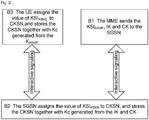
- the generating method As shown in Fig. 2 , comprising specific steps as follows:
- step B1 is included before step B1:
- the message of indicating mapping completion of the CKSN sent by the SGSN is a route area update acceptance message or a route area attachment acceptance message.
- step B3 may take place in any step after the UE decides to transfer to the GERAN in an idle state and before the UE sends a corresponding switching message to a network side.
- the above-mentioned generating method for a KSI maps a value of a KSI ASME into a value of a CKSN, and guarantees that the CKSN and a previously stored key sequence number do not repeat, thus solving the problem in the prior art that a Kc acquired through mapping cannot be reused due to lack of identity identifiers when a UE transfers from an EUTRAN to a GERAN.
- a system for generating a key identity identifier when a UE transfers in the present invention includes a UE, an MME and an SGSN; the MME is used for sending a KSI ASME to the SGSN when the UE transfers from an EUTRAN to a target system; and both the SGSN and the UE are used for mapping the KSI ASME into a key identity identifier of the target system; wherein the SGSN/UE may perform mapping in the following method: directly assigning the KSI ASME to the key identity identifier of the target system, or directly assigning the sum of the KSI ASME and a constant to the key identity identifier of the target system; the SGSN and the UE agree on the mapping method and the constant.
- the SGSN and the UE are also used for storing the key identity identifier of the target system generated during mapping together with the target system key generated from the K ASME .
- the sum of the KSI ASME and the constant can not be 111, otherwise, it may be altered according to the agreement between the UE and the SGSN, e.g. by replacing it with a next value 000 or another value.
- the UE and the SGSN are also used for deleting a key stored before transferring when the UE and the SGSN have agreed on a key before transferring and the stored key identity identifier of the target system is the same as the key identity identifier of the target system mapped from the KSI ASME during transferring.
- transferring of the UE from the EUTRAN to another radio access system means transferring of the UE to a UTRAN system or a GERAN system; and there are two types of transferring: idle transferring and switching.
- the UE consists of a message interaction unit, a key identifier mapping unit and a key and key identifier storage unit;
- the message interaction unit is used for receiving a message from a network side;
- the key identifier mapping unit is used for mapping the KSI ASME into the key identity identifier of the target system when the message interaction unit receives a switching command, a route area update acceptance message or a route area attachment acceptance message, mapping the KSI ASME into a KSI when the target system is a UTRAN, and mapping the KSI ASME into a CKSN when the target system is a GERAN;
- the key and key identifier storage unit is used for storing a key of a target system and a key identity identifier of the target system together.
- the MME consists of a request message receiving unit and a security parameter processing unit; the request message receiving unit is used for receiving transfer request messages from other network entities and instructing the security parameter processing unit to process these messages; if the transfer request message is a context request message or an identification request message, then the request message receiving unit sends a first processing instruction to the security parameter processing unit; if the transfer request message is a switching request message, then the request message receiving unit sends a second processing instruction to the security parameter processing unit; and the security parameter processing unit is used for generating a CK and an IK based on the K ASME and sending the KSI ASME together with the IK and the CK which are generated from the K ASME to the SGSN after receiving an instruction from the request message receiving unit; if the instruction is the first processing instruction, then the security parameter processing unit sends the KSI ASME together with the IK and the CK which are generated from the K ASME to the SGSN through a context response message or an identification response message; and if the instruction is the second processing
- the SGSN consists of a security parameter processing unit, a message interaction unit, a key identifier mapping unit, and a key generating unit;
- the security parameter receiving unit is used for receiving the keys and the KSI ASME from the MME, sending the KSI ASME to the key identifier mapping unit, generating a key of a target system based on the keys sent by the MME and sending it to the key and key identifier storage unit: if the target system is judged to be a UTRAN, then the security parameter receiving unit sends the keys sent by the MME to the key and key identifier storage unit; and if the target system is a GERAN, then the security parameter receiving unit generates a Kc based on the keys sent by the MME and sends the Kc to the key and key identifier storage unit; the key identifier mapping unit is used for mapping the KSI ASME into a key identity identifier of a target system after receiving the KSI ASME : if the target system is judged
- the message interaction unit in the UE is also used for sending a route area update request message or a route area attachment request message to the SGSN when the UE decides to transfer in an idle state; and the message interaction unit in the SGSN is also used for sending a corresponding context request message or identification request message to the MME after receiving the route area update request message or the route area attachment request message.
- the key identifier mapping unit in the UE is also used for mapping the KSI ASME into the key identity identifier of the target system when the UE decides to transfer in an idle state.
- the message interaction unit in the SGSN sends a notification of mapping success of the network-side key identifier, i.e.: if the message of sending the key and the key identifier by the MME is a context response message or an identification response message, then the message interaction unit accordingly sends a route area update acceptance message or a route area attachment acceptance message to the UE to indicate mapping success of the network-side key identifier; and if the message of sending the key and the key identifier by the MME is a forward and redirect request message, then the message interaction unit sends a forward and redirect response message to the MME to indicate mapping success of the network-side key identifier.
- the system for generating a key identity identifier maps a value of a KSI ASME into a value of a KSI or a value of a CKSN, and guarantees that the KSI or CKSN acquired through mapping and a key sequence number previously stored in a SGSN do not repeat, thus solving the problem in the prior art that an IK and a CK or a Kc mapped from the K ASME cannot be reused due to lack of identity identifiers when the UE transfers from an EUTRAN to a UTRAN, and reducing interactive signaling between the UE and the network, and improving user satisfaction.
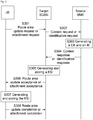
- Fig. 3 is Application Example One of the method in the present invention, illustrating a flowchart of the method for generating a key identifier when a UE transfers in an idle state from an EUTRAN to a UTRAN, which includes the following steps:
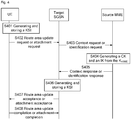
- Fig. 4 is Application Example Two of the method in the present invention, illustrating a flowchart of the method for generating a key identifier when a UE transfers in an idle state from an EUTRAN to a UTRAN, which includes the following steps:
- Fig. 5 is Application Example Three of the method in the present invention, illustrating a flowchart of the method for generating a key identifier when a UE switches in an idle state from an EUTRAN to a UTRAN, which includes the following steps:
- Fig. 6 is Application Example Four of the method in the present invention, illustrating a flowchart of the method for generating a key identifier when a UE transfers in an idle state from an EUTRAN to a GERAN, which includes the following steps:
- Fig. 7 is Application Example Five of the method in the present invention, illustrating a flowchart of the method for generating a key identifier when a UE transfers in an idle state from an EUTRAN to a GERAN, which includes the following steps:
- Fig. 8 is Application Example Six of the method in the present invention, illustrating a flowchart of the method for generating a key identifier when a UE switches in an idle state from an EUTRAN to a GERAN, which includes the following steps:
- the UE and the SGSN may also assign the sum of the KSI ASME and a constant to the key identity identifier of the target system; the constant is agreed on by the UE and the network, wherein the sum of the KSI ASME and the constant can not be 111, otherwise, it may be altered according to the agreement between the UE and the SGSN, e.g. by replacing it with a next value 000 or another value.
- modules or steps of the present invention can be implemented by universal computing devices, they may be integrated in a single computing device, or may be distributed in a network consisting of multiple computing devices; alternatively, they can be implemented by codes executable by computing devices. Therefore, they can be stored in a storage device to be executed by a computing device, or they can be made into various integrated circuit modules, or multiple modules or steps thereof can be made into a single integrated circuit module.
- the present invention is not limited to any specific combination of hardware and software.
Landscapes
- Engineering & Computer Science (AREA)
- Computer Networks & Wireless Communication (AREA)
- Signal Processing (AREA)
- Computer Security & Cryptography (AREA)
- Mobile Radio Communication Systems (AREA)
Claims (16)
- Verfahren zur Erzeugung einer Schlüsselidentitätskennung, wenn sich eine Benutzereinrichtung, UE, transferiert, enthaltend die nachfolgenden Schritte:wenn sich eine UE aus einem weiterentwickelten terrestrischen Funkzugangsnetzwerk, EUTRAN, im universellen mobilen Telekommunikationssystem, UMTS, in ein Zielsystem transferiert, Senden einer Identitätskennung eines Zugangssicherheitsmanagement-Entitäts-Schlüssels, KASME, KSIASME, durch eine Mobilitätsmanagement-Entität, MME, des EUTRAN an einen im allgemeinen paketorientierten Funkdienst, GPRS, bedienenden Hilfsknoten, SGSN, des Zielsystems (A1, B1) und Abbilden der KSIASME auf eine Schlüsselidentitätskennung des Zielsystems durch sowohl den SGSN als auch die UE; wobei die KSIASME auf eine Schlüsselsatzkennung, KSI, abgebildet wird, wenn das Zielsystem ein terrestrisches UMTS-Funkzugangsnetzwerk, UTRAN (A2, A3) ist, und wobei die KSIASME auf eine Kodierschlüsselsequenznummer, CKSN, abgebildet wird, wenn das Zielsystem ein Funkzugangsnetzwerk, GERAN (B2, B3), im GPRS/erhöhte Datenraten für globale Weiterentwicklung, EDGE, ist;wobei das Senden der KSIASME an den SGSN des Zielsystems durch die MME des EUTRAN umfasst:Erzeugen eines Integritätsschlüssels, IK, und eines Kodierschlüssels, CK, basierend auf dem KASME durch die MME und Senden der KSIASME zusammen mit dem IK und dem CK, die aus dem KASME erzeugt wurden, an den SGSN (A1, B1).
- Erzeugungsverfahren nach Anspruch 1, wobei das Abbilden die nachfolgenden Schritte enthält: direktes Zuordnen der KSIASME zu der Schlüsselidentitätskennung des Zielsystems, oder direktes Zuordnen der Summe aus der KSIASME und einer zwischen der UE und dem Netzwerk ausgehandelten Konstante zu der Schlüsselidentitätskennung des Zielsystems.
- Erzeugungsverfahren nach einem der Ansprüche 1 bis 2, wobei die spezifischen Schritte die nachfolgenden sind, wenn sich die UE in einem Ruhezustand aus dem EUTRAN in das UTRAN transferiert:A1: nach dem Empfangen einer Context-Request-Meldung oder einer Identification-Request-Meldung erzeugt die MME den IK und den CK basierend auf dem KASME und sendet die KSIASME zusammen mit dem IK und dem CK, die aus dem KASME erzeugt wurden, mittels einer Context-Response-Meldung oder einer Identification-Response-Meldung an den SGSN;A2: nach dem Empfangen der KSIASME, des IK und des CK von der MME bildet der SGSN die KSIASME auf die KSI ab und speichert die KSI, den IK und den CK; und der SGSN sendet eine Meldung an die UE, die den Abschluss des Abbildens der KSI angibt; undA3: die UE bildet die KSIASME auf die KSI ab und speichert die KSI zusammen mit dem IK und dem CK, die aus dem KASME erzeugt wurden.
- Erzeugungsverfahren nach Anspruch 3, wobei Schritt A3 in einem beliebigen Schritt, nachdem die UE entscheidet, sich im Ruhezustand in das UTRAN zu transferieren, und bevor die UE eine entsprechende Route-Area-Update-Completion-Meldung oder Route-Area-Attachment-Completion-Meldung an den SGSN sendet, stattfindet.
- Erzeugungsverfahren nach einem der Ansprüche 1 bis 2, wobei die spezifischen Schritte die nachfolgenden sind, wenn die UE aus dem EUTRAN in das UTRAN wechselt:a1: nach dem Empfangen einer Switching-Request-Meldung erzeugt die MME den IK und den CK basierend auf dem KASME und sendet die KSIASME zusammen mit dem IK und dem CK, die aus dem KASME erzeugt wurden, mittels einer Forward-and-Redirect-Request-Meldung an den SGSN;a2: nach dem Empfangen der KSIASME zusammen mit dem IK und dem CK von der MME bildet der SGSN die KSIASME auf die KSI ab und speichert die KSI, den IK und den CK zusammen; der SGSN sendet eine Forward-and-Redirect-Response-Meldung an die MME, die den Abschluss des Abbildens der KSI angibt; und die MME sendet einen Switching-Befehl, der der UE den Auftrag zum Wechseln gibt; unda3: nach dem Empfangen des Switching-Befehls vom Netzwerk bildet die UE die KSIASME auf die KSI ab und speichert die KSI zusammen mit dem IK und dem CK, die aus dem KASME erzeugt wurden.
- Erzeugungsverfahren nach einem der Ansprüche 1 bis 2, wobei die spezifischen Schritte die nachfolgenden sind, wenn sich die UE in einem Ruhezustand aus dem EUTRAN in das GERAN transferiert:B1: nach dem Empfangen einer Context-Request-Meldung oder einer Identification-Request-Meldung erzeugt die MME den IK und den CK basierend auf dem KASME und sendet die KSIASME zusammen mit dem IK und dem CK, die aus dem KASME erzeugt wurden, mittels einer Context-Response-Meldung oder einer Identification-Response-Meldung an den SGSN;B2: nach dem Empfangen der KSIASME, des IK und des CK von der MME erzeugt der SGSN einen Kodierschlüssel, Kc, des GERAN basierend auf dem IK und dem CK, bildet die KSIASME auf die CKSN des GERAN ab und speichert die CKSN des GERAN zusammen mit dem Kc des GERAN; und der SGSN sendet eine Meldung an die UE, die den Abschluss des Abbildens der CKSN des GERAN angibt; undB3: die UE bildet die KSIASME auf die CKSN des GERAN ab und speichert die CKSN des GERAN zusammen mit dem Kc des GERAN, der aus dem KASME erzeugt wurde.
- Erzeugungsverfahren nach Anspruch 6, wobei Schritt B3 in einem beliebigen Schritt, nachdem die UE entscheidet, sich im Ruhezustand in das GERAN zu transferieren, und bevor die UE eine Switching-Meldung an das Netzwerk sendet, stattfindet.
- Erzeugungsverfahren nach einem der Ansprüche 1 bis 2, wobei die spezifischen Schritte die nachfolgenden sind, wenn die UE aus dem EUTRAN in das GERAN wechselt:b1: nach dem Empfangen einer Switching-Request-Meldung erzeugt die MME den IK und den CK basierend auf dem KASME und sendet die KSIASME zusammen mit dem IK und dem CK, die aus dem KASME erzeugt wurden, mittels einer Forward-and-Redirect-Request-Meldung an den SGSN;b2: nach dem Empfangen der KSIASME zusammen mit dem IK und dem CK von der MME erzeugt der SGSN einen Kc des GERAN basierend auf dem IK und dem CK, ordnet den Wert der KSIASME der CKSN des GERAN zu und speichert die CKSN des GERAN zusammen mit dem Kc des GERAN; der SGSN sendet eine Meldung an die MME, die den Abschluss des Abbildens der CKSN des GERAN angibt; und die MME sendet einen Switching-Befehl, der der UE den Auftrag zum Wechseln gibt; undb3: nach dem Empfangen des Switching-Befehls vom Netzwerk bildet die UE die KSIASME auf die CKSN des GERAN ab und speichert die CKSN des GERAN zusammen mit dem Kc des GERAN, der aus dem KASME erzeugt wurde.
- System zur Erzeugung einer Schlüsselidentitätskennung, wenn sich eine UE transferiert, enthaltend eine Benutzereinrichtung, UE, eine Mobilitätsmanagement-Entität, MME, und einen im allgemeinen paketorientierten Funkdienst, GPRS, bedienenden Hilfsknoten, SGSN:wobei die MME dazu angepasst ist, eine Identitätskennung eines Zugangssicherheitsmanagement-Entitäts-Schlüssels, KASME, KSIASME, an den SGSN zu senden, wenn sich die UE aus einem weiterentwickelten terrestrischen Funkzugangsnetzwerk, EUTRAN, im universellen mobilen Telekommunikationssystem, UMTS, in ein Zielsystem (A1, B1) transferiert; undsowohl der SGSN als auch die UE dazu angepasst sind, die KSIASME auf eine Schlüsselidentitätskennung des Zielsystems abzubilden, wobei die KSIASME auf eine Schlüsselsatzkennung, KSI, abgebildet wird, wenn das Zielsystem ein terrestrisches UMTS-Funkzugangsnetzwerk, UTRAN (A2, A3) ist, und wobei die KSIASME auf eine Kodierschlüsselsequenznummer, CKSN, abgebildet wird, wenn das Zielsystem ein Funkzugangsnetzwerk, GERAN (B2, B3), im GPRS/erhöhte Datenraten für globale Weiterentwicklung, EDGE, ist;wobei die MME zum Erzeugen eines Integritätsschlüssels, IK, und eines Kodierschlüssels, CK, basierend auf dem KASME und zum Senden der KSIASME zusammen mit dem IK und dem CK, die aus dem KASME erzeugt wurden, an den SGSN (A1, B1) angepasst ist.
- Erzeugungssystem nach Anspruch 9, wobei der SGSN/die UE zum Durchführen des Abbildens durch direktes Zuordnen der KSIASME zu der Schlüsselidentitätskennung des Zielsystems oder durch direktes Zuordnen der Summe aus der KSIASME und einer zwischen der UE und dem Netzwerk ausgehandelten Konstante zu der Schlüsselidentitätskennung des Zielsystems angepasst sind.
- Erzeugungssystem nach Anspruch 9, wobei die UE und der SGSN ferner zum Löschen eines vor dem Transferieren gespeicherten Schlüssels angepasst sind, wenn die UE und der SGSN vor dem Transferieren einen Schlüssel ausgehandelt haben und eine Schlüsselidentitätskennung eines Zielsystems identisch mit der Schlüsselidentitätskennung des Zielsystems ist, die während des Transferierens aus der KSIASME umgewandelt wird.
- Erzeugungssystem nach einem der Ansprüche 9 bis 11, wobei
die UE eine Meldungsinteraktionseinheit, eine Schlüsselkennungs-Abbildungseinheit und eine Schlüssel-und-Schlüsselkennungs-Speichereinheit umfasst;
die Meldungsinteraktionseinheit zum Empfangen einer Meldung von einer Netzwerkseite angepasst ist;
die Schlüsselkennungs-Abbildungseinheit dazu angepasst ist, die KSIASME auf eine Schlüsselidentitätskennung eines Zielsystems abzubilden, wenn die Meldungsinteraktionseinheit einen Switching-Befehl, eine Route-Area-Update-Acceptance-Meldung oder eine Route-Area-Attachment-Acceptance-Meldung empfängt; und
die Schlüssel-und-Schlüsselkennungs-Speichereinheit dazu angepasst ist, einen Schlüssel eines Zielsystems und eine Schlüsselidentitätskennung des Zielsystems zusammen zu speichern;
die MME eine Request-Meldungs-Empfangseinheit und eine Sicherheitsparameter-Verarbeitungseinheit umfasst;
die Request-Meldungs-Empfangseinheit dazu angepasst ist, Transfer-Request-Meldungen von anderen Netzwerkentitäten zu empfangen und die Sicherheitsparameter-Verarbeitungseinheit anzuweisen, diese Meldungen zu verarbeiten; und
die Sicherheitsparameter-Verarbeitungseinheit dazu angepasst ist, nach dem Empfangen der Anweisung von der Request-Meldungs-Empfangseinheit den CK und den IK aus dem KASME zu erzeugen und die KSIASME zusammen mit dem IK und dem CK, die aus dem KASME erzeugt wurden, an den SGSN zu senden;
der SGSN eine Sicherheitsparameter-Verarbeitungseinheit, eine Meldungsinteraktionseinheit, eine Schlüsselkennungs-Abbildungseinheit und eine Schlüsselerzeugungseinheit umfasst;
die Sicherheitsparameter-Empfangseinheit dazu angepasst ist, die Schlüssel und die KSIASME von der MME zu empfangen, die KSIASME an die Schlüsselkennungs-Abbildungseinheit zu senden, den Schlüssel des Zielsystems basierend auf den von der MME gesendeten Schlüsseln zu erlangen und ihn an die Schlüssel-und-Schlüsselkennungs-Speichereinheit zu senden;
die Schlüsselkennungs-Abbildungseinheit dazu angepasst ist, nach dem Empfangen der KSIASME die KSIASME auf eine Schlüsselidentitätskennung des Zielsystems abzubilden;
die Schlüssel-und-Schlüsselkennungs-Speichereinheit dazu angepasst ist, sowohl den von der Sicherheitsparameter-Empfangseinheit gesendeten Schlüssel des Zielsystems als auch die von der Schlüsselkennungs-Abbildungseinheit gesendete Schlüsselidentitätskennung des Zielsystems zu speichern und die Meldungsinteraktionseinheit nach dem Speichern über den Abschluss des Abbildens zu benachrichtigen; und
die Meldungsinteraktionseinheit dazu angepasst ist, nach dem Empfangen der Meldung über den Abschluss des Abbildens eine Benachrichtigung über den Erfolg des Abbildens der netzwerkseitigen Schlüsselkennung zu senden. - Erzeugungssystem nach Anspruch 12, wobei
die Sicherheitsparameter-Empfangseinheit im SGSN dazu angepasst ist, den Schlüssel des Zielsystems basierend auf den von der MME gesendeten Schlüsseln zu erlangen und dazu angepasst ist, ihn an die Schlüssel-und-Schlüsselkennungs-Speichereinheit zu senden, wobei, wenn das Zielsystem ein UTRAN ist, die von der MME gesendeten Schlüssel an die Schlüssel-und-Schlüsselkennungs-Speichereinheit gesendet werden; und wobei, wenn das Zielsystem ein GERAN ist, die von der MME gesendeten Schlüssel verwendet werden, um einen Kc des GERAN zu erzeugen, welcher an die Schlüssel-und-Schlüsselkennungs-Speichereinheit gesendet wird. - Erzeugungssystem nach Anspruch 12, wobei die Schlüsselkennungs-Abbildungseinheit in der UE ferner dazu angepasst ist, die KSIASME auf eine Schlüsselidentitätskennung des Zielsystems abzubilden, wenn die UE entscheidet, sich im Ruhezustand zu transferieren.
- Erzeugungssystem nach Anspruch 12, wobei
die Meldungsinteraktionseinheit in der UE ferner dazu angepasst ist, eine Route-Area-Update-Request-Meldung oder eine Route-Area-Attachment-Request-Meldung an den SGSN zu senden, wenn die UE entscheidet, sich im Ruhezustand zu transferieren;
die Meldungsinteraktionseinheit im SGSN ferner dazu angepasst ist, nach dem Empfangen der Route-Area-Update-Request-Meldung oder Route-Area-Attachment-Request-Meldung eine entsprechende Context-Request-Meldung oder Identification-Request-Meldung an die MME zu senden;
die Request-Meldungs-Empfangseinheit in der MME dazu angepasst ist, einen ersten Verarbeitungsbefehl an die Sicherheitsparameter-Verarbeitungseinheit zu senden, falls die Transfer-Request-Meldung eine Context-Request-Meldung oder eine Identification-Request-Meldung ist, und die Request-Meldungs-Empfangseinheit dazu angepasst ist, einen zweiten Verarbeitungsbefehl an die Sicherheitsparameter-Verarbeitungseinheit zu senden, falls die Transfer-Request-Meldung eine Switching-Request-Meldung ist; und
die Sicherheitsparameter-Verarbeitungseinheit in der MME dazu angepasst ist, nach dem Empfangen des ersten Verarbeitungsbefehls die KSIASME zusammen mit dem IK und dem CK, die aus dem KASME erzeugt wurden, mittels einer Context-Response-Meldung oder einer Identification-Response-Meldung an den SGSN zu senden, und die Sicherheitsparameter-Verarbeitungseinheit dazu angepasst ist, nach dem Empfangen des zweiten Verarbeitungsbefehls die KSIASME zusammen mit dem IK und dem CK, die aus dem KASME erzeugt wurden, mittels einer Forward-and-Redirect-Request-Meldung an den SGSN zu senden. - Erzeugungssystem nach Anspruch 15, wobei die Meldungsinteraktionseinheit im SGSN dazu angepasst ist, eine Benachrichtigung über den Erfolg des Abbildens der netzwerkseitigen Schlüsselkennung zu senden, wobei, falls die Meldung über das Senden des Schlüssels und der Schlüsselkennung durch die MME eine Context-Response-Meldung oder eine Identification-Response-Meldung ist, die Meldungsinteraktionseinheit dazu angepasst ist, eine Route-Area-Update-Acceptance-Meldung oder eine Route-Area-Attachment-Acceptance-Meldung an die UE zu senden, um den Erfolg des Abbildens der netzwerkseitigen Schlüsselkennung anzugeben; und wobei, falls die Meldung über das Senden des Schlüssels und der Schlüsselkennung durch die MME eine Forward-and-Redirect-Request-Meldung ist, die Meldungsinteraktionseinheit dazu angepasst ist, eine Forward-and-Redirect-Response-Meldung an die MME zu senden, um den Erfolg des Abbildens der netzwerkseitigen Schlüsselkennung anzugeben.
Applications Claiming Priority (2)
| Application Number | Priority Date | Filing Date | Title |
|---|---|---|---|
| CN200810100472A CN101299884B (zh) | 2008-06-16 | 2008-06-16 | 用户设备转移时密钥身份标识符的生成方法和生成系统 |
| PCT/CN2008/002116 WO2009152656A1 (zh) | 2008-06-16 | 2008-12-29 | 用户设备转移时密钥身份标识符的生成方法和生成系统 |
Publications (3)
| Publication Number | Publication Date |
|---|---|
| EP2290875A1 EP2290875A1 (de) | 2011-03-02 |
| EP2290875A4 EP2290875A4 (de) | 2015-05-27 |
| EP2290875B1 true EP2290875B1 (de) | 2017-03-01 |
Family
ID=40079535
Family Applications (1)
| Application Number | Title | Priority Date | Filing Date |
|---|---|---|---|
| EP08874669.8A Active EP2290875B1 (de) | 2008-06-16 | 2008-12-29 | Erzeugungsverfahren und -system für schlüsselidentitätskennung zum zeitpunkt, wenn sich die benutzereinrichtung transferiert |
Country Status (5)
| Country | Link |
|---|---|
| US (1) | US20110135095A1 (de) |
| EP (1) | EP2290875B1 (de) |
| CN (1) | CN101299884B (de) |
| ES (1) | ES2626666T3 (de) |
| WO (1) | WO2009152656A1 (de) |
Families Citing this family (12)
| Publication number | Priority date | Publication date | Assignee | Title |
|---|---|---|---|---|
| CN101299884B (zh) * | 2008-06-16 | 2012-10-10 | 中兴通讯股份有限公司 | 用户设备转移时密钥身份标识符的生成方法和生成系统 |
| CN101299666A (zh) * | 2008-06-16 | 2008-11-05 | 中兴通讯股份有限公司 | 密钥身份标识符的生成方法和系统 |
| KR101723701B1 (ko) * | 2009-08-17 | 2017-04-05 | 텔레호낙티에볼라게트 엘엠 에릭슨(피유비엘) | 이동국에서 암호화 키들을 처리하기 위한 방법 |
| CN101860862B (zh) * | 2010-05-17 | 2015-05-13 | 中兴通讯股份有限公司 | 终端移动到增强utran时建立增强密钥的方法及系统 |
| EP2656648B1 (de) | 2010-12-21 | 2018-05-09 | Koninklijke KPN N.V. | Bedienerunterstützte schlüsselfestlegung |
| CN102685730B (zh) * | 2012-05-29 | 2015-02-04 | 大唐移动通信设备有限公司 | 一种ue上下文信息发送方法及mme |
| CN104937965B (zh) * | 2013-01-22 | 2019-09-03 | 华为技术有限公司 | 移动通信系统的安全认证的方法和网络设备 |
| EP3754897B1 (de) * | 2014-08-08 | 2021-09-29 | Samsung Electronics Co., Ltd. | System und verfahren zur zählerverwaltung und sicherheitsschlüsselaktualisierung für d2d-gruppenkommunikation |
| CN109819439B (zh) * | 2017-11-19 | 2020-11-17 | 华为技术有限公司 | 密钥更新的方法及相关实体 |
| TWI783184B (zh) | 2018-10-17 | 2022-11-11 | 新加坡商聯發科技(新加坡)私人有限公司 | 行動性更新時的使用者設備金鑰推導方法及相關使用者設備 |
| CN111417117B (zh) | 2019-04-29 | 2021-03-02 | 华为技术有限公司 | 切换的处理方法和装置 |
| CN116248310A (zh) * | 2022-12-01 | 2023-06-09 | 深圳前海环融联易信息科技服务有限公司 | 一种边缘设备鉴权方法、装置、存储介质及电子设备 |
Family Cites Families (14)
| Publication number | Priority date | Publication date | Assignee | Title |
|---|---|---|---|---|
| US7079499B1 (en) * | 1999-09-08 | 2006-07-18 | Nortel Networks Limited | Internet protocol mobility architecture framework |
| KR100640479B1 (ko) * | 2004-06-07 | 2006-10-30 | 삼성전자주식회사 | 이동 광대역 무선접속 시스템에서 핸드오버 절차 최적화 시스템 및 방법 |
| CN1294785C (zh) * | 2004-09-30 | 2007-01-10 | 华为技术有限公司 | 一种系统间切换的方法 |
| TWI393414B (zh) * | 2005-07-06 | 2013-04-11 | Nokia Corp | 安全交談金鑰上下文 |
| CN100551148C (zh) * | 2005-09-01 | 2009-10-14 | 华为技术有限公司 | 一种加密模式下系统切换的实现方法 |
| CN1964259B (zh) * | 2005-11-07 | 2011-02-16 | 华为技术有限公司 | 一种切换过程中的密钥管理方法 |
| US7864731B2 (en) * | 2006-01-04 | 2011-01-04 | Nokia Corporation | Secure distributed handover signaling |
| EP1841267B1 (de) * | 2006-03-31 | 2019-06-12 | Samsung Electronics Co., Ltd. | System und Verfahren zur Optimierung des Authentifizierungsvorgangs während Zwischenzugangssystem-Weiterreichungen |
| CN101083839B (zh) * | 2007-06-29 | 2013-06-12 | 中兴通讯股份有限公司 | 在不同移动接入系统中切换时的密钥处理方法 |
| CN101102600B (zh) * | 2007-06-29 | 2012-07-04 | 中兴通讯股份有限公司 | 在不同移动接入系统中切换时的密钥处理方法 |
| CN101145932B (zh) * | 2007-10-15 | 2011-08-24 | 中兴通讯股份有限公司 | 一种移动多媒体广播业务中节目流密钥的实现方法及系统 |
| US9706395B2 (en) * | 2008-04-28 | 2017-07-11 | Nokia Technologies Oy | Intersystem mobility security context handling between different radio access networks |
| CN101299884B (zh) * | 2008-06-16 | 2012-10-10 | 中兴通讯股份有限公司 | 用户设备转移时密钥身份标识符的生成方法和生成系统 |
| CN101299666A (zh) * | 2008-06-16 | 2008-11-05 | 中兴通讯股份有限公司 | 密钥身份标识符的生成方法和系统 |
-
2008
- 2008-06-16 CN CN200810100472A patent/CN101299884B/zh not_active Expired - Fee Related
- 2008-12-29 US US12/996,630 patent/US20110135095A1/en not_active Abandoned
- 2008-12-29 EP EP08874669.8A patent/EP2290875B1/de active Active
- 2008-12-29 ES ES08874669.8T patent/ES2626666T3/es active Active
- 2008-12-29 WO PCT/CN2008/002116 patent/WO2009152656A1/zh not_active Ceased
Non-Patent Citations (1)
| Title |
|---|
| None * |
Also Published As
| Publication number | Publication date |
|---|---|
| EP2290875A1 (de) | 2011-03-02 |
| CN101299884A (zh) | 2008-11-05 |
| WO2009152656A1 (zh) | 2009-12-23 |
| ES2626666T3 (es) | 2017-07-25 |
| EP2290875A4 (de) | 2015-05-27 |
| US20110135095A1 (en) | 2011-06-09 |
| CN101299884B (zh) | 2012-10-10 |
Similar Documents
| Publication | Publication Date | Title |
|---|---|---|
| EP2290875B1 (de) | Erzeugungsverfahren und -system für schlüsselidentitätskennung zum zeitpunkt, wenn sich die benutzereinrichtung transferiert | |
| EP2296389B1 (de) | Verfahren und system zum erzeugen einer identitätskennung eines schlüssels | |
| Huang et al. | Wo zhang da le | |
| EP3591891B1 (de) | Verfahren und vorrichtung zum aktualisieren eines schlüssels in einem aktiven zustand | |
| US8526617B2 (en) | Method of handling security configuration in wireless communications system and related communication device | |
| US20200404494A1 (en) | Key Obtaining Method and Device, and Communications System | |
| US10320754B2 (en) | Data transmission method and apparatus | |
| EP2293610B1 (de) | Verfahren und vorrichtung zur verhinderung des verlustes der synchronisation der netzwerksicherheit | |
| US20100172500A1 (en) | Method of handling inter-system handover security in wireless communications system and related communication device | |
| EP3745755A1 (de) | Kommunikationsverfahren und -vorrichtung | |
| EP2282443A1 (de) | Verfahren, einrichtung und system zur erzeugung kryptografischer schlüssel | |
| EP3952378A1 (de) | Registrierungsverfahren und -vorrichtung | |
| CN112956253B (zh) | 用于将用户设备附着到网络切片的方法和装置 | |
| CN121646942A (zh) | 分布式nas连接终止架构中的安全性 | |
| WO2019196963A1 (zh) | 接入网络切片的方法及装置、存储介质、电子装置 | |
| EP3547787B1 (de) | Verfahren, vorrichtung und system zur verbindungswiederherstellung | |
| AU2017443403A1 (en) | Method and terminal for redirecting network, access network device, and mobile management device | |
| CN104219655A (zh) | 一种无线通信系统中空口安全算法的选择方法及mme | |
| US11576232B2 (en) | Method for establishing a connection of a mobile terminal to a mobile radio communication network and communication network device | |
| WO2021073382A1 (zh) | 注册方法及装置 | |
| CN110169128B (zh) | 一种通信方法、装置和系统 | |
| JP2025520395A (ja) | V2xポリシー要求方法及び装置 | |
| KR20250144473A (ko) | 이중 접속 통신 네트워크의 보조 액세스 노드에 대한 조건부 컨피규레이션 활성화 | |
| KR20250100727A (ko) | 프라이버시 구성 검증 방법 및 관련 디바이스 | |
| CN102595397B (zh) | 防止网络安全失步的方法和装置 |
Legal Events
| Date | Code | Title | Description |
|---|---|---|---|
| PUAI | Public reference made under article 153(3) epc to a published international application that has entered the european phase |
Free format text: ORIGINAL CODE: 0009012 |
|
| 17P | Request for examination filed |
Effective date: 20101213 |
|
| AK | Designated contracting states |
Kind code of ref document: A1 Designated state(s): AT BE BG CH CY CZ DE DK EE ES FI FR GB GR HR HU IE IS IT LI LT LU LV MC MT NL NO PL PT RO SE SI SK TR |
|
| AX | Request for extension of the european patent |
Extension state: AL BA MK RS |
|
| DAX | Request for extension of the european patent (deleted) | ||
| REG | Reference to a national code |
Ref country code: DE Ref legal event code: R079 Ref document number: 602008049017 Country of ref document: DE Free format text: PREVIOUS MAIN CLASS: H04L0009320000 Ipc: H04W0012040000 |
|
| RA4 | Supplementary search report drawn up and despatched (corrected) |
Effective date: 20150429 |
|
| RIC1 | Information provided on ipc code assigned before grant |
Ipc: H04L 12/64 20060101ALI20150422BHEP Ipc: H04W 12/04 20090101AFI20150422BHEP Ipc: H04W 36/12 20090101ALI20150422BHEP Ipc: H04W 36/00 20090101ALI20150422BHEP |
|
| 17Q | First examination report despatched |
Effective date: 20160216 |
|
| GRAP | Despatch of communication of intention to grant a patent |
Free format text: ORIGINAL CODE: EPIDOSNIGR1 |
|
| STAA | Information on the status of an ep patent application or granted ep patent |
Free format text: STATUS: GRANT OF PATENT IS INTENDED |
|
| INTG | Intention to grant announced |
Effective date: 20161103 |
|
| GRAS | Grant fee paid |
Free format text: ORIGINAL CODE: EPIDOSNIGR3 |
|
| GRAA | (expected) grant |
Free format text: ORIGINAL CODE: 0009210 |
|
| STAA | Information on the status of an ep patent application or granted ep patent |
Free format text: STATUS: THE PATENT HAS BEEN GRANTED |
|
| AK | Designated contracting states |
Kind code of ref document: B1 Designated state(s): AT BE BG CH CY CZ DE DK EE ES FI FR GB GR HR HU IE IS IT LI LT LU LV MC MT NL NO PL PT RO SE SI SK TR |
|
| REG | Reference to a national code |
Ref country code: GB Ref legal event code: FG4D |
|
| REG | Reference to a national code |
Ref country code: CH Ref legal event code: EP Ref country code: AT Ref legal event code: REF Ref document number: 872590 Country of ref document: AT Kind code of ref document: T Effective date: 20170315 |
|
| REG | Reference to a national code |
Ref country code: IE Ref legal event code: FG4D |
|
| REG | Reference to a national code |
Ref country code: DE Ref legal event code: R096 Ref document number: 602008049017 Country of ref document: DE |
|
| REG | Reference to a national code |
Ref country code: NL Ref legal event code: MP Effective date: 20170301 |
|
| REG | Reference to a national code |
Ref country code: LT Ref legal event code: MG4D |
|
| REG | Reference to a national code |
Ref country code: AT Ref legal event code: MK05 Ref document number: 872590 Country of ref document: AT Kind code of ref document: T Effective date: 20170301 |
|
| REG | Reference to a national code |
Ref country code: ES Ref legal event code: FG2A Ref document number: 2626666 Country of ref document: ES Kind code of ref document: T3 Effective date: 20170725 |
|
| PG25 | Lapsed in a contracting state [announced via postgrant information from national office to epo] |
Ref country code: FI Free format text: LAPSE BECAUSE OF FAILURE TO SUBMIT A TRANSLATION OF THE DESCRIPTION OR TO PAY THE FEE WITHIN THE PRESCRIBED TIME-LIMIT Effective date: 20170301 Ref country code: GR Free format text: LAPSE BECAUSE OF FAILURE TO SUBMIT A TRANSLATION OF THE DESCRIPTION OR TO PAY THE FEE WITHIN THE PRESCRIBED TIME-LIMIT Effective date: 20170602 Ref country code: LT Free format text: LAPSE BECAUSE OF FAILURE TO SUBMIT A TRANSLATION OF THE DESCRIPTION OR TO PAY THE FEE WITHIN THE PRESCRIBED TIME-LIMIT Effective date: 20170301 Ref country code: HR Free format text: LAPSE BECAUSE OF FAILURE TO SUBMIT A TRANSLATION OF THE DESCRIPTION OR TO PAY THE FEE WITHIN THE PRESCRIBED TIME-LIMIT Effective date: 20170301 Ref country code: NO Free format text: LAPSE BECAUSE OF FAILURE TO SUBMIT A TRANSLATION OF THE DESCRIPTION OR TO PAY THE FEE WITHIN THE PRESCRIBED TIME-LIMIT Effective date: 20170601 |
|
| PG25 | Lapsed in a contracting state [announced via postgrant information from national office to epo] |
Ref country code: SE Free format text: LAPSE BECAUSE OF FAILURE TO SUBMIT A TRANSLATION OF THE DESCRIPTION OR TO PAY THE FEE WITHIN THE PRESCRIBED TIME-LIMIT Effective date: 20170301 Ref country code: AT Free format text: LAPSE BECAUSE OF FAILURE TO SUBMIT A TRANSLATION OF THE DESCRIPTION OR TO PAY THE FEE WITHIN THE PRESCRIBED TIME-LIMIT Effective date: 20170301 Ref country code: LV Free format text: LAPSE BECAUSE OF FAILURE TO SUBMIT A TRANSLATION OF THE DESCRIPTION OR TO PAY THE FEE WITHIN THE PRESCRIBED TIME-LIMIT Effective date: 20170301 Ref country code: BG Free format text: LAPSE BECAUSE OF FAILURE TO SUBMIT A TRANSLATION OF THE DESCRIPTION OR TO PAY THE FEE WITHIN THE PRESCRIBED TIME-LIMIT Effective date: 20170601 |
|
| PG25 | Lapsed in a contracting state [announced via postgrant information from national office to epo] |
Ref country code: NL Free format text: LAPSE BECAUSE OF FAILURE TO SUBMIT A TRANSLATION OF THE DESCRIPTION OR TO PAY THE FEE WITHIN THE PRESCRIBED TIME-LIMIT Effective date: 20170301 |
|
| PG25 | Lapsed in a contracting state [announced via postgrant information from national office to epo] |
Ref country code: EE Free format text: LAPSE BECAUSE OF FAILURE TO SUBMIT A TRANSLATION OF THE DESCRIPTION OR TO PAY THE FEE WITHIN THE PRESCRIBED TIME-LIMIT Effective date: 20170301 Ref country code: CZ Free format text: LAPSE BECAUSE OF FAILURE TO SUBMIT A TRANSLATION OF THE DESCRIPTION OR TO PAY THE FEE WITHIN THE PRESCRIBED TIME-LIMIT Effective date: 20170301 Ref country code: RO Free format text: LAPSE BECAUSE OF FAILURE TO SUBMIT A TRANSLATION OF THE DESCRIPTION OR TO PAY THE FEE WITHIN THE PRESCRIBED TIME-LIMIT Effective date: 20170301 Ref country code: SK Free format text: LAPSE BECAUSE OF FAILURE TO SUBMIT A TRANSLATION OF THE DESCRIPTION OR TO PAY THE FEE WITHIN THE PRESCRIBED TIME-LIMIT Effective date: 20170301 Ref country code: IT Free format text: LAPSE BECAUSE OF FAILURE TO SUBMIT A TRANSLATION OF THE DESCRIPTION OR TO PAY THE FEE WITHIN THE PRESCRIBED TIME-LIMIT Effective date: 20170301 |
|
| PG25 | Lapsed in a contracting state [announced via postgrant information from national office to epo] |
Ref country code: PL Free format text: LAPSE BECAUSE OF FAILURE TO SUBMIT A TRANSLATION OF THE DESCRIPTION OR TO PAY THE FEE WITHIN THE PRESCRIBED TIME-LIMIT Effective date: 20170301 Ref country code: PT Free format text: LAPSE BECAUSE OF FAILURE TO SUBMIT A TRANSLATION OF THE DESCRIPTION OR TO PAY THE FEE WITHIN THE PRESCRIBED TIME-LIMIT Effective date: 20170703 Ref country code: IS Free format text: LAPSE BECAUSE OF FAILURE TO SUBMIT A TRANSLATION OF THE DESCRIPTION OR TO PAY THE FEE WITHIN THE PRESCRIBED TIME-LIMIT Effective date: 20170701 |
|
| REG | Reference to a national code |
Ref country code: DE Ref legal event code: R097 Ref document number: 602008049017 Country of ref document: DE |
|
| REG | Reference to a national code |
Ref country code: FR Ref legal event code: PLFP Year of fee payment: 10 |
|
| PLBE | No opposition filed within time limit |
Free format text: ORIGINAL CODE: 0009261 |
|
| STAA | Information on the status of an ep patent application or granted ep patent |
Free format text: STATUS: NO OPPOSITION FILED WITHIN TIME LIMIT |
|
| PG25 | Lapsed in a contracting state [announced via postgrant information from national office to epo] |
Ref country code: DK Free format text: LAPSE BECAUSE OF FAILURE TO SUBMIT A TRANSLATION OF THE DESCRIPTION OR TO PAY THE FEE WITHIN THE PRESCRIBED TIME-LIMIT Effective date: 20170301 |
|
| 26N | No opposition filed |
Effective date: 20171204 |
|
| PG25 | Lapsed in a contracting state [announced via postgrant information from national office to epo] |
Ref country code: SI Free format text: LAPSE BECAUSE OF FAILURE TO SUBMIT A TRANSLATION OF THE DESCRIPTION OR TO PAY THE FEE WITHIN THE PRESCRIBED TIME-LIMIT Effective date: 20170301 |
|
| REG | Reference to a national code |
Ref country code: CH Ref legal event code: PL |
|
| REG | Reference to a national code |
Ref country code: IE Ref legal event code: MM4A |
|
| PG25 | Lapsed in a contracting state [announced via postgrant information from national office to epo] |
Ref country code: LU Free format text: LAPSE BECAUSE OF NON-PAYMENT OF DUE FEES Effective date: 20171229 Ref country code: MT Free format text: LAPSE BECAUSE OF NON-PAYMENT OF DUE FEES Effective date: 20171229 |
|
| REG | Reference to a national code |
Ref country code: BE Ref legal event code: MM Effective date: 20171231 |
|
| PG25 | Lapsed in a contracting state [announced via postgrant information from national office to epo] |
Ref country code: IE Free format text: LAPSE BECAUSE OF NON-PAYMENT OF DUE FEES Effective date: 20171229 |
|
| PG25 | Lapsed in a contracting state [announced via postgrant information from national office to epo] |
Ref country code: LI Free format text: LAPSE BECAUSE OF NON-PAYMENT OF DUE FEES Effective date: 20171231 Ref country code: BE Free format text: LAPSE BECAUSE OF NON-PAYMENT OF DUE FEES Effective date: 20171231 Ref country code: CH Free format text: LAPSE BECAUSE OF NON-PAYMENT OF DUE FEES Effective date: 20171231 |
|
| PG25 | Lapsed in a contracting state [announced via postgrant information from national office to epo] |
Ref country code: HU Free format text: LAPSE BECAUSE OF FAILURE TO SUBMIT A TRANSLATION OF THE DESCRIPTION OR TO PAY THE FEE WITHIN THE PRESCRIBED TIME-LIMIT; INVALID AB INITIO Effective date: 20081229 Ref country code: MC Free format text: LAPSE BECAUSE OF FAILURE TO SUBMIT A TRANSLATION OF THE DESCRIPTION OR TO PAY THE FEE WITHIN THE PRESCRIBED TIME-LIMIT Effective date: 20170301 |
|
| PG25 | Lapsed in a contracting state [announced via postgrant information from national office to epo] |
Ref country code: CY Free format text: LAPSE BECAUSE OF NON-PAYMENT OF DUE FEES Effective date: 20170301 |
|
| PG25 | Lapsed in a contracting state [announced via postgrant information from national office to epo] |
Ref country code: TR Free format text: LAPSE BECAUSE OF FAILURE TO SUBMIT A TRANSLATION OF THE DESCRIPTION OR TO PAY THE FEE WITHIN THE PRESCRIBED TIME-LIMIT Effective date: 20170301 |
|
| P01 | Opt-out of the competence of the unified patent court (upc) registered |
Effective date: 20230530 |
|
| PGFP | Annual fee paid to national office [announced via postgrant information from national office to epo] |
Ref country code: DE Payment date: 20251104 Year of fee payment: 18 |
|
| PGFP | Annual fee paid to national office [announced via postgrant information from national office to epo] |
Ref country code: GB Payment date: 20251114 Year of fee payment: 18 |
|
| PGFP | Annual fee paid to national office [announced via postgrant information from national office to epo] |
Ref country code: FR Payment date: 20251110 Year of fee payment: 18 |
|
| PGFP | Annual fee paid to national office [announced via postgrant information from national office to epo] |
Ref country code: ES Payment date: 20260114 Year of fee payment: 18 |