EP2290883A1 - Zugangssteuerungsverfahren und system für ein paketdatennetz, pcrf-einheit - Google Patents
Zugangssteuerungsverfahren und system für ein paketdatennetz, pcrf-einheit Download PDFInfo
- Publication number
- EP2290883A1 EP2290883A1 EP09761267A EP09761267A EP2290883A1 EP 2290883 A1 EP2290883 A1 EP 2290883A1 EP 09761267 A EP09761267 A EP 09761267A EP 09761267 A EP09761267 A EP 09761267A EP 2290883 A1 EP2290883 A1 EP 2290883A1
- Authority
- EP
- European Patent Office
- Prior art keywords
- function entity
- message
- session
- session establishment
- indicating message
- Prior art date
- Legal status (The legal status is an assumption and is not a legal conclusion. Google has not performed a legal analysis and makes no representation as to the accuracy of the status listed.)
- Withdrawn
Links
Images




Classifications
-
- H—ELECTRICITY
- H04—ELECTRIC COMMUNICATION TECHNIQUE
- H04L—TRANSMISSION OF DIGITAL INFORMATION, e.g. TELEGRAPHIC COMMUNICATION
- H04L12/00—Data switching networks
- H04L12/02—Details
- H04L12/14—Charging, metering or billing arrangements specially adapted for data communications, e.g. authentication, authorisation and accounting [AAA] framework
-
- H—ELECTRICITY
- H04—ELECTRIC COMMUNICATION TECHNIQUE
- H04L—TRANSMISSION OF DIGITAL INFORMATION, e.g. TELEGRAPHIC COMMUNICATION
- H04L12/00—Data switching networks
- H04L12/02—Details
- H04L12/14—Charging, metering or billing arrangements specially adapted for data communications, e.g. authentication, authorisation and accounting [AAA] framework
- H04L12/1453—Methods or systems for payment or settlement of the charges for data transmission involving significant interaction with the data transmission network
- H04L12/1457—Methods or systems for payment or settlement of the charges for data transmission involving significant interaction with the data transmission network using an account
-
- H—ELECTRICITY
- H04—ELECTRIC COMMUNICATION TECHNIQUE
- H04L—TRANSMISSION OF DIGITAL INFORMATION, e.g. TELEGRAPHIC COMMUNICATION
- H04L12/00—Data switching networks
- H04L12/02—Details
- H04L12/14—Charging, metering or billing arrangements specially adapted for data communications, e.g. authentication, authorisation and accounting [AAA] framework
- H04L12/1453—Methods or systems for payment or settlement of the charges for data transmission involving significant interaction with the data transmission network
- H04L12/1471—Methods or systems for payment or settlement of the charges for data transmission involving significant interaction with the data transmission network splitting of costs
-
- H—ELECTRICITY
- H04—ELECTRIC COMMUNICATION TECHNIQUE
- H04L—TRANSMISSION OF DIGITAL INFORMATION, e.g. TELEGRAPHIC COMMUNICATION
- H04L41/00—Arrangements for maintenance, administration or management of data switching networks, e.g. of packet switching networks
- H04L41/06—Management of faults, events, alarms or notifications
-
- H—ELECTRICITY
- H04—ELECTRIC COMMUNICATION TECHNIQUE
- H04L—TRANSMISSION OF DIGITAL INFORMATION, e.g. TELEGRAPHIC COMMUNICATION
- H04L47/00—Traffic control in data switching networks
- H04L47/70—Admission control; Resource allocation
-
- H—ELECTRICITY
- H04—ELECTRIC COMMUNICATION TECHNIQUE
- H04W—WIRELESS COMMUNICATION NETWORKS
- H04W12/00—Security arrangements; Authentication; Protecting privacy or anonymity
- H04W12/08—Access security
-
- H—ELECTRICITY
- H04—ELECTRIC COMMUNICATION TECHNIQUE
- H04W—WIRELESS COMMUNICATION NETWORKS
- H04W76/00—Connection management
- H04W76/10—Connection setup
- H04W76/11—Allocation or use of connection identifiers
Definitions
- the present invention relates to communication fields, and more particularly to an access control method and system for Packet Data Network (PDN), Policy and Charging Rules Function (PCRF) entity.
- PDN Packet Data Network
- PCRF Policy and Charging Rules Function
- the Evolved Packet System (EPS) of the 3 rd Generation Partnership Project (3GPP) is composed of an Evolved Universal Terrestrial Radio Access Network (E-UTRAN), a Mobility Management Entity (MME), a Serving Gateway (S-GW), a Packet Data Network Gateway (P-GW or PDN GW), a Home Subscriber Server (HSS), an Authentication, Authorization and Accounting (AAA) server of 3GPP, a Policy and Charging Rules Function (PCRF) entity and other supporting nodes.
- E-UTRAN Evolved Universal Terrestrial Radio Access Network
- MME Mobility Management Entity
- S-GW Serving Gateway
- P-GW or PDN GW Packet Data Network Gateway
- HSS Home Subscriber Server
- AAA Authentication, Authorization and Accounting
- PCRF Policy and Charging Rules Function
- Fig. 1 is a schematic diagram illustrating the system architecture of the EPS according to the related art.
- the MME is responsible for the related work of control plane, such as the mobility management, the processing of non-access stratum signaling and the management of user mobility managing context:
- the S-GW is an access gateway device connected with the E-UTRAN, which forwards data between the E-UTRAN and the P-GW, and is responsible for caching the paging waiting data;
- the P-GW is an edge gateway between the EPS and the Packet Data Network (PDN), and is responsible for functions such as the access of the PDN and the data forwarding between the EPS and the PDN
- the PCRF is a policy and charging rules function entity, it is connected with the Internet Protocol (IP) service network of an operator via a receiving interface Rx and acquires the service information, and in addition, it is connected with the gateway device of the network via a Gx/Gxa/Gxc interface, and is responsible for initiating the establishment of IP bearers, for guaranteeing the Quality
- the EPS supports the interconnection with a non-3GPP system, wherein the interconnection with the non-3GPP system is implemented via an S2a/b/c interface; the P-GW serves as an anchor point between the 3GPP system and the non-3GPP system.
- the non-3GPP system is classified into a trusted non-3GPP IP access and an untrusted non-3GPP IP access.
- the trusted non-3GPP IP access can be connected with the P-GW via an S2a interface directly; while the entrusted non-3GPP IP access needs to be connected with the P-GW via the Evolved Packet Data Gateway (ePDG); the interface between the ePDG and the P-GW is S2b; S2c provides the control and the mobility supporting related to user plane between the User Equipment (UE) and the P-GW, the supported mobility management protocol is Mobile IPv6 Support for Dual Stack Hosts and Routers (DSMIPv6).
- ePDG Evolved Packet Data Gateway
- S2b the interface between the ePDG and the P-GW
- S2c provides the control and the mobility supporting related to user plane between the User Equipment (UE) and the P-GW, the supported mobility management protocol is Mobile IPv6 Support for Dual Stack Hosts and Routers (DSMIPv6).
- DSMIPv6 Mobile IPv6 Support for Dual Stack Hosts and Routers
- the Policy and Charging Enforcement Function (PCEF) entity resides in the P-GW; the control of all functions may be completed as long as there is an interface between the PCRF and the P-GW; the information is exchanged between the PCRF and the P-GW via a Gx interface (as shown in Fig.1 ).
- the interface between the P-GW and the S-GW is based on Proxy Mobile IPv6 (PMIPv6)
- PMIPv6 Proxy Mobile IPv6
- BBERF Bearer Binding and Event Report Function
- a BBERF When accessing via the trusted non-3GPP access, there may also be a BBERF which resides in the trusted non-3GPP access gateway.
- the information is exchanged between the trusted non-3GPP access gateway and the PCRF via a Gxa interface (as shown in Fig.1 ).
- an S9 interface serves as the interface of the home PCRF and the visit PCRF, provides the UE with the Application Function (AF) of the service at the same time, and sends the service information which is used for instituting a Policy and Charging Control (PCC) policy to the PCRF via an Rx interface.
- PCC Policy and Charging Control
- the EPS system supports Multiple PDN access, i.e.
- the UE may access multiple PDNs simultaneously via multiple P-GWs or one P-GW
- the EPS also supports that a UE may access the same PDN multiple times simultaneously.
- the corresponding PDN network may be found according to the Access Point Name (APN). Therefore, it can be considered that a UE may access the same APN for multiple times simultaneously.
- a connection from a UE to the PDN network is usually referred to as an IP Connectivity Access Network (IP-CAN) session; therefore, the EPS supports that a UE may have multiple IP-CAN sessions with the same PDN network simultaneously.
- IP-CAN IP Connectivity Access Network
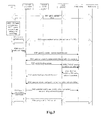
- Fig.2 is a flowchart illustrating the initial attachment for a UE accessing the EPS via the trusted non-3GPP access network according to the related art. As shown in Fig.2 , the specific steps for a UE initially attaching to a PDN via the trusted non-3GPP access network are as follows.
- the UE When a UE establishes a second PDN connection with the default APN, the UE sends to the trusted non-3GPP access gateway a "new PDN connection establishing trigger message" carrying the default APN; the other steps are as shown in steps S204-S214. Every time a PDN connection is established, the P-GW allocates an IP address for the UE.
- the interaction between the trusted non-3GPP access gateway and the PCRF is before the interaction between the P-GW and the PCRF; at this time, the trusted non-3GPP gateway does not have the IP address which is allocated for the UE by the P-GW; regardless of the initial attachment or the second access or accessing the same PDN for multiple times, the trusted non-3GPP access gateway has only the NAI and the default APN when the trusted non-3GPP access gateway interacts with the PCRF. Since the NAIs and the default APNs are identical for multiple connections of the UE to the same PDN (or APN), the PCRF can not distinguish these multiple PDN connections according to such information, and thus can not associate the gateway control session message with the IP-CAN session message belonging to the same PDN connection.
- the gateway control session message and the IP-CAN session message belonging to the same IP-CAN session must correspond to each other one by one.
- the PCC rule includes the QoS control policy and the charging policy while the QoS rule only includes the QoS control policy.
- the charging policy of the PCC rule is associated with the provided QoS, that is to say, the charging policy installed in the PCEF must be associated with the QoS control policy installed in the BBERF.
- the PCRF must guarantee that the BBERF has a successfully-activated QoS rule corresponding to the PCC rule successfully-activated in the PCRF.
- the corresponding PCC rule and QoS rule are delivered via the corresponding gateway control session message and the IP-CAN session message.
- Fig.3 shows the process that a UE is switched from accessing EPS via a trusted non-3GPP access network 1 to accessing EPS via another trusted non-3GPP access network 2.
- the wireless access technologies of the two trusted non-3GPP access networks are the same. The detailed steps are as follows.
- the PCRF when the PCRF receives the gateway control session establishment indicating message carrying the NAI and the default APN in step S305, since it is the same as the message received when the UE accesses the APN again, the PCRF can not judge whether the UE is switched (i.e. the BBERF relocation occurs) or the UE requests to establish another PDN connection to the default APN.
- the PCRF is unable to determine whether it is BBERF relocation or another PDN connection that the UE requests to establish to an APN when the PCRF receives the gateway control session establishment indicating message. (2) it is unable to associate the IP-CAN session message and the gateway control session message related to the same PDN connection.
- the objective of the present invention is to provide an access control method and system for packet data network, and policy and charging rules function entity, so as to solve the problem that the PCRF can not judge whether a UE accesses the same APN for multiple times, and can not identify different IP-CAN sessions when the UE accesses the same APN for multiple times.
- an access control method for packet data network is provided.
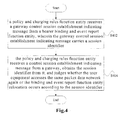
- the access control method for packet data network comprises: a policy and charging rules function entity receiving a gateway control session establishment indicating message from a bearer binding and event report function entity, wherein the gateway control session establishment indicating message carries a session identifier, and the session identifier is used to identify whether a user equipment accesses the same packet data network again or the bearer binding and event report function entity relocation occurs; the policy and charging rules function entity receiving a control session establishment indicating message from a gateway, obtaining the session identifier, and judging whether the user equipment accesses the same packet data network again or the bearer binding and event report function entity relocation occurs according to the session identifier.
- the session identifier is also used for uniquely identifying an internet protocol connectivity access network session of the user equipment.
- the method further comprises: the bearer binding and event report function entity sending to a policy and charging enforcement function entity a proxy binding update request message carrying the session identifier; the policy and charging enforcement function entity receiving the proxy binding update request message, sending a internet protocol connectivity access network session establishment indicating message to the policy and charging rules function entity, and carrying the session identifier in the internet protocol connectivity access network session establishment indicating message; the policy and charging rules function entity associating the gateway control session establishment indicating message with the internet protocol connectivity access network session establishment indicating message according to the session identifier.
- the method further comprises: the bearer binding and event report function entity allocating the session identifier.
- the method further comprises: a mobility management unit allocating the session identifier; the mobility management unit sending a default bearer establishment request message to the bearer binding and event report function entity, and carrying the session identifier in the default bearer establishment request message.
- the information of the session identifier is added to an access point name; and the access point name carrying the information of the session identifier is used as the session identifier.
- the information of the session identifier is added to a default bearer address; the default bearer address carrying the information of the session identifier is used as the session identifier.
- the method further comprises: based on the gateway control session establishment indicating message, the policy and charging rules function entity instituting a policy and charging control rule, a quality of service rule and a corresponding event trigger, sending a gateway control session establishment acknowledge message to the bearer binding and event report function entity, and carrying the quality of service rule and the event trigger in the gateway control session establishment acknowledge message; the bearer binding and event report function entity receiving the gateway control session establishment acknowledge message, acquiring the quality of service rule and the event trigger from the gateway control session establishment acknowledge message, and installing the quality of service rule and the event trigger.
- the gateway control session establishment indicating message does not carry the session identifier.
- the method further comprises: based on a packet data network connection request message of the user equipment, the bearer binding and event report function entity sending the gateway control session establishment indicating message to the policy and charging rules function entity.
- an access control method for packet data network is also provided.
- the access control method for packet data network comprises: a bearer binding and event report function entity sending a gateway control session establishment indicating message to a policy and charging rules function entity, wherein the gateway control session establishment indicating message carries a session identifier, the session identifier is used to uniquely identify a internet protocol connectivity access network session of a user equipment; the bearer binding and event report function entity sending a proxy binding update request message to the policy and charging enforcement function entity, and carrying the session identifier in the proxy binding update request message; the policy and charging enforcement function entity receiving the proxy binding update request message, sending a internet protocol connectivity access network session establishment indicating message or a internet protocol connectivity access network session modification indicating message to the policy and charging rules function entity, and carrying the session identifier in the internet protocol connectivity access network session establishment indicating message or the internet protocol connectivity access network session modification indicating message; the policy and charging rules function entity associating the gateway control session establishment indicating message with the internet protocol connectivity access network session establishment indicating message or the internet protocol connectivity access network session modification indicating
- an access control system for packet data network is provided.
- the access control system for packet data network comprises: a bearer binding and event report function entity, configured to send a gateway control session establishment indicating message and to carry a session identifier in the gateway control session establishment indicating messages, wherein the session identifier is used to identify whether a user equipment accesses a same packet data network again or the bearer binding and event report function entity relocation occurs, and to uniquely identify a internet protocol connectivity access network session of the user equipment; a policy and charging rules function entity, configured to receive the gateway control session establishment indicating message from the bearer binding and event report function entity, to acquire the session identifier from the gateway control session establishment indicating message, and to judge whether the user equipment accesses the same packet data network again or the bearer binding and event report function entity relocation occurs according to the session identifier.
- a bearer binding and event report function entity configured to send a gateway control session establishment indicating message and to carry a session identifier in the gateway control session establishment indicating messages, wherein the session identifier is used to identify whether a user equipment accesses
- the bearer binding and event report function entity is further configured to allocate the session identifier.
- the bearer binding and event report function entity is further configured to send a proxy binding update request message carrying the session identifier, to receive a gateway control session establishment acknowledge message, to acquire a quality of service rule and an event trigger from the gateway control session establishment acknowledge message, and to install the quality of service rule and the event trigger;
- the policy and charging rules function entity is further configured to receive a internet protocol connectivity access network session establishment indicating message, to carry the session identifier in the internet protocol connectivity access network session establishment indicating message, to associate the gateway control session establishment indicating message with the internet protocol connectivity access network session establishment indicating message according to the session identifier, to institute a policy and charging control rule, the quality of service rule and the corresponding event trigger based on the gateway control session establishment indicating message, to send the gateway control session establishment acknowledge message to the bearer binding and event report function entity, and to carry the quality of service rule and the event trigger in the gateway control session establishment acknowledge message.
- the above access control system for packet data network further comprises: a policy and charging enforcement function entity, configured to receive the proxy binding update request message from the bearer binding and event report function entity, to send the internet protocol connectivity access network session establishment indicating message to the policy and charging rules function entity, and to carry the session identifier in the internet protocol connectivity access network session establishment indicating message.
- a policy and charging enforcement function entity configured to receive the proxy binding update request message from the bearer binding and event report function entity, to send the internet protocol connectivity access network session establishment indicating message to the policy and charging rules function entity, and to carry the session identifier in the internet protocol connectivity access network session establishment indicating message.
- a mobility management unit configured to allocate the session identifier, to send a default bearer establishment request message to the bearer binding and event report function entity, and to carry the session identifier in the default bearer establishment request message.
- an access control system for packet data network is also provided.
- the access control system for packet data network comprises: a bearer binding and event report function entity, configured to send a gateway control session establishment indicating message to a policy and charging rules function entity, and to carry a session identifier in the gateway control session establishment indicating message, wherein the session identifier is used to uniquely identify a internet protocol connectivity access network session of a user equipment; the bearer binding and event report function entity is further configured to send a proxy binding update request message to the policy and charging enforcement function entity, and to carry the session identifier in the proxy binding update request message; the policy and charging enforcement function entity, configured to receive the proxy binding update request message, to send a internet protocol connectivity access network session establishment indicating message or a internet protocol connectivity access network session modification indicating message to the policy and charging rules function entity, and to carry the session identifier in the internet protocol connectivity access network session establishment indicating message or the internet protocol connectivity access network session modification indicating message; the policy and charging rules function entity, configured to receive the gateway control session establishment indicating message from the bearer binding and event
- a policy and charging rules function entity is provided.
- the policy and charging rules function entity comprises: a receiving module, configured to receive a gateway control session establishment indicating message from a bearer binding and event report function entity, wherein the gateway control session establishment indicating message carries a session identifier which is used to identify whether a user equipment accesses a same packet data network again or the bearer binding and event report function entity relocation occurs, an acquiring module, configured to acquire the session identifier from the gateway control session establishment indicating message; a judging module, configured to judge whether the user equipment accesses the same packet data network again or the bearer binding and event report function entity relocation occurs according to the session identifier.
- a policy and charging rules function entity is also provided.
- the policy and charging rules function entity comprises: a receiving module, configured to receive a gateway control session establishment indicating message from a bearer binding and event report function entity and a internet protocol connectivity access network session establishment indicating message or a internet protocol connectivity access network session modification indicating message from a policy and charging enforcement function entity, wherein the gateway control session establishment indicating message, the internet protocol connectivity access network session establishment indicating message and the internet protocol connectivity access network session modification indicating message carry a session identifier, the session identifier is used to uniquely identify a internet protocol connectivity access network session of a user equipment; an acquiring module, configured to acquire the session identifier from the gateway control session establishment indicating message and the internet protocol connectivity access network session establishment indicating message or the internet protocol connectivity access network session modification indicating message; an associating module, configured to associate the gateway control session establishment indicating message with the internet protocol connectivity access network session establishment indicating message or the internet protocol connectivity access network session modification indicating message according to session identifier.
- a method for distinguishing whether a user equipment accesses the same packet data network again or the bearer binding and event report function entity relocation occurs and for identifying different IP-CAN sessions is provided by carrying a session identifier in the gateway control session establishment indicating message, the above method is applied to an evolved packet system of 3GPP, so that the PCRF can determine that a UE accesses the same APN for multiple times and can uniquely identify different IP-CAN sessions when the UE accesses the same APN for multiple times.
- an access control method for packet data network is provided.
- Fig.4 is a flowchart illustrating the access control method for PDN according to an embodiment of the present invention. As shown in Fig. 4 , the access control method includes:
- step S404 the above method further includes:
- step S402 the above method further includes one of the following two cases:
- the bearer binding and event report function entity sends a gateway control session establishment indicating message to the policy and charging rules function entity.
- the gateway control session establishment indicating message does not carry any session identifier when a UE accesses a PDN for the first time or reestablishes the first access to the PDN.
- the PCRF when a UE accesses the same APN for multiple times, the PCRF is able to judge that a UE accesses the same APN for multiple times, and is able to uniquely identify different IP-CAN sessions.
- a process is described that a UE which has accessed a PDN1 via the P-GW accesses PDN1 again by triggering a new PDN connection when the UE resides in the coverage of the trusted non-3GPP access network and accesses the EPS system by use of the PMIPv6.
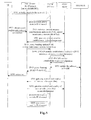
- Fig.5 is a flowchart illustrating the access control method for packet data network according to embodiment 1 of the present invention. As shown in Fig. 5 , the steps of the embodiment are as follows:
- the session identifier may be allocated by the trusted non-3GPP access gateway; to guarantee a unique identification of an IP-CAN session, the identifier is unique at least for the same UE and the same APN.
- the trusted non-3GPP access gateway may modify the APN1 by adding the information of the session identifier to the APN1 to form a modified APN1.
- APN1 is internet.operator.com
- the session identifier is 2
- the modified APN1 is internet.operator.com:2. That is to say, the session identifier is included in the modified APN1.
- Step S504 the PCRF determines the UE establishes a connection to PDN1 again according to the session identifier; therefore, the PCRF institutes a PCC rule and a QoS rule according to network policy, bearer attribute, and the subscription data of the user, meanwhile, may institutes a corresponding event trigger; the PCRF sends the QoS rule and the event trigger to the BBERF via a "gateway control session establishment acknowledge" message; the BBERF installs the QoS rule and the event trigger;
- the PCRF is able to analyze that the UE establishes a connection and the session identifier information to PDN1 again according to the modified APN1.
- Step S505 the trusted non-3GPP access gateway sends to the P-GW a "proxy binding update" request message, wherein the "proxy binding update” request message carries the NAI, the APN1 and the session identifier; step S505 may be performed after receiving the message of step S502 instead of waiting for the response of step S504;
- the "proxy binding update" message may also carry the NAI and the modified APN1, and the session identifier information is included in the modified APN1;
- Step S506 the P-GW, in which the PCEF resides, sends to the PCRF an "indication of IP-CAN session establishment" message carrying the NAI, the APN1, the session identifier and the IP address which is allocated for the UE by the P-GW.
- the PCRF associates the IP-CAN session establishment indicating message with the "indication of gateway control session establishment" message of step S503 via the NAI, the APN1 and the session identifier, so that the information established in the PCRF by the two messages are associated with the same IP-CAN session;
- the IP-CAN session establishment indicating message may also carry the NAI and the modified APN1, and the session identifier information is included in the modified APN1;
- Step S507 the PCRF returns to the P-GW an "IP-CAN session establishment acknowledge" message carrying corresponding PCC rule and event trigger; the P-GW installs the PCC rule and the event trigger;
- the PCRF may analyze the session identifier information
- Step S508 the P-GW stores its own IP address to the HSS
- Step S509 the P-GW returns to the trusted non-3GPP access gateway a "proxy binding acknowledge" message carrying the IP address which is allocated for the UE by the P-GW;
- Step S510 the trusted non-3GPP access gateway returns to the UE a response message carrying the IP address of UE;
- Step S511 if the information carried in the IP-CAN session establishment indicating message in step S506 causes changes of the QoS rule, the PCRF will send the new QoS rule to the trusted non-3GPP access gateway via a gateway control and QoS rule providing message; if the event trigger is also changed and a new event trigger is provided, the message and that in step S507 may be sent simultaneously;
- Step S512 the trusted non-3GPP access gateway returns a gateway control and QoS rule providing acknowledge message
- Step S513 a new PMIPv6 tunnel apart from the initially-established PMIPv6 tunnel is established between the trusted non-3GPP access gateway and the P-GW.
- the trusted non-3GPP access gateway when a UE accesses a PDN network for the first time, the trusted non-3GPP access gateway does not necessarily need to allocate a session identifier; the trusted non-3GPP access gateway needs to allocate the session identifier only when a UE accesses the same PDN for the second time or more, so that the PCRF determines the newly-established connection to the same PDN and associates the message sent by the trusted non-3GPP access gateway with the message sent by the PCEF.
- a process is described that a UE which has accessed a PDN1 via the P-GW accesses PDN1 again by triggering a new PDN connection when the UE resides in the coverage of the 3GPP and accesses through the E-UTRAN while the PMIPv6 protocol is used between the S-GW and the P-GW
- Fig.6 is a flowchart illustrating the access control method for packet data network according to embodiment 2 of the present invention. As shown in Fig. 6 , the steps of the access control method are as follows:
- the MME may modify the APN 1 by adding the information of the session identifier to the APN1 to form a modified APN1.
- Step S604 the S-GW, in which the BBERF resides, carries the NAI of the UE, the APN1 and the session identifier in an "indication of gateway control session establishment" message;
- the S-GW carries the NAI and the modified APN1 in the "indication of gateway control session establishment" message;
- Step S605 the PCRF determines the UE establishes a connection to PDN1 again according to the session identifier; therefore, the PCRF institutes a PCC rule and a QoS rule according to network policy, bearer attribute, and the subscription data of the user, meanwhile, it may institute a corresponding event trigger; the PCRF sends the QoS rule and the event trigger to the S-GW via a "gateway control session establishment acknowledge" message; the S-GW installs the QoS rule and the event trigger;
- the PCRF may analyze that the UE establishes a connection and the session identifier information to PDN1 according to the modified APN1.
- Step S606 the S-GW sends to the P-GW a "proxy binding update" request message, wherein the "proxy binding update” request message carries the NAI, the APN1 and the session identifier; step S606 may be performed after receiving the message of step S603 instead of waiting for the response of step S605;
- the "proxy binding update" request message carries the NAI and the modified APN1;
- Step S607 the P-GW, in which the PCEF resides, sends to the PCRF, an "indication of IP-CAN session establishment" message carrying the NAI, the APN1, the session identifier and the IP address which is allocated for the UE by the P-GW; the PCRF associates the "indication of IP-CAN session establishment" message with the "indication of gateway control session establishment” message of step S605 according to the NAI, the APN1 and the session identifier, so that the information established in the PCRF by two messages are associated with the same IP-CAN session;
- Step S608 the PCRF returns to the P-GW an "IP-CAN session establishment acknowledge" message carrying the corresponding PCC rule and event trigger; the PCEF installs the PCC rule and the event trigger;
- Step S609 the P-GW returns to the S-GW a "proxy binding acknowledge" message carrying the IP address which is allocated for the UE by the P-GW;
- Step S610 if the information carried in the IP-CAN session establishment indicating message in step S607 causes changes of the QoS rule, the PCRF will send the new QoS rule to the trusted non-3GPP access gateway via a gateway control and QoS rule providing message; if the event trigger is also changed, a new event trigger is provided, the message and that in step S608 may be sent simultaneously;
- the embodiment may also be implemented via the following process:
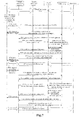
- UE After UE establishes two PDN connections to the APN1 according to the process of embodiment 1, the process that a UE is switched from accessing the EPS via a trusted non-3GPP access network 1 to accessing the EPS via another trusted non-3GPP access network 2 is as shown in Fig.7 ; wherein the wireless access technologies of the two trusted non-3GPP access network are the same, the detailed steps are as follows:
- the session identifier may be the same as that of trusted non-3GPP access gateway 1, and this session identifier may be acquired by the interaction between trusted non-3GPP access gateway 1. and trusted non-3GPP access gateway 2; the session identifier may also be different from that of trusted non-3GPP access gateway 1, and be only allocated by trusted non-3GPP access gateway 2, this identifier is used for indicating to reestablish a PDN connection or uniquely identifying an IP-CAN session, if it is necessary for uniquely identifying an IP-CAN session, the identifier is at least unique for the same UE and the same APN.
- trusted non-3GPP access gateway 2 may modify the APN1 by adding the information of the session identifier to the APN1 to form a modified APN1.
- APN1 is internet.operator.com
- the session identifier is 2
- the modified APN1 is internet.operator.com:2, that is to say, the session identifier is included in the modified APN1.
- Step S717 the PCRF finds the information before the switching of the user according to the NAI of the UE and the default APN1. If the session identifier of step S716 is acquired by the interaction between the access gateways, the PCRF sends, according to the session identifier, the QoS rule and the event trigger corresponding to the second PDN connection established to the APN1 before the switching to trusted non-3GPP access gateway 2 via a "gateway control session establishment acknowledge" message. Trusted non-3GPP access gateway 2 installs the QoS rule and the event trigger. Otherwise, the PCRF does not perform any operations;
- the PCRF analyzes that the UE reestablishes a connection and the session identifier information to PDN1 again according to the modified APN1.
- Step S718, trusted non-3GPP access gateway 2 sends to the P-GW a "proxy binding update" request message, wherein the "proxy binding update” request message carries the NAI, the APN1 and the session identifier; step S718 may be performed after receiving the message of step S715 instead of waiting for the response of step S717;
- the "proxy binding update" message may also carry the NAI and the modified APN1 and the session identifier information is included in the modified APN1;
- Step S719 the P-GW, in which the PCEF resides, sends to the PCRF an "indication of IP-CAN session modification" message carrying the NAI, the APN1, the session identifier and the IP address which is allocated by the P-GW for the second PDN connection established before the switching of the UE;
- the IP-CAN session establishment indicating message may also carry the NAI and the modified APN1 and the session identifier information is included in the modified APN1;
- Step S720 after receiving the IP-CAN session modification indicating message, the PCRF associates the indication of IP-CAN session modification with the gateway control session establishment indicating message of step S716 according to the session identifier, so as to send the PCC rule and the event trigger corresponding to the second PDN connection established before the switching of the UE to the P-GW via an IP-CAN session modification acknowledge message.
- the PCRF may update the forgoing instituted PCC, QoS rule and event trigger; after receiving the IP-CAN session modification acknowledge message, the P-GW installs and executes the PCC rule and the event trigger;
- step S719 If what is carried in step S719 is the modified APN1, the PCRF is able to analyze the session identifier information;
- Step S721 the P-GW returns to trusted non-3GPP access gateway 2 a "proxy binding acknowledge" message carrying the IP address which is allocated by the P-GW for the second PDN connection established before the switching of the UE;
- Step S722 trusted non-3GPP access gateway 2 returns to the UE a response message carrying the IP address of the UE;
- Step S723 if the information carried in the IP-CAN session establishment indicating message in step S719 causes changes of the QoS rule, the PCRF will send the new QoS rule to the trusted non-3GPP access gateway via a gateway control and QoS rule providing message; if the event trigger is also changed, a new event trigger is provided, the message and that in step S720 may be sent simultaneously;
- Step S724 trusted non-3GPP access gateway 2 returns a gateway control and QoS rule providing acknowledge message
- Step S725 a new PMIPv6 tunnel, apart from the PMIPv6 tunnel established while switching, is established between trusted non-3GPP access gateway 2 and the P-GW; at present, two PDN connections are established between the UE and the APN1.
- the UE accesses the EPS via an E-UTRAN according to embodiment 2, and has established two PDN connections to the APN1; when a tracking area update crossing S-GWs or a switching crossing S-GWs happened to the UE causes a BBERF relocation, similarly, the UE first reestablishes the connection of the first PDN established before the switching, a session identifier is not carried either during the interaction between the BBERF or the PCRF and during the interaction between the PCEF and the PCRF; the PCRF respectively delivers, to the BBERF and the PCEF, the rule and the event trigger corresponding to the first PDN connection established before the switching; when the UE triggers to reestablish the second PDN connection, a session identifier is carried during the interaction between the BBERF and the PCEF and during the interaction between the PCEF and the PCRF; the PCRF delivers, to the BBERF and the PCEF, the rule and the event trigger corresponding to the second PDN connection established before the switching.
- an access control system for packet data network is provided.
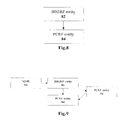
- Fig.8 is a block diagram illustrating the access control system for packet data network according to an embodiment of the present invention. As shown in Fig. 8 , the access control system includes:
- Fig.9 is a block diagram illustrating a preferred structure of the access control system for packet data network according to an embodiment of the present invention. As shown in Fig.9 , the above access control system for packet data network further includes:
- a policy and charging rules function entity is provided.
- Fig.10 is a block diagram illustrating the policy and charging rules function entity according to an embodiment of the present invention. As shown in Fig.10 , the policy and charging rules function entity according to an embodiment of the present invention includes:
- a method for distinguishing different IP-CAN sessions is provided by carrying a session identifier in the gateway control session establishment indicating message; the above method is applied in a packet system of 3GPP evolution, so that the PCRF may determine that a UE accesses the same APN for multiple times and uniquely identify different IP-CAN sessions when the UE accesses the same APN for multiple times.
- modules and steps of the present invention can be realized by using general purpose calculating device, can be integrated in one calculating device or distributed on a network which consists of a plurality of calculating devices.
- the modules and the steps of the present invention can be realized by using the executable program code of the calculating device. Consequently, they can be stored in the storing device and executed by the calculating device, or they are made into integrated circuit module respectively, or a plurality of modules or steps thereof are made into one integrated circuit module. In this way, the present invention is not restricted to any particular hardware and software combination.
Landscapes
- Engineering & Computer Science (AREA)
- Computer Networks & Wireless Communication (AREA)
- Signal Processing (AREA)
- Computer Security & Cryptography (AREA)
- Mobile Radio Communication Systems (AREA)
- Data Exchanges In Wide-Area Networks (AREA)
Applications Claiming Priority (2)
| Application Number | Priority Date | Filing Date | Title |
|---|---|---|---|
| CN2008101004428A CN101286915B (zh) | 2008-06-11 | 2008-06-11 | 分组数据网络的接入控制方法和系统、pcrf实体 |
| PCT/CN2009/072109 WO2009149642A1 (zh) | 2008-06-11 | 2009-06-03 | 分组数据网络的接入控制方法和系统、pcrf实体 |
Publications (2)
| Publication Number | Publication Date |
|---|---|
| EP2290883A1 true EP2290883A1 (de) | 2011-03-02 |
| EP2290883A4 EP2290883A4 (de) | 2012-08-08 |
Family
ID=40058893
Family Applications (1)
| Application Number | Title | Priority Date | Filing Date |
|---|---|---|---|
| EP09761267A Withdrawn EP2290883A4 (de) | 2008-06-11 | 2009-06-03 | Zugangssteuerungsverfahren und system für ein paketdatennetz, pcrf-einheit |
Country Status (4)
| Country | Link |
|---|---|
| US (1) | US8621555B2 (de) |
| EP (1) | EP2290883A4 (de) |
| CN (1) | CN101286915B (de) |
| WO (1) | WO2009149642A1 (de) |
Cited By (3)
| Publication number | Priority date | Publication date | Assignee | Title |
|---|---|---|---|---|
| WO2011091445A1 (en) * | 2010-01-25 | 2011-07-28 | Qualcomm Incorporated | Apparatus and method for associating a gateway control session with an internet protocol connectivity access network (ip-can) session |
| WO2019111034A1 (en) * | 2017-12-04 | 2019-06-13 | Telefonaktiebolaget Lm Ericsson (Publ) | System and methods for ims session continuity across 4g and 5g networks |
| EP2394490B1 (de) * | 2009-02-03 | 2019-10-16 | Nokia Solutions and Networks Oy | Methode und kommunikationsgerät zur bereitstellung einer telekommunikationsverbindung |
Families Citing this family (43)
| Publication number | Priority date | Publication date | Assignee | Title |
|---|---|---|---|---|
| CN101286915B (zh) | 2008-06-11 | 2012-05-09 | 中兴通讯股份有限公司 | 分组数据网络的接入控制方法和系统、pcrf实体 |
| CN101742009B (zh) | 2008-11-07 | 2012-06-27 | 华为技术有限公司 | 一种会话关联的方法、系统及装置 |
| US8325638B2 (en) | 2008-12-09 | 2012-12-04 | Qualcomm Incorporated | Performing packet flow optimization with policy and charging control |
| CN101841798B (zh) * | 2009-03-20 | 2014-01-01 | 中兴通讯股份有限公司 | 计费标识的关联方法和装置 |
| CN101860865A (zh) * | 2009-04-10 | 2010-10-13 | 中兴通讯股份有限公司 | 二次接入实现方法和装置 |
| CN101931928B (zh) * | 2009-06-19 | 2014-08-13 | 中兴通讯股份有限公司 | 漫游场景下单apn多pdn连接的策略计费控制的方法及系统 |
| CN101959257B (zh) * | 2009-07-20 | 2013-06-12 | 中兴通讯股份有限公司 | 一种承载绑定和事件报告功能的重选方法 |
| CN101969673B (zh) * | 2009-07-27 | 2013-08-07 | 中兴通讯股份有限公司 | 一种承载绑定和事件报告功能的重选方法 |
| CN101969632B (zh) * | 2009-07-28 | 2013-06-05 | 中兴通讯股份有限公司 | 一种漫游场景下的策略计费控制实现方法 |
| EP2477441B1 (de) | 2009-09-18 | 2014-05-21 | NEC Corporation | Kommunikationssystem und Kommunikationssteuerungsverfahren |
| CN101800987B (zh) * | 2010-02-10 | 2014-04-09 | 中兴通讯股份有限公司 | 一种智能卡鉴权装置及方法 |
| US20120014352A1 (en) * | 2010-07-13 | 2012-01-19 | Qualcomm Incorporated | Apparatus and method for enforcement of multiple packet data network (pdn) connections to the same access point name (apn) |
| WO2012110093A1 (en) * | 2011-02-17 | 2012-08-23 | Telefonaktiebolaget L M Ericsson (Publ) | Method and apparatus for establishing a pdn connection |
| EP2538721A1 (de) * | 2011-06-22 | 2012-12-26 | Alcatel Lucent | Unterstützung von IP-Verbindungen über vertrauenswürdigen Nicht-3GPP-Zugriff |
| US8601134B1 (en) * | 2011-06-30 | 2013-12-03 | Amazon Technologies, Inc. | Remote storage gateway management using gateway-initiated connections |
| US8789208B1 (en) | 2011-10-04 | 2014-07-22 | Amazon Technologies, Inc. | Methods and apparatus for controlling snapshot exports |
| EP2613597B1 (de) * | 2012-01-06 | 2021-07-28 | Alcatel Lucent | Reduzierung der Belastung mittels Benachrichtigung von Informationsänderungen an eine Richtlinien- und/oder Ladungssteuerung in einem mobilen Kommunikationssystem |
| CN103517378B (zh) * | 2012-06-30 | 2018-09-21 | 华为终端有限公司 | 分组数据网连接建立方法和设备 |
| CN103875302B (zh) | 2012-07-18 | 2017-10-27 | 华为技术有限公司 | 一种数据连接管理的方法、装置及系统 |
| CN103686846B (zh) * | 2012-09-07 | 2019-04-05 | 中兴通讯股份有限公司 | 数据报文传输方法、pdn连接标识处理方法、及装置 |
| CN105027664B (zh) | 2013-01-03 | 2018-11-02 | 英特尔公司 | 在使用无线局域网的无线通信系统中的分组数据连接 |
| WO2014117865A1 (en) * | 2013-02-01 | 2014-08-07 | Telefonaktiebolaget L M Ericsson (Publ) | Mobile gateway selection using a direct connection between a pcrf node and a mobility management node |
| EP2800417B1 (de) * | 2013-04-29 | 2023-03-01 | Alcatel Lucent | Ende-zu-Ende QoS bei der Integration von vertrauenswürdigen nicht-3GPP Zugangsnetzen und 3GPP Kernnetzen |
| ES2745087T3 (es) * | 2013-06-20 | 2020-02-27 | Samsung Electronics Co Ltd | Procedimiento y dispositivo de control de múltiples conexiones en LAN inalámbrica |
| US9521077B2 (en) * | 2013-07-22 | 2016-12-13 | Verizon Patent And Licensing Inc. | Network connection via a proxy device using a generic access point name |
| WO2014173252A1 (zh) * | 2013-07-26 | 2014-10-30 | 中兴通讯股份有限公司 | 会话管理方法、应用功能实体、策略服务器和协议转换器 |
| JP5681772B1 (ja) * | 2013-09-24 | 2015-03-11 | 株式会社Nttドコモ | Ipマルチメディアサブシステム、プロキシセッション制御装置及び通信制御方法 |
| US9515938B2 (en) | 2013-10-24 | 2016-12-06 | Microsoft Technology Licensing, Llc | Service policies for communication sessions |
| US9807655B2 (en) * | 2014-02-14 | 2017-10-31 | Telefonaktiebolaget Lm Ericsson (Publ) | PCRF assisted APN selection |
| CN106105382A (zh) * | 2014-02-19 | 2016-11-09 | 康维达无线有限责任公司 | 用于系统间移动性的服务网关扩展 |
| WO2016155012A1 (zh) * | 2015-04-03 | 2016-10-06 | 华为技术有限公司 | 一种无线通信网络中的接入方法、相关装置及系统 |
| US10397233B2 (en) | 2015-04-20 | 2019-08-27 | Bomgar Corporation | Method and apparatus for credential handling |
| US10229262B2 (en) | 2015-04-20 | 2019-03-12 | Bomgar Corporation | Systems, methods, and apparatuses for credential handling |
| US9961112B2 (en) | 2015-04-20 | 2018-05-01 | Bomgar Corporation | Method and apparatus for enforcing realtime access controls for endpoints |
| BR112017022545B1 (pt) * | 2015-04-22 | 2024-03-05 | Huawei Technologies Co., Ltd | Método, aparelho, e sistema de autorização de nome de ponto de acesso |
| US10498764B2 (en) | 2015-12-08 | 2019-12-03 | Jpu.Io Ltd | Network routing and security within a mobile radio network |
| US11296946B2 (en) * | 2016-07-13 | 2022-04-05 | Telefonaktiebolaget Lm Ericsson (Publ) | Methods and servers for managing traffic steering policies |
| CN108307530B (zh) * | 2016-09-30 | 2023-09-22 | 华为技术有限公司 | 一种会话连接建立方法、相关设备及系统 |
| CN113194515B (zh) * | 2017-05-05 | 2025-01-10 | 华为技术有限公司 | 一种会话管理方法、网络设备和通信系统 |
| WO2019127038A1 (zh) * | 2017-12-26 | 2019-07-04 | Oppo广东移动通信有限公司 | 用于数据传输的方法、终端设备和网络设备 |
| US10880516B2 (en) | 2018-01-08 | 2020-12-29 | Ppc Broadband, Inc. | Multi-tap having selectable conditioning modules |
| CN110972216B (zh) * | 2018-09-30 | 2022-04-29 | 华为技术有限公司 | 通信方法和装置 |
| CN111756592B (zh) * | 2019-03-28 | 2022-03-08 | 中国移动通信有限公司研究院 | 一种策略处理方法及实体 |
Family Cites Families (16)
| Publication number | Priority date | Publication date | Assignee | Title |
|---|---|---|---|---|
| CN1310476C (zh) * | 2004-07-05 | 2007-04-11 | 华为技术有限公司 | 无线局域网用户建立会话连接的方法 |
| US8064400B2 (en) * | 2005-07-20 | 2011-11-22 | Interdigital Technology Corporation | Method and system for supporting an evolved UTRAN |
| WO2007026268A1 (en) | 2005-08-31 | 2007-03-08 | Nokia Corporation | Inter-access mobility and service control |
| US8042148B2 (en) * | 2006-02-07 | 2011-10-18 | Cisco Technology, Inc. | System and method for enforcing policy in a communication network |
| US8856860B2 (en) * | 2006-08-18 | 2014-10-07 | Cisco Technology, Inc. | System and method for implementing policy server based application interaction manager |
| WO2008127662A1 (en) * | 2007-04-12 | 2008-10-23 | Marvell World Trade Ltd. | Packet data network connectivity domain selection and bearer setup |
| US8331314B2 (en) * | 2007-04-20 | 2012-12-11 | Telefonaktiebolaget L M Ericsson (Publ) | Dormant session management associated with handover |
| DK3007406T3 (en) * | 2007-05-22 | 2017-03-13 | ERICSSON TELEFON AB L M (publ) | PROCEDURE, DEVICES AND COMPUTER PROGRAM FOR DYNAMIC CONFIGURATION OF A PROXY CALL SESSION CONTROL FUNCTION OF THE IP MULTIMEDIA SUBSYSTEM FROM A POLICY CONTROL RULES SERVER |
| US20080305825A1 (en) * | 2007-06-08 | 2008-12-11 | Interdigital Technology Corporation | Method and apparatus for providing capability and core network information to support interworking between 3gpp and non-3gpp networks |
| CN100544266C (zh) * | 2007-09-18 | 2009-09-23 | 中兴通讯股份有限公司 | 一种公平用户策略的业务实现方法 |
| CN101159563B (zh) * | 2007-11-02 | 2011-01-05 | 中兴通讯股份有限公司 | 一种策略计费控制服务器的选择方法及系统 |
| US8116728B2 (en) * | 2008-04-22 | 2012-02-14 | Alcatel Lucent | Charging in LTE/EPC communication networks |
| US20090300207A1 (en) * | 2008-06-02 | 2009-12-03 | Qualcomm Incorporated | Pcc enhancements for ciphering support |
| US8249551B2 (en) * | 2008-06-05 | 2012-08-21 | Bridgewater Systems Corp. | Long-term evolution (LTE) policy control and charging rules function (PCRF) selection |
| CN101286915B (zh) * | 2008-06-11 | 2012-05-09 | 中兴通讯股份有限公司 | 分组数据网络的接入控制方法和系统、pcrf实体 |
| SG176236A1 (en) * | 2009-06-03 | 2012-01-30 | Research In Motion Ltd | Voice service in evolved packet system |
-
2008
- 2008-06-11 CN CN2008101004428A patent/CN101286915B/zh active Active
-
2009
- 2009-06-03 US US12/997,509 patent/US8621555B2/en active Active
- 2009-06-03 EP EP09761267A patent/EP2290883A4/de not_active Withdrawn
- 2009-06-03 WO PCT/CN2009/072109 patent/WO2009149642A1/zh not_active Ceased
Non-Patent Citations (5)
| Title |
|---|
| "3rd Generation Partnership Project; Technical Specification Group Services and System Aspects; Architecture Enhancements for non-3GPP accesses (Release 8)", 3GPP STANDARD; 3GPP TS 23.402, 3RD GENERATION PARTNERSHIP PROJECT (3GPP), MOBILE COMPETENCE CENTRE ; 650, ROUTE DES LUCIOLES ; F-06921 SOPHIA-ANTIPOLIS CEDEX ; FRANCE, no. V1.5.1, 1 November 2007 (2007-11-01), pages 1-141, XP050363653, * |
| 3gpp: "3rd Generation Partnership Project; Technical Specification Group Services and System Aspects; Policy and charging control architecture (Release 8)", , 1 January 2008 (2008-01-01), pages 1-87, XP55021317, Retrieved from the Internet: URL:http://www.quintillion.co.jp/3GPP/Specs/23203-811.pdf [retrieved on 2012-03-08] * |
| DATABASE 3GPP Draft; 23402_CR0181R [Online] 29 May 2008 (2008-05-29), MOTOROLA ET AL: "Update to 23.402 for dedicated resource-allocation", XP050211113, Database accession no. 23402_CR0181R4_(Rel-8)_S2-084330_23402CR01 81_Dedic * |
| DATABASE 3GPP Draft; S2-074834_IEs [Online] 18 November 2007 (2007-11-18), SAMSUNG: "IE additions for PMIP-based S5/S8 Procedures", XP050261596, Database accession no. S2-074834_IEs_for_PMIP_S5S8_Changes * |
| See also references of WO2009149642A1 * |
Cited By (3)
| Publication number | Priority date | Publication date | Assignee | Title |
|---|---|---|---|---|
| EP2394490B1 (de) * | 2009-02-03 | 2019-10-16 | Nokia Solutions and Networks Oy | Methode und kommunikationsgerät zur bereitstellung einer telekommunikationsverbindung |
| WO2011091445A1 (en) * | 2010-01-25 | 2011-07-28 | Qualcomm Incorporated | Apparatus and method for associating a gateway control session with an internet protocol connectivity access network (ip-can) session |
| WO2019111034A1 (en) * | 2017-12-04 | 2019-06-13 | Telefonaktiebolaget Lm Ericsson (Publ) | System and methods for ims session continuity across 4g and 5g networks |
Also Published As
| Publication number | Publication date |
|---|---|
| CN101286915A (zh) | 2008-10-15 |
| CN101286915B (zh) | 2012-05-09 |
| US20110099604A1 (en) | 2011-04-28 |
| WO2009149642A1 (zh) | 2009-12-17 |
| US8621555B2 (en) | 2013-12-31 |
| EP2290883A4 (de) | 2012-08-08 |
Similar Documents
| Publication | Publication Date | Title |
|---|---|---|
| EP2290883A1 (de) | Zugangssteuerungsverfahren und system für ein paketdatennetz, pcrf-einheit | |
| US8799440B2 (en) | Policy and charging control method and system for multi-PDN connections of single APN | |
| EP2410701B1 (de) | Verfahren zur steuerung des zugriffs auf mehrere netzwerke, kommunikationssystem und entsprechende geräte | |
| US9351325B2 (en) | Policy control method and system for converged network | |
| EP2458913B1 (de) | Wiederauswahlsystem für trägerbindungs- und ereignismeldungsfunktion sowie verfahren dafür | |
| CN101969673B (zh) | 一种承载绑定和事件报告功能的重选方法 | |
| CN101267319B (zh) | 一种下发策略计费控制规则的方法 | |
| CN101730174B (zh) | 演进的分组系统中实现跨系统切换的方法及系统 | |
| US20100281170A1 (en) | Method for selecting a policy and charging rules function entity in the non-roaming scenario | |
| EP2424160A1 (de) | Verfahren zum implementieren einer begrenzten richtlinien- und vergebührungssteuerung und system dafür | |
| CN101459951B (zh) | 一种承载绑定和事件报告功能策略控制的方法及系统 | |
| US10516783B2 (en) | Method and device for processing PCC rule | |
| WO2011011942A1 (zh) | 一种漫游场景下的策略计费控制实现方法 | |
| CN101945456A (zh) | 一种andsf提供接入网协议选择功能的方法和系统 | |
| WO2011029289A1 (zh) | 漫游场景下承载控制模式的发送方法和系统 | |
| US10575165B2 (en) | Routing based on access point name (APN) information | |
| CN101448209B (zh) | 用于演进分组系统的用户设备位置信息通知方法和系统 | |
| CN101447918B (zh) | 用户设备接入协议的通知方法和系统 | |
| CN101841798B (zh) | 计费标识的关联方法和装置 | |
| CN103369502B (zh) | 一种策略控制会话的处理方法及网元 | |
| CN102791042A (zh) | S9子会话建立方法、系统及pcrf | |
| WO2011072438A1 (zh) | 一种iwp场景下lbo处理方法、装置及系统 | |
| US20120176973A1 (en) | Method for processing multiple access, home agent and user equipment | |
| CN103096292A (zh) | 一种网络能力识别的方法和系统 | |
| HK1143905A (en) | A method for selecting a policy and charging rules function entity in the non-roaming scenario |
Legal Events
| Date | Code | Title | Description |
|---|---|---|---|
| PUAI | Public reference made under article 153(3) epc to a published international application that has entered the european phase |
Free format text: ORIGINAL CODE: 0009012 |
|
| 17P | Request for examination filed |
Effective date: 20101223 |
|
| AK | Designated contracting states |
Kind code of ref document: A1 Designated state(s): AT BE BG CH CY CZ DE DK EE ES FI FR GB GR HR HU IE IS IT LI LT LU LV MC MK MT NL NO PL PT RO SE SI SK TR |
|
| AX | Request for extension of the european patent |
Extension state: AL BA RS |
|
| DAX | Request for extension of the european patent (deleted) | ||
| A4 | Supplementary search report drawn up and despatched |
Effective date: 20120705 |
|
| RIC1 | Information provided on ipc code assigned before grant |
Ipc: H04L 12/24 20060101ALN20120629BHEP Ipc: H04L 12/14 20060101ALN20120629BHEP Ipc: H04W 76/02 20090101AFI20120629BHEP Ipc: H04L 12/56 20060101ALI20120629BHEP |
|
| 17Q | First examination report despatched |
Effective date: 20150417 |
|
| STAA | Information on the status of an ep patent application or granted ep patent |
Free format text: STATUS: EXAMINATION IS IN PROGRESS |
|
| STAA | Information on the status of an ep patent application or granted ep patent |
Free format text: STATUS: THE APPLICATION HAS BEEN WITHDRAWN |
|
| 18W | Application withdrawn |
Effective date: 20180904 |