EP2292660B1 - Humane antikörpermoleküle für il-13 - Google Patents
Humane antikörpermoleküle für il-13 Download PDFInfo
- Publication number
- EP2292660B1 EP2292660B1 EP10183949.6A EP10183949A EP2292660B1 EP 2292660 B1 EP2292660 B1 EP 2292660B1 EP 10183949 A EP10183949 A EP 10183949A EP 2292660 B1 EP2292660 B1 EP 2292660B1
- Authority
- EP
- European Patent Office
- Prior art keywords
- seq
- amino acid
- acid sequence
- human
- antibody
- Prior art date
- Legal status (The legal status is an assumption and is not a legal conclusion. Google has not performed a legal analysis and makes no representation as to the accuracy of the status listed.)
- Expired - Lifetime
Links
Images








Classifications
-
- C—CHEMISTRY; METALLURGY
- C07—ORGANIC CHEMISTRY
- C07K—PEPTIDES
- C07K16/00—Immunoglobulins [IG], e.g. monoclonal or polyclonal antibodies
- C07K16/18—Immunoglobulins [IG], e.g. monoclonal or polyclonal antibodies against material from animals or humans
- C07K16/24—Immunoglobulins [IG], e.g. monoclonal or polyclonal antibodies against material from animals or humans against cytokines, lymphokines or interferons
- C07K16/244—Interleukins [IL]
-
- C—CHEMISTRY; METALLURGY
- C07—ORGANIC CHEMISTRY
- C07K—PEPTIDES
- C07K16/00—Immunoglobulins [IG], e.g. monoclonal or polyclonal antibodies
- C07K16/18—Immunoglobulins [IG], e.g. monoclonal or polyclonal antibodies against material from animals or humans
- C07K16/24—Immunoglobulins [IG], e.g. monoclonal or polyclonal antibodies against material from animals or humans against cytokines, lymphokines or interferons
-
- A—HUMAN NECESSITIES
- A61—MEDICAL OR VETERINARY SCIENCE; HYGIENE
- A61K—PREPARATIONS FOR MEDICAL, DENTAL OR TOILETRY PURPOSES
- A61K39/00—Medicinal preparations containing antigens or antibodies
- A61K39/395—Antibodies; Immunoglobulins; Immune serum, e.g. antilymphocytic serum
-
- A—HUMAN NECESSITIES
- A61—MEDICAL OR VETERINARY SCIENCE; HYGIENE
- A61P—SPECIFIC THERAPEUTIC ACTIVITY OF CHEMICAL COMPOUNDS OR MEDICINAL PREPARATIONS
- A61P1/00—Drugs for disorders of the alimentary tract or the digestive system
-
- A—HUMAN NECESSITIES
- A61—MEDICAL OR VETERINARY SCIENCE; HYGIENE
- A61P—SPECIFIC THERAPEUTIC ACTIVITY OF CHEMICAL COMPOUNDS OR MEDICINAL PREPARATIONS
- A61P11/00—Drugs for disorders of the respiratory system
-
- A—HUMAN NECESSITIES
- A61—MEDICAL OR VETERINARY SCIENCE; HYGIENE
- A61P—SPECIFIC THERAPEUTIC ACTIVITY OF CHEMICAL COMPOUNDS OR MEDICINAL PREPARATIONS
- A61P11/00—Drugs for disorders of the respiratory system
- A61P11/02—Nasal agents, e.g. decongestants
-
- A—HUMAN NECESSITIES
- A61—MEDICAL OR VETERINARY SCIENCE; HYGIENE
- A61P—SPECIFIC THERAPEUTIC ACTIVITY OF CHEMICAL COMPOUNDS OR MEDICINAL PREPARATIONS
- A61P11/00—Drugs for disorders of the respiratory system
- A61P11/06—Antiasthmatics
-
- A—HUMAN NECESSITIES
- A61—MEDICAL OR VETERINARY SCIENCE; HYGIENE
- A61P—SPECIFIC THERAPEUTIC ACTIVITY OF CHEMICAL COMPOUNDS OR MEDICINAL PREPARATIONS
- A61P17/00—Drugs for dermatological disorders
-
- A—HUMAN NECESSITIES
- A61—MEDICAL OR VETERINARY SCIENCE; HYGIENE
- A61P—SPECIFIC THERAPEUTIC ACTIVITY OF CHEMICAL COMPOUNDS OR MEDICINAL PREPARATIONS
- A61P19/00—Drugs for skeletal disorders
- A61P19/04—Drugs for skeletal disorders for non-specific disorders of the connective tissue
-
- A—HUMAN NECESSITIES
- A61—MEDICAL OR VETERINARY SCIENCE; HYGIENE
- A61P—SPECIFIC THERAPEUTIC ACTIVITY OF CHEMICAL COMPOUNDS OR MEDICINAL PREPARATIONS
- A61P27/00—Drugs for disorders of the senses
- A61P27/16—Otologicals
-
- A—HUMAN NECESSITIES
- A61—MEDICAL OR VETERINARY SCIENCE; HYGIENE
- A61P—SPECIFIC THERAPEUTIC ACTIVITY OF CHEMICAL COMPOUNDS OR MEDICINAL PREPARATIONS
- A61P29/00—Non-central analgesic, antipyretic or antiinflammatory agents, e.g. antirheumatic agents; Non-steroidal antiinflammatory drugs [NSAID]
-
- A—HUMAN NECESSITIES
- A61—MEDICAL OR VETERINARY SCIENCE; HYGIENE
- A61P—SPECIFIC THERAPEUTIC ACTIVITY OF CHEMICAL COMPOUNDS OR MEDICINAL PREPARATIONS
- A61P35/00—Antineoplastic agents
-
- A—HUMAN NECESSITIES
- A61—MEDICAL OR VETERINARY SCIENCE; HYGIENE
- A61P—SPECIFIC THERAPEUTIC ACTIVITY OF CHEMICAL COMPOUNDS OR MEDICINAL PREPARATIONS
- A61P37/00—Drugs for immunological or allergic disorders
-
- A—HUMAN NECESSITIES
- A61—MEDICAL OR VETERINARY SCIENCE; HYGIENE
- A61P—SPECIFIC THERAPEUTIC ACTIVITY OF CHEMICAL COMPOUNDS OR MEDICINAL PREPARATIONS
- A61P37/00—Drugs for immunological or allergic disorders
- A61P37/02—Immunomodulators
- A61P37/06—Immunosuppressants, e.g. drugs for graft rejection
-
- A—HUMAN NECESSITIES
- A61—MEDICAL OR VETERINARY SCIENCE; HYGIENE
- A61P—SPECIFIC THERAPEUTIC ACTIVITY OF CHEMICAL COMPOUNDS OR MEDICINAL PREPARATIONS
- A61P37/00—Drugs for immunological or allergic disorders
- A61P37/08—Antiallergic agents
-
- A—HUMAN NECESSITIES
- A61—MEDICAL OR VETERINARY SCIENCE; HYGIENE
- A61P—SPECIFIC THERAPEUTIC ACTIVITY OF CHEMICAL COMPOUNDS OR MEDICINAL PREPARATIONS
- A61P43/00—Drugs for specific purposes, not provided for in groups A61P1/00-A61P41/00
-
- C—CHEMISTRY; METALLURGY
- C12—BIOCHEMISTRY; BEER; SPIRITS; WINE; VINEGAR; MICROBIOLOGY; ENZYMOLOGY; MUTATION OR GENETIC ENGINEERING
- C12N—MICROORGANISMS OR ENZYMES; COMPOSITIONS THEREOF; PROPAGATING, PRESERVING, OR MAINTAINING MICROORGANISMS; MUTATION OR GENETIC ENGINEERING; CULTURE MEDIA
- C12N15/00—Mutation or genetic engineering; DNA or RNA concerning genetic engineering, vectors, e.g. plasmids, or their isolation, preparation or purification; Use of hosts therefor
- C12N15/09—Recombinant DNA-technology
- C12N15/11—DNA or RNA fragments; Modified forms thereof; Non-coding nucleic acids having a biological activity
-
- A—HUMAN NECESSITIES
- A61—MEDICAL OR VETERINARY SCIENCE; HYGIENE
- A61K—PREPARATIONS FOR MEDICAL, DENTAL OR TOILETRY PURPOSES
- A61K39/00—Medicinal preparations containing antigens or antibodies
- A61K2039/505—Medicinal preparations containing antigens or antibodies comprising antibodies
-
- C—CHEMISTRY; METALLURGY
- C07—ORGANIC CHEMISTRY
- C07K—PEPTIDES
- C07K2317/00—Immunoglobulins specific features
- C07K2317/20—Immunoglobulins specific features characterized by taxonomic origin
- C07K2317/21—Immunoglobulins specific features characterized by taxonomic origin from primates, e.g. man
-
- C—CHEMISTRY; METALLURGY
- C07—ORGANIC CHEMISTRY
- C07K—PEPTIDES
- C07K2317/00—Immunoglobulins specific features
- C07K2317/50—Immunoglobulins specific features characterized by immunoglobulin fragments
- C07K2317/56—Immunoglobulins specific features characterized by immunoglobulin fragments variable (Fv) region, i.e. VH and/or VL
- C07K2317/565—Complementarity determining region [CDR]
-
- C—CHEMISTRY; METALLURGY
- C07—ORGANIC CHEMISTRY
- C07K—PEPTIDES
- C07K2317/00—Immunoglobulins specific features
- C07K2317/60—Immunoglobulins specific features characterized by non-natural combinations of immunoglobulin fragments
- C07K2317/62—Immunoglobulins specific features characterized by non-natural combinations of immunoglobulin fragments comprising only variable region components
- C07K2317/622—Single chain antibody (scFv)
-
- C—CHEMISTRY; METALLURGY
- C07—ORGANIC CHEMISTRY
- C07K—PEPTIDES
- C07K2317/00—Immunoglobulins specific features
- C07K2317/70—Immunoglobulins specific features characterized by effect upon binding to a cell or to an antigen
- C07K2317/73—Inducing cell death, e.g. apoptosis, necrosis or inhibition of cell proliferation
-
- C—CHEMISTRY; METALLURGY
- C07—ORGANIC CHEMISTRY
- C07K—PEPTIDES
- C07K2317/00—Immunoglobulins specific features
- C07K2317/70—Immunoglobulins specific features characterized by effect upon binding to a cell or to an antigen
- C07K2317/76—Antagonist effect on antigen, e.g. neutralization or inhibition of binding
-
- C—CHEMISTRY; METALLURGY
- C07—ORGANIC CHEMISTRY
- C07K—PEPTIDES
- C07K2317/00—Immunoglobulins specific features
- C07K2317/90—Immunoglobulins specific features characterized by (pharmaco)kinetic aspects or by stability of the immunoglobulin
- C07K2317/92—Affinity (KD), association rate (Ka), dissociation rate (Kd) or EC50 value
Definitions
- the present invention relates to specific binding members, in particular human anti-IL-13 antibody molecules and especially those which neutralise IL-13 activity. It further relates to anti-IL-13 antibody molecules for use in diagnosis or treatment of IL-13 related disorders, including asthma, atopic dermatitis, allergic rhinitis, fibrosis, inflammatory bowel disease and Hodgkin's lymphoma.
- Preferred embodiments of the present invention employ the antibody VH and/or VL domain of the antibody moleculesherein termed BAK1167F02, BAK1111D10, BAK1166G02, BAK1167F04, BAK1184C8, BAK1185E1, BAK1185F8 and BAK1183H4.
- Further preferred embodiments employ complementarity determining regions (CDRs) of BAK1167F02, BAK1111D10, BAK1166G02, BAK1167F04, BAK1184C8, BAK1185E1, BAK1185F8 and BAK1183H4, especially VH CDR3 in other antibody framework regions.
- Further aspects of the present invention provide for compositions containing specific binding members of the invention, and their use in methods of inhibiting or neutralising IL-13.
- the present invention provides antibody molecules of particular value in binding and neutralising IL-13, and thus of use in any of a variety of therapeutic treatments, as indicated by the experimentation contained herein and further by the supporting technical literature.
- Interleukin (IL)-13 is a 114 amino acid cytokine with an unmodified molecular mass of approximately 12 kDa [1,2]. IL-13 is most closely related to IL-4 with which it shares 30% sequence similarity at the amino acid level.
- the human IL-13 gene is located on chromosome 5q31 adjacent to the IL-4 gene [1] [2]. This region of chromosome 5q contains gene sequences for other Th2 lymphocyte derived cytokines including GM-CSF and IL-5, whose levels together with IL-4 have been shown to correlate with disease severity in asthmatics and rodent models of allergic inflammation [3] [4] [5] [6] [7] [8].
- IL-13 is also produced by Th1 CD4+ T-cells, CD8+ T lymphocytes NK cells, and non-T-cell populations such as mast cells, basophils, eosinophils, macrophages, monocytes and airway smooth muscle cells.
- IL-13 is reported to mediate its effects through a receptor system that includes the IL-4 receptor ⁇ chain (IL-4R ⁇ ); which itself can bind IL-4 but not IL-13, and at least two other cell surface proteins, IL-13R ⁇ 1 and IL-13R ⁇ 2 [9][10].
- IL-13R ⁇ 1 can bind IL-13 with low affinity, subsequently recruiting IL-4R ⁇ to form a high affinity functional receptor that signals [11] [12].
- Genbank database lists the amino acid sequence and the nucleic acid sequence of IL-13R ⁇ 1 as NP_001551 and Y10659 respectively.
- IL-13R ⁇ 2 shares 37% sequence identity with IL-13R ⁇ 1 at the amino acid level and binds IL-13 with high affinity [15] [16]. However, IL-13R ⁇ 2 has a shorter cytoplasmic tail that lacks known signalling motifs. Cells expressing IL-13R ⁇ 2 are not responsive to IL-13 even in the presence of IL-4R ⁇ [17]. It is postulated, therefore, that IL-13R ⁇ 2 acts as a decoy receptor regulating IL-13 but not IL-4 function.
- Genbank database lists the amino acid sequence and the nucleic acid sequence of IL-13R ⁇ 2 as NP_000631 and Y08768 respectively.
- the signalling IL-13R ⁇ 1/IL-4R ⁇ receptor complex is expressed on human B-cells, mast cells, monocyte/macrophages, dendritic cells, eosinophils, basophils, fibroblasts, endothelial cells, airway epithelial cells and airway smooth muscle cells.
- Bronchial asthma is a common persistent inflammatory disease of the lung characterised by airways hyper-responsiveness, mucus overproduction, fibrosis and raised serum IgE levels.
- Airways hyper-responsiveness AHR is the exaggerated constriction of the airways to non-specific stimuli such as cold air. Both AHR and mucus overproduction are thought to be responsible for the variable airway obstruction that leads to the shortness of breath characteristic of asthma attacks (exacerbations) and which is responsible for the mortality associated with this disease (around 2000 deaths/year in the United Kingdom).
- IL-13 recombinant IL-13 to the airways of naive non-sensitised rodents caused many aspects of the asthma phenotype including airway inflammation, mucus production and AHR [27] [28] [29] [30].
- a similar phenotype was observed in a transgenic mouse in which IL-13 was specifically overexpressed in the lung. In this model more chronic exposure to IL-13 also resulted in fibrosis [31].
- mice in which the IL-13 gene had been deleted failed to develop allergen-induced AHR. AHR could be restored in these IL-13 deficient mice by the administration of recombinant IL-13. In contrast, IL-4 deficient mice developed airway disease in this model [32] [33].
- a number of genetic polymorphisms in the IL-13 gene have also been linked to allergic disease.
- a variant of the IL-13 gene in which the arginine residue at amino acid 130 is substituted with glutamine has been associated with bronchial asthma, atopic dermatitis and raised serum IgE levels [37] [38] [39] [40].
- This particular IL-13 variant is also referred to as the R110Q variant (arginine residue at amino acid 110 is substituted with glutamine) by some groups who exclude the 20 amino acid signal sequence from the amino acid count.
- Arima et al, [41] report that this variant is associated with raised levels of IL-13 in serum.
- the IL-13 variant (R130Q) and antibodies to this variant are discussed in WO 01/62933 .
- An IL-13 promoter polymorphism, which alters IL-13 production, has also been associated with allergic asthma [42].
- Raised levels of IL-13 have also been measured in human subjects with asthma, atopic rhinitis (hay fever), allergic dermatitis (eczema) and chronic sinusitis.
- levels of IL-13 were found to be higher in bronchial biopsies, sputum and broncho-alveolar lavage (BAL) cells from asthmatics compared to control subjects [43] [44] [45] [46].
- levels of IL-13 in BAL samples increased in asthmatic individuals upon challenge with allergen [47] [48].
- the IL-13 production capacity of CD4(+) T cells has further been shown to be useful marker of risk for subsequent development of allergic disease in newborns [49].
- Li et al [114] have recently reported affects of a neutralising anti-mouse IL-13 antibody in a chronic mouse model of asthma. Chronic asthma-like response (such as AHR, severe airway inflammation, hyper mucus productions) was induced in OVA sensitised mice. Li et al report that administration of an IL-13 antibody at the time of each OVA challenge suppresses AHR, eosinophil infiltration, serum IgE levels, proinflammatory cytokine/chemokine levels and airway remodelling [14].
- IL-13 may play a role in the pathogenesis of inflammatory bowel disease.
- Heller et al.[116] report that neutralisation of IL-13 by administration of soluble IL-13R ⁇ 2 ameliorated colonic inflammation in a murine model of human ulcerative colitis [116].
- IL-13 expression was higher in rectal biopsy specimens from ulcerative colitis patients when compared to controls [117].
- IL-13 has been associated with other fibrotic conditions. Increased levels of IL-13, up to a 1000 fold higher than IL-4, have been measured in the serum of patients with systemic sclerosis [50] and in BAL samples from patients affected with other forms of pulmonary fibrosis [51]. Correspondingly, overexpression of IL-13 but not IL-4 in the mouse lung resulted in pronounced fibrosis [52] [53]. The contribution of IL-13 to fibrosis in tissues other than the lung has been extensively studied in a mouse model of parasite-induced liver fibrosis. Specific inhibition of IL-13 by administration of soluble IL-13R ⁇ 2 or IL-13 gene disruption, but not ablation of IL-4 production prevented fibrogenesis in the liver [54] [55] [56].
- COPD Chronic Obstructive Pulmonary Disease
- IL-13 plays an important role in the pathogenesis of COPD, particularly in patients with asthma-like features including AHR and eosinophilia.
- mRNA levels of IL-13 have been shown to be higher in autopsy tissue samples from subjects with a history of COPD when compared to lung samples from subjects with no reported lung disease (J. Elias, Oral communication at American Thoracic Society Annual Meeting 2002).
- raised levels of IL-13 were demonstrated by immunohistochemistry in peripheral lung sections from COPD patients [91].
- Hodgkin's disease is a common type of lymphoma, which accounts for approximately 7,500 cases per year in the United States. Hodgkin's disease is unusual among malignancies in that the neoplastic Reed-Sternberg cell, often derived from B-cells, make up only a small proportion of the clinically detectable mass. Hodgkin's disease-derived cell lines and primary Reed-Sternberg cells frequently express IL-13 and its receptor [61]. As IL-13 promotes cell survival and proliferation in normal B-cells, it was proposed that IL-13 could act as a growth factor for Reed-Sternberg cells. Skinnider et al.
- tumour specific antigens Many human cancer cells express immunogenic tumour specific antigens. However, although many tumours spontaneously regress, a number evade the immune system (immunosurveillance) by suppressing T-cell mediated immunity. Terabe et al . [64] have demonstrated a role of IL-13 in immunosuppression in a mouse model in which tumours spontaneously regress after initial growth and then recur. Specific inhibition of IL-13, with soluble IL-13R ⁇ 2, protected these mice from tumour recurrence. Terabe et al [64] went on to show that IL-13 suppresses the differentiation of tumour specific CD8+ cytotoxic lymphocytes that mediate anti-tumour immune responses.
- IL-13 inhibitors may, therefore, be used therapeutically to prevent tumour recurrence or metastasis. Inhibition of IL-13 has been shown to enhance anti-viral vaccines in animal models and may be beneficial in the treatment of HIV and other infectious diseases [65].
- WO 03/035847 describes IL-13 mutein proteins and antibodies, and isolated nucleic acids encoding these proteins and antibodies, and their therapeutic uses. It should be noted that generally herein reference to interleukin-13 or IL-13 is, except where context dictates otherwise, reference to human IL-13. This is also referred to in places as "the antigen”.
- the present invention relates to antibodies to human IL-13, especially human antibodies, that are cross-reactive with non-human primate IL-13, including cynomolgus and rhesus monkey IL-13.
- Antibodies in accordance with the present invention also recognise a variant of IL-13 in which the arginine residue at amino acid position 130 is replaced by glutamine.
- the present invention relates to specific binding members for IL-13, in particular human and/or primate IL-13 and/or variant IL-13 (Q130R).
- Preferred embodiments within the present invention are antibody molecules, whether whole antibody (e.g. IgG, such as IgG4) or antibody fragments (e.g. scFv, Fab, dAb).
- Antibody antigen binding regions are provided, as are antibody VH and VL domains. Within VH and VL domains are provided complementarity determining regions, CDR's, which may be provided within different framework regions, FR's, to form VH or VL domains as the case may be.
- An antigen binding site may consist of an antibody VH domain and/or a VL domain.
- An antigen binding site may be provided by means of arrangement of CDR's on non-antibody protein scaffolds such as fibronectin or cytochrome B etc. [115, 116]. Scaffolds for engineering novel binding sites in proteins have been reviewed in detail by Nygren et al [116]. Protein scaffolds for antibody mimics are disclosed in WO/0034784 in which the inventors describe proteins (antibody mimics) which include a fibronectin type III domain having at least one randomised loop.
- a suitable scaffold into which to graft one or more CDR's, e.g. a set of HCDR's, may be provided by any domain member of the immunoglobulin gene superfamily.
- the set of CDR's wherein the HCDR1 has the amino acid sequence of SEQ ID NO: 1, the HCDR2 has the amino acid sequence of SEQ ID NO: 2, the HCDR3 has the amino acid sequence of SEQ ID NO: 3, the LCDR1 has the amino acid sequence of SEQ ID NO: 4, the LCDR2 has the amino acid sequence of SEQ ID NO: 5, and the LCDR3 has the amino acid sequence of SEQ ID NO: 6, are herein referred to as the "BAK278D6 set of CDR's".
- the HCDR1, HCDR2 and HCDR3 within the BAK278D6 set of CDR's are referred to as the "BAK278D6 set of HCDR's" and the LCDR1, LCDR2 and LCDR3 within the BAK278D6 set of CDR's are referred to as the "BAK278D6 set of LCDR's".
- a set of CDR's with the BAK278D6 set of CDR's, BAK278D6 set of HCDR's or BAK278D6 LCDR's, or one or two substitutions therein, is said to be of the BAK278D6 lineage.
- Embodiments of the invention are as follows: BAK 1166G2: HCDR1- SEQ ID NO: 67, HCDR2- SEQ ID NO: 68, HCDR3- SEQ ID NO: 69, LCDR1 - SEQ ID NO: 70, LCDR2 - SEQ ID NO: 71; LCDR3 - SEQ ID NO: 72.
- BAK1184C8 HCDR1- SEQ ID NO:73, HCDR2: SEQ ID NO:74, HCDR3-SEQ ID NO:75.
- BAK1185E1 HCDR1- SEQ ID NO:79, HCDR2- SEQ ID NO:80, HCDR3-SEQ ID NO: 81.
- BAK1167F4 HCDR1- SEQ ID NO: 85, HCDR2- SEQ ID NO:86, HCDR3-SEQ ID NO:87.
- BAK1111D10 HCDR1- SEQ ID NO: 91, HCDR2- SEQ ID NO: 92, HCDR3-SEQ ID NO: 93.
- BAK1183H4 HCDR1- SEQ ID NO: 97, HCDR2- SEQ ID NO: 98, HCDR3-SEQ ID NO: 99.
- BAK1185F8 HCDR1- SEQ ID NO: 103, HCDR2- SEQ ID NO: 104, HCDR3- SEQ ID NO: 105.
- VH domain comprising a set of CDR's HCDR1, HCDR2 and HCDR3 of any clone as shown in Table 1.
- VL domain comprising a set of CDR's LCDR1, LCDR2 and LCDR3 of the clones shown in Table 1.
- a VH domain may be paired with such a VL domain, and the VH and VL domain pairings may be the same as in the clones as set out in Table 1.
- the present inventors have identified the BAK278D6 lineage as providing human antibody antigen-binding domains against IL-13 which are of particular value. Within the lineage, BAK502G9 has been identified to be of special value.
- An antibody antigen-binding site composed of a VH domain and a VL domain is formed by six loops of polypeptide: three from the light chain variable domain (VL) and three from the heavy chain variable domain (VH).
- VL light chain variable domain
- VH heavy chain variable domain
- Analysis of antibodies of known atomic structure has elucidated relationships between the sequence and three-dimensional structure of antibody combining sites[101,102]. These relationships imply that, except for the third region (loop) in VH domains, binding site loops have one of a small number of main-chain conformations: canonical structures.
- the canonical structure formed in a particular loop has been shown to be determined by its size and the presence of certain residues at key sites in both the loop and in framework regions [101,102].
- sequence-structure relationship can be used for prediction of those residues in an antibody of known sequence, but of an unknown three-dimensional structure, which are important in maintaining the three-dimensional structure of its CDR loops and hence maintain binding specificity. These predictions can be backed up by comparison of the predictions to the output from lead optimization experiments.
- a model can be created of the antibody molecule [103] using an freely available or commercial package such as WAM [104].
- a protein visualisation and analysis software package such as Insight II [105] or Deep View [106] may then be used to evaluate possible substitutions at each position in the CDR. This information may then be used to make substitutions likely to have a minimal or beneficial effect on activity.
- the present inventors analysed sequence data of the panel of clones for which the sets of CDR's are shown in Table 1.
- mutation 1 needs to be highly favourable to counterbalance the negative effect of mutation 2 on potency. Since such highly favourable mutation would be present in the library of variants used for selection, it would be selected for and would therefore appear frequently in the panel of variants. Since synergy can be excluded, such mutation would be beneficial in any kind of sequence context and should therefore reappear in different scFv variants.
- An example for such frequent amino acid change is the change in the light chain CDR1 Asn27Ile.
- this mutation on its own in clone BAK531E2 has only a modest 2-fold effect on potency (final IC50 of 23.2nM).
- antibody framework regions or other protein scaffold e.g. fibronectin or cytochrome B [115, 116].
- antibody framework regions are employed, and where they are employed they are preferably germline, more preferably the antibody framework region for the heavy chain may be DP14 from the VH1 family.
- the preferred framework region for the light chain may be ⁇ 3-3H.
- the antibody antigen-binding site may be provided within any desired antibody molecule format, e.g. scFv, Fab, IgG, IgG4, dAb etc., as is discussed further elsewhere herein.
- VH domain is paired with a VL domain to provide an antibody antigen binding site, although as discussed further below a VH domain alone may be used to bind antigen.
- the framework regions of the VH and/or VL domains may be germline frameworks. Frameworks regions of the heavy chain domain may be selected from the VH-1 family, and a preferred VH-1 framework is DP-14 framework. Framework regions of the light chain may be selected from the ⁇ 3 family, and a preferred such framework is ⁇ 3 3H.
- Variants of the VH and VL domains and CDRs of the present invention including those for which amino acid sequences are set out herein, and which can be employed in specific binding members for IL-13 can be obtained by means of methods of sequence alteration or mutation and screening.
- Competition between binding members may be assayed easily in vitro , for example using ELISA and/or by tagging a specific reporter molecule to one binding member which can be detected in the presence of other untagged binding member(s), to enable identification of specific binding members which bind the same epitope or an overlapping epitope.
- nucleic acid may be taken from a bacteriophage particle displaying a said selected specific binding member.
- nucleic acid may be used in subsequent production of a specific binding member or an antibody VH variable domain (optionally an antibody VL variable domain) by expression from nucleic acid with the sequence of nucleic acid taken from a bacteriophage particle displaying a said selected specific binding member.
- An antibody VH variable domain with the amino acid sequence of an antibody VH variable domain of a said selected specific binding member may be provided in isolated form, as may a specific binding member comprising such a VH domain.
- Ability to bind IL-13 may be further tested, also ability to compete with BAK502G9 (e.g. in scFv format and/or IgG format, e.g. IgG4) for binding to IL-13.
- Ability to neutralise IL-13 may be tested, as discussed further below.
- Binding affinity and neutralisation potency of different specific binding members can be compared under appropriate conditions.
- the antibodies of the present invention have a number of advantages over existing commercial anti-IL-13 antibodies, in particular three commercial rodent anti-human IL-13 antibodies namely, JES10-5A2 (BioSource), B-B13 (Euroclone) and clone 321166 (R&D Systems).
- the potency of the antibodies of the present invention was compared with commercial antibodies JES10-A2 and B-B13. Clone 321166 was not evaluated as previous experiments revealed that this clone was considerably less potent than other known commercial antibodies.
- Antibodies provided by various embodiments of the present invention recognize non-human primate IL-13, including rhesus and cynomolgus IL-13. Determining efficacy and safety profiles of an antibody in non-human primates is extremely valuable as it provides a means for predicting the antibody's safety, pharmacokinetic and pharmacodynamic profile in humans.
- antibodies of various embodiments of the present invention further recognize the human IL-13 variant, R130Q, which is associated with asthma.
- Cross reactivity with variant IL-13 allows antibodies of the present invention and compositions comprising antibodies of the present invention to be used for the treatment of patients with wild-type and variant IL-13.
- a preferred embodiment of the present invention comprises antibodies that neutralise naturally occurring IL-13 with a potency that is equal to or better than the potency of a IL-13 antigen binding site formed by BAK502G9 VH domain (SEQ ID NO:15) and the BAK502G9 VL domain (SEQ ID NO: 16).
- BAK502G9 VH domain SEQ ID NO:15
- BAK502G9 VL domain SEQ ID NO: 16
- a specific binding member according to the present invention may comprise other amino acids, e.g. forming a peptide or polypeptide, such as a folded domain, or to impart to the molecule another functional characteristic in addition to ability to bind antigen.
- Specific binding members of the invention may carry a detectable label, or may be conjugated to a toxin or a targeting moiety or enzyme (e.g. via a peptidyl bond or linker).
- the invention provides an isolated nucleic acid which comprises a sequence encoding a specific binding member, according to the present invention, and methods of preparing a specific binding member, of the invention, which comprise expressing said nucleic acid under conditions to bring about production of said specific binding member, and recovering it.
- Specific binding members according to the invention may be used in a method of treatment or diagnosis of the human or animal body, such as a method of treatment (which may include prophylactic treatment) of a disease or disorder in a human patient which comprises administering to said patient an effective amount of a specific binding member of the invention.
- Conditions treatable in accordance with the present invention include any in which IL-13 plays a role, especially asthma, atopic dermatitis, allergic rhinitis, fibrosis, chronic obstructive pulmonary disease, scleroderma, inflammatory bowel disease and Hodgkin's lymphoma.
- the antibodies of the present invention may also be for use in treating tumours and viral infections as these antibodies will inhibit IL-13 mediated immunosupression [64, 65].
- nucleic acid generally isolated, encoding an antibody VH variable domain and VL variable domain disclosed herein.
- a further aspect provides a host cell transformed with nucleic acid of the invention.
- a method of production of an antibody VH and VL variable domain comprising causing expression from encoding nucleic acid.
- Such a method comprisesculturing host cells under conditions for production of said antibody VH and VL variable domain.
- a method of production may comprise a step of isolation and/or purification of the product.
- a method of production may comprise formulating the product into a composition including at least one additional component, such as a pharmaceutically acceptable excipient.
- the members of a specific binding pair may be naturally derived or wholly or partially synthetically produced.
- One member of the pair of molecules has an area on its surface, or a cavity, which specifically binds to and is therefore complementary to a particular spatial and polar organisation of the other member of the pair of molecules.
- the members of the pair have the property of binding specifically to each other.
- types of specific binding pairs are antigen-antibody, biotin-avidin, hormone-hormone receptor, receptor-ligand, enzyme-substrate.
- the present invention is concerned with antigen-antibody type reactions.
- Antibody fragments which comprise an antigen binding domain are molecules such as Fab, scFv, Fv, dAb, Fd; and diabodies.
- antibody molecule should be construed as covering any specific binding member or substance having an antibody antigen-binding domain with the required specificity.
- this term covers antibody fragments and derivatives, including any polypeptide comprising an immunoglobulin binding domain, whether natural or wholly or partially synthetic. Chimeric molecules comprising an immunoglobulin binding domain, or equivalent, fused to another polypeptide are therefore included. Cloning and expression of chimeric antibodies are described in EP-A-0120694 and EP-A-0125023 , and a large body of subsequent literature.
- human hybridomas can be made as described by Kontermann et al [107].
- Phage display another established technique for generating specific binding members has been described in detail in many publications such as Kontermann et al [107] and WO92/01047 (discussed further below).
- Transgenic mice in which the mouse antibody genes are inactivated and functionally replaced with human antibody genes while leaving intact other components of the mouse immune system, can be used for isolating human antibodies to human antigens [108].
- Synthetic antibody molecules may be created by expression from genes generated by means of oligonucleotides synthesized and assembled within suitable expression vectors, for example as described by Knappik et al. J. Mol. Biol. (2000) 296, 57-86 or Krebs et al. Journal of Immunological Methods 254 2001 67-84 .
- binding fragments are (i) the Fab fragment consisting of VL, VH, CL and CH1 domains; (ii) the Fd fragment consisting of the VH and CH1 domains; (iii) the Fv fragment consisting of the VL and VH domains of a single antibody; (iv) the dAb fragment ( Ward, E.S.
- Fv, scFv or diabody molecules may be stabilised by the incorporation of disulphide bridges linking the VH and VL domains ( Y. Reiter et al, Nature Biotech, 14, 1239-1245, 1996 ).
- Minibodies comprising a scFv joined to a CH3 domain may also be made ( S. Hu et al, Cancer Res., 56, 3055-3061, 1996 ).
- bispecific antibodies may be conventional bispecific antibodies, which can be manufactured in a variety of ways ( Holliger, P. and Winter G. Current Opinion Biotechnol. 4, 446-449 (1993 )), e.g. prepared chemically or from hybrid hybridomas, or may be any of the bispecific antibody fragments mentioned above.
- bispecific antibodies include those of the BiTE TM technology in which the binding domains of two antibodies with different specificity can be used and directly linked via short flexible peptides. This combines two antibodies on a short single polypeptide chain. Diabodies and scFv can be constructed without an Fc region, using only variable domains, potentially reducing the effects of anti-idiotypic reaction.
- Bispecific diabodies as opposed to bispecific whole antibodies, may also be particularly useful because they can be readily constructed and expressed in E.coli.
- Diabodies (and many other polypeptides such as antibody fragments) of appropriate binding specificities can be readily selected using phage display ( WO94/13804 ) from libraries. If one arm of the diabody is to be kept constant, for instance, with a specificity directed against IL-13, then a library can be made where the other arm is varied and an antibody of appropriate specificity selected.
- Bispecific whole antibodies may be made by knobs-into-holes engineering ( J. B. B. Ridgeway et al, Protein Eng., 9, 616-621, 1996 ).
- an antibody molecule which comprises the area which specifically binds to and is complementary to part or all of an antigen.
- an antibody may only bind to a particular part of the antigen, which part is termed an epitope.
- An antigen binding domain may be provided by one or more antibody variable domains (e.g. a so-called Fd antibody fragment consisting of a VH domain).
- an antigen binding domain comprises an antibody light chain variable region (VL) and an antibody heavy chain variable region (VH).
- an antigen binding domain is specific for a particular epitope which is carried by a number of antigens, in which case the specific binding member carrying the antigen binding domain will be able to bind to the various antigens carrying the epitope.
- binding members of the invention or nucleic acid encoding such binding members, will generally be in accordance with the present invention.
- Isolated members and isolated nucleic acid will be free or substantially free of material with which they are naturally associated such as other polypeptides or nucleic acids with which they are found in their natural environment, or the environment in which they are prepared (e.g. cell culture) when such preparation is by recombinant DNA technology practised in vitro or in vivo.
- Members and nucleic acid may be formulated with diluents or adjuvants and still for practical purposes be isolated - for example the members will normally be mixed with gelatin or other carriers if used to coat microtitre plates for use in immunoassays, or will be mixed with pharmaceutically acceptable carriers or diluents when used in diagnosis or therapy.
- Specific binding members may be glycosylated, either naturally or by systems of heterologous eukaryotic cells (e.g. CHO or NS0 (ECACC 85110503) cells, or they may be (for example if produced by expression in a prokaryotic cell) unglycosylated.
- Naturally occurring IL-13 means IL-13 protein which is naturally produced by a cell, without prior introduction of encoding nucleic acid using recombinant technology.
- naturally occurring IL-13 may be as produced naturally by for example CD4+ T cells and/or as isolated from a mammal, e.g. human, non-human primate, rodent such as rat or mouse.
- Recombinant IL-13 means IL-13 protein or fragments thereof produced by recombinant DNA in a heterologous host. Recombinant IL-13 may differ from naturally occurring IL-13 by glycosylation.
- Recombinant proteins expressed in prokaryotic bacterial expression systems are not glycosylated while those expressed in eukaryotic systems such as mammalian or insect cells are glycosylated. Proteins expressed in insect cells however differ in glycosylation from proteins expressed in mammalian cells.
- the structure for carrying a CDR or a set of CDR's of the invention will generally be of an antibody heavy or light chain sequence or substantial portion thereof in which the CDR or set of CDR's is located at a location corresponding to the CDR or set of CDR's of naturally occurring VH and VL antibody variable domains encoded by rearranged immunoglobulin genes.
- the structures and locations of immunoglobulin variable domains may be determined by reference to ( Kabat, E.A. et al, Sequences of Proteins of Immunological Interest. 4th Edition. US Department of Health and Human Services. 1987 , and updates thereof, now available on the Internet (http://immuno.bme.nwu.edu or find "Kabat" using any search engine).
- CDR's can also be carried by other scaffolds such as fibronectin or cytochrome B [115, 116].
- a CDR amino acid sequence is carried as a CDR in a human variable domain or a substantial portion thereof.
- Variable domains employed in the invention may be obtained from any germ-line or rearranged human variable domain, or may be a synthetic variable domain based on consensus sequences of known human variable domains.
- a CDR sequence of the invention e.g. CDR3
- CDR3 may be introduced into a repertoire of variable domains lacking a CDR (e.g. CDR3), using recombinant DNA technology.
- Marks et al (Bio/Technology, 1992, 10:779-783 ) describe methods of producing repertoires of antibody variable domains in which consensus primers directed at or adjacent to the 5' end of the variable domain area are used in conjunction with consensus primers to the third framework region of human VH genes to provide a repertoire of VH variable domains lacking a CDR3. Marks et al further describe how this repertoire may be combined with a CDR3 of a particular antibody.
- the CDR3-derived sequences of the present invention may be shuffled with repertoires of VH or VL domains lacking a CDR3, and the shuffled complete VH or VL domains combined with a cognate VL or VH domain to provide specific binding members of the invention.
- the repertoire may then be displayed in a suitable host system such as the phage display system of WO92/01047 or any of a subsequent large body of literature, including Kay, B.K., Winter, J., and McCafferty, J. (1996) Phage Display of Peptides and Proteins: A Laboratory Manual, San Diego: Academic Press , so that suitable specific binding members may be selected.
- a repertoire may consist of from anything from 10 4 individual members upwards, for example from 10 6 to 10 8 or 10 10 members.
- Other suitable host systems include yeast display, bacterial display, T7 display, ribosome display and so on.
- yeast display for a review of ribosome display for see Lowe D and Jermutus L, 2004, Curr. Pharm, Biotech, 517-27, also WO92/01047 .
- a further alternative is to generate novel VH or VL regions carrying CDR-derived sequences using random mutagenesis of one or more selected VH and/or VL genes to generate mutations within the entire variable domain.
- Such a technique is described by Gram et al (1992, Proc. Natl. Acad. Sci., USA, 89:3576-3580 ), who used error-prone PCR.
- the one or two amino acid substitutions ay be made within a set of HCDR's and/or LCDR's.
- Another method which may be used is to direct mutagenesis to CDR regions of VH or VL genes.
- Such techniques are disclosed by Barbas et al, (1994, Proc. Natl. Acad. Sci., USA, 91:3809-3813 ) and Schier et al (1996, J. Mol. Biol. 263:551-567 ). All the above described techniques are known as such in the art and in themselves do not form part of the present invention. The skilled person will be able to use such techniques to provide specific binding members of the invention using routine methodology in the art.
- a substantial portion of an immunoglobulin variable domain will comprise at least the three CDR regions, together with their intervening framework regions.
- the portion will also include at least about 50% of either or both of the first and fourth framework regions, the 50% being the C-terminal 50% of the first framework region and the N-terminal 50% of the fourth framework region.
- Additional residues at the N-terminal or C-terminal end of the substantial part of the variable domain may be those not normally associated with naturally occurring variable domain regions.
- construction of specific binding members of the present invention made by recombinant DNA techniques may result in the introduction of N- or C-terminal residues encoded by linkers introduced to facilitate cloning or other manipulation steps.
- Other manipulation steps include the introduction of linkers to join variable domains of the invention to further protein sequences including immunoglobulin heavy chains, other variable domains (for example in the production of diabodies) or protein labels as discussed in more detail elsewhere herein.
- single immunoglobulin domains are capable of binding target antigens in a specific manner.
- these domains may be used to screen for complementary domains capable of forming a two-domain specific binding member able to bind IL-13.
- phage display screening methods using the so-called hierarchical dual combinatorial approach as disclosed in WO92/01047 , in which an individual colony containing either an H or L chain clone is used to infect a complete library of clones encoding the other chain (L or H) and the resulting two-chain specific binding member is selected in accordance with phage display techniques such as those described in that reference. This technique is also disclosed in Marks et al, ibid.
- Specific binding members of the present invention may further comprise antibody constant regions or parts thereof.
- a VL domain may be attached at its C-terminal end to antibody light chain constant domains including human C ⁇ or C ⁇ chains, preferably C ⁇ chains.
- a specific binding member based on a VH domain may be attached at its C-terminal end to all or part (e.g. a CH1 domain) of an immunoglobulin heavy chain derived from any antibody isotype, e.g. IgG, IgA, IgE and IgM and any of the isotype sub-classes, particularly IgG1 and IgG4.
- IgG4 is preferred. IgG4 is preferred because it does not bind complement and does not create effector functions. Any synthetic or other constant region variant that has these properties and stabilizes variable regions is also preferred for use in embodiments of the present invention.
- Detectable labels include radiolabels such as 131 I or 99 Tc, which may be attached to antibodies of the invention using conventional chemistry known in the art of antibody imaging. Labels also include enzyme labels such as horseradish peroxidase. Labels further include chemical moieties such as biotin which may be detected via binding to a specific cognate detectable moiety, e.g. labelled avidin.
- Specific binding members of the present invention may be used in methods of diagnosis or treatment in human or animal subjects, preferably human.
- compositions comprising such a specific binding member, and use of such a specific binding member in the manufacture of a medicament for administration, for example in a method of making a medicament or pharmaceutical composition comprising formulating the specific binding member with a pharmaceutically acceptable excipient.
- Anti-IL-13 treatment may be given orally, by injection (for example, subcutaneously, intravenously, intraperitoneal or intramuscularly), by inhalation, or topically (for example intraocular, intranasal, rectal, into wounds, on skin).
- the route of administration can be determined by the physicochemical characteristics of the treatment, by special considerations for the disease or by the requirement to optimise efficacy or to minimise side-effects.
- anti-IL-13 treatment will not be restricted to use in the clinic. Therefore, subcutaneous injection using a needle free device is also preferred.
- Combination treatments may be used to provide significant synergistic effects, particularly the combination of an anti-IL-13 specific binding member with one or more other drugs.
- a specific binding member according to the present invention may be provided in combination or addition to short or long acting beta agonists, corticosteroids, cromoglycate, leukotriene (receptor) antagonists, methyl xanthines and their derivatives, IL-4 inhibitors, muscarinic receptor antagonists, IgE inhibitors, histaminic inhibitors, IL-5 inhibitors, eotaxin/CCR3 inhibitors, PDE4 inhibitors, TGF-beta antagonists, interferon-gamma, perfenidone, chemotherapeutic agents and immunotherapeutic agents.
- Combination treatment with one or more short or long acting beta agonists, corticosteroids, cromoglycate, leukotriene (receptor) antagonists, xanthines, IgE inhibitors, IL-4 inhibitors, IL-5 inhibitors, eotaxin/CCR3 inhibitors, PDE4 inhibitors may be employed for treatment of asthma.
- Antibodies of the present invention can also be used in combination with corticosteroids, anti-metabolites, antagonists of TGF-beta and its downstream signalling pathway, for treatment of fibrosis. Combination therapy of these antibodies with PDE4 inhibitors, xanthines and their derivatives, muscarinic receptor antagonists, short and long beta antagonists can be useful for treating chronic obstructive pulmonary disease.
- anti-IL-13 treatment for atopic dermatitis, allergic rhinitis, chronic obstructive pulmonary disease, inflammatory bowel disease, scleroderma and Hodgkin's lymphoma.
- compositions provided may be administered to individuals. Administration is preferably in a "therapeutically effective amount", this being sufficient to show benefit to a patient. Such benefit may be at least amelioration of at least one symptom.
- the actual amount administered, and rate and time-course of administration, will depend on the nature and severity of what is being treated. Prescription of treatment, e.g. decisions on dosage etc, is within the responsibility of general practitioners and other medical doctors. Appropriate doses of antibody are well known in the art; see Ledermann J.A. et al. (1991) Int. J. Cancer 47: 659-664 ; Bagshawe K.D. et al. (1991) Antibody, Immunoconjugates and Radiopharmaceuticals 4: 915-922 .
- the precise dose will depend upon a number of factors, including whether the antibody is for diagnosis or for treatment, the size and location of the area to be treated, the precise nature of the antibody (e.g. whole antibody, fragment or diabody), and the nature of any detectable label or other molecule attached to the antibody.
- a typical antibody dose will be in the range 100 ⁇ g to 1 gm for systemic applications, and 1 ⁇ g to 1mg for topical applications.
- the antibody will be a whole antibody, preferably the IgG4 isotype. This is a dose for a single treatment of an adult patient, which may be proportionally adjusted for children and infants, and also adjusted for other antibody formats in proportion to molecular weight.
- Treatments may be repeated at daily, twice-weekly, weekly or monthly intervals, at the discretion of the physician. Treatment may be is periodic, and the period between administrations may be about two weeks or more, about three weeks or more, about four weeks or more, or about once a month.
- Specific binding members of the present invention will usually be administered in the form of a pharmaceutical composition, which may comprise at least one component in addition to the specific binding member.
- compositions according to the present invention may comprise, in addition to active ingredient, a pharmaceutically acceptable excipient, carrier, buffer, stabiliser or other materials well known to those skilled in the art. Such materials should be non-toxic and should not interfere with the efficacy of the active ingredient.
- a pharmaceutically acceptable excipient such materials should be non-toxic and should not interfere with the efficacy of the active ingredient.
- the precise nature of the carrier or other material will depend on the route of administration, which may be oral, or by injection, e.g. intravenous.
- compositions for oral administration may be in tablet, capsule, powder or liquid form.
- a tablet may comprise a solid carrier such as gelatin or an adjuvant.
- Liquid pharmaceutical compositions generally comprise a liquid carrier such as water, petroleum, animal or vegetable oils, mineral oil or synthetic oil. Physiological saline solution, dextrose or other saccharide solution or glycols such as ethylene glycol, propylene glycol or polyethylene glycol may be included.
- the active ingredient will be in the form of a parenterally acceptable aqueous solution which is pyrogen-free and has suitable pH, isotonicity and stability.
- a parenterally acceptable aqueous solution which is pyrogen-free and has suitable pH, isotonicity and stability.
- isotonic vehicles such as Sodium Chloride Injection, Ringer's Injection, Lactated Ringer's Injection.
- Preservatives, stabilisers, buffers, antioxidants and/or other additives may be included, as required.
- a composition may be administered alone or in combination with other treatments, either simultaneously or sequentially dependent upon the condition to be treated.
- Specific binding members of the present invention may be formulated in liquid or solid forms depending on the physicochemical properties of the molecule and the route of delivery.
- Formulations may include excipients, or combinations of excipients, for example: sugars, amino acids and surfactants.
- Liquid formulations may include a wide range of antibody concentrations and pH.
- Solid formulations may be produced by lyophilisation, spray drying, or drying by supercritical fluid technology, for example.
- Formulations of anti-IL-13 will depend upon the intended route of delivery: for example, formulations for pulmonary delivery may consist of particles with physical properties that ensure penetration into the deep lung upon inhalation; topical formulations may include viscosity modifying agents, which prolong the time that the drug is resident at the site of action.
- a method comprising causing or allowing binding of a specific binding member as provided herein to IL-13.
- binding may take place in vivo, e.g. following administration of a specific binding member, or nucleic acid encoding a specific binding member, or it may take place in vitro , for example in ELISA, Western blotting, immunocytochemistry, immuno-precipitation, affinity chromatography, or cell based assays such as a TF-1 assay.
- the amount of binding of specific binding member to IL-13 may be determined. Quantitation may be related to the amount of the antigen in a test sample, which may be of diagnostic interest.
- kits comprising a specific binding member or antibody molecule according to any aspect or embodiment of the present invention.
- the specific binding member or antibody molecule may be labelled to allow its reactivity in a sample to be determined, e.g. as described further below.
- Components of a kit are generally sterile and in sealed vials or other containers. Kits may be employed in diagnostic analysis or other methods for which antibody molecules are useful.
- a kit may contain instructions for use of the components in a method, e.g. a method in accordance with the present invention. Ancillary materials to assist in or to enable performing such a method may be included within a kit.
- Radioimmunoassay is one possibility. Radioactive labelled antigen is mixed with unlabelled antigen (the test sample) and allowed to bind to the antibody. Bound antigen is physically separated from unbound antigen and the amount of radioactive antigen bound to the antibody determined. The more antigen there is in the test sample the less radioactive antigen will bind to the antibody.
- a competitive binding assay may also be used with non-radioactive antigen, using antigen or an analogue linked to a reporter molecule.
- the reporter molecule may be a fluorochrome, phosphor or laser dye with spectrally isolated absorption or emission characteristics. Suitable fluorochromes include fluorescein, rhodamine, phycoerythrin and Texas Red. Suitable chromogenic dyes include diaminobenzidine.
- Other reporters include macromolecular colloidal particles or particulate material such as latex beads that are coloured, magnetic or paramagnetic, and biologically or chemically active agents that can directly or indirectly cause detectable signals to be visually observed, electronically detected or otherwise recorded.
- These molecules may be enzymes which catalyse reactions that develop or change colours or cause changes in electrical properties, for example. They may be molecularly excitable, such that electronic transitions between energy states result in characteristic spectral absorptions or emissions. They may include chemical entities used in conjunction with biosensors. Biotin/avidin or biotin/streptavidin and alkaline phosphatase detection systems may be employed.
- the signals generated by individual antibody-reporter conjugates may be used to derive quantifiable absolute or relative data of the relevant antibody binding in samples (normal and test).
- a specific binding member as above for measuring antigen levels in a competition assay, that is to say a method of measuring the level of antigen in a sample by employing a specific binding member as provided by the present invention in a competition assay. This may be where the physical separation of bound from unbound antigen is not required.
- Linking a reporter molecule to the specific binding member so that a physical or optical change occurs on binding is one possibility.
- the reporter molecule may directly or indirectly generate detectable, and preferably measurable, signals.
- the linkage of reporter molecules may be directly or indirectly, covalently, e.g. via a peptide bond or non-covalently. Linkage via a peptide bond may be as a result of recombinant expression of a gene fusion encoding antibody and reporter molecule.
- the present invention also provides for measuring levels of antigen directly, by employing a specific binding member according to the invention for example in a biosensor system.
- the mode of determining binding is not a feature of the present invention and those skilled in the art are able to choose a suitable mode according to their preference and general knowledge.
- Competition between binding members may be assayed easily in vitro, for example by tagging a specific reporter molecule to one binding member which can be detected in the presence of other untagged binding member(s), to enable identification of specific binding members which bind the same epitope or an overlapping epitope.
- Competition may be determined for example using ELISA in which IL-13 is immobilised to a plate and a first tagged binding member along with one or more other untagged binding members is added to the plate. Presence of an untagged binding member that competes with the tagged binding member is observed by a decrease in the signal emitted by the tagged binding member.
- a peptide fragment of the antigen may be employed, especially a peptide including an epitope of interest.
- a peptide having the epitope sequence plus one or more amino acids at either end may be used.
- Such a peptide may be said to "consist essentially" of the specified sequence.
- Specific binding members according to the present invention may be such that their binding for antigen is inhibited by a peptide with or including the sequence given. In testing for this, a peptide with either sequence plus one or more amino acids may be used.
- Specific binding members which bind a specific peptide may be isolated for example from a phage display library by panning with the peptide(s).
- the present invention further provides an isolated nucleic acid encoding a specific binding member of the present invention.
- Nucleic acid may include DNA and/or RNA. VL domain of the invention as defined above.
- the present invention also provides constructs in the form of plasmids, vectors, transcription or expression cassettes which comprise at least one polynucleotide as above.
- the present invention also provides a recombinant host cell which comprises one or more constructs as above.
- a nucleic acid encoding the specific binding member of the invention itself forms an aspect of the present invention, as does a method of production of the encoded product, which method comprises expression from encoding nucleic acid therefor. Expression may conveniently be achieved by culturing under appropriate conditions recombinant host cells containing the nucleic acid. Following production by expression a specific binding member may be isolated and/or purified using any suitable technique, then used as appropriate.
- nucleic acid molecules and vectors may be provided isolated and/or purified, e.g. from their natural environment, in substantially pure or homogeneous form, or, in the case of nucleic acid, free or substantially free of nucleic acid or genes origin other than the sequence encoding a polypeptide with the required function.
- Nucleic acid according to the present invention may comprise DNA or RNA and may be wholly or partially synthetic. Reference to a nucleotide sequence as set out herein encompasses a DNA molecule with the specified sequence, and encompasses a RNA molecule with the specified sequence in which U is substituted for T, unless context requires otherwise.
- Suitable host cells include bacteria, mammalian cells, plant cells, yeast and baculovirus systems and transgenic plants and animals.
- Mammalian cell lines available in the art for expression of a heterologous polypeptide include Chinese hamster ovary (CHO) cells, HeLa cells, baby hamster kidney cells, NS0 mouse melanoma cells, YB2/0 rat myeloma cells, human embryonic kidney cells, human embryonic retina cells and many others.
- a common, preferred bacterial host is E. coli.
- Suitable vectors can be chosen or constructed, containing appropriate regulatory sequences, including promoter sequences, terminator sequences, polyadenylation sequences, enhancer sequences, marker genes and other sequences as appropriate.
- Vectors may be plasmids, viral e.g. 'phage, or phagemid, as appropriate.
- plasmids viral e.g. 'phage, or phagemid, as appropriate.
- Many known techniques and protocols for manipulation of nucleic acid for example in preparation of nucleic acid constructs, mutagenesis, sequencing, introduction of DNA into cells and gene expression, and analysis of proteins, are described in detail in Current Protocols in Molecular Biology, Second Edition, Ausubel et al.
- a further aspect of the present invention provides a host cell containing nucleic acid as disclosed herein.
- a host cell is in vitro and may be in culture.
- a method comprising introducing such nucleic acid into a host cell.
- the introduction may employ any available technique.
- suitable techniques may include calcium phosphate transfection, DEAE-Dextran, electroporation, liposome-mediated transfection and transduction using retrovirus or other virus, e.g. vaccinia or, for insect cells, baculovirus.
- Introducing nucleic acid in the host cell in particular a eukaryotic cell may use a viral or a plasmid based system.
- the plasmid system may be maintained episomally or may incorporated into the host cell or into an artificial chromosome [110,111]. Incorporation may be either by random or targeted integration of one or more copies at single or multiple loci.
- suitable techniques may include calcium chloride transformation, electroporation and transfection using bacteriophage.
- the introduction may be followed by causing or allowing expression from the nucleic acid, e.g. by culturing host cells under conditions for expression of the gene.
- the nucleic acid may be integrated into the genome (e.g. chromosome) of the host cell. Integration may be promoted by inclusion of sequences which promote recombination with the genome, in accordance with standard techniques.
- Disclosed herein is a method which comprises using a construct as stated above in an expression system in order to express a specific binding member or polypeptide as above.
- scFv single chain Fv
- Antigen was either covalently coupled to beads (Dynabeads M-270 carboxylic acid) or modified by biotinylation prior to secondary capture by streptavidin-coated beads (Dynabeads M-280) according to manufacturer's protocols (Dynal).
- a representative proportion of clones from the output of selection rounds were subjected to DNA sequencing as described in Vaughan et al [67] and Osbourn et al [70]. Unique clones were assessed for their ability to neutralise IL-13 as purified scFv preparations in IL-13 dependent cell proliferation assays.
- Ribosome display libraries were created and screened for scFv that specifically recognised recombinant, bacterially derived human or murine IL-13 (Peprotech), essentially as described in Hanes et al [113]. Initially the BAK278D6 lead clone from the initial selections was converted to ribosome display format, and this template was subsequently used for library creation. On the DNA level, a T7 promoter was added at the 5'-end for efficient transcription to mRNA. On the mRNA level, the construct contained a prokaryotic ribosome-binding site (Shine-Dalgarno sequence). At the 3' end of the single chain, the stop codon was removed and a portion of gIII (gene III) was added to act as a spacer [113].
- gIII gene III
- Ribosome display libraries derived from BAK278D6 were created by mutagenesis of antibody complementarity determining regions (CDRs) where PCR reactions were performed with non-proof reading Taq polymerase. Affinity-based selections were performed whereby, following incubation with the library, the biotinylated human-IL-13 was captured by streptavidin-coated paramagnetic beads (Dynal M280) and bound tertiary complexes (mRNA-ribosome-scFv-IL-13) were recovered by magnetic separation whilst unbound complexes were washed away.
- CDRs antibody complementarity determining regions
- mRNA encoding the bound scFvs were then recovered by RT-PCR as described in Hanes et al [113] and the selection process repeated with decreasing concentrations (100nM - 100pM over 5 rounds) of biotinylated human IL-13 present during the selection.
- Error-prone PCR was also used to further increase library size. Three intensities of error were employed (2.0, 3.5 and 7.2 mutations per 1,000 bp after a standard PCR reaction, as described in manufacturer's protocol (Clontech)) during the selection regime. Initial error prone PCR reactions took place before round one selections commenced at 100nM. A subsequent round of error prone PCR was performed before round three selections at 10nM biotinylated human-IL-13. As above, a representative proportion of clones from the output of selection rounds were subjected to DNA sequencing as described in Vaughan et al [67] and Osbourn et al [70]. Unique clones were assessed for their ability to neutralise IL-13 as purified scFv preparations in IL-13 dependent cell proliferation assays.
- TF-1 cell proliferation assay The neutralisation potency of purified scFv preparations against human and murine IL-13 bioactivity was assessed using TF-1 cell proliferation assay.
- Purified scFv preparations were prepared as described in Example 3 of WO01/66754 . Protein concentrations of purified scFv preparations were determined using the BCA method (Pierce).
- TF-1 is a human premyeloid cell line established from a patient with erythroleukemia [68]. The TF-1 cell line is factor dependent for survival and proliferation. In this respect TF-1 cells responded to either human or murine IL-13 [69] and were maintained in media containing human GM-CSF (4 ng/ml, R&D Systems). Inhibition of IL-13 dependent proliferation was determined by measuring the reduction in incorporation of tritiated thymidine into the newly synthesized DNA of dividing cells.
- TF-1 cells were obtained from R&D Systems and maintained according to supplied protocols. Assay media comprised RPMI-1640 with GLUTAMAX I (Invitrogen) containing 5% foetal bovine serum (JRH) and 1% sodium pyruvate (Sigma). Prior to each assay, TF-1 cells were pelleted by centrifugation at 300 x g for 5 mins, the media removed by aspiration and the cells resuspended in assay media. This process was repeated twice with cells resuspended at a final concentration of 10 5 cells/ml in assay media. Test solutions of antibody (in triplicate) were diluted to the desired concentration in assay media. An irrelevant antibody not directed at IL-13 was used as a negative control.
- Assay media comprised RPMI-1640 with GLUTAMAX I (Invitrogen) containing 5% foetal bovine serum (JRH) and 1% sodium pyruvate (Sigma). Prior to each assay, TF-1 cells were pellete
- Recombinant bacterially derived human or murine IL-13 (Peprotech) was added to a final concentration of 50 ng/ml when mixed with the appropriate test antibody in a total volume of 100 ⁇ l/well in a 96 well assay plate.
- the concentration of IL-13 used in the assay was selected as the dose that at final assay concentration gave approximately 80% of the maximal proliferative response. All samples were incubated for 30 minutes at room temperature. 100 ⁇ l of resuspended cells were then added to each assay point to give a total assay volume of 200 ⁇ l/well. Assay plates were incubated for 72 hours at 37°C under 5% CO 2 .
- tritiated thymidine (10 ⁇ Ci/ml, NEN) was then added to each assay point and assay plates were returned to the incubator for a further 4 hours.
- Cells were harvested on glass fibre filter plates (Perkin Elmer) using a cell harvester.
- Thymidine incorporation was determined using a Packard TopCount microplate liquid scintillation counter. Data were analysed using Graphpad Prism software.
- BAK278D6 VH SEQ ID NO: 13; VL SEQ ID NO: 14
- BAK167A11 VH SEQ ID NO: 23; VL SEQ ID NO: 24
- BAK209B11 VH SEQ ID NO: 25; VL SEQ ID NO: 26
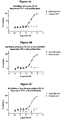
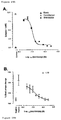
- BAK278D6 ( Figure 2 ) and BAK167A11 ( Figure 1 ) as scFv neutralised 25 ng/ml human IL-13 with an IC 50 of 44nM and 111nM respectively.
- BAK209B11 ( Figure 3 ) as a scFv neutralised 25 ng/ml murine IL-13 with an IC 50 of 185nM.
- BAK167A11 and BAK278D6 human IL-13 neutralising lineages were murine cross-reactive.
- the inventors therefore decided on the following criteria for the lineage selected for further optimisation and clinical development: should preferably be cross-reactive with non-human primate IL-13 and should recognise a variant of IL-13, in which arginine at amino acid at position 130 is substituted for by glutamine (R130Q).
- This variant has been genetically associated with asthma and other allergic diseases [37, 39, 41, 71].
- Cross-reactivity was determined by the ability of purified scFv preparations to bind non-human primate IL-13 and IL-13 variant by surface plasmon resonance (BIAcore) analysis. Functional activity was determined using the TF-1 cell proliferation assay.
- a cDNA for wild-type human IL-13 was obtained from InvivoGen and modified by site-directed mutagenesis (Stratagene Quikchange® kit) to yield a cDNA encoding variant IL-13.
- the coding sequence for both rhesus and cynomolgus monkey IL-13 was obtained by PCR on genomic DNA template using degenerate primers based on the human IL-13 sequence.
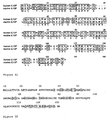
- Both non-human primate (rhesus and cynomolgus) sequences were identical to each other but differed from human IL-13 by seven amino acids ( Figure 19 ).
- Recombinant wild type, variant and non-human primate IL-13 were subsequently expressed using the baculovirus expression system (Invitrogen).
- Expression constructs added a carboxyl terminus affinity tag to the expressed protein that allowed purification from insect cell conditioned media to near homogeneity.
- IL-13 The binding affinity of purified scFv preparations to non-human primate, variant and wild type IL-13 was determined by surface plasmon resonance measurements using a BIAcore 2000 Biosensor (BIAcore AB) as described in Karlsson et al [72].
- IL-13 was coupled to CM5 sensorchips using an amine coupling kit (BIAcore) at a surface density of approximately 200Ru and three concentrations of test scFv (approximately 350nM, 175nM and 88nM) in HBS-EP buffer passed over the sensor chip surface.
- the resulting sensorgrams were evaluated using BIA evaluation 3.1 software to provide relative binding data.
- the assay was performed essentially as described in Example 2 with the following modifications: non-human primate IL-13, human variant IL-13 (R130Q) and wild type human IL-13 were used at concentrations of 50 ng/ml, 25 ng/ml and 25 ng/ml respectively.
- BAK615E3 VH SEQ ID NO: 33; VL SEQ ID NO: 34
- BAK167A11 VH SEQ ID NO: 23; VL SEQ ID NO: 24
- the derived amino acid sequence of BAK278D6 VH (SEQ ID NO: 13) and VL (SEQ ID NO: 14) were aligned to the known human germline sequences in the VBASE database [73] and the closest germline identified by sequence similarity.
- the closest germline for the VH domain of BAK278D6 (SEQ ID NO: 14) and its derivatives, was identified as DP14, a member of the VH1 family.
- the BAK278D6 VH has 9 changes from the DP14 germline within framework regions.
- the closest germline for the VL of BAK278D6 was identified as V ⁇ 3 3h.
- the BAK278D6 VL domain (SEQ ID NO: 14) has only 5 changes from the germline within framework regions. Framework regions of BAK278D6 and its derivatives were returned to germline by site directed mutagenesis (Stratagene Quikchange kit) to identically match native human antibodies.
- a second phase of optimisation was performed using BAK502G9 sequence, with germlined framework regions, as a template. Selections were performed essentially as described in Example 1 on scFv repertories in which either residues within the heavy chain CDR1 or heavy chain CDR2 of BAK502G9 had been randomised by mutagenesis. Unique clones from the selection output were identified by DNA sequencing and their neutralising potency assessed as purified scFv preparations in the TF-1 cell proliferation assay as described in Example 2. Vectors were constructed for the most potent scFv clones to allow re-expression as whole human IgG4 antibody as described by Persic et al. (1997 Gene 187; 9-18 ) with a few modifications.
- VH variable domain was cloned into the polylinker between the secretion leader sequence and the human gamma 4 constant domain of the expression vector pEU8.1(+).
- VL variable domain was cloned into the polylinker between the secretion leader sequence and the human lambda constant domain of the expression vector pEU4.1(-).
- Whole antibody was purified from conditioned media from EBNA-293 cells co-transfected with constructs expressing heavy and light chains by protein A affinity chromatography (Amersham Pharmacia). The purified antibody preparations were sterile filtered and stored at 4°C in phosphate buffered saline (PBS) prior to evaluation. Protein concentration was determined by measuring absorbance at 280nm using the BCA method (Pierce). Reformatted human IgG4 whole antibodies were compared to commercially available anti-human IL-13 antibodies in the TF-1 proliferation assay described in Example 2.
- PBS phosphate buffered saline
- the commercial antibody B-B13 (mouse IgG1 -Euroclone 5) was shown to be significantly more potent against human IL-13 than the commercial antibody JES10-5A2 (rat IgG1 - Biosource) with IC 50 of 1021pM and 471pM respectively.
- BAK1111D10 BAK1166G02, BAK1167F02, BAK1167F04, BAK1183H4, BAK1184C8, BAK1185E1, BAK1185F8, derived from BAK502G9 (and so "BAK502G9 lineage"), in which the heavy chain CDR1 or CDR2 had been targeted, showed improved potency as scFv over the commercial antibodies. These improvements were maintained on conversion to whole antibody human IgG4.
- BAK502G9 as whole antibodies had an IC 50 ranging from 244pM to 283pM.
- BAK502G9 as a whole antibody IgG4 had an IC 50 of 384pM.
- major improvements in potency could be obtained by targeting heavy chain CDR1 (SEQ ID NO:7) or CDR2 (SEQ ID NO: 8) of BAK502G9.
- Statistical comparisons to B-B13 were made using an ANOVA followed by a Dunnett's post test analysis (InStat software).
- BAK502G9 VH SEQ ID NO: 15; VL SEQ ID NO: 16
- BAK1167F2 VH SEQ ID NO: 35; VL SEQ ID NO: 36
- BAK1183H4 VH SEQ ID NO: 37; VL SEQ ID NO: 38
- Cross-reactivity of anti-human IL-13 antibodies was determined by their ability to inhibit non-human primate IL-13 and IL-13 variant mediated TF-1 cell proliferation as described in Example 4.
- Optimised anti-human IL-13 antibodies BAK1167F2 (VH SEQ ID NO: 35; VL SEQ ID NO: 36) and BAK1183H4 (VH SEQ ID NO: 37; VL SEQ ID NO: 38) maintained the specificity of their parent BAK502G9 (VH SEQ ID NO: 15; VL SEQ ID NO: 16) ( Figure 6 ). Potency gains against wild type IL-13 were reflected in their ability to neutralise non-human primate IL-13 and an IL-13 variant with substantially equivalent potency.
- the IC 50 for BAK502G9 against human, human variant and non-human primate IL-13 were 1.4nM, 1.9nM and 2.0nM respectively.
- the IC 50 for BAK1167F2 against human, human variant and non-human primate IL-13 were 1.0nM, 1.1nM and 1.3nM respectively.
- the IC 50 for BAK1183H4 against human, human variant and non-human primate IL-13 were 0.9nM, 1.0nM and 1.6nM respectively. These clones are suitable for therapeutic use.
- the human IL-13 sequence has four potential N-glycosylation sites.
- the inventors have demonstrated the ability of BAK278D6 and its derivatives to neutralise recombinant IL-13 expressed either in bacterial or baculovirus expression systems. Although, there is evidence that many processing events known in mammalian systems do also occur in insects there are key differences in protein glycosylation, particularly N-glycosylation [74].
- HDLM-2 cells were isolated by Drexler et al [75] from a patient with Hodgkin's disease. Skinnider et al [76] demonstrated that HDLM-2 cell proliferation was in part dependent on autocrine and paracrine release of IL-13. Lead anti-human IL-13 antibodies were assessed for their ability to inhibit HDLM-2 cell proliferation mediated by the release of native (or naturally occurring) IL-13.
- HDLM-2 cells were obtained from the Deutsche Sammlung von Mikroorganismen und Zellkulturen (DSMZ) and maintained according to supplied protocols.
- Assay media comprised RPI-1640 with Glutamax I (Invitrogen) containing 20% foetal bovine serum. Prior to each assay, the cells were pelleted by centrifugation at 300x g for 5 min, the media removed by aspiration and the cells resuspended in fresh media. This process was repeated three times and the cells were finally resuspended to a final concentration of 2 x 10 5 cells/ml in assay media. 50 ⁇ l of resuspended cells were added to each assay point in a 96 well assay plate. Test solutions of antibodies (in triplicate) were diluted to the desired concentration in assay media.
- An irrelevant isotype antibody not directed at IL-13 was used as a negative control.
- the appropriate test antibody in a total volume of 50 ⁇ l / well were added to the cells, each assay point giving a total assay volume of 100 ⁇ l / well.
- Assay plates were incubated for 72 hours at 37°C under 5% CO 2 .
- 25 ⁇ l of tritiated thymidine (10 ⁇ Ci/ml, NEN) was then added to each assay point and assay plates were returned to the incubator for a further 4 hours.
- Cells were harvested on glass fibre filter plates (Perkin Elmer) using a cell harvester. Thymidine incorporation was determined using a Packard TopCount microplate liquid scintillation counter. Data were analysed using Graphpad Prism software.
- BAK502G9 VH SEQ ID NO: 15; VL SEQ ID NO: 16
- BAK1183H4 VH SEQ ID NO: 37; VL SEQ ID NO: 38
- BAK1167F2 VH SEQ ID NO: 35; VL SEQ ID NO: 36
- IC 50 for BAK502G9, BAK1183H4, BAK1167F2 as human IgG4 were 4.6nM, 3.5nM and 1.1nM respectively.
- IC 50 for the commercial antibodies JES10-5A2 and B-B13 were 10.7nM and 16.7nM respectively.
- IL-13 has been shown to cause eotaxin release from lung fibroblasts[77] [78] [79].
- Factor dependent eotaxin release from NHLF was determined by ELISA.
- NHLF NHLF were obtained from Biowhittaker and maintained according to supplied protocols.
- Assay media was FGM-2 (Biowhittaker).
- Test solutions of antibody (in triplicate) were diluted to the desired concentration in assay media.
- An irrelevant antibody not directed at IL-13 was used as a negative control.
- Recombinant bacterially-derived human IL-13 (Peprotech) was subsequently added to a final concentration of 10 ng/ml when mixed with the appropriate test antibody in a total volume of 200 ⁇ l.
- the concentration of IL-13 used in the assay was selected as the dose that gave an approximately 80% of the maximal response. All samples were incubated for 30 minutes at room temperature.
- Assay samples were then added to NHLF that had been preseeded at a density of 1 x 10 4 cells per well in 96-well assay plates. Assay plates were incubated at 37°C for 16-24 hours at 37°C under 5% CO 2 . Assay plates were centrifuged at 300 x g for 5 minutes to pellet detached cells. Eotaxin levels in the supernatant were determined by ELISA using reagents and methods described by the manufacturer (R&D Systems). Data were analysed using Graphpad Prism software.
- BAK278D6 lineage clones were able to inhibit human IL-13 dependent eotaxin release from NHLF. Relative potency was similar to that observed in the TF-1 cell proliferation assay ( Figure 8 ).
- BAK502G9 VH SEQ ID NO: 15; VL SEQ ID NO: 16
- BAK1183H4 VH SEQ ID NO: 37; VL SEQ ID NO: 38
- BAK1167F2 VH SEQ ID NO: 35; VL SEQ ID NO: 36
- Commercial antibodies JES10-5A2 and B-B13 had IC 50 of 623pM and 219pM respectively.
- IL-13 has been shown to upregulate expression of VCAM-1 on cell surface of HUVECs [80, 81].
- Factor dependent VCAM-1 expression was determined by detection of upregulation of VCAM-1 receptor cellular expression using a time-resolved fluorescence read out.
- HUVEC HUVEC were obtained from Biowhittaker and maintained according to supplied protocols.
- Assay media was EGM-2 (Biowhittaker).
- Test solutions of antibody (in triplicate) were diluted to the desired concentration in assay media.
- An irrelevant antibody not directed at IL-13 was used as a negative control.
- Recombinant bacterially derived human IL-13 (Peprotech) was added to a final concentration of 10 ng/ml when mixed with the appropriate test antibody in a total volume of 200 ⁇ l.
- the concentration of IL-13 used in the assay was selected as the dose that gave approximately 80% of the maximal response. All samples were incubated for 30 minutes at room temperature.
- Assay samples were then added to HUVEC that had been preseeded at 4 x 10 4 cells per well in 96-well assay plates. Assay plates were incubated at 37°C for 16-20 hours under 5% CO 2 . Assay media was then removed by aspiration and replaced with blocking solution (PBS containing 4% dried Marvel® milk powder). Assay plates were incubated at room temperature for 1 hour at room temperature. Wells were washed three times with PBST Tween before 100 ⁇ l (1:500 dilution in PBST/1% Marvel®) of biotinylated anti-VCAM-1 antibody (Serotec) was added to each well. Assay plates were incubated at room temperature for 1 hour.
- Typical data for BAK502G9 (VH SEQ ID NO: 15; VL SEQ ID NO: 16), BAK1183H4 (VH SEQ ID NO: 37; VL SEQ ID NO: 38), BAK1167F2 (VH SEQ ID NO: 35; VL SEQ ID NO: 36) as whole antibody human IgG4 are shown in Figure 9 .
- Relative potency was similar to the observed in the TF-1 cell proliferation assay.
- IC 50 for BAK502G9, BAK1183H4 and BAK1167F2 were 235pM, 58pM and 55pM respectively against 10ng/ml human IL-13.
- the assay was performed essentially as described in Example 5 with the following modifications.
- Recombinant human IL-1 ⁇ and IL-4 (R&D Systems) were used in place of human IL-13 at 0.5 ng/ml and 1 ng/ml respectively and represented the dose that gave approximately 80% of the maximal response.
- BAK209B11 identified as an anti-murine IL-13 neutralising clone as a scFv as described in Example 1, was reformatted as a whole antibody human IgG4 as described in Example 5 and its potency evaluated in the murine IL-13 dependent B9 cell proliferation assay.
- B9 is a murine B-cell hybridoma cell line [83]. B9 is factor dependent for survival and proliferation. In this respect B cells respond to murine IL-13 and are maintained in media containing human IL-6 (50pg/ml, R&D Systems). Inhibition of murine IL-13 dependent proliferation was determined by measuring the reduction in incorporation of tritiated thymidine into the newly synthesized DNA of dividing cells.
- B9 cells were obtained from European Collection of Animal Cell Culture ECACC and maintained according to supplied protocols.
- the assay was performed essentially as described for the TF-1 assay in Example 2 but with the following modifications.
- Assay media comprised RPMI-1640 with GLUTAMAX I (Invitrogen) containing 5% foetal bovine serum (Hyclone) and 50 ⁇ M 2-mercaptoethanol (Invitrogen).
- Recombinant bacterially derived murine IL-13 (Peprotech) replaced human IL-13 with a final assay concentration of 1ng/ml.
- BAK209B11 (VH SEQ ID NO: 25; VL SEQ ID NO: 26) as a human IgG4 neutralised 1 ng/ml murine IL-13 with an IC 50 of 776pM in the B9 assay ( Figure 11 ).
- BAK209B11 therefore represents a useful tool to investigate the role of IL-13 in murine models of disease. This is clearly demonstrated in Example 12, which demonstrates the efficacy of BAK209B11 in a murine model of acute pulmonary inflammation.
- BAK502G9 VH SEQ ID NO: 15; VL SEQ ID NO: 16
- BAK1167F2 VH SEQ ID NO: 35; VL SEQ ID NO: 36
- BAK1183H4 VH SEQ ID NO: 37; VL SEQ ID NO: 38
- BAK209B11 VH SEQ ID NO: 25; VL SEQ ID NO: 26
- CM5 sensorchips were coupled to CM5 sensorchips using an amine coupling kit (BIAcore) at a surface density of approximately 500Ru and a serial dilution of IL-13 (between 50nM to 0.78nM) in HBS-EP buffer was passed over the sensorchip surface.
- BIAcore amine coupling kit
- the resulting sensorgrams were evaluated using BIA evaluation 3.1 software to provide kinetic data.
- BAK502G9, BAK1167F2 and BAK1183H4 IgG4 bound human IL-13 with high affinity with Kd of 178 pM, 136pM and 81pM respectively corresponding to their relative potency in cell based assays.
- BAK209B11 bound murine IL-13 with affinity of 5.1nM (Table 3).
- BAK209B11 VH SEQ ID NO: 25; VL SEQ ID NO: 26
- AHR airways hyperresponsiveness
- mice Female Balb/C mice (Charles River UK) were treated with either anti-murine IL-13 antibody BAK209B11 (at 12, 36, 119 or 357 ⁇ g doses) or an isotype matched control antibody (357 ⁇ g dose). On days 0 and 7, mice in each group were sensitised by intraperitoneal injection of 10 ⁇ g of ovalbumin (Ova) in 0.2 ml of the vehicle (saline containing 2% Al 2 O 3 (Rehydragel) as an adjuvant). A separate control group of non-sensitised mice received an equal volume of the vehicle. Mice were challenged with ovalbumin on days 14, 15 and 16.
- Ova ovalbumin
- Ovalbumin was diluted to 1% (w/v) in sterile saline prior to nebulisation. All inhalation challenges were administered in a Plexiglas exposure chamber. Ova was aerosolised using a deVilbiss Ultraneb 2000 nebuliser (Sunrise Medical) in a series of three exposures of 20 minutes separated by 1 hour intervals.
- BAK209B11 or an irrelevant human IgG4 were administered intravenously, 1 day prior to first challenge and then 2 hours prior to each subsequent challenge (4 doses in total). The model ended at day 17, 24 hours post final challenge. Blood (serum) and BAL were collected. Serum was assayed for total IgE. BAL was obtained by injecting 3 aliquots of saline (0.3ml, 0.3ml and 0.4ml) and pooling samples. Total leukocytes and differential cell counts were obtained from BAL cells.
- Ovalbumin challenge of sensitised mice caused a significant (p ⁇ 0.05) increase in total BAL cell recruitment over non-sensitised but challenged animals. This recruitment was dose-dependently inhibited by BAK209B11; significant (p ⁇ 0.05) inhibition was seen with ⁇ 36 ⁇ g BAK209B11, but not control antibody ( Figure 13 ). Similar effects were also seen on eosinophils ( Figure 14 ) and neutrophils ( Figure 15 ) with significant (p ⁇ 0.05) inhibition of cellular influx at a minimum BAK209B11 dose of 36 ⁇ g. This inhibition was not seen with the control antibody. Lymphocytes were also induced in sensitised but not non-sensitised mice upon challenge.
- systemic administration of BAK209B11, a murine IL-13 neutralising antibody, but not control antibody inhibited inflammatory cell influx and the upregulation of serum IgE levels caused by sensitisation and subsequent challenge with ovalbumin in a murine model of allergic inflammation.
- Examples 13 to 20 are prophetic.
- BAK209B11 VH SEQ ID NO: 25; VL SEQ ID NO: 26
- AHR airways hyperresponsiveness
- mice Female Balb/C mice (Charles River UK) were administered with various doses of anti-murine IL-13 antibody BAK209B11 or an isotype matched control antibody, as follows. On days 0 and 12, mice in each group were sensitised (SN) by intraperitoneal injection of 10 ⁇ g of ovalbumin (Ova) in 0.2 ml of the vehicle (saline containing 2mg Al(OH) 3 as an adjuvant [calculated as described in Example 12]). A separate control group of non-sensitised mice (NS) received an equal volume of the vehicle. Mice were challenged with ovalbumin for 20 minutes on days 19, 20, 21, 22, 23 and 24.
- SN sensitised mice
- Ovalbumin was diluted to 5% (w/v) in saline prior to nebulisation. All inhalation challenges were administered in a Plexiglas exposure chamber. Ova was aerosolised using a deVilbiss Ultraneb 2000 nebuliser (Sunrise Medical). On days 18,19,20,21,22,23 and 24 mice were administered with various intraperitoneal doses (237 ⁇ g, 23.7 ⁇ g or 2.37 ⁇ g; denoted in figure 21 by H,M and L) of anti-murine IL-13 antibody BAK209B11 muIgG1 or an isotype matched control antibody (237 ⁇ g).
- Airway function was assessed on days 0 and 25 by increasing methacholine challenges and monitored using conscious plethysmography (Buxco).
- PC 50 concentration of methacholine required to increase baseline PenH by 50%
- PC 50 was estimated for individual mice at both day 0 and day 25 from 4 parameter unfixed curve fitting of methacholine dose-response curves.
- the model ended at day 25, 24 hours post final challenge. Blood, serum, BAL and lung tissue were collected.
- Lung function was evaluated for individual animals at day 0 (pre-treatment) and at day 25 (post-challenge) and was quantitated by calculating PC 50 values (concentration of methacholine required to increase baseline PenH by 50%) ( Figure 21A ).
- An individuals airways hyperresponsiveness (AHR) was determined by the change in log PC 50 at day 25 versus day 0 (log day 25 PC 50 - log day 0 PC 50 ).
- This delta logPC 50 was the primary endpoint of the study; PC 50 data log-transformed because of requirements of endpoint ANOVA. Individual changes were averaged within groups to generate group average delta log PC 50 (as shown in Figure 21B ).
- Ovalbumin challenge of sensitised mice caused a significant AHR compared to non-sensitised and challenged mice (p ⁇ 0.01).
- BAK209B11 caused a clear and dose-dependent decrease in AHR whereas the control antibody had no effect.
- BAK209B11 VH SEQ ID NO: 25; VL SEQ ID NO: 26
- AHR airways hyperresponsiveness
- mice Female Balb/C mice (Charles River UK) were administered with various doses of anti-murine IL-13 antibody BAK209B11 or an isotype matched control antibody. On days 0, 7 and 14, mice in each group were sensitised (SN) by intraperitoneal injection of 10 ⁇ g of ovalbumin (Ova) in 0.2 ml of the vehicle (saline containing 1.125mg Al(OH) 3 as an adjuvant [calculated as described in Example 12]). A separate control group of non-sensitised mice (NS) received an equal volume of the vehicle. Mice were challenged with ovalbumin for 20 minutes on days 21, 22, 23 and 24. Ovalbumin was diluted to 5% (w/v) in saline prior to nebulisation. All inhalation challenges were administered in a Plexiglas exposure chamber. Ova was aerosolised using a deVilbiss Ultraneb 2000 nebuliser (Sunrise Medical).
- the model ended at day 25, 24 hours post challenge. Blood, serum, BAL and lung tissue were collected.
- BAK209B11 VH SEQ ID NO: 25; VL SEQ ID NO: 26
- AHR airways hyperresponsiveness
- mice Female Balb/C mice (Charles River UK) were dosed with various doses of anti-murine IL-13 antibody BAK209B11 or an isotype matched control antibody. On days 0 and 11, mice in each group were sensitised (SN) by intraperitoneal injection of 10 ⁇ g of ovalbumin (Ova) in 0.2 ml of the vehicle (saline containing 2mg Al(OH) 3 as an adjuvant [calculated as described in Example 12]). A separate control group of non-sensitised mice (NS) received an equal volume of the vehicle. Mice were challenged with ovalbumin for 20 minutes on days 18, 19, 20, 21, 22, 23, 28, 30, 32, 35, 37, 39, 42, 44, 46, 49 and 51.
- SN sensitised mice
- Ovalbumin was diluted to 5% (w/v) in saline prior to nebulisation. All inhalation challenges were administered in a Plexiglas exposure chamber. Ova was aerosolised using a deVilbiss Ultraneb 2000 nebuliser (Sunrise Medical).
- the model ended at day 52, 24 hours post challenge. Blood, serum, BAL and lung tissue were collected.
- Human IL-13 injected into the airpouch (i.po.), caused a significantly increased infiltration of total leukocytes (p ⁇ 0.01) and eosinophils (p ⁇ 0.01) at 24 hours post-challenge versus vehicle (0.75% carboxymethyl cellulose (CMC) in saline i.po.) treated mice.
- CMC carboxymethyl cellulose
- BAK502G9 (200mg, 20mg or 2mg intrapouch) significantly and dose-dependently inhibited the total leukocyte (p ⁇ 0.01) and eosinophil (p ⁇ 0.01) infiltration into the air pouch caused by 2 ⁇ g huIL-13 in 0.75% CMC.
- Systemically administered BAK209B11 (30mg/kg, 10mg/kg and 1mg/kg) also signficantly and dose-dependently inhibited the total leukocyte (p ⁇ 0.01) and eosinophil (p ⁇ 0.01) infiltration into the air pouch caused by 2 ⁇ g huIL-13 in 0.75% CMC.
- mice which express human, rather than murine IL-13 by gene targeting The mouse IL-13 gene has been replaced from start to stop codon with the relevant portion of the human IL-13 gene.
- This mouse strain expresses human IL-13, rather than mouse IL-13, in response to the same stimuli as in the wild-type mouse, as the endogenous IL-13 promoter and IL-13 pA tail remaining unchanged.
- human IL-13 can bind to and signal through mouse IL-13 receptors to generate the same physiological consequences as signalling caused by mouse IL-13 ligating mouse IL-13 receptors.
- exogenous human IL-13 caused inflammatory cell recruitment into the murine air pouch ( Figure 18 ).
- This mouse has been used in the acute allergic airway inflammation models (as described in examples 18 and 19) and chronic allergic airway inflammation models (as described in Example 20) allowing the evaluation of anti-human IL-13 antibody pharmacology in allergic airway disease.
- the effect of anti human IL-13 neutralising human IgG4 antibodies were investigated in a murine model of acute allergic pulmonary inflammation using the transgenic mice generated in example 17.
- This model was performed essentially as described by McMillan et al. [85] and example 13.
- the model was characterised at its endpoint by increased BAL and lung tissue IL-13, cellular infiltration into the lung and BAL, increased serum IgE levels and airways hyperresponsiveness (AHR).
- the effect of anti human IL-13 neutralising human IgG4 antibodies were investigated in another murine model of acute allergic pulmonary inflammation using the transgenic mice generated in example 17.
- This model was performed essentially as described by Humbles et al, [86] and in example 14.
- the model is characterised at its endpoint by increased BAL and lung tissue IL-13, cellular infiltration into the lung and BAL, increased serum IgE levels and airways hyperresponsiveness (AHR).
- the effect of anti human IL-13 neutralising human IgG4 antibodies were investigated in a model of chronic allergic pulmonary inflammation using the transgenic mice generated in example 17.
- This model was performed essentially as described by Temelkovski et al. [87] and in Example 15 and is characterised at its endpoint by cellular infiltration into the lung and BAL, increased serum IgE levels and airways hyperresponsiveness (AHR).
- the pharmacokinetics and pharmacodynamics of 502G9 were evaluated in 4 allergic but non-challenged cynomolgus primates (2 male/2 female) after a single 10mg/kg i.v bolus dose. The experiment ran for 29 days.
- the antibody's pharmacokinetic parameters were determined from a geomean average serum-drug concentration curve and are detailed below in Table 4.
- Serum IgE concentrations were significantly reduced after a single 10mg/kg i.v bolus dose of BAK502G9, from 100 % control levels (predose) to 66 ⁇ 10% of control values (p ⁇ 0.05), at 4 and 5 days after dosing. This lowering of serum IgE concentration recovered to 88 ⁇ 8 % of control levels by day 22 (see Figure 20 ). Again these data were derived by normalising each animals serum IgE concentration to predose levels, where predose concentrations was 100%, and then averaging the curves from the 4 animals tested.
- the two male monkeys had relatively low predose total serum IgE (60ng/mL and 67ng/mL). These IgE levels did not change in a fashion suggesting a trend following treatment with BAK502G9 ( Figure 20B ).
- the two female monkeys had relatively high predose total serum IgE (1209ng/mL and 449ng/mL). These IgE levels were decreased following treatment with BAK502G9, maximally by 60% at 7 days, and returning to approximately predose levels by 28 days post-administration ( Figure 20B ). These data provide indication that BAK502G9 lowers serum IgE concentrations in animals with relatively high circulating IgE of IgE.
- the effects of anti-human IL-13 neutralising human IgG4 antibodies were investigated in a primate model of acute allergic dermal inflammation. This model was performed by injecting human IL-13 and A.suum antigen intradermally into cynomolgus monkeys. 24-96h later, dermal biopsies and serum samples were taken. The model was characterised at its endpoint by cellular infiltration into the skin.
- the effect of anti human IL-13 neutralising human IgG4 antibodies were investigated in a primate model of acute allergic pulmonary inflammation. This model was performed by exposing a.suum-allergic cynomolgus primates to nebulised a.suum antigen, thereby generating an allergic reaction. This allergy was characterized at its end point by cellular infiltration into the lung and BAL, increased serum IgE levels and airways hyper-responsiveness.
- CD23 is the high affinity IgE receptor and can be expressed on peripheral human blood mononuclear cells. CD23 expression can be induced, in terms of the number of cells expressing CD23 and also in how much CD23 each cell expresses by both IL-13 and IL-4. The IL-13, but not IL-4, mediated response can be inhibited by anti-human IL-13 antibodies.
- the two antigen challenges caused AHR, as measured by an increased area under the histamine dose-response curve and/or a fall in PC 30 , and BAL, as well as eosinophilia at day 11 compared to day 1.
- Animals displaying an AHR-phenotype were selected to enter phase II.
- Phase II was run exactly as phase I except that all animals received a 30mg/kg BAK502G9 infusion on days 1, 5 and 9. The effects of BAK502G9 were assessed by comparing the changes seen in phase II with changes seen in phase I for individual animals.
- Serum IgE levels were monitored by ELISA.
- Serum from BAK502G9 treated cynomolgus monkeys was shown to inhibit the expression of CD23 on human peripheral blood mononuclear cells induced by IL-13 but not IL-4. The magnitude of this inhibition was consistent with the serum BAK502G9 levels predicted by PK ELISA.
- BAK502G9 significantly inhibited AHR as measured by R L AUC (p ⁇ 0.05) ( Figure 26A ; Table 7). An inhibitory effect of BAK502G9 on AHR, as measured by PC 30 , was observed but did not reach statistical significance ( Figure 26B ; Table 7). BAK502G9 also significantly inhibited both antigen priming (p ⁇ 0.01) ( Figure 26C ; Table 7) and BAL inflammation. BAK502G9 significantly inhibited total cell (p ⁇ 0.05) and eosinophil (p ⁇ 0.05) but not macrophage, lymphocyte or mast cell influx into the BAL ( Figure 26D ; Table 7).
- mice Male BALB/c mice were exposed to two doses of human IL-13 separated by a 48-hour interval.
- mice were anaesthetised with an intravenous injection of 100 ⁇ l saffan solution (1:4 diluted in water).
- Mice were intubated with a 22-gauge catheter needle, through which human recombinant-IL-13 (25 ⁇ g dissolved in 20 ⁇ l phosphate-buffered saline (PBS)) or vehicle control (PBS) was instilled.
- PBS phosphate-buffered saline
- Airway function was assessed 24 hours after the last administration of IL-13 by increasing methacholine challenges and monitored using conscious plethysmography (Buxco).
- PC 200 concentration of methacholine required to increase baseline penH by 200%) was determined from 4 parameter unfixed curve fitting of methacholine dose-response curves. Antibody treatments were administered by intra-peritoneal injection 24 hours prior to the each dose of IL-13.
- IL-13 has been shown to induce IgE synthesis in human B cells in vitro [120].
- Factor dependent IgE release from human B cells was determined by ELISA.
- the neutralisation potency of BAK502G9 as a human IgG4 was assessed against human IL-13 dependent IgE release from human B cells.
- PBMC Peripheral blood mononuclear cells
- B cells were purified from PBMC with a B cell isolation kit II (Miltenyi Biotec), using reagents and methods described by the manufacturer.
- Assay media comprised Iscoves modified dulbeccos medium (Life Technologies) containing 10% foetal bovine serum and 20 ⁇ g/mL human transferrin (Serologicals Proteins Inc). Following purification, B cells were resuspended to a final concentration of 10 6 /mL in assay media.
- 50 ⁇ l of resuspended cells were added to each assay point in a 96 well assay plate.
- 50 ⁇ l of 4 ⁇ g/mL of the anti-CD40 antibody EA5 (Biosource) was added to assay wells as appropriate.
- Test solutions of antibodies (six replicates) were diluted to the desired concentration in assay media.
- An irrelevant antibody not directed at IL-13 was used as a negative control.
- 50 ⁇ l / well of the appropriate test antibody were added to the cells.
- Recombinant bacterially derived human IL-13 (Peprotech) was subsequently added to a final concentration of 30ng/ml to give a total assay volume of 200 ⁇ l/well. The concentration of IL-13 used in the assay was selected to give a maximal response.
- IgE levels in the supernatant were determined by ELISA using reagents and protocols supplied by the manufacturer (BD Biosciences, Bethyl Laboratories). Data were analysed using Graphpad prism software.
- BAK502G9 (VH SEQ ID NO: 15; VL SEQ ID NO: 16) was able to inhibit human IL-13 dependant IgE production by human B cells.
- BAK502G9 as human IgG4 had an IC 50 of 1.8nM against 30ng/ml human IL-13.
- IL-13 has been shown to directly modulate the contractility of airway smooth muscle [121, 122]. Intracellular calcium mobilization is a prerequisite for smooth muscle contraction. Recent studies have shown that IL-13's ability to alter smooth muscle contractility is mediated in part through modulation of contractile agonist induced Ca 2+ signaling [123, 124].
- BAK502G9 an anti-human IL-13 antibody formatted as an IgG4, against IL-13 mediated alterations in primary human bronchial smooth muscle cells (BSMC) signalling responses to the contractile agonist, histamine, was investigated in a Ca 2+ signalling assay.
- BSMC primary human bronchial smooth muscle cells
- BSMC Human primary BSMC, Smooth Muscle Growth Medium-2 (SmGM-2) and Smooth Muscle Basal Medium (SmBM) were obtained from Bio Whittaker.
- the BSMC were maintained in SmGM-2 according to supplier's recommendations.
- BSMC were plated at 2 x 10 4 cells/well in a 96-well microtitre cell culture plate and were allowed to attach for 24 hours, then re-fed and incubated for a further 24 hours. Prior to the Ca 2+ signalling experiment, the BSMC were stimulated with IL-13 (Peprotech) at 50ng/ml final concentration with or without antibody and incubated for 18 -24 hours.
- IL-13 Peprotech
- BAK502G9 and an isotype matched irrelevant control monoclonal antibody, CAT-001 were evaluated at a final concentration of 10 ⁇ g/ml.
- the area under the curve (AUC) of the Ca 2+ signalling response to histamine was determined for each cell pre-treatment condition. Data analyses were performed using GraphPad Prism version 4 for Windows (GraphPad Software).
- Pre-incubation of BSMC with IL-13 significantly enhanced Ca 2+ signalling in response to histamine.
- Pre-incubation of BAK502G9 ( Figure 25B )(but not an irrelevant isotype control antibody ( Figure 25A )) with IL-13 significantly inhibited the potentiation of Ca 2+ signalling in response to histamine ( Figure 25 ).
- PBMC peripheral blood mononuclear cell
- Human blood was obtained from the Blood Transfusion Service and erythrocytes depleted by 40 minute dextran-T500 (Pharmacia) sedimentation (0.6% final concentration). The leukocyte and platelet rich fraction was then separated by a 20 minute 1137 g centrifugation over a discontinuous Percoll gradient of 3mL 64% and 5mL 80% (100% was 9 parts Percoll and 1 part 10x PBS). PBMCs were harvested from the top of the 64% layer, washed and resuspended in assay buffer (Invitrogen RPMI 1640, 10% FCS, 200IU/mL penicillin, 100 ⁇ g/mL streptomycin, 2mM L-Glutamine).
- assay buffer Invitrogen RPMI 1640, 10% FCS, 200IU/mL penicillin, 100 ⁇ g/mL streptomycin, 2mM L-Glutamine.
- the assay was performed in 24 well plates with 2x10 6 cells, ⁇ 80pM recombinant human IL-13 (Peprotech) or 21pM recombinant human IL-4 (R&D Systems), ⁇ BAK502G9 or irrelevant IgG4, in a final volume of 500mcL.
- Cells were cultured for 48h at 37C before being harvested and stained with CD23-PE (BD Pharmingen) for 20 minutes at 4C. Finally, cells were read on a flow cytometer.
- CD23 expression was determined by CD23 'score'; percent of CD23 positive cells multiplied by the 'brightness' of the stain (geomean fluorescence).
- IL-13 IL-13
- IL-13 synergises with TNF- ⁇ [129] or TGF- ⁇ 1 [130] to induce fibroblasts to produce eotaxin-1, which can then act to directly chemoattract eosinophils.
- Leukocyte shape change responses are mediated through rearrangements of the cellular cytoskeleton and are essential to the processes of leukocyte migration from the microcirculation into sites of inflammation.
- Inhibition of IL-13-dependent shape-change-inducing factor release by NHLFs was determined by measuring the reduction in eotaxin-1secretion by ELISA and reduction in eosinophil shape change by flow cytometry.
- NHLF cells were cocultured with media alone or media containing stimulants (9.6nM IL-13, 285.7pM TNF- ⁇ , (R&D Systems) and 160pM TGF- ⁇ 1 (R&D Systems) in the absence or presence of BAK502G9 (concentration range 875nM - 6.84nM). Cells were then cultured for a further 48h at 37°C before the resulting conditioned media was aspirated and stored at -80°C. The concentration of eotaxin-1 in conditioned media was assessed using the R&D systems Duoset ELISA system (R&D Systems).
- Human blood was obtained from the Blood Transfusion Service and erythrocytes depleted by 40 minute dextran-T500 (Pharmacia) sedimentation (0.6% final concentration). The leukocyte and platelet rich fraction was then separated by a 20 minute 1137 g centrifugation over a discontinuous Percoll gradient of 3mL 64% and 5mL 80% (100% was 9 parts Percoll and 1 part 10x PBS). Granulocytes were harvested from the 64%:80% interface, washed and resuspended in assay buffer (Sigma PBS, 1mM CaCl2, 1mM MgCl2, 10mM HEPES, 10mM D-glucose, 0.1% Sigma BSA, pH 7.3).
- assay buffer Sigma PBS, 1mM CaCl2, 1mM MgCl2, 10mM HEPES, 10mM D-glucose, 0.1% Sigma BSA, pH 7.3.
- the assay was performed in FACS tubes with 5x10 5 cells, ⁇ 3nM recombinant human eotaxin-1 (R&D Systems) or conditioned media, in a final volume of 400 ⁇ L. Cells were incubated for 8.5 minutes at 37C before being transferred to 4°C and fixed with a fixing agent (CellFix, BD Biosciences) and finally read on a flow cytometer. Eosinophils were identified by their FL-2 autofluorescence and the forward scatter (FSC) parameter read. Eosinophil FSC changed in response to both eotaxin-1 and conditioned media providing measurement of shape change. Tubes were sampled at high flow rate and acquisition was terminated after 1000 eosinophil events or 1 minute, whichever was the sooner.
- FSC forward scatter
- Shape change was calculated as a percentage of the FSC caused by shape change buffer alone (100% blank shape change). Data have been expressed as the mean % blank shape change ⁇ SEM drawn from 4 separate experiments. Each experiment used cells from an individual buffy coat (and hence individual donor), performed in duplicate for each point.
- NHLF cells co-stimulated with 9.6nM IL-13, 285.7pM TNF- ⁇ and 160pM TGF- ⁇ 1 and cultured for 48h secreted 9.6nM eotaxin-1 into the culture media.
- NHLF cells cultured only with maintenance media secreted 0.1nM eotaxin-1 into the culture media.
- This eotaxin-1 production was IL-13 dependent as IL-13/TNF- ⁇ /TGF- ⁇ 1 co-stimulated NHLF cell eotaxin-1 production was dose-dependently inhibited by BAK502G9 with an IC 50 of 32.4nM ( Figure 29A ).
- the primary aim of this part of the study was to examine eosinophil shape change.
- the epitope mapping of a representative IL-13 antibody BAK502G9 was performed using a molecular approach and standard peptide excision.
- IL-13 chimaeras were engineered, where parts of the human IL-13 sequence were replaced with murine sequence. These chimeras were used in binding studies with representative IL-13 antibodies to help identify the specific epitope.
- the first panel contained nine chimaeras ( Figure 30 ) and was used to locate the general position of the epitope.
- the second panel contained ten chimaeras ( Figure 31 ) and was used to fine map the epitope.
- the chimaeric IL-13 sequences were assembled using PCR and cloned into a Gateway ® entry vector, which were then recombined with a destination vector pDEST8 (modified to code for a detection and affinity tag at the C-terminus of the recombinant protein).
- These expression vectors were used to transform DH10BacTM chemically competent E coli allowing site-specific transposition of tagged chimeric IL-13, into the baculovirus shuttle vector (bacmid).
- Recombinant bacmid DNA was isolated for each IL-13 chimera and transfected into Sf9 ( Spodoptera frugiperda ) insect cells using Cellfectin ® Reagent. Recombinant baculovirus was harvested 72 hours post-transfection and passaged through Sf9 insect cells twice more.
- Insect 2000-500 ml culture supernatant was purified on an affinity column and eluted material was concentrated from 16 to 1 ml and loaded on a size exclusion Superdex 200 HR10/300GL column for final polishing and buffer exchange.
- a homogenous competition assay using biotinylated human IL-13, streptavidin-anthophyocynate and Europium labelled BAK502G9 was developed.
- the assay is as follows: Eu-BAK502G9 binds biotinylated-human IL-13, the complex is then recognised by the streptavidin APC conjugate and when a flash of light is applied the energy is transferred from the APC label to the Europium by proximity, and time resolved florescence can be measured.
- Competition for this binding is introduced by way of the un-labelled human IL-13 (as control) and the chimeric constructs. This competition is quantified to calculate the relative affinities of the IL-13 mutants for IL-13 antibodies enabling mutations altering binding to be identified.
- the epitope mapping of BAK502G9 was also performed using the standard peptide excision procedure.
- IgG is immobilised onto solid phase and allowed to capture the IL-13 ligand.
- the formed complex is then subject to specific proteolytic digestion, during which accessible peptide bonds are cleaved, however those protected by the IgG: ligand interface remain intact.
- a peptide containing the epitope remains bound to the IgG. This can then be desorbed, collected and identified by mass spectrometry (ms).
- the two procedures although differing in absolute detail and scale involved essentially the same steps, coupling of the IgG, blocking of unreacted binding sites, washing, ligand capture, removal of unbound ligand, digestion and a final washing step.
- the MALDI-TOF ms approach made use of proprietary ms chips activated with carbonyldiimidazole that covalently binds to free primary amine groups to which the IgG at 1-2 mg/ml in PBS was coupled to overnight at 4°C.
- the chip was subsequently blocked with an ethanolamine solution at room temperature for 1 hour and then washed extensively with PBS or HBS plus a suitable detergent.
- a one picomole aliquot of IL-13 was then applied to the chip in either PBS or HBS and allowed to bind to the chemically immobilized IgG for 2 hours at room temperature. This was followed by further washes in PBS or HBS with and without detergent to remove any non-specifically bound IL-13.
- a solution of trypsin ranging from 200 to 3.1 ⁇ g/ml in PBS or HBS was then applied to the IgG:ligand complex and digestion allowed to proceed for 30 minutes at room temperature after which the chip was washed in PBS or HBS plus detergent, PBS or HBS and finally water. After application of a suitable MALDI-TOF ms matrix the chip was then be placed directly in the mass spectrometer and analysed.
- the bead based approach started with the biotinylation of the IgG, using an NHS biotin compound, at a molar ratio of 1 IgG to 4 biotin molecules. Removal of unbound biotin and the byproducts of the reaction using gel filtration followed this. The biotinylated IgG was then allowed to bind to neutravidin coated agarose beads, where it was attempted to maximize the IgG capture. Aliquots of IgG coated beads were then dispensed into a concentrator spin columns and washed with Dulbecco's PBS + 0.05% Tween 20 followed by resuspension in Dulbecco's PBS + 0.05% Tween 20.
- a pulse of IL-13 was then applied to the resuspended IgG beads and binding allowed to proceed for 10 minutes after which the liquid phase was removed by centrifugation and the beads washed with Dulbecco's PBS + 0.05% Tween 20 followed by resuspension in Dulbecco's PBS + 0.05% Tween 20.
- the bead:IgG:ligand complex was then subject to proteolysis with either trypsin or chymotrypsin with incubation at room temperature or 37°C. After which the beads were again washed in Dulbecco's PBS + 0.05% Tween 20 followed by a further washes in Dulbecco's PBS without detergent. The beads were then resuspended in a water, acetonitrile, trifluroacetic mix and the supernatant recovered.
- 3258Da matches to the sequence from aspartic acid at position 106 to the C-terminal asparagine at position 132. There are no other matches at this tolerance. This region is highlighted in bold on the sequence of the precursor form of human IL-13 below.
- 3937Da matches to the sequence from serine at position 99 to the C-terminal asparagine at position 132. This region is highlighted in bold on the sequence of the precursor form of human IL-13 below.
- the identity of both peptides was successfully confirmed by the ms/ms, neither of which showed any significant sequence parallels with BAK502G9.
- the ms/ms fragment map tailored to identify either Y or B ions matched 26 of 104 possible ions in one charge state for the trypsin peptide and 19 of 128 possible ions for the chymotrypsin peptide.
- a review of all charge states shows identification of 23 of the 27 amino acid residues for the trypsin fragment and 29 of the 33 residues for the chymotrypsin fragment. This is sufficient to confirm identity.
- SEQ ID NO 13 EVQLVQSGAEVKKPGASVKVSCKASGYTFRNYGLSWVRQAPGQGLEWMGWISANNGDTN YGQEFQGRITMTTETSTNTAHMELRSLRSDDTAVYYCVRDSSSNWARWFFDLWGKGTMV TVSS
- SEQ ID NO 14 SYVLTQPPSVSVAPGQTARIPCGGNNIGSKLVHWYQQKPGQAPVLVVYDDGDRPSGIPE RFSGSNSGNTATLTISRIDAGDEADYYCQVWDTGSDPVVFGGGTKLTVL
- SEQ ID NO 15 QVQLVQSGAEVKKPGASVKVSCKASGYTFTNYGLSWVRQAPGQGLEWMGWISANNGDTN YGQEFQGRVTMTTDTSTSTAYMELRSLRSDDTAVYYCARDSSSSWARWFFDLWGRGTLV TVSS
- SEQ ID NO 16 SYVLTQPPSVSVAPGKTARITCGGNIIGSKLVHWYQQKPGQAPVLVIYDDGDRPSGIPE RFSGSNSGNTATLTISRVEAGDEADYYCQVWDTGSDPVVFGGGTKLTVL
- SEQ ID NO 23 EVQLLESGGGLVQPGGSLRLSCAASGFTFSSYAMSWVRQAPGKGLEWVSAISGSGGSTY YADSVKGRFTISRDNSKNTLYLQMNSLRAEDTAVYYCARVGAAGEGYYGYWGRGTLVTV SS
- SEQ ID NO 24 NFMLTQPHSVSESPGKTVTISCTRSSGSIASNYVQWYQQRPGSAPTTVIYDDNQRPSGV PDRFSGSIDSSSNSASLTISGLKTEDEADYYCQSYDSNNDVFGGGTKVTVL
- SEQ ID NO 25 QVQLQESGGGGLVQPGGSLRLSCAASGFTFSSYGMSWVRQAPGKGLEWVSSISASGDST FYADSVKGRFTISRDNNKNMVFLQVNSLRADDTAVYFCAKDWSQWLVGDAFDVWGRGTT VTVSS
- SEQ ID NO 26 DIQLTQSPSTLSASVGDRVTITCRASQSVSLWVAWYQQRPGKAPKLLIYDGSTLQSGVP ARFSGSGTEFTLTISSLQPDDFATYYCQQYKTFSTFGQGTKVEIKRA
- SEQ ID NO 33 EVQLLESGGGLVQPGGSLRLSCAASGFTFSSYAMSWVRQAPGKGLEWVSAISGSGGSTY YADSVKGRFTISRDNSKNTLYLQMNSLRAEDTAVYYCARVGKATTEEGYYGYWGRGTLV TVSS
Landscapes
- Health & Medical Sciences (AREA)
- Chemical & Material Sciences (AREA)
- Life Sciences & Earth Sciences (AREA)
- Organic Chemistry (AREA)
- Medicinal Chemistry (AREA)
- General Health & Medical Sciences (AREA)
- Engineering & Computer Science (AREA)
- Bioinformatics & Cheminformatics (AREA)
- Veterinary Medicine (AREA)
- Pharmacology & Pharmacy (AREA)
- Animal Behavior & Ethology (AREA)
- Public Health (AREA)
- Nuclear Medicine, Radiotherapy & Molecular Imaging (AREA)
- General Chemical & Material Sciences (AREA)
- Chemical Kinetics & Catalysis (AREA)
- Immunology (AREA)
- Genetics & Genomics (AREA)
- Molecular Biology (AREA)
- Pulmonology (AREA)
- Biophysics (AREA)
- Biochemistry (AREA)
- Biomedical Technology (AREA)
- Proteomics, Peptides & Aminoacids (AREA)
- Zoology (AREA)
- Wood Science & Technology (AREA)
- General Engineering & Computer Science (AREA)
- Biotechnology (AREA)
- Microbiology (AREA)
- Transplantation (AREA)
- Physical Education & Sports Medicine (AREA)
- Mycology (AREA)
- Epidemiology (AREA)
- Physics & Mathematics (AREA)
- Pain & Pain Management (AREA)
- Rheumatology (AREA)
- Plant Pathology (AREA)
- Otolaryngology (AREA)
- Dermatology (AREA)
- Peptides Or Proteins (AREA)
- Medicines Containing Antibodies Or Antigens For Use As Internal Diagnostic Agents (AREA)
Claims (17)
- Isoliertes spezifisches Bindeelement für menschliches IL-13, wobei das spezifische Bindeelement eine Antikörper-Antigenbindungsdomänenstelle umfasst, die sich aus einer menschlichen Antikörper-VH-Domäne und einer menschlichen Antikörper-VL-Domäne zusammensetzt und die einen Satz CDR's, HCDR1, HCDR2, HCDR3, LCDR1, LCDR2 und LCDR3, umfasst, wobei die VH-Domäne HCDR1, HCDR2 und HCDR3 und die VL-Domäne LCDR1, LCDR2 und LCDR3 umfasst, wobei der Satz CDR's aus einem Satz CDR's besteht, der aus der aus
dem BAK1167F02-Satz CDR's mit der Bedeutung, wobei die HCDR1 die Aminosäuresequenz QTGVS (SEQ ID NO: 61) aufweist, die HCDR2 die Aminosäuresequenz WISANNGDTNYGQEFQG (SEQ ID NO: 62) aufweist, die HCDR3 die Aminosäuresequenz DSSSSWARWFFDL (SEQ ID NO: 63) aufweist, die LCDR1 die Aminosäuresequenz GGNIIGSKLVH (SEQ ID NO: 64) aufweist, die LCDR2 die Aminosäuresequenz DDGDRPS (SEQ ID NO: 65) aufweist und die LCDR3 die Aminosäuresequenz QVWDTGSDPVV (SEQ ID NO: 66) aufweist;
dem BAK1111D10-Satz CDR's mit der Bedeutung, wobei die HCDR1 die Aminosäuresequenz NYGLS (SEQ ID NO: 91) aufweist, die HCDR2 die Aminosäuresequenz WIATPDGQTSYGQEFQG (SEQ ID NO: 92) aufweist, die HCDR3 die Aminosäuresequenz DSNSSWARWFFDL (SEQ ID NO: 93) aufweist, die LCDR1 die Aminosäuresequenz GGNIIGSKLVH (SEQ ID NO: 94) aufweist, die LCDR2 die Aminosäuresequenz DDGDRPS (SEQ ID NO: 95) aufweist und die LCDR3 die Aminosäuresequenz QVWDTGSDPVV (SEQ ID NO: 96) aufweist;
dem BAK1166G02-Satz CDR's mit der Bedeutung, wobei die HCDR1 die Aminosäuresequenz NTGIS (SEQ ID NO: 67) aufweist, die HCDR2 die Aminosäuresequenz WISANNGDTNYGQEFQG (SEQ ID NO: 68) aufweist, die HCDR3 die Aminosäuresequenz DSSSSWARWFFDL (SEQ ID NO: 69) aufweist, die LCDR1 die Aminosäuresequenz GGNIIGSKLVH (SEQ ID NO: 70) aufweist, die LCDR2 die Aminosäuresequenz DDGDRPS (SEQ ID NO: 71) aufweist und die LCDR3 die Aminosäuresequenz QVWDTGSDPVV (SEQ ID NO: 72) aufweist;
dem BAK1167F04-Satz CDR's mit der Bedeutung, wobei die HCDR1 die Aminosäuresequenz DTGVS (SEQ ID NO: 85) aufweist, die HCDR2 die Aminosäuresequenz WISANNGDTNYGQEFQG (SEQ ID NO: 86) aufweist, die HCDR3 die Aminosäuresequenz DSSSSWARWFFDL (SEQ ID NO: 87) aufweist, die LCDR1 die Aminosäuresequenz GGNIIGSKLVH (SEQ ID NO: 88) aufweist, die LCDR2 die Aminosäuresequenz DDGDRPS (SEQ ID NO: 89) aufweist und die LCDR3 die Aminosäuresequenz QVWDTGSDPVV (SEQ ID NO: 90) aufweist;
dem BAK1184C8-Satz CDR's mit der Bedeutung, wobei die HCDR1 die Aminosäuresequenz NYGLS (SEQ ID NO: 73) aufweist, die HCDR2 die Aminosäuresequenz WISGSNGYTSYGQEFQG (SEQ ID NO: 74) aufweist, die HCDR3 die Aminosäuresequenz DSSSSWARWFFDL (SEQ ID NO: 75) aufweist, die LCDR1 die Aminosäuresequenz GGNIIGSKLVH (SEQ ID NO: 76) aufweist, die LCDR2 die Aminosäuresequenz DDGDRPS (SEQ ID NO: 77) aufweist und die LCDR3 die Aminosäuresequenz QVWDTGSDPVV (SEQ ID NO: 78) aufweist;
dem BAK1185E1-Satz CDR's mit der Bedeutung, wobei die HCDR1 die Aminosäuresequenz NYGLS (SEQ ID NO: 79) aufweist, die HCDR2 die Aminosäuresequenz WINDATGDTQYGQEFQG (SEQ ID NO: 80) aufweist, die HCDR3 die Aminosäuresequenz DSSSSWARWFFDL (SEQ ID NO: 81) aufweist, die LCDR1 die Aminosäuresequenz GGNIIGSKLVH (SEQ ID NO: 82) aufweist, die LCDR2 die Aminosäuresequenz DDGDRPS (SEQ ID NO: 83) aufweist und die LCDR3 die Aminosäuresequenz QVWDTGSDPVV (SEQ ID NO: 84) aufweist; und
dem BAK1185F8-Satz CDR's mit der Bedeutung, wobei die HCDR1 die Aminosäuresequenz DYGLS (SEQ ID NO: 103) aufweist, die HCDR2 die Aminosäuresequenz WRINDGYTIYGQEFQG (SEQ ID NO: 104) aufweist, die HCDR3 die Aminosäuresequenz DSSSSWARWFFDL (SEQ ID NO: 105) aufweist, die LCDR1 die Aminosäuresequenz GGNIIGSKLVH (SEQ ID NO: 106) aufweist, die LCDR2 die Aminosäuresequenz DDGDRPS (SEQ ID NO: 107) aufweist und die LCDR3 die Aminosäuresequenz QVWDTGSDPVV (SEQ ID NO: 108) aufweist,
bestehenden Gruppe ausgewählt ist, wobei das spezifische Bindeelement an ein Epitop innerhalb der menschlichen IL-13-Aminosäuresequenz von Phenylalanin an Position 99 zu C-terminalem Asparagin an Position 132 (FSSLHVRDTKIEVAQFVKDLLLHLKKLFREGRFN) von menschlichem IL-13-Protein bindet. - Spezifisches Bindeelement nach Anspruch 1, mit einer VH und VL eines Klons ausgewählt aus:BAK1111D10 mit VH-Sequenz QVQLVQSGAEVKKPGASVKVSCKASGYTFTNYSLSWVRQAPGQGLEWMGWIATPDGQ TSYGQEFQGRVTMTTDTSTSTAYMELRSLRSDDTAVYYCARDSNSSWARWFFDLWGR GTLVTVSS (SEQ ID NO: 41) und VL-Sequenz SYVLTQPPSVSVAPGKTARITCGGNIIGSKLVHWYQQKPGQAPVLVIYDDGDRPSGI PERFSGSNSGNTATLTISRVEAGDEADYYCQVWDTGSDPVVFGGGTKLTVL (SEQ ID NO: 42), BAK1167F02 mit VH-Sequenz QVQLVQSGAEVKKPGASVKVSCKASGYTFEQTGVSWVRQAPGQGLEWMGWISANNGD TNYGQEFQGRVTMTTDTSTSTAYMELRSLRSDDTAVYYCARDSSSSWARWFFDLWGR GTLVTVSS (SEQ ID NO: 35) und VL-Sequenz SYVLTQPPSVSVAPGKTARITCGGNIIGSKLVHWYQQKPGQAPVLVIYDDGDRPSGI PERFSGSNSGNTATLTISRVEAGDEADYYCQVWDTGSDPVVFGGGTKLTVL (SEQ ID NO: 36),BAK1166G02 mit VH-Sequenz QVQLVQSGAEVKKPGASVKVSCKASGYTFANTGISWVRQAPGQGLEWMGWISANNGD TNYGQEFQGRVTMTTDTSTSTAYMELRSLRSDDTAVYYCARDSSSSWARMFFDLWGR GTLVTVSS (SEQ ID NO: 53) und VL-Sequenz SYVLTQPPSVSVAPGKTARITCGGNIIGSKLVHWYQQKPGQAPVLVIYDDGDRPSGI PERFSGSNSGNTATLTISRVEAGDEADYYCQVWDTGSDPVVFGGGTKLTVL (SEQ ID NO: 54),BAK1167F04 mit VH-Sequenz QVQLVQSGAEVKKPGASVKVSCKASGYTFIDTGVSWVRQAPGQGLEWMGWISANNGD TNYGQEFQGRVTMTTDTSTSTAYMELRSLRSDDTAVYYCARDSSSSWARWFFDLWGR GTLVTVSS (SEQ ID NO: 43) und VL-Sequenz SYVLTQPPSVSVAPGKTARITCGGNIIGSKLVHNYQQKPGQAPVLVIYDDGDRPSGI PERFSGSNSGNTATLTISRVEAGDEADYYCQVWDTGSDPVVFGGGTKLTVL (SEQ ID NO: 44),BAK1184C8 mit VH-Sequenz QVQLVQSGAEVKKPGASVKVSCKASGYTFTNYGLSWVRQAPGQGLEWMGWISGSNGY TSYGQEFQGRVTMTTDTSTSTAYMELRSLRSDDTAVYYCARDSSSSWARWFFDLWGR GTLVTVSS (SEQ ID NO: 45) und VL-Sequenz SYVLTQPPSVSVAPGKTARITCGGNIIGSKLVHWYQQKPGQAPVLVIYDDGDRPSGI PERFSGSNSGNTATLTISRVEAGDEADYYCQVWDTGSDPVVFGGGTKLTVL (SEQ ID NO: 46),BAK1185E1 mit VH-Sequenz QVQLVQSGAEVKKPGASVKVSCKASGYTFTNYGLSWVRQAPGQGLEWMGWINDATGD TQYGQEFQGRVTMTTDTSTSTAYMELRSLRSDDTAVYYCARDSSSSWARWFFDLWGR GTLVTVSS (SEQ ID NO: 47) und VL-Sequenz SYVLTQPPSVSVAPGKTARITCGGNIIGSKLVHWYQQKPGQAPVLVIYDDGDRPSGI PERFSGSNSGNTATLTISRVEAGDEADYYCQVWDTGSDPVVFGGGTKLTVL (SEQ ID NO: 48), undBAK1185F8 mit VH-Sequenz QVQLVQSGAEVKKPGASVKVSCKASGYTFTDYGLSWVRQAPGQGLEWMGWIRNIDGY TIYGQEFQGRVTMTTDTSTSTAYMELRSLRSDDTAVYYCARDSSSSWARWFFDLWGR GTLVTVSS (SEQ ID NO: 49) und VL-Sequenz SYVLTQPPSVSVAPGKTARITCGGNIIGSKLVHWYQQKPGQAPVLVIYDDGDRPSGI PERFSGSNSGNTATLTISRVEAGDEADYYCQVWDTGSDPWFGGGTKLTVL (SEQ ID NO: 50).
- Spezifisches Bindeelement nach einem der vorhergehenden Ansprüche, das ein scFv-Antikörpermolekül umfasst.
- Spezifisches Bindeelement nach einem der vorhergehenden Ansprüche, das einen konstanten Antikörperbereich umfasst.
- Spezifisches Bindeelement nach Anspruch 4, das einen intakten Antikörper umfasst.
- Spezifisches Bindeelement nach Anspruch 5, wobei es sich bei dem intakten Antikörper um IgG4 handelt.
- Isoliertes spezifisches Bindeelement nach einem der vorhergehenden Ansprüche, wobei HCDR1, HCDR2 und HCDR3 der VH-Domäne innerhalb eines Keimbahngerüsts liegen und/oder LCDR1, LCDR2 und LCDR3 der VL-Domäne innerhalb eines Keimbahngerüsts liegen.
- Isoliertes spezifisches Bindeelement nach Anspruch 7, wobei die HCDR1, HCDR2 und HCDR3 der VH-Domäne innerhalb Keimbahngerüst VH1 DP14 liegen.
- Isoliertes spezifisches Bindeelement nach Anspruch 7 oder Anspruch 8, wobei die HCDR1, HCDR2 und HCDR3 der VH-Domäne innerhalb Keimbahngerüst VL γ3 3H liegen.
- Zusammensetzung, umfassend das spezifische Bindeelement gemäß einem der vorhergehenden Ansprüche und wenigstens eine zusätzliche Komponente.
- Zusammensetzung nach Anspruch 10, umfassend ein pharmazeutisch unbedenkliches Hilfsmittel, Vehikel oder Trägermittel.
- Isolierte Nukleinsäure, die eine ein spezifisches Bindeelement nach einem der Ansprüche 1 bis 9 codierende Nukleotidsequenz umfasst.
- Wirtszelle, in-vitro-transformiert mit Nukleinsäure nach Anspruch 12.
- Verfahren zur Herstellung eines spezifischen Bindeelements nach einem der vorhergehenden Ansprüche, wobei bei dem Verfahren Wirtszellen nach Anspruch 13 unter Bedingungen für die Herstellung des spezifischen Bindeelements kultiviert werden, wobei gegebenenfalls ferner das spezifische Bindeelement isoliert und/oder aufgereinigt wird.
- Verfahren zur Herstellung einer ein spezifisches Bindeelement nach einem der Ansprüche 1 bis 9 umfassenden Zusammensetzung, wobei bei dem Verfahren das spezifische Bindeelement in eine wenigstens eine zusätzliche Komponente enthaltende Zusammensetzung formuliert wird.
- Verfahren zur Herstellung einer ein spezifisches Bindeelement nach einem der Ansprüche 1 bis 9 umfassenden Zusammensetzung, wobei bei dem Verfahren das spezifische Bindeelement an IL-13 oder ein Fragment von IL-13, wie menschliches IL-13 bzw. ein Fragment von menschlichem IL-13, gebunden wird.
- Spezifisches Bindeelement nach einem der Ansprüche 1 bis 9 oder Zusammensetzung nach Anspruch 10 oder 11 zur Verwendung bei einem Verfahren zur Behandlung einer Krankheit oder Störung, die aus der aus Asthma, atopischer Dermatitis, allergischer Rhinitis, Fibrose, entzündlicher Darmerkrankung und Hodgkin-Lymphom bestehenden Gruppe ausgewählt ist.
Priority Applications (1)
| Application Number | Priority Date | Filing Date | Title |
|---|---|---|---|
| EP16161227.0A EP3064510A1 (de) | 2003-07-15 | 2004-07-15 | Neutralisierende humane antikörpermoleküle für il-13 |
Applications Claiming Priority (5)
| Application Number | Priority Date | Filing Date | Title |
|---|---|---|---|
| US48751203P | 2003-07-15 | 2003-07-15 | |
| US55821604P | 2004-03-31 | 2004-03-31 | |
| GBGB0407315.1A GB0407315D0 (en) | 2003-07-15 | 2004-03-31 | Human antibody molecules |
| US57379104P | 2004-05-24 | 2004-05-24 | |
| EP04743400A EP1646656B1 (de) | 2003-07-15 | 2004-07-15 | Humane antikörpermoleküle für il-13 |
Related Parent Applications (2)
| Application Number | Title | Priority Date | Filing Date |
|---|---|---|---|
| EP04743400A Division EP1646656B1 (de) | 2003-07-15 | 2004-07-15 | Humane antikörpermoleküle für il-13 |
| EP04743400.6 Division | 2004-07-15 |
Related Child Applications (2)
| Application Number | Title | Priority Date | Filing Date |
|---|---|---|---|
| EP16161227.0A Division-Into EP3064510A1 (de) | 2003-07-15 | 2004-07-15 | Neutralisierende humane antikörpermoleküle für il-13 |
| EP16161227.0A Division EP3064510A1 (de) | 2003-07-15 | 2004-07-15 | Neutralisierende humane antikörpermoleküle für il-13 |
Publications (3)
| Publication Number | Publication Date |
|---|---|
| EP2292660A2 EP2292660A2 (de) | 2011-03-09 |
| EP2292660A3 EP2292660A3 (de) | 2011-10-12 |
| EP2292660B1 true EP2292660B1 (de) | 2016-07-06 |
Family
ID=32298405
Family Applications (4)
| Application Number | Title | Priority Date | Filing Date |
|---|---|---|---|
| EP04743400A Expired - Lifetime EP1646656B1 (de) | 2003-07-15 | 2004-07-15 | Humane antikörpermoleküle für il-13 |
| EP10183949.6A Expired - Lifetime EP2292660B1 (de) | 2003-07-15 | 2004-07-15 | Humane antikörpermoleküle für il-13 |
| EP16161227.0A Withdrawn EP3064510A1 (de) | 2003-07-15 | 2004-07-15 | Neutralisierende humane antikörpermoleküle für il-13 |
| EP10182125.4A Expired - Lifetime EP2314624B1 (de) | 2003-07-15 | 2004-07-15 | Neutralisierende humane anti-IL13 Antikörper |
Family Applications Before (1)
| Application Number | Title | Priority Date | Filing Date |
|---|---|---|---|
| EP04743400A Expired - Lifetime EP1646656B1 (de) | 2003-07-15 | 2004-07-15 | Humane antikörpermoleküle für il-13 |
Family Applications After (2)
| Application Number | Title | Priority Date | Filing Date |
|---|---|---|---|
| EP16161227.0A Withdrawn EP3064510A1 (de) | 2003-07-15 | 2004-07-15 | Neutralisierende humane antikörpermoleküle für il-13 |
| EP10182125.4A Expired - Lifetime EP2314624B1 (de) | 2003-07-15 | 2004-07-15 | Neutralisierende humane anti-IL13 Antikörper |
Country Status (21)
| Country | Link |
|---|---|
| US (6) | US7829090B2 (de) |
| EP (4) | EP1646656B1 (de) |
| JP (1) | JP4891074B2 (de) |
| KR (1) | KR101168815B1 (de) |
| CN (2) | CN104987419A (de) |
| AT (1) | ATE500274T1 (de) |
| AU (1) | AU2004256976B2 (de) |
| BR (1) | BRPI0412651B8 (de) |
| CA (3) | CA2805464A1 (de) |
| DE (1) | DE602004031622D1 (de) |
| DK (1) | DK1646656T3 (de) |
| ES (1) | ES2361079T3 (de) |
| GB (2) | GB0407315D0 (de) |
| IL (1) | IL172869A (de) |
| NZ (1) | NZ544662A (de) |
| PL (1) | PL1646656T3 (de) |
| PT (1) | PT1646656E (de) |
| RU (1) | RU2387667C2 (de) |
| SI (1) | SI1646656T1 (de) |
| WO (1) | WO2005007699A2 (de) |
| ZA (1) | ZA200601340B (de) |
Families Citing this family (100)
| Publication number | Priority date | Publication date | Assignee | Title |
|---|---|---|---|---|
| US20070104710A1 (en) * | 2002-06-28 | 2007-05-10 | Domants Limited | Ligand that has binding specificity for IL-4 and/or IL-13 |
| US20110223168A1 (en) * | 2002-12-27 | 2011-09-15 | Greg Winter | Ligand that has binding specificity for il-4 and/or il-13 |
| KR101073590B1 (ko) * | 2003-07-15 | 2011-10-14 | 메디뮨 리미티드 | Il-13에 대한 인간 항체 분자 |
| GB0407315D0 (en) | 2003-07-15 | 2004-05-05 | Cambridge Antibody Tech | Human antibody molecules |
| EP2280286A1 (de) * | 2003-09-15 | 2011-02-02 | Oklahoma Medical Research Foundation | Verfahren zur Verwendung von Zytokin-Assays zur Diagnose, Behandlung und Beurteilung von Systemischem Lupus Erythematosus |
| MX361174B (es) | 2003-12-23 | 2018-11-29 | Genentech Inc | Anticuerpos anti-il13 novedosos y sus usos. |
| US7501121B2 (en) | 2004-06-17 | 2009-03-10 | Wyeth | IL-13 binding agents |
| AR049390A1 (es) * | 2004-06-09 | 2006-07-26 | Wyeth Corp | Anticuerpos contra la interleuquina-13 humana y usos de los mismos |
| US20070048785A1 (en) * | 2004-06-09 | 2007-03-01 | Lin Laura L | Anti-IL-13 antibodies and complexes |
| US20090098142A1 (en) * | 2004-06-09 | 2009-04-16 | Kasaian Marion T | Methods and compositions for treating and monitoring treatment of IL-13-associated disorders |
| GB0414799D0 (en) * | 2004-07-01 | 2004-08-04 | Glaxo Group Ltd | Immunoglobulins |
| TWI307630B (en) | 2004-07-01 | 2009-03-21 | Glaxo Group Ltd | Immunoglobulins |
| WO2006055638A2 (en) | 2004-11-17 | 2006-05-26 | Abgenix, Inc. | Fully human monoclonal antibodies to il-13 |
| CA2597098C (en) | 2005-02-08 | 2016-08-02 | Steven R. Ledbetter | Antibodies to tgfbeta |
| JP4465469B2 (ja) * | 2005-02-21 | 2010-05-19 | 国立大学法人佐賀大学 | 循環器病マーカーとしてのインターロイキン13 |
| US9072716B2 (en) | 2005-04-15 | 2015-07-07 | The United States of America, as represented by the Secretary Department of Health by Human Servies | Methods of treating and preventing inflammatory bowel disease involving IL-13 and NKT cells |
| KR101363777B1 (ko) * | 2005-09-30 | 2014-02-14 | 메디뮨 리미티드 | 인터루킨―13 항체 조성물 |
| EP2532677A1 (de) * | 2005-10-21 | 2012-12-12 | Novartis AG | Menschliche Antikörper gegen IL13 und therapeutische Verwendungen |
| BRPI0710572A2 (pt) * | 2006-01-24 | 2013-01-08 | Domantis Limited | ligante, uso do ligante, mÉtodos para o tratamento de uma doenÇa alÉrgica, de asma e de cÂncer, para a inibiÇço de uma resposta imune do tipo th2, e administraÇço de tratamento anti-il-4 e tratamento anti-il-13, composiÇço farmacÊutica, dispositivo de dispensaÇço de droga, Ácido nucleico isolado ou recombinante, vetor, cÉlula hospedeira, mÉtodos para a produÇço de um ligante e de inibiÇço da proliferaÇço de cÉlulas |
| US7943328B1 (en) | 2006-03-03 | 2011-05-17 | Prometheus Laboratories Inc. | Method and system for assisting in diagnosing irritable bowel syndrome |
| US20080085524A1 (en) * | 2006-08-15 | 2008-04-10 | Prometheus Laboratories Inc. | Methods for diagnosing irritable bowel syndrome |
| US20100094560A1 (en) * | 2006-08-15 | 2010-04-15 | Prometheus Laboratories Inc. | Methods for diagnosing irritable bowel syndrome |
| HUE052220T2 (hu) | 2006-09-08 | 2021-04-28 | Abbvie Bahamas Ltd | Interleukin-13 kötõfehérjék |
| WO2008048871A2 (en) * | 2006-10-18 | 2008-04-24 | Centocor, Inc. | Cynomolgus il-13 mutein proteins, antibodies, compositions, methods and uses |
| US20090068195A1 (en) * | 2007-04-23 | 2009-03-12 | Wyeth | Methods and compositions for treating and monitoring treatment of il-13-associated disorders |
| EP2050764A1 (de) | 2007-10-15 | 2009-04-22 | sanofi-aventis | Neues polyvalentes bispezifisches Antikörperformat und Verwendung |
| NZ601815A (en) * | 2008-03-31 | 2014-10-31 | Genentech Inc | Compositions and methods for treating and diagnosing asthma |
| KR20110040886A (ko) | 2008-07-08 | 2011-04-20 | 아보트 러보러터리즈 | 프로스타글란딘 e2 결합 단백질 및 이의 용도 |
| EP2328615A2 (de) * | 2008-08-20 | 2011-06-08 | Centocor Ortho Biotech Inc. | Manipulierte anti-il-13-antikörper, zusammensetzungen, verfahren und verwendungen |
| GB0904214D0 (en) | 2009-03-11 | 2009-04-22 | Ucb Pharma Sa | Biological products |
| PL2627673T3 (pl) * | 2010-10-15 | 2018-01-31 | Medimmune Ltd | Terapie poprawiające funkcje płuc |
| KR101615420B1 (ko) | 2010-12-16 | 2016-04-26 | 제넨테크, 인크. | Th2 억제에 관한 진단 및 치료 |
| WO2012125775A1 (en) | 2011-03-16 | 2012-09-20 | Sanofi | Uses of a dual v region antibody-like protein |
| SG10201505454SA (en) | 2011-07-13 | 2015-09-29 | Abbvie Inc | Methods and compositions for treating asthma using anti-il-13 antibodies |
| WO2013087914A1 (en) | 2011-12-16 | 2013-06-20 | Synthon Biopharmaceuticals B.V. | EXPRESSION OF SECRETORY IgA ANTIBODIES IN DUCKWEED |
| HUE037186T2 (hu) | 2011-12-28 | 2018-08-28 | Immunoqure Ag | Eljárás humán antitestek izolálására |
| US9550986B2 (en) | 2012-12-21 | 2017-01-24 | Abbvie Inc. | High-throughput antibody humanization |
| CA2917112C (en) | 2013-07-03 | 2022-07-05 | Immunoqure Ag | Human anti-ifn-alpha antibodies |
| TW201605896A (zh) | 2013-08-30 | 2016-02-16 | 安美基股份有限公司 | Gitr抗原結合蛋白 |
| PL3044323T3 (pl) | 2013-09-13 | 2022-06-27 | F.Hoffmann-La Roche Ag | Sposoby wykrywania i ilościowego oznaczania białka komórki gospodarza w liniach komórkowych |
| SG11201601823TA (en) | 2013-09-13 | 2016-04-28 | Genentech Inc | Methods and compositions comprising purified recombinant polypeptides |
| JP6715767B2 (ja) | 2013-10-23 | 2020-07-01 | ジェネンテック, インコーポレイテッド | 好酸球性疾患の診断及び治療方法 |
| EP3083701B1 (de) | 2013-12-17 | 2019-08-07 | Novo Nordisk A/S | Enterokinasespaltbare polypeptide |
| HUE064292T2 (hu) | 2013-12-26 | 2024-03-28 | Mitsubishi Tanabe Pharma Corp | Humán anti-IL-33 semlegesítõ monoklonális antitest |
| WO2015112970A1 (en) | 2014-01-27 | 2015-07-30 | Medimmune, Llc | Dipeptidyl peptidase-4 (dpp4/cd26) as a peripheral biomarker of il-13 activation in asthmatic lung |
| KR20160122756A (ko) | 2014-02-07 | 2016-10-24 | 메디뮨 엘엘씨 | 인간 페리오스틴을 검출하기 위한 신규 검정법 |
| JP2017507939A (ja) | 2014-02-21 | 2017-03-23 | ジェネンテック, インコーポレイテッド | 抗il−13/il−17二重特異性抗体及びその使用 |
| EP3129497B1 (de) | 2014-04-11 | 2021-09-08 | Novartis AG | Verfahren zur selektiven behandlung von asthma mit il-13 antagonisten |
| PL3151921T3 (pl) | 2014-06-06 | 2020-02-28 | Bristol-Myers Squibb Company | Przeciwciała przeciwko receptorowi indukowanego glukokortykoidami czynnika martwicy nowotworu (gitr) i ich zastosowania |
| BR112016027797A2 (pt) | 2014-06-18 | 2017-10-31 | Medimmune Llc | métodos e meios de cultura de células compreendendo n-acetilcisteína |
| AU2016205188A1 (en) | 2015-01-09 | 2017-06-22 | Medimmune, Llc | Assay to detect human DPP-4 |
| US20160272706A1 (en) * | 2015-01-12 | 2016-09-22 | Medimmune Limited | Il-13 binding proteins and uses thereof |
| EP3271723A1 (de) | 2015-03-16 | 2018-01-24 | F. Hoffmann-La Roche AG | Verfahren für den nachweis und die quantifizierung von il-13 und verwendungen in der diagnostik und behandlung von th2-assoziierten erkrankungen |
| JP6518917B2 (ja) | 2015-05-29 | 2019-05-29 | アッヴィ・インコーポレイテッド | 抗cd40抗体およびその使用 |
| EP3304079B1 (de) | 2015-06-03 | 2020-06-03 | Bristol-Myers Squibb Company | Anti-gitr-antikörper zur krebsdiagnostik |
| MX2018006072A (es) | 2015-11-19 | 2018-08-01 | Squibb Bristol Myers Co | Anticuerpos contra receptor de factor de necrosis de tumor inducido por glucocorticoides (gitr) y usos de los mismos. |
| WO2017139290A1 (en) * | 2016-02-10 | 2017-08-17 | Medimmune, Llc | Tralokinumab delivery device |
| WO2017189805A1 (en) | 2016-04-27 | 2017-11-02 | Abbvie Inc. | Methods of treatment of diseases in which il-13 activity is detrimental using anti-il-13 antibodies |
| CN107400165A (zh) * | 2016-05-18 | 2017-11-28 | 上海开拓者生物医药有限公司 | 一种il‑13抗体及其制备方法和应用 |
| AU2017295704B2 (en) | 2016-07-13 | 2023-07-13 | President And Fellows Of Harvard College | Antigen-presenting cell-mimetic scaffolds and methods for making and using the same |
| WO2018098370A1 (en) | 2016-11-23 | 2018-05-31 | Immunoah Therapeutics, Inc. | 4-1bb binding proteins and uses thereof |
| WO2018213297A1 (en) | 2017-05-16 | 2018-11-22 | Bristol-Myers Squibb Company | Treatment of cancer with anti-gitr agonist antibodies |
| WO2019028367A1 (en) | 2017-08-04 | 2019-02-07 | Regeneron Pharmaceuticals, Inc. | METHODS OF TREATING ESOPHAGITIS WITH ACTIVE EOSINOPHILES |
| WO2019045075A1 (ja) | 2017-08-31 | 2019-03-07 | 田辺三菱製薬株式会社 | Il-33アンタゴニストを含む子宮内膜症治療剤 |
| CN109810192A (zh) * | 2017-11-21 | 2019-05-28 | 深圳福沃药业有限公司 | 抗-il-13抗体 |
| KR20220098056A (ko) | 2018-02-09 | 2022-07-08 | 제넨테크, 인크. | 비만 세포 매개 염증성 질환에 대한 치료 및 진단 방법 |
| GB201802487D0 (en) | 2018-02-15 | 2018-04-04 | Argenx Bvba | Cytokine combination therapy |
| EP3830259A4 (de) | 2018-08-02 | 2022-05-04 | Dyne Therapeutics, Inc. | Auf muskel abzielende komplexe und ihre verwendungen zur behandlung von fazioskapulohumeraler muskeldystrophie |
| WO2020092015A1 (en) | 2018-11-02 | 2020-05-07 | University Of Rochester | Therapeutic mitigation of epithelial infection |
| MA55204A (fr) | 2019-03-06 | 2022-01-12 | Regeneron Pharma | Inhibiteurs de la voie il-4/il-13 pour une efficacité améliorée dans le traitement du cancer |
| KR20210143246A (ko) | 2019-03-21 | 2021-11-26 | 리제너론 파아마슈티컬스, 인크. | 알레르기 치료용 il-4/il-13 경로 억제제 및 형질 세포 절제의 병용 |
| US12509512B2 (en) | 2019-06-27 | 2025-12-30 | Ramot At Tel-Aviv University Ltd. | Semaphorin 3A antibodies and uses thereof |
| CA3156007A1 (en) | 2019-09-27 | 2021-04-01 | Disc Medicine, Inc. | METHODS OF TREATING MYELOFIBROSE AND ASSOCIATED CONDITIONS |
| US20240148891A1 (en) | 2019-10-18 | 2024-05-09 | Dyne Therapeutics, Inc. | Muscle targeting complexes and uses thereof for treating myotonic dystrophy |
| CN114980974A (zh) | 2019-12-09 | 2022-08-30 | 艾伯霖克斯公司 | 含靶向il-13和tslp的免疫球蛋白单可变结构域的多肽 |
| AR120698A1 (es) | 2019-12-09 | 2022-03-09 | Ablynx Nv | Polipéptidos que comprenden dominios variables únicos de inmunoglobulina que se dirigen a il-13 y tslp |
| GB201919062D0 (en) | 2019-12-20 | 2020-02-05 | Ucb Biopharma Sprl | Antibody |
| JP7858532B2 (ja) | 2020-01-10 | 2026-05-14 | ダイン セラピューティクス,インコーポレーテッド | 筋肉標的複合体および筋肉の健康に関連する遺伝子のモジュレーションのためのその使用 |
| EP4126943B1 (de) | 2020-03-23 | 2026-04-22 | MedImmune Limited | Verfahren zur behandlung von atopischer dermatitis und verwandten erkrankungen |
| CA3097453A1 (en) | 2020-03-23 | 2021-09-23 | Medimmune Limited | Methods for treating atopic dermatitis and related disorders |
| ES3075793T3 (en) | 2020-05-13 | 2026-08-07 | Disc Medicine Inc | Anti-hemojuvelin (hjv) antibodies for treating myelofibrosis |
| US20230340067A1 (en) * | 2020-06-26 | 2023-10-26 | St. Jude Children's Research Hospital, Inc. | Methods of generating an activation inducible expression system in immune cells |
| AU2021414227A1 (en) | 2020-12-31 | 2023-07-06 | Dyne Therapeutics, Inc. | Muscle targeting complexes and uses thereof for treating myotonic dystrophy |
| CN112341543B (zh) * | 2021-01-11 | 2021-04-23 | 广东赛尔生物科技有限公司 | 包含间充质干细胞外泌体的药物组合物在治疗疾病中的应用 |
| EP4308603A1 (de) | 2021-03-17 | 2024-01-24 | Receptos Llc | Verfahren zur behandlung von atopischer dermatitis mit anti-il-13-antikörpern |
| CA3217029A1 (en) | 2021-05-30 | 2022-12-08 | Biolojic Design Ltd. | Engineered dual binding antibodies and uses thereof |
| GB202108379D0 (en) | 2021-06-11 | 2021-07-28 | Medlmmune Ltd | Methods for treating a topic dermatitis and related disorders |
| KR20240046243A (ko) | 2021-08-16 | 2024-04-08 | 메디뮨 엘엘씨 | 항-il-13 항체 제제 |
| IL311027A (en) | 2021-09-15 | 2024-04-01 | Dermira Inc | Il-13 inhibitors for the treatment of prurigo nodularis |
| EP4408885A1 (de) | 2021-09-28 | 2024-08-07 | MedImmune Limited | Verfahren zur behandlung von atopischer dermatitis und verwandten erkrankungen |
| EP4433160A1 (de) | 2021-11-17 | 2024-09-25 | Disc Medicine, Inc. | Verfahren zur behandlung von nierenkrankheitsanämie |
| JP2025501239A (ja) | 2021-12-30 | 2025-01-17 | リジェネロン・ファーマシューティカルズ・インコーポレイテッド | Il-4/il-13アンタゴニストを投与することによってアトピーマーチを減弱する方法 |
| AU2024229544A1 (en) | 2023-03-02 | 2025-10-16 | Alloy Therapeutics, Inc. | Anti-cd22 antibodies and uses thereof |
| AR133647A1 (es) | 2023-08-25 | 2025-10-22 | Proteologix Us Inc | Constructos de anticuerpos multiespecíficos anti-il-13 y usos de los mismos |
| CN122374333A (zh) | 2023-12-14 | 2026-07-10 | 德米拉公司 | 用于治疗慢性鼻窦炎伴鼻息肉的il-13抗体 |
| AU2024399620A1 (en) | 2023-12-14 | 2026-05-14 | Dermira, Inc. | Il-13 antibodies for the treatment of perennial allergic rhinitis |
| TW202600591A (zh) | 2024-03-01 | 2026-01-01 | 美商德米拉股份有限公司 | 用於治療發炎後皮膚色素過多或色素過少之il—13抗體 |
| WO2026006494A1 (en) | 2024-06-25 | 2026-01-02 | Alloy Therapeutics, Inc. | Anti-cd3 antibodies and uses thereof |
| WO2026006495A1 (en) | 2024-06-25 | 2026-01-02 | Alloy Therapeutics, Inc. | Anti-wt1/hla-a2 antibody and uses thereof |
| WO2026006492A2 (en) | 2024-06-25 | 2026-01-02 | Ypsilon Therapeutics, Inc. | Anti-prame/hla-a2 antibodies and uses thereof |
Family Cites Families (29)
| Publication number | Priority date | Publication date | Assignee | Title |
|---|---|---|---|---|
| GB8308235D0 (en) | 1983-03-25 | 1983-05-05 | Celltech Ltd | Polypeptides |
| US4816567A (en) | 1983-04-08 | 1989-03-28 | Genentech, Inc. | Recombinant immunoglobin preparations |
| JPS61134325A (ja) | 1984-12-04 | 1986-06-21 | Teijin Ltd | ハイブリツド抗体遺伝子の発現方法 |
| GB8607679D0 (en) | 1986-03-27 | 1986-04-30 | Winter G P | Recombinant dna product |
| US5859205A (en) * | 1989-12-21 | 1999-01-12 | Celltech Limited | Humanised antibodies |
| GB9015198D0 (en) | 1990-07-10 | 1990-08-29 | Brien Caroline J O | Binding substance |
| DE69233528T2 (de) | 1991-11-25 | 2006-03-16 | Enzon, Inc. | Verfahren zur Herstellung von multivalenten antigenbindenden Proteinen |
| EP0656947A1 (de) | 1992-08-21 | 1995-06-14 | Schering Corporation | Menschliches interleukin-13 |
| CN1085953A (zh) * | 1992-08-21 | 1994-04-27 | 先灵公司 | 人白细胞介素13 |
| RU2170589C2 (ru) * | 1992-10-28 | 2001-07-20 | Генентек Инк. | Композиция для ингибирования ангиогенеза, моноклональное антитело, полипептид, способ ингибирования роста опухоли (варианты) |
| ATE199392T1 (de) | 1992-12-04 | 2001-03-15 | Medical Res Council | Multivalente und multispezifische bindungsproteine, deren herstellung und verwendung |
| US5959085A (en) * | 1993-11-23 | 1999-09-28 | Schering Corporation | Human monoclonal antibodies against human cytokines and methods of making and using such antibodies |
| US5624949A (en) * | 1993-12-07 | 1997-04-29 | Eli Lilly And Company | Protein kinase C inhibitors |
| US6664227B1 (en) | 1996-03-01 | 2003-12-16 | Genetics Institute, Llc | Treatment of fibrosis by antagonism of IL-13 and IL-13 receptor chains |
| DE69941267D1 (de) | 1998-12-10 | 2009-09-24 | Bristol Myers Squibb Co | Proteingerüste für antikörper-nachahmer und andere bindende proteine |
| US7507706B1 (en) | 1998-12-14 | 2009-03-24 | Genetics Institute, Llc | Cytokine receptor chain |
| US6492497B1 (en) | 1999-04-30 | 2002-12-10 | Cambridge Antibody Technology Limited | Specific binding members for TGFbeta1 |
| GB0004016D0 (en) | 2000-02-22 | 2000-04-12 | Royal Brompton Hospital | Biological material and uses thereof |
| GB2361704C (en) | 2000-03-03 | 2006-08-02 | Cambridge Antibody Tech | Human antibodies against eotaxin and their use |
| US20040234499A1 (en) * | 2001-10-26 | 2004-11-25 | David Shealy | Asthma-related anti-IL-13 immunoglobulin derived proteins, compositions, methods and uses |
| US20030235555A1 (en) | 2002-04-05 | 2003-12-25 | David Shealey | Asthma-related anti-IL-13 immunoglobulin derived proteins, compositions, methods and uses |
| JP2005512522A (ja) * | 2001-10-26 | 2005-05-12 | セントカー・インコーポレーテツド | Il−13ムテインタンパク質、抗体、組成物、方法および使用 |
| JP4723810B2 (ja) * | 2001-12-03 | 2011-07-13 | アレクシオン ファーマシューティカルズ, インコーポレイテッド | ハイブリッド抗体 |
| WO2003092610A2 (en) * | 2002-05-01 | 2003-11-13 | Regeneron Pharmaceuticals, Inc. | Methods of using cytokine antagonists to treat hiv infection and aids |
| GB0407315D0 (en) | 2003-07-15 | 2004-05-05 | Cambridge Antibody Tech | Human antibody molecules |
| MX361174B (es) | 2003-12-23 | 2018-11-29 | Genentech Inc | Anticuerpos anti-il13 novedosos y sus usos. |
| TWI307630B (en) | 2004-07-01 | 2009-03-21 | Glaxo Group Ltd | Immunoglobulins |
| WO2006055638A2 (en) | 2004-11-17 | 2006-05-26 | Abgenix, Inc. | Fully human monoclonal antibodies to il-13 |
| US9209965B2 (en) | 2014-01-14 | 2015-12-08 | Microsemi Semiconductor Ulc | Network interface with clock recovery module on line card |
-
2004
- 2004-03-31 GB GBGB0407315.1A patent/GB0407315D0/en not_active Ceased
- 2004-07-15 DK DK04743400.6T patent/DK1646656T3/da active
- 2004-07-15 CA CA2805464A patent/CA2805464A1/en not_active Abandoned
- 2004-07-15 CN CN201510202416.6A patent/CN104987419A/zh active Pending
- 2004-07-15 EP EP04743400A patent/EP1646656B1/de not_active Expired - Lifetime
- 2004-07-15 CA CA2532799A patent/CA2532799C/en not_active Expired - Fee Related
- 2004-07-15 KR KR1020117003966A patent/KR101168815B1/ko not_active Expired - Lifetime
- 2004-07-15 BR BRPI0412651A patent/BRPI0412651B8/pt not_active IP Right Cessation
- 2004-07-15 GB GB0415857A patent/GB2403952C2/en not_active Expired - Lifetime
- 2004-07-15 NZ NZ544662A patent/NZ544662A/en not_active IP Right Cessation
- 2004-07-15 EP EP10183949.6A patent/EP2292660B1/de not_active Expired - Lifetime
- 2004-07-15 CN CN200480026557.7A patent/CN1852923B/zh not_active Expired - Lifetime
- 2004-07-15 AT AT04743400T patent/ATE500274T1/de active
- 2004-07-15 US US10/564,647 patent/US7829090B2/en active Active
- 2004-07-15 AU AU2004256976A patent/AU2004256976B2/en not_active Expired
- 2004-07-15 SI SI200431681T patent/SI1646656T1/sl unknown
- 2004-07-15 PT PT04743400T patent/PT1646656E/pt unknown
- 2004-07-15 JP JP2006520001A patent/JP4891074B2/ja not_active Expired - Lifetime
- 2004-07-15 CA CA2804901A patent/CA2804901C/en not_active Expired - Fee Related
- 2004-07-15 RU RU2006104618/13A patent/RU2387667C2/ru active
- 2004-07-15 DE DE602004031622T patent/DE602004031622D1/de not_active Expired - Lifetime
- 2004-07-15 EP EP16161227.0A patent/EP3064510A1/de not_active Withdrawn
- 2004-07-15 WO PCT/GB2004/003059 patent/WO2005007699A2/en not_active Ceased
- 2004-07-15 EP EP10182125.4A patent/EP2314624B1/de not_active Expired - Lifetime
- 2004-07-15 ES ES04743400T patent/ES2361079T3/es not_active Expired - Lifetime
- 2004-07-15 US US10/891,972 patent/US7935343B2/en active Active
- 2004-07-15 PL PL04743400T patent/PL1646656T3/pl unknown
-
2005
- 2005-12-28 IL IL172869A patent/IL172869A/en active IP Right Grant
-
2006
- 2006-02-14 ZA ZA200601340A patent/ZA200601340B/xx unknown
-
2007
- 2007-06-25 US US11/821,880 patent/US7947273B2/en not_active Expired - Lifetime
-
2010
- 2010-11-08 US US12/941,677 patent/US9315575B2/en active Active
-
2016
- 2016-03-02 US US15/058,612 patent/US9856317B2/en not_active Expired - Fee Related
-
2017
- 2017-11-27 US US15/823,296 patent/US20180230209A1/en not_active Abandoned
Non-Patent Citations (3)
| Title |
|---|
| JEFFEREY R JACKSON: "In Vitro Antibody Maturation Improvement of a High Affinity, Neutralizing Antibody Against IL-1 beta", THE JOURNAL OF IMMUNOLOGY, vol. 154, 1 January 1995 (1995-01-01), pages 3310 - 3319, XP055033979 * |
| RUDIKOFF S ET AL: "Single amino acid substitution altering antigen-binding specificity", PROCEEDINGS OF THE NATIONAL ACADEMY OF SCIENCES, NATIONAL ACADEMY OF SCIENCES, US, vol. 79, 1 March 1982 (1982-03-01), pages 1979 - 1983, XP007901436, ISSN: 0027-8424, DOI: 10.1073/PNAS.79.6.1979 * |
| YEE WAH WONG ET AL: "Structural Requirements for a Specificity Switch and for Maintenance of Affinity Using Mutational Analysis of a Phage-Displayed Anti-Arsonate Antibody of Fab Heavy Chain First Complementarity-Determining Region", THE JOURNAL OF IMMUNOLOGY, THE AMERICAN ASSOCIATION OF IMMUNOLOGISTS, US, vol. 160, 1 January 1998 (1998-01-01), pages 5990 - 5997, XP007916801, ISSN: 0022-1767 * |
Also Published As
Similar Documents
| Publication | Publication Date | Title |
|---|---|---|
| EP2314624B1 (de) | Neutralisierende humane anti-IL13 Antikörper | |
| MXPA06000240A (es) | Dispositivo para la medicion de procesos de caudal volumetricos distribuidos en el tiempo. | |
| AU2011200308B2 (en) | Human antibody molecules for IL-13 | |
| HK1228920A (en) | Neutralizing human antibody molecules for il-13 | |
| HK1228920A1 (en) | Neutralizing human antibody molecules for il-13 | |
| HK1155185B (en) | Human antibody molecules for il-13 | |
| HK1097853B (en) | Human antibody molecules for il-13 |
Legal Events
| Date | Code | Title | Description |
|---|---|---|---|
| PUAI | Public reference made under article 153(3) epc to a published international application that has entered the european phase |
Free format text: ORIGINAL CODE: 0009012 |
|
| AC | Divisional application: reference to earlier application |
Ref document number: 1646656 Country of ref document: EP Kind code of ref document: P |
|
| AK | Designated contracting states |
Kind code of ref document: A2 Designated state(s): AT BE BG CH CY CZ DE DK EE ES FI FR GB GR HU IE IT LI LU MC NL PL PT RO SE SI SK TR |
|
| PUAL | Search report despatched |
Free format text: ORIGINAL CODE: 0009013 |
|
| AK | Designated contracting states |
Kind code of ref document: A3 Designated state(s): AT BE BG CH CY CZ DE DK EE ES FI FR GB GR HU IE IT LI LU MC NL PL PT RO SE SI SK TR |
|
| RIC1 | Information provided on ipc code assigned before grant |
Ipc: A61P 35/00 20060101ALI20110905BHEP Ipc: C07K 16/24 20060101AFI20110905BHEP Ipc: A61P 11/06 20060101ALI20110905BHEP Ipc: C12N 15/13 20060101ALI20110905BHEP Ipc: A61K 39/395 20060101ALI20110905BHEP |
|
| 17P | Request for examination filed |
Effective date: 20120326 |
|
| REG | Reference to a national code |
Ref country code: HK Ref legal event code: DE Ref document number: 1155185 Country of ref document: HK |
|
| 17Q | First examination report despatched |
Effective date: 20130806 |
|
| GRAP | Despatch of communication of intention to grant a patent |
Free format text: ORIGINAL CODE: EPIDOSNIGR1 |
|
| RIC1 | Information provided on ipc code assigned before grant |
Ipc: C07K 16/24 20060101AFI20151021BHEP Ipc: C12N 15/13 20060101ALI20151021BHEP Ipc: A61P 35/00 20060101ALI20151021BHEP Ipc: A61K 39/395 20060101ALI20151021BHEP Ipc: A61P 11/06 20060101ALI20151021BHEP Ipc: A61K 39/00 20060101ALI20151021BHEP |
|
| INTG | Intention to grant announced |
Effective date: 20151125 |
|
| GRAS | Grant fee paid |
Free format text: ORIGINAL CODE: EPIDOSNIGR3 |
|
| GRAP | Despatch of communication of intention to grant a patent |
Free format text: ORIGINAL CODE: EPIDOSNIGR1 |
|
| GRAS | Grant fee paid |
Free format text: ORIGINAL CODE: EPIDOSNIGR3 |
|
| GRAA | (expected) grant |
Free format text: ORIGINAL CODE: 0009210 |
|
| INTG | Intention to grant announced |
Effective date: 20160511 |
|
| AC | Divisional application: reference to earlier application |
Ref document number: 1646656 Country of ref document: EP Kind code of ref document: P |
|
| AK | Designated contracting states |
Kind code of ref document: B1 Designated state(s): AT BE BG CH CY CZ DE DK EE ES FI FR GB GR HU IE IT LI LU MC NL PL PT RO SE SI SK TR |
|
| REG | Reference to a national code |
Ref country code: GB Ref legal event code: FG4D |
|
| REG | Reference to a national code |
Ref country code: AT Ref legal event code: REF Ref document number: 810635 Country of ref document: AT Kind code of ref document: T Effective date: 20160715 Ref country code: CH Ref legal event code: EP |
|
| REG | Reference to a national code |
Ref country code: IE Ref legal event code: FG4D |
|
| REG | Reference to a national code |
Ref country code: FR Ref legal event code: PLFP Year of fee payment: 13 |
|
| REG | Reference to a national code |
Ref country code: DE Ref legal event code: R096 Ref document number: 602004049568 Country of ref document: DE |
|
| REG | Reference to a national code |
Ref country code: NL Ref legal event code: MP Effective date: 20160706 |
|
| REG | Reference to a national code |
Ref country code: AT Ref legal event code: MK05 Ref document number: 810635 Country of ref document: AT Kind code of ref document: T Effective date: 20160706 |
|
| PG25 | Lapsed in a contracting state [announced via postgrant information from national office to epo] |
Ref country code: BE Free format text: LAPSE BECAUSE OF NON-PAYMENT OF DUE FEES Effective date: 20160731 |
|
| PG25 | Lapsed in a contracting state [announced via postgrant information from national office to epo] |
Ref country code: IT Free format text: LAPSE BECAUSE OF FAILURE TO SUBMIT A TRANSLATION OF THE DESCRIPTION OR TO PAY THE FEE WITHIN THE PRESCRIBED TIME-LIMIT Effective date: 20160706 Ref country code: NL Free format text: LAPSE BECAUSE OF FAILURE TO SUBMIT A TRANSLATION OF THE DESCRIPTION OR TO PAY THE FEE WITHIN THE PRESCRIBED TIME-LIMIT Effective date: 20160706 Ref country code: FI Free format text: LAPSE BECAUSE OF FAILURE TO SUBMIT A TRANSLATION OF THE DESCRIPTION OR TO PAY THE FEE WITHIN THE PRESCRIBED TIME-LIMIT Effective date: 20160706 |
|
| PG25 | Lapsed in a contracting state [announced via postgrant information from national office to epo] |
Ref country code: AT Free format text: LAPSE BECAUSE OF FAILURE TO SUBMIT A TRANSLATION OF THE DESCRIPTION OR TO PAY THE FEE WITHIN THE PRESCRIBED TIME-LIMIT Effective date: 20160706 Ref country code: GR Free format text: LAPSE BECAUSE OF FAILURE TO SUBMIT A TRANSLATION OF THE DESCRIPTION OR TO PAY THE FEE WITHIN THE PRESCRIBED TIME-LIMIT Effective date: 20161007 Ref country code: BE Free format text: LAPSE BECAUSE OF FAILURE TO SUBMIT A TRANSLATION OF THE DESCRIPTION OR TO PAY THE FEE WITHIN THE PRESCRIBED TIME-LIMIT Effective date: 20160706 Ref country code: ES Free format text: LAPSE BECAUSE OF FAILURE TO SUBMIT A TRANSLATION OF THE DESCRIPTION OR TO PAY THE FEE WITHIN THE PRESCRIBED TIME-LIMIT Effective date: 20160706 Ref country code: PL Free format text: LAPSE BECAUSE OF FAILURE TO SUBMIT A TRANSLATION OF THE DESCRIPTION OR TO PAY THE FEE WITHIN THE PRESCRIBED TIME-LIMIT Effective date: 20160706 Ref country code: SE Free format text: LAPSE BECAUSE OF FAILURE TO SUBMIT A TRANSLATION OF THE DESCRIPTION OR TO PAY THE FEE WITHIN THE PRESCRIBED TIME-LIMIT Effective date: 20160706 Ref country code: PT Free format text: LAPSE BECAUSE OF FAILURE TO SUBMIT A TRANSLATION OF THE DESCRIPTION OR TO PAY THE FEE WITHIN THE PRESCRIBED TIME-LIMIT Effective date: 20161107 |
|
| REG | Reference to a national code |
Ref country code: CH Ref legal event code: PL |
|
| REG | Reference to a national code |
Ref country code: DE Ref legal event code: R097 Ref document number: 602004049568 Country of ref document: DE |
|
| PG25 | Lapsed in a contracting state [announced via postgrant information from national office to epo] |
Ref country code: RO Free format text: LAPSE BECAUSE OF FAILURE TO SUBMIT A TRANSLATION OF THE DESCRIPTION OR TO PAY THE FEE WITHIN THE PRESCRIBED TIME-LIMIT Effective date: 20160706 Ref country code: EE Free format text: LAPSE BECAUSE OF FAILURE TO SUBMIT A TRANSLATION OF THE DESCRIPTION OR TO PAY THE FEE WITHIN THE PRESCRIBED TIME-LIMIT Effective date: 20160706 Ref country code: CH Free format text: LAPSE BECAUSE OF NON-PAYMENT OF DUE FEES Effective date: 20160731 Ref country code: LI Free format text: LAPSE BECAUSE OF NON-PAYMENT OF DUE FEES Effective date: 20160731 Ref country code: MC Free format text: LAPSE BECAUSE OF FAILURE TO SUBMIT A TRANSLATION OF THE DESCRIPTION OR TO PAY THE FEE WITHIN THE PRESCRIBED TIME-LIMIT Effective date: 20160706 |
|
| REG | Reference to a national code |
Ref country code: HK Ref legal event code: GR Ref document number: 1155185 Country of ref document: HK |
|
| REG | Reference to a national code |
Ref country code: IE Ref legal event code: MM4A |
|
| PLBE | No opposition filed within time limit |
Free format text: ORIGINAL CODE: 0009261 |
|
| STAA | Information on the status of an ep patent application or granted ep patent |
Free format text: STATUS: NO OPPOSITION FILED WITHIN TIME LIMIT |
|
| PG25 | Lapsed in a contracting state [announced via postgrant information from national office to epo] |
Ref country code: SK Free format text: LAPSE BECAUSE OF FAILURE TO SUBMIT A TRANSLATION OF THE DESCRIPTION OR TO PAY THE FEE WITHIN THE PRESCRIBED TIME-LIMIT Effective date: 20160706 Ref country code: CZ Free format text: LAPSE BECAUSE OF FAILURE TO SUBMIT A TRANSLATION OF THE DESCRIPTION OR TO PAY THE FEE WITHIN THE PRESCRIBED TIME-LIMIT Effective date: 20160706 Ref country code: BG Free format text: LAPSE BECAUSE OF FAILURE TO SUBMIT A TRANSLATION OF THE DESCRIPTION OR TO PAY THE FEE WITHIN THE PRESCRIBED TIME-LIMIT Effective date: 20161006 Ref country code: DK Free format text: LAPSE BECAUSE OF FAILURE TO SUBMIT A TRANSLATION OF THE DESCRIPTION OR TO PAY THE FEE WITHIN THE PRESCRIBED TIME-LIMIT Effective date: 20160706 |
|
| 26N | No opposition filed |
Effective date: 20170407 |
|
| REG | Reference to a national code |
Ref country code: FR Ref legal event code: PLFP Year of fee payment: 14 |
|
| PG25 | Lapsed in a contracting state [announced via postgrant information from national office to epo] |
Ref country code: IE Free format text: LAPSE BECAUSE OF NON-PAYMENT OF DUE FEES Effective date: 20160715 |
|
| PG25 | Lapsed in a contracting state [announced via postgrant information from national office to epo] |
Ref country code: LU Free format text: LAPSE BECAUSE OF NON-PAYMENT OF DUE FEES Effective date: 20160715 Ref country code: SI Free format text: LAPSE BECAUSE OF FAILURE TO SUBMIT A TRANSLATION OF THE DESCRIPTION OR TO PAY THE FEE WITHIN THE PRESCRIBED TIME-LIMIT Effective date: 20160706 |
|
| PG25 | Lapsed in a contracting state [announced via postgrant information from national office to epo] |
Ref country code: HU Free format text: LAPSE BECAUSE OF FAILURE TO SUBMIT A TRANSLATION OF THE DESCRIPTION OR TO PAY THE FEE WITHIN THE PRESCRIBED TIME-LIMIT; INVALID AB INITIO Effective date: 20040715 Ref country code: CY Free format text: LAPSE BECAUSE OF FAILURE TO SUBMIT A TRANSLATION OF THE DESCRIPTION OR TO PAY THE FEE WITHIN THE PRESCRIBED TIME-LIMIT Effective date: 20160706 |
|
| PG25 | Lapsed in a contracting state [announced via postgrant information from national office to epo] |
Ref country code: TR Free format text: LAPSE BECAUSE OF FAILURE TO SUBMIT A TRANSLATION OF THE DESCRIPTION OR TO PAY THE FEE WITHIN THE PRESCRIBED TIME-LIMIT Effective date: 20160706 |
|
| REG | Reference to a national code |
Ref country code: FR Ref legal event code: PLFP Year of fee payment: 15 |
|
| P01 | Opt-out of the competence of the unified patent court (upc) registered |
Effective date: 20230506 |
|
| PGFP | Annual fee paid to national office [announced via postgrant information from national office to epo] |
Ref country code: GB Payment date: 20230720 Year of fee payment: 20 |
|
| PGFP | Annual fee paid to national office [announced via postgrant information from national office to epo] |
Ref country code: FR Payment date: 20230720 Year of fee payment: 20 Ref country code: DE Payment date: 20230720 Year of fee payment: 20 |
|
| REG | Reference to a national code |
Ref country code: GB Ref legal event code: PE20 Expiry date: 20240714 |
|
| PG25 | Lapsed in a contracting state [announced via postgrant information from national office to epo] |
Ref country code: GB Free format text: LAPSE BECAUSE OF EXPIRATION OF PROTECTION Effective date: 20240714 |
|
| PG25 | Lapsed in a contracting state [announced via postgrant information from national office to epo] |
Ref country code: GB Free format text: LAPSE BECAUSE OF EXPIRATION OF PROTECTION Effective date: 20240714 |