EP2292782B1 - Procédé de production de biodiesel par culture en deux étapes de chlorella de l'autotrophie vers l'hétérotrophie - Google Patents
Procédé de production de biodiesel par culture en deux étapes de chlorella de l'autotrophie vers l'hétérotrophie Download PDFInfo
- Publication number
- EP2292782B1 EP2292782B1 EP08800799.2A EP08800799A EP2292782B1 EP 2292782 B1 EP2292782 B1 EP 2292782B1 EP 08800799 A EP08800799 A EP 08800799A EP 2292782 B1 EP2292782 B1 EP 2292782B1
- Authority
- EP
- European Patent Office
- Prior art keywords
- cultivation
- chlorella
- heterotrophic
- autotrophic
- producing biodiesel
- Prior art date
- Legal status (The legal status is an assumption and is not a legal conclusion. Google has not performed a legal analysis and makes no representation as to the accuracy of the status listed.)
- Not-in-force
Links
Images


Classifications
-
- C—CHEMISTRY; METALLURGY
- C12—BIOCHEMISTRY; BEER; SPIRITS; WINE; VINEGAR; MICROBIOLOGY; ENZYMOLOGY; MUTATION OR GENETIC ENGINEERING
- C12N—MICROORGANISMS OR ENZYMES; COMPOSITIONS THEREOF; PROPAGATING, PRESERVING, OR MAINTAINING MICROORGANISMS; MUTATION OR GENETIC ENGINEERING; CULTURE MEDIA
- C12N1/00—Microorganisms; Compositions thereof; Processes of propagating, maintaining or preserving microorganisms or compositions thereof; Processes of preparing or isolating a composition containing a microorganism; Culture media therefor
- C12N1/12—Unicellular algae; Culture media therefor
-
- C—CHEMISTRY; METALLURGY
- C10—PETROLEUM, GAS OR COKE INDUSTRIES; TECHNICAL GASES CONTAINING CARBON MONOXIDE; FUELS; LUBRICANTS; PEAT
- C10L—FUELS NOT OTHERWISE PROVIDED FOR; NATURAL GAS; SYNTHETIC NATURAL GAS OBTAINED BY PROCESSES NOT COVERED BY SUBCLASSES C10G OR C10K; LIQUIFIED PETROLEUM GAS; USE OF ADDITIVES TO FUELS OR FIRES; FIRE-LIGHTERS
- C10L1/00—Liquid carbonaceous fuels
- C10L1/02—Liquid carbonaceous fuels essentially based on components consisting of carbon, hydrogen, and oxygen only
- C10L1/026—Liquid carbonaceous fuels essentially based on components consisting of carbon, hydrogen, and oxygen only for compression ignition
-
- C—CHEMISTRY; METALLURGY
- C11—ANIMAL OR VEGETABLE OILS, FATS, FATTY SUBSTANCES OR WAXES; FATTY ACIDS THEREFROM; DETERGENTS; CANDLES
- C11B—PRODUCING, e.g. BY PRESSING RAW MATERIALS OR BY EXTRACTION FROM WASTE MATERIALS, REFINING OR PRESERVING FATS, FATTY SUBSTANCES, e.g. LANOLIN, FATTY OILS OR WAXES; ESSENTIAL OILS; PERFUMES
- C11B1/00—Production of fats or fatty oils from raw materials
- C11B1/10—Production of fats or fatty oils from raw materials by extracting
-
- C—CHEMISTRY; METALLURGY
- C11—ANIMAL OR VEGETABLE OILS, FATS, FATTY SUBSTANCES OR WAXES; FATTY ACIDS THEREFROM; DETERGENTS; CANDLES
- C11C—FATTY ACIDS FROM FATS, OILS OR WAXES; CANDLES; FATS, OILS OR FATTY ACIDS BY CHEMICAL MODIFICATION OF FATS, OILS, OR FATTY ACIDS OBTAINED THEREFROM
- C11C3/00—Fats, oils, or fatty acids by chemical modification of fats, oils, or fatty acids obtained therefrom
- C11C3/003—Fats, oils, or fatty acids by chemical modification of fats, oils, or fatty acids obtained therefrom by esterification of fatty acids with alcohols
-
- C—CHEMISTRY; METALLURGY
- C12—BIOCHEMISTRY; BEER; SPIRITS; WINE; VINEGAR; MICROBIOLOGY; ENZYMOLOGY; MUTATION OR GENETIC ENGINEERING
- C12P—FERMENTATION OR ENZYME-USING PROCESSES TO SYNTHESISE A DESIRED CHEMICAL COMPOUND OR COMPOSITION OR TO SEPARATE OPTICAL ISOMERS FROM A RACEMIC MIXTURE
- C12P7/00—Preparation of oxygen-containing organic compounds
- C12P7/64—Fats; Fatty oils; Ester-type waxes; Higher fatty acids, i.e. having at least seven carbon atoms in an unbroken chain bound to a carboxyl group; Oxidised oils or fats
- C12P7/6436—Fatty acid esters
- C12P7/649—Biodiesel, i.e. fatty acid alkyl esters
-
- C—CHEMISTRY; METALLURGY
- C10—PETROLEUM, GAS OR COKE INDUSTRIES; TECHNICAL GASES CONTAINING CARBON MONOXIDE; FUELS; LUBRICANTS; PEAT
- C10G—CRACKING HYDROCARBON OILS; PRODUCTION OF LIQUID HYDROCARBON MIXTURES, e.g. BY DESTRUCTIVE HYDROGENATION, OLIGOMERISATION, POLYMERISATION; RECOVERY OF HYDROCARBON OILS FROM OIL-SHALE, OIL-SAND, OR GASES; REFINING MIXTURES MAINLY CONSISTING OF HYDROCARBONS; REFORMING OF NAPHTHA; MINERAL WAXES
- C10G2300/00—Aspects relating to hydrocarbon processing covered by groups C10G1/00 - C10G99/00
- C10G2300/10—Feedstock materials
- C10G2300/1011—Biomass
-
- Y—GENERAL TAGGING OF NEW TECHNOLOGICAL DEVELOPMENTS; GENERAL TAGGING OF CROSS-SECTIONAL TECHNOLOGIES SPANNING OVER SEVERAL SECTIONS OF THE IPC; TECHNICAL SUBJECTS COVERED BY FORMER USPC CROSS-REFERENCE ART COLLECTIONS [XRACs] AND DIGESTS
- Y02—TECHNOLOGIES OR APPLICATIONS FOR MITIGATION OR ADAPTATION AGAINST CLIMATE CHANGE
- Y02E—REDUCTION OF GREENHOUSE GAS [GHG] EMISSIONS, RELATED TO ENERGY GENERATION, TRANSMISSION OR DISTRIBUTION
- Y02E50/00—Technologies for the production of fuel of non-fossil origin
- Y02E50/10—Biofuels, e.g. bio-diesel
-
- Y—GENERAL TAGGING OF NEW TECHNOLOGICAL DEVELOPMENTS; GENERAL TAGGING OF CROSS-SECTIONAL TECHNOLOGIES SPANNING OVER SEVERAL SECTIONS OF THE IPC; TECHNICAL SUBJECTS COVERED BY FORMER USPC CROSS-REFERENCE ART COLLECTIONS [XRACs] AND DIGESTS
- Y02—TECHNOLOGIES OR APPLICATIONS FOR MITIGATION OR ADAPTATION AGAINST CLIMATE CHANGE
- Y02P—CLIMATE CHANGE MITIGATION TECHNOLOGIES IN THE PRODUCTION OR PROCESSING OF GOODS
- Y02P30/00—Technologies relating to oil refining and petrochemical industry
- Y02P30/20—Technologies relating to oil refining and petrochemical industry using bio-feedstock
Definitions
- This invention belongs to the field of renewable bio-energy, in particular relates to a new method for producing biodiesel through two-stage culture of Chlorella grown from autotrophic to heterotrophic cultivation.
- the Chlorella cells are initially allowed to grow autotrophically using carbon dioxide under light conditions; then after the cells are concentrated, an organic carbon source (glucose) is added to the system to support heterotrophic growth of Chlorella, while lipids are significantly accumulated in Chlorella, thereby providing ample and inexpensive raw material for large-scale production of biodiesel.
- Biodiesel refers to monoalkyl esters of long chain fatty acids obtained by esterification reaction of animal, plant or microorganism lipids. Due to its clean, renewable, and environmental friendly properties, biodiesel industry has attracted increasing attention and rapidly developed in large energy-consuming countries. Currently, the "first generation" of biodiesel produced in Europe and America mostly utilizes economic crops (e.g. soybean, rapeseed, palm, etc.) as main raw material. Such bioenergy production depends on traditional agriculture, resulting in not only low productivity but also a competition with grain crops for natural resources (e.g. land, water, fertilizer, etc.), and thus the increasing demand for raw material in biodiesel industry cannot be fulfilled.
- economic crops e.g. soybean, rapeseed, palm, etc.
- Microalgae are a group of photosynthetic microorganisms. They are capable of absorbing CO 2 from the atmosphere to synthesize lipids. After collected and processed, they can be refined to form biodiesel as automobile fuel, and even as jet fuel for aircraft after further refined. Due to the remarkable advantages of microalgae fuels (first they can grow in salty or waste water, and do not compete for agricultural land and fresh water; secondly, they have amazing productivity potential and can reproduce approximately 40 times faster than higher plants), they have great potential in dealing with global warming and satisfying the demand for non-polluting fuels. However, there are still many problems to be solved in biodiesel production using microalgae, so corresponding processes cannot yet fulfill requirements for commercialization.
- Autotrophic cultivation is an environmental friendly way in which carbon dioxide, the main greenhouse gas, is fixed and oxygen is released.
- Due to mutual shading among microalgae cells light utilization is often limited. The shading effect becomes more obvious with the increase of cell concentration, and significantly affects the growth of cells and the synthesis of lipids, so it is difficult to obtain high-cell-density of oleaginous microalgae in photo-bioreactors.
- heterotrophic cultivation the growth of cells depends mainly on the cells' absorption of organic carbon sources.
- Heterotrophic cultivation has such advantages as high growth rate, short cultivation cycles and easy-to-control cultivation process, but the major problem of the heterotrophic cultivation of microalgae lies in the fact that this method depends on organic carbon (such as glucose, starch, etc) as raw material, which increases the cost of production.
- organic carbon such as glucose, starch, etc
- the purpose of this invention is to provide a method of producing biodiesel through autotrophic cultivation followed by heterotrophic cultivation of Chlorella.
- Based on current research findings and patented technology for producing biodiesel through high concentration fermentation of heterotrophic Chlorella we introduced procedures such as cultivating photoautotrophically, concentrating cells and preventing fermentation contamination and so on, so as to fulfill the requirements for large-scale industrialization of microalgae biodiesel.
- the key of this invention lies in the design and establishment of techniques and processes of autotrophic cultivation followed by heterotrophic cultivation of Chlorella, making Chlorella cells to rapidly grow and accumulate biomass under low concentration photoautotrophic conditions, and then synthesizing lipids under high concentration heterotrophic conditions after concentrating.
- the invention concerns a method of producing biodiesel through a two-step autotrophic to heterotrophic cultivation of Chlorella, characterized in that the microalgae cells with lipid content higher than 50% obtained by firstly autotrophic cultivation and then heterotrophic cultivation are used as raw material for producing biodiesel; the method comprising the following steps: (1) autotrophically cultivating Chlorella; (2) concentrating cells; (3) heterotrophically fermenting; (4) collecting and drying algal cells; (5) extracting lipids from the dried algal cells; and (6) producing biodiesel by esterification reaction.
- the above discussed autotrophic cultivation medium consists of the following: KH 2 PO 4 : 0.2 ⁇ 0.7 g.L -1 , K 2 HPO 4 : 0.1 ⁇ 0.4 g.L - 1 , MgSO 4 ⁇ 7H 2 O: 0.1 ⁇ 0.4 g.L -1 , FeSO 4 ⁇ 7H 2 O: 0.1 ⁇ 3 mg.L -1 , glycine: 0.1 ⁇ 15g.L -1 , vitamin B1: 0.001 ⁇ 0.1mg.L -1 , A5 trace element fluid: 0.1 ⁇ 5ml.L -1 ; wherein the A5 trace element fluid, wich is known from CN 1 837 352 A ,consists of: H 3 BO 3 : 2.86g.L , Na 2 MoO 4 ⁇ 2H 2 O: 0.039 g.L , ZnSO 4 ⁇ 7H 2 O: 0.222 g.L , MnCl 2 ⁇ 4H 2 O: 1.81 g
- composition of heterotrophic cultivation medium is the same as the above, except for the absence of glycine and the addition of organic carbon source to maintain the initial reducing sugar concentration from 0.01 to 100 g.L -1 .
- organic carbon source is continuously added to maintain the concentration of reducing sugar in the range of 1-30 g.L -1 .
- the benefits of the present invention lie in the fact that this invention adopts the process of first autotrophic cultivation and then heterotrophic cultivation, and respectively optimizing and combining the algal cell growth and fat synthesis, so the employed cell concentrating technique can effectively avoid the limited light problem in high-density autotrophic cultivation.
- This invention not only ensures higher light energy conversion efficiency, but also generates higher amount of fat.
- the finally obtained algae cell density (unit yield) reaches up to 108 g/L (dry weight), and the cell lipid content is more than 50%. Production capacity is also greatly improved over the traditional autotrophic cultivation, while glucose consumption and carbon dioxide emissions are significantly lower than that in heterotrophic cultivation.
- This technology which effectively controls the raw material costs of biodiesel and satisfies the requirements for industrial production of biodiesel by microalgae, is an economical and highly efficient novel approach to produce raw material lipids of biodiesel.
- This invention provides a method of producing biodiesel using two-stage cultivation of Chlorella from autotrophic to heterotrophic stage. Based on current research findings and patented technologies for producing biodiesel through heterotrophic fermentation of microalgae, this invention further meets the requirements of large-scale industrial production of biodiesel using microalgae through cultivating photoautotrophic algae, concentrating cells and preventing undesired bacterial contamination etc.
- the technology, method, the following process steps as shown in Figure 1 and the invention are further illustrated by the provided examples.
- Chlorella protothecoides an oleaginous microalgae strain was purchased from University of Texas Culture Collection of Algae in the United States. Since 1990, this strain has been cultured in the Algal Bio-Energy Lab of the Department of Biological Science and Biotechnology at Tsinghua University for bio-energy research.
- the autotrophic medium consisted of : KH 2 PO 4 : 0.6 g.L -1 , K 2 HPO 4 : 0.4 g.L -1 , MgSO 4 ⁇ 7H 2 O: 0.4 g.L -1 , FeSO 4 ⁇ 7H 2 O: 1 mg.L -1 , glycine : 3g.L -1 , vitamin B1: 0.03 mg.L -1 , and A5 trace element solution 1.5ml.L -1 , wherein the A5 trace element solution consisted of H 3 BO 3 : 2.86g.L , Na 2 MoO 4 ⁇ 2H 2 O: 0.039 g.L -1 , ZnSO 4 ⁇ 7H 2 O: 0.222 g.L -1 , MnCl 2 ⁇ 4H 2 O: 1.81 g.L -1 , and CuSO 4 ⁇ 5H 2 O: 0.074 g.L -1 ;
- step (1) a single colony of Chlorella grown on solid medium was inoculated to a 1L aerated flask to make an initial cell density of 0.1 g.L -1 .
- the flask was placed in a light chamber and incubated at 25°C, and air was circulated at a flow rate of 100 L/h. pH of the culture was controlled in the range of 5-9.
- the effects of different cultivation conditions, such as nitrogen sources, light intensity etc. on the growth of Chlorella cells were investigated.
- the optimizing process of the growth conditions was as follows: 1, 3, 5, 7, or 9 g.L -1 of glycine was respectively used in the medium, and the cultivation was carried out under light intensities of 25, 50, 100 or 200 ⁇ mol.m -2 s -1 .
- the optimization results showed that, under the above temperature and air circulation conditions, the cells grew best with glycine at 5g.L -1 and illumination intensity of 100 ⁇ mol.m -2 s -1 (as shown in Fig. 2 ).
- a 5L fermentor (MINIFORS, Switzerland) was prepared, with the electrodes of temperature, pH, DO (adjusted) and the deforming electrode adjusted, then heterotrophic medium was added, and sterilized at 121°C for 30 minutes.
- the composition of the heterotrophic medium was as follow: KH 2 PO 4 : 0.6 g.L -1 , K 2 HPO 4 : 0.4 g.L -1 , MgSO 4 ⁇ 7H 2 O: 0.4 g.L -1 , FeSO 4 ⁇ 7H 2 O: 0.5 mg.L -1 , vitamin B1: 0.08 mg.L -1 , A 5 trace element liquid 1.5 ml.L -1 , and glucose 23g.L -1 .
- Sodium monoflouroacetate (MFA) was added to a final concentration of 1 mM in order to prevent microbial contamination.
- MFA Sodium monoflouroacetate
- the collected autotrophic Chlorella cells were resuspended and transferred to the fermentor, making the initial cell density of 20 g.L -1 .
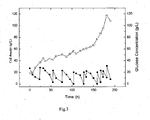
- the conditions for heterotrophic cultivation were set as follow: temperature was maintained at 29°C, air flow rate was set as 150 L/h, pH was adjusted to 6.2 ⁇ 0.2 through addition of acid or base (e.g. KOH, H 2 SO 4 , etc.). The dissolved oxygen was monitored on line. Once the dissolved oxygen was lower than 10% of the saturation, the stirring rate was then gradually increased so as to maintain the saturation of the dissolved oxygen in the fermentor above 10%. When carbon source was depleted and the dissolved oxygen (DO) level steeply increased, glucose was added to maintain the concentration of glucose as reducing sugar in the range of 1-30 g.L -1 .
- DO dissolved oxygen
- a high-density cultivation strategy was set up through fed-batch and process control in a 5L fenmentor: the changes in dissolved oxygen, glucose, and cell density in the fermentor were monitored, while the neutral lipid content in the algae cells was also measured using Nile Red mediated fluorescence technique (c.f. specific procedures described in " Danielle E, David J, Barry R, et al. 2007.Fluorescent measurement of microalgal neutral lipids. Journal of Microbiological Methods, 68 (3): 639-642 .”). The cell density during the fermentation process was estimated by periodic measurements of optical density (OD 540nm ).
- y cell density (g.L -1 )
- x represents the optical density at 540 nm.
- lipids were extracted from the algae powder.
- the cells were repeatedly washed with hexane in the Soxhlet extractor, until no lipids were left in the cells.
- the molecular weights of the lipids from heterotrophically cultivated algae were calculated as follow:
- the lipids obtained by Soxhlet extraction were dried and then weighed.
- the net weight of lipids was divided by the dry weight of cells, and the lipid content in the cell dry weight was 52% (w/w).
- the total consumption of glucose throughout the cultivation process was 280 g.L -1 , and lipid yield was 56.16g.L -1 (i.e. 108 g.L -1 ⁇ 52%), indicating a conversion rate of 20.06%.
- the sugar-to-lipid conversion rates were approximately from 10 to 17%. This indicates that under equivalent conditions, the two-step cultivation process can effectively lower the consumption of organic carbon source.
- Esterification was performed through concentrated sulfuric acid catalysis. A certain amount of algae lipids were placed in a flask, and an equal amount of concentrated sulfuric acid was added as catalyst. Methanol solvent was also added so that the molar ratio of methanol to lipid was 30:1. The reaction was carried out in an incubator at 55°C with a rotary rate of 160 revolutions per minute for 48 hours. After the reaction was completed, the reaction mixture formed two layers. The biodiesel contained in the upper layer were isolated and washed with warm water at 30 °C. Then rotary evaporation was carried out to remove the solvent and the pure biodiesel was obtained.
- the content of tri-, di-, and monoglycerides, methanol, and glycerol etc. in the system can be analyzed, based on which the conversion rate of lipid to fatty acid methyl ester can be calculated.
- DSQ GC Thermo, USA , VARIAN VF-5ms Capillary 30M*0.25MM
- gas chromatography - mass spectrometry was employed for analysis. The flow rate was set at 10 ml min -1 .
- the procedure for raising temperature was as follow: the temperature was first increased to 70 °C and maintained for 2 min; then was increased to 300 °C at the rate of 10 °C min -1 , and maintained for 20 min.
- Temperature of inject entrance was set at 250°C with flow ratio of 30:1. During the 48 hours' esterification reaction, more than 90% of the algae lipids could be converted to fatty acid methyl esters (biodiesel), and the main components of biodiesel were consistent with those of the algal oil derived from heterotrophic fermentation (see Fig. 4 ).
Landscapes
- Chemical & Material Sciences (AREA)
- Engineering & Computer Science (AREA)
- Organic Chemistry (AREA)
- Life Sciences & Earth Sciences (AREA)
- Wood Science & Technology (AREA)
- Oil, Petroleum & Natural Gas (AREA)
- Chemical Kinetics & Catalysis (AREA)
- Biotechnology (AREA)
- Zoology (AREA)
- Health & Medical Sciences (AREA)
- General Chemical & Material Sciences (AREA)
- Bioinformatics & Cheminformatics (AREA)
- Genetics & Genomics (AREA)
- Microbiology (AREA)
- Biochemistry (AREA)
- General Engineering & Computer Science (AREA)
- General Health & Medical Sciences (AREA)
- Virology (AREA)
- Tropical Medicine & Parasitology (AREA)
- Biomedical Technology (AREA)
- Medicinal Chemistry (AREA)
- Cell Biology (AREA)
- Botany (AREA)
- Preparation Of Compounds By Using Micro-Organisms (AREA)
- Micro-Organisms Or Cultivation Processes Thereof (AREA)
Claims (7)
- Méthode de production d'un biodiesel par l'intermédiaire d'une culture autotrophe à hétérotrophe à deux étapes de Chlorella, caractérisée en ce que les cellules de microalgues ayant une teneur en lipides supérieure à 50% obtenues d'abord par une culture autotrophe puis une culture hétérotrophe sont utilisées comme matière première pour la production de biodiesel ; la méthode comprenant les étapes suivantes : (1) la culture autotrophe de Chlorella ; (2) la concentration des cellules ; (3) la fermentation par voie hétérotrophe ; (4) la récupération et le séchage des cellules algales ; (5) l'extraction des lipides à partir des cellules algales séchées ; et (6) la production de biodiesel par une réaction d'estérification.
- Méthode de production d'un biodiesel par l'intermédiaire d'une culture autotrophe à hétérotrophe à deux étapes de Chlorella selon la revendication 1, caractérisée en ce que Chlorella est l'algue verte d'eau douce Chlorella protothecoides.
- Méthode de production d'un biodiesel par l'intermédiaire d'une culture autotrophe à hétérotrophe à deux étapes de Chlorella selon la revendication 1, caractérisée en ce que la culture par voie autotrophe de Chlorella de ladite étape (1) comprend : l'inoculation de l'algue verte d'eau douce Chlorella protothecoides dans un flacon, un étang de culture ou un photobioréacteur pour une incubation sous lumière, avec une température dans la plage de 20-45°C ; de la glycine selon une concentration initiale allant de 1 à 15 g.l-1 ; un pH compris entre 5 et 9 ; un débit de circulation d'air compris entre 50 et 300 l/h ; et 25-200 µmol.m-2s-1 de lumière lors du procédé de culture, conduisant à une croissance cellulaire optimale.
- Méthode de production d'un biodiesel par l'intermédiaire d'une culture autotrophe à hétérotrophe à deux étapes de Chlorella selon la revendication 1, caractérisée en ce que la méthode de concentration des cellules dans ladite étape (2) est une centrifugation à haute vitesse, une floculation, ou une filtration.
- Méthode de production d'un biodiesel par l'intermédiaire d'une culture autotrophe à hétérotrophe à deux étapes de Chlorella selon la revendication 1, caractérisée en ce que, dans la fermentation hétérotrophe de ladite étape (3), la densité cellulaire initiale est contrôlée entre 5 et 100 g.l-1, la température va de 15 à 45°C, le débit d'air va de 100 à 300 l/h, et le pH est contrôlé dans la plage allant de 5,0 à 9,0 par l'addition d'une solution d'acide ou de base ; la concentration en sucres réducteurs dans le bouillon est maintenue dans la plage allant de 1 à 40 g.l-l par une complémentation en source de carbone organique, la vitesse d'agitation est contrôlée afin de maintenir la saturation en oxygène dans le bouillon au-dessus de 10% ; on ajoute du chloramphénicol ou du monofluoroacétate de sodium afin d'empêcher une éventuelle contamination microbienne lors des procédés de culture autotrophe et de concentration cellulaire, la concentration finale en chloramphénicol est comprise entre 0,002 et 0,2 g.l-1, et la concentration finale en monofluoroacétate de sodium (MFA) est comprise entre 0,1 et 100 mM.
- Méthode de production d'un biodiesel par l'intermédiaire d'une culture autotrophe à hétérotrophe à deux étapes de Chlorella selon la revendication 1, caractérisée en ce que la composition dudit milieu autotrophe est : KH2PO4 : 0,2-0,7 g.l-1, K2HPO4 : 0,1-0,4 g.l-1, MgSO4·7H2O : 0,1-0,4 g.l-1, FeSO4·7H2O : 0,1-3 mg.l-1, glycine : 0,1-15 g.l-1, vitamine B1 : 0,001-0,1 mg.l-1, et oligo-éléments liquides A5 : 0,1-5 ml.l-1, où les oligo-éléments liquides A5 sont constitués par H3BO3 : 2,86 g.l-1, Na2MoO4·2H2O : 0,039 g.l-1, ZnSO4·7H2O : 0,222 g.l, MnCl2·4H2O : 1,81 g.l-1, et CuSO4·5H2O : 0,074 g.l-l ; la composition du milieu hétérotrophe est la même que ci-dessus, à l'exception de l'absence de glycine et de l'addition d'une source de carbone organique afin que la concentration en sucres réducteurs initiale soit comprise entre 0,01 à 100 g.l-l ; lors de la culture hétérotrophe, la source de carbone organique est ajoutée en continu afin de maintenir la concentration en sucres réducteurs dans la plage de 1-30 g.l-1.
- Méthode de production d'un biodiesel par l'intermédiaire d'une culture autotrophe à hétérotrophe à deux étapes de Chlorella selon la revendication 1, caractérisée en ce qu'une source de carbone organique est ajoutée au milieu hétérotrophe sous forme de sucres réducteurs qui comportent le glucose et autres monosaccharides, disaccharides ou polysaccharides ; la source de carbone organique comprenant du glucose, du fructose, un hydrolysat d'amidon de maïs, un hydrolysat d'amidon de manioc, un hydrolysat d'amidon de blé, ou du jus de sorgho.
Applications Claiming Priority (2)
| Application Number | Priority Date | Filing Date | Title |
|---|---|---|---|
| CN2008101129989A CN101280328B (zh) | 2008-05-27 | 2008-05-27 | 一种从自养到异养两步培养小球藻生产生物柴油的方法 |
| PCT/CN2008/072287 WO2009143680A1 (fr) | 2008-05-27 | 2008-09-08 | Procédé de production de biocarburant par culture en deux étapes de chlorelles de l’autotrophie vers l’hétérotrophie |
Publications (3)
| Publication Number | Publication Date |
|---|---|
| EP2292782A1 EP2292782A1 (fr) | 2011-03-09 |
| EP2292782A4 EP2292782A4 (fr) | 2014-07-30 |
| EP2292782B1 true EP2292782B1 (fr) | 2018-01-17 |
Family
ID=40013002
Family Applications (1)
| Application Number | Title | Priority Date | Filing Date |
|---|---|---|---|
| EP08800799.2A Not-in-force EP2292782B1 (fr) | 2008-05-27 | 2008-09-08 | Procédé de production de biodiesel par culture en deux étapes de chlorella de l'autotrophie vers l'hétérotrophie |
Country Status (5)
| Country | Link |
|---|---|
| US (1) | US20090298159A1 (fr) |
| EP (1) | EP2292782B1 (fr) |
| CN (1) | CN101280328B (fr) |
| ES (1) | ES2662063T3 (fr) |
| WO (1) | WO2009143680A1 (fr) |
Families Citing this family (100)
| Publication number | Priority date | Publication date | Assignee | Title |
|---|---|---|---|---|
| EP3546588A3 (fr) | 2007-06-01 | 2019-12-18 | Corbion Biotech, Inc. | Cellule d'algue recombinante et son utilisation pour la production de lipides |
| MX338039B (es) | 2008-04-09 | 2016-03-30 | Solazyme Inc | Modificacion quimica directa de biomasa bacteriana y aceites microbianos. |
| US20100170144A1 (en) * | 2008-04-09 | 2010-07-08 | Solazyme, Inc. | Hydroprocessing Microalgal Oils |
| CN101613618B (zh) * | 2008-06-27 | 2013-03-27 | 新奥科技发展有限公司 | 一种以微藻油脂为原料制备生物柴油的方法 |
| US20100303957A1 (en) * | 2008-10-14 | 2010-12-02 | Solazyme, Inc. | Edible Oil and Processes for Its Production from Microalgae |
| US20100303990A1 (en) * | 2008-10-14 | 2010-12-02 | Solazyme, Inc. | High Protein and High Fiber Algal Food Materials |
| US20100297325A1 (en) * | 2008-10-14 | 2010-11-25 | Solazyme, Inc. | Egg Products Containing Microalgae |
| US20100297331A1 (en) * | 2008-10-14 | 2010-11-25 | Solazyme, Inc. | Reduced Fat Foods Containing High-Lipid Microalgae with Improved Sensory Properties |
| US20100303989A1 (en) | 2008-10-14 | 2010-12-02 | Solazyme, Inc. | Microalgal Flour |
| US20160324167A1 (en) | 2008-10-14 | 2016-11-10 | Terravia Holdings, Inc. | Novel microalgal food compositions |
| CN102271525B (zh) * | 2008-10-14 | 2015-01-07 | 索拉兹米公司 | 微藻生物质的食品组合物 |
| US20100303961A1 (en) * | 2008-10-14 | 2010-12-02 | Solazyme, Inc. | Methods of Inducing Satiety |
| US20100297295A1 (en) * | 2008-10-14 | 2010-11-25 | Solazyme, Inc. | Microalgae-Based Beverages |
| IT1393061B1 (it) * | 2008-10-23 | 2012-04-11 | Eni Spa | Procedimento integrato per la produzione di bio-olio da microrganismi |
| EP2370555B1 (fr) | 2008-11-28 | 2016-04-20 | Solazyme, Inc. | Production d huiles personnalisées dans des micro-organismes hétérotrophes |
| IT1392810B1 (it) * | 2009-02-04 | 2012-03-23 | Eni Spa | Procedimento per l'estrazione di lipidi da biomassa algale |
| CN101525576B (zh) * | 2009-04-14 | 2013-03-13 | 普罗米绿色能源(深圳)有限公司 | 利用生活污水和工业废水生产微藻的方法 |
| EP2421934A4 (fr) | 2009-04-21 | 2014-06-18 | Sapphire Energy Inc | Procédés de préparation de compositions huileuses pour raffinage d'un combustible |
| CN101643700B (zh) * | 2009-08-28 | 2012-09-19 | 刘永平 | 两步法光生物反应器海藻生长系统装置 |
| CN101696389B (zh) * | 2009-10-29 | 2012-03-07 | 新奥科技发展有限公司 | 一种微藻培养方法及其光生物反应器系统 |
| IT1396940B1 (it) * | 2009-12-09 | 2012-12-20 | Eni Spa | Procedimento per la produzione di bio-olio da alghe fototrofe ed eterotrofe |
| WO2011072283A2 (fr) * | 2009-12-11 | 2011-06-16 | Rettenmaier Albert C | Procédés de récolte d'algues au moyen d'une substance filtrante et leurs utilisations |
| CN101781587B (zh) * | 2009-12-15 | 2013-04-03 | 张建旺 | 用动物油脂和鲜薯类制备生物柴油的方法 |
| US8450111B2 (en) | 2010-03-02 | 2013-05-28 | Streamline Automation, Llc | Lipid extraction from microalgae using a single ionic liquid |
| US8303818B2 (en) * | 2010-06-24 | 2012-11-06 | Streamline Automation, Llc | Method and apparatus using an active ionic liquid for algae biofuel harvest and extraction |
| CN101792711B (zh) * | 2010-04-02 | 2013-04-24 | 武汉南茗科技有限公司 | 生产微藻的装置及方法 |
| US8889400B2 (en) | 2010-05-20 | 2014-11-18 | Pond Biofuels Inc. | Diluting exhaust gas being supplied to bioreactor |
| US11512278B2 (en) | 2010-05-20 | 2022-11-29 | Pond Technologies Inc. | Biomass production |
| US20120156669A1 (en) | 2010-05-20 | 2012-06-21 | Pond Biofuels Inc. | Biomass Production |
| US8940520B2 (en) | 2010-05-20 | 2015-01-27 | Pond Biofuels Inc. | Process for growing biomass by modulating inputs to reaction zone based on changes to exhaust supply |
| US8969067B2 (en) | 2010-05-20 | 2015-03-03 | Pond Biofuels Inc. | Process for growing biomass by modulating supply of gas to reaction zone |
| CN102260543B (zh) * | 2010-05-27 | 2013-12-04 | 中美生物资源股份有限公司 | 一种整合式藻类生物柴油及藻体发酵再利用方法 |
| SG185780A1 (en) | 2010-05-28 | 2013-01-30 | Solazyme Inc | Tailored oils produced from recombinant heterotrophic microorganisms |
| WO2011159650A1 (fr) * | 2010-06-14 | 2011-12-22 | Chlor Bioenergy Inc. | Procédé pour produire des microalgues riches en huile en tant que matière première pour la production de biodiesel |
| US8906236B2 (en) | 2010-07-26 | 2014-12-09 | Sapphire Energy, Inc. | Process for the recovery of oleaginous compounds and nutrients from biomass |
| US9028696B2 (en) | 2010-07-26 | 2015-05-12 | Sapphire Energy, Inc. | Process for the recovery of oleaginous compounds from biomass |
| JP5739530B2 (ja) | 2010-07-26 | 2015-06-24 | サファイア エナジー,インコーポレイティド | バイオマスからの油性化合物の回収方法 |
| SG188540A1 (en) * | 2010-09-22 | 2013-04-30 | Council Scient Ind Res | Integrated process for the production of oil bearing chlorella variabilis for lipid extraction utilizing by-products of jatropha methyl ester (jme) production |
| ITMI20101867A1 (it) * | 2010-10-13 | 2012-04-14 | Eni Spa | Procedimento per la produzione diretta di esteri alchilici di acidi grassi da biomassa |
| AU2011323288B2 (en) | 2010-11-03 | 2016-05-26 | Corbion Biotech, Inc. | Microbial oils with lowered pour points, dielectric fluids produced therefrom, and related methods |
| US8877058B2 (en) * | 2010-12-23 | 2014-11-04 | Exxonmobil Research And Engineering Company | Process for separating solute material from an algal cell feed stream |
| CA2825691C (fr) | 2011-02-02 | 2020-08-25 | Solazyme, Inc. | Huiles personnalisees produites a partir de microorganismes oleagineux recombinants |
| WO2012109379A2 (fr) * | 2011-02-08 | 2012-08-16 | Phycal Inc. | Système de gestion du carbone |
| WO2012109375A2 (fr) * | 2011-02-08 | 2012-08-16 | Phycal Inc. | Procédés pour la culture trophique mixte améliorée d'algues |
| CN102174409A (zh) * | 2011-02-23 | 2011-09-07 | 天津科技大学 | 一种混合营养无菌培养微藻快速积累油脂的方法 |
| US20120276633A1 (en) | 2011-04-27 | 2012-11-01 | Pond Biofuels Inc. | Supplying treated exhaust gases for effecting growth of phototrophic biomass |
| CN103608450A (zh) | 2011-05-06 | 2014-02-26 | 索拉兹米公司 | 基因工程改造的代谢木糖的微生物 |
| US20140099684A1 (en) | 2011-05-26 | 2014-04-10 | Council Of Scientific & Industrial Research | Engine worthy fatty acid methyl ester (biodiesel) from naturally occuring marine microalgal mats and marine microalgae cultured in open salt pans together with value addition of co-products |
| FR2976947A1 (fr) * | 2011-06-21 | 2012-12-28 | Univ La Rochelle | Utilisation de la detente instantanee controlee dans la fabrication de biodiesel a partir de sources lipidiques naturelles |
| WO2013005209A2 (fr) | 2011-07-04 | 2013-01-10 | Yeda Research And Development Co. Ltd. | Production améliorée de lipides par des algues |
| MX2014001499A (es) | 2011-08-09 | 2014-09-01 | Sapphire Energy Inc | Composiciones de materia que comprende aceite de extracto de algas. |
| KR101273234B1 (ko) * | 2011-08-29 | 2013-06-11 | 한국에너지기술연구원 | 고온에서 이산화탄소 고정능이 우수한 클로렐라 속 m082 균주 및 이의 용도 |
| RU2497944C2 (ru) * | 2011-10-27 | 2013-11-10 | Федеральное государственное бюджетное образовательное учреждение высшего профессионального образования "Московский государственный машиностроительный университет" ("МАМИ") | Способ культивирования микроводорослей биотопливного назначения |
| GB2496115A (en) * | 2011-10-28 | 2013-05-08 | Computational Modelling Cambridge Ltd | Method and plant for producing hydrocarbon compounds |
| CN103103128A (zh) * | 2011-11-10 | 2013-05-15 | 中国石油化工股份有限公司 | 一种微藻高效富集培养的方法 |
| SG10201702442RA (en) | 2012-04-18 | 2017-05-30 | Terravia Holdings Inc | Tailored oils |
| CN102718325B (zh) * | 2012-07-13 | 2015-01-07 | 广西湘桂糖业集团有限公司 | 培养高密度油脂微藻处理酵母工业废水的方法 |
| CN103627620A (zh) * | 2012-08-28 | 2014-03-12 | 西门子公司 | 通过微藻培养生产脂质的方法和装置 |
| CN103773687B (zh) * | 2012-10-23 | 2019-07-12 | 中国石油化工股份有限公司 | 一种微藻的培养方法 |
| US9534261B2 (en) | 2012-10-24 | 2017-01-03 | Pond Biofuels Inc. | Recovering off-gas from photobioreactor |
| CN102925360B (zh) * | 2012-11-27 | 2014-07-09 | 南开大学 | 一种高细胞密度发酵制备小球藻的方法 |
| KR101575208B1 (ko) * | 2013-01-09 | 2015-12-07 | 한국생명공학연구원 | 북극 해양에서 분리한 전분 및 지질 고생산 미세조류 클로렐라 세포주 및 이의 용도 |
| US10098371B2 (en) | 2013-01-28 | 2018-10-16 | Solazyme Roquette Nutritionals, LLC | Microalgal flour |
| WO2014164885A1 (fr) | 2013-03-13 | 2014-10-09 | Oney Stephen K | Système de dessalement des fonds marins et ses procédés d'utilisation pour produire de l'eau potable |
| WO2014159439A1 (fr) * | 2013-03-13 | 2014-10-02 | Oney Stephen K | Systèmes et procédés de culture et de récolte de bioalgues d'eaux océaniques et aquaculture |
| CN103184145B (zh) * | 2013-04-15 | 2014-08-06 | 清华大学 | 一种光合-发酵混合培养装置及其在培养含油微藻中的应用 |
| CN104164366B (zh) * | 2013-05-16 | 2017-10-03 | 中国石油化工股份有限公司 | 一种养殖微藻的方法 |
| CN104232559B (zh) * | 2013-06-09 | 2017-07-25 | 中国石油化工股份有限公司 | 养殖微藻的方法及生产油脂的方法 |
| KR20160019424A (ko) * | 2013-06-12 | 2016-02-19 | 솔라베스트 바이오에너지 인코퍼레이티드 | 조류 세포 배양물 및 바이오매스, 지질 화합물 및 조성물, 그리고 관련 산물을 생산하는 방법 |
| UA115098C2 (uk) * | 2013-07-02 | 2017-09-11 | Біо.Те.Ма. С.Р.Л. | Спосіб виробництва олії з мікроводоростей |
| FR3009619B1 (fr) | 2013-08-07 | 2017-12-29 | Roquette Freres | Compositions de biomasse de microalgues riches en proteines de qualite sensorielle optimisee |
| JP6517196B2 (ja) | 2013-10-04 | 2019-05-22 | テラヴィア ホールディングス, インコーポレイテッド | 調整油 |
| CN103757055B (zh) * | 2014-01-25 | 2016-01-06 | 福州大学 | 一种利用甘氨酸微藻生物絮凝的方法 |
| CN103849657B (zh) * | 2014-03-05 | 2016-04-13 | 南昌大学 | 一种生物柴油油脂的生产方法 |
| WO2015168458A1 (fr) * | 2014-05-02 | 2015-11-05 | John Whitman | Procédés de culture de micro-algues pour une production accrue des ressources |
| CN103992941A (zh) * | 2014-06-12 | 2014-08-20 | 黑龙江省能源环境研究院 | 产油微藻的一体式培养装置 |
| BR112017000414A2 (pt) | 2014-07-10 | 2017-11-07 | Terravia Holdings Inc | genes cetoacil-acp sintase e utilizações dos mesmos |
| CN104195198A (zh) * | 2014-09-01 | 2014-12-10 | 石河子大学 | 一种从小球藻中提取多糖的方法 |
| CN104357330A (zh) * | 2014-11-11 | 2015-02-18 | 甘肃德福生物科技有限公司 | 一种自养与异养混合培养小球藻的方法 |
| CN105733950A (zh) * | 2014-12-10 | 2016-07-06 | 中国农业大学 | 一种收集养殖于猪场废水中小球藻的方法 |
| CN104513846A (zh) * | 2014-12-23 | 2015-04-15 | 清华大学 | 一种利用产氢蓝藻自浮采收产油绿藻制备微藻生物柴油的方法 |
| CN104628734B (zh) * | 2014-12-25 | 2017-06-30 | 中国科学院南海海洋研究所 | 一种微藻叶绿素的脱除方法 |
| CN105671095A (zh) * | 2016-02-27 | 2016-06-15 | 昆明理工大学 | 一种促进产油微藻细胞和油脂快速积累的培养方法 |
| US11767501B2 (en) | 2016-05-09 | 2023-09-26 | Global Algae Technology, LLC | Biological and algae harvesting and cultivation systems and methods |
| EP3458182B1 (fr) | 2016-05-09 | 2021-11-10 | Global Algae Technology, LLC | Systèmes de récolte d'algues |
| CN108102790A (zh) * | 2016-11-24 | 2018-06-01 | 中国科学院大连化学物理研究所 | 一种水产副产物脂肪酸乙酯制备方法 |
| CN107746863A (zh) * | 2017-11-21 | 2018-03-02 | 常州市鼎升环保科技有限公司 | 一种高热值微藻生物柴油的制备方法 |
| CN107937276B (zh) * | 2017-12-12 | 2021-05-28 | 中国石油大学(华东) | 一种二氧化碳和乙酸混合调控促进小球藻固碳生长的方法 |
| CN108641914B (zh) * | 2018-03-27 | 2021-09-21 | 贵州民族大学 | 一种循环式小球藻增殖分离机 |
| CN108315263A (zh) * | 2018-04-08 | 2018-07-24 | 中国科学院青岛生物能源与过程研究所 | 以甜高粱汁为原料培养微藻的方法 |
| CN108587916B (zh) * | 2018-05-23 | 2021-09-14 | 昆明理工大学 | 一种共培养单针藻在中性条件下快速絮凝的方法 |
| CN108588171A (zh) * | 2018-06-04 | 2018-09-28 | 杭州中纽生物科技有限公司 | 一种利用尼罗红筛选高产生物柴油微藻的方法 |
| CN109609563A (zh) * | 2018-12-22 | 2019-04-12 | 北京大学 | 采用脂肪酶选择性催化微拟球藻联产二十碳五烯酸和生物柴油的方法 |
| CN110218653A (zh) * | 2019-06-14 | 2019-09-10 | 阿尔格生命科学(江苏)有限公司 | 一种小球藻动物饲料生产工艺 |
| CN110396469B (zh) * | 2019-08-27 | 2022-08-19 | 济宁学院 | 一种微藻固定烟气co2制生物柴油的装置及工艺 |
| CN110387315A (zh) * | 2019-08-27 | 2019-10-29 | 济宁学院 | 微藻吸附二氧化碳制备生物柴油的装置及方法 |
| CN112266938A (zh) * | 2020-10-20 | 2021-01-26 | 青岛科海生物有限公司 | 一种提高蛋白核小球藻发酵油脂的方法 |
| CN113024042A (zh) * | 2021-03-29 | 2021-06-25 | 福州科力恩生物科技有限公司 | 基于光合微生物的补充光照净化污水处理方法 |
| CN113667606B (zh) * | 2021-07-05 | 2023-11-03 | 南昌大学 | 一种以碎米糖化液为碳源高效同化氨制备蛋白质的方法 |
| CN115558607A (zh) * | 2021-11-30 | 2023-01-03 | 浙江海洋大学 | 一种高产高能量分子的小球藻的混养方法及其应用 |
Family Cites Families (6)
| Publication number | Priority date | Publication date | Assignee | Title |
|---|---|---|---|---|
| US5119588A (en) * | 1989-10-03 | 1992-06-09 | Weyerhaeuser Company | Method and apparatus for culturing autotrophic plants from heterotrophic plant material |
| US7794989B2 (en) * | 2004-12-28 | 2010-09-14 | Ajinomoto Co., Inc. | L-glutamic acid-producing microorganism and a method for producing L-glutamic acid |
| CN100582199C (zh) * | 2005-06-01 | 2010-01-20 | 清华大学 | 利用微藻油脂制备生物柴油的方法 |
| CN1837352A (zh) * | 2006-04-29 | 2006-09-27 | 清华大学 | 高密度培养异养小球藻的方法 |
| WO2008083351A2 (fr) * | 2006-12-29 | 2008-07-10 | Genifuel Corporation | Environnements de croissance contrôlés pour culture d'algues |
| US8404004B2 (en) * | 2006-12-29 | 2013-03-26 | Genifuel Corporation | Process of producing oil from algae using biological rupturing |
-
2008
- 2008-05-27 CN CN2008101129989A patent/CN101280328B/zh not_active Expired - Fee Related
- 2008-09-08 WO PCT/CN2008/072287 patent/WO2009143680A1/fr not_active Ceased
- 2008-09-08 ES ES08800799.2T patent/ES2662063T3/es active Active
- 2008-09-08 EP EP08800799.2A patent/EP2292782B1/fr not_active Not-in-force
- 2008-11-20 US US12/313,455 patent/US20090298159A1/en not_active Abandoned
Non-Patent Citations (1)
| Title |
|---|
| None * |
Also Published As
| Publication number | Publication date |
|---|---|
| CN101280328A (zh) | 2008-10-08 |
| ES2662063T3 (es) | 2018-04-05 |
| EP2292782A4 (fr) | 2014-07-30 |
| EP2292782A1 (fr) | 2011-03-09 |
| WO2009143680A1 (fr) | 2009-12-03 |
| US20090298159A1 (en) | 2009-12-03 |
| CN101280328B (zh) | 2011-06-29 |
Similar Documents
| Publication | Publication Date | Title |
|---|---|---|
| EP2292782A1 (fr) | Procédé de production de biocarburant par culture en deux étapes de chlorelles de l autotrophie vers l hétérotrophie | |
| Widjaja et al. | Study of increasing lipid production from fresh water microalgae Chlorella vulgaris | |
| Yousuf | Fundamentals of microalgae cultivation | |
| Zheng et al. | High-density fed-batch culture of a thermotolerant microalga Chlorella sorokiniana for biofuel production | |
| Heredia-Arroyo et al. | Mixotrophic cultivation of Chlorella vulgaris and its potential application for the oil accumulation from non-sugar materials | |
| Teo et al. | Enhancing growth and lipid production of marine microalgae for biodiesel production via the use of different LED wavelengths | |
| Sengmee et al. | Biophotolysis-based hydrogen and lipid production by oleaginous microalgae using crude glycerol as exogenous carbon source | |
| Fan et al. | Sequential heterotrophy–dilution–photoinduction cultivation for efficient microalgal biomass and lipid production | |
| Teo et al. | Biodiesel production via lipase catalysed transesterification of microalgae lipids from Tetraselmis sp. | |
| Singh et al. | Mechanism and challenges in commercialisation of algal biofuels | |
| Kaewkannetra et al. | The effect of CO2 and salinity on the cultivation of Scenedesmus obliquus for biodiesel production | |
| Feng et al. | Lipid accumulation and growth of Chlorella zofingiensis in flat plate photobioreactors outdoors | |
| Cheng et al. | The growth, lipid and hydrocarbon production of Botryococcus braunii with attached cultivation | |
| Heredia-Arroyo et al. | Oil accumulation via heterotrophic/mixotrophic Chlorella protothecoides | |
| Rodolfi et al. | Microalgae for oil: Strain selection, induction of lipid synthesis and outdoor mass cultivation in a low‐cost photobioreactor | |
| WO2009105927A1 (fr) | Méthode de fermentation à haute densité de chlorella protothecoides par culture hétérotrope en vue de la production de biodiesel | |
| Ashokkumar et al. | Potential of sustainable bioenergy production from Synechocystis sp. cultivated in wastewater at large scale–a low cost biorefinery approach | |
| CN102492626B (zh) | 拟微绿球藻及其应用 | |
| CN102089434A (zh) | 生物燃料原料生产的集成系统 | |
| CN101475823B (zh) | 以甘蔗作为原料生产生物柴油的方法 | |
| Frac et al. | Microalgae for biofuels production and environmental applications: A review | |
| CA2722649A1 (fr) | Production de biocombustible a partir de sources de culture tissulaire | |
| Tan et al. | Strategies for enhancing lipid production from indigenous microalgae isolates | |
| Afzal et al. | Microalgae: A promising feedstock for energy and high-value products | |
| Rekha et al. | Culture and biofuel production efficiency of marine microalgae Chlorella marina and Skeletonema costatum |
Legal Events
| Date | Code | Title | Description |
|---|---|---|---|
| PUAI | Public reference made under article 153(3) epc to a published international application that has entered the european phase |
Free format text: ORIGINAL CODE: 0009012 |
|
| 17P | Request for examination filed |
Effective date: 20101216 |
|
| AK | Designated contracting states |
Kind code of ref document: A1 Designated state(s): AT BE BG CH CY CZ DE DK EE ES FI FR GB GR HR HU IE IS IT LI LT LU LV MC MT NL NO PL PT RO SE SI SK TR |
|
| AX | Request for extension of the european patent |
Extension state: AL BA MK RS |
|
| DAX | Request for extension of the european patent (deleted) | ||
| A4 | Supplementary search report drawn up and despatched |
Effective date: 20140702 |
|
| RIC1 | Information provided on ipc code assigned before grant |
Ipc: C11B 1/10 20060101ALI20140626BHEP Ipc: C12P 7/64 20060101AFI20140626BHEP Ipc: C11C 3/00 20060101ALI20140626BHEP Ipc: C10G 3/00 20060101ALI20140626BHEP Ipc: C12N 1/12 20060101ALI20140626BHEP Ipc: C12R 1/89 20060101ALI20140626BHEP Ipc: C10L 1/02 20060101ALI20140626BHEP |
|
| 17Q | First examination report despatched |
Effective date: 20160824 |
|
| STAA | Information on the status of an ep patent application or granted ep patent |
Free format text: STATUS: EXAMINATION IS IN PROGRESS |
|
| GRAP | Despatch of communication of intention to grant a patent |
Free format text: ORIGINAL CODE: EPIDOSNIGR1 |
|
| STAA | Information on the status of an ep patent application or granted ep patent |
Free format text: STATUS: GRANT OF PATENT IS INTENDED |
|
| INTG | Intention to grant announced |
Effective date: 20170811 |
|
| GRAS | Grant fee paid |
Free format text: ORIGINAL CODE: EPIDOSNIGR3 |
|
| GRAA | (expected) grant |
Free format text: ORIGINAL CODE: 0009210 |
|
| STAA | Information on the status of an ep patent application or granted ep patent |
Free format text: STATUS: THE PATENT HAS BEEN GRANTED |
|
| AK | Designated contracting states |
Kind code of ref document: B1 Designated state(s): AT BE BG CH CY CZ DE DK EE ES FI FR GB GR HR HU IE IS IT LI LT LU LV MC MT NL NO PL PT RO SE SI SK TR |
|
| REG | Reference to a national code |
Ref country code: GB Ref legal event code: FG4D |
|
| REG | Reference to a national code |
Ref country code: CH Ref legal event code: EP |
|
| REG | Reference to a national code |
Ref country code: IE Ref legal event code: FG4D |
|
| REG | Reference to a national code |
Ref country code: AT Ref legal event code: REF Ref document number: 964455 Country of ref document: AT Kind code of ref document: T Effective date: 20180215 |
|
| REG | Reference to a national code |
Ref country code: DE Ref legal event code: R096 Ref document number: 602008053803 Country of ref document: DE |
|
| REG | Reference to a national code |
Ref country code: ES Ref legal event code: FG2A Ref document number: 2662063 Country of ref document: ES Kind code of ref document: T3 Effective date: 20180405 |
|
| REG | Reference to a national code |
Ref country code: NL Ref legal event code: MP Effective date: 20180117 |
|
| REG | Reference to a national code |
Ref country code: LT Ref legal event code: MG4D |
|
| PG25 | Lapsed in a contracting state [announced via postgrant information from national office to epo] |
Ref country code: NL Free format text: LAPSE BECAUSE OF FAILURE TO SUBMIT A TRANSLATION OF THE DESCRIPTION OR TO PAY THE FEE WITHIN THE PRESCRIBED TIME-LIMIT Effective date: 20180117 |
|
| PG25 | Lapsed in a contracting state [announced via postgrant information from national office to epo] |
Ref country code: CY Free format text: LAPSE BECAUSE OF FAILURE TO SUBMIT A TRANSLATION OF THE DESCRIPTION OR TO PAY THE FEE WITHIN THE PRESCRIBED TIME-LIMIT Effective date: 20180117 Ref country code: LT Free format text: LAPSE BECAUSE OF FAILURE TO SUBMIT A TRANSLATION OF THE DESCRIPTION OR TO PAY THE FEE WITHIN THE PRESCRIBED TIME-LIMIT Effective date: 20180117 Ref country code: FI Free format text: LAPSE BECAUSE OF FAILURE TO SUBMIT A TRANSLATION OF THE DESCRIPTION OR TO PAY THE FEE WITHIN THE PRESCRIBED TIME-LIMIT Effective date: 20180117 Ref country code: NO Free format text: LAPSE BECAUSE OF FAILURE TO SUBMIT A TRANSLATION OF THE DESCRIPTION OR TO PAY THE FEE WITHIN THE PRESCRIBED TIME-LIMIT Effective date: 20180417 Ref country code: HR Free format text: LAPSE BECAUSE OF FAILURE TO SUBMIT A TRANSLATION OF THE DESCRIPTION OR TO PAY THE FEE WITHIN THE PRESCRIBED TIME-LIMIT Effective date: 20180117 |
|
| PG25 | Lapsed in a contracting state [announced via postgrant information from national office to epo] |
Ref country code: SE Free format text: LAPSE BECAUSE OF FAILURE TO SUBMIT A TRANSLATION OF THE DESCRIPTION OR TO PAY THE FEE WITHIN THE PRESCRIBED TIME-LIMIT Effective date: 20180117 Ref country code: LV Free format text: LAPSE BECAUSE OF FAILURE TO SUBMIT A TRANSLATION OF THE DESCRIPTION OR TO PAY THE FEE WITHIN THE PRESCRIBED TIME-LIMIT Effective date: 20180117 Ref country code: GR Free format text: LAPSE BECAUSE OF FAILURE TO SUBMIT A TRANSLATION OF THE DESCRIPTION OR TO PAY THE FEE WITHIN THE PRESCRIBED TIME-LIMIT Effective date: 20180418 Ref country code: PL Free format text: LAPSE BECAUSE OF FAILURE TO SUBMIT A TRANSLATION OF THE DESCRIPTION OR TO PAY THE FEE WITHIN THE PRESCRIBED TIME-LIMIT Effective date: 20180117 Ref country code: IS Free format text: LAPSE BECAUSE OF FAILURE TO SUBMIT A TRANSLATION OF THE DESCRIPTION OR TO PAY THE FEE WITHIN THE PRESCRIBED TIME-LIMIT Effective date: 20180517 Ref country code: BG Free format text: LAPSE BECAUSE OF FAILURE TO SUBMIT A TRANSLATION OF THE DESCRIPTION OR TO PAY THE FEE WITHIN THE PRESCRIBED TIME-LIMIT Effective date: 20180417 |
|
| REG | Reference to a national code |
Ref country code: DE Ref legal event code: R097 Ref document number: 602008053803 Country of ref document: DE |
|
| PG25 | Lapsed in a contracting state [announced via postgrant information from national office to epo] |
Ref country code: EE Free format text: LAPSE BECAUSE OF FAILURE TO SUBMIT A TRANSLATION OF THE DESCRIPTION OR TO PAY THE FEE WITHIN THE PRESCRIBED TIME-LIMIT Effective date: 20180117 Ref country code: RO Free format text: LAPSE BECAUSE OF FAILURE TO SUBMIT A TRANSLATION OF THE DESCRIPTION OR TO PAY THE FEE WITHIN THE PRESCRIBED TIME-LIMIT Effective date: 20180117 |
|
| PLBE | No opposition filed within time limit |
Free format text: ORIGINAL CODE: 0009261 |
|
| STAA | Information on the status of an ep patent application or granted ep patent |
Free format text: STATUS: NO OPPOSITION FILED WITHIN TIME LIMIT |
|
| PG25 | Lapsed in a contracting state [announced via postgrant information from national office to epo] |
Ref country code: SK Free format text: LAPSE BECAUSE OF FAILURE TO SUBMIT A TRANSLATION OF THE DESCRIPTION OR TO PAY THE FEE WITHIN THE PRESCRIBED TIME-LIMIT Effective date: 20180117 Ref country code: CZ Free format text: LAPSE BECAUSE OF FAILURE TO SUBMIT A TRANSLATION OF THE DESCRIPTION OR TO PAY THE FEE WITHIN THE PRESCRIBED TIME-LIMIT Effective date: 20180117 Ref country code: DK Free format text: LAPSE BECAUSE OF FAILURE TO SUBMIT A TRANSLATION OF THE DESCRIPTION OR TO PAY THE FEE WITHIN THE PRESCRIBED TIME-LIMIT Effective date: 20180117 |
|
| 26N | No opposition filed |
Effective date: 20181018 |
|
| PG25 | Lapsed in a contracting state [announced via postgrant information from national office to epo] |
Ref country code: SI Free format text: LAPSE BECAUSE OF FAILURE TO SUBMIT A TRANSLATION OF THE DESCRIPTION OR TO PAY THE FEE WITHIN THE PRESCRIBED TIME-LIMIT Effective date: 20180117 |
|
| REG | Reference to a national code |
Ref country code: DE Ref legal event code: R119 Ref document number: 602008053803 Country of ref document: DE |
|
| PG25 | Lapsed in a contracting state [announced via postgrant information from national office to epo] |
Ref country code: MC Free format text: LAPSE BECAUSE OF FAILURE TO SUBMIT A TRANSLATION OF THE DESCRIPTION OR TO PAY THE FEE WITHIN THE PRESCRIBED TIME-LIMIT Effective date: 20180117 |
|
| REG | Reference to a national code |
Ref country code: CH Ref legal event code: PL |
|
| GBPC | Gb: european patent ceased through non-payment of renewal fee |
Effective date: 20180908 |
|
| REG | Reference to a national code |
Ref country code: BE Ref legal event code: MM Effective date: 20180930 |
|
| REG | Reference to a national code |
Ref country code: AT Ref legal event code: UEP Ref document number: 964455 Country of ref document: AT Kind code of ref document: T Effective date: 20180117 |
|
| REG | Reference to a national code |
Ref country code: IE Ref legal event code: MM4A |
|
| PG25 | Lapsed in a contracting state [announced via postgrant information from national office to epo] |
Ref country code: LU Free format text: LAPSE BECAUSE OF NON-PAYMENT OF DUE FEES Effective date: 20180908 |
|
| PG25 | Lapsed in a contracting state [announced via postgrant information from national office to epo] |
Ref country code: IE Free format text: LAPSE BECAUSE OF NON-PAYMENT OF DUE FEES Effective date: 20180908 Ref country code: DE Free format text: LAPSE BECAUSE OF NON-PAYMENT OF DUE FEES Effective date: 20190402 Ref country code: IT Free format text: LAPSE BECAUSE OF NON-PAYMENT OF DUE FEES Effective date: 20180908 |
|
| PG25 | Lapsed in a contracting state [announced via postgrant information from national office to epo] |
Ref country code: FR Free format text: LAPSE BECAUSE OF NON-PAYMENT OF DUE FEES Effective date: 20180930 Ref country code: CH Free format text: LAPSE BECAUSE OF NON-PAYMENT OF DUE FEES Effective date: 20180930 Ref country code: LI Free format text: LAPSE BECAUSE OF NON-PAYMENT OF DUE FEES Effective date: 20180930 Ref country code: BE Free format text: LAPSE BECAUSE OF NON-PAYMENT OF DUE FEES Effective date: 20180930 |
|
| REG | Reference to a national code |
Ref country code: ES Ref legal event code: FD2A Effective date: 20191030 |
|
| PG25 | Lapsed in a contracting state [announced via postgrant information from national office to epo] |
Ref country code: GB Free format text: LAPSE BECAUSE OF NON-PAYMENT OF DUE FEES Effective date: 20180908 |
|
| REG | Reference to a national code |
Ref country code: AT Ref legal event code: MM01 Ref document number: 964455 Country of ref document: AT Kind code of ref document: T Effective date: 20180908 |
|
| PG25 | Lapsed in a contracting state [announced via postgrant information from national office to epo] |
Ref country code: AT Free format text: LAPSE BECAUSE OF NON-PAYMENT OF DUE FEES Effective date: 20180908 Ref country code: MT Free format text: LAPSE BECAUSE OF NON-PAYMENT OF DUE FEES Effective date: 20180908 |
|
| PG25 | Lapsed in a contracting state [announced via postgrant information from national office to epo] |
Ref country code: ES Free format text: LAPSE BECAUSE OF NON-PAYMENT OF DUE FEES Effective date: 20180909 |
|
| PG25 | Lapsed in a contracting state [announced via postgrant information from national office to epo] |
Ref country code: TR Free format text: LAPSE BECAUSE OF FAILURE TO SUBMIT A TRANSLATION OF THE DESCRIPTION OR TO PAY THE FEE WITHIN THE PRESCRIBED TIME-LIMIT Effective date: 20180117 |
|
| PG25 | Lapsed in a contracting state [announced via postgrant information from national office to epo] |
Ref country code: PT Free format text: LAPSE BECAUSE OF FAILURE TO SUBMIT A TRANSLATION OF THE DESCRIPTION OR TO PAY THE FEE WITHIN THE PRESCRIBED TIME-LIMIT Effective date: 20180117 Ref country code: HU Free format text: LAPSE BECAUSE OF FAILURE TO SUBMIT A TRANSLATION OF THE DESCRIPTION OR TO PAY THE FEE WITHIN THE PRESCRIBED TIME-LIMIT; INVALID AB INITIO Effective date: 20080908 |