EP2293516A2 - Procédé, appareil et système pour traiter un service composite et service de remplacement et service et d'invocation de service - Google Patents
Procédé, appareil et système pour traiter un service composite et service de remplacement et service et d'invocation de service Download PDFInfo
- Publication number
- EP2293516A2 EP2293516A2 EP10011283A EP10011283A EP2293516A2 EP 2293516 A2 EP2293516 A2 EP 2293516A2 EP 10011283 A EP10011283 A EP 10011283A EP 10011283 A EP10011283 A EP 10011283A EP 2293516 A2 EP2293516 A2 EP 2293516A2
- Authority
- EP
- European Patent Office
- Prior art keywords
- service
- concrete
- template
- description
- composite
- Prior art date
- Legal status (The legal status is an assumption and is not a legal conclusion. Google has not performed a legal analysis and makes no representation as to the accuracy of the status listed.)
- Granted
Links
Images



Classifications
-
- H—ELECTRICITY
- H04—ELECTRIC COMMUNICATION TECHNIQUE
- H04L—TRANSMISSION OF DIGITAL INFORMATION, e.g. TELEGRAPHIC COMMUNICATION
- H04L41/00—Arrangements for maintenance, administration or management of data switching networks, e.g. of packet switching networks
- H04L41/50—Network service management, e.g. ensuring proper service fulfilment according to agreements
-
- G—PHYSICS
- G06—COMPUTING OR CALCULATING; COUNTING
- G06F—ELECTRIC DIGITAL DATA PROCESSING
- G06F9/00—Arrangements for program control, e.g. control units
- G06F9/06—Arrangements for program control, e.g. control units using stored programs, i.e. using an internal store of processing equipment to receive or retain programs
- G06F9/46—Multiprogramming arrangements
- G06F9/50—Allocation of resources, e.g. of the central processing unit [CPU]
- G06F9/5005—Allocation of resources, e.g. of the central processing unit [CPU] to service a request
- G06F9/5027—Allocation of resources, e.g. of the central processing unit [CPU] to service a request the resource being a machine, e.g. CPUs, Servers, Terminals
- G06F9/5055—Allocation of resources, e.g. of the central processing unit [CPU] to service a request the resource being a machine, e.g. CPUs, Servers, Terminals considering software capabilities, i.e. software resources associated or available to the machine
-
- H—ELECTRICITY
- H04—ELECTRIC COMMUNICATION TECHNIQUE
- H04L—TRANSMISSION OF DIGITAL INFORMATION, e.g. TELEGRAPHIC COMMUNICATION
- H04L67/00—Network arrangements or protocols for supporting network services or applications
- H04L67/01—Protocols
- H04L67/02—Protocols based on web technology, e.g. hypertext transfer protocol [HTTP]
-
- H—ELECTRICITY
- H04—ELECTRIC COMMUNICATION TECHNIQUE
- H04L—TRANSMISSION OF DIGITAL INFORMATION, e.g. TELEGRAPHIC COMMUNICATION
- H04L67/00—Network arrangements or protocols for supporting network services or applications
- H04L67/50—Network services
- H04L67/51—Discovery or management thereof, e.g. service location protocol [SLP] or web services
-
- H—ELECTRICITY
- H04—ELECTRIC COMMUNICATION TECHNIQUE
- H04L—TRANSMISSION OF DIGITAL INFORMATION, e.g. TELEGRAPHIC COMMUNICATION
- H04L67/00—Network arrangements or protocols for supporting network services or applications
- H04L67/50—Network services
- H04L67/60—Scheduling or organising the servicing of application requests, e.g. requests for application data transmissions using the analysis and optimisation of the required network resources
Definitions
- the present invention relates to Internet, and more specifically to methods, apparatus and system for processing a composite service, replacing a service, and invoking a concrete service.
- Service composition can be categorized into a static service composition and a dynamic service composition.
- the composite service logic specifies in advance a concrete service to be invoked. That is, the service to be invoked is specified before the composite service logic is being executed.
- the composite service logic may be generated via a graphic user interface or text editor.
- Some service composition environment provides a graphic user interface, allowing users to be able to use a mouse to drag appropriate services from a service catalog to build up the composite service logic.
- Such mechanism may not be able to dynamically select and provide appropriate services to a requester in the runtime. Such mechanism has serious defects especially when the service is inaccessible.
- the composite service logic specifies a service to be invoked in runtime such that some defects of the static service composition are addressed.
- dynamic service composition is mainly based on semantic technology.
- the dynamic service composition can be categorized into a semi-auto composition and auto composition.
- the semi-auto composition is directed to providing semantic service description when a user is defining a composite service logic. The user still needs to describe in advance the execution sequence of the services to be invoked.
- the auto composition only requires some necessary parameters before automatically generating the composite service logic, which means that the sequence for the services to be invoked is generated automatically and appropriate services are selected automatically.
- techniques such as Artificial Intelligence planning (AI planning) are used to automatically select services and generate the composite service logic.
- the existing technique provides an implementation mechanism for converting an abstract composite service logic to a concrete composite service logic.
- stages for service composition are defined, namely, design stage, service selection stage, procedure generation stage and execution stage.
- a template of a semantic activity is used for designing a service composition procedure.
- a service is dynamically selected for each activity. This step is repeated until each activity is replaced with a concrete service.
- an executable procedure is generated based on all the concrete services.
- the executable composite service logic is executed.
- OWL-S Ontology Web Language for Service
- Semantic description is used to match a concrete service.
- BPEL Business Process Execution Language
- the main feature is to employ OWL-S to describe service invocation.
- a service composition engine traverses the composite service logic. When the engine encounters the service invocation described in OWL-S, an "abstract-to-concrete" procedure is triggered. The service composition engine discovers a concrete service by virtue of OWL-S service description dynamically. The composite engine replaces the OWL-S service invocation description with an invocation description of the concrete service.
- BPEL script is generated until all the OWL-S service invocation descriptions are replaced.
- the foregoing process requires people to provide semantic description and the implementation is complex. Moreover, the foregoing process indirectly converts the abstract composite service logic into a concrete composite service logic, rather than directly executing the abstract composite service logic. Likewise, in the prior art, no mechanism of converting a concrete composite service logic into an abstract composite service logic is disclosed. Moreover, prior art does not solve the issue raised when the invoked service is not accessible during an execution process of a composite service logic.
- a concrete service can be dynamically selected when the composite service logic is being executed.
- the present invention is also able to dynamically replace a concrete service with another concrete service having the same function when invocation of the concrete service fails during execution of a composite service.
- a method for handling a composite service includes:
- a method for replacing a composite service is provided according to one embodiment of the present invention.
- the method includes:
- a method for invoking a concrete service is provided according to one embodiment of the present invention.
- the method includes:
- the apparatus includes:
- the apparatus includes:
- the apparatus includes:
- a system for composite service includes: a service registration center, a composite service sub-system.
- the registration center includes a service center, configured to store service information; a template center, configured to store template information, and a mapping relationship between a service and a service template.
- the composite service sub-system may include one or more of an apparatus for handling a composite service, an apparatus for replacing a service and an apparatus for invoking a concrete service.
- an abstract composite service logic into a concrete composite service logic
- a dynamic service composition and a dynamic service selection are achieved.
- a service invocation can be generated directly based on the service abstract description such that a step of converting into a concrete composite service logic can be omitted.
- the service invoked during execution of the composite service logic is not accessible, the service can be rolled back dynamically. That is, associated template information is obtained according to a concrete service description and an appropriate service is dynamically selected to replace the invoked service. Accordingly, the invoked service can be dynamically replaced when the invoked service is inaccessible, and an abstract composite service logic can be generated automatically based on a concrete composite service logic.
- embodiments of the present invention provide a mechanism for converting an abstract composite service logic into a concrete service logic but also provides a mechanism for directly executing an abstract composite service logic. Moreover, embodiments of the present invention further provides a process for automatically generating an abstract composite service logic, which is able to directly generate an abstract composite service logic based on a concrete composite service logic. When the service invoked during execution of the composite service logic is not accessible, the service can be rolled back dynamically. That is, the concrete service description is converted to a template description and an appropriate concrete service is dynamically selected for replacement according to the mapping between the template and the service.
- the Variable when a concrete service is being invoked, three pieces of information are required: Service, Operation, Variables.
- the Variable can be divided into input variables and output variables.
- the partner Link, operation, input Variable, output Variable in the BPEL script specify corresponding values for Service, Operation, input Variable, output Variable.
- the BPEL simply realizes a static service composition. In practice, there exists a need for dynamic service composition. In other words, there is a need to dynamically invoke an appropriate service to meet the requirement of the user during service execution process.
- an abstract service description mechanism supports a dynamic service composition.
- the abstract service description mechanism does not specify concrete invocation information. That is, the abstract service description mechanism does not specify all the values for Service, Operation, input Variable, output Variable. However, the abstract service description mechanism is able to discover an appropriate service according to the information provided by Service, Operation, input Variable, output Variable.
- Such dynamic service composition is referred to as abstract service description based service composition. If none of the values for Service, Operation, input Variable, output Variable is specified, but a corresponding template name is assigned, such dynamic service composition is referred to as template based service composition.
- the abstract service description can be categorized into a base criteria description and an extension criteria description (hereinafter “base description” and "extension description”.)
- the base description includes a criteria description of Service, a criteria description of Operation, a criteria description of an input Variable, a criteria description of an output Variable.
- the extension description refers to descriptions other than the criteria description of Service, the criteria description of Operation, the criteria description of an input Variable, the criteria description of an output Variable, for instance, description of Quality of Service (QoS).
- QoS Quality of Service
- the base description is used to discover a desirable service list from a service catalog during a dynamic service composition, while the extension description is used to select a service meeting a screening requirement from the found service list.
- the Operation Criteria includes an attribute "name” by which a vague search can be done.
- the inputVariableCriteria/outputVariableCriteria includes an attribute "type", indicating the type of a variable.
- the extension description of the abstract service description may include a plurality of sub-elements, among which the QoS is a critical sub-element.
- the QoS further includes several attributes, including "delaytime.”
- the abstract description based dynamic composition at least one of the values for the Service, Operation, inputVariable, outoutVariable in the concrete service description can not be assigned with a specific value. Only in this case, the abstract description, i.e., Service, Operation, inputVariable, outputVariable, associated with the base description of the abstract service description are needed to correspond to serviceCriteria, operationCriteria, inputVariableCriteria, outputVariableCriteria, respectively.
- the attribute which is not assigned with a specific value is specified by a related description in the base description of the abstract service description. Further, related information provided by the extension description is used to assist the discovery of the service.
- Example of an abstract description of the service is illustrated hereinafter.
- the Service and serviceCriteria, Operation and operationCriteria, inputVariable and inputVariableCriteria, outputVariable and outputVariableCriteria correspond to each other. Only when the former value is uncertain (assume "##" denotes uncertainty), the extension description of the latter one will be needed. That is, the extensionCriteria exists only when at least one of Service, Operation, inputVariable, outputVariable is "##".
- an abstract service is described hereinafter.
- the template is described by related attributes in the base description of the abstract service description. Each template corresponds to a service of a specific category.
- the serviceCriteria of the service description can be utilized directly to describe the template category.
- the template itself does not contain the extension description. However, the extension description may be used in connection with the template to select a concrete service.
- the template has some attributes of its own, for example, template name, etc.
- the template information includes service type, operation, input variable, output variable, etc. The following illustration describes a template.
- mapping relationship indicates that the template can map to those services. That is, services that have mapping relationship with the template may be selected dynamically based on the template. Further, a service template may be located by virtue of a service name.
- the composite service logic is categorized into an abstract composite service logic and a concrete composite service logic.
- the abstract composite service logic implies that a service abstract description exists in the composite service logic.
- the concrete composite service logic implies that all that are included in the composite service logic are concrete service description.
- the service abstract description herein includes a template description.
- Service invocation described by the abstract description with specified template name is referred to as service template invocation segment.
- Dynamic composition thereby is referred to as a template description based dynamic composition.
- Service invocation segment described by the abstract description without specified template name is referred to as abstract service invocation segment.
- Dynamic composition thereby is referred to as abstract service description based dynamic composition.
- Figure 1 illustrates a block diagram of an apparatus for handling a service composition.
- the apparatus is used to implement the functionality of service composition.
- the apparatus is capable of executing a concrete composite service and an abstract composite service.
- the apparatus includes a service composition engine 11, a service discovery unit 12, a service screen unit 13 and a composite service logic adaption unit 14.
- the service composition engine 11 further includes an acquisition unit 112 and a trigger generation unit 113.
- the service composition engine 11 may further include a trigger unit 111.
- the trigger unit 111 is configured to trigger an approach of handling a composite service logic based on service abstract description (including template description).
- the trigger unit 111 is configured to trigger an invocation and trigger a replacement.
- the acquisition unit 112 is configured to obtain a concrete service corresponding to the abstract service invocation segment or the service template invocation segment in the composite service logic.
- the trigger generation unit 113 is configured to trigger the adaption for composite service, requesting to replace the abstract service invocation segment or the service template invocation segment with the concrete service invocation segment of the obtained concrete service, or the trigger generation unit 113 is configured to generate a service invocation based on the concrete service.
- the service composition engine 11 is configured to distinguish between the concrete composite service logic and the abstract composite service logic; execute the concrete composite service logic according to the type of composite service logic or trigger an abstract description/template based dynamic service composition; trigger a service discovery request to query a service catalog according to the service abstract description (including template description) in the composite service logic; and trigger a service screening request according to the service obtained by the service discovery unit 12, and requesting a screening request from the service screen unit 13; trigger the adaption of the composite service logic according to the service acquired by the service screen unit 13 and request the composite service logic adaption unit 14 to replace the abstract description (including template description) in the abstract composite service logic with the concrete service; acquire corresponding template information according to the invoked concrete service wherein the template information is used for automatically generating the abstract composite service logic or the template information is used for rollback when invocation of the service fails.
- Automatically generating the abstract composite service logic refers to generating the abstract composite service logic based on the concrete composite service logic so that the composite service logic may bind to the service dynamically.
- Rollback refers to acquire, when invocation of the service fails, template information associated with the service and obtain a service having the same function associated with the template.
- the service composition engine 11 may further include a service invocation segment generation unit 114, configured to generate a service invocation based on the replaced concrete service invocation segment.
- a service invocation segment generation unit 114 configured to generate a service invocation based on the replaced concrete service invocation segment.
- the trigger unit 111, the acquisition unit 112 and the trigger generation unit 113 may be integrated in the service composition engine or may be provided separately.
- the service discovery unit 12 is coupled to the trigger unit 111.
- the service discovery unit 12 is used to generate a service discovery request according to the abstract service description (including template description) and query the service registration center according to the service discovery request and acquire a qualified service list and send the service list to the service composition engine.
- the service discovery unit 12 includes a generation subunit 1110, a sending subunit 1120, a receiving subunit 1130 and a feedback subunit 1140.
- the generation subunit 1110 is configured to generate the service discovery request according to the abstract service description information.
- the sending subunit 1120 is configured to send service query information to the service registration center.
- the query information includes a query type, a service description and a restriction condition, or a query type, a template description and a restriction condition.
- the receiving subunit 1130 is configured to receive the service list which matches the query information fed back from the service registration center.
- the service list includes one or more concrete services.
- the feedback subunit 1140 is configured to feed back the service list.
- the service discovery unit 12 is configured to generate the service discovery request according to the abstract service description provided by the abstract composite service logic and query the service registration center based on the service discovery request. That is, a qualified concrete service list is discovered and returned to the service composition engine 11 (for the discovery based on the abstract service description, which is not template description, the service discovery unit 12 may search for the service directly; or may search the template first and then search for the service based on the template; for the discovery based on the template description, the service discovery unit 12 may search for the service directly) and find the corresponding template based on the concrete service information.
- the service screen unit 13 is configured to screen, when receives a service screen request triggered by the service composition engine, the service list according to its screening requirement and obtain a service list meeting the screening requirement, select a concrete service from the obtained service list and feed back the concrete service to the acquisition unit 112 in the service composition engine 11.
- the composite service logic adaption unit 14 is configured to replace, when receiving the request for adaption of the composite service logic from the service composition engine 11, the abstract service invocation segment or the service template invocation segment with the concrete service invocation segment of the acquired concrete service. That is, the composite service logic adaption unit 14 replaces the abstract description of the service in the abstract composite service logic with the concrete service provided by the service composition engine 11, and replaces the concrete description of the service in the composite service logic with the template according to the template information provided by the service composition engine.
- the service registration center 15 for storing the service information and the service template information includes a service center 151 and a template center 152.
- the service center 151 and the template center 152 may be regarded as two views in the service registration center.
- a mapping relationship is used to link a service with a template.
- the template center includes a unique service ID which corresponds to a template ID.
- the service center includes a unique service ID which corresponds to service information.
- the template center also includes template information associated with the template ID.
- the template information at least includes basic information: service category information, operations and parameters.
- the service information at least includes basic information, service category information, operations and parameters, and may further include extension information such as Quality of Service (QoS).
- QoS Quality of Service
- the service center 151 is used to store the service information.
- the service information can be categorized into two types: atomic service and composite service.
- the atomic service does not need to invoke other services to implement its function.
- the composite service is described by the composite service logic and needs to invoke other service to implement its function.
- the template center 152 is configured to store the service template information, and the mapping information between the service template and the service.
- a service template may correspond to one or more services.
- the service discovery unit 12 and the service screen unit 13 may also interact with each other directly, that is, the interaction does not need to be controlled via the service composition engine 11.
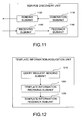
- Figure 2 illustrates a block diagram of an apparatus for replacing a composite service according to one embodiment of the present invention.
- the apparatus includes a service composition engine 21 and a composite service logic adaption unit 23.
- the apparatus may further include a service discovery unit 22.
- Figure 2 also includes a service registration center 24 and its template center 241.
- the service composition engine 21 may further include a template information acquisition unit 211 and an adaption trigger unit 212.
- the composite service logic adaption unit 23 includes an addition subunit 231 and a deletion subunit 232.
- the template information acquisition unit 211 is configured to obtain, when detecting the service invocation segment in the concrete composite service logic, service template information corresponding to the service name of the concrete service description in the concrete composite service logic.
- the adaption trigger unit 212 is configured to trigger the adaption of the service composition and request to replace the concrete service invocation in the concrete composite service logic with the template information.
- template information acquisition unit 211 and the adaption trigger unit 212 may be integrated in the service composition engine or may be provided separately.
- the composite service logic adaption unit 23 is configured to replace the concrete service invocation segment in the concrete composite service logic with the template information when receiving the request for adaption of the composite service logic from the adaption trigger unit.
- the composite service logic adaption unit 23 includes an addition subunit 231, configured to add a base description portion of the service abstract description into the concrete service invocation segment in the concrete composite service logic, and add a template name and a corresponding template description into the base description portion.
- the composite service logic adaption unit 23 may further include a deletion subunit 232, configured to delete the corresponding concrete service description when the addition subunit completes the addition.
- the template information acquisition unit 211 is configured to trigger, based on the concrete service description, a service template query request to the service discovery unit 22.
- the template information acquisition unit 211 includes a query request sending subunit 1210, a template information receiving subunit 1220, a template information feedback subunit 1230.
- the query request sending subunit 1210 is configured to send the service template query request to the service discovery unit based on the concrete service description.
- the service discovery subunit 1210 is configured to send service query information to the template center according to the template query request.
- the service query information includes a service name (i.e., service ID) of a concrete service invocation description.
- the template information receiving subunit 1220 is configured to receive service template information corresponding to the service name wherein the service template information is fed back from the template center.
- the service template information includes a template name and a template description.
- the template information feedback subunit 1230 is configured to feed back the service template information to the service composition engine.
- the service discovery unit 22 is configured to send query information to the template center 241 in the service registration center 24 according to the received template query request.
- the query information includes a service name of the concrete service description.
- the service discovery unit 22 further includes a template information receiving unit and a template information feedback unit.
- the template information receiving unit is configured to receive the service template information corresponding to the service name wherein the service template information is fed back from the template center 241.
- the service template information includes a template name and a template description.
- the template information feedback unit is configured to feed back the service template information to the service composition engine.
- Figure 3 illustrates a block diagram of an apparatus for invoking services according to one embodiment of the present invention.
- the apparatus includes a service composition engine 31.
- the service composition engine 31 may include a template information acquisition unit 311, a concrete service acquisition unit 312 and a service invocation generation unit 313.
- the apparatus may further include a service composition engine 32 and a composite service logic adaption unit 33.
- Figure 3 also includes a service registration center 34 which includes a service center 341 and a template center 342.
- the template information acquisition unit 311 is configured to acquire service template information associated with the concrete service description in the concrete composite service logic when the service described by the service invocation segment in the concrete composite service logic is not able to provide service.
- the concrete service acquisition unit 312 is configured to query the template center by virtue of the service discovery unit according to the service template information and acquire the concrete service which matches the service template, and subsequently query the service center to acquire the concrete service information.
- the service invocation generation unit 313 is configured to generate a service invocation according to the concrete service.
- the template information acquisition unit 311 includes a query request sending subunit 1210, a template information receiving subunit 1220 and a template information feedback subunit 1230.
- the query request sending subunit 1210 is configured to send the service template query request to the service discovery unit based on the concrete service description.
- the service discovery subunit 1210 is configured to send service query information to the template center according to the template query request.
- the service query information includes a service name (i.e., service ID) of a concrete service invocation description.
- the template information receiving subunit 1220 is configured to receive service template information corresponding to the service name wherein the service template information is fed back from the template center.
- the service template information includes a template name and a template description.
- the template information feedback subunit 1230 is configured to feed back the service template information to the service composition engine.
- the service composition engine may support the concrete composite service logic and the abstract composite service logic.
- the service composition engine not only supports the abstract composite service logic to automatically generate the concrete composite service logic, but also supports to generate service invocation based on the abstract description segment. Further, the service composition engine supports to dynamically select other service for replacement when the service invocation fails and also supports the concrete composite service logic to automatically generate the abstract composite service logic.
- the service composition engine supports a direct execution mode and indirect execution mode for the execution of the abstract composite service logic.
- the direct execution mode refers to that the service composition engine directly executes the abstract composite service logic without firstly converting the abstract composite service logic to the concrete composite service logic.
- the service composition engine directly invokes the corresponding service after the service composition engine detects the abstract description.
- the indirect execution mode refers to that the service composition engine replaces the abstract composite service logic with the concrete composite service logic first and then executes the concrete composite service logic and invokes the corresponding services.
- the direct execution mode may also support the generation of concrete composite service logic. After the service composition engine detects the abstract description, the service composition engine replaces the abstract description with the concrete service invocation and then directly invokes the service.
- the difference between the two modes is that the indirect mode needs to replace all the abstract descriptions in the abstract composite service logic with the concrete service before running.
- the method for generating concrete composite service logic based on direct mode does not need to replace all the abstract composite service logics.
- the direct execution mode also supports the mechanism for selecting other service to provide service when the invocation of the concrete service fails.
- the service composition engine may support the process for generating the abstract composite service logic according to the concrete composite service logic.
- the service composition engine may support the concrete composite service logic invocation and the abstract composite service logic invocation.
- the composite service logic is constituted by a variety of service invocation segments. Each service invocation segment may be described by the concrete service or may be described by the abstract service (including template). The former one is referred to as the concrete service invocation segment.
- the abstract service description including template
- the abstract service description of the designated template name is referred to as the service template invocation segment.
- the template name which is not designated is referred to as abstract service invocation segment.
- a method for processing composite service is also provided according to one embodiment of the present invention.
- the process of the method is illustrated in Figure 4 .
- the method includes the following steps.
- Step 401 A concrete service corresponding to the service invocation segment description in the composite service logic is acquired.
- the service invocation segment is an abstract service invocation segment or a service template invocation segment.
- Step 402 Service replacement is triggered to replace the service invocation segment with the concrete service invocation segment of the acquired concrete service. Or, service invocation is triggered to generate the service invocation based on the concrete service.
- the process of acquiring the concrete service corresponding to the abstract service invocation segment or the service template invocation segment in the composite service logic includes querying, based on the service discovery request, the service registration center for services.
- the information of the service query includes a query type, a service description and a restriction condition, or a query type, a template description and a restriction condition; receiving the service list which qualifies the query information fed back from the service registration center, wherein the service list includes one or more concrete services; selecting and feeding back one concrete service among the service list.
- the process of generating the service discovery request according to the description of the abstract service invocation segment includes generating a service template discovery request according to the base description in the abstract service invocation segment information, wherein the base description includes a service type, operation information, parameter information; conducting a service template query according to the service template discovery request so as to acquire the service template information that matches the base description.
- replacing the abstract service invocation segment or the service template invocation segment in the process of generating service invocation based on the concrete service includes replacing a service before generating the service invocation or invoking the service or after the invocation.
- generating service invocation in the replacement process includes generating, before replacement, a service invocation based on the acquired concrete service; or generating, after replacement, a service invocation based on the acquired concrete service or replaced concrete service invocation segment; or generating a service invocation based on the acquired concrete service during replacing.
- the method may further include triggering, before requesting for replacement, a screen on the service list and obtaining the concrete service meeting the screening requirement; generating, then, the service invocation based on the concrete service; or generating the service invocation based on the replaced concrete service invocation segment.
- the process of generating service invocation includes triggering a service invocation, extracting necessary information from the concrete service and generating the service invocation based on the extracted necessary information, or directly generating the service invocation based on the concrete service invocation segment.
- the necessary information may include a service address, a service name, an operation or a parameter.
- Figure 5 is a flowchart of the service composition engine indirectly executing an abstract composite service logic according to one embodiment of the present invention (i.e., generate a concrete description based on the abstract description).
- the service composition engine detects the abstract description
- the service composition engine executes the process of generating the concrete description based on the abstract description until all the abstract descriptions are replaced with the concrete service descriptions.
- the process includes the following steps.
- Step 501 The service composition engine triggers abstract description based service composition.
- the service composition engine checks the composite service logic. If the service composition engine detects that there is no abstract description in the composite service logic, i.e., all of Service, Operation, inputVariable, and outputVariable in the concrete service description are assigned with a concrete value, then it is indicated that the composite service logic is a concrete composite service logic and the abstract description based service composition will not be triggered. The process ends.
- Step 502 The service composition engine make a query to the registration center. That is, after the service composition engine determines that the script is the abstract description, the service composition engine triggers the service discovery unit to make a query to the service registration center.
- the query information includes a query type, a service description and a restriction condition; or a query type, a template description and a restriction condition.
- the service description includes concrete service description and base description of the abstract service description.
- the restriction condition is the extension description of the abstract service description.
- the template description may be a template name or a concrete description for the template, i.e., the base description of the abstract service description.
- the query type includes a query based on service description and a query based on template description. For a given template name, the query is done based on the template description directly; otherwise, the query can be done based either on template description or on service description.
- Querying based on template description refers to querying template information and further obtaining the service information.
- Step 503 The service registration center feeds back the query result. That is, the service registration center performs query based on the query information delivered by the service discovery unit and returns a qualified service list.
- the concrete query process is explained in detail in Figure 6 .
- Step 504 The service discovery unit returns the service list to the service composition engine. That is, the service discovery unit will return the obtained query result, i.e., the qualified service list, to the service composition engine.
- Step 505 The service composition engine triggers a screening process to the service screen unit and sends the service list to the service screen unit.
- Step 506 The service screen unit feeds back the concrete service. That is, the service screen unit screens the service list based on its own screening condition and filters the unqualified service.
- the screening condition includes service availability, etc. These screening conditions are relatively independent of services and are complementary to the restriction condition of the service abstract description to some degree. If there is a plurality of services after screening, a service is selected at random and provided to the service composition engine.
- Step 507 The service composition engine triggers the adaption for composite service logic based on the obtained service and requests the composite service logic adaption unit to replace the abstract description based on the concrete service provided.
- Step 508 The abstract description is replaced.
- the composite service logic adaption unit extracts necessary information from the service information, such as service name, operation, parameter, etc. and completes the concrete service description in the abstract service description, and meanwhile deletes the base description and extension description of the abstract service description.
- step 503 the query process regarding the service registration center is illustrated in Figure 6 . Specifically, the process includes the following steps.
- Step 601 The service registration center determines if the query should be conducted based on the template or the service abstract description. If the abstract description provides a template name or template information, the query is conducted based on the template and step 602 is performed; otherwise, the query is conducted based on the service abstract description and step 606 is performed.
- Step 602 If the query type is a template based query, the service registration center may detect if a template name is specified. If the template name is specified, perform step 603; otherwise, perform step 604.
- Step 603 If a concrete template name is specified in the template description, query the template center to obtain the service list associated with the template. Then, step 610 is performed.
- Step 604 If a concrete template name is not specified in the template description, query the template center based on the service portion (e.g, type) of the template description to obtain the associated service list.
- the service portion e.g, type
- Step 605 The template list is filtered based on the operation and parameter information in the template and the template list which matches the template description is obtained so that a service list corresponding to all the templates is obtained from the template list. Then, step 610 is performed.
- Step 606 If the query type is a service description based query, the service registration center may detect if a service name is specified. If the service name is specified, step 607 is performed; otherwise, step 608 is performed.
- Step 607 If a concrete service name is specified in the service description, query the service center directly so as to obtain a corresponding service list. Then, step 609 is performed.
- Step 608 If a concrete service name is not specified in the service description, query the service center based on the service portion (e.g, service type) in the base description of the abstract description to obtain the associated service list.
- the service portion e.g, service type
- Step 609 The unqualified services is filtered out from the service list according to the operation, parameter in the concrete service description, or the operation, parameter or combination thereof in the base description of the abstract description.
- Step 610 The obtained service list is filtered according to the restriction condition (i.e., extension portion in the service abstract description) and generate a service list which satisfies the query condition; if there is no restriction condition, the step is skipped.
- the restriction condition i.e., extension portion in the service abstract description
- a service invocation may be generated based on the abstract description according to one embodiment of the present invention (direct execution). That is, the execution of the composite service may include the execution of the executable script and the execution of the abstract description.
- the execution of the executable script is prior art, which is omitted for clarity.
- the composition engine detects an executable script, the service is invoked immediately. The execution of the entire composite service will not be completed until both the execution of the executable script and the abstract description have been completed.
- the process of the composition engine directly executing the abstract composite service logic is similar to that of indirect execution. Every time the composition engine detects an abstract description, step 501 to step 506 are performed and service invocation is generated.
- the process includes the following steps. Steps 501 to 506 in the Figure 5 have been illustrated, which will not be described in detail. After step 506 is performed, the process includes the following steps.
- the service composition engine triggers the service invocation.
- the service composition engine extracts necessary information, for instance, service address, service name, operation, parameter, etc. from the service information based on the obtained service, so as to generate the service invocation.
- the concrete composite service logic needs to be generated after the execution of the abstract composite service logic, so that the concrete composite service logic may be served as the composite service logic when invoking the composite service.
- the process includes the following steps. Steps 501 to 508 in the Figure 5 have been illustrated above, which will not be described in detail below. After step 508 is performed or during performing step 508, the process includes the following steps.
- the service composition engine triggers the service invocation.
- the service composition engine extracts necessary information, for instance, service address, service name, operation, parameter, etc. from the service information based on the obtained service, so as to generate the service invocation; or the service composition engine generates the service invocation based on the generated concrete composite service logic segment.
- the process for handling concrete service includes: a procedure of the concrete composite service logic generating the abstract composite service logic and a rollback procedure.
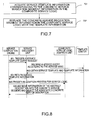
- Figure 7 illustrates a flowchart of a method for replacing a service according to one embodiment of the present invention. The method includes the following steps.
- Step 701 Service template information is acquired based on the concrete service invocation segment information in the composite service logic.
- the acquiring process includes triggering the service template query request to the service discovery unit based on the concrete service description; sending, by the service discovery unit, the query information to the template center.
- the query information includes a service name of the concrete service description (i.e., service ID).
- the service discovery unit receives service template information associated with the service name and feeds back the service template information wherein the service template information is fed back from the template center.
- the service template information includes a template name and a template description.
- Step 702 The concrete service invocation segment information in the composite service logic is replaced with the template information.
- base description of the service abstract description is added into the concrete service invocation segment in the concrete composite service logic, and the template name and corresponding template description is added into the base description.
- associated concrete service description is deleted.
- Figure 8 illustrates a flowchart of the concrete composite service logic generating the abstract composite service logic according to one embodiment of the present invention. That is to say, the service composition system provides a process for automatically generating the abstract composite service logic. The following process describes a process of replacing a service invocation segment in the concrete composite service logic with the abstract description (i.e., template description herein).
- an abstract composite service logic is generated by just replacing in sequence a concrete service invocation in the concrete composite service logic.
- the service composition engine detects a service invocation segment in the concrete composite service logic, the service composition engine triggers a process of replacing service template. Specifically, process includes the following steps.
- Step 801 The service composition engine triggers a template query request to the service discovery unit based on the service concrete description in the concrete composite service logic.
- Step 802 The service discovery unit queries the template center according to the service name of the service concrete description so as to obtain a service template and extracts the template name and a corresponding template description.
- Step 803 The template center returns the service template information to the service discovery unit.
- the service template information includes a template name and an associated template description.
- Step 804 A service discovery unit returns the service template information to the service composition engine.
- Step 805 The service composition engine triggers an adaption process for composite service logic and requests the composite service logic adaption unit to replace the concrete service invocation in the concrete composite service logic based on the obtained service template information.
- Step 806 The composite service logic adaption unit adds base description of the service abstract description into the concrete service invocation segment in the concrete composite service logic, and adds a template name or template description in base description. At the same time, associated concrete service description is deleted. That is, the service name, service operation, and parameter information in the concrete service description are omitted.
- Step 901 When the service described by the concrete service invocation segment is not able to provide service, the service template information associated with the concrete service invocation segment description is acquired.
- a service template query request is triggered to the service discovery unit based on the concrete service description.
- Service query information is sent from the service discovery unit to the template center.
- the service query information includes a service name for the concrete service description.
- the service discovery unit receives the service template information associated with the service name fed back from the template center.
- the service template information includes a template name and an associated template description. And, the service template information is fed back.
- Step 902 A concrete service is obtained based on the service template information.
- Step 903 A service invocation is generated based on the concrete service.
- Figure 10 is a rollback flowchart according to one embodiment of the present invention. That is to say, when the service composition engine detects a concrete service invocation segment and the invoked service is not able to provide service, the service composition engine may trigger a rollback mechanism.
- the inability of providing services includes service return invocation failure, or service response timeout, etc.
- the process of replacing services includes the following steps.
- Step 1001 to step 1003 The service composition engine triggers the template query request to the service discovery unit based on the concrete service description.
- the service discovery unit obtains a service template according to the service concrete description.
- the service template includes a template name and an associated template description.
- the process is similar to step 801 to 803 of the concrete composite service logic generates the abstract composite service logic.
- Step 1004 The service discovery unit queries the service registration center for services.
- the query type is a template description based query.
- the template information includes a template name or a concrete description of the template.
- the restriction condition is null.
- Step 1005 The service registration center conducts the query according to the query information sent by the service discovery unit and returns a service list which meets the requirement of the query condition.
- the query process of the service registration center is described in steps 601, 602, 603 and step 610 or steps 601,602, 604, 605 and 610 in Figure 6 , which may not be detailed herein.
- Step 1006 The service discovery unit provides an acquired query result, i.e., service list, to the service composition engine.
- the implementation of this step is similar to step 504, which is omitted herein for brevity.
- Steps 1007 and 1008 The service composition engine triggers the service screen unit to perform a service screen and obtain a qualified service.
- the implementation of this step is similar to steps 505 and 506, which is omitted herein for brevity.
- Service invocation is performed after obtaining the qualified service.
- step 1004 in the embodiment may also replace steps 1004 and 1005 in the above described steps. That is, after the service discovery unit conducts the template query, the template center obtains the qualified template directly and queries the template center for the service name corresponding to the template, and queries the service center based on the service name for all the associated service information.
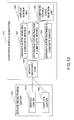
- the system includes a service registration center 1310, a composite service sub-system 1320.
- the registration center 1310 includes:
- the composite service subsystem 1320 may include one or more of an apparatus for handling a composite service 1321, an apparatus for replacing a composite service 1322 and an apparatus for invoking a concrete service 1323.
- the apparatus for handling a composite service 1321 may include:
- the apparatus for replacing a composite service includes:
- the apparatus for invoking a concrete service 1323 may include
- the composite service subsystem 1320 may further include:
- the functionalities of the service registration center 1310, the apparatus for handling a composite service 1321, the apparatus for replacing a composite service 1322 and the apparatus for invoking a concrete service 1323 are described above, which are omitted for brevity.
- BPEL extension description in BPEL, when a service is invoked, five pieces of information is required.
- Activity partnerLink (specifies a concrete service which is equivalent to the above mentioned Service), Operation, inputVariable,outputVariable, and the information related to the service includes partnerLink, operation, inputVariable, outputVariable.
- partnerLink the example of the activity invoke is illustrated below.
- An executable BPEL script specifies in detail the activity, partnerLink, Operation, inputVariable, outputVariable. That is, the BPEL script specifies a concrete service invocation which is a static service composition.
- the existing BPEL needs to be extended so that the BPEL may support the dynamic service composition.
- a concrete service should not be specified, which means that one or some concrete values for partnerLink, operation, inputvariable, outputVariable may not be specified.
- an appropriate service may be discovered according to the comprehensive information provided by partnerLink, operation, inputVariable, outputVariable and additional service description information.
- Such dynamic service composition is referred to as a BPEL template based service composition.
- the service description may be divided into a base description and an extension description.
- the base description herein includes a Service description, an Operation description, an inputVariable description and an outputVariable description.
- the extension description includes descriptions other than Service, Operation, inputVariable, outputVariable, such as QoS description.
- the base description is used to discover services which meet the requirement from a service catalog during a dynamic service composition, while the extension description is used to select a qualified service from the discovered service.
- At least one values for attributes partnerLink, operation, inputVariable, outputVariable cannot be assigned with a real value. "##" can be used to replace the real value when the attribute cannot be assigned with a real value.
- the name of partnerLink in the activity in the BPEL is designated.
- the partnerLinkType is designated in the declaration of the parnerLinks.
- the portType of WSDL is desginated in the declaration of the partnerLinkType.
- the declaration of protoType is responsible for describing the invoked service. Therefore, the fact that the partnerLink is not assigned with a real value actually refers to that the portType is not designated.
- the parnerLink and serviceCriteria, Operation and operationCriteria, inputVariable and inputVariableCriteria, outputVariable and outputVariableCriteria correspond to each other. Only when the former value is "##", a complementary description of the latter one will be needed. That is, the extensionCriteria exists only when at least one of partnerLink, serviceCriteria, Operation, inputVariable, outputVariable is "##".
- the illustration indicates an example of extending a service invocation description of BPEL.
- the service center in the service registration center includes following services which is constituted by service name, service category, operation, input, output, and QoS.
- the service name herein serves as the service ID.
- Table 3 Service Name Service Category Operation Input Output QoS service area serviceType .. delay Wentian Weather Forecast Shenzhen WeatherRepor t .. Query Address,Time Temperatu re,weather 4s Guangdo ng Weather Forecast Guangdon g WeatherRepor t .. Query Address,Time Temperatu re,weather 8s Shenzhen Weather Forecast Shenzhen WeatherRepor t ..
- a template center in the service registration center includes templates associated with the service center and describes a mapping relationship between the service and the template.
- Table 4 Template name Service Category Operation Input Output Mapping between Service and template Service Type .. Weather WeatherForec ast .. Query Address, Time Temperature, weather Wentian Weather Forecast, Forecast Guangdong Weather Forecast, Shenzhen Weather Forecast Shenzhen airline ticket Booking .. Book Depart, Arrival, Time electronicTic ket Shenzhen airline ticket Query Depart, Arrival, Time ticketResult Shenzhen airline ticket
- BPEL BPEL script
- the embodiment describes a process of dynamically searching for a weather forecast service and replacing the abstract service description.
- the BPEL script is illustrated above-mentioned abstract BPEL script.
- the service screen unit defines the following policies. Service with high QoS is selected under the same condition.
- the query information generated by the service composition engine includes a query type, a service description and a restriction condition. Since a concrete operation, parameters are provided in the abstract description, the query type herein is a service description based query rather than a template based query (when template name is provided and none of the values for concrete service, operation, parameters is provided, then this is a template based query).
- the service description is comprised of the above base description portion and the concrete description portion.
- the service list includes two services: "Wentian Weather Forecast” and "Shenzhen Whether Forecast”.
- the service registration center returns the service list to the service discovery unit.
- the generated BPEL script is illustrated in above-mentioned concrete BPEL script.
- the assumption of this embodiment is similar to that of the previous embodiment.
- the embodiment describes a process of dynamically searching a weather forecast service and generating a service invocation.
- the BPEL script is illustrated in above-mentioned abstract BPEL script.
- the service composition engine triggers the service invocation.
- the service composition engine extracts necessary information, for instance, service address, service name, operation, parameter, etc. from the service information according to the obtained service, so as to generate an SOAP invocation.
- An example of the SOAP message is illustrated below.
- the service composition engine triggers the service invocation.
- the service composition engine extracts necessary information, for instance, service address, service name, operation, parameter, etc. from the service information based on the obtained service, so as to generate the service invocation; or the service composition engine generates the service invocation directly based on the generated BPEL segment.
- the service composition engine When the service composition engine detects a service invocation segment in the concrete BPEL script, the service composition engine triggers a process of replacing service template.
- the service composition engine triggers a template query request to the service discovery unit based on the service concrete description in the concrete BPEL.
- a fifth application embodiment of the present invention i.e., the implementation of rollback
- BPEL script is the above-mentioned concrete BPEL script.
- embodiments of the present invention provides a mechanism for converting an abstract composite service logic into a concrete composite service logic such that the dynamic service composition and dynamic service selection are achieved.
- a mechanism for directly executing an abstract composite service logic is also provided.
- the mechanism is able to directly generate a service invocation based on the service abstract description. As such, the step of converting into the concrete composite service logic can be omitted.
- a mechanism for additionally generating a concrete composite service logic when directly executing an abstract composite service logic is also provided.
- there is also provided a process for automatically generating an abstract composite service logic which is able to directly generate the abstract composite service logic based on the concrete composite service logic so as to provide the abstract composite service logic for automatic service composition.
- the service invoked during execution of the composite service logic When the service invoked during execution of the composite service logic is not accessible, the service can be rolled back dynamically. That is, the concrete service description is converted to a template description and an appropriate service is dynamically selected to replace the invoked service. Accordingly, the invoked service can be dynamically replaced when the invoked service is inaccessible.
Landscapes
- Engineering & Computer Science (AREA)
- Computer Networks & Wireless Communication (AREA)
- Signal Processing (AREA)
- Software Systems (AREA)
- Theoretical Computer Science (AREA)
- Physics & Mathematics (AREA)
- General Engineering & Computer Science (AREA)
- General Physics & Mathematics (AREA)
- Stored Programmes (AREA)
- Management, Administration, Business Operations System, And Electronic Commerce (AREA)
Applications Claiming Priority (2)
| Application Number | Priority Date | Filing Date | Title |
|---|---|---|---|
| CN200710148480.6A CN101378324B (zh) | 2007-08-31 | 2007-08-31 | 组合业务处理、替换、具体业务调用的方法和装置及系统 |
| EP08784028.6A EP2107712B1 (fr) | 2007-08-31 | 2008-08-19 | Procédé, appareil et système destinés au processus de service composite, remplacement et invocation du service concret |
Related Parent Applications (3)
| Application Number | Title | Priority Date | Filing Date |
|---|---|---|---|
| EP08784028.6 Division | 2008-08-19 | ||
| EP08784028.6A Division EP2107712B1 (fr) | 2007-08-31 | 2008-08-19 | Procédé, appareil et système destinés au processus de service composite, remplacement et invocation du service concret |
| EP08784028.6A Division-Into EP2107712B1 (fr) | 2007-08-31 | 2008-08-19 | Procédé, appareil et système destinés au processus de service composite, remplacement et invocation du service concret |
Publications (3)
| Publication Number | Publication Date |
|---|---|
| EP2293516A2 true EP2293516A2 (fr) | 2011-03-09 |
| EP2293516A3 EP2293516A3 (fr) | 2012-01-25 |
| EP2293516B1 EP2293516B1 (fr) | 2014-04-23 |
Family
ID=40421684
Family Applications (2)
| Application Number | Title | Priority Date | Filing Date |
|---|---|---|---|
| EP08784028.6A Active EP2107712B1 (fr) | 2007-08-31 | 2008-08-19 | Procédé, appareil et système destinés au processus de service composite, remplacement et invocation du service concret |
| EP10011283.8A Active EP2293516B1 (fr) | 2007-08-31 | 2008-08-19 | Procédé, appareil et système pour traiter un service composite et service de remplacement et service et d'invocation de service |
Family Applications Before (1)
| Application Number | Title | Priority Date | Filing Date |
|---|---|---|---|
| EP08784028.6A Active EP2107712B1 (fr) | 2007-08-31 | 2008-08-19 | Procédé, appareil et système destinés au processus de service composite, remplacement et invocation du service concret |
Country Status (5)
| Country | Link |
|---|---|
| US (2) | US8769101B2 (fr) |
| EP (2) | EP2107712B1 (fr) |
| CN (1) | CN101378324B (fr) |
| ES (1) | ES2477283T3 (fr) |
| WO (1) | WO2009030138A1 (fr) |
Families Citing this family (15)
| Publication number | Priority date | Publication date | Assignee | Title |
|---|---|---|---|---|
| CN101378324B (zh) | 2007-08-31 | 2011-05-11 | 华为技术有限公司 | 组合业务处理、替换、具体业务调用的方法和装置及系统 |
| CN101853152B (zh) * | 2009-03-31 | 2014-05-07 | 华为技术有限公司 | 一种生成用户图形界面的方法和系统 |
| CN102137135B (zh) * | 2010-08-12 | 2014-07-09 | 华为技术有限公司 | 实现业务组合的方法、装置及系统 |
| GB2509723A (en) * | 2013-01-10 | 2014-07-16 | Ibm | Invoking web services that are determined at the time of execution |
| US9195456B2 (en) * | 2013-04-30 | 2015-11-24 | Hewlett-Packard Development Company, L.P. | Managing a catalog of scripts |
| CN106296243A (zh) | 2015-05-22 | 2017-01-04 | 阿里巴巴集团控股有限公司 | 业务实现方法及装置 |
| CN105100117B (zh) * | 2015-08-28 | 2018-07-13 | 北京奇艺世纪科技有限公司 | 一种用于访问组合服务的方法及装置 |
| US10200271B2 (en) | 2016-04-12 | 2019-02-05 | International Business Machines Corporation | Building and testing composite virtual services using debug automation |
| EP4401433A3 (fr) * | 2017-09-15 | 2024-08-07 | Convida Wireless, LLC | Modèles de messages de couche de service dans un réseau de communication |
| CN107748720A (zh) * | 2017-11-24 | 2018-03-02 | 中国银行股份有限公司 | 一种检测功能测试案例的业务参数的方法及装置 |
| CN110288324A (zh) * | 2019-06-28 | 2019-09-27 | 深圳前海微众银行股份有限公司 | 一种业务代码的生成、执行方法及装置 |
| CN110321355A (zh) * | 2019-07-12 | 2019-10-11 | 杭州美巴科技有限公司 | 一种自适应部分查询字段系统及执行方法 |
| CN111078447B (zh) * | 2019-11-24 | 2023-09-19 | 杭州安恒信息技术股份有限公司 | 一种微服务架构中的异常定位方法、装置、设备、介质 |
| US20220382236A1 (en) * | 2021-05-27 | 2022-12-01 | Sap Se | Shared automated execution platform in cloud |
| CN115630836A (zh) * | 2022-09-29 | 2023-01-20 | 中国建设银行股份有限公司 | 业务处理的方法、装置、电子设备和存储介质 |
Family Cites Families (17)
| Publication number | Priority date | Publication date | Assignee | Title |
|---|---|---|---|---|
| WO2002011396A2 (fr) * | 2000-08-01 | 2002-02-07 | Hrl Laboratories, Llc | Appareil et procede de composition de services d'informations dynamiques contextuelles par mobile et communication reseau sans fil |
| US20030144860A1 (en) * | 2002-01-31 | 2003-07-31 | Fabio Casati | Dynamic conversation logic selection method and system |
| US7248880B2 (en) | 2003-02-07 | 2007-07-24 | Siemens Communications, Inc. | Methods and apparatus for determining a location of a device |
| US8122106B2 (en) * | 2003-03-06 | 2012-02-21 | Microsoft Corporation | Integrating design, deployment, and management phases for systems |
| US6992034B2 (en) | 2003-07-10 | 2006-01-31 | Formosa Plastics Corporation, U.S.A. | Catalyst component for olefin polymerization |
| US8050935B2 (en) * | 2003-11-03 | 2011-11-01 | Sony Corporation | Dynamic web service composition to service a user request |
| US20050198206A1 (en) * | 2004-01-30 | 2005-09-08 | International Business Machines Corporation | Method and apparatus for dynamically selecting functionally equivalent Web services through a single autonomic proxy |
| CN100508520C (zh) * | 2004-06-03 | 2009-07-01 | 华为技术有限公司 | 基于虚拟局域网的二层虚拟专用网的实现方法 |
| GB2419790B (en) * | 2004-10-29 | 2009-04-08 | Hewlett Packard Development Co | Asynchronous messaging in web services |
| US7676539B2 (en) * | 2005-06-09 | 2010-03-09 | International Business Machines Corporation | Methods, apparatus and computer programs for automated problem solving in a distributed, collaborative environment |
| CN1764183A (zh) | 2005-11-03 | 2006-04-26 | 西安交通大学 | 一种基于计算机网络的QoS驱动的提供组合Web服务的计算机系统 |
| US20070156622A1 (en) * | 2006-01-05 | 2007-07-05 | Akkiraju Rama K | Method and system to compose software applications by combining planning with semantic reasoning |
| CN100505861C (zh) * | 2006-02-09 | 2009-06-24 | 华为技术有限公司 | 一种页面背景动态更新方法及系统 |
| US20070245298A1 (en) * | 2006-04-18 | 2007-10-18 | International Business Machines Corporation | Apparatus and data structure for automatic workflow composition |
| US8055935B2 (en) * | 2006-09-14 | 2011-11-08 | International Business Machines Corporation | Dynamic adaptation in web service composition and execution |
| CN101378324B (zh) | 2007-08-31 | 2011-05-11 | 华为技术有限公司 | 组合业务处理、替换、具体业务调用的方法和装置及系统 |
| US9613324B2 (en) * | 2008-03-28 | 2017-04-04 | International Business Machines Corporation | Apparatus and methods for decomposing service processes and for identifying alternate service elements in service provider environments |
-
2007
- 2007-08-31 CN CN200710148480.6A patent/CN101378324B/zh active Active
-
2008
- 2008-08-19 EP EP08784028.6A patent/EP2107712B1/fr active Active
- 2008-08-19 ES ES10011283.8T patent/ES2477283T3/es active Active
- 2008-08-19 WO PCT/CN2008/072037 patent/WO2009030138A1/fr not_active Ceased
- 2008-08-19 EP EP10011283.8A patent/EP2293516B1/fr active Active
-
2009
- 2009-11-06 US US12/614,074 patent/US8769101B2/en active Active
-
2014
- 2014-05-19 US US14/281,126 patent/US20140258494A1/en not_active Abandoned
Non-Patent Citations (1)
| Title |
|---|
| None |
Also Published As
| Publication number | Publication date |
|---|---|
| CN101378324A (zh) | 2009-03-04 |
| US8769101B2 (en) | 2014-07-01 |
| EP2293516B1 (fr) | 2014-04-23 |
| EP2107712A1 (fr) | 2009-10-07 |
| ES2477283T3 (es) | 2014-07-16 |
| US20100057917A1 (en) | 2010-03-04 |
| WO2009030138A1 (fr) | 2009-03-12 |
| EP2107712B1 (fr) | 2015-11-11 |
| US20140258494A1 (en) | 2014-09-11 |
| EP2107712A4 (fr) | 2010-09-01 |
| EP2293516A3 (fr) | 2012-01-25 |
| CN101378324B (zh) | 2011-05-11 |
Similar Documents
| Publication | Publication Date | Title |
|---|---|---|
| EP2293516B1 (fr) | Procédé, appareil et système pour traiter un service composite et service de remplacement et service et d'invocation de service | |
| JP4473128B2 (ja) | ウェブ・ポータルの関連するポートレットが、同期されたコンテンツ表示のために協働することを可能にする方法および装置 | |
| US7958515B2 (en) | Publish/subscribe mechanism for web services | |
| US7475058B2 (en) | Method and system for providing a distributed querying and filtering system | |
| KR100843828B1 (ko) | 포탈 서버에서 포틀릿들의 집합을 관리하기 위한 방법 및장치 | |
| US8352854B2 (en) | Dynamic page generator | |
| US7529833B2 (en) | Method, system, and web service broker for dynamic web service invocation | |
| US7716353B2 (en) | Web services availability cache | |
| US8131706B2 (en) | Dynamic binding of portlets | |
| US20030105846A1 (en) | Enhanched UDDI with service push model | |
| JP2006502477A (ja) | ポータル・サーバからセッション情報を中継する方法および装置 | |
| EP1753195B1 (fr) | Ordinateur serveur, dispositif client et procédé de traitement de donnés implementé par un service web | |
| JP2006501558A (ja) | ウェブ・アプリケーション用のウェブ・ページのセッションをユーザに表示する装置と方法 | |
| JP2000322395A (ja) | オブジェクト・レンダリングの分散配置のための協調プロキシ・システムの方法および装置 | |
| JP2008262541A (ja) | 式の処理を改良した方法、装置、およびコンピュータプログラム | |
| US7606818B2 (en) | Method and apparatus for aggregating change subscriptions and change notifications | |
| US7590709B2 (en) | Search method and search broker | |
| US20030120785A1 (en) | Message filtering | |
| US20070011274A1 (en) | Data transfer in a multi-environment document management system access | |
| CN1842078B (zh) | 网格服务系统 | |
| CA2494443C (fr) | Systeme et methode informatiques de traitement de donnees a l'epreuve des defaillances | |
| JP2007013804A (ja) | 属性指定通信方法および通信装置 | |
| JPH07121468A (ja) | サーバー選択装置 | |
| CN116340380A (zh) | 推荐系统和推荐方法 | |
| Alrifai | An architecture that incorporates web services to support distributed data |
Legal Events
| Date | Code | Title | Description |
|---|---|---|---|
| PUAI | Public reference made under article 153(3) epc to a published international application that has entered the european phase |
Free format text: ORIGINAL CODE: 0009012 |
|
| 17P | Request for examination filed |
Effective date: 20100928 |
|
| AC | Divisional application: reference to earlier application |
Ref document number: 2107712 Country of ref document: EP Kind code of ref document: P |
|
| AK | Designated contracting states |
Kind code of ref document: A2 Designated state(s): AT BE BG CH CY CZ DE DK EE ES FI FR GB GR HR HU IE IS IT LI LT LU LV MC MT NL NO PL PT RO SE SI SK TR |
|
| AX | Request for extension of the european patent |
Extension state: AL BA MK RS |
|
| PUAL | Search report despatched |
Free format text: ORIGINAL CODE: 0009013 |
|
| AK | Designated contracting states |
Kind code of ref document: A3 Designated state(s): AT BE BG CH CY CZ DE DK EE ES FI FR GB GR HR HU IE IS IT LI LT LU LV MC MT NL NO PL PT RO SE SI SK TR |
|
| AX | Request for extension of the european patent |
Extension state: AL BA MK RS |
|
| RIC1 | Information provided on ipc code assigned before grant |
Ipc: G06Q 10/00 20120101ALI20111222BHEP Ipc: H04L 29/08 20060101AFI20111222BHEP |
|
| GRAP | Despatch of communication of intention to grant a patent |
Free format text: ORIGINAL CODE: EPIDOSNIGR1 |
|
| INTG | Intention to grant announced |
Effective date: 20131108 |
|
| GRAS | Grant fee paid |
Free format text: ORIGINAL CODE: EPIDOSNIGR3 |
|
| GRAA | (expected) grant |
Free format text: ORIGINAL CODE: 0009210 |
|
| AC | Divisional application: reference to earlier application |
Ref document number: 2107712 Country of ref document: EP Kind code of ref document: P |
|
| AK | Designated contracting states |
Kind code of ref document: B1 Designated state(s): AT BE BG CH CY CZ DE DK EE ES FI FR GB GR HR HU IE IS IT LI LT LU LV MC MT NL NO PL PT RO SE SI SK TR |
|
| REG | Reference to a national code |
Ref country code: GB Ref legal event code: FG4D |
|
| REG | Reference to a national code |
Ref country code: CH Ref legal event code: EP |
|
| REG | Reference to a national code |
Ref country code: AT Ref legal event code: REF Ref document number: 664387 Country of ref document: AT Kind code of ref document: T Effective date: 20140515 |
|
| REG | Reference to a national code |
Ref country code: IE Ref legal event code: FG4D |
|
| REG | Reference to a national code |
Ref country code: DE Ref legal event code: R096 Ref document number: 602008031787 Country of ref document: DE Effective date: 20140605 |
|
| REG | Reference to a national code |
Ref country code: ES Ref legal event code: FG2A Ref document number: 2477283 Country of ref document: ES Kind code of ref document: T3 Effective date: 20140716 |
|
| REG | Reference to a national code |
Ref country code: NL Ref legal event code: T3 |
|
| REG | Reference to a national code |
Ref country code: AT Ref legal event code: MK05 Ref document number: 664387 Country of ref document: AT Kind code of ref document: T Effective date: 20140423 |
|
| REG | Reference to a national code |
Ref country code: LT Ref legal event code: MG4D |
|
| PG25 | Lapsed in a contracting state [announced via postgrant information from national office to epo] |
Ref country code: IS Free format text: LAPSE BECAUSE OF FAILURE TO SUBMIT A TRANSLATION OF THE DESCRIPTION OR TO PAY THE FEE WITHIN THE PRESCRIBED TIME-LIMIT Effective date: 20140823 Ref country code: GR Free format text: LAPSE BECAUSE OF FAILURE TO SUBMIT A TRANSLATION OF THE DESCRIPTION OR TO PAY THE FEE WITHIN THE PRESCRIBED TIME-LIMIT Effective date: 20140724 Ref country code: CY Free format text: LAPSE BECAUSE OF FAILURE TO SUBMIT A TRANSLATION OF THE DESCRIPTION OR TO PAY THE FEE WITHIN THE PRESCRIBED TIME-LIMIT Effective date: 20140423 Ref country code: FI Free format text: LAPSE BECAUSE OF FAILURE TO SUBMIT A TRANSLATION OF THE DESCRIPTION OR TO PAY THE FEE WITHIN THE PRESCRIBED TIME-LIMIT Effective date: 20140423 Ref country code: NO Free format text: LAPSE BECAUSE OF FAILURE TO SUBMIT A TRANSLATION OF THE DESCRIPTION OR TO PAY THE FEE WITHIN THE PRESCRIBED TIME-LIMIT Effective date: 20140723 Ref country code: BG Free format text: LAPSE BECAUSE OF FAILURE TO SUBMIT A TRANSLATION OF THE DESCRIPTION OR TO PAY THE FEE WITHIN THE PRESCRIBED TIME-LIMIT Effective date: 20140723 Ref country code: LT Free format text: LAPSE BECAUSE OF FAILURE TO SUBMIT A TRANSLATION OF THE DESCRIPTION OR TO PAY THE FEE WITHIN THE PRESCRIBED TIME-LIMIT Effective date: 20140423 |
|
| PG25 | Lapsed in a contracting state [announced via postgrant information from national office to epo] |
Ref country code: SE Free format text: LAPSE BECAUSE OF FAILURE TO SUBMIT A TRANSLATION OF THE DESCRIPTION OR TO PAY THE FEE WITHIN THE PRESCRIBED TIME-LIMIT Effective date: 20140423 Ref country code: LV Free format text: LAPSE BECAUSE OF FAILURE TO SUBMIT A TRANSLATION OF THE DESCRIPTION OR TO PAY THE FEE WITHIN THE PRESCRIBED TIME-LIMIT Effective date: 20140423 Ref country code: HR Free format text: LAPSE BECAUSE OF FAILURE TO SUBMIT A TRANSLATION OF THE DESCRIPTION OR TO PAY THE FEE WITHIN THE PRESCRIBED TIME-LIMIT Effective date: 20140423 Ref country code: PL Free format text: LAPSE BECAUSE OF FAILURE TO SUBMIT A TRANSLATION OF THE DESCRIPTION OR TO PAY THE FEE WITHIN THE PRESCRIBED TIME-LIMIT Effective date: 20140423 Ref country code: AT Free format text: LAPSE BECAUSE OF FAILURE TO SUBMIT A TRANSLATION OF THE DESCRIPTION OR TO PAY THE FEE WITHIN THE PRESCRIBED TIME-LIMIT Effective date: 20140423 |
|
| PG25 | Lapsed in a contracting state [announced via postgrant information from national office to epo] |
Ref country code: PT Free format text: LAPSE BECAUSE OF FAILURE TO SUBMIT A TRANSLATION OF THE DESCRIPTION OR TO PAY THE FEE WITHIN THE PRESCRIBED TIME-LIMIT Effective date: 20140825 |
|
| REG | Reference to a national code |
Ref country code: DE Ref legal event code: R097 Ref document number: 602008031787 Country of ref document: DE |
|
| PG25 | Lapsed in a contracting state [announced via postgrant information from national office to epo] |
Ref country code: DK Free format text: LAPSE BECAUSE OF FAILURE TO SUBMIT A TRANSLATION OF THE DESCRIPTION OR TO PAY THE FEE WITHIN THE PRESCRIBED TIME-LIMIT Effective date: 20140423 Ref country code: RO Free format text: LAPSE BECAUSE OF FAILURE TO SUBMIT A TRANSLATION OF THE DESCRIPTION OR TO PAY THE FEE WITHIN THE PRESCRIBED TIME-LIMIT Effective date: 20140423 Ref country code: BE Free format text: LAPSE BECAUSE OF FAILURE TO SUBMIT A TRANSLATION OF THE DESCRIPTION OR TO PAY THE FEE WITHIN THE PRESCRIBED TIME-LIMIT Effective date: 20140423 Ref country code: CZ Free format text: LAPSE BECAUSE OF FAILURE TO SUBMIT A TRANSLATION OF THE DESCRIPTION OR TO PAY THE FEE WITHIN THE PRESCRIBED TIME-LIMIT Effective date: 20140423 Ref country code: SK Free format text: LAPSE BECAUSE OF FAILURE TO SUBMIT A TRANSLATION OF THE DESCRIPTION OR TO PAY THE FEE WITHIN THE PRESCRIBED TIME-LIMIT Effective date: 20140423 Ref country code: EE Free format text: LAPSE BECAUSE OF FAILURE TO SUBMIT A TRANSLATION OF THE DESCRIPTION OR TO PAY THE FEE WITHIN THE PRESCRIBED TIME-LIMIT Effective date: 20140423 |
|
| PLBE | No opposition filed within time limit |
Free format text: ORIGINAL CODE: 0009261 |
|
| STAA | Information on the status of an ep patent application or granted ep patent |
Free format text: STATUS: NO OPPOSITION FILED WITHIN TIME LIMIT |
|
| PG25 | Lapsed in a contracting state [announced via postgrant information from national office to epo] |
Ref country code: MC Free format text: LAPSE BECAUSE OF FAILURE TO SUBMIT A TRANSLATION OF THE DESCRIPTION OR TO PAY THE FEE WITHIN THE PRESCRIBED TIME-LIMIT Effective date: 20140423 Ref country code: LU Free format text: LAPSE BECAUSE OF FAILURE TO SUBMIT A TRANSLATION OF THE DESCRIPTION OR TO PAY THE FEE WITHIN THE PRESCRIBED TIME-LIMIT Effective date: 20140819 |
|
| REG | Reference to a national code |
Ref country code: CH Ref legal event code: PL |
|
| 26N | No opposition filed |
Effective date: 20150126 |
|
| PG25 | Lapsed in a contracting state [announced via postgrant information from national office to epo] |
Ref country code: LI Free format text: LAPSE BECAUSE OF NON-PAYMENT OF DUE FEES Effective date: 20140831 Ref country code: CH Free format text: LAPSE BECAUSE OF NON-PAYMENT OF DUE FEES Effective date: 20140831 |
|
| REG | Reference to a national code |
Ref country code: DE Ref legal event code: R097 Ref document number: 602008031787 Country of ref document: DE Effective date: 20150126 |
|
| REG | Reference to a national code |
Ref country code: IE Ref legal event code: MM4A |
|
| PG25 | Lapsed in a contracting state [announced via postgrant information from national office to epo] |
Ref country code: SI Free format text: LAPSE BECAUSE OF FAILURE TO SUBMIT A TRANSLATION OF THE DESCRIPTION OR TO PAY THE FEE WITHIN THE PRESCRIBED TIME-LIMIT Effective date: 20140423 |
|
| PG25 | Lapsed in a contracting state [announced via postgrant information from national office to epo] |
Ref country code: IE Free format text: LAPSE BECAUSE OF NON-PAYMENT OF DUE FEES Effective date: 20140819 |
|
| PG25 | Lapsed in a contracting state [announced via postgrant information from national office to epo] |
Ref country code: MT Free format text: LAPSE BECAUSE OF FAILURE TO SUBMIT A TRANSLATION OF THE DESCRIPTION OR TO PAY THE FEE WITHIN THE PRESCRIBED TIME-LIMIT Effective date: 20140423 |
|
| REG | Reference to a national code |
Ref country code: FR Ref legal event code: PLFP Year of fee payment: 9 |
|
| PG25 | Lapsed in a contracting state [announced via postgrant information from national office to epo] |
Ref country code: TR Free format text: LAPSE BECAUSE OF FAILURE TO SUBMIT A TRANSLATION OF THE DESCRIPTION OR TO PAY THE FEE WITHIN THE PRESCRIBED TIME-LIMIT Effective date: 20140423 Ref country code: HU Free format text: LAPSE BECAUSE OF FAILURE TO SUBMIT A TRANSLATION OF THE DESCRIPTION OR TO PAY THE FEE WITHIN THE PRESCRIBED TIME-LIMIT; INVALID AB INITIO Effective date: 20080819 |
|
| REG | Reference to a national code |
Ref country code: FR Ref legal event code: PLFP Year of fee payment: 10 |
|
| REG | Reference to a national code |
Ref country code: FR Ref legal event code: PLFP Year of fee payment: 11 |
|
| REG | Reference to a national code |
Ref country code: DE Ref legal event code: R079 Ref document number: 602008031787 Country of ref document: DE Free format text: PREVIOUS MAIN CLASS: H04L0029080000 Ipc: H04L0065000000 |
|
| P01 | Opt-out of the competence of the unified patent court (upc) registered |
Effective date: 20230524 |
|
| PGFP | Annual fee paid to national office [announced via postgrant information from national office to epo] |
Ref country code: NL Payment date: 20250704 Year of fee payment: 18 |
|
| PGFP | Annual fee paid to national office [announced via postgrant information from national office to epo] |
Ref country code: ES Payment date: 20250902 Year of fee payment: 18 |
|
| PGFP | Annual fee paid to national office [announced via postgrant information from national office to epo] |
Ref country code: DE Payment date: 20250702 Year of fee payment: 18 |
|
| PGFP | Annual fee paid to national office [announced via postgrant information from national office to epo] |
Ref country code: IT Payment date: 20250722 Year of fee payment: 18 |
|
| PGFP | Annual fee paid to national office [announced via postgrant information from national office to epo] |
Ref country code: GB Payment date: 20250703 Year of fee payment: 18 |
|
| PGFP | Annual fee paid to national office [announced via postgrant information from national office to epo] |
Ref country code: FR Payment date: 20250703 Year of fee payment: 18 |