EP2293532A1 - Procédé de réglage du degré d'invite d'un événement, dispositif électronique mobile et produit informatique l'utilisant - Google Patents
Procédé de réglage du degré d'invite d'un événement, dispositif électronique mobile et produit informatique l'utilisant Download PDFInfo
- Publication number
- EP2293532A1 EP2293532A1 EP10173859A EP10173859A EP2293532A1 EP 2293532 A1 EP2293532 A1 EP 2293532A1 EP 10173859 A EP10173859 A EP 10173859A EP 10173859 A EP10173859 A EP 10173859A EP 2293532 A1 EP2293532 A1 EP 2293532A1
- Authority
- EP
- European Patent Office
- Prior art keywords
- electronic device
- mobile electronic
- event
- prompt
- vibration
- Prior art date
- Legal status (The legal status is an assumption and is not a legal conclusion. Google has not performed a legal analysis and makes no representation as to the accuracy of the status listed.)
- Granted
Links
Images




Classifications
-
- H—ELECTRICITY
- H04—ELECTRIC COMMUNICATION TECHNIQUE
- H04M—TELEPHONIC COMMUNICATION
- H04M19/00—Current supply arrangements for telephone systems
- H04M19/02—Current supply arrangements for telephone systems providing ringing current or supervisory tones, e.g. dialling tone or busy tone
- H04M19/04—Current supply arrangements for telephone systems providing ringing current or supervisory tones, e.g. dialling tone or busy tone the ringing-current being generated at the substations
- H04M19/042—Current supply arrangements for telephone systems providing ringing current or supervisory tones, e.g. dialling tone or busy tone the ringing-current being generated at the substations with variable loudness of the ringing tone, e.g. variable envelope or amplitude of ring signal
-
- H—ELECTRICITY
- H04—ELECTRIC COMMUNICATION TECHNIQUE
- H04M—TELEPHONIC COMMUNICATION
- H04M1/00—Substation equipment, e.g. for use by subscribers
- H04M1/72—Mobile telephones; Cordless telephones, i.e. devices for establishing wireless links to base stations without route selection
- H04M1/724—User interfaces specially adapted for cordless or mobile telephones
-
- H—ELECTRICITY
- H04—ELECTRIC COMMUNICATION TECHNIQUE
- H04M—TELEPHONIC COMMUNICATION
- H04M19/00—Current supply arrangements for telephone systems
- H04M19/02—Current supply arrangements for telephone systems providing ringing current or supervisory tones, e.g. dialling tone or busy tone
- H04M19/04—Current supply arrangements for telephone systems providing ringing current or supervisory tones, e.g. dialling tone or busy tone the ringing-current being generated at the substations
- H04M19/047—Vibrating means for incoming calls
-
- H—ELECTRICITY
- H04—ELECTRIC COMMUNICATION TECHNIQUE
- H04M—TELEPHONIC COMMUNICATION
- H04M2250/00—Details of telephonic subscriber devices
- H04M2250/12—Details of telephonic subscriber devices including a sensor for measuring a physical value, e.g. temperature or motion
-
- H—ELECTRICITY
- H04—ELECTRIC COMMUNICATION TECHNIQUE
- H04M—TELEPHONIC COMMUNICATION
- H04M2250/00—Details of telephonic subscriber devices
- H04M2250/22—Details of telephonic subscriber devices including a touch pad, a touch sensor or a touch detector
Definitions
- the present application generally relates to applications of a mobile electronic device, and more particularly, to a method of adjusting an event prompt degree of a mobile electronic device and a computer program product.
- Mobile electronic devices such as cell phones, have been broadly used in our daily life along with the advancement of the mobile communication technology. Besides being used for making phone calls, an existing mobile electronic device is further integrated with many other functions, such as the functions of sending/receiving short messages and/or emails and setting alarm reminders and/or calendar reminders.
- the mobile electronic device When a mobile electronic device receives an incoming call, a short message, an email, an alarm reminder, a calendar reminder, or any other event, the mobile electronic device prompts its user through a ringtone or vibration.
- the present application is directed to a method of adjusting an event prompt degree and a mobile electronic device and a computer program product using the same, wherein the event prompt degree of the mobile electronic device is automatically and timely adjusted.
- the present application provides a method of adjusting an event prompt degree adaptable to a mobile electronic device.
- the mobile electronic device executes a vibration prompt corresponding to an event, whether at least two detection regions of the mobile electronic device simultaneously detect a touch is determined, wherein the two detection regions are independent of each other.
- the vibration intensity of the vibration prompt is reduced.
- the present application provides a computer program product including a plurality of program instructions, wherein the program instructions are suitable for being loaded into a mobile electronic device, and the method of adjusting the event prompt degree described above is executed after the program instructions are loaded into the mobile electronic device.
- the present application provides a mobile electronic device including a processing unit and at least two sensors. Each of the sensors is corresponding to a detection region of the mobile electronic device, and the detection regions respectively corresponding to the sensors are independent of each other.
- the processing unit is coupled to the sensors. When the mobile electronic device executes a vibration prompt corresponding to an event, the processing unit determines whether the sensors simultaneously detect a touch. When the sensors simultaneously detect the touch, the processing unit reduces the vibration intensity of the vibration prompt.
- the present application provides a mobile electronic device including a determination means and an adjustment means.
- the determination means is for determining whether at least two detection regions of the mobile electronic device simultaneously detect a touch when the mobile electronic device executes a vibration prompt corresponding to an event, wherein the detection regions are independent of each other.
- the adjustment means is for reducing the vibration intensity of the vibration prompt when the detection regions simultaneously detect the touch.
- the present application provides a method of adjusting an event prompt degree adaptable to a mobile electronic device.
- the mobile electronic device executes a vibration prompt corresponding to an event, whether the mobile electronic device is moved is determined.
- the vibration intensity of the vibration prompt is reduced.
- the present application provides a computer program product including a plurality of program instructions, wherein the program instructions are suitable for being loaded into a mobile electronic device, and the method of adjusting the event prompt degree described above is executed after the program instructions are loaded into the mobile electronic device.
- the present application provides a mobile electronic device including a sensor and a processing unit, wherein the sensor and the processing unit are coupled with each other.
- the processing unit determines whether the mobile electronic device is moved according to the sensor.
- the processing unit reduces the vibration intensity of the vibration prompt.
- the present application provides a mobile electronic device including a determination means and an adjustment means.
- the determination means is for determining whether the mobile electronic device is moved when the mobile electronic device executes a vibration prompt corresponding to an event.
- the adjustment means is for reducing the vibration intensity of the vibration prompt when the mobile electronic device is moved.
- the present application provides a method of adjusting an event prompt degree adaptable to a mobile electronic device.
- the mobile electronic device executes a ringtone prompt corresponding to an event, whether the mobile electronic device is picked up is determined.
- the volume of the ringtone prompt is lowered.
- the present application provides a computer program product including a plurality of program instructions, wherein the program instructions are suitable for being loaded into a mobile electronic device, and the method of adjusting the event prompt degree described above is executed after the program instructions are loaded into the mobile electronic device.
- the present application provides a mobile electronic device including a sensor and a processing unit, wherein the sensor and the processing unit are connected with each other.
- the processing unit determines whether the mobile electronic device is picked up according to the sensor.
- the processing unit lowers the volume of the ringtone prompt.
- the present application provides a mobile electronic device including a determination means and an adjustment means.
- the determination means is for determining whether the mobile electronic device is picked up when the mobile electronic device executes a ringtone prompt corresponding to an event.
- the adjustment means is for lowering the volume of the ringtone prompt when the mobile electronic device is picked up.
- the degree of the prompt is automatically reduced when a user touches or moves the mobile electronic device, so that continuous event prompt is prevented from bothering other people.
- FIG. 1 is a block diagram of a mobile electronic device according to an embodiment of the present application.
- FIG. 2 is a diagram illustrating the appearance of a mobile electronic device according to an embodiment of the present application.
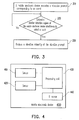
- FIG. 3 is a flowchart of a method of adjusting an event prompt degree according to an embodiment of the present application.
- FIG. 4 is a block diagram of a mobile electronic device according to another embodiment of the present application.
- FIG. 5 is a flowchart of a method of adjusting an event prompt degree according to another embodiment of the present application.
- FIG. 6 is a block diagram of a mobile electronic device according to an embodiment of the present application.
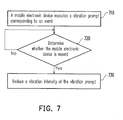
- FIG. 7 is a flowchart of a method of adjusting an event prompt degree according to an embodiment of the present application.
- FIG. 8 is a flowchart of a method of adjusting an event prompt degree according to an embodiment of the present application.
- FIG. 9 is a flowchart of a method of adjusting an event prompt degree according to an embodiment of the present application.
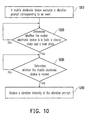
- FIG. 10 is a flowchart of a method of adjusting an event prompt degree according to an embodiment of the present application.
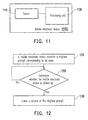
- FIG. 11 is a block diagram of a mobile electronic device according to an embodiment of the present application.
- FIG. 12 is a flowchart of a method of adjusting an event prompt degree according to an embodiment of the present application.
- the present application provides a method of adjusting an event prompt degree and a mobile electronic device and a computer program product using the same based on this fact. Below, embodiments of the present application will described with reference to accompanying drawings.
- FIG. 1 is a block diagram of a mobile electronic device according to an embodiment of the present application.
- the mobile electronic device 100 includes two sensors 110 and 120 and a processing unit 130.
- the mobile electronic device 100 may be a cell phone, a personal digital assistant (PDA), a PDA phone, a smart phone, a digital camera, a music player, a game device, or any other mobile electronic device which offers an event prompt function and has two (or more) sensors.
- the mobile electronic device 100 is assumed to have two sensors 110 and 120.
- the sensor 110 and the sensor 120 may be capacitive sensors, pressure sensors (for example, resistive sensors), temperature sensors, optical sensors, or other sensors that can detect a touch.
- the sensors 110 and 120 are respectively corresponding to a detection region of the mobile electronic device 100, wherein the two detection regions are independent of each other.
- the detection regions respectively corresponding to the sensor 110 and the sensor 120 are respectively located at both sides of the mobile electronic device 100, as shown in FIG. 2 .
- the processing unit 130 may be a processing hardware (for example, a chip set), a software component, or a combination of a processing hardware and a software component.
- the processing unit 130 determines the user's action according to information provided by the sensors 110 and 120 and timely adjusts the vibration intensity of the vibration prompt accordingly.
- FIG. 3 is a flowchart of a method of adjusting an event prompt degree according to an embodiment of the present application.
- the mobile electronic device 100 receives an event
- the mobile electronic device 100 executes a vibration prompt corresponding to the event.
- the event may be an incoming call, a short message, an email, an alarm reminder, a calendar reminder, or any event that can trigger the mobile electronic device 100 to execute a vibration prompt.
- step 320 the processing unit 130 determines whether the detection regions of the mobile electronic device 100 simultaneously detect a touch. That is, the processing unit 130 determines whether all the sensors (for example, the sensors 110 and 120) corresponding to the detection regions simultaneously detect a touch. If so, step 330 is executed. For example, if the sensors 110 and 120 are pressure sensors, the processing unit 130 determines that the sensors 110 and 120 both detect a touch when the pressures detected by the sensors 110 and 120 both exceed a predetermined pressure. According to an embodiment of the present application, in step 320, the processing unit 130 determines whether all the sensors (for example, the sensors 110 and 120) detect a touch from a human body. If so, step 330 is executed.
- the processing unit 130 determines that the sensors 110 and 120 both detect a touch from a human body when the sensors 110 and 120 both detect a conductor.
- the processing unit 130 determines that the sensors 110 and 120 both detect a touch from a human body when the temperatures detected by the sensors 110 and 120 both exceed a predetermined temperature.
- the processing unit 130 determines that the sensors 110 and 120 both detect a touch from a human body when the brightness detected by the sensors 110 and 120 is both lower than a predetermined brightness.
- the sensors 110 and 120 detect the touch from the human body is not limited in the present application.
- the processing unit 130 reduces the vibration intensity of the vibration prompt. For example, the processing unit 130 gradually reduces the vibration intensity of the vibration prompt to the minimum vibration intensity or directly turns off the vibration prompt.
- the processing unit 130 further lowers the volume of the ringtone prompt besides reducing the vibration intensity of the vibration prompt. For example, the processing unit 130 gradually lowers the volume of the ringtone prompt to the minimum volume or directly turns off the ringtone prompt.
- the mobile electronic device 100 executes the vibration prompt and/or the ringtone prompt, the mobile electronic device 100 automatically reduces the vibration intensity of a vibration prompt and/or turns off the volume of a ringtone prompt when the user simultaneously touches two (or more) detection regions of the mobile electronic device 100, so that other people won't be bothered by the vibration prompt and/or the ringtone prompt.
- FIG. 4 is a block diagram of a mobile electronic device according to another embodiment of the present application
- FIG. 5 is a flowchart of a method of adjusting an event prompt degree according to another embodiment of the present application.
- the embodiment illustrated in FIG. 4 is a variation of the embodiment illustrated in FIG. 1 , and the difference between the two embodiments is that the mobile electronic device 400 further includes a g-sensor 440 besides the sensors 410 and 420 and the processing unit 430.
- the sensors 410 and 420 and the processing unit 430 in the present embodiment are the same as or similar to the sensors 110 and 120 and the processing unit 130 in the mobile electronic device 100 therefore will not be described herein.
- the processing unit 430 obtains acceleration information and/or angle information of the mobile electronic device 400 through the g-sensor 440 and determines whether the mobile electronic device 400 is moved according to such information.
- step 520 when the mobile electronic device 400 executes a vibration prompt, besides determining whether the detection regions of the mobile electronic device 400 simultaneously detect a touch (i.e., whether the sensors 410 and 420 respectively corresponding to the detection regions simultaneously detect the touch), the processing unit 430 further determines whether the mobile electronic device 400 is moved according to the information of the mobile electronic device 400 obtained through the g-sensor 440.
- the processing unit 430 obtains an initial acceleration of the mobile electronic device 400 when the mobile electronic device 400 just receives the event and a current acceleration of the mobile electronic device 400 through the g-sensor 440 and then calculates the acceleration variation of the mobile electronic device 400.
- the processing unit 430 determines that the mobile electronic device 400 is moved.
- the processing unit 430 may also obtain the initial angle of the mobile electronic device 400 when the mobile electronic device 400 receives the event and the current angle of the mobile electronic device 400 according to the information provided by the g-sensor 440 and calculate an angle variation of the mobile electronic device 400 according to foregoing two angles.
- the processing unit 430 determines that the mobile electronic device 400 is moved once the angle variation is greater than a angle threshold.
- step 520 if the processing unit 430 determines that the sensor 410 and the sensor 420 respectively corresponding to two detection regions simultaneously detect a touch and the mobile electronic device 400 is moved, step 530 is executed. In step 530, the processing unit 430 reduces the vibration intensity of the vibration prompt. Step 530 is the same as or similar to step 330 therefore will not be described herein.
- the processing unit 430 first determines whether the sensor 410 and the sensor 420 simultaneously detect the touch and then determines whether the mobile electronic device 400 is moved. In addition, the processing unit 430 may also first determine whether the mobile electronic device 400 is moved and then determine whether the sensor 410 and the sensor 420 simultaneously detect the touch. In other words, the sequence for determining whether the sensor 410 and the sensor 420 simultaneously detect the touch and whether the mobile electronic device 400 is moved is not limited in the present application.
- the mobile electronic device 400 executes the vibration prompt and/or the ringtone prompt
- the mobile electronic device 400 automatically reduces the vibration intensity of the vibration prompt and/or lowers the volume of the ringtone prompt if the user simultaneously touches two (or more) detection regions of the mobile electronic device 400 and moves the mobile electronic device 400, so that no continuous vibration prompt or ringtone prompt is produced to bother other people.
- FIG. 6 is a block diagram of a mobile electronic device according to an embodiment of the present application.
- the mobile electronic device 600 includes a sensor 610 and a processing unit 620.
- the mobile electronic device 600 may be a cell phone, a PDA, a PDA phone, a smart phone, a digital camera, a music player, a game device, or any other mobile electronic device which offers an event prompt function.
- the sensor 610 may be a g-sensor for detecting an inclination angle and an acceleration variation of the mobile electronic device 600.
- the processing unit 620 is connected to the sensor 610, and which may be a processing hardware (for example, a chip set), a software component, or a combination of a processing hardware and a software component.
- the processing unit 620 determines whether the mobile electronic device 600 is moved according to the information provided by the sensor 610. If the processing unit 620 determines that the mobile electronic device 600 is moved, the processing unit 620 automatically adjusts the degree of the event prompt.
- FIG. 7 is a flowchart of a method of adjusting an event prompt degree according to an embodiment of the present application.
- the mobile electronic device 600 executes a vibration prompt corresponding to the event.
- the event may be an incoming call, a short message, an email, an alarm reminder, a calendar reminder, or any event that can trigger the mobile electronic device 600 to execute a vibration prompt.
- step 720 the processing unit 620 determines whether the mobile electronic device 600 is moved.
- the processing unit 620 determines whether the mobile electronic device 600 is moved according to the angle variation and/or the acceleration variation of the mobile electronic device 600 obtained by the sensor 610. This step is the same as or similar to the step in foregoing embodiment therefore will not be described herein.
- step 730 is then executed.
- the processing unit 620 reduces the vibration intensity of the vibration prompt. For example, the processing unit 620 gradually reduces the vibration intensity of the vibration prompt or directly turns off the vibration prompt. If the mobile electronic device 600 executes a ringtone prompt corresponding to the event at the same time, the processing unit 620 also lowers the volume of the ringtone prompt or directly turns off the ringtone prompt.
- FIG. 8 is a flowchart of a method of adjusting an event prompt degree according to another embodiment of the present application.
- the processing unit 620 has to determine whether the mobile electronic device 600 is in a steady state (step 820) before the processing unit 620 determines whether the mobile electronic device 600 is moved (step 830).
- the processing unit 620 determines whether the mobile electronic device 600 is in the steady state (step 820). For example, the processing unit 620 first obtains an acceleration variation of the mobile electronic device 600 through the sensor 610.
- the mobile electronic device 600 is determined to be in the steady state if the acceleration variation remains within a predetermined range for a predetermined period (for example, 0.1 second). Namely, the processing unit 620 determines that the mobile electronic device 600 is in the steady (for example, still) state as long as the acceleration variation of the mobile electronic device 600 remains within the predetermined range for a specific period of time.
- a predetermined period for example, 0.1 second.
- the processing unit 620 obtains the acceleration variation of the mobile electronic device 600 at several times. Among all of the obtained acceleration variations, if the number of acceleration variations exceeding the predetermined range is within an acceptable range (for example, the ratio of the number of the acceleration variations exceeding the predetermined range to the total number of the obtained acceleration variations is smaller than a threshold), the processing unit 620 also determines that the mobile electronic device 600 is in the steady state. For example, if the processing unit 620 obtains the acceleration variation of the mobile electronic device 600 at five different time points and only one of the acceleration variations exceeds the predetermined range, the processing unit 620 still determines that the mobile electronic device 600 is in the steady state. This makes the determination of the steady state more flexible.
- an acceptable range for example, the ratio of the number of the acceleration variations exceeding the predetermined range to the total number of the obtained acceleration variations is smaller than a threshold
- the processing unit 620 keeps determining whether the mobile electronic device 600 is in the steady state until it determines that the mobile electronic device 600 is in the steady state. Then, in step 830, the processing unit 620 further determines whether the mobile electronic device 600 is moved. The step of determining whether the mobile electronic device 600 is moved is the same as or similar to the step in foregoing embodiment therefore will not be described herein.
- the processing unit 620 determines that the mobile electronic device 600 is moved, in step 840, the processing unit 620 reduces the vibration intensity of the vibration prompt. For example, the processing unit 620 gradually reduces the vibration intensity of the vibration prompt or directly turns off the vibration prompt. If the event received by the mobile electronic device 600 is corresponding to a ringtone prompt, the processing unit 620 also lowers the volume of the ringtone prompt or directly turns off the ringtone prompt.
- FIG. 9 is a flowchart of a method of adjusting an event prompt degree according to another embodiment of the present application.
- the processing unit 620 has to determine whether the mobile electronic device 600 is in a level state when the mobile electronic device 600 receives an event before the processing unit 620 determines whether the mobile electronic device 600 is moved. Referring to both FIG. 6 and FIG. 9 , after the mobile electronic device 600 executes a vibration prompt corresponding to an event (step 910), the processing unit 620 determines whether the mobile electronic device 600 is in a level state according to information provided by the sensor 610 (step 920).
- the processing unit 620 can obtain the inclination angle of the mobile electronic device 600 through the sensor 610.
- the processing unit 620 determines that the mobile electronic device 600 is in a level state if the inclination angle is within a predetermined range (for example, 0°-45°).
- the processing unit 620 determines whether the mobile electronic device 600 is moved (step 930). Similarly, the processing unit 620 determines whether the mobile electronic device 600 is moved according to the acceleration variation or the angle variation provided by the sensor 610.
- the processing unit 620 reduces the vibration intensity of the vibration prompt (step 940). For example, the processing unit 620 gradually reduces the vibration intensity or directly turns off the vibration prompt. In another embodiment, when the processing unit 620 reduces the vibration intensity of the vibration prompt, the processing unit 620 may further lower the volume of a ringtone prompt corresponding to the event or directly turn off the ringtone prompt.
- FIG. 10 is a flowchart of a method of adjusting an event prompt degree according to yet another embodiment of the present application.
- the processing unit 620 has to determine whether the mobile electronic device 600 is in a steady and level state when the mobile electronic device 600 receives an event before the processing unit 620 determines whether the mobile electronic device 600 is moved.
- the processing unit 620 further determines whether the mobile electronic device 600 is in a level state (step 1020).
- the processing unit 620 also determines whether the mobile electronic device 600 is in a steady and level state according to the information provided by the sensor 610. This step is the same as or similar to that described in foregoing embodiment therefore will not be described herein.
- the processing unit 620 After determining that the mobile electronic device 600 is in the steady and level state, the processing unit 620 further determines whether the mobile electronic device 600 is moved (step 1030). After determining that the mobile electronic device 600 is moved, the processing unit 620 reduces the vibration intensity of the vibration prompt (step 1040). Besides, the processing unit 620 may also directly turn off the vibration prompt, lower the volume of a ringtone prompt corresponding to the event, or directly turn off the ringtone prompt.
- the processing unit 620 has to determine whether the mobile electronic device 600 is in the steady state, whether the mobile electronic device 600 is in the level state, or whether the mobile electronic device 600 is in the steady and level state, so that such situation that the mobile electronic device 600 is placed in a pocket or bag and carried around by a user is eliminated.
- the event prompt degree is only adjusted when the user purposely picks up the mobile electronic device 600. Thereby, it is ensured that the event prompt degree is properly and timely adjusted.
- FIG. 11 is a block diagram of a mobile electronic device according to an embodiment of the present application.
- the mobile electronic device 1100 includes a sensor 1110 and a processing unit 1120, wherein the sensor 1110 and the processing unit 1120 are connected with each other.
- the mobile electronic device 1100 may be a cell phone, a PDA, a PDA phone, a smart phone, a digital camera, a music player, a game device, or any other mobile electronic device which offers an event prompt function.
- the sensor 1110 may be a g-sensor for detecting an angle variation of the mobile electronic device 1100.
- the processing unit 1120 may be a processing hardware (for example, a chip set), a software component, or a combination of a processing hardware and a software component.
- the processing unit 1120 determines whether a user picks up the mobile electronic device 1100 according to the information provided by the sensor 1110.
- the processing unit 1120 automatically adjusts the degree of the ringtone prompt if the processing unit 1120 determines that the mobile electronic device 1100 is picked up by the user.
- FIG. 12 is a flowchart of a method of adjusting an event prompt degree according to an embodiment of the present application.
- the mobile electronic device 1100 executes a ringtone prompt corresponding to the event.
- the event may be an incoming call, a short message, an email, an alarm reminder, a calendar reminder, or any event that can trigger the mobile electronic device 1100 to execute a ringtone prompt.
- the processing unit 1120 determines whether the mobile electronic device 1100 is picked up.
- the processing unit 1120 determines whether the mobile electronic device 1100 is picked up according to the angle variation of the mobile electronic device 1100 obtained by the sensor 1110.
- the processing unit 1120 determines that the mobile electronic device 1100 is picked up when the processing unit 1120 determines that the angle variation obtained by the sensor 1110 is greater than an angle threshold.
- the processing unit 1120 After the processing unit 1120 determines that the mobile electronic device 1100 is picked up, in step 1230, the processing unit 1120 lowers the volume of the ringtone prompt. In an embodiment, the processing unit 1120 gradually lowers the volume of the ringtone prompt until the ringtone prompt is turned off. In another embodiment, the processing unit 1120 directly turns off the ringtone prompt. Additionally, if the mobile electronic device 1100 also executes a vibration prompt corresponding to the event in step 1210, in step 1230, the processing unit 1120 also gradually reduces the vibration intensity of the vibration prompt or directly turns off the vibration prompt.
- the present application further provides a computer program product composed of a plurality of program instructions (for example, setting program instructions or deployment program instructions). After these program instructions are loaded into the mobile electronic device with a processor, the method of adjusting an event prompt degree described above can be executed and the function of the mobile electronic device described in foregoing embodiments can be realized.
- the computer program product can be stored into any data storage device (for example, a read only memory (ROM), a random access memory (RAM), a magnetic tape, a floppy disc, a CD, or a transmission medium) or directly transmitted through a network.
- ROM read only memory
- RAM random access memory
- a mobile electronic device executes a vibration prompt corresponding to an event
- whether a user touches and/or picks up the mobile electronic device is determined according to information provided by a sensor, and the degree of the vibration prompt is automatically reduced and the volume of a ringtone prompt corresponding to the event is automatically lowered when the mobile electronic device is touched and/or picked up by the user.
Landscapes
- Engineering & Computer Science (AREA)
- Signal Processing (AREA)
- Human Computer Interaction (AREA)
- Computer Networks & Wireless Communication (AREA)
- Telephone Function (AREA)
Applications Claiming Priority (1)
| Application Number | Priority Date | Filing Date | Title |
|---|---|---|---|
| TW98129724A TWI473490B (zh) | 2009-09-03 | 2009-09-03 | 調整事件提示程度的方法與其行動電子裝置及電腦程式產品 |
Publications (2)
| Publication Number | Publication Date |
|---|---|
| EP2293532A1 true EP2293532A1 (fr) | 2011-03-09 |
| EP2293532B1 EP2293532B1 (fr) | 2015-06-24 |
Family
ID=43033371
Family Applications (1)
| Application Number | Title | Priority Date | Filing Date |
|---|---|---|---|
| EP10173859.9A Active EP2293532B1 (fr) | 2009-09-03 | 2010-08-24 | Procédé de réglage du degré d'invitation d'un événement, dispositif électronique mobile et produit informatique l'utilisant |
Country Status (3)
| Country | Link |
|---|---|
| US (2) | US8666453B2 (fr) |
| EP (1) | EP2293532B1 (fr) |
| TW (1) | TWI473490B (fr) |
Cited By (1)
| Publication number | Priority date | Publication date | Assignee | Title |
|---|---|---|---|---|
| CN107949818A (zh) * | 2015-09-08 | 2018-04-20 | 索尼公司 | 信息处理设备、方法和计算机程序 |
Families Citing this family (10)
| Publication number | Priority date | Publication date | Assignee | Title |
|---|---|---|---|---|
| JP5749524B2 (ja) | 2011-03-09 | 2015-07-15 | 京セラ株式会社 | 携帯端末、携帯端末の制御プログラムおよび携帯端末の制御方法 |
| TWI456564B (zh) * | 2011-09-29 | 2014-10-11 | Acer Inc | 電子裝置、照度調整系統及照度調整方法 |
| US9710123B1 (en) * | 2012-03-08 | 2017-07-18 | Amazon Technologies, Inc. | Time-based device interfaces |
| US9122457B2 (en) | 2012-05-11 | 2015-09-01 | Htc Corporation | Handheld device and unlocking method thereof |
| US8428659B1 (en) | 2012-09-13 | 2013-04-23 | Google Inc. | Intelligent resonant vibration amplifier |
| CN105744052A (zh) * | 2014-12-11 | 2016-07-06 | 富泰华工业(深圳)有限公司 | 来电铃声控制系统及方法 |
| US10447810B2 (en) * | 2016-06-09 | 2019-10-15 | Google Llc | Limiting alerts on a computing device |
| CN106500689B (zh) * | 2016-10-31 | 2021-08-24 | 维沃移动通信有限公司 | 一种确定移动终端的姿态的方法及移动终端 |
| CN110290283B (zh) * | 2019-06-03 | 2020-11-03 | 珠海格力电器股份有限公司 | 一种控制震动的方法、装置及折叠屏设备 |
| CN111556212A (zh) * | 2020-05-15 | 2020-08-18 | 维沃移动通信有限公司 | 提醒方法及电子设备 |
Citations (3)
| Publication number | Priority date | Publication date | Assignee | Title |
|---|---|---|---|---|
| US20060019649A1 (en) * | 2004-07-21 | 2006-01-26 | Feinleib David A | System and method for remote telephone ringer |
| US20060097991A1 (en) * | 2004-05-06 | 2006-05-11 | Apple Computer, Inc. | Multipoint touchscreen |
| EP1686776A1 (fr) * | 2005-01-31 | 2006-08-02 | Research In Motion Limited | Détection d'une main d'utilisateur pour dispositif sans fils |
Family Cites Families (9)
| Publication number | Priority date | Publication date | Assignee | Title |
|---|---|---|---|---|
| US6411828B1 (en) * | 1999-03-19 | 2002-06-25 | Ericsson Inc. | Communications devices and methods that operate according to communications device orientations determined by reference to gravitational sensors |
| DE602004005683T2 (de) * | 2004-05-27 | 2007-12-27 | Research In Motion Ltd., Waterloo | Handgehaltene elektronische Vorrichtung mit einem Vibrator, der mit verschiedenen Intensitäten vibriert, und Vibrationsmethode dafür |
| CN101018241A (zh) | 2006-02-06 | 2007-08-15 | 宏达国际电子股份有限公司 | 电子装置的操控方法及具敲击操控功能的可携式电子装置 |
| US8125456B2 (en) * | 2007-01-03 | 2012-02-28 | Apple Inc. | Multi-touch auto scanning |
| CN101384028A (zh) | 2007-09-04 | 2009-03-11 | 英华达(南京)科技有限公司 | 手持电子装置的操作方法 |
| KR101345755B1 (ko) * | 2007-09-11 | 2013-12-27 | 삼성전자주식회사 | 휴대용 단말기의 조작제어장치 및 그 방법 |
| CN101471995B (zh) | 2007-12-26 | 2012-05-02 | 英业达股份有限公司 | 具有防止触控式按键误动作功能的电子装置及其方法 |
| CN101471996B (zh) | 2007-12-28 | 2011-07-27 | 深圳富泰宏精密工业有限公司 | 便携式电子装置 |
| FR2929475B1 (fr) * | 2008-03-26 | 2012-12-28 | Bazile Telecom | Procede de reglage du volume sonore d'un dispositif. |
-
2009
- 2009-09-03 TW TW98129724A patent/TWI473490B/zh active
-
2010
- 2010-08-23 US US12/861,821 patent/US8666453B2/en active Active
- 2010-08-24 EP EP10173859.9A patent/EP2293532B1/fr active Active
-
2014
- 2014-01-15 US US14/155,376 patent/US8995983B2/en active Active
Patent Citations (3)
| Publication number | Priority date | Publication date | Assignee | Title |
|---|---|---|---|---|
| US20060097991A1 (en) * | 2004-05-06 | 2006-05-11 | Apple Computer, Inc. | Multipoint touchscreen |
| US20060019649A1 (en) * | 2004-07-21 | 2006-01-26 | Feinleib David A | System and method for remote telephone ringer |
| EP1686776A1 (fr) * | 2005-01-31 | 2006-08-02 | Research In Motion Limited | Détection d'une main d'utilisateur pour dispositif sans fils |
Cited By (9)
| Publication number | Priority date | Publication date | Assignee | Title |
|---|---|---|---|---|
| CN107949818A (zh) * | 2015-09-08 | 2018-04-20 | 索尼公司 | 信息处理设备、方法和计算机程序 |
| EP3349097A4 (fr) * | 2015-09-08 | 2019-04-10 | Sony Corporation | Appareil et procédé de traitement d'informations, et programme d'ordinateur |
| US10331214B2 (en) | 2015-09-08 | 2019-06-25 | Sony Corporation | Information processing device, method, and computer program |
| US10353470B2 (en) | 2015-09-08 | 2019-07-16 | Sony Corporation | Information processing device, method, and computer |
| EP3690613A1 (fr) * | 2015-09-08 | 2020-08-05 | Sony Corporation | Dispositif de traitement d'informations, procédé et ordinateur |
| US10838500B2 (en) | 2015-09-08 | 2020-11-17 | Sony Corporation | Information processing device, method, and computer program |
| US10942573B2 (en) | 2015-09-08 | 2021-03-09 | Sony Corporation | Information processing device, method, and computer |
| CN107949818B (zh) * | 2015-09-08 | 2021-07-27 | 索尼公司 | 信息处理设备、方法和计算机程序 |
| US11314333B2 (en) | 2015-09-08 | 2022-04-26 | Sony Corporation | Information processing device, method, and computer |
Also Published As
| Publication number | Publication date |
|---|---|
| US20110053581A1 (en) | 2011-03-03 |
| US20140128127A1 (en) | 2014-05-08 |
| US8995983B2 (en) | 2015-03-31 |
| TWI473490B (zh) | 2015-02-11 |
| US8666453B2 (en) | 2014-03-04 |
| EP2293532B1 (fr) | 2015-06-24 |
| TW201110656A (en) | 2011-03-16 |
Similar Documents
| Publication | Publication Date | Title |
|---|---|---|
| US8666453B2 (en) | Method of adjusting event prompt degree, and mobile electronic device and computer program product using the same | |
| US9641669B2 (en) | Automatically modifying a do not disturb function in response to device motion | |
| EP3043253A1 (fr) | Terminal de communication mobile fournissant une sensibilité adaptative à un événement de clic | |
| US20060014569A1 (en) | Mobile communication device with adaptive audible user notification | |
| WO2011159947A1 (fr) | Conception de configuration de capteurs de proximité pour permettre des raccourcis | |
| CN102377871A (zh) | 一种信息处理设备及其控制方法 | |
| CN107613131A (zh) | 一种应用程序免打扰方法及移动终端 | |
| US20140210703A1 (en) | Method of unlocking and subsequent application launch in portable electronic device via orientation sensing | |
| CN108322614B (zh) | 事件提醒方法、装置、存储介质及电子设备 | |
| CN102025822B (zh) | 调整事件提示程度的方法与其移动电子装置 | |
| CN108418950B (zh) | 消息提醒方法及移动终端 | |
| CN108391008A (zh) | 一种消息提醒方法及移动终端 | |
| CN109451144A (zh) | 一种消息处理方法及终端设备 | |
| CN108108090A (zh) | 通信消息提醒方法及装置 | |
| CN108712563B (zh) | 通话控制方法、装置以及移动终端 | |
| CN107135305B (zh) | 一种消息提醒方法、装置和终端 | |
| CN106161800A (zh) | 一种来电提醒方法、装置和移动通讯终端 | |
| CN108184014B (zh) | 一种通知消息的提醒方法及移动终端 | |
| CN108111664A (zh) | 一种铃声控制的方法、终端及计算机可读介质 | |
| CN107734153A (zh) | 一种通话控制方法、终端及计算机可读存储介质 | |
| CN109949547A (zh) | 可穿戴设备报警方法、可穿戴设备及存储介质 | |
| CN110572516B (zh) | 通话控制方法、装置、存储介质及终端设备 | |
| CN108683805B (zh) | 一种来电处理方法、移动终端及计算机可读存储介质 | |
| CN108197893A (zh) | 一种提醒方法及移动终端 | |
| CN109561214B (zh) | 通话处理方法及移动终端 |
Legal Events
| Date | Code | Title | Description |
|---|---|---|---|
| PUAI | Public reference made under article 153(3) epc to a published international application that has entered the european phase |
Free format text: ORIGINAL CODE: 0009012 |
|
| AK | Designated contracting states |
Kind code of ref document: A1 Designated state(s): AL AT BE BG CH CY CZ DE DK EE ES FI FR GB GR HR HU IE IS IT LI LT LU LV MC MK MT NL NO PL PT RO SE SI SK SM TR |
|
| AX | Request for extension of the european patent |
Extension state: BA ME RS |
|
| 17P | Request for examination filed |
Effective date: 20110214 |
|
| 17Q | First examination report despatched |
Effective date: 20111201 |
|
| GRAP | Despatch of communication of intention to grant a patent |
Free format text: ORIGINAL CODE: EPIDOSNIGR1 |
|
| RIC1 | Information provided on ipc code assigned before grant |
Ipc: H04M 1/725 20060101AFI20131129BHEP Ipc: H04M 19/04 20060101ALI20131129BHEP |
|
| INTG | Intention to grant announced |
Effective date: 20131216 |
|
| GRAP | Despatch of communication of intention to grant a patent |
Free format text: ORIGINAL CODE: EPIDOSNIGR1 |
|
| GRAJ | Information related to disapproval of communication of intention to grant by the applicant or resumption of examination proceedings by the epo deleted |
Free format text: ORIGINAL CODE: EPIDOSDIGR1 |
|
| RIN1 | Information on inventor provided before grant (corrected) |
Inventor name: KAO, YIH-FENG Inventor name: WANG, HUI-WEN |
|
| GRAP | Despatch of communication of intention to grant a patent |
Free format text: ORIGINAL CODE: EPIDOSNIGR1 |
|
| INTG | Intention to grant announced |
Effective date: 20141217 |
|
| INTG | Intention to grant announced |
Effective date: 20150112 |
|
| RAP1 | Party data changed (applicant data changed or rights of an application transferred) |
Owner name: HTC CORPORATION |
|
| GRAS | Grant fee paid |
Free format text: ORIGINAL CODE: EPIDOSNIGR3 |
|
| GRAA | (expected) grant |
Free format text: ORIGINAL CODE: 0009210 |
|
| AK | Designated contracting states |
Kind code of ref document: B1 Designated state(s): AL AT BE BG CH CY CZ DE DK EE ES FI FR GB GR HR HU IE IS IT LI LT LU LV MC MK MT NL NO PL PT RO SE SI SK SM TR |
|
| REG | Reference to a national code |
Ref country code: GB Ref legal event code: FG4D |
|
| REG | Reference to a national code |
Ref country code: FR Ref legal event code: PLFP Year of fee payment: 6 Ref country code: CH Ref legal event code: EP |
|
| REG | Reference to a national code |
Ref country code: AT Ref legal event code: REF Ref document number: 733327 Country of ref document: AT Kind code of ref document: T Effective date: 20150715 |
|
| REG | Reference to a national code |
Ref country code: IE Ref legal event code: FG4D |
|
| REG | Reference to a national code |
Ref country code: DE Ref legal event code: R096 Ref document number: 602010025388 Country of ref document: DE |
|
| REG | Reference to a national code |
Ref country code: NL Ref legal event code: T3 |
|
| PG25 | Lapsed in a contracting state [announced via postgrant information from national office to epo] |
Ref country code: LT Free format text: LAPSE BECAUSE OF FAILURE TO SUBMIT A TRANSLATION OF THE DESCRIPTION OR TO PAY THE FEE WITHIN THE PRESCRIBED TIME-LIMIT Effective date: 20150624 Ref country code: FI Free format text: LAPSE BECAUSE OF FAILURE TO SUBMIT A TRANSLATION OF THE DESCRIPTION OR TO PAY THE FEE WITHIN THE PRESCRIBED TIME-LIMIT Effective date: 20150624 Ref country code: HR Free format text: LAPSE BECAUSE OF FAILURE TO SUBMIT A TRANSLATION OF THE DESCRIPTION OR TO PAY THE FEE WITHIN THE PRESCRIBED TIME-LIMIT Effective date: 20150624 Ref country code: NO Free format text: LAPSE BECAUSE OF FAILURE TO SUBMIT A TRANSLATION OF THE DESCRIPTION OR TO PAY THE FEE WITHIN THE PRESCRIBED TIME-LIMIT Effective date: 20150924 |
|
| REG | Reference to a national code |
Ref country code: AT Ref legal event code: MK05 Ref document number: 733327 Country of ref document: AT Kind code of ref document: T Effective date: 20150624 |
|
| REG | Reference to a national code |
Ref country code: LT Ref legal event code: MG4D |
|
| PG25 | Lapsed in a contracting state [announced via postgrant information from national office to epo] |
Ref country code: LV Free format text: LAPSE BECAUSE OF FAILURE TO SUBMIT A TRANSLATION OF THE DESCRIPTION OR TO PAY THE FEE WITHIN THE PRESCRIBED TIME-LIMIT Effective date: 20150624 Ref country code: GR Free format text: LAPSE BECAUSE OF FAILURE TO SUBMIT A TRANSLATION OF THE DESCRIPTION OR TO PAY THE FEE WITHIN THE PRESCRIBED TIME-LIMIT Effective date: 20150925 Ref country code: BG Free format text: LAPSE BECAUSE OF FAILURE TO SUBMIT A TRANSLATION OF THE DESCRIPTION OR TO PAY THE FEE WITHIN THE PRESCRIBED TIME-LIMIT Effective date: 20150924 |
|
| PG25 | Lapsed in a contracting state [announced via postgrant information from national office to epo] |
Ref country code: EE Free format text: LAPSE BECAUSE OF FAILURE TO SUBMIT A TRANSLATION OF THE DESCRIPTION OR TO PAY THE FEE WITHIN THE PRESCRIBED TIME-LIMIT Effective date: 20150624 |
|
| PG25 | Lapsed in a contracting state [announced via postgrant information from national office to epo] |
Ref country code: PL Free format text: LAPSE BECAUSE OF FAILURE TO SUBMIT A TRANSLATION OF THE DESCRIPTION OR TO PAY THE FEE WITHIN THE PRESCRIBED TIME-LIMIT Effective date: 20150624 Ref country code: SK Free format text: LAPSE BECAUSE OF FAILURE TO SUBMIT A TRANSLATION OF THE DESCRIPTION OR TO PAY THE FEE WITHIN THE PRESCRIBED TIME-LIMIT Effective date: 20150624 Ref country code: AT Free format text: LAPSE BECAUSE OF FAILURE TO SUBMIT A TRANSLATION OF THE DESCRIPTION OR TO PAY THE FEE WITHIN THE PRESCRIBED TIME-LIMIT Effective date: 20150624 Ref country code: RO Free format text: LAPSE BECAUSE OF NON-PAYMENT OF DUE FEES Effective date: 20150624 Ref country code: ES Free format text: LAPSE BECAUSE OF FAILURE TO SUBMIT A TRANSLATION OF THE DESCRIPTION OR TO PAY THE FEE WITHIN THE PRESCRIBED TIME-LIMIT Effective date: 20150624 Ref country code: IS Free format text: LAPSE BECAUSE OF FAILURE TO SUBMIT A TRANSLATION OF THE DESCRIPTION OR TO PAY THE FEE WITHIN THE PRESCRIBED TIME-LIMIT Effective date: 20151024 Ref country code: PT Free format text: LAPSE BECAUSE OF FAILURE TO SUBMIT A TRANSLATION OF THE DESCRIPTION OR TO PAY THE FEE WITHIN THE PRESCRIBED TIME-LIMIT Effective date: 20151026 Ref country code: CZ Free format text: LAPSE BECAUSE OF FAILURE TO SUBMIT A TRANSLATION OF THE DESCRIPTION OR TO PAY THE FEE WITHIN THE PRESCRIBED TIME-LIMIT Effective date: 20150624 |
|
| REG | Reference to a national code |
Ref country code: DE Ref legal event code: R097 Ref document number: 602010025388 Country of ref document: DE |
|
| PG25 | Lapsed in a contracting state [announced via postgrant information from national office to epo] |
Ref country code: LU Free format text: LAPSE BECAUSE OF FAILURE TO SUBMIT A TRANSLATION OF THE DESCRIPTION OR TO PAY THE FEE WITHIN THE PRESCRIBED TIME-LIMIT Effective date: 20150824 Ref country code: MC Free format text: LAPSE BECAUSE OF FAILURE TO SUBMIT A TRANSLATION OF THE DESCRIPTION OR TO PAY THE FEE WITHIN THE PRESCRIBED TIME-LIMIT Effective date: 20150624 |
|
| REG | Reference to a national code |
Ref country code: CH Ref legal event code: PL |
|
| PG25 | Lapsed in a contracting state [announced via postgrant information from national office to epo] |
Ref country code: LI Free format text: LAPSE BECAUSE OF NON-PAYMENT OF DUE FEES Effective date: 20150831 Ref country code: CH Free format text: LAPSE BECAUSE OF NON-PAYMENT OF DUE FEES Effective date: 20150831 Ref country code: DK Free format text: LAPSE BECAUSE OF FAILURE TO SUBMIT A TRANSLATION OF THE DESCRIPTION OR TO PAY THE FEE WITHIN THE PRESCRIBED TIME-LIMIT Effective date: 20150624 Ref country code: IT Free format text: LAPSE BECAUSE OF FAILURE TO SUBMIT A TRANSLATION OF THE DESCRIPTION OR TO PAY THE FEE WITHIN THE PRESCRIBED TIME-LIMIT Effective date: 20150624 |
|
| PLBE | No opposition filed within time limit |
Free format text: ORIGINAL CODE: 0009261 |
|
| STAA | Information on the status of an ep patent application or granted ep patent |
Free format text: STATUS: NO OPPOSITION FILED WITHIN TIME LIMIT |
|
| 26N | No opposition filed |
Effective date: 20160329 |
|
| REG | Reference to a national code |
Ref country code: IE Ref legal event code: MM4A |
|
| PG25 | Lapsed in a contracting state [announced via postgrant information from national office to epo] |
Ref country code: IE Free format text: LAPSE BECAUSE OF NON-PAYMENT OF DUE FEES Effective date: 20150824 |
|
| REG | Reference to a national code |
Ref country code: FR Ref legal event code: PLFP Year of fee payment: 7 |
|
| PG25 | Lapsed in a contracting state [announced via postgrant information from national office to epo] |
Ref country code: SI Free format text: LAPSE BECAUSE OF FAILURE TO SUBMIT A TRANSLATION OF THE DESCRIPTION OR TO PAY THE FEE WITHIN THE PRESCRIBED TIME-LIMIT Effective date: 20150624 |
|
| PG25 | Lapsed in a contracting state [announced via postgrant information from national office to epo] |
Ref country code: BE Free format text: LAPSE BECAUSE OF FAILURE TO SUBMIT A TRANSLATION OF THE DESCRIPTION OR TO PAY THE FEE WITHIN THE PRESCRIBED TIME-LIMIT Effective date: 20150624 |
|
| PG25 | Lapsed in a contracting state [announced via postgrant information from national office to epo] |
Ref country code: MT Free format text: LAPSE BECAUSE OF FAILURE TO SUBMIT A TRANSLATION OF THE DESCRIPTION OR TO PAY THE FEE WITHIN THE PRESCRIBED TIME-LIMIT Effective date: 20150624 |
|
| PG25 | Lapsed in a contracting state [announced via postgrant information from national office to epo] |
Ref country code: SM Free format text: LAPSE BECAUSE OF FAILURE TO SUBMIT A TRANSLATION OF THE DESCRIPTION OR TO PAY THE FEE WITHIN THE PRESCRIBED TIME-LIMIT Effective date: 20150624 Ref country code: HU Free format text: LAPSE BECAUSE OF FAILURE TO SUBMIT A TRANSLATION OF THE DESCRIPTION OR TO PAY THE FEE WITHIN THE PRESCRIBED TIME-LIMIT; INVALID AB INITIO Effective date: 20100824 |
|
| PG25 | Lapsed in a contracting state [announced via postgrant information from national office to epo] |
Ref country code: SE Free format text: LAPSE BECAUSE OF FAILURE TO SUBMIT A TRANSLATION OF THE DESCRIPTION OR TO PAY THE FEE WITHIN THE PRESCRIBED TIME-LIMIT Effective date: 20150624 Ref country code: CY Free format text: LAPSE BECAUSE OF FAILURE TO SUBMIT A TRANSLATION OF THE DESCRIPTION OR TO PAY THE FEE WITHIN THE PRESCRIBED TIME-LIMIT Effective date: 20150624 |
|
| REG | Reference to a national code |
Ref country code: FR Ref legal event code: PLFP Year of fee payment: 8 |
|
| PG25 | Lapsed in a contracting state [announced via postgrant information from national office to epo] |
Ref country code: TR Free format text: LAPSE BECAUSE OF FAILURE TO SUBMIT A TRANSLATION OF THE DESCRIPTION OR TO PAY THE FEE WITHIN THE PRESCRIBED TIME-LIMIT Effective date: 20150624 |
|
| PG25 | Lapsed in a contracting state [announced via postgrant information from national office to epo] |
Ref country code: MK Free format text: LAPSE BECAUSE OF FAILURE TO SUBMIT A TRANSLATION OF THE DESCRIPTION OR TO PAY THE FEE WITHIN THE PRESCRIBED TIME-LIMIT Effective date: 20150624 |
|
| REG | Reference to a national code |
Ref country code: FR Ref legal event code: PLFP Year of fee payment: 9 |
|
| PG25 | Lapsed in a contracting state [announced via postgrant information from national office to epo] |
Ref country code: AL Free format text: LAPSE BECAUSE OF FAILURE TO SUBMIT A TRANSLATION OF THE DESCRIPTION OR TO PAY THE FEE WITHIN THE PRESCRIBED TIME-LIMIT Effective date: 20150624 |
|
| P01 | Opt-out of the competence of the unified patent court (upc) registered |
Effective date: 20230602 |
|
| PGFP | Annual fee paid to national office [announced via postgrant information from national office to epo] |
Ref country code: NL Payment date: 20250704 Year of fee payment: 16 |
|
| PGFP | Annual fee paid to national office [announced via postgrant information from national office to epo] |
Ref country code: DE Payment date: 20250702 Year of fee payment: 16 |
|
| PGFP | Annual fee paid to national office [announced via postgrant information from national office to epo] |
Ref country code: GB Payment date: 20250703 Year of fee payment: 16 |
|
| PGFP | Annual fee paid to national office [announced via postgrant information from national office to epo] |
Ref country code: FR Payment date: 20250703 Year of fee payment: 16 |