EP2293549B1 - Affichage d'information de programmes de télévision utilisant un taux de défilement sur écran ajustable dynamiquement - Google Patents
Affichage d'information de programmes de télévision utilisant un taux de défilement sur écran ajustable dynamiquement Download PDFInfo
- Publication number
- EP2293549B1 EP2293549B1 EP10182306.0A EP10182306A EP2293549B1 EP 2293549 B1 EP2293549 B1 EP 2293549B1 EP 10182306 A EP10182306 A EP 10182306A EP 2293549 B1 EP2293549 B1 EP 2293549B1
- Authority
- EP
- European Patent Office
- Prior art keywords
- program
- display
- program information
- programs
- user
- Prior art date
- Legal status (The legal status is an assumption and is not a legal conclusion. Google has not performed a legal analysis and makes no representation as to the accuracy of the status listed.)
- Expired - Lifetime
Links
Images



Classifications
-
- H—ELECTRICITY
- H04—ELECTRIC COMMUNICATION TECHNIQUE
- H04N—PICTORIAL COMMUNICATION, e.g. TELEVISION
- H04N21/00—Selective content distribution, e.g. interactive television or video on demand [VOD]
- H04N21/40—Client devices specifically adapted for the reception of or interaction with content, e.g. set-top-box [STB]; Operations thereof
- H04N21/43—Processing of content or additional data, e.g. demultiplexing additional data from a digital video stream; Elementary client operations, e.g. monitoring of home network or synchronising decoder's clock; Client middleware
- H04N21/431—Generation of visual interfaces for content selection or interaction; Content or additional data rendering
- H04N21/4312—Generation of visual interfaces for content selection or interaction; Content or additional data rendering involving specific graphical features, e.g. screen layout, special fonts or colors, blinking icons, highlights or animations
-
- H—ELECTRICITY
- H04—ELECTRIC COMMUNICATION TECHNIQUE
- H04N—PICTORIAL COMMUNICATION, e.g. TELEVISION
- H04N21/00—Selective content distribution, e.g. interactive television or video on demand [VOD]
- H04N21/40—Client devices specifically adapted for the reception of or interaction with content, e.g. set-top-box [STB]; Operations thereof
- H04N21/43—Processing of content or additional data, e.g. demultiplexing additional data from a digital video stream; Elementary client operations, e.g. monitoring of home network or synchronising decoder's clock; Client middleware
- H04N21/435—Processing of additional data, e.g. decrypting of additional data, reconstructing software from modules extracted from the transport stream
-
- H—ELECTRICITY
- H04—ELECTRIC COMMUNICATION TECHNIQUE
- H04N—PICTORIAL COMMUNICATION, e.g. TELEVISION
- H04N21/00—Selective content distribution, e.g. interactive television or video on demand [VOD]
- H04N21/40—Client devices specifically adapted for the reception of or interaction with content, e.g. set-top-box [STB]; Operations thereof
- H04N21/43—Processing of content or additional data, e.g. demultiplexing additional data from a digital video stream; Elementary client operations, e.g. monitoring of home network or synchronising decoder's clock; Client middleware
- H04N21/442—Monitoring of processes or resources, e.g. detecting the failure of a recording device, monitoring the downstream bandwidth, the number of times a movie has been viewed, the storage space available from the internal hard disk
- H04N21/44213—Monitoring of end-user related data
- H04N21/44222—Analytics of user selections, e.g. selection of programmes or purchase activity
-
- H—ELECTRICITY
- H04—ELECTRIC COMMUNICATION TECHNIQUE
- H04N—PICTORIAL COMMUNICATION, e.g. TELEVISION
- H04N21/00—Selective content distribution, e.g. interactive television or video on demand [VOD]
- H04N21/40—Client devices specifically adapted for the reception of or interaction with content, e.g. set-top-box [STB]; Operations thereof
- H04N21/45—Management operations performed by the client for facilitating the reception of or the interaction with the content or administrating data related to the end-user or to the client device itself, e.g. learning user preferences for recommending movies, resolving scheduling conflicts
- H04N21/4508—Management of client data or end-user data
- H04N21/4532—Management of client data or end-user data involving end-user characteristics, e.g. viewer profile, preferences
-
- H—ELECTRICITY
- H04—ELECTRIC COMMUNICATION TECHNIQUE
- H04N—PICTORIAL COMMUNICATION, e.g. TELEVISION
- H04N21/00—Selective content distribution, e.g. interactive television or video on demand [VOD]
- H04N21/40—Client devices specifically adapted for the reception of or interaction with content, e.g. set-top-box [STB]; Operations thereof
- H04N21/45—Management operations performed by the client for facilitating the reception of or the interaction with the content or administrating data related to the end-user or to the client device itself, e.g. learning user preferences for recommending movies, resolving scheduling conflicts
- H04N21/454—Content or additional data filtering, e.g. blocking advertisements
-
- H—ELECTRICITY
- H04—ELECTRIC COMMUNICATION TECHNIQUE
- H04N—PICTORIAL COMMUNICATION, e.g. TELEVISION
- H04N21/00—Selective content distribution, e.g. interactive television or video on demand [VOD]
- H04N21/40—Client devices specifically adapted for the reception of or interaction with content, e.g. set-top-box [STB]; Operations thereof
- H04N21/45—Management operations performed by the client for facilitating the reception of or the interaction with the content or administrating data related to the end-user or to the client device itself, e.g. learning user preferences for recommending movies, resolving scheduling conflicts
- H04N21/466—Learning process for intelligent management, e.g. learning user preferences for recommending movies
- H04N21/4667—Processing of monitored end-user data, e.g. trend analysis based on the log file of viewer selections
-
- H—ELECTRICITY
- H04—ELECTRIC COMMUNICATION TECHNIQUE
- H04N—PICTORIAL COMMUNICATION, e.g. TELEVISION
- H04N21/00—Selective content distribution, e.g. interactive television or video on demand [VOD]
- H04N21/40—Client devices specifically adapted for the reception of or interaction with content, e.g. set-top-box [STB]; Operations thereof
- H04N21/47—End-user applications
-
- H—ELECTRICITY
- H04—ELECTRIC COMMUNICATION TECHNIQUE
- H04N—PICTORIAL COMMUNICATION, e.g. TELEVISION
- H04N21/00—Selective content distribution, e.g. interactive television or video on demand [VOD]
- H04N21/40—Client devices specifically adapted for the reception of or interaction with content, e.g. set-top-box [STB]; Operations thereof
- H04N21/47—End-user applications
- H04N21/482—End-user interface for programme selection
-
- H—ELECTRICITY
- H04—ELECTRIC COMMUNICATION TECHNIQUE
- H04N—PICTORIAL COMMUNICATION, e.g. TELEVISION
- H04N21/00—Selective content distribution, e.g. interactive television or video on demand [VOD]
- H04N21/80—Generation or processing of content or additional data by content creator independently of the distribution process; Content per se
- H04N21/83—Generation or processing of protective or descriptive data associated with content; Content structuring
- H04N21/84—Generation or processing of descriptive data, e.g. content descriptors
-
- H—ELECTRICITY
- H04—ELECTRIC COMMUNICATION TECHNIQUE
- H04N—PICTORIAL COMMUNICATION, e.g. TELEVISION
- H04N21/00—Selective content distribution, e.g. interactive television or video on demand [VOD]
- H04N21/40—Client devices specifically adapted for the reception of or interaction with content, e.g. set-top-box [STB]; Operations thereof
- H04N21/45—Management operations performed by the client for facilitating the reception of or the interaction with the content or administrating data related to the end-user or to the client device itself, e.g. learning user preferences for recommending movies, resolving scheduling conflicts
- H04N21/462—Content or additional data management e.g. creating a master electronic programme guide from data received from the Internet and a Head-end or controlling the complexity of a video stream by scaling the resolution or bit-rate based on the client capabilities
- H04N21/4622—Retrieving content or additional data from different sources, e.g. from a broadcast channel and the Internet
Definitions
- the invention is generally related to the display of television program information, and in particular, to scrolling the display of television program information, e.g., in a continuous manner or responsive to user input.
- many cable providers display non-interactive program listings on a preview channel, with the program listings sorted first by timeslot (e.g., by starting time), and then by channel number.
- the program listings are arranged in a list and displayed on a television screen.
- the list is typically scrolled through on the screen at a slow enough rate so that viewers can read the displayed program listings before the individual listings are scrolled off of the screen.
- Electronic program information is also used in interactive electronic program guides supported by the television receiving devices (e.g., set top boxes and satellite receivers) available from many cable and satellite providers.
- electronic program guides Rather than scrolling continuously through program listings, electronic program guides typically display a list of television programs, either in a one-dimensional array sorted by channel and/or timeslot, or in a two-dimensional array or grid where programs are arranged by channel in one dimension and by timeslot in the other dimension.
- a user-manipulated cursor is also displayed to permit a user to move from program to program and perform different activities, e.g., viewing a program or obtaining more detailed program information about a program.
- viewers are often capable of storing lists of favorite channels, so that only the program information for the programs on those favorite channels are listed in the electronic program guide.
- electronic program guides are typically not capable of displaying the program information for all of the available channels simultaneously. As such, a viewer is typically permitted to scroll through the program information interactively, with the display updated as necessary based upon the movement of the cursor.
- Some television receiving devices also support on-screen overlays that display more detailed program information about a current program being watched by a viewer.
- cursor control keys Through the use of cursor control keys, a viewer may be permitted to scroll sequentially to different channels or timeslots to view program information for other television programs, and then perform operations such as selecting a program or viewing additional information about the program.
- WO 00/05891 A1 discloses a user interface for an interactive information distribution system that is adapted for displaying an interactive program guide. Manipulations of left or right arrow keys on a remote control device result in a change in a highlighted time slot, while user manipulations of up and down arrow keys result in a change of an indicated channel.
- a portion of an interactive program guide screen may show a scrolling promotional banner.
- U.S. Patent No. 5,861,906 discloses an interactive entertainment network system in which a customized list of titles is scrolled at a selected rate which can be adjusted by the viewer to meet the viewer's personal reading preference. The viewer manually adjusts the scroll rate of his customized list of titles.
- WO 00/01213 A1 discloses a system and method for a digital television electronic program guide in which the user may control the scroll rate and scroll direction of future event information.
- EP 0 944 252 A1 discloses an electronic program guide that presents program text information or channel text information in a display area in a scrolled manner. Broadcasters may specify a scroll speed of the program text information or the channel text information.
- JP 7-140963 A discloses a display method and system in which a scroll speed is decreased when a difficult message is displayed, and the scroll speed is increased when a simple message is displayed.
- U.S. Patent No. 4,952,927 discloses a paging receiver which arranges a data message to be displayed into a plurality of screens, and displays each screen in a predetermined order for a time determined by a screen timeout value.
- the screen timeout value is computed on the basis of the message content of the screen and other factors.
- U.S. Patent No. 5,353,121 discloses a television schedule system that scrolls through electronic program guide information at a single predetermined speed.
- the invention provides an apparatus, computer program and method in which the scroll rate used to scroll through the program information for various television programs available to a television viewer is dynamically adjusted to provide a variable rate of scroll for program information presented to the television viewer.
- a scroll rate to be adjusted to emphasize certain program information relative to other program information, e.g., by slowing down the scroll rate to increase the visibility for important program information and speeding up the scroll rate to decrease the visibility of less important program information.
- Dynamic scroll rate adjustment may also be utilized in a number of situations in which program information is presented to a viewer.
- dynamic adjustment of scroll rate may be used to vary the rate at which program information is scrolled across a television screen.
- dynamic adjustment of scroll rate may be used to vary the movement of a user-manipulated cursor and/or the incremental scrolling of the display that occurs as a user attempts to move a cursor outside of currently-displayed program listings.
- dynamic adjustment of scroll rate may be used to vary the rate at which program information for one television program is replaced with program information for another television program.
- Other situations suitable for the use of dynamic scroll rate adjustment will be apparent to one of ordinary skill in the art having the benefit of the instant disclosure.
- Dynamic scroll rate adjustment may also be based upon a number of different characteristics of the television programs associated with the displayed program information. For example, dynamic scroll rate adjustment may be based upon the frequency of access of different television programs, determined, e.g., based upon the monitored viewing habits of a television viewer or user. In such an implementation, the scroll rate may be decreased as a user views program information for a frequently watched program, and increased as a user views program information for programs that are rarely if ever watched. Dynamic scroll rate adjustment may also be based upon sponsorship of certain television programs, e.g., to permit a program provider to pay for a slower scroll rate, and thus, greater visibility to viewers. Other characteristics will be apparent to one of ordinary skill in the art having the benefit of the instant disclosure.
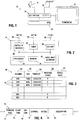
- Fig. 1 illustrates a television system 10 incorporating dynamic scroll rate adjustment consistent with the invention.
- System 10 includes a television or monitor 12 coupled to a set top box 14 to receive audio and video signals therefrom.
- Set top box 14 in the illustrated implementation is a satellite receiver capable of receiving satellite television broadcast signals via a direct broadcast satellite (DBS) dish 16, as well as off-air television broadcast signals via an antenna 18 (or alternately, a cable provider).
- DBS direct broadcast satellite
- antenna 18 or alternately, a cable provider
- VCR video cassette recorder
- VCR 20 may also be capable of optionally outputting audio and video signals directly to television/monitor 12, rather than passing such signals through set top box 14.
- Dynamic scroll rate adjustment is implemented in the illustrated implementation within set top box 14.
- such functionality may be implemented in any number of devices capable of displaying program information to a viewer, including, for example, televisions, cable set top boxes, personal video recorders, computers, VCR's, etc.
- set top box 14 need not necessarily be capable of directly receiving and/or displaying television programs to viewers, so long as the box is capable of monitoring a user's viewing habits and displaying program information to the user.
- television programs may be received from any number of sources, including off-air broadcast sources, cable television sources, satellite television sources, and computer network sources such as the Internet.
- Set top box 14 is under the control of a processor 24, which is interfaced with a memory 26 storing both program code suitable for execution by the processor, as well as additional data structures required by the processor in controlling the operation of the set top box.
- Processor 24 may represent one or more processors (e.g., microprocessors or microcontrollers), and memory 26 may represent the random access memory (RAM) devices comprising the main storage of the set top box, as well as any supplemental levels of memory, e.g., cache memories, non-volatile or backup memories (e.g., programmable or flash memories), read-only memories, etc.
- RAM random access memory
- memory 26 may be considered to include memory storage physically located elsewhere in set top box 14, e.g., any cache memory in processor 24, as well as any storage capacity used as a virtual memory, e.g., as stored on a mass storage device or on another data processing system coupled to set top box 14 via an external network (not shown).
- Satellite television broadcast signals are received by set top box 14 through a satellite input 28 and decoded by a satellite signal decoder 30.
- off-air or cable television signals are received through an antenna input 32 and processed by a tuner 34.
- Audio and/or video data output by either of decoder 30 and tuner 34 are output to a television or video monitor through a TV output 36 driven by audio/video amplification circuitry 38.
- user input is received from a viewer via interface 40, e.g., to receive input via front panel buttons and/or a remote control.
- Set top box 14 operates under the control of an embedded operating system, and executes or otherwise relies upon various software and/or firmware applications, components, programs, objects, modules, data structures, etc.
- routines executed to implement the embodiments of the invention whether implemented as part of an operating system or a specific application, component, program, object, module or sequence of instructions, will be referred to herein as "computer programs", or simply "programs".
- the computer programs typically comprise one or more instructions that are resident at various times in various memory and storage devices in a computer, and that, when read and executed by one or more processors in a computer, cause that computer to perform the steps necessary to execute steps or elements embodying the various aspects of the invention.
- signal bearing media include but are not limited to recordable type media such as volatile and non-volatile memory devices, floppy and other removable disks, hard disk drives, magnetic tape, optical disks (e.g., CD-ROM's, DVD's, etc.), among others, and transmission type media such as digital and analog communication links.
- dynamic scroll rate adjustment is utilized in connection with the generation of a favorites list based upon user viewer habits.
- the programs watched by a viewer are tracked to identify subsets of the available programs that have a frequency of access above a certain threshold, with the scroll rates for each of the programs in the favorite programs list set according to the relative frequencies of access therefor.
- Dynamic scroll rate adjustment in the illustrated embodiment relies on a number of data structures, e.g., a favorite programs table data structure 50 illustrated in Fig. 3 .
- Table 50 includes a plurality of entries or records 52, each indexed by a combination of a channel identifier 54, a day identifier 56 and a time slot identifier 58.
- each entry includes a watched count field 60 that identifies a number of times that a particular program, identified by channel, day and time slot, has been watched greater than a threshold period of time.
- each entry 52 includes a scroll rate field 62 that stores a stored scroll rate to associate with the program.
- alternate data structures may be utilized to store the information in table 50.
- alternate manners of identifying unique programs e.g., program identifiers, may be used in the alternative as an index into table 50.
- other manners of tracking the relative frequencies of access for different programs may be used, e.g., accumulating total viewing times, etc.
- a user frequently watches a syndicated sitcom that is shown at multiple times in the day, or on different channels, all of the related showings of the program may be emphasized in the favorite program table data.
- dynamic scroll rate adjustment may be used in a number of different environments, including in connection with non- interactive program listings and interactive program guides.
- set top box 14 must be capable of receiving electronic program information identifying programs accessible by the set top box.
- electronic program information may be provided by means of a data stream of download data structures, e.g., a stream of records 70, each including a number of fields 72-82.
- Field 72 includes a sponsor flag, which indicates whether or not a given program is sponsored.
- sponsorship is determined based on whether an advertising fee has been paid on behalf of a program to emphasize the program information therefor on any lists displayed to a viewer (similar to paying a greater fee to have a yellow pages listing printed in bold type).
- the producer of a particular program may wish to pay a broadcaster an advertising fee in exchange for a slower scroll rate, thereby emphasizing the program relative to other programs displayed to the viewer.
- Each download data record 70 also includes start time and end time fields 74, 76 identifying a time slot with which the record is associated.
- a channel field 78 stores a channel associated with the program information
- field 80 stores optional rating information that may also be used in some implementations as a characteristic of programs to be used in dynamically adjusting the scroll rate, e.g., to scroll quickly past programs that exceed a predetermined rating threshold.
- Field 82 includes the description information for a program, including, for example, the program title. Other information may be provided in the downloaded data consistent with the invention.
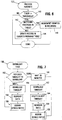
- Fig. 5 illustrates the sequence of operations that occur in a main routine 100 initiated in response to powering on of set top box 14.
- Routine 100 begins in block 102 by performing routine power on processing.
- block 104 starts a download task, which operates as a separate thread to periodically download program information broadcast to the set top box, and process the information to construct and sort the program information based on user viewing habits in a manner consistent with the invention.
- block 106 sets a current channel variable to the previous channel viewed as of the last time the set top box was powered off.
- block 108 starts a timer that is utilized to determine the duration during which the now current channel is viewed by a viewer.
- block 110 initiates an event-driven loop that processes various user input and other events as appropriate for the functionality of set top box 14.
- a number of events relevant to dynamic scroll rate adjustment are detected in blocks 112-118.
- Other events, which are not specifically relevant to dynamic scroll rate adjustment, are handled in a conventional manner in block 120. It will be appreciated that other program models may also be utilized in routine 100 consistent with the invention.
- routine 100 One event that may be handled by routine 100 is that of a channel change, which is detected in block 112 and handled by passing control to a process favorite routine 122.
- a channel change may be responsive to up or down buttons, direct channel input or selection of a program from a guide or overlay, etc.
- process favorite routine 122 determines whether, as of the channel change event, the previous channel has been viewed for a time period in excess of a threshold, with the favorite program table updated as necessary.
- control passes to block 124 to set the current channel to the new channel specified in the channel change event, and to block 126 to restart the timer to monitor the duration that the new channel is viewed. Control then returns to block 110 to process additional events.
- routine 100 Another event handled by routine 100 is a view program list event, which is detected in block 114 and handled by calling a view program list routine 128 to display a non-interactive electronic program list.
- block 116 detects a view interactive guide event, and processes the event by calling a view interactive guide routine 130.
- Each of the events detected in blocks 114 and 116 may be initiated, for example, by depressing a specific button on a remote control or selecting a specific function in a menu-driven user interface associated with the set top box. Other manners of initiating the display of interactive or non-interactive program information may used in the alternative.
- routine 100 Another event that may be handled by routine 100 is a power off event, which is detected in block 118 and handled by passing control to block 132 to save the current channel for retrieval the next time the unit is powered on.
- the power off event may be generated, for example, by depression of a specific button on the front panel of set top box 14 or on a remote control therefor.
- process favorite routine 122 is called, and additional power off processing, known in the art, is performed in block 134. Routine 100 is then complete.
- Fig. 6 illustrates process favorite routine 122 in greater detail, which begins in block 140 by determining whether the current value stored in the timer exceeds a predetermined threshold. As such, it is determined whether, either due to a channel change or the powering off of the set top box, the channel being viewed prior to the event was viewed for a sufficient period of time to signify a program suitable for designation as a "favorite" program.
- the threshold may be set at different levels to increase or decrease the length of time that a user has to view a program before it is automatically determined to be a favorite of the user.
- block 140 simply terminates routine 122 without further processing. If, however, the timer exceeds the threshold, control passes to block 142 to determine whether one or more records already exist in the favorite program table matching the current program information for the program currently being viewed (e.g., the channel, time slot and day). If no records currently exist, control passes to block 144 to create a new record in the favorite program table, storing the relevant program identification information in fields 54-58, and storing an initial watched count of "1" in field 60. In addition, no scroll rate is initially stored in field 62 of the new entry. Upon completion of the creation of a new record, routine 122 is complete.
- routine 142 determines whether one or more records already exist in the favorite program table matching the current program information for the program currently being viewed (e.g., the channel, time slot and day). If no records currently exist, control passes to block 144 to create a new record in the favorite program table, storing the relevant program identification information in fields 54-58, and storing an initial watched count of "1" in field 60
- other criteria e.g., accumulated viewing time
- table 50 may be kept at a fixed maximum size, with programs having the lowest counts periodically deleted as new favorite programs are found.
- Other manners of "aging" the data e.g., periodically decrementing the counts for older entries, may also be used to emphasize programs that have been watched more recently than others.
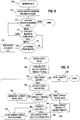
- Fig. 7 next illustrates download task 150 in greater detail.
- the download task essentially retrieves download data from a source of electronic program information, e.g., a satellite broadcast, a cable broadcast, the Internet or dial up connection, etc.
- the download task retrieves program information for each time slot in a given range of time slots, and on each thirty minute interval, retrieves additional data for the new time slot in the future.
- Task 150 begins in block 152 by initiating a FOR loop processing each time slot to download, e.g., twenty-four hours of program information. For each such time slot, control passes to block 154 to download the program information for that time slot. Next, a reorder data routine 156 is called to order the downloaded data based upon the current favorite programs. Next, an assign scroll rates routine 158 is called to process the ordered data to determine appropriate scroll rates for use in dynamic scroll rate adjustment consistent with the invention. Control then returns to block 152 to process additional time slots. Once all time slots have been processed, block 152 passes control to block 160 to wait for thirty minutes, until the start of the next time slot.
- Reorder data routine 156 is next called, followed by assign scroll rates routine 158 to ensure that the favorite program data for the time slot is ordered based upon frequency of access, with appropriate scroll rates stored for each such record.
- Routine 156 begins in block 170 by ordering the favorite program records in table 50 based upon count, thereby determining which programs have been viewed more time than others. It will be appreciated that either the actual table 50 may be reorganized, or in the alternative, a new data structure may be generated including copies of the records in block 50 reordered based upon count.
- block 172 initiates a FOR loop to process each record in the ordered favorite program data. Then, block 172 initiates a nested FOR loop to process, for each such ordered data record, each record in the downloaded data.
- reorder data routine 156 attempts to pull from the downloaded data the program information associated with each favorite program stored in table 50, with such downloaded data organized by frequency of access. Once all such records in the ordered data have been processed, routine 156 is complete.
- Fig. 9 illustrates assign scroll rates routine 158 in greater detail, which begins in block 180 by opening the results file generated by the reorder data routine, and setting a current time slot variable to a null value.
- block 182 initiates a loop to process each record in the results file. While more unprocessed records exist, block 182 passes to block 184 to get the next results file record.
- block 186 determines whether the current time slot variable equals the time slot stored in the results file record (typically if the starting times match). Assuming that during the first pass of routine 158 the decision in block 186 will fail (due to the null value stored in the current time slot variable at block 180), control passes to block 188 to reset the current scroll rate to a nominal, or standard, rate.
- the current scroll rate is set to a special sponsor rate, which may be, for example, one-half the nominal rate so that additional exposure for the program provider is permitted in response to the payment of an appropriate sponsorship fee.
- the current scroll rate may be set to a predetermined value in some implementations. Control then passes to block 192 to determine whether the sponsor flag is set.
- routines 156 and 158 the favorite program data stored in the results file will be initially sorted based upon time slot, and then by relative frequency of access within each time slot. Then, upon execution of block 158, the current scroll rate is reset to a nominal value, and as additional favorite programs are located having the same time slot (or starting time), the scroll rate will increment progressively for each subsequent program listing for the current time slot. Furthermore, given that each record within the results file for a given time slot is respectively ordered based upon frequency of access, the incremental addition to the current scroll rate for subsequent records associated with the time slot ensures that each additional program at the same time slot (which has a lower frequency of access than its preceding program) will be scrolled at a faster and faster rate.
- Routine 128 begins in block 200 by displaying a clear program list, typically including a plurality of display slots that may be displayed on a screen at a given time.
- template information such as the placement of icons, heading information, boundary lines and other graphics, etc., may also be displayed at this time.
- block 214 may include the deletion of information from the oldest slot, and may include either continuous or intermittent scrolling.
- An example of intermittent scrolling would be to set a delay counter according to the scroll rate, thereby preventing scrolling from one program slot to another until the delay counter has expired.
- the display may be scrolled at a continuous rate, whereby the scroll rate is utilized to determine the rate at which individual lines of pixels in the display are scrolled.
- the scroll rate may be stored in any number of units, and may be stored as a delay value in some implementations. Other modifications will be apparent to one of ordinary skill in the art.
- Fig. 11 illustrates a representative television screen 220 displaying a non- interactive program list 222 including a plurality of entries 224 displaying time slot, channel and program information.
- the display is scrolled down continuously while the program list is presented to the user. It will be appreciated that the display is essentially continuous whenever the display is active, despite the fact that the display may be closed by a user and no program information displayed thereafter. Given that program list 222 is non-interactive, the scrolling operation will occur repeatedly in the absence of user input.
- the only user interface with a non-interactive program list is a request to close the list, which may be a separate function, or may be integrated with a channel change function if the program list is associated with a specific channel.
- Fig. 12 illustrates an interactive-type program guide, which is handled by view interactive guide routine 130 of Fig. 12 .
- Routine 130 begins in block 230 by displaying a clear program guide, including open slots and other template information similar to the non-interactive program list.
- block 132 opens the results file, and block 234 fills the available display slots with initial results file program information.
- Block 236 positions a cursor at the top of the guide, in the first display slot therefor.
- block 238 initiates an event-driven loop which receives and handles events directed to the program guide as appropriate.
- Several events that relate to dynamic scroll rate adjustment are detected in blocks 240-246. Other events that may be utilized in the interaction of a user with an electronic program guide are handled in a conventional manner in block 248, prior to returning control to block 238.
- Blocks 240 and 242 respectively detect scroll up and scroll down events, which are generated in response to user input to move the displayed cursor up or down in the electronic program guide. For a scroll up event, block 240 passes control to block 250 to obtain the previous record in the results file. Likewise, for a scroll down event, block 242 passes control to block 252 to get the next record in the results file. Each of block 250, 252 then passes control to block 254 to determine whether the program information for the new record is currently displayed. If so (indicating, for example, that a user has moved the cursor to another entry that does not require the display of new information on the guide), control passes to block 256 to update the position of the cursor.
- control passes to block 258 to scroll the program guide and display the program information for the new record on the guide at the appropriate location.
- Control then passes to block 256 to update the position of the cursor.
- block 258 will update the display of the program guide to insert the new information for the scrolled-to record.
- other slots may need to be shifted in the program guide, and some data discarded as appropriate.
- a select program event is detected in block 244 and handled in block 262 by selecting the program currently highlighted by the cursor.
- selection of a program will initiate display of the program on the video display, or in the alternative, the display of additional program information associated with the program.
- Generation of a select program event is typically initiated by depressing an execute or like button on a remoter controller for a front panel while the cursor is displayed over a particular program.
- Other manners of indicating user selection of a given program displayed on an electronic program guide may be utilized in the alternative.
- block 262 passes control to block 264 to close the guide and remove the display therefor from the television screen. Routine 130 is then complete.
- routine 130 Another event that may be handled by routine 130 is that to close the guide without selecting the program. Such an event is detected in block 246 and handled by passing control to block 264 to close the guide without selection or further action with regard to the program highlighted under the cursor.
- Fig. 13 illustrates a representative television screen 270 including an interactive program guide 272 with a plurality of entries 274 listed in a one- dimensional array including both time slot and channel information, as well as additional program information for a given program associated with each entry.
- Both scrolling up or down through the guide, and selection of given programs or the reception of additional program information is affected through manipulation of a cursor represented at 276.
- the cursor represented at 276.
- the user may scroll between currently-displayed program listings, or move the cursor to the top or bottom of the display, resulting in an update to the display to simulate the operation of scrolling through the list.
- guide 272 is illustrated as a one-dimensional guide, in other embodiments, it may be desirable to provide a two-dimensional guide or grid permitting a user to view not only program information for programs on different channels, but also program information for programs displayed on the same channel but in different time slots.
- a representative two-dimensional program guide is illustrated in television screen 280 at 282.
- channel identifiers 284 are provided, with time slot identifiers displayed along the opposing axis at 286.
- Program information for programs available at different time slots are represented at 288, and a user-manipulated cursor is illustrated at 290.
- scroll rates may be associated only with channels such that all programs on a given channel will share the same stored scroll rate.
- given time slots may be assigned preset scroll rates, such that all programs displayed at a given time slot will share the same scroll rate.
- the scroll rate of a preview function overlay may also be controlled in the manner described above.
- the data generated in the download task may be utilized in controlling the refresh rate that is used to update an overlay when a user is scrolling through program information independent of any electronic program guide.
- a television screen 300 may have an overlay 302 displayed thereon, displaying detailed program information for a single channel.
- user manipulation e.g., via depression of menu or arrow keys on a remote control
- a user may be permitted to view program information for programs on different channels and/or during different time slots.
- the rate at which the user is capable of scrolling between the program information for different programs can be controlled using the scroll rate information stored by the download task if desired.
- the display of program information to a user may be controlled such that programs watched more frequently are scrolled through at a relatively slower rate than programs that are seldom watched.
- the overall access time to retrieve useful program information is typically lowered.
- a favorites list may also be a fixed length, with non- favorite programs simply listed in numerical order following the favorites list.
- the generation of a list of favorite programs may be initiated through separate user action, e.g., a "favorites" button.
- scroll rate information may be associated on a channel-by-channel basis or a time slot-by-time slot basis.
- Monitoring of user viewing habits may also be based on a channel-by-channel basis, storing favorite channels rather than individual programs.
Landscapes
- Engineering & Computer Science (AREA)
- Multimedia (AREA)
- Signal Processing (AREA)
- Databases & Information Systems (AREA)
- Health & Medical Sciences (AREA)
- General Health & Medical Sciences (AREA)
- Social Psychology (AREA)
- Computer Networks & Wireless Communication (AREA)
- Human Computer Interaction (AREA)
- Two-Way Televisions, Distribution Of Moving Picture Or The Like (AREA)
- User Interface Of Digital Computer (AREA)
Claims (14)
- Un procédé d'affichage d'informations de programme (224, 274, 288), le procédé comprenant :- la surveillance d'habitudes de visionnage d'un utilisateur, comprenant :-- la génération d'une liste de programmes favoris basée sur les habitudes de visionnage de l'utilisateur,- l'ordonnancement d'informations de programme téléchargées (224, 274, 288) basées sur la liste de programmes favoris, des vitesses de défilement destinées à une utilisation dans un ajustement dynamique de vitesse de défilement étant attribuées aux informations de programme ordonnées (224, 274, 288), et- l'affichage des informations de programme (224, 274, 288), comprenant :-- le défilement de l'affichage (222, 272, 282) de façon à afficher les informations de programme (224, 274, 288) au moyen d'une vitesse de défilement ajustée dynamiquement à laquelle l'affichage (222, 272, 282) est défilé en fonction des vitesses de défilement attribuées.
- Le procédé selon la Revendication 1, dans lequel la surveillance des habitudes de visionnage de l'utilisateur comprend en outre le tri de la liste de programmes favoris par tranche horaire, les programmes favoris visionnés dans la même tranche horaire dans la liste de programmes favoris étant triés en fonction de la fréquence d'accès.
- Le procédé selon la Revendication 1 ou 2, dans lequel la liste de programmes favoris est une liste parmi (i) une liste de programmes favoris basée sur les habitudes de visionnage de l'utilisateur, ou (ii) une liste de programmes favoris sélectionnés par l'utilisateur par l'intermédiaire d'une action d'utilisateur distincte.
- Le procédé selon l'une quelconque des Revendications 1 à 3, dans lequel des programmes regardés plus fréquemment sont défilés à une vitesse relativement plus lente que des programmes qui sont regardés rarement.
- Le procédé selon l'une quelconque des Revendications 1 à 4, dans lequel les informations de programme (224, 274, 288) contiennent des informations de programme (224, 274, 288) pour des programmes sur plusieurs canaux et diffusés dans plusieurs tranches horaires, les informations de programme (224, 274, 288) étant en conséquence agencées en une matrice bidimensionnelle.
- Le procédé selon l'une quelconque des Revendications 1 à 5, dans lequel le défilement de l'affichage (222, 272, 282) est exécuté en continu.
- Le procédé selon l'une quelconque des Revendications 1 à 5, dans lequel le défilement de l'affichage (222, 272, 282) est exécuté en réponse à une entrée d'utilisateur.
- Le procédé selon la Revendication 7, dans lequel le défilement de l'affichage (222, 272, 282) comprend le déplacement d'un curseur manipulé par l'utilisateur à partir des informations de programme affichées (224, 274, 288) pour un premier programme vers celles d'un deuxième programme, et dans lequel le défilement de l'affichage (222, 272, 282) au moyen de la vitesse de défilement ajustée dynamiquement à laquelle l'affichage (222, 272, 282) est défilé comprend la commande d'un délai avant le déplacement du curseur manipulé par l'utilisateur à partir des informations de programme affichées (224, 274, 288) pour le premier programme vers celles du deuxième programme.
- Le procédé selon l'une quelconque des Revendications 1 à 4, dans lequel l'affichage des informations de programme (224, 274, 288) comprend le fait que seulement des informations de programme (224, 274, 288) pour un premier programme sont affichées dans une incrustation (302), le défilement de l'affichage (222, 272, 282) comprenant l'actualisation de l'incrustation (302) de façon à afficher uniquement des informations de programme (224, 274, 288) associées à un deuxième programme et le défilement de l'affichage (222, 272, 282) au moyen de la vitesse de défilement ajustée dynamiquement à laquelle l'affichage (222, 272, 282) est défilé comprenant en outre la commande d'un délai avant l'actualisation de l'incrustation (302) de façon à afficher les informations de programme (224, 274, 288) associées au deuxième programme.
- Le procédé selon l'une quelconque des Revendications 1 à 9, dans lequel l'attribution de vitesses de défilement est basée sur des informations de partenariat associées aux programmes.
- Le procédé selon l'une quelconque des Revendications 1 à 10, dans lequel la surveillance des habitudes de visionnage de l'utilisateur comprend l'accumulation du nombre de fois où des programmes sont visionnés au-delà d'un seuil prédéterminé.
- Un appareil, comprenant :(a) une mémoire, et(b) un programme résident dans la mémoire, le programme étant configuré de façon à exécuter les opérations selon l'une quelconque des Revendications 1 à 11.
- Un programme informatique contenant du code de programme destiné à la commande du fonctionnement d'un appareil sur lequel il est exécuté de façon à exécuter les opérations selon l'une quelconque des Revendications 1 à 11.
- Un produit de programme comprenant :(a) un programme configuré de façon à exécuter les opérations selon l'une quelconque des Revendications 1 à 11, et(b) un support de signal contenant le programme.
Applications Claiming Priority (2)
| Application Number | Priority Date | Filing Date | Title |
|---|---|---|---|
| US09/502,394 US6721953B1 (en) | 2000-02-11 | 2000-02-11 | Display of television program information using dynamically-adjusted scroll rate |
| EP01301184A EP1124372B1 (fr) | 2000-02-11 | 2001-02-09 | Affichage d'information de programmes de télévision utilisant un taux de défilement sur écran ajustable dynamiquement |
Related Parent Applications (2)
| Application Number | Title | Priority Date | Filing Date |
|---|---|---|---|
| EP01301184.6 Division | 2001-02-09 | ||
| EP01301184A Division EP1124372B1 (fr) | 2000-02-11 | 2001-02-09 | Affichage d'information de programmes de télévision utilisant un taux de défilement sur écran ajustable dynamiquement |
Publications (3)
| Publication Number | Publication Date |
|---|---|
| EP2293549A1 EP2293549A1 (fr) | 2011-03-09 |
| EP2293549B1 true EP2293549B1 (fr) | 2017-03-22 |
| EP2293549B8 EP2293549B8 (fr) | 2017-05-03 |
Family
ID=23997619
Family Applications (2)
| Application Number | Title | Priority Date | Filing Date |
|---|---|---|---|
| EP01301184A Expired - Lifetime EP1124372B1 (fr) | 2000-02-11 | 2001-02-09 | Affichage d'information de programmes de télévision utilisant un taux de défilement sur écran ajustable dynamiquement |
| EP10182306.0A Expired - Lifetime EP2293549B8 (fr) | 2000-02-11 | 2001-02-09 | Affichage d'information de programmes de télévision utilisant un taux de défilement sur écran ajustable dynamiquement |
Family Applications Before (1)
| Application Number | Title | Priority Date | Filing Date |
|---|---|---|---|
| EP01301184A Expired - Lifetime EP1124372B1 (fr) | 2000-02-11 | 2001-02-09 | Affichage d'information de programmes de télévision utilisant un taux de défilement sur écran ajustable dynamiquement |
Country Status (7)
| Country | Link |
|---|---|
| US (1) | US6721953B1 (fr) |
| EP (2) | EP1124372B1 (fr) |
| JP (1) | JP3589407B2 (fr) |
| AU (1) | AU772939B2 (fr) |
| CA (1) | CA2326708C (fr) |
| ES (2) | ES2386274T3 (fr) |
| PT (1) | PT1124372E (fr) |
Families Citing this family (85)
| Publication number | Priority date | Publication date | Assignee | Title |
|---|---|---|---|---|
| US7831930B2 (en) * | 2001-11-20 | 2010-11-09 | Universal Electronics Inc. | System and method for displaying a user interface for a remote control application |
| US6591423B1 (en) * | 2000-02-28 | 2003-07-08 | Qwest Communications International Inc. | Gateway power synchronization |
| ATE328320T1 (de) * | 2000-03-17 | 2006-06-15 | Opentv Inc | Verfahren und system zur auswahl eines gegenstandes aus einer auf einem bildschirm erscheinenden liste |
| US7934232B1 (en) * | 2000-05-04 | 2011-04-26 | Jerding Dean F | Navigation paradigm for access to television services |
| US7685520B2 (en) * | 2000-06-22 | 2010-03-23 | Intel Corporation | Electronic programming guide with selectable categories |
| US7509662B2 (en) * | 2000-10-19 | 2009-03-24 | Jlb Ventures, Llc | Method and apparatus for generation of a preferred broadcasted programs list |
| US20020083450A1 (en) * | 2000-12-01 | 2002-06-27 | Yakov Kamen | Method and system for content-based broadcasted program selection |
| US7231652B2 (en) * | 2001-03-28 | 2007-06-12 | Koninklijke Philips N.V. | Adaptive sampling technique for selecting negative examples for artificial intelligence applications |
| US7299484B2 (en) * | 2001-07-20 | 2007-11-20 | The Directv Group, Inc. | Method and apparatus for adaptive channel selection |
| US20030084448A1 (en) * | 2001-10-26 | 2003-05-01 | Koninklijke Philips Electronics N.V. | Automatic viewing-history based television control system |
| US20030115589A1 (en) * | 2001-12-17 | 2003-06-19 | D'souza Errol | System and method for automatically flagging a channel as a favorite channel |
| US20030149984A1 (en) * | 2002-02-06 | 2003-08-07 | Koninlijke Philips Electronics N.V. | VCR-style transport for navigating electronic program guide (EPG) and other textual information |
| US8832754B2 (en) * | 2002-05-03 | 2014-09-09 | Tvworks, Llc | System and method for providing synchronized events to a television application |
| US20060053451A1 (en) * | 2002-09-05 | 2006-03-09 | Lockrige Terry W | Method and system for providing a cache guide |
| US20050102634A1 (en) * | 2003-11-10 | 2005-05-12 | Sloo David H. | Understandable navigation of an information array |
| US8161388B2 (en) | 2004-01-21 | 2012-04-17 | Rodriguez Arturo A | Interactive discovery of display device characteristics |
| JP2005286743A (ja) * | 2004-03-30 | 2005-10-13 | Sanyo Electric Co Ltd | ディジタル放送受信装置 |
| DE102004016007A1 (de) * | 2004-04-01 | 2005-10-20 | Bosch Gmbh Robert | Verfahren zur Darstellung möglicher Eingaben |
| EP1594069A1 (fr) * | 2004-05-04 | 2005-11-09 | Thomson Licensing S.A. | Méthode et appareil pour la reproduction des documents préférés par l'utilisateur choisis parmi une pluralité de documents |
| US20050262533A1 (en) * | 2004-05-19 | 2005-11-24 | Microsoft Corporation | User interface having a cycling display of content representations |
| KR100763900B1 (ko) * | 2004-08-28 | 2007-10-05 | 삼성전자주식회사 | 사용자 시선정보에 기반한 텔레비전 프로그램 녹화/재생방법 및 그 장치 |
| JP2006127485A (ja) * | 2004-09-30 | 2006-05-18 | Sanyo Electric Co Ltd | コンテンツ再生装置およびコンテンツ再生方法 |
| US7551188B2 (en) * | 2004-10-01 | 2009-06-23 | Nokia Corporation | Scrolling items on a list |
| JP4606158B2 (ja) * | 2004-12-28 | 2011-01-05 | ソニー株式会社 | 表示方法、携帯端末装置及び表示プログラム |
| US7856602B2 (en) * | 2005-04-20 | 2010-12-21 | Apple Inc. | Updatable menu items |
| US7761801B2 (en) * | 2005-04-26 | 2010-07-20 | Lg Electronics Inc. | Mobile terminal providing graphic user interface and method of providing graphic user interface using the same |
| US20060248470A1 (en) * | 2005-04-29 | 2006-11-02 | Microsoft Corporation | Variable-rate scrolling of media items |
| WO2006124316A2 (fr) * | 2005-05-17 | 2006-11-23 | Thomson Licensing | Procede et appareil destines a fournir un guide de programme |
| WO2007017784A2 (fr) * | 2005-08-09 | 2007-02-15 | Koninklijke Philips Electronics N.V. | Procede de defilement avec vitesse de defilement et retour de l'information obtenus a partir d'informations contextuelles |
| FR2891428A1 (fr) * | 2005-09-27 | 2007-03-30 | Thomson Licensing Sas | Procede de navigation dans une liste par defilement continu d'une caracteristique graphique, et terminal associe. |
| US8381121B2 (en) * | 2006-03-01 | 2013-02-19 | Microsoft Corporation | Controlling scroll speed to improve readability |
| US8069461B2 (en) | 2006-03-30 | 2011-11-29 | Verizon Services Corp. | On-screen program guide with interactive programming recommendations |
| US9679602B2 (en) | 2006-06-14 | 2017-06-13 | Seagate Technology Llc | Disc drive circuitry swap |
| JP4265624B2 (ja) * | 2006-06-29 | 2009-05-20 | オンキヨー株式会社 | コンテンツ選択装置及びコンテンツ選択プログラム |
| US7693869B2 (en) * | 2006-09-06 | 2010-04-06 | International Business Machines Corporation | Method and apparatus for using item dwell time to manage a set of items |
| US8418217B2 (en) | 2006-09-06 | 2013-04-09 | Verizon Patent And Licensing Inc. | Systems and methods for accessing media content |
| KR101287976B1 (ko) * | 2006-09-11 | 2013-07-18 | 삼성전자주식회사 | 데이터 어플리케이션의 자동실행 조정방법 및 이를 적용한영상재생장치 |
| US8464295B2 (en) | 2006-10-03 | 2013-06-11 | Verizon Patent And Licensing Inc. | Interactive search graphical user interface systems and methods |
| US8566874B2 (en) | 2006-10-03 | 2013-10-22 | Verizon Patent And Licensing Inc. | Control tools for media content access systems and methods |
| US8510780B2 (en) | 2006-12-21 | 2013-08-13 | Verizon Patent And Licensing Inc. | Program guide navigation tools for media content access systems and methods |
| US8015581B2 (en) | 2007-01-05 | 2011-09-06 | Verizon Patent And Licensing Inc. | Resource data configuration for media content access systems and methods |
| WO2008090610A1 (fr) * | 2007-01-25 | 2008-07-31 | Renesas Technology Corp. | Récepteur de diffusion et procédé de sélection de programme de diffusion |
| FR2913803B1 (fr) * | 2007-03-12 | 2009-12-18 | Eastman Kodak Co | Procede de furetage a vitesse variable pour images numeriques |
| US8769577B2 (en) * | 2007-05-15 | 2014-07-01 | Centurylink Intellectual Property Llc | System and method for providing fast channel surfing |
| US8701037B2 (en) * | 2007-06-27 | 2014-04-15 | Microsoft Corporation | Turbo-scroll mode for rapid data item selection |
| US8103965B2 (en) | 2007-06-28 | 2012-01-24 | Verizon Patent And Licensing Inc. | Media content recording and healing statuses |
| JP4924828B2 (ja) * | 2007-07-06 | 2012-04-25 | オンキヨー株式会社 | コンテンツ情報表示装置およびそのプログラム |
| WO2009026508A1 (fr) * | 2007-08-22 | 2009-02-26 | The Trustees Of Columbia University In The City Of New York | Procédés, systèmes et milieux pour assurer un défilement sensible au contenu |
| US9305590B2 (en) | 2007-10-16 | 2016-04-05 | Seagate Technology Llc | Prevent data storage device circuitry swap |
| JP5134350B2 (ja) * | 2007-12-05 | 2013-01-30 | シャープ株式会社 | リモコン装置及びシステム |
| JP5059574B2 (ja) * | 2007-12-10 | 2012-10-24 | シャープ株式会社 | テレビジョン放送受信装置及びカーソル移動制御方法 |
| US8051447B2 (en) | 2007-12-19 | 2011-11-01 | Verizon Patent And Licensing Inc. | Condensed program guide for media content access systems and methods |
| JP5251147B2 (ja) * | 2008-01-31 | 2013-07-31 | ソニー株式会社 | 情報処理装置および情報提供方法 |
| US8745663B2 (en) * | 2008-01-31 | 2014-06-03 | Echostar Technologies L.L.C. | Systems and methods for providing information in response to electronic program guide usage |
| US8245255B2 (en) * | 2008-03-26 | 2012-08-14 | Cisco Technology, Inc. | Program guide navigation |
| US20100058240A1 (en) * | 2008-08-26 | 2010-03-04 | Apple Inc. | Dynamic Control of List Navigation Based on List Item Properties |
| US8201100B2 (en) * | 2008-09-04 | 2012-06-12 | VIZIO Inc. | Metadata driven control of navigational speed through a user interface |
| EP2299712B1 (fr) * | 2008-09-16 | 2018-11-07 | Huawei Device Co., Ltd. | Procédé, dispositif et système de renouvellement de programme |
| US20130014167A1 (en) * | 2008-10-17 | 2013-01-10 | Kazuhiro Sakashita | Broadcast receiving device and program selecting method |
| KR101503850B1 (ko) * | 2008-12-24 | 2015-03-19 | 삼성전자 주식회사 | 디스플레이장치 및 그 제어방법 |
| JP5070194B2 (ja) * | 2008-12-26 | 2012-11-07 | 株式会社日立製作所 | コンテンツ一覧表示装置、及び、制御方法 |
| US8255955B1 (en) | 2009-06-16 | 2012-08-28 | Tivo Inc. | Dynamic item highlighting system |
| KR20130079337A (ko) * | 2010-03-12 | 2013-07-10 | 라이브 매트릭스, 인크. | 예정된 웹-기반 이벤트들의 인터랙티브 캘린더 |
| CA2740111C (fr) | 2010-05-10 | 2019-01-15 | Encore Interactive Inc. | Flux de diffusion en temps reel, et systeme et procede de conversion des donnees de controle |
| US8522283B2 (en) * | 2010-05-20 | 2013-08-27 | Google Inc. | Television remote control data transfer |
| US20110289422A1 (en) * | 2010-05-21 | 2011-11-24 | Live Matrix, Inc. | Interactive calendar of scheduled web-based events and temporal indices of the web that associate index elements with metadata |
| US20120054656A1 (en) * | 2010-08-30 | 2012-03-01 | Nokia Corporation | Method, apparatus, and computer program product for adapting movement of content segments |
| US9619100B2 (en) | 2010-08-30 | 2017-04-11 | Nokia Technologies Oy | Method, apparatus, and computer program product for adapting a content segment based on an importance level |
| JP5095857B2 (ja) * | 2010-12-28 | 2012-12-12 | シャープ株式会社 | 番組情報通知装置、テレビジョン受像機、番組情報通知方法、番組情報通知プログラム、および記録媒体 |
| EP2724549A1 (fr) * | 2011-06-24 | 2014-04-30 | The Directv Group, Inc. | Procédé et système pour obtenir des données d'observation et donner des recommandations au niveau d'un boîtier décodeur |
| EP2592828A1 (fr) | 2011-11-09 | 2013-05-15 | OpenTV, Inc. | Appareil et procédé de navigation d'un guide de programme électronique |
| US8589977B1 (en) * | 2011-12-30 | 2013-11-19 | Time Warner Cable Enterprises Llc | Methods and apparatus for improving scrolling through program channel listings |
| JP5464622B1 (ja) * | 2012-10-10 | 2014-04-09 | シャープ株式会社 | 電子番組表表示装置およびテレビジョン受像機 |
| US10474342B2 (en) | 2012-12-17 | 2019-11-12 | Microsoft Technology Licensing, Llc | Scrollable user interface control |
| US9348496B2 (en) | 2013-06-28 | 2016-05-24 | Google Inc. | Selecting content based on performance of a content slot |
| US9906751B2 (en) * | 2013-12-06 | 2018-02-27 | Opentv, Inc. | User interface techniques for television channel changes |
| US10397637B2 (en) * | 2014-12-04 | 2019-08-27 | Samsung Electronics Co., Ltd. | Apparatus and method for facilitating channel control on a paired device |
| WO2016118848A1 (fr) * | 2015-01-22 | 2016-07-28 | Clearstream. Tv, Inc. | Système de publicité vidéo |
| KR20160097867A (ko) * | 2015-02-10 | 2016-08-18 | 삼성전자주식회사 | 영상 표시 장치 및 영상 표시 방법 |
| US10097867B2 (en) * | 2015-09-14 | 2018-10-09 | Disney Enterprises, Inc. | Systems and methods for providing a ratings version and a dynamic ad version of a video |
| KR102422796B1 (ko) * | 2015-12-22 | 2022-07-19 | 삼성전자주식회사 | 전자 장치 및 전자 장치에서 채널 탐색 방법 |
| KR102593437B1 (ko) * | 2016-03-14 | 2023-10-24 | 삼성전자주식회사 | 영상 표시 장치 및 그 동작 방법 |
| US20170280201A1 (en) * | 2016-03-22 | 2017-09-28 | Le Holdings (Beijing) Co., Ltd. | Method and electronic device for updating program guide |
| KR102645570B1 (ko) * | 2016-12-19 | 2024-03-11 | 삼성전자주식회사 | 사용자 입력에 기반하여 채널 조작 ui를 표시하는 디스플레이 장치 및 디스플레이 장치의 제어 방법 |
| US10462528B2 (en) * | 2017-11-20 | 2019-10-29 | Rovi Guides, Inc. | Methods and systems for indicating popular content |
Citations (4)
| Publication number | Priority date | Publication date | Assignee | Title |
|---|---|---|---|---|
| US4952927A (en) * | 1987-08-05 | 1990-08-28 | Motorola, Inc. | Paging receiver with dynamically allocated display rate |
| US5353121A (en) * | 1989-10-30 | 1994-10-04 | Starsight Telecast, Inc. | Television schedule system |
| JPH07140963A (ja) * | 1993-11-17 | 1995-06-02 | Kokusai Electric Co Ltd | スクロール表示方法及びスクロール表示システム |
| EP0944252A1 (fr) * | 1998-03-17 | 1999-09-22 | Sony Corporation | Appareil et méthode de traitement de données, appareil et méthode de démodulation de signal numérique, et support de présentation |
Family Cites Families (28)
| Publication number | Priority date | Publication date | Assignee | Title |
|---|---|---|---|---|
| US5579055A (en) * | 1993-06-07 | 1996-11-26 | Scientific-Atlanta, Inc. | Electronic program guide and text channel data controller |
| WO1995028055A1 (fr) * | 1994-04-08 | 1995-10-19 | Prevue International, Inc. | Guide de programmation de defilement interactif |
| US5495566A (en) * | 1994-11-22 | 1996-02-27 | Microsoft Corporation | Scrolling contents of a window |
| US5758257A (en) * | 1994-11-29 | 1998-05-26 | Herz; Frederick | System and method for scheduling broadcast of and access to video programs and other data using customer profiles |
| US6426779B1 (en) * | 1995-01-04 | 2002-07-30 | Sony Electronics, Inc. | Method and apparatus for providing favorite station and programming information in a multiple station broadcast system |
| JPH08227097A (ja) * | 1995-02-21 | 1996-09-03 | Ricoh Co Ltd | カメラ装置 |
| US5805201A (en) * | 1995-04-27 | 1998-09-08 | Utec Inc. | Device for automatically controlling a television |
| US5861906A (en) * | 1995-05-05 | 1999-01-19 | Microsoft Corporation | Interactive entertainment network system and method for customizing operation thereof according to viewer preferences |
| US6323911B1 (en) * | 1995-10-02 | 2001-11-27 | Starsight Telecast, Inc. | System and method for using television schedule information |
| US5774109A (en) * | 1995-12-29 | 1998-06-30 | Franklin Electronic Publishers, Incorporated | Electronic scrolling book with temporary interruptions |
| US5635989A (en) * | 1996-02-13 | 1997-06-03 | Hughes Electronics | Method and apparatus for sorting and searching a television program guide |
| US5828419A (en) * | 1996-02-29 | 1998-10-27 | Hughes Electronics | Method and apparatus for generating television program guides utilizing icons |
| US5936618A (en) * | 1996-04-19 | 1999-08-10 | U.S. Philips Corporation | Information display device with adaptive scroll speed |
| AU3294997A (en) * | 1996-06-13 | 1998-01-07 | Starsight Telecast Incorporated | Method and apparatus for searching a guide using program characteristics |
| US6154757A (en) * | 1997-01-29 | 2000-11-28 | Krause; Philip R. | Electronic text reading environment enhancement method and apparatus |
| US6351273B1 (en) * | 1997-04-30 | 2002-02-26 | Jerome H. Lemelson | System and methods for controlling automatic scrolling of information on a display or screen |
| US6034688A (en) * | 1997-09-15 | 2000-03-07 | Sony Corporation | Scrolling navigational display system |
| US6243145B1 (en) * | 1998-05-01 | 2001-06-05 | Scientific-Atlanta, Inc. | Method and apparatus for browsing television channel information by category |
| US6536041B1 (en) * | 1998-06-16 | 2003-03-18 | United Video Properties, Inc. | Program guide system with real-time data sources |
| JP2000013708A (ja) * | 1998-06-26 | 2000-01-14 | Hitachi Ltd | 番組選択支援装置 |
| US6763522B1 (en) * | 1998-06-30 | 2004-07-13 | Sony Corporation | System and method for a digital television electronic program guide |
| WO2000004708A1 (fr) * | 1998-07-17 | 2000-01-27 | United Video Properties, Inc. | Systeme de television avec recherche de programmes televises par un utilisateur assiste |
| AU5006699A (en) * | 1998-07-23 | 2000-02-14 | Diva Systems Corporation | Interactive user interface |
| US6452612B1 (en) * | 1998-12-18 | 2002-09-17 | Parkervision, Inc. | Real time video production system and method |
| US6425129B1 (en) * | 1999-03-31 | 2002-07-23 | Sony Corporation | Channel preview with rate dependent channel information |
| US6792615B1 (en) * | 1999-05-19 | 2004-09-14 | New Horizons Telecasting, Inc. | Encapsulated, streaming media automation and distribution system |
| US6462752B1 (en) * | 1999-11-16 | 2002-10-08 | International Business Machines Corporation | Automatic scrolling function for editors and browsers |
| US6571930B2 (en) * | 2001-02-26 | 2003-06-03 | Fortune Resources, Inc. | Coin mechanism for vending machine |
-
2000
- 2000-02-11 US US09/502,394 patent/US6721953B1/en not_active Expired - Lifetime
- 2000-11-23 CA CA2326708A patent/CA2326708C/fr not_active Expired - Lifetime
- 2000-11-27 AU AU71844/00A patent/AU772939B2/en not_active Expired
-
2001
- 2001-01-22 JP JP2001013271A patent/JP3589407B2/ja not_active Expired - Fee Related
- 2001-02-09 PT PT01301184T patent/PT1124372E/pt unknown
- 2001-02-09 ES ES01301184T patent/ES2386274T3/es not_active Expired - Lifetime
- 2001-02-09 ES ES10182306.0T patent/ES2634426T3/es not_active Expired - Lifetime
- 2001-02-09 EP EP01301184A patent/EP1124372B1/fr not_active Expired - Lifetime
- 2001-02-09 EP EP10182306.0A patent/EP2293549B8/fr not_active Expired - Lifetime
Patent Citations (4)
| Publication number | Priority date | Publication date | Assignee | Title |
|---|---|---|---|---|
| US4952927A (en) * | 1987-08-05 | 1990-08-28 | Motorola, Inc. | Paging receiver with dynamically allocated display rate |
| US5353121A (en) * | 1989-10-30 | 1994-10-04 | Starsight Telecast, Inc. | Television schedule system |
| JPH07140963A (ja) * | 1993-11-17 | 1995-06-02 | Kokusai Electric Co Ltd | スクロール表示方法及びスクロール表示システム |
| EP0944252A1 (fr) * | 1998-03-17 | 1999-09-22 | Sony Corporation | Appareil et méthode de traitement de données, appareil et méthode de démodulation de signal numérique, et support de présentation |
Also Published As
| Publication number | Publication date |
|---|---|
| ES2386274T3 (es) | 2012-08-16 |
| EP1124372A2 (fr) | 2001-08-16 |
| ES2634426T3 (es) | 2017-09-27 |
| EP2293549B8 (fr) | 2017-05-03 |
| AU772939B2 (en) | 2004-05-13 |
| CA2326708C (fr) | 2012-05-01 |
| JP2001251569A (ja) | 2001-09-14 |
| JP3589407B2 (ja) | 2004-11-17 |
| US6721953B1 (en) | 2004-04-13 |
| CA2326708A1 (fr) | 2001-08-11 |
| AU7184400A (en) | 2001-08-16 |
| EP1124372B1 (fr) | 2012-05-30 |
| EP2293549A1 (fr) | 2011-03-09 |
| PT1124372E (pt) | 2012-09-07 |
| EP1124372A3 (fr) | 2004-06-23 |
Similar Documents
| Publication | Publication Date | Title |
|---|---|---|
| EP2293549B1 (fr) | Affichage d'information de programmes de télévision utilisant un taux de défilement sur écran ajustable dynamiquement | |
| JP3495049B2 (ja) | ポップアップアクションメニューとアイコンを有するテレビスケジュールシステム | |
| US7120922B2 (en) | Time-adaptive control of television viewing functionality | |
| US9998792B2 (en) | Electronic program guide for indicating availability of past programs | |
| CN1745576B (zh) | 具有数字视频记录和可调整的提醒的交互式电视系统 | |
| CA2666635C (fr) | Systemes et procedes pour guides d'emissions interactifs comportant des caracteristiques d'enregistrement video personnel | |
| US20090282428A1 (en) | Time-adaptive ipg based on user viewing habits during predetermined intervals | |
| EP2288146A1 (fr) | Guide électronique de programmes affiché simultanément avec une programmation de télévision | |
| EP1189433A1 (fr) | Amélioration relative à des systèmes de télévision | |
| US20080229359A1 (en) | Smart interactive program guide | |
| KR20080094832A (ko) | 복수 채널 병렬 디지털 비디오 레코더 | |
| EP3203727A1 (fr) | Systèmes et procédés de navigation dans des listes de programmes dans une application de guidage multimédia | |
| KR101001176B1 (ko) | 콘텐츠를 기록 및 재생하는 방법, 사용자 인터페이스 및 개인용 비디오 레코더 시스템 | |
| HK1023244A (en) | Television schedule system with pop-up action menu and icons | |
| HK1051283A (en) | Electronic program guide displayed simultaneously with television programming |
Legal Events
| Date | Code | Title | Description |
|---|---|---|---|
| PUAI | Public reference made under article 153(3) epc to a published international application that has entered the european phase |
Free format text: ORIGINAL CODE: 0009012 |
|
| AC | Divisional application: reference to earlier application |
Ref document number: 1124372 Country of ref document: EP Kind code of ref document: P |
|
| AK | Designated contracting states |
Kind code of ref document: A1 Designated state(s): AT BE CH CY DE DK ES FI FR GB GR IE IT LI LU MC NL PT SE TR |
|
| 17P | Request for examination filed |
Effective date: 20110909 |
|
| 17Q | First examination report despatched |
Effective date: 20111006 |
|
| GRAP | Despatch of communication of intention to grant a patent |
Free format text: ORIGINAL CODE: EPIDOSNIGR1 |
|
| RAP1 | Party data changed (applicant data changed or rights of an application transferred) |
Owner name: TIVO INC. |
|
| INTG | Intention to grant announced |
Effective date: 20160912 |
|
| GRAS | Grant fee paid |
Free format text: ORIGINAL CODE: EPIDOSNIGR3 |
|
| GRAA | (expected) grant |
Free format text: ORIGINAL CODE: 0009210 |
|
| RAP1 | Party data changed (applicant data changed or rights of an application transferred) |
Owner name: TIVO SOLUTIONS INC. |
|
| AC | Divisional application: reference to earlier application |
Ref document number: 1124372 Country of ref document: EP Kind code of ref document: P |
|
| AK | Designated contracting states |
Kind code of ref document: B1 Designated state(s): AT BE CH CY DE DK ES FI FR GB GR IE IT LI LU MC NL PT SE TR |
|
| REG | Reference to a national code |
Ref country code: GB Ref legal event code: FG4D |
|
| RAP2 | Party data changed (patent owner data changed or rights of a patent transferred) |
Owner name: TIVO SOLUTIONS INC. |
|
| REG | Reference to a national code |
Ref country code: CH Ref legal event code: EP |
|
| REG | Reference to a national code |
Ref country code: AT Ref legal event code: REF Ref document number: 878773 Country of ref document: AT Kind code of ref document: T Effective date: 20170415 |
|
| REG | Reference to a national code |
Ref country code: IE Ref legal event code: FG4D |
|
| REG | Reference to a national code |
Ref country code: DE Ref legal event code: R096 Ref document number: 60150378 Country of ref document: DE |
|
| REG | Reference to a national code |
Ref country code: NL Ref legal event code: MP Effective date: 20170322 |
|
| PG25 | Lapsed in a contracting state [announced via postgrant information from national office to epo] |
Ref country code: GR Free format text: LAPSE BECAUSE OF FAILURE TO SUBMIT A TRANSLATION OF THE DESCRIPTION OR TO PAY THE FEE WITHIN THE PRESCRIBED TIME-LIMIT Effective date: 20170623 Ref country code: FI Free format text: LAPSE BECAUSE OF FAILURE TO SUBMIT A TRANSLATION OF THE DESCRIPTION OR TO PAY THE FEE WITHIN THE PRESCRIBED TIME-LIMIT Effective date: 20170322 |
|
| REG | Reference to a national code |
Ref country code: AT Ref legal event code: MK05 Ref document number: 878773 Country of ref document: AT Kind code of ref document: T Effective date: 20170322 |
|
| PG25 | Lapsed in a contracting state [announced via postgrant information from national office to epo] |
Ref country code: SE Free format text: LAPSE BECAUSE OF FAILURE TO SUBMIT A TRANSLATION OF THE DESCRIPTION OR TO PAY THE FEE WITHIN THE PRESCRIBED TIME-LIMIT Effective date: 20170322 |
|
| REG | Reference to a national code |
Ref country code: ES Ref legal event code: FG2A Ref document number: 2634426 Country of ref document: ES Kind code of ref document: T3 Effective date: 20170927 |
|
| PG25 | Lapsed in a contracting state [announced via postgrant information from national office to epo] |
Ref country code: NL Free format text: LAPSE BECAUSE OF FAILURE TO SUBMIT A TRANSLATION OF THE DESCRIPTION OR TO PAY THE FEE WITHIN THE PRESCRIBED TIME-LIMIT Effective date: 20170322 |
|
| PG25 | Lapsed in a contracting state [announced via postgrant information from national office to epo] |
Ref country code: AT Free format text: LAPSE BECAUSE OF FAILURE TO SUBMIT A TRANSLATION OF THE DESCRIPTION OR TO PAY THE FEE WITHIN THE PRESCRIBED TIME-LIMIT Effective date: 20170322 |
|
| PG25 | Lapsed in a contracting state [announced via postgrant information from national office to epo] |
Ref country code: PT Free format text: LAPSE BECAUSE OF FAILURE TO SUBMIT A TRANSLATION OF THE DESCRIPTION OR TO PAY THE FEE WITHIN THE PRESCRIBED TIME-LIMIT Effective date: 20170724 |
|
| RAP2 | Party data changed (patent owner data changed or rights of a patent transferred) |
Owner name: TIVO SOLUTIONS INC. |
|
| REG | Reference to a national code |
Ref country code: DE Ref legal event code: R097 Ref document number: 60150378 Country of ref document: DE |
|
| REG | Reference to a national code |
Ref country code: FR Ref legal event code: PLFP Year of fee payment: 18 |
|
| PLBE | No opposition filed within time limit |
Free format text: ORIGINAL CODE: 0009261 |
|
| STAA | Information on the status of an ep patent application or granted ep patent |
Free format text: STATUS: NO OPPOSITION FILED WITHIN TIME LIMIT |
|
| PG25 | Lapsed in a contracting state [announced via postgrant information from national office to epo] |
Ref country code: DK Free format text: LAPSE BECAUSE OF FAILURE TO SUBMIT A TRANSLATION OF THE DESCRIPTION OR TO PAY THE FEE WITHIN THE PRESCRIBED TIME-LIMIT Effective date: 20170322 |
|
| 26N | No opposition filed |
Effective date: 20180102 |
|
| REG | Reference to a national code |
Ref country code: CH Ref legal event code: PL |
|
| PG25 | Lapsed in a contracting state [announced via postgrant information from national office to epo] |
Ref country code: MC Free format text: LAPSE BECAUSE OF FAILURE TO SUBMIT A TRANSLATION OF THE DESCRIPTION OR TO PAY THE FEE WITHIN THE PRESCRIBED TIME-LIMIT Effective date: 20170322 |
|
| REG | Reference to a national code |
Ref country code: IE Ref legal event code: MM4A |
|
| REG | Reference to a national code |
Ref country code: BE Ref legal event code: MM Effective date: 20180228 |
|
| PG25 | Lapsed in a contracting state [announced via postgrant information from national office to epo] |
Ref country code: LU Free format text: LAPSE BECAUSE OF NON-PAYMENT OF DUE FEES Effective date: 20180209 Ref country code: CH Free format text: LAPSE BECAUSE OF NON-PAYMENT OF DUE FEES Effective date: 20180228 Ref country code: LI Free format text: LAPSE BECAUSE OF NON-PAYMENT OF DUE FEES Effective date: 20180228 |
|
| PG25 | Lapsed in a contracting state [announced via postgrant information from national office to epo] |
Ref country code: IE Free format text: LAPSE BECAUSE OF NON-PAYMENT OF DUE FEES Effective date: 20180209 |
|
| PG25 | Lapsed in a contracting state [announced via postgrant information from national office to epo] |
Ref country code: BE Free format text: LAPSE BECAUSE OF NON-PAYMENT OF DUE FEES Effective date: 20180228 |
|
| PG25 | Lapsed in a contracting state [announced via postgrant information from national office to epo] |
Ref country code: TR Free format text: LAPSE BECAUSE OF FAILURE TO SUBMIT A TRANSLATION OF THE DESCRIPTION OR TO PAY THE FEE WITHIN THE PRESCRIBED TIME-LIMIT Effective date: 20170322 |
|
| PGFP | Annual fee paid to national office [announced via postgrant information from national office to epo] |
Ref country code: DE Payment date: 20200129 Year of fee payment: 20 Ref country code: ES Payment date: 20200302 Year of fee payment: 20 Ref country code: IT Payment date: 20200128 Year of fee payment: 20 Ref country code: GB Payment date: 20200129 Year of fee payment: 20 |
|
| PG25 | Lapsed in a contracting state [announced via postgrant information from national office to epo] |
Ref country code: CY Free format text: LAPSE BECAUSE OF FAILURE TO SUBMIT A TRANSLATION OF THE DESCRIPTION OR TO PAY THE FEE WITHIN THE PRESCRIBED TIME-LIMIT Effective date: 20170322 |
|
| PGFP | Annual fee paid to national office [announced via postgrant information from national office to epo] |
Ref country code: FR Payment date: 20200113 Year of fee payment: 20 |
|
| REG | Reference to a national code |
Ref country code: DE Ref legal event code: R071 Ref document number: 60150378 Country of ref document: DE |
|
| REG | Reference to a national code |
Ref country code: GB Ref legal event code: PE20 Expiry date: 20210208 |
|
| PG25 | Lapsed in a contracting state [announced via postgrant information from national office to epo] |
Ref country code: GB Free format text: LAPSE BECAUSE OF EXPIRATION OF PROTECTION Effective date: 20210208 |
|
| REG | Reference to a national code |
Ref country code: ES Ref legal event code: FD2A Effective date: 20220128 |
|
| PG25 | Lapsed in a contracting state [announced via postgrant information from national office to epo] |
Ref country code: ES Free format text: LAPSE BECAUSE OF EXPIRATION OF PROTECTION Effective date: 20210210 |