EP2294798B1 - Verfahren und entsprechende vorrichtung zum routen eines datenpackets in einem netzwerk - Google Patents
Verfahren und entsprechende vorrichtung zum routen eines datenpackets in einem netzwerk Download PDFInfo
- Publication number
- EP2294798B1 EP2294798B1 EP09730448.9A EP09730448A EP2294798B1 EP 2294798 B1 EP2294798 B1 EP 2294798B1 EP 09730448 A EP09730448 A EP 09730448A EP 2294798 B1 EP2294798 B1 EP 2294798B1
- Authority
- EP
- European Patent Office
- Prior art keywords
- routing
- address
- destination
- packet
- terminal equipment
- Prior art date
- Legal status (The legal status is an assumption and is not a legal conclusion. Google has not performed a legal analysis and makes no representation as to the accuracy of the status listed.)
- Active
Links
Images



Classifications
-
- H—ELECTRICITY
- H04—ELECTRIC COMMUNICATION TECHNIQUE
- H04L—TRANSMISSION OF DIGITAL INFORMATION, e.g. TELEGRAPHIC COMMUNICATION
- H04L45/00—Routing or path finding of packets in data switching networks
-
- H—ELECTRICITY
- H04—ELECTRIC COMMUNICATION TECHNIQUE
- H04L—TRANSMISSION OF DIGITAL INFORMATION, e.g. TELEGRAPHIC COMMUNICATION
- H04L61/00—Network arrangements, protocols or services for addressing or naming
- H04L61/09—Mapping addresses
- H04L61/25—Mapping addresses of the same type
- H04L61/2503—Translation of Internet protocol [IP] addresses
- H04L61/2517—Translation of Internet protocol [IP] addresses using port numbers
-
- H—ELECTRICITY
- H04—ELECTRIC COMMUNICATION TECHNIQUE
- H04L—TRANSMISSION OF DIGITAL INFORMATION, e.g. TELEGRAPHIC COMMUNICATION
- H04L61/00—Network arrangements, protocols or services for addressing or naming
- H04L61/09—Mapping addresses
- H04L61/25—Mapping addresses of the same type
- H04L61/2503—Translation of Internet protocol [IP] addresses
- H04L61/2557—Translation policies or rules
-
- H—ELECTRICITY
- H04—ELECTRIC COMMUNICATION TECHNIQUE
- H04L—TRANSMISSION OF DIGITAL INFORMATION, e.g. TELEGRAPHIC COMMUNICATION
- H04L61/00—Network arrangements, protocols or services for addressing or naming
- H04L61/50—Address allocation
- H04L61/5007—Internet protocol [IP] addresses
- H04L61/5014—Internet protocol [IP] addresses using dynamic host configuration protocol [DHCP] or bootstrap protocol [BOOTP]
-
- H—ELECTRICITY
- H04—ELECTRIC COMMUNICATION TECHNIQUE
- H04L—TRANSMISSION OF DIGITAL INFORMATION, e.g. TELEGRAPHIC COMMUNICATION
- H04L2101/00—Indexing scheme associated with group H04L61/00
- H04L2101/60—Types of network addresses
-
- H—ELECTRICITY
- H04—ELECTRIC COMMUNICATION TECHNIQUE
- H04L—TRANSMISSION OF DIGITAL INFORMATION, e.g. TELEGRAPHIC COMMUNICATION
- H04L2101/00—Indexing scheme associated with group H04L61/00
- H04L2101/60—Types of network addresses
- H04L2101/695—Types of network addresses using masks or ranges of addresses
Definitions
- the field of the invention is that of a telecommunications network, in particular an IP telecommunications network in which data packets are transported from a source equipment to a destination equipment identified by a destination address.
- Such a telecommunications network groups a plurality of equipment, links and functions dedicated to the transport of data from terminal equipment connected to this network.
- the transport functions can be implemented through the activation of routing and transmission protocols.
- a telecommunications network administered by an operator is still called a domain.
- IP connectivity service provider deploys a dedicated architecture to enable endpoint users to be reachable. Access to the IP connectivity service is managed by the service provider that relies on an operator's telecommunications network to route the data packets transmitted by the terminal equipment to their final destination. In some cases, said service provider is also the telecommunications network operator.
- the invention relates to a mechanism for allocating addresses and port numbers for assigning the same primary address to a plurality of terminal equipment of the telecommunications network.
- the invention applies to any type of addressing, public or private, but in a privileged manner but not limited to public IP addresses defined by the IPv4 protocol (Internet Protocol version 4).
- a home gateway placed in a data packet flow cut between a terminal of a private home network and the public telecommunications network of an operator, also called a domain, comprises, in a known manner, a table in which it associates the private IP address and the port associated with this terminal, with an IPv4 public IP address and a port of this same gateway on the public network.
- each client terminal is identified by the combination of a public IPv4 address and a port number range.
- each client terminal is connected to a service gateway located in the operator's network, which implements a NAT function for incoming or outgoing packets without changing their port number.
- NAT operator To limit the number of IPv4 public addresses required for the provision of an IP connectivity service, a dual NAT solution, also called NAT operator, has been proposed and implemented. It consists in activating a NAT function within the operator's telecommunications network, so that home gateways use private addressing in their Nattage table.
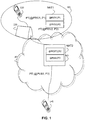
- a terminal equipment 120 in a home network RD connected to a home gateway 220 placed in a flow cut between the terminal equipment and a telecommunications network RT.
- the gateway implements a first NAT NAT1 function which translates a first private addressing pair of a PT data packet transmitted by the terminal equipment 120 into a second one.
- private addressing pair (@ PRIV2, P2).
- This packet is received by a network NO device.
- This NO device implements a NAT operator NAT2 function which translates the second private addressing pair (@ PRIV2, P2) of the data packet PT into a third public addressing pair (@ PUB3, P3).
- NAT2 NAT operator
- the invention applies to the routing of data packets destined for any type of terminal equipment, whether or not it is connected to a particular home network and in a non-limiting manner to a home gateway placed in a flow cutoff between a home network and a public telecommunications network.
- the routing method according to the invention is implemented by a telecommunications network equipment. Therefore, the invention also relates to equipment in a telecommunications network, able to receive a data packet comprising a destination address and a destination port number, said equipment comprising a routing device according to the invention.
- Such equipment is therefore placed at the end of all the data flows addressed to the terminal equipment. It can be a router or a dedicated equipment of the telecommunications network.
- the primary address is a public address.
- An advantage of using public addressing is to avoid address translations and protocol corrections at the edge of a domain administered by a service provider.
- said at least one identifier is a secondary address of the destination terminal equipment.
- a secondary address also called a private address, is not routable throughout the telecommunications network. It has a limited scope, limited to the exchange of flows between the terminal equipment and the equipment of the telecommunications network implementing the method according to the invention. This address is not advertised beyond the BGP (Border Gateway Protocol) domain of a given carrier's telecommunications network.
- BGP Border Gateway Protocol
- the method further comprises, prior to the routing step, a step of transforming the packet to add said secondary address and the packet is routed to the destination terminal equipment from said secondary address.
- the transformation step consists in encapsulating the packet in another packet intended for said secondary address.
- An advantage of this encapsulation is that it does not require modification of the internal structure of the packet. Thus, any operation of writing and calculating a new checksum is avoided.
- the transformation step consists of adding the secondary address of the destination equipment in a field of the packet.
- a first advantage is that such a transformation makes it possible to optimize the use of the bandwidth, because it does not require the addition of two headers such as the encapsulation process.
- a second advantage is that it exploits the source routing option of the IP protocol, for example.
- the identifier is a route identifier specific to this terminal equipment and the routing of the packet is performed from said specific route identifier.
- a route identifier specific to this terminal equipment is meant by specific road, a dedicated route to join this equipment and which serves only this terminal equipment among the plurality of equipment having the same primary address.
- this specific route identifier makes it possible, on the one hand, to uniquely identify this equipment and, on the other hand, to route the packet of received data.
- This embodiment of the invention requires an engineering of the underlying telecommunications network of the operator to be able to install in the equipment which implements the invention disjointed routes to equipment having the same primary address.
- the various steps of the routing method of a data packet are determined by computer program instructions.
- the invention also relates to a computer program on an information medium, this program being capable of being implemented in a routing device or more generally in a computer, this program comprising instructions adapted to the implementation of the steps of a routing method as described above.
- This program can use any programming language, and be in the form of source code, object code, or intermediate code between source code and object code, such as in a partially compiled form, or in any other form desirable shape.
- the invention also relates to a computer-readable information medium, comprising instructions of a computer program as mentioned above.
- the information carrier may be any entity or device capable of storing the program.
- the medium may comprise storage means, such as a ROM, for example a CD ROM or a microelectronic circuit ROM, or a magnetic recording medium, for example a diskette (floppy disc) or a disk hard.
- the information medium may be a transmissible medium such as an electrical or optical signal, which may be conveyed via an electrical or optical cable, by radio or by other means.
- the program according to the invention can be downloaded in particular on an Internet type network.
- the information carrier may be an integrated circuit in which the program is incorporated, the circuit being adapted to execute or to be used in the execution of the method in question.
- a plurality of terminal equipment configured according to the invention receives the same primary address. It is the combination of this primary address, the routing identifier and the port mask that allows them to be uniquely identified.
- the configuration method comprises a step of assigning a routing device identifier capable of routing a data packet comprising said primary address as the destination address to said terminal equipment and the configuration message. further comprises said routing device identifier.
- the terminal equipment knows the identity of the device for routing the data packets intended for it.
- said configuration message is also sent to a device of the telecommunications network comprising a routing device able to route a data packet comprising said primary address as destination address to said terminal equipment.
- the method of implementing a configuration further comprises a step of sending the configuration data to a routing device of a data packet according to the invention.
- This routing device is the attachment device of the terminal equipment. He sees all the data packets destined for the terminal equipment.
- said method upon receiving a data packet comprising a destination address, a port number and a routing identifier, said method further comprises a step of verifying a membership of the port number to the range of numbers defined by its port mask and a step of rejecting said packet if the check is negative.
- the various steps of the method of implementing a configuration are determined by instructions of computer programs.
- the invention also relates to a computer program on an information medium, this program being capable of being implemented in a home gateway or more generally in a computer, this program comprising instructions adapted to the setting implement steps of a method of implementing a configuration as described above.
- the invention further relates to a method of translating addresses of a data packet received by a home gateway placed in a power cut between a terminal equipment transmitting said packet and a terminal equipment receiving said packet in a telecommunications network, said packet comprising a first address and a first port number of the transmitting terminal equipment, said method being characterized in that it comprises a step of replacing said first address and the first port number by a primary address and a second number port, said second port number belonging to a range of numbers dedicated to said gateway and determined by a mask of port numbers.
- the home gateway configured according to the invention implements an address translation mechanism, which consists not only of replacing the first address of the terminal equipment. by its primary address, but also to select a number of ports in its dedicated range.
- the various steps of the method of translating addresses of a data packet are determined by computer program instructions.
- the invention also relates to a computer program on an information carrier, this program being capable of being implemented in a home gateway or more generally in a computer, this program comprising instructions adapted to the implementation of the steps of an address translation method as described above.
- terminal equipment is general and refers both to terminal equipment directly connected to the telecommunications network and to a home gateway.
- the invention consists in reducing the range of available port numbers for a terminal equipment by application, by assigning to a terminal equipment a mask of ports defining a subpart of this range.
- the port mask thus allocated to a particular terminal equipment is used, in combination with its primary IP address, to route the data packets intended for it, without degradation of the IP service.
- IP connectivity service provider must meet the following constraint that two end devices with the same primary address must necessarily receive separate port masks.
- the connectivity service provider may, for example, force the value of the most significant bit of the field corresponding to the source port number of the IP data packets transmitted by a given terminal equipment. This equipment then a port mask defining a range of 32768 possible port number values. The provider may, alternatively, force the value of the first eight most significant bits, so that the terminal equipment has a range of 256 usable port numbers.
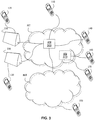
- an RT telecommunications network of an operator on which a service provider has deployed a connectivity or IP access service architecture A plurality of terminal equipments have access to this network.
- terminal equipment will be designated as well as the terminal equipment 110, 120, 130, 140, 160, 170 such as, for example, telephones or personal computers, connected directly to the network RT that a home gateway 230, 220 placed in a flow cut between a home network and the telecommunications network RT.
- Such a gateway has an address translation table or Nattage table, which maps to a private address and a first port number of a terminal equipment of its private network at least its own public address and a second number. of port.
- the telecommunications network RT of the operator comprises at least one routing device AN 300 implementing the routing method of a data packet according to the invention. Note that it may include several others, such as the routing device 310.
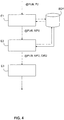
- the routing method On reception of a data packet PT comprising a public address of destination @PUB and a destination port number P2, the routing method according to the invention implements a step E1 of determining a port mask defining a number of ports to which the P2 port number belongs.
- the port masks assigned to the terminal equipment of the network can advantageously be stored in a database BD1.
- this MP port mask is used to select a destination equipment packet PT from among a plurality of terminal equipment having the same public address P2, and identify it with its IDR routing identifier.
- the packet is then routed in E3 to the selected destination equipment from its IDR routing identifier. If the routing device AN 300 does not have an entry in its routing tables, the packet in question is deleted.
- the routing device AN 300 comprises the hardware elements that are conventionally found in a conventional computer, namely a processor 310, a random access memory type RAM 320, a read-only memory type ROM 330 and means 340 telecommunications with the network 1.
- the routing device AN 300 comprises a memory 350 comprising a database in which it saves the association between the public address @PUB, the port mask MP and the IDR routing identifier of the device. terminal equipment 100.
- this memory can also be external to the device provided that it can access it to retrieve the identification data of the receiving terminal equipment of the received data packet.
- the ROM 330 constitutes a recording medium in accordance with the invention.
- This medium stores a computer program according to the invention, this program comprising instructions for executing the steps of the routing method according to the invention which has just been described with reference to the figure 4 .
- the main purpose of the routing device AN is to maintain a correspondence table between the routing identifier IDR and the pair (public IP address @PUB, port mask MP) so as to be able to determine in an unambiguous manner.
- the AN device can be located in a PoP ( Point of Presence ) access to the telecommunications network RT or be centralized. It can be hosted by a router or by dedicated equipment.
- PoP Point of Presence
- the primary address @ PUB of a terminal equipment is announced by the routing device AN, for example using the intra-domain routing protocol IGP (Interior Gateway Protocol, in English) such as RIP (Routing Information Protocol) , IS-IS (Intermediate System to Intermediate System) or OSPF (Open Shortest Path First).
- IGP Interior Gateway Protocol, in English
- RIP Raster Information Protocol
- IS-IS Intermediate System to Intermediate System
- OSPF Open Shortest Path First
- the IDR routing identifier is a private address or also called a secondary address of the terminal equipment. Such an address is not announced by the routing device AN. Therefore, it is not routable in the network core RT. She can not be reached from the internet either. In the case where the AN device is in a network access POP RT, its scope is limited to the exchanges between the terminal equipment and the equipment constituting said POP.
- the IDR routing identifier is a route identifier dedicated to the terminal equipment.
- Such an identifier uniquely identifies a route that uniquely and unambiguously serves the terminal equipment. This is achievable for example using disjointed routes.
- Two routes R1 and R2 are said to be disjoint if none of the nodes constituting the road R1 in the network of the operator is crossed under the road R2.
- the roads R1 and R2 are constituted by a succession of nodes, none of these nodes being shared between these two routes.
- the topology of the underlying telecommunications network must be constructed in such a way as to allow the installation of disjointed routes in the routing table maintained by the routing device AN according to the invention.
- the terminal equipment 100 and the routing device AN 300 must be configured prior to any connection to the network.
- the terminal equipment 100, 200, 210, 220, 130 sends in a known manner, a configuration request to the service of IP connectivity of the service provider.
- a request RQ-CONF is received by a configuration server SC which gives back to it the configuration data necessary for the implementation of its IP connectivity service.
- DHCP_DISCOVER () request according to the DHCP protocol diffused in broadcast mode in the telecommunications network of the IP service provider.
- This message can be relayed by a DHCP Relay client ( DHCP Client Relay ) or received directly by a DHCP configuration server.
- a DHCP configuration server responds to the issuer of the DHCP_DISCOVER () message with a dedicated DHCP_OFFER () message containing a DHCP lease.
- a step E-1 consists in assigning a public address to said terminal equipment, said address public being shared with a plurality of terminal equipments.
- a step E "2 then consists in assigning to said terminal equipment an MP port mask defining a range of numbers dedicated to it and an IDR routing identifier, such configuration data @PUB, IDR and MP are finally sent to said terminal equipment. in a configuration message MESS-CONF ..
- the configuration server designates an attachment routing device AN 300 for the terminal equipment.
- the configuration data is also sent to this routing device AN 300 by the configuration server SC.
- the MESS-CONF configuration message further comprises an identifier of the AN 300 attachment routing device.
- the DHCP configuration servers must be modified to implement the invention and in particular to assign these new configuration data to any terminal equipment, for example a home gateway, requesting IP connectivity access.
- the configuration server SC 400 comprises the hardware elements that are conventionally found in a conventional computer, namely a processor 410, a RAM RAM 420, a ROM ROM 430 and means 440 telecommunications with network 1.
- the configuration server SC 400 comprises a memory 450 comprising a database in which it saves the configuration data of the terminal equipment that it manages, in particular the association between the primary address @PUB, the MP port mask and the IDR routing identifier of the terminal equipment 100. It will be noted that this memory may be external to the configuration server as long as it can access it to retrieve the configuration data of the terminal equipment. Transmitter of the configuration request.
- the terminal equipment In response to a configuration request sent to the configuration server SC 400, the terminal equipment according to the invention receives the configuration message MESS-CONF comprising the configuration data of its IP connectivity to the telecommunications network RT. Upon receipt of this message, it executes the method of implementing a configuration according to the invention, which will now be described with reference to the figure 9 .
- a step E-1 it records the received configuration data in a database BDT
- it selects in E "3 a port P2 in the range of port numbers defined by the port mask PT and assigns to the data packet PT a source port corresponding to the port P2.
- it further comprises a step E "2 of sending the configuration data to the equipment AN 300 of the telecommunications network RT comprising the routing device according to the invention.
- routing device according to the invention can be configured either via the terminal equipment or directly by the configuration server SC 400.
- the first case applies when the IDR routing identifier is a secondary address @PRIV.
- the terminal equipment after enabling the new configuration received in the MESS-CONF configuration message, which may be a DHCP lease, generates a configuration message, which we call BIND (), for the routing device AN according to the invention.
- This device is identified by the DAN address in the MESS-CONF message.
- the BIND message (@PRIV, @PUB, MP) comprises at least the main address of the terminal equipment, its IDR routing identifier and its port mask.
- it further comprises an identifier of the routing device capable of routing the data packets intended for it to the terminal equipment. It is sent by terminal equipment with a source address equal to @PRIV.
- the routing device AN Upon receipt of this message, the routing device AN sends an acknowledgment to the transmitting terminal equipment by means of an acknowledgment message.
- the signature of the BIND () message may contain a lifetime as specified in the DHCP lease.
- an association installed in the association table can be refreshed using other BIND () messages. If no update is received before the expiration of the lifetime, the corresponding entry is removed from the list (a margin of precision may be considered).
- the BIND () message may be sent by the configuration server 400 SC and not by the terminal equipment that has just been configured.
- the information required by the installation of a new entry in the table of associations can be transmitted directly by the service provider to the routing device AN 300 via the configuration server SC 400.
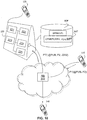
- the example of a data packet PT (@PUB, P2) sent by the terminal equipment 110 to the terminal equipment 120 is considered.
- the routing device AN On receipt of this packet intended for a main address IP @PUB, the routing device AN reads the destination port number P2 of said message and deduces the corresponding MP2 port mask. With the aid of this mask and the main address @PUB, the routing device AN determines, by traversing its association table, the routing identifier IDR2, for example the secondary address PRIV2 associated with the pair (@ PUB, MP2).
- the routing device AN After determining the secondary address, the routing device AN transforms the received IP packet into a packet PT '(@ PUB, P2, IDR2). For security reasons, the destination port number to be used for this packet PT 'is negotiated between the terminal equipment 120 and the routing device AN.
- the PT packet can be transformed in various ways. According to a first embodiment, it is encapsulated in a packet PT 'comprising, for example, as the destination address the secondary address @ PRIV2 of the destination terminal equipment 120.
- the packet PT is modified by including the secondary address PRIV2 in a particular field of its header. This transformation of the data packet allows a routing mode called routing at the source. It is not always supported by the nodes of a telecommunications network.
- the packet PT is transformed identically, the routing being done from the dedicated route identifier IDR2 which does not require any modification of the packet.
- the terminal equipment 100 comprises the hardware elements that are conventionally found in a conventional computer, namely a processor 110, a random access memory type RAM 120, a read-only memory ROM 130 and means 140 for telecommunications with the network 1.
- the terminal equipment 100 comprises a memory 150 comprising a database in which it saves its configuration data, in particular the association between the public address @PUB, the port mask MP and the identifier. IDR routing of the terminal equipment 100. It will be noted that this memory may as well be external to the terminal equipment provided it can access it to retrieve the configuration data it needs for the implementation of its connectivity IP on the telecommunications network RT.
- the home gateway 210 constitutes a terminal equipment according to the invention.
- it comprises an address translation table or NAT table that maps, for a stream sent by a terminal equipment 110 of its home network, an address @ PRIV1 and a port P1 of this terminal in the network.
- This NAT table is, for example, stored in a BDP database that can be internal or external.
- a home gateway thus implements means of address translation on reception of a packet of data PT transmitted by a terminal equipment of its home network and addressed to the telecommunications network and on receipt of a packet of data. PT 'data for this terminal equipment.
- the data packets transmitted by a given terminal equipment pass through the routing device AN 300 to which this terminal equipment is attached.
- the routing device AN tags the IP data packets transmitted by this terminal equipment.
- the DS (Differentiated Services) or ToS (Type of Service) field of IP packets may be used for marking, if and only if the port mask does not exceed 6 bits.
- the routing device AN pre-installs a marking rule for the messages transmitted by the terminal equipment in question.
- the encapsulation process is then guided by the value of the DS field of the received IP packets and therefore the routing device AN no longer needs to inspect the information on the transport layer.
- the message processing time will be improved.
- This variant assumes that the terminal machine does not modify the DS / TOS code used and that it is repositioned to the same value for the response packets.
- the routing device according to the invention can be hosted by traditional routers or by dedicated equipment. Given that the modifications required by the invention during the discovery phase of a configuration server, for example according to the DHCP protocol are not major, the current architectures can be adapted.
- the routing device AN can be hosted anywhere in the telecommunications network of the operator.
- it is deployed within a network access POP.
- one or more AN routing devices can be deployed within the same IP access POP, both centrally and distributed.
Landscapes
- Engineering & Computer Science (AREA)
- Computer Networks & Wireless Communication (AREA)
- Signal Processing (AREA)
- Data Exchanges In Wide-Area Networks (AREA)
Claims (12)
- Verfahren zum Routen eines IP-Datenpakets in einem Telekommunikationsnetzwerk, wobei das Verfahren durch eine Routing-Einrichtung implementiert wird und beim Empfang eines Pakets, das eine Angabe einer primären Zieladresse, die sich von der primären Adresse der Routing-Einrichtung unterscheidet, und einer Zielportnummer umfasst, die folgenden Schritte umfasst:- Bestimmung einer Portmaske, die einen Portnummernbereich definiert, zu dem die Zielportnummer gehört;- Auswahl einer Kennung eines Zielgeräts des Pakets aus einer Vielzahl von Gerätekennungen, die anhand der Portmaske mit der primären Zieladresse verknüpft sind; und- Routen eines Pakets zu dem Zielgerät anhand der Kennung, wobei die Angabe der primären Zieladresse im gerouteten Paket erhalten bleibt.
- Verfahren zum Routen eines IP-Datenpakets nach Anspruch 1 dadurch gekennzeichnet, dass die zumindest eine Kennung eine sekundäre Zieladresse des Zielgeräts ist.
- Verfahren zum Routen eines IP-Datenpakets nach Anspruch 2 dadurch gekennzeichnet, dass das Verfahren vor dem Schritt, in dem das Routen stattfindet, einen Schritt umfasst, in dem das Paket transformiert wird, indem diesem die sekundäre Adresse hinzugefügt wird, und dadurch, dass das Paket anhand der sekundären Adresse geroutet wird.
- Verfahren zum Routen nach Anspruch 1 dadurch gekennzeichnet, dass die Kennung eine für dieses Gerät spezifische Routenkennung ist, und dadurch, dass das Routen des Pakets anhand der spezifischen Routenkennung erfolgt.
- Einrichtung zum Routen eines IP-Datenpakets in einem Telekommunikationsnetzwerk, wobei die Einrichtung geeignet ist, beim Empfang eines Pakets, das eine Angabe einer primären Zieladresse, die sich von der primären Adresse der Routing-Einrichtung unterscheidet, und einer Zielportnummer umfasst, die folgenden Mittel zu implementieren:- Bestimmung einer Portmaske, die einen Portnummernbereich definiert, zu dem die Zielportnummer gehört;- Auswahl einer Kennung eines Zielgeräts des Pakets aus einer Vielzahl von Gerätekennungen, die anhand der Portmaske mit der primären Zieladresse verknüpft sind; und- Routen eines Pakets zu dem Zielgerät anhand der Kennung, wobei die Angabe der primären Zieladresse im gerouteten Paket erhalten bleibt.
- Gerät in einem Telekommunikationsnetzwerk, das geeignet ist ein IP-Datenpaket zu empfangen, das eine primäre Zieladresse und eine Zielportnummer umfasst, dadurch gekennzeichnet, dass es zumindest eine Routing-Einrichtung nach Anspruch 5 umfasst.
- Verfahren zum Implementieren einer Konfiguration durch ein Endgerät, das mit einem Telekommunikationsnetzwerk verbunden ist, wobei das Verfahren beim Empfang einer Konfigurationsnachricht, die Konfigurationsdaten umfasst, wie unter anderem eine mit einer Vielzahl von Endgeräten geteilte, öffentliche Adresse, eine Portmaske, die einen ihr eindeutig zugeordneten Nummernbereich definiert, und eine Routing-Kennung, die es einer Routing-Einrichtung ermöglicht, die Datenpakete zu dem Endgerät zu routen, die folgenden Schritte umfasst:- Speicherung der Konfigurationsdaten;- Auswahl einer Portnummer aus dem durch die Portmaske begrenzten Portnummernbereich; und- Senden eines Datenpakets im Telekommunikationsnetzwerk durch das Endgerät, wobei das Datenpaket als Quellportnummer die ausgewählte Portnummer und als Quelladresse die öffentliche Adresse des Endgeräts umfasst.
- Verfahren zum Implementieren einer Konfiguration nach Anspruch 7 dadurch gekennzeichnet, dass, nachdem eine Kennung der Routing-Einrichtung empfangen wurde, die geeignet ist, ein die öffentliche Adresse als Zieladresse umfassendes Datenpaket zu dem Endgerät zu routen, das Verfahren unter anderem einen Schritt des Sendens der Konfigurationsdaten an die Routing-Einrichtung umfasst.
- Verfahren zum Implementieren einer Konfiguration nach Anspruch 7 dadurch gekennzeichnet, dass beim Empfang eines Datenpakets, das eine öffentliche Zieladresse, eine Portnummer und eine Routing-Kennung umfasset, das Verfahren unter anderem einen Schritt, in dem verifiziert wird, ob die Portnummer zum durch die Portmaske definierten Nummernbereich gehört, und einen Schritt, in dem das Paket verworfen wird, falls die Verifikation negativ ausfällt, umfasst.
- Client-Endgerät, das mit einem Telekommunikationsnetzwerk verbunden und geeignet ist, beim Empfang einer Konfigurationsnachricht, die Konfigurationsdaten umfasst, wie unter anderem eine mit einer Vielzahl von Endgeräten geteilte, primäre Adresse, eine Portmaske, die einen ihr eindeutig zugeordneten Nummernbereich definiert, und eine Routing-Kennung, die es einer Routing-Einrichtung ermöglicht, die Datenpakete zu dem Endgerät zu routen, die folgenden Mittel zu implementieren:- Speicherung der Konfigurationsdaten;- Auswahl einer Portnummer aus dem durch die Portmaske begrenzten Portnummernbereich; und- Senden eines Datenpakets im Telekommunikationsnetzwerk, wobei das Datenpaket als Quellportnummer die ausgewählte Portnummer und als Quelladresse die primäre Adresse des Endgeräts umfasst.
- Computerprogrammprodukt, das aus einem Kommunikationsnetzwerk herunterladbar ist und/oder auf einem computerlesbaren Datenträger gespeichert ist und/oder durch einen Mikroprozessor ausführbar ist, dadurch gekennzeichnet, dass es Programmcodeanweisungen zur Ausführung des Verfahrens zum Routen nach Anspruch 1 umfasst.
- Computerprogrammprodukt, das aus einem Kommunikationsnetzwerk herunterladbar ist und/oder einem auf computerlesbaren Datenträger gespeichert ist und/oder durch einen Mikroprozessor ausführbar ist, dadurch gekennzeichnet, dass es Programmcodeanweisungen zur Ausführung des Verfahrens zum Implementieren einer Konfiguration nach Anspruch 7 umfasst.
Applications Claiming Priority (2)
| Application Number | Priority Date | Filing Date | Title |
|---|---|---|---|
| FR0852108 | 2008-03-31 | ||
| PCT/FR2009/050548 WO2009125158A2 (fr) | 2008-03-31 | 2009-03-31 | Procede de routage d'un paquet de donnees dans un reseau et dispositif associe |
Publications (2)
| Publication Number | Publication Date |
|---|---|
| EP2294798A2 EP2294798A2 (de) | 2011-03-16 |
| EP2294798B1 true EP2294798B1 (de) | 2018-07-04 |
Family
ID=40076893
Family Applications (1)
| Application Number | Title | Priority Date | Filing Date |
|---|---|---|---|
| EP09730448.9A Active EP2294798B1 (de) | 2008-03-31 | 2009-03-31 | Verfahren und entsprechende vorrichtung zum routen eines datenpackets in einem netzwerk |
Country Status (4)
| Country | Link |
|---|---|
| US (1) | US8693369B2 (de) |
| EP (1) | EP2294798B1 (de) |
| JP (1) | JP5520928B2 (de) |
| WO (1) | WO2009125158A2 (de) |
Families Citing this family (10)
| Publication number | Priority date | Publication date | Assignee | Title |
|---|---|---|---|---|
| US8549124B2 (en) * | 2009-05-27 | 2013-10-01 | International Business Machines Corporation | Network management discovery tool |
| FR2958104A1 (fr) | 2010-03-26 | 2011-09-30 | France Telecom | Serveur dns, passerelles et procedes pour la gestion d'un identifiant d'une plage de ports dans la transmission de donnees. |
| US9094462B2 (en) * | 2011-07-13 | 2015-07-28 | Qualcomm Incorporated | Simultaneous packet data network (PDN) access |
| US9270583B2 (en) * | 2013-03-15 | 2016-02-23 | Cisco Technology, Inc. | Controlling distribution and routing from messaging protocol |
| CN104579728B (zh) * | 2013-10-17 | 2019-02-26 | 中兴通讯股份有限公司 | 网元设备配置和管理方法、装置及网元设备 |
| US9253043B2 (en) * | 2013-11-30 | 2016-02-02 | At&T Intellectual Property I, L.P. | Methods and apparatus to convert router configuration data |
| CN109842574B (zh) * | 2017-11-28 | 2020-07-17 | 中国科学院声学研究所 | 一种基于可编程网络技术的多宿主网络路由转发方法 |
| US11153268B2 (en) * | 2018-10-17 | 2021-10-19 | Hewlett Packard Enterprise Development Lp | Cloud-based dynamic host configuration protocol configuration |
| JP7631858B2 (ja) * | 2021-02-09 | 2025-02-19 | 住友電気工業株式会社 | ネットワーク中継装置、ネットワーク中継方法およびネットワーク中継プログラム |
| CN119172352B (zh) * | 2024-09-13 | 2025-10-14 | 新华三技术有限公司 | 一种报文处理方法、装置、电子设备及存储介质 |
Citations (1)
| Publication number | Priority date | Publication date | Assignee | Title |
|---|---|---|---|---|
| US6353614B1 (en) * | 1998-03-05 | 2002-03-05 | 3Com Corporation | Method and protocol for distributed network address translation |
Family Cites Families (13)
| Publication number | Priority date | Publication date | Assignee | Title |
|---|---|---|---|---|
| US7120701B2 (en) | 2001-02-22 | 2006-10-10 | Intel Corporation | Assigning a source address to a data packet based on the destination of the data packet |
| US6687245B2 (en) * | 2001-04-03 | 2004-02-03 | Voxpath Networks, Inc. | System and method for performing IP telephony |
| US7068647B2 (en) * | 2001-04-03 | 2006-06-27 | Voxpath Networks, Inc. | System and method for routing IP packets |
| US7320027B1 (en) | 2001-05-14 | 2008-01-15 | At&T Corp. | System having generalized client-server computing |
| US7031314B2 (en) * | 2001-05-16 | 2006-04-18 | Bytemobile, Inc. | Systems and methods for providing differentiated services within a network communication system |
| US20030088694A1 (en) * | 2001-11-02 | 2003-05-08 | Internet Machines Corporation | Multicasting method and switch |
| US7873985B2 (en) * | 2002-01-08 | 2011-01-18 | Verizon Services Corp. | IP based security applications using location, port and/or device identifier information |
| JP2003218921A (ja) * | 2002-01-21 | 2003-07-31 | Zion Ltd | データ転送制御処理システム及びデータ転送制御処理方法 |
| US7187687B1 (en) * | 2002-05-06 | 2007-03-06 | Foundry Networks, Inc. | Pipeline method and system for switching packets |
| US7548523B2 (en) * | 2004-06-30 | 2009-06-16 | Qualcomm Incorporated | Dynamic configuration of IP for a terminal equipment attached to a wireless device |
| CN101103614A (zh) * | 2005-01-11 | 2008-01-09 | 皇家飞利浦电子股份有限公司 | 将地址空间有效扩展至伪多宿主主机 |
| US7894451B2 (en) * | 2005-12-30 | 2011-02-22 | Extreme Networks, Inc. | Method of providing virtual router functionality |
| US7751339B2 (en) * | 2006-05-19 | 2010-07-06 | Cisco Technology, Inc. | Method and apparatus for simply configuring a subscriber appliance for performing a service controlled by a separate service provider |
-
2009
- 2009-03-31 JP JP2011502421A patent/JP5520928B2/ja not_active Expired - Fee Related
- 2009-03-31 EP EP09730448.9A patent/EP2294798B1/de active Active
- 2009-03-31 WO PCT/FR2009/050548 patent/WO2009125158A2/fr not_active Ceased
- 2009-03-31 US US12/935,040 patent/US8693369B2/en active Active
Patent Citations (1)
| Publication number | Priority date | Publication date | Assignee | Title |
|---|---|---|---|---|
| US6353614B1 (en) * | 1998-03-05 | 2002-03-05 | 3Com Corporation | Method and protocol for distributed network address translation |
Also Published As
| Publication number | Publication date |
|---|---|
| US8693369B2 (en) | 2014-04-08 |
| JP2011517201A (ja) | 2011-05-26 |
| JP5520928B2 (ja) | 2014-06-11 |
| WO2009125158A2 (fr) | 2009-10-15 |
| US20110019588A1 (en) | 2011-01-27 |
| WO2009125158A3 (fr) | 2010-07-15 |
| EP2294798A2 (de) | 2011-03-16 |
Similar Documents
| Publication | Publication Date | Title |
|---|---|---|
| EP2294798B1 (de) | Verfahren und entsprechende vorrichtung zum routen eines datenpackets in einem netzwerk | |
| EP2297927B1 (de) | Verfahren für den empfang eines datenpakets von einer ipv4-domäne in einer ipv6-domäne sowie zugehörige vorrichtung und zugangsanlage | |
| EP2297928B1 (de) | Verfahren für den empfang eines datenpakets in einer ipv6-domäne sowie zugehörige vorrichtung und residential gateway | |
| EP3476096B1 (de) | Udp-kommunikationsmethode über mehrfache wege zwischen zwei rechnerendgeräten | |
| EP3284224B1 (de) | Verfahren zur emulation einer mehrwegverbindung | |
| EP3646557A1 (de) | Verfahren zur schnellen kommunikation über mehrere wege | |
| EP3257204B1 (de) | Verfahren zur auswahl von netzwerkverbindungsknoten | |
| FR3053197A1 (fr) | Procede de communication udp via des chemins multiples entre deux terminaux | |
| EP2494747A1 (de) | Verfahren und vorrichtung zum routing von datenpaketen zwischen ipv4- und ipv6-netzwerken | |
| FR2855697A1 (fr) | SYSTEME DE CONVERSION DE DONNEES BASEE SUR IPv4 EN DONNEES BASEES SUR IPv6 A TRANSMETTRE A TRAVERS UN RESEAU COMMUTE IP | |
| EP3476108B1 (de) | Verfahren, computer programm und vorrichtung zum bereitstellen einer adresse durch eine zu verwaltende vorrichtung eines netzwerks | |
| EP1142269B1 (de) | Adressierungsverfahren und namen- und adressen- server in einem digitalen netz | |
| EP1641223A1 (de) | Verbessertes Verfahren zur Zuordnung von Netzwerkidentifizierungen anhand Schnittstellenidentifizierungen | |
| FR3023098A1 (fr) | Procede et systeme de traitement d'une demande de resolution d'un nom d'un serveur, emise par une application cliente sur un reseau de communication. | |
| EP2169903A1 (de) | Vorrichtung und Verfahren für das Routing der Übersetzung von Adressen in Kaskade in einem Netzwerk | |
| WO2019211548A1 (fr) | Procédé d'envoi d'une information et de réception d'une information pour la gestion de réputation d'une ressource ip | |
| WO2010072953A1 (fr) | SYSTEME D'ACHEMINEMENT D'UN PAQUET DE DONNEES IPv4 | |
| WO2020020911A1 (fr) | Procede de traitement d'un paquet de donnees, dispositif, equipement de commutation et programme d'ordinateur associes | |
| EP2579545A1 (de) | Zuteilungsmethode einer öffentlichen Netzadresse an ein Gerät, das über eine private Netzadresse verfügt | |
| WO2024121281A1 (fr) | Procédé de gestion d'un ensemble d'adresses ip, procédé de collaboration et dispositifs configurés pour mettre en œuvre ces procédés | |
| FR3153206A1 (fr) | Procédés, dispositifs et système de contrôle d’une communication dans un réseau | |
| WO2011064511A1 (fr) | Technique d'établissement d'un tunnel entre une passerelle et un équipement de translation dans un réseau de communication |
Legal Events
| Date | Code | Title | Description |
|---|---|---|---|
| PUAI | Public reference made under article 153(3) epc to a published international application that has entered the european phase |
Free format text: ORIGINAL CODE: 0009012 |
|
| 17P | Request for examination filed |
Effective date: 20101026 |
|
| AK | Designated contracting states |
Kind code of ref document: A2 Designated state(s): AT BE BG CH CY CZ DE DK EE ES FI FR GB GR HR HU IE IS IT LI LT LU LV MC MK MT NL NO PL PT RO SE SI SK TR |
|
| AX | Request for extension of the european patent |
Extension state: AL BA RS |
|
| DAX | Request for extension of the european patent (deleted) | ||
| RAP1 | Party data changed (applicant data changed or rights of an application transferred) |
Owner name: ORANGE |
|
| 17Q | First examination report despatched |
Effective date: 20150605 |
|
| STAA | Information on the status of an ep patent application or granted ep patent |
Free format text: STATUS: EXAMINATION IS IN PROGRESS |
|
| RIC1 | Information provided on ipc code assigned before grant |
Ipc: H04L 12/701 20130101ALI20170126BHEP Ipc: H04L 12/28 20060101ALI20170126BHEP Ipc: H04L 29/12 20060101AFI20170126BHEP |
|
| GRAP | Despatch of communication of intention to grant a patent |
Free format text: ORIGINAL CODE: EPIDOSNIGR1 |
|
| STAA | Information on the status of an ep patent application or granted ep patent |
Free format text: STATUS: GRANT OF PATENT IS INTENDED |
|
| INTG | Intention to grant announced |
Effective date: 20180205 |
|
| RAP1 | Party data changed (applicant data changed or rights of an application transferred) |
Owner name: TRANSPACIFIC IP GROUP LIMITED |
|
| GRAS | Grant fee paid |
Free format text: ORIGINAL CODE: EPIDOSNIGR3 |
|
| GRAA | (expected) grant |
Free format text: ORIGINAL CODE: 0009210 |
|
| STAA | Information on the status of an ep patent application or granted ep patent |
Free format text: STATUS: THE PATENT HAS BEEN GRANTED |
|
| AK | Designated contracting states |
Kind code of ref document: B1 Designated state(s): AT BE BG CH CY CZ DE DK EE ES FI FR GB GR HR HU IE IS IT LI LT LU LV MC MK MT NL NO PL PT RO SE SI SK TR |
|
| REG | Reference to a national code |
Ref country code: GB Ref legal event code: FG4D Free format text: NOT ENGLISH |
|
| REG | Reference to a national code |
Ref country code: CH Ref legal event code: EP |
|
| REG | Reference to a national code |
Ref country code: AT Ref legal event code: REF Ref document number: 1015721 Country of ref document: AT Kind code of ref document: T Effective date: 20180715 |
|
| REG | Reference to a national code |
Ref country code: IE Ref legal event code: FG4D Free format text: LANGUAGE OF EP DOCUMENT: FRENCH |
|
| REG | Reference to a national code |
Ref country code: DE Ref legal event code: R096 Ref document number: 602009053042 Country of ref document: DE |
|
| REG | Reference to a national code |
Ref country code: NL Ref legal event code: MP Effective date: 20180704 |
|
| REG | Reference to a national code |
Ref country code: LT Ref legal event code: MG4D |
|
| REG | Reference to a national code |
Ref country code: CH Ref legal event code: PK Free format text: RECTIFICATIONS |
|
| REG | Reference to a national code |
Ref country code: AT Ref legal event code: MK05 Ref document number: 1015721 Country of ref document: AT Kind code of ref document: T Effective date: 20180704 |
|
| PG25 | Lapsed in a contracting state [announced via postgrant information from national office to epo] |
Ref country code: NL Free format text: LAPSE BECAUSE OF FAILURE TO SUBMIT A TRANSLATION OF THE DESCRIPTION OR TO PAY THE FEE WITHIN THE PRESCRIBED TIME-LIMIT Effective date: 20180704 |
|
| RIC2 | Information provided on ipc code assigned after grant |
Ipc: H04L 12/701 20130101ALI20170126BHEP Ipc: H04L 12/28 20060101ALI20170126BHEP Ipc: H04L 29/12 20060101AFI20170126BHEP |
|
| PG25 | Lapsed in a contracting state [announced via postgrant information from national office to epo] |
Ref country code: IS Free format text: LAPSE BECAUSE OF FAILURE TO SUBMIT A TRANSLATION OF THE DESCRIPTION OR TO PAY THE FEE WITHIN THE PRESCRIBED TIME-LIMIT Effective date: 20181104 Ref country code: PL Free format text: LAPSE BECAUSE OF FAILURE TO SUBMIT A TRANSLATION OF THE DESCRIPTION OR TO PAY THE FEE WITHIN THE PRESCRIBED TIME-LIMIT Effective date: 20180704 Ref country code: AT Free format text: LAPSE BECAUSE OF FAILURE TO SUBMIT A TRANSLATION OF THE DESCRIPTION OR TO PAY THE FEE WITHIN THE PRESCRIBED TIME-LIMIT Effective date: 20180704 Ref country code: SE Free format text: LAPSE BECAUSE OF FAILURE TO SUBMIT A TRANSLATION OF THE DESCRIPTION OR TO PAY THE FEE WITHIN THE PRESCRIBED TIME-LIMIT Effective date: 20180704 Ref country code: GR Free format text: LAPSE BECAUSE OF FAILURE TO SUBMIT A TRANSLATION OF THE DESCRIPTION OR TO PAY THE FEE WITHIN THE PRESCRIBED TIME-LIMIT Effective date: 20181005 Ref country code: FI Free format text: LAPSE BECAUSE OF FAILURE TO SUBMIT A TRANSLATION OF THE DESCRIPTION OR TO PAY THE FEE WITHIN THE PRESCRIBED TIME-LIMIT Effective date: 20180704 Ref country code: NO Free format text: LAPSE BECAUSE OF FAILURE TO SUBMIT A TRANSLATION OF THE DESCRIPTION OR TO PAY THE FEE WITHIN THE PRESCRIBED TIME-LIMIT Effective date: 20181004 Ref country code: BG Free format text: LAPSE BECAUSE OF FAILURE TO SUBMIT A TRANSLATION OF THE DESCRIPTION OR TO PAY THE FEE WITHIN THE PRESCRIBED TIME-LIMIT Effective date: 20181004 Ref country code: LT Free format text: LAPSE BECAUSE OF FAILURE TO SUBMIT A TRANSLATION OF THE DESCRIPTION OR TO PAY THE FEE WITHIN THE PRESCRIBED TIME-LIMIT Effective date: 20180704 Ref country code: CZ Free format text: LAPSE BECAUSE OF FAILURE TO SUBMIT A TRANSLATION OF THE DESCRIPTION OR TO PAY THE FEE WITHIN THE PRESCRIBED TIME-LIMIT Effective date: 20180704 |
|
| REG | Reference to a national code |
Ref country code: CH Ref legal event code: PK Free format text: RECTIFICATIONS |
|
| RIC2 | Information provided on ipc code assigned after grant |
Ipc: H04L 29/12 20060101AFI20170126BHEP Ipc: H04L 12/701 20130101ALI20170126BHEP Ipc: H04L 12/28 20060101ALI20170126BHEP |
|
| PG25 | Lapsed in a contracting state [announced via postgrant information from national office to epo] |
Ref country code: LV Free format text: LAPSE BECAUSE OF FAILURE TO SUBMIT A TRANSLATION OF THE DESCRIPTION OR TO PAY THE FEE WITHIN THE PRESCRIBED TIME-LIMIT Effective date: 20180704 Ref country code: HR Free format text: LAPSE BECAUSE OF FAILURE TO SUBMIT A TRANSLATION OF THE DESCRIPTION OR TO PAY THE FEE WITHIN THE PRESCRIBED TIME-LIMIT Effective date: 20180704 Ref country code: ES Free format text: LAPSE BECAUSE OF FAILURE TO SUBMIT A TRANSLATION OF THE DESCRIPTION OR TO PAY THE FEE WITHIN THE PRESCRIBED TIME-LIMIT Effective date: 20180704 |
|
| REG | Reference to a national code |
Ref country code: DE Ref legal event code: R097 Ref document number: 602009053042 Country of ref document: DE |
|
| PG25 | Lapsed in a contracting state [announced via postgrant information from national office to epo] |
Ref country code: RO Free format text: LAPSE BECAUSE OF FAILURE TO SUBMIT A TRANSLATION OF THE DESCRIPTION OR TO PAY THE FEE WITHIN THE PRESCRIBED TIME-LIMIT Effective date: 20180704 Ref country code: EE Free format text: LAPSE BECAUSE OF FAILURE TO SUBMIT A TRANSLATION OF THE DESCRIPTION OR TO PAY THE FEE WITHIN THE PRESCRIBED TIME-LIMIT Effective date: 20180704 Ref country code: IT Free format text: LAPSE BECAUSE OF FAILURE TO SUBMIT A TRANSLATION OF THE DESCRIPTION OR TO PAY THE FEE WITHIN THE PRESCRIBED TIME-LIMIT Effective date: 20180704 |
|
| PLBE | No opposition filed within time limit |
Free format text: ORIGINAL CODE: 0009261 |
|
| STAA | Information on the status of an ep patent application or granted ep patent |
Free format text: STATUS: NO OPPOSITION FILED WITHIN TIME LIMIT |
|
| PG25 | Lapsed in a contracting state [announced via postgrant information from national office to epo] |
Ref country code: DK Free format text: LAPSE BECAUSE OF FAILURE TO SUBMIT A TRANSLATION OF THE DESCRIPTION OR TO PAY THE FEE WITHIN THE PRESCRIBED TIME-LIMIT Effective date: 20180704 Ref country code: SK Free format text: LAPSE BECAUSE OF FAILURE TO SUBMIT A TRANSLATION OF THE DESCRIPTION OR TO PAY THE FEE WITHIN THE PRESCRIBED TIME-LIMIT Effective date: 20180704 |
|
| 26N | No opposition filed |
Effective date: 20190405 |
|
| PG25 | Lapsed in a contracting state [announced via postgrant information from national office to epo] |
Ref country code: SI Free format text: LAPSE BECAUSE OF FAILURE TO SUBMIT A TRANSLATION OF THE DESCRIPTION OR TO PAY THE FEE WITHIN THE PRESCRIBED TIME-LIMIT Effective date: 20180704 |
|
| PG25 | Lapsed in a contracting state [announced via postgrant information from national office to epo] |
Ref country code: MC Free format text: LAPSE BECAUSE OF FAILURE TO SUBMIT A TRANSLATION OF THE DESCRIPTION OR TO PAY THE FEE WITHIN THE PRESCRIBED TIME-LIMIT Effective date: 20180704 |
|
| REG | Reference to a national code |
Ref country code: CH Ref legal event code: PL |
|
| PG25 | Lapsed in a contracting state [announced via postgrant information from national office to epo] |
Ref country code: LU Free format text: LAPSE BECAUSE OF NON-PAYMENT OF DUE FEES Effective date: 20190331 |
|
| REG | Reference to a national code |
Ref country code: BE Ref legal event code: MM Effective date: 20190331 |
|
| PG25 | Lapsed in a contracting state [announced via postgrant information from national office to epo] |
Ref country code: IE Free format text: LAPSE BECAUSE OF NON-PAYMENT OF DUE FEES Effective date: 20190331 Ref country code: LI Free format text: LAPSE BECAUSE OF NON-PAYMENT OF DUE FEES Effective date: 20190331 Ref country code: CH Free format text: LAPSE BECAUSE OF NON-PAYMENT OF DUE FEES Effective date: 20190331 |
|
| PG25 | Lapsed in a contracting state [announced via postgrant information from national office to epo] |
Ref country code: BE Free format text: LAPSE BECAUSE OF NON-PAYMENT OF DUE FEES Effective date: 20190331 |
|
| PG25 | Lapsed in a contracting state [announced via postgrant information from national office to epo] |
Ref country code: TR Free format text: LAPSE BECAUSE OF FAILURE TO SUBMIT A TRANSLATION OF THE DESCRIPTION OR TO PAY THE FEE WITHIN THE PRESCRIBED TIME-LIMIT Effective date: 20180704 |
|
| PG25 | Lapsed in a contracting state [announced via postgrant information from national office to epo] |
Ref country code: PT Free format text: LAPSE BECAUSE OF FAILURE TO SUBMIT A TRANSLATION OF THE DESCRIPTION OR TO PAY THE FEE WITHIN THE PRESCRIBED TIME-LIMIT Effective date: 20181105 Ref country code: MT Free format text: LAPSE BECAUSE OF FAILURE TO SUBMIT A TRANSLATION OF THE DESCRIPTION OR TO PAY THE FEE WITHIN THE PRESCRIBED TIME-LIMIT Effective date: 20180704 |
|
| PG25 | Lapsed in a contracting state [announced via postgrant information from national office to epo] |
Ref country code: CY Free format text: LAPSE BECAUSE OF FAILURE TO SUBMIT A TRANSLATION OF THE DESCRIPTION OR TO PAY THE FEE WITHIN THE PRESCRIBED TIME-LIMIT Effective date: 20180704 |
|
| PG25 | Lapsed in a contracting state [announced via postgrant information from national office to epo] |
Ref country code: HU Free format text: LAPSE BECAUSE OF FAILURE TO SUBMIT A TRANSLATION OF THE DESCRIPTION OR TO PAY THE FEE WITHIN THE PRESCRIBED TIME-LIMIT; INVALID AB INITIO Effective date: 20090331 |
|
| REG | Reference to a national code |
Ref country code: DE Ref legal event code: R079 Ref document number: 602009053042 Country of ref document: DE Free format text: PREVIOUS MAIN CLASS: H04L0029120000 Ipc: H04L0067286900 |
|
| PG25 | Lapsed in a contracting state [announced via postgrant information from national office to epo] |
Ref country code: MK Free format text: LAPSE BECAUSE OF FAILURE TO SUBMIT A TRANSLATION OF THE DESCRIPTION OR TO PAY THE FEE WITHIN THE PRESCRIBED TIME-LIMIT Effective date: 20180704 |
|
| PGFP | Annual fee paid to national office [announced via postgrant information from national office to epo] |
Ref country code: GB Payment date: 20260323 Year of fee payment: 18 |
|
| PGFP | Annual fee paid to national office [announced via postgrant information from national office to epo] |
Ref country code: DE Payment date: 20260217 Year of fee payment: 18 |
|
| PGFP | Annual fee paid to national office [announced via postgrant information from national office to epo] |
Ref country code: FR Payment date: 20260316 Year of fee payment: 18 |