EP2296367A2 - Appareil d'acquisition d'images et procédé d'acquisition d'images - Google Patents
Appareil d'acquisition d'images et procédé d'acquisition d'images Download PDFInfo
- Publication number
- EP2296367A2 EP2296367A2 EP10007256A EP10007256A EP2296367A2 EP 2296367 A2 EP2296367 A2 EP 2296367A2 EP 10007256 A EP10007256 A EP 10007256A EP 10007256 A EP10007256 A EP 10007256A EP 2296367 A2 EP2296367 A2 EP 2296367A2
- Authority
- EP
- European Patent Office
- Prior art keywords
- light
- exposure
- image
- imaging device
- section
- Prior art date
- Legal status (The legal status is an assumption and is not a legal conclusion. Google has not performed a legal analysis and makes no representation as to the accuracy of the status listed.)
- Granted
Links
Images






Classifications
-
- G—PHYSICS
- G02—OPTICS
- G02B—OPTICAL ELEMENTS, SYSTEMS OR APPARATUS
- G02B21/00—Microscopes
- G02B21/0096—Microscopes with photometer devices
-
- H—ELECTRICITY
- H04—ELECTRIC COMMUNICATION TECHNIQUE
- H04N—PICTORIAL COMMUNICATION, e.g. TELEVISION
- H04N23/00—Cameras or camera modules comprising electronic image sensors; Control thereof
- H04N23/70—Circuitry for compensating brightness variation in the scene
- H04N23/74—Circuitry for compensating brightness variation in the scene by influencing the scene brightness using illuminating means
-
- G—PHYSICS
- G02—OPTICS
- G02B—OPTICAL ELEMENTS, SYSTEMS OR APPARATUS
- G02B21/00—Microscopes
- G02B21/36—Microscopes arranged for photographic purposes or projection purposes or digital imaging or video purposes including associated control and data processing arrangements
- G02B21/365—Control or image processing arrangements for digital or video microscopes
- G02B21/367—Control or image processing arrangements for digital or video microscopes providing an output produced by processing a plurality of individual source images, e.g. image tiling, montage, composite images, depth sectioning, image comparison
-
- H—ELECTRICITY
- H04—ELECTRIC COMMUNICATION TECHNIQUE
- H04N—PICTORIAL COMMUNICATION, e.g. TELEVISION
- H04N23/00—Cameras or camera modules comprising electronic image sensors; Control thereof
- H04N23/70—Circuitry for compensating brightness variation in the scene
- H04N23/71—Circuitry for evaluating the brightness variation
-
- H—ELECTRICITY
- H05—ELECTRIC TECHNIQUES NOT OTHERWISE PROVIDED FOR
- H05B—ELECTRIC HEATING; ELECTRIC LIGHT SOURCES NOT OTHERWISE PROVIDED FOR; CIRCUIT ARRANGEMENTS FOR ELECTRIC LIGHT SOURCES, IN GENERAL
- H05B47/00—Circuit arrangements for operating light sources in general, i.e. where the type of light source is not relevant
Definitions
- the present invention relates to an image acquisition apparatus and method for acquiring an image.
- the present invention is preferably applied to a field of observation of a tissue section, for example.
- a biological sample such as a tissue section, etc., used in a pathological field has been fixed on a microscope slide, and predetermined staining has been applied on the biological sample.
- a retention period of a biological sample becomes long, the biological sample itself deteriorates, and color fading, etc., occurs in the staining applied on the biological sample. Thereby, noticeability on the biological sample by a microscope deteriorates.
- a biological sample is sometimes used for a diagnosis at a facility other than a facility such as a hospital, etc., where the biological sample is created. In that case, the biological sample is generally sent and received by mail, and thus it takes a certain time for the transfer.
- a halogen lamp used for a light source outputs a higher intensity immediately after starting light emission because of a low temperature of the halogen lamp itself, lowers the intensity with time as the temperature of the lamp increases, and goes into a thermal equilibrium state after passage of a predetermined time, outputting a constant intensity.
- intensity of light emitted from a light source varies with time, and thus even if an exposure time is kept constant, an exposure quantity on an imaging device changes for each divided image.
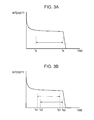
- a microscope apparatus in general, in a microscope apparatus, exposure on an imaging device is started at time Ts when a light source has reaches a thermal equilibrium state after passage of a predetermined time from the light source starting light emission, and the exposure is terminated at time Te when a certain time has passed in order to capture divided images.
- a CCD (Charge Coupled Device) sensor is used as an imaging device. In a CCD sensor, it is possible to start and end exposure for all the pixels at the same time.
- CMOS Complementary Metal Oxide Semiconductor
- Fig. 3B time Ts1 indicates exposure start time of a line on which exposure is started first
- time Ts2 indicates exposure start time of a line on which exposure is started last
- time Te1 indicates exposure end time of the line corresponding to time Ts1
- time Te2 indicates exposure end time of the line corresponding to time Ts2.
- the present invention has been made in consideration of the above-described points. It is desirable to propose an image acquisition apparatus and method for acquiring an image, which is capable of shortening an imaging time period, and reducing luminance differences among images of small areas allocated to an imaging object.
- an image acquisition apparatus including: an imaging device on which an image of a small area allocated to an area to be imaged is formed; a detection section detecting intensity of light irradiated on the small area from a light source; an integration section integrating the intensity of light detected by the detection section; if an integration value of the intensity of light integrated by the integration section from a point in time when light is emitted from the light source is greater than a predetermined threshold value, a light-source control section terminates emission of light from the light source; an exposure control section starting exposure of the imaging device before light is emitted from the light source and terminating exposure of the imaging device after emission of light from the light source is terminated; and an image acquisition section acquiring the image of the small area as a divided image from the imaging device.
- a method of acquiring an image including the steps of: detecting intensity of light irradiated from a light source on a small area allocated to an area to be imaged; integrating the intensity of light detected by the step of detecting; if an integration value of the intensity of light integrated by the step of integrating from a point in time when light is emitted from the light source is greater than a predetermined threshold value, controlling the light source so as to terminate emission of light from the light source; controlling exposure so as to start exposure of the imaging device on which an image of the small area is formed before light is emitted from the light source and to terminate exposure of the imaging device after emission of light from the light source is terminated; and acquiring the image of the small area as a divided image from the imaging device.
- an image acquisition apparatus including: an imaging device on which an image of a small area allocated to an area to be imaged is formed; a detection section detecting intensity of light irradiated on the small area from a light source; an integration section integrating the intensity of light detected by the detection section; a light-source control section emitting light from the light source such that a time interval between start and end of emission becomes constant; an exposure control section starting exposure of the imaging device before light is emitted from the light source by the light-source control section and terminating exposure of the imaging device after emission of light from the light source is terminated by the light-source control section; an image acquisition section acquiring the image of the small area as a divided image from the imaging device; a correction section correcting a luminance value of the divided image such that an integration value of intensity of light integrated by the integration section at the time when the divided image is captured becomes the same; and an image generation section generating one image by combining the divided images corrected by the correction section.
- a method of acquiring an image including the steps of: detecting intensity of light irradiated from a light source on a small area allocated to an area to be imaged; integrating the intensity of light detected by the step of detecting; controlling the light source to emit light such that a time interval between start and end of emission becomes constant; controlling exposure so as to start exposure of the imaging device before light is emitted from the light source by the step of controlling the light source and terminating exposure of the imaging device after emission of light from the light source is terminated by the step of controlling the light source; acquiring the image of the small area as a divided image from the imaging device; correcting a luminance value of the divided image such that an integration value of intensity of light integrated by the step of integrating at the time when the divided image is captured becomes the same; and generating one image by combining the divided images corrected by the step of correcting.
- the luminance values of the divided images are corrected such that the integration values of intensities of light emitted from the light source while the imaging device is exposed become the same, and thus the luminance differences among divided images can be reduced.
- the present invention a certain amount of light can be emitted from the light source while the imaging device is exposed so that it is possible to keep exposure quantities of the imaging device at constant when a plurality of divided images are obtained.
- an image acquisition apparatus and method for acquiring an image which is capable of shortening an imaging time period, and reducing luminance differences among images of small areas allocated to an imaging object.
- the luminance values of the divided images are corrected such that the integration values of intensities of light emitted from the light source while the imaging device is exposed become the same so that it is possible to keep exposure quantities of the imaging device at constant when a plurality of divided images are obtained.
- an image acquisition apparatus and method for acquiring an image which is capable of shortening an imaging time period, and reducing luminance differences among images of small areas allocated to an imaging object.
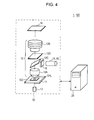
- Fig. 4 illustrates a biological-sample-image acquisition apparatus 1 according to an embodiment of the present invention.
- the biological-sample-image acquisition apparatus 1 includes a microscope 10 and a data processing section 20.
- the microscope 10 has a plane on which a biological sample SPL including a biomacromolecule, such as a tissue section, or a cell, or a chromosome, etc., can be placed, and has a stage (in the following, referred to as a movable stage) 11 movable in a parallel direction and in a perpendicular direction to that plane (in the x-, y-, and z-axis directions).
- a biological sample SPL including a biomacromolecule such as a tissue section, or a cell, or a chromosome, etc.
- the biological sample SPL is fixed on a microscope slide SG by a predetermined fixing method, and staining is applied to the biological sample SPL as necessary.
- the staining includes not only general staining as typified by HE (Hematoxylin-Eosin) staining, Giemsa stain or Papanicolaou stain, etc., but also fluorescence staining such as FISH (Fluorescence In-Situ Hybridization), an immunoenzymatic technique, etc.
- An optical system 12 is disposed on one side of the plane of the movable stage 11 in the microscope 10, and a light-source unit 13 is disposed on the other side of the plane of the movable stage 11.
- the microscope 10 captures an image of a biological sample SPL either in a bright-field mode or a dark-field mode by changing the modes.
- the light-source unit 13 emits light under the control of the light-source control section 30 ( Fig. 5 ), irradiates the light on the biological sample SPL disposed on one side of the plane of the movable stage 11 through an opening formed on the movable stage 11 as illumination light.
- the microscope 10 enlarges a part of an image of the biological sample SPL obtained by the illumination light by an objective lens 12A and an imaging lens 12B of the optical system 12 at a predetermined magnification. And the microscope 10 forms an image enlarged by the objective lens 12A and the imaging lens 12B on an imaging surface of a CMOS image sensor 14.
- a dichroic mirror 12C and an emission filter 12D can be removed from a light path between the objective lens 12A and the imaging lens 12B.
- an excitation-light-source system 15 and an excitation filter 16 are disposed at a predetermined position of the microscope 10.
- excitation light which is produced by transmitting only light having an excitation wavelength for fluorescence staining among the emitted light by the excitation filter 16 is reflected by a dichroic mirror 12C disposed between the objective lens 12A and the imaging lens 12B, and is led to the objective lens 12A.
- the excitation light is focussed by the objective lens 12A on the biological sample SPL disposed on the movable stage 11.
- the fluorescent dye emit light by the excitation light.
- Light in the following, also referred to as color development light
- the color development light reaches the imaging lens 12B through an emission filter 12D disposed between the dichroic mirror 12C and the imaging lens 12B.
- the microscope 10 enlarges an image of the color development light by the objective lens 12A, and absorbs light other than the color development light (in the following, also referred to as the other light) by the emission filter 12D. And the microscope 10 enlarges an image of the color development light having lost the other light by the imaging lens 12B, and forms the image on the imaging surface of the CMOS image sensor 14.
- the data processing section 20 generates the entire image of the biological sample SPL (in the following, also referred to as a biological sample image) using the CMOS image sensor 14, and stores the image as predetermined-format data (in the following, also referred to as sample data).
- the biological-sample-image acquisition apparatus 1 can store a biological sample SPL disposed on the microscope slide SG as an image in a microscopic state. Accordingly, it becomes possible for the biological-sample-image acquisition apparatus 1 to store the biological sample SPL over a long period of time without deteriorating states, such as fixing, staining, etc., compared with a case of storing the microscope slide SG itself.
- the light-source unit 13 has a configuration including a white LED (Light Emitting Diode) 13A outputting white light, a condenser 13B converting light emitted from the white LED 13A into substantially parallel light rays, and a photodetector 13C measuring intensity of light emitted from the white LED 13A.
- a white LED Light Emitting Diode
- a condenser 13B converting light emitted from the white LED 13A into substantially parallel light rays
- a photodetector 13C measuring intensity of light emitted from the white LED 13A.
- the white LED 13A has a characteristic in which if a constant current is applied, the LED outputs a higher intensity immediately after starting light emission because of a low temperature of the LED itself, lowers the intensity with time as the temperature of the LED increases, and goes into a thermal equilibrium state after passage of a predetermined time, outputting a constant intensity.
- the white LED 13A When the LED driver 35 supplies a current to the white LED 13A, the white LED 13A emits light diffused in a certain range.
- the condenser 13B converts light irradiated on itself among the diffused light emitted from the white LED 13A into parallel light rays, and irradiates the biological sample SPL.
- the photodetector 13C is disposed at a position where part of the diffused light emitted from the white LED 13A is irradiated among diffused light emitted from the white LED 13A without blocking a light path of light irradiated on the condenser 13B.
- the photodetector 13C detects the intensity of the irradiated light, and sends a light-intensity signal S1 in accordance with the light intensity to an integrator 32.
- the light-source control section 30 ( Fig. 5 ) includes a system controller 31, the integrator 32, a comparator 33, an AND circuit 34, and an LED driver 35.
- the system controller 31 has a computer configuration including a CPU, a ROM storing various programs, etc., and a RAM functioning as a work memory of the CPU, and totally controls individual sections 31 to 35 of the light-source control section 30.
- the light-source control section 30 controls light aimed at the biological sample SPL in accordance with a timing chart shown in Fig. 7 .
- the system controller 31 sends a reset signal S2 to the integrator 32.
- the system controller 31 sends a threshold-value signal S4 indicating a predetermined threshold value to the comparator 33.
- the system controller 31 outputs a light-emission instruction S6 for instructing the white LED 13A to output light to the AND circuit 34.
- the light-emission instruction S6 is output for a time period longer than a time period while the white LED 13A should output light, and shorter than a time period at which the next reset signal S2 is output.
- the integrator 32 When the integrator 32 receives the reset signal S2, the integrator 32 resets an integration value having been integrated up to that time in response to the reset signal S2. And the integrator 32 starts integrating the light intensity in accordance with the light-intensity signal S1 supplied from the photodetector 13C from a point in time of the reset, and sends an integration-value signal S3 indicating the integration value to the comparator 33.
- the comparator 33 compares a threshold value indicated by a threshold-value signal S4 supplied from the system controller 31 and an integration value indicated by an integration-value signal S3 supplied from the integrator 32. If the integration value is less than the threshold value, the comparator 33 sends an output signal S5, which causes the white LED 13A to output light, to the AND circuit 34. If the integration value is not less than the threshold value, the comparator 33 does not send an output signal S5, which causes the white LED 13A to output light, to the AND circuit 34.
- the AND circuit 34 If the AND circuit 34 is supplied with an output signal S5 from the comparator 33, and a light-emission instruction signal S6 from the system controller 31, the AND circuit 34 sends a light-emission instruction signal S7 for causing the white LED 13A to emit light to the LED driver 35.
- the LED driver 35 applies a constant current to the white LED 13A so that the white LED 13A emits light.
- the light-source control section 30 controls the white LED 13A to emit light until the integration value of the intensity of light measured by the photodetector 13C reaches the threshold value.
- the light-source control section 30 stops the current to be supplied to the white LED 13A in order to cause the white LED 13A to stop light emission at a point in time when the integration value of the intensity of light measured by the photodetector 13C has reached the threshold value.
- the light-source control section 30 to keep the light quantity emitted from the white LED 13A onto the CMOS image sensor 14 through the condenser 13B for each time the electronic flash instruction SS is supplied from the data processing section 20.
- the system controller 31 is allowed to obtain the light-emission instruction signal S7 output from the AND circuit 34, and to output a light-emission-end signal indicating that supplying electricity to the white LED 13A has ended to the data processing section 20 on the basis of the light-emission instruction signal S7.
- the data processing section 20 has a configuration in which various kinds of hardware are connected to a CPU (Central Processing Unit) 21 performing control.
- a CPU Central Processing Unit
- ROM Read Only Memory
- RAM Random Access Memory
- the ROM 22 stores programs for executing various kinds of processing.
- the microscope 10 ( Fig. 4 ) is connected to the interface section 25.
- a magnetic disk typified by a (Hard Disk), or a semiconductor memory, or an optical disc, etc., is employed for the storage section 27.
- a portable memory such as a USB (Universal Serial Bus) memory, or a CF (Compact Flash) memory, etc., may be employed.
- the CPU 21 loads a program corresponding to an instruction given from the operation input section 23 among a plurality of programs stored in the ROM 22 into the RAM 23, and suitably controls the display section 26 and the storage section 27 in accordance with the loaded program. Also, the CPU 21 suitably controls individual sections of the microscope 10 through the interface section 25.
- the CPU 21 When the CPU 21 receives an acquisition instruction of an image of a biological sample SPL from the operation input section 24, the CPU 21 loads a program corresponding to the obtained instruction into the RAM 23.
- the CPU 21 functions as a movement control section 41, an exposure control section 42, an electronic-flash control section 43, an image acquisition section 44, an image generation section 45, and a data recording section 46 in accordance with the program corresponding to the acquisition instruction of the image of the biological sample SPL.
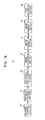
- the movement control section 41 allocates an area of a biological sample SPL to be imaged (in the following, also referred to as a sample area) PR to a plurality of small areas AR to match magnifications of the objective lens 12A and the imaging lens 12B.
- small areas AR are not overlapped one another. However, part of adjacent areas may be overlapped.
- the movement control section 41 moves the movable stage 11 such that an area to be imaged by the CMOS image sensor 14 becomes, for example, a small area AR on the upper-left corner among a plurality of small areas AR.
- the exposure control section 42 After the movement control section 41 performed movement so that the upper-left small area AR became an area to be imaged, the exposure control section 42 starts the CMOS image sensor 14 to be exposed.
- the electronic-flash control section 43 After the exposure control section 42 started the exposure of the CMOS image sensor 14, preferably at a point in time when the exposure is started, the electronic-flash control section 43 outputs the electronic flash instruction SS to the light-source control section 30.
- the electronic flash instruction SS is supplied by the electronic-flash control section 43, the light-source control section 30 causes the white LED 13A to emit a certain amount of light as described above.
- the exposure control section 42 stops the exposure of the CMOS image sensor 14.
- the image acquisition section 44 reads out an electronic signal of each pixel of the CMOS image sensor 14 in sequence for each scanning line, and obtains an image of the biological-sample SPL member of the small area AR obtained as a result as a divided image.
- the exposure control section 42 and the electronic-flash control section 43 cause the white LED 13A to emit light. And after the exposure control section 42 and the electronic-flash control section 43 have caused the white LED 13A to emit a certain amount of light, the exposure control section 42 and the electronic-flash control section 43 terminate the exposure of all the pixels of the CMOS image sensor 14.
- time Ts3 indicates exposure start time of a scanning line on which exposure is started first
- time Ts4 indicates exposure start time of a scanning line on which exposure is started last
- time Te3 indicates exposure end time of the scanning line corresponding to time Ts3
- time Te4 indicates exposure end time of the scanning line corresponding to time Ts4.
- the movement control section 41 causes the image acquisition section 44 to read out an electronic signal of the CMOS image sensor 14, and at the same time, moves the movable stage 11 such that the next area to be imaged by the CMOS image sensor 14 becomes, for example, a small area AR on the right of the upper-left small area AR.
- the exposure control section 42 and the electronic-flash control section 43 cause the CMOS image sensor 14 to start being exposed, and outputs the electronic flash instruction SS to the light-source control section 30 to cause the white LED 13A to emit a certain amount of light. After that, the exposure control section 42 and the electronic-flash control section 43 ends the exposure of the CMOS image sensor 14. Also, the image acquisition section 44 obtains the divided images from the CMOS image sensor 14.
- the movement control section 41 moves an area to be imaged by the CMOS image sensor 14 in sequence from a small area AR of the uppermost left end to that of the right end.
- the movement control section 41 moves downward by one row, and moves in sequence from the right end to the left end.
- the movement control section 41 moves the area to be imaged in the opposite direction alternately for each row until the divided images corresponding to all the small areas AR are obtained.
- the exposure control section 42, the electronic-flash control section 43, and the image acquisition section 44 function in the same manner as described above, and obtain the divided image in the small area AR each time the area to be imaged is moved to one of the small areas AR by the movement control section 41.
- the image generation section 45 combines a plurality of divided images obtained by the image acquisition section 44 to generate a biological sample image.
- the data recording section 46 When the biological sample image is generated, the data recording section 46 generates sample data including image information indicating the entire biological sample image or a part of the image that can restore the biological sample image.
- the data recording section 46 adds data indicating identification information on the biological sample image to the sample data, and records the sample data with that data into the storage section 27.
- the identification information includes information such as, an examinee name, an examinee gender, an examinee age, and an acquisition date, etc., of the biological sample SPL, for example.
- the data recording section 46 informs that the identification information should be input at predetermined timing, such as at the timing when a data storage instruction of the biological sample SPL is given, at the timing when the microscope slide SG should be set, etc.
- the data recording section 46 gives a warning that the identification information should be input.
- a notification or a warning that the identification information should be input is given, for example, by sound or through a GUI (Graphical User Interface) screen, etc.
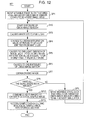
- the CPU 21 enters a routine RT1 from a start step, and proceeds to the next step SP1.
- step SP1 the CPU 21 allocates a sample area PR to a plurality of small areas AR, and moves the movable stage 11 such that an area to be imaged by the CMOS image sensor 14 is a first (upper left) small area AR, and the processing proceeds to the next step SP2.
- step SP2 the CPU 21 starts exposure of the CMOS image sensor 14, and the processing proceeds to the next step SP3.
- step SP3 the CPU 21 outputs an electronic flash instruction SS to the light-source control section 30 to cause the white LED 13A to emit light, then in the next step SP4, obtains an integration value of the intensity of light emitted from the white LED 13A, and the processing proceeds to the next step SP5.
- step SP5 at the point in time when the integration value becomes a threshold value or higher, the CPU 21 causes the light-source control section 30 to end light emission from the white LED 13A, and the processing proceeds to the next step SP6.
- step SP6 the CPU 21 ends the exposure on the CMOS image sensor 14, and processing proceeds to the next step SP7.
- step SP7 the CPU 21 reads out an electronic signal of each pixel of the CMOS image sensor 14 in sequence for each line, obtains a divided image as a result, and the processing proceeds to the next step SP8.
- step SP8 the CPU 21 determines whether all the small areas AR have been imaged. If a negative result is obtained, it means that there is a small area AR yet to be imaged, and thus the processing proceeds to the next step SP9.
- step SP9 the CPU 21 moves the movable stage 11 such that an area to be imaged by the CMOS image sensor 14 becomes the next small area AR, and the processing returns to step SP2.
- step SP8 The CPU 21 repeats from step SP2 to step SP9 until an affirmative result is obtained in step SP8.
- the affirmative result means that divided images corresponding to all the small areas AR have been obtained, and the processing proceeds to step SP10.
- step SP10 the CPU 21 combines the divided images to generate a biological sample image, then in the next step SP11, stores the sample data including the biological sample image into the storage section 27, and the processing proceeds to the next step to end the processing.
- the photodetector 13C detects intensity of light emitted from the white LED 13A, the light intensity is integrated by the integrator 32, and light emission from the white LED 13A is ended at the time when the integration value becomes a threshold value or higher.
- CMOS image sensor 14 In the biological-sample-image acquisition apparatus 1, exposure on the CMOS image sensor 14 is started before the white LED 13A emits light, and exposure on the CMOS image sensor 14 is ended after light emission from the white LED 13A is ended.
- an image of a small area AR is obtained from the CMOS image sensor 14 as a divided image.
- the amount of light emitted from the white LED 13A can be kept constant.
- the biological-sample-image acquisition apparatus 1 it is not necessary to start imaging after the white LED 13A goes into a thermal equilibrium state, and thus the imaging period can be shortened by that amount of time.
- CMOS image sensor 14 In the case of employing an imaging device which performs starting exposure, ending exposure, and reading out an electronic signal for each line, such as a CMOS image sensor 14, a time difference arises for each line in starting exposure, ending exposure, and reading out the electronic signal.
- exposure of all the pixels of the CMOS image sensor 14 is started before the white LED 13A emits light, and exposure of all the pixels of the CMOS image sensor 14 is ended after the white LED 13A has ended light emission.
- a method is considered in which the white LED 13A emits light all the time, and exposure quantity of the CMOS image sensor 14 is kept constant by opening and closing a mechanical shutter disposed on a light path of the light.
- exposure quantity of the CMOS image sensor 14 is kept constant by the emission control of the white LED 13A, and thus it is more advantageous in maintainability and in economical efficiency than the case of disposing a mechanical shutter.
- a method is considered in which the white LED 13A is controlled at a constant intensity by so-called APC (Auto Power Control) in order to keep the exposure quantity of the CMOS image sensor 14 constant.
- APC Auto Power Control
- the amount of light emitted from the white LED 13A is kept constant. Accordingly, it is not necessary to wait for intensity of light emitted from the white LED 13A to become constant, and the imaging period can be shortened by that period. Also, even if an LED current pulsates by the PWM method, the amount of light can be correctly kept constant.
- the biological-sample-image acquisition apparatus exposure of the CMOS image sensor 14 on a small area AR allocated on a sample area PR is started before the white LED 13A emits light. Also, in the biological-sample-image acquisition apparatus 1, exposure of the CMOS image sensor 14 is ended to obtain a divided image after the white LED 13A has emitted a certain amount of light.
- the biological-sample-image acquisition apparatus 1 it is possible to keep the exposure quantity of the CMOS image sensor 14 constant without waiting for the white LED 13A to go into a thermal equilibrium state. Thus, it is possible to shorten an imaging period, and to reduce luminance differences among the divided images.
- the functional configurations of the light-source control section and the CPU are different from those of the first embodiment.
- the configurations of the biological-sample-image acquisition apparatus 1 and the data processing section 20 are the same as those of the first embodiment, and the descriptions thereof will be omitted.
- a light-source control section 60 includes a system controller 31, an integrator 32, and an LED driver 35.
- the system controller 31 suitably controls the integrator 32 and the LED driver 35.
- the white LED 13A When the LED driver 35 supplies a current to the white LED 13A, the white LED 13A emits light diffused in a certain range. When part of diffused light emitted from the white LED 13A is irradiated on the photodetector 13C, the photodetector 13C measures the intensity of the irradiated light, and sends the light-intensity signal S1 in accordance with the light intensity to the integrator 32.
- the system controller 31 sends the reset signal S2 to the integrator 32.
- the integrator 32 When the integrator 32 receives the reset signal S2, the integrator 32 resets an integration value having been integrated up to that time in response to the reset signal S2. And the integrator 32 integrates the light intensity in accordance with the light-intensity signal S1 supplied from the photodetector 13C from a point in time of the reset.
- the system controller 31 After the system controller 31 sends the reset signal S2 to the integrator 32, the system controller 31 outputs a light-emission instruction signal S11 for causing the white LED 13A to emit light to the LED driver 35 during a certain time period set to be a same interval all the time from an emission start to an emission end.
- the LED driver 35 applies a constant current to the white LED 13A for a certain time period so that the white LED 13A emits light for a certain time period.
- the integrator 32 integrates the intensity of light emitted from the white LED 13A for a certain time period from a point in time of reset, and sends an integration-value signal S3 indicating the integration value obtained as a result to the system controller 31.
- the light-source control section 30 when the light-source control section 30 is supplied with an electronic flash instruction SS from the data processing section 20, the light-source control section controls the white LED 13A to emit light for a certain time period, and the light-source control section 30 obtains the integration value of the intensity of light emitted from the white LED 31A during that time.
- the CPU 21 When the CPU 21 receives an acquisition instruction of an image of a biological sample SPL from the operation input section 24, the CPU 21 loads a program corresponding to the obtained instruction into the RAM 23.
- the CPU 21 functions as the movement control section 41, the exposure control section 42, the electronic-flash control section 43, the image acquisition section 44, the image correction section 47, the image generation section 45, and the data recording section 46 in accordance with the program corresponding to the acquisition instruction of the image of the biological sample SPL.
- the movement control section 41 allocates a sample area PR to a plurality of small areas AR, and moves the movable stage 11 such that an area to be imaged by the CMOS image sensor 14 becomes, for example, a small area AR on the upper-left corner among a plurality of small areas AR.
- the exposure control section 42 After the movement control section 41 performed movement so that the upper-left small area AR became an area to be imaged, the exposure control section 42 starts the CMOS image sensor 14 to be exposed.
- the electronic-flash control section 43 After the exposure control section 42 started the exposure of the CMOS image sensor 14, preferably at a point in time when the exposure of the CMOS image sensor 14 is started, the electronic-flash control section 43 outputs the flash instruction SS to the light-source control section 60.
- the light-source control section 60 causes the white LED 13A to emit light for a certain time period.
- the exposure control section 42 ends exposure of the CMOS image sensor 14 preferably at a point in time when light emission is ended.
- the image acquisition section 44 reads out an electronic signal of each pixel of the CMOS image sensor 14 in sequence for each line, and obtains an image of the biological-sample SPL member of the upper-left small area AR obtained as a result as a divided image.
- the acquisition section 44 obtains the integration-value signal S3 indicating the integration value of the intensity of the light irradiated by the white LED 13A for a certain time period.
- the movement control section 41 moves the movable stage 11 to the next small area AR.
- the exposure control section 42, the electronic-flash control section 43, and the image acquisition section 44 obtain a divided image and an integration-value signal S3 of the small area AR by functioning in the same manner as described above each time the movement control section 41 moves the movable stage 11 to any small area AR.
- the image correction section 47 calculates a magnification for matching the integration value indicated by the integration-value signal S3 with a predetermined value, and multiplies the calculated magnification and the luminance value of the divided image corresponding to the integration value so as to correct the luminance value of the divided image.
- the image correction section 47 corrects the luminance values for all the divided images in the same manner. Also, the image correction section 47 performs distortion correction that corrects distortions of all the divided images.
- the image generation section 45 combines the divided images corrected by the image correction section 47 to generate a biological sample image.
- the data recording section 46 generates sample data including image information indicating the entire biological sample image or a part of the image that can restore the biological sample image.
- the CPU 21 enters a routine RT2 from a start step, and proceeds to the next step SP21.
- step SP21 the CPU 21 allocates a sample area PR to a plurality of small areas AR, and moves the movable stage 11 such that an area to be imaged by the CMOS image sensor 14 is a first imaging area AR, and the processing proceeds to the next step SP22.
- step SP22 the CPU 21 starts exposure of the CMOS image sensor 14, and the processing proceeds to the next step SP23.
- step SP23 the CPU 21 outputs an electronic flash instruction SS to the light-source control section 60 to cause the white LED 13A to emit light for a certain time period and by a constant current, and the processing proceeds to the next step SP24.
- step SP24 the CPU 21 ends the exposure on the CMOS image sensor 14, and processing proceeds to the next step SP25.
- step SP25 the CPU 21 reads out an electronic signal of each pixel of the CMOS image sensor 14 in sequence for each line, obtains a divided image as a result, also obtains an integration value signal S3 corresponding to the divided image, and the processing proceeds to the next step SP26.
- step SP26 the CPU 21 determines whether all the small areas AR have been imaged. If a negative result is obtained, it means that there is a small area AR yet to be imaged, and thus the processing proceeds to the next step SP27.
- step SP27 the CPU 21 moves the movable stage 11 such that an area to be imaged by the CMOS image sensor 14 becomes the next small area AR, and the processing returns to step SP22.
- the CPU 21 repeats from step SP22 to step SP27 until an affirmative result is obtained in step SP26.
- the affirmative it means that divided images and the integration value signals S3, which correspond to all the small areas AR, have been obtained, and the processing proceeds to step SP28.
- step SP28 the CPU 21 calculates magnifications for matching the integration values indicated by the integration-value signals S3 individually corresponding to all the divided images with a predetermined value set in advance, multiplies the magnifications and the luminance values of the divided images so as to correct the luminance values of the divided images, respectively, and the processing proceeds to the next step SP29.
- step SP29 the CPU 21 performs distortion correction on the divided images having been subjected to the luminance-value correction.
- the CPU 21 combines the divided images into a biological sample image, and the processing proceeds to the next step SP31.
- step SP31 the CPU 21 stores the sample data including the biological sample image into the storage section 27, and the processing proceeds to the next step to end the processing.
- the photodetector 13C detects intensity of light emitted from the white LED 13A, and the light intensity is integrated by the integrator 32 from a point in time when light is emitted.
- CMOS image sensor 14 In the biological-sample-image acquisition apparatus 1, exposure on the CMOS image sensor 14 is started before the white LED 13A emits light, and exposure on the CMOS image sensor 14 is ended after light emission from the white LED 13A is ended.
- an image of a small area AR is obtained from the CMOS image sensor 14 as a divided image, and an integration value corresponding to each of the divided images is obtained.
- luminance values of the divided images are corrected so that the integration values become constant, and the corrected divided images are combined into a biological sample image.
- the biological-sample-image acquisition apparatus 1 it is possible to keep exposure time of the CMOS image sensor 14 constant when a small area AR is imaged, and to correct the luminance value of a divided image using the integration value corresponding to the exposure quantity at that time. Thus, it is possible to reduce the luminance differences among the divided images.
- the biological-sample-image acquisition apparatus 1 it is not necessary to start imaging after the white LED 13A goes into a thermal equilibrium state, and thus the imaging period can be shortened by that amount of time.
- light emission time from the white LED 13A is kept constant, and thus it is possible to keep the emission time of the white LED 13A and the exposure time of the CMOS image sensor 14 constant all the time.
- the timings of the movement control of the movable stage 11, the emission control of the white LED 13A, and the exposure control of the CMOS image sensor 14 are not changed for each small area AR compared with controlling the exposure quantity at a certain amount as in the case of the first embodiment.
- the timings for the movement control, the emission control, and the exposure control can be made easily.
- a method for correcting the luminance values a method is considered in which the average values of the luminance values of a plurality of divided images are individually calculated, and the luminance values of the plurality of divided images are corrected so that the average values become the same.
- this method the average values of the luminance values of all the divided images become the same.
- this method there are cases where it is difficult to correct the luminance value in the same manner as the case of capturing a plurality of divided images with the same exposure quantity. For example, there are cases where the luminance values become the same as to a part including a biological sample SPL and as to a part not including the biological sample SPL, etc. Accordingly, by this method, there arises a problem in which joints of the divided images DP become conspicuous.
- the luminance values of the divided image are corrected so that the integration values become constant. Accordingly, it is possible to correct the luminance value in the same manner as the case of capturing a plurality of divided images with the same exposure quantity, and thus joints of the divided images become inconspicuous.
- the biological-sample-image acquisition apparatus exposure of the CMOS image sensor 14 on a small area AR allocated on a sample area PR is started before the white LED 13A emits light. Also, in the biological-sample-image acquisition apparatus 1, exposure of the CMOS image sensor 14 is ended to obtain a divided image after the white LED 13A has emitted light for a certain time period.
- the luminance values of the divided images are corrected such that the integration value of the intensities of light emitted from the white LED 13A become the same, and then the divided images are combined into a biological sample image.
- the biological-sample-image acquisition apparatus 1 it is possible for the biological-sample-image acquisition apparatus 1 to shorten the imaging time period, and to reduce the luminance differences among the divided images.
- the biological-sample-image acquisition apparatus in the dark-field mode is provided with a photodetector measuring the intensity of excitation light emitted from a excitation-light-source system, and a light-source control section receiving the light-intensity signal sent from the photodetector and controlling the excitation-light-source system.
- the excitation-light-source system may include a case of disposing one excitation light source emitting excitation light having a plurality of wavelengths, or a case of disposing a plurality of excitation light sources each of which emits one excitation wavelength.
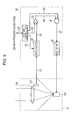
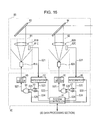
- the biological-sample-image acquisition apparatus 100 ( Fig. 4 ) is provided with, for example, an excitation-light-source system 80 and a light-source-control section 90 as shown in Fig. 16 in place of the excitation-light source system 15 and the light-source control section 30.
- an excitation-light-source system 80 and a light-source-control section 90 as shown in Fig. 16 in place of the excitation-light source system 15 and the light-source control section 30.
- a biological sample SPL has been subjected to fluorescence staining.
- the excitation-light-source system 80 includes light-source units 81 and 82, a reflecting mirror 83, and a dichroic mirror 84.
- the light-source units 81 and 82 include excitation-light source LEDs 81A and 82A, which emit light having individually different wavelengths, condensers 81B and 82B, and photodetectors 81C and 82C, respectively.
- the light-source control section 90 includes a system controller 91, an integrator 92, a comparator 93, an AND circuit 94, an LED driver 95, an integrator 96, a comparator 97, an AND circuit 98, and an LED driver 99.
- the system controller 91 totally controls individual sections 91 to 99 of the light-source control section 90.
- the excitation-light source LED 81A When the LED driver 95 supplies a current to the excitation-light source LED 81A, the excitation-light source LED 81A emits light diffused in a certain range.
- the condenser 81B converts light irradiated on itself among the diffused light emitted from the excitation-light source LED 81A into parallel light rays, and the parallel light is reflected on a reflecting mirror 83.
- the light reflected from the reflecting mirror 83 is transmitted through a dichroic mirror 84, and is irradiated on the biological sample SPL through the excitation filter 16, the dichroic mirror 12C, and the objective lens 12A.
- the excitation-light source LED 82A When the LED driver 99 supplies a current to the excitation-light source LED 82A, the excitation-light source LED 82A emits light diffused in a certain range.
- the condenser 82B converts light irradiated on itself among the diffused light emitted from the excitation-light source LED 82A into parallel light rays, and the parallel light is reflected on a dichroic mirror 84.
- the light reflected from the dichroic mirror 84 is irradiated on the biological sample SPL through the excitation filter 16, the dichroic mirror 12C, and the objective lens 12A.
- the photodetectors 81C and 82C When the photodetectors 81C and 82C receive part of diffused light emitted from the excitation-light source LEDs 81A and 82A, respectively, the photodetectors 81C and 82C detect the intensities of the irradiated light, and send light-intensity signals S21 and S31 in accordance with the light intensities to the integrators integrator 92 and 96, respectively.
- the system controller 91 When the data processing section 20 supplies an electronic flash instruction SS to the system controller 91, the system controller 91 sends reset signals S22 and S32 to the integrators 92 and 96, respectively. Also, the system controller 91 sends threshold-value signals S24 and S34 indicating predetermined threshold values to the comparators 93 and 97, respectively.
- the system controller 91 sends reset signals S22 and S32 to the integrators 92 and 96, respectively, and then outputs the light-emission instructions S26 and S36 for instructing the excitation light source LEDs 81A and 82A to output light.
- the light-emission instructions S26 and S36 are set for a time period longer than a time period while the excitation light source LEDs 81A and 82A should outputs light.
- the integrator 92 When the integrator 92 receives the reset signal S22, the integrator 92 resets an integration value, the integrator 92 starts integrating the light intensity in accordance with the light-intensity signal S21 supplied from the photodetector 81C from a point in time of the reset, and sends an integration-value signal S23 indicating the integration value to the comparator 93.
- the comparator 93 compares a threshold value indicated by a threshold-value signal S24 and an integration value indicated by an integration-value signal S23. If the integration value is less than the threshold value, the comparator 93 sends an output signal S25, which causes the excitation light source LED 81A to output light, to the AND circuit 94.
- the AND circuit 94 If the AND circuit 94 is supplied with an output signal S25 from the comparator 93, and a light-emission instruction signal S26 from the system controller 91, the AND circuit 94 sends a light-emission instruction signal S27 for causing the excitation light source LED 81A to emit light to the LED driver 95.
- the LED driver 95 applies a constant current to the excitation light source LED 81A so that the excitation light source LED 81A emits light.
- the integrator 96 when the integrator 96 receives the reset signal S32, the integrator 96 resets an integration value, the integrator 96 starts integrating the light intensity in accordance with the light-intensity signal S31 supplied from the photodetector 82C from a point in time of the reset, and sends an integration-value signal S33 indicating the integration value to the comparator 97.
- the comparator 97 compares a threshold value indicated by a threshold-value signal S34 and an integration value indicated by an integration-value signal S33. If the integration value is less than the threshold value, the comparator 97 sends an output signal S35, which causes the excitation light source LED 82A to output light, to the AND circuit 98.
- the AND circuit 98 If the AND circuit 98 is supplied with an output signal S35 from the comparator 97, and a light-emission instruction signal S36 from the system controller 91, the AND circuit 98 sends a light-emission instruction signal S37 for causing the excitation light source LED 82A to emit light to the LED driver 98.
- the LED driver 99 applies a constant current to the excitation light source LED 82A so that the excitation light source LED 82A emits light.
- the CPU 21 When the CPU 21 receives an acquisition instruction of an image of a biological sample SPL from the operation input section 24, the CPU 21 loads a program corresponding to the obtained instruction into the RAM 23, and performs processing in accordance with a flowchart shown in Fig. 17 .
- step SP41 the CPU 21 allocates a sample area PR to a plurality of small areas AR, and moves the movable stage 11 such that an area to be imaged by the CMOS image sensor 14 is a first area AR to be imaged, and the processing proceeds to the next step SP42.
- step SP42 the CPU 21 starts exposure of the CMOS image sensor 14, and the processing proceeds to the next step SP43.
- step SP43 the CPU 21 outputs an electronic flash instruction SS to the light-source control section 90 to cause the excitation light source LEDs 81A and 82A to emit light, and the processing proceeds to the next step SP44.
- step SP44 the CPU 21 causes the light-source control section 90 to obtain integration values of the intensities of light emitted from the excitation light source LEDs 81A and 82A, respectively, and the processing proceeds to the next step SP45.
- step SP45 at the point in time when the integration values become threshold values or higher, the CPU 21 causes the light-source control section 90 to end light emission in sequence from the excitation light source LEDs 81A and 82A, and the processing proceeds to the next step SP46.
- step SP46 after all the excitation light source LEDs 81A and 82A end light emission, the CPU 21 ends the exposure on the CMOS image sensor 14, and processing proceeds to the next step SP47.
- step SP47 the CPU 21 reads out an electronic signal of each pixel of the CMOS image sensor 14 in sequence for each line, obtains a divided image as a result, and the processing proceeds to the next step SP48.
- step SP48 the CPU 21 determines whether all the small areas AR have been imaged. If a negative result is obtained, it means that there is a small area AR yet to be imaged, and thus the processing proceeds to the next step SP49.
- step SP49 the CPU 21 moves the movable stage 11 such that an area to be imaged by the CMOS image sensor 14 becomes the next small area AR, and the processing returns to step SP42.
- step SP48 The CPU 21 repeats from step SP42 to step SP49 until an affirmative result is obtained in step SP48.
- the affirmative it means that divided images corresponding to all the small areas AR have been obtained, and the processing proceeds to step SP50.
- step SP50 the CPU 21 combines the divided images into a biological sample image, then in the next step SP51, stores the sample data including the biological sample image into the storage section 27, and the processing proceeds to the next step to end the processing.
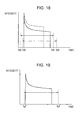
- time Ts5 indicates exposure start time of a line on which exposure is started first
- time Ts6 indicates exposure start time of a line on which exposure is started last
- time Te5 indicates exposure end time of the line corresponding to time Ts5
- time Te6 indicates exposure end time of the scanning line corresponding to time Ts6.
- a solid line and a dash-single-dot line indicate light intensities emitted from different excitation light source LEDs 81A and 82A, respectively.
- the excitation light source LEDs in the biological-sample-image acquisition apparatus 100, in the case where a plurality of excitation light source LEDs are disposed, it is possible for the excitation light source LEDs to emit light having a constant amount of light with individual wavelengths.
- the biological-sample-image acquisition apparatus 100 it is possible to keep the exposure quantity of the CMOS image sensor 14 constant without waiting for the excitation light source LED to go into a thermal equilibrium state. Thus, it is possible to shorten an imaging period, and to reduce luminance differences in the biological sample image.
- the biological sample SPL is not kept on being exposed to the excitation light as in the case of waiting until the excitation light source LED goes into a thermal equilibrium state, and thus it is possible to restrain color fading of the fluorescent dye stained on the biological sample SPL.
- the present invention is not limited to this, and the emission time of excitation light, in the dark-field mode, onto all the small areas AR may be made constant.
- CMOS image sensor 14 is used as an imaging device.
- the present invention is not limited to this, and a CCD may be used as an imaging device.
- a CCD is employed in place of the CMOS image sensor 14 in the first embodiment, as shown in Fig. 19 , exposure of the CCD is started before the white LED 13A emits light, and exposure of the CCD ends after the white LED 13A has ended light emission. Thereby, even in the case of employing a CCD, it is possible to shorten an imaging period, and to reduce luminance differences among the divided images.
- time Ts7 indicates exposure start time
- time Te7 indicates exposure end time.
- CMOS image sensor 14 ends after the white LED 13A has ended light emission.
- the present invention is not limited to this. If an emission time period, for which the amount of light emitted from the white LED 13A becomes constant, is given, an exposure time which is further longer than the emission time is set, and the CMOS image sensor 14 may be exposed for the exposure time.
- the emission time period, for which the amount of light emitted from the white LED 13A becomes constant, is given as a value, for example, between 30 [ms] and 50 [ms]
- the exposure time for which all the lines of the CMOS image sensor 14 are exposed is set to 70 [ms], for example.
- the biological sample image acquisition apparatus 1 it becomes easier to control the CMOS image sensor 14 compared with the case of changing the exposure time of the CMOS image sensor 14. Accordingly, in the biological sample image acquisition apparatus 1, it becomes possible to control the movable stage 11, the white LED 13A, and the CMOS image sensor 14 at a determined timing, and thus it becomes possible to perform total control.
- the system controller 31, the integrator 32, the comparator 33, the AND circuit 34, and the LED driver 35 of the light-source control section 30 are implemented by hardware.
- the present invention is not limited to this.
- the integrator 32, the comparator 33, the AND circuit 34, and the LED driver 35 may be implemented by software in the system controller 31 or the CPU 21.
- the system controller 31, the integrator 32, and the LED driver 35 of the light-source control section 60 are implemented by hardware.
- the present invention is not limited to this.
- the integrator 32 and the LED driver 35 may be implemented by software in the system controller 31 or the CPU 21.
- the system controller 91 the integrator 92, the comparator 93, the AND circuit 94, the LED driver 95, the integrator 96, the comparator 97, the AND circuit 98, and the LED driver 99 are implemented by hardware.
- the present invention is not limited to this.
- the integrator 92, the comparator 93, the AND circuit 94, the LED driver 95, the integrator 96, the comparator 97, the AND circuit 98, and the LED driver 99 may be implemented by software in the system controller 31 or the CPU 21.
- the objective lens 12A and the imaging lens 12B are disposed.
- the present invention is not limited to this. Only the objective lens 12A may be disposed. Also, a revolving nose-piece, etc., may be employed to the objective lens 12A in order to allow the magnification to be changed.
- the sample data obtained by the biological-sample-image acquisition processing is stored in the storage section 27.
- the storage section 27 is not limited to the case of being disposed in the data processing section 20, and may be disposed outside of the data processing section 20.
- the data communication medium for the storage section 27 is not limited to the bus 28, and for example, a wired or wireless communication medium, such as a local area network, the Internet, digital satellite broadcasting, etc., may be used.
- the CMOS image sensor 14 is disposed as an imaging device
- the photodetector 13C is disposed as a detection section
- the integrator 32 is disposed as an integration section
- the light-source control section 30 is disposed as a light-source control section
- the exposure control section 42 is disposed as an exposure control section
- the image acquisition section 44 is disposed as an image acquisition section.
- an imaging device, a detection section, an integrator, a light-source control section, an exposure control section, and an image acquisition section which have different configurations, may be disposed.
- the CMOS image sensor 14 is disposed as an imaging device
- the photodetector 13C is disposed as a detection section
- the integrator 32 is disposed as an integration section
- the light-source control section 30 is disposed as a light-source control section
- the exposure control section 42 is disposed as an exposure control section
- the image acquisition section 44 is disposed as an image acquisition section
- the image correction section 47 is disposed as a correction section
- the image generation section 45 is disposed as an image generation section.
- an imaging device, a detection section, an integrator, a light-source control section, an exposure control section, an image acquisition section, a correction section, a generation section which have different configurations, may be disposed.
Landscapes
- Physics & Mathematics (AREA)
- Multimedia (AREA)
- Engineering & Computer Science (AREA)
- General Physics & Mathematics (AREA)
- Analytical Chemistry (AREA)
- Chemical & Material Sciences (AREA)
- Signal Processing (AREA)
- Optics & Photonics (AREA)
- Computer Vision & Pattern Recognition (AREA)
- Microscoopes, Condenser (AREA)
- Studio Devices (AREA)
- Transforming Light Signals Into Electric Signals (AREA)
- Investigating, Analyzing Materials By Fluorescence Or Luminescence (AREA)
- Image Input (AREA)
Applications Claiming Priority (1)
| Application Number | Priority Date | Filing Date | Title |
|---|---|---|---|
| JP2009188776A JP5365407B2 (ja) | 2009-08-17 | 2009-08-17 | 画像取得装置及び画像取得方法 |
Publications (3)
| Publication Number | Publication Date |
|---|---|
| EP2296367A2 true EP2296367A2 (fr) | 2011-03-16 |
| EP2296367A3 EP2296367A3 (fr) | 2011-11-09 |
| EP2296367B1 EP2296367B1 (fr) | 2016-08-31 |
Family
ID=42735604
Family Applications (1)
| Application Number | Title | Priority Date | Filing Date |
|---|---|---|---|
| EP10007256.0A Not-in-force EP2296367B1 (fr) | 2009-08-17 | 2010-07-14 | Appareil d'acquisition d'images et procédé d'acquisition d'images |
Country Status (4)
| Country | Link |
|---|---|
| US (1) | US8553140B2 (fr) |
| EP (1) | EP2296367B1 (fr) |
| JP (1) | JP5365407B2 (fr) |
| CN (1) | CN101995652B (fr) |
Families Citing this family (13)
| Publication number | Priority date | Publication date | Assignee | Title |
|---|---|---|---|---|
| JP6154291B2 (ja) | 2013-11-01 | 2017-06-28 | 浜松ホトニクス株式会社 | 画像取得装置及び画像取得装置の画像取得方法 |
| US9696424B2 (en) * | 2014-05-19 | 2017-07-04 | Rockwell Automation Technologies, Inc. | Optical area monitoring with spot matrix illumination |
| US11243294B2 (en) | 2014-05-19 | 2022-02-08 | Rockwell Automation Technologies, Inc. | Waveform reconstruction in a time-of-flight sensor |
| WO2016197297A1 (fr) * | 2015-06-08 | 2016-12-15 | 北京旷视科技有限公司 | Procédé de détection de corps vivant, système de détection de corps vivant et progiciel informatique |
| JP6680560B2 (ja) * | 2016-02-17 | 2020-04-15 | オリンパス株式会社 | 共焦点顕微鏡装置、貼り合せ画像構築方法、及びプログラム |
| WO2018230575A1 (fr) * | 2017-06-15 | 2018-12-20 | オリンパス株式会社 | Système de microscope |
| JP7011152B2 (ja) * | 2017-08-30 | 2022-01-26 | 富士通株式会社 | 生体画像処理装置、生体画像処理方法、及び生体画像処理プログラム |
| US20190159732A1 (en) * | 2017-11-30 | 2019-05-30 | Pixart Imaging Inc. | Wearable device and associated method |
| JP2021511515A (ja) * | 2018-01-26 | 2021-05-06 | モレキュラー デバイシーズ (オーストリア) ゲーエムベーハー | 定量的撮像のための強度安定化のためのシステムおよび方法 |
| JP7298993B2 (ja) | 2018-04-09 | 2023-06-27 | 浜松ホトニクス株式会社 | 試料観察装置及び試料観察方法 |
| US11402620B2 (en) | 2018-12-31 | 2022-08-02 | Arizona Board Of Regents On Behalf Of Arizona State University | Amplifiable nanoparticle enhanced quantitative scattering assay under low magnification dark field microscope |
| CN110632750B (zh) * | 2019-08-30 | 2024-01-12 | 北京临近空间飞行器系统工程研究所 | 荧光显微光学系统和荧光染色细胞扫描及分析系统 |
| CN110708472B (zh) * | 2019-11-07 | 2021-06-29 | 重庆紫光华山智安科技有限公司 | 一种抑制运动亮光源曝光控制方法、系统及设备 |
Citations (2)
| Publication number | Priority date | Publication date | Assignee | Title |
|---|---|---|---|---|
| JP2003222801A (ja) | 2002-01-29 | 2003-08-08 | Olympus Optical Co Ltd | 顕微鏡画像撮影装置 |
| JP2009063656A (ja) | 2007-09-04 | 2009-03-26 | Nikon Corp | 顕微鏡システム |
Family Cites Families (16)
| Publication number | Priority date | Publication date | Assignee | Title |
|---|---|---|---|---|
| JPH03144617A (ja) * | 1989-10-31 | 1991-06-20 | Konica Corp | 閃光制御回路 |
| JP2578526B2 (ja) * | 1990-11-20 | 1997-02-05 | キヤノン株式会社 | カメラ |
| JP3259447B2 (ja) * | 1993-06-29 | 2002-02-25 | 株式会社ニコン | 電子閃光制御システム |
| JP3817301B2 (ja) * | 1996-05-28 | 2006-09-06 | キヤノン株式会社 | 電子カメラ |
| JP2000078596A (ja) * | 1998-08-31 | 2000-03-14 | Mitsubishi Electric Corp | ビデオカメラ |
| JP2000098259A (ja) * | 1998-09-22 | 2000-04-07 | Olympus Optical Co Ltd | 共焦点顕微鏡用撮影装置 |
| JP3879314B2 (ja) * | 1999-01-25 | 2007-02-14 | ソニー株式会社 | 調光装置、カメラ装置及び調光方法 |
| JP4278281B2 (ja) * | 2000-05-01 | 2009-06-10 | 株式会社リコー | ストロボ調光システムおよびストロボ付きカメラ |
| WO2002041031A1 (fr) * | 2000-11-14 | 2002-05-23 | Siemens Aktiengesellschaft | Dispositif de traitement de donnees image et procede y relatif |
| JP2003315682A (ja) * | 2002-04-26 | 2003-11-06 | Act Brain:Kk | 顕微鏡装置 |
| TWI515770B (zh) * | 2003-06-19 | 2016-01-01 | 尼康股份有限公司 | An exposure apparatus, an exposure method, and an element manufacturing method |
| JP4047301B2 (ja) * | 2004-05-18 | 2008-02-13 | キヤノン株式会社 | 撮像装置及びその制御方法 |
| US20060018013A1 (en) * | 2004-07-07 | 2006-01-26 | Yoshimasa Suzuki | Microscope imaging apparatus and biological-specimen examination system |
| JP2007288731A (ja) * | 2006-04-20 | 2007-11-01 | Hitachi High-Tech Science Systems Corp | リアルタイムパノラマ画像合成方法及びその装置 |
| JP2009139479A (ja) * | 2007-12-04 | 2009-06-25 | Hitachi Kokusai Electric Inc | 画像処理装置 |
| CN101267505B (zh) * | 2008-04-25 | 2010-06-02 | 北京中星微电子有限公司 | 一种曝光时间调整方法、装置及一种摄像头 |
-
2009
- 2009-08-17 JP JP2009188776A patent/JP5365407B2/ja not_active Expired - Fee Related
-
2010
- 2010-07-14 EP EP10007256.0A patent/EP2296367B1/fr not_active Not-in-force
- 2010-08-04 US US12/850,251 patent/US8553140B2/en not_active Expired - Fee Related
- 2010-08-10 CN CN201010250645.2A patent/CN101995652B/zh not_active Expired - Fee Related
Patent Citations (2)
| Publication number | Priority date | Publication date | Assignee | Title |
|---|---|---|---|---|
| JP2003222801A (ja) | 2002-01-29 | 2003-08-08 | Olympus Optical Co Ltd | 顕微鏡画像撮影装置 |
| JP2009063656A (ja) | 2007-09-04 | 2009-03-26 | Nikon Corp | 顕微鏡システム |
Also Published As
| Publication number | Publication date |
|---|---|
| CN101995652A (zh) | 2011-03-30 |
| EP2296367A3 (fr) | 2011-11-09 |
| EP2296367B1 (fr) | 2016-08-31 |
| CN101995652B (zh) | 2014-05-14 |
| JP2011041156A (ja) | 2011-02-24 |
| US20110037875A1 (en) | 2011-02-17 |
| JP5365407B2 (ja) | 2013-12-11 |
| US8553140B2 (en) | 2013-10-08 |
Similar Documents
| Publication | Publication Date | Title |
|---|---|---|
| EP2296367B1 (fr) | Appareil d'acquisition d'images et procédé d'acquisition d'images | |
| JP4956221B2 (ja) | 発光検出装置及び蛍光検出装置 | |
| CN101776793B (zh) | 生物样本图像获取设备及生物样本图像获取方法 | |
| JP6136085B2 (ja) | 画像取得装置、画像取得方法、およびコンピュータプログラム | |
| US20070291158A1 (en) | Imaging apparatus and imaging method | |
| CN102595050B (zh) | 摄像装置 | |
| US10782514B2 (en) | Systems and methods for calibrating a structured illumination imaging system and for capturing a structured illumination image | |
| US8822956B2 (en) | High-resolution fluorescence microscopy | |
| JP2012120132A (ja) | 撮像装置およびプログラム | |
| CN101232582A (zh) | 相位调整装置和数码相机 | |
| US11842555B2 (en) | Signal acquisition apparatus, signal acquisition system, and signal acquisition method | |
| JP2013229706A (ja) | 画像取得装置、画像取得方法、および画像取得プログラム | |
| WO2016157345A1 (fr) | Dispositif de microscope, procédé de visualisation et programme de commande | |
| EP3019905A2 (fr) | Appareil et procédé permettant de générer des images focalisées à l'aide d'une imagerie parallèle dans un système de microscopie | |
| JP2008082922A (ja) | 撮影装置及び細胞観察装置 | |
| JP2003032556A (ja) | 撮像装置 | |
| JP2017058704A (ja) | 画像取得装置、画像取得方法、およびコンピュータプログラム | |
| JP5063503B2 (ja) | 撮像装置及びその制御方法 | |
| JP2018004875A (ja) | 情報処理装置、撮像装置、情報処理方法、プログラムおよび照明装置 | |
| JP6257294B2 (ja) | 顕微鏡装置 | |
| JP2019009577A (ja) | 撮像装置 | |
| JP2001292370A (ja) | 画像処理装置および方法、並びに記録媒体 | |
| JP6935771B2 (ja) | 画像センサ | |
| JP4468642B2 (ja) | 共焦点レーザ走査型顕微鏡装置及び試料情報記録方法 | |
| JP2013025023A (ja) | バーチャルスライド装置 |
Legal Events
| Date | Code | Title | Description |
|---|---|---|---|
| PUAI | Public reference made under article 153(3) epc to a published international application that has entered the european phase |
Free format text: ORIGINAL CODE: 0009012 |
|
| 17P | Request for examination filed |
Effective date: 20100714 |
|
| AK | Designated contracting states |
Kind code of ref document: A2 Designated state(s): AL AT BE BG CH CY CZ DE DK EE ES FI FR GB GR HR HU IE IS IT LI LT LU LV MC MK MT NL NO PL PT RO SE SI SK SM TR |
|
| AX | Request for extension of the european patent |
Extension state: BA ME RS |
|
| PUAL | Search report despatched |
Free format text: ORIGINAL CODE: 0009013 |
|
| AK | Designated contracting states |
Kind code of ref document: A3 Designated state(s): AL AT BE BG CH CY CZ DE DK EE ES FI FR GB GR HR HU IE IS IT LI LT LU LV MC MK MT NL NO PL PT RO SE SI SK SM TR |
|
| AX | Request for extension of the european patent |
Extension state: BA ME RS |
|
| RIC1 | Information provided on ipc code assigned before grant |
Ipc: H04N 5/235 20060101AFI20111004BHEP Ipc: H05B 41/32 20060101ALI20111004BHEP Ipc: G02B 21/00 20060101ALI20111004BHEP |
|
| 17Q | First examination report despatched |
Effective date: 20141106 |
|
| GRAP | Despatch of communication of intention to grant a patent |
Free format text: ORIGINAL CODE: EPIDOSNIGR1 |
|
| INTG | Intention to grant announced |
Effective date: 20160211 |
|
| GRAS | Grant fee paid |
Free format text: ORIGINAL CODE: EPIDOSNIGR3 |
|
| GRAA | (expected) grant |
Free format text: ORIGINAL CODE: 0009210 |
|
| AK | Designated contracting states |
Kind code of ref document: B1 Designated state(s): AL AT BE BG CH CY CZ DE DK EE ES FI FR GB GR HR HU IE IS IT LI LT LU LV MC MK MT NL NO PL PT RO SE SI SK SM TR |
|
| REG | Reference to a national code |
Ref country code: CH Ref legal event code: EP Ref country code: GB Ref legal event code: FG4D |
|
| REG | Reference to a national code |
Ref country code: IE Ref legal event code: FG4D |
|
| REG | Reference to a national code |
Ref country code: DE Ref legal event code: R096 Ref document number: 602010035924 Country of ref document: DE |
|
| REG | Reference to a national code |
Ref country code: AT Ref legal event code: REF Ref document number: 825871 Country of ref document: AT Kind code of ref document: T Effective date: 20161015 |
|
| REG | Reference to a national code |
Ref country code: LT Ref legal event code: MG4D |
|
| REG | Reference to a national code |
Ref country code: NL Ref legal event code: MP Effective date: 20160831 |
|
| REG | Reference to a national code |
Ref country code: AT Ref legal event code: MK05 Ref document number: 825871 Country of ref document: AT Kind code of ref document: T Effective date: 20160831 |
|
| PG25 | Lapsed in a contracting state [announced via postgrant information from national office to epo] |
Ref country code: LT Free format text: LAPSE BECAUSE OF FAILURE TO SUBMIT A TRANSLATION OF THE DESCRIPTION OR TO PAY THE FEE WITHIN THE PRESCRIBED TIME-LIMIT Effective date: 20160831 Ref country code: FI Free format text: LAPSE BECAUSE OF FAILURE TO SUBMIT A TRANSLATION OF THE DESCRIPTION OR TO PAY THE FEE WITHIN THE PRESCRIBED TIME-LIMIT Effective date: 20160831 Ref country code: NO Free format text: LAPSE BECAUSE OF FAILURE TO SUBMIT A TRANSLATION OF THE DESCRIPTION OR TO PAY THE FEE WITHIN THE PRESCRIBED TIME-LIMIT Effective date: 20161130 Ref country code: HR Free format text: LAPSE BECAUSE OF FAILURE TO SUBMIT A TRANSLATION OF THE DESCRIPTION OR TO PAY THE FEE WITHIN THE PRESCRIBED TIME-LIMIT Effective date: 20160831 |
|
| PG25 | Lapsed in a contracting state [announced via postgrant information from national office to epo] |
Ref country code: SE Free format text: LAPSE BECAUSE OF FAILURE TO SUBMIT A TRANSLATION OF THE DESCRIPTION OR TO PAY THE FEE WITHIN THE PRESCRIBED TIME-LIMIT Effective date: 20160831 Ref country code: NL Free format text: LAPSE BECAUSE OF FAILURE TO SUBMIT A TRANSLATION OF THE DESCRIPTION OR TO PAY THE FEE WITHIN THE PRESCRIBED TIME-LIMIT Effective date: 20160831 Ref country code: ES Free format text: LAPSE BECAUSE OF FAILURE TO SUBMIT A TRANSLATION OF THE DESCRIPTION OR TO PAY THE FEE WITHIN THE PRESCRIBED TIME-LIMIT Effective date: 20160831 Ref country code: GR Free format text: LAPSE BECAUSE OF FAILURE TO SUBMIT A TRANSLATION OF THE DESCRIPTION OR TO PAY THE FEE WITHIN THE PRESCRIBED TIME-LIMIT Effective date: 20161201 Ref country code: AT Free format text: LAPSE BECAUSE OF FAILURE TO SUBMIT A TRANSLATION OF THE DESCRIPTION OR TO PAY THE FEE WITHIN THE PRESCRIBED TIME-LIMIT Effective date: 20160831 Ref country code: LV Free format text: LAPSE BECAUSE OF FAILURE TO SUBMIT A TRANSLATION OF THE DESCRIPTION OR TO PAY THE FEE WITHIN THE PRESCRIBED TIME-LIMIT Effective date: 20160831 |
|
| PG25 | Lapsed in a contracting state [announced via postgrant information from national office to epo] |
Ref country code: EE Free format text: LAPSE BECAUSE OF FAILURE TO SUBMIT A TRANSLATION OF THE DESCRIPTION OR TO PAY THE FEE WITHIN THE PRESCRIBED TIME-LIMIT Effective date: 20160831 Ref country code: RO Free format text: LAPSE BECAUSE OF FAILURE TO SUBMIT A TRANSLATION OF THE DESCRIPTION OR TO PAY THE FEE WITHIN THE PRESCRIBED TIME-LIMIT Effective date: 20160831 |
|
| PG25 | Lapsed in a contracting state [announced via postgrant information from national office to epo] |
Ref country code: SM Free format text: LAPSE BECAUSE OF FAILURE TO SUBMIT A TRANSLATION OF THE DESCRIPTION OR TO PAY THE FEE WITHIN THE PRESCRIBED TIME-LIMIT Effective date: 20160831 Ref country code: SK Free format text: LAPSE BECAUSE OF FAILURE TO SUBMIT A TRANSLATION OF THE DESCRIPTION OR TO PAY THE FEE WITHIN THE PRESCRIBED TIME-LIMIT Effective date: 20160831 Ref country code: BG Free format text: LAPSE BECAUSE OF FAILURE TO SUBMIT A TRANSLATION OF THE DESCRIPTION OR TO PAY THE FEE WITHIN THE PRESCRIBED TIME-LIMIT Effective date: 20161130 Ref country code: BE Free format text: LAPSE BECAUSE OF FAILURE TO SUBMIT A TRANSLATION OF THE DESCRIPTION OR TO PAY THE FEE WITHIN THE PRESCRIBED TIME-LIMIT Effective date: 20160831 Ref country code: PL Free format text: LAPSE BECAUSE OF FAILURE TO SUBMIT A TRANSLATION OF THE DESCRIPTION OR TO PAY THE FEE WITHIN THE PRESCRIBED TIME-LIMIT Effective date: 20160831 Ref country code: PT Free format text: LAPSE BECAUSE OF FAILURE TO SUBMIT A TRANSLATION OF THE DESCRIPTION OR TO PAY THE FEE WITHIN THE PRESCRIBED TIME-LIMIT Effective date: 20170102 Ref country code: DK Free format text: LAPSE BECAUSE OF FAILURE TO SUBMIT A TRANSLATION OF THE DESCRIPTION OR TO PAY THE FEE WITHIN THE PRESCRIBED TIME-LIMIT Effective date: 20160831 Ref country code: CZ Free format text: LAPSE BECAUSE OF FAILURE TO SUBMIT A TRANSLATION OF THE DESCRIPTION OR TO PAY THE FEE WITHIN THE PRESCRIBED TIME-LIMIT Effective date: 20160831 |
|
| REG | Reference to a national code |
Ref country code: DE Ref legal event code: R097 Ref document number: 602010035924 Country of ref document: DE |
|
| PG25 | Lapsed in a contracting state [announced via postgrant information from national office to epo] |
Ref country code: IT Free format text: LAPSE BECAUSE OF FAILURE TO SUBMIT A TRANSLATION OF THE DESCRIPTION OR TO PAY THE FEE WITHIN THE PRESCRIBED TIME-LIMIT Effective date: 20160831 |
|
| PLBE | No opposition filed within time limit |
Free format text: ORIGINAL CODE: 0009261 |
|
| STAA | Information on the status of an ep patent application or granted ep patent |
Free format text: STATUS: NO OPPOSITION FILED WITHIN TIME LIMIT |
|
| REG | Reference to a national code |
Ref country code: FR Ref legal event code: PLFP Year of fee payment: 8 |
|
| 26N | No opposition filed |
Effective date: 20170601 |
|
| PG25 | Lapsed in a contracting state [announced via postgrant information from national office to epo] |
Ref country code: SI Free format text: LAPSE BECAUSE OF FAILURE TO SUBMIT A TRANSLATION OF THE DESCRIPTION OR TO PAY THE FEE WITHIN THE PRESCRIBED TIME-LIMIT Effective date: 20160831 |
|
| REG | Reference to a national code |
Ref country code: CH Ref legal event code: PL |
|
| REG | Reference to a national code |
Ref country code: IE Ref legal event code: MM4A |
|
| PG25 | Lapsed in a contracting state [announced via postgrant information from national office to epo] |
Ref country code: LI Free format text: LAPSE BECAUSE OF NON-PAYMENT OF DUE FEES Effective date: 20170731 Ref country code: IE Free format text: LAPSE BECAUSE OF NON-PAYMENT OF DUE FEES Effective date: 20170714 Ref country code: CH Free format text: LAPSE BECAUSE OF NON-PAYMENT OF DUE FEES Effective date: 20170731 |
|
| PG25 | Lapsed in a contracting state [announced via postgrant information from national office to epo] |
Ref country code: LU Free format text: LAPSE BECAUSE OF NON-PAYMENT OF DUE FEES Effective date: 20170714 |
|
| REG | Reference to a national code |
Ref country code: FR Ref legal event code: PLFP Year of fee payment: 9 |
|
| PG25 | Lapsed in a contracting state [announced via postgrant information from national office to epo] |
Ref country code: MT Free format text: LAPSE BECAUSE OF NON-PAYMENT OF DUE FEES Effective date: 20170714 |
|
| PG25 | Lapsed in a contracting state [announced via postgrant information from national office to epo] |
Ref country code: AL Free format text: LAPSE BECAUSE OF FAILURE TO SUBMIT A TRANSLATION OF THE DESCRIPTION OR TO PAY THE FEE WITHIN THE PRESCRIBED TIME-LIMIT Effective date: 20160831 |
|
| PG25 | Lapsed in a contracting state [announced via postgrant information from national office to epo] |
Ref country code: HU Free format text: LAPSE BECAUSE OF FAILURE TO SUBMIT A TRANSLATION OF THE DESCRIPTION OR TO PAY THE FEE WITHIN THE PRESCRIBED TIME-LIMIT; INVALID AB INITIO Effective date: 20100714 Ref country code: MC Free format text: LAPSE BECAUSE OF FAILURE TO SUBMIT A TRANSLATION OF THE DESCRIPTION OR TO PAY THE FEE WITHIN THE PRESCRIBED TIME-LIMIT Effective date: 20160831 |
|
| PG25 | Lapsed in a contracting state [announced via postgrant information from national office to epo] |
Ref country code: CY Free format text: LAPSE BECAUSE OF NON-PAYMENT OF DUE FEES Effective date: 20160831 |
|
| PG25 | Lapsed in a contracting state [announced via postgrant information from national office to epo] |
Ref country code: MK Free format text: LAPSE BECAUSE OF FAILURE TO SUBMIT A TRANSLATION OF THE DESCRIPTION OR TO PAY THE FEE WITHIN THE PRESCRIBED TIME-LIMIT Effective date: 20160831 |
|
| PG25 | Lapsed in a contracting state [announced via postgrant information from national office to epo] |
Ref country code: TR Free format text: LAPSE BECAUSE OF FAILURE TO SUBMIT A TRANSLATION OF THE DESCRIPTION OR TO PAY THE FEE WITHIN THE PRESCRIBED TIME-LIMIT Effective date: 20160831 |
|
| PG25 | Lapsed in a contracting state [announced via postgrant information from national office to epo] |
Ref country code: IS Free format text: LAPSE BECAUSE OF FAILURE TO SUBMIT A TRANSLATION OF THE DESCRIPTION OR TO PAY THE FEE WITHIN THE PRESCRIBED TIME-LIMIT Effective date: 20161231 |
|
| PGFP | Annual fee paid to national office [announced via postgrant information from national office to epo] |
Ref country code: FR Payment date: 20210623 Year of fee payment: 12 |
|
| PGFP | Annual fee paid to national office [announced via postgrant information from national office to epo] |
Ref country code: GB Payment date: 20210623 Year of fee payment: 12 |
|
| PGFP | Annual fee paid to national office [announced via postgrant information from national office to epo] |
Ref country code: DE Payment date: 20210622 Year of fee payment: 12 |
|
| REG | Reference to a national code |
Ref country code: DE Ref legal event code: R079 Ref document number: 602010035924 Country of ref document: DE Free format text: PREVIOUS MAIN CLASS: H04N0005235000 Ipc: H04N0023700000 |
|
| REG | Reference to a national code |
Ref country code: DE Ref legal event code: R119 Ref document number: 602010035924 Country of ref document: DE |
|
| GBPC | Gb: european patent ceased through non-payment of renewal fee |
Effective date: 20220714 |
|
| PG25 | Lapsed in a contracting state [announced via postgrant information from national office to epo] |
Ref country code: FR Free format text: LAPSE BECAUSE OF NON-PAYMENT OF DUE FEES Effective date: 20220731 |
|
| PG25 | Lapsed in a contracting state [announced via postgrant information from national office to epo] |
Ref country code: GB Free format text: LAPSE BECAUSE OF NON-PAYMENT OF DUE FEES Effective date: 20220714 Ref country code: DE Free format text: LAPSE BECAUSE OF NON-PAYMENT OF DUE FEES Effective date: 20230201 |