EP2296583B1 - Implant d'articulation à deux côtés ayant une surface résistant à l'usure et une surface bioactive - Google Patents
Implant d'articulation à deux côtés ayant une surface résistant à l'usure et une surface bioactive Download PDFInfo
- Publication number
- EP2296583B1 EP2296583B1 EP09742107A EP09742107A EP2296583B1 EP 2296583 B1 EP2296583 B1 EP 2296583B1 EP 09742107 A EP09742107 A EP 09742107A EP 09742107 A EP09742107 A EP 09742107A EP 2296583 B1 EP2296583 B1 EP 2296583B1
- Authority
- EP
- European Patent Office
- Prior art keywords
- ceramic
- bioactive
- metal
- implant
- stainless steel
- Prior art date
- Legal status (The legal status is an assumption and is not a legal conclusion. Google has not performed a legal analysis and makes no representation as to the accuracy of the status listed.)
- Not-in-force
Links
- 239000007943 implant Substances 0.000 title claims abstract description 166
- 230000000975 bioactive effect Effects 0.000 title claims abstract description 112
- 239000000463 material Substances 0.000 claims abstract description 164
- 229910052751 metal Inorganic materials 0.000 claims abstract description 69
- 239000002184 metal Substances 0.000 claims abstract description 69
- 229910001092 metal group alloy Inorganic materials 0.000 claims abstract description 68
- 239000010410 layer Substances 0.000 claims description 103
- 239000000919 ceramic Substances 0.000 claims description 82
- 229910001220 stainless steel Inorganic materials 0.000 claims description 74
- 239000010935 stainless steel Substances 0.000 claims description 74
- 239000000203 mixture Substances 0.000 claims description 50
- 210000000988 bone and bone Anatomy 0.000 claims description 46
- XYJRXVWERLGGKC-UHFFFAOYSA-D pentacalcium;hydroxide;triphosphate Chemical compound [OH-].[Ca+2].[Ca+2].[Ca+2].[Ca+2].[Ca+2].[O-]P([O-])([O-])=O.[O-]P([O-])([O-])=O.[O-]P([O-])([O-])=O XYJRXVWERLGGKC-UHFFFAOYSA-D 0.000 claims description 43
- 229910052588 hydroxylapatite Inorganic materials 0.000 claims description 42
- 239000005313 bioactive glass Substances 0.000 claims description 36
- 210000000845 cartilage Anatomy 0.000 claims description 34
- 239000002344 surface layer Substances 0.000 claims description 26
- 229910045601 alloy Inorganic materials 0.000 claims description 20
- 239000000956 alloy Substances 0.000 claims description 20
- 229910010293 ceramic material Inorganic materials 0.000 claims description 18
- 230000008859 change Effects 0.000 claims description 17
- 239000002245 particle Substances 0.000 claims description 15
- WAIPAZQMEIHHTJ-UHFFFAOYSA-N [Cr].[Co] Chemical class [Cr].[Co] WAIPAZQMEIHHTJ-UHFFFAOYSA-N 0.000 claims description 13
- PNEYBMLMFCGWSK-UHFFFAOYSA-N Alumina Chemical compound [O-2].[O-2].[O-2].[Al+3].[Al+3] PNEYBMLMFCGWSK-UHFFFAOYSA-N 0.000 claims description 12
- 229910000684 Cobalt-chrome Inorganic materials 0.000 claims description 12
- 239000010952 cobalt-chrome Substances 0.000 claims description 12
- RTAQQCXQSZGOHL-UHFFFAOYSA-N Titanium Chemical compound [Ti] RTAQQCXQSZGOHL-UHFFFAOYSA-N 0.000 claims description 11
- 229910052719 titanium Inorganic materials 0.000 claims description 11
- 239000010936 titanium Substances 0.000 claims description 11
- VYZAMTAEIAYCRO-UHFFFAOYSA-N Chromium Chemical compound [Cr] VYZAMTAEIAYCRO-UHFFFAOYSA-N 0.000 claims description 7
- VTYYLEPIZMXCLO-UHFFFAOYSA-L calcium carbonate Substances [Ca+2].[O-]C([O-])=O VTYYLEPIZMXCLO-UHFFFAOYSA-L 0.000 claims description 6
- OSGAYBCDTDRGGQ-UHFFFAOYSA-L calcium sulfate Chemical compound [Ca+2].[O-]S([O-])(=O)=O OSGAYBCDTDRGGQ-UHFFFAOYSA-L 0.000 claims description 6
- 239000002994 raw material Substances 0.000 claims description 6
- 238000007596 consolidation process Methods 0.000 claims description 5
- 229910000531 Co alloy Inorganic materials 0.000 claims description 4
- 229910052581 Si3N4 Inorganic materials 0.000 claims description 4
- QCWXUUIWCKQGHC-UHFFFAOYSA-N Zirconium Chemical compound [Zr] QCWXUUIWCKQGHC-UHFFFAOYSA-N 0.000 claims description 4
- 239000011575 calcium Substances 0.000 claims description 4
- 229910052758 niobium Inorganic materials 0.000 claims description 4
- 239000010955 niobium Substances 0.000 claims description 4
- GUCVJGMIXFAOAE-UHFFFAOYSA-N niobium atom Chemical compound [Nb] GUCVJGMIXFAOAE-UHFFFAOYSA-N 0.000 claims description 4
- 239000010970 precious metal Substances 0.000 claims description 4
- HQVNEWCFYHHQES-UHFFFAOYSA-N silicon nitride Chemical compound N12[Si]34N5[Si]62N3[Si]51N64 HQVNEWCFYHHQES-UHFFFAOYSA-N 0.000 claims description 4
- 229910052715 tantalum Inorganic materials 0.000 claims description 4
- GUVRBAGPIYLISA-UHFFFAOYSA-N tantalum atom Chemical compound [Ta] GUVRBAGPIYLISA-UHFFFAOYSA-N 0.000 claims description 4
- QORWJWZARLRLPR-UHFFFAOYSA-H tricalcium bis(phosphate) Chemical compound [Ca+2].[Ca+2].[Ca+2].[O-]P([O-])([O-])=O.[O-]P([O-])([O-])=O QORWJWZARLRLPR-UHFFFAOYSA-H 0.000 claims description 4
- 229910001233 yttria-stabilized zirconia Inorganic materials 0.000 claims description 4
- 229910052726 zirconium Inorganic materials 0.000 claims description 4
- 229910052791 calcium Inorganic materials 0.000 claims description 3
- 235000001465 calcium Nutrition 0.000 claims description 3
- -1 calcium aluminates Chemical class 0.000 claims description 3
- 235000010216 calcium carbonate Nutrition 0.000 claims description 3
- 239000001506 calcium phosphate Substances 0.000 claims description 3
- 229910000389 calcium phosphate Inorganic materials 0.000 claims description 3
- 235000011010 calcium phosphates Nutrition 0.000 claims description 3
- 235000012241 calcium silicate Nutrition 0.000 claims description 3
- 239000001175 calcium sulphate Substances 0.000 claims description 3
- 235000011132 calcium sulphate Nutrition 0.000 claims description 3
- 239000007769 metal material Substances 0.000 claims description 3
- 101000848724 Homo sapiens Rap guanine nucleotide exchange factor 3 Proteins 0.000 claims 1
- 102100034584 Rap guanine nucleotide exchange factor 3 Human genes 0.000 claims 1
- 238000005245 sintering Methods 0.000 abstract description 54
- 238000000034 method Methods 0.000 abstract description 53
- 239000000843 powder Substances 0.000 abstract description 43
- 238000004519 manufacturing process Methods 0.000 abstract description 27
- 210000003127 knee Anatomy 0.000 abstract description 15
- OKTJSMMVPCPJKN-UHFFFAOYSA-N Carbon Chemical compound [C] OKTJSMMVPCPJKN-UHFFFAOYSA-N 0.000 description 23
- 238000002490 spark plasma sintering Methods 0.000 description 23
- 239000010439 graphite Substances 0.000 description 20
- 229910002804 graphite Inorganic materials 0.000 description 20
- 238000010438 heat treatment Methods 0.000 description 15
- 238000001356 surgical procedure Methods 0.000 description 13
- 230000008569 process Effects 0.000 description 10
- 238000005516 engineering process Methods 0.000 description 8
- 230000006378 damage Effects 0.000 description 7
- PXHVJJICTQNCMI-UHFFFAOYSA-N Nickel Chemical compound [Ni] PXHVJJICTQNCMI-UHFFFAOYSA-N 0.000 description 6
- 229910000831 Steel Inorganic materials 0.000 description 6
- 208000037265 diseases, disorders, signs and symptoms Diseases 0.000 description 6
- 238000003754 machining Methods 0.000 description 6
- 238000002156 mixing Methods 0.000 description 6
- 230000003287 optical effect Effects 0.000 description 6
- 230000036407 pain Effects 0.000 description 6
- 239000010959 steel Substances 0.000 description 6
- 239000000560 biocompatible material Substances 0.000 description 5
- 201000010099 disease Diseases 0.000 description 5
- 239000011521 glass Substances 0.000 description 5
- 210000000629 knee joint Anatomy 0.000 description 5
- 238000005498 polishing Methods 0.000 description 5
- 101150009243 HAP1 gene Proteins 0.000 description 4
- XEEYBQQBJWHFJM-UHFFFAOYSA-N Iron Chemical compound [Fe] XEEYBQQBJWHFJM-UHFFFAOYSA-N 0.000 description 4
- 230000008901 benefit Effects 0.000 description 4
- 238000005056 compaction Methods 0.000 description 4
- 239000002131 composite material Substances 0.000 description 4
- 238000005336 cracking Methods 0.000 description 4
- 230000007547 defect Effects 0.000 description 4
- 238000013461 design Methods 0.000 description 4
- 238000001035 drying Methods 0.000 description 4
- 238000000227 grinding Methods 0.000 description 4
- 239000007788 liquid Substances 0.000 description 4
- 230000007774 longterm Effects 0.000 description 4
- 210000005065 subchondral bone plate Anatomy 0.000 description 4
- 230000007704 transition Effects 0.000 description 4
- 238000011282 treatment Methods 0.000 description 4
- 208000010392 Bone Fractures Diseases 0.000 description 3
- 206010017076 Fracture Diseases 0.000 description 3
- ZOKXTWBITQBERF-UHFFFAOYSA-N Molybdenum Chemical compound [Mo] ZOKXTWBITQBERF-UHFFFAOYSA-N 0.000 description 3
- 208000027418 Wounds and injury Diseases 0.000 description 3
- 230000008468 bone growth Effects 0.000 description 3
- 229910052799 carbon Inorganic materials 0.000 description 3
- 229910052804 chromium Inorganic materials 0.000 description 3
- 239000011651 chromium Substances 0.000 description 3
- 238000000576 coating method Methods 0.000 description 3
- 238000002591 computed tomography Methods 0.000 description 3
- 238000000151 deposition Methods 0.000 description 3
- 208000014674 injury Diseases 0.000 description 3
- 229910052750 molybdenum Inorganic materials 0.000 description 3
- 239000011733 molybdenum Substances 0.000 description 3
- 229910052759 nickel Inorganic materials 0.000 description 3
- 230000004936 stimulating effect Effects 0.000 description 3
- 210000001519 tissue Anatomy 0.000 description 3
- IJGRMHOSHXDMSA-UHFFFAOYSA-N Atomic nitrogen Chemical compound N#N IJGRMHOSHXDMSA-UHFFFAOYSA-N 0.000 description 2
- VYPSYNLAJGMNEJ-UHFFFAOYSA-N Silicium dioxide Chemical compound O=[Si]=O VYPSYNLAJGMNEJ-UHFFFAOYSA-N 0.000 description 2
- 230000003466 anti-cipated effect Effects 0.000 description 2
- 239000012620 biological material Substances 0.000 description 2
- 238000005422 blasting Methods 0.000 description 2
- 210000004027 cell Anatomy 0.000 description 2
- 239000011248 coating agent Substances 0.000 description 2
- 239000000470 constituent Substances 0.000 description 2
- 230000008021 deposition Effects 0.000 description 2
- 238000011161 development Methods 0.000 description 2
- 238000005530 etching Methods 0.000 description 2
- 210000003035 hyaline cartilage Anatomy 0.000 description 2
- BHEPBYXIRTUNPN-UHFFFAOYSA-N hydridophosphorus(.) (triplet) Chemical compound [PH] BHEPBYXIRTUNPN-UHFFFAOYSA-N 0.000 description 2
- 238000002513 implantation Methods 0.000 description 2
- 208000015181 infectious disease Diseases 0.000 description 2
- 230000010354 integration Effects 0.000 description 2
- 229910052742 iron Inorganic materials 0.000 description 2
- 230000000278 osteoconductive effect Effects 0.000 description 2
- 230000002138 osteoinductive effect Effects 0.000 description 2
- 238000004881 precipitation hardening Methods 0.000 description 2
- 230000008439 repair process Effects 0.000 description 2
- 238000005480 shot peening Methods 0.000 description 2
- 239000010703 silicon Substances 0.000 description 2
- 229910052710 silicon Inorganic materials 0.000 description 2
- 239000000126 substance Substances 0.000 description 2
- DLYUQMMRRRQYAE-UHFFFAOYSA-N tetraphosphorus decaoxide Chemical compound O1P(O2)(=O)OP3(=O)OP1(=O)OP2(=O)O3 DLYUQMMRRRQYAE-UHFFFAOYSA-N 0.000 description 2
- 229910014497 Ca10(PO4)6(OH)2 Inorganic materials 0.000 description 1
- 102000008186 Collagen Human genes 0.000 description 1
- 108010035532 Collagen Proteins 0.000 description 1
- 208000034657 Convalescence Diseases 0.000 description 1
- 208000037408 Device failure Diseases 0.000 description 1
- 102000016359 Fibronectins Human genes 0.000 description 1
- 108010067306 Fibronectins Proteins 0.000 description 1
- DGAQECJNVWCQMB-PUAWFVPOSA-M Ilexoside XXIX Chemical compound C[C@@H]1CC[C@@]2(CC[C@@]3(C(=CC[C@H]4[C@]3(CC[C@@H]5[C@@]4(CC[C@@H](C5(C)C)OS(=O)(=O)[O-])C)C)[C@@H]2[C@]1(C)O)C)C(=O)O[C@H]6[C@@H]([C@H]([C@@H]([C@H](O6)CO)O)O)O.[Na+] DGAQECJNVWCQMB-PUAWFVPOSA-M 0.000 description 1
- FYYHWMGAXLPEAU-UHFFFAOYSA-N Magnesium Chemical compound [Mg] FYYHWMGAXLPEAU-UHFFFAOYSA-N 0.000 description 1
- KKCBUQHMOMHUOY-UHFFFAOYSA-N Na2O Inorganic materials [O-2].[Na+].[Na+] KKCBUQHMOMHUOY-UHFFFAOYSA-N 0.000 description 1
- 108010077077 Osteonectin Proteins 0.000 description 1
- 229910019142 PO4 Inorganic materials 0.000 description 1
- ZLMJMSJWJFRBEC-UHFFFAOYSA-N Potassium Chemical compound [K] ZLMJMSJWJFRBEC-UHFFFAOYSA-N 0.000 description 1
- 208000037099 Prosthesis Failure Diseases 0.000 description 1
- 102100037599 SPARC Human genes 0.000 description 1
- BQCADISMDOOEFD-UHFFFAOYSA-N Silver Chemical compound [Ag] BQCADISMDOOEFD-UHFFFAOYSA-N 0.000 description 1
- FAPWRFPIFSIZLT-UHFFFAOYSA-M Sodium chloride Chemical compound [Na+].[Cl-] FAPWRFPIFSIZLT-UHFFFAOYSA-M 0.000 description 1
- 208000013201 Stress fracture Diseases 0.000 description 1
- NINIDFKCEFEMDL-UHFFFAOYSA-N Sulfur Chemical compound [S] NINIDFKCEFEMDL-UHFFFAOYSA-N 0.000 description 1
- 239000005864 Sulphur Substances 0.000 description 1
- 229910001069 Ti alloy Inorganic materials 0.000 description 1
- 239000000654 additive Substances 0.000 description 1
- 239000004411 aluminium Substances 0.000 description 1
- 229910052782 aluminium Inorganic materials 0.000 description 1
- XAGFODPZIPBFFR-UHFFFAOYSA-N aluminium Chemical compound [Al] XAGFODPZIPBFFR-UHFFFAOYSA-N 0.000 description 1
- 210000003423 ankle Anatomy 0.000 description 1
- 238000013459 approach Methods 0.000 description 1
- 206010003246 arthritis Diseases 0.000 description 1
- 238000011882 arthroplasty Methods 0.000 description 1
- 210000000544 articulatio talocruralis Anatomy 0.000 description 1
- 239000011230 binding agent Substances 0.000 description 1
- 230000015572 biosynthetic process Effects 0.000 description 1
- 239000008280 blood Substances 0.000 description 1
- 210000004369 blood Anatomy 0.000 description 1
- 239000002639 bone cement Substances 0.000 description 1
- 230000003846 cartilage breakdown Effects 0.000 description 1
- 210000003321 cartilage cell Anatomy 0.000 description 1
- 230000001684 chronic effect Effects 0.000 description 1
- 229910017052 cobalt Inorganic materials 0.000 description 1
- 239000010941 cobalt Substances 0.000 description 1
- GUTLYIVDDKVIGB-UHFFFAOYSA-N cobalt atom Chemical compound [Co] GUTLYIVDDKVIGB-UHFFFAOYSA-N 0.000 description 1
- 229910052681 coesite Inorganic materials 0.000 description 1
- 229920001436 collagen Polymers 0.000 description 1
- 230000000052 comparative effect Effects 0.000 description 1
- 210000002808 connective tissue Anatomy 0.000 description 1
- 238000001816 cooling Methods 0.000 description 1
- 229910052906 cristobalite Inorganic materials 0.000 description 1
- 239000013078 crystal Substances 0.000 description 1
- 238000005520 cutting process Methods 0.000 description 1
- 230000007850 degeneration Effects 0.000 description 1
- 238000000280 densification Methods 0.000 description 1
- CGMRCMMOCQYHAD-UHFFFAOYSA-J dicalcium hydroxide phosphate Chemical compound [OH-].[Ca++].[Ca++].[O-]P([O-])([O-])=O CGMRCMMOCQYHAD-UHFFFAOYSA-J 0.000 description 1
- 208000035475 disorder Diseases 0.000 description 1
- 230000009977 dual effect Effects 0.000 description 1
- 230000000694 effects Effects 0.000 description 1
- 210000002310 elbow joint Anatomy 0.000 description 1
- 238000002474 experimental method Methods 0.000 description 1
- 210000000968 fibrocartilage Anatomy 0.000 description 1
- 210000001145 finger joint Anatomy 0.000 description 1
- 150000002222 fluorine compounds Chemical class 0.000 description 1
- 239000011888 foil Substances 0.000 description 1
- 239000007789 gas Substances 0.000 description 1
- 238000002695 general anesthesia Methods 0.000 description 1
- 239000003292 glue Substances 0.000 description 1
- 239000003102 growth factor Substances 0.000 description 1
- 238000001513 hot isostatic pressing Methods 0.000 description 1
- 238000007731 hot pressing Methods 0.000 description 1
- 238000001727 in vivo Methods 0.000 description 1
- 238000011065 in-situ storage Methods 0.000 description 1
- 238000003780 insertion Methods 0.000 description 1
- 230000037431 insertion Effects 0.000 description 1
- 238000009434 installation Methods 0.000 description 1
- 230000002452 interceptive effect Effects 0.000 description 1
- 238000011835 investigation Methods 0.000 description 1
- 230000001788 irregular Effects 0.000 description 1
- 230000003902 lesion Effects 0.000 description 1
- 230000005923 long-lasting effect Effects 0.000 description 1
- 239000011777 magnesium Substances 0.000 description 1
- 229910052749 magnesium Inorganic materials 0.000 description 1
- 239000011738 major mineral Substances 0.000 description 1
- 235000011963 major mineral Nutrition 0.000 description 1
- WPBNNNQJVZRUHP-UHFFFAOYSA-L manganese(2+);methyl n-[[2-(methoxycarbonylcarbamothioylamino)phenyl]carbamothioyl]carbamate;n-[2-(sulfidocarbothioylamino)ethyl]carbamodithioate Chemical compound [Mn+2].[S-]C(=S)NCCNC([S-])=S.COC(=O)NC(=S)NC1=CC=CC=C1NC(=S)NC(=O)OC WPBNNNQJVZRUHP-UHFFFAOYSA-L 0.000 description 1
- 230000003340 mental effect Effects 0.000 description 1
- 229910001512 metal fluoride Inorganic materials 0.000 description 1
- 229910044991 metal oxide Inorganic materials 0.000 description 1
- 150000004706 metal oxides Chemical class 0.000 description 1
- 238000003801 milling Methods 0.000 description 1
- 238000012986 modification Methods 0.000 description 1
- 230000004048 modification Effects 0.000 description 1
- 239000006225 natural substrate Substances 0.000 description 1
- 150000004767 nitrides Chemical class 0.000 description 1
- 229910052757 nitrogen Inorganic materials 0.000 description 1
- 238000002355 open surgical procedure Methods 0.000 description 1
- 239000004033 plastic Substances 0.000 description 1
- 229920003023 plastic Polymers 0.000 description 1
- 230000008092 positive effect Effects 0.000 description 1
- 230000002980 postoperative effect Effects 0.000 description 1
- 239000011591 potassium Substances 0.000 description 1
- 229910052700 potassium Inorganic materials 0.000 description 1
- 238000004663 powder metallurgy Methods 0.000 description 1
- 238000001272 pressureless sintering Methods 0.000 description 1
- 238000012545 processing Methods 0.000 description 1
- 230000001737 promoting effect Effects 0.000 description 1
- 239000000377 silicon dioxide Substances 0.000 description 1
- 239000004332 silver Substances 0.000 description 1
- 229910052709 silver Inorganic materials 0.000 description 1
- 239000011734 sodium Substances 0.000 description 1
- 229910052708 sodium Inorganic materials 0.000 description 1
- 239000011780 sodium chloride Substances 0.000 description 1
- 210000004872 soft tissue Anatomy 0.000 description 1
- 239000007921 spray Substances 0.000 description 1
- 230000000087 stabilizing effect Effects 0.000 description 1
- 229910052682 stishovite Inorganic materials 0.000 description 1
- 238000012549 training Methods 0.000 description 1
- 238000002054 transplantation Methods 0.000 description 1
- 229910052905 tridymite Inorganic materials 0.000 description 1
- 238000007514 turning Methods 0.000 description 1
- 210000000689 upper leg Anatomy 0.000 description 1
- 210000004885 white matter Anatomy 0.000 description 1
- 229910052882 wollastonite Inorganic materials 0.000 description 1
Images


Classifications
-
- A—HUMAN NECESSITIES
- A61—MEDICAL OR VETERINARY SCIENCE; HYGIENE
- A61F—FILTERS IMPLANTABLE INTO BLOOD VESSELS; PROSTHESES; DEVICES PROVIDING PATENCY TO, OR PREVENTING COLLAPSING OF, TUBULAR STRUCTURES OF THE BODY, e.g. STENTS; ORTHOPAEDIC, NURSING OR CONTRACEPTIVE DEVICES; FOMENTATION; TREATMENT OR PROTECTION OF EYES OR EARS; BANDAGES, DRESSINGS OR ABSORBENT PADS; FIRST-AID KITS
- A61F2/00—Filters implantable into blood vessels; Prostheses, i.e. artificial substitutes or replacements for parts of the body; Appliances for connecting them with the body; Devices providing patency to, or preventing collapsing of, tubular structures of the body, e.g. stents
- A61F2/02—Prostheses implantable into the body
- A61F2/30—Joints
-
- A—HUMAN NECESSITIES
- A61—MEDICAL OR VETERINARY SCIENCE; HYGIENE
- A61F—FILTERS IMPLANTABLE INTO BLOOD VESSELS; PROSTHESES; DEVICES PROVIDING PATENCY TO, OR PREVENTING COLLAPSING OF, TUBULAR STRUCTURES OF THE BODY, e.g. STENTS; ORTHOPAEDIC, NURSING OR CONTRACEPTIVE DEVICES; FOMENTATION; TREATMENT OR PROTECTION OF EYES OR EARS; BANDAGES, DRESSINGS OR ABSORBENT PADS; FIRST-AID KITS
- A61F2/00—Filters implantable into blood vessels; Prostheses, i.e. artificial substitutes or replacements for parts of the body; Appliances for connecting them with the body; Devices providing patency to, or preventing collapsing of, tubular structures of the body, e.g. stents
- A61F2/02—Prostheses implantable into the body
- A61F2/30—Joints
- A61F2/30756—Cartilage endoprostheses
-
- A—HUMAN NECESSITIES
- A61—MEDICAL OR VETERINARY SCIENCE; HYGIENE
- A61L—METHODS OR APPARATUS FOR STERILISING MATERIALS OR OBJECTS IN GENERAL; DISINFECTION, STERILISATION OR DEODORISATION OF AIR; CHEMICAL ASPECTS OF BANDAGES, DRESSINGS, ABSORBENT PADS OR SURGICAL ARTICLES; MATERIALS FOR BANDAGES, DRESSINGS, ABSORBENT PADS OR SURGICAL ARTICLES
- A61L27/00—Materials for grafts or prostheses or for coating grafts or prostheses
- A61L27/40—Composite materials, i.e. containing one material dispersed in a matrix of the same or different material
- A61L27/44—Composite materials, i.e. containing one material dispersed in a matrix of the same or different material having a macromolecular matrix
- A61L27/46—Composite materials, i.e. containing one material dispersed in a matrix of the same or different material having a macromolecular matrix with phosphorus-containing inorganic fillers
-
- A—HUMAN NECESSITIES
- A61—MEDICAL OR VETERINARY SCIENCE; HYGIENE
- A61F—FILTERS IMPLANTABLE INTO BLOOD VESSELS; PROSTHESES; DEVICES PROVIDING PATENCY TO, OR PREVENTING COLLAPSING OF, TUBULAR STRUCTURES OF THE BODY, e.g. STENTS; ORTHOPAEDIC, NURSING OR CONTRACEPTIVE DEVICES; FOMENTATION; TREATMENT OR PROTECTION OF EYES OR EARS; BANDAGES, DRESSINGS OR ABSORBENT PADS; FIRST-AID KITS
- A61F2/00—Filters implantable into blood vessels; Prostheses, i.e. artificial substitutes or replacements for parts of the body; Appliances for connecting them with the body; Devices providing patency to, or preventing collapsing of, tubular structures of the body, e.g. stents
- A61F2/02—Prostheses implantable into the body
- A61F2/30—Joints
- A61F2/30767—Special external or bone-contacting surface, e.g. coating for improving bone ingrowth
-
- A—HUMAN NECESSITIES
- A61—MEDICAL OR VETERINARY SCIENCE; HYGIENE
- A61F—FILTERS IMPLANTABLE INTO BLOOD VESSELS; PROSTHESES; DEVICES PROVIDING PATENCY TO, OR PREVENTING COLLAPSING OF, TUBULAR STRUCTURES OF THE BODY, e.g. STENTS; ORTHOPAEDIC, NURSING OR CONTRACEPTIVE DEVICES; FOMENTATION; TREATMENT OR PROTECTION OF EYES OR EARS; BANDAGES, DRESSINGS OR ABSORBENT PADS; FIRST-AID KITS
- A61F2/00—Filters implantable into blood vessels; Prostheses, i.e. artificial substitutes or replacements for parts of the body; Appliances for connecting them with the body; Devices providing patency to, or preventing collapsing of, tubular structures of the body, e.g. stents
- A61F2/02—Prostheses implantable into the body
- A61F2/30—Joints
- A61F2/3094—Designing or manufacturing processes
-
- A—HUMAN NECESSITIES
- A61—MEDICAL OR VETERINARY SCIENCE; HYGIENE
- A61F—FILTERS IMPLANTABLE INTO BLOOD VESSELS; PROSTHESES; DEVICES PROVIDING PATENCY TO, OR PREVENTING COLLAPSING OF, TUBULAR STRUCTURES OF THE BODY, e.g. STENTS; ORTHOPAEDIC, NURSING OR CONTRACEPTIVE DEVICES; FOMENTATION; TREATMENT OR PROTECTION OF EYES OR EARS; BANDAGES, DRESSINGS OR ABSORBENT PADS; FIRST-AID KITS
- A61F2/00—Filters implantable into blood vessels; Prostheses, i.e. artificial substitutes or replacements for parts of the body; Appliances for connecting them with the body; Devices providing patency to, or preventing collapsing of, tubular structures of the body, e.g. stents
- A61F2/02—Prostheses implantable into the body
- A61F2/30—Joints
- A61F2/38—Joints for elbows or knees
-
- A—HUMAN NECESSITIES
- A61—MEDICAL OR VETERINARY SCIENCE; HYGIENE
- A61F—FILTERS IMPLANTABLE INTO BLOOD VESSELS; PROSTHESES; DEVICES PROVIDING PATENCY TO, OR PREVENTING COLLAPSING OF, TUBULAR STRUCTURES OF THE BODY, e.g. STENTS; ORTHOPAEDIC, NURSING OR CONTRACEPTIVE DEVICES; FOMENTATION; TREATMENT OR PROTECTION OF EYES OR EARS; BANDAGES, DRESSINGS OR ABSORBENT PADS; FIRST-AID KITS
- A61F2/00—Filters implantable into blood vessels; Prostheses, i.e. artificial substitutes or replacements for parts of the body; Appliances for connecting them with the body; Devices providing patency to, or preventing collapsing of, tubular structures of the body, e.g. stents
- A61F2/02—Prostheses implantable into the body
- A61F2/30—Joints
- A61F2/38—Joints for elbows or knees
- A61F2/3877—Patellae or trochleae
-
- A—HUMAN NECESSITIES
- A61—MEDICAL OR VETERINARY SCIENCE; HYGIENE
- A61F—FILTERS IMPLANTABLE INTO BLOOD VESSELS; PROSTHESES; DEVICES PROVIDING PATENCY TO, OR PREVENTING COLLAPSING OF, TUBULAR STRUCTURES OF THE BODY, e.g. STENTS; ORTHOPAEDIC, NURSING OR CONTRACEPTIVE DEVICES; FOMENTATION; TREATMENT OR PROTECTION OF EYES OR EARS; BANDAGES, DRESSINGS OR ABSORBENT PADS; FIRST-AID KITS
- A61F2/00—Filters implantable into blood vessels; Prostheses, i.e. artificial substitutes or replacements for parts of the body; Appliances for connecting them with the body; Devices providing patency to, or preventing collapsing of, tubular structures of the body, e.g. stents
- A61F2/02—Prostheses implantable into the body
- A61F2/30—Joints
- A61F2002/30001—Additional features of subject-matter classified in A61F2/28, A61F2/30 and subgroups thereof
- A61F2002/30003—Material related properties of the prosthesis or of a coating on the prosthesis
- A61F2002/30004—Material related properties of the prosthesis or of a coating on the prosthesis the prosthesis being made from materials having different values of a given property at different locations within the same prosthesis
-
- A—HUMAN NECESSITIES
- A61—MEDICAL OR VETERINARY SCIENCE; HYGIENE
- A61F—FILTERS IMPLANTABLE INTO BLOOD VESSELS; PROSTHESES; DEVICES PROVIDING PATENCY TO, OR PREVENTING COLLAPSING OF, TUBULAR STRUCTURES OF THE BODY, e.g. STENTS; ORTHOPAEDIC, NURSING OR CONTRACEPTIVE DEVICES; FOMENTATION; TREATMENT OR PROTECTION OF EYES OR EARS; BANDAGES, DRESSINGS OR ABSORBENT PADS; FIRST-AID KITS
- A61F2/00—Filters implantable into blood vessels; Prostheses, i.e. artificial substitutes or replacements for parts of the body; Appliances for connecting them with the body; Devices providing patency to, or preventing collapsing of, tubular structures of the body, e.g. stents
- A61F2/02—Prostheses implantable into the body
- A61F2/30—Joints
- A61F2002/30001—Additional features of subject-matter classified in A61F2/28, A61F2/30 and subgroups thereof
- A61F2002/30003—Material related properties of the prosthesis or of a coating on the prosthesis
- A61F2002/30004—Material related properties of the prosthesis or of a coating on the prosthesis the prosthesis being made from materials having different values of a given property at different locations within the same prosthesis
- A61F2002/30014—Material related properties of the prosthesis or of a coating on the prosthesis the prosthesis being made from materials having different values of a given property at different locations within the same prosthesis differing in elasticity, stiffness or compressibility
-
- A—HUMAN NECESSITIES
- A61—MEDICAL OR VETERINARY SCIENCE; HYGIENE
- A61F—FILTERS IMPLANTABLE INTO BLOOD VESSELS; PROSTHESES; DEVICES PROVIDING PATENCY TO, OR PREVENTING COLLAPSING OF, TUBULAR STRUCTURES OF THE BODY, e.g. STENTS; ORTHOPAEDIC, NURSING OR CONTRACEPTIVE DEVICES; FOMENTATION; TREATMENT OR PROTECTION OF EYES OR EARS; BANDAGES, DRESSINGS OR ABSORBENT PADS; FIRST-AID KITS
- A61F2/00—Filters implantable into blood vessels; Prostheses, i.e. artificial substitutes or replacements for parts of the body; Appliances for connecting them with the body; Devices providing patency to, or preventing collapsing of, tubular structures of the body, e.g. stents
- A61F2/02—Prostheses implantable into the body
- A61F2/30—Joints
- A61F2002/30001—Additional features of subject-matter classified in A61F2/28, A61F2/30 and subgroups thereof
- A61F2002/30003—Material related properties of the prosthesis or of a coating on the prosthesis
- A61F2002/30004—Material related properties of the prosthesis or of a coating on the prosthesis the prosthesis being made from materials having different values of a given property at different locations within the same prosthesis
- A61F2002/30016—Material related properties of the prosthesis or of a coating on the prosthesis the prosthesis being made from materials having different values of a given property at different locations within the same prosthesis differing in hardness, e.g. Vickers, Shore, Brinell
-
- A—HUMAN NECESSITIES
- A61—MEDICAL OR VETERINARY SCIENCE; HYGIENE
- A61F—FILTERS IMPLANTABLE INTO BLOOD VESSELS; PROSTHESES; DEVICES PROVIDING PATENCY TO, OR PREVENTING COLLAPSING OF, TUBULAR STRUCTURES OF THE BODY, e.g. STENTS; ORTHOPAEDIC, NURSING OR CONTRACEPTIVE DEVICES; FOMENTATION; TREATMENT OR PROTECTION OF EYES OR EARS; BANDAGES, DRESSINGS OR ABSORBENT PADS; FIRST-AID KITS
- A61F2/00—Filters implantable into blood vessels; Prostheses, i.e. artificial substitutes or replacements for parts of the body; Appliances for connecting them with the body; Devices providing patency to, or preventing collapsing of, tubular structures of the body, e.g. stents
- A61F2/02—Prostheses implantable into the body
- A61F2/30—Joints
- A61F2/30767—Special external or bone-contacting surface, e.g. coating for improving bone ingrowth
- A61F2002/30922—Hardened surfaces
-
- A—HUMAN NECESSITIES
- A61—MEDICAL OR VETERINARY SCIENCE; HYGIENE
- A61F—FILTERS IMPLANTABLE INTO BLOOD VESSELS; PROSTHESES; DEVICES PROVIDING PATENCY TO, OR PREVENTING COLLAPSING OF, TUBULAR STRUCTURES OF THE BODY, e.g. STENTS; ORTHOPAEDIC, NURSING OR CONTRACEPTIVE DEVICES; FOMENTATION; TREATMENT OR PROTECTION OF EYES OR EARS; BANDAGES, DRESSINGS OR ABSORBENT PADS; FIRST-AID KITS
- A61F2/00—Filters implantable into blood vessels; Prostheses, i.e. artificial substitutes or replacements for parts of the body; Appliances for connecting them with the body; Devices providing patency to, or preventing collapsing of, tubular structures of the body, e.g. stents
- A61F2/02—Prostheses implantable into the body
- A61F2/30—Joints
- A61F2/3094—Designing or manufacturing processes
- A61F2002/30968—Sintering
-
- A—HUMAN NECESSITIES
- A61—MEDICAL OR VETERINARY SCIENCE; HYGIENE
- A61F—FILTERS IMPLANTABLE INTO BLOOD VESSELS; PROSTHESES; DEVICES PROVIDING PATENCY TO, OR PREVENTING COLLAPSING OF, TUBULAR STRUCTURES OF THE BODY, e.g. STENTS; ORTHOPAEDIC, NURSING OR CONTRACEPTIVE DEVICES; FOMENTATION; TREATMENT OR PROTECTION OF EYES OR EARS; BANDAGES, DRESSINGS OR ABSORBENT PADS; FIRST-AID KITS
- A61F2/00—Filters implantable into blood vessels; Prostheses, i.e. artificial substitutes or replacements for parts of the body; Appliances for connecting them with the body; Devices providing patency to, or preventing collapsing of, tubular structures of the body, e.g. stents
- A61F2/02—Prostheses implantable into the body
- A61F2/30—Joints
- A61F2/3094—Designing or manufacturing processes
- A61F2002/30971—Laminates, i.e. layered products
-
- A—HUMAN NECESSITIES
- A61—MEDICAL OR VETERINARY SCIENCE; HYGIENE
- A61F—FILTERS IMPLANTABLE INTO BLOOD VESSELS; PROSTHESES; DEVICES PROVIDING PATENCY TO, OR PREVENTING COLLAPSING OF, TUBULAR STRUCTURES OF THE BODY, e.g. STENTS; ORTHOPAEDIC, NURSING OR CONTRACEPTIVE DEVICES; FOMENTATION; TREATMENT OR PROTECTION OF EYES OR EARS; BANDAGES, DRESSINGS OR ABSORBENT PADS; FIRST-AID KITS
- A61F2250/00—Special features of prostheses classified in groups A61F2/00 - A61F2/26 or A61F2/82 or A61F9/00 or A61F11/00 or subgroups thereof
- A61F2250/0014—Special features of prostheses classified in groups A61F2/00 - A61F2/26 or A61F2/82 or A61F9/00 or A61F11/00 or subgroups thereof having different values of a given property or geometrical feature, e.g. mechanical property or material property, at different locations within the same prosthesis
-
- A—HUMAN NECESSITIES
- A61—MEDICAL OR VETERINARY SCIENCE; HYGIENE
- A61F—FILTERS IMPLANTABLE INTO BLOOD VESSELS; PROSTHESES; DEVICES PROVIDING PATENCY TO, OR PREVENTING COLLAPSING OF, TUBULAR STRUCTURES OF THE BODY, e.g. STENTS; ORTHOPAEDIC, NURSING OR CONTRACEPTIVE DEVICES; FOMENTATION; TREATMENT OR PROTECTION OF EYES OR EARS; BANDAGES, DRESSINGS OR ABSORBENT PADS; FIRST-AID KITS
- A61F2250/00—Special features of prostheses classified in groups A61F2/00 - A61F2/26 or A61F2/82 or A61F9/00 or A61F11/00 or subgroups thereof
- A61F2250/0014—Special features of prostheses classified in groups A61F2/00 - A61F2/26 or A61F2/82 or A61F9/00 or A61F11/00 or subgroups thereof having different values of a given property or geometrical feature, e.g. mechanical property or material property, at different locations within the same prosthesis
- A61F2250/0018—Special features of prostheses classified in groups A61F2/00 - A61F2/26 or A61F2/82 or A61F9/00 or A61F11/00 or subgroups thereof having different values of a given property or geometrical feature, e.g. mechanical property or material property, at different locations within the same prosthesis differing in elasticity, stiffness or compressibility
-
- A—HUMAN NECESSITIES
- A61—MEDICAL OR VETERINARY SCIENCE; HYGIENE
- A61F—FILTERS IMPLANTABLE INTO BLOOD VESSELS; PROSTHESES; DEVICES PROVIDING PATENCY TO, OR PREVENTING COLLAPSING OF, TUBULAR STRUCTURES OF THE BODY, e.g. STENTS; ORTHOPAEDIC, NURSING OR CONTRACEPTIVE DEVICES; FOMENTATION; TREATMENT OR PROTECTION OF EYES OR EARS; BANDAGES, DRESSINGS OR ABSORBENT PADS; FIRST-AID KITS
- A61F2250/00—Special features of prostheses classified in groups A61F2/00 - A61F2/26 or A61F2/82 or A61F9/00 or A61F11/00 or subgroups thereof
- A61F2250/0014—Special features of prostheses classified in groups A61F2/00 - A61F2/26 or A61F2/82 or A61F9/00 or A61F11/00 or subgroups thereof having different values of a given property or geometrical feature, e.g. mechanical property or material property, at different locations within the same prosthesis
- A61F2250/0019—Special features of prostheses classified in groups A61F2/00 - A61F2/26 or A61F2/82 or A61F9/00 or A61F11/00 or subgroups thereof having different values of a given property or geometrical feature, e.g. mechanical property or material property, at different locations within the same prosthesis differing in hardness, e.g. Vickers, Shore, Brinell
-
- A—HUMAN NECESSITIES
- A61—MEDICAL OR VETERINARY SCIENCE; HYGIENE
- A61F—FILTERS IMPLANTABLE INTO BLOOD VESSELS; PROSTHESES; DEVICES PROVIDING PATENCY TO, OR PREVENTING COLLAPSING OF, TUBULAR STRUCTURES OF THE BODY, e.g. STENTS; ORTHOPAEDIC, NURSING OR CONTRACEPTIVE DEVICES; FOMENTATION; TREATMENT OR PROTECTION OF EYES OR EARS; BANDAGES, DRESSINGS OR ABSORBENT PADS; FIRST-AID KITS
- A61F2310/00—Prostheses classified in A61F2/28 or A61F2/30 - A61F2/44 being constructed from or coated with a particular material
- A61F2310/00005—The prosthesis being constructed from a particular material
- A61F2310/00011—Metals or alloys
-
- A—HUMAN NECESSITIES
- A61—MEDICAL OR VETERINARY SCIENCE; HYGIENE
- A61F—FILTERS IMPLANTABLE INTO BLOOD VESSELS; PROSTHESES; DEVICES PROVIDING PATENCY TO, OR PREVENTING COLLAPSING OF, TUBULAR STRUCTURES OF THE BODY, e.g. STENTS; ORTHOPAEDIC, NURSING OR CONTRACEPTIVE DEVICES; FOMENTATION; TREATMENT OR PROTECTION OF EYES OR EARS; BANDAGES, DRESSINGS OR ABSORBENT PADS; FIRST-AID KITS
- A61F2310/00—Prostheses classified in A61F2/28 or A61F2/30 - A61F2/44 being constructed from or coated with a particular material
- A61F2310/00005—The prosthesis being constructed from a particular material
- A61F2310/00011—Metals or alloys
- A61F2310/00017—Iron- or Fe-based alloys, e.g. stainless steel
-
- A—HUMAN NECESSITIES
- A61—MEDICAL OR VETERINARY SCIENCE; HYGIENE
- A61F—FILTERS IMPLANTABLE INTO BLOOD VESSELS; PROSTHESES; DEVICES PROVIDING PATENCY TO, OR PREVENTING COLLAPSING OF, TUBULAR STRUCTURES OF THE BODY, e.g. STENTS; ORTHOPAEDIC, NURSING OR CONTRACEPTIVE DEVICES; FOMENTATION; TREATMENT OR PROTECTION OF EYES OR EARS; BANDAGES, DRESSINGS OR ABSORBENT PADS; FIRST-AID KITS
- A61F2310/00—Prostheses classified in A61F2/28 or A61F2/30 - A61F2/44 being constructed from or coated with a particular material
- A61F2310/00005—The prosthesis being constructed from a particular material
- A61F2310/00011—Metals or alloys
- A61F2310/00023—Titanium or titanium-based alloys, e.g. Ti-Ni alloys
-
- A—HUMAN NECESSITIES
- A61—MEDICAL OR VETERINARY SCIENCE; HYGIENE
- A61F—FILTERS IMPLANTABLE INTO BLOOD VESSELS; PROSTHESES; DEVICES PROVIDING PATENCY TO, OR PREVENTING COLLAPSING OF, TUBULAR STRUCTURES OF THE BODY, e.g. STENTS; ORTHOPAEDIC, NURSING OR CONTRACEPTIVE DEVICES; FOMENTATION; TREATMENT OR PROTECTION OF EYES OR EARS; BANDAGES, DRESSINGS OR ABSORBENT PADS; FIRST-AID KITS
- A61F2310/00—Prostheses classified in A61F2/28 or A61F2/30 - A61F2/44 being constructed from or coated with a particular material
- A61F2310/00005—The prosthesis being constructed from a particular material
- A61F2310/00179—Ceramics or ceramic-like structures
-
- A—HUMAN NECESSITIES
- A61—MEDICAL OR VETERINARY SCIENCE; HYGIENE
- A61F—FILTERS IMPLANTABLE INTO BLOOD VESSELS; PROSTHESES; DEVICES PROVIDING PATENCY TO, OR PREVENTING COLLAPSING OF, TUBULAR STRUCTURES OF THE BODY, e.g. STENTS; ORTHOPAEDIC, NURSING OR CONTRACEPTIVE DEVICES; FOMENTATION; TREATMENT OR PROTECTION OF EYES OR EARS; BANDAGES, DRESSINGS OR ABSORBENT PADS; FIRST-AID KITS
- A61F2310/00—Prostheses classified in A61F2/28 or A61F2/30 - A61F2/44 being constructed from or coated with a particular material
- A61F2310/00005—The prosthesis being constructed from a particular material
- A61F2310/00179—Ceramics or ceramic-like structures
- A61F2310/00293—Ceramics or ceramic-like structures containing a phosphorus-containing compound, e.g. apatite
Definitions
- the present invention relates generally to an implant device, and more specifically the invention relates to an implant device for an articular surface in a joint such as a knee, elbow or shoulder.
- the present invention also relates to a method for manufacturing such an implant.
- Pain and overuse disorders of the joints of the body is a common problem.
- one of the most important joints which is liable to wearing and disease is the knee.
- the knee provides support and mobility and is the largest and strongest joint in the body. Pain in the knee can be caused by for example injury, arthritis or infection.
- the weight-bearing and articulating surfaces of the knees, and of other joints, are covered with a layer of soft tissue that typically comprises a significant amount of hyaline cartilage
- the friction between the cartilage and the surrounding parts of the joint is very low, which facilitates movement of the joints under high pressure.
- the cartilage is however prone to damage due to disease, injury or chronic wear.
- the patent document US20070021838 describes joint implants having a bone-contacting side and an articular side, with at least one post extending from the bone contacting side for the purpose of fastening the implant to the bone.
- the articular side is made of a biocompatible materials such as a medical alloy, medical plastics, ceramics or natural substrates.
- the bone-contacting side is treated to impart improved osteoinductive/osteoconductive properties.
- the bone-contacting side is provided with a nano-scale textured surface promoting bone in- and on-growth.
- osteoinductive and osteoconductive materials may also be incorporated into or on the surface of the bone-contacting portion.
- the implant is shaped as a fairly thin plate with a slight convexity or concavity to follow the contour of an articulate surface in a joint.
- Patent document US6306925B1 also shows an implant with a composite material comprising layers of bioactive glass reinforced with ductile layers of metal.
- Patent document WO2006/08360 describes the production of a functionally graded material (FGM) net shaped body with FAST/SPS where the different materials included are a metal or a metal alloy in combination with a ceramic such as an oxide, nitride or carbide, or another metal or metal alloy.
- FGM functionally graded material
- the overall object of the present invention is to provide a solution to the problem of providing a small joint implant for the replacement of damaged cartilage, which can be inserted through arthroscopy, a small open surgery operation or a combination thereof.
- a specific object of the present invention is to provide an implant that is devised for, on one hand, an efficient long term fixation to the bone and, on the other hand, for providing a wear resistant surface to substitute for damaged cartilage.
- the overall problem to be solved by the present invention is to provide an implant with improved mechanical properties, the implant being a thin plate-shaped implant of the kind having a wear resistant articulate surface and a bioactive surface and being devised for repair of damaged cartilage.
- the present invention further addresses the following problem aspects:
- the present innovation relates to a new medical implant structure suitable for articular surface implants such as knee implants, where said implant can be inserted through a small surgical operation such as arthroscopy, a small open surgery or a combination thereof.
- the implant is provided with dual functionalities by having a first surface which is wear resistant and devised for facing the articulating part of the joint, and a second surface which is bioactive and devised for facing the bone structure underlying the cartilage.
- the wear resistant surface comprises a biocompatible wear resistant first metal, metal alloy or ceramic and provides a load bearing surface which is strong and hard enough to resist the wearing forces acting upon it through the movement of the joint.
- the bioactive surface comprises a sintered material having a homogenous microstructure comprising a mixture of a second metal, metal alloy or ceramic and a bioactive ceramic material or bioactive glass.
- the sintered material provides firm long-term attachment of the implant to the bone, by stimulating bone growth and bone integration, thus forming a bioactive surface, and at the same time provides a durable bone-contacting surface to the implant.
- the bioactive ceramic or bioactive glass promotes firm attachment to the bone while the integrated metal, metal alloy or ceramic gives the desired mechanical properties.
- the bioactive surface comprises a sintered material having a homogenous microstructure of stainless steel and hydroxyapatite (HA).
- a consequence of the invention is that a minimal surgical operation and minimal modifications on the underlying bone and surrounding tissue are required when preparing for the implant surgery and with minimal effects on the tissue after implantation.
- the bioactive implant in accordance with the invention enables implantation without a rigorous initial (primary) fixation, yet yielding a durable long-lasting (secondary) fixation. This, on one hand gives a long life length of the implant in situ and on the other hand has a positive effect on the possibility for performing further surgery, in cases when such is needed, for example total joint replacement.
- the present invention is defined in claim 1.
- the second surface comprises bioactive ceramic or bioactive glass in the range of 20-80 weight %.
- the sintered material is achieved by electric pulse assisted consolidation (EPAC, SPS).
- the sintered material structure adhering said first surface and said second surface is in the form of a functionally graded material providing a gradual change of mechanical, compositional and/or microstructural properties with position.
- the functionally graded material comprises a binding structure that comprise mental material elements in common with the first metal, metal alloy or ceramic element of the first surface and with the second metal material elements in common with the second metal, metal alloy or ceramic of the second surface.
- the first and/or the second metal, metal alloy or ceramic is any of stainless steel, cobalt-based alloys, chrome-based alloys, titanium-based alloys, pure titanium, zirconium-based alloys, tantalum, niobium, precious metals and their alloys, aluminium oxide, silicon nitride or yttria-stabilized zirconia.
- the first metal, metal alloy or ceramic is stainless steel.
- the second metal, metal alloy or ceramic is a cobalt chromium alloy.
- the first metal, metal alloy or ceramic is the same as the second metal, metal alloy or ceramic.
- the first metal, metal alloy or ceramic is different from the second metal, metal alloy or ceramic.
- the bioactive ceramic material is chosen from the group of hydroxyapatite, calcium sulphate, calcium phosphate, calcium aluminates, calcium silicates, calcium carbonates or combinations thereof, or bioactive glass.
- the bioactive ceramic material is hydroxyapatite.
- the first surface comprises stainless steel, and; the second surface comprises a sintered material having a homogenous microstructure comprising a mixture of stainless steel or a cobalt chromium alloy and a bioactive ceramic material or bioactive glass.
- the first surface comprises stainless steel sintered from stainless steel raw material particles having a particle size which is less than 25 ⁇ m;
- the second surface comprises a sintered material having a homogenous microstructure comprising a mixture of stainless steel or a cobalt chromium alloy and a bioactive ceramic material or bioactive glass; the adherence between the first and the second surfaces is achieved by a porous layer configured between the first and the second surfaces comprising stainless steel sintered from stainless steel raw material particles having a particle size which is larger than 75 ⁇ m.
- the adherence between the first and the second surfaces is achieved by a sintered material structure comprising one or more layers configured between the first and the second surfaces, each layer comprising a sintered mixture having a homogenous microstructure of the biocompatible metal, metal alloy or ceramic and the bioactive ceramic or bioactive glass, wherein the ratio of the bioactive ceramic material to stainless steel gradually changes over the layers, such that the layers comprise an increasing ratio of the bioactive ceramic material when going from the first surface towards the second surface layer.
- the material structure of the second surface is adapted further to stimulate bioactivity, for example by being porous and/or rough.
- the medical implant further comprising primary fixation means (4) for mechanical attachment to the bone, for example a screw, peg, keel or barb.
- the primary fixation means (4) comprises the bioactive ceramic or bioactive glass of the second surface.
- the primary fixation means (4) comprises the biocompatible metal, metal alloy or ceramic of the first surface.
- the primary fixation means (4) is formed as a protrusion from a first surface layer (10) extending through a second surface layer (11) and possible intermediate layer or layers (12).
- the implant is designed as a thin plate or plate-like structure, possibly concave/convex, where the area of the first surface is between 0.5 cm 2 and 15 cm 2 , preferably between 1 cm 2 and 10 cm 2 , and the thickness between the first and the second surfaces is between 1 mm and 10 mm.
- the first surface (5) or the second surface (7) is surface treated, for example by polishing, heat treatment, precipitation hardening or deposition of a suitable surface coating.
- the present innovation relates to a new medical implant structure and material and use of such a material in a medical implant for an articular surface implant, as well as a method for manufacturing such a medical implant and medical implant structure.
- the implant is suitable for replacement of cartilage in the knee joint, to stop or retard further cartilage break-down.
- the invention may however have other useful applications, such as in a medical implant for an articulating surface of any other joint in the body, e.g. elbow, ankle, finger, hip, toe and shoulder.
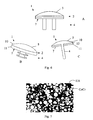
- Fig 1A-C show schematic views of different embodiments of a medical implant in accordance with the invention.
- Fig 1A shows the medical implant at an angular view from above.
- Fig 1B and C show the medical implant from a side view.
- the medical implant 1 comprises an implant body 2 and, in the examples shown in Fig 1A and B , a primary fixation means 4 extending from the implant body 2.
- the purpose of the primary fixation means 4 is primarily to provide mechanical attachment of the implant to the bone in immediate connection with the surgical operation.
- the implant body 2 has a thin, plate-like design. The plate can vary in size and shape and may be adjusted to the size and shape of the damaged cartilage tissue and to the needs of particular treatment situations.
- the cross-section of the implant body 1 may have a circular or roughly circular, oval, triangular, square or irregular shape.
- the size of the implant 1 may also vary.
- the surface area of the implant body 2 varies. between 0,5 cm 2 and 10 cm 2 or preferably between about 1 cm 2 and 10 cm 2 .
- small implants are preferred since they have a smaller impact on the joint at the site of incision and are also more easily implanted using arthroscopy or smaller open surgical procedures.
- the primary factor for determining the size of the implant is however the nature of the lesion to be repaired.
- the thickness of the implant body 2 is between 1 mm and about 10 mm, preferably between about 2 mm and 5 mm.
- the thickness of the implant should on the whole preferably match the thickness of the original cartilage layer, possibly also adapted to adjust for the recess in the bone, used for anchorage of the implant (see further explanation below) or formed as a part of the disease process.
- the body 2 of the medical implant 1 comprises a first surface 5, which is configured to face the articulating part of the joint and is wear resistant, and a second surface 7, which is configured to face the bone and is bioactive.
- the first surface 5 should preferably have a profile which on the whole matches the curvature of the original anatomical surface at the site of incision, as e.g. illustrated in Fig 5B . It is e.g. typically convex for implants intended for the femoral side of a knee joint, but can also have multiple curvatures, In another embodiment adapted for concave articulate surfaces, the first surface of the implant body has a corresponding concave shape.
- the second surface 7, i.e. the surface facing the bone should typically be flat or concave or may be convex to fit the underlying bony surface where the cartilage in the implant site is removed and the bone possibly is prepared with a recess for the implant.
- the first, wear resistant, surface 5, which is also the articulate surface of the medical implant, comprises a biocompatible metal, metal alloy or ceramic, preferably stainless steel.
- the metal, metal alloy or ceramic is chosen to provide a wear resistant surface which is durable and resistant to the abrasive forces acting upon it as it articulates and moves in relation to the surrounding parts of the joint.
- the wear-resistant biocompatible material may consist of a metal, a metal alloy or a ceramic material. More specifically it can consist of any metal or metal alloy used for structural applications in the body, such as stainless steel, cobalt-based alloys, chrome-based alloys, titanium-based alloys, pure titanium, zirconium-based alloys, tantalum, niobium and precious metals and their alloys. If a ceramic is used as the biocompatible material, it can be a biocompatible ceramic such as aluminium oxide, silicon nitride or yttria-stabilized zirconia.
- Stainless steel is a material which is well documented for the application in implants and prostheses. It also provides a material which is hard and strong enough to withstand and tolerate the large mechanical forces and heavy and changing work loads subjected to it in the joint. Different grades exist where the properties have been optimised for applications in the human body.
- An example of a stainless steel for use in an embodiment of the present invention is an alloy mainly comprising iron, carbon, chromium (12-20%), molybdenum (0.2-3%), and nickel (8-15%).
- first, wear resistant, surface 5 may also be further surface treated in order to e.g. achieve an even more durable surface or a surface with a lower friction coefficient.
- Such treatments may include, for example, polishing, heat treatment, precipitation hardening or depositing a suitable surface coating.
- the second, bioactive, surface 7 of the medical implant 1, which is also the bone-contacting surface, comprises a sintered material having a homogenous microstructure of metal, metal alloy or ceramic and a bioactive ceramic material or bioactive glass.
- the purpose of the bioactive surface 7 is to provide long-term firm adherence of the medical implant 1 to the underlying bone, by stimulating the bone to grow into or onto the implant surface.
- bioactive materials that have a stimulating effect on bone growth are known and have been used to promote adherence between implants and bone. Examples of such prior art bioactive materials include bioactive glass, bioactive ceramics and biomolecules such as collagens, fibronectin, osteonectin and various growth factors.
- a commonly used bioactive material in the field of implant technology is the bioactive ceramic hydroxyapatite (HA).
- HA is the major mineral constituent of bone and is able to slowly bond with bone in vivo. Thus, HA coatings have been developed for medical implants to promote bone attachment. Unfortunately HA is a brittle material and the bonding between HA and prior art metallic implants is weak and subject to fracture.
- Another bioactive material commonly used in prior art is bioactive glass. Bioactive glasses, generally comprising SiO 2 , CaSiO 3 , P 2 O 5 , Na 2 O and/or CaO and possibly other metal oxides or fluorides, are able to stimulate bone growth faster than HA, but are also weak and in themselves lack the necessary mechanical properties required by articulate joint implants.
- a bioactive surface 7 is provided by incorporating by sintering a bioactive ceramic or bioactive glass into a metal, metal alloy or ceramic. Thereby, a sintered mixture material having a more or less homogenous microstructure comprising the bioactive ceramic or bioactive glass and the metal, metal alloy or ceramic is formed. In this way the bioactive ceramic or glass is fully integrated with and supported by the metal, metal alloy or ceramic structure. The bioactive ceramic or bioactive glass promotes firm attachment to the bone while the metal, metal alloy or ceramic gives the desired mechanical properties.
- the second surface 7 is a bioactive surface which is strong enough to be integrated with the bone without breaking, which is resistant to wearing and peel and at the same time adheres firmly to the body 2 of the medical implant 1.
- Fig 7 shows an example of a microstructure in an embodiment of the present invention.
- the figure shows the microstructure of a sintered composition of a cobalt chromium alloy CoCr and hydroxyapatite HA (50:50).
- the white matter is CoCr and the black is HA.
- HA forms a continuous phase while the CoCr forms scattered particles.
- the content of the bioactive ceramic or bioactive glass in the second surface is more than 20 % and preferably more than 30 %.
- This high ratio of the bioactive material combined with satisfying mechanical properties is enabled by the sintering of the bioactive material with a metal, metal alloy or ceramic according to the invention.
- the bioactive ceramic of the sintered mixture material of the second surface 7 is preferably hydroxyapatite (also called hydroxylapatite, HA).
- Hydroxyapatite has the chemical composition Ca 5 (PO 4 ) 3 (OH), but is usually written Ca 10 (PO 4 ) 6 (OH) 2 to denote that the crystal unit cell comprises two molecules.
- the bioactive material may also be any of the ceramics calcium sulphate, calcium phosphate, calcium aluminates, calcium silicates, calcium carbonates or bioactive glass, or combinations thereof.
- the metal, metal alloy or ceramic content of the bioactive, second surface 7 is selected from any metal, metal alloy or ceramic used for structural applications in the body, such as stainless steel, cobalt-based alloys, chrome-based alloys, titanium-based alloys, pure titanium, zirconium-based alloys, tantalum, niobium, precious metals and their alloys, as well as aluminium oxide, silicon nitride or yttria-stabilized zirconia.
- the metal, metal alloy or ceramic of the sintered mixture material of the second surface 7 is preferably a cobalt chromium alloy CoCr or stainless steel, or another suitable metal, metal alloy or ceramic.
- the second surface comprises a cobalt chromium alloy CoCr or stainless steel and HA in a ratio in the range of 20:80 to about 80:20, for example 70:30, 50:50 or 30:70.
- sintering additives such as oxides of phosphorous, sodium, magnesium, potassium, silver, aluminium, titanium and/or silicon can be added to the hydroxyapatite powder to facilitate the sintering process.
- the second surface i.e. the surface of the bioactive material can be rough or porous in order to facilitate the attachment of the implant to the bone.
- the first, wear resistant, surface 5 and the second, bioactive, surface 7 are fixed or adhered to one another by means of a sintered material structure that in different embodiments is realized in different manners.
- a first surface layer comprising the first wear resistant surface 5 is sintered to a second surface layer comprising the second bioactive surface 7.
- an intermediate layer sintered between the first surface layer and the second surface layer is provided.
- a functionally graded material is generally characterised by a gradual change of material properties with position. It is an anisotropic composite material where a gradient deliberately has been introduced into the material. This gradient can for example be in composition and/or microstructure and/or mechanical properties.
- the gradual change with position provides for firm adhesion between the first and the second surfaces, or, expressed differently, between layers of material occurring between the surfaces.
- the gradual change of material properties yields a gradual transition in mechanical, structural and/or chemical properties, which leads to higher durability of the material.
- the term functionally graded material means that there is some kind of compatibility between different layers or surfaces of the implant body structure.
- the gradual change may be realized as a linear or continuous change in properties and/or discrete changes between two or more distinct, more or less well defined layers that have some property in common to make them mutually compatible.
- An example of an FGM 9 in an embodiment of the present invention is a gradual change in composition from a pure or substantially pure metal, metal alloy or ceramic in the first surface to a gradual increase in the concentration/ratio of bioactive ceramic or bioactive glass in a sintered mixture material, towards the second surface.
- the gradual change is achieved either as a linear change or as a gradual change between two or more distinct, well defined layers.
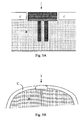
- the FGM 9 in the embodiment exemplified in Fig 2 comprises six distinct layers that are adhered and compacted by sintering; one first surface layer 10 of the first surface 5 which comprises a wear resistant metal, metal alloy or ceramic, one second surface layer 11 of the second surface 7 which comprises a sintered mixture material comprising a metal, metal alloy or ceramic and a relatively high ratio of bioactive ceramic or bioactive glass, and four intermediate layers 12 which have an increasing ratio of the bioactive material going from the first surface layer 10 towards the second surface layer 11.
- the first 5 and the second 7 surfaces are adhered by an FGM 9 which provides a gradual change in properties but not necessarily in composition.
- the FGM of this embodiment comprises one or more intermediate layers 12 which comprise a material which is distinct from the material of the first 5 and/or the second 7 surfaces.
- Such an intermediate layer may e.g. comprise steel, titanium, and hydroxylapatite to obtain improved compatibility between the layers and thereby reduce the number of layers and avoid undesired cracks in the layers.
- Such an embodiment could have for example titanium, a titanium alloy or a ceramic material as the third material between the wear-resistant biocompatible material and the bioactive material.
- the first surface 5 comprises a relatively dense stainless steel, sintered using steel of a small particle size ( ⁇ 25 ⁇ m)
- the second surface 7 comprises a composite of relatively dense cobalt chromium alloy CoCr or stainless steel and bioactive ceramic or glass
- the intermediate layer 12 comprises relatively porous stainless steel, sintered using steel of a large particle size (>75 ⁇ m). The porous intermediate layer 12 picks up and distributes the tension and forces that build up between the first 5 and the second 7 surfaces and thus prevents the surfaces from cracking, thereby providing a durable material.
- one or more intermediate layers 12 form a sintered bonding structure that provides adherence between the first, wear resistant and biocompatible surface 5 and the second, bioactive surface 7 as well as mechanically stabilizing properties to the implant structure.
- the functionally graded material is in one embodiment as shown in Fig 4 and Fig 6C realized with two layers, i.e. a first surface layer 10 comprising the first, wear resistant and biocompatible surface 5 sintered together with a second surface layer 11 comprising the second, bioactive surface 7.
- the implant may also be designed with a small device 4 for immediate, mechanical attachment, herein called primary fixation.
- the primary fixation means 4 may e.g. be devised as a physical structure, glue, bone cement or the like.
- physical structure is meant a protrusion, such as one or more of a small screw, peg, keel, barb or the like, as exemplified in e.g. Fig 1A and 1B .
- the medical implant 1 may lack such primary fixation means or e.g. be devised with a bore through which a bone screw or the like can be inserted and fastened into the bone.
- Other possible alternatives are illustrated in Fig 6A-C , showing different embodiments of the primary fixation means 4, as well as medical implants 1.
- the primary fixation means 4 may, if configured as a physical structure, comprise e.g. the metal, metal alloy or ceramic, as in the first surface, or a sintered mixture material of a metal, metal alloy or ceramic and a bioactive ceramic or bioactive glass, as in the second surface.
- Fig 6C shows an embodiment where the primary fixation means 4 is formed as a protrusion extending from the first surface layer 10 through the second surface layer 11 and possible intermediate layer or layers 12.
- These primary fixation means e.g. protrusions in the shape of pegs, comprise in one embodiment the bioactive material and have a length of 1 to 10 mm, typically 2-5 mm, and a diameter of 1 to 5 mm, typically 2 to 4 mm. In another embodiment, the length is between 1 and 20, and typically 3-10 mm, and the diameter is typically 1-4 mm.
- the protrusions should penetrate the sub-chondral bone plate and engage the cancellous bone. The protrusion will give stability and promote the attachment of the bioactive material to the bone.
- the implant and FGMs comprised in the implant can be prepared through different techniques such as conventional powder metallurgy processing, vapour deposition and sintering techniques.
- the preferred technique for producing said implant is consolidation through sintering.
- the sintering technique is preferably electric pulse assisted consolidation (EPAC), also referred to as spark plasma sintering (SPS), pulsed electric current sintering (PECS), field assisted sintering technique (FAST), plasma-assisted sintering (PAS) and plasma pressure compaction (P 2 C).
- Electric pulse assisted consolidation includes processes based on heating a material to be compacted with a pulsed DC current. The process allows very rapid heating under high pressures.
- SPS This process, hereafter referred to as SPS, has proved to be very well suited for the production of functionally graded material.
- SPS gives advantages such as no need of binders in the powders and a controlled shrinkage of the material during the compaction. Further, the possibility to rapidly change the temperature and pressure makes it easier to tailor the microstructure of the material and to optimize the sintering conditions compared to conventional compaction techniques.
- the general way to form a FGM through spark plasma sintering today is to build it up layer by layer with different compositions. Further, prior to sintering, the powders can be pressed together and thereby form a so called green body, which is an un-sintered item to become a ceramic upon sintering, which is later on inserted into the SPS unit to be sintered.
- the spark plasma sintering technique is used for manufacturing the gradient components, i.e. the surfaces and the layers, in an exemplifying embodiment of this invention.
- gradient materials produced through alternative methods can also be used for the same purpose, for example sintering methods such as hot pressing, hot isostatic pressing or pressureless sintering.
- SPS combines rapid heating, a short holding time at the desired sintering temperature and a high pressure for sintering of the components.
- the pressure used during the process of the present invention is between 10 and 150 MPa, preferably between 30 and 100 MPa.
- the heating rate applied is between 5 and 600 °C min -1 , preferably 50-150 °C min -1 .
- the sintering temperature and time are chosen so that a total or near total densification, implying a density of at least 95%, or at least 97% of the theoretical density, will be obtained for the layer comprising essentially 100 wt% biocompatible wear resistant metal, metal alloy or ceramic. This temperature is between 800°C and 1300°C, typically 900°C -1 100°C.
- the holding time during the sintering process is between about I minute and about 30 minutes, typically between about 2 minutes and about 10 minutes.
- the SPS technique uses a combination of a high current and a low voltage.
- a pulsed DC current with typical pulse durations of a few ms and currents of 0.5-30 kA flows through the punches, die and, depending on the electrical properties of the specimen, also through the specimen.
- the electrical pulses are generated in the form of pulse packages where the on: off relation is in the region of 1:99 to 99:1, typically 12:2 (12 pulses on, 2 off).
- the pressure is applied on the two electrically conducting punches of the powder chamber, in a uniaxial direction.
- the sintering procedure preferably also includes a high heating rate (a steep heating ramp) and a short holding time at the desired sintering temperature.
- the cooling down of the sample can either be programmed or the sample will cool down automatically as the current is switched off.
- the method comprises the following steps.
- the component is produced through sintering in a single step, said production process comprising the steps:
- the fully sintered component may after the sintering process be treated with different methods to obtain a finished product, said methods may comprise surface machining, blasting, etching, grinding and polishing.
- the method comprises the following steps.
- the component is produced through sintering in multiple steps, said production process comprising the steps:
- step i) comprises the materials for the wear resistant side and the protrusion
- step iv) comprises the material for the bioactive surface
- step i) above comprises at least two different kinds of materials, resulting in different materials on the wear resistant surface and in the protrusion forming primary fixation means.
- the fully sintered component may after the sintering process be treated with different methods to obtain a finished product, said methods may comprise surface machining, blasting, etching, grinding and polishing.
- a functionally graded material is characterised by a gradual change of material properties with position.
- An FGM 9 may in some embodiments, as the one schematically shown in Fig 3 , be achieved by one or more intermediate layers 12, which provide a gradual change in properties, but not necessarily in composition, within the FGM structure.
- the FGM 9 of the exemplifying embodiment comprises one or more intermediate layers 12 which comprise a material which is distinct from the material of the first surface 5 and the corresponding first surface layer 10 and/or the second surface 7 and the corresponding second surface layer 11.
- the intermediate layer(s) 12 although having a different material composition, provides mechanical and/or structural properties that are intermediate to the properties of the first and the second surface layers 10, 11. Additionally or alternatively it provides mechanical properties which can distribute or pick up forces and tension that would build up between the first and the second surface layers 10, 11 and therefore make them more prone to cracking.
- the FGM has a first surface layer 10 comprising the first surface 5, comprising relatively dense stainless steel, having a relative density of at least 95-97%, sintered using steel powder having a small particle size ( ⁇ 25 ⁇ m).
- the second surface layer 11 comprising the second surface 7, comprises a sintered mixture material with a cobalt chromium alloy CoCr or stainless steel and a bioactive ceramic or bioactive glass, sintered e.g. using a cobalt chromium alloy CoCr or stainless steel powder having a particle size of ⁇ 50 ⁇ m, or preferably about ⁇ 22 ⁇ m.
- the intermediate layer 12 comprises a layer of relatively porous stainless steel, with a relative density between 50 and 98%, preferably between 60 and 95%, sintered using steel powder having a large particle size (>75 ⁇ m).
- the porous intermediate layer 12 picks up and distributes the tension and forces that build up between the first 5 and the second 7 surfaces and thus prevents the surfaces from cracking.
- the metal, metal alloy or ceramic of the different layers may be of varying composition, e.g.
- Such an alloy can for example have the composition 0.2-0.3 % carbon, 5-7 % molybdenum, 0.15-0.2 % nitrogen, 26-30% chromium and cobalt
- the ratios (%) are herein indicated in percentage per weight.
- the embodiment described above may comprise primary fixation means 4, as for example illustrated in Fig 3 .
- the primary fixation means 4 may be of various physical forms, as described above. It may comprise the wear resistant first metal, metal alloy or ceramic of the first surface 5 or the sintered mixture material of the second surface, having a second metal, metal alloy or ceramic and a bioactive ceramic material/bioactive glass, or another suitable material.
- the medical implant 1 comprises a first surface 5 of stainless steel, a second surface 7 of a sintered mixture material of stainless steel and hydroxyapatite and primary fixation means 4 of stainless steel.
- the medical implant also comprises an intermediate layer 12 of porous stainless steel, sintered using steel powder having a large particle size (>75 ⁇ m).
- a method for producing an implant with a biocompatible wear resistant material having a transition to a bioactive part, said biocompatible wear resistant material being a metal or metal alloy comprises the steps:
- an FGM may be achieved by a gradual change of material composition with position.
- the medical implant comprises an FGM 9 designed with two or more layers comprising a gradual change in the ratio of wear resistant metal, metal alloy or ceramic to bioactive ceramic or glass.
- the implant body 2 in the embodiment exemplified in Fig 2 comprises an FGM 9 having several layers that gradually changes in the ratio of the wear resistant material to the bioactive material.
- the outermost layer and surface, which is to face the articulate part of the joint may consist entirely, or almost entirely of the wear resistant material.
- the layer adjacent to said outermost layer then comprises a small ratio of the bioactive material, the next layer a larger ratio of the bioactive material and so forth.
- the layer and surface which is to face the bone then comprises the largest ratio of the bioactive material, compared to the other layers.
- the ratio between said wear resistant material to said bioactive material may vary in the range, going from the first, wear resistant surface towards the second, bioactive surface, of 100:0 to about 0:100, or in the range of 100:0 to about 30:70, or in the range of 100:0 to about 50:50.
- the gradient material of this embodiment of the invention consists of a number of layers, typically between 4 and 25, or more typically between 7 and 20, with different compositions in each layer. Preferred embodiments comprise between 3 and 25, or more typically between 3 and 10 layers.
- the outermost layers of the component consist of the biocompatible material, forming a load-bearing surface, and the bioactive material, with or without addition of the wear-resistant material for improved stability, forming a bone-contacting surface, respectively.
- the present method also provides a functionary graded material, where one of the layers essentially comprises stainless steel and one of the layers essentially comprises the bioactive material, and other layers, if present, essentially comprise a mixture of stainless steel and the bioactive material.
- Another preferred method also provides a functionally graded material, where the first surface 5 essentially comprises dense stainless steel and the second surface 7 comprises a sintered mixture material of a cobalt chromium alloy CoCr or stainless steel and a bioactive ceramic/glass material, and other layers, if present, comprise a mixture of stainless steel and the bioactive ceramic or glass material, ranging in ratio of stainless steel:bioactive ceramic material between 0:100 and 70:30.
- the bioactive ceramic material is hydroxyapatite.
- Another method for producing a multi-layer design FGM with a biocompatible wear resistant material having a gradual transition to a bioactive part, said biocompatible wear resistant material being a metal or metal alloy comprises the steps:
- the number of layers in the functionally graded material is between 4 and 25, or preferably between 5 and 15, wherein said bioactive material, or the layers comprising said bioactive material, further comprises a maximum of about 50 wt% stainless steel, or a maximum of about 30% stainless steel.
- the present invention comprises a functionally graded material obtained by the above method, where one of the layers essentially comprises stainless steel and one of the layers essentially comprises the bioactive material, and other layers, if present, essentially comprise a mixture of stainless steel and the bioactive material.
- HAP hydroxylapatite
- SS stainless steel
- the 11 different powders were produced through mixing stainless steel 316L (D 90 ⁇ 22 ⁇ m) and/or hydroxylapatite (D 50 ⁇ 5 ⁇ m) in a liquid medium in a ball mill for 2 h followed by drying in a conventional oven.
- the powders were inserted layer by layer in a graphite die chamber and the chamber was closed by two punches.
- the sample was sintered in a SPS unit and the temperature was initially automatically raised to 600°C. Subsequently, a heating rate of 100°C min -1 was applied.
- the sample was densified at 1000°C for 5 minutes.
- the temperature was measured with an optical pyrometer focused on the surfaces of the sintering die. The sintering took place under vacuum. The pressure was kept at 100 MPa.
- the component was shaped as a cylinder with a diameter of 20 mm and a height of 5 mm. The layers were free of cracks.
- a gradient material of hydroxylapatite (HAP) and stainless steel (SS) was prepared. 8 different powder mixtures were prepared with the following compositions: Layer wt% SS wt% HAP 1 100 0 2 90 10 3 80 20 4 70 30 5 60 40 6 50 50 7 40 60 8 30 70
- the eight different powders were produced through mixing stainless steel 316L (D 90 ⁇ 22 ⁇ m) and/or hydroxylapatite (D 50 ⁇ 5 ⁇ m) in a liquid medium in a ball mill for 2 h followed by drying in a conventional oven.
- the powders were inserted layer by layer in a graphite die chamber and the chamber was closed by two punches.
- the sample was sintered in a SPS unit and the temperature was initially automatically raised to 600°C. Subsequently, a heating rate of 100°C min -1 was applied.
- the sample was densified at 1000°C for 5 minutes.
- the temperature was measured with an optical pyrometer focused on the surfaces of the sintering die. The sintering took place under vacuum. The pressure was kept at 75 MPa.
- the component was shaped as a cylinder with a diameter of 20 mm and a height of 4 mm. The layers were free of cracks.
- HAP hydroxylapatite
- SS stainless steel
- the six different powders were produced through mixing stainless steel 316L (D 90 ⁇ 22 ⁇ m) and/or hydroxylapatite (D 50 ⁇ 5 ⁇ m) in a liquid medium in a ball mill for 2 h followed by drying in a conventional oven.
- the powders were inserted layer by layer in a graphite die and the die was closed by two punches.
- the sample was sintered in a SPS unit and the temperature was initially automatically raised to 600°C. Subsequently, a heating rate of 100°C min -1 was applied.
- the sample was densified at 950°C for 5 minutes.
- the temperature was measured with an optical pyrometer focused on the surfaces of the sintering die. The sintering took place under vacuum. The pressure was kept at 100 MPa.
- the component was shaped as a cylinder with a diameter of 20 mm and a height of 3 mm. The layers were free of cracks.
- a knee with damaged cartilage was scanned with CT and the result thereof was converted to a CAD-drawing.
- Graphite tools for the SPS chamber were formed according to the requirements from the CAD-drawing in order to sinter a tailor made component in the graphite tool.
- the lower punch had two holes for formation of the bioactive protrusions.
- a stainless steel/hydroxylapatite gradient material was formed through spark plasma sintering according to Example 1, with 11 different layers. The sample was densified at 1000 °C for 5 minutes. The sintering took place under vacuum and the pressure was 75 MPa.
- HAP hydroxylapatite
- SS stainless steel
- the six different powders were produced through mixing stainless steel 316L (D 90 ⁇ 22 ⁇ m) and/or hydroxylapatite (D 50 ⁇ 5 ⁇ m) in a liquid medium in a ball mill for I h followed by drying in a conventional oven.
- the powders were inserted layer by layer in a graphite die and the die was closed by two punches.
- the sample was sintered in a SPS unit and the temperature was initially automatically raised to 600°C. Subsequently, a heating rate of 100°C min -1 was applied.
- the sample was densified at 1000°C for 5 minutes.
- the temperature was measured with an optical pyrometer focused on the surfaces of the sintering die. The sintering took place under vacuum. The pressure was kept at 75 MPa.
- the component was shaped as a cylinder with a diameter of 20 mm and a height of 3 mm.
- the pure hydroxylapatite layer at one side of the cylinder cracked and the experiment was therefore not successful.
- the functionally graded material according to the invention is more mechanically stable.
- An implant component consisting of two different compositions of medical stainless steel and hydroxyapatite was prepared. Further, different grain sizes of one of the stainless steel grades were applied.
- the component was sintered in two steps.
- One layer of stainless steel powder Micro-Melt 316L (d 50 ⁇ 22 ⁇ m, Carpenter Technology) was first placed into a graphite die of a diameter 15 mm. On top of that layer, Micro-melt CCM+ stainless steel powder (44-105 ⁇ m, Carpenter Technology) was placed on top of the 316L powder.
- the graphite die was closed by two graphite punches and the materials were sintered in a SPS unit. The temperature was initially automatically raised to 600 °C and subsequently a heating rate of 100 °C min -1 was applied.
- the sample was densified at 950 °C for 5 minutes.
- the temperature was measured with an optical pyrometer focused on the surfaces of the sintering die.
- the sintering took place under vacuum.
- the pressure was kept at 75 MPa.
- the component was shaped as a cylinder with a diameter of 15 mm and a height of 10 mm.
- the sintered cylinder was put in a turning machine and was turned so the Micro-melt CCM+ part was shaped into a protrusion.
- the shaped stainless steel component was thereafter put back into a graphite die.
- a layer of Micro-melt CCM+ stainless steel (177-420 ⁇ m, Carpenter Technology) was put on top of the 316L material on the same surface as the protrusion.
- a powder was prepared through mixing 50/50 (wt%) of Micro-Melt CCM+ stainless steel (d 50 ⁇ 22 ⁇ m, Carpenter Technology) and hydroxyapatite (d50 ⁇ 5 ⁇ m). A layer of this powder mixture was placed on top of the coarse grained CCM+ powder.
- the sample was again densified, according to the set-up above with a sintering temperature of 950 °C, a pressure of 75 MPa and a sintering holding time of 5 min.
- the wear resistant surface was shaped to obtained desired curvature.
- the implant component was thereafter blasted (shot peening) to remove graphite from the surface as well as to create a roughness on the bioactive surface.
- the wear resistant surface was polished.
- An implant component consisting of two different compositions of medical metal alloys and hydroxyapatite was prepared. Further, different grain sizes of one of the metal alloy grades were applied.
- the component was sintered in two steps.
- One layer of stainless steel powder Micro-Melt 316L (d 50 ⁇ 22 ⁇ m, Carpenter Technology) was first placed into a graphite die of a diameter 15 mm.
- Micro-Melt CCM+ cobalt-chrome powder 44-105 ⁇ m, Carpenter Technology
- the graphite die was closed by two graphite punches and the materials were sintered in an SPS unit. The temperature was initially automatically raised to 600 °C and subsequently a heating rate of 100 °C min -1 was applied.
- the sample was densified at 950 °C for 5 minutes.
- the temperature was measured with an optical pyrometer focused on the surfaces of the sintering die.
- the sintering took place under vacuum.
- the pressure was kept at 75 MPa.
- the component was shaped as a cylinder with a diameter of 15 mm and a height of 10 mm.
- the sintered cylinder was put in a milling cutter and was machined so the Micro-Melt CCM+ part was shaped into a two protrusions.
- the shaped metal alloy component was thereafter put back into a graphite die.
- a powder was prepared through mixing 50/50 (wt%) of Micro-Melt CCM+ cobalt chrome powder (d 50 ⁇ 22 ⁇ m, Carpenter Technology) and hydroxyapatite (d 50 ⁇ 5 ⁇ m). A layer of this powder mixture was placed on top of the coarse grained CCM+ powder.
- the sample was again densified, according to the method above with a sintering temperature of 950 °C, a pressure of 75 MPa and a sintering holding time of 5 min. Following the sintering, the wear resistant surface was shaped to obtain desired curvature.
- the implant component was thereafter blasted (shot peening) to remove graphite from the surface as well as to create a roughness on the bioactive surface. The wear resistant surface was carefully polished.
- Fig 5A and 5B show schematically embodiments of the implant I according to the present invention positioned in the cartilage C of an articulate surface of a joint.
- the implant 1 is levelled in a prepared recess in the cartilage C and the underlying bone B, and the primary fixation means 4 projects deeper into the bone.
- the thickness of the implant body and the prepared recess made into the bone are adapted such that the highest point of the implant is positioned at level with or possibly slightly above the contour surface of the cartilage. This positioning is important on one hand to avoid wearing of the surrounding cartilage C as well as wearing on the facing articulate surface.
- Fig 5B shows how cartilage has re-grown onto the implant 1 some time after the implant surgery.
- the implant is introduced into the joint by surgical treatment, such as by means of a closed procedure, i.e. by arthroscopy as opposed to open surgery, or a small open surgical operation which is much smaller than operations for today's knee prostheses.
- This provides for minimal postoperative morbidity.
- the implant is not conceived of as a joint prosthesis but rather as an artificial biomaterial for installation into a portion of an articular surface, i.e. for cartilage replacement. Prosthetic replacement may become necessary at a later stage and the present procedure should preferably not interfere with subsequent joint arthroplasty. It is therefore important with an implant, according to the present innovation, that is not interfering with a possible future prosthesis.
- the use of biomaterials in this procedure implies, as has been explained above, a wear-resistant component as well as a bioactive component, as opposed to biological solutions using cell or tissue transplants.
- the implant according to the present invention is, as mentioned above, suitable for the knee joint, but the implant is also useful for other joints such as elbow, ankle or finger joints.
- the knee joint is however the joint most often suffering from the conditions approachable by this implant.
- chondral fracture where the sub-chondral bone plate typically is completely denuded of cartilage over a confined area with sharp edges to the surrounding intact cartilage or 2) a focal area of degenerated cartilage.
- Two surgical methods of the present invention may comprise the following steps:
- the two stages in point 2 above can be made at one operative procedure where a cartilage defect is "created” through excision of worn edges of degenerated cartilage until stable and healthy cartilage is reached and the defect is created to fit an implant that is prefabricated to fit the underlying bone.
- the operation will be performed as a small open, as opposed to scopic, procedure.
- the implant of the present invention may be implanted or used on one side, tibial or femoral, of the knee or on both sides in the knee. In the latter case as two separate component, one on the tibial side and one on the femoral side.
- Implant in accordance with invention are in different production methods made for individual fitting or in standard dimensions.
- the implant will be custom made for a particular joint of a particular patient in order for the curvature of the implant component to be identical to that of the sub-chondral bone plate at the site of insertion.
- the alternative standard dimension variety it is for example provided a kit of implant components of different sizes and shapes available, implying no need for individual tailoring.
- the implant may be produced after drawings obtained after a CT scan or MRI of the specific part of the body intended for the implant.
- the tailored shape is obtained through production in a tailor made mould, or through post sintering treatment, including cutting, grinding and polishing or a mixture thereof.
- the implant is formed according to a standard size and shape, typically a cylindrical or slightly elongated component, and that the individual design is obtained through post compaction grinding of the gradient material according to drawings created for the specific patient.
- the present invention may be provided in a kit which contains a selection of implants according to the invention, wherein the selection of implants comprises implants of different sizes and shapes.
- the selection of implants comprises implants of different sizes and shapes.
Landscapes
- Health & Medical Sciences (AREA)
- General Health & Medical Sciences (AREA)
- Life Sciences & Earth Sciences (AREA)
- Chemical & Material Sciences (AREA)
- Oral & Maxillofacial Surgery (AREA)
- Transplantation (AREA)
- Engineering & Computer Science (AREA)
- Veterinary Medicine (AREA)
- Public Health (AREA)
- Animal Behavior & Ethology (AREA)
- Vascular Medicine (AREA)
- Cardiology (AREA)
- Orthopedic Medicine & Surgery (AREA)
- Heart & Thoracic Surgery (AREA)
- Biomedical Technology (AREA)
- Composite Materials (AREA)
- Inorganic Chemistry (AREA)
- Rheumatology (AREA)
- Materials Engineering (AREA)
- Dermatology (AREA)
- Medicinal Chemistry (AREA)
- Epidemiology (AREA)
- Prostheses (AREA)
- Materials For Medical Uses (AREA)
Claims (15)
- Un implant médical (1) pour le remplacement du cartilage endommagé dans une surface d'articulation d'une articulation, comprenant un corps d'implant (2), réalisé sous la forme d'une structure en plaque mince ou assimilable à une plaque, éventuellement concave/convexe, ayant une première surface (5) et une deuxième surface (7) tournées selon des directions mutuellement opposées, et ayant une épaisseur entre celles-ci,
la première surface (5) comprenant un premier métal biocompatible résistant à l'usure, un alliage métallique, ou une céramique et étant conçue pour former une surface d'articulation résistante à l'usure, configurée pour faire face à la pièce d'articulation de articulation ;
la deuxième surface (7) comprenant une céramique bioactive ou un verre bioactif incorporé dans un second métal, un alliage métallique ou une céramique, et étant conçue pour former une surface de contact avec l'os, configurée pour faire face à la structure osseuse de l'articulation ;
caractérisé en ce que :
la première surface (5) s'étend sur une aire comprise entre 0,5 cm2 et 10 cm2 et l'épaisseur entre la première et la deuxième surfaces (5, 7) est comprise entre 1 mm et 10 mm ;
la deuxième surface (7) est un mélange fritté comprenant la céramique bioactive ou le verre bioactif et le second métal, l'alliage métallique ou la céramique, le mélange ayant une microstructure homogène, et
la première surface (5) et la deuxième surface (7) sont solidarisées au moyen d'une structure en matériau fritté. - L'implant médical selon la revendication 1, dans lequel la deuxième surface comprend une céramique bioactive ou un verre bioactif dans la plage allant de 20 à 80% en poids.
- L'implant médical selon l'une quelconque des revendications précédentes, dans lequel ledit matériau fritté est obtenu par consolidation assistée par des impulsions électriques (EPAC, SPS).
- L'implant médical selon l'une quelconque des revendications précédentes, dans lequel la structure de matériau fritté réalisant l'adhésion de ladite première surface à ladite deuxième surface est sous la forme d'un matériau à gradation fonctionnelle fournissant un changement graduel de propriétés mécaniques, de composition et / ou de microstructure selon sa position.
- L'implant médical selon la revendication 4, dans lequel le matériau à gradation fonctionnelle comprend une structure de liaison qui comporte des éléments de matériau métallique communs avec l'élément en premier métal, alliage métallique ou céramique de la première surface et avec des éléments de matière du second métal communs avec le second métal, alliage métallique ou céramique de la deuxième surface.
- L'implant médical selon l'une quelconque des revendications précédentes, dans lequel le premier et / ou le second métal, alliage métallique ou céramique est l'un parmi les matériaux suivants : acier inoxydable, alliages à base de cobalt, alliages à base de chrome, alliages à base de titane, titane pur, alliages à base de zirconium, tantale, niobium, métaux précieux et leurs alliages, oxyde d'aluminium, nitrure de silicium ou zirconium stabilisé d'yttrium, et de préférence en acier inoxydable ou en un alliage chrome-cobalt.
- L'implant médical selon la revendication 6, dans lequel le premier métal, alliage métallique ou céramique est le même que le second métal, alliage métallique ou céramique, ou dans lequel le premier métal, alliage métallique ou céramique est différent du second métal, alliage métallique ou céramique.
- L'implant médical selon l'une quelconque des revendications précédentes, dans lequel le matériau céramique bioactif est choisi dans le groupe comprenant l'hydroxyapatite, le sulfate de calcium, le phosphate de calcium, les aluminates de calcium, les silicates de calcium, les carbonates de calcium ou des combinaisons de ceux-ci, ou du verre bioactif, et de préférence l'hydroxyapatite.
- L'implant médical selon l'une quelconque des revendications précédentes, dans lequel
la première surface comprend de l'acier inoxydable, et
la deuxième surface comprend un matériau fritté ayant une microstructure homogène, comprenant un mélange d'acier inoxydable ou d'un alliage de chrome-cobalt et d'un matériau céramique bioactif ou du verre bioactif. - L'implant médical selon la revendication 9, dans lequel
la première surface comprend de l'acier inoxydable obtenu par frittage de particules de matière brute d'acier inoxydable ayant une taille de particule qui est inférieure à 25 µm ;
la deuxième surface comprend un matériau fritté ayant une microstructure homogène, comprenant un mélange d'acier inoxydable ou d'un alliage de chrome-cobalt et un matériau céramique bioactif ou du verre bioactif ;
l'adhérence entre les première et deuxième surfaces est réalisée par une couche poreuse s'étendant entre les première et deuxième surfaces comprenant de l'acier inoxydable obtenu par frittage de particules de matière brute d'acier inoxydable ayant une taille de particule qui est supérieure à 75 µm. - L'implant médical selon la revendication 1, dans lequel l'adhérence entre les première et deuxième surfaces est réalisée par une structure de matériau fritté comprenant
une ou plusieurs couches s'étendant entre les première et deuxième surfaces, chaque couche comprenant un mélange fritté ayant une microstructure homogène du métal biocompatible, de l'alliage métallique ou de la céramique et de la céramique bioactive ou du verre bioactif,
le rapport entre le matériau céramique bioactif et l'acier inoxydable changeant progressivement le long des couches, de telle sorte que les couches comprennent un rapport de matériau céramique bioactif allant en augmentant en allant de la première surface vers la couche de deuxième surface. - L'implant médical selon l'une quelconque des revendications précédentes, comprenant en outre des moyens de fixation primaires (4) pour la fixation mécanique à l'os, par exemple une vis, un tenon, une quille ou un ardillon.
- L'implant médical selon la revendication 12, dans lequel les moyens de fixation primaires (4) comprennent la céramique bioactive ou le verre bioactif de la deuxième surface.
- L'implant médical selon la revendication 12, dans lequel les moyens de fixation primaires (4) comprennent le métal, l'alliage métallique ou la céramique biocompatible de la première surface, les moyens de fixation primaires (4) étant optionnellement réalisés sous la forme d'une saillie se projetant d'une première couche de surface (10), s'étendant à travers une seconde couche de surface (11) et éventuellement à travers une ou plusieurs couches intermédiaires (12).
- L'implant médical selon la revendication 14 qui précède, dans lequel les moyens de fixation primaire (4) sont réalisés sous la forme d'une saillie se projetant d'une première couche de surface (10), s'étendant à travers une seconde couche de surface (11) et, éventuellement, à travers une ou plusieurs couches intermédiaires (12).
Priority Applications (1)
| Application Number | Priority Date | Filing Date | Title |
|---|---|---|---|
| EP09742107A EP2296583B1 (fr) | 2008-05-06 | 2009-05-06 | Implant d'articulation à deux côtés ayant une surface résistant à l'usure et une surface bioactive |
Applications Claiming Priority (3)
| Application Number | Priority Date | Filing Date | Title |
|---|---|---|---|
| EP08155701A EP2116210B1 (fr) | 2008-05-06 | 2008-05-06 | Implant du genou |
| PCT/EP2009/055506 WO2009135889A1 (fr) | 2008-05-06 | 2009-05-06 | Implant d'articulation à deux côtés ayant une surface résistant à l'usure et une surface bioactive |
| EP09742107A EP2296583B1 (fr) | 2008-05-06 | 2009-05-06 | Implant d'articulation à deux côtés ayant une surface résistant à l'usure et une surface bioactive |
Publications (2)
| Publication Number | Publication Date |
|---|---|
| EP2296583A1 EP2296583A1 (fr) | 2011-03-23 |
| EP2296583B1 true EP2296583B1 (fr) | 2013-03-13 |
Family
ID=39743790
Family Applications (2)
| Application Number | Title | Priority Date | Filing Date |
|---|---|---|---|
| EP08155701A Not-in-force EP2116210B1 (fr) | 2008-05-06 | 2008-05-06 | Implant du genou |
| EP09742107A Not-in-force EP2296583B1 (fr) | 2008-05-06 | 2009-05-06 | Implant d'articulation à deux côtés ayant une surface résistant à l'usure et une surface bioactive |
Family Applications Before (1)
| Application Number | Title | Priority Date | Filing Date |
|---|---|---|---|
| EP08155701A Not-in-force EP2116210B1 (fr) | 2008-05-06 | 2008-05-06 | Implant du genou |
Country Status (4)
| Country | Link |
|---|---|
| US (1) | US20110125277A1 (fr) |
| EP (2) | EP2116210B1 (fr) |
| AT (1) | ATE554726T1 (fr) |
| WO (1) | WO2009135889A1 (fr) |
Cited By (1)
| Publication number | Priority date | Publication date | Assignee | Title |
|---|---|---|---|---|
| WO2019077045A1 (fr) | 2017-10-19 | 2019-04-25 | Friedrich-Alexander-Universität Erlangen-Nürnberg | Implant |
Families Citing this family (34)
| Publication number | Priority date | Publication date | Assignee | Title |
|---|---|---|---|---|
| US6610067B2 (en) | 2000-05-01 | 2003-08-26 | Arthrosurface, Incorporated | System and method for joint resurface repair |
| EP2314257B9 (fr) | 2000-05-01 | 2013-02-27 | ArthroSurface, Inc. | Système de réparation de rectification de joint |
| US20100185294A1 (en) * | 2002-06-04 | 2010-07-22 | Arthrosurface Incorporated | Nanorough Alloy Substrate |
| US8388624B2 (en) | 2003-02-24 | 2013-03-05 | Arthrosurface Incorporated | Trochlear resurfacing system and method |
| AU2005260590A1 (en) | 2004-06-28 | 2006-01-12 | Arthrosurface, Inc. | System for articular surface replacement |
| US9358029B2 (en) | 2006-12-11 | 2016-06-07 | Arthrosurface Incorporated | Retrograde resection apparatus and method |
| WO2016154393A1 (fr) | 2009-04-17 | 2016-09-29 | Arthrosurface Incorporated | Système de réparation de glénoïde et ses méthodes d'utilisation |
| US9283076B2 (en) | 2009-04-17 | 2016-03-15 | Arthrosurface Incorporated | Glenoid resurfacing system and method |
| US9662126B2 (en) | 2009-04-17 | 2017-05-30 | Arthrosurface Incorporated | Glenoid resurfacing system and method |
| CA2792048A1 (fr) | 2010-03-05 | 2011-09-09 | Arthrosurface Incorporated | Systeme et procede de resurfacage tibial |
| EP2389904B1 (fr) | 2010-05-24 | 2013-07-24 | Episurf IP Management AB | Kit chirurgical pour réparation de cartilage comportant un implant et ensemble d'outils |
| EP2389899B1 (fr) | 2010-05-24 | 2015-04-29 | Episurf IP Management AB | Méthode de fabrication de kit chirurgical pour réparation de cartilage dans une articulation |
| EP2389901B8 (fr) | 2010-05-24 | 2013-05-15 | Episurf IP Management AB | Implant pour réparation de cartilage |
| EP2389905B1 (fr) | 2010-05-24 | 2012-05-23 | Episurf Medical AB | Procédé de conception de kit chirurgical pour réparation de cartilage dans une articulation |
| EP2804565B1 (fr) | 2011-12-22 | 2018-03-07 | Arthrosurface Incorporated | Système pour une fixation osseuse |
| US9439766B2 (en) * | 2012-04-23 | 2016-09-13 | Zimmer, Inc. | Multi-layered prosthetic constructs, kits, and methods |
| DE112013003358T5 (de) | 2012-07-03 | 2015-03-19 | Arthrosurface, Inc. | System und Verfahren für Gelenkoberflächenersatz und -reparatur |
| US9480361B2 (en) * | 2012-10-05 | 2016-11-01 | Nestec S.A. | Check valve, injection assembly, and beverage preparation machine |
| US9492200B2 (en) | 2013-04-16 | 2016-11-15 | Arthrosurface Incorporated | Suture system and method |
| EP3077017A1 (fr) * | 2013-12-05 | 2016-10-12 | CeramTec GmbH | Implants |
| US10624748B2 (en) | 2014-03-07 | 2020-04-21 | Arthrosurface Incorporated | System and method for repairing articular surfaces |
| US11607319B2 (en) | 2014-03-07 | 2023-03-21 | Arthrosurface Incorporated | System and method for repairing articular surfaces |
| US20150250472A1 (en) | 2014-03-07 | 2015-09-10 | Arthrosurface Incorporated | Delivery System for Articular Surface Implant |
| CA3108761A1 (fr) | 2017-08-04 | 2019-02-07 | Arthrosurface Incorporated | Implant de surface articulaire a composants multiples |
| DE102017012229A1 (de) | 2017-10-19 | 2019-04-25 | Friedrich-Alexander-Universität Erlangen-Nürnberg | Implantat |
| CN108498156A (zh) * | 2018-04-17 | 2018-09-07 | 上海交通大学医学院附属第九人民医院 | 一种治疗轻中度骨关节炎的钛合金植入物 |
| SE543241C2 (en) | 2018-04-27 | 2020-10-27 | Episurf Ip Man Ab | An implant for cartilage and / or bone repair |
| GB2616360B (en) | 2019-03-12 | 2023-11-29 | Arthrosurface Inc | Humeral and glenoid articular surface implant systems and methods |
| NL1043315B1 (en) * | 2019-06-27 | 2021-02-01 | Jointsphere B V | Plug-shaped implant for the replacement and regeneration of biological tissue and method for preparing the implant |
| JP7100159B2 (ja) * | 2019-10-31 | 2022-07-12 | 北京愛康宜誠医療器材有限公司 | 金属・セラミック複合関節プロテーゼ及びその応用、製造方法 |
| CN110755681B (zh) * | 2019-10-31 | 2023-09-08 | 吉瑞骨科有限公司 | 一种金属和陶瓷复合的关节假体及其制作方法 |
| US20230190482A1 (en) | 2021-12-18 | 2023-06-22 | Richard Marks | Metatarsal arthroplasty devices, systems, and methods |
| CN115537689B (zh) * | 2022-09-15 | 2023-04-25 | 润原生物科技(苏州)有限公司 | 一种梯度陶瓷层耐磨材料的制备方法 |
| WO2025151535A1 (fr) * | 2024-01-08 | 2025-07-17 | Hyalex Orthopaedics, Inc. | Implants d'articulation métatarsophalangienne et procédés associés |
Family Cites Families (24)
| Publication number | Priority date | Publication date | Assignee | Title |
|---|---|---|---|---|
| JPS58163354A (ja) * | 1982-03-19 | 1983-09-28 | 日本特殊陶業株式会社 | 人工関節 |
| FI80605C (fi) * | 1986-11-03 | 1990-07-10 | Biocon Oy | Benkirurgisk biokompositmaterial. |
| US5192325A (en) * | 1988-02-08 | 1993-03-09 | Mitsubishi Kasei Corporation | Ceramic implant |
| US5336465A (en) * | 1991-12-03 | 1994-08-09 | Janome Sewing Machine Co., Ltd. | Method of making bone-implants |
| US6540786B2 (en) * | 1995-08-23 | 2003-04-01 | Jean Chibrac | Joint prosthesis members and method for making same |
| US6306925B1 (en) * | 1997-12-19 | 2001-10-23 | Usbiomaterials Corporation | Tape cast multi-layer ceramic/metal composites |
| US7678151B2 (en) | 2000-05-01 | 2010-03-16 | Ek Steven W | System and method for joint resurface repair |
| US6679917B2 (en) | 2000-05-01 | 2004-01-20 | Arthrosurface, Incorporated | System and method for joint resurface repair |
| US20040230315A1 (en) | 2000-05-01 | 2004-11-18 | Ek Steven W. | Articular surface implant |
| GB0017148D0 (en) * | 2000-07-12 | 2000-08-30 | Isis Innovation | An improved bone-implant prosthesis |
| US20020062154A1 (en) * | 2000-09-22 | 2002-05-23 | Ayers Reed A. | Non-uniform porosity tissue implant |
| US7270679B2 (en) * | 2003-05-30 | 2007-09-18 | Warsaw Orthopedic, Inc. | Implants based on engineered metal matrix composite materials having enhanced imaging and wear resistance |
| AU2005260590A1 (en) | 2004-06-28 | 2006-01-12 | Arthrosurface, Inc. | System for articular surface replacement |
| GB0422666D0 (en) * | 2004-10-12 | 2004-11-10 | Benoist Girard Sas | Prosthetic acetabular cups |
| US7393559B2 (en) | 2005-02-01 | 2008-07-01 | The Regents Of The University Of California | Methods for production of FGM net shaped body for various applications |
| EP1850800A4 (fr) | 2005-02-22 | 2010-01-06 | Arthrosurface Inc | Implant de surface articulaire |
| CN1709829A (zh) | 2005-06-29 | 2005-12-21 | 上海大学 | 羟基磷灰石-二氧化锆复合生物陶瓷材料及其制备方法 |
| US20070021838A1 (en) * | 2005-07-22 | 2007-01-25 | Dugas Jeffrey R | Site specific minimally invasive joint implants |
| CA2617217A1 (fr) | 2005-07-29 | 2007-02-08 | Arthrosurface, Inc. | Systeme et procede pour reparer une surface articulaire |
| US20070116734A1 (en) * | 2005-11-18 | 2007-05-24 | Akash Akash | Porous, load-bearing, ceramic or metal implant |
| JP5093662B2 (ja) | 2005-12-13 | 2012-12-12 | 学校法人日本大学 | 生体用同心円状傾斜機能材料の製造方法及び装置 |
| CA2649108A1 (fr) * | 2006-04-11 | 2007-10-25 | Smith & Nephew, Inc. | Composite ceramique-metal pour implants orthopediques |
| WO2007123861A2 (fr) * | 2006-04-18 | 2007-11-01 | University Of Florida | Dispositif prothétique |
| GB0620359D0 (en) * | 2006-10-13 | 2006-11-22 | Symmetry Medical Inc | Medical devices |
-
2008
- 2008-05-06 AT AT08155701T patent/ATE554726T1/de active
- 2008-05-06 EP EP08155701A patent/EP2116210B1/fr not_active Not-in-force
-
2009
- 2009-05-06 WO PCT/EP2009/055506 patent/WO2009135889A1/fr not_active Ceased
- 2009-05-06 EP EP09742107A patent/EP2296583B1/fr not_active Not-in-force
- 2009-05-06 US US12/991,361 patent/US20110125277A1/en not_active Abandoned
Cited By (1)
| Publication number | Priority date | Publication date | Assignee | Title |
|---|---|---|---|---|
| WO2019077045A1 (fr) | 2017-10-19 | 2019-04-25 | Friedrich-Alexander-Universität Erlangen-Nürnberg | Implant |
Also Published As
| Publication number | Publication date |
|---|---|
| EP2296583A1 (fr) | 2011-03-23 |
| ATE554726T1 (de) | 2012-05-15 |
| US20110125277A1 (en) | 2011-05-26 |
| WO2009135889A1 (fr) | 2009-11-12 |
| EP2116210A1 (fr) | 2009-11-11 |
| EP2116210B1 (fr) | 2012-04-25 |
Similar Documents
| Publication | Publication Date | Title |
|---|---|---|
| EP2296583B1 (fr) | Implant d'articulation à deux côtés ayant une surface résistant à l'usure et une surface bioactive | |
| US20230071461A1 (en) | Method of manufacturing an implant and an implant with two coatings | |
| Pramanik et al. | Chronology of total hip joint replacement and materials development | |
| US6517583B1 (en) | Prosthetic hip joint having a polycrystalline diamond compact articulation surface and a counter bearing surface | |
| US6514289B1 (en) | Diamond articulation surface for use in a prosthetic joint | |
| US6488715B1 (en) | Diamond-surfaced cup for use in a prosthetic joint | |
| US6676704B1 (en) | Prosthetic joint component having at least one sintered polycrystalline diamond compact articulation surface and substrate surface topographical features in said polycrystalline diamond compact | |
| US6800095B1 (en) | Diamond-surfaced femoral head for use in a prosthetic joint | |
| AU783506B2 (en) | Component for a prosthetic joint having a diamond load bearing and articulation surface | |
| US6709463B1 (en) | Prosthetic joint component having at least one solid polycrystalline diamond component | |
| CA3006329C (fr) | Prothese | |
| US6410877B1 (en) | Methods for shaping and finishing prosthetic joint components including polycrystalline diamond compacts | |
| US6596225B1 (en) | Methods for manufacturing a diamond prosthetic joint component | |
| US6425922B1 (en) | Prosthetic hip joint having at least one sintered polycrystalline diamond compact articulation surface | |
| US6290726B1 (en) | Prosthetic hip joint having sintered polycrystalline diamond compact articulation surfaces | |
| US20080215158A1 (en) | Prosthetic hip joint having polycrystalline diamond articulation surfaces and at least one solid polycrystalline diamond compact | |
| US20050203630A1 (en) | Prosthetic knee joint having at least one diamond articulation surface | |
| US20080208353A1 (en) | Reinforced medical implants | |
| US6494918B1 (en) | Component for a prosthetic joint having a diamond load bearing and articulation surface | |
| US20180243096A1 (en) | Implant for cartilage and/or bone repair | |
| Srivastav | An overview of metallic biomaterials for bone support and replacement | |
| CN117942204B (zh) | 一种用于骨科的关节植入体及其制备方法 |
Legal Events
| Date | Code | Title | Description |
|---|---|---|---|
| PUAI | Public reference made under article 153(3) epc to a published international application that has entered the european phase |
Free format text: ORIGINAL CODE: 0009012 |
|
| 17P | Request for examination filed |
Effective date: 20101101 |
|
| AK | Designated contracting states |
Kind code of ref document: A1 Designated state(s): AT BE BG CH CY CZ DE DK EE ES FI FR GB GR HR HU IE IS IT LI LT LU LV MC MK MT NL NO PL PT RO SE SI SK TR |
|
| AX | Request for extension of the european patent |
Extension state: AL BA RS |
|
| DAX | Request for extension of the european patent (deleted) | ||
| RAP1 | Party data changed (applicant data changed or rights of an application transferred) |
Owner name: EPISURF MEDICAL AB |
|
| RIC1 | Information provided on ipc code assigned before grant |
Ipc: A61L 27/30 20060101ALI20120719BHEP Ipc: A61L 27/46 20060101ALI20120719BHEP Ipc: A61F 2/30 20060101AFI20120719BHEP |
|
| GRAP | Despatch of communication of intention to grant a patent |
Free format text: ORIGINAL CODE: EPIDOSNIGR1 |
|
| GRAS | Grant fee paid |
Free format text: ORIGINAL CODE: EPIDOSNIGR3 |
|
| GRAA | (expected) grant |
Free format text: ORIGINAL CODE: 0009210 |
|
| RIN1 | Information on inventor provided before grant (corrected) |
Inventor name: FLODSTROEM, KATARINA Inventor name: XU, CHANGMING Inventor name: RYD, LEIF Inventor name: BAKE, NINA Inventor name: NYGREN, MATS |
|
| AK | Designated contracting states |
Kind code of ref document: B1 Designated state(s): AT BE BG CH CY CZ DE DK EE ES FI FR GB GR HR HU IE IS IT LI LT LU LV MC MK MT NL NO PL PT RO SE SI SK TR |
|
| REG | Reference to a national code |
Ref country code: GB Ref legal event code: FG4D |
|
| REG | Reference to a national code |
Ref country code: CH Ref legal event code: EP Ref country code: AT Ref legal event code: REF Ref document number: 600339 Country of ref document: AT Kind code of ref document: T Effective date: 20130315 |
|
| REG | Reference to a national code |
Ref country code: IE Ref legal event code: FG4D |
|
| REG | Reference to a national code |
Ref country code: DE Ref legal event code: R096 Ref document number: 602009013911 Country of ref document: DE Effective date: 20130508 |
|
| RAP2 | Party data changed (patent owner data changed or rights of a patent transferred) |
Owner name: EPISURF IP MANAGEMENT AB |
|
| PG25 | Lapsed in a contracting state [announced via postgrant information from national office to epo] |
Ref country code: BG Free format text: LAPSE BECAUSE OF FAILURE TO SUBMIT A TRANSLATION OF THE DESCRIPTION OR TO PAY THE FEE WITHIN THE PRESCRIBED TIME-LIMIT Effective date: 20130613 Ref country code: NO Free format text: LAPSE BECAUSE OF FAILURE TO SUBMIT A TRANSLATION OF THE DESCRIPTION OR TO PAY THE FEE WITHIN THE PRESCRIBED TIME-LIMIT Effective date: 20130613 Ref country code: LT Free format text: LAPSE BECAUSE OF FAILURE TO SUBMIT A TRANSLATION OF THE DESCRIPTION OR TO PAY THE FEE WITHIN THE PRESCRIBED TIME-LIMIT Effective date: 20130313 Ref country code: ES Free format text: LAPSE BECAUSE OF FAILURE TO SUBMIT A TRANSLATION OF THE DESCRIPTION OR TO PAY THE FEE WITHIN THE PRESCRIBED TIME-LIMIT Effective date: 20130624 Ref country code: SE Free format text: LAPSE BECAUSE OF FAILURE TO SUBMIT A TRANSLATION OF THE DESCRIPTION OR TO PAY THE FEE WITHIN THE PRESCRIBED TIME-LIMIT Effective date: 20130313 |
|
| REG | Reference to a national code |
Ref country code: AT Ref legal event code: MK05 Ref document number: 600339 Country of ref document: AT Kind code of ref document: T Effective date: 20130313 |
|
| REG | Reference to a national code |
Ref country code: NL Ref legal event code: VDEP Effective date: 20130313 |
|
| REG | Reference to a national code |
Ref country code: LT Ref legal event code: MG4D |
|
| PG25 | Lapsed in a contracting state [announced via postgrant information from national office to epo] |
Ref country code: LV Free format text: LAPSE BECAUSE OF FAILURE TO SUBMIT A TRANSLATION OF THE DESCRIPTION OR TO PAY THE FEE WITHIN THE PRESCRIBED TIME-LIMIT Effective date: 20130313 Ref country code: SI Free format text: LAPSE BECAUSE OF FAILURE TO SUBMIT A TRANSLATION OF THE DESCRIPTION OR TO PAY THE FEE WITHIN THE PRESCRIBED TIME-LIMIT Effective date: 20130313 Ref country code: GR Free format text: LAPSE BECAUSE OF FAILURE TO SUBMIT A TRANSLATION OF THE DESCRIPTION OR TO PAY THE FEE WITHIN THE PRESCRIBED TIME-LIMIT Effective date: 20130614 Ref country code: FI Free format text: LAPSE BECAUSE OF FAILURE TO SUBMIT A TRANSLATION OF THE DESCRIPTION OR TO PAY THE FEE WITHIN THE PRESCRIBED TIME-LIMIT Effective date: 20130313 |
|
| PG25 | Lapsed in a contracting state [announced via postgrant information from national office to epo] |
Ref country code: BE Free format text: LAPSE BECAUSE OF FAILURE TO SUBMIT A TRANSLATION OF THE DESCRIPTION OR TO PAY THE FEE WITHIN THE PRESCRIBED TIME-LIMIT Effective date: 20130313 Ref country code: HR Free format text: LAPSE BECAUSE OF FAILURE TO SUBMIT A TRANSLATION OF THE DESCRIPTION OR TO PAY THE FEE WITHIN THE PRESCRIBED TIME-LIMIT Effective date: 20130313 |
|
| PG25 | Lapsed in a contracting state [announced via postgrant information from national office to epo] |
Ref country code: RO Free format text: LAPSE BECAUSE OF FAILURE TO SUBMIT A TRANSLATION OF THE DESCRIPTION OR TO PAY THE FEE WITHIN THE PRESCRIBED TIME-LIMIT Effective date: 20130313 Ref country code: SK Free format text: LAPSE BECAUSE OF FAILURE TO SUBMIT A TRANSLATION OF THE DESCRIPTION OR TO PAY THE FEE WITHIN THE PRESCRIBED TIME-LIMIT Effective date: 20130313 Ref country code: NL Free format text: LAPSE BECAUSE OF FAILURE TO SUBMIT A TRANSLATION OF THE DESCRIPTION OR TO PAY THE FEE WITHIN THE PRESCRIBED TIME-LIMIT Effective date: 20130313 Ref country code: IS Free format text: LAPSE BECAUSE OF FAILURE TO SUBMIT A TRANSLATION OF THE DESCRIPTION OR TO PAY THE FEE WITHIN THE PRESCRIBED TIME-LIMIT Effective date: 20130713 Ref country code: AT Free format text: LAPSE BECAUSE OF FAILURE TO SUBMIT A TRANSLATION OF THE DESCRIPTION OR TO PAY THE FEE WITHIN THE PRESCRIBED TIME-LIMIT Effective date: 20130313 Ref country code: CZ Free format text: LAPSE BECAUSE OF FAILURE TO SUBMIT A TRANSLATION OF THE DESCRIPTION OR TO PAY THE FEE WITHIN THE PRESCRIBED TIME-LIMIT Effective date: 20130313 Ref country code: PT Free format text: LAPSE BECAUSE OF FAILURE TO SUBMIT A TRANSLATION OF THE DESCRIPTION OR TO PAY THE FEE WITHIN THE PRESCRIBED TIME-LIMIT Effective date: 20130715 Ref country code: EE Free format text: LAPSE BECAUSE OF FAILURE TO SUBMIT A TRANSLATION OF THE DESCRIPTION OR TO PAY THE FEE WITHIN THE PRESCRIBED TIME-LIMIT Effective date: 20130313 |
|
| PG25 | Lapsed in a contracting state [announced via postgrant information from national office to epo] |
Ref country code: CY Free format text: LAPSE BECAUSE OF FAILURE TO SUBMIT A TRANSLATION OF THE DESCRIPTION OR TO PAY THE FEE WITHIN THE PRESCRIBED TIME-LIMIT Effective date: 20130313 Ref country code: PL Free format text: LAPSE BECAUSE OF FAILURE TO SUBMIT A TRANSLATION OF THE DESCRIPTION OR TO PAY THE FEE WITHIN THE PRESCRIBED TIME-LIMIT Effective date: 20130313 |
|
| PG25 | Lapsed in a contracting state [announced via postgrant information from national office to epo] |
Ref country code: MC Free format text: LAPSE BECAUSE OF FAILURE TO SUBMIT A TRANSLATION OF THE DESCRIPTION OR TO PAY THE FEE WITHIN THE PRESCRIBED TIME-LIMIT Effective date: 20130313 |
|
| PLBE | No opposition filed within time limit |
Free format text: ORIGINAL CODE: 0009261 |
|
| STAA | Information on the status of an ep patent application or granted ep patent |
Free format text: STATUS: NO OPPOSITION FILED WITHIN TIME LIMIT |
|
| PG25 | Lapsed in a contracting state [announced via postgrant information from national office to epo] |
Ref country code: DK Free format text: LAPSE BECAUSE OF FAILURE TO SUBMIT A TRANSLATION OF THE DESCRIPTION OR TO PAY THE FEE WITHIN THE PRESCRIBED TIME-LIMIT Effective date: 20130313 |
|
| 26N | No opposition filed |
Effective date: 20131216 |
|
| REG | Reference to a national code |
Ref country code: IE Ref legal event code: MM4A |
|
| PG25 | Lapsed in a contracting state [announced via postgrant information from national office to epo] |
Ref country code: IT Free format text: LAPSE BECAUSE OF FAILURE TO SUBMIT A TRANSLATION OF THE DESCRIPTION OR TO PAY THE FEE WITHIN THE PRESCRIBED TIME-LIMIT Effective date: 20130313 |
|
| REG | Reference to a national code |
Ref country code: DE Ref legal event code: R097 Ref document number: 602009013911 Country of ref document: DE Effective date: 20131216 |
|
| PG25 | Lapsed in a contracting state [announced via postgrant information from national office to epo] |
Ref country code: IE Free format text: LAPSE BECAUSE OF NON-PAYMENT OF DUE FEES Effective date: 20130506 |
|
| PG25 | Lapsed in a contracting state [announced via postgrant information from national office to epo] |
Ref country code: MT Free format text: LAPSE BECAUSE OF FAILURE TO SUBMIT A TRANSLATION OF THE DESCRIPTION OR TO PAY THE FEE WITHIN THE PRESCRIBED TIME-LIMIT Effective date: 20130313 |
|
| PG25 | Lapsed in a contracting state [announced via postgrant information from national office to epo] |
Ref country code: TR Free format text: LAPSE BECAUSE OF FAILURE TO SUBMIT A TRANSLATION OF THE DESCRIPTION OR TO PAY THE FEE WITHIN THE PRESCRIBED TIME-LIMIT Effective date: 20130313 |
|
| PG25 | Lapsed in a contracting state [announced via postgrant information from national office to epo] |
Ref country code: HU Free format text: LAPSE BECAUSE OF FAILURE TO SUBMIT A TRANSLATION OF THE DESCRIPTION OR TO PAY THE FEE WITHIN THE PRESCRIBED TIME-LIMIT; INVALID AB INITIO Effective date: 20090506 Ref country code: MK Free format text: LAPSE BECAUSE OF FAILURE TO SUBMIT A TRANSLATION OF THE DESCRIPTION OR TO PAY THE FEE WITHIN THE PRESCRIBED TIME-LIMIT Effective date: 20130313 Ref country code: LU Free format text: LAPSE BECAUSE OF NON-PAYMENT OF DUE FEES Effective date: 20130506 |
|
| REG | Reference to a national code |
Ref country code: FR Ref legal event code: PLFP Year of fee payment: 8 |
|
| PGFP | Annual fee paid to national office [announced via postgrant information from national office to epo] |
Ref country code: DE Payment date: 20160519 Year of fee payment: 8 Ref country code: CH Payment date: 20160520 Year of fee payment: 8 Ref country code: GB Payment date: 20160520 Year of fee payment: 8 |
|
| PGFP | Annual fee paid to national office [announced via postgrant information from national office to epo] |
Ref country code: FR Payment date: 20160530 Year of fee payment: 8 |
|
| REG | Reference to a national code |
Ref country code: DE Ref legal event code: R119 Ref document number: 602009013911 Country of ref document: DE |
|
| REG | Reference to a national code |
Ref country code: CH Ref legal event code: PL |
|
| GBPC | Gb: european patent ceased through non-payment of renewal fee |
Effective date: 20170506 |
|
| PG25 | Lapsed in a contracting state [announced via postgrant information from national office to epo] |
Ref country code: CH Free format text: LAPSE BECAUSE OF NON-PAYMENT OF DUE FEES Effective date: 20170531 Ref country code: LI Free format text: LAPSE BECAUSE OF NON-PAYMENT OF DUE FEES Effective date: 20170531 |
|
| REG | Reference to a national code |
Ref country code: FR Ref legal event code: ST Effective date: 20180131 |
|
| PG25 | Lapsed in a contracting state [announced via postgrant information from national office to epo] |
Ref country code: GB Free format text: LAPSE BECAUSE OF NON-PAYMENT OF DUE FEES Effective date: 20170506 Ref country code: DE Free format text: LAPSE BECAUSE OF NON-PAYMENT OF DUE FEES Effective date: 20171201 |
|
| PG25 | Lapsed in a contracting state [announced via postgrant information from national office to epo] |
Ref country code: FR Free format text: LAPSE BECAUSE OF NON-PAYMENT OF DUE FEES Effective date: 20170531 |