EP2297933B1 - Procédé et système de traitement d'un appel téléphonique - Google Patents
Procédé et système de traitement d'un appel téléphonique Download PDFInfo
- Publication number
- EP2297933B1 EP2297933B1 EP09766142A EP09766142A EP2297933B1 EP 2297933 B1 EP2297933 B1 EP 2297933B1 EP 09766142 A EP09766142 A EP 09766142A EP 09766142 A EP09766142 A EP 09766142A EP 2297933 B1 EP2297933 B1 EP 2297933B1
- Authority
- EP
- European Patent Office
- Prior art keywords
- telephone
- call
- agent
- computer
- telephony integration
- Prior art date
- Legal status (The legal status is an assumption and is not a legal conclusion. Google has not performed a legal analysis and makes no representation as to the accuracy of the status listed.)
- Not-in-force
Links
- 238000000034 method Methods 0.000 title claims description 29
- 230000010354 integration Effects 0.000 claims description 20
- 230000005236 sound signal Effects 0.000 claims description 17
- 238000013515 script Methods 0.000 claims description 8
- 238000012544 monitoring process Methods 0.000 claims description 7
- 238000004458 analytical method Methods 0.000 claims description 4
- 238000004590 computer program Methods 0.000 claims description 4
- 230000003993 interaction Effects 0.000 claims description 4
- 230000003116 impacting effect Effects 0.000 claims description 3
- 238000012986 modification Methods 0.000 claims description 3
- 230000004048 modification Effects 0.000 claims description 3
- 230000004044 response Effects 0.000 claims description 3
- 230000002452 interceptive effect Effects 0.000 claims description 2
- 238000012545 processing Methods 0.000 description 6
- 238000004891 communication Methods 0.000 description 5
- 238000001514 detection method Methods 0.000 description 5
- 230000009471 action Effects 0.000 description 4
- 238000013459 approach Methods 0.000 description 4
- 230000002093 peripheral effect Effects 0.000 description 4
- 238000010586 diagram Methods 0.000 description 3
- 230000008901 benefit Effects 0.000 description 2
- 238000012790 confirmation Methods 0.000 description 2
- 230000000694 effects Effects 0.000 description 2
- 230000006870 function Effects 0.000 description 2
- 230000007246 mechanism Effects 0.000 description 2
- 230000001010 compromised effect Effects 0.000 description 1
- 238000013479 data entry Methods 0.000 description 1
- 230000002950 deficient Effects 0.000 description 1
- 238000013461 design Methods 0.000 description 1
- 230000008451 emotion Effects 0.000 description 1
- 238000005516 engineering process Methods 0.000 description 1
- 238000000275 quality assurance Methods 0.000 description 1
- 230000001105 regulatory effect Effects 0.000 description 1
- 238000012552 review Methods 0.000 description 1
- 238000012546 transfer Methods 0.000 description 1
- 238000012795 verification Methods 0.000 description 1
Images



Classifications
-
- G—PHYSICS
- G10—MUSICAL INSTRUMENTS; ACOUSTICS
- G10L—SPEECH ANALYSIS TECHNIQUES OR SPEECH SYNTHESIS; SPEECH RECOGNITION; SPEECH OR VOICE PROCESSING TECHNIQUES; SPEECH OR AUDIO CODING OR DECODING
- G10L15/00—Speech recognition
-
- G—PHYSICS
- G10—MUSICAL INSTRUMENTS; ACOUSTICS
- G10L—SPEECH ANALYSIS TECHNIQUES OR SPEECH SYNTHESIS; SPEECH RECOGNITION; SPEECH OR VOICE PROCESSING TECHNIQUES; SPEECH OR AUDIO CODING OR DECODING
- G10L15/00—Speech recognition
- G10L15/22—Procedures used during a speech recognition process, e.g. man-machine dialogue
-
- G—PHYSICS
- G10—MUSICAL INSTRUMENTS; ACOUSTICS
- G10L—SPEECH ANALYSIS TECHNIQUES OR SPEECH SYNTHESIS; SPEECH RECOGNITION; SPEECH OR VOICE PROCESSING TECHNIQUES; SPEECH OR AUDIO CODING OR DECODING
- G10L15/00—Speech recognition
- G10L15/28—Constructional details of speech recognition systems
- G10L15/30—Distributed recognition, e.g. in client-server systems, for mobile phones or network applications
-
- G—PHYSICS
- G10—MUSICAL INSTRUMENTS; ACOUSTICS
- G10L—SPEECH ANALYSIS TECHNIQUES OR SPEECH SYNTHESIS; SPEECH RECOGNITION; SPEECH OR VOICE PROCESSING TECHNIQUES; SPEECH OR AUDIO CODING OR DECODING
- G10L17/00—Speaker identification or verification techniques
-
- H—ELECTRICITY
- H04—ELECTRIC COMMUNICATION TECHNIQUE
- H04M—TELEPHONIC COMMUNICATION
- H04M3/00—Automatic or semi-automatic exchanges
- H04M3/42—Systems providing special services or facilities to subscribers
- H04M3/50—Centralised arrangements for answering calls; Centralised arrangements for recording messages for absent or busy subscribers ; Centralised arrangements for recording messages
- H04M3/51—Centralised call answering arrangements requiring operator intervention, e.g. call or contact centers for telemarketing
- H04M3/5175—Call or contact centers supervision arrangements
-
- H—ELECTRICITY
- H04—ELECTRIC COMMUNICATION TECHNIQUE
- H04M—TELEPHONIC COMMUNICATION
- H04M3/00—Automatic or semi-automatic exchanges
- H04M3/42—Systems providing special services or facilities to subscribers
- H04M3/50—Centralised arrangements for answering calls; Centralised arrangements for recording messages for absent or busy subscribers ; Centralised arrangements for recording messages
- H04M3/51—Centralised call answering arrangements requiring operator intervention, e.g. call or contact centers for telemarketing
- H04M3/5183—Call or contact centers with computer-telephony arrangements
-
- H—ELECTRICITY
- H04—ELECTRIC COMMUNICATION TECHNIQUE
- H04M—TELEPHONIC COMMUNICATION
- H04M3/00—Automatic or semi-automatic exchanges
- H04M3/42—Systems providing special services or facilities to subscribers
- H04M3/50—Centralised arrangements for answering calls; Centralised arrangements for recording messages for absent or busy subscribers ; Centralised arrangements for recording messages
- H04M3/51—Centralised call answering arrangements requiring operator intervention, e.g. call or contact centers for telemarketing
- H04M3/523—Centralised call answering arrangements requiring operator intervention, e.g. call or contact centers for telemarketing with call distribution or queueing
-
- H—ELECTRICITY
- H04—ELECTRIC COMMUNICATION TECHNIQUE
- H04M—TELEPHONIC COMMUNICATION
- H04M2201/00—Electronic components, circuits, software, systems or apparatus used in telephone systems
- H04M2201/41—Electronic components, circuits, software, systems or apparatus used in telephone systems using speaker recognition
-
- H—ELECTRICITY
- H04—ELECTRIC COMMUNICATION TECHNIQUE
- H04M—TELEPHONIC COMMUNICATION
- H04M2203/00—Aspects of automatic or semi-automatic exchanges
- H04M2203/35—Aspects of automatic or semi-automatic exchanges related to information services provided via a voice call
- H04M2203/357—Autocues for dialog assistance
-
- H—ELECTRICITY
- H04—ELECTRIC COMMUNICATION TECHNIQUE
- H04M—TELEPHONIC COMMUNICATION
- H04M3/00—Automatic or semi-automatic exchanges
- H04M3/42—Systems providing special services or facilities to subscribers
- H04M3/42025—Calling or Called party identification service
- H04M3/42034—Calling party identification service
- H04M3/42059—Making use of the calling party identifier
- H04M3/42068—Making use of the calling party identifier where the identifier is used to access a profile
-
- H—ELECTRICITY
- H04—ELECTRIC COMMUNICATION TECHNIQUE
- H04M—TELEPHONIC COMMUNICATION
- H04M3/00—Automatic or semi-automatic exchanges
- H04M3/42—Systems providing special services or facilities to subscribers
- H04M3/42221—Conversation recording systems
Definitions
- the invention relates to a method and apparatus for handling a telephone call utilising voice analytics in combination with a computer-telephony integration system.
- Voice analytics represent the computerised processing of a (digitised) speech audio signal to extract information.
- Known techniques for voice analytics include:
- Speech recognition has been used for many years in handling telephone calls. This is generally done to provide an input mechanism for a caller, especially if the information to be acquired from the caller is non-numeric or where the caller cannot produce DTMF tones (or equivalent). For example, a telephone information service for theatres may first prompt a caller to state which town they are enquiring about. Speech recognition is then performed on this spoken input to identify the relevant town. The caller can then be provided with listings information for the theatre(s) in the identified town.
- a call centre may record all telephone calls involving the call centre. Speech recognition can then be performed on the relevant audio signals, and the resulting text stored as a record of the call. The stored text can then be searched, for example to analyse all calls where a caller asked about a particular product or service.
- US 2004/0006464 disclosed a method and system for handling voice data from a call between a first human party and a second or more human parties and/or an automated attendant system, or between a first human party and one or more second human parties, wherein the voice data is generated from the call.
- the voice data from the call may be analyzed with an automatic voice recognition system and converted into text.
- US 6868154 discloses a system and a method for providing a service that begins when a customer establishes a communication link, such as a telecommunications link, with a service provider, such as directory assistance.
- a communication link such as a telecommunications link
- a service provider such as directory assistance.
- An exchange of information occurs, and a service, such as a telephone number or catalog order, is provided by the service provider at least in part via the communication link.
- a service such as a telephone number or catalog order
- the exchange of information may be monitored, and an action, such as notifying a supervisor, is taken if a predetermined condition is detected, such as usage of unacceptable language by a call handling agent.
- US 2004/0264673 discloses a system for providing a telecommunications service to a calling party.
- a first intelligent peripheral establishes a call with a second intelligent peripheral so that the second intelligent peripheral can interact with the calling party while the first intelligent peripheral monitors the established call.
- One embodiment of the invention provides a computer-implemented method of handling a telephone call using a computer-telephony system located in a service provider equipment (SPE) environment. Placing a voice analytics system and the computer-telephony system in the telephone network rather than at a customer premises offers increased flexibility and efficiently.
- SPE service provider equipment
- the computer-telephony system is implemented on a cloud computing service. This provides increased scalability which is of particular benefit for call centre operations.
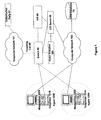
- FIG. 1 is an illustration of a computer-telephony integration (CTI) system using customer premises equipment (CPE). Note that Figure 1 depicts computer links in solid lines, and telephony links in broken lines.
- CTI computer-telephony integration
- CPE customer premises equipment
- the system of Figure 1 receives an incoming call 60 from telephone network 101 at switch 90 from caller 61 (although the system may also be used for outbound calls, such as in telemarketing, in which case caller 61 would be the called party).
- the switch passes information about the call to a CTI server 80.
- the information passed may include, for example, the calling line identification (CLID), sometimes known as automatic number identification (ANI), and/or the dialled number identification.
- CLID calling line identification
- ANI automatic number identification
- Switch 90 may also be provided with an interactive voice response (IVR) unit 95 which may be used to obtain additional information from the caller, for example an account number or such like. This additional information may also be passed to CTI server 80.
- the IVR unit 95 may be further used to play various messages to the caller 61 as part of the initial call handling, for example to allow a caller to specify the type of desired action - e.g. make a new booking, amend a previous booking, or some other query. Caller input in response to such messages can then be used subsequently in determining how to handle the call.
- IVR interactive voice response
- the switch 90 routes the incoming call 60 over an internal telephone network (not specifically shown in Figure 1 ) to a telephone 121 belonging to an agent 120.
- the switch may route a particular incoming call 60 to agent 120B having telephone 121B.
- the CTI server 80 may instruct the switch 90 which particular agent to forward the incoming call to.
- the switch 90 may make this decision through some other mechanism, such as agent availability (and notify the CTI server 80 accordingly).
- each agent 120 is also provided with a workstation 122.
- the CTI server 80 has access to a customer relationship management (CRM) database 70.
- CRM customer relationship management
- the CTI server 80 can use information about a particular call provided by switch 90 to look up information relating to the caller 61 in the CRM database 70. For example, this information may represent the name and address of a party associated with a particular calling line identification, as well as any information about previous orders this person may have made, etc.
- the CTI server 80 now provides this information to the workstation 122 associated with the agent 120 who receives the call from switch 90. For example if the incoming call 60 is to be routed to telephone 121B of agent 120B, then the CTI server accesses information about the caller from CRM database 70 and forwards this information to corresponding workstation 122B. Another possibility is that the CTI server provides the corresponding workstation with a link that allows the workstation itself to retrieve relevant information from CRM database 70. This information received by workstation 122 can be used in order to assist the agent in handling the call.
- the computer-telephony system of Figure 1 also includes a voice analytics system 195.
- the voice analytics system monitors in real-time the audio signal for calls 60. Note that the voice analytics system is not an end-point of the call; rather the two end-points of the call are caller 61 and agent telephone 121 (or IVR 95, depending on the processing and stage of the call). Instead, the voice analytics system 195 in effect performs a silent tap or listening on the call 60 which is transparent to the two parties on the call (although the caller may potentially be notified of the presence of voice analytics system 195, for example by playing an appropriate message using IVR 95).
- the CTI system of Figure 1 may exploit the combination of search technology and computer-telephony as described in WO2008/015373 . Furthermore, the CTI server 80 in conjunction with the CRM database 70 may adopt the architecture described in WO2008/040954 .
- Figure 1 depicts a CPE environment
- a similar approach can also be used for a service provider equipment (SPE) environment.
- the CTI server 80 is logically located within the telephone network 101 itself, rather than on the customer side of the telephone network.
- FIG 2 is a schematic illustration of an SPE implementation (omitting many of the details that are the same as for the embodiment of Figure 1 ) in accordance with one embodiment of the invention.
- the CTI server 80 operates to provide a bridge between two calls; a first call 60A between the caller 61 and the CTI server 80, and the second call 60B between the CTI server and an agent telephone 121.
- This bridge configuration is generally transparent to the caller and the agent, who perceive just a single end-to-end call 60 (from caller to agent).
- the bridge configuration provides a convenient location for CTI server 80 to apply the voice analytics system 195 to perform real-time monitoring of call 60.
- Figure 2 depicts just a single voice analytics system 195, there may be multiple such systems present, for example to provide increased capacity to handle a large number of telephone calls simultaneously.
- a single call may also be monitored simultaneously by two or more different voice analytics systems, for example, one system to perform speech recognition, and another system to perform lie detection and/or some other voice analytics function (or a single voice analytics system might be multi-functional).
- the voice analytics system(s) 195 may be implemented by one or more processing boards (sometimes referred to as blades) included in CTI server 80 or some other appropriate apparatus located in telephone network 101.
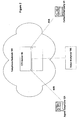
- FIG. 2A shows another implementation of a call being bridged in an SPE environment in accordance with one embodiment of the invention.
- the CTI server 80 is located (hosted) in a cloud 401.
- the cloud 401 is a high-capacity data processing centre generally provided by a third party supplier, for example Amazon (www.amazon.com).
- the voice analytics system 195 and the CRM database 70 are also located within cloud 401, although in other embodiments, either or both of these features may be located (at least in part) outside the cloud 401.
- the telephone number 101 recognises that this call is to be handled by CTI server 80, and therefore directs the call accordingly.
- the CTI server 80 can then make a determination of where to route the call as previously described, for example using information from CRM database 70 accessed on the basis of the calling and/or called number.
- the CTI server then instructs the telephone network 101 to complete the second leg of the call, 60B, such as to agent telephone 121. This then allows the caller 61 to talk with the agent 121 while having the telephone conversation monitored or listened into by voice analytics system 195.
- the CTI server 80 may also provide information related to the call to a workstation 122 associated with the agent telephone 121 over the Internet or any other appropriate data communication link. This information may include details about the caller retrieved from CRM database 70, or any other appropriate data.
- the SPE implementation shown in Figures 2 and 2A allows the CTI server 80 to service customers in a very flexible arrangement. For example, multiple customers can be supported by a single CTI server, allowing CTI services to be provided more efficiently and cost-effectively. Note that the customer (the operator of agent telephone 121) does not have to acquire or maintain any specific hardware, other than standard telephone links into the agent telephone 121 and standard data communication links into workstation 122.
- cloud 401 for the SPE implementation of Figure 2A has further benefits associated with good scability. This is important in a call centre environment, which is often characterised by significant (but to some extent predictable) variations in call traffic. For example, an advertising campaign or special promotion may temporarily lead to a high volume of calls.
- the CTI server 80 in cloud 401 can be rapidly scaled up to cope with this increased call volume, without the supplier of CTI services (the operator of CTI server 80) having to provide or install new hardware. The extra capacity can then be released (returned to the cloud) in line with subsiding call volumes as the promotion or campaign comes to an end.
- the use of the cloud 401 for the SPE implementation of Figure 2A also allows the CTI server 80 to interact more easily with calls carried by multiple different telephone network operators.
- the CTI server is not so closely tied to the hardware of any one given network operator (fixed and/or mobile and/or Internet).
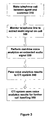
- FIG 3 is a flow-chart of a method for handling a telephone call, for example using the apparatus of Figure 1 or Figure 2 , in accordance with one embodiment of the invention.
- the method commences with forming a telephone call between two parties 310, who will be referred to as the agent and the customer. Note that this is without limitation as to the roles and business activities of the two parties.
- the role of the agent might be taken by an IVR or some other automated system (e.g. a computerised information service) for at least part (and potentially all) of the call.
- the telephone line is now monitored 320 in order to extract the audio signal for the telephone conversation occurring as part of the call. This monitoring will generally be transparent to the parties on the call.
- Voice analytics may now be performed on the extracted audio signal 330.
- the voice analytics may comprise one or more of the services discussed above, such as speech recognition, lie detection, and speaker identification or authentication, and/or any other available voice analytics function.
- speaker authentication may be applied to the caller, to verify their identity, but not to the agent, who may have signed on using a password at a call centre.
- speaker authentication may be applied to the caller, to verify their identity, but not to the agent, who may have signed on using a password at a call centre.
- Such one-way monitoring can be facilitated by the bridging arrangement illustrated in the embodiment of Figure 2 .
- the results from the voice analytics are passed to the CTI server 340.
- the CTI server 350 uses the results for determining further handling of the call 350.
- Such further handling may include one or more of the following:
- the CTI server may also store the voice analytics results into the CRM. These results can then be used to determine future handling of calls relating to that caller (based on the CLID associated with the caller, or an account number, etc). For example, if it is determined that the caller asked about a product that is not yet available (or out of stock), the system may determine to schedule a call to the customer when the product does become available in the future.
- FIG. 4 illustrates an example of a particular application involving the voice analytics system in accordance with one embodiment of the invention.
- an agent is required by law or other regulations to make certain statements (often referred to as compliance statement).
- compliance statement For example, in a financial environment, an agent may be compelled to warn a caller that the value of a potential investment can go both up and down.
- the voice analytics system can be used to monitor the call 410 to confirm to the CTI server 80 that this compliance statement has indeed been made by performing speech recognition on the caller input. It will be appreciated that searching for a particular, predetermined phrase in conversation is a somewhat easier task than completely generalised speech recognition.
- the agent attempts to complete the transaction 420, for example to take a payment from the call, it is determined whether or not the compliance statement has been detected on the call 430. If so, then the CTI server running the agent application allows the transaction to complete 440. On the other hand, if the compliance statement has not been detected, then the CTI server running the agent application prevents the transaction from completing 450. It will be appreciated that this procedure ensures that the call centre provider will not fall foul of the relevant regulation even if there is some omission on the part of the call centre agent. Moreover, because the voice analytics is performed in real-time, it is possible to remedy any issues during the call itself, thereby allowing the transaction to be successful completed. This prevents the completion of defective transactions which would later have to be cancelled (a more complex and expensive operation).
- the system will generally assist the agent in making this statement in order to allow the transaction to complete.
- the CTI server may alter the agent script or application to instruct the agent to make the required statement.
- the voice analytics system Once the voice analytics system has detected that the compliance statement has indeed been made, then the system allows the transaction statement to complete.
- Another option would be to switch the caller to a VRU to play the compliance statement to the caller, whereupon it would again be known that the transaction can now complete.
- the voice analytics system monitors the content of the telephone call continuously for the compliance statement.
- the call may just be recorded until the agent attempts to complete the transaction. This action from the agent then prompts the voice analytics system to scan the call recording (while the call is still in progress) for the compliance statement. The system then allows the transaction to complete if the compliance statement is located in the call recording. Note that this approach reduces the number of telephone calls for simultaneous monitoring by the voice analytics system, but generally requires faster processing once the voice analytics system is invoked on a particular call.
- a real-time voice analytics system is for speaker identification, speaker authentication and/or lie detection to confirm a telephone transaction. For example, if a caller initially registers with a call centre, then subsequent calls from the caller can be matched to the original voice pattern for that speaker. This can then provide greater security than just requiring the caller to enter a PIN. (Of course, the voice analytics can be used in conjunction with PIN entry). If the voice analytics indicates some potential problem, the caller may be required to provide additional security information before the requested transaction (e.g. purchase, bank transfer, etc) can complete.
- a combination of calling line ID (CLID) and voice pattern matching is used to provide a high level of confidence concerning the identity of the caller.
- an initial registration procedure (not shown in Figure 5 ) may associate a given voice pattern with a CLID.
- the CLID is obtained 510 from the telephone network, and this is used to retrieve the stored voice pattern 520 (e.g. from CRM database 70 or any other appropriate source).
- the voice analytics system then monitors the call to obtain speaker identification information for the person making the call 530 and this can then be matched against the stored information that has been retrieved 540 to confirm the identity of the caller.
- CLID and voice pattern does not require a user to memorise or utilise any other access information (e.g. a PIN).
- access information e.g. a PIN
- both CLID and voice pattern are often stable for many years, which is especially helpful to organisations where customer contact may be relatively infrequent (and where it is particularly difficult to remember a PIN or such-like from one contact to another).
- a further example of the use of voice analytics in conjunction with the computer-telephony server 80 is where an agent prompts a caller for information which the agent then types into his or her workstation for saving into the CRM database 70 (or other appropriate location).
- the information to be stored in this manner might represent an address, order details, etc.
- the information entered by the agent may assist the voice analytics (or vice versa).
- the information added may include words (especially names of a person or place) that a speech recognition system encounters only rarely (if at all). However, once it knows that such words are relevant for this particular telephone call, this can generally enhance the speech recognition accuracy throughout the call.
- the speech recognition system helps to validate the data entry by the agent.
- the speech recognition system can look for the information entered by the agent in the audio signal (this is a rather easier task again than generalised speech recognition). If the speech recognition system can't find the information in the audio signal, this might indicate that the agent has made a mistake.
- the CTI server might then prompt the agent to double-check the entered information with the caller while the call is still in progress.
- a further possible use of a voice analytics system as described herein is to monitor for unhappy or distressed customers (or agents). These might be detected, for example, by the presence of swear words, and/or by changes to the voice pattern which may become more stressed, louder, etc.
- the system may respond to the detection of a distressed customer (or agent) by alerting a supervisor. For example, the supervisor may be automatically patched into the call.
- the supervisor is provided with some on-screen indicator or flag of a potential problem on the call, e.g. in a listing of all pending calls, changing the colour of this particular call in comparison with all the other calls. The supervisor can then determine whether, and how best to intervene.
- a system such as described herein may be implemented, for example, by suitable programming of a computer system, and/or by the use (at least in part) of special-purpose hardware.
- One embodiment of the invention provides a computer program product for implementing a method such as described above.
- the computer program product may comprise a set of instruction for execution by a system for download over a computer network.
- the computer program product may also comprise a set of instructions stored on a medium such as a hard disk, CD ROM, DVD, or flash memory.
Landscapes
- Engineering & Computer Science (AREA)
- Health & Medical Sciences (AREA)
- Audiology, Speech & Language Pathology (AREA)
- Human Computer Interaction (AREA)
- Physics & Mathematics (AREA)
- Acoustics & Sound (AREA)
- Multimedia (AREA)
- Business, Economics & Management (AREA)
- Marketing (AREA)
- Signal Processing (AREA)
- Computational Linguistics (AREA)
- Telephonic Communication Services (AREA)
Claims (13)
- Procédé mis en oeuvre par ordinateur pour traiter un appel téléphonique par un système d'intégration téléphonie-informatique (80), le procédé consistant à:recevoir un appel téléphonique entrant (60) provenant d'un téléphone de client (61) sur un réseau téléphonique (101) au niveau du système d'intégration téléphonie-informatique, le système d'intégration téléphonie-informatique étant situé dans un environnement d'équipement de fournisseur de services (SPE) de telle sorte qu'il fait partie logiquement dudit réseau téléphonique ;déterminer vers quel agent router l'appel, ledit agent ayant un téléphone d'agent (121) et un poste de travail (122) associé ;donner une instruction au réseau téléphonique de compléter une seconde branche de l'appel téléphonique vers le téléphone d'agent (121);fournir des informations concernant l'appel au poste de travail d'agent ;surveiller une conversation entre le téléphone d'agent et le téléphone de client en tant que partie dudit appel téléphonique pour extraire le signal audio à partir de celui-ci, les deux points d'extrémité dudit appel téléphonique étant le téléphone de client (61) et le téléphone d'agent (121) ;réaliser des analyses vocales en temps réel sur le signal audio extrait à l'aide d'un système d'analyse vocale (195) tandis que l'appel téléphonique est en cours, et transmettre des résultats du système d'analyse vocale au système d'intégration téléphonie-informatique responsable du traitement de l'appel ; etutiliser lesdits résultats par le système d'intégration téléphonie-informatique pour déterminer le traitement futur de l'appel, par impact sur un flux ou script d'application utilisé par l'agent impliqué dans l'appel par l'intermédiaire d'une interaction avec le poste de travail d'agent ;le système d'intégration téléphonie-informatique fournissant un pont pour l'appel téléphonique entre le téléphone d'agent et le téléphone de client, et ledit signal audio étant extrait au niveau dudit pont.
- Procédé selon la revendication 1, dans lequel le système d'intégration téléphonie-informatique est mis en oeuvre sur un service d'informatique en nuage (401).
- Procédé selon la revendication 1, dans lequel ladite réalisation d'analyses vocales en temps réel comprend la réalisation d'une reconnaissance de la parole sur le signal audio extrait, le procédé consistant en outre à :utiliser lesdits résultats par le système d'intégration téléphonie-informatique pour déterminer le traitement futur de l'appel pour ce qui est du test de conformité afin de confirmer qu'un agent utilisant le téléphone d'agent a réalisé une ou plusieurs déclarations prédéterminées relatives à une transaction durant la conversation téléphonique ; etsi le système d'analyse vocale ne confirme pas que l'agent a réalisé ladite ou lesdites déclarations prédéterminées, empêcher automatiquement l'agent, par le système d'intégration téléphonie-informatique, d'achever la transaction avec le client à l'aide du téléphone de client.
- Procédé selon la revendication 3, dans lequel, si le système d'analyse vocale ne confirme pas que l'agent a réalisé ladite ou lesdites déclarations prédéterminées, le flux d'application pour l'appel est modifié pour aider à garantir que la ou les déclarations prédéterminées sont réalisées pendant que l'appel téléphonique est toujours en cours.
- Procédé selon la revendication 4, dans lequel la modification du flux d'application comprend le transfert du client à un système de réponse vocale interactif pour réaliser automatiquement la ou les déclarations prédéterminées.
- Procédé selon la revendication 4 ou 5, consistant en outre à autoriser l'achèvement de la transaction après modification du flux d'application et après que la ou les déclarations prédéterminées ont été réalisées.
- Procédé selon la revendication 1, le procédé consistant en outre à :obtenir une identification de ligne d'appel associée à l'appel téléphonique entrant ;réaliser des analyses vocales en temps réel pour une authentification de locuteur sur le signal audio extrait pendant que l'appel téléphonique est en cours ; etutiliser lesdits résultats par le système d'intégration téléphonie-informatique pour authentifier une partie à l'appel par une combinaison des résultats d'analyses vocales et de l'identification de ligne d'appel.
- Procédé selon la revendication 7, dans lequel l'authentification de locuteur est réalisée par rapport à un modèle stocké pour un client utilisant le téléphone de client, le modèle stocké étant identifié sur la base de l'identification de ligne d'appel.
- Procédé selon l'une quelconque des revendications précédentes, dans lequel les analyses vocales sont seulement réalisées sur le signal audio à partir de l'un d'un agent utilisant le téléphone d'agent ou du client.
- Procédé selon l'une quelconque des revendications précédentes, consistant en outre à entrer, par un agent utilisant le téléphone d'agent, des données de texte dans le système d'intégration téléphonie-informatique durant l'appel, les données de texte entrées étant transmises au système d'analyse vocale pour aider à l'analyse de la conversation téléphonique.
- Procédé selon la revendication 10, dans lequel le système d'analyse vocale est utilisé pour confirmer que l'agent a entré le texte correct dans le système d'intégration téléphonie-informatique sur la base de ce qui est dit durant la conversation téléphonique.
- Programme d'ordinateur pour mettre en oeuvre le procédé selon l'une quelconque des revendications précédentes.
- Système d'intégration téléphonie-informatique (80) pour traiter un appel téléphonique, le système d'intégration téléphonie-informatique étant situé dans un environnement d'équipement de fournisseur de services (SPE) de telle sorte qu'il fait partie logiquement dudit réseau téléphonique, ledit système comprenant :des moyens pour recevoir un appel téléphonique entrant (60) à partir d'un téléphone de client (61) sur un réseau téléphonique (101) au niveau du système d'intégration téléphonie-informatique ;des moyens pour déterminer vers quel agent router l'appel, ledit agent ayant un téléphone d'agent (121) et un poste de travail (122) associé ;des moyens pour donner une instruction au réseau téléphonique de compléter une seconde branche de l'appel téléphonique vers le téléphone d'agent (121) ;des moyens pour fournir des informations concernant l'appel au poste de travail d'agent ;des moyens pour surveiller une conversation entre le téléphone d'agent et le téléphone de client en tant que partie dudit appel téléphonique pour extraire le signal audio à partir de celui-ci, les deux points d'extrémité dudit appel téléphonique étant le téléphone de client (61) et le téléphone d'agent (121);des moyens pour réaliser des analyses vocales en temps réel sur le signal audio extrait à l'aide d'un système d'analyse vocale (195) tandis que l'appel téléphonique est en cours, et pour transmettre des résultats du système d'analyse vocale au système d'intégration téléphonie-informatique responsable du traitement de l'appel ; etdes moyens pour utiliser lesdits résultats par le système d'intégration téléphonie-informatique pour déterminer le traitement futur de l'appel, par impact sur un flux ou script d'application utilisé par l'agent impliqué dans l'appel par l'intermédiaire d'une interaction avec le poste de travail d'agent ;le système d'intégration téléphonie-informatique fournissant un pont pour l'appel téléphonique entre le téléphone d'agent et le téléphone de client, et ledit signal audio étant extrait au niveau dudit pont.
Applications Claiming Priority (2)
| Application Number | Priority Date | Filing Date | Title |
|---|---|---|---|
| GB0811411A GB2462800A (en) | 2008-06-20 | 2008-06-20 | Monitoring a conversation between an agent and a customer and performing real time analytics on the audio signal for determining future handling of the call |
| PCT/GB2009/001564 WO2009153581A1 (fr) | 2008-06-20 | 2009-06-19 | Procédé et appareil de traitement d'un appel téléphonique |
Publications (2)
| Publication Number | Publication Date |
|---|---|
| EP2297933A1 EP2297933A1 (fr) | 2011-03-23 |
| EP2297933B1 true EP2297933B1 (fr) | 2012-11-21 |
Family
ID=39682943
Family Applications (1)
| Application Number | Title | Priority Date | Filing Date |
|---|---|---|---|
| EP09766142A Not-in-force EP2297933B1 (fr) | 2008-06-20 | 2009-06-19 | Procédé et système de traitement d'un appel téléphonique |
Country Status (4)
| Country | Link |
|---|---|
| US (1) | US8600756B2 (fr) |
| EP (1) | EP2297933B1 (fr) |
| GB (1) | GB2462800A (fr) |
| WO (1) | WO2009153581A1 (fr) |
Families Citing this family (158)
| Publication number | Priority date | Publication date | Assignee | Title |
|---|---|---|---|---|
| US8645137B2 (en) | 2000-03-16 | 2014-02-04 | Apple Inc. | Fast, language-independent method for user authentication by voice |
| DE10304229A1 (de) * | 2003-01-28 | 2004-08-05 | Deutsche Telekom Ag | Kommunikationssystem, Kommunikationsendeinrichtung und Vorrichtung zum Erkennen fehlerbehafteter Text-Nachrichten |
| US8677377B2 (en) | 2005-09-08 | 2014-03-18 | Apple Inc. | Method and apparatus for building an intelligent automated assistant |
| US9318108B2 (en) | 2010-01-18 | 2016-04-19 | Apple Inc. | Intelligent automated assistant |
| US8977255B2 (en) | 2007-04-03 | 2015-03-10 | Apple Inc. | Method and system for operating a multi-function portable electronic device using voice-activation |
| US10002189B2 (en) | 2007-12-20 | 2018-06-19 | Apple Inc. | Method and apparatus for searching using an active ontology |
| US9330720B2 (en) | 2008-01-03 | 2016-05-03 | Apple Inc. | Methods and apparatus for altering audio output signals |
| US8996376B2 (en) | 2008-04-05 | 2015-03-31 | Apple Inc. | Intelligent text-to-speech conversion |
| US20100030549A1 (en) | 2008-07-31 | 2010-02-04 | Lee Michael M | Mobile device having human language translation capability with positional feedback |
| GB2463475B (en) * | 2008-09-11 | 2013-02-13 | New Voice Media Ltd | Method and apparatus for handling a telephone call |
| US8676904B2 (en) | 2008-10-02 | 2014-03-18 | Apple Inc. | Electronic devices with voice command and contextual data processing capabilities |
| US8654963B2 (en) | 2008-12-19 | 2014-02-18 | Genesys Telecommunications Laboratories, Inc. | Method and system for integrating an interaction management system with a business rules management system |
| US8271615B2 (en) | 2009-03-31 | 2012-09-18 | Cloud Connex, Llc | Centrally managing and monitoring software as a service (SaaS) applications |
| US10241752B2 (en) | 2011-09-30 | 2019-03-26 | Apple Inc. | Interface for a virtual digital assistant |
| US10255566B2 (en) | 2011-06-03 | 2019-04-09 | Apple Inc. | Generating and processing task items that represent tasks to perform |
| US10241644B2 (en) | 2011-06-03 | 2019-03-26 | Apple Inc. | Actionable reminder entries |
| US9431006B2 (en) | 2009-07-02 | 2016-08-30 | Apple Inc. | Methods and apparatuses for automatic speech recognition |
| US8463606B2 (en) | 2009-07-13 | 2013-06-11 | Genesys Telecommunications Laboratories, Inc. | System for analyzing interactions and reporting analytic results to human-operated and system interfaces in real time |
| US10276170B2 (en) | 2010-01-18 | 2019-04-30 | Apple Inc. | Intelligent automated assistant |
| US8682667B2 (en) | 2010-02-25 | 2014-03-25 | Apple Inc. | User profiling for selecting user specific voice input processing information |
| US10264125B2 (en) * | 2010-03-30 | 2019-04-16 | Call Compass, Llc | Method and system for accurate automatic call tracking and analysis |
| US8675827B2 (en) * | 2010-09-23 | 2014-03-18 | Verizon Patent And Licensing Inc. | Real-time analytics payment information screening |
| US9262612B2 (en) | 2011-03-21 | 2016-02-16 | Apple Inc. | Device access using voice authentication |
| US10057736B2 (en) | 2011-06-03 | 2018-08-21 | Apple Inc. | Active transport based notifications |
| US8855106B1 (en) * | 2011-10-05 | 2014-10-07 | Google Inc. | System and process for realtime/neartime call analytics with speaker separation |
| US10134385B2 (en) | 2012-03-02 | 2018-11-20 | Apple Inc. | Systems and methods for name pronunciation |
| US9280610B2 (en) | 2012-05-14 | 2016-03-08 | Apple Inc. | Crowd sourcing information to fulfill user requests |
| US10417037B2 (en) | 2012-05-15 | 2019-09-17 | Apple Inc. | Systems and methods for integrating third party services with a digital assistant |
| US9721563B2 (en) | 2012-06-08 | 2017-08-01 | Apple Inc. | Name recognition system |
| US10373508B2 (en) * | 2012-06-27 | 2019-08-06 | Intel Corporation | Devices, systems, and methods for enriching communications |
| US9210110B2 (en) | 2012-08-28 | 2015-12-08 | At&T Mobility Ii Llc | Predictive messaging service for active voice calls |
| US9049295B1 (en) * | 2012-08-28 | 2015-06-02 | West Corporation | Intelligent interactive voice response system for processing customer communications |
| US9547647B2 (en) | 2012-09-19 | 2017-01-17 | Apple Inc. | Voice-based media searching |
| US9143612B2 (en) * | 2012-11-02 | 2015-09-22 | Ian James Roncoroni | Centralized caller profile system and methods for routing and prioritizing calls |
| US9912816B2 (en) | 2012-11-29 | 2018-03-06 | Genesys Telecommunications Laboratories, Inc. | Workload distribution with resource awareness |
| US9542936B2 (en) | 2012-12-29 | 2017-01-10 | Genesys Telecommunications Laboratories, Inc. | Fast out-of-vocabulary search in automatic speech recognition systems |
| DE112014000709B4 (de) | 2013-02-07 | 2021-12-30 | Apple Inc. | Verfahren und vorrichtung zum betrieb eines sprachtriggers für einen digitalen assistenten |
| US9368114B2 (en) * | 2013-03-14 | 2016-06-14 | Apple Inc. | Context-sensitive handling of interruptions |
| US10652394B2 (en) | 2013-03-14 | 2020-05-12 | Apple Inc. | System and method for processing voicemail |
| US10748529B1 (en) | 2013-03-15 | 2020-08-18 | Apple Inc. | Voice activated device for use with a voice-based digital assistant |
| WO2014197334A2 (fr) | 2013-06-07 | 2014-12-11 | Apple Inc. | Système et procédé destinés à une prononciation de mots spécifiée par l'utilisateur dans la synthèse et la reconnaissance de la parole |
| US9582608B2 (en) | 2013-06-07 | 2017-02-28 | Apple Inc. | Unified ranking with entropy-weighted information for phrase-based semantic auto-completion |
| WO2014197335A1 (fr) | 2013-06-08 | 2014-12-11 | Apple Inc. | Interprétation et action sur des commandes qui impliquent un partage d'informations avec des dispositifs distants |
| KR101959188B1 (ko) | 2013-06-09 | 2019-07-02 | 애플 인크. | 디지털 어시스턴트의 둘 이상의 인스턴스들에 걸친 대화 지속성을 가능하게 하기 위한 디바이스, 방법 및 그래픽 사용자 인터페이스 |
| US10176167B2 (en) | 2013-06-09 | 2019-01-08 | Apple Inc. | System and method for inferring user intent from speech inputs |
| KR101749009B1 (ko) | 2013-08-06 | 2017-06-19 | 애플 인크. | 원격 디바이스로부터의 활동에 기초한 스마트 응답의 자동 활성화 |
| US10296160B2 (en) | 2013-12-06 | 2019-05-21 | Apple Inc. | Method for extracting salient dialog usage from live data |
| US10410648B1 (en) * | 2013-12-31 | 2019-09-10 | Allscripts Software, Llc | Moderating system response using stress content of voice command |
| US9947342B2 (en) | 2014-03-12 | 2018-04-17 | Cogito Corporation | Method and apparatus for speech behavior visualization and gamification |
| US10170123B2 (en) | 2014-05-30 | 2019-01-01 | Apple Inc. | Intelligent assistant for home automation |
| US9715875B2 (en) | 2014-05-30 | 2017-07-25 | Apple Inc. | Reducing the need for manual start/end-pointing and trigger phrases |
| US9430463B2 (en) | 2014-05-30 | 2016-08-30 | Apple Inc. | Exemplar-based natural language processing |
| US9633004B2 (en) | 2014-05-30 | 2017-04-25 | Apple Inc. | Better resolution when referencing to concepts |
| WO2015184186A1 (fr) | 2014-05-30 | 2015-12-03 | Apple Inc. | Procédé d'entrée à simple énoncé multi-commande |
| US9338493B2 (en) | 2014-06-30 | 2016-05-10 | Apple Inc. | Intelligent automated assistant for TV user interactions |
| US9818400B2 (en) | 2014-09-11 | 2017-11-14 | Apple Inc. | Method and apparatus for discovering trending terms in speech requests |
| US9668121B2 (en) | 2014-09-30 | 2017-05-30 | Apple Inc. | Social reminders |
| US10074360B2 (en) | 2014-09-30 | 2018-09-11 | Apple Inc. | Providing an indication of the suitability of speech recognition |
| US10127911B2 (en) | 2014-09-30 | 2018-11-13 | Apple Inc. | Speaker identification and unsupervised speaker adaptation techniques |
| US9477975B2 (en) * | 2015-02-03 | 2016-10-25 | Twilio, Inc. | System and method for a media intelligence platform |
| US10152299B2 (en) | 2015-03-06 | 2018-12-11 | Apple Inc. | Reducing response latency of intelligent automated assistants |
| US9886953B2 (en) | 2015-03-08 | 2018-02-06 | Apple Inc. | Virtual assistant activation |
| US10567477B2 (en) | 2015-03-08 | 2020-02-18 | Apple Inc. | Virtual assistant continuity |
| US9721566B2 (en) | 2015-03-08 | 2017-08-01 | Apple Inc. | Competing devices responding to voice triggers |
| US10460227B2 (en) | 2015-05-15 | 2019-10-29 | Apple Inc. | Virtual assistant in a communication session |
| US10200824B2 (en) | 2015-05-27 | 2019-02-05 | Apple Inc. | Systems and methods for proactively identifying and surfacing relevant content on a touch-sensitive device |
| US10083688B2 (en) | 2015-05-27 | 2018-09-25 | Apple Inc. | Device voice control for selecting a displayed affordance |
| US9578173B2 (en) | 2015-06-05 | 2017-02-21 | Apple Inc. | Virtual assistant aided communication with 3rd party service in a communication session |
| US11025565B2 (en) | 2015-06-07 | 2021-06-01 | Apple Inc. | Personalized prediction of responses for instant messaging |
| US20160378747A1 (en) | 2015-06-29 | 2016-12-29 | Apple Inc. | Virtual assistant for media playback |
| US10740384B2 (en) | 2015-09-08 | 2020-08-11 | Apple Inc. | Intelligent automated assistant for media search and playback |
| US10671428B2 (en) | 2015-09-08 | 2020-06-02 | Apple Inc. | Distributed personal assistant |
| US10331312B2 (en) | 2015-09-08 | 2019-06-25 | Apple Inc. | Intelligent automated assistant in a media environment |
| US10747498B2 (en) | 2015-09-08 | 2020-08-18 | Apple Inc. | Zero latency digital assistant |
| US10366158B2 (en) | 2015-09-29 | 2019-07-30 | Apple Inc. | Efficient word encoding for recurrent neural network language models |
| US11010550B2 (en) | 2015-09-29 | 2021-05-18 | Apple Inc. | Unified language modeling framework for word prediction, auto-completion and auto-correction |
| US11587559B2 (en) | 2015-09-30 | 2023-02-21 | Apple Inc. | Intelligent device identification |
| US10691473B2 (en) | 2015-11-06 | 2020-06-23 | Apple Inc. | Intelligent automated assistant in a messaging environment |
| US10956666B2 (en) | 2015-11-09 | 2021-03-23 | Apple Inc. | Unconventional virtual assistant interactions |
| US10049668B2 (en) | 2015-12-02 | 2018-08-14 | Apple Inc. | Applying neural network language models to weighted finite state transducers for automatic speech recognition |
| US10223066B2 (en) | 2015-12-23 | 2019-03-05 | Apple Inc. | Proactive assistance based on dialog communication between devices |
| US10446143B2 (en) | 2016-03-14 | 2019-10-15 | Apple Inc. | Identification of voice inputs providing credentials |
| US9934775B2 (en) | 2016-05-26 | 2018-04-03 | Apple Inc. | Unit-selection text-to-speech synthesis based on predicted concatenation parameters |
| US9972304B2 (en) | 2016-06-03 | 2018-05-15 | Apple Inc. | Privacy preserving distributed evaluation framework for embedded personalized systems |
| US11227589B2 (en) | 2016-06-06 | 2022-01-18 | Apple Inc. | Intelligent list reading |
| US10249300B2 (en) | 2016-06-06 | 2019-04-02 | Apple Inc. | Intelligent list reading |
| US10049663B2 (en) | 2016-06-08 | 2018-08-14 | Apple, Inc. | Intelligent automated assistant for media exploration |
| DK179588B1 (en) | 2016-06-09 | 2019-02-22 | Apple Inc. | INTELLIGENT AUTOMATED ASSISTANT IN A HOME ENVIRONMENT |
| US12223282B2 (en) | 2016-06-09 | 2025-02-11 | Apple Inc. | Intelligent automated assistant in a home environment |
| US10490187B2 (en) | 2016-06-10 | 2019-11-26 | Apple Inc. | Digital assistant providing automated status report |
| US10586535B2 (en) | 2016-06-10 | 2020-03-10 | Apple Inc. | Intelligent digital assistant in a multi-tasking environment |
| US10509862B2 (en) | 2016-06-10 | 2019-12-17 | Apple Inc. | Dynamic phrase expansion of language input |
| US10192552B2 (en) | 2016-06-10 | 2019-01-29 | Apple Inc. | Digital assistant providing whispered speech |
| US10067938B2 (en) | 2016-06-10 | 2018-09-04 | Apple Inc. | Multilingual word prediction |
| DK179343B1 (en) | 2016-06-11 | 2018-05-14 | Apple Inc | Intelligent task discovery |
| DK201670540A1 (en) | 2016-06-11 | 2018-01-08 | Apple Inc | Application integration with a digital assistant |
| DK179049B1 (en) | 2016-06-11 | 2017-09-18 | Apple Inc | Data driven natural language event detection and classification |
| DK179415B1 (en) | 2016-06-11 | 2018-06-14 | Apple Inc | Intelligent device arbitration and control |
| US10474753B2 (en) | 2016-09-07 | 2019-11-12 | Apple Inc. | Language identification using recurrent neural networks |
| US10043516B2 (en) | 2016-09-23 | 2018-08-07 | Apple Inc. | Intelligent automated assistant |
| US11281993B2 (en) | 2016-12-05 | 2022-03-22 | Apple Inc. | Model and ensemble compression for metric learning |
| US10593346B2 (en) | 2016-12-22 | 2020-03-17 | Apple Inc. | Rank-reduced token representation for automatic speech recognition |
| US11204787B2 (en) | 2017-01-09 | 2021-12-21 | Apple Inc. | Application integration with a digital assistant |
| US10417266B2 (en) | 2017-05-09 | 2019-09-17 | Apple Inc. | Context-aware ranking of intelligent response suggestions |
| DK201770383A1 (en) | 2017-05-09 | 2018-12-14 | Apple Inc. | USER INTERFACE FOR CORRECTING RECOGNITION ERRORS |
| US10395654B2 (en) | 2017-05-11 | 2019-08-27 | Apple Inc. | Text normalization based on a data-driven learning network |
| US10726832B2 (en) | 2017-05-11 | 2020-07-28 | Apple Inc. | Maintaining privacy of personal information |
| DK201770439A1 (en) | 2017-05-11 | 2018-12-13 | Apple Inc. | Offline personal assistant |
| US11301477B2 (en) | 2017-05-12 | 2022-04-12 | Apple Inc. | Feedback analysis of a digital assistant |
| DK201770428A1 (en) | 2017-05-12 | 2019-02-18 | Apple Inc. | LOW-LATENCY INTELLIGENT AUTOMATED ASSISTANT |
| DK179496B1 (en) | 2017-05-12 | 2019-01-15 | Apple Inc. | USER-SPECIFIC Acoustic Models |
| DK179745B1 (en) | 2017-05-12 | 2019-05-01 | Apple Inc. | SYNCHRONIZATION AND TASK DELEGATION OF A DIGITAL ASSISTANT |
| DK201770432A1 (en) | 2017-05-15 | 2018-12-21 | Apple Inc. | Hierarchical belief states for digital assistants |
| DK201770431A1 (en) | 2017-05-15 | 2018-12-20 | Apple Inc. | Optimizing dialogue policy decisions for digital assistants using implicit feedback |
| US10403278B2 (en) | 2017-05-16 | 2019-09-03 | Apple Inc. | Methods and systems for phonetic matching in digital assistant services |
| US20180336892A1 (en) | 2017-05-16 | 2018-11-22 | Apple Inc. | Detecting a trigger of a digital assistant |
| US10303715B2 (en) | 2017-05-16 | 2019-05-28 | Apple Inc. | Intelligent automated assistant for media exploration |
| US10311144B2 (en) | 2017-05-16 | 2019-06-04 | Apple Inc. | Emoji word sense disambiguation |
| DK179560B1 (en) | 2017-05-16 | 2019-02-18 | Apple Inc. | FAR-FIELD EXTENSION FOR DIGITAL ASSISTANT SERVICES |
| US10657328B2 (en) | 2017-06-02 | 2020-05-19 | Apple Inc. | Multi-task recurrent neural network architecture for efficient morphology handling in neural language modeling |
| US10445429B2 (en) | 2017-09-21 | 2019-10-15 | Apple Inc. | Natural language understanding using vocabularies with compressed serialized tries |
| US10755051B2 (en) | 2017-09-29 | 2020-08-25 | Apple Inc. | Rule-based natural language processing |
| US10636424B2 (en) | 2017-11-30 | 2020-04-28 | Apple Inc. | Multi-turn canned dialog |
| US10733982B2 (en) | 2018-01-08 | 2020-08-04 | Apple Inc. | Multi-directional dialog |
| US10733375B2 (en) | 2018-01-31 | 2020-08-04 | Apple Inc. | Knowledge-based framework for improving natural language understanding |
| US10789959B2 (en) | 2018-03-02 | 2020-09-29 | Apple Inc. | Training speaker recognition models for digital assistants |
| US10592604B2 (en) | 2018-03-12 | 2020-03-17 | Apple Inc. | Inverse text normalization for automatic speech recognition |
| US10818288B2 (en) | 2018-03-26 | 2020-10-27 | Apple Inc. | Natural assistant interaction |
| US10909331B2 (en) | 2018-03-30 | 2021-02-02 | Apple Inc. | Implicit identification of translation payload with neural machine translation |
| US11145294B2 (en) | 2018-05-07 | 2021-10-12 | Apple Inc. | Intelligent automated assistant for delivering content from user experiences |
| US10928918B2 (en) | 2018-05-07 | 2021-02-23 | Apple Inc. | Raise to speak |
| US10984780B2 (en) | 2018-05-21 | 2021-04-20 | Apple Inc. | Global semantic word embeddings using bi-directional recurrent neural networks |
| US11386266B2 (en) | 2018-06-01 | 2022-07-12 | Apple Inc. | Text correction |
| DK179822B1 (da) | 2018-06-01 | 2019-07-12 | Apple Inc. | Voice interaction at a primary device to access call functionality of a companion device |
| DK180639B1 (en) | 2018-06-01 | 2021-11-04 | Apple Inc | DISABILITY OF ATTENTION-ATTENTIVE VIRTUAL ASSISTANT |
| US10892996B2 (en) | 2018-06-01 | 2021-01-12 | Apple Inc. | Variable latency device coordination |
| DK201870355A1 (en) | 2018-06-01 | 2019-12-16 | Apple Inc. | VIRTUAL ASSISTANT OPERATION IN MULTI-DEVICE ENVIRONMENTS |
| US10504518B1 (en) | 2018-06-03 | 2019-12-10 | Apple Inc. | Accelerated task performance |
| US11010561B2 (en) | 2018-09-27 | 2021-05-18 | Apple Inc. | Sentiment prediction from textual data |
| US10839159B2 (en) | 2018-09-28 | 2020-11-17 | Apple Inc. | Named entity normalization in a spoken dialog system |
| US11170166B2 (en) | 2018-09-28 | 2021-11-09 | Apple Inc. | Neural typographical error modeling via generative adversarial networks |
| US11462215B2 (en) | 2018-09-28 | 2022-10-04 | Apple Inc. | Multi-modal inputs for voice commands |
| US11475898B2 (en) | 2018-10-26 | 2022-10-18 | Apple Inc. | Low-latency multi-speaker speech recognition |
| US11638059B2 (en) | 2019-01-04 | 2023-04-25 | Apple Inc. | Content playback on multiple devices |
| US11348573B2 (en) | 2019-03-18 | 2022-05-31 | Apple Inc. | Multimodality in digital assistant systems |
| US11475884B2 (en) | 2019-05-06 | 2022-10-18 | Apple Inc. | Reducing digital assistant latency when a language is incorrectly determined |
| DK201970509A1 (en) | 2019-05-06 | 2021-01-15 | Apple Inc | Spoken notifications |
| US11423908B2 (en) | 2019-05-06 | 2022-08-23 | Apple Inc. | Interpreting spoken requests |
| US11307752B2 (en) | 2019-05-06 | 2022-04-19 | Apple Inc. | User configurable task triggers |
| US11140099B2 (en) | 2019-05-21 | 2021-10-05 | Apple Inc. | Providing message response suggestions |
| US11289073B2 (en) | 2019-05-31 | 2022-03-29 | Apple Inc. | Device text to speech |
| DK180129B1 (en) | 2019-05-31 | 2020-06-02 | Apple Inc. | User activity shortcut suggestions |
| DK201970510A1 (en) | 2019-05-31 | 2021-02-11 | Apple Inc | Voice identification in digital assistant systems |
| US11496600B2 (en) | 2019-05-31 | 2022-11-08 | Apple Inc. | Remote execution of machine-learned models |
| US11360641B2 (en) | 2019-06-01 | 2022-06-14 | Apple Inc. | Increasing the relevance of new available information |
| US11488406B2 (en) | 2019-09-25 | 2022-11-01 | Apple Inc. | Text detection using global geometry estimators |
| US11183193B1 (en) | 2020-05-11 | 2021-11-23 | Apple Inc. | Digital assistant hardware abstraction |
| CN113489850B (zh) * | 2021-06-25 | 2023-03-24 | 上海豹云网络信息服务有限公司 | 一种电话号码保护方法、装置、系统及存储介质 |
Citations (3)
| Publication number | Priority date | Publication date | Assignee | Title |
|---|---|---|---|---|
| US6668054B1 (en) * | 2000-06-30 | 2003-12-23 | Networks Associates Technology, Inc. | Service desk system architecture for a mobile service workforce |
| US20040264673A1 (en) * | 2003-06-30 | 2004-12-30 | Sbc Properties, L.P. | Integrated disparate intelligent peripherals |
| US20080040196A1 (en) * | 2006-07-06 | 2008-02-14 | International Business Machines Corporation | Method, system and program product for hosting an on-demand customer interaction center utility infrastructure |
Family Cites Families (27)
| Publication number | Priority date | Publication date | Assignee | Title |
|---|---|---|---|---|
| JP2003209625A (ja) * | 1996-06-14 | 2003-07-25 | Fujitsu Ltd | 電話取引支援システム及びその支援システムでの処理をコンピュータに実行させるためのプログラムを格納した記録媒体 |
| US6327347B1 (en) * | 1998-12-11 | 2001-12-04 | Nortel Networks Limited | Calling party identification authentication and routing in response thereto |
| US6868154B1 (en) | 1999-08-02 | 2005-03-15 | Robert O. Stuart | System and method for providing a service to a customer via a communication link |
| US6600821B1 (en) * | 1999-10-26 | 2003-07-29 | Rockwell Electronic Commerce Corp. | System and method for automatically detecting problematic calls |
| US7076032B1 (en) * | 2000-06-14 | 2006-07-11 | Convergys Cmg Utah Inc. | Method and system for processing telephone calls by IVR |
| US6831966B1 (en) * | 2000-06-30 | 2004-12-14 | Qwest Communications International, Inc. | Multi-tenant, multi-media call center services platform system |
| US7933387B1 (en) * | 2000-08-15 | 2011-04-26 | Baker Iv Forest S | Voice transition script caller |
| US7191133B1 (en) * | 2001-02-15 | 2007-03-13 | West Corporation | Script compliance using speech recognition |
| US8180643B1 (en) * | 2001-02-15 | 2012-05-15 | West Corporation | Script compliance using speech recognition and compilation and transmission of voice and text records to clients |
| US7197132B2 (en) * | 2002-03-21 | 2007-03-27 | Rockwell Electronic Commerce Technologies, Llc | Adaptive transaction guidance |
| DE10220522B4 (de) | 2002-05-08 | 2005-11-17 | Sap Ag | Verfahren und System zur Verarbeitung von Sprachdaten mittels Spracherkennung und Frequenzanalyse |
| US20040010408A1 (en) * | 2002-07-10 | 2004-01-15 | Mani Babu V. | Method and system for identifying a caller based on voice recognition |
| US6959080B2 (en) * | 2002-09-27 | 2005-10-25 | Rockwell Electronic Commerce Technologies, Llc | Method selecting actions or phases for an agent by analyzing conversation content and emotional inflection |
| US7151826B2 (en) * | 2002-09-27 | 2006-12-19 | Rockwell Electronics Commerce Technologies L.L.C. | Third party coaching for agents in a communication system |
| US7076427B2 (en) * | 2002-10-18 | 2006-07-11 | Ser Solutions, Inc. | Methods and apparatus for audio data monitoring and evaluation using speech recognition |
| US7103553B2 (en) * | 2003-06-04 | 2006-09-05 | Matsushita Electric Industrial Co., Ltd. | Assistive call center interface |
| US20050047394A1 (en) * | 2003-08-28 | 2005-03-03 | Jeff Hodson | Automatic contact navigation system |
| KR100993041B1 (ko) * | 2004-01-06 | 2010-11-08 | 에스케이 텔레콤주식회사 | 이동통신망에서 거짓말 탐지 서비스 제공방법 |
| US7672845B2 (en) * | 2004-06-22 | 2010-03-02 | International Business Machines Corporation | Method and system for keyword detection using voice-recognition |
| US7574358B2 (en) * | 2005-02-28 | 2009-08-11 | International Business Machines Corporation | Natural language system and method based on unisolated performance metric |
| US7536304B2 (en) * | 2005-05-27 | 2009-05-19 | Porticus, Inc. | Method and system for bio-metric voice print authentication |
| US8379834B2 (en) * | 2006-01-21 | 2013-02-19 | Soundbite Communications, Inc. | Method and system for managing interactive communications campaigns |
| EP2523442A1 (fr) * | 2006-02-10 | 2012-11-14 | Spinvox Limited | Système de conversion de message vocal en texte, à grande échelle, indépendant de l'utilisateur et indépendant du dispositif |
| GB2440574A (en) * | 2006-08-04 | 2008-02-06 | New Voice Media Ltd | Computer telephony integration with search engine |
| US20080159488A1 (en) * | 2006-12-27 | 2008-07-03 | Chander Raja | Voice based caller identification and screening |
| US20090248418A1 (en) * | 2008-03-31 | 2009-10-01 | International Business Machines Corporation | Speech Recognition and Statistics-Based Call Route Determination |
| US8654963B2 (en) * | 2008-12-19 | 2014-02-18 | Genesys Telecommunications Laboratories, Inc. | Method and system for integrating an interaction management system with a business rules management system |
-
2008
- 2008-06-20 GB GB0811411A patent/GB2462800A/en not_active Withdrawn
-
2009
- 2009-06-19 WO PCT/GB2009/001564 patent/WO2009153581A1/fr not_active Ceased
- 2009-06-19 US US12/999,899 patent/US8600756B2/en active Active
- 2009-06-19 EP EP09766142A patent/EP2297933B1/fr not_active Not-in-force
Patent Citations (3)
| Publication number | Priority date | Publication date | Assignee | Title |
|---|---|---|---|---|
| US6668054B1 (en) * | 2000-06-30 | 2003-12-23 | Networks Associates Technology, Inc. | Service desk system architecture for a mobile service workforce |
| US20040264673A1 (en) * | 2003-06-30 | 2004-12-30 | Sbc Properties, L.P. | Integrated disparate intelligent peripherals |
| US20080040196A1 (en) * | 2006-07-06 | 2008-02-14 | International Business Machines Corporation | Method, system and program product for hosting an on-demand customer interaction center utility infrastructure |
Also Published As
| Publication number | Publication date |
|---|---|
| US8600756B2 (en) | 2013-12-03 |
| GB2462800A (en) | 2010-02-24 |
| GB0811411D0 (en) | 2008-07-30 |
| US20110125498A1 (en) | 2011-05-26 |
| EP2297933A1 (fr) | 2011-03-23 |
| WO2009153581A1 (fr) | 2009-12-23 |
Similar Documents
| Publication | Publication Date | Title |
|---|---|---|
| EP2297933B1 (fr) | Procédé et système de traitement d'un appel téléphonique | |
| US10728384B1 (en) | System and method for redaction of sensitive audio events of call recordings | |
| US10110741B1 (en) | Determining and denying call completion based on detection of robocall or telemarketing call | |
| US8683547B2 (en) | System and method for implementing adaptive security zones | |
| US8275115B1 (en) | System and method for securing data exchanged during a telephone call | |
| US8706498B2 (en) | System for dynamic management of customer direction during live interaction | |
| US8494122B2 (en) | Interactive voice response (IVR) system call interruption handling | |
| US20110307258A1 (en) | Real-time application of interaction anlytics | |
| US11341956B1 (en) | Electronic signatures via voice for virtual assistants' interactions | |
| CA2665055C (fr) | Traitement de multiples signaux vocaux de diffusion en flux pour la determination de mesures a prendre | |
| US11743384B2 (en) | Real-time agent assistance using real-time automatic speech recognition and behavioral metrics | |
| US8189762B2 (en) | System and method for interactive voice response enhanced out-calling | |
| US8676588B2 (en) | System for handling a plurality of streaming voice signals for determination of responsive action thereto | |
| US8054951B1 (en) | Method for order taking using interactive virtual human agents | |
| US7602889B2 (en) | Dynamically alerting callers of changes to menu structures in a telephone prompting system | |
| US8751222B2 (en) | Recognition processing of a plurality of streaming voice signals for determination of a responsive action thereto | |
| JP3499711B2 (ja) | 電話取引支援システム及びその支援システムでの処理をコンピュータに実行させるためのプログラムを格納した記録媒体 | |
| EP1890283A1 (fr) | Système et procédé de sélection de procédés favoris pour l'exécution d'un processus de communication client | |
| WO2008035065A1 (fr) | Procédé et appareil de gestion d'un appel téléphonique |
Legal Events
| Date | Code | Title | Description |
|---|---|---|---|
| PUAI | Public reference made under article 153(3) epc to a published international application that has entered the european phase |
Free format text: ORIGINAL CODE: 0009012 |
|
| 17P | Request for examination filed |
Effective date: 20101221 |
|
| AK | Designated contracting states |
Kind code of ref document: A1 Designated state(s): AT BE BG CH CY CZ DE DK EE ES FI FR GB GR HR HU IE IS IT LI LT LU LV MC MK MT NL NO PL PT RO SE SI SK TR |
|
| AX | Request for extension of the european patent |
Extension state: AL BA RS |
|
| 17Q | First examination report despatched |
Effective date: 20110512 |
|
| DAX | Request for extension of the european patent (deleted) | ||
| GRAP | Despatch of communication of intention to grant a patent |
Free format text: ORIGINAL CODE: EPIDOSNIGR1 |
|
| RIN1 | Information on inventor provided before grant (corrected) |
Inventor name: UNITT, ASHLEY Inventor name: PICKERING, RICHARD Inventor name: MOUSSALLI, JOSEPH |
|
| GRAS | Grant fee paid |
Free format text: ORIGINAL CODE: EPIDOSNIGR3 |
|
| GRAA | (expected) grant |
Free format text: ORIGINAL CODE: 0009210 |
|
| AK | Designated contracting states |
Kind code of ref document: B1 Designated state(s): AT BE BG CH CY CZ DE DK EE ES FI FR GB GR HR HU IE IS IT LI LT LU LV MC MK MT NL NO PL PT RO SE SI SK TR |
|
| REG | Reference to a national code |
Ref country code: GB Ref legal event code: FG4D |
|
| REG | Reference to a national code |
Ref country code: CH Ref legal event code: EP |
|
| REG | Reference to a national code |
Ref country code: AT Ref legal event code: REF Ref document number: 585572 Country of ref document: AT Kind code of ref document: T Effective date: 20121215 |
|
| REG | Reference to a national code |
Ref country code: IE Ref legal event code: FG4D |
|
| REG | Reference to a national code |
Ref country code: DE Ref legal event code: R096 Ref document number: 602009011404 Country of ref document: DE Effective date: 20130117 |
|
| REG | Reference to a national code |
Ref country code: NL Ref legal event code: VDEP Effective date: 20121121 |
|
| REG | Reference to a national code |
Ref country code: AT Ref legal event code: MK05 Ref document number: 585572 Country of ref document: AT Kind code of ref document: T Effective date: 20121121 |
|
| REG | Reference to a national code |
Ref country code: LT Ref legal event code: MG4D |
|
| PG25 | Lapsed in a contracting state [announced via postgrant information from national office to epo] |
Ref country code: SE Free format text: LAPSE BECAUSE OF FAILURE TO SUBMIT A TRANSLATION OF THE DESCRIPTION OR TO PAY THE FEE WITHIN THE PRESCRIBED TIME-LIMIT Effective date: 20121121 Ref country code: FI Free format text: LAPSE BECAUSE OF FAILURE TO SUBMIT A TRANSLATION OF THE DESCRIPTION OR TO PAY THE FEE WITHIN THE PRESCRIBED TIME-LIMIT Effective date: 20121121 Ref country code: ES Free format text: LAPSE BECAUSE OF FAILURE TO SUBMIT A TRANSLATION OF THE DESCRIPTION OR TO PAY THE FEE WITHIN THE PRESCRIBED TIME-LIMIT Effective date: 20130304 Ref country code: NO Free format text: LAPSE BECAUSE OF FAILURE TO SUBMIT A TRANSLATION OF THE DESCRIPTION OR TO PAY THE FEE WITHIN THE PRESCRIBED TIME-LIMIT Effective date: 20130221 Ref country code: LT Free format text: LAPSE BECAUSE OF FAILURE TO SUBMIT A TRANSLATION OF THE DESCRIPTION OR TO PAY THE FEE WITHIN THE PRESCRIBED TIME-LIMIT Effective date: 20121121 |
|
| PG25 | Lapsed in a contracting state [announced via postgrant information from national office to epo] |
Ref country code: GR Free format text: LAPSE BECAUSE OF FAILURE TO SUBMIT A TRANSLATION OF THE DESCRIPTION OR TO PAY THE FEE WITHIN THE PRESCRIBED TIME-LIMIT Effective date: 20130222 Ref country code: BE Free format text: LAPSE BECAUSE OF FAILURE TO SUBMIT A TRANSLATION OF THE DESCRIPTION OR TO PAY THE FEE WITHIN THE PRESCRIBED TIME-LIMIT Effective date: 20121121 Ref country code: PT Free format text: LAPSE BECAUSE OF FAILURE TO SUBMIT A TRANSLATION OF THE DESCRIPTION OR TO PAY THE FEE WITHIN THE PRESCRIBED TIME-LIMIT Effective date: 20130321 Ref country code: LV Free format text: LAPSE BECAUSE OF FAILURE TO SUBMIT A TRANSLATION OF THE DESCRIPTION OR TO PAY THE FEE WITHIN THE PRESCRIBED TIME-LIMIT Effective date: 20121121 Ref country code: PL Free format text: LAPSE BECAUSE OF FAILURE TO SUBMIT A TRANSLATION OF THE DESCRIPTION OR TO PAY THE FEE WITHIN THE PRESCRIBED TIME-LIMIT Effective date: 20121121 Ref country code: SI Free format text: LAPSE BECAUSE OF FAILURE TO SUBMIT A TRANSLATION OF THE DESCRIPTION OR TO PAY THE FEE WITHIN THE PRESCRIBED TIME-LIMIT Effective date: 20121121 |
|
| PG25 | Lapsed in a contracting state [announced via postgrant information from national office to epo] |
Ref country code: AT Free format text: LAPSE BECAUSE OF FAILURE TO SUBMIT A TRANSLATION OF THE DESCRIPTION OR TO PAY THE FEE WITHIN THE PRESCRIBED TIME-LIMIT Effective date: 20121121 |
|
| PG25 | Lapsed in a contracting state [announced via postgrant information from national office to epo] |
Ref country code: CZ Free format text: LAPSE BECAUSE OF FAILURE TO SUBMIT A TRANSLATION OF THE DESCRIPTION OR TO PAY THE FEE WITHIN THE PRESCRIBED TIME-LIMIT Effective date: 20121121 Ref country code: DK Free format text: LAPSE BECAUSE OF FAILURE TO SUBMIT A TRANSLATION OF THE DESCRIPTION OR TO PAY THE FEE WITHIN THE PRESCRIBED TIME-LIMIT Effective date: 20121121 Ref country code: BG Free format text: LAPSE BECAUSE OF FAILURE TO SUBMIT A TRANSLATION OF THE DESCRIPTION OR TO PAY THE FEE WITHIN THE PRESCRIBED TIME-LIMIT Effective date: 20130221 Ref country code: SK Free format text: LAPSE BECAUSE OF FAILURE TO SUBMIT A TRANSLATION OF THE DESCRIPTION OR TO PAY THE FEE WITHIN THE PRESCRIBED TIME-LIMIT Effective date: 20121121 Ref country code: EE Free format text: LAPSE BECAUSE OF FAILURE TO SUBMIT A TRANSLATION OF THE DESCRIPTION OR TO PAY THE FEE WITHIN THE PRESCRIBED TIME-LIMIT Effective date: 20121121 |
|
| PG25 | Lapsed in a contracting state [announced via postgrant information from national office to epo] |
Ref country code: IT Free format text: LAPSE BECAUSE OF FAILURE TO SUBMIT A TRANSLATION OF THE DESCRIPTION OR TO PAY THE FEE WITHIN THE PRESCRIBED TIME-LIMIT Effective date: 20121121 Ref country code: NL Free format text: LAPSE BECAUSE OF FAILURE TO SUBMIT A TRANSLATION OF THE DESCRIPTION OR TO PAY THE FEE WITHIN THE PRESCRIBED TIME-LIMIT Effective date: 20121121 Ref country code: RO Free format text: LAPSE BECAUSE OF FAILURE TO SUBMIT A TRANSLATION OF THE DESCRIPTION OR TO PAY THE FEE WITHIN THE PRESCRIBED TIME-LIMIT Effective date: 20121121 |
|
| PLBE | No opposition filed within time limit |
Free format text: ORIGINAL CODE: 0009261 |
|
| STAA | Information on the status of an ep patent application or granted ep patent |
Free format text: STATUS: NO OPPOSITION FILED WITHIN TIME LIMIT |
|
| 26N | No opposition filed |
Effective date: 20130822 |
|
| REG | Reference to a national code |
Ref country code: DE Ref legal event code: R097 Ref document number: 602009011404 Country of ref document: DE Effective date: 20130822 |
|
| PG25 | Lapsed in a contracting state [announced via postgrant information from national office to epo] |
Ref country code: HR Free format text: LAPSE BECAUSE OF FAILURE TO SUBMIT A TRANSLATION OF THE DESCRIPTION OR TO PAY THE FEE WITHIN THE PRESCRIBED TIME-LIMIT Effective date: 20130731 Ref country code: MC Free format text: LAPSE BECAUSE OF FAILURE TO SUBMIT A TRANSLATION OF THE DESCRIPTION OR TO PAY THE FEE WITHIN THE PRESCRIBED TIME-LIMIT Effective date: 20121121 |
|
| REG | Reference to a national code |
Ref country code: CH Ref legal event code: PL |
|
| REG | Reference to a national code |
Ref country code: IE Ref legal event code: MM4A |
|
| PG25 | Lapsed in a contracting state [announced via postgrant information from national office to epo] |
Ref country code: CH Free format text: LAPSE BECAUSE OF NON-PAYMENT OF DUE FEES Effective date: 20130630 Ref country code: LI Free format text: LAPSE BECAUSE OF NON-PAYMENT OF DUE FEES Effective date: 20130630 Ref country code: IE Free format text: LAPSE BECAUSE OF NON-PAYMENT OF DUE FEES Effective date: 20130619 |
|
| PG25 | Lapsed in a contracting state [announced via postgrant information from national office to epo] |
Ref country code: MT Free format text: LAPSE BECAUSE OF FAILURE TO SUBMIT A TRANSLATION OF THE DESCRIPTION OR TO PAY THE FEE WITHIN THE PRESCRIBED TIME-LIMIT Effective date: 20121121 |
|
| PG25 | Lapsed in a contracting state [announced via postgrant information from national office to epo] |
Ref country code: CY Free format text: LAPSE BECAUSE OF FAILURE TO SUBMIT A TRANSLATION OF THE DESCRIPTION OR TO PAY THE FEE WITHIN THE PRESCRIBED TIME-LIMIT Effective date: 20121121 Ref country code: TR Free format text: LAPSE BECAUSE OF FAILURE TO SUBMIT A TRANSLATION OF THE DESCRIPTION OR TO PAY THE FEE WITHIN THE PRESCRIBED TIME-LIMIT Effective date: 20121121 |
|
| PG25 | Lapsed in a contracting state [announced via postgrant information from national office to epo] |
Ref country code: LU Free format text: LAPSE BECAUSE OF NON-PAYMENT OF DUE FEES Effective date: 20130619 Ref country code: MK Free format text: LAPSE BECAUSE OF FAILURE TO SUBMIT A TRANSLATION OF THE DESCRIPTION OR TO PAY THE FEE WITHIN THE PRESCRIBED TIME-LIMIT Effective date: 20121121 Ref country code: HU Free format text: LAPSE BECAUSE OF FAILURE TO SUBMIT A TRANSLATION OF THE DESCRIPTION OR TO PAY THE FEE WITHIN THE PRESCRIBED TIME-LIMIT; INVALID AB INITIO Effective date: 20090619 |
|
| REG | Reference to a national code |
Ref country code: FR Ref legal event code: PLFP Year of fee payment: 8 |
|
| PG25 | Lapsed in a contracting state [announced via postgrant information from national office to epo] |
Ref country code: IS Free format text: LAPSE BECAUSE OF FAILURE TO SUBMIT A TRANSLATION OF THE DESCRIPTION OR TO PAY THE FEE WITHIN THE PRESCRIBED TIME-LIMIT Effective date: 20121121 |
|
| REG | Reference to a national code |
Ref country code: FR Ref legal event code: PLFP Year of fee payment: 9 |
|
| REG | Reference to a national code |
Ref country code: FR Ref legal event code: PLFP Year of fee payment: 10 |
|
| PGFP | Annual fee paid to national office [announced via postgrant information from national office to epo] |
Ref country code: DE Payment date: 20190604 Year of fee payment: 11 |
|
| PGFP | Annual fee paid to national office [announced via postgrant information from national office to epo] |
Ref country code: FR Payment date: 20190510 Year of fee payment: 11 |
|
| PGFP | Annual fee paid to national office [announced via postgrant information from national office to epo] |
Ref country code: GB Payment date: 20190617 Year of fee payment: 11 |
|
| REG | Reference to a national code |
Ref country code: DE Ref legal event code: R082 Ref document number: 602009011404 Country of ref document: DE Representative=s name: D YOUNG & CO LLP, DE |
|
| REG | Reference to a national code |
Ref country code: DE Ref legal event code: R119 Ref document number: 602009011404 Country of ref document: DE |
|
| GBPC | Gb: european patent ceased through non-payment of renewal fee |
Effective date: 20200619 |
|
| PG25 | Lapsed in a contracting state [announced via postgrant information from national office to epo] |
Ref country code: FR Free format text: LAPSE BECAUSE OF NON-PAYMENT OF DUE FEES Effective date: 20200630 Ref country code: GB Free format text: LAPSE BECAUSE OF NON-PAYMENT OF DUE FEES Effective date: 20200619 |
|
| PG25 | Lapsed in a contracting state [announced via postgrant information from national office to epo] |
Ref country code: DE Free format text: LAPSE BECAUSE OF NON-PAYMENT OF DUE FEES Effective date: 20210101 |