EP2300620B1 - Séquences de gènes lepa et/ou gufl comme cible de diagnostic pour l'identification d'espèces bactériennes - Google Patents
Séquences de gènes lepa et/ou gufl comme cible de diagnostic pour l'identification d'espèces bactériennes Download PDFInfo
- Publication number
- EP2300620B1 EP2300620B1 EP09779760.9A EP09779760A EP2300620B1 EP 2300620 B1 EP2300620 B1 EP 2300620B1 EP 09779760 A EP09779760 A EP 09779760A EP 2300620 B1 EP2300620 B1 EP 2300620B1
- Authority
- EP
- European Patent Office
- Prior art keywords
- seq
- detection
- lepa
- sequences
- guf1
- Prior art date
- Legal status (The legal status is an assumption and is not a legal conclusion. Google has not performed a legal analysis and makes no representation as to the accuracy of the status listed.)
- Active
Links
Images


Classifications
-
- C—CHEMISTRY; METALLURGY
- C12—BIOCHEMISTRY; BEER; SPIRITS; WINE; VINEGAR; MICROBIOLOGY; ENZYMOLOGY; MUTATION OR GENETIC ENGINEERING
- C12Q—MEASURING OR TESTING PROCESSES INVOLVING ENZYMES, NUCLEIC ACIDS OR MICROORGANISMS; COMPOSITIONS OR TEST PAPERS THEREFOR; PROCESSES OF PREPARING SUCH COMPOSITIONS; CONDITION-RESPONSIVE CONTROL IN MICROBIOLOGICAL OR ENZYMOLOGICAL PROCESSES
- C12Q1/00—Measuring or testing processes involving enzymes, nucleic acids or microorganisms; Compositions therefor; Processes of preparing such compositions
- C12Q1/68—Measuring or testing processes involving enzymes, nucleic acids or microorganisms; Compositions therefor; Processes of preparing such compositions involving nucleic acids
- C12Q1/6876—Nucleic acid products used in the analysis of nucleic acids, e.g. primers or probes
- C12Q1/6888—Nucleic acid products used in the analysis of nucleic acids, e.g. primers or probes for detection or identification of organisms
- C12Q1/6895—Nucleic acid products used in the analysis of nucleic acids, e.g. primers or probes for detection or identification of organisms for plants, fungi or algae
-
- C—CHEMISTRY; METALLURGY
- C12—BIOCHEMISTRY; BEER; SPIRITS; WINE; VINEGAR; MICROBIOLOGY; ENZYMOLOGY; MUTATION OR GENETIC ENGINEERING
- C12Q—MEASURING OR TESTING PROCESSES INVOLVING ENZYMES, NUCLEIC ACIDS OR MICROORGANISMS; COMPOSITIONS OR TEST PAPERS THEREFOR; PROCESSES OF PREPARING SUCH COMPOSITIONS; CONDITION-RESPONSIVE CONTROL IN MICROBIOLOGICAL OR ENZYMOLOGICAL PROCESSES
- C12Q1/00—Measuring or testing processes involving enzymes, nucleic acids or microorganisms; Compositions therefor; Processes of preparing such compositions
- C12Q1/68—Measuring or testing processes involving enzymes, nucleic acids or microorganisms; Compositions therefor; Processes of preparing such compositions involving nucleic acids
- C12Q1/6876—Nucleic acid products used in the analysis of nucleic acids, e.g. primers or probes
- C12Q1/6888—Nucleic acid products used in the analysis of nucleic acids, e.g. primers or probes for detection or identification of organisms
- C12Q1/689—Nucleic acid products used in the analysis of nucleic acids, e.g. primers or probes for detection or identification of organisms for bacteria
Definitions
- the present invention relates to nucleic acid primers and probes to detect one or more bacterial and yeast and fungal species. More specifically the invention relates to the Lep A and Guf1 gene sequences, their corresponding RNAs, specific probes, primers and oligonucleotides related thereto and their use in diagnostic assays to detect and/ or discriminate bacterial, yeast and fungal species, i.e. microorganisms, as defined in the appended claims.
- Microbial infections represent a major cause of morbidity and mortality worldwide, and the spectrum of microorganisms causing disease continues to increase.
- Microorganisms bacteria, fungi and yeast
- microbiological culture methods with poor sensitivity (25-82%), which are very time-consuming, generally taking from two to five days to complete, and up to eight days for the diagnosis of fungal infections.
- Definitive diagnosis is usually based on either, the recovery and identification of a specific microorganism from clinical specimens or microscopic demonstration of fungi with distinct morphological features.
- these methods fail to provide conclusive proof as to the infecting agent or microrganism.
- LepA leader peptidase A
- LepA is highly conserved and is present in all bacteria and mitochondria.
- LepA gene sequences There are 2444 LepA gene sequences ( ⁇ 1.8 kb in length) available in GenBank including 2229 bacterial sequences. Using Clustal W sequence alignments, the LepA gene of Bacillus. Listeria, Enterobacteriaceae, Mycobacteria. Staphylococci and Streptococci were compared in silico to other molecular targets including tufA and the ssrA genes. In general, LepA seemed to have sufficient sequence heterogeneity to enable its application for microorganism species identification in nucleic acid based tests (Table 1).
- WO 2005/014857 discloses S. aureus LepA -Specific probes.
- Table 1 Percentage range of homology between Bacillus species, Listeria species, Enterobacteriaceae, Mycobacterium species, Streptococcus species and Staphylococcus species in the LepA gene compared to the tufA (equivalent commercialised mRNA) and ssrA genes (Ribo SEQ technology).
- LepA (range of % homology between species) tufA (range of % homology between species) ssrA (range of % homology between species) Bacillus species 72-97 81-99 62-100 Listeria species 89-90 99 97-99 Enterobacteriaceae (including E . coli ) 59-99 83-99 92-99 Mycobacterium species 78-99 87-100 84-100 Streptococcus species 70-91 76-97 62-100 Staphylococcus species 80-83 91-95 81-99
- GUF1 which is similar to the E. coli elongation factor-type GTP-binding protein LepA, is a gene encoding a novel evolutionarily conserved GTPase coding protein (GTPase of Unknown Function 1, Kiser GL and Weinert TA (1995) GUF1, a gene encoding a novel evolutionarily conserved GTPase in budding yeast. Yeast 11(13): 1311-6 ), which, was predicted to be the GTPase of the elongation factor-type class. There are 94 Guf1 sequences available in NCBI GeneBank including 3 Candida and 6 Aspergillus.
- Synthetic oligonucleotide refers to molecules of nucleic acid polymers of 2 or more nucleotide bases that are not derived directly from genomic DNA or live organisms.
- the term synthetic oligonucleotide is intended to encompass DNA, RNA, and DNA/RNA hybrid molecules that have been manufactured chemically, or synthesized enzymatically in vitro.
- oligonucleotide is a nucleotide polymer having two or more nucleotide subunits covalently joined together. Oligonucleotides are generally about 10 to about 100 nucleotides.
- the sugar groups of the nucleotide subunits may be ribose, deoxyribose, or modified derivatives thereof such as OMe.
- the nucleotide subunits may be joined by linkages such as phosphodiester linkages, modified linkages or by non-nucleotide moieties that do not prevent hybridization of the oligonucleotide to its complementary target nucleotide sequence.
- Modified linkages include those in which a standard phosphodiester linkage is replaced with a different linkage, such as a phosphorothioate linkage, a methylphosphonate linkage, or a neutral peptide linkage.
- Nitrogenous base analogs also may be components of oligonueleotides in accordance with the invention.
- a “target nucleic acid” is a nucleic acid comprising a target nucleic acid sequence.
- a “target nucleic acid sequence,” “target nucleotide sequence” or “target sequence” is a specific deoxyribonucleotide or ribonucleotide sequence that can be hybridized to a complementary oligonucleotide.
- oligonucleotide probe is an oligonucleotide having a nucleotide sequence sufficiently complementary to its target nucleic acid sequence to be able to form a detectable hybrid probe:target duplex under high stringency hybridization conditions.
- An oligonucleotide probe is an isolated chemical species and may include additional nucleotides outside of the targeted region as long as such nucleotides do not prevent hybridization under high stringency hybridization conditions.
- Non-complementary sequences such as promoter sequences, restriction endonuclease recognition sites, or sequences that confer a desired secondary or tertiary structure such as a catalytic active site can be used to facilitate detection using the invented probes.
- oligonucleotide probe optionally may be labelled with a detectable moiety such as a radioisotope, a fluorescent moiety, a chemiluminescent, a nanoparticle moiety, an enzyme or a ligand, which can be used to detect or confirm probe hybridization to its target sequence.
- a detectable moiety such as a radioisotope, a fluorescent moiety, a chemiluminescent, a nanoparticle moiety, an enzyme or a ligand, which can be used to detect or confirm probe hybridization to its target sequence.
- Oligonucleotide probes are preferred to be in the size range of from about 10 to about 100 nucleotides in length, although it is possible for probes to be as much as and above about 500 nucleotides in length, or below 10 nucleotides in length.
- a “hybrid” or a “duplex” is a complex formed between two single-stranded nucleic acid sequences by Watson-Crick base pairings or non-canonical base pairings between the complementary bases.
- “Hybridization” is the process by which two complementary strands of nucleic acid combine to form a double-stranded structure (“hybrid” or “duplex”).
- “Complementarity” is a property conferred by the base sequence of a single strand of DNA or RNA which may form a hybrid or double-stranded DNA:DNA, RNA:RNA or DNA:RNA through hydrogen bonding between Watson-Crick base pairs on the respective strands.
- Adenine (A) ordinarily complements thymine (T) or uracil (U), while guanine (G) ordinarily complements cytosine (C).
- stringency is used to describe the temperature, ionic strength and solvent composition existing during hybridization and the subsequent processing steps. Those skilled in the art will recognize that “stringency” conditions may be altered by varying those parameters either individually or together. Under high stringency conditions only highly complementary nucleic acid hybrids will form; hybrids without a sufficient degree of complementarity will not form. Accordingly, the stringency of the assay conditions determines the amount of complementarity needed between two nucleic acid strands forming a hybrid. Stringency conditions are chosen to maximize the difference in stability between the hybrid formed with the target and the non-target nucleic acid.
- High stringency' conditions are those equivalent to binding or hybridization at 42° C. in a solution consisting of 5xSSPE (43.8g/l NaCl, 6.9 g/l NaH 2 PO 4 H 2 O and 1.85 g/l EDTA, ph adjusted to 7.4 with NaOH), 0.5% SDS, 5xDenhardt's reagent and 100 ⁇ g/ml denatured salmon sperm DNA followed by washing in a solution comprising 0.1xSSPE, 1.0%SDS at 42° C. when a probe of about 500 nucleotides in length is used.
- “Medium stringency' conditions are those equivalent to binding or hybridization at 42° C. in a solution consisting of 5XSSPE (43.8 g/l NaCl, 6.9 g/l NaH 2 PO 4 H 2 O and 1.85 g/l EDTA, pH adjusted to 7.4 with NaOH), 0.5% SDS, 5xDenhardt's reagent and 100 ⁇ g/ml denatured salmon sperm DNA followed by washing in a solution comprising 1.0xSSPE, 1.0% SDS at 42° C, when a probe of about 500 nucleotides in length is used.
- 'Low stringency' conditions are those equivalent to binding or hybridization at 42° C. in a solution consisting of 5xSSPE (43.8 g/l NaCl, 6.9 g/l NaH 2 PO 4 H 2 O and 1.85 g/l EDTA, pH adjusted to 7.4 with NaOH), 0.1% SDS, 5xDenhardt's reagent [50xDenhardt's contains per 500ml: 5g Ficoll (Type 400, Pharamcia), 5 g BSA (Fraction V; Sigma)] and 100 ⁇ g/ml denatured salmon sperm DNA followed by washing in a solution comprising 5xSSPE, 0.1% SDS at 42° C, when a probe of about 500 nucleotides in length is used.
- 5xSSPE 4.3.8 g/l NaCl, 6.9 g/l NaH 2 PO 4 H 2 O and 1.85 g/l EDTA, pH adjusted to 7.4 with NaOH
- 5xDenhardt's reagent [
- stringency is achieved by applying temperature conditions and ionic buffer conditions that are particular to that in-vitro amplification technology.
- “stringency” is achieved by applying specific temperatures and ionic buffer strength for hybridisation of the oligonucleotide primers and, with regards to real-time PCR hybridisation of the probe/s, to the target nucleic acid for in-vitro amplification of the target nucleic acid.
- substantially corresponding probes of the invention can vary from the referred-to sequence and still hybridize to the same target nucleic acid sequence. This variation from the nucleic acid may be stated in terms of a percentage of identical bases within the sequence or the percentage of perfectly complementary bases between the probe and its target sequence. Probes of the present invention substantially correspond to a nucleic acid sequence if these percentages are from about 100% to about 80% or from 0 base mismatches in about 10 nucleotide target sequence to about 2 bases mismatched in an about 10 nucleotide target sequence. In preferred embodiments, the percentage is from about 100% to about 85%. In more preferred embodiments, this percentage is from about 90% to about 100%; in other preferred embodiments, this percentage is from about 95% to about 100%
- nucleic acids having a sufficient amount of contiguous complementary nucleotides to form, under high stringency hybridization conditions, a hybrid that is stable for detection.
- nucleic acid hybrid or “probe:target duplex” is meant a structure that is a double-stranded, hydrogen-bonded structure, preferably about 10 to about 100 nucleotides in length, more preferably 14 to 50 nucleotides in length, although this will depend to an extent on the overall length of the oligonucleotide probe.
- the structure is sufficiently stable to be detected by means such as chemiluminescent or fluorescent light detection, autoradiography, electrochemical analysis or gel electrophoresis.
- hybrids include RNA:RNA, RNA:DNA, or DNA:DNA duplex molecules.
- RNA and DNA equivalents refer to RNA and DNA molecules having the same complementary base pair hybridization properties. RNA and DNA equivalents have different sugar groups (i.e., ribose versus deoxyribose), and may differ by the presence of uracil in RNA and thymine in DNA. The difference between RNA and DNA equivalents do not contribute to differences in substantially corresponding nucleic acid sequences because the equivalents have the same degree of complementarity to a particular sequence.
- oligonucleotide probes can hybridize their target nucleic acids to form stable probe:target hybrids (thereby indicating the presence of the target nucleic acids) without forming stable probe:non-target hybrids (that would indicate the presence of non-target nucleic acids from other organisms).
- the probe hybridizes to target nucleic acid to a sufficiently greater extent than to non-target nucleic acid to enable one skilled in the art to accurately detect the presence of (for example Candida) and distinguish these species from other organisms.
- Preferential hybridization can be measured using techniques known in the art and described herein.
- theranostics is meant the use of diagnostic testing to diagnose the disease, choose the correct treatment regime and monitor the patient response to therapy.
- the theranostics of the invention may be based on the use of an NAD assay of this invention on samples, swabs or specimens collected from the patient.
- the current inventors have made use of the LepA and Guf1 gene sequences to design primers and probes for use in the detection and identification of bacterial and yeast and fungal species.
- kits, nucleic acid molecules and methods of the present invention are defined in the appended claims.
- the present disclosure provides a diagnostic kit for detection and identification of bacterial and yeast and fungal species i.e. microorganisms, comprising at least one oligonucleotide probe capable of binding to at least a portion of the LepA gene or Guf1 gene or its corresponding mRNA.
- the oligonucleotide probe may have a sequence substantially homologous to or substantially complementary to a portion of the LepA or Guf1 gene or its corresponding mRNA. It will thus be capable of binding or hybridizing with a complementary DNA or RNA molecule.
- the nucleic acid molecule may be synthetic.
- the kit may comprise more than one such probe.
- the kit may comprise a plurality of such probes.
- the kit may comprise additional probes for other organisms, such as, for example, bacterial species or viruses.
- the portion of the LepA gene may, for example, be equivalent to a portion of the region of the gene between base pair (bp) position 57 to bp 228 or bp position 522 to bp position 659 in Staphylococcus aureus. Particularly preferred are portions equivalent to a portion of the region of the gene between base pair positions 66 to 215, 66 to 81, 200 to 215 and 167 to 189 of the Group B streptoccal LepA gene, and positions 57 to 228, 57 to 74, 209 to 228 and 112 to 134 of the S. aureus LepA gene.
- the portion of the LepA gene may, for example, be equivalent to a portion of the region of the gene between bp position 66 to bp 215 in Group B Streptococcus.
- the portion of LepA may be equivalent to a portion of the region of the gene between bp 618 to 772 and bp 1203 to bp 1817 in M. tuberculosis or the equivalent regions in other Mycobacterium tuberculosis complex (MTC) species and non-MTC mycobacteria.
- MTC Mycobacterium tuberculosis complex
- the portion of the Lep A may be equivalent to 3 regions bp 160 to bp 612, bp 552 to bp 1081 and bp 1006 to bp 1638.
- the portion of the Guf1 gene may be equivalent to a portion of the region of the gene from base pair position 190 to base pair position 2204 of the gene. Particularly preferred are portions equivalent to a portion of the region of the gene from base pair positions 190 to 1064, 270 to 300, 190 to 212, 466 to 491, 507 to 537, 466 to 489, 740 to 762, 828 to 858, 740 to 762 and 1043 to 1064 of the C. albicans Guf1 gene, or from base pair position 613 to 2204, 613 to 635, 820 to 839, 1339 to 1358, 1573 to 1592, 1951 to 1973 and 2183 to 2204 of the A. fumagatus Guf1 gene.
- the oligonucleotide probe may have a sequence selected from the group comprising SEQ ID NO 11 or SEQ ID NO 12, SEQ ID NO 15, SEQ ID NO 20, SEQ ID NO 21, SEQ ID NO 26, SEQ ID NO 27, SEQ ID NO 30, SEQ ID NO 35, SEQ ID NO 36, SEQ ID NO 37, SEQ ID NO 40, SEQ ID NO 43, SEQ ID NO 46, SEQ ID NO 49, SEQ ID NO 52 or a sequence substantially homologous to or substantially complementary to those sequences, which can also act as a probe for the LepA and or Guf1 genes.
- the kit may comprise more than one such probe.
- the kit may comprise a plurality of such probes.
- the kit may comprise additional probes for other organisms, such as, for example, bacterial species or viruses.
- sequences of the disclosure identified as suitable targets provide the advantages of having significant intragenic sequence heterogeneity in some regions, which is advantageous and enables aspects of the disclosure to be directed towards group or species-specific targets, and also having significant sequence homogeneity in some regions, which enables aspects of the disclosure to be directed towards genus-specific microorganism primers and probes for use in direct nucleic acid detection technologies, signal amplification nucleic acid detection technologies, and nucleic acid in vitro amplification technologies for microorganism diagnostics.
- the LepA and Guf1 sequences allow for multi-test capability and automation in diagnostic assays.
- One of the advantages of the sequences of the present disclosure is that the intragenic LepA and Guf1 nucleotide sequence diversity between closely related microorganism species enables specific primers and probes for use in diagnostics assays for the detection of bacteria to be designed.
- the LepA and Guf1 nucleotide sequences, both DNA and RNA can be used with direct detection, signal amplification detection and in vitro amplification technologies in diagnostics assays.
- the LepA and Guf1 sequences allow for multi-test capability and automation in diagnostic assays.
- the kit may further comprise at least one primer for amplification of at least a portion of the LepA or Guf1 genes.
- the kit comprises a forward and a reverse primer for a portion of the LepA or Guf1 gene.
- the kit may also comprise additional primers or probes.
- the primer may have a sequence selected from the group comprising SEQ ID NO 1,2,3,4,5,6,7,8, 9, 10, 13, 14, 16, 17, 18, 19, 22, 23, 24, 25, 28, 29, 31, 32, 33, 34, 38, 39, 41, 42, 44, 45, 47, 48, 50, 51, 53, 54 or a sequence substantially homologous to or substantially complementary to those sequences, which can also act as a primers for the LepA or Guf1 genes.
- the kit may comprise at least one forward in vitro amplification primer and/ or at least one reverse in vitro amplification primer, the forward amplification primer having a sequence selected from the group consisting of SEQ ID NO 1,3 5,7, 9, 13, 16, 18, 22, 24, 28, 31, 33, 38.
- the reverse amplification primer having a sequence selected from the group consisting of SEQ ID NO 2, 4, 6, 8, 10, 14, 17, 19, 23, 25, 29, 32, 34, 39, 42, 45, 48, 51, 54, or a sequence being substantially homologous or complementary thereto which can also act as a reverse amplification primer for the LepA or Guf1 gene.
- the diagnostic kit may be based on direct nucleic acid detection technologies, signal amplification nucleic acid detection technologies, and nucleic acid in vitro amplification technologies is selected from one or more of Polymerase Chain Reaction (PCR), Ligase Chain Reaction (LCR), Nucleic Acids Sequence Based Amplification (NASBA), Strand Displacement Amplification (SDA), Transcription Mediated Amplification (TMA), Branched DNA technology (bDNA) and Rolling Circle Amplification Technology (RCAT)), or other in vitro enzymatic amplification technologies.
- PCR Polymerase Chain Reaction
- LCR Ligase Chain Reaction
- NASBA Nucleic Acids Sequence Based Amplification
- SDA Strand Displacement Amplification
- TMA Transcription Mediated Amplification
- bDNA Branched DNA technology
- RCAT Rolling Circle Amplification Technology
- the disclosure also provides a nucleic acid molecule selected from the group consisting of SEQ ID NO.1 to SEQ ID NO. 178 and sequences substantially homologous thereto, or substantially complementary to a portion thereof and having a function in diagnostics based on the LepA and/or Guf1 genes.
- the nucleic acid molecule may comprise an oligonucleotide having a sequence substantially homologous to or substantially complementary to a portion of a nucleic acid molecule of SEQ ID NO.1 to SEQ ID NO. 178.
- the disclosure also provides a method of detecting a target organism in a test sample comprising the steps of:
- the nucleic acid molecule and kits of the present disclosure may be used in a diagnostic assay to detect the presence of one or more bacterial species, to measure microorganism titres in a patient or in a method of assessing the efficacy of a treatment regime designed to reduce microorganism titre in a patient or to measure microorganism contamination in an environment.
- the environment may be a hospital, or it may be a food sample, an environmental sample e.g. water, an industrial sample such as an in-process sample or an end product requiring bioburden or quality assessment.
- kits and the nucleic acid molecule of the disclosure may be used in the identification and/or characterization of one or more disruptive agents that can be used to disrupt the LepA or Guf1 gene function.
- the disruptive agent may be selected from the group consisting of antisense RNA, PNA, and siRNA.
- nucleic acid molecule comprising a species-specific probe can be used to discriminate between species of the same genus.
- the oligonucleotides of the disclosure may be provided in a composition for detecting the nucleic acids of microorganism target organisms.
- a composition may also comprise buffers, enzymes, detergents, salts and so on, as appropriate to the intended use of the compositions.
- the compositions, kits and methods of the disclosure while described herein as comprising at least one synthetic oligonucleotide, may also comprise natural oligonucleotides with substantially the same sequences as the synthetic nucleotide fragments in place of, or alongside synthetic oligonucleotides.
- the disclosure also provides for an in vitro amplification diagnostic kit for a target microorganism comprising at least one forward in vitro amplification primer and at least one reverse in vitro amplification primer, the forward amplification primer being selected from the group consisting of one or more of a sequence being substantially homologous or complementary thereto which can also act as a forward amplification primer, and the reverse amplification primer being selected from the group consisting of one or more of or a sequence being substantially homologous or complementary thereto which can also act as a reverse amplification primer.
- the disclosure also provides for a diagnostic kit for detecting the presence of candidate microorganism species, comprising one or more DNA probes comprising a sequence substantially complementary to, or substantially homologous to the sequence of the LepA or Guf1 gene of the candidate microorganism species.
- the present disclosure also provides for one or more synthetic oligonucleotides having a nucleotide sequence substantially homologous to or substantially complementary to one or more of the group consisting of the LepA or Guf1 gene or mRNA transcript thereof, the microorganism LepA gene or mRNA transcript thereof, one or more of SEQ ID NO 1-SEQ ID NO 178.
- the nucleotide may comprise DNA.
- the nucleotide may comprise RNA.
- the nucleotide may comprise a mixture of DNA, RNA and PNA.
- the nucleotide may comprise synthetic nucleotides.
- the sequences of the disclosure and the sequences relating to the methods, kits compositions and assays of the invention may be selected to be substantially homologous to a portion of the coding region of the LepA or Guf1 gene.
- the gene may be a gene from a target microorganism.
- the sequences of the disclosure are preferably sufficient so as to be able form a probe:target duplex to the portion of the sequence.
- the disclosure also provides for a diagnostic kit for a target microorganism comprising an oligonucleotide probe substantially homologous to or substantially complementary to an oligonucleotide of the disclosure (which may be synthetic).
- sequences suitable for use as in vitro amplification primers may also be suitable for use as oligonucleotide probes: while it is preferable that amplification primers may have a complementary portion of between about 15 nucleotides and about 30 nucleotides (more preferably about 15-about 23, most preferably about 20 to about 23), oligonucleotide probes of the disclosure may be any suitable length.
- hybridization and or annealing conditions will be required depending on the length, nature & structure (eg. Hybridization probe pairs for LightCycler, Taqman 5' exonuclease probes, hairpin loop structures etc. and sequence of the oligonucleotide probe selected.
- Kits and assays of the disclosure may also be provided wherein the oligonucleotide probe is immobilized on a surface.
- a surface may be a bead, a membrane, a column, dipstick, a nanoparticle, the interior surface of a reaction chamber such as the well of a diagnostic plate or inside of a reaction tube, capillary or vessel or the like.
- the target microorganism may be selected from the group consisting of Streptococcus, Enterococcus, Mycobacterium, Bacillus, Listeria, Enrerobacteriaceae, Neisseria, Chlamydia, Mycoplasma, Haemophilius, Clostridia, Bordetella and Staphylococci, Gardnerella, Candida, Aspergillus
- the amplification primers and oligonucleotide probes of the disclosure may be designed to a gene specific or genus specific region so as to be able to identify one or more, or most, or substantially all of the desired organisms of the target organism grouping.
- the test sample may comprise cells of the target microorganism.
- the method may also comprise a step for releasing nucleic acid from any cells of the target organism that may be present in said test sample.
- the test sample is a biological sample obtained from a patient (such as a swab, or blood, urine, saliva, a bronchial lavage dental specimen, skin specimen, scalp specimen, transplant organ biopsy, stool, mucus, or discharge sample).
- the test samples may be a food sample, a water sample an environmental sample, an end product, end product or in-process industrial sample.
- the disclosure also provides for the use of any one of SEQ ID NO.1 to SEQ ID NO. 178 in a diagnostic assay for the presence of one or more microorganism species.
- the species may be selected from the group consisting of Streptococcus, Enterococcus, Mycobacterium, Bacillus, Listeria, Enterobacteriaceae, Neisseria, Chlamydia, Mycoplasma, Haemophilius, Clostridia, Bordetella and Staphylococci, Gardnerella, Candida, Aspergillus
- kits for use in clinical diagnostics, theranostics, food safety diagnostics, industrial microbiology diagnostics, environmental monitoring, veterinary diagnostics, bio-terrorism diagnostics comprising one or more of the synthetic oligonucleotides of the disclosure.
- the kits may also comprise one or more articles selected from the group consisting of appropriate sample collecting instruments, reagent containers, buffers, labelling moieties, solutions, detergents and supplementary solutions.
- the disclosure also provides for use of the sequences, compositions, nucleotide fragments, assays, and kits of the disclosure in theranostics, Food safety diagnostics, Industrial microbiology diagnostics, Environmental monitoring, Veterinary diagnostics, Bio-terrorism diagnostics.
- nucleic acid molecules, composition, kits or methods may be used in a diagnostic nucleic acid based assay for the detection of microorganism species.
- the nucleic acid molecules, composition, kits or methods may be used in a diagnostic assay to measure microorganism titres in a patient.
- the titres may be measured in vitro.
- the nucleic acid molecules, composition, kits or methods may be used in a method of assessing the efficacy of a treatment regime designed to reduce microorganism titre in a patient comprising assessing the microorganism titre in the patient (by i n vivo methods or in vitro methods) at one or more key stages of the treatment regime. Suitable key stages may include before treatment, during treatment and after treatment.
- the treatment regime may comprise an anti- microbial or anti-fungal agent, such as a pharmaceutical drug.
- nucleic acid molecules, composition, kits or methods may be used in a diagnostic assay to measure potential microorganism contamination, for example, in a hospital.
- nucleic acid molecules, composition, kits or methods may be used in the identification and/or characterization of one or more disruptive agents that can be used to disrupt the LepA and Guf 1 gene functions.
- Suitable disruptive agents may be selected from the group consisting of antisense RNA, PNA, siRNA.
- DNA stocks for Mycobacteria spp. used in this study were obtained from an independent laboratory. Other bacterial species were grown in either Tryptone Soya broth, Luria broth, nutrient broth or nutrient agar overnight at 37°C
- DNA was isolated from bacterial cells using the MagNA Pure System (Roche Molecular Systems) in combination with the MagNA pure Yeast and Bacterial isolation kit III or using the Edge Biosystems PurElute TM Bacterial Genomic Kit.
- PCR primers (Table 2) were designed to amplify regions of the LepA gene in a range of Mycobacterial and Bordetella species.
- PCR primers BRIF/BRIR amplify a region equivalent to 160bp to 612 bp of the B. pertussis Tohama-a gene.
- PCR primers BR2F/BR2R amplify a region equivalent to 552 bp to 1081 bp of the B. pertussis Tohama-a gene.
- Primer set BR3F/BR3R amplify from bp position 1006 to bp position 1638 bp of B. pertussis Tohama-a gene.
- Primer set MycobSF3/MycobSR2 amplify a region equivalent to bp 1203 to 1817 bp in the Mycobacterium tuberculosis LepA gene.
- Conventional PCR amplification of these sequence regions in Bordetella and Mycobacteria species was performed using Sigma SuperPak TM reagents on the MWG Biotech Primus using the thermocycling conditions outlined in table 3.
- PCR products were purified for DNA sequencing using either the High Pure PCR Product Purification Kit from Roche or the ExoSAP-IT purification kit according to manufacturers instructions.
- DNA sequence information for LepA was generated for regions 1-3 for B. pertussis, B. avium, B. petrii and B. holmessii for regions 1-2 for B. parapertussis and B. bronchiseptica, B. hinzii and region 2 of B. trematum.
- DNA sequence information was generated for Mycobacterial species Lep A region equivalent to 1203 bp to 1817 bp in M. africanum, M. bovis, M. bovis BCG.
- LepA sequences available in GenBank for Staphylococci and closely related species were aligned and PCR primer sets SAF1/R1 and SAF2/R2 and oligonucleotide probes SAP1 and SAP2 were designed.
- PCR primers GBSF1/R1 and oligonucleotide probe GBSP1 were designed based on in silico analysis of published LepA sequences for Streptococci and closely related species. Sequence information generated for LepA regions 1-3 in Bordetella spp.
- the S. aureus LepA real-time PCR assay was demonstrated using PCR primer set SAF2/R2 (0.5mM final concentration) and 5' exonuclease probe SAP2 (0.2mM final concentration) on the LightCycler 1.5 using the LightCycler Fast Start DNA Master HybProbe Kit and thermocycling conditions (Table 5).
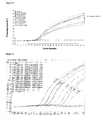
- the panel of S. aureus strains listed in table 6 were tested for inclusivity and all were detected in the S. aureus Lep A( Figure 1 ) while the other staphylococci species and related species (Table 6) were not detected in the test.
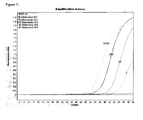
- the limit of detection of the S. aureus LepA real-time PCR test was established to be 2-20 S. aureus cell equivalents ( Figure 2 ).
- the GBS LepA real-time PCR assay was demonstrated using PCR primer set GBSF1/R1 (0.5mM final concentration) and 5' exonuclease probe GBSP12 (0.2mM final concentration) on the LightCycler 1.5 using the LightCycler Fast Start DNA Master HybProbe Kit and thermocycling conditions (Table 5).
- the panel of GBS strains listed in table 6 were tested for inclusivity and all were detected in the assay while the other streptococci species and related species (Table 7) were not detected in the test.
- the B. pertussis LepA real-time PCR assay was demonstrated using PCR primer set BP3F2/R2 (0.5mM final concentration) and 5' exonuclease probe BP3P2 (0.2mM final concentration) on the LightCycler 1.5 using the LightCycler Fast Start DNA Master HybProbe Kit and thermocycling conditions (Table 5). Inclusivity testing detected 4 of 4 B. pertussis strains tested and did not detect other Bordetella spp. strains ( Figure 3 ). The limit of detection based on amplification of serial dilutions of B. pertussus genomic DNA in the B. pertussis LepA real-time PCR assay was established as 20 B. pertussis cell equivalents ( Figure 4 ).
- a biplex real-time PCR assay for the detection of MTC LepA and M. smegmatis LepA has been configured on the LightCycler 2.0 instrument incorporating PCR primers MTCF1/R1(0.5mM) for the co-amplification of MTC species and M. smegmatis and 5'exonuclease probes MTCP(0.2mM) labelled with HEX/BHQ1 dye quencher combination and probe MSP(0.2mM) labelled with CY5/BHQ2 dye quencher moieties. Thermocycling is performed as described in table 5. Inclusivity testing for the MTC assay showed detection of all members of the MTC while non-MTC species were not detected Figures 5, 6 .
- the LOD of the MTC assay for M. tb DNA was approximately 3 cell equivalents ( Figure 7 ).
- Table 5 Real-time PCR conditions for the S. aureus LepA real-time PCR Step Temperature Time Cycles 1 Denaturation 95°C 10 min 1 2 Amplification Denaturation 95°C 10 sec 50 Annealing/elongation 60°C 30 sec 50 3 Cooling 40°C 30 sec 1
- Table 6 S. aureus strains, Staphylococci and other species tested in the S. aureus LepA real-time PCR assay. Species panel Source/Strain S. aureus DSM12463 S. aureus 9518 S. aureus DSM346 S. aureus 8325.4 S. aureus 252 S.
- PCR primers and TaqMan probes were designed from LepA sequence information for S. aureus and S. agalactiae (Table 2). Real-time PCR assays incorporating these primers and probes were demonstrated on the LightCycler. Specificity testing was performed using a selection of the relevant closely species listed in Table 3. The S. aureus assay was 100% specific for S. atreus and the S. agalactiae assays detected all S. agalactiae strains and did not cross-react with any closely related Streptococcal species. SEQ IDs Sites of probes, oligonucleotides etc. are shown in bold and underlined.
- specific degeneracy options are indicated in parenthesis: e.g.: (a/g) is either A or G.
Landscapes
- Chemical & Material Sciences (AREA)
- Life Sciences & Earth Sciences (AREA)
- Analytical Chemistry (AREA)
- Proteomics, Peptides & Aminoacids (AREA)
- Organic Chemistry (AREA)
- Engineering & Computer Science (AREA)
- Zoology (AREA)
- Wood Science & Technology (AREA)
- Health & Medical Sciences (AREA)
- Biotechnology (AREA)
- Microbiology (AREA)
- Molecular Biology (AREA)
- Immunology (AREA)
- Biophysics (AREA)
- Physics & Mathematics (AREA)
- Biochemistry (AREA)
- Bioinformatics & Cheminformatics (AREA)
- General Engineering & Computer Science (AREA)
- General Health & Medical Sciences (AREA)
- Genetics & Genomics (AREA)
- Botany (AREA)
- Mycology (AREA)
- Measuring Or Testing Involving Enzymes Or Micro-Organisms (AREA)
Claims (11)
- Kit de diagnostic pour une espèce bactérienne et/ou fongique et/ou une espèce de levure, comprenant au moins une sonde oligonucléotidique capable de lier au moins une partie des gènes LepA et/ou Guf1 ou de leur ARN messager correspondant, dans lequel ladite sonde, au moins au nombre de une, est sélectionnée dans le groupe composé de- la SEQ ID N° 30 pour la détection de streptocoques du Groupe B ;- la SEQ ID N° 21 pour la détection de B. pertussis ;- la SEQ ID N° 35 et/ou 36 pour la détection de mycobactéries ;- la SEQ ID N° 26 ou 27 pour la détection de Staphylococcus aureus ;- séquences ayant entre 10 et 100 nucléotides de long s'hybridant de préférence aux séquences nucléotidiques SEQ ID N° 21, SEQ ID N°30, SEQ ID N°35, et SEQ ID N°36, et qui sont capables de discriminer les mêmes organismes, et de séquences ayant entre 10 et 100 nucléotides de long, complémentaires avec celles-ci.
- Kit selon la revendication 1, comprenant en outre au moins une amorce pour l'amplification d'au moins une partie du gène LepA et/ou Gufl.
- Kit selon l'une des revendications précédentes, comprenant au moins une amorce sens (forward) et/ou au moins une amorce antisens (reverse) pour au moins une partie du gène LepA et/ou Guf1.
- Kit selon l'une des revendications précédentes, comprenant au moins une amorce sens d'amplification in vitro et/ou au moins une amorce antisens d'amplification in vitro, l'amorce sens d'amplification étant sélectionnée dans le groupe composé de- la SEQ ID N° 28 pour la détection de streptocoques du Groupe B ;- la SEQ ID N° 18 pour la détection de B. pertussis ;- la SEQ ID N° 33 pour la détection de mycobactéries ; de la SEQ ID N° 22 ou 24 pour la détection de Staphylococcus aureus ;- séquences ayant entre 10 et 100 nucléotides de long, qui sont complémentaires avec des séquences qui s'hybrident de préférence aux séquences nucléotidiques SEQ ID N° 18, 28 ou 33, et qui sont capables de discriminer les mêmes organismes, et peuvant également faire office d'amorce sens d'amplification ;et/ou ladite amorce antisens d'amplification étant sélectionnée dans le groupe composé de- la SEQ ID N° 29 pour la détection de streptocoques du Groupe B ;- la SEQ ID N° 19 pour la détection de B. pertussis ;- la SEQ ID N° 34 pour la détection de nrycobactéries ; de la SEQ ID N° 23 ou 25 pour la détection de Staphylococcus aureus ;- séquences ayant entre 10 et 100 nucléotides de long, qui sont complémentaires avec des séquences qui s'hybrident de préférence aux séquences nucléotidiques SEQ ID N° 19, 29 ou 34, et qui sont capables de discriminer les mêmes espèces, et peuvant également faire office d'amorce antisens d'amplification.
- Molécule d'acide nucléique sélectionnée dans le groupe composé des SEQ ID N° 18, 19, 21, 22, 23, 24, 25, 28, 29, 30, 33, 34, 35, 36, de séquences ayant entre 10 et 100 nucléotides de long s'hybridant de préférence aux séquences nucléotidiques SEQ ID N° 18, 19, 21, 22, 23, 24, 25, 28, 29, 30, 33, 34, 35, 36 et qui sont capables de discriminer les espèces bactériennes, fongiques et les levures, et de séquences ayant entre 10 et 100 nucléotides de long, complémentaires avec celles-ci et ayant une fonction diagnostique basée sur le gène LepA ou Guf1.
- Procédé de discrimination d'un organisme cible par rapport à d'autres organismes présents dans un échantillon à tester, comprenant les étapes suivantes, consistant à :i. mélanger l'échantillon à tester avec au moins une sonde oligonucléotidique capable de lier au moins une partie du gène LepA ou Gufl, ou de son ARN messager, correspondant dans des conditions adaptées ;ii. hybrider à l'oligonucléotide dans des conditions de forte stringence tout acide nucléique potentiellement présent dans l'échantillon à tester, de façon à former un duplex sonde-cible ; etiii. déterminer la présence ou non d'un duplex sonde-cible, la présence du duplex permettant d'identifier positivement la présence de l'organisme cible dans l'échantillon à tester, la sonde étant sélectionnée dans le groupe composé de la SEQ ID N° 30 pour la détection de streptocoques du Groupe B ; de la SEQ ID N° 21 pour la détection de B. pertussis ; de la SEQ ID N° 35 et/ou 36 pour la détection de mycobactéries ; de la SEQ ID N° 26 ou 27 pour la détection de Staphylococcus aureus ; de séquences ayant entre 10 et 100 nucléotides de long s'hybridant de préférence aux séquences nucléotidiques SEQ ID N° 21, 30, 35, 36, et qui sont capables de discriminer des espèces bactériennes, fongiques ou des levures, et de séquences ayant entre 10 et 100 nucléotides de long, complémentaires avec celles-ci.
- Utilisation d'un kit selon l'une quelconque des revendications 1 à 4, ou d'une molécule d'acide nucléique selon la revendication 5, dans un test diagnostique destiné à discriminer un titre bactérien d'une espèce cible chez un patient ; ou à discriminer la présence d'une ou de plusieurs espèce(s) bactérienne(s).
- Procédé d'évaluation de l'efficacité d'un régime de traitement conçu pour réduire le titre bactérien d'un patient, comprenant l'utilisation d'un kit selon l'une quelconque des revendications 1 à 4, ou d'une molécule d'acide nucléique selon la revendication 5, pour discriminer un titre bactérien à une ou plusieurs étapes clés du régime de traitement, lesdites étapes clés comprenant les étapes avant le traitement, pendant le traitement et après le traitement.
- Utilisation d'un kit selon l'une des revendications 1 à 4, ou d'une molécule d'acide nucléique selon la revendication 5, dans un test diagnostique, pour discriminer une contamination bactérienne par une espèce cible dans un environnement, ou pour identifier et/ou caractériser un ou plusieurs agent(s) perturbateur(s) pouvant être utilisés pour déstabiliser le fonctionnement du gène LepA ou Guf1.
- Utilisation selon la revendication 9, dans laquelle l'environnement est un hôpital, un échantillon alimentaire, un échantillon environnemental tel que par ex. de l'eau, un échantillon industriel tel que par ex. un échantillon semi-fini ou un produit fini nécessitant une charge microbienne ou une évaluation de la qualité.
- Utilisation selon la revendication 9, dans laquelle l'agent perturbateur est sélectionné dans le groupe composé d'ARN antisens, d'acides peptidonucléiques (PNA) et de petits ARN interférents (siRNA).
Applications Claiming Priority (2)
| Application Number | Priority Date | Filing Date | Title |
|---|---|---|---|
| IE20080494 | 2008-06-16 | ||
| PCT/EP2009/057389 WO2010003765A2 (fr) | 2008-06-16 | 2009-06-15 | Séquences de gènes lepa et/ou gufl comme cible de diagnostic pour l'identification d'espèces bactériennes |
Publications (2)
| Publication Number | Publication Date |
|---|---|
| EP2300620A2 EP2300620A2 (fr) | 2011-03-30 |
| EP2300620B1 true EP2300620B1 (fr) | 2015-12-02 |
Family
ID=41066746
Family Applications (1)
| Application Number | Title | Priority Date | Filing Date |
|---|---|---|---|
| EP09779760.9A Active EP2300620B1 (fr) | 2008-06-16 | 2009-06-15 | Séquences de gènes lepa et/ou gufl comme cible de diagnostic pour l'identification d'espèces bactériennes |
Country Status (4)
| Country | Link |
|---|---|
| US (1) | US9243298B2 (fr) |
| EP (1) | EP2300620B1 (fr) |
| IE (1) | IES20090470A2 (fr) |
| WO (1) | WO2010003765A2 (fr) |
Families Citing this family (2)
| Publication number | Priority date | Publication date | Assignee | Title |
|---|---|---|---|---|
| CN103877594B (zh) * | 2012-12-24 | 2017-02-08 | 中国科学院生物物理研究所 | Ef4蛋白编码基因沉默在癌症治疗方面的应用 |
| GB201508860D0 (en) | 2015-05-22 | 2015-07-01 | Nat Univ Ireland | Diagnostic method |
Family Cites Families (6)
| Publication number | Priority date | Publication date | Assignee | Title |
|---|---|---|---|---|
| US6800744B1 (en) * | 1997-07-02 | 2004-10-05 | Genome Therapeutics Corporation | Nucleic acid and amino acid sequences relating to Streptococcus pneumoniae for diagnostics and therapeutics |
| US6617156B1 (en) | 1997-08-15 | 2003-09-09 | Lynn A. Doucette-Stamm | Nucleic acid and amino acid sequences relating to Enterococcus faecalis for diagnostics and therapeutics |
| US6747137B1 (en) | 1998-02-13 | 2004-06-08 | Genome Therapeutics Corporation | Nucleic acid sequences relating to Candida albicans for diagnostics and therapeutics |
| EP1629124A2 (fr) | 2003-06-05 | 2006-03-01 | Wyeth | Groupe d'acides nucleiques servant a detecter des souches multiples d'especes non virales |
| US7627437B2 (en) | 2005-01-14 | 2009-12-01 | Idaho Research Foundation | Categorization of microbial communities |
| WO2009027768A2 (fr) * | 2006-07-26 | 2009-03-05 | Novartis Ag | Compositions immunogènes contre des bactéries à gram positif |
-
2009
- 2009-06-15 US US12/999,052 patent/US9243298B2/en active Active
- 2009-06-15 IE IE20090470A patent/IES20090470A2/en not_active IP Right Cessation
- 2009-06-15 EP EP09779760.9A patent/EP2300620B1/fr active Active
- 2009-06-15 WO PCT/EP2009/057389 patent/WO2010003765A2/fr not_active Ceased
Also Published As
| Publication number | Publication date |
|---|---|
| WO2010003765A3 (fr) | 2010-03-04 |
| EP2300620A2 (fr) | 2011-03-30 |
| IES20090470A2 (en) | 2010-03-31 |
| WO2010003765A2 (fr) | 2010-01-14 |
| US9243298B2 (en) | 2016-01-26 |
| US20110217704A1 (en) | 2011-09-08 |
Similar Documents
| Publication | Publication Date | Title |
|---|---|---|
| US20120171681A1 (en) | Oligonucleotides, methods and kits for detecting and identifying vancomycin-resistant enterococcus | |
| JP7605829B2 (ja) | クレブシエラ属細菌の検出のためのプライマーセット及びプローブ | |
| EP2092073B1 (fr) | Sondes d'acides nucleiques pour la detection d'especes de levures et de champignons | |
| EP2300620B1 (fr) | Séquences de gènes lepa et/ou gufl comme cible de diagnostic pour l'identification d'espèces bactériennes | |
| US9745636B2 (en) | SWI5 gene as a diagnostic target for the identification of fungal and yeast species | |
| GB2549799A (en) | A multiplex assay for the sensitive and specific detection and differentiation of Clostridium difficile | |
| EP2294219B1 (fr) | Gène eif2 gamma en tant que cible de diagnostic pour l'identification d'espèces fongiques et de levure | |
| WO2005028679A2 (fr) | Procede et kit pour l'identification d'enterocoque resistant a la vancomycine | |
| IE20090470U1 (en) | LepA/Guf1 gene sequences as a diagnostic target for the identification of bacterial species. | |
| CN102105599B (zh) | 作为用于分子识别酵母和真菌种类的目标基因的Ace2 | |
| IES85513Y1 (en) | LepA/Guf1 gene sequences as a diagnostic target for the identification of bacterial species. | |
| EP2294220B1 (fr) | Séquences de gènes p2/p2a/p2b en tant que cibles de diagnostic pour l'identification d'espèces fongiques et de levure | |
| IE20080567A1 (en) | Diagnostic kit for Aspergillius fumigatus species | |
| WO2010115912A2 (fr) | Séquences d'acides nucléiques basées sur le gène bactérien ssra et son transcrit arntm pour la détection moléculaire de s. aureus | |
| IES85514Y1 (en) | Ace2 as a target gene for the molecular identification of yeast and fungal species. | |
| IE20090467U1 (en) | Ace2 as a target gene for the molecular identification of yeast and fungal species. | |
| IES85506Y1 (en) | P2/P2A/P2B gene sequences as diagnostic targets for the identification of fungal and yeast species. | |
| IES85505Y1 (en) | SWI5 gene as a diagnostic target for the identification of fungal and yeast species | |
| JP2004201635A (ja) | nestedPCRで複数種の微生物に対する増幅を共通条件で同時に行う方法 |
Legal Events
| Date | Code | Title | Description |
|---|---|---|---|
| PUAI | Public reference made under article 153(3) epc to a published international application that has entered the european phase |
Free format text: ORIGINAL CODE: 0009012 |
|
| 17P | Request for examination filed |
Effective date: 20101214 |
|
| AK | Designated contracting states |
Kind code of ref document: A2 Designated state(s): AT BE BG CH CY CZ DE DK EE ES FI FR GB GR HR HU IE IS IT LI LT LU LV MC MK MT NL NO PL PT RO SE SI SK TR |
|
| AX | Request for extension of the european patent |
Extension state: AL BA RS |
|
| DAX | Request for extension of the european patent (deleted) | ||
| 17Q | First examination report despatched |
Effective date: 20120322 |
|
| GRAP | Despatch of communication of intention to grant a patent |
Free format text: ORIGINAL CODE: EPIDOSNIGR1 |
|
| INTG | Intention to grant announced |
Effective date: 20150624 |
|
| GRAS | Grant fee paid |
Free format text: ORIGINAL CODE: EPIDOSNIGR3 |
|
| GRAA | (expected) grant |
Free format text: ORIGINAL CODE: 0009210 |
|
| AK | Designated contracting states |
Kind code of ref document: B1 Designated state(s): AT BE BG CH CY CZ DE DK EE ES FI FR GB GR HR HU IE IS IT LI LT LU LV MC MK MT NL NO PL PT RO SE SI SK TR |
|
| REG | Reference to a national code |
Ref country code: GB Ref legal event code: FG4D |
|
| REG | Reference to a national code |
Ref country code: AT Ref legal event code: REF Ref document number: 763668 Country of ref document: AT Kind code of ref document: T Effective date: 20151215 Ref country code: CH Ref legal event code: EP |
|
| REG | Reference to a national code |
Ref country code: IE Ref legal event code: FG4D |
|
| REG | Reference to a national code |
Ref country code: DE Ref legal event code: R096 Ref document number: 602009035121 Country of ref document: DE |
|
| REG | Reference to a national code |
Ref country code: NL Ref legal event code: MP Effective date: 20160302 |
|
| REG | Reference to a national code |
Ref country code: LT Ref legal event code: MG4D |
|
| REG | Reference to a national code |
Ref country code: AT Ref legal event code: MK05 Ref document number: 763668 Country of ref document: AT Kind code of ref document: T Effective date: 20151202 |
|
| PG25 | Lapsed in a contracting state [announced via postgrant information from national office to epo] |
Ref country code: LT Free format text: LAPSE BECAUSE OF FAILURE TO SUBMIT A TRANSLATION OF THE DESCRIPTION OR TO PAY THE FEE WITHIN THE PRESCRIBED TIME-LIMIT Effective date: 20151202 Ref country code: ES Free format text: LAPSE BECAUSE OF FAILURE TO SUBMIT A TRANSLATION OF THE DESCRIPTION OR TO PAY THE FEE WITHIN THE PRESCRIBED TIME-LIMIT Effective date: 20151202 Ref country code: NO Free format text: LAPSE BECAUSE OF FAILURE TO SUBMIT A TRANSLATION OF THE DESCRIPTION OR TO PAY THE FEE WITHIN THE PRESCRIBED TIME-LIMIT Effective date: 20160302 Ref country code: HR Free format text: LAPSE BECAUSE OF FAILURE TO SUBMIT A TRANSLATION OF THE DESCRIPTION OR TO PAY THE FEE WITHIN THE PRESCRIBED TIME-LIMIT Effective date: 20151202 |
|
| PG25 | Lapsed in a contracting state [announced via postgrant information from national office to epo] |
Ref country code: LV Free format text: LAPSE BECAUSE OF FAILURE TO SUBMIT A TRANSLATION OF THE DESCRIPTION OR TO PAY THE FEE WITHIN THE PRESCRIBED TIME-LIMIT Effective date: 20151202 Ref country code: PL Free format text: LAPSE BECAUSE OF FAILURE TO SUBMIT A TRANSLATION OF THE DESCRIPTION OR TO PAY THE FEE WITHIN THE PRESCRIBED TIME-LIMIT Effective date: 20151202 Ref country code: FI Free format text: LAPSE BECAUSE OF FAILURE TO SUBMIT A TRANSLATION OF THE DESCRIPTION OR TO PAY THE FEE WITHIN THE PRESCRIBED TIME-LIMIT Effective date: 20151202 Ref country code: SE Free format text: LAPSE BECAUSE OF FAILURE TO SUBMIT A TRANSLATION OF THE DESCRIPTION OR TO PAY THE FEE WITHIN THE PRESCRIBED TIME-LIMIT Effective date: 20151202 Ref country code: GR Free format text: LAPSE BECAUSE OF FAILURE TO SUBMIT A TRANSLATION OF THE DESCRIPTION OR TO PAY THE FEE WITHIN THE PRESCRIBED TIME-LIMIT Effective date: 20160303 Ref country code: NL Free format text: LAPSE BECAUSE OF FAILURE TO SUBMIT A TRANSLATION OF THE DESCRIPTION OR TO PAY THE FEE WITHIN THE PRESCRIBED TIME-LIMIT Effective date: 20151202 Ref country code: AT Free format text: LAPSE BECAUSE OF FAILURE TO SUBMIT A TRANSLATION OF THE DESCRIPTION OR TO PAY THE FEE WITHIN THE PRESCRIBED TIME-LIMIT Effective date: 20151202 |
|
| REG | Reference to a national code |
Ref country code: FR Ref legal event code: PLFP Year of fee payment: 8 |
|
| PG25 | Lapsed in a contracting state [announced via postgrant information from national office to epo] |
Ref country code: IS Free format text: LAPSE BECAUSE OF FAILURE TO SUBMIT A TRANSLATION OF THE DESCRIPTION OR TO PAY THE FEE WITHIN THE PRESCRIBED TIME-LIMIT Effective date: 20151202 |
|
| PG25 | Lapsed in a contracting state [announced via postgrant information from national office to epo] |
Ref country code: IT Free format text: LAPSE BECAUSE OF FAILURE TO SUBMIT A TRANSLATION OF THE DESCRIPTION OR TO PAY THE FEE WITHIN THE PRESCRIBED TIME-LIMIT Effective date: 20151202 Ref country code: CZ Free format text: LAPSE BECAUSE OF FAILURE TO SUBMIT A TRANSLATION OF THE DESCRIPTION OR TO PAY THE FEE WITHIN THE PRESCRIBED TIME-LIMIT Effective date: 20151202 |
|
| PG25 | Lapsed in a contracting state [announced via postgrant information from national office to epo] |
Ref country code: EE Free format text: LAPSE BECAUSE OF FAILURE TO SUBMIT A TRANSLATION OF THE DESCRIPTION OR TO PAY THE FEE WITHIN THE PRESCRIBED TIME-LIMIT Effective date: 20151202 Ref country code: PT Free format text: LAPSE BECAUSE OF FAILURE TO SUBMIT A TRANSLATION OF THE DESCRIPTION OR TO PAY THE FEE WITHIN THE PRESCRIBED TIME-LIMIT Effective date: 20160404 Ref country code: SK Free format text: LAPSE BECAUSE OF FAILURE TO SUBMIT A TRANSLATION OF THE DESCRIPTION OR TO PAY THE FEE WITHIN THE PRESCRIBED TIME-LIMIT Effective date: 20151202 Ref country code: RO Free format text: LAPSE BECAUSE OF FAILURE TO SUBMIT A TRANSLATION OF THE DESCRIPTION OR TO PAY THE FEE WITHIN THE PRESCRIBED TIME-LIMIT Effective date: 20151202 Ref country code: IS Free format text: LAPSE BECAUSE OF FAILURE TO SUBMIT A TRANSLATION OF THE DESCRIPTION OR TO PAY THE FEE WITHIN THE PRESCRIBED TIME-LIMIT Effective date: 20160402 |
|
| REG | Reference to a national code |
Ref country code: DE Ref legal event code: R097 Ref document number: 602009035121 Country of ref document: DE |
|
| PLBE | No opposition filed within time limit |
Free format text: ORIGINAL CODE: 0009261 |
|
| STAA | Information on the status of an ep patent application or granted ep patent |
Free format text: STATUS: NO OPPOSITION FILED WITHIN TIME LIMIT |
|
| PG25 | Lapsed in a contracting state [announced via postgrant information from national office to epo] |
Ref country code: DK Free format text: LAPSE BECAUSE OF FAILURE TO SUBMIT A TRANSLATION OF THE DESCRIPTION OR TO PAY THE FEE WITHIN THE PRESCRIBED TIME-LIMIT Effective date: 20151202 |
|
| 26N | No opposition filed |
Effective date: 20160905 |
|
| PG25 | Lapsed in a contracting state [announced via postgrant information from national office to epo] |
Ref country code: SI Free format text: LAPSE BECAUSE OF FAILURE TO SUBMIT A TRANSLATION OF THE DESCRIPTION OR TO PAY THE FEE WITHIN THE PRESCRIBED TIME-LIMIT Effective date: 20151202 |
|
| PG25 | Lapsed in a contracting state [announced via postgrant information from national office to epo] |
Ref country code: BE Free format text: LAPSE BECAUSE OF FAILURE TO SUBMIT A TRANSLATION OF THE DESCRIPTION OR TO PAY THE FEE WITHIN THE PRESCRIBED TIME-LIMIT Effective date: 20151202 |
|
| PG25 | Lapsed in a contracting state [announced via postgrant information from national office to epo] |
Ref country code: MC Free format text: LAPSE BECAUSE OF FAILURE TO SUBMIT A TRANSLATION OF THE DESCRIPTION OR TO PAY THE FEE WITHIN THE PRESCRIBED TIME-LIMIT Effective date: 20151202 |
|
| REG | Reference to a national code |
Ref country code: CH Ref legal event code: PL |
|
| REG | Reference to a national code |
Ref country code: IE Ref legal event code: MM4A |
|
| PG25 | Lapsed in a contracting state [announced via postgrant information from national office to epo] |
Ref country code: LI Free format text: LAPSE BECAUSE OF NON-PAYMENT OF DUE FEES Effective date: 20160630 Ref country code: CH Free format text: LAPSE BECAUSE OF NON-PAYMENT OF DUE FEES Effective date: 20160630 |
|
| REG | Reference to a national code |
Ref country code: FR Ref legal event code: PLFP Year of fee payment: 9 |
|
| PG25 | Lapsed in a contracting state [announced via postgrant information from national office to epo] |
Ref country code: IE Free format text: LAPSE BECAUSE OF NON-PAYMENT OF DUE FEES Effective date: 20160615 |
|
| PG25 | Lapsed in a contracting state [announced via postgrant information from national office to epo] |
Ref country code: HU Free format text: LAPSE BECAUSE OF FAILURE TO SUBMIT A TRANSLATION OF THE DESCRIPTION OR TO PAY THE FEE WITHIN THE PRESCRIBED TIME-LIMIT; INVALID AB INITIO Effective date: 20090615 Ref country code: CY Free format text: LAPSE BECAUSE OF FAILURE TO SUBMIT A TRANSLATION OF THE DESCRIPTION OR TO PAY THE FEE WITHIN THE PRESCRIBED TIME-LIMIT Effective date: 20151202 |
|
| REG | Reference to a national code |
Ref country code: FR Ref legal event code: PLFP Year of fee payment: 10 |
|
| PG25 | Lapsed in a contracting state [announced via postgrant information from national office to epo] |
Ref country code: MT Free format text: LAPSE BECAUSE OF NON-PAYMENT OF DUE FEES Effective date: 20160630 Ref country code: LU Free format text: LAPSE BECAUSE OF NON-PAYMENT OF DUE FEES Effective date: 20160615 Ref country code: MK Free format text: LAPSE BECAUSE OF FAILURE TO SUBMIT A TRANSLATION OF THE DESCRIPTION OR TO PAY THE FEE WITHIN THE PRESCRIBED TIME-LIMIT Effective date: 20151202 Ref country code: TR Free format text: LAPSE BECAUSE OF FAILURE TO SUBMIT A TRANSLATION OF THE DESCRIPTION OR TO PAY THE FEE WITHIN THE PRESCRIBED TIME-LIMIT Effective date: 20151202 |
|
| PG25 | Lapsed in a contracting state [announced via postgrant information from national office to epo] |
Ref country code: BG Free format text: LAPSE BECAUSE OF FAILURE TO SUBMIT A TRANSLATION OF THE DESCRIPTION OR TO PAY THE FEE WITHIN THE PRESCRIBED TIME-LIMIT Effective date: 20151202 |
|
| PGFP | Annual fee paid to national office [announced via postgrant information from national office to epo] |
Ref country code: DE Payment date: 20250728 Year of fee payment: 17 |
|
| PGFP | Annual fee paid to national office [announced via postgrant information from national office to epo] |
Ref country code: GB Payment date: 20250723 Year of fee payment: 17 |
|
| PGFP | Annual fee paid to national office [announced via postgrant information from national office to epo] |
Ref country code: FR Payment date: 20250729 Year of fee payment: 17 |