EP2302085B1 - Nickelbasierte Schmiedelegierung - Google Patents
Nickelbasierte Schmiedelegierung Download PDFInfo
- Publication number
- EP2302085B1 EP2302085B1 EP10157795.5A EP10157795A EP2302085B1 EP 2302085 B1 EP2302085 B1 EP 2302085B1 EP 10157795 A EP10157795 A EP 10157795A EP 2302085 B1 EP2302085 B1 EP 2302085B1
- Authority
- EP
- European Patent Office
- Prior art keywords
- nickel base
- base alloy
- segregation
- present
- temperature
- Prior art date
- Legal status (The legal status is an assumption and is not a legal conclusion. Google has not performed a legal analysis and makes no representation as to the accuracy of the status listed.)
- Active
Links
Images
Classifications
-
- C—CHEMISTRY; METALLURGY
- C22—METALLURGY; FERROUS OR NON-FERROUS ALLOYS; TREATMENT OF ALLOYS OR NON-FERROUS METALS
- C22C—ALLOYS
- C22C19/00—Alloys based on nickel or cobalt
- C22C19/03—Alloys based on nickel or cobalt based on nickel
- C22C19/05—Alloys based on nickel or cobalt based on nickel with chromium
- C22C19/051—Alloys based on nickel or cobalt based on nickel with chromium and Mo or W
- C22C19/055—Alloys based on nickel or cobalt based on nickel with chromium and Mo or W with the maximum Cr content being at least 20% but less than 30%
Definitions
- a steam temperature of a mainstream coal-fired power plant is 550 to 600°C.
- a ferritic heat-resistant steel is in use as a material for a turbine or a boiler. Since the ferritic heat-resistant steel is excellent in large steel ingot manufacturability, a large wrought product exceeding 10 tons is produced and utilized in a turbine rotor shaft and a boiler piping. However, since a durable temperature of the ferritic heat-resistant steel is at most about 650°C, the ferritic heat-resistant steel can not be used at a temperature higher than about 650°C because of insufficient high-temperature mechanical strength.
- a high temperature part uses a nickel base alloy having excellent high-temperature mechanical strength.
- the nickel base alloy contains a solid solution strengthening element much, such as W, Mo or Co, and a precipitation strengthening element, such as Al, Ti, Nb or Ta, and has excellent high-temperature mechanical strength.
- a ⁇ ' phase (Ni 3 Al), which is a main precipitation strengthening phase, has a property that the mechanical strength increases as a temperature increases and is very effective in improving the mechanical strength characteristics at a high temperature.
- an element such as Ti, Nb or Ta
- the ⁇ ' phase is stabilized and can persist up to a higher temperature. Accordingly, when the nickel base alloy is to be improved in performance, it has been a main point of development how to stabilize the ⁇ ' phase.
- the rotor vane is produced generally by precision casting (for example, see JP-A-09-272933 ). In the precision casting, since a workable weight is limited, a large part like a steam turbine rotor is difficult to be produced from a conventional high mechanical strength nickel base alloy.
- JP-A-2009-097052 discloses a nickel base alloy having an excellent hot forging property and high-temperature mechanical strength in combination, which can be obtained by selecting an alloy element.
- the nickel base alloy can be preferably applied to a material of a steam turbine and a gas turbine.
- a nickel base alloy is added with many strengthening elements, and these elements are prone to segregate at the time of solidification.
- segregation occurs in a steel ingot, cracks generate during hot forging, and a material becomes inhomogeneous so that necessary mechanical strength can not be obtained. Accordingly, an adequate material can not be obtained.
- a cooling speed and a solidifying speed become slow and it results in a condition where segregation tends to generate.
- JP-A-2009-097052 describes that high-temperature mechanical strength and a hot workability can be combined when added precipitation strengthening element is limited only to Al; and Ti, Ta, Nb and the like are not added or added at a small amount of not more than 0.5%. Ti, Ta and Nb largely distribute in a melt during solidification and generate segregation. Accordingly, an alloy designing of JP-A-2009-097052 is said to be desirable from the viewpoint of improvement in large steel ingot manufacturability, which is an object of the present invention.
- an indispensable strengthening element Al is also an element prone to segregate although its tendency is small in comparison with Ti, Ta and Nb, and it has been problematic when a steel ingot size is increased.
- An object of the present invention is to provide a nickel base alloy that can have a high-temperature mechanical strength and a hot forging property in combine and is unlikely to generate segregation and excellent in large steel ingot manufacturability, and a wrought part for a steam turbine plant therewith.
- a nickel base alloy of the present invention includes, by mass, carbon: 0.001 to 0.1%, Cr: 12 to 23%, Co: 15 to 25%, Al: 3.5 to 5.0%, Mo: 4 to 12%, and W: 0.1 to 7.0%, and optionally Ti, Ta and Nb: a total amount is not more than 0.5%, the balance being Ni and accidental impurities and a parameter Ps represented by formula (1) below is 0.6 to 1.6.
- Ps - 7 ⁇ C - 0.1 ⁇ Mo + 0.5 ⁇ Al
- [C] indicates an amount of carbon
- [Mo] indicates an amount of molybdenum
- [Al] indicates an amount of aluminum, by mass percent.
- a large wrought material that can be used in a steam turbine plant where a steam temperature exceeds 750°C and that exceeds 10 tons can be produced.
- the present invention relates to a nickel base alloy suitable for a large material for a high-efficiency thermal power plant and a wrought part for a steam turbine therewith.
- the present inventors studied in detail the influence of the respective alloy elements on segregation by experiments and a thermodynamic calculation concerning thermal equilibrium, and they found that the segregation can be suppressed by controlling contents of Mo, W, Al, carbon and the like, and thereby, came to the invention of an alloy which is improved in large steel ingot manufacturability.
- a parameter Ps represented by a formula (1) shown below is 0.6 to 1.6 (0.6 ⁇ Ps ⁇ 1.6).
- Ps - 7
- a nickel base alloy capable of obtaining more excellent large steel ingot manufacturability includes 5 to 8% of Mo by mass.
- the amount of carbon, the amount of Mo and the amount of Al respectively represent percent amounts (% by mass) of carbon, molybdenum and aluminum contained in the nickel base wrought alloy.
- a nickel base alloy capable of obtaining more preferable large steel ingot manufacturability has the parameter Ps of 0.8 to 1.4.
- a total amount of Mo and W is not more than 12% by mass percent (Mo + W ⁇ 12% by mass).
- alloys can be used in applications for wrought parts for a steam turbine plant, such as a turbine rotor, a boiler tube, a bolt or a nut.
- carbon 0.001 to 0.1% by mass means that, one alloy component, carbon(C), in the alloy is contained in an amount in the range of 0.001 to 0.1%, that is, not less than 0.001% but not more than 0.1% in relation to the mass of the nickel base alloy of the present invention. It may be expressed as 0.001 to 0.1 mass %. In this case, 0.001% and 0.1%, respectively, represent lower and upper limits, and the lower and upper limits are contained in the range of the present invention. It is true for other components. When a composition of an alloy is represented by a unit of percent (%), the unit of percent means "percent by mass" unless other unit is clearly stated.
- a reason why segregation is generated is considered that a solute element is distributed at a solid-liquid interface to cause density difference in a melt.
- compositional ranges of constituent elements of the nickel base alloy of the present invention and reasons for selection thereof will be shown below.
- Carbon (C) dissolves in a matrix to improve tensile strength at a high temperature. It forms a carbide such as M 1 C (M 1 represents a metal element such as Ti, Ta or Nb), and M 2 23 C 6 (M 2 represents a metal element such as Cr or Mo) to improve grain-boundary strength.
- M 1 C represents a metal element such as Ti, Ta or Nb
- M 2 23 C 6 represents a metal element such as Cr or Mo
- the upper limit is set at 0.1%.
- the content of 0.001 to 0.1% is preferable.
- a more preferable range is 0.03 to 0.08%.
- carbon has a very strong tendency to distribute in a liquid phase and very strong effect in lowering a melting point to make the density of the melt larger.
- carbon is added exceeding 0.1%, coarse carbide precipitates in clusters and thereby mechanical strength characteristics are deteriorated.
- Al (aluminum) is an element that forms a ⁇ ' (Ni 3 Al) phase and is an indispensable element for strengthening a ⁇ ' phase strengthening nickel base alloy. Furthermore, Al has an effect of improving oxidation resistance. When Al is insufficient, a precipitation amount of a ⁇ ' phase due to aging is small. Thus, sufficient high-temperature mechanical strength can not be obtained.
- the nickel base alloy of the present invention since other strengthening elements Ti, Ta and Nb are small, an amount of Al of at least 3.5% is necessary to obtain sufficient mechanical strength.
- Al is contained in the range that does not exceed 5.0%.
- the content of 3.5 to 5.0% is preferable and a more preferable range is 3.6 to 4.5%.
- Al has a strong tendency to distribute in a liquid phase and an effect of lowering density of a melt. Accordingly, when Al is added exceeding 5.0%, segregation is caused, and a melting point is lowered so that cracks generate during hot working.
- Mo mobdenum
- Mo has an effect of strengthening a matrix by solid solution strengthening and improves mechanical strength at about 0.1%.
- Mo is necessary to be added at not less than 4.0% from the viewpoint of large steel ingot manufacturability. Thereby, melt density is made larger and segregation can be inhibited from occurring.
- Mo is added exceeding 12%, a brittle detrimental phase precipitates and adversely affects a high temperature forging property and mechanical strength.
- the content of Mo is preferably 4.0 to 12%.
- a more preferable range of Mo is 5.0 to 8.0%.
- Cr chromium
- Cr is an element that forms a dense oxide film including Cr 2 O 3 on a surface of the nickel base alloy to improve oxidation resistance and high temperature corrosion resistance.
- the nickel base alloy In order to utilize the nickel base alloy as a high temperature material which is aimed in the present invention, it is necessary to contain at least 12%.
- Cr when Cr is added at more than 23%, a ⁇ phase precipitates to deteriorate ductility and fracture toughness of the material. Accordingly, the content of Cr is in the range not exceeding 23%.
- the content of Cr is preferably 12 to 23% and more preferably in the range of 16 to 20%.
- Co substitutes nickel and is dissolved in a matrix to improve high-temperature mechanical strength, and lowers a solid solution temperature of a ⁇ ' phase and thereby makes hot working easier.
- the amount of Al is increased to improve high-temperature mechanical strength and oxidation resistance, excellent hot workability can be maintained by adding Co at not less than 15%.
- the upper limit is set at 25%. The content of 15 to 25% is preferable and the content range of 17 to 23% is more preferable.
- W tungsten
- Mo molybdenum
- a matrix is strengthened by solid solution strengthening.
- the content of W is preferably 0.1 to 7.0% and more preferably in the range of 2.0 to 6.0%.
- a total amount of Mo and W is desirable to be not more than 12%. Since the lower limits of Mo and W are, respectively, 4.0% and 0.1%, a total amount of Mo and W is desirably 4.1 to 12%. A more desirable range is 5.0 to 12%.
- Alloys having a weight of 10 kg and having compositions shown in Table 2 were produced with use of a vacuum induction melting furnace.
- Examples 1 to 8 show materials of the present invention and Comparative Examples 1 to 4 show alloys, compositions or the parameters Ps of which are out of the ranges of the present invention.
- Comparative Examples 3 and 4 are practically used high mechanical strength nickel base alloys and contain much titanium.
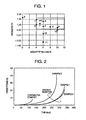
- Fig. 1 is a graph showing relationship between Ps and an amount of Mo.
- an area surrounded by a dashed line is a range of the present invention and Examples 1 to 8 falls in the area. Comparative Examples 1 to 4 are out of the range of the present invention.
- plotted reference numerals 1 to 8 indicate Examples 1 to 8 and reference numerals 9 to 12 indicate Comparative Examples 1 to 4. These reference numerals correspond to numbers (No.) in Table 2.
- Examples 1 to 8 in the range of the present invention are excellent in the large steel ingot manufacturability.
- the prepared alloys were hot worked into round bars of ⁇ 15 mm.
- the round bar materials were appropriately heat-treated, and then various test pieces were sampled therefrom and subjected to characteristics evaluations.
- a high-temperature creep test was performed to evaluate mechanical strength.
- a test temperature was set at 800°C and a test load was set at 294 MPa.
- the hot forging property was judged based on whether hot working can be applied or not and by measuring a solid solution temperature of a ⁇ ' phase, that is a strengthening phase, by thermal analysis.
- a temperature during forging is about 1000°C, and a material, ⁇ ' phase solid solution temperature of which exceeds 1000°C, is difficult to produce a large wrought material owing to large deformation resistance.
- alloys were separately melted, while a cooling speed was controlled to generate segregation by simulation, and thereby it was evaluated how easy segregation generates. Results of various tests are summarized in Table 3.
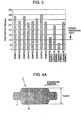
- Fig. 2 is a graph showing one example of a creep strain curve obtained by a creep test.
- Examples 1 to 3 are superior to Comparative Example 1 in both of a creep rupture time and a creep rupture elongation.
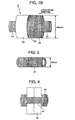
- Fig. 3 is a graph showing a creep rupture time of the alloys.
- Comparative Examples 1 to 4 all materials except Comparative Example 3 attained rupture times of not shorter than 100 hours. Thus, the mechanical strength was relatively excellent. In Comparative Example 3, since the content of Al was small and a precipitation amount of a ⁇ ' phase was small at a usage temperature, sufficient mechanical strength was not obtained.
- Comparative Example 1 In Comparative Example 1, slight segregation was observed. When this ingot was hot forged, no crack was generated. However, there is concern that the characteristics are inhomogeneous and sufficient mechanical strength can not be obtained due to inhomogeneous composition of the alloy. In Comparative Example 2, segregation was observed. Although composition of Comparative Example 2 is close to those of Example 8, it is considered that an alloy composition tends to generate segregation because Ps is out of the range of the present invention and is deficient in the large steel ingot manufacturability. Since segregation was observed in Comparative Examples 3 and 4, it is difficult to produce a large steel ingot exceeding 10 tons.
- an alloy can be realized that can be hot forged while maintaining a durable temperature of not lower than 750°C used for a steam turbine and a large steel ingot of 10 tons class can be produced.
- Figs. 4A and 4B show examples of a case where the nickel base alloy of the present invention is applied to a steam turbine rotor.
- Fig. 4A shows an integrated turbine rotor where steam inflows from a right side of the figure to a left side thereof.
- an integrated turbine rotor 1 is constituted of a shaft 11 and a trunk 12.
- the shaft 11 and the trunk 12 are made of the nickel base alloy of the present invention.
- An outer diameter of the trunk 12 is 750 mm.
- the nickel base alloy of the present invention is excellent in large steel ingot manufacturability and can be hot forged, the nickel base alloy can be used as an integrated turbine rotor as is shown in Fig. 4A .
- a steam temperature can be elevated to not lower than 750°C, and thereby an improvement in power generation efficiency can be expected.
- Fig. 4B shows a weld type turbine rotor.
- a weld type turbine rotor 2 is constituted by jointing a first shaft 21 and a first trunk 22 with a second shaft 23 and a second trunk 24 at a weld portion 25.
- the first shaft 21 and the first trunk 22 are made of the nickel base alloy of the present invention.
- the second shaft 23 and the second trunk 24 are made of ferritic heat-resistant steel (ferritic steel) or a nickel base alloy. Outer diameters of the first trunk 22 and the second trunk 24 are 900 mm.
- the nickel base alloy of the present invention may be also used in a weld type rotor.
- the materials of Examples may be welded with each other.
- it is possible to be weld with different materials such as a ferritic heat resistant steel on a lower temperature side on a downstream in a steam inflow direction.
- Fig. 5 is an example of a case where the nickel base alloy of the present invention is applied to a boiler piping of a steam turbine plant.
- a boiler piping 31 uses the nickel base alloy according the invention and having an outer diameter of 40 mm.
- a durable temperature of a piping material has to be not lower than 750°C.
- a turbine plant in which main steam temperature is 700°C, can be realized.
- the boiler piping 31 is joined by welding and a crack tends to start at a weld portion, compared with a base material, due to weld defects and thermal influence. Since the nickel base alloy of the present invention can provide a larger raw material compared with a conventional alloy, weld portions can be reduced and thereby reliability can be improved.
- Fig. 6 is an example in a case where the nickel base alloy of the present invention is used as a bolt and a nut of a turbine casing.
- a turbine casing 42 is fastened with a bolt 41 and a nut 43.
- the bolt 41 and the nut 43 use the nickel base alloy of the present invention.
- the turbine casing 42 uses a NiCrMo wrought material and the like.
- the turbine casing 42 is a pressure-resistant part and generally integrated one by bonding, with use of the bolt 41 and the nut 43, forged parts which are separately produced.
- the nickel base alloy of the present invention has high mechanical strength, and thus, the creep deformation is not caused and a bolt and a nut do not loosen.
- a large wrought material of not less than 10 tons can be produced, the mechanical strength of not less than 100 MPa in the creep rupture strength at 750°C and for 100,000 hours can be obtained.
- the large wrought material is used as a steam turbine and gas turbine material, higher temperature and higher efficiency can be obtained.
Landscapes
- Chemical & Material Sciences (AREA)
- Engineering & Computer Science (AREA)
- Materials Engineering (AREA)
- Mechanical Engineering (AREA)
- Metallurgy (AREA)
- Organic Chemistry (AREA)
- Turbine Rotor Nozzle Sealing (AREA)
Claims (6)
- Legierung auf Nickelbasis, die auf die Masse bezogen umfasst 0,001 bis 0,1 % Kohlenstoff12 bis 23 % Chrom15 bis 25 % Kobalt3,5 bis 5,0 % Aluminium4 bis 12 % Molybdän0,1 bis 7,0 % Wolfram undwahlweise nicht mehr als 0,5 % einer Gesamtmenge an Titan, Tantal und Niob,wobei der Rest Nickel und zufällige Verunreinigungen sind,wobei ein Parameter Ps, der durch eine nachstehend gezeigte Formel (1) dargestellt wird, 0,6 bis 1,6 ist,
 wobei auf Massenprozent bezogen [C] eine Menge an Kohlenstoff angibt; [Mo] eine Menge an Molybdän angibt; und [Al] eine Menge an Aluminium angibt.
 - Legierung auf Nickelbasis nach Anspruch 1, wobei die Legierung auf Nickelbasis 5 bis 8 Massen-% Molybdän enthält.
- Legierung auf Nickelbasis nach Anspruch 1 oder 2, wobei der Parameter Ps 0,8 bis 1,4 ist.
- Legierung auf Nickelbasis nach einem der vorangehenden Ansprüche, wobei eine Gesamtmenge an Molybdän und Wolfram nicht mehr als 12 Massen-% ist.
- Schmiedeteil für eine Dampfturbinenanlage unter Verwendung der Legierung auf Nickelbasis nach einem der vorangehenden Ansprüche.
- Schmiedeteil nach Anspruch 5, wobei das Schmiedeteil ein Dampfturbinenrotor (1; 2), ein Kesselrohr (31), eine Schraube (41) oder eine Mutter (43) für eine Dampfturbinenanlage ist.
Applications Claiming Priority (1)
| Application Number | Priority Date | Filing Date | Title |
|---|---|---|---|
| JP2009204557A JP4987921B2 (ja) | 2009-09-04 | 2009-09-04 | Ni基合金並びにこれを用いた蒸気タービン用鋳造部品、蒸気タービンロータ、蒸気タービンプラント用ボイラチューブ、蒸気タービンプラント用ボルト及び蒸気タービンプラント用ナット |
Publications (2)
| Publication Number | Publication Date |
|---|---|
| EP2302085A1 EP2302085A1 (de) | 2011-03-30 |
| EP2302085B1 true EP2302085B1 (de) | 2014-07-30 |
Family
ID=42617464
Family Applications (1)
| Application Number | Title | Priority Date | Filing Date |
|---|---|---|---|
| EP10157795.5A Active EP2302085B1 (de) | 2009-09-04 | 2010-03-25 | Nickelbasierte Schmiedelegierung |
Country Status (4)
| Country | Link |
|---|---|
| US (1) | US8524149B2 (de) |
| EP (1) | EP2302085B1 (de) |
| JP (1) | JP4987921B2 (de) |
| ES (1) | ES2488126T3 (de) |
Families Citing this family (8)
| Publication number | Priority date | Publication date | Assignee | Title |
|---|---|---|---|---|
| JP5431426B2 (ja) * | 2011-08-23 | 2014-03-05 | 株式会社日立製作所 | Ni基合金大型部材及びNi基合金大型部材を使用したNi基合金溶接構造物とその製造方法 |
| JP5537587B2 (ja) * | 2012-03-30 | 2014-07-02 | 株式会社日立製作所 | Ni基合金溶接材料並びにこれを用いた溶接ワイヤ、溶接棒及び溶接用粉末 |
| JP6034041B2 (ja) | 2012-04-10 | 2016-11-30 | 三菱日立パワーシステムズ株式会社 | 高温配管物およびその製造方法 |
| EP2971205B1 (de) * | 2013-03-15 | 2017-09-27 | Haynes International, Inc. | Bearbeitbare ni-cr-co-mo-al-legierungen mit hoher festigkeit und oxidationsbeständigkeit |
| JP6238276B2 (ja) * | 2013-03-18 | 2017-11-29 | 三菱重工業株式会社 | 蒸気タービン用部材の製造方法 |
| JP5869624B2 (ja) | 2014-06-18 | 2016-02-24 | 三菱日立パワーシステムズ株式会社 | Ni基合金軟化材及びNi基合金部材の製造方法 |
| US10640858B2 (en) | 2016-06-30 | 2020-05-05 | General Electric Company | Methods for preparing superalloy articles and related articles |
| US10184166B2 (en) | 2016-06-30 | 2019-01-22 | General Electric Company | Methods for preparing superalloy articles and related articles |
Family Cites Families (16)
| Publication number | Priority date | Publication date | Assignee | Title |
|---|---|---|---|---|
| JPS5120018A (en) * | 1974-08-12 | 1976-02-17 | Mitsubishi Heavy Ind Ltd | Sekishutsukokagata ni kitainetsugokinno netsushorihoho |
| US4219592A (en) * | 1977-07-11 | 1980-08-26 | United Technologies Corporation | Two-way surfacing process by fusion welding |
| US4161412A (en) * | 1977-11-25 | 1979-07-17 | General Electric Company | Method of heat treating γ/γ'-α eutectic nickel-base superalloy body |
| US4571935A (en) * | 1978-10-26 | 1986-02-25 | Rice Ivan G | Process for steam cooling a power turbine |
| US5476555A (en) * | 1992-08-31 | 1995-12-19 | Sps Technologies, Inc. | Nickel-cobalt based alloys |
| US5725692A (en) * | 1995-10-02 | 1998-03-10 | United Technologies Corporation | Nickel base superalloy articles with improved resistance to crack propagation |
| JP3559670B2 (ja) | 1996-02-09 | 2004-09-02 | 株式会社日立製作所 | 方向性凝固用高強度Ni基超合金 |
| EP1154027B1 (de) * | 1999-01-28 | 2004-11-10 | Sumitomo Electric Industries, Ltd. | Wärmebeständiger legierungsdraht |
| KR100372482B1 (ko) | 1999-06-30 | 2003-02-17 | 스미토모 긴조쿠 고교 가부시키가이샤 | 니켈 베이스 내열합금 |
| JP4382269B2 (ja) * | 2000-09-13 | 2009-12-09 | 日立金属株式会社 | 耐高温硫化腐食性に優れたNi基合金の製造方法 |
| US6521053B1 (en) * | 2000-11-08 | 2003-02-18 | General Electric Co. | In-situ formation of a protective coating on a substrate |
| JP3842717B2 (ja) | 2002-10-16 | 2006-11-08 | 株式会社日立製作所 | 溶接材料、溶接構造物、ガスタービン動翼及びガスタービン動翼又は静翼の補修方法 |
| JP2004256840A (ja) | 2003-02-24 | 2004-09-16 | Japan Steel Works Ltd:The | 複合強化型Ni基超合金とその製造方法 |
| JP4908137B2 (ja) | 2006-10-04 | 2012-04-04 | 株式会社東芝 | タービンロータおよび蒸気タービン |
| JP4982324B2 (ja) * | 2007-10-19 | 2012-07-25 | 株式会社日立製作所 | Ni基鍛造合金、蒸気タービンプラント用鍛造部品、蒸気タービンプラント用ボイラチューブ、蒸気タービンプラント用ボルト及び蒸気タービンロータ |
| JP5232492B2 (ja) * | 2008-02-13 | 2013-07-10 | 株式会社日本製鋼所 | 偏析性に優れたNi基超合金 |
-
2009
- 2009-09-04 JP JP2009204557A patent/JP4987921B2/ja active Active
-
2010
- 2010-03-22 US US12/728,292 patent/US8524149B2/en active Active
- 2010-03-25 ES ES10157795.5T patent/ES2488126T3/es active Active
- 2010-03-25 EP EP10157795.5A patent/EP2302085B1/de active Active
Also Published As
| Publication number | Publication date |
|---|---|
| JP4987921B2 (ja) | 2012-08-01 |
| US20110058978A1 (en) | 2011-03-10 |
| ES2488126T3 (es) | 2014-08-26 |
| JP2011052308A (ja) | 2011-03-17 |
| EP2302085A1 (de) | 2011-03-30 |
| US8524149B2 (en) | 2013-09-03 |
Similar Documents
| Publication | Publication Date | Title |
|---|---|---|
| US8491838B2 (en) | Low thermal expansion Ni-base superalloy | |
| EP2479302B1 (de) | Wärmebeständige Legierung auf Ni-Basis, Gasturbinenkomponente und Gasturbine | |
| KR101192618B1 (ko) | Ni기 합금용 용접 재료 | |
| US8883072B2 (en) | Ni-base alloy, high-temperature member for steam turbine and welded rotor for turbine using the same, and method for manufacturing the same | |
| EP2781612B1 (de) | Nahtloses und wärmebeständiges austenitisches legierungsrohr | |
| US8524149B2 (en) | Nickel base wrought alloy | |
| EP2128283B1 (de) | Nickelbasierte Guss-Superlegierung und Gusskomponente für eine Dampfturbine mit dieser Legierung | |
| EP1640465A2 (de) | Ni-Cr-Co-Mo Legierung für einen Gasturbinenantrieb | |
| KR102031776B1 (ko) | 오스테나이트계 내열합금 용접 조인트의 제조 방법 및 그것을 이용하여 얻어지는 용접 조인트 | |
| EP2330225A1 (de) | Hitzebeständige legierung auf nickelbasis | |
| EP2677053B1 (de) | Ni-basierte Legierung zum Schweißen von Material und Schweißdraht, -stab und -pulver | |
| EP2039789A1 (de) | Legierung auf Nickelbasis für einen Turbinenrotor einer Dampfturbine und Turbinenrotor für Dampfturbine | |
| EP2050830B1 (de) | Nickelbasierte Legierung zum Schmieden | |
| EP2354262A1 (de) | Ni-basierte Legierung zum Schmieden und Komponenten für Dampfturbinenanlage damit | |
| US20160130954A1 (en) | Welding material and welding rotor | |
| JP5356572B2 (ja) | タービンロータ | |
| JP4635065B2 (ja) | 蒸気タービンのタービンロータ用のNi基合金および蒸気タービンのタービンロータ | |
| JP5283139B2 (ja) | 低熱膨張Ni基超合金 | |
| JP2010084167A (ja) | Ni基合金及び、Ni基合金を用いた上記タービン用高温部材 | |
| RU2777099C1 (ru) | Жаропрочный свариваемый сплав на основе никеля и изделие, выполненное из него |
Legal Events
| Date | Code | Title | Description |
|---|---|---|---|
| PUAI | Public reference made under article 153(3) epc to a published international application that has entered the european phase |
Free format text: ORIGINAL CODE: 0009012 |
|
| 17P | Request for examination filed |
Effective date: 20100630 |
|
| AK | Designated contracting states |
Kind code of ref document: A1 Designated state(s): AT BE BG CH CY CZ DE DK EE ES FI FR GB GR HR HU IE IS IT LI LT LU LV MC MK MT NL NO PL PT RO SE SI SK SM TR |
|
| AX | Request for extension of the european patent |
Extension state: AL BA ME RS |
|
| GRAP | Despatch of communication of intention to grant a patent |
Free format text: ORIGINAL CODE: EPIDOSNIGR1 |
|
| INTG | Intention to grant announced |
Effective date: 20140211 |
|
| GRAS | Grant fee paid |
Free format text: ORIGINAL CODE: EPIDOSNIGR3 |
|
| GRAA | (expected) grant |
Free format text: ORIGINAL CODE: 0009210 |
|
| AK | Designated contracting states |
Kind code of ref document: B1 Designated state(s): AT BE BG CH CY CZ DE DK EE ES FI FR GB GR HR HU IE IS IT LI LT LU LV MC MK MT NL NO PL PT RO SE SI SK SM TR |
|
| REG | Reference to a national code |
Ref country code: GB Ref legal event code: FG4D |
|
| REG | Reference to a national code |
Ref country code: CH Ref legal event code: EP |
|
| REG | Reference to a national code |
Ref country code: AT Ref legal event code: REF Ref document number: 680043 Country of ref document: AT Kind code of ref document: T Effective date: 20140815 |
|
| RAP2 | Party data changed (patent owner data changed or rights of a patent transferred) |
Owner name: MITSUBISHI HITACHI POWER SYSTEMS, LTD. |
|
| REG | Reference to a national code |
Ref country code: ES Ref legal event code: FG2A Ref document number: 2488126 Country of ref document: ES Kind code of ref document: T3 Effective date: 20140826 |
|
| REG | Reference to a national code |
Ref country code: IE Ref legal event code: FG4D |
|
| REG | Reference to a national code |
Ref country code: NL Ref legal event code: T3 |
|
| REG | Reference to a national code |
Ref country code: DE Ref legal event code: R096 Ref document number: 602010017838 Country of ref document: DE Effective date: 20140925 |
|
| REG | Reference to a national code |
Ref country code: AT Ref legal event code: MK05 Ref document number: 680043 Country of ref document: AT Kind code of ref document: T Effective date: 20140730 |
|
| REG | Reference to a national code |
Ref country code: LT Ref legal event code: MG4D |
|
| PG25 | Lapsed in a contracting state [announced via postgrant information from national office to epo] |
Ref country code: SE Free format text: LAPSE BECAUSE OF FAILURE TO SUBMIT A TRANSLATION OF THE DESCRIPTION OR TO PAY THE FEE WITHIN THE PRESCRIBED TIME-LIMIT Effective date: 20140730 Ref country code: FI Free format text: LAPSE BECAUSE OF FAILURE TO SUBMIT A TRANSLATION OF THE DESCRIPTION OR TO PAY THE FEE WITHIN THE PRESCRIBED TIME-LIMIT Effective date: 20140730 Ref country code: BG Free format text: LAPSE BECAUSE OF FAILURE TO SUBMIT A TRANSLATION OF THE DESCRIPTION OR TO PAY THE FEE WITHIN THE PRESCRIBED TIME-LIMIT Effective date: 20141030 Ref country code: GR Free format text: LAPSE BECAUSE OF FAILURE TO SUBMIT A TRANSLATION OF THE DESCRIPTION OR TO PAY THE FEE WITHIN THE PRESCRIBED TIME-LIMIT Effective date: 20141031 Ref country code: PT Free format text: LAPSE BECAUSE OF FAILURE TO SUBMIT A TRANSLATION OF THE DESCRIPTION OR TO PAY THE FEE WITHIN THE PRESCRIBED TIME-LIMIT Effective date: 20141202 Ref country code: NO Free format text: LAPSE BECAUSE OF FAILURE TO SUBMIT A TRANSLATION OF THE DESCRIPTION OR TO PAY THE FEE WITHIN THE PRESCRIBED TIME-LIMIT Effective date: 20141030 Ref country code: LT Free format text: LAPSE BECAUSE OF FAILURE TO SUBMIT A TRANSLATION OF THE DESCRIPTION OR TO PAY THE FEE WITHIN THE PRESCRIBED TIME-LIMIT Effective date: 20140730 |
|
| PG25 | Lapsed in a contracting state [announced via postgrant information from national office to epo] |
Ref country code: IS Free format text: LAPSE BECAUSE OF FAILURE TO SUBMIT A TRANSLATION OF THE DESCRIPTION OR TO PAY THE FEE WITHIN THE PRESCRIBED TIME-LIMIT Effective date: 20141130 Ref country code: AT Free format text: LAPSE BECAUSE OF FAILURE TO SUBMIT A TRANSLATION OF THE DESCRIPTION OR TO PAY THE FEE WITHIN THE PRESCRIBED TIME-LIMIT Effective date: 20140730 Ref country code: CY Free format text: LAPSE BECAUSE OF FAILURE TO SUBMIT A TRANSLATION OF THE DESCRIPTION OR TO PAY THE FEE WITHIN THE PRESCRIBED TIME-LIMIT Effective date: 20140730 Ref country code: HR Free format text: LAPSE BECAUSE OF FAILURE TO SUBMIT A TRANSLATION OF THE DESCRIPTION OR TO PAY THE FEE WITHIN THE PRESCRIBED TIME-LIMIT Effective date: 20140730 Ref country code: PL Free format text: LAPSE BECAUSE OF FAILURE TO SUBMIT A TRANSLATION OF THE DESCRIPTION OR TO PAY THE FEE WITHIN THE PRESCRIBED TIME-LIMIT Effective date: 20140730 Ref country code: LV Free format text: LAPSE BECAUSE OF FAILURE TO SUBMIT A TRANSLATION OF THE DESCRIPTION OR TO PAY THE FEE WITHIN THE PRESCRIBED TIME-LIMIT Effective date: 20140730 |
|
| REG | Reference to a national code |
Ref country code: SE Ref legal event code: TRGR Ref country code: SE Ref legal event code: RINS Effective date: 20150303 |
|
| RAP2 | Party data changed (patent owner data changed or rights of a patent transferred) |
Owner name: MITSUBISHI HITACHI POWER SYSTEMS, LTD. |
|
| PG25 | Lapsed in a contracting state [announced via postgrant information from national office to epo] |
Ref country code: CZ Free format text: LAPSE BECAUSE OF FAILURE TO SUBMIT A TRANSLATION OF THE DESCRIPTION OR TO PAY THE FEE WITHIN THE PRESCRIBED TIME-LIMIT Effective date: 20140730 Ref country code: SK Free format text: LAPSE BECAUSE OF FAILURE TO SUBMIT A TRANSLATION OF THE DESCRIPTION OR TO PAY THE FEE WITHIN THE PRESCRIBED TIME-LIMIT Effective date: 20140730 Ref country code: EE Free format text: LAPSE BECAUSE OF FAILURE TO SUBMIT A TRANSLATION OF THE DESCRIPTION OR TO PAY THE FEE WITHIN THE PRESCRIBED TIME-LIMIT Effective date: 20140730 Ref country code: RO Free format text: LAPSE BECAUSE OF FAILURE TO SUBMIT A TRANSLATION OF THE DESCRIPTION OR TO PAY THE FEE WITHIN THE PRESCRIBED TIME-LIMIT Effective date: 20140730 Ref country code: DK Free format text: LAPSE BECAUSE OF FAILURE TO SUBMIT A TRANSLATION OF THE DESCRIPTION OR TO PAY THE FEE WITHIN THE PRESCRIBED TIME-LIMIT Effective date: 20140730 |
|
| PGRI | Patent reinstated in contracting state [announced from national office to epo] |
Ref country code: SE Effective date: 20150303 |
|
| REG | Reference to a national code |
Ref country code: DE Ref legal event code: R097 Ref document number: 602010017838 Country of ref document: DE |
|
| PLBE | No opposition filed within time limit |
Free format text: ORIGINAL CODE: 0009261 |
|
| STAA | Information on the status of an ep patent application or granted ep patent |
Free format text: STATUS: NO OPPOSITION FILED WITHIN TIME LIMIT |
|
| 26N | No opposition filed |
Effective date: 20150504 |
|
| PG25 | Lapsed in a contracting state [announced via postgrant information from national office to epo] |
Ref country code: LU Free format text: LAPSE BECAUSE OF FAILURE TO SUBMIT A TRANSLATION OF THE DESCRIPTION OR TO PAY THE FEE WITHIN THE PRESCRIBED TIME-LIMIT Effective date: 20150325 Ref country code: MC Free format text: LAPSE BECAUSE OF FAILURE TO SUBMIT A TRANSLATION OF THE DESCRIPTION OR TO PAY THE FEE WITHIN THE PRESCRIBED TIME-LIMIT Effective date: 20140730 |
|
| PG25 | Lapsed in a contracting state [announced via postgrant information from national office to epo] |
Ref country code: SI Free format text: LAPSE BECAUSE OF FAILURE TO SUBMIT A TRANSLATION OF THE DESCRIPTION OR TO PAY THE FEE WITHIN THE PRESCRIBED TIME-LIMIT Effective date: 20140730 |
|
| REG | Reference to a national code |
Ref country code: IE Ref legal event code: MM4A |
|
| PG25 | Lapsed in a contracting state [announced via postgrant information from national office to epo] |
Ref country code: IE Free format text: LAPSE BECAUSE OF NON-PAYMENT OF DUE FEES Effective date: 20150325 |
|
| REG | Reference to a national code |
Ref country code: FR Ref legal event code: PLFP Year of fee payment: 7 |
|
| PG25 | Lapsed in a contracting state [announced via postgrant information from national office to epo] |
Ref country code: BE Free format text: LAPSE BECAUSE OF FAILURE TO SUBMIT A TRANSLATION OF THE DESCRIPTION OR TO PAY THE FEE WITHIN THE PRESCRIBED TIME-LIMIT Effective date: 20140730 |
|
| PG25 | Lapsed in a contracting state [announced via postgrant information from national office to epo] |
Ref country code: MT Free format text: LAPSE BECAUSE OF FAILURE TO SUBMIT A TRANSLATION OF THE DESCRIPTION OR TO PAY THE FEE WITHIN THE PRESCRIBED TIME-LIMIT Effective date: 20140730 |
|
| REG | Reference to a national code |
Ref country code: FR Ref legal event code: PLFP Year of fee payment: 8 |
|
| PG25 | Lapsed in a contracting state [announced via postgrant information from national office to epo] |
Ref country code: HU Free format text: LAPSE BECAUSE OF FAILURE TO SUBMIT A TRANSLATION OF THE DESCRIPTION OR TO PAY THE FEE WITHIN THE PRESCRIBED TIME-LIMIT; INVALID AB INITIO Effective date: 20100325 Ref country code: SM Free format text: LAPSE BECAUSE OF FAILURE TO SUBMIT A TRANSLATION OF THE DESCRIPTION OR TO PAY THE FEE WITHIN THE PRESCRIBED TIME-LIMIT Effective date: 20140730 |
|
| PG25 | Lapsed in a contracting state [announced via postgrant information from national office to epo] |
Ref country code: TR Free format text: LAPSE BECAUSE OF FAILURE TO SUBMIT A TRANSLATION OF THE DESCRIPTION OR TO PAY THE FEE WITHIN THE PRESCRIBED TIME-LIMIT Effective date: 20140730 |
|
| REG | Reference to a national code |
Ref country code: FR Ref legal event code: PLFP Year of fee payment: 9 |
|
| PG25 | Lapsed in a contracting state [announced via postgrant information from national office to epo] |
Ref country code: MK Free format text: LAPSE BECAUSE OF FAILURE TO SUBMIT A TRANSLATION OF THE DESCRIPTION OR TO PAY THE FEE WITHIN THE PRESCRIBED TIME-LIMIT Effective date: 20140730 |
|
| REG | Reference to a national code |
Ref country code: DE Ref legal event code: R082 Ref document number: 602010017838 Country of ref document: DE Representative=s name: MERH-IP MATIAS ERNY REICHL HOFFMANN PATENTANWA, DE Ref country code: DE Ref legal event code: R081 Ref document number: 602010017838 Country of ref document: DE Owner name: MITSUBISHI POWER, LTD., JP Free format text: FORMER OWNER: MITSUBISHI HITACHI POWER SYSTEMS, LTD., YOKOHAMA, KANAGAWA, JP |
|
| REG | Reference to a national code |
Ref country code: NL Ref legal event code: HC Owner name: MITSUBISHI POWER, LTD.; JP Free format text: DETAILS ASSIGNMENT: CHANGE OF OWNER(S), CHANGE OF OWNER(S) NAME; FORMER OWNER NAME: MITSUBISHI HITACHI POWER SYSTEMS, LTD. Effective date: 20210114 |
|
| REG | Reference to a national code |
Ref country code: CH Ref legal event code: PFA Owner name: MITSUBISHI POWER, LTD., JP Free format text: FORMER OWNER: MITSUBISHI HITACHI POWER SYSTEMS, LTD., JP |
|
| REG | Reference to a national code |
Ref country code: ES Ref legal event code: PC2A Owner name: MITSUBISHI POWER, LTD. Effective date: 20210421 |
|
| PGFP | Annual fee paid to national office [announced via postgrant information from national office to epo] |
Ref country code: ES Payment date: 20250403 Year of fee payment: 16 |
|
| PGFP | Annual fee paid to national office [announced via postgrant information from national office to epo] |
Ref country code: CH Payment date: 20250401 Year of fee payment: 16 |
|
| PGFP | Annual fee paid to national office [announced via postgrant information from national office to epo] |
Ref country code: NL Payment date: 20260213 Year of fee payment: 17 |
|
| REG | Reference to a national code |
Ref country code: CH Ref legal event code: U11 Free format text: ST27 STATUS EVENT CODE: U-0-0-U10-U11 (AS PROVIDED BY THE NATIONAL OFFICE) Effective date: 20260401 |
|
| PGFP | Annual fee paid to national office [announced via postgrant information from national office to epo] |
Ref country code: SE Payment date: 20260211 Year of fee payment: 17 |
|
| PGFP | Annual fee paid to national office [announced via postgrant information from national office to epo] |
Ref country code: GB Payment date: 20260202 Year of fee payment: 17 |
|
| PGFP | Annual fee paid to national office [announced via postgrant information from national office to epo] |
Ref country code: DE Payment date: 20260128 Year of fee payment: 17 |
|
| PGFP | Annual fee paid to national office [announced via postgrant information from national office to epo] |
Ref country code: IT Payment date: 20260220 Year of fee payment: 17 |
|
| PGFP | Annual fee paid to national office [announced via postgrant information from national office to epo] |
Ref country code: FR Payment date: 20260209 Year of fee payment: 17 |