EP2302379A1 - Verfahren und Zusammensetzungen zur Risikostratifizierung - Google Patents
Verfahren und Zusammensetzungen zur Risikostratifizierung Download PDFInfo
- Publication number
- EP2302379A1 EP2302379A1 EP10180167A EP10180167A EP2302379A1 EP 2302379 A1 EP2302379 A1 EP 2302379A1 EP 10180167 A EP10180167 A EP 10180167A EP 10180167 A EP10180167 A EP 10180167A EP 2302379 A1 EP2302379 A1 EP 2302379A1
- Authority
- EP
- European Patent Office
- Prior art keywords
- cells
- cell
- icam
- protein
- activation
- Prior art date
- Legal status (The legal status is an assumption and is not a legal conclusion. Google has not performed a legal analysis and makes no representation as to the accuracy of the status listed.)
- Ceased
Links
- 238000000034 method Methods 0.000 title claims description 134
- 239000000203 mixture Substances 0.000 title description 28
- 238000013517 stratification Methods 0.000 title 1
- 230000004913 activation Effects 0.000 claims abstract description 235
- 108090000623 proteins and genes Proteins 0.000 claims abstract description 218
- 102000004169 proteins and genes Human genes 0.000 claims abstract description 209
- 238000006366 phosphorylation reaction Methods 0.000 claims description 85
- 230000026731 phosphorylation Effects 0.000 claims description 84
- -1 NFkB Proteins 0.000 claims description 67
- 238000000684 flow cytometry Methods 0.000 claims description 67
- 108091008611 Protein Kinase B Proteins 0.000 claims description 59
- 102100033810 RAC-alpha serine/threonine-protein kinase Human genes 0.000 claims description 59
- 239000003795 chemical substances by application Substances 0.000 claims description 46
- 230000004044 response Effects 0.000 claims description 41
- 101000840293 Homo sapiens Interferon-induced protein 44 Proteins 0.000 claims description 38
- 101000582546 Homo sapiens Methylosome protein 50 Proteins 0.000 claims description 38
- 102000043136 MAP kinase family Human genes 0.000 claims description 36
- 108091054455 MAP kinase family Proteins 0.000 claims description 36
- 230000011664 signaling Effects 0.000 claims description 36
- 230000019491 signal transduction Effects 0.000 claims description 32
- 208000031261 Acute myeloid leukaemia Diseases 0.000 claims description 25
- 239000003446 ligand Substances 0.000 claims description 24
- 238000011282 treatment Methods 0.000 claims description 24
- 208000033776 Myeloid Acute Leukemia Diseases 0.000 claims description 23
- 108091007960 PI3Ks Proteins 0.000 claims description 20
- 102000038030 PI3Ks Human genes 0.000 claims description 20
- 238000003556 assay Methods 0.000 claims description 20
- 108090000315 Protein Kinase C Proteins 0.000 claims description 19
- 101100335081 Mus musculus Flt3 gene Proteins 0.000 claims description 18
- 102000003923 Protein Kinase C Human genes 0.000 claims description 18
- 108010068338 p38 Mitogen-Activated Protein Kinases Proteins 0.000 claims description 18
- 101000878540 Homo sapiens Protein-tyrosine kinase 2-beta Proteins 0.000 claims description 14
- 102100037787 Protein-tyrosine kinase 2-beta Human genes 0.000 claims description 14
- 238000012216 screening Methods 0.000 claims description 14
- 108010017080 Granulocyte Colony-Stimulating Factor Proteins 0.000 claims description 12
- 102000004269 Granulocyte Colony-Stimulating Factor Human genes 0.000 claims description 12
- 201000010099 disease Diseases 0.000 claims description 12
- 208000037265 diseases, disorders, signs and symptoms Diseases 0.000 claims description 12
- 230000009870 specific binding Effects 0.000 claims description 12
- 102000001267 GSK3 Human genes 0.000 claims description 11
- 108060006662 GSK3 Proteins 0.000 claims description 11
- 101000604583 Homo sapiens Tyrosine-protein kinase SYK Proteins 0.000 claims description 11
- 108010002386 Interleukin-3 Proteins 0.000 claims description 11
- 102000000646 Interleukin-3 Human genes 0.000 claims description 11
- 108010055717 JNK Mitogen-Activated Protein Kinases Proteins 0.000 claims description 11
- 102000019145 JUN kinase activity proteins Human genes 0.000 claims description 11
- 102100038183 Tyrosine-protein kinase SYK Human genes 0.000 claims description 11
- NFVJNJQRWPQVOA-UHFFFAOYSA-N n-[2-chloro-5-(trifluoromethyl)phenyl]-2-[3-(4-ethyl-5-ethylsulfanyl-1,2,4-triazol-3-yl)piperidin-1-yl]acetamide Chemical compound CCN1C(SCC)=NN=C1C1CN(CC(=O)NC=2C(=CC=C(C=2)C(F)(F)F)Cl)CCC1 NFVJNJQRWPQVOA-UHFFFAOYSA-N 0.000 claims description 11
- 101000844245 Homo sapiens Non-receptor tyrosine-protein kinase TYK2 Proteins 0.000 claims description 10
- 102100032028 Non-receptor tyrosine-protein kinase TYK2 Human genes 0.000 claims description 10
- 102100035427 Forkhead box protein O1 Human genes 0.000 claims description 9
- 101000877727 Homo sapiens Forkhead box protein O1 Proteins 0.000 claims description 9
- 101150099493 STAT3 gene Proteins 0.000 claims description 9
- 239000003814 drug Substances 0.000 claims description 9
- 229940079593 drug Drugs 0.000 claims description 9
- 230000035772 mutation Effects 0.000 claims description 9
- 102000008130 Cyclic AMP-Dependent Protein Kinases Human genes 0.000 claims description 8
- 108010017213 Granulocyte-Macrophage Colony-Stimulating Factor Proteins 0.000 claims description 8
- 101000950669 Homo sapiens Mitogen-activated protein kinase 9 Proteins 0.000 claims description 7
- 108010074328 Interferon-gamma Proteins 0.000 claims description 7
- 102100037809 Mitogen-activated protein kinase 9 Human genes 0.000 claims description 7
- 230000003389 potentiating effect Effects 0.000 claims description 7
- 238000012544 monitoring process Methods 0.000 claims description 6
- 102100037850 Interferon gamma Human genes 0.000 claims description 5
- 102000005636 Cyclic AMP Response Element-Binding Protein Human genes 0.000 claims description 4
- 108010045171 Cyclic AMP Response Element-Binding Protein Proteins 0.000 claims description 4
- 102100020715 Fms-related tyrosine kinase 3 ligand protein Human genes 0.000 claims description 4
- 101710162577 Fms-related tyrosine kinase 3 ligand protein Proteins 0.000 claims description 4
- 108010057466 NF-kappa B Proteins 0.000 claims description 4
- 102000003945 NF-kappa B Human genes 0.000 claims description 4
- 102100035416 Forkhead box protein O4 Human genes 0.000 claims description 3
- 101000600756 Homo sapiens 3-phosphoinositide-dependent protein kinase 1 Proteins 0.000 claims description 3
- 101100391199 Homo sapiens FOXO4 gene Proteins 0.000 claims description 3
- 101001117146 Homo sapiens [Pyruvate dehydrogenase (acetyl-transferring)] kinase isozyme 1, mitochondrial Proteins 0.000 claims description 3
- 102000009438 IgE Receptors Human genes 0.000 claims description 3
- 108010073816 IgE Receptors Proteins 0.000 claims description 3
- 102100029607 Interferon-induced protein 44 Human genes 0.000 claims description 3
- 101150018665 MAPK3 gene Proteins 0.000 claims description 3
- 238000004393 prognosis Methods 0.000 claims description 3
- 206010061818 Disease progression Diseases 0.000 claims description 2
- 102100031480 Dual specificity mitogen-activated protein kinase kinase 1 Human genes 0.000 claims description 2
- 101710146526 Dual specificity mitogen-activated protein kinase kinase 1 Proteins 0.000 claims description 2
- 108010017324 STAT3 Transcription Factor Proteins 0.000 claims description 2
- 102100024040 Signal transducer and activator of transcription 3 Human genes 0.000 claims description 2
- 239000002131 composite material Substances 0.000 claims description 2
- 230000005750 disease progression Effects 0.000 claims description 2
- 238000012545 processing Methods 0.000 claims description 2
- 102000004457 Granulocyte-Macrophage Colony-Stimulating Factor Human genes 0.000 claims 2
- 239000007788 liquid Substances 0.000 claims 2
- 102100037263 3-phosphoinositide-dependent protein kinase 1 Human genes 0.000 claims 1
- 101100150099 Caenorhabditis elegans spk-1 gene Proteins 0.000 claims 1
- 102100023275 Dual specificity mitogen-activated protein kinase kinase 3 Human genes 0.000 claims 1
- 101710146519 Dual specificity mitogen-activated protein kinase kinase 3 Proteins 0.000 claims 1
- 102100023274 Dual specificity mitogen-activated protein kinase kinase 4 Human genes 0.000 claims 1
- 101710146518 Dual specificity mitogen-activated protein kinase kinase 4 Proteins 0.000 claims 1
- 102100030779 Ephrin type-B receptor 1 Human genes 0.000 claims 1
- 101710114538 Ephrin type-B receptor 1 Proteins 0.000 claims 1
- 102100037813 Focal adhesion kinase 1 Human genes 0.000 claims 1
- 101000878536 Homo sapiens Focal adhesion kinase 1 Proteins 0.000 claims 1
- 101000655398 Homo sapiens General transcription factor IIH subunit 2 Proteins 0.000 claims 1
- 102100023482 Mitogen-activated protein kinase 14 Human genes 0.000 claims 1
- 108010044012 STAT1 Transcription Factor Proteins 0.000 claims 1
- 102000004265 STAT2 Transcription Factor Human genes 0.000 claims 1
- 108010081691 STAT2 Transcription Factor Proteins 0.000 claims 1
- 102000001712 STAT5 Transcription Factor Human genes 0.000 claims 1
- 108010029477 STAT5 Transcription Factor Proteins 0.000 claims 1
- 108010011005 STAT6 Transcription Factor Proteins 0.000 claims 1
- 102100029904 Signal transducer and activator of transcription 1-alpha/beta Human genes 0.000 claims 1
- 102100023980 Signal transducer and activator of transcription 6 Human genes 0.000 claims 1
- 102100021993 Sterol O-acyltransferase 1 Human genes 0.000 claims 1
- 102100021125 Tyrosine-protein kinase ZAP-70 Human genes 0.000 claims 1
- 102000013814 Wnt Human genes 0.000 claims 1
- 108010046882 ZAP-70 Protein-Tyrosine Kinase Proteins 0.000 claims 1
- 238000004891 communication Methods 0.000 claims 1
- 238000012258 culturing Methods 0.000 claims 1
- 238000004128 high performance liquid chromatography Methods 0.000 claims 1
- 238000002560 therapeutic procedure Methods 0.000 claims 1
- 230000004797 therapeutic response Effects 0.000 claims 1
- 230000000694 effects Effects 0.000 abstract description 109
- 230000001413 cellular effect Effects 0.000 abstract description 27
- 238000001514 detection method Methods 0.000 abstract description 27
- 230000037361 pathway Effects 0.000 abstract description 12
- 238000013459 approach Methods 0.000 abstract description 10
- 230000002596 correlated effect Effects 0.000 abstract description 6
- 238000012512 characterization method Methods 0.000 abstract description 3
- 210000004027 cell Anatomy 0.000 description 454
- 102100037872 Intercellular adhesion molecule 2 Human genes 0.000 description 206
- 101710148794 Intercellular adhesion molecule 2 Proteins 0.000 description 205
- 235000018102 proteins Nutrition 0.000 description 197
- 238000009739 binding Methods 0.000 description 103
- 230000027455 binding Effects 0.000 description 102
- 239000000758 substrate Substances 0.000 description 81
- 102000005962 receptors Human genes 0.000 description 73
- 108020003175 receptors Proteins 0.000 description 73
- 108010029485 Protein Isoforms Proteins 0.000 description 62
- 102000001708 Protein Isoforms Human genes 0.000 description 62
- 108091000080 Phosphotransferase Proteins 0.000 description 61
- 102000020233 phosphotransferase Human genes 0.000 description 61
- 238000002474 experimental method Methods 0.000 description 58
- 108090000765 processed proteins & peptides Proteins 0.000 description 53
- HKSZLNNOFSGOKW-UHFFFAOYSA-N ent-staurosporine Natural products C12=C3N4C5=CC=CC=C5C3=C3CNC(=O)C3=C2C2=CC=CC=C2N1C1CC(NC)C(OC)C4(C)O1 HKSZLNNOFSGOKW-UHFFFAOYSA-N 0.000 description 52
- HKSZLNNOFSGOKW-FYTWVXJKSA-N staurosporine Chemical compound C12=C3N4C5=CC=CC=C5C3=C3CNC(=O)C3=C2C2=CC=CC=C2N1[C@H]1C[C@@H](NC)[C@@H](OC)[C@]4(C)O1 HKSZLNNOFSGOKW-FYTWVXJKSA-N 0.000 description 52
- CGPUWJWCVCFERF-UHFFFAOYSA-N staurosporine Natural products C12=C3N4C5=CC=CC=C5C3=C3CNC(=O)C3=C2C2=CC=CC=C2N1C1CC(NC)C(OC)C4(OC)O1 CGPUWJWCVCFERF-UHFFFAOYSA-N 0.000 description 52
- 239000013598 vector Substances 0.000 description 40
- 101000914514 Homo sapiens T-cell-specific surface glycoprotein CD28 Proteins 0.000 description 37
- 102100027213 T-cell-specific surface glycoprotein CD28 Human genes 0.000 description 37
- 210000001744 T-lymphocyte Anatomy 0.000 description 37
- 102000004127 Cytokines Human genes 0.000 description 36
- 108090000695 Cytokines Proteins 0.000 description 36
- 235000001014 amino acid Nutrition 0.000 description 36
- 230000006907 apoptotic process Effects 0.000 description 36
- 150000007523 nucleic acids Chemical group 0.000 description 36
- 102000004196 processed proteins & peptides Human genes 0.000 description 36
- 229940024606 amino acid Drugs 0.000 description 35
- 102000039446 nucleic acids Human genes 0.000 description 35
- 108020004707 nucleic acids Proteins 0.000 description 35
- 150000001413 amino acids Chemical class 0.000 description 33
- 239000000523 sample Substances 0.000 description 32
- 230000000638 stimulation Effects 0.000 description 32
- 150000001875 compounds Chemical class 0.000 description 28
- 230000006870 function Effects 0.000 description 28
- 238000004458 analytical method Methods 0.000 description 27
- 238000012986 modification Methods 0.000 description 27
- 102000004190 Enzymes Human genes 0.000 description 26
- 108090000790 Enzymes Proteins 0.000 description 26
- 229940088598 enzyme Drugs 0.000 description 26
- 230000004048 modification Effects 0.000 description 26
- 108091007433 antigens Proteins 0.000 description 25
- 102000036639 antigens Human genes 0.000 description 25
- 238000003119 immunoblot Methods 0.000 description 25
- IAZDPXIOMUYVGZ-UHFFFAOYSA-N Dimethylsulphoxide Chemical compound CS(C)=O IAZDPXIOMUYVGZ-UHFFFAOYSA-N 0.000 description 24
- 239000000427 antigen Substances 0.000 description 24
- 230000003834 intracellular effect Effects 0.000 description 23
- 101000716102 Homo sapiens T-cell surface glycoprotein CD4 Proteins 0.000 description 22
- 102100036011 T-cell surface glycoprotein CD4 Human genes 0.000 description 22
- 239000012528 membrane Substances 0.000 description 22
- 230000001640 apoptogenic effect Effects 0.000 description 21
- 229920001184 polypeptide Polymers 0.000 description 21
- 230000003993 interaction Effects 0.000 description 20
- 102000011727 Caspases Human genes 0.000 description 19
- 108010076667 Caspases Proteins 0.000 description 19
- 101150094745 Ptk2b gene Proteins 0.000 description 19
- 230000000875 corresponding effect Effects 0.000 description 19
- 230000014509 gene expression Effects 0.000 description 19
- 108010002350 Interleukin-2 Proteins 0.000 description 18
- 102000000588 Interleukin-2 Human genes 0.000 description 18
- 239000012867 bioactive agent Substances 0.000 description 18
- 238000004132 cross linking Methods 0.000 description 18
- 238000002866 fluorescence resonance energy transfer Methods 0.000 description 18
- 101150110875 Syk gene Proteins 0.000 description 17
- 102000002574 p38 Mitogen-Activated Protein Kinases Human genes 0.000 description 17
- 230000001177 retroviral effect Effects 0.000 description 17
- 238000006243 chemical reaction Methods 0.000 description 16
- 239000003112 inhibitor Substances 0.000 description 16
- 102000003688 G-Protein-Coupled Receptors Human genes 0.000 description 15
- 108090000045 G-Protein-Coupled Receptors Proteins 0.000 description 15
- 150000001720 carbohydrates Chemical class 0.000 description 15
- 235000014633 carbohydrates Nutrition 0.000 description 15
- 102000030782 GTP binding Human genes 0.000 description 14
- 108091000058 GTP-Binding Proteins 0.000 description 14
- 230000002424 anti-apoptotic effect Effects 0.000 description 14
- 239000011324 bead Substances 0.000 description 14
- 108010044426 integrins Proteins 0.000 description 14
- 102000006495 integrins Human genes 0.000 description 14
- 210000003819 peripheral blood mononuclear cell Anatomy 0.000 description 14
- 108020004414 DNA Proteins 0.000 description 13
- 102100020903 Ezrin Human genes 0.000 description 13
- 108091006027 G proteins Proteins 0.000 description 13
- 108060008682 Tumor Necrosis Factor Proteins 0.000 description 13
- 102000000852 Tumor Necrosis Factor-alpha Human genes 0.000 description 13
- 239000012636 effector Substances 0.000 description 13
- 108010055671 ezrin Proteins 0.000 description 13
- 230000005764 inhibitory process Effects 0.000 description 13
- 239000000463 material Substances 0.000 description 13
- 239000000126 substance Substances 0.000 description 13
- YBJHBAHKTGYVGT-ZKWXMUAHSA-N (+)-Biotin Chemical compound N1C(=O)N[C@@H]2[C@H](CCCCC(=O)O)SC[C@@H]21 YBJHBAHKTGYVGT-ZKWXMUAHSA-N 0.000 description 12
- 108090000672 Annexin A5 Proteins 0.000 description 12
- 102000004121 Annexin A5 Human genes 0.000 description 12
- 206010028980 Neoplasm Diseases 0.000 description 12
- 108010089430 Phosphoproteins Proteins 0.000 description 12
- 102000007982 Phosphoproteins Human genes 0.000 description 12
- 210000003719 b-lymphocyte Anatomy 0.000 description 12
- 239000013642 negative control Substances 0.000 description 12
- 239000000047 product Substances 0.000 description 12
- 238000000159 protein binding assay Methods 0.000 description 12
- 238000004624 confocal microscopy Methods 0.000 description 11
- 239000000284 extract Substances 0.000 description 11
- 238000004519 manufacturing process Methods 0.000 description 11
- 125000003729 nucleotide group Chemical group 0.000 description 11
- 210000004881 tumor cell Anatomy 0.000 description 11
- 102000004388 Interleukin-4 Human genes 0.000 description 10
- 108090000978 Interleukin-4 Proteins 0.000 description 10
- 239000003153 chemical reaction reagent Substances 0.000 description 10
- 238000003776 cleavage reaction Methods 0.000 description 10
- 230000005284 excitation Effects 0.000 description 10
- GNBHRKFJIUUOQI-UHFFFAOYSA-N fluorescein Chemical compound O1C(=O)C2=CC=CC=C2C21C1=CC=C(O)C=C1OC1=CC(O)=CC=C21 GNBHRKFJIUUOQI-UHFFFAOYSA-N 0.000 description 10
- 125000000524 functional group Chemical group 0.000 description 10
- 150000002632 lipids Chemical class 0.000 description 10
- 210000004698 lymphocyte Anatomy 0.000 description 10
- 239000002773 nucleotide Substances 0.000 description 10
- 239000013610 patient sample Substances 0.000 description 10
- 230000007017 scission Effects 0.000 description 10
- 101000581981 Homo sapiens Neural cell adhesion molecule 1 Proteins 0.000 description 9
- 230000003213 activating effect Effects 0.000 description 9
- 239000007850 fluorescent dye Substances 0.000 description 9
- 230000001965 increasing effect Effects 0.000 description 9
- 210000002966 serum Anatomy 0.000 description 9
- 102000010825 Actinin Human genes 0.000 description 8
- 108010063503 Actinin Proteins 0.000 description 8
- 102100024222 B-lymphocyte antigen CD19 Human genes 0.000 description 8
- 101000980825 Homo sapiens B-lymphocyte antigen CD19 Proteins 0.000 description 8
- 102100037877 Intercellular adhesion molecule 1 Human genes 0.000 description 8
- 101100520226 Mus musculus Plcg1 gene Proteins 0.000 description 8
- 102100027347 Neural cell adhesion molecule 1 Human genes 0.000 description 8
- 125000000217 alkyl group Chemical group 0.000 description 8
- 230000004071 biological effect Effects 0.000 description 8
- 230000001086 cytosolic effect Effects 0.000 description 8
- 230000001419 dependent effect Effects 0.000 description 8
- 238000009826 distribution Methods 0.000 description 8
- 239000002245 particle Substances 0.000 description 8
- 235000004400 serine Nutrition 0.000 description 8
- 238000010186 staining Methods 0.000 description 8
- MTCFGRXMJLQNBG-REOHCLBHSA-N (2S)-2-Amino-3-hydroxypropansäure Chemical compound OC[C@H](N)C(O)=O MTCFGRXMJLQNBG-REOHCLBHSA-N 0.000 description 7
- 108010009685 Cholinergic Receptors Proteins 0.000 description 7
- 102100039620 Granulocyte-macrophage colony-stimulating factor Human genes 0.000 description 7
- 108010064593 Intercellular Adhesion Molecule-1 Proteins 0.000 description 7
- 108090000744 Mitogen-Activated Protein Kinase Kinases Proteins 0.000 description 7
- 102000004232 Mitogen-Activated Protein Kinase Kinases Human genes 0.000 description 7
- 108700020796 Oncogene Proteins 0.000 description 7
- MTCFGRXMJLQNBG-UHFFFAOYSA-N Serine Natural products OCC(N)C(O)=O MTCFGRXMJLQNBG-UHFFFAOYSA-N 0.000 description 7
- 102000034337 acetylcholine receptors Human genes 0.000 description 7
- 230000015572 biosynthetic process Effects 0.000 description 7
- 102000003675 cytokine receptors Human genes 0.000 description 7
- 108010057085 cytokine receptors Proteins 0.000 description 7
- 238000011534 incubation Methods 0.000 description 7
- PGHMRUGBZOYCAA-ADZNBVRBSA-N ionomycin Chemical compound O1[C@H](C[C@H](O)[C@H](C)[C@H](O)[C@H](C)/C=C/C[C@@H](C)C[C@@H](C)C(/O)=C/C(=O)[C@@H](C)C[C@@H](C)C[C@@H](CCC(O)=O)C)CC[C@@]1(C)[C@@H]1O[C@](C)([C@@H](C)O)CC1 PGHMRUGBZOYCAA-ADZNBVRBSA-N 0.000 description 7
- PGHMRUGBZOYCAA-UHFFFAOYSA-N ionomycin Natural products O1C(CC(O)C(C)C(O)C(C)C=CCC(C)CC(C)C(O)=CC(=O)C(C)CC(C)CC(CCC(O)=O)C)CCC1(C)C1OC(C)(C(C)O)CC1 PGHMRUGBZOYCAA-UHFFFAOYSA-N 0.000 description 7
- 238000005259 measurement Methods 0.000 description 7
- 241000894007 species Species 0.000 description 7
- 230000004083 survival effect Effects 0.000 description 7
- 235000008521 threonine Nutrition 0.000 description 7
- WCKQPPQRFNHPRJ-UHFFFAOYSA-N 4-[[4-(dimethylamino)phenyl]diazenyl]benzoic acid Chemical compound C1=CC(N(C)C)=CC=C1N=NC1=CC=C(C(O)=O)C=C1 WCKQPPQRFNHPRJ-UHFFFAOYSA-N 0.000 description 6
- 102100021569 Apoptosis regulator Bcl-2 Human genes 0.000 description 6
- IVOMOUWHDPKRLL-KQYNXXCUSA-N Cyclic adenosine monophosphate Chemical compound C([C@H]1O2)OP(O)(=O)O[C@H]1[C@@H](O)[C@@H]2N1C(N=CN=C2N)=C2N=C1 IVOMOUWHDPKRLL-KQYNXXCUSA-N 0.000 description 6
- 101000611183 Homo sapiens Tumor necrosis factor Proteins 0.000 description 6
- 108060003951 Immunoglobulin Proteins 0.000 description 6
- 108010002616 Interleukin-5 Proteins 0.000 description 6
- 102100039897 Interleukin-5 Human genes 0.000 description 6
- AYFVYJQAPQTCCC-GBXIJSLDSA-N L-threonine Chemical compound C[C@@H](O)[C@H](N)C(O)=O AYFVYJQAPQTCCC-GBXIJSLDSA-N 0.000 description 6
- 239000005089 Luciferase Substances 0.000 description 6
- OKKJLVBELUTLKV-UHFFFAOYSA-N Methanol Chemical compound OC OKKJLVBELUTLKV-UHFFFAOYSA-N 0.000 description 6
- 102000035195 Peptidases Human genes 0.000 description 6
- 108091005804 Peptidases Proteins 0.000 description 6
- 239000004365 Protease Substances 0.000 description 6
- 101001117144 Saccharomyces cerevisiae (strain ATCC 204508 / S288c) [Pyruvate dehydrogenase (acetyl-transferring)] kinase 1, mitochondrial Proteins 0.000 description 6
- AYFVYJQAPQTCCC-UHFFFAOYSA-N Threonine Natural products CC(O)C(N)C(O)=O AYFVYJQAPQTCCC-UHFFFAOYSA-N 0.000 description 6
- 239000004473 Threonine Substances 0.000 description 6
- 102100040247 Tumor necrosis factor Human genes 0.000 description 6
- 102100033732 Tumor necrosis factor receptor superfamily member 1A Human genes 0.000 description 6
- 229960002685 biotin Drugs 0.000 description 6
- 235000020958 biotin Nutrition 0.000 description 6
- 239000011616 biotin Substances 0.000 description 6
- 230000022131 cell cycle Effects 0.000 description 6
- 210000000170 cell membrane Anatomy 0.000 description 6
- 230000005754 cellular signaling Effects 0.000 description 6
- 230000008859 change Effects 0.000 description 6
- 230000008878 coupling Effects 0.000 description 6
- 238000010168 coupling process Methods 0.000 description 6
- 238000005859 coupling reaction Methods 0.000 description 6
- 125000000151 cysteine group Chemical class N[C@@H](CS)C(=O)* 0.000 description 6
- 230000007423 decrease Effects 0.000 description 6
- 230000004069 differentiation Effects 0.000 description 6
- 239000005090 green fluorescent protein Substances 0.000 description 6
- 102000018358 immunoglobulin Human genes 0.000 description 6
- 230000001939 inductive effect Effects 0.000 description 6
- 239000006166 lysate Substances 0.000 description 6
- 230000001404 mediated effect Effects 0.000 description 6
- 239000002777 nucleoside Substances 0.000 description 6
- 230000001105 regulatory effect Effects 0.000 description 6
- 150000003384 small molecules Chemical group 0.000 description 6
- 238000012546 transfer Methods 0.000 description 6
- 235000002374 tyrosine Nutrition 0.000 description 6
- VBEQCZHXXJYVRD-GACYYNSASA-N uroanthelone Chemical compound C([C@@H](C(=O)N[C@H](C(=O)N[C@@H](CS)C(=O)N[C@@H](CC(N)=O)C(=O)N[C@@H](CS)C(=O)N[C@H](C(=O)N[C@@H]([C@@H](C)CC)C(=O)NCC(=O)N[C@@H](CC=1C=CC(O)=CC=1)C(=O)N[C@@H](CO)C(=O)NCC(=O)N[C@@H](CC(O)=O)C(=O)N[C@@H](CCCNC(N)=N)C(=O)N[C@@H](CS)C(=O)N[C@@H](CCC(N)=O)C(=O)N[C@@H]([C@@H](C)O)C(=O)N[C@@H](CCCNC(N)=N)C(=O)N[C@@H](CC(O)=O)C(=O)N[C@@H](CC(C)C)C(=O)N[C@@H](CCCNC(N)=N)C(=O)N[C@@H](CC=1C2=CC=CC=C2NC=1)C(=O)N[C@@H](CC=1C2=CC=CC=C2NC=1)C(=O)N[C@@H](CCC(O)=O)C(=O)N[C@@H](CC(C)C)C(=O)N[C@@H](CCCNC(N)=N)C(O)=O)C(C)C)[C@@H](C)O)NC(=O)[C@H](CO)NC(=O)[C@H](CC(O)=O)NC(=O)[C@H](CC(C)C)NC(=O)[C@H](CO)NC(=O)[C@H](CCC(O)=O)NC(=O)[C@@H](NC(=O)[C@H](CC=1NC=NC=1)NC(=O)[C@H](CCSC)NC(=O)[C@H](CS)NC(=O)[C@@H](NC(=O)CNC(=O)CNC(=O)[C@H](CC(N)=O)NC(=O)[C@H](CC(C)C)NC(=O)[C@H](CS)NC(=O)[C@H](CC=1C=CC(O)=CC=1)NC(=O)CNC(=O)[C@H](CC(O)=O)NC(=O)[C@H](CC=1C=CC(O)=CC=1)NC(=O)[C@H](CO)NC(=O)[C@H](CO)NC(=O)[C@H]1N(CCC1)C(=O)[C@H](CS)NC(=O)CNC(=O)[C@H]1N(CCC1)C(=O)[C@H](CC=1C=CC(O)=CC=1)NC(=O)[C@H](CO)NC(=O)[C@@H](N)CC(N)=O)C(C)C)[C@@H](C)CC)C1=CC=C(O)C=C1 VBEQCZHXXJYVRD-GACYYNSASA-N 0.000 description 6
- 108091003079 Bovine Serum Albumin Proteins 0.000 description 5
- 102000000844 Cell Surface Receptors Human genes 0.000 description 5
- 108010001857 Cell Surface Receptors Proteins 0.000 description 5
- 102100025137 Early activation antigen CD69 Human genes 0.000 description 5
- 101000934374 Homo sapiens Early activation antigen CD69 Proteins 0.000 description 5
- 102100037871 Intercellular adhesion molecule 3 Human genes 0.000 description 5
- OUYCCCASQSFEME-QMMMGPOBSA-N L-tyrosine Chemical compound OC(=O)[C@@H](N)CC1=CC=C(O)C=C1 OUYCCCASQSFEME-QMMMGPOBSA-N 0.000 description 5
- 108091093037 Peptide nucleic acid Proteins 0.000 description 5
- 108010004729 Phycoerythrin Proteins 0.000 description 5
- 102000001253 Protein Kinase Human genes 0.000 description 5
- 108010090804 Streptavidin Proteins 0.000 description 5
- 102000040945 Transcription factor Human genes 0.000 description 5
- 108091023040 Transcription factor Proteins 0.000 description 5
- 150000001412 amines Chemical class 0.000 description 5
- 125000003277 amino group Chemical group 0.000 description 5
- 238000003491 array Methods 0.000 description 5
- 229940098773 bovine serum albumin Drugs 0.000 description 5
- 201000011510 cancer Diseases 0.000 description 5
- 125000003178 carboxy group Chemical group [H]OC(*)=O 0.000 description 5
- 239000002299 complementary DNA Substances 0.000 description 5
- 230000009977 dual effect Effects 0.000 description 5
- 239000012634 fragment Substances 0.000 description 5
- 238000001114 immunoprecipitation Methods 0.000 description 5
- 230000006698 induction Effects 0.000 description 5
- 230000007246 mechanism Effects 0.000 description 5
- 239000003068 molecular probe Substances 0.000 description 5
- 150000003833 nucleoside derivatives Chemical class 0.000 description 5
- 108060006633 protein kinase Proteins 0.000 description 5
- 230000006337 proteolytic cleavage Effects 0.000 description 5
- 230000005855 radiation Effects 0.000 description 5
- 239000007787 solid Substances 0.000 description 5
- 210000000130 stem cell Anatomy 0.000 description 5
- OUYCCCASQSFEME-UHFFFAOYSA-N tyrosine Natural products OC(=O)C(N)CC1=CC=C(O)C=C1 OUYCCCASQSFEME-UHFFFAOYSA-N 0.000 description 5
- 125000001493 tyrosinyl group Chemical group [H]OC1=C([H])C([H])=C(C([H])=C1[H])C([H])([H])C([H])(N([H])[H])C(*)=O 0.000 description 5
- MZOFCQQQCNRIBI-VMXHOPILSA-N (3s)-4-[[(2s)-1-[[(2s)-1-[[(1s)-1-carboxy-2-hydroxyethyl]amino]-4-methyl-1-oxopentan-2-yl]amino]-5-(diaminomethylideneamino)-1-oxopentan-2-yl]amino]-3-[[2-[[(2s)-2,6-diaminohexanoyl]amino]acetyl]amino]-4-oxobutanoic acid Chemical compound OC[C@@H](C(O)=O)NC(=O)[C@H](CC(C)C)NC(=O)[C@H](CCCN=C(N)N)NC(=O)[C@H](CC(O)=O)NC(=O)CNC(=O)[C@@H](N)CCCCN MZOFCQQQCNRIBI-VMXHOPILSA-N 0.000 description 4
- LMDZBCPBFSXMTL-UHFFFAOYSA-N 1-ethyl-3-(3-dimethylaminopropyl)carbodiimide Chemical compound CCN=C=NCCCN(C)C LMDZBCPBFSXMTL-UHFFFAOYSA-N 0.000 description 4
- 102000007469 Actins Human genes 0.000 description 4
- 108010085238 Actins Proteins 0.000 description 4
- 108010059108 CD18 Antigens Proteins 0.000 description 4
- 102000050554 Eph Family Receptors Human genes 0.000 description 4
- 108091008815 Eph receptors Proteins 0.000 description 4
- 102400001368 Epidermal growth factor Human genes 0.000 description 4
- 101800003838 Epidermal growth factor Proteins 0.000 description 4
- 238000012413 Fluorescence activated cell sorting analysis Methods 0.000 description 4
- QGWNDRXFNXRZMB-UUOKFMHZSA-N GDP Chemical compound C1=2NC(N)=NC(=O)C=2N=CN1[C@@H]1O[C@H](COP(O)(=O)OP(O)(O)=O)[C@@H](O)[C@H]1O QGWNDRXFNXRZMB-UUOKFMHZSA-N 0.000 description 4
- 101000971171 Homo sapiens Apoptosis regulator Bcl-2 Proteins 0.000 description 4
- 101000801228 Homo sapiens Tumor necrosis factor receptor superfamily member 1A Proteins 0.000 description 4
- 108010001336 Horseradish Peroxidase Proteins 0.000 description 4
- 108010021625 Immunoglobulin Fragments Proteins 0.000 description 4
- 102000008394 Immunoglobulin Fragments Human genes 0.000 description 4
- 108010064600 Intercellular Adhesion Molecule-3 Proteins 0.000 description 4
- 108010002586 Interleukin-7 Proteins 0.000 description 4
- 102100021592 Interleukin-7 Human genes 0.000 description 4
- 102000004083 Lymphotoxin-alpha Human genes 0.000 description 4
- 108090000542 Lymphotoxin-alpha Proteins 0.000 description 4
- 241000124008 Mammalia Species 0.000 description 4
- 241000713869 Moloney murine leukemia virus Species 0.000 description 4
- PXHVJJICTQNCMI-UHFFFAOYSA-N Nickel Chemical compound [Ni] PXHVJJICTQNCMI-UHFFFAOYSA-N 0.000 description 4
- 102000004503 Perforin Human genes 0.000 description 4
- 108010056995 Perforin Proteins 0.000 description 4
- KHGNFPUMBJSZSM-UHFFFAOYSA-N Perforine Natural products COC1=C2CCC(O)C(CCC(C)(C)O)(OC)C2=NC2=C1C=CO2 KHGNFPUMBJSZSM-UHFFFAOYSA-N 0.000 description 4
- 102000004160 Phosphoric Monoester Hydrolases Human genes 0.000 description 4
- 108090000608 Phosphoric Monoester Hydrolases Proteins 0.000 description 4
- 102000004022 Protein-Tyrosine Kinases Human genes 0.000 description 4
- 108090000412 Protein-Tyrosine Kinases Proteins 0.000 description 4
- 241000700159 Rattus Species 0.000 description 4
- 230000009471 action Effects 0.000 description 4
- 125000003275 alpha amino acid group Chemical group 0.000 description 4
- 230000004075 alteration Effects 0.000 description 4
- 238000007413 biotinylation Methods 0.000 description 4
- 230000006287 biotinylation Effects 0.000 description 4
- 102000028861 calmodulin binding Human genes 0.000 description 4
- 108091000084 calmodulin binding Proteins 0.000 description 4
- 150000001718 carbodiimides Chemical class 0.000 description 4
- 239000013592 cell lysate Substances 0.000 description 4
- 230000000295 complement effect Effects 0.000 description 4
- YPHMISFOHDHNIV-FSZOTQKASA-N cycloheximide Chemical compound C1[C@@H](C)C[C@H](C)C(=O)[C@@H]1[C@H](O)CC1CC(=O)NC(=O)C1 YPHMISFOHDHNIV-FSZOTQKASA-N 0.000 description 4
- 235000018417 cysteine Nutrition 0.000 description 4
- 108010036401 cytohesin-1 Proteins 0.000 description 4
- 238000011161 development Methods 0.000 description 4
- 230000018109 developmental process Effects 0.000 description 4
- 231100000673 dose–response relationship Toxicity 0.000 description 4
- 239000000975 dye Substances 0.000 description 4
- 230000002255 enzymatic effect Effects 0.000 description 4
- 229940116977 epidermal growth factor Drugs 0.000 description 4
- 210000002950 fibroblast Anatomy 0.000 description 4
- 230000002538 fungal effect Effects 0.000 description 4
- 239000001963 growth medium Substances 0.000 description 4
- QGWNDRXFNXRZMB-UHFFFAOYSA-N guanidine diphosphate Natural products C1=2NC(N)=NC(=O)C=2N=CN1C1OC(COP(O)(=O)OP(O)(O)=O)C(O)C1O QGWNDRXFNXRZMB-UHFFFAOYSA-N 0.000 description 4
- 125000002887 hydroxy group Chemical group [H]O* 0.000 description 4
- 239000012133 immunoprecipitate Substances 0.000 description 4
- 239000000411 inducer Substances 0.000 description 4
- 208000015181 infectious disease Diseases 0.000 description 4
- 238000002372 labelling Methods 0.000 description 4
- 230000003287 optical effect Effects 0.000 description 4
- 230000002018 overexpression Effects 0.000 description 4
- 229930192851 perforin Natural products 0.000 description 4
- 125000002467 phosphate group Chemical group [H]OP(=O)(O[H])O[*] 0.000 description 4
- 239000013641 positive control Substances 0.000 description 4
- 239000002243 precursor Substances 0.000 description 4
- 230000013823 prenylation Effects 0.000 description 4
- 230000037452 priming Effects 0.000 description 4
- 102000027426 receptor tyrosine kinases Human genes 0.000 description 4
- 108091008598 receptor tyrosine kinases Proteins 0.000 description 4
- 229920006395 saturated elastomer Polymers 0.000 description 4
- QZAYGJVTTNCVMB-UHFFFAOYSA-N serotonin Chemical compound C1=C(O)C=C2C(CCN)=CNC2=C1 QZAYGJVTTNCVMB-UHFFFAOYSA-N 0.000 description 4
- 238000003786 synthesis reaction Methods 0.000 description 4
- 238000004448 titration Methods 0.000 description 4
- 238000013518 transcription Methods 0.000 description 4
- 230000035897 transcription Effects 0.000 description 4
- 239000013603 viral vector Substances 0.000 description 4
- 238000001262 western blot Methods 0.000 description 4
- NCYCYZXNIZJOKI-IOUUIBBYSA-N 11-cis-retinal Chemical compound O=C/C=C(\C)/C=C\C=C(/C)\C=C\C1=C(C)CCCC1(C)C NCYCYZXNIZJOKI-IOUUIBBYSA-N 0.000 description 3
- SJQRQOKXQKVJGJ-UHFFFAOYSA-N 5-(2-aminoethylamino)naphthalene-1-sulfonic acid Chemical compound C1=CC=C2C(NCCN)=CC=CC2=C1S(O)(=O)=O SJQRQOKXQKVJGJ-UHFFFAOYSA-N 0.000 description 3
- LIZDKDDCWIEQIN-UHFFFAOYSA-N 6-[2-[5-(3-ethyl-1,1-dimethyl-6,8-disulfobenzo[e]indol-2-ylidene)penta-1,3-dienyl]-1,1-dimethyl-6,8-disulfobenzo[e]indol-3-ium-3-yl]hexanoate Chemical compound C1=CC2=C(S(O)(=O)=O)C=C(S(O)(=O)=O)C=C2C(C2(C)C)=C1N(CC)\C2=C\C=C\C=C\C1=[N+](CCCCCC([O-])=O)C2=CC=C(C(=CC(=C3)S(O)(=O)=O)S(O)(=O)=O)C3=C2C1(C)C LIZDKDDCWIEQIN-UHFFFAOYSA-N 0.000 description 3
- 108090001008 Avidin Proteins 0.000 description 3
- 241000894006 Bacteria Species 0.000 description 3
- 102100031650 C-X-C chemokine receptor type 4 Human genes 0.000 description 3
- 102100021824 COP9 signalosome complex subunit 5 Human genes 0.000 description 3
- 102000000584 Calmodulin Human genes 0.000 description 3
- 108010041952 Calmodulin Proteins 0.000 description 3
- 108090000994 Catalytic RNA Proteins 0.000 description 3
- 102000053642 Catalytic RNA Human genes 0.000 description 3
- 108091035707 Consensus sequence Proteins 0.000 description 3
- 102100034025 Cytohesin-1 Human genes 0.000 description 3
- 101100044298 Drosophila melanogaster fand gene Proteins 0.000 description 3
- 238000002965 ELISA Methods 0.000 description 3
- 241000196324 Embryophyta Species 0.000 description 3
- 102000003951 Erythropoietin Human genes 0.000 description 3
- 108090000394 Erythropoietin Proteins 0.000 description 3
- 101150064015 FAS gene Proteins 0.000 description 3
- 102000012673 Follicle Stimulating Hormone Human genes 0.000 description 3
- 108010079345 Follicle Stimulating Hormone Proteins 0.000 description 3
- PEDCQBHIVMGVHV-UHFFFAOYSA-N Glycerine Chemical compound OCC(O)CO PEDCQBHIVMGVHV-UHFFFAOYSA-N 0.000 description 3
- 102000001398 Granzyme Human genes 0.000 description 3
- 108060005986 Granzyme Proteins 0.000 description 3
- 239000000095 Growth Hormone-Releasing Hormone Substances 0.000 description 3
- XKMLYUALXHKNFT-UUOKFMHZSA-N Guanosine-5'-triphosphate Chemical compound C1=2NC(N)=NC(=O)C=2N=CN1[C@@H]1O[C@H](COP(O)(=O)OP(O)(=O)OP(O)(O)=O)[C@@H](O)[C@H]1O XKMLYUALXHKNFT-UUOKFMHZSA-N 0.000 description 3
- 241000282412 Homo Species 0.000 description 3
- 101000896048 Homo sapiens COP9 signalosome complex subunit 5 Proteins 0.000 description 3
- 101001057504 Homo sapiens Interferon-stimulated gene 20 kDa protein Proteins 0.000 description 3
- 101001055144 Homo sapiens Interleukin-2 receptor subunit alpha Proteins 0.000 description 3
- 101000945272 Homo sapiens Phosphorylase b kinase regulatory subunit alpha, liver isoform Proteins 0.000 description 3
- 102000003814 Interleukin-10 Human genes 0.000 description 3
- 108090000174 Interleukin-10 Proteins 0.000 description 3
- 102100026878 Interleukin-2 receptor subunit alpha Human genes 0.000 description 3
- 108090001005 Interleukin-6 Proteins 0.000 description 3
- 102000004889 Interleukin-6 Human genes 0.000 description 3
- 241001465754 Metazoa Species 0.000 description 3
- 108091022875 Microtubule Proteins 0.000 description 3
- 102000029749 Microtubule Human genes 0.000 description 3
- 241000699666 Mus <mouse, genus> Species 0.000 description 3
- 241000699670 Mus sp. Species 0.000 description 3
- 108091034117 Oligonucleotide Proteins 0.000 description 3
- 102000007079 Peptide Fragments Human genes 0.000 description 3
- 108010033276 Peptide Fragments Proteins 0.000 description 3
- 241000286209 Phasianidae Species 0.000 description 3
- 108700019535 Phosphoprotein Phosphatases Proteins 0.000 description 3
- 102000045595 Phosphoprotein Phosphatases Human genes 0.000 description 3
- 102100033548 Phosphorylase b kinase regulatory subunit alpha, liver isoform Human genes 0.000 description 3
- 101100335198 Pneumocystis carinii fol1 gene Proteins 0.000 description 3
- 102100033479 RAF proto-oncogene serine/threonine-protein kinase Human genes 0.000 description 3
- 102100022831 Somatoliberin Human genes 0.000 description 3
- 230000006044 T cell activation Effects 0.000 description 3
- 108091008874 T cell receptors Proteins 0.000 description 3
- 102000011923 Thyrotropin Human genes 0.000 description 3
- 108010061174 Thyrotropin Proteins 0.000 description 3
- IYOZTVGMEWJPKR-IJLUTSLNSA-N Y-27632 Chemical compound C1C[C@@H]([C@H](N)C)CC[C@@H]1C(=O)NC1=CC=NC=C1 IYOZTVGMEWJPKR-IJLUTSLNSA-N 0.000 description 3
- 238000002835 absorbance Methods 0.000 description 3
- 239000002253 acid Substances 0.000 description 3
- 230000002378 acidificating effect Effects 0.000 description 3
- 208000034615 apoptosis-related disease Diseases 0.000 description 3
- 230000001580 bacterial effect Effects 0.000 description 3
- 230000008901 benefit Effects 0.000 description 3
- 230000033228 biological regulation Effects 0.000 description 3
- 239000013000 chemical inhibitor Substances 0.000 description 3
- 230000021615 conjugation Effects 0.000 description 3
- 230000009849 deactivation Effects 0.000 description 3
- 230000003247 decreasing effect Effects 0.000 description 3
- 238000012217 deletion Methods 0.000 description 3
- 230000037430 deletion Effects 0.000 description 3
- 230000007613 environmental effect Effects 0.000 description 3
- 230000009144 enzymatic modification Effects 0.000 description 3
- 229940105423 erythropoietin Drugs 0.000 description 3
- VJJPUSNTGOMMGY-MRVIYFEKSA-N etoposide Chemical compound COC1=C(O)C(OC)=CC([C@@H]2C3=CC=4OCOC=4C=C3[C@@H](O[C@H]3[C@@H]([C@@H](O)[C@@H]4O[C@H](C)OC[C@H]4O3)O)[C@@H]3[C@@H]2C(OC3)=O)=C1 VJJPUSNTGOMMGY-MRVIYFEKSA-N 0.000 description 3
- 229960005420 etoposide Drugs 0.000 description 3
- 210000003527 eukaryotic cell Anatomy 0.000 description 3
- 238000011156 evaluation Methods 0.000 description 3
- MHMNJMPURVTYEJ-UHFFFAOYSA-N fluorescein-5-isothiocyanate Chemical compound O1C(=O)C2=CC(N=C=S)=CC=C2C21C1=CC=C(O)C=C1OC1=CC(O)=CC=C21 MHMNJMPURVTYEJ-UHFFFAOYSA-N 0.000 description 3
- 238000000799 fluorescence microscopy Methods 0.000 description 3
- 125000000291 glutamic acid group Chemical group N[C@@H](CCC(O)=O)C(=O)* 0.000 description 3
- 150000004676 glycans Chemical class 0.000 description 3
- 230000013595 glycosylation Effects 0.000 description 3
- 238000006206 glycosylation reaction Methods 0.000 description 3
- 239000003102 growth factor Substances 0.000 description 3
- 210000002443 helper t lymphocyte Anatomy 0.000 description 3
- 239000000833 heterodimer Substances 0.000 description 3
- 125000000487 histidyl group Chemical group [H]N([H])C(C(=O)O*)C([H])([H])C1=C([H])N([H])C([H])=N1 0.000 description 3
- 229940088597 hormone Drugs 0.000 description 3
- 239000005556 hormone Substances 0.000 description 3
- 238000001727 in vivo Methods 0.000 description 3
- 230000000415 inactivating effect Effects 0.000 description 3
- 230000002401 inhibitory effect Effects 0.000 description 3
- 238000011246 intracellular protein detection Methods 0.000 description 3
- 238000002955 isolation Methods 0.000 description 3
- 238000000021 kinase assay Methods 0.000 description 3
- 210000000265 leukocyte Anatomy 0.000 description 3
- 230000004807 localization Effects 0.000 description 3
- DLBFLQKQABVKGT-UHFFFAOYSA-L lucifer yellow dye Chemical compound [Li+].[Li+].[O-]S(=O)(=O)C1=CC(C(N(C(=O)NN)C2=O)=O)=C3C2=CC(S([O-])(=O)=O)=CC3=C1N DLBFLQKQABVKGT-UHFFFAOYSA-L 0.000 description 3
- 210000002540 macrophage Anatomy 0.000 description 3
- 239000003550 marker Substances 0.000 description 3
- 230000011987 methylation Effects 0.000 description 3
- 238000007069 methylation reaction Methods 0.000 description 3
- 210000004688 microtubule Anatomy 0.000 description 3
- 210000001616 monocyte Anatomy 0.000 description 3
- 239000000178 monomer Substances 0.000 description 3
- 229930014626 natural product Natural products 0.000 description 3
- 210000004940 nucleus Anatomy 0.000 description 3
- 239000012660 pharmacological inhibitor Substances 0.000 description 3
- 150000003916 phosphatidylinositol 3,4,5-trisphosphates Chemical class 0.000 description 3
- DCWXELXMIBXGTH-UHFFFAOYSA-N phosphotyrosine Chemical compound OC(=O)C(N)CC1=CC=C(OP(O)(O)=O)C=C1 DCWXELXMIBXGTH-UHFFFAOYSA-N 0.000 description 3
- 229920000642 polymer Polymers 0.000 description 3
- 229920001282 polysaccharide Polymers 0.000 description 3
- 239000005017 polysaccharide Substances 0.000 description 3
- OXCMYAYHXIHQOA-UHFFFAOYSA-N potassium;[2-butyl-5-chloro-3-[[4-[2-(1,2,4-triaza-3-azanidacyclopenta-1,4-dien-5-yl)phenyl]phenyl]methyl]imidazol-4-yl]methanol Chemical compound [K+].CCCCC1=NC(Cl)=C(CO)N1CC1=CC=C(C=2C(=CC=CC=2)C2=N[N-]N=N2)C=C1 OXCMYAYHXIHQOA-UHFFFAOYSA-N 0.000 description 3
- 150000003212 purines Chemical class 0.000 description 3
- 238000010791 quenching Methods 0.000 description 3
- 230000000171 quenching effect Effects 0.000 description 3
- 238000011160 research Methods 0.000 description 3
- 230000000284 resting effect Effects 0.000 description 3
- PYWVYCXTNDRMGF-UHFFFAOYSA-N rhodamine B Chemical compound [Cl-].C=12C=CC(=[N+](CC)CC)C=C2OC2=CC(N(CC)CC)=CC=C2C=1C1=CC=CC=C1C(O)=O PYWVYCXTNDRMGF-UHFFFAOYSA-N 0.000 description 3
- 108091092562 ribozyme Proteins 0.000 description 3
- ABZLKHKQJHEPAX-UHFFFAOYSA-N tetramethylrhodamine Chemical compound C=12C=CC(N(C)C)=CC2=[O+]C2=CC(N(C)C)=CC=C2C=1C1=CC=CC=C1C([O-])=O ABZLKHKQJHEPAX-UHFFFAOYSA-N 0.000 description 3
- MPLHNVLQVRSVEE-UHFFFAOYSA-N texas red Chemical compound [O-]S(=O)(=O)C1=CC(S(Cl)(=O)=O)=CC=C1C(C1=CC=2CCCN3CCCC(C=23)=C1O1)=C2C1=C(CCC1)C3=[N+]1CCCC3=C2 MPLHNVLQVRSVEE-UHFFFAOYSA-N 0.000 description 3
- 230000005945 translocation Effects 0.000 description 3
- 230000003612 virological effect Effects 0.000 description 3
- QDLHCMPXEPAAMD-QAIWCSMKSA-N wortmannin Chemical compound C1([C@]2(C)C3=C(C4=O)OC=C3C(=O)O[C@@H]2COC)=C4[C@@H]2CCC(=O)[C@@]2(C)C[C@H]1OC(C)=O QDLHCMPXEPAAMD-QAIWCSMKSA-N 0.000 description 3
- QDLHCMPXEPAAMD-UHFFFAOYSA-N wortmannin Natural products COCC1OC(=O)C2=COC(C3=O)=C2C1(C)C1=C3C2CCC(=O)C2(C)CC1OC(C)=O QDLHCMPXEPAAMD-UHFFFAOYSA-N 0.000 description 3
- 108091032973 (ribonucleotides)n+m Proteins 0.000 description 2
- NCYCYZXNIZJOKI-HPNHMNAASA-N 11Z-retinal Natural products CC(=C/C=O)C=C/C=C(C)/C=C/C1=C(C)CCCC1(C)C NCYCYZXNIZJOKI-HPNHMNAASA-N 0.000 description 2
- HVAUUPRFYPCOCA-AREMUKBSSA-N 2-O-acetyl-1-O-hexadecyl-sn-glycero-3-phosphocholine Chemical compound CCCCCCCCCCCCCCCCOC[C@@H](OC(C)=O)COP([O-])(=O)OCC[N+](C)(C)C HVAUUPRFYPCOCA-AREMUKBSSA-N 0.000 description 2
- 101710138068 5-hydroxytryptamine receptor 1D Proteins 0.000 description 2
- ZMERMCRYYFRELX-UHFFFAOYSA-N 5-{[2-(iodoacetamido)ethyl]amino}naphthalene-1-sulfonic acid Chemical compound C1=CC=C2C(S(=O)(=O)O)=CC=CC2=C1NCCNC(=O)CI ZMERMCRYYFRELX-UHFFFAOYSA-N 0.000 description 2
- 241000251468 Actinopterygii Species 0.000 description 2
- ZKHQWZAMYRWXGA-KQYNXXCUSA-N Adenosine triphosphate Chemical compound C1=NC=2C(N)=NC=NC=2N1[C@@H]1O[C@H](COP(O)(=O)OP(O)(=O)OP(O)(O)=O)[C@@H](O)[C@H]1O ZKHQWZAMYRWXGA-KQYNXXCUSA-N 0.000 description 2
- 239000000275 Adrenocorticotropic Hormone Substances 0.000 description 2
- IKYJCHYORFJFRR-UHFFFAOYSA-N Alexa Fluor 350 Chemical compound O=C1OC=2C=C(N)C(S(O)(=O)=O)=CC=2C(C)=C1CC(=O)ON1C(=O)CCC1=O IKYJCHYORFJFRR-UHFFFAOYSA-N 0.000 description 2
- WEJVZSAYICGDCK-UHFFFAOYSA-N Alexa Fluor 430 Chemical compound CC[NH+](CC)CC.CC1(C)C=C(CS([O-])(=O)=O)C2=CC=3C(C(F)(F)F)=CC(=O)OC=3C=C2N1CCCCCC(=O)ON1C(=O)CCC1=O WEJVZSAYICGDCK-UHFFFAOYSA-N 0.000 description 2
- ZAINTDRBUHCDPZ-UHFFFAOYSA-M Alexa Fluor 546 Chemical compound [H+].[Na+].CC1CC(C)(C)NC(C(=C2OC3=C(C4=NC(C)(C)CC(C)C4=CC3=3)S([O-])(=O)=O)S([O-])(=O)=O)=C1C=C2C=3C(C(=C(Cl)C=1Cl)C(O)=O)=C(Cl)C=1SCC(=O)NCCCCCC(=O)ON1C(=O)CCC1=O ZAINTDRBUHCDPZ-UHFFFAOYSA-M 0.000 description 2
- 102000002260 Alkaline Phosphatase Human genes 0.000 description 2
- 108020004774 Alkaline Phosphatase Proteins 0.000 description 2
- 101100297694 Arabidopsis thaliana PIP2-7 gene Proteins 0.000 description 2
- 239000004475 Arginine Substances 0.000 description 2
- IJGRMHOSHXDMSA-UHFFFAOYSA-N Atomic nitrogen Chemical compound N#N IJGRMHOSHXDMSA-UHFFFAOYSA-N 0.000 description 2
- 241000271566 Aves Species 0.000 description 2
- 101150017888 Bcl2 gene Proteins 0.000 description 2
- 102100035875 C-C chemokine receptor type 5 Human genes 0.000 description 2
- 101710149870 C-C chemokine receptor type 5 Proteins 0.000 description 2
- 102100032912 CD44 antigen Human genes 0.000 description 2
- 210000001266 CD8-positive T-lymphocyte Anatomy 0.000 description 2
- 241000283153 Cetacea Species 0.000 description 2
- 108010012236 Chemokines Proteins 0.000 description 2
- 102000019034 Chemokines Human genes 0.000 description 2
- 108010048623 Collagen Receptors Proteins 0.000 description 2
- 101800000414 Corticotropin Proteins 0.000 description 2
- QSJXEFYPDANLFS-UHFFFAOYSA-N Diacetyl Chemical compound CC(=O)C(C)=O QSJXEFYPDANLFS-UHFFFAOYSA-N 0.000 description 2
- 102000015554 Dopamine receptor Human genes 0.000 description 2
- 108050004812 Dopamine receptor Proteins 0.000 description 2
- 102000001301 EGF receptor Human genes 0.000 description 2
- 108060006698 EGF receptor Proteins 0.000 description 2
- 108050009340 Endothelin Proteins 0.000 description 2
- 102000002045 Endothelin Human genes 0.000 description 2
- 102000010911 Enzyme Precursors Human genes 0.000 description 2
- 108010062466 Enzyme Precursors Proteins 0.000 description 2
- 102000018233 Fibroblast Growth Factor Human genes 0.000 description 2
- 108050007372 Fibroblast Growth Factor Proteins 0.000 description 2
- 108010076288 Formyl peptide receptors Proteins 0.000 description 2
- 102000011652 Formyl peptide receptors Human genes 0.000 description 2
- 241000233866 Fungi Species 0.000 description 2
- 102000038624 GSKs Human genes 0.000 description 2
- 108091007911 GSKs Proteins 0.000 description 2
- 206010056740 Genital discharge Diseases 0.000 description 2
- DHMQDGOQFOQNFH-UHFFFAOYSA-N Glycine Chemical compound NCC(O)=O DHMQDGOQFOQNFH-UHFFFAOYSA-N 0.000 description 2
- 239000004471 Glycine Substances 0.000 description 2
- 108010043121 Green Fluorescent Proteins Proteins 0.000 description 2
- 102000004144 Green Fluorescent Proteins Human genes 0.000 description 2
- 108010051696 Growth Hormone Proteins 0.000 description 2
- NTYJJOPFIAHURM-UHFFFAOYSA-N Histamine Chemical compound NCCC1=CN=CN1 NTYJJOPFIAHURM-UHFFFAOYSA-N 0.000 description 2
- 108010033040 Histones Proteins 0.000 description 2
- 101000922348 Homo sapiens C-X-C chemokine receptor type 4 Proteins 0.000 description 2
- 101100005713 Homo sapiens CD4 gene Proteins 0.000 description 2
- 101000868273 Homo sapiens CD44 antigen Proteins 0.000 description 2
- 101000599858 Homo sapiens Intercellular adhesion molecule 2 Proteins 0.000 description 2
- 101000608935 Homo sapiens Leukosialin Proteins 0.000 description 2
- 101001116368 Homo sapiens Melatonin receptor type 1A Proteins 0.000 description 2
- 101000934338 Homo sapiens Myeloid cell surface antigen CD33 Proteins 0.000 description 2
- 101001051777 Homo sapiens Protein kinase C alpha type Proteins 0.000 description 2
- 241000725303 Human immunodeficiency virus Species 0.000 description 2
- OAKJQQAXSVQMHS-UHFFFAOYSA-N Hydrazine Chemical compound NN OAKJQQAXSVQMHS-UHFFFAOYSA-N 0.000 description 2
- 108700005091 Immunoglobulin Genes Proteins 0.000 description 2
- 102000000507 Integrin alpha2 Human genes 0.000 description 2
- 102000008070 Interferon-gamma Human genes 0.000 description 2
- 108090001007 Interleukin-8 Proteins 0.000 description 2
- 102000004890 Interleukin-8 Human genes 0.000 description 2
- 108010044467 Isoenzymes Proteins 0.000 description 2
- ODKSFYDXXFIFQN-BYPYZUCNSA-P L-argininium(2+) Chemical compound NC(=[NH2+])NCCC[C@H]([NH3+])C(O)=O ODKSFYDXXFIFQN-BYPYZUCNSA-P 0.000 description 2
- RHGKLRLOHDJJDR-BYPYZUCNSA-N L-citrulline Chemical compound NC(=O)NCCC[C@H]([NH3+])C([O-])=O RHGKLRLOHDJJDR-BYPYZUCNSA-N 0.000 description 2
- WHUUTDBJXJRKMK-VKHMYHEASA-N L-glutamic acid Chemical compound OC(=O)[C@@H](N)CCC(O)=O WHUUTDBJXJRKMK-VKHMYHEASA-N 0.000 description 2
- KDXKERNSBIXSRK-YFKPBYRVSA-N L-lysine Chemical compound NCCCC[C@H](N)C(O)=O KDXKERNSBIXSRK-YFKPBYRVSA-N 0.000 description 2
- 102100039564 Leukosialin Human genes 0.000 description 2
- 108060001084 Luciferase Proteins 0.000 description 2
- KDXKERNSBIXSRK-UHFFFAOYSA-N Lysine Natural products NCCCCC(N)C(O)=O KDXKERNSBIXSRK-UHFFFAOYSA-N 0.000 description 2
- 239000004472 Lysine Substances 0.000 description 2
- 102000019149 MAP kinase activity proteins Human genes 0.000 description 2
- 108040008097 MAP kinase activity proteins Proteins 0.000 description 2
- 102100024930 Melatonin receptor type 1A Human genes 0.000 description 2
- 102000018697 Membrane Proteins Human genes 0.000 description 2
- 108010052285 Membrane Proteins Proteins 0.000 description 2
- 102100025243 Myeloid cell surface antigen CD33 Human genes 0.000 description 2
- RHGKLRLOHDJJDR-UHFFFAOYSA-N Ndelta-carbamoyl-DL-ornithine Natural products OC(=O)C(N)CCCNC(N)=O RHGKLRLOHDJJDR-UHFFFAOYSA-N 0.000 description 2
- 229930193140 Neomycin Natural products 0.000 description 2
- 108010032605 Nerve Growth Factor Receptors Proteins 0.000 description 2
- 102400000097 Neurokinin A Human genes 0.000 description 2
- 101800000399 Neurokinin A Proteins 0.000 description 2
- 102100023050 Nuclear factor NF-kappa-B p105 subunit Human genes 0.000 description 2
- 108091008606 PDGF receptors Proteins 0.000 description 2
- 101150037263 PIP2 gene Proteins 0.000 description 2
- IIXHQGSINFQLRR-UHFFFAOYSA-N Piceatannol Natural products Oc1ccc(C=Cc2c(O)c(O)c3CCCCc3c2O)cc1O IIXHQGSINFQLRR-UHFFFAOYSA-N 0.000 description 2
- 108010003541 Platelet Activating Factor Proteins 0.000 description 2
- 108010038512 Platelet-Derived Growth Factor Proteins 0.000 description 2
- 102000010780 Platelet-Derived Growth Factor Human genes 0.000 description 2
- 102000011653 Platelet-Derived Growth Factor Receptors Human genes 0.000 description 2
- 102100024924 Protein kinase C alpha type Human genes 0.000 description 2
- RADKZDMFGJYCBB-UHFFFAOYSA-N Pyridoxal Chemical compound CC1=NC=C(CO)C(C=O)=C1O RADKZDMFGJYCBB-UHFFFAOYSA-N 0.000 description 2
- BDJDTKYGKHEMFF-UHFFFAOYSA-M QSY7 succinimidyl ester Chemical compound [Cl-].C=1C=C2C(C=3C(=CC=CC=3)S(=O)(=O)N3CCC(CC3)C(=O)ON3C(CCC3=O)=O)=C3C=C\C(=[N+](\C)C=4C=CC=CC=4)C=C3OC2=CC=1N(C)C1=CC=CC=C1 BDJDTKYGKHEMFF-UHFFFAOYSA-M 0.000 description 2
- 241000242739 Renilla Species 0.000 description 2
- 101100456541 Saccharomyces cerevisiae (strain ATCC 204508 / S288c) MEC3 gene Proteins 0.000 description 2
- 101100262439 Saccharomyces cerevisiae (strain ATCC 204508 / S288c) UBA2 gene Proteins 0.000 description 2
- 101100483663 Saccharomyces cerevisiae (strain ATCC 204508 / S288c) UFD1 gene Proteins 0.000 description 2
- 101710142969 Somatoliberin Proteins 0.000 description 2
- 108010056088 Somatostatin Proteins 0.000 description 2
- 102000005157 Somatostatin Human genes 0.000 description 2
- 102100038803 Somatotropin Human genes 0.000 description 2
- 102000016266 T-Cell Antigen Receptors Human genes 0.000 description 2
- NYTOUQBROMCLBJ-UHFFFAOYSA-N Tetranitromethane Chemical compound [O-][N+](=O)C([N+]([O-])=O)([N+]([O-])=O)[N+]([O-])=O NYTOUQBROMCLBJ-UHFFFAOYSA-N 0.000 description 2
- 102000005747 Transcription Factor RelA Human genes 0.000 description 2
- 108010031154 Transcription Factor RelA Proteins 0.000 description 2
- 102000004243 Tubulin Human genes 0.000 description 2
- 108090000704 Tubulin Proteins 0.000 description 2
- 108060008683 Tumor Necrosis Factor Receptor Proteins 0.000 description 2
- 102100033725 Tumor necrosis factor receptor superfamily member 16 Human genes 0.000 description 2
- IVOMOUWHDPKRLL-UHFFFAOYSA-N UNPD107823 Natural products O1C2COP(O)(=O)OC2C(O)C1N1C(N=CN=C2N)=C2N=C1 IVOMOUWHDPKRLL-UHFFFAOYSA-N 0.000 description 2
- ISAKRJDGNUQOIC-UHFFFAOYSA-N Uracil Chemical compound O=C1C=CNC(=O)N1 ISAKRJDGNUQOIC-UHFFFAOYSA-N 0.000 description 2
- 108010042352 Urokinase Plasminogen Activator Receptors Proteins 0.000 description 2
- 102000004504 Urokinase Plasminogen Activator Receptors Human genes 0.000 description 2
- 108010073929 Vascular Endothelial Growth Factor A Proteins 0.000 description 2
- 102000005789 Vascular Endothelial Growth Factors Human genes 0.000 description 2
- 108010019530 Vascular Endothelial Growth Factors Proteins 0.000 description 2
- 241000269370 Xenopus <genus> Species 0.000 description 2
- JLCPHMBAVCMARE-UHFFFAOYSA-N [3-[[3-[[3-[[3-[[3-[[3-[[3-[[3-[[3-[[3-[[3-[[5-(2-amino-6-oxo-1H-purin-9-yl)-3-[[3-[[3-[[3-[[3-[[3-[[5-(2-amino-6-oxo-1H-purin-9-yl)-3-[[5-(2-amino-6-oxo-1H-purin-9-yl)-3-hydroxyoxolan-2-yl]methoxy-hydroxyphosphoryl]oxyoxolan-2-yl]methoxy-hydroxyphosphoryl]oxy-5-(5-methyl-2,4-dioxopyrimidin-1-yl)oxolan-2-yl]methoxy-hydroxyphosphoryl]oxy-5-(6-aminopurin-9-yl)oxolan-2-yl]methoxy-hydroxyphosphoryl]oxy-5-(6-aminopurin-9-yl)oxolan-2-yl]methoxy-hydroxyphosphoryl]oxy-5-(6-aminopurin-9-yl)oxolan-2-yl]methoxy-hydroxyphosphoryl]oxy-5-(6-aminopurin-9-yl)oxolan-2-yl]methoxy-hydroxyphosphoryl]oxyoxolan-2-yl]methoxy-hydroxyphosphoryl]oxy-5-(5-methyl-2,4-dioxopyrimidin-1-yl)oxolan-2-yl]methoxy-hydroxyphosphoryl]oxy-5-(4-amino-2-oxopyrimidin-1-yl)oxolan-2-yl]methoxy-hydroxyphosphoryl]oxy-5-(5-methyl-2,4-dioxopyrimidin-1-yl)oxolan-2-yl]methoxy-hydroxyphosphoryl]oxy-5-(5-methyl-2,4-dioxopyrimidin-1-yl)oxolan-2-yl]methoxy-hydroxyphosphoryl]oxy-5-(6-aminopurin-9-yl)oxolan-2-yl]methoxy-hydroxyphosphoryl]oxy-5-(6-aminopurin-9-yl)oxolan-2-yl]methoxy-hydroxyphosphoryl]oxy-5-(4-amino-2-oxopyrimidin-1-yl)oxolan-2-yl]methoxy-hydroxyphosphoryl]oxy-5-(4-amino-2-oxopyrimidin-1-yl)oxolan-2-yl]methoxy-hydroxyphosphoryl]oxy-5-(4-amino-2-oxopyrimidin-1-yl)oxolan-2-yl]methoxy-hydroxyphosphoryl]oxy-5-(6-aminopurin-9-yl)oxolan-2-yl]methoxy-hydroxyphosphoryl]oxy-5-(4-amino-2-oxopyrimidin-1-yl)oxolan-2-yl]methyl [5-(6-aminopurin-9-yl)-2-(hydroxymethyl)oxolan-3-yl] hydrogen phosphate Polymers Cc1cn(C2CC(OP(O)(=O)OCC3OC(CC3OP(O)(=O)OCC3OC(CC3O)n3cnc4c3nc(N)[nH]c4=O)n3cnc4c3nc(N)[nH]c4=O)C(COP(O)(=O)OC3CC(OC3COP(O)(=O)OC3CC(OC3COP(O)(=O)OC3CC(OC3COP(O)(=O)OC3CC(OC3COP(O)(=O)OC3CC(OC3COP(O)(=O)OC3CC(OC3COP(O)(=O)OC3CC(OC3COP(O)(=O)OC3CC(OC3COP(O)(=O)OC3CC(OC3COP(O)(=O)OC3CC(OC3COP(O)(=O)OC3CC(OC3COP(O)(=O)OC3CC(OC3COP(O)(=O)OC3CC(OC3COP(O)(=O)OC3CC(OC3COP(O)(=O)OC3CC(OC3COP(O)(=O)OC3CC(OC3COP(O)(=O)OC3CC(OC3CO)n3cnc4c(N)ncnc34)n3ccc(N)nc3=O)n3cnc4c(N)ncnc34)n3ccc(N)nc3=O)n3ccc(N)nc3=O)n3ccc(N)nc3=O)n3cnc4c(N)ncnc34)n3cnc4c(N)ncnc34)n3cc(C)c(=O)[nH]c3=O)n3cc(C)c(=O)[nH]c3=O)n3ccc(N)nc3=O)n3cc(C)c(=O)[nH]c3=O)n3cnc4c3nc(N)[nH]c4=O)n3cnc4c(N)ncnc34)n3cnc4c(N)ncnc34)n3cnc4c(N)ncnc34)n3cnc4c(N)ncnc34)O2)c(=O)[nH]c1=O JLCPHMBAVCMARE-UHFFFAOYSA-N 0.000 description 2
- 102100024148 [Pyruvate dehydrogenase (acetyl-transferring)] kinase isozyme 1, mitochondrial Human genes 0.000 description 2
- YRKCREAYFQTBPV-UHFFFAOYSA-N acetylacetone Chemical compound CC(=O)CC(C)=O YRKCREAYFQTBPV-UHFFFAOYSA-N 0.000 description 2
- 230000021736 acetylation Effects 0.000 description 2
- 238000006640 acetylation reaction Methods 0.000 description 2
- 150000007513 acids Chemical class 0.000 description 2
- 239000012190 activator Substances 0.000 description 2
- OIRDTQYFTABQOQ-KQYNXXCUSA-N adenosine Chemical compound C1=NC=2C(N)=NC=NC=2N1[C@@H]1O[C@H](CO)[C@@H](O)[C@H]1O OIRDTQYFTABQOQ-KQYNXXCUSA-N 0.000 description 2
- UCTWMZQNUQWSLP-UHFFFAOYSA-N adrenaline Chemical compound CNCC(O)C1=CC=C(O)C(O)=C1 UCTWMZQNUQWSLP-UHFFFAOYSA-N 0.000 description 2
- 238000001042 affinity chromatography Methods 0.000 description 2
- 239000000556 agonist Substances 0.000 description 2
- 108020004102 alpha-1 Adrenergic Receptor Proteins 0.000 description 2
- 102000030484 alpha-2 Adrenergic Receptor Human genes 0.000 description 2
- 108020004101 alpha-2 Adrenergic Receptor Proteins 0.000 description 2
- 150000001408 amides Chemical class 0.000 description 2
- 239000005557 antagonist Substances 0.000 description 2
- 230000000692 anti-sense effect Effects 0.000 description 2
- ODKSFYDXXFIFQN-UHFFFAOYSA-N arginine Natural products OC(=O)C(N)CCCNC(N)=N ODKSFYDXXFIFQN-UHFFFAOYSA-N 0.000 description 2
- 229960003121 arginine Drugs 0.000 description 2
- 125000000637 arginyl group Chemical group N[C@@H](CCCNC(N)=N)C(=O)* 0.000 description 2
- 125000003118 aryl group Chemical group 0.000 description 2
- 125000000613 asparagine group Chemical group N[C@@H](CC(N)=O)C(=O)* 0.000 description 2
- 102000012740 beta Adrenergic Receptors Human genes 0.000 description 2
- 108010079452 beta Adrenergic Receptors Proteins 0.000 description 2
- 230000000975 bioactive effect Effects 0.000 description 2
- 125000005340 bisphosphate group Chemical group 0.000 description 2
- 210000004369 blood Anatomy 0.000 description 2
- 239000008280 blood Substances 0.000 description 2
- 210000004899 c-terminal region Anatomy 0.000 description 2
- 125000004432 carbon atom Chemical group C* 0.000 description 2
- 230000015556 catabolic process Effects 0.000 description 2
- 238000006555 catalytic reaction Methods 0.000 description 2
- 230000030833 cell death Effects 0.000 description 2
- 230000024245 cell differentiation Effects 0.000 description 2
- 230000003915 cell function Effects 0.000 description 2
- 239000013043 chemical agent Substances 0.000 description 2
- 238000001311 chemical methods and process Methods 0.000 description 2
- 238000007385 chemical modification Methods 0.000 description 2
- 238000000546 chi-square test Methods 0.000 description 2
- HVYWMOMLDIMFJA-DPAQBDIFSA-N cholesterol Chemical compound C1C=C2C[C@@H](O)CC[C@]2(C)[C@@H]2[C@@H]1[C@@H]1CC[C@H]([C@H](C)CCCC(C)C)[C@@]1(C)CC2 HVYWMOMLDIMFJA-DPAQBDIFSA-N 0.000 description 2
- 229960002173 citrulline Drugs 0.000 description 2
- 235000013477 citrulline Nutrition 0.000 description 2
- 238000000749 co-immunoprecipitation Methods 0.000 description 2
- 239000003086 colorant Substances 0.000 description 2
- IDLFZVILOHSSID-OVLDLUHVSA-N corticotropin Chemical compound C([C@@H](C(=O)N[C@@H](CO)C(=O)N[C@@H](CCSC)C(=O)N[C@@H](CCC(O)=O)C(=O)N[C@@H](CC=1NC=NC=1)C(=O)N[C@@H](CC=1C=CC=CC=1)C(=O)N[C@@H](CCCNC(N)=N)C(=O)N[C@@H](CC=1C2=CC=CC=C2NC=1)C(=O)NCC(=O)N[C@@H](CCCCN)C(=O)N1[C@@H](CCC1)C(=O)N[C@@H](C(C)C)C(=O)NCC(=O)N[C@@H](CCCCN)C(=O)N[C@@H](CCCCN)C(=O)N[C@@H](CCCNC(N)=N)C(=O)N[C@@H](CCCNC(N)=N)C(=O)N1[C@@H](CCC1)C(=O)N[C@@H](C(C)C)C(=O)N[C@@H](CCCCN)C(=O)N[C@@H](C(C)C)C(=O)N[C@@H](CC=1C=CC(O)=CC=1)C(=O)N1[C@@H](CCC1)C(=O)N[C@@H](CC(N)=O)C(=O)NCC(=O)N[C@@H](C)C(=O)N[C@@H](CCC(O)=O)C(=O)N[C@@H](CC(O)=O)C(=O)N[C@@H](CCC(O)=O)C(=O)N[C@@H](CO)C(=O)N[C@@H](C)C(=O)N[C@@H](CCC(O)=O)C(=O)N[C@@H](C)C(=O)N[C@@H](CC=1C=CC=CC=1)C(=O)N1[C@@H](CCC1)C(=O)N[C@@H](CC(C)C)C(=O)N[C@@H](CCC(O)=O)C(=O)N[C@@H](CC=1C=CC=CC=1)C(O)=O)NC(=O)[C@@H](N)CO)C1=CC=C(O)C=C1 IDLFZVILOHSSID-OVLDLUHVSA-N 0.000 description 2
- 229960000258 corticotropin Drugs 0.000 description 2
- ZYGHJZDHTFUPRJ-UHFFFAOYSA-N coumarin Chemical compound C1=CC=C2OC(=O)C=CC2=C1 ZYGHJZDHTFUPRJ-UHFFFAOYSA-N 0.000 description 2
- 229940095074 cyclic amp Drugs 0.000 description 2
- XUJNEKJLAYXESH-UHFFFAOYSA-N cysteine Natural products SCC(N)C(O)=O XUJNEKJLAYXESH-UHFFFAOYSA-N 0.000 description 2
- 210000000805 cytoplasm Anatomy 0.000 description 2
- OPTASPLRGRRNAP-UHFFFAOYSA-N cytosine Chemical compound NC=1C=CNC(=O)N=1 OPTASPLRGRRNAP-UHFFFAOYSA-N 0.000 description 2
- 210000000172 cytosol Anatomy 0.000 description 2
- 231100000433 cytotoxic Toxicity 0.000 description 2
- 230000001472 cytotoxic effect Effects 0.000 description 2
- 230000034994 death Effects 0.000 description 2
- 238000006731 degradation reaction Methods 0.000 description 2
- 238000001212 derivatisation Methods 0.000 description 2
- 238000010586 diagram Methods 0.000 description 2
- XBDQKXXYIPTUBI-UHFFFAOYSA-N dimethylselenoniopropionate Natural products CCC(O)=O XBDQKXXYIPTUBI-UHFFFAOYSA-N 0.000 description 2
- 238000010494 dissociation reaction Methods 0.000 description 2
- 230000005593 dissociations Effects 0.000 description 2
- VBUWHHLIZKOSMS-KDPLEQQTSA-N dnc009566 Chemical compound C([C@H](C(=O)N[C@@H](CC(C)C)C(=O)N[C@@H](CC(N)=O)C(=O)N[C@@H](CO)C(=O)N[C@@H]([C@H](C)CC)C(=O)N[C@@H](CC(C)C)C(=O)N[C@@H](CC(N)=O)C(O)=O)NC(=O)[C@H](CCCCN)NC(=O)[C@H](CCCCN)NC(=O)[C@@H](NC(=O)[C@H](C)NC(=O)[C@H](CCSC)NC(=O)[C@H](CCC(N)=O)NC(=O)[C@H](CCCCN)NC(=O)[C@H](CCCNC(N)=N)NC(=O)[C@H](CC(C)C)NC(=O)[C@H](CCCNC(N)=N)NC(=O)[C@@H](NC(=O)[C@H](CC=1C=CC(O)=CC=1)NC(=O)[C@H](CC(N)=O)NC(=O)[C@H](CC(O)=O)NC(=O)[C@@H](NC(=O)[C@H](CC=1C=CC=CC=1)NC(=O)[C@@H](NC(=O)[C@H](C)NC(=O)[C@H](CC(O)=O)NC(=O)[C@H](CO)NC(=O)[C@@H](N)CC=1N=CNC=1)C(C)C)[C@@H](C)O)[C@H](C)O)C(C)C)C1=CC=C(O)C=C1 VBUWHHLIZKOSMS-KDPLEQQTSA-N 0.000 description 2
- VYFYYTLLBUKUHU-UHFFFAOYSA-N dopamine Chemical compound NCCC1=CC=C(O)C(O)=C1 VYFYYTLLBUKUHU-UHFFFAOYSA-N 0.000 description 2
- 230000003828 downregulation Effects 0.000 description 2
- 210000002889 endothelial cell Anatomy 0.000 description 2
- 238000005516 engineering process Methods 0.000 description 2
- 238000006911 enzymatic reaction Methods 0.000 description 2
- 125000001495 ethyl group Chemical group [H]C([H])([H])C([H])([H])* 0.000 description 2
- 229940126864 fibroblast growth factor Drugs 0.000 description 2
- 235000019688 fish Nutrition 0.000 description 2
- 238000002189 fluorescence spectrum Methods 0.000 description 2
- 229940028334 follicle stimulating hormone Drugs 0.000 description 2
- 238000001502 gel electrophoresis Methods 0.000 description 2
- 238000002523 gelfiltration Methods 0.000 description 2
- 230000002068 genetic effect Effects 0.000 description 2
- 229930195712 glutamate Natural products 0.000 description 2
- 125000000404 glutamine group Chemical group N[C@@H](CCC(N)=O)C(=O)* 0.000 description 2
- 230000012010 growth Effects 0.000 description 2
- 239000000122 growth hormone Substances 0.000 description 2
- UYTPUPDQBNUYGX-UHFFFAOYSA-N guanine Chemical compound O=C1NC(N)=NC2=C1N=CN2 UYTPUPDQBNUYGX-UHFFFAOYSA-N 0.000 description 2
- 125000004404 heteroalkyl group Chemical group 0.000 description 2
- 125000005842 heteroatom Chemical group 0.000 description 2
- 210000005260 human cell Anatomy 0.000 description 2
- 230000002621 immunoprecipitating effect Effects 0.000 description 2
- 230000003116 impacting effect Effects 0.000 description 2
- 238000000338 in vitro Methods 0.000 description 2
- 230000002458 infectious effect Effects 0.000 description 2
- NOESYZHRGYRDHS-UHFFFAOYSA-N insulin Chemical compound N1C(=O)C(NC(=O)C(CCC(N)=O)NC(=O)C(CCC(O)=O)NC(=O)C(C(C)C)NC(=O)C(NC(=O)CN)C(C)CC)CSSCC(C(NC(CO)C(=O)NC(CC(C)C)C(=O)NC(CC=2C=CC(O)=CC=2)C(=O)NC(CCC(N)=O)C(=O)NC(CC(C)C)C(=O)NC(CCC(O)=O)C(=O)NC(CC(N)=O)C(=O)NC(CC=2C=CC(O)=CC=2)C(=O)NC(CSSCC(NC(=O)C(C(C)C)NC(=O)C(CC(C)C)NC(=O)C(CC=2C=CC(O)=CC=2)NC(=O)C(CC(C)C)NC(=O)C(C)NC(=O)C(CCC(O)=O)NC(=O)C(C(C)C)NC(=O)C(CC(C)C)NC(=O)C(CC=2NC=NC=2)NC(=O)C(CO)NC(=O)CNC2=O)C(=O)NCC(=O)NC(CCC(O)=O)C(=O)NC(CCCNC(N)=N)C(=O)NCC(=O)NC(CC=3C=CC=CC=3)C(=O)NC(CC=3C=CC=CC=3)C(=O)NC(CC=3C=CC(O)=CC=3)C(=O)NC(C(C)O)C(=O)N3C(CCC3)C(=O)NC(CCCCN)C(=O)NC(C)C(O)=O)C(=O)NC(CC(N)=O)C(O)=O)=O)NC(=O)C(C(C)CC)NC(=O)C(CO)NC(=O)C(C(C)O)NC(=O)C1CSSCC2NC(=O)C(CC(C)C)NC(=O)C(NC(=O)C(CCC(N)=O)NC(=O)C(CC(N)=O)NC(=O)C(NC(=O)C(N)CC=1C=CC=CC=1)C(C)C)CC1=CN=CN1 NOESYZHRGYRDHS-UHFFFAOYSA-N 0.000 description 2
- 229960003130 interferon gamma Drugs 0.000 description 2
- 108010038415 interleukin-8 receptors Proteins 0.000 description 2
- 102000010681 interleukin-8 receptors Human genes 0.000 description 2
- 230000037041 intracellular level Effects 0.000 description 2
- 102000027411 intracellular receptors Human genes 0.000 description 2
- 108091008582 intracellular receptors Proteins 0.000 description 2
- 230000004068 intracellular signaling Effects 0.000 description 2
- 125000000959 isobutyl group Chemical group [H]C([H])([H])C([H])(C([H])([H])[H])C([H])([H])* 0.000 description 2
- DRAVOWXCEBXPTN-UHFFFAOYSA-N isoguanine Chemical compound NC1=NC(=O)NC2=C1NC=N2 DRAVOWXCEBXPTN-UHFFFAOYSA-N 0.000 description 2
- 125000001449 isopropyl group Chemical group [H]C([H])([H])C([H])(*)C([H])([H])[H] 0.000 description 2
- 210000003734 kidney Anatomy 0.000 description 2
- 229940043355 kinase inhibitor Drugs 0.000 description 2
- 108020001756 ligand binding domains Proteins 0.000 description 2
- 210000004072 lung Anatomy 0.000 description 2
- 210000000207 lymphocyte subset Anatomy 0.000 description 2
- 125000003588 lysine group Chemical group [H]N([H])C([H])([H])C([H])([H])C([H])([H])C([H])([H])C([H])(N([H])[H])C(*)=O 0.000 description 2
- 239000006249 magnetic particle Substances 0.000 description 2
- 210000004962 mammalian cell Anatomy 0.000 description 2
- 239000002207 metabolite Substances 0.000 description 2
- 125000002496 methyl group Chemical group [H]C([H])([H])* 0.000 description 2
- 210000000822 natural killer cell Anatomy 0.000 description 2
- 229960004927 neomycin Drugs 0.000 description 2
- 229910052759 nickel Inorganic materials 0.000 description 2
- 238000010606 normalization Methods 0.000 description 2
- 238000012758 nuclear staining Methods 0.000 description 2
- 125000003835 nucleoside group Chemical group 0.000 description 2
- 150000002894 organic compounds Chemical class 0.000 description 2
- 210000005259 peripheral blood Anatomy 0.000 description 2
- 239000011886 peripheral blood Substances 0.000 description 2
- 230000008823 permeabilization Effects 0.000 description 2
- 239000002831 pharmacologic agent Substances 0.000 description 2
- OJUGVDODNPJEEC-UHFFFAOYSA-N phenylglyoxal Chemical compound O=CC(=O)C1=CC=CC=C1 OJUGVDODNPJEEC-UHFFFAOYSA-N 0.000 description 2
- 239000003757 phosphotransferase inhibitor Substances 0.000 description 2
- 230000000704 physical effect Effects 0.000 description 2
- 238000002360 preparation method Methods 0.000 description 2
- 125000002924 primary amino group Chemical group [H]N([H])* 0.000 description 2
- 230000008569 process Effects 0.000 description 2
- 210000001236 prokaryotic cell Anatomy 0.000 description 2
- 235000013930 proline Nutrition 0.000 description 2
- 239000011546 protein dye Substances 0.000 description 2
- UYLQOGTYNFVQQX-UHFFFAOYSA-N psi-tectorigenin Natural products COC1=C(O)C=C(O)C(C2=O)=C1OC=C2C1=CC=C(O)C=C1 UYLQOGTYNFVQQX-UHFFFAOYSA-N 0.000 description 2
- PMXCMJLOPOFPBT-HNNXBMFYSA-N purvalanol A Chemical compound C=12N=CN(C(C)C)C2=NC(N[C@@H](CO)C(C)C)=NC=1NC1=CC=CC(Cl)=C1 PMXCMJLOPOFPBT-HNNXBMFYSA-N 0.000 description 2
- BBEAQIROQSPTKN-UHFFFAOYSA-N pyrene Chemical compound C1=CC=C2C=CC3=CC=CC4=CC=C1C2=C43 BBEAQIROQSPTKN-UHFFFAOYSA-N 0.000 description 2
- NGVDGCNFYWLIFO-UHFFFAOYSA-N pyridoxal 5'-phosphate Chemical compound CC1=NC=C(COP(O)(O)=O)C(C=O)=C1O NGVDGCNFYWLIFO-UHFFFAOYSA-N 0.000 description 2
- 230000002285 radioactive effect Effects 0.000 description 2
- 102000016914 ras Proteins Human genes 0.000 description 2
- 238000003757 reverse transcription PCR Methods 0.000 description 2
- 230000002441 reversible effect Effects 0.000 description 2
- 230000028327 secretion Effects 0.000 description 2
- 238000000926 separation method Methods 0.000 description 2
- NHXLMOGPVYXJNR-ATOGVRKGSA-N somatostatin Chemical compound C([C@H]1C(=O)N[C@H](C(N[C@@H](CO)C(=O)N[C@@H](CSSC[C@@H](C(=O)N[C@@H](CCCCN)C(=O)N[C@@H](CC(N)=O)C(=O)N[C@@H](CC=2C=CC=CC=2)C(=O)N[C@@H](CC=2C=CC=CC=2)C(=O)N[C@@H](CC=2C3=CC=CC=C3NC=2)C(=O)N[C@@H](CCCCN)C(=O)N[C@H](C(=O)N1)[C@@H](C)O)NC(=O)CNC(=O)[C@H](C)N)C(O)=O)=O)[C@H](O)C)C1=CC=CC=C1 NHXLMOGPVYXJNR-ATOGVRKGSA-N 0.000 description 2
- 229960000553 somatostatin Drugs 0.000 description 2
- 230000003595 spectral effect Effects 0.000 description 2
- 150000003431 steroids Chemical class 0.000 description 2
- 230000004936 stimulating effect Effects 0.000 description 2
- 108010051423 streptavidin-agarose Proteins 0.000 description 2
- 238000006467 substitution reaction Methods 0.000 description 2
- 239000006228 supernatant Substances 0.000 description 2
- 230000002459 sustained effect Effects 0.000 description 2
- OBBCRPUNCUPUOS-UHFFFAOYSA-N tectorigenin Chemical compound O=C1C2=C(O)C(OC)=C(O)C=C2OC=C1C1=CC=C(O)C=C1 OBBCRPUNCUPUOS-UHFFFAOYSA-N 0.000 description 2
- 238000012360 testing method Methods 0.000 description 2
- 125000003396 thiol group Chemical group [H]S* 0.000 description 2
- RWQNBRDOKXIBIV-UHFFFAOYSA-N thymine Chemical compound CC1=CNC(=O)NC1=O RWQNBRDOKXIBIV-UHFFFAOYSA-N 0.000 description 2
- 210000001519 tissue Anatomy 0.000 description 2
- 238000012549 training Methods 0.000 description 2
- 238000013519 translation Methods 0.000 description 2
- 239000001226 triphosphate Substances 0.000 description 2
- 235000011178 triphosphate Nutrition 0.000 description 2
- 102000003298 tumor necrosis factor receptor Human genes 0.000 description 2
- DZGWFCGJZKJUFP-UHFFFAOYSA-N tyramine Chemical compound NCCC1=CC=C(O)C=C1 DZGWFCGJZKJUFP-UHFFFAOYSA-N 0.000 description 2
- 229940121358 tyrosine kinase inhibitor Drugs 0.000 description 2
- 239000005483 tyrosine kinase inhibitor Substances 0.000 description 2
- 238000005406 washing Methods 0.000 description 2
- GXFZCDMWGMFGFL-KKXMJGKMSA-N (+)-Tubocurarine chloride hydrochloride Chemical compound [Cl-].[Cl-].C([C@H]1[N+](C)(C)CCC=2C=C(C(=C(OC3=CC=C(C=C3)C[C@H]3C=4C=C(C(=CC=4CC[NH+]3C)OC)O3)C=21)O)OC)C1=CC=C(O)C3=C1 GXFZCDMWGMFGFL-KKXMJGKMSA-N 0.000 description 1
- YKJYKKNCCRKFSL-RDBSUJKOSA-N (-)-anisomycin Chemical compound C1=CC(OC)=CC=C1C[C@@H]1[C@H](OC(C)=O)[C@@H](O)CN1 YKJYKKNCCRKFSL-RDBSUJKOSA-N 0.000 description 1
- SFLSHLFXELFNJZ-QMMMGPOBSA-N (-)-norepinephrine Chemical compound NC[C@H](O)C1=CC=C(O)C(O)=C1 SFLSHLFXELFNJZ-QMMMGPOBSA-N 0.000 description 1
- YFGBQHOOROIVKG-BHDDXSALSA-N (2R)-2-[[(2R)-2-[[2-[[2-[[(2S)-2-amino-3-(4-hydroxyphenyl)propanoyl]amino]acetyl]amino]acetyl]amino]-3-phenylpropanoyl]amino]-4-methylsulfanylbutanoic acid Chemical compound C([C@H](C(=O)N[C@H](CCSC)C(O)=O)NC(=O)CNC(=O)CNC(=O)[C@@H](N)CC=1C=CC(O)=CC=1)C1=CC=CC=C1 YFGBQHOOROIVKG-BHDDXSALSA-N 0.000 description 1
- XWHHYOYVRVGJJY-MRVPVSSYSA-N (2r)-2-amino-3-(4-fluorophenyl)propanoic acid Chemical compound OC(=O)[C@H](N)CC1=CC=C(F)C=C1 XWHHYOYVRVGJJY-MRVPVSSYSA-N 0.000 description 1
- MJNZYJQWWCTUKS-REOHCLBHSA-N (2s)-2-(phosphonoamino)propanoic acid Chemical compound OC(=O)[C@H](C)NP(O)(O)=O MJNZYJQWWCTUKS-REOHCLBHSA-N 0.000 description 1
- HKUAWRVNDCVEHT-NSHDSACASA-N (2s)-2-(pyren-4-ylamino)propanoic acid Chemical compound C1=CC=C2C(N[C@@H](C)C(O)=O)=CC3=CC=CC4=CC=C1C2=C34 HKUAWRVNDCVEHT-NSHDSACASA-N 0.000 description 1
- SHAPQBYCPZRQIP-YFKPBYRVSA-N (2s)-2-(thiophen-2-ylamino)propanoic acid Chemical compound OC(=O)[C@H](C)NC1=CC=CS1 SHAPQBYCPZRQIP-YFKPBYRVSA-N 0.000 description 1
- WRQSUCJAKAMYMQ-YFKPBYRVSA-N (2s)-2-(thiophen-3-ylamino)propanoic acid Chemical compound OC(=O)[C@H](C)NC=1C=CSC=1 WRQSUCJAKAMYMQ-YFKPBYRVSA-N 0.000 description 1
- DDYAPMZTJAYBOF-ZMYDTDHYSA-N (3S)-4-[[(2S)-1-[[(2S)-1-[[(2S)-5-amino-1-[[(2S)-1-[[(2S)-1-[[(2S)-1-[[(2S)-4-amino-1-[[(2S,3R)-1-[[(2S)-6-amino-1-[[(2S)-1-[[(2S)-4-amino-1-[[(2S)-1-[[(2S)-4-amino-1-[[(2S)-4-amino-1-[[(2S,3S)-1-[[(1S)-1-carboxyethyl]amino]-3-methyl-1-oxopentan-2-yl]amino]-1,4-dioxobutan-2-yl]amino]-1,4-dioxobutan-2-yl]amino]-5-carbamimidamido-1-oxopentan-2-yl]amino]-1,4-dioxobutan-2-yl]amino]-5-carbamimidamido-1-oxopentan-2-yl]amino]-1-oxohexan-2-yl]amino]-3-hydroxy-1-oxobutan-2-yl]amino]-1,4-dioxobutan-2-yl]amino]-4-methylsulfanyl-1-oxobutan-2-yl]amino]-4-methyl-1-oxopentan-2-yl]amino]-3-(1H-indol-3-yl)-1-oxopropan-2-yl]amino]-1,5-dioxopentan-2-yl]amino]-3-methyl-1-oxobutan-2-yl]amino]-1-oxo-3-phenylpropan-2-yl]amino]-3-[[(2S)-5-amino-2-[[(2S)-2-[[(2S)-2-[[(2S)-2-[[(2S)-2-[[(2S)-2-[[(2S)-2-[[(2S)-2-[[(2S)-6-amino-2-[[(2S)-2-[[(2S)-2-[[(2S)-2-[[(2S)-2-[[(2S,3R)-2-[[(2S)-2-[[(2S,3R)-2-[[2-[[(2S)-5-amino-2-[[(2S)-2-[[(2S)-2-amino-3-(1H-imidazol-4-yl)propanoyl]amino]-3-hydroxypropanoyl]amino]-5-oxopentanoyl]amino]acetyl]amino]-3-hydroxybutanoyl]amino]-3-phenylpropanoyl]amino]-3-hydroxybutanoyl]amino]-3-hydroxypropanoyl]amino]-3-carboxypropanoyl]amino]-3-(4-hydroxyphenyl)propanoyl]amino]-3-hydroxypropanoyl]amino]hexanoyl]amino]-3-(4-hydroxyphenyl)propanoyl]amino]-4-methylpentanoyl]amino]-3-carboxypropanoyl]amino]-3-hydroxypropanoyl]amino]-5-carbamimidamidopentanoyl]amino]-5-carbamimidamidopentanoyl]amino]propanoyl]amino]-5-oxopentanoyl]amino]-4-oxobutanoic acid Chemical class [H]N[C@@H](CC1=CNC=N1)C(=O)N[C@@H](CO)C(=O)N[C@@H](CCC(N)=O)C(=O)NCC(=O)N[C@@H]([C@@H](C)O)C(=O)N[C@@H](CC1=CC=CC=C1)C(=O)N[C@@H]([C@@H](C)O)C(=O)N[C@@H](CO)C(=O)N[C@@H](CC(O)=O)C(=O)N[C@@H](CC1=CC=C(O)C=C1)C(=O)N[C@@H](CO)C(=O)N[C@@H](CCCCN)C(=O)N[C@@H](CC1=CC=C(O)C=C1)C(=O)N[C@@H](CC(C)C)C(=O)N[C@@H](CC(O)=O)C(=O)N[C@@H](CO)C(=O)N[C@@H](CCCNC(N)=N)C(=O)N[C@@H](CCCNC(N)=N)C(=O)N[C@@H](C)C(=O)N[C@@H](CCC(N)=O)C(=O)N[C@@H](CC(O)=O)C(=O)N[C@@H](CC1=CC=CC=C1)C(=O)N[C@@H](C(C)C)C(=O)N[C@@H](CCC(N)=O)C(=O)N[C@@H](CC1=CNC2=C1C=CC=C2)C(=O)N[C@@H](CC(C)C)C(=O)N[C@@H](CCSC)C(=O)N[C@@H](CC(N)=O)C(=O)N[C@@H]([C@@H](C)O)C(=O)N[C@@H](CCCCN)C(=O)N[C@@H](CCCNC(N)=N)C(=O)N[C@@H](CC(N)=O)C(=O)N[C@@H](CCCNC(N)=N)C(=O)N[C@@H](CC(N)=O)C(=O)N[C@@H](CC(N)=O)C(=O)N[C@@H]([C@@H](C)CC)C(=O)N[C@@H](C)C(O)=O DDYAPMZTJAYBOF-ZMYDTDHYSA-N 0.000 description 1
- HEAUFJZALFKPBA-JPQUDPSNSA-N (3s)-3-[[(2s,3r)-2-[[(2s)-6-amino-2-[[(2s)-2-amino-3-(1h-imidazol-5-yl)propanoyl]amino]hexanoyl]amino]-3-hydroxybutanoyl]amino]-4-[[(2s)-1-[[(2s)-1-[[(2s)-1-[[2-[[(2s)-1-[[(2s)-1-amino-4-methylsulfanyl-1-oxobutan-2-yl]amino]-4-methyl-1-oxopentan-2-yl]amin Chemical compound C([C@@H](C(=O)N[C@H](C(=O)NCC(=O)N[C@@H](CC(C)C)C(=O)N[C@@H](CCSC)C(N)=O)C(C)C)NC(=O)[C@H](CO)NC(=O)[C@H](CC(O)=O)NC(=O)[C@@H](NC(=O)[C@H](CCCCN)NC(=O)[C@@H](N)CC=1NC=NC=1)[C@@H](C)O)C1=CC=CC=C1 HEAUFJZALFKPBA-JPQUDPSNSA-N 0.000 description 1
- CUKWUWBLQQDQAC-VEQWQPCFSA-N (3s)-3-amino-4-[[(2s)-1-[[(2s)-1-[[(2s)-1-[[(2s,3s)-1-[[(2s)-1-[(2s)-2-[[(1s)-1-carboxyethyl]carbamoyl]pyrrolidin-1-yl]-3-(1h-imidazol-5-yl)-1-oxopropan-2-yl]amino]-3-methyl-1-oxopentan-2-yl]amino]-3-(4-hydroxyphenyl)-1-oxopropan-2-yl]amino]-3-methyl-1-ox Chemical compound C([C@@H](C(=O)N[C@@H]([C@@H](C)CC)C(=O)N[C@@H](CC=1NC=NC=1)C(=O)N1[C@@H](CCC1)C(=O)N[C@@H](C)C(O)=O)NC(=O)[C@@H](NC(=O)[C@H](CCCN=C(N)N)NC(=O)[C@@H](N)CC(O)=O)C(C)C)C1=CC=C(O)C=C1 CUKWUWBLQQDQAC-VEQWQPCFSA-N 0.000 description 1
- QHGUCRYDKWKLMG-QMMMGPOBSA-N (R)-octopamine Chemical compound NC[C@H](O)C1=CC=C(O)C=C1 QHGUCRYDKWKLMG-QMMMGPOBSA-N 0.000 description 1
- WZZBNLYBHUDSHF-DHLKQENFSA-N 1-[(3s,4s)-4-[8-(2-chloro-4-pyrimidin-2-yloxyphenyl)-7-fluoro-2-methylimidazo[4,5-c]quinolin-1-yl]-3-fluoropiperidin-1-yl]-2-hydroxyethanone Chemical compound CC1=NC2=CN=C3C=C(F)C(C=4C(=CC(OC=5N=CC=CN=5)=CC=4)Cl)=CC3=C2N1[C@H]1CCN(C(=O)CO)C[C@@H]1F WZZBNLYBHUDSHF-DHLKQENFSA-N 0.000 description 1
- QUDAEJXIMBXKMG-UHFFFAOYSA-N 1-[2-[[2-[2-[[6-amino-2-[[2-[[2-amino-5-(diaminomethylideneamino)pentanoyl]amino]-5-(diaminomethylideneamino)pentanoyl]amino]hexanoyl]amino]propanoylamino]-3-hydroxypropanoyl]amino]acetyl]pyrrolidine-2-carboxylic acid Chemical compound NC(N)=NCCCC(N)C(=O)NC(CCCN=C(N)N)C(=O)NC(CCCCN)C(=O)NC(C)C(=O)NC(CO)C(=O)NCC(=O)N1CCCC1C(O)=O QUDAEJXIMBXKMG-UHFFFAOYSA-N 0.000 description 1
- NFGXHKASABOEEW-UHFFFAOYSA-N 1-methylethyl 11-methoxy-3,7,11-trimethyl-2,4-dodecadienoate Chemical compound COC(C)(C)CCCC(C)CC=CC(C)=CC(=O)OC(C)C NFGXHKASABOEEW-UHFFFAOYSA-N 0.000 description 1
- WRGQSWVCFNIUNZ-GDCKJWNLSA-N 1-oleoyl-sn-glycerol 3-phosphate Chemical compound CCCCCCCC\C=C/CCCCCCCC(=O)OC[C@@H](O)COP(O)(O)=O WRGQSWVCFNIUNZ-GDCKJWNLSA-N 0.000 description 1
- CNWINRVXAYPOMW-FCNJXWMTSA-N 1-stearoyl-2-arachidonoyl-sn-glycero-3-phospho-1D-myo-inositol 4,5-biphosphate Chemical compound CCCCC\C=C/C\C=C/C\C=C/C\C=C/CCCC(=O)O[C@H](COC(=O)CCCCCCCCCCCCCCCCC)COP(O)(=O)O[C@@H]1[C@H](O)[C@H](O)[C@@H](OP(O)(O)=O)[C@H](OP(O)(O)=O)[C@H]1O CNWINRVXAYPOMW-FCNJXWMTSA-N 0.000 description 1
- FUFLCEKSBBHCMO-UHFFFAOYSA-N 11-dehydrocorticosterone Natural products O=C1CCC2(C)C3C(=O)CC(C)(C(CC4)C(=O)CO)C4C3CCC2=C1 FUFLCEKSBBHCMO-UHFFFAOYSA-N 0.000 description 1
- VGIRNWJSIRVFRT-UHFFFAOYSA-N 2',7'-difluorofluorescein Chemical compound OC(=O)C1=CC=CC=C1C1=C2C=C(F)C(=O)C=C2OC2=CC(O)=C(F)C=C21 VGIRNWJSIRVFRT-UHFFFAOYSA-N 0.000 description 1
- ZIIUUSVHCHPIQD-UHFFFAOYSA-N 2,4,6-trimethyl-N-[3-(trifluoromethyl)phenyl]benzenesulfonamide Chemical compound CC1=CC(C)=CC(C)=C1S(=O)(=O)NC1=CC=CC(C(F)(F)F)=C1 ZIIUUSVHCHPIQD-UHFFFAOYSA-N 0.000 description 1
- NHJVRSWLHSJWIN-UHFFFAOYSA-N 2,4,6-trinitrobenzenesulfonic acid Chemical compound OS(=O)(=O)C1=C([N+]([O-])=O)C=C([N+]([O-])=O)C=C1[N+]([O-])=O NHJVRSWLHSJWIN-UHFFFAOYSA-N 0.000 description 1
- 150000003923 2,5-pyrrolediones Chemical class 0.000 description 1
- BHANCCMWYDZQOR-UHFFFAOYSA-N 2-(methyldisulfanyl)pyridine Chemical compound CSSC1=CC=CC=N1 BHANCCMWYDZQOR-UHFFFAOYSA-N 0.000 description 1
- XQCZBXHVTFVIFE-UHFFFAOYSA-N 2-amino-4-hydroxypyrimidine Chemical compound NC1=NC=CC(O)=N1 XQCZBXHVTFVIFE-UHFFFAOYSA-N 0.000 description 1
- FKJSFKCZZIXQIP-UHFFFAOYSA-N 2-bromo-1-(4-bromophenyl)ethanone Chemical compound BrCC(=O)C1=CC=C(Br)C=C1 FKJSFKCZZIXQIP-UHFFFAOYSA-N 0.000 description 1
- JQPFYXFVUKHERX-UHFFFAOYSA-N 2-hydroxy-2-cyclohexen-1-one Natural products OC1=CCCCC1=O JQPFYXFVUKHERX-UHFFFAOYSA-N 0.000 description 1
- VJINKBZUJYGZGP-UHFFFAOYSA-N 3-(1-aminopropylideneamino)propyl-trimethylazanium Chemical compound CCC(N)=NCCC[N+](C)(C)C VJINKBZUJYGZGP-UHFFFAOYSA-N 0.000 description 1
- QMGUOJYZJKLOLH-UHFFFAOYSA-N 3-[1-[3-(dimethylamino)propyl]indol-3-yl]-4-(1h-indol-3-yl)pyrrole-2,5-dione Chemical compound C12=CC=CC=C2N(CCCN(C)C)C=C1C1=C(C=2C3=CC=CC=C3NC=2)C(=O)NC1=O QMGUOJYZJKLOLH-UHFFFAOYSA-N 0.000 description 1
- ONZQYZKCUHFORE-UHFFFAOYSA-N 3-bromo-1,1,1-trifluoropropan-2-one Chemical compound FC(F)(F)C(=O)CBr ONZQYZKCUHFORE-UHFFFAOYSA-N 0.000 description 1
- QHSXWDVVFHXHHB-UHFFFAOYSA-N 3-nitro-2-[(3-nitropyridin-2-yl)disulfanyl]pyridine Chemical compound [O-][N+](=O)C1=CC=CN=C1SSC1=NC=CC=C1[N+]([O-])=O QHSXWDVVFHXHHB-UHFFFAOYSA-N 0.000 description 1
- QXZBMSIDSOZZHK-DOPDSADYSA-N 31362-50-2 Chemical compound C([C@@H](C(=O)N[C@@H](CC(C)C)C(=O)N[C@@H](CCSC)C(N)=O)NC(=O)CNC(=O)[C@@H](NC(=O)[C@H](C)NC(=O)[C@H](CC=1C2=CC=CC=C2NC=1)NC(=O)[C@H](CCC(N)=O)NC(=O)[C@H](CC(N)=O)NC(=O)CNC(=O)[C@H](CC(C)C)NC(=O)[C@H](CCCNC(N)=N)NC(=O)[C@H](CCC(N)=O)NC(=O)[C@H]1NC(=O)CC1)C(C)C)C1=CNC=N1 QXZBMSIDSOZZHK-DOPDSADYSA-N 0.000 description 1
- XTWYTFMLZFPYCI-KQYNXXCUSA-N 5'-adenylphosphoric acid Chemical compound C1=NC=2C(N)=NC=NC=2N1[C@@H]1O[C@H](COP(O)(=O)OP(O)(O)=O)[C@@H](O)[C@H]1O XTWYTFMLZFPYCI-KQYNXXCUSA-N 0.000 description 1
- DEQPBRIACBATHE-FXQIFTODSA-N 5-[(3as,4s,6ar)-2-oxo-1,3,3a,4,6,6a-hexahydrothieno[3,4-d]imidazol-4-yl]-2-iminopentanoic acid Chemical compound N1C(=O)N[C@@H]2[C@H](CCCC(=N)C(=O)O)SC[C@@H]21 DEQPBRIACBATHE-FXQIFTODSA-N 0.000 description 1
- WOVKYSAHUYNSMH-RRKCRQDMSA-N 5-bromodeoxyuridine Chemical compound C1[C@H](O)[C@@H](CO)O[C@H]1N1C(=O)NC(=O)C(Br)=C1 WOVKYSAHUYNSMH-RRKCRQDMSA-N 0.000 description 1
- 102100022738 5-hydroxytryptamine receptor 1A Human genes 0.000 description 1
- 101710138638 5-hydroxytryptamine receptor 1A Proteins 0.000 description 1
- 102100027499 5-hydroxytryptamine receptor 1B Human genes 0.000 description 1
- 101710138639 5-hydroxytryptamine receptor 1B Proteins 0.000 description 1
- 102100039126 5-hydroxytryptamine receptor 7 Human genes 0.000 description 1
- 101710150237 5-hydroxytryptamine receptor 7 Proteins 0.000 description 1
- 102000040125 5-hydroxytryptamine receptor family Human genes 0.000 description 1
- 108091032151 5-hydroxytryptamine receptor family Proteins 0.000 description 1
- JMHFFDIMOUKDCZ-NTXHZHDSSA-N 61214-51-5 Chemical compound C([C@@H](C(=O)N[C@@H](CCCCN)C(=O)N[C@@H](CC(N)=O)C(=O)N[C@@H](C)C(=O)N[C@@H]([C@@H](C)CC)C(=O)N[C@@H]([C@@H](C)CC)C(=O)N[C@@H](CCCCN)C(=O)N[C@@H](CC(N)=O)C(=O)N[C@@H](C)C(=O)N[C@@H](CC=1C=CC(O)=CC=1)C(=O)N[C@@H](CCCCN)C(=O)N[C@@H](CCCCN)C(=O)NCC(=O)N[C@@H](CCC(O)=O)C(O)=O)NC(=O)[C@H](CC(C)C)NC(=O)[C@@H](NC(=O)[C@@H](NC(=O)[C@H](CC(C)C)NC(=O)[C@H]1N(CCC1)C(=O)[C@@H](NC(=O)[C@H](CCC(N)=O)NC(=O)[C@H](CO)NC(=O)[C@H](CCCCN)NC(=O)[C@H](CCC(O)=O)NC(=O)[C@H](CO)NC(=O)[C@@H](NC(=O)[C@H](CCSC)NC(=O)[C@H](CC=1C=CC=CC=1)NC(=O)CNC(=O)CNC(=O)[C@@H](N)CC=1C=CC(O)=CC=1)[C@@H](C)O)[C@@H](C)O)C(C)C)[C@@H](C)O)C1=CC=CC=C1 JMHFFDIMOUKDCZ-NTXHZHDSSA-N 0.000 description 1
- 101150007969 ADORA1 gene Proteins 0.000 description 1
- 101150046889 ADORA3 gene Proteins 0.000 description 1
- 108010013043 Acetylesterase Proteins 0.000 description 1
- GFFGJBXGBJISGV-UHFFFAOYSA-N Adenine Chemical compound NC1=NC=NC2=C1N=CN2 GFFGJBXGBJISGV-UHFFFAOYSA-N 0.000 description 1
- 229930024421 Adenine Natural products 0.000 description 1
- 102000009346 Adenosine receptors Human genes 0.000 description 1
- 108050000203 Adenosine receptors Proteins 0.000 description 1
- 101150051188 Adora2a gene Proteins 0.000 description 1
- 101150078577 Adora2b gene Proteins 0.000 description 1
- 241000243290 Aequorea Species 0.000 description 1
- 239000012103 Alexa Fluor 488 Substances 0.000 description 1
- 239000012109 Alexa Fluor 568 Substances 0.000 description 1
- 239000012110 Alexa Fluor 594 Substances 0.000 description 1
- 239000012112 Alexa Fluor 633 Substances 0.000 description 1
- 239000012115 Alexa Fluor 660 Substances 0.000 description 1
- 239000012116 Alexa Fluor 680 Substances 0.000 description 1
- 239000012099 Alexa Fluor family Substances 0.000 description 1
- 102100035248 Alpha-(1,3)-fucosyltransferase 4 Human genes 0.000 description 1
- 102100024402 Alpha-1B adrenergic receptor Human genes 0.000 description 1
- 108010079054 Amyloid beta-Protein Precursor Proteins 0.000 description 1
- 102000014303 Amyloid beta-Protein Precursor Human genes 0.000 description 1
- 108010059426 Anaphylatoxin C5a Receptor Proteins 0.000 description 1
- 102000005590 Anaphylatoxin C5a Receptor Human genes 0.000 description 1
- 108091006334 Anaphylatoxin receptors Proteins 0.000 description 1
- 102400000345 Angiotensin-2 Human genes 0.000 description 1
- 101800000733 Angiotensin-2 Proteins 0.000 description 1
- YKJYKKNCCRKFSL-UHFFFAOYSA-N Anisomycin Natural products C1=CC(OC)=CC=C1CC1C(OC(C)=O)C(O)CN1 YKJYKKNCCRKFSL-UHFFFAOYSA-N 0.000 description 1
- 244000303258 Annona diversifolia Species 0.000 description 1
- 235000002198 Annona diversifolia Nutrition 0.000 description 1
- 241000272517 Anseriformes Species 0.000 description 1
- 101710145634 Antigen 1 Proteins 0.000 description 1
- 101100386311 Arabidopsis thaliana DAPB3 gene Proteins 0.000 description 1
- 241001120493 Arene Species 0.000 description 1
- OXDZADMCOWPSOC-UHFFFAOYSA-N Argiprestocin Chemical compound N1C(=O)C(N)CSSCC(C(=O)N2C(CCC2)C(=O)NC(CCCN=C(N)N)C(=O)NCC(N)=O)NC(=O)C(CC(N)=O)NC(=O)C(CCC(N)=O)NC(=O)C(C(C)CC)NC(=O)C1CC1=CC=C(O)C=C1 OXDZADMCOWPSOC-UHFFFAOYSA-N 0.000 description 1
- DCXYFEDJOCDNAF-UHFFFAOYSA-N Asparagine Natural products OC(=O)C(N)CC(N)=O DCXYFEDJOCDNAF-UHFFFAOYSA-N 0.000 description 1
- 241000228212 Aspergillus Species 0.000 description 1
- 102100022717 Atypical chemokine receptor 1 Human genes 0.000 description 1
- 241000972773 Aulopiformes Species 0.000 description 1
- 108091008875 B cell receptors Proteins 0.000 description 1
- 102000019260 B-Cell Antigen Receptors Human genes 0.000 description 1
- 108010012919 B-Cell Antigen Receptors Proteins 0.000 description 1
- 241000193830 Bacillus <bacterium> Species 0.000 description 1
- 102100040794 Beta-1 adrenergic receptor Human genes 0.000 description 1
- 102100039705 Beta-2 adrenergic receptor Human genes 0.000 description 1
- 102100034159 Beta-3 adrenergic receptor Human genes 0.000 description 1
- 102400000748 Beta-endorphin Human genes 0.000 description 1
- 101800005049 Beta-endorphin Proteins 0.000 description 1
- 102100026189 Beta-galactosidase Human genes 0.000 description 1
- 108010051479 Bombesin Proteins 0.000 description 1
- 102000013585 Bombesin Human genes 0.000 description 1
- 241000283690 Bos taurus Species 0.000 description 1
- 102400000967 Bradykinin Human genes 0.000 description 1
- 101800004538 Bradykinin Proteins 0.000 description 1
- 235000014698 Brassica juncea var multisecta Nutrition 0.000 description 1
- 235000006008 Brassica napus var napus Nutrition 0.000 description 1
- 240000000385 Brassica napus var. napus Species 0.000 description 1
- 235000006618 Brassica rapa subsp oleifera Nutrition 0.000 description 1
- 235000004977 Brassica sinapistrum Nutrition 0.000 description 1
- 102100036301 C-C chemokine receptor type 7 Human genes 0.000 description 1
- 102100036848 C-C motif chemokine 20 Human genes 0.000 description 1
- 102100036166 C-X-C chemokine receptor type 1 Human genes 0.000 description 1
- 102100028989 C-X-C chemokine receptor type 2 Human genes 0.000 description 1
- 101710082513 C-X-C chemokine receptor type 4 Proteins 0.000 description 1
- 239000002126 C01EB10 - Adenosine Substances 0.000 description 1
- 108091005471 CRHR1 Proteins 0.000 description 1
- 101150076189 CRR1 gene Proteins 0.000 description 1
- 108010061299 CXCR4 Receptors Proteins 0.000 description 1
- 101100026251 Caenorhabditis elegans atf-2 gene Proteins 0.000 description 1
- 101100289995 Caenorhabditis elegans mac-1 gene Proteins 0.000 description 1
- 102400000113 Calcitonin Human genes 0.000 description 1
- 108060001064 Calcitonin Proteins 0.000 description 1
- BHPQYMZQTOCNFJ-UHFFFAOYSA-N Calcium cation Chemical compound [Ca+2] BHPQYMZQTOCNFJ-UHFFFAOYSA-N 0.000 description 1
- 241000282832 Camelidae Species 0.000 description 1
- 102000018208 Cannabinoid Receptor Human genes 0.000 description 1
- 108050007331 Cannabinoid receptor Proteins 0.000 description 1
- 241000283707 Capra Species 0.000 description 1
- OKTJSMMVPCPJKN-UHFFFAOYSA-N Carbon Chemical group [C] OKTJSMMVPCPJKN-UHFFFAOYSA-N 0.000 description 1
- 201000009030 Carcinoma Diseases 0.000 description 1
- 102000005600 Cathepsins Human genes 0.000 description 1
- 108010084457 Cathepsins Proteins 0.000 description 1
- 241000700198 Cavia Species 0.000 description 1
- 229930186147 Cephalosporin Natural products 0.000 description 1
- 241000282994 Cervidae Species 0.000 description 1
- 102100025841 Cholecystokinin Human genes 0.000 description 1
- 101800001982 Cholecystokinin Proteins 0.000 description 1
- 241001111317 Chondrodendron tomentosum Species 0.000 description 1
- 102100021809 Chorionic somatomammotropin hormone 1 Human genes 0.000 description 1
- 102000007644 Colony-Stimulating Factors Human genes 0.000 description 1
- 108010071942 Colony-Stimulating Factors Proteins 0.000 description 1
- 108010047041 Complementarity Determining Regions Proteins 0.000 description 1
- 102400000739 Corticotropin Human genes 0.000 description 1
- 102100038018 Corticotropin-releasing factor receptor 1 Human genes 0.000 description 1
- MFYSYFVPBJMHGN-ZPOLXVRWSA-N Cortisone Chemical compound O=C1CC[C@]2(C)[C@H]3C(=O)C[C@](C)([C@@](CC4)(O)C(=O)CO)[C@@H]4[C@@H]3CCC2=C1 MFYSYFVPBJMHGN-ZPOLXVRWSA-N 0.000 description 1
- MFYSYFVPBJMHGN-UHFFFAOYSA-N Cortisone Natural products O=C1CCC2(C)C3C(=O)CC(C)(C(CC4)(O)C(=O)CO)C4C3CCC2=C1 MFYSYFVPBJMHGN-UHFFFAOYSA-N 0.000 description 1
- 241001125840 Coryphaenidae Species 0.000 description 1
- 229920000742 Cotton Polymers 0.000 description 1
- 241000699800 Cricetinae Species 0.000 description 1
- 239000004971 Cross linker Substances 0.000 description 1
- 241000195493 Cryptophyta Species 0.000 description 1
- 239000008709 Curare Substances 0.000 description 1
- 102000001189 Cyclic Peptides Human genes 0.000 description 1
- 108010069514 Cyclic Peptides Proteins 0.000 description 1
- 241000252233 Cyprinus carpio Species 0.000 description 1
- 102000005927 Cysteine Proteases Human genes 0.000 description 1
- 108010005843 Cysteine Proteases Proteins 0.000 description 1
- 101710132484 Cytokine-inducible SH2-containing protein Proteins 0.000 description 1
- 238000000018 DNA microarray Methods 0.000 description 1
- 230000004568 DNA-binding Effects 0.000 description 1
- 101150049660 DRD2 gene Proteins 0.000 description 1
- 241000252212 Danio rerio Species 0.000 description 1
- 102000010170 Death domains Human genes 0.000 description 1
- 108050001718 Death domains Proteins 0.000 description 1
- SHIBSTMRCDJXLN-UHFFFAOYSA-N Digoxigenin Natural products C1CC(C2C(C3(C)CCC(O)CC3CC2)CC2O)(O)C2(C)C1C1=CC(=O)OC1 SHIBSTMRCDJXLN-UHFFFAOYSA-N 0.000 description 1
- LTMHDMANZUZIPE-AMTYYWEZSA-N Digoxin Natural products O([C@H]1[C@H](C)O[C@H](O[C@@H]2C[C@@H]3[C@@](C)([C@@H]4[C@H]([C@]5(O)[C@](C)([C@H](O)C4)[C@H](C4=CC(=O)OC4)CC5)CC3)CC2)C[C@@H]1O)[C@H]1O[C@H](C)[C@@H](O[C@H]2O[C@@H](C)[C@H](O)[C@@H](O)C2)[C@@H](O)C1 LTMHDMANZUZIPE-AMTYYWEZSA-N 0.000 description 1
- 101710158332 Diuretic hormone Proteins 0.000 description 1
- 101150097070 Drd3 gene Proteins 0.000 description 1
- 101150043870 Drd4 gene Proteins 0.000 description 1
- 206010059866 Drug resistance Diseases 0.000 description 1
- 108010065372 Dynorphins Proteins 0.000 description 1
- KCXVZYZYPLLWCC-UHFFFAOYSA-N EDTA Chemical compound OC(=O)CN(CC(O)=O)CCN(CC(O)=O)CC(O)=O KCXVZYZYPLLWCC-UHFFFAOYSA-N 0.000 description 1
- 101710202200 Endolysin A Proteins 0.000 description 1
- 108010049140 Endorphins Proteins 0.000 description 1
- 102000009025 Endorphins Human genes 0.000 description 1
- 102100040611 Endothelin receptor type B Human genes 0.000 description 1
- 101150088000 Epha6 gene Proteins 0.000 description 1
- 241000588724 Escherichia coli Species 0.000 description 1
- 108010037362 Extracellular Matrix Proteins Proteins 0.000 description 1
- 102000010834 Extracellular Matrix Proteins Human genes 0.000 description 1
- 108010020195 FLAG peptide Proteins 0.000 description 1
- XZWYTXMRWQJBGX-VXBMVYAYSA-N FLAG peptide Chemical compound NCCCC[C@@H](C(O)=O)NC(=O)[C@H](CC(O)=O)NC(=O)[C@H](CC(O)=O)NC(=O)[C@H](CC(O)=O)NC(=O)[C@H](CC(O)=O)NC(=O)[C@H](CCCCN)NC(=O)[C@@H](NC(=O)[C@@H](N)CC(O)=O)CC1=CC=C(O)C=C1 XZWYTXMRWQJBGX-VXBMVYAYSA-N 0.000 description 1
- 108010087819 Fc receptors Proteins 0.000 description 1
- 102000009109 Fc receptors Human genes 0.000 description 1
- 108091006020 Fc-tagged proteins Proteins 0.000 description 1
- 102000002090 Fibronectin type III Human genes 0.000 description 1
- 108050009401 Fibronectin type III Proteins 0.000 description 1
- WSFSSNUMVMOOMR-UHFFFAOYSA-N Formaldehyde Chemical compound O=C WSFSSNUMVMOOMR-UHFFFAOYSA-N 0.000 description 1
- 102000034353 G alpha subunit Human genes 0.000 description 1
- 108091006099 G alpha subunit Proteins 0.000 description 1
- 230000004668 G2/M phase Effects 0.000 description 1
- 241000276457 Gadidae Species 0.000 description 1
- 102400001370 Galanin Human genes 0.000 description 1
- 101800002068 Galanin Proteins 0.000 description 1
- 102000001976 Galanin receptor 1 Human genes 0.000 description 1
- 108050009365 Galanin receptor 1 Proteins 0.000 description 1
- 241000287828 Gallus gallus Species 0.000 description 1
- 102100039997 Gastric inhibitory polypeptide receptor Human genes 0.000 description 1
- 102400000921 Gastrin Human genes 0.000 description 1
- 108010052343 Gastrins Proteins 0.000 description 1
- 101150102363 Ghrh gene Proteins 0.000 description 1
- 102400000321 Glucagon Human genes 0.000 description 1
- 108060003199 Glucagon Proteins 0.000 description 1
- 108010063919 Glucagon Receptors Proteins 0.000 description 1
- 102100040890 Glucagon receptor Human genes 0.000 description 1
- 108010088406 Glucagon-Like Peptides Proteins 0.000 description 1
- 108010015776 Glucose oxidase Proteins 0.000 description 1
- 239000004366 Glucose oxidase Substances 0.000 description 1
- 102000005720 Glutathione transferase Human genes 0.000 description 1
- 108010070675 Glutathione transferase Proteins 0.000 description 1
- 244000068988 Glycine max Species 0.000 description 1
- 235000010469 Glycine max Nutrition 0.000 description 1
- 229920002527 Glycogen Polymers 0.000 description 1
- 239000000579 Gonadotropin-Releasing Hormone Substances 0.000 description 1
- 244000299507 Gossypium hirsutum Species 0.000 description 1
- 102000009465 Growth Factor Receptors Human genes 0.000 description 1
- 108010009202 Growth Factor Receptors Proteins 0.000 description 1
- QXZGBUJJYSLZLT-UHFFFAOYSA-N H-Arg-Pro-Pro-Gly-Phe-Ser-Pro-Phe-Arg-OH Natural products NC(N)=NCCCC(N)C(=O)N1CCCC1C(=O)N1C(C(=O)NCC(=O)NC(CC=2C=CC=CC=2)C(=O)NC(CO)C(=O)N2C(CCC2)C(=O)NC(CC=2C=CC=CC=2)C(=O)NC(CCCN=C(N)N)C(O)=O)CCC1 QXZGBUJJYSLZLT-UHFFFAOYSA-N 0.000 description 1
- HVLSXIKZNLPZJJ-TXZCQADKSA-N HA peptide Chemical compound C([C@@H](C(=O)N[C@@H](CC(O)=O)C(=O)N[C@@H](C(C)C)C(=O)N1[C@@H](CCC1)C(=O)N[C@@H](CC(O)=O)C(=O)N[C@@H](CC=1C=CC(O)=CC=1)C(=O)N[C@@H](C)C(O)=O)NC(=O)[C@H]1N(CCC1)C(=O)[C@@H](N)CC=1C=CC(O)=CC=1)C1=CC=C(O)C=C1 HVLSXIKZNLPZJJ-TXZCQADKSA-N 0.000 description 1
- 229940121710 HMGCoA reductase inhibitor Drugs 0.000 description 1
- 244000020551 Helianthus annuus Species 0.000 description 1
- 235000003222 Helianthus annuus Nutrition 0.000 description 1
- MCAHMSDENAOJFZ-UHFFFAOYSA-N Herbimycin A Natural products N1C(=O)C(C)=CC=CC(OC)C(OC(N)=O)C(C)=CC(C)C(OC)C(OC)CC(C)C(OC)C2=CC(=O)C=C1C2=O MCAHMSDENAOJFZ-UHFFFAOYSA-N 0.000 description 1
- SQUHHTBVTRBESD-UHFFFAOYSA-N Hexa-Ac-myo-Inositol Natural products CC(=O)OC1C(OC(C)=O)C(OC(C)=O)C(OC(C)=O)C(OC(C)=O)C1OC(C)=O SQUHHTBVTRBESD-UHFFFAOYSA-N 0.000 description 1
- 241000238631 Hexapoda Species 0.000 description 1
- LYCVKHSJGDMDLM-LURJTMIESA-N His-Gly Chemical compound OC(=O)CNC(=O)[C@@H](N)CC1=CN=CN1 LYCVKHSJGDMDLM-LURJTMIESA-N 0.000 description 1
- 102000003710 Histamine H2 Receptors Human genes 0.000 description 1
- 108090000050 Histamine H2 Receptors Proteins 0.000 description 1
- 102100039869 Histone H2B type F-S Human genes 0.000 description 1
- 102000006947 Histones Human genes 0.000 description 1
- 101001022185 Homo sapiens Alpha-(1,3)-fucosyltransferase 4 Proteins 0.000 description 1
- 101000678879 Homo sapiens Atypical chemokine receptor 1 Proteins 0.000 description 1
- 101000716065 Homo sapiens C-C chemokine receptor type 7 Proteins 0.000 description 1
- 101000713099 Homo sapiens C-C motif chemokine 20 Proteins 0.000 description 1
- 101000947174 Homo sapiens C-X-C chemokine receptor type 1 Proteins 0.000 description 1
- 101000746373 Homo sapiens Granulocyte-macrophage colony-stimulating factor Proteins 0.000 description 1
- 101001035372 Homo sapiens Histone H2B type F-S Proteins 0.000 description 1
- 101000599852 Homo sapiens Intercellular adhesion molecule 1 Proteins 0.000 description 1
- 101000599862 Homo sapiens Intercellular adhesion molecule 3 Proteins 0.000 description 1
- 101000959820 Homo sapiens Interferon alpha-1/13 Proteins 0.000 description 1
- 101001018097 Homo sapiens L-selectin Proteins 0.000 description 1
- 101001012157 Homo sapiens Receptor tyrosine-protein kinase erbB-2 Proteins 0.000 description 1
- 101000932478 Homo sapiens Receptor-type tyrosine-protein kinase FLT3 Proteins 0.000 description 1
- 101500025568 Homo sapiens Saposin-D Proteins 0.000 description 1
- 101000829127 Homo sapiens Somatostatin receptor type 2 Proteins 0.000 description 1
- 101000829138 Homo sapiens Somatostatin receptor type 3 Proteins 0.000 description 1
- 101000914484 Homo sapiens T-lymphocyte activation antigen CD80 Proteins 0.000 description 1
- 101000611023 Homo sapiens Tumor necrosis factor receptor superfamily member 6 Proteins 0.000 description 1
- 101000617285 Homo sapiens Tyrosine-protein phosphatase non-receptor type 6 Proteins 0.000 description 1
- 102000003839 Human Proteins Human genes 0.000 description 1
- 108090000144 Human Proteins Proteins 0.000 description 1
- 241000713772 Human immunodeficiency virus 1 Species 0.000 description 1
- PMMYEEVYMWASQN-DMTCNVIQSA-N Hydroxyproline Chemical compound O[C@H]1CN[C@H](C(O)=O)C1 PMMYEEVYMWASQN-DMTCNVIQSA-N 0.000 description 1
- 102000038460 IGF Type 2 Receptor Human genes 0.000 description 1
- 108010031792 IGF Type 2 Receptor Proteins 0.000 description 1
- 102000009786 Immunoglobulin Constant Regions Human genes 0.000 description 1
- 108010009817 Immunoglobulin Constant Regions Proteins 0.000 description 1
- 102000012745 Immunoglobulin Subunits Human genes 0.000 description 1
- 108010079585 Immunoglobulin Subunits Proteins 0.000 description 1
- UGQMRVRMYYASKQ-KQYNXXCUSA-N Inosine Chemical compound O[C@@H]1[C@H](O)[C@@H](CO)O[C@H]1N1C2=NC=NC(O)=C2N=C1 UGQMRVRMYYASKQ-KQYNXXCUSA-N 0.000 description 1
- 229930010555 Inosine Natural products 0.000 description 1
- 102000004877 Insulin Human genes 0.000 description 1
- 108090001061 Insulin Proteins 0.000 description 1
- 102000003746 Insulin Receptor Human genes 0.000 description 1
- 108010001127 Insulin Receptor Proteins 0.000 description 1
- 108010042918 Integrin alpha5beta1 Proteins 0.000 description 1
- 108010022222 Integrin beta1 Proteins 0.000 description 1
- 108010020950 Integrin beta3 Proteins 0.000 description 1
- 102000008607 Integrin beta3 Human genes 0.000 description 1
- 108010050904 Interferons Proteins 0.000 description 1
- 102000014150 Interferons Human genes 0.000 description 1
- 102000000589 Interleukin-1 Human genes 0.000 description 1
- 108010002352 Interleukin-1 Proteins 0.000 description 1
- 102000013462 Interleukin-12 Human genes 0.000 description 1
- 108010065805 Interleukin-12 Proteins 0.000 description 1
- 102000003812 Interleukin-15 Human genes 0.000 description 1
- 108090000172 Interleukin-15 Proteins 0.000 description 1
- 102000003810 Interleukin-18 Human genes 0.000 description 1
- 108090000171 Interleukin-18 Proteins 0.000 description 1
- 108010038453 Interleukin-2 Receptors Proteins 0.000 description 1
- 102000010789 Interleukin-2 Receptors Human genes 0.000 description 1
- 102100030703 Interleukin-22 Human genes 0.000 description 1
- 108010018951 Interleukin-8B Receptors Proteins 0.000 description 1
- 108010002335 Interleukin-9 Proteins 0.000 description 1
- 102000000585 Interleukin-9 Human genes 0.000 description 1
- 102000015696 Interleukins Human genes 0.000 description 1
- 108010063738 Interleukins Proteins 0.000 description 1
- 230000004163 JAK-STAT signaling pathway Effects 0.000 description 1
- 101150069380 JAK3 gene Proteins 0.000 description 1
- AHLPHDHHMVZTML-BYPYZUCNSA-N L-Ornithine Chemical compound NCCC[C@H](N)C(O)=O AHLPHDHHMVZTML-BYPYZUCNSA-N 0.000 description 1
- ONIBWKKTOPOVIA-BYPYZUCNSA-N L-Proline Chemical compound OC(=O)[C@@H]1CCCN1 ONIBWKKTOPOVIA-BYPYZUCNSA-N 0.000 description 1
- ZGUNAGUHMKGQNY-ZETCQYMHSA-N L-alpha-phenylglycine zwitterion Chemical compound OC(=O)[C@@H](N)C1=CC=CC=C1 ZGUNAGUHMKGQNY-ZETCQYMHSA-N 0.000 description 1
- DCXYFEDJOCDNAF-REOHCLBHSA-N L-asparagine Chemical compound OC(=O)[C@@H](N)CC(N)=O DCXYFEDJOCDNAF-REOHCLBHSA-N 0.000 description 1
- ZDXPYRJPNDTMRX-VKHMYHEASA-N L-glutamine Chemical compound OC(=O)[C@@H](N)CCC(N)=O ZDXPYRJPNDTMRX-VKHMYHEASA-N 0.000 description 1
- JTTHKOPSMAVJFE-VIFPVBQESA-N L-homophenylalanine Chemical compound OC(=O)[C@@H](N)CCC1=CC=CC=C1 JTTHKOPSMAVJFE-VIFPVBQESA-N 0.000 description 1
- AGPKZVBTJJNPAG-WHFBIAKZSA-N L-isoleucine Chemical compound CC[C@H](C)[C@H](N)C(O)=O AGPKZVBTJJNPAG-WHFBIAKZSA-N 0.000 description 1
- ROHFNLRQFUQHCH-YFKPBYRVSA-N L-leucine Chemical compound CC(C)C[C@H](N)C(O)=O ROHFNLRQFUQHCH-YFKPBYRVSA-N 0.000 description 1
- FFEARJCKVFRZRR-BYPYZUCNSA-N L-methionine Chemical compound CSCC[C@H](N)C(O)=O FFEARJCKVFRZRR-BYPYZUCNSA-N 0.000 description 1
- QEFRNWWLZKMPFJ-ZXPFJRLXSA-N L-methionine (R)-S-oxide Chemical compound C[S@@](=O)CC[C@H]([NH3+])C([O-])=O QEFRNWWLZKMPFJ-ZXPFJRLXSA-N 0.000 description 1
- QEFRNWWLZKMPFJ-UHFFFAOYSA-N L-methionine sulphoxide Natural products CS(=O)CCC(N)C(O)=O QEFRNWWLZKMPFJ-UHFFFAOYSA-N 0.000 description 1
- 102100033467 L-selectin Human genes 0.000 description 1
- ROHFNLRQFUQHCH-UHFFFAOYSA-N Leucine Natural products CC(C)CC(N)C(O)=O ROHFNLRQFUQHCH-UHFFFAOYSA-N 0.000 description 1
- 239000000232 Lipid Bilayer Substances 0.000 description 1
- 235000007688 Lycopersicon esculentum Nutrition 0.000 description 1
- 206010025323 Lymphomas Diseases 0.000 description 1
- 102000002569 MAP Kinase Kinase 4 Human genes 0.000 description 1
- 108010068304 MAP Kinase Kinase 4 Proteins 0.000 description 1
- 229940124647 MEK inhibitor Drugs 0.000 description 1
- 108010000410 MSH receptor Proteins 0.000 description 1
- 101150060255 MZB1 gene Proteins 0.000 description 1
- 108010046938 Macrophage Colony-Stimulating Factor Proteins 0.000 description 1
- 102000007651 Macrophage Colony-Stimulating Factor Human genes 0.000 description 1
- 108060003100 Magainin Proteins 0.000 description 1
- 108700018351 Major Histocompatibility Complex Proteins 0.000 description 1
- MZOPWQKISXCCTP-UHFFFAOYSA-N Malonoben Chemical compound CC(C)(C)C1=CC(C=C(C#N)C#N)=CC(C(C)(C)C)=C1O MZOPWQKISXCCTP-UHFFFAOYSA-N 0.000 description 1
- 208000025205 Mantle-Cell Lymphoma Diseases 0.000 description 1
- 240000004658 Medicago sativa Species 0.000 description 1
- 235000017587 Medicago sativa ssp. sativa Nutrition 0.000 description 1
- 108010008364 Melanocortins Proteins 0.000 description 1
- 239000000637 Melanocyte-Stimulating Hormone Substances 0.000 description 1
- 108010007013 Melanocyte-Stimulating Hormones Proteins 0.000 description 1
- 102100034216 Melanocyte-stimulating hormone receptor Human genes 0.000 description 1
- YJPIGAIKUZMOQA-UHFFFAOYSA-N Melatonin Natural products COC1=CC=C2N(C(C)=O)C=C(CCN)C2=C1 YJPIGAIKUZMOQA-UHFFFAOYSA-N 0.000 description 1
- 102400000988 Met-enkephalin Human genes 0.000 description 1
- 108010042237 Methionine Enkephalin Proteins 0.000 description 1
- 241001529936 Murinae Species 0.000 description 1
- 241000699660 Mus musculus Species 0.000 description 1
- 101100462550 Mus musculus Adcyap1 gene Proteins 0.000 description 1
- 101100219997 Mus musculus Ccr1 gene Proteins 0.000 description 1
- 101100445394 Mus musculus Ephb4 gene Proteins 0.000 description 1
- 102100038895 Myc proto-oncogene protein Human genes 0.000 description 1
- 101710135898 Myc proto-oncogene protein Proteins 0.000 description 1
- 125000000729 N-terminal amino-acid group Chemical group 0.000 description 1
- 102000005395 NF-kappa B p50 Subunit Human genes 0.000 description 1
- 108010006401 NF-kappa B p50 Subunit Proteins 0.000 description 1
- 206010028851 Necrosis Diseases 0.000 description 1
- HEAUFJZALFKPBA-YRVBCFNBSA-N Neurokinin A Chemical compound C([C@@H](C(=O)N[C@H](C(=O)NCC(=O)N[C@@H](CC(C)C)C(=O)N[C@@H](CCSC)C(N)=O)C(C)C)NC(=O)[C@H](CO)NC(=O)[C@H](CC(O)=O)NC(=O)[C@@H](NC(=O)[C@H](CCCCN)NC(=O)[C@@H](N)CC=1NC=NC=1)C(C)O)C1=CC=CC=C1 HEAUFJZALFKPBA-YRVBCFNBSA-N 0.000 description 1
- 108050002826 Neuropeptide Y Receptor Proteins 0.000 description 1
- 102000012301 Neuropeptide Y receptor Human genes 0.000 description 1
- 241000221960 Neurospora Species 0.000 description 1
- 102400001103 Neurotensin Human genes 0.000 description 1
- 101800001814 Neurotensin Proteins 0.000 description 1
- 102000017922 Neurotensin receptor Human genes 0.000 description 1
- 108060003370 Neurotensin receptor Proteins 0.000 description 1
- 244000061176 Nicotiana tabacum Species 0.000 description 1
- 235000002637 Nicotiana tabacum Nutrition 0.000 description 1
- 239000000020 Nitrocellulose Substances 0.000 description 1
- 101710163270 Nuclease Proteins 0.000 description 1
- 108091028043 Nucleic acid sequence Proteins 0.000 description 1
- 239000004677 Nylon Substances 0.000 description 1
- BZQFBWGGLXLEPQ-UHFFFAOYSA-N O-phosphoryl-L-serine Natural products OC(=O)C(N)COP(O)(O)=O BZQFBWGGLXLEPQ-UHFFFAOYSA-N 0.000 description 1
- QHGUCRYDKWKLMG-MRVPVSSYSA-N Octopamine Natural products NC[C@@H](O)C1=CC=C(O)C=C1 QHGUCRYDKWKLMG-MRVPVSSYSA-N 0.000 description 1
- 102000015636 Oligopeptides Human genes 0.000 description 1
- 108010038807 Oligopeptides Proteins 0.000 description 1
- 108010093625 Opioid Peptides Proteins 0.000 description 1
- 102000001490 Opioid Peptides Human genes 0.000 description 1
- AHLPHDHHMVZTML-UHFFFAOYSA-N Orn-delta-NH2 Natural products NCCCC(N)C(O)=O AHLPHDHHMVZTML-UHFFFAOYSA-N 0.000 description 1
- UTJLXEIPEHZYQJ-UHFFFAOYSA-N Ornithine Natural products OC(=O)C(C)CCCN UTJLXEIPEHZYQJ-UHFFFAOYSA-N 0.000 description 1
- 102000016978 Orphan receptors Human genes 0.000 description 1
- 108070000031 Orphan receptors Proteins 0.000 description 1
- 241000283973 Oryctolagus cuniculus Species 0.000 description 1
- 102400000050 Oxytocin Human genes 0.000 description 1
- 101800000989 Oxytocin Proteins 0.000 description 1
- XNOPRXBHLZRZKH-UHFFFAOYSA-N Oxytocin Natural products N1C(=O)C(N)CSSCC(C(=O)N2C(CCC2)C(=O)NC(CC(C)C)C(=O)NCC(N)=O)NC(=O)C(CC(N)=O)NC(=O)C(CCC(N)=O)NC(=O)C(C(C)CC)NC(=O)C1CC1=CC=C(O)C=C1 XNOPRXBHLZRZKH-UHFFFAOYSA-N 0.000 description 1
- 102100028139 Oxytocin receptor Human genes 0.000 description 1
- 108090000876 Oxytocin receptors Proteins 0.000 description 1
- 239000012828 PI3K inhibitor Substances 0.000 description 1
- 229910019142 PO4 Inorganic materials 0.000 description 1
- 102000023984 PPAR alpha Human genes 0.000 description 1
- 108010028924 PPAR alpha Proteins 0.000 description 1
- 101150012195 PREB gene Proteins 0.000 description 1
- 101150071808 PTHLH gene Proteins 0.000 description 1
- 229930040373 Paraformaldehyde Natural products 0.000 description 1
- 108090000445 Parathyroid hormone Proteins 0.000 description 1
- 102000003982 Parathyroid hormone Human genes 0.000 description 1
- 241001494479 Pecora Species 0.000 description 1
- 102000003728 Peroxisome Proliferator-Activated Receptors Human genes 0.000 description 1
- 108090000029 Peroxisome Proliferator-Activated Receptors Proteins 0.000 description 1
- 108090000430 Phosphatidylinositol 3-kinases Proteins 0.000 description 1
- 102000003993 Phosphatidylinositol 3-kinases Human genes 0.000 description 1
- 108010064785 Phospholipases Proteins 0.000 description 1
- 102000015439 Phospholipases Human genes 0.000 description 1
- 108010003044 Placental Lactogen Proteins 0.000 description 1
- 239000000381 Placental Lactogen Substances 0.000 description 1
- 108700023400 Platelet-activating factor receptors Proteins 0.000 description 1
- 241000269908 Platichthys flesus Species 0.000 description 1
- 102100030264 Pleckstrin Human genes 0.000 description 1
- 241000269980 Pleuronectidae Species 0.000 description 1
- 239000004793 Polystyrene Substances 0.000 description 1
- 241000288906 Primates Species 0.000 description 1
- 102100024622 Proenkephalin-B Human genes 0.000 description 1
- 108010057464 Prolactin Proteins 0.000 description 1
- 102100024819 Prolactin Human genes 0.000 description 1
- ONIBWKKTOPOVIA-UHFFFAOYSA-N Proline Natural products OC(=O)C1CCCN1 ONIBWKKTOPOVIA-UHFFFAOYSA-N 0.000 description 1
- 229940116193 Protein phosphatase inhibitor Drugs 0.000 description 1
- 101100244562 Pseudomonas aeruginosa (strain ATCC 15692 / DSM 22644 / CIP 104116 / JCM 14847 / LMG 12228 / 1C / PRS 101 / PAO1) oprD gene Proteins 0.000 description 1
- 241001343656 Ptilosarcus Species 0.000 description 1
- 102000007466 Purinergic P2 Receptors Human genes 0.000 description 1
- 108010085249 Purinergic P2 Receptors Proteins 0.000 description 1
- 101710141955 RAF proto-oncogene serine/threonine-protein kinase Proteins 0.000 description 1
- 101150071831 RPS6KA1 gene Proteins 0.000 description 1
- 101100065491 Rattus norvegicus Epha5 gene Proteins 0.000 description 1
- 102100030086 Receptor tyrosine-protein kinase erbB-2 Human genes 0.000 description 1
- 102100020718 Receptor-type tyrosine-protein kinase FLT3 Human genes 0.000 description 1
- 108020004511 Recombinant DNA Proteins 0.000 description 1
- 102000034527 Retinoid X Receptors Human genes 0.000 description 1
- 108010038912 Retinoid X Receptors Proteins 0.000 description 1
- 102100040756 Rhodopsin Human genes 0.000 description 1
- 108090000820 Rhodopsin Proteins 0.000 description 1
- 108091028664 Ribonucleotide Proteins 0.000 description 1
- 241000283984 Rodentia Species 0.000 description 1
- 235000011449 Rosa Nutrition 0.000 description 1
- 229910006069 SO3H Inorganic materials 0.000 description 1
- 240000004808 Saccharomyces cerevisiae Species 0.000 description 1
- 241000277331 Salmonidae Species 0.000 description 1
- 108010086019 Secretin Proteins 0.000 description 1
- 102100037505 Secretin Human genes 0.000 description 1
- 108010074686 Selenoproteins Proteins 0.000 description 1
- 102000008114 Selenoproteins Human genes 0.000 description 1
- 102000012479 Serine Proteases Human genes 0.000 description 1
- 108010022999 Serine Proteases Proteins 0.000 description 1
- 102100030070 Serine/threonine-protein kinase Sgk1 Human genes 0.000 description 1
- 241000700584 Simplexvirus Species 0.000 description 1
- 101150045565 Socs1 gene Proteins 0.000 description 1
- 240000003768 Solanum lycopersicum Species 0.000 description 1
- 244000061456 Solanum tuberosum Species 0.000 description 1
- 235000002595 Solanum tuberosum Nutrition 0.000 description 1
- 102100029329 Somatostatin receptor type 1 Human genes 0.000 description 1
- 102100023802 Somatostatin receptor type 2 Human genes 0.000 description 1
- 102100023803 Somatostatin receptor type 3 Human genes 0.000 description 1
- 108010068542 Somatotropin Receptors Proteins 0.000 description 1
- 240000006394 Sorghum bicolor Species 0.000 description 1
- 235000011684 Sorghum saccharatum Nutrition 0.000 description 1
- 241000251131 Sphyrna Species 0.000 description 1
- 101000857870 Squalus acanthias Gonadoliberin Proteins 0.000 description 1
- 229920002472 Starch Polymers 0.000 description 1
- 102000007451 Steroid Receptors Human genes 0.000 description 1
- 108010085012 Steroid Receptors Proteins 0.000 description 1
- PJANXHGTPQOBST-VAWYXSNFSA-N Stilbene Natural products C=1C=CC=CC=1/C=C/C1=CC=CC=C1 PJANXHGTPQOBST-VAWYXSNFSA-N 0.000 description 1
- 238000000692 Student's t-test Methods 0.000 description 1
- 241000282887 Suidae Species 0.000 description 1
- NINIDFKCEFEMDL-UHFFFAOYSA-N Sulfur Chemical compound [S] NINIDFKCEFEMDL-UHFFFAOYSA-N 0.000 description 1
- 108700027336 Suppressor of Cytokine Signaling 1 Proteins 0.000 description 1
- 102100024779 Suppressor of cytokine signaling 1 Human genes 0.000 description 1
- 230000005867 T cell response Effects 0.000 description 1
- 102100027222 T-lymphocyte activation antigen CD80 Human genes 0.000 description 1
- 238000012288 TUNEL assay Methods 0.000 description 1
- 101710095528 Tachykinin-like peptide Proteins 0.000 description 1
- 108090000190 Thrombin Proteins 0.000 description 1
- 102000003790 Thrombin receptors Human genes 0.000 description 1
- 108090000166 Thrombin receptors Proteins 0.000 description 1
- 102000003938 Thromboxane Receptors Human genes 0.000 description 1
- 108090000300 Thromboxane Receptors Proteins 0.000 description 1
- 239000000627 Thyrotropin-Releasing Hormone Substances 0.000 description 1
- 102400000336 Thyrotropin-releasing hormone Human genes 0.000 description 1
- 101800004623 Thyrotropin-releasing hormone Proteins 0.000 description 1
- 102000004852 Thyrotropin-releasing hormone receptors Human genes 0.000 description 1
- 108090001094 Thyrotropin-releasing hormone receptors Proteins 0.000 description 1
- 102000000887 Transcription factor STAT Human genes 0.000 description 1
- 108050007918 Transcription factor STAT Proteins 0.000 description 1
- 101710150448 Transcriptional regulator Myc Proteins 0.000 description 1
- 241000223259 Trichoderma Species 0.000 description 1
- 108090000631 Trypsin Proteins 0.000 description 1
- 102000004142 Trypsin Human genes 0.000 description 1
- 102100040403 Tumor necrosis factor receptor superfamily member 6 Human genes 0.000 description 1
- 108010062481 Type 1 Angiotensin Receptor Proteins 0.000 description 1
- 102100026803 Type-1 angiotensin II receptor Human genes 0.000 description 1
- 102100021657 Tyrosine-protein phosphatase non-receptor type 6 Human genes 0.000 description 1
- PGAVKCOVUIYSFO-XVFCMESISA-N UTP Chemical compound O[C@@H]1[C@H](O)[C@@H](COP(O)(=O)OP(O)(=O)OP(O)(O)=O)O[C@H]1N1C(=O)NC(=O)C=C1 PGAVKCOVUIYSFO-XVFCMESISA-N 0.000 description 1
- 108010003205 Vasoactive Intestinal Peptide Proteins 0.000 description 1
- 108010075974 Vasoactive Intestinal Peptide Receptors Proteins 0.000 description 1
- 102000012088 Vasoactive Intestinal Peptide Receptors Human genes 0.000 description 1
- 102400000015 Vasoactive intestinal peptide Human genes 0.000 description 1
- GXBMIBRIOWHPDT-UHFFFAOYSA-N Vasopressin Natural products N1C(=O)C(CC=2C=C(O)C=CC=2)NC(=O)C(N)CSSCC(C(=O)N2C(CCC2)C(=O)NC(CCCN=C(N)N)C(=O)NCC(N)=O)NC(=O)C(CC(N)=O)NC(=O)C(CCC(N)=O)NC(=O)C1CC1=CC=CC=C1 GXBMIBRIOWHPDT-UHFFFAOYSA-N 0.000 description 1
- 102000004136 Vasopressin Receptors Human genes 0.000 description 1
- 108090000643 Vasopressin Receptors Proteins 0.000 description 1
- 108010004977 Vasopressins Proteins 0.000 description 1
- 102000002852 Vasopressins Human genes 0.000 description 1
- 101800003024 Vasotocin Proteins 0.000 description 1
- 241000251539 Vertebrata <Metazoa> Species 0.000 description 1
- 241000256856 Vespidae Species 0.000 description 1
- 241000863480 Vinca Species 0.000 description 1
- 241000700605 Viruses Species 0.000 description 1
- 101000882562 Xenopus laevis Ephrin type-A receptor 4-B Proteins 0.000 description 1
- 241000269959 Xiphias gladius Species 0.000 description 1
- 240000008042 Zea mays Species 0.000 description 1
- 235000005824 Zea mays ssp. parviglumis Nutrition 0.000 description 1
- 235000002017 Zea mays subsp mays Nutrition 0.000 description 1
- FKAWLXNLHHIHLA-YCBIHMBMSA-N [(2r,3r,5r,7r,8s,9s)-2-[(1s,3s,4s,5r,6r,7e,9e,11e,13z)-14-cyano-3,5-dihydroxy-1-methoxy-4,6,8,9,13-pentamethyltetradeca-7,9,11,13-tetraenyl]-9-[(e)-3-[2-[(2s)-4-[[(2s,3s,4s)-4-(dimethylamino)-2,3-dihydroxy-5-methoxypentanoyl]amino]butan-2-yl]-1,3-oxazol-4 Chemical compound O1C([C@@H](C)CCNC(=O)[C@@H](O)[C@@H](O)[C@H](COC)N(C)C)=NC(\C=C\C[C@H]2[C@H]([C@H](O)C[C@]3(O2)C([C@@H](OP(O)(O)=O)[C@@H]([C@H](C[C@H](O)[C@H](C)[C@H](O)[C@H](C)\C=C(/C)\C(\C)=C\C=C\C(\C)=C/C#N)OC)O3)(C)C)C)=C1 FKAWLXNLHHIHLA-YCBIHMBMSA-N 0.000 description 1
- 238000000862 absorption spectrum Methods 0.000 description 1
- NGCGMRBZPXEPOZ-HBBGHHHDSA-N acetic acid;(2s)-n-[(2s)-1-[[(2s)-1-[[(2s)-1-[[(2s)-1-[[2-[[(2s)-1-[[(2s)-1-[(2s)-2-[(2-amino-2-oxoethyl)carbamoyl]pyrrolidin-1-yl]-5-(diaminomethylideneamino)-1-oxopentan-2-yl]amino]-4-methyl-1-oxopentan-2-yl]amino]-2-oxoethyl]amino]-3-(4-hydroxyphenyl)- Chemical compound CC(O)=O.C([C@@H](C(=O)NCC(=O)N[C@@H](CC(C)C)C(=O)N[C@@H](CCCN=C(N)N)C(=O)N1[C@@H](CCC1)C(=O)NCC(N)=O)NC(=O)[C@H](CO)NC(=O)[C@H](CC=1C2=CC=CC=C2NC=1)NC(=O)[C@H](CC=1NC=NC=1)NC(=O)[C@H]1NC(=O)CC1)C1=CC=C(O)C=C1 NGCGMRBZPXEPOZ-HBBGHHHDSA-N 0.000 description 1
- OIPILFWXSMYKGL-UHFFFAOYSA-N acetylcholine Chemical compound CC(=O)OCC[N+](C)(C)C OIPILFWXSMYKGL-UHFFFAOYSA-N 0.000 description 1
- 229960004373 acetylcholine Drugs 0.000 description 1
- DPKHZNPWBDQZCN-UHFFFAOYSA-N acridine orange free base Chemical compound C1=CC(N(C)C)=CC2=NC3=CC(N(C)C)=CC=C3C=C21 DPKHZNPWBDQZCN-UHFFFAOYSA-N 0.000 description 1
- 229960000643 adenine Drugs 0.000 description 1
- 229960005305 adenosine Drugs 0.000 description 1
- 108060000200 adenylate cyclase Proteins 0.000 description 1
- 102000030621 adenylate cyclase Human genes 0.000 description 1
- 230000001464 adherent effect Effects 0.000 description 1
- 102000019997 adhesion receptor Human genes 0.000 description 1
- 108010013985 adhesion receptor Proteins 0.000 description 1
- 210000001789 adipocyte Anatomy 0.000 description 1
- 235000004279 alanine Nutrition 0.000 description 1
- 150000001295 alanines Chemical class 0.000 description 1
- 150000001298 alcohols Chemical class 0.000 description 1
- 150000001299 aldehydes Chemical class 0.000 description 1
- PPQRONHOSHZGFQ-LMVFSUKVSA-N aldehydo-D-ribose 5-phosphate Chemical group OP(=O)(O)OC[C@@H](O)[C@@H](O)[C@@H](O)C=O PPQRONHOSHZGFQ-LMVFSUKVSA-N 0.000 description 1
- 150000001335 aliphatic alkanes Chemical class 0.000 description 1
- 229930013930 alkaloid Natural products 0.000 description 1
- 150000001336 alkenes Chemical class 0.000 description 1
- 150000001345 alkine derivatives Chemical class 0.000 description 1
- 230000008850 allosteric inhibition Effects 0.000 description 1
- 102000030619 alpha-1 Adrenergic Receptor Human genes 0.000 description 1
- AWUCVROLDVIAJX-UHFFFAOYSA-N alpha-glycerophosphate Natural products OCC(O)COP(O)(O)=O AWUCVROLDVIAJX-UHFFFAOYSA-N 0.000 description 1
- 125000000539 amino acid group Chemical group 0.000 description 1
- LGEQQWMQCRIYKG-DOFZRALJSA-N anandamide Chemical compound CCCCC\C=C/C\C=C/C\C=C/C\C=C/CCCC(=O)NCCO LGEQQWMQCRIYKG-DOFZRALJSA-N 0.000 description 1
- 239000003098 androgen Substances 0.000 description 1
- 229940030486 androgens Drugs 0.000 description 1
- 229950006323 angiotensin ii Drugs 0.000 description 1
- 210000004102 animal cell Anatomy 0.000 description 1
- 238000010171 animal model Methods 0.000 description 1
- 230000000845 anti-microbial effect Effects 0.000 description 1
- 230000000259 anti-tumor effect Effects 0.000 description 1
- 210000000628 antibody-producing cell Anatomy 0.000 description 1
- 230000030741 antigen processing and presentation Effects 0.000 description 1
- 238000003782 apoptosis assay Methods 0.000 description 1
- LGEQQWMQCRIYKG-UHFFFAOYSA-N arachidonic acid ethanolamide Natural products CCCCCC=CCC=CCC=CCC=CCCCC(=O)NCCO LGEQQWMQCRIYKG-UHFFFAOYSA-N 0.000 description 1
- 125000001204 arachidyl group Chemical group [H]C([*])([H])C([H])([H])C([H])([H])C([H])([H])C([H])([H])C([H])([H])C([H])([H])C([H])([H])C([H])([H])C([H])([H])C([H])([H])C([H])([H])C([H])([H])C([H])([H])C([H])([H])C([H])([H])C([H])([H])C([H])([H])C([H])([H])C([H])([H])[H] 0.000 description 1
- KBZOIRJILGZLEJ-LGYYRGKSSA-N argipressin Chemical compound C([C@H]1C(=O)N[C@@H](CCC(N)=O)C(=O)N[C@@H](CC(N)=O)C(=O)N[C@@H](CSSC[C@@H](C(N[C@@H](CC=2C=CC(O)=CC=2)C(=O)N1)=O)N)C(=O)N1[C@@H](CCC1)C(=O)N[C@@H](CCCN=C(N)N)C(=O)NCC(N)=O)C1=CC=CC=C1 KBZOIRJILGZLEJ-LGYYRGKSSA-N 0.000 description 1
- 150000004945 aromatic hydrocarbons Chemical class 0.000 description 1
- 235000009582 asparagine Nutrition 0.000 description 1
- 229960001230 asparagine Drugs 0.000 description 1
- 238000002820 assay format Methods 0.000 description 1
- 125000004429 atom Chemical group 0.000 description 1
- QVGXLLKOCUKJST-UHFFFAOYSA-N atomic oxygen Chemical compound [O] QVGXLLKOCUKJST-UHFFFAOYSA-N 0.000 description 1
- 230000002238 attenuated effect Effects 0.000 description 1
- DZBUGLKDJFMEHC-UHFFFAOYSA-N benzoquinolinylidene Natural products C1=CC=CC2=CC3=CC=CC=C3N=C21 DZBUGLKDJFMEHC-UHFFFAOYSA-N 0.000 description 1
- 108010014494 beta-1 Adrenergic Receptors Proteins 0.000 description 1
- 108010014499 beta-2 Adrenergic Receptors Proteins 0.000 description 1
- 108010014502 beta-3 Adrenergic Receptors Proteins 0.000 description 1
- SFZBBUSDVJSDGR-XWFYHZIMSA-N beta-D-Galp-(1->4)-[alpha-L-Fucp-(1->3)]-beta-D-GlcpNAc-(1->3)-beta-D-Galp Chemical compound O[C@H]1[C@H](O)[C@H](O)[C@H](C)O[C@H]1O[C@H]1[C@H](O[C@H]2[C@@H]([C@@H](O)[C@@H](O)[C@@H](CO)O2)O)[C@@H](CO)O[C@@H](O[C@H]2[C@H]([C@@H](CO)O[C@@H](O)[C@@H]2O)O)[C@@H]1NC(C)=O SFZBBUSDVJSDGR-XWFYHZIMSA-N 0.000 description 1
- 108010005774 beta-Galactosidase Proteins 0.000 description 1
- 230000000035 biogenic effect Effects 0.000 description 1
- 238000011237 bivariate analysis Methods 0.000 description 1
- 230000000903 blocking effect Effects 0.000 description 1
- 108091005948 blue fluorescent proteins Proteins 0.000 description 1
- QXZGBUJJYSLZLT-FDISYFBBSA-N bradykinin Chemical compound NC(=N)NCCC[C@H](N)C(=O)N1CCC[C@H]1C(=O)N1[C@H](C(=O)NCC(=O)N[C@@H](CC=2C=CC=CC=2)C(=O)N[C@@H](CO)C(=O)N2[C@@H](CCC2)C(=O)N[C@@H](CC=2C=CC=CC=2)C(=O)N[C@@H](CCCNC(N)=N)C(O)=O)CCC1 QXZGBUJJYSLZLT-FDISYFBBSA-N 0.000 description 1
- 210000000481 breast Anatomy 0.000 description 1
- 125000000484 butyl group Chemical group [H]C([*])([H])C([H])([H])C([H])([H])C([H])([H])[H] 0.000 description 1
- 229960004015 calcitonin Drugs 0.000 description 1
- BBBFJLBPOGFECG-VJVYQDLKSA-N calcitonin Chemical compound N([C@H](C(=O)N[C@@H](CC(C)C)C(=O)NCC(=O)N[C@@H](CCCCN)C(=O)N[C@@H](CC(C)C)C(=O)N[C@@H](CO)C(=O)N[C@@H](CCC(N)=O)C(=O)N[C@@H](CCC(O)=O)C(=O)N[C@@H](CC(C)C)C(=O)N[C@@H](CC=1NC=NC=1)C(=O)N[C@@H](CCCCN)C(=O)N[C@@H](CC(C)C)C(=O)N[C@@H](CCC(N)=O)C(=O)N[C@@H]([C@@H](C)O)C(=O)N[C@@H](CC=1C=CC(O)=CC=1)C(=O)N1[C@@H](CCC1)C(=O)N[C@@H](CCCNC(N)=N)C(=O)N[C@@H]([C@@H](C)O)C(=O)N[C@@H](CC(N)=O)C(=O)N[C@@H]([C@@H](C)O)C(=O)NCC(=O)N[C@@H](CO)C(=O)NCC(=O)N[C@@H]([C@@H](C)O)C(=O)N1[C@@H](CCC1)C(N)=O)C(C)C)C(=O)[C@@H]1CSSC[C@H](N)C(=O)N[C@@H](CO)C(=O)N[C@@H](CC(N)=O)C(=O)N[C@@H](CC(C)C)C(=O)N[C@@H](CO)C(=O)N[C@@H]([C@@H](C)O)C(=O)N1 BBBFJLBPOGFECG-VJVYQDLKSA-N 0.000 description 1
- 229910001424 calcium ion Inorganic materials 0.000 description 1
- 244000309466 calf Species 0.000 description 1
- 229930182747 calyculin Natural products 0.000 description 1
- 229930003827 cannabinoid Natural products 0.000 description 1
- 239000003557 cannabinoid Substances 0.000 description 1
- 229940065144 cannabinoids Drugs 0.000 description 1
- 229910052799 carbon Inorganic materials 0.000 description 1
- 125000002915 carbonyl group Chemical group [*:2]C([*:1])=O 0.000 description 1
- 150000001244 carboxylic acid anhydrides Chemical class 0.000 description 1
- 150000001732 carboxylic acid derivatives Chemical class 0.000 description 1
- 125000002843 carboxylic acid group Chemical group 0.000 description 1
- 150000001735 carboxylic acids Chemical class 0.000 description 1
- 125000002057 carboxymethyl group Chemical group [H]OC(=O)C([H])([H])[*] 0.000 description 1
- 210000004413 cardiac myocyte Anatomy 0.000 description 1
- 239000005018 casein Substances 0.000 description 1
- BECPQYXYKAMYBN-UHFFFAOYSA-N casein, tech. Chemical compound NCCCCC(C(O)=O)N=C(O)C(CC(O)=O)N=C(O)C(CCC(O)=N)N=C(O)C(CC(C)C)N=C(O)C(CCC(O)=O)N=C(O)C(CC(O)=O)N=C(O)C(CCC(O)=O)N=C(O)C(C(C)O)N=C(O)C(CCC(O)=N)N=C(O)C(CCC(O)=N)N=C(O)C(CCC(O)=N)N=C(O)C(CCC(O)=O)N=C(O)C(CCC(O)=O)N=C(O)C(COP(O)(O)=O)N=C(O)C(CCC(O)=N)N=C(O)C(N)CC1=CC=CC=C1 BECPQYXYKAMYBN-UHFFFAOYSA-N 0.000 description 1
- 235000021240 caseins Nutrition 0.000 description 1
- 230000003197 catalytic effect Effects 0.000 description 1
- 230000008568 cell cell communication Effects 0.000 description 1
- 238000004113 cell culture Methods 0.000 description 1
- 230000025084 cell cycle arrest Effects 0.000 description 1
- 230000032823 cell division Effects 0.000 description 1
- 230000010261 cell growth Effects 0.000 description 1
- 230000004663 cell proliferation Effects 0.000 description 1
- 230000003833 cell viability Effects 0.000 description 1
- 238000003570 cell viability assay Methods 0.000 description 1
- 230000023715 cellular developmental process Effects 0.000 description 1
- 230000004098 cellular respiration Effects 0.000 description 1
- 239000001913 cellulose Substances 0.000 description 1
- 229920002678 cellulose Polymers 0.000 description 1
- 229940124587 cephalosporin Drugs 0.000 description 1
- 150000001780 cephalosporins Chemical class 0.000 description 1
- AOXOCDRNSPFDPE-UKEONUMOSA-N chembl413654 Chemical compound C([C@H](C(=O)NCC(=O)N[C@H](CC=1C2=CC=CC=C2NC=1)C(=O)N[C@H](CCSC)C(=O)N[C@H](CC(O)=O)C(=O)N[C@H](CC=1C=CC=CC=1)C(N)=O)NC(=O)[C@@H](C)NC(=O)[C@@H](CCC(O)=O)NC(=O)[C@@H](CCC(O)=O)NC(=O)[C@@H](CCC(O)=O)NC(=O)[C@H](CCC(O)=O)NC(=O)[C@H](CCC(O)=O)NC(=O)[C@H](CC(C)C)NC(=O)[C@H](CC=1C2=CC=CC=C2NC=1)NC(=O)[C@H]1N(CCC1)C(=O)CNC(=O)[C@@H](N)CCC(O)=O)C1=CC=C(O)C=C1 AOXOCDRNSPFDPE-UKEONUMOSA-N 0.000 description 1
- 238000010382 chemical cross-linking Methods 0.000 description 1
- 125000003636 chemical group Chemical group 0.000 description 1
- 239000007795 chemical reaction product Substances 0.000 description 1
- 238000002512 chemotherapy Methods 0.000 description 1
- 235000013330 chicken meat Nutrition 0.000 description 1
- VIMWCINSBRXAQH-UHFFFAOYSA-M chloro-(2-hydroxy-5-nitrophenyl)mercury Chemical compound OC1=CC=C([N+]([O-])=O)C=C1[Hg]Cl VIMWCINSBRXAQH-UHFFFAOYSA-M 0.000 description 1
- VXIVSQZSERGHQP-UHFFFAOYSA-N chloroacetamide Chemical compound NC(=O)CCl VXIVSQZSERGHQP-UHFFFAOYSA-N 0.000 description 1
- FOCAUTSVDIKZOP-UHFFFAOYSA-N chloroacetic acid Chemical compound OC(=O)CCl FOCAUTSVDIKZOP-UHFFFAOYSA-N 0.000 description 1
- 229940107137 cholecystokinin Drugs 0.000 description 1
- 235000012000 cholesterol Nutrition 0.000 description 1
- 210000001612 chondrocyte Anatomy 0.000 description 1
- 238000004587 chromatography analysis Methods 0.000 description 1
- 239000003593 chromogenic compound Substances 0.000 description 1
- 238000013377 clone selection method Methods 0.000 description 1
- 238000009643 clonogenic assay Methods 0.000 description 1
- 231100000096 clonogenic assay Toxicity 0.000 description 1
- 210000001072 colon Anatomy 0.000 description 1
- 229940047120 colony stimulating factors Drugs 0.000 description 1
- 210000001608 connective tissue cell Anatomy 0.000 description 1
- 230000030944 contact inhibition Effects 0.000 description 1
- 239000000356 contaminant Substances 0.000 description 1
- 235000005822 corn Nutrition 0.000 description 1
- 230000003131 corticotrophic effect Effects 0.000 description 1
- 229960004544 cortisone Drugs 0.000 description 1
- 229960000956 coumarin Drugs 0.000 description 1
- 235000001671 coumarin Nutrition 0.000 description 1
- 238000005564 crystal structure determination Methods 0.000 description 1
- 238000012866 crystallographic experiment Methods 0.000 description 1
- DMSZORWOGDLWGN-UHFFFAOYSA-N ctk1a3526 Chemical compound NP(N)(N)=O DMSZORWOGDLWGN-UHFFFAOYSA-N 0.000 description 1
- 150000001923 cyclic compounds Chemical class 0.000 description 1
- OILAIQUEIWYQPH-UHFFFAOYSA-N cyclohexane-1,2-dione Chemical compound O=C1CCCCC1=O OILAIQUEIWYQPH-UHFFFAOYSA-N 0.000 description 1
- 230000002559 cytogenic effect Effects 0.000 description 1
- 230000009089 cytolysis Effects 0.000 description 1
- 229940104302 cytosine Drugs 0.000 description 1
- 230000003436 cytoskeletal effect Effects 0.000 description 1
- 210000004292 cytoskeleton Anatomy 0.000 description 1
- 210000001151 cytotoxic T lymphocyte Anatomy 0.000 description 1
- 238000002784 cytotoxicity assay Methods 0.000 description 1
- 231100000263 cytotoxicity test Toxicity 0.000 description 1
- 238000007405 data analysis Methods 0.000 description 1
- 238000013480 data collection Methods 0.000 description 1
- 125000002704 decyl group Chemical group [H]C([H])([H])C([H])([H])C([H])([H])C([H])([H])C([H])([H])C([H])([H])C([H])([H])C([H])([H])C([H])([H])C([H])([H])* 0.000 description 1
- 230000002950 deficient Effects 0.000 description 1
- 102000048124 delta Opioid Receptors Human genes 0.000 description 1
- 108700023159 delta Opioid Receptors Proteins 0.000 description 1
- 210000004443 dendritic cell Anatomy 0.000 description 1
- 238000000326 densiometry Methods 0.000 description 1
- 230000001627 detrimental effect Effects 0.000 description 1
- 229950006137 dexfosfoserine Drugs 0.000 description 1
- QONQRTHLHBTMGP-UHFFFAOYSA-N digitoxigenin Natural products CC12CCC(C3(CCC(O)CC3CC3)C)C3C11OC1CC2C1=CC(=O)OC1 QONQRTHLHBTMGP-UHFFFAOYSA-N 0.000 description 1
- SHIBSTMRCDJXLN-KCZCNTNESA-N digoxigenin Chemical compound C1([C@@H]2[C@@]3([C@@](CC2)(O)[C@H]2[C@@H]([C@@]4(C)CC[C@H](O)C[C@H]4CC2)C[C@H]3O)C)=CC(=O)OC1 SHIBSTMRCDJXLN-KCZCNTNESA-N 0.000 description 1
- LTMHDMANZUZIPE-PUGKRICDSA-N digoxin Chemical compound C1[C@H](O)[C@H](O)[C@@H](C)O[C@H]1O[C@@H]1[C@@H](C)O[C@@H](O[C@@H]2[C@H](O[C@@H](O[C@@H]3C[C@@H]4[C@]([C@@H]5[C@H]([C@]6(CC[C@@H]([C@@]6(C)[C@H](O)C5)C=5COC(=O)C=5)O)CC4)(C)CC3)C[C@@H]2O)C)C[C@@H]1O LTMHDMANZUZIPE-PUGKRICDSA-N 0.000 description 1
- 229960005156 digoxin Drugs 0.000 description 1
- LTMHDMANZUZIPE-UHFFFAOYSA-N digoxine Natural products C1C(O)C(O)C(C)OC1OC1C(C)OC(OC2C(OC(OC3CC4C(C5C(C6(CCC(C6(C)C(O)C5)C=5COC(=O)C=5)O)CC4)(C)CC3)CC2O)C)CC1O LTMHDMANZUZIPE-UHFFFAOYSA-N 0.000 description 1
- 238000004141 dimensional analysis Methods 0.000 description 1
- 239000000539 dimer Substances 0.000 description 1
- 230000003292 diminished effect Effects 0.000 description 1
- NAGJZTKCGNOGPW-UHFFFAOYSA-K dioxido-sulfanylidene-sulfido-$l^{5}-phosphane Chemical compound [O-]P([O-])([S-])=S NAGJZTKCGNOGPW-UHFFFAOYSA-K 0.000 description 1
- PMMYEEVYMWASQN-UHFFFAOYSA-N dl-hydroxyproline Natural products OC1C[NH2+]C(C([O-])=O)C1 PMMYEEVYMWASQN-UHFFFAOYSA-N 0.000 description 1
- 229960003638 dopamine Drugs 0.000 description 1
- 238000012137 double-staining Methods 0.000 description 1
- 229940000406 drug candidate Drugs 0.000 description 1
- 230000008482 dysregulation Effects 0.000 description 1
- 230000002900 effect on cell Effects 0.000 description 1
- 150000002066 eicosanoids Chemical class 0.000 description 1
- 210000001163 endosome Anatomy 0.000 description 1
- ZUBDGKVDJUIMQQ-UBFCDGJISA-N endothelin-1 Chemical compound C([C@@H](C(=O)N[C@@H](CC(C)C)C(=O)N[C@@H](CC(O)=O)C(=O)N[C@@H]([C@@H](C)CC)C(=O)N[C@@H]([C@@H](C)CC)C(=O)N[C@@H](CC=1C2=CC=CC=C2NC=1)C(O)=O)NC(=O)[C@H]1NC(=O)[C@H](CC=2C=CC=CC=2)NC(=O)[C@@H](CC=2C=CC(O)=CC=2)NC(=O)[C@H](C(C)C)NC(=O)[C@H]2CSSC[C@@H](C(N[C@H](CO)C(=O)N[C@@H](CO)C(=O)N[C@H](CC(C)C)C(=O)N[C@@H](CCSC)C(=O)N[C@H](CC(O)=O)C(=O)N[C@@H](CCCCN)C(=O)N[C@@H](CCC(O)=O)C(=O)N2)=O)NC(=O)[C@@H](CO)NC(=O)[C@H](N)CSSC1)C1=CNC=N1 ZUBDGKVDJUIMQQ-UBFCDGJISA-N 0.000 description 1
- 108010048367 enhanced green fluorescent protein Proteins 0.000 description 1
- 230000007515 enzymatic degradation Effects 0.000 description 1
- 239000002532 enzyme inhibitor Substances 0.000 description 1
- YQGOJNYOYNNSMM-UHFFFAOYSA-N eosin Chemical compound [Na+].OC(=O)C1=CC=CC=C1C1=C2C=C(Br)C(=O)C(Br)=C2OC2=C(Br)C(O)=C(Br)C=C21 YQGOJNYOYNNSMM-UHFFFAOYSA-N 0.000 description 1
- 210000003979 eosinophil Anatomy 0.000 description 1
- 230000001973 epigenetic effect Effects 0.000 description 1
- 210000002919 epithelial cell Anatomy 0.000 description 1
- 229960001123 epoprostenol Drugs 0.000 description 1
- 210000003743 erythrocyte Anatomy 0.000 description 1
- WTOSNONTQZJEBC-UHFFFAOYSA-N erythrosin Chemical compound OC(=O)C1=CC=CC=C1C(C1C(C(=C(O)C(I)=C1)I)O1)=C2C1=C(I)C(=O)C(I)=C2 WTOSNONTQZJEBC-UHFFFAOYSA-N 0.000 description 1
- 150000002148 esters Chemical class 0.000 description 1
- 229940011871 estrogen Drugs 0.000 description 1
- 239000000262 estrogen Substances 0.000 description 1
- 102000015694 estrogen receptors Human genes 0.000 description 1
- 108010038795 estrogen receptors Proteins 0.000 description 1
- 150000002170 ethers Chemical class 0.000 description 1
- ZMMJGEGLRURXTF-UHFFFAOYSA-N ethidium bromide Chemical compound [Br-].C12=CC(N)=CC=C2C2=CC=C(N)C=C2[N+](CC)=C1C1=CC=CC=C1 ZMMJGEGLRURXTF-UHFFFAOYSA-N 0.000 description 1
- 229960005542 ethidium bromide Drugs 0.000 description 1
- 239000003257 excitatory amino acid Substances 0.000 description 1
- 230000002461 excitatory amino acid Effects 0.000 description 1
- 238000010195 expression analysis Methods 0.000 description 1
- 239000013604 expression vector Substances 0.000 description 1
- 210000002744 extracellular matrix Anatomy 0.000 description 1
- 125000004030 farnesyl group Chemical group [H]C([*])([H])C([H])=C(C([H])([H])[H])C([H])([H])C([H])([H])C([H])=C(C([H])([H])[H])C([H])([H])C([H])([H])C([H])=C(C([H])([H])[H])C([H])([H])[H] 0.000 description 1
- 108010052621 fas Receptor Proteins 0.000 description 1
- 102000018823 fas Receptor Human genes 0.000 description 1
- 230000004129 fatty acid metabolism Effects 0.000 description 1
- 239000012467 final product Substances 0.000 description 1
- GVEPBJHOBDJJJI-UHFFFAOYSA-N fluoranthrene Natural products C1=CC(C2=CC=CC=C22)=C3C2=CC=CC3=C1 GVEPBJHOBDJJJI-UHFFFAOYSA-N 0.000 description 1
- 238000001506 fluorescence spectroscopy Methods 0.000 description 1
- 238000001943 fluorescence-activated cell sorting Methods 0.000 description 1
- 238000001215 fluorescent labelling Methods 0.000 description 1
- 108091006047 fluorescent proteins Proteins 0.000 description 1
- 102000034287 fluorescent proteins Human genes 0.000 description 1
- 201000003444 follicular lymphoma Diseases 0.000 description 1
- 238000009472 formulation Methods 0.000 description 1
- 125000002485 formyl group Chemical group [H]C(*)=O 0.000 description 1
- 238000005194 fractionation Methods 0.000 description 1
- 238000010230 functional analysis Methods 0.000 description 1
- 238000007306 functionalization reaction Methods 0.000 description 1
- 108020001507 fusion proteins Proteins 0.000 description 1
- 102000037865 fusion proteins Human genes 0.000 description 1
- 101150034785 gamma gene Proteins 0.000 description 1
- 108010036598 gastric inhibitory polypeptide receptor Proteins 0.000 description 1
- 230000030279 gene silencing Effects 0.000 description 1
- 238000001415 gene therapy Methods 0.000 description 1
- 238000007429 general method Methods 0.000 description 1
- 125000002686 geranylgeranyl group Chemical group [H]C([*])([H])/C([H])=C(C([H])([H])[H])/C([H])([H])C([H])([H])/C([H])=C(C([H])([H])[H])/C([H])([H])C([H])([H])/C([H])=C(C([H])([H])[H])/C([H])([H])C([H])([H])C([H])=C(C([H])([H])[H])C([H])([H])[H] 0.000 description 1
- 239000011521 glass Substances 0.000 description 1
- MASNOZXLGMXCHN-ZLPAWPGGSA-N glucagon Chemical compound C([C@@H](C(=O)N[C@H](C(=O)N[C@@H](CCC(N)=O)C(=O)N[C@@H](CC=1C2=CC=CC=C2NC=1)C(=O)N[C@@H](CC(C)C)C(=O)N[C@@H](CCSC)C(=O)N[C@@H](CC(N)=O)C(=O)N[C@@H]([C@@H](C)O)C(O)=O)C(C)C)NC(=O)[C@H](CC(O)=O)NC(=O)[C@H](CCC(N)=O)NC(=O)[C@H](C)NC(=O)[C@H](CCCNC(N)=N)NC(=O)[C@H](CCCNC(N)=N)NC(=O)[C@H](CO)NC(=O)[C@H](CC(O)=O)NC(=O)[C@H](CC(C)C)NC(=O)[C@H](CC=1C=CC(O)=CC=1)NC(=O)[C@H](CCCCN)NC(=O)[C@H](CO)NC(=O)[C@H](CC=1C=CC(O)=CC=1)NC(=O)[C@H](CC(O)=O)NC(=O)[C@H](CO)NC(=O)[C@@H](NC(=O)[C@H](CC=1C=CC=CC=1)NC(=O)[C@@H](NC(=O)CNC(=O)[C@H](CCC(N)=O)NC(=O)[C@H](CO)NC(=O)[C@@H](N)CC=1NC=NC=1)[C@@H](C)O)[C@@H](C)O)C1=CC=CC=C1 MASNOZXLGMXCHN-ZLPAWPGGSA-N 0.000 description 1
- 229960004666 glucagon Drugs 0.000 description 1
- 229940116332 glucose oxidase Drugs 0.000 description 1
- 235000019420 glucose oxidase Nutrition 0.000 description 1
- ZDXPYRJPNDTMRX-UHFFFAOYSA-N glutamine Natural products OC(=O)C(N)CCC(N)=O ZDXPYRJPNDTMRX-UHFFFAOYSA-N 0.000 description 1
- 229940096919 glycogen Drugs 0.000 description 1
- HHLFWLYXYJOTON-UHFFFAOYSA-N glyoxylic acid Chemical compound OC(=O)C=O HHLFWLYXYJOTON-UHFFFAOYSA-N 0.000 description 1
- 101150108262 gnrh1 gene Proteins 0.000 description 1
- 229940035638 gonadotropin-releasing hormone Drugs 0.000 description 1
- ZRALSGWEFCBTJO-UHFFFAOYSA-N guanidine group Chemical group NC(=N)N ZRALSGWEFCBTJO-UHFFFAOYSA-N 0.000 description 1
- 125000002795 guanidino group Chemical group C(N)(=N)N* 0.000 description 1
- BPMFZUMJYQTVII-UHFFFAOYSA-N guanidinoacetic acid Chemical compound NC(=N)NCC(O)=O BPMFZUMJYQTVII-UHFFFAOYSA-N 0.000 description 1
- 125000005179 haloacetyl group Chemical group 0.000 description 1
- 206010073071 hepatocellular carcinoma Diseases 0.000 description 1
- 231100000844 hepatocellular carcinoma Toxicity 0.000 description 1
- 210000003494 hepatocyte Anatomy 0.000 description 1
- MCAHMSDENAOJFZ-BVXDHVRPSA-N herbimycin Chemical compound N1C(=O)\C(C)=C\C=C/[C@H](OC)[C@@H](OC(N)=O)\C(C)=C\[C@H](C)[C@@H](OC)[C@@H](OC)C[C@H](C)[C@@H](OC)C2=CC(=O)C=C1C2=O MCAHMSDENAOJFZ-BVXDHVRPSA-N 0.000 description 1
- 125000001072 heteroaryl group Chemical group 0.000 description 1
- 150000002391 heterocyclic compounds Chemical class 0.000 description 1
- 125000000623 heterocyclic group Chemical group 0.000 description 1
- 238000005734 heterodimerization reaction Methods 0.000 description 1
- 102000034345 heterotrimeric G proteins Human genes 0.000 description 1
- 108091006093 heterotrimeric G proteins Proteins 0.000 description 1
- 125000004051 hexyl group Chemical group [H]C([H])([H])C([H])([H])C([H])([H])C([H])([H])C([H])([H])C([H])([H])* 0.000 description 1
- 238000013537 high throughput screening Methods 0.000 description 1
- 229960001340 histamine Drugs 0.000 description 1
- 210000003630 histaminocyte Anatomy 0.000 description 1
- 235000014304 histidine Nutrition 0.000 description 1
- 230000006195 histone acetylation Effects 0.000 description 1
- 239000000710 homodimer Substances 0.000 description 1
- 108091008039 hormone receptors Proteins 0.000 description 1
- 102000056475 human ICAM2 Human genes 0.000 description 1
- 102000049018 human NCAM1 Human genes 0.000 description 1
- 229940100689 human protein c Drugs 0.000 description 1
- BHEPBYXIRTUNPN-UHFFFAOYSA-N hydridophosphorus(.) (triplet) Chemical compound [PH] BHEPBYXIRTUNPN-UHFFFAOYSA-N 0.000 description 1
- 150000002430 hydrocarbons Chemical group 0.000 description 1
- 239000001257 hydrogen Substances 0.000 description 1
- 229910052739 hydrogen Inorganic materials 0.000 description 1
- 230000002209 hydrophobic effect Effects 0.000 description 1
- 229960002591 hydroxyproline Drugs 0.000 description 1
- 230000006607 hypermethylation Effects 0.000 description 1
- 238000003384 imaging method Methods 0.000 description 1
- 150000002463 imidates Chemical class 0.000 description 1
- RAXXELZNTBOGNW-UHFFFAOYSA-N imidazole Substances C1=CNC=N1 RAXXELZNTBOGNW-UHFFFAOYSA-N 0.000 description 1
- 125000001841 imino group Chemical group [H]N=* 0.000 description 1
- 210000002865 immune cell Anatomy 0.000 description 1
- 230000001900 immune effect Effects 0.000 description 1
- 230000028993 immune response Effects 0.000 description 1
- 238000003318 immunodepletion Methods 0.000 description 1
- 238000009169 immunotherapy Methods 0.000 description 1
- 238000003121 in-cell western assay Methods 0.000 description 1
- 230000002757 inflammatory effect Effects 0.000 description 1
- 230000000977 initiatory effect Effects 0.000 description 1
- 229960003786 inosine Drugs 0.000 description 1
- 229960000367 inositol Drugs 0.000 description 1
- 229940125396 insulin Drugs 0.000 description 1
- 230000010354 integration Effects 0.000 description 1
- 108060004057 integrin beta chain Proteins 0.000 description 1
- 102000017776 integrin beta chain Human genes 0.000 description 1
- 230000008611 intercellular interaction Effects 0.000 description 1
- 229940047124 interferons Drugs 0.000 description 1
- 108010074108 interleukin-21 Proteins 0.000 description 1
- 229940096397 interleukin-8 Drugs 0.000 description 1
- XKTZWUACRZHVAN-VADRZIEHSA-N interleukin-8 Chemical compound C([C@H](NC(=O)[C@H](CC(O)=O)NC(=O)[C@H](CC=1C2=CC=CC=C2NC=1)NC(=O)[C@@H](NC(C)=O)CCSC)C(=O)N[C@@H](CC(O)=O)C(=O)N[C@@H](CC(O)=O)C(=O)N[C@@H](CC(C)C)C(=O)N[C@@H](CC(N)=O)C(=O)N[C@@H](CC=1C=CC=CC=1)C(=O)N[C@@H]([C@@H](C)O)C(=O)NCC(=O)N[C@@H](CCSC)C(=O)N1[C@H](CCC1)C(=O)N1[C@H](CCC1)C(=O)N[C@@H](C)C(=O)N[C@H](CC(O)=O)C(=O)N[C@H](CCC(O)=O)C(=O)N[C@H](CC(O)=O)C(=O)N[C@H](CC=1C=CC(O)=CC=1)C(=O)N[C@H](CO)C(=O)N1[C@H](CCC1)C(N)=O)C1=CC=CC=C1 XKTZWUACRZHVAN-VADRZIEHSA-N 0.000 description 1
- 229940047122 interleukins Drugs 0.000 description 1
- 230000000968 intestinal effect Effects 0.000 description 1
- 230000031146 intracellular signal transduction Effects 0.000 description 1
- 238000010212 intracellular staining Methods 0.000 description 1
- 238000007918 intramuscular administration Methods 0.000 description 1
- 238000007912 intraperitoneal administration Methods 0.000 description 1
- 238000001990 intravenous administration Methods 0.000 description 1
- 150000002500 ions Chemical class 0.000 description 1
- 230000002427 irreversible effect Effects 0.000 description 1
- AGPKZVBTJJNPAG-UHFFFAOYSA-N isoleucine Natural products CCC(C)C(N)C(O)=O AGPKZVBTJJNPAG-UHFFFAOYSA-N 0.000 description 1
- 229960000310 isoleucine Drugs 0.000 description 1
- 235000014705 isoleucine Nutrition 0.000 description 1
- 125000001972 isopentyl group Chemical group [H]C([H])([H])C([H])(C([H])([H])[H])C([H])([H])C([H])([H])* 0.000 description 1
- ZBKFYXZXZJPWNQ-UHFFFAOYSA-N isothiocyanate group Chemical group [N-]=C=S ZBKFYXZXZJPWNQ-UHFFFAOYSA-N 0.000 description 1
- 230000000155 isotopic effect Effects 0.000 description 1
- 102000048260 kappa Opioid Receptors Human genes 0.000 description 1
- 210000002510 keratinocyte Anatomy 0.000 description 1
- 150000002576 ketones Chemical class 0.000 description 1
- 210000003292 kidney cell Anatomy 0.000 description 1
- 238000003674 kinase activity assay Methods 0.000 description 1
- 108010019813 leptin receptors Proteins 0.000 description 1
- 102000005861 leptin receptors Human genes 0.000 description 1
- 235000005772 leucine Nutrition 0.000 description 1
- 208000032839 leukemia Diseases 0.000 description 1
- 150000002617 leukotrienes Chemical class 0.000 description 1
- 230000000670 limiting effect Effects 0.000 description 1
- 238000012417 linear regression Methods 0.000 description 1
- 125000003473 lipid group Chemical group 0.000 description 1
- 210000004185 liver Anatomy 0.000 description 1
- 210000005229 liver cell Anatomy 0.000 description 1
- 230000005923 long-lasting effect Effects 0.000 description 1
- 108010074774 long-wavelength opsin Proteins 0.000 description 1
- HWYHZTIRURJOHG-UHFFFAOYSA-N luminol Chemical compound O=C1NNC(=O)C2=C1C(N)=CC=C2 HWYHZTIRURJOHG-UHFFFAOYSA-N 0.000 description 1
- 229960003646 lysine Drugs 0.000 description 1
- 210000003712 lysosome Anatomy 0.000 description 1
- 230000001868 lysosomic effect Effects 0.000 description 1
- 108010017286 macrophage inflammatory protein 1alpha receptor Proteins 0.000 description 1
- 238000007898 magnetic cell sorting Methods 0.000 description 1
- 238000007885 magnetic separation Methods 0.000 description 1
- 125000005439 maleimidyl group Chemical group C1(C=CC(N1*)=O)=O 0.000 description 1
- 230000003211 malignant effect Effects 0.000 description 1
- 238000013507 mapping Methods 0.000 description 1
- 238000004949 mass spectrometry Methods 0.000 description 1
- 108010019084 mastoparan Proteins 0.000 description 1
- MASXKPLGZRMBJF-MVSGICTGSA-N mastoparan Chemical compound CC[C@H](C)[C@H](N)C(=O)N[C@@H](CC(N)=O)C(=O)N[C@@H](CC(C)C)C(=O)N[C@@H](CCCCN)C(=O)N[C@@H](C)C(=O)N[C@@H](CC(C)C)C(=O)N[C@@H](C)C(=O)N[C@@H](C)C(=O)N[C@@H](CC(C)C)C(=O)N[C@@H](C)C(=O)N[C@@H](CCCCN)C(=O)N[C@@H](CCCCN)C(=O)N[C@@H]([C@@H](C)CC)C(=O)N[C@@H](CC(C)C)C(N)=O MASXKPLGZRMBJF-MVSGICTGSA-N 0.000 description 1
- 230000013011 mating Effects 0.000 description 1
- 239000011159 matrix material Substances 0.000 description 1
- 239000002609 medium Substances 0.000 description 1
- 239000002865 melanocortin Substances 0.000 description 1
- 210000002752 melanocyte Anatomy 0.000 description 1
- 201000001441 melanoma Diseases 0.000 description 1
- 229960003987 melatonin Drugs 0.000 description 1
- DRLFMBDRBRZALE-UHFFFAOYSA-N melatonin Chemical compound COC1=CC=C2NC=C(CCNC(C)=O)C2=C1 DRLFMBDRBRZALE-UHFFFAOYSA-N 0.000 description 1
- 210000004779 membrane envelope Anatomy 0.000 description 1
- 210000003071 memory t lymphocyte Anatomy 0.000 description 1
- 230000002503 metabolic effect Effects 0.000 description 1
- 229930182817 methionine Natural products 0.000 description 1
- RMAHPRNLQIRHIJ-UHFFFAOYSA-N methyl carbamimidate Chemical compound COC(N)=N RMAHPRNLQIRHIJ-UHFFFAOYSA-N 0.000 description 1
- NEGQCMNHXHSFGU-UHFFFAOYSA-N methyl pyridine-2-carboximidate Chemical compound COC(=N)C1=CC=CC=N1 NEGQCMNHXHSFGU-UHFFFAOYSA-N 0.000 description 1
- 238000000386 microscopy Methods 0.000 description 1
- 108010054609 middle-wavelength opsin Proteins 0.000 description 1
- 230000005012 migration Effects 0.000 description 1
- 238000013508 migration Methods 0.000 description 1
- SLZIZIJTGAYEKK-CIJSCKBQSA-N molport-023-220-247 Chemical compound C([C@@H](C(=O)N[C@@H](C)C(=O)N[C@@H]([C@@H](C)CC)C(=O)N[C@@H](CC(O)=O)C(=O)N[C@@H](CC(N)=O)C(=O)N[C@@H](CC=1N=CNC=1)C(=O)N[C@@H](CCCNC(N)=N)C(=O)N[C@@H](CO)C(=O)N[C@@H](CC=1C=CC=CC=1)C(=O)N[C@@H](CC=1N=CNC=1)C(=O)N[C@@H](CC(O)=O)C(=O)N[C@@H](CCCCN)C(=O)N[C@@H](CC=1C=CC(O)=CC=1)C(=O)NCC(=O)N[C@@H](CC(C)C)C(=O)N[C@@H](C)C(N)=O)NC(=O)[C@H]1N(CCC1)C(=O)CNC(=O)[C@H](CC(C)C)NC(=O)[C@H](CC(C)C)NC(=O)[C@H](CC=1C=CC(O)=CC=1)NC(=O)CNC(=O)[C@H](C)NC(=O)[C@H](CO)NC(=O)[C@H](CC(N)=O)NC(=O)[C@H](CC(C)C)NC(=O)[C@@H](NC(=O)[C@H](CC=1C2=CC=CC=C2NC=1)NC(=O)CN)[C@@H](C)O)C1=CNC=N1 SLZIZIJTGAYEKK-CIJSCKBQSA-N 0.000 description 1
- 210000002433 mononuclear leukocyte Anatomy 0.000 description 1
- 210000000066 myeloid cell Anatomy 0.000 description 1
- 208000025113 myeloid leukemia Diseases 0.000 description 1
- 210000000107 myocyte Anatomy 0.000 description 1
- 230000007498 myristoylation Effects 0.000 description 1
- 125000001421 myristyl group Chemical group [H]C([*])([H])C([H])([H])C([H])([H])C([H])([H])C([H])([H])C([H])([H])C([H])([H])C([H])([H])C([H])([H])C([H])([H])C([H])([H])C([H])([H])C([H])([H])C([H])([H])[H] 0.000 description 1
- ZAFUNKXZZPSTLA-MBKDEEHCSA-N n-[(2r,3r,4r,5r)-5,6-dihydroxy-1-oxo-4-{[(2s,3r,4s,5r,6r)-3,4,5-trihydroxy-6-(hydroxymethyl)oxan-2-yl]oxy}-3-{[(2s,3s,4r,5s,6s)-3,4,5-trihydroxy-6-methyloxan-2-yl]oxy}hexan-2-yl]acetamide Chemical compound O[C@H]1[C@H](O)[C@H](O)[C@H](C)O[C@H]1O[C@H]([C@@H](NC(C)=O)C=O)[C@@H]([C@H](O)CO)O[C@H]1[C@H](O)[C@@H](O)[C@@H](O)[C@@H](CO)O1 ZAFUNKXZZPSTLA-MBKDEEHCSA-N 0.000 description 1
- 125000004108 n-butyl group Chemical group [H]C([H])([H])C([H])([H])C([H])([H])C([H])([H])* 0.000 description 1
- 125000004123 n-propyl group Chemical group [H]C([H])([H])C([H])([H])C([H])([H])* 0.000 description 1
- 238000001426 native polyacrylamide gel electrophoresis Methods 0.000 description 1
- 230000001537 neural effect Effects 0.000 description 1
- BPGXUIVWLQTVLZ-OFGSCBOVSA-N neuropeptide y(npy) Chemical compound C([C@@H](C(=O)N[C@@H]([C@@H](C)CC)C(=O)N[C@@H](CC(N)=O)C(=O)N[C@@H](CC(C)C)C(=O)N[C@@H]([C@@H](C)CC)C(=O)N[C@@H]([C@@H](C)O)C(=O)N[C@@H](CCCN=C(N)N)C(=O)N[C@@H](CCC(N)=O)C(=O)N[C@@H](CCCN=C(N)N)C(=O)N[C@@H](CC=1C=CC(O)=CC=1)C(O)=O)NC(=O)[C@H](CC=1N=CNC=1)NC(=O)[C@H](CCCN=C(N)N)NC(=O)[C@H](CC(C)C)NC(=O)[C@H](C)NC(=O)[C@H](CO)NC(=O)[C@H](CC=1C=CC(O)=CC=1)NC(=O)[C@H](CC=1C=CC(O)=CC=1)NC(=O)[C@H](CCCN=C(N)N)NC(=O)[C@H](C)NC(=O)[C@H](CC(C)C)NC(=O)[C@H](CC(O)=O)NC(=O)[C@H](CCC(O)=O)NC(=O)[C@H](C)NC(=O)[C@H]1N(CCC1)C(=O)[C@H](C)NC(=O)[C@H](CC(O)=O)NC(=O)[C@H](CCC(O)=O)NC(=O)CNC(=O)[C@H]1N(CCC1)C(=O)[C@H](CC(N)=O)NC(=O)[C@H](CC(O)=O)NC(=O)[C@H]1N(CCC1)C(=O)[C@H](CCCCN)NC(=O)[C@H](CO)NC(=O)[C@H]1N(CCC1)C(=O)[C@@H](N)CC=1C=CC(O)=CC=1)C1=CC=C(O)C=C1 BPGXUIVWLQTVLZ-OFGSCBOVSA-N 0.000 description 1
- PCJGZPGTCUMMOT-ISULXFBGSA-N neurotensin Chemical compound C([C@@H](C(=O)N[C@@H]([C@@H](C)CC)C(=O)N[C@@H](CC(C)C)C(O)=O)NC(=O)[C@H]1N(CCC1)C(=O)[C@H](CCCN=C(N)N)NC(=O)[C@H](CCCN=C(N)N)NC(=O)[C@H]1N(CCC1)C(=O)[C@H](CCCCN)NC(=O)[C@H](CC(N)=O)NC(=O)[C@H](CCC(O)=O)NC(=O)[C@H](CC=1C=CC(O)=CC=1)NC(=O)[C@H](CC(C)C)NC(=O)[C@H]1NC(=O)CC1)C1=CC=C(O)C=C1 PCJGZPGTCUMMOT-ISULXFBGSA-N 0.000 description 1
- 230000007935 neutral effect Effects 0.000 description 1
- 230000003472 neutralizing effect Effects 0.000 description 1
- FEMOMIGRRWSMCU-UHFFFAOYSA-N ninhydrin Chemical compound C1=CC=C2C(=O)C(O)(O)C(=O)C2=C1 FEMOMIGRRWSMCU-UHFFFAOYSA-N 0.000 description 1
- 150000002825 nitriles Chemical class 0.000 description 1
- 229920001220 nitrocellulos Polymers 0.000 description 1
- 229910052757 nitrogen Inorganic materials 0.000 description 1
- 230000009635 nitrosylation Effects 0.000 description 1
- 230000009871 nonspecific binding Effects 0.000 description 1
- 231100000252 nontoxic Toxicity 0.000 description 1
- 230000003000 nontoxic effect Effects 0.000 description 1
- 229960002748 norepinephrine Drugs 0.000 description 1
- SFLSHLFXELFNJZ-UHFFFAOYSA-N norepinephrine Natural products NCC(O)C1=CC=C(O)C(O)=C1 SFLSHLFXELFNJZ-UHFFFAOYSA-N 0.000 description 1
- 230000005937 nuclear translocation Effects 0.000 description 1
- 102000044158 nucleic acid binding protein Human genes 0.000 description 1
- 108700020942 nucleic acid binding protein Proteins 0.000 description 1
- 230000030648 nucleus localization Effects 0.000 description 1
- 229920001778 nylon Polymers 0.000 description 1
- 229960001576 octopamine Drugs 0.000 description 1
- 125000002347 octyl group Chemical group [H]C([*])([H])C([H])([H])C([H])([H])C([H])([H])C([H])([H])C([H])([H])C([H])([H])C([H])([H])[H] 0.000 description 1
- 238000006384 oligomerization reaction Methods 0.000 description 1
- 229920001542 oligosaccharide Polymers 0.000 description 1
- 150000002482 oligosaccharides Chemical class 0.000 description 1
- 210000000287 oocyte Anatomy 0.000 description 1
- 239000003399 opiate peptide Substances 0.000 description 1
- 238000005457 optimization Methods 0.000 description 1
- 239000003960 organic solvent Substances 0.000 description 1
- 230000008520 organization Effects 0.000 description 1
- 150000002902 organometallic compounds Chemical group 0.000 description 1
- 229960003104 ornithine Drugs 0.000 description 1
- 210000002997 osteoclast Anatomy 0.000 description 1
- 210000001672 ovary Anatomy 0.000 description 1
- 125000004043 oxo group Chemical group O=* 0.000 description 1
- 229910052760 oxygen Inorganic materials 0.000 description 1
- 239000001301 oxygen Substances 0.000 description 1
- 229940094443 oxytocics prostaglandins Drugs 0.000 description 1
- XNOPRXBHLZRZKH-DSZYJQQASA-N oxytocin Chemical compound C([C@H]1C(=O)N[C@H](C(N[C@@H](CCC(N)=O)C(=O)N[C@@H](CC(N)=O)C(=O)N[C@@H](CSSC[C@H](N)C(=O)N1)C(=O)N1[C@@H](CCC1)C(=O)N[C@@H](CC(C)C)C(=O)NCC(N)=O)=O)[C@@H](C)CC)C1=CC=C(O)C=C1 XNOPRXBHLZRZKH-DSZYJQQASA-N 0.000 description 1
- 229960001723 oxytocin Drugs 0.000 description 1
- YFZOUMNUDGGHIW-UHFFFAOYSA-M p-chloromercuribenzoic acid Chemical compound OC(=O)C1=CC=C([Hg]Cl)C=C1 YFZOUMNUDGGHIW-UHFFFAOYSA-M 0.000 description 1
- 230000026792 palmitoylation Effects 0.000 description 1
- 125000000913 palmityl group Chemical group [H]C([*])([H])C([H])([H])C([H])([H])C([H])([H])C([H])([H])C([H])([H])C([H])([H])C([H])([H])C([H])([H])C([H])([H])C([H])([H])C([H])([H])C([H])([H])C([H])([H])C([H])([H])C([H])([H])[H] 0.000 description 1
- 210000000496 pancreas Anatomy 0.000 description 1
- 229920002866 paraformaldehyde Polymers 0.000 description 1
- 239000000199 parathyroid hormone Substances 0.000 description 1
- 229960001319 parathyroid hormone Drugs 0.000 description 1
- 230000036961 partial effect Effects 0.000 description 1
- 230000001575 pathological effect Effects 0.000 description 1
- 230000001991 pathophysiological effect Effects 0.000 description 1
- 125000001147 pentyl group Chemical group C(CCCC)* 0.000 description 1
- 239000000816 peptidomimetic Substances 0.000 description 1
- 238000002823 phage display Methods 0.000 description 1
- 239000003016 pheromone Substances 0.000 description 1
- 235000021317 phosphate Nutrition 0.000 description 1
- 150000003905 phosphatidylinositols Chemical class 0.000 description 1
- 150000004713 phosphodiesters Chemical group 0.000 description 1
- 229940043441 phosphoinositide 3-kinase inhibitor Drugs 0.000 description 1
- 150000003904 phospholipids Chemical class 0.000 description 1
- HMFAQQIORZDPJG-UHFFFAOYSA-N phosphono 2-chloroacetate Chemical compound OP(O)(=O)OC(=O)CCl HMFAQQIORZDPJG-UHFFFAOYSA-N 0.000 description 1
- 239000003934 phosphoprotein phosphatase inhibitor Substances 0.000 description 1
- 108091005981 phosphorylated proteins Proteins 0.000 description 1
- 230000000865 phosphorylative effect Effects 0.000 description 1
- BZQFBWGGLXLEPQ-REOHCLBHSA-N phosphoserine Chemical compound OC(=O)[C@@H](N)COP(O)(O)=O BZQFBWGGLXLEPQ-REOHCLBHSA-N 0.000 description 1
- USRGIUJOYOXOQJ-GBXIJSLDSA-N phosphothreonine Chemical compound OP(=O)(O)O[C@H](C)[C@H](N)C(O)=O USRGIUJOYOXOQJ-GBXIJSLDSA-N 0.000 description 1
- 230000001817 pituitary effect Effects 0.000 description 1
- 210000004180 plasmocyte Anatomy 0.000 description 1
- 239000004033 plastic Substances 0.000 description 1
- 229920003023 plastic Polymers 0.000 description 1
- 102000030769 platelet activating factor receptor Human genes 0.000 description 1
- 108010026735 platelet protein P47 Proteins 0.000 description 1
- 230000004983 pleiotropic effect Effects 0.000 description 1
- 230000036178 pleiotropy Effects 0.000 description 1
- 230000010287 polarization Effects 0.000 description 1
- 229920002704 polyhistidine Polymers 0.000 description 1
- 102000040430 polynucleotide Human genes 0.000 description 1
- 108091033319 polynucleotide Proteins 0.000 description 1
- 239000002157 polynucleotide Substances 0.000 description 1
- 229920002223 polystyrene Polymers 0.000 description 1
- 230000004481 post-translational protein modification Effects 0.000 description 1
- 238000002203 pretreatment Methods 0.000 description 1
- 208000037920 primary disease Diseases 0.000 description 1
- 210000001948 pro-b lymphocyte Anatomy 0.000 description 1
- 230000005522 programmed cell death Effects 0.000 description 1
- 229940097325 prolactin Drugs 0.000 description 1
- 125000001500 prolyl group Chemical class [H]N1C([H])(C(=O)[*])C([H])([H])C([H])([H])C1([H])[H] 0.000 description 1
- 230000001902 propagating effect Effects 0.000 description 1
- 235000019260 propionic acid Nutrition 0.000 description 1
- 125000001436 propyl group Chemical group [H]C([*])([H])C([H])([H])C([H])([H])[H] 0.000 description 1
- 210000002307 prostate Anatomy 0.000 description 1
- 238000003498 protein array Methods 0.000 description 1
- 238000002731 protein assay Methods 0.000 description 1
- 238000002331 protein detection Methods 0.000 description 1
- 108020001580 protein domains Proteins 0.000 description 1
- 238000000730 protein immunoprecipitation Methods 0.000 description 1
- 230000007026 protein scission Effects 0.000 description 1
- 230000004850 protein–protein interaction Effects 0.000 description 1
- XNSAINXGIQZQOO-SRVKXCTJSA-N protirelin Chemical compound NC(=O)[C@@H]1CCCN1C(=O)[C@@H](NC(=O)[C@H]1NC(=O)CC1)CC1=CN=CN1 XNSAINXGIQZQOO-SRVKXCTJSA-N 0.000 description 1
- 238000000746 purification Methods 0.000 description 1
- 230000002488 pyknotic effect Effects 0.000 description 1
- 229960003581 pyridoxal Drugs 0.000 description 1
- 235000008164 pyridoxal Nutrition 0.000 description 1
- 239000011674 pyridoxal Substances 0.000 description 1
- 235000007682 pyridoxal 5'-phosphate Nutrition 0.000 description 1
- 239000011589 pyridoxal 5'-phosphate Substances 0.000 description 1
- 229960001327 pyridoxal phosphate Drugs 0.000 description 1
- 150000003230 pyrimidines Chemical class 0.000 description 1
- 239000002096 quantum dot Substances 0.000 description 1
- IUVKMZGDUIUOCP-BTNSXGMBSA-N quinbolone Chemical compound O([C@H]1CC[C@H]2[C@H]3[C@@H]([C@]4(C=CC(=O)C=C4CC3)C)CC[C@@]21C)C1=CCCC1 IUVKMZGDUIUOCP-BTNSXGMBSA-N 0.000 description 1
- 108010014186 ras Proteins Proteins 0.000 description 1
- 239000011541 reaction mixture Substances 0.000 description 1
- 238000011084 recovery Methods 0.000 description 1
- 230000007115 recruitment Effects 0.000 description 1
- 239000003488 releasing hormone Substances 0.000 description 1
- 230000008521 reorganization Effects 0.000 description 1
- 238000003571 reporter gene assay Methods 0.000 description 1
- 238000002165 resonance energy transfer Methods 0.000 description 1
- 230000000717 retained effect Effects 0.000 description 1
- 230000002207 retinal effect Effects 0.000 description 1
- 239000002336 ribonucleotide Substances 0.000 description 1
- 125000002652 ribonucleotide group Chemical group 0.000 description 1
- 150000003290 ribose derivatives Chemical group 0.000 description 1
- XMVJITFPVVRMHC-UHFFFAOYSA-N roxarsone Chemical group OC1=CC=C([As](O)(O)=O)C=C1[N+]([O-])=O XMVJITFPVVRMHC-UHFFFAOYSA-N 0.000 description 1
- 235000019515 salmon Nutrition 0.000 description 1
- 229930195734 saturated hydrocarbon Natural products 0.000 description 1
- 238000003345 scintillation counting Methods 0.000 description 1
- CDAISMWEOUEBRE-UHFFFAOYSA-N scyllo-inosotol Natural products OC1C(O)C(O)C(O)C(O)C1O CDAISMWEOUEBRE-UHFFFAOYSA-N 0.000 description 1
- 229960002101 secretin Drugs 0.000 description 1
- OWMZNFCDEHGFEP-NFBCVYDUSA-N secretin human Chemical compound C([C@@H](C(=O)N[C@H](C(=O)N[C@@H](CO)C(=O)N[C@@H](CCC(O)=O)C(=O)N[C@@H](CC(C)C)C(=O)N[C@@H](CO)C(=O)N[C@@H](CCCNC(N)=N)C(=O)N[C@@H](CC(C)C)C(=O)N[C@@H](CCCNC(N)=N)C(=O)N[C@@H](CCC(O)=O)C(=O)NCC(=O)N[C@@H](C)C(=O)N[C@@H](CCCNC(N)=N)C(=O)N[C@@H](CC(C)C)C(=O)N[C@@H](CCC(N)=O)C(=O)N[C@@H](CCCNC(N)=N)C(=O)N[C@@H](CC(C)C)C(=O)N[C@@H](CC(C)C)C(=O)N[C@@H](CCC(N)=O)C(=O)NCC(=O)N[C@@H](CC(C)C)C(=O)N[C@@H](C(C)C)C(N)=O)[C@@H](C)O)NC(=O)[C@@H](NC(=O)CNC(=O)[C@H](CC(O)=O)NC(=O)[C@H](CO)NC(=O)[C@@H](N)CC=1NC=NC=1)[C@@H](C)O)C1=CC=CC=C1 OWMZNFCDEHGFEP-NFBCVYDUSA-N 0.000 description 1
- 238000010187 selection method Methods 0.000 description 1
- 238000012764 semi-quantitative analysis Methods 0.000 description 1
- 238000011896 sensitive detection Methods 0.000 description 1
- 238000013207 serial dilution Methods 0.000 description 1
- 150000003355 serines Chemical class 0.000 description 1
- 239000004017 serum-free culture medium Substances 0.000 description 1
- 108010079094 short-wavelength opsin Proteins 0.000 description 1
- 102000034285 signal transducing proteins Human genes 0.000 description 1
- 108091006024 signal transducing proteins Proteins 0.000 description 1
- 230000007781 signaling event Effects 0.000 description 1
- 230000009131 signaling function Effects 0.000 description 1
- 230000007727 signaling mechanism Effects 0.000 description 1
- IZTQOLKUZKXIRV-YRVFCXMDSA-N sincalide Chemical compound C([C@@H](C(=O)N[C@@H](CCSC)C(=O)NCC(=O)N[C@@H](CC=1C2=CC=CC=C2NC=1)C(=O)N[C@@H](CCSC)C(=O)N[C@@H](CC(O)=O)C(=O)N[C@@H](CC=1C=CC=CC=1)C(N)=O)NC(=O)[C@@H](N)CC(O)=O)C1=CC=C(OS(O)(=O)=O)C=C1 IZTQOLKUZKXIRV-YRVFCXMDSA-N 0.000 description 1
- 102000035016 single-pass transmembrane receptors Human genes 0.000 description 1
- 108091005455 single-pass transmembrane receptors Proteins 0.000 description 1
- 210000003491 skin Anatomy 0.000 description 1
- IHQKEDIOMGYHEB-UHFFFAOYSA-M sodium dimethylarsinate Chemical compound [Na+].C[As](C)([O-])=O IHQKEDIOMGYHEB-UHFFFAOYSA-M 0.000 description 1
- 238000002415 sodium dodecyl sulfate polyacrylamide gel electrophoresis Methods 0.000 description 1
- 239000002195 soluble material Substances 0.000 description 1
- 108090000586 somatostatin receptor 2 Proteins 0.000 description 1
- 102000004052 somatostatin receptor 2 Human genes 0.000 description 1
- 108010082379 somatostatin receptor type 1 Proteins 0.000 description 1
- 238000011895 specific detection Methods 0.000 description 1
- 238000010561 standard procedure Methods 0.000 description 1
- 235000019698 starch Nutrition 0.000 description 1
- PJANXHGTPQOBST-UHFFFAOYSA-N stilbene Chemical compound C=1C=CC=CC=1C=CC1=CC=CC=C1 PJANXHGTPQOBST-UHFFFAOYSA-N 0.000 description 1
- 235000021286 stilbenes Nutrition 0.000 description 1
- 230000004960 subcellular localization Effects 0.000 description 1
- ADNPLDHMAVUMIW-CUZNLEPHSA-N substance P Chemical compound C([C@@H](C(=O)NCC(=O)N[C@@H](CC(C)C)C(=O)N[C@@H](CCSC)C(N)=O)NC(=O)[C@H](CC=1C=CC=CC=1)NC(=O)[C@H](CCC(N)=O)NC(=O)[C@H](CCC(N)=O)NC(=O)[C@H]1N(CCC1)C(=O)[C@H](CCCCN)NC(=O)[C@H]1N(CCC1)C(=O)[C@@H](N)CCCN=C(N)N)C1=CC=CC=C1 ADNPLDHMAVUMIW-CUZNLEPHSA-N 0.000 description 1
- 235000000346 sugar Nutrition 0.000 description 1
- 230000019635 sulfation Effects 0.000 description 1
- 238000005670 sulfation reaction Methods 0.000 description 1
- 150000003461 sulfonyl halides Chemical class 0.000 description 1
- 229910052717 sulfur Inorganic materials 0.000 description 1
- 239000011593 sulfur Substances 0.000 description 1
- 230000020382 suppression by virus of host antigen processing and presentation of peptide antigen via MHC class I Effects 0.000 description 1
- 230000004654 survival pathway Effects 0.000 description 1
- 235000021335 sword fish Nutrition 0.000 description 1
- 230000001360 synchronised effect Effects 0.000 description 1
- 230000008685 targeting Effects 0.000 description 1
- 125000000999 tert-butyl group Chemical group [H]C([H])([H])C(*)(C([H])([H])[H])C([H])([H])[H] 0.000 description 1
- 210000001550 testis Anatomy 0.000 description 1
- 125000003698 tetramethyl group Chemical group [H]C([H])([H])* 0.000 description 1
- 230000001225 therapeutic effect Effects 0.000 description 1
- 150000003568 thioethers Chemical class 0.000 description 1
- 150000003573 thiols Chemical group 0.000 description 1
- RYYWUUFWQRZTIU-UHFFFAOYSA-K thiophosphate Chemical compound [O-]P([O-])([O-])=S RYYWUUFWQRZTIU-UHFFFAOYSA-K 0.000 description 1
- 150000003588 threonines Chemical class 0.000 description 1
- 229960004072 thrombin Drugs 0.000 description 1
- DSNBHJFQCNUKMA-SCKDECHMSA-N thromboxane A2 Chemical compound OC(=O)CCC\C=C/C[C@@H]1[C@@H](/C=C/[C@@H](O)CCCCC)O[C@@H]2O[C@H]1C2 DSNBHJFQCNUKMA-SCKDECHMSA-N 0.000 description 1
- 229940113082 thymine Drugs 0.000 description 1
- 102000004217 thyroid hormone receptors Human genes 0.000 description 1
- 108090000721 thyroid hormone receptors Proteins 0.000 description 1
- 229960000874 thyrotropin Drugs 0.000 description 1
- 230000001748 thyrotropin Effects 0.000 description 1
- 230000036962 time dependent Effects 0.000 description 1
- 230000009258 tissue cross reactivity Effects 0.000 description 1
- 238000012090 tissue culture technique Methods 0.000 description 1
- 230000000699 topical effect Effects 0.000 description 1
- 238000012876 topography Methods 0.000 description 1
- 239000003053 toxin Substances 0.000 description 1
- 231100000765 toxin Toxicity 0.000 description 1
- FGMPLJWBKKVCDB-UHFFFAOYSA-N trans-L-hydroxy-proline Natural products ON1CCCC1C(O)=O FGMPLJWBKKVCDB-UHFFFAOYSA-N 0.000 description 1
- 108091006106 transcriptional activators Proteins 0.000 description 1
- 238000011830 transgenic mouse model Methods 0.000 description 1
- 230000007704 transition Effects 0.000 description 1
- 239000013638 trimer Substances 0.000 description 1
- 125000002264 triphosphate group Chemical class [H]OP(=O)(O[H])OP(=O)(O[H])OP(=O)(O[H])O* 0.000 description 1
- UNXRWKVEANCORM-UHFFFAOYSA-N triphosphoric acid Chemical compound OP(O)(=O)OP(O)(=O)OP(O)(O)=O UNXRWKVEANCORM-UHFFFAOYSA-N 0.000 description 1
- 150000004043 trisaccharides Chemical class 0.000 description 1
- 239000012588 trypsin Substances 0.000 description 1
- 230000007306 turnover Effects 0.000 description 1
- 229960003732 tyramine Drugs 0.000 description 1
- 150000004917 tyrosine kinase inhibitor derivatives Chemical class 0.000 description 1
- 238000011144 upstream manufacturing Methods 0.000 description 1
- 230000009750 upstream signaling Effects 0.000 description 1
- 229940035893 uracil Drugs 0.000 description 1
- 230000002792 vascular Effects 0.000 description 1
- 229960003726 vasopressin Drugs 0.000 description 1
- 230000007501 viral attachment Effects 0.000 description 1
- 230000000007 visual effect Effects 0.000 description 1
- XLYOFNOQVPJJNP-UHFFFAOYSA-N water Substances O XLYOFNOQVPJJNP-UHFFFAOYSA-N 0.000 description 1
- 108091005957 yellow fluorescent proteins Proteins 0.000 description 1
- 150000003952 β-lactams Chemical class 0.000 description 1
- XOFLBQFBSOEHOG-UUOKFMHZSA-N γS-GTP Chemical compound C1=2NC(N)=NC(=O)C=2N=CN1[C@@H]1O[C@H](COP(O)(=O)OP(O)(=O)OP(O)(O)=S)[C@@H](O)[C@H]1O XOFLBQFBSOEHOG-UUOKFMHZSA-N 0.000 description 1
- 108020001588 κ-opioid receptors Proteins 0.000 description 1
Images
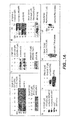
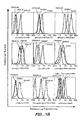

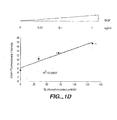


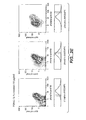
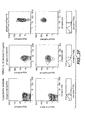
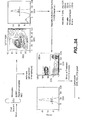
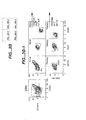

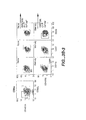
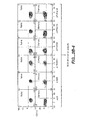

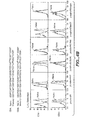

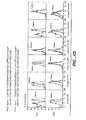
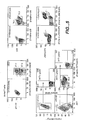

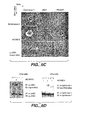

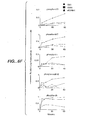
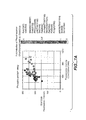

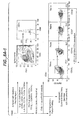

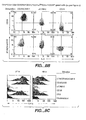


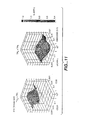
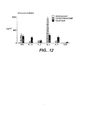
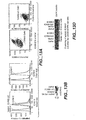


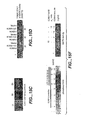

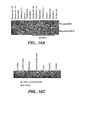


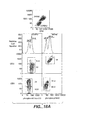


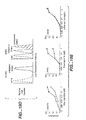

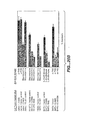

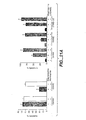

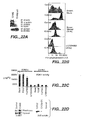
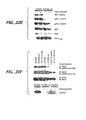
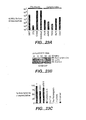


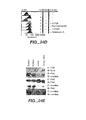


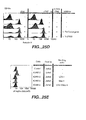


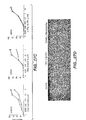
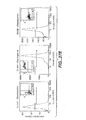
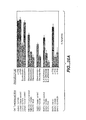

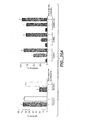
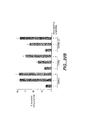
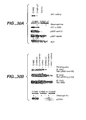


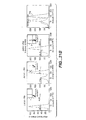

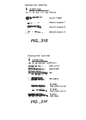


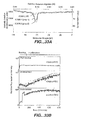
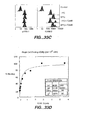

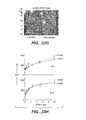


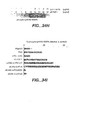
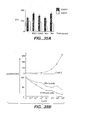


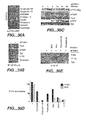

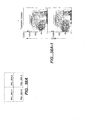
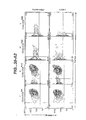
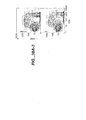
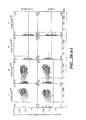
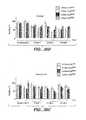

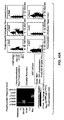
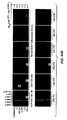
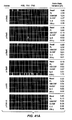

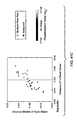

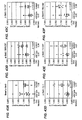

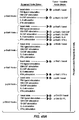


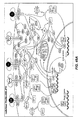
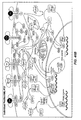

Classifications
-
- G—PHYSICS
- G01—MEASURING; TESTING
- G01N—INVESTIGATING OR ANALYSING MATERIALS BY DETERMINING THEIR CHEMICAL OR PHYSICAL PROPERTIES
- G01N33/00—Investigating or analysing materials by specific methods not covered by groups G01N1/00 - G01N31/00
- G01N33/48—Biological material, e.g. blood, urine; Haemocytometers
- G01N33/50—Chemical analysis of biological material, e.g. blood, urine; Testing involving biospecific ligand binding methods; Immunological testing
- G01N33/5005—Chemical analysis of biological material, e.g. blood, urine; Testing involving biospecific ligand binding methods; Immunological testing involving human or animal cells
- G01N33/5094—Chemical analysis of biological material, e.g. blood, urine; Testing involving biospecific ligand binding methods; Immunological testing involving human or animal cells for blood cell populations
-
- C—CHEMISTRY; METALLURGY
- C12—BIOCHEMISTRY; BEER; SPIRITS; WINE; VINEGAR; MICROBIOLOGY; ENZYMOLOGY; MUTATION OR GENETIC ENGINEERING
- C12Q—MEASURING OR TESTING PROCESSES INVOLVING ENZYMES, NUCLEIC ACIDS OR MICROORGANISMS; COMPOSITIONS OR TEST PAPERS THEREFOR; PROCESSES OF PREPARING SUCH COMPOSITIONS; CONDITION-RESPONSIVE CONTROL IN MICROBIOLOGICAL OR ENZYMOLOGICAL PROCESSES
- C12Q1/00—Measuring or testing processes involving enzymes, nucleic acids or microorganisms; Compositions therefor; Processes of preparing such compositions
- C12Q1/48—Measuring or testing processes involving enzymes, nucleic acids or microorganisms; Compositions therefor; Processes of preparing such compositions involving transferase
- C12Q1/485—Measuring or testing processes involving enzymes, nucleic acids or microorganisms; Compositions therefor; Processes of preparing such compositions involving transferase involving kinase
-
- G—PHYSICS
- G01—MEASURING; TESTING
- G01N—INVESTIGATING OR ANALYSING MATERIALS BY DETERMINING THEIR CHEMICAL OR PHYSICAL PROPERTIES
- G01N33/00—Investigating or analysing materials by specific methods not covered by groups G01N1/00 - G01N31/00
- G01N33/48—Biological material, e.g. blood, urine; Haemocytometers
- G01N33/50—Chemical analysis of biological material, e.g. blood, urine; Testing involving biospecific ligand binding methods; Immunological testing
- G01N33/5005—Chemical analysis of biological material, e.g. blood, urine; Testing involving biospecific ligand binding methods; Immunological testing involving human or animal cells
- G01N33/5008—Chemical analysis of biological material, e.g. blood, urine; Testing involving biospecific ligand binding methods; Immunological testing involving human or animal cells for testing or evaluating the effect of chemical or biological compounds, e.g. drugs, cosmetics
- G01N33/502—Chemical analysis of biological material, e.g. blood, urine; Testing involving biospecific ligand binding methods; Immunological testing involving human or animal cells for testing or evaluating the effect of chemical or biological compounds, e.g. drugs, cosmetics for testing non-proliferative effects
- G01N33/5041—Chemical analysis of biological material, e.g. blood, urine; Testing involving biospecific ligand binding methods; Immunological testing involving human or animal cells for testing or evaluating the effect of chemical or biological compounds, e.g. drugs, cosmetics for testing non-proliferative effects involving analysis of members of signalling pathways
-
- G—PHYSICS
- G01—MEASURING; TESTING
- G01N—INVESTIGATING OR ANALYSING MATERIALS BY DETERMINING THEIR CHEMICAL OR PHYSICAL PROPERTIES
- G01N33/00—Investigating or analysing materials by specific methods not covered by groups G01N1/00 - G01N31/00
- G01N33/48—Biological material, e.g. blood, urine; Haemocytometers
- G01N33/50—Chemical analysis of biological material, e.g. blood, urine; Testing involving biospecific ligand binding methods; Immunological testing
- G01N33/5005—Chemical analysis of biological material, e.g. blood, urine; Testing involving biospecific ligand binding methods; Immunological testing involving human or animal cells
- G01N33/5008—Chemical analysis of biological material, e.g. blood, urine; Testing involving biospecific ligand binding methods; Immunological testing involving human or animal cells for testing or evaluating the effect of chemical or biological compounds, e.g. drugs, cosmetics
- G01N33/5044—Chemical analysis of biological material, e.g. blood, urine; Testing involving biospecific ligand binding methods; Immunological testing involving human or animal cells for testing or evaluating the effect of chemical or biological compounds, e.g. drugs, cosmetics involving specific cell types
- G01N33/5047—Cells of the immune system
-
- G—PHYSICS
- G01—MEASURING; TESTING
- G01N—INVESTIGATING OR ANALYSING MATERIALS BY DETERMINING THEIR CHEMICAL OR PHYSICAL PROPERTIES
- G01N33/00—Investigating or analysing materials by specific methods not covered by groups G01N1/00 - G01N31/00
- G01N33/48—Biological material, e.g. blood, urine; Haemocytometers
- G01N33/50—Chemical analysis of biological material, e.g. blood, urine; Testing involving biospecific ligand binding methods; Immunological testing
- G01N33/5005—Chemical analysis of biological material, e.g. blood, urine; Testing involving biospecific ligand binding methods; Immunological testing involving human or animal cells
- G01N33/5091—Chemical analysis of biological material, e.g. blood, urine; Testing involving biospecific ligand binding methods; Immunological testing involving human or animal cells for testing the pathological state of an organism
-
- G—PHYSICS
- G01—MEASURING; TESTING
- G01N—INVESTIGATING OR ANALYSING MATERIALS BY DETERMINING THEIR CHEMICAL OR PHYSICAL PROPERTIES
- G01N33/00—Investigating or analysing materials by specific methods not covered by groups G01N1/00 - G01N31/00
- G01N33/48—Biological material, e.g. blood, urine; Haemocytometers
- G01N33/50—Chemical analysis of biological material, e.g. blood, urine; Testing involving biospecific ligand binding methods; Immunological testing
- G01N33/53—Immunoassay; Biospecific binding assay; Materials therefor
- G01N33/536—Immunoassay; Biospecific binding assay; Materials therefor with immune complex formed in liquid phase
- G01N33/537—Immunoassay; Biospecific binding assay; Materials therefor with immune complex formed in liquid phase with separation of immune complex from unbound antigen or antibody
-
- G—PHYSICS
- G01—MEASURING; TESTING
- G01N—INVESTIGATING OR ANALYSING MATERIALS BY DETERMINING THEIR CHEMICAL OR PHYSICAL PROPERTIES
- G01N33/00—Investigating or analysing materials by specific methods not covered by groups G01N1/00 - G01N31/00
- G01N33/48—Biological material, e.g. blood, urine; Haemocytometers
- G01N33/50—Chemical analysis of biological material, e.g. blood, urine; Testing involving biospecific ligand binding methods; Immunological testing
- G01N33/53—Immunoassay; Biospecific binding assay; Materials therefor
- G01N33/543—Immunoassay; Biospecific binding assay; Materials therefor with an insoluble carrier for immobilising immunochemicals
- G01N33/54313—Immunoassay; Biospecific binding assay; Materials therefor with an insoluble carrier for immobilising immunochemicals the carrier being characterised by its particulate form
-
- G—PHYSICS
- G01—MEASURING; TESTING
- G01N—INVESTIGATING OR ANALYSING MATERIALS BY DETERMINING THEIR CHEMICAL OR PHYSICAL PROPERTIES
- G01N33/00—Investigating or analysing materials by specific methods not covered by groups G01N1/00 - G01N31/00
- G01N33/48—Biological material, e.g. blood, urine; Haemocytometers
- G01N33/50—Chemical analysis of biological material, e.g. blood, urine; Testing involving biospecific ligand binding methods; Immunological testing
- G01N33/53—Immunoassay; Biospecific binding assay; Materials therefor
- G01N33/569—Immunoassay; Biospecific binding assay; Materials therefor for microorganisms, e.g. protozoa, bacteria, viruses
- G01N33/56966—Animal cells
-
- G—PHYSICS
- G01—MEASURING; TESTING
- G01N—INVESTIGATING OR ANALYSING MATERIALS BY DETERMINING THEIR CHEMICAL OR PHYSICAL PROPERTIES
- G01N15/00—Investigating characteristics of particles; Investigating permeability, pore-volume or surface-area of porous materials
- G01N15/10—Investigating individual particles
- G01N15/14—Optical investigation techniques, e.g. flow cytometry
- G01N15/1456—Optical investigation techniques, e.g. flow cytometry without spatial resolution of the texture or inner structure of the particle, e.g. processing of pulse signals
-
- Y—GENERAL TAGGING OF NEW TECHNOLOGICAL DEVELOPMENTS; GENERAL TAGGING OF CROSS-SECTIONAL TECHNOLOGIES SPANNING OVER SEVERAL SECTIONS OF THE IPC; TECHNICAL SUBJECTS COVERED BY FORMER USPC CROSS-REFERENCE ART COLLECTIONS [XRACs] AND DIGESTS
- Y10—TECHNICAL SUBJECTS COVERED BY FORMER USPC
- Y10S—TECHNICAL SUBJECTS COVERED BY FORMER USPC CROSS-REFERENCE ART COLLECTIONS [XRACs] AND DIGESTS
- Y10S435/00—Chemistry: molecular biology and microbiology
- Y10S435/973—Simultaneous determination of more than one analyte
-
- Y—GENERAL TAGGING OF NEW TECHNOLOGICAL DEVELOPMENTS; GENERAL TAGGING OF CROSS-SECTIONAL TECHNOLOGIES SPANNING OVER SEVERAL SECTIONS OF THE IPC; TECHNICAL SUBJECTS COVERED BY FORMER USPC CROSS-REFERENCE ART COLLECTIONS [XRACs] AND DIGESTS
- Y10—TECHNICAL SUBJECTS COVERED BY FORMER USPC
- Y10T—TECHNICAL SUBJECTS COVERED BY FORMER US CLASSIFICATION
- Y10T436/00—Chemistry: analytical and immunological testing
- Y10T436/10—Composition for standardization, calibration, simulation, stabilization, preparation or preservation; processes of use in preparation for chemical testing
- Y10T436/101666—Particle count or volume standard or control [e.g., platelet count standards, etc.]
-
- Y—GENERAL TAGGING OF NEW TECHNOLOGICAL DEVELOPMENTS; GENERAL TAGGING OF CROSS-SECTIONAL TECHNOLOGIES SPANNING OVER SEVERAL SECTIONS OF THE IPC; TECHNICAL SUBJECTS COVERED BY FORMER USPC CROSS-REFERENCE ART COLLECTIONS [XRACs] AND DIGESTS
- Y10—TECHNICAL SUBJECTS COVERED BY FORMER USPC
- Y10T—TECHNICAL SUBJECTS COVERED BY FORMER US CLASSIFICATION
- Y10T436/00—Chemistry: analytical and immunological testing
- Y10T436/10—Composition for standardization, calibration, simulation, stabilization, preparation or preservation; processes of use in preparation for chemical testing
- Y10T436/107497—Preparation composition [e.g., lysing or precipitation, etc.]
-
- Y—GENERAL TAGGING OF NEW TECHNOLOGICAL DEVELOPMENTS; GENERAL TAGGING OF CROSS-SECTIONAL TECHNOLOGIES SPANNING OVER SEVERAL SECTIONS OF THE IPC; TECHNICAL SUBJECTS COVERED BY FORMER USPC CROSS-REFERENCE ART COLLECTIONS [XRACs] AND DIGESTS
- Y10—TECHNICAL SUBJECTS COVERED BY FORMER USPC
- Y10T—TECHNICAL SUBJECTS COVERED BY FORMER US CLASSIFICATION
- Y10T436/00—Chemistry: analytical and immunological testing
- Y10T436/13—Tracers or tags
-
- Y—GENERAL TAGGING OF NEW TECHNOLOGICAL DEVELOPMENTS; GENERAL TAGGING OF CROSS-SECTIONAL TECHNOLOGIES SPANNING OVER SEVERAL SECTIONS OF THE IPC; TECHNICAL SUBJECTS COVERED BY FORMER USPC CROSS-REFERENCE ART COLLECTIONS [XRACs] AND DIGESTS
- Y10—TECHNICAL SUBJECTS COVERED BY FORMER USPC
- Y10T—TECHNICAL SUBJECTS COVERED BY FORMER US CLASSIFICATION
- Y10T436/00—Chemistry: analytical and immunological testing
- Y10T436/25—Chemistry: analytical and immunological testing including sample preparation
Definitions
- the invention relates generally to the field of protein detection using flow cytometry. More specifically, the invention relates to using polychromatic flow cytometry to identify signal transduction events and cellular activation profiles. The invention further relates to the use of potentiators that impact activation states and thus allow for further characterization of signal transduction events and activation profiles.
- Proteins are major components of cells and the spatiotemporal expression pattern and the subcellular localization of proteins determine the shape, structure, and function of cells. Many proteins are dynamically regulated so that their activity is altered in response to certain intrinsic or extrinsic cues frequently referred to herein as "activation events". Such regulation generally occurs in the context of protein-protein interaction networks commonly described as signal transduction cascades. The individual members of such cascades often exist in either active or non-active states, and it is the conversion between these states that leads to propagation or inhibition of a signal through the cascade. Given their integral role in cellular development and function, dysregulation of such cascades can lead to numerous diseases, and in particular those diseases involving improper cell proliferation such as cancer.
- the present invention provides an approach for the simultaneous determination of the activation states of a plurality of proteins in single cells.
- This approach permits the rapid detection of heterogeneity in a complex cell population based on activation states, and the identification of cellular subsets that exhibit correlated changes in activation within the cell population.
- this approach allows the correlation of cellular activities or properties, including the ability to classify disease states based on signal transduction activation state.
- potentiators of cellular activation allows for further characterization of such pathways and cell populations.
- the instant invention provides a method for detecting the activation state of at least two activatable proteins in each cell of a cell population.
- the first step of this method is to provide a population of cells that have the two activatable proteins. That step is followed by contacting the population of cells with a plurality of activation state-specific binding elements.
- These activation state-specific binding elements have at least a first activation state-specific binding element that binds to a first isoform of the first activable protein; and a second activation state-specific binding element that binds to a first isoform of the second activatable protein. The presence or absence of binding of the elements is then detected using using flow cytometry to determine the activation state of the two proteins.
- the two binding elements are labeled with different labels.
- the cells tested are primary cells.
- the activation state information of the first and second activatable proteins is used to determine the cellular status of at least one cell.
- the cellular status determined is drug susceptibility.
- the population of cells is contacted with a candidate agent prior to being contacted with the binding elements.
- the candidate agent is a potentiator.
- the potentiator is a cytokine.
- the potentiator is a growth factor.
- the activation state of at least one of the activatible proteins is a phosphorylation state.
- At least one of the activatible proteins is a kinase.
- At least one of the activatible proteins is a caspase.
- the instant invention provides a method for detecting the activation state of at least one activatable protein in each cell of a population of cells.
- the first step of the method is to provide a population of cells comprising the first activatable protein.
- the next step involves contacting the population of cells with a plurality of substrates, where the plurality of substrates includes at least one substrate that is modified by the activatable protein. Flow cytometry can then be used to detect the activation state of the activatable protein by measuring the amount of substrate that has been modified.
- the present invention provides methods and compositions for simultaneously detecting the activation state of a plurality of activatable proteins in single cells using flow cytometry.
- the invention further provides methods and compositions of screening for bioactive agents capable of coordinately modulating the activity or activation state of a plurality of activatable proteins in single cells.
- the methods and compositions can be used to determine the protein activation profile of a cell for predicting or diagnosing a disease state, and for monitoring treatment of a disease state.
- the methods and compositions of the present invention can be used optionally to sequentially detect the activation state of a plurality of activatable proteins in single cells.
- the methods and compositions of the present invention can be used optionally detect the activation state of a single protein or modulate the activity or activation state of a single protein.
- the invention provides populations of cells, single cells, cell lysates, proteins, and samples comprising populations of cells, single cells, cell lysates, proteins useful in the methods of the present invention.
- the invention provides activatable proteins and activation state-specific antibodies that bind to a specific isoform of an activatable protein.
- the activation state-specific antibodies are conjugated to a label, preferably a fluorescent label, and more preferably a FRET label.
- the invention provides methods of detecting the activation state of at least a first and a second activatable protein in single cells, the method comprising the steps of: a) providing a population of cells comprising the first and the second activatable proteins; b) contacting the population of cells with a plurality of activation state-specific antibodies, wherein the plurality of activation state-specific antibodies comprise: i) at least one first activation state-specific antibody that is capable of binding to a corresponding isoform of the first activable protein in the population of cells; and ii) at least one second activation state-specific antibody that is capable of binding to a corresponding isoform of the second activatable protein in the population of cells; and c) using flow cytometry to detect the binding of the first and second activation state-specific antibodies in single cells of the population of cells, wherein the binding of the first activation state-specific antibody is indicative of a specific activation state of the first activatable protein, and the binding of the second activation state-specific antibody is indicative of
- the first activatable protein is a kinase. Also in a further aspect, the first activatable protein is a caspase.
- the first activatable protein is a first kinase and the second activatable protein is a second kinase.
- the isoform of the first kinase is a first phosphorylated kinase
- the isoform of the second kinase is a second phosphorylated kinase.
- the first activation site-specific antibody binds to the first phosphorylated kinase
- the second activation site-specific antibody binds the second phorphorylated kinase.
- the first activatable protein is a first caspase and the second activatable protein is a second caspase.
- the isoform of the first caspase is a cleaved product of a first pro-caspase
- the isoform of the second caspase is a cleaved product of a second pro-caspase.
- the plurality of activation site-specific antibodies comprise a first activation site-specific antibody that binds to the isoform of the first caspase, and a second activation site-specific antibody that binds to the isoform of the second caspase.
- the invention provides methods of detecting the activation state of at least a first activatable protein in single cells, the method comprising the steps of: a) providing a population of cells comprising at least the first activatable protein; b) contacting the population of cells with a plurality of substrates; wherein the plurality of substrates comprise at least a first substrate that is capable of being modified by a corresponding isoform of the first activatable protein in the population of cells; and c) using flow cytometry to detect the modification of the first substrate in single cells of the population of cells, wherein the modification is indicative of a specific activation state of the first activatable protein.
- the population of cells further comprises a second activatable protein
- the plurality of substrates further comprise a second substrate that is capable of being modified by a corresponding isoform of the second activable protein in the population of cells
- step c) further comprises using the flow cytometry to detect the modification of the second substrate in single cells of the population of cells, wherein the modification of the second substrate is indicative of a specific activation state of the second activatable protein.
- the invention provides methods of detecting a protein activation state profile of single cells based on the activation state of at least a first activatable protein in the cells, the method comprising the steps of: a) providing a population of cells comprising at least the first activatable protein; b) contacting the population of cells with a plurality of substrates; wherein the plurality of substrates comprise at least a first substrate that is capable of being modified by a corresponding isoform of the first activatable protein in the population of cells; c) contacting the population of cells with a plurality of activation state-specific antibodies, wherein the activation state-specific antibodies comprise at least one first activation state-specific antibody that is capable of binding to a corresponding isoform of the first activatable protein in the population of cells; and d) using flow cytometry to simultaneously detect: i) the binding of the first activation state-specific antibody in single cells of the population of cells, wherein the binding of the first activation state-specific antibody is indicative of a specific activation
- the population of cells further comprises a second activatable protein
- the plurality of substrates further comprises a second substrate that is capable of being modified by a corresponding isoform of the second activatable protein in the population of cells
- step d) further comprises using the flow cytometry to detect the modification of the second substrate in the single cells, wherein the modification is indicative of a specific activation state of the the second activatable protein.
- the plurality of activation state-specific antibodies further comprises a second activation state-specific antibody that is capable of binding to a corresponding isoform of the second activatable protein in the population of cells
- step c) further comprises using the flow cytometry to detect the binding of the second activation state-specific antibody the single cells of the population of cells, wherein the binding of the second activation state-specific antibody is indicative of the specific activation state of the second activatable protein.
- the invention provides methods of screening for a bioactive agent capable of modulating the activity of at least a first activatable protein in cells, the method comprising: a) providing a population of cells, each of the cells comprising at least the a first activable protein, a second activatable protein, and a third activatable protein, wherein the first activable protein can activate the second activatable protein thereby forming a specific isoform of the second activable protein (isoform-2), and wherein the second activable protein can activate the third activatable protein thereby forming a specific isoform of the third activatable protein (isoform-3); b) contacting the cells with a second activation state-specific antibody, a third activation state-specific antibody, and a candidate bioactive agent, wherein the second activation state-specific antibody is capable of binding to the isoform-2, and wherein the third activation state-specific antibody is capable of binding to the isoform-3; c) using fluorescent activated cell sorting (FACS) to sort single
- the first activatable protein is activated by an activating agent.
- the first activatable protein is a caspase.
- the first activatable protein is a kinase; in an additional aspect, the kinase is PI3K; and in a further aspect the PI3K is activated by a growth factor or by activation of a cell surface receptor.
- the kinase is PI3K; the second activatable protein is PIP2; the third activatable protein is PIP3; the isoform-2 is PIP 4,5 bisphosphate; and the isoform-3 is PIP 3,4,5.
- the first activatable protein is ICAM-2; the activity is apoptosis; the second activatable protein is PIP2; the third activatable protein is PIP3; the isoform-2 is PIP 4,5 bisphosphate; and the isoform-3 is PIP 3,4,5.
- step a) further comprises clustering the ICAM-2, ICAM-3, or ICAM-1.
- the plurality of activation state-specific antibodies comprise at least one antibody selected from a group of antibodies consisting of: anti- AKT-phospho-Ser473, anti-AKT phospho-Thr308, anti-p44/42 MAPK phospho-Thr202/Tyr204, anti-TYK2 phospho-Tyr1054/1055, anti-p38 MAPK phospho-Thr180/Tyr182, anti-JNK/SAPK phospho-Thr183/Tyr185, anti-phospho-tyrosine, anti-phospho-threonine, anti-PIP2, and anti-PIP3.
- a group of antibodies consisting of: anti- AKT-phospho-Ser473, anti-AKT phospho-Thr308, anti-p44/42 MAPK phospho-Thr202/Tyr204, anti-TYK2 phospho-Tyr1054/1055, anti-p38 MAPK phospho-Thr180/Tyr182, anti-JNK/SAPK phospho-Thr183/Tyr185, anti-phospho-ty
- step a) further comprises contacting the population of cells with an agent that induces the activation of at least the first activatable protein.
- step a) further comprises contacting the population of cells with an agent that induces the activation of at least one of the first and the second activatable proteins.
- step a) further comprises contacting the population of cells with an agent that induces the activation of at least one of the first, the second, and the third activatable proteins.
- the methods further comprise sorting the single cells based on the activation state of the first activatable protein, and the activation state of the second activatable protein.
- the first activation state-specific antibody comprises a first label
- the second activation state-specific antibody comprises a second fluorescent label
- the sorting is by fluorescent activated cell sorting (FACS).
- the first activation state-specific antibody comprises a first FRET label; the second activation state-specific antibody comprises a second FRET label and the sorting is by fluorescent activated cell sorting (FACS).
- FACS fluorescent activated cell sorting
- the first activation state-specific antibody comprises a FRET label
- the second activation state-specific antibody comprises a label
- the sorting is by fluorescent activated cell sorting (FACS).
- step a) further comprises fixing the cells.
- the cells are mammalian cells.
- the instant invention provides methods of prognosing a clinical outcome for a patient that include first creating a cytokine response panel representing a statistically sufficient number of individuals, followed by creating a cytokine response panel for the patient; and then comparing said patient's cytokine response panel to the cytokine response panel representing a statistically sufficient number of individuals in order to come to a prognosis of the patient's clinical outcome.
- the cytokine response panels are created by first detecting the phosphorylation state of multiple phospho-proteins in non-stimulated cells then detecting the phosphorylation state of multiple phospho-proteins in cytokine-stimulated cells and determining the difference, if any, of the phosphorylation state of the phospho-proteins in the stimulated and non-stimulated cells.
- the detection is accomplished by intracellular phospho-specific flow cytometry.
- the phospho-proteins are selected from the group consisting of: Stat1, Stat3, Stat5, Stat6, p38, and Erk1/2.
- the cytokine is selected from the group consisting of: Flt3 ligand, GM-CSF, G-CSF or IL-3.
- Figure 1 depicts the results of experiments demonstrating that phospho-specific antibodies correlate with kinase activity.
- A) Phospho specific antibodies for i) p44/42, ii) p38, iii) JNK/SAPK, iv) AKTser473/AKTthr308, v) TYK2, vi) PKA-substrate, and vii) PKC-PAN substrate were tested for phospho-specificity by specific kinase inducing and inhibitory conditions. The inducing conditions for kinase are shown as well as specific inhibitor(s) of the pathway. The ability of the kinase to have activity upon a known substrate is shown beneath each phospho-western set.
- Non-phospho specific antibodies for AKT, p38, SAPK/JNK, p44/42, MAPK, and TYK2 reflect total kinase present.
- Kinase activity was determined under conditions found to elicit phosphorylation of respective kinase and correlated with the phosphorylated state of the kinase as detected by phospho-specific antibodies. Given the nature of the phospho-PKA substrate and phospho-PKC-PAN substrate antibodies, direct kinase activities could not be measured. Conditions used determined a general activation of PKC and PKA, since both antibodies recognize multiple PKC and PKA target proteins in the phosphorylated form of their respective kinase substrate recognition motif.
- kinase assays for AKT, p44/42, p38, and JNK kinases were performed in NIH3T3 and data for TYK2, PKC, and PKA were performed in Jurkat cells (see Material and Methods for elaboration on treatment conditions).
- B) Jurkat cells were treated with a kinase inducing agent (induced), or kinase inhibitor (inhibited) before induction conditions as diagramed in Table 2.
- Cells were prepared for intracellular FACS staining and analyzed for kinase activities noted in the figures by log fluorescence of phospho-specific antibody-fluorophore conjugate.
- Plot overlays illustrate shifts respective of either increased or decreased kinase activity.
- the bottom right panel represents a dose response curve of EGF treatment as measured by phospho-ERK activity (0.001, 0.01, 0.1, 1.0, 10 ⁇ g/ml).
- the inhibitors and activators used were the following: p44/42 (ERK1/2), was activated with epidermal growth factor (EGF) and inhibited with MEK1/2 inhibitor U0126 21-23* ; AKT activation was achieved by addition of growth media and platelet derived growth factor and inhibited by incubation with PI3K kinase inhibitor LY294002 20 *; JNK was activated by anisomycin 29* and inhibited by staurosporine; p38 MAPK was activated by anisomycin 29* and inhibited with compound SB203580 24,29 *; PKA was activated by phorbal 12 myristalated 13-acetate (PMA) and phospho detection was made possible by incubation with protein phosphatase inhibitor calyculin A 25* ; PKC was activated by iono
- C) TYK2, PKA and PKC substrate probes are phospho specific. Treatment of stimulated samples (stated above) with lambda phosphatase prior to intracellular staining decreased detection by phospho-TYK2 and phospho-PKA substrate probes. Treatment of cells with calf intestinal phosphatase in addition to lambda phosphatase was required for decreased detection of phosphorylated PKC substrates. D) Phosphorylation of p44/42 correlates with mean fluorescent intensity as measured by flow cytometry.
- Figure 2 depicts the results of experiments demonstrating that multi-dimensional analysis provides insights into signaling networks as induced by differing stimuli.
- Figure 3 shows a flow diagram of resting T cell isolation, preparation, and analysis by polychromatic flow cytometry (11-color, 13 parameter). Isolation of lymphocytes was achieved by a Ficoll-plaque gradient and depleted for adherent cells. Flow cytometry plots illustrate typical lymphocyte gate and presence of CD3- populations. Magnetically activated cell sorting eliminated activated T cells, NK cells, remaining macrophages, and B cells, enriching for resting T cells. The enriched population was assessed prior to stimulation to ensure presence of CD4+ and CD8+ cells. Stimulation to IL -1 ⁇ , IL-1 ⁇ , or IL-2 was performed and cells were prepared for flow cytometry using stains depicted in Table 1.
- Figure 4 depicts the results of experiments demonstrating that signaling profiles are readily discernible in particular lymphocyte subsets using polychromatic flow cytometry.
- Naive and memory T cell kinase profiles are overlayed for direct comparison.
- Mechanisms involving threshold dependent kinase activation can be observed when kinase phosphorylation approaches but does not exceed Log 10 fluorescence intensity (value defined from inhibitor/inducer experiments Fig. 2 ) in CD8+ naive cells.
- Hyporesponses can be seen for IL-1 ⁇ CD4+ naive cells.
- Figure 5 depicts the results of experiments monitoring intensities of both active and non-active kinases by flow cytometry
- Figure 6 depicts the results of experiments demonstrating that LFA-1 stimulus induces JAB1 and Cytohesin-1 release and phosphorylation in human na ⁇ ve CD4+ T cells.
- Figure 7 depicts the results of experiments demonstratin CD3/CD28/LFA-1 signaling in human na ⁇ ve T cells by phospho-protein antibody array.
- FIG. 8 A) and B) shows a flow diagram depicting multidimensional analysis of naive CD4+ T cells.
- Figure 9 depicts the results of experiments demonstratin T cell activation as monitored by intracellular IL-2, and surface CD25 and CD69 markers.
- FIG. 10 depicts the results of experiments demonstrating the profiling of transcription factor nuclear localization and activity.
- D-E depict the results of experiments demonstrating the transcription factor profiling and cytometric bead array of CD3, CD28, and LFA-1 stimulation.
- CD3 stimulation presented low levels of the NF- ⁇ B subunits p65 and p50 and no detectable levels of cFos, cRel, CREB, effects of which were similar to LFA-1 stimulation. However, CD3 stimulation alone presented higher levels of aft2 than CD28 and LFA-1 stimulus.
- CD28 stimulation alone presented low levels of the NF- ⁇ B p65 and p50 subunits, with elevated levels of CREB.
- LFA-1 stimulation presented slightly higher levels of NF- ⁇ B p65 subunit and cRel.
- CBA Cytometric bead array
- FIG. 11 depicts the results of experiments demonstrating the intracellular production of IL-4 and IFN ⁇ in human na ⁇ ve CD4 T cells. Intracellular levels of IFN ⁇ and IL-4 post 6 hr stimulus of titrations of CD3 vs. CD28 and CD3/CD28 vs. LFA-1 stimulus. Median fluorescence values were normalized to unstimulated cells, and log ratios of IL-4/IFN ⁇ were computed and plotted as intensity contour plots. Intensity levels are depicted in range indicator (right).
- Figure 12 depicts the results of experiments demonstrating cytometric bead arrays and Cytometric bead array (CBA) for secreted IFN ⁇ , IL-10, IL-2, IL-4, IL-5, IL-5, and TNF ⁇ to CD3/CD28 and CD3/CD28/LFA-1 stimulus (10 ⁇ g/ml, 16 hr). Values were computed to a standard curve using recombinant cytokines and were simultaneously measured from the supernatant of treated cells using CBA arrays from PharMingen.
- Figure 13 depicts the results of experiments demonstrating clustering of ectopic ICAM-2 in NIH3T3 activated the p44/42 MAPK cascade.
- ICAM-2 and ICAM2-AC retroviral expression vectors target to the cell surface. Plasma membrane targeting of ICAM-2 and ICAM2-AC transduced NIH3T3 was verified by flow cytometry using specific anti-human antibodies to respective termini.
- ICAM-2 clustering induces p44/42 MAPK activity as determine by p44/42 MAPK kinase activity assay.
- ICAM-2 10 ⁇ g/ml
- Figure 14 depicts the results of experiments demonstrating that p44/42 MAPK activity mediates enhanced growth kinetics.
- Indicated cell types were seeded in a 96 well plate at increasing cell density as indicated and cellular respiration was measured by incubating the cells with the MTT reagent. Detection of product was done by reading absorbance at 580 nm 4 hrs post an initial 2-hour settling period. Error bars denote standard deviation of triplicate experiments.
- Figure 15 depicts the results of experiments demonstrating that ICAM-2 binds surface ⁇ 1, ⁇ 2, and ⁇ 3 integrins.
- Affinity chromatography detects several ICAM-2 interacting surface proteins.
- An ICAM-2FITC probe was generated by immuno-depletion of ICAM-2 from transduced NIH3T3, chemically conjugated to FITC (1st and 2nd panels), and tested by anti-ICAM-2 immunoblot and fluorescent labeling.
- a farwestern approach utilizing ICAM-2-FITC as a labeled probe detects a 96 and 16 kdA interacting protein bands in ICAM-2 lysates (3rd panel).
- Surface proteins of ICAM-2 and vector control cells were biotinylated and subjected to affinity chromatography dual column system utilizing a constructed ICAM-2 coupled solid support and a streptavidin-agarose support.
- ICAM-2 soluble protein binds to the surface of cells.
- the ICAM-2-FITC probe was used to label NIH3T3, Jurkat, and BaF3 cells and was detected by flow cytometry. Prior treatment of cells with trypsin attenuated the ICAM-2-FITC binding (right panel).
- Detection of ⁇ 1, ⁇ 2, and ⁇ 3 refined and verified the mass spectrometry reading of the MALDLMS analysis.
- PE phycoerythrin
- Figure 16 depicts the results of experiments demonstrating that ICAM-2/LFA-1 interaction is transmitted to Raf by PYK2 and SYK.
- Inhibitor screens using various pharmacological inhibitors to Src related kineses identify PYK2 and SYK to be necessary in relaying the ICAM-2 induced signal to Raf and p44/42 MAPK kinase.
- Serum starved cells were treated with 10 ⁇ M of indicated compound 30 minutes prior to being ICAM-2 crosslinked for 30 minutes (10 ⁇ g/ml) and assessed for phosphorylated Raf and p44/42 MAPK using phospho specific antibodies in standard immunoblot procedures. Control IgG dissolved in 0.1 % DMSO served as negative control. Blots are representative of triplicate experiments.
- Figure 17 depicts result from experiments demonstrating that confocal microscopy reveals cellular the redistribution of PYK2 and SYK to the surface membrane in Jurkat cells after ICAM-2 interaction with LFA-1 and subsequent phosphorylation of PYK2.
- Jurkat cells were treated with soluble ICAM-2 protein (10 ⁇ g/ml) or bovine serum albumin (Unstimulated, 10 ⁇ g/ml) for 10 minutes and prepared for confocal microscopy (see material and methods).
- Cells were stained for PYK2, SYK2, and phosphorylated PYK2 at tyrosine 402 (denoted as PYK2 pTyr402).
- Panels A-F represent unstimulated cells and panels G-L represent ICAM-2 treated cells. Arrows serve to highlight marked differences in cellular distribution of PYK2 and SYK. Scale bar is denoted in lower left corner of panels (in micrometers). Panels G-L are at a higher magnification to see distribution differences
- Figure 18 depicts result from experiments demonstrating that cell-to-cell contact initiates p44/42 MAPK activity in LFA-1 expressing and AKT activity in ICAM-2 expressing cells as determined by flow cytometry based kineses assays.
- Figure 19 depicts the results of experiments demonstrating that a retroviral library screen for anti-apoptotic molecules to staurosporine induced apoptosis identifies ICAM-2.
- MMLV Moloney murine leukemia virus
- NIH3T3 cells were infected with the rescued viral vectors and treated with staurosporine to confirm the anti-apoptotic phenotype.
- Left Panel HUVEC cells stained for endogenous ICAM-2 expression by flow cytometry.
- Figure 20 depicts the results of experiments demonstrating that the overexpression of ICAM-2 results in a broadly acting anti-apoptotic phenotype.
- the percentage of apoptotic cells is expressed as the mean (bar) +/- SD of triplicate cultures.
- ICAM-2, wild-type sequence (red line); ICAM2 ⁇ C, cytoplasmic domain deletion (solid, thin line); ICAM-2 C-scrambled, full length with scrambled ⁇ -actinin binding site (hatched line) were FACS sorted by an anti-ICAM-2-FITC monoclonal antibody (IC2/2), and incubated with etoposide (100 ⁇ M, 24hrs). Viable cells were scored after a 24 hr recovery period following etoposide treatment. The percentage of surviving cells is expressed as the mean (bar) +/- SD of triplicate cultures.
- Figure 21 depicts the results of experiments demonstrating that PI3-kinase is necessary for ICAM-2's anti-apoptotic effect.
- the proportion of apoptotic cells in each culture without staurosporine was 8% +/- 2.
- the percentage of apoptotic cells is expressed as the mean (bar) + SD of triplicate cultures.
- ICAM-2, 1CAM2-AC, or vector transduced NIH3T3 were treated with staurosporine (1 ⁇ 1M) in the presence or absence of 10 ⁇ M LY294002 for 24 hours (right bar graph).
- DMSO vehicle served as negative control.
- the percentage of apoptotic cells is expressed as the mean (bar) +/- SD of triplicate cultures.
- Figure 22 depicts the results of experiments demonstrating that ICAM-2 signal results in phosphatidylinositol 3,4,5 triphosphate production, PDK-1 and AKT activation, and subsequent phosphorylation of AKT downstream effectors.
- ICAM-2 interacts with ⁇ -actinin and ezrin.
- ICAM-2, ICAM2- ⁇ c or control cells were immunoprecipiated for ICAM-2 and immunoblotted for either a-actinin or ezrin. Control lysates were not subjected to immunoprecipitation and reflect positive controls for detected interacting protein.
- ICAM-2 and control cells were serum starved (48 hrs), treated with LY294002 (10 ⁇ M, 24 hrs), or cultured in growth media, and prepared for intracellular detection of phosphatidyinositol 3,4,5 triphosphate detection by flow cytometry.
- PDK-1 kinase was immunoprecipitated from cells incubated with the indicated compounds (10 ⁇ M, 1 hr) and subjected to an immuno-kinase reaction with inactive SGK enzyme and peptide substrate. Phosphotransfer of ATP to peptide substrate was detected by scintillation counting and presented as counts per minute CPM.
- AKT kinase level and dual phosphorylation at serine 473 and threonine 308 are sustained in ICAM-2 cells in the presence of staurosporine.
- Figure 23 depicts the results of experiments demonstrating that ligation of endogenous ICAM-2 induces tyrosine phosphorylation of ezrin and recruits PI3K to the membrane, resulting in PDK-1 and AKT kinase activation.
- PI3K and AKT localize to the membrane as a function of ICAM-2 ligation.
- Membrane/cytosolic fractionation was performed on ICAM-2 ligated Jurkat cells as a function of time and subjected to immunoblotting for PI3K and AKT.
- Figure 24 depicts the results of experiments demonstrating that ligation of endogenous ICAM-2 induced AKT activation in lymphoid cells conferring cell survival.
- ICAM-2 crosslinking induced AKT activity in Jurkat T cells and subsequent phosphorylation of GSK3, FKHR, and AFX as a function of time. Serum starved Jurkat T cells were incubated with either isotype control or anti-human ICAM-2 (10 ⁇ g/ml) for the indicated times. AKT kinase activity was determined as described. Immunoblot analysis verified AKT dual phosphorylation, FKHR and GSK3 phosphorylation, and BAD phosphorylation as a function of ICAM-2 crosslinking.
- ICAM-2 crosslinking induces AKT activity in BaF3 pre-B cells.
- ICAM-2 crosslinking induces ezrin association with PI3K.
- Figure 25 depicts the results of experiments demonstrating that ligation of ICAM-2 induces AKT activity and protects primary B cells from apoptosis.
- ICAM-2 Human peripheral blood monocytes were crosslinked for ICAM-2 (10 ⁇ g/ml 45 minutes) prior to being subjected to apoptosis by treatment with TNF ⁇ 200ng/ml plus 1 ⁇ g/ml cycloheximide) and anti-Fas antibody (10 ng/ml CH11) for 12 hours.
- Multi-parameter FACS analysis illustrates ICAM-2 induced AKT activity in CD4+ and CD19+ populations protects from apoptosis. (1x10 6 events collected to enumerate a minimum of 80,000 CD19+ cells).
- PBMC peripheral blood mononuclear cells
- ICAM-1, -2, -3, CD43, or CD44 10 ⁇ g/ml 45 minutes
- phosphatidylinositoi detection of phosphatidylinositol 3,4,5 triphosphate, phosphatidylinositol 4,5 bisphosphate, or phospho-AKTser473 detection by flow cytometry.
- Cell subsets are gated and displayed as indicated.
- C) PBMC were crosslinked for ICAM-1, -2, -3, CD43, or CD44 (10 ⁇ g/ml 45 minutes) prior to being induced to apoptose as described above.
- Apoptosis was measured by annexin-V binding detected by flow cytometry, and gated for CD19+ cells.
- ICAM-2 oligomerization recruits and phosphorylates ezrin through a Src/Rho dependent mechanism. This results in recruitment of PI3K to the membrane through ezrin's interaction with the p85 regulatory subunit of PI3K.
- Membrane translocation of PI3K generates phosphatidylinositol 3,4,5 triphosphates that activate PDK-1 and recruit AKT to the plasma membrane by binding to its PH domain.
- Translocation of cytosolic AKT to the membrane allows PDK1/2 to phosphorylate AKT at ser473 and thr308, activating AKT.
- AKT subsequently phosphorylates downstream effectors GSK3, BAD, FKHR (and potentially others depending on the cell type). Phosphorylation of these effectors can block apoptosis alone or synergistically to generate a survival signal.
- Figure 26 depicts the results of experiments demonstrating the retroviral library screen for anti-apoptotic molecules to staurosporine induced apoptosis.
- MMLV Moloney murine leukemia virus
- NIH3T3 cells were infected with the rescued viral vectors and treated with staurosporine to confirm the anti-apoptotic phenotype.
- LacZ negative control vector
- Figure 27 depicts the results of experiments demonstrating that overexpression of ICAM-2 inhibits staurosporine induced apoptosis.
- Left Panel HUVEC cells stained for endogenous ICAM-2 expression by flow cytometry.
- Figure 28 depicts the results of experiments demonstrating that ICAM-2 mediates an anti-apoptotic effect.
- Mouse pre-B 70Z/3 cells were infected with a retroviral vector construct encoding ICAM-2 or vector control and treated with staurosporine (0.2 ⁇ M) for 4 hours and evaluated for apoptosis.
- IL-3-dependent BaF3 cells were infected with retroviral vector constructs encoding ICAM-2, ICAM2- ⁇ N, or Bcl2. To induce apoptosis, cells were maintained in IL-3-deficient medium for 24 hours.
- BaF3- cells expressing retroviral vector encoded ICAM-2 or an in-frame deletion of the extracellular domain were treated with anti-mouse Fas for 24 hours and evaluated for cell death. The percentage of apoptotic cells is expressed as the mean (bar) ⁇ SD of triplicate cultures.
- NIH3T3 cells were transduced with ICAM-2 encoding retroviral constructs: ICAM-2, wild-type sequence(hatched line); ICAM-2 ⁇ C, cytoplasmic domain deletion (solid, thin line); ICAM-2 C-scrambled, full length with scrambled ⁇ -actinin binding site (hatched line).
- Transduced cells were labeled with a fluorescently conjugated anti-ICAM-2 monoclonal antibody that recognized only the native protein (IC2/2). Cells were then purified by FACS (MoFlo, Cytomation, Ft. Collins, CO). Sorted cells were cultured and then cells were challenged with 100 ⁇ M etoposide for 24 hours.
- ⁇ -actinin and ezrin both co-immunoprecipitate with ICAM-2 and interact with the C-terminus of ICAM-2.
- ICAM-2 was immunoprecipitated from ICAM-2, ICAM2- ⁇ C, and vector control transduced NIH3T3. Immunoprecipitates were resolved by SDS-PAGE and subjected to immoblotting for ⁇ -actinin, ezrin, and ICAM-2
- Figure 29 depicts the results of experiments demonstrating that pharmacological inhibitors of PI3K abrogate ICAM-2's anti-apoptotic effect.
- the anti-apoptotic effect of ICAM-2 is both wortmannin and LY294002 sensitive.
- ICAM-2 or vector transduced BaF3 cells were treated with staurosporine (1 ⁇ M) with (unfilled) or without (filled) the addition of 100 nM wortmannin for 24 hours.
- Apoptosis was determined by nuclear staining and fluorescence microscopy (left bar graph) and by annexin-V binding assay (right bar graph). The proportion of apoptotic cells in each culture without staurosporine was 8% ⁇ 2.
- the percentage of apoptotic cells is expressed as the mean (bar) ⁇ SD of triplicate cultures.
- ICAM-2, ICAM2- ⁇ C, or vector transduced NIH3T3 were treated with staurosporine (1 ⁇ M) in the presence or absence of 10 ⁇ M LY294002 for 24 hours.
- DMSO vehicle served as negative control.
- the percentage of apoptotic cells is expressed as the mean (bar) ⁇ SD of triplicate cultures.
- B) ICAM-2 expressing NIH3T3 cells are sensitive to apoptosis in the presence of PI3K inhibitor LY294002.
- BrdU TUNEL assay was performed in staurosporine (1 ⁇ M) or LY294002 (10 ⁇ M) treated ICAM-2, ICAM2- ⁇ C, and control vector transduced NIH3T3 cells. The percentage of apoptotic cells is expressed as the mean (bar) ⁇ SD of triplicate cultures.
- FIG. 30 depicts the results of experiments demonstrating that ICAM-2 induces AKT kinase activity and phosphorylation of BAD andGSK.
- AKT kinase levels and dual phosphorylation at serine 473 and threonine 308 are elevated in ICAM-2 expressing cells and sustained in the presence of staurosporine.
- AKT kinase was immunoprecipitated from ICAM-2, ICAM-2 ⁇ C and control vector (pBMN-Z-IN-GFP) expressing NIH3T3 fibroblasts in the presence or absence of staurosporine (with 1 ⁇ M staurosporine (+) or DMSO-vehicle (-) and incubated with a GSK protein substrate.
- AKT kinase substrates BAD, FKHR, and GSK3 remain phosphorylated in ICAM-2-expressing cells following staurosporine treatment
- Extracts from ICAM-2, ICAM-2 ⁇ C and control vector expressing NIH3T3 fibroblasts treated with DMSO-vehicle (-) or 1 ⁇ M staurosporine (+) were assayed for BAD and GSK3 phosphorylation and by immunoprecipitating BAD or GSK3 and immunoblotting with phospho-BAD, or phospho-GSK3 specific antibodies.
- ICAM-2's anti-apoptotic effect is independent of Bcl-2 or Bcl-X L/S as determined by immunoblotting.
- ICAM-2 or ICAM2- ⁇ C transduced NIH3T3 were treated with DMSO vehicle (-) or 1 ⁇ M staurosporine (+) for 24 hours and assayed for Bcl2 and Bcl-x L/S expression by immunoblotting.
- Geometric mean fluorescence values were calibrated to standard curve derived from geometric mean fluorescence values of beads labeled with known amounts of phycoeyrthrin molecules (see experimental procedures for elaboration). The number of surface molecules/cell is expressed as the mean (bar) ⁇ SD of triplicate experiments.
- Figure 31 depicts the results of experiments demonstrating that cross-linking of endogenous ICAM-2 induces AKT activation in BaF3 B-cells and protects Jurkat T cells from apoptosis.
- Isotype control did not induce AKT phosphorylation or phosphorylation of FKHR or BAD (data not shown).
- ICAM-2 crosslinking on Jurkat T cells decreases percentage of death in staurosporine treatment. The percentage of dead cells is expressed as the mean (bar) ⁇ SD of triplicate experiments.
- D) ICAM-2 cross-linking induces AKT activity in Jurkat T cells and subsequent phosphorylation of GSK3, FKHR, AFX as a function of time.
- E) ICAM-2 crosslinking can overcome staurosporine induce apoptosis. 10 6 Jurkat T-cells were treated with staurosporine (1 ⁇ M) for one hour as indicated by (+) to induce apoptosis.
- ICAM-2 was crosslinked using a monoclonal anti-ICAM2 antibody (10 ⁇ g/ml) for the indicated times. Attenuation of cleaved caspases was not observed in isotype control (10 ⁇ g/ml) (data not shown).
- ICAM-2 cross-linking induces AKT activity, subsequent phosphorylation of BAD, and is sufficient to override apoptotic induction by staurosporine.
- Jurkat cells were treated as mentioned above.
- AKT activity was determined by AKT kinase assay and detection of dually phosphorylation AKT by immunoblotting with phospho-specific antibodies against ser473 and thr308. BAD phosphorylation was detected by immunoprecipitation for BAD, followed by immunoblotting with phospho-specific antibodies ser112 and ser136.
- Isotype control (10 ⁇ g/ml) did not generate AKT activation (data not shown).
- Figure 32 depicts the results of experiments demonstrating that resistance to TNF ⁇ and Fas induced apoptosis in primary human CD4+ and CD19+ cells is mediated by active AKT following ICAM-2 crosslinking.
- ICAM-2 binds intracellular linker proteins ⁇ -actinin and ezrin, which recruit PI3K to the plasma membrane.
- PI3K generates inositol phosphates that recruit AKT to the plasma membrane by binding to its PH domain.
- Translocation of cytosolic AKT to the membrane allows PDK1/2 to phosphorylate AKT at ser473 and thr308, activating AKT.
- AKT subsequently phosphorylates downstream effectors GSK3, BAD, FKHR (and potentially others depending on the cell type). Phosphorylation of these effectors can block apoptosis alone or synergistically to generate a survival signal.
- Figure 33 depicts results demonstrating that soluble ICAM-2 binding induces LFA-1 clustering and cytoskeletal polarization.
- ICAM-2 was conjugated to FITC and purified conjugate (by spin chromatography) was immunoblotted with anti-ICAM-2 antibody (left panel) and subsequently verified for fluorescent conjugation in gel (right panel).
- H Treatment of cells with cytochalisin D at low concentrations at 40°C led to enhanced ICAM-2 binding in a subset of cells and saturated at 37°C. Titration of ICAM-2-FITC surface binding at 37°C and 4°C in cytochalisin D treated (10 mM, 30 min) and untreated Jurkat cells by flow cytometry. Median Fluorescence Intensity (MFI) is plotted as a function of ICAM-2-FITC concentration.
- MFI Median Fluorescence Intensity
- Figure 34 depicts the results of experiments demonstrating the simultaneous detection of ICAM-2 induced LFA-1 clustering, activation, and actin/microtubule reorganization.
- H-I depict ICAM-2 induced p44/42 MAPK phosphorylation, and inhibition by LFA-1 mAb and comparison with other stimuli.
- H Phospho-p44/42 MAPK immunoblot of total lysates from Jurkat cells stimulated with ICAM-2 (concentrations indicated in figure, 30 min) and subsequently blocked with increasing concentrations of LFA-1 mAb.
- I Comparison of phospho-p44/2 MAPK induction to stimuli using FACS based detection of phospho-p44/42 MAPK. Stimuli were either 1 mg/ml (PHA, PMA, ionomycin), 10 mg/ml (LFA-1 mAb and ICAM-2), or 10 mM for PD98059 and U0126. Chemical inhibition was done 30 min prior to stimulation. Data is presented as percent phospho-p44/24 MAPK positive cells relative to unstimulated cells. Note the difference between LFA-1 mAb crosslinking and ICAM-2 stimulation.
- Figure 35 depicts the results of experiments demonstrating ICAM-2 induced p44/42 MAPK activation via LFA-1 interaction.
- ICAM-2 induced p44/42 MAPK activity is blocked by ⁇ 2 and ⁇ L integrin antibodies as determined by a p44/42 MAPK kinase assay. Conditions for induction and inhibition are as described above. Recombinant active p44/42 MAPK served as an internal positive control (denoted by "+").
- Figure 36 depicts the results of experiments demonstrating ICAM-2 induced phosphorylation of Pyk2 and Syk, and ⁇ 2 integrin association.
- B) Pyk2 and Syk are phosphorylated and co-immunoprecipitate with ⁇ 2 integrin upon ICAM-2 stimulus.
- Phospho-specificity was determined by phospho-PykpY402 and phospho-syk(Tyr525/526) antibodies.
- Figure 37 depicts the results of experiments demonstrating that ICAM-2 induces cytotoxic lymphocyte activity in IL-2 activated human PBMC.
- A) PBMC were either treated with ICAM-2 (10 ⁇ g/ml) in the presence of IL-2 for 12 hr and then incubated with CFSE labeled target HL60 cells at a 50:1 E:T ratio for 4 hrs. Remaining HL60 cells were quantified by flow cytometry.
- B) PBMC were treated with IL-2 (100 U/ml, 12 hrs) and treated with ICAM-1,-2, or 3 FC proteins (10 ⁇ g/ml) and used in a cytotoxicity assay as described above. Results are representative of 4 independent experiments.
- Figure 38 depicts the results of experiments demonstrating ICAM-2 exhibits differences to ICAM-1 and ICAM-3 in mediating perforin and granzyme release from CD56 + CD8 + cytotoxic lymphocytes subsets.
- IL-2 activated PBMC were mock-treated (IgG), ICAM-1, ICAM-2, or ICAM-3 treated (10 ⁇ g/ml of FC fusion protein) for 12 hrs prior to incubation with target HL60 cells at a 50:1 E:T ratio for 4 hrs. Cells were then prepared for flow cytometry with CD8-CY5PE, CD56-PE surface stains, and perforin-CY5 and granzyme-A-FITC intracellular stains.
- Cells were gated for CD56 + CD8 low , CD56 + CD8 med , CD56 + CD8 high , CD56 - CD8 - , CD56 - CD8 high populations as shown in panel I and population frequencies within appropriate gate.
- Panels II-V are subset gated populations displayed for perforin and granzyme-A log fluorescent intensities.
- Results are representative of 3 independent experiments and were similar at 25:1 and 12.5:1 E:T ratios (data not shown). Manual calibration was performed.
- C) Intracellular granzyme-A values were calculated and displayed as described above.
- Figure 39 depicts the results of experiments demonstrating that ICAM-2 induced LFA-1 mediated p44/42 MAPK correlates with LFA-1 activation in human CD56 + CD8 + cells.
- IL-2 activated PBMC were either treated with ICAM-2 (10 ⁇ g/ml, 30 min) or mock-treated (IgG) and stained for active-LFA-1 (mAb24-Alexa633), phospho-p44/42-Ax488, CD8-CY5PE, and CD56-PE.
- CD56 + CD8 + cell populations are gated and displayed for active LFA-1 vs. phospho-p44/42.
- the mean fluorescent intensities (MFI) of mAb24-Ax633 and phospho-44/42-Ax488 were computed and displayed over time as described above.
- FIGs 40A and 40B A cytokine response panel reveals potentiated signal transduction nodes in primary acute myeloid leukemias.
- Figure 40A To survey the signal transduction network of normal and leukemic cells a grid of six stimulation conditions by six phospho-protein targets was designed. Stimulation states, shown in rows, included unstimulated or 20 ng/mL of FL, GM-CSF, G-CSF, IL-3, or IFN- ⁇ . Target phosphorylations were detected using phospho-specific antibodies for Stat1, Stat3, Stat5, Stat6, p38, and Erk1/2, shown in columns. Each square in the grid represents the response of one phosphorylation site to one condition (termed the state of a signaling node).
- FIGs 41A , 41B and 41C Basal and potentiated signaling nodes that varied among tumor samples were used to define an AML biosignature.
- Figure 41 A The cytokine response panel was expanded to 30 total AML patient samples and rearranged to highlight the basal and potentiated signaling of each phospho-protein. The first row of each has been colored to show the variation in the basal phosphorylation (relative to the minimum among the AML blasts). Of 900 cytokine responses assayed, 93 (10.3%) displayed a detectable phosphorylation increase following stimulation (greater than 0.55 fold). The variance of node states was used to determine significance.
- Figure 41 B Significant cytokine responses were restricted primarily to the 7/30 cytokine response nodes with a variance across tumors greater than 0.1 (yellow circles).
- Figure 41 C A graph of the absolute median plotted against the variance for each node state indicates the signal to noise threshold.
- the seven significant cytokine response states and the six basal phosphorylation states were used as a 13-parameter profile of tumor signal transduction and were termed a biosignature.
- Figures 42A and 42B AML patients grouped by signal transduction biosignature form four groups that exhibit significant correlations to clinical prognostic markers.
- Figure 42A The 13-parameter biosignatures of differentiated CD33+ myeloid cells from six normal blood donors (D01 - D06), U937 and HL-60 tumor cell lines, and 30 AML patient samples were grouped according to similarity using hierarchical clustering. The heat map for AML and tumor cell line cytokine responses was scaled to the donor sample medians to provide a dynamic color range. Normal donor samples clustered together and are represented as a group. As shown previously, basal responses are relative to the minimum among AML samples.
- FIG 42B Four main groups of AML patients were identified based on the similarity of their signal transduction biosignatures. We designated these groups with Signaling Cluster (SC) nomenclature based on the signaling which defined them and mapped several clinical markers within the identified patient groups.
- SC Signaling Cluster
- FIGs 43A, 43B, 43C, 43D, 43E and 43F Flt3 mutations in primary AMLs may potentiate myeloid signal transduction nodes.
- Figure 43A Basal and cytokine response node states of patient samples with wild type or mutant Flt3 are shown for all 30 AMLs assayed.
- the MFI of phosphorylated Stat5 differed little in patients with wild type Flt3 and patients with mutant Flt3.
- FIGS 44A and 44B Representative 2D flow cytometry plots of Stat5 and Stat3 phosphorylation following G-CSF stumulation in AML patient samples with wild type Flt3 and mutant Flt3 (ITD). 2D contour plot representations of Stat5 and Stat3 phosphorylation (y and x axis respectively) in patient samples from SC-NP and SC-P2. Both the level of basal phosphorylation and the response to G-CSF are shown.
- Figures 45A , 45B-1 and 45B-2 Tumor biosignatures and a potentiated model of tumor cell signaling.
- Figure 45A A general method for identifying a tumor biosignature is shown using an example of STAT and Ras/MAPK signalling node states in AML.
- Figures 45B-1 and 45B-2 Composite maps of tumor networks from profiles SC-NP and SC-P2 were built out of common signaling events observed in each cluster. Highlighted nodes were detected to be high basal or potentiated in most of the samples from a profile group.
- FIGs 46A , 46B and 46C Three AML patients profiled as SC-P2 showed similarities and differences in potentiated signaling mechanisms. Pathway maps summarizing the signaling phenotype of individual patient samples are shown for three profiled as SC-P2, as per Figure 45B-1 .
- Intracellular assays of signaling cascades have been limited by an inability to measure and correlate functional data based on the activation state of elements within specific signal transduction cascades. Such measurements and correlations are important for distinguishing changes in signaling status arising in rare cell subsets during signaling or in disease manifestations. Correlation of changes in signaling cascades can also find use in classifying pathologic differences in populations.
- the present invention handles these issues by providing methods and compositions for simultaneously detecting the activation state of a plurality of activatible elements (e.g. proteins) in single cells using flow cytometry and by providing analytical means for correlating such states to differences in populations.
- the invention further provides methods and compositions of screening for bioactive agents capable of modulating the activation state of activatible elements in single cells.
- the methods and compositions are not only useful for predicting or diagnosing a disease state, but also for monitoring treatment of a disease state.
- determining the phosphorylation states of a set of proteins can allow for the classification and clustering of subpopulations of cells into relevant categories, which in turn aid in making determinations such as prognosis, disease progression, response to particular drugs, etc.
- the invention also provides methods and compositions that include the use of potentiators to amplify the amount of functional data that can be gathered in connection with the activation state of particular elements.
- the methods and compositions of the instant invention can be used to determine the activation profile of cells derived from a single source but which have been individually exposed to different potentiators (e.g. various cytokines), and changes to activation profiles arising due to the influence of distinct potentiators can be incorporated into the analysis.
- an "activatible element” or grammatical equivalents thereof refers to a cellular element that has at least two isoform (and in some cases three or more isoforms) that corresponds to specific forms of the element having a particular biological, biochemical, or physical properties, e.g., an enzymatic activity, a modification (e.g., post-translational modification), or a conformation.
- the activatible element is a protein. While in general the discussion below refers to acivatable proteins, other activatible cellular elements are also included such as lipids, carbohydrates, and metabolites as discussed further below.
- the activable element can be activated or nonactivated with respect to a particular biological activity, modification, or conformation.
- the "activated” or “active” isoform of the activatible protein has the particular biological activity, modification, or conformation
- the "non-activated” or “non-active” isoform of the activatible protein does not have (or has a lesser or diminished level of) the particular biological activity, modification, or conformation, respectively.
- there may be more than one isoform associated with activity or activation state for example, in the case of activable enzymes there may be an isoform associated with an "open” conformation available for substrate binding, a second "transition state” isoform, and an isoform devoid of activity (e.g., where the activity is inhibited).
- he activatible elements generally have an "inactive" isoform and at least one "active” isoform. In some cases, however, it may be desirable to include elements in the analysis that do no have isoforms; for example, one readout could be presence or absence of a particular metabolite, e.g. there may not be an "activatible” state.
- the biological, biochemical, or physical property (e.g. enzymatic activity, modification, or conformation) of the activatible element is inducible or "activatible" by an activating agent or by cell signaling events.
- activating agents include, but are not limited to, kinases, phosphatases, proteases (e.g., caspases), drugs and hormones.
- cell signaling events include, but are not limited to, element clustering or binding of a cognate molecule or ligand.
- a “potentiated” state refers the state of a cell after exposure to a potentiator which then can be activated as the case may be.
- potentiators exert their effect on signalling cascades by directly or indirectly impacting the ability of an activatible protein to switch between activation isoforms.
- Examples of potentiators generally include a wide variety of environmental cues related to cellular activation, both chemica/biochemical in nature (e.g. Ils and IFNs) or physical (thermal, pH, limited media, UV radiation, etc).
- an “isoform” or grammatical equivalents thereof refers to a form of an activatible element having a specific detectable biological activity, modification, or conformation.
- the isoform can be an activated (or active) form, or non-activated (or not active) form of an activatible protein.
- Particular or specific properties or activities are generally associated with activated isoforms of activatible proteins and will sometimes be referred to herein as "activation state activities.”
- Activation of an activatible protein can take a variety of different forms and generally involves an alteration of the biological, biochemical, and/or phyisical properties of the protein.
- many activatible proteins are dynamically regulated in response to covalent modification of the protein.
- Other activation events may be non-covalent; for example, activation of many enzymes is subject to allosteric inhibition, which generally involves the non-covalent binding of an inhibitor molecule.
- activation events can find use in the present invention.
- the basic requirement is that the activation results in a change in the activatible protein that is detectable by some indication (termed an "activation state indicator"), preferably by altered binding to a labeled binding element or by changes in detectable biological activities (e.g., the activated state has an enzymatic activity which can be measured and compared to a lack of activity in the non-activated state).
- an activation state indicator preferably by altered binding to a labeled binding element or by changes in detectable biological activities (e.g., the activated state has an enzymatic activity which can be measured and compared to a lack of activity in the non-activated state).
- What is important is to differentiate, using detectable events or moieties, between the isoforms of two or more activation states (e.g. "off” and "on”).
- the present invention provides for the detection of a wide variety of activation events, including, but not limited to, phosphorylation, cleavage, prenylation, intermolecular clustering, conformational changes, glycosylation, acetylation, cysteinylation, nitrosylation, methylation, ubiquination, sulfation, as well as the production of activated isoforms of selenoproteins and fusion proteins.
- activation events including, but not limited to, phosphorylation, cleavage, prenylation, intermolecular clustering, conformational changes, glycosylation, acetylation, cysteinylation, nitrosylation, methylation, ubiquination, sulfation, as well as the production of activated isoforms of selenoproteins and fusion proteins.
- covalent modification is the substitution of a phosphate group for a hydroxyl group in the side chain of an amino acid (phosphorylation).
- phosphorylation A wide variety of proteins are known that recognize specific protein substrates and catalyze the phosphorylation of serine, threonine, or tyrosine residues on their protein substrates. Such proteins are generally termed "kinases.”
- kinases Substrate proteins that are capable of being phosphorylated are often referred to as phosphoproteins. Once phosphorylated, a substrate protein may have its phosphorylated residue converted back to a hydroxyl one by the action of a protein phosphatase that specifically recognizes the substrate protein.
- Protein phosphatases catalyze the replacement of phosphate groups by hydroxyl groups on serine, threonine, or tyrosine residues. Through the action of kinases and phosphatases a protein may be reversibly or irreversibly phosphorylated on a multiplicity of residues and its activity may be regulated thereby. Thus, the presence or absence or absence of one or more phosphate groups oin an activatible protein is a preferred readout in the present invention.
- Another example of a covalent modification of an activatible protein is the acetylation of histones.
- histone acetylation and histone deactelyation have been linked with malignant progression. See Nature, 2004 May 27; 429(6990): 457-63 .
- Another form of activation involves cleavage of the activatible element.
- one form of protein regulation involves proteolytic cleavage of a peptide bond. While random or misdirected proteolytic cleavage may be detrimental to the activity of a protein, many proteins are activated by the action of proteases that recognize and cleave specific peptide bonds. Many proteins derive from precursor proteins, or pro-proteins, which give rise to a mature isoform of the protein following proteolytic cleavage of specific peptide bonds. Many growth factors are synthesized and processed in this manner, with a mature isoform of the protein typically possessing a biological activity not exhibited by the precursor form.
- proteolytically activated proteins are relatively short-lived proteins, and their turnover effectively results in deactivation of the signal. Inhibitors may also be used.
- enzymes that are proteolytically activated are serine and cysteine proteases, including cathepsins and caspases.
- the activatible enzyme is a caspase.
- the caspases are an important class of proteases that mediate programmed cell death (referred to in the art as "apoptosis").
- Caspases are constitutively present in most cells, residing in the cytosol as a single chain proenzyme. These are activated to fully functional proteases by a first proteolytic cleavage to divide the chain into large and small caspase subunits and a second cleavage to remove the N-terminal domain. The subunits assemble into a tetramer with two active sites ( Green, Cell 94:695-698, 1998 ). Many other proteolytically activated enzymes, known in the art as "zymogens,” also find use in the instant invention as activatible elements.
- the activation of the activatible element involves prenylation of the element.
- prenylation and grammatical equivalents used herein, is meant the addition of any lipid group to the element.
- prenylation include the addition of farnesyl groups, geranylgeranyl groups, myristoylation and palmitoylation. In general these groups are attached via thioether linkages to the activatible element, although other attachments may be used.
- activation of the activatible element is detected as intermolecular clustering of the activatible element.
- clustering or “multimerization”, and grammatical equivalents used herein, is meant any reversible or irreversible association of one or more signal transduction elements.
- Clusters can be made up of 2, 3, 4, etc., elements.
- Clusters of two elements are termed dimers.
- Clusters of 3 or more elements are generally termed oligomers, with individual numbers of clusters having their own designation; for example, a cluster of 3 elements is a trimer, a cluster of 4 elements is a tetramer, etc.
- Clusters can be made up of identical elements or different elements. Clusters of identical elements are termed “homo” clusters, while clusters of different elements are termed “hetero” clusters. Accordingly, a cluster can be a homodimer, as is the case for the ⁇ 2 -adrenergic receptor. Alternatively, a cluster can be a heterodimer, as is the case for GABA B -R. In other embodiments, the cluster is a homotrimer, as in the case of TNF ⁇ , or a heterotrimer such the one formed by membrane-bound and soluble CD95 to modulate apoptosis. In further embodiments the cluster is a homo-oligomer, as in the case of Thyrotropin releasing hormone receptor, or a hetero-oligomer, as in the case of TGF ⁇ 1.
- the activation or signaling potential of elements is mediated by clustering, irrespective of the actual mechanism by which the element's clustering is induced.
- elements can be activated to cluster a) as membrane bound receptors by binding to ligands (ligands including both naturally occurring or synthetic ligands), b) as membrane bound receptors by binding to other surface molecules, or c) as intracellular (non-membrane bound) receptors binding to ligands.
- the activatible elements are membrane bound receptor elements that cluster upon ligand binding such as cell surface receptors.
- cell surface receptor refers to molecules that occur on the surface of cells, interact with the extracellular environment, and transmit or transduce the information regarding the environment intracellularly in a manner that may modulate cellular activity directly or indirectly, e.g., via intracellular second messenger activities or transcription of specific promoters, resulting in transcription of specific genes.
- One class of receptor elements includes membrane bound proteins, or complexes of proteins, which are activated to cluster upon ligand binding. As is known in the art, these receptor elements can have a variety of forms, but in general they comprise at least three domains.
- these receptors have a ligand-binding domain, which can be oriented either extracellularly or intracellularly, usually the former.
- these receptors have a membrane-binding domain (usually a transmembrane domain), which can take the form of a seven pass transmembrane domain (discussed below in connection with G-protein-coupled receptors) or a lipid modification, such as myristylation, to one of the receptor's amino acids which allows for membrane association when the lipid inserts itself into the lipid bilayer.
- the receptor has an signaling domain, which is responsible for propagating the downstream effects of the receptor.
- receptor elements include hormone receptors, cytokine receptors, steroid receptors, adhesion receptors and growth factor receptors, including, but not limited to, PDGF-R (platelet derived growth factor receptor), EGF-R (epidermal growth factor receptor), VEGF-R (vascular endothelial growth factor), uPAR (urokinase plasminogen activator receptor), ACHR (acetylcholine receptor), IgE-R (immunoglobulin E receptor), estrogen receptor, thyroid hormone receptor, integrin receptors ( ⁇ 1, ⁇ 2, ⁇ 3, ⁇ 4, ⁇ 5, ⁇ 6, ⁇ 1, ⁇ 2, ⁇ 3, ⁇ 4, ⁇ 5, ⁇ 6), MAC-1 ( ⁇ 2 and cd11b), ⁇ V ⁇ 3, opiod receptors (mu and kappa), FC receptors, serotonin receptors (5-HT, 5-HT6, 5-HT7), ⁇ -adrenergic receptors, insulin receptor, leptin receptor, TNF receptors,
- IL-12 IL-15, IL-18, IL-21, CCR5, CCR7, CXCR4, CCR-1-10, CCL20
- statin receptors FAS receptor, BAFF receptor, FLT3 receptor, GMCSF receptor, and fibronectin receptor.
- the activatible element is a cytokine receptor.
- Cytokines are a family of soluble mediators of cell-to-cell communication that includes interleukins, interferons, and colony-stimulating factors. The characteristic features of cytokines lie in their functional redundancy and pleiotropy. Most of the cytokine receptors that constitute distinct superfamilies do not possess intrinsic protein tyrosine kinase domains, yet receptor stimulation usually invokes rapid tyrosine phosphorylation of intracellular proteins, including the receptors themselves. Many members of the cytokine receptor superfamily activate the Jak protein tyrosine kinase family, with resultant phosphorylation of the STAT transcriptional activator factors.
- IL-2, IL-4, IL-7 and Interferon ⁇ have all been shown to activate Jak kinases ( Frank et al. (1995) Proc. Natl. Acad. Sci. USA 92:7779-7783 ); Scharfe et al. (1995) Blood 86:2077-2085 ); ( Bacon et al. (1995) Proc. Natl. Acad. Sci. USA 92:7307-7311 ); and ( Sakatsume et al. (1995) J. Biol. Chem. 270:17528-17534 ). Events downstream of Jak phosphorylation have also been elucidated.
- STAT signal transducers and activators of transcription
- the Jak kinases have been shown to be activated by numerous ligands that signal via cytokine receptors such as, growth hormone, erythropoietin and IL-6 ( Kishimoto (1994) Stem cells Suppl. 12:37-44 ).
- the activatible element is a member of the nerve growth factor receptor superfamily, such as the Tumor necrosis factor ⁇ receptor.
- Tumor necrosis factor ⁇ (TNF- ⁇ or TNF-alpha) is a pleiotropic cytokine that is primarily produced by activated macrophages and lymphocytes but is also expressed in endothelial cells and other cell types.
- TNF-alpha is a major mediator of inflammatory, immunological, and pathophysiological reactions. ( Grell, M., et al., (1995) Cell, 83:793-802 ).
- TNF Two distinct forms exist, a 26 kDa membrane expressed form and the soluble 17 kDa cytokine which is derived from proteolytic cleavage of the 26 kDa form.
- the soluble TNF polypeptide is 157 amino acids long and is the primary biologically active molecule.
- TNF-alpha exerts its biological effects through interaction with high-affinity cell surface receptors.
- Two distinct membrane TNF-alpha receptors have been cloned and characterized. These are a 55 kDa species, designated p55 TNF-R and a 75 kDa species designated p75 TNF-R ( Corcoran. A.E., et al., (1994) Eur. J. Biochem., 223:831-840 ).
- the two TNF receptors exhibit 28% similarity at the amino acid level. This is confined to the extracellular domain and consists of four repeating cysteine-rich motifs, each of approximately 40 amino acids. Each motif contains four to six cysteines in conserved positions.
- TNF signaling is initiated by receptor clustering, either by the trivalent ligand TNF or by cross-linking monoclonal antibodies ( Vandevoorde, V., et al., (1997) J. Cell Biol., 137:1627-1638 ).
- Crystallographic studies of TNF and the structurally related cytokine, lymphotoxin (LT), have shown that both cytokines exist as homotrimers, with subunits packed edge to edge in threefold symmetry. Structurally, neither TNF or LT reflect the repeating pattern of the their receptors.
- Each monomer is cone shaped and contains two hydrophilic loops on opposite sides of the base of the cone.
- the activatible element is a receptor tyrosine kinase.
- the receptor tyrosine kinases can be divided into five subgroups on the basis of structural similarities in their extracellular domains and the organization of the tyrosine kinase catalytic region in their cytoplasmic domains. Sub-groups I (epidermal growth factor (EGF) receptor-like), II (insulin receptor-like) and the EPH/ECK family contain cysteine-rich sequences ( Hirai et al., (1987) Science 238:1717-1720 and Lindberg and Hunter, (1990) Mol. Cell. Biol. 10:6316-6324 ).
- EGF epidermal growth factor
- the functional domains of the kinase region of these three classes of receptor tyrosine kinases are encoded as a contiguous sequence ( Hanks et al. (1988) Science 241:42-52 ).
- Subgroups III platelet-derived growth factor (PDGF) receptor-like) and IV (the fibro-blast growth factor (FGF) receptors) are characterized as having immunoglobulin (Ig)-like folds in their extracellular domains, as well as having their kinase domains divided in two parts by a variable stretch of unrelated amino acids (Yanden and Ullrich (1988) supra and Hanks et al. (1988) supra).
- Eph family The family with by far the largest number of known members is the Eph family (with the first member of the family originally isolated from an e rythropoietin p roducing h epatocellular carcinoma cell line). Since the description of the prototype, the Eph receptor ( Hirai et al. (1987) Science 238:1717-1720 ), sequences have been reported for at least ten members of this family, not counting apparently orthologous receptors found in more than one species. Additional partial sequences, and the rate at which new members are still being reported, suggest the family is even larger ( Maisonpierre et al. (1993) Oncogene 8:3277-3288 ; Andres et al.
- Eph receptor or "Eph-type receptor” refer to a class of receptor tyrosine kinases, comprising at least eleven paralogous genes, though many more orthologs exist within this class, e.g. homologs from different species.
- Eph receptors in general, are a discrete group of receptors related by homology. and easily recognizable, e.g., they are typically characterized by an extracellular domain containing a characteristic spacing of cysteine residues near the N-terminus and two fibronectin type III repeats ( Hirai et al. (1987) Science 238:1717-1720 ; Lindberg et al. (1990) Mol. Cell Biol.
- Exemplary Eph receptors include the eph, elk, eck, sek, mek4, hek, hek2, eek, erk, tyro1, tyro4, tyro5, tyro6, tyro11, cek4, cek5, cek6, cek7, cek8, cek9, cek10, bsk, rtk1, rtk2, rtk3, myk1, myk2, ehk1, ehk2, pagliaccio, htk, erk and nuk receptors.
- the receptor element is a member of the hematopoietin receptor superfamily.
- Hematopoietin receptor superfamily is used herein to define single-pass transmembrane receptors, with a three-domain architecture: an extracellular domain that binds the activating ligand, a short transmembrane segment, and a domain residing in the cytoplasm.
- the extracellular domains of these receptors have low but significant homology within their extracellular ligand-binding domain comprising about 200-210 amino acids.
- the homologous region is characterized by four cysteine residues located in the N-terminal half of the region, and a Trp-Ser-X-Trp-Ser (WSXWS) motif located just outside the membrane-spanning domain. Further structural and functional details of these receptors are provided by Cosman, D. et al., (1990).
- the receptors of IL-1, IL-2, IL-3, IL-4, IL-5, IL-6, IL-7, prolactin, placental lactogen, growth hormone GM-CSF, G-CSF, M-CSF and erythropoietin have, for example, been identified as members of this receptor family.
- the receptor element is an integrin other than Leukocyte Function Antigen-1 (LFA-1).
- LFA-1 Leukocyte Function Antigen-1
- Members of the integrin family of receptors function as heterodimers, composed of various ⁇ and ⁇ subunits, and mediate interactions between a cell's cytoskeleton and the extracellular matrix. (Reviewed in, Giancotti and Ruoslahti, Science 285, 13 August 1999 ). Different combinations of the ⁇ and ⁇ subunits give rise to a wide range of ligand specificities, which may be increased further by the presence of cell-type-specific factors.
- Integrin clustering is know to activate a number of intracellular signals, such as RAS, MAP kinase, and phosphotidylinosital-3-kinase.
- the receptor element is a heterodimer (other than LFA-1) composed of a ⁇ integrin and an ⁇ integrin chosen from the following integrins; ⁇ 1, ⁇ 2, ⁇ 3, ⁇ 4, ⁇ 5, ⁇ 6, ⁇ 1, ⁇ 2, ⁇ 3, ⁇ 4, ⁇ 5, and ⁇ 6, or is MAC-1 ( ⁇ 2 and cd11b), or ⁇ V ⁇ 3.
- the activatible elements cluster for signaling by contact with other surface molecules.
- these elements cluster for signaling by contact with other surface molecules, and generally use molecules presented on the surface of a second cell as ligands.
- Receptors of this class are important in cell-cell interactions, such mediating cell-to-cell adhesion and immunorecognition.
- receptor elements examples include CD3 (T cell receptor complex), BCR (B cell receptor complex), CD4, CD28, CD80, CD86, CD54, CD102, CD50 and ICAMs 1, 2 and 3.
- the receptor element is a T cell receptor complex (TCR).
- TCRs occur as either of two distinct heterodimers, ⁇ or ⁇ , both of which are expressed with the non-polymorphic CD3 polypeptides ⁇ , ⁇ , ⁇ , ⁇ .
- the CD3 polypeptides, especially ⁇ and its variants, are critical for intracellular signaling.
- the ⁇ TCR heterodimer expressing cells predominate in most lymphoid compartments and are responsible for the classical helper or cytotoxic T cell responses.
- the ⁇ TCR ligand is a peptide antigen bound to a class I or a class II MHC molecule ( Fundamental Immunology, fourth edition, W. E. Paul, ed., Lippincott-Raven Publishers, 1999, Chapter 10, pp 341-367 ).
- the receptor element is a B cell antigen receptor (BCR).
- BCR B cell antigen receptor
- Antigen contact with a specific B cell triggers the transmembrane signaling function of the BCR.
- BCR molecules are rapidly internalized after antigen binding, leading to antigen uptake and degradation in endosomes or lysosomes.
- antigen-derived peptides bind in the groove of class II MHC molecules. Upon binding, this complex is sent to the cell surface, where it serves as a stimulus for specific helper T cells. Antigen recognition by the helper T cell induces it to form a tight and long lasting interaction with the B cell and to synthesize B cell growth and differentiation factors.
- B cells activated in this way may proliferate and terminally differentiate to antibody secreting cells (also called plasma cells) ( Fundamental Immunology, fourth edition, W. E. Paul, ed., Lippincott-Raven Publishers, 1999, Chapters 6-7, pp 183-261 )
- the element is an intracellular adhesion molecule (ICAM).
- ICAMs -1, -2, and -3 are cellular adhesion molecules belonging to the immunogloblin superfamily. Each of these receptors has a single membrane-spanning domain and all bind to ⁇ 2 integrins via extracellular binding domains similar in structure to Ig-loops. ( Signal Transduction, Gomperts, et al., eds, Academic Press Publishers, 2002, Chapter 14, pp 318-319 ).
- the activatible element is a member of the large family of G-protein-coupled receptors. It has recently been reported that a G-protein-coupled receptors are capable of clustering. ( Kroeger, et al., J Biol Chem 276:16, 12736-12743, April 20, 2001 ; Bai, et al., J Biol Chem 273:36, 23605-23610, Sept 4, 1998 ; Rocheville, et al., J Biol Chem 275 (11), 7862-7869, March 17, 2000 ).
- G-protein-coupled receptor refers to the family of receptors that bind to heterotrimeric "G proteins.” Many different G proteins are known to interact with receptors. G protein signaling systems include three components: the receptor itself, a GTP-binding protein (G protein), and an intracellular target protein. The cell membrane acts as a switchboard. Messages arriving through different receptors can produce a single effect if the receptors act on the same type of G protein. On the other hand, signals activating a single receptor can produce more than one effect if the receptor acts on different kinds of G proteins, or if the G proteins can act on different effectors.
- G protein signaling systems include three components: the receptor itself, a GTP-binding protein (G protein), and an intracellular target protein. The cell membrane acts as a switchboard. Messages arriving through different receptors can produce a single effect if the receptors act on the same type of G protein. On the other hand, signals activating a single receptor can produce more than one effect if the receptor acts on different kinds of G proteins,
- the G proteins which consist of alpha ( ⁇ ), beta ( ⁇ ) and gamma ( ⁇ ) subunits, are complexed with the nucleotide guanosine diphosphate (GDP) and are in contact with receptors.
- GDP nucleotide guanosine diphosphate
- the receptor changes conformation and this alters its interaction with the G protein. This spurs the ⁇ subunit to release GDP, and the more abundant nucleotide guanosine triphosphate (GTP), replaces it, activating the G protein.
- GTP nucleotide guanosine triphosphate
- the effector (which is often an enzyme) in turn converts an inactive precursor molecule into an active "second messenger," which may diffuse through the cytoplasm, triggering a metabolic cascade.
- the G ⁇ converts the GTP to GDP, thereby inactivating itself.
- the inactivated G ⁇ may then reassociate with the G ⁇ complex.
- G protein-coupled receptors are comprised of a single protein chain that is threaded through the plasma membrane seven times. Such receptors are often referred to as seven-transmembrane receptors (STRs). More than a hundred different STRs have been found, including many distinct receptors that bind the same ligand, and there are likely many more STRs awaiting discovery.
- STRs seven-transmembrane receptors
- STRs have been identified for which the natural ligands are unknown; these receptors are termed "orphan" G protein-coupled receptors, as described above. Examples include receptors cloned by Neote et al. (1993) Cell 72, 415 ; Kouba et al. FEBS Lett. (1993)321, 173 ; and Birkenbach et al. (1993) J. Virol. 67,2209 .
- ligands for G protein coupled receptors include: purines and nucleotides, such as adenosine, cAMP, ATP, UTP, ADP, melatonin and the like; biogenic amines (and related natural ligands), such as 5-hydroxytryptamine, acetylcholine, dopamine, adrenaline, histamine, noradrenaline, tyramine/octopamine and other related compounds; peptides such as adrenocorticotrophic hormone (acth), melanocyte stimulating hormone (msh), melanocortins, neurotensin (nt), bombesin and related peptides, endothelins, cholecystokinin, gastrin, neurokinin b (nk3), invertebrate tachykinin-like peptides, substance k (nk2), substance p (nk1), neuropeptide y (npy), thyrotroprop
- Preferred G protein coupled receptors include, but are not limited to: ⁇ 1-adrenergic receptor, ⁇ 1B-adrenergic receptor, ⁇ 2-adrenergic receptor, ⁇ 2B-adrenergic receptor, ⁇ 1-adrenergic receptor, ⁇ 2-adrenergic receptor, ⁇ 3-adrenergic receptor, m1 acetylcholine receptor (AChR), m2 AChR, m3 AChR, m4 AChR, m5 AChR, D1 dopamine receptor, D2 dopamine receptor, D3 dopamine receptor, D4 dopamine receptor, D5 dopamine receptor, A1 adenosine receptor, A2a adenosine receptor, A2b adenosine receptor, A3 adenosine receptor, 5-HT1a receptor, 5-HT1b receptor, 5HT1-like receptor, 5-HT1d receptor, 5HT1d-like receptor, 5HT1d beta receptor, substance
- C and CXC receptors there are at least five receptors (CC and CXC receptors) involved in HIV viral attachment to cells.
- the two major co-receptors for HIV are CXCR4, (fusin receptor, LESTR, SDF1 receptor) and CCR5 (m-trophic). More preferred receptors include the following human receptors: melatonin receptor 1 a, galanin receptor 1, neurotensin receptor, adenosine receptor 2a, somatostatin receptor 2 and corticotropin releasing factor receptor 1. Melatonin receptor 1a is particularly preferred.
- GPCRs G protein coupled receptors
- the activatible elements are intracellular receptors capable of clustering. Elements of this class are not membrane-bound. Instead, they are free to diffuse through the intracellular matrix where they bind soluble ligands prior to clustering and signal transduction. In contrast to the previously described elements, many members of this class are capable of binding DNA after clustering to directly effect changes in RNA transcription.
- the intracellular receptors capable of clustering are perioxisome proliferator-activated receptors (PPAR).
- PPARs are soluble receptors responsive to lipophillic compounds, and induce various genes involved in fatty acid metabolism.
- the three PPAR subtypes, PPAR ⁇ , ⁇ ,any ⁇ have been shown to bind to DNA after ligand binding and heterodimerization with retinoid X receptor. ( Summanasekera, et al., J Biol Chem, M211261200, December 13, 2002 .)
- the activatible element is a nucleic acid.
- Activation and deactivation of nucleic aicds can occur in numerous ways including, but not limited to, cleavage of an inactivating leader sequence as well as covalent or non-covalent modifications that induce structural or functional changes.
- many catalytic RNAs e.g. hammerhead ribozymes, can be designed to have an inactivating leader sequence that deactivates the catalitic activity of the ribozyme until cleavage occurs.
- An example of a covalent modification is methylation of DNA. Deactivation by methylation has been shown to be a factor in the silencing of certain genes, e.g. STAT regulating SOCS genes in lymphomas.
- the activatible element is a small molecule, carbohydrate, lipid or other naturally occurring or synthetic compound capable of having an activated isoform.
- activation of these elements need not include switching from one form to another, but can be detected as the presence or absence of the compound.
- activation of cAMP cyclic adenosine mono-phosphate
- cAMP cyclic adenosine mono-phosphate
- the instant invention involves determining the activation profile of cells after the introduction of an environmental cue (e.g. by administering a potentiator).
- an environmental cue e.g. by administering a potentiator
- potentiators are used to alter signaling cascades prior to determination of the activation profile of a cell, and the impact of the potentiator is measured as differences in the activation profile as compared to a non-potentiated cell. For example, by simultaneously measuring multiple phosphorylation events at the single cell level across a complex population of tumor cells, it is possible to build and distinguish pathway anomalies in different cell subsets.
- potentiation can be viewed as "priming" of cells.
- priming is the development of na ⁇ ve cells into memory cells.
- memory cells respond faster as their thresholds for activation are lower than na ⁇ ve cells, due to their previous exposure to the priming input.
- an activation profile of any one cell or population of cells includes the determination of the activation state of one or more different activatible elements. Each of these elements forms a specific node in a signalling cascade or network. As many cellular signalling networks are interconnected, cues that impact one node can have an effect on the ability of other nodes to switch between activation states. Therefore, by investigating the activation state of various nodes in the presence or absence of various potentiators it is possible to determine the underlying network structures interconnecting the nodes and to categorize activation profiles by their impact on such underlying structures. Potentiation and its role in categorizing activation profiles is discussed in detail under the heading "Analysis" below and in Example 2.
- potentiators can take the form of a wide variety of environmental cues and inputs.
- the defining characteristic of a potentiator is that is a cue or input capable of impacting cellular signalling networks.
- Examples of potentiators include, but are not limited to, physical parameters such as heat, cold, UV radiation, as well as cytokines, drugs, hormones, antibodies, peptides, and protein fragments, either alone or in the context of cells, cells themselves, viruses, and biological and non-biological complexes (e.g. beads, plates, viral envelopes, antigen presentation molecules such as major histocompatibility complex).
- the potentiator is a cell or cell population.
- a common pool of normal T cells thought of as effectors, can be exposed to various tumor cell populations from different patients, and the ability of the tumors to generate different signaling profiles in the effectors (and of the effectors to reciprocally stimulate potentiated signaling in the various tumor cells) can be monitored.
- normal T cells from patients with a disease can be mixed with various tumor cell populations (from the same patient) and the signaling potential (activation events) within the normal T cells and the tumor cells can be profiled.
- Such assays could take place in a single tube and the relevant cell sub-populations (e.g. effectors and tumor cells) identified using antibodies that recognize cell surface epitopes).
- these assays could take place under a series of potentiating conditions (e.g. co-stimulation using antibodies).
- activatible element there are a variety of ways to detect the activation state of a particular protein (i.e. activatible element).
- labeled biniding elements BEs
- BEs labeled biniding elements
- the state of the activatible protein is used for the readout; for example, in the case of cell surface receptors with signalling domains, the activity (or lack thereof) of the signalling domain can be assayed directly.
- the two isoforms may be no activity (negative signal) versus kinase activity (measured using chromogenic substrates).
- binding element any molecule, e.g., nucleic acids, small organic molecules, and proteins which are capable of detecting one isoform of an element over another.
- the BE is a protein
- protein means at least two covalently attached amino acids, which includes proteins, polypeptides, oligopeptides and peptides.
- the protein may be made up of naturally occurring amino acids and peptide bonds, or synthetic peptidomimetic structures.
- amino acid or “peptide residue”, as used herein means both naturally occurring and synthetic amino acids. For example, homo-phenylalanine, citrulline and noreleucine are considered amino acids for the purposes of the invention.
- Amino acid also includes imino acid residues such as proline and hydroxyproline.
- the side chains may be in either the (R) or the (S) configuration.
- the amino acids are in the (S) or L-configuration. If non-naturally occurring side chains are used, non-amino acid substituents may be used, for example to prevent or retard in vivo degradation. Proteins including non-naturally occurring amino acids may be synthesized or in some cases, made recombinantly; see van Hest et al., FEBS Lett 428:(1-2) 68-70 May 22 1998 and Tang et al., Abstr. Pap Am. Chem. S218: U138 Part 2 August 22, 1999 , both of which are expressly incorporated by reference herein.
- the protein BE is an antibody.
- the protein BE is an activation state-specific antibody.
- the methods and compositions of the present invention may be used to detect any particular element isoform in a sample that is antigenically detectable and antigenically distinguishable from other isoforms of the activatible element that are present in the sample.
- the activation state-specific antibodies of the present invention can be used in the present methods to identify distinct signaling cascades of a subset or subpopulation of complex cell populations; and the ordering of protein activation (e.g., kinase activation) in potential signaling hierarchies.
- antibody herein is meant a protein consisting of one or more polypeptides substantially encoded by all or part of the recognized immunoglobulin genes.
- the recognized immunoglobulin genes include the kappa (k), lambda (I), and heavy chain genetic loci, which together comprise the myriad variable region genes, and the constant region genes mu (u), delta (d), gamma (g), sigma (e), and alpha (a) which encode the lgM, lgD, lgG, lgE, and lgA isotypes respectively.
- Antibody herein is meant to include full length antibodies and antibody fragments, and may refer to a natural antibody from any organism, an engineered antibody, or an antibody generated recombinantly for experimental, therapeutic, or other purposes as further defined below.
- the term “antibody” includes antibody fragments, as are known in the art, such as Fab, Fab', F(ab')2, Fv, scFv, or other antigen-binding subsequences of antibodies, either produced by the modification of whole antibodies or those synthesized de novo using recombinant DNA technologies. Particularly preferred are full length antibodies that comprise Fc variants as described herein.
- the term “antibody” comprises monoclonal and polyclonal antibodies. Antibodies can be antagonists, agonists, neutralizing, inhibitory, or stimulatory.
- the antibodies of the present invention may be nonhuman, chimeric, humanized, or fully human.
- Chimeric antibodies comprise the variable region of a nonhuman antibody, for example VH and VL domains of mouse or rat origin, operably linked to the constant region of a human antibody (see for example U.S. Patent No. 4,816,567 ).
- the antibodies of the present invention are humanized.
- humanized antibody as used herein is meant an antibody comprising a human framework region (FR) and one or more complementarity determining regions (CDR's) from a non-human (usually mouse or rat) antibody.
- the non-human antibody providing the CDR's is called the “donor” and the human immunoglobulin providing the framework is called the “acceptor”.
- Humanization relies principally on the grafting of donor CDRs onto acceptor (human) VL and VH frameworks (Winter US 5225539 ). This strategy is referred to as "CDR grafting".
- the humanized antibody optimally also will comprise at least a portion of an immunoglobulin constant region, typically that of a human immunoglobulin, and thus will typically comprise a human Fc region.
- humanized murine monoclonal antibodies are also known in the art, for example antibodies binding human protein C ( O'Connor et al., 1998, Protein Eng 11:321-8 ), interleukin 2 receptor ( Queen et al., 1989, Proc Natl Acad Sci, USA 86:10029-33 ), and human epidermal growth factor receptor 2 ( Carter et al., 1992, Proc Natl Acad Sci USA 89:4285-9 ).
- the antibodies of the present invention may be fully human, that is the sequences of the antibodies are completely or substantially human.
- aglycosylated antibody as used herein is meant an antibody that lacks carbohydrate attached at position 297 of the Fc region, wherein numbering is according to the EU system as in Kabat.
- the aglycosylated antibody may be a deglycosylated antibody, which is an antibody for which the Fc carbohydrate has been removed, for example chemically or enzymatically.
- the aglycosylated antibody may be a nonglycosylated or unglycosylated antibody, that is an antibody that was expressed without Fc carbohydrate, for example by mutation of one or residues that encode the glycosylation pattern or by expression in an organism that does not attach carbohydrates to proteins, for example bacteria.
- full-length antibodies that contain an Fc variant portion.
- full length antibody herein is meant the structure that constitutes the natural biological form of an antibody, including variable and constant regions.
- the full length antibody of the IgG class is a tetramer and consists of two identical pairs of two immunoglobulin chains, each pair having one light and one heavy chain, each light chain comprising immunoglobulin domains VL and CL, and each heavy chain comprising immunoglobulin domains VH, Cg1, Cg2, and Cg3.
- IgG antibodies may consist of only two heavy chains, each heavy chain comprising a variable domain attached to the Fc region.
- IgG as used herein is meant a polypeptide belonging to the class of antibodies that are substantially encoded by a recognized immunoglobulin gamma gene. In humans this class comprises IgG1, IgG2, IgG3, and IgG4. In mice this class comprises IgG1, IgG2a, IgG2b, IgG3.
- activation state-specific antibody or “activation state antibody” or grammatical equivalents thereof, refer to an antibody that specifically binds to a corresponding and specific antigen.
- the corresponding and specific antigen is a specific isoform of an activable element.
- the binding of the activation state-specific antibody is also preferably indicative of a specific activation state of a specific activatible element.
- the binding of an activation state-specific antibody to a corresponding isoform of an activable element is indicative of the identity of that element as well as the activation state of that element.
- activation state specific antibodies can be used to detect kinase activity, however additional means for determining kinase activation are provided by the present invention.
- substrates that are specifically recognized by protein kinases and phosphorylated thereby are known.
- Antibodies that specifically bind to such phosphorylated substrates but do not bind to such non-phosphorylated substrates may be used to determine the presence of activated kinase in a sample.
- an element activation profile is determined using a multiplicity of activation state antibodies that have been immobilized.
- Antibodies may be non-diffusibly bound to an insoluble support having isolated sample-receiving areas (e.g. a microtiter plate, an array, etc.).
- the insoluble supports may be made of any composition to which the compositions can be bound, is readily separated from soluble material, and is otherwise compatible with the overall method of screening.
- the surface of such supports may be solid or porous and of any convenient shape. Examples of suitable insoluble supports include microtiter plates, arrays, membranes, and beads.
- Microtiter plates and arrays are especially convenient because a large number of assays can be carried out simultaneously, using small amounts of reagents and samples. In some cases magnetic beads and the like are included.
- the particular manner of binding of the composition is not crucial so long as it is compatible with the reagents and overall methods of the invention, maintains the activity of the composition and is nondiffusable.
- Preferred methods of binding include the use of antibodies (which do not sterically block either the ligand binding site or activation sequence when the protein is bound to the support), direct binding to "sticky" or ionic supports, chemical crosslinking, the synthesis of the antibody on the surface, etc. Following binding of the antibody, excess unbound material is removed by washing. The sample receiving areas may then be blocked through incubation with bovine serum albumin (BSA), casein or other innocuous protein or other moiety.
- BSA bovine serum albumin
- an activated isoform of an activatable element is distinguishable from the antigenicity of non-activated isoform of an activatible element or from the antigenicity of an isoform of a different activation state.
- an activated isoform of an element possesses an epitope that is absent in a non-activated isoform of an element, or vice versa.
- this difference is due to covalent addition of moieties to an element, such as phosphate moieties, or due to a structural change in an element, as through protein cleavage, or due to an otherwise induced conformational change in an element which causes the element to present the same sequence in an antigenically distinguishable way.
- such a conformational change causes an activated isoform of an element to present at least one epitope that is not present in a non-activated isoform, or to not present at least one epitope that is presented by a non-activated isoform of the element.
- the epitopes for the distinguishing antibodies are centered around the active site of the element, although as is known in the art, conformational changes in one area of an element may cause alterations in different areas of the element as well.
- antibodies for use in the present invention include: phospho-AKT Ser473 monoclonal anti-4E2, phospho-p44/42 MAP kinase (Thr202/Tyr204) monoclonal antibody, phospho-TYK2 (Tyr1054/1055) antibody, phospho-p38 MAP kinase (Thr180/Tyr182) monoclonal antibody 28B10, phospho-PKC-PAN substrate antibody, phospho-PKA-substrate, phospho-SAPK/JNK (Thr183/Tyr185) G9 monoclonal antibody, phospho-tyrosine monoclonal antibody (P-tyr-100), p44/42 MAPK, p38 MAPK, JNK/SAPK, and phospho-AKT-Thr308.
- an epitope-recognizing fragment of an activation state antibody rather than the whole antibody is used.
- the epitope-recognizing fragment is immobilized.
- the antibody light chain that recognizes an epitope is used.
- a recombinant nucleic acid encoding a light chain gene product that recognizes an epitope may be used to produce such an antibody fragment by recombinant means well known in the art.
- Non-activation state antibodies may also be used in the present invention.
- non-activation state antibodies bind to epitopes in both activated and non-activated forms of an element. Such antibodies may be used to determine the amount of non-activated plus activated element in a sample.
- non-activation state antibodies bind to epitopes present in non-activated forms of an element but absent in activated forms of an element. Such antibodies may be used to determine the amount of non-activated element in a sample. Both types of non-activation state antibodies may be used to determine if a change in the amount of activation state element, for example from samples before and after treatment with a candidate bioactive agent as described herein, coincide with changes in the amount of non-activation state element. For example, such antibodies can be used to determine whether an increase in activated element is due to activation of non-activation state element, or due to increased expression of the element, or both.
- antibodies are immobilized using beads analogous to those known and used for standardization in flow cytometry. Attachment of a multiplicity of activation state specific antibodies to beads may be done by methods known in the art and/or described herein. Such conjugated beads may be contacted with sample, preferably cell extract, under conditions that allow for a multiplicity of activated elements, if present, to bind to the multiplicity of immobilized antibodies. A second multiplicity of antibodies comprising non-activation state antibodies which are uniquely labeled may be added to the immobilized activation state specific antibody-activated element complex and the beads may be sorted by FACS on the basis of the presence of each label, wherein the presence of label indicates binding of corresponding second antibody and the presence of corresponding activated element.
- aromatic amino acids of protein BEs may be replaced with D- or L-naphylalanine, D- or L-phenylglycine, D- or L-2-thieneylalanine, D- or L-1-, 2-,3- or 4-pyreneylalanine, D- or L-3-thieneylalanine, D- or L-(2-pyridinyl)-alanine, D- or L-(3-pyridinyl)-alanine, D-or L-(2-pyrazinyl)-alanine, D- or L-(4-isopropyl)-phenylglycine, D-(trifluoromethyl)-phenylglycine, D-(trifluoromethyl)-phenylalanine, D-p-fluorophenylalanine, D- or L-p-biphenylphenylalanine, D- or L-p-methoxybiphenylphenylalanine, D- or
- Acidic amino acids can be substituted with non-carboxylate amino acids while maintaining a negative charge, and derivatives or analogs thereof, such as the non-limiting examples of (phosphono)alanine, glycine, leucine, isoleucine, threonine, or serine; or sulfated (e.g., -SO3H) threonine, serine, or tyrosine.
- (phosphono)alanine glycine, leucine, isoleucine, threonine, or serine
- sulfated e.g., -SO3H
- alkyl refers to a branched or unbranched saturated hydrocarbon group of 1 to 24 carbon atoms, such as methyl, ethyl, n-propyl, isoptopyl, n-butyl, isobutyl, t-butyl, octyl, decyl, tetradecyl, hexadecyl, eicosyl, tetracisyl and the like.
- Alkyl includes heteroalkyl, with atoms of nitrogen, oxygen and sulfur.
- Preferred alkyl groups herein contain 1 to 12 carbon atoms.
- Basic amino acids may be substituted with alkyl groups at any position of the naturally occurring amino acids lysine, arginine, ornithine, citrulline, or (guanidino)-acetic acid, or other (guanidino)alkyl-acetic acids, where "alkyl" is define as above.
- Nitrile derivatives e.g., containing the CN-moiety in place of COOH
- methionine sulfoxide may be substituted for methionine.
- any amide linkage in any of the polypeptides may be replaced by a ketomethylene moiety.
- Such derivatives are expected to have the property of increased stability to degradation by enzymes, and therefore possess advantages for the formulation of compounds which may have increased in vivo half lives, as administered by oral, intravenous, intramuscular, intraperitoneal, topical, rectal, intraocular, or other routes.
- Additional amino acid modifications of amino acids of variant polypeptides of to the present invention may include the following: Cysteinyl residues may be reacted with alpha-haloacetates (and corresponding amines), such as 2-chloroacetic acid or chloroacetamide, to give carboxymethyl or carboxyamidomethyl derivatives.
- Cysteinyl residues may also be derivatized by reaction with compounds such as bromotrifluoroacetone, alpha-bromo-beta-(5-imidozoyl)propionic acid, chloroacetyl phosphate, N-alkylmaleimides, 3-nitro-2-pyridyl disulfide, methyl 2-pyridyl disulfide, p-chloromercuribenzoate, 2-chloromercuri-4-nitrophenol, or chloro-7-nitrobenzo-2-oxa-1,3-diazole.
- compounds such as bromotrifluoroacetone, alpha-bromo-beta-(5-imidozoyl)propionic acid, chloroacetyl phosphate, N-alkylmaleimides, 3-nitro-2-pyridyl disulfide, methyl 2-pyridyl disulfide, p-chloromercuribenzoate, 2-chloromercuri-4-nitrophenol,
- Histidyl residues may be derivatized by reaction with compounds such as diethylprocarbonate e.g., at pH 5.5-7.0 because this agent is relatively specific for the histidyl side chain, and parabromophenacyl bromide may also be used; e.g., where the reaction is preferably performed in 0.1 M sodium cacodylate at pH 6.0.
- compounds such as diethylprocarbonate e.g., at pH 5.5-7.0 because this agent is relatively specific for the histidyl side chain, and parabromophenacyl bromide may also be used; e.g., where the reaction is preferably performed in 0.1 M sodium cacodylate at pH 6.0.
- Lysinyl and amino terminal residues may be reacted with compounds such as succinic or other carboxylic acid anhydrides. Derivatization with these agents is expected to have the effect of reversing the charge of the lysinyl residues.
- Suitable reagents for derivatizing alpha-amino-containing residues include compounds such as imidoesters, e.g., as methyl picolinimidate; pyridoxal phosphate; pyridoxal; chloroborohydride; trinitrobenzenesulfonic acid; O-methylisourea; 2,4 pentanedione; and transaminase-catalyzed reaction with glyoxylate.
- Arginyl residues may be modified by reaction with one or several conventional reagents, among them phenylglyoxal, 2,3-butanedione, 1,2-cyclohexanedione, and ninhydrin according to known method steps.
- arginine residues requires that the reaction be performed in alkaline conditions because of the high pKa of the guanidine functional group. Furthermore, these reagents may react with the groups of lysine as well as the arginine epsilon-amino group.
- the specific modification of tyrosyl residues per se is well known, such as for introducing spectral labels into tyrosyl residues by reaction with aromatic diazonium compounds or tetranitromethane.
- N-acetylimidizol and tetranitromethane may be used to form O-acetyl tyrosyl species and 3-nitro derivatives, respectively.
- Carboxyl side groups (aspartyl or glutamyl) may be selectively modified by reaction with carbodiimides (R'-N-C-N-R') such as 1-cyclohexyl-3-(2-morpholinyl- (4-ethyl) carbodiimide or 1-ethyl-3-(4-azonia-4,4- dimethylpentyl) carbodiimide.
- aspartyl and glutamyl residues may be converted to asparaginyl and glutaminyl residues by reaction with ammonium ions.
- Glutaminyl and asparaginyl residues may be frequently deamidated to the corresponding glutamyl and aspartyl residues. Alternatively, these residues may be deamidated under mildly acidic conditions. Either form of these residues falls within the scope of the present invention.
- the activation state-specific BE is a peptide comprising a recognition structure that binds to a target structure on an activatible element.
- recognition structures are well known in the art and can be made using methods known in the art, including by phage display libraries (see e.g., Gururaja et al. Chem. Biol. (2000) 7:515-27 ; Houimel et al., Eur. J. Immunol. (2001) 31:3535-45 ; Cochran et al. J. Am. Chem. Soc. (2001) 123:625-32 ; Houimel et al. Int. J.
- the recognition structure is an anti-laminin single-chain antibody fragment (scFv) (see e.g., Sanz et al., Gene Therapy (2002) 9:1049-53 ; Tse et al., J. Mol. Biol.
- scFv anti-laminin single-chain antibody fragment
- the activation state-specific BE comprises the following recognition structure: SKVILFE--random peptide loop--- SKVILFE.
- BEs having such recognition structures can bind with high affinity to specific target structures.
- fluorophores can be attached to such BEs for use in the methods of the present invention.
- the BE is a nucleic acid.
- nucleic acid or “oligonucleotide” or grammatical equivalents herein means at least two nucleotides covalently linked together.
- a nucleic acid of the present invention will generally contain phosphodiester bonds, although in some cases, as outlined below, nucleic acid analogs are included that may have alternate backbones, comprising, for example, phosphoramide ( Beaucage et al., Tetrahedron 49(10):1925 (1993 ) and references therein; Letsinger, J. Org. Chem. 35:3800 (1970 ); Sblul et al., Eur. J. Biochem.
- nucleic acids containing one or more carbocyclic sugars are also included within the definition of nucleic acids (see Jenkins et al., Chem. Soc. Rev. (1995) pp169-176 ). Several nucleic acid analogs are described in Rawls, C & E News June 2, 1997 page 35 . All of these references are hereby expressly incorporated by reference. These modifications of the ribose-phosphate backbone may be done to facilitate the addition of additional moieties such as labels, or to increase the stability and half-life of such molecules in physiological environments.
- nucleic acid analogs may find use in the present invention.
- mixtures of naturally occurring nucleic acids and analogs can be made.
- mixtures of different nucleic acid analogs, and mixtures of naturally occurring nucleic acids and analogs may be made.
- Particularly preferred are peptide nucleic acids (PNA) which includes peptide nucleic acid analogs.
- PNA peptide nucleic acids
- These backbones are substantially non-ionic under neutral conditions, in contrast to the highly charged phosphodiester backbone of naturally occurring nucleic acids.
- the nucleic acids may be single stranded or double stranded, as specified, or contain portions of both double stranded or single stranded sequence.
- the nucleic acid may be DNA, both genomic and cDNA, RNA or a hybrid, where the nucleic acid contains any combination of deoxyribo- and ribonucleotides, and any combination of bases, including uracil, adenine, thymine, cytosine, guanine, inosine, xathanine hypoxathanine, isocytosine, isoguanine, etc.
- nucleoside includes nucleotides and nucleoside and nucleotide analogs, and modified nucleosides such as amino modified nucleosides.
- nucleoside includes non-naturally occurring analog structures. Thus for example the individual units of a peptide nucleic acid, each containing a base, are referred to herein as a nucleoside.
- Nucleic acid BEs may be naturally occurring nucleic acids, random nucleic acids, or "biased" random nucleic acids.
- digests of prokaryotic or eukaryotic genomes may be used as is outlined above for proteins.
- the ultimate expression product is a nucleic acid, at least 10, preferably at least 12, more preferably at least 15, most preferably at least 21 nucleotide positions need to be randomized, with more preferable if the randomization is less than perfect.
- the ultimate expression product is an protein, at least 5, preferably at least 6, more preferably at least 7 amino acid positions need to be randomized; again, more are preferable if the randomization is less than perfect.
- the BE is a synthetic compound. Any number of techniques are available for the random and directed synthesis of a wide variety of organic compounds and biomolecules, including expression of randomized oligonucleotides. See for example WO 94/24314 , hereby expressly incorporated by reference, which discusses methods for generating new compounds, including random chemistry methods as well as enzymatic methods.
- a preferred embodiment utilizes natural compounds, as BEs, in the form of bacterial, fungal, plant and animal extracts that are available or readily produced.
- the BE is a small organic compound.
- BEs can be synthesized from a series of substrates that can be chemically modified. "Chemically modified” herein includes traditional chemical reactions as well as enzymatic reactions. These substrates generally include, but are not limited to, alkyl groups (including alkanes, alkenes, alkynes and heteroalkyl), aryl groups (including arenes and heteroaryl), alcohols, ethers, amines, aldehydes, ketones, acids, esters, amides, cyclic compounds, heterocyclic compounds (including purines, pyrimidines, benzodiazepins, beta-lactams, tetracylines, cephalosporins, and carbohydrates), steroids (including estrogens, androgens, cortisone, ecodysone, etc.), alkaloids (including ergots, vinca, curare, pyrollizdine, and mitomycines), organometallic compounds, hetero-atom bearing compounds, amino acids,
- the BE is a carbohydrate.
- carbohydrate is meant to include any compound with the general formula (CH 2 O) n .
- preferred carbohydrates are di-, tri- and oligosaccharides, as well polysaccharides such as glycogen, cellulose, and starches.
- the BE is a lipid.
- lipid herein is meant to include any water insoluble organic molecule that is soluble in nonpolar organic solvents. Examples of preferred lipids are steroids, such as cholesterol, and phospholipids such as sphingomeylin.
- the methods and compositions of the instant invention provide BEs comprising a label or tag.
- label is meant a molecule that can be directly (i.e., a primary label) or indirectly (i.e., a secondary label) detected; for example a label can be visualized and/or measured or otherwise identified so that its presence or absence can be known.
- a compound can be directly or indirectly conjugated to a label which provides a detectable signal, e.g. radioisotopes, fluorescers, enzymes, antibodies, particles such as magnetic particles, chemiluminescers, or specific binding molecules, etc.
- Specific binding molecules include pairs, such as biotin and streptavidin, digoxin and antidigoxin etc.
- Preferred labels include, but are not limited to, optical fluorescent and chromogenic dyes including labels, label enzymes and radioisotopes.
- first activation state antibody recognizing a first activated element comprises a first label
- second activation state antibody recognizing a second activated element comprises a second label
- first and second labels are detectable and distinguishable, making the first antibody and the second antibody uniquely labeled.
- labels fall into four classes: a) isotopic labels, which may be radioactive or heavy isotopes; b) magnetic, electrical, thermal labels; c) colored, optical labels including luminescent, phosphorous and fluorescent dyes or moieties; and d) binding partners. Labels can also include enzymes (horseradish peroxidase, etc.) and magnetic particles.
- the detection label is a primary label.
- a primary label is one that can be directly detected, such as a fluorophore.
- Preferred labels include optical labels such as fluorescent dyes or moieties.
- Fluorophores can be either "small molecule” fluors, or proteinaceous fluors (e.g. green fluorescent proteins and all variants thereof).
- fluorescent label any molecule that may be detected via its inherent fluorescent properties.
- Suitable fluorescent labels include, but are not limited to, fluorescein, rhodamine, tetramethylrhodamine, eosin, erythrosin, coumarin, methyl-coumarins, pyrene, Malacite green, stilbene, Lucifer Yellow, Cascade Blue TM , Texas Red, IAEDANS, EDANS, BODIPY FL, LC Red 640, Cy 5, Cy 5.5, LC Red 705 and Oregon green.
- Suitable optical dyes are described in the 1996 Molecular Probes Handbook by Richard P. Haugland, hereby expressly incorporated by reference.
- Suitable fluorescent labels also include, but are not limited to, green fluorescent protein (GFP; Chalfie, et al., Science 263(5148):802-805 (Feb 11, 1994 ); and EGFP; Clontech - Genbank Accession Number U55762 ), blue fluorescent protein (BFP; 1. Quantum Biotechnologies, Inc. 1801 de Maisonneuve Blvd. West, 8th Floor, Montreal (Quebec) Canada H3H 1J9; 2. Stauber, R. H. Biotechniques 24(3):462-471 (1998 ); 3. Heim, R. and Tsien, R. Y. Curr. Biol. 6:178-182 (1996 )), enhanced yellow fluorescent protein (EYFP; 1.
- GFP green fluorescent protein
- EGFP blue fluorescent protein
- EYFP enhanced yellow fluorescent protein
- Alexa-Fluor dyes Alexa Fluor 350, Alexa Fluor 430, Alexa Fluor 488, Alexa Fluor 546, Alexa Fluor 568, Alexa Fluor 594, Alexa Fluor 633, Alexa Fluor 660, Alexa Fluor 680
- Cascade Blue Cascade Yellow and R-phycoerythrin (PE) (Molecular Probes) (Eugene, Oregon), FITC, Rhodamine, and Texas Red (Pierce, Rockford, Illinois), Cy5, Cy5.5, Cy7 (Amersham Life Science, Pittsburgh, Pennsylvania). Tandem conjugate protocols for Cy5PE, Cy5.5PE, Cy7PE, Cy5.5APC, Cy7APC are known in the art. Quantitation of fluorescent probe conjugation may be assessed to determine degree of labeling and protocols including dye spectral properties are also well known in the art.
- the fluorescent label is a GFP and, more preferably, a Renilla, Ptilosarcus, or Aequorea species of GFP.
- a secondary detectable label is used.
- a secondary label is one that is indirectly detected; for example, a secondary label can bind or react with a primary label for detection, can act on an additional product to generate a primary label (e.g. enzymes), etc.
- Secondary labels include, but are not limited to, one of a binding partner pair; chemically modifiable moieties; nuclease inhibitors, enzymes such as horseradish peroxidase, alkaline phosphatases, lucifierases, etc.
- the secondary label is a binding partner pair.
- the label may be a hapten or antigen, which will bind its binding partner.
- suitable binding partner pairs include, but are not limited to: antigens (such as proteins (including peptides) and small molecules) and antibodies (including fragments thereof (FAbs, etc.)); proteins and small molecules, including biotin/streptavidin; enzymes and substrates or inhibitors; other protein-protein interacting pairs; receptor-ligands; and carbohydrates and their binding partners.
- Nucleic acid - nucleic acid binding proteins pairs are also useful.
- Preferred binding partner pairs include, but are not limited to, biotin (or imino-biotin) and streptavidin, digeoxinin and Abs, and Prolinx TM reagents.
- the binding partner pair comprises an antigen and an antibody that will specifically bind to the antigen.
- specifically bind herein is meant that the partners bind with specificity sufficient to differentiate between the pair and other components or contaminants of the system.
- the binding should be sufficient to remain bound under the conditions of the assay, including wash steps to remove non-specific binding.
- the dissociation constants of the pair will be less than about 10 -4 to 10 -9 M -1 , with less than about 10 -5 to 10 -9 M -1 being preferred and less than about 10 -7 to 10 -9 M -1 being particularly preferred.
- the secondary label is a chemically modifiable moiety.
- labels comprising reactive functional groups are incorporated into the molecule to be labeled.
- the functional group can then be subsequently labeled (e.g. either before or after the assay) with a primary label.
- Suitable functional groups include, but are not limited to, amino groups, carboxy groups, maleimide groups, oxo groups and thiol groups, with amino groups and thiol groups being particularly preferred.
- primary labels containing amino groups can be attached to secondary labels comprising amino groups, for example using linkers as are known in the art; for example, homo-or hetero-bifunctional linkers as are well known (see 1994 Pierce Chemical Company catalog, technical section on cross-linkers, pages 155-200, incorporated herein by reference).
- each lable is distinct and distinguishable from other labels.
- antibody-label conjugation may be performed using standard procedures or by using protein-protein/protein-dye crosslinking kits from Molecular Probes (Eugene, Oregon).
- labled antibodies are used for functional analysis of activatiable protiens in cells.
- several areas of the experiment are considered: (1) identification of the proper combination of antibody cocktails for the stains (2), identification of the sequential procedure for the staining using the antigens (i.e., the activatible protein) and antibody clones of interest, and (3) thorough evaluation of cell culture conditions' effect on cell stimulation.
- Antigen clone selection is of particular importance for surface antigens of human cells, as different antibody clones yield different result and do not stain similarly in different protocols. Selection of cell types and optimization of culture conditions is also a critical component in detecting differences. For example, some cell lines have the ability to adapt to culture conditions and can yield heterogeneous responses.
- FTP fluorophores to protein
- the optimal ratio for any protein fluorophore i.e. PE, APC, PE-TANDEM CONJUGATES (PE-TR, PE-Cy5, PE-CY5.5, PE-CY7, PE-Alexa colors (PE-AX610, PE-AX647, PE-680, PE-AX700, PE-AX750), APC-TANDEM CONJUGATES APC-AX680, APC-AX700, APC-AX750, APC-CY5.5, APC-CY7), GFP, BFP, CFP, DSRED, and all the derivates of the algae proteins including the phycobilliproteins is 1:1 (one ab to one protein dye).
- the FTP ratio is 1-6 for internal stains; for AX488 the FTP is preferably 2-5 and more preferably 4; for AX546 the FTP ratio is preferably 2-6 and more preferably 2; for AX594 the FTP ratio is preferably 2-4; for AX633 the FTP is preferably 1-3; for AX647 the FTP ratio is preferably 1-4 and more preferably 2. For AX405, AX430, AX555, AX568, AX680, AX700, AX750 the FTP ratio is preferably 2-5.
- FRET fluorescence resonance energy transfer
- FRET Fluorescence Reduction Activated FRET is phenomenon known in the art wherein excitation of one fluorescent dye is transferred to another without emission of a photon.
- a FRET pair consists of a donor fluorophore and an acceptor fluorophore.
- the fluorescence emission spectrum of the donor and the fluorescence absorption spectrum of the acceptor must overlap, and the two molecules must be in close proximity.
- the distance between donor and acceptor at which 50% of donors are deactivated (transfer energy to the acceptor) is defined by the Förster radius (Ro), which is typically 10-100 A. Changes in the fluorescence emission spectrum comprising FRET pairs can be detected, indicating changes in the number of that are in close proximity (i.e., within 100 A of each other).
- FRET pairs (donor/acceptor) useful in the invention include, but are not limited to, EDANS/fluorescein, IAEDANS/fluorescein, fluorescein/tetramethylrhodamine, fluorescein/LC Red 640, fluorescein/Cy 5, fluorescein/Cy 5.5 and fluorescein/LC Red 705.
- a fluorescent donor molecule and a nonfluorescent acceptor molecule may be employed.
- fluorescent emission of the donor will increase when quencher is displaced from close proximity to the donor and fluorescent emission will decrease when the quencher is brought into close proximity to the donor.
- Useful quenchers include, but are not limited to, TAMRA, DABCYL, QSY 7 and QSY 33.
- Useful fluorescent donor/quencher pairs include, but are not limited to EDANS/DABCYL, Texas Red/DABCYL, BODIPY/DABCYL, Lucifer yellow/DABCYL, coumarin/DABCYL and fluorescein/QSY 7 dye.
- FRET and fluorescence quenching allow for monitoring of binding of labeled molecules over time, providing continuous information regarding the time course of binding reactions.
- changes in the degree of FRET are determined as a function of the change in the ratio of the amount of fluorescence from the donor and acceptor moieties, a process referred to as "ratioing.”
- ratioing Changes in the absolute amount of substrate, excitation intensity, and turbidity or other background absorbances in the sample at the excitation wavelength affect the intensities of fluorescence from both the donor and acceptor approximately in parallel. Therefore the ratio of the two emission intensities is a more robust and preferred measure of cleavage than either intensity alone.
- the ratio-metric fluorescent reporter system described herein has significant advantages over existing reporters for protein integration analysis, as it allows sensitive detection and isolation of both expressing and non-expressing single living cells.
- the assay system uses a non-toxic, non-polar fluorescent substrate that is easily loaded and then trapped intracellularly. Modification of the fluorescent substrate by a cognate protein yields a fluorescent emission shift as substrate is converted to product.
- the reporter readout is ratiometric it is unique among reporter protein assays in that it controls for variables such as the amount of substrate loaded into individual cells.
- the stable, easily detected, intracellular readout eliminates the need for establishing clonal cell lines prior to expression analysis.
- This system and other analogous flow sorting systems can be used to isolate cells having a particular receptor element clustering and/or activation profile from pools of millions of viable cells.
- label enzyme an enzyme that may be reacted in the presence of a label enzyme substrate that produces a detectable product.
- Suitable label enzymes for use in the present invention include but are not limited to, horseradish peroxidase, alkaline phosphatase and glucose oxidase. Methods for the use of such substrates are well known in the art.
- the presence of the label enzyme is generally revealed through the enzyme's catalysis of a reaction with a label enzyme substrate, producing an identifiable product.
- Such products may be opaque, such as the reaction of horseradish peroxidase with tetramethyl benzedine, and may have a variety of colors.
- label enzyme substrates such as Luminol (available from Pierce Chemical Co.) have been developed that produce fluorescent reaction products.
- Methods for identifying label enzymes with label enzyme substrates are well known in the art and many commercial kits are available. Examples and methods for the use of various label enzymes are described in Savage et al., Previews 247:6-9 (1998 ), Young, J. Virol. Methods 24:227-236 (1989 ), which are each hereby incorporated by reference in their entirety.
- radioisotope any radioactive molecule. Suitable radioisotopes for use in the invention include, but are not limited to 14 C, 3 H, 32 P, 33 P, 35 S 125 I, and 131 I. The use of radioisotopes as labels is well known in the art.
- labels may be indirectly detected, that is, the tag is a partner of a binding pair.
- partner of a binding pair is meant one of a first and a second moiety, wherein the first and the second moiety have a specific binding affinity for each other.
- Suitable binding pairs for use in the invention include, but are not limited to, antigens/antibodies (for example, digoxigenin/anti-digoxigenin, dinitrophenyl (DNP)/anti-DNP, dansyl-X-anti-dansyl, Fluorescein/anti-fluorescein, lucifer yellow/anti-lucifer yellow, and rhodamine anti-rhodamine), biotin/avidin (or biotin/streptavidin) and calmodulin binding protein (CBP)/calmodulin.
- antigens/antibodies for example, digoxigenin/anti-digoxigenin, dinitrophenyl (DNP)/anti-DNP, dansyl-X-anti-dansyl, Fluorescein/anti-fluorescein, lucifer yellow/anti-lucifer yellow, and rhodamine anti-rhodamine
- biotin/avidin or biotin/streptavidin
- binding pair pairs include polypeptides such as the FLAG-peptide [ Hopp et al., BioTechnology, 6:1204-1210 (1988 )]; the KT3 epitope peptide [ Martin et al., Science, 255:192-194 (1992 )]; tubulin epitope peptide [ Skinner et al., J. Biol. Chem., 266:15163-15166 (1991 )]; and the T7 gene 10 protein peptide tag [ Lutz-Freyermuth et al., Proc. Natl. Acad. Sci. USA, 87:6393-6397 (1990 )] and the antibodies each thereto.
- binding pair partners may be used in applications other than for labeling, as is described herein.
- a partner of one binding pair may also be a partner of another binding pair.
- an antigen first moiety
- first moiety may bind to a first antibody (second moiety) that may, in turn, be an antigen for a second antibody (third moiety).
- second moiety an antigen for a second antibody (third moiety).
- a partner of a binding pair may comprise a label, as described above. It will further be appreciated that this allows for a tag to be indirectly labeled upon the binding of a binding partner comprising a label. Attaching a label to a tag that is a partner of a binding pair, as just described, is referred to herein as "indirect labeling".
- surface substrate binding molecule or “attachment tag” and grammatical equivalents thereof is meant a molecule have binding affinity for a specific surface substrate, which substrate is generally a member of a binding pair applied, incorporated or otherwise attached to a surface.
- Suitable surface substrate binding molecules and their surface substrates include, but are not limited to poly-histidine (poly-his) or poly-histidine-glycine (poly-his-gly) tags and Nickel substrate; the Glutathione-S Transferase tag and its antibody substrate (available from Pierce Chemical); the flu HA tag polypeptide and its antibody 12CA5 substrate [ Field et al., Mol. Cell.
- surface binding substrate molecules useful in the present invention include, but are not limited to, polyhistidine structures (Histags) that bind nickel substrates, antigens that bind to surface substrates comprising antibody, haptens that bind to avidin substrate (e.g., biotin) and CBP that binds to surface substrate comprising calmodulin.
- Histags polyhistidine structures
- antigens that bind to surface substrates comprising antibody
- haptens that bind to avidin substrate (e.g., biotin)
- CBP that binds to surface substrate comprising calmodulin.
- tag-components of the invention can be made in various ways, depending largely upon the form of the tag.
- Components of the invention and tags are preferably attached by a covalent bond.
- tag-polypeptides by recombinant means when the tag is also a polypeptide is described below.
- Production of tag-labeled proteins is well known in the art and kits for such production are commercially available (for example, from Kodak and Sigma).
- Examples of tag labeled proteins include, but are not limited to, a Flag-polypeptide and His-polypeptide. Methods for the production and use of tag-labeled proteins are found, for example, in Winston et al., Genes and Devel. 13:270-283 (1999 ), incorporated herein in its entirety, as well as product handbooks provided with the above-mentioned kits.
- Biotinylation of target molecules and substrates is well known, for example, a large number of biotinylation agents are known, including amine-reactive and thiol-reactive agents, for the biotinylation of proteins, nucleic acids, carbohydrates, carboxylic acids; see chapter 4, Molecular Probes Catalog, Haugland, 6th Ed. 1996, hereby incorporated by reference.
- a biotinylated substrate can be attached to a biotinylated component via avidin or streptavidin.
- haptenylation reagents are also known (Id.).
- kits for producing such proteins are commercially available.
- such a kit and its use is described in the QIAexpress Handbook from Qiagen by Joanne Crowe et al., hereby expressly incorporated by reference.
- the tag is functionalized to facilitate covalent attachment.
- the covalent attachment of the tag may be either direct or via a linker.
- the linker is a relatively short coupling moiety, which is used to attach the molecules.
- a coupling moiety may be synthesized directly onto a component of the invention and contains at least one functional group to facilitate attachment of the tag.
- the coupling moiety may have at least two functional groups, which are used to attach a functionalized component to a functionalized tag, for example.
- the linker is a polymer.
- covalent attachment is accomplished either directly, or through the use of coupling moieties from the component or tag to the polymer.
- the covalent attachment is direct, that is, no linker is used.
- the component preferably contains a functional group such as a carboxylic acid that is used for direct attachment to the functionalized tag.
- the component and tag may be attached in a variety of ways, including those listed above.
- the tag is attached to the amino or carboxl terminus of the polypeptide.
- the tag is functionalized to facilitate covalent attachment, as is generally outlined above.
- tags are commercially available which contain functional groups, including, but not limited to, isothiocyanate groups, amino groups, haloacetyl groups, maleimides, succinimidyl esters, and sulfonyl halides, all of which may be used to covalently attach the tag to a second molecule, as is described herein.
- the choice of the functional group of the tag will depend on the site of attachment to either a linker, as outlined above or a component of the invention.
- amino modified or hydrazine modified tags will be used for coupling via carbodiimide chemistry, for example using 1-ethyl-3-(3-dimethylaminopropyl)-carbodiimide (EDAC) as is known in the art (see Set 9 and Set 11 of the Molecular Probes Catalog, supra; see also the Pierce 1994 Catalog and Handbook, pages T-155 to T-200, both of which are hereby incorporated by reference).
- EDAC 1-ethyl-3-(3-dimethylaminopropyl)-carbodiimide
- the carbodiimide is first attached to the tag, such as is commercially available for many of the tags described herein.
- An alternative activation state indicator useful with the instant invention is one that allows for the detection of activation by indicating the result of such activation.
- phosphorylation of a substrate can be used to detect the activation of the kinase responsible for phosphorylating that substrate.
- cleavage of a substrate can be used as an indicator of the activation of a protease responsible for such cleavage. Methods are well known in the art that allow coupling of such indications to detectable signals, such as the labels and tags described above in connection with binding elements. For example, cleavage of a substrate can result in the removal of a quenching moiety and thus allowing for a detectable signal being produced from a previously quenched label.
- the present invention provides methods for determining an activatible element's activation profile for a single cell.
- the methods comprise sorting cells by FACS on the basis of the activation state of at least two activatible elements.
- BEs e.g. activation state-specific antibodies
- non-BE systems as described above can be used in any system described herein.
- FACS systems are used or systems dedicated to high throughput screening, e.g 96 well or greater microtiter plates.
- Methods of performing assays on fluorescent materials are well known in the art and are described in, e.g., Lakowicz, J. R., Principles of Fluorescence Spectroscopy, New York: Plenum Press (1983 ); Herman, B., Resonance energy transfer microscopy, in: Fluorescence Microscopy of Living Cells in Culture, Part B, Methods in Cell Biology, vol. 30, ed. Taylor, D. L.
- Fluorescence in a sample can be measured using a fluorimeter.
- excitation radiation from an excitation source having a first wavelength, passes through excitation optics.
- the excitation optics cause the excitation radiation to excite the sample.
- fluorescent proteins in the sample emit radiation that has a wavelength that is different from the excitation wavelength.
- Collection optics then collect the emission from the sample.
- the device can include a temperature controller to maintain the sample at a specific temperature while it is being scanned.
- a multi-axis translation stage moves a microtiter plate holding a plurality of samples in order to position different wells to be exposed.
- the multi-axis translation stage, temperature controller, auto-focusing feature, and electronics associated with imaging and data collection can be managed by an appropriately programmed digital computer.
- the computer also can transform the data collected during the assay into another format for presentation.
- known robotic systems and components can be used.
- flow cytometry is used to detect fluorescence.
- Other methods of detecting fluorescence may also be used, e.g., Quantum dot methods (see, e.g., Goldman et al., J. Am. Chem. Soc. (2002) 124:6378-82 ; Pathak et al. J. Am. Chem. Soc. (2001) 123:4103-4 ; and Remacle et a/., Proc. Natl. Sci. USA (2000) 18:553-8 , each expressly incorporated herein by reference) as well as confocal microscopy.
- flow cytometry involves the passage of individual cells through the path of a laser beam. The scattering the beam and excitation of any fluorescent molecules attached to, or found within, the cell is detected by photomultiplier tubes to create a readable output, e.g. size, granularity, or fluorescent intensity.
- the detecting, sorting, or isolating step of the methods of the present invention can entail fluorescence-activated cell sorting (FACS) techniques, where FACS is used to select cells from the population containing a particular surface marker, or the selection step can entail the use of magnetically responsive particles as retrievable supports for target cell capture and/or background removal.
- FACS fluorescence-activated cell sorting
- a variety of FACS systems are known in the art and can be used in the methods of the invention (see e.g., WO99/54494, filed April 16, 1999 ; U.S.S.N. 20010006787, filed July 5, 2001 , each expressly incorporated herein by reference).
- a FACS cell sorter e.g. a FACSVantage TM Cell Sorter, Becton Dickinson Immunocytometry Systems, San Jose, Calif.
- a FACS cell sorter e.g. a FACSVantage TM Cell Sorter, Becton Dickinson Immunocytometry Systems, San Jose, Calif.
- a FACS cell sorter e.g. a FACSVantage TM Cell Sorter, Becton Dickinson Immunocytometry Systems, San Jose, Calif.
- the cells are first contacted with fluorescent-labeled activation state-specific BEs (e.g. antibodies) directed against specific isoforms of specific activatible elements.
- the amount of bound BE on each cell can be measured by passing droplets containing the cells through the cell sorter. By imparting an electromagnetic charge to droplets containing the positive cells, the cells can be separated from other cells. The positively selected cells can then be harvested in sterile collection vessels.
- positive cells can be sorted using magnetic separation of cells based on the presence of an isoform of an activatible element.
- cells to be positively selected are first contacted with specific binding element (e.g., an antibody or reagent that binds an isoform of an activatible element).
- the cells are then contacted with retrievable particles (e.g., magnetically responsive particles) that are coupled with a reagent that binds the specific element.
- retrievable particles e.g., magnetically responsive particles
- the cell-binding element-particle complex can then be physically separated from non-positive or non-labeled cells, for example, using a magnetic field.
- magnetically responsive particles the positive or labeled cells can be retained in a container using a magnetic filed while the negative cells are removed.
- methods for the determination of a receptor element activation state profile for a single cell comprise providing a population of cells and sorting the population of cells by FACS.
- cells are separated on the basis of the activation state of at least two activatible elements.
- a multiplicity of activatible element activation-state antibodies are used to simultaneously determine the activation state of a multiplicity of elements.
- cell sorting by FACS on the basis of the activation state of at least two elements is combined with a determination of other FACS readable outputs, such as the presence of surface markers, granularity and cell size to provide a correlation between the activation state of a multiplicity of elements and other cell qualities measurable by FACS for single cells.
- cell sorting is done on the basis of element clustering.
- element clustering can be identified using a doublet discriminator.
- a doublet discriminator is so named because of its initial use in discriminating a doublet of G0 or G1 stage cells from a single G2 or M stage cell.
- cells in the G0 and G1 stages of the cell cycle have a single complement of DNA, while cells in the G2 and M stages have doubled their DNA complement in anticipation of cell division. Accordingly, a FACS machine only detecting the amount of DNA within a cell would not be able to discriminate between a doublet of G0 or G1 stage cells, two cells containing a single complement of DNA each, and a G2 or M stage cell, a single cell containing a double complement of DNA.
- a doublet discriminator also incorporates cell size detection, as discussed below, the doublet can discriminated from the single G2 or M stage cell as being twice the size, though having the same amount of DNA.
- a doublet discriminator functions by comparing two FACS readable outputs.
- the first of these two FACS readable outputs is fluorescent intensity.
- a FACS machine will use a laser to excite fluorochromes and make use of photomultiplier tubes to detect the photons emitted by these fluorochromes. The emitted photons are then converted to a voltage reading, termed the voltage pulse distribution. Fluorescent intensity can be measured either as the maximum intensity of the voltage pulse distribution or by integrating the voltage pulse distribution, rather than only taking the maximum, to give a more precise value.
- the second FACS readable output necessary for doublet discrimination is signal pulse width.
- Signal pulse width is a measurement of the time taken for the cell to pass through the laser beam and is commonly termed the "Time of Flight” (TOF).
- TOF Time of Flight
- the TOF is also proportional to the surface area of that cell.
- the doublet discriminator is effective in detecting element clustering due to the proportionality between signal pulse width and surface area.
- clustering is detected as an increase in intensity per unit of surface area as compared to intensity in a non-clustered state. This normalized fluorescent intensity is then plotted over time to represent an increase or decrease in clustering after a certain event, such as administration of a bioactive agent.
- An example of detecting clustering using a doublet discriminator is presented below in Example 1.
- the present invention also provides for the ordering of element clustering events in signal transduction.
- the present invention allows the artisan to construct an element clustering and activation hierarchy based on the correlation of levels of clustering and activation of a multiplicity of elements within single cells. Ordering can be accomplished by comparing the activation state of a cell or cell population with a control at a single time point, or by comparing cells at multiple time points to observe subpopulations arising out of the others.
- the present invention provides a valuable method of determining the presence of cellular subsets within cellular populations. Ideally, signal transduction pathways are evaluated in homogeneous cell populations to ensure that variances in signaling between cells do not qualitatively nor quantitatively mask signal transduction events and alterations therein. As the ultimate homogeneous system is the single cell, the present invention allows the individual evaluation of cells to allow true differences to be identified in a significant way.
- the invention provides methods of distinguishing cellular subsets within a larger cellular population.
- these cellular subsets often exhibit altered biological characteristics (e.g. activation states, altered response to potentiation) as compared to other subsets within the population.
- the methods of the invention allow the identification of subsets of cells from a population such as primary cell populations, e.g. peripheral blood mononuclear cells, that exhibit altered responses (e.g. drug resistance or susceptibility) as compared to other subsets.
- this type of evaluation distinguishes between different activation states, altered responses to potentiation, cell lineages, cell differentiation states, etc.
- these methods provide for the identification of distinct signaling cascades for both artificial and stimulatory conditions in complex cell populations, such a peripheral blood mononuclear cells, or naive and memory lymphocytes.
- a chip analogous to a DNA chip can be used in the methods of the present invention.
- Arrayers and methods for spotting nucleic acid to a chip in a prefigured array are known.
- protein chips and methods for synthesis are known. These methods and materials may be adapted for the purpose of affixing activation state BEs to a chip in a prefigured array.
- such a chip comprises a multiplicity of element activation state BEs, and is used to determine an element activation state profile for elements present on the surface of a cell.
- a chip comprises a multiplicity of the "second set BEs," in this case generally unlabeled.
- Such a chip is contacted with sample, preferably cell extract, and a second multiplicity of BEs comprising element activation state specific BEs is used in the sandwich assay to simultaneously determine the presence of a multiplicity of activated elements in sample.
- sample preferably cell extract
- a second multiplicity of BEs comprising element activation state specific BEs is used in the sandwich assay to simultaneously determine the presence of a multiplicity of activated elements in sample.
- each of the multiplicity of activation state-specific BEs is uniquely labeled to facilitate detection.
- confocal microscopy can be used to detect activation profiles for individual cells.
- Confocal microscopy relies on the serial collection of light from spatially filtered individual specimen points, which is then electronically processed to render a magnified image of the specimen.
- the signal processing involved confocal microscopy has the additional capability of detecting labeled binding elements within single cells, accordingly in this embodiment the cells can be labeled with one or more binding elements.
- the binding elements used in connection with confocal microscopy are antibodies conjugated to fluorescent labels, however other binding elements, such as other proteins or nucleic acids are also possible.
- the methods and compostitions of the instant invention can be used in conjunction with an "In-Cell Western Assay.”
- cells are initially grown in standard tissue culture flasks using standard tissue culture techniques. Once grown to optium confluency, the growth media is removed and cells are washed and trypsinized. The cells can then be counted and volumes sufficient to transfer the appropriate number of cells are aliquoted into microwell plates (e.g., Nunc TM 96 Microwell TM plates). The individual wells are then grown to optimum confluency in complete media whereupon the media is replaced with serum-free media. At this point controls are untouched, but experimental wells are incubated with a bioactive agent, e.g. EGF.
- a bioactive agent e.g. EGF.
- the plates After incubation with the bioactive agent cells are fixed and stained with labeled antibodies to the actiavation elements being investigated. Once the cells are labeled, the plates can be scanned using an imager such as the Odyssey Imager (LiCor, Lincoln Kansas) using techniques described in the Odyssey Operator's Manual v1.2., which is hereby incorporated in its entirety. Data obtained by scanning of the multiwell plate can be analysed and activation profiles determined as described below.
- an imager such as the Odyssey Imager (LiCor, Lincoln Kansas) using techniques described in the Odyssey Operator's Manual v1.2., which is hereby incorporated in its entirety. Data obtained by scanning of the multiwell plate can be analysed and activation profiles determined as described below.
- the invention provides methods for screening for a bioactive agent capable of modulating element activity.
- drugs and drug candidates can be screened to either evaluate the effect of the drug/candidate on activation profiles, or to create desired profiles.
- the methods comprise contacting a cell with a candidate bioactive agent and determining element activation in said cell using the techniques outlined herein, including FACS.
- the method comprises contacting a plurality of cells with a plurality of candidate bioactive agents and sorting the cells by FACS on the basis of the activation of at least one element.
- candidate bioactive agent By “candidate bioactive agent”, “candidate agent”, “candidate modulator”, “candidate modulating agent”, or “exogeneous compound” or grammatical equivalents herein is meant any molecule, e.g., protein, small organic molecule, carbohydrates (including polysaccharides), polynucleotide, lipids, etc. Specifically included in the definition of candidate bioactive agent are drugs. Generally a plurality of assay mixtures can be run in parallel with different agent concentrations to obtain a differential response to the various concentrations. Typically, one of these concentrations can serve as a negative control, i.e., at zero concentration or below the level of detection. In addition, positive controls can be used.
- candidate agents encompass numerous chemical classes.
- the candidate agents are small molecules.
- the candidate agents are organic molecules, particularly small organic molecules, comprising functional groups necessary for structural interaction with proteins, particularly hydrogen bonding, and typically include at least an amine, carbonyl, hydroxyl or carboxyl group, preferably at least two of the functional chemical groups.
- the candidate agents often comprise cyclical carbon or heterocyclic structures and/or aromatic or polyaromatic structures substituted with one or more chemical functional groups.
- Candidate agents are obtained from a wide variety of sources, as will be appreciated by those in the art, including libraries of synthetic or natural compounds. As will be appreciated by those in the art, the present invention provides a rapid and easy method for screening any library of candidate modulators, including the wide variety of known combinatorial chemistry-type libraries.
- candidate agents are synthetic compounds, as described above in connection with binding elements.
- One advantage of the present method is that it is not necessary to characterize the candidate agent prior to the assay.
- any candidate agents can be screened for the ability to modulate (e.g., increase or decease) the activity of an activatible element.
- coding tags using split synthesis reactions may be used to essentially identify the chemical moieties tested.
- a preferred embodiment utilizes libraries of natural compounds, as candidate agents, in the form of bacterial, fungal, plant and animal extracts that are available or readily produced.
- candidate agents include proteins, nucleic acids, and chemical moieties.
- the candidate agents are proteins, as defined above.
- the candidate agents are naturally occurring proteins or fragments of naturally occurring proteins.
- cellular extracts containing proteins, or random or directed digests of proteinaceous cellular extracts may be tested, as is more fully described below.
- libraries of prokaryotic and eukaryotic proteins may be made for screening against any number of candidate agents.
- Particularly preferred in this embodiment are libraries of bacterial, fungal, viral, and mammalian proteins, with the latter being preferred, and human proteins being especially preferred.
- the candidate agents are peptides of from about 2 to about 50 amino acids, with from about 5 to about 30 amino acids being preferred, and from about 8 to about 20 being particularly preferred.
- the peptides may be digests of naturally occurring proteins as is outlined above, random peptides, or "biased” random peptides.
- randomized or grammatical equivalents herein is meant that each nucleic acid and peptide consists of essentially random nucleotides and amino acids, respectively. Since generally these random peptides (or nucleic acids, discussed below) are chemically synthesized, they may incorporate any nucleotide or amino acid at any position.
- the synthetic process can be designed to generate randomized proteins or nucleic acids, to allow the formation of all or most of the possible combinations over the length of the sequence, thus forming a library of randomized candidate bioactive proteinaceous agents.
- the library should provide a sufficiently structurally diverse population of randomized agents to effect a probabilistically sufficient range of diversity to allow interaction with a particular activatible protein. Accordingly, an interaction library must be large enough so that at least one of its members will have a structure that interacts with an activatible protein or other specific components of the signal transduction pathway involving the activable protein. Although it is difficult to gauge the required absolute size of an interaction library, nature provides a hint with the immune response: a diversity of 10 7 -10 8 different antibodies provides at least one combination with sufficient affinity to interact with most potential antigens faced by an organism. Published in vitro selection techniques have also shown that a library size of 10 7 to 10 8 is sufficient to find structures with affinity for a target.
- a library of all combinations of a peptide 7 to 20 amino acids in length has the potential to code for 20 7 (10 9 ) to 20 20 .
- the present methods allow a "working" subset of a theoretically complete interaction library for 7 amino acids, and a subset of shapes for the 20 20 library.
- at least 10 6 , preferably at least 10 7 , more preferably at least 10 8 and most preferably at least 10 9 different sequences are simultaneously analyzed in the subject methods. Preferred methods maximize library size and diversity.
- the library is fully randomized, with no sequence preferences or constants at any position.
- the library is biased. That is, some positions within the sequence are either held constant, or are selected from a limited number of possibilities.
- the nucleotides or amino acid residues are randomized within a defined class, for example, of hydrophobic amino acids, hydrophilic residues, sterically biased (either small or large) residues, towards the creation of cysteines, for cross-linking, prolines for SH-3 domains, serines, threonines, tyrosines or histidines for phosphorylation sites, etc., or to purines, etc.
- the bias is towards peptides or nucleic acids that interact with known classes of molecules.
- the candidate agent is a peptide
- a short region from the HIV-1 envelope cytoplasmic domain has been previously shown to block the action of cellular calmodulin.
- Regions of the Fas cytoplasmic domain which shows homology to the mastoparan toxin from Wasps, can be limited to a short peptide region with death-inducing apoptotic or G protein inducing functions.
- Magainin a natural peptide derived from Xenopus, can have potent anti-tumor and anti-microbial activity.
- Short peptide fragments of a protein kinase C isozyme (ßPKC) have been shown to block nuclear translocation of ßPKC in Xenopus oocytes following stimulation.
- short SH-3 target peptides have been used as psuedosubstrates for specific binding to SH-3 proteins. This is of course a short list of available peptides with biological activity, as the literature is dense in this area. Thus, there is much precedent for the potential of small peptides to have activity on intracellular signaling cascades.
- agonists and antagonists of any number of molecules may be used as the basis of biased randomization of candidate modulators as well.
- a number of molecules or protein domains are suitable as starting points for the generation of biased randomized candidate modulators.
- a large number of small molecule domains are known, that confer a common function, structure or affinity.
- areas of weak amino acid homology may have strong structural homology.
- a number of these molecules, domains, and/or corresponding consensus sequences are known, including, but are not limited to, SH-2 domains, SH-3 domains, Pleckstrin, death domains, protease cleavage/recognition sites, enzyme inhibitors, enzyme substrates, and Traf.
- the candidate modulating agent is a polypeptide.
- the polypeptide is a cyclic peptide having at least 4 to 20 amino acids.
- the polypeptide is a catalytically inactive polypeptide. Examples of catalytically inactive polypeptides include, but are not limited to, catalytically inactive activable proteins and, more specifically a catalytically inactive kinases (e.g., PI3K) or caspases.
- the candidate modulating agent is peptide fragment of an activatible protein, wherein the peptide fragment comprises an amino acid sequence that is a subsequence of the full-length amino acid sequence of the activable protein.
- the candidate agents are nucleic acids as described above in connection with binding elements.
- the candidate agents are organic moieties as described above in connection with binding elements.
- the library of candidate agents used may include only one type of agent (i.e. peptides), or multiple types (peptides and organic agents).
- cells are initially suspended in a small volume of media.
- the cells can then be aliquoted into a multiwell plate or other appropriate substrate and can be incubated in the presence or absence of a bioactive agent. After incubation is allowed to continue for an appropriate time and at an appropriate temperature the incubation can be terminated and the cells can be fixed as is well known in the art.
- the cells can be pelleted and resuspended in methanol to permeabilize, although other methods of permeabilization are also compatible with the instant invention.
- Cells can be stored at this point or combined with labeled bindning elements and analyzed right away.
- combined is meant the combining of the various components in a reaction mixture in vitro or in a cell in vivo under conditions which promote an activity that is detectable using known methods or using the methods of the present invention (e.g., the binding of an antibody to a corresponding antigen or isoform of an activatible protein, or activation state of an activatible protein).
- the response panel is approximated in a two dimensional array of nodes (in rows) and states (in columns), similar to the experimental layout of the multiwell plate.
- the nodes correspond to each of the proteins being studied in the profile.
- Other response panels having other characteristics can also find use in the instant invention.
- the response panels represent the FACS (or other detection method) output for each sample from the multiwell plate.
- the log2 of [ MFI stimulated / MFI unstimulated ] is taken, however other normalization methodologies are known and can be used in conjunction with the instant invention.
- the log2 of [ MFI basal x / MFI sample minimum basal ] can be used to place measurements on the same scale.
- the node states for all samples are collected and the variance across samples is studied. When multiple timepoints are included, each timepoint of a sample can be treated as a separate sample. Those node states with variance greater than that seen in a normal cell are typically included in the activation profile.
- the instant invention provides methods and compositions for the detection of the activation of elements in cells.
- cells and grammatical equivalents herein in meant any cell, preferably any prokaryotic or eukaryotic cell.
- Suitable prokaryotic cells include, but are not limited to, bacteria such as E. coli, various Bacillus species, and the extremophile bacteria such as thermophiles, etc.
- Suitable eukaryotic cells include, but are not limited to, fungi such as yeast and filamentous fungi, including species of Aspergillus, Trichoderma, and Neurospora; plant cells including those of corn, sorghum, tobacco, canola, soybean, cotton, tomato, potato, alfalfa, sunflower, etc.; and animal cells, including fish, birds and mammals.
- Suitable fish cells include, but are not limited to, those from species of salmon, trout, tulapia, tuna, carp, flounder, halibut, swordfish, cod and zebrafish.
- Suitable bird cells include, but are not limited to, those of chickens, ducks, quail, pheasants and turkeys, and other jungle foul or game birds.
- Suitable mammalian cells include, but are not limited to, cells from horses, cows, buffalo, deer, sheep, rabbits, rodents such as mice, rats, hamsters and guinea pigs, goats, pigs, primates, marine mammals including dolphins and whales, as well as cell lines, such as human cell lines of any tissue or stem cell type, and stem cells, including pluripotent and non-pluripotent, and non-human zygotes.
- Suitable cells also include those cell types implicated in a wide variety of disease conditions, even while in a non-diseased state.
- suitable eukaryotic cell types include, but are not limited to, tumor cells of all types (particularly melanoma, myeloid leukemia, carcinomas of the lung, breast, ovaries, colon, kidney, prostate, pancreas and testes), cardiomyocytes, dendritic cells, endothelial cells, epithelial cells, lymphocytes (T-cell and B cell), mast cells, eosinophils, vascular intimal cells, macrophages, natural killer cells, erythrocytes, hepatocytes, leukocytes including mononuclear leukocytes, stem cells such as haemopoetic, neural, skin, lung, kidney, liver and myocyte stem cells (for use in screening for differentiation and de-differentiation factors), osteoclasts, chondrocytes and other connective tissue cells, keratinocytes, me
- primary disease state cells such as primary tumor cells.
- Suitable cells also include known research cells, including, but not limited to, Jurkat T cells, NIH3T3 cells, CHO, COS, etc. See the ATCC cell line catalog, hereby expressly incorporated by reference.
- the cells used in the present invention are taken from a patient.
- patient refers to both human and other animals as well as other organisms, such as experimental animals. Thus the methods and compositions are applicable to both human and veterinary applications.
- the patient is a mammal, and in a more preferred embodiment the patient is human.
- cells e.g. including but not limited to any cell type described above in connection with the general screening methods
- An appropriate amount of viable cells from each should be present in the sample (for four core stains), plus an appropriate amount for each stored sample.
- Cells are then diluted to an appropriate concentration, and an appropriate volume of each is aliquoted into a multiwell plate or other appropriate substrate, as shown below (See Example 3).
- Potentiators are then added an appropriate concentration and volume into each column of cells. Potentiation is allowed to continue for an appropriate time and at an appropriate temperature.
- cells can be washed to remove the potentiator. Potentiatied cells can then be incubated with a bioactive agent in order to screen the effects of that agent. Exposure to the agent can be terminated at various time points by fixing the cells as is known in the art.
- the cells can be pelleted and resuspended in methanol to permeabilize, although as discussed above, other methods of permeabilization are also compatible with the instant invention. Cells can be stored at this point or incubated with labeled bindning elements and analyzed right away.
- unsupervised clustering of biosignature node states is used to group samples. Distribution of clinical parameters in resulting groups is determined using statistical significance testing (e.g. Chi Squared and Student's t-test on previously defined hypotheses). Groups of samples with similar potentiation can then be given designations and pathway maps, based on all possible pathway interactions observed, can be highlighted and dimmed according to observations of each group. In general, if more than half the samples in the group display potentiation above the median for all samples, then that pathway is highlighted. Otherwise, the pathway is dimmed.
- Pathway maps can be built out for individual samples based on their observed potentiation, and based on these maps a sample can be phenotyped as belonging to a group (and will be predicted to have similar characteristics as that group). Once a predictive panel for is made for a group, it can be validated on an additional set of samples similar to the original. With the additional data, the map can be minimized and optimized to be as accurate as possible with as few as possible node state measurements for a given sample.
- arrayed flow cytometry experiments simplify multidimensional flow cytometry data based on experimental design and observed differences between flow cytometry samples.
- One common way of comparing changes in a set of flow cytometry samples is to overlay histograms of one parameter on the same plot.
- Arrayed flow cytometry experiments ideally contain a control population of unstained, control stained, or unstimulated cells against which experimental samples are compared. This control is placed in the first position of the array, and subsequent experimental samples follow the control in the sequence.
- large numbers of histograms or sets of 2D flow cytometry plots can be unwieldy.
- Equation 1-1 the fold change for a parameter (e.g., protein phosphorylation, protein expression level) is represented by the change between an experimental, stimulated (e.g. potetiated) MFI and a control MFI, such as the MFI of the same cells without stimulation. Because the log 2 of the change is taken, increases are positive values, decreases are negative values, and small changes are close to zero. To clearly convey the results of an experiment, the same color values can be arrayed according to the experimental design. In an experiment of this relatively small size, the advantage of an arrayed approach is less obvious, and it is the expansion of this technique to a large number of targets, samples, timepoints, and cell subsets that has driven the development of arrayed flow cytometry.
- a parameter e.g., protein phosphorylation, protein expression level
- the target phospho-protein in this example, Stat1 is termed a signaling node, and the stimulation conditions under which it is studied are termed node states.
- This general language is useful for arrayed flow cytometry experiments because it describes diverse cell signaling mechanisms. Thus, mechanisms by which intracellular signals traverse the cell, including phosphorylation, proteolytic cleavage, ubiquitinylation, acetylation, expression level and other post-translational protein states. Flow cytometry assays are described to monitor each of these events and thus numerous proteomic events can be mapped simultaneously in single cells.
- Arraying several signal transduction nodes under a common set of conditions, which results in a response panel, provides a two dimensional profile of a target cell population.
- the signaling of six phospho-proteins in the U937 cell line are compared. These phospho-proteins can be assayed simultaneously in individual cells or assayed sequentially in replicate samples. In this way every channel of multiparameter data can be compared simultaneously and samples analyzed in parallel can be combined and compared.
- This technique is especially useful when moving a well-developed series of assays into a model where each sample will be profiled uniformly (e.g., patient samples). By subtracting the responses in one panel from another sample, or a universal control, a researcher can quickly identify the remaining signaling mechanisms that differ between the two samples.
- Arrayed flow cytometry can also be used to screen individual or combined stimulations for a fixed set of signaling nodes.
- the rows and columns represent a grid of stimulation conditions being tested for a response.
- Each well in a plate might contain the same cells which, as a population, function as a signal transduction test tube. Stimuli are given at x, y coordinates and, following a set time of stimulation, the cells are fixed and each set of cells stained simultaneously for the same set of multiple targets.
- Stimuli are given at x, y coordinates and, following a set time of stimulation, the cells are fixed and each set of cells stained simultaneously for the same set of multiple targets.
- the natural formatting of arrayed flow cytometry experiments in 96-well plates carries several advantages. Equipment allowing multichannel addition of reagents lowers experimental error, enforces uniformity, and makes it possible to start and stop in tandem a large number of biochemical experiments with short time frames.
- PBL peripheral blood leukocytes
- PMA phorbol 12-myristate 13-acetate
- MFI changes are approximated as a log 2 fold change. Enumerating signal transduction events in this way makes flow cytometry data portable to statistical methods and clustering algorithms. (Note that the use of the term "clustering" in this context is different from receptor clustering; this context refers to algorithms that cluster data points together in any number of ways. Additionally, cross-platform comparison of samples can be performed when diverse parameters are placed on a similar fold induction scale (e.g., protein expression, RNA content, DNA content and cell cycle representation, protein phosphorylation under diverse conditions, length of repeated genetic elements, patient survival time, cell death following ex vivo stimulation).
- fold induction scale e.g., protein expression, RNA content, DNA content and cell cycle representation, protein phosphorylation under diverse conditions, length of repeated genetic elements, patient survival time, cell death following ex vivo stimulation.
- unsupervised clustering of samples with similar profiles provides a powerful way to identify groups and relationships within a population of samples.
- populations from flow cytometry can be arranged where each cell or sample of interest is placed in a column and each parameter of interest is placed in a row, analogous to experiments and genes.
- a number of clustering techniques can be done.
- successful use of unsupervised clustering relies on parameters of interest being intelligently chosen, or selected using an algorithim as with variance mapping (see below), such that most or all factors being clustered are important to the group of samples being clustered.
- the present invention provides variance mapping techniques for mapping tumor signalling space. These methods represent a significant advance in the study of tumor biology because it enables comparison of tumors independent of a putative normal control.
- Traditional differential state analysis methods e.g., DNA microarrays, subtractive Northern blotting
- they rely on multiple clusterings and reclusterings to group and then further stratify patient samples according to phenotype.
- variance mapping of tumor states compares tumor samples first with themselves and then against the parent tumor population.
- node states with the most diversity among tumors provide the core parameters in the differential state analysis. Given a pool of diverse tumors, this technique allows a researcher to identify the molecular events that underlie differential tumor pathology (e.g., tumor responses to chemotherapy), as opposed to differences between tumors and a proposed normal control.
- the variance ( ⁇ 2 ) is one way can be represented the diversity of states observed for a node across a set of tumor samples.
- Equation 1-2 x is each sample's log 2 fold node state measurement, x is the average of x across all samples, and N is the number of samples.
- MFI shift for a node state can be lowered due to poor fluorophore labeling of a BE or high BE staining background.
- Equation 1-3 x A is the mean of a node state across group A, s A is the standard deviation of the node states across group A, and N A is the number of samples in group A.
- the denominator of Equation 1-2 is also referred to as the standard error.
- the t-value is used to look up the p-value for the hypothesis in a statistical table.
- a X 2 test determines a p-value. This test is most common when comparing factors within signaling profile derived cluster groups, such as the presence or absence of gene mutation among samples with a specific signaling profile.
- a p-value calculated with a X 2 test represents the degree to which a parameter was non-randomly distributed among the groups.
- the x 2 value for a set of parameters (p1, p2, p3, ...) for two groups (A and B) is calculated by comparing the observed distribution to the expected distribution.
- Equation 1-4 is the observed number of p1 samples in group A
- N is the total number of samples being compared
- ⁇ O A is the total number of samples observed in group A.
- the expected value calculated in Equation 1-2 is used with the observed value to calculate the X 2 value:
- X 2 ⁇ O - E 2 E Equation 1 - 5 , X 2 test for an observed distribution
- Equation 1-5 The sum in Equation 1-5 is performed across all possible combinations of parameters and groups.
- the resulting X 2 value and the degrees of freedom (in this simple case, the number of parameters) are then used to look up the p-value in a statistical table.
- a p-value that is equal to or less than 0.001 is generally taken to indicate the observation is extremely significant. However, in some tests the threshold value must be corrected.
- a potential danger of t-tests arises when multiple t-tests are performed without first designating a hypothesis. For example, sometimes researchers split tumor patient groups into groups (e.g., "tumor” and "normal” or “tumor A” and “tumor B") and then test the significance of many parameters (e.g., expression of 5,000 genes) to each of these groups.
- the probability that the averages for any one gene would appear different due to chance has increased with each gene being tested, and the ⁇ -value should be scaled accordingly. If the alpha value is not scaled, one may observe false positives present among actual hits with higher p-values.
- a desired outcome in many arrayed flow cytometry experiments is the determination of how a network of signaling molecules function together to regulate cellular processes such as apoptosis and proliferation.
- a powerful technique for visualizing multidimensional information employs self-organizing maps (SOMs) to sketch a picture for the researcher of relationships between parameters - in the present invention, signal transduction node states.
- SOMs self-organizing maps
- Equation 1-5 In the application of Equation 1-5 to arrayed flow cytometry, X and Y are the fold MFI values from two node states for which the relationship is being calculated, N is the number of samples, and the sum takes place for all values in the set of samples. Those relationships that are above a significance threshold ( r 2 > 0.5) are then used as a measure of relationship distance between the signaling nodes. Each related node is placed, with some elasticity, at a distance of 1 - r 2 from the nodes to which it is related. This technique has been used to map the relationships between a set of leukemia nodes: Bcl-2 expression, p53 accumulation, and five p53 phosphorylations (unpublished work of Jonathan Irish).
- SOMs are a powerful tool for hypothesis generation and data visualization, but should not be taken to indicate causality.
- a continuing goal for arrayed flow cytometry SOMs is to represent clearly nodes and node states on different levels of the analysis while still preserving the relationships between states.
- proliferative signals take the form of potentiated responses of Stat5 to the myeloid cytokines G-CSF, GM-CSF, and IL-3, and of Flt3 effectors to FIt3-ligand (see AML profiling), and a loss of apoptosis is achieved through Bcl-2 family member expression, loss of Stat1 signaling, changes in p38 MAPK regulation, and suppression of p53 activity (Jonathan Irish, unpublished data).
- the responses of these signaling nodes to environmental cues are very useful in the identification of a tumor profile that was clinically relevant.
- the present invention shows that tumor cells that resist chemotherapy contain latent signals that are activated by environmental cues. Therefore, understanding dysregulated tumor signaling mechanisms can include evaluation of the expression levels of oncogenes and tumors suppressors, as well as the capacity of signaling molecules to become active.
- Potentiation of a node state among a group of cells or samples is relative to an experimentally defined control group, such as a set of samples where the node is non-potentiated or differently potentiated.
- the definition of the basal node state is relative to the experimental conditions and reflects the possibility that there may be unexpected factors affecting what is considered to be the basal state.
- this model of tumor cell signaling requires an internal control for every node in every sample's profile. As a practical result, a large portion of sample to sample variability is removed from response panel profiles of potentiated signaling.
- This model of information nodes and the states that they occupy provides flexible terms to describe processes wherein cellular proteins adopt conformations, post-translational modifications, or localizations in order to convey specific signals.
- a response panel used to profile a diseased cell is being employed in the same way as a series of diagnostic commands a programmer uses to identify bugs in a faulty computer program. In both cases, the inputs are chosen to maximize the information in the output and to reveal where instructions are being incorrectly interpreted.
- oncogenes therefore, can be modeled as an accumulation of proliferative signals that send both pro-life and pro-death instructions simultaneously. Cooperating with these oncogenes are other mutations that disable the pro-death signaling consequences. This model is consistent with results indicating that reversal of oncogene expression leads to rapid death of tumor cells (Chin et al., 1999; Felsher, 2003).
- Equation 1-7 will provide a spread of basal values on a comparable log 2 scale, but should not be taken to indicate any information regarding change from a normal state.
- steps of the assays provided herein can vary in order. It is also understood, however, that while various options (of compounds, properties selected or order of steps) are provided herein, the options are also each provided individually, and can each be individually segregated from the other options provided herein. Moreover, steps that are obvious and known in the art that will increase the sensitivity of the assay are intended to be within the scope of this invention. For example, there may be additionally washing steps, blocking steps, etc.
- the reaction mixture or cells are contained in a well of a 96 well plate or other commercially available multiwell plate.
- the reaction mixture or cells are in a FACS machine.
- Other multiwell plates useful in the present invention include, but are not limited to 384 well plates and 1536 well plates. Still other vessels for containing the reaction mixture or cells and useful in the present invention will be apparent to the skilled artisan.
- the addition of the components of the assay for detecting the activation state or activity of an activatible protein, or modulation of such activation state or activity may be sequential or in a predetermined order or grouping under conditions appropriate for the activity that is assayed for. Such conditions are described here and known in the art. Moreover, further guidance is provided below (see, e.g., in the Examples).
- the methods of the invention include the use of liquid handling components.
- the liquid handling systems can include robotic systems comprising any number of components.
- any or all of the steps outlined herein may be automated; thus, for example, the systems may be completely or partially automated.
- Fully robotic or microfluidic systems include automated liquid-, particle-, cell- and organism-handling including high throughput pipetting to perform all steps of screening applications.
- This includes liquid, particle, cell, and organism manipulations such as aspiration, dispensing, mixing, diluting, washing, accurate volumetric transfers; retrieving, and discarding of pipet tips; and repetitive pipetting of identical volumes for multiple deliveries from a single sample aspiration.
- These manipulations are cross-contamination-free liquid, particle, cell, and organism transfers.
- This instrument performs automated replication of microplate samples to filters, membranes, and/or daughter plates, high-density transfers, full-plate serial dilutions, and high capacity operation.
- chemically derivatized particles, plates, cartridges, tubes, magnetic particles, or other solid phase matrix with specificity to the assay components are used.
- the binding surfaces of microplates, tubes or any solid phase matrices include non-polar surfaces, highly polar surfaces, modified dextran coating to promote covalent binding, antibody coating, affinity media to bind fusion proteins or peptides, surface-fixed proteins such as recombinant protein A or G, nucleotide resins or coatings, and other affinity matrix are useful in this invention.
- platforms for multi-well plates, multi-tubes, holders, cartridges, minitubes, deep-well plates, microfuge tubes, cryovials, square well plates, filters, chips, optic fibers, beads, and other solid-phase matrices or platform with various volumes are accommodated on an upgradable modular platform for additional capacity.
- This modular platform includes a variable speed orbital shaker, and multi-position work decks for source samples, sample and reagent dilution, assay plates, sample and reagent reservoirs, pipette tips, and an active wash station.
- thermocycler and thermoregulating systems are used for stabilizing the temperature of heat exchangers such as controlled blocks or platforms to provide accurate temperature control of incubating samples from 0°C to 100°C.
- interchangeable pipet heads with single or multiple magnetic probes, affinity probes, or pipetters robotically manipulate the liquid, particles, cells, and organisms.
- Multi-well or multi-tube magnetic separators or platforms manipulate liquid, particles, cells, and organisms in single or multiple sample formats.
- the instrumentation will include a detector, which can be a wide variety of different detectors, depending on the labels and assay.
- useful detectors include a microscope(s) with multiple channels of fluorescence; plate readers to provide fluorescent, ultraviolet and visible spectrophotometric detection with single and dual wavelength endpoint and kinetics capability, fluroescence resonance energy transfer (FRET), luminescence, quenching, two-photon excitation, and intensity redistribution; CCD cameras to capture and transform data and images into quantifiable formats; and a computer workstation.
- the detecting is by FACS.
- the detecting is by high-pressure liquid chromatography (HPLC), for example, reverse phase HPLC, and in a further aspect, the detecting is by mass spectromety.
- HPLC high-pressure liquid chromatography
- the living cells may be grown under controlled growth conditions, with controls for temperature, humidity, and gas for time series of the live cell assays. Automated transformation of cells and automated colony pickers may facilitate rapid screening of desired cells.
- Flow cytometry or capillary electrophoresis formats can be used for individual capture of magnetic and other beads, particles, cells, and organisms.
- the flexible hardware and software allow instrument adaptability for multiple applications.
- the software program modules allow creation, modification, and running of methods.
- the system diagnostic modules allow instrument alignment, correct connections, and motor operations.
- the customized tools, labware, and liquid, particle, cell and organism transfer patterns allow different applications to be performed.
- the database allows method and parameter storage. Robotic and computer interfaces allow communication between instruments.
- the robotic apparatus includes a central processing unit which communicates with a memory and a set of input/output devices (e.g., keyboard, mouse, monitor, printer, etc.) through a bus. Again, as outlined below, this may be in addition to or in place of the CPU for the multiplexing devices of the invention.
- a central processing unit which communicates with a memory and a set of input/output devices (e.g., keyboard, mouse, monitor, printer, etc.) through a bus.
- input/output devices e.g., keyboard, mouse, monitor, printer, etc.
- this may be in addition to or in place of the CPU for the multiplexing devices of the invention.
- the general interaction between a central processing unit, a memory, input/output devices, and a bus is known in the art. Thus, a variety of different procedures, depending on the experiments to be run, are stored in the CPU memory.
- robotic fluid handling systems can utilize any number of different reagents, including buffers, reagents, samples, washes, assay components such as label probes, etc.
- the present inventors show that Leukocyte Function Antigen-1 (LFA-1) is essential in the formation of immune cell synapses and has a role in the pathophysiology of various autoimmune diseases.
- LFA-1 Leukocyte Function Antigen-1
- the present inventors demonstrate that ICAM-2 induced an LFA-1 signal transduction pathway that is linked to receptor clustering and activation by both the microtubule and actin cytoskeleton.
- ICAM-2 exhibited a 21.7 pM/cell binding affinity as determined by single cell analysis.
- ICAM-2/LFA-1 engagement induced activation of PKC and a reorganization of both the actin and microtubule cytoskeleton.
- ICAM-2 mediated human CD56 + CD8 + perforin release and resultant cytotoxicity to target leukemia cells.
- ICAM-3 was found to be most similar to ICAM-2's effect and dissimilar to ICAM-1.
- ICAM-2 > ICAM-3 >> ICAM-1 in mediating perforin release of a CD56 + CD8 med population. All ICAMs contributed to perforin and granzyme-A loss in CD56 + CD8 high populations.
- LFA-1 Leukocyte Function Antigen -1
- LFA-1 is an ⁇ , ⁇ heterodimer integrin involved in leukocyte adhesion ( van Kooyk, Y., and Figdor, C. G. (2000) Curr Opin Cell Biol 12, 542-547 ).
- LFA-1 participates in lymphocyte adhesion, with prominent roles in the formation of the immunological synapse ( Dustin, M. L., and Shaw, A. S. (1999) Science 283, 649-650 ), and lymphocyte extravasation and recirculation ( Volkov, Y., et a/., (2001). Nat Immunol 2, 508-514 ).
- LFA-1 adhesion is governed by the intercellular adhesion molecule (ICAMs) -1, -2, and -3 ligands (van Kooyk and Figdor, 2000).
- IAMs intercellular adhesion molecule
- LAD Leukocyte Adhesion Deficiency disorder
- LFA-1 knockout mouse has suggested that LFA-1 may have a potential role in mediating tumor regression in adoptive immunotherapy ( Mukai, S., et al., (1999) Cell Immunol 192, 122-132 ; Nishimura, T., et al., (1999) J Exp Med 190, 617-627 ). Although these studies genetically link a lymphocyte adhesion molecule with impaired immune function, the molecular details that mediate these immunopathologies are less well understood.
- the microtubule cytoskeleton constrained the LFA-1 conformational change (activation), an event that preceded LFA-1 clustering as measured by multiparameter flow cytometry.
- the induced LFA-1 activation led to the activation of the p44/42 Mitogen Activated Protein Kinase pathway (MAPK; RAF/MEK/ERK), an event that was dependent on both Pyk2 and Syk kinase activities.
- MAPK Mitogen Activated Protein Kinase pathway
- the present inventors investigated these molecular details of the ICAM-2 mediated LFA-1 activation in the adhesion between cytotoxic T cells and a target leukemia cell, an event that requires cell-to-cell contact.
- ICAM-2 stimulation of human CD56 + CD8 + T cells could induce perforin/granzyme-A mediated cytotoxicity of leukemia cells.
- This directed killing was shared by ICAM-3 and to a lesser extent by ICAM-1, two other LFA-1 ligands.
- Recombinant ICAM-2 promotes LFA-1 mediated adhesion
- the present inventors chose a model Jurkat T cell line as a system to initially dissect the LFA-1 signaling mechanism and then verified the findings in human T cells.
- a biochemically purified ICAM-2 protein was produced to study ICAM-2/LFA-1 interactions in the absence of other ligands.
- ICAM-2FC protein Biochemical analysis of ICAM-2FC protein was consistent with the expected molecular weight of the fusion protein (76 kD) and purified human ICAM-2 displayed a molecular weight of 72-74 kD. This size was similar to the 75 kD ICAM-2 purified from Jurkat T cells (data not shown).
- the present inventors generated a FITC conjugated ICAM-2 (ICAM-2-FITC) to study LFA-1 receptor dynamics by flow cytometry and laser scanning confocal microscopy (LSCM).
- ICAM-2-FITC FITC conjugated ICAM-2
- LSCM laser scanning confocal microscopy
- ICAM-2 binding population by flow cytometry showed a dependency on both the actin cytoskeleton and temperature. ICAM-2 adhesion was enhanced at 37°C vs. 4°C.
- Pre-treatment with the actin depolymerizing agent cytochalisin D revealed two ICAM-2 binding populations at both 37°C and 4°C, contrasting with the binding phenomena observed for anti-LFA-1. Saturation of ICAM-2-FITC was observed at 37°C more readily than at 4°C (data not shown).
- Single cell binding affinity measurements for ICAM-2 were obtained by computing the percent ICAM-2-FITC bound per cell. Curve fit analysis indicated a dissociation constant of 0.21 ⁇ 0.07 M/10 4 cells. This value equates to 21.7 pM/cell, representing the first ligand binding measurements reported for ICAM-2 within the physiological context of cell surface LFA-1. Thus, quantitative single cell analysis of ICAM-2 ligand binding suggests strong binding at physiological temperatures.
- Soluble ICAM-2 induces LFA-1 clustering and cytoskeleton polarization
- the present inventors investigated if LFA engagement altered cytoskeletal structures and observed a reorganization of both the actin and microtubule cytoskeleton upon ICAM-2 stimulus.
- the present inventors monitored the cytoskeletal architecture by flow cytometry and observed a simultaneous change in the actin and microtubule organization upon ICAM-2 binding, an effect consistent with depolymerization.
- ICAM-2 treatment induced a rapid clustering of LFA-1 within one minute, with multiple clustering events at five minutes.
- the clustering event showed some colocalization using a non-blocking 2 integrin antibody (clone CTB104).
- the present inventors assessed LFA-1 receptor dynamics by multiparameter flow cytometry upon ICAM-2 binding to correlate LFA-1 activation and clustering.
- FFP distributed and focalized fluorescence pulses
- Incubation of ICAM-2 at 37°C vs. 4°C displayed a decrease in the FFP, an effect that was greatly enhanced upon cytochalisin D treatment.
- ICAM-2-FITC surface binding was monitored by the fluorescence intensity and normalized against the time-of-flight (TOF) of the fluorescence pulse (FP).
- TOF time-of-flight
- ICAM-2-FITC intensity per TOF was interpreted as a quantitative assessment for LFA-1 clustering, as the TOF is proportional to the laser-excited cellular area. Computing this value as a function of time for an ICAM-2 stimulus is proportional to the increased clustering events observed by LSCM.
- ICAM-2 adhesion induces a conformational change in LFA-1 that is regulated by the microtubule cytoskeleton.
- LFA-1 activation state high affinity state
- mAb24 antibody Neeson, P. J., et al., (2000) J Leukoc Biol 67, 847-855 .
- a mAb24-Alexa633 conjugate was used to assess the activation state of LFA-1 upon ICAM-2 stimulus by flow cytometry. Unstimulated cells did not display mAb24 binding, contrasting the induction observed with PMA treatment.
- ICAM-2 stimulated cells displayed a bimodal population in active LFA-1, an effect that was attenuated by cytochalisin D.
- disrupting the actin cytoskeleton via cytochalisin D diminished the ICAM-2 induced LFA-1 activation, although it enhanced LFA-1 receptor clustering and subsequent ICAM-2 binding. Therefore, the actin and microtubule cytoskeletal network differentially impact LFA-1 activity and avidity.
- the present inventors monitored LFA-1 activation and clustering simultaneously as a function of ICAM-2 stimulus per time by flow cytometry. Correlating the mean fluorescence of mAb24 antibody with the LFA-1 clustering value revealed LFA-1 activation preceeded LFA-1 clustering within 30 seconds there was a significant increase in binding of the mAb24 antibody but only a modest increase in clustering. However, after another 30 seconds up to 30 minutes the relative binding of mAb24 increased somewhat but there was a significant increase in the clustering value. Thus, these results suggest that the ICAM-2 ligand induced activation of LFA-1 is followed by subsequent LFA-1 clustering.
- the present inventors observed that treating cells with a PKC inhibitor, bisindolymaleimide I (BIM I), inhibited ICAM-2 induced LFA-1 activation as measured by using mAb24 binding.
- ICAM-2 adhesion as measured by the binding of ICAM-2-FITC, was not affected.
- ICAM-2 induced receptor conformational change was dependent on intracellular kinases.
- ICAM-2 induced a calcium influx a component necessary in PKC activation (data not shown).
- these observations suggest that the ICAM-2 ligand induced exposure of the mAb24 neoepitope triggers a PKC dependent intracellular signaling event.
- ICAM-2 induces p44/42 MAPK activity through LFA-1
- Flow cytometric based kinase profiling experiments were performed to identify a signaling pathway downstream of PKC activation upon ICAM-2 stimulus.
- Treatment with ICAM-2 induced both p44/42 MAPK phosphorylation and activation.
- An ICAM-2 titration correlated with phosphorylation of p44/42 MAPK as determined by single cell flow cytometric analysis, results congruent with kinase activity analysis.
- Titration of mAbs to specific integrins competed with ICAM-2 binding, and thus diminished the induced p44/42 MAPK phosphorylation. This inhibition was not observed after pretreatment with mAbs to various integrins indicating that the ICAM-2/LFA-1 interaction was mediating the p44/42 MAPK activation.
- the present inventors undertook flow cytometric based p44/42 MAPK kinase inhibition and activation profiling to identify necessary components for LFA-1 signaling.
- PKC inhibitor BIM I cytoskeletal disrupting agents cytochalisin D, taxol, nocodozole, and sequestering of divalent cations by EDTA diminished the ICAM-2 induced p44/42 MAPK signal, suggesting that the ligand-induced events of LFA-1 are mechanically linked to signal transduction by the actin-microtubule cytoskeleton.
- NK natural killer cells
- CTL cytotoxic T lymphocytes
- NK cells CD16 + and subsets therein
- CD4 + TH1 cells Biron, C. A., and Brossay, L. (2001) Curr Opin Immunol 13, 458-464 .
- the CD56 + CD8 med population displayed a slight increase (1.5-2 fold) in the frequency of the perforin negative population for ICAM-2 and ICAM-3 (21.5% ICAM-2 > 19.8% ICAM-3 > 13.7% ICAM-1).
- the CD56 + CD8 high population displayed a loss in both granzyme-A and perforin for ICAM-1, -2, -3 stimulations compared to unstimulated with a significant loss in the granzyme-A negative population for ICAM-2 (58.3%) compared to ICAM-1 (4.12%) or ICAM-3 (3.07%).
- the CD56 - CD8 high also displayed a loss of both granzyme-A and perforin by all ICAM stimulations. Since it was not possible to positively identify the subsets within the CD56 - CD8 - population, they were omitted from analysis.
- ICAM-2 and ICAM-3 mediated loss of granzyme-A and perforin to a greater extent than ICAM-1. Additionally, in IL-2 pre-activated cells, differences where seen with the ICAM stimulations: ICAM-2 > ICAM-3 >> ICAM-1 displayed a loss of perforin, particularly in the CD56 + CD8 med/high populations. ICAM- 2 and ICAM-3 also induced perforin loss in the CD56 + CD8 low , however ICAM-2 required preactivation by IL-2.
- ICAM-2 can induce LFA-1 clustering, activation, and cytoskeletal reorganization in the absence of exogenous activators such as cytokines or TCR signaling; (2) LFA-1 transmits a signal to the p44/42 MAPK pathway involving PKC, Pyk2, and Syk upon ligand binding; and (3) LFA-1 receptor dynamics are mechanically coupled to signal transduction by both the actin and microtubule cytoskeleton network.
- the physiological outcome of these molecular events triggered perforin and granzyme A mediated CD56 + CD8 + T cell cytotoxicity that were mostly shared by ICAM-2 and ICAM-3 but not ICAM-1.
- 2 integrin signaling mechanisms vary depending on the system of study and are centered on adhesive roles in cell morphology and motility ( Dib, K. (2000) Front Biosci 5, D438-451 ). 2 integrin signaling has been shown to involve cytoskeletal reorganization via tyrosine phosphorylation of paxillin, vav, and GTPase activating proteins among others ( Fuortes, M., et al., (1994) J Cell Biol 127, 1477-1483 ; Zheng, L., et al., (1996) Proc Natl Acad Sci U S A 93, 8431-8436 ).
- LFA-1 mediated leukocyte adhesion CD11a/CD18
- Studies focused on LFA-1 mediated leukocyte adhesion have shown a regulatory role for PKC in LFA-1 avidity ( Bleijs, D. A., et al., (2001) J Biol Chem 276, 10338-10346 .; Hedman, H., and Lundgren, E. (1992) J Immunol 149, 2295-2299 ) and have demonstrated that TCR signaling can activate LFA-1 ( Peterson, E. J., et al., (2001) Science 293, 2263-2265 ).
- chemokines in the absence of TCR signaling, can serve as activators of LFA-1 during lymphocyte/endothelial contact ( Constantin, G., et al., (2000) Immunity 13,759-769 ). It has not been clear how LFA-1 integrin adhesion, clustering, and activation are coupled to intracellular signaling events, in the absence of external (chemokine) or internal (TCR or costimulatory molecule) stimulation.
- a synthesized peptide of ICAM-2's first Ig domain can induce LFA-1 mediated adhesion at high concentrations (62 M), which was comparable to a 48-fold lower ICAM-2 soluble protein concentration (1.3 M) in a bulk cellular adhesion assay ( Kotovuori, A., et al., (1999) J Immunol 162, 6613-6620 ).
- P1 binding did not induce the active conformation of LFA-1 and did not induce calcium influx (Kotovuori et al., 1999), whereas full length ICAM-2 binding resulted in active LFA-1 (see Figure 45D) and a calcium influx event (data not shown).
- the calculated ICAM-2 affinity of 217 ⁇ 66 nM (per 10 4 cells) contrasts the 605 ⁇ 55 nM k D reported using BlAcore analysis of an engineered "active" locked I domain of LFA-1 ( Shimaoka, M., et al., (2001) Proc Natl Acad Sci U S A 98, 6009-6014 ).
- the reported affinities for ICAM-2 binding here take advantage of single cell resolution within a physiological context, something not possible utilizing purified or genetically engineered LFA-1. The differences observed for peptide vs.
- LFA-1 signal transduction was abrogated in the presence of all cytoskeletal disrupting agents tested (cytochalisin D, nocodazole, and taxol) indicating that the LFA-1 receptor is linked to signal transduction machinery by the cytoskeleton.
- cytochalisin D cytochalisin D
- nocodazole nocodazole
- taxol cytochalisin D
- intracellular events that regulate/mediate these two states exist at the LFA-1 integrin-cytoskeletal juncture and relay the LFA-1 receptor dynamics to intracellular signaling proteins upon ligand binding.
- Syk is a tyrosine kinase essential in III 3 signaling ( Saci, A., et al., (2000) Biochem J 351 Pt 3, 669-676 ), and links Fc RI signaling to the ras/MAPK pathway ( Jabril-Cuenod, et al., (1996) J Biol Chem 271, 16268-16272 ).
- Syk Inhibition or ablation of Syk, either by pharmacological means (via inhibition by piceatannol), biochemical means (dominant negative Syk), or genetic means (Syk -/- mice) inhibits natural cytotoxicity ( Brumbaugh, K. M., et al., (1997) J Exp Med 186, 1965-1974 ; Colucci, F., et al., (1999) J Immunol 163, 1769-1774 ).
- LFA-1 activation signaling to Syk a kinase that has been shown to be important for NK cell function, provides a biochemical link between surface integrin activation and effector cell function.
- the p44/42 MAPK pathway has been shown to be important in the regulation of cytoxicity in natural killer cells ( Jiang, K., et al., (2000) Nat Immunol 1, 419-425 ).
- the p44/42 MAPK pathway here demonstrated to become active upon LFA-1/ICAM-2 binding, has been shown to be connected to at least perforin granule exocytosis.
- the LFA-1 signaling pathway as elicited by ICAM-2 contains signaling junctures that map to both the effector-target cell adhesion event and activation of cytolytic machinery in the human CD56 + CD8 + cytotoxic T cell population.
- ICAM-2 was similar to ICAM-3 in mediating cytolytic activity as evidenced by release of perforin and granzyme-A in effector-cell conjugation, effects of which contrasted ICAM-1 (see Figure 8 ).
- ICAM-2 intracellular signaling mechanism that also differed from that of ICAM-1 (Perez, O. D., et al., (2002) Immunity 16 , 51-65).
- the results do not exclude the possibility of ICAM-2 stimulating other yet to be identified cytotoxic capable subsets, as high cytolytic activity was observed in bulk PBMC (see Figure 9 ).
- NK cell cytotoxicity is defective in NK cells from LAD patients ( Shibuya, K., et al., (1999) Immunity 11, 615-623 ).
- ICAM-2 as an LFA-1 ligand, can mediate activation and clustering of the LFA-1 receptor-an event that in turn polarizes the microtubule and actin cytoskeleton and activates the p44/42 MAPK pathway. These events were found to be necessary for effector-target cell binding of CD56 + CD8 + T cells, and perforin/granzyme A mediated cytolytic activity. This effect was shared by ICAM-3.
- the mechanisms governing LFA-1 receptor dynamics and intracellular signaling reported here suggest LFA-1 signaling functionally contributes in CD56 + CD8 + cytolytic activity in addition to possessing an adhesive role upon which other molecular interactions occur.
- Improper localization of the MTOC has been shown to inhibit exocytosis of lytic granules in CD8 + tumor infiltrating T cells, thereby ablating perforin mediated cytolytic activity necessary for a CTL response in murine tumor models ( Radoja, S., et al., (2001) J Immunol 167, 5042-5051 ).
- defective CD8 + tumor infiltrating T cells can effectively mediate cell killing in vitro ( Radoja, S., et al., (2001) J Immunol 166, 6074-6083 ), suggesting tumor mediated inhibitory mechanisms exist within the tumor microenvironment.
- mAbs to 1, 2, 3, 4, 5, 6, 1, 4, 5, L , LFA-1, Pyk2, SyK, Mac-1, ICAM-1, and ICAM-3 (PharMingen).
- CD3, CD4, CD8, CD19, CD56, CD45 direct conjugates (FITC/PE/PERCP/APC/Biotin), granzyme-A-FITC (PharMingen).
- Perforin-CY5 and CD8-CY5PE gift from the Sea Laboratory, Stanford University.
- ICAM-2 mAb and ICAM-2-FITC (IC2/2 Research Diagnostics).
- Anti-phospho PYK2(Y402), anti-phospho-p44/42 (pT185Py187) (Biosource).
- Anti-phospho PKC / (Thr638), anti-phospho-Syk(Tyr525/526), anti-phosphoRaf1 (Ser259) (Cell Signaling Technologies).
- Tyrphostin A9 and 18, SB203580 piceatannol, bisindolylmaleimide I and II, herbimycin A (Calbiochem).
- NIH3T3 cells were maintained in DMEM, 10% DCS, 1% PSQ (Duelbecco Modified Eagle Media, 10% Donor calf serum, 1% penicillin-streptomycin (1000 units/ml and 2mM L-glutamine PSQ).
- Jurkat T-cells were maintained in RPMI-1640, 10% FCS, 1% PSQ at 1 X10 5 cells/ml and serum starved 12 hours for all functional assays. Cells were maintained at 5% CO 2 /37°C humidified incubator.
- Human peripheral blood monocytes were obtained by Ficoll-plaque density centrifugation (Amersham Pharmacia, Uppsala, Sweden) of whole blood from healthy donors (Stanford Blood Bank) and depleted for adherent cells. Magnetically activated cell sorting was used to negatively isolate na ⁇ ve CD8 + T cells for studies as indicated (Dynal, Oslo, Norway).
- ICAM2 cDNA Full length ICAM2 cDNA was obtained from Jurkat cells and cloned into retroviral vector PBM-Z-IN at the BamHI/SaI1 site as described (Perez et al., 2002). Human ICAM-2 was overexpressed in NIH3T3 cells by retroviral infection and harvested by immunoaffinity chromatography. ICAM-2 was affinity purified using a two step lysing procedure and subsequent purification on an anti-ICAM-2 solid support.
- Cells were lysed in buffer A (20 mM Tris pH 7.5, 150 mM NaCl 1 mM EDTA 1 mM EGTA, 0.1 % NP40, 2.5 mM Na 2 PO 4 , 1 mM -glycerolphosphate, 1 mM Na 3 V0 4 , 1 ug/ml Leupeptin, 1 mM PMSF, protease inhibitor cocktail tablet (Boehringer Mannheim) for 5 min 4°C, and subsequently permeabilized with 50% v/v with buffer B (Buffer A plus 1% Triton-X-100) for 30 min 4°C. Supernatant was harvested by centrifugation (14,000 RPM, 5 min, 4°C).
- buffer A 20 mM Tris pH 7.5, 150 mM NaCl 1 mM EDTA 1 mM EGTA, 0.1 % NP40, 2.5 mM Na 2 PO 4 , 1 mM -glycerolphosphate, 1 m
- An Anti-ICAM-2 pAb to the C-terminal (4 mgs, Santa Cruz) was conjugated to an Affi-Gel Hz activated support (Biorad) as suggested by manufacturer. This support couples Ig molecules via the FC region, resulting in higher antigen binding capacity. Batch lysate of harvested supernatant was performed (4°C, for 2 hrs), and washed 4 times in buffer C (0.1 % Tween-20, PBS pH 7.4).
- ICAM-2 protein was eluted by 4.5 M NaCl (in Tris pH 6.8), dialyzed overnight (in PBS pH 7.4, 0.001 % azide, 0.01% glycerol, 4°C), concentrated using size exclusion spin chromatography and stabilized using 0.01 % glycerol.
- Anti-ICAM-2 solid support was re-equilibrated in buffer C, stored in 0.001 % thimerosol and re-used up to 3 times. Purity was >98% as assessed by coomasie gel. Size exclusion chromatography removed higher molecular weight aggregates and were not observed on purified ICAM-2 by native gel electrophoresis. 20 mgs were purified by this method and used for this study.
- ICAM-2-FITC synthesis was achieved by chemical conjugation to NHS-Fluorescein (Pierce) and unreactive dye was removed by gel filtration. ICAM-2-FITC probe did not integrate into trypsinized Jurkat cells or bind when blocked by LFA-1 antibody clones TS1/22 or TS1/18 (Developmental Hybridoma Studies Bank) or unlabeled ICAM-2 protein as determined by flow cytometry. ICAM-2-FITC binding was not blocked by 2 integrin clone CT104 (Santa Cruz). Purified ICAM-2 was comparable to human recombinant ICAM-2FC fusion protein purified from NSO murine myeloma cells (Genzyme).
- ICAM-1 FC and ICAM-3FC were also purified from NSO cells (Genzyme). Proteins were spun at 14,000 RPM, 5 min prior to use. 1 mg of ICAM-2 protein was conjugated to 2X10 8 epoxy activated beads as suggested by manufacturer (Dynal). 4X10 5 beads containing a total of 2 g ICAM-2 protein were used as indicated. Gel imaging was performed on a VersaDoc machine (Biorad) and analyzed using Quantity One quantitation software (Biorad).
- Intracellular and extracellular staining was performed as described (Perez and Nolan, 2002). Intracellular probes for active kinases were made by conjugating phospho-specific antibodies to the Alexa Fluor dye series as described and used in phospho-protein optimized conditions (Perez and Nolan, 2002). Kinetic analyses was performed by direct application of fixation buffer in time synchronized 96-wells maintained at 37°C. Intracellular actin and microtubule staining was performed using phalloidin-Alexa633 and taxol-Alexa546 dyes (Molecular Probes). Adhesion and clustering assays were performed using ICAM-2-FITC as described in text.
- LFA-1 activation was assessed by either mAb24-Alexa633 or mAb24-Alexa546 conjugate, surface stained at 37°C.
- Flow cytometry data are representative of 3 independent experiments of 10 6 cells/sample. 10-50,000 events were collected and manually calibrated on a FACSCalibur machine. Data plotted in bar graph format is expressed as geometric mean fluorescence intensity (MFI) and normalized for isotype controls. Log ratios are defined as the MFI of stimulus to the MFI of unstimulated cells. Data was analyzed using Flowjo software (Treestar).
- Percentage of ICAM-2-FITC binding was expressed as 100*((MFI exp - MFI ctl )/(MFi fnal - MFI ctl )), where MFI exp equals the mean fluorescent intensity of experimental concentration, MFI ctl equals mean fluorescent intensity of unstained cells, MFI final equals mean fluorescent intensity of final concentration that saturated binding.
- the samples were incubated with final concentrations as indicted in Figure 42 for 30 min at 37°C in 50 L staining media (def RPMI, 4%FCS), washed 1X (500 L, PBS pH 7.4, containing 1mM EDTA), and resuspended in 100 L (1% paraformaldehyde).
- Jurkat cells were treated as indicated and adhered to poly-L-lysine (Sigma) coated sterilized coverslips (1 mg/ml, 30 min) by mild centrifugation (1000 RPM, 10 min), washed twice in phosphate buffered saline pH 7.4 (PBS) and fixed in 2.7% paraformaldehyde (in PBS). Cells were permeabilized (5 min, 0.1 % Triton-X-100 in PBS), washed twice in PBS, blocked in 4% FCS, and subjected to antibody or intracellular staining as indicated. Stained coverslips were mounted and visualized using a Zeiss laser scanning confocal microscope 510.
- Cell extracts were prepared by washing 2x10 6 cells (treated as indicated) in ice cold PBS and harvesting in lysis buffer (20 mM Tris pH 7.5, 150 mM NaCl 1 mM EDTA 1 mM EGTA, 1% Triton X-100, 2.5 mM Na 2 PO 4 , 1 mM -glycerol phosphate, 1 mM Na 3 V0 4 , 1 g/ml Leupeptin, 1 mM PMSF, protease inhibitor cocktail tablet (Boehringer Mannheim). Extracts were centrifuged 14,000 RPM (5 min, 4°C) and 10-20 g (BCA protein assay (Pierce)) were immunoblotted using standard procedures.
- lysis buffer (20 mM Tris pH 7.5, 150 mM NaCl 1 mM EDTA 1 mM EGTA, 1% Triton X-100, 2.5 mM Na 2 PO 4 , 1 mM -glycerol phosphate
- IP Immunoprecipitations
- Target cell lysis was measured by flow cytoemtric based detection of CFSE labeled HL60 cells.
- HL60 cells were labeled with 1 g of CFSE (30 min, 37°C).
- Targets were washed twice and mock treated, IL-2 activated (100 U/ml), CD3/CD28 activated (1 g/ml), or treated with ICAM2 beads or soluble ICAM-1, -2, or 3 (10 g/ml, 30 min, 37°C) before plating at 10 4 target cells/well of a 96-well round bottom plate.
- CTLs were added at 50:1, 25:1, and 12.5:1 E:T ratio, and incubated at 37°C for 4 hrs.
- MFI refers to mean fluorescent intensity of flow cytoemtric based intracellular detection.
- Cell conjugates were determined by flow cytometry as described (Morgan et al., 2001). Chemical inhibition was done at 10 M of indicated compound (30 min, 37°C) prior to stimulation as indicated. All experiments were performed in triplicate.
- Phospho-protein driven signaling networks support altered growth factor responses of tumors and are considered crucial to initiation and maintenance of tumor cell pathology.
- AML acute myeloid leukemia
- dysregulated growth and inhibition of apoptosis lead to the accumulation of immature myeloid progenitor cells and oncogenic progression.
- surveying phospho-protein responses to cytokine stimulation in addition to widely studied basal phosphorylation states, reveals dysregulated signaling nodes and enables identification of a signaling pathology profile.
- unsupervised clustering of phospho-protein profiles can be used to identify AML patient groups that correlate with prognostic indicators, such as mutation of the receptor tyrosine kinase Flt3 and chemotherapy resistance.
- the biochemical differences used to define patient groups indicated a potentiated response of Stat3 and Stat5 to the myeloid cytokines GM-CSF and G-CSF.
- STAT Janus kinase / Signal Transducers and Activators of Transcription pathway.
- Stat proteins are important in hematopoietic cytokine receptor signaling pathways that normally regulate cell proliferation, differentiation, and survival.
- STATs such as Stat3 and Stat5
- STATs are involved in oncogenesis are constitutively activated and might be effective targets for therapeutic intervention.
- a parallel signaling system known to be constitutively activated in some AMLs is the Ras and mitogen activated protein kinase (Ras-MAPK) pathway (involving the MAPK proteins p38 and Erk1/2).
- Ras-MAPK mitogen activated protein kinase
- a potentiated model of signal transduction predicts that cancer cells may have additional signaling changes that cause them to react in an inappropriate or sensitized manner to environmental inputs. Exposure to such environmental inputs could reveal additional measures of difference in the phospho-protein networks that are reflective - either causal or reactive - of the underlying changes required to initiate or sustain the growth of a particular tumor subtype. Therefore, phospho-protein signaling variations among tumors might be employed as markers of differential disease course and response to treatment.
- a cytokine response panel composed of 36 phospho-protein states (6 basal states and 30 cytokine responses), was designed to survey altered signal transduction of tumor cells ( Fig. 40a ). Each square in the grid approximates a multidimensional flow cytometry file that contained 30,000 cell events.
- the cytokine responses of each phospho-protein node were compared to the basal state by calculating the log2 fold difference in median fluorescence intensity (MFI) of stimulated samples divided by unstimulated.
- MFI median fluorescence intensity
- the cytokine response panel included detection of phosphorylated Stat1, Stat3, Stat5, Stat6, p38, and Erk1/2. These proteins provide a survey of the signaling networks that are suspected contributors to leukemogenesis.
- FL Flt3 ligand
- GM-CSF GM-CSF
- G-CSF G-CSF
- IL-3 IL-3
- IFN- ⁇ IFN- ⁇
- CD33+ cells represent differentiated cells of myeloid lineage and were used to assess variability in cytokine responses among samples from blood donors.
- We then prepared cytokine response grid for six of the 30 AML patient samples ( Fig. 40b , AML-P01 through P06). Repeat measurements of cell lines, differentiated cell samples, and AML samples were collected (n ⁇ 3) and verified that the technique and monoclonal antibodies displayed a level of reproducibility similar to previous studies. Importantly, however, the response to stimulation highlighted similarities and differences in signaling across patient tumor samples.
- AML-P02 and AML-P03 displayed many similarities, AML-P02 responded to GM-CSF and G-CSF through phosphorylation of Stat5 while AML-P03 responded only to GM-CSF ( Fig. 40b ). Additionally, although most patient samples and controls in this set displayed potent phosphorylation of Stat1 following IFN-g, AML-P05 and AML-P01 lacked this response.
- SC Signaling Cluster
- SC-NP displayed little or no potentiated cytokine responses and had varied basal phosphorylation (underlined letters denote the cognate acronym)
- SC-PB displayed both potentiated cytokine responses and high basal phospho-protein states
- SC-P1 displayed intense potentiated signaling, low basal phosphorylation, and a p-Stat1 response to IFN-g
- SC-P2 displayed many potentiated cytokine responses in the context of low basal phosphorylation.
- SC-NP The profile of SC-NP, which included 36.7% of patients (11/30), was comprised primarily by low to no cytokine response and low phosphorylation of Stat1 following IFN- ⁇ ( Fig. 42a ). Additional responses associated with this group were low Stat5 phosphorylation following IL-3 and low Stat3 phosphorylation following G-CSF, both of which are the opposite of changes observed in SC-P2. Interestingly, in SC-NP there were cytogenetic alterations10 that fell into a closely related branch ( Fig.
- FIG. 42a hierarchy branch AML-P23 through AML-P30) containing two patients with a 9;11 translocation (AML-P27 and AML-P24) and two patients with a loss of chromosome 5 (AML-P23 and AML-P17).
- Patients with no detectable cytogenetic alterations formed a closely related branch of SC-P1 ( Fig. 42a , hierarchy branch AML-P13 through AML-P20).
- the division of altered or diploid cytogenetics among branches of SC-NP and SC-P1 was statistically significant (p ⁇ 0.001).
- the only other patient with a 9;11 translocation, AML-P03 contained an Asp835 mutation of Flt3 and was profiled as SC-PB.
- AML-P26 which displayed an SC-NP profile, was the sole patient in this cohort where a copy of chromosome 17, the locus of Stat5 and Stat3, had been lost.
- a critical advantage of single cell based biosignatures is that, as shown above, they approximate complex data well enough to allow biologically significant clustering while retaining the underlying flow data for further examination.
- Flt3 mutation correlated with potentiated Stat5 phosphorylation following GM-CSF but had no relationship to Stat3 phosphorylation (top row).
- Flt3 mutation appeared to correlate with potentiation of both the p-Stat5 / G-CSF node and the p-Stat3 / G-CSF node in individual primary AML blast cells (bottom row). This suggests strongly that Flt3 mutation can, in significant subset(s) of cells as observed in two dimensional flow cytometry, lead to unexpected co-activation of important phospho-protein transcription factors.
- AML-P05 Phospho-protein signaling of blast cells from AML-P05 were classified by MeV software as having a profile similar to SC-NP despite the detection of Flt3 mutation.
- AML-P05 like all other patients with Flt3-ITD and a non-SC-P2 profile, went into remission following course 1 chemotherapy (p ⁇ 0.001, Fig. 42b ).
- tumour micro-heterogeneity might be overcome using multi-parameter approaches that distinguish tumor cell subset responses to input stimuli. Extraction of high dimensional information could be applied to further refine our understanding of systems such as that presented here, especially when additional phospho-proteins or other single cell events are measured simultaneously. Whether these subset differences represent simply non-responsive cells, cancer 'stem' cells2, or other stages of clonal evolution within the tumour remains to be determined.
- the mechanism-based classification of AML reported here indicates that the phospho-proteome can be informative of tumor pathology.
- the cytokine response approach demonstrated could readily be applied to fields outside cancer research. By provoking cell populations to respond to external stimuli, one can distinguish differences in underlying signaling pathologies and thereby classify patient populations.
- AML blasts responded to cytokine stimulation as they are commonly thought of as having constitutively active STAT and Ras-MAPK signaling.
- potentiated cytokine responses of these tumors can be combined with information on basal phosphorylation states and clustered to create a classification with clinical relevance will be important for clinical groups designing and testing mechanism based cancer therapies.
- patient chemotherapy regimes including kinase inhibitors or other therapeutics, might be tailored for and directed to specific cell subsets within biosignature-defined patient response groups.
- the acute myeloid leukemia cell line HL-60 and the monocytoid lymphoma cell line U-937 was from American Type Culture Collection (www.atcc.org) and cultured in RPMI medium (Invitrogen, Carlsbad, CA, USA) + 10% Fetal Calf Serum (HyClone, South Logan, UT, USA).
- Peripheral blood containing >95% AML blasts was thawed into 5 mL Stem Span H3000 defined, serum free medium (Stem Cell Technologies, Vancouver, BC, Canada), counted, and resuspended at 2 x 10⁶ cells per mL.
- Six FACS tubes (Falcon 2052, BD-Biosciences, San Jose, CA) were then filled with 2 mL of each leukemia sample and allowed to rest at 37 °C for 2h. AML blasts were resuspended gently to prevent aggregation and allowed to rest at 37 °C for another 45 minutes.
- Stimuli included human recombinant Flt3 ligand (FL), GM-CSF, G-CSF, IL-3, and IFN- ⁇ (all cytokines from Peprotech, Inc., Rocky Hill, NJ, USA). Samples were returned to the 37 °C incubator for 15 minutes to allow signal transduction and phosphorylation, after which 100 ⁇ L of 32% para-formaldehyde (PFA, Electron Microscopy Services Fort Washington, PA, USA) was added to each 2 mL tube of cells to a final concentration of 1.6%. Cells were fixed for 15 minutes at room temperature, permeabilized by resuspension in 2 mL ice cold methanol for 10 minutes, and stored at 4 °C until being stained for flow cytometry.
- PFA para-formaldehyde
- PFA fixed, methanol permeabilized AML blasts were rehydrated by adding 2 mL phosphate buffered saline (PBS), gentle resuspension, and then centrifugation.
- the cell pellet was washed once with 2 mL PBS, resuspended in 150 ⁇ L PBS + 0.1% BSA (Sigma, St. Louis, MO, USA), and split evenly into three new FACS tubes. 50 ⁇ L of an antibody mix containing 0.065 ⁇ g primary conjugated phospho-specific antibody per sample was added to each tube of AML blasts and staining proceeded for 20 minutes at room temperature.
- Alexa (Ax) dye (Molecular Probes, Eugene, OR, USA) coupled primary conjugated antibodies (all from BD-Pharmingen, San Diego, CA, USA) included antibodies against phospho-Stat3(Y705)-Ax488, phospho-Stat5(Y694)-Ax647, phospho-Stat6(Y641)-Ax488, phospho-Stat1 (Y701 )-Ax647, phospho-p38(T180/Y182)-Ax488, and phospho-Erk1/2(T202/Y204)-Ax647 and were applied in pairs (Stat5/Stat3, Stat1/Stat6, and Erk/p38) for subsequent detection of Alexa-488 and Alexa 647 (Molecular Probes, Eugene, OR) on FL-1 and FL-4, respectively.
- the following example employs the methods and compositions of the instant invention to generate and analyze potentiation data based on exposure to a specific drug.
- 3 cell lines (U937, HL60, MV411) are employed for in vitro drug investigation.
- the cell lines are individually treated with drug at 5 time points (1 hr, 2, hr, 4hr, 12hr, 24hr) prior to cytokine stimulation.
- the resulting 15 samples are aliquoted into 96-well plates and stained as described above.
- control samples collections from six normal blood donors are processed as "control" samples. These control samples include five collections from each of the six donors and are processed identically to the initial patient samples. In addition, five collections from each of the six donors are processed identically as the three cell lines employed in the in vitro drug investigation.
- Flow cytometric data is collected for each of the fully processed samples and analyzed via bioinformatics tools described above and statistical significance analysis is generated based in the processed flow data.
- TABLE 1. Generalized protocol for study of potentiation. 1) Cells are suspended in a small volume of serum free H3000 stem span media. 2) Cells are counted. A minimum of 20 million viable cells from each should be present in the sample (for four core stains), plus 5 million for each stored sample. 3) Cells are diluted to 6.2 x 10 ⁇ 5 cells / 100 uL, and 100 uL of each is aliquoted into a 96-well plate, as shown below (Experimental Layout). 4) Stimulations are added at 10 ng/mL into the colums of cells.
- Stimulation progresses for 15 minutes at 37 oC. 5) To end stimulation, cells are fixed by adding 10 uL 32% PFA to each well (5 min at room temperature). 6) Cells are pelleted and resuspended in methanol to permeabilize. Cells can be stored at this point for 3-6 weeks, or stained with labeled antibodies and analyzed right away. 7) The response panel is approximated in a two dimensional array of nodes (in rows) and states (in columns), similar to the experimental layout. Typically, the log 2 of [ MFI stimulated / MFI unstimulated ] is taken. For basal nodes, the log 2 of [ MFI basal x / MFI tumor sample minimum basal ] can be used to place measurements on the same scale.
- biosignature To identify a biosignature, the node states for all tumor samples are collected and the variance across tumors studied. For multiple drug timepoints, each timepoint of a sample is treated as a separate sample. Those node states with variance greater than that seen in a normal cell are typically included in the biosignature. 9) Unsupervised clustering of biosignature node states is used to group samples. 10) Distribution of clinical parameters in resulting groups is determined using statistical significance testing (Chi Squared and Student's t-test on previously defined hypotheses). 11) Groups of patient samples with similar potentiation are given designations. 12) Pathway maps, based on all possible pathway interactions observed, are highlighted and dimmed according to observations of each group.
- Pathway maps can be built out for individual patients based on their observed potentiation, and based on these maps a patient sample can be phenotyped as belonging to a group (and will be predicted to have similar clinical outcome as that group).
- a predictive panel for the disease is made, composed of biosignature node states, and validated on an additional set of patient samples similar to the original. This panel is minimized and optimized to be as accurate as possible with as few as possible node state measurements for a given sample. TABLE 2.
Landscapes
- Health & Medical Sciences (AREA)
- Life Sciences & Earth Sciences (AREA)
- Immunology (AREA)
- Engineering & Computer Science (AREA)
- Chemical & Material Sciences (AREA)
- Biomedical Technology (AREA)
- Molecular Biology (AREA)
- Urology & Nephrology (AREA)
- Hematology (AREA)
- Cell Biology (AREA)
- Biochemistry (AREA)
- General Health & Medical Sciences (AREA)
- Microbiology (AREA)
- Biotechnology (AREA)
- Physics & Mathematics (AREA)
- Analytical Chemistry (AREA)
- Medicinal Chemistry (AREA)
- General Physics & Mathematics (AREA)
- Pathology (AREA)
- Food Science & Technology (AREA)
- Tropical Medicine & Parasitology (AREA)
- Zoology (AREA)
- Bioinformatics & Cheminformatics (AREA)
- Organic Chemistry (AREA)
- Wood Science & Technology (AREA)
- Proteomics, Peptides & Aminoacids (AREA)
- Toxicology (AREA)
- General Engineering & Computer Science (AREA)
- Genetics & Genomics (AREA)
- Biophysics (AREA)
- Virology (AREA)
- Ecology (AREA)
- Physiology (AREA)
- Measuring Or Testing Involving Enzymes Or Micro-Organisms (AREA)
- Peptides Or Proteins (AREA)
Applications Claiming Priority (2)
| Application Number | Priority Date | Filing Date | Title |
|---|---|---|---|
| US10/898,734 US7393656B2 (en) | 2001-07-10 | 2004-07-21 | Methods and compositions for risk stratification |
| EP05775258A EP1771728A2 (de) | 2004-07-21 | 2005-07-21 | Verfahren und zusammensetzungen zur risikostratifizierung |
Related Parent Applications (1)
| Application Number | Title | Priority Date | Filing Date |
|---|---|---|---|
| EP05775258.6 Division | 2005-07-21 |
Publications (1)
| Publication Number | Publication Date |
|---|---|
| EP2302379A1 true EP2302379A1 (de) | 2011-03-30 |
Family
ID=35613688
Family Applications (2)
| Application Number | Title | Priority Date | Filing Date |
|---|---|---|---|
| EP05775258A Ceased EP1771728A2 (de) | 2004-07-21 | 2005-07-21 | Verfahren und zusammensetzungen zur risikostratifizierung |
| EP10180167A Ceased EP2302379A1 (de) | 2004-07-21 | 2005-07-21 | Verfahren und Zusammensetzungen zur Risikostratifizierung |
Family Applications Before (1)
| Application Number | Title | Priority Date | Filing Date |
|---|---|---|---|
| EP05775258A Ceased EP1771728A2 (de) | 2004-07-21 | 2005-07-21 | Verfahren und zusammensetzungen zur risikostratifizierung |
Country Status (5)
| Country | Link |
|---|---|
| US (10) | US7393656B2 (de) |
| EP (2) | EP1771728A2 (de) |
| JP (3) | JP2008507286A (de) |
| CN (1) | CN101023353B (de) |
| WO (1) | WO2006012507A2 (de) |
Families Citing this family (66)
| Publication number | Priority date | Publication date | Assignee | Title |
|---|---|---|---|---|
| AU2002365421A1 (en) | 2001-07-10 | 2003-09-02 | The Board Of Trustees Of The Leland Stanford Junior University | Methods and compositions for detecting the activation state of the multiple proteins in single cells |
| US7381535B2 (en) * | 2002-07-10 | 2008-06-03 | The Board Of Trustees Of The Leland Stanford Junior | Methods and compositions for detecting receptor-ligand interactions in single cells |
| US7393656B2 (en) * | 2001-07-10 | 2008-07-01 | The Board Of Trustees Of The Leland Stanford Junior University | Methods and compositions for risk stratification |
| US20030228703A1 (en) * | 2002-04-05 | 2003-12-11 | The Regents Of The University Of Michigan | Fluorescence resonance energy transfer quantitation and stoichiometry in living cells |
| DE602005022871D1 (de) * | 2004-06-07 | 2010-09-23 | Univ Ramot | Verfahren zur passiven immunisierung gegen eine durch amyloidaggregation gekennzeichnete krankheit oder erkrankung mit vermindertem nervenentzündungsrisiko |
| WO2006017549A2 (en) * | 2004-08-03 | 2006-02-16 | Vertex Pharmaceuticals Incoporated | Cell-based kinase assay |
| EP1634603A1 (de) * | 2004-08-26 | 2006-03-15 | Eberhard-Karls-Universität Tübingen Universitätsklinikum | Behandlung von transformierten oder infizierten biologischen Zellen |
| US20080069772A1 (en) * | 2004-08-26 | 2008-03-20 | Eberhard-Karls-Universitaet Tuebingen Universitaetsklinikum | Treatment of transformed or infected biological cells |
| JP2008528975A (ja) * | 2005-01-24 | 2008-07-31 | ザ・ボード・オブ・トラスティーズ・オブ・ザ・レランド・スタンフォード・ジュニア・ユニバーシティ | 細胞シグナル伝達系のモデリングのためのベイジアンネットワークの使用 |
| US20070105165A1 (en) * | 2005-11-04 | 2007-05-10 | Charles Goolsby | Composite profiles of cell antigens and target signal transduction proteins for analysis and clinical management of hematologic cancers |
| US20130210034A1 (en) * | 2005-11-04 | 2013-08-15 | Beckman Coulter, Inc. | Complex phosphoprotein activation profiles |
| WO2007117423A2 (en) * | 2006-03-31 | 2007-10-18 | Cira Discovery Sciences, Inc. | Method and apparatus for representing multidimensional data |
| TWI443063B (zh) * | 2007-07-11 | 2014-07-01 | Mitsubishi Gas Chemical Co | 用於製造過氧化氫之作用溶液的再生觸媒之製造方法 |
| AU2008289442A1 (en) | 2007-08-21 | 2009-02-26 | Nodality, Inc. | Methods for diagnosis, prognosis and methods of treatment |
| US20090155838A1 (en) * | 2007-11-28 | 2009-06-18 | Smart Tube, Inc. | Devices, systems and methods for the collection, stimulation, stabilization, and analysis of a biological sample |
| US20090269800A1 (en) * | 2008-04-29 | 2009-10-29 | Todd Covey | Device and method for processing cell samples |
| WO2009134944A2 (en) * | 2008-04-29 | 2009-11-05 | Nodality, Inc. | Methods of determining the health status of an individual |
| US20090291458A1 (en) * | 2008-05-22 | 2009-11-26 | Nodality, Inc. | Method for Determining the Status of an Individual |
| WO2010006303A2 (en) * | 2008-07-10 | 2010-01-14 | Nodality, Inc. | Methods and apparatus related to management of experiments |
| US20100014741A1 (en) * | 2008-07-10 | 2010-01-21 | Banville Steven C | Methods and apparatus related to gate boundaries within a data space |
| US20100030719A1 (en) * | 2008-07-10 | 2010-02-04 | Covey Todd M | Methods and apparatus related to bioinformatics data analysis |
| US8399206B2 (en) | 2008-07-10 | 2013-03-19 | Nodality, Inc. | Methods for diagnosis, prognosis and methods of treatment |
| US9183237B2 (en) | 2008-07-10 | 2015-11-10 | Nodality, Inc. | Methods and apparatus related to gate boundaries within a data space |
| EP2304436A1 (de) * | 2008-07-10 | 2011-04-06 | Nodality, Inc. | Diagnose-, prognose- und behandlungsverfahren |
| JP5692689B2 (ja) * | 2008-07-11 | 2015-04-01 | 日京テクノス株式会社 | 細胞内における生体物質の局在制御関連酵素の特定方法 |
| ES2429315T3 (es) * | 2008-09-04 | 2013-11-14 | Beckman Coulter, Inc. | Activación de la pan-quinasa y evaluación de las vías de señalización |
| US20100099109A1 (en) * | 2008-10-17 | 2010-04-22 | Nodality, Inc., A Delaware Corporation | Methods for Analyzing Drug Response |
| US9034257B2 (en) * | 2008-10-27 | 2015-05-19 | Nodality, Inc. | High throughput flow cytometry system and method |
| US8309306B2 (en) * | 2008-11-12 | 2012-11-13 | Nodality, Inc. | Detection composition |
| US20100209929A1 (en) * | 2009-01-14 | 2010-08-19 | Nodality, Inc., A Delaware Corporation | Multiple mechanisms for modulation of jak/stat activity |
| US20100204973A1 (en) * | 2009-01-15 | 2010-08-12 | Nodality, Inc., A Delaware Corporation | Methods For Diagnosis, Prognosis And Treatment |
| US20100233733A1 (en) * | 2009-02-10 | 2010-09-16 | Nodality, Inc., A Delaware Corporation | Multiple mechanisms for modulation of the pi3 kinase pathway |
| US20100215644A1 (en) * | 2009-02-25 | 2010-08-26 | Nodality, Inc. A Delaware Corporation | Analysis of nodes in cellular pathways |
| US8242248B2 (en) * | 2009-03-23 | 2012-08-14 | Nodality, Inc. | Kits for multiparametric phospho analysis |
| US8187885B2 (en) * | 2009-05-07 | 2012-05-29 | Nodality, Inc. | Microbead kit and method for quantitative calibration and performance monitoring of a fluorescence instrument |
| WO2010135608A1 (en) * | 2009-05-20 | 2010-11-25 | Nodality, Inc. | Methods for diagnosis, prognosis and methods of treatment |
| EP2259065A1 (de) * | 2009-06-03 | 2010-12-08 | Erasmus University Medical Center Rotterdam | Verfahren, Reagenzien und Kits für die strömungszytometrische Immunphänotypisierung |
| EP2270043A1 (de) * | 2009-07-03 | 2011-01-05 | Sanofi-Aventis | Extrazelluläre allosterische Inhibitorbindungsdomäne aus einem Tyrosinkinaserezeptor |
| WO2011031803A1 (en) * | 2009-09-08 | 2011-03-17 | Nodality, Inc. | Analysis of cell networks |
| US9459246B2 (en) | 2009-09-08 | 2016-10-04 | Nodality, Inc. | Induced intercellular communication |
| WO2011037916A1 (en) * | 2009-09-28 | 2011-03-31 | Quest Diagnostics Investments Incorporated | Method leukemia diagnosis using caspase-3 |
| WO2011106558A1 (en) * | 2010-02-24 | 2011-09-01 | The Board Of Trustees Of The Leland Stanford Junior University | Methods for autoimmune disease diagnosis, prognosis, and treatment |
| US10119959B2 (en) | 2010-06-25 | 2018-11-06 | The Board Of Trustees Of The Leland Stanford Junior University | Method of assaying an individual for immune impairment |
| US8956859B1 (en) | 2010-08-13 | 2015-02-17 | Aviex Technologies Llc | Compositions and methods for determining successful immunization by one or more vaccines |
| US9066974B1 (en) | 2010-11-13 | 2015-06-30 | Sirbal Ltd. | Molecular and herbal combinations for treating psoriasis |
| US8541382B2 (en) | 2010-11-13 | 2013-09-24 | Sirbal Ltd. | Cardiac glycoside analogs in combination with emodin for cancer therapy |
| US8597695B1 (en) | 2010-11-13 | 2013-12-03 | Sirbal Ltd. | Herbal combinations for treatment of a skin condition |
| US9095606B1 (en) | 2010-11-13 | 2015-08-04 | Sirbal Ltd. | Molecular and herbal combinations for treating psoriasis |
| US9005909B2 (en) * | 2011-01-06 | 2015-04-14 | Rigel Pharmaceuticals, Inc. | Whole blood assay for measuring AMPK activation |
| WO2012119129A1 (en) | 2011-03-02 | 2012-09-07 | Berg Biosystems, Llc | Interrogatory cell-based assays and uses thereof |
| US20170049687A1 (en) | 2015-07-29 | 2017-02-23 | Sirbal Ltd. | Herbal Combinations For Treating Scalp Conditions |
| WO2013112948A1 (en) * | 2012-01-26 | 2013-08-01 | Nodality, Inc. | Benchmarks for normal cell identification |
| MX375673B (es) * | 2012-04-02 | 2025-03-06 | Berg Llc | Ensayos basados en interrogatorios celulares y usos de los mismos. |
| US10119134B2 (en) | 2013-03-15 | 2018-11-06 | Abvitro Llc | Single cell bar-coding for antibody discovery |
| US9584119B2 (en) | 2013-04-23 | 2017-02-28 | Honeywell International Inc. | Triac or bypass circuit and MOSFET power steal combination |
| GB201309057D0 (en) * | 2013-05-20 | 2013-07-03 | Cell Therapy Ltd | Method |
| EP3076984B1 (de) | 2013-12-02 | 2018-11-14 | Sirbal Ltd. | Kräuterkombinationen zur behandlung einer hauterkrankung |
| US10261084B1 (en) | 2014-02-19 | 2019-04-16 | Stc.Unm | Activated GTPase-based assays and kits for the diagnosis of sepsis and other infections |
| GB2529695A (en) * | 2014-08-29 | 2016-03-02 | Respiratory Clinical Trials Ltd | Biomarker assay |
| CA2960837A1 (en) | 2014-09-11 | 2016-03-17 | Berg Llc | Bayesian causal relationship network models for healthcare diagnosis and treatment based on patient data |
| ES2895750T3 (es) | 2014-09-15 | 2022-02-22 | Abvitro Llc | Secuenciación de alto rendimiento de colecciones de nucleótidos |
| WO2016153819A1 (en) | 2015-03-25 | 2016-09-29 | The Board Of Trustees Of The Leland Stanford Junior University | Single cell analysis using secondary ion mass spectrometry |
| EP3443123B1 (de) | 2016-04-11 | 2021-08-11 | Board of Regents, The University of Texas System | Verfahren und zusammensetzungen zum nachweis der affinität einzelner t-zellrezeptoren und sequenz |
| EP3351926A1 (de) * | 2017-01-18 | 2018-07-25 | Hifibio | Verfahren zur analyse und auswahl eines spezifischen tröpfchens unter einer vielzahl von tröpfchen und zugehörige vorrichtung |
| EP3870030A4 (de) * | 2018-10-23 | 2022-08-03 | Blackthorn Therapeutics, Inc. | Systeme und verfahren für screening, diagnose und stratifizierung von patienten |
| US20210363565A1 (en) | 2020-05-22 | 2021-11-25 | Promega Corporation | Enhancement of kinase target engagement |
Citations (32)
| Publication number | Priority date | Publication date | Assignee | Title |
|---|---|---|---|---|
| US4469863A (en) | 1980-11-12 | 1984-09-04 | Ts O Paul O P | Nonionic nucleic acid alkyl and aryl phosphonates and processes for manufacture and use thereof |
| US4816567A (en) | 1983-04-08 | 1989-03-28 | Genentech, Inc. | Recombinant immunoglobin preparations |
| US5034506A (en) | 1985-03-15 | 1991-07-23 | Anti-Gene Development Group | Uncharged morpholino-based polymers having achiral intersubunit linkages |
| WO1992015673A1 (en) | 1991-03-11 | 1992-09-17 | The University Of Georgia Research Foundation, Inc. | Cloning and expression of renilla luciferase |
| US5216141A (en) | 1988-06-06 | 1993-06-01 | Benner Steven A | Oligonucleotide analogs containing sulfur linkages |
| US5225539A (en) | 1986-03-27 | 1993-07-06 | Medical Research Council | Recombinant altered antibodies and methods of making altered antibodies |
| US5235033A (en) | 1985-03-15 | 1993-08-10 | Anti-Gene Development Group | Alpha-morpholino ribonucleoside derivatives and polymers thereof |
| US5292658A (en) | 1989-12-29 | 1994-03-08 | University Of Georgia Research Foundation, Inc. Boyd Graduate Studies Research Center | Cloning and expressions of Renilla luciferase |
| WO1994024314A1 (en) | 1993-04-19 | 1994-10-27 | Kauffman Stuart A | Random chemistry for the generation of new compounds |
| US5386023A (en) | 1990-07-27 | 1995-01-31 | Isis Pharmaceuticals | Backbone modified oligonucleotide analogs and preparation thereof through reductive coupling |
| WO1995007463A1 (en) | 1993-09-10 | 1995-03-16 | The Trustees Of Columbia University In The City Of New York | Uses of green fluorescent protein |
| US5530101A (en) | 1988-12-28 | 1996-06-25 | Protein Design Labs, Inc. | Humanized immunoglobulins |
| US5602240A (en) | 1990-07-27 | 1997-02-11 | Ciba Geigy Ag. | Backbone modified oligonucleotide analogs |
| US5637684A (en) | 1994-02-23 | 1997-06-10 | Isis Pharmaceuticals, Inc. | Phosphoramidate and phosphorothioamidate oligomeric compounds |
| US5644048A (en) | 1992-01-10 | 1997-07-01 | Isis Pharmaceuticals, Inc. | Process for preparing phosphorothioate oligonucleotides |
| US5683888A (en) | 1989-07-22 | 1997-11-04 | University Of Wales College Of Medicine | Modified bioluminescent proteins and their use |
| WO1998014605A1 (en) | 1996-10-04 | 1998-04-09 | Loma Linda University | Renilla luciferase and green fluorescent protein fusion genes |
| US5741668A (en) | 1994-02-04 | 1998-04-21 | Rutgers, The State University Of New Jersey | Expression of a gene for a modified green-fluorescent protein |
| WO1998026277A2 (en) | 1996-12-12 | 1998-06-18 | Prolume, Ltd. | Apparatus and method for detecting and identifying infectious agents |
| US5777079A (en) | 1994-11-10 | 1998-07-07 | The Regents Of The University Of California | Modified green fluorescent proteins |
| US5804387A (en) | 1996-02-01 | 1998-09-08 | The Board Of Trustees Of The Leland Stanford Junior University | FACS-optimized mutants of the green fluorescent protein (GFP) |
| US5821337A (en) | 1991-06-14 | 1998-10-13 | Genentech, Inc. | Immunoglobulin variants |
| US5859205A (en) | 1989-12-21 | 1999-01-12 | Celltech Limited | Humanised antibodies |
| US5874304A (en) | 1996-01-18 | 1999-02-23 | University Of Florida Research Foundation, Inc. | Humanized green fluorescent protein genes and methods |
| US5876995A (en) | 1996-02-06 | 1999-03-02 | Bryan; Bruce | Bioluminescent novelty items |
| US5925558A (en) | 1996-07-16 | 1999-07-20 | The Regents Of The University Of California | Assays for protein kinases using fluorescent protein substrates |
| WO1999049019A2 (en) | 1998-03-27 | 1999-09-30 | Prolume, Ltd. | Luciferases, fluorescent proteins, nucleic acids encoding the luciferases and fluorescent proteins and the use thereof in diagnostics |
| US5968738A (en) * | 1995-12-06 | 1999-10-19 | The Board Of Trustees Of The Leland Stanford Junior University | Two-reporter FACS analysis of mammalian cells using green fluorescent proteins |
| WO1999054494A2 (en) | 1998-04-17 | 1999-10-28 | Rigel Pharmaceuticals, Inc. | Multiparameter facs assays to detect alterations in cellular parameters |
| US6054297A (en) | 1991-06-14 | 2000-04-25 | Genentech, Inc. | Humanized antibodies and methods for making them |
| US20010006787A1 (en) | 1998-03-24 | 2001-07-05 | Donald Payan | Small molecule library screening using facs |
| WO2003067210A2 (en) * | 2001-07-10 | 2003-08-14 | The Board Of Trustees Of The Leland Stanford Junior University | Methods and compositions for detecting the activation state of the multiple proteins in single cells |
Family Cites Families (108)
| Publication number | Priority date | Publication date | Assignee | Title |
|---|---|---|---|---|
| US4568649A (en) * | 1983-02-22 | 1986-02-04 | Immunex Corporation | Immediate ligand detection assay |
| ATE81724T1 (de) | 1987-11-09 | 1992-11-15 | Becton Dickinson Co | Verfahren zur analyse haematopoietischer zellen in einer probe. |
| FR2627566B1 (fr) * | 1988-02-23 | 1992-04-10 | Valeo | Dispositif amortisseur de torsion a moyens elastiques peripheriques, notamment pour vehicules automobiles |
| US4979824A (en) | 1989-05-26 | 1990-12-25 | Board Of Trustees Of The Leland Stanford Junior University | High sensitivity fluorescent single particle and single molecule detection apparatus and method |
| US5199576A (en) | 1991-04-05 | 1993-04-06 | University Of Rochester | System for flexibly sorting particles |
| US5234816A (en) | 1991-07-12 | 1993-08-10 | Becton, Dickinson And Company | Method for the classification and monitoring of leukemias |
| ES2268684T3 (es) * | 1992-04-10 | 2007-03-16 | Dana-Farber Cancer Institute, Inc. | Inmunodeteccion de fosfoproteina especifica al estado de activacion. |
| US5912137A (en) | 1996-07-16 | 1999-06-15 | The Regents Of The University Of California | Assays for protein kinases using fluorescent |
| US6280967B1 (en) | 1996-08-02 | 2001-08-28 | Axiom Biotechnologies, Inc. | Cell flow apparatus and method for real-time of cellular responses |
| US5804436A (en) | 1996-08-02 | 1998-09-08 | Axiom Biotechnologies, Inc. | Apparatus and method for real-time measurement of cellular response |
| US6558916B2 (en) | 1996-08-02 | 2003-05-06 | Axiom Biotechnologies, Inc. | Cell flow apparatus and method for real-time measurements of patient cellular responses |
| WO1999044067A1 (en) | 1998-02-25 | 1999-09-02 | New York Medical College | FLOW CYTOMETRIC DETECTION OF CONFORMATIONS OF pRB IN SINGLE CELLS |
| US6821740B2 (en) * | 1998-02-25 | 2004-11-23 | Becton, Dickinson And Company | Flow cytometric methods for the concurrent detection of discrete functional conformations of PRB in single cells |
| US7236888B2 (en) | 1998-03-06 | 2007-06-26 | The Regents Of The University Of California | Method to measure the activation state of signaling pathways in cells |
| US6592822B1 (en) * | 1998-05-14 | 2003-07-15 | Luminex Corporation | Multi-analyte diagnostic system and computer implemented process for same |
| FR2782730B1 (fr) * | 1998-08-25 | 2002-05-17 | Biocom Sa | Procede de separation cellulaire pour l'isolation de cellules pathogeniques, notamment cancereuses rares, equipement et reactif pour la mise en oeuvre du procede et application du procede |
| US7300753B2 (en) | 1998-09-04 | 2007-11-27 | John Rush | Immunoaffinity isolation of modified peptides from complex mixtures |
| US7351546B2 (en) * | 1998-09-22 | 2008-04-01 | Becton, Dickinson And Company | Flow cytometric, whole blood dendritic cell immune function assay |
| US6495333B1 (en) * | 1998-09-22 | 2002-12-17 | Becton Dickinson And Company | Flow cytometric, whole blood dendritic cell immune function assay |
| WO2000048991A1 (en) | 1999-02-18 | 2000-08-24 | The Regents Of The University Of California | Salicylamide-lanthanide complexes for use as luminescent markers |
| US6972198B2 (en) | 1999-02-26 | 2005-12-06 | Cyclacel, Ltd. | Methods and compositions using protein binding partners |
| US7001725B2 (en) * | 1999-04-30 | 2006-02-21 | Aclara Biosciences, Inc. | Kits employing generalized target-binding e-tag probes |
| ATE316391T1 (de) * | 1999-04-30 | 2006-02-15 | Childrens Hosp Medical Center | Hämofiltrationssystem |
| US6673554B1 (en) * | 1999-06-14 | 2004-01-06 | Trellie Bioinformatics, Inc. | Protein localization assays for toxicity and antidotes thereto |
| US6406869B1 (en) * | 1999-10-22 | 2002-06-18 | Pharmacopeia, Inc. | Fluorescent capture assay for kinase activity employing anti-phosphotyrosine antibodies as capture and detection agents |
| DE60025697D1 (de) * | 2000-02-08 | 2006-04-13 | St Microelectronics Srl | Spannungserhöhungsvorrichtung |
| JP4798921B2 (ja) | 2000-03-06 | 2011-10-19 | バイオシーク インコーポレーティッド | 機能相同性スクリーニング |
| US6763307B2 (en) | 2000-03-06 | 2004-07-13 | Bioseek, Inc. | Patient classification |
| ATE510855T1 (de) * | 2000-03-06 | 2011-06-15 | Univ Kentucky Res Found | Verwendung eines antikörpers oder eines immunotoxins, der bzw. das selektiv an cd123 bindet zur beeinträchtigung hämatologischer krebs-vorläuferzellen |
| CA2403296A1 (en) * | 2000-04-10 | 2001-10-18 | Benjamin F. Cravatt | Proteomic analysis using activity-based probe libraries |
| US7045286B2 (en) * | 2000-07-25 | 2006-05-16 | The Trustees Of The University Of Pennsylvania | Methods of detecting molecules expressing selected epitopes via fluorescent dyes |
| WO2002024947A2 (en) * | 2000-09-20 | 2002-03-28 | Kinetek Pharmaceuticals, Inc. | Cancer associated protein kinases and their uses |
| US6972196B1 (en) * | 2000-10-11 | 2005-12-06 | Arch Development Corporation | Making surfaces inert by modifying with alkanethiolates |
| US6972574B2 (en) * | 2001-01-31 | 2005-12-06 | Cm Technologies Corporation | Method and apparatus for monitoring integrity of wires or electrical cables |
| CA2438978A1 (en) | 2001-02-28 | 2002-11-14 | Merck & Co., Inc. | Isolated nucleic acid molecules encoding a novel human signal transducing kinase-mapkap-2; encoded proteins, cells transformed therewith and uses thereof |
| JP4859276B2 (ja) * | 2001-03-21 | 2012-01-25 | 富士通東芝モバイルコミュニケーションズ株式会社 | 通信端末装置及び表示方法 |
| US20020145400A1 (en) * | 2001-04-10 | 2002-10-10 | Cashatt Jerry D. | Motor load controller for AC induction motors |
| WO2002087431A1 (en) * | 2001-05-01 | 2002-11-07 | Structural Bioinformatics, Inc. | Diagnosing inapparent diseases from common clinical tests using bayesian analysis |
| US20020197658A1 (en) | 2001-05-10 | 2002-12-26 | Allen Delaney | Cancer associated protein kinase and its use |
| US7381535B2 (en) * | 2002-07-10 | 2008-06-03 | The Board Of Trustees Of The Leland Stanford Junior | Methods and compositions for detecting receptor-ligand interactions in single cells |
| US7695926B2 (en) * | 2001-07-10 | 2010-04-13 | The Board Of Trustees Of The Leland Stanford Junior University | Methods and compositions for detecting receptor-ligand interactions in single cells |
| US7393656B2 (en) * | 2001-07-10 | 2008-07-01 | The Board Of Trustees Of The Leland Stanford Junior University | Methods and compositions for risk stratification |
| EP2277991A1 (de) * | 2001-08-21 | 2011-01-26 | Ventana Medical Systems, Inc. | Verfahren und Quantifizierungstest zur Bestimmung des c-Kit-/SCF-/pAkt-Status |
| US20030148321A1 (en) | 2001-08-24 | 2003-08-07 | Iris Pecker | Methods and kits for diagnosing and monitoring hematopoietic cancers |
| AU2002336504A1 (en) | 2001-09-12 | 2003-03-24 | The State Of Oregon, Acting By And Through The State Board Of Higher Education On Behalf Of Oregon S | Method and system for classifying a scenario |
| US7306906B2 (en) | 2001-09-19 | 2007-12-11 | Alexion Pharmaceuticals, Inc. | Engineered templates and their use in single primer amplification |
| US7894992B2 (en) * | 2001-11-07 | 2011-02-22 | Board Of Trustees Of The University Of Arkansas | Diagnosis and classification of multiple myeloma |
| JP2005523688A (ja) | 2002-01-18 | 2005-08-11 | ブリストル−マイヤーズ スクイブ カンパニー | タンパク質チロシンキナーゼおよび/またはタンパク質チロシンキナーゼ経路と相互作用する化合物の活性を予測するためのポリヌクレオチドおよびポリペプチドの同定 |
| US7183385B2 (en) | 2002-02-20 | 2007-02-27 | Cell Signaling Technology, Inc. | Phospho-specific antibodies to Flt3 and uses thereof |
| US6972157B2 (en) * | 2002-03-26 | 2005-12-06 | Waseda University | Magnetic recording medium, production process thereof, and magnetic recording and reproducing apparatus |
| EP1492871A2 (de) | 2002-03-28 | 2005-01-05 | QLT Inc. | Mit krebs assoziierte proteinkinasen und deren verwendung |
| WO2003083102A2 (en) | 2002-03-28 | 2003-10-09 | Qlt Inc. | Cancer associated protein phosphatases and their uses |
| US20040248151A1 (en) | 2002-04-05 | 2004-12-09 | Ventana Medical Systems, Inc. | Method for predicting the response to HER2-directed therapy |
| US20030190689A1 (en) | 2002-04-05 | 2003-10-09 | Cell Signaling Technology,Inc. | Molecular profiling of disease and therapeutic response using phospho-specific antibodies |
| US20030190688A1 (en) | 2002-04-05 | 2003-10-09 | Cell Signaling Technology, Inc. | Methods for detecting BCR-ABL signaling activity in tissues using phospho-specific antibodies |
| US7329502B2 (en) | 2002-04-25 | 2008-02-12 | The United States Of America As Represented By The Department Of Health And Human Services | ZAP-70 expression as a marker for chronic lymphocytic leukemia/small lymphocytic lymphoma (CLL/SLL) |
| CA2483868A1 (en) * | 2002-05-03 | 2004-05-21 | Molecular Probes, Inc. | Compositions and methods for detection and isolation of phosphorylated molecules |
| US7460960B2 (en) | 2002-05-10 | 2008-12-02 | Epitome Biosystems, Inc. | Proteome epitope tags and methods of use thereof in protein modification analysis |
| JP3755136B2 (ja) * | 2002-05-27 | 2006-03-15 | 株式会社ロッテ | 焼菓子カップとその製法 |
| EP1534073A4 (de) | 2002-07-03 | 2005-09-14 | Univ Columbia | Verfahren zur identifikation von modulatoren der mda-7-vermittelten apoptose |
| WO2004007754A2 (en) | 2002-07-12 | 2004-01-22 | Rigel Pharmaceuticals, Inc. | Modulators of cellular proliferation |
| US7537891B2 (en) | 2002-08-27 | 2009-05-26 | Bristol-Myers Squibb Company | Identification of polynucleotides for predicting activity of compounds that interact with and/or modulate protein tyrosine kinases and/or protein tyrosine kinase pathways in breast cells |
| MXPA05003471A (es) * | 2002-10-03 | 2005-07-01 | Vertex Pharma | Derivados de piperazina y piperadina para el tratamiento de enfermedades neurologicas. |
| US20040137539A1 (en) | 2003-01-10 | 2004-07-15 | Bradford Sherry A. | Cancer comprehensive method for identifying cancer protein patterns and determination of cancer treatment strategies |
| WO2004074452A2 (en) | 2003-02-19 | 2004-09-02 | The Regents Of The University Of California | Multiplex mapping of protein interactions |
| US7507548B2 (en) | 2003-03-04 | 2009-03-24 | University Of Salamanca | Multidimensional detection of aberrant phenotypes in neoplastic cells to be used to monitor minimal disease levels using flow cytometry measurements |
| US20050009112A1 (en) | 2003-03-07 | 2005-01-13 | Fred Hutchinson Cancer Research Center, Office Of Technology Transfer | Methods for identifying Rheb effectors as lead compounds for drug development for diabetes and diseases associated with abnormal cell growth |
| JP2006522340A (ja) * | 2003-04-02 | 2006-09-28 | メルク エンド カムパニー インコーポレーテッド | 質量分析データの分析法 |
| US20040241636A1 (en) | 2003-05-30 | 2004-12-02 | Michnick Stephen William Watson | Monitoring gene silencing and annotating gene function in living cells |
| US7025287B2 (en) * | 2003-08-14 | 2006-04-11 | Nelson Irrigation Corporation | Shaft seal with grease retainer |
| EP1681983A4 (de) | 2003-10-14 | 2008-12-10 | Monogram Biosciences Inc | Rezeptor-tyrosin-kinase-signalpfad-analyse für diagnose und therapie |
| US7326577B2 (en) | 2003-10-20 | 2008-02-05 | Esoterix, Inc. | Cell fixation and use in phospho-proteome screening |
| JP4879477B2 (ja) * | 2003-12-08 | 2012-02-22 | インベンテイオ・アクテイエンゲゼルシヤフト | エレベータドア駆動装置 |
| ATE488763T1 (de) | 2004-08-12 | 2010-12-15 | Transform Pharmaceuticals Inc | Verfahren zur identifizierung von sich auf einen zellzustand auswirkenden bedingungen |
| US20060040338A1 (en) | 2004-08-18 | 2006-02-23 | Odyssey Thera, Inc. | Pharmacological profiling of drugs with cell-based assays |
| US7803523B2 (en) | 2004-08-27 | 2010-09-28 | University Health Network | Whole blood preparation for cytometric analysis of cell signaling pathways |
| WO2006069203A2 (en) * | 2004-12-22 | 2006-06-29 | California Institute Of Technology | Methods for proteomic profiling using non-natural amino acids |
| JP2008528975A (ja) * | 2005-01-24 | 2008-07-31 | ザ・ボード・オブ・トラスティーズ・オブ・ザ・レランド・スタンフォード・ジュニア・ユニバーシティ | 細胞シグナル伝達系のモデリングのためのベイジアンネットワークの使用 |
| WO2006096704A2 (en) | 2005-03-07 | 2006-09-14 | Invitrogen Corporation | Isotopically-labeled proteome standards |
| WO2006125117A2 (en) * | 2005-05-18 | 2006-11-23 | Novartis Ag | Methods for diagnosis and treatment of diseases having an autoimmune and/or inflammatory component |
| JP2007046697A (ja) * | 2005-08-10 | 2007-02-22 | Fujikin Inc | 継手付き流体制御器 |
| US9168286B2 (en) | 2005-10-13 | 2015-10-27 | Human Genome Sciences, Inc. | Methods and compositions for use in treatment of patients with autoantibody positive disease |
| US20070105165A1 (en) | 2005-11-04 | 2007-05-10 | Charles Goolsby | Composite profiles of cell antigens and target signal transduction proteins for analysis and clinical management of hematologic cancers |
| WO2007117423A2 (en) * | 2006-03-31 | 2007-10-18 | Cira Discovery Sciences, Inc. | Method and apparatus for representing multidimensional data |
| AU2008289442A1 (en) | 2007-08-21 | 2009-02-26 | Nodality, Inc. | Methods for diagnosis, prognosis and methods of treatment |
| US20090269800A1 (en) * | 2008-04-29 | 2009-10-29 | Todd Covey | Device and method for processing cell samples |
| WO2009134944A2 (en) * | 2008-04-29 | 2009-11-05 | Nodality, Inc. | Methods of determining the health status of an individual |
| US20090291458A1 (en) * | 2008-05-22 | 2009-11-26 | Nodality, Inc. | Method for Determining the Status of an Individual |
| US8399206B2 (en) * | 2008-07-10 | 2013-03-19 | Nodality, Inc. | Methods for diagnosis, prognosis and methods of treatment |
| US20100030719A1 (en) * | 2008-07-10 | 2010-02-04 | Covey Todd M | Methods and apparatus related to bioinformatics data analysis |
| EP2304436A1 (de) | 2008-07-10 | 2011-04-06 | Nodality, Inc. | Diagnose-, prognose- und behandlungsverfahren |
| WO2010006303A2 (en) * | 2008-07-10 | 2010-01-14 | Nodality, Inc. | Methods and apparatus related to management of experiments |
| US20100014741A1 (en) * | 2008-07-10 | 2010-01-21 | Banville Steven C | Methods and apparatus related to gate boundaries within a data space |
| ES2429315T3 (es) | 2008-09-04 | 2013-11-14 | Beckman Coulter, Inc. | Activación de la pan-quinasa y evaluación de las vías de señalización |
| US20100099109A1 (en) * | 2008-10-17 | 2010-04-22 | Nodality, Inc., A Delaware Corporation | Methods for Analyzing Drug Response |
| US9034257B2 (en) * | 2008-10-27 | 2015-05-19 | Nodality, Inc. | High throughput flow cytometry system and method |
| US8309306B2 (en) * | 2008-11-12 | 2012-11-13 | Nodality, Inc. | Detection composition |
| US20100209929A1 (en) * | 2009-01-14 | 2010-08-19 | Nodality, Inc., A Delaware Corporation | Multiple mechanisms for modulation of jak/stat activity |
| US20100204973A1 (en) * | 2009-01-15 | 2010-08-12 | Nodality, Inc., A Delaware Corporation | Methods For Diagnosis, Prognosis And Treatment |
| US20100233733A1 (en) * | 2009-02-10 | 2010-09-16 | Nodality, Inc., A Delaware Corporation | Multiple mechanisms for modulation of the pi3 kinase pathway |
| US20100215644A1 (en) * | 2009-02-25 | 2010-08-26 | Nodality, Inc. A Delaware Corporation | Analysis of nodes in cellular pathways |
| US8242248B2 (en) * | 2009-03-23 | 2012-08-14 | Nodality, Inc. | Kits for multiparametric phospho analysis |
| US8187885B2 (en) * | 2009-05-07 | 2012-05-29 | Nodality, Inc. | Microbead kit and method for quantitative calibration and performance monitoring of a fluorescence instrument |
| WO2010135608A1 (en) | 2009-05-20 | 2010-11-25 | Nodality, Inc. | Methods for diagnosis, prognosis and methods of treatment |
| WO2011031803A1 (en) | 2009-09-08 | 2011-03-17 | Nodality, Inc. | Analysis of cell networks |
| WO2011106558A1 (en) | 2010-02-24 | 2011-09-01 | The Board Of Trustees Of The Leland Stanford Junior University | Methods for autoimmune disease diagnosis, prognosis, and treatment |
| US20110262468A1 (en) * | 2010-04-23 | 2011-10-27 | Nodality, Inc. | Method for Monitoring Vaccine Response Using Single Cell Network Profiling |
| WO2011156654A2 (en) * | 2010-06-09 | 2011-12-15 | Nodality, Inc. | Pathways characterization of cells |
-
2004
- 2004-07-21 US US10/898,734 patent/US7393656B2/en not_active Expired - Fee Related
-
2005
- 2005-07-21 JP JP2007522799A patent/JP2008507286A/ja not_active Withdrawn
- 2005-07-21 WO PCT/US2005/026026 patent/WO2006012507A2/en not_active Ceased
- 2005-07-21 EP EP05775258A patent/EP1771728A2/de not_active Ceased
- 2005-07-21 EP EP10180167A patent/EP2302379A1/de not_active Ceased
- 2005-07-21 CN CN200580031373.4A patent/CN101023353B/zh not_active Expired - Fee Related
-
2008
- 2008-01-17 US US12/016,174 patent/US7939278B2/en not_active Expired - Fee Related
- 2008-04-02 US US12/061,565 patent/US20080254489A1/en not_active Abandoned
- 2008-05-22 US US12/125,763 patent/US8865420B2/en not_active Expired - Fee Related
- 2008-05-22 US US12/125,759 patent/US20090068681A1/en not_active Abandoned
-
2010
- 2010-05-12 US US12/778,847 patent/US8394599B2/en not_active Expired - Fee Related
-
2011
- 2011-04-07 US US13/082,306 patent/US20110269634A1/en not_active Abandoned
- 2011-04-26 US US13/094,731 patent/US8309316B2/en not_active Expired - Fee Related
- 2011-05-02 US US13/098,912 patent/US8206939B2/en not_active Expired - Fee Related
- 2011-05-02 US US13/098,902 patent/US20120070849A1/en not_active Abandoned
-
2013
- 2013-11-01 JP JP2013227864A patent/JP2014055964A/ja active Pending
-
2015
- 2015-01-08 JP JP2015001975A patent/JP2015072286A/ja not_active Withdrawn
Patent Citations (38)
| Publication number | Priority date | Publication date | Assignee | Title |
|---|---|---|---|---|
| US4469863A (en) | 1980-11-12 | 1984-09-04 | Ts O Paul O P | Nonionic nucleic acid alkyl and aryl phosphonates and processes for manufacture and use thereof |
| US4816567A (en) | 1983-04-08 | 1989-03-28 | Genentech, Inc. | Recombinant immunoglobin preparations |
| US5235033A (en) | 1985-03-15 | 1993-08-10 | Anti-Gene Development Group | Alpha-morpholino ribonucleoside derivatives and polymers thereof |
| US5034506A (en) | 1985-03-15 | 1991-07-23 | Anti-Gene Development Group | Uncharged morpholino-based polymers having achiral intersubunit linkages |
| US5225539A (en) | 1986-03-27 | 1993-07-06 | Medical Research Council | Recombinant altered antibodies and methods of making altered antibodies |
| US5216141A (en) | 1988-06-06 | 1993-06-01 | Benner Steven A | Oligonucleotide analogs containing sulfur linkages |
| US6180370B1 (en) | 1988-12-28 | 2001-01-30 | Protein Design Labs, Inc. | Humanized immunoglobulins and methods of making the same |
| US5693762A (en) | 1988-12-28 | 1997-12-02 | Protein Design Labs, Inc. | Humanized immunoglobulins |
| US5530101A (en) | 1988-12-28 | 1996-06-25 | Protein Design Labs, Inc. | Humanized immunoglobulins |
| US5585089A (en) | 1988-12-28 | 1996-12-17 | Protein Design Labs, Inc. | Humanized immunoglobulins |
| US5693761A (en) | 1988-12-28 | 1997-12-02 | Protein Design Labs, Inc. | Polynucleotides encoding improved humanized immunoglobulins |
| US5683888A (en) | 1989-07-22 | 1997-11-04 | University Of Wales College Of Medicine | Modified bioluminescent proteins and their use |
| US5859205A (en) | 1989-12-21 | 1999-01-12 | Celltech Limited | Humanised antibodies |
| US5292658A (en) | 1989-12-29 | 1994-03-08 | University Of Georgia Research Foundation, Inc. Boyd Graduate Studies Research Center | Cloning and expressions of Renilla luciferase |
| US5418155A (en) | 1989-12-29 | 1995-05-23 | University Of Georgia Research Foundation, Inc. | Isolated Renilla luciferase and method of use thereof |
| US5386023A (en) | 1990-07-27 | 1995-01-31 | Isis Pharmaceuticals | Backbone modified oligonucleotide analogs and preparation thereof through reductive coupling |
| US5602240A (en) | 1990-07-27 | 1997-02-11 | Ciba Geigy Ag. | Backbone modified oligonucleotide analogs |
| WO1992015673A1 (en) | 1991-03-11 | 1992-09-17 | The University Of Georgia Research Foundation, Inc. | Cloning and expression of renilla luciferase |
| US5821337A (en) | 1991-06-14 | 1998-10-13 | Genentech, Inc. | Immunoglobulin variants |
| US6407213B1 (en) | 1991-06-14 | 2002-06-18 | Genentech, Inc. | Method for making humanized antibodies |
| US6054297A (en) | 1991-06-14 | 2000-04-25 | Genentech, Inc. | Humanized antibodies and methods for making them |
| US5644048A (en) | 1992-01-10 | 1997-07-01 | Isis Pharmaceuticals, Inc. | Process for preparing phosphorothioate oligonucleotides |
| WO1994024314A1 (en) | 1993-04-19 | 1994-10-27 | Kauffman Stuart A | Random chemistry for the generation of new compounds |
| WO1995007463A1 (en) | 1993-09-10 | 1995-03-16 | The Trustees Of Columbia University In The City Of New York | Uses of green fluorescent protein |
| US5741668A (en) | 1994-02-04 | 1998-04-21 | Rutgers, The State University Of New Jersey | Expression of a gene for a modified green-fluorescent protein |
| US5637684A (en) | 1994-02-23 | 1997-06-10 | Isis Pharmaceuticals, Inc. | Phosphoramidate and phosphorothioamidate oligomeric compounds |
| US5777079A (en) | 1994-11-10 | 1998-07-07 | The Regents Of The University Of California | Modified green fluorescent proteins |
| US5968738A (en) * | 1995-12-06 | 1999-10-19 | The Board Of Trustees Of The Leland Stanford Junior University | Two-reporter FACS analysis of mammalian cells using green fluorescent proteins |
| US5874304A (en) | 1996-01-18 | 1999-02-23 | University Of Florida Research Foundation, Inc. | Humanized green fluorescent protein genes and methods |
| US5804387A (en) | 1996-02-01 | 1998-09-08 | The Board Of Trustees Of The Leland Stanford Junior University | FACS-optimized mutants of the green fluorescent protein (GFP) |
| US5876995A (en) | 1996-02-06 | 1999-03-02 | Bryan; Bruce | Bioluminescent novelty items |
| US5925558A (en) | 1996-07-16 | 1999-07-20 | The Regents Of The University Of California | Assays for protein kinases using fluorescent protein substrates |
| WO1998014605A1 (en) | 1996-10-04 | 1998-04-09 | Loma Linda University | Renilla luciferase and green fluorescent protein fusion genes |
| WO1998026277A2 (en) | 1996-12-12 | 1998-06-18 | Prolume, Ltd. | Apparatus and method for detecting and identifying infectious agents |
| US20010006787A1 (en) | 1998-03-24 | 2001-07-05 | Donald Payan | Small molecule library screening using facs |
| WO1999049019A2 (en) | 1998-03-27 | 1999-09-30 | Prolume, Ltd. | Luciferases, fluorescent proteins, nucleic acids encoding the luciferases and fluorescent proteins and the use thereof in diagnostics |
| WO1999054494A2 (en) | 1998-04-17 | 1999-10-28 | Rigel Pharmaceuticals, Inc. | Multiparameter facs assays to detect alterations in cellular parameters |
| WO2003067210A2 (en) * | 2001-07-10 | 2003-08-14 | The Board Of Trustees Of The Leland Stanford Junior University | Methods and compositions for detecting the activation state of the multiple proteins in single cells |
Non-Patent Citations (166)
| Title |
|---|
| "ASC Symposium Series 580", article "Carbohydrate Modifications in Antisense Research" |
| "Carbohydrate Modifications in Antisense Research", ASC SYMPOSIUM SERIES 580 |
| "Fundamental Immunology", 1999, LIPPINCOTT-RAVEN PUBLISHERS, pages: 183 - 261 |
| "Fundamental Immunology", 1999, LIPPINCOTT-RAVEN PUBLISHERS, pages: 341 - 367 |
| "Molecular Probes Catalog", 1996 |
| "Signal Transduction", 2002, ACADEMIC PRESS PUBLISHERS, pages: 318 - 319 |
| ANDRES ET AL., ONCOGENE, vol. 9, 1994, pages 1461 - 1467 |
| AVDI ET AL., J BIOL CHEM, vol. 276, 2001, pages 2189 - 2199 |
| BACON, PROC. NATL. ACAD. SCI. USA, vol. 92, 1995, pages 7307 - 7311 |
| BAI ET AL., J BIOL CHEM, vol. 273, no. 36, 4 September 1998 (1998-09-04), pages 23605 - 23610 |
| BARN ET AL., J. COMB. CHEM., vol. 3, 2001, pages 534 - 41 |
| BARSACCHI, R. ET AL., FEBS LETT, vol. 461, 1999, pages 273 - 276 |
| BEAUCAGE ET AL., TETRAHEDRON, vol. 49, no. 10, 1993, pages 1925 |
| BIRKENBACH ET AL., J. VIROL., vol. 67, 1993, pages 2209 |
| BIRON, C. A.; BROSSAY, L., CURR OPIN IMMUNOL, vol. 13, 2001, pages 458 - 464 |
| BLEIJS, D. A. ET AL., J BIOL CHEM, vol. 276, 2001, pages 10338 - 10346 |
| BLOOM ET AL., J RHEUMATOL, vol. 29, 2002, pages 832 - 836 |
| BRIU ET AL., J. AM. CHEM. SOC., vol. 111, 1989, pages 2321 |
| BRUGGEMANN ET AL., CURR OPIN BIOTECHNOL, vol. 8, 1997, pages 455 - 458 |
| BRUMBAUGH, K. M. ET AL., J EXP MED, vol. 186, 1997, pages 1965 - 1974 |
| BUNTING, M. ET AL., CURR OPIN HEMATOL, vol. 9, 2002, pages 30 - 35 |
| CARLSSON ET AL., NATURE, vol. 380, 1996, pages 207 |
| CARTER ET AL., PROC NATL ACAD SCI USA, vol. 89, 1992, pages 4285 - 9 |
| CASASNOVAS, J. M. ET AL., NATURE, vol. 387, 1997, pages 312 - 315 |
| CHALFIE, SCIENCE, vol. 263, no. 5148, 11 February 1994 (1994-02-11), pages 802 - 805 |
| CHAN ET AL., ONCOGENE, vol. 6, 1991, pages 1057 - 1061 |
| CLARK, IMMUNOL TODAY, vol. 21, 2000, pages 397 - 402 |
| COCHRAN ET AL., J. AM. CHEM. SOC., vol. 123, 2001, pages 625 - 32 |
| COLUCCI, F. ET AL., J LMMUNOL, vol. 163, 1999, pages 1769 - 1774 |
| CONSTANTIN, G. ET AL., IMMUNITY, vol. 13, 2000, pages 759 - 769 |
| CORCORAN. A.E. ET AL., EUR. J. BIOCHEM., vol. 223, 1994, pages 831 - 840 |
| DE FOUGEROLLES, A. R. ET AL., J EXP MED, vol. 174, 1991, pages 253 - 267 |
| DENPCY ET AL., PROC. NATL. ACAD. SCI. USA, vol. 92, 1995, pages 6097 |
| DIB, K., FRONT BIOSCI, vol. 5, 2000, pages D438 - 451 |
| DONSKOV, F. ET AL., NAT IMMUN, vol. 15, 1996, pages 134 - 146 |
| DUSTIN, M. L.; SHAW, A. S., SCIENCE, vol. 283, 1999, pages 649 - 650 |
| ECKSTEIN: "Oligonucleotides and Analogues: A Practical Approach", OXFORD UNIVERSITY PRESS |
| EGHOLM, J. AM. CHEM. SOC., vol. 114, 1992, pages 1895 |
| EVAN ET AL., MOLECULAR AND CELLULAR BIOLOGY, vol. 5, 1985, pages 3610 - 3616 |
| FIELD ET AL., MOL. CELL. BIOL., vol. 8, 1988, pages 2159 - 2165 |
| FRANK ET AL., PROC. NATL. ACAD. SCI. USA, vol. 92, 1995, pages 7779 - 7783 |
| FUJII ET AL., PROC. NATL. ACAD. SCI., vol. 92, 1995, pages 5482 - 5486 |
| FUORTES, J CLIN INVEST, vol. 104, 1999, pages 327 - 335 |
| FUORTES, M. ET AL., J CELL BIOL, vol. 127, 1994, pages 1477 - 1483 |
| GIANCOTTI; RUOSLAHTI, SCIENCE, vol. 285, 13 August 1999 (1999-08-13) |
| GOLDMAN ET AL., J. AM. CHEM. SOC., vol. 124, 2002, pages 6378 - 82 |
| GREEN, CELL, vol. 94, 1998, pages 695 - 698 |
| GRELL, M. ET AL., CELL, vol. 83, 1995, pages 793 - 802 |
| GRIFFITHS ET AL., CURR OPIN BIOTECHNOL, vol. 9, 1998, pages 102 - 108 |
| GURURAJA ET AL., CHEM. BIOL., vol. 7, 2000, pages 515 - 27 |
| HANKS ET AL., SCIENCE, vol. 241, 1988, pages 42 - 52 |
| HEDMAN, H.; LUNDGREN, E., J IMMUNOL, vol. 149, 1992, pages 2295 - 2299 |
| HEIM, R.; TSIEN, R. Y., CURR. BIOL., vol. 6, 1996, pages 178 - 182 |
| HELANDER, T. S. ET AL., NATURE, vol. 382, 1996, pages 265 - 268 |
| HENKEMEYER ET AL., ONCOGENE, vol. 9, 1994, pages 1001 - 1014 |
| HENKEMEYER, ONCOGENE, vol. 9, 1994, pages 1001 - 1014 |
| HERMAN, B.: "Fluorescence Microscopy of Living Cells in Culture, Part B, Methods in Cell Biology", vol. 30, 1989, ACADEMIC PRESS, article "Resonance energy transfer microscopy", pages: 219 - 243 |
| HIRAI ET AL., SCIENCE, vol. 238, 1987, pages 1717 - 1720 |
| HIRAI, SCIENCE, vol. 238, 1987, pages 1717 - 1720 |
| HOPP ET AL., BIOTECHNOLOGY, vol. 6, 1988, pages 1204 - 1210 |
| HOUIMEL ET AL., EUR. J. IMMUNOL., vol. 31, 2001, pages 3535 - 45 |
| HOUIMEL ET AL., INT. J. CANCER, vol. 92, 2001, pages 748 - 55 |
| ICHIKI ET AL., J. IMMUNOL., vol. 150, no. 12, 1993, pages 5408 - 5417 |
| IRISH J.M. ET AL.: "Single cell profiling of potentiated phospho-protein networks in cancer cells.", CELL, vol. 118, 23 July 2004 (2004-07-23), pages 217 - 228, XP002386692 * |
| JABRIL-CUENOD ET AL., J BIOL CHEM, vol. 271, 1996, pages 16268 - 16272 |
| JEFFS ET AL., J. BIOMOLECULAR NMR, vol. 34, 1994, pages 17 |
| JENKINS ET AL., CHEM. SOC. REV., 1995, pages 169 - 176 |
| JIANG, K. ET AL., NAT IMMUNOL, vol. 1, 2000, pages 419 - 425 |
| JONES ET AL., NATURE, vol. 321, 1986, pages 522 - 525 |
| JU ET AL., BIOTECHNOL., vol. 64, 1999, pages 232 - 9 |
| KIEDROWSHI ET AL., ANGEW. CHEM. INTL. ED. ENGLISH, vol. 30, 1991, pages 423 |
| KINDLER T. ET AL.: "Identification of a novel activating mutation (Y842C) within the activation loop of FLT3 in a patient with AML.", BLOOD, vol. 102, no. 11, 16 November 2003 (2003-11-16), & 45th Annual Meeting of the American Society of Hematology; San Diego, CA, USA; December 06-09, 2003, pages 239B - 240B, XP009144406 * |
| KING ET AL., CANCER RES., vol. 54, 1994, pages 6176 - 6185 |
| KISHIMOTO, STEM CELLS, vol. 12, 1994, pages 37 - 44 |
| KOTOVUORI, A. ET AL., J IMMUNOL, vol. 162, 1999, pages 6613 - 6620 |
| KOUBA ET AL., FEBS LETT., vol. 321, 1993, pages 173 |
| KRENSKY, A. M. ET AL., J IMMUNOL, vol. 132, 1984, pages 2180 - 2182 |
| KROEGER ET AL., J BIOL CHEM, vol. 276, no. 16, 20 April 2001 (2001-04-20), pages 12736 - 12743 |
| KRUTZIK P.O. ET AL.: "Analysis of protein phosphorylation and cellular signaling events by flow cytometry: techniques and clinical applications.", CLIN. IMMUNOL., vol. 110, March 2004 (2004-03-01), pages 206 - 221, XP002386691 * |
| KUHN, J. R.; POENIE, M., IMMUNITY, vol. 16, 2002, pages 111 - 121 |
| LAKOWICZ, J. R.: "Principles of Fluorescence Spectroscopy", 1983, PLENUM PRESS |
| LECOEUR, H. ET AL., J IMMUNOL METHODS, vol. 253, 2001, pages 177 - 187 |
| LETSINGER ET AL., J. AM. CHEM. SOC., vol. 110, 1988, pages 4470 |
| LETSINGER ET AL., NUCL. ACIDS RES., vol. 14, 1986, pages 3487 |
| LETSINGER ET AL., NUCLEOSIDE & NUCLEOTIDE, vol. 13, 1994, pages 1597 |
| LETSINGER, J. ORG. CHEM., vol. 35, 1970, pages 3800 |
| LEUKEMIA, vol. 18, no. 2, February 2004 (2004-02-01), pages 356 - 8 |
| LEV, S. ET AL., NATURE, vol. 376, 1995, pages 737 - 745 |
| LINDBERG ET AL., MOL. CELL BIOL., vol. 10, 1990, pages 6316 - 6324 |
| LINDBERG; HUNTER, MOL. CELL. BIOL., vol. 10, 1990, pages 6316 - 6324 |
| LUB, M. ET AL., MOL BIOL CELL, vol. 8, 1997, pages 341 - 351 |
| LUTZ-FREYERMUTH ET AL., PROC. NATL. ACAD. SCI. USA, vol. 87, 1990, pages 6393 - 6397 |
| MAG ET AL., NUCLEIC ACIDS RES., vol. 19, 1991, pages 1437 |
| MAISONPIERRE ET AL., ONCOGENE, vol. 8, 1993, pages 3277 - 3288 |
| MARTIN ET AL., SCIENCE, vol. 255, 1992, pages 192 - 194 |
| MATSUMOTO, G. ET AL., EUR J LMMUNOL, vol. 30, 2000, pages 3723 - 3731 |
| MCDONALD, J. T. ET AL., IMMUNOL INVEST, vol. 29, 2000, pages 71 - 80 |
| MCDOWALL, A. ET AL., J BIOL CHEM, vol. 273, 1998, pages 27396 - 27403 |
| MEIER ET AL., CHEM. INT. ED. ENGL., vol. 31, 1992, pages 1008 |
| MESMAEKER ET AL., BIOORGANIC & MEDICINAL CHEM. LETT., vol. 4, 1994, pages 395 |
| MORGAN, M. M., J LMMUNO, vol. 167, 2001, pages 5708 - 5718 |
| MUKAI, S. ET AL., CELL LMMUNOL, vol. 192, 1999, pages 122 - 132 |
| MUSSO ET AL., J. EXP. MED., vol. 181, 1995, pages 1425 - 1431 |
| MUSTJOKI, S. ET AL., BR J HAEMATOL, vol. 113, 2001, pages 989 - 1000 |
| NATURE, vol. 429, no. 6990, 27 May 2004 (2004-05-27), pages 457 - 63 |
| NEESON, P. J. ET AL., J LEUKOC BIOL, vol. 67, 2000, pages 847 - 855 |
| NEOTE ET AL., CELL, vol. 72, 1993, pages 415 |
| NIELSEN, NATURE, vol. 365, 1993, pages 566 |
| NISHIMURA, T. ET AL., J EXP MED, vol. 190, 1999, pages 617 - 627 |
| NOLAN ET AL., PROC NATL ACAD SCI USA, vol. 85, no. 8, April 1988 (1988-04-01), pages 2603 - 2607 |
| O'CONNOR ET AL., PROTEIN ENG, vol. 11, 1998, pages 321 - 8 |
| OHTA ET AL., MOLEC. CELL, vol. 3, 1999, pages 535 - 541 |
| PABORSKY ET AL., PROTEIN ENGINEERING, vol. 3, no. 6, 1990, pages 547 - 553 |
| PATHAK, J. AM. CHEM. SOC., vol. 123, 2001, pages 4103 - 4 |
| PAUWELS ET AL., CHEMICA SCRIPTA, vol. 26, 1986, pages 141 9 |
| PEREZ O.D. ET AL.: "LFA-1 signaling through p44/42 is coupled to perforin degranulation in CD56+CD8+ natural killer cells.", BLOOD, vol. 104, no. 4, 15 August 2004 (2004-08-15), pages 1083 - 1093, XP002386693 * |
| PEREZ O.D. ET AL.: "Simultaneous measurement of multiple active kinase states using polychromatic flow cytometry.", NATURE BIOTECH., vol. 20, February 2002 (2002-02-01), pages 155 - 162, XP002386690 * |
| PEREZ, O. D. ET AL., IMMUNITY, vol. 16, 2002, pages 51 - 65 |
| PETERSON, E. J. ET AL., SCIENCE, vol. 293, 2001, pages 2263 - 2265 |
| QUEEN ET AL., PROC NATL ACAD SCI, USA, vol. 86, 1989, pages 10029 - 33 |
| RADOJA, S. ET AL., J IMMUNOL, vol. 166, 2001, pages 6074 - 6083 |
| RADOJA, S., J IMMUNOL, vol. 167, 2001, pages 5042 - 5051 |
| RAWLS, C & E NEWS, 2 June 1997 (1997-06-02), pages 35 |
| REMADE, PROC. NATL. SCI. USA, vol. 18, 2000, pages 553 - 8 |
| RICHARD P. HAUGLAND: "Molecular Probes Handbook", 1996 |
| RIECHMANN ET AL., NATURE, vol. 332, 1988, pages 323 - 329 |
| ROCHEVILLE ET AL., J BIOL CHEM, vol. 275, no. 11, 17 March 2000 (2000-03-17), pages 7862 - 7869 |
| RUIZ ET AL., MECH. DEV., vol. 46, 1994, pages 87 - 100 |
| SACI, A. ET AL., BIOCHEM J, vol. 351, 2000, pages 669 - 676 |
| SAKATSUME ET AL., J. BIOL. CHEM., vol. 270, 1995, pages 17528 - 17534 |
| SANZ ET AL., GENE THERAPY, vol. 9, 2002, pages 1049 - 53 |
| SAVAGE ET AL., PREVIEWS, vol. 247, 1998, pages 6 - 9 |
| SAWAI ET AL., CHEM. LETT., vol. 805, 1984 |
| SCHARFE, BLOOD, vol. 86, 1995, pages 2077 - 2085 |
| SHIBUYA, K. ET AL., IMMUNITY, vol. 11, 1999, pages 615 - 623 |
| SHIER, P., J IMMUNOL, vol. 163, 1999, pages 4826 - 4832 |
| SHIMAOKA, M. ET AL., PROC NATL ACAD SCI U S A, vol. 98, 2001, pages 6009 - 6014 |
| SIMCOX ET AL., STRATEGIES, vol. 8, 1995, pages 40 - 43 |
| SKINNER ET AL., J. BIOL. CHEM., vol. 266, 1991, pages 15163 - 15166 |
| SLINKIN, BIOCONJ. CHEM., vol. 2, 1991, pages 342 - 348 |
| SOEDE, R. D. ET AL., J IMMUNOL, vol. 163, 1999, pages 4253 - 4261 |
| SPIEKERMANN K. ET AL.: "Overexpression and constitutive activation of FLT3 induces STAT5 activation in primary acute myeloid leukemia blast cells.", CLIN. CANCER RES., vol. 9, no. 6, June 2003 (2003-06-01), pages 2140 - 2150, XP002621647 * |
| SPRINZL ET AL., EUR. J. BIOCHEM., vol. 81, 1977, pages 579 |
| STAUBER, R. H., BIOTECHNIQUES, vol. 24, no. 3, 1998, pages 462 - 471 |
| SUMMANASEKERA ET AL., J BIOL CHEM, 13 December 2002 (2002-12-13) |
| TANG ET AL., ABSTR. PAP AM. CHEM., vol. U138, 22 August 1999 (1999-08-22), pages 218 |
| TETRAHEDRON LETT., vol. 37, 1996, pages 743 |
| TRUBETSKOY ET AL., BIOCONJ. CHEM., vol. 3, 1992, pages 323 - 327 |
| TSE ET AL., J. MOL. BIOL., vol. 317, 2002, pages 85 - 94 |
| TURRO, N.J.: "Modern Molecular Photochemistry", 1978, MENLO PARK: BENJAMIN/CUMMINGS PUBLISHING COL, INC., pages: 296 - 361 |
| TUZI; GULLICK, BR. J. CANCER, vol. 69, 1994, pages 417 - 421 |
| VAN HEST ET AL., FEBS LETT, vol. 428, no. 1-2, 22 May 1998 (1998-05-22), pages 68 - 70 |
| VAN KOOYK, Y.; FIGDOR, C. G., CURR OPIN CELL BIOL, vol. 12, 2000, pages 542 - 547 |
| VANDEVOORDE, V. ET AL., J. CELL BIOL., vol. 137, 1997, pages 1627 - 1638 |
| VERHOEYEN ET AL., SCIENCE, vol. 239, 1988, pages 1534 - 1536 |
| VOLKOV, Y. ET AL., NAT IMMUNOL, vol. 2, 2001, pages 508 - 514 |
| WEI, S. ET AL., J EXP MED, vol. 187, 1998, pages 1753 - 1765 |
| WILBUR ET AL., BIOCONJUGATE CHEM., vol. 5, 1994, pages 220 - 235 |
| WINSTON ET AL., GENES AND DEVEL., vol. 13, 1999, pages 270 - 283 |
| XU ET AL., DEVELOPMENT, vol. 120, 1994, pages 287 - 299 |
| XU, DEVELOPMENT, vol. 120, 1994, pages 287 - 299 |
| YOUNG, J. VIROL. METHODS, vol. 24, 1989, pages 227 - 236 |
| ZHENG R. ET AL.: "Regulation of STAT3 and STAT5 in the differentiation of FLT3/ITD expressing 32Dcl3 cells induced by G-CSF and CEP-701.", BLOOD, vol. 100, no. 11, 16 November 2002 (2002-11-16), & 44th Annual Meeting of the American Society of Hematology; Philadelphia, PA, USA; December 06-10, 2002, XP009144405 * |
| ZHENG, L. ET AL., PROC NATL ACAD SCI U S A, vol. 93, 1996, pages 8431 - 8436 |
| ZHOU ET AL., J. NEUROSCI. RES., vol. 37, 1994, pages 129 - 143 |
| ZHOU, X. ET AL., J BIOL CHEM, vol. 276, 2001, pages 44762 - 44769 |
Also Published As
| Publication number | Publication date |
|---|---|
| JP2014055964A (ja) | 2014-03-27 |
| US8309316B2 (en) | 2012-11-13 |
| US20080254489A1 (en) | 2008-10-16 |
| US8206939B2 (en) | 2012-06-26 |
| US20090081699A1 (en) | 2009-03-26 |
| US20050112700A1 (en) | 2005-05-26 |
| US20100221750A1 (en) | 2010-09-02 |
| WO2006012507A2 (en) | 2006-02-02 |
| US20120070849A1 (en) | 2012-03-22 |
| JP2008507286A (ja) | 2008-03-13 |
| US7939278B2 (en) | 2011-05-10 |
| US20110269634A1 (en) | 2011-11-03 |
| WO2006012507A3 (en) | 2006-10-12 |
| US7393656B2 (en) | 2008-07-01 |
| US20110201018A1 (en) | 2011-08-18 |
| US8865420B2 (en) | 2014-10-21 |
| CN101023353B (zh) | 2015-08-12 |
| EP1771728A2 (de) | 2007-04-11 |
| US20110207149A1 (en) | 2011-08-25 |
| US20090068681A1 (en) | 2009-03-12 |
| CN101023353A (zh) | 2007-08-22 |
| US20080182262A1 (en) | 2008-07-31 |
| US8394599B2 (en) | 2013-03-12 |
| JP2015072286A (ja) | 2015-04-16 |
Similar Documents
| Publication | Publication Date | Title |
|---|---|---|
| US8206939B2 (en) | Methods and compositions for risk stratification | |
| US7381535B2 (en) | Methods and compositions for detecting receptor-ligand interactions in single cells | |
| US7695926B2 (en) | Methods and compositions for detecting receptor-ligand interactions in single cells | |
| JP4401172B2 (ja) | 単一細胞内の多数の蛋白質の活性化状態を検出する方法及び組成物 | |
| US20070009923A1 (en) | Use of bayesian networks for modeling cell signaling systems | |
| JP2010536371A (ja) | 診断方法、予後および治療方法 | |
| HK1111462A (en) | Methods and compositions for risk stratification | |
| Class et al. | Patent application title: METHODS AND COMPOSITIONS FOR DETECTING THE ACTIVATION STATE OF MULTIPLE PROTEINS IN SINGLE CELLS Inventors: Omar D. Perez (San Francisco, CA, US) Omar D. Perez (San Francisco, CA, US) Garry P. Nolan (San Francisco, CA, US) |
Legal Events
| Date | Code | Title | Description |
|---|---|---|---|
| PUAI | Public reference made under article 153(3) epc to a published international application that has entered the european phase |
Free format text: ORIGINAL CODE: 0009012 |
|
| AC | Divisional application: reference to earlier application |
Ref document number: 1771728 Country of ref document: EP Kind code of ref document: P |
|
| AK | Designated contracting states |
Kind code of ref document: A1 Designated state(s): AT BE BG CH CY CZ DE DK EE ES FI FR GB GR HU IE IS IT LI LT LU LV MC NL PL PT RO SE SI SK TR |
|
| 17P | Request for examination filed |
Effective date: 20110927 |
|
| 17Q | First examination report despatched |
Effective date: 20140218 |
|
| RAP1 | Party data changed (applicant data changed or rights of an application transferred) |
Owner name: THE BOARD OF TRUSTEES OF THE LELAND STANFORD JUNIO |
|
| RAP1 | Party data changed (applicant data changed or rights of an application transferred) |
Owner name: THE BOARD OF TRUSTEES OF THE LELAND STANFORD JUNIO |
|
| STAA | Information on the status of an ep patent application or granted ep patent |
Free format text: STATUS: THE APPLICATION HAS BEEN REFUSED |
|
| 18R | Application refused |
Effective date: 20160626 |