EP2305520B1 - Airbag device for saddle-ride type vehicle - Google Patents
Airbag device for saddle-ride type vehicle Download PDFInfo
- Publication number
- EP2305520B1 EP2305520B1 EP10251652.3A EP10251652A EP2305520B1 EP 2305520 B1 EP2305520 B1 EP 2305520B1 EP 10251652 A EP10251652 A EP 10251652A EP 2305520 B1 EP2305520 B1 EP 2305520B1
- Authority
- EP
- European Patent Office
- Prior art keywords
- airbag
- detecting means
- saddle
- airbag device
- acceleration
- Prior art date
- Legal status (The legal status is an assumption and is not a legal conclusion. Google has not performed a legal analysis and makes no representation as to the accuracy of the status listed.)
- Not-in-force
Links
Images



Classifications
-
- B—PERFORMING OPERATIONS; TRANSPORTING
- B62—LAND VEHICLES FOR TRAVELLING OTHERWISE THAN ON RAILS
- B62K—CYCLES; CYCLE FRAMES; CYCLE STEERING DEVICES; RIDER-OPERATED TERMINAL CONTROLS SPECIALLY ADAPTED FOR CYCLES; CYCLE AXLE SUSPENSIONS; CYCLE SIDE-CARS, FORECARS, OR THE LIKE
- B62K19/00—Cycle frames
- B62K19/30—Frame parts shaped to receive other cycle parts or accessories
-
- B—PERFORMING OPERATIONS; TRANSPORTING
- B62—LAND VEHICLES FOR TRAVELLING OTHERWISE THAN ON RAILS
- B62J—CYCLE SADDLES OR SEATS; AUXILIARY DEVICES OR ACCESSORIES SPECIALLY ADAPTED TO CYCLES AND NOT OTHERWISE PROVIDED FOR, e.g. ARTICLE CARRIERS OR CYCLE PROTECTORS
- B62J27/00—Safety equipment
- B62J27/20—Airbags specially adapted for motorcycles or the like
-
- B—PERFORMING OPERATIONS; TRANSPORTING
- B60—VEHICLES IN GENERAL
- B60R—VEHICLES, VEHICLE FITTINGS, OR VEHICLE PARTS, NOT OTHERWISE PROVIDED FOR
- B60R21/00—Arrangements or fittings on vehicles for protecting or preventing injuries to occupants or pedestrians in case of accidents or other traffic risks
- B60R21/01—Electrical circuits for triggering passive safety arrangements, e.g. airbags, safety belt tighteners, in case of vehicle accidents or impending vehicle accidents
- B60R21/013—Electrical circuits for triggering passive safety arrangements, e.g. airbags, safety belt tighteners, in case of vehicle accidents or impending vehicle accidents including means for detecting collisions, impending collisions or roll-over
- B60R21/0136—Electrical circuits for triggering passive safety arrangements, e.g. airbags, safety belt tighteners, in case of vehicle accidents or impending vehicle accidents including means for detecting collisions, impending collisions or roll-over responsive to actual contact with an obstacle, e.g. to vehicle deformation, bumper displacement or bumper velocity relative to the vehicle
Definitions
- the present invention relates to airbag devices for saddle-ride type vehicles.
- Airbag devices for saddle-ride type vehicles are known, which include an acceleration sensor for an airbag device provided near the tip of the front fork, disclosed for instance in JP 4052531 , JP-A No. 2007-69699 and in FR 2936470 according to the preamble of claim 1.
- An alternative placement of sensors is shown in US 2008/0238056 .
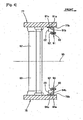
- a front fork 4 for supporting a front wheel 6 is disposed in the front part of the body, and a sensor 32 for detecting acceleration or deceleration in a vehicle collision is provided near the tip of this front fork 4.
- the sensor 32 is arranged within the axle 31 for the front wheel 6 disposed in the front fork 4.
- the impact detecting sensor is positioned within an axle cylinder. As it is thus positioned near the steering axis line of the front fork 4, in a frontal collision the impact transmitted from the front wheel 6 via the axle 31 can be sensitively detected while the steering components are moved.
- an airbag device requires a mechanical safetying sensor or an electronic safetying system intended to prevent the airbag from being deployed by an erroneous action of the sensor or the microcomputer that generates an airbag driving signal.
- left and right front forks 1 for supporting a front wheel 2 are disposed in the front part of the body, and main sensors 11 for detecting acceleration or deceleration at the time of a vehicle collision are provided on these front forks 1. Furthermore, a sub-sensor 12 is provided integrally with the left and right front forks 1 above the main sensor 11 or behind a cross member 40 laid between the left and right front forks 1.
- the intention is to prevent the airbag from being erroneously deployed by faulty operation of a single sensor, by subjecting output signals of the main sensor 11 and the sub-sensor 12 to collision determination by an operation control section 10 in accordance with the flow chart of Fig. 10.
- an impact detecting sensor (main sensor 11) is positioned on each of the left and right front forks 1, and their signals are averaged for use in collision determination, in frontal collision the impact transmitted from the front wheel via the axle can be sensitively detected while the steering components are moved.
- the airbag is prevented from being erroneously deployed even if either sensor fails to function and an ON determination is made.
- the senor 32 is disposed within the axle 31, and so its shape is determined by the external diameter of the axle 31 among other factors. As a result, it becomes a dedicated component of the pertinent vehicle, and is expensive.
- the overall length of a harness connecting the sensor 32 and collision judging unit 16 is extended and, moreover, as the wiring is bent considerably when the handlebar is steered, an expensive harness that can endure considerable bending is required.
- the senor 32 fitted to the front fork 4 can immediately detect the collision of the front wheel for instance, it also detects acceleration in the longitudinal direction when the front wheel rides over a gap (such as a pothole in the road) during normal running for example, and consideration should be given to preventing this detection from affecting the working of the airbag.
- the main sensor 11 and the sub-sensor 12 are arranged on the front forks 1, where the available fitting space is limited by, amongst other things, the brake caliper and the front fender. As a result, the freedom of arrangement is restricted. Moreover, one main sensor 11 on each of the left and right sides and one sub-sensor 12 on each of the left and right sides or one on the cross member 40 are required, so that at least three sensors are needed and the number of parts is large, resulting in increased cost.
- an airbag device for a saddle-ride type vehicle with a head pipe and left and right frame members extending back obliquely downward from the head pipe; said airbag device comprising: an airbag for protecting a rider; and a pair of left and right detecting means for detecting a vehicle impact to actuate the airbag, the detecting means being provided on the left and right frame members and arranged between the head pipe and a rider's seating position; wherein the airbag device is provided with a control unit for controlling the deployment of an airbag, and the control unit is disposed in the vicinity of a centre of the body of the vehicle.
- the freedom of arrangement of the detecting means can be made greater when compared to the front fork provided with a brake caliper, a front fender and the like.
- the distance between the detecting means and a control unit for controlling the deployment of the airbag can be reduced, enabling the harness for connection between the detecting means and the control unit to be shortened.
- the harness can be made less susceptible to wire disconnection and wiring can be made more easy and, furthermore, there is no need to use an expensive harness that is particularly durable against bending, making it possible to reduce the cost and enhance reliability and productivity.
- the disposition of the detecting means in the frame members results in a comparatively smaller influence on the outputs of the detecting means when the wheel rides over a gap than when they are disposed in the front fork, making it easier to take into account the influence on the actuation of the airbag.
- the pair of left and right detecting means is arranged between the head pipe and a rider's seating position, it is possible to arrange the detecting means in the vicinity of the centre of gravity of the body of the vehicle, allowing the deceleration behaviour in the longitudinal direction of the body to be detected directly and more accurately.
- the arrangement of the detecting means and the control unit close to each other in the vicinity of the centre of the gravity of the body enables the distance between the control unit and the detecting means to be reduced, thereby enabling the harness for connection between the control unit and the detecting means to be shortened. Also, it is easier to fix the harness between the control unit and the detecting means, making a harness particularly durable against bending unnecessary.
- each frame member comprises a main frame extending backward from the head pipe and a pivot frame connected behind the main frame, and the detecting means are disposed in the frame members between the head pipe and pivot shaft fitting holes in the pivot frames.
- the detecting means can be arranged in highly rigid frame members, enabling the deceleration behaviour of the body to be detected accurately.
- an airbag module provided with the airbag and the control unit are disposed between the head pipe and the pivot shaft fitting holes.
- the left detecting means is provided on an inner face of the left frame member in the direction of width of the vehicle
- the right detecting means is provided on an inner face of the right frame member in the direction of width of the vehicle.
- fitting stays are fitted to the frame members, and the detecting means are fitted to the rear of the fitting stays.
- the fastening members for fitting the detecting means to the fitting stays can be made difficult to loosen. Also, as the fitting stays are arranged ahead of the detecting means, protection can be provided by the fitting stays from spattered stones or the like from ahead.
- the detecting means are symmetrically arranged left and right with respect to a body centre line.
- a value averaging the acceleration outputs of the left and right detecting means constitutes the acceleration of the central part of the body, and any impact in the longitudinal direction of the body can be detected accurately.
- control unit determines, on the basis of outputs of the detecting means and vehicle speed, any collision of the vehicle by multiple determination methods matching the vehicle speed and controls the deployment of the airbag.
- the most suitable determination method finely tuned to the vehicle speed can be set, enabling collision determination of the vehicle to be accomplished quickly.
- the airbag can be promptly deployed at a timing comparable to what is achieved when the detecting means are arranged on the front fork arranged in the vicinity of the front wheel shaft, thereby making it possible to secure occupant protecting performance.
- a saddle-ride type vehicle comprising a head pipe, left and right frame members extending back obliquely downward from the head pipe, and an airbag device as described above.
- Figure 1 shows a saddle-ride type vehicle 10, which has a front wheel 13 fitted to the front part of a body frame 11 via a front fork 12, and a rear wheel 16 fitted to the rear lower part of the body frame 11 via a swing arm (not shown).
- the vehicle has an airbag device 21 in the central part of the body.
- the body frame 11 has an engine 31 fitted to the front lower part and a fuel tank 32 fitted to the front upper part, and a seat 33 fitted to the rear upper part and a step bracket 34 fitted to the rear lower part.
- the front fork 12 has a handlebar 36 fitted to the upper end, the front wheel 13 fitted to the lower end, a front wheel disk brake 38 formed from a brake caliper 41 together with a brake disk 37 fitted to the front wheel 13, and a front fender 42 covering the front wheel 13 from above. Further, a reference sign 44 denotes the axle of the front wheel 13.
- a reference sign 51 denotes a headlamp; 52, a front cowl; 53, a windscreen; 54, a pivot shaft fitted to the body frame 11 to support the swing arm; 55, a rider's step; 56, a pillion passenger's step; 57, a grab rail; 58, a rear side storage box; and 61, a muffler.
- the airbag device 21 includes a pair of left and right acceleration sensors 22 and 23 for detecting the acceleration or deceleration of the body (only the sensor 23 nearer the viewer is shown in Figure 1 ), an ECU (Electronic Control Unit) 24 to which detection signals from these acceleration sensors 22 and 23 are inputted, and an airbag module 25 provided with an airbag which is deployed in accordance with an output signal from the ECU 24.
- ECU Electronic Control Unit
- the acceleration sensors 22 and 23 are fitted to a pair of left and right pivot frames 77 and 78 constituting the body frame 11. Only the pivot frame 78 nearer the viewer is shown in Figure 1 .
- the ECU 24 is fitted to the body frame 11 and is arranged in the vicinity of the centre of gravity 65 of the motorcycle 10, namely the centre of gravity 65 of the body.
- the airbag module 25 includes the folded and stored airbag and an inflator that generates gas for deploying the airbag, and is arranged in a space disposed above the fuel tank 32.
- a main frame part 70 constituting the body frame 11 includes a head pipe 71 for steerably supporting the front fork 12, a pair of left and right main frames 72 and 73 extending back and obliquely downward from the head pipe 71, a pair of left and right down frames 74 and 76 extending downwardly from the lower parts of the front ends of the main frames 72 and 73, a pair of left and right pivot frames 77 and 78 extending back and down from the rear ends of the main frames 72 and 73, and cross members 81, 82 and 83 linking the pivot frames 77 and 78.
- Reference signs 77a and 78a denote pivot shaft fitting holes provided in the pivot frames 77 and 78, respectively, in which the pivot shaft 54 can be fitted.
- the left main frame 72 and pivot frame 77 form a side frame member 67
- the right main frame 73 and pivot frame 78 form a side frame member 68
- the side frame members 67 and 68 extend continuously from the head pipe 71.
- the acceleration sensors 22 and 23 are fitted to inner faces 77b and 78b (only one inner face 77b is shown in Figure 2 ) of the left and right pivot frames 77 and 78, respectively.
- the acceleration sensors 22 and 23 are arranged in front of a vertical plane (denoted by reference numeral 86) passing through the axis 85 of the pivot shaft 54.
- acceleration sensors 22 and 23 which can detect accelerations and decelerations in the directions represented by arrows in Figure 3 (that is, in the longitudinal direction of the body), can detect the level of impact resulting from collision of the motorcycle 10 against another vehicle or the like.
- the sensors are made less susceptible to the effects of toppling of the vehicle (in the transverse direction of the body) or of oscillation of the body caused by the ruggedness of the road surface (in the vertical direction of the body).
- a fitting stay 91 having an L-shaped cross-section is attached to an inner face 77b of the left pivot frame 77, for example by welding, and the acceleration sensor 22 is fitted to the fitting stay 91, in this embodiment with a bolt 92 and a nut 93.
- the fitting stay 91 includes a fitting part 91 a attached to the inner face 77b of the pivot frame 77, and an integral part 91 b which extends inwardly in the direction of width of the vehicle from the front end of the fitting part 91a.
- the acceleration sensor 22 is fitted to the rear face 91 c of the inwardly extending part 91b.
- a fitting stay 94 having an L-shaped cross-section is attached to an inner face 78b of the right pivot frame 78, for example by welding, and the acceleration sensor 23 is fitted to the fitting stay 94, in this embodiment with a bolt 92 and the a 93.
- the fitting stay 94 includes a fitting part 94a attached to the inner face 78b of the pivot frame 78, and an integral part 94b extending inwardly in the direction of width of the vehicle from the front end of the fitting part 94a.
- the acceleration sensor 23 is fitted to the rear face 94c of the inward extending part 94b.
- the left and right acceleration sensors 22 and 23 are arranged symmetrically with respect to a longitudinal centre line 95 of the body of the motorcycle 10 (see Fig. 1 ). This enables accelerations on the body centre line 95 to be calculated by averaging the outputs of the acceleration sensors 22 and 23.
- both the acceleration sensors 22 and 23 and the ECU 24 are arranged in the vicinity of the centre of gravity 65 of the vehicle, the distance between the acceleration sensors 22 and 23 and the ECU 24 is reduced, and the overall length of the harness connecting the acceleration sensors 22 and 23 and the ECU 24 can also be reduced.
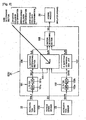
- the ECU 24 includes a left (L) digital filter 101 to which a left acceleration signal SAL1 from the acceleration sensor 22 is inputted; a right (R) digital filter 102 to which a right acceleration signal SAR1 from the acceleration sensor 23 is inputted; a main determining section 105 which determines whether or not the vehicle has collided on the basis of a left acceleration signal SAL2 and a right acceleration signal SAR2 having passed L filter 101 and R filter 102, respectively, and a vehicle speed signal SV from a vehicle speed sensor 103; an L safetying determining section 106 and an R safetying determining section 107 each of which independently determines whether or not the vehicle has collided on the basis of the left acceleration signal SAL2 which has passed the L filter 101 and the right acceleration signal SAR2 which has passed the R filter 102; and an ignition determining section 108 which outputs an ignition signal SS to the airbag module 25 on the basis of all the determination signals SJM, SJL and SJR respectively outputted
- the L filter 101 and the R filter 102 are each provided with high-pass filters 101 a and 102a for removing drift components contained in the left acceleration
- the vehicle speed sensor 103 is a sensor for detecting the revolution speed (wheel speed) of the front wheel 13 and/or the rear wheel 16 of the motorcycle 10, and the vehicle speed is calculated from this wheel speed.
- the vehicle speed signal may instead be obtained from an engine control unit that controls the engine 31, instead of the vehicle speed sensor 103.
- the main determining section 105 is a block that determines whether or not the vehicle has collided on the basis of the vehicle speed signal SV and the average of the left acceleration signal SAL2 and the right acceleration signal SAR2, and outputs a signal corresponding to the result of this determination.
- the main determining section 105 includes a low-speed collision determining section, a medium-speed collision determining section, a high-speed collision determining section, a threshold calculating section and a main OR circuit.
- a determination signal SJM is outputted from the main OR circuit.
- the low-speed collision determining section is a block that determines whether or not the vehicle has run into a low-speed collision on the basis of the average of the left acceleration signal SAL2 and the right acceleration signal SAR2. It cumulatively integrates all the time the averages of the left acceleration signal SAL2 and the right acceleration signal SAR2 and determines that a collision has occurred if the integrated value surpasses a threshold.
- acceleration signals arising from factors other than collision such as sudden acceleration or sudden deceleration
- acceleration signals are also accumulated.
- accelerations as would be detected at the time of sudden acceleration or sudden deceleration, not collision, are subtracted from the acceleration signals, and the balances are cumulatively integrated.
- this is suitable for making distinction between, for instance, light collision against another vehicle whose rigidity is high (a short-period collision for which the detected acceleration is high but where deployment of the airbag is not required) and low-speed collision against another vehicle whose rigidity is low (a long-period collision for which the detected acceleration is low but deployment of the airbag is required).
- the medium-speed collision determining section is a block that determines whether or not the vehicle has run into a medium-speed collision on the basis of the average between the left acceleration signal SAL2 and the right acceleration signal SAR2.
- the time range of integration being represented by ⁇ t, the integral to be used at a certain point of time T is the result of integration of acceleration signals from T- ⁇ t until T.
- medium-speed collision determination is more difficult to grasp the whole collision event than low-speed collision determination, it is easier to grasp the collision event than high-speed collision determination to be described next, and allows collision determination in a shorter period of time than low-speed collision determination.
- the high-speed collision determining section is a block that determines whether or not the vehicle has run into a high-speed collision on the basis of the average between the left acceleration signal SAL2 and the right acceleration signal SAR2.
- the L safetying determining section 106 and the R safetying determining section 107 are blocks for preventing the airbag from being operated erroneously even if either the acceleration sensor 22 or the acceleration sensor 23 works wrongly with the consequence that, even though no collision has occurred, the main determining section 105 outputs a signal informing of collision occurrence.
- Each of the L safetying determining section 106 and the R safetying determining section 107 independently integrates the values of the left acceleration signal SAL2 and the right acceleration signal SAR2 always in a constant time range, and outputs the determination signal SJL or the determination signal SJR when the integral has surpassed a threshold.
- the ignition determining section 108 determines whether or not the inflator of the airbag module 25 should be ignited on the basis of the determination signals SJM, SJL and SJR and, if the determination is ON, outputs the ignition signal SS to the inflator of the airbag module 25 or, if the determination is OFF, does not output the ignition signal SS.
- disadvantages of equipping the pivot frames 77 and 78 with the acceleration sensors 22 and 23 include, firstly, a delay in the time of detecting any acceleration compared with the existing arrangement of acceleration sensors on the front fork in the vicinity of the front wheel shaft, and, secondly, the acceleration sensors 22 and 23, which are positioned closer to the engine 31, become more susceptible to the influences of engine vibration and electrical noise such as ignition pulses.
- the first disadvantage is addressed by implementing a determination method using multiple logics (low-speed collision determination, medium-speed collision determination and high-speed collision determination) by the main determining section 105 for collision determination, which makes possible collision determination finely in response to the vehicle speed, enabling the airbag to be promptly deployed at a timing comparable to what is achieved when the acceleration sensors are arranged on the front fork in the vicinity of the front wheel shaft, to thereby secure rider protection.
- the second disadvantage is addressed by equipping the airbag device 21 with the digital L filter 101 and the digital R filter 102. It is then possible to remove high-frequency components including engine vibration and electrical noise with a low-pass filter and to remove low-frequency components including low acceleration signals and drift at the time of the vehicle's acceleration or deceleration with a high-pass filter, enabling the accuracy of collision determination to be enhanced and the threshold of collision determination to be lowered.
- the airbag device 21 for the saddle-ride type vehicle 10 provided with the head pipe 71 for turnably supporting the handlebar 36 and the side frame members 67 and 68 extending back obliquely downward from the head pipe 71, includes the acceleration sensors 22 and 23 as detecting means for detecting impacts working on the body to actuate the airbag device 21, and is characterized in that the left and right acceleration sensors 22 and 23 are provided in the side frame members 67 and 68 (in more detail the pivot frames 77 and 78).
- the side frame members 67 and 68 are provided with the pair of left and right acceleration sensors 22 and 23, the freedom of arrangement of the acceleration sensors 22 and 23 can be made greater than when the sensors are disposed in the existing front fork provided with a brake caliper, a front fender and the like.
- the distance between the acceleration sensors 22 and 23 and the ECU 24 as the control unit for controlling the deployment of the airbag can be reduced, enabling the harness for connection between the acceleration sensors 22 and 23 and the ECU 24 to be shortened.
- the harness can be made less susceptible to wire disconnection and easier wiring is permitted. Furthermore, there is no need to use an expensive harness that is particularly durable against bending, making it possible to reduce the cost and enhance reliability and productivity.
- acceleration sensors 22 and 23 there is no need to provide the acceleration sensors 22 and 23 with a specific shape, or to provide a fitting part with a shape specific to each individual vehicle type, enabling the versatility of the acceleration sensors 22 and 23 to be enhanced.
- the disposition of the acceleration sensors 22 and 23 in the side frame members 67 and 68 results in a smaller influence on the outputs of the acceleration sensors 22 and 23 when the front wheel 13 rides over a gap than where they are disposed in the front fork, making it easier to take into account the influence on the operation of the airbag.
- the pair of left and right acceleration sensors 22 and 23 is arranged between the head pipe 71 and the rear part of the seat 33 as shown in Fig. 1 , it is possible to arrange the acceleration sensors 22 and 23 in the vicinity of the centre of gravity of the body, to detect the deceleration behaviour of the body directly and more accurately.
- the airbag device 21 is provided with the ECU 24 for controlling the deployment of the airbag and the ECU 24 is disposed in the vicinity of the centre of the body, as shown in Fig. 1 and Fig. 6 , the distance between the ECU 24 and the acceleration sensors 22 and 23 can be shortened by arranging the acceleration sensors 22 and 23 and the ECU 24 in the vicinity of the centre of gravity of the body, and it is made possible to make the harness to connect these ECU 24 and acceleration sensors 22 and 23 less susceptible to wire disconnection. Also, it is made easier to fix the harness between the ECU 24 and the acceleration sensors 22 and 23, making the use of a harness which is particularly durable against bending unnecessary.
- the acceleration sensors 22 and 23 can be protected by the side frame members 67 and 68, making any separate protective means for the acceleration sensors 22 and 23 unnecessary.
- fitting stays 91 and 94 are fitted to the side frame members 67 and 68 and the acceleration sensors 22 and 23 are fitted to these fitting stays 91 and 94 from behind as shown in Fig. 4 , fastening members (the bolts 92 and nuts 93) for fitting the acceleration sensors 22 and 23 to the fitting stays 91 and 94 can be made difficult to loosen.
- acceleration sensors 22 and 23 are symmetrically arranged left and right with respect to the body centre line 95, a value averaging the acceleration outputs of the left and right acceleration sensors 22 and 23 constitutes the acceleration of the central part of the body, and any impact in the longitudinal direction of the body can be detected accurately.
- the ECU 24 Since the ECU 24, on the basis of the outputs of the acceleration sensors 22 and 23 and the vehicle speed, determines any collision of the vehicle by multiple determination methods matching the vehicle speed and controls the deployment of the airbag as shown in Fig. 6 , the most suitable determination method finely can be set in response to the vehicle speed, enabling collision determination of the vehicle to be accomplished quickly.
- the airbag can be as promptly deployed at a timing comparable to what is achieved when the acceleration sensors are arranged on the front fork in the vicinity of the front wheel shaft, thereby making it possible to secure rider protecting performance.
- acceleration sensors 22 and 23 are disposed on the pivot frames 77 and 78 in the embodiment as shown in Fig. 4 , this is not the only possible disposition, but they may as well be disposed on the left and right main frames 72 and 73 shown in Fig. 2 .
- the airbag device according to the present invention is highly suitable for saddle-ride type vehicles.
- the invention also extends to saddle-ride type vehicles having such an airbag device.
Landscapes
- Engineering & Computer Science (AREA)
- Mechanical Engineering (AREA)
- Air Bags (AREA)
Applications Claiming Priority (1)
| Application Number | Priority Date | Filing Date | Title |
|---|---|---|---|
| JP2009228942A JP2011073633A (ja) | 2009-09-30 | 2009-09-30 | 鞍乗型車両のエアバッグ装置 |
Publications (2)
| Publication Number | Publication Date |
|---|---|
| EP2305520A1 EP2305520A1 (en) | 2011-04-06 |
| EP2305520B1 true EP2305520B1 (en) | 2014-12-17 |
Family
ID=43302468
Family Applications (1)
| Application Number | Title | Priority Date | Filing Date |
|---|---|---|---|
| EP10251652.3A Not-in-force EP2305520B1 (en) | 2009-09-30 | 2010-09-27 | Airbag device for saddle-ride type vehicle |
Country Status (4)
| Country | Link |
|---|---|
| US (1) | US8474857B2 (pt) |
| EP (1) | EP2305520B1 (pt) |
| JP (1) | JP2011073633A (pt) |
| BR (1) | BRPI1003969B1 (pt) |
Families Citing this family (6)
| Publication number | Priority date | Publication date | Assignee | Title |
|---|---|---|---|---|
| ITVR20110209A1 (it) * | 2011-11-24 | 2013-05-25 | Cefriel Societa Consortile A Respon Sabilita Limit | Dispositivo di rilevamento d'urto. |
| JP6646376B2 (ja) | 2015-07-31 | 2020-02-14 | Kyb株式会社 | 緩衝器の制御装置およびサスペンション装置 |
| WO2017154437A1 (ja) * | 2016-03-09 | 2017-09-14 | 本田技研工業株式会社 | 自動二輪車 |
| WO2018042575A1 (ja) * | 2016-08-31 | 2018-03-08 | 本田技研工業株式会社 | 鞍乗り型車両 |
| DE112019007131B4 (de) * | 2019-03-29 | 2025-02-20 | Honda Motor Co., Ltd. | Fahrunterstützungsvorrichtung für ein Fahrzeug vom Satteltyp |
| CN113593098B (zh) * | 2021-07-05 | 2023-03-03 | 中保恒杰保安服务集团有限公司 | 一种基于安保智能防范用小区门禁装置 |
Family Cites Families (16)
| Publication number | Priority date | Publication date | Assignee | Title |
|---|---|---|---|---|
| JPS60624A (ja) | 1983-06-15 | 1985-01-05 | Hitachi Ltd | トラッキングサ−ボ引き込み装置 |
| JP4052531B2 (ja) | 1998-03-30 | 2008-02-27 | 本田技研工業株式会社 | 自動二輪車用エアバッグ装置 |
| JP4269468B2 (ja) * | 2000-02-09 | 2009-05-27 | 豊田合成株式会社 | 鞍乗型車両用エアバック装置 |
| WO2001070545A1 (en) * | 2000-03-17 | 2001-09-27 | Mitsubishi Denki Kabushiki Kaisha | Impact judgement method and passenger protection device |
| JP3901557B2 (ja) * | 2002-03-26 | 2007-04-04 | 本田技研工業株式会社 | 車両用エアバッグ装置 |
| JP2003300492A (ja) * | 2002-04-09 | 2003-10-21 | Toto Ltd | 自転車用衝突防止装置 |
| US7150048B2 (en) * | 2002-12-18 | 2006-12-19 | Buckman Robert F | Method and apparatus for body impact protection |
| ES2281781T3 (es) * | 2003-01-23 | 2007-10-01 | Siemens Vdo Automotive Corporation | Sistema de retencion de pasajero de vehiculo con sensores distribuidos. |
| DE10320738A1 (de) * | 2003-05-09 | 2004-12-02 | Robert Bosch Gmbh | Vorrichtung zur Aufprallerkennung in einem Motorrad |
| JP2007062692A (ja) * | 2005-09-02 | 2007-03-15 | Honda Motor Co Ltd | 車両の傾斜角センサ配置構造 |
| JP4648135B2 (ja) * | 2005-09-06 | 2011-03-09 | 本田技研工業株式会社 | 自動2輪車 |
| JP4627474B2 (ja) * | 2005-09-30 | 2011-02-09 | 本田技研工業株式会社 | エアバッグ装置 |
| JP2008063977A (ja) * | 2006-09-05 | 2008-03-21 | Yamaha Motor Co Ltd | 自動二輪車 |
| JP4993287B2 (ja) * | 2007-03-30 | 2012-08-08 | 本田技研工業株式会社 | 自動二輪車乗員保護装置 |
| JP4134260B2 (ja) * | 2007-10-17 | 2008-08-20 | 本田技研工業株式会社 | 自動二輪車用エアバッグ装置 |
| FR2936470B1 (fr) * | 2008-09-30 | 2011-07-15 | Api | Systeme de protection a coussin d'air pour vehicules motorises sans cellule de survie |
-
2009
- 2009-09-30 JP JP2009228942A patent/JP2011073633A/ja active Pending
-
2010
- 2010-09-14 US US12/881,247 patent/US8474857B2/en not_active Expired - Fee Related
- 2010-09-23 BR BRPI1003969-4A patent/BRPI1003969B1/pt not_active IP Right Cessation
- 2010-09-27 EP EP10251652.3A patent/EP2305520B1/en not_active Not-in-force
Also Published As
| Publication number | Publication date |
|---|---|
| BRPI1003969A2 (pt) | 2013-01-29 |
| BRPI1003969B1 (pt) | 2019-10-15 |
| US8474857B2 (en) | 2013-07-02 |
| EP2305520A1 (en) | 2011-04-06 |
| JP2011073633A (ja) | 2011-04-14 |
| US20110074139A1 (en) | 2011-03-31 |
Similar Documents
| Publication | Publication Date | Title |
|---|---|---|
| EP2305520B1 (en) | Airbag device for saddle-ride type vehicle | |
| CN1927639B (zh) | 二轮机动车的冲击检测传感器安装结构 | |
| JP6636130B2 (ja) | 自動二輪車 | |
| EP3239008B1 (en) | Saddle-ride type vehicle | |
| JP4807594B2 (ja) | 車両用衝突検知装置 | |
| JP6639064B2 (ja) | 鞍乗り型車両 | |
| US20150232091A1 (en) | Method for avoiding an accident or for reducing the effects of an accident for a motorcycle rider | |
| JP4677448B2 (ja) | 自動車両用のエアバッグ作動電子系 | |
| JP5914163B2 (ja) | 自動二輪車のエアバッグ起動判定装置 | |
| JP4371616B2 (ja) | 車両用衝突検出装置 | |
| JP2003089343A (ja) | 車両用衝突検出装置 | |
| JP2012250624A (ja) | 鞍乗り型車両 | |
| JP4013854B2 (ja) | 衝突センシングシステム | |
| JP2003306184A (ja) | エアバッグ装置 | |
| JP2012250624A5 (pt) | ||
| EP4530170B1 (en) | Straddled vehicle | |
| US20250100643A1 (en) | Airbag device | |
| JP2007083845A (ja) | 車両用歩行者保護装置 |
Legal Events
| Date | Code | Title | Description |
|---|---|---|---|
| PUAI | Public reference made under article 153(3) epc to a published international application that has entered the european phase |
Free format text: ORIGINAL CODE: 0009012 |
|
| AK | Designated contracting states |
Kind code of ref document: A1 Designated state(s): AL AT BE BG CH CY CZ DE DK EE ES FI FR GB GR HR HU IE IS IT LI LT LU LV MC MK MT NL NO PL PT RO SE SI SK SM TR |
|
| AX | Request for extension of the european patent |
Extension state: BA ME RS |
|
| 17P | Request for examination filed |
Effective date: 20110427 |
|
| RIC1 | Information provided on ipc code assigned before grant |
Ipc: B62J 7/00 20060101ALI20130925BHEP Ipc: B60R 21/16 20060101AFI20130925BHEP |
|
| GRAJ | Information related to disapproval of communication of intention to grant by the applicant or resumption of examination proceedings by the epo deleted |
Free format text: ORIGINAL CODE: EPIDOSDIGR1 |
|
| GRAP | Despatch of communication of intention to grant a patent |
Free format text: ORIGINAL CODE: EPIDOSNIGR1 |
|
| GRAP | Despatch of communication of intention to grant a patent |
Free format text: ORIGINAL CODE: EPIDOSNIGR1 |
|
| RIN1 | Information on inventor provided before grant (corrected) |
Inventor name: MAKABE, TAKUMI Inventor name: MIYAKAWA, FUTOSHI Inventor name: KOBAYASHI, YUKI |
|
| INTG | Intention to grant announced |
Effective date: 20131213 |
|
| GRAP | Despatch of communication of intention to grant a patent |
Free format text: ORIGINAL CODE: EPIDOSNIGR1 |
|
| INTG | Intention to grant announced |
Effective date: 20140826 |
|
| GRAS | Grant fee paid |
Free format text: ORIGINAL CODE: EPIDOSNIGR3 |
|
| GRAA | (expected) grant |
Free format text: ORIGINAL CODE: 0009210 |
|
| AK | Designated contracting states |
Kind code of ref document: B1 Designated state(s): AL AT BE BG CH CY CZ DE DK EE ES FI FR GB GR HR HU IE IS IT LI LT LU LV MC MK MT NL NO PL PT RO SE SI SK SM TR |
|
| REG | Reference to a national code |
Ref country code: GB Ref legal event code: FG4D |
|
| REG | Reference to a national code |
Ref country code: CH Ref legal event code: EP |
|
| REG | Reference to a national code |
Ref country code: IE Ref legal event code: FG4D |
|
| REG | Reference to a national code |
Ref country code: AT Ref legal event code: REF Ref document number: 701640 Country of ref document: AT Kind code of ref document: T Effective date: 20150115 |
|
| REG | Reference to a national code |
Ref country code: DE Ref legal event code: R096 Ref document number: 602010021013 Country of ref document: DE Effective date: 20150129 |
|
| PG25 | Lapsed in a contracting state [announced via postgrant information from national office to epo] |
Ref country code: FI Free format text: LAPSE BECAUSE OF FAILURE TO SUBMIT A TRANSLATION OF THE DESCRIPTION OR TO PAY THE FEE WITHIN THE PRESCRIBED TIME-LIMIT Effective date: 20141217 Ref country code: LT Free format text: LAPSE BECAUSE OF FAILURE TO SUBMIT A TRANSLATION OF THE DESCRIPTION OR TO PAY THE FEE WITHIN THE PRESCRIBED TIME-LIMIT Effective date: 20141217 Ref country code: NO Free format text: LAPSE BECAUSE OF FAILURE TO SUBMIT A TRANSLATION OF THE DESCRIPTION OR TO PAY THE FEE WITHIN THE PRESCRIBED TIME-LIMIT Effective date: 20150317 |
|
| REG | Reference to a national code |
Ref country code: LT Ref legal event code: MG4D |
|
| PG25 | Lapsed in a contracting state [announced via postgrant information from national office to epo] |
Ref country code: HR Free format text: LAPSE BECAUSE OF FAILURE TO SUBMIT A TRANSLATION OF THE DESCRIPTION OR TO PAY THE FEE WITHIN THE PRESCRIBED TIME-LIMIT Effective date: 20141217 Ref country code: GR Free format text: LAPSE BECAUSE OF FAILURE TO SUBMIT A TRANSLATION OF THE DESCRIPTION OR TO PAY THE FEE WITHIN THE PRESCRIBED TIME-LIMIT Effective date: 20150318 Ref country code: SE Free format text: LAPSE BECAUSE OF FAILURE TO SUBMIT A TRANSLATION OF THE DESCRIPTION OR TO PAY THE FEE WITHIN THE PRESCRIBED TIME-LIMIT Effective date: 20141217 Ref country code: LV Free format text: LAPSE BECAUSE OF FAILURE TO SUBMIT A TRANSLATION OF THE DESCRIPTION OR TO PAY THE FEE WITHIN THE PRESCRIBED TIME-LIMIT Effective date: 20141217 |
|
| REG | Reference to a national code |
Ref country code: AT Ref legal event code: MK05 Ref document number: 701640 Country of ref document: AT Kind code of ref document: T Effective date: 20141217 |
|
| PG25 | Lapsed in a contracting state [announced via postgrant information from national office to epo] |
Ref country code: NL Free format text: LAPSE BECAUSE OF FAILURE TO SUBMIT A TRANSLATION OF THE DESCRIPTION OR TO PAY THE FEE WITHIN THE PRESCRIBED TIME-LIMIT Effective date: 20141217 |
|
| PG25 | Lapsed in a contracting state [announced via postgrant information from national office to epo] |
Ref country code: ES Free format text: LAPSE BECAUSE OF FAILURE TO SUBMIT A TRANSLATION OF THE DESCRIPTION OR TO PAY THE FEE WITHIN THE PRESCRIBED TIME-LIMIT Effective date: 20141217 Ref country code: EE Free format text: LAPSE BECAUSE OF FAILURE TO SUBMIT A TRANSLATION OF THE DESCRIPTION OR TO PAY THE FEE WITHIN THE PRESCRIBED TIME-LIMIT Effective date: 20141217 Ref country code: RO Free format text: LAPSE BECAUSE OF FAILURE TO SUBMIT A TRANSLATION OF THE DESCRIPTION OR TO PAY THE FEE WITHIN THE PRESCRIBED TIME-LIMIT Effective date: 20141217 Ref country code: SK Free format text: LAPSE BECAUSE OF FAILURE TO SUBMIT A TRANSLATION OF THE DESCRIPTION OR TO PAY THE FEE WITHIN THE PRESCRIBED TIME-LIMIT Effective date: 20141217 Ref country code: CZ Free format text: LAPSE BECAUSE OF FAILURE TO SUBMIT A TRANSLATION OF THE DESCRIPTION OR TO PAY THE FEE WITHIN THE PRESCRIBED TIME-LIMIT Effective date: 20141217 Ref country code: PT Free format text: LAPSE BECAUSE OF FAILURE TO SUBMIT A TRANSLATION OF THE DESCRIPTION OR TO PAY THE FEE WITHIN THE PRESCRIBED TIME-LIMIT Effective date: 20150417 |
|
| PG25 | Lapsed in a contracting state [announced via postgrant information from national office to epo] |
Ref country code: AT Free format text: LAPSE BECAUSE OF FAILURE TO SUBMIT A TRANSLATION OF THE DESCRIPTION OR TO PAY THE FEE WITHIN THE PRESCRIBED TIME-LIMIT Effective date: 20141217 Ref country code: IS Free format text: LAPSE BECAUSE OF FAILURE TO SUBMIT A TRANSLATION OF THE DESCRIPTION OR TO PAY THE FEE WITHIN THE PRESCRIBED TIME-LIMIT Effective date: 20150417 Ref country code: PL Free format text: LAPSE BECAUSE OF FAILURE TO SUBMIT A TRANSLATION OF THE DESCRIPTION OR TO PAY THE FEE WITHIN THE PRESCRIBED TIME-LIMIT Effective date: 20141217 |
|
| REG | Reference to a national code |
Ref country code: DE Ref legal event code: R097 Ref document number: 602010021013 Country of ref document: DE |
|
| PLBE | No opposition filed within time limit |
Free format text: ORIGINAL CODE: 0009261 |
|
| STAA | Information on the status of an ep patent application or granted ep patent |
Free format text: STATUS: NO OPPOSITION FILED WITHIN TIME LIMIT |
|
| PG25 | Lapsed in a contracting state [announced via postgrant information from national office to epo] |
Ref country code: DK Free format text: LAPSE BECAUSE OF FAILURE TO SUBMIT A TRANSLATION OF THE DESCRIPTION OR TO PAY THE FEE WITHIN THE PRESCRIBED TIME-LIMIT Effective date: 20141217 |
|
| 26N | No opposition filed |
Effective date: 20150918 |
|
| PG25 | Lapsed in a contracting state [announced via postgrant information from national office to epo] |
Ref country code: SI Free format text: LAPSE BECAUSE OF FAILURE TO SUBMIT A TRANSLATION OF THE DESCRIPTION OR TO PAY THE FEE WITHIN THE PRESCRIBED TIME-LIMIT Effective date: 20141217 |
|
| PG25 | Lapsed in a contracting state [announced via postgrant information from national office to epo] |
Ref country code: MC Free format text: LAPSE BECAUSE OF FAILURE TO SUBMIT A TRANSLATION OF THE DESCRIPTION OR TO PAY THE FEE WITHIN THE PRESCRIBED TIME-LIMIT Effective date: 20141217 Ref country code: LU Free format text: LAPSE BECAUSE OF FAILURE TO SUBMIT A TRANSLATION OF THE DESCRIPTION OR TO PAY THE FEE WITHIN THE PRESCRIBED TIME-LIMIT Effective date: 20150927 |
|
| REG | Reference to a national code |
Ref country code: CH Ref legal event code: PL |
|
| PG25 | Lapsed in a contracting state [announced via postgrant information from national office to epo] |
Ref country code: BE Free format text: LAPSE BECAUSE OF FAILURE TO SUBMIT A TRANSLATION OF THE DESCRIPTION OR TO PAY THE FEE WITHIN THE PRESCRIBED TIME-LIMIT Effective date: 20141217 |
|
| REG | Reference to a national code |
Ref country code: IE Ref legal event code: MM4A |
|
| PG25 | Lapsed in a contracting state [announced via postgrant information from national office to epo] |
Ref country code: CH Free format text: LAPSE BECAUSE OF NON-PAYMENT OF DUE FEES Effective date: 20150930 Ref country code: IE Free format text: LAPSE BECAUSE OF NON-PAYMENT OF DUE FEES Effective date: 20150927 Ref country code: LI Free format text: LAPSE BECAUSE OF NON-PAYMENT OF DUE FEES Effective date: 20150930 |
|
| REG | Reference to a national code |
Ref country code: FR Ref legal event code: PLFP Year of fee payment: 7 |
|
| PG25 | Lapsed in a contracting state [announced via postgrant information from national office to epo] |
Ref country code: MT Free format text: LAPSE BECAUSE OF FAILURE TO SUBMIT A TRANSLATION OF THE DESCRIPTION OR TO PAY THE FEE WITHIN THE PRESCRIBED TIME-LIMIT Effective date: 20141217 |
|
| PG25 | Lapsed in a contracting state [announced via postgrant information from national office to epo] |
Ref country code: SM Free format text: LAPSE BECAUSE OF FAILURE TO SUBMIT A TRANSLATION OF THE DESCRIPTION OR TO PAY THE FEE WITHIN THE PRESCRIBED TIME-LIMIT Effective date: 20141217 Ref country code: BG Free format text: LAPSE BECAUSE OF FAILURE TO SUBMIT A TRANSLATION OF THE DESCRIPTION OR TO PAY THE FEE WITHIN THE PRESCRIBED TIME-LIMIT Effective date: 20141217 Ref country code: HU Free format text: LAPSE BECAUSE OF FAILURE TO SUBMIT A TRANSLATION OF THE DESCRIPTION OR TO PAY THE FEE WITHIN THE PRESCRIBED TIME-LIMIT; INVALID AB INITIO Effective date: 20100927 |
|
| PG25 | Lapsed in a contracting state [announced via postgrant information from national office to epo] |
Ref country code: CY Free format text: LAPSE BECAUSE OF FAILURE TO SUBMIT A TRANSLATION OF THE DESCRIPTION OR TO PAY THE FEE WITHIN THE PRESCRIBED TIME-LIMIT Effective date: 20141217 |
|
| REG | Reference to a national code |
Ref country code: FR Ref legal event code: PLFP Year of fee payment: 8 |
|
| PG25 | Lapsed in a contracting state [announced via postgrant information from national office to epo] |
Ref country code: TR Free format text: LAPSE BECAUSE OF FAILURE TO SUBMIT A TRANSLATION OF THE DESCRIPTION OR TO PAY THE FEE WITHIN THE PRESCRIBED TIME-LIMIT Effective date: 20141217 |
|
| PG25 | Lapsed in a contracting state [announced via postgrant information from national office to epo] |
Ref country code: MK Free format text: LAPSE BECAUSE OF FAILURE TO SUBMIT A TRANSLATION OF THE DESCRIPTION OR TO PAY THE FEE WITHIN THE PRESCRIBED TIME-LIMIT Effective date: 20141217 |
|
| REG | Reference to a national code |
Ref country code: DE Ref legal event code: R084 Ref document number: 602010021013 Country of ref document: DE Ref country code: FR Ref legal event code: PLFP Year of fee payment: 9 |
|
| REG | Reference to a national code |
Ref country code: GB Ref legal event code: 746 Effective date: 20180814 |
|
| PG25 | Lapsed in a contracting state [announced via postgrant information from national office to epo] |
Ref country code: AL Free format text: LAPSE BECAUSE OF FAILURE TO SUBMIT A TRANSLATION OF THE DESCRIPTION OR TO PAY THE FEE WITHIN THE PRESCRIBED TIME-LIMIT Effective date: 20141217 |
|
| PGFP | Annual fee paid to national office [announced via postgrant information from national office to epo] |
Ref country code: DE Payment date: 20190917 Year of fee payment: 10 Ref country code: FR Payment date: 20190815 Year of fee payment: 10 |
|
| PGFP | Annual fee paid to national office [announced via postgrant information from national office to epo] |
Ref country code: GB Payment date: 20190926 Year of fee payment: 10 |
|
| REG | Reference to a national code |
Ref country code: DE Ref legal event code: R082 Ref document number: 602010021013 Country of ref document: DE |
|
| REG | Reference to a national code |
Ref country code: DE Ref legal event code: R119 Ref document number: 602010021013 Country of ref document: DE |
|
| GBPC | Gb: european patent ceased through non-payment of renewal fee |
Effective date: 20200927 |
|
| PG25 | Lapsed in a contracting state [announced via postgrant information from national office to epo] |
Ref country code: DE Free format text: LAPSE BECAUSE OF NON-PAYMENT OF DUE FEES Effective date: 20210401 Ref country code: FR Free format text: LAPSE BECAUSE OF NON-PAYMENT OF DUE FEES Effective date: 20200930 |
|
| PG25 | Lapsed in a contracting state [announced via postgrant information from national office to epo] |
Ref country code: GB Free format text: LAPSE BECAUSE OF NON-PAYMENT OF DUE FEES Effective date: 20200927 |
|
| PGFP | Annual fee paid to national office [announced via postgrant information from national office to epo] |
Ref country code: IT Payment date: 20210811 Year of fee payment: 12 |
|
| PG25 | Lapsed in a contracting state [announced via postgrant information from national office to epo] |
Ref country code: IT Free format text: LAPSE BECAUSE OF NON-PAYMENT OF DUE FEES Effective date: 20220927 |