EP2306821B1 - Inhibition de la formation de biofilms à l'aide de chélateurs de zinc comprenant le dtpa - Google Patents
Inhibition de la formation de biofilms à l'aide de chélateurs de zinc comprenant le dtpa Download PDFInfo
- Publication number
- EP2306821B1 EP2306821B1 EP09767399.0A EP09767399A EP2306821B1 EP 2306821 B1 EP2306821 B1 EP 2306821B1 EP 09767399 A EP09767399 A EP 09767399A EP 2306821 B1 EP2306821 B1 EP 2306821B1
- Authority
- EP
- European Patent Office
- Prior art keywords
- biofilm
- zinc
- bacteria
- dtpa
- chelator
- Prior art date
- Legal status (The legal status is an assumption and is not a legal conclusion. Google has not performed a legal analysis and makes no representation as to the accuracy of the status listed.)
- Active
Links
Images


Classifications
-
- A—HUMAN NECESSITIES
- A01—AGRICULTURE; FORESTRY; ANIMAL HUSBANDRY; HUNTING; TRAPPING; FISHING
- A01N—PRESERVATION OF BODIES OF HUMANS OR ANIMALS OR PLANTS OR PARTS THEREOF; BIOCIDES, e.g. AS DISINFECTANTS, AS PESTICIDES OR AS HERBICIDES; PEST REPELLANTS OR ATTRACTANTS; PLANT GROWTH REGULATORS
- A01N37/00—Biocides, pest repellants or attractants, or plant growth regulators containing organic compounds containing a carbon atom having three bonds to hetero atoms with at the most two bonds to halogen, e.g. carboxylic acids
- A01N37/44—Biocides, pest repellants or attractants, or plant growth regulators containing organic compounds containing a carbon atom having three bonds to hetero atoms with at the most two bonds to halogen, e.g. carboxylic acids containing at least one carboxylic group or a thio analogue, or a derivative thereof, and a nitrogen atom attached to the same carbon skeleton by a single or double bond, this nitrogen atom not being a member of a derivative or of a thio analogue of a carboxylic group, e.g. amino-carboxylic acids
-
- A—HUMAN NECESSITIES
- A01—AGRICULTURE; FORESTRY; ANIMAL HUSBANDRY; HUNTING; TRAPPING; FISHING
- A01N—PRESERVATION OF BODIES OF HUMANS OR ANIMALS OR PLANTS OR PARTS THEREOF; BIOCIDES, e.g. AS DISINFECTANTS, AS PESTICIDES OR AS HERBICIDES; PEST REPELLANTS OR ATTRACTANTS; PLANT GROWTH REGULATORS
- A01N43/00—Biocides, pest repellants or attractants, or plant growth regulators containing heterocyclic compounds
- A01N43/34—Biocides, pest repellants or attractants, or plant growth regulators containing heterocyclic compounds having rings with one nitrogen atom as the only ring hetero atom
- A01N43/40—Biocides, pest repellants or attractants, or plant growth regulators containing heterocyclic compounds having rings with one nitrogen atom as the only ring hetero atom six-membered rings
-
- A—HUMAN NECESSITIES
- A01—AGRICULTURE; FORESTRY; ANIMAL HUSBANDRY; HUNTING; TRAPPING; FISHING
- A01N—PRESERVATION OF BODIES OF HUMANS OR ANIMALS OR PLANTS OR PARTS THEREOF; BIOCIDES, e.g. AS DISINFECTANTS, AS PESTICIDES OR AS HERBICIDES; PEST REPELLANTS OR ATTRACTANTS; PLANT GROWTH REGULATORS
- A01N43/00—Biocides, pest repellants or attractants, or plant growth regulators containing heterocyclic compounds
- A01N43/90—Biocides, pest repellants or attractants, or plant growth regulators containing heterocyclic compounds having two or more relevant hetero rings, condensed among themselves or with a common carbocyclic ring system
-
- A—HUMAN NECESSITIES
- A01—AGRICULTURE; FORESTRY; ANIMAL HUSBANDRY; HUNTING; TRAPPING; FISHING
- A01N—PRESERVATION OF BODIES OF HUMANS OR ANIMALS OR PLANTS OR PARTS THEREOF; BIOCIDES, e.g. AS DISINFECTANTS, AS PESTICIDES OR AS HERBICIDES; PEST REPELLANTS OR ATTRACTANTS; PLANT GROWTH REGULATORS
- A01N47/00—Biocides, pest repellants or attractants, or plant growth regulators containing organic compounds containing a carbon atom not being member of a ring and having no bond to a carbon or hydrogen atom, e.g. derivatives of carbonic acid
- A01N47/08—Biocides, pest repellants or attractants, or plant growth regulators containing organic compounds containing a carbon atom not being member of a ring and having no bond to a carbon or hydrogen atom, e.g. derivatives of carbonic acid the carbon atom having one or more single bonds to nitrogen atoms
- A01N47/10—Carbamic acid derivatives, i.e. containing the group —O—CO—N<; Thio analogues thereof
- A01N47/12—Carbamic acid derivatives, i.e. containing the group —O—CO—N<; Thio analogues thereof containing a —O—CO—N< group, or a thio analogue thereof, neither directly attached to a ring nor the nitrogen atom being a member of a heterocyclic ring
- A01N47/14—Di-thio analogues thereof
-
- A—HUMAN NECESSITIES
- A61—MEDICAL OR VETERINARY SCIENCE; HYGIENE
- A61P—SPECIFIC THERAPEUTIC ACTIVITY OF CHEMICAL COMPOUNDS OR MEDICINAL PREPARATIONS
- A61P31/00—Antiinfectives, i.e. antibiotics, antiseptics, chemotherapeutics
- A61P31/02—Local antiseptics
-
- A—HUMAN NECESSITIES
- A61—MEDICAL OR VETERINARY SCIENCE; HYGIENE
- A61P—SPECIFIC THERAPEUTIC ACTIVITY OF CHEMICAL COMPOUNDS OR MEDICINAL PREPARATIONS
- A61P31/00—Antiinfectives, i.e. antibiotics, antiseptics, chemotherapeutics
- A61P31/04—Antibacterial agents
-
- C—CHEMISTRY; METALLURGY
- C11—ANIMAL OR VEGETABLE OILS, FATS, FATTY SUBSTANCES OR WAXES; FATTY ACIDS THEREFROM; DETERGENTS; CANDLES
- C11D—DETERGENT COMPOSITIONS; USE OF SINGLE SUBSTANCES AS DETERGENTS; SOAP OR SOAP-MAKING; RESIN SOAPS; RECOVERY OF GLYCEROL
- C11D3/00—Other compounding ingredients of detergent compositions covered in group C11D1/00
- C11D3/16—Organic compounds
- C11D3/26—Organic compounds containing nitrogen
- C11D3/33—Amino carboxylic acids
-
- C—CHEMISTRY; METALLURGY
- C11—ANIMAL OR VEGETABLE OILS, FATS, FATTY SUBSTANCES OR WAXES; FATTY ACIDS THEREFROM; DETERGENTS; CANDLES
- C11D—DETERGENT COMPOSITIONS; USE OF SINGLE SUBSTANCES AS DETERGENTS; SOAP OR SOAP-MAKING; RESIN SOAPS; RECOVERY OF GLYCEROL
- C11D3/00—Other compounding ingredients of detergent compositions covered in group C11D1/00
- C11D3/16—Organic compounds
- C11D3/38—Products with no well-defined composition, e.g. natural products
-
- C—CHEMISTRY; METALLURGY
- C11—ANIMAL OR VEGETABLE OILS, FATS, FATTY SUBSTANCES OR WAXES; FATTY ACIDS THEREFROM; DETERGENTS; CANDLES
- C11D—DETERGENT COMPOSITIONS; USE OF SINGLE SUBSTANCES AS DETERGENTS; SOAP OR SOAP-MAKING; RESIN SOAPS; RECOVERY OF GLYCEROL
- C11D3/00—Other compounding ingredients of detergent compositions covered in group C11D1/00
- C11D3/48—Medical, disinfecting agents, disinfecting, antibacterial, germicidal or antimicrobial compositions
Definitions
- the present invention relates to the fields of microbiology and biochemistry, and more specifically to methods for inhibiting the formation of a bacterial biofilm, wherein the targeted bacteria comprise at least one zinc adhesion module and wherein the bacteria are selected from the group consisting of Staphylococcus epidermis and Staphylococcus aureus and combinations thereof, the method comprising contacting the bacteria with an effective amount of at least one zinc chelator, whereby biofilm formation is inhibited characterized in that the at least one zinc chelator comprises DTPA.
- nosocomial infections are the fourth-leading cause of death in the United States, affecting 2 million patients per year and causing over 100,000 annual deaths, with a total annual cost of over $30 billion.
- Staphylococcal species such as S. epidermidis and S. aureus are responsible for the majority of nosocomial infections; treatment of these infections is often made much more challenging by the tendency of staphylococci to form biofilms.
- Biofilms are bacterial communities that adhere to biological or abiotic substrata, differentiate into micro- and macrocolonies, and produce an extracellular matrix typically comprised of polysaccharides and proteins. Bacteria in biofilms are resistant to antibiotics and host immune responses and are extremely difficult to eradicate. For example, device-related infections due to staphylococcal biofilms often require surgical removal of the implanted device, debridement of the surrounding tissue, and prolonged antibiotic treatment.
- Staphylococcal infections are a substantial re-emerging threat to human health. Starting in the 1980's a dramatic increase in hospital-acquired infections has been observed, primarily associated with S. epidermidis and other coagulase-negative staphylococci. S. epidermidis alone is responsible for up to two-thirds of all central nervous system shunt- or catheter-related infections, as well as up to half of all infections of prosthetic heart valves or artificial joints. The nosocomial infections caused by staphylococci are often persistent and recurring, particularly in the case of infections of indwelling medical devices. Furthermore, device-related S. epidermidis biofilms can lead to endocarditis or septicemia. Likewise, S. aureus biofilm-related infections can become disseminated to other regions, which is a concern due to the large number of toxins and tissue-degrading enzymes released by S. aureus.
- biofilms can accumulate on a wide variety of substrates and interfere in a number of industrial and commercial applications, including pipeline systems, cooling water systems in power plants, refineries, chemical plants, air conditioning systems, and the like. If uncontrolled, biofouling caused by biofilm formation can interfere with operations, lower efficiency of systems, waste energy and resources, and adversely affect product quality.
- the present invention relates specifically to the chelation of zinc metal ions in biofilms comprised of bacteria having a zinc adhesion module.
- Staphylococcal biofilms are typically enmeshed within an extracellular polysaccharide matrix synthesized by proteins encoded by the ica operon; however, ica- negative staphylococcal biofilms have recently been described that rely on protein-protein interactions.
- the S. epidermidis surface protein Aap A ccumulation- a ssociated p rotein has been implicated in both polysaccharide-based and protein-based S. epidermidis biofilms.
- Aap contains an N-terminal A-repeat region with 11 degenerate 16 amino acid repeats, a putative globular domain (" ⁇ / ⁇ "), and a B-repeat region with a variable number (5 to 17) of nearly identical 128 amino acid repeats terminating in a conserved "half repeat" motif ( Fig. 1 A) .
- Rohde, H. et al. Polysaccharide intercellular adhesin or protein factors in biofilm accumulation of Staphylococcus epidermidis and Staphylococcus aureus isolated from prosthetic hip and knee joint infections, Biomaterials 28:1711-20 (2007 ).
- the repeated sequence element within the B-repeat region has recently been defined as a G5 domain, found in gram-positive surface proteins, Zn 2+ metalloproteases, and other bacterial virulence factors ( Fig. 5 ).
- the B-repeat region in Aap is followed by a collagen-like repeat and an LPXTG cell wall anchor sequence.
- a similar domain arrangement exists in the S. aureus homolog SasG ( Fig. 1 B) .
- Corrigan, R.M. et al. The role of Staphylococcus aureus surface protein SasG in adherence and biofilm formation, Microbiology 153:2435-46 (2007 ).
- Proteolytic processing of Aap or SasG between the ⁇ / ⁇ and B-repeat regions induces the formation of protein-based biofilms in S. epidermidis and S. aureus ; both proteinaceous and polysaccharide-based S. epidermidis biofilms are inhibited by anti-Aap antisera. Furthermore, addition of a large soluble Aap fragment containing the G5 and collagen-like regions inhibited formation of protein-based S. epidermidis biofilms.
- Rohde, H. et al. Induction of Staphylococcus epidermidis biofilm formation via proteolytic processing of the accumulation-associated protein by staphylococcal and host proteases, Mol. Microbiol.
- compositions and methods of employing compositions in flushing and coating medical devices include selected combinations of a chelating agent, an anti-coagulant, or antithrombotic agent, with a non-glycopeptide antimicrobial agent, such as the tetracycline antibiotics. Methods of using these compositions for coating a medical device and for inhibiting catheter infection are described.
- the present application discloses a biophysical characterization of a G5 domain-containing B-repeat region from Aap, revealing that it is a zinc (Zn 2+ )-dependent adhesion module (“zinc adhesion module”) responsible for intercellular interaction in staphylococcal biofilms.
- This zinc adhesion module has been identified in a variety of bacteria, including gram positive bacteria, and provides a specific target for zinc chelation and biofilm inhibition in biofilms comprised of bacteria having a G5 domain.
- the present invention provides an in vitro method for inhibiting formation of a biofilm comprising bacteria, the method comprising contacting the bacteria with an effective amount of at least one zinc chelator, wherein the bacteria comprise at least one zinc adhesion module and wherein the bacteria are selected from the group consisting of Staphylococcus epidermidis and Staphylococcus aureus and combinations thereof, whereby formation of the biofilm is inhibited; characterized in that the at least one zinc chelator comprises DTPA.
- the present invention provides a method for inhibiting formation of a biofilm on a device, wherein the biofilm comprises bacteria comprising at least one zinc adhesion module and wherein the bacteria are selected from the group consisting of Staphylococcus epidermidis and Staphylococcus aureus and combinations thereof, the method comprising contacting the device with a solution comprising an effective amount of at least one zinc chelator, whereby formation of a biofilm on the device is inhibited; characterized in that the at least one zinc chelator comprises DTPA.
- the present invention provides a topical pharmaceutical composition
- a topical pharmaceutical composition comprising a therapeutically effective amount of at least one zinc chelator and at least one pharmaceutically acceptable carrier, for use in a method of inhibiting formation of a biofilm on or in a mammal, wherein the biofilm comprises bacteria comprising at least one zinc adhesion module and wherein the bacteria are selected from the group consisting of Staphylococcus epidermidis and Staphylococcus aureus and combinations thereof, characterized in that the at least one zinc chelator comprises DTPA.
- a surgical rinse for inhibiting formation of a biofilm comprising bacteria, wherein the bacteria comprise at least one zinc adhesion module, the surgical rinse comprising an effective amount of at least one zinc chelator comprising DTPA.
- Also described is a method for inhibiting formation of a biofilm comprising bacteria comprising contacting the bacteria with an effective amount of at least one zinc chelator comprising DTPA, wherein the bacteria are selected from the group consisting of Staphylococcus aureus, methicillin resistant Staphylococcus aureus (MRSA), Staphylococcus epidermidis, methicillin resistant Staphylococcus epidermidis (MRSE), Streptococcus sanguinis, and Streptococcus suis, whereby formation of the biofilm is inhibited.
- MRSA methicillin resistant Staphylococcus aureus
- MRSE methicillin resistant Staphylococcus epidermidis
- Streptococcus sanguinis Streptococcus suis
- a personal cleansing composition comprising an effective amount of at least one zinc chelator comprising DTPA, wherein the personal cleansing composition inhibits formation of a biofilm on the skin, wherein the biofilm comprises bacteria comprising at least one zinc adhesion module.
- a hard surface cleaning composition comprising an effective amount of at least one zinc chelator comprising DTPA, wherein the composition inhibits formation of a biofilm on a hard surface, wherein the biofilm comprises bacteria comprising at least one zinc adhesion module.
- a dental rinse for inhibiting formation of a biofilm wherein the biofilm comprises bacteria comprising at least one zinc adhesion module, the dental rinse comprising an effective amount of at least one zinc chelator comprising DTPA.
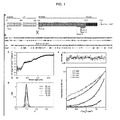
- FIG. 1 The five regions of Aap are illustrated: the A-repeat region, the putative globular domain ( ⁇ / ⁇ ), the B-repeat region containing 5 to 17 tandem G5 domains, the collagen-like proline/glycine-rich region and a cell wall anchoring motif (LPXTG).
- the proteolysis site is illustrated with scissors.
- the domain boundaries of the Brpt1.5 and Brpt2.5 constructs are illustrated, and the histidines are highlighted with arrowheads;
- B Sequence alignment of the terminal G5 domain and C-terminal "half repeat" motif from Aap (SEQ. ID NO. 1) and SasG (SEQ. ID NO. 2) . Identical amino acids are indicated by dashes (-).
- Blast alignment shows 80% conservation and 65% identity
- C Far-UV circular dichroism spectrum of Brpt1.5 in 20 mM Tris pH 7.4, 50 mM NaF. Deconvolution of the data reveals predominantly ⁇ -sheet and coil secondary structure elements (Table 1);
- D Sedimentation coefficient distribution plot for Brpt1.5 at varying concentrations. Molecular weight estimation indicates Brpt1.5 is monomeric;
- E Representative sedimentation equilibrium data for Brpt1.5, confirming a monomeric state (Table 3). Black lines show the global fits; residuals are shown above.
- FIG. 2 (A) Sedimentation velocity analyses of Brpt1.5 in the presence of divalent cations revealed a Zn 2+ -specific dimerization event. The dashed line label (---) represents cation-free Brpt1.5; (B) Far-UV CD spectrum of Brpt1.5 in the presence (squares) and absence (triangles) of Zn; (C) Sedimentation equilibrium analysis of Zn 2+ -mediated dimerization of Brpt1.5 (triangles) and Brpt2.5 (squares).
- D Linked equilibrium plot of Zn binding by Brpt1.5. Linear regression analysis of the slope indicates that the number of Zn 2+ ions taken up upon Brpt1.5 dimerization (i.e., ⁇ Zn 2+ ) is approximately three;
- E Linked equilibrium plot of Zn binding by Brpt2.5. Linear regression analysis of the slope indicates that approximately five Zn 2+ ions are bound upon Brpt2.5 dimerization.
- FIG. 5 Aap from S. epidermidis strain RP62A. Similar architecture is observed in S. aureus proteins SasG and Pls, with the reported number of G5 repeats across Staphylococcal species varying from four to seventeen;
- B "Surface protein from gram positive cocci” from Streptococcus suis 89/1591;
- C "LPXTG cell wall surface protein” from Streptococcus gordonii str. challis substr. chl;
- D "Putative cell surface protein precursor” from Corynebacterium urealyticum;
- E E.
- FIG. 7 (A) SrCl 2 does not reverse biofilm inhibition by 30 ⁇ M DTPA. All data at 30 ⁇ M DTPA show statistically significant decreases compared to no-treatment control (RP62A); (B) CaCl 2 does not reverse biofilm inhibition by 30 ⁇ M DTPA. All data at 30 ⁇ M DTPA show statistically significant decreases compared to no-treatment control (RP62A); (C) MgCl 2 does not reverse biofilm inhibition by 30 ⁇ M DTPA.
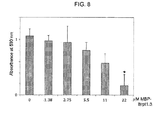
- FIG. 8 Inhibition of RP62A biofilms by MBP-Brpt1.5 at 750 ⁇ M ZnCl 2 . Dose response of biofilm inhibition by MBP-Brpt1.5 at a fixed 750 ⁇ M ZnCl 2 concentration. Asterisks indicate the level of statistical significance relative to the untreated control.
- biofilm refers to matrix-enclosed microbial accretions to biological or non-biological surfaces. Biofilm formation represents a protected mode of growth that allows cells to survive in hostile environments.
- biofilm formation is intended to include the formation, growth, and modification of the bacterial colonies contained with biofilm structures, as well as the synthesis and maintenance of the polysaccharide matrix of the biofilm structures.
- zinc adhesion module refers to a polypeptide fold found in bacterial cell-surface proteins including, but not limited to, the Accumulation-associated protein (Aap) from Staphylococcus epidermidis.
- the zinc adhesion module comprises a polypeptide sequence that includes at least one G5 domain, and optionally additional amino acid sequence.
- G5 domain refers to a polypeptide fold found in a wide variety of extracellular proteins, named after its conserved glycine residues.
- the G5 domain consists of approximately 80 amino acid residues and is typically found as one to twelve tandem repeats.
- the G5 domain is the first 80 amino acids of Brpt1.0.
- B-repeat or “Brpt” refer to a region of the Aap protein having a variable number (5 to 17) of nearly identical 128 amino acid repeats.
- Brpt1.5 refers to a B-repeat region terminating in a conserved 79 amino acid "half repeat” motif.
- Brpt1.0 refers to an isolated 128 amino acid repeat comprising a G5 domain.
- chelator or "metal chelator” refer to any substance that is able to remove a metal ion from a solution system by forming a new complex ion that has different chemical properties than those of the original metal ion.
- the term is further intended to encompass substances that are capable of chelating metal ions, specifically divalent metals.
- metal ions is intended to include any metal ion that is bioavailable, i.e., any metal ion involved in a biochemical reaction or pathway, or any metal ion that is available in the fluid, tissue, or bone of a subject.
- zinc chelator refers to any substance that is able to chelate a zinc (Zn 2+ ) ion and thus deplete zinc from aqueous environments.
- Gram positive bacteria refers to bacteria having cell walls with high amounts of peptidoglycan. Gram positive bacteria are identified by their tendency to retain crystal violet and stain dark blue or violet in the Gram staining protocol.
- Gram negative bacteria refers to bacteria having thinner peptidoglycan layers which do not retain the crystal violet stain in the Gram staining protocol and instead retain the counterstain, typically safranin. Gram negative bacteria stain red or pink in the Gram staining protocol.
- implantable medical device refers to any medical device implanted or inserted in the human body. Such devices can be temporarily or permanently implanted or inserted.
- An implantable medical device can be, for example, catheters, orthopedic devices, prosthetic devices, vascular stents, urinary stents, pacemakers, implants, or the like.
- Bathing a device refers to submerging a device in a solution in order to pre-treat the device, for example, prior to surgical implantation. Bathing a device can also occur after the device has been surgically implanted, for example, by irrigating the surgical site with a sterile solution.
- coating a device refers to pre-treating a device with a composition prior to surgical implantation.
- Suitable compositions for pre-treating the device may include, for example, solutions, gels, polymer coatings, and the like.
- a variety of means may be employed to coat a device, such as spraying or submerging the device.
- the coated device comprises a surface layer having desirable properties conferred by the coating composition.
- the coating composition comprises at least one zinc chelator.
- the coating composition comprises one or more soluble G5 domains or zinc adhesion modules.
- polymer coating refers to an adherent polymer layer suitable for coating the exterior surface of a device, for example, an implantable medical device.
- the polymer coating may have intrinsic chelation properties, or may be bonded to one or more chemical or protein-based chelating agents.
- mammal refers to organisms that can suffer from biofilm-associated states.
- the term includes humans, for example, as well as wild and domesticated animals and livestock, including but not limited to horses, chimpanzees, macaques, pigs, sheep, goats, hamsters, guinea pigs, monkeys, bears, dogs, cats, mice, rabbits, cattle, squirrels, and rats.
- pharmaceutical composition includes preparations suitable for administration to mammals, for example, humans.
- topical pharmaceutical composition refers to pharmaceutical compositions suitable for dermal administration to a mammal. Suitable topical pharmaceutical compositions include, but are not limited to, gels, creams, lotions, ointments, tinctures, sprays, and solids. In one embodiment, a topical pharmaceutical composition of the present invention is applied on the outer surface of the skin or in the vicinity of cuts, abrasions, turf burn injuries, lacerations, burns, or puncture wounds in order to treat, prevent, or inhibit the formation of bacterial biofilms.
- antiimicrobial agent refers to any substance that kills or prevents the growth of bacteria or other microbes.
- antibiotic refers to a substance that is antagonistic to the growth of microorganisms. Suitable antibiotics may be naturally-occurring, chemically-modified, or synthetically-produced.
- surgical rinse refers to a solution used during surgery to irrigate the site of an implanted medical device, with the intent to prevent initial formation of biofilms in the vicinity of the medical device.
- the term "dental rinse” refers to a solution containing one or more zinc chelators used as a mouthwash or rinse to prevent the establishment of oral biofilms that lead to dental caries.
- personal cleansing composition refers to a composition that is used for personal hygiene.
- personal cleansing compositions include, but are not limited to, gels, creams, suspensions, colloids, soaps, body washes, shampoos, and the like.
- the personal cleansing compositions of the present invention inhibit biofilm-related infections including, but not limited to, community-acquired methicillin-resistant S. aureus (CA-MRSA) infection.
- CA-MRSA community-acquired methicillin-resistant S. aureus
- hard surface cleaning composition refers to a composition that is used to clean and/or sanitize a hard or solid surface.
- the invention provides a composition that prevents bacterial biofilm growth on hard surfaces including, but not limited to, surgical instruments, storage tanks, pipelines, trays, containers, walls, floors, countertops, locker room floors, benches, lockers, showers, bathrooms, toilets, water filtration units, and the like.
- inhibitor refers to the effect of a zinc chelator in disrupting or clearing a biofilm, as well as preventing formation of a biofilm.
- an effective amount refers to an amount of a zinc chelator or a soluble zinc adhesion module sufficient to achieve the desired inhibitory result.
- safe and effective amount refers to an amount of a zinc chelator or a soluble zinc adhesion module that is effective to inhibit biofilm formation without undue adverse side effects, such as toxicity, irritation, or allergic response, commensurate with a reasonable risk/benefit ration when used in the manner of the invention.
- terapéuticaally effective amount refers to a sufficient amount of an ingredient to treat disorders, at a reasonable benefit/risk ratio applicable to any medical treatment. It will be understood, however, that the total daily usage of the compositions of the present invention will be decided by the attending physician within the scope of sound medical judgment.
- the specific therapeutically effective dose level for any particular patient will depend upon a variety of factors including the disorder being treated and the severity of the disorder; activity of the specific chelator employed; the specific composition employed; the age, body weight, general health, sex and diet of the patient; the time of administration, route of administration, and rate of excretion of the specific compound employed; the duration of the treatment; drugs used in combination or coincidental with the specific compound employed; and like factors well known in the medical arts. For example, it is well within the skill of the art to start doses of the compound at levels lower than required to achieve the desired therapeutic effect and to gradually increase the dosage until the desired effect is achieved.
- the present invention indicates that homophilic association of Aap and SasG is mediated solely via self-association of their respective G5 domains.
- the C-terminal G5 domain from the B-repeat region of Aap was expressed both as an isolated domain (called Brpt1.0) and as the single G5 domain followed by the C-terminal 79 amino acid "half-repeat" (called Brpt1.5; Figs. 1A and 1B ).
- Brpt1.5 was analyzed by AUC in the presence of Ca 2+ , Sr 2+ Mg 2+ , Mn 2+ , Ni 2+ , Co 2+ , and Zn 2+ . Interestingly, Brpt1.5 formed dimers only in the presence of Zn 2+ ( Fig. 2A , Tables 2 and 3).
- G5 domains are found as tandem repeats ranging from 5 to 17 copies. SasG-dependent protein-based biofilm formation in S. aureus has been shown to require at least five tandem G5 repeats. See Corrigan, Microbiology 153: 2435-46 . To analyze the behavior of tandem G5 domains, a Brpt2.5 construct with two G5 domains and the C-terminal cap was expressed.
- Sedimentation equilibrium analysis of Brpt2.5 revealed a monomer-dimer equilibrium in the presence of Zn 2+ as observed for Brpt1.5, but with a modest enhancement in Zn 2+ affinity for Brpt2.5 compared to Brpt1.5, combined with a steeper transition between monomer and dimer as the repeat length increased ( Fig. 2C ).
- the logarithm of the dimerization association constant was plotted against the logarithm of the free Zn 2+ concentration to reveal the net number of Zn 2+ ions participating in the dimerization interface.
- Structural Zn 2+ ions are most commonly coordinated by cysteine, followed by histidine, aspartate and glutamate.
- the entire sequence of Aap lacks cysteines; however, there are two histidine residues in the Brpt1.5 construct.
- Brpt1.5 with 10 mM Zn 2+ transitions from a dimer at pH 7.4 to a monomer at pH 6.0 ( Fig. 6A ).
- Sedimentation equilibrium experiments verified these results; a plot of the relative molecular weight as a function of pH could be fitted to yield an apparent pK a of 6.7 ( Fig. 6B ), consistent with coordination by histidine.
- both S. epidermidis and S. aureus biofilms were grown in culture in the presence or absence of the Zn 2+ chelator diethylenetriaminepentaacetic acid (DTPA).
- DTPA Zn 2+ chelator diethylenetriaminepentaacetic acid
- S. epidermidis strain RP62A formed robust biofilms when cultured in media alone, but biofilm growth was inhibited by non-toxic doses of DTPA ( ⁇ 30 ⁇ M) ( Fig. 3A ). Under the conditions tested, DTPA did not disrupt pre-formed RP62A biofilms.
- S. aureus strain USA300 which is responsible for recent epidemic outbreaks of community-acquired methicillin-resistant S. aureus (MRSA) infections, formed biofilms on fibronectin-coated plates.
- MRSA methicillin-resistant S. aureus
- the MRSA biofilms were inhibited by Zn 2+ chelation ( ⁇ 30 ⁇ M DTPA) ( Fig 3B ).
- S. epidermidis biofilm formation could be rescued by the addition of 5-20 ⁇ M ZnCl 2 , indicating that the effect is Zn 2+ -specific ( Fig. 3C ).
- Soluble G5 domain inhibits biofilm formation
- soluble Brpt1.5 was added to S. epidermidis RP62A biofilms as a maltose-binding protein (MBP) fusion. Because of the higher Zn 2+ concentrations required to induce dimerization in the short construct compared to full-length Aap, inhibition by MBP-Brpt1.5 was tested at Zn 2+ concentrations ranging up to 1 mM. RP62A biofilms were inhibited by soluble MBP-Brpt1.5 in the presence of 0.75 and 1 mM ZnCl 2 , whereas addition of MBP alone had no effect ( Fig. 4A ).
- the G5 domain found in Aap, SasG, and related staphylococcal proteins such as Pls, mediates Zn 2+ -dependent staphylococcal biofilm formation. Multiple self-association events between stretches of tandem G5 domains in opposing Aap molecules would lead to an extensive adhesive contact between two cells, a so-called "zinc zipper" ( Fig. 4C ).
- Aap was originally identified as a protein required for the formation of S. epidermidis microcolonies. Subsequently, Aap and SasG were shown to undergo a proteolysis event near the beginning of the B-repeat region containing the tandem G5 domains, which leads to formation of protein-based staphylococcal biofilms.
- the present invention indicates that the same mechanism for intercellular adhesion based upon Zn 2+ -dependent G5 self-association is responsible for early and late stages of biofilm formation.
- Zn 2+ -dependent intercellular adhesion in biofilms mediated by G5 domains has likely evolved as a defense mechanism against immune cell action.
- Zn 2+ levels that are known to increase cytokine release and boost host immune responses are sufficient to promote staphylococcal biofilm formation (5-20 ⁇ M Zn 2+ ).
- Mast cells, basophils, and eosinophils contain high levels of Zn 2+ in secretory granules that is released upon degranulation.
- genes encoding surface proteins with one or more tandem G5 domains are found in a vast number of bacterial species, indicating that the zinc zipper mechanism for intercellular adhesion provides a target for inhibition of biofilm formation across multiple bacterial species, in both medical and industrial applications.
- the biofilm-forming bacteria comprise at least one zinc adhesion module, such that contact with one or more zinc chelators or one or more soluble zinc adhesion modules inhibits formation of a biofilm.
- the bacteria comprising at least one zinc adhesion module may be selected from the group consisting Staphylococcus epidermidis and Staphylococcus aureus and combinations thereof.
- bacteria that form biofilms include Acidothermus cellulyticus, Actinomyces odontolyticus, Alkaliphilus metalliredigens, Alkaliphilus oremlandii, Arthrobacter aurescens, Bacillus amyloliquefaciens, Bacillus clausii, Bacillus halodurans, Bacillus licheniformis, Bacillus pumilus, Bacillus subtilis, Bifidobacterium adolescentis, Bifidiobacterium longum, Caldicellulosiruptor saccharolyticus, Carboxydothermus hydrogenoformans, Clostridium acetobutylicum, Clostridium beijerinckii, Clostridium botulinum, Clostridium cellulolyticum, Clostridium difficile, Clostridium kluyveri, Clostridium leptum, Clostridium novyi, Clostridium perfringens, Clostridium
- the bacteria may be selected from the group consisting of Corynebacterium urealyticum, Fingoldia magna, Staphylococcus aureus, methicillin resistant Staphylococcus aureus (MRSA), Staphylococcus epidermidis, methicillin resistant Staphylococcus epidermidis (MRSE), Streptococcus gordonii, Streptococcus pneumonia, Streptococcus sanguinis, Streptococcus suis, and combinations thereof.
- MRSA methicillin resistant Staphylococcus aureus
- MRSE methicillin resistant Staphylococcus epidermidis
- Streptococcus gordonii Streptococcus pneumonia, Streptococcus sanguinis, Streptococcus suis, and combinations thereof.
- the bacteria may be selected from the group consisting of Staphylococcus aureus, methicillin resistant Staphylococcus aureus (MRSA), Staphylococcus epidermidis, methicillin resistant Staphylococcus epidermidis (MRSE), and combinations thereof.
- MRSA methicillin resistant Staphylococcus aureus
- MRSE methicillin resistant Staphylococcus epidermidis
- certain gram negative bacteria comprise at least one zinc adhesion module.
- gram negative bacteria comprising a zinc adhesion module include, but are not limited to, Bacteroides capillosus, Symbiobacterium thermophilum, Syntrophomonas wolfei, Thermosinus carboxydivorans. Accordingly, it is envisaged that the invention may also be applied to gram negative bacteria having at least one zinc adhesion module.
- the zinc chelator of the present invention comprises 1,3-diaminopropane-N,N,N',N'-tetraacetic acid (DTPA).
- DTPA 1,3-diaminopropane-N,N,N',N'-tetraacetic acid
- DTPA 1,3-diaminopropane-N,N,N',N'-tetraacetic acid
- TPEN N,N,N',N'-tetrakis(2-pyrdiylmethyl) ethylenediamine
- DEDTC diethyldithiocarbamate
- DMPS 2,3-dimercapto-1-propanesulfonic acid
- EDPA ethylenediamine - N,N'- diacetic-N,N'-di-B-propionic acid
- DMHP 1,2-dimethyl-3-hydroxy-4-pyridinone
- the invention relates to a method for inhibiting formation of a biofilm comprising bacteria, the method comprising contacting the bacteria with an effective amount of at least one zinc chelator comprising DTPA, wherein the bacteria comprise at least one zinc adhesion module and wherein formation of the biofilm is inhibited.
- the at least one zinc chelator is placed in contact with the bacteria within an environment that supports bacterial adhesion and therefore potential establishment of biofilm formation.
- Bacterial zinc deprivation at the site of adhesion prevents zinc adhesion module interaction and, accordingly, protein-dependent biofilm formation.
- Zinc chelators are not necessarily bactericidal and may not directly kill cells, but instead prevent establishment of infection.
- the invention also relates to a method for inhibiting formation of a biofilm on a device, wherein the biofilm comprises bacteria comprising at least one zinc adhesion module, the method comprising contacting the device with a solution comprising an effective amount of at least one zinc chelator comprising DTPA, wherein formation of a biofilm on the device is inhibited.
- the device is an implantable medical device.
- implantable medical devices include, but are not limited to, pacemakers, heart valves, replacement joints, catheters, catheter access ports, dialysis tubing, gastric bands, shunts, screw plates, artificial spinal disc replacements, internal implantable defibrillators, cardiac resynchronization therapy devices, implantable cardiac monitors, mitral valve ring repair devices, left ventricular assist devices (LVADs), artificial hearts, implantable infusion pumps, implantable insulin pumps, stents, implantable neurostimulators, maxillofacial implants, dental implants, and the like.
- pacemakers pacemakers, heart valves, replacement joints, catheters, catheter access ports, dialysis tubing, gastric bands, shunts, screw plates, artificial spinal disc replacements, internal implantable defibrillators, cardiac resynchronization therapy devices, implantable cardiac monitors, mitral valve ring repair devices, left ventricular assist devices (LVADs), artificial hearts, implantable infusion pumps, implantable insulin pumps, stents, implantable
- the biofilm-forming bacteria of the embodiment comprise at least one zinc adhesion module, such that contact with one or more zinc chelators comprising DTPA inhibits formation of a biofilm on the device.
- the concentration of the chelator can be from about 20 ⁇ M to about 3 mM.
- appropriate concentrations of DTPA for use in the present method with S. epidermidis RP62A may range from about 20 ⁇ M to about 2.6 mM, or more specifically from about 20 ⁇ M to about 80 ⁇ M, or still more specifically from about 30 ⁇ M to about 80 ⁇ M; with S. aureus USA300, from about 80 ⁇ M to about 1300 ⁇ M, or more specifically from about 80 ⁇ M to about 1600 ⁇ M; with S.
- aureus SA113 from about 10 ⁇ M to about 160 ⁇ M, or more specifically from about 10 ⁇ M to about 30 ⁇ M; and with S . aureus COL, from about 10 ⁇ M to about 160 ⁇ M, or more specifically from about 10 ⁇ M to about 30 ⁇ M.
- the device is bathed or coated in a solution comprising an effective amount of at least one zinc chelator comprising DTPA.
- the device may be dipped in a solution comprising an effective amount of a zinc chelator and optionally allowed to dry.
- the device may be sprayed with a solution comprising a zinc chelator comprising DTPA and optionally allowed to dry.
- the present method could be used, for example, to bathe a medical device prior to implantation.
- a medical device could be coated with a solution comprising a zinc chelator prior to implantation.
- the solution comprising the zinc chelator comprising DTPA can be in any form which permits application of the solution to the particular device.
- the solution is a gel comprising at least one zinc chelator comprising DTPA.
- the solution is a polymer coating comprising at least one zinc chelator.
- the solution may be composed such that an effective amount of a zinc chelator is released gradually, providing for inhibition of biofilm formation over a period of time.
- the invention further relates to a topical pharmaceutical composition for use in a method of inhibiting formation of a biofilm in or on a mammal is provided, wherein the biofilm comprises bacteria comprising at least one zinc adhesion module, the pharmaceutical composition comprising a therapeutically effective amount of at least one zinc chelator comprising DTPA and at least one pharmaceutically acceptable carrier.
- compositions or vehicle suitable for administering compositions of the present invention to mammals.
- Each carrier must be “acceptable” in the sense of being compatible with the other ingredients of the formulation and not injurious to the patient.
- compositions of this invention can be administered topically to a subject, e.g., by the direct laying on or spreading of the composition on the epidermal or epithelial tissue of the subject.
- Such compositions include, for example, lotions, creams, solutions, gels, sprays, ointments, and solids.
- These topical compositions preferably comprise a therapeutically effective amount, usually at least about 20 ⁇ M, and specifically from about 40 ⁇ M to about 2 mM, of a zinc chelator comprising DTPA.
- Suitable carriers for topical administration preferably remain in place on the skin as a continuous film, and resist being removed by perspiration or immersion in water.
- the carrier is organic in nature and capable of having dispersed or dissolved therein at least one zinc chelator comprising DTPA.
- the carrier may include pharmaceutically-acceptable emollients, emulsifiers, thickening agents, solvents, and the like.
- the amount of zinc chelator comprising DTPA to be topically administered depends upon such factors as skin sensitivity, type and location of the tissue to be treated, the composition and carrier to be administered, the particular zinc chelator comprising DTPA to be administered, as well as the particular bacterial biofilm to be inhibited.
- compositions of the invention may further include additional drugs or excipients as appropriate for the indication.
- the pharmaceutical composition further comprises a therapeutically effective amount of at least one antimicrobial agent.
- the antimicrobial agent is an antibiotic.
- a surgical rinse may be used for inhibiting the formation of a biofilm, wherein the biofilm comprises bacteria comprising at least one zinc adhesion module, and wherein the surgical rinse comprises an effective amount of at least one zinc chelator comprising DTPA.
- the surgical rinse may be, for example, a buffered saline solution or a Ringer's solution.
- the chelator may be DTPA and the concentration can be from about 20 ⁇ M to about 2mM.
- a surgical rinse of this kind may be applied before, during, or after surgery and may be aspirated from the surgical area or left on the surgical area to inhibit biofilm formation.
- the bandage may be impregnated with a chelating polymer composition.
- Also described is a method for inhibiting formation of a biofilm comprising bacteria comprising contacting the bacteria with an effective amount of at least one zinc chelator comprising DTPA, wherein the bacteria are selected from the group consisting of Staphylococcus aureus, methicillin resistant Staphylococcus aureus (MRSA), Staphylococcus epidermidis, methicillin resistant Staphylococcus epidermidis (MRSE), Streptococcus sanguinis, and Streptococcus suis, whereby formation of the biofilm is inhibited.
- MRSA methicillin resistant Staphylococcus aureus
- MRSE methicillin resistant Staphylococcus epidermidis
- Streptococcus sanguinis Streptococcus suis
- a method for inhibiting the formation of a biofilm comprising bacteria wherein the bacteria comprise at least one zinc adhesion module comprising contacting the bacteria with a composition comprising at least one soluble zinc adhesion module, wherein formation of the biofilm is inhibited.
- the composition may be, for example, a spray, lotion, solution, gel, cream, ointment, surgical rinse, or dental rinse.
- the composition comprising at least one soluble zinc adhesion module may be a device-soaking solution, a personal cleaning composition, or a hard surface cleaning composition prepared with recombinant, purified soluble zinc adhesion modules.
- the composition may comprises about 5 ⁇ M to about 50 ⁇ M of a protein construct comprising one or two zinc adhesion modules, or about 10 nM to about 10 ⁇ M of a protein construct containing three to 17 zinc adhesion modules.
- a bandage impregnated with a safe and effective amount of at least one zinc chelator comprising DTPA may be used, wherein the bandage inhibits the formation of a biofilm on the skin, wherein the biofilm comprises bacteria comprising at least one zinc adhesion module.
- the bandage may be suitable for use in patients with cuts, burns, turf burns, abrasions, lacerations, puncture wounds, regions of bacterial infection such as boils and pustules, and the like.
- the chelator may be DTPA and the concentration of DTPA in the solution impregnating the bandage may be from about 20 ⁇ M to about 2 mM.
- a personal cleansing composition comprising an effective amount of at least one zinc chelator comprising DTPA is also envisaged, wherein the personal cleansing composition inhibits formation of a biofilm on the skin, wherein the biofilm comprises bacteria comprising at least one zinc adhesion module.
- Suitable personal cleansing compositions include, but are not limited to, surgical scrubs, shower gels, body washes, soaps, and the like.
- the chelator may be DTPA and the concentration of DTPA in the personal cleansing composition may be from about 20 ⁇ M to about 2 mM.
- the personal cleansing composition may be applied as a part of a personal hygiene routine. Personal cleansing compositions of this type may be suitable for use by a variety of individuals, including, for example, people recovering from MRSA or MRSE infections, athletes using team locker rooms, and healthcare professionals.
- a hard surface cleaning composition comprising an effective amount of at least one zinc chelator comprising DTPA is also envisaged, wherein the composition inhibits formation of a biofilm on a hard surface, wherein the biofilm comprises bacteria comprising at least one zinc adhesion module.
- a hard surface cleaning composition has a variety of useful applications, including use in industrial applications as well as medical, veterinary, or livestock environments.
- hard surface cleaners of this type are useful in the cleaning and treating of pipeline systems, cooling water systems in power plants, refineries, chemical plants, air conditioning systems, storage tanks, trays, containers, walls, floors, countertops, locker room floors, benches, lockers, showers, bathrooms, toilets, water filtration units, and the like, as part of a standard cleaning routine.
- the chelator may be DTPA and the concentration of chelator in the composition may be from about 20 ⁇ M to about 20 mM.
- the at least one zinc chelator comprising DTPA is present in the composition in combination with one or more other cleaning agents, such as detergents, surfactants, alcohols, hydrochloric or muriatic acid, acetic acid, sodium or potassium hydroxide, ammonia, and the like.
- a dental rinse is also envisaged for inhibiting formation of a biofilm wherein the biofilm comprises bacteria comprising at least one zinc adhesion module, the dental rinse comprising an effective amount of at least one zinc chelator comprising DTPA.
- composition according to the present invention comprising aqueous DTPA in the amounts indicated was prepared:
- a 100 mM stock solution was prepared by dissolving solid DTPA in 500 mM HCl and incubating at room temperature with agitation (rocking) for 2 hrs until all powder dissolved.
- This concentrated stock solution was used to prepare 8-10X stocks to use for the assay, by diluting concentrated DTPA into filtered water to give final concentrations 200, 400, 800, 1600, 3200, 6400, 13000, 26000 ⁇ M. All chelator solutions were filter-sterilized by a 0.2 ⁇ m nitrocellulose filter prior to use in the biofilm assay.
- composition according to the present invention comprising aqueous EDTA in the amounts indicated was prepared:
- a concentrated 0.5 M stock solution was prepared by dissolving solid EDTA in filtered water and titrating in 10 M NaOH dropwise until a pH 8.8 was reached. This concentrated stock solution was used to prepare 8-10X stocks for the assay by diluting into filtered water and filter sterilizing, as described in Example 1.
- composition according to the present invention comprising aqueous EDDA in the amounts indicated was prepared:
- a concentrated 100 mM stock was prepared by dissolving solid EDDA in 1N NaOH and titrating in 12 M HCl dropwise until a pH of 8.8 was reached. This concentrated stock solution was used to prepare 8-10X stocks for assay by diluting into filtered water and filter sterilizing, as described in Example 1.
- composition according to the present invention comprising aqueous DEDTC in the amounts indicated was prepared:
- a concentrated 100 mM stock was prepared by dissolving solid DEDTC in filtered water. This concentrated stock solution was used to prepare 8-10X stocks for assay by diluting into filtered water and filter sterilizing, as described in Example 1.
- composition according to the present invention comprising aqueous TPEN in the amounts indicated was prepared:
- a concentrated 100 mM stock was prepared by dissolving solid TPEN in 100% ethanol. This concentrated stock solution was used to prepare 8-10X stocks for assay by diluting into 100% ethanol and filter sterilizing, as described in Example 1.
- composition according to the present invention comprising aqueous 1,10 - phenanthroline in the amounts indicated was prepared:
- a concentrated 100 mM stock was prepared by dissolving solid 1,10 - phenanthroline in 100 mM HCl. This concentrated stock solution was used to prepare 8-10X stocks for assay by diluting into filtered water and filter sterilizing, as described in Example 1.
- composition according to the present invention comprising aqueous crystal violet in the amounts indicated was prepared:
- a stock solution was prepared by dissolving 1 gram of solid crystal violet in 1 liter of filtered water, and passing the solution through a 0.45 ⁇ m nitrocellulose filter.
- S. epidermidis strain RP62a (ATCC 35984) was obtained as a glycerol stock from ATCC. 3 ml overnight cultures were grown in tryptic soy broth (TSB, BD Biomedical), shaking at 37 °C, and cultures were diluted 1:200 in TSB for use in the biofilm assay.
- TTB tryptic soy broth
- Each chelator (prepared in Examples 1-6) was added directly to a 96 well microtiter plate in a series of dilutions. 20 ⁇ l of each stock solution (200, 400, 800, 1600, 3200, 6400, 13000, or 26000 ⁇ M chelator) was added to each well. 200 ⁇ l of the 1:200 dilution of RP62a bacterial culture (as previously specified) was added to each well. Controls with bacterial culture media only and bacterial culture media plus vehicle controls only (i.e., final concentrations 10mM HCl, 10% ethanol, or 10mM NaOH) were added to wells alone without chelator. The 96 well plates were then incubated 18-24 hours statically at 37 °C.
- biofilms were diminished but not cleared by 20 ⁇ M DTPA, 40 ⁇ M EDTA, 80 ⁇ M 1,10-phenanthroline, 20 ⁇ M DEDTC, and 80 ⁇ M EDDA.
- RP62a biofilms were inhibited (i.e., absorbance of 0.1 or less) by 40 ⁇ M DTPA, 20 ⁇ M TPEN, 320 ⁇ M EDTA, 640 ⁇ M 1,10-phenanthroline, and 1.3 mM DEDTC.
- S. aureus strain Rosenbach SA113 (ATCC 35556) was obtained as a glycerol stock from ATCC. 3 ml overnight cultures were grown in blood-heart infusion broth (BHI, BD biomedical) shaking at 37 °C, where cultures were diluted 1:50 for use in the biofilm assay.
- BHI blood-heart infusion broth
- 2% glucose (20 ⁇ l from a 20% glucose stock) was added to each well prior to the addition of bacterial culture to promote biofilm formation.
- 96 well microtiter plates were pre-treated with fetal bovine serum (FBS) at 4 °C for at least 24 hours prior to use.
- FBS fetal bovine serum
- the FBS was aspirated prior to addition of chelators and glucose for the assay.
- Each chelator (prepared in Examples 1-6) was added directly to a 96 well microtiter plate in a series of dilutions. 20 ⁇ l of each stock solution (200, 400, 800, 1600, 3200, 6400, 13000, or 26000 ⁇ M chelator) was added to each well.
- biofilms were diminished but not cleared by 20 ⁇ M TPEN, 320 ⁇ M EDTA, 320 ⁇ M 1,10-phenanthroline, 80 ⁇ M DEDTC, and 20 ⁇ M EDDA.
- SA113 biofilms were inhibited (i.e., absorbance of 0.1 or less) by 20 ⁇ M DTPA, 40 ⁇ M TPEN, 1.3 mM 1,10-phenanthroline, 80 ⁇ M DEDTC, and 640 ⁇ M EDDA.
- S. aureus strain COL was obtained directly from Brian Wilkinson (Illinois State University) who has maintained the culture as a frozen stock since 1976. 3 ml overnight cultures were grown in blood-heart infusion broth (BHI) shaking at 37 °C, where cultures were diluted 1:25 for use in the biofilm assay.
- BHI blood-heart infusion broth
- sucrose (20 ⁇ l from a 20% sucrose stock) was added to each well prior to the addition of the bacterial culture to promote biofilm formation.
- 96 well microtiter plates were pre-treated with fetal bovine serum (FBS) at 4 °C for at least 24 hours prior to use. The FBS was aspirated prior to addition of chelators and sucrose for the assay.
- FBS fetal bovine serum
- Each chelator (prepared in Examples 1-6) was added directly to a 96 well microtiter plate in a series of dilutions. 20 ⁇ l of each stock solution (200, 400, 800, 1600, 3200, 6400, 13000, or 26000 ⁇ M chelator) was added to each well.
- biofilms were diminished but not cleared by 20 ⁇ M EDTA, 80 ⁇ M 1,10-phenanthroline, 20 ⁇ M DEDTC, and 160 ⁇ M EDDA.
- COL biofilms were inhibited (i.e., absorbance of 0.1 or less) by concentrations greater than 20 ⁇ M DTPA, 20 ⁇ M TPEN, 160 ⁇ M EDTA, 320 ⁇ M 1,10-phenanthroline, and 80 ⁇ M DEDTC. 20.
- S. aureus strain USA300 was obtained from Daniel Hassett (University of Cincinnati) as a glycerol stock. 3 ml overnight cultures were grown in blood-heart infusion broth (BHI) shaking at 37 °C, where cultures were diluted 1:25 for use in the biofilm assay. 2% glucose (20 ul from a 20% glucose stock) was added to each well prior to the addition of bacterial culture to promote biofilm formation. In addition, 96 well microtiter plates were pre-treated with human fibronectin (BD biomedical purchased from Fisher scientific). The fibronectin was aspirated prior to addition of chelators and glucose for the assay.
- BHI blood-heart infusion broth
- Each chelator (prepared in Examples 1-6) was added directly to a 96 well microtiter plate in a series of dilutions. 20 ⁇ l of each stock solution (200, 400, 800, 1600, 3200, 6400, 13000, or 26000 ⁇ M chelator) was added to each well. 200 ⁇ l of the 1:25 dilution of USA300 bacterial culture dilution (as previously specified) were added to each well. Controls with bacterial culture media only and bacterial culture media plus vehicle controls only (final concentrations 10 mM HCl, 10% ethanol, and 10 mM NaOH) were added to wells alone without chelator. The 96 well plates were then incubated 36-40 hours statically at 37 °C.
- biofilms were diminished but not cleared by 20 ⁇ M DTPA, 20 ⁇ M TPEN, 1.3 mM EDTA, and 160 ⁇ M 1,10-phenanthroline.
- USA300 biofilms were inhibited (i.e., absorbance of 0.1 or less) by concentrations greater than 20 ⁇ M DTPA, 20 ⁇ M TPEN, 2.6 mM EDTA, and 1.3 mM 1,10-phenanthroline.
- a prosthetic knee replacement is prepared prior to surgery by bathing the device for 60 minutes in a 2 mM sterile DTPA solution.
- the solution is an aqueous solution containing 10 mM HCl, a vehicle used to solubilized DTPA.
- the device is removed from the sterile DTPA solution and implanted into the patient. Treatment with the DTPA solution inhibits biofilm formation on the prosthetic device.
- the vicinity of the surgical operation is rinsed with a sterile buffered saline solution containing 100 ⁇ M DTPA.
- the sterile solution is aspirated from the surgical site. Rinsing with the DTPA solution inhibits biofilm formation on the implantable device by commensal or environmental bacteria that gain access to the implantation site during surgery.
- a topical pharmaceutical cream containing 100 ⁇ M DTPA is prepared. This composition is applied to the surface of the skin after a turf burn injury. Treatment with the topical pharmaceutical cream inhibits biofilm formation upon infection of the injured area with methicillin resistant Staphylococcus aureus.
- a bandage is impregnated with a pharmaceutical gel containing 100 ⁇ M DTPA.
- the bandage is applied to the surface of the skin over a laceration. Treatment with the bandage inhibits biofilm formation upon infection of the injured area with Staphylococcus epidermidis.
- a personal cleaning composition in the form of a shower gel containing 1 mM DTPA is prepared.
- the personal cleaning composition is applied as a part of a personal hygiene routine by athletes in the locker room.
- the DTPA-containing shower gel prevents biofilm-related infections such as MRSA or MRSE.
- a hard surface cleaning composition is prepared containing 2 mM DTPA.
- the cleaning solution is used to soak hard objects such as surgical instruments or food preparation tools. Biofilm formation by bacteria having zinc adhesion modules is inhibited.
- a hard surface cleaning composition is prepared containing 2 mM DTPA.
- the cleaning solution is applied to pipeline systems. Application of the cleaning solution prevents the formation of environmental or industrial biofilms on the surface of the pipes.
- a prosthetic hip replacement is prepared prior to surgery by bathing the device for 60 minutes in a sterile solution containing a 25 ⁇ M concentration of a protein construct comprising one zinc adhesion module.
- the device is removed from the sterile zinc adhesion module solution and implanted into the patient. Treatment with the zinc adhesion module solution inhibits biofilm formation on the prosthetic device.
- the vicinity of the surgical operation is rinsed with a sterile buffered saline solution containing a 2 ⁇ M concentration of a protein construct comprising six zinc adhesion modules.
- the sterile solution is aspirated from the surgical site. Rinsing with the zinc adhesion module solution inhibits biofilm formation on the implantable device by commensal or environmental bacteria that gain access to the implantation site during surgery.
Landscapes
- Life Sciences & Earth Sciences (AREA)
- Health & Medical Sciences (AREA)
- Wood Science & Technology (AREA)
- Chemical & Material Sciences (AREA)
- Engineering & Computer Science (AREA)
- General Health & Medical Sciences (AREA)
- Agronomy & Crop Science (AREA)
- Pest Control & Pesticides (AREA)
- Organic Chemistry (AREA)
- Environmental Sciences (AREA)
- Zoology (AREA)
- Dentistry (AREA)
- Plant Pathology (AREA)
- Chemical Kinetics & Catalysis (AREA)
- Oil, Petroleum & Natural Gas (AREA)
- Veterinary Medicine (AREA)
- Public Health (AREA)
- Oncology (AREA)
- Communicable Diseases (AREA)
- Nuclear Medicine, Radiotherapy & Molecular Imaging (AREA)
- General Chemical & Material Sciences (AREA)
- Animal Behavior & Ethology (AREA)
- Medicinal Chemistry (AREA)
- Pharmacology & Pharmacy (AREA)
- Pharmaceuticals Containing Other Organic And Inorganic Compounds (AREA)
- Medicines That Contain Protein Lipid Enzymes And Other Medicines (AREA)
Claims (12)
- Procédé in vitro d'inhibition de la formation d'un biofilm comprenant des bactéries, le procédé comprenant la mise en contact des bactéries avec une quantité efficace d'au moins un chélateur de zinc, les bactéries comprenant au moins un module d'adhésion du zinc et les bactéries étant choisies dans le groupe constitué par Staphylococcus epidermidis et Staphylococcus aureus et leurs combinaisons, moyennant quoi la formation du biofilm est inhibée ; caractérisé en ce qu'au moins un chélateur de zinc comprend du DTPA.
- Procédé selon la revendication 1, les bactéries étant choisies parmi une ou plusieurs du groupe constitué par Staphylococcus aureus résistant à la méticilline (MRSA) et Staphylococcus epidermidis résistant à la méticilline (MRSE) et leurs combinaisons.
- Procédé in vitro d'inhibition de la formation d'un biofilm sur un dispositif, le biofilm comprenant des bactéries comprenant au moins un module d'adhésion du zinc et les bactéries étant choisies dans le groupe constitué par Staphylococcus epidermidis et Staphylococcus aureus et leurs combinaisons, le procédé comprenant la mise en contact du dispositif avec une solution comprenant une quantité efficace d'au moins un chélateur de zinc, moyennant quoi la formation d'un biofilm sur le dispositif est inhibée ; caractérisé en ce qu'au moins un chélateur de zinc comprend du DTPA.
- Procédé selon la revendication 3, le dispositif comprenant un dispositif médical implantable.
- Procédé selon la revendication 4, le dispositif médical implantable étant choisi dans le groupe constitué par les stimulateurs cardiaques, les valves cardiaques, les dispositifs d'arthroplastie, les cathéters, les orifices d'accès de cathéter, les tubulures pour dialyse, les anneaux gastriques, les shunts, les plaques à vis, les prothèses de disques vertébraux, les défibrillateurs implantables internes, les dispositifs de thérapie de resynchronisation cardiaque, les moniteurs cardiaques implantables, les dispositifs de réparation de l'anneau mitral, les dispositifs d'assistance ventriculaire gauche (DAVG), les coeurs artificiels, les pompes à perfusion implantables, les pompes à insuline implantables, les endoprothèses vasculaires, les neurostimulateurs implantables, les implants maxillo-faciaux et les implants dentaires
- Procédé selon l'une quelconque des revendications 3 à 5, la mise en contact comprenant le mouillage ou le recouvrement du dispositif.
- Procédé selon l'une quelconque des revendications 3 à 6, la solution étant un gel ou un revêtement polymère.
- Composition pharmaceutique topique comprenant une quantité thérapeutiquement efficace d'au moins un chélateur de zinc et au moins un support pharmaceutiquement acceptable, pour une utilisation dans un procédé d'inhibition de la formation d'un biofilm chez un mammifère, le biofilm comprenant des bactéries comprenant au moins un module d'adhésion du zinc et les bactéries étant choisies dans le groupe constitué par Staphylococcus epidermidis et Staphylococcus aureus et leurs combinaisons ; caractérisé en ce qu'au moins un chélateur de zinc comprend du DTPA.
- Composition pharmaceutique selon la revendication 8, comprenant en outre une quantité thérapeutiquement efficace d'au moins un agent antimicrobien, notamment un antibiotique.
- Composition pharmaceutique selon la revendication 8 ou 9, la composition étant sous la forme d'un liquide de rinçage chirurgical, d'un liquide de rinçage dentaire, d'un spray, d'une solution, d'un gel, d'une crème, d'un onguent, d'un nettoyant corporel, d'un savon, d'un liquide de lavage chirurgical ou d'un pansement imprégné.
- Procédé selon l'une quelconque des revendications 1 à 7, la concentration de chaque chélateur étant comprise entre 20 µM et 3 mM.
- Composition pharmaceutique selon l'une quelconque des revendications 8 à 10, la concentration de chaque chélateur étant comprise entre 20 µM et 3 mM.
Applications Claiming Priority (2)
| Application Number | Priority Date | Filing Date | Title |
|---|---|---|---|
| US5726708P | 2008-05-30 | 2008-05-30 | |
| PCT/US2009/045623 WO2009155088A1 (fr) | 2008-05-30 | 2009-05-29 | Inhibition de la formation de biofilms à l'aide de chélateurs de zinc |
Publications (3)
| Publication Number | Publication Date |
|---|---|
| EP2306821A1 EP2306821A1 (fr) | 2011-04-13 |
| EP2306821A4 EP2306821A4 (fr) | 2012-04-18 |
| EP2306821B1 true EP2306821B1 (fr) | 2014-10-01 |
Family
ID=41434389
Family Applications (1)
| Application Number | Title | Priority Date | Filing Date |
|---|---|---|---|
| EP09767399.0A Active EP2306821B1 (fr) | 2008-05-30 | 2009-05-29 | Inhibition de la formation de biofilms à l'aide de chélateurs de zinc comprenant le dtpa |
Country Status (7)
| Country | Link |
|---|---|
| US (1) | US20110189260A1 (fr) |
| EP (1) | EP2306821B1 (fr) |
| AU (1) | AU2009260414A1 (fr) |
| BR (1) | BRPI0913293B1 (fr) |
| CA (1) | CA2726529A1 (fr) |
| ES (1) | ES2524792T3 (fr) |
| WO (1) | WO2009155088A1 (fr) |
Cited By (5)
| Publication number | Priority date | Publication date | Assignee | Title |
|---|---|---|---|---|
| US9034033B2 (en) | 2011-10-19 | 2015-05-19 | Twelve, Inc. | Prosthetic heart valve devices, prosthetic mitral valves and associated systems and methods |
| US9125740B2 (en) | 2011-06-21 | 2015-09-08 | Twelve, Inc. | Prosthetic heart valve devices and associated systems and methods |
| US9421098B2 (en) | 2010-12-23 | 2016-08-23 | Twelve, Inc. | System for mitral valve repair and replacement |
| US9579198B2 (en) | 2012-03-01 | 2017-02-28 | Twelve, Inc. | Hydraulic delivery systems for prosthetic heart valve devices and associated methods |
| US10874108B2 (en) | 2016-05-04 | 2020-12-29 | 5d Health Protection Group Ltd. | Anti-microbial compositions |
Families Citing this family (46)
| Publication number | Priority date | Publication date | Assignee | Title |
|---|---|---|---|---|
| US20080206276A1 (en) | 2005-07-08 | 2008-08-28 | Michael Otto | Targeting Poly-Gamma-Glutamic Acid to Treat Staphylococcus Epidermidis and Related Infections |
| US8722020B2 (en) * | 2010-03-31 | 2014-05-13 | General Electric Company | Hydroxylated contrast enhancement agents |
| CN102649817A (zh) * | 2011-02-24 | 2012-08-29 | 复旦大学 | 一种抑制细菌生物膜形成的单克隆抗体 |
| WO2012122534A2 (fr) | 2011-03-10 | 2012-09-13 | The Trustees Of Columbia University In The City Of New York | N-quinoline-benzensulfonamides et composés associés destinés au traitement du cancer, de troubles auto-immuns et d'inflammations |
| WO2012149058A2 (fr) | 2011-04-25 | 2012-11-01 | California Institute Of Technology | Procédés et système pour intervenir sur la viabilité de bactéries, et composés et compositions associés |
| US10406211B2 (en) * | 2011-04-25 | 2019-09-10 | California Institute Of Technology | Methods and system for interfering with viability of bacteria and related compounds and compositions |
| US10016271B2 (en) | 2011-10-19 | 2018-07-10 | Twelve, Inc. | Prosthetic heart valve devices, prosthetic mitral valves and associated systems and methods |
| US9763780B2 (en) | 2011-10-19 | 2017-09-19 | Twelve, Inc. | Devices, systems and methods for heart valve replacement |
| US9655722B2 (en) | 2011-10-19 | 2017-05-23 | Twelve, Inc. | Prosthetic heart valve devices, prosthetic mitral valves and associated systems and methods |
| US11202704B2 (en) | 2011-10-19 | 2021-12-21 | Twelve, Inc. | Prosthetic heart valve devices, prosthetic mitral valves and associated systems and methods |
| JP6151705B2 (ja) | 2011-10-19 | 2017-06-21 | トゥエルヴ, インコーポレイテッド | 心臓弁置換のためのデバイス、システムおよび方法 |
| US8829053B2 (en) | 2011-12-07 | 2014-09-09 | Rochal Industries Llp | Biocidal compositions and methods of using the same |
| JP6539046B2 (ja) | 2011-12-16 | 2019-07-03 | ユニバーシティー オブ フロリダ リサーチ ファンデーション, インク. | 4’−デスフェリチオシン類似体の使用 |
| BR112015021755A2 (pt) * | 2013-03-07 | 2017-07-18 | Kane Biotech Inc | composições antimicrobianas e antibiofilmes e métodos de aplicação das mesmas |
| US10357470B2 (en) | 2013-03-07 | 2019-07-23 | Kane Biotech Inc. | Antimicrobial-antibiofilm compositions and methods of use thereof |
| WO2014152895A1 (fr) * | 2013-03-14 | 2014-09-25 | University Of Cincinnati | Criblage à haut débit à multiples paliers pour des composés efficaces contre un biofilm bactérien, et composés effectives pour l'inhibition et l'éradication d'un biofilm bactérien |
| EP2986119B1 (fr) | 2013-04-16 | 2019-08-14 | University Of Cincinnati | Compositions antimicrobiennes d'antibiotiques aminoglycosidiques et de chélateurs d'ions zinc |
| EP2999435B1 (fr) | 2013-05-20 | 2022-12-21 | Twelve, Inc. | Dispositifs de valvule cardiaque pouvant être implantée, dispositifs de réparation de valve mitrale, et systèmes associés |
| DE102013217390A1 (de) * | 2013-09-02 | 2015-03-05 | Henkel Ag & Co. Kgaa | Wasch- und Reinigungsmittel mit verbesserter Leistung |
| GB201317619D0 (en) | 2013-10-04 | 2013-11-20 | Uni I Oslo | Compounds |
| MX380982B (es) | 2014-09-24 | 2025-03-12 | Colgate Palmolive Co | Biodisponibilidad de iones de metal. |
| DE102014219228A1 (de) * | 2014-09-24 | 2016-03-24 | Henkel Ag & Co. Kgaa | Proteinhaltige Waschmittel |
| EP3288557A4 (fr) * | 2015-04-27 | 2018-11-07 | University of Florida Research Foundation, Inc. | Agents chélateurs métalliques programmés métaboliquement et leurs utilisations |
| CN107920895B (zh) | 2015-08-21 | 2020-06-26 | 托尔福公司 | 可植入心脏瓣膜装置、二尖瓣修复装置以及相关系统和方法 |
| US10913936B2 (en) | 2016-03-22 | 2021-02-09 | California Institute Of Technology | Phenazine degrading agents and related compositions, methods and systems for interfering with viability of bacteria |
| CN116172753A (zh) | 2016-04-29 | 2023-05-30 | 美敦力瓦斯科尔勒公司 | 具有带系绳的锚定件的假体心脏瓣膜设备以及相关联的系统和方法 |
| GB201613946D0 (en) | 2016-08-15 | 2016-09-28 | Univ Oslo | Compounds |
| US10702378B2 (en) | 2017-04-18 | 2020-07-07 | Twelve, Inc. | Prosthetic heart valve device and associated systems and methods |
| US10575950B2 (en) | 2017-04-18 | 2020-03-03 | Twelve, Inc. | Hydraulic systems for delivering prosthetic heart valve devices and associated methods |
| US10433961B2 (en) | 2017-04-18 | 2019-10-08 | Twelve, Inc. | Delivery systems with tethers for prosthetic heart valve devices and associated methods |
| US10792151B2 (en) | 2017-05-11 | 2020-10-06 | Twelve, Inc. | Delivery systems for delivering prosthetic heart valve devices and associated methods |
| US10646338B2 (en) | 2017-06-02 | 2020-05-12 | Twelve, Inc. | Delivery systems with telescoping capsules for deploying prosthetic heart valve devices and associated methods |
| US10709591B2 (en) | 2017-06-06 | 2020-07-14 | Twelve, Inc. | Crimping device and method for loading stents and prosthetic heart valves |
| US10786352B2 (en) | 2017-07-06 | 2020-09-29 | Twelve, Inc. | Prosthetic heart valve devices and associated systems and methods |
| US10729541B2 (en) | 2017-07-06 | 2020-08-04 | Twelve, Inc. | Prosthetic heart valve devices and associated systems and methods |
| WO2019071325A1 (fr) * | 2017-10-13 | 2019-04-18 | The University Of Queensland | Ionophores de zinc et utilisations associées |
| MD3684344T2 (ro) | 2017-10-25 | 2025-09-30 | Chiesi Farm Spa | Comprimate de deferipronă cu eliberare întârziată și metode de utilizare a acestora |
| CN110302384B (zh) * | 2018-03-20 | 2022-12-16 | 杭州迪斯坦瑞医药技术有限公司 | 含有二硫代氨基甲酸盐与金属离子螯合剂的组合物及其制药用途 |
| EP3947616B1 (fr) * | 2019-04-05 | 2022-09-14 | Unilever Global Ip Limited | Compositions détergentes |
| US12427188B2 (en) | 2020-11-05 | 2025-09-30 | California Institute Of Technology | Pyocyanine demethylases and related phenazine degrading agents compositions, methods and systems for interfering with viability of bacteria |
| US12016851B2 (en) | 2022-04-11 | 2024-06-25 | Chiesi Farmaceutici S.P.A. | Modified release pharmaceutical formulations comprising deferiprone |
| US12016850B2 (en) | 2022-04-11 | 2024-06-25 | Chiesi Farmaceutici S.P.A. | Modified release pharmaceutical formulations comprising deferiprone |
| JP7583400B1 (ja) * | 2023-03-06 | 2024-11-14 | 星光Pmc株式会社 | バイオフィルム処理剤及びバイオフィルムの処理方法 |
| GB202306833D0 (en) | 2023-05-09 | 2023-06-21 | Adjutec Pharma As | Therapy |
| GB202306835D0 (en) | 2023-05-09 | 2023-06-21 | Adjutec Pharma As | Therapy |
| GB202306826D0 (en) | 2023-05-09 | 2023-06-21 | Adjutec Pharma As | Therapy |
Family Cites Families (9)
| Publication number | Priority date | Publication date | Assignee | Title |
|---|---|---|---|---|
| US5688516A (en) * | 1992-11-12 | 1997-11-18 | Board Of Regents, The University Of Texas System | Non-glycopeptide antimicrobial agents in combination with an anticoagulant, an antithrombotic or a chelating agent, and their uses in, for example, the preparation of medical devices |
| US5362754A (en) * | 1992-11-12 | 1994-11-08 | Univ. Of Tx Md Anderson Cancer Center | M-EDTA pharmaceutical preparations and uses thereof |
| US5916930A (en) * | 1996-11-20 | 1999-06-29 | Troy Corporation | Stabilization of biocidal activity in air drying alkyds |
| DE19813663A1 (de) * | 1998-03-27 | 1999-10-07 | Beiersdorf Ag | Wundauflagen zur Entfernung von Störfaktoren aus Wundflüssigkeit |
| US20020091074A1 (en) * | 2000-09-20 | 2002-07-11 | Wooley Richard E. | Medical compositions, dressings and methods for treating microbial infections of skin lesions |
| US7427584B2 (en) * | 2001-10-25 | 2008-09-23 | Schlumberger Technology Corporation | Treating composition |
| WO2003086332A1 (fr) * | 2002-04-11 | 2003-10-23 | Dvm Pharmaceuticals, Inc. | Solutions support et de lavage antimicrobiennes, et utilisations correspondantes |
| US7314857B2 (en) * | 2003-08-25 | 2008-01-01 | Kane Biotech Inc. | Synergistic antimicrobial compositions and methods of inhibiting biofilm formation |
| GB0525504D0 (en) * | 2005-12-14 | 2006-01-25 | Bristol Myers Squibb Co | Antimicrobial composition |
-
2009
- 2009-05-29 EP EP09767399.0A patent/EP2306821B1/fr active Active
- 2009-05-29 BR BRPI0913293-7A patent/BRPI0913293B1/pt active IP Right Grant
- 2009-05-29 CA CA2726529A patent/CA2726529A1/fr not_active Abandoned
- 2009-05-29 AU AU2009260414A patent/AU2009260414A1/en not_active Abandoned
- 2009-05-29 US US12/994,921 patent/US20110189260A1/en not_active Abandoned
- 2009-05-29 ES ES09767399.0T patent/ES2524792T3/es active Active
- 2009-05-29 WO PCT/US2009/045623 patent/WO2009155088A1/fr not_active Ceased
Non-Patent Citations (3)
| Title |
|---|
| "THE METALLOBIOCHEMISTRY OF ZINC ENZYMES", vol. 56, 1 January 1984, JOHN WILEY & SONS, INC., article BERT L VALLEE ET AL: "THE METALLOBIOCHEMISTRY OF ZINC ENZYMES", pages: 283 - 430, XP055067090 * |
| HART J R ED - GERHARTZ W ET AL: "ETHYLENEDIAMINETETRAACETIC ACID AND RELATED CHELATING AGENTS", 1 January 1987, ULLMANN'S ENCYCLOPEDIA OF INDUSTRIAL CHEMISTRY. ETHANOLAMINES TO FIBERS, 4. SYNTHETIC ORGANIC; [ULLMANN'S ENCYCLOPEDIA OF INDUSTRIAL CHEMISTRY], WEINHEIM, VCH VERLAG, DE, PAGE(S) 95 - 97, XP002162686 * |
| STEPHEN G. WALKER ET AL: "The immunoglobulin A1 proteinase from Streptococcus pneumoniae is inhibited by tetracycline compounds", FEMS IMMUNOLOGY & MEDICAL MICROBIOLOGY, vol. 48, no. 2, 1 November 2006 (2006-11-01), pages 218 - 222, XP055067062, ISSN: 0928-8244, DOI: 10.1111/j.1574-695X.2006.00148.x * |
Cited By (9)
| Publication number | Priority date | Publication date | Assignee | Title |
|---|---|---|---|---|
| US9421098B2 (en) | 2010-12-23 | 2016-08-23 | Twelve, Inc. | System for mitral valve repair and replacement |
| US9125740B2 (en) | 2011-06-21 | 2015-09-08 | Twelve, Inc. | Prosthetic heart valve devices and associated systems and methods |
| US9579196B2 (en) | 2011-06-21 | 2017-02-28 | Twelve, Inc. | Prosthetic heart valve devices and associated systems and methods |
| US9034033B2 (en) | 2011-10-19 | 2015-05-19 | Twelve, Inc. | Prosthetic heart valve devices, prosthetic mitral valves and associated systems and methods |
| US9034032B2 (en) | 2011-10-19 | 2015-05-19 | Twelve, Inc. | Prosthetic heart valve devices, prosthetic mitral valves and associated systems and methods |
| US9039757B2 (en) | 2011-10-19 | 2015-05-26 | Twelve, Inc. | Prosthetic heart valve devices, prosthetic mitral valves and associated systems and methods |
| US9295552B2 (en) | 2011-10-19 | 2016-03-29 | Twelve, Inc. | Prosthetic heart valve devices, prosthetic mitral valves and associated systems and methods |
| US9579198B2 (en) | 2012-03-01 | 2017-02-28 | Twelve, Inc. | Hydraulic delivery systems for prosthetic heart valve devices and associated methods |
| US10874108B2 (en) | 2016-05-04 | 2020-12-29 | 5d Health Protection Group Ltd. | Anti-microbial compositions |
Also Published As
| Publication number | Publication date |
|---|---|
| BRPI0913293A2 (pt) | 2017-03-21 |
| BRPI0913293B1 (pt) | 2021-06-22 |
| US20110189260A1 (en) | 2011-08-04 |
| EP2306821A1 (fr) | 2011-04-13 |
| EP2306821A4 (fr) | 2012-04-18 |
| CA2726529A1 (fr) | 2009-12-23 |
| AU2009260414A1 (en) | 2009-12-23 |
| WO2009155088A1 (fr) | 2009-12-23 |
| ES2524792T3 (es) | 2014-12-12 |
Similar Documents
| Publication | Publication Date | Title |
|---|---|---|
| EP2306821B1 (fr) | Inhibition de la formation de biofilms à l'aide de chélateurs de zinc comprenant le dtpa | |
| JP7368018B2 (ja) | バクテリオファージ溶解素によるバイオフィルムの防止、破壊および処置 | |
| CN105031628B (zh) | 治疗或预防大肠杆菌导致的经口感染的组合物和方法 | |
| EP3351264B1 (fr) | Compositions comprenant la protéase, l'amylase et la lipase | |
| AU2013363984B2 (en) | Antimicrobial compositions | |
| EP2986119B1 (fr) | Compositions antimicrobiennes d'antibiotiques aminoglycosidiques et de chélateurs d'ions zinc | |
| WO2017221274A4 (fr) | Peptide antimicrobien et son utilisation | |
| WO2023167311A1 (fr) | Polypeptide et son utilisation | |
| JP2014514319A (ja) | ペプチド加水分解の方法、ペプチダーゼ、静菌剤および殺菌剤としての使用のための組成物、黄色ブドウ球菌からのLytMの活性型またはその誘導体のキットおよび使用 | |
| JP7843666B2 (ja) | 硬質表面処理剤 | |
| EP1713520B1 (fr) | Composition de nettoyage | |
| AU2015252099B2 (en) | Compositions and methods for the treatment or prevention of staphylococcus aureus infections and for the eradication or reduction of staphylococcus aureus on surfaces | |
| EP1174027A1 (fr) | Utilisations de peptides antimicrobiens | |
| WO2023282776A1 (fr) | Hydrolase de peptidoglycane, compositions la comprenant, utilisations de celle-ci, et procédé d'hydrolyse l'utilisant | |
| WO2016001410A1 (fr) | Utilisation d'inhibiteurs de métalloprotéinase contre des infections bactériennes | |
| Molinari et al. | Cleaning and Disinfection Investigation: Clorox Healthcare® Hydrogen Peroxide Cleaner Disinfectant Wipes | |
| HK1162531B (en) | Compositions and methods for the treatment or the prevention oral infections by e. coli | |
| HK1216615B (zh) | 治疗或预防大肠杆菌导致的经口感染的组合物和方法 | |
| HK1162586B (en) | Compositions and methods for the treatment or prevention of staphylococcus aureus infections and for the eradication or reduction of staphylococcus aureus on surfaces | |
| HK1225961B (zh) | 治疗或预防金黄色葡萄球菌感染以及根除或减少表面上金黄色葡萄球菌的组合物和方法 |
Legal Events
| Date | Code | Title | Description |
|---|---|---|---|
| PUAI | Public reference made under article 153(3) epc to a published international application that has entered the european phase |
Free format text: ORIGINAL CODE: 0009012 |
|
| 17P | Request for examination filed |
Effective date: 20101229 |
|
| AK | Designated contracting states |
Kind code of ref document: A1 Designated state(s): AT BE BG CH CY CZ DE DK EE ES FI FR GB GR HR HU IE IS IT LI LT LU LV MC MK MT NL NO PL PT RO SE SI SK TR |
|
| AX | Request for extension of the european patent |
Extension state: AL BA RS |
|
| DAX | Request for extension of the european patent (deleted) | ||
| RIC1 | Information provided on ipc code assigned before grant |
Ipc: A01N 43/40 20060101ALI20120216BHEP Ipc: A01N 37/44 20060101ALI20120216BHEP Ipc: A01N 43/90 20060101ALI20120216BHEP Ipc: A01N 47/14 20060101ALI20120216BHEP Ipc: A01N 37/00 20060101AFI20120216BHEP Ipc: A01P 1/00 20060101ALI20120216BHEP Ipc: C07C 237/00 20060101ALI20120216BHEP |
|
| A4 | Supplementary search report drawn up and despatched |
Effective date: 20120320 |
|
| 17Q | First examination report despatched |
Effective date: 20121123 |
|
| REG | Reference to a national code |
Ref country code: DE Ref legal event code: R079 Ref document number: 602009026972 Country of ref document: DE Free format text: PREVIOUS MAIN CLASS: A01N0037000000 Ipc: A01N0037440000 |
|
| RIC1 | Information provided on ipc code assigned before grant |
Ipc: A01N 25/34 20060101ALI20140110BHEP Ipc: A01P 1/00 20060101ALI20140110BHEP Ipc: A01N 37/44 20060101AFI20140110BHEP |
|
| GRAP | Despatch of communication of intention to grant a patent |
Free format text: ORIGINAL CODE: EPIDOSNIGR1 |
|
| INTG | Intention to grant announced |
Effective date: 20140424 |
|
| GRAS | Grant fee paid |
Free format text: ORIGINAL CODE: EPIDOSNIGR3 |
|
| GRAA | (expected) grant |
Free format text: ORIGINAL CODE: 0009210 |
|
| AK | Designated contracting states |
Kind code of ref document: B1 Designated state(s): AT BE BG CH CY CZ DE DK EE ES FI FR GB GR HR HU IE IS IT LI LT LU LV MC MK MT NL NO PL PT RO SE SI SK TR |
|
| REG | Reference to a national code |
Ref country code: GB Ref legal event code: FG4D |
|
| REG | Reference to a national code |
Ref country code: CH Ref legal event code: EP Ref country code: AT Ref legal event code: REF Ref document number: 689077 Country of ref document: AT Kind code of ref document: T Effective date: 20141015 |
|
| REG | Reference to a national code |
Ref country code: IE Ref legal event code: FG4D |
|
| REG | Reference to a national code |
Ref country code: DE Ref legal event code: R096 Ref document number: 602009026972 Country of ref document: DE Effective date: 20141113 |
|
| REG | Reference to a national code |
Ref country code: ES Ref legal event code: FG2A Ref document number: 2524792 Country of ref document: ES Kind code of ref document: T3 Effective date: 20141212 |
|
| REG | Reference to a national code |
Ref country code: NL Ref legal event code: VDEP Effective date: 20141001 |
|
| REG | Reference to a national code |
Ref country code: AT Ref legal event code: MK05 Ref document number: 689077 Country of ref document: AT Kind code of ref document: T Effective date: 20141001 |
|
| REG | Reference to a national code |
Ref country code: LT Ref legal event code: MG4D |
|
| PG25 | Lapsed in a contracting state [announced via postgrant information from national office to epo] |
Ref country code: NL Free format text: LAPSE BECAUSE OF FAILURE TO SUBMIT A TRANSLATION OF THE DESCRIPTION OR TO PAY THE FEE WITHIN THE PRESCRIBED TIME-LIMIT Effective date: 20141001 |
|
| PG25 | Lapsed in a contracting state [announced via postgrant information from national office to epo] |
Ref country code: FI Free format text: LAPSE BECAUSE OF FAILURE TO SUBMIT A TRANSLATION OF THE DESCRIPTION OR TO PAY THE FEE WITHIN THE PRESCRIBED TIME-LIMIT Effective date: 20141001 Ref country code: LT Free format text: LAPSE BECAUSE OF FAILURE TO SUBMIT A TRANSLATION OF THE DESCRIPTION OR TO PAY THE FEE WITHIN THE PRESCRIBED TIME-LIMIT Effective date: 20141001 Ref country code: NO Free format text: LAPSE BECAUSE OF FAILURE TO SUBMIT A TRANSLATION OF THE DESCRIPTION OR TO PAY THE FEE WITHIN THE PRESCRIBED TIME-LIMIT Effective date: 20150101 Ref country code: IS Free format text: LAPSE BECAUSE OF FAILURE TO SUBMIT A TRANSLATION OF THE DESCRIPTION OR TO PAY THE FEE WITHIN THE PRESCRIBED TIME-LIMIT Effective date: 20150201 Ref country code: PT Free format text: LAPSE BECAUSE OF FAILURE TO SUBMIT A TRANSLATION OF THE DESCRIPTION OR TO PAY THE FEE WITHIN THE PRESCRIBED TIME-LIMIT Effective date: 20150202 Ref country code: CZ Free format text: LAPSE BECAUSE OF FAILURE TO SUBMIT A TRANSLATION OF THE DESCRIPTION OR TO PAY THE FEE WITHIN THE PRESCRIBED TIME-LIMIT Effective date: 20141001 |
|
| PG25 | Lapsed in a contracting state [announced via postgrant information from national office to epo] |
Ref country code: SE Free format text: LAPSE BECAUSE OF FAILURE TO SUBMIT A TRANSLATION OF THE DESCRIPTION OR TO PAY THE FEE WITHIN THE PRESCRIBED TIME-LIMIT Effective date: 20141001 Ref country code: CY Free format text: LAPSE BECAUSE OF FAILURE TO SUBMIT A TRANSLATION OF THE DESCRIPTION OR TO PAY THE FEE WITHIN THE PRESCRIBED TIME-LIMIT Effective date: 20141001 Ref country code: LV Free format text: LAPSE BECAUSE OF FAILURE TO SUBMIT A TRANSLATION OF THE DESCRIPTION OR TO PAY THE FEE WITHIN THE PRESCRIBED TIME-LIMIT Effective date: 20141001 Ref country code: GR Free format text: LAPSE BECAUSE OF FAILURE TO SUBMIT A TRANSLATION OF THE DESCRIPTION OR TO PAY THE FEE WITHIN THE PRESCRIBED TIME-LIMIT Effective date: 20150102 Ref country code: AT Free format text: LAPSE BECAUSE OF FAILURE TO SUBMIT A TRANSLATION OF THE DESCRIPTION OR TO PAY THE FEE WITHIN THE PRESCRIBED TIME-LIMIT Effective date: 20141001 Ref country code: PL Free format text: LAPSE BECAUSE OF FAILURE TO SUBMIT A TRANSLATION OF THE DESCRIPTION OR TO PAY THE FEE WITHIN THE PRESCRIBED TIME-LIMIT Effective date: 20141001 Ref country code: HR Free format text: LAPSE BECAUSE OF FAILURE TO SUBMIT A TRANSLATION OF THE DESCRIPTION OR TO PAY THE FEE WITHIN THE PRESCRIBED TIME-LIMIT Effective date: 20141001 |
|
| REG | Reference to a national code |
Ref country code: DE Ref legal event code: R097 Ref document number: 602009026972 Country of ref document: DE |
|
| PG25 | Lapsed in a contracting state [announced via postgrant information from national office to epo] |
Ref country code: EE Free format text: LAPSE BECAUSE OF FAILURE TO SUBMIT A TRANSLATION OF THE DESCRIPTION OR TO PAY THE FEE WITHIN THE PRESCRIBED TIME-LIMIT Effective date: 20141001 Ref country code: DK Free format text: LAPSE BECAUSE OF FAILURE TO SUBMIT A TRANSLATION OF THE DESCRIPTION OR TO PAY THE FEE WITHIN THE PRESCRIBED TIME-LIMIT Effective date: 20141001 Ref country code: RO Free format text: LAPSE BECAUSE OF FAILURE TO SUBMIT A TRANSLATION OF THE DESCRIPTION OR TO PAY THE FEE WITHIN THE PRESCRIBED TIME-LIMIT Effective date: 20141001 Ref country code: SK Free format text: LAPSE BECAUSE OF FAILURE TO SUBMIT A TRANSLATION OF THE DESCRIPTION OR TO PAY THE FEE WITHIN THE PRESCRIBED TIME-LIMIT Effective date: 20141001 |
|
| PLBE | No opposition filed within time limit |
Free format text: ORIGINAL CODE: 0009261 |
|
| STAA | Information on the status of an ep patent application or granted ep patent |
Free format text: STATUS: NO OPPOSITION FILED WITHIN TIME LIMIT |
|
| 26N | No opposition filed |
Effective date: 20150702 |
|
| REG | Reference to a national code |
Ref country code: CH Ref legal event code: PL |
|
| PG25 | Lapsed in a contracting state [announced via postgrant information from national office to epo] |
Ref country code: MC Free format text: LAPSE BECAUSE OF FAILURE TO SUBMIT A TRANSLATION OF THE DESCRIPTION OR TO PAY THE FEE WITHIN THE PRESCRIBED TIME-LIMIT Effective date: 20141001 Ref country code: LU Free format text: LAPSE BECAUSE OF FAILURE TO SUBMIT A TRANSLATION OF THE DESCRIPTION OR TO PAY THE FEE WITHIN THE PRESCRIBED TIME-LIMIT Effective date: 20150529 Ref country code: CH Free format text: LAPSE BECAUSE OF NON-PAYMENT OF DUE FEES Effective date: 20150531 Ref country code: LI Free format text: LAPSE BECAUSE OF NON-PAYMENT OF DUE FEES Effective date: 20150531 |
|
| REG | Reference to a national code |
Ref country code: IE Ref legal event code: MM4A |
|
| PG25 | Lapsed in a contracting state [announced via postgrant information from national office to epo] |
Ref country code: SI Free format text: LAPSE BECAUSE OF FAILURE TO SUBMIT A TRANSLATION OF THE DESCRIPTION OR TO PAY THE FEE WITHIN THE PRESCRIBED TIME-LIMIT Effective date: 20141001 |
|
| PG25 | Lapsed in a contracting state [announced via postgrant information from national office to epo] |
Ref country code: IE Free format text: LAPSE BECAUSE OF NON-PAYMENT OF DUE FEES Effective date: 20150529 |
|
| REG | Reference to a national code |
Ref country code: DE Ref legal event code: R082 Ref document number: 602009026972 Country of ref document: DE Representative=s name: HERNANDEZ, YORCK, DIPL.-ING., DE |
|
| REG | Reference to a national code |
Ref country code: FR Ref legal event code: PLFP Year of fee payment: 8 |
|
| PG25 | Lapsed in a contracting state [announced via postgrant information from national office to epo] |
Ref country code: MT Free format text: LAPSE BECAUSE OF FAILURE TO SUBMIT A TRANSLATION OF THE DESCRIPTION OR TO PAY THE FEE WITHIN THE PRESCRIBED TIME-LIMIT Effective date: 20141001 |
|
| REG | Reference to a national code |
Ref country code: FR Ref legal event code: PLFP Year of fee payment: 9 |
|
| PG25 | Lapsed in a contracting state [announced via postgrant information from national office to epo] |
Ref country code: BG Free format text: LAPSE BECAUSE OF FAILURE TO SUBMIT A TRANSLATION OF THE DESCRIPTION OR TO PAY THE FEE WITHIN THE PRESCRIBED TIME-LIMIT Effective date: 20141001 Ref country code: HU Free format text: LAPSE BECAUSE OF FAILURE TO SUBMIT A TRANSLATION OF THE DESCRIPTION OR TO PAY THE FEE WITHIN THE PRESCRIBED TIME-LIMIT; INVALID AB INITIO Effective date: 20090529 |
|
| PG25 | Lapsed in a contracting state [announced via postgrant information from national office to epo] |
Ref country code: TR Free format text: LAPSE BECAUSE OF FAILURE TO SUBMIT A TRANSLATION OF THE DESCRIPTION OR TO PAY THE FEE WITHIN THE PRESCRIBED TIME-LIMIT Effective date: 20141001 |
|
| PG25 | Lapsed in a contracting state [announced via postgrant information from national office to epo] |
Ref country code: BE Free format text: LAPSE BECAUSE OF FAILURE TO SUBMIT A TRANSLATION OF THE DESCRIPTION OR TO PAY THE FEE WITHIN THE PRESCRIBED TIME-LIMIT Effective date: 20141001 |
|
| REG | Reference to a national code |
Ref country code: FR Ref legal event code: PLFP Year of fee payment: 10 |
|
| PG25 | Lapsed in a contracting state [announced via postgrant information from national office to epo] |
Ref country code: MK Free format text: LAPSE BECAUSE OF FAILURE TO SUBMIT A TRANSLATION OF THE DESCRIPTION OR TO PAY THE FEE WITHIN THE PRESCRIBED TIME-LIMIT Effective date: 20141001 |
|
| P01 | Opt-out of the competence of the unified patent court (upc) registered |
Effective date: 20230613 |
|
| PGFP | Annual fee paid to national office [announced via postgrant information from national office to epo] |
Ref country code: DE Payment date: 20250529 Year of fee payment: 17 |
|
| PGFP | Annual fee paid to national office [announced via postgrant information from national office to epo] |
Ref country code: GB Payment date: 20250527 Year of fee payment: 17 Ref country code: ES Payment date: 20250602 Year of fee payment: 17 |
|
| PGFP | Annual fee paid to national office [announced via postgrant information from national office to epo] |
Ref country code: IT Payment date: 20250521 Year of fee payment: 17 |
|
| PGFP | Annual fee paid to national office [announced via postgrant information from national office to epo] |
Ref country code: FR Payment date: 20250526 Year of fee payment: 17 |