EP2309475A1 - Appareil et méthode pour aider à la préparation de programmes d'entrainement sportif - Google Patents
Appareil et méthode pour aider à la préparation de programmes d'entrainement sportif Download PDFInfo
- Publication number
- EP2309475A1 EP2309475A1 EP20100197484 EP10197484A EP2309475A1 EP 2309475 A1 EP2309475 A1 EP 2309475A1 EP 20100197484 EP20100197484 EP 20100197484 EP 10197484 A EP10197484 A EP 10197484A EP 2309475 A1 EP2309475 A1 EP 2309475A1
- Authority
- EP
- European Patent Office
- Prior art keywords
- user
- training
- activity
- script
- interface
- Prior art date
- Legal status (The legal status is an assumption and is not a legal conclusion. Google has not performed a legal analysis and makes no representation as to the accuracy of the status listed.)
- Ceased
Links
Images




Classifications
-
- G—PHYSICS
- G16—INFORMATION AND COMMUNICATION TECHNOLOGY [ICT] SPECIALLY ADAPTED FOR SPECIFIC APPLICATION FIELDS
- G16H—HEALTHCARE INFORMATICS, i.e. INFORMATION AND COMMUNICATION TECHNOLOGY [ICT] SPECIALLY ADAPTED FOR THE HANDLING OR PROCESSING OF MEDICAL OR HEALTHCARE DATA
- G16H20/00—ICT specially adapted for therapies or health-improving plans, e.g. for handling prescriptions, for steering therapy or for monitoring patient compliance
- G16H20/30—ICT specially adapted for therapies or health-improving plans, e.g. for handling prescriptions, for steering therapy or for monitoring patient compliance relating to physical therapies or activities, e.g. physiotherapy, acupressure or exercising
-
- A—HUMAN NECESSITIES
- A61—MEDICAL OR VETERINARY SCIENCE; HYGIENE
- A61B—DIAGNOSIS; SURGERY; IDENTIFICATION
- A61B5/00—Measuring for diagnostic purposes; Identification of persons
- A61B5/02—Detecting, measuring or recording for evaluating the cardiovascular system, e.g. pulse, heart rate, blood pressure or blood flow
- A61B5/021—Measuring pressure in heart or blood vessels
-
- A—HUMAN NECESSITIES
- A61—MEDICAL OR VETERINARY SCIENCE; HYGIENE
- A61B—DIAGNOSIS; SURGERY; IDENTIFICATION
- A61B5/00—Measuring for diagnostic purposes; Identification of persons
- A61B5/02—Detecting, measuring or recording for evaluating the cardiovascular system, e.g. pulse, heart rate, blood pressure or blood flow
- A61B5/024—Measuring pulse rate or heart rate
- A61B5/02438—Measuring pulse rate or heart rate with portable devices, e.g. worn by the patient
-
- A—HUMAN NECESSITIES
- A61—MEDICAL OR VETERINARY SCIENCE; HYGIENE
- A61B—DIAGNOSIS; SURGERY; IDENTIFICATION
- A61B5/00—Measuring for diagnostic purposes; Identification of persons
- A61B5/103—Measuring devices for testing the shape, pattern, colour, size or movement of the body or parts thereof, for diagnostic purposes
- A61B5/11—Measuring movement of the entire body or parts thereof, e.g. head or hand tremor or mobility of a limb
- A61B5/1112—Global tracking of patients, e.g. by using GPS
-
- A—HUMAN NECESSITIES
- A61—MEDICAL OR VETERINARY SCIENCE; HYGIENE
- A61B—DIAGNOSIS; SURGERY; IDENTIFICATION
- A61B5/00—Measuring for diagnostic purposes; Identification of persons
- A61B5/103—Measuring devices for testing the shape, pattern, colour, size or movement of the body or parts thereof, for diagnostic purposes
- A61B5/11—Measuring movement of the entire body or parts thereof, e.g. head or hand tremor or mobility of a limb
- A61B5/1118—Determining activity level
-
- A—HUMAN NECESSITIES
- A61—MEDICAL OR VETERINARY SCIENCE; HYGIENE
- A61B—DIAGNOSIS; SURGERY; IDENTIFICATION
- A61B5/00—Measuring for diagnostic purposes; Identification of persons
- A61B5/48—Other medical applications
- A61B5/486—Biofeedback
-
- A—HUMAN NECESSITIES
- A61—MEDICAL OR VETERINARY SCIENCE; HYGIENE
- A61B—DIAGNOSIS; SURGERY; IDENTIFICATION
- A61B5/00—Measuring for diagnostic purposes; Identification of persons
- A61B5/68—Arrangements of detecting, measuring or recording means, e.g. sensors, in relation to patient
- A61B5/6801—Arrangements of detecting, measuring or recording means, e.g. sensors, in relation to patient specially adapted to be attached to or worn on the body surface
- A61B5/6802—Sensor mounted on worn items
- A61B5/681—Wristwatch-type devices
-
- A—HUMAN NECESSITIES
- A63—SPORTS; GAMES; AMUSEMENTS
- A63B—APPARATUS FOR PHYSICAL TRAINING, GYMNASTICS, SWIMMING, CLIMBING, OR FENCING; BALL GAMES; TRAINING EQUIPMENT
- A63B24/00—Electric or electronic controls for exercising apparatus of preceding groups; Controlling or monitoring of exercises, sportive games, training or athletic performances
-
- A—HUMAN NECESSITIES
- A63—SPORTS; GAMES; AMUSEMENTS
- A63B—APPARATUS FOR PHYSICAL TRAINING, GYMNASTICS, SWIMMING, CLIMBING, OR FENCING; BALL GAMES; TRAINING EQUIPMENT
- A63B24/00—Electric or electronic controls for exercising apparatus of preceding groups; Controlling or monitoring of exercises, sportive games, training or athletic performances
- A63B24/0075—Means for generating exercise programmes or schemes, e.g. computerized virtual trainer, e.g. using expert databases
-
- A—HUMAN NECESSITIES
- A63—SPORTS; GAMES; AMUSEMENTS
- A63B—APPARATUS FOR PHYSICAL TRAINING, GYMNASTICS, SWIMMING, CLIMBING, OR FENCING; BALL GAMES; TRAINING EQUIPMENT
- A63B69/00—Training appliances or apparatus for special sports
-
- A—HUMAN NECESSITIES
- A63—SPORTS; GAMES; AMUSEMENTS
- A63B—APPARATUS FOR PHYSICAL TRAINING, GYMNASTICS, SWIMMING, CLIMBING, OR FENCING; BALL GAMES; TRAINING EQUIPMENT
- A63B71/00—Games or sports accessories not covered in groups A63B1/00 - A63B69/00
- A63B71/06—Indicating or scoring devices for games or players, or for other sports activities
- A63B71/0619—Displays, user interfaces and indicating devices, specially adapted for sport equipment, e.g. display mounted on treadmills
-
- G—PHYSICS
- G06—COMPUTING OR CALCULATING; COUNTING
- G06Q—INFORMATION AND COMMUNICATION TECHNOLOGY [ICT] SPECIALLY ADAPTED FOR ADMINISTRATIVE, COMMERCIAL, FINANCIAL, MANAGERIAL OR SUPERVISORY PURPOSES; SYSTEMS OR METHODS SPECIALLY ADAPTED FOR ADMINISTRATIVE, COMMERCIAL, FINANCIAL, MANAGERIAL OR SUPERVISORY PURPOSES, NOT OTHERWISE PROVIDED FOR
- G06Q10/00—Administration; Management
- G06Q10/06—Resources, workflows, human or project management; Enterprise or organisation planning; Enterprise or organisation modelling
- G06Q10/063—Operations research, analysis or management
- G06Q10/0631—Resource planning, allocation, distributing or scheduling for enterprises or organisations
- G06Q10/06311—Scheduling, planning or task assignment for a person or group
-
- G—PHYSICS
- G06—COMPUTING OR CALCULATING; COUNTING
- G06Q—INFORMATION AND COMMUNICATION TECHNOLOGY [ICT] SPECIALLY ADAPTED FOR ADMINISTRATIVE, COMMERCIAL, FINANCIAL, MANAGERIAL OR SUPERVISORY PURPOSES; SYSTEMS OR METHODS SPECIALLY ADAPTED FOR ADMINISTRATIVE, COMMERCIAL, FINANCIAL, MANAGERIAL OR SUPERVISORY PURPOSES, NOT OTHERWISE PROVIDED FOR
- G06Q10/00—Administration; Management
- G06Q10/10—Office automation; Time management
- G06Q10/109—Time management, e.g. calendars, reminders, meetings or time accounting
-
- G—PHYSICS
- G09—EDUCATION; CRYPTOGRAPHY; DISPLAY; ADVERTISING; SEALS
- G09B—EDUCATIONAL OR DEMONSTRATION APPLIANCES; APPLIANCES FOR TEACHING, OR COMMUNICATING WITH, THE BLIND, DEAF OR MUTE; MODELS; PLANETARIA; GLOBES; MAPS; DIAGRAMS
- G09B19/00—Teaching not covered by other main groups of this subclass
-
- G—PHYSICS
- G09—EDUCATION; CRYPTOGRAPHY; DISPLAY; ADVERTISING; SEALS
- G09B—EDUCATIONAL OR DEMONSTRATION APPLIANCES; APPLIANCES FOR TEACHING, OR COMMUNICATING WITH, THE BLIND, DEAF OR MUTE; MODELS; PLANETARIA; GLOBES; MAPS; DIAGRAMS
- G09B19/00—Teaching not covered by other main groups of this subclass
- G09B19/003—Repetitive work cycles; Sequence of movements
- G09B19/0038—Sports
-
- G—PHYSICS
- G09—EDUCATION; CRYPTOGRAPHY; DISPLAY; ADVERTISING; SEALS
- G09B—EDUCATIONAL OR DEMONSTRATION APPLIANCES; APPLIANCES FOR TEACHING, OR COMMUNICATING WITH, THE BLIND, DEAF OR MUTE; MODELS; PLANETARIA; GLOBES; MAPS; DIAGRAMS
- G09B23/00—Models for scientific, medical, or mathematical purposes, e.g. full-sized devices for demonstration purposes
- G09B23/28—Models for scientific, medical, or mathematical purposes, e.g. full-sized devices for demonstration purposes for medicine
- G09B23/30—Anatomical models
- G09B23/303—Anatomical models specially adapted to simulate circulation of bodily fluids
-
- G—PHYSICS
- G09—EDUCATION; CRYPTOGRAPHY; DISPLAY; ADVERTISING; SEALS
- G09B—EDUCATIONAL OR DEMONSTRATION APPLIANCES; APPLIANCES FOR TEACHING, OR COMMUNICATING WITH, THE BLIND, DEAF OR MUTE; MODELS; PLANETARIA; GLOBES; MAPS; DIAGRAMS
- G09B5/00—Electrically-operated educational appliances
- G09B5/02—Electrically-operated educational appliances with visual presentation of the material to be studied, e.g. using film strip
-
- A—HUMAN NECESSITIES
- A61—MEDICAL OR VETERINARY SCIENCE; HYGIENE
- A61B—DIAGNOSIS; SURGERY; IDENTIFICATION
- A61B2503/00—Evaluating a particular growth phase or type of persons or animals
- A61B2503/10—Athletes
-
- A—HUMAN NECESSITIES
- A61—MEDICAL OR VETERINARY SCIENCE; HYGIENE
- A61B—DIAGNOSIS; SURGERY; IDENTIFICATION
- A61B2562/00—Details of sensors; Constructional details of sensor housings or probes; Accessories for sensors
- A61B2562/02—Details of sensors specially adapted for in-vivo measurements
- A61B2562/0219—Inertial sensors, e.g. accelerometers, gyroscopes, tilt switches
-
- A—HUMAN NECESSITIES
- A61—MEDICAL OR VETERINARY SCIENCE; HYGIENE
- A61B—DIAGNOSIS; SURGERY; IDENTIFICATION
- A61B5/00—Measuring for diagnostic purposes; Identification of persons
- A61B5/145—Measuring characteristics of blood in vivo, e.g. gas concentration or pH-value ; Measuring characteristics of body fluids or tissues, e.g. interstitial fluid or cerebral tissue
-
- A—HUMAN NECESSITIES
- A63—SPORTS; GAMES; AMUSEMENTS
- A63B—APPARATUS FOR PHYSICAL TRAINING, GYMNASTICS, SWIMMING, CLIMBING, OR FENCING; BALL GAMES; TRAINING EQUIPMENT
- A63B24/00—Electric or electronic controls for exercising apparatus of preceding groups; Controlling or monitoring of exercises, sportive games, training or athletic performances
- A63B24/0075—Means for generating exercise programmes or schemes, e.g. computerized virtual trainer, e.g. using expert databases
- A63B2024/0078—Exercise efforts programmed as a function of time
-
- A—HUMAN NECESSITIES
- A63—SPORTS; GAMES; AMUSEMENTS
- A63B—APPARATUS FOR PHYSICAL TRAINING, GYMNASTICS, SWIMMING, CLIMBING, OR FENCING; BALL GAMES; TRAINING EQUIPMENT
- A63B71/00—Games or sports accessories not covered in groups A63B1/00 - A63B69/00
- A63B71/06—Indicating or scoring devices for games or players, or for other sports activities
- A63B71/0619—Displays, user interfaces and indicating devices, specially adapted for sport equipment, e.g. display mounted on treadmills
- A63B2071/0658—Position or arrangement of display
- A63B2071/0661—Position or arrangement of display arranged on the user
- A63B2071/0663—Position or arrangement of display arranged on the user worn on the wrist, e.g. wrist bands
-
- A—HUMAN NECESSITIES
- A63—SPORTS; GAMES; AMUSEMENTS
- A63B—APPARATUS FOR PHYSICAL TRAINING, GYMNASTICS, SWIMMING, CLIMBING, OR FENCING; BALL GAMES; TRAINING EQUIPMENT
- A63B2220/00—Measuring of physical parameters relating to sporting activity
- A63B2220/10—Positions
- A63B2220/12—Absolute positions, e.g. by using GPS
-
- A—HUMAN NECESSITIES
- A63—SPORTS; GAMES; AMUSEMENTS
- A63B—APPARATUS FOR PHYSICAL TRAINING, GYMNASTICS, SWIMMING, CLIMBING, OR FENCING; BALL GAMES; TRAINING EQUIPMENT
- A63B2220/00—Measuring of physical parameters relating to sporting activity
- A63B2220/17—Counting, e.g. counting periodical movements, revolutions or cycles, or including further data processing to determine distances or speed
-
- A—HUMAN NECESSITIES
- A63—SPORTS; GAMES; AMUSEMENTS
- A63B—APPARATUS FOR PHYSICAL TRAINING, GYMNASTICS, SWIMMING, CLIMBING, OR FENCING; BALL GAMES; TRAINING EQUIPMENT
- A63B2220/00—Measuring of physical parameters relating to sporting activity
- A63B2220/30—Speed
- A63B2220/34—Angular speed
-
- A—HUMAN NECESSITIES
- A63—SPORTS; GAMES; AMUSEMENTS
- A63B—APPARATUS FOR PHYSICAL TRAINING, GYMNASTICS, SWIMMING, CLIMBING, OR FENCING; BALL GAMES; TRAINING EQUIPMENT
- A63B2220/00—Measuring of physical parameters relating to sporting activity
- A63B2220/40—Acceleration
-
- A—HUMAN NECESSITIES
- A63—SPORTS; GAMES; AMUSEMENTS
- A63B—APPARATUS FOR PHYSICAL TRAINING, GYMNASTICS, SWIMMING, CLIMBING, OR FENCING; BALL GAMES; TRAINING EQUIPMENT
- A63B2225/00—Miscellaneous features of sport apparatus, devices or equipment
- A63B2225/20—Miscellaneous features of sport apparatus, devices or equipment with means for remote communication, e.g. internet or the like
-
- A—HUMAN NECESSITIES
- A63—SPORTS; GAMES; AMUSEMENTS
- A63B—APPARATUS FOR PHYSICAL TRAINING, GYMNASTICS, SWIMMING, CLIMBING, OR FENCING; BALL GAMES; TRAINING EQUIPMENT
- A63B2225/00—Miscellaneous features of sport apparatus, devices or equipment
- A63B2225/50—Wireless data transmission, e.g. by radio transmitters or telemetry
-
- A—HUMAN NECESSITIES
- A63—SPORTS; GAMES; AMUSEMENTS
- A63B—APPARATUS FOR PHYSICAL TRAINING, GYMNASTICS, SWIMMING, CLIMBING, OR FENCING; BALL GAMES; TRAINING EQUIPMENT
- A63B2230/00—Measuring physiological parameters of the user
- A63B2230/04—Measuring physiological parameters of the user heartbeat characteristics, e.g. ECG, blood pressure modulations
-
- A—HUMAN NECESSITIES
- A63—SPORTS; GAMES; AMUSEMENTS
- A63B—APPARATUS FOR PHYSICAL TRAINING, GYMNASTICS, SWIMMING, CLIMBING, OR FENCING; BALL GAMES; TRAINING EQUIPMENT
- A63B2230/00—Measuring physiological parameters of the user
- A63B2230/20—Measuring physiological parameters of the user blood composition characteristics
- A63B2230/207—P-O2, i.e. partial O2 value
-
- A—HUMAN NECESSITIES
- A63—SPORTS; GAMES; AMUSEMENTS
- A63B—APPARATUS FOR PHYSICAL TRAINING, GYMNASTICS, SWIMMING, CLIMBING, OR FENCING; BALL GAMES; TRAINING EQUIPMENT
- A63B2230/00—Measuring physiological parameters of the user
- A63B2230/30—Measuring physiological parameters of the user blood pressure
-
- A—HUMAN NECESSITIES
- A63—SPORTS; GAMES; AMUSEMENTS
- A63B—APPARATUS FOR PHYSICAL TRAINING, GYMNASTICS, SWIMMING, CLIMBING, OR FENCING; BALL GAMES; TRAINING EQUIPMENT
- A63B2230/00—Measuring physiological parameters of the user
- A63B2230/50—Measuring physiological parameters of the user temperature
-
- H—ELECTRICITY
- H04—ELECTRIC COMMUNICATION TECHNIQUE
- H04L—TRANSMISSION OF DIGITAL INFORMATION, e.g. TELEGRAPHIC COMMUNICATION
- H04L67/00—Network arrangements or protocols for supporting network services or applications
- H04L67/2866—Architectures; Arrangements
- H04L67/30—Profiles
- H04L67/306—User profiles
-
- Y—GENERAL TAGGING OF NEW TECHNOLOGICAL DEVELOPMENTS; GENERAL TAGGING OF CROSS-SECTIONAL TECHNOLOGIES SPANNING OVER SEVERAL SECTIONS OF THE IPC; TECHNICAL SUBJECTS COVERED BY FORMER USPC CROSS-REFERENCE ART COLLECTIONS [XRACs] AND DIGESTS
- Y10—TECHNICAL SUBJECTS COVERED BY FORMER USPC
- Y10S—TECHNICAL SUBJECTS COVERED BY FORMER USPC CROSS-REFERENCE ART COLLECTIONS [XRACs] AND DIGESTS
- Y10S482/00—Exercise devices
- Y10S482/901—Exercise devices having computer circuitry
Definitions
- the invention relates to a workout script for providing a user with workout instructions based upon characteristics of the user during the workout, or upon characteristics of the workout itself.
- a workout script may instruct a user to run until the user's heart rate reaches 80 beats per minute, and then subsequently instruct the user to stretch for a cooling-off period of ten minutes.
- a script may instruct a user to run for a predetermined distance or for a predetermined period of time, and then instruct the user to take another action after the distance has been run or the period of time has expired.
- the invention relates to the creation and use of such workout scripts.
- This research should ideally allow people of all walks of life to maximize the results obtained from their fitness activities. In practice, however, few people can take advantage of this research. While an athlete may create a schedule of fitness activities or training routine designed to obtain specific results through one or more physical activities, he or she will probably have difficulty following that training routine while actually engaged in those physical activities.
- an optimized group of physical activities or "workout” may call for an athlete to run until his or her heart rate is within a desired heart rate zone (that is, a percentage range of his or her maximum heart rate), and then switch to another, less strenuous activity, such as jogging or stretching, after ten minutes. While running, however, that athlete cannot easily determine when his or her heart rate reaches the targeted zone. Even if he or she employs a heart rate monitor to measure his or her heart rate, the athlete must continuously watch the heart rate monitor to ascertain when his or her heart rate reaches the desired zone. The athlete must then initiate a timer to measure how long his or her heart rate remains within the desired zone.
- a desired heart rate zone that is, a percentage range of his or her maximum heart rate
- This module requires significant concentration that detracts from the workout itself. Thus, users will commonly not adhere to a training routine, or, alternatively, will not prepare a detailed training routine that maximizes the results of their workout. Accordingly, there is a need for a method and apparatus that will allow a person to create a training routine scheduling each part or step of a workout, determine when the requirements of a particular step have been fulfilled, and then prompt the user to begin the subsequent step of the workout.
- the invention allows a user to create a training script for a workout. That is, the invention allows a user to create a set of instructions that defines a series of activities to be performed during a workout, and a quantity associated with at least one of the activities. When executed, the instructions prompt a device to sequentially display each activity until the athlete has performed the defined quantity associated with that activity, and then to display the next activity. The device may further allow a user to electronically share created training scripts with others.
- the invention may include a device that displays a physical activity listed in an electronic training script to a user.
- the device detects at least one characteristic of the user's workout associated with a quantity defmed in the training script for that physical activity.
- the device displays the next activity subsequently listed in the electronic training script.
- Figure 1 shows a generic computing device that can be used for creating a training script or for implementing a training script according to an embodiment of the invention.
- Figure 2 shows a schematic diagram of a device for creating a training script and a device for implementing a training script according to an embodiment of the invention.
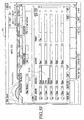
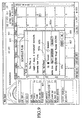
- Figures 3 , 4A , 4B , 5A-5P , 7A-7C and 9 show various user interfaces according to an embodiment of the invention.
- Figure 6 illustrates a flow chart for creating a training script.
- Figure 8 illustrates a flow chart for using an interface according to an embodiment of the invention to create a plan of one or more training scripts.
- a training script is a group of one or more training steps corresponding to different portions of a workout.
- Each training step includes instructions to be executed by a computing device. These instructions define an action, such as a physical activity to be performed during a workout, and a quantity associated with that action.
- the instructions command the computing device to display a prompt for the user to perform the action, until the device receives performance data indicating that the user has performed the quantity designated for the action.
- the device then executes the next sequential training step. Using these instructions, the device will sequentially display a prompt for the user to perform each action in a workout, until the user performs the designated quantity for each of the actions.
- the quantity for performing an action can be the duration of the action itself.
- the duration may be the time period for which the action is to be performed.
- the duration may be a distance to be traversed by performing the action.
- a training step may thus call for an athlete to run for the duration of five miles.
- the duration may be the number of times that an action should be repeated, or an amount of work exerted while performing the action.
- a training step could, for example, call for an athlete to repeat a weight-lifting exercise 20 times, or jog until the athlete has burned 600 calories.
- a step may also specify a quantity for performing an action that is based upon an intensity associated with that action.
- the intensity of an action may be defined by any desired unit, such as the heart rate experienced by the user while performing the action.
- the intensity may also be, for example, a pace at which the action is performed, or an amount of force created while performing the action.
- a step may include a quantity specifying both an intensity and a duration.
- a step may call for a biker to bike at a force of 200 dynes for 35 minutes.
- still other units of measurement can be used to define a quantity for performing an action, such as a user's blood oxygen level or blood pressure level.
- FIG. 1 this figure illustrates an exemplary general-purpose computer device that can be used to implement various aspects of the invention.
- the computer device 101 has a computer 103 that includes a processor 105, such as a programmable microprocessor, and a system memory 107 coupled to the processor 105.
- the system memory 107 may be implemented using any appropriate memory devices, such as one or more microcircuit devices.
- the system memory 107 will typically include both a read only memory (ROM) 109 and a random access memory (RAM) 111.
- the ROM 109 and RAM 111 may be connected to the processor 105 using a conventional bus structure (not shown), such as a memory bus or memory controller, a peripheral bus, and a local bus using any of a variety of bus architectures.
- the computer device 101 will also include one or more input devices 113.
- the computer device 101 may include a keyboard 113a, and a pointing device 113b, such as a mouse or touchpad.
- the computer device 101 may include additional or alternate input devices 113, such as a microphone, a pointing stick, or a digitizer for accepting input through a stylus.
- the computer device 101 is a special-purpose computing device, such as a digital wristwatch, it may instead only have input devices suited for its particular purpose.
- the computer device 101 may instead include a button interface 113c having a small number of depressable buttons. It may also have one or more sensors 113d for measuring characteristics of the device's environment.
- the sensors 113d may include a heart rate monitor for measuring the heart rate of a person using the computer device 101, an accelerometer or pedometer for measuring the travel of a person using the computer device 101, a thermometer, an altimeter, a compass, a blood oxygen monitor for monitoring the blood oxygen content of a person using the computer device 101, or other measurement device.
- a sensor 113d may be included in the same casing as the computing device 103, or the sensor 113d may be remotely locating and transmit measured data to the computing device 103 using a wired or wireless medium.
- the computer device 101 will also include one or more output devices 115, such as a display screen 115a, a printer 115b, and speakers 115c.
- output devices 115 such as a display screen 115a, a printer 115b, and speakers 115c.
- the display screen 115a may be a large CRT or flat panel monitor.
- the computer device 101 is a special-purpose computing device, it may only have the output devices 115 suited for its particular purpose.
- display screen 115a may be a small LCD display, and the computer device 101 may have only one small speaker 115b and omit the printer 115c altogether.
- the computer device 101 may also include additional or alternate output devices 115 as desired.
- the computer device 101 may also include one or more peripheral data storage devices 117.
- the computer device 101 may have, for example, a magnetic disk drive 117a for reading from and writing to a magnetic disk (such as a hard disk drive or a floppy disk drive), and an optical disk drive 117b for reading from or writing to a removable optical disk (such as a CD ROM or other optical media).
- the computer device 101 may also include other types of data storage devices 117, such as magnetic cassettes, flash memory cards, digital video disks, Bernoulli cartridges.
- the computer device 101 may include a small peripheral data storage device 117, such as a Memory Stick or a Secure Digital card.
- the computer device 101 executes instructions stored in the system memory 107. These instructions may be retrieved to the system memory 107 from one or more of the peripheral storage devices. In addition, the computer device 101 may receive input data for executing the instructions from a user through the input devices 113. Similarly, the computer device 101 may output the results of executing the instructions to the user through the output devices 115.
- Some computer devices 101 can operate in a network of other computer devices 101.
- the network may be, for example, a local area network (LAN) 119 or a wide area network (WAN) 121, such as the Internet.
- the computer device 101 may include a network interface or adapter 123.
- the computer device may include a modem 125 or other means for establishing communications over the wide area network 121.
- the network connections shown are exemplary, and that other techniques for establishing a communications link with other computer devices 101 can be used.
- a variety of communication protocols may be used for exchanging data between computer devices 101, such as TCP/IP, Ethernet, FTP, HTTP.
- Figure 2 illustrates a master device 201 for creating a training script, and a servant device 211 for implementing a training script. More particularly, a user employs the master device 201 to create instructions making up a training script, and the servant device 211 executes the instructions of the training script.
- the master device 201 may be a computer device 101 of the type described about, such as a desktop or laptop computer, implementing a software application for defining training scripts.
- the master device 201 may instead be a hardware or firmware device for creating training scripts.
- the script is transferred from the master device 201 to the servant device 211.
- the servant device 211 may be a portable computer device 101 of the type described above that can be easily carried by an athlete during a workout.
- the servant device 211 may be embodied as a wristwatch with one or more remote sensors for measuring various characteristics of the user's workout.
- the servant device 211 also may be implemented with other types of portable computer devices, such as personal digital assistants.
- the servant device 211 may be implemented using hardware or firmware.
- the master device 201 includes a master control module 203, a master user interface module 205, a master device interface module 207, and a master script database 209.
- the master user interface module 205 prompts a user to input data specifying an action to be performed for that step.
- the master user interface module 205 also prompts the user to specify a quantity of the action to be performed.
- the master control module 203 creates training steps for operating the servant device 211, and compiles the training steps into a training script file.
- the master control module 203 then forwards the training script file to the master script database 209 for storage.
- the master script database 209 may be embodied using any suitable memory medium.
- the master script database 209 for example, may be implemented on a microcircuit random access memory, a magnetic disk drive, a writable optical disk drive or the like.
- the master device interface module 207 When the user desires to exercise using the created training script, the user instructs the master control module 203 to transfer the training script file from the master script database 209 to the master device interface module 207. The master device interface module 207 then provides the training script file to the servant device 211.
- the master device interface module 207 can be implemented using a variety of techniques.
- the master device interface module 207 may employ a wireless communication device to communicate with the servant device 211, such as an infrared or radio frequency transmitter.
- the master device interface module 207 may include a cable port for employing a hard-wired communication device to communicate with the servant device 211, such as an RS-232, USB or Firewire link.
- the master device interface module 207 or other interface module may allow the master device 201 to transmit training scripts files to and/or receive training script files from a variety of other devices in addition to the servant device 211, such as other computing devices 101 including, for example, other master devices 201.
- the master device interface module 207 may employ any suitable communication protocol to transfer training script files from the master device interface module 207 to these other devices.
- training script files like other electronic files, can be transferred from the master device 201 to other computer devices 101 using any known file transfer technique.
- the master device 201 may be embodied by a personal computer that also supports electronic mailing protocols, such as the POP3 protocol. With this arrangement, a user can transfer a training script from the master device 201 to another computer device 101 using electronic mail.
- protocols such as WiFi or Bluetooth for wireless communications can be used to wirelessly transmit training script files to other devices.
- athletes may easily and conveniently share successful training routines with each other. Rather than having to write down a particular training routine, an athlete can simply transfer the electronic training script file to another athlete using, for example, electronic mail. The athlete receiving the electronic training script file can then forward the file to his or her servant device 211, and exercise according to the routine defined by the training script file without ever having to examine or manually copy the workout routine defined by the training script.
- Figure 3 illustrates a first user interface 301 provided by the master user interface module 205 for creating a training script.
- the interface 301 includes a group of data fields that allow a user to define a user profile.
- defining a user profile allows a user to associate one or more workouts and a servant device 21 with a particular athlete. This conveniently allows more than one person to share the use of the master device 201 without confusing training script files between the users.
- the interface 301 includes a name field 303 naming the profile.
- a user may enter his or her own name into the name field 303 to identify the user profile with that particular user.
- Each user profile includes a schedule of training scripts selected by the user.
- Each profile also contains a group of training script files, referred to as the "favorite workouts" group. A user may then add existing training script files to or delete training script files from this group of favorite training scripts.
- the favorite workouts group allows a user to avoid having to scroll through every training script created with or received by the master device 201 each time the user wants to use a particular script.
- the user can simply include his or her favorite training script in the "favorite workout" group for the user's profile, and select a desired script for use directly from this smaller group.
- the servant device 211 when a user "synchronizes" the servant device 211 to the master device 201, both the training scripts in the "favorite workout” group and the scheduled training scripts are copied to the servant device 211.
- the interface 301 also has a servant device identification field 305, which associates the user profile with a particular servant device 211.
- a computer device 101 used to embody a servant device 211 may have one or more sensors 113d for measuring the characteristics of a user's activities.
- a training script may thus include instructions that are executed in response to the servant device 211 receiving data from a particular type of sensor 113d.
- Different servant devices 211 may have different types of sensors 113d, however, so a workout that may execute on one servant device 211 may not properly execute on a different servant device 211.
- the value of the servant device identification field 305 can be used to address differences in servant devices by specifically identifying the user's servant device 211, and, by extension, the sensors 113d and other equipment included with the user's servant device 211.
- the master device 201 may include a table correlating servant device 211 identification values with one or more sensors 113d.
- the master device 201 can determine the sensors 113d employed by the user's servant device 211 from the table.
- the master device 201 may use the value entered into the servant device identification field 305 to determine the sensors 113d available for use by the servant device 211 from a remote source, such as a database available over a network (e.g., the Internet). If the user's servant device 211 does not have a particular sensor 113d required by a training script, then the master device 201 may refrain from copying that training script to the user's servant device 211 during synchronization.
- the interface 301 also includes age, weight and sex fields 307-311, respectively. The user may enter this information about himself or herself into these fields. Of course, with other embodiments of the invention, the interface 301 may include fields for additional user health information, or may omit any of fields 307-311 entirely.
- the master user interface module 207 displays interface 401 shown in Figure 4A .
- This interface which is the main user interface for creating and using training scripts, includes a user profile sub-interface 403, a set watch sub-interface 405, a plans sub-interface 407, a workout sub-interface 409, a favorite workouts sub-interface 411, and a calendar sub-interface 413.
- the user profile sub interface 403 includes a name field 403a, identifying the name of the currently selected user profile, and an edit button 403b, which, when activated, causes the master user interface module 207 to display the user interface 301.
- the set watch sub-interface 405 is a command button.
- activating the command button 405 causes the master user interface module 207 to display a user interface for adjusting the settings of the associated servant device 211, which, in this embodiment, is a watch.
- the favorite workouts sub-interface 411 provides a listing of the training scripts the user has included in the favorite workouts group of the profile.
- the workout sub-interface 409 includes a list 409a of previously created (or received) training scripts corresponding to individual workout routines.
- the workout sub-interface 409 also includes a workout builder command button 409b that allows a user to create a new training script.
- the master user interface module 207 provides the user with interface 501 shown in Figure 5A .
- the operation of this interface will be explained with reference to Figures 5A-5P and to Figure 6 , which illustrates a flowchart showing how a training script can be created using the interface 501.
- step 601 the user enters the name of the training script into the workout selection field 503 of the interface 501.
- the workout selection field 503 provides a drop-down menu 503a, listing the previously created workout training scripts associated with the current user profile, as shown in Figure 5B .
- the user simply selects the name of that training script from the drop-down menu 503a.
- the user instead wishes to create a new workout training script, he or she selects the name "New Workout" from the drop down menu 503a. This selection ensures that the remaining fields in the display 501 are empty for the user to enter values, as shown in Figure 5A .
- the interface 501 also includes a workout name field 505 and a description field 507.
- the workout name field 505 allows a user to create a name for the new workout training script, as shown in Figure 5C . Providing a name for a workout training script conveniently allows it to be easily referenced later.
- the description field 507 can contain a brief description of the workout training script, such as an identification of its purpose or difficulty.
- the interface 501 further includes a steps interface 509 (referred to by the title "STEPS" in the figure).
- the steps interface 509 includes a plurality of step sub-interfaces 511.
- Each step sub-interface 511 appears as a row of six fields 513-523. More particularly, as seen in Figure 5A , each step sub-interface 511 includes a repeat field 513, an activity field 515, a duration field 517, an intensity field 519, a prompt field 521, and an auto start field 523.
- the function and operation of each of these fields 513-523 will be described in detail below.
- the steps interface 509 also includes edit buttons 525-531 for editing the arrangement of the step sub-interfaces 511. The function and use of these edit buttons 525-531 are well known in the art, and thus will not be discussed in detail here.
- this field provides a drop-down menu 515a listing a variety of actions.
- the drop-down menu 515a may include the actions “open” (that is, no specified activity), “stretch,” “warm up,” “run,” “walk,” “jog,” “go,” and “recover.”
- the drop-down menu 515a in step 603 the user selects a particular activity to be displayed in the field 515.
- the illustrated embodiment of the invention employs the drop-down menu 515a to select a value for the field 515, other embodiments of the invention may allow a user to enter a value directly into the field 515.
- the prompt field 521 for a step sub-interface 511 contains the information that will be displayed to a user when instructions corresponding to that step are later executed by a servant device 211.
- the user selects the activity "run” for the field activity field 515, the word “run” is added to the prompt field 521, as seen in Figure 5E .
- the display of the selected activity (or duration or intensity, as will be discussed below) in the prompt field 521 may be omitted with various embodiments of the invention. Further, as will be appreciated by those of ordinary skill in the art, some embodiments of the invention may omit the prompt fields 521 altogether.
- the duration field 517 in a step sub-interface 511 allows the user to select a duration for performing the activity designated in the step.
- the duration field 517 provides a drop down menu 517a listing a variety of duration units, as shown in Figure 5F .
- the menu 517a may include, for example, "open” (indicating that no duration has been selected) "time,” and "distance.” Of course, other embodiments of the invention may provide still other units for determining a duration of an activity. Using this menu 517a (or, with some embodiments of the invention, entering a value directly into the duration field 517), the user selects a duration of the activity in step 607.
- the interface 501 may provide a sub-field corresponding to the selected duration type. For example, if the user selects the value "time" for the duration field 517, the interface 501 provides a time sub-interface 517b as shown in Figure 5G .
- the time sub-interface 517b includes a chronographic display defining the time period for which the activity defined for the step is to be performed. Using conventional arrow buttons, the user can adjust the value of the sub-interface 517b to define a desired time period.
- the interface 501 provides sub-interfaces 517c with fields 517d and 517e, as shown in Figure 5H .
- the field 517d contains a value for a distance to be traveled while performing the activity. The user can type a desired value into this field 517d.
- the field 517e then provides a drop down menu, accessed by activating the button 517f, listing different distance units. For example, with the illustrated embodiment, the list includes “miles,” “kilometers,” and “meters.” Of course, those of ordinary skill in the art will appreciate that still other distance units, such as “yards" and "feet,” may be alternately or additionally included in the list.
- a user selects a particular type of duration, and enters values into the sub-interface fields associated with that type of duration in step 605.
- the values entered by the user then also appear in the prompt field 521. For example, if the user selects a duration value of "6.00 miles" for the duration field 517, this value also appears in the prompt field 521 as shown in Figure 5I . It should be noted, however, that a user might choose not to select any values for a duration of the designated activity, and instead leave the value of the field 517 as "open.” In this situation, no information is added to the prompt field 521, as shown in Figure 5E .
- the user may select an intensity for the workout by entering a value into the intensity field 519.
- the intensity field 519 provides a drop down menu 519a listing different types of intensity measurements.
- the intensity field 519 provides a drop down list 519a including the intensity types "open” (when no value is selected), "heartrate,” “pace”, “heartrate less than or equal to,” and “heartrate greater than or equal to.”
- the interface 501 provides a sub-interface associated with that type of intensity measurement.
- the interface 501 provides the sub-interface 519b containing the fields 519c and 519d for defining a range of heartrates (measured based upon a percentage of a user's previously recorded maximum heartrate, for example), as shown in Figure 5K .
- a user types a minimum desired heartrate percentage value into the field 519c and a maximum desired heartrate percentage value into the field 519d.
- the values entered into these fields are then displayed in the prompt field 521. For example, if the user enters the value 60% into the field 519c, and the value 85% in the field 519d, these values appear in the prompt field 521, as shown in Figure 5K .
- the interface 501 provides the sub-interface 519e, as shown in Figure 5L .
- the sub-interface 519e includes a maximum time field 519f and a minimum time field 519g, in which the user enters values to select a maximum pace time and a minimum pace time, respectively.
- the sub-interface 519e also includes a distance unit field 519h, which provides a drop down menu listing various distance units. With the illustrated embodiment, the menu lists "kilometers,” “miles,” and “0.4/kilometers.” Of course, those of ordinary skill in the art will appreciate that the menu may include more, fewer, or different units.
- the user can define a maximum and minimum pace for performing the selected activity. It should be noted that, as the values are entered into each of the fields 519f-519h, a mean of maximum pace time and the minimum pace time are added to the prompt field 521. Thus, if the user selects a maximum pace of 6:00 minutes per mile, and a minimum pace of 8:00 minutes per mile, the average of 7:00 minutes per mile will appear in the prompt field 521, as shown in Figure 5L .
- the interface 501 provides the sub-interface 519i containing the field 519j, as shown in Figure 5M .
- the user can simply enter a desired maximum heartrate (measured based upon a percentage of a user's maximum heartrate) into the field 519j.
- the interface 501 provides the sub-interface 519k containing the field 5191, as shown in Figure 5N .
- the user can simply enter a desired minimum heartrate (measured based upon a percentage of a user's maximum heartrate, for example) into the field 519k.
- the selected heartrate value is then displayed in the prompt field 521.
- a user will employ fields 515-519 of a step sub-interface 511 to define one step of a training script.
- a user may create a training script with a plurality of steps sequentially arranged in the order displayed in the step listing 509.
- the training script file is then created from the training script, it will contain instructions commanding the servant device 211 to sequentially display the value of the prompt field 521 (that is, the prompt) for each step, starting with the first step in the sequence, until the servant device 211 is instructed to display the value of the prompt field 521 for the next step.
- the servant device 211 may receive an instruction to display the prompt for the next step of the training script file directly from the user. For example, if the servant device 211 is implemented as a digital watch, it may display the prompt for a step until the athlete using the servant device 211 depresses a command button, and then start the next sequential step in the training script file by displaying the prompt for that next sequential step. Thus, a user would perform the activity displayed in the prompt for a step for the duration and/or intensity specified in the prompt. Then, when the activity was completed, the user would depress the command button to start the next step. That is, the user would depress the command button to instruct the servant device 211 to display the prompt for the next step in sequence. Alternately, when a step is completed, the servant device 211 may receive an instruction to automatically start the next sequential step from within the instructions for the completed step, as will be explained below.
- the user determines whether a step will have this automatic start feature by placing a check value in the auto start field 523 for that step's sub-interface 511 in step 609. More particularly, if the user leaves the auto start field 523 for a step empty in step 609, then the training script will not include an instruction in that step for the servant device 211 to automatically begin executing the instructions for the subsequent step. Instead, when that step is completed, the servant device 211 will temporarily stop executing instructions of the training script until receiving an input from the athlete using the servant device 211.
- the resulting training script file will include instructions to automatically have the servant device 211 begin executing the instructions for the subsequent step when that step is completed.
- the servant device 211 may have one or more sensors 113d for measuring characteristics of the user's workout or performance data. These characteristics may include, for example, a time duration measured by a chronometer, a heart rate measured by a heart rate monitor, and a distance measured by an accelerometer or pedometer. These sensors 113d allow the servant device 211 to detect when a user has completed a specified duration or intensity for a step. For example, if the user selects the duration of a step to be six minutes, then a servant device 211 having a chronometer may begin measuring a period of six minutes from when the step is started (that is, from when the value of the field 521 for that step is displayed to the user). If the value of the field 523 for that step was checked when the training script was created, then the training script file will include instructions commanding the servant device 211 to automatically begin executing the instructions for the subsequent step when the chronometer indicates that the six minute time period has expired.
- a step may call for a user to run a distance of six miles at a heart rate of 60% of the user's maximum heart rate or greater. If a servant device 211 executing that step had both a pedometer and a heart rate monitor, it could employ the pedometer to measure the distance run by a user and the heart rate monitor to measure the user's heart rate during that run. The servant device 211 could then record a total distance traveled by the athlete while the athlete's heart rate was above the minimum amount.
- the instructions in the training script file would command the servant device 211 to automatically begin executing the instructions for the next subsequent step after the servant device 211 detected that the athlete had run a total of six miles with his or her heart rate above the minimum amount.
- the invention advantageously frees an athlete from having to constantly consider the status of his or her workout routine. That is, an athlete can focus on each activity of a workout, without having to continuously monitor if the athlete is complying with the planned duration or intensity for the activity.
- the servant device 211 informs the user when an activity has been satisfactorily performed by prompting the athlete to begin performing the next scheduled activity in the workout.
- each step sub-interface 511 also includes a repeat field 511, as noted above.
- a user may employ the repeat field 511 to define a training script that repeats one or more steps. For example, if the user inputs the value "3" into the repeat field 511 for a step, as shown in Fig. 5O , then the training script file will include instructions commanding the servant device 211 to repeat the step three times before executing the next sequential step.
- the user may use a linking arrow 511a attached to the repeat field 511 to link two or more sequential steps together for repetition, as shown in Fig. 5P .
- the resulting training script would include instructions commanding the servant device 211 to execute the instructions of the first three steps listed in the step listing 509 once in sequence, and then to repeat the execution of these linked steps a second time before proceeding to the fourth step in the step listing 509 (that is, the "jog" step).
- the master device 201 will also allow a user to define a schedule of training scripts, hereafter referred to as a "plan."
- plan a schedule of training scripts
- the plan field 405 of interface 401 displays existing plans. If the user wishes to create a new plan, the user activates the plan builder command button 407a. In response, the master device 201 provides the user interface 701 illustrated in Fig. 7A .
- This user interface 701 includes a plan selection field 703, a plan name field 705, and a plan description field 707.
- the user enters the name of the desired plan into the plan selection field 703.
- the plan selection field 703 may include a drop-down menu 703a, as shown in Fig. 7B . If the user is editing an existing plan, the user may simply select the name of that plan from the drop-down menu 703a.
- the user selects the name "New Plan" from the drop-down menu 703a.
- the user may then enter a name into the planned name field 705 and a brief description of the new plan in field 707, as also shown in Figure 7B .
- the interface 701 also includes a settings sub-interface 709, a workout sub-interface 711, and a calendar sub-interface 713.
- the calendar sub-interface displays a generic calendar with columns corresponding to the days of the week, while the workout sub-interface 711 displays a listing of existing training script files.
- a user drags each training script file from the workout sub-interface 711 to the desired location on the calendar sub-interface 713.
- the workout sub-interface 711 lists the training script files entitled “stretch test,” “Test 1,” and “Test workout.”
- the user may want to create a three-week workout plan having the "stretch test" workout scheduled on the Monday, Wednesday, and Friday of the first week of the plan.
- the user may also want the "Test 1" workout scheduled on the Sunday, Tuesday and Thursday of the second week of the plan, and the "Test workout” workout scheduled on the Monday and Thursday of the third week of the plan.
- the user can simply drag and drop icons for the corresponding training script files to the desired locations on the calendar sub-interface 713, as shown in Figure 7C .
- the calendar sub-interface 713 may not continuously display the titles of the placed training script file icons, but may instead only display their titles when, for example, the user places a pointer over an icon. Alternately, the calendar sub-interface 713 may display the title of each icon placed in the calendar sub-interface 713.
- the user designates the settings for scheduling the training script files to create or edit the plan in step 805.
- the interface 701 includes a settings sub-interface 709.
- the settings sub-interface 709 includes two fill radial buttons 715 and 717, entitled “forward” and “backward,” respectively. It also includes three anchor date radial buttons 719-723. Beneath the first anchor date radial button 719, entitled “fixed,” is a calendar field 719a that allows a user to select a specific month, date and year.
- the second anchor date radial button 721 is entitled “user choice.”
- the third anchor date radial button 723 includes a drop-down menu 723a listing the days of the week.
- the user anchors the first date or the last date of the training script files scheduled in the generic calendar of the calendar sub-interface to an actual date. For example, the user may with to schedule training script files to prepare for a marathon on November 13, 2002. Accordingly, the user may want to anchor the plan so that the last workout of the plan takes place on November 12, 2002. To do so, the user would select the anchor date radial button 719, and set the value of the calendar field 719a to November 12, 2002. The user would then select the "backward" fill radial button 717, to have the plan scheduled backward from the last workout of the plan occurring on November 12, 2002.
- the user may want to schedule a three-week plan that starts on the first Tuesday of each three-week period.
- the user would select the anchor date radial button 723, and select the day Tuesday from the drop down menu 723a.
- the user would also select the "forward" fill radial button 715, to have the plan scheduled forward from the first workout of the plan occurring on the first Tuesday of each three-week period.
- step 803 the user selects a fill setting for the plan, and in step 805 selects an anchor date for the plan. Then in step 807, the user activates the "save" button 725 to save the plan, completing the plan creation process.
- a user may select a schedule for plans or individual training script files to be included in the user's profile.
- the interface 401 includes a calendar sub-interface 413.
- the calendar sub-interface 413 displays a calendar showing the current month.
- the user first drags and drops a plan onto a date in the calendar sub-interface 413, as shown in Figure 4B .
- the master device 201 displays the schedule plan interface 901 shown in Figure 9 .
- the plan interface 901 includes a plan data sub-interface 903, a fill setting sub-interface 905, a "cancel” button 907 and an "ok” button 909.
- the plan data sub-interface 903 includes the plan name, the length of the plan schedule, and the description of the plan.
- the fill setting sub-interface 905 includes two fill dial buttons 905a and 905b, entitled “forward” and "backward,” respectively.
- the fill setting sub-interface 905 also includes an anchor date field 905c, which allows the user to specify a specific calendar date, and a drop down menu 905d listing the days of the week.
- the user may employ the fill setting sub-interface 905 to anchor the plan.
- the master device 201 may place icons for the training script files making up the plan on their appropriate dates in the calendar sub-interface 413.
- a user may also place a schedule for individual training scripts into the his or her user profile. That is, a user may drag and drop an icon for a single training script file from the workout sub-interface 409 at a desired location on the calendar sub-interface 413.
- the master device 201 When a user wishes to download training script files from the master device 201 to the servant device 211, referred to as "synchronizing" the master device 201 with the servant device 211, the user activates the "sync" button 415 in interface 401. In response, the master device 201 transfers all of the training script files listed in the favorite workouts sub-interface 411. In addition, the master device 201 transfers the upcoming scheduled training script files that have been place in the calendar sub-interface 413.
- the master device 201 notes the date of the synchronization, and identifies the subsequent dates for, for example, the upcoming week.
- the master device 201 then attaches a date tag to each of the training script files that have been placed in the calendar sub-interface 413 on the dates in the week following the synchronization date, and transfers these training script files with their associated date tags to the servant device 211.
- the servant device 211 can then employ these date tags to ensure that the training script file is presented to a user for execution on the date scheduled with the master device 201.
- the master device 201 may also receive information from the servant device 211 during synchronization. For example, with some embodiments of the invention, the servant device 211 may collect actual data regarding a user's workout, including the actual duration or intensity completed for activities listed in a training script file. The master device 201 can then associate this data with the icons for those training scripts in the calendar sub-interface 413. This conveniently allows a user to review his or her athletic performance in comparison with the criteria of the training script.
- Figure 1 also illustrates a servant device 211 for executing a training script.
- the servant device 211 includes a servant control module 213, a servant device interface module 215, and a servant script database 217.
- the servant device interface module 215 receives a training script file from the master device 201.
- the servant control module 213 then stores the training script file in the servant script database 217.
- the servant device 211 also includes a display 219 and one or more sensors 221 (identified as sensors 115d in the above description of a general computer device) for detecting a characteristic of a user during a workout.
- the sensors 221 may include, for example, a heart rate monitor to measure a user's heart rate, an accelerometer, pedometer or Global Positioning Satellite (GPS) receiver to measure the distance that a user travels, or a blood pressure monitor to monitor a user's blood pressure.
- the sensors 221 may also include sensors for detecting a characteristic of the user's workout itself. For example, the sensors 221 may include a chronometer or chronograph for measuring time periods during which an action is performed.
- the sensors 221 may also include a bicycle force sensor, to measure an amount of force produced by a bicyclist while biking. Still further, the sensor 221 may be a special purpose sensor that can, for example, detect the operation of a weightlifting machine or other exercise device configured to provide performance data to the sensor. Of course, any suitable device for measuring performance data relating to a workout may be used as a sensor 221.
- the servant device 211 may include a servant user interface module 223 for detecting an input by a user.
- the servant device 211 may have a servant user interface module 223 for detecting the depression of an input button.
- This servant user interface module 223 allows a user to input data to the servant device 211 regarding the user's workout that may not easily be detectable by a sensor 211.
- a training step may call for an athlete to perform 30 repetitions of a weight lifting exercise.
- An automated sensor cannot easily detect the number of repetitions of a weight lifting exercise using a convention weight lifting device.
- the athlete may conveniently depress a command button after having performed the scripted 30 repetitions.
- the servant user interface module 223 can then detect the depression of the command button, and forward this information to the servant control module 213.
- the user selects the training script file with that training script from the servant script database 217.
- the servant control module 213 executes the appropriate instructions defined in the training script. More particularly, by executing the instructions in the training script file, the servant control module 213 causes the display 219 to display the prompt for each step included in the training script file. As previously noted, the display 219 will sequentially display the prompt for each step in the training script until the servant control module 213 receives an instruction commanding the display 219 to display the prompt for the next step.
- this instruction may be provided directly from the user by, for example, the user depressing a command button. Alternately, this instruction may be automatically generated when one of the sensors 221 measures a specified value, as discussed in detail above.
- the master training script device of the invention conveniently allows a user to create a training script defining one or more steps of a workout routine, where each step may include an activity, a duration for performing that activity, and an intensity at which the activity is to be performed. Further, one or more steps of the training script can be self starting in response to performance data detected by sensors of the servant training script device. This conveniently frees the athlete from having to continuously monitor the status of his or her workout activities. Still further, the training script device conveniently allows a user to transfer training scripts to other training script devices, so that athletes can share successful training scripts.
Landscapes
- Health & Medical Sciences (AREA)
- Engineering & Computer Science (AREA)
- Life Sciences & Earth Sciences (AREA)
- Business, Economics & Management (AREA)
- Physics & Mathematics (AREA)
- General Health & Medical Sciences (AREA)
- Medical Informatics (AREA)
- Human Resources & Organizations (AREA)
- Public Health (AREA)
- Biophysics (AREA)
- General Physics & Mathematics (AREA)
- Biomedical Technology (AREA)
- Pathology (AREA)
- Heart & Thoracic Surgery (AREA)
- Veterinary Medicine (AREA)
- Molecular Biology (AREA)
- Surgery (AREA)
- Animal Behavior & Ethology (AREA)
- Theoretical Computer Science (AREA)
- Entrepreneurship & Innovation (AREA)
- Educational Administration (AREA)
- Cardiology (AREA)
- Physiology (AREA)
- Strategic Management (AREA)
- Educational Technology (AREA)
- Physical Education & Sports Medicine (AREA)
- Economics (AREA)
- General Business, Economics & Management (AREA)
- Marketing (AREA)
- Oral & Maxillofacial Surgery (AREA)
- Dentistry (AREA)
- Tourism & Hospitality (AREA)
- Quality & Reliability (AREA)
- Operations Research (AREA)
- Vascular Medicine (AREA)
- Biodiversity & Conservation Biology (AREA)
- Epidemiology (AREA)
- Development Economics (AREA)
- Chemical & Material Sciences (AREA)
- Data Mining & Analysis (AREA)
Priority Applications (1)
| Application Number | Priority Date | Filing Date | Title |
|---|---|---|---|
| EP20120188912 EP2557553A1 (fr) | 2002-05-30 | 2003-05-30 | Dispositif pour créer des scripts d'entrainement élèctronique |
Applications Claiming Priority (3)
| Application Number | Priority Date | Filing Date | Title |
|---|---|---|---|
| US38621002P | 2002-05-30 | 2002-05-30 | |
| US10/413,366 US7946959B2 (en) | 2002-05-30 | 2003-04-15 | Training scripts |
| EP03739003A EP1508133A2 (fr) | 2002-05-30 | 2003-05-30 | Programmes d'entrainement |
Related Parent Applications (1)
| Application Number | Title | Priority Date | Filing Date |
|---|---|---|---|
| EP03739003.6 Division | 2003-05-30 |
Publications (1)
| Publication Number | Publication Date |
|---|---|
| EP2309475A1 true EP2309475A1 (fr) | 2011-04-13 |
Family
ID=29587199
Family Applications (4)
| Application Number | Title | Priority Date | Filing Date |
|---|---|---|---|
| EP20100197484 Ceased EP2309475A1 (fr) | 2002-05-30 | 2003-05-30 | Appareil et méthode pour aider à la préparation de programmes d'entrainement sportif |
| EP20120188912 Ceased EP2557553A1 (fr) | 2002-05-30 | 2003-05-30 | Dispositif pour créer des scripts d'entrainement élèctronique |
| EP16150863.5A Withdrawn EP3026657A1 (fr) | 2002-05-30 | 2003-05-30 | Scripts de formation |
| EP03739003A Withdrawn EP1508133A2 (fr) | 2002-05-30 | 2003-05-30 | Programmes d'entrainement |
Family Applications After (3)
| Application Number | Title | Priority Date | Filing Date |
|---|---|---|---|
| EP20120188912 Ceased EP2557553A1 (fr) | 2002-05-30 | 2003-05-30 | Dispositif pour créer des scripts d'entrainement élèctronique |
| EP16150863.5A Withdrawn EP3026657A1 (fr) | 2002-05-30 | 2003-05-30 | Scripts de formation |
| EP03739003A Withdrawn EP1508133A2 (fr) | 2002-05-30 | 2003-05-30 | Programmes d'entrainement |
Country Status (4)
| Country | Link |
|---|---|
| US (8) | US7946959B2 (fr) |
| EP (4) | EP2309475A1 (fr) |
| AU (1) | AU2003245364A1 (fr) |
| WO (1) | WO2003102082A2 (fr) |
Cited By (9)
| Publication number | Priority date | Publication date | Assignee | Title |
|---|---|---|---|---|
| WO2024253778A1 (fr) * | 2023-06-04 | 2024-12-12 | Apple Inc. | Procédés et interfaces utilisateur pour gérer et accéder à un contenu d'entraînement |
| US12186645B2 (en) | 2022-06-05 | 2025-01-07 | Apple Inc. | User interfaces for physical activity information |
| US12197716B2 (en) | 2022-06-05 | 2025-01-14 | Apple Inc. | Physical activity information user interfaces |
| US12224051B2 (en) | 2019-05-06 | 2025-02-11 | Apple Inc. | Activity trends and workouts |
| US12239884B2 (en) | 2021-05-15 | 2025-03-04 | Apple Inc. | User interfaces for group workouts |
| US12243444B2 (en) | 2015-08-20 | 2025-03-04 | Apple Inc. | Exercised-based watch face and complications |
| US12274918B2 (en) | 2016-06-11 | 2025-04-15 | Apple Inc. | Activity and workout updates |
| US12394523B2 (en) | 2013-12-04 | 2025-08-19 | Apple Inc. | Wellness aggregator |
| US12413981B2 (en) | 2020-02-14 | 2025-09-09 | Apple Inc. | User interfaces for workout content |
Families Citing this family (120)
| Publication number | Priority date | Publication date | Assignee | Title |
|---|---|---|---|---|
| AU2002255568B8 (en) * | 2001-02-20 | 2014-01-09 | Adidas Ag | Modular personal network systems and methods |
| US20020160883A1 (en) | 2001-03-08 | 2002-10-31 | Dugan Brian M. | System and method for improving fitness equipment and exercise |
| US8939831B2 (en) | 2001-03-08 | 2015-01-27 | Brian M. Dugan | Systems and methods for improving fitness equipment and exercise |
| US7805149B2 (en) * | 2004-01-16 | 2010-09-28 | Adidas Ag | Location-aware fitness training device, methods, and program products that support real-time interactive communication and automated route generation |
| US7480512B2 (en) * | 2004-01-16 | 2009-01-20 | Bones In Motion, Inc. | Wireless device, program products and methods of using a wireless device to deliver services |
| US7182738B2 (en) * | 2003-04-23 | 2007-02-27 | Marctec, Llc | Patient monitoring apparatus and method for orthosis and other devices |
| US20050181347A1 (en) * | 2004-01-16 | 2005-08-18 | Barnes Phineas A. | Instructional gaming methods and apparatus |
| US20050195094A1 (en) | 2004-03-05 | 2005-09-08 | White Russell W. | System and method for utilizing a bicycle computer to monitor athletic performance |
| US20050272564A1 (en) * | 2004-06-02 | 2005-12-08 | Johnson Health Tech Co., Ltd. | Exercise apparatus and method for tracking number of steps |
| US12105208B2 (en) | 2004-06-30 | 2024-10-01 | Adidas Ag | Systems and methods for providing a health coaching message |
| CN100365392C (zh) * | 2005-11-16 | 2008-01-30 | 中国科学院合肥物质科学研究院 | 基于数字跑道的田径训练信息采集和反馈系统 |
| US11826652B2 (en) | 2006-01-04 | 2023-11-28 | Dugan Health, Llc | Systems and methods for improving fitness equipment and exercise |
| US8781568B2 (en) * | 2006-06-23 | 2014-07-15 | Brian M. Dugan | Systems and methods for heart rate monitoring, data transmission, and use |
| EP1897598A1 (fr) * | 2006-09-06 | 2008-03-12 | Nederlandse Organisatie voor toegepast- natuurwetenschappelijk onderzoek TNO | Système pour l'optimisation d'exercice |
| US7771320B2 (en) * | 2006-09-07 | 2010-08-10 | Nike, Inc. | Athletic performance sensing and/or tracking systems and methods |
| US8429223B2 (en) | 2006-09-21 | 2013-04-23 | Apple Inc. | Systems and methods for facilitating group activities |
| US8956290B2 (en) * | 2006-09-21 | 2015-02-17 | Apple Inc. | Lifestyle companion system |
| US8001472B2 (en) | 2006-09-21 | 2011-08-16 | Apple Inc. | Systems and methods for providing audio and visual cues via a portable electronic device |
| US20080077489A1 (en) * | 2006-09-21 | 2008-03-27 | Apple Inc. | Rewards systems |
| US8235724B2 (en) * | 2006-09-21 | 2012-08-07 | Apple Inc. | Dynamically adaptive scheduling system |
| US8745496B2 (en) | 2006-09-21 | 2014-06-03 | Apple Inc. | Variable I/O interface for portable media device |
| US20080076972A1 (en) * | 2006-09-21 | 2008-03-27 | Apple Inc. | Integrated sensors for tracking performance metrics |
| WO2008074533A1 (fr) * | 2006-12-21 | 2008-06-26 | International Business Machines Corporation | Dispositif et procédé coordinateur d'entraînement |
| WO2008101085A2 (fr) | 2007-02-14 | 2008-08-21 | Nike, Inc. | Collecte et affichage d'informations athlétiques |
| WO2008101168A2 (fr) | 2007-02-16 | 2008-08-21 | Nike, Inc. | Comparaison en temps réel d'informations athlétiques |
| US8221290B2 (en) | 2007-08-17 | 2012-07-17 | Adidas International Marketing B.V. | Sports electronic training system with electronic gaming features, and applications thereof |
| US8702430B2 (en) | 2007-08-17 | 2014-04-22 | Adidas International Marketing B.V. | Sports electronic training system, and applications thereof |
| US8360904B2 (en) | 2007-08-17 | 2013-01-29 | Adidas International Marketing Bv | Sports electronic training system with sport ball, and applications thereof |
| TWI397436B (zh) * | 2007-12-05 | 2013-06-01 | Tonic Fitness Technology Inc | A sports device adaptable to individual physical fitness and its control method |
| CN101970066B (zh) * | 2008-02-27 | 2014-10-22 | 耐克创新有限合伙公司 | 交互式运动训练日志 |
| US20090270743A1 (en) * | 2008-04-17 | 2009-10-29 | Dugan Brian M | Systems and methods for providing authenticated biofeedback information to a mobile device and for using such information |
| US8976007B2 (en) | 2008-08-09 | 2015-03-10 | Brian M. Dugan | Systems and methods for providing biofeedback information to a cellular telephone and for using such information |
| US9409052B2 (en) * | 2008-10-03 | 2016-08-09 | Adidas Ag | Program products, methods, and systems for providing location-aware fitness monitoring services |
| KR101520348B1 (ko) * | 2008-11-04 | 2015-05-14 | 삼성전자주식회사 | 휴대용 단말기의 스케줄 설정 방법 및 장치 |
| US20100188405A1 (en) * | 2009-01-28 | 2010-07-29 | Apple Inc. | Systems and methods for the graphical representation of the workout effectiveness of a playlist |
| DE102009015273A1 (de) | 2009-04-01 | 2010-10-14 | Albert-Ludwigs-Universität Freiburg | Verfahren und Vorrichtung zur Bestimmung der Ausdauerleistungsfähigkeit eines Probanden |
| US8454437B2 (en) | 2009-07-17 | 2013-06-04 | Brian M. Dugan | Systems and methods for portable exergaming |
| US8033959B2 (en) | 2009-05-18 | 2011-10-11 | Adidas Ag | Portable fitness monitoring systems, and applications thereof |
| US8200323B2 (en) | 2009-05-18 | 2012-06-12 | Adidas Ag | Program products, methods, and systems for providing fitness monitoring services |
| US8105208B2 (en) | 2009-05-18 | 2012-01-31 | Adidas Ag | Portable fitness monitoring systems with displays and applications thereof |
| KR100930543B1 (ko) * | 2009-07-16 | 2009-12-10 | (주)디자인파크개발 | 자가발전형 스피드 레이스 장치 |
| JP5695052B2 (ja) | 2009-09-04 | 2015-04-01 | ナイキ イノベイト セー. フェー. | 運動活動のモニタリングおよび追跡の方法 |
| JP5504799B2 (ja) * | 2009-09-30 | 2014-05-28 | ブラザー工業株式会社 | 運動支援装置、運動支援方法およびプログラム |
| CN102213957A (zh) * | 2010-04-08 | 2011-10-12 | 上海薄荷信息科技有限公司 | 一种提供虚拟私人运动教练的控制方法、控制装置及系统 |
| CN102218212A (zh) * | 2010-04-13 | 2011-10-19 | 上海薄荷信息科技有限公司 | 一种虚拟私人运动教练装置及服务系统 |
| US8509882B2 (en) | 2010-06-08 | 2013-08-13 | Alivecor, Inc. | Heart monitoring system usable with a smartphone or computer |
| US9351654B2 (en) | 2010-06-08 | 2016-05-31 | Alivecor, Inc. | Two electrode apparatus and methods for twelve lead ECG |
| US9392941B2 (en) * | 2010-07-14 | 2016-07-19 | Adidas Ag | Fitness monitoring methods, systems, and program products, and applications thereof |
| US8493822B2 (en) | 2010-07-14 | 2013-07-23 | Adidas Ag | Methods, systems, and program products for controlling the playback of music |
| US10039970B2 (en) | 2010-07-14 | 2018-08-07 | Adidas Ag | Location-aware fitness monitoring methods, systems, and program products, and applications thereof |
| CN103442607B (zh) | 2011-02-07 | 2016-06-22 | 新平衡运动公司 | 用于监视运动表现的系统和方法 |
| US10363453B2 (en) | 2011-02-07 | 2019-07-30 | New Balance Athletics, Inc. | Systems and methods for monitoring athletic and physiological performance |
| US20120253489A1 (en) | 2011-03-28 | 2012-10-04 | Dugan Brian M | Systems and methods for fitness and video games |
| US9533228B2 (en) | 2011-03-28 | 2017-01-03 | Brian M. Dugan | Systems and methods for fitness and video games |
| US9610506B2 (en) | 2011-03-28 | 2017-04-04 | Brian M. Dugan | Systems and methods for fitness and video games |
| US20120258433A1 (en) | 2011-04-05 | 2012-10-11 | Adidas Ag | Fitness Monitoring Methods, Systems, And Program Products, And Applications Thereof |
| US8947226B2 (en) | 2011-06-03 | 2015-02-03 | Brian M. Dugan | Bands for measuring biometric information |
| JP5825030B2 (ja) * | 2011-10-13 | 2015-12-02 | ソニー株式会社 | 情報処理装置、情報処理方法およびコンピュータプログラム |
| US9339691B2 (en) | 2012-01-05 | 2016-05-17 | Icon Health & Fitness, Inc. | System and method for controlling an exercise device |
| US10499849B1 (en) * | 2012-02-04 | 2019-12-10 | Thomas Chu-Shan Chuang | Athletic training intensity |
| US11103747B1 (en) | 2012-02-04 | 2021-08-31 | Thomas Chu-Shan Chuang | Athletic training optimization |
| USRE50843E1 (en) * | 2012-02-04 | 2026-03-31 | Thomas Chu-Shan Chuang | Athletic training optimization |
| US10456077B1 (en) * | 2012-02-04 | 2019-10-29 | Thomas Chu-Shan Chuang | Athletic training optimization |
| US10300334B1 (en) | 2012-02-04 | 2019-05-28 | Thomas Chu-Shan Chuang | Athletic training optimization |
| US9504414B2 (en) | 2012-04-13 | 2016-11-29 | Adidas Ag | Wearable athletic activity monitoring methods and systems |
| US9257054B2 (en) | 2012-04-13 | 2016-02-09 | Adidas Ag | Sport ball athletic activity monitoring methods and systems |
| US10922383B2 (en) | 2012-04-13 | 2021-02-16 | Adidas Ag | Athletic activity monitoring methods and systems |
| US9737261B2 (en) | 2012-04-13 | 2017-08-22 | Adidas Ag | Wearable athletic activity monitoring systems |
| US9254095B2 (en) | 2012-11-08 | 2016-02-09 | Alivecor | Electrocardiogram signal detection |
| US9220430B2 (en) | 2013-01-07 | 2015-12-29 | Alivecor, Inc. | Methods and systems for electrode placement |
| US9384671B2 (en) | 2013-02-17 | 2016-07-05 | Ronald Charles Krosky | Instruction production |
| US8951164B2 (en) | 2013-03-05 | 2015-02-10 | Microsoft Corporation | Extending gameplay with physical activity monitoring device |
| US9174084B2 (en) | 2013-03-05 | 2015-11-03 | Microsoft Technology Licensing, Llc | Automatic exercise segmentation and recognition |
| US8951165B2 (en) | 2013-03-05 | 2015-02-10 | Microsoft Corporation | Personal training with physical activity monitoring device |
| US9500464B2 (en) | 2013-03-12 | 2016-11-22 | Adidas Ag | Methods of determining performance information for individuals and sports objects |
| EP2972816A4 (fr) * | 2013-03-13 | 2016-11-09 | Owaves Inc | Système de gestion de style de vie |
| US12073740B2 (en) | 2013-03-14 | 2024-08-27 | Nike, Inc. | Skateboard system |
| EP2973406B1 (fr) | 2013-03-14 | 2019-11-27 | NIKE Innovate C.V. | Déterminations des attributs athlétiques à partir des données d'images |
| US10223926B2 (en) * | 2013-03-14 | 2019-03-05 | Nike, Inc. | Skateboard system |
| WO2014153158A1 (fr) | 2013-03-14 | 2014-09-25 | Icon Health & Fitness, Inc. | Appareil d'entraînement musculaire ayant un volant, et procédés associés |
| US9254092B2 (en) | 2013-03-15 | 2016-02-09 | Alivecor, Inc. | Systems and methods for processing and analyzing medical data |
| US9247911B2 (en) | 2013-07-10 | 2016-02-02 | Alivecor, Inc. | Devices and methods for real-time denoising of electrocardiograms |
| US10643483B2 (en) | 2013-07-19 | 2020-05-05 | PEAR Sports LLC | Physical activity coaching platform with dynamically changing workout content |
| US8900099B1 (en) * | 2013-08-05 | 2014-12-02 | Robert B. Boyette | Systems and methods for optimizing muscle development |
| US20150112158A1 (en) | 2013-10-23 | 2015-04-23 | Quanttus, Inc. | Health Metrics |
| US9420956B2 (en) | 2013-12-12 | 2016-08-23 | Alivecor, Inc. | Methods and systems for arrhythmia tracking and scoring |
| EP3086865B1 (fr) | 2013-12-26 | 2020-01-22 | Icon Health & Fitness, Inc. | Mécanisme de résistance magnétique dans une machine à câble |
| US20150182845A1 (en) * | 2013-12-27 | 2015-07-02 | Johnson Health Tech Co., Ltd. | Method for building an exercise program of an exercise apparatus |
| WO2015138339A1 (fr) | 2014-03-10 | 2015-09-17 | Icon Health & Fitness, Inc. | Capteur de pression pour quantifier un travail |
| US9849361B2 (en) | 2014-05-14 | 2017-12-26 | Adidas Ag | Sports ball athletic activity monitoring methods and systems |
| US10523053B2 (en) | 2014-05-23 | 2019-12-31 | Adidas Ag | Sport ball inductive charging methods and systems |
| US10426989B2 (en) | 2014-06-09 | 2019-10-01 | Icon Health & Fitness, Inc. | Cable system incorporated into a treadmill |
| WO2015195965A1 (fr) | 2014-06-20 | 2015-12-23 | Icon Health & Fitness, Inc. | Dispositif de massage après une séance d'exercices |
| US9710711B2 (en) | 2014-06-26 | 2017-07-18 | Adidas Ag | Athletic activity heads up display systems and methods |
| US10776739B2 (en) | 2014-09-30 | 2020-09-15 | Apple Inc. | Fitness challenge E-awards |
| US11562417B2 (en) | 2014-12-22 | 2023-01-24 | Adidas Ag | Retail store motion sensor systems and methods |
| US20160260340A1 (en) * | 2015-02-07 | 2016-09-08 | Alan Discount | Automated sports training workflow, delivery and tracking system |
| US10391361B2 (en) | 2015-02-27 | 2019-08-27 | Icon Health & Fitness, Inc. | Simulating real-world terrain on an exercise device |
| ES2820923T3 (es) | 2015-05-13 | 2021-04-22 | Alivecor Inc | Monitorización de discordancias |
| CN105031905B (zh) * | 2015-07-08 | 2018-03-27 | 广东欧珀移动通信有限公司 | 一种运动信息显示方法和装置 |
| CN105561568B (zh) * | 2016-01-04 | 2018-12-14 | 南京铁道职业技术学院 | 举重训练力量监测仪及其方法 |
| US10493349B2 (en) | 2016-03-18 | 2019-12-03 | Icon Health & Fitness, Inc. | Display on exercise device |
| US10625137B2 (en) | 2016-03-18 | 2020-04-21 | Icon Health & Fitness, Inc. | Coordinated displays in an exercise device |
| US10272317B2 (en) | 2016-03-18 | 2019-04-30 | Icon Health & Fitness, Inc. | Lighted pace feature in a treadmill |
| USD868798S1 (en) * | 2016-04-04 | 2019-12-03 | Adobe Inc. | Display screen with graphical user interface |
| USD864216S1 (en) | 2016-04-04 | 2019-10-22 | Adobe Inc. | Display screen with graphical user interface |
| KR101946341B1 (ko) * | 2016-08-24 | 2019-02-11 | 주식회사 네오펙트 | 훈련 컨텐츠의 난이도를 설정하는 방법 및 이를 운용하는 전자 장치 |
| US20180078821A1 (en) * | 2016-09-22 | 2018-03-22 | Anantha Pradeep | Intelligent variable resistance weight training machines |
| US10671705B2 (en) | 2016-09-28 | 2020-06-02 | Icon Health & Fitness, Inc. | Customizing recipe recommendations |
| US11577139B1 (en) * | 2016-09-30 | 2023-02-14 | Airborne Athletics, Inc. | Basketball training system |
| US10625114B2 (en) | 2016-11-01 | 2020-04-21 | Icon Health & Fitness, Inc. | Elliptical and stationary bicycle apparatus including row functionality |
| US10596436B1 (en) | 2016-11-08 | 2020-03-24 | Airborne Athletics, Inc. | Basketball training system |
| US11040246B2 (en) | 2018-02-06 | 2021-06-22 | Adidas Ag | Increasing accuracy in workout autodetection systems and methods |
| CN109731305B (zh) * | 2018-12-29 | 2020-09-01 | 北京卡路里信息技术有限公司 | 一种跑步信息确定方法、装置、终端设备及存储介质 |
| JP7202994B2 (ja) * | 2019-09-30 | 2023-01-12 | 大王製紙株式会社 | 端末装置及び在庫管理システム |
| US20220212059A1 (en) * | 2021-03-24 | 2022-07-07 | Facebook Technologies, Llc | Direct write method and dynamic workout content system, markup language, and execution engine |
| CN113901239B (zh) * | 2021-09-30 | 2023-06-27 | 北京字跳网络技术有限公司 | 信息展示方法、装置、设备及存储介质 |
| US12508485B1 (en) | 2021-10-20 | 2025-12-30 | Airborne Athletics, Inc. | Basketball training system |
| US12194357B1 (en) | 2022-01-24 | 2025-01-14 | Airborne Athletics, Inc. | Basketball training system with computer vision functionality |
| CN116204783B (zh) * | 2022-12-23 | 2025-10-31 | 恒玄科技(上海)股份有限公司 | 模型训练方法、装置、电子设备及计算机可读存储介质 |
Citations (6)
| Publication number | Priority date | Publication date | Assignee | Title |
|---|---|---|---|---|
| US4571682A (en) * | 1983-08-22 | 1986-02-18 | Computerized Sports Equipment, Inc. | System and method for skill enhancement and behavior modification |
| US4867442A (en) * | 1987-10-09 | 1989-09-19 | Matthews H Gerard | Physical exercise aid |
| US6027428A (en) * | 1998-04-29 | 2000-02-22 | Thomas; Mark | Automated method and apparatus for providing real time personal physical fitness instruction |
| US6059576A (en) * | 1997-11-21 | 2000-05-09 | Brann; Theodore L. | Training and safety device, system and method to aid in proper movement during physical activity |
| US6287239B1 (en) * | 2000-04-27 | 2001-09-11 | Fernando J. Hernandez | Method of exercise using a spinning cycle |
| WO2002039363A1 (fr) * | 2000-11-09 | 2002-05-16 | Gpsports Systems Pty Ltd | Système et procédé informatique |
Family Cites Families (50)
| Publication number | Priority date | Publication date | Assignee | Title |
|---|---|---|---|---|
| US4776583A (en) * | 1984-03-21 | 1988-10-11 | Jennings Russell A | Recumbent exercise apparatus |
| US4828257A (en) | 1986-05-20 | 1989-05-09 | Powercise International Corporation | Electronically controlled exercise system |
| US4919418A (en) | 1988-01-27 | 1990-04-24 | Miller Jan W | Computerized drive mechanism for exercise, physical therapy and rehabilitation |
| US5410472A (en) * | 1989-03-06 | 1995-04-25 | Ergometrx Corporation | Method for conditioning or rehabilitating using a prescribed exercise program |
| JPH03111068A (ja) * | 1989-09-08 | 1991-05-10 | Jr Richard L Brown | 身体運動指導方法、システムおよびキット |
| US5089960A (en) | 1990-02-16 | 1992-02-18 | Laguna Tectrix, Inc. | Racing system for exercise machines |
| US5213555A (en) | 1990-02-27 | 1993-05-25 | Hood Robert L | Exercise equipment information, communication and display system |
| US5215468A (en) * | 1991-03-11 | 1993-06-01 | Lauffer Martha A | Method and apparatus for introducing subliminal changes to audio stimuli |
| US5645509A (en) * | 1991-07-02 | 1997-07-08 | Icon Health & Fitness, Inc. | Remote exercise control system |
| US5466200A (en) | 1993-02-02 | 1995-11-14 | Cybergear, Inc. | Interactive exercise apparatus |
| US5890995A (en) | 1993-02-02 | 1999-04-06 | Tectrix Fitness Equipment, Inc. | Interactive exercise apparatus |
| US5547439A (en) | 1994-03-22 | 1996-08-20 | Stairmaster Sports/Medical Products, Inc. | Exercise system |
| US5655997A (en) | 1994-07-07 | 1997-08-12 | Integrated Fitness Corporation | Fitness feedback system for weight stack machines |
| US5890997A (en) | 1994-08-03 | 1999-04-06 | Roth; Eric S. | Computerized system for the design, execution, and tracking of exercise programs |
| IT1274053B (it) | 1994-10-07 | 1997-07-14 | Technogym Srl | Sistema per la programmazione di allenamenti su attrezzi e macchine ginniche. |
| US5636146A (en) * | 1994-11-21 | 1997-06-03 | Phatrat Technology, Inc. | Apparatus and methods for determining loft time and speed |
| AUPN127195A0 (en) | 1995-02-21 | 1995-03-16 | Hayle Brainpower Pty Ltd | Adaptive interactive exercise system |
| US5799652A (en) * | 1995-05-22 | 1998-09-01 | Hypoxico Inc. | Hypoxic room system and equipment for Hypoxic training and therapy at standard atmospheric pressure |
| US5702323A (en) | 1995-07-26 | 1997-12-30 | Poulton; Craig K. | Electronic exercise enhancer |
| US5931763A (en) * | 1995-10-05 | 1999-08-03 | Technogym S.R.L. | System for programming training on exercise apparatus or machines and related method |
| US5759043A (en) | 1995-10-06 | 1998-06-02 | Craig; Duane J. | Physical exercise management planner, method of its use, and device |
| US6430997B1 (en) * | 1995-11-06 | 2002-08-13 | Trazer Technologies, Inc. | System and method for tracking and assessing movement skills in multidimensional space |
| US5899963A (en) | 1995-12-12 | 1999-05-04 | Acceleron Technologies, Llc | System and method for measuring movement of objects |
| US6059692A (en) * | 1996-12-13 | 2000-05-09 | Hickman; Paul L. | Apparatus for remote interactive exercise and health equipment |
| US6808472B1 (en) * | 1995-12-14 | 2004-10-26 | Paul L. Hickman | Method and apparatus for remote interactive exercise and health equipment |
| US5989157A (en) * | 1996-08-06 | 1999-11-23 | Walton; Charles A. | Exercising system with electronic inertial game playing |
| US6058932A (en) * | 1997-04-21 | 2000-05-09 | Hughes; Arthur R. | Acoustic transceiver respiratory therapy apparatus |
| US6050924A (en) * | 1997-04-28 | 2000-04-18 | Shea; Michael J. | Exercise system |
| US5857939A (en) * | 1997-06-05 | 1999-01-12 | Talking Counter, Inc. | Exercise device with audible electronic monitor |
| US5904639A (en) * | 1998-03-06 | 1999-05-18 | Md Systems | Apparatus, system, and method for carrying out protocol-based isometric exercise regimens |
| US6013007A (en) | 1998-03-26 | 2000-01-11 | Liquid Spark, Llc | Athlete's GPS-based performance monitor |
| US6188927B1 (en) * | 1999-04-16 | 2001-02-13 | Pacesetter, Inc. | Implantable cardiac stimulation system having improved method of calibrating physiologic sensors |
| US6458060B1 (en) * | 1999-07-08 | 2002-10-01 | Icon Ip, Inc. | Systems and methods for interaction with exercise device |
| US6626803B1 (en) * | 1999-09-07 | 2003-09-30 | Brunswick Corporation | Treadmill control system |
| US6736759B1 (en) * | 1999-11-09 | 2004-05-18 | Paragon Solutions, Llc | Exercise monitoring system and methods |
| DE19955720C2 (de) | 1999-11-16 | 2002-04-11 | Hosseinzadeh Dolkhani Boris | Verfahren und tragbares Trainingsgerät zum Durchführen eines Trainings |
| US8103517B2 (en) * | 2000-04-12 | 2012-01-24 | Michael Hinnebusch | System and method to improve fitness training |
| US20030036683A1 (en) * | 2000-05-01 | 2003-02-20 | Kehr Bruce A. | Method, system and computer program product for internet-enabled, patient monitoring system |
| AU2001270257A1 (en) * | 2000-06-28 | 2002-01-08 | Healthangel.Com, Inc. | System for prompting user activities |
| US6486086B1 (en) * | 2000-09-15 | 2002-11-26 | Engelhard Corporation | Simplified methods of manufacturing titanium silicate membranes |
| US20020133378A1 (en) * | 2000-10-13 | 2002-09-19 | Mault James R. | System and method of integrated calorie management |
| AU2002255568B8 (en) * | 2001-02-20 | 2014-01-09 | Adidas Ag | Modular personal network systems and methods |
| WO2002075697A1 (fr) * | 2001-03-17 | 2002-09-26 | Fleishman Edwin A | Dispositif de test informatise et procede permettant d'evaluer des facultes cognitives et metacognitives |
| US6702720B2 (en) * | 2001-04-24 | 2004-03-09 | Lifewaves International, Inc. | Systems and methods for breathing exercise regimens to promote ischemic preconditioning |
| US6945911B2 (en) * | 2001-07-12 | 2005-09-20 | Edward, Llc | System and method for prescribing a fitness program |
| US6740007B2 (en) * | 2001-08-03 | 2004-05-25 | Fitness-Health Incorporating Technology Systems, Inc. | Method and system for generating an exercise program |
| US6962569B2 (en) * | 2001-10-18 | 2005-11-08 | Md Systems, Inc. | Isometric system, method and apparatus |
| US6921351B1 (en) * | 2001-10-19 | 2005-07-26 | Cybergym, Inc. | Method and apparatus for remote interactive exercise and health equipment |
| US7063535B2 (en) * | 2001-12-21 | 2006-06-20 | Jill Stamm | System and method for facilitating early childhood brain development |
| US10373411B2 (en) | 2017-06-05 | 2019-08-06 | At&T Mobility Ii Llc | Regulating access to electronic entertainment to incentivize desired behavior |
-
2003
- 2003-04-15 US US10/413,366 patent/US7946959B2/en active Active
- 2003-05-30 EP EP20100197484 patent/EP2309475A1/fr not_active Ceased
- 2003-05-30 WO PCT/US2003/017066 patent/WO2003102082A2/fr not_active Ceased
- 2003-05-30 AU AU2003245364A patent/AU2003245364A1/en not_active Abandoned
- 2003-05-30 EP EP20120188912 patent/EP2557553A1/fr not_active Ceased
- 2003-05-30 EP EP16150863.5A patent/EP3026657A1/fr not_active Withdrawn
- 2003-05-30 EP EP03739003A patent/EP1508133A2/fr not_active Withdrawn
-
2011
- 2011-04-05 US US13/080,407 patent/US8187154B2/en not_active Expired - Fee Related
-
2012
- 2012-04-25 US US13/455,950 patent/US8287436B2/en not_active Expired - Fee Related
- 2012-09-13 US US13/614,435 patent/US8858398B2/en not_active Expired - Lifetime
-
2014
- 2014-09-18 US US14/490,283 patent/US9039572B2/en not_active Expired - Lifetime
-
2015
- 2015-04-20 US US14/691,211 patent/US9511261B2/en not_active Expired - Fee Related
-
2016
- 2016-11-02 US US15/341,290 patent/US10799762B2/en not_active Expired - Lifetime
-
2020
- 2020-08-28 US US17/005,601 patent/US11942204B2/en not_active Expired - Lifetime
Patent Citations (6)
| Publication number | Priority date | Publication date | Assignee | Title |
|---|---|---|---|---|
| US4571682A (en) * | 1983-08-22 | 1986-02-18 | Computerized Sports Equipment, Inc. | System and method for skill enhancement and behavior modification |
| US4867442A (en) * | 1987-10-09 | 1989-09-19 | Matthews H Gerard | Physical exercise aid |
| US6059576A (en) * | 1997-11-21 | 2000-05-09 | Brann; Theodore L. | Training and safety device, system and method to aid in proper movement during physical activity |
| US6027428A (en) * | 1998-04-29 | 2000-02-22 | Thomas; Mark | Automated method and apparatus for providing real time personal physical fitness instruction |
| US6287239B1 (en) * | 2000-04-27 | 2001-09-11 | Fernando J. Hernandez | Method of exercise using a spinning cycle |
| WO2002039363A1 (fr) * | 2000-11-09 | 2002-05-16 | Gpsports Systems Pty Ltd | Système et procédé informatique |
Cited By (10)
| Publication number | Priority date | Publication date | Assignee | Title |
|---|---|---|---|---|
| US12394523B2 (en) | 2013-12-04 | 2025-08-19 | Apple Inc. | Wellness aggregator |
| US12243444B2 (en) | 2015-08-20 | 2025-03-04 | Apple Inc. | Exercised-based watch face and complications |
| US12274918B2 (en) | 2016-06-11 | 2025-04-15 | Apple Inc. | Activity and workout updates |
| US12224051B2 (en) | 2019-05-06 | 2025-02-11 | Apple Inc. | Activity trends and workouts |
| US12413981B2 (en) | 2020-02-14 | 2025-09-09 | Apple Inc. | User interfaces for workout content |
| US12239884B2 (en) | 2021-05-15 | 2025-03-04 | Apple Inc. | User interfaces for group workouts |
| US12186645B2 (en) | 2022-06-05 | 2025-01-07 | Apple Inc. | User interfaces for physical activity information |
| US12194366B2 (en) | 2022-06-05 | 2025-01-14 | Apple Inc. | User interfaces for physical activity information |
| US12197716B2 (en) | 2022-06-05 | 2025-01-14 | Apple Inc. | Physical activity information user interfaces |
| WO2024253778A1 (fr) * | 2023-06-04 | 2024-12-12 | Apple Inc. | Procédés et interfaces utilisateur pour gérer et accéder à un contenu d'entraînement |
Also Published As
| Publication number | Publication date |
|---|---|
| EP2557553A1 (fr) | 2013-02-13 |
| EP3026657A1 (fr) | 2016-06-01 |
| US20130011818A1 (en) | 2013-01-10 |
| US20150224363A1 (en) | 2015-08-13 |
| US8287436B2 (en) | 2012-10-16 |
| US11942204B2 (en) | 2024-03-26 |
| US8187154B2 (en) | 2012-05-29 |
| US10799762B2 (en) | 2020-10-13 |
| WO2003102082A3 (fr) | 2004-02-19 |
| AU2003245364A1 (en) | 2003-12-19 |
| US9511261B2 (en) | 2016-12-06 |
| US20120208676A1 (en) | 2012-08-16 |
| US9039572B2 (en) | 2015-05-26 |
| US20110183307A1 (en) | 2011-07-28 |
| US20200391081A1 (en) | 2020-12-17 |
| AU2003245364A8 (en) | 2003-12-19 |
| US20150004580A1 (en) | 2015-01-01 |
| US20030224337A1 (en) | 2003-12-04 |
| EP1508133A2 (fr) | 2005-02-23 |
| US7946959B2 (en) | 2011-05-24 |
| US20170136300A1 (en) | 2017-05-18 |
| US8858398B2 (en) | 2014-10-14 |
| WO2003102082A2 (fr) | 2003-12-11 |
Similar Documents
| Publication | Publication Date | Title |
|---|---|---|
| US11942204B2 (en) | Training scripts | |
| US12417832B2 (en) | Fitness monitoring methods, systems, and program products, and applications thereof | |
| CN105334721B (zh) | 运动手表 | |
| US20200108305A1 (en) | Location-Aware Fitness Monitoring Methods, Systems, and Program Products, and Applications Thereof | |
| CN101894206B (zh) | 用于提供健身监测服务的方法和系统 | |
| JP2016034510A (ja) | 心拍数情報を利用する運動パフォーマンス監視システム | |
| CN103182174A (zh) | 运动信息的收集和显示 | |
| Vandome | IPhone & Apple Watch for Health & Fitness in Easy Steps |
Legal Events
| Date | Code | Title | Description |
|---|---|---|---|
| PUAI | Public reference made under article 153(3) epc to a published international application that has entered the european phase |
Free format text: ORIGINAL CODE: 0009012 |
|
| AC | Divisional application: reference to earlier application |
Ref document number: 1508133 Country of ref document: EP Kind code of ref document: P |
|
| AK | Designated contracting states |
Kind code of ref document: A1 Designated state(s): AT BE BG CH CY CZ DE DK EE ES FI FR GB GR HU IE IT LI LU MC NL PT RO SE SI SK TR |
|
| 17P | Request for examination filed |
Effective date: 20111010 |
|
| 17Q | First examination report despatched |
Effective date: 20140422 |
|
| RAP1 | Party data changed (applicant data changed or rights of an application transferred) |
Owner name: NIKE INNOVATE C.V. |
|
| STAA | Information on the status of an ep patent application or granted ep patent |
Free format text: STATUS: THE APPLICATION HAS BEEN REFUSED |
|
| 18R | Application refused |
Effective date: 20151112 |