EP2311234B1 - Verfahren, systeme und computerlesbare medien zur bereitstellung eines beruhigungsdienstes in einem telekommunikationsnetzwerk - Google Patents
Verfahren, systeme und computerlesbare medien zur bereitstellung eines beruhigungsdienstes in einem telekommunikationsnetzwerk Download PDFInfo
- Publication number
- EP2311234B1 EP2311234B1 EP09803656.9A EP09803656A EP2311234B1 EP 2311234 B1 EP2311234 B1 EP 2311234B1 EP 09803656 A EP09803656 A EP 09803656A EP 2311234 B1 EP2311234 B1 EP 2311234B1
- Authority
- EP
- European Patent Office
- Prior art keywords
- sip
- server
- sedation
- node
- message
- Prior art date
- Legal status (The legal status is an assumption and is not a legal conclusion. Google has not performed a legal analysis and makes no representation as to the accuracy of the status listed.)
- Active
Links
Images



Classifications
-
- H—ELECTRICITY
- H04—ELECTRIC COMMUNICATION TECHNIQUE
- H04L—TRANSMISSION OF DIGITAL INFORMATION, e.g. TELEGRAPHIC COMMUNICATION
- H04L69/00—Network arrangements, protocols or services independent of the application payload and not provided for in the other groups of this subclass
- H04L69/40—Network arrangements, protocols or services independent of the application payload and not provided for in the other groups of this subclass for recovering from a failure of a protocol instance or entity, e.g. service redundancy protocols, protocol state redundancy or protocol service redirection
-
- H—ELECTRICITY
- H04—ELECTRIC COMMUNICATION TECHNIQUE
- H04L—TRANSMISSION OF DIGITAL INFORMATION, e.g. TELEGRAPHIC COMMUNICATION
- H04L65/00—Network arrangements, protocols or services for supporting real-time applications in data packet communication
- H04L65/10—Architectures or entities
- H04L65/1045—Proxies, e.g. for session initiation protocol [SIP]
-
- H—ELECTRICITY
- H04—ELECTRIC COMMUNICATION TECHNIQUE
- H04L—TRANSMISSION OF DIGITAL INFORMATION, e.g. TELEGRAPHIC COMMUNICATION
- H04L65/00—Network arrangements, protocols or services for supporting real-time applications in data packet communication
- H04L65/1066—Session management
- H04L65/1101—Session protocols
- H04L65/1104—Session initiation protocol [SIP]
-
- H—ELECTRICITY
- H04—ELECTRIC COMMUNICATION TECHNIQUE
- H04L—TRANSMISSION OF DIGITAL INFORMATION, e.g. TELEGRAPHIC COMMUNICATION
- H04L65/00—Network arrangements, protocols or services for supporting real-time applications in data packet communication
- H04L65/80—Responding to QoS
-
- H—ELECTRICITY
- H04—ELECTRIC COMMUNICATION TECHNIQUE
- H04W—WIRELESS COMMUNICATION NETWORKS
- H04W28/00—Network traffic management; Network resource management
- H04W28/02—Traffic management, e.g. flow control or congestion control
- H04W28/10—Flow control between communication endpoints
- H04W28/12—Flow control between communication endpoints using signalling between network elements
-
- H—ELECTRICITY
- H04—ELECTRIC COMMUNICATION TECHNIQUE
- H04W—WIRELESS COMMUNICATION NETWORKS
- H04W80/00—Wireless network protocols or protocol adaptations to wireless operation
- H04W80/08—Upper layer protocols
- H04W80/10—Upper layer protocols adapted for application session management, e.g. SIP [Session Initiation Protocol]
Definitions
- the subject matter described herein relates to methods and systems for managing traffic in a telecommunications network. More particularly, the subject matter described herein relates to methods, systems, and computer readable media for providing sedation service in a telecommunications network.
- Example services include presence service, email, voice mail, caller ID, and others.
- a telecommunications service provider it becomes economically efficient for a telecommunications service provider to create a node or network entity that is dedicated to providing a particular service, rather than having every node in the network provide that service.
- a network provider may set up a node within the network as a SIP proxy/registrar node, to which all SIP user agent clients (UACs) in the network will send SIP registration messages.
- SIP session initiation protocol
- UACs SIP user agent clients
- a service-providing node fails, this may cause an increase in message traffic from the service clients. For example, if the SIP proxy/registrar node described above, fails, the UACs will attempt to re-establish their sessions by issuing registration requests. If a network has a large number of subscribers, this may result in a flood of messages across the network, which may drive the network into a congested state. In addition, if and when the failing node recovers, the flood of messages directed to the node may overwhelm the node, causing further congestion and potentially causing the node to fail again.
- US 2004/0228352 A1 discloses a session filter associated with an element to be protected in a communication network. Session requests intended for the protected element are processed by the session filter prior to being forwarded to the protected element.
- the protected element or a device associated therewith will provide event information indicative of undesirable session conditions, such as an overload condition, which necessitates a reduction or stoppage of incoming session requests for the protected element.
- the session filter will directly or indirectly receive the event information and take steps to reduce or stop the session requests being sent to the protected element.
- the session filter may filter the incoming session requests for the protected element and selectively send select session requests to the protected element, as well as send system protection responses to minimize the number of new session requests to devices generating or forwarding the incoming session requests.
- US 2007/0121515 A1 discloses a system and method for handling network overload includes receiving one or more requests, wherein an originating client originates the one or more requests. It is determined if a network element handling the one or more requests is overloaded. If the network element is overloaded, a pushback message associated with a specific request of the one or more requests is generated. The pushback message is sent to the originating client.
- US 2003/0210649 A1 discloses an apparatus and method control the effects of loading due to retries and backlogged status inquiry polling, by reducing the number of message retry attempts and hence the number of queued messages and/or pending retries that are permitted to be directed to a specified target address on a network, during perceived unresponsiveness of the targeted address node. This selectively throttles messages directed to the targeted address node, while reducing the extent to which the unresponsiveness of the targeted address node can produce congestion in proximate switches attempting to direct messages to the targeted address from other points in the network.
- US 2004/0205190 A1 discloses systems for graceful termination of support for session initiation protocol communications on a server.
- Systems include means for setting a time period for gracefully terminating such support, means for sending a service unavailable message to a client, means for causing the server to maintain support, until no later than the expiration of the time period for terminating support, for uncompleted session initiation protocol invites accepted by the server before sending the service unavailable message to the client, and means for terminating support for session initiation protocol communications on the server no later than upon expiration of the time period for terminating support.
- Methods for graceful termination of such support Computer-readable media whose contents cause a computer system to perform a graceful termination of such support.
- US 2002/0035642 A1 discloses an intermediary node on a data communications network implements a flow control algorithm to control network congestion.
- the intermediary node receives messages destined for servers or other upstream nodes from clients or other downstream nodes and determines whether to forward the messages based on the flow control algorithm, which may be adaptive.
- the algorithm may consider explicit back-off messages received from upstream nodes, failure of upstream nodes to respond to messages forwarded by the intermediary node, and/or other criteria. When a back-off condition applies, the intermediary node refrains from forwarding messages it receives and sends back-off messages to nodes initiating the messages.
- Back-off messages may include a back-of time period and/or other back-off criteria.
- US 2008/0123640 A1 discloses a SIP client having a session initiation protocol module.
- a router that is capable of communicating with the SIP client, the router having a closest anycast IP server module.
- a SIP proxy server having an anycast address and a unicast address replacement module, the unicast address replacement module capable of replacing the anycast IP address of a received IP packet, that includes a session initiation protocol request message, with a unicast IP address of the SIP proxy server.
- Methods, systems, and computer readable media for providing sedation service in a telecommunications network are disclosed. According to one aspect, a method for providing sedation service in a telecommunications network is provided as set out in claim 1.
- a system for providing sedation service in a telecommunications network is provided as set out in claim 6.
- a computer readable medium is provided as set out in claim 13.
- the subject matter described herein for providing sedation service in a telecommunication network may be implemented in hardware, software, firmware, or any combination thereof.
- the terms “function” or “module” as used herein refer to hardware, software, and/or firmware for implementing the feature being described.
- the subject matter described herein may be implemented using a computer readable medium having stored thereon computer executable instructions that when executed by the processor of a computer control the computer to perform steps.
- Exemplary computer readable media suitable for implementing the subject matter described herein include disk memory devices, chip memory devices, programmable logic devices, and application specific integrated circuits.
- a computer readable medium that implements the subject matter described herein may be located on a single device or computing platform or may be distributed across multiple devices or computing platforms.
- a sedation server acts on behalf of an unavailable SIP server by receiving messages that are sent by sending user agents to the unavailable target node.
- the sedation server sends to the user agents messages designed reduce the number and/or the frequency of messages sent by the sending user agents to the target SI P server.
- the messages sent by the sedation server to the sending user agents may specify an amount of time that the sending user agents must wait before it can send another message to the target node.
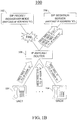
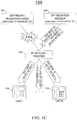
- FIGS 1A ⁇ C are block diagrams illustrating an exemplary system for providing a sedation service in a telecommunications network according to an embodiment of the subject matter described herein.
- system 100 may include a first node in a telecommunications network that responds to messages received from a second node in the network.
- system 100 includes a SIP proxy / registrar node, SIP proxy 102, that responds to SIP registration requests from one or more user agents, such as SIP user agent clients UAC1 through UAC N , collectively referred to as UACs 104, although other user agents, such as SIP user agent servers or non-SIP user agents, are also contemplated.
- the first node may be a node that provides a network service in the telecommunications network.
- the telecommunications network supports the SIP protocol, but the subject matter described herein is not so limited.
- the first node may be a SIP proxy server, a SIP registrar, a SIP user agent server, an Internet protocol multimedia subsystem (IMS) node, such as a call session control function (CSCF), a SIP or non-SIP presence server, and so on.
- IMS Internet protocol multimedia subsystem
- system 100 may include a third node for sending sedation messages to the second node or nodes in response to unavailability of the first node.
- system 100 includes a SIP sedation server 106 for sending sedation messages to UACs 104 in response to detection of a failure or other unavailability (for example, out of service due to maintenance or upgrading) of SIP proxy 102.
- the sedation messages are designed to reduce the number of messages sent by the second node to the first node, the frequency of messages sent by the second node to the first node, or both the number and frequency of messages sent by the second node to the first node.
- SIP sedation server 106 sends sedation messages to UACs 104 to reduce the number and/or frequency of messages that UACs 104 send to SIP proxy 102.
- system 100 may include a router 108 for routing the requests from UACs 104 to SIP proxy 102.
- router 108 is an anycast router, and both SIP proxy 102 and SIP sedation server 106 are configured to have the same anycast address, IP address "X".
- anycast address refers to an identifier for a set of interfaces, typically belonging to different nodes. A packet sent to an anycast address is delivered to one of the interfaces identified by that address, i.e., the "nearest" one, according to the routing protocol's measure of distance.
- a UAC 104 seeking to register a SIP session may issue a SIP registration request to anycast address "X", which is the address that has been assigned to the SIP registration function.
- Router 108 intercepts these SIP registration requests and forwards them to the "nearest" node associated with that anycast address, e.g., SIP proxy 102.
- System 100 An example operation of system 100 is illustrated in more detail in Figures 1B and 1C .
- SIP proxy 102 is unavailable, due to a failure of the node itself or of a communication link to the node, for example.
- Router 108 detects the failure of SIP proxy 102 and, in response, redirects all messages that were intended for SIP proxy 102 to another node associated with the Anycast address "X".
- system 100 may have one or more redundant SIP proxies.
- anycast router 108 may choose the next nearest node associated with anycast address "X", i.e., one of the backup SIP proxies.
- SIP sedation server would be configured so that it always appears as the "farthest" node to anycast router 108, so that messages will be redirected to SIP sedation server 106 only if all SIP proxies 102 and their redundant backups have failed.
- router 108 redirects all SIP registration requests to SIP sedation server 106.
- FIG 1C illustrates the response of SIP sedation server 106 to messages received, such as the SIP registration request messages illustrated in Figure 1B .
- SIP sedation server 106 issues a sedation message in response to each of the SIP registration requests received.
- SIP sedation server 106 may issue sedation messages in response to other types of SIP messages, including SIP registration requests, SIP subscribe requests, and SIP invite requests.
- SIP registration requests including SIP registration requests, SIP subscribe requests, and SIP invite requests.
- the subject matter described herein is not constrained to embodiments that use SIP.
- sedation messages may be sent by a non-SIP sedation server, in response to receiving non-SIP messages, including non-SIP registration, subscription, or invitation messages.
- SIP sedation server 106 issues SIP 5XX response messages, which are used to indicate a SIP server error.
- Other sedation messages that may be sent by SIP sedation server 106 include messages to indicate a process in progress, such as SIP 1XX messages.
- the sedation messages may include a "retry after" parameter, which is used to instruct the UAC 104 to wait a specified amount of time before retrying the request.
- SIP sedation server 106 may manipulate the retry after parameters for the purpose of preventing UACs 104 from overwhelming SIP proxy 102 with a flood of requests that occur at the same or nearly the same time. For example, as SIP sedation server 106 issues the SIP 5XX responses to UAC1 through UAC N, SIP sedation server 106 may set the retry parameter T to a progressively increasing value, such that UAC1 is instructed to wait 1 second before attempting to register again, UAC2 is instructed to wait 2 seconds, UAC3 is instructed to wait 3 seconds, and so on.
- the delay values are for illustrative purposes only: values in the microseconds, milliseconds, minutes, hours, etc., may be more appropriate, depending on the service provided by the failed node, the nature of the node outage, and so on.
- the specified delay may be the same for every sedation message; the delay may be based on the class of the particular UAC, in which premium clients are instructed to wait less time than regular clients; the delay may be programmatically defined according a pertinent algorithm; the delay may be randomly assigned; and so on.
- the recovering node e.g., SIP proxy 102
- temporal distribution of retry requests helps avoid network congestion.
- FIG. 1A ⁇ C illustrated an embodiment having SIP nodes 102 and 106 and UACs 104
- the sedation server concept is equally applicable to other networks, including circuit-switched and packet-switched networks, cellular or mobile networks, voice and/or data networks, networks based on Internet protocol (IP), IP multimedia subsystem (IMS) protocols, next-generation networks (NGN), and so on.
- IP Internet protocol
- IMS IP multimedia subsystem
- NTN next-generation networks
- the subject matter described herein is likewise not limited to SIP registration, but may be applied to network nodes that provide any kind of network service, including nodes that receive and process (and optionally, respond to) other types of messages.
- the sedation concept may also be applied to any protocol which supports messages which result in a calming of message traffic, e.g., which cause a sending node to send fewer messages, to send messages less frequently, etc., or to temporarily (or even permanently) stop sending messages to an unavailable node.
- the sedation concept may be applied to one or more classes of messages, messages related to one or more classes of services, or messages directed to one or more classes of service-providing nodes.
- FIGS 2A ⁇ C are block diagrams illustrating an exemplary system for providing a sedation service in a telecommunications network according to another embodiment of the subject matter described herein.
- system 200 includes a server 202, which provides a network service to one or more clients 204, and a sedation server 206, whose function will be described below.
- clients 204 communicate with server 202 and sedation server 206 through network 208.
- server 202, clients 204, sedation server 206, and/or network 208 may support the session initiation protocol. Alternatively, other protocols may be supported in addition to or instead of SIP.
- SS7 signaling system 7
- SOAP simple object access protocol
- RADIUS remote authentication dial in user service
- IP Internet protocol
- Prestored Internet protocol
- Prestored Prestored Messaging Protocol
- Prestored Prestored Messaging Protocol
- Prestored Prestored Messaging Protocol
- XMPP extensible messaging and presence protocol
- server 202 and sedation server 206 may be configured in a high-availability (HA) configuration or other configuration that provides failover such that a failure of server 202 triggers sedation server 206 to perform its sedation function.
- HA high-availability
- each node in an HA configuration responds to both a private address that is unique to each node and a public address that is shared by all nodes.
- the public address also referred to as the HA address, is an address that is associated with a service or with a node that provides that service.
- a client node seeking to make use of the service may send a service-related message addressed to the HA address.
- server 202 and sedation server 206 are configured in a high-availability (HA) configuration in which messages that are addressed to a specified network address "X" will be sent to all nodes that are associated with the address X, i.e., both server 202 and sedation server 206, but only one of the nodes will respond to the message.
- HA high-availability
- messages that are sent to a HA node and that are ultimately discarded by the HA node will not be shown in Figures 2A ⁇ C .
- sedation server 206 may receive a periodic heartbeat message 210 from server 202. If sedation server 206 fails to receive a next heartbeat message within a specified time limit, sedation server 206 may assume that server 202 has failed and will perform a sedation function.
- each node in the HA cluster receives a copy of these service-related messages, but only the currently active HA node responds. Since each node in the HA cluster receives a copy of the same message, the backup nodes may use the service-related messages to update subscription information, state tables, etc. In this manner, each backup node may remain wholly or partially in sync with the primary, eliminating or greatly reducing the time required for the backup node to become fully operational in response to a failover.
- server 202 may transmit synchronization data 212 to sedation server 206 in order for sedation server to be wholly or partially in sync with server 202.
- server 202 may provide a presence service or another service for which the current status of a subscriber is maintained. If server 202 maintains information about the status of a subscriber, e.g., clients 204, server 202 may transmit synchronization data 212 to sedation server 206. In one embodiment, server 202 may update sedation server 206 whenever the status of a subscriber changes. In this way, sedation server 206 may maintain a list of subscribers and each subscriber's respective status.
- network 208 may include a router (not shown), which may implement anycast routing as described above with regard to system 100. The operation of system 200 will now be described in detail with reference to Figures 2B and 2C .
- Sedation server 206 detects the failure of server 202, by failing to receive a heartbeat message from server 202 within the specified time limit, for example. In response to detecting the failure of server 202, sedation server 206 will begin responding to requests sent from clients 204 that are addressed to address X. For as long as server 202 remains inoperative, sedation server 206 will respond to the requests, and, in Figure 2C , sedation server 206 issues additional sedation messages as needed.
- sedation server 206 may issue SIP 5XX response messages including a retry-after parameter.
- the retry-after parameters may be manipulated so as to temporally distribute subscriptions retry requests and thus avoid flooding server 202 with requests.
- sedation server 206 may continue to receive request messages, such as subscription requests, on behalf of failed server 202, and may continue to send sedation messages.
- sedation server 206 may maintain information about the number of subscription attempts made by subscription clients 204. For example, sedation server 206 may increase the retry-after or wait time in response to every resubscription attempt that fails, or it may allow only a certain number of attempts before sending a message to the subscription client instructing it to halt attempts at resubscription, or to halt until further notice.
- sedation server 206 may detect the recovery of server 202, e.g., by resumed heartbeat messages from server 202 to sedation server 206. In response to the recovery of server 202, sedation server 206 may cease receiving or responding to subscription requests and cease generation of sedation messages.
- Systems 100 and 200 are two embodiments for providing sedation service in a telecommunications network, illustrating differences in how the sedation function is triggered, as well as differences in how the failure is detected and by which node.
- the node that generates the sedation messages (SIP sedation server 106 ) is different from the node (router 108 ) that detects the failure of the service providing node (SIP proxy 102 ) .
- the same node (sedation server 206 ) both detects the failure of the service providing node (server 202 ) and generates the sedation messages.
- sedation server 106 is triggered by receipt of query messages from router 108.
- sedation server 206 is triggered by a failure to receive a heartbeat message.
- Other implementations are considered within the scope of the subject matter described herein.
- a sedation node can provide a variety of sedation services.
- a sedation server may perform the functions of SIP sedation server 106, the functions of sedation server 206, other sedation functions, or some combination.
- the sedation service may be performed in response to transient events in the telecommunication network, such as temporary outages or failures of nodes, datalinks or other communications paths, network services, network functions, etc.
- FIG. 3 is a flow chart illustrating an exemplary process providing sedation service in a telecommunications network according to an embodiment of the subject matter described herein.
- a SIP sedation node receives a first message sent from a SIP user agent and intended for a SIP server.
- router 106 in Figure 1B may detect the failure of SIP proxy 102; sedation server 206 in Figure 2A may detect the failure of server 202 .
- a SIP sedation message for reducing the number or frequency of messages sent by the SIP user agent to the SIP server is sent to the user agent.
- SIP sedation server 106 may send SIP 5XX RETRY messages to clients 104 in response to indirect detection of the failure of SIP proxy 102, i.e., by starting to receive messages addressed to anycast address X, which router 108 formerly routed to SIP proxy 102 but now is routing to SIP sedation server 106.
Landscapes
- Engineering & Computer Science (AREA)
- Computer Networks & Wireless Communication (AREA)
- Signal Processing (AREA)
- Multimedia (AREA)
- Computer Security & Cryptography (AREA)
- Business, Economics & Management (AREA)
- General Business, Economics & Management (AREA)
- Telephonic Communication Services (AREA)
- Mobile Radio Communication Systems (AREA)
Claims (13)
- Verfahren zum Bereitstellen eines Ruhigstellungsdienstes in einem Telekommunikationsnetzwerk, wobei das Verfahren Folgendes umfasst:einen Ruhigstellungsknoten (106, 206) in einem Session Initiation Protocol (SIP), getrennt von einem SIP-Benutzeragenten (104, 204) und einem SIP-Server (102, 202):Empfangen (300) einer ersten Nachricht, die von dem SIP-Benutzeragenten (104) gesendet wurde und die für den SIP-Server vorgesehen war, aber, aufgrund eines Versagens des SIP-Servers (102) oder eines Versagens einer Kommunikationsverbindung zu dem SIP-Server (102), an den SIP-Ruhigstellungsknoten (106) umgeleitet wurde;Bestimmen (302), ob der SIP-Server (102, 202) nicht verfügbar ist; undSenden (304) einer SIP-Ruhigstellungsnachricht in Reaktion auf eine Bestimmung, dass der SIP-Server (102, 202) zum Antworten auf die erste Nachricht nicht verfügbar ist, an den SIP-Benutzeragenten (104, 204) zum Verringern der Anzahl oder der Häufigkeit von Nachrichten, die von dem SIP-Benutzeragenten (104, 204) an den SIP-Server (106, 206) gesendet werden.
- Verfahren nach Anspruch 1, wobei der SIP-Server (102, 202) einen SIP-Anwendungsserver, einen SIP-Proxyserver, einen SIP-Benutzeragent-Server, eine SIP-Registrierungsstelle, einen Präsenzserver und/oder eine Internetprotokollmultimediasubsystem-(IMS-)Anrufsitzungssteuerfunktion (call session control function - CSCF) umfasst.
- Verfahren nach Anspruch 1, wobei der SIP-Server (102, 202) und der Ruhigstellungsknoten (106, 206) zum Teilen einer Anycast-Internetprotokoll(IP)adresse konfiguriert sind und wobei
der SIP-Ruhigstellungsknoten (106, 206) bestimmt, dass der SIP-Serverknoten (102, 202) zum Antworten auf die erste Nachricht nicht verfügbar ist, wenn der SIP-Ruhigstellungsknoten (106, 206) die erste Nachricht empfängt. - Verfahren nach Anspruch 1, wobei die erste Nachricht, die von dem Benutzeragenten (104) gesendet wurde und für den SIP-Server (102) vorgesehen war, von einem Routingknoten (108) empfangen wird, der die Nachricht nach einer Bestimmung, dass der SIP-Server (102) nicht verfügbar ist, an den Ruhigstellungsknoten (106) sendet und der die Nachricht nach einer Bestimmung, dass der SIP-Server (102) verfügbar ist, an den SIP-Server (102) sendet.
- Verfahren nach Anspruch 1, wobei die Ruhigstellungsnachricht einen Zeitraum angibt, den der Benutzeragent (104, 204) vor dem Senden einer Nachricht an den SIP-Server (102, 202) warten soll, oder den Benutzer-Agenten (104, 204) anweist, keine Nachrichten an den SIP-Server (102, 202) zu senden.
- System (100, 200) zum Bereitstellen eines Ruhigstellungsdienstes in einem Telekommunikationsnetzwerk, wobei das System Folgendes umfasst:einen Session-Initiation-Protocol-(SIP-)Ruhigstellungsknoten (106, 206), getrennt von einem SIP-Benutzeragenten (104, 204) und einem SIP-Server (102, 202), der konfiguriert ist zum:Empfangen einer ersten Nachricht, die von dem SIP-Benutzeragenten (104, 204) gesendet wurde und die für den SIP-Server (102, 202) vorgesehen war, aber, aufgrund eines Versagens des SIP-Servers (102) oder aufgrund eines Versagens einer Kommunikationsverbindung zu dem SIP-Server (102), an den SIP-Ruhigstellungsknoten umgeleitet wurde;Bestimmen, ob der SIP-Server (102, 202) nicht verfügbar ist; undSenden einer SIP-Ruhigstellungsnachricht in Reaktion auf eine Bestimmung, dass der SIP-Server (102, 202) zum Antworten auf die erste Nachricht nicht verfügbar ist, an den SIP-Benutzeragenten (104, 204) zum Verringern der Anzahl oder Häufigkeit von Nachrichten, die durch den SIP-Benutzeragenten (104, 204) an den SIP-Server (102, 202) gesendet werden.
- System nach Anspruch 6, wobei die Ruhigstellungsnachricht einen Zeitraum angibt, den der Benutzeragent vor dem Senden einer Nachricht an den SIP-Server (102, 202) warten soll, oder den Benutzeragenten anweist, keine Nachrichten an den SIP-Server (102, 202) zu senden.
- System nach Anspruch 6, wobei der SIP-Server (102, 202) wenigstens einen SIP-Proxyserver, eine SIP-Registrierungsstelle, einen SIP-Benutzeragentenserver, eine Internetprotokollmultimediasubsystem-(IMS-)Anrufsitzungssteuerfunktion (CSCF) und/oder einen Präsenzserver umfasst.
- System nach Anspruch 6, wobei die Nachricht, die von dem Benutzeragenten (104, 204) gesendet wurde und die für den SIP-Server (102) vorgesehen war, von einem Routingknoten (108) empfangen wird, der zum Senden der Nachricht an den Ruhigstellungsknoten (106) nach einer Bestimmung, dass der SIP-Server (102) nicht verfügbar ist, und zum Senden der Nachricht an den SIP-Server (102) nach einer Bestimmung, dass der SIP-Server (102) verfügbar ist, konfiguriert ist.
- System nach Anspruch 9, wobei der Routingknoten (108) ein Internetprotokoll(IP)-Anycastadressenroutingknoten ist.
- System nach Anspruch 6, wobei der SIP-Server (102, 202) und der Ruhigstellungsknoten (106, 206) zum Teilen einer gemeinsamen Netzwerkadresse konfiguriert sind.
- System nach Anspruch 11, wobei die gemeinsame Netzwerkadresse eine IP-Anycastadresse umfasst.
- Computerlesbares Medium mit darauf gespeicherten computerausführbaren Anweisungen, die, wenn sie durch den Prozessor eines Computers ausgeführt werden, den Computer steuern, um das Verfahren nach einem der Ansprüche 1 bis 5 auszuführen.
Applications Claiming Priority (2)
| Application Number | Priority Date | Filing Date | Title |
|---|---|---|---|
| US8511508P | 2008-07-31 | 2008-07-31 | |
| PCT/US2009/052421 WO2010014912A2 (en) | 2008-07-31 | 2009-07-31 | Methods, systems, and computer readable media for providing sedation service in a telecommunications network |
Publications (3)
| Publication Number | Publication Date |
|---|---|
| EP2311234A2 EP2311234A2 (de) | 2011-04-20 |
| EP2311234A4 EP2311234A4 (de) | 2013-09-11 |
| EP2311234B1 true EP2311234B1 (de) | 2018-03-07 |
Family
ID=41608290
Family Applications (1)
| Application Number | Title | Priority Date | Filing Date |
|---|---|---|---|
| EP09803656.9A Active EP2311234B1 (de) | 2008-07-31 | 2009-07-31 | Verfahren, systeme und computerlesbare medien zur bereitstellung eines beruhigungsdienstes in einem telekommunikationsnetzwerk |
Country Status (4)
| Country | Link |
|---|---|
| US (2) | US9001664B2 (de) |
| EP (1) | EP2311234B1 (de) |
| CN (1) | CN102177690B (de) |
| WO (1) | WO2010014912A2 (de) |
Families Citing this family (16)
| Publication number | Priority date | Publication date | Assignee | Title |
|---|---|---|---|---|
| US9497229B2 (en) * | 2007-05-16 | 2016-11-15 | At&T Intellectual Property I, L.P. | Methods and apparatus to manage internet protocol (IP) multimedia subsystem (IMS) network capacity |
| WO2010014912A2 (en) | 2008-07-31 | 2010-02-04 | Tekelec | Methods, systems, and computer readable media for providing sedation service in a telecommunications network |
| US9467308B2 (en) * | 2008-08-01 | 2016-10-11 | At&T Intellectual Property I, L.P. | Methods and apparatus to control synchronization in voice over internet protocol networks after catastrophes |
| US10104131B2 (en) | 2011-05-06 | 2018-10-16 | International Business Machines Corporation | Managing session initiation protocol subscription dialog state loss |
| KR20120138546A (ko) * | 2011-06-15 | 2012-12-26 | 한국전자통신연구원 | 분산 네트워크에서 우선순위에 기반한 디스커버리를 수행하는 장치 및 방법과, 디스커버리 백오프 타임 결정 방법 |
| CN102891833B (zh) * | 2011-07-21 | 2017-03-29 | 中兴通讯股份有限公司 | 网络容灾方法和系统 |
| JP6357982B2 (ja) * | 2014-09-01 | 2018-07-18 | 沖電気工業株式会社 | 通信制御装置、通信制御システム及びプログラム |
| US9781026B2 (en) * | 2015-05-20 | 2017-10-03 | Avaya Inc. | System and method to prevent polling overload for detection of presence information |
| JP6579884B2 (ja) * | 2015-09-24 | 2019-09-25 | キヤノン株式会社 | 通信装置、制御方法、及びプログラム |
| CN109728962B (zh) | 2017-10-27 | 2021-12-21 | 华为技术有限公司 | 一种发送报文的方法和设备 |
| US11457056B2 (en) | 2018-09-18 | 2022-09-27 | Telefonaktiebolaget Lm Ericsson (Publ) | Methods of handling an overload situation of a session initiation protocol, SIP node in a telecommunication network, as well as related SIP nodes |
| US11418436B2 (en) * | 2020-05-08 | 2022-08-16 | Ciena Corporation | NG-VPLS E-tree signaling using segment routing |
| US11864265B2 (en) * | 2021-10-13 | 2024-01-02 | T-Mobile Usa, Inc. | Proxy-call session control function (P-CSCF) restoration |
| US12192251B2 (en) | 2021-10-13 | 2025-01-07 | T-Mobile Usa, Inc. | Proxy-call session control function (P-CSCF) |
| US20230217235A1 (en) * | 2021-12-30 | 2023-07-06 | T-Mobile Usa, Inc. | Hss-based p-cscf restoration triggered by as |
| US11736552B1 (en) * | 2022-09-21 | 2023-08-22 | Microsoft Technology Licensing, Llc | Sender based adaptive bit rate control |
Family Cites Families (13)
| Publication number | Priority date | Publication date | Assignee | Title |
|---|---|---|---|---|
| US7237034B2 (en) | 2000-09-18 | 2007-06-26 | Openwave Systems Inc. | Method and apparatus for controlling network traffic |
| US20030210649A1 (en) | 2002-05-03 | 2003-11-13 | Bondi Andre B. | Managing network loading by control of retry processing at proximate switches associated with unresponsive targets |
| US7366782B2 (en) * | 2003-04-14 | 2008-04-29 | At&T Corp. | Systems and methods for termination of session initiation protocol |
| US7590122B2 (en) * | 2003-05-16 | 2009-09-15 | Nortel Networks Limited | Method and apparatus for session control |
| US8443087B2 (en) * | 2003-10-09 | 2013-05-14 | Rockstar Consortium Us Lp | System for managing sessions and connections in a network |
| DE60330350D1 (de) * | 2003-10-30 | 2010-01-14 | Hewlett Packard Development Co | Kommunikationsverfahren und Vorrichtung |
| US7609619B2 (en) * | 2005-02-25 | 2009-10-27 | Cisco Technology, Inc. | Active-active data center using RHI, BGP, and IGP anycast for disaster recovery and load distribution |
| US7903672B1 (en) * | 2005-08-30 | 2011-03-08 | Juniper Networks, Inc. | Signaling protocol registration load reduction |
| US7756034B2 (en) * | 2005-11-29 | 2010-07-13 | Cisco Technology, Inc. | System and method for handling network overload |
| US20080123640A1 (en) * | 2006-09-20 | 2008-05-29 | Ravideep Bhatia | Method for discovering outbound sip proxy server |
| US7591013B2 (en) * | 2007-07-31 | 2009-09-15 | Cisco Technology, Inc. | System and method for client initiated authentication in a session initiation protocol environment |
| US8108514B2 (en) * | 2008-04-02 | 2012-01-31 | International Business Machines Corporation | High availability of internet protocol addresses within a cluster |
| WO2010014912A2 (en) | 2008-07-31 | 2010-02-04 | Tekelec | Methods, systems, and computer readable media for providing sedation service in a telecommunications network |
-
2009
- 2009-07-31 WO PCT/US2009/052421 patent/WO2010014912A2/en not_active Ceased
- 2009-07-31 US US12/533,617 patent/US9001664B2/en active Active
- 2009-07-31 CN CN200980138725.4A patent/CN102177690B/zh active Active
- 2009-07-31 EP EP09803656.9A patent/EP2311234B1/de active Active
-
2015
- 2015-03-10 US US14/644,164 patent/US9319431B2/en active Active
Non-Patent Citations (1)
| Title |
|---|
| None * |
Also Published As
| Publication number | Publication date |
|---|---|
| CN102177690A (zh) | 2011-09-07 |
| US9001664B2 (en) | 2015-04-07 |
| EP2311234A2 (de) | 2011-04-20 |
| US9319431B2 (en) | 2016-04-19 |
| WO2010014912A2 (en) | 2010-02-04 |
| US20150249689A1 (en) | 2015-09-03 |
| US20100027532A1 (en) | 2010-02-04 |
| EP2311234A4 (de) | 2013-09-11 |
| CN102177690B (zh) | 2014-09-03 |
| WO2010014912A3 (en) | 2010-04-29 |
Similar Documents
| Publication | Publication Date | Title |
|---|---|---|
| EP2311234B1 (de) | Verfahren, systeme und computerlesbare medien zur bereitstellung eines beruhigungsdienstes in einem telekommunikationsnetzwerk | |
| EP2179541B1 (de) | Systeme, verfahren und computerprogrammprodukte zur verteilung von betriebsstatusinformationen über signalisierungseinheiten von anwendungen oder kommunikationsnetzen höherer schicht unter sip-einheiten | |
| CN101730984A (zh) | 用于在通信网络中提供容错的服务交互和中介功能的方法、系统和计算机程序产品 | |
| US9201743B2 (en) | Backup SIP server for the survivability of an enterprise network using SIP | |
| CN101094237B (zh) | 一种ip多媒体子系统中网元间的负荷分担方法 | |
| EP2733907B1 (de) | Verfahren, lokales Gateway und System für lokale Sprachüberlebensfähigkeit | |
| JP6724998B2 (ja) | サーバ装置、クラスタシステム、クラスタ制御方法およびプログラム | |
| WO2008008226A2 (en) | Method for providing geographically diverse ip multimedia subsystem instances | |
| US8051189B2 (en) | Methods, systems, and computer program products for session initiation protocol (SIP) fast switchover | |
| US8930768B2 (en) | System and method of failover for an initiated SIP session | |
| JP5202383B2 (ja) | 通信ネットワークシステムとその呼制御装置及び発信規制方法 | |
| WO2014117612A1 (zh) | 一种消息异步容错方法、装置及设备 | |
| CN101459533B (zh) | 一种下一代网络中改进的应用服务器容灾的系统及方法 | |
| WO2013060567A1 (en) | A method for sip proxy failover | |
| EP2815549B1 (de) | Verfahren und vorrichtung zur verbesserten handhabung eines ims-knoten-blacklistings | |
| CN118301023A (zh) | 一种通信方法及相关设备 | |
| WO2012109953A1 (zh) | 一种sip会话保护的方法和系统 | |
| CN100473018C (zh) | 用于替代接通空间上分开的交换系统的方法 | |
| JP2002271371A (ja) | ネットワークサーバおよびその制御方法 | |
| WO2026033538A1 (en) | System and method for service restoration in a network | |
| WO2012058943A1 (zh) | Ip多媒体子系统、订阅forking的方法及装置 | |
| CN105049230A (zh) | 一种基于域名系统的分布式多媒体子系统的车辆容灾方法及其车辆容灾系统 |
Legal Events
| Date | Code | Title | Description |
|---|---|---|---|
| PUAI | Public reference made under article 153(3) epc to a published international application that has entered the european phase |
Free format text: ORIGINAL CODE: 0009012 |
|
| 17P | Request for examination filed |
Effective date: 20110224 |
|
| AK | Designated contracting states |
Kind code of ref document: A2 Designated state(s): AT BE BG CH CY CZ DE DK EE ES FI FR GB GR HR HU IE IS IT LI LT LU LV MC MK MT NL NO PL PT RO SE SI SK SM TR |
|
| AX | Request for extension of the european patent |
Extension state: AL BA RS |
|
| DAX | Request for extension of the european patent (deleted) | ||
| 111Z | Information provided on other rights and legal means of execution |
Free format text: AT BE BG CH CY CZ DE DK EE ES FI FR GB GR HR HU IE IS IT LT LU LV MC MK MT NL NO PL PT RO SE SI SK SM TR Effective date: 20120912 |
|
| RAP1 | Party data changed (applicant data changed or rights of an application transferred) |
Owner name: TEKELEC, INC. |
|
| A4 | Supplementary search report drawn up and despatched |
Effective date: 20130809 |
|
| RIC1 | Information provided on ipc code assigned before grant |
Ipc: H04L 29/06 20060101AFI20130805BHEP |
|
| D11X | Information provided on other rights and legal means of execution (deleted) | ||
| 17Q | First examination report despatched |
Effective date: 20150126 |
|
| GRAP | Despatch of communication of intention to grant a patent |
Free format text: ORIGINAL CODE: EPIDOSNIGR1 |
|
| INTG | Intention to grant announced |
Effective date: 20171010 |
|
| GRAS | Grant fee paid |
Free format text: ORIGINAL CODE: EPIDOSNIGR3 |
|
| GRAA | (expected) grant |
Free format text: ORIGINAL CODE: 0009210 |
|
| AK | Designated contracting states |
Kind code of ref document: B1 Designated state(s): AT BE BG CH CY CZ DE DK EE ES FI FR GB GR HR HU IE IS IT LI LT LU LV MC MK MT NL NO PL PT RO SE SI SK SM TR |
|
| REG | Reference to a national code |
Ref country code: GB Ref legal event code: FG4D |
|
| REG | Reference to a national code |
Ref country code: CH Ref legal event code: EP Ref country code: AT Ref legal event code: REF Ref document number: 977711 Country of ref document: AT Kind code of ref document: T Effective date: 20180315 |
|
| REG | Reference to a national code |
Ref country code: IE Ref legal event code: FG4D |
|
| REG | Reference to a national code |
Ref country code: DE Ref legal event code: R096 Ref document number: 602009051145 Country of ref document: DE |
|
| REG | Reference to a national code |
Ref country code: FR Ref legal event code: PLFP Year of fee payment: 10 |
|
| REG | Reference to a national code |
Ref country code: NL Ref legal event code: MP Effective date: 20180307 |
|
| REG | Reference to a national code |
Ref country code: LT Ref legal event code: MG4D |
|
| PG25 | Lapsed in a contracting state [announced via postgrant information from national office to epo] |
Ref country code: NO Free format text: LAPSE BECAUSE OF FAILURE TO SUBMIT A TRANSLATION OF THE DESCRIPTION OR TO PAY THE FEE WITHIN THE PRESCRIBED TIME-LIMIT Effective date: 20180607 Ref country code: FI Free format text: LAPSE BECAUSE OF FAILURE TO SUBMIT A TRANSLATION OF THE DESCRIPTION OR TO PAY THE FEE WITHIN THE PRESCRIBED TIME-LIMIT Effective date: 20180307 Ref country code: HR Free format text: LAPSE BECAUSE OF FAILURE TO SUBMIT A TRANSLATION OF THE DESCRIPTION OR TO PAY THE FEE WITHIN THE PRESCRIBED TIME-LIMIT Effective date: 20180307 Ref country code: LT Free format text: LAPSE BECAUSE OF FAILURE TO SUBMIT A TRANSLATION OF THE DESCRIPTION OR TO PAY THE FEE WITHIN THE PRESCRIBED TIME-LIMIT Effective date: 20180307 Ref country code: ES Free format text: LAPSE BECAUSE OF FAILURE TO SUBMIT A TRANSLATION OF THE DESCRIPTION OR TO PAY THE FEE WITHIN THE PRESCRIBED TIME-LIMIT Effective date: 20180307 Ref country code: CY Free format text: LAPSE BECAUSE OF FAILURE TO SUBMIT A TRANSLATION OF THE DESCRIPTION OR TO PAY THE FEE WITHIN THE PRESCRIBED TIME-LIMIT Effective date: 20180307 |
|
| REG | Reference to a national code |
Ref country code: AT Ref legal event code: MK05 Ref document number: 977711 Country of ref document: AT Kind code of ref document: T Effective date: 20180307 |
|
| PG25 | Lapsed in a contracting state [announced via postgrant information from national office to epo] |
Ref country code: BG Free format text: LAPSE BECAUSE OF FAILURE TO SUBMIT A TRANSLATION OF THE DESCRIPTION OR TO PAY THE FEE WITHIN THE PRESCRIBED TIME-LIMIT Effective date: 20180607 Ref country code: GR Free format text: LAPSE BECAUSE OF FAILURE TO SUBMIT A TRANSLATION OF THE DESCRIPTION OR TO PAY THE FEE WITHIN THE PRESCRIBED TIME-LIMIT Effective date: 20180608 Ref country code: LV Free format text: LAPSE BECAUSE OF FAILURE TO SUBMIT A TRANSLATION OF THE DESCRIPTION OR TO PAY THE FEE WITHIN THE PRESCRIBED TIME-LIMIT Effective date: 20180307 Ref country code: SE Free format text: LAPSE BECAUSE OF FAILURE TO SUBMIT A TRANSLATION OF THE DESCRIPTION OR TO PAY THE FEE WITHIN THE PRESCRIBED TIME-LIMIT Effective date: 20180307 |
|
| PG25 | Lapsed in a contracting state [announced via postgrant information from national office to epo] |
Ref country code: EE Free format text: LAPSE BECAUSE OF FAILURE TO SUBMIT A TRANSLATION OF THE DESCRIPTION OR TO PAY THE FEE WITHIN THE PRESCRIBED TIME-LIMIT Effective date: 20180307 Ref country code: IT Free format text: LAPSE BECAUSE OF FAILURE TO SUBMIT A TRANSLATION OF THE DESCRIPTION OR TO PAY THE FEE WITHIN THE PRESCRIBED TIME-LIMIT Effective date: 20180307 Ref country code: RO Free format text: LAPSE BECAUSE OF FAILURE TO SUBMIT A TRANSLATION OF THE DESCRIPTION OR TO PAY THE FEE WITHIN THE PRESCRIBED TIME-LIMIT Effective date: 20180307 Ref country code: NL Free format text: LAPSE BECAUSE OF FAILURE TO SUBMIT A TRANSLATION OF THE DESCRIPTION OR TO PAY THE FEE WITHIN THE PRESCRIBED TIME-LIMIT Effective date: 20180307 Ref country code: PL Free format text: LAPSE BECAUSE OF FAILURE TO SUBMIT A TRANSLATION OF THE DESCRIPTION OR TO PAY THE FEE WITHIN THE PRESCRIBED TIME-LIMIT Effective date: 20180307 |
|
| PG25 | Lapsed in a contracting state [announced via postgrant information from national office to epo] |
Ref country code: CZ Free format text: LAPSE BECAUSE OF FAILURE TO SUBMIT A TRANSLATION OF THE DESCRIPTION OR TO PAY THE FEE WITHIN THE PRESCRIBED TIME-LIMIT Effective date: 20180307 Ref country code: SK Free format text: LAPSE BECAUSE OF FAILURE TO SUBMIT A TRANSLATION OF THE DESCRIPTION OR TO PAY THE FEE WITHIN THE PRESCRIBED TIME-LIMIT Effective date: 20180307 Ref country code: AT Free format text: LAPSE BECAUSE OF FAILURE TO SUBMIT A TRANSLATION OF THE DESCRIPTION OR TO PAY THE FEE WITHIN THE PRESCRIBED TIME-LIMIT Effective date: 20180307 Ref country code: SM Free format text: LAPSE BECAUSE OF FAILURE TO SUBMIT A TRANSLATION OF THE DESCRIPTION OR TO PAY THE FEE WITHIN THE PRESCRIBED TIME-LIMIT Effective date: 20180307 |
|
| REG | Reference to a national code |
Ref country code: DE Ref legal event code: R097 Ref document number: 602009051145 Country of ref document: DE |
|
| PG25 | Lapsed in a contracting state [announced via postgrant information from national office to epo] |
Ref country code: PT Free format text: LAPSE BECAUSE OF FAILURE TO SUBMIT A TRANSLATION OF THE DESCRIPTION OR TO PAY THE FEE WITHIN THE PRESCRIBED TIME-LIMIT Effective date: 20180709 |
|
| PLBE | No opposition filed within time limit |
Free format text: ORIGINAL CODE: 0009261 |
|
| STAA | Information on the status of an ep patent application or granted ep patent |
Free format text: STATUS: NO OPPOSITION FILED WITHIN TIME LIMIT |
|
| PG25 | Lapsed in a contracting state [announced via postgrant information from national office to epo] |
Ref country code: DK Free format text: LAPSE BECAUSE OF FAILURE TO SUBMIT A TRANSLATION OF THE DESCRIPTION OR TO PAY THE FEE WITHIN THE PRESCRIBED TIME-LIMIT Effective date: 20180307 |
|
| 26N | No opposition filed |
Effective date: 20181210 |
|
| PG25 | Lapsed in a contracting state [announced via postgrant information from national office to epo] |
Ref country code: SI Free format text: LAPSE BECAUSE OF FAILURE TO SUBMIT A TRANSLATION OF THE DESCRIPTION OR TO PAY THE FEE WITHIN THE PRESCRIBED TIME-LIMIT Effective date: 20180307 |
|
| REG | Reference to a national code |
Ref country code: CH Ref legal event code: PL |
|
| PG25 | Lapsed in a contracting state [announced via postgrant information from national office to epo] |
Ref country code: LU Free format text: LAPSE BECAUSE OF NON-PAYMENT OF DUE FEES Effective date: 20180731 Ref country code: MC Free format text: LAPSE BECAUSE OF FAILURE TO SUBMIT A TRANSLATION OF THE DESCRIPTION OR TO PAY THE FEE WITHIN THE PRESCRIBED TIME-LIMIT Effective date: 20180307 |
|
| REG | Reference to a national code |
Ref country code: BE Ref legal event code: MM Effective date: 20180731 |
|
| PG25 | Lapsed in a contracting state [announced via postgrant information from national office to epo] |
Ref country code: CH Free format text: LAPSE BECAUSE OF NON-PAYMENT OF DUE FEES Effective date: 20180731 Ref country code: LI Free format text: LAPSE BECAUSE OF NON-PAYMENT OF DUE FEES Effective date: 20180731 |
|
| REG | Reference to a national code |
Ref country code: IE Ref legal event code: MM4A |
|
| PG25 | Lapsed in a contracting state [announced via postgrant information from national office to epo] |
Ref country code: BE Free format text: LAPSE BECAUSE OF NON-PAYMENT OF DUE FEES Effective date: 20180731 |
|
| PG25 | Lapsed in a contracting state [announced via postgrant information from national office to epo] |
Ref country code: IE Free format text: LAPSE BECAUSE OF NON-PAYMENT OF DUE FEES Effective date: 20180731 |
|
| PG25 | Lapsed in a contracting state [announced via postgrant information from national office to epo] |
Ref country code: MT Free format text: LAPSE BECAUSE OF NON-PAYMENT OF DUE FEES Effective date: 20180731 |
|
| PG25 | Lapsed in a contracting state [announced via postgrant information from national office to epo] |
Ref country code: TR Free format text: LAPSE BECAUSE OF FAILURE TO SUBMIT A TRANSLATION OF THE DESCRIPTION OR TO PAY THE FEE WITHIN THE PRESCRIBED TIME-LIMIT Effective date: 20180307 |
|
| PG25 | Lapsed in a contracting state [announced via postgrant information from national office to epo] |
Ref country code: HU Free format text: LAPSE BECAUSE OF FAILURE TO SUBMIT A TRANSLATION OF THE DESCRIPTION OR TO PAY THE FEE WITHIN THE PRESCRIBED TIME-LIMIT; INVALID AB INITIO Effective date: 20090731 |
|
| PG25 | Lapsed in a contracting state [announced via postgrant information from national office to epo] |
Ref country code: MK Free format text: LAPSE BECAUSE OF NON-PAYMENT OF DUE FEES Effective date: 20180307 |
|
| PG25 | Lapsed in a contracting state [announced via postgrant information from national office to epo] |
Ref country code: IS Free format text: LAPSE BECAUSE OF FAILURE TO SUBMIT A TRANSLATION OF THE DESCRIPTION OR TO PAY THE FEE WITHIN THE PRESCRIBED TIME-LIMIT Effective date: 20180707 |
|
| REG | Reference to a national code |
Ref country code: DE Ref legal event code: R079 Ref document number: 602009051145 Country of ref document: DE Free format text: PREVIOUS MAIN CLASS: H04L0029060000 Ipc: H04L0065000000 |
|
| P01 | Opt-out of the competence of the unified patent court (upc) registered |
Effective date: 20230516 |
|
| PGFP | Annual fee paid to national office [announced via postgrant information from national office to epo] |
Ref country code: GB Payment date: 20250612 Year of fee payment: 17 |
|
| PGFP | Annual fee paid to national office [announced via postgrant information from national office to epo] |
Ref country code: FR Payment date: 20250610 Year of fee payment: 17 |
|
| PGFP | Annual fee paid to national office [announced via postgrant information from national office to epo] |
Ref country code: DE Payment date: 20250604 Year of fee payment: 17 |