EP2311323B1 - Abbaumethoden von Proteinablagerungen und Prionen - Google Patents
Abbaumethoden von Proteinablagerungen und Prionen Download PDFInfo
- Publication number
- EP2311323B1 EP2311323B1 EP09013171A EP09013171A EP2311323B1 EP 2311323 B1 EP2311323 B1 EP 2311323B1 EP 09013171 A EP09013171 A EP 09013171A EP 09013171 A EP09013171 A EP 09013171A EP 2311323 B1 EP2311323 B1 EP 2311323B1
- Authority
- EP
- European Patent Office
- Prior art keywords
- protein
- pernix
- degradation
- prion
- prion protein
- Prior art date
- Legal status (The legal status is an assumption and is not a legal conclusion. Google has not performed a legal analysis and makes no representation as to the accuracy of the status listed.)
- Active
Links
Images

Classifications
-
- A—HUMAN NECESSITIES
- A61—MEDICAL OR VETERINARY SCIENCE; HYGIENE
- A61K—PREPARATIONS FOR MEDICAL, DENTAL OR TOILETRY PURPOSES
- A61K38/00—Medicinal preparations containing peptides
- A61K38/16—Peptides having more than 20 amino acids; Gastrins; Somatostatins; Melanotropins; Derivatives thereof
- A61K38/43—Enzymes; Proenzymes; Derivatives thereof
- A61K38/46—Hydrolases (3)
- A61K38/48—Hydrolases (3) acting on peptide bonds (3.4)
- A61K38/482—Serine endopeptidases (3.4.21)
-
- A—HUMAN NECESSITIES
- A01—AGRICULTURE; FORESTRY; ANIMAL HUSBANDRY; HUNTING; TRAPPING; FISHING
- A01N—PRESERVATION OF BODIES OF HUMANS OR ANIMALS OR PLANTS OR PARTS THEREOF; BIOCIDES, e.g. AS DISINFECTANTS, AS PESTICIDES OR AS HERBICIDES; PEST REPELLANTS OR ATTRACTANTS; PLANT GROWTH REGULATORS
- A01N63/00—Biocides, pest repellants or attractants, or plant growth regulators containing microorganisms, viruses, microbial fungi, animals or substances produced by, or obtained from, microorganisms, viruses, microbial fungi or animals, e.g. enzymes or fermentates
- A01N63/50—Isolated enzymes; Isolated proteins
-
- A—HUMAN NECESSITIES
- A61—MEDICAL OR VETERINARY SCIENCE; HYGIENE
- A61L—METHODS OR APPARATUS FOR STERILISING MATERIALS OR OBJECTS IN GENERAL; DISINFECTION, STERILISATION OR DEODORISATION OF AIR; CHEMICAL ASPECTS OF BANDAGES, DRESSINGS, ABSORBENT PADS OR SURGICAL ARTICLES; MATERIALS FOR BANDAGES, DRESSINGS, ABSORBENT PADS OR SURGICAL ARTICLES
- A61L2/00—Disinfection or sterilisation of materials or objects, in general; Accessories therefor
- A61L2/16—Disinfection or sterilisation of materials or objects, in general; Accessories therefor using chemical substances
- A61L2/18—Liquid substances
-
- C—CHEMISTRY; METALLURGY
- C12—BIOCHEMISTRY; BEER; SPIRITS; WINE; VINEGAR; MICROBIOLOGY; ENZYMOLOGY; MUTATION OR GENETIC ENGINEERING
- C12N—MICROORGANISMS OR ENZYMES; COMPOSITIONS THEREOF; PROPAGATING, PRESERVING, OR MAINTAINING MICROORGANISMS; MUTATION OR GENETIC ENGINEERING; CULTURE MEDIA
- C12N9/00—Enzymes; Proenzymes; Compositions thereof; Processes for preparing, activating, inhibiting, separating or purifying enzymes
- C12N9/14—Hydrolases (3)
- C12N9/48—Hydrolases (3) acting on peptide bonds (3.4)
- C12N9/50—Proteinases, e.g. Endopeptidases (3.4.21-3.4.25)
- C12N9/52—Proteinases, e.g. Endopeptidases (3.4.21-3.4.25) derived from bacteria or Archaea
-
- A—HUMAN NECESSITIES
- A61—MEDICAL OR VETERINARY SCIENCE; HYGIENE
- A61L—METHODS OR APPARATUS FOR STERILISING MATERIALS OR OBJECTS IN GENERAL; DISINFECTION, STERILISATION OR DEODORISATION OF AIR; CHEMICAL ASPECTS OF BANDAGES, DRESSINGS, ABSORBENT PADS OR SURGICAL ARTICLES; MATERIALS FOR BANDAGES, DRESSINGS, ABSORBENT PADS OR SURGICAL ARTICLES
- A61L2103/00—Materials or objects being the target of disinfection or sterilisation
- A61L2103/15—Laboratory, medical or dentistry appliances, e.g. catheters or sharps
Definitions
- the present invention relates to ex vivo methods for protein and/or prion protein degradation.
- Protein and/or prion protein is degraded with extracellular proteolytic enzymes of hyperthermophilic Aeropyrum pernix K1.
- TSE transmissible spongiform encephalopathies
- CJD Creutzfeldt-Jakob disease
- TSEs are caused by prions (Griffith 1967, Prusiner 1982) which are proteinaceous infectious protein particles that lack nucleic acids (Prusiner 1982).
- PrP Sc The infectious form of the prion protein, PrP Sc is generated from the normal cellular form of the protein, PrP c .
- PrP c form is encoded in a genome and is synthesised in cells of different types; nevertheless, the level of its expression is the highest in the central nervous system cells.
- Each form of the protein has a specific tertiary structure. Whereas the PrP c form mostly contains alpha-helixes, the PrP Sc form has a higher level of beta-structures.
- the infectious form of the protein develops in a post-translational process, during which a conformational change causes the transformation of the PrP c form into the PrP Sc form, the prion protein (Bolton et al. 1984, Borchelt et al. 1990).
- the consequence of different tertiary structures of the both protein forms are also different physico-chemical characteristics. Because of the tertiary structure that is reach in beta-structure, the PrP Sc form is highly resistant to a degradation with proteolytic enzymes and insoluble in solutions of detergents, while the PrP c form can readily be digested by proteolytic enzymes and is soluble in solutions of detergents.
- TSE transmission One of the means of TSE transmission is surgical material and instruments, that are infected during operations.
- the infected equipment then represents a constant threat since the physico-chemical characteristics of prion proteins such as resistance against high temperatures and aggressive detergents make it impossible to sterilize such equipment with standard procedures of sterilization.
- US 6720355 discloses a method of the prion protein deactivation by heating in the presence of sodium dodecyl sulphate (SDS).
- SDS sodium dodecyl sulphate
- US 6719988 discloses a method of the prion protein deactivation with heating in the presence of alkylsulphates at pH 2.5 to 4.5.
- US 6743899 discloses a method of the prion protein deactivation in alkaline solution, pH 10 to 13.
- WO 2007/023178 discloses a method of the prion protein deactivation with lipophilic substances in samples containing bovine fat and bones that are used in production of soaps, detergents, cosmetics and animal food.
- WO 2004/039418 discloses a method of the prion protein deactivation on surgical instruments with sodium dodecyl sulphate (SDS) detergent combined with several proteolytic enzymes (proteinase K, papain, pronase and bromelanin).
- SDS sodium dodecyl sulphate
- US 6613505 discloses a method of the prion protein deactivation with PWD-I keratinase isolated from Bacillus licheniformis. The biological material is heated to 150°C during the procedure.
- US 2006/12739 discloses a method of the prion protein deactivation with subtilysin proteinase at 40°C.
- US 5756678 and EP 0742018 disclose a method of the prion protein deactivation in connective tissue with sodium hydroxide.
- US 4352625 discloses a method of the prion protein deactivation on surfaces with ultrasound.
- US 6707254 discloses a low temperature plasma sterilizing system and method.
- WO 2003/077835 discloses compositions of sodium dodecyl sulphate (SDS) solutions for prion protein degradation.
- US 6322802 discloses sterilization of equipment with standard sterilization techniques and polycationic dendrimers.
- US 7303907 discloses a methods of protein deactivation with thermo-resistant proteolytic enzymes from various microorganisms. Experiments applying thermostable proteolytic enzymes of A. pernix (pernisine) for protein degradation are mentioned. The proteolytic enzyme is purified using ammonium sulphate precipitation and dye-ligand chromatography prior to its use in protein degradation. No data on the successful application of A. pernix proteases for the degradation of prion protein is presented in US 7303907 . In a subsequent publication from the same authors (McLeod et al, 2004), it is shown that proteolytic enzymes of A. pernix did not degrade prion protein in their experiments.
- Aeropyrum pernix K1 (JCM 9820) is a Gram negative, heterotrophic, strictly aerobic, hyperthermophilic marine archea. It was isolated from a solphataric vent on Kodakara-Jima island in Japan in 1993 (Sako et al. 1996). The complete genome of A. pernix was sequenced (Kawarabayasi et al. 1999). The optimal growth of A. pernix with doubling time of 200 min is achieved at temperatures between 90°C and 95°C, neutral pH and 3.5% salinity.
- the present invention relates to the ex vivo use of A . pernix serine protease for the degradation of protein and/or prion protein.
- the invention relates to the degradation of protein deposits (or protein aggregates) and/or prion protein.
- the A. pernix serine protease is in the form of a filtrate obtained by filtration of an A. pernix culture supernatant, preferably obtained with microfiltration through a filter having a cut-off of equal to or larger than 30 kDa (henceforth, the "R30 fraction").
- the invention thus relates to the ex vivo use of an A . pernix culture supernatant comprising: A. pernix serine protease, or an active fragment thereof, or a protein at least 50, 60, 80, 90, 95, 97, 99, or 99.9% identical to A. pernix serine protease (SEQ ID NO:1), or an active fragment thereof, for the degradation of protein and/or prion protein.
- SEQ ID NO:1 A. pernix serine protease
- the A. pernix is A. pernix K1.
- said A. pernix culture supernatant is obtained by obtained from ultra-filtration of A. pernix culture supernatant with a cut-off molecular weight of at least 30 kDa.
- said degradation of said protein and/or prion protein is for the sterilization of surgical equipment. In another preferred embodiment of the invention, said degradation of said protein and/or prion protein is for the cleaning of textiles. In another preferred embodiment of the invention, said degradation of said protein and/or prion protein is in food.
- the invention further relates to an ex vivo method of protein and/or prion protein degradation comprising incubation of the protein and/or prion protein with an A. pernix culture supernatant comprising A. pernix serine protease, or an active fragment thereof, or a protein at least 80% identical to A. pernix serine protease, or an active fragment thereof.
- said A. pernix culture supernatant is in form of a filtrate obtained from ultra-filtration of A. pernix culture supernatant with a cut-off molecular weight of at least 30 kDa.
- said method is for the treatment of protein and/or prion infected waste, or for the cleaning of protein and/or prion-infected textiles, or is in food.
- said protein and/or prion protein degradation is on the surface of a solid material.
- A. pernix serine proteinase within the meaning of the invention shall be understood as being a protein having the amino acid sequence of SEQ ID NO:1, or a protein sequence 80, 85, 90, 95, 97, 98, 99, or 99.9% identity with SEQ ID NO:1.
- A. pernix serine proteinase shall be understood to relate to the protein recoded in public database UniProtKB (http://www.uniprot.org/) under ID Q9YFI3_AERPE.
- A. pernix serine proteinase relates to a protein encoded by DNA which hybridizes under stringent conditions to DNA encoding SEQ ID NO:1.
- Active fragments of a protein shall be understood as being fragments of said protein having the same biochemical activity as the original protein. Fragments of a protein, according to the invention, are preferably fragments of 10%, 20%, 30%, 40%, 50%, 60%, 70%, 80%, 90%, 95%, 98%, 99% of the original length.
- prion protein shall be understood as relating to the PrP SC and/or to the PrP c protein, generally known in the art.
- Culture supernatant within the context of the present invention, shall be understood any liquid medium used for cultivation of a microbial organism (e.g. A. pernix ) after cultivation of the microbial organism has taken place.
- Culture supernatants of the present invention may also comprise disintegrated cell mass, if the cells of the microbial organism were disintegrated after cultivation.
- a culture supernatant, according to the invention preferably comprises extracellular proteins of said organism, which are excreted upon cultivation.
- a culture supernatant, according to the invention may comprise intracellular proteins of the organism, in particular, if at least part of the cells of the organism disintegrated during cultivation, or thereafter, e.g. by suitable disintegration techniques.
- Degradation of a protein within the meaning of the present invention shall be understood to be the degradation of the protein into parts or fragments or amino acids of the protein, wherein 20%, preferably 50%, 75%, 85%, 90%, 95%, 98%, 99%, 99.9%, most preferably 100% of the original protein are degraded.
- a “protein deposit”, according to the invention, shall be understood to be a local agglomeration of protein in un-dissolved form on the surface of a solid object.
- R30 fraction within the meaning of the invention, shall be understood as being the filtrate of a culture supernatant filtered trough a filter having a cut-off molecular weight of at least 30 kDA.
- the cut-off molecular weight of the filter is 10, 20, 40, 50, 100, 200, 400, or 800 kDa.
- Surgical equipment shall have the ordinary meaning of this term as it is understood in the art. Surgical equipment comprises i.a . scissors, forceps, needles, needle holders, retractors, scalpels, lancets, endoscopes, towel clamps, drills, as well as other surgical equipment.
- % identity of a protein relative to a reference protein of a defined length shall be understood as follows: A peptide that is 50 percent identical to a reference polypeptide that is 100 amino acids long can be a 50 amino acid polypeptide that is completely identical to a 50 amino acid long portion of the reference polypeptide. It might also be a 100 amino acid long polypeptide, which is 50 percent identical to the reference polypeptide over its entire length. Of course, other polypeptides will meet the same criteria.
- sequence identity as used herein means that the sequences are compared as follows.
- sequences are aligned using Version 9 of the Genetic Computing Group's GAP (global alignment program), using the default (BLOSUM62) matrix (values -4 to +11) with a gap open penalty of -12 (for the first null of a gap) and a gap extension penalty of -4 (per each additional consecutive null in the gap).
- percentage identity is calculated by expressing the number of matches as a percentage of the number of amino acids in the reference polypeptide.
- Stringent conditions within the meaning of the invention, shall be understood as being the stringent conditions as set forth according to Sambrook et al. (2 nd ed., 1989, Cold Spring Harbor Laboratory Press, Cold Spring Harbor, N.Y.)
- An A. pernix serine protease preparation according to the invention can be obtained as follows:
- prion proteins Treatment of samples of brain homogenates affected with prion proteins (BSE, vCJD, protein deposits of Alzheimer and Parkinson's diseases, etc.) completely eliminates the prion proteins from the samples. It was shown that protinase K is not as effective.
- proteolytic enzymes are indispensible in a life of every cell, only three proteolytic enzymes were identified so far from A . pernix ; intracellular proteinase pemilase (Chavez Croocker et al. 1999), extracellular proteinase aeropirolysin (Sako et al. 1997) in recombinant extracellular proteinase pernisine (Catara et al. 2003).
- Proteolytic enzymes isolated from A. pernix and their recombinant analogues may be applied not only for protein and/or prion protein degradation in waste, but also in many other procedures, such as sterilization of surgical equipment, to clean and/or remove the protein deposits (films) from solid surfaces as additions to washing powder, for complete protein hydrolysis in food industry (removal of undesired peptides with bitter taste, allergens etc.), and as a substitute of proteinase K in such processes.
- substrates can be used in higher concentrations, reaction rates are higher, lower risk of infections with other temperature-sensitive material.
- Proteolytic enzymes of Aeropyrum pernix were shown to be extremely effective in degradation of the protein and/or prion proteins in solutions.
- Proteolytic enzymes in R30 protein fraction degrade protein and/or prion aggregates very quickly (in less than 10 min). Furthermore, their effectiveness is not lowered even if the substrate concentration is increased up to by 4-fold.
- the present invention thus relates to the ex vivo use of A. pernix serine protease (pernisine) in a culture supernatant of, or in an R30 fraction of, A. pernix for protein and/or prion protein degradation.
- said A. pernix serine protease in a culture supernatant of, or in an R30 fraction of, A. pernix is obtained by ultra-filtration of A. pernix culture supernatant through a filter with a cut-off molecular weight of equal to or larger than 30 kDa.
- Another aspect of the invention is the use of methods of the invention for sterilization of surgical equipment.
- compositions of the inventions are added to washing powder. This allows protein and/or prion protein to be removed from textiles during the washing procedure.
- Another aspect of the invention is the complete protein hydrolysis in food.
- Protein and/or prion protein degradation preferably takes place at elevated temperatures above 50°C, 60°C, 70°C, 75%, most preferably 80°C.
- Protein and/or prion protein degradation preferably takes place at temperatures equal to or below 121°C, 110°C, 100°C, 90°C, 85°C, or 80°C.
- Preferred temperature ranges are between 50°C and 121°C, preferably between 70°C and 100°C, or between 75°C and 85°C.
- Protein and/or prion protein degradation preferably takes place at pH above 5, preferably above 6, 7, 7.5, most preferably above pH 8.
- Protein and/or prion protein degradation preferably takes place at a pH below 10, 9.5, 9, 8.7 most preferably below pH 8.6.
- Preferred pH ranges are between 5 and 10, preferably between 6 and 9.6, between 7 and 9, between 7.5 and 8.7, most preferred between 8.4 and 8.6.
- the invention further relates to ex vivo methods of protein and/or prion protein degradation comprising incubation of the protein with A. pernix serine protease in an A. pernix culture supernatant or R30 fraction thereof.
- A. pernix serine protease in an A. pernix culture supernatant, or R30 fraction thereof is added to a composition containing the protein to be degraded.
- Protein degradation according to the invention can be the degradation of soluble protein, as well as the degradation of protein deposits.
- protein degradation is an ex vivo degradation of protein deposits.
- Figure 1 is shown the degradation of prion protein PrP Sc after addition of R30 fraction in human brain homogenate affected with Creutzfeldt-Jakob disease with temperature and time.
- Supernatants of infected human brain homogenate were incubated for one hour at 92°C without R30 fraction (lane I) or with R30 fraction for one hour at 25°C (lane 2); 10 min at 92°C (lane 3); 20 min at 92°C (lane 4); 40 min at 92°C (lane 5); and one hour at 92°C (lane 6). Proteins were separated and transferred onto a nitrocellulose membrane. Immuno-reactive components were detected with 6H4 monoclonal antibodies.
- Figure 2 shows the degradation of different isoforms of prion protein PrP Sc with R30 fraction.
- Different brain homogenates were used in each experiment: unaffected human brain homogenate (panel A1: lanes 1 to 4), unaffected bovine brain homogenate (panel B: lanes 1 to 4) or unaffected mouse brain homogenate (panel C: lanes 1 to 4) and affected human brain homogenate (panel A1: lanes 5 to 8; panel A2; lanes 9 to 12), affected bovine brain homogenate (panel B; lanes 5 to 8) or affected mouse brain homogenate (panel C; lanes 5 to 8).
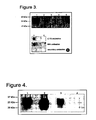
- Figure 3 shows the detection of peptide fragments after prion protein PrP Sc degradation.
- Panel A Supernatants of unaffected human brain homogenate incubated for 20 min at 92°C (lane 1); reaction mixtures with 3 ⁇ l, 6 ⁇ l, 9 ⁇ l or 12 ⁇ l of supernatant of human brain homogenate affected with Creutzfeldt-Jakob disease (lanes 2 to 5) were incubated with R30 fraction for 20 min at 92°C. Proteins were separated and transferred onto a nitrocellulose membrane. Immuno-reactive components were detected with 6H4 monoclonal antibodies.
- Panel B 20 times diluted supernatant of human brain homogenate affected with Creutzfeldt-Jakob disease was incubated without (lane 1) or with R30 fraction (lane 2) for 20 min at 92 °C. Proteins were dot-blotted onto a nitrocellulose membrane and immuno-reactive components were detected with different monoclonal antibodies, as indicated.
- Figure 4 shows the detection of prion protein PrP Sc after precipitation with phosphotungstic acid (NaPTA).
- Supernatants of human brain homogenate affected with Creutzfeldt-Jakob disease were incubated for 20 min at 37°C without (lane 1) or with (lane 2) proteinase K and then precipitated with NaPTA.
- Supernatants of human brain homogenate affected with Creutzfeldt-Jakob disease were incubated for 20 min at 92°C without (lane 3) or with R30 fraction (lane 4) and then precipitated with NaPTA. Proteins were separated and transferred onto a nitrocellulose membrane. Immuno-reactive components were detected with 6H4 monoclonal antibodies.
- A. pernix (the full microorganism) is used for protein degradation.
- A. pernix is grown in a bioreactor with protein waste as an energy source. Detection of the prion protein and its degradation products is performed with commercially available specific monoclonal antibodies, using known techniques, such as ELISA, western blot and dot blot.
- the R30 fraction was separated using a standard SDS-PAGE procedure. After separation on a 10 % SDS-polyacrylamid gel the proteins were stained using standard techniques and selected protein bands were analyzed by MALDI-TOF MS at Aberdeen Proteomics (University of Aberdeen, Great Britain).
Landscapes
- Health & Medical Sciences (AREA)
- Life Sciences & Earth Sciences (AREA)
- General Health & Medical Sciences (AREA)
- Engineering & Computer Science (AREA)
- Chemical & Material Sciences (AREA)
- Zoology (AREA)
- Proteomics, Peptides & Aminoacids (AREA)
- Wood Science & Technology (AREA)
- Bioinformatics & Cheminformatics (AREA)
- Medicinal Chemistry (AREA)
- Microbiology (AREA)
- Epidemiology (AREA)
- Animal Behavior & Ethology (AREA)
- Biotechnology (AREA)
- Public Health (AREA)
- Veterinary Medicine (AREA)
- Genetics & Genomics (AREA)
- Plant Pathology (AREA)
- Environmental Sciences (AREA)
- Pharmacology & Pharmacy (AREA)
- Immunology (AREA)
- Gastroenterology & Hepatology (AREA)
- Dentistry (AREA)
- Virology (AREA)
- Organic Chemistry (AREA)
- Pest Control & Pesticides (AREA)
- Agronomy & Crop Science (AREA)
- General Chemical & Material Sciences (AREA)
- Chemical Kinetics & Catalysis (AREA)
- Biomedical Technology (AREA)
- General Engineering & Computer Science (AREA)
- Biochemistry (AREA)
- Molecular Biology (AREA)
- Peptides Or Proteins (AREA)
- Enzymes And Modification Thereof (AREA)
- Preparation Of Compounds By Using Micro-Organisms (AREA)
Claims (11)
- Ex-vivo-Verwendung eines Überstands einer Kultur von A. pernix, umfassend eine Serinprotease von A. pernix oder ein aktives Fragment davon oder ein Protein, das zu mindestens 80% mit einer Serinprotease von A. pernix identisch ist, oder ein aktives Fragment davon, für den Abbau von Prionenprotein und/oder Proteinablagerungen.
- Verwendung nach Anspruch 1, wobei der Überstand einer Kultur von A. pernix durch Ultrafiltration mit einem Ausschluss-Molekulargewicht von mindestens 30 kDa gereinigt wird.
- Verwendung nach einem der vorherigen Ansprüche, wobei der Abbau des Prionenproteins und/oder der Proteinablagerungen bei der Sterilisation chirurgischer Instrumente erfolgt.
- Verwendung nach einem der vorherigen Ansprüche, wobei der Abbau des Prionenproteins und/oder der Proteinablagerungen bei der Reinigung von Textilien erfolgt.
- Verwendung nach einem der vorherigen Ansprüche, wobei der Abbau des Prionenproteins und/oder der Proteinablagerungen in Lebensmitteln erfolgt.
- Ex-vivo-Verfahren für den Abbau von Prionenprotein und/oder Proteinablagerungen, umfassend die Inkubation des Prionenproteins und/oder der Proteinablagerungen mit einem Überstand einer Kultur von A. pernix, umfassend eine Serinprotease von A. pernix oder ein aktives Fragment davon oder ein Protein, das zu mindestens 80 % mit einer Serinprotease von A. pernix identisch ist, oder ein aktives Fragment davon.
- Verfahren nach Anspruch 6, wobei der Überstand einer Kultur von A. pernix in Form eines durch Ultrafiltration eines Überstands einer Kultur von A. pernix mit einem Ausschluss-Molekulargewicht von mindestens 30 kDa erhaltenen Filtrats vorliegt.
- Verfahren nach einem der Ansprüche 6 und 7, wobei das Verfahren für die Behandlung von protein- und/oder prioneninfiziertem Abfall bestimmt ist.
- Verfahren nach einem der Ansprüche 6-8, wobei das Verfahren für die Reinigung von protein- und/oder prioneninfizierten Textilien bestimmt ist.
- Verfahren nach einem der Ansprüche 6-9, wobei der Prionenproteinabbau und/oder der Abbau von Proteinablagerungen in Lebensmitteln stattfindet.
- Verfahren nach einem der Ansprüche 6-10, wobei der Prionenproteinabbau und/oder der Abbau von Proteinablagerungen auf der Oberfläche eines festen Materials stattfindet.
Priority Applications (2)
| Application Number | Priority Date | Filing Date | Title |
|---|---|---|---|
| SI200930575T SI2311323T1 (sl) | 2009-10-19 | 2009-10-19 | Metode za degradacijo proteinskih depozitov in prionov |
| EP09013171A EP2311323B1 (de) | 2009-10-19 | 2009-10-19 | Abbaumethoden von Proteinablagerungen und Prionen |
Applications Claiming Priority (1)
| Application Number | Priority Date | Filing Date | Title |
|---|---|---|---|
| EP09013171A EP2311323B1 (de) | 2009-10-19 | 2009-10-19 | Abbaumethoden von Proteinablagerungen und Prionen |
Publications (2)
| Publication Number | Publication Date |
|---|---|
| EP2311323A1 EP2311323A1 (de) | 2011-04-20 |
| EP2311323B1 true EP2311323B1 (de) | 2013-01-16 |
Family
ID=41665674
Family Applications (1)
| Application Number | Title | Priority Date | Filing Date |
|---|---|---|---|
| EP09013171A Active EP2311323B1 (de) | 2009-10-19 | 2009-10-19 | Abbaumethoden von Proteinablagerungen und Prionen |
Country Status (2)
| Country | Link |
|---|---|
| EP (1) | EP2311323B1 (de) |
| SI (1) | SI2311323T1 (de) |
Family Cites Families (3)
| Publication number | Priority date | Publication date | Assignee | Title |
|---|---|---|---|---|
| US7303907B2 (en) * | 2001-01-08 | 2007-12-04 | Health Protection Agency | Degradation and detection of TSE infectivity |
| WO2002053723A2 (en) * | 2001-01-08 | 2002-07-11 | Health Protection Agency | Degradation and detection of tse infectivity |
| US8293174B2 (en) * | 2007-10-17 | 2012-10-23 | American Sterilizer Company | Prion deactivating composition and methods of using same |
-
2009
- 2009-10-19 EP EP09013171A patent/EP2311323B1/de active Active
- 2009-10-19 SI SI200930575T patent/SI2311323T1/sl unknown
Also Published As
| Publication number | Publication date |
|---|---|
| EP2311323A1 (de) | 2011-04-20 |
| SI2311323T1 (sl) | 2013-06-28 |
Similar Documents
| Publication | Publication Date | Title |
|---|---|---|
| US20230015772A1 (en) | Methods for the Manufacture of Proteolytically Processed Polypeptides | |
| JP6457652B2 (ja) | コラーゲン分解酵素の製造方法及びこれを利用したコラーゲントリペプチドの製造方法 | |
| US20080178306A1 (en) | Degradation and detection of tse infectivity | |
| EP2709728B1 (de) | Tau-protease-anwendungsverfahren | |
| KR20150136604A (ko) | 삼중 나선 단백질의 정제 | |
| EP1360282B1 (de) | Methode zur Inaktivierung von TSE | |
| AU2002219336A1 (en) | Degradation and detection of TSE infectivity | |
| Castle et al. | Prion protein endoproteolysis: cleavage Sites, mechanisms and connections to prion disease | |
| EP2311323A1 (de) | Zusammensetzungen und Methoden für Abbau von Protein Ablagerungen und Prionen | |
| Völkel et al. | Large‐scale production, purification and refolding of the full‐length cellular prion protein from Syrian golden hamster in Escherichia coli using the glutathione S‐transferase‐fusion system | |
| JP4521516B2 (ja) | 難分解性タンパク質を分解する方法 | |
| Chaugule | Development of Collagen Mimetic Mini-Fibrils with Tunable Collagenase Susceptibility | |
| JP4474543B2 (ja) | 魚類由来のエンテロペプチダーゼ | |
| JP4568835B2 (ja) | 木材腐朽担子菌を用いたプリオンの分解方法 | |
| Ghosh et al. | Isolation and characterization of keratin degrading bacterial isolate | |
| AU2005203006B2 (en) | Degradation and detection of TSE infectivity | |
| Gudzenko et al. | Elastase Activity of Representatives of the Genus Bacillus Isolated from the Coastal Area of the Kinburn Split | |
| HK1086857B (en) | Method of degrading hardly degradable protein | |
| CN118240004A (zh) | 芽孢杆菌碱性蛋白酶的新型抑制肽混合物及其制备和应用 | |
| WO2006015189A2 (en) | Enzymatic inactivation of transmissible spongiform encephalopathy agents and detection thereof | |
| HK1057062B (en) | Method for inactivation of tse | |
| JPH04365480A (ja) | プロテアーゼ | |
| AU2008201193A1 (en) | Degradation and detection of TSE infectivity |
Legal Events
| Date | Code | Title | Description |
|---|---|---|---|
| PUAI | Public reference made under article 153(3) epc to a published international application that has entered the european phase |
Free format text: ORIGINAL CODE: 0009012 |
|
| AK | Designated contracting states |
Kind code of ref document: A1 Designated state(s): AT BE BG CH CY CZ DE DK EE ES FI FR GB GR HR HU IE IS IT LI LT LU LV MC MK MT NL NO PL PT RO SE SI SK SM TR |
|
| AX | Request for extension of the european patent |
Extension state: AL BA RS |
|
| 17P | Request for examination filed |
Effective date: 20111020 |
|
| 17Q | First examination report despatched |
Effective date: 20111114 |
|
| REG | Reference to a national code |
Ref country code: DE Ref legal event code: R079 Ref document number: 602009012761 Country of ref document: DE Free format text: PREVIOUS MAIN CLASS: A01N0063020000 Ipc: C12N0009520000 |
|
| RIC1 | Information provided on ipc code assigned before grant |
Ipc: A61L 2/18 20060101ALI20120625BHEP Ipc: A01N 63/02 20060101ALI20120625BHEP Ipc: C12N 9/52 20060101AFI20120625BHEP Ipc: A01P 1/00 20060101ALI20120625BHEP Ipc: A61K 38/48 20060101ALI20120625BHEP |
|
| GRAP | Despatch of communication of intention to grant a patent |
Free format text: ORIGINAL CODE: EPIDOSNIGR1 |
|
| GRAS | Grant fee paid |
Free format text: ORIGINAL CODE: EPIDOSNIGR3 |
|
| GRAA | (expected) grant |
Free format text: ORIGINAL CODE: 0009210 |
|
| AK | Designated contracting states |
Kind code of ref document: B1 Designated state(s): AT BE BG CH CY CZ DE DK EE ES FI FR GB GR HR HU IE IS IT LI LT LU LV MC MK MT NL NO PL PT RO SE SI SK SM TR |
|
| REG | Reference to a national code |
Ref country code: GB Ref legal event code: FG4D |
|
| REG | Reference to a national code |
Ref country code: CH Ref legal event code: EP |
|
| REG | Reference to a national code |
Ref country code: IE Ref legal event code: FG4D |
|
| REG | Reference to a national code |
Ref country code: CH Ref legal event code: EP Ref country code: AT Ref legal event code: REF Ref document number: 593941 Country of ref document: AT Kind code of ref document: T Effective date: 20130215 |
|
| REG | Reference to a national code |
Ref country code: DE Ref legal event code: R096 Ref document number: 602009012761 Country of ref document: DE Effective date: 20130314 |
|
| REG | Reference to a national code |
Ref country code: CH Ref legal event code: NV Representative=s name: ROSENICH PAUL; KUENSCH JOACHIM PATENTBUERO PAU, LI |
|
| REG | Reference to a national code |
Ref country code: AT Ref legal event code: MK05 Ref document number: 593941 Country of ref document: AT Kind code of ref document: T Effective date: 20130116 |
|
| REG | Reference to a national code |
Ref country code: NL Ref legal event code: VDEP Effective date: 20130116 |
|
| REG | Reference to a national code |
Ref country code: LT Ref legal event code: MG4D |
|
| PG25 | Lapsed in a contracting state [announced via postgrant information from national office to epo] |
Ref country code: ES Free format text: LAPSE BECAUSE OF FAILURE TO SUBMIT A TRANSLATION OF THE DESCRIPTION OR TO PAY THE FEE WITHIN THE PRESCRIBED TIME-LIMIT Effective date: 20130427 Ref country code: LT Free format text: LAPSE BECAUSE OF FAILURE TO SUBMIT A TRANSLATION OF THE DESCRIPTION OR TO PAY THE FEE WITHIN THE PRESCRIBED TIME-LIMIT Effective date: 20130116 Ref country code: IS Free format text: LAPSE BECAUSE OF FAILURE TO SUBMIT A TRANSLATION OF THE DESCRIPTION OR TO PAY THE FEE WITHIN THE PRESCRIBED TIME-LIMIT Effective date: 20130516 Ref country code: AT Free format text: LAPSE BECAUSE OF FAILURE TO SUBMIT A TRANSLATION OF THE DESCRIPTION OR TO PAY THE FEE WITHIN THE PRESCRIBED TIME-LIMIT Effective date: 20130116 Ref country code: SE Free format text: LAPSE BECAUSE OF FAILURE TO SUBMIT A TRANSLATION OF THE DESCRIPTION OR TO PAY THE FEE WITHIN THE PRESCRIBED TIME-LIMIT Effective date: 20130116 Ref country code: BE Free format text: LAPSE BECAUSE OF FAILURE TO SUBMIT A TRANSLATION OF THE DESCRIPTION OR TO PAY THE FEE WITHIN THE PRESCRIBED TIME-LIMIT Effective date: 20130116 Ref country code: NO Free format text: LAPSE BECAUSE OF FAILURE TO SUBMIT A TRANSLATION OF THE DESCRIPTION OR TO PAY THE FEE WITHIN THE PRESCRIBED TIME-LIMIT Effective date: 20130416 Ref country code: BG Free format text: LAPSE BECAUSE OF FAILURE TO SUBMIT A TRANSLATION OF THE DESCRIPTION OR TO PAY THE FEE WITHIN THE PRESCRIBED TIME-LIMIT Effective date: 20130416 |
|
| PG25 | Lapsed in a contracting state [announced via postgrant information from national office to epo] |
Ref country code: LV Free format text: LAPSE BECAUSE OF FAILURE TO SUBMIT A TRANSLATION OF THE DESCRIPTION OR TO PAY THE FEE WITHIN THE PRESCRIBED TIME-LIMIT Effective date: 20130116 Ref country code: NL Free format text: LAPSE BECAUSE OF FAILURE TO SUBMIT A TRANSLATION OF THE DESCRIPTION OR TO PAY THE FEE WITHIN THE PRESCRIBED TIME-LIMIT Effective date: 20130116 Ref country code: GR Free format text: LAPSE BECAUSE OF FAILURE TO SUBMIT A TRANSLATION OF THE DESCRIPTION OR TO PAY THE FEE WITHIN THE PRESCRIBED TIME-LIMIT Effective date: 20130417 Ref country code: PT Free format text: LAPSE BECAUSE OF FAILURE TO SUBMIT A TRANSLATION OF THE DESCRIPTION OR TO PAY THE FEE WITHIN THE PRESCRIBED TIME-LIMIT Effective date: 20130516 Ref country code: PL Free format text: LAPSE BECAUSE OF FAILURE TO SUBMIT A TRANSLATION OF THE DESCRIPTION OR TO PAY THE FEE WITHIN THE PRESCRIBED TIME-LIMIT Effective date: 20130116 Ref country code: FI Free format text: LAPSE BECAUSE OF FAILURE TO SUBMIT A TRANSLATION OF THE DESCRIPTION OR TO PAY THE FEE WITHIN THE PRESCRIBED TIME-LIMIT Effective date: 20130116 |
|
| PG25 | Lapsed in a contracting state [announced via postgrant information from national office to epo] |
Ref country code: HR Free format text: LAPSE BECAUSE OF FAILURE TO SUBMIT A TRANSLATION OF THE DESCRIPTION OR TO PAY THE FEE WITHIN THE PRESCRIBED TIME-LIMIT Effective date: 20130116 |
|
| PG25 | Lapsed in a contracting state [announced via postgrant information from national office to epo] |
Ref country code: SK Free format text: LAPSE BECAUSE OF FAILURE TO SUBMIT A TRANSLATION OF THE DESCRIPTION OR TO PAY THE FEE WITHIN THE PRESCRIBED TIME-LIMIT Effective date: 20130116 Ref country code: CZ Free format text: LAPSE BECAUSE OF FAILURE TO SUBMIT A TRANSLATION OF THE DESCRIPTION OR TO PAY THE FEE WITHIN THE PRESCRIBED TIME-LIMIT Effective date: 20130116 Ref country code: RO Free format text: LAPSE BECAUSE OF FAILURE TO SUBMIT A TRANSLATION OF THE DESCRIPTION OR TO PAY THE FEE WITHIN THE PRESCRIBED TIME-LIMIT Effective date: 20130116 Ref country code: EE Free format text: LAPSE BECAUSE OF FAILURE TO SUBMIT A TRANSLATION OF THE DESCRIPTION OR TO PAY THE FEE WITHIN THE PRESCRIBED TIME-LIMIT Effective date: 20130116 Ref country code: DK Free format text: LAPSE BECAUSE OF FAILURE TO SUBMIT A TRANSLATION OF THE DESCRIPTION OR TO PAY THE FEE WITHIN THE PRESCRIBED TIME-LIMIT Effective date: 20130116 |
|
| PLBE | No opposition filed within time limit |
Free format text: ORIGINAL CODE: 0009261 |
|
| STAA | Information on the status of an ep patent application or granted ep patent |
Free format text: STATUS: NO OPPOSITION FILED WITHIN TIME LIMIT |
|
| PG25 | Lapsed in a contracting state [announced via postgrant information from national office to epo] |
Ref country code: CY Free format text: LAPSE BECAUSE OF FAILURE TO SUBMIT A TRANSLATION OF THE DESCRIPTION OR TO PAY THE FEE WITHIN THE PRESCRIBED TIME-LIMIT Effective date: 20130116 |
|
| 26N | No opposition filed |
Effective date: 20131017 |
|
| PG25 | Lapsed in a contracting state [announced via postgrant information from national office to epo] |
Ref country code: IT Free format text: LAPSE BECAUSE OF FAILURE TO SUBMIT A TRANSLATION OF THE DESCRIPTION OR TO PAY THE FEE WITHIN THE PRESCRIBED TIME-LIMIT Effective date: 20130116 |
|
| REG | Reference to a national code |
Ref country code: DE Ref legal event code: R097 Ref document number: 602009012761 Country of ref document: DE Effective date: 20131017 |
|
| PG25 | Lapsed in a contracting state [announced via postgrant information from national office to epo] |
Ref country code: MC Free format text: LAPSE BECAUSE OF FAILURE TO SUBMIT A TRANSLATION OF THE DESCRIPTION OR TO PAY THE FEE WITHIN THE PRESCRIBED TIME-LIMIT Effective date: 20130116 |
|
| PG25 | Lapsed in a contracting state [announced via postgrant information from national office to epo] |
Ref country code: SM Free format text: LAPSE BECAUSE OF FAILURE TO SUBMIT A TRANSLATION OF THE DESCRIPTION OR TO PAY THE FEE WITHIN THE PRESCRIBED TIME-LIMIT Effective date: 20130116 |
|
| PG25 | Lapsed in a contracting state [announced via postgrant information from national office to epo] |
Ref country code: TR Free format text: LAPSE BECAUSE OF FAILURE TO SUBMIT A TRANSLATION OF THE DESCRIPTION OR TO PAY THE FEE WITHIN THE PRESCRIBED TIME-LIMIT Effective date: 20130116 |
|
| PG25 | Lapsed in a contracting state [announced via postgrant information from national office to epo] |
Ref country code: HU Free format text: LAPSE BECAUSE OF FAILURE TO SUBMIT A TRANSLATION OF THE DESCRIPTION OR TO PAY THE FEE WITHIN THE PRESCRIBED TIME-LIMIT; INVALID AB INITIO Effective date: 20091019 Ref country code: MK Free format text: LAPSE BECAUSE OF FAILURE TO SUBMIT A TRANSLATION OF THE DESCRIPTION OR TO PAY THE FEE WITHIN THE PRESCRIBED TIME-LIMIT Effective date: 20130116 Ref country code: LU Free format text: LAPSE BECAUSE OF NON-PAYMENT OF DUE FEES Effective date: 20131019 |
|
| PG25 | Lapsed in a contracting state [announced via postgrant information from national office to epo] |
Ref country code: MT Free format text: LAPSE BECAUSE OF FAILURE TO SUBMIT A TRANSLATION OF THE DESCRIPTION OR TO PAY THE FEE WITHIN THE PRESCRIBED TIME-LIMIT Effective date: 20130116 |
|
| REG | Reference to a national code |
Ref country code: FR Ref legal event code: PLFP Year of fee payment: 7 |
|
| REG | Reference to a national code |
Ref country code: FR Ref legal event code: PLFP Year of fee payment: 8 |
|
| REG | Reference to a national code |
Ref country code: FR Ref legal event code: PLFP Year of fee payment: 9 |
|
| REG | Reference to a national code |
Ref country code: FR Ref legal event code: PLFP Year of fee payment: 10 |
|
| REG | Reference to a national code |
Ref country code: CH Ref legal event code: PCAR Free format text: NEW ADDRESS: ROTENBODENSTRASSE 12, 9497 TRIESENBERG (LI) |
|
| REG | Reference to a national code |
Ref country code: DE Ref legal event code: R082 Ref document number: 602009012761 Country of ref document: DE Representative=s name: ZACCO LEGAL RECHTSANWALTSGESELLSCHAFT MBH, DE |
|
| REG | Reference to a national code |
Ref country code: DE Ref legal event code: R082 Ref document number: 602009012761 Country of ref document: DE |
|
| PGFP | Annual fee paid to national office [announced via postgrant information from national office to epo] |
Ref country code: GB Payment date: 20250826 Year of fee payment: 17 |
|
| PGFP | Annual fee paid to national office [announced via postgrant information from national office to epo] |
Ref country code: FR Payment date: 20250820 Year of fee payment: 17 |
|
| PGFP | Annual fee paid to national office [announced via postgrant information from national office to epo] |
Ref country code: IE Payment date: 20250917 Year of fee payment: 17 |
|
| PGFP | Annual fee paid to national office [announced via postgrant information from national office to epo] |
Ref country code: SI Payment date: 20250828 Year of fee payment: 17 |
|
| REG | Reference to a national code |
Ref country code: CH Ref legal event code: U11 Free format text: ST27 STATUS EVENT CODE: U-0-0-U10-U11 (AS PROVIDED BY THE NATIONAL OFFICE) Effective date: 20251101 |
|
| PGFP | Annual fee paid to national office [announced via postgrant information from national office to epo] |
Ref country code: DE Payment date: 20250919 Year of fee payment: 17 |
|
| PGFP | Annual fee paid to national office [announced via postgrant information from national office to epo] |
Ref country code: CH Payment date: 20251101 Year of fee payment: 17 |