EP2312880B1 - Verfahren zur Zuweisung von Funkressourcen in einem drahtlosen zellularen Netzwerk - Google Patents
Verfahren zur Zuweisung von Funkressourcen in einem drahtlosen zellularen Netzwerk Download PDFInfo
- Publication number
- EP2312880B1 EP2312880B1 EP09290780A EP09290780A EP2312880B1 EP 2312880 B1 EP2312880 B1 EP 2312880B1 EP 09290780 A EP09290780 A EP 09290780A EP 09290780 A EP09290780 A EP 09290780A EP 2312880 B1 EP2312880 B1 EP 2312880B1
- Authority
- EP
- European Patent Office
- Prior art keywords
- frequency
- radio resources
- accordance
- micro
- allocating radio
- Prior art date
- Legal status (The legal status is an assumption and is not a legal conclusion. Google has not performed a legal analysis and makes no representation as to the accuracy of the status listed.)
- Active
Links
Images


Classifications
-
- H—ELECTRICITY
- H04—ELECTRIC COMMUNICATION TECHNIQUE
- H04W—WIRELESS COMMUNICATION NETWORKS
- H04W16/00—Network planning, e.g. coverage or traffic planning tools; Network deployment, e.g. resource partitioning or cells structures
- H04W16/02—Resource partitioning among network components, e.g. reuse partitioning
- H04W16/10—Dynamic resource partitioning
-
- H—ELECTRICITY
- H04—ELECTRIC COMMUNICATION TECHNIQUE
- H04W—WIRELESS COMMUNICATION NETWORKS
- H04W16/00—Network planning, e.g. coverage or traffic planning tools; Network deployment, e.g. resource partitioning or cells structures
- H04W16/24—Cell structures
- H04W16/32—Hierarchical cell structures
-
- H—ELECTRICITY
- H04—ELECTRIC COMMUNICATION TECHNIQUE
- H04W—WIRELESS COMMUNICATION NETWORKS
- H04W24/00—Supervisory, monitoring or testing arrangements
- H04W24/10—Scheduling measurement reports ; Arrangements for measurement reports
-
- H—ELECTRICITY
- H04—ELECTRIC COMMUNICATION TECHNIQUE
- H04W—WIRELESS COMMUNICATION NETWORKS
- H04W72/00—Local resource management
- H04W72/02—Selection of wireless resources by user or terminal
-
- H—ELECTRICITY
- H04—ELECTRIC COMMUNICATION TECHNIQUE
- H04W—WIRELESS COMMUNICATION NETWORKS
- H04W72/00—Local resource management
- H04W72/04—Wireless resource allocation
- H04W72/044—Wireless resource allocation based on the type of the allocated resource
- H04W72/0453—Resources in frequency domain, e.g. a carrier in FDMA
-
- H—ELECTRICITY
- H04—ELECTRIC COMMUNICATION TECHNIQUE
- H04W—WIRELESS COMMUNICATION NETWORKS
- H04W88/00—Devices specially adapted for wireless communication networks, e.g. terminals, base stations or access point devices
- H04W88/08—Access point devices
Definitions
- the present invention relates to the field of telecommunications and more specifically of radio resources allocation between the base stations of a network.
- the existing network of macro-cells has to be completed with micro-cells of shorter radius (small-cells, femto-cells%), especially in dense areas such as cities.
- CSMA/CA carrier sense multiple access with collision avoidance
- EP 1 786 221 A1 A method according to the prior art is disclosed in EP 1 786 221 A1 .
- the centralized solution is not computationally feasible for high-density deployments required in future networks and the CSMA/CA protocol is limited to single carrier systems only and is therefore not adapted to the multiple frequency carriers required for optimizing network throughput.
- the present invention refers to a method for allocating radio resources in a wireless cellular network comprising micro-cells wherein the base stations of the micro-cells select periodically the frequency bands in which they operate, said selection comprising at least two timing scale levels:
- the signal quality measurements comprise interference level measurements.
- the selected frequency bands correspond to the frequency bands having the lowest interference levels.
- the selection of frequency bands is based on a randomized process using occupation probabilities derived from signal quality measurements.
- the interference level measurements correspond to Signal to Interference plus Noise Ratio (SINR) measurements.
- SINR Signal to Interference plus Noise Ratio
- the selection of the frequency bands is achieved based on the mean value of the interference level measurements.
- the selection of the frequency bands is achieved based on the cumulative distribution function of the interference level measurements.
- the wireless cellular network also comprises macro-cells and the selection of frequency bands by the base stations of the micro-cells is weighted in order to give priority to macro-cell traffic.
- the base station of a micro-cell can communicate with other base stations, said communication allowing the exchange of signal quality measurements between the communicating base stations.
- a new selection process can be triggered in case of performance degradation or in case of request from a neighbouring macro-cell.
- the size and/or the number of selected frequency blocks vary in function of signal quality measurements and/or traffic request.
- the allocation of frequency blocks is time-shared between neighbouring base stations such that a base station accesses selected frequency blocks only part of the time.
- the wireless cellular network is a Long Term Evolution (LTE) network and signal quality measurements comprise Channel Quality Information (CQI) measurements.
- LTE Long Term Evolution
- CQI Channel Quality Information
- the invention also refers to a micro-cell base station comprising means configured for:
- the micro-cell base station comprises means configured for exchanging information with other neighbouring base stations.
- said micro-cell base station comprises a X2 interface in order to communicate with other base stations of a Long Term Evolution (LTE) network.
- LTE Long Term Evolution
- frequency band refers to a part of the frequency spectrum. Frequency bands may have different frequency widths.
- frequency carrier refers to a frequency band covering a wide band of the frequency spectrum such that said frequency carrier may be subdivided into a plurality of smaller frequency bands.
- frequency block refers to a small frequency band covering a small bandwidth of the frequency spectrum such that said block may correspond to an elementary unit of bandwidth.
- micro-cell refers to cells having a small covering area (for example a building or a flat) as opposed to a macro-cell.
- small-cell refers to micro-cells wherein the base station is capable of communication with other base stations and usually belonging to an operator.
- femto-cell refers to private micro-cells wherein the base station is usually installed by the user. Unlike small-cells, such femto-cells are not capable of communicating with other base stations.
- the embodiments of the present invention refer to an autonomous distributed method allowing an adaptation of the allocation of frequencies for the base stations of the small size cells.
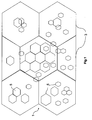
- Fig.1 represents an example of cellular network 1 comprising macro-cells 3 and micro-cells 5.
- macro-cells 3 and micro-cells 5 may cover the same area (for example at the edges of the cells or in micro-cells which are located inside a macro-cell area) so that interferences may occur if said cells use common frequencies for their communications with the user equipments.
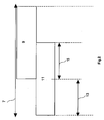
- Fig.2 represents an example of distribution of the operating frequency spectrum 7 between the different types of cells.
- Said operating spectrum 7 comprises a macro-cell area 9 and a micro-cell area 11 which are partially overlapping.
- the micro-cell area 11 corresponding both to the small-cells and the femto-cells.
- the micro-cell area 11 can be divided into two parts:
- the frequency bands corresponding to the micro-exclusive part 13 of the operating spectrum are therefore selected first by the base stations of the micro-cells.
- the method of the present description corresponds to a distributed method which means that each base station determines the frequency bands in which it operates.
- a base station is not necessarily aware of the frequency bands currently used by its neighbouring cells, feedback parameters are needed in order to provide selection criteria to the base station.
- signal quality measurements achieved by the user equipments and sent to the base station are used as selection criteria.
- Such signal quality measurements may correspond to signal interference plus noise ration (SINR) measurements.
- Fig.3 represents a diagram of the organization of a cell 4 (which can be a micro-cell 5 or a macro-cell 3).
- the base station 17 can communicate with user equipments 19 located in a given covering area (defined as the cell), said user equipments 19 are then defined as attached to the base station 17.
- the user equipments 19 located in a cell 4 perform, periodically or on request, signal quality measurements such as interference measurements on a predetermined range of frequencies. Said measurements are then transmitted to the base station 17.
- the base station 17 can select the frequency bands corresponding to the lowest interference levels.
- signal quality measurements may be transmitted by said neighbouring small and macro-cells and thus complete the local measurements.
- the adjustment in the selection of the frequency bands used by the base station is achieved on a double level:
- Fig.4 describes an example of frequency carrier distribution along the operating frequency spectrum presented in Fig.2 .
- the operating frequency spectrum is divided into a plurality (four in the present case) of frequency carriers 21.
- Some frequency carriers 21 are located in the micro-cell frequency range 23 and some in the macro-cell frequency range 25. As both ranges overlap, some carriers correspond to carriers shared by the micro-cells and the macro-cells (the two central frequency carriers 21 in the present case).
- the frequency carriers 21 corresponding to an exclusive micro-cell frequency range 27 are selected first by the base stations 17 of the micro-cells 5. Nevertheless, if the frequency carriers 21 of the exclusive micro-cell frequency range 27 are occupied by neighbouring micro-cells, the base stations 17 have to select a carrier of the frequency range shared with the macro-cells 3.
- the selected carrier (the second one from the left in the present case) is divided in a plurality of elementary blocks 22 corresponding to a fraction of the bandwidth of the carrier 21.
- the second level corresponds to the selection of a predetermined number of elementary blocks 22 among the blocks 22 of the selected carrier.
- the selection is periodic in order to adapt the size of the bandwidth allocated by the base station 17 in function of the traffic request and in function of the traffic of the neighbouring cells along the time.
- the periods of the first and the second levels are different. Indeed, the allocation period of the first level corresponds, for example, to the duration between a peak-hour traffic time and an off-hour traffic time whereas the allocation period of the second level corresponds to a much shorter duration in order to provide a dynamic or quasi-dynamic adjustment in the allocation of frequency bands.
- Fig.5 represents the allocation process with the two timing scale levels of selection presented previously.
- the upper part 31 represents the occurrence of the selection updates along the time 29 whereas the lower part 33 represents the details of the selection process during a carrier selection update 35 and a blocks selection update 37.
- the whole selection process starts with a carrier selection 35.
- a carrier selection 35 Such start occurs at launching of the base station 17, when the carrier selection period T1 has elapsed or at any time if it is requested by the base station 17, for example in case of signal quality measurements below a given level.
- a carrier selection process may be requested by a neighbouring macro-cell 3 having detected interferences in the area of the small cell.
- said carrier selection comprises different steps:
- F(Cost i ) is a function of the cost function Cost i described previously, said function F may also integrate measurements reliability, a number of user equipments 19, a number of measurements... and C; is a cooperation term which takes into account information or measurements sent by neighbouring cells in the case of small cells (this cooperation function does not appear in the femto-cell case). This term corresponds to a probability that the neighbouring cells use the carrier band i and can be positive or negative.
- a carrier band i is randomly selected based on the probabilities P i which minimizes the probability that two cells select at the same time the same carrier band i.
- the selected carrier band is then used for the transmission of the base station 17 during a period T1.
- a blocks selection 37 within the selected carrier band is launched. Said blocks selection also comprises different steps:
- Said block ranking process 49 leads to the creation of a block ranking table 51.
- a randomized selection process may be used.
- the selected carrier blocks are then used for the transmission of the base station 17 during a period T2 which is shorter than the period T1.
- the number and/or the size of the blocks may be increased or decreased in function of the traffic request and/or the quality measurements such that in case of good quality measurements (corresponding to a low interference level), the number and/or the size of the frequency blocks 22 may be increased and conversely. However, the number and/or the size of the frequency blocks 22 is increased only if it is required by the traffic request.
- an alternate selection process consists in selecting frequency blocks 22 in function of a random hopping sequence.
- the first three frequency blocks 22 of the hopping sequence would be selected.
- Such process is not based on quality measurements and can therefore be used in case of lack of quality measurements (for example in case of failure of the narrow sensing measurement equipment).
- the selection of the frequency band used by the base station 17 for communicating with the attached user equipments comprises two timing scale levels allowing thus a better reactivity to the requested local traffic and to modification of traffic of the neighbouring cells. Moreover, one can imagine a selection with more than two levels, each level corresponding to a different timing scale and/or a different bandwidth scale.
- the allocation of the frequency blocks 22 may be shared in time such that a base station accesses only part of the time to the selected frequency blocks or to a part of the selected frequency blocks.
- the allocation is distributed in time slots and each base station transmits with a fixed probability in each time slot, said probability being updated at each blocks selection in function of quality measurements.
- the size of a time slot may be increased or decreased in function of the traffic and/or quality measurements.
- the allocation of the time slots to the base stations may also be achieved based on a random hopping sequence.
- the network is a long term evolution (LTE) network wherein the block quality parameters (BQ) correspond to Channel Quality Indicator (CQI) and wherein the communication between the base stations of small cells and macro-cells is achieved via X2 interfaces and is managed by a signalling exchange procedure.
- LTE long term evolution
- BQ block quality parameters
- CQI Channel Quality Indicator
- the embodiments of the present invention provide therefore a distributed method allowing frequency bands allocation in a mixed network comprising micro-cells 5 and macro-cells 3 wherein the base stations 17 of the micro-cells 5 select autonomously the frequency bands in which they operate based on attached user equipments measurements, said method comprising two frequency and timing levels in order to improve the reactivity of the network to the traffic request leading thus to a reduced interference level and an improved overall quality in the network.
- the present invention is easy to implement as it only concerns the functioning of the micro-cells base stations.
Landscapes
- Engineering & Computer Science (AREA)
- Computer Networks & Wireless Communication (AREA)
- Signal Processing (AREA)
- Mobile Radio Communication Systems (AREA)
Claims (16)
- Verfahren zum Zuweisen von Funkressourcen in einem drahtlosen zellularen Netzwerk (1), welches Mikrozellen (5) umfasst, wobei die Basisstationen (17) der Mirozellen (5) periodisch die Frequenzbänder, in denen sie arbeiten, auswählen, wobei das besagte Auswählen mindestens zwei Zeitskala-Ebenen umfasst:- eine erste Zeitskala-Ebene, wobei, auf der Basis von in dem gesamten Betriebsspektrum (7) durch mindestens ein Benutzergerät (19) durchgeführten Signalqualitätsmessungen, ein Frequenzträger (21) mit einer Mehrzahl von Frequenzblöcken (22) für eine Periode T1 ausgewählt wird;- eine zweite Zeitskala-Ebene, wobei, auf der Basis von in dem zuvor ausgewählten Frequenzträger (21) durch das mindestens eine Benutzergerät (19) durchgeführten Signalqualitätsmessungen, mindestens eine Frequenzblock (22) in dem besagten ausgewählten Frequenzträger (21) für eine Periode T2, welche kürzer als T1 ist, ausgewählt wird.
- Verfahren zum Zuweisen von Funkressourcen nach Anspruch 1, wobei die besagten Signalqualitätsmessungen Störpegelmessungen umfassen.
- Verfahren zum Zuweisen von Funkressourcen nach Anspruch 2, wobei die ausgewählten Frequenzbänder den Frequenzbändern mit den niedrigsten Störpegeln entsprechen.
- Verfahren zum Zuweisen von Funkressourcen nach Anspruch 1 oder 2, wobei die Auswahl von Frequenzbändern auf einem randomisierten Prozess unter Verwendung von von den besagten Signalqualitätsmessungen abgeleiteten Belegungswahrscheinlichkeiten basiert.
- Verfahren zum Zuweisen von Funkressourcen nach Anspruch 3 oder 4, wobei die Störpegelmessungen Signal-zu-Interferenz-und-Rausch-Verhältnis- bzw. SINR-Messungen entsprechen.
- Verfahren zum Zuweisen von Funkressourcen nach Anspruch 2 oder 5, wobei die Auswahl von Frequenzbändern auf der Basis des Mittelwertes der Störpegelmessungen durchgeführt wird.
- Verfahren zum Zuweisen von Funkressourcen nach Anspruch 2 oder 5, wobei die Auswahl von Frequenzbändern auf der Basis der kumulativen Verteilungsfunktion der Störpegelmessungen durchgeführt wird.
- Verfahren zum Zuweisen von Funkressourcen nach einem der vorstehenden Ansprüche, wobei das drahtlose zellulare Netzwerk (1) ebenfalls Makrozellen (3) umfasst, und wobei die Auswahl von Frequenzbändern durch die Basisstationen (17) der Mikrozellen (5) gewichtet wird, um dem Verkehr von Makrozellen (3) die Priorität zu gewährleisten.
- Verfahren zum Zuweisen von Funkressourcen nach einem der vorstehenden Ansprüche, wobei die Basisstation (17) einer Mikrozelle (5) mit anderen Basisstationen (17) kommunizieren kann, wobei das besagte Kommunizieren den Austausch von Signalqualitätsmessgrößen zwischen den kommunizierenden Basisstation (17) ermöglicht.
- Verfahren zum Zuweisen von Funkressourcen nach einem der vorstehenden Ansprüche, wobei ein neuer Auswahlprozess im Fall einer Leistungsverschlechterung oder im Fall einer Anforderung von einer benachbarten Makrozelle (3) ausgelöst werden kann.
- Verfahren zum Zuweisen von Funkressourcen nach einem der vorstehenden Ansprüche, wobei die Größe und/oder die Anzahl der ausgewählten Frequenzblöcke in Abhängigkeit der Signalqualitätsmessungen und/oder der Verkehrsanforderung variieren.
- Verfahren zum Zuweisen von Funkressourcen nach einem der vorstehenden Ansprüche, wobei, im Fall einer Verkehrssättigung, die Zuweisung von Frequenzblöcken zwischen benachbarten Basisstationen zeitlich gemultiplext wird, so dass eine Basisstation nur zeitweise Zugang zu ausgewählten Frequenzblöcken hat.
- Verfahren zum Zuweisen von Funkressourcen nach einem der vorstehenden Ansprüche, wobei das drahtlose zellulare Netzwerk (1) ein Long Term Evolution- bzw. LTE-Netzwerk ist, und wobei die Signalqualitätsmessungen Kanalqualitätsindikator- bzw. CQI-Messungen umfassen.
- Basisstation (17) einer Mikrozelle (5) mit Mitteln, die konfiguriert sind für:- Den Empfang und die Erfassung von von mindestens einem Benutzergerät (19) gesendeten Signalqualitätsmessgrößen;- das periodische Auswählen der Frequenzbänder, in welchen die besagte Basisstation (17) arbeitet, wobei das besagte Auswählen mindestens zwei Zeitskala-Ebene umfasst:- eine erste Zeitskala-Ebene, wobei, auf der Basis von in dem gesamten Betriebsspektrum durchgeführten Signalqualitätsmessungen, ein Frequenzträger (21) mit einer Mehrzahl von Frequenzblöcken (22) für eine Periode T1 ausgewählt wird,- eine zweite Zeitskala-Ebene, wobei, auf der Basis von in dem zuvor ausgewählten Frequenzträger (21) durchgeführten Signalqualitätsmessungen, mindestens eine Frequenzblock (22) innerhalb des besagten ausgewählten Frequenzträgers (21) für eine Periode T2, welcher kürzer als T1 ist, ausgewählt wird T1.
- Basisstation (17) einer Mikrozelle (5) nach Anspruch 14, umfassend Mittel, die für den Austausch von Informationen mit anderen benachbarten Basisstationen (17) konfigurieret sind.
- Basisstation (17) einer Mikrozelle (5) nach Anspruch 14 oder 15, wobei die besagte Basisstation (17) der Mikrozelle (5) eine X2-Schnittstelle umfasst, um mit anderen Basisstationen (17) eines Long Term Evolution- bzw. LTE-Netzwerks zu kommunizieren.
Priority Applications (1)
| Application Number | Priority Date | Filing Date | Title |
|---|---|---|---|
| EP09290780A EP2312880B1 (de) | 2009-10-13 | 2009-10-13 | Verfahren zur Zuweisung von Funkressourcen in einem drahtlosen zellularen Netzwerk |
Applications Claiming Priority (1)
| Application Number | Priority Date | Filing Date | Title |
|---|---|---|---|
| EP09290780A EP2312880B1 (de) | 2009-10-13 | 2009-10-13 | Verfahren zur Zuweisung von Funkressourcen in einem drahtlosen zellularen Netzwerk |
Publications (2)
| Publication Number | Publication Date |
|---|---|
| EP2312880A1 EP2312880A1 (de) | 2011-04-20 |
| EP2312880B1 true EP2312880B1 (de) | 2012-05-23 |
Family
ID=41674172
Family Applications (1)
| Application Number | Title | Priority Date | Filing Date |
|---|---|---|---|
| EP09290780A Active EP2312880B1 (de) | 2009-10-13 | 2009-10-13 | Verfahren zur Zuweisung von Funkressourcen in einem drahtlosen zellularen Netzwerk |
Country Status (1)
| Country | Link |
|---|---|
| EP (1) | EP2312880B1 (de) |
Families Citing this family (3)
| Publication number | Priority date | Publication date | Assignee | Title |
|---|---|---|---|---|
| GB2504985A (en) * | 2012-08-16 | 2014-02-19 | Univ Manchester | Managing interference between a plurality of sub-carriers on the basis of interference indications contained in measurement reports |
| WO2016134541A1 (zh) | 2015-02-28 | 2016-09-01 | 华为技术有限公司 | 一种微波网络中频点配置的方法、控制设备和系统 |
| WO2017059922A1 (en) * | 2015-10-09 | 2017-04-13 | Sony Mobile Communications Inc. | Signal quality measurement in different frequency bands of cellular networks |
Family Cites Families (3)
| Publication number | Priority date | Publication date | Assignee | Title |
|---|---|---|---|---|
| US7840187B2 (en) * | 2005-11-10 | 2010-11-23 | Samsung Electronics Co., Ltd. | System and method for dynamic frequency selection based on spectrum etiquette |
| GB0725052D0 (en) * | 2007-12-21 | 2008-01-30 | Fujitsu Lab Of Europ Ltd | Communications system |
| JP2009188537A (ja) * | 2008-02-04 | 2009-08-20 | Fujitsu Ltd | 基地局及び既知信号の送信方法 |
-
2009
- 2009-10-13 EP EP09290780A patent/EP2312880B1/de active Active
Also Published As
| Publication number | Publication date |
|---|---|
| EP2312880A1 (de) | 2011-04-20 |
Similar Documents
| Publication | Publication Date | Title |
|---|---|---|
| JP4146432B2 (ja) | リアルタイムにセルラーネットワークを構成する方法及びシステム | |
| EP3259950B1 (de) | Lbt-muster zur drahtlosen kommunikation | |
| EP2630729B1 (de) | Verfahren und vorrichtung für ein selbstorganisiertes netzwerk mit interzellen-interferenz-koordinierung | |
| US11863996B2 (en) | Centralized coordination for shared spectrum systems | |
| US10602452B2 (en) | System and method for device-to-device operation in a cellular communications system | |
| JP4695135B2 (ja) | 無線資源の動的割当て | |
| EP3217710A1 (de) | Verfahren, system und zugehörige vorrichtung zur messung eines unberechtigten trägers und computerspeichermedium | |
| EP2560427A1 (de) | Kommunikationssysteme | |
| KR20100038558A (ko) | 계층적 셀 구조를 갖는 무선통신 시스템에서 간섭 제어 방법 및 장치 | |
| US20190281608A1 (en) | Multiple access point channel planning | |
| CN103535067A (zh) | 用于支持无线资源管理的方法和布置 | |
| EP2057856A1 (de) | Kommunikation zwischen basisstationen für zusammengeschlossene ressourcenverwaltung | |
| WO2009070928A1 (fr) | Procédé pour coordonner les ressources entre des cellules | |
| EP3183931B1 (de) | Ressourcenzuweisung für kleinzellen | |
| US20140307571A1 (en) | Method to optimize the communication parameters between an access point and at least one client device | |
| EP3952574A1 (de) | Drahtloses kommunikationssystem, planungsverfahren, drahtloses kommunikationsverfahren und vorrichtung | |
| EP2312880A1 (de) | Verfahren zur Zuweisung von Funkressourcen in einem drahtlosen zellularen Netzwerk | |
| US20200275293A1 (en) | Network performance framework for wireless local area networks | |
| WO2010124729A1 (en) | Spectrum arrangement for co-channel interference reduction | |
| EP2988429A1 (de) | Koordinierte Strahlformung in einem heterogenen Funkkommunikationsnetz | |
| KR102446326B1 (ko) | Laa 시스템의 동적 캐리어 선택 방법 및 장치 | |
| Tang et al. | Joint transmit power control and rate adaptation for wireless LANs | |
| KR101172420B1 (ko) | 트래픽 속성 기반 기지국 자원 할당 장치 및 방법 | |
| EP3148238A1 (de) | Verfahren und vorrichtung zur interferenzsteuerung sowie netzwerkelementvorrichtung | |
| JP2011151747A (ja) | 無線通信システムにおける下り共通制御チャネルの周波数資源割り当て方法およびそのシステム |
Legal Events
| Date | Code | Title | Description |
|---|---|---|---|
| PUAI | Public reference made under article 153(3) epc to a published international application that has entered the european phase |
Free format text: ORIGINAL CODE: 0009012 |
|
| AK | Designated contracting states |
Kind code of ref document: A1 Designated state(s): AT BE BG CH CY CZ DE DK EE ES FI FR GB GR HR HU IE IS IT LI LT LU LV MC MK MT NL NO PL PT RO SE SI SK SM TR |
|
| AX | Request for extension of the european patent |
Extension state: AL BA RS |
|
| RIN1 | Information on inventor provided before grant (corrected) |
Inventor name: FEKI, AFEF Inventor name: ANDREWS, DANIEL Inventor name: CAPDEVIELLE, VERONIQUE Inventor name: GUPTA, PIYUSH |
|
| 17P | Request for examination filed |
Effective date: 20111020 |
|
| GRAP | Despatch of communication of intention to grant a patent |
Free format text: ORIGINAL CODE: EPIDOSNIGR1 |
|
| RIC1 | Information provided on ipc code assigned before grant |
Ipc: H04W 16/10 20090101AFI20111221BHEP |
|
| RAP1 | Party data changed (applicant data changed or rights of an application transferred) |
Owner name: ALCATEL LUCENT |
|
| GRAS | Grant fee paid |
Free format text: ORIGINAL CODE: EPIDOSNIGR3 |
|
| GRAA | (expected) grant |
Free format text: ORIGINAL CODE: 0009210 |
|
| AK | Designated contracting states |
Kind code of ref document: B1 Designated state(s): AT BE BG CH CY CZ DE DK EE ES FI FR GB GR HR HU IE IS IT LI LT LU LV MC MK MT NL NO PL PT RO SE SI SK SM TR |
|
| REG | Reference to a national code |
Ref country code: GB Ref legal event code: FG4D |
|
| REG | Reference to a national code |
Ref country code: CH Ref legal event code: EP |
|
| REG | Reference to a national code |
Ref country code: AT Ref legal event code: REF Ref document number: 559588 Country of ref document: AT Kind code of ref document: T Effective date: 20120615 |
|
| REG | Reference to a national code |
Ref country code: IE Ref legal event code: FG4D |
|
| REG | Reference to a national code |
Ref country code: DE Ref legal event code: R096 Ref document number: 602009007200 Country of ref document: DE Effective date: 20120719 |
|
| REG | Reference to a national code |
Ref country code: NL Ref legal event code: VDEP Effective date: 20120523 |
|
| REG | Reference to a national code |
Ref country code: LT Ref legal event code: MG4D Effective date: 20120523 |
|
| PG25 | Lapsed in a contracting state [announced via postgrant information from national office to epo] |
Ref country code: FI Free format text: LAPSE BECAUSE OF FAILURE TO SUBMIT A TRANSLATION OF THE DESCRIPTION OR TO PAY THE FEE WITHIN THE PRESCRIBED TIME-LIMIT Effective date: 20120523 Ref country code: CY Free format text: LAPSE BECAUSE OF FAILURE TO SUBMIT A TRANSLATION OF THE DESCRIPTION OR TO PAY THE FEE WITHIN THE PRESCRIBED TIME-LIMIT Effective date: 20120523 Ref country code: NO Free format text: LAPSE BECAUSE OF FAILURE TO SUBMIT A TRANSLATION OF THE DESCRIPTION OR TO PAY THE FEE WITHIN THE PRESCRIBED TIME-LIMIT Effective date: 20120823 Ref country code: IS Free format text: LAPSE BECAUSE OF FAILURE TO SUBMIT A TRANSLATION OF THE DESCRIPTION OR TO PAY THE FEE WITHIN THE PRESCRIBED TIME-LIMIT Effective date: 20120923 Ref country code: SE Free format text: LAPSE BECAUSE OF FAILURE TO SUBMIT A TRANSLATION OF THE DESCRIPTION OR TO PAY THE FEE WITHIN THE PRESCRIBED TIME-LIMIT Effective date: 20120523 Ref country code: LT Free format text: LAPSE BECAUSE OF FAILURE TO SUBMIT A TRANSLATION OF THE DESCRIPTION OR TO PAY THE FEE WITHIN THE PRESCRIBED TIME-LIMIT Effective date: 20120523 |
|
| REG | Reference to a national code |
Ref country code: AT Ref legal event code: MK05 Ref document number: 559588 Country of ref document: AT Kind code of ref document: T Effective date: 20120523 |
|
| PG25 | Lapsed in a contracting state [announced via postgrant information from national office to epo] |
Ref country code: HR Free format text: LAPSE BECAUSE OF FAILURE TO SUBMIT A TRANSLATION OF THE DESCRIPTION OR TO PAY THE FEE WITHIN THE PRESCRIBED TIME-LIMIT Effective date: 20120523 Ref country code: SI Free format text: LAPSE BECAUSE OF FAILURE TO SUBMIT A TRANSLATION OF THE DESCRIPTION OR TO PAY THE FEE WITHIN THE PRESCRIBED TIME-LIMIT Effective date: 20120523 Ref country code: PT Free format text: LAPSE BECAUSE OF FAILURE TO SUBMIT A TRANSLATION OF THE DESCRIPTION OR TO PAY THE FEE WITHIN THE PRESCRIBED TIME-LIMIT Effective date: 20120924 Ref country code: LV Free format text: LAPSE BECAUSE OF FAILURE TO SUBMIT A TRANSLATION OF THE DESCRIPTION OR TO PAY THE FEE WITHIN THE PRESCRIBED TIME-LIMIT Effective date: 20120523 Ref country code: GR Free format text: LAPSE BECAUSE OF FAILURE TO SUBMIT A TRANSLATION OF THE DESCRIPTION OR TO PAY THE FEE WITHIN THE PRESCRIBED TIME-LIMIT Effective date: 20120824 |
|
| PG25 | Lapsed in a contracting state [announced via postgrant information from national office to epo] |
Ref country code: BE Free format text: LAPSE BECAUSE OF FAILURE TO SUBMIT A TRANSLATION OF THE DESCRIPTION OR TO PAY THE FEE WITHIN THE PRESCRIBED TIME-LIMIT Effective date: 20120523 |
|
| PG25 | Lapsed in a contracting state [announced via postgrant information from national office to epo] |
Ref country code: RO Free format text: LAPSE BECAUSE OF FAILURE TO SUBMIT A TRANSLATION OF THE DESCRIPTION OR TO PAY THE FEE WITHIN THE PRESCRIBED TIME-LIMIT Effective date: 20120523 Ref country code: AT Free format text: LAPSE BECAUSE OF FAILURE TO SUBMIT A TRANSLATION OF THE DESCRIPTION OR TO PAY THE FEE WITHIN THE PRESCRIBED TIME-LIMIT Effective date: 20120523 Ref country code: NL Free format text: LAPSE BECAUSE OF FAILURE TO SUBMIT A TRANSLATION OF THE DESCRIPTION OR TO PAY THE FEE WITHIN THE PRESCRIBED TIME-LIMIT Effective date: 20120523 Ref country code: DK Free format text: LAPSE BECAUSE OF FAILURE TO SUBMIT A TRANSLATION OF THE DESCRIPTION OR TO PAY THE FEE WITHIN THE PRESCRIBED TIME-LIMIT Effective date: 20120523 Ref country code: CZ Free format text: LAPSE BECAUSE OF FAILURE TO SUBMIT A TRANSLATION OF THE DESCRIPTION OR TO PAY THE FEE WITHIN THE PRESCRIBED TIME-LIMIT Effective date: 20120523 Ref country code: SK Free format text: LAPSE BECAUSE OF FAILURE TO SUBMIT A TRANSLATION OF THE DESCRIPTION OR TO PAY THE FEE WITHIN THE PRESCRIBED TIME-LIMIT Effective date: 20120523 Ref country code: EE Free format text: LAPSE BECAUSE OF FAILURE TO SUBMIT A TRANSLATION OF THE DESCRIPTION OR TO PAY THE FEE WITHIN THE PRESCRIBED TIME-LIMIT Effective date: 20120523 |
|
| PG25 | Lapsed in a contracting state [announced via postgrant information from national office to epo] |
Ref country code: PL Free format text: LAPSE BECAUSE OF FAILURE TO SUBMIT A TRANSLATION OF THE DESCRIPTION OR TO PAY THE FEE WITHIN THE PRESCRIBED TIME-LIMIT Effective date: 20120523 Ref country code: IT Free format text: LAPSE BECAUSE OF FAILURE TO SUBMIT A TRANSLATION OF THE DESCRIPTION OR TO PAY THE FEE WITHIN THE PRESCRIBED TIME-LIMIT Effective date: 20120523 |
|
| PLBE | No opposition filed within time limit |
Free format text: ORIGINAL CODE: 0009261 |
|
| STAA | Information on the status of an ep patent application or granted ep patent |
Free format text: STATUS: NO OPPOSITION FILED WITHIN TIME LIMIT |
|
| PG25 | Lapsed in a contracting state [announced via postgrant information from national office to epo] |
Ref country code: ES Free format text: LAPSE BECAUSE OF FAILURE TO SUBMIT A TRANSLATION OF THE DESCRIPTION OR TO PAY THE FEE WITHIN THE PRESCRIBED TIME-LIMIT Effective date: 20120903 |
|
| 26N | No opposition filed |
Effective date: 20130226 |
|
| PG25 | Lapsed in a contracting state [announced via postgrant information from national office to epo] |
Ref country code: MC Free format text: LAPSE BECAUSE OF NON-PAYMENT OF DUE FEES Effective date: 20121031 |
|
| REG | Reference to a national code |
Ref country code: DE Ref legal event code: R097 Ref document number: 602009007200 Country of ref document: DE Effective date: 20130226 |
|
| REG | Reference to a national code |
Ref country code: IE Ref legal event code: MM4A |
|
| PG25 | Lapsed in a contracting state [announced via postgrant information from national office to epo] |
Ref country code: BG Free format text: LAPSE BECAUSE OF FAILURE TO SUBMIT A TRANSLATION OF THE DESCRIPTION OR TO PAY THE FEE WITHIN THE PRESCRIBED TIME-LIMIT Effective date: 20120823 Ref country code: IE Free format text: LAPSE BECAUSE OF NON-PAYMENT OF DUE FEES Effective date: 20121013 |
|
| REG | Reference to a national code |
Ref country code: FR Ref legal event code: GC Effective date: 20131018 |
|
| PG25 | Lapsed in a contracting state [announced via postgrant information from national office to epo] |
Ref country code: MT Free format text: LAPSE BECAUSE OF FAILURE TO SUBMIT A TRANSLATION OF THE DESCRIPTION OR TO PAY THE FEE WITHIN THE PRESCRIBED TIME-LIMIT Effective date: 20120523 |
|
| PG25 | Lapsed in a contracting state [announced via postgrant information from national office to epo] |
Ref country code: TR Free format text: LAPSE BECAUSE OF FAILURE TO SUBMIT A TRANSLATION OF THE DESCRIPTION OR TO PAY THE FEE WITHIN THE PRESCRIBED TIME-LIMIT Effective date: 20120523 |
|
| PG25 | Lapsed in a contracting state [announced via postgrant information from national office to epo] |
Ref country code: SM Free format text: LAPSE BECAUSE OF FAILURE TO SUBMIT A TRANSLATION OF THE DESCRIPTION OR TO PAY THE FEE WITHIN THE PRESCRIBED TIME-LIMIT Effective date: 20120523 Ref country code: LU Free format text: LAPSE BECAUSE OF NON-PAYMENT OF DUE FEES Effective date: 20121013 |
|
| REG | Reference to a national code |
Ref country code: CH Ref legal event code: PL |
|
| PG25 | Lapsed in a contracting state [announced via postgrant information from national office to epo] |
Ref country code: HU Free format text: LAPSE BECAUSE OF FAILURE TO SUBMIT A TRANSLATION OF THE DESCRIPTION OR TO PAY THE FEE WITHIN THE PRESCRIBED TIME-LIMIT Effective date: 20091013 Ref country code: CH Free format text: LAPSE BECAUSE OF NON-PAYMENT OF DUE FEES Effective date: 20131031 Ref country code: LI Free format text: LAPSE BECAUSE OF NON-PAYMENT OF DUE FEES Effective date: 20131031 |
|
| REG | Reference to a national code |
Ref country code: FR Ref legal event code: RG Effective date: 20141016 |
|
| PG25 | Lapsed in a contracting state [announced via postgrant information from national office to epo] |
Ref country code: MK Free format text: LAPSE BECAUSE OF FAILURE TO SUBMIT A TRANSLATION OF THE DESCRIPTION OR TO PAY THE FEE WITHIN THE PRESCRIBED TIME-LIMIT Effective date: 20120523 |
|
| REG | Reference to a national code |
Ref country code: FR Ref legal event code: PLFP Year of fee payment: 7 |
|
| REG | Reference to a national code |
Ref country code: FR Ref legal event code: PLFP Year of fee payment: 8 |
|
| REG | Reference to a national code |
Ref country code: FR Ref legal event code: PLFP Year of fee payment: 9 |
|
| REG | Reference to a national code |
Ref country code: FR Ref legal event code: PLFP Year of fee payment: 10 |
|
| PGFP | Annual fee paid to national office [announced via postgrant information from national office to epo] |
Ref country code: FR Payment date: 20210913 Year of fee payment: 13 |
|
| PG25 | Lapsed in a contracting state [announced via postgrant information from national office to epo] |
Ref country code: FR Free format text: LAPSE BECAUSE OF NON-PAYMENT OF DUE FEES Effective date: 20221031 |
|
| PGFP | Annual fee paid to national office [announced via postgrant information from national office to epo] |
Ref country code: GB Payment date: 20250904 Year of fee payment: 17 |
|
| PGFP | Annual fee paid to national office [announced via postgrant information from national office to epo] |
Ref country code: DE Payment date: 20250902 Year of fee payment: 17 |